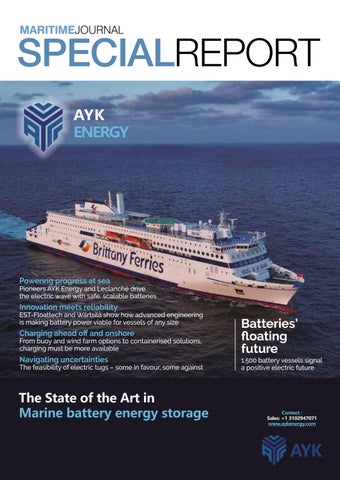
Pioneers AYK Energy and Leclanché drive the electric wave with safe, scalable batteries
Innovation meets reliability
EST-Floattech and Wärtsilä show how advanced engineering is making battery power viable for vessels of any size
Charging ahead off and onshore
From buoy and wind farm options to containerised solutions, charging must be more available
Navigating uncertainties
The feasibility of electric tugs – some in favour, some against
Batteries’
1,500 battery vessels signal a positive electric future
Commercial marine is electrifying: A special
report on who is making it
happen
The maritime industry is in the midst of a profound transformation when it comes to the future of propulsion.
While there is a vast range of opinions on what the ultimate solution will look like, few would disagree that it will be a mixed picture: no fuel has yet turned up or been developed that has everything diesel has – the price, the abundance and the performance, all wrapped up in one – and different fuels are suitable or attractive to different vessel types.
As regulators tighten emissions targets and operators seek cleaner, more efficient technologies, the spotlight has turned to electrification – and with it, batteries.
Long seen as the cornerstone of the transition to low- and zero-emission shipping, batteries are now being deployed at scale across a growing range of vessel types, from ferries and tugs to offshore support ships and even coastal cargo carriers.
Innovators are noticing the potential, and in this Special Report we talk to some of the battery makers who are flagging their products in the charge towards full-scale adoption in the commercial marine sector.
This report, which is sponsored by one of the pioneers in this field, AYK Energy, looks at the situation to date from the perspective of the marine battery maker. In each of our interviews with battery makers, similar themes emerged: cost; the safety element; charging challenges and how sustainable batteries actually are. There is no significant recycling being done in the world at the moment, for example: marine batteries are at such an early stage they have not reached end of life yet, so this is a looming issue. Heralded as a clean alternative to fossil fuels, they are nonetheless linked to difficult questions around mining practices, supply chains, recyclability and lack of charging infrastructure.
The companies we spoke to who make marine batteries – our sponsor, AYK Energy; EST-Floattech; Leclanché and Wärtsilä – are obviously confident in this space or they wouldn’t be in it; however a senior employee at one of the world’s largest tug operators, who asked to remain anonymous, expresses huge doubts over battery feasibility in tug operations.
Safety is paramount, and with a number of car carriers experiencing fires that could have emerged from their cargoes of electric vehicles, it’s something that has to be resolved – we speak to one consultant who has stark warnings about the safety of lithium batteries and how ‘green’ they are – but others make the case that there are solutions out there.
When it comes to charging, a plethora of ideas is emerging: read our interview with Stillstrom, which has come up with offshore charging buoys that could keep the big boats out of our ports to limit emissions there; or AYK Energy, which believes one answer may lie in containerising batteries to swap in and out, rather like coach drivers switched tired horses for fresh ones long before the car was invented.
What is clear is that the pace of change is accelerating. With more than a thousand battery-powered vessels already in operation worldwide and many more on order, electrification is becoming mainstream – it’s just how it will happen that is the question.
It’s an uncertain world – and how best we are going to fuel it remains one of the greatest uncertainties.
Debbie Mason Editor, Maritime Journal
AYK ENERGY: PIONEERING THE ELECTRIC REVOLUTION
From 12MWh ferry systems to a future with containerised power, AYK Energy says it’s leading the world with its fast, safe, cost-effective marine batteries. Maritime Journal spoke to founder Chris Kruger about the company’s meteoric rise and its plans for an electric future.
As a company formed less than 10 years ago (2018), AYK Energy is a relative newcomer marine battery field – but it has already made huge strides that must be the envy of much older players.
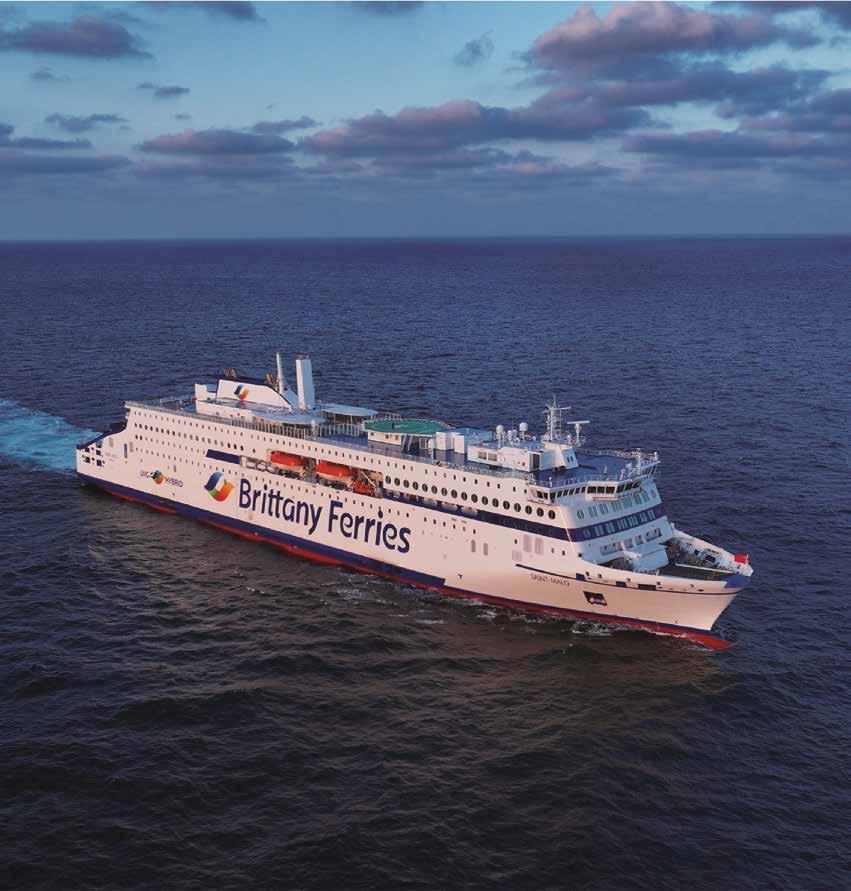
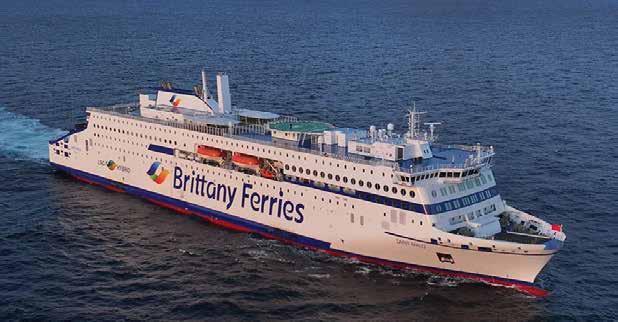
In July 2023, the company opened its first automated manufacturing facility with a 300MWh annual output, expandable to more than 1GWh. Its solutions now power some of the largest vessels in Europe, including Brittany Ferries’ hybrid electric ships Guillaume de Normandie and Saint-Malo.
It’s also struck a deal to supply a 6MWh battery for the world’s first battery-methanol tug, for Svitzer.
Former director of Engineering with battery specialist Corvus Energy, Chris Kruger certainly knows his science –and with a clear vision to deliver cost-effective, safe marine batteries, he has steered AYK Energy into a position where they have now achieved positive EBITDA (Earnings Before Interest, Taxes, Depreciation and Amortization).
Siting its factory in China, AYK has stayed close to the supply chain, although Kruger says he intends to open another one in Europe in the non-too-distant future.
Keys to success
“When I started this company I looked at everything I’d learned – what’s worked in the past and what hasn’t worked,” he says. “I started with a clean sheet of paper. What are the key points I need to hit to make this battery work? It took a bit of time and luck to get the money, and the partners I had in
China had a value proposition and came on board. A good partnership and mutual respect are the key ingredients.”
Kruger emphasises that AYK is not a Chinese company –the marketing and engineering is all done outside – but by manufacturing in China, the company has achieved cost effectiveness and with his engineering knowhow, safety. It’s also about trust, he says.
“In my opinion, success really has to do with the fact that somebody like me knows the industry and the technology side, can speak to the customer and has their trust. That’s at the heart of the company – to be accepted and make a change. I’ve always been hands on, at the frontline.”
The batteries
AYK Energy’s batteries, Kruger admits, are not the cheapest on the market, but they are the safest and most cost effective.
The company uses lithium iron phosphate, which is less likely to produce thermal runaway, a chain reaction that can heat the cells, risking fire.
The company makes a wide range of battery sizes, weights and density according to the vessel they are destined for, whether RoPax ferries, inland cargo ships or tugs.
In July, it won DNV type approval for its Pisces, Pisces+, OrionAN and OrionAN+ series, which will immediately allow the company to install a 10.4MWh system on the biggest retrofit ever done – the hybrid-electric RoPax ferry Aurora Botnia, owned by Wasaline, which operates a daily service between Finland and Sweden.
■ Aurora Botnia has a 10.4MWh battery system installed
I started with a clean sheet of paper. What are the key points I need to hit to make this battery work? A good partnership and mutual respect are the key ingredients ‘‘
“We have listened to industry and developed this range to deliver higher energy density, which is ideal for ferries, workboats and tugs,” says Kruger. “And at the same time we’re innovating systems that strike a balance between power and energy density, which works better for hybrid applications.”
In response to scepticism over how sustainable batteries actually are, he says the company has done carbon studies – “and overall, we come out on the positive side, especially when you operate the battery for a long time.
“Most of the carbon generation comes from the making of the cells, so if you can use green energy to do that, it becomes a lot cleaner.”
When it comes to recycling, Kruger accepts it isn’t yet being done on a meaningful scale, but because batteries in marine are relatively new, most have not yet reached end of life, and there are big ideas in stationary storage for batteries that are no longer fit for marine use.
Containerised future
Chris Kruger is also eyeing up the opportunities for batteries that could be used much in the same way that tired horses were swapped for fresh ones by coach drivers before the automotive was invented.
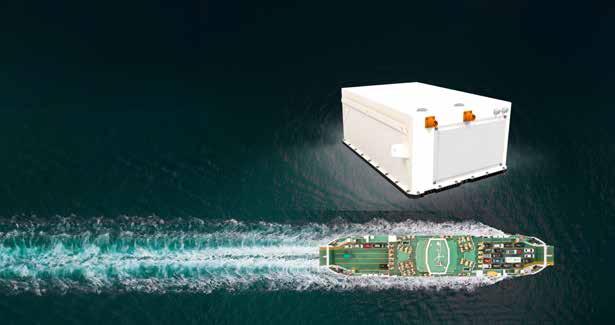
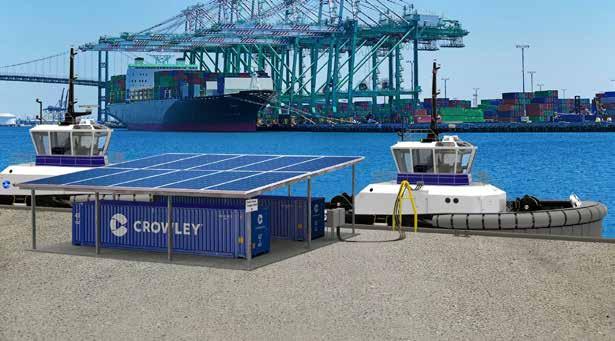
“We are planning to put batteries in containers – fill half a TEU with 2.8MWh of batteries, or 5.6MWh in a full container,” he says. “A port crane could easily handle half a container of batteries, which would weigh about 21 tonnes. They could be charged out at a wind farm, brought back and swapped out with another container – like horse swapping.
“We’ve talked to people about using containers on tugs, and I think this is going to enhance the use of batteries. Today you can’t charge a battery in a harbour unless you have a power plant nearby for cold ironing, and it’s expensive.
The first battery I ever designed was for a Svitzer tug in Australia. Years later, we’re supplying Svitzer again. It shows how far the industry has come ‘‘
“This is one of those cogs that isn’t in place today. It’s going to take a huge amount of money to get it to scale, but we already have guys who want to do the cold ironing and bring the battery to the shore.
“We need high-volume manufacturing: if we get the volume, we will be able to bring the cost right down and it will be way more cost effective.”
Kruger is looking for other financing options to set up a factory and move out of China, he says, somewhere in Europe, where his market is.
In some ways Kruger’s career has come full circle.
“The first battery I ever designed was for a Svitzer tug in Australia, the Gorgon project,” he says. “Years later, we’re supplying Svitzer again. It shows how far the industry has come.”
■ St Malo Brittany ferry running on LNG and AYK's battery system
■ Chris Kruger
EST-FLOATTECH OUTLINES PLANS TO ELECTRIFY THE HIGH SEAS
In a maritime sector increasingly pressured to cut emissions and embrace clean technologies, EST-Floattech is making waves with its advanced battery systems.
Founded more than 15 years ago as a system integrator for electric components on luxury yachts, Amsterdambased EST-Floattech is now a specialist in maritime battery solutions, boasting hundreds of successful deployments and a growing international presence.
At the heart of the company’s offering are its two flagship battery systems: the Green Orca and the Octopus. Indeed, it has just expanded its Octopus range with LFP (Lithium Iron Phosphate) batteries.
“We have for 12½ years had the Green Orca product, which was delivered to more than 200 projects – 16MWh in total,” says Joep Gorgels, CFO and co-director of EST-Floattech. “And since the last 2½ years we have the Octopus product and that has also been a success, with more than 110 projects and 70MWh.”
The company partners with Singapore-based DuraPower, sourcing NMC (Nickel Manganese Cobalt) cells manufactured in China. These cells are designed into complete, typeapproved maritime battery systems by EST-Floattech’s inhouse engineering team.
“We design battery systems for maritime purposes and we have them certified by the major class certificates,” says Gorgels.
Tailored technology and safety
EST-Floattech’s batteries are being installed in a broad array of vessels, from ferries and tugs to inland barges and 10,000ton coastal ships.
“More and more [coastal ships] are enjoying large batteries to make zero-emission port calls,” says Gorgels, highlighting the dual purpose of their products: environmental compliance and operational efficiency.
Beyond propulsion, its battery systems provide energy for hybrid configurations, blackout prevention, peak shaving and hotel loads.
“You can have batteries for full electric propulsion, but also for hybrids, to have ships become zero emissions ultimately,” he says.
You don’t want a big fire on board a ship with 200 people in the middle of the lake or the sea ‘‘
Joep
Gorgels, CFO and co-director of EST-Floattech
Safety and reliability are core to EST-Floattech’s design philosophy. “You don’t want a big fire on board a ship with 200 people in the middle of the lake or the sea,” says Gorgels. “In a car, you can let the car burn and step out and you’re safe.”
To prevent such disasters, EST-Floattech has developed what Gorgels describes as ‘one of the most reliable and redundant battery management systems’ on the market. The system monitors everything ‘from cell level, to module level, to string levels’ and includes cell-to-cell propagation prevention and a safe exhaust system outside the battery room and the ship.
Balancing energy density and use case
Gorgels acknowledges that battery chemistry still limits how far electrification can go, particularly with larger vessels like container ships.
“Batteries are becoming more energy dense… but I think there will ultimately be limits because it’s chemistry for the
recently
■ EST-Floattech has
released a new range of Octopus LFP batteries
moment,” he says. While solid-state batteries and supercapacitors are on the horizon, they are not yet ready for maritime deployment. “Not yet. Indeed, they are not commercialised enough for larger applications like shipping, but that might come in the next decade or so.”
Currently, EST-Floattech supports both NMC and LFP battery chemistries, each with its own strengths.
“You don’t have cobalt and nickel in the LFP solutions –that’s not there. So you could argue LFP in that respect is a bit better,” Gorgels says, referring to growing concerns around the ethical and environmental impact of cobalt and lithium mining.
But while LFP may be preferable for sustainability, it doesn’t suit all applications.
“We’re not going away from the NMC because NMC batteries can have a much higher number of cycles and short cycles in a day and can have much higher C rates,” he says.
“With LFP solutions, you can have low C-rate applications, slow charging, slow discharging. But if your ferry has very short crossings and needs to be charged 10–20 times a day with a lot of power, you can’t do that with an LFP solution. You have to have the NMC or LTO battery types.”
Fire and recycling dilemma
A study from the Institute for Energy Research in Australia, Environmental Impacts of Lithium-Ion Batteries, found that more than 98% of lithium-ion batteries end up in landfills, which increases the likelihood of landfill fires that can burn for years.
One landfill in the Pacific Northwest was reported to have had 124 fires between June 2017 and December 2020 due to lithium-ion batteries. Fires are becoming increasingly common, with 21 fires reported on the site in 2018, increasing to 47 by 2020.
At the moment we are not seeing piles of lithium batteries in landfill from the maritime industry because quite simply, they haven’t reached their end of life yet.
“Certainly not with vessels,” says Gorgels. “We are only now getting a couple of batteries back from our first ship, which have had 13 years of service.”
But with a project life span of around 10 years, even if the batteries exceed that, there is inevitably going to come a time when suddenly a lot of them start giving up.
Gorgels thinks there may be an answer, although it was suggested for automotive batteries and hasn’t really happened.
“What I think will happen now and in future is the second life of batteries,” he says.
“Once they have been used in a car or in a vessel, they will have a second life in a containerised solution for a festival, or charging a football stadium, or an office, something like that.
He believes the industry is catching up to the recycling challenge.
"I know of reports that talk about 90 to 95% recycling of batteries, making it already possible to bring the batteries back to the original materials,” he says.
A bespoke approach
Unlike some competitors, EST-Floattech prides itself on codesigning systems with shipbuilders.
“Every project, every ship… is different,” said Gorgels. “We co-design and help them with the choice of which battery to use, how large the system should be. We help them designing the battery room… designing the racking, firefighting systems… and how to mount the system safely.
“The ship is often, of course, in heavy storms or it can tilt or it bangs on the quay. So it has to be robust.”
As maritime electrification expands, Gorgels sees the
battery revolution growing from small-scale vessels to larger operations.
“Everything that you can electrify will or should be electrified,” he says. “It creeps up from small to larger. Easy.”
And with a strong presence in the Netherlands, where ‘electric cars are taking off massively’ and ‘the whole North Sea will be fully covered with windmills soon’, EST-Floattech is positioned at the centre of Europe’s energy transition.
“We’re growing with our clients,” Gorgels says. “More and more ships. Larger packs. And we work with them to make it happen.”
Everything that you can electrify will or should be ‘‘
■ More than 98% of lithium batteries end up in landfills like this one, according to the Australian Institute of Energy Research
Credit: Bakhrom Tursunov, Pixabay
LECLANCHÉ POWERS UP FOR MARINE BATTERY BOOM
Swiss battery maker Leclanché says its marine batteries are difficult to compete with, whether in performance, sourcing or recycling. As part of our series of interviews with battery makers, we talk to Guillaume Clément, vice president for Marine Mobility.
As batteries move from the engine room to centre stage in today’s developing electric marine sector, Switzerlandbased battery manufacturer Leclanché claims to be one of the pioneers powering this transformation.
Guillaume Clément, vice president for Marine Mobility at Leclanché, says the company’s offering is special in many ways: not least because every gram of material used within its products have a traceable origin. In a world where cobalt, a critical element in NMC batteries, is mined by children in the Congo and vast swathes of South America have been destroyed by lithium mining, this is an important claim to make.
Leclanché’s journey into the marine world began nearly a decade ago, catalysed by EU funding for the fully electric ferry Ellen.
“That project gave us legitimacy,” says Clément. “We weren’t just a battery supplier – we were one of the first in the world with a working marine-certified battery system.”
Today, Leclanché is involved in battery integration across a wide range of vessel types, from ferries to offshore wind installation ships.
Built for the sea
Marine batteries must withstand extreme and unique challenges. Ships require long-life batteries capable of withstanding constant deep cycling and harsh vibrations, and they need strict safety certifications.
“In industrial applications like ships, batteries are used intensively – charged and discharged daily,” Clément says. “They need to have a long life cycle.”
They also have to withstand endure marine-specific conditions like continuous vibration and extreme thermal stress. One of the most feared risks in marine energy systems is thermal runaway, when batteries overheat, potentially leading to fire.
Leclanché has engineered its battery modules to mitigate such events, Clément says. Their proprietary safety design includes an IP-rated protective box for each module, equipped with sprinklers that automatically inject water when high temperatures are detected. A carefully sequenced water-cooling protocol then continues for nearly an hour to suppress the risk of re-ignition.
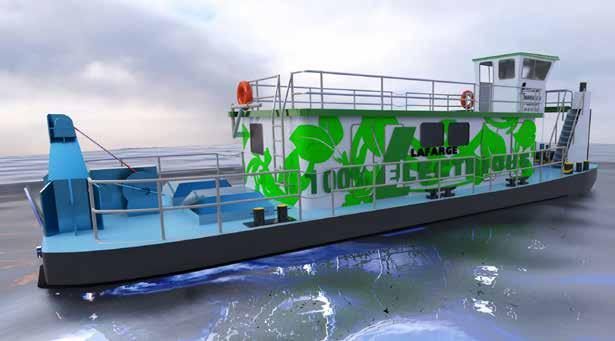
■ Leclanché retrofitted the Marsouin, a 1965-built diesel pusher tug, into a hybrid vessel to operate on the River Seine and surrounding French inland waterways
Credit: Leclanché
■ Guillaume Clément
“We don’t just prevent thermal events – we stop them before they become fires,” says Clément. “When we test in labs, neighbouring modules show zero damage – not even a scratch.”
Real battery making
Unlike many of its competitors, Clément says, Leclanché actually manufactures its own cells rather than simply assembling imported components.
“Most of our competitors aren’t true battery makers. They buy cells, usually from Asia, and package them in Europe or North America,” he says. “Our batteries are made in Europe, designed for marine use from the ground up. That gives us performance and safety advantages.”
Their approach extends to sourcing too. Clément is candid about the contentious history of cobalt in battery production but insists the company has addressed these concerns head-on. “We source cobalt from Umicore in Europe. It’s certified, traceable, and 100% free of child labour,” he says. “Ironically, cobalt is now one of the safest materials to source because of all the scrutiny it’s been under for decades.”
In fact, Leclanché is already phasing cobalt out of its new chemistries. Its next-generation NMC-A (nickel-manganesecobalt-aluminium) chemistry, backed by the EU’s Current Direct project, boosts energy density by 15% and slashes cobalt content further.
Application expansion
Initially dominant in the ferry market, where routes and charging patterns are predictable, Leclanché’s marine batteries are now seeing growing demand in more complex vessel types. “We used to say ferries were 100% of our market. Today, it’s everything: offshore support vessels, seismic ships, wind farm installation vessels,” says Clément.
We weren’t just a battery supplier – we were one of the first in the world with a working marine-certified battery system
Guillaume Clément, vice president for Marine Mobility at Leclanché
On these hybrid vessels, batteries don’t typically power propulsion, but support high-demand operations like crane deployment or jack-up operations. They also serve to optimise generator efficiency by storing excess energy and supplying it during peak loads, as spinning reserve. This hybrid functionality can deliver fuel savings of 7% to 15%.
“It’s not enough on its own to justify battery investment,” Clément admits, “but if you already have batteries onboard, why not use them for multiple functions?”
Charging directly from offshore wind farms is on the horizon, especially for Crew Transfer Vessels.
“It depends on the operator’s point of view. If you’re operating the wind farm, recharging at sea saves you port fees,” he says.
Scaling up and recycling
The future is bright – and busy.
“Our biggest challenge isn’t demand,” says Clément. “It’s capacity. We’re investing to expand production in Germany by tenfold.”
Recycling is another critical piece. While most marine batteries haven’t yet reached end-of-life, automotive
batteries have, and whatever you hear from potential battery recyclers, it is not being done on a meaningful scale yet. It simply isn’t cost effective: it is simply cheaper to mine new materials than extract them from used batteries.
Leclanché already includes recycled content in its cells at least, and advises customers on best-practice recycling options.
“We’re selective about who we work with, because not all recycling methods are equal,” he says.
One point that Clément raises is about the use of PFAS (Per- and Polyfluoroalkyl Substances), or ‘forever chemicals’, which have been around since the 1940s because they contain strong carbon bonds that make them extremely resistant to heat, water and oil. They are almost nearly impossible to break down in the environment or indeed the human body.
Leclanché’s batteries avoid using them.
“We want our batteries to be worth something at the end of their life,” he says. “The rare materials we use – like cobalt – give them real recycling value.”
The battery horizon
As new EU regulations on maritime emissions come into force, Clément believes batteries are no longer “nice to have” – they’re a necessity.
“Every ship is now asking whether to have batteries and if not now, at least to be ready to retrofit later,” he says. “And the battery systems themselves keep getting bigger.”
Leclanché’s goal is to stay ahead of that wave. With solidstate and sodium-ion technologies still 10 years away from commercial readiness, Clément believes high-performance lithium batteries like theirs remain essential.
“We’re enabling the energy transition – not just with what we make, but how we make it,” he says.
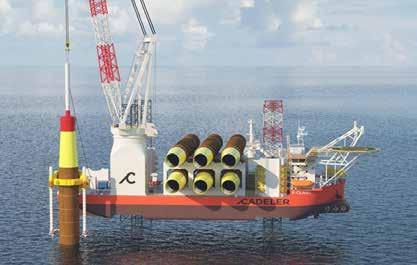
■ Leclanché fitted
Cadeler’s jack-up vessel with an onboard battery system enabling hybrid operations and spinning reserve plus power regeneration for jacking and crane operations
Credit: Leclanché
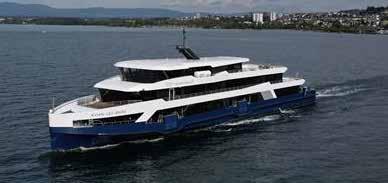
■ Leclanché’s marine battery systems were installed on two hybrid ships by Swiss shipbuilder Shiptec for CGN. The ferries have a capacity of 700 passengers each
Credit: Leclanché
WÄRTSILÄ ON MARINE’S ELECTRIC FUTURE
As the maritime industry accelerates its transition to low- and zero-emission solutions, Wärtsilä is playing a commanding role by engineering fully integrated propulsion systems tailored to specific vessels.
Torsten Büssow, managing director of Wärtsilä’s Electrical and Power Systems division, talks to Maritime Journal about the company’s fast-evolving role in the marine battery market.
“We are electrical integrators,” says Büssow. “We don’t have our own factories for batteries. We work with battery makers to create marinized systems that meet the needs of each ship. That’s how we make our input felt in the product.”
Wärtsilä acts as a bridge between battery OEMs and vessel owners, shaping full-electric or hybrid propulsion solutions using its expertise in marine engineering.
This system-level responsibility means Wärtsilä engineers complete solutions – generators, converters, transformers, and batteries – that are tailored not only for the different demanding marine environments, but the different use cases they can expect.
“The marine market is so small that there are no dedicated factories for marine converters or generators,” he says. “We adapt and engineer existing technologies into robust marinegrade systems.”
Tailoring
Wärtsilä’s integration role also means flexibility across vessel types and battery chemistries. “We have approved suppliers for all chemistries to fulfil different ship specifications,” Büssow says. “A ferry is going to have very different requirements than a tug.”
For short-range operations like ferries, the future is already electric.
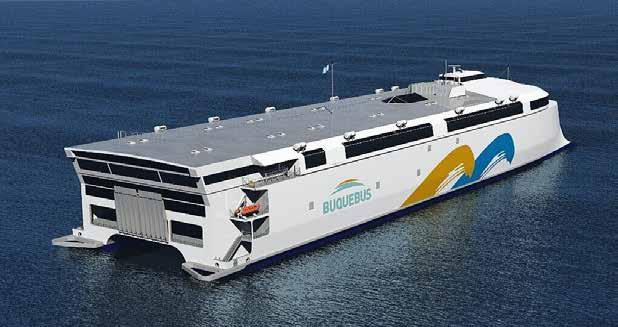
■ The new Buquebus ferry will be the world’s largest zero-emissions, lightweight catamaran ferry, and it will be powered by a battery-electric propulsion system and waterjets from Wärtsilä
Journal has reported,
is providing the battery electric propulsion system and waterjets for South America’s Buquebus ferry operator in what will be the largest battery installation in marine transport, at 40MWh. The batteries are from Corvus Energy and the vessel is being built by Incat. It will have a passenger and crew capacity of 2,100, car capacity of 225 and more than 2,000 square metres on one level.
“Anything below three hours of operation will go batteryelectric,” he says. “We’re delivering those vessels today.”
Hybrid propulsion systems are also in high demand, especially in offshore markets, where vessels can save up to 25% in fuel by using batteries during standby or DP modes. “That’s a short payback time,” he says.
On the infrastructure front, change is coming fast. “In the ferry market, charging comes with the terminal – it’s not a chicken-and-egg problem,” says Büssow. For larger commercial ports, EU regulation is driving progress. “Shore power connections are mandatory by 2030 for passenger and container ships. This infrastructure is what batteries will use.”
Some vessels are being built with batteries specifically for zero emissions in port, in cases where shore power is not yet available. “There’s a clear business case there,” he says.
Retrofits and battery engineering Wärtsilä has completed around 30 battery retrofits, making it the most experienced player in this niche.
■ Torsten Büssow, managing director of Wärtsilä’s Electrical and Power Systems division
As Maritime
Wärtsilä
Credit: Wärtsilä
‘‘
The marine market is so small that there are no dedicated factories for marine converters or generators. We adapt and engineer existing technologies into robust marine-grade systems
Torsten Büssow, managing director of Wärtsilä’s Electrical and Power Systems division
“It’s not a big part of what we do, but nobody has done as many as we have,” he says. “Four years ago when we started this decarbonisation I would say every vessel will have a battery. It sounded very funny at that time, but now not so.”
According to Büssow, these retrofits have delivered immediate benefits in efficiency and emissions reduction.
“Offshore vessels, for example, are perfect candidates. They often need two engines running in DP mode, even at low loads. Batteries allow the engines to operate more efficiently, closer to 80% load.”
Battery lifespans are engineered with practicality in mind.
“You don’t engineer batteries for the 25-year vessel life. You engineer for 10 years, because the technology advances so fast,” he says.
To ensure a battery will last the full 10 years, the company oversizes it so that it actually has more capacity than is needed. There is no need to use the full capacity on day one, but it means there will be plenty left by year 10.
“It’s pure engineering criteria – oversize it so it lasts 10 years,” he says.
Safety and supply chain concerns
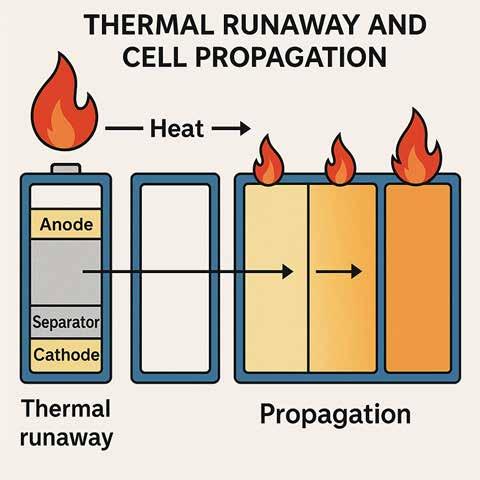
One of the most talked-about challenges in the battery space is thermal runaway, the catastrophic chain reaction that begins in an over-heated cell and spreads to other cells, risking fire outbreak.
According to Büssow, marine batteries are far better protected than their automotive counterparts.
“Marine batteries are protected either on the cell-to-cell level or the module-to-module level,” he says. “It’s forbidden to use inflammable materials between the cells. There’s a huge difference in safety design.”
Even in the rare case of cell failure, systems are designed to prevent escalation.
“There’s always dual or triple temperature sensing. If two sensors report high temperatures, that cell or module is shut off immediately,” he says. Fire suppression systems, including water or coolant flooding, are also in place. The outcome?
“Globally, there have only been two or three marine battery incidents – and those happened years ago. It shows the safety systems work.”
Despite growing concern about the environmental impact of lithium-ion battery production, Büssow is says it does not affect marine because it will be led by the automotive market and the consumer.
“Marine batteries use the same cells as car batteries. We benefit from that market’s push for cleaner supply chains,” he says. “As regulations like the EU battery passport take hold, the consumer market will solve this for us.”
Chemistry choice also plays a role.
“There are lower-cobalt options like LFP (lithium iron
phosphate), which are cheaper and more sustainable. We tailor chemistries to each vessel’s operational profile.”
Battery future
Although battery-only propulsion is not yet viable for transatlantic container ships, it is increasingly the go-to solution for ferries, offshore wind vessels, and port operations, with the Ropax sector Wärtsilä’s biggest so far.
“We’ll see small merchant ships move to full batteryelectric. For others, hybrid is a fuel-saving device – and it works today,” he says Büssow.
Indeed, Wärtsilä now holds about 25% of all marine battery capacity installed globally. “We have more than 1GWh of marine battery systems installed. That’s a quarter of the total – and it’s growing,” he says.
It’s growing, but there will be no short-term end for diesel.
“Deep-sea ships will still use combustion engines – but they’ll consume less and less,= fuel,” he says. “Batteries are here to stay, and they’re improving fast. This isn’t future technology – it’s being sold while we speak. Dong, dong, dong.”
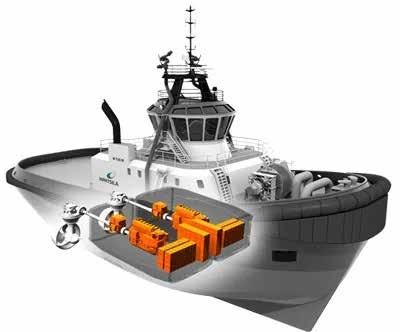
■ Tug with fully integrated hybrid power module in a diesel-mechanical configuration
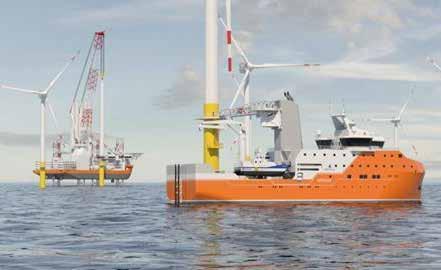
■ Service operation vessel (SOV) operating with hybrid electric propulsion system in offshore wind environment
NAVIGATING BATTERY RISKS: STILL A BRIDGE TOO FAR?
Are we there yet? Despite so many battery manufacturers hailing the benefit, the risks and problems of onboard and onshore battery systems identified in a recent Bureau Veritas report suggests not.
With 1,500 battery-powered vessels in operation and hundreds more under construction, the integration of lithium-ion (Li-ion) battery systems is accelerating rapidly. These systems offer higher energy efficiency, zero-emission operation in port and improved responsiveness.
However, despite being rolled out on boats and as Onshore Power Supply (OPS) systems, they also introduce new layers of complexity and risk.
A report by Bureau Veritas Marine & Offshore, Maritime Electrification: Maritime Battery Systems and Onshore Power Supply, emphasises that the successful adoption of these systems depends on rigorous safety standards, system integration and regulatory compliance.
The most critical hazard associated with Li-ion batteries is thermal runaway, when a battery cell heats up and causes a reaction as cell after cell is heated until fire can break out. It can be triggered by internal short circuits, overheating, overcharging or mechanical damage.
Once ablaze, battery fires are extremely difficult to put out because of the generation of oxygen from the battery’s internal reactions.
Consultant George Brilmyer, an electrochemist with more than 45 years’ experience in the battery industry and owner of the consultancy Batt-Tek Consulting, is extremely sceptical about lithium batteries.
“Any battery can go into thermal runaway and explode,” he says. “But with lead-acid batteries, for example, they can go into thermal runaway but they won’t explode because the electrolyser is an acid.
“If lithium batteries come into contact with water, chlorine, a noxious gas, is released, and hydrogen comes off the other terminal – which can then explode.
“Lithium iron phosphate (LFP) was originally claimed to be safer but it’s not. It has a lower voltage cell but when one of those goes into thermal runaway, you have more problems, such as the chemistry releases more hydrogen, and the solvents are all flammable.”
“Batteries can also re-ignite after initial suppression of the battery fire,” says the BV report. “Therefore, an after-cooling strategy is needed to prevent re-ignition.”
Fire suppression must be both immediate and sustained, using systems that may include inert gases, aerosols, foam or water-based cooling.
As well as fire there is a risk of hazardous gases such as hydrogen, carbon monoxide, hydrogen fluoride and phosphoric compounds being released, creating explosion hazards.
“The accumulation of flammable off-gases in enclosed spaces represents a risk of explosion,” warns the report. Ventilation systems, it says, can in fact make the risk worse, because they introduce additional oxygen that could ignite the off-gases.
“The exact composition of gases will vary from case to case, and it is recommended that a composition analysis be
performed, so gas detectors can be adapted and optimized to the expected composition,” it says.
System degradation and maintenance issues
Li-ion batteries naturally degrade over time, reducing energy capacity and increasing the chance of internal failure.
Ageing batteries are more susceptible to mechanical stress and may exhibit unpredictable behaviours.
“As the battery ages, the risk of hazards will also increase, alongside a decrease in performance,” says the report. “This is due to unwanted internal reactions and mechanical stresses that can lead to internal component deterioration and a reduced amount of lithium available for energy storage.”
A key safeguard is the Battery Management System (BMS), which monitors cell temperature, voltage and current. It can isolate malfunctioning cells, balance charge across modules, and communicate with the ship’s Power Management System (PMS).
Any malfunction or misconfiguration of the BMS significantly increases the risk of battery failure.
Battery placement also matters. Batteries must be housed in compartments with adequate ingress protection, cooling, gas monitoring and fire suppression. Increasingly, modular systems are favoured because it is possible to isolate them and contain hazards.
Green credentials
Brilmyer is also candid about the recycling reality of lithium batteries, which is in direct conflict with the ‘green’ claims, and the fact that they require rare earths that are only available in meaningful amounts in China.
■ Lithium-ion batteries can explode when banged hard - a high possibility on board vessels in rough seas
“Rare earths can only be sourced from China. The world doesn’t like that,” says Brilmyer. “They are very expensive, but they are needed for the electric motors.
“The materials in batteries are single use and they are not green. You have to realise that. If you are doing this just to be green, you have got to think again. They are not recycled, the electricity is not coming from anywhere green unless you’re in Norway, where there’s a lot of hydropower, or Washington, DC, which has 80% hydropower.
“There’s got to be a better solution and I don’t think lithium is the ultimate answer for electric propulsion. Everybody’s working on it – from sodium to flow batteries – and the petrol guys are also working on making their fuels cleaner.”
Onshore Power Supply (OPS)
OPS systems have their own challenges.
OPS systems can place significant stress on local power grids. A large cruise ship, for instance, may demand up to 20 MVA while docked.
“These high-power requirements have the potential to strain the electricity grid, necessitating significant investment in grid reinforcement or energy storage solutions," says the report – adding that while Battery Energy Storage Systems (BESS) are sometimes used to buffer this demand, they also add to cost and complexity.
OPS frequency and voltage mismatches are also common, BV says. Ships often operate at 60Hz, while port grids may supply 50Hz. The inclusion of frequency converters and transformers introduces more failure points and complicates maintenance, not to mention increasing costs all round.
OPS systems involve high-voltage electrical equipment, often managed in busy port environments. Dodgy installation or operation increases the risk of electrical shock, fire, or system failure. Better training, protective systems and regular inspections are yet more necessary expenses.
Regulations and lack thereof
The BV report also says that current international regulations for OPS and maritime batteries remain fragmented.
While classification societies like Bureau Veritas provide guidance and standards (eg BV NR467), it says, there is no single, globally adopted framework. This regulatory uncertainty adds to operational risk.
The report says the transition to electrification in the maritime sector is both necessary and inevitable, but cannot be undertaken lightly.
“Safety and standardisation must be upheld as top priorities,” it says, and OPS needs to interface with a variety of connection equipment and different onboard power systems.
“Standards help ensure compatibility and interoperability between various components and systems, enabling seamless integration and operation across different ports and vessels,” it says.
The
materials in batteries
‘‘
are
single
use and they are not
green. You
have to
realise that. If you are doing this just to be green, you have got to think again. They are not recycled, the electricity is not coming from anywhere green unless you’re in Norway, where there’s a lot of hydropower, or Washington, DC, which has 80% hydropower
George Brilmyer, consultant
DEEP DIVE: BATTERY TUGS –FEASIBLE OR ‘CRAZY’?
The tide of batteries flowing through the maritime industry is lapping at the hulls of all kinds of vessels, from tiny RIBs to container ships.
It’s very early days: according to Maritime Battery Forum managing director Syb ten cate Hoedemaker, there are only 1,500 battery-powered ships operating around the world at the moment, and 80% of those are hybrids.
Driven by calls and looming regulations to operate with zero emissions, fleet operators all over the world are having to consider them, and he sees few problems that can’t be solved with the ever-improving technology for the vast majority of vessel types.
But when it comes to tugs, not everyone agrees.
Maritime Journal spoke to a senior manager at a wellknown tug company who said battery-powered tugs were not feasible, far too expensive and unworkable in a busy port.
They also didn’t make any sense from an environmental perspective, he said.
Out of respect for this individual’s request to remain anonymous, we will refer to him as ‘Smith’, which is the most common surname in the UK.
Cost and energy
“For one electric tug, we can buy two conventional dieseldriven tugs,” Smith says. “Economically it’s just not feasible.”
And it’s not just the tugs themselves – a piece of shoreside charging kit can cost up to €1.5 million, he says.
If there is no fast charger – and these are a problem in ports where grids are already congested – it can take up to 10 hours to recharge, and having already paid twice as much for the vessel in the first place this is simply unacceptable.
“We can sail with a diesel-powered tug for 30 days and then we need one hour to refuel,” Smith says. “With methanol, we can sail for 14 days then need one to two hours’ refuelling. Go
to hydrogen – that’s one day’s sailing and two hours’ refuelling.
“Go to batteries, and that’s four to six hours’ sailing and if you have fast charging, 45 minutes but slow charging – eight to 10 hours.
“It’s crazy.”
“If you look at the typical operations of a tugboat, they are very suitable for battery power,” says Hoedemaker. “There are quite a few battery-powered tugs sailing across the globe right now. Some are fully electric, some are hybrids, but it is true, they are more expensive, so that is one challenge you have to solve.”
Neither of the two largest tug operators in the world, Svitzer and Boluda, has a single fully electric tug in their fleets, although Svitzer told Maritime Journal that it had one on order, expected for September.
MSC Towage, Rimorchiatori Mediterranei and Fairplay also have no fully electric tugs, and Kotug’s only electric tugs operate on inland waterways.
Most fleets have at least one hybrid tug, whether that is with diesel or one of the newer fuels.
Battery costs and charging infrastructure
Smith believes that batteries have not, as was promised, come down in price – but Hoedemaker disagrees.
“We’re not yet at the automotive battery price range, but in China there is a massive over production, so that will bring prices down. It’s a bit slower in maritime, but we are starting to see it,” he says.
He also says that there is more of a move towards lithium iron phosphate (LFP) batteries, which don’t have the controversial element cobalt (a great deal of which is mined
■ Port charging
by children in the Congo) in them, and they are also cheaper.
“If you look at the last 15 years, every five years, the battery costs, weight and volume have all reduced by about 50%. Prices go up and down due to external events like Covid, but that’s the same with diesel.”
The biggest challenge to port electrification is charging, infrastructure and where the energy comes from, says Hoedemaker.
“Everyone wants more electricity and it takes time and a lot of money to develop that infrastructure. We are trying to make people realise how much we need – not just the vessels, but everything around the port.”
Smith says charging point locations is a huge issue.
“The problem is it could be on a quayside that has been given into concession to the port operator so we run into difficulties – who will grant us permission to build a shore charger there? Will we be able to dock our vessel at any given time? Then the charger needs 1.5MW. That’s a lot for an already congested electric grid!”
Sparky three years on
While Smith says that it is only in Europe where we see a ‘craze’ for battery tugs, SAAM Towage has just announced delivery of the first one in South America, as has Kawasaku Kisen Kaisha (K Line) in Japan.
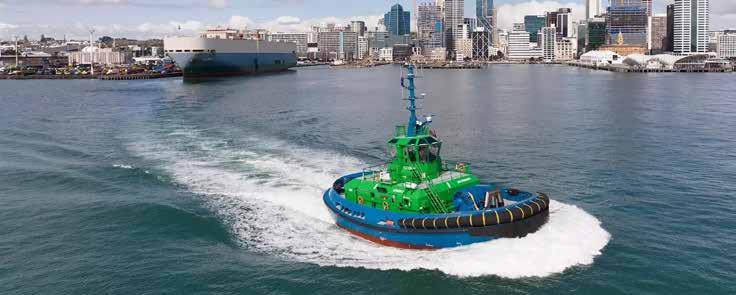
But the first one was of course the Damen-built Sparky which operates in the New Zealand Port of Auckland and has been since mid-2022.
If you look at the typical operations of a tugboat, they are very suitable for battery power. There are quite a few battery-powered tugs sailing across the globe right now. Some are fully electric, some are hybrids, but it is true, they are more expensive, so that is one challenge you have to solve
Syb ten cate Hoedemaker, Maritime Battery Forum managing director
Maritime Journal contacted the port to find out how the vessel, which has two 1,000kW diesel gensets, as do they all, for back-up.
Now clocking up three years in service, engineer Rob Willihagen says Sparky matches the 70-tonne pulling power of her strongest diesel counterpart, Hauraki, can charge her 2,240 Toshiba Lithium Titanium Oxide (LTO) batteries in two hours, and can run up to four shipping moves on a single charge.
“Whilst Sparky was more expensive to buy than similar diesel tugs, the overall cost is better as the operating cost is less than half of the cost of running a diesel tug and has the added benefit of preventing carbon emissions,” Willihagen says.
“Electrical equipment requires less maintenance, and therefore the maintenance costs are generally lower compared to diesel engine propulsion systems. Downtime related to maintenance is also lower.”
The port has put in a dedicated electric tug substation, he says, to house the charging system and equipment – and if
■ Damen-built electric tug Sparky still going strong three years after being launched at the Port of Auckland Credit: Port of Auckland
■ Syb ten cate Hoedemaker, Managing Director, Maritime Battery Forum
There have been unexpected consequences: one being the tug operators having to get used to far quieter, lowervibration engines; another being that they have faced fewer challenges than they expected.
“Operationally the tug is heavier and responds slower compared to the smaller Waipapa and Wakakume diesel tugs – which are almost half the displacement weight of Sparky,” Willihagen says.
So far, so good – but whether the future will be fully electric at the Port of Auckland remains to be seen.
“We will not replace our tugs until they’re at end of life, and so decision on whether we go full electric or a low-emissions hybrid model is yet to be determined,” he says.
CO2 and green credentials
The move across industries to find new forms of energy –whether alternative fuels or batteries, or even nuclear – is all because of laws being implemented to cut carbon dioxide emissions, of course.
Shipping is responsible for 3% of human-generated carbon dioxide. The workboat sector makes up about 15% of the shipping sector overall. This means the workboat sector contributes 0.45% of total anthropogenic carbon emissions.
When you consider that the total amount of CO2 in the atmosphere, wherever it comes from and including human activity, is 0.04% (400 parts per million), the total contribution of the workboat sector to the CO2 in the atmosphere is infinitesimal.
“It all started with the reduction of NOx, but today nobody is talking about that. It quickly shifted to CO2 reduction. But nobody is asking the question why? Why do we need to do it?” Smith asks.
“They also don’t look into the fabrication of the batteries themselves – there are quite a lot of emissions during that stage. And what about decommissioning?”
Despite many claims about recycling batteries, it is not being done in any meaningful way because it is much cheaper to extract lithium and the other materials from the land rather than get them out of a battery.
There is one battery-recycling plant in Germany that has just opened, he says.
“But it has very limited capacity.”
Hoedemaker says this is all being addressed, and by 2027, every battery used in Europe will have to have a ‘battery passport’ to accompany it, with details of what materials are inside it, where they’ve come from, and how much of it is recycled.
“It’s not a perfect technology,” he admits. “The recycling part is going to be very important. It is possible to recycle up to 98% of the materials in the batteries I think, but most of that recycling capacity is in China at the moment and we would want to have it everywhere around the world.
“You can look at second-life applications for batteries but at some point we need to be recycling and make sure they don’t end up in all kinds of landfills, because that would be a waste of very nice materials.”
Regulations could cause crisis
Incoming regulations are likely to force the small commercial marine sector to comply – or pay. And this could lead to a crisis, Smith says.
“It depends on how strict the rules will be. If they include rules that say we have to change existing vessels then we will have a crisis for sure, because nobody, not us, not our competitors, can change an entire fleet of tugs in one day.
“It’s still unclear for our sector what it means because we operate very small vessels. The government is aiming at
vessels of over 5,000GT but they’ve said already that they will revise those rules to include vessels down to 400GT. Only half of our fleet is less than 400GT.
“I believe some comparison has been made already by the European Tugowners Association. You have one 80t bollard pull weighing less than 400GT and another one with the same performance of more than 400GT – so one company will have a disadvantage just because of the tonnage.”
Smith’s company is trying to use fuel measurements and timing to optimise consumption – for example not mobilising vessels unless there is a clear reason to do so – but this will only save 10-20% of CO2 emissions.
“We can do something, but we can’t reach the targets to reduce them by 40% by 2050,” he says.
One solution could be biofuel, for which no engine change is necessary and which has the same performance quality as diesel, but that will only become more expensive as competition for it grows, particularly from the aviation sector.
And while methanol is a frontrunner as an alternative fuel, engines have to be adapted to take it, a fuel-management system has to be installed, and it requires a special, larger, fuel tank on board. An even larger one for hydrogen.
Although no one is asking why, associations like the ETA and shipowners’ associations are talking to representatives of flag states about how, he says, but it takes time and as workboats are only a small part of the shipping sector, the impact they will have is probably going to be limited.
“We’ll have to do something, but purely electrical – I don’t believe so,” he says. “It will be a hybrid combination. We will have battery packs on board. We will still have engines on board and those engines will run on an alternative fuel, either biofuel, methanol, hydrogen, whatever is the best option for a port.
“When the regulations come in, they will have to be gradually implemented and not suddenly increase the costs for operators because that will be charged to our clients and in the end we will pay it ourselves.”
BATTERY RIBS: A POSITIVE REVIEW BY RS ELECTRIC BOATS
Rigid Inflatable Boats (RIBs) are obviously at the smaller end of the market for batteries in commercial marine, and one well-known adopter, RS Electric Boats, is confident they are up to the job. Head of Engineering Alex Middleton spoke to MJ about the company’s use of batteries in their fleet
”The motivation behind launching RS Electric Boats (a sister company to RS Sailing and Cheetah Marine, all within the RS Marine Group) was to address the growing need for zero-emission workboats and RIBs in both commercial and leisure marine sectors – with a focus on sustainability without compromising performance,” he says.
”The development began with the Torque 58, followed by Pulse 58, followed by the Pulse 63, the world’s first fully integrated electric RIB, which launched in 2021. It was designed from the ground up as an electric vessel, rather than retrofitting an existing hull design.”
RS Electric Boats uses high-capacity lithium batteries, which it says are marinised and specifically engineered for safety and longevity in harsh salt-water environments.
”The Pulse 63m, for example, is powered by a 61kWh system,” he says. “It is integrated into the fully electric drivetrain with intelligent monitoring systems. The batteries are built to automotive standards for robustness and undergo extensive testing for thermal management, vibration and water ingress.
“They are of an NMC chemistry, chosen for its safety, stability, high energy density and long cycle life.”
Performance comparison
Alex Middleton says when comparing a fully electric batterypowered RIB with a conventional diesel one, there are definitely trade-offs.
“But there are also significant gains,” he says, listing them:
● Performance: Acceleration is instant due to the electric torque curve. Top speeds can be slightly lower, but for many operational profiles (eg port use or safety boats), that’s not a limiting factor.
● Speed & range: Current electric RIBs are best suited for short to medium-range use. The Pulse 63, for example, can run for 1.5-3 hours at full/cruising speeds, or much longer at lower speeds.
● Charging vs refuelling: Charging can take a few hours depending on infrastructure — fast chargers (DC) drastically reduce downtime, but aren’t yet universally available.
● Cost: Upfront costs are higher, but running costs are dramatically lower — electricity is cheaper than petrol or diesel, and maintenance is minimal.
● Maintenance: Electric drivetrains require very little upkeep — no oil other than within the gearbox, fewer moving parts, and fewer failures. The only scheduled maintenance required are oil changes and anode changes.
● Operation: Operators notice lower noise levels, less vibration, and a generally smoother ride. There’s also increased confidence in reliability.
The batteries have so far met or exceeded expectations in terms of cycle life and performance consistency, says Middleton, and thousands of charge/discharge cycles are expected.
The future
The motivation was twofold, Middleton says: environmental responsibility and future proofing.
“The marine industry is under increasing pressure to decarbonise, and we saw an opportunity to lead from the front. We’ve seen interest and uptake in a wide range of applications: port authorities, marinas, event support boats, safety vessels, and offshore wind farm operations, where low noise, low maintenance, zero emissions, and reliability are highly valued.”
The batteries will not last forever, which is a consideration for some clients, he says – but prices are steadily coming down ‘as the global supply chain matures’.
“It is also not something we are expecting customers to have to carry out until the 8-10 year mark.”
There is still a dark cloud over end-of-life for batteries, which, whatever anyone says, have not yet reached commercial-scale recycling; but RS Boats says it is ‘committed to responsible battery lifecycle management’, working with recycling partners and looking at second-life systems such as in static storage.
Charging challenges
Charging infrastructure is possibly the biggest challenge facing every battery-powered vessel operator and manufacturer that we spoke to, and it’s no different with RS Boats.
“While many marinas and ports have basic AC shore power, few currently have high-speed DC charging, which can be ideal for commercial turnaround times,” says Middleton. “We have however been observing most users are finding slower AC charging to be sufficient for their use case. Very few customers require fast charging regularly if AC charging is planned properly.
“We have designed our systems to be as flexible as possible — compatible with both single-phase and threephase AC, as well as DC fast charging where available. In some cases, customers also install their own solar or off-grid systems to supplement charging, which ties in well with sustainability goals.
”Of course, challenges exist — mainly around charging infrastructure, range and customer familiarity,” says Middleton. “But performance and reliability have been excellent.”
‘‘
Of course, challenges exist — mainly around charging infrastructure, range
and customer familiarity
Alex Middleton, RS Electric Boats
STILLSTROM ON THE BRINK OF OFFSHORE CHARGING ROLL-OUT
With the benefits of hindsight, a good question to pose is why at an electricity-generating offshore wind farm, electricity wasn’t used on site to charge the vessels carrying out operations and maintenance there. A no-brainer, you might think today
But at the time, the idea of offshore vessel charging simply wasn’t on the radar.
“When the first offshore wind farms were built, battery technology was still in its infancy in the maritime sector,” says Stillstrom CEO Kristian Borum Jørgensen. “It was only just being introduced for limited applications like peak shavingand most wind farms were close enough to shore that vessels could return easily each day, reducing the perceived need for electrification offshore.”
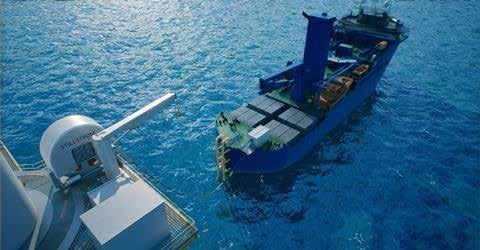
Service Operation Vessels (SOVs) have long played a key role in offshore wind operations. What’s changed is the scale and scope of their deployment. As wind farms grow in size and move further offshore, there’s a growing emphasis on keeping SOVs stationed at sea for extended periods, sometimes days or weeks, to maximise efficiency. The larger size of these modern vessels also allows for greater battery capacity, opening the door to cleaner, electrified operations.
Stillstrom (which means “quiet power”) began as a project in a division of Maersk in 2019, with a clear mission: to explore offshore power and charging solutions aimed at decarbonising the maritime sector.
“We saw other developments within wind where offshore wind farms were getting further from shore – and we saw the number of SOVs increase,” Jørgensen says. “We could see that the wind farms were providing clean, green, cheap electricity in abundance – so we asked, why can’t you actually provide the vessel with it?”
Stillstrom’s charging systems can be provided by buoy; or as a hang-off solution mounted on fixed structures such as a monopile, a substation or directly on the wind turbine – and the
electricity comes from the wind farm’s own electricity grid.
And the beauty of Stillstrom’s offshore charging is that the technology can be used elsewhere as well.
Zero-emissions anchorage zones
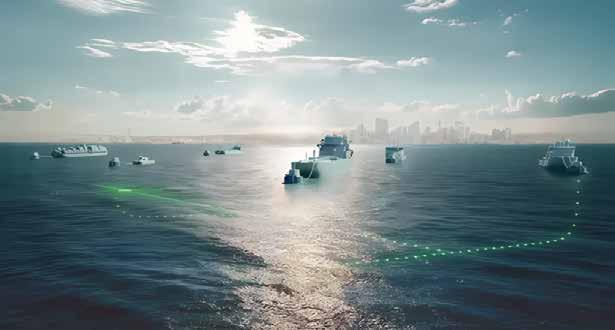
Stillstrom is approaching two markets with its offshore charging solutions: offshore wind, and in anchorage zones outside ports, where thousands of vessels sit every day, idling, consuming diesel.
“In parts of the industry, vessels are spending a lot of time just being idle, waiting for the next job or for the client to give directions,” says Jørgensen. “We saw shore power being brought into ports around the world, and more and more vessels were being converted to take on board shore power and our thinking was quite simple: Why can’t we do that offshore?
“Many vessels don’t actually spend a lot of time in port; they are often spending a lot of time outside them – so why not give them access to electricity there?”
And so, the offshore charging solution idea was born, not only at wind farms, but outside ports the size of Hamburg and Antwerp, and while not in place yet, Stillstrom is already studying the feasibility of integrating their system in the Panama Canal.
There’s a lot to be worked out: when and at which charging point the vessels can hook up, and if the shore grid has enough capacity – but Jørgensen says there is actually quite a predictable timetable, because these vessels often operate on a schedule and slots can be worked out according to their operations.
■ Zero Emission Anchor Zone
In parts of the industry, vessels are spending a lot of time just being idle, waiting for the next job or for the client to give directions. We saw shore power being brought into ports around the world, and more and more vessels were being converted to take on board shore power and our thinking was quite simple: Why can’t we do that offshore?
Kristian Borum Jørgensen, Stillstrom CEO
The amount of power required is a completely different ballgame from electric vehicle charging, which requires about 300kW, whereas a vessel would need up to 20 times that.
“If you look at the zero-emissions anchorage zones, it can be anywhere up to 8MW, but it can also be 1MW or below, depending on the vessel size and type: a container vessel with refrigeration, or an LNG vessel that needs to be cooled, will consume a lot more than a standard bulk carrier vessel.
“And we would look at those anchorage zones where you have some of the same vessels coming back over and over again, running on long-term contracts on more or less the same schedules. We have a good example of the anchorage outside the Port of Skagen in Denmark, where vessels are anchored for days, even weeks, until they get the call, go out and come back again.
“The technology is not new, either – what’s new is the combination of the technologies into one. Delivering power to a vessel has been done in ports for many years now, and we’re basically combining and working out the complexity of doing it offshore close to port. There are a lot of other safety aspects – such as you need to have an emergency disconnect system, etc.”
Battery charging and development
“For offshore wind the system will provide up to 8MW of power,” says Jørgensen. “It’s a significant amount and for an SOV you will probably see a battery capacity of 20-30MWh, and we need to charge the battery within four to five hours.
“We want to make it as easy as possible for the wind farm developers. The standard at a wind farm is 66kV, and our system transforms the power so it can be delivered safely to the vessel. With an SOV, you can – to put it simply - take out two gensets and put in batteries to make it an eSOV. It will run on the batteries all day and charge at night, to be ready for the following day. We are currently working closely with most larger SOV owners.
“We are seeing this change in the industry – if you go back a few years, most companies were talking about e-methanol, but now everyone’s talking about e-SOVs. It simply makes a lot more sense to use the energy in the wind farm, it’s a much better business case because when you make these new fuels you lose so much of the energy in just making them.
“If you’re able to electrify, you should electrify.”
And the cost compared to diesel?
“You actually have a business case that’s on par,” says Jørgensen. “It’s quite often cheaper, and you avoid the
uncertainties of regulations and oil prices and so on. Battery technology is rapidly advancing and the cost has gone down significantly. New companies are stepping up – and where marine batteries used to be much more expensive, prices are really coming down very steeply.”
Energy density has also improved, meaning less space is needed for the same amount of power. And they are lasting longer – up to 15 years, Jørgensen says.
Next steps
Jørgensen says Stillstrom’s technology is commercially ready, and he is having ‘concrete dialogues’ with major global wind farm developers as well as some of the busiest ports and hubs across the globe.
Standardisation is being discussed, and Stillstrom is part of a body that’s looking to make that happen across the board.
“When I look at the future, I think it will be a mix of methanol, ammonia, batteries, standard diesel, MGO and so on,” Jørgensen says. “In general, when we compare against other sort of low-emission fuels like e-methanol, for instance, to create e-methanol you need to take it through the process, and you lose more than half of the energy.
“It’s a big pie but we definitely see that batteries and offshore charging will take a piece of that pie. The pie is very big, so you don’t need to take half the pie to have a decent business, you only need a small piece.
“You will not see the largest ocean-going vessels going from Asia to Europe being converted to battery technology tomorrow, but you will have batteries as being very, very relevant and that’s also proven by a number of studies, not just by us, but by different bodies that have been looking into this.
“I’m being biased here, but we have seen huge developments in the past year or two, our organisation has invested a lot in this and this is happening, this year.”