6
2
0
2
4
3
EvoqueMag #
. Periodicidade-Bimestral . Periodicity-Bimonthly
EXQUISITE TRAVEL & LIFESTYLE
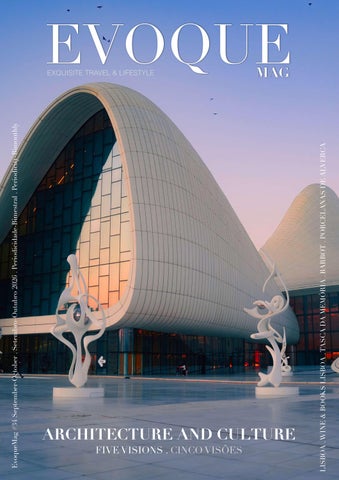
ARCHITECTURE AND CULTURE
FIVE VISIONS . CINCO VISÕES
LISBOA . WINE & BOOKS LISBOA . TASCA DA MEMÓRIA . BARBOT . PORCELANAS DE ALVERCA
September-October . Setembro-Outubro
EVOQUE MAG
Embrace the circle of island life.
The Ritz-Carlton Maldives, Fari Islands takes a minimalist approach to luxury. Modern waterfront villas, a culinary journey through seven restaurants and bars, wellness guided by directional energy in a ring-shaped overwater sanctuary and natural wonder explored with respect through Jean-Michel Cousteau's Ambassadors of the Environment program. We invite you to embrace island life. ritzcarlton.com/maldives @2024 The Ritz-Carlton Hotel Company, L.L.C.
Welcome to the World’s No.1 Luxury All-Inclusive Resorts With Infinite Care & Safety
For those who deserve nothing less than the best, Ikos Resorts invites you to savour, with no cost surprises, such pleasures as menus curated by Michelin-starred chefs, 300 wine labels selected by our Sommelier, 24-hour room service, in-room beauty products from Anne Sémonin Paris, complimentary use of a MINI car for local explorations and five-star service with the ease and comfort of luxury all-inclusive. Join us safely in 2021 and enjoy flexible travel policies.
* Ikos Olivia has been crowned No.1 All-Inclusive Resort in the World in the TripAdvisor Travelers' Choice Awards 2021
M A R B E L L A - E S T E P O N A | KO S | C O R F U | H A L K I D I K I | I KO S R E S O R T S . C O M
A N E S CA PE W H E R E LOV E BLO S S OM S . When your every wish is anticipated and every expectation surpassed, you are free to do as little or as much as you want. Dream with your eyes wide open at Gili Lankanfushi, Maldives, as you embrace your heart’s desires away from the world.
www.gili-lankanfushi.com
Gili Lankanfushi, Maldives, Lankanfushi Island 08290 North Malé Atoll, Republic of Maldives T +960 664 0304 | F +960 664 0305 Managed by HPL Hotels & Resorts
Shaping comfort. Defining style. SUFFA is a Portuguese sofa brand that transcends the concept of furniture, transforming it into a superior experience of comfort and elegance. We celebrate “Made in Portugal” with artisanal excellence, innovation, and exclusive designs. With stores in Lisbon and Aveiro, as well as a showroom in Paredes, we’ve expanded beyond borders and are now in Johannesburg, with our sights set on other locations around the globe.
A SUFFA é uma marca portuguesa de sofás que transcende o conceito de mobiliário, transformando-o numa experiência superior de conforto e elegância. Celebramos o “Made in Portugal” com excelência artesanal, inovação e modelos exclusivos. Com lojas em Lisboa e Aveiro e um showroom em Paredes, voamos além-fronteiras e estamos já em Joanesburgo, com olhos postos noutras geografias.
LISBOA | AVEIRO | PAREDES (SHOWROOM) | JOHANNESBURG
www.suffa-store.com
Model/Modelo: Colina Designer: Rémi Bouhaniche
'(6,*1 $1' 6867$,1$%,/,7< ,1 7+( %$7+5220 2/, RijHUV D ZLGH UDQJH RI LQWHJUDWHG HĴFLHQW DQG GLVWLQFWLYH VROXWLRQV
)LQG RXW PRUH ZZZ ROL ZRUOG FRP
impressum
OWNERSHIP & CAPITAL HOLDERS . PROPRIEDADE, CONSELHO DE ADMINISTRAÇÃO & DETENTOR DE CAPITAL Carla Branco CEO / EXECUTIVE DIRECTOR . DIRECTORA EXECUTIVA Carla Branco EDITORS . EDITORES Edgar Correia . Mariana Coelho BRAND MANAGER Vasco dos Santos MARKETING Mariana Coelho LIFESTYLE Miguel Alexandre . Rita Figueiredo GRAPHIC ART . ARTE GRÁFICA Analógica Group TRANSLATION TRADUÇÃO Ana Ferreira FINANCIAL DEPT. FINANCEIRO Inês Manteigas FORMAT . FORMATO Digital COST . CUSTO Free . Gratuito PUBLISHER Analógica Group www.analogicagroup.com NIPC 224 985 329 ERC REG. 127534 EDITORIAL STATUTE . ESTATUTO EDITORIAL www.evoquemag.com
th
EVOQUE
e rules
RULE #1 DISCOVER THE COVER Architecture & Culture 24
INDEX
RULE #2 TRAVEL Lisboa 38
24 RULE #3 SLEEP WELL Wine & Books Lisboa 52
RULE #4 EAT OUT Tasca da Memória 62
RULE #5 KEEP AN EYE IN THE ART WORLD Camille Claudel 70
62
88 RULE #6 NEW TRENDS Porcelanas de Alverca 82 Barbot 88 RULE #7 RELAX The Art of Being Unreachable 94 RULE #8 DRIVE BMW X1 xDrive25e 102 Xpeng G6 108
EDITORIAL
CARLA BRANCO CEO / EXECUTIVE DIRECTOR . DIRECTORA EXECUTIVA carla.branco@evoquemag.com www.linkedin.com/in/carlasgbranco
“In every destination, every encounter and every creation, we seek to look beyond what is visible. ”
I nd myself increasingly drawn to places that tell stories, objects that hold memories and experiences that invite me to see the world differently. In this edition of EvoqueMag, we explore different expressions of what inspires us: architecture that transcends generations, art that de es time, hospitality that makes us feel part of a place, and design that transforms everyday life. From Lisbon to new perspectives on well-being, from the delicacy of porcelain to the creativity rede ning mobility, we bring together stories that re ect a world in constant evolution, without losing sight of the value of identity, authenticity and emotion.
fi
fi
fi
fi
fi
fl
fl
fi
fi
In every destination, every encounter and every creation, we seek to look beyond what is visible. We are interested in meeting the people, understanding the ideas and discovering the stories that give meaning to places and objects. It is within this more human dimension that we nd what truly inspires us and what we wish to share with our readers, edition after edition. Because, amid everything that changes and reinvents itself, something remains essential: the ability to create, to feel and to discover what makes every experience truly unique.
Cada vez gosto mais de lugares que contam histórias, objectos que guardam memórias e experiências que me fazem olhar o mundo de outra forma. Nesta edição da EvoqueMag, percorremos diferentes expressões daquilo que nos inspira: a arquitectura que atravessa gerações, a arte que desa a o tempo, a hospitalidade que nos faz sentir parte de um lugar e o design que transforma o quotidiano. De Lisboa à descoberta de novas perspectivas sobre o bem-estar, da delicadeza da porcelana à criatividade que rede ne a mobilidade, reunimos histórias que re ectem um mundo em constante evolução, sem esquecer o valor da identidade, da autenticidade e da emoção. Em cada destino, em cada encontro e em cada criação, procuramos ir além do que é visível. Interessa-nos conhecer as pessoas, compreender as ideias e descobrir as histórias que dão signi cado aos lugares e aos objectos. É nessa dimensão mais humana que encontramos aquilo que verdadeiramente nos inspira e que desejamos partilhar com quem nos acompanha, edição após edição. Porque, entre tudo o que muda e tudo o que se reinventa, há algo que permanece essencial: a capacidade de criar, sentir e descobrir aquilo que torna cada experiência verdadeiramente única.
Carla branco
WEB www.evoquemag.com EMAIL geral@evoquemagazine.pt TELEFONE . TELEPHONE (+351) 96 335 4142 | 96 704 5565 SEDE DO EDITOR E SEDE DA REDAÇÃO EDITOR’S AND HEADQUARTER’S OFFICE Estrada das Várzeas N17, 2D 2790-444 Queijas, Portugal INSTAGRAM instagram.com/evoquemag FACEBOOK facebook.com/evoquemag LINKEDIN linkedin.com/company/evoquemag ISSUU issuu.com/merakitravel
ALL EDITIONS
RULE # | DISCOVER THE COVER
1
Words Carla Branco Photos Analogica Group
ARCHITECTURE
& CULTURE
FIVE VISIONS OF THE WORLD . CINCO VISÕES DO MUNDO
fi
das suas fachadas, outras através de um templo, de uma praça, de um jardim, de uma casa ou de um edifício que mudou para sempre a forma como entendemos o espaço. Mas todas contam histórias. Porque a arquitectura nunca é apenas arquitectura: é memória, identidade, poder, criatividade e a expressão física de uma cultura. Viajar através da arquitectura é, por isso, viajar através do tempo. É perceber como diferentes sociedades construíram os seus espaços, protegeram as suas tradições, receberam novas in uências e reinventaram a sua própria identidade. Nesta viagem, cinco cidades revelam cinco formas distintas de olhar o mundo. Kyoto representa a harmonia entre tradição e natureza. Paris transforma a cidade numa obra de arte. Roma permanece como um extraordinário diálogo entre passado e presente. Marrakech traduz a cultura através da matéria, da cor e do artesanato. E Nova Iorque tornou-se um dos grandes símbolos da modernidade. Cinco cidades. Cinco linguagens. Uma mesma ideia: a cultura também se constrói em pedra, madeira, luz, proporção e espaço.
fl
through their façades, others through a temple, a square, a garden, a house or a building that has forever changed the way we understand space. But they all tell stories. Because architecture is never simply architecture: it is memory, identity, power, creativity and the physical expression of a culture. To travel through architecture is, therefore, to travel through time. It is to understand how different societies built their spaces, protected their traditions, embraced new in uences and reinvented their own identity. On this journey, ve cities reveal ve distinct ways of seeing the world. Kyoto represents the harmony between tradition and nature. Paris transforms the city into a work of art. Rome remains an extraordinary dialogue between past and present. Marrakech translates culture through materials, colour and craftsmanship. And New York has become one of the great symbols of modernity. Five cities. Five languages. One shared idea: culture is also built in stone, wood, light, proportion and space.
fl
Algumas cidades revelam-se através
fi
S ome cities reveal themselves
KYOTO - The Architecture of Tradition
fi
fi
fi
fi
In Kyoto, time seems to move differently. For more than a thousand years, the city was the imperial centre of Japan, and that long history remains visible in the relationship between architecture, nature and spirituality. Here, buildings do not necessarily seek to dominate the landscape. On the contrary, they seem to emerge from it. Temples, Zen gardens, traditional houses, wooden doors and delicate courtyards reveal an aesthetic based on simplicity, proportion and attention to detail. Traditional Japanese architecture nds in Kyoto one of its most complete expressions: spaces where light is as important as material, and where emptiness can carry as much meaning as that which lls it. In Gion, traditional machiya houses evoke a Kyoto of another time. In the temples, gardens are conceived as contemplative landscapes. In places such as Kinkaku-ji, the celebrated Golden Pavilion, architecture and nature become almost inseparable. But Kyoto does not live only in the past. The city also possesses an extraordinary contemporary dimension, where Japanese architects reinterpret traditional concepts through re ned lines, natural materials and a very particular relationship with light. It is precisely this coexistence between the ancestral and the contemporary that makes Kyoto so unique. Here, culture is not con ned to museums. It is found in the streets, in rituals, in gastronomy, in gardens, in materials and in the way spaces are inhabited. Kyoto does not simply preserve tradition. It teaches us how to look at it.
KYOTO - A arquitectura da tradição
fi
fi
Em Kyoto, o tempo parece mover-se de outra forma. Durante mais de mil anos, a cidade foi o centro imperial do Japão e essa longa história permanece visível na relação entre arquitectura, natureza e espiritualidade. Aqui, os edifícios não procuram necessariamente dominar a paisagem. Pelo contrário, parecem nascer dela. Templos, jardins zen, casas tradicionais, portas de madeira e delicados pátios revelam uma estética baseada na simplicidade, na proporção e na atenção ao detalhe. A arquitectura tradicional japonesa encontra em Kyoto uma das suas expressões mais completas: espaços onde a luz é tão importante como a matéria e onde o vazio pode ter tanto signi cado como aquilo que o preenche. Em Gion, as tradicionais machiya lembram uma Kyoto de outros tempos. Nos templos, os jardins são pensados como paisagens contemplativas. Em locais como Kinkaku-ji, o célebre Pavilhão Dourado, arquitectura e natureza tornam-se quase inseparáveis. Mas Kyoto não vive apenas do passado. A cidade também possui uma extraordinária dimensão contemporânea, onde arquitectos japoneses reinterpretam conceitos tradicionais através de linhas depuradas, materiais naturais e uma relação muito particular com a luz. É precisamente essa coexistência entre o ancestral e o contemporâneo que torna Kyoto tão singular. Aqui, a cultura não está con nada a museus. Está nas ruas, nos rituais, na gastronomia, nos jardins, nos materiais e na forma como os espaços são habitados. Kyoto não conserva apenas a tradição. Ensina-nos a olhar para ela.
fi
Few cities have succeeded in making architecture such an inseparable part of their identity as Paris. Walking through the French capital means travelling across centuries of history: medieval monuments, palaces, churches, avenues, Haussmannian buildings, gardens, museums and contemporary architecture that continues to challenge the city. Paris became particularly recognisable during the 19th century, when the urban transformation carried out during the reign of Napoleon III and led by Baron Haussmann created grand avenues, monumental perspectives and an architectural language that would come to de ne the image of the city. But its cultural signi cance extends far beyond architecture. Paris is literature, painting, fashion, photography, gastronomy and design. It is the city of great museums and small galleries, historic maisons and independent ateliers. It is also a city where past and present constantly coexist. From the Louvre to the Fondation Louis Vuitton, through the architecture of Le Corbusier, Jean Nouvel and so many other names that have shaped the city, Paris continues to reinvent its own relationship with culture. Perhaps that is its greatest quality: Paris never seems nished. Each generation adds a new layer to the city, without necessarily erasing those that came before. In Paris, architecture does not frame culture. It is part of it. fi
fi
PARIS - The City as a Work of Art
PARIS - A cidade como obra de arte
fi
fi
fi
Poucas cidades conseguiram transformar a arquitectura numa parte tão indissociável da sua identidade como Paris. Caminhar pela capital francesa é atravessar séculos de história: monumentos medievais, palácios, igrejas, avenidas, edifícios Haussmannianos, jardins, museus e uma arquitectura contemporânea que continua a desa ar a cidade. Paris tornouse particularmente reconhecível durante o século XIX, quando a transformação urbana conduzida durante o período de Napoleão III e pelo barão Haussmann criou grandes avenidas, perspectivas monumentais e uma linguagem arquitectónica que viria a de nir a imagem da cidade. Mas a sua importância cultural vai muito além da arquitectura. Paris é literatura, pintura, moda, fotogra a, gastronomia e design. É a cidade dos grandes museus e das pequenas galerias, das maisons históricas e dos ateliers independentes. É também uma cidade onde o passado e o presente convivem constantemente. Do Louvre à Fondation Louis Vuitton, passando pela arquitectura de Le Corbusier, Jean Nouvel e tantos outros nomes que marcaram a cidade, Paris continua a reinventar a sua própria relação com a cultura. Talvez seja essa a sua maior qualidade: Paris nunca parece terminada. Cada geração acrescenta uma nova camada à cidade, sem apagar necessariamente as anteriores. Em Paris, a arquitectura não enquadra a cultura. É parte dela.
ROME Where History Lives in Stone
fl
In Rome, history seems to be everywhere. Few places in the world allow you to move through so many periods of Western civilisation within such a concentrated space. Ruins from Ancient Rome coexist with Baroque churches, Renaissance palaces, monumental fountains, modern architecture and contemporary spaces dedicated to art. The Colosseum remains one of the great symbols of Ancient Rome. The Pantheon continues to impress with the extraordinary scale and engineering of its dome. The Baroque squares reveal a city where architecture and power were deeply intertwined for centuries. And then there is the Vatican, where architecture, art and spirituality come together in one of the world's greatest concentrations of culture. But Rome is not simply a city-museum. Its strength lies precisely in its layers. The old did not disappear to make way for the new. Different eras coexist, often in the most unexpected ways. This relationship between past and present is also re ected in contemporary architecture. MAXXI, designed by Zaha Hadid, introduced a completely different language to the city, creating a space dedicated to contemporary art and architecture. Rome demonstrates that a city does not have to choose between preserving memory and continuing to create. It can make both part of its identity.
ROMA - Onde a história vive na pedra Em Roma, a história parece estar em todo o lado. Poucos lugares no mundo permitem atravessar tantos períodos da civilização ocidental num espaço tão concentrado. Ruínas da Roma Antiga convivem com igrejas barrocas, palácios renascentistas, fontes monumentais, arquitectura moderna e espaços contemporâneos dedicados à arte. O Coliseu permanece como um dos grandes símbolos da Antiguidade romana. O Pantheon continua a impressionar pela extraordinária escala e engenharia da sua cúpula. As praças barrocas revelam uma cidade onde arquitectura e poder estiveram durante séculos profundamente ligados. E depois existe o Vaticano, onde arquitectura, arte e espiritualidade se encontram numa das maiores concentrações culturais do mundo. Mas Roma não é apenas uma cidade-museu. A sua força está precisamente na sobreposição. O antigo não desapareceu para dar lugar ao novo. As diferentes épocas coexistem, muitas vezes de forma quase inesperada. Essa relação entre passado e presente também se manifesta na arquitectura contemporânea. O MAXXI, desenhado por Zaha Hadid, introduziu uma linguagem completamente diferente na cidade, criando um espaço dedicado à arte e à arquitectura contemporâneas. Roma demonstra que uma cidade não precisa de escolher entre preservar a memória e continuar a criar. Pode fazer das duas coisas a sua identidade.
fi
Esta é uma das minhas cidades de eleição em vários sentidos - até porque em Marrakech, a arquitectura é uma experiência sensorial. A cidade é feita de tons de terracota, sombras profundas, madeira trabalhada, mosaicos geométricos, jardins interiores e superfícies que parecem mudar de cor à medida que a luz atravessa o dia. Na arquitectura tradicional marroquina, o detalhe raramente é apenas decorativo. O zellige, o tadelakt, a madeira esculpida e os trabalhos artesanais revelam uma cultura em que a beleza está profundamente ligada ao saber-fazer. Os riads são talvez a melhor expressão desta loso a. Por detrás de fachadas discretas, abrem-se pátios interiores onde a água, a vegetação, a sombra e a arquitectura criam pequenos universos privados. É também essa dimensão interior que torna Marrakech tão fascinante. A cidade convida a descobrir, e não apenas a observar. A Medina, os palácios, os jardins e os souks revelam uma cultura construída através de gerações, enquanto uma nova Marrakech contemporânea acrescenta hotéis, restaurantes, galerias e espaços de design que reinterpretam as referências locais. O resultado é uma cidade onde tradição e criatividade contemporânea se encontram sem perder a sua identidade. Marrakech recorda-nos que luxo não signi ca necessariamente excesso. Por vezes, está no trabalho de uma superfície, na qualidade de uma matéria, na sombra de um pátio ou na imperfeição de uma peça feita à mão. Aqui, a cultura pode ser vista, tocada e sentida.
fi
This is one of my cities of choice — in many ways — because in Marrakech, architecture is a sensory experience. The city is made of terracotta tones, deep shadows, crafted wood, geometric mosaics, inner gardens and surfaces that seem to change colour as the light moves throughout the day. In traditional Moroccan architecture, detail is rarely merely decorative. Zellige, tadelakt, carved wood and artisanal craftsmanship reveal a culture in which beauty is deeply connected to savoirfaire. Riads are perhaps the nest expression of this philosophy. Behind discreet façades, interior courtyards unfold where water, vegetation, shadow and architecture create small private worlds. It is also this inward-looking dimension that makes Marrakech so fascinating. The city invites you to discover, rather than simply observe. The Medina, palaces, gardens and souks reveal a culture built over generations, while a new contemporary Marrakech adds hotels, restaurants, galleries and design spaces that reinterpret local references. The result is a city where tradition and contemporary creativity meet without losing their identity. Marrakech reminds us that luxury does not necessarily mean excess. Sometimes, it lies in the treatment of a surface, the quality of a material, the shade of a courtyard or the imperfection of a handmade piece. Here, culture can be seen, touched and felt.
fi
MARRAKECH - A arquitectura da cor e do artesanato
fi
MARRAKECH - The Architecture of Colour and Craftsmanship
NEW YORK - The Architecture of Modernity
fi
It is natural to hear “I feel at home here”, and I have exactly that same feeling. If Rome represents memory and Kyoto tradition, New York represents transformation and sophistication. Few cities have changed the idea of urban architecture as profoundly as New York. The rise of the skyscraper transformed not only the Manhattan skyline, but the very relationship between city, work, power and ambition. The Chrysler Building and the Empire State Building remain icons of Art Deco and of an era in which height became a new form of architectural expression. But New York has never been con ned to a single language. Frank Lloyd Wright’s Guggenheim transformed the museum into an architectural experience. MoMA became a global reference for modern and contemporary art. And new developments continue to reshape entire neighbourhoods, from Hudson Yards to Brooklyn. It is also impossible to separate New York architecture from its culture. The city is cinema, music, fashion, art, gastronomy and design. It is multicultural by nature and constantly in motion. Every neighbourhood has its own identity, and every generation leaves a new mark on its territory. New York may therefore be one of the clearest representations of a city that has never stopped reinventing itself. Its architecture does not simply celebrate what has already been. It is always asking what comes next.
É natural ouvir “aqui sinto-me em casa” e eu tenho exactamente essa mesma sensação. Se Roma representa a memória e Kyoto a tradição, Nova Iorque representa a transformação e a so sticação. Poucas cidades alteraram tanto a ideia de arquitectura urbana como Nova Iorque. A ascensão dos arranha-céus transformou não apenas o horizonte de Manhattan, mas a própria relação entre cidade, trabalho, poder e ambição. O Chrysler Building e o Empire State Building permanecem como ícones do Art Déco e de uma época em que a altura se tornou uma nova forma de expressão arquitectónica. Mas Nova Iorque nunca cou presa a uma única linguagem. O Guggenheim de Frank Lloyd Wright transformou o museu numa experiência arquitectónica. O MoMA tornou-se uma referência mundial para a arte moderna e contemporânea. E novas intervenções continuam a alterar bairros inteiros, do Hudson Yards ao Brooklyn. É também impossível separar a arquitectura nova-iorquina da sua cultura. A cidade é cinema, música, moda, arte, gastronomia e design. É multicultural por natureza e está permanentemente em movimento. Cada bairro possui uma identidade própria e cada geração deixa uma nova marca no seu território. Nova Iorque talvez seja, por isso, a melhor representação de uma cidade que nunca deixou de se reinventar. A sua arquitectura não celebra apenas o que já foi. Está sempre a perguntar o que vem a seguir.
fi
fi
NOVA IORQUE - A arquitectura da modernidade
FIVE CITIES. FIVE WAYS OF SEEING THE WORLD.
CINCO CIDADES. CINCO FORMAS DE VER O MUNDO.
Kyoto teaches us that tradition can be contemporary. Paris demonstrates that a city can transform culture into a way of life. Rome reminds us that the past does not have to disappear to make room for the future. Marrakech shows us that identity also lives in materials, in hands and in details. New York represents the constant reinvention of the modern city. They are very different destinations, yet united by one essential characteristic: in all of them, architecture and culture transcend the idea of a monument. Because a city is not simply what we build. It is what we preserve. What we reinvent. What we choose to remember. And, above all, the way we transform space into identity. To travel through architecture is, ultimately, to travel through the very history of humanity.
Kyoto ensina-nos que a tradição pode ser contemporânea. Paris demonstra que uma cidade pode transformar a cultura numa forma de vida. Roma lembra-nos que o passado não precisa de desaparecer para dar espaço ao futuro. Marrakech mostra-nos que a identidade também vive nas matérias, nas mãos e nos detalhes. Nova Iorque representa a constante reinvenção da cidade moderna. São destinos muito diferentes entre si, mas unidos por uma característica essencial: em todos eles, arquitectura e cultura ultrapassam a ideia de monumento. Porque uma cidade não é apenas aquilo que construímos. É aquilo que preservamos. Aquilo que reinventamos. Aquilo que escolhemos recordar. E, sobretudo, a forma como transformamos espaço em identidade. Viajar através da arquitectura é, no fundo, viajar através da própria história da humanidade.
LISBOA
BETWEEN TWO ERAS . ENTRE DOIS TEMPOS Words Carla Branco Photos Analogica Group
RULE # | TRAVEL
2
INFO @ www.visitlisboa.com
fi
Algumas cidades europeias preservam o passado como quem guarda uma fotogra a mas Lisboa prefere habitá-lo. É talvez essa uma das suas características mais fascinantes: a capacidade de avançar sem apagar completamente aquilo que cou para trás. Em Lisboa, um edifício raramente termina quando a sua primeira vida chega ao m. Ao percorrer as ruas, observo que um palácio pode transformar-se num hotel, uma antiga sala de cinema pode voltar a receber pessoas, uma fábrica pode tornar-se num espaço cultural e uma casa centenária pode encontrar uma nova linguagem através do design. A cidade mudou, e todos assistimos à sua transformação, mas as suas histórias permanecem inscritas nas paredes, nos corredores, nos pátios e nas fachadas. É uma Lisboa entre dois tempos, su cientemente ligada à memória para não perder identidade, e su cientemente inquieta para continuar a reinventar-se.
fi
Some European cities preserve the past as though keeping a photograph, but Lisbon prefers to inhabit it. Perhaps that is one of its most fascinating qualities: the ability to move forward without completely erasing what came before. In Lisbon, a building rarely reaches the end of its story when its rst life comes to an end. As I walk through the streets, I see how a palace can become a hotel, a former cinema can once again welcome people, a factory can be transformed into a cultural space, and a centuries-old home can nd a new language through design. The city has changed, and we have all witnessed its transformation, yet its stories remain written into its walls, corridors, courtyards and façades. This is Lisbon between two eras, suf ciently connected to its memory not to lose its identity, yet restless enough to keep reinventing itself. fi
desaparece. Reinventa-se.
fi
disappear. It reinvents itself.
fi
fi
fi
fi
A city where the past does not Uma cidade onde o passado não
The Second Life of Architecture Perhaps it is in architecture that this relationship between past and future becomes most evident. Lisbon is a city built in layers. Different centuries coexist along the same street, sometimes within the same building. There are façades that preserve the delicacy of another era, while interiors already belong to a contemporary language. Old and new do not necessarily need to compete; when thoughtfully interpreted, they can become part of the same narrative. This is also why some of the city’s most fascinating spaces are those that have been given a second life. Former palaces, residential buildings, cinemas, warehouses and commercial spaces are being restored for new purposes, retaining elements of their original identity while welcoming a different Lisbon. It is not simply about restoration. It is about understanding what deserves to remain and discovering what can be added. The result is an architecture that does not try to conceal the passage of time. On the contrary, it embraces it as part of its beauty.
A segunda vida da arquitectura Talvez seja na arquitectura que esta relação entre passado e futuro se torne mais evidente. Lisboa é uma cidade construída em camadas. Séculos diferentes convivem na mesma rua, por vezes no mesmo edifício. Há fachadas que guardam a delicadeza de outras épocas e interiores que já pertencem a uma linguagem contemporânea. O antigo e o novo não precisam necessariamente de competir, até porque quando bem interpretados, podem tornar-se parte da mesma narrativa. É também por isso que alguns dos espaços mais interessantes da cidade são aqueles que receberam uma segunda vida. Antigos palácios, edifícios residenciais, cinemas, armazéns e espaços comerciais estão a ser recuperados para novas funções, mantendo elementos da sua identidade original enquanto acolhem uma Lisboa diferente. Não se trata apenas de restaurar. Trata-se de compreender o que merece permanecer e descobrir o que pode ser acrescentado. O resultado é uma arquitectura que não tenta esconder a passagem do tempo. Pelo contrário, utiliza-a como parte da sua beleza.
Lisbon’s hotel scene has become one of the most interesting expressions of this transformation. New hotels are no longer simply about providing a place to sleep. Many occupy historic buildings and seek to preserve their sense of place through architecture, design, art and gastronomy. Staying in Lisbon can mean inhabiting a former palace, waking behind a centuries-old façade, walking through corridors that retain original details, or discovering a contemporary work of art inside a building that belongs to another era. Historic hotels are a great passion of mine, and I see them as a different expression of luxury - one less dependent on ostentation and more connected to a sense of place and to the way we allow that sense of place to become part of our experience. Today’s traveller increasingly seeks what cannot be found in quite the same way in another city. And Lisbon has a rare advantage: a history rich enough to provide identity, yet a contemporary energy strong enough to continue surprising us.
A hotelaria lisboeta tornou-se um dos territórios mais interessantes desta transformação. Os novos hotéis já não procuram apenas oferecer um lugar para dormir. Muitos nascem de edifícios com história e procuram preservar a memória do lugar através da arquitectura, do design, da arte e da gastronomia. Dormir em Lisboa pode signi car ocupar um antigo palácio, acordar atrás de uma fachada centenária, atravessar corredores que conservam elementos originais ou descobrir uma obra de arte contemporânea num edifício que pertence a outra época. Os hotéis históricos são uma grande paixão e vejo-os como uma forma diferente de luxo. Menos dependente da ostentação e mais ligada ao sentido de lugar e à forma como o conseguimos interiorizar. O viajante contemporâneo procura cada vez mais aquilo que não poderia encontrar exatamente da mesma forma noutra cidade. E Lisboa tem uma vantagem rara: possui uma história su cientemente rica para oferecer identidade, mas uma energia su cientemente contemporânea para continuar a surpreender.
fi
Quando os hotéis contam histórias
fi
fi
When Hotels Tell Stories
Também a gastronomia revela esta Lisboa entre dois tempos. A cozinha portuguesa continua profundamente ligada à memória. Há receitas, ingredientes e técnicas que atravessaram gerações. Mas uma nova geração de chefs está a olhar para esse património com liberdade, reinterpretandoo sem necessariamente o abandonar. O resultado não é uma ruptura com a tradição, mas uma conversa com ela. Somos um país de mar, por isso os peixes e mariscos continuam a chegar às mesas. O azeite, o pão, os enchidos, os arrozes, os produtos do mar e os ingredientes de origem portuguesa permanecem fundamentais. Mas são apresentados através de novas técnicas, espaços e sensibilidades. Lisboa tornou-se, entretanto, uma cidade onde diferentes culturas gastronómicas convivem naturalmente. A cozinha portuguesa encontra in uências vindas de todos os continentes, enquanto chefs estrangeiros descobrem nos produtos e nas tradições nacionais matéria-prima para criar novas interpretações. A cidade come o seu passado, mas não deixa de experimentar o futuro.
fi
Gastronomy also reveals this Lisbon between two eras. Portuguese cuisine remains deeply connected to memory. There are recipes, ingredients and techniques that have been passed down through generations. Yet a new generation of chefs is looking at this heritage with freedom, reinterpreting it without necessarily abandoning it. The result is not a rupture with tradition, but a conversation with it. We are a country shaped by the sea, which is why sh and seafood continue to occupy an important place at our tables. Olive oil, bread, cured meats, rice dishes, seafood and Portuguese ingredients remain fundamental. But they are being presented through new techniques, spaces and sensibilities. Lisbon has also become a city where different gastronomic cultures naturally coexist. Portuguese cuisine encounters in uences from every continent, while international chefs discover in our ingredients and traditions the raw material for new interpretations. The city consumes its past, but never stops experimenting with the future. fl
A cidade que se reinventa à mesa
fl
The City Reinventing Itself at the Table
Art Finds New Spaces There is also a Lisbon revealed through art. Museums and cultural institutions continue to preserve the city’s artistic heritage, but contemporary creativity has found new places in which to exist. Galleries, studios, hotels, restaurants and restored buildings have become part of an increasingly diverse cultural landscape. Art is no longer necessarily con ned to the places traditionally devoted to it. It can appear in a hotel lobby, on the wall of a restaurant, inside a former industrial building or in a small space tucked away on a historic street. It is precisely this coexistence that makes Lisbon so compelling: the possibility of encountering a contemporary work of art against a wall with decades - or even centuries of history. Between the Neighbourhood and the World
fi
Lisbon has also become an increasingly international city. In recent years, new residents, entrepreneurs, chefs, artists and brands have arrived, bringing new ideas, references and ways of experiencing the city. At the same time, many of its neighbourhoods continue to preserve small everyday rituals - and preserving them is essential if we are to protect that unmistakable Lisbon identity. The coffee enjoyed standing at the counter. The neighbourhood grocery shop. A conversation at the doorway. An open window facing the street. Laundry hanging from a balcony. Perhaps it is in this coexistence that one of the greatest particularities of contemporary Lisbon can be found. The city can welcome a restaurant with an international language and, just a few metres away, still have a small family-run establishment where the same recipe has been prepared for decades. It can welcome hotels conceived for a global audience while retaining cafés where customers know one another by name. I believe it is possible to change profoundly without becoming unrecognisable - without becoming a city stripped of its character or reduced to an empty version of tourism.
Arte que ocupa novos lugares Há também uma Lisboa que se revela através da arte. Museus e instituições culturais continuam a preservar o património artístico da cidade, mas a criação contemporânea encontrou novos espaços para existir. Galerias, ateliers, hotéis, restaurantes e edifícios recuperados passaram a fazer parte de um circuito cultural cada vez mais diversi cado. A arte deixou de estar necessariamente con nada aos lugares que tradicionalmente lhe eram destinados. Pode aparecer no lobby de um hotel, numa parede de um restaurante, num antigo edifício industrial ou num pequeno espaço escondido numa rua histórica. É precisamente essa convivência que torna Lisboa interessante: a possibilidade de encontrar uma obra contemporânea diante de uma parede com décadas, ou até séculos, de história. Entre o bairro e o mundo
fi
fi
Lisboa tornou-se também uma cidade cada vez mais internacional. Novos residentes, empreendedores, chefs, artistas e marcas chegaram nos últimos anos, trazendo consigo novas ideias, referências e formas de viver a cidade. Ao mesmo tempo, muitos dos seus bairros continuam a preservar pequenos rituais quotidianos e é tão importante preservá-los para que não se perca esta identidade “alfacinha”. O café tomado ao balcão, a mercearia de bairro, a conversa à porta de casa, a janela aberta para a rua e a roupa no estendal da janela. É nesta coexistência que talvez esteja uma das maiores particularidades da Lisboa contemporânea. A cidade pode receber um restaurante com uma linguagem internacional e, a poucos metros, continuar a existir uma pequena casa onde a mesma receita é preparada há décadas. Pode acolher hotéis concebidos para um público global e manter cafés onde os clientes se conhecem pelo nome. Acredito que é possível mudar profundamente sem se tornar irreconhecível, sem nos tornarmos numa cidade descaracterizada e de um turismo oco.
A City in Transformation
Uma cidade em transformação
Lisbon is, of course, not a static city. Transformation brings costs, tensions and challenges. Urban renewal changes neighbourhoods, new residents alter established dynamics, and growing tourism forces the city to nd new balances. But perhaps it is precisely this tension between permanence and change that makes the present moment so compelling. Lisbon is discovering new ways of being Lisbon. It does not need to choose between tradition and contemporary life, between heritage and innovation, between the local and the international. The real challenge is ensuring that these different dimensions can coexist without one erasing the other.
Lisboa não é, naturalmente, uma cidade imóvel. A transformação tem custos, tensões e desa os. A renovação urbana altera bairros, os novos habitantes modi cam dinâmicas e a crescente procura turística obriga a cidade a encontrar novos equilíbrios. Mas talvez seja precisamente essa tensão entre permanência e mudança que torne o momento actual tão interessante. Lisboa está a descobrir novas formas de ser Lisboa. Não precisa de escolher entre tradição e contemporaneidade, entre património e inovação, entre o local e o internacional. O verdadeiro desa o está em conseguir que essas diferentes dimensões coexistam sem que uma apague a outra. O futuro também tem memória
The Future Has a Memory Too
fi
fi
fi
fi
fi
fi
At the end of the afternoon, as the light begins to change over the Tagus, Lisbon seems for a moment to suspend itself between what it was and what it is becoming. The old façades remain. New buildings begin to light up. Restaurants prepare for the evening service. A hotel welcomes its guests. A gallery opens its doors. Someone crosses a square where generations before have done exactly the same. The city continues. Perhaps that is the true essence of Lisbon: not its ability to remain untouched, but its ability to remain recognisable while changing. Because Lisbon is not choosing between preserving what it was and discovering what it can become. It is doing both at once.
Ao m da tarde, quando a luz começa a mudar sobre o Tejo, Lisboa parece por momentos suspender-se entre aquilo que foi e aquilo em que se está a tornar. As fachadas antigas permanecem. Os edifícios novos acendem as suas primeiras luzes. Restaurantes começam a preparar o serviço da noite. Um hotel recebe os seus hóspedes. Uma galeria abre as portas. Alguém atravessa uma praça onde gerações anteriores zeram exatamente o mesmo. A cidade continua. Talvez seja essa a verdadeira essência de Lisboa: não a sua capacidade de permanecer intacta, mas a sua capacidade de continuar a ser reconhecível enquanto muda. Porque Lisboa não está a escolher entre preservar o que foi e descobrir o que pode ser. Está a fazer as duas coisas ao mesmo tempo.
3
RULE # | SLEEP WELL
WINE & BOOKS LISBOA THE CITY BETWEEN PAGES A CIDADE ENTRE PÁGINAS Words Carla Branco Photos Wine & Books
INFO @ www.winebookshotels.com
Between the memory of Lisbon, the quiet of a historic neighbourhood and a ritual designed to give the body back something that everyday life so often takes away: time. That was the feeling I had during my stay at Wine & Books Lisboa. Perhaps because this is not a hotel that seeks to compete with the city around it, but rather to establish a quiet relationship with it. We are in Lisbon, in one of its historic neighbourhoods, between Ajuda and Belém, close enough to everything that makes the Portuguese capital so special, yet at just the right distance for time to seem to move differently. The location is, from the outset, part of the experience. There is something particularly pleasant about waking up in this part of the city and realising that there is no need to immediately surrender to Lisbon’s faster pace. The streets still retain a neighbourhood feel, the architecture tells stories, the proximity of the Tagus reminds us that the city has always been shaped in dialogue with the water and, just minutes away, are some of the places that best explain Lisbon’s identity. Yet after a day spent exploring the city, returning to Wine & Books means something else: returning to a space where the idea of time begins to make sense.
Entre a memória de Lisboa, o silêncio de um bairro histórico e um ritual pensado para devolver ao corpo aquilo que a vida quotidiana tantas vezes lhe retira: tempo. Foi esta a sensação que tive durante a minha estadia no Wine & Books Lisboa. Talvez porque este não seja um hotel que procure competir com a cidade que o rodeia, mas antes criar uma relação tranquila com ela. Estamos em Lisboa, num dos seus bairros históricos, entre a Ajuda e Belém, su cientemente perto de tudo aquilo que torna a capital portuguesa tão especial, mas com a distância certa para que o tempo pareça correr de uma outra forma.
fi
fi
A localização é, desde logo, parte da experiência. Há qualquer coisa de particularmente agradável em acordar nesta zona da cidade e perceber que não é necessário entrar imediatamente no ritmo acelerado de Lisboa. As ruas ainda têm uma dimensão de bairro, a arquitectura conta histórias, a proximidade do Tejo recorda-nos que a cidade se construiu sempre em diálogo com a água e, a poucos minutos, estão alguns dos lugares que melhor explicam a identidade de Lisboa. Mas depois de um dia pela cidade, regressar ao Wine & Books signi ca outra coisa: regressar a um espaço onde a ideia de tempo começa a fazer sentido.
Wine & Books Lisboa has a scale that naturally encourages this feeling. Contemporary in its language, yet deeply connected to Portuguese culture, the hotel does not attempt to recreate an idealised version of Lisbon. There are references to literature, wine, history and the identity of the neighbourhood itself, but everything appears with enough subtlety for the space never to feel like a stage set. It is a hotel with personality, but without excess. And perhaps it is precisely this restraint that makes it so comfortable. Here, the experience is more discreet. It can be found in the quality of the materials, the light, the details, the way the spaces relate to one another and in the feeling that we can simply stay. Without rushing, and without the obligation to do anything else before the day comes to an end.
O Wine & Books Lisboa tem uma escala que favorece precisamente essa sensação. Com uma linguagem contemporânea, mas profundamente ligada à cultura portuguesa, o hotel não tenta recriar uma Lisboa idealizada. Há referências à literatura, ao vinho, à história e à própria identidade do bairro, mas tudo surge de forma su cientemente subtil para que o espaço não pareça um cenário. É um hotel com personalidade, mas sem excesso. E talvez seja essa contenção que o torna tão confortável. Aqui a experiência é mais discreta. Está na nobreza dos materiais, na luz, nos detalhes, na forma como os espaços se relacionam entre si e na sensação de que podemos simplesmente car. Sem pressa e sem a obrigação de fazer mais qualquer coisa antes de terminar o dia.
fi
Uma Lisboa mais íntima
fi
A More Intimate Lisbon
Dormir bem, acordar devagar
After a day spent discovering Lisbon, returning to the room feels like a natural continuation of the experience. The rooms and suites at Wine & Books Lisboa combine understated elegance with an immediate sense of comfort.
Depois de um dia a descobrir Lisboa, regressar ao quarto é quase uma continuação natural da experiência. Os quartos e suites do Wine & Books Lisboa combinam uma elegância discreta com uma sensação imediata de conforto.
Dormir bem torna-se, aqui, parte da experiência de viagem. Depois de uma noite tranquila, Lisboa parece começar de outra maneira. O pequeno-almoço prolonga essa sensação de conforto, com uma proposta altamente muito variada que convida a começar o dia sem pressa. Entre café, pão, fruta e diferentes sabores à mesa, e um menu de quentes preparados ao momento, há tempo para aquela primeira pausa do dia em que ainda não estamos completamente entregues ao ritmo da cidade.
fi
Sleeping well becomes part of the travel experience. After a peaceful night, Lisbon seems to begin differently. Breakfast extends that sense of comfort, with a highly varied offering that invites you to start the day without rushing. Between coffee, bread, fruit and different avours at the table, as well as a selection of hot dishes prepared to order, there is time for that rst pause of the day, before we have fully surrendered to the rhythm of the city.
fi
O uso da madeira e dos tons dourados, as texturas, a escolha cuidada dos elementos e uma paleta so sticada criam espaços que não procuram impressionar pelo excesso, mas pela harmonia. Há uma serenidade particular nos interiores, pensada para que o quarto seja mais do que um espaço onde nalmente podemos desligar.
fl
The use of wood and golden tones, the textures, the carefully selected details and the sophisticated palette create spaces that do not seek to impress through excess, but through harmony. There is a particular serenity to the interiors, conceived so that the room becomes more than simply a place to sleep: it becomes a space where we can nally switch off.
fi
fi
Sleeping Well, Waking Slowly
When Wellbeing Becomes More Than a Trend It was at the Spa (also equipped with gym, Turkish bath and sauna) that this idea took on an entirely different dimension. The ‘Tranquility Ritual’, an 80-minute body and face massage, is precisely that: an experience designed to slow things down. Not only the body, but also the mind - and perhaps, most importantly, our perception of time. The ritual combines a body massage with a Comfort Touch Massage technique applied to the face, alternating delicacy with intensity. It is not simply a beauty treatment. It is a way of reminding the body that it does not need to be permanently prepared for the next task. And when the face relaxes, it seems that everything else follows.
fi
After a wonderful late afternoon at the Spa, Lisbon feels different. Perhaps one of the most rewarding things about having a treatment like this during a stay is what happens afterwards. We can simply return to the room, take a long shower, get dressed without rushing and enjoy a good dinner at Tasca da Memória, the restaurant of the Wine & Books group, which we explore in this issue in an exclusive feature. And Lisbon is right there. The late-afternoon light falling across the façades, the Igreja da Memória and the Tagus, reminding us that we are in an Atlantic city. It is curious how true rest does not necessarily change the place where we are, but changes the way we see it. This is also why a stay at Wine & Books Lisboa works best when we do not try to ll it too much. There is room to go out and discover the city, but also to stay, read a few pages, enjoy a glass of wine, have dinner without constantly checking the time and without feeling the need to be anywhere else. Wine & Books Lisboa ultimately creates precisely this balance. On one side, a city that never runs out of stories to tell. On the other, a hotel that invites us to pause long enough to listen to them.
Quando o bem-estar deixa de ser uma tendência Foi no Spa (também equipado com ginásio, banho turco e sauna) que esta ideia ganhou uma dimensão completamente diferente. O ‘Ritual Tranquility’, uma massagem de corpo e rosto de 80 minutos, é precisamente isso: uma experiência concebida para abrandar. Não apenas o corpo mas também a mente, e talvez o mais importante, a nossa percepção do tempo. O ritual combina uma massagem corporal com uma técnica Comfort Touch Massage aplicada ao rosto, num trabalho que alterna delicadeza e intensidade. Não se trata apenas de um tratamento estético. É uma forma de recordar ao corpo que não precisa de estar permanentemente preparado para a próxima tarefa. E quando o rosto relaxa, parece que todo o resto o acompanha.
fi
fi
fi
fi
Depois de um óptimo nal de tarde no spa, Lisboa parece diferente. Talvez uma das melhores coisas de fazer um tratamento destes durante uma estadia seja aquilo que acontece depois. Podemos simplesmente regressar ao quarto, tomar um duche demorado, vestir-nos sem pressa e apreciar um bom jantar na Tasca da Memória, o restaurante do grupo Wine & Books, que exploramos neste edição com um artigo exclusivo. E Lisboa está ali. A luz do nal da tarde sobre as fachadas, a Igreja da Memória e o Tejo, a lembrar-nos que estamos numa cidade atlântica. É curioso como o verdadeiro descanso não muda necessariamente o lugar onde estamos mas muda a forma como o vemos. É também por isso que uma estadia no Wine & Books Lisboa funciona melhor quando não tentamos preenchê-la demasiado. Há espaço para sair e descobrir a cidade, mas também para car e ler algumas páginas, beber um copo de vinho, jantar sem olhar constantemente para as horas e sem necessidade de estar em nenhum outro lugar. O Wine & Books Lisboa acaba por proporcionar precisamente este equilíbrio. De um lado, uma cidade que nunca deixa de ter histórias para contar. Do outro, um hotel que nos convida a parar o su ciente para as ouvir.
TASCA DA MEMÓRIA FLAVOURS THAT TRANSCEND GENERATIONS SABORES QUE ATRAVESSAM GERAÇÕES Words Carla Branco Photos Tasca da Memória
Portugal is best discovered at the table. P ortugal conhece-se à mesa. E há
fl
fi
fi
And some memories are not captured in photographs, but preserved in avours. There are things we only truly understand when we sit side by side and savour a recipe that has been passed down through generations. Bread broken by hand. A glass of wine poured without haste. A dessert that reminds us of someone, even when we cannot quite explain why. Portuguese gastronomy has that rare ability to transform food into memory. Perhaps this is because our relationship with the table has never been purely gastronomic. It is social, familial, cultural and deeply connected to the land. Each region brings its own ingredients, techniques, stories and even a different way of gathering around the table. It is from this idea that Tasca da Memória was born: a concept that explores Portugal through its cuisine and nds in Lisbon and Porto two distinct ways of telling the same story. It all began in Lisbon, near Largo da Memória, giving rise to a name that evokes identity, tradition and the importance of places in shaping our memories.
memórias que não guardamos em fotogra as, mas em sabores. Há coisas que só compreendemos verdadeiramente quando nos sentamos lado a lado e degustamos uma receita que atravessou gerações. O pão que se parte com as mãos. Um copo de vinho servido sem pressa. Uma sobremesa que nos faz lembrar alguém, mesmo quando não sabemos exactamente porquê. A gastronomia portuguesa tem essa capacidade rara de transformar comida em memória. Talvez porque a nossa relação com a mesa nunca tenha sido apenas gastronómica. É social, familiar, cultural e profundamente ligada ao território. Cada região acrescenta os seus ingredientes, os seus métodos, as suas histórias e até uma maneira diferente de estar. É a partir desta ideia que nasce a Tasca da Memória, um conceito que percorre Portugal através da cozinha e que encontra em Lisboa e no Porto duas formas diferentes de contar a mesma história. Foi em Lisboa, junto ao Largo da Memória, que tudo começou, dando origem a um nome que evoca identidade, tradição e a importância dos lugares na construção das nossas recordações.
RULE # | EAT OUT
4
INFO @ https://tascadamemoria.pt
Lisbon, Where the Story Begins
fi
fi
fl
fl
fl
fi
Starting in Lisbon feels inevitable. In Ajuda, close to Belém, Tasca da Memória is located in one of the city's neighbourhoods where history remains particularly present. Among palaces, gardens, monuments and old streets, Lisbon retains a quieter dimension here without losing its energy. It is a tting setting for a cuisine that seeks to rediscover Portuguese avours and bring them back to the table through a contemporary approach. Here, tradition is not treated as a museum piece. It lives on in the choice of dishes, the familiarity of avours and that irresistible desire to order just one more thing to share. I begin with the petiscos, because there is something profoundly Portuguese about the ritual of tasting a little of everything. Peixinhos da horta, a traditional dish of battered green beans, embody the simplicity of a recipe passed down through generations, while pastéis de bacalhau, Portugal's much-loved cod sh cakes, evoke one of the most recognisable avours of our cuisine. Chicken gizzards and beef cheek croquettes introduce a more contemporary touch without losing the generous spirit that de nes this style of dining. It is a way to begin a meal without rushing, between conversations and small plates that invite you to linger a little longer.
Lisboa, onde a memória começa
fi
Começar por Lisboa parece inevitável. Na Ajuda, junto a Belém, a Tasca da Memória encontra-se numa das zonas da cidade onde a história continua particularmente presente. Entre palácios, jardins, monumentos e antigas ruas de bairro, Lisboa conserva aqui uma dimensão mais tranquila, sem perder a sua energia. É um cenário particularmente adequado a uma cozinha que procura recuperar os sabores portugueses e devolvê-los à mesa com uma abordagem contemporânea. Aqui, a tradição não surge como uma peça de museu. Está presente na escolha dos pratos, na familiaridade dos sabores e naquela vontade de pedir mais uma coisa para partilhar. Começo pelos petiscos, porque há qualquer coisa de profundamente português neste ritual de provar um pouco de tudo. Os peixinhos da horta trazem consigo a simplicidade de uma receita que atravessa gerações, enquanto os pastéis de bacalhau evocam um dos sabores mais reconhecíveis da nossa cozinha. As moelas e os croquetes de bochecha de novilho acrescentam uma nota mais contemporânea, sem perder o espírito generoso que de ne este tipo de mesa. É uma forma de começar a refeição sem pressas, entre conversas e pequenos sabores que convidam a prolongar o momento.
Porto, Where Tradition Finds a Different Accent
fl
fi
fi
In Porto, gastronomic memory takes on a different intensity. There is a certain richness to the avours, a distinctive relationship with ingredients and a way of cooking that is never afraid to be generous. Porto's gastronomy has a personality of its own. It is a cuisine of bold avours and dishes shaped by necessity, creativity and a close connection to the region. A culinary heritage passed down through generations that continues to resonate precisely because it has never lost its authenticity. At Tasca da Memória Porto, this heritage nds a contemporary expression, while preserving the essential idea that eating well is also a way of discovering a place.
fl
fl
For those who prefer something more substantial, the monk sh rice offers a comforting interpretation of Portuguese cuisine, with the sea taking centre stage. Alternatively, the octopus à lagareiro brings to mind one of the most emblematic preparations in Portuguese gastronomy, where olive oil and traditional avours play an essential role. The wine list offers a selection of different references to explore, while the bar menu brings further possibilities to the experience. Among the cocktails and mocktails, the alcohol-free options are well worth discovering, including a fresh, aromatic ginger and mint lemonade. At Tasca da Memória Lisboa, gastronomy meets the cultural identity of Wine & Books Lisboa in a carefully considered setting that preserves the welcoming spirit of a traditional tasca without compromising on comfort or attention to detail. It is precisely this balance between the familiar and the contemporary that makes the experience so appealing.
Para quem prefere seguir para pratos mais substanciais, o arroz de tamboril oferece uma interpretação reconfortante da cozinha portuguesa, onde o mar assume o protagonismo, ou o polvo à lagareiro, que nos remete para uma das preparações mais emblemáticas da nossa gastronomia, numa combinação em que o azeite e os sabores tradicionais têm um papel essencial. A acompanhar, a carta de vinhos permite explorar diferentes referências, enquanto a carta de bar acrescenta outras possibilidades à experiência. Entre cocktails e mocktails, vale a pena descobrir as propostas sem álcool, como a limonada de gengibre e hortelã, fresca e aromática. Na Tasca da Memória Lisboa, a gastronomia cruza-se com a identidade cultural do Wine & Books Lisboa, num ambiente cuidado que preserva a proximidade de uma tasca, sem abdicar do conforto e da atenção ao detalhe. É precisamente esse equilíbrio entre o familiar e o contemporâneo que torna a experiência interessante. Porto, quando a tradição ganha outro sotaque No Porto, a memória gastronómica assume outra intensidade. Há uma certa robustez nos sabores, uma relação muito particular com os produtos e uma forma de cozinhar que parece não ter medo de ser generosa. A gastronomia portuense tem personalidade. É uma cozinha de sabores marcados, de pratos que nasceram da necessidade, da criatividade e da proximidade com o território. Uma cozinha que passou de geração em geração e que continua a fazer sentido precisamente porque não perdeu a sua autenticidade. Na Tasca da Memória Porto, essa herança encontra uma expressão contemporânea, mantendo a ideia essencial de que comer bem é também uma forma de conhecer um lugar.
The experience begins with sh soup, a choice that brings us closer to the avours of the sea and to a culinary tradition that knows how to transform simple ingredients into dishes full of character. Among the main courses, beef tenderloin is an appealing option for those who appreciate classic avours and a timeless approach to meat. Iberian pork presa, a prized cut known for its natural richness and avour, offers a distinctive alternative. Yet it is the dessert that brings a particularly intriguing nish to the meal. The mille-feuille with tangerine crème brûlée and tahini combines the familiarity of a classic-inspired dessert with unexpected nuances. It is a way to end the meal without resorting to the predictable, while still retaining a connection to the memory of traditional avours. In Porto, the table has a different rhythm, a different character and a different accent. Yet it retains the same desire to bring people together and make a meal much more than a succession of dishes. Two Places, One Memory
fl
fl
fi
fl
fi
fl
Lisbon and Porto could easily be just two points on a map. But when experienced through gastronomy, they become two chapters of the same story. Lisbon brings the memory of the city, of shared petiscos and Portuguese recipes that have endured across generations. Porto adds character, depth and a particularly strong connection to comforting, hearty cuisine. These are different experiences, united by the same idea: that food has the power to bring us closer to places and people. Preserving a tradition does not necessarily mean reproducing it exactly as it once was. It means understanding why it has endured. A recipe survives because someone has cooked it for decades. A dish becomes part of a culture because it has passed from one table to another. And perhaps that is the true essence of Tasca da Memória: not to recreate the past, but to keep it alive. One bite at a time.
A experiência começa com a sopa de peixe, uma escolha que nos aproxima dos sabores do mar e da tradição de uma cozinha que sabe transformar ingredientes simples em pratos cheios de identidade. Entre as propostas principais, o lombo de novilho apresenta-se como uma opção para quem aprecia sabores clássicos e uma abordagem mais intemporal à carne. Já a presa de porco ibérico oferece uma alternativa de carácter distinto, marcada pela riqueza natural deste corte. Mas é na sobremesa que a refeição ganha um nal particularmente curioso. O mil-folhas com leite-creme de tangerina e tahini combina a familiaridade de uma sobremesa de inspiração clássica com apontamentos inesperados. É uma forma de terminar a refeição sem car preso ao previsível, mantendo ainda assim uma ligação à memória dos sabores tradicionais. No Porto, a mesa tem outro ritmo, outro carácter e outro sotaque. Mas mantém a mesma vontade de reunir pessoas à sua volta e de fazer da refeição muito mais do que uma sucessão de pratos. Dois lugares, uma memória
fi
fi
fi
fi
Lisboa e Porto poderiam facilmente ser apenas dois pontos num mapa, mas quando vistos através da gastronomia, tornam-se dois capítulos de uma mesma história. Lisboa traz a memória da cidade, dos petiscos partilhados e das receitas portuguesas que atravessam gerações. O Porto acrescenta carácter, profundidade e uma relação particularmente forte com a cozinha de conforto. São experiências diferentes, mas unidas pela mesma ideia: a de que a comida tem o poder de nos aproximar dos lugares e das pessoas. Porque preservar uma tradição não signi ca necessariamente reproduzi-la exactamente como era. Signi ca compreender porque é que ela sobreviveu. Uma receita permanece porque alguém a cozinhou durante décadas. Um prato torna-se parte de uma cultura porque passou de uma mesa para outra. E talvez seja essa a verdadeira essência da Tasca da Memória: não reproduzir o passado, mas mantê-lo vivo. Uma garfada de cada vez.
RULE # | KEEP AN EYE ON THE ART WORLD
CAMILLE CLAUDEL
The Woman Who Sculpted Against Her Time A Mulher Que Esculpiu Contra o Seu Tempo
Words Carla Branco
5
INFO @ www.museecamilleclaudel.fr
Il y a toujours quelque chose
d’absent qui me tourmente
For decades, her name remained associated with Auguste Rodin and a tumultuous love affair. But Camille Claudel was far more than the muse of a great sculptor. She was an artist of extraordinary sensitivity and audacity, who sought to create her own language through her chosen medium, giving form to desire, loss and freedom.Camille Claudel seemed intent on liberating whatever lay imprisoned within her. In her hands, bronze acquired movement, marble seemed to breathe, and bodies ceased to be mere matter and became emotion. There was tension in the gestures, restlessness in the poses, and a vulnerability that made no attempt to hide itself. Her gures did not simply occupy space: they seemed on the verge of leaving it, as though the moment captured by the sculpture were merely a fraction of a much larger story.
fi
fi
fi
Born in France in 1864, Camille Claudel showed an early artistic vocation. From a young age, she demonstrated an unusual aptitude for modelling clay, a talent that caught the attention of sculptor Alfred Boucher, her rst teacher. At a time when artistic training and professional recognition remained dif cult territories for women to navigate, Camille refused to settle for the role society seemed to have reserved for her. She wanted to create. She wanted to learn. She wanted to be recognised for her work. In 1881, she arrived in Paris with her family and began to forge her artistic path. The city offered a world of possibilities, but it was also a maledominated environment in which female ambition was often met with resistance. It was in this context that she met Auguste Rodin, the sculptor who would profoundly shape her personal and professional life.
Durante décadas, o seu nome permaneceu associado a Auguste Rodin e a uma história de amor tumultuosa. Mas Camille Claudel foi muito mais do que a musa de um grande escultor. Foi uma artista com uma extraordinária sensibilidade e audácia, que procurou na matéria uma linguagem própria para dar forma ao desejo, à perda e à liberdade. Camille Claudel parecia querer libertar aquilo que nela estava aprisionado. Nas suas mãos, o bronze adquiria movimento, o mármore parecia respirar e os corpos deixavam de ser apenas matéria para se tornarem emoção. Havia tensão nos gestos, inquietação nas poses e uma vulnerabilidade que não procurava esconder-se. As suas guras não se limitavam a ocupar o espaço: pareciam prestes a abandoná-lo, como se o instante captado pela escultura fosse apenas uma fracção de uma história muito maior.
fi
fi
fi
Nascida em França, em 1864, Camille Claudel cresceu com uma vocação artística precoce. Ainda jovem, demonstrou uma aptidão invulgar para modelar o barro, talento que chamou a atenção do escultor Alfred Boucher, o seu primeiro mestre. Numa época em que a formação artística e o reconhecimento pro ssional continuavam a ser territórios difíceis para as mulheres, Camille não se contentou com o papel que a sociedade parecia reservar-lhe. Queria criar. Queria aprender. Queria ser reconhecida pelo que fazia. Em 1881, chegou a Paris com a família e começou a construir o seu percurso artístico. A cidade oferecia-lhe um mundo de possibilidades, mas também um ambiente dominado por homens, onde a ambição feminina era frequentemente recebida com resistência. Foi nesse contexto que conheceu Auguste Rodin, o escultor que viria a marcar profundamente a sua vida pessoal e pro ssional.
When Camille Claudel entered Rodin’s world, she found more than a teacher. She found an artistic interlocutor with whom she shared an intense exchange of ideas, experiences and creative processes. From 1884 onwards, she worked in his studio, during a period of lear n i n g an d co l lab o r atio n th at contributed to the development of her sculptural language. A love affair also developed between them, as intense as it was complex. The closeness between the two artists became one of the bestknown stories in nineteenth-century French art. And it was precisely this notoriety that, for a long time, shaped the way Camille would be remembered. Her work was often interpreted through the lens of her relationship with Rodin, as though each sculpture were an extension of the artist’s emotional life. But reducing Camille to this connection means overlooking her capacity for experimentation, the technical mastery she achieved and the artistic independence she sought to establish. Their relationship came to a de nitive end in the 1890s. Camille gradually moved away from the artistic world they had shared and sought a path of her own, exploring new subjects, materials and scales. Her ambition was not simply to stop being associated with Rodin. It was to prove that she was an independent artist with a singular vision of the world. And that vision was far from conventional.
Quando Camille Claudel entrou no universo de Rodin, não encontrou apenas um mestre. Encontrou um interlocutor artístico com quem partilhou uma intensa troca de ideias, experiências e processos criativos. A partir de 1884, trabalhou no seu atelier, num período de aprendizagem e colaboração que contribuiu para o desenvolvimento da sua linguagem escultórica. Entre ambos nasceu também uma relação amorosa, tão intensa quanto complexa. A proximidade entre os dois artistas tornou-se uma das histórias mais conhecidas da arte francesa do século XIX. E foi precisamente essa notoriedade que, durante muito tempo, condicionou a forma como Camille seria recordada. A sua obra foi frequentemente interpretada à luz da relação com Rodin, como se cada escultura fosse uma extensão da vida sentimental da artista. Mas reduzir Camille a essa ligação signi ca ignorar a sua capacidade de experimentação, o domínio técnico que alcançou e a independência estética que procurou a rmar. A relação entre os dois terminou de nitivamente na década de 1890. Camille afastou-se progressivamente do universo artístico que partilhavam e procurou um caminho próprio, explorando novos temas, materiais e escalas. A sua ambição não era simplesmente deixar de ser associada a Rodin. Era provar que existia uma artista autónoma, com uma visão singular do mundo. E essa visão estava longe de ser convencional.
fi
Para lá da sombra de Rodin
fi
fi
fi
Beyond Rodin’s Shadow
The Scandal of a Body in Motion In The Waltz, one of her most emblematic works, two bodies surrender to dance in an intense embrace. The composition seems to defy balance, as though the dancers were suspended between surrender and falling. What makes The Waltz so fascinating is not merely its sensuality. It is the way movement seems to transcend the limits of matter. Bronze ceases to be rigid. The bodies seem to breathe. The sculpture approaches dance and, for a moment, we almost forget that we are looking at an immobile form. At a time when representations of the female body were often shaped by the male gaze, Camille dared to explore intimacy and desire with an unusual degree of freedom. She was not simply interested in representing beauty. She was drawn to the human experience in its physical, emotional and sometimes unsettling dimensions.
Escândalo de um corpo em movimento
fi
Em A Valsa, uma das suas obras mais emblemáticas, dois corpos entregam-se à dança num abraço intenso. A composição parece desa ar o equilíbrio, como se os bailarinos estivessem suspensos entre a entrega e a queda. O que torna A Valsa tão fascinante não é apenas a sua sensualidade. É a forma como o movimento parece ultrapassar os limites da matéria. O bronze deixa de ser rígido. Os corpos parecem respirar. A escultura aproxima-se da dança e, por momentos, quase esquecemos que estamos perante uma forma imóvel. Numa época em que a representação do corpo feminino era frequentemente condicionada pelo olhar masculino, Camille ousou trabalhar a intimidade e o desejo com uma liberdade pouco habitual. Não procurava simplesmente representar a beleza. Interessava-lhe a experiência humana na sua dimensão física, emocional e por vezes desconcertante.
An Artist Who Refused to Stand Still The Silence of an Interrupted Life
fi
fl
fi
fi
fi
fi
fi
fi
fi
fi
It would be unfair to de ne Camille Claudel solely through works associated with passion, con ict or loss. Her artistic output reveals a curiosity that extends far beyond the dramatic register. Her works reveal an artist who refused to be con ned to a single style. Camille experimented, reworked and sought new paths. She was equally interested in the emotional intensity of the human gure and in the possibility of creating a small-scale everyday scene, where subtlety took the place of drama. Her modernity also lies in this freedom: in her refusal to accept that a woman artist had to remain faithful to a particular image, technique or story. In the nal years of the nineteenth century, Camille Claudel became increasingly isolated. She faced nancial dif culties and grew progressively more distrustful of the artistic world around her. In 1913, she was admitted to a psychiatric institution at her family’s request. She would remain there for the next thirty years, until her death in 1943, at the age of 78. Her institutionalisation marked a brutal rupture in her creative life. Camille was no longer able to access the conditions she needed to develop the career she had spent decades trying to build. The woman who had transformed matter into a language of movement and emotion spent the nal years of her life removed from the artistic world and from the possibilities of creation. Her story invites us to look at this period with rigour and humanity, without turning suffering into a complete explanation for her work. The artist existed before the crisis, and her work cannot be reduced to what happened at the end of her life. For a long time, her name continued to circulate primarily through her connection with Rodin and the tragic narrative surrounding her nal years. Recognition of the independent signi cance of her work came gradually, driven by researchers, institutions and initiatives dedicated to preserving and promoting her legacy.
Uma artista que recusou permanecer no mesmo lugar O silêncio de uma vida interrompida
fl
fi
fi
fi
fi
fi
fi
fi
fi
Seria injusto de nir Camille Claudel apenas pelas obras associadas à paixão, ao con ito ou à perda. A sua produção revela uma curiosidade artística que se estende muito para além do registo dramático. As suas obras mostram uma artista que não se deixou xar num único estilo. Camille experimentava, reformulava, procurava novos caminhos. Interessava-lhe tanto a intensidade emocional de uma gura humana como a possibilidade de criar uma cena quotidiana de pequena escala, onde a subtileza substituía o dramatismo. A sua modernidade reside também nessa liberdade: na recusa de aceitar que uma mulher artista tivesse de permanecer el a uma imagem, a uma técnica ou a uma história. Nos últimos anos do século XIX, Camille Claudel tornou-se progressivamente mais isolada. Enfrentou di culdades nanceiras e viveu com crescente descon ança em relação ao meio artístico que a rodeava. Em 1913, foi internada numa instituição psiquiátrica por decisão da família. Permaneceria internada durante os trinta anos seguintes, até à sua morte, em 1943, aos 78 anos. O internamento marcou uma ruptura brutal na sua actividade criativa. Camille deixou de ter as condições necessárias para desenvolver a carreira que tinha procurado construir ao longo de décadas. A mulher que transformara a matéria numa linguagem de movimento e emoção passou os últimos anos da sua vida afastada do mundo artístico e das possibilidades de criação. A sua história convida a olhar para este período com rigor e humanidade, sem transformar o sofrimento numa explicação total para a sua obra. A artista existia antes da crise, e o seu trabalho não pode ser reduzido ao que aconteceu no nal da sua vida. Durante muito tempo, o seu nome continuou a circular sobretudo através da ligação a Rodin e da narrativa trágica que envolveu os seus últimos anos. O reconhecimento da dimensão autónoma da sua produção foi gradual, impulsionado pelo trabalho de investigadores, instituições e iniciativas dedicadas à preservação e divulgação da sua obra.
The Right to Be Remembered by Her Own Name Today, Camille Claudel occupies a fundamental place in the history of modern sculpture. Her works are held in important collections, and the Musée Camille Claudel in Nogent-sur-Seine is dedicated to preserving and presenting her legacy. The museum offers a broader perspective on the artist, allowing visitors to understand the evolution of her work beyond interpretations centred on her love life. Looking at Camille Claudel today also means reconsidering how art history has been written. How many women were presented as muses before being recognised as creators? How many works have been interpreted primarily through the personal relationships of their makers? And how many careers have been judged by different standards from those applied to the men who occupied the same spaces?
fi
fi
fi
This is not about replacing one story with another, nor about overlooking the importance of the artistic dialogue between Camille and Rodin. It is about recognising that a relationship can be decisive without de ning an entire life. Camille Claudel does not need to be turned into a heroine without contradictions, nor remembered solely as a woman destroyed by circumstance. Her legacy is more complex and, for that very reason, more compelling. It lives in the audacity of The Waltz, the tension of The Age of Maturity, the intimacy of The Gossips and the energy of The Wave. It lies in her ability to give form to what is dif cult to name: desire, time, vulnerability, separation and the need to exist beyond the gaze of others. Perhaps that is her greatest strength. Camille Claudel sought a language of her own in a world that was not always ready to listen. And despite the silence that marked the nal years of her life, her sculptures continue to speak. Not only of the woman who loved, suffered or was forgotten. But of the artist who, against the conventions of her time, dared to sculpt the world in her own way.
O direito a ser lembrada pelo próprio nome Hoje, Camille Claudel ocupa um lugar fundamental na história da escultura moderna. As suas obras encontram-se em importantes colecções e o Musée Camille Claudel, em Nogent-sur-Seine, dedica-se à preservação e apresentação do seu legado. A instituição oferece uma perspectiva mais ampla sobre a artista, permitindo compreender a evolução do seu trabalho para além das leituras centradas na sua vida amorosa. Olhar para Camille Claudel hoje é também reconsiderar a forma como a história da arte foi construída. Quantas mulheres foram apresentadas como musas antes de serem reconhecidas como criadoras? Quantas obras foram interpretadas sobretudo através das relações pessoais dos seus autores? E quantas carreiras foram julgadas segundo critérios diferentes daqueles aplicados aos homens que partilhavam os mesmos espaços?
fi
Não se trata de substituir uma história por outra, nem de ignorar a importância do diálogo artístico entre Camille e Rodin. Trata-se de reconhecer que uma relação pode ter sido decisiva sem de nir a totalidade de uma vida. Camille Claudel não precisa de ser transformada numa heroína sem contradições, nem de ser lembrada apenas como uma mulher destruída pelas circunstâncias. O seu legado é mais complexo e, por isso mesmo, mais interessante. Está na ousadia de A Valsa, na tensão de A Idade Madura, na intimidade de As Conversadoras e na energia de A Onda. Está na capacidade de dar forma ao que é difícil nomear: o desejo, o tempo, a vulnerabilidade, a separação e a necessidade de existir para além do olhar dos outros. Talvez seja essa a sua maior força. Camille Claudel procurou uma linguagem própria num mundo que nem sempre estava preparado para a escutar. E, apesar do silêncio que marcou os últimos anos da sua vida, as suas esculturas continuam a falar. Não apenas da mulher que amou, que sofreu ou que foi esquecida. Mas da artista que, contra as convenções do seu tempo, ousou esculpir o mundo à sua maneira.
PORCELANAS DE ALVERCA PORTUGUESE TRADITION REIMAGINED THROUGH DESIGN A TRADIÇÃO PORTUGUESA QUE SE REINVENTA ATRAVÉS DO DESIGN Words Carla Branco Photos Porcelanas de Alverca
Founded in 1990 by José Feliz Alves Fundada em 1990 por José Feliz Alves e and Maria Cecília Alves, Porcelanas de Alverca has spent more than three decades building an identity that brings together tradition, Portuguese craftsmanship and aesthetic sensibility. Rooted in Alverca do Ribatejo, the brand combines its experience and knowledge of ceramics with a contemporary vision of interiors, creating pieces that seek to balance functionality, character and timeless appeal.
fi
In a world where objects increasingly shape the way we inhabit and interpret our spaces, Porcelanas de Alverca remains committed to the value of materials, craftsmanship and Portuguese identity, exploring new forms, textures and creative possibilities. In this brief interview with the founders, we discover a story shaped by dedication, evolution and the desire to create pieces that transcend trends and remain relevant over time.
Maria Cecília Alves, a Porcelanas de Alverca construiu, ao longo de mais de três décadas, uma identidade que cruza tradição, saberfazer português e sensibilidade estética. Com raízes em Alverca do Ribatejo, a marca combina a experiência e o conhecimento da cerâmica com uma visão contemporânea da decoração, desenvolvendo peças que procuram equilibrar funcionalidade, personalidade e intemporalidade. Num universo onde os objectos assumem cada vez mais um papel na forma como habitamos e interpretamos os espaços, a Porcelanas de Alverca mantém-se el à valorização dos materiais, do trabalho artesanal e da identidade nacional, explorando novas formas, texturas e possibilidades criativas. Nesta breve entrevista com os fundadores, vamos conhecer melhor uma história feita de dedicação, evolução e da vontade de criar peças que ultrapassem tendências e permaneçam relevantes ao longo do tempo.
RULE # | NEW TRENDS
New Trends 6
INFO @ https://porcelanasdealverca.pt
The brand was born in Alverca and works with a material deeply rooted in Portuguese tradition. How did the idea of transforming porcelain into contemporary lighting pieces come about? When the brand was rst established, it was not exclusively a lighting business. Later, around 2010–2011, we began exploring ceramics as the foundation for different types of lighting. The possibilities seemed endless, and we realised that by expanding our range of collections — which we have patented ourselves, we could create fully customisable lighting pieces. We want our greatest strength to remain the design, creation and protection of something that is entirely Portuguese. There is an interesting balance between craftsmanship and design in your collections. How do you preserve traditional skills without allowing your pieces to feel rooted in the past?
fi
We are always looking for new ideas, observing what is being created, particularly abroad, keeping an eye on trending colours and seeking to align our work with developments in design and interiors. It is very important to us that these traditional skills are not lost, and we strive to work exclusively with professionals who help preserve them.
A marca nasce em Alverca e trabalha um material profundamente ligado à tradição portuguesa. Como surgiu a ideia de transformar a porcelana em peças de iluminação contemporâneas? Quando surge a marca, não era apenas um negócio de candeeiros. Mais tarde, a partir do ano 2010/2011, começámos a olhar para a cerâmica como a base para diversos tipos de candeeiros. As possibilidades não paravam de surgir e percebemos que alargando o número de gamas (que são patenteadas por nós) conseguimos criar candeeiros que são totalmente personalizáveis. Queremos que o nosso maior trunfo continue a ser o desenho, criação, e defesa do que é totalmente português. Existe uma fronteira interessante entre artesanato e design na vossa colecção. Como conseguem preservar o saber-fazer tradicional sem deixar que as peças pareçam presas ao passado?
fi
Procuramos as novidades, vemos o que se faz sobretudo no estrangeiro, seguimos as cores tendência e procuramos ir ao encontro das tendências nas áreas do design e da decoração. Queremos muito que este saber não se perca e tentamos trabalhar apenas com pro ssionais que o garantem.
Is there a piece from your collection that holds a particularly special meaning for you, whether because of its creative process, its story or the response it has received from customers? Our customers often tell us that a lamp from our brand is easy to recognize, which makes it dif cult to single out just one piece. The Favo de Mel lamp, for example, has been particularly successful, as have the mini versions of almost all our collections. They are more versatile, adapt to a wider range of spaces and bring a touch of timeless elegance to any living room or bedroom. What is your vision for the future of the brand? Are there new materials, collaborations or creative directions you would like to explore?
fi
We would like to explore and develop partnerships with a number of local and national artists, although we are not yet able to reveal too much. We believe that ceramics and handmade production are here to stay, and that established brands like ours, with a history of their own, still have many stories to tell.
Existe uma peça da marca que tenha um signi cado particularmente especial para vocês — seja pelo processo de criação, pela história ou pela reacção dos clientes? É fácil reconhecer um candeeiro da nossa marca, dizem os nossos clientes. E por isso é difícil destacar apenas um. Mas, por exemplo, o candeeiro Favo de Mel tem sido um sucesso, bem como as versões mini de praticamente todas as gamas. São mais versáteis, adaptam-se a mais espaços e são um toque de elegância intemporal em qualquer sala ou quarto. Qual é a vossa visão para o futuro da marca? Há novos materiais, colaborações ou territórios criativos que gostariam de explorar?
fi
fi
Queremos explorar e desenvolver parcerias com alguns artistas locais e nacionais, mas ainda não podemos revelar muito. Acreditamos que a cerâmica e o produção handmade vieram para car e que as marcas como a nossa, já com alguma história, ainda têm muito para contar.
YEARS OF HISTORY ANOS DE HISTÓRIA Words Edgar Correia Photos Barbot
Some stories are built over time and continue to evolve across generations. Barbot’s story is one of them. A company with more than 100 years of history, exporting and selling to 26 countries and part of a group comprising 8 companies, it all began in 1920, in Porto, founded by Diogo Barbot. Today, the company continues to invest consistently in innovation, quality and sustainability in order to succeed in such a competitive market.
Há histórias que se constroem com o tempo e que
0
0
0
continuam a evoluir ao longo das gerações. A da Barbot, uma empresa com mais de 100 anos, que exporta e vende para 26 países e um grupo que conta com 8 empresas, começou em 1920, no Porto, pelas mãos de Diogo Barbot, e chega, ainda aos dias de hoje com um constante investimento em inovação, qualidade e sustentabilidade de forma a alcançar sucesso num mercado tão competitivo.
0
1
1
BARBOT
New Trends INFO @ www.barbot.pt
6
RULE # | NEW TRENDS
It all began in a small factory in Santo Ildefonso, Porto, with a family-owned company guided by rigour, safety and quality. From an early stage, the brand’s identity was present in the details, with its packaging and graphic materials featuring the founder’s initials, DB. In 1958, the company took an important step forward with the construction of a new factory in Laborim, Vila Nova de Gaia. Four years later, in 1962, under the leadership of Zaida Barbot, the founder’s daughter, Dioplaste was launched, one of the brand’s most iconic paints, which remains part of its product range today. In 1981, a re destroyed the original Santo Ildefonso factory, marking a decisive moment in the company’s history. The following year, Barbot moved its facilities to Vila Nova de Gaia and began a new phase of growth, based on the development of partnerships, the expansion of its activities and the broadening of its product range.
fi
Over the following decades, Barbot strengthened its presence in Portugal and began its internationalisation journey. Today, headquartered in Vila Nova de Gaia, with more than 350 employees, 8 factories, 21 company-owned stores in Portugal and an established international presence with more than €60M in global turnover, the Barbot Group operates across three continents and has a local presence in 5 countries through six companies: Barbot – Indústria de Tintas, S.A., Barbot Angola, Barbot Cabo Verde, Barbot Moçambique, Jallut and Diera. In Portugal, Barbot also produces and markets the Anpal brand.
Tudo começou numa pequena fábrica em Santo Ildefonso, no Porto, com uma empresa familiar orientada pelo rigor, pela segurança e pela qualidade. Desde cedo, a identidade da marca estava presente nos detalhes, as embalagens e materiais grá cos eram identi cados com as iniciais do fundador, DB. Em 1958, a empresa deu um passo importante com a construção de uma nova fábrica em Laborim, Vila Nova de Gaia. Quatro anos depois, em 1962, sob a liderança de Zaida Barbot, lha do fundador, foi lançada a Dioplaste, uma das tintas mais emblemáticas da marca, que continua a fazer parte da sua oferta. Em 1981, um incêndio destruiu a fábrica original de Santo Ildefonso, marcando um momento decisivo na história da empresa. No ano seguinte, a Barbot transferiu as suas instalações para Vila Nova de Gaia e iniciou uma nova fase de crescimento, assente no desenvolvimento de parcerias, na expansão da atividade e no alargamento da oferta.
fi
fi
fi
Ao longo das décadas seguintes, a Barbot reforçou a sua presença em Portugal e iniciou um percurso de internacionalização. Hoje, sediada em Vila Nova de Gaia, com mais de 350 colaboradores, 8 fábricas, 21 lojas próprias em Portugal e uma presença internacional consolidada com mais de 60M€ em faturação global, o Grupo Barbot opera em três continentes e possui operação local em 5 países através de seis empresas: Barbot - Indústria de Tintas, S.A., Barbot Angola, Barbot Cabo Verde, Barbot Moçambique, Jallut e Diera. Em Portugal, a Barbot produz e comercializa ainda a marca Anpal.
Throughout more than 100 years, Barbot has sought to keep pace with the evolving needs of consumers, investing in product quality, process modernisation and the development of new solutions. Innovation has become an important part of the brand’s identity, re ected both in the creation of new products and in the search for ways to make the experience of painting and renovating simpler and more accessible. This evolution is accompanied by a growing commitment to sustainability and process ef ciency, re ected in the pursuit of solutions suited to the different needs of construction, renovation and the maintenance of spaces.
fl
fl
fi
fi
Today, Barbot focuses its activity on the production and marketing of paints, varnishes and other solutions for construction, decoration and industry, including thermal and acoustic insulation solutions. From preparation to protection and nishing, its portfolio aims to respond to different needs and projects, both indoors and outdoors. Creating simple coating solutions that give consumers the time and space to experience new emotions is also part of Barbot’s vision. Because, for the brand, a home is more than a collection of walls; it is a space for comfort, creativity and personal expression that evolves with the people who inhabit it. It is with this understanding that the brand continues to develop colours, textures and solutions designed to accompany different ways of living, renovating and transforming spaces. Because, throughout more than a century, bringing colour to life has meant much more than painting: it has meant helping each person create a space where they truly feel at home.
Ao longo de mais de 100 anos, a Barbot tem procurado acompanhar a evolução das necessidades dos consumidores, investindo na qualidade dos produtos, na modernização dos processos e no desenvolvimento de novas soluções. A inovação tornou-se uma parte importante da identidade da marca, re etindo-se tanto na criação de produtos como na procura de formas de tornar a experiência de pintar e renovar mais simples e acessível. Esta evolução é acompanhada por uma preocupação crescente com a sustentabilidade e a e ciência dos processos, que se traduz na procura de soluções adequadas às diferentes necessidades de construção, renovação e manutenção dos espaços.
fi
fl
fi
fi
Hoje, a Barbot centra a sua atividade na produção e comercialização de tintas, vernizes e outras soluções para a construção civil, decoração e indústria, incluindo soluções de isolamento térmico e acústico. Da preparação à proteção e ao acabamento, a oferta procura responder a diferentes necessidades e projetos, dentro e fora de casa. Criar soluções de revestimento simples que proporcionem tempo e espaço ao consumidor para viver novas emoções é também parte da visão da Barbot. Porque, para a marca, uma casa é mais do que um conjunto de paredes, é um espaço de conforto, criatividade e expressão pessoal, que evolui com quem o habita. É neste entendimento que a marca continua a desenvolver cores, texturas e soluções pensadas para acompanhar diferentes formas de viver, renovar e transformar os espaços. Porque, ao longo de mais de um século, dar cor à vida tem signi cado muito mais do que pintar: tem signi cado ajudar cada pessoa a criar um espaço onde se sinta verdadeiramente em casa.
7
RULE # | RELAX
THE ART OF BEING UNREACHABLE A ARTE DE ESTAR INACESSÍVEL TAKE YOUR TIME
The quiet luxury of reclaiming our time, our privacy and the freedom to be truly present.
O luxo silencioso de recuperar o nosso tempo, a nossa privacidade e a liberdade de estar verdadeiramente presente.
There was a time when being unreachable was simply part of life. Looking back, it feels as though it was not all that long ago. Going for a walk meant leaving the world at home, rather than carrying it in our pocket. A holiday meant stepping away from work. An evening with friends belonged to the people sitting around the table, not to the messages arriving beneath it. Absence was natural. Silence needed no explanation. Today, being unreachable has become almost unthinkable. Our phones accompany us everywhere, from the breakfast table to the bedside, from airport departure lounges to the most secluded beaches. Even when we escape to somewhere extraordinary, part of us remains connected to everything we were supposedly meant to leave behind. We are always available — to colleagues, clients, friends, family and an endless stream of digital demands. Somewhere along the way, we began to confuse availability with presence. But they are not the same thing.
Houve um tempo em que estar inacessível era simplesmente uma parte da vida e olhando para trás, sinto que não foi assim há tanto tempo. Sair para caminhar signi cava deixar o mundo em casa, sem o transportar no bolso. Umas férias signi cavam afastar-me do trabalho. Uma noite entre amigos pertencia às pessoas sentadas à mesa, não às mensagens que chegavam por baixo dela. A ausência era natural. O silêncio não precisava de explicação. Hoje, estar inacessível tornouse quase impensável. Os telemóveis acompanham-nos para todo o lado, da mesa do pequeno-almoço à cabeceira da cama, das salas de embarque dos aeroportos às praias mais isoladas. Mesmo quando escapamos para um lugar extraordinário, uma parte de nós permanece ligada a tudo aquilo que, supostamente, devíamos ter deixado para trás. Estamos sempre disponíveis - para colegas, clientes, amigos, família e um uxo interminável de solicitações digitais. E, algures pelo caminho, confundimos disponibilidade com presença. Mas não são a mesma coisa.
fl
fi
fi
Words Carla Branco Photos Analogica Group
The Luxury of Privacy and the Pressure to Always Be Present Contemporary life has made constant contact extraordinarily easy. The boundaries between professional and personal life have become increasingly permeable, while the simple act of not replying can feel like a decision that requires justi cation. The pressure is not always explicit. We have grown accustomed to lling every available space. Yet those empty moments have value. They allow our thoughts to wander, conversations to deepen and experiences to settle before the next demand arises. Without them, we risk turning life into a succession of interruptions rather than truly living it. Perhaps the question is not simply how much time we spend online, but how often we allow ourselves to be somewhere without simultaneously being somewhere else.
fi
fi
Traditionally, luxury has been associated with space, exclusivity and freedom of choice. Today, one of its more understated expressions may be privacy: the ability to exist without being constantly available, observed or expected to respond. A different kind of luxury emerges when we no longer feel obliged to turn every experience into something productive, shareable or memorable on demand. In this sense, privacy is not a withdrawal from the world. It is the freedom to decide how much of ourselves we wish to give it.
O luxo da privacidade e a pressão de estarmos sempre presentes A vida contemporânea tornou o contacto permanente extraordinariamente simples. As fronteiras entre a vida pro ssional e a pessoal tornaram-se cada vez mais permeáveis, enquanto o simples acto de não responder pode parecer uma decisão que exige justi cação. Nem sempre é uma pressão explícita. Habituámo-nos a preencher todos os espaços disponíveis. No entanto, esses momentos vazios têm valor. Permitem que os pensamentos divaguem, que as conversas se aprofundem e que as experiências encontrem o seu lugar antes de surgir a próxima exigência. Sem eles, corremos o risco de transformar a vida numa sucessão de interrupções, em vez de a vivermos verdadeiramente. Talvez a questão não seja apenas quanto tempo passamos online, mas quantas vezes nos permitimos estar num lugar sem estarmos, em simultâneo, noutro qualquer.
fi
fi
Tr a d i c i o n a l m e n t e , o l u x o e s t e v e associado ao espaço, à exclusividade e à liberdade de escolha. Hoje, uma das suas expressões mais discretas poderá ser a privacidade: a possibilidade de existir sem estar constantemente acessível, observado ou obrigado a responder. Surge assim uma forma diferente de luxo quando deixamos de sentir a obrigação de transformar cada experiência em algo produtivo, partilhável ou memorável a pedido. A privacidade, neste sentido, não é uma retirada do mundo. É a liberdade de decidir quanto de nós próprios lhe queremos dar.
Travel has always offered us the opportunity to gain distance. We leave familiar places behind to discover different landscapes, cultures and ways of life. Yet, in a permanently connected world, physical distance no longer guarantees mental distance. We can cross continents and remain immersed in the same conversations, responsibilities and digital routines we brought with us from home. The journeys that restore us most deeply may therefore be those that change not only where we are, but also how we relate to time. None of this requires us to disappear completely or reject technology. Not every trip needs to become a formal exercise in disconnection. The intention is subtler: to create enough distance from our usual demands to rediscover what truly deserves our attention. Sometimes, the most meaningful part of a journey is not what we manage to see, but what we nally have time to look at.
Quando viajar se torna uma forma de escapar à ligação permanente
fi
fi
Viajar sempre nos ofereceu a possibilidade de ganhar distância. Partimos para deixar para trás os lugares habituais e descobrir outras paisagens, culturas e formas de viver. Mas num mundo permanentemente ligado, a distância física já não garante a distância mental. Podemos atravessar continentes e continuar mergulhados nas mesmas conversas, responsabilidades e rotinas digitais que trouxemos de casa. As viagens que mais nos revitalizam poderão ser, por isso, aquelas que alteram não apenas o lugar onde estamos, mas também a forma como nos relacionamos com o tempo. Nada disto exige desaparecer por completo ou rejeitar a tecnologia. Nem todas as viagens precisam de se transformar num exercício formal de desconexão. A intenção é mais subtil: criar distância su ciente das exigências habituais para redescobrir aquilo que merece a nossa atenção. Por vezes, a parte mais signi cativa de uma viagem não é aquilo que conseguimos ver, mas aquilo para que nalmente temos tempo de olhar.
fi
fi
When Travel Becomes a Way to Escape Constant Connection
Learning to Be Present Again Perhaps what we are searching for is not silence itself, but a different relationship with the world around us. One in which attention is given deliberately rather than constantly divided; where a conversation can unfold without interruption, a meal can be savoured without distraction and a moment can remain private without feeling incomplete. The art of being unreachable is not about disappearing from the world. It is about returning to it with greater intention. Being present where we are. Protecting the moments that belong to us. Understanding that not every silence needs to be lled, not every message requires an immediate response and not every experience needs an audience. Sometimes, the most meaningful connection begins when we allow ourselves to disconnect. Aprender a estar presente novamente
fi
fi
Talvez aquilo que procuramos não seja o silêncio em si, mas uma relação diferente com o mundo à nossa volta. Uma relação em que a atenção é oferecida deliberadamente, em vez de estar constantemente dividida; em que uma conversa pode decorrer sem interrupções, uma refeição pode ser apreciada sem distracções e um momento pode permanecer privado sem parecer incompleto. A arte de estar inacessível não consiste em desaparecer do mundo. Consiste em regressar a ele com maior intenção. Estar presentes onde estamos. Proteger os momentos que nos pertencem. Compreender que nem todos os silêncios precisam de ser preenchidos, nem todas as mensagens exigem uma resposta imediata e nem todas as experiências precisam de ter uma audiência. Por vezes, a ligação mais signi cativa começa quando nos permitimos desligar.
BMW X xDrive
e
TWO WORLDS, ONLY ONE ROAD DOIS MUNDOS, UMA SÓ ESTRADA Words Edgar Correia Photos BMW
5
2
1
INFO @ www.bmw.pt
8
RULE # | DRIVE IN STYLE
At a time when the automotive industry seems to be dividing itself between combustion engines and full electri cation, the BMW X1 xDrive25e takes a middle ground. Not as a compromise, but as an attempt to reconcile two very different ways of understanding the automobile. On the one hand, there is the petrol engine, with its progressive response, the familiar sound we still recognise, and the ability to cover hundreds of kilometres without giving too much thought to where the next charging station might be. On the other, there is the electric motor: silent and immediate, capable of transforming everyday journeys into an almost noiseless experience. The Freedom Not to Choose
fi
fi
fi
The word hybrid has become so commonplace that it risks losing its meaning. Yet, in the X1 xDrive25e, it expresses a very tangible idea: having two energy sources at your disposal and choosing, at any given moment, whichever makes the most sense. Combined output reaches 245 hp, while xDrive all-wheel drive adds a dimension of safety and versatility that becomes particularly valuable when the road is less than perfect. Acceleration from 0 to 100 km/h takes approximately 6.8 seconds. The xDrive25e’s real strength, however, lies in everyday use. With a certi ed electric range of between 76 and 83 kilometres, depending on the con guration, many urban and suburban journeys can be completed entirely on electric power. It is a distance that changes the way we think about the car.
Num momento em que a indústria automóvel parece dividir-se entre a combustão e a electri cação total, o BMW X1 xDrive25e escolhe um caminho intermédio. Não como solução de compromisso, mas como tentativa de conciliar duas formas muito diferentes de entender o automóvel. Por um lado, está o motor a gasolina, com a sua resposta progressiva, o som que ainda reconhecemos e a possibilidade de percorrer centenas de quilómetros sem pensar demasiado onde ca o próximo carregador. Por outro, existe o motor eléctrico, silencioso e imediato, capaz de transformar as deslocações quotidianas numa experiência quase silenciosa. A liberdade de não escolher
fi
fi
fi
fi
A palavra híbrido é hoje tão comum que corre o risco de perder signi cado. Mas, no X1 xDrive25e, ela traduz uma ideia bastante concreta: ter duas fontes de energia disponíveis e escolher, em cada momento, a que faz mais sentido. A potência combinada chega aos 245 cv, enquanto a tracção integral xDrive acrescenta uma dimensão de segurança e versatilidade que se torna particularmente interessante quando a estrada deixa de ser perfeita. A aceleração dos 0 aos 100 km/h é cumprida em cerca de 6,8 segundos. O verdadeiro argumento do xDrive25e está na utilização diária. Com uma autonomia eléctrica homologada entre 76 e 83 quilómetros, dependendo da con guração, muitos percursos urbanos e suburbanos podem ser feitos exclusivamente com recurso à electricidade. É uma distância que muda a lógica do automóvel.
fi
fi
É uma solução particularmente interessante para quem gostaria de conduzir diariamente um eléctrico, mas ainda não está preparado para depender exclusivamente de uma bateria. O X1 não obriga a escolher. A posição de condução elevada, o espaço interior, a facilidade de utilização e a sensação de segurança continuam a estar no centro da experiência. O interior segue a loso a mais recente da BMW, com o BMW Curved Display a assumir grande parte da interação com o veículo. A tecnologia está presente, mas não precisa de dominar toda a experiência. Porque um bom automóvel não deve obrigar o condutor a pensar constantemente na tecnologia que tem à sua disposição. É esta dualidade que torna o X1 xDrive25e tão interessante.
fi
It is a particularly appealing solution for those who would like to drive an electric car every day but are not yet ready to rely exclusively on a battery. The X1 does not force a choice. Its elevated driving position, interior space, ease of use and reassuring sense of security remain at the heart of the experience. The interior follows BMW’s latest design philosophy, with the BMW Curved Display taking centre stage in the vehicle’s interaction system. Technology is ever-present, but it does not need to dominate the entire experience. After all, a good car should not require its driver to think constantly about the technology at their disposal. It is this duality that makes the X1 xDrive25e so compelling.
fi
O trajecto casa-trabalho pode ser eléctrico. As compras também. A escola, o ginásio, o centro da cidade - tudo pode acontecer sem que o motor a gasolina precise de intervir. E quando chega a viagem longa, o X1 simplesmente muda de personalidade. O conceito SUV continua a signi car versatilidade. Fins de semana, férias, autoestrada, estrada nacional, viagens improvisadas - o automóvel tem de estar preparado para tudo. Quando a energia eléctrica disponível deixa de ser su ciente, o motor de combustão assume o protagonismo. Não há ansiedade de autonomia. Não é necessário procurar imediatamente um carregador. A viagem continua.
fi
The commute to work can be electric. So can a trip to the shops. The school run, the gym, the city centre — all can be reached without the petrol engine needing to intervene. And when a longer journey beckons, the X1 simply changes character. The SUV concept continues to stand for versatility. Weekends away, holidays, motorways, country roads, spontaneous journeys — a car must be ready for all of them. When the available electric charge is no longer suf cient, the combustion engine takes over. There is no range anxiety. No immediate need to search for a charging station. The journey simply continues.
RULE # | DRIVE IN STYLE
8
INFO @ www.xpeng-auto.pt
XPENG G TWO WORLDS, ONLY ONE ROAD O MOMENTO EM QUE O FUTURO GANHA FORMA
6
Words Edgar Correia Photos BMW
There are cars that arrive on the market to ll a space. Others arrive at a time when that space is being rede ned. The XPENG G6 belongs to the latter category. It is not simply another electric SUV. It re ects a quiet transformation in the way we think about mobility: more digital, faster, more connected and, above all, less dependent on the conventions that have de ned the traditional automobile for decades.
fi
fi
fi
fl
fi
fi
fi
The G6 does not seek to revolutionise the market through design alone. Instead, it does so through the way it brings together technology, ef ciency and the user experience. Perhaps that is precisely why it deserves attention. The rst encounter with the G6 is visual. Its coupé-SUV silhouette gives it an elegant presence, while the clean surfaces and distinctive front lighting signature lend the overall design a character of its own. The G6 appears to have been conceived around a simple idea: when aerodynamics become an essential part of ef ciency, design is no longer merely a question of aesthetics. It is when setting off that the G6 truly begins to reveal its personality. There is no mechanical drama. No gear changes. None of the succession of sounds that, for decades, we have associated with acceleration. There is silence. And then, movement.
Há automóveis que chegam ao mercado para ocupar um espaço. Outros chegam num momento em que esse espaço está a mudar. O XPENG G6 pertence à segunda categoria. Não é apenas mais um SUV eléctrico. É um automóvel que traduz uma transformação silenciosa na forma como pensamos a mobilidade: mais digital, mais rápida, mais conectada e, sobretudo, menos dependente das regras que durante décadas de niram o automóvel tradicional.
fi
fi
fi
O G6 não procura fazer uma revolução através do desenho. Faz isso através da forma como junta tecnologia, e ciência e experiência de utilização, e talvez seja precisamente por isso que merece atenção, o primeiro contacto com o G6 é visual. A silhueta de SUV coupé confere-lhe uma presença elegante, enquanto as superfícies limpas e a frente marcada pela assinatura luminosa dão ao conjunto uma identidade muito própria. O G6 parece desenhado segundo uma ideia simples: quando a aerodinâmica passa a ser parte essencial da e ciência, o desenho deixa de ser apenas uma questão estética. É ao arrancar que o G6 começa verdadeiramente a revelar a sua personalidade. Não há drama mecânico. Não há mudanças de caixa. Não há a sucessão de ruídos que durante décadas associámos à aceleração. Há silêncio. E depois, movimento.
fl
In the G6, technology is present almost everywhere, yet the aim seems to be to make it virtually invisible in everyday use. The large central touchscreen, driver assistance systems, connectivity and overthe-air updates form part of a digital architecture that transforms the car into a product that continues to evolve. The interior re ects this transformation, too. The cabin moves away from the traditional notion of a cockpit and towards a more comfort-oriented environment. Materials, lighting, seats and technology work together to create an atmosphere closer to a living room than a conventional driving space. This is more than a new electric proposition. It offers a glimpse of what the automobile might become when technology is no longer a novelty, but simply part of everyday life.
fi
fi
The immediate response of the electric motor creates a sense of effortless ease that is dif cult to overlook. The car moves with an almost natural smoothness, while the available power ensures that the driver always has an extra reserve of performance at hand. In the all-wheel-drive version, the gures are particularly striking: 487 hp, 660 Nm of torque and acceleration from 0 to 100 km/h in 4.13 seconds. For a long time, the debate surrounding electric cars centred on range. Today, the conversation is beginning to change. The 2026 G6 features an 800-volt electrical architecture and, paired with the new 5C battery, can achieve charging speeds that allow the battery to be replenished from 10 to 80 per cent in approximately 12 minutes, when connected to a compatible charging infrastructure.
A resposta imediata do motor eléctrico cria uma sensação de facilidade difícil de ignorar. O automóvel desloca-se com uma suavidade quase natural, enquanto a potência disponível permite que o condutor tenha sempre uma reserva de resposta. Na versão de tracção integral, os números são particularmente expressivos: 487 cv, 660 Nm e 0 aos 100 km/h em 4,13 segundos. Durante muito tempo, a discussão sobre automóveis elétricos concentrou-se na autonomia. Hoje, a conversa começa a ser diferente. O G6 2026 utiliza uma arquitectura elétrica de 800 volts e, associado à nova bateria 5C, pode atingir potências de carregamento que permitem recuperar dos 10 aos 80% em cerca de 12 minutos, quando ligado a uma infraestrutura compatível. No G6, a tecnologia está praticamente em todo o lado, mas o objectivo parece ser torná-la invisível na utilização quotidiana. O grande ecrã central, os sistemas de assistência à condução, a conectividade e as atualizações remotas fazem parte de uma arquitectura digital que transforma o automóvel num produto em constante evolução. Também o interior acompanha esta transformação. O habitáculo procura afastar-se da ideia tradicional de cockpit e aproximar-se de um espaço de conforto. Materiais, iluminação, bancos e tecnologia trabalham em conjunto para criar uma atmosfera mais próxima de uma sala do que de um posto de condução convencional. Não é apenas uma nova proposta eléctrica. É um vislumbre de como poderá ser o automóvel quando a tecnologia deixar de ser novidade e passar, simplesmente, a fazer parte da nossa vida.
analog ic agroup.c om