We acknowledge the Bunurong people of the Kulin Nation as the Traditional Custodians of the lands where Mentone Grammar now stands and recognise that these have always been places of teaching and learning.
We pay respect to their Elders past and present and acknowledge the important role Aboriginal and Torres Strait Islander people have played and will continue to play in our country.
LEARNING AND TEACHING AT
GRAMMAR 2027
SUBJECT
WELCOME TO MENTONE GRAMMAR
Guided by our vision to develop happy, healthy and high‑achieving young people of outstanding character who can thrive in an ever‑changing world, Mentone Grammar offers a purposeful and coherent learning journey from Early Learning through to Year 12.
Our programs are designed to equip students with the knowledge, skills and dispositions required to make informed choices and to pursue their future with confidence.
Learning at Mentone Grammar is intentionally learner- centred, rigorous and responsive. Our teaching is grounded in contemporary educational research and cognitive science, with a strong emphasis on clear learning intentions, explicit instruction and the careful sequencing of knowledge and skills. Through high-impact teaching practices and consistent instructional routines, teachers guide attention, manage cognitive load and make learning visible, enabling students to build understanding, practise effectively and develop independence over time.
We believe that wellbeing and learning are inseparable. Strong relationships, emotional intelligence and a sense of belonging underpin effective learning and personal growth. Within contemporary, supportive learning environments and a culture of high expectations, trust and continuous improvement, students are empowered to take ownership of their learning and to develop the character, confidence and capability needed for success beyond school.
WE ALL LOOK FORWARD TO SHARING THIS JOURNEY WITH YOU.
JAMES WALTON DIRECTOR OF LEARNING & TEACHING
LEARNING ANDTEACHING FRAMEWORK (2024
‑2027)
The Alice Springs (Mparntwe) Education Declaration (2019) highlights the rapidly changing world that young people face, and the need for education systems to equip students with the knowledge, values, skills and competencies to succeed in this world. Mentone Grammar believes that all students can learn, and we aim to deliver a minimum of one year’s growth in learning for every student, every year. Our purpose is to support each new generation of students to develop the personal values, self-worth and sense of individual identity necessary to enter the world, not just to passively observe but to feel empowered to interpret, create and shape it in an ethical and positive way. This framework iteration seeks to affirm and build on the success of the previous Explicit Improvement Agenda which adopted and embedded the findings of John Hattie and Dylan Wiliam.
COLLABORATION AND A CULTURE OF SUPPORT
RELATIONSHIPS
LEARNING AND TEACHING FRAMEWORK (2024 -2027)
CORE PRINCIPLES
HIGH IMPACT TEACHING STRATEGIES
CORE PRINCIPLES
STUDENT CENTRED LEARNING
PERSONALISATION
We have identified five interwoven principles that are at the core of our approach to learning and teaching:
RELATIONSHIPS
We believe that learning happens when students, teachers and families work alongside each other.
RELATIONSHIPS
STUDENT CENTRED LEARNING
We believe that learning happens when students are at the centre of the learning process.
COLLABORATION AND A CULTURE OF SUPPORT
PERSONALISATION
LEARNING AND TEACHING FRAMEWORK (2024 -2027)
STUDENT CENTRED LEARNING
We believe that learning happens when students are treated as individuals.
CORE PRINCIPLES
HIGH IMPACT TEACHING STRATEGIES
We believe that learning happens when the focus is on growth, not grades.
HIGH IMPACT TEACHING STRATEGIES
PERSONALISATION
COLLABORATION AND A CULTURE OF SUPPORT
We believe that teachers perform best as a team.
ELC
MARY JONES EARLY
LEARNING CENTRE
In the Mary Jones Early Learning Centre children are viewed as competent, strong, and capable. Every child is celebrated as an individual and their approach to different learning experiences is acknowledged and supported. We believe children have a unique way of seeing the world around them, with a strong sense of wonder and curiosity evident in daily life. They have the opportunity to contribute to the development of the program and build upon personal experiences while making connections of their prior knowledge. Children develop a sense of ownership towards their learning throughout their different indoor and outdoor play spaces.
All staff in the ELC are professional, dedicated, passionate and inspired educators who nurture, encourage, engage, and challenge children to reach their full potential.
In the Mary Jones Early Learning Centre we believe that family is an integral part of our service and a strong, supportive and joint partnership with the Centre can achieve the best results for every child. Mentone Grammar values and supports a strong sense of community.
Our program facilitates equal opportunities for all students. The environment at the Mary Jones Early Learning Centre provides countless opportunities for adventure, discovery, and interactive play so children can begin to develop and acquire preliminary tools and skills for life-long learning. Experiences both inside and outside the classroom foster curiosity, creativity, imagination, reflection and resilience. This is supported by the The Resilience Project within the classrooms and throughout the Centre. These are integral to maximising and enhancing student learning at Mentone Grammar.
THE LEARNING ENVIRONMENT
We believe that three interrelated components combine to form our context for learning.
1. OUR ENVIRONMENT
Encompasses all aspects of the community that we, our families, and children can access, influence, and be influenced by. It is diverse, safe, and engaging, supporting a strong sense of belonging. We believe meaningful social interactions between children, families, and educators are fundamental to learning. Through these connections, children are encouraged to explore new ideas, build relationships, and engage with a wide range of experiences.
2. VALUES
Our community strongly supports the School’s Values. The National Framework document and our Philosophy provide a foundation for our practice and reflect our aspirations and the broader Australian education context. The ELC is a happy place where families have a sense of ownership and belonging. We feel a deep commitment to our Reconciliation Action Plan. We are committed to environmentally sustainable practices throughout the Early Learning Centre.
3. THE CURRICULUM
Combines a blend of intentional teaching moments, child initiated exploration, The Resilience Project, The PreLit Program, collaborative inquiry and individualised learning experiences, explorations and collaborative inquiry. Our play-based curriculum is strongly influenced by the children’s interests. It is subject to ongoing evaluation and modification as we assess and scaffold children’s learning and skill development. Children are supported to become strong in their social, emotional, and mental wellbeing.
JUNIOR SCHOOL
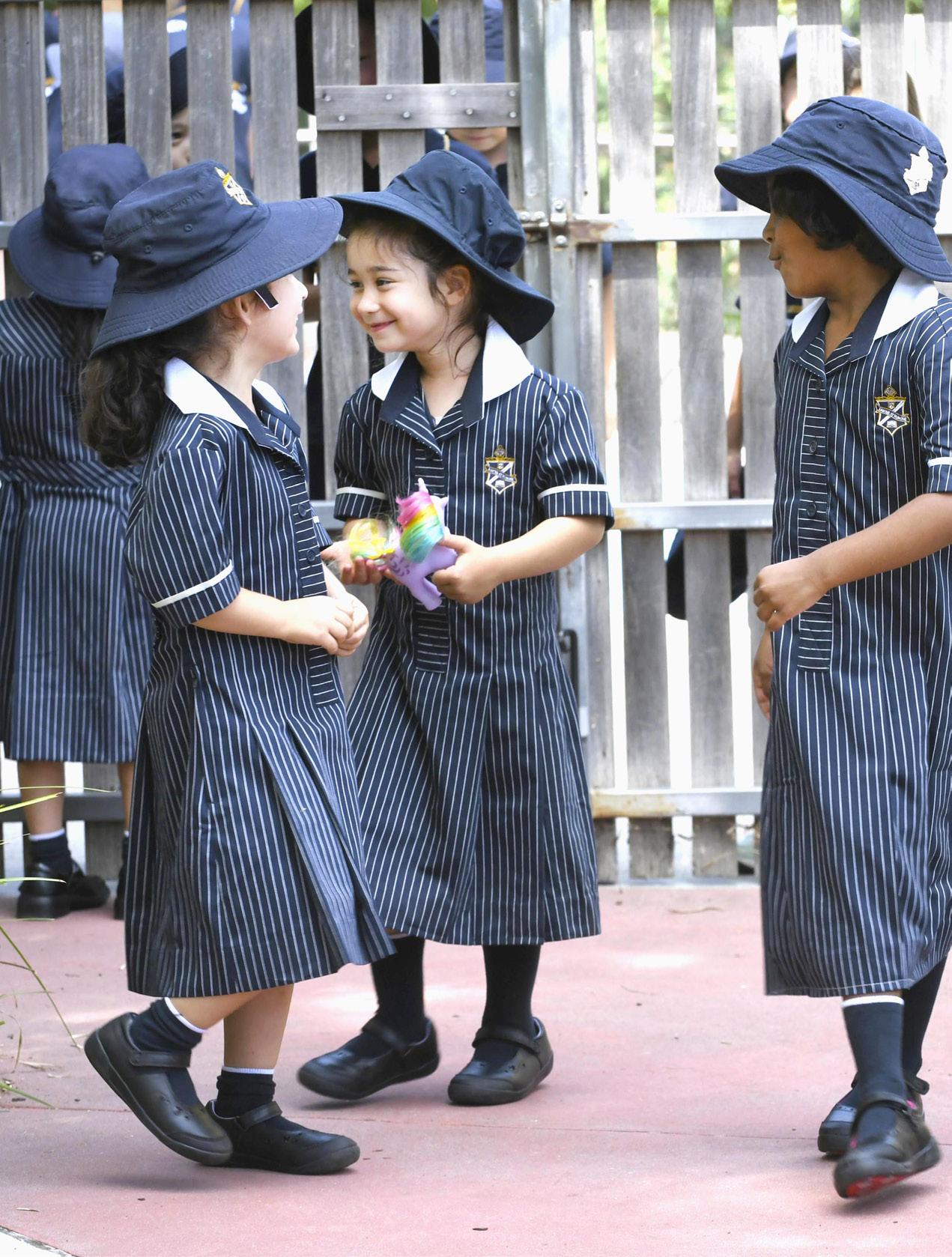
Our Junior School is a place where kindness, curiosity and a strong sense of belonging are deeply embedded in everyday learning. Together, our students, staff and families create a vibrant and supportive community where each child is known, valued and encouraged to thrive.
From Foundation to Year 6, students are guided through a thoughtfully designed learning journey that nurtures wellbeing, fosters academic growth and supports the development of strong character. Learning experiences are intentionally aligned to promote confidence, independence and a love of learning, while recognising each student’s individual strengths and needs.
Our Junior School offers a seamless and enriching progression of programs that empower students to explore, wonder and grow, laying strong foundations for future learning and lifelong success.
SUBJECT SUMMARY
ENGLISH
MATHEMATICS
HUMANITIES
SCIENCE
LANGUAGES
PERFORMING ARTS
PHYSICAL EDUCATION
TECHNOLOGIES
VISUAL ARTS
JUNIOR SCHOOL
FOUNDATION TO YEAR 6
Our Junior School is a vibrant and nurturing learning community where every child is known, valued and empowered to thrive.
From F – Year 6, we celebrate the uniqueness of each learner, recognising their remarkable capacity for curiosity, creativity and growth. We believe students are capable, intelligent individuals who bring strengths, ideas and perspectives that enrich our shared learning journey.
At the heart of the Junior School is a commitment to developing the whole child. We focus deliberately on both mind and heart, ensuring students grow intellectually, socially, emotionally, physically and spiritually. Guided by the Mentone Grammar core Values of Caring, Discipline, Endeavour, Integrity, Resilience, Respect and Service, our programs support students to become confident learners, good citizens and thoughtful contributors to their community, living the School motto Labore et Honore — by work and with honour.
Our Junior School is a place of belonging, where strong, positive relationships underpin learning. We believe children thrive when they feel safe, connected and understood. Through the RULER program and URSTRONG, Junior School students develop emotional intelligence, self-awareness and self-regulation, enabling them to manage emotions, build empathy and form healthy relationships. This focus on wellbeing fosters resilience and equips students with the skills to contribute positively to society through service to others.
Learning in the Junior School is grounded in research informed practice that thoughtfully balances explicit instruction with carefully sequenced learning experiences. We recognise children as naturally curious learners who build understanding through exploration, experimentation and purposeful questioning. Our curriculum is data driven, dynamic and responsive, shaped by learner needs and enriched through student interests, passions and authentic real world connections. Expert teachers design engaging and intellectually challenging experiences that promote deep understanding while intentionally developing students’ critical and creative thinking skills.
Students build strong foundational skills across English, Mathematics, Humanities, Science and Technologies, including ICT. By integrating learning across disciplines, students develop deeper conceptual understanding and can apply knowledge and skills in meaningful contexts. Communication, research, organisation and thinking skills are explicitly embedded across the curriculum to prepare learners for a complex, interconnected and rapidly changing world.
Our flexible learning environments both indoors and outdoors enhance engagement and support a range of learning styles. Spaces are designed to encourage collaboration, reflection, creativity and independence, while fostering a strong connection to nature. Learning is made visible through curated displays that celebrate thinking, progress and achievement, allowing students to reflect on their learning and learn from one another.
JUNIOR SCHOOL
Personal growth and achievement are central to our approach. Student learning is assessed using Victorian Curriculum outcomes, with ongoing assessment informing differentiated teaching and targeted next steps. Teachers work in partnership with students to set meaningful goals, and understand themselves as learners as well as take increasing ownership of their progress.
As students move through the upper primary years, learning becomes increasingly applied, purposeful and future focused. Programs challenge students to make practical connections between their learning and the real world, encouraging them to think innovatively and act with intention. Through projects and problem-based learning, students develop confidence as thinkers and problem-solvers, seeing the world not as something that happens to them, but as a place they can positively influence.
Creative thinking is nurtured and celebrated across the Junior School. Students are encouraged to see themselves as creators and collaborators, and stewards of possibility who explore ideas, embrace the unknown and learn through doing. They develop empathy, adaptability and an action mindset, learning to work together, take considered risks and bring ideas to life..
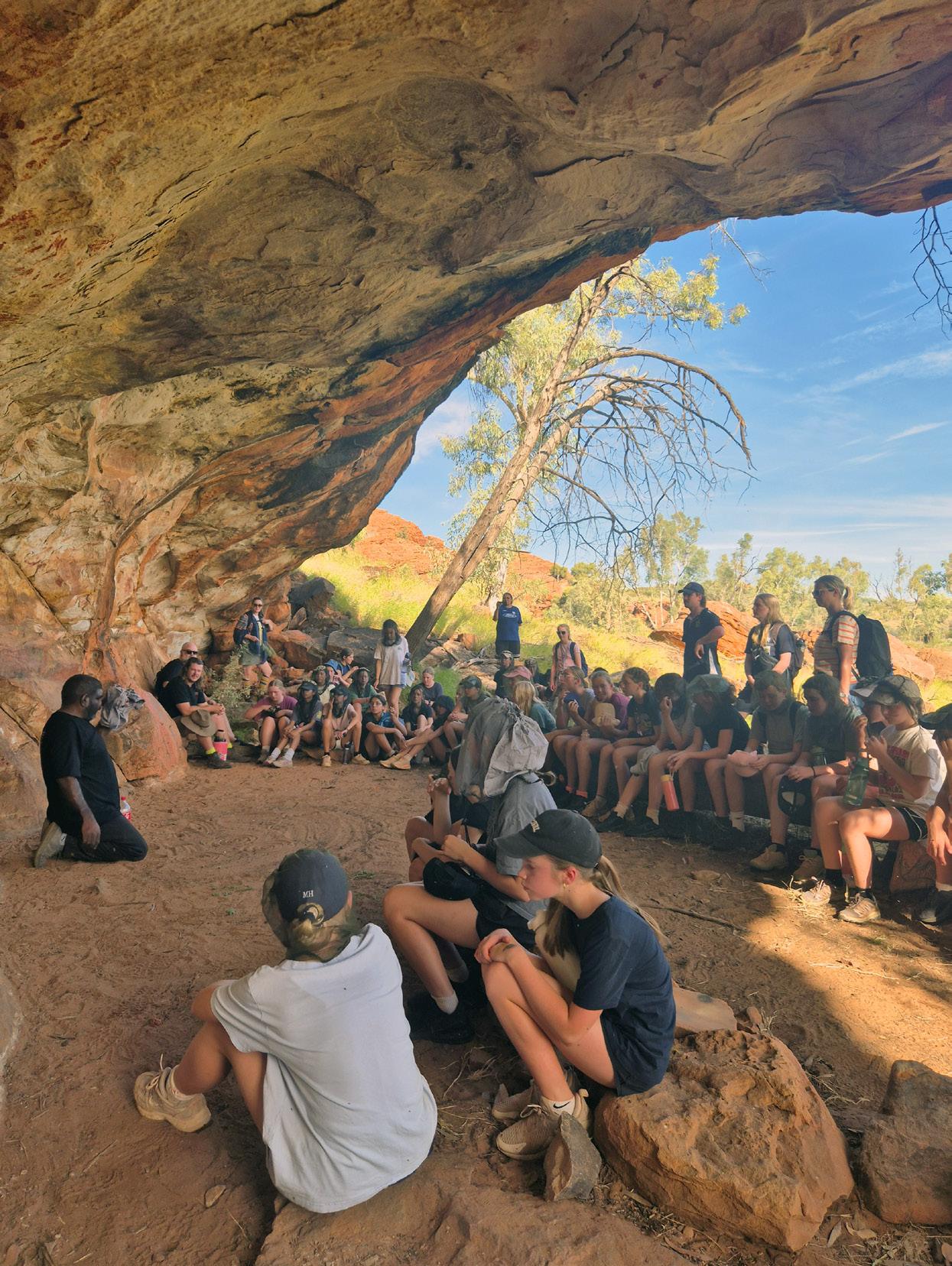
Students also engage in a rich range of specialist subjects including Art and Drama, Chinese, Music, Physical Education, Science, Sport and Technologies, as well as the Global Changemakers program in Year 6. Experiential learning opportunities, including Learning Journeys to Shoreham, Canberra and Cave Hill Creek, place curriculum learning in meaningful contexts and foster independence, leadership and cultural understanding.
Throughout the Junior School, classroom culture emphasises effort, cooperation, thinking and collaboration. Students are encouraged to strive for personal best, respect differences, and act with kindness and integrity. When learners feel truly seen and valued by both adults and peers, they develop the confidence to become proactive, compassionate and committed agents of positive change.
Our Junior School lays strong foundations for lifelong learning by empowering students to understand themselves, connect with others and engage thoughtfully with the world around them. It is a community where curiosity is celebrated, relationships are valued, and every child is supported to grow into the best version of themselves.
ENGLISH
The English curriculum develops students’ skills in reading, viewing, speaking, listening and writing through integrated learning in language, literature and literacy. Concepts and skills build progressively and are taught in authentic and meaningful contexts, with a strong emphasis on fostering a love of reading and understanding the power of language.
For F – Year 2, InitiaLit provides a systematic and explicit approach to early reading and spelling, developing knowledge of phonics, phonemic awareness, vocabulary, fluency and comprehension.
Across the Junior School, our writing program introduces students to a range of creative strategies and text structures for imaginative, persuasive and informative texts, supporting effective communication in a variety of contexts. This is complemented by our spelling programs in Year 3 upwards that deepen understanding of sound–letter relationships, word patterns, morphology and etymology, strengthening students’ spelling, reading and writing.
Through reading, students develop an appreciation of literature and an understanding of how language can inform, persuade, entertain and evoke emotion. This learning is enriched through our Junior School Library program, which builds a strong reading culture and develops information literacy. Students are taught by specialist Librarian teachers to navigate library resources, select texts, and read across formats such as print, eBooks and audiobooks, while exploring a range of genres and the cultural significance of Australian texts and authors.
MATHEMATICS
Mathematics learning develops the knowledge, skills and confidence students need to navigate everyday life and future opportunities. Our learning program fosters enjoyment, curiosity and confidence, helping students recognise the relevance and value of numeracy in meaningful contexts.
Across all year levels, students build understanding across number, algebra, measurement, space, and statistics through carefully sequenced learning and explicit teaching, with probability introduced in Year 3. Instruction is underpinned by a deliberate focus on developing understanding, fluency, reasoning and problem solving, supporting students to become flexible, confident and capable mathematical thinkers.
Learning is supported through hands- on and interactive experiences that encourage students to explore ideas, make connections and apply mathematics to real-world situations. Through collaboration, discussion and reflection, students explain their reasoning, justify strategies and consider multiple solution pathways, building a strong and connected foundation for future learning.
HUMANITIES
Humanities develops students’ understanding of their place, role and participation within their community and the wider world, supporting them to become informed and active members of society.
Geography learning focuses on local, national and global places and environments, examining how people interact with places and why sustainability and care for environments matter. Students use maps, data and other representations to develop and communicate geographical understanding.
In History, students explore the past to better understand the present, developing knowledge and skills through key concepts such as continuity and change, significance and perspectives. Learning highlights Australian history, including the enduring cultures and experiences of Aboriginal and Torres Strait Islander peoples. Civics and Citizenship learning develops students’ understanding of democratic
systems, laws, and the rights and responsibilities of citizens, with a focus on how active and respectful participation strengthens communities. Economics and Business supports students to build financial literacy and decision -making skills by examining how individuals, businesses and governments use resources and make choices that impact communities and the environment.
Together, Humanities learning builds understanding, empathy and informed thinking, preparing students to engage thoughtfully with social, civic and economic issue.
SCIENCE
In Science, students develop curiosity and understanding about how the world works through observing, investigating and explaining natural phenomena. Science is taught by specialist teachers, supporting high- quality instruction and rich, hands- on learning experiences. Learning builds students’ interest and appreciation of the biological, physical, chemical and Earth and space sciences, helping them make sense of the changing world around them.
Across F – Year 6, students investigate topics such as the senses, living things and their lifecycles, materials and their properties, forces, and changes in the Earth and sky. Learning experiences develop foundational scientific knowledge while encouraging students to ask questions, make predictions and explore scientific ideas through a combination of investigations, discussion, observation and guided learning experiences.
Science learning is organised through the interconnected strands of Science Understanding, Science Inquiry Skills and Science as a Human Endeavour. Students develop skills in planning investigations, collecting and interpreting evidence, and communicating ideas using appropriate scientific language. They also learn how scientific knowledge has developed over time and how science is used to solve problems and inform everyday decisions.
Together, these experiences support students to think critically, use evidence effectively and apply their learning beyond the classroom, building confidence as young scientists and active learners.
LANGUAGES
Chinese (Mandarin) is taught from F – Year 6 by a specialist language teacher, supporting students to develop communication skills through listening, speaking, reading and writing. Learning is sequenced to build confidence and understanding as students progress through each year level, with early learning emphasising oral language and comprehension.
Students engage in meaningful language experiences that broaden their ability to understand and communicate ideas in Chinese, while also strengthening connections between Chinese and English. As students progress, they develop foundational reading and writing skills, using Chinese characters and simple texts to support communication.
Learning is enriched through the study of cultural, geographical and historical contexts, supporting students to appreciate the diversity of Chinese -speaking communities and develop respect for different perspectives. Active participation in songs, games, conversations and tasks supports engagement, builds confidence and encourages students to develop their interest and talents in language learning. Together, these experiences support students to become confident communicators and culturally aware learners in an increasingly connected world.
PERFORMING ARTS
Education through the Arts touches the mind, body and spirit and is a powerful force in our lives. It can help us develop an appreciation and understanding of ourselves and of cultures of the world. Through listening, performing and creating, opportunities are created for students to gain a deeper understanding of the Arts as a medium of communication and to express themselves. Furthermore, discussion, analysis and reflection help students become educated consumers of art forms.
In Year 4 students are introduced to Classroom Drama where they learn to explore exaggerated performance, improvisation, movement, voice and role-play, learning how communities solve problems and how values guide choices. Through the power of play the curriculum helps build confidence, empathy and teamwork.
In Music, the Classroom Program allows students an experience of music in order
to develop an appreciation of the arts. It focuses on developing aural skills and musical appreciation through the aid of percussion instruments, music and movement. Orchestral strings classes are a compulsory part of the curriculum in Years 2 & 3, and offered in Year 4 for those students wishing to continue. In a Semester of Music in both Year 5 & 6, students learn a wind, brass or percussion instrument so that they can participate in a School band program. Students are also encouraged to learn musical instruments on an individual basis through private tuition. The music program is both exciting and comprehensive and offers a broad range of engaging performance experiences.
In Drama, they explore ideas of confidence building and interpersonal skills through play and exploration of expressive skills, melodrama, mime, Kabuki and an Indigenous Australian storytelling unit.
PHYSICAL EDUCATION
Physical Education plays a vital role in supporting students’ physical, social and emotional development, promoting active and healthy lifestyles from an early age. Our program is taught by specialist Physical Education teachers and qualified sports coaches, ensuring students benefit from expert instruction and high- quality learning experiences.
From F – Year 6, students develop fundamental movement skills, including running, jumping, throwing and catching, which provide the foundation for participation in sports and team games. Learning follows a sequential, skill-based approach, building coordination, object control, spatial awareness and movement strategies through hands- on activities, modified games and organised sports. Students learn to work collaboratively, apply rules and strategies, and demonstrate teamwork, fair play and respect for others in both cooperative and competitive contexts. Through participation in team games, students develop communication, resilience and leadership skills, while understanding how physical activity supports health and wellbeing. All students participate in an aquatic education program held onsite at the Aquatic Centre. This program develops essential water safety knowledge and foundational swimming skills, supporting confidence, competence and safety in aquatic environments.
TECHNOLOGIES
In Technology, students learn to use digital and product-based technologies to design and create solutions that meet current and future needs. Learning develops creativity, problem-solving skills and an understanding of how technologies impact everyday life.
From F – Year 6, students engage in progressively challenging experiences that develop design, computational and systems thinking. They apply a design thinking process to identify needs, generate ideas, create solutions and reflect on their learning, while considering the impacts of technological change and sustainability.
Students participate in regular, hands- on learning using digital tools, robotics, iPads and design-based engineering tasks, building skills as users, designers and creators. Collaboration, critical thinking and problem -solving are emphasised, with students encouraged to transfer their technological skills across learning contexts.
VISUAL ARTS
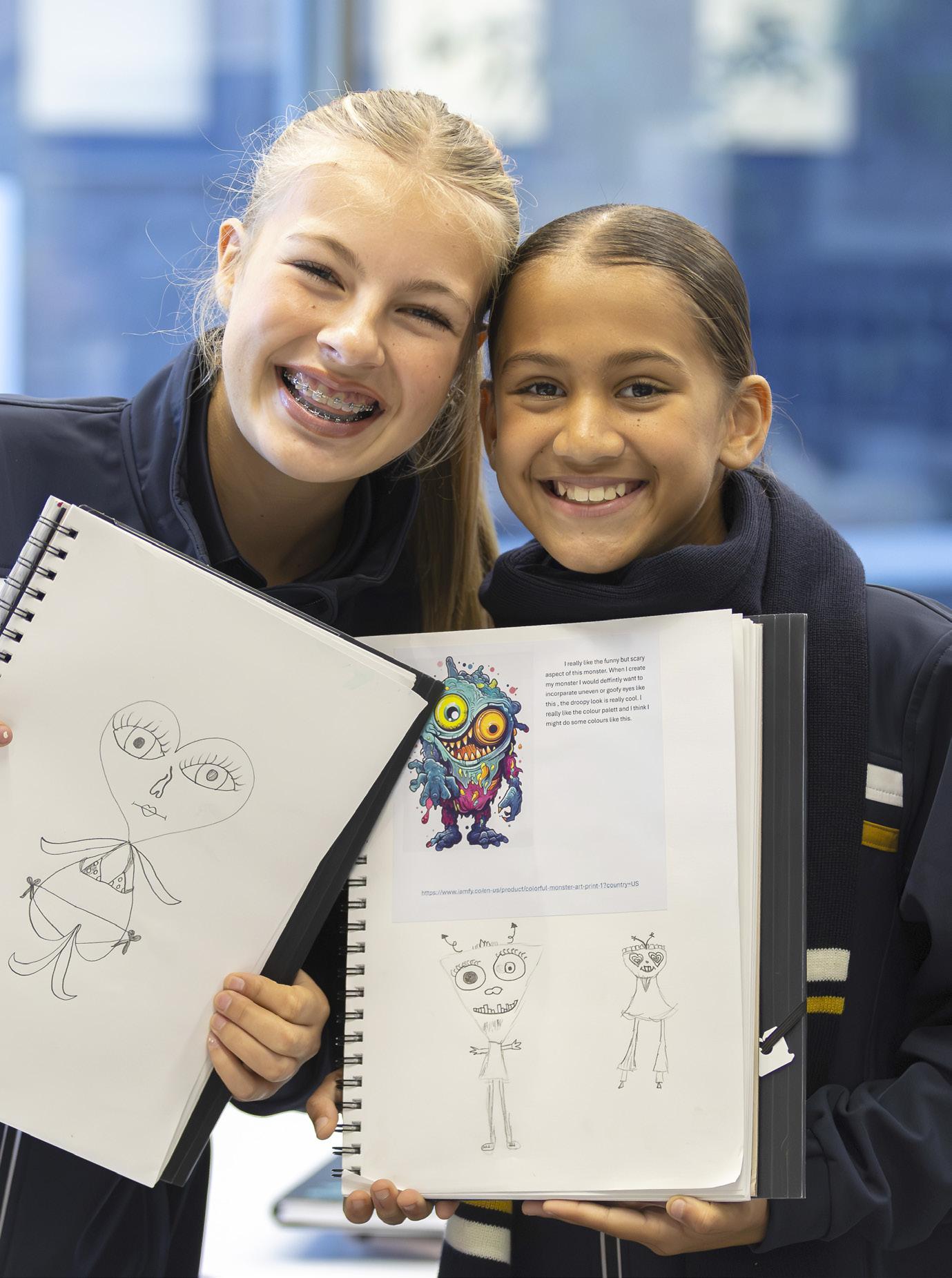
In Visual Arts, students from F – Year 6 are supported to explore, create and respond to artworks while developing imagination, confidence and technical skill. Visual Arts is taught by specialist teachers, providing students with expert guidance and rich creative experiences. Students experiment with a variety of materials, techniques and processes, building skills in drawing, painting, sculpture and printmaking. Through hands on making, students develop an understanding of the elements and principles of art and learn how artworks can communicate ideas, feelings and meaning.
Students reflect on and evaluate their creative process as they experiment with materials and refine ideas. They also view and discuss artworks from different cultures, times and places, developing appreciation and the ability to respond thoughtfully to their own work and the work of others.
Opportunities to share and celebrate creativity, including the biennial Art Show, support students to take pride in their learning and grow as confident young artists.
SUBJECT SUMMARY BAYVIEW YEARS 7&8
ENGLISH
MATHEMATICS
HUMANITIES
SCIENCE
HEALTH & PHYSICAL EDUCATION
LANGUAGES
CHINESE FRENCH GERMAN
PERFORMING ARTS
MUSIC DRAMA
TECHNOLOGIES
DESIGN & TECHNOLOGY
DIGITAL TECHNOLOGY
FOOD STUDIES
VISUAL ARTS
In Bayview, we recognise that adolescence is a time of significant physical, emotional, and cognitive development. That’s why we strive for a safe and nurturing environment that enables exploration, risk-taking, and personal growth. Our students have ample opportunities to develop self-efficacy, self-regulation, and emotional intelligence skills, empowering them to navigate the challenges of adolescence with confidence.
We encourage our students to embrace their unique identities and foster independence. Making mistakes is an essential part of the learning process. Our growth mindset approach emphasises the importance of accepting feedback with an open mind and using it to fuel personal and academic growth.
We aim to spark curiosity and engagement in our students through a holistic and challenging approach to education. Our programs help students develop positive, independent learning habits and routines while building core learning behaviours through organisation, time management, and balancing competing demands. This sets our Bayview students up for success in questioning the world around them and contributing positively to their community.
A FOCUS ON:
Independence
■ in learning
■ beyond School
■ whole-self management
A Growth Mindset
■ e mbraces challenges as opportunities to learn and improve
■ understanding that progress comes through persistence
■ u ses feedback and mistakes as valuable information to deepen understanding
Organisational Skills
■ being prepared to learn
■ uses our diary and digital tools
■ punctual to class and in submitting work
Managing
■ intrapersonal
■ interpersonal
■ social change
■ online, social media
Navigating Competing Pressures
■ academics, clubs, sports, performing arts groups, etc.
■ making positive life choices
■ building empathy and supporting peers
Academic Structure and Curriculum
The academic curriculum is underpinned by the student’s relationship with their Mentor, a teacher who oversees their wellbeing.
This teacher will often teach the class a core subject and see them on a daily basis. This assists in the transition into the senior years, creating a situation where each student’s academic progress can be monitored more closely and communicated more readily to parents/carers. Students also have a number of specialist teachers who deliver specialised classes.
The subjects studied are:
■ English
■ Mathematics
■ Humanities
■ Science
■ Health and Physical Education
■ Languages Chinese, French, or German
■ Performing Arts
Music and Drama
■ Technologies
Design & Technology
Digital Technology
Food Studies
■ Visual Arts
ENGLISH
YEAR 7 ENGLISH
OVERVIEW
With a focus on learning about who we are as readers and writers, students across Year 7 English engage with a wide range of texts across various modes and genres. As they explore narrative, film, poetry and multimodal texts they learn to apply a range of reading strategies to enhance their engagement and comprehension of these texts as well as the broader world these texts are responding to. Texts are selected for themes that reflect the lives of students – those that offer perspectives on belonging, developing friendships and personal growth. They will listen, read, view, interpret, analyse, create and perform as they explore a range of texts.
Their knowledge of text structures and language features will develop as they examine the literary tools, conventions and vocabulary available to authors. And in turn, they will be authors themselves. The English classroom is an active learning space and one which encourages students to share and discuss their ideas and writing, learning from each other as well as their classroom teacher.
The Year 7 Library program aims to promote reading and literacy skills. Lessons cover navigating library resources, fostering effective reading habits, and building a
PATHWAYS
love of reading. Students learn about the benefits of reading for leisure, explore various genres, and develop Information. Students are exposed to texts in different formats, including eBooks, audiobooks, and graphic novels. Additionally, the library program includes the promotion of new books to support teacher and peer recommendations, personal reading responses, identifying genres and their impact on writing and reading choices, and writing reviews and recommendations to share via the online catalogue.
YEAR 8
ENGLISH
OVERVIEW
In Year 8 English, students continue to develop as readers and writers as they engage with a range of texts that are reflective of a diverse world. Whilst undertaking studies of texts from a range of mediums and genres, from narrative and film to Gothic short stories, students will explore the voices and experiences of those who live different lives to their own. Students develop their ability to examine and analyse the choices authors and the creators of texts make, in response to different contexts and a purpose for their audience. Literacy skills are developed using resources such as World Book Online, EBSCO databases, and The Age
Students continue to create their own texts, honing their writing and editing skills and like the authors they study, they too will write responding to a particular context and with a particular purpose and audience in mind. Active engagement and participation in the learning process will continue to play an important role in developing the thinking and writing skills of Year 8 English students. The Year 8 Library program aims to develop Information and Digital Literacy skills across the subject areas in alignment with the General Capabilities in the Australian Curriculum. The lessons cover building skills to find, evaluate, and use information, evaluating reliable and credible sources, and discussing misinformation and disinformation from Year 7 about World Book Online. Students learn lateral reading skills using the SHIFT process to assess information sources. They also examine how to use AI ethically in information seeking and selecting relevant AI tools for specific purposes. The program examines the ethical issues of using AI, identifies how algorithms inform AI, and explores how bias can influence information. Additionally, students learn how to use Gen AI responsibly and creatively, engage in prompt engineering, and culminate their learning in a project to showcase the skills developed in the program. The program also continues to promote reading habits and reading promotion.
Solid Line Indicates:
Successful completion of the previous subject is compulsory
Dotted Line Indicates:
Successful completion of the previous subject is recommended
MATHEMATICS
YEAR 7 MATHEMATICS
OVERVIEW
In Term 1 the Year 7 curriculum is common to all students. In Term 2, Year 7 students are grouped into courses that best suit their learning needs. These courses focus on core/routine, application and enrichment material respectively. The areas developed throughout the course are directly linked to the content listed in the Victorian Curriculum documentation.
Students develop and extend their knowledge through six content strands: Number, Algebra, Measurement, Space, Statistics and Probability. Students use technology to help analyse and display data, begin their exploration of algebra, extend their knowledge of number and investigate a variety of rules to measure perimeter and area. Students are assessed on the detail provided in answering questions, the summaries they develop for each topic and the accuracy provided in recalling past knowledge and skills.
Students have access to a text resource that helps them consolidate and explore learning in an independent setting. Students are also encouraged to enter The Australian Mathematics Competition held during Term 3.
YEAR 8 MATHEMATICS
OVERVIEW
Year 8 students are grouped into courses that best suit their learning needs. These courses focus on core/ routine, application and enrichment material respectively.
The areas developed throughout the course are directly linked to the content listed in the Victorian Curriculum documentation.
Students develop and extend their knowledge through six content strands: Number, Algebra, Measurement, Space, Statistics and Probability. Students further develop their skills in using technology to help analyse and display data, extend their study
PATHWAYS
Solid Line Indicates: Successful completion of the previous subject is compulsory
Dotted Line Indicates: Successful completion of the previous subject is recommended
of algebra including its use in linear relationships and their associated graphs, develop knowledge of rates and ratios and broaden their rules of measurement to include surface area and circle applications. Students are assessed on the detail provided in answering questions, the summaries they develop for each topic and the accuracy provided in recalling past knowledge and skills. Students have access to a text resource that helps them consolidate and explore learning in an independent setting.
Students are also encouraged to enter The Australian Mathematics Competition held during Term 3. Year 9
HUMANITIES
YEAR 7 HUMANITIES
OVERVIEW
In the Year 7 Humanities course, students study a term each of Geography, History, Entrepreneurship and Civics and Citizenship.
Beginning in Term 1, and in anticipation of their Learning Journey to Central Australia, students explore Australian Indigenous culture and history. An understanding of the lineage, history and unique culture is developed throughout the term, with the key skills of historical writing underpinning their studies.
In Term 2, students investigate what it means to be a Citizen of Australia, by developing an understanding of how laws are made and how government is conducted. Year 7 Humanities delves deep into the culture of contemporary Australia.
In Term 3 students become young entrepreneurs, investigating different types of business models. Students are given an environmental problem to solve by creating a unique product or service. Students pitch their idea taking
into consideration and planning for their target audience, manufacturing costs and potential competition.
Through their studies of Geography in Term 4, students investigate the liveability of places. This includes the analysis of factors that influence the decisions people make about where to live and their perceptions of the liveability of places. They also evaluate the accessibility to services and facilities, and environmental quality. Students ultimately compare the liveability of their suburb to the Melbourne CBD.
YEAR 8 HUMANITIES
OVERVIEW
In the Year 8 Humanities course, students again have the opportunity to explore a range of Humanities subjects, spanning from Geography and History to Economics, and Civics and Citizenship. Beginning in Semester 1, students start to explore the formation of Medieval Europe and how the collapse of the Roman Empire gave rise to the foundations of prevailing social conditions
PATHWAYS
Solid Line Indicates: Successful completion of the previous subject is compulsory
Dotted Line Indicates:
Successful completion of the previous subject is recommended
such as law and order and political representation. In this semester, students also extend on understandings developed in Year 7 surrounding entrepreneurship and the formation of a viable enterprise. Through their studies of Geography in Semester 2, Year 8 students investigate the world around them and why certain locations are structured in paricular ways and what influences the formation of both social and geographical spaces. Rounding out the semester, students unpack the Australian identity and the ways in which it has changed, and continues to change, over time. In such exploration, the role of laws, government, and the individual are all investigated in order to understand the evolving nature of Australian culture.
YEAR 9 YEAR 8 YEAR 7
Year 7
Year 8
Year 9
SCIENCE
YEAR 7 SCIENCE
OVERVIEW
Year 7 often represents the first time many students get to experience Science taught in a laboratory on a consistent basis. Therefore, the Year 7 course reflects this new shift in focus by spending time learning about their new environment and working as scientists would work. Divisions within the domain of Science become more clearly defined as topics completed take on a more physical, chemical and biological specialisation.
The principles of the scientific method are taught, practised and reported on in greater detail than they have been in the past. Foundations, theories, rules and laws in science are explored through experimentation. Evidence gathering and conclusion formulation develop throughout the year.
A typical student in Year 7 can expect to experience time working as a scientist, become familiar with the properties of substances, classify living things and where they live, experience the forces that drive the natural world and machines that exploit these forces and separate mixtures.
YEAR 8 SCIENCE OVERVIEW
Students begin to explore each of the scientific domains of Biology, Chemistry and Physics in greater depth and detail. Concepts begin to become a little less tangible, so the use of scientific models to explain natural phenomena becomes very important for students to make sense of things that are frequently unable to be detected by the five senses of the human body. Students begin to analyse these models for their features and their flaws in order to explore and interpret the world around them.
A typical Year 8 student will explore energy and its applications and transformations, delve into the biological world of cells and then look outwards into the systems of the body to keep it functioning successfully. They will explore chemical reactions and chemical substances and their application on a local and global stage as well as in relation to energy and systems within the body.
PATHWAYS
9
Solid Line Indicates: Successful completion of the previous subject is compulsory
Dotted Line Indicates: Successful completion of the previous subject is recommended
HEALTH & PHYSICAL EDUCATION
YEAR 7
HEALTH & PHYSICAL EDUCATION
OVERVIEW
HEALTH
Students will complete a unit of work on friendships, positive relationships and online safety. Students will also cover puberty & hygiene, fitness, body image and nutrition.
PHYSICAL EDUCATION
Year 7 students begin their PE journey with a unit where they will work collaboratively to come up with a fun and energetic game within small groups. Throughout the year they are exposed to sports such as AFL, basketball, volleyball, baseball, soccer and netball. Year 7 Physical Education allows students to improve their overall fitness levels with a major focus on skill improvement and enjoyment.
YEAR 8
HEALTH & PHYSICAL EDUCATION
OVERVIEW
HEALTH
Students complete a unit of work on Respectful Relationships, and explore the physical, social and emotional changes they may experience during adolescence including intimacy, stereotypes and consent. They also explore the topic of Mental Health with a specific focus on stress. Students then investigate strategies to improve personal care to minimise the effects of stress on their daily lives. Students also look at risk taking and complete an introductory unit into the effects of alcohol and vaping.
PHYSICAL EDUCATION
Physical Education provides the opportunity for students to explore a range of different sports under the Game Sense approach to learning and teaching. This model encourages students to develop their strategic and tactical decision making, as well as developing their fine and gross motor skills, across various sporting codes including cricket, European handball and netball.
PATHWAYS
LANGUAGES
YEAR 7 LANGUAGES
OVERVIEW
Students in Year 7 may express a preference to study either Chinese, German or French as their language other than English. Our Year 7 German and French program is a beginners’ course, allowing all students to take part without having studied these languages previously. Our Chinese classes are streamed into two groups, these being the Chinese Heritage program (taught fully in Mandarin) for students from a Chinese-speaking family background, and a mainstream program for students learning Chinese as a foreign language.
PATHWAYS
YEAR 8 LANGUAGES
OVERVIEW
Students in Year 8 continue their language from Year 7 (either Chinese, German or French). Chinese is streamed into Heritage and Beginner classes, but both groups will learn the foundational knowledge required to continue to Chinese in Year 9 and onwards if they choose to do so.
PERFORMING ARTS
YEAR 7
PERFORMING ARTS
OVERVIEW
MUSIC
This semester course provides foundation skills and knowledge of the key musical element of Rhythm.
It is designed as an introduction to knowledge and skills in the following areas:
■ the distinction between beat and rhythm
■ reading and writing rhythmic notation
■ rhythmic composition (STOMP)
■ solo and group performance
There is a focus on Brazilian percussion, where students learn how to play unique instruments relevant to the Samba idiom and perform as a band using established repertoire.
PATHWAYS
This course of study involves:
■ musicology/research into the instruments
■ understanding the structures of Samba Band music
■ gaining individual experience of playing a variety of percussion instruments
■ group performance and teamwork skills.
OVERVIEW
DRAMA
Across a semester, Year 7 students explore various character design elements and narrative structure, through the lens of Superheroes. They enhance their dramatic abilities by envisioning and crafting roles and relationships that reflect characters aligned with diverse performance styles and contexts.
Students master improvisation techniques, delving into the physical nuances and expressions that shape character portrayal, learning dramatic terminology and critical analytical and feedback skills.
They dissect the narrative arc of The Hero’s Journey, gaining insights into how to articulate significance and hierarchy through dynamic expression.
The improvisation module serves as the Skill Based Assessment, while the Superhero Design & Performance Unit constitutes the Weighted Assessment, both fostering the development of their creative, collaborative and performative skills.
Solid Line Indicates: Successful completion of the previous subject is compulsory
Dotted Line Indicates: Successful completion of the previous subject is recommended
Elective Subject
Year 9
Music
Technology
Year 9
Music
Performance
Year 9
Drama
YEAR 8 PERFORMING ARTS
OVERVIEW
MUSIC
This course develops skills and knowledge in performance and composition. Students learn these skills through a purely hand-on approach, learning progressive scaffolded beginner guitar skills, learning to play songs and recording themselves in group performances.
Students are introduced to music production using loops and drum sequencing to create compositions in BandlLab.
This course of study involves:
■ practice process, self-review and structured goal setting
■ development of basic guitar skills
■ development of compositions using BandLab
■ solo and group performance tasks.
OVERVIEW
DRAMA
Embark on a thrilling semester-long journey where Year 8 students amplify their dramatic talents, crafting vivid roles and relationships that breathe life into characters tailored for various performance styles and scenarios. They dive into the art of improvisation, mastering the physical lexicon and traditions that define character development.
The adventure includes a foray into the vibrant world of Physical Theatre and slapstick comedy, dissecting stereotypes with a critical eye.
This semester is split into two exhilarating units: Unit 1 is an exploration of Stereotypes, marked as a Weighted Assessment, while Unit 2 is a comedic escapade into Comedy Performance, evaluated as a Skill Based Assessment. Together, these units are designed to sharpen students’ expressive skills, preparing them for a dynamic future of creative thinking and confidence.
TECHNOLOGIES
YEAR 7 TECHNOLOGIES
DESIGN AND TECHNOLOGY
OVERVIEW
This is an introductory design-based curriculum that focuses on critical and creative thinking through the lens of product design. At the core of this unit of study, students implement the design process to develop a viable solution to a specified need or problem. Students are encouraged to undertake focused research, generate a range of design concepts before producing their solution. A reflective evaluation is used to conclude the process. In this unit of study students also employ a range of traditional and digital techniques to produce their final products. Students are introduced to the safe use of basic hand tools and simple plant machinery.
DIGITAL TECHNOLOGY
OVERVIEW
In Year 7 Digital Technology students are introduced to the impact of cybersecurity and information privacy, learning the importance of keeping our information safe and appropriate etiquette. They explore file structures, basic computer fundamentals and digital systems. Students examine the systems in a functioning robot, they write block based code to control the robots, learning how to respond to inputs from sensors and code the robot accordingly. Students employ a range of coding concepts such as variables, loops, binary selection, and functions. They use robotic systems to solve simple problems and explore the impact that such systems are having on society. Simple programs are created to explore game design and coding concepts also which are built on in further years in programming. Students also investigate website design, formats, and conventions, incorporating images, text and video.
YEAR 8 TECHNOLOGIES
DIGITAL TECHNOLOGY
OVERVIEW
Students evaluate how different systems are secured against cyber threats. They explore how different technologies allow for the efficient transfer of ideas and how systems connect together.
Students explore innovative technology and investigate the increasing and varied use of drones in industry and the implication on society. They investigate drone design for various specific use and learn how to program and control drones to perform specific manoeuvres and tasks.
The use of spreadsheets in business is also explored including creating formulas and functions to collect, manipulate and calculate data and create charts to convey findings visually.
A digital solution is created and added to throughout the course to showcase student learning and achievement using Figma, a website prototyping software program.
FOOD STUDIES
OVERVIEW
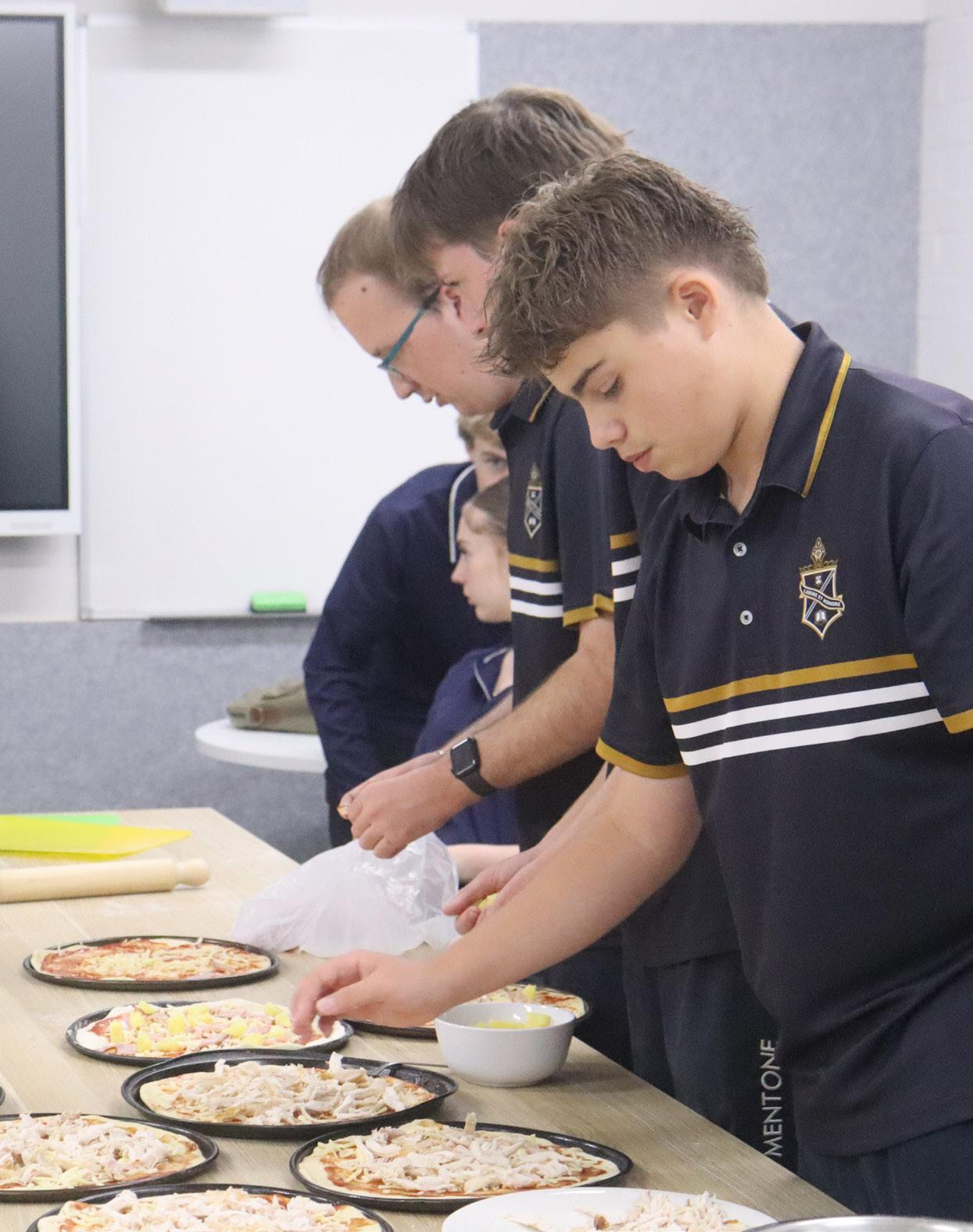
Year 8 Food Studies introduces students to essential kitchen skills with a strong focus on health, hygiene, and safety. Students develop foundational knife skills and effective cleaning routines to ensure safe and efficient kitchen practices. Practical lessons build students’ confidence as they learn to prepare functional, healthy food products that can be replicated at home.
Students are introduced to the Technology Design Process, applying the principles of the Australian Guide to Healthy Eating to design and create their own dish. This hands-on and engaging subject aims to develop practical life skills, encourage creativity, and foster confidence in the kitchen.
PATHWAYS
Solid Line Indicates: Successful completion of the previous subject is compulsory
Dotted Line Indicates: Successful completion of the previous subject is recommended Elective Subject
VISUAL ARTS
YEAR 7 VISUAL ARTS
OVERVIEW
In Visual Arts, students explore three units of work: drawing, painting and sculpture. The core skills assessed relate to exploring and expressing ideas, visual art practices, presenting and responding. There is a focus on students learning to work through the creative process to develop final artworks. They learn to analyse and interpret the way that artists communicate their ideas. They explore, develop, and refine skills using a variety of materials and techniques.
The process is recorded and annotated in their visual diary to evaluate these qualities in their final artworks. We encourage all students to experiment with the creative process to enhance learning and increase confidence. Students will have the opportunity to showcase their work during our annual Art, Design, Media & Technology Expo.
YEAR 8 VISUAL ARTS
OVERVIEW
In Visual Arts, students explore three units of work: drawing, painting and sculpture. The core skills assessed relate to exploring and expressing ideas, visual art practices, presenting and responding. There is a focus on students learning to work through the creative process to develop final artworks. They learn to
PATHWAYS
Solid Line Indicates: Successful completion of the previous subject is compulsory
Dotted Line Indicates: Successful completion of the previous subject is recommended
analyse and interpret the way that artists communicate their ideas. They explore, develop, and refine skills using a variety of materials and techniques. The process is recorded and annotated in their visual diary to evaluate these qualities in their final artworks. We encourage all students to experiment with the creative process to enhance learning and increase confidence. Students will have the opportunity to showcase their work during our annual Art, Design, Media & Technology Expo.
Year 9 Visual Communication Design
SUBJECT SUMMARY
CORE: ENGLISH
MATHEMATICS
HUMANITIES
SCIENCE
HEALTH & PHYSICAL EDUCATION
ELECTIVE:
COMMERCE
BUSINESS ENTREPRENEUR
ENRICHMENT
INVESTIGATION AND INQUIRY
LANGUAGES
CHINESE (CONTINUING)
GERMAN (CONTINUING)
VSL LANGUAGES DISTANCE ED
PERFORMING ARTS
MUSIC PERFORMANCE
MUSIC TECHNOLOGY DRAMA
TECHNOLOGIES
DIGITAL TECHNOLOGY
ANIMATION & DIGITAL MEDIA
DIGITAL TECHNOLOGY PROGRAMMING
FOOD STUDIES
PRODUCT DESIGN TECHNOLOGY CAD/CAM
PRODUCT DESIGN TECHNOLOGY MATERIALS
VISUAL ARTS
ART MEDIA
VISUAL COMMUNICATION DESIGN
GREENWAYS YEAR 9
Greenways is home to our Year 9 students. Students learn about leadership through service, personal development, a student-led Café program, Learning Journeys, and a range of classical and contemporary core subjects and electives. It is in Greenways where students are placed in mixed gender elective classes, as preparation for their transition into the senior years of Frogmore.
Our strong academic program includes a broad offering of academic subjects. Students are well supported in their academic program through attendance at supervised study sessions each week.
Through the Greenways Café program, Greenways students effectively manage a business, learning valuable skills in hospitality, financial literacy, marketing and business management and students all complete an accredited barista certificate and food handling qualification.
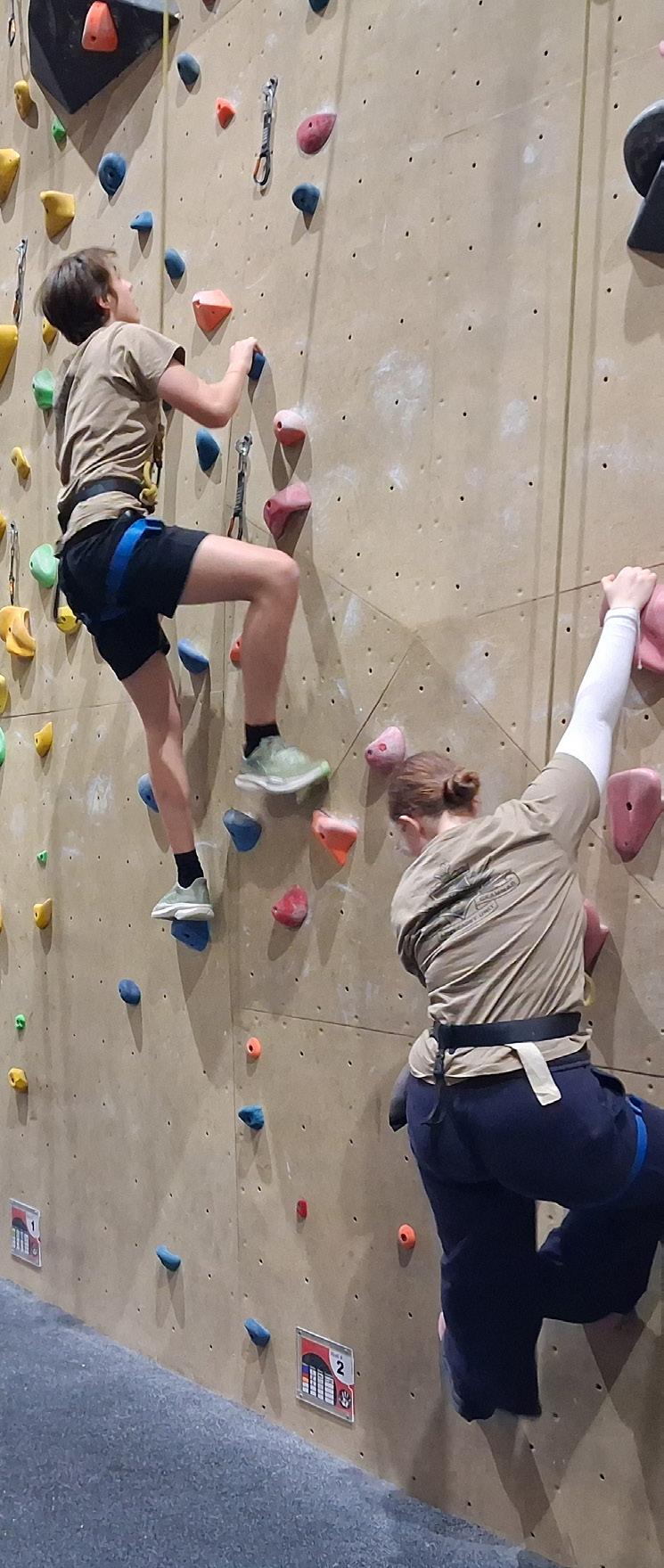
The Greenways Learning Journeys are experiential learning initiatives aimed at taking students out of the classroom and expanding their comfort zones by immersing them in a range of environments that are fun, challenging and stimulating.
Our vision is to provide students with skills that can be transferred to all aspects of their lives whilst still keeping in touch with the school curriculum.
GREENWAYS YEAR 9
The Greenways Learning Program invites students to explore personal interests and develop skills, knowledge and understanding in increasingly sophisticated ways.
CORE SUBJECTS
In Year 9, all students study core subjects offered in the learning areas of English, Mathematics, Science, Humanities, Health and Physical Education.
GREENWAYS ELECTIVES
Greenways students have the opportunity to submit their preferences to study a number of elective subjects, in addition to their five core subjects.
At Year 9, students must select a total of four units of elective studies
The unit value of a subject depends on the length of the subject:
■ If a subject runs for one semester, it counts for one unit.
■ If a subject runs for two semesters, it counts for two units.
Students are able to select any combination of semester/year-long subjects, provided the total value of their elective selections is four units. Students must also select two reserve elective subjects.
YEAR 9
ELECTIVE SUBJECT SELECTION
STUDENTS NEED TO SELECT FOUR UNITS OF ELECTIVE SUBJECTS
■ If a subject runs for one semester: It counts for one unit.
■ If a subject runs for a full Year: It counts for two units.
Every effort will be made to ensure that students receive their first preferences.
* Entrance into this subject will be evaluated based on students’ Learning Behaviours in the previous year.
^ Entrance into VSL is subject to approval by the Head of Languages.
2027 CORE SUBJECTS YEAR 9
ENGLISH
MATHEMATICS
HUMANITIES
SCIENCE
HEALTH & PHYSICAL EDUCATION
ENGLISH ( CORE )
YEAR 9
ENGLISH
OVERVIEW
Year 9 English students continue their journey of developing and experimenting with their voice as a writer. With a focus on writing with a purpose, students examine the genre of memoir and its literary features crafting their own memoirs with the purpose to reflect. As readers, they continue to explore different genres and forms, such as dystopian fiction and the representation of superheroes in film, and develop their ability to see texts as offering commentary and insight into the human experience.
Their exploration as writers continues as they interrogate the digital world of news and misinformation and develop their understanding of the power of language to influence and persuade. Importantly, students develop a critical understanding of the contemporary media and the difference between media texts.
PATHWAYS
Solid Line Indicates: Successful completion of the previous subject is compulsory
Dotted Line Indicates: Successful completion of the previous subject is recommended Elective Subject
MATHEMATICS ( CORE )
PATHWAYS
Solid Line Indicates:
Successful completion of the previous subject is compulsory
Dotted Line Indicates:
Successful completion of the previous subject is recommended
Elective Subject
YEAR 8
Year 8 Mathematics
YEAR 9
Year 9 Mathematics
YEAR 10
Year 10
Mathematics (Foundation)
Year 10
Mathematics (General)
Subject to the approval of the Head of Mathematics
Year 10
Mathematics (Methods)
Units 1 & 2
Mathematical Methods
YEAR 9 MATHEMATICS
OVERVIEW
Year 9 students are grouped into courses that best suit their learning needs. These courses focus on core/routine, application and enrichment material respectively.
The Year 9 curriculum follows and covers the content outlined in the Victorian Curriculum documentation. There are six content strands: Number, Algebra, Measurement, Space, Statistics and Probability.
Students develop their algebraic skills, graphing skills and mental manipulation skills. They also learn to effectively use CAS technology to assist in solving problems and consolidate their understanding of new concepts using the online software program that comes with their textbook.
Students also have the opportunity to learn to collect and analyse data while on their Learning Journeys, as part of the Statistics strand.
Students are also encouraged to enter The Australian Mathematics Competition held during Term 3.
HUMANITIES ( CORE )
PATHWAYS
YEAR 8
Year 8 Humanities
YEAR 9 YEAR 10
9 Humanities
Year 9 students going into Year 10 MUST select two Humanities subjects, maximum of three.
Solid Line Indicates: Successful completion of the previous subject is compulsory
Dotted Line Indicates: Successful completion of the previous subject is recommended
Elective Subject
YEAR 9 HUMANITIES
OVERVIEW
In Year 9 Humanities, students engage with foundational disciplines: History, Geography, Sociology, Civics and Citizenship.
The historical component centres on transformative global events like World War One, challenging students to analyse how these watershed moments shaped our modern world through evidencebased critical thinking.
The geographical focus examines the complex relationship between physical and human environments, with particular emphasis on biomes and the escalating impacts of climate change.
Civics and Politics will focus on assisting students in understanding their political views and those of others. They will also be introduced to the complexities of Australian society and the contemporary world.
The sociological dimension investigates how both primary and secondary agents of socialisation—including family, peers, education, and the media—fundamentally shape individual identity formation and social structures.
Throughout this integrated curriculum, students build analytical frameworks that connect developments to present challenges while developing skills for active participation in a dynamic global society.
SCIENCE ( CORE )
PATHWAYS
YEAR 8
Year 8 Science
YEAR 9
Year 9 Science
YEAR 10
Year 10 Science
Solid Line Indicates:
Successful completion of the previous subject is compulsory
Dotted Line Indicates:
Successful completion of the previous subject is recommended
Compulsory Subject
Elective Subject
Year 10 Science Advanced
Year 10 Science Essentials
Year 10 Investigating Biology
Year 10 Psychology
YEAR 9 SCIENCE
OVERVIEW
Science provides an empirical way of answering interesting and important questions about the biological, physical and technological world. Science is a dynamic, collaborative and creative human endeavour, arising from our desire to make sense of our world through exploring the unknown, investigating universal mysteries, making predictions and solving problems.
In Year 9, students continue to study Biology, Chemistry and Physics and Environmental Science. Topics include: The Atom; Body Coordination; Radiation; Disease; Reaction Types; Electrical Energy and Sustainable Ecosystems.
HEALTH & PHYSICAL EDUCATION
PATHWAYS
YEAR 9
YEAR 10
Solid Line Indicates: Successful completion of the previous subject is compulsory
Dotted Line Indicates: Successful completion of the previous subject is recommended Elective Subject
YEAR 9 HEALTH & PHYSICAL EDUCATION
OVERVIEW
PHYSICAL EDUCATION
Course content in Physical Education at Year 9 involves a Game Sense approach to all units of work. This teaching/learning method emphasises the development of tactics and decision-making. It encourages participants to think strategically and solve problems that arise in small sided/modified structured games including soccer and indoor hockey.
HEALTH
Students complete a unit of work on personal identity, sexuality and respectful relationships. They examine the impact of changes and transitions in relationships and how to make healthy and safe personal choices. Topics discussed include: STI’s, consent, gender diversity and stereotypes.
Students investigate risk taking behaviours and explore the impacts such choices have on individual health and develop strategies for harm minimisation (drugs, vaping and alcohol). Students explore nutrition, in particular, the role and influence sugar has on the body and evaluate various sources of nutritional information.
2027 ELECTIVE SUBJECTS YEAR 9
COMMERCE
ENRICHMENT
LANGUAGES
PERFORMING ARTS
TECHNOLOGIES
VISUAL ARTS
COMMERCE
YEAR 9 BUSINESS ENTREPRENEUR
SUBJECT LENGTH: SEMESTER UNIT VALUE: ONE
OVERVIEW
This is a semester based course that allows students to develop age appropriate financial literacy skills in the context of establishing and operating a small business, such as a café, with the aim of helping students to prepare for financial independence.
PATHWAYS
INVESTIGATION OF FINANCIAL LITERACY KNOWLEDGE AND SKILLS
Key Concepts covered
■ What’s a personal budget and why do I need one?
■ How does income tax and superannuation apply to me?
■ What’s a mobile phone contract?
■ Can I afford to move out of home?
■ Buying your first car –what do I need to know?
■ Bank account and debt basics
■ Avoiding the pitfalls – scams & fraud.
FUNDAMENTALS involved in the establishment of a small business
Key Concepts covered
■ The business idea
■ Purpose of your business
– profit or social enterprise?
■ Business plan basics
■ Marketing your small business
■ Legal requirements
■ Financial basics
– cash budgeting
■ Careers education via simulation activities to reinforce activities learnt in Mentor/Careers Education.
ENRICHMENT
YEAR 9
INQUIRY AND INVESTIGATION
SUBJECT LENGTH: SEMESTER UNIT VALUE: ONE
OVERVIEW
The Year 9 Inquiry and Investigation unit allows students to design their own inquiry question on a topic they are passionate about.
Students will learn to consider global issues, develop a research question, expand their knowledge based on in-depth research, identify potential solutions and develop an action plan to address their chosen problem.
Using the guided inquiry process, students develop skills in problem solving, research, critical thinking, collaboration and presentation through verbal or written communication. Students will produce a portfolio of work as they navigate the guided inquiry steps and are assessed according to key competencies considered essential for 21st Century learners. This unit aims to develop our students into informed global citizens, allows students to integrate their passions into learning, and cultivates skills and competencies that extend into multiple disciplines.
Entrance into this subject will be evaluated based on students’ Learning Behaviours in the previous year.
PATHWAYS
YEAR 9 YEAR 8
Year 9 Inquiry and Investigation
YEAR 10
LANGUAGES
YEAR 9 LANGUAGES
CHINESE (CONTINUING)
CHINESE HERITAGE (CONTINUING)
SUBJECT LENGTH: YEAR
UNIT VALUE: TWO
OVERVIEW
Chinese in Year 9 is streamed into two groups, these being the Chinese Heritage program (taught fully in Mandarin) for students from a Chinese-speaking family background, and a mainstream program for students learning Chinese as a foreign language. The focus of Year 9 Chinese is to reinforce skills previously introduced in Year 8 and extend students’ understanding. Topics are drawn from the wider world of students’ experiences and interests, and include family and friends, entertainment, food and sport.
GERMAN (CONTINUING)
SUBJECT LENGTH: YEAR
UNIT VALUE: TWO
OVERVIEW
This course is offered to students who studied German in Year 8. The focus of Year 9 German (continuing) is to reinforce skills previously introduced in Year 8 and extend the understanding and use of them. Cartoons are still used to springboard language concepts, with unit topics being selected for their interest and relevance to teenagers. Topics are drawn from the wider world of students’ experiences and interests, and include family and friends, entertainment, food, and sport.
VSL LANGUAGES – DISTANCE ED
SUBJECT LENGTH: YEAR
UNIT VALUE: TWO
OVERVIEW
This course allows students to study a language outside of our mainstream offerings (Chinese and German). Through the Victorian School of Languages, students are able to study Croatian, French, Greek, Indonesian, Italian, Japanese, Latin, Spanish or Vietnamese. Learning is via Distance Education mode, with students regularly submitting work to a teacher at the VSL, and undertaking regular conversational lessons via Skype or phone. Students may take these subjects as either a beginner or via an accelerated program but it is essential that the student is a confident, independent learner due to the nature of the study. As a guideline, Learning Behaviours should be high (mostly ‘Consistently’ and no lower than ‘Usually’) in all areas.
PATHWAYS
Solid Line Indicates: Successful completion of the previous subject is compulsory
Elective Subject It is recommended that students speak to the Head of Languages to discuss eligibility for the different Chinese pathways.
8
PERFORMING ARTS
YEAR 9
PERFORMING ARTS
MUSIC TECHNOLOGY
SUBJECT LENGTH: SEMESTER
UNIT VALUE: ONE
OVERVIEW
Audio Alchemy:
Transforming Music with Technology
Immerse yourself in the world of music and unleash your creative potential with our exciting Year 9 Music Technology course. This semester-long program is designed to provide students with a solid foundation in musical performance and a pathway towards further studies in VCE Music and VCE Music Industry. Through engaging lessons and hands-on activities, students develop essential skills and knowledge across a diverse range of music-related areas. Dive into the realm of sound reinforcement, explore the principles of music physics, and discover the power of digital music production.
Students unleash their creativity as they learn the art of composition and gain proficiency in notation software. They develop an understanding of music theory and aural skills, while unravelling the intricacies of the elements of music and basic compositional techniques. Our course places a strong emphasis on personal responsibility and independent learning. Students are encouraged to take ownership of their learning, with a flexible assessment agenda that allows for personalised growth and development. This elective leads to consolidation and advancement of these skills in Year 10.
MUSIC PERFORMANCE
SUBJECT LENGTH: SEMESTER
UNIT VALUE: ONE
OVERVIEW
Unleash Your Musical Potential
This engaging program focuses on honing practical music-making and performance skills, allowing students to shine both as a soloist and in ensemble settings. This semesterlong program is designed to provide students with a solid foundation in musical performance and a pathway towards further studies in VCE Music Performance.
Throughout the course, students dive into the world of music performance, meticulously preparing and delivering solo and ensemble works, providing a deeper understanding and appreciation of different musical styles and genres.
Students also embark on a creative exploration, crafting a unique folio of brief creative responses. They have the opportunity for self-reflection and growth. Students document their creative process, reflecting on their approach to creating music.
Students also analyse the treatment of specific music elements, concepts, and compositional devices in various musical pieces. By studying music created using different approaches to musical organisation, they develop a well-rounded perspective and refine their analytical skills.
Our course places a strong emphasis on personal responsibility and independent learning. Students are encouraged to take ownership of their learning journey, with a flexible assessment agenda that allows for personalised growth and development. This elective leads to consolidation and advancement of these skills in Year 10.
DRAMA
SUBJECT LENGTH: SEMESTER
UNIT VALUE: ONE
OVERVIEW
Dive into the Year 9 course, a theatrical odyssey that investigates the avantgarde ethos of Jerzy Grotowski’s Poor Theatre. Here, less is infinitely more, and the stage becomes a laboratory where creativity and critical thinking skills are championed. Students embark on an explorative quest, harnessing the power of Theatre to probe the depths of the human experience and craft performances that resonate with their most poignant life moments.
Students are encouraged to leap into the unknown, wielding their thoughts and expressions as tools for innovation. They forge a solid grasp of playmaking, with a spotlight on the transformative art of Improvisation. As they critically examine their use of voice, movement, gesture, and facial expressions, students become self-reflective, confident communicators.
Collaboration takes centre stage as students pair up to pen their own Life Monologues, supporting each other, pushing boundaries to explore non-realistic Performance Styles.
This course hones analytical skill, where feedback is the fuel for growth. Students master the dramatic terminology, growing their skills. They also become set designers, infusing symbols into their creations.
Beyond the stage, this course is a catalyst for:
■ personal growth
■ bolstering confidence
■ public speaking
■ interpersonal connections
■ emotional intelligence
■ problem-solving skills.
The curtain rises on three summative assessments: the first spotlighting Improvisation Skills, the second a showcase of monologue-based writing and directing skills, and the third an investigation into set design. Prepare to be transformed by the power of performance.
PATHWAYS
Solid Line Indicates:
Successful completion of the previous subject is compulsory
Dotted Line Indicates:
Successful completion of the previous subject is recommended
Elective Subject
TECHNOLOGIES
YEAR 9 TECHNOLOGIES
DIGITAL TECHNOLOGY – PROGRAMMING
SUBJECT LENGTH: SEMESTER UNIT VALUE: ONE OVERVIEW
In Year 9 Digital TechnologyProgramming students investigate the creative and logical processes of problem solving through programming. They develop algorithms to describe logical processes they encounter in everyday life and learn how computer simulations help solve complex problems. Students discover how data is represented in computer systems and ways in which it can be manipulated to ensure efficient and secure transmission and storage. Students explore a range of different programming contexts such as game development, website development and networked components.
DIGITAL TECHNOLOGY – ANIMATION & DIGITAL MEDIA
SUBJECT LENGTH: SEMESTER UNIT VALUE: ONE OVERVIEW
Students investigate various forms of digital media and digital manipulation techniques to produce a range of animations using the Adobe Creative Cloud suite of programs. Utilising the design process, they create mind maps and storyboards as critical and creative thinking tools to develop and communicate a variety of concepts. Students explore many animation techniques including Kinetic Typography, Rotoscoping and Lip Sync. They explore a range of creative techniques to inform and entertain using digital media creation tools such as Animate CC, Photoshop, Illustrator and InDesign.
PRODUCT DESIGN & TECHNOLOGY
– MATERIALS
SUBJECT LENGTH: SEMESTER UNIT VALUE: ONE OVERVIEW
This is a design-based curriculum that focuses on critical and creative thinking through the lens of product design. At the core of this unit of study, students implement the design process to develop a viable solution to a specified ‘real-world’ need or problem. Students are encouraged to undertake focused research, generate a range of design concepts before fabricating their own solution. A reflective evaluation is used to conclude the process. In this unit of study students also employ a range of traditional and digital techniques to produce their final products. Students are further introduced to the safe use of hand tools and plant machinery.
PRODUCT DESIGN & TECHNOLOGY – CAD/CAM
SUBJECT LENGTH: SEMESTER UNIT VALUE: ONE
OVERVIEW
This unit of study is directed in developing a range of highly practical contemporary design and production skills that give students insight into the rapidly changing manufactured world we live in today. Through a design process students research to develop creative yet targeted design concepts that are refined and modelled through Computer Aided Design (CAD) in preparation for manufacture. As a continuation, Computer Aided Manufacturing (CAM) techniques such as Laser Cutting and 3D Printing are then employed to bring the student’s final design to fruition.
FOOD STUDIES
SUBJECT LENGTH: SEMESTER UNIT VALUE: ONE
OVERVIEW
Year 9 Food Studies builds on the knowledge and skills developed in Year 8, with a deeper focus on sensory analysis and nutrition. Students begin the course by undertaking comparative food testing, providing opportunities to conduct food industry-style qualitative and quantitative analysis. Nutrition is a key focus, with students exploring the Australian Guide to Healthy Eating and applying this knowledge to modify recipes and design balanced menus.
To further develop design skills, students respond to a design brief that requires them to investigate, design, produce, and evaluate a healthy and sustainable food product. This project encourages creativity, critical thinking, and independent decision-making, allowing students to express their ideas through a design of their choice.
Practical classes focus on the production of family favourite style dishes that students are encouraged to cook at home with their family.
VISUAL ARTS
YEAR 9
VISUAL ARTS
Year 9 Visual Arts offers three subject options: ART, MEDIA and VISUAL COMMUNICATION DESIGN (VCD). Each elective may be chosen as a semester offering or extended to a full-year elective and chosen twice.
ART
SUBJECT LENGTH: SEMESTER UNIT VALUE: ONE
OVERVIEW
In Art, we aim to assist students to enjoy the experience of creating as this develops individual skills and the desire to learn and experiment with a wide range of techniques. Students develop specialised skills in a range of artforms such as painting, drawing, printmaking, textiles, sculpture, digital photography, and mixed media. Imagination and creativity are promoted through a process of explorations and teacher supported activities.
PATHWAYS
MEDIA
SUBJECT LENGTH: SEMESTER
UNIT VALUE: ONE
OVERVIEW
In the Year 9 Media elective, students embark on an exciting exploration of media literacy and creativity. Through hands-on experiences, they learn to critically analyse various forms of media, such as film, photography, advertising and digital content. Students gain practical skills in media production, including scripting, storyboarding and editing. They also delve into the ethical considerations surrounding media consumption and production, fostering a deeper understanding of the impact of media on society. This elective empowers students to become discerning media creators and consumers, preparing them for the dynamic and digital landscape of the 21st Century.
VISUAL COMMUNICATION DESIGN
SUBJECT LENGTH: SEMESTER UNIT VALUE: ONE
OVERVIEW
In Year 9 Visual Communication Design (VCD) students explore the world of design through areas such as architecture, graphic design and product design. Within these explorations students will build upon and develop their drawing skills from observational drawing through to technical presentations. Creative thinking techniques will be introduced to help encourage students to actively develop problem solving skills and solve human-centred problems. This is a fundamental part of the design process. Students may cover topics from logo or package design, object design, interactive design and environmental design.
Solid Line Indicates: Successful completion of the previous subject is compulsory
Dotted Line Indicates: Successful completion of the previous subject is recommended Elective Subject
FROGMORE
Frogmore is a vibrant hub that provides an immersive and well-rounded learning environment where students are invited to customise their learning experience and find their own personal definition of excellence.
Throughout the Frogmore journey, students are closely supported by a community of passionate teachers and wellbeing staff who are highly regarded for the positive relationships they build with students, based on mutual respect and genuine care.
Year 10 is where life in Frogmore begins, offering a range of elective subject pathways which allow students to explore personal interests and develop skills, knowledge, and understanding in preparation for their senior years.
Continuing into Years 11 and 12, our VCE program delivers a comprehensive range of subjects – including selected vocational education offerings and an alternate vocational pathway – to empower students to achieve their academic, career, and personal goals.
We encourage our students to get involved in a wide range of cocurricular activities that complement their academic program and cultivate talents beyond their textbooks. Through this program, students are able to develop a broad range of experiences and skills through a variety of activities such as sports, the arts, cadets, social service, public speaking and debating.
Our after‑school Tutors Program, staffed with high-achieving former Mentone Grammar students, offers expertise across all subject specialties and invaluable advice based on current university experiences.
Our outstanding VCE results are testament to the dedication and commitment of students and teachers, and are just one measure of the many successes of our students.
At the end of the Frogmore journey, we farewell our students as well-rounded, independent, and skilful young people ready to take their place in the world, no matter what path they choose.
ELECTIVE SUBJECTS YEARS 10–12 SUBJECT SELECTION
Students have the opportunity to study a number of elective subjects, in addition to the core subjects.
Early in Term 3, students have an opportunity to submit their preferences for the elective subjects that they wish to undertake in the following year.
Subject selection is emailed to students to digitally enter their preferences.
This process is managed by the Timetabler with oversight from the Director of Learning & Teaching, the Head of Frogmore and the VCE Coordinator.
Please note that subjects may not run if they are selected by less than 10 students.
YEAR 10 ELECTIVE SUBJECT SELECTION
STUDENTS NEED TO SELECT SIX UNITS OF ELECTIVE SUBJECTS
■ If a subject runs for one Semester: It counts for one Unit.
■ If a subject runs for a full Year: It counts for two Units.
Every effort will be made to ensure that students receive their first preferences.
YEAR 11 UNITS 3 & 4 SUBJECTS
STUDYING
Making the academic transition from Year 10 to a Units 3 & 4 subject is a big step. Not all students are mature enough, both emotionally and academically, in Year 11 to successfully study Units 3 & 4 concepts and subject matter. Each VCE subject is designed to provide a two-year program.
Units 1 & 2 are nationally and internationally benchmarked to a Year 11 standard. Similarly, Units 3 & 4 are benchmarked to a Year 12 standard. Students will generally be better prepared to study Units 3 & 4 by first studying Units 1 & 2 in Year 11.
Studying a Units 3 & 4 subject in Year 11 may mean that an uneven distribution of time is spent on one subject, resulting in a neglect of all other subjects where the important fundamentals of these subjects are taught and learnt in preparation for Year 12.
APPLYING
Students may apply to study one Units 3 & 4 subject in Year 11. Approval for students wishing to study Units 3 & 4 during Year 11 will be the decision of the Head of Frogmore, the Deputy Head of Frogmore - Student Engagement and Performance and the Director of Learning & Teaching. Students who complete a Units 3 & 4 subject in Year 11 are required to complete 5 Units 3 & 4 subjects in Year 12.
MINIMUM REQUIREMENTS
Students in Year 10 wishing to take a Units 3 & 4 subject in Year 11 must meet the following minimum criteria to be considered:
■ Achieve 70% or above in English
■ Maintain an overall subject average of 70% or above
■ Demonstrate Learning Behaviours at ‘consistently’ or ‘usually’ in all subjects
■ Engage in the broader life of the School, including the cocurricular programs (e.g. Sport, Performing Arts, Cadets, leadership, or other cocurricular activities)
YEAR 11 UNITS 3 & 4 SUBJECTS THAT MAY BE UNDERTAKEN
Some Units 3 & 4 subjects are more suited to being studied in Year 11 than others.
These include:
POSSIBLE SUBJECTS
Biology
Business Management
Drama
Environmental Science
Geography
Health & Human Development
General Mathematics
Units 3 & 4
Physical Education
Politics
Psychology
Software Development
Theatre Studies (every second year) (Offered in 2027, not offered in 2028)
■ Maintain attendance above 80% across all subjects
■ Students who achieve 80% or above in the Year 10 precursor subject and meet the above criteria will automatically be enrolled in their chosen Units 3 & 4 subject. Students who achieve 75 - 79% in the Year 10 precursor subject will still be considered, however, their application will be subject to a review process to ensure appropriate supports are in place to support their studies in Year 11. This process will include:
- A commitment to additional academic support (e.g. after-school tutoring).
- Regular progress review meetings in Year 11 to ensure their performance across their VCE studies is of a standard that warrants their continued enrolment in that Units 3 & 4 subject.
Students who do not meet all of the criteria will not be eligible.
PRECURSOR SUBJECTS
Year 10 Core Science Year 10 Investigating Biology
Year 10 Business and the Law
Year 10 Drama
Year 10 Science
Year 10 Geography
Year 10 Health of a Nation
Mathematical Methods
Units 1 & 2*
Year 10 Sport Science
Year 10 Global Politics
Year 10 Psychology
Year 10 Digital Technology or Year 10 Robotics
Year 10 Drama
* Students need an 85%+ average in Mathematical Methods Units 1 & 2 in Year 10 to be eligible for this option.
THE VCE, VCE‑VM & VET FAQ
HOW ARE THE VCE, VCE‑VM AND VET STRUCTURED?
■ The VCE course is made up of studies and units, some of which must be studied as a sequence.
■ A study is a subject, for example, English or Biology. It is made up of four units (Units 1, 2, 3 and 4), each of which is a semester in length.
■ For most students, VCE is completed over two years.
■ Students typically study Units 1 & 2 in their first year, and Units 3 & 4 in their second year.
■ Students can study Unit 1 or Unit 2 of a subject as stand-alone units. However, students must enrol in Units 3 and 4 of a study as a sequence. This sequence needs to be completed in the same year if a Study Score is to be calculated.
■ Students usually study from 20 to 24 units (five or six studies) in Years 11 and 12.
■ Students can take longer than two years to finish VCE, if needed. Some students start VCE in Year 10, and some study Units 3 & 4 in Year 11.
■ Students should talk to their teachers or careers counsellor about how to structure their VCE program to best meet their needs.
WHAT DO STUDENTS NEED TO DO TO ACHIEVE THE VCE OR VCE‑VM?
■ To achieve the VCE students must successfully complete a minimum of 16 units including:
■ three units from the English group, two of which must be a Units 3 & 4 sequence.
■ at least three additional Units 3 & 4 sequences.
■ Note: VCE-VM students must complete core Vocational Major units.
■ Students can refer to the Subject Guide for the differences between the English group studies or find out more about them on the VCAA website.
■ Students can complete the remaining units, including the three sequences at the Units 3 & 4 level, in any study of interest. This could be an additional English group study on top of the units already selected, to meet the minimum English requirement.
■ Class teachers determine if a student has satisfactorily completed a unit based on the work produced and submitted and adherence to VCAA and School rules.
HOW DOES VET CONTRIBUTE TO THE VCE AND VCE‑VM?
■ Vocational Education and Training (VET) is a nationally recognised qualification, usually undertaken in the VCE or VCE-VM at a Certificate II or III level.
■ Most courses are taken offsite at a TAFE.
■ VET allows students to include nationally recognised training within their VCE and VCE-VM, contributing to their senior secondary certificates.
■ Students can gain credit towards their VCE or VCE-VM by completing VET programs, apprenticeships, traineeships, or other VET qualifications.
■ Contribution to ATAR: For VCE students, VET can contribute to their Australian Tertiary Admission Rank (ATAR), enhancing their readiness for tertiary education by giving them real industry knowledge and experience.
■ Contribution to VCE-VM: Industry skills are a core component of the VCE-VM certificate; therefore all students wishing to undertake this program must complete at least two VET units.
HOW TO ACHIEVE MARKS IN THE VCE?
■ Units 1 & 2 are marked by the School; teachers will set a range of assessments to see how students are progressing. The assessments have deadlines, so students need to plan and submit their work on time. Deadlines can only be extended in special circumstances.
■ For Units 1 & 2 students will receive either S (Satisfactory), or N (Non-Satisfactory). The School may give a student a grade for each unit, but only the S counts towards the VCE.
■ For Units 3 & 4 students will have grades calculated from A+ to E, UG (Ungraded), or NA (Not Assessed) for assessment tasks, as well as an S or N.
■ There are three graded assessments for each VCE study at Units 3 & 4 level. All VCE VET programs with scored assessment have two graded assessments.
■ Depending on the study, these may be School-based Assessments and/or external assessments.
School-based assessments are set by the teacher and include Schoolassessed Coursework (SAC) that is completed at School, and SchoolAssessed Tasks (SAT) that are completed at School and home. These are marked at School. The VCAA checks the marks to make sure that all schools in Victoria are marking to the same standard. Students can read about the rules for marking/assessment on the VCAA website, or ask their teachers. External assessments are set and marked by the VCAA. They are the same for all students taking the same VCE study. Usually this will be an exam – whether written, oral, performance or in an electronic format. External assessments are marked by assessors who are experts in their area of study. All VCE studies are marked to the same standard and there are multiple checks to make sure that marking is fair. Exams are held each year in October and November. Students will receive plenty of notice about the exact dates of the exams from the School.
WHAT IS A STUDY SCORE?
■ If students obtain at least two graded assessments and achieve an S for both Units 3 & 4 in a study in the same year, they will receive a Study Score. A Study Score is a number between 0 and 50 that indicates a ranking in terms of all students doing that study in that year.
WHAT IS AN ATAR?
■ Tertiary institutions look at the Australian Tertiary Admission Rank (ATAR) and the combinations of VCE studies students have completed before offering places.
■ The ATAR is calculated by the Victorian Tertiary Admissions Centre (VTAC) on the basis of study scores and is presented as a ranking between 0.00 and 99.95.
■ If students want to obtain an ATAR, they need to have at least four study scores, one of which must be from the English group.
■ Students can find out more information about the ATAR, subject combinations and course choices through VTAC.
*Subjects in the Vocational Major do not have a study score
Mentone Grammar is able to offer access to an extensive range of VCE subjects, as well as VET options onsite as part of our regular classroom program.
For students who wish to study a VCE or alternate program that is not within our offerings for that academic year, the School will still try to support the student to access their chosen pathway by connecting them with another partner school or via Virtual School Victoria. Should the student wish to pursue this option, it must first be discussed with the Head of Pathways and approval must be applied for to the Head of Frogmore during the subject selection process. Approval will be dependent on the student meeting the criteria of consistently high Learning Behaviours and a minimum grade average of B for all subjects, including a minimum grade of B for English.
Please note that should the application be approved, the VCE would be taught and assessed by an alternate provider – in these instances, the School supports the student by ensuring they can access the required teaching program, but do not directly administer or teach the course and can accept no responsibility for the outcome.
Please also note that following this option is at the discretion of the family and will not reduce a student’s tuition fees.
For reference, further information about VSV can be found here: www.vsv.vic.edu.au/enrolment/ students-in-other-schools/
2027 SUBJECTS YEARS 10–12
ENGLISH
MATHEMATICS
HUMANITIES
SCIENCE
COMMERCE
HEALTH & PHYSICAL EDUCATION
LANGUAGES
PERFORMING ARTS
TECHNOLOGIES
VISUAL ARTS
VCE‑VM (VOCATIONAL MAJOR)
VET
LEARNING AND TEACHING
ENGLISH
ENGLISH
ENGLISH YEAR 10
OVERVIEW
Year 10 English is the foundation for VCE English. As such, students are afforded the opportunity to develop the skill and knowledge base necessary for the Units 1-4 that they will undertake in Years 11 and 12.
THE CRAFT OF WRITING
Students undertake a close study of mentor texts with a focus on context, purpose and audience, under the framework of Power. They will learn that texts respond to certain contexts and that the creator will write to express, reflect, persuade and explain. This in turn, alongside their audience, will determine their language choices. This exploration then inspires students to craft and create their own pieces emulating the ideas, style, language and structure of their mentor texts.
READING AND RESPONDING
Students extend and challenge themselves in reading and developing interpretations of classical literary texts as well as contemporary texts that involve complex ideas and perspectives. They learn the significance of reading their texts closely and participating in classroom discussion as a means of developing their familiarity and understanding of the texts. This in turn enables them to hone their analytical essay writing skills where they express and justify their thinking in response to the texts.
EXPLORING ARGUMENT
This unit affords students to be both the person who persuades and the reader who can understand how they are being persuaded. They build on their understanding of persuading language and structures in a variety of modes and develop analysis skills to examine how argument, language and visuals might impact an audience. As presenters, they also have the opportunity to use argument and language to present a point of view and persuade an audience on a contemporary issue.
ENGLISH ESSENTIALS
YEAR 10 ( INVITE ONLY )
SUBJECT LENGTH: YEAR UNIT VALUE: TWO
OVERVIEW
English Essentials is offered to students who would benefit from a course that is adapted and scaffolded to meet students at their level of need.
The core knowledge and skills remain the same as taught across Year 10 English, however in Year 10 English Essentials, these skills are taught at a slightly different pace and with different texts. For example, instead of a novel study, students complete a film study and instead of the original version of Macbeth, they will study a modern adaptation of this text. While the texts differ, the assessments are the same and students are assessed alongside the rest of the cohort. English Essentials, while different, is a pathway to VCE English.
ENGLISH LITERATURE ELECTIVE YEAR 10
SUBJECT LENGTH: SEMESTER UNIT VALUE: ONE
OVERVIEW
Through this course, students will engage with texts that promote debate about human nature and society, asking questions of texts that help them to understand what motivates human behaviour and actions and how society shapes individuals and communities. Students who are seeking new challenges and experiences of English will find this a rewarding experience and they will build the ability to analyse texts with greater freedom, confidence and sophistication. Students will develop a technical understanding of how narratives are constructed and how language and literary devices create meaning. They will learn how to develop dominant and resistant readings of texts, applying political and philosophical theory to texts, recognising that different readers will find different meaning in texts. Students will learn how to discuss and debate ideas within a supportive and collaborative environment, where free exchange of ideas and greater autonomy in thinking and writing is fostered.
This elective is strongly recommended for students considering VCE Literature as their English pathway in Years 11 and 12. It is also recommended for students who are curious to try a different form of English before choosing their VCE English pathway. Students may study Literature as their sole VCE English subject, or they may choose to study both English AND Literature together.
Note that students who do not complete the elective, then subsequently choose to complete VCE English Literature, will have their progress closely monitored in Unit 1 of the study and may be asked to return to a VCE English pathway.
RESPONDING CREATIVELY TO TEXTS
Students focus on the imaginative techniques used for creating and recreating a literary work. They learn how authors develop representations of people and places, and they develop an understanding of language, voice, form and structure. Students draw inferences from the original text in order to create their own writing. In their adaptation of the tone and the style of the original text, students develop an understanding of the views and values explored.
CLOSE ANALYSIS OF TEXTS
Students focus on a detailed scrutiny of the language, style, concerns and construction of texts. Students attend closely to textual details to examine the ways specific passages in a text contribute to their overall understanding of the whole text. Students consider literary forms, features and language, and the views and values of the text. They write expressively to develop a close analysis, using detailed references to the text.
ADAPTATIONS AND TRANSFORMATIONS
Students focus on how the form of a text contributes to its meaning. Students explore the form of a set text by constructing a close analysis of that text. They then reflect on the extent to which adapting the text to a different form, and often in a new or reimagined context, affects its meaning, comparing the original with the adaptation. By exploring an adaptation, students also consider how creators of adaptations may emphasise or minimise viewpoints, assumptions and ideas present in the original text.
If students are considering taking English Language in VCE, they should look to undertake this elective in Year 10. The elective will enable them to understand the true nature of this English subject and to begin to acquire the technical skills and knowledge required.
Note that students who do not complete the elective, then subsequently choose to complete VCE Literature, will have their progress monitored in Unit 1 of the study and may be recommended to return to a VCE English pathway.
ENGLISH LANGUAGE ELECTIVE
YEAR 10
SUBJECT LENGTH: SEMESTER UNIT VALUE: ONE
OVERVIEW
Through this course, students will develop a technical understanding of how English works as a language, as well as exploring the social attitudes and identities reflected in our language use. We will build a bank of metalanguage terms which are applied to real-world contexts, and students are encouraged to bring examples from their observations, social media and their own experiences to our discussions. This supports students to view language as not only a tool for communication, but also reflective of identities, culture and attitudes.
This elective is strongly recommended for students considering VCE English Language as their English pathway in Years 11 and 12. The elective will enable them to understand the true nature of this English subject and to begin to acquire the technical skills and knowledge required.
Note that students who do not complete the elective, then subsequently choose to complete VCE English Language, will have their progress closely monitored in Unit 1 of the study and may be asked to return to a VCE English pathway.
AREA OF STUDY 1: LANGUAGE BOTH UNITES AND DIVIDES US
Key Concepts covered
The aim of this topic is to explore the subtleties of human communication. It allows students to think about the subconscious decisions we make when we communicate with one another.
Within this topic we explore the following:
■ The Bouba-Kiki effect and the Sapir Whorf Hypothesis which highlight the idea that words have meaning beyond their denotations and that each of us bring our own culture and life experience to our language.
■ How language changes over time and the fact that the meaning a word has today may not be what it meant in the past nor what it could mean tomorrow.
■ The concept of constructed languages including the pros and cons of creating new languages. We zoom in on languages like Esperanto.
■ The International Phonetic Alphabet and how this helps people who do not speak English to know how to pronounce words.
AREA OF STUDY 2: MORPHOLOGY AND LEXICOLOGY
Key Concepts covered
In this topic students will study the first of two linguistic subsystems: morphology and lexicology. This focuses on how words are made up of stems and affixes (morphology) and how every word performs an important function in a sentence (lexicology).
Within this topic we explore the following:
■ Derivational and inflexional morphemes.
■ The eight word classes: nouns, adjectives, verbs, adverbs, determiners, pronouns, prepositions and conjunctions.
■ The linguistic decisions speakers and writers make when creating a text. These include how our language is determined by the context, audience, register and purposes of the text.
AREA OF STUDY 3: SYNTAX
Key Concepts covered
In this topic students will study another linguistic subsystem: syntax. This focuses on the how words work together to form clauses which in turn form sentences.
Within this topic we explore the following:
■ Different sentence structures and their effect.
■ Different sentence types and their effect.
■ Different clause structures and their effect.
■ How when we change the order of our words, we change their impact.
ENGLISH
VCE ENGLISH UNITS 1-4
OVERVIEW
VCE English focuses on how language is used to create meaning across a range of contexts, purposes and for different audiences. Different selected texts and mentor texts are used to encourage students to think both critically and creatively throughout Units 1-4. These range from film to plays to fiction and include texts from both acclaimed contemporary and classic writers and creators.
All students must study four units to complete VCE.
Most students choose to study English as it is the most familiar of the English subjects and students are well-prepared for these units of study. No matter which English is chosen, it will be included in the student’s top four subjects which counts towards their ATAR. Therefore, it is important that this subject is prioritised. If a student chooses to do more than one English (for example, English and English Language) the best score is included in their ATAR and the second score is only counted if it is in your top subjects. For further advice on which English to choose, students are encouraged to speak to their English teacher or the Head of English.
UNIT 1
AREA OF STUDY 1:
READING AND EXPLORING TEXTS
Key Concepts covered
■ Explore the ways in which literature has been an agent for social and political change.
■ Explore the active role that words, language and ideas have as a force for change.
■ Study and analyse the range of literary content and form that have facilitated change and reform.
AREA OF STUDY 2:
CRAFTING TEXTS
Key Concepts covered
■ Students develop an understanding of effective and cohesive writing through their engagement with a range of mentor texts.
■ Students craft and create their own written pieces with an increased understanding of context, purpose and audience.
■ Experiment and employ a range of vocabulary, text structures and language features for effect.
UNIT 2
AREA OF STUDY 1:
READING AND EXPLORING TEXTS
Key Concepts covered
■ Students develop their inferential reading and viewing skills through the exploration of a different selected text.
■ Students identify and analyse how features of the text work together to create meaning.
■ Students respond analytically to discuss ideas and values conveyed by the author using evidence and appropriate metalanguage to support their interpretation.
AREA OF STUDY 2:
EXPLORING ARGUMENT
Key Concepts covered
■ Students consider how arguments are developed and conveyed across a range of forms in the media.
■ Students explore and develop analysis skills to examine how argument, language and visuals might impact an audience.
■ One oral presentation is required in Year 11. Students employ their understanding of argument and language to present their own point of view in response to an issue of interest.
UNIT 3
AREA OF STUDY 1:
READING AND CREATING TEXTS
Key Concepts covered
■ Students discuss and analyse how features of a text create meaning and influence their interpretation.
■ Students identify and analyse both implicit and explicit views and values in each text.
AREA OF STUDY 2: CREATING TEXTS
Key Concepts covered
■ Students read and engage imaginatively and critically with mentor texts within a framework.
■ Students expand their understanding of the diverse ways that vocabulary, text structures and language features and conventions interweave to create effective texts.
■ Students work with mentor texts to inspire their own writing processes, to generate ideas and act as models for effective writing.
UNIT 4
AREA OF STUDY 1: READING AND RESPONDING TO TEXTS
Key Concepts covered
■ Students apply reading strategies to engage with a text, and discuss and analyse the ways authors construct meaning through the presentation of ideas, concerns and conflicts and the use of vocabulary, text structures and language features.
■ Students refine their analytical writing skills to engage with and challenge ideas while confidently applying metalanguage and integrating evidence from a text to support their response.
AREA OF STUDY 2: ANALYSING ARGUMENT
Key Concepts covered
■ Students analyse the use of argument and language, and visual in texts that debate contemporary and significant national or international issues.
■ Students read, view and listen to a range of texts to develop their understanding of the ways in which arguments and language complement one another to position an intended audience.
■ Students apply this understanding to create a point of view text for an oral presentation on an issue of their choosing.
ENGLISH
VCE ENGLISH LITERATURE UNITS 1-4
OVERVIEW
The study of VCE Literature fosters students’ enjoyment and appreciation of the artistic and aesthetic merits of stories and storytelling and enables students to participate more fully in the cultural conversations that take place around them. By reading and exploring a diverse range of established and emerging literary works, students become increasingly empowered to discuss texts.
As both readers and writers, students extend their creativity and high order thinking to express and develop their critical and creative voices. Students expand their frameworks for exploring literature by considering literary forms and features, engaging with language, and refining their insight into authorial choices.
Students immerse themselves in challenging fiction and non-fiction texts, discovering and experimenting with a variety of interpretations to develop their own responses.
UNIT 1
AREA OF STUDY 1: READING PRACTICES
Key Concepts covered
■ The consideration of how language, structure and stylistic choices are used in different literary forms and types of text.
■ Exploration of the degree to which points of view, experiences and contexts shape their own and others’ interpretations of text.
■ Close examination of the literary forms, features and language of texts.
AREA OF STUDY 2: EXPLORATION OF LITERARY MOVEMENTS AND GENRES
Key Concepts covered
■ Exploration of the concerns, ideas, style, and conventions common to a distinctive type of literature seen in literary movements or genres, such as modernism, epic, tragedy, and magic realism, as well as more popular, or mainstream, genres, and subgenres such as crime, romance and science fiction.
■ Exploration of the ideas and concerns shared by the texts through language, settings, narrative structures and characterisation.
UNIT 2
AREA OF STUDY 1: VOICES OF COUNTRY
Key Concepts covered
■ An exploration of the voices, perspectives and knowledge of Aboriginal and Torres Strait Islander authors and creators.
■ A consideration of the interconnectedness of place, culture and identity through the experiences, texts, and voices of Aboriginal and Torres Strait Islander peoples, including connections to Country, the impact of colonisation and its ongoing consequences and issues of reconciliation and reclamation.
AREA
OF STUDY 2: THE TEXT IN ITS CONTEXT
Key Concepts covered
■ An exploration of the text and its historical, social and cultural context.
■ A consideration of the representations of a specific time period and/or culture within a text.
■ Exploration of the text to understand its point of view and that on which it reflects or comments.
■ One Oral Presentation is required in Year 11 Literature.
UNIT 3
AREA OF STUDY 1: ADAPTATIONS AND TRANSFORMATIONS
Key Concepts covered
■ An exploration of how the form of a text contributes to its meaning.
■ Consideration of the extent to which adapting the text to a different form, and often in a new or reimagined context, affects its meaning, comparing the original with the adaptation.
■ Exploration of how creators of adaptations may emphasise or minimise viewpoints, assumptions and ideas present in the original text.
AREA OF STUDY 2: DEVELOPING INTERPRETATIONS
Key Concepts covered
■ An exploration of the different ways we can read and understand a text by developing, considering and comparing interpretations of a set text.
■ Consideration and exploration of the ways a supplementary reading that can enrich, challenge and/or contest the ideas and the views, values, and assumptions of the set text to further enhance the students’ understanding.
UNIT 4
AREA OF STUDY 1: CREATIVE RESPONSES TO TEXTS
Key Concepts covered
■ Exploration and development of the imaginative techniques used for creating and recreating a literary work.
■ Critical reflection on the literary form, features and language of a text, and discuss their own responses as they relate to the text, including the purpose and context of their creations.
AREA OF STUDY 2: CLOSE ANALYSIS OF TEXTS
Key Concepts covered
■ An exploration and a detailed scrutiny of the language, style, concerns and construction of texts.
■ Close consideration to and of textual details to examine the ways specific passages in a text contribute to their overall understanding of the whole text.
■ Consideration of literary forms, features and language, and the views and values of the text.
■ One Oral Presentation is required in Year 12 Literature.
ENGLISH
VCE ENGLISH LANGUAGE UNITS 1-4
OVERVIEW
If students wish to learn about how English works within the world and study the grammar, history and evolution of English language, this subject is for them. In English Language we explore how we carefully choose our language to support our social purposes and discuss why our language is changing and how, by adapting our language, we can change the world.
All students must complete four units of English to complete the VCE.
UNIT 1
LANGUAGE AND COMMUNICATION AND LANGUAGE ACQUISITION
Key Concepts covered
■ Explore how situational and cultural contexts influence language choices.
■ Study the five subsystems (phonology, morphology/lexicology, syntax, discourse and semantics).
■ Study the theory of child language acquisition.
■ Explore the impact that our environment has on language learning.
■ Discuss the impact of multilingualism on language acquisition.
UNIT 2 LANGUAGE
CHANGE
Key Concepts covered
■ Examine how English has developed over time.
■ Study the factors that cause language to change over time.
■ Predict how our language might continue to change in the future.
■ Consider the effects of the global spread of English.
■ Discuss the development and decline of languages as a result of English contact.
■ Examine the development of Creoles, the impact of multilingualism on society.
■ Predict how societal changes will influence the progress of English in the future.
UNIT 3
LANGUAGE VARIATION AND SOCIAL PURPOSE –INFORMAL AND FORMAL LANGUAGE
Key Concepts covered
■ Consider the way in which speakers and writers choose their language to suit their context, purposes and audience in a formal or informal setting.
■ Study how adapting their language can positively or negatively impact the effectiveness of their communication.
■ Critically evaluate other people’s texts to ascertain what makes these texts effective.
UNIT 4
LANGUAGE VARIATION AND IDENTITY
Key Concepts covered
■ Explore the range of language varieties which exist in contemporary Australian society.
■ Discuss how these construct our shared national identity.
■ Explore how societal change has influenced our language.
■ Discuss the changing prestige associated with different varieties.
■ Discuss the role of language in reflecting and constructing individual and group identities.
MATHEMATICS LEARNING AND TEACHING
MATHEMATICS
MATHEMATICS
YEAR 10
OVERVIEW
At Year 10, there are four options available for study:
■ Year 10 Mathematics Foundation
■ Year 10 Mathematics General
■ Year 10 Mathematics Methods
■ VCE Mathematical Methods Units 1 & 2.
It is recommended that students consult their Year 9 Mathematics teacher and the Head of Mathematics when making this decision.
YEAR 10
MATHEMATICS FOUNDATION
Students are selected into the subject by invitation only. The mathematics covered is of a very practical nature and encourages the pursuit and exploration of ideas aligned with a student’s career pathway. It does provide preparatory work for VCE Foundation Mathematics Units 1-4.
YEAR 10
MATHEMATICS GENERAL
This area of mathematics covers recursive relationships and their link to financial mathematics including simple interest, depreciation, compound interest and loans; problem solving techniques, including applications to linear equations and inequalities; algebraic and graphical representations of relations; measurement rules that find the surface area and volume of composite solids; the relationships between parallel and perpendicular lines; applications of reasoning to congruence and similar triangles; numerical exercises involving plane shapes; comparison of data sets including summaries and shapes; the description of bivariate data and the statistical relationships that exist betwe en two continuous variables using regression analysis; statistical reports.
Students must have a minimum grade of D in Year 9 Mathematics to study this course.
YEAR 10
MATHEMATICS METHODS
This subject covers the Year 10 Mathematics content outlined in the Victorian Curriculum documentation, including some of the enrichment suggestions. Students are well prepared for the subsequent study of Mathematical Methods Units 1 & 2 in Year 11. Topics include linear functions, matrices, surds, indices, quadratics, statistics and exponential functions..
VCE MATHEMATICAL METHODS
UNITS 1 & 2
FOR YEAR 10 STUDENTS
The opportunity for students to study VCE Mathematical Methods in Year 10 is limited to a select number and is designed for students who are planning to study the highest levels of mathematics at School and who seek some flexibility in their choice of subjects at Year 11.
There are restrictions on student entry into Mathematical Methods Unit 1 and it is not open to students who want to finish their study of Mathematics at the end of Year 11
VCE MATHEMATICS UNITS 1-4
FOUNDATION MATHEMATICS
This study emphasises mathematics in contexts that are specifically related to the life and work of a student. In Units 1 & 2, contexts should be familiar and include the local community and environment while Units 3 & 4 should include federal and global contexts. Assessments in Units 1-4 will centre around mathematical investigations which ideally will be 1-2 weeks in duration.
There are restrictions on student entry into Foundation Mathematics Units 1-4.
GENERAL MATHEMATICS
This study is intended to be widely accessible. It provides general preparation for employment or further study where data analysis, financial modelling, organisation, structure and networking is important.
The assumed knowledge and skills for General Mathematics Units 3 & 4 are drawn from General Mathematics Units 1 & 2. Students who have studied only Mathematical Methods Units 1 & 2 will have already acquired the assumed knowledge and skills to undertake General Mathematics Units 3 & 4. There are some restrictions on student entry into General Mathematics Units 1 & 2.
MATHEMATICAL METHODS
Units 1 & 2 have a closely sequenced development of material, intended as preparation for Mathematical Methods Units 3 & 4. Mathematical Methods Units 3 & 4 may be taken alone or in conjunction with either Specialist Mathematics Units 3 & 4 or General Mathematics Units 3 & 4, and provide an appropriate background for further study in, for example, science, engineering, humanities, economics or medicine.
SPECIALIST MATHEMATICS
Knowledge and content from Specialist Mathematics Units 1 & 2 are a prerequisite for Specialist Mathematics Units 3 & 4. The Units 3 & 4 sequence is normally studied in conjunction with Mathematical Methods Units 3 & 4, and the areas of study extend and develop material from these particular units. Specialist Mathematics Units 3 & 4 are intended for students with strong interests in mathematics and who wish to undertake further study in mathematics and related disciplines such as engineering, aerospace and the sciences.
LEARNING AND TEACHING HUMANITIES
HUMANITIES
HUMANITIES
YEAR 10
OVERVIEW
In Year 10 Humanities, students select two key learning areas to study. Choices include: History, Geography, Sociology, and Global Politics. These learning areas allow students to foster their creative and critical thinking, as well as their understanding of the physical and social world around them.
HISTORY
In History, students unpack World War Two and, most specifically, the causes and lasting impact of the conflict. In this learning, students unpack primary sources and seek to better understand what the motivations were of those on all sides of the conflict were. Students will also explore the rise of Nazism in Germany and examine the contributing factors of the Weimar Republic Government as well as the Treaty of Versailles. Finally, students will examine everyday life in the Roman Republic and investigate the Spartacus rebellion, comparing the experiences of different social groups and analysing how rebellion and resistance challenged the political and social order of Ancient Rome.
GEOGRAPHY
Students explore the concept of Environmental Change and Management by examining the ways in which natural processes and human activities shape environments and influence people’s lives. Through the study of specific environmental issues, students apply geographical concepts, skills and methods to develop an understanding of patterns, relationships and spatial variation. Students develop strong geographical inquiry skills by collecting, creating and manipulating a range of data. Emphasis is placed on data collection techniques, as well as the reliability, accuracy and ethical use of data to analyse cause-and-effect relationships in geographical events. By interpreting and evaluating both qualitative and quantitative data, students build the capacity to make evidencebased judgéments about environmental management strategies and their effectiveness.
SOCIOLOGY
Why do people follow the crowd, and what happens when they don’t? Year 10 Sociology explores culture, identity and what society calls ‘normal’. Students investigate Indigenous perspectives, youth crime, punishment and social movements, apply theories to films and case studies, and challenge assumptions while developing thinking about fairness and change.
GLOBAL POLITICS
Global Politics offers students the opportunity to engage with current political issues on a global and local level. For example, why is there a war in the Ukraine and does Australia have any obligation to help? Global Politics gives students an understanding of the global political arena and an exposure to different perspectives, enabling them to draw informed conclusions about the globalised world in which we now live. Students examine the role and power of different ‘actors’ in the global community. For example, do individuals have power in global disputes and if nations hold the most power in global politics, what actually makes a country a ‘country’?
VCE HISTORY
UNITS 1-4
OVERVIEW
The study of VCE History assists students to understand themselves, others and their world and broadens their perspective by examining people, groups, events, ideas and movements. Through studying VCE History, students develop social, political, economic and cultural understanding. It also fosters the ability to ask searching questions, to engage in independent research, and to construct arguments about the past based on evidence.
UNIT 1
MODERN HISTORY
Key Concepts covered
■ In Area of Study One students explore the events, ideologies and movements of the period after World War One; the emergence of conflict; and the causes of World War Two.
■ Investigate the impact of the Treaty of Versailles, the political events between the wars in Germany, and the rise of Hitler and the Nazi Party.
■ The second Area of Study focuses on social life and cultural expression and how it reflected the technological, political and economic changes of the period. Students explore particular art movements such as paintings, architecture, film and music.
■ Explore how the Nazi Party viewed race and changed the social and living conditions of Jewish people and other minority groups in Germany.
UNIT 2
MODERN HISTORY
Key Concepts covered
■ After World War Two the United States emerged with the Soviet Union as the global superpowers.
■ Causes and consequences of the Cold War; the competing ideologies that underpinned events, the effects on people, groups and nations, and the reasons for the end of this sustained period of ideological conflict between capitalism and communism.
■ The impact of groups challenging established political orders. Students examine the civil rights campaigns in the USA, and investigate campaigns by terrorist groups such as Hezbollah and Al Qaeda.
UNIT 3
RUSSIAN REVOLUTION
In Area of Study One students focus on the long-term causes and short-term triggers of revolution. They evaluate how revolutionary outbreaks were caused by the interplay of significant events, ideologies, individuals, and popular movements, and how these were directly or indirectly influenced by the political, social, economic, cultural, and environmental conditions of the time.
In Area of Study Two students analyse the significant challenges that confronted the new regime after the initial outbreak of revolution. They evaluate the success and outcomes of the new regime’s responses to these challenges, and the extent to which the revolution resulted in dramatic and wide-reaching political, social, cultural, and economic change, progress or decline.
Key Concepts covered
■ The events and conditions that contributed to the outbreak of revolution including Bloody Sunday.
■ The ideas that played a significant role in challenging the existing order including Marxism.
■ The role of individuals in challenging or maintaining the power of the existing order including Lenin.
■ The contribution of popular movements in mobilising society and challenging the existing order including the Bolsheviks.
■ The challenges the new regime faced in attempting to consolidate its power.
■ The changes and continuities in political, social, cultural and economic conditions that influenced leaders to compromise and/or achieve their revolutionary ideals.
■ The role of significant individuals that influenced and changed society including Leon Trotsky.
■ The diverse revolutionary experiences of social groups and their responses to the challenges and changes to the conditions of everyday life including women.
UNIT 4
AMERICAN REVOLUTION
In Area of Study One students focus on the long-term causes and short-term triggers of revolution. They evaluate how revolutionary outbreaks were caused by the interplay of significant events, ideologies, individuals, and popular movements, and how these were directly or indirectly influenced by the political, social, economic, cultural, and environmental conditions of the time.
In Area of Study Two students analyse the significant challenges that confronted the new regime after the initial outbreak of revolution. They evaluate the success and outcomes of the new regime’s responses to these challenges, and the extent to which the revolution resulted in dramatic and wide-reaching political, social, cultural, and economic change, progress or decline.
Key Concepts covered
■ T he events and conditions that contributed to the outbreak of revolution including the French and Indian War.
■ T he ideas that played a significant role in challenging the existing order including the Enlightenment ideas.
■ T he role of individuals in challenging or maintaining the power of the existing order including George Washington.
■ T he contribution of popular movements in mobilising society and challenging the existing order including the Sons and Daughters of Liberty.
■ T he challenges the new regime faced in attempting to consolidate its power.
■ T he changes and continuities in political, social, cultural, and economic conditions that influenced leaders to compromise and/or achieve their revolutionary ideals.
■ T he role of significant individuals that influenced and changed society including Alexander Hamilton.
■ The diverse revolutionary experiences of social groups and their responses to the challenges and changes to the conditions of everyday life including the Patriots.
HUMANITIES
VCE GEOGRAPHY
UNITS 1-4
OVERVIEW
The study of Geography allows students to explore, analyse and come to understand the interconnection between natural and human characteristics of our world. Geographers are interested in key questions concerning places and future sustainability. Students engage in fieldwork, use geospatial technologies, and investigate a wide range of secondary sources to develop an understanding of issues and challenges that we face. These methods enable students to appreciate the complexity, and diversity of environments, economies, and cultures across the globe.
UNIT 1 HAZARDS AND DISASTERS
Key Concepts covered
■ Undertake an overview of hazards before investigating two contrasting types of hazards and the responses to them by people.
■ Impacts of hazards at a range of scales.
■ Integration of geospatial technologies in the analysis and management of hazards.
■ Explore the nature and effectiveness of specific measures such as prediction and warning programs, community preparedness and land use planning and management, as well as actions taken after hazards become harmful and destructive disasters.
UNIT 2 TOURISM
Key concepts covered
■ The characteristics of tourism, with particular emphasis on where it has developed, its various forms, how it has changed and continues to change and its impact on people, places, and environments.
■ Explore tourism as a key economic driver on various scales.
■ Discuss climate change impact on the future of tourism and responses in the industry such as eco-tourism.
■ Explain the usefulness of geospatial technology for the tourism industry.
UNIT 3 CHANGING THE LAND
Key concepts covered
■ Investigation of geographical change: change to land cover and change to land use by exploring drivers of natural processes including climate change and the interconnection with human activity.
■ Describe and explain the processes and causes of deforestation and melting glaciers and ice sheets.
■ Identify and describe the change in land use through fieldwork to understand the needs of a growing urban area.
UNIT 4 HUMAN POPULATION TRENDS AND ISSUES
Key concepts covered
■ The patterns of population change, movement, and distribution, and how governments, organisations and individuals have responded to those changes in different parts of the world.
■ The distribution of world population characteristics including birth rate, death rate, infant mortality rate, fertility rate and life expectancy.
■ The five stage Demographic Transition Model and its use in interpreting population structures and other characteristics.
■ Analyse maps, data, and other geographic information to identify patterns and associated challenges for the future.
HUMANITIES
VCE POLITICS
UNITS 1-4
OVERVIEW
Politics is the study of contemporary power, conflict and cooperation in a world that is characterised by unpredictability and constant change. In this study students investigate contemporary issues of conflict, political stability and/or change within Australia, the Indo-Pacific region and globally. They consider how national and global political actors respond to issues and crises such as national political reform, climate change, violent conflicts, human rights, sustainability and development, inequality, and global economic instability. Students analyse the sources and forms of power available to these political actors and the consequences of their use. Students consider how political actors pursue their interests and the political significance of their actions in responding to national and global issues and crises. Throughout this study, students examine Australia’s place in the region and globally.
UNIT 1
POLITICS, POWER, AND POLITICAL ACTORS
Key concepts covered
In this unit, students learn that politics is about how political actors use power to resolve issues and conflicts over how society should operate. Each area of study focuses on concepts that form essential disciplinary knowledge, and which allow students to gradually build on their understanding of what it is to think politically. Students consider the concept of power by examining why and how political power is used, with special attention to the way national and global political actors exercise power and the consequences of that use. Students examine how power may be used by political actors in various states to achieve their interests, and they focus on a close study of a contested political issue in Australia. Students then investigate the power of global actors, who are able to use power across national and regional boundaries to achieve their interests and cooperate with other actors to solve conflicts, issues, and crises.
UNIT 2
DEMOCRACY: STABILITY AND CHANGE
Key concepts covered
In this unit, students investigate the key principles of democracy and assess the degree to which these principles are expressed, experienced, and challenged, in Australia and internationally. They consider democratic principles in the Australian context and complete an in-depth study of a political issue or crisis that inherently challenges basic democratic ideas or practice. Students also investigate the degree to which global political actors and trends can challenge, inhibit, or undermine democracy, and evaluate the political significance of these challenges. Each area of study focuses on concepts that form essential disciplinary knowledge, and which allow students to gradually build on their understanding of what it is to think politically.
UNIT 3
GLOBAL COOPERATION AND CONFLICT
Key concepts covered
In this unit, students investigate an issue and a crisis that pose challenges to the global community. Students begin with an investigation into an issue of global scale, such as climate change, global economic instability, the issue of development or weapons of mass destruction. Students also examine the causes and consequences of a humanitarian crisis that may have begun in one state, but which has crossed over into neighbouring states and requires an emergency response. This crisis must be chosen from the areas of human rights, armed conflict, and the mass movement of people. They consider the causes of these issues and crises and investigate their consequences on a global level and for a variety of global actors. Students come to understand that the responses of global actors to these issues or crises may take a variety of forms, such as cooperation, disengagement and/or conflict, and they assess the degree to which these responses can effectively resolve the issue or crisis. Students consider how the actions and responses of global actors contribute to creating global and regional political stability and/or change.
UNIT 4
POWER IN THE INDO-PACIFIC
Key concepts covered
In this unit, students investigate the strategic competition for power and influence in the Indo-Pacific region. They consider the interests and perspectives of global actors within the region, including the challenges to regional cooperation and stability. Building on their study of global issues and contemporary crises in Unit 3, students develop their understanding of power and national interests through an in-depth examination of one state’s perspectives, interests, and actions. Students must choose one state from the People’s Republic of China, Japan, the Republic of India, the Republic of Indonesia, or the United States of America. Students also examine Australia’s strategic interests and actions in the region and consider how Australia’s responses to regional issues and crises may have contributed to political stability and/or change. They do this within the context of Australia’s relationships with one Pacific Island state and two other regional states. They then evaluate the effectiveness of responses to these issues. Students also explore the context and causes of global crises and consider the varying effectiveness of responses and challenges to resolving them. VCE Global Politics is a contemporary study and focus must be on examples and case studies from within the last 10 years. However, contemporary issues and events may need to be contextualised for students and this may require some investigation prior to this time frame.
HUMANITIES
VCE SOCIOLOGY
UNITS 1-4
UNIT 1
YOUTH AND FAMILY
Students use sociological methodology to explore the social category of youth and the social institution of family. Sociologists draw on methods of science to understand how and why people behave the way they do when they interact in a group. Sociology attempts to understand human society from a holistic point of view, including consideration of society’s composition, how it is reproduced over time and the differences between societies. When sociologists investigate a topic, they attempt to do so with a reflective, critical mindset. Sociologists are guided by theories, or frameworks, to explain and analyse how social action, social processes and social structures work.
UNIT 2
DEVIANCE AND CRIME
In this unit, students explore the concepts of deviance and crime. The study of these concepts from a sociological perspective involves ascertaining the types and degree of rule-breaking behaviour, examining traditional views of criminality and deviance and analysing why people commit crimes or engage in deviant behaviour. It also involves consideration of the justice system, how the understanding of crime and deviance has changed over time, and the relationship between crime and other aspects of a society, such as age and gender.
UNIT 3
CULTURE AND ETHNICITY
In this unit, students investigate the rich tapestry of Australian society, exploring expressions of culture and ethnicity in two distinct contexts: Australian Indigenous cultures and migrant groups’ ethnicity.
In Area of Study 1, they delve deep into the historical suppression of Australian Indigenous cultures, juxtaposed with the growing public consciousness about them. Analysing past injustices and their contemporary ramifications, students navigate the complex interplay of indigenous and non-indigenous perspectives.
Area of Study 2 views ethnicity as a dynamic sociological category, influencing social dynamics profoundly. As students dissect its fluid nature, they explore how individuals construct unique social identities based on shared heritage, contrasting it with the rigid notions of race. Through nuanced exploration, they study the political, cultural, and social factors shaping ethnic identities.
UNIT 4 COMMUNITY, SOCIAL MOVEMENTS, AND CHANGE
In this unit, students explore the ways sociologists have thought about the idea of community and how the various types of community are experienced. They examine the relationship between social movements and social change.
In Area of Study 1, students examine the changing definitions and experiences of community. This includes an examination of the challenges and opportunities posed by political, social, economic and technological change.
In Area of Study 2, students investigate the role of social movements. A social movement involves a group engaged in an organised effort to achieve social change. Students develop an understanding of the purpose, evolution, power and outcomes of social movements.
SCIENCE LEARNING AND TEACHING
SCIENCE
Science at Year 10 is structured into three pathways to support different learning needs and future goals. Students will be advised whether Science, Science Advanced (invite only), or Science Essentials (invite only) is more appropriate based on their progress, achievement, and teacher recommendation.
SCIENCE
YEAR 10
SUBJECT LENGTH: YEAR
UNIT VALUE: TWO
OVERVIEW
Science is the default Year 10 pathway and delivers the full Year 10 Science curriculum. It is suitable for students considering any VCE Science pathway. Students develop a strong foundation across Biology, Chemistry, and Physics through practical investigations, application of scientific skills, and exploration of key scientific concepts. This pathway prepares students for progression into all VCE Science subjects, including Biology, Chemistry, Physics, Environmental Science, and Psychology.
While Science keeps all future options open, students intending to pursue VCE Chemistry or Physics may benefit from additional extension or support.
Key Concepts covered
■ Biological systems, inheritance and change
■ Chemical reactions and interactions of matter
■ Energy, forces and motion in physical systems
■ Scientific investigation and critical thinking skills
SCIENCE ADVANCED
YEAR
10
( INVITE ONLY )
SUBJECT LENGTH: YEAR
UNIT VALUE: TWO
OVERVIEW
Science Advanced is an invite only pathway designed for students who have demonstrated a particular aptitude for Science in previous studies and who have a strong interest in Science, particularly Chemistry, Physics, and Biology.
This course extends beyond the standard Year 10 curriculum by providing:
■ Deeper conceptual understanding
■ Additional Physics and Chemistry content
■ Extension of key Biology topics
■ Early exposure to VCE Units 1–2 content
■ Development of higher-order problem-solving and analytical skills
Entry into Science Advanced is determined by academic performance and teacher recommendation, ensuring students are appropriately challenged in a high-expectation learning environment.
Key Concepts covered
■ Advanced chemical and physical principles
■ Extended biological systems and processes
■ Application of scientific models and problem solving
■ Introduction to VCE-level scientific thinking and skills
SCIENCE ESSENTIALS
YEAR 10 ( INVITE ONLY )
SUBJECT LENGTH: YEAR UNIT VALUE: TWO
OVERVIEW
Science Essentials is an invite only pathway designed to elicit enthusiasm for scientific principles while reducing disciplinary depth to focus on building confidence, engagement and functional scientific literacy in the context of realworld applications.
Students explore how science impacts their everyday lives through practical and accessible contexts.
This pathway is not a suitable precursor for VCE Biology, Chemistry or Physics, but students may pursue VCE Environmental Science or Psychology Units 1–2 with appropriate guidance.
Key Concepts covered
■ Everyday applications of science in personal and community contexts
■ Health, wellbeing and the human body
■ Environmental awareness and sustainability
■ Science communication and basic investigation skills
Selecting Science Essentials limits the VCE Science pathways available. Students who choose this pathway can only study Psychology and/or Environmental Science at Units 1 & 2 in Year 11 before progressing to Units 3 & 4 in Year 12.
SCIENCE
INVESTIGATING BIOLOGY
YEAR 10
SUBJECT LENGTH: SEMESTER UNIT VALUE: ONE
OVERVIEW
This elective is for students wishing to further enhance their scientific skills and is expected to act in combination with Core Science, as a precursor for accessing Units 3 & 4 Biology in Year 11. It will build on the content offered in the Core Science curriculum with a particular emphasis on practical investigation and hands on learning of scientific principles related to VCE Biology. It is suitable for students who are interested in Science and Biology and is good preparation for studying VCE Sciences.
TOPIC 1
FORENSICS, DNA FINGERPRINTING AND GENE EDITING
Key Concepts covered
■ Understanding the nature of the genetic code and gene expression.
■ Identification of individuals or disease status.
■ Changing organisms by gene editing.
■ Exploring Bioethics.
TOPIC 2
FOCUS ON SCIENTIFIC SKILLS
Key Concepts could include
■ Scientific methodology, organising, analysing and evaluating primary and secondary data.
■ Scientific writing skills development.
PSYCHOLOGY
YEAR 10
SUBJECT LENGTH: YEAR UNIT VALUE: TWO
OVERVIEW
Psychology is a broad discipline that incorporates both the scientific study of human behaviour through biological, psychological and social perspectives and the systematic application of this knowledge to personal and social circumstances in everyday life.
The study researches human behaviours from biological, cognitive, philosophical and social perspectives.
Underpinning all studies in Psychology is the Scientific Method. Students are expected to investigate scientific psychological phenomena and write up practical reports. Students are expected to analyse their results using statistics and draw conclusions.
SEMESTER 1
INTRODUCTION TO PSYCHOLOGY
Key Concepts covered
■ Introduction to Psychology, including nature/nurture debate.
■ Research Methods: how to conduct psychological investigations.
■ Memories and eyewitness testimony.
■ Personality, including psychodynamic theory, trait theory and humanistic theories.
SEMESTER 2
PERSONALITY AND FORENSIC PSYCHOLOGY
Key Concepts covered
■ Research Methods: development of key skills.
■ Stress management.
■ Sleep.
VCE BIOLOGY
UNITS 1-4
OVERVIEW
The study of Biology explores the diversity of life as it has evolved and changed over time and considers how living organisms function and interact. It explores the processes of life, from the molecular world of the cell to that of the whole organism and examines how life forms maintain and ensure their continuity.
The sequence of learning begins with a focus on whole organisms and biological systems that maintain and continue life; the complexity increases with a greater molecular biology focus in Units 3 & 4 where students delve into the mechanisms that sustain life.
UNIT 1
HOW ORGANISMS REGULATE THEIR FUNCTIONS
Key Concepts covered In this unit students examine the cell as the structural and functional unit of life, from the single celled to the multicellular organism, including the requirements for sustaining cellular processes. There is a focus on cell growth, replacement and death and the role of stem cells in differentiation, specialisation and renewal of cells. As well as how systems function through cell specialisation in vascular plants and animals and consider the role homeostatic mechanisms play in maintaining an animal’s internal environment.
UNIT 2
INHERITANCE AND ITS EFFECTS ON DIVERSITY
Key Concepts covered Students describe the production of gametes in sexual reproduction through the key events in meiosis; they explore the nature of chromosomes and the use of genetic language to read and interpret patterns of inheritance. Students learn how a characteristic can be influenced by a gene, many genes, genes interacting with external environmental or epigenetic factors and how reproduction impacts biodiversity. Students also develop their analytical skills though exploration of a range of bioethical issues.
UNIT 3
HOW DO CELLS MAINTAIN LIFE?
Key Concepts covered
Students explore the relationship between nucleic acids and proteins as key molecules in cellular processes. Students explore regulation of gene expression as well as techniques for modifying an organism’s genome. The unit explores regulation of biochemical pathways with a focus on photosynthesis and cellular respiration as well as inefficiencies of both that could be overcome using biotechnology tools such as CRISPR Cas-9.
UNIT 4
HOW LIFE CHANGES AND RESPONDS TO CHALLENGES
Key Concepts covered
In this unit students consider the continual change and challenges of life on Earth beginning by understanding the human immune system followed by an exploration of the evidence in evolutionary biology.
Students examine the molecular and structural evidence for relatedness between species and change in life forms over time.
Scientific investigation skills
A student-designed scientific investigation involving the generation of primary data related to cellular processes and/or how life changes and responds to challenges is undertaken to hone their experimental and reporting skills in line with scientific convention.
SCIENCE
VCE CHEMISTRY
UNITS 1-4
OVERVIEW
VCE Chemistry enables students to examine a range of chemical, biochemical and geophysical phenomena through the exploration of the nature of chemicals and chemical processes.
In undertaking this study, students apply chemical principles to explain and quantify the behaviour of matter, as well as undertake practical activities that involve the analysis and synthesis of a variety of materials.
UNIT 1
HOW CAN THE DIVERSITY OF MATERIALS BE EXPLAINED?
Key Concepts covered
■ Investigate the chemical properties of a range of materials from metals and salts to polymers and nanomaterials.
■ Explore and explain the relationships between properties, structure and bonding forces within and between.
■ Introduction to quantitative concepts in chemistry, including the mole concept.
UNIT 2
HOW DO CHEMICAL REACTIONS SHAPE THE NATURAL WORLD?
Key Concepts covered
■ Explore the physical and chemical properties of water and gases.
■ Investigate solubility, concentration, pH and reactions in water including precipitation, acid-base and redox.
■ Introduction to stoichiometry and to analytical techniques.
UNIT 3
HOW CAN DESIGN AND INNOVATION HELP TO OPTIMISE CHEMICAL PROCESSES?
Key Concepts covered
■ Analyse and compare a range of fossil fuels and biofuels as energy sources for society, and carbohydrates, proteins and lipids as fuel sources for the body.
■ Explore how energy can be sustainably produced from chemicals to meet the needs of society while minimising negative impacts on the environment.
■ Explore the factors that affect the rate and yield of equilibrium and electrolytic reactions involved in producing important materials for society.
■ Students explore the sustainability of different options for producing useful materials for society.
UNIT
4
HOW ARE CARBON-BASED COMPOUNDS DESIGNED FOR PURPOSE?
Key Concepts covered
■ Focus on the structure, naming, properties and reactions of organic compounds, including the chemical reactions associated with the metabolism of food.
■ Explore how synthetic organic compounds can be produced more sustainably for use in society.
■ Focus on laboratory and instrumental analyses of organic compounds, and the function of some organic compounds as medicines.
■ Use distillation to separate mixtures, use volumetric analysis to calculate redox quantities, and explore how instrumental analysis is used to ensure the quality of consumer products.
■ Investigate how some medicines that bind to the active sites of enzymes function by inhibiting the enzymes’ mode of action.
SCIENCE
VCE ENVIRONMENTAL SCIENCE UNITS 1-4
OVERVIEW
Environmental Science is an interdisciplinary, investigative science that explores the interactions and interconnectedness between humans and their environments and analyses the functions of both living and non-living elements that sustain Earth systems.
Students explore:
■ How the relationships between E arth systems produce natural environmental change over a variety of time scales and how these systems respond to change and disruption.
■ The extent to which humans modify their environments and the consequences of these changes in local and global contexts with a focus on biodiversity, pollution, food and water security, climate change and energy use.
■ The challenges and opportunities presented by selected environmental issues and case studies, and consider how different value systems, priorities, knowledge and regulatory frameworks affect environmental decision-making and planning for a sustainable future.
■ The strengths and the limitations of science, respect evidence-based conclusions and gain an awareness of the ethical contexts of scientific endeavours, including sociocultural, economic, political and legal factors.
■ The role of innovation and science in addressing contemporary environmental challenges.
UNIT 1
HOW ARE EARTH’S DYNAMIC SYSTEMS INTERCONNECTED TO SUPPORT LIFE?
Key Concepts covered
■ Investigation of local ecosystems
■ Earth systems thinking
■ Earth’s dynamic systems
■ Data and modelling
■ Managing environmental challenges.
UNIT 2
WHAT AFFECTS EARTH’S CAPACITY TO SUSTAIN LIFE?
Key Concepts covered
■ Pollution effects on Earth’s systems
■ Managing pollution
■ Sustainable food systems
■ Maintaining food and water security.
UNIT 3
HOW CAN BIODIVERSITY AND DEVELOPMENT BE SUSTAINED?
Key Concepts covered
■ Importance of biodiversity
■ Biodiversity changes over time
■ Assessing changes in species diversity
■ Threats to biodiversity
■ Protection and restoration of biodiversity
■ Case study
■ Sustainability principles
■ Environmental decision-making and management.
UNIT 4
HOW CAN CLIMATE CHANGE AND THE IMPACTS OF HUMAN ENERGY BE MANAGED?
Key Concepts covered
■ Major factors that effect the Earth’s climate
■ Understanding climate change
■ Managing climate change
■ Comparison of different energy sources
■ Managing the impacts of human energy use.
VCE PHYSICS
UNITS 1-4
OVERVIEW
VCE Physics provides students with opportunities to explore questions related to the natural and constructed world. The study provides a contextual approach to exploring selected areas within the discipline including atomic physics, electricity, fields, mechanics, thermodynamics, quantum physics and waves.
Students examine classical and contemporary research, models and theories to understand how knowledge in physics has evolved and continues to evolve in response to new evidence and discoveries.
UNIT 1
HOW IS ENERGY USEFUL TO SOCIETY?
Key Concepts covered
■ Electromagnetic Radiation, Thermal Energy, Interaction of Thermal Energy and Electromagnetic Radiation.
■ Radiation from the Nucleus, Nuclear Energy.
■ Concepts to Model Electricity, Circuit Electricity, Using Electricity, Electrical Safety in the home.
UNIT 2
HOW DOES PHYSICS HELP US TO UNDERSTAND THE WORLD?
Key Concepts covered
■ How can motion be described and explained?
■ Exploring Contemporary issues and applications in society through Physics.
UNIT 3
HOW DO FIELDS EXPLAIN MOTION AND ELECTRICITY?
How do physicists explain motion in two dimensions?
Investigate motion and related energy transformations experimentally, and analyse motion using Newton’s laws of motion in one and two dimensions.
How do things move without contact?
Analyse gravitational, electric and magnetic fields, and apply these to explain the operation of motors and particle accelerators, and the orbits of satellites.
How are fields used in electricity generation?
Analyse and evaluate an electricity generation and distribution system.
UNIT 4
HOW HAVE CREATIVE IDEAS AND INVESTIGATION REVOLUTIONISED THINKING IN PHYSICS?
How has understanding about the physical world changed?
Analyse and apply models that explain the nature of light and matter, and use special relativity to explain observations made when objects are moving at speeds approaching the speed of light.
How is scientific inquiry used to investigate fields, motion or light?
Design and conduct a scientific investigation related to fields, motion or light, and present an aim, methodology and method, results, discussion and a conclusion in a scientific poster.
SCIENCE
VCE PSYCHOLOGY
UNITS 1-4
OVERVIEW
Psychology is a broad discipline that incorporates both the scientific study of human behaviour through biological, psychological and social perspectives and the systematic application of this knowledge to person and social circumstances in everyday life. VCE Psychology enables students to explore how people think, feel and behave through the use of a biopsychosocial approach.
UNIT 1
HOW ARE BEHAVIOUR AND MENTAL PROCESSES SHAPED?
Key Concepts covered
■ The interactive influences of hereditary and environmental factors on a person’s psychological development.
■ The concepts of normality, neurotypicality and neurodiversity.
■ The capacity of the brain to change in response to experience and brain trauma, including the influence of brain plasticity.
UNIT 2
HOW DO INTERNAL AND EXTERNAL FACTORS INFLUENCE BEHAVIOUR AND MENTAL PROCESSES?
Key Concepts covered
■ The influence of prejudice, discrimination and stigma within society on a person’s and/or group’s mental wellbeing and ways to reduce it.
■ How perception of stimuli enables a person to interact with the world around them an how their perception of stimuli can be distorted.
UNIT 3
HOW DOES EXPERIENCE AFFECT BEHAVIOUR AND MENTAL PROCESSES?
Key Concepts covered
■ Macro-level and micro-level functioning of the nervous system to explain how the human nervous system enables a person to interact with the world around them.
■ How stress may affect a person’s psychological functioning and consider the causes and management of stress.
■ Investigate how mechanisms of memory and learning lead to the acquisition of knowledge, the development of new capacities and change behaviours, with a focus on Approaches of Learning within Aboriginal and Torres Strait Islander communities.
UNIT 4
HOW IS MENTAL WELLBEING SUPPORTED AND MAINTAINED?
Key Concepts covered
■ The nature of consciousness and how changes in levels of consciousness can affect mental processes and behaviour.
■ The mental health continuum and application of a biopsychosocial approach as a scientific model, to analyse mental health and disorder. The use of specific phobia to illustrate.
■ The contribution that classical and contemporary research has made to the understanding of consciousness, including sleep, and the development of an individual’s mental functioning and wellbeing.
■ The use of scientific inquiry to investigate mental processes and psychological functioning.
LEARNING AND TEACHING
COMMERCE
COMMERCE
MONEY & MARKETS
YEAR 10
SUBJECT LENGTH: SEMESTER UNIT VALUE: ONE
OVERVIEW
A semester-based course where students study a combination of Accounting, Economics, Investing and Financial Literacy.
ACCOUNTING AND FINANCIAL LITERACY
Key Concepts covered
■ The effect that consumer and financial decisions of individuals have on themselves, their family, their broader community and the natural, economic and business environment.
■ Financial and organisational goals including budgeting strategies.
■ Managing financial risks and rewards in Australia and the global landscape.
■ Personal financial literacy skills and the role of savings and investment.
■ Cash accounting for businesses and analysing how to improve the bank balance.
ECONOMICS
Key Concepts covered
■ The basic economic problem of relative scarcity.
■ The need for economic decisionmaking.
■ The concept of opportunity cost.
■ The laws of demand and supply –factors that can influence consumers and supplier.
■ Effects of changes in demand and supply on equilibrium prices and quantities.
■ Apply economic theory to make economic predictions.
■ Gather and interpret relevant data and information about the economic markets.
■ Research current economic issues facing Australia and their impact on society.
BUSINESS & THE LAW
YEAR 10
SUBJECT LENGTH: SEMESTER UNIT VALUE: ONE
OVERVIEW
A semester based course where students study both Business and the Law as separate units.
BUSINESS
Key Concepts covered
■ What is a business?
■ Types of Business Structures
■ Management Skills
■ The concept of Business Change
■ Corporate Social Responsibility LAW
Key Concepts covered
■ Legal and Non Legal Rules
■ Characteristics of an Effective Law
■ Key Principles of Criminal Law
■ Police Powers and Individual Rights
■ Court Hierarchy
■ Factors in Sentencing
■ Criminal Case Study
VCE ACCOUNTING UNITS 1-4
OVERVIEW
VCE Accounting explores the financial recording, reporting, analysis and decision-making processes of a sole trader. Students study both theoretical and practical aspects of accounting and collect, record, report and analyse financial data and report, classify, verify and interpret accounting information, using both manual methods and ICT. Students also apply critical thinking skills to a range of business situations to model alternative outcomes and provide accounting advice to business owners, taking into account the range of ethical considerations faced by business owners when making decisions.
VCE Accounting prepares students for a university study pathway to commerce, management and accounting, leading to careers in areas such as financial accounting, management accounting, forensic investigative accounting, taxation, environmental accounting, management and corporate or personal financial planning and much more.
UNIT 1
ROLE OF ACCOUNTING IN BUSINESS
Key Concepts covered
■ Establishment of a business and the role of accounting in the determination of business success of failure.
■ Types of business ownership, sources of business finance and ethical considerations.
■ The role of accounting.
■ Recording financial data and reporting accounting information for a service business.
UNIT 2 ACCOUNTING & DECISION MAKING FOR TRADING BUSINESS
Key Concepts covered
■ Accounting process for sole traders operating a trading business.
■ Analyse, evaluate the performance of the business and suggest strategies for improvement.
■ Accounting for Inventory.
■ Accounting for and managing accounts receivable and accounts payable.
■ Accounting for and managing non-current assets.
UNIT 3 FINANCIAL ACCOUNTING FOR A TRADING BUSINESS
Key Concepts covered
■ Accounting and financial issues of a small trading business, operating as a sole proprietor.
■ Recording and analysing financial data using a double entry accrual basis of accounting.
■ Preparing and interpreting accounting reports, taking into account relevant ethical considerations to evaluate the performance of the business.
UNIT 4 RECORDING, REPORTING, BUDGETING AND DECISION-MAKING
Key Concepts covered
■ Developing accounting information for management.
■ Extension of recording and reporting processes with the inclusion of balance day adjustments and alternative depreciation methods.
■ Budgeting and decision-making: modelling and discussing the effects of alternative strategies on the performance of a business.
VCE BUSINESS MANAGEMENT UNITS 1-4 OVERVIEW
In studying VCE Business Management, students develop knowledge and skills that enhance their confidence and ability to participate effectively as ethical and socially responsible members of society, managers and leaders of the business community, and as informed citizens, consumers and investors.
The study of VCE Business Management leads to opportunities across all facets of the business and management field such as small business owner, project manager, human resource manager, operations manager or executive manager. Further study can lead to specialisation in areas such as marketing, public relations and event management.
UNIT 1 PLANNING A BUSINESS
Key Concepts covered
■ Explore the ability of entrepreneurs to establish a business and the fostering of conditions under which new business ideas can emerge are vital for a nation’s wellbeing.
■ Investigate how to take a business idea and plan how to make it a reality are the cornerstones of economic and social development.
■ Explore the factors affecting business ideas and the internal and external environments within which businesses operate, as well as the effect of these on planning a business.
■ Students also consider the importance of the business sector to the national economy and social wellbeing.
UNIT 2 ESTABLISHING A BUSINESS
Key Concepts covered
■ Examine the legal requirements that must be met to establish a business.
■ Investigate the essential features of effective marketing and consider the best way to meet the needs of the business in terms of staffing and financial record keeping.
■ Analyse management practices by applying key knowledge to contemporary business case studies from the past four years.
UNIT 3 MANAGING A BUSINESS
Key Concepts covered
■ Examine different types of businesses and their respective objectives and stakeholders.
■ Investigate strategies to manage both staff and business operations to meet objectives, and develop an understanding of the complexity and challenges managing businesses.
■ Compare theoretical perspectives with current practice through the use of contemporary Australian and global business case studies from the past four years.
UNIT 4 TRANSFORMING A BUSINESS
Key Concepts covered
■ The importance of reviewing key performance indicators to determine current performance and the strategic management necessary to position a business for the future.
■ Evaluate a theoretical model to undertake change and consider a variety of strategies to manage change in the most efficient and effective way to improve business performance.
■ Analyse the importance of effective management and leadership in change management.
■ Investigate contemporary business case studies from the past four years, students evaluate business practice against theory.
COMMERCE
VCE ECONOMICS UNITS 1-4
OVERVIEW
Economics is the study of how resources are allocated to meet the needs and wants of society. It considers how and why individuals behave the way they do and the consequences of their decisions. Studying Economics enables students to explain and debate the world in which they live.
The study of Economics leads to a broad range of career options such as economist, journalist, public policy advisor, political consultant, media commentator, entrepreneur, business owner, environmental manager, investment banker, investment analyst, management consultant, business analyst, actuary, accountant, academic, teacher, stockbroker, banker, town planner and many more.
UNIT 1
ECONOMIC DECISION MAKING
Key Concepts covered
■ The basic economic problem of relative scarcity and the need for economic decision-making.
■ The purpose of economic activity and the influence on material and non-material living standards.
■ Economic factors that influence decisions made by consumers and businesses.
■ The role of markets in determining prices and the allocation of resources.
UNIT 2
ECONOMIC ISSUES AND LIVING STANDARDS
Key Concepts covered
■ The benefits of economic growth and the trade-off between economic growth and environmental sustainability.
■ The trade-off between equity in the distribution of income and the efficiency of resource allocation.
■ The effect of poverty and income inequality on individuals and the wider economy.
■ Investigation of a contemporary global economic issue.
UNIT 3 AUSTRALIA’S LIVING STANDARDS
Key Concepts covered
■ The relationship between relative prices, resource allocation and living standards.
■ Reasons for market failure and the effect of government intervention on market outcomes.
■ The Australian Government’s domestic macroeconomic goals of low inflation, strong and sustainable economic growth and full employment.
■ The influence of Australia’s international transactions on the current account balance, the domestic macroeconomic goals and living standards in Australia.
UNIT 4 MANAGING THE ECONOMY
Key Concepts covered
■ The role of budgetary policy and monetary policy in influencing the level of aggregate demand in the economy.
■ Analysis of the last two Federal Budgets and their likely effect on the economy.
■ Analysis of how changes in interest rates are likely to affect inflation, the rate of unemployment and the rate of economic growth.
■ The nature and operation of government policies to influence the level of aggregate supply in the economy.
COMMERCE
VCE LEGAL STUDIES
UNITS 1-4
OVERVIEW
The study of VCE Legal Studies enables students to become active and informed citizens by providing valuable insight into their relationship with the law and the legal system. VCE Legal Studies equips students with an ability to research and analyse legal information and apply legal reasoning and decision-making skills. It also fosters critical thinking to solve legal problems. Further study in the legal field can lead to a broad range of career opportunities such as a solicitor, barrister, policy adviser, prosecutor, paralegal, legal assistant, as well as other careers in the courtroom, education and law enforcement.
UNIT 1
THE PRESUMPTION OF INNOCENCE
Key Concepts covered
■ Understanding of legal foundations, such as the different types and sources of law, the characteristics of an effective law, and an overview of parliament and the courts. Students are introduced to and apply the principles of justice.
■ Criminal law and how it is applied to different scenarios to determine whether an accused may be found guilty of a crime.
■ Develop an appreciation of how a criminal case is determined, and the types and purposes of sanctions.
UNIT 2 WRONGS AND RIGHTS
Key Concepts covered
■ Civil law and how it is applied to different scenarios to determine whether a party is liable in a civil dispute.
■ Different areas of civil law, and the methods and institutions that may be used to resolve a civil dispute and provide remedies.
■ Develop an understanding of how human rights are protected in Australia and possible reforms to the protection of rights, and investigate a contemporary human rights issue in Australia, with a specific focus on one case study.
UNIT 3 RIGHTS AND JUSTICE
Key Concepts covered
■ Examine the methods and institutions in the criminal and civil justice system, and consider their appropriateness in determining criminal cases and resolving civil disputes.
■ Consider the Magistrates’ Court, County Court and Supreme Court within the Victorian court hierarchy, as well as other means and institutions used to determine and resolve cases.
■ Explore topics such as the rights available to an accused and to victims in the criminal justice system, the roles of the judge, jury, legal practitioners and the parties, and the ability of sanctions and remedies to achieve their purposes.
■ Investigate the extent to which the principles of justice are upheld in the justice system.
UNIT 4
THE PEOPLE, THE LAW AND REFORM
Key Concepts covered
■ Explore how the Australian Constitution establishes the law-making powers of the Commonwealth and state parliaments, and how it protects the Australian people through structures that act as a check on parliament in law-making.
■ Develop an understanding of the significance of the High Court in protecting and interpreting the Australian Constitution.
■ Investigate parliament and the courts, and the relationship between the two in law-making, and consider the roles of the individual, the media and law reform bodies in influencing changes to the law, and past and future constitutional reform.
LEARNING AND TEACHING HEALTH & PHYSICAL EDUCATION
HEALTH & PHYSICAL EDUCATION
PHYSICAL EDUCATION
YEAR 10
SUBJECT LENGTH: YEAR
UNIT VALUE: TWO
OVERVIEW
In Year 10, students engage in a dynamic and holistic approach to physical education. The curriculum emphasises experiential learning, enabling students to develop essential skills, knowledge, and understanding.
Key Concepts covered
■ Ball Sports: From basketball to soccer, students participate in team-based ball sports, enhancing coordination, teamwork, and cardiovascular fitness.
■ Beach Walks: Students explore the natural environment through beach walks, promoting physical activity and mindfulness.
■ Self-Defence: Practical self-defence techniques are taught, empowering students with essential skills for personal safety.
■ Yoga: Yoga sessions focus on flexibility, balance, and mental wellbeing. Students learn relaxation techniques and mindfulness practices.
Through these diverse activities, Year 10 students strengthen their sense of self, build respectful relationships, and advocate for their health and wellbeing.
SPORTS SCIENCE
YEAR 10
SUBJECT LENGTH: YEAR
UNIT VALUE: TWO
OVERVIEW
This course focuses on the physiological capabilities of the human body with a specific focus on the body’s skeletal, muscular, respiratory, cardiovascular and energy systems. During these units students learn structure and function of these systems and how they relate to sporting performance. Students also cover training programs, chronic and acute adaptations and biomechanical principles.
Key Concepts covered
■ Students then focus on the different training methods of developing these systems in order to achieve positive sporting outcomes. They design and undertake their own training to determine the effectiveness of the program they have written.
■ Whist this is predominantly a classroom based subject, approximately once a cycle, students have an opportunity to trial what they have learnt in the ‘field’ in order to reinforce their learning.
■ The course is closely aligned with VCE Physical Education and Year 10s who excel in Sports Science will have the opportunity to go straight into Units 3 & 4 Physical Education. Others will have the opportunity to undertake Units 1 & 2 Physical Education which will better prepare them for Units 3 & 4 Physical Education.
HEALTH OF A NATION YEAR 10
SUBJECT LENGTH: YEAR
UNIT VALUE: TWO
OVERVIEW
This course focuses on equipping students with awareness and knowledge about the health of Australians from an individual and community perspective. Students explore the sociocultural factors that impact on individual health outcomes, with an in-depth focus on obesity and road traffic safety.
Key Concepts covered
■ Students acquire specific knowledge about key nutrients and their role within a healthy and well-balanced diet and the influences that packaging and advertising can have on food choices.
■ Not all Australians experience the same levels of health and wellbeing or health status, therefore students will investigate aspects of Indigenous history and culture and how these have led to a range of factors that contribute to health inequality.
■ With non-communicable or lifestyle conditions increasingly impacting on the health status of Australians, Year 10 students further their understanding of the role health promotion plays in combatting common causes of ill-health. This will lead to the development and implementation of their own health promotion campaign within the School community.
■ Students will explore the Australian health care system and how they can interact with this system in their community, raising their awareness of health resources available to them now and in the future.
■ The course is closely aligned with VCE Health and Human Development (HHD) and Year 10 students who excel in Health of a Nation will have the opportunity to go straight into Units 3 & 4 HHD. Others will have the opportunity to undertake Units 1 & 2 HHD, which will better prepare them for Units 3 & 4 HHD.
VCE HEALTH & HUMAN DEVELOPMENT
UNITS 1-4
UNIT 1
UNDERSTANDING HEALTH AND WELLBEING
Students explore health and wellbeing as a concept with varied and evolving perspectives and definitions. They come to understand that it occurs in many contexts and is subject to a wide range of interpretations, with different meanings for different people. As a foundation to their understanding of health, students investigate the World Health Organization’s (WHO) definition and other interpretations. They also explore the fundamental conditions required for health as stated by the WHO, which provide a social justice lens for exploring health inequities. In this unit, students identify perspectives relating to health and wellbeing, and inquire into factors that influence health attitudes, beliefs and practices, including among Aboriginal and Torres Strait Islander Peoples. Students look at multiple dimensions of health and wellbeing, the complex interplay of influences on health outcomes and the indicators used to measure and evaluate health status. With a focus on youth, the unit equips students to consider their own health as individuals and as a cohort. They build health literacy by interpreting and using data in a research investigation into one youth health focus area, and by investigating the role of food.
UNIT 2
MANAGING HEALTH AND DEVELOPMENT
Students investigate transitions in health and wellbeing, and human development, from lifespan and societal perspectives. They explore the changes and expectations that are integral to the progression from youth to adulthood. Students apply health literacy skills through an examination of adulthood as a time of increasing independence and responsibility, involving the establishment of long-term relationships, possible considerations of parenthood and management of health-related milestones and changes.
Students explore health literacy through an investigation of the Australian healthcare system from the perspective of youth and analyse health information. They investigate the challenges and opportunities presented by digital media and consider issues surrounding the use of health data and access to quality health care.
UNIT 3
AUSTRALIA’S HEALTH IN A GLOBALISED WORLD
Students look at health and wellbeing, disease and illness as being multidimensional, dynamic and subject to different interpretations and contexts. They explore health and wellbeing as a global concept and take a broader approach to inquiry. Students consider the benefits of optimal health and wellbeing and its importance as an individual and a collective resource. They extend this to health as a universal right, analysing and evaluating variations in the health status of Australians.
Students focus on health promotion and improvements in population health over time. Through researching health improvements and evaluating successful programs, they explore various public health approaches and the interdependence of different models. While the emphasis is on the Australian health system, the progression of change in public health approaches should be seen within a global context.
UNIT 4 HEALTH AND HUMAN DEVELOPMENT IN A GLOBAL CONTEXT
Students examine health and human development in a global context. They use data to investigate health status and human development in different countries, and economic conditions in which people live. Students build their understanding of health in a global context through examining changes in health status over time and studying the key concept of sustainability. They consider the health implications of increased globalisation and worldwide trends relating to climate change, digital technologies, world trade, tourism, conflict and the mass movement of people.
Students consider global action to improve health and human development, focusing on the United (UN’s) Sustainable Development Goals (SDGs) and the priorities of the World Health Organization (WHO). They also investigate the role of non-government organisations and Australia’s overseas aid program. Students evaluate the effectiveness of health initiatives and programs in a global context and reflect on their own capacity to act.
HEALTH & PHYSICAL EDUCATION
VCE PHYSICAL EDUCATION
UNITS 1-4
UNIT 1
THE HUMAN BODY IN MOTION
Students explore how the musculoskeletal and cardiorespiratory systems work together to produce movement. Students investigate the role and function of the main structures in each system and how they respond to movement.
Through participation in practical activities, students explore and analyse the relationships between the body systems and movement, and how these systems interact and respond at various intensities. Students investigate possible conditions and injuries associated with the musculoskeletal system and recommend and implement strategies to minimise and manage such injuries and conditions. They consider the ethical implications of using permitted and prohibited practices to improve the performance of the body systems, evaluating perceived physiological benefits and describing potential harms.
UNIT 2
PHYSICAL ACTIVITY, SPORT AND SOCIETY
This unit develops students’ understanding of physical activity, sport and exercise from a participatory perspective. Students are introduced to types of physical activity and the role that physical activity participation and sedentary behaviour plays in their own health and wellbeing, as well as in other population groups and contexts.
Through a series of practical activities, students experience and explore different types of physical activity promoted within and beyond their community. They gain an appreciation of the movement required for health benefits and the consequences of physical inactivity and sedentary behaviour. Using various methods to assess physical activity and sedentary behaviour, students analyse data to investigate perceived barriers and enablers, and explore opportunities to enhance participation in physical activity. Students explore
and apply the social-ecological model to critique a range of individual and settings-based strategies that are effective in promoting participation in regular physical activity. They create and participate in a personal plan with movement strategies that optimise adherence to physical activity and sedentary behaviour guidelines.
By investigating a range of contemporary issues associated with physical activity, sport and exercise, students explore factors that affect access, inclusion, participation and performance. Students then select one issue at the local, national or global level and analyse key concepts within the issue, including investigating, participating in and prescribing movement experiences that highlight the issue.
Students develop an understanding of the historical and current perspectives on the issue and consider the future implications on participation and performance.
UNIT 3
MOVEMENT SKILLS AND ENERGY FOR PHYSICAL ACTIVITY, SPORT AND EXERCISE
This unit introduces students to principles used to analyse human movement from a biophysical perspective. Students use a variety of tools and coaching techniques to analyse movement skills and apply biomechanical and skill-acquisition principles to improve and refine movement in physical activity, sport and exercise. They use practical activities to demonstrate how correctly applying these principles can lead to improved performance outcomes.
Students consider the cardiovascular, respiratory and muscular systems and the roles of each in supplying oxygen and energy to the working muscles. They investigate the characteristics and interplay of the three energy systems for performance during physical activity, sport and exercise. Students explore the causes of fatigue and consider different strategies used to postpone fatigue and promote recovery.
UNIT 4 TRAINING TO IMPROVE PERFORMANCE
In this unit, students’ participation and involvement in physical activity will form the foundations of understanding how to improve performance from a physiological perspective. Students analyse movement skills and fitness requirements and apply relevant training principles and methods to improve performance at various levels (individual, club and elite).
Improvements in performance, in particular fitness, depend on the ability of the individual and/or coach to gain, apply and evaluate knowledge and understanding of training. Students assess fitness and use collected data to justify the selection of fitness tests based on the physiological requirements of an activity, including muscles used, energy systems and fitness components. Students then consider all physiological data, training principles and methods to design a training program. The effectiveness of programs is evaluated according to the needs of the individual and chronic adaptations to training.
LEARNING AND TEACHING LANGUAGES
LANGUAGES
LANGUAGES
YEAR 10
GERMAN, CHINESE (SECOND LANGUAGE)
SUBJECT LENGTH: YEAR
UNIT VALUE: TWO
The Year 10 Chinese and German programs aim to develop and refine students’ use of receptive, productive and interactive language skills, and to further develop self-awareness and a sense of personal and cultural identity. By the end of each language unit, students should be able to: listen to and understand short dialogues; participate in simple conversations and oral presentations; read and understand authentic material; and complete simple written tasks.
Year 10 Chinese is streamed into two streams. The Chinese Heritage class (taught fully in Mandarin) for students from a Chinese-speaking family background will lead to a pathway to Units 3 & 4 Chinese Second Language or Second Language Advanced. The mainstream Chinese class for students learning Chinese as a foreign language will provide a pathway for Chinese Language, Culture and Society.
VSL LANGUAGES – DISTANCE ED
SUBJECT LENGTH: YEAR
UNIT VALUE: TWO
This course allows students to study a language outside of our mainstream offerings (Chinese and German). Through the Victorian School of Languages, students are able to study Croatian, French, Greek, Indonesian, Italian, Japanese, Latin, Spanish or Vietnamese. Learning is via Distance Education mode, with students regularly submitting work to a teacher at the VSL, and undertaking regular conversational lessons via Skype or phone.
Students may take these subjects as either a beginner or via an accelerated program but it is essential that the student is a confident, independent learner due to the nature of the study. As a guideline, Learning Behaviours should be high (mostly ‘Consistently’ and no lower than ‘Usually’) in all areas.
VCE GERMAN & VCE CHINESE SECOND LANGUAGE ADVANCED UNITS 1-4
OVERVIEW
Includes German, Chinese and other languages via Distance Education with the Victorian School of Languages (VSL). All VCE Second Language subjects cover the skill areas of speaking and writing in the language, as well as reading written texts in the language, listening to conversations and spoken texts and viewing texts such as films or TV shows in the language.
In Units 1 & 2, students complete three communication-based outcomes per semester.
In Units 3 & 4, the students complete SACs covering the communication skill areas. SACs contribute 50 per cent to the overall study score, with the remaining 50 per cent being the final written and external oral examinations.
The exams focus on the language being used, and as such there is not a grammar section on the exam per se, although it is assessed in the context of the written and oral tasks.
SPEAKING
Students complete oral assessment tasks covering language skills such as: sharing information, discussing a resolution to an issue, and giving class presentations on a topic related to the culture or history of the language speaker community.
VIEWING
Students will view various authentic audio-visual materials in the language, which then connect to tasks such as writing a review or discussing cultural aspects of the text.
LISTENING
Listening comprehension includes extracting meaning, both explicit and implied, from texts such as announcements, ads and news reports, as well as conversations.
READING
Reading skills cover a range of formal and informal texts, including newspaper and magazine articles, short stories, diary entries and book extracts.
WRITING
Students learn a range of styles of writing, including both formal and informal contexts. These might include writing children’s stories, writing a business letter, writing a report for a magazine, or even writing an evaluative article on a current news topic.
LANGUAGES
VCE CHINESE LANGUAGE, CULTURE AND SOCIETY UNITS 1-4
OVERVIEW
Chinese Language, Culture and Society is a new subject created to give Australian students a more achievable avenue for Chinese study in VCE. The level of language required is more manageable than regular Chinese Second Language. Additionally, there is a social studies component included, which is taught and assessed in English. In Units 1 & 2, student are assessed internally by their teacher at School.
In Units 3 & 4, students complete SACs in class which contribute 50 per cent to the study score. There is also a written and external oral exam, which contribute the other 50 per cent. The written exam will include listening and reading comprehension questions, a written task in Chinese, but also a response in English to the prescribed culture and society text in English.
CHINESE CULTURE AND SOCIETY
Students read and respond to texts in English about aspects such as Chinese family culture, education in China, traditional myths and legends, and modern societal values and issues. For Units 3 & 4, there will be a prescribed text in English published by VCAA.
LANGUAGE SKILLS
Students will learn to read, write, speak and understand spoken Chinese on topics including family and school life, travel and geography, leisure and lifestyle, youth issues, and the world of work. VCAA publishes a list of characters and grammar that students need to know by the end of Year 12, this is available in the Study Design from the VCAA website.
ELIGIBILITY
Students may not enrol in this subject if they have spent more than two years in a Chinese-speaking country (China, Taiwan, Hong Kong or Macau), or if they have previously studied for six months or more at a school where Chinese is the language of instruction (e.g. in the Chinese-medium schools in countries such as Malaysia or Brunei). Students also may not enrol in this subject if they are also completing another Chinese subject such as Chinese First Language or Chinese Second Language.
PERFORMING ARTS LEARNING AND TEACHING
SUBJECT
PERFORMING ARTS
PERFORMING ARTS
YEAR 10
MUSIC TECHNOLOGY
SUBJECT LENGTH: SEMESTER 1
UNIT VALUE: ONE
OVERVIEW
This course provides foundation skills and knowledge to students interested in using technology to improve their musical performance. The topics provide a pathway towards VCE Music Industry.
The subject content includes the key knowledge and development of skills in the following areas of study:
■ live sound reinforcement
■ music physics
■ DAW based music production
■ analog recording
■ cables and connectors
There is an additional unit on stage lighting that provides an introduction to skills that are relevant to VCE Music Industry, VCE Drama and Theatre Studies.
MUSIC PERFORMANCE
SUBJECT LENGTH: SEMESTER 2
UNIT VALUE: ONE OVERVIEW
This course provides foundation skills and knowledge to students interested in improving their musical performance skills. The topics provide a clear pathway towards VCE Music Performance.
The subject content includes the key knowledge and development of skills in the following areas of study:
■ solo and ensemble performance
■ establishing practice and rehearsal journals
■ written and aural theory skills
■ analysis and responding
■ the elements of music.
Music Performance candidates are strongly encouraged to choose Music Technology as the skills are complementary and transferable. Students are highly encouraged to either be enrolled or enrol in private music lessons.
DRAMA
YEAR 10
OVERVIEW
Step into the vibrant world of Drama, an art form that mirrors life itself, shaping the way we experience and influence our existence. This course is a journey through the human psyche, where students investigate the thoughts, emotions, and communication that define us. Each foray into the dramatic realm enriches students’ self-awareness and reflection skills, deepening their critical analytical skills whilst bolstering their grasp of empathy and the human condition.
Here, students are invited to venture boldly into the realm of creative thought and expression. They’ll devise original works, employing a variety of performance styles, theatrical norms, and dramatic elements. The expressive skills of voice, facial articulation, movement, and gesture becomes their toolkit for breathing life into characters that resonate and go beyond the reality of life as it is lived.
Focusing on the future, students will refine performance skills such as focus, timing, energy and the pivotal actor audience relationship, all essential for embodying characters with conviction. Collaborative playmaking, drawing from scripts and diverse stimuli such as art, films, poetry, and themes, will ignite their collective creativity in ensemble pieces and solo acts. They will also step into the world of professional theatre, observing and analysing two professional performances and attending the Top-Class Drama concert, where the best of the best of VCE Drama are showcased; an event in which Mentone Grammar has featured in regularly in recent years.
Breaking free from the confines of naturalism, students will embrace non-realistic performance styles, a fusion of forms that goes beyond conventional expression, immersing themselves in Poor Theatre, German Expressionism, Magical Realism and the works of Tim Burton. In doing so, Year 10 Drama readies students as confident clear communicators and creative, collaborative thinkers, preparing them for the ever-evolving landscape of the modern workplace.
Employability skills include: Empathy, Critical Thinking, Confidence, Technology, Leadership, Connection, Collaboration, Communication, Global Citizenship and Creativity.
VCE MUSIC PERFORMANCE UNITS 1-4 OVERVIEW
Music Performance develops the students’ skills in the following areas as a musician and performer. Students learn written theory and create compositions to extend their musical literacy. They also improve their musicianship skills through aural training exercises using singing and listening activities. Students will also extend their ability to listen to music performances (both recorded and live) and give critical responses using musically sophisticated language. The primary objective is to improve as a performer on a chosen instrument. To this end, students prepare performance programs which explore a variety of music styles and develop skills in rehearsing, refining and executing performances.
Students will be required to have learned an instrument prior to taking on VCE Music Performance and will be expected to have weekly hour long lessons with a suitable VCE skilled instrumental teacher and attend any ensemble rehearsals required in addition to their regular music classes. The musicianship and analysis concepts explored through Units 1-4 are the same with a rising level of skill required throughout the process.
Units 1 & 2 are completed with all streams participating in a common set of outcomes. There is a possibility for students to participate as soloists or in a group in Units 3 & 4. This should be discussed with the teacher in charge prior to taking this class.
UNITS 1 & 2
Key Concepts covered
■ Performance – playing in performances, exploring various genres and techniques idiomatic to their instrument.
■ Musicianship and aural – musical hearing and comprehension using singing as a tool to explore and develop understanding.
■ Singing – exploration and mastery of aural skills through singing practice.
■ Theory – exploration and development of musical literacy.
■ Composition – exploration and comprehension of the elements of music using a musical notation program.
■ Analysis – listening and responding to music performances, exploring and developing musically sophisticated terminology.
UNITS 3 & 4
REPERTOIRE OR CONTEMPORARY PERFORMANCE
Key Concepts covered
■ Performance – playing in performance as a soloist or in a group, exploring various genres and techniques idiomatic to their instrument.
■ Musicianship and aural – musical hearing and comprehension using singing as a tool to explore and develop understanding.
■ Singing – exploration and mastery of aural skills through singing practice.
■ Theory – exploration and development of musical literacy.
■ Analysis – listening and responding to music performances, exploring and developing musically sophisticated terminology.
■ Singing – exploration and mastery of aural skills through singing practice.
■ Singing – exploration and mastery of aural skills through singing practice.
PERFORMING ARTS
VCE DRAMA
UNITS 1-4
OVERVIEW UNITS 1 & 2
In these units, students study three or more performance styles from various social, historical, contemporary, and cultural contexts. They examine storytelling traditions and devise innovative, transformational performances that go beyond reality. Students learn contemporary drama practices, incorporating a range of conventions and devices, and use creative processes and play-making techniques to understand and apply performance styles in their work. The focus is on creating, presenting, and analysing devised solo and/or ensemble performances based on stimulus material reflecting personal, cultural, and/or community experiences, including Aboriginal and Torres Strait Islander stories. Students analyse their own work and that of professional drama practitioners.
Students also explore aspects of Australian identity through contemporary drama practices, engaging with the work of selected practitioners and their performance styles. They apply and document play-making techniques to construct performances based on various stimuli, such as people, events, issues, places, artworks, music, texts, or icons from Australian contexts. In creating performances, students use stimulus material to explore Australian identity, developing knowledge of conventions like transformation of character, time, and place, and the application of symbols. They explore and apply dramatic elements and production areas, considering sustainable and ethical use of materials.
Students analyse and evaluate their own performances and those of professional actors, developing an understanding of relevant drama terminology. Across these units, they study performance styles and drama practices from a range of historical, social, and cultural contexts.
Unit 1: Introducing performance styles and contemporary drama practices (includes four outcomes)
Unit 2: Contemporary drama practices and Australian identity (includes four outcomes)
PERFORMANCE
Key Concepts covered Students will develop skills and knowledge in the following areas:
■ Contemporary Drama practices.
■ Sustainable ways to source and apply production areas.
■ Creating, developing, and sustaining characters.
■ Exploring and incorporating performance styles.
■ Manipulating dramatic elements.
■ Applying symbol and transformation of character, time, and place.
■ Documenting play-making techniques.
■ Presenting solo and ensemble performances based on stimulus material.
■ Shaping and giving form to stories and ideas.
■ Manipulating expressive and performance skills.
■ Creating and maintaining actor-audience relationships.
ANALYSIS
Key Concepts covered Students will analyse and evaluate the following areas using Dramatic terminology:
■ Ways of creating, developing, and sustaining characters.
■ Storytelling processes and shaping experiences.
■ Researching and shaping stimulus material into performances.
■ Performance styles and conventions.
■ Application of symbol and transformation of character, time, and place.
■ Production areas and sustainable use.
■ Dramatic elements and play-making techniques.
■ Expressive and performance skills.
■ Actor-audience relationships.
OVERVIEW UNITS 3 & 4
In these units students explore the work of drama practitioners and draw on contemporary practice as they devise ensemble and solo performance work. Students explore contemporary performance styles, practice and associated conventions from a diverse range of contemporary and/or traditional contexts. Students document, analyse and evaluate the stages involved in the creation, development and presentation of their solo and ensemble performances. They will also analyse and evaluate a professional drama performance as well as their own work and the work of their peers.
Unit 3 - Devised Ensemble Performance (includes three Study Outcomes)
Unit 4 - Devised Solo Performance (includes three Study Outcomes)
PERFORMANCE
Key Concepts covered Students develop skills and knowledge in:
■ Ways of creating, sustaining and developing a role.
■ Play-making techniques and the processes in character development through improvisation, script work, the methods of Bertolt Brecht and Epic Theatre, Jerzy Grotowski and Poor Theatre, biomechanics and how we collaborate to create performance.
■ The use of expressive skills –voice, movement, gesture, facial expression.
■ The use of performance skills –focus, energy, timing and actoraudience relationship.
■ Application of symbol, transformation of character, time and place.
■ Production areas appropriate to performance style.
■ Conventions used in performance styles and how they relate to the relationship between actor and audience.
■ Approaches to recording and documenting playmaking techniques
■ Describing and analysing the use of dramatic elements.
■ Using stimulus material to create a range of solo and ensemble performances.
■ Collaborating on the construction and presentation of an ensemble performance to an audience.
■ Devising a solo performance in response to a given stimulus.
ANALYSIS
Key Concepts covered
■ Analyse the application and use of production areas, conventions, elements and style in performance
■ Analyse the actor-audience relationship in performance
■ Evaluate the expressive and performance skills used to communicate character to an audience.
Employability skills include: Empathy, Critical Thinking, Confidence, Technology, Leadership, Connection, Collaboration, Communication, Global Citizenship and Creativity.
PERFORMING ARTS
THEATRE STUDIES
UNITS 3&4
UNIT 3
PRODUCING THEATRE
In this unit students develop an interpretation of a script through the three stages of the theatre production process: planning, development and presentation. Students specialise in two production roles, working collaboratively to realise the production of a script. Students develop understanding and employ aspects of theatrical composition, as well as adhere to safe, ethical, inclusive and sustainable practices within the theatre.
UNIT 3
ANALYSING AND EVALUATING THEATRE
Students also attend, analyse and evaluate an interpretation of a script in a production from the prescribed VCE Theatre Studies Playlist. Students analyse and evaluate the relationship between the written script and its interpretation on stage. In doing so, students study ways in which the interpretation on stage draws on and interprets the contexts in the script as well as any recontextualisation choices. This includes the decisions that have been made when interpreting the script, for example decisions about acting, direction and design, and the use of theatre technologies and elements of theatre composition.
UNIT 4
PRESENTING AN INTERPRETATION
In this unit students study a scene and an associated monologue from a script. They initially develop an interpretation of the prescribed scene. This work includes exploring theatrical possibilities and using dramaturgy across the three stages of the production process. Students then develop an interpretation, and work in production roles as an actor and director, or as a designer.
INTERPRETING A MONOLOGUE
In this area of study students focus on interpretation of a monologue from a scene contained within a script selected from the VCAA VCE Theatre Studies Monologue Examination. Students select a monologue, and study the text of the monologue, the prescribed scene in which it is embedded and the complete script from which the scene is derived. Students apply selected production roles and develop an interpretation of the monologue that is informed by a study of the prescribed scene and the complete script and dramaturgy, including contexts of the play. Students make decisions about how the contexts, theatrical possibilities, elements of theatre composition and theatre styles will inform their interpretation of the monologue. Students work in the selected production roles to realise and present their interpretation of the monologue. They consider the interrelationships between acting, direction and design.
UNIT 4
ANALYSING AND EVALUATING A PERFORMANCE
Students also focus on the analysis and evaluation of the acting, direction and design in a performance of a production selected from the prescribed VCE Theatre Studies Playlist.
Students attend a production selected from the playlist. They study the theatre style(s) evident in the performance and analyse and evaluate how actor(s), director(s) and designer(s) interpret the script for an audience. They consider the interrelationships between acting, direction and design in the performance. In doing so, students consider character(s) in the play, how the actor(s) interpreted them on stage and the contribution of the director(s) and designer(s) to the interpretation and intended meaning(s). They study acting skills used by the actor(s) to portray character(s) to convey the intended meanings of the play and the establishment, maintenance and/ or manipulation of the actor–audience relationship.
PERFORMANCE
Key Concepts covered Students develop skills and knowledge in:
■ The processes involved in the production of theatre from a script.
■ The application of production roles in a production to interpret a script.
■ The development of a directorial vision for interpreting a script.
■ The application of a range of performance styles in theatre.
■ The processes used by actors and directors to interpret a script.
■ Applying production roles to produce a coherent interpretation of a script.
■ Developing and articulate a directorial vision for a script.
■ Applying performance styles to interpret a script for an audience.
■ Using a range of acting and directing techniques to realise a script.
ANALYSIS
Key Concepts covered Students develop skills and knowledge in:
■ The evaluation of a theatre production in relation to the intentions of the playwright and director.
■ Analys e and evaluate the production elements in a script.
■ Critically analysing and evaluating the effectiveness of a theatre production.
■ Safe, ethical and sustainable practices.
Employability skills include: Empathy, Critical Thinking, Confidence, Technology, Leadership, Connection, Collaboration, Communication, Global Citizenship and Creativity.
Please note: Units 3 & 4 Theatre Studies will run in 2027 and each alternative year, thereafter.
LEARNING AND TEACHING
TECHNOLOGIES
TECHNOLOGIES
DIGITAL TECHNOLOGY
YEAR 10
SUBJECT LENGTH: YEAR UNIT VALUE: TWO
OVERVIEW
In Year 10, learning in Digital Technologies focuses on further developing understanding and skills in computational thinking, such as precisely and accurately describing problems; and the use of modular approaches to solutions.
■ Students have opportunities to analyse problems and design, implement and evaluate a range of solutions, such as websites and simulations.
■ Students consider how human interaction with networked systems introduces complexities surrounding access to, and the security and privacy of, data of various types.
■ When defining problems, students consider the functional and non-functional requirements of a solution through creative and critical thinking.
■ Students consolidate their algorithmic design skills to incorporate testing and review, and further develop their understanding of the user experience to incorporate a wider variety of user needs.
■ Students progressively become more skilled at identifying the steps involved in planning solutions and developing detailed plans that are mindful of risks and sustainability requirements.
■ When creating solutions, both individually and collaboratively, students share them online, ensuring they comply with legal obligations, particularly with respect to the ownership of information.
Semester 1 topics
■ Data Analysis
■ Web Design
■ Java Script.
Semester 2 topics
■ Project Management
■ Game Design and Development
■ Networks and Data Security.
ROBOTICS
YEAR 10
SUBJECT LENGTH: SEMESTER UNIT VALUE: ONE
OVERVIEW
Robotics and Al are now impacting our daily lives. An understanding of robotics is therefore key to flourishing in a technologically impacted world. The Robotics curriculum aims to guide and prepare students to solve problems, think critically, work collaboratively and creatively, function in a digital and information-driven world, apply digital and ICT skills, and to transfer these skills to solve everyday problems. This course is a mix of electronics, mechatronics, and coding. The Arduino Uno processor is used to transfer coding instructions to various devices. Following instruction and practical experience in the basic understandings, participants in this course will be working to build a robotic car that they will program to perform a variety of tasks. The final project allows students flexibility to use their new skills to devise a unique program to manoeuvre their machines. A final showcase will allow students to share their learning.
Key Knowledge
■ History of Robots
■ Careers in Robotics
■ Arduino, Flowcharts, Coding and Functions
■ Car construction, sensors, infrared and programming.
PRODUCT DESIGN & TECHNOLOGY: FURNITURE DESIGN
YEAR 10
SUBJECT LENGTH: SEMESTER UNIT VALUE: ONE
OVERVIEW
This is a furniture-based, industry focused elective that is designed to develop a range of traditional and contemporary design and manufacturing techniques leading to VCE Product Design & Technology Units 1-4. Delivered through a design process, students are directed to creatively respond to a design brief and to develop a viable piece of furniture that considers both aesthetic and functional qualities. Much like within the designer/end-user relationship an analysis of the design process and the final product, throughout its development, concludes the design folio.
This elective immerses students in the world of Product/Industrial design, engaging them in a diverse range of shorter targeted projects spanning different industrial practices. Throughout the design process, students delve into research, conceptualisation, and the realisation of final designs through industrial design methodologies. Alongside honing skills in research and concept development, students gain proficiency in Computer Aided Design (CAD) and a spectrum of manufacturing techniques such as 3D Printing, Laser Cutting, and manual craftsmanship.
FOOD STUDIES
YEAR 10
SUBJECT LENGTH: SEMESTER UNIT VALUE: ONE
OVERVIEW
In Year 10 Food Studies, students consolidate practical skills developed in Years 8 and 9. They explore food culture, cuisine, and its impact on Australian culinary traditions, including a focus on Australian Indigenous foods. Students create a range of contemporary multicultural dishes, evaluating their sensory and physical properties.
Throughout the semester, health and nutrition take centre stage, and students engage in the design process to create a nutritious meal inspired by a chosen culture. The Australian Dietary Guidelines and Australian Guide to Healthy Eating are explored in detail. Investigation of digestion, absorption and utilisation of the macronutrients equips students with foundational knowledge for VCE Food Studies.
TECHNOLOGIES
VCE APPLIED COMPUTING UNITS 1&2
UNIT 1
Key Concepts covered
In this unit students are introduced to the stages of the problem-solving methodology. Students focus on how data can be used within software tools such as databases and spreadsheets to create data visualisations, and the use of an Object-Oriented Programming (OOP) language to develop a working software solution.
In Area of Study 1, as an introduction to data analytics, students respond to teacher-provided solution requirements, designs and data to develop data visualisations. They develop a solution that includes a database, spreadsheet(s) and data visualisations. In Area of Study 2, students respond to solution requirements to design and develop a working software solution using an Object Oriented Programming language. They develop techniques for debugging and testing their software solution to ensure that it works as intended.
UNIT 2
Key Concepts covered
In this unit students focus on developing an innovative solution to a problem, need or opportunity that they have identified, and develop an understanding of network environments, cyber security risks, threats to networks and strategies to reduce the risks to data and information.
In Area of Study 1, students work collaboratively and select a topic of interest involving an emerging trend for further study to create an innovative solution. The innovative solution can be presented as a proof of concept, a prototype or a product. Students engage in all areas of the problemsolving methodology while developing this solution. In Area of Study 2, as an introduction to cyber security, students investigate networks and the threats, vulnerabilities and risks to data and information. They propose and justify strategies to protect the security of data and information within a network.
VCE SOFTWARE DEVELOPMENT UNITS 3&4
UNIT 3
In this unit students focus on developing an innovative solution to a problem, need or opportunity that they have identified, and develop an understanding of network environments, cyber security risks, threats to networks and strategies to reduce the risks to data and information.
In this unit students apply the problemsolving methodology to develop working software modules using an ObjectOriented Programming (OOP). Students develop an understanding of the analysis, design and development stages of the problem-solving methodology.
In Area of Study 1, students respond to teacher-provided solution requirements and designs to develop a set of working software modules through the use of an OOP language. Students examine a set of requirements and a range of software
design tools in order to apply specific features of an OOP language to create working software modules. In Area of Study 2, students analyse an identified problem, need or opportunity, prepare a project plan, develop a software requirements specification and design a software solution. Area of Study 2 forms the first part of the Schoolassessed Task (SAT) that is completed in Unit 4, Area of Study 1.
UNIT 4
In this unit, students focus on how the needs of individuals and organisations are met through the development of software solutions using an Object-Oriented Programming (OOP) and (PHP) language and consider the cyber security risks to organisations as a result of insecure software development practices.
In Area of Study 1, students apply the problem-solving stages of development and evaluation to develop their preferred design generated in Unit 3, Area of Study 2 into a working software solution. They test and evaluate the solution and assess the project plan. Unit 4, Area of Study 1 forms the second part of the School-assessed Task (SAT). In Area of Study 2, students examine the current software development practices of an organisation and the risks associated with insecure software development environments and practices. Students evaluate the current security practices and make recommendations to ensure software development environments and practices are secure.
VCE DATA ANALYTICS
UNITS 3&4
UNIT 3
In this unit students apply the problemsolving methodology to analyse data using software tools such as database, spreadsheet and data visualisation software to create data visualisations. Students develop an understanding of the analysis, design and development stages of the problem-solving methodology.
In Area of Study 1, students respond to teacher-provided solution requirements and designs to develop data visualisations. They apply specific functions of database and spreadsheet software tools to manipulate, cleanse and analyse data. Students then use a data visualisation software tool to develop data visualisations that present their findings. In Area of Study 2, students propose a research question, prepare a project plan, collect, analyse and prepare data, and design infographics and/or dynamic data visualisations. Area of Study 2 forms the first part of the Schoolassessed Task (SAT) that is completed in Unit 4, Area of Study 1.
UNIT 4
In this unit students focus on determining the findings of a research question by developing infographics and/or dynamic data visualisations based on large complex data sets, consider data breaches and investigate the security strategies used by an organisation to protect data and information from cyber security threats.
In Area of Study 1, students apply the problem-solving stages of development and evaluation to develop their preferred designs prepared in Unit 3, Area of Study 2 into infographics and/or dynamic data visualisations. They evaluate the infographics and/or dynamic data visualisations and assess the project plan. Area of Study 1 forms the second part of the School-assessed Task (SAT). In Area of Study 2, students analyse a case study that investigates the impact of a data breach on an organisation. They examine the cyber security threats to data and information, evaluate security strategies and recommend improved strategies for protecting data and information.
TECHNOLOGIES
VCE PRODUCT DESIGN & TECHNOLOGY UNITS 1-4
UNIT 1: DESIGN PRACTICES
Key Concepts covered
This unit focuses on the work of designers across relevant specialisations in product design. Students explore how designers collaborate and work in teams; they consider the processes that designers use to conduct research and the techniques they employ to generate ideas and design products. In doing this, they practise using their critical, creative and speculative thinking strategies. When creating their own designs, students use appropriate drawing systems – both manual and digital – to develop graphical product concepts. They also experiment with materials, tools and processes to prototype and propose physical product concepts.
In this unit, students analyse and evaluate existing products and current technological innovations in product design. They achieve this through understanding the importance of a design brief, learning about factors that influence design, and using the Double Diamond design approach as a framework.
In their practical work, students explore and test materials, tools and processes available to them in order to work technologically, and they practise safe skill development when creating an innovative product. This is achieved through the development of graphical product concepts and the use of prototypes to explore and propose physical product concepts.
UNIT 2: POSITIVE IMPACTS FOR END-USERS
Key Concepts covered
Designers should look outward, both locally and globally, to research the diverse needs of end users. They should explore how inclusive product design solutions can support belonging, access, usability and equity. In this unit, students specifically examine social and/or physical influences on design. They formulate a profile of an end user(s), research and explore the specific needs or opportunities of the end user(s) and make an inclusive product that has a positive impact on belonging, access, usability and/or equity.
Students also explore cultural influences on design. They develop an awareness of how Aboriginal and Torres Strait Islander peoples design and produce products, how sustainable design practices care for Country, and how traditions and culture are acknowledged in contemporary designs. Students also have opportunities to make connections to personal or other cultural heritages.
UNIT 3: ETHICAL PRODUCT DESIGN & DEVELOPMENT
Key Concepts covered
In this unit students research a real personal, local or global need or opportunity with explicit links to ethical considerations. They conduct research to generate product concepts and a final proof of concept for a product solution that addresses the need(s) or opportunities of the end user(s).
Product designers respond to current and future social, economic, environmental or other ethical considerations. This unit focuses on the analysis of available materials in relation to sustainable practices, tensions between manufacturing and production, modern industrial and commercial practices, and the lifecycles of products from sustainability or worldview perspectives.
Students plan to develop an ethical product through a problem-based design approach, starting with a need or opportunity and using a design process and testing to problem-solve.
The design brief, product concepts and the final proof of concept are developed through the Double Diamond design approach, using design thinking. Students undertake the role of a designer to generate, analyse and critique product concepts, with the chosen product concept becoming the final proof of concept. Throughout a design process, the product concepts and the final proof of concept are evaluated using relevant factors that influence product design, and shaped using design thinking.
Students learn about ethical research methods when investigating and defining their design need and/or opportunity and generating and designing their product concepts.
UNIT 4: PRODUCTION & EVALUATION OF ETHICAL DESIGNS
Key Concepts covered
In this unit students continue to work as designers throughout the production process. They observe safe work practices in their chosen design specialisations by refining their production skills using a range of materials, tools and processes.
Students collect, analyse, interpret and present data, use ethical research methods and engage with end user(s) to gain feedback and apply their research and findings to the production of their designed solution. Students also focus on how speculative design thinking can encourage research, product development and entrepreneurial activity through the investigation and analysis of examples of current, emerging and future technologies and market trends.
TECHNOLOGIES
VCE FOOD STUDIES
UNITS 1-4
UNIT
1
FOOD
ORIGINS
Key Concepts covered
In this unit students focus on food from historical and cultural perspectives and investigate the origins and roles of food through time and across the world. In Area of Study 1 students explore how humans have historically sourced their food, examining the general progression from hunter-gatherer to rural-based agriculture, to today’s urban living and global trade in food. Students consider the origins and significance of food through inquiry into one particular food-producing region of the world.
In Area of Study 2 students focus on Australia. They look at Australian Indigenous food prior to European settlement and how food patterns have changed since, particularly through the influence of food production, processing and manufacturing industries and immigration. Students investigate cuisines that are part of Australia’s culinary identity today and reflect on the concept of an Australian cuisine.
Students consider the influence of innovations, technologies and globalisation on food patterns. Throughout this unit they complete topical and contemporary practical activities to enhance, demonstrate and share their learning with others.
UNIT 2
FOOD MAKERS
Key Concepts covered
In this unit students investigate food systems in contemporary Australia. Area of Study 1 focuses on commercial food production industries, while Area of Study 2 looks at food production in domestic and small-scale settings, as both a comparison and complement to commercial production. Students gain insight into the significance of food industries to the Australian economy and investigate the capacity of industry to provide safe, high-quality food that meets the needs of consumers.
Students use practical skills and knowledge to produce foods and consider a range of evaluation measures to compare their foods to commercial products. They consider the effective provision and preparation of food in the home and analyse the benefits and challenges of developing and using practical food skills in daily life. In demonstrating their practical skills, students design new food products and adapt recipes to suit particular needs and circumstances. They consider the possible extension of their role as small-scale food producers by exploring potential entrepreneurial opportunities.
UNIT 3
FOOD IN DAILY LIFE
Key Concepts covered
In this unit students investigate the many roles and everyday influences of food. Area of Study 1 explores the science of food: our physical need for it and how it nourishes and sometimes harms our bodies. Students investigate the science of food appreciation, the physiology of eating and digestion, and the role of diet on gut health. They analyse the scientific evidence, including nutritional rationale, behind the healthy eating recommendations of the Australian Dietary Guidelines and the Australian Guide to Healthy Eating (see www.eatforhealth.gov.au), and develop their understanding of diverse nutrient requirements.
Area of Study 2 focuses on influences on food choices: how communities, families and individuals change their eating patterns over time and how our food values and behaviours develop within social environments. Students inquire into the role of food in shaping and expressing identity and connectedness, and the ways in which food information can be filtered and manipulated. They investigate behavioural principles that assist in the establishment of lifelong, healthy dietary patterns.
Practical activities enable students to understand how to plan and prepare food to cater for various dietary needs through the production of everyday food that facilitates the establishment of nutritious and sustainable meal patterns.
UNIT 4
FOOD ISSUES, CHALLENGES AND FUTURES
Key Concepts covered
In this unit students examine debates about Australia’s food systems as part of the global food systems and describe key issues relating to the challenge of adequately feeding a rising world population.
In Area of Study 1 students focus on individual responses to food information and misinformation and the development of food knowledge, skills and habits to empower consumers to make discerning food choices. They also consider the relationship between food security, food sovereignty and food citizenship. Students consider how to assess information and draw evidence-based conclusions, and apply this methodology to navigate contemporary food fads, trends and diets. They practise and improve their food selection skills by interpreting food labels and analysing the marketing terms used on food packaging.
In Area of Study 2 students focus on issues about the environment, climate, ecology, ethics, farming practices, including the use and management of water and land, the development and application of innovations and technologies, and the challenges of food security, food sovereignty, food safety and food wastage. They research a selected topic, seeking clarity on current situations and points of view, considering solutions and analysing work undertaken to solve problems and support sustainable futures. The focus of this unit is on food issues, challenges and futures in Australia.
Practical activities provide students with opportunities to apply their responses to environmental and ethical food issues, reflect on healthy eating recommendations of the Australian Dietary Guidelines and the Australian Guide to Healthy Eating, and consider how food selections and food choices can optimise human and planetary health.
LEARNING AND TEACHING
VISUAL ARTS
VISUAL ARTS
VISUAL ARTS
YEAR 10
ART
SUBJECT LENGTH: YEAR
UNIT VALUE: TWO
OVERVIEW
Art aims to promote imagination and creativity through a process of teacherinitiated explorations. Students work on a series of projects that extend their practical skills while being encouraged to explore new materials, methods, and techniques. They are introduced to a range of art forms and challenged to investigate how art pushes the boundaries. Art forms considered may include drawing, painting, printmaking, photography, textiles, sculpture, mixed media, and installation. Students will eventually work independently, investigating and pursuing individual concepts and preferred art forms. The Year 10 Art course is designed to develop the practical and theoretical skills necessary for future VCE studies in Art Creative Practice.
MEDIA
SUBJECT LENGTH: YEAR
UNIT VALUE: TWO
OVERVIEW
Students will produce their own film/ photography projects and study films. They will gain knowledge on the analysis of production and story elements. Students will also be introduced to film and still photography editing and learn about manipulating media texts to create meaning.
Media supports students to develop and refine their planning and analytical skills. Students also develop their critical and creative thinking to strengthen their communication skills and technical knowledge. The Year 10 Media course fosters the practical and theoretical skills necessary for future VCE studies in Media.
VISUAL COMMUNICATION DESIGN
SUBJECT LENGTH: YEAR
UNIT VALUE: TWO
OVERVIEW
Visual Communication Design (VCD) at Year 10 aims to provide students with an opportunity to improve their critical and creative thinking. Students employ a design process together with creative thinking strategies to discover, define, develop and deliver design solutions. Drawings and digital exploration and designing are used to visually represent ideas and appearances, while models and prototypes are produced for the purposes of testing and presentation. Year 10 Visual Communication Design course fosters the practical and theoretical skills necessary for future VCE studies in Visual Communication Design.
VISUAL ARTS
VCE ART
CREATIVE PRACTICE
UNITS 1-4
OVERVIEW
Students may work in a range of selected art forms including drawing, painting, printmaking, photography, sculpture, textiles, installation.
UNIT 1
INTERPRETING ARTWORKS AND EXPLORING THE CREATIVE PRACTICE
OVERVIEW
Students explore areas of personal interest to develop three artworks. They use a range of materials and artforms and are guided through the Creative Process. Students explore artists who have been inspired by personal identity. They study three artists and one artwork from each of them, using the Structural and Personal lens to interpret the meaning and message.
Key concepts covered
Discuss three artists from different times and cultures. Students produce three artworks using different materials in a selection of set tasks. Students document their use of the Creative Process in their visual diary.
UNIT 2
INTERPRETING ARTWORKS AND DEVELOPING THE CREATIVE PRACTICE
OVERVIEW
Discuss three artists from different times and cultures. Students explore social and cultural ideas to create one artwork using a collaborative approach. Students document their use of the Creative Process in their visual diary.
Key concepts covered
In this unit, students explore areas of personal interest using any art form they like. They will be expected to create one artwork that will be displayed at the School’s annual Art and Design Exhibition. Students study four conceptual artists and focus on the way art reflects and communicates the values of contemporary society.
UNIT 3
INVESTIGATION, IDEAS, ARTWORKS, AND THE CREATIVE PRACTICE
OVERVIEW
Students select one artist and one artwork as a starting point to develop one finished artwork. After students have researched one artist, they develop one finished artwork using the Creative Practice. The finished artwork will contribute to the Body of Work developed over Units 3 & 4.
Key concepts covered
Students develop personal ideas using research, that examines one artwork and the practice of one artist, and then produce one finished artwork using the Creative Practice.
Students explore an area of personal interest and document the use of the Creative Practice in their visual diary including reflective annotations.
UNIT 4
VCE MEDIA UNITS 1-4
OVERVIEW
This study leads to pathways for further theoretical and/or practical study at tertiary level or in vocational education and training settings, including screen and media, marketing and advertising, games and interactive media, communication and writing, graphic and communication design, photography and animation.
UNIT 1
INTERPRETING, RESOLVING, AND PRESENTING ARTWORKS AND THE CREATIVE
OVERVIEW
PRACTICE
Students continue to build upon ideas begun in Unit 3, students begin Unit 4 by presenting a critique to evaluate their use of the Creative Practice. The feedback the students receive will inform how they can continue to refine and resolve their Body of Work. Students compare the practices of historical and contemporary artists.
Key concepts covered
Document the use of the Creative Practice and present a critique to inform the refinement and resolution of the Body of Work. Use the Creative Practice to resolve and present a Body of Work including one artwork. Compare the practices of historical and contemporary artists and use the Interpretive Lenses (Structural, Personal and Cultural) to analyse artworks.
Key concepts covered Students work in two or more media forms to design and create still and moving projects that represent their own and others concepts. In this unit, students develop an understanding of audiences and the core concepts underpinning the different parts of media forms. Through film and photography they explore media codes and conventions and the construction of meaning in mass media communications. Students analyse how representations, narratives and media codes and conventions contribute to the construction of film and photography. A main focus of this unit is guiding the students to explore narrative and how to tell a visual story.
UNIT 2
Key concepts covered
In this unit, students further develop an understanding of the concept of narrative in media products and in different contexts. Narratives explored could include film, television, digital streamed productions, audio news, print, photography, and interactive digital forms. Students analyse the influences on media technologies as well as individuals and society.
Students undertake production activities to design and create narratives as they develop their storytelling abilities.
UNIT 3
Key concepts covered
Through the close analysis of a media narrative, students develop media language and terminology and a deeper understanding of how codes and narrative conventions are combined in a narrative. They study how social, historical, institutional, culture, economic and political contexts may influence the construction of media narratives and audience reading.
Students will demonstrate a clear understanding of how to inform and document the plan for a media production. They will develop production skills in pre-production to inform the development, planning and production of a media product. They will record their learning in documented research, annotated production activities, experiments, exercises and reflections. Through the completion of two production experiments, students have the opportunity to test, develop and refine skills and techniques in their selected media form. These experiments will be accompanied by documentation of skill development.
UNIT 4
Key concepts covered
Students can choose to work in any selected medium including video production, animation, audio production, photography, print production, digital/ online production, or convergent media production.
Students focus on the production and post-production stages of the media production process, bringing the pre-production plans created in Unit 3 to their realisation. Students refine their media production in response to feedback and through personal reflection. They document the iterations of their production as they work towards completion.
Students explore the relationship between the media and audiences, focusing on the opportunities and challenges afforded by current developments in the media industry. They consider the nature of communication between the media and audiences, explore the capacity of the media to be used by governments, institutions and audiences, and analyse the role of the Australian government in regulating the media.
VISUAL ARTS
VCE VISUAL COMMUNICATION
DESIGN
UNITS 1-4
OVERVIEW
If you wish to learn about the world of design, learn how to think creatively and enjoy drawing this is the subject for you!
UNIT 1
FINDING, REFRAMING AND DEVELOPING DESIGN SOLUTIONS
Key Concepts covered
In this unit students are introduced to the practices and processes used by designers to identify and resolve human-centred design problems. They learn how design can improve life and living for people, communities and societies, and how understandings of good design have changed over time. Students design objects such as packaging and products and learn how messages are created visually.
UNIT 2
DESIGN CONTEXTS AND CONNECTIONS
Key Concepts covered
Students draw on conceptions of good design, human-centred research methods and influential design factors as they revisit the VCD Double Diamond design process. Practical tasks across the unit focus on the design of environments and interactive experiences. Students adopt the practices of design specialists working in fields such as architecture, landscape architecture and interior design, while discovering the role of the interactive designer in the realm of user-experience (UX). Methods, media and materials are explored together with the design elements and principles, as students develop spaces and interfaces that respond to both contextual factors and user needs.
UNIT 3
VISUAL COMMUNICATION DESIGN PRACTICES
Key Concepts covered
Students explore the Discover, Define and Develop phases of the VCD design process to address a selected design problem. In the Discover and Define phases, research methods are used to gather insights about clients and a design problem, before preparing a single brief for a real or fictional client that defines two distinct communication needs. Students then embark on the Develop phase of the VCD design process, once for each communication need. They generate, test and evaluate design ideas and share these with others for critique. These design ideas are further developed in Unit 4, before refinement and resolution of design solutions.
UNIT 4
VISUAL COMMUNICATION DESIGN DEVELOPMENT, EVALUATION AND PRESENTATION
Key Concepts covered In this unit students continue to explore the VCD design process, resolving design concepts and presenting solutions for two distinct communication needs. Ideas developed in Unit 3, Outcome 3 are evaluated, selected, refined and shared with others for further review. An iterative cycle is undertaken as students rework ideas, revisit research and review design criteria defined in the brief. Manual and digital methods, media and materials are explored together with design elements and principles, and concepts tested using models, mock-ups or low-fidelity prototypes.
LEARNING AND TEACHING
VCE‑VM (VOCATIONAL MAJOR)
VCE‑VM (VOCATIONAL MAJOR)
LITERACY
OVERVIEW
This course provides foundational skills and VCE Vocational Major Literacy focuses on the development of the knowledge and skills required to be literate in Australia today. Students read, write, speak and listen in different contexts, enabling them to understand the different ways in which knowledge and opinion are represented through print, visual, oral, digital and multimodal representations. Students develop their everyday literacy skills through thinking, listening, speaking, reading, viewing and writing to meet the demands of the workplace, the community, further study and their own life skills, needs and aspirations.
UNIT 1
LITERACY FOR PERSONAL USE AND CREATING DIGITAL TEXTS
Key concepts covered
■ Explore structures and features of different text types such as narrative, informative, persuasive, instructional, letters, media articles and releases, film, email, digital messaging and workplace reports.
■ Study and apply the ways in which purpose, context and audience influence the structure and language of different text types.
■ Study and apply the way visual and auditory cues, language and other strategies are used to create meaning.
■ Investigate the structure, purpose and audience of webpages and other digital texts.
■ Critically evaluate the reliability and effectiveness of a range of digital texts.
■ Discuss and apply features and importance of digital security, principles of copyright and safe and respectful practices in the digital world.
UNIT 2
UNDERSTANDING ISSUES AND VOICES AND RESPONDING TO OPINIONS
Key concepts covered
■ Apply the elements of oral communication, including eye contact, tone, body language and intonation.
■ Discuss ways in which bias and perspective can influence authors, speakers and audiences, and how different communities engage in debate or discussion.
■ Apply the conventions of discussion and debate, including active listening and questioning.
■ Explore different structures of written, spoken and multimedia persuasive and influential content.
■ Language and visuals that contribute to the effectiveness of an argument.
UNIT 3
INFORMATIONAL, ORGANISATIONAL AND PROCEDURAL TEXTS
Key concepts covered
■ Explore structures and features of different texts such as reports, tax forms and advice, insurance forms, company policies, project proposals and promotional texts.
■ Study the way different organisations, groups and businesses develop their own use of language.
■ Recognise key elements of organisational, informational and procedural texts including table of contents, headings, sub-headings, paragraphs and indexes to locate relevant information.
■ Create informative, procedural and instructional content for a chosen organisation or workplace taking into account the audience and purpose.
UNIT 4 LITERACY FOR ADVOCACY
Key concepts covered
■ Explore the structures and features of different influential and advocational texts, including webpages, brochures and social media.
■ Design and create influential or promotional material appropriate for context and audience.
■ Critically evaluate the appeal and effectiveness of influential or promotional material from different individuals or organisations, considering purpose and the social and workplace values associated with them.
■ Apply principles of sequence and structure to oral content that advocates or presents advice to an audience, including use of evidence to support ideas and opinions.
NUMERACY
OVERVIEW
VCE Vocational Major Numeracy focuses on enabling students to develop and enhance their numeracy skills to make sense of their personal, public and vocational lives. Through the applied learning principles Numeracy students understand the mathematical requirements for personal organisation matters involving money, time and travel. They can then apply these skills to their everyday lives to recognise monetary value, understand scheduling and timetabling, direction, planning, monetary risk and reward. The integration of digital technologies in the learning of mathematical processes is essential and is embedded throughout this study for students to then apply to independent living, further study or to work.
UNIT 1
NUMBER, SHAPE, QUANTITIES AND MEASURES, AND RELATIONSHIPS
Key concepts covered
■ Apply concepts of number, shape, quantities and relationships to the following numeracies: personal numeracy, civic numeracy, financial numeracy, health numeracy, vocational numeracy, recreational numeracy.
■ Undertake single and multi-step operations and tasks applied to a range of numbers, including positive and negative numbers, fractions, decimals and percentages and numbers expressed using familiar power notations.
■ Investigate a range of two-dimensional shapes and three-dimensional objects.
■ Undertake calculations and determine measurements of distance, perimeter, area, volume and capacity and apply conversions.
■ Discuss relationships between variables and represent these relationships with mathematical expressions, or graphical or tabular representations.
■ Apply the mathematical problemsolving cycle to investigate and solve a problem where the mathematics is embedded within a real-world context, such as the workplace.
■ Consider personal experience, mathematical and prior knowledge to select appropriate solution strategies to formulate a mathematical plan to solve a real-life problem.
■ Explore contemporary technological, online and digital media, including software and applications based on computers, tablets, calculators and hand-held devices and the relevance, appropriateness of their use and application in solving mathematical problems.
■ Investigate technology to visualise and represent information, such as diagrams, tables, charts, infographics, and graphs that model situations and solve practical problems.
UNIT 2
DIMENSION AND DIRECTION, DATA, UNCERTAINTY, SYSTEMATICS
■ Apply concepts of dimension and direction, to the following numeracies: personal numeracy, civic numeracy, financial numeracy, health numeracy, vocational numeracy, recreational numeracy.
■ Investigate the use of space, direction and location in relation to landmarks and compass directions.
■ Collect, represent and undertake different analyses of data to discover patterns in data, undertake summary statistics, and derive meaning from data.
■ Make decisions based on inferences about sets of accessible, relevant and appropriate data and information.
■ Evaluate risk in relation to relevant and appropriate problems with reference to likelihood of events occurring.
■ Study and apply appropriate technologies such as spreadsheets, software or applications to input or record real-life data and information.
■ Use technology to collect, organise and sort relevant data and information and to plan and schedule different actions.
UNITS 3 & 4
The curriculum draws on the key knowledge and skills developed in Units 1 & 2 with the development of more complex numeracy and mathematical skills and knowledge. Students extend their mathematical skills with consideration of their local, community, national and global environments and contexts, and the use and evaluation of appropriate technologies.
Across all four units students will apply the mathematical problem-solving cycle to investigate and solve a problem where the mathematics is embedded within a real-world context.
They will:
■ Identify the mathematics; act on and use the mathematics; evaluate and reflect; communicate and report findings.
■ Consider personal experience, mathematical and prior knowledge to select appropriate solution strategies to formulate a mathematical plan to solve a real-life problem.
■ Explore contemporary technological, online and digital media, including software and applications based on computers, tablets, calculators and hand-held devices and the relevance, appropriateness of their use and application in solving mathematical problems.
■ Investigate technology to visualise and represent information, such as to produce diagrams, tables, charts, infographics, and graphs that model situations and solve practical problems.
VCE‑VM (VOCATIONAL MAJOR)
PERSONAL DEVELOPMENT SKILLS
OVERVIEW
VCE Vocational Major Personal Development Skills (PDS) takes an active approach to personal development, self-realisation and citizenship by exploring interrelationships between individuals and communities. PDS focuses on health, wellbeing, community engagement and social sciences, and provides a framework through which students seek to understand and optimise their potential as individuals and as members of their community.
UNIT 1
HEALTHY INDIVIDUALS
Key concepts covered
■ Explore personal identity and emotional intelligence within different contexts, such as education, employment, social, family and online.
■ Discuss strategies to develop and apply the elements of emotional intelligence in relation to self, such as resilience, effective communication, a strengths-based approach, problem-solving, conflict resolution and self-management.
■ Discuss strategies to develop and apply metacognitive skills relating to personal identity and emotional intelligence.
■ Investigate factors affecting wellbeing such as emotional, social, physical, cultural, economic, environmental and geographic.
■ Discuss characteristics of inclusive and cohesive communities.
■ Apply communication, critical thinking, problem-solving and metacognitive skills to design and implement an activity that aims to improve health and wellbeing.
■ Investigate the positive and negative impacts of technology on personal identity, health and wellbeing, cultural engagement and social connectedness.
UNIT 2
CONNECTING WITH COMMUNITY
Key concepts covered
■ Discuss different groups within the community and the roles, rights and responsibilities of citizens.
■ Explore community engagement, including active citizenship, leadership, empathy and connection to culture.
■ Discuss and develop strategies to promote community participation.
■ Discuss and analyse differing perspectives relating to issues and the impact of issues on community cohesion at local, national and global levels.
■ Investigate key features of effective community engagement such as prioritising the needs of the community, building local autonomy, local leadership, capacity building, flexibility, developing partnerships and sharing information.
UNIT 3 LEADERSHIP AND TEAMWORK
Key concepts covered
■ Examine characteristics of social awareness, such as appreciating diversity, understanding different perspectives, empathy, contribution to society, relationships and consideration of social, cultural and ethical norms that facilitate respectful relationships.
■ Discuss and apply interpersonal skills to support effective and respectful interactions with others, including verbal and non-verbal communication, collaboration, negotiation, conflict resolution, decision making and leadership.
■ Apply and evaluate strategies relating to social awareness and interpersonal skills when using digital technologies.
■ Discuss characteristics of effective leadership and styles of leadership.
■ Critical and creative thinking relating to leadership, including ethics and democracy.
■ Fostering innovation to address issues, solve problems and achieve goals.
■ Discuss and apply individual attributes when working within a team such as motivation, reliability, persistence and adaptability for the development of collective goals that benefit a community or group.
UNIT 4 COMMUNITY PROJECT
Key concepts covered
■ Investigate and analyse an environmental, cultural, economic or social issue of significance to the community and plan a community project to address the chosen area of concern.
■ Apply planning processes to design a community project, including selecting and explaining an area of concern within a local, national or global community; preparing resources and budget; identification of stakeholders; development of strategies.
■ Apply communication, critical thinking, problem-solving, decision-making, planning and metacognitive skills when working independently or collaboratively.
■ Discuss contingency planning and how to apply a contingency plan if required.
■ Apply critical and creative thinking skills to identify strengths, weaknesses and opportunities relating to the overall outcomes of the community project.
■ Document and communicate the evaluation of the community project in an appropriate format.
VCE‑VM (VOCATIONAL MAJOR)
WORK RELATED SKILLS
OVERVIEW
VCE Vocational Major Work Related Skills (WRS) examines a range of skills, knowledge and capabilities relevant to achieving individual career and educational goals. Students develop a broad understanding of workplace environments and the future of work and education, in order to engage in theoretical and practical planning and decision-making for a successful transition to their desired pathway. Students undertake Structured Workplace Learning one day per week to develop employability skills, technical skills and personal capabilities.
UNIT 1
CAREERS AND LEARNING FOR THE FUTURE
Key concepts covered
■ Investigate sources of reliable and credible employment information, such as government websites, careers specialists, industry publications, tertiary institutions and employment agencies.
■ Explore labour market information relating to a range of occupations, including skills shortage areas, geographic location, industry growth areas, emerging industries, green industries, and local, national and global trends.
■ Discuss the advantages and disadvantages of pursuing employment in low-growth, medium-growth and high-growth industries.
■ Apply strategies to engage in planning and decision-making relating to employment, such as SWOT analysis, decision-making models as well as consulting with trusted people such as careers specialists, M entors, employers and colleagues.
■ Goal setting for future employment, career possibilities and further education and training.
UNIT 2
WORKPLACE SKILLS AND CAPABILITIES
Key concepts covered
■ Explore the changing nature of work.
■ Develop and apply employability skills including communication, planning and organising, teamwork, problem solving, self-management, initiative and enterprise, technology, and commitment to continuous learning.
■ Develop and apply specialist and technical skills for specific industry groups or occupations.
■ Develop and apply personal capabilities such as growth mindset, work ethic, self-regulation and conflict resolution.
■ Collect evidence and artefacts of personal skills and capabilities with relation to industry groupings.
■ Investigate the relationship between ongoing training and development and increasing the transferability of employability and specialist skills.
■ Explore the recruitment and selection processes, including job design, job advertisements, job applications, shortlisting and interviews.
UNIT 3
INDUSTRIAL RELATIONS, WORKPLACE ENVIRONMENT AND PRACTICE
Key concepts covered
■ Investigate the role of statutory and national policy bodies including WorkSafe Victoria, the Fair Work Ombudsman, Victorian Equal Opportunity and Human Rights Commission.
■ Discuss workplace culture and the characteristics of a supportive, harmonious, safe and healthy workplace.
■ Explore employer expectations and individual responsibility in a workplace, including work ethic, loyalty, professional behaviour and conduct, and respectful treatment of colleagues.
■ Investigate employee rights in a workplace, including: flexible work arrangements; opportunities for training, development and promotion; a safe workplace; appropriate pay and conditions in exchange for skills, knowledge, labour and experience; and appropriate mechanisms for resolving conflict.
■ Investigate employee advocates, including unions and professional associations.
■ Explore the methods and mechanisms for communicating with teams and individuals in the workplace, taking individual differences and industries into account.
■ Research, discuss and identify the benefits of developing diverse teams and networks.
■ Identify, justify and apply a variety of appropriate open questioning techniques for clarification and problem-solving purposes.
UNIT 4
PORTFOLIO PREPARATION AND PRESENTATION
Key concepts covered
■ Investigate purpose and types of portfolios and their intended audience and uses in different contexts.
■ Discuss characteristics of a high-quality portfolio, including: relevance to target industry, layout, aesthetic, adherence to spelling and grammar conventions, adherence to set criteria and/or entry requirements.
■ Explore and collect types of evidence and artefacts included in a portfolio: cover letter, resume, photographic evidence, written artifacts.
■ Investigate similarities and differences, advantages and disadvantages of digital, physical and hybrid portfolios.
■ Communicate personal skills and knowledge to a target industry panel or target audience panel using a portfolio to enhance and support presentation to the panel.
■ Apply strategies to evaluate the composition and presentation of a portfolio, including self-assessment, feedback from different sources and comparison to selection criteria and/or entry requirements.
VCE‑VM (VOCATIONAL MAJOR)
STRUCTURED WORKPLACE LEARNING
OVERVIEW
Structured Workplace Learning (SWL) is an integral part of our Work Related Skills program, providing students with the opportunity to gain practical, on-the-job experience that complements their classroom learning. Placements occur every Thursday and are USUALLY aligned with the VET courses.
The primary goal of SWL is to bridge the gap between theoretical knowledge and practical application.
Further information about VET programs can be found in the next section of the Guide at the end of the paragraph.
By participating in these placements, students can:
■ Develop industry-specific skills and competencies.
■ Gain insights into workplace expectations and culture.
■ Enhance their employability and career readiness.
■ Apply their VET course learnings in real-world settings.
Students are matched with host employers based on their VET course and career interests. We encourage students and families to do their own research around a suitable placement. They will be assisted by the Structured Workplace Learning Cordinator to find a suitable placement.
A Structured Workplace Learning Arrangement Form must be completed and signed by the student, parent/carer (if under 18), employer, and School representative before the placement proceeds.
During the Placement:
■ Students attend their placement every Thursday.
■ They are expected to adhere to workplace policies and procedures, demonstrating professionalism and a willingness to learn.
■ Regular check-ins with a School SWL Coordinator ensure that the placement is beneficial and aligns with the student’s learning goals.
Post-Placement:
■ Students participate in a debriefing session to reflect on their experiences and identify areas for further development.
■ Feedback from employers is collected to assess student performance and inform future placements.
Benefits:
■ Skill Development: Students enhance their practical skills and gain hands-on experience in their chosen industry.
■ Career Exploration: Placements provide a valuable opportunity for students to explore potential career paths and make informed decisions about their future.
■ Networking: Students build professional relationships and networks that can support their career aspirations.
Eligibility:
■ Students enrolled in VET courses as part of the Victorian Certificate of Education, Vocational Major or the Victorian Pathways Certificate are eligible for SWL.
INDUSTRY SPECIFIC SKILLS
The VCE Vocational Major must incorporate industry specific units from Vocational Education and Training in Schools (VETiS) programs or VCE VET, which the students undertake externally at TAFE or other training organisation. Students are not required to focus on or complete any single VET certificate, however, a completed certificate across two years will give students a Units 3 & 4 sequence.
The VCE-VM allows students to try different industries, so they gain a wide range of experiences and make informed pathways choices. Students may complete an additional Certificate II in Sport Coaching as part of the Year 11 VCE-VM program.
LEARNING AND TEACHING
VET
VET
WHAT IS VET?
Vocational Education and Training (VET) provides students with practical skills and knowledge directly related to specific industries. It includes nationally recognised qualifications that are designed to meet the needs of employers and provide pathways to employment, further education, and training.
HOW IS VET DIFFERENT TO OTHER VCE SUBJECTS?
Students study in an adult learning environment and get a taste of what to expect after they finish secondary school. In many VET courses, students spend time on a structured work placement (SWPL), which gives them experience of working in their chosen industry. Assessment is competency based, which means students are not ‘graded’, but marked as being either competent or not competent in a specific skill or task.
WHY UNDERTAKE A VET SUBJECT?
■ Practical Skills: VET subjects offer hands-on learning experiences, making students job-ready with practical skills.
■ Career Pathways: They provide clear pathways to various careers, apprenticeships, and further education.
■ Industry Recognition: VET qualifications are recognised by industries, enhancing employment opportunities.
■ Flexibility: Students can combine VET with their academic studies, allowing for a balanced education.
■ Engagement: VET subjects often engage students who prefer practical learning over traditional academic subjects.
■ Career Exploration: students gain an understanding of industry that may influence future pathways decisionmaking.
HOW DOES VET FIT INTO THE VCE AND VCE‑VM?
VET can be integrated into both the Victorian Certificate of Education (VCE) and the VCE Vocational Major (VCE-VM). A VET program should be considered a subject in this sense. A VCE or VCE-VM program is made of a minimum of 16 units and VET can contribute up to 4 units (one certificate across two years). For students undertaking the VCE Vocational Major, a minimum of two VET units are compulsory for successful completion of their senior school certificate.
Some VET programs offer a study score at Units 3 & 4, thus contributing directly to the ATAR. These programs will have assessed (graded) coursework and an externally sat examination. Unscored programs contribute Un-scored Units 3 & 4 VCE VET sequences may contribute to the ATAR as a fifth and/or sixth increment which is calculated from the average of the Primary Four VTAC Scaled Study Scores. Other programs (such as trade programs) offer block credit towards the VCE at Units 3 & 4 as a fifth and/or sixth study increment in the calculation of the ATAR. This increment is calculated as 10 per cent of the fourth study of the Primary Four. However, VCE and VCE VET results will take precedence over VFE block credit results in the calculation of the ATAR. Generally, students do not select a VET subject for its contribution to the ATAR, but for the industry experience and different way of learning and applying knowledge and skills.
It is important to note that not all VET programs offer full certificate completion. This is because the delivery time is condensed, and not all the required units of competency can be completed in this time. Students have all completed units listed on the Enhanced Statement of Results they receive upon attainment of their VCE or VCE-VM.
For general advice about VCE VET programs, including the structure of the scored Units 3 & 4 sequences, see the program booklets available on the relevant VCAA webpages for VCE VET programs.
WHERE DO STUDENTS COMPLETE THEIR VET SUBJECT?
Students can complete their VET subjects in various settings, including:
■ Schools: Mentone Grammar offers two VET programs– Certificate II in Sport Coaching and Certificate III in Music Industry.
■ TAFE Institutes: Technical and Further Education (TAFE) institutes provide specialised VET courses.
■ Workplaces: Some VET programs include workplace learning components, giving students realworld experience, such as through a school-based apprenticeship
WHEN DO VET COURSES RUN?
Most TAFE institutes offer the bulk of their courses on a Wednesday, usually for half the day, with classes typically running from 1pm to 5pm. Some courses run all day, so it is important to check course availability with the VET Coordinator before completing an application. Students take a public bus from outside Mentone Grammar to Holmesglen campuses, or a train to Chisholm in Frankston or VU Polytechnic in the city. (Please note: Mentone Grammar does not take responsibility for students travelling to and from TAFE.)
While VCE students miss sports training on Wednesday afternoons due to TAFE, they are expected to attend sport or the SMART Program on Saturdays. Students who are competing in Firsts teams have additional training before and after school and must attend.
VET
WHAT VET SUBJECTS CAN STUDENTS UNDERTAKE?
Students have a wide range of VET subjects to choose from, including but not limited to:
■ Hospitality: Training in food preparation, cooking, and customer service
■ Health Services: Courses in nursing, aged care and allied health
■ Information Technology: Skills in software development, networking, and cybersecurity
■ Construction: Training in carpentry, plumbing, and electrical work
■ Early Childhood Education & Care: knowledge and skills to plan and implement quality care and educational experiences for young children
■ Fashion, Apparel and Textiles: hands-on experience in fashion communication, design, and production
For a more extensive list of VET subjects available to students in the bayside area, explore the Student Handbook provided by the local VET Cluster or visit the VCAA Get Vet website.
Students can discuss VET options with the VET Coordinator/Careers Counsellors who will help students select a VET program that complements their VCE scored program or provides a relevant industry focus for the VCE-VM.
For example:
STUDENT A: VCE SCORED PROGRAM
PATHWAY
GOAL: NURSING
Subject 1: VCE English
Subject 2: VCE General Maths
Subject 3: VCE Psychology
Subject 4: VCE Health & Human Development
Subject 5: VCE-VET Allied Health Assistance
Subject 6: VCE Physical Education
STUDENT B: VCE VOCATIONAL MAJOR
PATHWAY GOAL: HOTEL MANAGER
Subject 1: VCE-VM Literacy
Subject 2: VCE-VM Numeracy
Subject 3: VCE-VM Personal Development Skills
Subject 4: VCE-VM Work Related Skills
Subject 5: VCE-VET Tourism
Subject 6: VCE Food Studies
WHO CAN APPLY FOR A VET PROGRAM?
Any student beginning their VCE or VCE-VM the following year may apply for a VET program. Students commencing Year 10 are considered for VET based on their individual pathway aspirations and with consideration of the impacts of missing a whole day to attend TAFE. Some programs may run on different days or after school, so please check with the VET Coordinator.
Students commencing Year 12 cannot begin a VET unless they are moving into the Vocational Major, since VET is sequential and the first year of any VET program is at the Unit 1 and 2 level.
VCE students and parents will complete a VET enrolment application, sign the student guidelines and parent/guardian endorsement. Students and parents wishing to commence a VET subject in Year 10 must meet with the VET Coordinator.
ARE THERE ANY PREREQUISITES FOR VET?
To enrol in an external VET course, students must be older than 15 with some TAFES and courses requiring a minimum age of 16-years-old. Students must be enrolled as a full-time student at a secondary school to participate in VET.
Several courses require a minimum of Year 10 Mathematics.
For example:
■ Certificate II in Electrotechnology
■ Certificate II Engineering
■ Certificate III Early Childhood Learning
CERTIFICATE II IN SPORT COACHING
OVERVIEW
SIS20231 Certificate II in Sport Coaching is offered to students under the auspices of iVET Institute (RTO#40548). This program has been developed with community sport and passionate sporting students in mind. Students who complete this program will develop a variety of skills and the knowledge to contribute to sport at the community level in assistant coaching or official roles. The program includes practical coaching and officiating experience that will challenge and ultimately build student confidence, and decision-making skills. The opportunity also exists for students to improve their own sporting performance by learning about physical conditioning.
This is a one year program that contributes a Unit 1 and 2 credit to the VCE and VCE-VM. It is therefore unscored and only available to students in Year 11.
UNITS OF COMPETENCE COVERED:
SIRXWHS001 Work safely
HLTAID001 Provide First Aid
SISXCAI001 Provide equipment for activities
SISSSCO001 Conduct sport coaching sessions with foundation level participants
SISSSOF002 Continuously improve officiating skills and knowledge
SISSSCO002 Work in a community coaching role
SISSPAR009 Participate in conditioning for sport
CERTIFICATE II IN MUSIC (SOUND PRODUCTION)
OVERVIEW
CUA30915 Certificate III in Music Industry (Sound Production) is offered to students under the auspices of the College of Sound and Music Production (RTO #41549). This qualification is for students who have an interest in music and sound production and are keen to develop skills in a range of areas such as recording, mixing and sound editing.
Sound Production Specialisation provides students with the practical skills and knowledge to record, mix and edit sound sources, and operate sound reinforcement equipment for live music events. The program includes core units such as implementing copyright arrangements, performing basic sound editing and developing music industry knowledge. Elective units provide students with the opportunity to learn the essentials of audio engineering and electronic music production. Students gain competencies that will enhance their employment opportunities within the music industry, and a recognised qualification that will assist them in making a more informed choice when considering vocational and career pathways.
This is a scored VET program.
VET FEES
Tuition fees for VET programs are covered by Mentone Grammar student fees. Parents will be invoiced for materials costs (approximately $250 or $450 depending on the resources required for each specific program).
LEARNING ENHANCEMENT & LEARNING ENRICHMENT
ABOUT
The Learning Enhancement and Learning Enrichment departments at Mentone Grammar work to support strong outcomes for all students. Our experienced staff regularly analyse student learning data using Academic Assessment Services, alongside a range of psychometric and academic assessments. Based on these regularly updated results, students may be identified for additional learning support or for enrichment opportunities to further extend their learning.
LEARNING ENRICHMENT
Students identified as gifted or highly able who meet the program criteria are presented with a range of academic challenges through the Enrichment program. This program focuses on general extension for students in Literacy, Science, Mathematics, Technologies, Public Speaking and Philosophical Thinking. General Extension runs weekly classes from Years 2-9, while Maths Extension runs weekly classes from Years 2–6.
COMPETITIONS
Competitions are a very important part of the Enrichment program with inquiry based competition projects completed by students across the School in the areas of Science, Mathematics, Technologies and Writing. Students can choose to be involved in all of the inquiry-based competitions, or just one or two. Where students choose to be involved, they will generally be supported by a teacher Mentor who will work with individual students each week focusing on goal setting, progress checking and discussion around the project’s presentation.
These mentoring sessions provide a process model for students, regarding how to approach investigative research from the initial idea, to asking the right research questions, to project completion. In time, students learn the process and many choose to initiate their future project plans and structures and complete their competition projects autonomously. Many of our competitions are open to all students, even those who are not involved with Enrichment classes. Team competitions include options such as Da Vinci Decathlon, National Trivia Challenge and Academic Challenge Day. Additionally, highly able Mathematics students are encouraged to participate in Mathematics competitions including the Australian Mathematics Competition (AMC), Maths Talent Quest (MTQ), and Maths Olympiad.
All students deserve to feel socially connected and academically challenged at school.
MENTORING
At Year 12, many of our highly able students work with a teacher Mentor, meeting individually with them on a regular basis. The focus for these sessions might be goal setting and progress checking, troubleshooting an issue, building social and emotional strength and resilience, reviewing student data, or working to develop a skill that might not be progressing as planned. The aim is to support students in reaching their full academic potential, whilst further developing personal character.
LEARNING ENHANCEMENT
At Mentone Grammar, the Learning Enhancement department supports students with individual needs that impact their access to learning at school. Learning Enhancement teachers work collaboratively with teachers, students, and parents to develop individual Support Plans where required. These plans outline a student’s strengths, areas of need, and the functional impact of these needs in the school context, along with recommended reasonable adjustments to support participation in the curriculum. Learning Enhancement teachers and Learning Support Officers work alongside classroom teachers and Mentors to support inclusive teaching practices. In some cases, students may be offered short-term, small- group, evidence -based interventions or targeted academic support, delivered either through limited withdrawal or within the regular classroom environment.
PATHWAYS LEARNING AND TEACHING
PATHWAYS
Solid Line Indicates:
Successful completion of the previous subject is compulsory
Dotted Line Indicates:
Successful completion of the previous subject is recommended
Elective Subject Year
Units 1 & 2
Units 3 & 4
Units 3 & 4 Literature
Units 1 & 2 English
Units 3 & 4 English
Students must choose two semesters of English
PATHWAYS
Subject to the approval of the
HUMANITIES
PATHWAYS
Year 9 students going into Year 10 MUST select two Humanities subjects, maximum of three.
Solid Line Indicates: Successful completion of the previous subject is compulsory
Dotted Line Indicates: Successful completion of the previous subject is recommended
SCIENCE PATHWAYS
Year 9 students going into Year 10 MUST select either Science, Science Advanced or Science Essentials Investigating Biology and Psychology are additional electives.
Solid Line Indicates:
Successful completion of the previous subject is compulsory
Dotted Line Indicates:
Successful completion of the previous subject is recommended
Compulsory Subject
PATHWAYS
HEALTH & PHYSICAL EDUCATION
PATHWAYS
Solid Line Indicates: Successful completion of the previous subject is compulsory
Dotted Line Indicates: Successful completion of the previous subject is recommended
PATHWAYS LANGUAGES
It is recommended that students speak to the Head of Languages to discuss eligibility for the different Chinese pathways.
Solid Line Indicates:
Successful completion of the previous subject is compulsory
Dotted Line Indicates:
Successful completion of the previous subject is recommended
Elective Subject
Units 1 & 2
Chinese Language, Culture and Society
Units 3 & 4
Chinese Language, Culture and Society
Units 1 & 2
Chinese Second Language OR Chinese Second Language Advanced
Units 3 & 4
Chinese Second Language OR Chinese Second Language Advanced
Units 3 & 4
Chinese Second Language OR Chinese Second Language Advanced
PATHWAYS PERFORMING ARTS
Dotted
TECHNOLOGIES
PATHWAYS
VISUAL ARTS
PATHWAYS
Solid Line Indicates:
Dotted Line Indicates: Successful completion of the previous subject is recommended
Mentone Grammar will endeavour to provide as many of the subject and cocurricular offerings outlined in this document, as is possible. In the event that our School may need to limit some offerings into the future, we will ensure that our parent community is well advised and that our staff will be available to assist with alternative subject selections or to detail any changes to any of our off-campus learning experiences.
At the time of publication, all subjects listed are scheduled to run in 2027 and the included information is accurate; however, we reserve the right to make reasonable amendments at any time.
We thank you for your patience and understanding as we continue to evaluate and update how we can continue to provide a rich learning environment for all.