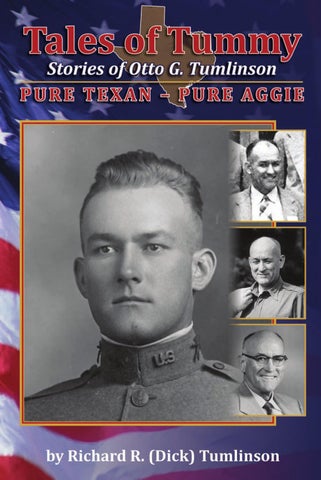
Pioneer Texas Tumlinsons The Tumlinsons have an illustrious family history from early Texas times. According to unconfirmed reports that Sam Tumlinson unearthed, Tumlinsons traveled to the New World in1754 on the ship Hirsh. It was recorded that there were Tumlinsons that lived in Lincoln and Burk Counties in North Carolina. Early in the 19th Century several Tumlinson families began to migrate westward, first to Tennessee then Missouri and Arkansas and later to Texas. There were two Tumlinson families that came to Texas in late 1821 in response to the advertisements of Moses Austin of free land to be had in Texas. They came to be part of the original 300 families that came to Texas with Stephen F. Austin, Moses’ son. John Jackson Tumlinson came with his family consisting of Elizabeth Plemmons Tumlinson, his wife, and children, Thomas Carney, Peter, John Jackson, Andrew, Joseph, Jane, Catharine, Elizabeth, Mary Ann and Rachel. There were several cases of common names in the several Tumlinson families, so sometimes it was confusing to keep them straight. John Jackson Tumlinson was Otto’s direct ancestor. The other family was headed by James Tumlinson, and included his wife Elizabeth, and children; who were Littleton, James, David Carney, George W., John James, Thomas, Josiah, Andrew, Samuel and Polly. William P. and Edy were two additional children that stayed in Arkansas, but came later. John’s and Elizabeth’s youngest
1
son, Thomas, was born later in Texas. It was generally thought that James and John Jackson were brothers, although there were records that suggested otherwise that Sam Tumlinson noted in letters written after his landmark book “Tumlinson – A Geneology.” There were other Tumlinsons that migrated to Texas during this early time, but the two families of John Jackson and James are of the most interest to our current day Tumlinson families. In November, 1822, John Jackson Tumlinson was elected as alcalde by the colonists of the Colorado district who settled along the Colorado River. The other district was the Brazos district along the Brazos River. The position of alcalde came from Spanish tradition and was essentially the leader and the civil magistrate. Along with an alcalde, a captain and a lieutenant of militia were selected who were Robert Kuykendall and Mosses Morrison for the Colorado colonists. The settlers organized to respond to several attacks from Karankawas Indians. John Jackson Tumlinson and Robert Kuykendall wrote the Mexican governor asking permission to “raise fifteen hardy expert young men who were expert with the rifle” to protect the coast so new colonists could land safely. There is no recorded reply but the company was mustered in on May 5, 1823 by Lieutenant Morrison. To relieve a critical shortage of ammunition for the company, John Jackson Tumlinson and Joseph Newman
2
set out for San Antonio on July 6. At the Guadalupe River, they met several Indians who were either Waco or Tawakoni. Tumlinson extended his hand to be friendly, but was jerked off of his horse and was stabbed to death. Newman barely escaped. John Jackson Tumlinson became the first one to die in the line of duty for the new colony. Elizabeth Tumlinson, John Jackson’s widow, was issued one of the first land grants in 1824 in place of her husband. The land was on the south bank of the Colorado River and became the land that the town of Columbus now occupies. There is a monument on the city square that commemo‐ rates the Elizabeth Tumlinson land grant. Following the death of John Jackson, the Tumlinson men of both families became bitter and vengeful Indian fighters with notable success. John Jackson’s sons John Jackson (referred to herein as John J. to help keep them straight). and young Joseph led settlers who attacked and killed Waco Indians thought to be their father’s killers. Another son, Andrew, led numerous attacks against Indians, and was killed in 1830 in a fight with a single brave who also died in the fight. The story of Andrew’s death is from Davy Crockett’s book, “Life of David Crockett”. +He (a friend of Crockett named Jim Crow) gave me, among other matters, the following account of a reencounter between one of the early settlers and the Indians:‐ “Andrew Tumlinson,” said he, “belonged to a family which the colonists of De Witt will long remember as one of their chief stays in the dangers of settling these wilds trod only by the
3
WORLD WAR I Spring 1917, when Tummy was completing his Junior year, was a time of great changes for A & M and the United States as a whole, as war clouds began to reach across the Atlantic. Anticipating the entrance of the United States into the war, the faculty of A & M, led by President Bizzell and ratified by the Board of Directors, offered the entire facilities of the College to the federal government for war training. A & M was the first college in the country to offer its facilities for training. On April 6th, Congress approved a declaration of war. H. C. Dethloff detailed the next events in his book, ʺA Centennial History of Texas A & M Universityʺ, Texas A & M University Press, 1975: ʺImmediately after the declaration of war the College administration excused practically the entire senior class of the College from further academic duties in order to give these young men an opportunity to enter the first officer‐training school, located at Camp Funston, Leon Springs, Texas. Seventy‐ three of the one hundred and fifty seniors were finally admitted to the officer‐training course, in addition to twenty others who did not have senior rating. The first course was to begin May 14. Other students were enlisting directly in the various services. President Bizzell upon the urging of the junior class, obtained special permission from the War Department for juniors to attend the Officer Training School in Leon Springs. Some twenty‐four juniors signed up for the training course by May 18. The student body of the College was being gradually depleted. Those who remained were on a ʺwar footing,ʺ for,
41
while class work was being continued, the stress was on drilling and military exercises. ʺOn April 7, 1917, the day after war was declaredʺ reads President Bizzellʹs report, ʺthe amount of time devoted to military instruction was increased to ten hours per week, besides a material increase in the time devoted to target practice.ʺ Tummy was one of the twenty‐four juniors who signed up for the Leon Springs training camp. Thus, his school days at A & M ended very quickly. But when the remainder of his class graduated the following year, he was ʺpresentʺ in the 1918 Longhorn Annual with the following description. ʺOtto Gurvas Tumlinson Pleasanton Agriculture Age 21; Lieutenant in 357th Infantry, Camp Travis; Sargent Co. ʺC‐1stʺ; Corporal Co. ʺC‐1stʺ; Private Co. ʺC‐1st.ʺ “Tummy” ʺTummyʺ came to A. & M. with the class of ʺʹ17ʺ. He was not blessed by being the son of a millionaire for when he arrived here as a ʺFishʺ he had $60 ‐ since that time he had no money with which to pay his expenses except what he earned by hard labor. ʺTummy,ʺ although you did not receive a ʺsheepskinʺ from our noble institution, we feel that you deserve great praise for your work here and the sacrifice you have made. “Tummyʺ is now wearing the insignia of Second Lieutenant in Uncle Samʹs army of patriotic men.ʺ
42
After a grueling three months at the Leon Springs camp. O.G. was one of the men who survived and were commissioned second lieutenants in the Army on August 15, 1917. Of the 3200 that started the training, 1400 finished. These ʺFirst Campersʺ were proud of their perseverance and their service and enjoyed their reunions of the ʺFirst Camperʺ Association over many years.
Lieutenant Tumlinson Tummy was assigned to the 357th Infantry at Camp Travis. Rebecca Tumlinson recalled when he and his buddy (probably Boots Martin) would ride over on their motorcycle during this time. They gave her rides and taught her the military drills and how to salute. Later, that December, an order was published requesting volunteers
43
WORLD WAR II When O. G. returned from France in May 1919, he was discharged from the Army. Shortly thereafter, he was released from the reserves as well. After all, the ʺWar to End All Warsʺ had been won and there was no need to stay with the Army. However, thirteen years later he was disturbed by events in Germany and the rise of Hitlerʹs Nazi Party. He applied for and was reappointed as a 2nd Lieutenant, Infantry Reserve on February 1, 1932, even though he was well over age for that rank. He remained active in the reserves including several short tours of active duty. In April 1940 he was promoted to Captain, Infantry Reserve. On November 13, 1941, he was recalled to active duty and sent orders to report for duty at Seattle, Washing‐ ton. He was placed on leave from his position as Secre‐ tary of the Houston Production Credit Corporation. He and Maude began the long trip by car to Washington. December 7th and the Pearl Harbor attack by the Japan‐ ese arrived before they could report. It was several days before they could reach Seattle. The organization that he was to report to had already been loaded on a ship and was on the way to the Philippines. Years later I learned that ship actually made it to Australia instead. So Captain Tumlinson was placed in a personnel pool to await another assignment and Maude began the long trip home. Fortunately, she found someone who also needed to travel to Texas to help with driving, and she made it home just in time for Christmas.
95
The assignment turned out to be Base Signal Officer, Base Cryptographic Officer, Base Signal Property Officer and Commanding Officer of the 852th Signal Service Company at Portland Army Air Base, near Portland, Oregon. This was a difficult assignment for the reserve infantry captain with no Signal Corps background. But, such is war, and he made the best of it. The good news was that the assignment provided the opportunity for him to enjoy his family over the next summer.
Captain Otto G. Tumlinson, Signal Corps When the war began for the United States, Pete was in his senior year at Texas A & M College. He was in very near the same situation as his dad was at the beginning
96
T‐BAR RANCH After his World War II experience was over, Dad went back to his job with the Production Credit Corporation in Houston. But it was not the same. And his life‐long dream was to be a rancher. With the help of his friend and boss, Sterling Evans, the elements of achieving that dream began to come together. Dad began looking around for a suitable place. Sterling Evans learned that the old Riverside Farm near Cameron, just across the Little River from his place, was going on the market, and suggested to Dad that he should have a look. The farm had a large area of bottomland along the Little River including the confluence with the San Gabriel River. It also included acreage away from the river on higher ground, which made a good combination for ranching. The farm was too big for Dad to handle alone, so he brought his brother Victor in with him. A ranch was also Victor’s dream. They talked to the owner’s attorney and together they pledged to R. L. Batte, the owner, to buy the Riverside Farm. They just needed a little time to arrange their financing. Two weeks later, when Otto and Victor came back with their financing in hand, they learned that B. F. Clarke had purchased the place on September 4, 1946. Disappointed, they resumed their search. A year later, they learned that Clarke wanted to sell because he had already had enough. So on October 7, 1947, the two brothers bought the Riverside Farm. They divided it into two parts for their different operations. Otto took 1072 acres to the west and named it the T‐Bar Ranch and Victor took the other 2188 acres.
127
Ozell Angel, Victor Tumlinson, Sterling Evans , O. G. The Riverside Farm has a historic and interesting history. It dates back before the Texas Revolution to March 20, 1835 when it was part of the league of land granted to Sarah Wilhelm by the state of Coahuila. Ab‐ stract records indicate that she sold the land to James R. Roger in 1868, who, in turn, sold to R. L. Batte in 1890. The heavily forested land was cleared with convict labor leased for farm operations. Batte sold the farm to an association in Cameron in 1901. The name of the association was The Riverside Farm. And, later, in 1917, after it had gone through several owners, Batte bought it back. He operated the farm with convict labor, but later shifted to sharecroppers that included Mexican, Negro and Anglo families. At the peak, there were as many as seventy families who lived in small houses Batte built for them. At one time there was a school for Anglo and Mexican children. The Negro children had to travel to the Plymouth school. Flooding from the river was a
128