

Judge Mark S. Norris

Judge Mark S. Norris


BILL HALTOM
The Heart and Lungs of Liberty
JUDGE MARK S. NORRIS
The Declaration of Independence is 250 Years Old: Test Your Knowledge
MAUREEN HOLLAND
The Importance of Leading with Integrity
JUSTICE MARY WAGNER 22 Restore Corps: Chasing the Sounds of Freedom and Independence for All BY RACHEL HAAGA 25 Assisted Reproduction in Tennessee: A Practical Guide for Practitioners - Part 2 BY JANA DAVIS LAMANNA 32 An Interview with Criminal Court Judge Ray Lepone
JUDGE RAY LEPONE AND TERRE FRATESI
Workplace Harassment and LGBTQ+ Issues: Navigating a Legal Landscape That Constantly Changes Beneath Your Feet BY KAITLYN HANSEN 39 Beyond Electronic Shackles: Advocating for Restorative Justice - Part 1 BY WILLIAM DEANDRE FAYNE
WTLS Corner: Fostering Intergenerational Wealth Through the Preservation of Home Ownership
the magazine of the Memphis Bar Association
Memphis Bar Association Publications Committee
Audrey Calkins, Chair
Terre Fratesi, Vice Chair
Nicole M. Grida
Maureen Holland
Brittany Neal
Anna Vescovo

Marlinee Iverson



Donald Babineaux
Taylor Bachelor
Hallie Flanagan
Malcolm Futhey, III
William Gibbons, Jr.
Jack Heflin
L. Jehl
Geoffrey Lewis
Joseph McKinney
Charles Mitchell
The Memphis Lawyer is a quarterly publication of the Memphis Bar Association, Inc. with a circulation of 2,000. If you are interested in submitting an article for publication or advertising in an upcoming issue, contact info@memphisbar.org. The MBA reserves the right to reject any advertisement or article submitted for publication.
Jerrick Murrell
Danielle Rassoul
Margaret Roney
Abigail Sala
Amber Shaw
Megan Smith
Marguerite Stringer
Van Turner
Emmett Whitwell
Kristina Woo
Section Representatives
Anne Davis
Toni Parker
Ruchee Patel




Phone: (901) 527-3573 www.memphisbar.org
AWA
NBA
YLD President Faith Watson



BY MARLINEE IVERSON, MBA 2026 PRESIDENT
Every year on May 1, attorneys, judges, and legal professionals across the nation pause to observe Law Day—a tradition that is both a celebration and a reminder of why the work we do matters.
Law Day has been a visible part of American legal culture since 1958, when President Dwight D. Eisenhower established it to celebrate the rule of law in a free society. Congress later designated May 1 as the official date for celebrating Law Day, and the observance has since grown to many countries around the globe.
This year's theme—The Rule of Law and the American Dream—is one that speaks to the very heart of our profession and our community here in Memphis.
Celebrating the rule of law recognizes the idea that no person is above the law. It ensures that people are free to live their lives and pursue their dreams. The American Dream means something different to each of us. For some, it is economic opportunity. For others, it is personal security, equal treatment, or simply the chance to build something meaningful. But as ABA President Michelle Behnke has noted, whatever form that dream takes, it is all based on the rule of law.
As attorneys, we are the custodians of that foundation. We are the ones who stand in the gap between aspiration and reality and who make the promise of equal justice more than just words on paper. That is not a small thing. In fact, it is everything.
Here in the City of Memphis, that work takes on a particular significance. Ours is a community with a rich and complex legal history, a city that has seen the law used both to oppress and to liberate, to hold back and to propel forward. We know, perhaps better than most, that the rule of law is not self-executing. It requires people who are willing to do the hard work of justice every single day—in courtrooms, in negotiations, in
community meetings, and in the quiet moments when no one is watching.
Law Day is not about pretending our system is perfect. It is about recognizing that the rule of law gives us the framework to keep pushing toward something better—the principle that no person is above the law, that rights belong to all people, and that justice must be pursued even when it is difficult.
On May 1, the Memphis Bar Association gathered to observe Law Day and to honor that tradition. I invite every member of our bar to reflect on what drew you to this profession—and on the ways, large and small, that your work contributes to a community where the American Dream remains within reach for everyone.
The law belongs to all of us. And together, it is ours to protect and advance.
Happy Law Day 2026.
BY BILL HALTOM
250 years ago this summer, on July 4, 1776, the Second Continental Congress unanimously adopted the Declaration of Independence. Authored by Thomas Jefferson, it declared the right and intention of the thirteen American colonies to be free and independent states, absolved and separated from King George III and British allegiance.
The Declaration was a mission statement for the emerging United States of America, founded on such principles as equality, government by the consent of the people, and opposition to tyranny. It is a cherished American document that we celebrate each July 4th with fireworks and patriotic parades.
But how many of us really appreciate the purpose of the Declaration, what it was designed to do, and how it has evolved and endured over the past quarter of a millennium? On its 250th birthday, we should examine this enduring American document, its history, and how it should be maintained and applied today.
The Declaration consists of three basic parts: the Preamble, King George III’s tyrannical acts, and a prayer for relief. First, many of us memorized the Preamble when we were in grade school. It states:
We hold these truths to be self-evident, that all men are created equal, that they are endowed by their Creator to certainly inalienable rights, that are among these are life, liberty, and the pursuit of happiness.
The Declaration goes on to state that when tyranny violates such rights, the people have the right to abolish such tyrannical governments.
The second part of the Declaration specifically listed 27 acts by King George that were tyrannical and violated colonists’ rights. It read like the classic complaints we lawyers draft stating causes of action. And the final part of the Declaration was in effect a self-executing prayer for relief, formally announcing the “United Colonies” as “free and independent states” with the inherent powers to wage war, make peace, and engage in commerce. The Declaration concluded with the powerful words of the
56 signers. “We mutually pledge to each other our lives, our fortunes and our sacred honor.”
Over the past 250 years, the Declaration has had to evolve and endure, as quite frankly many of the principles it stated were not the reality of the new nation at that time. While it declared that “all men were created equal” with inalienable rights, over a half million men and women in America at the time were slaves. That number grew to nearly 4 million by 1860.
Most of the “Founding Fathers,” including author Thomas Jefferson, owned slaves. Jefferson even originally included a passage in the Declaration blaming Britain for slavery and at least implying that slavery would not exist in the new nation, but southern colonists strongly objected, and the passage was removed.
And when the Declaration stated that “all men” were created equal, that could be read literally, as women were not included. Abigail Adams wrote a letter to the husband John on the eve of the opening of the Continental Congress, telling him to “remember the ladies” in the Declaration and advocating for women’s rights, education, and legal protection from “tyrannical husbands.” Her request was ignored.
Over the past 250 years, the Declaration of Independence has evolved to be applied to resolve many of these contradictions. While it took a Civil War to lead to the Emancipation Proclamation and the 13th Amendment ending slavery, the fight for equal rights for African Americans and other minorities continued for over a century and endures to a real extent to this day. In my own lifetime, I attended segregated schools, and I remember when African Americans were given “separate but equal” facilities—“separate but equal” being an oxymoronic phrase.
Women were not even granted the right to vote until the ratification by Tennessee of the Nineteenth Amendment in 1920.
To this day, our courts and legislatures struggle with the application of many of the principles outlined in Declaration of Independence, and in that manner the Declaration evolves and endures.
On so on this upcoming 4th of July—the 250th anniversary of the Declaration—we should celebrate it not just with fireworks, but with our own rededication
to its principles with our lives, our fortunes, and our sacred honor.

Bill Haltom is a past president of the Memphis Bar Association and the Tennessee Bar Association. He is author of ten books, and has been the editor of five legal journals, including the ABA Journal, the Tennessee Bar Journal, and the Memphis Lawyer.
JUDGE MARK S. NORRIS
Independence Day 2026—the commemoration of our nation’s birth—takes on added significance this year. In the face of increasing threats against the judiciary, celebrating the 250th Anniversary of the Declaration of Independence must include a renewed dedication to the independence of the judiciary as well.
After all, the building blocks of our constitutional republic—independence from the King, impartiality, the rule of law, natural rights, consent of the governed, equality under, and accountability to, the law—are embodied in the Declaration of Independence. As Justice Clarence Thomas recently said, “The Constitution is the means of government; it is the Declaration that announces the ends of government.” (Remarks at the University of Texas, April 15, 2026).
Judicial independence is, thus, fundamental and foundational to our constitutional republic and the rule of law that sustains it. And all of us must be vigilant and outspoken in its defense. As Justice Sandra Day O’Connor said, “Judicial independence doesn’t happen all by itself. It’s very hard to create and it’s easier . . . to destroy . . . we need lawyers to get out there and defend the concepts.” (William & Mary Law School, May 11, 2008).
Judicial independence is under siege. As one of countless recent articles has detailed, “[t]oday, acts of political violence in the United States are at their highest level in decades. Polling by the Public Religion Research Institute found that from March 2021 to December 2025, the share of Americans who agreed with the sentiment that ‘true American patriots may have to resort to violence in order to save the country’ increased from 15 percent to 20.” (The Atlantic, April 30, 2026, “The Era of Normie Extremism Is Here”).
According to the U.S. Marshals Service, recent data reflects that potential threats, violence, or danger to federal judges have increased 56.8% year over year since 2024.
Tennessee Supreme Court Chief Justice Holly Kirby first spoke to this two years ago:
The increase is driven by a public discourse that’s
infected with disinformation and conspiracy theories about judges being corrupt, . . . essentially just politicians in robes using the justice system to accomplish their dastardly objectives. Public figures across the political spectrum have created a permission structure for this type of thinking. They’ve normalized accusing judges of corruption, bias, or dishonesty when they disagree with a legal ruling. This culture jeopardizes the judiciary’s legitimacy and promotes violence as an acceptable choice.
(Remarks at the Memphis Bar Foundation Fellows Induction Ceremony on April 25, 2024)
Long before he became our second President, John Adams signed the Declaration of Independence. In 1774, he wrote, “Representative government and trial by jury are the heart and lungs of liberty.”
Not six months after Justice Kirby spoke, on October 7, 2024, one heart and lung of liberty was nearly lost. My law clerk was the victim of attempted murder following the verdict in a high-profile case. The bullet pierced near his heart and through his lung. By the grace of God, he made a full recovery, but the threat remains real to this day.
Threats against the judiciary are increasingly commonplace. Yet quantifying their impact is all too often little more than an intellectual exercise. Upholding the rule of law, preserving the separation of powers, and defending our constitutional republic are fundamental to those of us who wear black robes. But they are fuzzy, if not completely unknown, concepts to the general public. According to the United States Chamber of Commerce, 1 in 3 people cannot name or explain the work of the judicial branch. Over 50 percent believe courts favor the wealthy and judges do not set aside their personal political beliefs when making their rulings. Therefore, we must all do more to steadfastly guard against civic
ignorance and “Normie Extremism.”
As attorneys and judges, we are all guardians of the Constitution. We champion it in a variety of ways. Teaching civics is one. The federal judiciary promotes the teaching of civics in many ways. In the Western District of Tennessee, we frequently host scores of high school students to observe proceedings and discuss the law over box lunches. We perform naturalization ceremonies including many local and congressional officials who speak to the importance of citizenship. During April and May, in the lobby of the Odell Horton Building, we hosted a traveling Revolutionary War exhibit featuring “Ordinary Americans.” On July 8, I will preside over another naturalization ceremony and invite you to participate in a public reading of the Declaration of Independence at the Cannon Center at noon.
These activities are designed not only to educate the public, but to promote civility and the civic virtue necessary to alleviate corrosive ignorance over time. But teaching civics is not enough. Time is not on our side. The internet and anti-social media thrive on chaos. The purveyors of pandemonium dedicated to dysfunction lead in a battle for the hearts and minds of those we need right now to embrace, not eschew, representative government and the institutions of democracy.
As Justice Anthony Kennedy said, “Judicial independence is not conferred so judges can do as they please. Judicial independence is conferred so judges can do as they must.” In this era of polarization, as violence has increasingly become normalized, its impact upon the independence of the courts can be profound in many ways. Unlikely as it is to influence the outcome in a particular case, deluding the public and inciting violence may ultimately discourage qualified candidates for the bench as well as those who would serve as law clerks and assistants. This alone threatens the judiciary’s independence.
The normalization of such threats was apparent after my law clerk’s shooting. Incredibly, his attempted murder seemed but a mere footnote in mainstream media. My efforts to have the shooting thoroughly investigated were misconstrued. My decision to recuse from sentencing was maligned in the media. But once I learned that some in the former U.S. Attorney’s Office had been actively engaged in blocking a thorough investigation of the attempted murder and were, therefore, adverse to the Court, in order to protect the independence of the judiciary, I stepped aside.
The Code of Conduct for U.S. Judges prohibited me from commenting upon the cause for my recusal in that case at that time. Rather than expressing concern for my law clerk or pressing for an appropriate investigation, one local columnist criticized the Court instead. He all but encouraged attorneys to move for my recusal in other cases, too. When that happened, I was finally able to set the record straight. My order denying the motion to recuse is recorded at ACLU of Tennessee, Inc. v. City of Memphis, Tennessee, No. 2:17-cv-02120-MSN-jay, 2025 WL 2978538 (W.D. Tenn. Oct. 17, 2025).
Which brings me back to hearts and lungs.
When I select a jury, I tell the citizens summoned for duty about John Adams’ quote. Almost every time, when the trial for which they were selected has ended, several will thank me for the experience. Some write me letters of appreciation. One who had hoped to avoid jury duty because it conflicted with his work said how glad he was to have had the experience even though it imposed a hardship.
I explain that, by their service, jurors are in the midst of making history as participants in the constitutional continuum from the Declaration toward a more perfect Union under the Constitution. The Preamble speaks to this: “We the people of the United States, in order to form a more perfect union, establish justice . . .”.
While attorneys are bound to preserve confidence in the legal system, some do not do enough. Jurors, on the other hand, are well suited to this task. They can be our best ambassadors; our foot soldiers for justice, and we must continue to encourage them to serve.
I write this on Law Day, established by Dwight D. Eisenhower in 1958 to “vigilantly guard the great heritage of liberty, justice, and equality under law.” Let each of us use our hearts and lungs to rededicate ourselves to that cause and celebrate America 250 with that purpose in mind.

Judge Mark S. Norris is a United States District Court Judge for the Western District of Tennessee. He serves as a member of the Judicial Independence Committee of the Federal Judges Association. He is a graduate of Colorado College and the University of Denver Sturm College of Law. A former Shelby County Commissioner and State Senator, Judge Norris practiced law for 38 years before his appointment to the Court in 2018. He is a Fellow of the Memphis Bar Foundation, Life Fellow of the American Bar Foundation, and Emeritus Master of the Leo Bearman, Sr. American Inn of Court.
BY MAUREEN HOLLAND
“When in the Course of human events, it becomes necessary for one people to dissolve the political bands which have connected them with another….”
Declaration of Independence
Sometimes we dream of going back in time. Sometimes history asks us to revisit our past—our trespasses and those who have trespassed against us. Today, history is calling. Come travel with me back 250 years, and I shall tell you a harrowing story of courage, peril, adventure, death, and triumph. Along the way, let’s test your knowledge of history and reaffirm our commitment to life, liberty, and the pursuit of happiness in this free and independent country we call home.
We arrive in Philadelphia, PA. It’s July 4, 1776, and we rush to the State House, now called Independence Hall. The Second Continental Congress is meeting, about to adopt a document separating thirteen British Colonies into independent states, changing the course of lives and events even 250 years later. This Declaration of Independence is a bold and perilous step. Nearly 170 years in the making, the colonies have been politically, financially, and legally interwoven with Britain. Filing for legal separation has been a battle, literally. One of the earlier acts of protest by the colonists began in Boston, Massachusetts, in response to a tax.
“For imposing Taxes Upon us without consent.”
– Declaration of Independence
To better understand the Declaration of Independence, let’s travel back two and a half years and head north to Boston Harbor. For quick review, here’s a brief taxation memo.
TO: Partner in History
FROM: 1756–76
RE: Taxation of Colonies, Imposing Taxes Without Consent Summary
Following the Seven Years’ War (1756–63), which was a global fight involving France and Britain, among others, with the American theatre being the French and Indian War (1754–63), Britain was in debt and needed money. The solution: the 1767 Townshend Act, which imposed duties on imports to the colonies. But despite widespread protest, the tea tax benefiting the East India Company remained. On December
16, 1773, some Boston colonists known as the Sons of Liberty protested this tax and the lack of representation by dumping crates of British East India tea from three ships into the harbor. Outraged, Britain passed a series of Coercive Acts in response. These Acts prompted the creation of the First Continental Congress (1774), which petitioned King George III seeking a peaceful resolution. Negotiations failed.
Q. On December 16, 1773, how many chests of tea were dumped into Boston Harbor, and at what approximate value (today’s dollars)?
A. 342 chests of British East India Tea worth more than $1 million in today’s dollars were dumped into Boston Harbor during the Boston Tea Party, which protested the tea tax imposed by British Parliament, without representation by the colonists, to fund and aid the East India Company, which had a monopoly on tea and deprived independent colonists from trading with competitors like Dutch merchants.1
After the First Continental Congress, a Petition seeking


repeal of the Coercive Acts and a peaceful resolution was sent to King George III of England. When tensions escalated into fighting, the Second Continental Congress met and created one committee to draft a Declaration of Independence and another to decide on the form of the confederation of colonies and draft the first governing document, the Articles of Confederation, which were adopted November 15, 1777.2
“For Quartering large bodies of armed troops among us”
– Declaration of Independence
One of the listed grievances in the Declaration of Independence was the “[q]uartering large bodies of armed troops among us.” Our journey thus continues west to April 1775. Late one night, a large British force stationed in Boston, Massachusetts was on the move to retrieve the colonists’ stockpiled munitions located in Concord. The colonists, unbeknownst to the British, were ready. From 11:00 p.m. to after midnight, express rider Paul Revere3 rode on horseback from Charlestown (having crossed the Charles River by boat from Boston’s North End waterfront) to Lexington to warn Samuel Adams, John Hancock, and local militia along the way of the impending arrival of British troops. Revere believed the troops were searching for Adams, Hancock, and munitions.4 In the early hours of April 19, 1775, two battles broke out: one in Lexington, when the British troops arrived and colonial militia confronted them, and another in Concord. In Lexington, despite orders on both sides not to fire, someone opened fire and combat broke out. Between fighting, retreat, and reinforcements, with the colonial militia far outnumbered, both sides suffered casualties, and the British force failed to get the expected munitions. In retreat, the British returned to Boston, where fighting and skirmishes continued. Approximately 15,000 colonial militia arrived and surrounded Boston. A war for independence had begun, and the need for a Declaration of Independence was inevitable.6
Q. Who wrote a poem about the Concord battle in 1837?
A. Ralph Waldo Emerson wrote the Concord Hymn, which commemorated the dedication of the Concord monument in that same year and included the following line: “And fired the shot heard round the world.”7
We hold these truths to be self-evident, that all men are created equal, that they are endowed by their Creator with certain unalienable Rights, that among these are Life, Liberty and the pursuit of Happiness”
– Declaration of Independence
Let’s return to Philadelphia and the summer of 1776. With a continental army created in June 1775 under the leadership of George Washington, Commander-inChief, the Second Continental Congress functioned as a government of the colonies. On June 7, 1776, Richard Henry Lee introduced a Resolution “that these united colonies are and of right ought to be free and independent states.” Thomas Jefferson, an established political writer at 33 years old, wrote the first draft. Borrowing from other documents, and then with modifications by the Second Continental Congress, the text of the Declaration of Independence was ratified on July 4, 1776. The first 200 copies, known as the Dunlap Broadsides, were printed with the name of John Hancock prominently displayed, and one made its way to King George III some months later. Formal independence had begun.8 The USA was born fighting, proclaiming, and emerging—but not without continued disagreement.
Jefferson had slaves, and yet his draft of the Declaration of Independence expressed the grievousness of slavery: “he has waged cruel war against human nature itself, violating it’s most sacred rights of life & liberty in the persons of a distant people who never offended him, captivating & carrying them into slavery in another hemisphere . . .”9 This language did not stay in the text after the Second Congress’ modifications. As with all errors and transgressions, We The People should revisit and correct them. All citizens—elevated, celebrated, established, mainstream, underrepresented, or marginalized— share a history: sometimes good, sometimes bad, often complicated, and nuanced. Like those at the Second Continental Congress, we struggle, disagree, and continue to “hold these truths to be self-evident, that all men are created equal.” In time, that struggle led to the 1865 ratification of the Thirteenth Amendment, which formally abolished slavery in the United States.
The Declaration’s acknowledgment of and commitment to our “unalienable rights” of “Life, Liberty and the pursuit of Happiness” continues to echo over time and through constitutional interpretation, particularly
in cases concerning liberty and the right to marry — including Loving v. Virginia and Obergefell v. Hodges 10
Q. How many lawyers signed the Declaration of Independence?
A. 24,11 and two became Supreme Court Justices12
“We, therefore, the Representatives of the united States of America, in General Congress, Assembled, appealing to the Supreme Judge of the world for the rectitude of our intentions, do, in the Name, and by Authority of the good People of these Colonies, solemnly publish and declare, That these United Colonies are, and of Right ought to be Free and Independent States…”
– Declaration of Independence
With our journey nearly complete, let’s pause to consider what the Declaration ignited. The Declaration of Independence did more than announce a formal separation. It catalogued, in pointed and specific terms, the grievances that had made separation necessary. When the time came to enact the Articles of Confederation (ratified 1781), essentially the first Constitution13, and the subsequent U.S. Constitution (ratified 1788), protections specified in the Declaration of Independence were built into the framework. Some protections came quickly, others took longer, and some are still in process, but the line from grievance to guarantee is unmistakable.
“And for the support of this Declaration, with a firm reliance on the protection of divine Providence,
we mutually pledge to each other our Lives, our Fortunes and our sacred Honor.”
– Declaration of Independence
The Declaration’s influence did not end at ratification. It lives on, physically located at the front of the United States Code as one of the Organic Laws and in the lives of all of us. Indeed, our journey through time ends in the present day. Recently, I stood facing the U.S. Flag, and stated:
“I pledge allegiance to the Flag of the United States of America, and to the Republic for which it stands, one Nation under God, indivisible, with liberty and justice for all.”15
Q. What other “Organic Laws” are listed at the front of the U.S. Code?
A. Along with the Declaration of Independence, the Organic Laws include the Articles of Confederation, the Ordinance of 1787: The Northwest Territorial Government, and the Constitution of the United States.14 Our trip is ended; we settle back into our daily lives. Soon, on July 4, 2026, we will celebrate the 250th Anniversary of the Declaration of Independence. For 250 years, this Union has endeavored to protect the “public good,” the “Free and Independent States,” for the “safety and happiness” of the People. No doubt: what it means to be equal and to have life, liberty, and happiness remains our north star, albeit fraught with continued conflict, disagreement, frustration, controversy, and political upheaval. Yet we remain a vital, vibrant, ever more selfaware government and People. May we celebrate the birth of our country with kindness towards others, and may we look forward to our continued growth and birthdays to come.
“For imposing Taxes on us without our Consent”
“For keeping among us, in times of peace, Standing Armies without the Consent of our legislatures”
“For depriving us in many cases, of the benefits of Trial by Jury”
King George making colonial judges dependent on his will
The Declaration’s assertion that “all men are created equal” challenged hereditary rule
Article I, Section 7, Clause 1 — “All Bills for raising Revenue shall originate in the House of Representatives”
Third Amendment — “No Soldier shall, in time of peace be quartered in any house”
Sixth Amendment — “the right to a speedy and public trial, by an impartial jury”
Article III, Section 1 — judges “shall hold their Offices during good Behaviour”
Fourteenth Amendment — “nor deny to any person within its jurisdiction the equal protection of the laws”
1 For those who remember their history in more detail, the Sons of Liberty dressed as Mohawk or Narragansett Indian warriors to disguise themselves. https://www.britannica.com/event/Boston-Tea-Party; https://www.bostonteapartyship.com/disguise-of-sons-of-liberty.
2 “Article 1. The Stile of this confederacy shall be, ‘The United States of America.’”
3 If you are calculating points, for 1 bonus point each name the two other riders who also spread the news. https://www.paulreverehouse.org/thereal-story/.
4 Many of us know a somewhat modified version of events from the 1860–61 poem Paul Revere’s Ride by Henry Wadsworth Longfellow, written in anapestic tetrameter (meant to suggest a galloping horse). “Listen, my children and you shall hear, Of the Midnight ride of Paul Revere.” https://www.paulreverehouse.org/longfellows-poem/
5 Revere provided a written deposition to the MA Provincial Congress in 1775, and a letter in 1798 of the events to the MA Historical Society. https://www.paulreverehouse.org/reveres-own-words/.
6 https://www.nam.ac.uk/explore/battle-lexington-and-concord
7 https://www.pbs.org/wgbh/americanexperience/features/patriotsdayshot-heard-round-world/
8 https://www.archives.gov/founding-docs/declaration/how-didit-happen. There is an interactive page where you can “sign” the Declaration of Independence: https://www.archives.gov/founding-docs/ join-the-signers
9 Jefferson’s deleted passage, from Professor Julian P. Boyd’s reconstruction of Jefferson’s “original Rough draught” of the Declaration of Independence, in The Papers of Thomas Jefferson, vol. 1 (Princeton Univ. Press 1950), pp. 243–247. The apostrophe in “it’s” reflects Jefferson’s eighteenth-century spelling. https://www.loc.gov/exhibits/declara/ ruffdrft.html.
10 The Supreme Court has long interpreted “liberty” under the Fourteenth Amendment to include fundamental aspects of personal life. In Meyer v. Nebraska, 262 U.S. 390 (1923), the Court stated: “Without doubt, it denotes not merely freedom from bodily restraint, but also the right of
the individual to contract, to engage in any of the common occupations of life, to acquire useful knowledge, to marry, establish a home and bring up children, to worship God according to the dictates of his own conscience, and generally to enjoy those privileges long recognized at common law as essential to the orderly pursuit of happiness by free men.” https://supreme.justia.com/cases/federal/us/262/390/. See also Loving v. Virginia, 388 U.S. 1 (1967), and Obergefell v. Hodges, 576 U.S. 644 (2015). The author was one of the attorneys representing plaintiffs from Tennessee in Obergefell v. Hodges.
11 https://www.archives.gov/founding-docs/signers-gallery.
12 Samuel Chase and James Wilson became Justices, and the House of Representatives later impeached Chase (and then the Senate acquitted him). https://www.linkedin.com/pulse/two-signers-declarationindependence-join-us-supreme-julie-a--c1vue/; https://www.senate.gov/ about/powers-procedures/impeachment/impeachment-chase.htm
13 The Articles of Confederation served as the first governing charter of the United States and were adopted by the Second Continental Congress on November 15, 1777, and ratified by the last of the thirteen states (Maryland) on March 1, 1781. The Articles created a confederation of sovereign states rather than a federal government in the modern sense; their structural limitations led to the Constitutional Convention of 1787 and ultimately the U.S. Constitution (signed September 17, 1787; ratified June 21, 1788; effective March 4, 1789). The Articles are often described as the United States’ first constitution.
14 The Office of the Law Revision Counsel’s United States Code browser lists the “Organic Laws” in the front matter as: The Declaration of Independence – 1776; Articles of Confederation – 1777; Ordinance of 1787: The Northwest Territorial Government; and Constitution of the United States. https://uscode.house.gov/browse/frontmatter/ organiclaws&edition=prelim.
15 Pledge of Allegiance to the Flag, codified at 4 U.S.C. § 4. Congress added the phrase “under God” on June 14, 1954. https:// uscode.house.gov/view.xhtml?req=granuleid:USC-prelim-title4section4&num=0&edition=prelim
Maureen Holland graduated from Vermont Law School, cum laude. She is licensed to practice law in Tennessee and Vermont state courts, the U.S. District Court for Western Tennessee, and the Fifth and Sixth U.S. Circuit Courts of Appeal. She is also licensed with the U.S. Supreme Court. Following law school Ms. Holland worked as a judicial law clerk for four State of Vermont trial courts. Later, Holland was the first legal counsel to the Vermont Water Resources Board (1990-91), and Interim Executive Officer for the Board (October 1990-May 1991). Once in Memphis, she was the Senior Federal Judicial Law Clerk to the Honorable Jon Phipps McCalla (1992-1995), held an Associate position in a mid-sized Memphis firm (1995-1997), and, following that, became a member and owner of Holland & Associates, PC. Holland & Associates, PC represents current and former employees with legal problems, including employment discrimination (race, gender/sex, age, disability, national origin, etc. claims), severance agreements, non-compete agreements, breach of contract, and other employment-related issues. She negotiates, litigates, and has appeared before state and Federal Courts and a number of administrative bodies including the Memphis Civil Service Commission, State of Tennessee Civil Service, EEOC, EEOC Federal Sector Mediation and Hearings, AAA Arbitrations, FMCS (Federal) Arbitrations. Holland practices law with an emphasis on problem-solving. This more client-needs focused approach is known as holistic law. She is former Chair of the Memphis Bar Association’s Labor & Employment Law Section and Wellness Committee. Currently, Holland is President of the Tennessee Employment Lawyers Association (TENNELA) and is a board member of the National Employment Lawyer Association. She also serves as a Special Judge in Shelby County’s General Sessions Court (civil) on an as-needed basis.
Holland gained notoriety for her involvement in Obergefell v. Hodges, the landmark civil rights case in which the fundamental right to marry was guaranteed to same-sex couples. Holland was a member of the Tennessee plaintiffs’ legal team in Tanco v. Haslam, which was combined at the U.S. Supreme Court as Obergefell.









BY NEDRA WICK
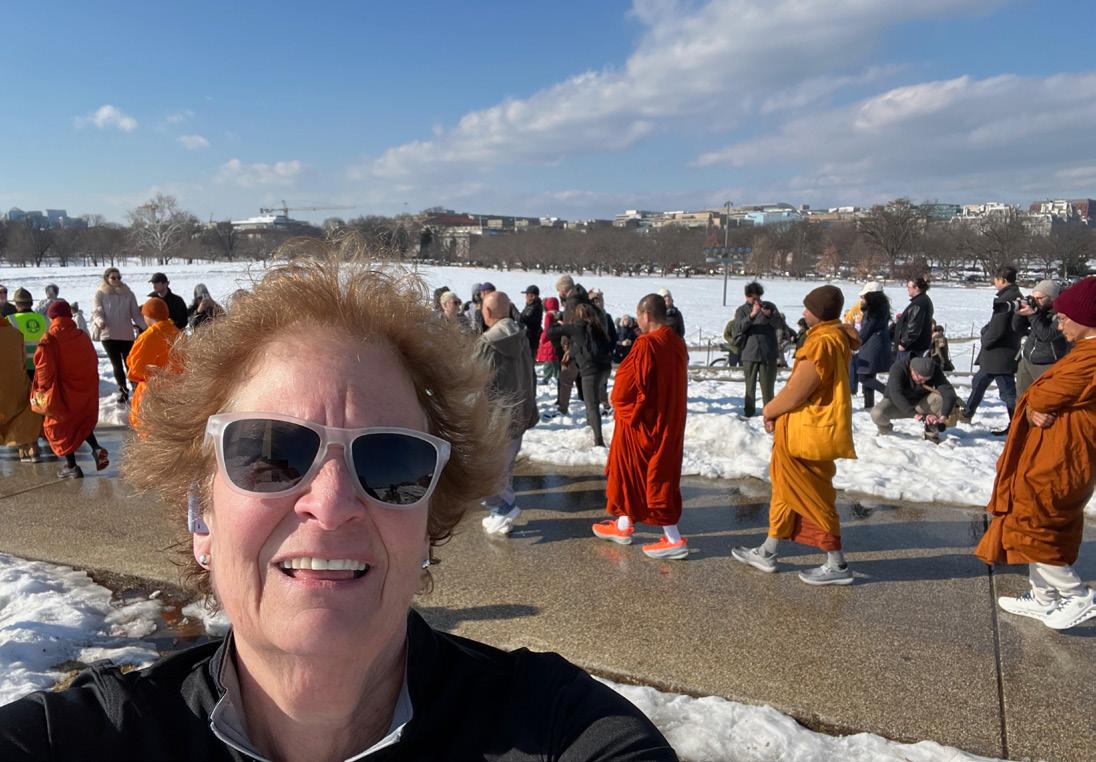
Many people ask me why I love running. The answer is simple: I do not love to run, but I do love its benefits. Running (I alternate intervals of running and walking using the Galloway Method) gets me moving outside and helps me not to live in my head. Running is an activity; I do roughly 15-30 miles a week. Our 4-footed athlete, Laird Fergus Clyde, answers the question “What is life about” by showing me absolute joy every time we run on Wolf Creek paths with the squirrels and deer. For the past ten years, I have found that running helps my body, mind, and spirit to come together even in the most disjointed times. Running is my way to engage with my life in a positive, even joyful, way literally one step at a time.
I don’t just run with our 4-footed athlete Laird Fergus Clyde. I also enjoy training with the positivity and support of PRicerunning, Bartlett Runners, Memphis Runners, and the 901 Psychedelic Turtles. For many who run, it is about competing.

The world in which I live is noisy and stressful; life seems to require more every year. The legal profession is not a physical one; I live in my head. My body reacts, tensing for another battle or threatening to shut down when everything becomes overwhelming. . . . .
The toxicity builds when I do not take the time to release it. Walking/running is simple, and it’s nothing on which I need to concentrate. It requires me to put one foot in front of the other for a sustained period of time. The noise fades and the stress becomes manageable. My

While I do also enjoy finishing in the top 3 when I race, the 901 Psychedelic Turtles will cheer you with a “WHOO HOO!” whether you finish first or last. Yelling that phrase at the top of your lungs at people early on a Saturday morning releases a lot of angst from the week. And frankly, in most of the organized runs we do, everyone gets what I call a Persistence Medal whether you are the speedster who finishes first or you walk across the finish line last. For me, it’s better to just enjoy the experience.

body, mind, and spirit come into alignment once again. With running, I’ve finally found a metaphor for life: if you put one foot in front of the other, even when your brain screams at you that you need to stop, eventually you will cross the finish line. Sometimes you just might

need to look a little harder for a prize.
BIG SHOUT OUT to Lauren Fuchs—now in training to run her first marathon (and fundraising) for the kids at St. Jude!
Nedra Wick is an attorney/arbitrator/mediator and case evaluator who lives in Memphis, TN. She is a civil and criminal litigator whose mediation and arbitration skills are sought nationally, particularly in business, insurance, and in high-conflict family law cases.
Over the past 42 years, she has represented plaintiffs with NAACP-LDP counsel, served as in-house counsel and as a partner in a national boutique law firm, and since 2000, she has operated her own firm. She is known for her practical and straightforward approach to complex legal issues. Nedra teaches negotiation, dispute resolution, and international humanitarian law at the expert level. She is passionate about advocating for her clients while encouraging them to seek positive outcomes. A graduate of the University of Kansas School of Law, she is licensed to practice law in Tennessee, Georgia, Kansas, the U.S. Supreme Court, and the Cherokee Nation.
Among her many legal accomplishments, she was named a 2026 Memphis Bar Foundation Fellow. Nedra enjoys spending time with her spouse of 34 years, Rebecca Locke, and their Standard Poodle, Laird Fergus Clyde of Loch Wick. She is currently the Head Sacristan at Grace St. Luke’s Episcopal Church. She has volunteered with the American Red Cross for over 30 years and serves on the Mid-South Chapter Board of Directors as a Disaster Services Supervisor. She also coaches children through Youth Villages and a women’s walk/run group.

BY JUSTICE MARY WAGNER
Justice Wagner gave these remarks on April 9, 2026, at the Memphis Bar Foundation New Members Induction Ceremony. She gave the MBA permission to publish her speech.
Good evening.
To the leadership of the Memphis Bar Foundation, distinguished guests, colleagues, friends, and—most importantly—our new inductees: Thank you for the honor of not only allowing me to be with you to celebrate but also in allowing me to speak tonight.
This evening is not simply a celebration of your achievements. It is a recognition of character. It is a moment that marks not just what you have accomplished, but also the professional and member of our community that each of you has chosen to be—over years, over cases, over countless decisions made when no one was watching.
For nearly 50 years—since 1982—the Memphis Bar Foundation has been a quiet yet powerful force in our legal community. It has never been about prestige for its own sake. It has always been about purpose. About service. About the belief that the law, at its best, is not just a profession or a means to make a living, but it is about service and public trust. It is about leadership and service not just to our legal community but to our broader Shelby County community.
And tonight, each of you is being welcomed into that trust.
You were not selected lightly. You were chosen because your careers reflect devoted and distinguished service to the legal profession, meaningful contributions to the administration of justice, and a steadfast commitment to the highest standards of professional ethics and personal conduct.
In other words—you have earned this.
But as meaningful as this recognition is, this moment is not a finish line. It is an invitation—an invitation to deepen your impact, to lead more intentionally, and to give back in ways that only you can.
The Memphis Bar Foundation was formed with several purposes. One of those purposes is to promote philanthropy among members of the Memphis Bar
Association. And while philanthropy often connotes financial support, philanthropy, at its core, is about a love of service, the law, and humanity.
As lawyers, your most valuable contributions are not only your resources—but your time, your expertise, your voice, and your credibility.
It is the ability to guide someone through a system they do not understand. It is the willingness to take on work because it is right, not because it is easy or profitable. It is mentoring the next generation. It is speaking up when fairness is at stake.
Some of you may not have sought this leadership role out. Some of you may have. Either way, we are all here as leaders to give back to the law and the community that we all care about so deeply.
Another goal of The Foundation is to work towards and advocate for public awareness of the legal system— an important mission today. In a time when institutions are often misunderstood and trust can be fragile, you have a unique opportunity to bridge that gap.
To demystify the law.
To make it accessible.
To build understanding—and trust.
To the average citizen, the legal system can be a mystic creature, one in which they do not understand its role and operation. It can be a dark and cavernous tunnel with many forks in the road and twists and turns, making it difficult to navigate, especially with little to no resources. That lack of understanding and access can undermine trust and respect in the legal system—a vital component of our society.
As lawyers, we are leaders to the public. You, as a lawyer, have a voice and a respect that no one else holds. This is true whether you want these things or not. It’s true regardless of whether you are a litigator or a transactional attorney. It’s true whether you work in house, at a large firm, at a medium firm, or even if you practice from your
car. It’s true whether you “do politics” or not. When you speak about the law, other lawyers, or the courts, people listen. You are a trusted and impactful voice. You are a respected source of information and knowledge. It is so important that we all use this voice.
This work does not only happen in courtrooms. It happens in classrooms, in community conversations, online, and in everyday moments where you choose to listen and speak.
I challenge you as leaders of the bar to find a way to use your voice. For some, it may be leading in a noticeable way, such as being an elected official—a judge, a representative, or a leader of an organization. For others it may be less noticeable—speaking to students, having conversations with neighbors, or directing the words and tones you use on social media. Regardless of the method you choose, your role in the community is critical.
The Foundation is also committed to social justice and legal education. To me, this is about access to justice—a critical call to action for us all. These are not abstract ideals; they are lived responsibilities.
As the Tennessee Supreme Court’s liaison to the Access to Justice Commission, I feel compelled to speak to you for a few moments about the ATJ. Here are some numbers we should all know.
Over 90% of those who qualify for legal aid still have their legal needs unmet. Who qualifies for legal aid? Tennesseans whose annual income is at or below 125% of the federal poverty guidelines. Put in real numbers, for a family of four, that’s an annual income of $39,000 a year or less. And the 90% of qualifying citizens whose legal needs are unmet does not even include the families who earn $50,000 a year or $40,000 a year. Those families don’t even qualify for legal aid. Their unmet need also likely surpasses 90%.
Another challenge impacting access to justice in Tennessee comes from the existence of legal deserts. A legal desert is an area with less than 1 lawyer per 1,000 people. Anyone here carry a 1,000-client case load? In Tennessee, 53 of 95 counties are legal deserts. Put another way, 56% of the state qualifies as a legal desert.
As leaders of the bar, you can help address these access-to-justice problems. For one, ensure that you are maximizing your pro bono work. Encourage and enable colleagues to do the same. Our ATJ Commission is continuously working with various entities, including this one, to make it easier for attorneys to engage in pro bono work. And we can’t do it without you.
But maximizing pro bono work alone is not enough. What is also asked of us? We are also asked to examine whether our systems are serving everyone as they should, and to share knowledge so others can better advocate for themselves and their communities. We are asked to think about the practice of law and the operations of courts.
Just because we’ve always done something one way does not mean we can’t reconsider. We owe the legal community and the public at large a duty to open more doors, to give more people access to the courts and, in so doing, to ensure that more people have their legal rights protected. Will it be uncomfortable? Will it be hard? Probably so. But you have shown time and time again that you are the leaders willing to put in the hard work, to be uncomfortable, to think innovatively. Let’s look for the barriers and find ways to remove them—or at least lower the hurdle. Let’s look for ways we can provide greater access to and greater understanding of our great legal system.
This work requires persistence, humility, and courage. But your careers have already shown that you are up to that challenge.
Finally, the Foundation promotes professionalism among members of the Memphis Bar. Professionalism is more than civility or competence—it is integrity in the moments when it matters most.
It is respect in conflict.
It is consistency in conduct.
It is remembering that every case involves real people and real consequences.
It’s how you engage with colleagues, how you relay information or update your clients, how you describe your day or your case to another or on social media. A phrase I have come to love: It’s disagreeing without being disagreeable. Often our adversarial system confuses zealous advocacy with hostility. We must never forget that civility is not a weakness—but a strength.
Civility has long been the role of the lawyer. Ancient Roman advocates took an oath “to not use injurious language or malicious declamations against his adversary” or to employ “any trick to prolong the cause.”
Every time we treat an opposing counsel or opposing party with dignity, every time we explain the process to a confused client, every time we uphold the truth even when it hurts our case—we reinforce the credibility of our system. In contrast, when we cut corners, show contempt for the process, or allow bias and injustice to go unchecked, we do real damage—not just to our
reputations, but to the trust our system needs to function.
While using a sharp-witted tongue, or firing back an email, or making a Facebook post denigrating another lawyer or judge is certainly easier, we must pause, take a step back, and choose the higher road. Doing so is the surest way to protect yourself, help your client, and uplift the legal system.
Civility is the mark of a lawyer who knows that respect and reason are more persuasive than insults, harshness, and volume. Civility creates the space for real dialogue, fair outcomes, and lasting solutions. It also makes us better colleagues, better problem-solvers, and better stewards of justice.
Tonight, you are recognized because you embody these values. But recognition also brings responsibility— because others are watching.
You are role models for younger lawyers, trusted leaders among your peers, and standard-bearers for this profession.
So, as you move forward, I leave you with a few thoughts:
Stay grounded in why you began.
Be generous with your time and knowledge.
Remain curious and humble.

And lead with integrity—especially when it is difficult.
Tonight is a celebration—and a well-deserved one. But the true meaning of this honor will be found in how you carry it forward.
The Memphis Bar Foundation has built a legacy of service, justice, and professionalism over the past 44 years.
Now, you are part of that legacy—and you are responsible for shaping its future.
Congratulations, and thank you for all that you have done—and all that you will continue to do.
Thank you.
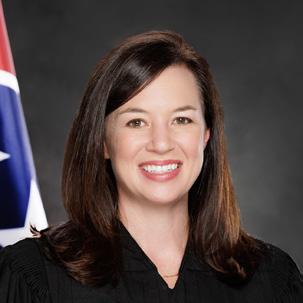
On February 1, 2024, Governor Bill Lee appointed Justice Mary L. Wagner to the Tennessee Supreme Court. The Tennessee General Assembly confirmed Justice Wagner’s appointment on March 11, 2024. Justice Wagner began serving on the Tennessee Supreme Court on September 1, 2024.
Prior to serving on the Tennessee Supreme Court, Justice Wagner served as Circuit Court Judge, Division VII, for the 30th Judicial District. Governor Bill Haslam appointed her to that judgeship on October 24, 2016. Justice Wagner was elected to the Circuit Bench in August 2018 and re-elected in August 2022.
Prior to her appointment to the bench, Justice Wagner practiced Memphis law firm Rice, Amundsen & Caperton PLLC. While at the firm, she taught at the Cecil C. Humphreys School of Law at the University of Memphis from 2012-2014 as an adjunct professor, teaching second-year law students advanced skills in legal writing and oral advocacy and first-year students legal writing, research, and analysis.
Justice Wagner received her law degree from the University of Memphis in 2009, graduating magna cum laude. While in law school, Justice Wagner served as a Notes Editor for the University of Memphis Law Review. She received a bachelor’s degree in 2006 from the University of Colorado, majoring in political science.
BY RACHEL HAAGA
Human Trafficking is a prevalent topic these days. Wherever you land in your curiosity or knowledge on the subject, the news in the last few years, and even more recently, seems to be bringing attention to the subject. Reflecting on the 250th anniversary of our country and our work at Restore Corps, I recalled some thoughts I had when the movie Sound of Freedom was released into theatres in 2023. I have just under 20 years of experience in anti-trafficking work from Cambodia to Memphis. Viewing in through this lens, I have plenty of thoughts on a film like that. When I think about the “sound of freedom”—250 years ago or today—it sounds much the same then and as it does now, and it is the same across oceans and borders. Freedom sounds like children playing, laughter, a victim speaking for himself or herself, the sound of moms reunited with their children, the sound of a deep exhale.
As I watch awareness movies, or view Epstein files, or—while sitting in a majority black city—read research from the Urban Institute that traffickers believe trafficking black women would land them less jail time than trafficking white women, I do so knowing I get to do something about it. That afternoon in 2023, as I watched Sound of Freedom in a full theatre with strangers from across our city, I knew our team at Restore Corps would be supporting law enforcement in an undercover operation just a few days later.
Empower Survivors. Equip communities. Change Systems.
Restore Corps walks with survivors as they begin wondering what life after exploitation might look like. We educate and train first responders, faith leaders, and everyone in between. We leverage our expertise generously with General Assembly members as they draft our State’s laws.
On the afternoon I watched Sound of Freedom, we had just finished our second year of what we call the Summer Initiative. That year, our youth referrals increased month after month, and we ended the year with 100 more youth referrals than the previous year. During the school year, youth return to school each day, putting on a mask of normalcy among their peers, hiding their pain, their exploitation, their story. But, maybe, just maybe, if we can pull off a “summer camp” vibe in the
Restore Corps Survivor Care Center, these young victims might allow themselves to be more known, more seen, and more free in that space. So, the sound (and sights) of freedom over those few weeks in the Care Center looked like staff, interns, and volunteers sitting on the floor with babies, toddlers, and preteens as their moms made birdhouses. It looked like a Restore Corps Board Member facilitating a tie dye activity—walking the survivors through the process of knowing there’s no such thing as “perfect” tie dye—only yours. Your colors, your creation, your choices. What a gift of a tiny reflection of freedom and trauma responsive care in the space and process of tie dye—your voice, choice, individuality, and more. That year, independence looked like a skating day—with all the laughter, fun, pizza, and dancing to any music you can imagine. I think our team’s favorite day of the program was the last one—the “field day.” On this day, volunteers from local organizations—Hope Church, Memphis Jewish Community Center, and more— showed up to assist the team as they turned from case managers, therapists, and never-ending shuttle drivers to field day coordinators. Teens from other organizations come to babysit for the teen moms to be able to play. Memphis Police Department Human Trafficking Unit Lieutenant Milton Bonds worked the grill. There was laughter. There was unspeakable joy. Human Trafficking lives each day in our communities,
hiding in plain sight, literally and figuratively. Victims do not typically self-identify; they are often coerced and compelled to engage in additional crimes in the course of their victimization—theft, recruitment, sale or transport of drugs, and more. Just like so many other realities of our current culture and our nation’s history of freedom, the opportunity of independence does not look the same across races, socioeconomics, rural and urban landscapes. The silver lining, though, is there are paths of hope—and life after “The Life.”
Our team, Board, volunteers, donors, and partners walk alongside victims on their journey towards survivorship,like a trail guide holding a lantern to shine light along the path in front of a victim’s feet. Unless someone else comes along with the torch, the victim might find themselves in continued darkness. That’s where all of us come into play—law enforcement rescue,

the survivor’s courage to exit, the nongovernmental organization offering paths towards stability and hope of a future, prosecutors pursuing opportunities for justice, and bold defense attorneys being willing to argue affirmative defense. Committing a crime might not have allowed a choice the way any of us might think.
Through our collective work with partners and elected officials, Tennessee has been ranked #1 for our counter-trafficking legislation numerous times over the last ten years. Let us turn into these next 250 years choosing courage over comfort, running to the battle, and navigating together across the community as we close the gaps allowing demand to continue making exploitation profitable and creating accessible opportunities for victims to become survivors and torchbearers of light themselves.
Rachel Haaga began working with human trafficking survivors while living in Battambang, Cambodia. When she returned to Memphis, she joined with others to create an effective response to survivors locally. Rachel advised on the 2013 Tennessee Human Trafficking Services Coordination and Service Delivery Plan and the Restore Corps Team launched that year.
Rachel currently serves as the CEO and co-founder of Restore Corps by Freed Life. In its early years, the team partnered with law enforcement in undercover operations, which led Rachel and the team to launch the Community Aftercare Restoration Endeavor (CARE) and to create a network of partnerships to provide collaborative care for survivors. Over the years, Restore Corps’ victim service response has grown and shifted through survivor and stakeholder feedback, and now it maintains a consistent caseload of 40 survivors at a time. Restore Corps is the regional point of contact for emergent human trafficking victim intervention in West Tennessee.
Rachel sits on the Governor-appointed Tennessee Human Trafficking Advisory Council and is appointed to Tennessee's Children's Advisory Council. She co-leads the Tennessee Human Trafficking Task Force alongside other Tennessee Counter Trafficking Alliance colleagues and Tennessee Bureau of Investigation. She engages national human trafficking conversations through the National Compendium managed by Colorado Human Trafficking Council and has spoken at local and national conferences including Shared Hope International JuST (Juvenile Sex Trafficking) Conference and The Association of Prosecuting Attorneys.

This article is the second in a three-part series about assisted reproduction in Tennessee. Click here for the first part.
BY JANA DAVIS LAMANNA
Assisted reproductive technology has changed the way families are formed. It has also created legal disputes that do not fit comfortably within the categories lawyers are accustomed to applying. One of the most difficult disputes centers around what happens to cryopreserved embryos when the people who created them no longer agree.
That disagreement may arise in a divorce. It may arise after an unmarried couple separates. It may surface when one person wants to proceed with transfer and the other does not, when embryos were created for donation, or when one or both individuals who created the embryos dies. However the dispute appears, it is rarely just about control of stored genetic material. It is about future parenthood, the right to avoid parenthood, grief over a family-building plan that did not unfold as expected, and/or the enforceability of agreements made years earlier at a very different moment.
Tennessee has been central to the development of embryo disposition law. The Tennessee Supreme Court’s decision in Davis v. Davis, 842 S.W.2d 588 (Tenn. 1992), remains one of the most influential embryo disposition cases in the country. More than thirty years later, Davis still provides the starting point. Its core principles continue to matter in divorce, contract disputes, and probate and estate-planning conversations involving stored embryos.
Davis arose from a divorce between Junior and Mary Sue Davis. During the marriage, the parties underwent in vitro fertilization (“IVF”) and created seven cryopreserved embryos. The parties resolved the other parts of their divorce, but they could not agree on who
should control the embryos stored at a Knoxville fertility clinic. Mary Sue initially sought to use them herself. By the time the case reached the Tennessee Supreme Court, she instead wished to donate them to another couple. Junior opposed donation and preferred that they be discarded. Critically, the parties had not executed a written agreement specifying what disposition should be made of any unused embryos resulting from the cryopreservation process. Davis, 842 S.W.2d at 589–90.
The Tennessee Supreme Court rejected the trial court’s conclusion that the embryos were “children” whose disposition should be resolved under a bestinterest analysis. It also declined to treat them as ordinary property. Instead, the Court concluded that embryos occupy an “interim category” that entitles them to “special respect because of their potential for human life.” Id. at 597. The Court further explained that the progenitors have “decision-making authority concerning disposition of the embryos,” rather than an ordinary property interest in them. Id.
The Court then set out the framework that continues to guide embryo disposition disputes. First, courts should look to “the preferences of the progenitors.” Id. at 604. If a court cannot ascertain their present wishes, or if there is a dispute, “their prior agreement concerning disposition should be carried out.” Id. If no prior agreement exists, the court must weigh “the relative interests of the parties in using or not using the embryos.” Id. Ordinarily, “the party wishing to avoid procreation should prevail,” assuming the other party has a reasonable possibility of achieving parenthood by other means. Id. If no reasonable alternatives exist, the argument in favor of using the embryos to achieve pregnancy should be considered by
the court. Id. And if the party seeking control intends merely to donate the embryos to another couple, “the objecting party obviously has the greater interest and should prevail.” Id. at 604.
That final point resolved Davis. Because Mary Sue was no longer seeking to use the embryos herself but instead wished to donate them, Junior’s interest in avoiding procreation prevailed. Id. at 604–05.
For practicing lawyers, one of the most important parts of Davis is its discussion of advance agreements. The Court stated that an agreement regarding disposition of untransferred embryos in the event of contingencies, “such as the death of one or more of the parties, divorce, financial reversals, or abandonment of the program.” should be “presumed valid and should be enforced as between the progenitors.” Id. at 597. The Court acknowledged that “life is not static” and that initial IVF decisions may later feel different as circumstances change, But it concluded that, absent an agreed modification, “prior agreements should be considered binding.” Id. at 597–98. That principle sounds straightforward. In practice, however, it is not always easy to apply.
Most fertility clinics require patients to sign consent forms or cryopreservation agreements addressing storage and future disposition. But those documents vary widely. Some are detailed. Some are not. Some clients sign one set of forms at the start of treatment and another years later when renewing storage. Some forms address divorce, death, or disagreement with specificity; others rely on broad checkboxes or general language. And, as with many documents signed in a medical setting, patients may not focus closely on the legal consequences at the moment of signing.
Once a dispute arises, the first question is often whether the parties already made an enforceable disposition decision. Answering that question may require review of more than one document, including IVF consents, cryopreservation agreements, storage renewals, later amendments, and clinic correspondence. The problem is that these documents do not always say the same thing, and they do not always answer the precise question in dispute.
A cryopreservation agreement that provides only that the parties will “mutually agree” on future embryo disposition may prove meaningless once they are
no longer capable of agreement. Similarly, a marital dissolution agreement that carefully resolves bank accounts, retirement assets, and household property, but never addresses existing embryos, may leave a deeply significant issue entirely unresolved.
Embryo disposition documents often reflect broad choices: donation, continued storage, destruction, or a decision deferred until later. But broad choices do not always answer the questions that matter once a dispute arises. A statement that embryos will be “donated,” for example, may not explain whether both parties must later sign clinic paperwork. In that instance, what happens if one refuses to sign? Or who pays storage fees while the issue remains unresolved? In litigation, those omissions can become disputes.
The same problem exists with other disposition selections. If the documents provide for continued storage, do they say for how long and at whose expense? If one party is granted control upon divorce, does that control include authority to transfer the embryos, donate them, discard them, or only continue storage? If the parties selected destruction, does the clinic require later confirmation from both parties before acting? A checked box may capture a general preference, but it may not resolve the implementation details that become critical after the relationship deteriorates.
Davis itself demonstrates why those details matter. Because the Davises had no controlling written agreement addressing divorce, the Court was required to resolve a deeply personal conflict after the marriage had ended and the parties’ positions had changed. Id. at 589–90.
Embryo disposition issues are not limited to divorce or separation. They may also surface in probate when one or both owners of the embryos dies before a final disposition decision has been carried out. Davis anticipated this issue directly, identifying “the death of one or more of the parties” as one of the contingencies that a disposition agreement should address. Id. at 597.
If one progenitor dies, the immediate question may be who has authority over the embryos. Did the governing clinic agreement give the surviving spouse or partner control? Did the decedent authorize posthumous
use? Did the documents direct destruction, donation, or continued storage? If the written instructions are silent or inconsistent, the surviving partner may not view the issue the same way as the personal representative, heirs, and the storage facility.
The probate complication is that embryo disposition does not fit neatly into traditional estate administration. Davis described the progenitors’ interest as decisionmaking authority over disposition, not as an ordinary property interest. Id. at 597. That characterization raises difficult questions when a progenitor dies. Does that decision-making authority pass through the estate? Does it remain governed exclusively by the clinic contract? Does a surviving progenitor have authority to act alone? While the Supreme Court in Davis expressly says embryo disposition agreements should address death, Tennessee does not appear to have a reported appellate decision answering questions like whether disposition authority passes through an estate or whether a surviving progenitor may act alone when the documents are unclear.
If both progenitors die, the practical problems become even sharper. Someone must determine whether the embryos are to be discarded, donated, transferred pursuant to prior written instructions, or maintained in storage for some defined period. A personal representative may assume the issue belongs within estate administration. A clinic may instead insist on following its own consent forms. Family members may have strong views but no legal authority. Without clear advance direction, embryos can become stranded between contract documents, probate administration, and clinic policy.
Death also raises a separate inheritance question. Tennessee’s afterborn-heir statute provides that relatives of a decedent “conceived before the decedent’s death but born thereafter” inherit as if they had been born during the decedent’s lifetime. Tenn. Code Ann. § 31-2-108. The statute does not expressly address cryopreserved embryos or a child born years after a parent’s death through posthumous embryo transfer. That leaves room for argument over how, or whether, the statute applies in that context.
For estate planners and probate lawyers, the practical lesson is straightforward: fertility treatment documents should not be considered in isolation from estate planning documents. Clients with stored embryos should be asked whether they have made clear, consistent decisions about post-death disposition, whether a surviving spouse or partner may use the embryos, whether embryos may
be donated or discarded, who may sign necessary clinic documents, and whether testamentary documents should address later-born children. A will alone may not resolve the issue if it conflicts with clinic paperwork. Clinic paperwork alone may not address broader estate consequences.
When embryo disposition becomes contested, counsel should identify the facts and documents early. That includes determining how many embryos exist, where they are stored; who signed the relevant clinic documents; whether the parties executed more than one disposition or cryopreservation agreement; whether those documents address divorce, separation, death, incapacity, or disagreement; whether they were later modified; whether storage fees are current; and what disposition each party now seeks.
In domestic relations cases, embryos should be addressed deliberately in discovery, mediation, settlement negotiations, and final decrees. They should not be swept into a catch-all paragraph resolving “all other personal property.” According to Davis, they are not routine personal property; the Davis Court expressly declined to treat them that way. Davis, 842 S.W.2d at 597. In probate and estate matters, counsel should likewise determine whether stored embryos exist, whether any disposition instructions address death or posthumous use, and whether the estate-planning documents are consistent with the clinic paperwork.
Counsel may also need to coordinate with the fertility clinic or storage facility before a settlement is finalized, an estate plan is completed, or a proposed order is submitted. Clinics often have their own forms, signature requirements, and procedures before they transfer, donate, discard, or release embryos. A resolution that makes sense on paper but cannot be implemented by the clinic may not resolve the dispute at all.
Embryo disposition decisions are easy to postpone when everyone is united in the same family-building plan. No one wants to think about divorce, death, disagreement, or a future in which one person wants to move forward and the other does not. But those are precisely the circumstances in which clear disposition language matters most.
Fertility clinics should encourage patients to seek legal advice before completing embryo disposition forms, particularly when those forms address divorce, death, posthumous use, or control of embryos if the parties later disagree. Family lawyers and litigators should recognize embryo disposition as a potential issue in divorce and separation cases. Estate planners and probate lawyers should understand that stored embryos may raise questions about post-death control, future use,

and inheritance that ordinary estate-planning documents may not fully address.
Tennessee has already made a significant contribution to the law in this area. Davis remains the foundation. But the practical lesson has not changed: when parties do not decide clearly what should happen to embryos before conflict arises, they may end up asking a court to make that decision later, at the worst possible time and in the least private setting.
Jana Davis Lamanna is a shareholder at Black McLaren Jones Ryland & Griffee, P.C. in Memphis and has practiced law for over twenty years. She devotes a significant portion of her practice to assisted reproductive technology law in Tennessee. She represents both intended parents from across the country who use a gestational carrier in Tennessee and gestational carriers located in Tennessee. Her work includes drafting and negotiating GCAs, embryo disposition agreements, and egg and sperm donor agreements; securing parentage orders in Tennessee courts; and preparing the related powers of attorney and advance directives that accompany assisted reproduction arrangements. She regularly works with fertility clinics, surrogacy agencies, escrow administrators, and insurance providers throughout the process.
In addition to her assisted reproductive technology practice, Ms. Lamanna represents clients in probate and estate matters, guardianship and conservatorship proceedings, and family law cases, including divorce, custody matters, and stepparent and relative adoptions.









BY DAWNA E. SNIPES, ESQ.
The twentieth century included prime years for many within the infamous “Baby Boomer Generation.”
The spike in post-World War II births (1946-1964) of approximately 80 million Americans has long been the subject of speculation about the challenges they will face in their later years.1 The changes being caused by this population reaching retirement age has been referred to as the “silver tsunami.” Many older “boomer” adults are now experiencing those realities by facing agerelated medical issues, increased reliance on others for healthcare and financial decision-making, and the need for affordable nursing and assisted living care. While resources exist in Memphis and Shelby County, many remain underutilized by those who could benefit most.
The number of seniors who rely on caregivers and who may be vulnerable to mistreatment or exploitation continues to grow. There is a segment of seniors plagued with cognitive delay issues, thus lacking the ability to make decisions for themselves. A second layer of seniors have mental and physical health challenges, often relying on others for treatment and care. Seniors who are subject to financial exploitation by individuals in caregiver positions, strangers, and even relatives, encompass a third layer. Particularly during the COVID-19 pandemic, due to limited social interactions, many elderly and vulnerable individuals were subject to physical and emotional neglect and/or abuse as well as financial exploitation at the hands of both paid and unpaid caregivers.2 A final layer involves seniors who are victims of their own self-neglect, unable to adequately care for themselves.
Given these realities, there is a clear need for strong societal protections and coordinated support systems for this aging segment of society. Memphis and Shelby
County are home to a broad network of public, private, and nonprofit organizations dedicated to serving and protecting this vulnerable population. The Community Legal Center (CLC) is one such nonprofit, with a mission to provide high-quality, accessible civil legal services to individuals with limited means and those at increased risk.
For more than thirty years, CLC has carried out its mission of expanding access to justice for individuals and families who cannot otherwise afford legal representation. Recognizing a growing and unmet need to protect vulnerable older adults, CLC established its Elder Law Program in 2015. The program provides legal services to, and on behalf of, seniors who have experienced physical, financial, or emotional abuse, as well as those at risk of or are currently suffering from self-neglect.
To advance this work, CLC provides legal services to seniors within Memphis and Shelby County by regularly hosting estate planning clinics within the community and drafting simple wills and powers of attorney for seniors who fall within the Baby Boomer age range. We are also a collaborative agency for the Coordinated Response for Elder Abuse (CREA), where we provide advice and legal services, including conservatorships, for seniors referred to us by our partner agencies.
CLC's Elder Law Program is always looking to expand its volunteer network of attorneys and other legal professionals for our community-based estate planning clinics. If you are an attorney or legal professional interested in volunteering, please email us at info@clcmemphis.org
As the Baby Boomer generation continues to age, the demand for elder law services will only increase. The legal community plays an important role in addressing these
1 Cottrell, Sarah. September 26, 2025. Parents. “A Year-by-Year Guide to the Different Generations.”
2 Picchi, Aimee. April 18, 2024. CBS News. “Baby Boomers are Hitting ‘Peak 65,” Two-Thirds Do Not Have Nearly Enough Saved For Retirement.”
needs and ensuring that seniors are protected, supported, and treated with dignity. Supporting elder care advocacy is not only aligned with CLC’s mission, but it is also

an opportunity for attorneys to make a meaningful and lasting impact in the lives of older adults in our community.
Dawna E. Snipes is the Community Legal Center’s Director of Civil Legal Services
Before joining the Community Legal Center, Dawna practiced in the areas of Elder Law, Estate Planning, Tax Law, and as a Guardian ad Litem for Juvenile and Circuit Court matters. Ms. Snipes also volunteered at the Community Legal Center’s Estate Planning Clinics and Memphis Area Legal Services Saturday Clinics. For nearly 13 years, she has held adjunct faculty roles teaching legal ethics, business law, HIPPA law, and critical thinking courses at the university level.
Ms. Snipes received her Juris Doctor (JD) from Western Michigan University Cooley Law School (2011) in Grand Rapids, Michigan; Legum Magister (LL.M) from Thomas Jefferson School of Law (2014) in San Diego, CA; Master of Public Administration (MPA) and Bachelor of Business Administration (BBA) degrees from the University of Memphis (2003, 1995); and Associate of Applied Sciences (AAS) from Southwest Tennessee Community College (2002).
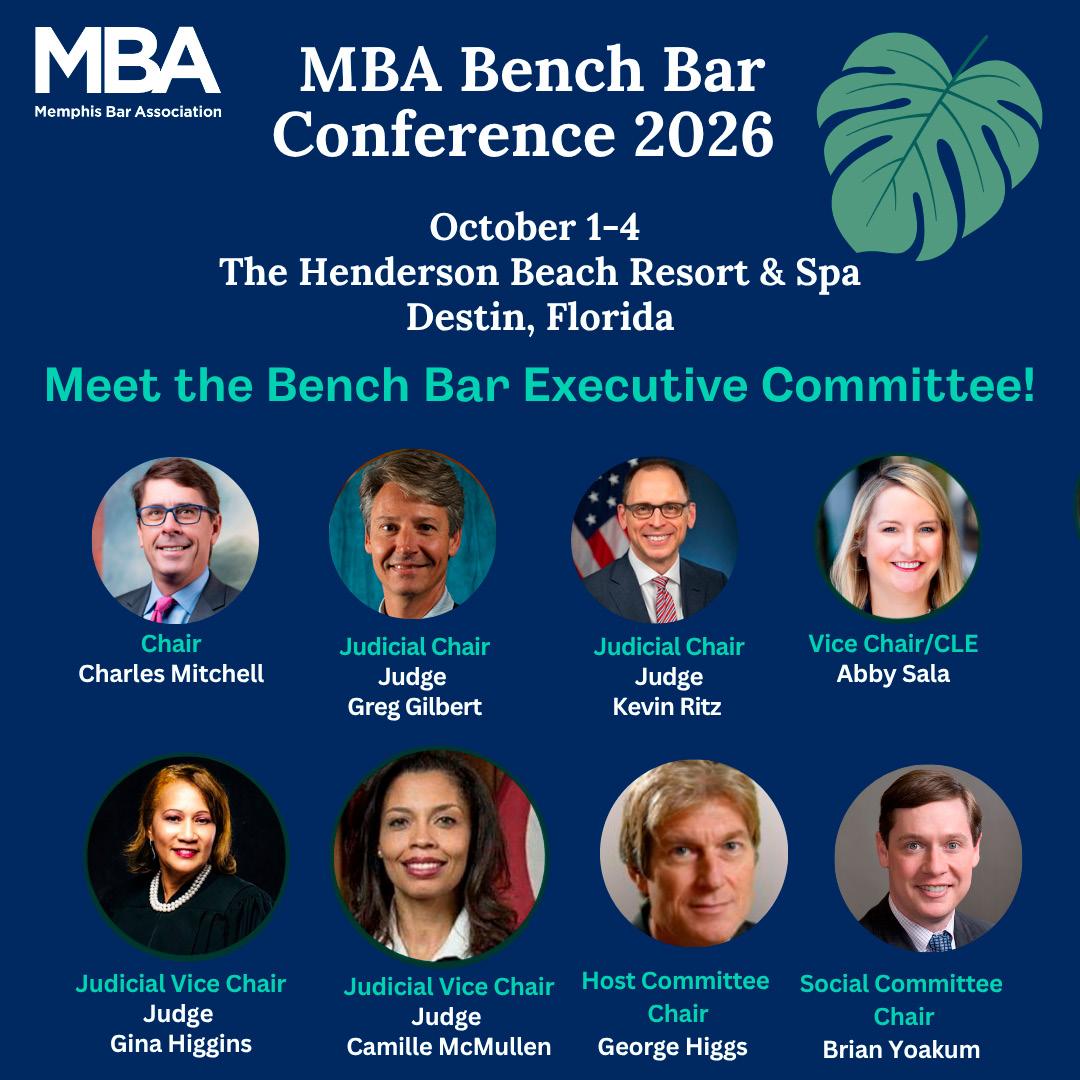
BY JUDGE RAY LEPONE AND TERRE FRATESI
Judge Ray Lepone and Terre Fratesi worked together in the Shelby County District Attorney’s Office for many years, and again as Magistrates at the Juvenile Court of Memphis and Shelby County, Tennessee.
Fratesi: Judge Lepone, we have been having deep conversations about criminal law and juvenile justice for nearly three decades now, but this will be a little bit different, because I am going to ask you to talk about yourself for members of the legal community who may not know you and are curious about one of their newest judges. I am going to ask questions that I hope will allow you to share some of your stories that I already know, and maybe even a few new ones.
Lepone: Sounds good.
Fratesi: So, before we met in person, your reputation in the DA’s office preceded you. I heard about this new guy in the office who was a former bouncer, boxer, and rugby player, who had prevented a defendant from escaping from Judge Montesi’s courtroom.
Lepone: That was me.
Fratesi: So Ray, I want our readers to know the whole story if you are willing to tell it again.
The article was titled “Prosecutor Tough Outside of Courtroom Too.” I busted my shin when we went to the ground. The article mentioned that I received no hazard duty pay for my injury.
Fratesi: You are originally from Philadelphia. Tell us about your journey to Memphis.
Lepone: I was born in Philadelphia. The company my dad worked for relocated him several times while I was growing up. I lived in Baltimore, where I attended middle school, and then we moved to the Atlanta area when I started high school. I did well in school, but after graduating from high school, I went through a phase of making bad choices. I accepted responsibility and turned myself around before going too far off the right path.

Lepone: I was assigned to General Sessions Criminal, Division 13, Judge Montesi’s courtroom. I was standing at the podium handling cases, when a defendant jumped the in-custody retaining wall, kicked a deputy in the chest hard enough to knock his glasses off, and was heading to the door. When he passed by me, I tackled him, took him down, and pulled his arms up so a courtroom deputy could cuff him.
Fratesi: There was a short piece in the news after that, wasn’t there?
Lepone: Yes, the Commercial Appeal covered the story.
So, in 1993, I went back to college and graduated from Kennesaw State University in 1996. When I went back to college, I knew I wanted to go to law school. A friend of mine from college also wanted to go to law school. We were both a little older and had spouses. We came up with a plan to attend law school together in Memphis. Our plan was to return to Georgia after graduation, take the Georgia bar, and practice in Georgia. In 1999, after we both graduated from the Cecil C. Humphreys School of Law, he went back to Georgia and later became an elected District Attorney in Georgia for many years—he is now retired. I fell in love with Memphis while attending law school here. I wanted to go into public service here. So, I stayed, took the bar exam, and became a licensed attorney in Tennessee in November 1999. I’ve been here thirty years now.
Fratesi: What steered you to the criminal justice system?
Lepone: When I was young, I looked up to my uncle who was a police officer in Philadelphia. He would always be in uniform heading to work on Christmas Day while our family was celebrating the holiday. He would tell me he was going to work to keep people safe. When I got older, I considered becoming a police officer to serve the public. When I decided to go to law school, I knew I wanted to become a prosecutor. In law school, I clerked for the Criminal Court judges at 201 Poplar. I sat in court and watched trials in the different divisions of Criminal Court. I immediately knew that was what I wanted to do—become a trial lawyer.
I interviewed for a job at the Shelby County District Attorney’s Office, but there were no openings for Assistant District Attorneys at the time, only investigators. Because I was married and a licensed attorney, I needed work as an attorney. So, in 1999, I accepted an associate attorney position with Petkoff & Lancaster and practiced insurance defense. I got to try a few civil bench trials and even got to handle an oral argument in front of the Court of Appeals in Jackson, Tennessee on a premises liability case. About a year into my work there, I got a call from the DA’s Office asking me if I still wanted to be an Assistant District Attorney because they had an opening. Yes, I took a pay cut, but that was my dream job. So, in October 2000, about 26 years ago, I walked into General Sessions Division 13 as an ADA.
Fratesi: After your time in General Sessions Criminal Court Division 13, what came next?
Lepone: I was assigned to the Domestic Violence Prosecution Unit where I spent about a year before I was assigned to my first Criminal Court position in Criminal Court Division 9. At that time, the Honorable J.C. McLin was the judge in that division. Next, I was assigned to the District Attorney’s Gang Prosecution Team. I loved my job but began to look at my finances. Based on my trial experience and an attorney friend of mine, I got an interview with Apperson Crump & Maxwell to become an associate in the firm’s civil litigation section. In 2004, after about a year in private practice and handling some criminal cases as a defense attorney, I got a call from District Attorney Bill Gibbons telling me that he was adding resources to the gang prosecution unit and asking me if I was interested in coming back to the DA’s Office. I returned to the DA’s Office. Yes, I took another pay cut, but I was so happy to be back in public service. I went
back to the gang unit, and that, as you know, is where I would stay for over 14 years until 2016, when Judge Dan Michael asked me if I would consider serving as a Juvenile Court Magistrate Judge.
Fratesi: Somewhere around the middle of this journey, you had a health scare. Are you comfortable talking about that?
Lepone: It will never be easy to talk about, and going back there is hard for me. But I’m told that sharing my story can give hope to others. So here it is.
In 2005, when I was 38 years old, I wasn’t feeling bad, but I was tired all the time. At first, I thought it was the normal stress of life and work. But it started to get worse, and I felt like something wasn’t right. I went to the doctor and had blood work done as part of a physical. My lab results showed that all my blood counts were abnormally low, so the doctor wanted to run more tests. I had an extremely painful procedure, a bone marrow biopsy. At that time, I was diagnosed with a treatable blood disorder. But I began to feel worse as time went on, so the doctor ordered another bone marrow biopsy. I was at work getting ready for a homicide trial. I remember it like yesterday because I was in the MPD homicide bureau, prepping witnesses for this trial when my cell phone kept ringing. I ignored it so I could complete the witness interviews. When I finally answered my phone, I saw how many times my doctor’s office had called. The nurse said, “Ray, you need to come in immediately.” I explained that I was going to be in trial and could not come in. At some point, my doctor got on the phone and said the words nobody wants to hear, “Ray, you have cancer; you need to come in.” I remember being at 157 Poplar in my office and the room started spinning. I was diagnosed with stage 4 cancer because it was in my bone marrow. I was in my late 30s. I had to begin treatment immediately.
Within days, a port was surgically placed in my chest, and I began chemotherapy. I got very sick, I lost all my hair, and I had no immune system. I eventually developed pneumonia with a very high fever and was put in the ICU. My prognosis was not good. I lost consciousness in the ICU, and the last thing I recall is that my friends, my 201 family, and my family were in and out of the waiting room. I don’t remember how long I was out, but when I woke up, I was in the recovery room. One of my doctors was there adjusting the medicine bags, and he said, “Your counts are rising; the treatment is working.” I have been
in remission now since 2006. The Commercial Appeal wrote another article based on my battle with stage 4 cancer titled “There’s Hope: Prosecutor In Remission.”
Fratesi: I, of course, remember being in the DA’s office when this was happening, and I knew I wasn’t seeing you coming to Juvenile Court for transfer hearings while you were getting your treatment, but I’m not sure I knew until you told me this just how close we had come to losing you.
Lepone: Yes. It changed me as a person. This is probably not the appropriate forum to talk about my faith so we can move on.
Fratesi: Talk about your time in Juvenile Court.
Lepone: When I was assigned to the gang unit, one of my responsibilities was to handle transfer hearings at Juvenile Court; specifically, violent felonies committed by juveniles where there was gang involvement. That’s how you and I met.
Fratesi: Yes, in the early 2000s.
Lepone: Right. I had many of those hearings before Judge Dan Michael. In 2016, after a transfer hearing, he asked me if I would consider coming to Juvenile Court as a Magistrate Judge. That was the first time I ever considered becoming a judge. How do you turn down an opportunity to be a judge? I knew I had extensive trial experience, having tried over 60 Class A and B felony jury trials. But becoming a Magistrate Judge gave me an opportunity to follow the arc of public service to a different role. Juvenile Court was a great experience, and it taught me and reassured me that I could make difficult decisions as a judge. It helped prepare me for the position I have now as a Criminal Court Judge.
Fratesi: Tell me about the years between leaving Juvenile Court and being appointed to the seat you hold now.
Lepone: In 2018, District Attorney Amy Weirich gave me the opportunity to return to the office I had served in for most of my public service career as Deputy District Attorney and help run the day-to-day operations. This role would involve managing 230 employees, including over 100 attorneys. This was another opportunity I just could not turn down. It felt like the next natural step in my public service journey. There were a lot of challenges in that job but managing the office during the Covid-19 pandemic was life changing for me. This presented new challenges to the office’s ability to move cases through the system, but we figured out ways to do it safely. The stress
on all of us at 201 during that time is beyond words. I had been Deputy District Attorney for four and a half years when District Attorney Steve Mulroy came in. He trusted me to help the office transition to his leadership and eventually offered me the permanent job as his Deputy District Attorney. I stayed in that position until I retired from the District Attorney’s Office in September 2023.
Fratesi: What was next on your horizon?
Lepone: I got an opportunity to work for the State Attorney General in the criminal appeals division reviewing and defending trial court judges’ exercise of discretion and rulings from all across the State. Again, this presented an opportunity to serve the public in another role. I often say that serving as Assistant Attorney General for two years, in addition to my years of trial work in all the divisions of Criminal Court and two years of prior judicial experience, gave me the confidence to go for the appointment to the Criminal Court bench.
Fratesi: So here you are now, in Criminal Court Division 1. Back to the beginning. Tell me about that.
Lepone: The day Judge Skahan announced her retirement, I was in a meeting. I started to get text messages on my phone from many people who previously worked at 201 Poplar or were currently working there asking me to consider applying for the appointment for her vacated seat. I consulted with people I trusted, including judges, and made the decision to answer the next call to service. I went through a rigorous application process and a public hearing, and the Governor appointed me to the Criminal Court bench in Division 1. I was sworn in September of last year. I was ready for this work on day one and conducted a jury trial within my first 45 days on the bench. The lawyers who appear before me seem to appreciate having a judge who has been where they are, knows the law, and has the qualifications to be there making rulings on their cases.
Fratesi: How do you find time to take care of yourself?
Lepone: My wife would say I do not take good care of myself like I should. As a former amateur boxer, boxing is my outlet and what I dedicate my time to outside of work. It is the only way I enjoy getting in shape. When I came to Memphis, the first thing I did was find a boxing gym. I am a licensed amateur boxing coach and professional boxing cornerman. I help train and manage an amateur boxing team with Mike Cook Boxing.
Fratesi: How did you end up with Mike Cook’s boxing team?
Lepone: Believe it or not, I met Mike Cook at an Anti-Gun Violence Rally. He was at the event with a championship boxing belt. We bonded over our mutual love of boxing, public service, and giving back to the community. He had an interest in helping kids and steering them on the right path. I shared these same passions, so together we started a youth amateur boxing program. And we have been dear friends for several years now.
Fratesi: You still find time for that program today?
Lepone: I will always make time for that program. Boxing has been a part of my life since I was a young boy. I have always had a home boxing gym. It’s a part of who I am.
Fratesi: Do you ever get tired of answering questions about the Lester Street case?
Lepone: I don’t because it was one of the largest mass murder cases in the community at the time, and it was
another life changing part of my public service journey. Former ADA Reggie Henderson and I got a call in the middle of the night from officers saying they had a crime scene with six dead and three children in critical condition. Those memories never go away, so no, I don’t get tired of answering questions about it. Our trial team spent countless hours handling that case and trying Jessie Dotson for six counts of capital murder for the homicides of two male adults, two female adults, and two small children and for three counts of criminal attempt murder for the three surviving children. It is hard to believe we tried that case 16 years ago.
Fratesi: Thanks for taking the time to catch up and share some of your story with the local legal community, Judge Lepone.
Lepone: I have been blessed in my public service journey and glad to share. I love what I do, and I love that I get to show up and do it every single day.
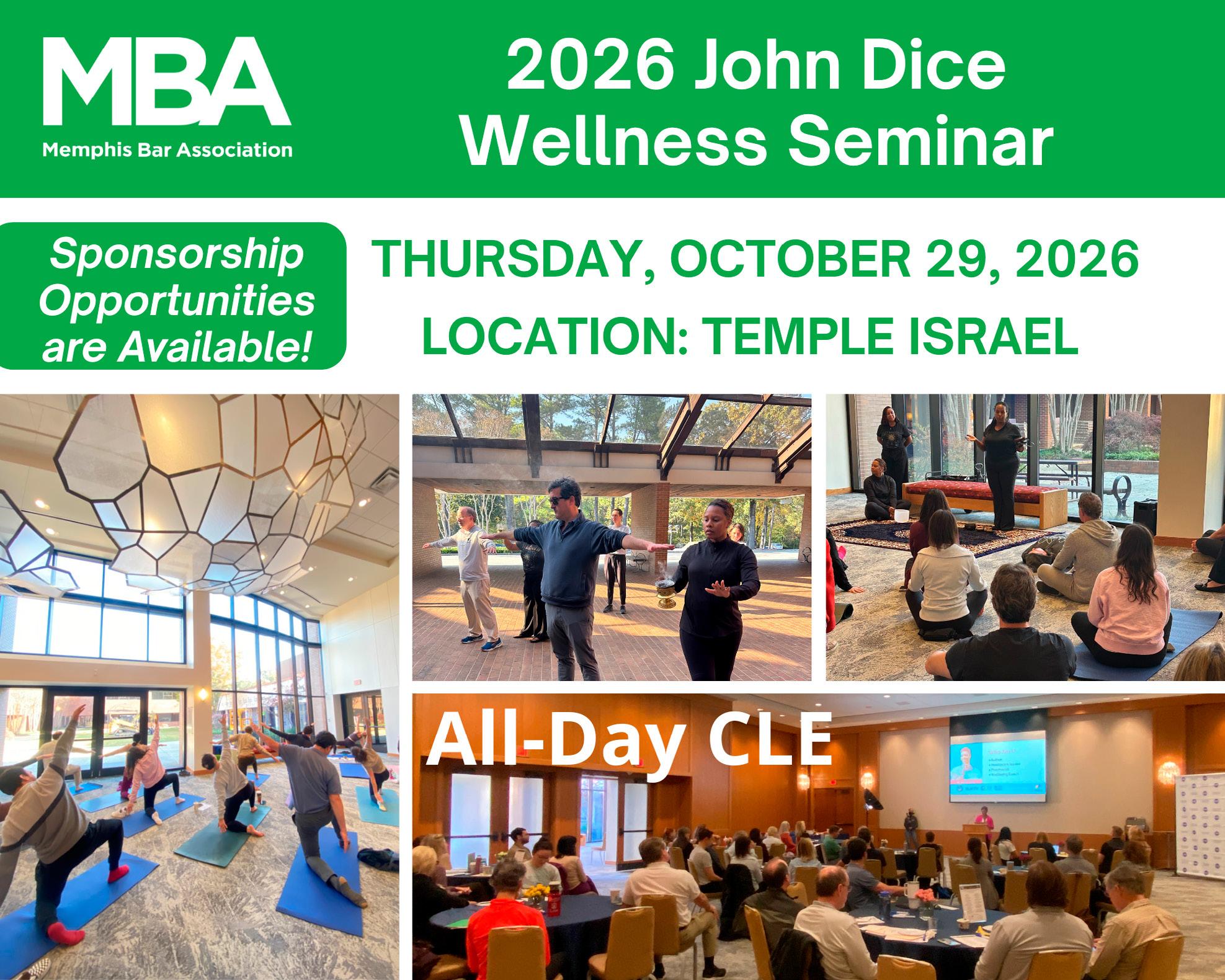
BY KAITLYN HANSEN
In the years after the U.S. Supreme Court’s landmark decision in Bostock v. Clayton County, Georgia, 590 U.S. 644 (2020), which held that Title VII of the Civil Rights Act protected workers from discrimination and harassment on the basis of sexual orientation and gender identity, employers have struggled to understand how to ensure their LGBTQ+ workers are appropriately protected from workplace discrimination and harassment. But that has been an even more difficult feat given shifting presidential administrations and priorities, along with ever-changing agency enforcement by the U.S. Equal Employment Opportunity Commission’s (“EEOC” or “Commission”). So, how did we get here, and how can employers protect themselves and their employees?
After Bostock, the EEOC issued comprehensive guidance clarifying that illegal workplace harassment could include, among other things: denying an individual access to a bathroom consistent with their gender identity, targeting gender non-conforming coworkers, or intentionally misgendering someone by refusing to recognize their gender-appropriate pronouns. The guidance also addressed modern workplace issues, such as digital harassment and the impact of the #MeToo movement.
Shortly after taking office, however, President Trump issued Executive Order 14168 titled “Defending Women From Gender Ideology Extremism and Restoring Biological Truth to the Federal Government.” This Executive Order, in part, directed the federal government to replace the term “gender” with “sex” in all official policies and documents and to adopt a narrow definition of “sex” to recognize only male and female sexes. The Executive Order effectively directed the EEOC to rescind portions of the 2024 guidance that conflict with it.
In line with this executive order, in May 2025, a Texas federal court held that the Biden-era EEOC overstepped its authority by requiring employers to provide accommodations to LGBTQ+ employees
for bathroom usage, dress, and appropriate pronoun usage. Texas v. EEOC, 785 F. Supp. 3d 170 (N.D. Tex. 2025). The court concluded that the EEOC’s position with respect to LGBTQ+ issues by “redefining the core definition of ‘sex’” and improperly “expand[ing] the scope of sex beyond the biological binary.” Id. at 18789,191. The disagreement between the 2024 guidance and the Texas court is one of interpretation—did Bostock hold Title VII only applied to explicit employment actions (i.e., termination) because of sexual orientation or gender identity?
While Bostock explicitly reserved rulings on other related issues (such as bathrooms, locker rooms, or pronoun usage) for future cases, Bostock nonetheless explicitly stated the question before it included “whether an employer who fires someone simply for being homosexual or transgender has discharged or otherwise discriminated against that individual “because of such individual’s sex,” which suggests that the Court’s holding may have been about more than just terminations. 590 U.S. at 681.
Then on January 22, 2026, the Commission voted to rescind the 2024 Enforcement Guidance on Harassment in the Workplace. The 2026 Commission did not limit the decision only to LGBTQ+ issues in its 2024 Guidance; it repealed the guidance in its entirety. A majority of Commissioners cited Executive Order 14168
in justifying the repeal. Thus, the EEOC has expressly deprioritized LGBTQ+ issues in the workplace, despite its prior inclusion of combatting unlawful discrimination based on sexual orientation and gender identity in its strategic plan. In so doing, EEOC Chair Andrea Lucas directed the Commission to administratively close its open investigations involving discrimination and harassment against LGBTQ+ individuals.
This changing landscape has been the top of mind for most employers:
Are our policies illegal?
Do they need to change?
Should we include protection of LGBTQ+ employees in our anti-harassment policies?
Can we ignore harassment complaints relating to pronoun usage? Bathroom access?
Should our annual compliance training change?
The bottom line is that, as a legal matter, the EEOC’s 2026 rescission of prior non-binding EEOC guidance does not dramatically alter the way courts interpret Title VII or look at discrimination and harassment against LGBTQ+ employees in the workplace, nor does it change any state civil rights laws that prohibit discrimination and harassment. In the same vein, Executive Orders issued by the President do not change the law. While they do give us insight on the government’s enforcement priorities and view of key workplace issues, they cannot and do not override or change federal, state, or local law.
With all of this in mind, it is important to remember: employers’ anti-harassment policies and practices are still important.1 Although the EEOC might not prioritize sexual orientation or gender identity-based harassment claims, Title VII still prohibits harassment and discrimination against LGBTQ+ individuals. And under Bostock, LGBTQ+ employees are protected from discrimination and harassment “on the basis of sex.” 42 U.S.C. §§ 2000e(k), 2000e-2; Bostock, 590 U.S. at 683. Courts will continue to wrestle with the mandates of Title VII, Bostock, and the 60+ years of precedent relating to workplace harassment issues. And while the federal government might have backed away from deeming certain actions--pronoun usage, bathroom access, and
gender nonconformance--as rising to the level of illegal workplace harassment, a private plaintiff can still request a Notice of Right to Sue and file suit in federal court. This is particularly true given that both pre- and postBostock, numerous federal and state courts have found, consistent with what the U.S. Supreme Court in Bostock found, that sexual orientation and gender identity-based discrimination and harassment violates Title VII. See, e.g., Hively v. Ivy Tech Comm. College of Ind., 853 F.3d 339 (7th Cir. 2017); Olivarez v. T-Mobile USA, Inc., 997 F.3d 595 (5th Cir. 2021) (dismissing a transgender plaintiff’s sex discrimination claim because the plaintiff did not allege any facts indicating less favorable treatment than others outside the protected class—but not because the plaintiff was not a member of a protected class).
It is incumbent on employers to continue to combat unlawful workplace bias and harassment on the basis of all characteristics protected by law. It is not just about compliance. It is about good business and creating a safe and healthy workplace for all employees.
Kaitlyn A. Hansen advises and represents employers in a broad range of employment law issues and disputes before state and federal courts, arbitration panels, and administrative agencies. Balancing the needs of clients with the demands of litigation and other disputes, Katie leverages her experience to bring disputes to a successful conclusion with the least amount of disruption to her clients’ business operations.
Katie is a member of Littler’s Staffing, Independent Contractors and Contingent Workers Practice Group, as well as its Wage and Hour Practice Group. She advises clients on employee classification issues, as well as on leveraging contingent workforce solutions. Katie conducts audits to assess and mitigate contingent workforce and employee classification risks, and she also regularly litigates misclassification cases.
Before joining Littler, Katie clerked for former Chief U.S. Magistrate Judge Diane K. Vescovo and U.S. District Judge Thomas L. Parker in the Western District of Tennessee.
1 Employers also face numerous challenges surrounding how to effectively balance competing concerns from protected groups – for example, addressing religious or cultural objections to LGBTQ+ issues. The nuance required in handling these concerns cannot be completely addressed here and justifies a separate writing.

Doni Mills | Account Executive
Email: dmills@veritext.com
Direct: (901) 521-3864
Cell: (662) 689-1102
EXHIBIT CAPTURE
See your testimony in action. Capture compelling content by displaying electronic documents to a witness and recording computer interaction in realtime.
EXHIBIT SHARE
Introduce and share electronic exhibits with all local and remote participants through the use of your laptop or iPad. No need to print and ship multiple copies of documents.
ACE “ADVANCED
Ongoing hyperlinked and searchable PDF exhibit list updated after each deposition. No Wi-Fi necessary.
VERITEXT VIRTUAL
Depose witnesses remotely and share exhibits in realtime with many participants. Easily connect with any webcam-equipped device, speakerphone and the internet.
VIDEO TECHNOLOGIES
Employ broadcast-quality legal videography, videostreaming, video synchronization and videoconferencing to enhance testimony.
MYVERITEXT.COM
Schedule depositions and access transcripts and exhibits online from anywhere, anytime for free.
BY WILLIAM DEANDRE FAYNE
Domestic violence is a complex and pervasive issue within the United States. This issue has challenged both the legal system and society’s approach to justice.1 Traditional criminal sanctions, such as incarceration, have been the standard response to domestic violence charges.2 In recent years, however, states like Tennessee have increasingly turned to Global Positioning System (“GPS”) monitoring to supervise alleged offenders and protect victims during the pretrial phase rather than resort to incarceration or other criminal sanctions for the alleged offender.3 While GPS monitoring minimizes pretrial detention, questions arise about its constitutionality, effectiveness, and impact on both alleged offenders and victims.4 This article proposes the implementation of restorative justice as an alternative to GPS monitoring to better serve both defendants and victims. It also addresses the challenge posed by a comparative analysis of the use of GPS monitoring in domestic violence cases in Tennessee, while advocating for the use of restorative justice as an alternative.
Every minute in the United States, approximately twenty people become victims of domestic assault, with women falling victim to such assault more often than men.5 Only 56% of non-fatal domestic violence cases are reported in the U.S.6 In Tennessee, the individuals who suffer the most from domestic violence are ages 24 to 35, followed by individuals who are ages 36 to 46.7 A 2020 Tennessee study conducted by Tennessee Department of Health revealed a statewide decline in domestic violence cases between 2016 to 2020.8 Although a decline in domestic violence cases was reported for 2019-2020, this occurred during the COVID-19 pandemic, and it remains unclear whether the drop reflects a true decrease in domestic violence incidents or was the result of decreased reporting. Shelby County, Tennessee had the highest reported instances of domestic violence of any other county in the state.9 During 2019-2020, the Tennessee Department of Health stated that reports to law enforcement decreased in the state, but calls to domestic violence helplines increased.10 Beginning in March of 2020, the COVID-19 pandemic introduced various factors that possibly contributed to domestic violence, like economic turmoil, anxiety, and lockdowns causing forced proximity.11 Thus, one concern about the data is whether it truly represents a reduction in domestic violence incidents, as it might reflect reduced reporting
rather than a decline in incidents.12 In 2022, Tennessee reported an 8.37% further decrease in domestic violence cases between 2021 to 2022.13
This article will be presented in three parts that will run in three consecutive issues of the Journal. Part one (this segment) will provide a comprehensive understanding of what constitutes domestic violence in Tennessee, with a detailed examination of how Tennessee defines the offense. It further explores who qualifies as a domestic violence victim, as well as the classifications of domestic violence offenses. Part one also defines GPS monitoring and the implications of its use. Part two, which will be published in Issue 3 this year, will discuss the constitutionality of employing GPS monitoring, looking at invasion of privacy, excessive fines, and equal protection. Part two will also discuss public policy and the collateral consequences of using GPS monitoring. Additionally, it will examine public policy arguments, including collateral consequences, concerns of GPS monitoring, and whether its use serves as advocacy or presumptive guilt. Part three, which will be published in Issue 4 this year, will cover the use of restorative justice and will highlight the benefits of restorative justice. It will also analyze restorative justice as an alternative or complement to GPS monitoring in domestic violence cases, exploring its potential to reduce recidivism, provide
meaningful accountability, and offer a more holistic approach to victim safety and offender rehabilitation. More importantly, Part three will examine whether restorative justice results in a more positive outcome compared to GPS monitoring during pretrial sentencing.
A. How Does Tennessee Define Domestic Violence?
Generally, domestic violence “is the violent or aggressive behavior within the home, typically involving the violent abuse of a spouse or partner.”14 States typically define the parameters of domestic violence. For example, a “domestic abuse victim” in Tennessee is defined specifically as any person who falls within certain categories, which generally include persons (adults or minors) who have been married or who are dating (or who have had a sexual relationship), or persons who are in the same family related by blood, adoption, or marriage.15 Tennessee also has specific rules for the punishment for domestic violence offenders who have repeat offenses.16
B. Classification
Every criminal offense comes with a classification for sentencing purposes.17 For example, Tennessee classifies offenses as felonies with a range of A-E or misdemeanors with a range of A-C, but Tennessee does not provide classifications for domestic assault.18 The Tennessee statute defines domestic assault “as an assault . . . against a domestic abuse victim.”19 According to the Tennessee statute, assault is a class A misdemeanor.20 If the defendant is convicted of domestic assault for the third time, the offense increases from a class A misdemeanor to a class E felony.21 In Tennessee, [a] person commits assault who . . . intentionally, knowingly, or recklessly causes bodily injury to another; . . . intentionally or knowingly causes another to reasonably fear imminent bodily injury; . . . or intentionally or knowing causes physical contact with another and a reasonable person would regard the contact as extremely offensive or provocative.22
Two cases, State v. Cummings23 and State v. Rickman, 24 illustrate Tennessee’s approach to assault in domestic violence cases. In Cummings, the defendant was convicted of misdemeanor domestic assault after
grabbing his girlfriend by the neck, dragging her to another room, and forcing her head to the counter while berating her. During the incident, Cummings exclaimed, “You’re lucky I’m not blowing your f****** brains out right now!” though the girlfriend was physically unarmed at the time.25 On appeal, Cummings argued that the evidence was insufficient to convict him of assault because his exclamation during the incident did not create a reasonable or imminent fear of harm in his girlfriend, given that he explicitly indicated he was not going to physically hurt her.26 The State, however, argued that his physical actions and language were enough to establish that he intentionally caused the victim to fear imminent bodily injury.27 The court agreed with the State, reasoning that the victim’s fear of imminent harm was reasonable because the defendant’s verbal threat was accompanied by aggressive physical conduct, a history of domestic violence, and the victim’s knowledge that he possessed firearms, emphasizing that imminence can be inferred from the surrounding circumstances and the victim’s reactions, not merely whether a weapon a was actively displayed.28 Thus, the appellate court affirmed the conviction.29
In Rickman, the defendant grabbed her mother by the throat, pinned her against the wall, and caused her mother to struggle and repeatedly say, “I can’t breathe, I can’t breathe. Quit, quit, quit.”30 Her mother had visible lacerations on the left side of her neck.31 The jury convicted the defendant of aggravated assault by strangulation or attempted strangulation and domestic assault against her mother.32 Rickman appealed, arguing that the evidence was insufficient to support her conviction.33 Here, the court reasoned the evidence supported aggravated assault by strangulation because eyewitness testimony established the defendant applied pressured to the victim’s throat, the victim stated she could not breathe, and deputies observed the injuries to her neck.34 The appellate court affirmed the jury verdict and found that a reasonable juror could conclude she was guilty based on the evidence.35
These cases illustrate Tennessee’s strict approach to domestic assault, demonstrating that both verbal threats accompanied by physical aggression (as in Cummings) and overt acts of strangulation (as in Rickman) meet the legal threshold for domestic assault and domestic aggravated assault, respectively. The courts’ decisions in Cummings and Rickman reinforce Tennessee’s stance on domestic violence, emphasizing that reasonable inferences can emanate from the both the victim’s fear of imminent
bodily injury and actual physical harm.36
Tennessee does not have a tiered classification system for domestic assault; thus, the broader assault statutes necessarily apply to domestic assault when the victim of the assault fits within the definition of “domestic abuse victim.”37 In other words, the Tennessee statutes consider any assault committed against a “domestic abuse victim” as domestic assault.38 Tennessee does not provide a distinction on its degrees of domestic assault based on the nature of violence.39 Instead, Tennessee charges offenses like assault, aggravated assault, and attempted murder without distinguishing them as “domestic,” but sends them to a special court for heightened focus.40 Like other states, Tennessee has created domestic violence courts found primarily in larger cities.41 These courts handle domestic violence cases, which allows cases to move quickly through the legal system and can ensure uniformity in decisions.42 Additionally, specialized domestic violence courts can provide rehabilitation services to attempt to prevent future incidents.43 Tennessee domestic violence courts handle all crimes occurring between intimate partners, ranging from vandalism to murder.44
A Global Positioning System (GPS) is technology that electronically tracks, determines, and reports the location of an individual using a transmitter device worn by the person.45 These devices can either be active, passive, or hybrid.46 GPS monitoring is the most used tracking method for convicted offenders nationwide.47 Some jurisdictions use GPS monitoring for domestic violence cases, requiring GPS tracking for the defendant during the pretrial stage to alert the victim if the defendant comes too close.48 While active GPS uses a cellular network to frequently report location information and potential violations as they occur, passive GPS downloads information less frequently.49 Hybrid systems combine active and passive functions; the device functions in passive mode but switches to active reporting if the defendant enters an exclusion zone, tampers with the device, or the device has low power.50 Law enforcement usually opts for an active or hybrid GPS in domestic violence cases because orders of protection are usually involved.51
Tennessee implemented GPS monitoring for defendants in 2015.52 In 2024, Tennessee passed Senate Bill 1972, also known as the Debbie and Marie Domestic Violence Protection Act,53 and revised GPS monitoring laws.54 Under the new statute, defendants charged with domestic aggravated assault must wear a GPS monitoring device.55 If the offender no longer poses a risk to the alleged victim or to public safety, courts have the discretion to lift the GPS monitoring requirement.56 The 2024 law also requires that the victim have a cellular or electronic device capable of notifying them if the offender enters a designated proximity to their device, along with the ability to receive other related updates.57 Additionally, the 2024 law amended Tenn. Code Ann. § 40-11-150(n)(2) and removed assistance for paying for monitoring for indigent person.58 Now, the defendant must pay all costs associated with monitoring, including the victim’s costs and the cost of necessary equipment.59 In Shelby County, third-party companies manage GPS monitoring.60 When Shelby County first conducted the pilot program for GPS monitoring in 2016-2019, it monitored 400 defendants for certain domestic violence offenses.61 One third-party company, MetroMonitoring, stated that GPS monitoring is now required for all felony charges and in certain misdemeanor cases.62 As of January 21, 2025, MetroMonitoring had 268 people in its system, and the four other GPS monitoring companies in the Memphis area have an unknown number of defendants under GPS monitoring.63
Since the introduction of GPS monitoring in Tennessee, its effectiveness in protecting victims of domestic abuse during the pretrial period remains unclear.64 A 2012 quasi-experimental design study was conducted in the Midwest, West, and South regions on the efficacy of GPS monitoring.65 This study involved 2,052 domestic violence cases that were referred to the GPS program, with the defendants grouped into four groups: individuals who were (1) placed on GPS, (2) placed on Radio Frequency (“RF”) monitoring, (3) who remained in jail, and (4) who were bonded out without any form of monitoring.66 The agencies participating in this study all used active GPS monitoring and collected the data over a two-year period from 2006-2008.67 The study found that in the Midwest, participants in the more rigorous GPS program had better long-term
outcomes.68 Specifically, they were less likely to violate program conditions or to be re-arrested for a domestic violence offenses compared to those in non-GPSmonitoring programs.69 But the length of time on GPS monitoring did not have a statistically significant effect on the outcomes of re-arrest in the short-term.70 The study also found that though there was a higher likelihood of short-term arrest when comparing GPS monitoring to RF monitoring, there was no significant long-term difference in overall re-arrest rates between the groups or when comparing GPS to non-GPS conditions. 71
Across the three study sites, regional variation was significant, and the impact of GPS monitoring on rearrest was not uniform.72 The Midwest site clarifies that defendants on GPS had a significantly higher likelihood of short term re-arrest compared to those on the traditional RF monitoring or those released on bond.73 Researchers in this study attributed this to the transparency provided by the tracking and a strict “crime control” enforcement philosophy, where supervisors used violations as a risk-management tool for immediate arrest; however, this same group showed a lower probability of long-term re-arrest specifically for domestic violence offenses.74 Next, for the West site participation in GPS led to a significantly lower likelihood of long term rearrest for any criminal violation compared to non-GPS cases, and this site treated GPS primarily as a neutral information gathering tool over a proactive enforcement measure.75 Lastly, for the South, site participation in GPS showed no significant impact on re-arrest rates in either the short or long term.76 The null result is stated to have likely been due to the high heterogeneity of the defendants at this site and a more treatment orientated approach where GPS was often used to provide social services rather than solely to manage high risk offenders. 77Across all three regions, the length of time spent on GPS had no statistically significant effect on failure rates; the enrollment in the program rather than the duration was the factor associated with behavior change.78
In 2020, the Tennessee Advisory Commission on Intergovernmental Relations (“Tennessee Advisory Commission”) published an article on using GPS monitoring as a condition of release for defendants accused of domestic violence.79 The article pointed out that “one of the most dangerous periods for victims of domestic violence is the pretrial period after their abuser has been charged with the crime and released pending trial.”80 When assessing the conditions of release in Tennessee, magistrates must
review the facts of the arrest and detention of the defendant and determine whether the defendant is a threat to the alleged victim or public safety or reasonably likely to appear in court. If they find the defendant is a threat or is unlikely to return to court, magistrates are required to impose bail or at least one other condition of release to protect the victim and public and to ensure the defendant appears in court.81
In domestic violence cases, these conditions usually entail a bond and no-contact orders.82 If children are involved, exchanges must be conducted by a third party, or one parent can drop the children off at school or daycare while the other picks them up.83
From 2016 to 2019, Shelby County conducted a pilot program that monitored 400 defendants as a condition of release for certain domestic violence offenses.84 The study revealed that monitored defendants were more likely to be arrested for bond violations, and their cases took longer to dismiss due to lack of prosecution, while victims carrying a device were less likely to become repeat victims.85 The results of the study indicate that GPS monitoring can be an effective tool for improving victim safety and increasing offender accountability, particularly when it is implemented as part of a larger coordinated community response.86 While these findings are generally positive regarding safety, they also highlight significant logistical and financial challenges that complicate its implementation.87 For GPS monitoring to be truly effective the technology should be backed by interagency partnerships, lethality assessments to identify the most dangerous offenders, and rapid law enforcement response; without these human and systemic supports the technology’s ability to protect victims is diminished.88
This study concluded that sustaining an effective GPS monitoring program relies on defined roles and procedures, as well as the commitment of courts, law enforcement, local governments, and victim support organizations.89 To improve victim safety, the GPS monitoring must operate in real-time, without interruption, and require continuous coordination and communication among agencies to ensure immediate responses to alerts and assist victims—as opposed to responding the next day.90
The Tennessee Advisory Commission highlighted the cost of GPS monitoring programs, with daily expenses
ranging from $4 to $15 per defendant.91 The Tennessee Advisory Commission found that many defendants— especially in domestic violence cases—cannot afford these costs, making funding a challenge because over 75% of criminal defendants in Tennessee are indigent.92 The Tennessee Advisory Commission suggested using grants to start a GPS monitoring program, but grants are not a sustainable long-term funding source.93 Before the 2024 law took effect, Tennessee had an Electronic Monitoring

Indigency Fund that covered 50% of GPS monitoring costs for indigent defendants.94 Now, Tennessee no longer has funds available to indigent defendants accused of domestic violence crimes of aggravated assault.95
The next Part of this three-part series, which can be found in the third-quarter Journal issue, will explore the constitutionality of GPS monitoring and public policy concerns surrounding their use.
William “DeAndre” Fayne is a born-and-raised Memphian whose passion for advocacy led him to pursue a career in law. He attended the University of Missouri (Mizzou), where he earned a bachelor's degree in Political Science with minors in Psychology and American Constitutional Democracy. During his undergraduate studies, Fayne developed a commitment to public interest advocacy, beginning his legal experience as an intern with the Boone County Public Defender’s Office in Columbia, Missouri.
After completing his undergraduate degree in three years, Fayne earned a one-year master’s degree in Atlantic History and Politics from Mizzou. During his graduate studies, he studied abroad at Corpus Christi College, Oxford, and was later invited to Madrid for the Atlantic Studies Symposium. Fayne then returned to Mizzou to pursue his Juris Doctor, continuing his focus on advocacy. During his 1L summer, he worked as a law clerk with the Shelby County Public Defender’s Office, working in Division 10, the domestic violence unit, where he witnessed firsthand the inequities faced by indigent defendants, particularly regarding the use of GPS monitoring as a condition of bond. While serving on the Journal of Dispute Resolution during his 2L year, Fayne began writing his Comment, Beyond Electronic Shackles: Advocating for Restorative Justice. He later served as Associate Editorin-Chief of the Journal during his 3L year while pursuing publication of his Comment.
Fayne graduated from Mizzou with his J.D. on May 16, 2026, and has accepted a position with Watters Wolf Bub Hansmann in St. Louis, where he will begin his legal career following bar admission. Though he is leaving Memphis for now, he says he will always remain a Tiger—even if the colors are black and gold.
1 See generally Cintya Lanchimba, Juan Pablo Díaz-Sánchez & Franklin Velasco, Exploring factors influencing domestic violence: A comprehensive study on intrafamily dynamics Frontiers in psychiatry (2023), https://www.ncbi.nlm.nih.gov/pmc/articles/PMC10513418/ (last visited Apr. 21, 2025). see also Nicole Allaband, Using Electronic Monitoring to Enhance the Protection Offered by Civil Protection Orders in Cases of Domestic Violence: A New Technology Offers New Protection, 24 Rich. J.L. & Tech., no. 3, at 31 (2018), https://scholarship.richmond.edu/cgi/viewcontent. cgi?article=1182&context=law-student-publications
2 Court records, Tennessee Court Records | TennesseeCourtRecords.us, https:// tennesseecourtrecords.us/criminal-court-records/types/ (last visited Apr. 21, 2025).; see also Criminal system, https://www.courts.mo.gov/hosted/ JUDEDintra/MOSAC/Criminal_System.html (last visited Apr. 21, 2025).
3 See Tenn. Code Ann. § 40-11-150 (effective April 24, 2015, but amended many times, with the most recent being July 1, 2024). This article refers to the pretrial phase: the period before preliminary hearing or other pre-trial hearings.
4 See generally Grady v. North Carolina, 575 U.S. 306 (2015); Doe v. Keathley, 290 S.W.3d 719 (Mo. 2009); Ward v. State, 315 S.W.3d 461 (Tenn. 2010); United States v. Karper, 847 F. Supp. 2d 350 (N.D.N.Y. 2011). While these cases focus on the Sex Offender Registration Act, the use of GPS monitoring similarly affects people accused of domestic violence.
5 Yi, I.Y., Stach, A.M. Domestic Violence—Tennessee, 2020, at 3 (Tenn. Dep’t of Health, Div. of Fam. Health & Wellness. Feb. 2022) https://www.tn.gov/ content/dam/tn/health/program-areas/division-of-health-disparities-elimination/ documents/RPE-DV-2020-6-16-2022.pdf
6 Id.
7 https://cm20-s3-mcadsv.s3.us-west-2.amazonaws.com/ResourceFiles/484740d7a 35a4f50b4172a6d8c93362b2023_DV_statewide_stat_sheet_FINAL.pdf (on file
with author); see also Yi, I.Y., Stach, A.M. Domestic Violence Tennessee, 2020, (Tenn. Dep’t of Health, Div. of Fam. Health & Wellness. Feb. 2022) https:// www.tn.gov/content/dam/tn/health/program-areas/division-of-health-disparitieselimination/documents/RPE-DV-2020-6-16-2022.pdf
8 Yi, I.Y., Stach, A.M. Domestic Violence Tennessee, 2020, at 5 (Tenn. Dep’t of Health, Div. of Fam. Health & Wellness. Feb. 2022) https://www.tn.gov/ content/dam/tn/health/program-areas/division-of-health-disparities-elimination/ documents/RPE-DV-2020-6-16-2022.pdf (stating 1,267 victims out of 100,000 persons in the population moving to 2020 being 1,076 victims out of 100,000 persons).
9 Id. at 4. Shelby County reported the highest number of domestic violence victims state-wide with 17,455 victims.
10 Id.
11 Id. at 8.
12 Id. There is no causal link between the two points; however, with the pandemic, people were social distancing more.
13 Tenn. Bureau of Investigation, Domestic Violence in Tennessee 2022, at 11 (Dec. 15, 2023), https://www.tn.gov/content/dam/tn/tbi/documents/Domestic%20 Violence%202022%20FINAL%20SECURED.pdf.
14 Domestic violence definition & meaning, Dictionary.com, https://www. dictionary.com/browse/domestic-violence (last visited Apr. 22, 2025).
15 Tenn. Code Ann. § 39-13-111(a) (2023).
16 Id. § 39-13-111(c) (2023).
17 18 U.S.C. § 3559 (2024).
18 Court records, Tennessee Court Records | TennesseeCourtRecords.us, https:// tennesseecourtrecords.us/criminal-court-records/types/ (last visited Apr. 21, 2025); Tenn. Code Ann. § 39-13-111 (2024).
19 Tenn. Code Ann. § 39-13-111(b) (2024).
20 Id.
21 Id.
22 Id. § 39-13-101(a) (2024).
23 State v. Cummings, No. M2023-01345-CCA-R3-CD, 2024 WL 3412259 (Tenn. Crim. App. July 15, 2024).
24 State v. Rickman, No. W2020-00882-CA-R3-CD, 2021 WL 2255509 (Tenn. Crim. App. June 3, 2021).
25 Cummings, 2024 WL 3412259, at *7.
26 Id. at *7 (relying on Devine v. State, 786 S.W.2d 268, 270-71 (Tex. Crim. App. 1989) (holding that threats of future harm absent any overt conduct by the defendant to place the victim in fear fail to qualify as assault)).
27 Id.
28 Id. at *7-9
29 Id. at *11.
30 Rickman, 2021 WL 2255509, at *3.
31 Id. at *1.
32 Id. Under Tennessee law, aggravated assault occurs when a person “[i]ntentionally or knowingly commits an assault . . . [that] involved strangulation or attempted strangulation,” Tenn. Code Ann. § 39-13-102(a)(1)(A)(iv), and “strangulation” is when a person “intentionally or knowingly imped[es] normal breathing or circulation of the blood by applying pressure to the throat or neck or by blocking the nose and mouth.” Tenn. Code Ann. § 39-13-102(a)(2).
33 Id.
34 Rickman, 2021 WL 2255509, at *2-3.
35 Id. at *9.
36 Tenn. Advisory Comm’n, on Intergovernmental Relations, Improving Victim Safety with Global Positioning System (GPS) Monitoring as a Condition of Release for Defendants Accused of Domestic Violence, Miscellaneous Reports 14, at 8, (2020), https://digitalcommons.memphis.edu/cgi/viewcontent. cgi?article=1013&context=govpubs-tn-advisory-commission-intergovernmentalrelations-miscellaneous-reports (stating that since the 91st General Assembly in 1979, Tennessee’s legislature has enacted domestic abuse laws and amended them over the years with the intent to improve victim safety and offender accountability).
37 See Tenn. Code Ann. § 39-13-111(a) (2024).
38 Id.
39 Id.
40 Divisions and Units, Shelby County District Attorney, https://www.scdag.com/ vertical-prosecution (last visited Apr. 22, 2025). The Shelby County DA’s Office has a domestic violence unit that takes cases only in General Sessions Division 10 and Criminal Court Division 5, both of which are specifically for domestic violence cases. Id.
41 Id.; see also Domestic Violence Court | City of Kansas City | https://www.kcmo. gov/city-hall/departments/municipal-court/probation-and-problem-solvingcourts/domestic-violence-court (last visited Apr. 22, 2025).
42 NIJ, Domestic Violence Courts National Institute of Justice, https://nij.ojp.gov/ topics/courts/domestic-violence-courts (last visited Apr. 22, 2025).
43 Id.
44 See generally Divisions and Units, Shelby County District Attorney, https://www. scdag.com/vertical-prosecution (last visited Apr. 22, 2025).
45 Tenn. Advisory Comm’n, Improving Victim Safety, supra note 36, at 10.
46 Mary Ann Scholl, GPS Monitoring May Cause Orwell to Turn in His Grave, But Will It Escape Constitutional Challenges? A Look at GPS Monitoring of Domestic Violence Offenders in Illinois, 43 J. Marshall L. Rev. 845, 852 (2010), https://repository.law.uic.edu/lawreview/vol43/iss3/14; see also Allaband, Using Electronic Monitoring, supra note 1, at 16.
47 Allaband, Using Electronic Monitoring, supra note 1, at 3.
48 Id. at 3-4.
49 Id.; see Tenn. Advisory Comm’n, Improving Victim Safety, supra note 36, at 1819.
50 Id.
51 Id.
52 Tenn. Code Ann. § 40-11-150 (2024).
53 Id.
54 Tenn. S.B. 1972, 113th Gen. Assemb., Reg. Sess. (2024) (enacted as 2024 Pub. Ch. 1033).
55 Id.
56 Id.
57 Id.
58 Tenn. Code Ann. § 40-11-152 (2024).
59 Id.
60 The author spoke with MetroMonitoring, one of the five GPS monitoring companies in Memphis. MetroMonitoring answered a host of questions, which this article will address.
61 Tenn. Advisory Comm’n, Improving Victim Safety, supra note 36, at 2.
62 Email from Evan Brannon, MetroMonitoring Representative, to William Fayne, 3L University of Missouri. (Jan. 21. 2025) (on file with author) (answering question 7).
63 Id. at question 4.
64 Tenn. Code Ann. § 40-11-150 (2024); see generally Eric Grommon, Jacob Rydberg & Jeremy G. Carter, Does GPS Supervision of Intimate Partner Violence Defendants Reduce Pretrial Misconduct? Evidence from a Quasi-Experimental Study, 13 J. Experimental Criminology 483 (2017), https://doi.org/10.1007/s11292017-9304-4; Tenn. Advisory Comm’n, Improving Victim Safety, supra note 36, at 1.
65 Edna Erez et al., GPS Monitoring Technologies and Domestic Violence, Nat’l Inst. Just., U.S. Dep’t of Just. (June 2012), https://www.ojp.gov/pdffiles1/nij/ grants/238910.pdf at i.
66 Id. at 62.
67 Id.
68 Id. at xvi.
69 Id.
70 Edna Erez et al., GPS Monitoring Technologies and Domestic Violence: An Evaluation Study, supra note 65, at 69-72.
71 Id.
72 Id. at i, xvii, 128.
73 Id. at 67, 91, 128.
74 Id. at ii, 81, 135.
75 Id. at 55-56.
76 Edna Erez et al., GPS Monitoring Technologies and Domestic Violence: An Evaluation Study, supra note 65, at ii, xvii, 91, 135.
77 Id. at ii, 138.
78 Id. at 65, 78, 88, 135.
79 Tenn. Advisory Comm’n, Improving Victim Safety, supra note 36, at 1.
80 Id.
81 Id.
82 Id.; 4th Circuit Court, Types of Orders - Domestic Violence - 4th Circuit Court - Knox County Court Systems - Knox County Tennessee Government, https:// www.knoxcounty.org/fourthcircuitcourt/types_of_orders.php#:~: (last visited Apr. 23, 2025). A no-contact order is a type of protection order that prohibits the defendant from committing any of the seven forms of abuse–violence, threats, malicious destruction of property, holding against their will, placing in fear, stalking, and sexual assault– and from coming near the victim.
83 Id.
84 Tenn. Advisory Comm’n, Improving Victim Safety, supra note 36, at 2.
85 Id. at 2-3.
86 Id. at 20.
87 Id. at 1, 4, 28.
88 Tenn. Advisory Comm’n, Improving Victim Safety, supra note 36, at 2, 20.
89 Id. at 3.
90 Id.
91 Id. at 4.
92 Id.
93 Id.
94 Tenn. Advisory Comm’n, Improving Victim Safety, supra note 36, at 4; Tenn. Code Ann. § 40-11-150 (2024).
95 Id.
BY DEAN JIM STRICKLAND
Dean Jim Strickland gave these remarks on May 7, 2026, at the MBA’s annual memorial service. He gave the MBA permission to publish his speech.
Willie Nelson sang a song, “My heroes have always been cowboys.” Well, I have had a lot of heroes over my life, but lawyers are some of my best ones. I really like lawyers, and I respect them; I truly believe that the practice of law is honorable. And in Memphis, the lawyers and the practice of law are everything our profession should be – competent, intelligent, passionate, ethical, civil, client-centric.

And these lawyers who we remember today are great examples of these high standards.
While we do not have enough time for a eulogy of each person or to say something about each one individually, I can tell you some things about the group and how we can learn from them and carry ourselves better as lawyers and people based on their examples.
First, we honor 27 men and women today – 26 lawyers and 1 iconic staff member at the University of Memphis Cecil C. Humphreys School of Law.
Speaking of the law school, of the 26 lawyers we honor today, 18 of them went to Memphis Law, including one who graduated in the first graduating class of 1965 and one from our predecessor, the Southern Law University. Two went to Vanderbilt and two went to the University of Virginia. And one graduated from Oklahoma, Washington & Lee, Pittsburgh, and the University of Tennessee.
Their practices were more varied than their law schools. They practiced in many different areas of the law – criminal defense and prosecution, insurance defense and personal injury, family law, landlord-tenant, municipal bonds and real estate, in house corporate work, and in the judiciary. 3 of them were authorities in maritime law. One was a law professor, and one was the Registrar at our law school for almost 40 years. One never practiced law but was a career educator.
7 served us in the military, one during World War II.
2 served us in legislative bodies – one in the state legislature and one on the county commission.
1 cofounded Room at the Inn, a network of faith partners that shelters the homeless during bad weather periods, and 1 volunteered at MIFA.
1 worked with the TLAP – the TN Lawyers Assistance Program – an organization that helps lawyers who are impaired in their ability to practice law, and his tough love saved many careers.
1 was a scout master and many were coaches of youth sports.
Their faiths were also diverse – Jewish, Catholic, Presbyterian, Assemblies of God, Baptist, Evangelical, Episcopal, and non-denominational.
For fun, their interests were wide and different too, with one exception. Many of them were avid readers.
Other interests included being a gardener, outdoorsman, birdwatching, baking, and playing instruments: guitar, piano, ukulele, harmonica and mountain dulcimer. One loved gospel music and one sang in the choir. We had a fan of the Grateful Dead and the Rolling Stones.
And Sports. We had fans of the Pittsburg Steelers and Pirates, Arkansas Razorbacks, and the Alabama Crimson Tide. Two said they were Memphis Tigers fans, and as one myself, I appreciated them both adding “in good times and bad.”
They were athletes. A few played golf. One was a competitive sailor. We had the New England region ping pong champion. And 2 members of the Memphis Amateur Sports Hall of Fame – one for boxing and one for pistol shooting. Get this – the marksman was a 2-time winner of the National Collegiate Pistol Championship
and set 22 national pistol shooting records -- 3 of those remain unbeaten today – and he was one of 66 people since the civil war to qualify for the Distinguished Badge in both pistol and rifle.
And while I know we had a member of the law firm affectionately known as the Three Bears, we had some animal lovers. Our honored group had:
Fish, chickens, birds, turtles, a goat
Beloved dogs Bismarck, Anna Belle, Helen and Duke
Purebreed bloodhounds – Beauregard and Beauregard Jr – who starred in Hee Haw for 10 years in the 1970’s
And Scooby – one of those we remember died with his beloved dog Scooby cradled in his arms.
Many of our honorees were married, but one was married for over 70 years. And how about these names they were called as grandparents: the traditional Grandpa, RayRay, and Pepop.
These folks were really interesting people. I knew many of them, but after studying them, I wish I had known them better. I wish I could have dinner with them now and ask them all kinds of questions about their practice and their lives. And the folks I did not know, I regret that I never met them.
But there was even more about them that is worth knowing.
Here are some quotes from their loved ones:
He followed his father’s advice: “Respect each attorney you try a case against; you can learn something from even the greenest among them.”
“He earned the deep respect of his colleagues and clients.”
“He lived a life of Independence, humor, and strong faith.”
He had a “Full life dedicated to service, benevolence and his community.”
He was a “Devoted husband, loving father, proud grandfather, and a lover of labs – a legacy rooted in family, integrity, and quiet strength – steady presence, a good listener, and a source of wisdom and encouragement.”
He was known for his “Quiet faith, steadfast integrity, and strength of character.”
He was a “Respected trial attorney, devoted family man, and tireless advocate for justice.”
He was a “Man of deep faith, unwavering devotion to family and friends, and a legacy of service, integrity and love – led with quiet wisdom, who listened more than he spoke, and who made everyone around him feel seen and valued. His faith guided him, his family grounded him, and his friendships enriched him.”
“She was energetic, witty, and endlessly engaging, always ready with a quick comeback and a bright sense of humor –charming, intelligent, and a deeply genuine person.”
“As a lawyer, there wasn’t a better legal mind and certainly not a sharper tongue. He had a stern exterior but a heart full of love and compassion.”
He was a “Husband, father, and lifelong learner – remembered for his intellect, kindness, and quiet steadiness that made others feel safe in his presence.”
He “Built a life rooted in family, service and community – lived life fully, with courage, humor and heart.”
“He was known for his quick wit, intelligence and kindness as well as his strong competitive nature.”
“His humor, his kindness, his commitment to justice and his love of learning.”
He had “Lifetime of positive impacts on his colleagues and clients.”
He was noted for his “Incomparable sweetness, kindness, wisdom and sense of humor (including a staple of dad jokes)
He was Humble, a fantastic listener, and quite charming.”
These quotes are not just great summaries of wonderful people. They challenge each of us to live each day as lawyers, citizens, family members, and friends like these special people. We need to be:
Good listeners
Sources of encouragement
Devoted to our families, friends and clients
Endlessly engaging
Avid readers
Deeply genuine people
Our hearts need to be full of love and compassion
Live each day with courage, humor and heart
Be kind
Be humble
Let’s keep these wonderful 27 people alive in our hearts and minds – in our practices and in our personal lives – by emulating their best qualities. They were Memphis lawyers. They are a part of us.
One last bit of advice from one of those we remember. His loved one wrote:
He said it best on the day of his first surgery. “My prayer is very simple. Thy will be done.” He stayed positive, listened to God, and noticed all the winks (tiny miracles) from God along the way.”
God Bless the families of those we remember
And God Bless the Memphis legal community
BY NATÉ BURFORD AND JAKE RAST, WTLS EQUAL JUSTICE WORKS FELLOWS
Home ownership is one of the hallmarks of the American dream. There was a time where young Americans were promised that if they worked hard and placed their faith in the system, they would be able to support their family, save enough money for a comfortable retirement, and yes, purchase a home (often on a single income). For most families, their home serves as the largest asset they will ever own and is often the only asset with real potential to build and transfer wealth. That’s what makes homeownership such a powerful tool; not just for stability in the present, but for shaping financial outcomes across generations.
In the past, it was not always as common for houses to be treated as vehicles for investment and disposed of as such. This allowed “family homes” to be just that, a place where generations of the same family could all benefit from home ownership together. We now live in a time where housing prices continue to increase, making it more difficult for young people to obtain a home and reap its economic benefits. This is why a family home could be just as important today as it was back then, serving as a vessel to preserve access to home ownership across generations when the guarantee of first-time acquisition becomes increasingly tenuous.
Homeownership automatically creates a form of forced investment. Over time, equity builds through mortgage payments and appreciation, turning a monthly expense into a long-term asset. Unlike rent, those payments do not disappear; they accumulate value, which can later be accessed, leveraged, or passed down. For many families, particularly those without
access to more complex investment vehicles, a home is the cornerstone of generational wealth.
Shelby County—anchored by Memphis—has long had relatively accessible home prices compared to national averages. That accessibility has allowed more families to become homeowners, particularly in communities where other forms of investment are not as common. Equity from owning a home can support borrowing or provide stability in retirement. It can also serve as the single largest transfer of value to the next generation. Despite this importance, it is still common for homeowners to deal with title issues in the county that interfere with their ownership rights.
Because the importance of homeownership is about more than acquisition—it is also about retention and transfer. Combating these issues includes not just supporting initiatives to increase individuals’ likelihood to be able to afford a home, but also, importantly, keeping homes within the family and preventing them from being foreclosed, forcefully sold, or similarly disposed. Access to simple estate planning services for all is so crucial.
A significant number of properties in Shelby County fall into what practitioners recognize as heirs’ property, meaning that ]if a homeowner passes without a will, the property is divided equally among heirs as tenantsin-common. Over time, heirs pass away, interests subdivide further, and ownership becomes increasingly fragmented. Eventually, the client shares his or her ownership interest with dozens of fractional owners
across generations—some local, some out of state, some unlocatable. What began as a single, clear title becomes a tangled web of undivided interests.
From a legal standpoint, the consequences are immediate and far-reaching. At this point, marketability of title is compromised, and obtaining financing becomes difficult or impossible. Furthermore, if even a single heir is not in agreement on how to deal with the property, he or she can file a partition action and, in some cases, trigger a forced sale of the home. And even if a partition is unlikely, the process of clearing title has the potential to be difficult, time consuming, and expensive depending on the complexity of the issue.
Clear title is not just a technical requirement; it is the backbone of effective wealth transfer. Without it, the very purpose of homeownership as a generational asset is undermined. For attorneys practicing in this space, the issue is not a lack of legal tools; timing is usually the problem. By the time many of these properties surface in probate or litigation, the problem has already compounded across generations, which is why it is critical for attorneys to make efforts to prevent these situations rather than focus entirely on resolving disputes after-the-fact.
In Shelby County, where heirs’ property issues disproportionately affect certain communities, the stakes are even higher. The loss of property through tax delinquency or forced sale impacts individual families, erodes community stability, and strips away one of the few reliable paths to building generational wealth. For practitioners, this presents both a challenge and an opportunity. The challenge is navigating the complexity of fractured titles and multi-party disputes. The opportunity is to intervene earlier—to treat clear title and estate planning not as optional add-ons, but as essential components of responsible homeownership.
West Tennessee Legal Services is proud to announce that it was selected as a host organization for the pilot “Financial Empowerment Project,” a partnership between WTLS and local financial empowerment centers aimed at combatting the heirs’ property issue in Shelby County and West Tennessee. This partnership empowers WTLS fellows to provide expanded, highquality legal services designed to protect families, preserve property, and strengthen financial stability
across our communities. The program is free for all Shelby County and West Tennessee residents. WTLS fellows’ services fall into three general categories: (1) legacy planning, (2) title clearing, and (3) community outreach and education.
Prevention is the most valuable tool for combatting heirs’ property complications, and that prevention starts with straightforward steps. By providing wills and powers of attorney free-of-charge, fellows aim to remove barriers that often prevent people from seeking help and eliminate the threat of heirs’ property to family before it can rear its head. Prevention also means having candid conversations with clients about what happens if they choose to do nothing; after all, as the adage goes, “if you don’t make a will, the state will make one for you.” These services empower families to safeguard their assets, honor their wishes, and minimize unnecessary legal challenges in the future. Residents can also receive guidance in creating advance directives and living wills, helping them make informed healthcare decisions and ensuring their preferences are respected during critical moments.
If preventative measures are not longer an option, WTLS fellows can provide title clearing and stabilization services to homeowners. This process usually begins with identifying all heirs with a potential property interest. After ascertaining fractional interests, case approaches vary depending on the number of heirs, agreement among heirs about the disposition of the property, and potential costs associated with negotiations, to name a few. Ultimately, each case is unique and can require different solutions. Regardless, fellows are committed to improving and advocating for client ownership interests in whatever form that takes. Whether it’s counsel and advice, stabilizing title as much as possible, or completely clearing title, it is always useful to see if our services are right for you.
There is also a broader responsibility to educate. Many property owners do not realize that leaving a home “to the family” without formal planning can create long-term legal and financial complications. They assume good intentions will carry forward, when in reality, the absence of clear documentation almost
guarantees friction down the line. Accordingly, fellows draft informational materials, schedule community outreach events, and present on these topics to promote awareness and encourage program participation in the community. This program reflects our commitment


to strengthening the community by providing legal support that creates lasting stability for families and neighborhoods. If you or someone you know could benefit from these services, we encourage you to reach out and learn more.
Naté Burford graduated from the University of Memphis Cecil C. Humphreys School of Law in May 2025. During law school, she spent a year working with the Neighborhood Preservation Clinic, where she helped prosecute blighted properties in Memphis to support neighborhood revitalization and promote safer communities. She especially valued the opportunity to make a meaningful impact in the city where she was born and raised. In November 2025, she joined WTLS as an Equal Justice Works Fellow, focusing on estate planning and title clearing to help individuals and families secure and protect their property interests.
Jake Rast is an attorney and native Memphian. He attended the University of Alabama where he majored in English literature and served as the service chair for his fraternity. He received his law degree from Belmont University in Nashville, Tennessee. During his studies, he interned in the Davidson County General Sessions Court for Judge Ana Escobar and also gained experience in private practice where he worked on quiet title actions and civil real estate litigation. Jake is currently an Equal Justice Works Fellow with WTLS, where he focuses on legacy planning and title work. He is passionate about providing equal access to estate planning services to West Tennesseans and bolstering the financial health of his community.






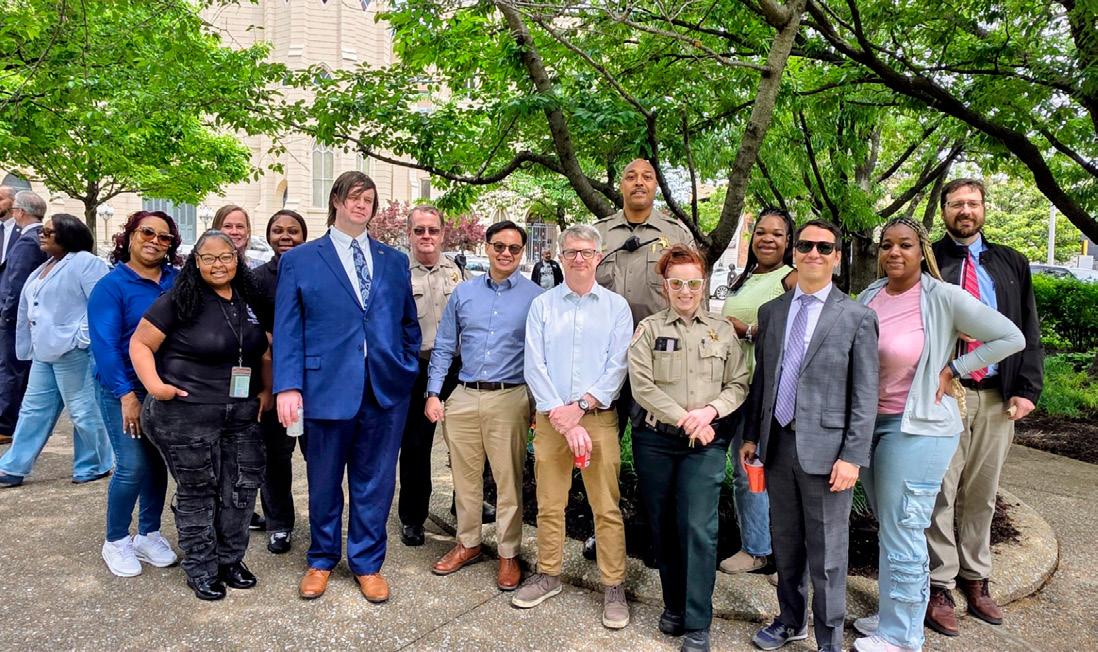
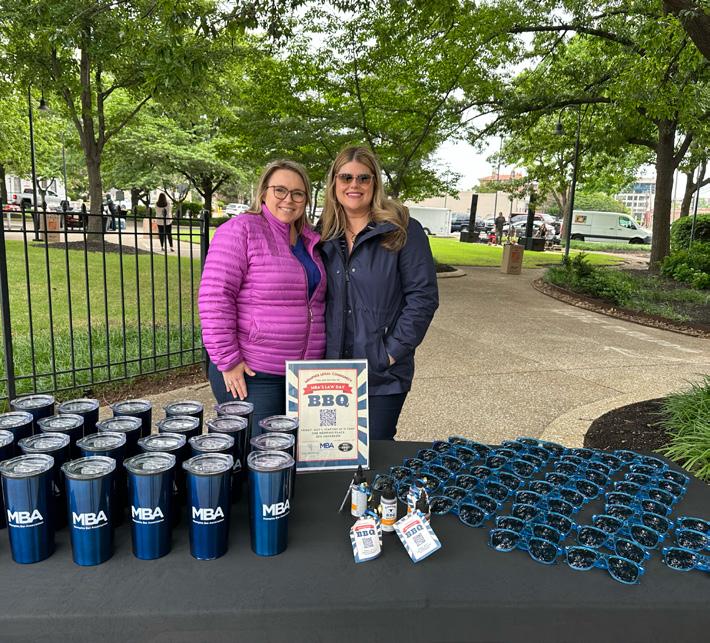
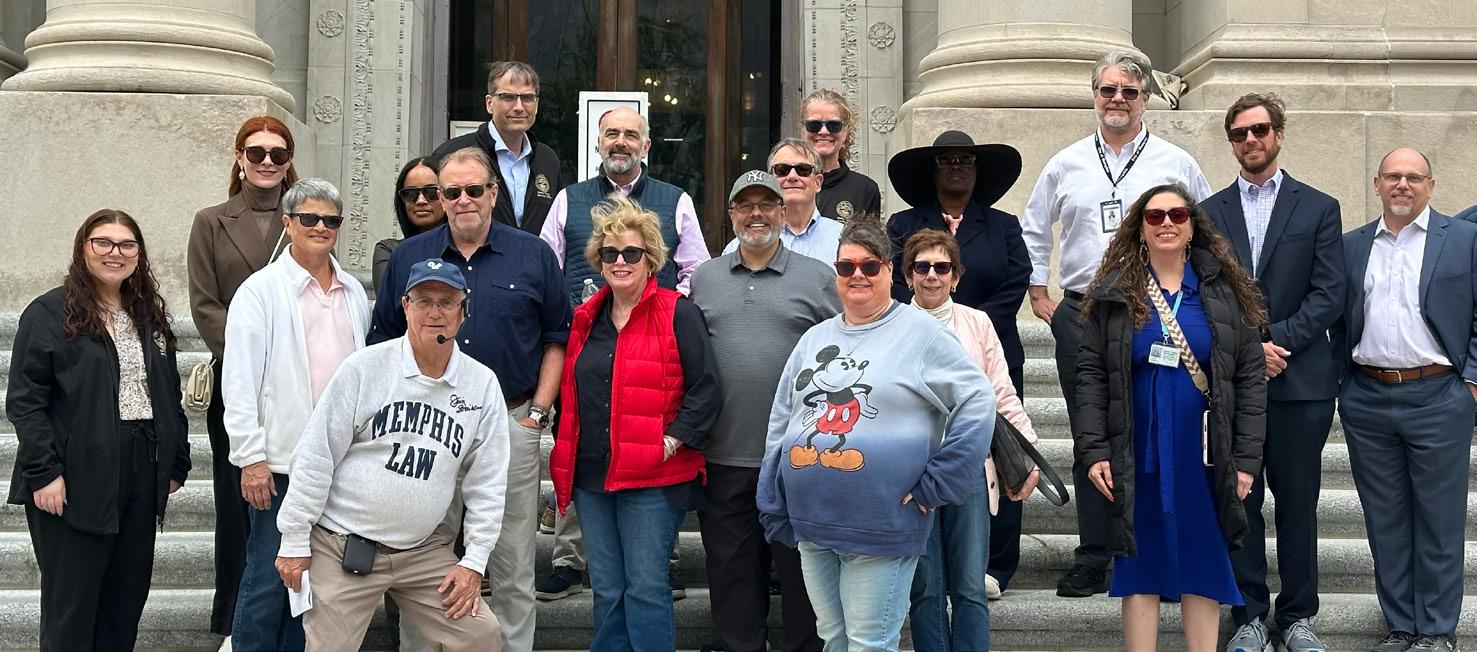
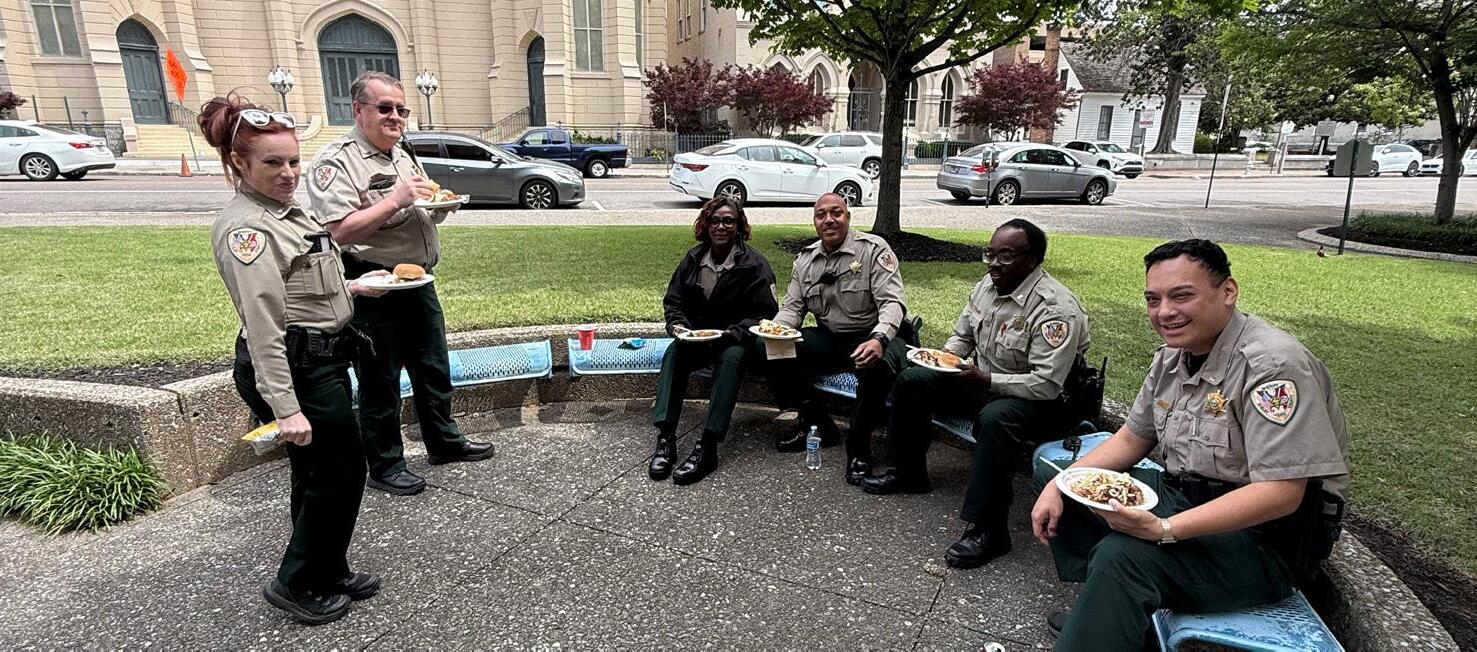
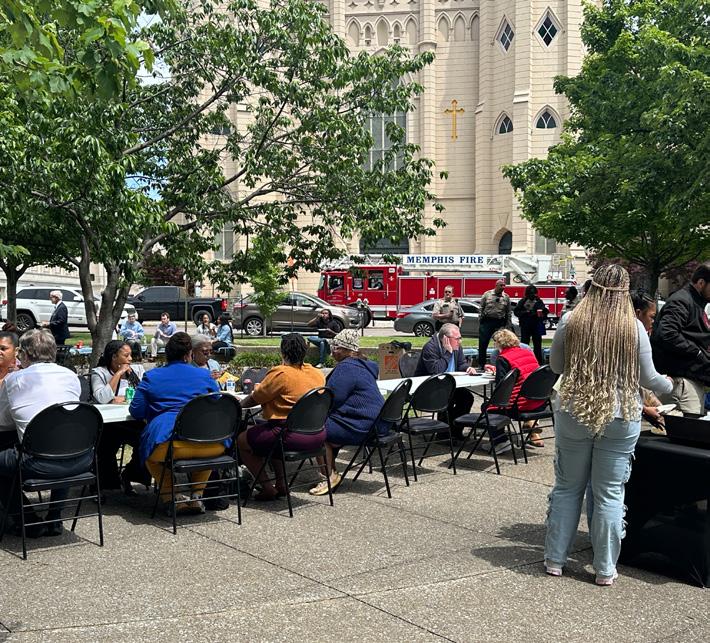
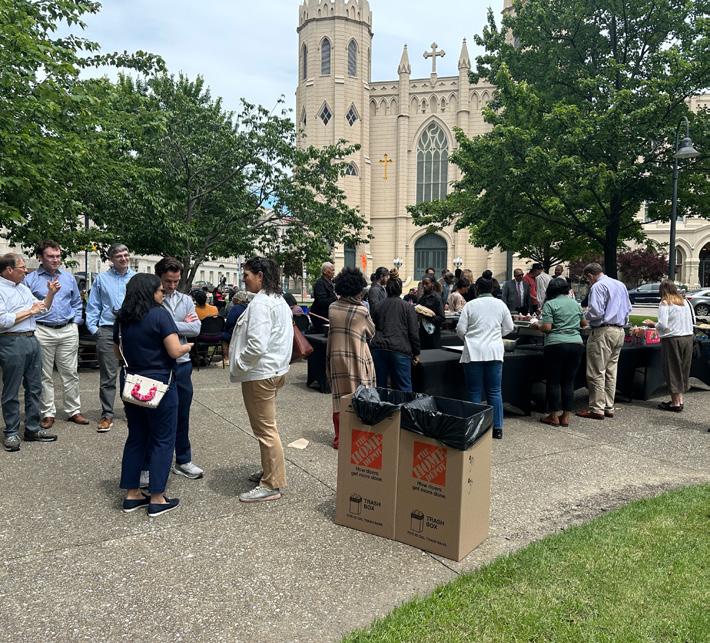

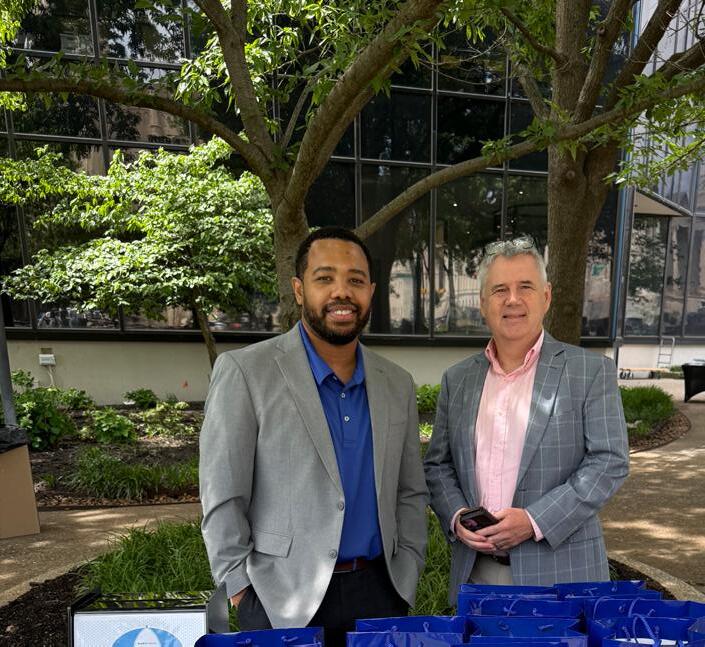
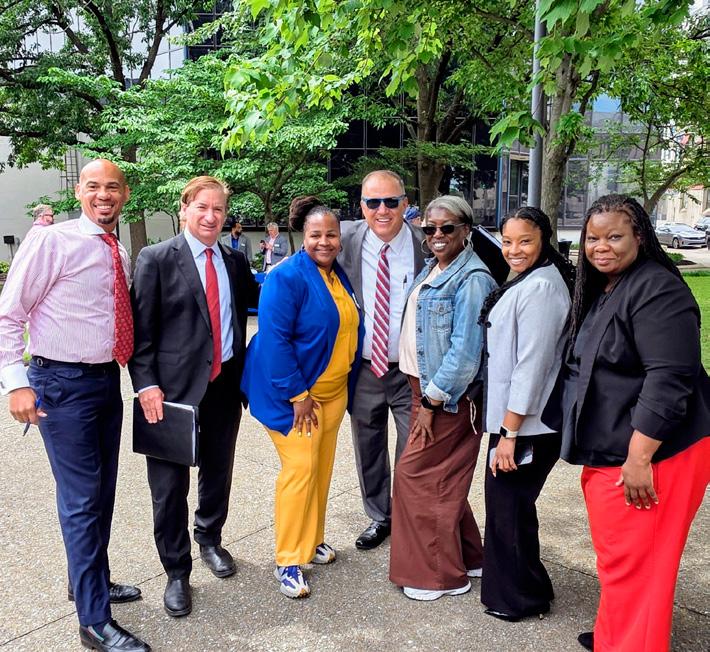
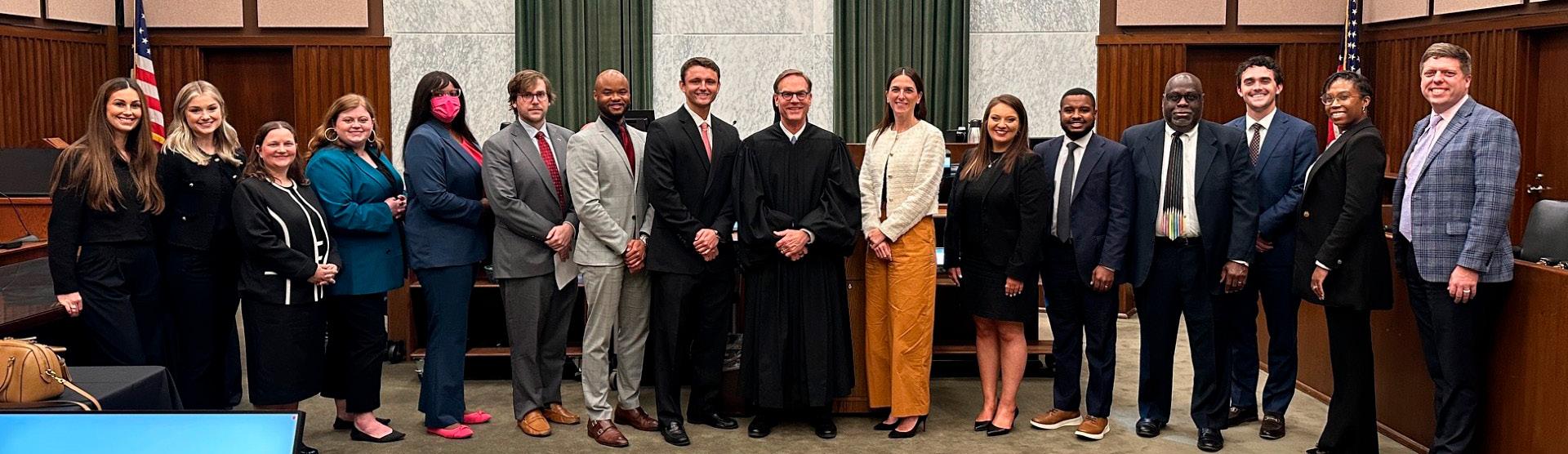
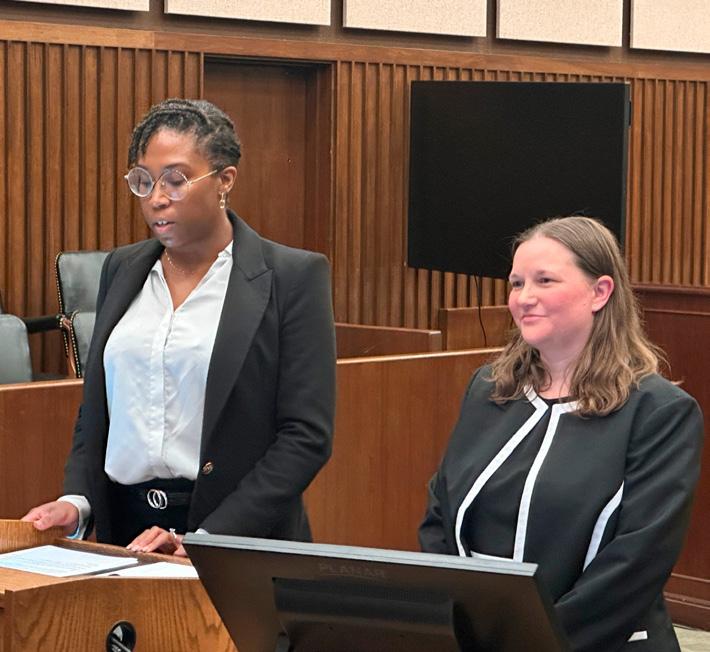
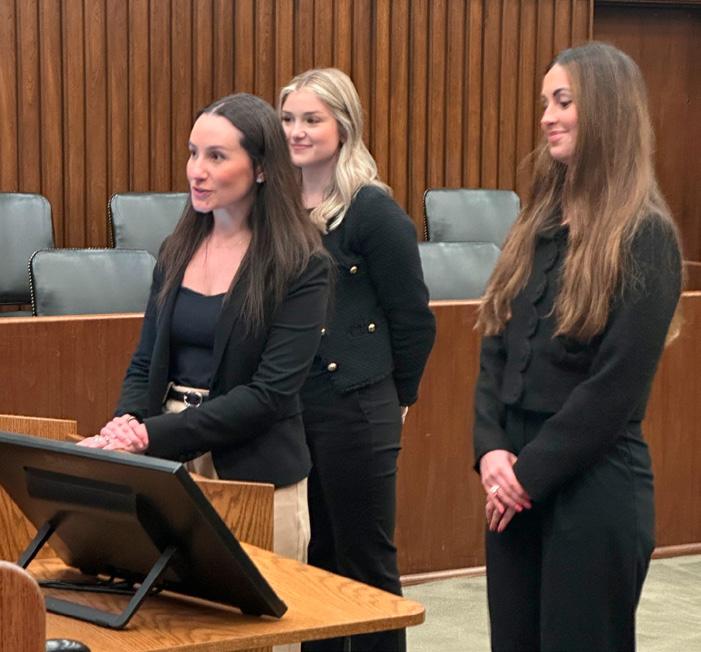
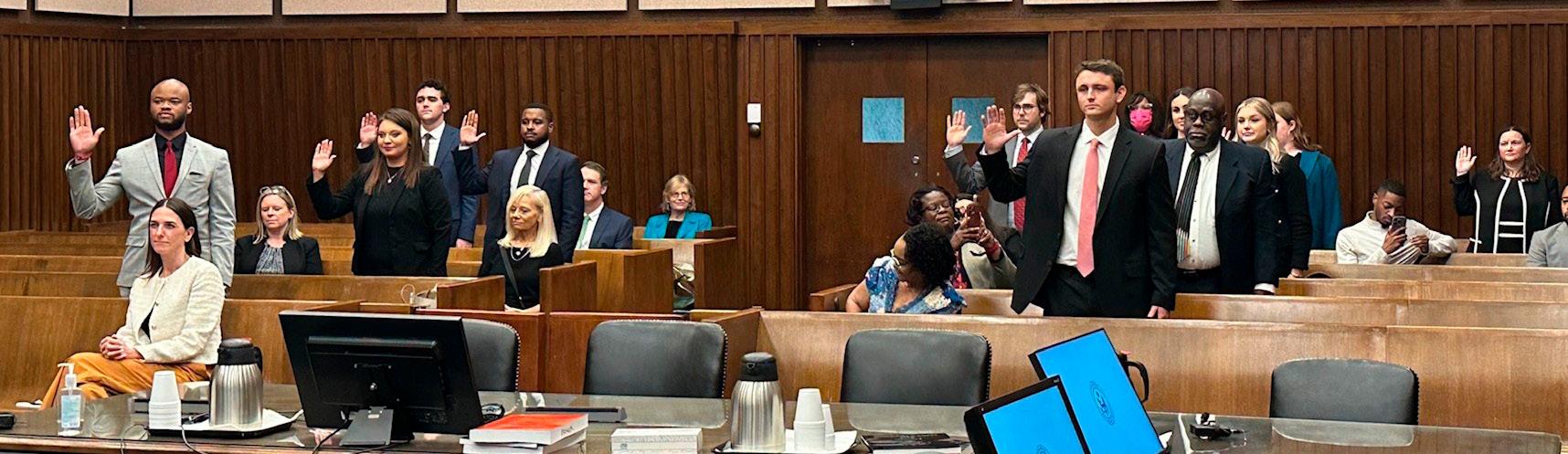
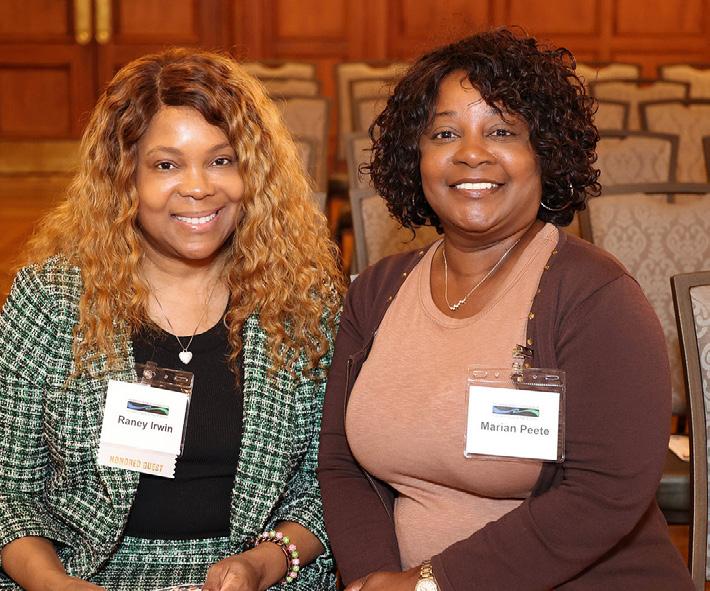

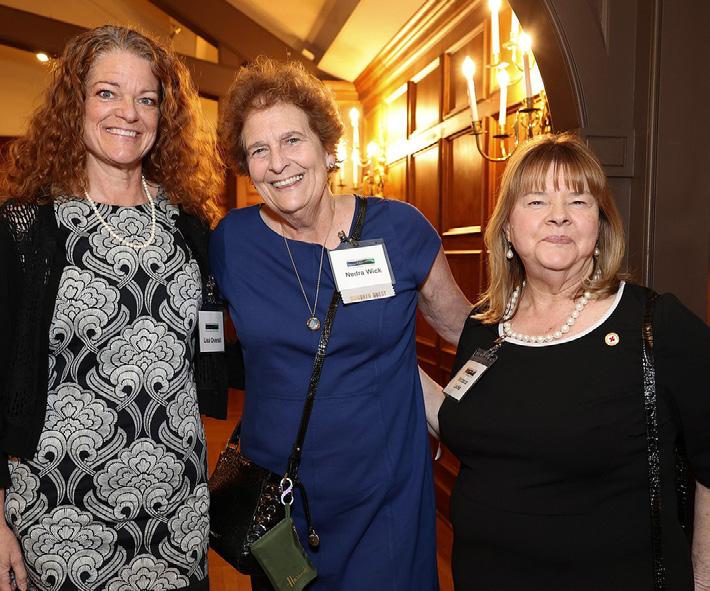
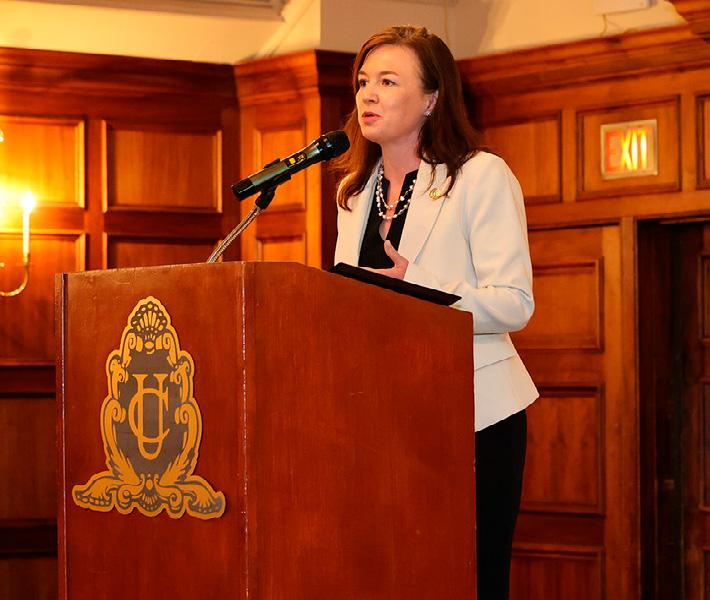
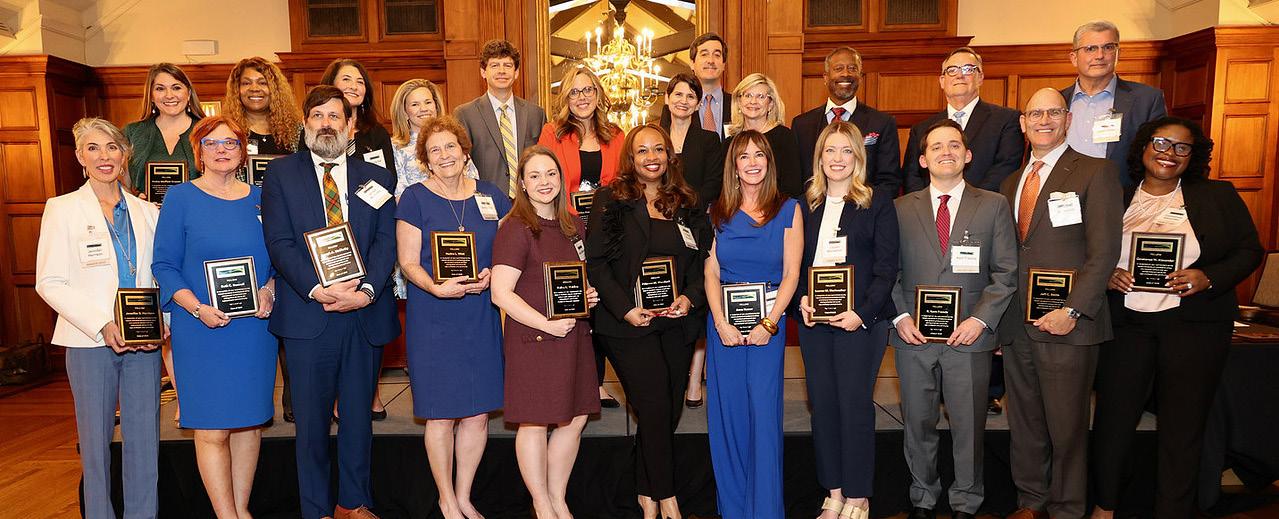
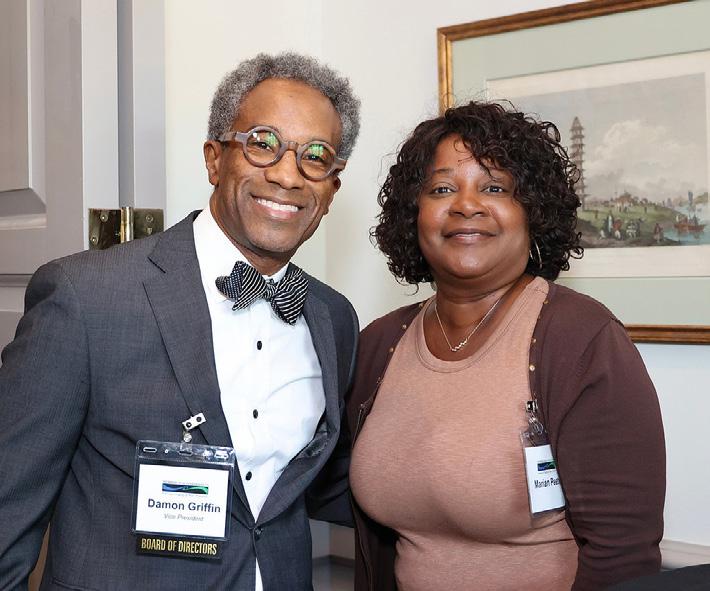
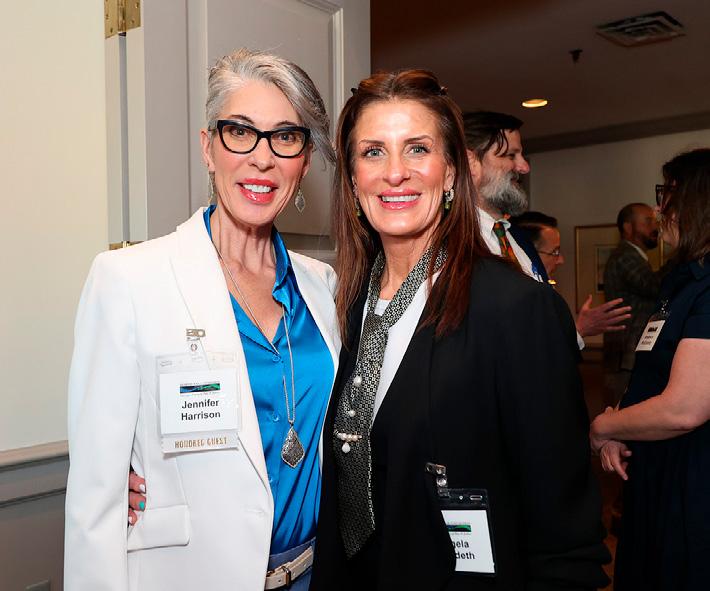
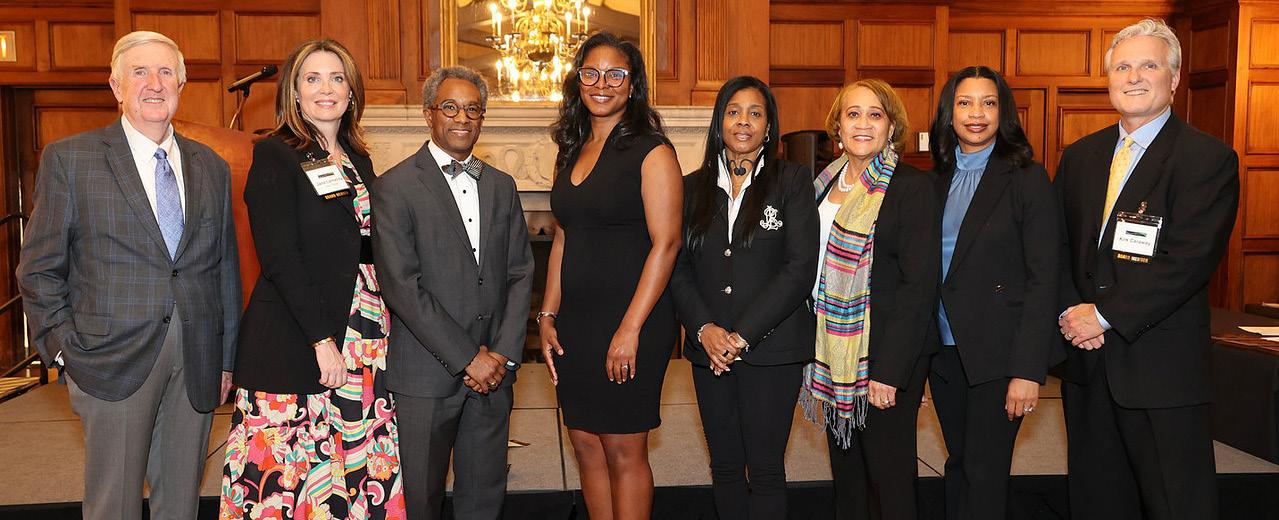






The Tennessee Supreme Court has named nine members—three judges and six practicing attorneys — to the new Office of the Appointed Counsel Commission (OACC). Created under Tenn. Sup. Ct. R. 56, the commission and Executive Director Joe Byrd are tasked with ensuring effective legal representation by appointed private counsel for individuals who cannot afford an attorney in criminal defense and child welfare cases. “The Court appreciates the members’ willingness to serve at this early stage,” said Chief Justice Jeff Bivins. “Assisting in establishing the Appointed Counsel Commission will require significant time and commitment.” New members named are 1st Judicial District Criminal Court Judge Lisa Rice, 20th Judicial District Criminal Court Judge Jim Todd, retired Shelby County Juvenile Court Magistrate Judge Terre Fratesi , and attorneys Loretta Cravens and Joshua Hedrick of Knoxville, Lowe Finney of Martin, David Grimmett of Franklin, Mark Mesler of Memphis, and Emily Wright of Livingston.
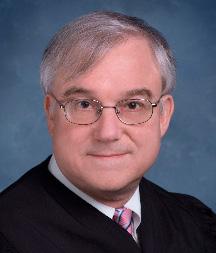
Shelby County Criminal Court Judge Chris Craft will retire July 1. In a letter notifying Gov. Bill Lee of the decision, Judge Craft said, “It has been an honor to have been entrusted by the citizens of Shelby County with the responsibility of serving in this capacity for the last 32 years.” Judge Craft first took the bench in 1994. Before that, he worked in private practice and as a prosecutor with the Shelby County District Attorney’s Office. For more than 30 years, he served on the Tennessee Criminal Pattern Jury Instructions Committee, including more than 20 years as chair. He also served as president of the Tennessee Judicial Conference and as chair of the state board responsible for handling ethics complaints against judges. Judge Craft received the TBA’s Justice Frank F. Drowota III Award in 2025 for his leadership in judicial education, ethics, and professional well-being.






At its recent spring meeting, the TBA Board of Governors voted to fill two vacancies on the board. Filling the open seat for the Western Grand Division governor will be Geoffrey Lewis , Associate General Counsel at Memphis Light, Gas & Water. Lewis previously was in private practice and an assistant city prosecutor for the City of Memphis. He also serves in the TBA House of Delegates and as co-chair of the Leadership Law program. He will take office at the board’s June meeting to be held in conjunction with the TBA Annual Convention.
The Memphis City Council has named part of a street in honor of Bill Gibbons for his longstanding contributions to public service in Memphis. The unveiling ceremony took place Wednesday, May 13, on South Bellevue Boulevard between Eastmoreland Avenue and Peabody Avenue in Memphis in front of Central High School. In 2025, the Memphis City Council passed a resolution honorarily renaming a portion of South Bellevue Boulevard in recognition of Gibbons’ decades of service to the community. Gibbons currently serves as president of the Memphis Shelby Crime Commission, as well as executive director of the Public Safety Institute at the University of Memphis. See picture below of City Councilman Ford Canale, Bill Gibbons, Judge Julia Gibbons, and Mayor Paul Young at the dedication.
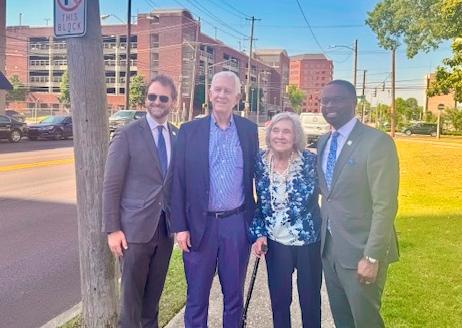
The Tennessee General Assembly has passed a bill that would add two more criminal courts to Shelby County. The bill now heads to Gov. Bill Lee’s desk for final approval. HB1268 adds two designated “violent criminal courts” that would be solely dedicated to a host of violent crimes including sexual offenses like rape; crimes against children; most homicide offenses except first-degree murder; and other violent crimes like aggravated robbery and aggravated
assault. The move comes after the county lost two judicial seats in 2024, one in Shelby County Criminal Court and a second in Shelby County Circuit Court. The county lost Division 9 of Criminal Court following the resignation of former Judge Melissa Boyd. It lost the Circuit Court seat after its former incumbent, Justice Mary Wagner, accepted an appointment to the Tennessee Supreme Court.
If you are an MBA member in good standing and you’ve moved, been promoted, hired an associate, taken on a partner, or received an award, we’d like to hear from you. We will not print notices of honors determined by other publications (e.g., Super Lawyers, Best Lawyers). Notices are limited to 100 words; they are printed at no cost to members and are subject to editing. E-mail your notice and hi-resolution photo (300 dpi) to kswan@memphisbar.org.