SeleCteD
ProVISIoNS
of the oNe BIg BeAutIful BIll of releVANCe to AgrICulture
Continued on page 13
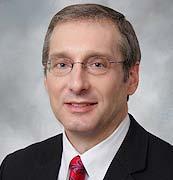
By Roger McEowen
Signed into law on July 4, 2025, the One Big Beautiful Bill Act (OBBBA), or H.R. 1, represents a massive restructuring of federal agricultural support, nutrition programs, tax code rules, and land conservation. Following its passage, federal agencies have systematically deployed implementing guidelines, culminating in major regulatory shifts. Together, these measures reshape how the farm safety net, food assistance programs, and business taxes operate.
1. Re-Engineering the Farm Safety Net (Commodities and Subsidies)
The OBBBA injects an estimated $56.6 billion into agricultural programs over a ten-year window, with $52.3 billion targeted directly at reinforcing the farm safety net. A fundamental mechanism is the expansion and lengthening of the Price Loss Coverage (PLC) and Agriculture Risk Coverage (ARC) programs through the 2031 crop year.
To offset volatile inflation and rising production costs, the legislation lifts statutory commodity reference prices by 10% to 21% and introduces an automatic “escalator” mechanism beginning in the 2031
crop year, which compounds reference prices by 0.5% annually. Additionally, producers are permitted to absorb up to 30 million new base acres voluntarily. Dairy producers see a Tier I coverage expansion under the Dairy Margin Coverage (DMC) program from 5 million to 6 million pounds per farm, paired with mandatory biennial cost surveys of dairy processors to maintain transparent pricing formulas.
2. Overhauling Payment Limits: The USDA Final Rule
While safety net price points have grown, the structural distribution of federal subsidies has changed. Effective June 2, 2026, the USDA Commodity Credit Corporation (CCC) finalized 7 CFR Part 1400 to execute the payment limitation adjustments written into the OBBBA.
The biggest operational shift targets Qualified Pass-Through Entities (QPTEs) - such as partnerships, S corporations, and limited liability companies (LLCs) not taxed as C corporations. Previously, corporate entities like S corporations were capped at a single payment limit regardless of internal scale. Under the new guidelines, the base $155,000 program-year limitation for ARC and PLC
is multiplied by the number of individual owners or distinct entities comprising the QPTE. For example, an LLC owned by two distinct partners can qualify for up to $310,000 (and an “embedded” chain of partnerships can multiply this further to $620,000), provided all participants meet recordkeeping mandates.
PresIDenT’s messAge
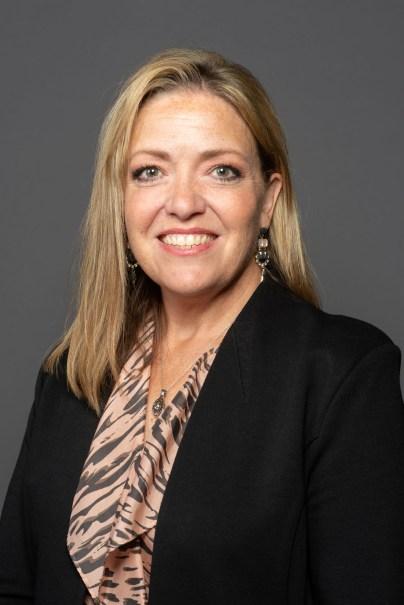
emIly Klym , CPA
PArtINg wIth grAtItuDe, truStINg whAt lIeS AheAD
It is hard to believe this is my final article as President of the ND CPA Society. This year has flown by, and I am deeply grateful for such a meaningful experience. Sherre and I quickly connected over our shared understanding of what it means to work with a board. Our connection grew from there – both being chasers of squirrels, our conversations could get interesting! It has been a true joy to work closely with her, Ryan, and Heidi—the people behind so many of the wonderful things our Society does. I cannot thank them enough for their behind-the-scenes efforts to strengthen and support our profession.
A lot of meaningful work has been done since our last newsletter. Key updates from the AICPA Spring Council Meeting in New Orleans include the following topics:
• Accounting & Finance 2040: Rise to the Future Together
• The Human Edge in an Automated World
• CPA Trust Campaign
• Profession Ready Initiative
• Federal, State & Tax Advocacy Update
Looking back on the key takeaways, one theme stood out across every discussion: trust. Rise 2040 is a global effort to develop a forward-looking vision for the accounting and finance profession, and trust remains central as the profession moves toward 2040. As AI becomes more common, we must continue to value human connection and the lives we lead outside of work—the “real” experiences that help build trust. The AICPA’s national CPA Trust Campaign seeks to close the gap between the strong trust people already place in CPAs and their understanding of when and how to engage one. The Profession Ready Initiative focuses on identifying the skills early-career CPAs need to succeed and offering practical solutions for employers and educators to address any gaps. In turn, this work helps employers trust that new CPAs are prepared to step into their roles. Finally, trust in the IRS has never been higher. JUST KIDDING!!
Trust is such an interesting concept. It is an asset built over time that can be impaired in a moment. It is the foundation that the strongest teams are built on, and the weakest teams are missing. I’d go so far as to say it is one of the strongest bonds of human nature from which so much stems – and it is the cornerstone of our profession. That is pretty powerful. More than technical skill or ability, our standards of care, ethics, and integrity create the trusted advisors that we are.
Pivoting locally to our state Society, the board engaged with a high-energy external consultant at our last board meeting to ensure our mission, vision, and strategic focus areas are relevant to the needs of our members given where our profession is today and where it is heading. Through this work and related follow-up work, the ND CPA Society is positioning itself to be a leading voice and trusted resource—strengthening the profession through growth, advocacy, and modern member value. A key theme through discussion was member engagement. While I believe there are several reasons for a decline in volunteers, I think part of the reason is how in-demand our deadline-driven profession is, which doesn’t leave a lot of extra time.
Cue the idea of slowing down to speed up. I’ve learned that when I take time to pause and do the things I think I don’t have time for, that reset often helps me move forward with more focus and energy. I believe the same is true when it comes to giving back to the profession through the Society. The connections are invaluable, and there are many ways to help that do not require a large time commitment. One idea discussed was offering micro-volunteer opportunities to help members get involved before taking the next step of serving on a committee. To remain a strong Society that strengthens our profession, we need members to engage, so I encourage everyone to watch for those opportunities.
As progress has been made to fill the pipeline, we need to continue to cheer on the next generation working on their CPA exam. How wonderful would it be to have a packed room at the new CPA recognition dinners at the CPA convention to show our support for new CPAs who have worked their tails off to earn the prestigious designation. Your next opportunity to provide such support is Sunday, August 23 as we kick off the CPA Convention in Bismarck. I hope to see you there as I pass the torch to the wonderful Juan Martinez as he takes over as President.
In Memory
Jan Arthur Kostad passed away on May 30, 2026. He served on various boards giving his time and knowledge. Jan was a member of the CPA Society for over 44 years.

going All In: Insights from the 2026 Management Conference
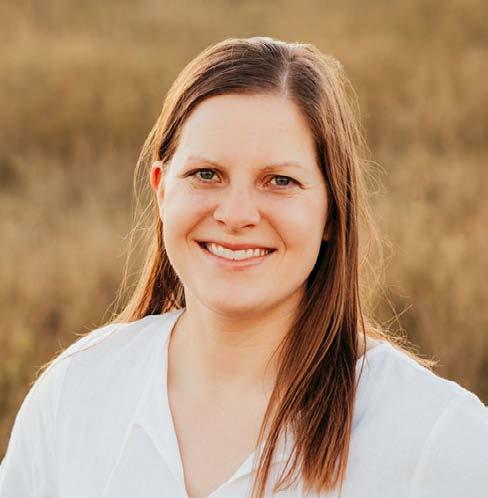
By: Brittany St. Bernard
This year’s Management Conference “All In: To Power What’s Next” was held June 8-9, 2026 at the Holiday Inn in Fargo. We welcomed a total of 261 attendees, with 134 attending in-person and 127 who joined virtually.
The conference featured a strong lineup of keynote speakers across both days. We kicked things off with an economic update from Dr. Chris Kuehl, who provided an economic update that was, as always, an informative session with a laughs mixed in. The first day wrapped with an inspiring message, “Success without Survival Mode,” from Vanessa McNeal, who challenged us to dig deep to the root cause of the burnout so many experience.
The second day kicked off with “The Ethical Leader,” presented by Dr. Mike Kiefer and Heidi Allen, who explored how to navigate ethical decision-making when working with differing personalities and under high-pressure situations. The conference wrapped up with an engaging and energetic talk by Gian Paul Gonzales, a high school teacher from New Jersey who coined the New York Giants’ “All In” rally cry during their 2011 Super Bowl run. He shared what it truly means to be “All In,” reminding us that “All in doesn’t mean it will be easy; it’s asking if you can give your best for one more day.”
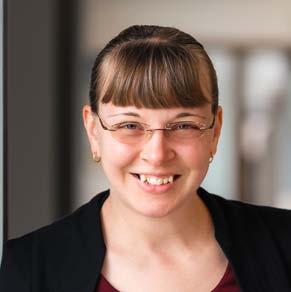
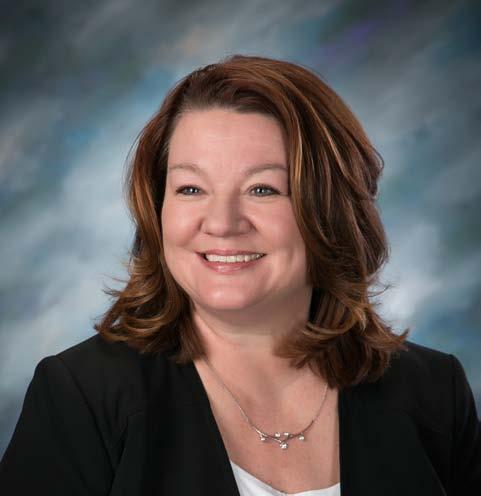
Leah has been promoted to Senior Tax Associate. She has been with the firm since December 2023 and will continue providing tax and accounting services to a wide range of clients. She earned her Master of Accountancy from NDSU.
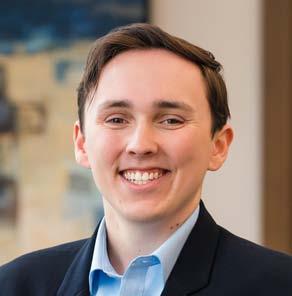
Kolsen has been promoted to Senior Audit Associate. He joined the firm in January 2025 and provides audit and assurance services to state and local government clients. He earned his bachelor’s degree from MSUM and is a CPA.
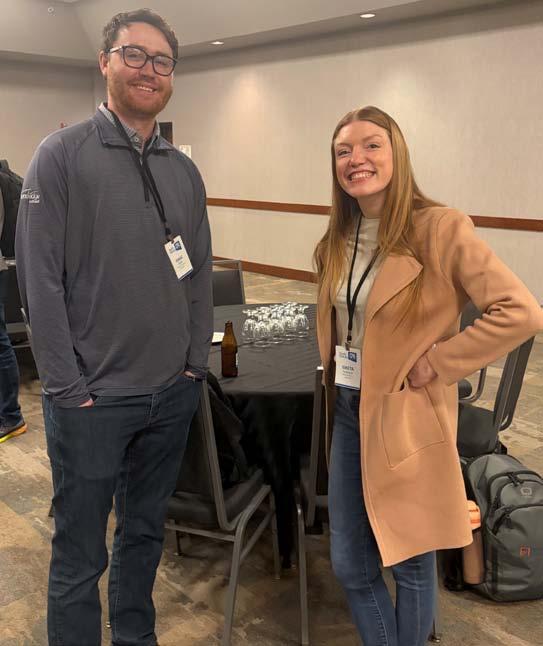
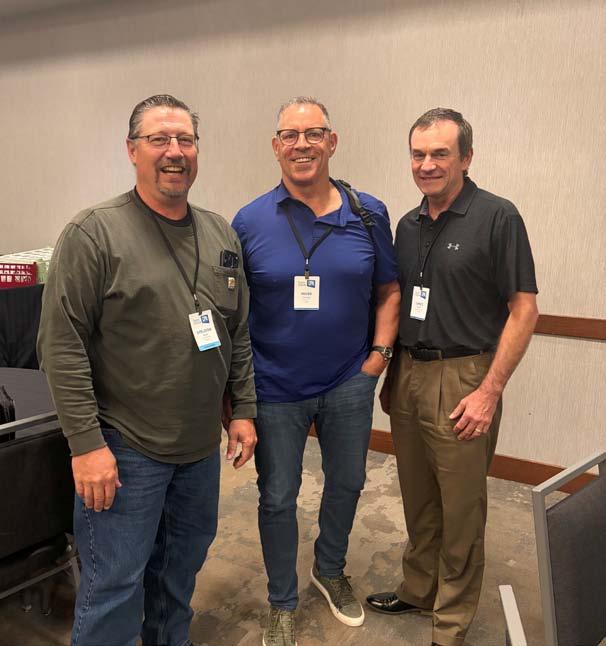
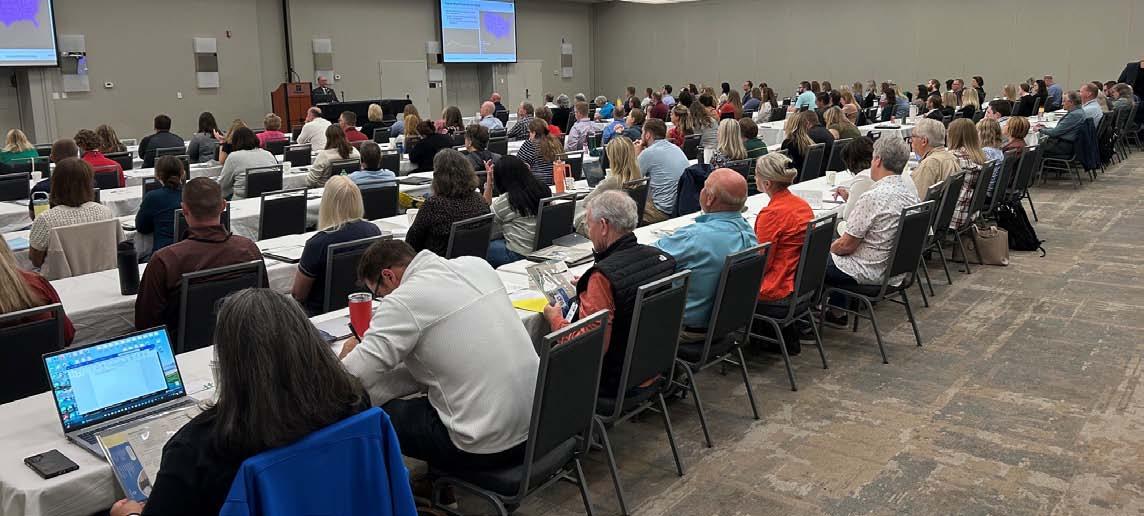
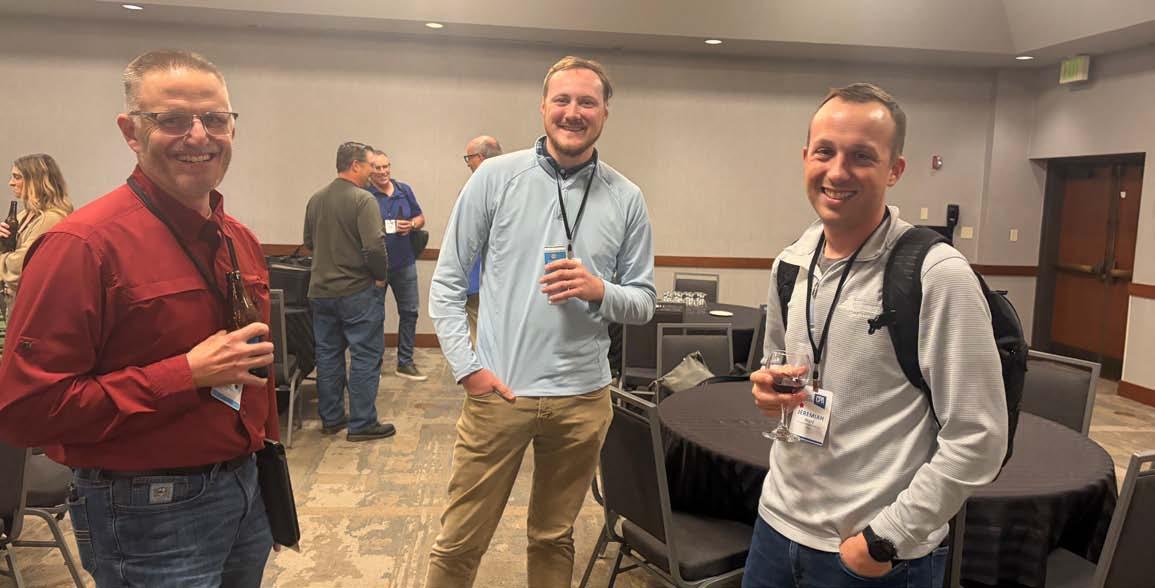
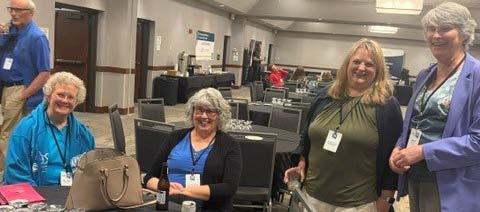
In addition to the keynote sessions, attendees had the opportunity to choose from four tracks. The Society Staff once again did an excellent job lining up high-quality topics delivered by knowledgeable and engaging speakers. Sessions covered a wide range of areas, including personal development, budgeting, AI, technology, and tax, among others.
We want to thank everyone who helped to make this event a success, including but not limited to, the Business and Industry Committee, the Society Staff, the Exhibitors and everyone else who contributed to making this a successful and enjoyable event for all who attended, both in person and virtually. As we look ahead, we’re excited to continue inspiring, empowering, and supporting one another while building on the connections made this year. Be sure to mark your calendars for the 2027 Management Conference on June 7–8. We hope to see everyone there or sooner at the Annual Convention in Bismarck, August 23–25, 2026.
wIDMer roel ProMotIoNS
Kolsen Papon
Leah Birt
Director’s Message
sherre sattler
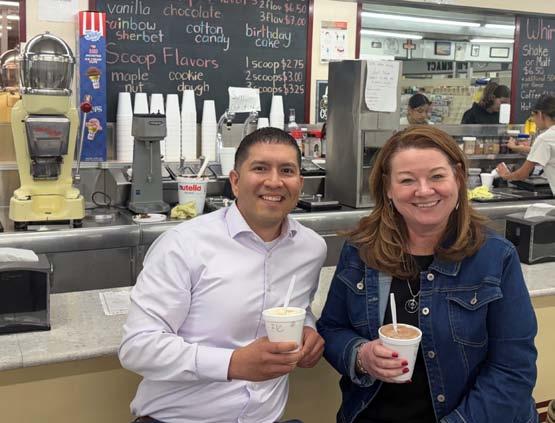
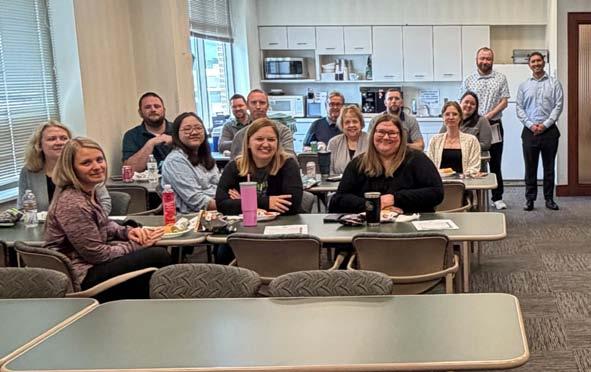
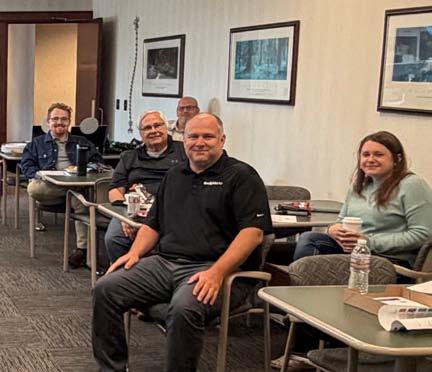
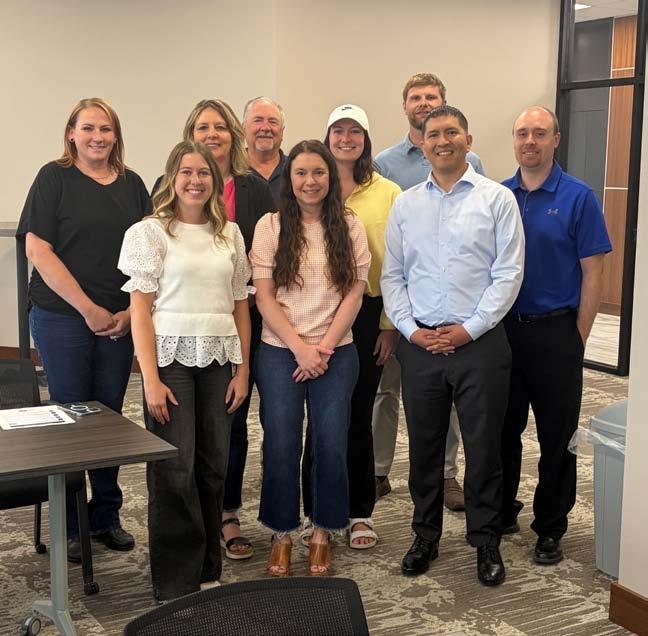
This month, LinkedIn reminded me that I’ve been with the Society for 32 years. Although my job duties have varied greatly over the years, the highlight of my work has always been the same: working with all of you. Opportunities for connection have shrunk a bit in our increasingly virtual world, but the annual President’s Tour remains one of the best ways to spend real time with members and get to know the next volunteer leader of the Society.
During our 16 hours of drive time, Juan and I talked a lot about the Society and the work ahead. But we also talked about kids and spouses, hobbies, and whatever else came up along the way. Those conversations convinced me that the Society is in very good hands as we head into the next legislative session and navigate various national initiatives. Juan is a patient and purposeful listener. He’s smart, focused on providing the best service possible, and he prioritizes family and being present—qualities that matter deeply in leadership.
What We Learned from You
We were thrilled to have students join some of the tour stops. Their perspective was refreshing as we all consider the profession’s uncertain future. The good news—at least from the few we met—is that their energy and excitement are high.
We also heard how many of you are using AI today. In most cases, you’re leveraging it to streamline your day and ensure your objectives are met. We enjoyed hearing what’s happening in your communities, and we were reminded once again of the responsibility you carry and the passion you have for helping clients, customers, and businesses.
The feedback you shared about the information we presented was incredibly helpful. We saw a lot of head nods when discussing the Profession Ready initiative. There has always been a steep learning curve for new CPAs entering the workforce, but now—as AI replaces many of the mundane tasks once reserved for newcomers—that gap has widened. How do we help them see and solve issues in new ways?
Looking Ahead to 2027
We’ve been actively participating in discussions with the State Board of Accountancy regarding a bill that would introduce an additional pathway to CPA licensure (a bachelor’s degree plus two years of experience). We’ll also be monitoring any other bills that could affect your CPA license. This is the work we do—and one of the most important reasons to support the Society. Thanks again to everyone who came out for the tour!
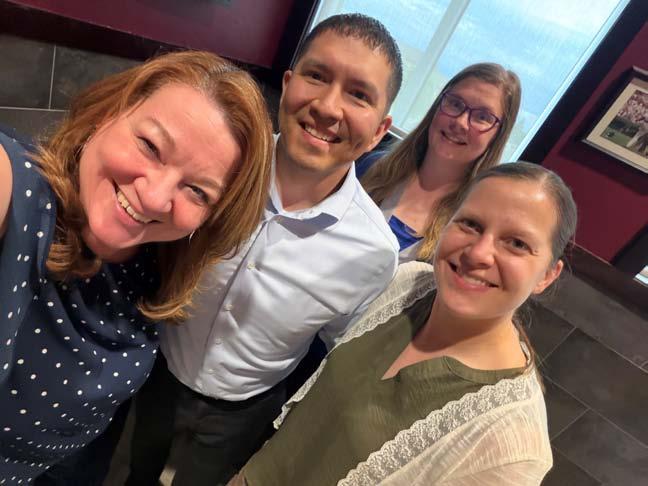
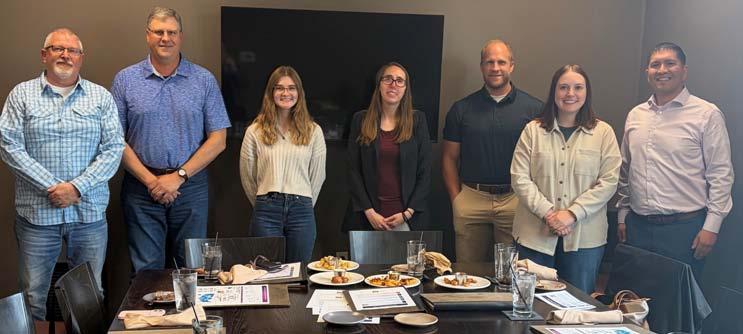

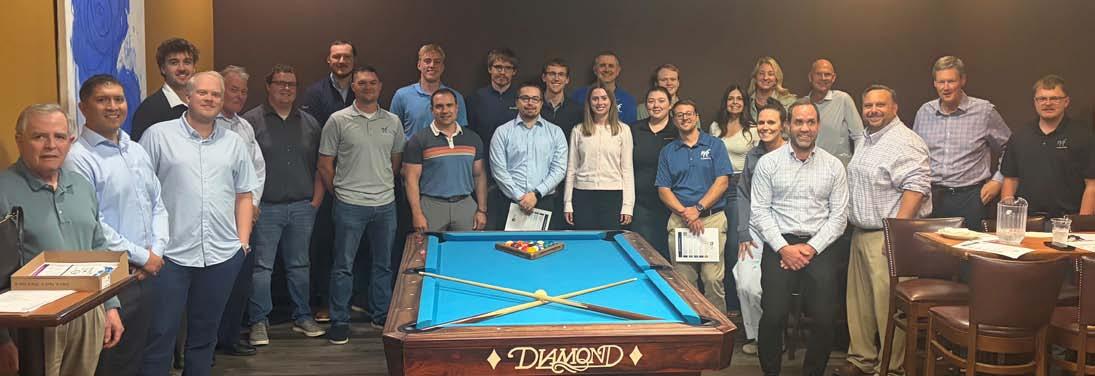
Bismarck
Dickinson
Minot
Williston AI Generated because Sherre forgets to take pictures sometimes!!
Grand Forks Fargo
Whirl-a-whip Stop Dakota Drug, Stanley
Meet our MeMBerS

Ethan Baptie
Current Job: Staff Auditor / Office of the State Auditor / Bismarck ND
Hometown: Woodstock, Ontario, CA
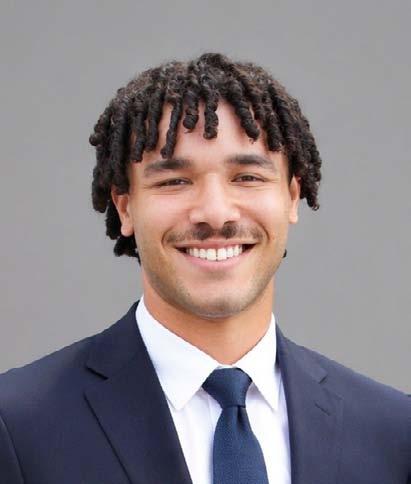
Alma Mater/Degree: University of Mary / Bachelor’s of Science in Accounting with Minor in Financial Services and Banking / Magna Cum Laude
Any current Professional and Community Activities?
Currently none but I hope to get involved going forward.
Who inspired you to become a CPA? Many of my professors and advisors at the University of Mary, such as Susann Cuperus and Dr. Robert Dosch, inspired me to become a CPA. While they encouraged me to get the designation, they also exemplified the qualities that you would expect of a CPA, a professor, and a role model.
What is your favorite thing about your job? I enjoy many things about my job such as problem-solving and constant learning with each audit, but my favorite thing is the people. A job is a lot easier when you like the people you work with.
What was your first job? My first job was in middle school delivering papers.
Tell us about your family: I was introduced to the world of accounting through my mother, Sandy, a bookkeeper who also taught me many of the values I carry today. I met my wife, Kayla, in college athletics as she played volleyball and I played baseball. We were married in November 2024 and have lived in the Bismarck-Mandan area since.
Tell us about a quote that influenced you: One quote that I think about quite a bit is “be comfortable with the uncomfortable.” This is a lesson I learned early in my athletic career, but one that extends far beyond sports. Embracing new challenges and being open to learning leads to meaningful growth and valuable experience.
What do you like to do in your free time: Golf and hunting have quickly become my favorite pass times. In addition, my wife and I love to go on walks, find a new TV show, or take a road trip to visit family or friends.
Favorite Vacation: My favorite vacation is our annual Fourth of July trip to Kansas City to visit with old teammates who became lifelong friends.
Favorite Food:The California Burrito from Cali Burrito.
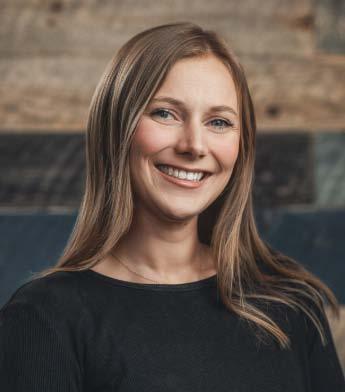
Mikayla Cargile
Current Job: Williams & Schiller, PC
Hometown: Hope, ND
Degree: Accounting
Who inspired you to become a CPA?
My dad was an entrepreneur, and I always wanted to do something similar. My high school math teacher was fantastic, too. He inspired me to choose a financial-type career. Then, after I took my first accounting class in college, it was a wrap. I knew I was going for my CPA.
What is your favorite thing about your job? Working with all different types of people from all different walks of life. The clients make this job worth doing.
What was your first job? Cleaning for a welding company when I was in 6th grade.
Tell us about your family: I have a wonderful husband, a 3-year-old daughter, and a 2-year-old son. We had two under two for the first 7 months of my son’s life.
Tell us about a mentor that influenced you: One of my college professors would give us really complicated accounting situations or calculations and tell us “start with what you know”. I still hear myself say that in my head when I have a complex tax situation.
What do you like to do in your free time: I like to spend time with my family. During the summers we spend a lot of time at the lake or traveling on the weekends. In the winter, we like to stay in and bake goodies for our friends and family.
Favorite Vacation: I went to Africa on my honeymoon. It was 6 years ago and still my favorite vacation of all time.
Something most people don’t know about me: I have expertise in expat tax. It’s one of my favorite specializations.
ClASSIfIeDS
North Dakota Practices for Sale: More practices coming soon! For general information call 800-397-0249 or view listing details and register for free email updates at www. APS.net.
THINKING OF SELLING YOUR PRACTICE? Accounting Practice Sales is the leading marketer of tax and accounting practices in North America. We have a large pool of buyers looking for practices to purchase. We also have the experience to help you find the right fit for your firm and negotiate the best price and terms. For information about our risk-free and confidential services, call Trent Holmes at 800-397-0249 or email Trent@aps.net.
2026 Annual Meeting & election
The NDCPAS annual meeting will be Monday, August 24, 2026 at 7:30 am CT, at the Bismarck Civic Center. The meeting will include election of directors, officers, a Foundation trustee, plus comments from the current and new presidents. Each member has one vote at the meeting, except student, affiliate and exam candidate members and those with dues in arrears. Cumulative voting is not allowed. A person may serve as proxy for only one other member. A majority of the members entitled to vote and present (in person or by proxy) shall carry any motion unless otherwise provided in the Articles or Bylaws. To vote by proxy, complete and sign the proxy form below and send to your proxy (a member who will be attending). Feel free to specify voting choices to the proxy.
Proxy Ballot
I, ________________________, CPA cert. #______, hereby appoint _____________________as my proxy to vote on any and all matters which may come to a vote at the 2026 NDCPAS Annual Meeting.
Signature:________________________________
Date:__________
Voting instructions (optional):
the NoMINeeS
The following slate will be proposed. Voting members present may also nominate members.
Society President (1 elected)
Juan Martinez III
Widmer Roel PC, Fargo
Juan is a current member of the Board. He has served on the YP, Convention, and Membership committees.
Society President-elect (1 elected)
Tabitha Talkington
CB Accounting, Bismarck.
Tabitha is a current member of the Board. She has served on the Tax and Legislation, CPE Advisory and Convention Committees. She also leads the Dickinson Chapter.
Society Secretary (1 elected)
Matthew Labernik
Eide Bailly, Fargo. Matt is a current member of the Board. He has served on the YP and NextGen Committes.
Society Director (3 elected)
[3 year term]
Lindsey Slappy
ND State Auditors Office, Bismarck.
Lindsey is a current member of the Board. She has served as an Accounting Career Influencer.
Josh Odegard
City of Grand Forks, Grand Forks. Josh has served as a chair of the Convention and also has served as an Accounting Career Influencer.
Tahnee Magness
Brady Martz, PLLC, Bismarck. Tahnee is a past Chapter Leader and has served on the Convention Committee.
NDCPAS Foundation Trustee (1 elected)
Laura Johnson
University of North Dakota, Grand Forks.
Laura is currently a Trustee for the NDCPAS Foundation. She has served as a chair of the Convention and Chapter Leader.
Build relationships with colleagues, return something to the profession, and maybe even have some fun! Whether you’re in public accounting, industry, government, education or a more specialized niche. There’s a spot for you. We need volunteers in the following areas. Email us at membership@ndcpas.org
Convention
Help facilitate a fun, well organized CPA Convention. Typically for members close to the next convention location (2027 Fargo) Time - Various local meetings plus Convention
Awards
Promotes and selects award winners and new member services. Time - (1 hour) conference calls a few times each year.
Business & Industry
Plans the Management Conference and B&I Miniseries. Time - 1 day meeting in person.
Professional Ethics
Responds to ethical violations handled by the AICPA. Time - As Needed.
NextGen Recruiting
Educate and Engage potential future CPAs. Includes presentations to University students. Time – varies
Accounting Career Influencer
Speak at middle schools and high schools. Time – Virtual training session, visit(s)
Taxation and Legislation
Reviews ND Legislation, consults with staff for advocacy efforts, liaison with tax entities, educate members. Time – regular virtual meetings during legislative session. Virtual meetings and potential visit with Tax Commissioner
Young Professionals
Provide young CPAs with networking and leadership development. Become a mentor for new CPA Exam Passers. Time - 1/2 day meeting; virtual meetings
Small Firms Network
Provide a network for small firm practitioners to connect with other members and share resources. Time - Quarterly virtual meetings, One day roundtable event
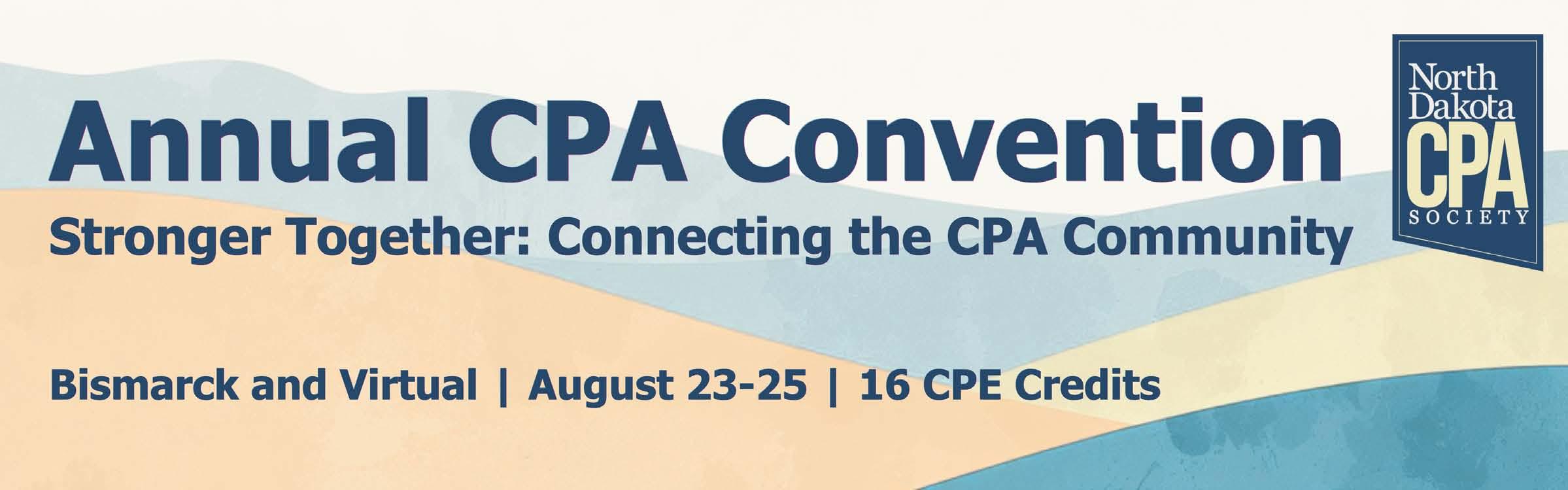
SuNDAY, AuguSt 23
3:00 - 6:00 pm Registration
4:00 - 5:15 pm New CPA Orientation
5:00 - 6:00 pm Social
6:00 - 8:00 pm Recognition Dinner
MoNDAY, AuguSt 24
7:00 - 8:00 am Registration/Breakfast/Exhibits
7:30 - 8:00 am Annual Meeting
8:00 - 9:00 am A. AICPA Professional Issues Update (Lindsay Stevenson)
9:00 - 10:15 am B.Economic Update (Chris Kuehl)
10:30 - 12:00 pm C. Take Off the Mask - is Your Life Story Worth Telling? (Dan Meers)
12:00- 1:00 pm Lunch
12:30 - 6:00 pm Golf at Hawktree Golf Club
12:50 - 2:30 pm D. Inspire Integrity: Chase an Authentic Life (Corey Coicchetti)
2:40 - 4:20 pm E. Be a Leader You Would Follow (Corey Coicchetti)
6:00 pm Connect and Collaborate at The 701 Venue in Mandan
tueSDAY, AuguSt 25
7:00 - 8:00 am Registration/Breakfast/Exhibits
8:00 - 9:40 am F. Being Resilient - Use Stress Before It Uses You (David Mitchell)
10:00 - 11:40 am G1. The State of Government Accounting & Auditing (Lee Klumpp)
11:40 - 12:40 pm Lunch
12:40 - 1:55 pm H1. Single Audit Deep Dive: Advanced Issues & Common Pitfalls (Lee Klumpp)
2:05 - 3:20 pm I1. AI and Automation in Government Finance (Lee Klumpp)

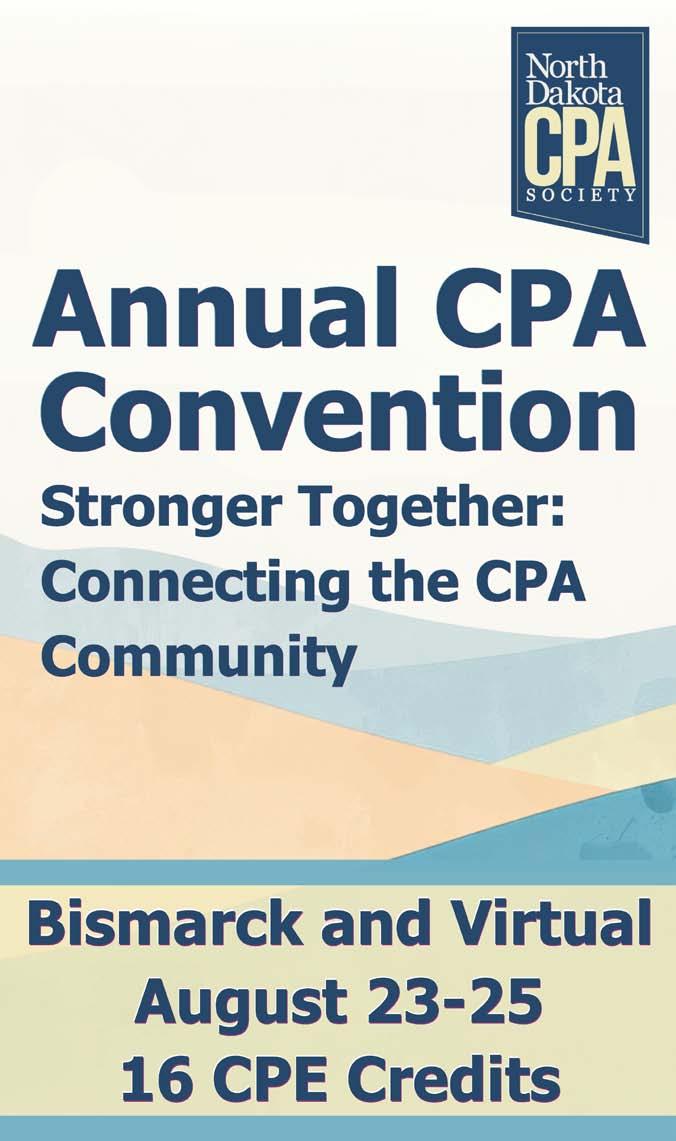
16 CPe Credits Including 2 ethics Credits
G2. Understanding Recent OBBBA Tax Changes (Susan Smith)
H2. Common Tax Challenges in PassThrough Businesses (Susan Smith)
I2. Partnership Distributions & Form 7217 (Susan Smith)
G3. The Power of Understanding Yourself (David Mitchell)
H3. Communication in a Virtual Environment (David Mitchell)
I3. AI Beyond the Hype: Unlocking Opportunities in the Workforce (Jeffrey Butler)
3:40 - 4:30 pm J. The Heart of Connection: Unleashing the Power of Human Relationships in a Digital World (Jeffrey Butler)
CoNfereNCe loCAtIoN: Bismarck Event Center
golf: Hawktree Golf Club
3400 Burnt Creek Loop, Bismarck, ND
$130 with registration for Convention
$155 without registration for Convention (includes lunch)
MoNDAY NIght eNtertAINMeNt
The 701 Venue in Mandan
1700 E Main St., Mandan, ND
Join us Monday at the 701 Venue in Mandan for a relaxed evening of connection and fun! Enjoy cornhole, refreshments, and a chance to win door-prize baskets. Hope to see you there!
$50 Monday Night Guests
IN-PerSoN feeS: Add $50 if registering after August 10.
$475 Society Member
$525 Nonmember
$450 Group Discount
Free In-person Exam Passer (July 2025 to June 2026)
$225 Lifetime Member
$425 One Day Society Member
$525 One Day Nonmember

JulY
7 Navigating Mergers & Acquisitions with AI: The Future of Deals (4 CPE)
14 Employees Today and Tomorrow : Are Employees Assets? (2 CPE)
15 Surgent’s Best Practices in Not-for-Profit Accounting and Reporting (BPN4) (4 CPE)
15 Beyond the Basics: Financial Ratios You Might Be Overlooking (1 CPE)
17 K2’s Small Business Internal Controls, Security, And Fraud Prevention And Detection (8 CPE)
27 A Working Parent’s Guide to Prioritizing Mental Wellness (2 CPE)

AuguSt
5 Introverts Have Real Power, Why Quiet Leaders are So Successful (2 CPE)
6 I want the TRUTH: Preparing to be an Expert Witness (2 CPE)
11 Leveraging ChatGPT for Innovative Business Advisory Services (2 CPE)
13 Asset Misappropriation You Have It – They Want It (2 CPE)
19 Yellow Book Ethics (2 CPE)
22 Estate Planning Strategies: Advanced Techniques and Tools (8 CPE)
26 Enterprise-Wide Risk Management in Accounting and Finance (4 CPE) Check out more options at ndcpas.org/cpe!


Get paid faster and simplify billing with 8am CPACharge, trusted by 25k+ accounting professionals.
Purpose-built for accounting professionals
Faster reconciliation with next-business-day deposits
Preferred by AICPA and 30+ state CPA societies


CoNgrAtulAtIoNS
Exam Passers (4/1/2026 to 06/17/2026)
Perjani Parikh ..................................................... Ahmedabad
Aneeta Baby ................................................... Muvattupuzha
Dharti Banginwar Bangalore
Burhanuddin Mohsin Bharmal ..................... Downers Grove
Joseph Bruss ............................................... Germantown, WI
Shreya Datar Mumbai
Evan Gamoke .................................................... Onalaska, WI
Trevor Goetzfridt ................................................. New Salem
Owen Hanson Grand Forks
Logan Haskamp .................................................. Grand Forks
Joseph Heiser .......................................................... Bismarck
Mayaben Jagdish Kared Adtala, Amreli
Emily Le ......................................................... New Berlin, WI
Logan Maus .......................................................... Thompson
Jamie Motschenbacher Fargo
Jeremy Noack ............................................................... Fargo
Sakshi Pahwa .............................................................. Kanpur
Mansiben Patel Brampton
Vimarsh Rajeshbhai Shah ..................................... North York
Saloni Sharma ................................................................ Delhi
Archee Thakkar San Jose, CA
Asish Thankachan ............................................... Houston, TX
Farha Thoppil Moideenkutty .................................... Thrissur
Liya Maria Tom Kottayam
Sydney Weigel ......................................................... Bismarck
Nicholas Wilson ....................................................... Hillsboro
welCoMe New MeMBerS
Breann Augdahl ............................................................. Fargo
Coralie Bruns .......................................................... Mapleton
Fallon Duchsherer .......................................................... Velva
Mikaela Edgar ................................................. Prior Lake, MN
Nathan Glass .................................................................. Fargo
Marissa Kline Fargo
Kayla Kunkel Fargo
Rylan Kuntz Grand Forks
Richie Loewen Grafton
Rebecca Lucke Grand Forks
Heather Palm Grand Forks
Caleb Rist ................................................................ Dickinson
Sally Sterk ...................................................................... Fargo
Kelli Truver ................................................................. Cavalier
Ann Watson Moorhead, MN
Is Your Business Compliant with the revised uniform unclaimed Property Act (ruuPA)?
North Dakota Century Code Ch. 47 30.2 requires businesses to reunite abandoned property with its rightful owner.
What Does This Mean for You?
• Review your records annually for unclaimed funds, securities, or property.
• Report and remit unclaimed property to the State after the required abandonment period (varies by property type).
• All businesses and nonprofits must comply—no exceptions.
Need Help?
Visit unclaimedproperty.nd.gov for the holder reporting manual or call the Unclaimed Property Division at (701) 3282800, option 2.
Could You Have Unclaimed Property?
Search for your business at https://unclaimedproperty.nd.gov/


For more information about North Dakota’s College SAVE Plan (“College SAVE”), call 866-SAVE-529 (866-728-3529) or visit collegesave4u.com to obtain a Plan Disclosure Statement. Investment objectives, risks, charges, expenses, and other important information are included in the Plan Disclosure Statement; read and consider it carefully before investing.
Before you invest, consider whether your or the beneficiary’s home state offers any state tax or other state benefits such as financial aid, scholarship funds, and protection from creditors that are only available for investments in that state’s qualified tuition program. The College SAVE Plan is a 529 plan established by the State of North Dakota. Bank of North Dakota (Bank) acts as trustee of College SAVE Trust, a North Dakota Trust, and is responsible for administering College SAVE Trust and College SAVE. Ascensus Broker Dealer Services, LLC (“ABD”), the Plan Manager, and its affiliates, have overall responsibility for the day-today operations of the Plan, including recordkeeping and marketing. The Vanguard Group, Inc. (Vanguard) provides underlying investments for the Plan. The College SAVE’s Portfolios, although they invest in mutual funds, are not mutual funds. Units of the Portfolios are municipal securities and the value of units will vary with market conditions. Investment returns are not guaranteed and you could lose money by investing in College SAVE. Account owners assume all investment risks, including the potential for loss of principal, as well as responsibility for any federal and state consequences. Not FDIC-Insured (except for the Savings Portfolio). No Bank, State or Federal Guarantee. May Lose Value. 1937672-GOV-2142059 (01/2025)
Additionally, the rule adjusts limits annually according to the Consumer Bureau’s inflation indexes and, for the first time, allows owners to count compensated labor or standard salaries toward the mandatory “actively engaged in farming” standard.
3. Real Estate and Deferring Farmland Capital Gains Taxes
The act tackles multi-generational farming challenges through creative tax relief found in its real estate titles. Under a newly established tax election, qualifying individuals who sell agricultural real estate can opt to defer their net income tax liabilities on capital gains, breaking them down into four equal annual installments rather than facing a massive lump-sum liability in the year of sale.
To successfully execute this election, strict requirements must be met:
• The Land’s History: The real property must have been actively used by the taxpayer for producing agricultural commodities for substantially all of the preceding 10 years.
• The Buyer’s Covenant: The property must be subject to a legally binding, enforceable restrictive covenant guaranteeing that it remains a working farm used solely for agricultural production for at least 10 years post-sale.
4. Reinstating R&D Full Expensing (Section 174A)
On the corporate side, the OBBBA dramatically alters business investments by rolling back elements of the 2017 Tax Cuts and Jobs Act (TCJA). It introduces Internal Revenue Code Section 174A, reinstating the full, immediate deduction of domestic research and experimental (R&E) expenditures in the tax year they are incurred.
This change applies directly to tax years beginning after December 31, 2024. While domestic development costs enjoy immediate recovery, foreign R&E expenses are excluded from this benefit and must still be capitalized and amortized over a strict 15-year window.
The IRS clarified execution guidelines via Revenue Procedure 202528, giving general taxpayers options to recover remaining unamortized domestic R&E costs from the 2022–2024 tax years over either a one- or two-year schedule. Furthermore, small businesses with average annual gross receipts under $31 million can choose to apply the new full-expensing rules retroactively to their 2022–2024 filings, passing the adjusted write-offs directly to partners or shareholders via pass-through tax entities.
5. Major Restructuring of SNAP Benefits
While commodity producers and businesses experience enhanced flexibilities, the OBBBA tightens the parameters governing the Supplemental Nutrition Assistance Program (SNAP). The legislation shifts significant funding responsibilities onto the states, lowering the federal share of state administrative expenses from 50% down to 25% starting in fiscal year 2027. More drastically, starting in fiscal year 2028, states must pay for a portion of actual SNAP benefit costs, a contribution tied inversely to their recorded state payment error rates.
On an individual level, the bill heavily alters eligibility:
• Work Requirements: Mandatory 20-hour-per-week work, training, or volunteer requirements are extended to able-bodied adults without dependents up to age 64. The act eliminates several previous exemption categories, applying these mandates to veterans and individuals aging out of foster care.
• Noncitizen Restrictions: Under Section 10108, SNAP access is restricted only to U.S. citizens, lawful permanent residents (LPRs), Cuban/Haitian entrants, and COFA citizens. Humanitarian groups such as refugees, asylees, and parolees are removed from automatic eligibility upon arrival.
• Benefit Calculations: The 2021 Thrifty Food Plan serves as a permanent baseline, requiring future reevaluations to remain cost-neutral. Additionally, standard utility allowances (SUAs) are restricted by removing internet expenses from calculations and barring non-elderly/non-disabled households from utilizing energy assistance (LIHEAP) to trigger the allowance.
Conclusion
The One Big Beautiful Bill Act creates a dual landscape for the American agricultural sector: it builds a robust financial cushion for traditional agricultural businesses via enhanced commodity supports, flexible corporate tax write-offs, and pass-through benefits, while imposing strict administrative metrics, tighter individual work requirements, and a cost-sharing architecture onto national nutrition assistance programs.
ethICS CorNer
The Case of Loked Stock & Barrel
Doris Loked, CPA, works as CFO at a craft brewery, Stock & Barrel (the Company). It is owned by a woman named Penny Stock who is her direct supervisor and is not a CPA. In dealing with the Company’s outside auditor, Doris has been directed by Penny to be evasive regarding certain dicey accounting matters. Penny has no obligation to follow the AICPA Code of Professional Conduct.
Q. If Doris complies with Penny’s directions and is evasive vis-à-vis her auditors, is this unethical?
A. Yes. If this ethical conflict is unresolved, Doris needs to decide if she wants to continue being associated with her employer (See ET 2.000.020.01 and .06).
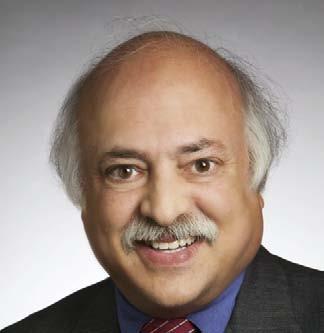
Charles Selcer, CPA, has over 30 years of audit and business consulting experience. His areas of specialization include audits of distribution companies, SEC registrants, not-for-profit organizations & charities, including organizations subject to Circular A-133.


uPDAteS froM the StAte tAX CoMMISSIoNer
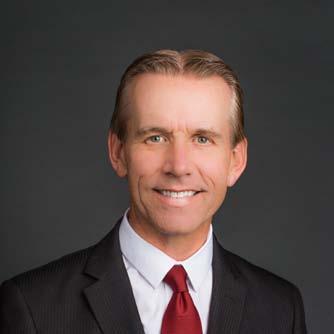
Brian Kroshus
New legislative faces and tax Policy Impacts
Elections represent an important element in the decision-making process, where voting citizens decide who will represent and work on their behalf at both the state and local level.
North Dakota recently held its primary election to determine which candidates advance to the November general election, including state lawmakers in odd-numbered districts.
Despite low voter turnout with only 21% of those eligible to cast a vote participating, the results were still equally impactful from a future policy-making standpoint.
While the final outcome won’t be decided until the November general election, a given is that the makeup of the legislature will experience change as it does each election cycle. With that change will be the introduction of new perspectives and fresh ideas, including from those taking office for the first time.
Tax policy considerations, as they often are, will again be at the forefront of the conversation during the 2027-2029 session across a wide gamut of tax types. While property tax is likely to be a leading topic, its impact will invariably affect other areas of the tax policy discussion and decision-making process.
Preceding those talks will be ascertaining the revenue outlook, a necessary precursor to producing a constitutionally required balanced budget, each biennium.
As a result, dollars appropriated in one area may limit what can be done elsewhere. In other words, because of the balanced budget requirement, there aren’t infinite funds available to spend.
Preceding the last legislative session, aforementioned revenue forecast estimates were used to construct the 2025-2027 state budget, formulated using available sources of information at the time. Given that exercise is done in advance of when funds are actually needed, up to two and a half years to span the duration of an upcoming biennium, assumptions can be challenged by unforeseen external events.
An example of this were changes to the federal income tax code in 2025, in addition to the permanent extension of provisions contained in the previously passed Tax Cuts and Jobs Act of 2017.
Income tax changes, including those creating new relief mechanisms at the federal level subsequently impact North Dakota collections, given North Dakota taxable income largely mirrors federal taxable income. While recent changes to the federal tax code will have a degree of influence on revenue collections compared to forecast, the net effect will still be manageable given a total state budget of $20.27 billion for the 2025-2027 biennium.
Conversely, the recent spike in oil prices will have the opposite effect, with inbound oil-related collections likely to exceed forecasted numbers in that area for the affected period of time.
In closing, whether influenced by change in the makeup of the state legislative assembly, policy change at the federal level or geopolitical events, state revenue collections compared to forecast are dynamic in nature, particularly as we progress through any given biennium.
DIRECTORS
Emily Klym, President
Juan Martinez, President-elect
Tabitha Talkington, Secretary
Lindsey Slappy
Rayna Kordonowy
Jeremy Ulmer
Sheldon Kauk
Katie Buchli
Amanda Gessner
Matt Labernik
Nicole Wald
Randy Heller, Past President
3-Year AICPA Council Member, Dave Glennon
Sherre Sattler, Executive Director
Heidi Bell, Education Director
Ryan Olson, Membership & Pipeline Manager
North Dakota CPA Society
3100 South Columbia Road, Suite 500
Grand Forks, ND 58201
Toll Free: 877-637-2727
Local: 701-775-7111
Email: mail@ndcpas.org
Find us on Facebook, Twitter, LinkedIn & Instagram