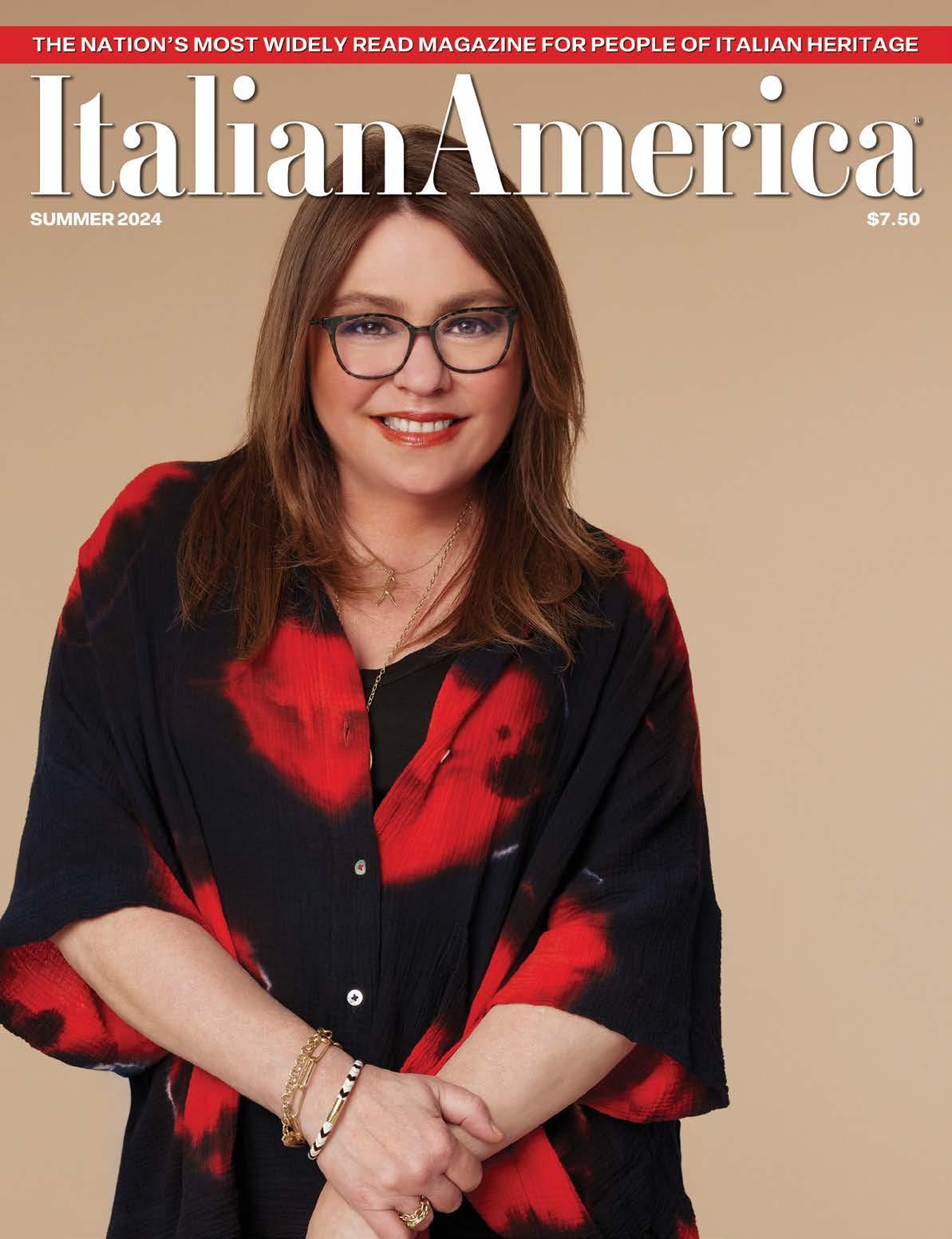
RACHAEL RAY
AMERICA’S CULINARY DARLING ON HER ITALIAN ROOTS AND PATH TO SUCCESS
ITALIAN RADIO
HOW TO ACCESS THE AIRWAVES FROM IL BEL PAESE
ITALIAN TAXES
WHAT YOU SHOULD KNOW
NELA GALA
A GREAT NIGHT FOR THE SONS OF ITALY FOUNDATION
By Andrew Cotto
IN THIS ISSUE FEATURES
By Rob LeDonne
By Nicolo Bolla
43 PIACERE!
44 POSTCARDS FROM THE BOOT

The Official Publication of the Order Sons and Daughters of Italy in America®
Italian America magazine is a publication of the Order Sons and Daughters of Italy in America (OSDIA), the nation’s biggest and oldest organization for people of Italian heritage.
To subscribe, see www.osdia.org or call (202) 547-2900.
ITALIAN AMERICA is
Editor-in-Chief: Andrew Cotto
Writers: Nicola Bolla, Zeneba Bowers, Andrew Cotto, Piera De Lisi, Michele Di Pietro, Robert Ferrito, Carla Gambescia, Dan Kaestle, Rob LeDonne, Michael G. Polo, Joe Sciame, Matt Walker
Copy Editor: Christine Haden
Proofreader: Mark DeNunzio
Graphic Designer: Diane Vincent
To advertise: Contact EditorItalianAmerica@gmail.com (202) 547-2900


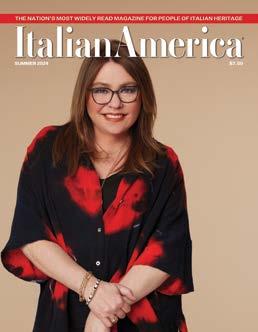
Rachael Ray
A&E Television Networks, LLC.
Photo: Celeste Sloman
Welcome to the Summer issue of Italian America magazine. The Summer issue is special to me since it marks my annual anniversary as your Editor-in-Chief. My tenure began with the Summer 2022 issue, featuring celebrity chef Rocco DiSpirito on the cover. With this issue, it seems we have come full circle as we were able to feature another household name of American kitchens (and living rooms), Rachael Ray. Besides being incredibly talented chefs and public figures, both Rachael and Rocco thoroughly impressed me with their humility and appreciation of their roots. I imagine you will find this issue’s interview with Rachael to be insightful and refreshing. While she loves to talk, she is far more interested in talking about people in her life who have inspired her and helped on her path. I found the special relationship with her grandfather to be both touching and telling. I was also impressed by her passion for helping others.
Benevolence such as Rachael’s is something I have discovered over my tenure at this magazine as particularly Italian. The Order Sons and Daughters of Italy in America (OSDIA) is an organization with a mission, in large part, to promote the positive image of Italians in America and defend our heritage. From my standpoint as an observer and caretaker of this magazine, their benevolence toward our community is what defines this organization. I was honored to be a guest at the recent National Education & Leadership Awards (NELA) Gala (full coverage begins on page 28) in Washington D.C. The gala, now celebrating 35 years, is a function of the Sons of Italy Foundation (SIF), the philanthropic arm of OSDIA. SIF President Joe Sciame, featured once again in this issue with Part II of his “Sunday Lunch” contributions, symbolizes to me what makes OSDIA in particular, and Italian Americans in general, exceptional. He is a modest man of great accomplishment (he just retired after 60 years at St. John’s University in New York City) who does tremendous, tireless work with extraordinary grace on behalf of others. So, yes, the NELA Gala, in all its spectacular sparkle, was impressive with accomplished attendees, honored guests, and remarkable scholars (the latter of whom were awarded a combined total of over $175,000 in college scholarships), but the real star of the event, secondo me, was Joe Sciame.
The stars of this magazine include our regular contributors, Michele Di Pietro of “Mangia” and Carla Gambescia of “La Dolce Vita University” and “Postcards from the Boot.” We had the pleasure of introducing you to Carla in Spring’s “Piacere” column, and we are thrilled to feature Michele in the same space this summer. Both are tremendous representatives of our culture and worth getting to know beyond their generous contributions to this publication.
I also want to thank our additional contributors and the behind-the-scenes figures who perform our graphic design, copy editing, and proofreading. Also, without our cherished advertisers and you, our subscribers, this magazine would not be possible. Thanks for your support, and please do not hesitate to write me with lodge accomplishments, comments on the magazine, and ideas. By the way, the “Sunday Lunch” column is open to OSDIA members, so feel free to submit your story (complete with at least three pictures and no more than 1,000 words) for consideration.
Have a wonderful summer!
EDITOR-IN-CHIEF, ITALIAN AMERICA MAGAZINE

OSDIA Delegation Strengthens Ties with Italy
The Order Sons and Daughters of Italy in America (OSDIA) recently concluded a significant delegation trip to Italy, aimed at fostering cultural connections, expanding partnerships, and advancing the organization's mission on an international scale. The delegation, including National President Michael G. Polo, Sons of Italy Foundation President Joseph Sciame, 1st National Vice President Thomas Lupo, 3rd National Vice President Dr. Mark DeNunzio, National Executive Director Shayla Kaestle, and National Membership Committee Co-Chair Dan Kaestle, embarked on a multifaceted itinerary from April 27th to May 6th.
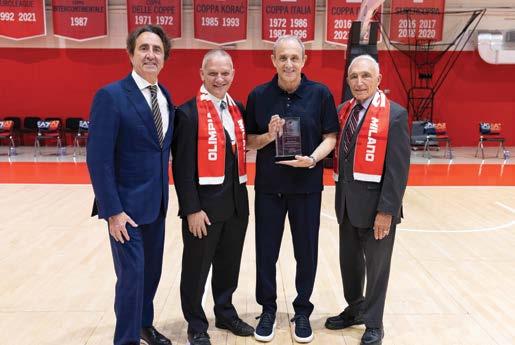
The trip featured key visits to Milan, Rome, and Palermo. Highlights in Milan included an award presentation to Ettore Messina, head coach of the Olimpia Milano team, marking OSDIA's first international sports award. The delegation also met with the Swiss School of Management to discuss academic partnerships and new scholarship programs, as well as engaged in future collaboration talks with Professor Pierpaolo Sileri of Vita-Salute San Raffaele University and President Attilio Fontana of Lombardy.
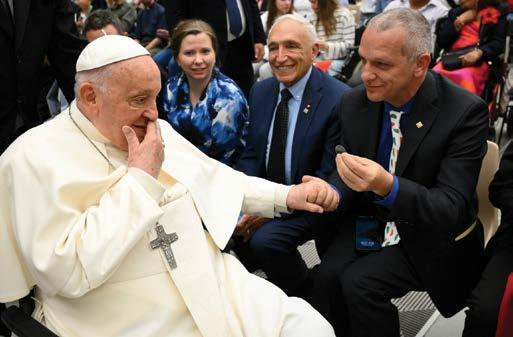
In Rome, the delegation had the honor of meeting with His Holiness Pope Francis. They presented a gift that symbolized OSDIA’s dedication to cultural exchange and discussed the development of an online Italian language program with Professor Letizia Cinganotto from the University for Foreigners of Perugia, a leading institution in the teaching of Italian to foreigners, Additionally, they held meetings with national businesses aimed at fostering Italian-American partnerships. The delegation also enjoyed
a tour of the Italian Senate and attended a dinner hosted by the Pantheon Lodge #3014.
In Palermo, discussions with Mayor Roberto Lagalla highlighted the importance of tourism in the region. The delegation strengthened ties with the Vincenzo Sellaro Lodge #3009 through a series of coordinated events, including a visit to Mondello Beach. There, they met with Alessandro Anello, Palermo’s Tourism Counselor, as well as other local business owners. Furthermore, Michael G. Polo and Joe Sciame were interviewed on local media outlet 16 Live, and additional meetings were held to explore media partnerships. The delegation also visited the site where NYPD officer Joe Petrosino was killed, as well as Polizzi Generosa, the birthplace of OSDIA founder Dr. Vincenzo Sellaro.
OSDIA National President presents a gift to His Holiness Pope Francis Left to right: Pope Francis, Shayla Kaestle, Joseph Sciame, Michael G. Polo
Ettore Messina receives OSDIA’s First International Sports Award. Left to right: Alessandro Pinto, Michael G. Polo, Ettore Messina, Joseph Sciame
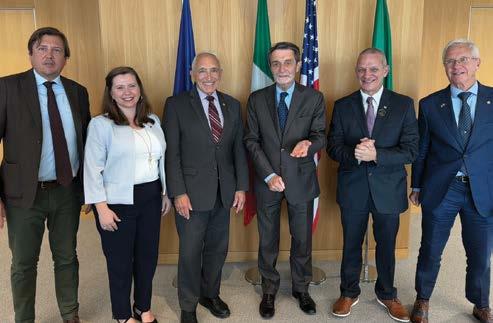
The OSDIA Delegation meets with President Attilio Fontana of Lombardy. Left to right: Professor Pierpaolo Sileri, Shayla Kaestle, Joseph Sciame, President Attilio Fontana, Michael G. Polo, Dr. Mark DeNunzio
A Trip to Sicily Is Just What Dr. Vincenzo Sellaro Ordered
BY DAN KAESTLE
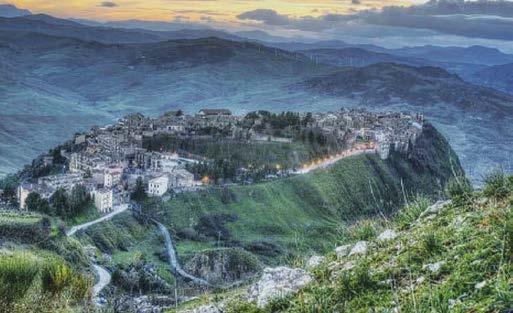
In 119 years, no known sitting president of the Order Sons and Daughters of Italy in America (OSDIA) has ever visited Polizzi Generosa, the birthplace of the organization’s founder, Dr. Vincenzo Sellaro. This changed on May 5, 2024. OSDIA National President, Michael G. Polo, and a delegation of National Officers and OSDIA leaders traveled to Sicily to promote the region being celebrated at this year’s National Education and Leadership Awards Gala. On the packed agenda was a special visit to tour Polizzi Generosa and learn more about what makes this small town in the hills of Sicily special and home to so many household names: actor Vincent
Schiavelli spent his last years in Polizzi Generosa until his death in 2005 (his grandfather was born there); Domenico Dolce of Dolce & Gabbana clothing company; Director Martin Scorsese’s paternal grandparents emigrated from Polizzi Generosa.
After leaving the town, the Palermo lodge treated the delegation to a traditional Sicilian pranzo (lunch), where they spent the next three hours savoring native fare, drinking local wine, and solidifying friendships between countries. New members of the Palermo lodge were pinned by National President, Michael G. Polo, and First Vice President, Thom Lupo.
The delegation later expressed how surreal it was to be standing outside the house where, over 130 years before, the founder of our beloved organization was in his formative years, dreaming of helping people, with no idea his attention would be turned to starting an organization to help Italian immigrants in his new home, America. The trip to Sicily became much more than just celebrating a region. It forged a bond with two countries that will continue to pay dividends for many years to come.
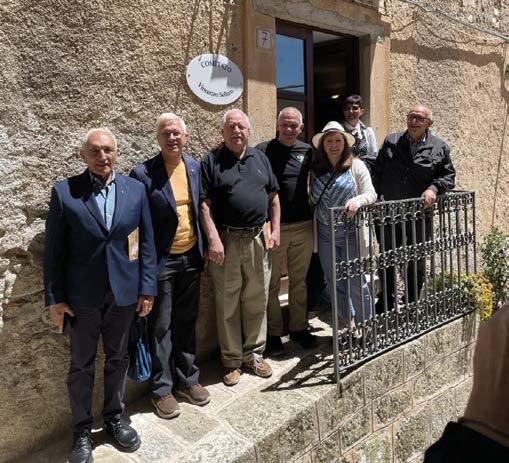
The OSDIA Delegation attended a reception sponsored by Palermo’s Vincenzo Sellaro Lodge #3009 at a meeting room in Polizzi Generosa bearing Sellaro's name. (left to right: SIF President Joseph Sciame, Third Vice President Dr. Mark DeNunzio, First Vice President Thom Lupo, OSDIA National President Michael G. Polo, National Executive Director Shayla Kaestle, President of the Sellaro Society Imburgia Nunzia, and Marcello Barrancotto)
Polizzi Generosa is a commune of the Metropolitan City of Palermo. It sits atop a hill three thousand feet above sea level. In 2017, it had a population of 3,334. The area was declared part of Sicily's first Nature Reserve in 1989.
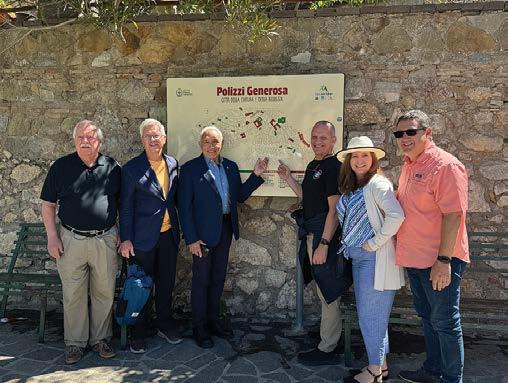
The OSDIA Delegation begin their walking tour through the town of OSDIA’s Founder, Vincenzo Sellaro. Left to right: Thom Lupo, Dr. Mark DeNunzio, Joseph Sciame, Michael G. Polo, Shayla Kaestle, Dan Kaestle
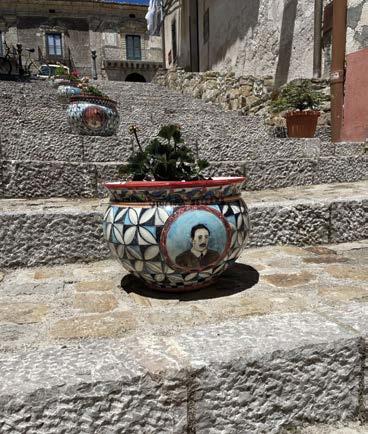
Polizzi Generosa takes great pride in honoring these famous sons. You'll see their faces on beautiful handmade planters in the town.
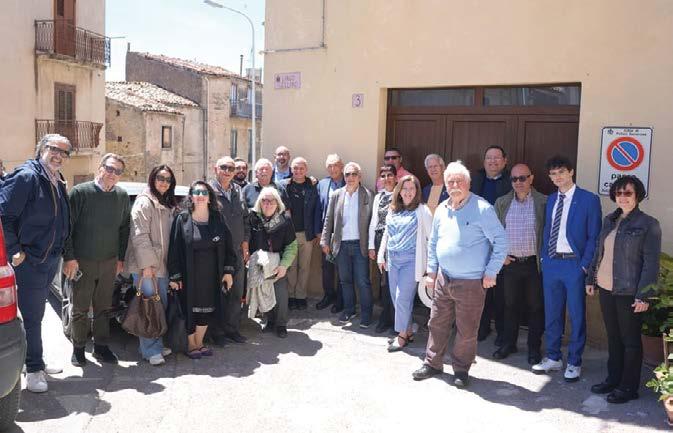
The OSDIA Delegation in front of the childhood home of Dr. Vincenzo Sellaro.

LA DOLCE VITA UNIVERSITY
BY CARLA GAMBESCIA
When you think of southern Italy, buffalo roaming the countryside is not likely to be the first image that pops to mind. Yet, the Italian Mediterranean buffalo is responsible for an iconic Italian culinary treasure: mozzarella di bufala . How, exactly, the animals got to Europe in the first place is unclear, but they’ve roamed Italy, specifically around Naples in Campania, for roughly a millennium. Today, the population is sizable enough to allow for larger-scale production of this delectably creamy, rich pearl-white jewel.
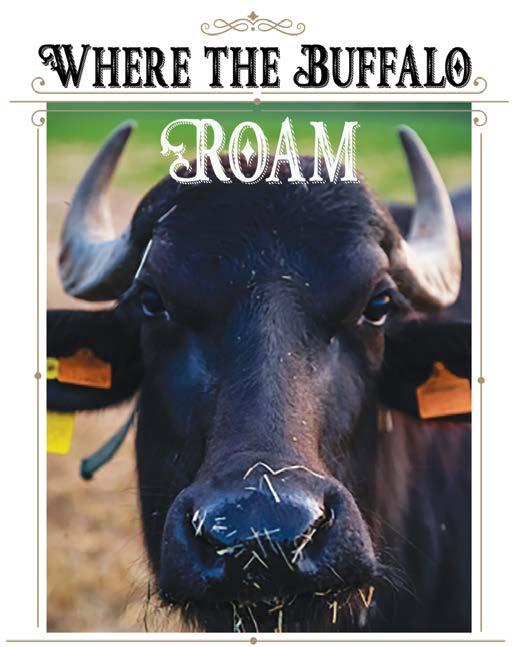
Not your typical “home on the range” big, brown, wildly hairy bison of the North American prairies, or Africa’s fearsome Cape Buffalo, the smooth, dark, curlyhorned water buffalo of sunny southern Italy who endow us mozzarella di bufala are compliant, docile creatures.
You’d be too if you awakened to Mozart each morning and received on-demand massages, as do the lucky 600 female buffaloes, each with her own name, of Tenuta Vannulo, a leading producer of Campagna’s legendary cheese. Mozzarella di bufala is a marvel of Italian cuisine. Decadently creamy, with about three times the fat of cow’s milk, buffalo milk contains less water and more protein. More milk solids mean more cheese per gallon; however, water buffalo, even pampered ones, only produce about three gallons of milk a day compared to cows that produce about ten. And Buffalo mozzarella is quite difficult to replicate, another reason it is so revered within Italy and the world over.
The Campania provinces of Cilento (south of the Amalfi peninsula) and Caserta (just outside Naples) are legendary for their mozzarella di bufala and share the protected D.O.P. status. In these areas, “mozzarella” refers exclusively to that made from buffalo milk, while cow’s milk mozzarella is referred to as fior di latte.
Italy’s mozzarella di bufala might well have been the inspiration for the term “mouthfeel”— its delicate yet supple texture and complexity of flavor makes even fresh handpulled artisanal cow’s-milk mozzarella taste like glorified string cheese by comparison. Fuller-bodied and saltier than traditional mozzarella, its more multifaceted taste includes sweet notes with a subtle tang, lush grassy flavors and yummy, long salted-butter finish.
In case you’re curious about the lifestyle of Tenuto Vannulo’s pampered bovine residents . . . In addition to waking to classical music and receiving on-demand massage treatments (courtesy of machines with large, rotating brushes that soothe their backs and shoulders), they graze in pastures and lounge about on cozy “bedding” and revitalize themselves with cooling misty showers during the long hot days of summer. The farm uses a state-of-the-art “voluntary” milking system: when a lady feels ready, she approaches a gate that detects if her udders are full. If so, Open Sesame and she’s milked by a smart machine featuring a robotic arm; if not, a turnstile redirects her to a grazing pasture abundant with herbs and organic feed, respecting both her own rhythms and those of nature. And if a buffalo feels under the weather, she’s treated with homeopathic medicines rather than antibiotics.
Tenuta Vannulo has been run by the Palmieri family for over a century. They are passionate about their cheese but, above all, wholly dedicated to the contentment of their buffalo and steadfast in their belief that happy buffalo lead to superlative milk and superlative cheese. Although Tenuta Vannulo is one of many excellent dairy farms located along Italy’s famous Strade della Mozzarella, it has achieved cult-like status for the care provided to their buffalo and has become a mecca for in-the-know foodies.
Photo courtesy of Tenuta Vannoleo Fresh Mozzarella
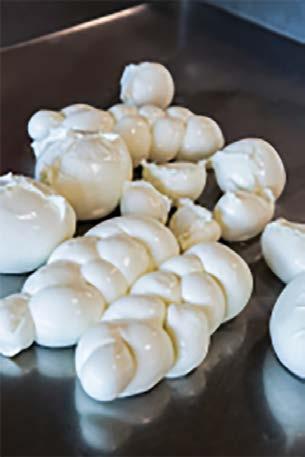
You can observe the pampered ladies firsthand, visit the estate’s in-house dairy and watch mozzarella artisans transform the day’s organic buffalo milk using only traditional crafted-by-hand techniques. Further, you can delight your taste buds with a visit to their tasting room— Degustazion—where you might sample their fresh-made mozzarella in its various sizes: perline, ciliegini, and bocconcini (smallest to largest) and shapes—nodini (knotted) and treccia (braided)—along with other enticing products made with the milk of their pampered buffalo: ricotta, butter, yogurt, gelato and, most recently, chocolates, Nutella spreads and bakery treats. YUM! Tenuta Vannulo’s daily production is available for purchase, but you have to get there early since it usually sells out by noon. The farm only sells directly to individual customers (no restaurants) with quantities capped at five kilograms per person.
Shifting gears a bit, if you have ever wondered about the culinary provenance of burrata, a kissing cousin of mozzarella, it is another southern formaggio specialty that hails from Puglia. Burrata, now beloved for its buttery indulgence, became an overnight sensation about fifteen years ago, popping up on menus across the US. It might have been a bit perplexing the first time you saw it sitting on a plate—resembling mozzarella but with a curious narrowing at the top like a giant pearl dumpling. You may have poked its casing, sensing that something delectable likely hid within. With a firm stroke of a knife, you slice into
Carla Gambescia is a journalist, lecturer, and award-winning author of La Dolce Vita University: An Unconventional Guide to Italian Culture from A to Z, a highly informative celebration of Italy’s capacious culture. The new and greatly expanded second edition is now available.
Carla has toured every region of Italy, often by bicycle, and immersed herself in its astonishing array of cultural treasures. She conceived and co-led the Giro del Gelato bicycle tour, winner of OUTSIDE Magazine’s “Best Trip in Western Europe,” and owned and operated the top Zagat-rated Via Vanti! Restaurant & Gelateria in Mount Kisco, New York, for nearly a decade.
Today Carla lectures on myriad topics of Italian cultural interest through continuing education programs, universities, museums, and private clubs. She also curates the photoblog Postcards from the Boot. You can enjoy a specially selected “postcard” each issue on the last page of our magazine.
the pouch and a filling of thick cream and mozzarella strips spills out, spreading across the plate. You twirl the strips with your fork like spaghetti and, with cream dripping, you take your first taste: a sweet cream and mozzarella epiphany.
Economic constraints in Italy have often led to creativity, and burrata is one of many delicioso examples of Italian culinary ingenuity and arrangiarsi or, more colloquially, cucina povera: wasting nothing by making do with what’s available. Produced from the remains of mozzarella-making, burrata’s bliss-inducing “insides” contain the dense cream formed atop the morning’s milking of local cows, combined with leftover stretched mozzarella curds torn into strips. In the version first created about a hundred years ago, the surrounding pouch was made by blowing into a piece of warm fresh mozzarella to form an inflatable balloon—a technique long abandoned to air compressors for the sake of food safety. What a relief, since, for so many, burrata, like mozzarella di bufala, is love at first bite!
Mozzarella and Burrata are a part of the stretch curd cheese family (which includes Provola and Provolone, Scamorza and Caciocavallo), all heated and stretched to create its signature flavor, shape, and texture. The word mozzarella comes from the Italian verb mozzare, which means “to tear.” These stretched-curd cheeses are all delicious, either on their own or as an ingredient, since they melt upon cooking.
RACHAEL RAY
BY ANDREW COTTO
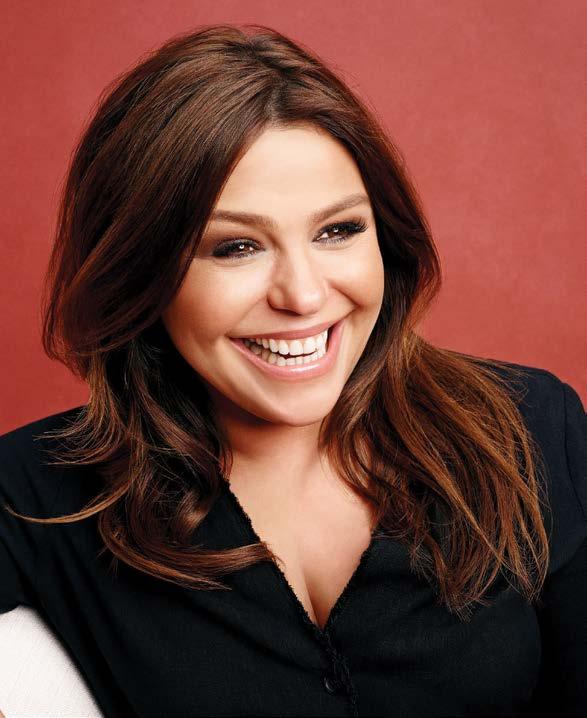
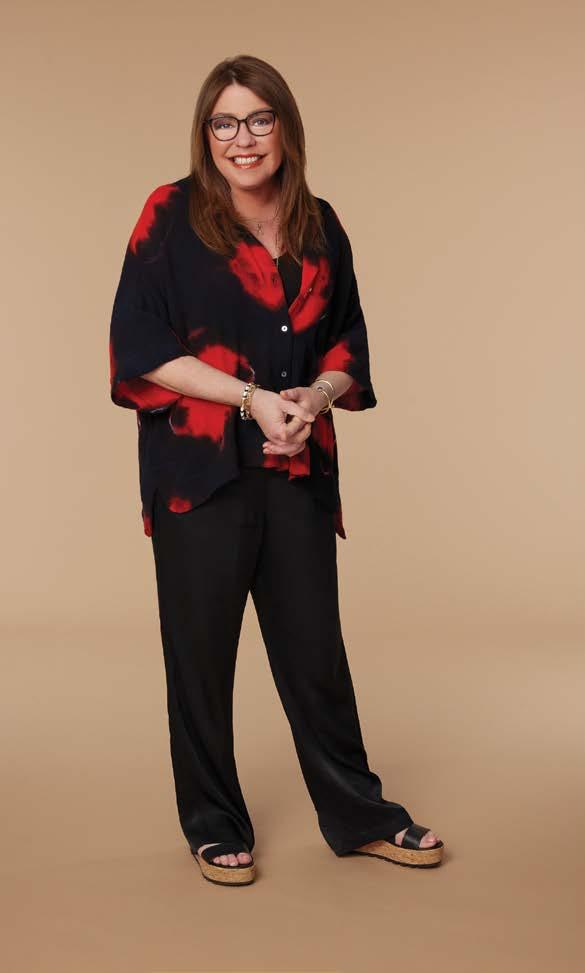
Rachael Ray is one of the most recognized American cultural figures of the 21st century. A mainstay on Food Network programs since 2001, including 30 seasons of 30 Minute Meals and 17 seasons of the Emmy-winning Rachael Ray on syndicated daytime television, the effusive personality from upstate New York has authored 27 cookbooks, launched two successful lifestyle magazines, curated a home decor and cookware collection, coined catchphrases, and created philanthropic organizations, among many other accomplishments. Her new cooking show, Meals in Minutes, recently debuted on the A&E Network. Rachael splits her time between upstate New York and Tuscany. Italian America was honored to speak with Rachael about her background, career, and philosophy.
Congratulations on the new show (and having a second home in Tuscany)!
Thank you! My husband John (Cusimano) and I love being able to split our time between upstate New York and Tuscany. In fact, our next two shows are Living Kitchen Tuscany and Living Kitchen Upstate.
You’ve come a very long way. Can you tell us about your childhood?
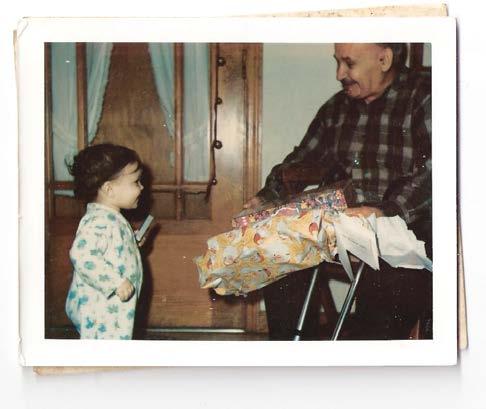
I grew up with old Sicilian men. My grandpa, Emanuele, was my number one best friend as a child. I would put on his giant flannel shirts, and I would sit on his lap. I always smelled like his pipe tobacco. I would watch him and his friends, the Runzo brothers, play Scopa, or listen to him read the Italian newspapers to them and reenact the calcio games from Italy as if they were hearing it on the radio. It was so charming and so much fun. We would all be laughing the whole time.
My grandpa was one of 14 children. The four youngest came to America from Gela, on the southern coast of Sicily. When he came to America, he taught himself to read in English, and he taught me how to read when I was a baby girl before I went to school. When I had to go to school, my grandpa put out my clothes in my room, and he put out a dress and my best shoes. It was like I was going to church. He let me pick out one book to take with me to school because he was so proud that I knew how to read. So I go off to school with my book, in my fancy shoes and my dress. Every child makes fun of me because I’m wearing
a dress. Every child makes fun of me because I’m wearing fancy shoes. And my teacher, no joke, took away my book because the other children didn’t know how to read yet.
I come home at the end of the school day, and I am quite frankly the definition of hysterical. And I’m choking because I don’t even want to tell my grandpa what happened. I’m so ashamed. I don’t know why. I didn’t do anything wrong. I knew how to read. How terrible was that? I wore the nice shoes and the nice dress because it was the first day of school. I don’t understand what I’ve done. When you go to something that’s important, you be polite, and you wear your best clothes and good shoes. Period. I come home, and I’m absolutely out of my mind because I’m ashamed to tell my grandpa what happened to me. I don’t want him to be sad, but I come home from my first day of school, and I’m crying, crying, crying. And this is what my grandpa says to me: JhuJhuJhuJhuJhuJhuJhuJhu. It’s just this gentle sound he used to make. And he held my hands and then put them over my head, then down by the side of my body and over my head again. JhuJhuJhuJhuJhuJhuJhuJhu, he said. “Calm down. Calm down. Breathe. Breathe.” He went and got a cold washcloth, and he put it on my forehead, and he just kept whispering, JhuJhuJhuJhuJhuJhuJhuJhu. He raised my arms over my head and back down again. Then he took my hand and said, “Let’s count: uno, due, tre, quattro, cinque.” We did this with the other hand, too. Then he gently took of my shoes and socks. He made me count five toes on each foot. “So, you know how to read a book. You have 10 fingers, 10 toes and a brain,” he said. “What do you have to complain about?” It is the lesson I’ve lived my life by. There is nothing else in life. I never complain because if you have 10 fingers, 10 toes and a brain, you have nothing to complain about in life. I just I miss him so much, and I miss the kind of person like him who used to exist. That ilk is so far from what we’re seeing right now. That strength of fabric. That makeup of a human. It just doesn’t exist. And it makes me really, really sad. It breaks my heart that people don’t care about this type of character because it’s what makes us Americans. What makes people American is their appreciation of being
allowed to be something in a new place and being accepted for whoever you are. Whatever you believe in, whatever you trust, whomever you love, you are welcome here. This is your place. You belong here. Everyone here will be accepted, welcome and understood because those are supposed to be our rules. It seems like we’ve gotten far away from this.
I just don’t understand what so many in America are complaining about. I’m not saying it’s not real, but I just don’t see it anyplace else in the world. When I go to places that are actually at war, and I’ve been to Ukraine seven times now, people are happy if they’re alive, quite frankly. Are you alive or are you dead is what they think about. They don’t have the luxury to complain about things like Restless Leg Syndrome.
Where did your grandfather settle in America?
My grandpa and his four brothers first arrived in Boston, but they were sent to Ellis Island where they were detained for a while. When they were released, they went to where the Italians lived in New York City, but they thought the area was disgusting, so they followed the Hudson (river) upstate and went to work in a pottery yard, which is what they did in Gela. There was a fire at work, and one of the brothers died. The remaining three brothers all separated, and my grandpa settled where Lake George meets Lake Champlain. He became a stonemason. He got a piece of land that was a 99-year lease for practically nothing, but there was nothing on the land, so he had to build everything. He first built this huge silo that became the oven and the warmth of the entire house that he built around it. My grandpa had 12 children and 10 survived. My mother was his firstborn.
My mother loved her papa very, very much. As the firstborn, she was always next to him in the kitchen. She was always helping him put the dinner in the oven in the morning and take it out at night. All of my favorite stories of young life are not mine. They’re my mother’s. Every single moment of her young life are all of the favorite moments of my young life, and they didn’t even happen to me. They happened to her, and I just know them because I had the gift of hearing them.
A toddler Rachael with her maternal grandfather Emanuele.
Tell us about your mother.
Since I was a baby, my mom, Providenzia (Elsa) Scuderi, worked in restaurants in various capacities. She ended up buying some restaurants in Cape Cod, so we moved there. Unfortunately, during the gas crisis, no one was able to buy the gas to come to Cape Cod. My mom had to sell her restaurants, and we moved back to upstate New York, where she ran eight different restaurants for someone else.
My mama would let me get out of bed every single night. I love this about her. She said, though, that I had to pay the toll first. I had to go to school, and I had to get good grades, but if I wanted to draw or paint or read at night, I could be a night owl. “You are my ‘Little Hoot,’” she used to say. That’s what she called me. I am a little owl, and I love that because it’s the truth. And as long as I went to school on time and got good grades, I was allowed to be a night owl and be creative. I was always a night owl since I was a baby. That’s who I was born to be. My mother always accepted that, and I’ve always loved her for it.
Did your restaurant experience begin with your mother?
My mother ran everything from fancy catering houses to Howard Johnson’s, and I’d just go to work with her. My first job was an unpaid dishwasher. She would also make me clean shrimp or clean up the walk-in or take out the garbage or whatever. I had to clean the bathrooms, too. Some nights, we would have 11 or 12 buses come through the Howard Johnson’s, and I would literally have to clean poop from the sinks. It was absolutely disgusting, and let me tell you, the women’s room was far worse than the men’s! Eventually, thankfully, I began to work primarily with food, and I’ve always loved it.
What do you love about working in food?
Food doesn’t hurt anyone. Serving food to people is very important. It’s a talent. It’s a thing. You can’t just serve food. You have to bring food with love, with care, and not take anything too seriously. Working in service, you will learn so many things: compassion, patience, how to keep things pretty and nice, and the importance of appearance. These things have always mattered very much to me. To me, it’s very Italian. It’s not the food alone. It’s the people who are making the food and what you can feel through their food. An Italian cares if their front doorstep is clean, if they have flowers on the table. They care about the beauty of the entire experience of life.
How did you end up working in food beyond your mother’s auspices?
After I graduated from high school, I attended college in New York City at Pace University. I needed help paying my bills, so I went to work at the food counter downstairs at Macy’s. I liked the job very much, but I was also mugged twice on my way home. I told my boss, “I’m so sorry. I just can’t work here anymore.” It just hurt my feelings too much. I thought I would die if I didn’t leave.
I went back home to Lake George and started my life all over again. I worked with my mom in the restaurants she was still involved with, and I worked at Sutton’s Market Place. While at Sutton’s, I met a woman named Donna Carnavale. She has now been my friend for decades and remains a very influential person in my life. She hired me to work at Cowan and Lobel, a gourmet market. I ran the kitchen, and that’s how we started the “30 Minute Meals” concept. Donna said I should teach people how to cook. I told her that I could not since I wasn’t a proper chef. She said, “Who cares? Everyone loves your food. They buy it every day. Go teach your food.” I agreed only if she would come along, so we started selling “30 Minute Meals” as a cooking class. We’d play crazy music and set up all these cooking stations. It quickly became a really big deal. They put it on the local news, and from there it became a regular segment which led to even bigger things.
It sure did. How did you get from local news segments in upstate New York to the Food Network?
There’s a PBS broadcast in upstate New York, and I
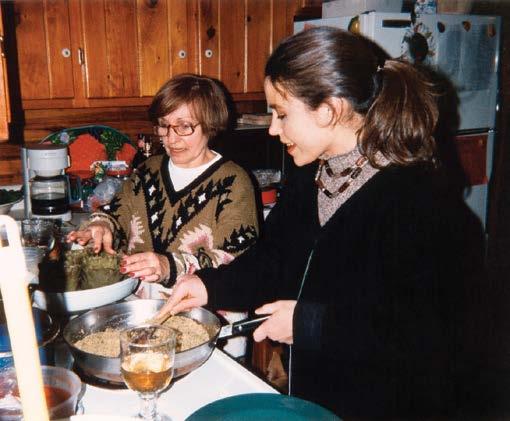
A 24-year-old Rachael in the kitchen with her mother Elsa.
was called in last minute to fill in for a cancellation. So, I go in to the studio with a hotplate and my ingredients, and I make jambalaya, which I call “jambalika” since it’s really an abbreviated variation of jambalaya. We were having a blast in the studio, and someone who works at the Culinary Institute of America in Hyde Park, New York, hears the broadcast. He calls down to a buddy in New York who works at NYU and says, “You have to hear this woman on PBS right now. She’s crazy!” This guy calls his buddy who happens to be an executive at the Food Network.
Next thing I know, I’m at the Food Network offices sitting down in front of these important folks asking me all these questions. The first thing out of my mouth is, “I don’t belong here.” But they all keep going: Tell us about this. Tell us about that. How did you do this? Why did you do that? I ask them, “Why do you care? I do not belong in a white coat. I am not a proper chef. I am not Emeril Lagasse. I’m not anyone that you would care about. Why are you doing this?” And they respond, “We think you’re interesting.” My biggest proponent that day and in the years that followed was Bob Tuschman, a Senior Vice President of Food Network at the time. I owe so much of my life to Bob and my friend Donna Carnavale. No one would know anything about me if it wasn’t for these people, and others, who believed in me and just wanted me to be me.
How did you pivot from 30 Minute Meals on the Food Network to Rachael Ray on syndicated daytime TV?
The woman who ran Food Network at the time, Brooke Bailey Johnson, said, “You should go into daytime television.” And I said, “We can’t do that. What are you talking about? We’re over here. They’re over there.” But Brooke said, “You can try. The worst thing they can say is ‘No.’” I adore her. She is so fearless, smart and funny. Every single thing she suggested for my life has come through. And I love the lesson about the worst thing that can happen if you try is that someone says, “No.” So, we asked, and they said, “Yes.”
Were you eager at that point, after so many seasons of 30 Minute Meals, to have a broader platform?
I always want to unpack the world. Like right now, I want people to notice Ukraine more profoundly. I’ve been there seven times. I’ll be back. I want people to understand
that there’s more important things than just how they eat dinner today. But I love the idea that dinner today can bring you to more important things. That may seem like a very backward idea, but it’s the truth for me. I love that if you understand food, you might care about other people more. Food is my way in to reach people. That’s a weird thing to try and explain to folks, but the greatest and easiest way to get there is through their stomach, through something that’s personal to everyone. Hey, why don’t you think about this today? Wouldn’t this be fun? And then through the fun, you can get to care about other folks, too. Maybe you care about other people a little bit more today than you did yesterday. It’s a stupid way to get there for some people, but for me, it’s the only way.
That’s what I’m trying to get to in everything I do publicly. That’s all. That’s all my grandpa would have cared about. When I was sitting on his lap as a child, and he was playing Tressette or Scopa with his friends, and they were giggling. That’s what they were giggling about: the folly of life, how ridiculous it is, and how much we all owe each other. That’s what I will remember until the day I die. I learned everything from those men. It made me so happy to be a part of the club. From the time I was a little girl, I was an old boy. I feel so lucky, so blessed. Because this is how I made this life. All of these people, all of these weird little tiny components. Laugh when you can laugh and care about every minute of your life. Period. End of discussion.
Any final thoughts?
There are a million Rachael Rays out there. There are thousands of people who deserve your attention. There are thousands of things you could watch every day that will make you feel inspired, loved, heard, seen. That’s the point of being here. I want people to be heard, seen and feel that they can accomplish anything. That’s the most important part of the content that we feed each other. The most important thing to do for another human being is to make them feel that they are seen, heard, felt, and that they can do anything you can do. That’s the most important thing.
I wish my grandpa was here because he would say, “You’re kicking ass, and I’m proud of you.” I know he would.
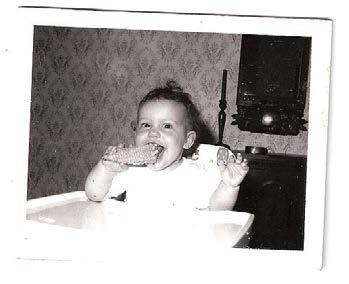
Rachael eating corn as a baby.
The Joy of Italian Radio
BY ROB LEDONNE
The sounds of Naples are echoing through my apartment. Pulsating dance music, current pop hits, Italian DJs speaking a mile-a-minute and breaking down the day’s headlines. But the reality is, I’m far from Naples. Yes, despite the fact that I live in Brooklyn, NY, it feels as if Mount Vesuvius is right outside my window. In reality, I gaze at a big green
dumpster on my street, set out for a construction project nearby.
Radio Kiss Kiss Napoli (https:// kisskissnapoli.it) is just one of the many Italian stations I cue up when I want to transport myself to the homeland. Just like a plate of Cacio e Pepe brings me to Rome or a bottle of Nero d’Avola allows me to pretend I’m in Sicily, listening to live Italian radio while I’m in America is a vibrant way to stay connected to the country of my heritage. Spotify playlists? Boring. American radio stations?


Most of them are highly sanitized with predictable corporate- friendly playlists. Italian radio, on other hand, is daring and adventurous, spinning whatever they feel like, boasting a range of tracks that don’t technically make sense on paper. You might hear a current Italian pop hit (for example, Achilles Lauro’s “Fragola”) or an oldie from the country (Ricchi and Poveri’s “Sarà Perché Ti Amo”), followed by the latest from Beyonce and Miley Cyrus. In between, there may be an obscure gem from the 90s. But when I’m grooving along in my apartment doing menial tasks, these stations always happen to find the perfect song to maybe even sing along to (much to the chagrin of my neighbors, I’m sure).

Cueing them up is simpler than you may think. Free applications and websites like TuneIn (https:// tunein.com), which is connected to smart speakers like Alexa, and Radio Garden (https://radio.garden), which showcases a map of the world that allows users to zoom into countries and choose whatever live station the heart desires, bring the sounds of the globe right into your ears in an instant. It’s easy to figure out, unlike, say, the inner-workings of the Italian government.
One of my early favorites was RTL 102.5 (https://www.rtl.it). Based out of Milan and boasting (the odd) tagline Very Normal People, the

broadcasts a visual simulcast with music videos and live shots of DJs. Here in the States, anyone can cue up their website and watch it all for free in real time, playing today’s native Italian stars like Fedez, Annalisa and The Kolors (their song “ITALODISCO” was a smash last year), as well as American acts like Dua Lipa and classic bands like The Beatles. I’ve listened to it so much that one day on a walk in Milan, I passed by the station and felt like a child seeing Disney World for the first time.
Assisi’s Radio Suby (https:// ascoltaradio.com/suby/) is another favorite which spins a variety of fun, global pop hits from the 90s to today, including acts like U2 and Tina Turner. DabliuRadio FM 88.8 (https://streema.com/radios/ Dabliuradio), coming live from Palermo, specializes in brand new tracks as well as deep cuts and forgotten favorites, and I always seem to be discovering songs I quickly fall in love with. I first heard artists like Purple Disco Machine and Peggy Gou on Dabliu, two acts who have since blown up worldwide.
every day acclimates you to the language in a fun and practical way. Even the ads are captivating, and I try to detect if they’re plugging a supermarket, a product, or an American movie, as my ears scan for words with which I’m familiar.

I’ll never forget listening to Radio Davina FM (https:// radiodivina.it), a station that has broadcast from the Amalfi Coast since 1977, while staying in Ravello at the picturesque Palazzo Avino. It’s a stunning property that sits on a cliff high above the Tyrrhenian Sea. The station, which I cued up on my iPhone through the aforementioned Radio Garden application, perfectly captures the breezy Amalfi vibe. At home, I tune into Davina whenever I’m taking a shower back in New York, mentally traveling to the Amalfi shores. It may be New York water splashing on me, but in my mind I’m actually cruising down the idyllic coast on my non-existent yacht.

Another added bonus: while I’m not exactly fluent in Italian, listening
One of the quirkiest aspects of listening to live radio broadcasting from Italy while in the States is the fact that since the country is six hours ahead from America sometimes the mood on these stations is a bit different than my current time zone. While I’m working on a Friday afternoon, the radio over in Italy is already in weekend party mode, which only gets me more excited to go out when it’s finally evening here. When I’m in the gym, I cue up energetic stations like LolliRadio Dance (https://www.lolliradio.net/ dance), and I imagine everybody in Italy listening to the same station, nibbling a cannoli or sipping Campari. That’s also the fun of the communal experience of listening to live radio: at the very moment I’m hearing a song walking down a street in Brooklyn, the same person sitting in traffic in Naples, shopping in Rome or eating at a cafe in Parma could be listening to the same thing at the same time. The best part, however? Whether it comes to music, food, art, fashion, lifestyle or anything else, Italians just have great taste. Forget an airplane: take a trip to Italy by tuning in to Italian radio.

ANDIAMO!
Parma – The Ancient, the Modern, and the Delicious
BY MATT WALKER & ZENEBA BOWERS
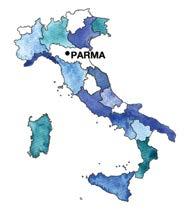
Parma is one in a row of cities across Italy’s breadbasket region of Emilia-Romagna. It is one of the most important sources of several of the country’s signature foodstuffs: Parmigiano-reggiano, torta fritta, prosciutto di Parma, and its high-end version, culatello, to name just a few. Though we’ve built our business around exploring smaller towns, and Parma is large by our standards, it’s one of our favorite towns to visit – it’s full of fantastic sightseeing as well as excellent eating. It’s impossible to see it all – and to eat it all – in a day; we’d recommend staying at least two or three days here to take in everything Parma has to offer.
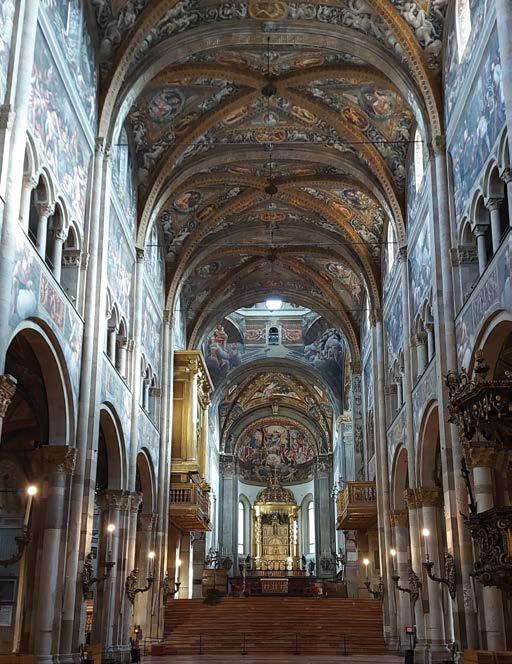
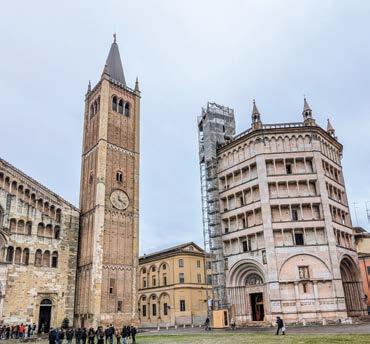
The ornate Romanesque Cattedrale di Parma is a mind-boggling sight – the walls and vaulted ceiling are covered with Renaissance frescoes (including some by Correggio), and the statuary is stunning. Across the cobbled Piazza del Duomo, the Museo Diocesano offers admission to not just the extensive cathedral museum but the octagonal, pink-marble Battistero, one of Italy’s most important historical structures. Dating back to the 12th century, the Baptistery is adorned inside and out with biblical and pagan mythological imagery, including representations of the zodiac and various fantastical monsters and other creatures. Looking up at the frescoes on its domed ceiling is dizzying and awe-inspiring.
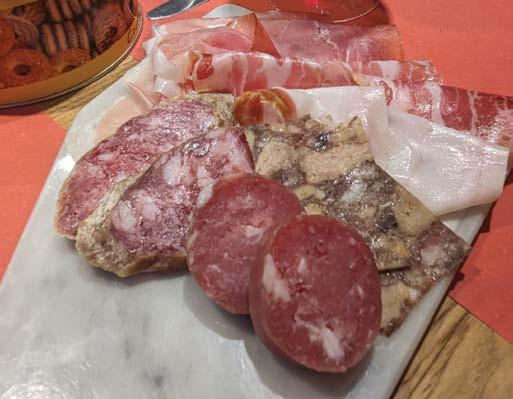
Just around the corner from this piazza is a tiny and unique “Mom & Pop” eatery, especially popular with the locals: Tra L’uss e L’asa serves up delicious plates based on local, seasonal ingredients, including items like tongue, tripe, and tartare of horse meat. The menu is small but carefully crafted; the place is small too – casual, and always full, so reservations are a must. Adventurous eaters will find nothing better anywhere.
More traditional dining can be found at the old-school Ristorante La Greppia, across from the Piazza della Pace. The chefs here specialize in the typical stuffed tortelli and other hand-made pastas, all made fresh daily; a display of their pasta-making skill adorns the front window. They also serve torta fritta, the hot fried bread “pockets” to be eaten with local prosciutto and other salumi
For a break from pasta and from wine – if such a thing can even be conceived! – visitors can stop for a pint of birra artigianale and a panino down the street at the Birrificio Gregorio. (The same brewery has another location across the river, which is also a hamburgheria, which is exactly what it sounds like – burgers and beers!) Gregorio is part
Mixed salumi at Tra Luss e Lasa.
Piazza del Duomo Parma with Baptistery.
of a burgeoning artisan brewing movement across Italy, and beer aficionados are applauding.
The Piazza della Pace fronts the massive Galleria Nazionale Museum complex. A tour through these museums covers centuries of art and history, and includes the 1620s Teatro Farnese . Also known as the “Wood Theater,” this structure is made of incredibly ornately carved wood; it exudes an aroma of lumber. One of only three Renaissance theaters in the world, the space is cavernous, with extremely steep stadium-style benches for the audience.
Further west, outside the centro, the 100-year-old Ristorante Cocchi is a high-end restaurant attached to the boutique Hotel Daniel. Though they serve excellent standard Parmense plates, they offer a particular specialty: the carrello bollito. Following an old tradition, the cameriere wheels around a cart filled with various boiled meats – pig legs, cow tongue, and various other meats and sausages – and plates them tableside for each diner. These meats are delicacies sourced from nearby producers, and locals regard Cocchi’s presentation of them as one of the very best.
Down the street are hidden two small museums: A little tree-lined alley leads to several rooms in a former monastery: the Camera di San Paolo , with frescoes painted by Correggio. They offer visitors the chance to see this master’s brushwork much more closely than we can in the towering Duomo, including misbehaving angels and goat faces that seem to be watching you. Next door is the strange (and free) Castello dei Burattini – the Puppet Museum. On display here are a few dozen hand and string puppets dating back a hundred years or so. Some are quite creepy! Others appear regularly in daily puppet shows in one of the small rooms here.
Just across the river from the museums are the acres of the Parco Ducale, a lovely place for a walk to get away from the bustle of the streets. At the east end is the grand Ducal Palace. You can walk west for nearly a half mile through well-kept gardens, under ancient trees, and past sculpture displays to the other end to see the fish pool and its 18th-century Trianon Fountain.
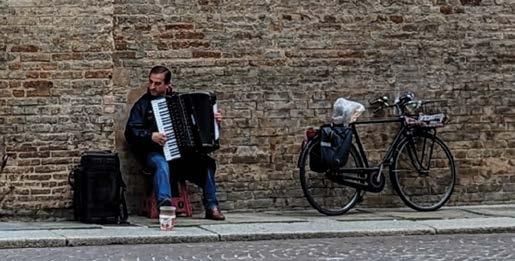
scene.
But back to the aforementioned bustle: though Parma is a small town compared to Rome or Milan, some of its streets in the historic center offer a big-city vibe as hip and vibrant as any metropolitan center. For those seeking to sate their sweet tooth, Ciacco and GROM are two gelateria shops that offer handmade gelato in creative flavors. Likewise, wonderful bakeries abound in Parma’s centro. A little-known favorite is the Antica Pasticceria Pagani 1856, a tiny shop down a little side street – the aroma will lead you to their door. Alternatively, on the main east-west corso, the sweet treats of Pasticceria Cocconi are works of art worthy of any of Parma’s museums.
Keeping with the big-city feel, a stroll through town yields any number of cocktail bars. On a huge, busy traffic circle at the edge of the historic center is the impossibly hip Simple Bar – but this place is anything but simple. Though it’s pricey, you get what you pay for – a prime people-watching position, and fantastic food: beautiful breakfast plates, highly artistic coffee drinks, baked goods and savory sandwiches and salads made fresh daily, and craft cocktails for aperitivo hour. An all-purpose eatery (and… is it “drinkery”?), this is one of modern Parma’s cultural offerings juxtaposed with the classic food and art and architecture found here in abundance.
About the authors: Zeneba & Matt moved from the U.S. to Italy in 2019, where they live and work as performing musicians. They are also authors of four award-winning travel guidebooks (including one for Emilia-Romagna) and a memoir about their move to Italy. As Little Roads Europe, they craft itineraries for travelers to visit small towns and enjoy authentic experiences in Italy and Ireland. www.littleroadseurope.com
Parma street
Cathedral of Parma.

BY NICOLO BOLLA
It seems these days that everyone wants to come to Italy and experience “la dolce vita.” Whether you’re a digital nomad, a retiree, or looking to come and start a business, the good news is, there are multiple ways that Americans can make their Italian dreams come true. But it’s always a good idea to be well informed beforehand, since Italy is a country ripe with red tape, making certain decisions all the more overwhelming, especially when it comes to understanding the complex tax system. But don’t worry, Italian taxes are really no more complicated than American ones. It’s just a matter of knowing certain information before hand, especially if you’re planning on moving here and/or purchasing property. Here, I will break down some major concerns when it comes to taxes in Italy.
Author Anastasia Rubis.
What to Know About Italian Taxes
Tax Difference When Buying a house in iTaly as a resiDenT or non-resiDenT
The tax implications of purchasing a house in Italy differ for residents and non-residents, particularly concerning property taxes at the time of purchase and the ongoing property tax rate. First of all, Italy and the US have signed multiple investment protection treaties allowing a US citizen who is a non-resident to own a residential or non-residential property in Italy (and vice versa).
If you decide that you would like to buy your property as a resident, then registrar tax is much lower (9% vs. 2%), as well as the fact that you don’t have to pay any ongoing property tax. Should you elect your property as your primary residence, then you
are subject to Italian taxes based on the domestic laws at the moment of your purchase.
Taxes on american Pensions
Italy generally taxes pension income received by residents, including pensions from abroad. However, something to consider is that tax treatment may vary depending on the specific circumstances and any applicable tax treaties between Italy and the country of origin of the pension. In general, you don’t pay income tax in Italy if you were a civil servant during your working life Tax incenTives for sTarTing a Business
The good news is, if you are considering moving to Italy and starting a business, Italy wants to help make that decision easier. Italy offers
various tax incentives and benefits to encourage entrepreneurship and investment for those looking to create a business. These incentives may include reduced tax rates, tax credits, deductions for certain expenses, and exemptions from certain taxes for qualifying businesses. The availability of incentives depends on factors such as the type of business, its location, and its activities. PNRR provides various tax incentives for new businesses, as well as INVITALIA.
7% Tax raTe for small ToWns
More good news. Anyone who is in receipt of a foreign-sourced pension who was not a resident of Italy in the 5 years prior moving can take advantage of the 7% tax scheme. This tax plan offers pensioners who move to a town of less than 20,000 in Southern regions such as Campania or Puglia, among others, the option to pay just 7% taxes. The key element is the pension, which can be public or private, and arising from overseas; in that case all the foreign income sources are covered by the 7% tax rate, as well as voiding the foreign held assets disclosure and the wealth tax payment.
Transferring an american Business To iTaly
While bringing an existing business from America to Italy can be a bit complicated, the good news is it can be done. But it’s smart to do so wisely and with someone advising and guiding you.
Bringing an existing business from America to Italy involves various tax considerations, including potential corporate taxation, VAT registration, and compliance with Italian regulatory requirements. The tax treatment
depends on the legal structure of the business, its activities, and any applicable tax treaties between Italy and the United States.
The Italian compliance framework is more stringent compared to the US one, therefore it’s quite rare to transfer a business from the US to Italy. Should the foreign business perform commercial activities, it is possible to appoint a fiscal representative in Italy to deal with VAT issues, avoiding any corporate tax and annual accounts filing complication.
Buying a house WiTh illegal Work anD The Tax imPlicaTions
Purchasing a property with illegal work in Italy can lead to various legal and tax complications. Owners may face penalties, fines, or requirements to rectify the illegal work, which can be costly and time-consuming. From a tax perspective, owning a property with illegal work may affect the property’s valuation for tax purposes and could result in additional taxes or penalties if discovered by tax authorities. It’s crucial for buyers to conduct thorough due diligence, including property inspections and legal reviews, to identify any illegal work and assess potential tax implications before completing the purchase. Consulting with a tax advisor or accountant knowledgeable in Italian real estate taxation can provide valuable guidance in such situations.
WhaT iT comes DoWn To
Too often, many people can be overwhelmed by their initial excitement of starting a new life in Italy and forget that just like all “big jumps,” they must be done wisely and correctly. So, if you’re considering
moving here to work or retire, buying a house or renting, either way, you must always follow the rules the same way you would in America. Know your facts. Get the right information from the right people to make informed decisions, whether it’s an accountant, a lawyer, or a notary. You will feel more relaxed about your decisions knowing that you have done your research and gotten input from the right people.
About the author: Nicolo Bolla of Accounting Bolla (https://accountingbolla.com) is a bilingual Italian accountant who specializes in working with foreigners. Nicolo works individually with his clients, many of whom are expats who work or own property in Italy, to seamlessly enter the Italian tax system. His expert advice has been featured in Reader›s Digest, L›Italo Americano, Luxury Travel Magazine, and WONDERLUST, to name a few.

MANGIA with MICHELE!
BY MICHELE DI PIETRO
WHAT’S GROWING IN YOUR GARDEN?
Here we are in summer again. I’m now in the swing of my second year of home vegetable gardening, and I couldn’t be happier about it.
With an entire adulthood of city apartment living under my belt, who would’ve thought that I’d embrace growing my own veggies like I have? With zero experience, I dove in last summer and filled my new 8’x20’ raised garden bed with all the top hits of summer: tomatoes, peppers, zucchini, cucumbers, eggplant, beans, herbs and more. The truth is that I had no idea what I was doing and would often say that I was accessing my “blood memory.” All my ancestors were farmers back in Italy, so some gardening know-how must reside inside of me somewhere, right?
It turns out that I was right! My garden grew extremely well last year and is off to a great start this summer. It brought and continues to bring me so much joy, peace and satisfaction every day as I tend to it, see it flourishing and contemplate the delicious abundance that is sure to come. And, just as exciting is anticipating the culinary delights that will be inspired by its harvest. It sure has taught me a lot about patience and delayed gratification!
Here are three of my favorite garden-fresh recipes inspired by summer’s bounty. Whether you’ll be growing your own veggies this year or supporting your local farm stand, I hope you give these recipes a try. Mangia bene!
You can find Michele's cookbook SOUPified! on Amazon! You can find Michele’s recipes at www.mangiawithmichele.com
MOM'S ZUCCHINI FRITTERS
PASTA WITH NO COOK TOMATO SAUCE AND PASTA
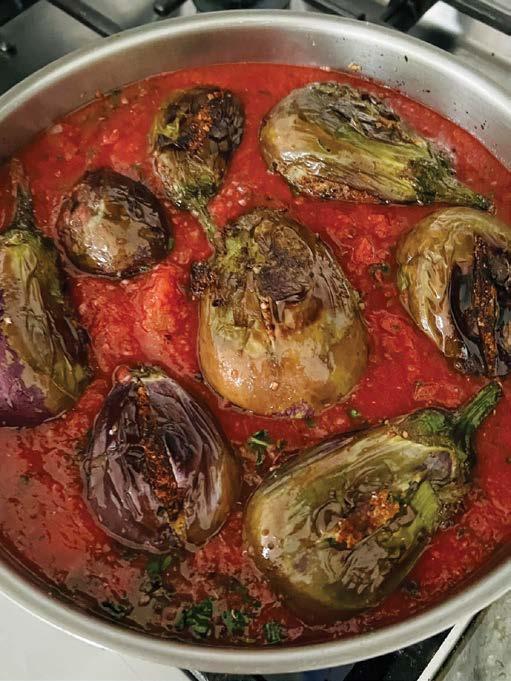
STUFFED ITALIAN EGGPLANT
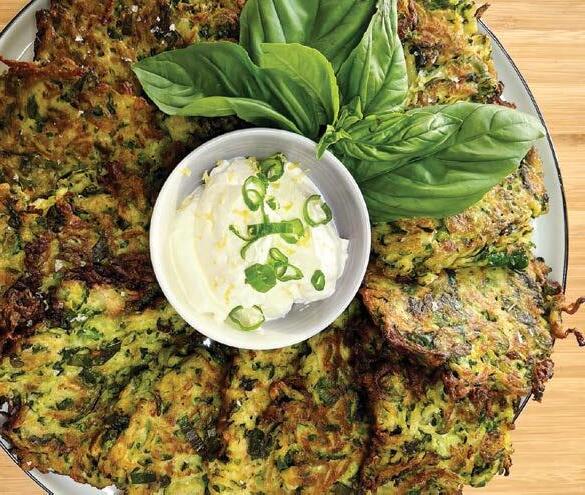
Mom's Zucchini Fritters
Serves 6
Every year growing up, my mom would make a huge batch of these frittelle di zucchine to bring to my Aunt Annie’s legendary July 4th party. They still conjure up precious memories of me and my mom standing at the stove together for hours frying these fritters to get them ready to bring over. It took forever because we made what seemed back then like a million of them.
And, even though Aunt Annie had about 30 other dishes at this annual get-together, everyone anxiously awaited my mom’s squash fritters. As soon as my mom walked in the door with a huge platter-full, she was bombarded, and the fritters were basically gone in five minutes.
Funny, but not funny.
Needless to say, they were always a huge hit. No sauce was needed as their flavor was spot on.
Based on experience, you may want to double or even triple this recipe because these fritters are a definite crowd-pleaser! Mangia bene!
YOU'LL NEED:
4 pounds zucchini
1 Tbsp fine salt
2 cups chopped green onion (about 6 green onions)
1½ cups chopped fresh basil
6 large eggs, beaten
Zest from 2 lemons
1½ tsp black pepper
1 tsp salt (optional)
1 cup all purpose flour
2 tsp baking powder
Oil for frying
Sour cream or ricotta for serving (optional)
DIRECTIONS:
1. Mix the flour and baking powder together in a small bowl and set aside.
2. Next, prep the zucchini: Cut the ends off the zucchini. Then, grate all the zucchini and place it in a large bowl. Sprinkle 1 Tbsp salt over the zucchini and mix well. Let this mixture rest for about 30 minutes or so at room temperature, while the salt draws out most of the liquid from the zucchini. Then, use cheesecloth, a mesh bag, a thin towel or your hands to squeeze out (and discard) as much liquid from the zucchini as possible, working in batches.
3. Place the drained, shredded zucchini in a large bowl and mix in the green onions, basil, beaten eggs, lemon zest and black pepper until wellcombined.
4. Then, add the flour/baking powder mixture and stir until all ingredients are mixed well.
5. At this point, it’s important to taste test the zucchini mixture (as if you were making a meatball). Heat a bit of oil in a small pan and fry a small amount of batter. Add salt at this point if needed and taste test again.
6. Once you’ve taste tested the batter and are happy with the level of seasoning, set up a landing spot for the fritters. I like to use a sheet pan lined with paper towels to absorb some of their oil.
7. Then, add enough oil to a large nonstick or stainless-steel skillet to cover the bottom of the pan by about ¼”. Heat the oil over medium/mediumlow heat until bubbles form around a wooden spoon inserted in the oil. If the zucchini fritter batter is placed in the pan before the oil is hot enough, it will absorb too much oil, become soggy and be a mess.
8. Portion the batter into the pan and use two forks or spoons to gently smash down/flatten the small mound of fritter batter and round off the edges. Fry the fritter 2 to 3 minutes per side and turn it over once the edges start to turn brown. Transfer to a paper towel to drain. Then, they are ready to eat! Serve them as is or with a dollop of sour cream or ricotta, if desired.
Michele Di Pietro is an entrepreneur, chef, cookbook author, blogger, culinary consultant, food writer, and creator of Mangia With Michele, the expression of her lifelong passion for Italian ingredients, foods, recipes, culture, and traditions. Throughout her busy professional culinary life, Michele has also always been an avid home cook with strong ties to her Italian roots. She is most happy and satisfied when cooking for, and breaking bread with, family and friends. It is these ties and sentiments, along with her passion for sharing both food and travel experiences with others, that led her to create Mangia With Michele. In 2020, Michele released her first cookbook: SOUPified: Soups Inspired by Your Favorite Dishes , a whimsical collection of soup recipes inspired by familiar entrees. Find our food editor at www.MangiaWithMichele.com and follow her at @mangiawithmichele on social channels. www.instagram.com/MangiaWithMichele www.facebook.com/MangiaWithMichele
Pasta with No-Cook Tomato Sauce and Ricotta Serves 6
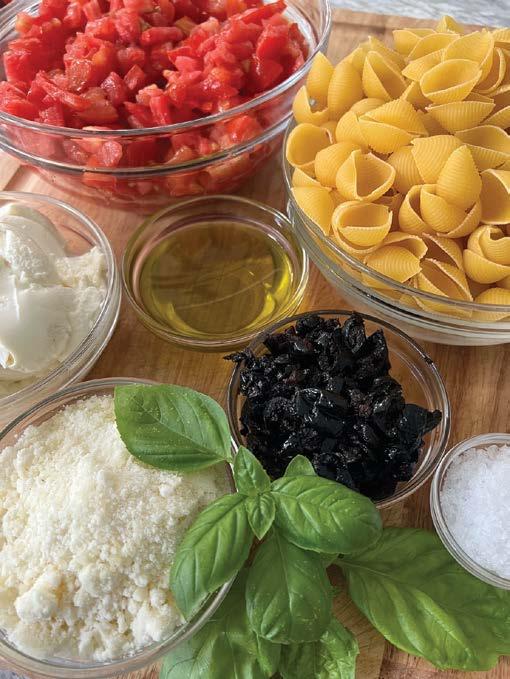
I actually learned this recipe during a culinary excursion that I took in Umbria many years ago. It immediately left an impression on me! And, I believe that it will leave one on you, too. It is a perfect example of the “less is more” ideology of cooking and my personal culinary philosophy of–find the best possible ingredients that you can and do very little to them. In fact, do very little to this recipe. It is basically perfect as is. I don’t say that all the time, but it really applies here.
As this recipe is basically a raw/no-cook tomato sauce, the choice of tomatoes is very important. Traditionally, this dish is made in the summer when tomatoes are in their prime form. I love making this dish with my own homegrown “sauce” tomatoes, like San Marzano, plum and roma tomatoes. Ripe, sweet tomatoes are essential for this dish. Having said this, this recipe can and should be made year-round. In the off-season, I will make it with cherry, grape or pear tomatoes that tend to be reliably sweet year-round. Mangiamo!
YOU'll NEED:
2 pounds ripe plum tomatoes
½ cup pitted and rough chopped black, oil-cured olives
1/3 cup extra-virgin olive oil
1 tsp salt
Pinch freshly ground black pepper
1 pound medium pasta shells + salt for pasta water
1 pound ricotta cheese at room temperature
1 cup firmly-packed basil leaves, hand-torn or lightly chopped, plus more for garnish
1/3 cup grated Pecorino Romano cheese
DIRECTIONS:
1. Prepare the tomatoes. If using plum or roma tomatoes, remove the core, then chop the whole tomato (including the pulp and seeds) into a small dice and scrape the tomato pieces and their juices into a large bowl. If using grape, cherry or pear tomatoes, slice them in ¼ lengthwise and place in a large bowl.
2. Add the olives, olive oil, salt and black pepper to the tomatoes and stir well. Leave this bowl covered in a cool place until needed, for a minimum of one hour and up to 6 hours. The salt will draw out the juices from the tomatoes and form a sauce. Give this tomato mixture a stir every 30 minutes or so.
3. Pull the ricotta out of the refrigerator and bring it to room temperature about 45 minutes before serving.
4. Then, bring a large pot of water to a boil. Once the water comes to a boil, add salt, then the pasta, stirring frequently.
5. Cook the pasta until al dente and reserve some of the starchy pasta water. (You may or may not need the pasta water.)
6. Once the pasta is cooked, drain and transfer it to the tomato mixture along with the ricotta cheese, basil leaves and Pecorino cheese. Mix well. If more moisture is needed, add a little pasta water, a couple of tablespoons at a time. It the mixture seems a bit juicy, let it sit for a couple minutes to allow the pasta to absorb the additional tomato sauce. Garnish with additional basil leaves and serve.
“Hope is one of the essential tools of a farmer or gardener.” —Amy Stewart

Stuffed Italian Eggplant
Serves 8
This dish has an interesting name in Italy, where it’s known as “buttoned up” eggplant (melanzane abbottonate in Italian).“Buttoned up” refers to the multiple incisions (slits) that are made into the flesh of the whole eggplant as if they were buttonholes and into which a light stuffing is placed.
I learned this recipe firsthand from my talented, Sicilian-American Aunt Mary back in my teenage years. We used the small “Italian eggplant” variety and filled the “buttonholes” with a very flavorful but simple stuffing of breadcrumbs, Pecorino cheese, onions, garlic and herbs and that is what I’ve done here. Once stuffed, each eggplant is seared and browned on several sides, then placed in savory tomato sauce to braise until tender, a technique similar to cooking a tough cut of meat–a brilliant idea given the meaty taste and texture of eggplant! This slow cooking method creates truly heavenly flavors and aromas and will make you fall in love with Sicilian cuisine if you’re not already. Mangia bedda!
YOU'll NEED:
8 small eggplant, such as “Italian eggplant” or other small variety, unpeeled (about 2 ½-3 pounds)
Pinch salt and black pepper
Olive or other oil for searing eggplant
For the Stuffing:
½ cup fine breadcrumbs (can use plain or seasoned)
½ cup grated Pecorino cheese, plus more for finishing
¼ cup finely chopped yellow onion
¼ cup chopped fresh flat leaf parsley or mint leaves
¼ cup chopped fresh basil
1 tsp minced garlic
¼ tsp dried oregano
For the Sauce:
¼ cup extra virgin olive oil + more for finishing
1 Tbsp minced garlic
¼ cup finely chopped yellow onion
2 Tbsp chopped fresh flat leaf parsley or mint
2 Tbsp chopped fresh basil
Pinch crushed red pepper
¼ cup dry red or white wine (optional)
2 (28-ounce) cans whole tomatoes (hand-crushed) or passata or crushed tomatoes
1 tsp salt
½ tsp ground black pepper
¼ tsp dried oregano
DIRECTIONS:
1. Rinse and dry the eggplant. Make the stuffing by mixing all stuffing ingredients together in a small bowl and set aside.
2. Then, “stuff” the eggplant. Starting with the tip of a sharp knife, make 3 to 4 or more (depending on the size of the eggplant) slits around the outside surface of each eggplant. Make the slits long and deep but not so long and deep that the eggplant will fall apart.
3. Then, use either a small spoon or your finger to carefully and gently pry open each slit a bit. Be mindful as the eggplant must remain whole.
4. Sprinkle a pinch of salt and black pepper in each slit, then stuff some of the breadcrumb stuffing in each. (I find this easier to do with my hands as opposed to a spoon.) This step gets a bit messy. I suggest doing it over a large bowl or cutting board.
5. Next, sear the stuffed eggplants. Heat oil in a large skillet in which all the eggplant will fit snugly over medium high heat. Once the oil is hot, carefully place the stuffed eggplants in the pan and sear each on multiple sides. Once all eggplant have been seared, transfer the eggplant to a dish and set aside. Reduce the heat to medium low and wipe the pan clean with paper towels.
6. Next, make the sauce. Add ¼ cup olive oil to pan along with the garlic, yellow onion, chopped fresh herbs and crushed red pepper. Cook 3 to 5 minutes or until the onion has softened, stirring periodically.You can cover the pan to speed up this process, if desired.
7. Pour the wine into the pan and scrape up all the brown bits with a wooden spoon or spatula (i.e., deglaze the pan).
8. Then, add the tomatoes, salt, black pepper and dried oregano and stir until all ingredients are well-combined.
9. Carefully return the eggplants to the pan and nestle/partially cover each one in the sauce.
11. Cover the pan and bring the sauce to a simmer. Adjust the heat to maintain a simmer and partially cover the pan.
12. Cook the eggplant 20 minutes, then turn each one over and cook another 20 minutes.
13. Then, check the doneness of each eggplant using a skewer or thin sharp knife. The eggplant should be soft all the way through. If the eggplant needs additional cooking, turn them over again and continue simmering until they are soft. Otherwise, turn the heat off. Note that some of the breadcrumb stuffing may come out during the cooking process and this is ok–it will add flavor to the sauce!
14. Transfer eggplant to a serving platter, topping each with some of the sauce. Drizzle with some high-quality olive oil and grated Pecorino cheese and serve. Enjoy as an entrée alone or along with some pasta tossed in the braising tomato sauce. And, it’s even better the next day!

JOE SCIAME'S SUNDAYS IN NEW YORK (Part 1I)
BY JOE SCIAME
My maternal grandparents, Andrea Blanda Pintacuda and Giovanina Blanda, married in Sicily and arrived in New York City in the early 1900s. The Blanda name was shared by them in that they were first cousins. My grandfather was a barber. His shop was called the International Barbershop, located at 77 East 78th Street. He knew a lot of important people back then; in fact, Mother Cabrini even came to his barbershop at some point. He and my grandmother had 11 children, though only seven survived.
My mother had three sisters and three brothers, five of whom were married. They had 11 children between them. Unlike my father’s family, where my sister Gertrude and I had no cousins, having nine cousins (plus us two) and lots of affable adults on the maternal side made for festive Sundays and often Saturday nights, too.
Our weekends with my mother’s family took place in one of two places: my grandparent’s apartment on East 78th Street in Manhattan, or their bungalow in Jackson Heights, Queens.
My family lived in East New York, Brooklyn, so either location was quite a trek, requiring multiple subway lines and also a bus transfer for the bungalow in Queens. Regardless, we happily took these journeys because of what awaited.
My grandparents’ home in Manhattan was a railroad apartment with an open foyer where my grandmother kept her Mother Cabrini statue. She would later pass the statue on to my mother, and I have since inherited it.
In the apartment, there was a huge kitchen with a table constructed big enough so we could all fit around it. In the back was my grandparent’s bedroom that had a king-sized bed where all of the kids would sleep when we stayed over. That apartment is where I first became aware of an icebox. A man, possibly a Barese, would deliver a big chunk of ice that was put inside the box to keep things cool. Eventually, all that water would drip down, and it would have to be emptied out.
In Jackson Heights, they had a garden in back where they grew grapes and vegetables. There were three bedrooms inside and a very modest kitchen. There was no indoor bathroom. Out back was an outhouse. So, when you went to the john, there was this pre-standing place. All of the ladies would keep everything immaculate, but it was always kind of like, “Wow! Is that where I need to go?”
Wherever we were, Manhattan or Queens, we sat around the table together. The kids were not all shoved at one end, as it was with my father’s family, and we would intermingle with the adults. Of course, my father, being a serious man, would keep an eye on us kids, and if you ever got out of hand, you could expect a nice whap to the back of the head. But overall, there was great conviviality all around.
Saturday night was steak and roasted potato night, and we’d often go out early for that and stay overnight. Sunday lunch always had huge platters of pasta and meatballs. My grandparents were not, like many of us, pasta eaters
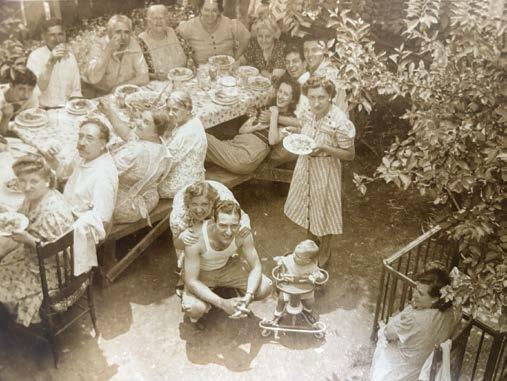
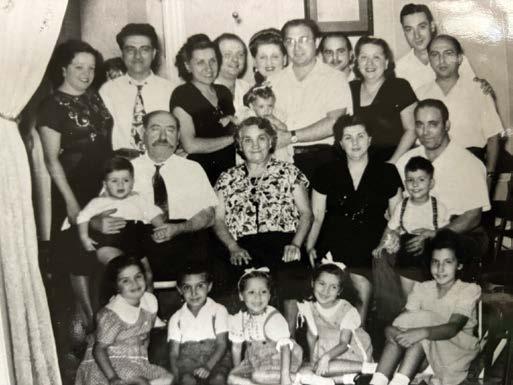
The author’s maternal family at the “bungalow” (1942).
The author (bottom row, second from left) and his maternal family at a post engagement gathering.
during the week, so Sunday was special with regard to this. There was also braciole, made the way Sicilians do it, with flank steak sliced thin, layered with raisins and eggs, fresh parsley and seasonings, before being rolled very carefully. I used to love watching the rolling and the putting in of the toothpicks, and then sauteing the meat and slipping it into the sauce. There was also fresh sausage as well. Roasted chickens were always a big thing. The main courses were always followed by a lot of salads and vegetables. I grew up loving vegetables, especially the green beans served on Sundays. Of course, the wine flowed like water for the adults, and I think us kids grew up on sarsaparilla and ginger ale.
What made my mother’s family even more fun is that her three brothers each played an instrument. Uncle Victor played the drums; Uncle Tony played the guitar, and Uncle Charlie played the mandolin. I still remember the sound of the mandolin being played. There was always music playing, live or recorded, especially at the bungalow. There was lots of dancing around and joking and having fun.
The men would often go off to the side to play Briscola, their card game. They would constantly be throwing down cards, trying to beat one another, shouting and laughing as the wine continued to flow. All of the men smoked, except for my father. So, there was the smell of cigarettes, cigars, and the pipes that my grandfather smoked.
My grandfather would always find time to take the kids aside, especially on a Saturday night after closing down the barber shop, and give them all his change, his quarters and nickels and dimes. He’d line the coins all up, and
based on your age, you’d end up getting something from him to take home.
As I recall, there would be nothing controversial when we were together. You didn’t speak of religion or politics. That, in large part, is why those were such memorable days. It was all about conviviality and family love. There was never any family time together in which we did not get along. At the end of the day, or the end of the weekend, everybody was going home in a happy way. That’s probably the source of the value system I grew up with and still have today. La famiglia è forte!


LESSON
Is Gerundio a Kind of Present Continuous?
Gerundio is an Italian tense showing two different forms: present and past. Its form depends on both the tense and the suffix of the verb in its base form. We will focus on the first one (Gerundio presente) in this lesson. The first question we should answer is: “How can we write a Gerundio starting from a verb?” As introduced in Lesson One, we have three groups of Italian verbs: the first group of verbs end in – ARE, such as PARLARE (to speak); the second group of verbs end in – ERE, such as RIDERE (to laugh), and the third group ends in -IRE, such as DORMIRE (to sleep). Based on which group the verb belongs to, GERUNDIO will have different spellings: the verb PARLARE becomes PARLANDO, a verb of the second group like RIDERE (to laugh) becomes RIDENDO in its GERUNDIO form. Finally, DORMIRE (to sleep), third group becomes DORMENDO. The examples below should help you fix in mind how to form an Italian GERUNDIO.
ARE ERE IRE parlando scrivendo partendo scherzando ridendo dorm endo cantando leggendo finendo mangiando sorridendo salendo
When do we use GERUNDIO in Italian? Whenever we want to express the purpose, the means, the time or the cause why we do something, we may use an implicit sentence containing a Gerundio. Remember that, only if the subject is the same both for the main clause and the secondary clause, you can use Italian GERUNDIO like this. In other words, the subject of the implicit sentence must be the same as in the main clause. Here are some explicative sample sentences:
1. BEVENDO MOLTO, IDRATO IL MIO CORPO
WHEN/SINCE I drink a lot, I hydrate my body
2. ANDANDO A SCUOLA, IMPARO MOLTE COSE
WHEN/SINCE I go to school, I learn lots of things
There is an extra use of the Italian GERUNDIO, which we cannot help quoting. That is the Italian expression STARE (to stay) + GERUNDIO. It is used when expressing something happening at the time of speaking. In fact, that is how we translate the Present continuous into Italian or vice versa. Look at the following examples:
1. I AM HAVING LUNCH STO PRANZANDO
2. I AM WATCHING TELEVISION STO GUARDANDO LA TV
St. Louis, MO.
KEY:
1. Find the English equivalent for the following Italian sentences (STARE + GERUNDIO)
Sta parlando
Sto scrivendo
Stiamo ascoltando
2. Here is a grid to fill in with the correct Italian forms of GERUNDIO. You’re already given the base form of the verb, and the correspondent English form in -ING
BERE drinking
DIRE saying
FARE doing
PORRE putting
CONDURRE conducting
INTRODURRE introducing TRADURRE translating
Why did we choose such a title for this lesson? Because most Italian learners of English associate Gerundio with the English Present Continuous or with verbs ending in – ING, more in general. As a consequence of this, when they have to write or complete exercises containing the Present continuous, they forget the verb to be. This is a very common mistake and it is a good evidence that there are a few similarities between the English Present Continuous and the Italian Gerundio.
1. Choose five Italian GERUNDIO forms and write five sentences
2. Translate the following sentences into Italian. Can you use Gerundio? I AM PLAYING YOU ARE LISTENING HE IS SINGING SHE IS HEARING THEY ARE RUNNING
1) He/She is talking; I am writing; We are listening
2) Bevendo; Dicendo; Facendo; Ponendo; Conducendo; Introducendo; Traducendo
3) I am doing a test; I am translating from Italian; I am telling the truth; We are drinking a beer; He is asking a question
4) Sto facendo un test; Sto traducendo dall’Italiano; Sto dicendo la verita’; Stiamo bevendo una birra; Sta ponendo un quesito
BY JOE SCIAME
A GREAT NIGHT FOR THE Sons of Italy Foundation
Yes, “It was a great night!” That was said to me many times over by an assortment of attendees of the 2024 National Education Leadership Awards (NELA) Gala, hosted by the Sons of Italy Foundation (SIF), all in the name of the Order Sons and Daughters of Italy in America (OSDIA). The night was Thursday, May 23, 2024, at the Ronald Reagan International Center on Pennsylvania Avenue in Washington, D.C. The honorees, students, and guests who joined us that night looked terrific, with gowns for ladies and black ties for most of the male attendees.
Scholarship students were the core focus, regardless of the importance and stature of the honorees, who were all generous with their donations, time, and talent. We could not have been more blessed than in this 2024 gala. Our highlight at this showcase event is always the students, but when you have 11 of the 16 awarded this year on stage and all aglitter with their dress and personalities - well, it was a special, singular event in my terms. The OSDIA stands tall on a night such as May 23rd and especially when, thanks to our endowed scholarship funds, we can award $175,000 in an evening. Imagine that! Reflecting on the popular movie Cabrini , where Mother Cabrini accomplished so much in the education and formation of young men and women at that time in the history of New York City, we of OSDIA and SIF continue her work and do so magnificently.
potential honorees turn down the opportunity, but Joe DiTrapani, his lovely wife Carol, and their three sons, daughters-in-law, and grandchildren all shined for us. They are the American dream, and they continue to make dreams possible through their generosity. Special kudos to son Scott for all his personal efforts in helping to raise the funds that delivered a check for $100,000 from Joe, Carol, and Scott. But more than that, there were the friends of Scott who supported us with their additional, generous donations. It was possibly the largest sum of monies ever raised by a single honoree.
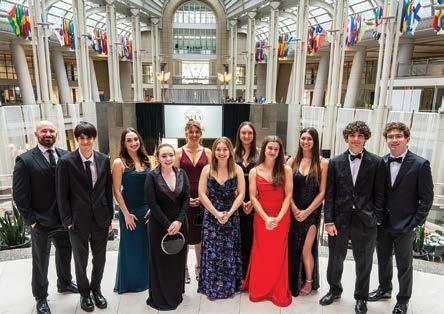
At the 2024 NELA Gala, 16 students were awarded a total of $175,000 in scholarships. Eleven of the 16 were in attendance to receive their awards in person.
Our additional honorees - actor Joe Mantegna; singer and performer Deana Martin; J. Eustace Wolfington, producer and director of Cabrini ; and Congressman Mark E. Amodei - were all so receptive to the event. But there was more, as we welcomed our Sicilian sisters and brothers of the Dr. Vincenzo Sellaro Lodge of Palermo, Sicily, and they, too, were very impressed with the festivities. The room was alive with the happy faces of all. Topping off the welcome of the Sicilians were the words of Embassy of Italy Deputy Alessandro Gonzales who spoke so clearly as to the importance of OSDIA and SIF. He praised us all for our efforts and implored the continued study of the Italian language and spoke of the program “Il Ritorna a Radici” (Returning to Our Roots).
But the scholarship awards section of the event was just a part of the night. We were honored to offer a salute to a personal and collaborative friend and family – the Joseph DiTrapani Family of New York State! Longstanding members of OSDIA, they have pretty much done it all in terms of serving in so many varied roles, but this was their night to make a difference in what they did for us both financially and in “allowing” us to honor them. Many
And indeed, we have and did hail a return to our Italian roots, for we had members of the Sellaro Lodge of Palermo right there centered in the audience, led by their President, Tiberio Mantia. In recognizing them and the Region of Sicily, we made sure we had ceramic pine cones at each setting as a gift, lemons and Sicilian flags on full display in the table settings, as well as the warmest welcome possible. This year’s Region of Celebration could not have been better matched to what OSDIA is trying to do in connecting to our roots.
Our Mistress of Ceremonies for the event was bestselling author Adriana Trigiani. She engaged in her incomparable way, yet stayed totally focused on the event. Some of us might have also wanted a copy of her latest publication, The Good Left Undone, or a reading from one of her many books that that were placed around the room. We know that Adriana is now a part of our efforts for years to come, based on the comments of many. And how about the singing of the anthems by Maria Fassio Pignati, a long time California OSDIA Past State President and now an SIF Trustee. Jazz performer Vanessa Racci dazzled, and many attendees requested her return in 2025.
DEANA MARTIN
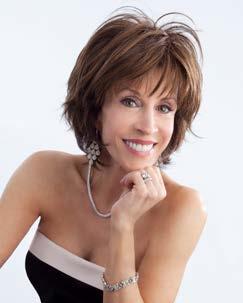
Deana Martin is an influential American singer, actor and performer. She is also the proud daughter of iconic entertainer, Dean Martin. Deana achieved success early in her career in films, theater and television, then quickly added to her repertoire: recording artist, best-selling author, nationally syndicated radio host, licensed pilot, and entrepreneur. As an internationally acclaimed entertainer, hit recording artist and an indemand performer, Deana Martin has become an instantly recognizable voice and figure in the pantheon of The Great American Songbook.
Deana’s 2006 debut recording, Memories Are Made Of This, stayed in the Billboard Top 10 for 40 consecutive weeks. She has since released four critically acclaimed and commercially successful recordings of various genres.
A celebrated author, Deana found herself on The New York Times coveted Best Seller list with her 2004 memoir, Memories Are Made of This: Dean Martin Through His Daughter’s Eyes. In it, Deana delights in sharing wonderful, never-before-told stories about her father and his “Pallies,” known to her as Uncle Frank (Sinatra) and Uncle Sammy (Davis, Jr) and known to the world as the Rat Pack. With 210 episodes and counting, Deana has been entertaining her fans with Deana Martin LIVE! on Fridays at 4:00 PM ET on Facebook, YouTube, Roku, Twitter/X and DeanaMartin.com, where she has been recognized since
So, we move into 2025 with all its unknowns and potential candidates to be honored and awarded scholarships. One person at the event asked as to 2025, and all I could say was, “We are going to continue doing the NELA Gala until we get them right and perfect, but after 35 years of such events, we know each year we have a winner.”
To that end, we have the staff in place, led by National Executive Director, Shayla Kaestle, and the support of OSDIA National President/SIF Chair, Michael G. Polo. And so, “Avanti!”

2020 by Pollstar as a Top 10 Streamer Worldwide, twice hitting #1 in the world. In 2021, as Executive Producers, Deana and her husband, John Griffeth, released their award-winning documentary, Dean Martin: King Of Cool, directed by Tom Donahue and premiering on Turner Classic Movies (TCM). Also in 2021, Deana returned to her hometown of New York City to host “Dean & Deana Martin’s NIGHTCAP” on WABC radio.
Deana and John divide their time between Beverly Hills, CA, and Branson, MO.
J. EUSTACE WOLFINGTON
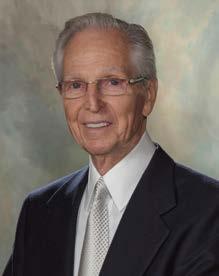
J. Eustace Wolfington is the Executive Producer of the film Cabrini (2024, Angel Studios). Mother Cabrini’s entrepreneurial spirit, passion, commitment to her vocation, perseverance, creativity, organizational skills, unwavering faith and love for everyone she encountered have guided Eustace throughout his career, even naming one of his companies after her. In 2015, Sister Mary Louise Sullivan of the MSC order asked Eustace to help complete a film about Mother Cabrini. Her persistence wore down his initial resistance, and he agreed to make the film on two conditions: they make a film about a great woman who just happened to be a nun; and that a 501(c)(3) was established where all the net revenues earned from the film go to charity. Cabrini, starring Cristiana Dell’Anna in the title role, was released in March of 2024. Eustace also was
DEANA MARTIN Biography
Deana Martin is an influential American singer, actor and performer and the very proud daughter of iconic entertainer, Dean Martin.
Deana achieved success early in her career in films, theatre and television, then quickly added to her repertoire recording artist, best-selling author, nationally syndicated radio host, licensed pilot, and entrepreneur.
As an internationally acclaimed entertainer, hit recording artist and an indemand performer, playing to sold-out audiences worldwide, Deana Martin has become an instantly recognizable voice and figure in the pantheon of The Great American Songbook.
the Executive Producer of Bella, a 2006 American drama film co-written, co-produced and directed by Alejandro Monteverde, starring Eduardo Verastegui and Tammy Blanchard. Bella won the People’s Choice Award at the 2006 Toronto Film Festival.
Eustace and his late wife, Marcy, have 10 children, 32 grandchildren and five great-grandchildren.
JOE MANTEGNA
2021 reboot of the hit CBS Drama Criminal Minds, now streaming on Paramount Plus.
Joe resides in Los Angeles with his wife of over 45 years, Arlene, and their two daughters, Mia and Gia.
HON. MARK E. AMODEI
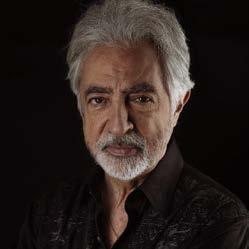
Joe was awarded the Tony and Joseph Jefferson Award for his acclaimed performance as Richard Roma in in David Mamet’s Pulitzer Prize-winning play, Glengarry Glen Ross. Joe’s film and television highlights include: House of Games , Searching for Bobby Fisher, Godfather III, his Emmy and Golden Globe nominated role of Dean Martin in The Ratpack, and his Emmy nominated role of Pipi Delana in The Last Don. For two seasons, Joe starred with Mary Steenburgen in the critically acclaimed CBS drama Joan of Arcadia, winner of the 2004 People’s Choice Award for Best New Drama as well as picking up three Emmy nominations. In 2008, Joe reprised his Emmy nominated role of Lou Manahan, opposite Debra Messing in the USA Network series The Starter Wife. Joe has also lent his voice to the Disney/ Pixar film, CARS2 and continues his 31-year run as Fat Tony on The Simpsons
Joe contributes much of his free time to several philanthropic endeavors, including the U.S. Army Museum, which opened in 2021, and the Gary Sinise Foundation, a charity that focuses on the needs of our most severely wounded veterans. He has also hosted the National Memorial Day Concert live from Washington D.C. since 2006. Joe’s other passions include various autism-related organizations, including ETTA, New Horizons, the Miracle Project, Ed Asner Family Center, The Help Group, and Easter Seals Chicago.
In April of 2011, Joe received a star on the Hollywood Walk of Fame; in 2014, he received a Lifetime Achievement award from the Hollywood Chamber of Commerce for his dedication to the community and craft of acting.
Joe returned as FBI Special Agent David Rossi for a

Mark E. Amodei (RNV) has served as the U.S. Representative for Nevada’s Second Congressional District since 2011. He is a member of the House Appropriations Committee, and he serves on the Financial Services, Legislative Branch, and Interior subcommittees. Since 2023, Mark has served as Chairman of the Legislative Branch Subcommittee.
Mark was born in Carson City, Nevada, on June 12, 1958. He graduated from Carson High School in 1976, where he was Student Class President. Mark graduated from the University of Nevada in 1980; he received his law degree from McGeorge Law School, University of the Pacific in 1983.
Mark served with the U.S. Army Judge Advocate General Corps from 1983 to 1987, and he was awarded the Army Achievement Medal, Army Commendation Medal, and Meritorious Service Medal.
Mark served in the Nevada Assembly from 1996 to 1998 and in the Nevada State Senate, representing the Capital District, from 1998 to 2010. He served as Chairman of the Nevada Republican Party until May 2011. From 2007 to 2008, Mark was the President of the Nevada Mining Association. He was an attorney with law firms Allison MacKenzie in Carson City from 1987 to 2004 and Kummer Kaempfer Bonner Renshaw and Ferrario (now Kaempfer Crowell) in Reno from 2004 to 2007.
In Congress, Mark also serves on the Congressional Western Caucus, Army Caucus, Congressional Joint Strike Fighter Caucus, USO Caucus, Veterans Job Caucus, Italian American Caucus, Conservative Climate Caucus, Travel and Tourism Caucus, Public Broadcasting Caucus, Postal Preservation Caucus, and ALS Caucus.
Mark is close to his family and has two adult daughters, Erin and Ryanne. He enjoys working on his old trucks, do-it-yourself projects, and exploring Nevada history.
JOSEPH DITRAPANI
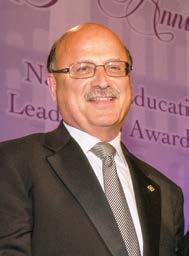
Joseph DiTrapani, following in the footsteps of his beloved father Sam DiTrapani, has been active in the Order Sons and Daughters of Italy in America (OSDIA) for over 48 years. Joseph became National President in 2009, during the 51st Biennial National Convention in La Jolla, California. In August 2011, he was re-elected by acclamation to serve a second twoyear term as National President.
Born in Brooklyn, Joseph was one of four children in a family with roots in Sicily and Calabria. Soon after receiving his Bachelor’s of Business Administration from the prestigious College of Insurance, he began his professional career at Washington National Life Insurance Company. A year later, he joined Dascit/White & Winston, New York State’s largest life, health and pension brokerage agency and rose to the position of Vice President in 1986. In 1989, Joseph acquired Dascit/White & Winston serving as its President and CEO where he continued his successful career in the insurance industry until his retirement in 2017.
As OSDIA National President, Joseph brought a new vision to the organization with his ease in leadership
the President of the National Sons of Italy Foundation (SIF) and worked diligently to secure funding for this charitable organization. In 2016, on behalf of the SIF, Joseph once again traveled to Mucci, Italy to present a $100,000 donation to the Andrea Bocelli Foundation to assist in the reconstruction of the E. De Amicis pre-school and elementary school which had been rendered unfit for use by the disastrous earthquake swarm in 2016. For the 2019-2021 biennium period, Joe served as the Chief Operating Officer (COO) for the National Office during a period of transition in the lead position and absence of an executive director.
In December 2005, Joseph DiTrapani was presented with the title of Cavaliere through the Chancellery of the Savoy Orders in Geneva, an honor that is bestowed upon persons of importance in the Italian American community. At the present time, Joseph holds two prestigious titles of Ufficiale in the Order of Saints Maurice and Lazarus and the title of Commendatore that he received directly from the President of the Republic of Italy.
Joseph and his wife Carol of 51 years are truly blessed with a wonderful family and find joy with their six beautiful grandchildren. They are inspired each and every day by their loving children, Scott and Lauren, Matthew and Taylor, Todd and Suzanne, who have all excelled in their

Do You Ever Imagine Your

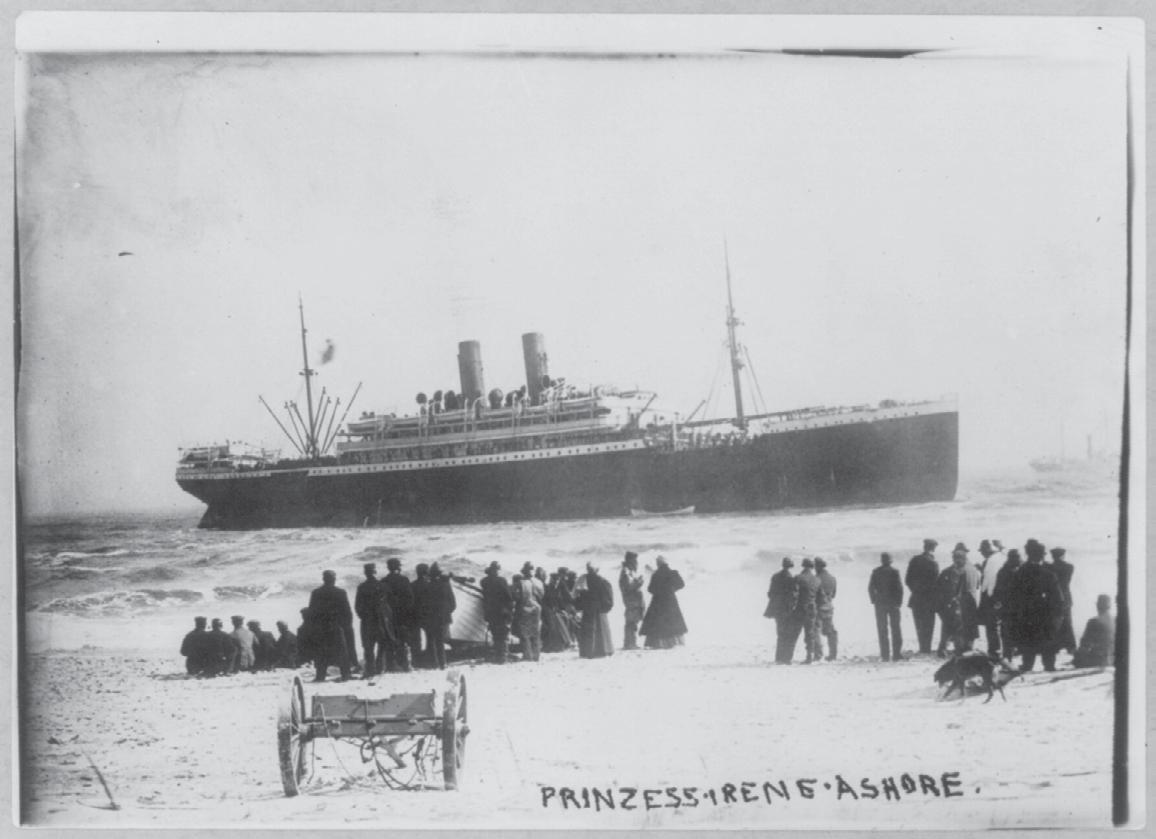
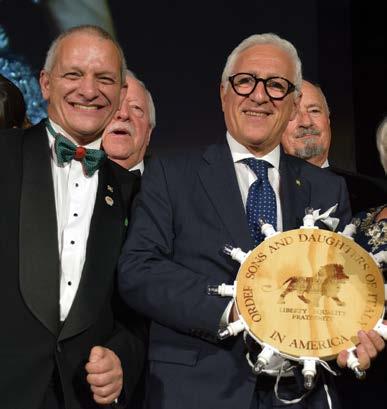
Tiberio Mantia, President of Vincenzo Sellaro Lodge #3009 of Palermo, Sicily, presents OSDIA National President Michael G. Polo with an engraved lamp representing the Sicilian Sun for the OSDIA National Office.
Highlights
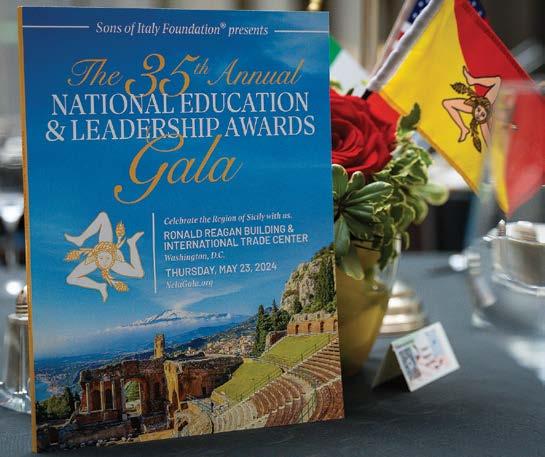
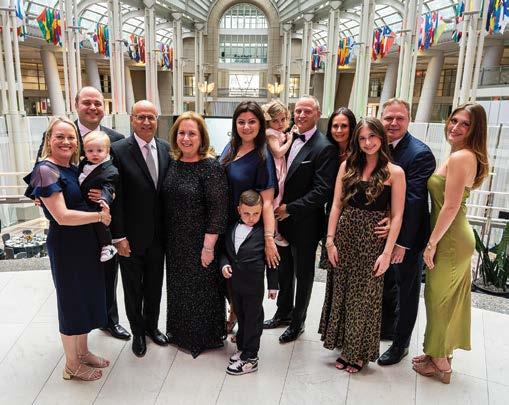
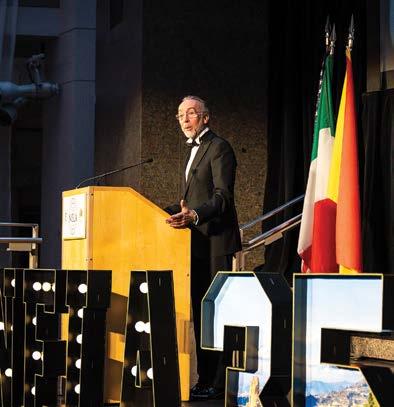
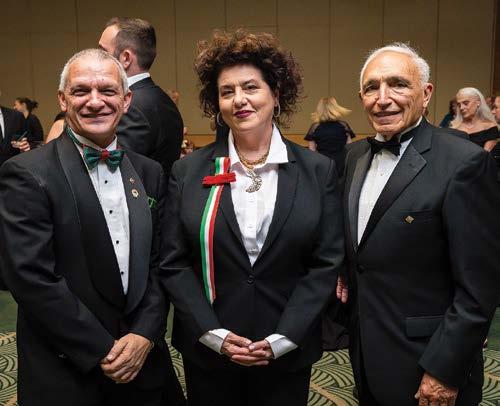
OSDIA National President, Michael G. Polo (left), with 2024 NELA Gala Mistress of Ceremonies, best-selling author, Adriana Trigiani, and SIF President, Joe Sciame.
The DiTrapani family at the 2024 NELA Gala.
Alessandro Gonzales, Deputy of the Embassy of Italy in Washington D.C., addresses the audience.
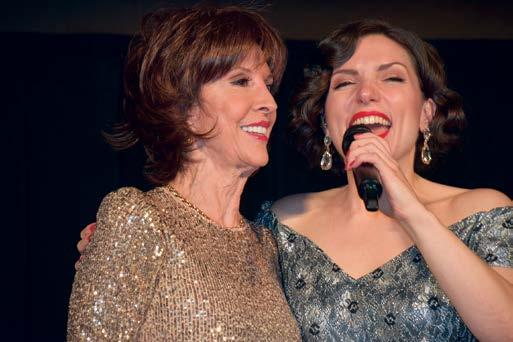
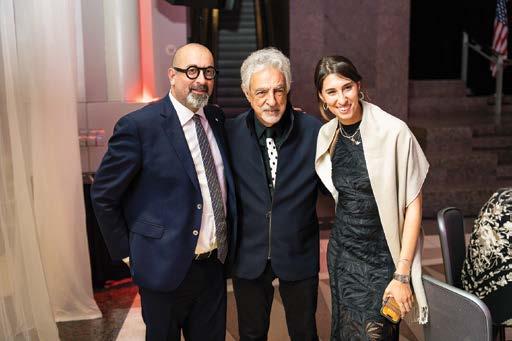
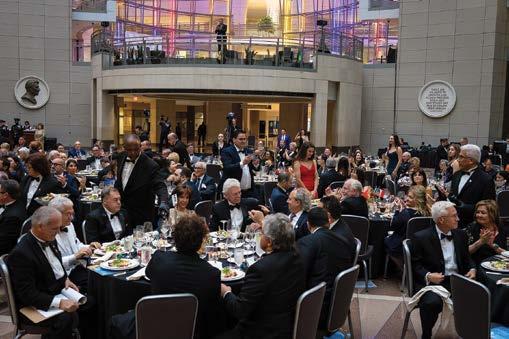
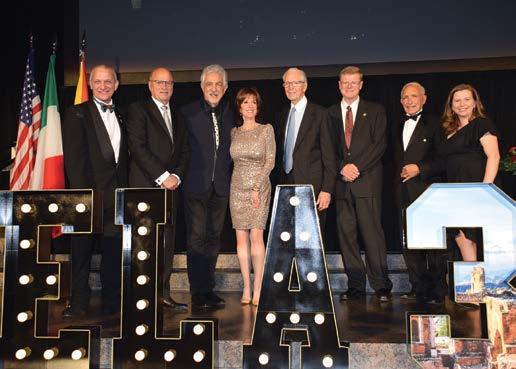
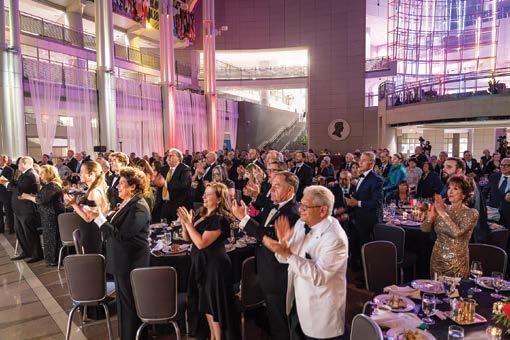
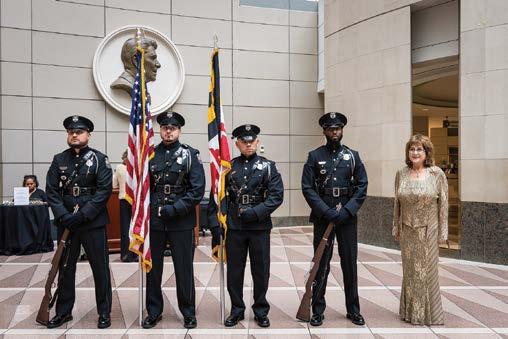
OSDIA National President, Michael G. Polo; Honorees Joseph DiTrapani, Joe Mantegna, Deana Martin, J. Eustace Wolfington, and the Honorable Mark E. Amodei; SIF President Joe Sciame, and OSDIA National Executive Director, Shayla Kaestle, on stage at the 2024 NELA Gala.
The 2024 NELA Gala at the Ronald Reagan Building & Interntional Trade Center.
The celebratory audience at the 2024 NELA Gala.
Honoree Joe Mantegna with Daniele Giacalone and Letizia Savioli La Sorte.
Honoree Deana Martin with jazz performer Vanessa Racci.
Giovanni Sciannameo
Maria Fassio Pignati with the Tacoma Park, MD, Police Department acting as Honor Guard.
THE 2024 SIF NATIONAL LEADERSHIP GRANT RECIPIENTS
PHILIP J MORRONE
The National Italian American Bar Association and Privitera Family Scholarship
Hometown: Plymouth, CT School: Cornell Law School
• Cavalry Scout Platoon Leader, U.S. Army - Commanded and maneuvered a platoon consisting of thirty-six soldiers and six Bradley Fighting Vehicles.
• Volunteer Aid Worker, Father’s House - Traveled to Ukraine to provide humanitarian aid and logistics assistance to a charitable religious organization operating in Kyiv.
• Volunteer Admissions Ambassador, Service to School - Mentored soldiers transitioning off active duty by guiding them through the undergraduate admissions process.
GIOVANNA PARNOFF
The Bellino Scholarship
Hometown: Old Lyme, CT School: Bowdoin College
• Awarded Bronze Presidential Volunteer Service Award for completing 125 hours of service over the past year.
• Teacher, Phoebe Griffin Noyes Library - Developing and teaching an Italian language and culture class.
• Awarded first place in the Connecticut Council of Language Teachers (CT COLT) poetry contest for the poem “Il Trionfo di Bacco e di Arianna.”
GIAVANNA PALAZZOLO
The Franzone Family Scholarship
Hometown: Last Vegas, NV School: Texas Christian University
• Participated in three medical shadow opportunities, including scribing, scrubbing into surgery, and viewing all aspects of the medical field to solidify aspirations for a career in healthcare.

• Competed in various theater competitions, receiving top superior scores and invitations to the International Thespian Festival.
• Graduated as a Co-Valedictorian with a Scholar’s Diploma and earned Principals’ List all eight semesters of high school.
MIRANDA MAZZELLA
The Columbus Citizens Foundation and Anthony J. & Eldora B. Perfilio Scholarship for Italian Language
Hometown: Clarksville, MD School: Seton Hall University

• Member of the Buccino Leadership Institute and Scholar of the Year Nominee at Seton Hall University - Focus on Marketing and Entrepreneurship, as well as Italian Studies.
• Studied at Rome’s Academia Studio Italia in summer 2023 while living with a host family and exploring new cities.
• Captain of Seton Hall’s Dance Team, including performances at Madison Square Garden and the 2024 NIT NCAA Championship Game in Indiana.
MARISA BENASUTTI
The American University of Rome & Sons of Italy Foundation
Hometown: Minneapolis, MN
School: The American University of Rome
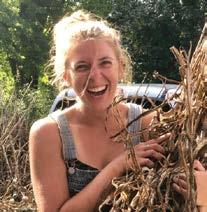
• Co-Founder & Co-Owner of Moshky Farm - Grow & maintain our saved seed collection in an effort to connect people to unique flavors, including varieties of Italian crops.
• Director of Food Initiatives at Augsburg University - Direct staff and students in food security operations, including oncampus food shelf, community garden, cooking workshops, and food distributions with an emphasis on providing culturally-connected food.
• Chair of Farmers Advisory Committee for Emerging Farmers Conference - Advocate for emerging farmers and biodiversity.
JOHN MATTEO PAPOLA
The Pietro Secchia Scholarship at John Cabot University and Sons of Italy Foundation Scholarship
Hometown: Sunset Valley, TX
School: John Cabot University
• Servant Leadership AwardSpent over 300 hours serving school community, including mentoring younger students and volunteering as an assistant P.E. coach.
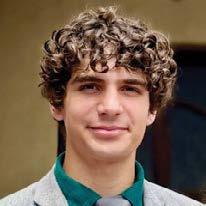
• Competitive Varsity Athlete - Texas State Finalist for highjump; broke four school records in track and field; starter on accomplished varsity basketball team.
• Real world work experience - Internships with the City of Sunset Valley, Dell Children’s Hospital, and Amy’s EDU business training.
ISABELLA D’AGOSTINO
The Charles Evans Foundation Scholarship
Hometown: Linwood, NJ
School: Rutgers University
• Italian Club President (4-year President—first in the school’s history) - Organized meetings, created agenda, arranged fundraisers/joint projects with other language departments.
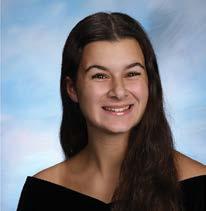
• Philadelphia Youth Orchestra Music Institute (4 year member—flautist and piccolo player) - Played on stages of Philadelphia’s Kimmel Center; section leader in 2021.
• Loops of Love, LLC (Founder) - Offering hope and support to the homeless community. Recipient of: Giving Tree Family Citizenship Award (2023), Philadelphia Union League Good Citizen Award (2023); featured in a Philadelphia ABC News story.
VICTORIA TULLY
The Franzone Family Scholarship
Hometown: Marietta, GA
School: Boston University
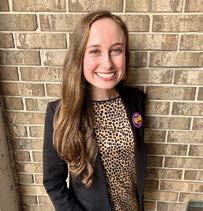
• Public Health Advisor at the Centers for Disease Control and Prevention (CDC) since 2019 – Formerly stationed in New Orleans for HIV activities and currently works in Atlanta for global tuberculosis; recipient of the Civilian Service Medal for public health response efforts during the COVID-19 pandemic.
• Inducted into University of Maryland’s Omicron Delta Kappa National Leadership Honor Society.
• Travels for global public health include India, Haiti, Uganda, and Zimbabwe.
MATTHEW NOTO
The Franzone Family Scholarship
Hometown: San Diego, CA
School: Stanford University
• International Science and Engineering Fair (ISEF) 2022 Grand Award Winner, Third Award in Biochemistry 2022. American Association for Clinical Chemistry Award (AACC) Biochemistry/ Molecular Biology 2022 (CASEF), Regeneron Biomedical Award 2022.
• Stem Research Methods Club President, Chemistry Club President. Science Olympiad (SO) Regional and State Medalist. Elementary and high school Science Olympiad coach.
• American Taekwondo Association 2012-2023: 3rd Degree Blackbelt, 12-time World Champion, 7-time Pan-American Champion, 16-time District Champion, 35-time California State Champion
LUCA RATRA
The Giulia Besozzi and DeVico Family Scholarship Hometown: San Rafael, CA School: UC Berkeley
• Academic Achievements: Awarded National Merit Commended Student; AP Scholar with Distinction; California State Seal of Biliteracy (English/Italian).
• Community Service: Actively contributed to community betterment through service at Italian Community Services; San Rafael Public Library Teen Advisory Board; Terra Linda High School; MarinTV/Community Media Center of Marin.
• Athletic Leadership: Served as co-captain and #1 seed in varsity tennis, earning a four-year letterman distinction; named to the NCAL President’s List for outstanding athletic and academic performance.
SABRINA SCIORTINO
The Barbara Lupo and Vincenzo Sellaro Scholarship
Hometown: Victor, NY
School: University of Georgia
• DECA Executive Officer Director of Hospitality and Tourism - Twoyear consecutive advancement to international competition, placing in top 10% and receiving DECA Award of Excellence.
• Cares Club Co-Chair of Concessions - Organized and directed annual carnival to fundraise for local, underprivileged students and families; assisted in assembly and preparation of food for distribution.
• UGA Miracle Ignite Committee member - Fundraising and volunteering in events benefiting Children’s Healthcare of Atlanta, providing medical services for children battling cancer.
GERARDO CARINO, JR.
The Joseph Sciame and George J. Spatuzza’s Scholarship
Hometown: Pawtucket, RI
School: Yale University
• Captain of the Lasalle Academy Varsity Swim Team - Lettered all four years of high school and utilized skills as a lifeguard at a camp for children and adults with autism.
• Selected as Youth of the Year at the local Boys and Girls Club of Pawtucket, honoring 13 years of membership and community service.
• Intends on studying English, History, and Italian at Yale University.
FRANCESCA FRKONJA
The DeNunzio Family and Lido Civic Club Scholarship
Hometown: Portland, OR
School: UC Berkeley Law
• Member of Phi Beta Kappa and recipient of Latin honors in Economics.
• Director of Operations and member of executive board, Sigma Iota Rho (Global Studies Honor Society), Washington University Chapter - Organized several public panels with expert guests; served as a mentor for undergraduate students in the Global Studies program; created professional relationships between Sigma Iota Rho and organizations in the St. Louis community, such as the International Institute, LifeWise STL, St. Louis International Film Festival, and the Gephardt Institute.
• Volunteer, Sponsors Organized to Assist Refugees (SOAR) Immigration Legal Services - Met with clients and aided attorneys and staff with citizenship, asylum, and refugee applications.
TESSA TROCCHI
The Glessi and Anthony Yazzetti Scholarship
Hometown: Cheshire, CT
School: University of Connecticut
• Co-Founder of a science program implemented in four elementary schools with 100 student participants, designed to give students impacted by COVID hands-on experience.

• Volunteer coach for 25 5th-6th grade cheerleaders (four years), while also serving as captain of the high school varsity team.
• Vice President for the Distressed Children and Infants Club (four years), with a focus on raising funds for health and education for women and children in impoverished areas.
EVA SPAK
The Silvio and Gina Vittori & Angelo Tomasso Scholarship Hometown: Dallas, TX School: Cornell University
• Owner, Founder, and CEO, Eva’s Cookies (online cookie business founded at age 13) - Manages packaging, marketing, cooking, and finances; generates sales of $200+/week at school bookstore.

• Captain, Cistercian Prep School Mock Trial – Joined Mock Trial team at neighboring all-boys school as inagural female member; competed as lead attorney.
• Founder and President, Hockaday Baking club – Founded philanthropic baking club; recruited 60+ volunteers to provide 1000+ baked goods; collaborates with non-profits to distribute donations.
JACOPO TAMBURINI
The Italian American Baseball Foundation and Sons of Italy Foundation Scholarship School: Beloit College
• Beloit College (first year) student - Included in the Dean’s List during first semester, majoring in Engineering Physics and minoring in Computer Science and Finance.
• Inducted in National Honor Society while a Junior at Life Center Academy in Burlington, New Jersey.
• Baseball player - NCAA athlete for Beloit College, named player of the week; player in the top Italian league; included in Italy’s Future Stars event with Mike Piazza and the National Team.


MASSACHUSETTS
On Sunday, March 3rd, the Sons and Daughters of Italy, Lawrence Ladies Lodge #2026 hosted “La Festa Della Donna Lunch - Celebrating International Women’s Day - Italian Style.” The Amvets Post in Haverhill was filled with over one hundred women, including Haverhill’s first female mayor, Melinda Barrett. In three hours, the raffle raised $1,700 for THE YWCA NORTHEAST DOMESTIC VIOLENCE PROGRAM. The
afternoon ended with the Procession of the Mimosa Cakes. Sister Marie Salvo led the thirteen creative women - who baked either a Mimosa Cake, Mimosa cupcakes, Mimosa bundt cake, Mimosa flan, or Mimosa trifle - to the Julius La Rosa's recording "E! Comari!" The hall was filled with cheering, clapping, singing, and laughter! The guests were able to sample all the Mimosa creations after the procession.
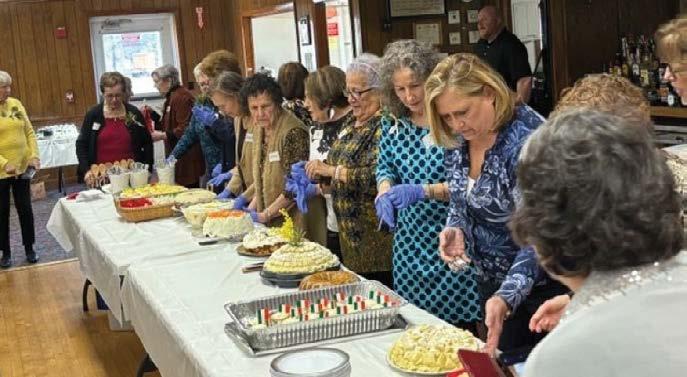
SOUTH CAROLINA
CALIFORNIA
Arlene M. Nunziati, State President, Grand Lodge of California, attended two recent 100th anniversary lodge celebrations, respectively: the Camelia-Columbo Lodge #1294 of Klamath Falls, Oregon, and the Weed, California, Grand Lodge.
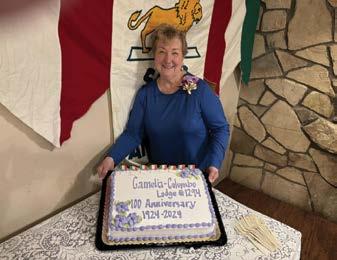
Arlene M. Nunziati, State President, Grand Lodge of California, at the Camelia-Columbo Lodge #1294 of Klamath Falls, Oregon, 100th anniversary celebration.
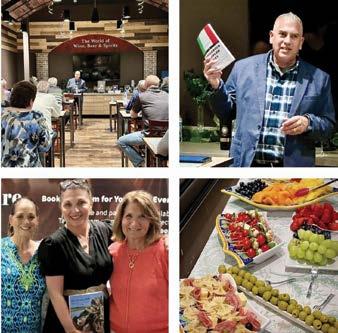
The Sons and Daughters of Italy Murrells Inlet Lodge #3006 has been busy promoting Italian culture and heritage through fun and engaging activities, like lodge podcasts and events. We recently hosted a fantastic wine-tasting event where we had the pleasure of hearing from guest speaker, Rafael Ortiz, the author of Christopher Columbus The HeroDefending Columbus From Modern Day Revisionism (top photos, above). Rafael has been a guest on our biweekly lodge podcasts and has written other fascinating books about Columbus. We were also thrilled to have published author and #3006 Lodge member, Mandi Casey (bottom photos, above) share her delicious cookbook, Low Country Bella - Recipes, Stories, and Love from the Lowcountry. It was a great event with 30 members enjoying Italian wines, history and recipes.
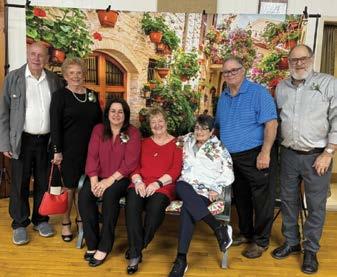
Arlene M. Nunziati, State President, Grand Lodge of California, (center), with members of Weed, California, Lodge #1629.
Have you or your lodge done something remarkable that makes a difference to your community or promotes our heritage and Italian studies? If so, send details including your lodge’s name/number, a brief write-up, and digital photos of 300 dpi to Editor Andrew Cotto at EditorItalianAmerica@gmail.com
The Procession of the Mimosa Cakes
MARYLAND
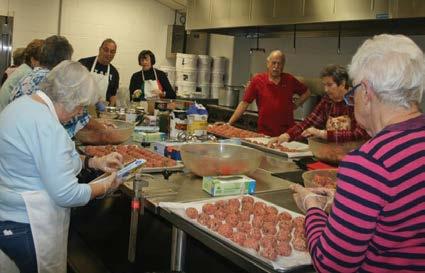
In the kitchen two days before the festival, a full crew spent the day making home-made meatballs that were served with ravioli or on sub sandwiches
The Ocean City (MD) Lodge of the Sons and Daughters of Italy had another successful St. Joseph’s Day Festival despite a spring storm that brought blustery winds and heavy rain to the resort city. The festival, which took almost half a year to plan, is the main fund raiser for the Lodge charitable giving and scholarship programs. Several thousand dollars had been invested in the festival’s main attraction: its cornucopia of home-style Italian cooking. The meatballs, sausages, ravioli, cannoli, breads, zeppoli, cookies, wines, beer and other beverages were already purchased. Also waiting for festival goers were dozens of gift baskets and silent auction items filled with donations from local merchants.
The annual festival is so popular that every year it attracts well over a thousand food lovers who also buy the basket raffle tickets and bid on silent auction items. Singing and dancing to Italian music every year adds to the festivities. They came this year also, despite the storm.
Attendance was down from last year’s 1,600 plus, but not so much that the festival could not raise the money it needs to fund its charity and scholarship programs. The St. Joseph’s Day Festival was, once again, a success in Ocean City despite Mother Nature.
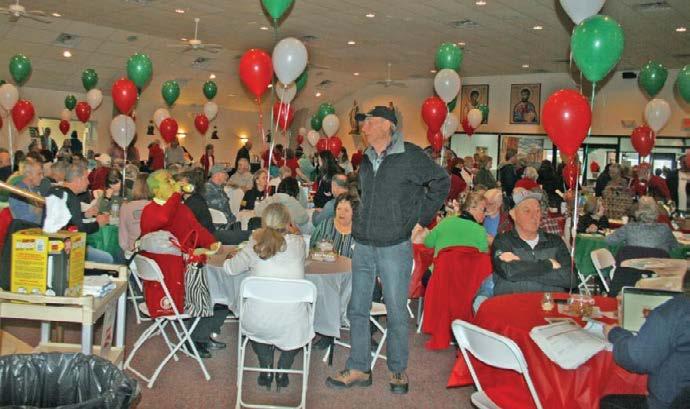
Little Italy Lodge #2286 Lodge member and popular Baltimore TV personality, Tony Pagnotti, gave a one hour stand up comedy performance based on his long career as an Italian American in the world of local television news.Tony’s performance, billed as LOL — Laughs Over Linguini — attracted over 60 members, guests and Pagnotti family members to Baltimore’s Little Italy Lodge for an afternoon of family fun, food (five kinds of all-you-can eat pasta!) and drinks.Tony, author of the book, My Scripted and Unscripted Life, delighted the audience with jokes, stories and anecdotes related to growing up in an Italian family in the Scranton, PA area, as well as his personal struggles to “make it” in the challenging world of local TV reporting.
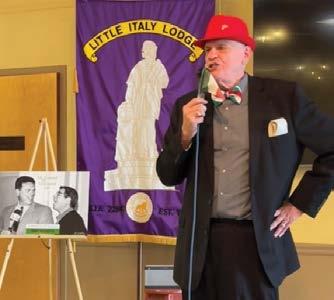
Tony Pagnotti during his stand-up routine at Baltimore’s Little Italy Lodge.

The eating area was packed all day.

From the President’s Desk
By Michael G. Polo
Dear Brothers and Sisters,
Welcome to Summer! This June marks my 10th month as the National President of the Order Sons and Daughters of Italy in America. As your National President, I have spent a considerable amount of time reaching out both within our organization and without to develop relationships that advance our mission. I embrace the idea of consistently “building bridges” because this, in my experience, is an effective way to achieve progress.
Within the Organization, I do my very best to attend important events, whether they are meetings or celebrations, held by local and state lodges. June is a particularly busy month as most Grand Lodges have significant events. Obviously, I can’t be in two places at once, so I will alternate each year accordingly. Rest assured, if there is an event or celebration throughout the year, I will do my best to be there to help foster camaraderie, share ideas, and show support from the Supreme Lodge.
Building bridges outside of the order is also something to which I have dedicated much of my effort. The last few months alone have had me in Canada with our brothers and sisters of the Order Sons and Daughters of Italy in Canada (OSDIC) as well as in Italy with an OSDIA delegation that included four national officers, our National Executive Director, and a Co-chair of the National Membership Commission. On the latter trip, through individually-funded and purpose-minded visits to Milan, Rome, and Palermo, we were able to develop OSDIA’s transatlantic connection with our Italian heritage and roots. We also, thanks to the esteemed status of our SIF President, Joe Sciame, received a blessing from the Pope during a visit to the Vatican.
Another important bridge, of which OSDIA is at the forefront, is that of the Italian American Leadership Forum (IALF). Along with four of the other leading Italian American organizations - the Columbus Citizens Foundation (CCF), the National Italian American Foundation (NIAF), UNICO National, and the National Organization of Italian American Women (NOIAW) - we strive to reach new territory, working collectively, on behalf of all Italians in America. On April 17th, in an event arranged by the IALF, I had the honor to address those gathered in New York City’s Battery Park on the occasion of Giovanni da Verrazzano’s arrival in New York Harbor 500 years prior. We will continue to build on the momentum the IALF has created in such a short time.
Of course, a highlight of every spring season is the National Education and Leadership Awards (NELA) Gala. I recognize that our gala will receive ample and appropriate coverage in this issue of Italian America magazine, but I did want to mention how special this year’s event, being my first as National President, was to me. The work of our SIF President, Joe Sciame, with much support from National Executive Director, Shayla Kaestle, and our staff, all in conjunction with donors, attendees, and supporters within and beyond OSDIA, best exemplifies what we can do when we build bridges and work collectively to actuate our important mission.
National President

The CSJ Perspective
By Robert M. Ferrito, President
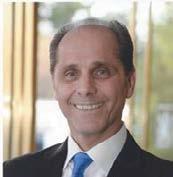
I have a simple question about Italian stereotyping: do you as an Italian American like being portrayed as a gangster?
I know I do not. Sadly, in 2024, we still are! Recently, in May of 2024, a letter was sent by the Italian American Leadership Forum (IALF) to AMC Networks requesting that a disclaimer be applied broadly across all organized crime movies on their network, including The Godfather trilogy as well as any films that might be viewed as offensive by other ethnic groups. This suggestion is not meant to undermine the artistic value of these films, rather to remind the viewers of the fictional nature and to protect communities from harmful stereotypes.
The founding organizations of IALF are the Order Sons and Daughters of Italy in America, Supreme, OSDIA Foundation, OSDIA Commission for Social Justice, Columbus Citizens Foundation, National Organization of Italian American Women, National Italian American Foundation, Unico National and Unico Foundation.
Just to back up this sad stereotype of Italian Americans, I have included the results of a survey that was taken in 2015 by the Italic Institute of America.
Italic Institute of America: Film Study 2015
STATEMENT OF PURPOSE
The culmination of 15 years of research, the Italic Institute of America’s Film Study is an analysis of the portrayal of Italian Americans/Italian culture In Hollywood movies over the past century (1914-2014).
RESULTS
Of the 1,512 film titles that were researched, the results reveal an overall negative attitude toward Italian Americans and Italian culture in general (68.5%). Images of Italians as violent criminals predominate (34.8%), followed by images of unsavory characters (33.7%). Images of Italians in positive, heroic, or complex roles occur less often (31.5%).
CONCLUSIONS
The figures indicate an entrenched, institutionalized bias in Hollywood against Americans of Italian descent. The diversity of the Italian American experience has been
obscured by one dimensional stereotypes equating Italian culture with criminality. With the success of “The Godfather” (1972), these images gained popular acceptance on an unprecedented scale.
I asked that question at the beginning of this article because I am amazed at some comments that I received from Italian Americans after this letter was published on our social media. Some of the comments included, “CSJ has to get over it and stop this nonsense,” “Give it up already,” and other comments, due to their nature, I am not able to print!
I know I was not brought up to be a gangster, and I did not raise my children to be gangsters as I know most Italian American parents did not. Yet we have members of our own community that revel in this stereotyping; it begs the question as to why? Why would you want other ethnic groups and communities to think that we are all thugs and gangsters, and someone who does harm to other people?
Brothers and Sisters: other ethnic groups do not tolerate this, so I have one more question, “Look in the mirror and ask yourself, why should we?” Hopefully, with correct answers, we can begin to erase the negative stereotyping.
Sempe Avanti!

Robert M. Ferrito, National CSJ President
YES! I would like to help Save Columbus Day and Fight Italian-American Stereotypes. Please accept my tax-deductible donation to support the Commission for Social Justice’s mission.
To donate online, visit www.osdia.org/csj
To donate by phone, call the National Office at (202) 547-2900
$10 $25 $50 $100 $
My check for the total amount of $ is enclosed. (Please make check payable to the “Commission for Social Justice”)
Mail to: Commission for Social Justice 219 E Street NE • Washington, DC 20002

The Perfect Gift
Looking for a unique present for family or friends? Give the gift of Italian American culture and heritage with a one-year subscription to Italian America magazine. We will contact your gift recipient to tell him/her of your present and also send them a complimentary copy of the most recent issue.
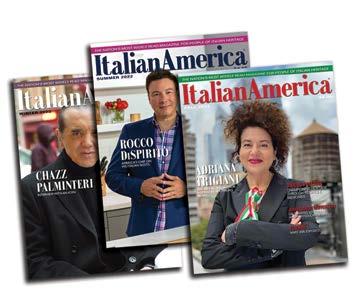
Please give this gift subscription to:
NAME: [Please print]
Address:
City State Zip Code
E-Mail:
Please say it is from:
NAME: [Please print]
Address:
City State Zip Code
Telephone: ( )
Is there a special occasion for the gift?
Order online at www.osdia.org or send your check for $30.00 payable to Italian America magazine to:
GIFT SUBSCRIPTION
Italian America Magazine 219 E Street NE Washington, DC 20002
Italian America®
Italian America Magazine is produced by the national headquarters of the Order Sons & Daughters of Italy in America®, 219 E Street NE, Washington, DC 20002. Tel: 202/547-2900. Email: nationaloffice@osia.org
Andrew Cotto Editor-in-Chief, Italian America magazine
Samuel Weinmann Administrative Assistant
Shayla Kaestle, CPA National Executive Director
Nicole D’Arcangelo Program Coordinator
Joana Bala Public Affairs and Business Development Manager
Jane Ellis Bookkeeper
Italian America® is the official publication of the Order Sons & Daughters of Italy in America® (OSDIA), the largest and longest-established organization of American men and women of Italian heritage. Italian America provides timely information about OSDIA, while reporting on individuals, institutions, issues, and events of current or historical significance in the Italian-American community nationwide. Italian America (ISSN: 1089-5043, USPS: 015-735) is published quarterly in the winter, spring, summer and fall by OSDIA, 219 E Street NE, Washington, DC 20002. Periodicals postage paid at Washington, D.C., and at additional mailing offices. ©2022 Order Sons & Daughters of Italy in America. All rights reserved. Reproduction by any method without permission of the editor is prohibited. Statements of fact and opinion are the responsibility of the authors and do not necessarily imply an opinion on the part of the officers, employees, or members of OSDIA. Mention of a product or service in advertisements or text does not mean that it has been tested, approved or endorsed by OSDIA, the Commission for Social Justice, or the Sons of Italy Foundation. Italian America accepts query letters and letters to the editor. Please do not send unsolicited manuscripts. Italian America assumes no responsibility for unsolicited materials. Annual subscriptions are $30, which are included in dues for OSDIA members. Single copies are $7.50 each.OSDIA MEMBERS: Please send address changes to your local lodge. Do not contact the OSDIA National Office.
POSTMASTER: Send address changes to Italian America, 219 E Street NE,Washington, DC 20002. Subscriptions are available through the OSDIA National Office, 219 E Street, NE, Washington, DC 20002. OSDIA membership information is available at (202) 547-2900 or at www.ODSIA.org. Archives are maintained at the Immigration History Research Center, University of Minnesota, St. Paul, Minn. To advertise: Contact ItalianAmerica@osia.org (202) 5472900. Also see www.osdia.org for advertising rates, specs, demographics, etc.
CORRECTION:
In the Spring 2024 issue of Italian America the photo captions on page 14 were reversed.

PIACERE! PLEASED TO MEET YOU, Michele Di Pietro!
BY ANDREW COTTO
Please tell us about your Mangia with Michele platform.
Mangia With Michele is the expression of my lifelong passion for Italian ingredients, foods, recipes, culture, and traditions. I like to think of it as family-style innovation, inspiration, and nostalgia. At its core is the concept of giving of yourself through food, of bringing people together over the communal dinner table, of the memories and feelings that food evokes, and about making new traditions that resonate with today’s busy lifestyle. While it continues to evolve, the foundation of my platform is currently my food and recipe website, MangiaWithMichele. com and my cookbook, SOUPified: Soups Inspired by Your Favorite Dishes, supported by my social media platforms @MangiaWithMichele, along with a few cucina-inspired products that I sell as well. On my website, I share easyto-follow Italian and Italian-American recipes, often with personal stories of their inspiration and evolution. While lots of the recipes could be considered traditional, many have an unexpected or innovative twist based on my individual culinary point-of-view.
From where was this born?
One day, after many years as a chef and culinary director working in food service in various capacities, I started an Instagram account for fun and as a way to fulfill that part of me, as an avid home cook, that was super-passionate about Italian foods and culture. It was meant to just be a hobby, but it quickly took on a life of its own! Through my social media pages, I connected with so many other ItalianAmericans and food personalities, as well as the many home cooks who were making my recipes. Even though I had been developing recipes for years professionally, I never had that same personal connection that I was quickly developing out there in the Italian-American metaverse. Eventually, my professional passions shifted as I pulled away from food service and committed myself 100% to creating content for Mangia With Michele for all the passionate home cooks and Italian food enthusiasts out there.
At what point in your life did you recognize Italian food as a passion?
I think it was when I was five years old and standing on a chair by the stove next to my mom learning how to cook eggs. I always loved to eat, and I think that is why I (initially) loved to cook. I was always the one who
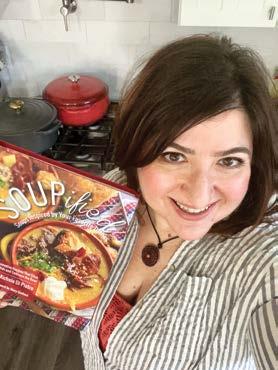
would bring homemade foods to get-togethers, volunteered for local cooking events, and spent my time visiting specialty grocery stores. It was a serious passion, but I truly didn’t recognize it as such until I was in a career that I was not passionate about (public accounting). It was during a two-year, international exchange stint as an expatriate in Europe while still working as a CPA that I knew I had a different calling: food and cooking. I hadn’t figured out all the pieces initially, but I knew that my first order of business when I returned to the U.S. was that I needed to make a change. I quit my job, moved back in with my parents, and enrolled in cooking school. And I’ve never looked back.
What was the impetus for your book, SOUPified?
As a chef and culinary pro, I always wanted to write a cookbook. Back in early 2020, as an independent culinary consultant, I found myself without any work when the world shut down. SOUPified was born out of the quarantine period of the COVID-19 pandemic, when I spent countless days being cooped up in a one-bedroom New York City apartment with no outdoor space and a lot of extra time on my hands. I needed to focus on something positive, challenging, and delicious. I began by transforming a handful of favorite dishes into soup versions, or, in my parlance, I SOUPified them. Before I knew it, I was working on my first cookbook–a collection of innovative and whimsical soup recipes that had never been done before. It was a real comfort food cookbook, which was very apropos in 2020, when people found themselves at home, cooking a lot more and trying new things in the kitchen. My job for many years was to ideate and create new and interesting foods to wow people on an ongoing basis. This, along with my unique right-brain/ left brain propensity, always had me looking at things in a different way. And that is exactly what SOUPified is all about–looking at both soups, and the underlying dishes on which they are based, in a different way. Chicken marsala or shrimp scampi soup, anyone?

“I want my house open to sun and wind and the voice of the sea, like a Greek temple, and light, light, light everywhere!”
ANACAPRI’S VILLA SAN MICHELE
Villa San Michele is a beguiling oasis created by Swedish physician and author Axel Munthe (1857–1949) that stands atop the ancient Phoenician Steps —over 900 of them!— which ascend from Capri’s Marina Grande to the enchanting town of Anacapri. Dr. Munthe created his dream home by transforming the ruins of the old chapel, and today his beloved Villa San Michele captures the charms of Capri’s golden age. It also houses an important art collection of Roman, Etruscan and Egyptian antiquities, including a fabled 3200-year-old sphinx. The Villa is surrounded by impressive gardens
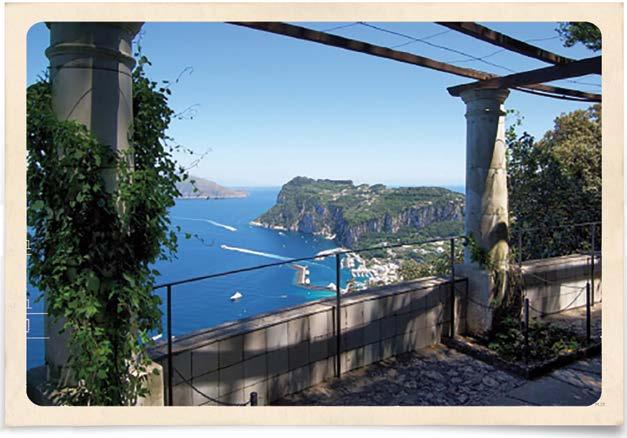
with an elegant avenue of cypresses that offers visitors breathtaking views of Capri Harbor, the Sorrentine Peninsula and Mount Vesuvius.
Behind the Villa is the Barbarossa mountain (which, if you are ambitious, you can climb by foot or access by funicular—the views are staggering!), that Munthe turned into a sanctuary for migratory birds.
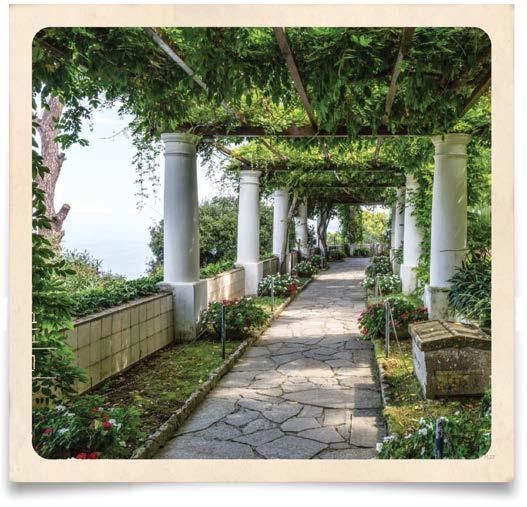
(You can also get to Villa San Michele via a short bus or taxi ride from the Marina Grande or the City of Capri)

Carla Gambescia is an award-winning author and a regular contributor to Italian America magazine through her columns “La Dolce Vita University” and “Postcards from the Boot.” Carla’s book, La Dolce Vita University: An Unconventional Guide to Italian Culture from A to Z, is available in an expanded second edition. Sign up for her monthly photoblog at www.postcardsfromtheboot.com.
The view from Villa San Michele (photo courtesy of WikiCommons).
The grounds at Villa San Michele.


ADRIANA TRIGIANI