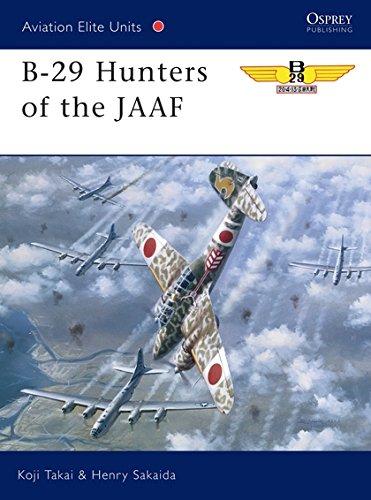
(Ebook) B-29 Hunters of the JAAF by Koji Takaki, Henry Sakaida
ISBN 9781841761619, 1841761613
https://ebooknice.com/product/b-29-hunters-of-the-jaaf-57145166
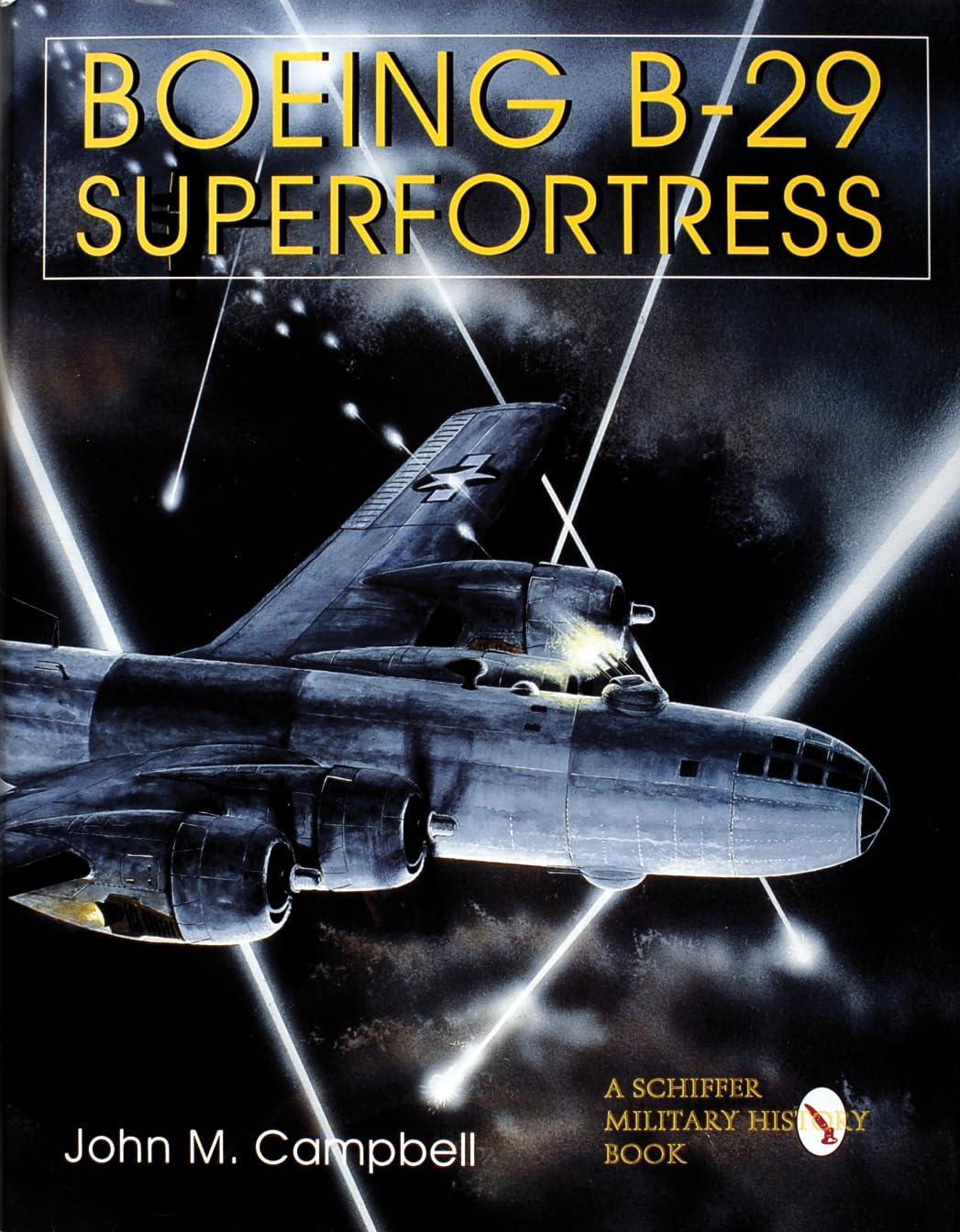
(Ebook) Boeing B-29 Superfortress ISBN 9780764302725, 0764302728
https://ebooknice.com/product/boeing-b-29-superfortress-1573658
(Ebook) Jahrbuch für Geschichte: Band 29 ISBN 9783112622223, 3112622227
https://ebooknice.com/product/jahrbuch-fur-geschichte-band-29-50958290

(Ebook) Richard III (The Cambridge Dover Wilson Shakespeare 29) by William Shakespeare ISBN 9781108006019, 1108006019
https://ebooknice.com/product/richard-iii-the-cambridge-dover-wilsonshakespeare-29-2116616

(Ebook) Harrow County 29 by Cullen Bunn, Tyler Crook
https://ebooknice.com/product/harrow-county-29-53599548

Foreword
READ in the name of thy Sustainer, who has createdcreated man out of a germ-cell!
Read - for thy Sustainer is the Most Bountiful One who has taught [man] the use of the pentaught man what he did not know.
With these opening verses of the ninety-sixth surah - with an allusion to man's humble biological origin as well as to his consciousness and intellect - began, early in the seventh century of the Chnstian era, the revelation of the Qur'an to the Prophet Muhammad, destined to continue during the twenty-three years of his ministry and to end, shortly before his death, with verse 281 of the second surah:
And be conscious of the Day on which you shall be brought back unto God, whereupon every human being shall be repaid in full for what he has earned, and none shall be wronged;
Between these first and last verses (the first and the last in the chronological order of their revelation)1 unfolds a book which, more than any other single phenomenon known to us, has fundamentally affected the religious, social and political history of the world. No other sacred scripture has ever had a similarly immediate impact upon the lives of the people who first heard its message and, through them and the generations that followed them, on the entire course of civilization. It shook Arabia, and made a nation out of its perennially warring tribes; within a few decades, it spread its world-view far beyond the confines of Arabia and produced the first ideological society known to man; through its insistence on consciousness and knowledge, it engendered among its followers a spirit of intellectual curiosity and independent inquiry, ultimately resulting in that splendid era of learning and scientific research which distinguished the world of Islam at the height of its cultural vigour; and the culture thus fostered by the Qur'an penetrated in countless ways and by-ways into the mind of medieval Europe and gave rise to that revival of Western culture which we call the Renaissance, and thus became in the course of time largely responsible for the birth of what is described as the "age of science": the age in which we are now living.
1 It is to be borne in mind that, in its final compilation, the Qur'an is arranged in
When we look at the long list of translations - beginning with the Latin works of the high Middle Ages and continuing up to the present in almost every European tongue - we find one common denominator between their authors, whether Muslims or non-Muslims: all of them were - or are - people who acquired their knowledge of Arabic through academic study alone: that is, from books. None of them, however great his scholarship, has ever been familiar with the Arabic language as a person is familiar with his own, having absorbed the nuances of its idiom and its phraseology with an active, associative response within himself, and hearing it with an ear spontaneously attuned to the intent underlying the acoustic symbolism of its words and sentences. For, the words and sentences of a language - any language - are but symbols for meanings conventionally, and subconsciously, agreed upon by those who express their perception of reality by means of that particular tongue. Unless the translator is able to reproduce within himself the conceptual symbolism of the language in question - that is, unless he hears it "sing" in his ear in all its naturalness and immediacy - his translation will convey no more than the outer shell of the literary matter to which his work is devoted, and will miss, to a higher or lesser degree, the inner meaning of the original: and the greater the depth of the original, the farther must such a translation deviate from its spirit.
No doubt, some of the translators of the Qur'an whose works are accessible to the Western public can be described as outstanding scholars in the sense of having mastered the Arabic grammar and achieved a considerable knowledge of Arabic literature; but this mastery of grammar and this acquaintance with literature cannot by itself, in the case of a translation from Arabic (and especially the Arabic of the Qur'an), render the translator independent of that intangible communion with the spirit of the language which can be achieved only by living with and in it.
Arabic is a Semitic tongue: in fact, it is the only Semitic tongue which has remained uninterruptedly alive for thousands of years; and it is the only living language which has remained entirely unchanged for the last fourteen centuries. These two factors are extremely relevant to the problem which we are considering. Since every language is a framework of symbols expressing its people's particular sense of life-values and their particular way of conveying their perception of reality, it is obvious that the language of the Arabs - a Semitic language which has remained unchanged for so many centuriesmust differ widely from anything to which the Western mind is accustomed. The difference of the Arabic idiom from any European idiom is not merely a matter of its syntactic cast and the mode in which it conveys ideas; nor is it exclusively due to the well-known, extreme flexibility of the Arabic grammar arising from its peculiar system of verbal "roots" and the numerous stem-forms which can be derived from these roots; nor even to the extraordinary richness of the Arabic vocabulary: it is a difference of spirit and life-sense. And since the Arabic of the Qur'an is a language which attained to its full maturity in the Arabia of fourteen centuries ago, it follows that in order to grasp its spirit correctly, one must be able to feel and hear this language as the Arabs felt and heard it at the time when the Qur'an was being revealed, and to understand the meaning which they gave to the linguistic symbols in which it is expressed.