
The MSO has developed a musical Acknowledgement of Country with composer James Henry to pay our respects to the traditional owners of the land through the language of orchestral music.
James Henry’s position is supported by Cybec Foundation
‘I wrote this piece to reflect the complex journey toward the recognition of Aboriginal people as the traditional custodians of the land. It opens with rhythms inspired by the character of traditional songs found across many parts of Australia. From this texture, a melody emerges, representing the long period during which Aboriginal ownership of land was disregarded. The piece traces both progress and setbacks over time.
‘With the passing of the Victorian Statewide Treaty Bill, there is a renewed sense of optimism among many Aboriginal Victorians. Through Acknowledgement, I seek to convey a feeling of determination and resilience, reflecting the ongoing work to improve the quality of life for Aboriginal people, and to deepen respect for and awareness of our distinct culture, history and enduring connection to Country.’
James Henry 2025–2026 Cybec First Nations Composer in Residence
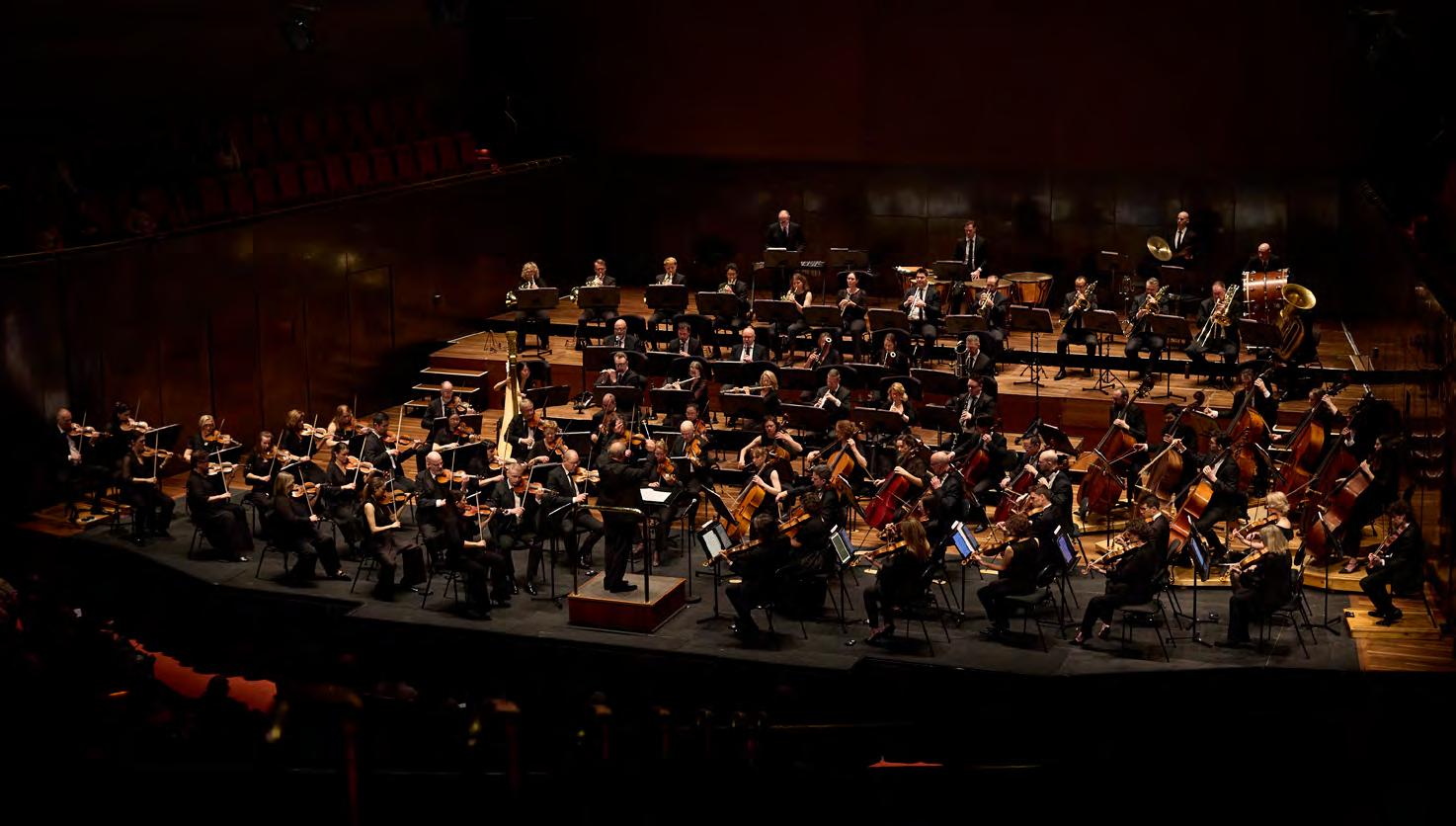
The Melbourne Symphony Orchestra is Australia’s preeminent orchestra, dedicated to creating meaningful experiences that transcend borders and connect communities. Through the shared language of music, the MSO performs to the highest standard, enriching lives and inspiring audiences across the globe.
Woven into the cultural fabric of Victoria for 120 years, the MSO reaches five million people annually through performances and TV, radio and online broadcasts, as well as critically acclaimed recordings on its newly established label.
Jaime Martín continues as the MSO Chief Conductor and Artistic Advisor in 2026, leading a diverse and richly talented Artistic Family.
The MSO regularly presents exceptional artists from across the globe in mainstage programming and special events, as well as reaching beyond the customary classical audience with contemporary collaborations. And through a partnership
with the ABC, the MSO’s performances in the Classic 100 in Concert reach more than a million Australians each year.
The first Australian orchestra to perform overseas (1965) and at Carnegie Hall (1970), the MSO has a proud history of international touring that has taken it to China, Indonesia, Singapore, Europe and the UK. Driven by the belief that music is a universal right, the MSO also brings music to all corners of the community, ensuring that everyone can share in the transformative power of music. Whether performing on world stages or in the heart of Victoria, the MSO transforms its mission and vision into reality – enriching lives and creating cultural connections through the unparalleled beauty of music.
Natalie Chee Concertmaster
Tair Khisambeev
Assistant Concertmaster
Peter Edwards
Assistant Principal
Sarah Curro
Dr Harry Imber *
Peter Fellin
Deborah Goodall
Karla Hanna
Dawna Wright and Peter Riedel*
Lorraine Hook
Jolene S Coultas*
Anne-Marie Johnson
David Horowicz*
Kirstin Kenny
Mark Mogilevski
Michelle Ruffolo
Anna Skálová
Kathryn Taylor
Matthew Tomkins
Principal
The Gross Foundation*
Jos Jonker
Associate Principal
Monica Curro
Assistant Principal
Dr Mary-Jane Gething AO*
Mary Allison
Emily Beauchamp
Isin Cakmakçioglu
Tiffany Cheng
Val Dyke*
Freya Franzen
Cong Gu
Andrew Hall
Robert Macindoe
Philippa West
Andrew Dudgeon AM*
Patrick Wong
Cecilie Hall*
Roger Young
Shane Buggle and Rosie Callanan*
Violas
Christopher Moore
Principal
Lauren Brigden
Katharine Brockman
Anthony Chataway
Peter T Kempen AM*
William Clark
Morris and Helen Margolis*
Aidan Filshie
Suzie and Edgar Myer*
Gabrielle Halloran
Patricia Nilsson
Jenny Khafagi
Margaret Billson and the late Ted Billson*
Fiona Sargeant
For a list of the musicians performing in each concert, please visit mso.com.au/musicians
David Berlin
Principal
Rachael Tobin
Associate Principal
Elina Faskhi
Assistant Principal
Rohan de Korte
Andrew Dudgeon AM*
Rebecca Proietto
Peter T Kempen AM*
Angela Sargeant
Caleb Wong
Rosemary Meagher and the late Douglas Meagher *
Michelle Wood
Andrew and Theresa Dyer*
Double Basses
Jonathon Coco
Principal
Rohan Dasika
Acting Associate Principal
Benjamin Hanlon
Acting Assistant Principal
Aurora Henrich
Suzanne Lee
Stephen Newton
Flutes
Prudence Davis
Principal
Jean Hadges*
Wendy Clarke
Associate Principal
Sarah Beggs Piccolo
Andrew Macleod Principal
Oboes
Johannes Grosso Principal
Ann Blackburn
Margaret Billson and the late Ted Billson*
Cor Anglais
Michael Pisani Principal Clarinets
David Thomas Principal
Philip Arkinstall Associate Principal
Bass Clarinet
Jonathan Craven Principal Bassoons
Jack Schiller
Principal Dr Harry Imber *
Elise Millman
Associate Principal
Natasha Thomas Patricia Nilsson* Contrabassoon
Brock Imison Principal
* Position supported by
Horns
Nicolas Fleury
Principal
Margaret Jackson AC*
Saul Lewis
Principal Third
Cecilie Halland and the late Hon. Michael Watt KC*
Abbey Edlin
The Hanlon Foundation*
Josiah Kop
Kim and Robert Gearon*
Rachel Shaw
Gary McPherson*
Trumpets
Owen Morris Principal
Shane Hooton
Associate Principal
Glenn Sedgwick*
Rosie Turner
Dr John and Diana Frew* Trombones
José Milton Vieira Principal
Richard Shirley
Bass Trombone
Michael Szabo Principal
Tuba
Timothy Buzbee Principal
Timpani
Matthew Thomas Principal Percussion
Shaun Trubiano
Principal
John Arcaro
Tim and Lyn Edward*
Robert Cossom
Dr Clem Gruen and Dr Rhyl Wade* Harp
Yinuo Mu Principal
Jamie Miles viola
Georgia White clarinet
Hayden Burge bassoon
Jacob Fenchel horn
MSO Academy is supported by the Robert Salzer Foundation
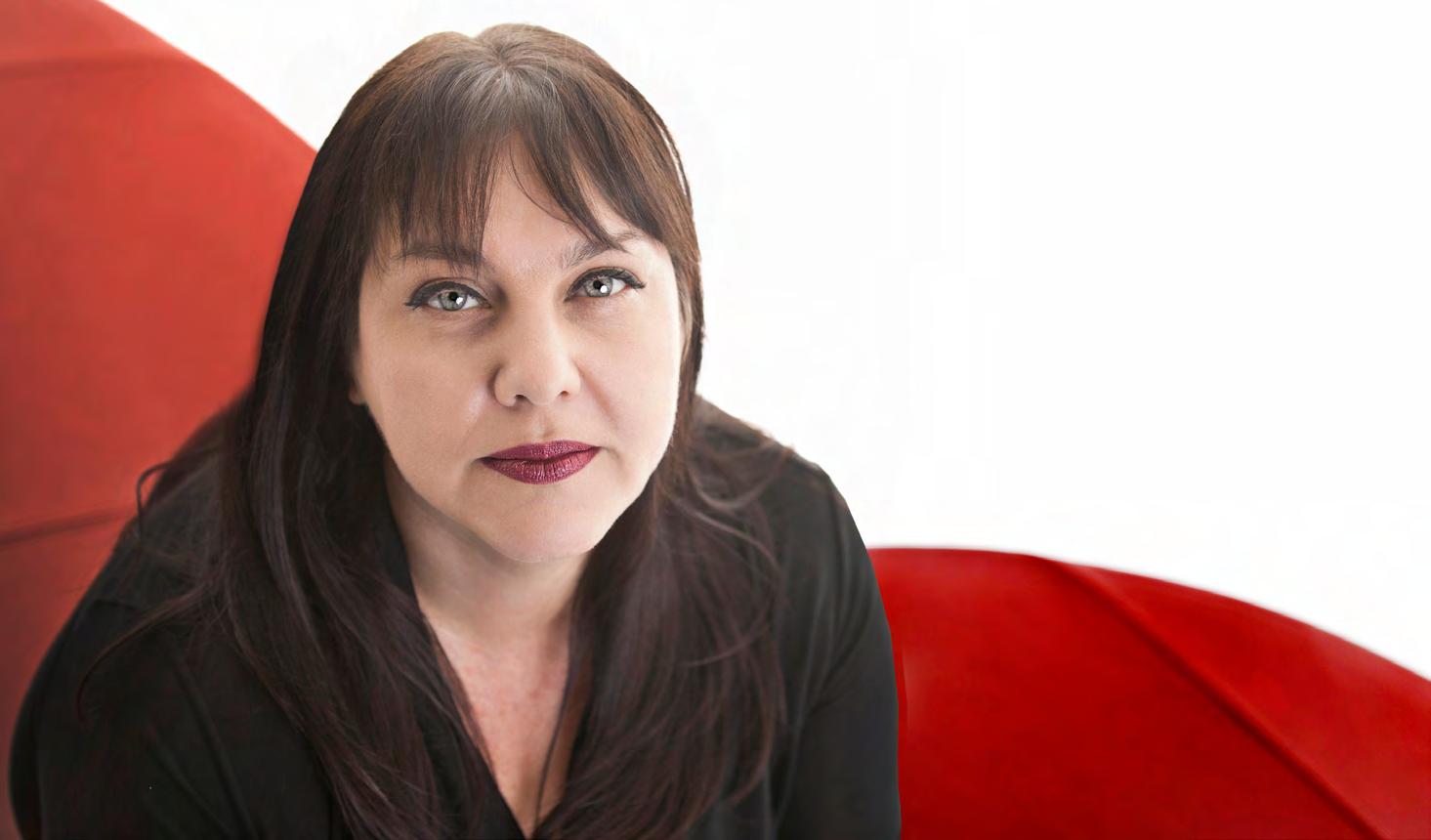
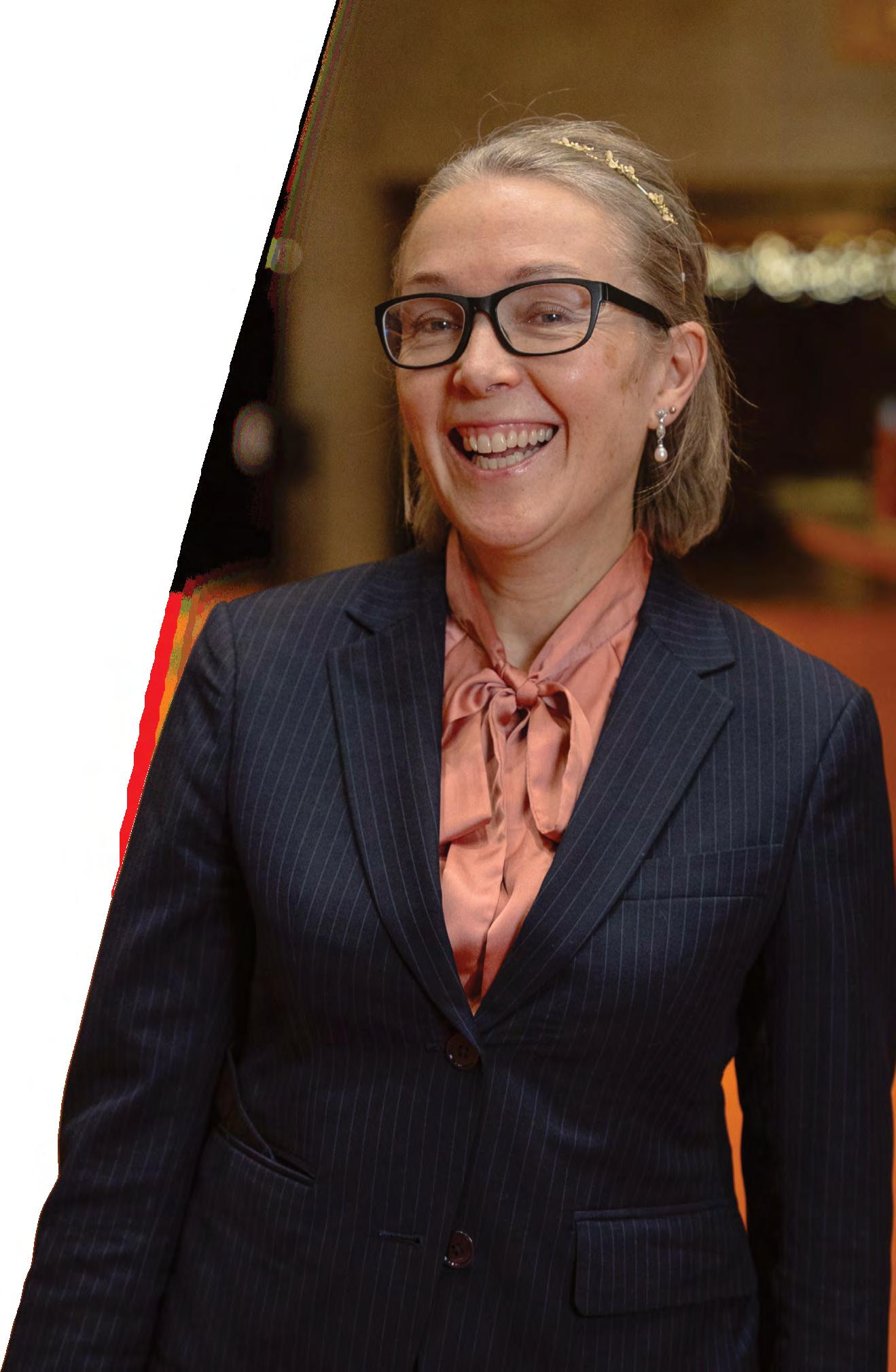
After 29 years playing with the MSO, Assistant Principal Second Violin Monica Curro is stepping into a new role.
When Monica Curro walks into a room, she brings a charge of warm energy. Engaging and irrepressibly optimistic, the electric force that has been animating the MSO’s string section for many years is now being channelled into the role of Creative Director of a new initiative, MSO+.
Monica Curro has a gift for distilling big ideas into a single sentence. Ask her what MSO+ is, and she doesn’t hesitate: ‘It’s taking music to the people, rather than expecting the people to come to us.’
MSO+ is an idea that has been evolving for more than a decade. Monica explains that player-led projects, community partnerships and collaborations have always existed outside the traditional concert model. What’s new is the structure, the dedicated creative leadership.
Crucially, MSO+ is player-led – and Monica is emphatic about why that matters: ‘This is the first time in my 29 years at the Orchestra that the players have been formally asked to submit their wish lists of passion projects – how they think the beauty and power of the MSO can be harnessed for purpose, impact, reach and connection with the Victorian people we serve.’
Monica describes MSO CEO Richard Wigley as a ‘change agent, a visionary, and his philosophical stance is firmly bound in engagement with all types of communities. It’s a very interesting experiment so far – just watch this space.’
While not an MSO+ project, the recent Find Your Voice Collective performance offered a powerful glimpse of the kind of work MSO+ aims to develop. This groundbreaking and deeply moving choral project brought together singers of all abilities from southwest Victoria to perform with the orchestra at the Sidney Myer Music Bowl. The songs were written by choir members, and the Bowl was filled
to the brim, with more than 16,000 people watching at the venue and online.
‘It was an idea born seven years earlier finally coming to fruition,’ Monica says. ‘It was a joyous celebration of humanity. That’s my template for engagement: collaboration, celebration, accessibility.’
Audiences will still see Monica performing on stage. She continues in her role as Assistant Principal Second Violin (a chair supported by Dr Mary-Jane H. Gething AO) alongside her new MSO+ responsibilities.
Monica Curro’s own journey with the MSO has tracked from young musician finding her place, to seasoned artist evolving into a board member, project creator and collaborator. She served nine years on the Australian Youth Orchestra board; founded PLEXUS, a trailblazing ensemble in 2014 with her partner pianist Stefan Cassomenos and MSO Associate Principal Clarinet Philip Arkinstall; curates the 10-concert Music at McClelland series (now in its fifth year); and has spent the better part of a decade quietly germinating ideas that now form the heart of MSO+.
‘It’s partly genetic,’ she says of her drive to create and push boundaries, referring to the commissioning work of her father, John Curro, founder of the Queensland Youth Orchestra.
At 59, Monica describes this part of her career as ‘the everybody phase’, in which she has the capacity, and the connections, to change broader systems. ‘There was the “me phase” and then there was the “parenting phase”, but the beauty of this stage of life is that I know a lot of people and I try to think strategically. I also never shut myself down or think of anything as impossible. I’m excited to make big systemic changes across the sector.’
The MSO currently reaches only a portion of Melbourne’s population – something Monica and the MSO see as an invitation. There are untapped audiences – in suburbs, regional communities and
online – who deserve access to music. MSO+ is a part of how the MSO plans to reach them.
‘Everybody consumes arts and culture like oxygen for the soul,’ she observes. ‘We need to really acknowledge the power we have. If we don’t redefine our purpose and our place – not just the MSO, but every arts organisation – we’re missing something enormous.’
As the MSO marks 120 years, there are bold plans for digital reach, finding ways for the MSO’s performances to travel as far as possible. There is an unwavering commitment to collaboration: with multiple art forms and demographics, First Nations artists, artists with disability, and communities across the state. ‘It’s not only for our survival – basically it’s a party and everyone’s invited,’ she laughs. ‘We’re an amazing show. But with the right collaborators, the sky’s the limit.’
Monica has an unshakeable belief that the MSO is not just entertainment, but an essential form of human nourishment and inspiration. ‘So many people fall through the cracks of our society,’ she said. ‘And that’s what art is for – to seal the cracks. To say: Come in. You are safe. You are welcome. You’ll remind yourself about all those esoteric, spiritual, mindful aspects of what it is to be human.’
As the MSO shapes a new era defined by bold vision, deep collaboration and a living legacy years in the making, there is no better person to help build that future than the woman who has spent nearly three decades at its heart.
MSO+ is the MSO’s initiative to take music beyond the concert hall and into the heart of the community. Player led and purposedriven, MSO+ supports projects that create new connections with audiences across Melbourne, Victoria and beyond.
Nicole Lovelock © 2026
To help bring these projects to life, contact philanthropy@mso.com.au
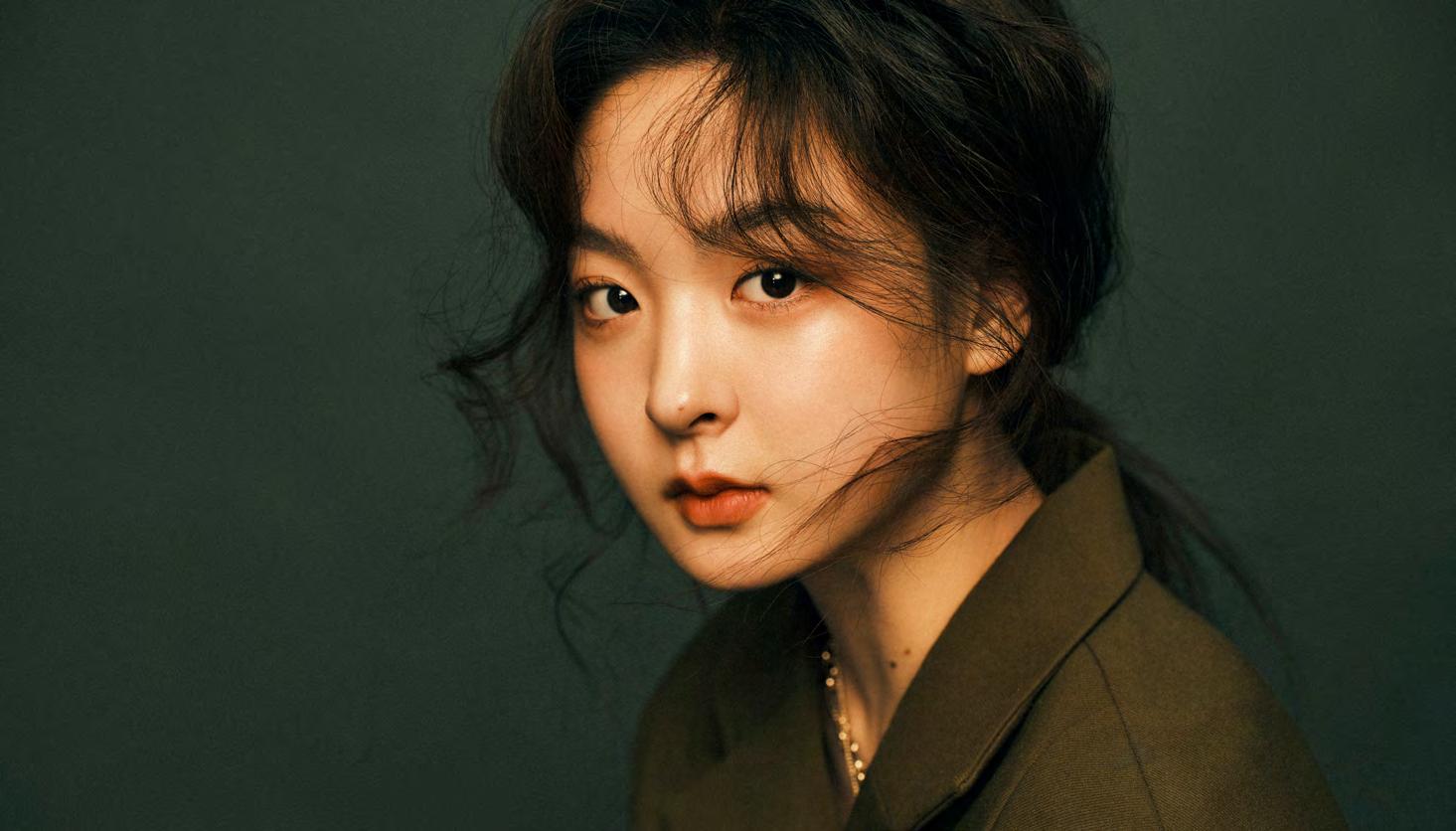
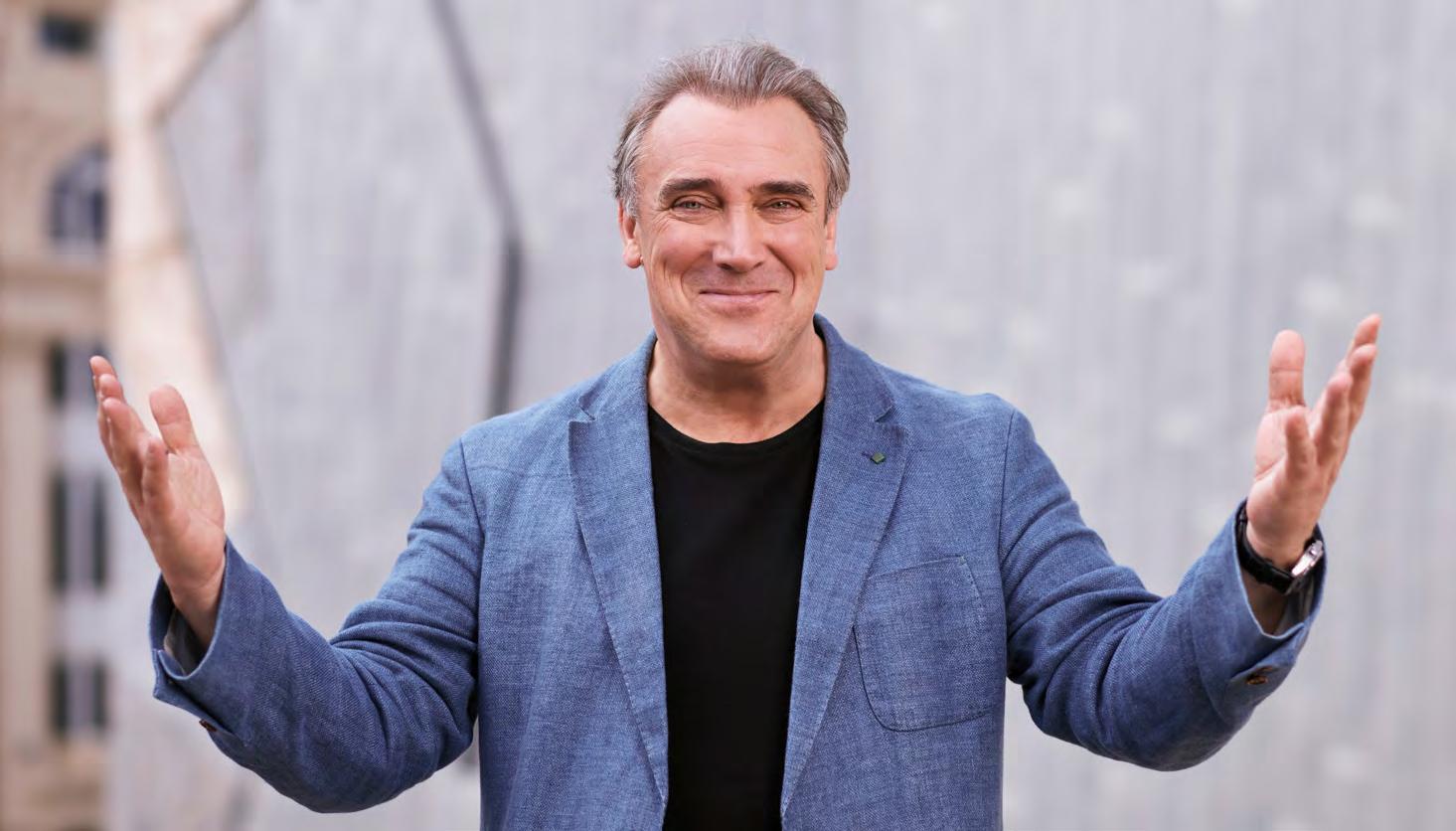
Jaime Martín conductor
MSO CHIEF CONDUCTOR AND ARTISTIC ADVISOR
In addition to his role with the Melbourne Symphony Orchestra, Spanish conductor Jaime Martín is Music Director of the Los Angeles Chamber Orchestra and Principal Guest Conductor of the BBC National Orchestra of Wales. He was previously Chief Conductor of the National Symphony Orchestra of Ireland (2019–24), Principal Guest Conductor of the Spanish National Orchestra (2022–24) and Artistic Director and Principal Conductor of Gävle Symphony Orchestra (2013–22).
Having spent many years as a highly regarded flautist, working with the most inspiring conductors of our time, Jaime turned to conducting full time in 2013 and soon became sought after at the highest level. He now regularly conducts major orchestras in the UK, Europe, US and Australasia. Recent highlights include an acclaimed BBC Proms appearance with BBC NOW and an 11-day Beethoven Festival with the MSO, conducting all nine symphonies. In 2025 he also led the MSO on a tour of the UK and Europe, the
orchestra’s first full international tour since 2019, with performances at the Edinburgh International Festival and BBC Proms.
His extensive discography includes recordings with the Gävle Symphony Orchestra, Orquestra de Cadaqués, Barcelona Symphony Orchestra and London Philharmonic Orchestra, as well as releases on the MSO’s recently launched label: Debussy & Strauss, featuring soprano Siobhan Stagg; Gustav Holst: The Planets with Deborah Cheetham Fraillon’s Earth; and two albums of Dvořák symphonies (Nos. 2, 5, 6 and 8).
Jaime Martín is Artistic Advisor and former Artistic Director of the Santander Festival and a Fellow of the Royal College of Music, London, where he was a flute professor.
Thursday 21 May at 7:30pm
Saturday 23 May at 7:30pm
Hamer Hall, Arts Centre Melbourne
Artists
Melbourne Symphony Orchestra
Jaime Martín conductor
Paavali Jumppanen piano
Musicians of the Australian National Academy of Music
Program
Mozart Piano Concerto No. 20 in D minor, K.466 [34’] interval
Shostakovich Symphony No. 4 [65’]
This performance is part of ANAM and the MSO’s Orchestral Training Partnership
CONCERT EVENTS
Pre-concert talk: Learn more about the music with Madeline Roycroft at 6:45pm in the Stalls Foyer (Level 2) at Hamer Hall
Running time: 2 hours and 10 minutes, including a 20-minute interval. Timings listed are approximate.
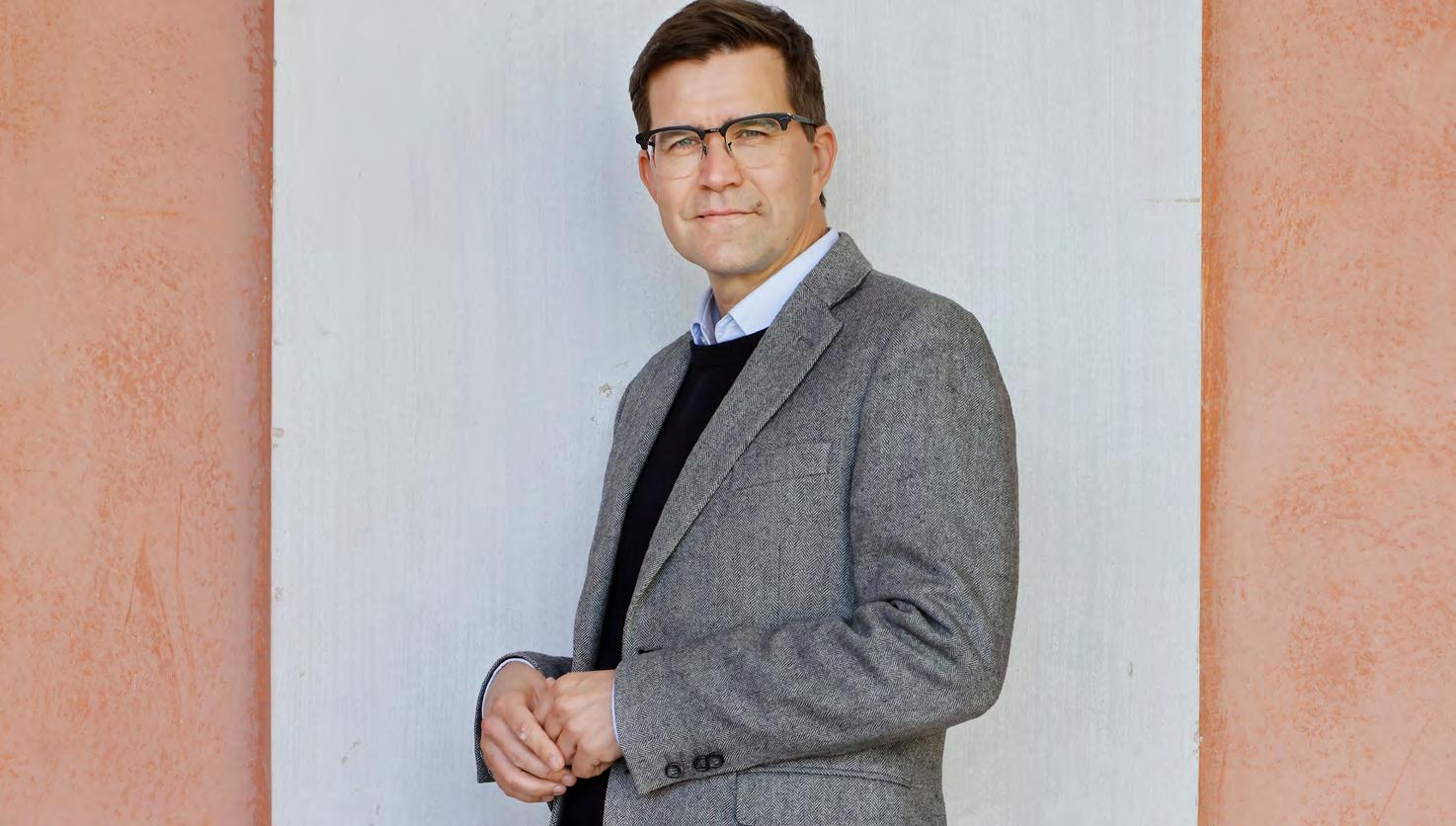
Finnish virtuoso Paavali Jumppanen has established himself in recent seasons as an imaginative and versatile musician of seemingly unlimited capability who has already cut a wide swath internationally as an orchestral and recital soloist, recording artist and artistic director, as well as a frequent performer of contemporary and avant-garde music, commissioning numerous works. He leads curation at the Väyläfestival, a multi-arts festival in Scandinavia and is the Artistic Director at the Australian National Academy of Music.
He has performed extensively worldwide, collaborating with conductors including David Robertson, Sakari Oramo, Susanna Mälkki, Esa-Pekka Salonen and Rafael Payare. He frequently collaborates with the Finnish Radio Symphony and the Helsinki Philharmonic orchestras. Within Australia, he has directed the Melbourne Symphony Orchestra from the piano and appeared with the Tasmanian and West Australian symphony orchestras, and for the Canberra International Music Festival and the Adelaide Festival, also curating its 2023 Chamber Landscapes program.
In the recent years Paavali Jumppanen has focused on performing cycles of the complete Beethoven and Mozart piano sonatas, and has frequently performed all of Beethoven’s piano concertos and chamber sonatas. His discography includes an acclaimed album of Boulez’s piano sonatas, made at the composer’s request, and the complete Beethoven Piano Sonatas. He has been praised for his ‘power and an extraordinary range of colours’ (New York Times) and the ‘overflowing energy of his musicianship’ (Boston Globe).
He attended the Sibelius Academy in Helsinki and later worked with Krystian Zimerman at the Basel Music Academy, where he also studied organ, fortepiano and clavichord. Russian-born pianist Konstantin Bogino has remained an important mentor. As a visiting scholar in Harvard University’s Music Department (2011–12), he studied musicology and theory to deepen his immersion in 18th-century Viennese music.
The MSO and the Australian National Academy of Music (ANAM) have forged a learning partnership to nurture Australia’s most exceptional young musicians and prepare them for a career as professional musicians. Included in this partnership are performance opportunities such as the concerts this week.
Celebrating its 30th anniversary in 2026, the Australian National Academy of Music is an internationally renowned institution –the only purely classical music performance academy in Australia and one of the few worldwide. It provides an intense, studiobased program featuring outstanding pedagogy and one of the country’s most
ANAM alumni in the MSO
First Violins
Anne-Marie Johnson (2014)
Karla Hanna (2017)
Kathryn Taylor (2003)
Second Violins
Emily Beauchamp (2022)
Tiffany Cheng (2017) Violas
Christopher Moore (1998)
Principal
Lauren Brigden (2002)
Anthony Chataway (2014)
William Clark (2015)
Ceridwen Davies° (1999)
Jamie Miles° (2025) Cellos
Rebecca Proietto (2011)
Caleb Wong (2019)
Joshua Jones° (2024)
Ariel Volovelsky° (2025) Double Basses
Jonathon Coco (2015)
Principal
Rohan Dasika (2014)
Acting Associate Principal
active and innovative public performance programs.
This is complemented by musician enhancement activities for health and wellbeing, professional development and community engagement. ANAM alumni can be found in many of the world’s leading orchestras and ensembles, including the MSO, and the intensive ANAM schedule brings together a global network of artists who provide invaluable mentorship and guidance for emerging young musicians.
anam.com.au
Benjamin Hanlon (2007) Acting Assistant Principal Stephen Newton (2004) Piccolo
Andrew Macleod (1996) Principal Clarinets
David Thomas (1997) Principal
Philip Arkinstall (1998) Associate Principal Bassoon
Jack Schiller (2012) Principal
Horns
Josiah Kop (2021)
Rachel Shaw (2013) Percussion
Brent Miller° (2013) Keyboard
Laurence Matheson° (2015) (ANAM graduation year)
° Guest musician
ANAM musicians playing in this concert
Ian Chiao Violin
Noah Coyne Violin
Sophia Jones Violin
Daniel Casey Viola
Lachlan McKie Viola
Hannah Wallace Viola
Fergus Ascot Cello
Boudewijn Keenan Cello
Alyssa Deacon Double Bass
Braden Simm Flute
Jade Wolter Oboe
Josephine Daniel Clarinet
Laura Radajewski Bassoon
Khye Cash Horn
Madeleine Aarons Horn
Koominka Trumpet
Jeremy Alderson Trombone
Robin Hall Tuba
Caleb Goldsmith Percussion
(1756–1791)
Piano Concerto No. 20 in D minor, K.466
Allegro Romanze Rondo (Allegro assai)
Paavali Jumppanen piano
Of all Mozart’s piano concertos there is one that has long been counted as more popular than its fellow masterpieces. In our own time, the D minor concerto (K.466) dominates the concert hall and the recording studio.
The fondness of musicians and audiences for the Piano Concerto in D minor is an old one. When we express a liking for its drama and great passion we’re in good company: Beethoven, Mendelssohn and Brahms, just to begin. And this is the only Mozart concerto that has never slipped in popularity. Beethoven played it in a 1795 concert to benefit the composer’s widow, and in the years that followed, the concerto was revered alongside Don Giovanni and the Requiem – dark, brooding passions and turbulent musical gestures being the key to the 19th-century imagination.
The D minor concerto represented a profoundly romantic conception of Mozart, a Mozart who found his ‘native soil’ in ‘the realm of grandeur, of turmoil… whose everlasting tempests and earthquakes must needs have sealed his early doom’. The major key concertos did not fit this ‘romantic stylisation’ of the composer, and they languished in the early years of the 19th century.
As modern listeners, we’re inclined to side with the Romantics and admire the D minor concerto for its subjective effect on us. The key of D minor evokes the world of Don Giovanni (completed two years later in 1787), and suggests an emotional theme of vengeance, death and the demonic. The concerto itself is a theatrical experience, and its drama is found not only in its affective gestures –the turbulence, the passion – but in its intrinsic musical contrasts. But while we notice the drama and tension in the D minor concerto, what Mozart’s father Leopold considered remarkable was its artfulness, its delightful construction and its exceptional difficulty.
In its atmosphere the opening Allegro rivals the ‘little G minor’ symphony (No. 25, used to great effect in the opening titles of Amadeus). From the outset, throbbing syncopations are undercut by a menacing ‘slide’ figure in the basses; the winds steal in individually; and ‘lightning’ strikes. This music is inherently orchestral in character and quite unsuitable for the piano – the stage has been set for a concerto in which the soloist and orchestra stand in contrast. Rather than compete with the dramatic gestures of the opening, the piano enters with its own theme, at once lyrical and pensive, and it’s only later that the soloist’s themes are connected with those of the orchestra.
With this concerto Mozart was breaking new ground: his first concerto in a minor key and the first of what are sometimes described as his ‘symphonic concertos’. Mozart gives more musical material to the orchestra; he occasionally places the soloist in an accompanying role; and he enriches the sound with trumpets and drums.
In other respects, Mozart is simply being fashionable, not least with his second movement, entitled Romanze. This genre was increasingly taking the place of the customary adagio slow movement, but despite its newness it represented pure nostalgia: archaic in its style, simple in its ideas, poignant and noble in its expression. Mozart’s Romanze is no exception: an innocent rondo in the unexpected but relaxed key of B flat major. The piano begins unaccompanied, the mood is genteel. But the drama of the theatre intrudes midway, with a violent shift to G minor and a return of the instability of the first movement.
The finale is also introduced by the piano alone, and this time it is the soloist who has the ‘symphonic’ gesture: a vigorous opening outlining a chord, suggestive of the ‘Mannheim rocket’ so admired in orchestral music of the time. It is enough to shatter the mood of the Romanze and launch us into one of Mozart’s few minorkey rondos. Reminiscent of the first movement, powerful and typically ‘orchestral’ ensemble passages are set against lyrical solo themes, which in turn allude to themes from the Allegro. The movement is full of ambiguities and quirks until the opportunity for a miniature cadenza, or Eingang, returns the music to D major for a Classical conclusion.
Yvonne Frindle © 2004/2024
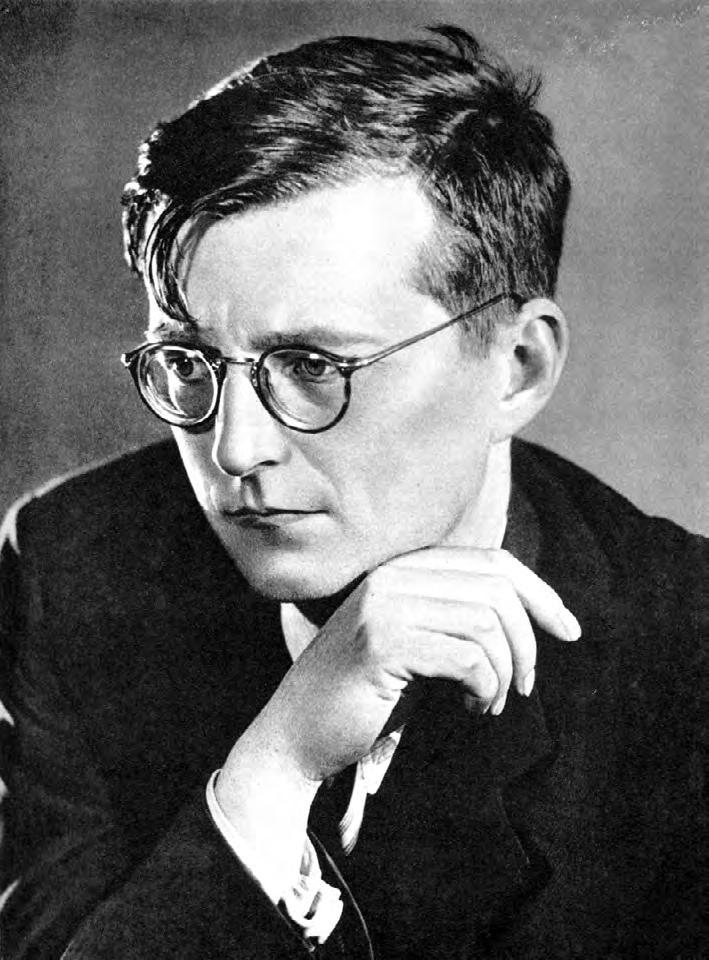
Symphony No. 4 in C minor, Op. 43
Allegro poco moderato –Presto – [Tempo I]
Moderato con moto
Largo – Allegro
Shostakovich’s First Symphony was an astonishing enough achievement; the synthesis of modernist techniques and Mahlerian scope embodied in his Fourth Symphony could well have given Shostakovich pride of place among pioneers of the 20th-century symphony. Of course, it was not to be. Towards the end of his work on the symphony in 1936, Shostakovich was the target of a now infamous editorial denunciation in Pravda. The symphony was withdrawn from rehearsal (perhaps by Shostakovich himself, perhaps by the Leningrad Philharmonic’s director), and would not receive its first performance until 1961, a quarter of a century later. By this time,
things had moved on; a new wave of postWorld War II modernists was in the ascendancy, and the possibility of making an avant-garde statement with a symphony (slim enough in 1936) was effectively non-existent.
Shostakovich’s own work had also moved on. The Fifth Symphony, written in a far more accessible style, had seen him rehabilitated with the Soviet hierarchy – it was acclaimed as ‘a Soviet artist’s creative reply to just criticism’, and quickly found a place in the repertoire which it has not relinquished since. Would Shostakovich have found such a place in the symphonic repertoire had he not been effectively ordered to tone down his style? Certainly the Fourth Symphony has achieved no great popularity in the decades since its premiere [the MSO didn’t perform it until 2002] – but what would have happened had Shostakovich had the chance to decide his creative path for himself? Such entirely reasonable speculation leads to a more uncomfortable question. Did Stalin, thought to have written the Pravda editorial himself, have after all a better idea than the composer of what an audience (Soviet or Western; between the wars, or Cold War, or even post-Soviet) might want? Given the popularity of the Fifth Symphony as opposed to the Fourth, our only possible answer, however uncomfortable, is yes.
The Fourth is Shostakovich’s second purely orchestral symphony. (The Second and Third both have choral finales.) In the distinguished history of symphonic beginnings, there is nothing quite as arresting as the opening of this work: an ambitious transposition of Mahlerian ‘grandiosomania’ (as Shostakovich would later disparage it) from bourgeois fin-desiècle Vienna to revolutionary Leningrad. The music frequently seems to crosscut from music for the revolution’s hopes to music for its ultimate betrayal. Frequent changes of mood and orchestration – from the forte-fortissimo of the large orchestra
to a solo instrument within a few bars –mask the fact that the symphony is at a thematic level quite closely argued. Often when a theme returns it is in a completely different orchestral guise – a quiet bassoon solo returns in the lowest register of the tubas to stabbing interjections from the rest of the orchestra; the opening march theme returns on a barrel-organ combination of clarinets and flutes.
The second movement (Moderato con moto) achieves more overt coherence: the opening three-note upbeat (derived from a short throwaway figure in the first movement) holds things together through some audacious experiments in polytonal and atonal counterpoint. The movement ends with one of Shostakovich’s most bizarre inspirations – a disembodied ticking in the percussion, which was to recur, at the other end of his career, in his Cello Concerto No.2 and Symphony No.15.
The third movement again begins in typically Mahlerian fashion – a bassoon solo supported by timpani, in a reminiscence of the mock funeral march from Mahler’s First Symphony. Again there is a bare minimum of recurring thematic material, as if to compensate for the symphony’s chaotic procession of musical types and textures – in particular, an early oboe solo (particularly its first three notes) will resonate through to the symphony’s end. About halfway through the movement, there is a most disconcerting change of tone, from exaggerated solemnity to utter bathos – a collection of outright clichés (including some singularly pointless fanfares) is set off by a jaunty bassoon solo. These clichés are dismissed by one last Mahlerian climax; the work ends in numbed near-silence.
Carl
Rosman © 2002
Thursday 28 May at 7:30pm
Saturday 30 May at 2:00pm Hamer Hall, Arts Centre Melbourne
Friday 29 May at 7:30pm
Costa Hall, Geelong
Artists
Melbourne Symphony Orchestra
Jaime Martín conductor
Kirill Gerstein piano
Program
Smetana Vltava (‘The Moldau’) from Má vlast [12’]
Francisco Coll Piano Concerto* [20’]
interval
Dvořák Symphony No. 7 in D minor [38’]
* Australian premiere of an MSO co-commission with the Bavarian Radio Symphony Orchestra, São Paulo State Symphony Orchestra and Castilla y León Symphony Orchestra
Jaime Martín’s biography can be found on page 10
Pre-concert talk: Learn more about the music with Megan Reeve 6:45pm (28 May) and 1:15pm (30 May) in the Stalls Foyer (Level 2) at Hamer Hall 6:45pm (29 May) at Costa Hall
Running time: 1 hour and 45 minutes, including a 20-minute interval. Timings listed are approximate.
MSO’s Geelong performance is supported by AWM Electrical, Freemasons Foundation Victoria, the Estate of the late Blanch Brooke Hutchings, and Perpetual Foundation – Alan (AGL) Shaw Endowment
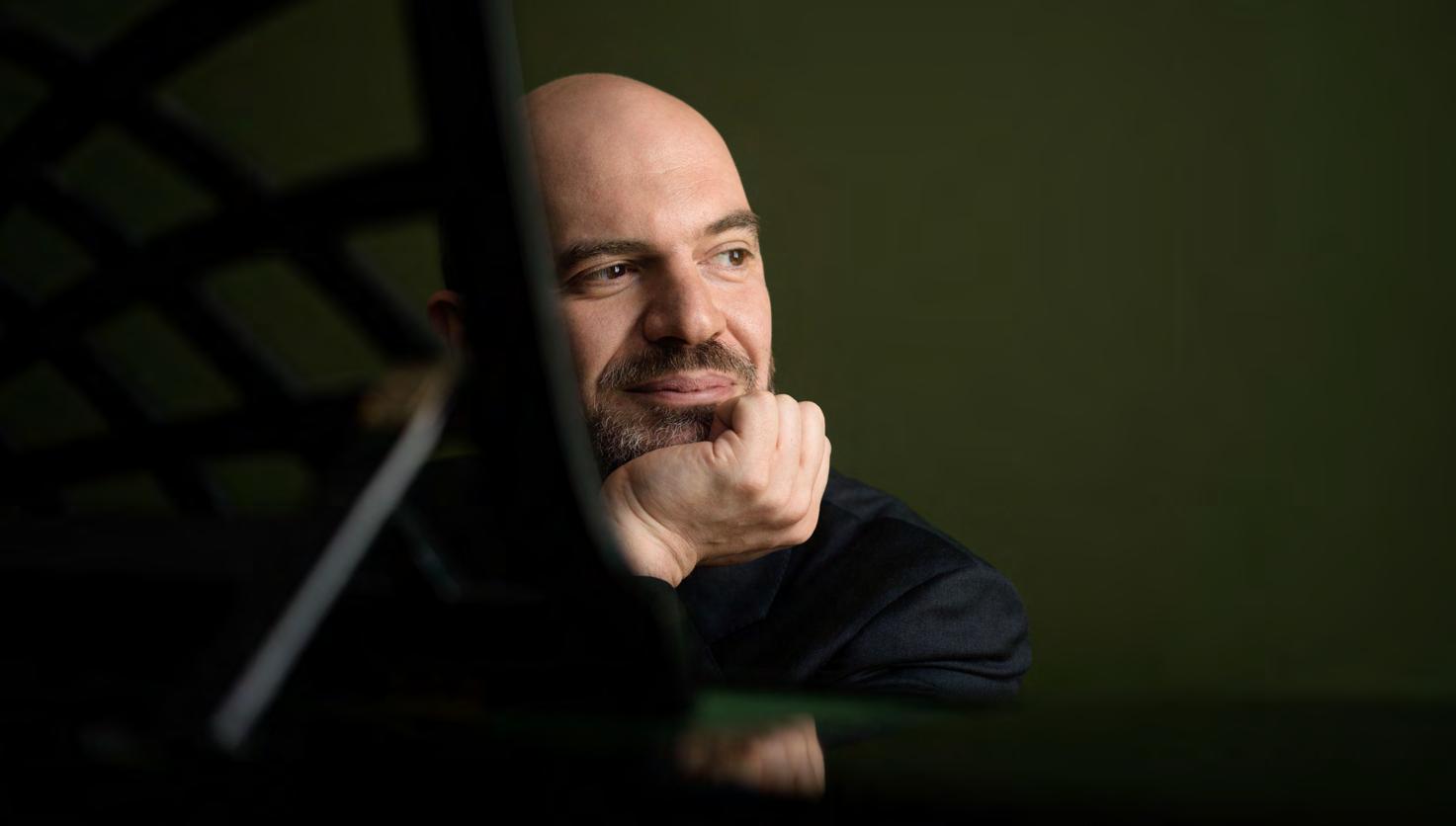
With a fascination for musical discovery combined with boundless curiosity, imagination and virtuosity, Kirill Gerstein is a compelling performer. As a pianist, curator, educator, musical leader and artistic collaborator, his exploration of resonant themes across a vast repertoire –from classical to contemporary creations, jazz and cabaret – has nourished relationships with leading artists and music organisations worldwide.
Recent highlights include his Carnegie Hall/Stern Auditorium recital debut, Busoni’s Piano Concerto with the Berlin Philharmonic marking the composer’s centenary, and residencies with the Bavarian Radio and London symphony orchestras and Festival Aix-en-Provence.
He has commissioned composers such as Timo Andres, Chick Corea, Alexander Goehr, Oliver Knussen and Brad Mehldau, and his premiere performances this year of Francisco Coll’s Piano Concerto follow the New York premiere of Coll’s Two Waltzes Toward Civilization at Carnegie Hall. In 2019 he premiered Thomas Adès’s
Piano Concerto, subsequently recording it with the Boston Symphony Orchestra (2020 Gramophone Award). Other noteworthy recordings include The Visitors by Chick Corea, Strauss’s Enoch Arden, The Gershwin Moment, Tchaikovsky’s piano concertos and an acclaimed album with the Berlin Philharmonic celebrating Rachmaninoff’s 150th anniversary. Media projects and digital innovation are integral to his creativity, and his 2025 project Music in Time of War, pairing Debussy with Vardapet Komitas, won him an Opus Klassik Award for exceptional curation.
Kirill Gerstein taught himself to play jazz by listening to his parents’ records. Following a chance encounter with Gary Burton in St Petersburg, he was invited to study at the Berklee College of Music in Boston. He later studied with Dmitri Bashkirov and Ferenc Rados. In 2010 he won the Arthur Rubinstein Competition, and received the Gilmore Artist Award and an Avery Fisher Career Grant. In 2021 he was awarded an Honorary Doctor of Musical Arts from his alma mater, the Manhattan School of Music.
Vltava – Symphonic poem from Má vlast (My Country)
Bedřich Smetana – ‘father of Bohemian music’ – began his career as a virtuoso pianist. With establishment of a national theatre in Prague promising real opportunities to foster a sense of national identity and purpose through music, he turned to composing and conducting opera, believing this the greatest mission he could undertake for his people. (Of his operas, only one, The Bartered Bride is well-known in English-speaking countries.) However, given his deep admiration for Liszt, and his gratitude for the older composer’s support, no wonder he also found inspiration in the Lisztian symphonic poem.
Smetana’s three early symphonic poems, Richard III (1858), Wallenstein’s Camp (1859), and Hakon Jarl (1861), adopt Franz Liszt’s approach to the literal representation in music of literary ideas and action. The concept of a monumental cycle of symphonic poems in honour of his homeland grew only slowly in Smetana’s mind, inspired perhaps by the Vltava, Bohemia’s greatest river.
By the time he began serious work on the cycle in September 1874, Smetana was within weeks of facing a musician’s greatest tragedy: total deafness, which struck on 20 October. The disaster seemed to spur on his work. A month later he had completed Vyšehrad (The High Tower) and begun Vltava (Moldau in German). Soon he was working on a further two symphonic poems, Šárka and From Bohemia’s Woods and Fields. In 1878, Smetana decided to expand the cycle from four poems to six.
The first performance of Má vlast (My Country) on 5 November 1882 was, according to one eyewitness, an occasion ‘which the Czech musical world counts among its greatest celebrations…’ Today, Má vlast is no longer the exclusive property of the Czechs. It has become an archetypal hymn of love for one’s country.
The Vltava poem, in Smetana’s words, depicts the course of the river, beginning from its first small sources, where two springs, one cold and one warm, join into a stream. It flows through forests and meadows, past country festivals and water nymphs dancing by moonlight; proud castles rise up from nearby cliffs. The Vltava swirls through the Rapids of St John, then flows in a broad stream towards Prague, where the historic fortress Vyšehrad comes into sight. It finally disappears in the distance as it sweeps majestically on to join the Elbe.
The two sources of the Vltava are represented by flutes and clarinets respectively; strings introduce the Vltava theme proper in E minor, a key which will be constant virtually throughout the piece as the theme recurs in the manner of a rondo. Horns and trumpets suggest a hunt in the forest through which the river flows; from a village festival come the strains of a polka; against a delicately shimmering orchestration, the water nymphs dance by moonlight. The Vltava theme returns, growing in confidence, before suddenly plunging into the rapids, where cymbals and piccolo highlight its giddy and turbulent passage. From this, the stream emerges as a powerful river, striking out proudly and powerfully in E major to meet its destiny and thence to diminuendo into the distance.
Abridged from a note by Anthony Cane © 1990
Francisco Coll (born 1985)
Piano Concerto Humoresque – Impromptu Paisaje Rag
Kirill Gerstein piano
It’s not unusual for a composer to find another creative outlet in visual art. Felix Mendelssohn was a watercolourist; Arnold Schoenberg was an Expressionist painter, and in America he found a friend in fellow composer and artist George Gershwin. Pianist Stephen Hough includes painting and composing among his numerous accomplishments, and points out the creative satisfaction of a painting that ‘stands as a thing, complete’ in contrast to music, which is ephemeral.
It’s less common for a composer to make art an intrinsic part of their musical process. Anna Clyne is one: her 2025 work PALETTE was accompanied by a painting for each movement. Spanish composer Francisco Coll is another.
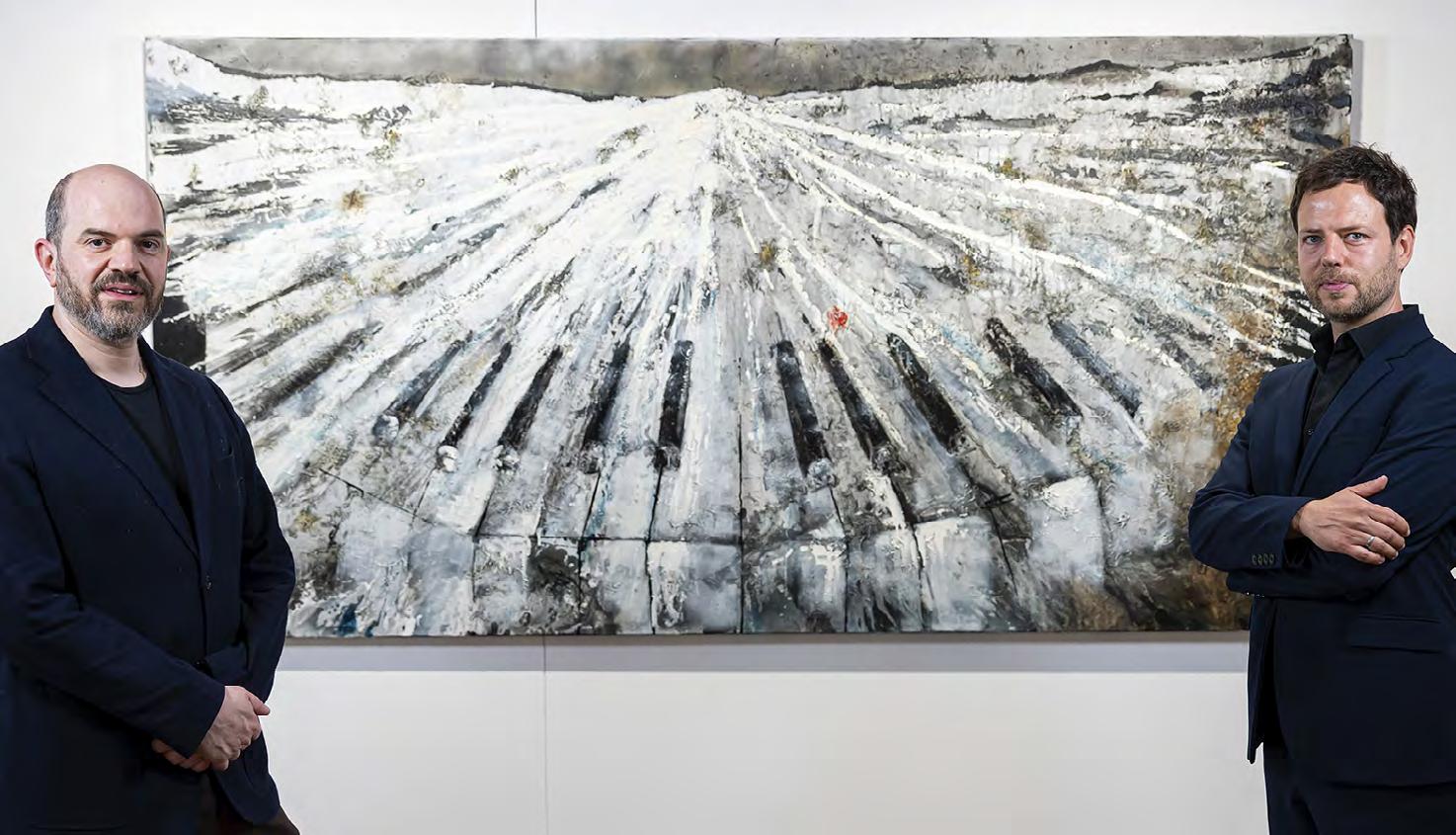
Born in Valencia, Coll grew up playing trombone and – crucially – surrounded by the paintings in his father’s frame shop. Today, he makes a painting every time he composes a work. As he explains it, when he’s composing, he ‘sees’ the piece in his mind almost more than, or at least as much as, he hears it:
I have in the beginning an image about what I want to write. It’s not so much about sound, but about visual… I don’t see much difference between painting and composing… it’s part of the same process. I usually paint a canvas in parallel with composing a piece of music. Somehow they interact and help with each other.
Colours, textures and shapes – all visual elements that translate into sound – are Coll’s inspiration. And he thinks like a
painter when he composes: the musical equivalent of building layers from charcoal sketch to finished oil painting. At the same time, Coll’s concertos can be heard as musical portraits of their intended soloists. The concerto he wrote for violinist Patricia Kopatchinskaja, for example, ranges from explosive energy through sensuality to a ‘youthful and unpredictable character’.
Coll’s Piano Concerto – composed for Kirill Gerstein – is no exception to this process. The photo opposite was taken an hour before the Spanish premiere of the concerto in April, showing, as Gerstein describes it, the ‘painted incarnation’ of the music. The concerto itself reflects Gerstein’s distinctive musical background: playing jazz by ear as a boy before emerging as a concert pianist who’s stayed in touch with his musical origins. And the virtuosity and energy of Coll’s music is tailored to its intended interpreter.
A further influence enters the picture (perhaps via English composer Thomas Adès, with whom Coll studied privately): the intricate but compelling rhythms of Conlon Nancarrow’s famous studies for player-piano, long thought impossible for humans to play. Listen closely and you may hear hints of Dvořák (Humoresque) and Bartók (his Piano Concerto No.2 as well as the ‘night music’ sections of works such as Music for Strings, Percussion and Celesta).
The ‘canvas’ of Coll’s Piano Concerto is ‘classical’: three movements, fast–slow–fast. The ‘painting’ is anything but – it pushes musical and technical boundaries from the outset. As Rafael Rennicke described it for the premiere in Munich in March, the opening is ‘impish’: five rapid, darting chords for strings, brass and a very large percussion section. Coll throws his listeners, and then his soloist, in the deep end with music that’s wild and unrestrained but also playful. (Celere luminoso, ‘swift and bright’, is the marking.) At one point early on in the
first movement, the orchestra ‘silences’ the piano mid-flight: the full ensemble, including drum kit and harp, swooping in with instructions not often seen in an orchestral score (‘shamelessly reckless’ and ‘absurd!’). The Humoresque summons a Romantic spirit in its dramatic expressive contrasts, its sense of spectacle, and its astonishing virtuosity.
The title of the second and longest movement, Paisaje, suggests a landscape or panorama, and here the music takes an expansive and contemplative turn. With the marking ‘Grave, elastico expressivo’, Coll writes delicate yet vibrant music that brings to mind the nocturnal or ‘spectral’ qualities of Béla Bartók’s night music style. And when the full force of the orchestra is unleashed in a ‘solemn and painful’ chorale, the mysterious tranquillity of the surrounding music makes the effect all the more shattering. The ‘panorama’ will eventually fade into the distance with the piano playing alone.
In the radiant third movement, Rag, energy and overt virtuosity returns. The effect is aggressive and manic, with what Coll
describes as a ‘pulse at constant risk of fracture’. Without making direct reference to Spanish or flamenco music, he introduces a recurring motif reminiscent of Cádiz-style swing. Listen, too, for the obsessive, intrinsically physical rhythms of boogie-woogie and Nancarrow’s player-pianos. But the title is everything –alluding to Gerstein’s jazz background with the piano genre that started it all: ragtime, characterised by intoxicating syncopations.
Meanwhile, the orchestra adopts the persona of what Rennicke calls a ‘fantastical big band’, with brassy horns and muted trumpets, and featured moments for bass clarinet and xylophone. Watch the ensemble as trumpets, oboes, clarinets and even flutes are asked to play with ‘bells up’. The concerto comes to a conclusion with a ‘delirious’ cadenza for the soloist, joined in the final moments by an unexpectedly refined brass ensemble before one final magnificent gesture.
Yvonne Frindle © 2026
Allegro maestoso Poco adagio
Scherzo (Vivace) – Trio Finale (Allegro)
From out of the darkness of a deep tonic pedal, violas and cellos wind their way ominously towards the light, rising to a peremptory three-note tattoo, repeated, each time more insistently, till it ends without hope on a stabbing chord (identifiable for the technically-minded as a diminished seventh).
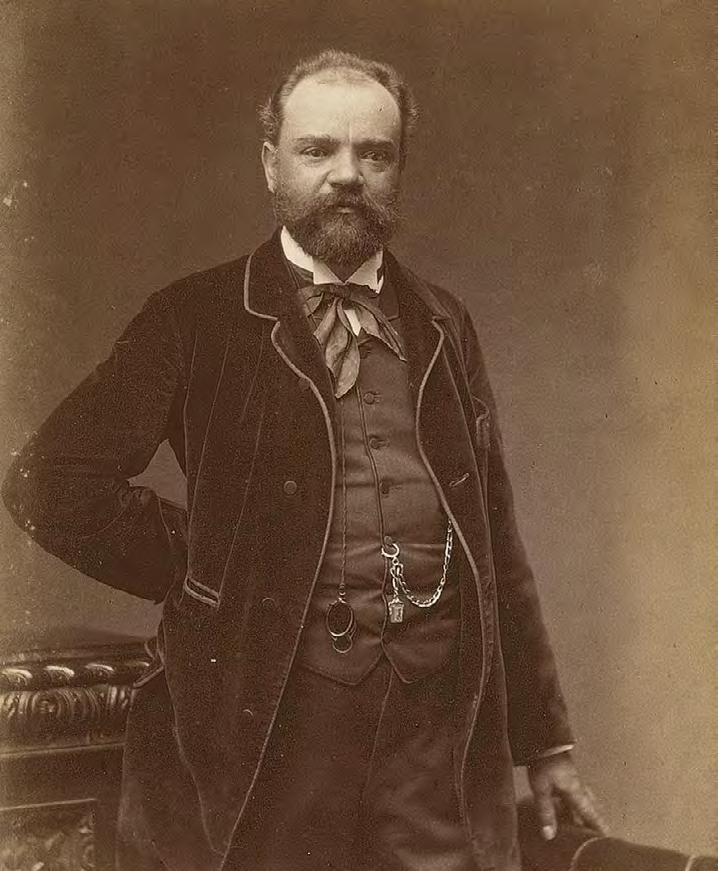
Thus, in a mere six bars, Dvořák sets the mood at the outset for the most powerful and serious of his nine symphonies. Already, in the darkly groping melody, we have the main subject of his first movement. From this he will go on to derive variants obliquely related to his own Hussite Overture of a few years earlier –one reminiscent of the defiant main theme of the overture, others recalling a melody derived from the 13th-century St Wenceslas plainchant. Although Dvořák draws moral
and emotional sustenance from these allusions to Czech history, he speaks not to his countrymen: in this symphony, rather, he makes a determined effort to express himself resoundingly to the world.
It cost the composer greater effort than any of his other symphonies. In December 1884 he wrote to a friend:
…wherever I go I have nothing else in mind but [my new symphony], which must be capable of stirring the world, and God grant that it may!
On one hand, he wished to impress the Philharmonic Society of London (which had commissioned it on his first visit to England in March 1884 and since elected him to honorary membership). On the other, he frankly sought to create a work which emulated the strength and beauty he had admired in the Third Symphony of his great friend and mentor Brahms on its premiere at the end of 1883.
Dvořák keenly sought unqualified commendation from Brahms, for the latter was not only a staunch advocate, but also a stern critic of any carelessness he found in the younger composer’s work. Brahms had told Dvořák he looked forward to the new symphony being ‘quite different’ from its predecessor, No. 6 in D major.
Dvořák wrestled besides with a spiritual struggle stemming from his failure to win recognition at home as a composer of Czech operas and from his acute artistic need, love of country notwithstanding, to win recognition and success internationally. In the defiant tone of the Seventh Symphony we sense the composer choosing determinedly to strike out on his own. In its gloomy power and grandeur, Karel Hoffmeister (a student, later professor, in the Prague Conservatorium of which Dvořák himself was successively Professor and Director) finds the composer ‘at his loftiest, and yet most remote from his truest and most characteristic self’. Today’s listener,
however, with the benefit of greater distance than Hoffmeister enjoyed, readily recognises in the Seventh a characteristic profile of the composer’s largest self.
The grimness of Dvořák’s main first movement subject and its related ideas is moderated by a gentle, conciliatory second subject introduced by flute and clarinet. In but a few bars, however, seething undercurrents of passion upset its calm. As the exposition ends with tragic vehemence, the gentle second theme tentatively initiates the development. Again, however, it is overtaken, and dominated, by the main idea. This is one of Dvořák’s shortest development sections, but also one of his tautest – indeed one of his finest. In the restatement, the movement bids boldly to attain and hold a position of strength, but collapses at its climax, is suddenly engulfed in despair, and ends in brooding resignation.
To the slow movement (Poco adagio) Dvořák brings a prayer for serenity and consolation, in the course of which the pent-up anguish of all his doubts and uncertainties bursts forth. It becomes, in Otakar Šourek’s words, ‘the intimate and passionate confession of a soul consumed with longing to be delivered’ –unrestrained in the central section which the horn introduces ‘as through a mist of tears’, to be answered by the clarinet in pathetic tones. Yet from the catharsis of anguish comes an elevated calm which lifts the heart and brings the movement to a tender conclusion.
The Scherzo has much of the character of a furiant, with conflicting 3/2 and 3/4 rhythms. Yet, far from being a simple and sunny Czech dance, this Scherzo soon becomes dour, its rhythms pounding aggressively. The dreamlike central Trio evokes a pastoral scene, with trilling birdsong and distant hunting horns. But the return of the Scherzo jolts us back to reality. The movement progresses to an extended coda which raises all sorts of
questions and leaves us with a forthright reminder of the real business we are about.
The Finale expresses a poignant cry for help. Searching for direction, we gradually find ourselves swept up in the irresistible propulsion of a surging march. As a sense of real confidence develops, cellos and decorative violins introduce a broad, warm-hearted second subject – the first sign of happiness in the symphony and also, as Šourek suggests, Dvořák’s first use of a melody with national colouring. All now sweeps forward to a solemnly exultant conclusion in the major mode.
The composer personally conducted the first performance of his Symphony No. 7 in St James’s Hall, London, on 22 April 1885. [It would be published as ‘No. 2, Op. 70’ and was actually numbered ‘VI’ on the autograph score, presumably because Dvořák didn’t count his first symphony, The Bells of Zlonice, thinking it lost.]
Public and critics gave it a more mixed reaction than its immediately attractive predecessor (No. 6 in D major), which Dvořák had conducted there the previous year. But this did not dampen his habitual self-confidence as he wrote home: ‘The Symphony was immensely successful, and at the next performance will be a still greater success.’
The turning point with the Seventh Symphony seems to have been a pair of performances which Hans von Bülow conducted in Berlin in 1889, at which the composer was present. So ecstatic was Dvořák that he pasted a portrait of Bülow on the title page of the score above an inscription: ‘Slava! – Glory be to you! You brought this work to life!’ That admiration was reciprocated. Bülow is known to have expressed the view that ‘the most important composer for me, apart from Brahms, is Dvořák.’
Anthony Cane © 1996



Thursday 25 June at 7:30pm
Saturday 27 June at 2:00pm Hamer Hall, Arts Centre Melbourne
Friday 26 June at 7:30pm Costa Hall, Geelong
Artists
Anja Bihlmaier conductor
Johannes Grosso oboe
Melbourne Symphony Orchestra
Program
R. Strauss Suite from Der Rosenkavalier [22’]
Mozart Oboe Concerto in C major, K.314 [20’]
interval
Bartók Concerto for Orchestra [35’]
Pre-concert talk: Learn more about the music 6:45pm (25 Jun) and 1:15pm (27 Jun) in the Stalls Foyer (Level 2) at Hamer Hall 6:45pm (26 Jun) at Costa Hall
Running time: 1 hour and 45 minutes, including a 20-minute interval. Timings listed are approximate.
MSO’s Geelong performance is supported by AWM Electrical, Freemasons Foundation Victoria, the Estate of the late Blanch Brooke Hutchings, and Perpetual Foundation – Alan (AGL) Shaw Endowment
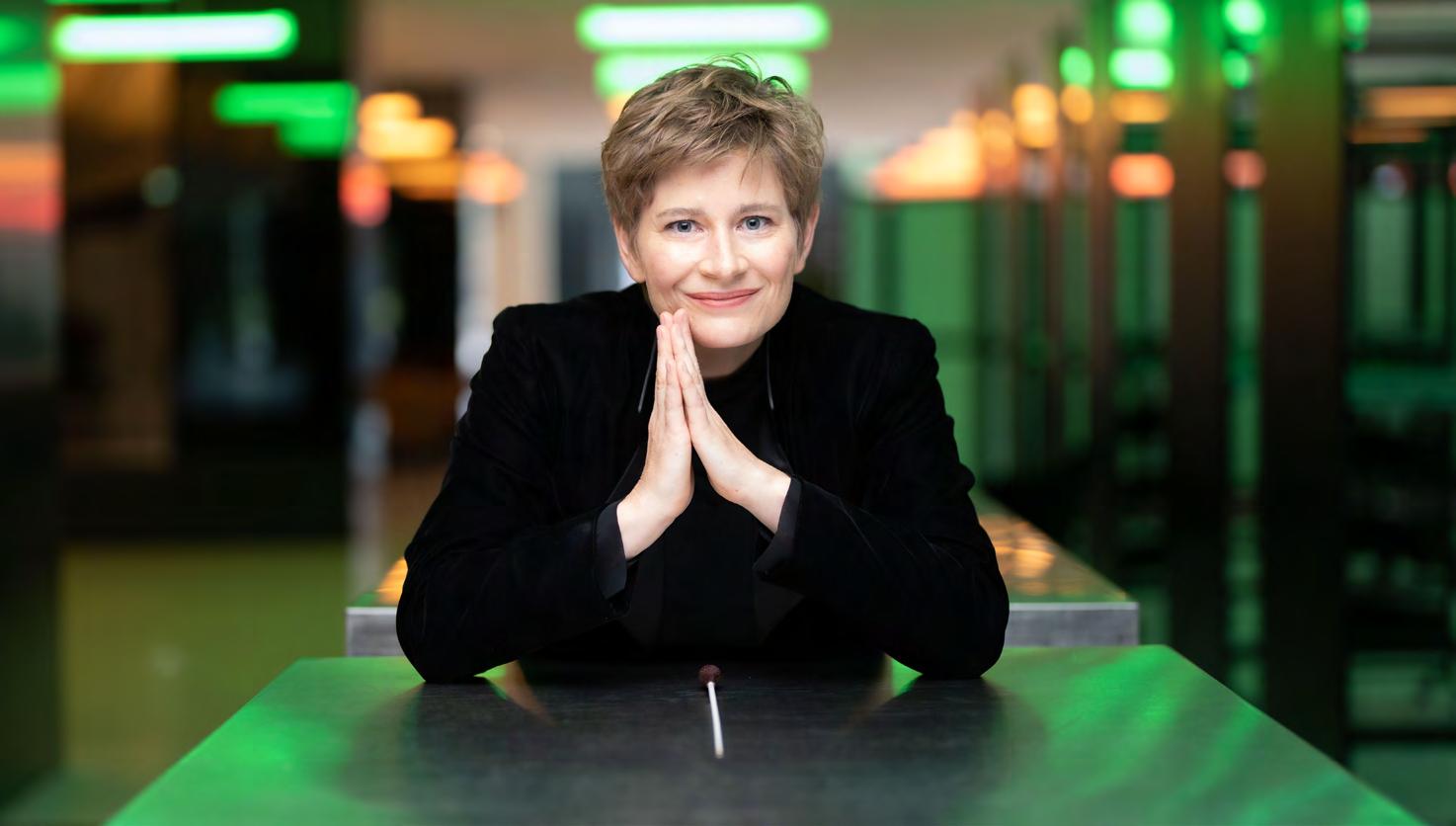
German conductor Anja Bihlmaier returns to Melbourne having made her MSO debut in 2024 conducting Schumann and Tchaikovsky. She has been Principal Guest Conductor of the BBC Philharmonic since 2024 and is a firm favourite at the BBC Proms where she appears annually. Her wide-ranging repertoire includes Haydn, Dvořák, Mahler, Richard Strauss, Sibelius, Bartók, Shostakovich, Debussy, Britten, B.A. Zimmermann, Unsuk Chin and Galina Ustvolskaya.
In the 2025–26 season she conducted for the first time the London and Montreal symphony orchestras and the Orchestra National de Lyon, as well as returning to the Royal Stockholm, Helsinki and Hong Kong philharmonic orchestras, Madrid National Orchestra, Berlin Konzerthausorchester and Sydney Symphony Orchestra. She also continued her residency at the Bonn Beethovenfest and opened the Berlin Musikfest, both with the Deutsches Symphonie-Orchester Berlin. In the 2024–25 season she made debuts with the Seattle Symphony, NDR Elbphilharmonie Orchestra and Munich
Philharmonic, all of whom have invited her for return engagements.
Previous orchestral posts include Chief Conductor of the Residentie Orkest in The Hague (2021–25) and Principal Guest of the Lahti Sinfonia (2020–24), and in the past year both orchestras have released recordings with her conducting: Ravel with the Residentie and pianist Yeol Eum Son, and Prokofiev with cellist Christian Poltéra.
Early in her career, she held positions at the opera houses of Hanover, Chemnitz and Kassel, and subsequently conducted at the Vienna Volksoper and throughout Scandinavia. More recently she conducted new productions at the Berlin State Opera (Cassandre) and Glyndebourne Festival (Carmen), and last month she conducted her first production at Hamburg State Opera (Elektra).
Bihlmaier studied at the Freiburg University of Music with Scott Sandmeier and received a scholarship at the Salzburg Mozarteum before studying with Dennis Russell Davies and Jorge Rotter.
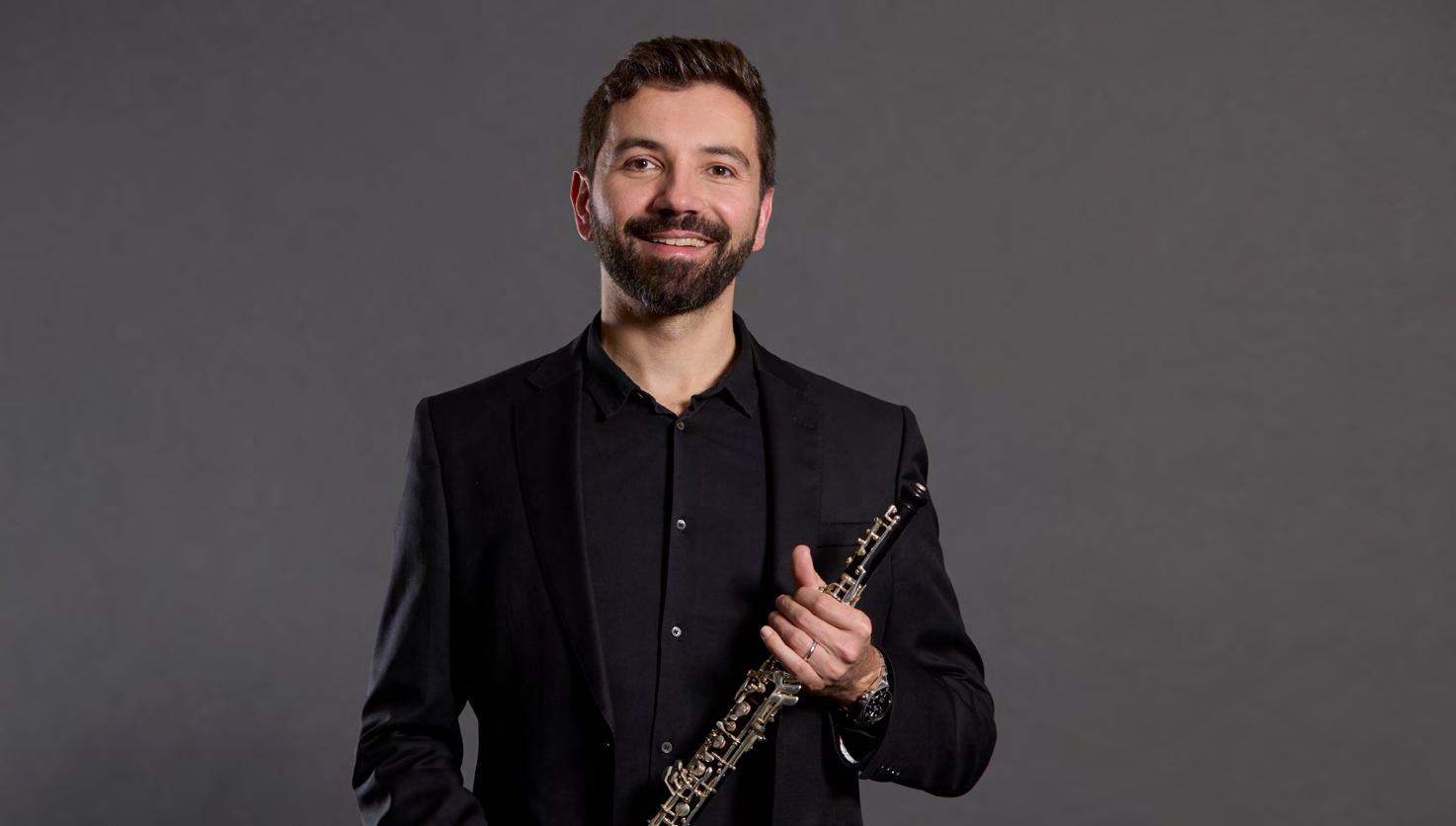
Johannes Grosso is Principal Oboe of the Melbourne Symphony Orchestra. He has enjoyed an illustrious career in Europe, as solo oboe in the Frankfurt Opera House and as a member of the Budapest Festival Orchestra, having previously spent four years with the Orchestre Philharmonique de Radio-France, as well as regularly appearing as a guest principal with orchestras such as the Mahler Chamber Orchestra, Bayreuth Festival Orchestra, Chamber Orchestra of Europe, Gewandhausorchester Leipzig and Bamberger Symphoniker.
As a concerto soloist, he won the 2014 Prague Spring International Music Competition. He also won the Giuseppe Tomassini International Competition (Italy) and Asian Double Reed Society Competition (Taiwan) and received second prize in the Fernand Gillet-Hugo Fox Competition (USA), as well as the Végh Sándor Competition Prize (Hungary).
These successes led to solo appearances working with conductors such as Christoph von Dohnányi, Daniele Gatti, Gábor Takács-Nagy, Tommas Guggeis, and with orchestras including the Czech Radio Orchestra, Prague Chamber Orchestra, Budapest Festival Orchestra, Frankfurter Opern- und Museumsorchester, the Schleswig-Holstein Music Festival Orchestra and the New Bach Collegium Leipzig.
Since joining the MSO in 2024, Johannes Grosso has appeared as a soloist with the orchestra in Mozart’s Symphonie concertante for four winds (K.297b). He has also performed as a chamber musician, last month directing Mozart’s Gran Partita and performing in Richard Strauss’s Sonatina No. 1 for winds. And of particular note were his solos in Mahler’s Resurrection Symphony, conducted by Jaime Martín in 2025.
Der Rosenkavalier (1911) was the second of Richard Strauss’s operas written in collaboration with librettist, Hugo von Hofmannsthal. The title (The Knight of the Rose) derives from a scene in the second act whereby a knighted emissary presents a silver rose to a woman on behalf of her suitor. Such a custom never existed, but that is one of the charms of Hofmannsthal’s libretto: its delightful mixture of fact and fantasy.
When it first appeared, Der Rosenkavalier was seen by many critics as a retreat from the daring atonal modernism of Strauss’s two immediately previous stage works –Salome and Elektra. Strauss had next wanted to write a ‘Mozartian opera’ but Der Rosenkavalier has a sumptuousness which exceeds classicism. Its plot derives from a comedy written by a contemporary of Beaumarchais, who wrote Le Mariage de Figaro, but this ‘comedy for music’ is elevated by character portraiture that has rarely been surpassed in opera. It remains Strauss’s best-loved work.
‘I wanted to write an opera like Mozart’s and I have done it.’ Richard Strauss
Der Rosenkavalier, set in Vienna in 1740, tells how the 17-year-old Octavian outwits the bullish Baron Ochs auf Lerchenau in his quest for the hand of the young convent girl, Sophie, daughter of the nouveau-riche Herr von Faninal. But that is not all: it is a story of the magic of love at first sight; of nostalgia, self-sacrifice and the passing of time. Octavian, the ‘Knight’, first lays eyes on Sophie during the presentation of the Rose. Strauss’s
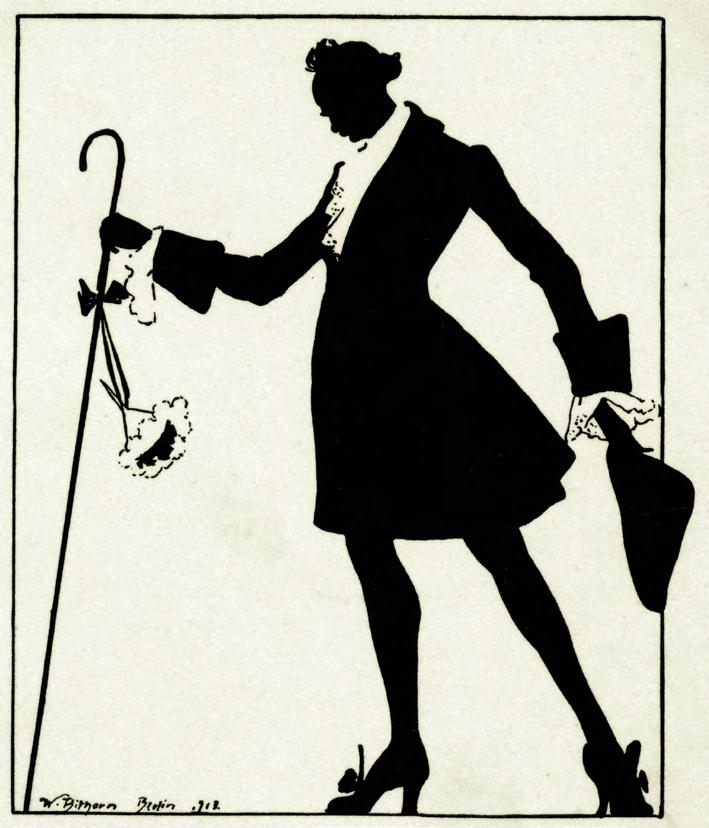
Richard Strauss depicted as the ‘Knight of the Rose’ in a silhouette by W. Bithorn (Berlin, 1913)
orchestra wonderfully expresses the slowmotion intoxication of the moment. Octavian must first be given up by his older lover, the Feldmarschallin MarieThérèse, who has known all along, somewhere inside, that one day he would fall for someone his own age, and whose proud surrender is the background for the Trio which climaxes the opera.
Strauss’s score retains a Mozartian intention in the level of musical beauty which is maintained no matter the situation. The ‘Viennese waltzes’ heard throughout, though anachronistic (such waltzes would not be heard until the century after the action takes place!), are of such a quality that, by this opera alone, Richard Strauss could almost challenge his unrelated namesake for the title of ‘Waltz King’.
Such was the popularity of Der Rosenkavalier in the years after its premiere that a silent film version of it was made in the 1920s, Strauss agreeing to a reworking of his score as accompaniment.
Strauss made his own arrangements of two waltz sequences in 1934 and 1944. Finally, in 1945, he sanctioned the publication of this suite. [The score doesn’t credit an arranger, but the suite is generally attributed to Artur Rodzinski, who conducted the first performance of the suite with the New York Philharmonic in 1944.]
It opens, as does the opera, with music played before the curtain depicting the bedroom antics of Octavian and the Marschallin. The suite then segues into the ‘Presentation of the Rose’ music, with its sugar ice harmonies played by flutes, harp, celeste and solo violins. A short transition brings us to Baron Ochs’ all-toocreamy waltz, and then to the Trio music from the end of the opera.
What we miss in this orchestral version is perhaps not so much the immense bittersweet wisdom of the plot (of which the nostalgic use of trumpet solo at this point is a faint reminder), but Strauss’s ravishing writing for women’s voices. With Octavian sung by a woman, this final Trio provides one of the most ravishing intertwinings of female voices in the opera house. Even without the singers, however, we are still entranced by Strauss’s seamless, everenriching melody.
The suite is then rounded off with music from Ochs’ humiliation in Act III and a recall of the vaunting leaps of the opening horn motive. It is called ‘the knight of the rose’ after all.
Gordon Kalton Williams Symphony Australia © 2000
Wolfgang Amadeus Mozart (1756–1791)
Allegro aperto Adagio non troppo Rondo (Allegretto)
Johannes Grosso oboe
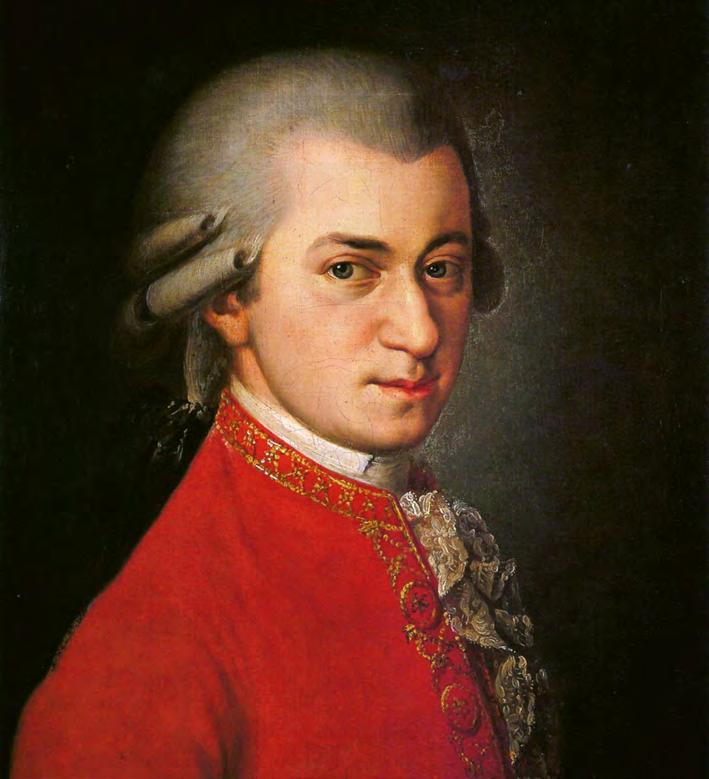
The music of this concerto is more often heard, these days, played on the oboe than on the flute, so it is easy to forget that for years this piece was known only as the Flute Concerto in D. Scholars were aware that Mozart, in spring or summer 1777, had composed a concerto for the oboist Ferlendi (or Ferlendis), who had recently joined the Salzburg court orchestra. The following year, in Mannheim, Mozart described how his new friend Friedrich Ramm, the leading virtuoso oboist of the day, had played his ‘oboe concerto for Ferlendis’ five times. Obviously Mozart had been pleased with his oboe concerto, particularly as Ramm played it. But the work was thought to be lost.
In 1920 the musicologist and conductor Bernhard Paumgartner discovered in the library of the Salzburg Mozarteum a set of orchestral parts for a concerto in C major for oboe by Mozart, which was obviously an oboe version of his D major flute concerto. The familiar flute version had been prepared in 1778 to fulfil the commission of a Dutch amateur, De Jean, for two flute concertos. Most probably Mozart had composed one (the Flute Concerto in G major, K.313) then, pressed for time, adapted the oboe concerto.
In 1948 Paumgartner edited a published edition of the oboe concerto, and supported it with an article in the Mozart Yearbook (1950). Closer examination confirmed that the Flute Concerto in D major is the oboe concerto in disguise: it does not use the full range of notes available on the flutes of Mozart’s day, and the range of the violin part in the orchestra
also points to the likelihood of transposition from a C major original.
Those who, observing the idiomatic mastery of the oboe in the quartet Mozart composed for Ramm (K.370), regret that Mozart did not provide Ramm with a concerto as well, are forgetting that Ramm was probably perfectly satisfied with the concerto originally composed for Ferlendis: this one! The C major concerto is now central to the oboe repertoire. These days, oboists have found that conservative concert managements tend to ask for this Mozart concerto in preference to all other oboe concertos, and it is the flute version which is in danger of being devalued.
In either form, the concerto is a deft and refined essay in the classical style, with a galant manner. There are many ingenious and witty touches, such as the mock-serious cadence figure with repeated notes and a descending arpeggio which the soloist later extends. Donald Tovey finds opera buffa malice from the second violins, and tuttis crowded with contrapuntal and operatic life – typical Mozartian concerto writing, in other words, but never drawing attention to its skill.
The second movement (Adagio non troppo), in F major, is mainly a lyrical cantilena for the soloist, framed by what Tovey calls quasi-heroic gestures from the orchestra. A character in a slightly later opera by Mozart gives the feeling of the Rondo: Blonde, the pert English servant girl in The Abduction from the Seraglio, in whose aria ‘Welche Wonne, welche Lust’ (Oh what pleasure, oh what joy!) Mozart returned to a variant of this rondo theme. In the second episode of the Rondo, first and second violins chase one another in a passage in three-part canonic counterpoint, worthy of the ingenuity of an improvising organist, and underpinned by a pedal note on the horns. That’s how it looks on the page – organ is the last thing the hearer would think of. Entertainment and the opportunity for virtuoso display is the keynote here.
David Garrett © 2002
Béla Bartók (1881–1945)
Concerto for Orchestra
Introduzione (Andante non troppo –Allegro vivace)
Giuoco delle coppie (Allegretto scherzando)
Elegia (Andante non troppo)
Intermezzo interrotto (Allegretto)
Finale (Pesante – Presto)
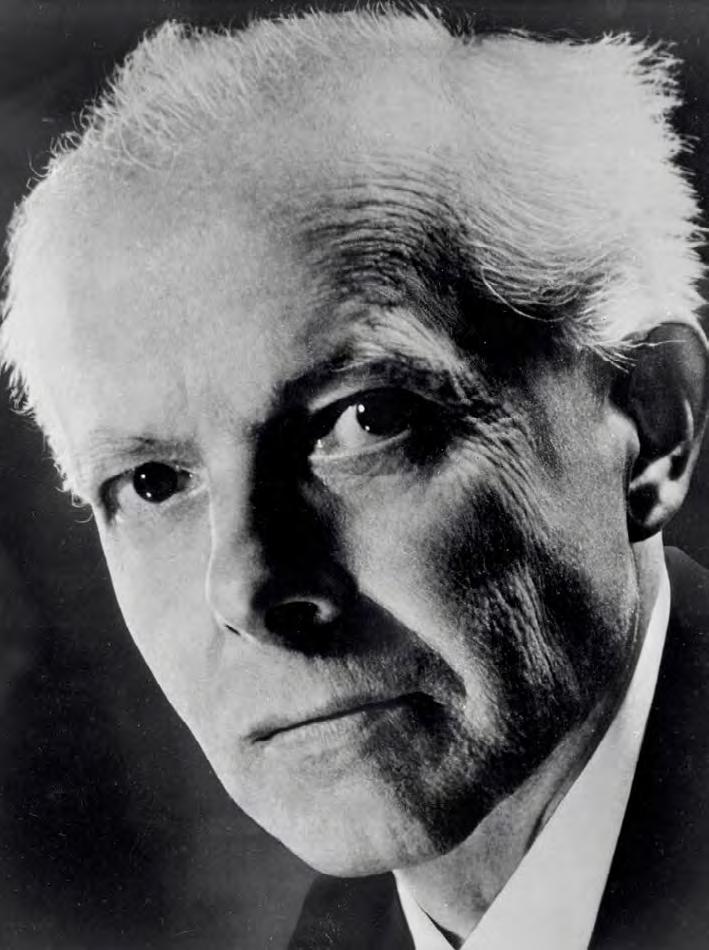
Bartók himself described the Concerto for Orchestra in a program note as ‘a gradual transition from the sternness of the first movement…to the life-assertion of the last one’. The piece was composed during the autumn of 1943 by the idyllic Saranac Lake in upstate New York, and was premiered by the Boston Symphony Orchestra under Serge Koussevitzky in December 1944. As its title suggests, it is more than a symphony, rather a work where, as Bartók put it, ‘single instruments or instrumentgroups’ are treated ‘in a concertant or soloistic manner’.
In view of his circumstances at the time it is hard to imagine how Bartók could speak in terms of life-assertion, let alone produce such a sustained piece of beautifully crafted and radiant music. Bartók and his wife (also a pianist) had arrived in the USA as refugees from fascism in 1940 and made a precarious living from performances and teaching. Early in 1943, Bartók’s health deteriorated. The trip to Saranac Lake – paid for by the American Society for Composers, Authors and Publishers – was for him to convalesce after a mysterious illness that proved to be the early signs of leukemia; the commission from Koussevitzky was secretly brokered by fellow Hungarian emigrés to help Bartók’s dire finances.
While the Concerto makes a linear transition from sternness to life-affirmation, it is, formally, symmetrical – an example of what scholars call ‘arch-form’. The outer movements, and the even-numbered ones, mirror each other in their duration and tempo, and the whole work pivots on the central Elegia.
The work begins mysteriously, producing a motif of rising perfect fourths (a reminiscence of Bartók’s 1911 opera, Bluebeard’s Castle) that will return, inverted, in the Elegia. It leads to an impassioned, buoyant Allegro section, a rich mosaic of orchestral colour that offers moments of quiet delicacy and reaches its climax in a jubilant cacophony of hunting calls (perfect fourths again) from the brass.
The second movement, Giuoco delle coppie (Game of pairs, or as Bartók later named it, Presentando le coppie), is introduced by a passage of drum taps, after which pairs of instruments state a perky tune that is always harmonised in mellifluous sixths – until the muted trumpets insist on playing it in dissonant parallel seconds. This musical joke is dispelled by a solemnly glowing ‘chorale’ passage from the rest of the brass,
before a return to a version of the original material.
The Elegia that follows, with its folk melodies and birdcalls, reflects Bartók’s grief at leaving a homeland that would be forever changed, but this spills over into sarcastic anger in the fourth movement (Intermezzo). A deceptively simple Balkan tune, passed among the winds, alternates with a broad ‘Hungarian’ melody in the strings. The clarinet then introduces a parody of the ‘fascist’ march theme from Shostakovich’s Leningrad Symphony (No. 7), whose popularity Bartók despised, which is in turn crushed by loud raspberries from the trombone section.
The Finale is a thrilling compendium of orchestral colour, the energetic repetition of ostinatos, and passages of masterful counterpoint. Bartók proudly reported that Koussevitzky thought it ‘the “best orchestra piece in the last 25 years”, including the works of his idol Shostakovich’.
Gordon Kerry © 2014
Are you our next MSO Guardian?
“I’ve benefitted so much from the MSO. Ilove knowing that my support will enable others to benefit from the MSO’s transformative music experiences.”
Jennifer Henry, MSO Guardian and Patron
Leaving a gift in your Will to the MSO ensures your story– and the orchestra you love– lives on in perpetuity. We are honoured to play an important role in your musical journey and invite you to become our next Guardian of the MSO.
Scan the QR code to learn more or call (03) 8646 1551 to speak with a member of the MSO Philanthropy team.
MSO Patron
Her Excellency Professor, the Honourable
Margaret Gardner AC, Governor of Victoria
Honorary Appointments
Chair Emeritus
Dr David Li AM
Life Members
John Gandel AC and Pauline Gandel AC
Jean Hadges ♡
Sir Elton John CBE
Lady Primrose Potter AC
Jeanne Pratt AC
Lady Marigold Southey AC
Michael Ullmer AO and Jenny Ullmer
MSO Ambassador
Geoffrey Rush AC
Artist Chair Benefactors
Cybec Assistant Conductor Chair
Daniel Corvaia
Cybec Foundation
MSO Now & Forever Fund: International Engagement Gandel Foundation
Artist Development Programs –
Cybec Foundation
Cybec Young Composer in Residence
Cybec First Nations Composer in Residence
Cybec 21st Century Australian Composers Program
Community and Public Programs
Australian Government Department of Health, Disability and Ageing, AWM Electrical, City of Melbourne, Hansen Little Foundation, Prof. Mary-Jane Gething AO, Besen Family Foundation, Gandel Foundation
Student Subsidy Program Anonymous
Jams in Schools
Melbourne Airport, Department of Education, Victoria – through the Strategic Partnerships Program, AWM Electrical, Jean Hadges, Hume City Council, Marian and EH Flack Trust
Regional Touring
AWM Electrical, Freemasons Foundation
Victoria, Sir Andrew and Lady Fairley Foundation, Rural City of Wangaratta, Estate of the late Blanch Brooke Hutchings, Perpetual Foundation – Alan (AGL) Shaw Endowment
Sidney Myer Free Concerts
Sidney Myer MSO Trust Fund and the University of Melbourne, City of Melbourne Event Partnerships Program
MSO Academy
Robert Salzer Foundation
Instrument Fund
Tim and Lyn Edward, Catherine and Fred Gerardson, Pauline and David Lawton, Joe White Bequest
Platinum Patrons ($100,000+)
AWM Electrical Q
Prof Mary-Jane Gething AO ♡
The Gross Foundation ♡
Dr David Li AM and Angela Li Q
Lady Primrose Potter AC Anonymous (2)
Virtuoso Patrons ($50,000+)
The Aranday Foundation Q
Besen Family Foundation
Mrs Jennifer Brukner OAM Q
Tim and Lyn Edward ♡ ♫
Gandel Foundation
Dr Harry Imber ♡
Margaret Jackson AC ♡
Lady Marigold Southey AC Q
The Yulgilbar Foundation Q
Impresario Patrons ($20,000+)
Michael Aquilina
Christine and Mark Armour
Ren Barlow
Shane Buggle and Rosie Callanan ♡ Q
Krystyna Campbell-Pretty AM
Debbie Dadon AM Q
Edwards Family Trust Q
Catherine and Fred Gerardson
The Hogan Family Foundation
Pauline and David Lawton
Paul Noonan
Elizabeth Proust AO and Brian Lawrence ☼
Sage Foundation ☼
Kim Williams AM ♫ Anonymous (1)
Maestro Patrons ($10,000+)
John and Lorraine Bates ☼
Margaret Billson and the late Ted Billson ♡
Cooper Investors
The Cuming Bequest
Miss Ann Darby in memory of Leslie J. Darby
Anthony and Marina Darling Q
Andrew Dudgeon AM ♡
Andrew and Theresa Dyer Q ♡
Val Dyke ♡
Fancourt Capital Group Q
The Finkel Foundation Q
Bill Fleming Q
Kim and Robert Gearon ♡
Charles & Cornelia Goode Foundation Q
Cecilie Hall and the late Hon Michael Watt KC ♡ ♫
Hanlon Foundation ♡
Ryan Harkness
Michael Heine Q
Jo Horgan AM & Peter Wetenhall Q
David Horowicz ♡ Q
Peter T Kempen AM ♡ Q
Owen and Georgia Kerr Q
Suzanne Kirkham
Peter Lovell
Janet Matton AM & Robin Rowe Q
Allan and Evelyn McLaren
Rosemary and the late Douglas Meagher ♡
The Mercer Family Foundation
The Myer Foundation
Patricia Nilsson ♡
Dr Justin O’Day and Sally O’Day Q
Ian and Jeannie Paterson
Prior Family Foundation
Ralph and Ruth Renard
RQ Squared Consulting
Quin and Lina Scalzo Q
Glenn Sedgwick ♡ Q
Cathy Simpson and John Simpson AM Q
David Smorgon OAM and Kathie Smorgon Q
Straight Bat Private Equity Q
Athalie Williams and Tim Danielson
Lyn Williams AC Q
Peter Yunghanns Q
Igor Zambelli
Anonymous (2)
Principal Patrons ($5,000+)
Andyinc Foundation
Mary Armour
Arnold Bloch Leibler Q
Philip Bacon AO Q
Barbara Bell in memory of Elsa Bell
Natasha Bowness
Julia and Jim Breen
Nigel and Sheena Broughton
Jannie Brown
Chasam Foundation Q
♡ Chair Sponsor | Q 2025 Europe Tour Circle | ☼ First Nations Circle ♫ Commissioning Circle | ∞ Future MSO
Janet Chauvel and the late Dr Richard Chauvel
John Coppock OAM and Lyn Coppock
Mrs Jolene S Coultas ♡
Philip Crutchfield KC
David and Kathy Danziger
Mary Davidson and the late Frederick Davidson AM
Sandra Dent
Carol des Cognets
Craig Drummond
George and Laila Embelton Q
Equity Trustees ☼
Diane and Stephen Fisher
John and Diana Frew ♡
Carrillo Gantner AC and Ziyin Gantner
Geelong Friends of the MSO
The Glavas Family ♡
Colin Golvan AM KC and Dr Deborah Golvan
Louise Gourlay AM Q
Dr Rhyl Wade and Dr Clem Gruen ♡
Louis J Hamon OAM
Dr Keith Higgins and Dr Jane Joshi
Geoff and Denise Illing
Dr Alastair Jackson AM Q
Amy and Paul Jasper
John Jones
Merv Keehn and Sue Harlow
Mr Ian Kennedy AM & Dr Sandra Hacker AO
Lucas Family Foundation ♡
Morris and Helen Margolis ♡
Samantha Mark
Gary McPherson ♡
Suzie and Edgar Myer ♡
Rupert Myer AO and Annabel Myer
Anne Neil in memory of Murray A. Neil ♡
Sophie Oh
Phillip Prendergast Q
Jan and Keith Richards
Dr Rosemary Ayton and Professor Sam Ricketson AM
The Kate and Stephen Shelmerdine Family Foundation Q
Dr Michael Soon
Harry Stamoulis
Gai and David Taylor
The Upotipotpon Foundation Q
Kee Wong and Wai Tang Q
Dawna Wright and Peter Riedel ♡
Shirley and Jeffrey Zajac
Anonymous (5)
Barry and Margaret Amond
Carolyn Baker
Ariane Barker
Michael Bartlett
Janet H Bell
Allen and Kathryn Bloom
Boncal Family Foundation
Drs Alan and Jennifer Breschkin
Stuart Brown
Dr Giovanni Butera
Dr Lynda Campbell
Oliver Carton
Christine Clough
Caroline Davies
Leo de Lange
Escala Partners
Donald Farrands KC
James Flintoft and Siobhan McKenna
Martin Foley Q
Barry Fradkin OAM and Dr Pam Fradkin
Anthony Garvey and Estelle O’Callaghan
Janette Gill
Glenholme Foundation
R Goldberg and Family
Miss Catherine Gray
Christine Grenda
Susan and Gary Hearst
Sandy Jenkins
Julie Kantor AO and Michael Kantor
Ann Lahore
Halina Lewenberg Charitable Foundation
Dr Jenny Lewis
Liza Lim AM ♫
Andrew Lockwood
Chris McDermott
Peter McMullin AM
Lisa and Brad Matthews
Dr Paul Nisselle AM
George Pappas AO, in memory of Jillian Pappas
Roger Parker and Ruth Parker
Alan and Dorothy Pattison
Liz and Graham Pratt
James Ring
Tom and Elizabeth Romanowski
Dr Ronald and Elizabeth Rosanove
Christopher Menz and Peter Rose
Gillian Ruan Q
Viorica Samson
Meredith Schilling SC
Marshall Segan in memory of Berek Segan OBE AM and Marysia Segan
Adam Seward
Steinicke Family
Jenny Tatchell
Aaron Turner
Christina Turner
Timothy Walker CBE AM
Janet Whiting AM and Phil Lukies Q
Bob Weis
Anonymous (5)
Player Patrons ($1,000+)
Dr Sally Adams
Don Adamson
Jessica Agoston Cleary ∞
Applebay Pty Ltd
Margaret Astbury
Geoffrey and Vivienne Baker
Marlyn Bancroft and Peter Bancroft OAM
Mr Robin Batterham
Kate Beattie
Peter Berry and Amanda Quirk
Rick Berry
William Birch
Michael Bowles and Alma Gill
Joyce Bown
Drs John D L Brookes and Lucy V Hanlon
Suzie Brown OAM and the late Harvey Brown
Roger and Coll Buckle
Jill and Christopher Buckley
Ronald Burnstein
John Chapman and Elisabeth Murphy
Kaye Cleary
Warren and Margaret Collins
Sue Dahn
Mrs Nola Daley
Panch Das and Laurel Young-Das
Michael Davies and Drina Staples
Rick and Sue Deering
John and Anne Duncan
Christopher R Fraser
Chris Freelance
Miles George
David I Gibbs AM and Susie O’Neill
Sonia Gilderdale
Joy and Dr Henry Glennie
Dr Celia Godfrey
Dr Marged Goode
Fred and Alexandra Grimwade Q
Hilary Hall, in memory of Wilma Collie
David Hardy
Cathy Henry
Gwenda Henry
Michael Hill
Anthony and Karen Ho
In Memory of Rosemary Hodgson
Anna Holdsworth
Rod Home
Lorraine Hook
Doug Hooley
Katherine Horwood
Penelope Hughes
Basil and Rita Jenkins
Wendy Johnson
Sue Johnston
Dr Gint Kalpokas and Dr Michael Upson
Drs Bruce and Natalie Kellett
Dr Anne Kennedy
In memory of Tannah Kirkman
Tim Knaggs
Melissa Tonkin & George Kokkinos
Dr Jerry Koliha and Marlene Krelle
Jane Kunstler
Wilson Lai and Anita Wong Q
Kerry Landman
Janet and Ross Lapworth
Rex Lau
Bryan Lawrence
Phil Lewis
David R Lloyd
Elizabeth H Loftus
Dr Helen MacLean
Sandra Masel in memory of Leigh Masel
Wayne McDonald and Kay Schroer
Andrea McCall
Lesley McMullin Foundation
Dr Eric Meadows
Sylvia Miller
Susan Morgan ∞
Ian Morrey and Geoffrey Minter
Dr Anthony and Dr Anna Morton
Dr Judith S Nimmo
Rosemary O’Connor
Brendan O’Donnell
Phil Parker
Bruce Parncutt AO
Ian Penboss
Ronald Pitcher AM
Peter Priest
Professor Charles Qin OAM and Kate Ritchie
Eli and Lorraine Raskin
Michael Riordan and Geoffrey Bush
Cathy Rogers OAM and Dr Peter Rogers AM
The Rowe Family
Marie Rowland
Liliane Rusek and Alexander Ushakoff
Martin and Susan Shirley
P Shore
Kieran Sladen
Janet and Alex Starr
Dr Peter Strickland
Bernard Sweeney
Russell Taylor and Tara Obeyesekere
Frank Tisher OAM and Dr Miriam Tisher
Margaret Toomey
Andrew and Penny Torok
Chris and Helen Trueman
Ann and Larry Turner
Dr Elsa Underhill and Professor Malcolm Rimmer
Nicholas and Faith Vann
Edward and Paddy White
Willcock Family
Robert and Diana Wilson
Anonymous (20)
Overture Patrons ($500+)
Anna A’Beckett
Margaret Abbey PSM
Vera Afanasyeva
Jane Allan and Mark Redmond
Jenny Anderson
Doris Au
Lyn Bailey
Robbie Barker
Anne M Bowden
Caroline Bowler
Stephen and Caroline Brain
Robert Bridgart
Miranda Brockman
Dr Robert Brook
Christine Brown
Elizabeth Brown
Phillip Brown
Patricia Buchanan
Marc Buchholz and Stephan Duchesne
Ian Carson AM
Dr Catherine Cherry
Dr Hyein Ellen Cho
Alan and Wendy Chuck
Robert and Katherine Coco
Gregory Crew
Sue Cummings
Dr John Daley and Dr Rebecca Coates
Dr Matthew Dunn
Jane Edmanson OAM
Ron Elisha
Vivien and Jack Fajgenbaum
Brian Florence
Nadine Fogale
Elizabeth Foster
M C Friday
Nikki Gaskell
Lili Gearon
Dr Julia Gellatly
David and Geraldine Glenny
Hugo and Diane Goetze
Eva Gory
The late George Hampel AM KC and Felicity Hampel AM SC
Dr Neville Hathaway
Geoff Hayes
Alison Heard
Noela Henderson
Dr Jennifer Henry
C M Herd Endowment
William Holder
Oliver Hutton and Weiyang Li
Rob Jackson
Shyama Jayaswal
Chris and Merryl Jessup
Karen Johnson
Tony and Nathalie Johnson
Linda Jones
John Keys
Lesley King
Dr Judith Kinnear
Dr Richard Knafelc and Mr Grevis Beard
Heather Law
Peter Letts
Sarah and Andrew Lindsay
Elena Lovu
Janice Mayfield
Dr James McComish
Joel McGuinness
Gail McKay
Jennifer McKean
Shirley A McKenzie
Richard McNeill
Alison Milne
Professor Heather Mitchell
Lisa Mitchell
Joan Mullumby
Yoko Murakoshi
Rebecca-Kate Nayton
Adrian and Louise Nelson
Marian Neumann
Ed Newbigin
Valerie Newman
Amanda O’Brien
Phil Parker
The Hon Chris Pearce and Andrea Pearce
Jason Peart
Sienna di Pietro and Lewis Pierce
Geoffrey Ravenscroft
Ian Reddoch
Dr Christopher Rees
Fred and Patricia Russell
Julia Schlapp
Faye Simpson
Irene Sutton
Tom Sykes
Allison Taylor
Hugh and Elizabeth Taylor
Lily Tell
Serey Thir
Geoffrey Thomlinson
Wendy Thorpe OAM
Mely Tjandra
Rosemary Warnock
Amanda Wasilewski
Amanda Watson
Deborah and Dr Kevin Whithear OAM
David Willersdorf AM and Linda Willersdorf
Charles and Jill Wright
Richard Ye
Anonymous (12)
MSO Guardians
Jenny Anderson
David Angelovich
Lesley Bawden
Peter Berry and Amanda Quirk
Tarna Bibron
Joyce Bown
Patricia A Breslin
B J Brown
Jannie Brown
Jenny Brukner and the late John Brukner
Sarah Bullen
Georgie and Phil Burg
Peter A Caldwell
Peter Cameron and Craig Moffatt
Luci and Ron Chambers
Roger Chao
Sandra Dent
James Dipnall
Sophie E Dougall in memory of Libby Harold
Alan Egan JP
Gunta Eglite
Marguerite Garnon-Williams
Dr Clem Gruen and Dr Rhyl Wade
Louis J Hamon OAM
Charles Hardman and Julianne Bambacas
Carol Hay
Dr Jennifer Henry
Graham Hogarth
Rod Home
David Horowicz
Lyndon Horsburgh
Katherine Horwood
Tony Howe
Lindsay Wynne Jacombs
Michael Christopher Scott Jacombs
John Jones
Merv Keehn and Sue Harlow
Pauline and David Lawton
Robyn and Maurice Lichter
Christopher Menz and Peter Rose
Dr Helen MacLean
Andrea McCall
Cameron Mowat
Laurence O’Keefe and Christopher James
David Orr
Matthew O’Sullivan
Rosia Pasteur
Kerryn Pratchett
Penny Rawlins
Margaret Riches
Anne Roussac-Hoyne and Neil Roussac
Michael Ryan and Wendy Mead
Anne Kieni Serpell and Andrew Serpell
Jennifer Shepherd
Suzette Sherazee
Professors Gabriela and George Stephenson
Pamela Swansson
Frank Tisher OAM and Dr Miriam Tisher
Mr and Mrs R P Trebilcock
Christina Helen Turner
Michael Ullmer AO
The Hon Rosemary Varty
Francis Vergona
Mr Steve Vertigan and Ms Yolande van Oosten
Tam Vu and Dr Cherilyn Tillman
Robert Weiss and Jacqueline Orian
Terry Wills Cooke OAM and the late Marian Wills Cooke
Mark Young Anonymous (18)
The MSO gratefully acknowledges the support of the following Estates
Norma Ruth Atwell
Angela Beagley
Barbara Bobbe
Michael Francois Boyt
Christine Mary Bridgart
Margaret Anne Brien
Ken Bullen
Deidre and Malcolm Carkeek
Elizabeth Ann Cousins
The Cuming Bequest
Margaret Davies
Blair Doig Dixon
Neilma Gantner
Angela Felicity Glover
The Hon Dr Alan Goldberg AO QC
Derek John Grantham
Delina Victoria Schembri-Hardy
Enid Florence Hookey
Gwen Hunt
Family and Friends of James Jacoby
Audrey Jenkins
Joan Jones
Pauline Marie Johnston
George and Grace Kass
Christine Mary Kellam
C P Kemp
Jennifer Selina Laurent
Sylvia Rose Lavelle
Dr Elizabeth Ann Lewis AM
Peter Forbes MacLaren
Joan Winsome Maslen
Lorraine Maxine Meldrum
Professor Andrew McCredie
Jean Moore
Joan P Robinson
Maxwell and Jill Schultz
Miss Sheila Scotter AM MBE
Marion A I H M Spence
Gwennyth St John
Molly Stephens
Halinka Tarczynska-Fiddian
Jennifer May Teague
Elisabeth Turner
Albert Henry Ullin
Cecilia Edith Umber
Jean Tweedie
Herta and Fred B Vogel
Diana Whitehead
Dorothy Wood
Joyce Winsome Woodroffe
The MSO honours the memory of Life Members
The late Marc Besen AC and the late Eva Besen AO
John Brockman OAM
The Hon Alan Goldberg AO QC
Bertha Jorgensen MBE
Harold Mitchell AC
Roger Riordan AM
Ila Vanrenen
Listing current as of 12 May 2026
The MSO relies on the generosity of our community to help us enrich lives through music, foster artistic excellence, and reach new audiences. Thank you for your support.
♡ Chair Sponsors – supporting the beating heart of the MSO.
Q 2025 Europe Tour Circle patrons –elevating the MSO on the world stage.
☼ First Nations Circle patrons –supporting First Nations artist development and performance initiatives.
♫ Commissioning Circle patrons –contributing to the evolution of our beloved art form.
∞ Future MSO patrons – the next generation of giving.
The MSO welcomes support at any level. Donations of $2 and over are tax deductible.
MSO Board
Chair
Edgar Myer
Co-Deputy Chairs
Martin Foley
Farrel Meltzer
Board Directors
Shane Buggle
Tony Grybowski
Lorraine Hook
Chris Howlett
Joel McGuinness
Gary McPherson
Lisa Mitchell
Meredith Schilling SC
Mary Waldron
Company Secretary
Randal Williams
MSO Artistic Family
Jaime Martín Chief Conductor and Artistic Advisor
Benjamin Northey Principal Guest Conductor
Daniel Corvaia Cybec Assistant Conductor
Sir Andrew Davis CBE † Conductor Laureate (2013–2024)
Hiroyuki Iwaki † Conductor Laureate (1974–2006)
Warren Trevelyan-Jones MSO Chorus Director
Karen Kyriakou Artist in Residence –Learning and Engagement
Christian Li Young Artist in Association
Joe Chindamo Composer in Residence
Andrew Aronowicz Cybec Young Composer in Residence
James Henry Cybec First Nations Composer in Residence
Xian Zhang, Lu Siqing, Tan Dun Artistic Ambassadors
MSO Staff
Richard Wigley
Chief Executive Officer
ARTISTIC OPERATIONS
Simonette Turner Director of Orchestra & Operations
Meg Bowker Orchestra Manager
Ffion Edwards Orchestra Manager
Callum Moncrieff Head of Operations
Andrew Robinson Production Lead
Nicholas Cooper Operations Lead
Katharine Bartholomeusz-Plows Head of Artistic Planning
Keturah Haisman Artistic & Engagement Manager
Veronika Reeves Artistic Administrator
Julia Potter Artistic Coordinator
Jennifer Collins Principal Librarian
Glynn Davies Orchestra Librarian
Meg Baker Chorus Administrator
Nicholas Bochner
Head of Learning & Engagement
Fergus Inder Jams Program Coordinator
Erika Noguchi
Executive Producer, MSO Presents
Rebecca Moore
Associate Producer, MSO Presents
Monica Curro MSO+ Creative Director
Emma Wigley MSO+ Producer
Suzanne Dembo Chief Operating Officer
Caroline Buckley Head of Strategic Priorities
Sally Hern Head of Digital Experience
Allison Blahna Director of Development
Charlotte Crocker
Philanthropy Programs Lead
Isobel Lake Grants & Reporting Lead
Keith Clancy Donor Liaison
Nellie McLean Head of Partnerships
Nina Dubecki Events & Partnerships Lead
Jayde Walker Director of Brand & Communications
Phil Paschke
Senior Manager, Content & Digital
Samantha Meuleman
Digital Content Lead
Prue Bassett
Publicity Manager
Beckie Peel
Social Media Coordinator
Dylan Stewart Director of Marketing & Sales
Laura Mitton
Campaign Marketing Manager
Claudia Biaggini
Senior Marketing Coordinator
Leah Toyne
Marketing Administrator
Alison Kearney
Customer Experience Manager
Ben Wallace
Box Office Manager
Nicole Rees
CRM & insights Manager
Sam Harvey
CRM & Data Specialist
Marta Arquero
Ticketing & Customer
Experience Coordinator
Box Office Attendants
Angela, Ashley, Bec, Bradd, Christine, Emil, Jessica, Josh, Kara, Kez, Leah, Lucy, Maeve, Sasha, Stephanie
Anita Drake Chief Financial Officer
Sonia Yakub
Senior Management Accountant (on leave)
Susan Teele Management Accountant
Laura Estupiñan Accountant
Marilen Manalo
Assistant Accountant
Jess Kirkman Payroll Officer
Matthew Bagi Project Officer
Holly Wighton People & Culture Lead
Major Partner
Supporting
Supporting Partners
Paul Noonan, Keypoint Law
Training and Education Partners
Trusts and Foundations
Broadcast and Production Partners
Venue Partners