July–August 2026
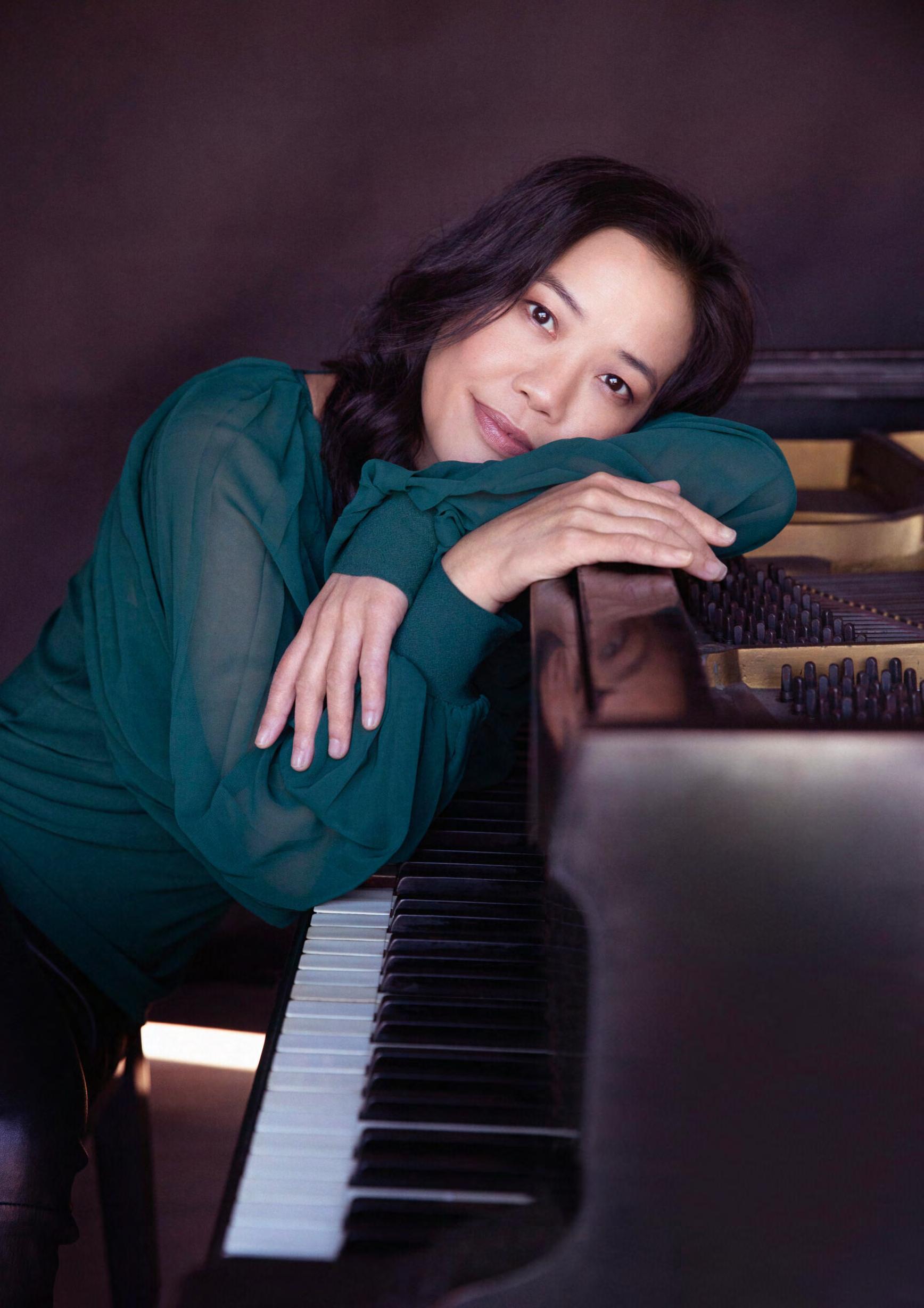
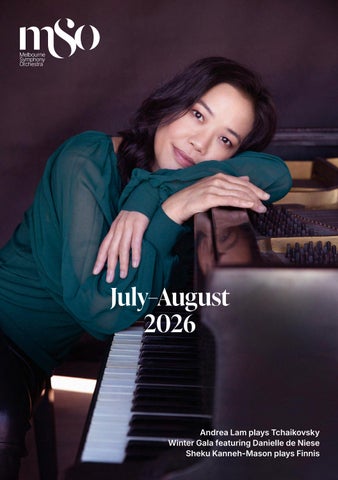
Andrea Lam plays Tchaikovsky
Winter Gala featuring Danielle de Niese
Sheku Kanneh-Mason plays Finnis
July–August 2026
The MSO has developed a musical Acknowledgement of Country with composer James Henry to pay our respects to the traditional owners of the land through the language of orchestral music.
James Henry’s position is supported by Cybec Foundation
‘I wrote this piece to reflect the complex journey toward the recognition of Aboriginal people as the traditional custodians of the land. It opens with rhythms inspired by the character of traditional songs found across many parts of Australia. From this texture, a melody emerges, representing the long period during which Aboriginal ownership of land was disregarded. The piece traces both progress and setbacks over time.
‘With the passing of the Victorian Statewide Treaty Bill, there is a renewed sense of optimism among many Aboriginal Victorians. Through Acknowledgement, I seek to convey a feeling of determination and resilience, reflecting the ongoing work to improve the quality of life for Aboriginal people, and to deepen respect for and awareness of our distinct culture, history and enduring connection to Country.’
James Henry 2025–2026 Cybec First Nations Composer in Residence
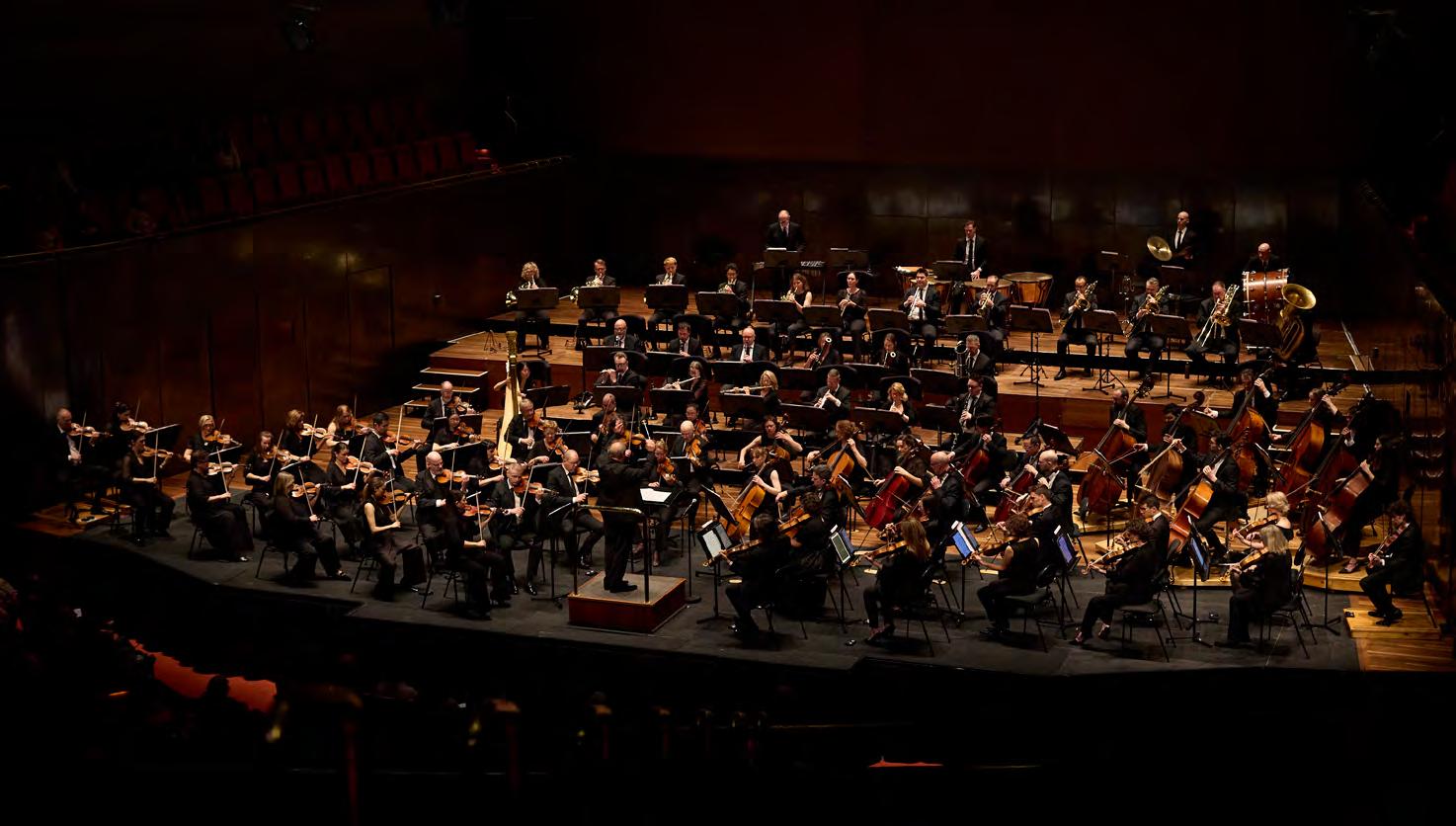
The Melbourne Symphony Orchestra is Australia’s preeminent orchestra, dedicated to creating meaningful experiences that transcend borders and connect communities. Through the shared language of music, the MSO performs to the highest standard, enriching lives and inspiring audiences across the globe.
Woven into the cultural fabric of Victoria for 120 years, the MSO reaches five million people annually through performances and TV, radio and online broadcasts, as well as critically acclaimed recordings on its newly established label.
Jaime Martín continues as the MSO Chief Conductor and Artistic Advisor in 2026, leading a diverse and richly talented Artistic Family.
The MSO regularly presents exceptional artists from across the globe in mainstage programming and special events, as well as reaching beyond the customary classical audience with contemporary collaborations. And through a partnership
with the ABC, the MSO’s performances in the Classic 100 in Concert reach more than a million Australians each year.
The first Australian orchestra to perform overseas (1965) and at Carnegie Hall (1970), the MSO has a proud history of international touring that has taken it to China, Indonesia, Singapore, Europe and the UK. Driven by the belief that music is a universal right, the MSO also brings music to all corners of the community, ensuring that everyone can share in the transformative power of music. Whether performing on world stages or in the heart of Victoria, the MSO transforms its mission and vision into reality – enriching lives and creating cultural connections through the unparalleled beauty of music.
Natalie Chee Concertmaster
Tair Khisambeev
Assistant Concertmaster
Peter Edwards
Assistant Principal
Sarah Curro
Dr Harry Imber *
Peter Fellin
Deborah Goodall
Karla Hanna
Dawna Wright and Peter Riedel*
Lorraine Hook
Jolene S Coultas*
Anne-Marie Johnson
David Horowicz*
Kirstin Kenny
Mark Mogilevski
Michelle Ruffolo
Anna Skálová
Kathryn Taylor
Matthew Tomkins Principal
The Gross Foundation*
Jos Jonker
Associate Principal
Monica Curro
Assistant Principal
Dr Mary-Jane Gething AO*
Mary Allison
Emily Beauchamp
Isin Cakmakçioglu
Tiffany Cheng
Val Dyke*
Freya Franzen
Cong Gu
Andrew Hall
Robert Macindoe
Philippa West
Andrew Dudgeon AM*
Patrick Wong
Cecilie Hall*
Roger Young
Shane Buggle and Rosie Callanan*
Violas
Christopher Moore Principal
Lauren Brigden
Katharine Brockman
Anthony Chataway
Peter T Kempen AM*
William Clark
Morris and Helen Margolis*
Aidan Filshie
Suzie and Edgar Myer*
Gabrielle Halloran
Patricia Nilsson
Jenny Khafagi
Margaret Billson and the late Ted Billson*
Fiona Sargeant
For a list of the musicians performing in each concert, please visit mso.com.au/musicians
David Berlin Principal
Rachael Tobin
Associate Principal
Elina Faskhi
Assistant Principal
Rohan de Korte
Andrew Dudgeon AM*
Joshua Jones
Rebecca Proietto
Peter T Kempen AM*
Ariel Volovelsky
Caleb Wong
Rosemary Meagher and the late Douglas Meagher *
Michelle Wood
Andrew and Theresa Dyer*
Double Basses
Jonathon Coco Principal
Rohan Dasika
Acting Associate Principal
Benjamin Hanlon
Acting Assistant Principal
Aurora Henrich
Suzanne Lee
Stephen Newton
Flutes
Prudence Davis Principal
Jean Hadges*
Wendy Clarke
Associate Principal
Sarah Beggs
Piccolo
Andrew Macleod Principal Oboes
Johannes Grosso Principal
Ann Blackburn
Margaret Billson and the late Ted Billson*
Cor Anglais
Michael Pisani Principal Clarinets
David Thomas Principal
Philip Arkinstall Associate Principal
Bass Clarinet
Jonathan Craven Principal Bassoons
Jack Schiller Principal
Dr Harry Imber *
Elise Millman
Associate Principal
Natasha Thomas
Patricia Nilsson* Contrabassoon
Brock Imison Principal
Horns
Nicolas Fleury Principal
Margaret Jackson AC*
Saul Lewis Principal Third Cecilie Halland and the late Hon. Michael Watt KC*
Abbey Edlin
The Hanlon Foundation*
Josiah Kop
Kim and Robert Gearon*
Rachel Shaw
Gary McPherson* Trumpets
Owen Morris Principal
Shane Hooton
Associate Principal Glenn Sedgwick* Callum G’Froerer
Rosie Turner
Dr John and Diana Frew* Trombones
José Milton Vieira Principal
Richard Shirley
Bass Trombone
Michael Szabo Principal
Tuba
Timothy Buzbee Principal
Timpani
Matthew Thomas Principal Percussion
Shaun Trubiano Principal
John Arcaro
Tim and Lyn Edward*
Robert Cossom
Dr Clem Gruen and Dr Rhyl Wade* Harp
Yinuo Mu Principal
Jamie Miles viola
Georgia White clarinet
Hayden Burge bassoon
Jacob Fenchel horn
MSO Academy is supported by the Robert Salzer Foundation
* Position supported by
Thursday 16 July at 7:30pm
Saturday 18 July at 7:30pm Hamer Hall, Arts Centre Melbourne
Friday 17 July at 7:30pm Costa Hall, Geelong
Artists
Melbourne Symphony Orchestra
Tabita Berglund conductor
Andrea Lam piano
Program
Stenhammar Excelsior! [14’]
Tchaikovsky Piano Concerto No. 1 [33’]
interval
Sibelius Symphony No. 2 [44’]
CONCERT EVENTS
Pre-concert talk: Learn more about the music with Sascha Kelly 6:45pm (16 and 18 July) in the Stalls Foyer (Level 2) at Hamer Hall 6:45pm (17 July) at Costa Hall
Running time: 2 hours, including a 20-minute interval. Timings listed are approximate.
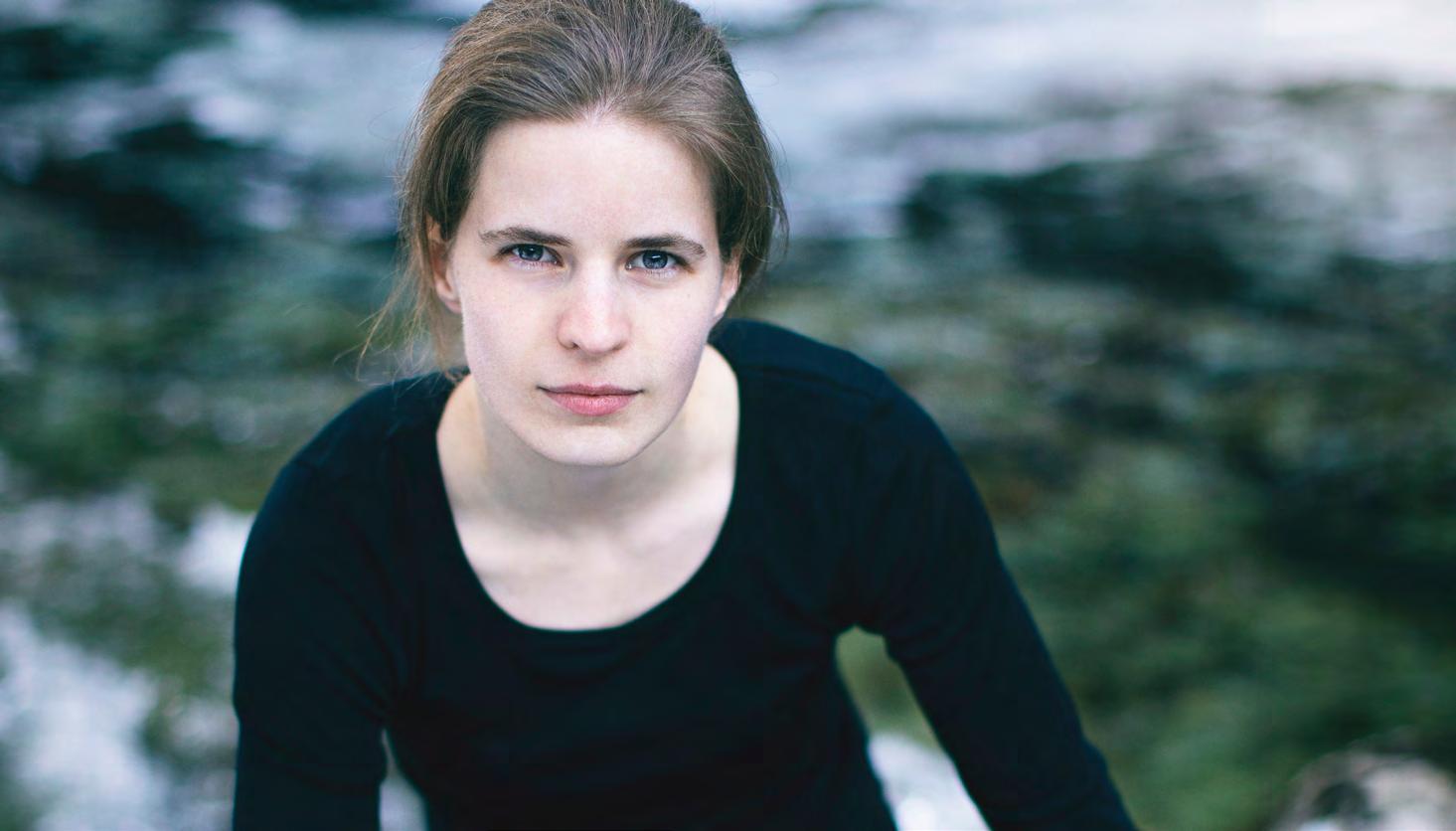
With a charismatic style that combines elegance, verve, and precision, Tabita Berglund collaborates with leading orchestras and soloists worldwide, and she is Principal Guest Conductor of both the Detroit Symphony Orchestra and Dresdner Philharmonie. She studied at the Norwegian Academy of Music, first as a cellist with Truls Mørk and later orchestral conducting with Ole Kristian Ruud. She played regularly in the Oslo and Bergen philharmonic orchestras and Trondheim Soloists before conducting became her main focus, taking up her first titled position as Principal Guest Conductor of the Kristiansand Symphony Orchestra (2021–2024).
Her programming reflects the breadth of her repertoire interests, which range from Mozart and Schubert to Tchaikovsky, Scriabin, Mahler, Bartók, Schoenberg and Lutosławski. She also champions Nordic composers such as Sibelius, Ludwig Irgens-Jensen and Anna Thorvaldsdottir.
Debut appearances in the 2025–26 season included the Frankfurt Radio Symphony,
NDR Elbphilharmonie Orchester, Deutsches Symphonie-Orchester Berlin, Staatskapelle Berlin, and the Cincinnati, St Louis, Sydney and Melbourne symphony orchestras. She also conducted a Northern Lights Festival in Detroit.
Other recent engagements include the Los Angeles Philharmonic, Houston Symphony, Minnesota Orchestra, Tokyo Metropolitan Symphony Orchestra, Gürzenich-Orchester Köln, Bamberger Symphoniker, Royal Stockholm Philharmonic Orchestra, Philharmonia Orchestra, Orchestre de chambre de Paris, and the Iceland and Polish National Radio symphony orchestras. In the theatre she has conducted The Marriage of Figaro (Garsington Opera) and The Nutcracker (Norwegian National Opera and Ballet). Her debut recording, with the Oslo Philharmonic and violinist Sonoko Miriam Welde performing the Bruch and Barber concertos, was nominated for a Norwegian Grammy (Spellemann) in the 2022 Classical Music category.
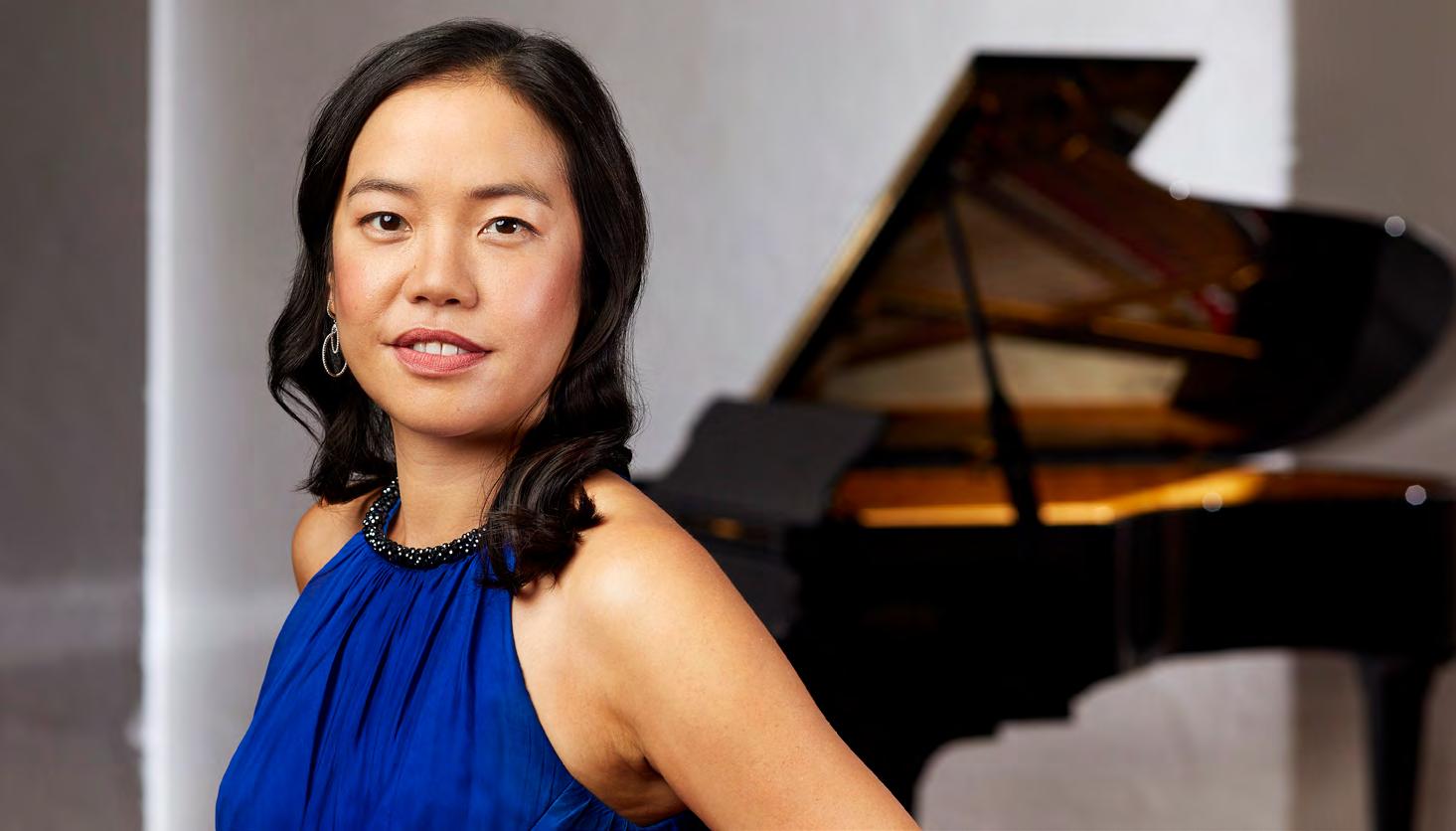
Andrea Lam made her concerto debut with the Sydney Symphony Orchestra at 13 and was the Keyboard finalist of the 1999 ABC Young Performers Awards. Since then she has appeared as soloist with leading orchestras including the Hong Kong Philharmonic and New Zealand Symphony orchestras, as well as all the major Australian symphony orchestras, and has played to audiences from New York’s Carnegie Hall to the Sydney Opera House.
Having returned to Australia after two decades in New York, Andrea featured in the Sydney Opera House International Piano Day 2020 and 2022 livestreams, appeared in the 2023 and 2025 ABC Classic 100 concert broadcasts, and last year performed before an audience of 8,000 in the Sidney Myer Music Bowl.
Other recent highlights have included an acclaimed national tour of Bach’s Goldberg Variations (Musica Viva), recitals for the Sydney Opera House Utzon Music Series, and appearances for the Chelsea Music Festival (NYC) and Grand Teton Music Festival. Last year she won the 2025 ARIA
Award for Best Classical Album with her chart-topping Piano Diary.
In addition to the MSO, this season Andrea performs with the West Australian and Adelaide symphony orchestras, Auckland Philharmonia and Melbourne Chamber Orchestra; in recital with Bryn Terfel for the SSO; and in Four Winds (NSW) where she is Artistic Curator.
Andrea has featured in national television programs, including Andrea’s Concerto, as a guest on ABC TV’s Spicks and Specks and A Bite to Eat with Alice, and as the classical expert on the hit series The Piano, which earned her a nomination for Most Popular New Talent in this year’s Logie Awards. She recently made her radio debut presenting The Art of the Piano on ABC Classic.
Andrea holds degrees from the Manhattan School of Music and Yale University. She is a Lecturer in Piano at the Melbourne Conservatorium of Music and sits on the board of the Australian National Academy of Music.
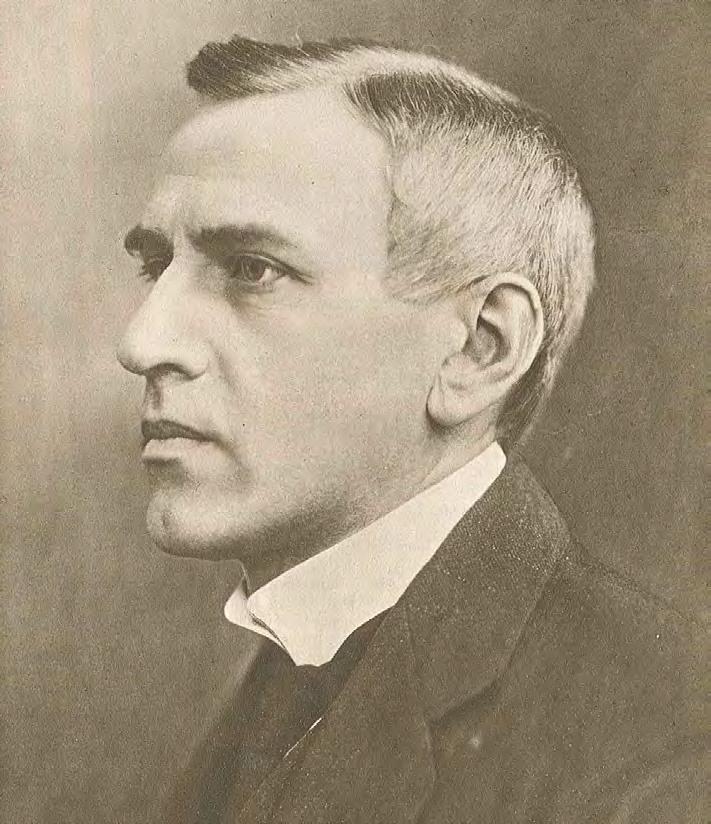
Wilhelm Stenhammar (1871–1927)
Excelsior! –Symphonic overture, Op. 13
‘Excelsior’ is the kind of word that turns up in school mottos. It’s a Latin word of high ideals – ‘higher’, ‘loftier’, ‘ever upward’ –and its striving spirit must have appealed to 19th-century Romantics. It provides the title and theme for an 1841 poem by Henry Wadsworth Longfellow, and is the title of the prelude to Liszt’s cantata The Bells of Strasburg Cathedral (1874), inspired by Longfellow’s Golden Legend. Excelsior was also the title of an 1881 ballet by Luigi Manzotti, celebrating scientific and industrial progress. In 1896, the young Stenhammar joined the aspiring ranks.
Stenhammar was a precocious talent: his song cycle Florez och Blanzeflor, completed when he was 20, caused a sensation. Soon after, he made his debut as a concert pianist, performing his own Brahms-influenced piano concerto with the Berlin Philharmonic and Richard
Strauss. And it was the Berlin Philharmonic, with Arthur Nikisch, that gave the premiere of Excelsior! in 1896.
But the overture did not enjoy the same success and Stenhammar – his own severest critic – was disappointed. He wrote to his publisher: ‘I think that you are all correct, that the piece does not live up to what you have the right to expect from me and from its title.’
The overture enjoyed just two more performances in Stenhammar’s lifetime. He chose it for his conducting debut (with the Royal Swedish Orchestra in 1897) and programmed it in Gothenburg when he was chief conductor there. After the second performance, Stenhammar wrote again to his publisher, ‘the piece is good, much better than I had thought’, also observing that the Swedish musicians had ‘played with much more understanding than the Berliners had done’.
And yet the most insightful criticism, from Wilhelm Peterson-Berger in Stockholm, was that this finely crafted music showed
Wilhelm Stenhammar is a key figure in Swedish music. He studied in Berlin and early influences included Liszt, Wagner, Bruckner and Brahms. Later, he became increasingly interested in the work of other Nordic composers: Berwald, Nielsen and Sibelius. He was not especially influenced by folk music but aimed, writes John Horton, ‘to bring Swedish music into the more powerful currents of contemporary European thought’. Stenhammar was also a concert pianist and a conductor, holding the post of chief conductor of the Gothenburg Symphony Orchestra (1906–1922).
the composer speaking a foreign tongue: ‘This is German.’ As Tomas Block has written, Excelsior! is a piece that’s rooted in German culture – ‘even its genre, the concert overture, was in the tradition of Mendelssohn and Schumann’. This is further emphasised by the literary underpinnings of the music and the quotation from Goethe’s Faust in the score, beginning with the lines:
But ’tis our inborn impulse, deep and strong, Upwards and onward still to urge our flight…
Yvonne Frindle © 2014/2026
Pyotr Ilyich Tchaikovsky (1840–1893)
Piano Concerto No. 1 in B flat minor, Op. 23
Allegro non troppo e molto maestoso –Allegro con spirito Andantino semplice – Prestissimo –Andantino
Allegro con fuoco
Andrea Lam piano
If it was fortuitous that Tchaikovsky succeeded at his first attempt, writing perhaps the ‘greatest piano concerto of all time,’ it is surely remarkable that in the same stroke he created a new Russian genre. Tchaikovsky’s First Piano Concerto established a model renowned for drama and an intense lyricism, often marked by extraordinary virtuosity – attributes that can be noted in successive compositions by Rachmaninoff, Medtner, Scriabin, Prokofiev and Khachaturian, to name just a few.
Written over six weeks late in 1874, the concerto is not Tchaikovsky’s only youthful work to find a permanent place in the repertoire – the Romeo and Juliet
Fantasy Overture (1869, later revised) and Swan Lake (1876) are distinguished additions – but it was the first to receive an international premiere. The dedicatee, Hans von Bülow, performed the work in Boston in 1875 to positive reviews, yet it is difficult to imagine the small band, with only four first violins, matching the music’s potential. (A critic noted that, after a missed entry of the trombones in the first movement, von Bülow cried out ‘the brass may go to hell!’) Rather, it is likely that the scope of the new concerto was first realised in a performance in Moscow by Sergei Taneyev later that year – the composer noted that he ‘could not wish to hear a better performance,’ and he was touched that his young Moscow student had dedicated himself to mastering the concerto.
And ‘mastery’ is what is required here. It had been to Anton Rubinstein’s younger brother, Nikolai – an equally gifted pianist by all accounts – that Tchaikovsky had turned within days of the score’s completion, seeking advice about piano writing that only a professional could offer. Instead – and quite notoriously – Nikolai savaged the composition, devastating its composer with comments suggesting that, in all, only a few pages could be salvaged and that the remainder should be discarded. There has been speculation ever since over his reaction – ranging from jealousy to a tempestuous personality –but the defiant young composer remained true to his word, publishing the work exactly as it stood. In any event, Nikolai soon recanted his position: conducting the first Moscow performance with Taneyev, and performing it often as soloist.
In hindsight, it might have been over the demanding solo part that Rubinstein had voiced concerns, or about sections where piano textures might be lost beneath the orchestration. Similarly, it could have been about structural matters that are still difficult to explain today, chief of which is the famous melody that begins the
concerto, but which, inexplicably, never returns. (In this passage, Tchaikovsky eventually relented to the advice of later interpreters, replacing the lightweight arpeggios that had previously accompanied the soaring string melody with the now famous double-octave chords of the 1889 revised version.)
In terms of structure, it is the brisk, dotted theme introduced quietly by the piano after the introduction that is the real first subject in this sonata-form movement. And here, as if to indicate to the world the ethnic authenticity of his music, Tchaikovsky follows the lead of the newly formed ‘nationalist’ group of composers –the so-called kuchka – by borrowing a Ukrainian folksong, ‘Oy, kryatshe, kryatshe’.
The simple theme that opens the second movement typifies Tchaikovsky’s innate gift for melody, the solo flute conjuring folk-like affinities. A central section, however – originally marked Allegro vivace assai but later escalated to Prestissimo, no doubt capitalising on the concerto’s virtuosic appeal – briefly quotes a café waltz, ‘Il faut s’amuser, danser et rire’, well-known to the composer’s circle of friends. And it is to another Ukrainian folksong, ‘Vïdy, vïdy, Ivan’ku’, that Tchaikovsky turns for the principal theme of the finale, its dance-like cross-rhythms evoking ‘national’ character. The broadly lyrical melody that contrasts with this material succeeds in holding back the momentum only momentarily, before the concerto arrives at a seemingly inevitable conclusion: a forceful double-octave passage traverses the entire keyboard, moving headlong into an apotheosised statement of the movement’s lyrical theme. With the pianist indefatigably leading the entire orchestra with fortissimo treble chords, it is now a famous and satisfying ending. (And for more than a few composers who followed, one that proved irresistible to copy!)
Scott Davie © 2011/2013
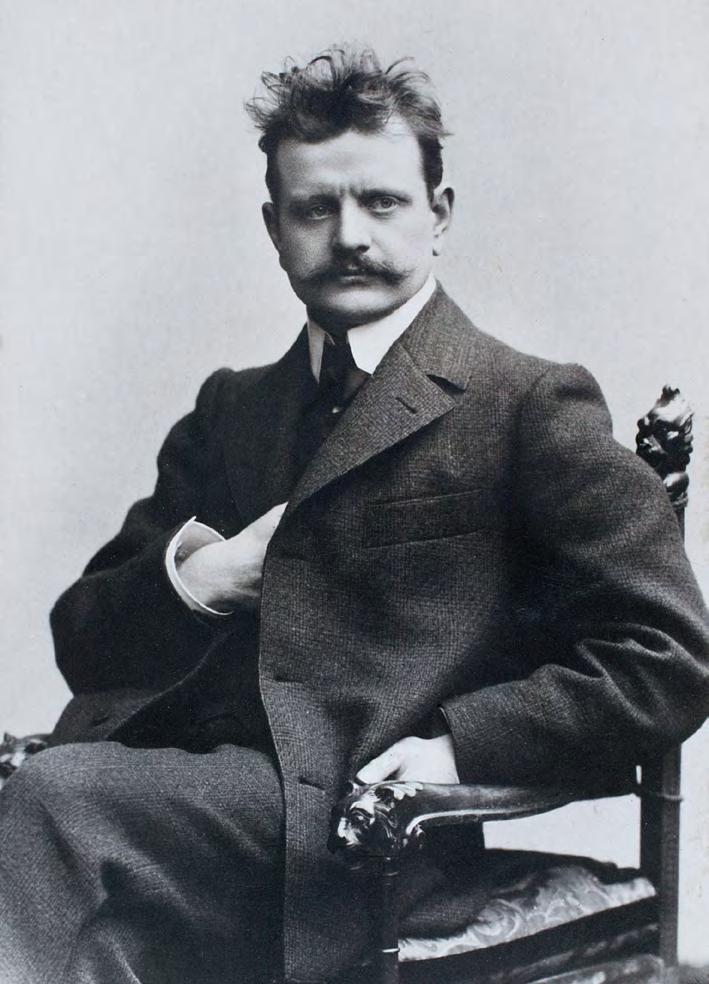
Jean Sibelius (1865–1957)
Symphony No. 2 in D major, Op. 43
Allegretto
Tempo andante Vivacissimo –Allegro moderato
Sibelius, like Brahms, came relatively late to writing symphonies, producing his First Symphony at the age of 33 and premiering it in 1899. Like Brahms, though, Sibelius had accrued considerable experience in writing for orchestra. The 1890s saw the composition of works like Kullervo, En saga, movements which later became the Karelia suite and the original version of the Lemminkäinen Suite, which depicts heroic tales from the Finnish mythological cycle, the Kalevala.
What all these works have in common, of course, is their preoccupation with the myths and legends of Finland, which remained until 1917 a satellite of Imperial Russia. As a member of the Swedishspeaking minority in Finland, Sibelius hadn’t given much thought to the traditional mythology of the Finns until his engagement in 1890 to Aino Järnefelt, whose family were very pro-Finnish. At the time he was studying in Vienna, where the music of Anton Bruckner made a deep impact on him. While Sibelius’s enthusiasm for Bruckner cooled over the years, the influence of the Austrian composer – particularly his ability to structure large-scale symphonic movements – remained crucial.
Sibelius’s nationalist music was related to a growing political consciousness: by 1899 the Russians were actively discriminating against Finns and suppressing their language. The work we know as Finlandia was banned by the Russians and had to be performed under the politically inoffensive title of ‘Prelude’, though no Finn in the audience was unaware of the work’s significance.
Sibelius’s enterprise in the 1890s, then, was to create a Finnish musical language out of the drama of its legends, the typical modal patterns of its folksong (though he never quoted actual folk tunes) and the rhythmic imprint of its verse, and to blend these elements with the contemporary idioms of Bruckner, Liszt and Tchaikovsky.
Sibelius always denied that the Second Symphony, which appeared in 1902, had any extra-musical significance. The journey it enacts from darkness to light relates it to works of ‘absolute’ music such as certain Beethoven symphonies, but commentators – particularly in Finland –have often argued for its having an implicit program of national liberation. The audiences at its premiere performances certainly thought so: the concerts were sold out, the audiences ecstatic and the composer acclaimed as a national hero. Its first movement seems to evoke the pastoral landscapes of Finland, shot through with a sense of incipient grief. During its course the symphony passes through often fragmentary stages of deep melancholy and conflict before emerging in the final movement with one of Sibelius’ most stirring and memorable tunes.
In fact, Sibelius began writing music which ended up in the symphony while holidaying in Italy, leading some writers to comment on the more than usually warm textures that he draws from a modestly constituted orchestra. From his correspondence we know he was contemplating at least two projects: a set of tone-poems called Festivals and a single-movement work –inspired perhaps by Richard Strauss, whom Sibelius had recently met – on the story of Don Juan. Out of the sketches for these works, Sibelius fashioned some of his most memorable gestures: the sinister opening of the second movement, with its soft pizzicato opening, horn calls and bassoon solo, was originally to have evoked the figure of Death arriving at Don Juan’s castle.
The work may be a document of national liberation, but it is also about the process of unifying and reconciling diverse, often fragmentary, musical gestures, so that the expansive melody of the finale seems the inevitable outcome of all that went before. Five years later, Sibelius would have his much reported meeting with Mahler where he advocated a ‘severity of style and the profound logic that creates an inner connection between all the motifs’. Mahler’s response, ‘No, the symphony must be like the world and embrace everything,’ missed the point. In their different ways, they were saying the same thing.
Gordon Kerry © 2003
Grand Organ Gala
3 & 5 September
Saint-Saëns’ exuberant Organ Symphony comes to life with the Melbourne Symphony Orchestra and Joseph Nolan, before the drama continues with Bizet’s Carmen and Márquez’s Danzón No.2.
Melbourne Symphony Orchestra
Emilia Hoving conductor
Joseph Nolan organ
4 September
The MSO Chorus and organist Joseph Nolan unite for Fauré’s graceful Cantique de Jean Racine, Duruflé’s haunting motets, and his transcendent Requiem rooted in Gregorian chant.
MSO chorus
Warren Trevelyan-Jones conductor
Sally-Anne Russell mezzo-soprano
Simon Meadows baritone
Joseph Nolan organ
Organ Recital: Joseph Nolan
5 September
Joseph Nolan performs 19thcentury French masterworks on Melbourne Town Hall’s Grand Organ, including Guilmant’s dramatic Sonata No.1 and Widor’s celebrated Symphony No.5.
Joseph Nolan organ

Thursday 30 July at 7:30pm
Saturday 1 August at 2:00pm
Hamer Hall, Arts Centre Melbourne
Artists
Melbourne Symphony Orchestra
Jaime Martín conductor
Danielle de Niese soprano
Bernstein Overture to Candide [5’]
SONGS FROM CLASSIC MUSICALS [14’]
Bernstein ‘A Little Bit in Love’ from Wonderful Town
Bernstein ‘I Feel Pretty’ from West Side Story
Gershwin ‘I Got Rhythm’ from Girl Crazy
Gershwin Cuban Overture [11’]
SONGS FROM CLASSIC MUSICALS [14’]
Porter ‘I Hate Men’ from Kiss Me, Kate
Porter ‘I Get a Kick Out of You’ from Anything Goes
Kern ‘Can’t Help Lovin’ Dat Man’ from Show Boat
interval
Ginastera Variaciones Concertantes [23’]
Bernstein Symphonic Dances from West Side Story [23’]
CONCERT EVENTS
Pre-concert talk: Learn more about the music with Barkley Heuser 6:45pm (30 July) and 1:15pm (1 August) in the Stalls Foyer (Level 2) at Hamer Hall
Running time: 2 hours and 5 minutes, including a 20-minute interval. Timings listed are approximate.
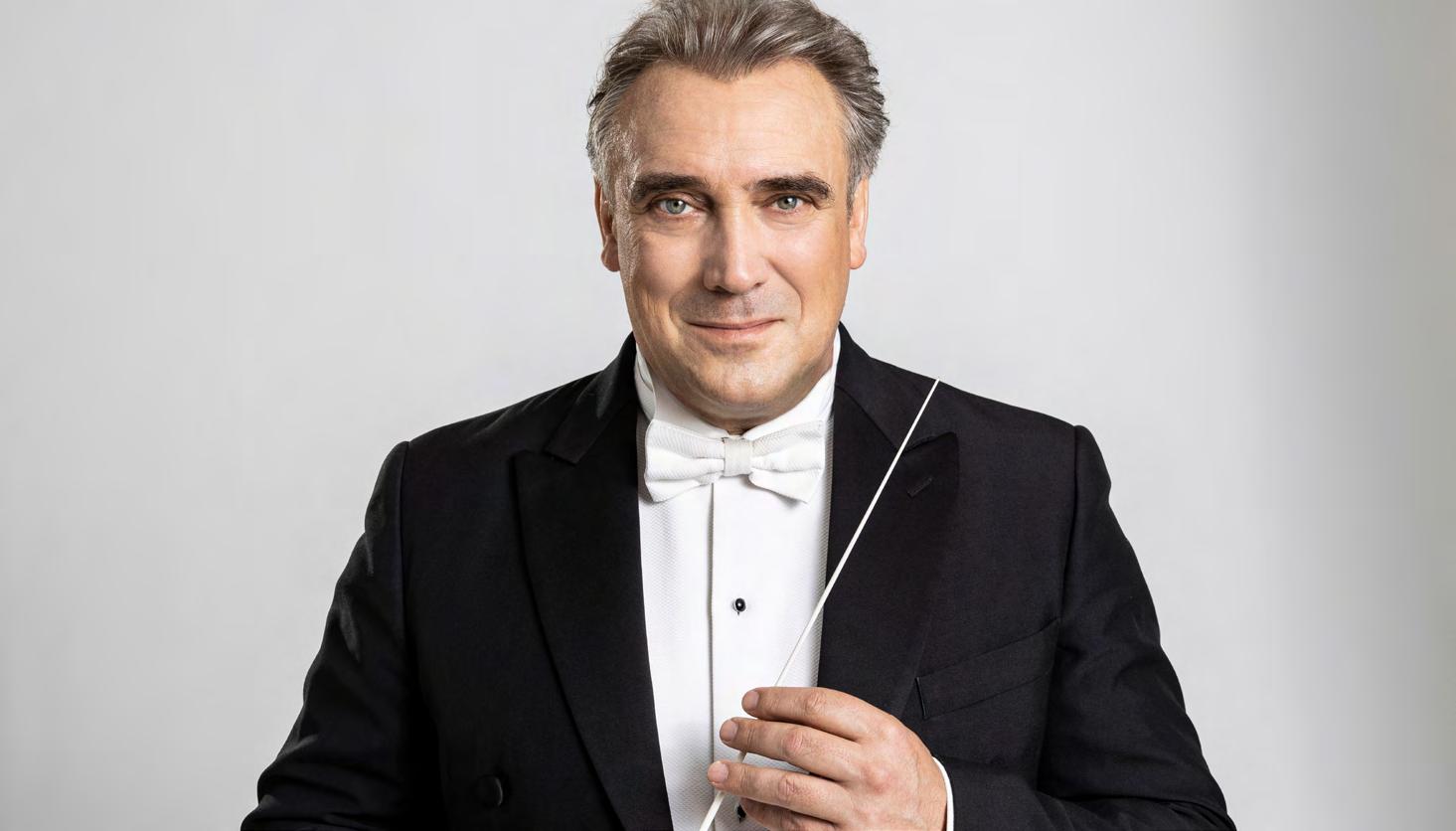
Jaime Martín conductor
MSO CHIEF CONDUCTOR AND ARTISTIC ADVISOR
In addition to his role with the Melbourne Symphony Orchestra, Spanish conductor Jaime Martín is Music Director of the Los Angeles Chamber Orchestra and Principal Guest Conductor of the BBC National Orchestra of Wales. He was previously Chief Conductor of the National Symphony Orchestra of Ireland (2019–24), Principal Guest Conductor of the Spanish National Orchestra (2022–24) and Artistic Director and Principal Conductor of Gävle Symphony Orchestra (2013–22).
Having spent many years as a highly regarded flautist, working with the most inspiring conductors of our time, Jaime turned to conducting full time in 2013 and soon became sought after at the highest level. He now regularly conducts major orchestras in the UK, Europe, US and Australasia. Recent highlights include an acclaimed BBC Proms appearance with BBC NOW and an 11-day Beethoven Festival with the MSO, conducting all nine symphonies. In 2025 he also led the MSO on a tour of the UK and Europe, the
orchestra’s first full international tour since 2019, with performances at the Edinburgh International Festival and BBC Proms.
His extensive discography includes recordings with the Gävle Symphony Orchestra, Orquestra de Cadaqués, Barcelona Symphony Orchestra and London Philharmonic Orchestra, as well as releases on the MSO’s recently launched label: Debussy & Strauss, featuring soprano Siobhan Stagg; Gustav Holst: The Planets with Deborah Cheetham Fraillon’s Earth; and two albums of Dvořák symphonies (Nos. 2, 5, 6 and 8).
Jaime Martín is Artistic Advisor and former Artistic Director of the Santander Festival and a Fellow of the Royal College of Music, London, where he was a flute professor.
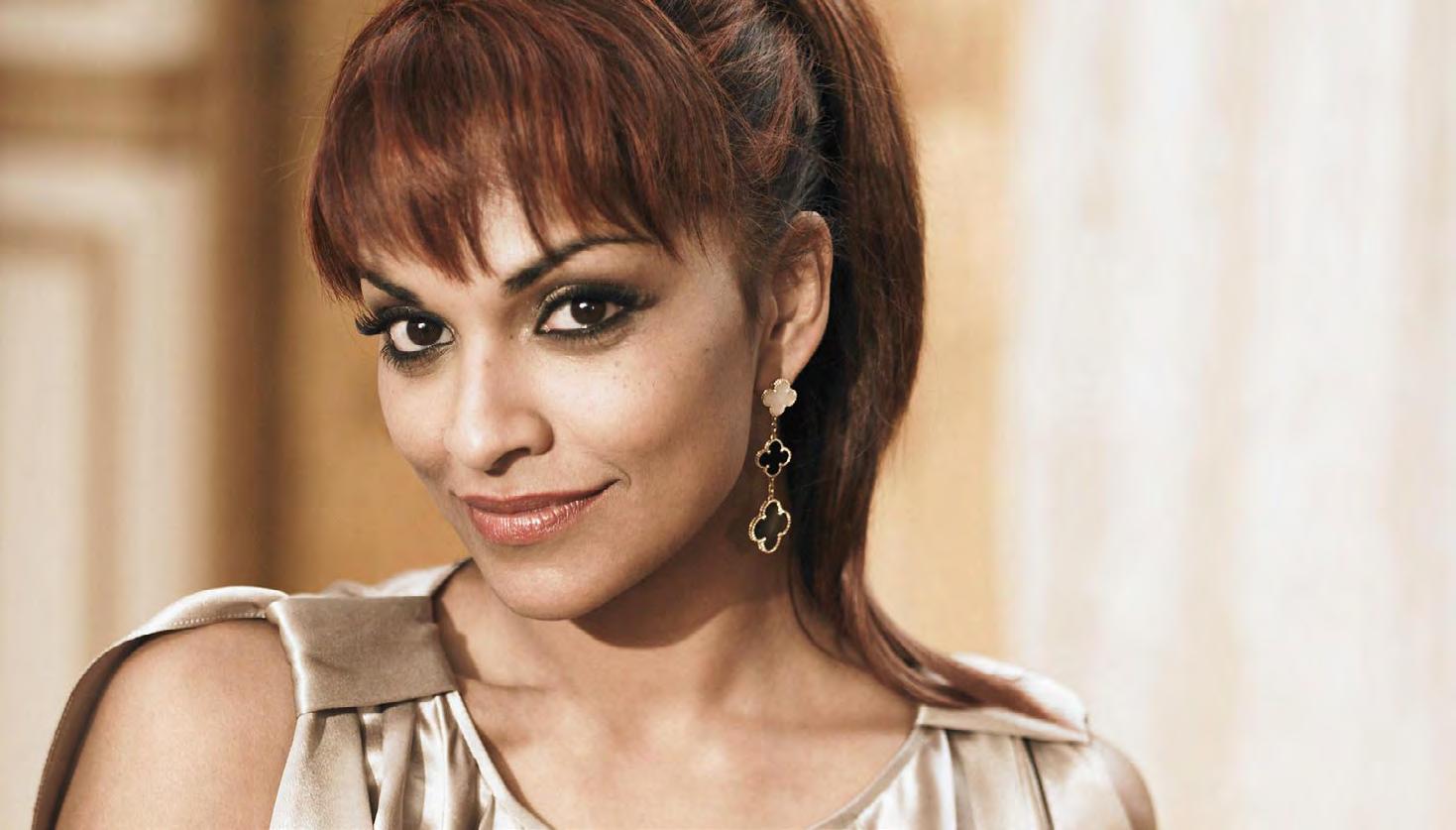
Melbourne-born Danielle de Niese has been hailed as ‘opera’s coolest soprano’ (New York Times Magazine) and is known for her superb stagecraft, assured singing, and powerful communication. She appears regularly on the world’s most prestigious opera and concert stages and is a prolific recording artist and Emmy Award-winning television personality, promoting opera to wider audiences.
Highlights of the 2025–26 season included her role debut as Jenny in The Rise and Fall of the City of Mahagonny (English National Opera), her London Mozart Players debut, and headlining a Valentine’s Day concert with the London Philharmonic Orchestra. In 2025, she also returned to Opera Australia to sing the title role of Carmen in Sydney and Melbourne.
Her operatic roles range from Handel, Mozart and Rossini heroines, to Musetta (La bohème) and the title role in The Merry Widow, as well as creating roles in contemporary works. Concert highlights include Stravinsky’s Perséphone (Boston Symphony Orchestra), her Edinburgh
International Festival debut in A Grand Night of Singing, opera galas with RTÉ National Symphony Orchestra, multiple appearances in the BBC Proms and Proms in the Park, and a Baroque to Broadway program with the City of Birmingham Symphony Orchestra.
In the world of musical theatre, she has sung Aldonza/Dulcinea in Man of La Mancha (London Coliseum) and starred alongside Michael Ball in Andrew Lloyd Webber’s Aspects of Love in the West End. And in 2017 she sang the lead role of Eileen in sold-out performances of Bernstein’s Wonderful Town with the London Symphony Orchestra and Simon Rattle, subsequently released on LSO Live.
Her debut recording for Decca, Handel Arias with Les Arts Florissants, received Orphée d’Or and ECHO Klassik awards and earned her a Classical Brit nomination for Female Artist of the Year. This was followed by the release of The Mozart Album, Diva and Beauty of the Baroque.
Bernstein (1918–1990)
‘The greatest piece of slap-dash ever written’ said Lillian Hellman of Candide, the 1759 novel by Voltaire that formed the basis of her and Leonard Bernstein’s musical of the same name. And Bernstein’s overture captures that – uproarious, highspirited, felicitous. A perfect opening to a light-hearted night out at the theatre.
Light-hearted? Candide, the hero, endures wars, famines, shipwrecks and earthquakes, all the while remaining steadfastly loyal to the increasingly ridiculous philosophy of his teacher, Dr Pangloss, an adherent to the Leibniz philosophy that ‘all is for the best…in this best of all possible worlds.’
At one stage Bernstein had conceived the work as a ‘big three-act opera with chorus and ballet’. By the end of 1954 he saw nothing wrong with being a composer of musicals. (The following year he would entertain plans for a piece called ‘East Side Story’.)
The original 1956 version – book by Lillian Hellman with lyrics by Richard Wilbur, John LaTouche and Dorothy Parker – was accounted a failure on Broadway, and over the years many writers tried their hand at knocking the piece into some sort of final shape with versions teetering between opera and musical. But one thing was always clear. The show contained some of Bernstein’s most exhilarating music. Lenny seems to have torn ahead of all his collaborators, music pouring forth. If ever there was a case of ‘first the music and then the words’, this was it. As Andrew Porter writes: ‘It was as if Candide music bubbled into Bernstein’s fertile brain and
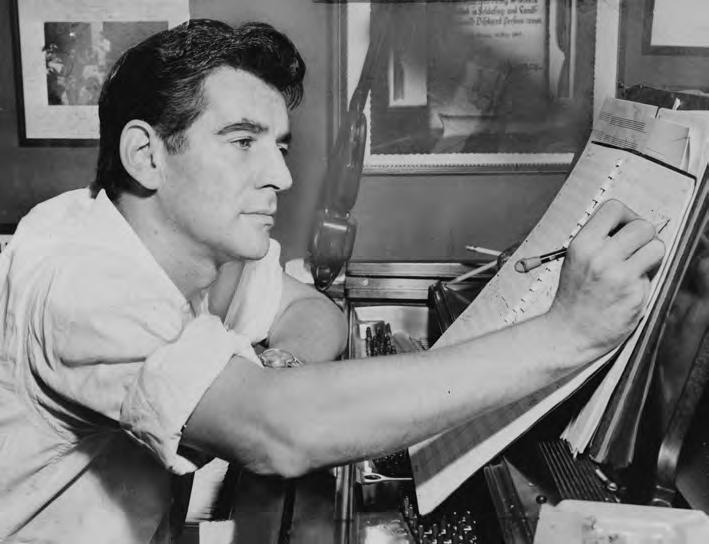
then waited to discover its just verbal expression.’
That is something that we could believe from hearing the tearaway overture, a modern-day Marriage of Figaro overture, complete with a ‘missing’ development section (not such a contradiction as it sounds). Bernstein gives the overture a brilliant main theme that is not heard again after the curtain rises – played by strings and winds, it conveys the spirit if not the tunes of Candide.
The rest of the overture, however, does draw on themes from the musical, beginning with the fanfare that punctuates the music: an echo of the strident ‘Objections!’ from Dr Pangloss’s students as he sings of ‘The Best of all Possible Worlds’. This is followed by the battle music for the Hessian invasion of ‘Westphalia’, and for the second subject, music from the duet ‘Oh Happy We’. Finally, he brings in the refrain from Cunegonde’s aria ‘Glitter and be Gay’ – but there’s barely time to stop for recognition.
Whatever the continuing debate over the merits and final form of Candide (the show), Leonard Bernstein’s volcanic musical inspiration has given the concert hall one of its most effective and effervescent overtures.
Abridged from a note by Gordon Kalton Williams Symphony Services Australia © 2006
‘A Little Bit in Love’ from Wonderful Town
Music by Leonard Bernstein
Lyrics by Adolph Green and Betty Comden
‘I Feel Pretty’ from West Side Story
Music by Leonard Bernstein
Lyrics by Stephen Sondheim
‘I Got Rhythm’ from Girl Crazy
Music by George Gershwin
Lyrics by Ira Gershwin
Arranged by Hershy Kay
‘I Hate Men’ from Kiss Me, Kate
Music and lyrics by Cole Porter
Arranged by Robert Russell Bennett
‘I Get a Kick Out of You’ from Anything Goes
Music and lyrics by Cole Porter
Orchestrated by Elman Anderson
‘Can’t Help Lovin’ Dat Man’ from Show Boat
Music Jerome Kern
Lyrics by Oscar Hammerstein II
Arranged by Robert Russell Bennett
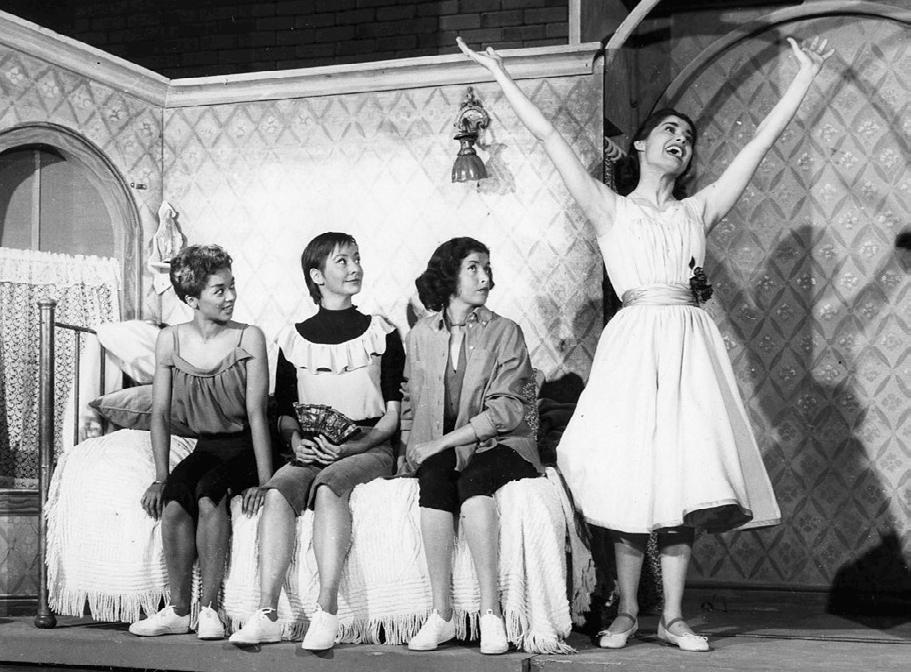
‘I feel pretty!’ – Carol Lawrence as the first Maria in the 1957 production of West Side Story
Since the first piece of musical theatre hit Broadway in the 19th century, New York City has not only been at the core of the genre’s development, but also the backdrop – and arguably the star – of some of its greatest hits. Leonard Bernstein, the quintessential New York composer, set three of his best-known musicals there, starting in 1944 with On the Town, the show which gave us the classic number ‘New York, New York’.
His second New York show, Wonderful Town, follows the adventures (and misadventures) of a pair of sisters from Ohio as they do their best to forge successful careers in 1930s Greenwich Village – and maybe find love along the way. The dreamy early days of infatuation have rarely been better captured in song than in aspiring actress Eileen’s ‘A Little Bit in Love’, Bernstein’s lilting melody matching perfectly the breathlessness and innocence of Betty Comden and Adolph Green’s lyrics.
West Side Story’s Maria is another recent arrival in New York, although her romance takes a far more tragic turn. But at the beginning of Act Two, blissfully unaware that Tony has killed her brother, she too is giddily in love, and the euphoria of ‘I Feel Pretty’ is all the more poignant for our knowledge of what’s to follow. Bernstein
composed West Side Story and Candide simultaneously – a prodigious feat of musical productivity – and there’s a touch of family resemblance between this song and Cunégonde’s ironic ‘Glitter and Be Gay’ in their combining of effervescent humour with a darker undercurrent.
‘I Got Rhythm’ from George and Ira Gershwin’s 1930 musical Girl Crazy – the show that made Ginger Rogers a star – is one of those songs that has outstripped the fame of its source. A showcase for the brassy entertainer Frisco Kate Fothergill, imported by playboy ranch manager Danny Churchill to draw in the tourists, its unbridled optimism (‘I’ve got starlight / I’ve got sweet dreams / I’ve got my man / Who could ask for anything more?’) struck an immediate chord with Depressionweary Americans, and it has remained a jazz standard ever since, for singers and instrumentalists of every stripe.
Like West Side Story, Cole Porter’s Kiss Me, Kate takes its cue from Shakespeare, although this time the result is sheer fun. Porter’s longest-running Broadway success is a romp through the on- and off-stage antics of a company staging a
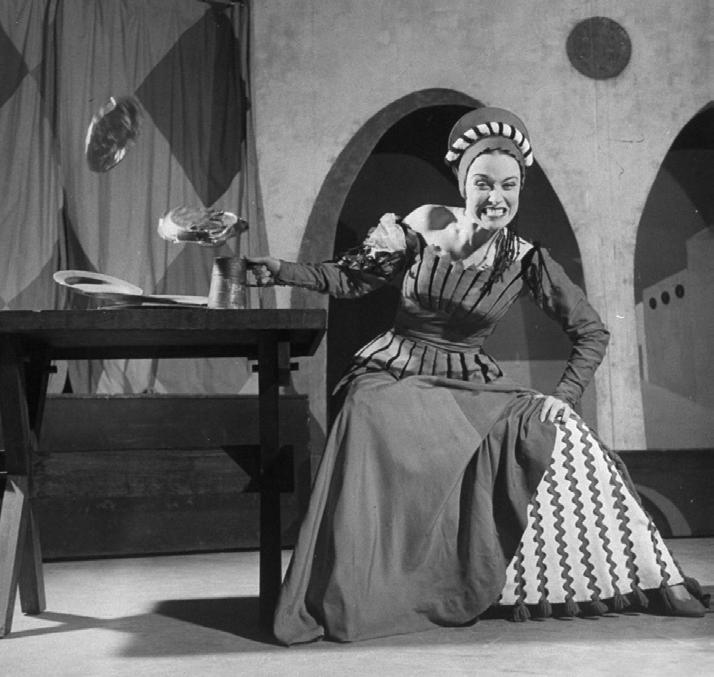
‘I hate men!’ – Patricia Morison was the original Kate in the 1948 Broadway production of Kiss Me, Kate
musical version of The Taming of the Shrew – and whose personal lives have a tricky habit of mirroring Shakespeare’s play. The magnificently acidic ‘I Hate Men’ is sung by Lilli Vanessi in character as ‘shrewish’ Kate, and Porter’s words and music both manage wittily to interweave the modern and the Elizabethan: ‘While he’s away in Mandalay / ’Tis thee who’ll have the baby’ is one among many flashes of his inimitable genius.
Lilli has a sassy sister of sorts in Reno Sweeney, the evangelist-turned-nightclub singer who rules the waves in Porter’s Anything Goes and sings several of the show’s best-known numbers. ‘I Get a Kick Out of You’ is the first of these, an upbeat take on unrequited love which exemplifies Reno’s charismatic blend of swagger and tender feeling. Along with ‘You’re the Top’, ‘All Through the Night’ and the title song –an impressive hit rate for a single show – it has persisted as a pop and jazz mainstay for the best part of a century.
Jerome Kern and Oscar Hammerstein’s Show Boat was a milestone in musical theatre history, widely acknowledged as the first truly ‘integrated’ musical, in which book and score were deeply interwoven, with songs which advanced plot and character rather than bringing them to a standstill. The sultry ‘Can’t Help Lovin’ Dat Man’, a bluesy torch song, also plays a key role in the show’s central crisis: the revelation that leading lady Julie is ‘passing’ as white and that her marriage to Steve – the man in question – is illegal under Mississippi’s racist state laws.
Sarah Noble © 2026
For many decades before Fidel Castro’s revolution, Cuba was American cafe society’s playground. In the 1920s and early 1930s, its many natural attractions were enhanced by the American holiday maker’s ability to drink alcohol in public at a time of Prohibition at home.
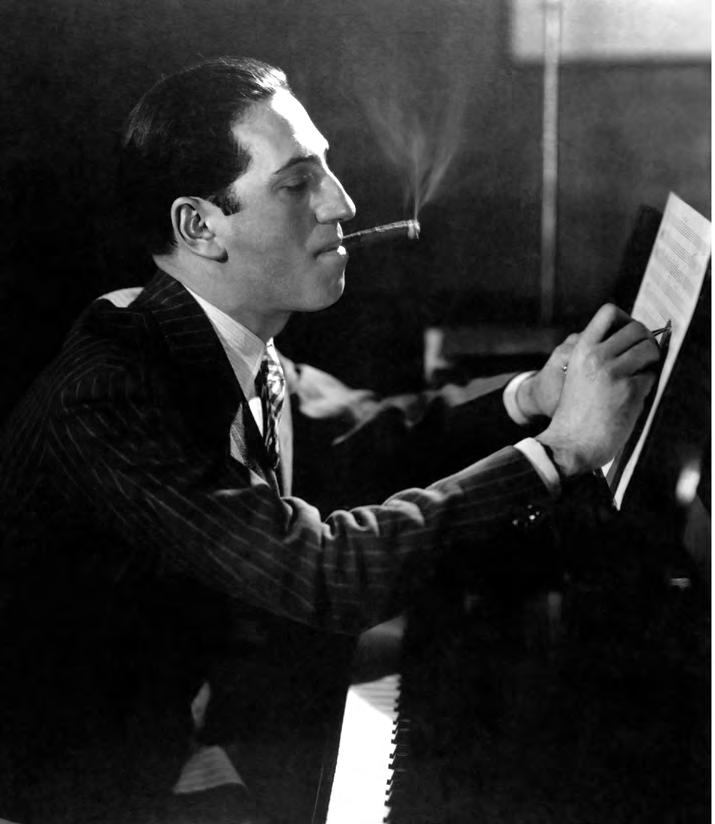
Gershwin’s own Cuban holiday of 1932 was as much about wine and women (and cigars) as it was about song. He frequented the nightspots, lay in the sun, gambled at the casinos, caroused with his cronies and was seen in the company of many attractive women. He also found the inspiration for his next orchestral piece.
On his numerous spins on Havana’s dance floors he became intrigued by the many special Latin percussion instruments featured by the native dance bands. He brought some of these back with him to New York in July and began work on the Cuban Overture immediately. An all-Gershwin concert by the New York Philharmonic at New York’s Lewisohn stadium was imminent, and he wanted to
include the work on the program. Writing at speed, he finished the whole piece in three weeks, completing the orchestration just days before the first performance on 16 August 1932 at what the Philharmonic billed as the first all-Gershwin concert ever given. Nearly 18,000 people attended, 5,000 were left trying to get in, and Gershwin described it as ‘the most exciting night I have ever had’.
At that first performance it went under the title ‘Rumba’. Three months later, for a Metropolitan Opera gala, Gershwin renamed it Cuban Overture, ‘a symphonic overture which embodies the essence of Cuban dance’. The music is constructed in three parts, the two outer, dance-inspired sections framing a central idyll that might be regarded as the Cuban equivalent of the ‘Blues’ section in Gershwin’s other musical travelogue, An American in Paris.
The work’s novelty lies in the changes Gershwin’s musical language had undergone as a result of his recent studies with the teacher and theorist Joseph Schillinger. These brought to the Cuban Overture a greater textural diversity and harmonic complexity than in many of Gershwin’s previous works. The other major innovation for Gershwin was his use of Cuban percussion instruments, including gourds, bongos and maracas, which a conductor’s note specified should be positioned up the front of the orchestra, near the podium. These are the work’s driving force, and dominate many of its most memorable passages.
Abridged from a note by Phillip Sametz © 2000
Alberto Ginastera (1916–1983)
1. Theme for solo cello and harp (Adagio molto espressivo) –
2. Interlude for strings (L’istesso tempo) –
3. Playful variation for flute (Tempo giusto) –
4. Scherzo variation for clarinet (Vivace)
5. Dramatic variation for viola (Largo)
6. Canonic variation for oboe and bassoon (Adagio tranquillo)
7. Rhythmic variation for trumpet and trombone (Allegro) –
8. Perpetual motion variation for solo violin (L’istesso tempo)
9. Pastoral variation for horn (Largamente espressivo)
10. Interlude for winds (Moderato)
11. Return of the theme for solo double bass (Adagio molto espressivo)
12. Final variation in the form of a Rondo for orchestra (Allegro molto)
Ginastera’s Variaciones Concertantes (‘Concerto Variations’) was designed as a showpiece for a small orchestra. The variations are concertante in the sense that each features a part of the orchestra, often a solo instrumentalist. Writing on commission from the Buenos Aires Association of Friends of Music, Ginastera knew the musicians for whom he was writing; Igor Markevitch, one of the work’s dedicatees, conducted the premiere in Buenos Aires on 2 June 1953.
Alberto Ginastera is probably the bestknown Argentinean composer. He studied at the National Conservatory in his native Buenos Aires with José André, a pupil of French composers Vincent d’Indy and Albert Roussel. And before entering the conservatorium, he had lessons with Alberto Williams, one of the pioneers of the national movement in Argentine music, who superimposed folkloristic elements on a traditional European style.
Ginastera’s early compositions followed Williams’ lead, but André also introduced him to the music of Claude Debussy, Igor Stravinsky and Béla Bartók. Ginastera acquired a national reputation in 1937 with the ballet Panambí, based on indigenous, gauchesco (cowboy) themes – an attempt at an ‘objective nationalism’, as in Bartók’s early music. It was followed in 1940 by
another ballet in the same style, Estancia, which won admiration abroad, including praise from Aaron Copland.
Variaciones Concertantes was written after Ginastera’s stay in the United States on a Guggenheim Fellowship (1945–47), during what he considered a transitional period. His music no longer depended on direct folk music quotation – although it still captured a subjective feeling for the mood and ambience of a people and a country – but was yet to adopt the idioms of polytonality, atonality and serialism that emerge in his later music.
Ginastera created his own brand of ‘imaginary folklore’, and the sounds of the pampas are part of his colour world, as Latin dance is of his rhythms. His music is spontaneously ‘felt’, but disciplined by a strong sense of form: ‘A work without form is a work deformed,’ he said, ‘Music is architecture in movement, and the form must always be born with the music. It is not a different thing; it is the same thing.’ Far from the stereotype of the fiery, volatile Latin, Ginastera struck his friend Everett Helm as a serious, quiet, even reticent person ‘who gives the impression of a benevolent owl’.
The main theme of the Variaciones Concertantes is stated by a single cello
over a figure played by the harp, sounding the notes of the open strings of the ‘gauchesco’ guitar (E–A–D–G–B–E’). This tuning in fourths runs through the chordal structure of the work and its ‘openness’ suggests the feel of the pampas: the vast treeless plains and ranch lands that identify almost all of Argentina outside Buenos Aires and its suburbs. An analogy could be made between the role of the pampas in the Argentine imagination and the bush in the Australian. In the final variation, where the whole orchestra is used for the first time, there is an element of the malambo, the dance associated with the dance contests of the gauchos. Beyond these observations, Ginastera’s
Leonard Bernstein (1918–1990)
Symphonic Dances from West Side Story
Prologue (Allegro moderato) –Somewhere (Adagio) –Scherzo (Vivace leggiero) –Mambo (Presto) –
Cha-Cha (Andantino con grazia) –Meeting Scene (Meno mosso) –Cool, Fugue (Allegretto) –Rumble (Molto allegro) –Finale (Adagio)
In August 1957, when Leonard Bernstein signed a contract to become the next conductor of the New York Philharmonic, he was also preparing to open West Side Story. Three-and-a-half years later, on 13 February 1961, the NYP premiered Symphonic Dances from West Side Story in ‘A Valentine for Leonard Bernstein’ –a benefit gala concert to celebrate the extension of his contract with the orchestra.
In between, the musical had run 732 performances on Broadway, toured the United States and returned to New York for another 249 performances; an Original
detailed and informative headings to each of the variations provide a clear guide.
Echoes and influences of Bartók, Falla and Stravinsky (especially his ballet The Rite of Spring) can be heard in this music, to its advantage. It provides a consistently entertaining, orchestrally resourceful, and expressive introduction to Ginastera who, in Helm’s judgment, was the first composer to have achieved a music unmistakably Latin American, yet free of specific dialects and valid in universal terms.
Abridged from a note by David Garrett © 1999
Broadway Cast album was released and development had begun on a film. Bernstein, meanwhile, had been promoted from the New York Philharmonic’s joint principal conductor (alongside outgoing Dimitri Mitropoulos) to music director, and become a television star through the NYP’s Young People’s Concerts.
This was the peak Bernstein era. As a composer, Bernstein had already created the ballet Fancy Free with choreographer Jerome Robbins and developed it into the musical On the Town, written the opera Trouble in Tahiti, written the musical Wonderful Town, scored the Marlon Brando picture On the Waterfront, and begun the operetta/musical comedy Candide. The idea for West Side Story –a musical update of Romeo and Juliet set among New York City gangs – had been simmering since 1949, with the concept and choreography by Robbins and a book by Arthur Laurents. The last piece fell into place when Stephen Sondheim joined as lyricist.
At the 1961 all-Bernstein gala, it’s likely the entire Carnegie Hall audience had seen West Side Story, owned the record and could hum its tunes. But Bernstein,
Lenny knew the suite should begin with the famous signature tritone on which so much of the show’s music is based, and go directly into the Prologue (including finger snaps in the orchestra). The order of the rest of the material in the suite is based on ‘feel’ rather than on the plot of the show. Ergo, Somewhere finds itself in between the Prologue and the Mambo. The Meeting Scene gets compressed into an atmospheric lead-in to the Cool Fugue – that tritone ties everything together! Finally, after the Rumble, Lenny inserted a flute solo unique to these Symphonic Dances, which makes a dramatic and beautiful change to ‘I Have a Love’, which was Jack Gottlieb’s suggestion to end the suite (and which is the only music in the suite that is not a dance in the show).… Somehow, the Symphonic Dances manage to be both ‘serious’ and ‘popular’. This suite brings music of Broadway into the concert hall, orchestrating with symphonic character the music every theatre-goer loves. Miraculously, Lenny could do it all.
Sid Ramin, orchestrator and dedicatee of the Symphonic Dances (1992)
working with orchestrators Sid Ramin and Irwin Kostal, wanted to create more than a medley of hits for this special concert. Instead, they took the dance numbers and just a few lyrical snippets, reordering them ‘according to alternating high and low levels of emotional intensities’, as Bernstein’s assistant Jack Gottlieb observed. The result is seamless – like a memory of the musical, abstracted through free association.
In his program note for the premiere, later adapted as a preface to the published score, Gottlieb wrote: ‘Why are these dances called symphonic? Simply because the dance music, even in its original format, is symphonically conceived.…This is music on its own terms, music that does not have to depend upon presupposed knowledge of the unfolding events.’ (He did, however, go on to describe the plot correspondences for those who wanted to know.)
The Prologue establishes a recurring interval – the dissonant tritone – which can signal instability and danger, but also yearning (as in ‘Maria’). In Gottlieb’s description, the introduction shows ‘the growing rivalry between two teenage street gangs, the Jets and the Sharks’, ending with a police whistle.
Somewhere, with lyrical strings accompanied by lilting harp and piano, is
‘a visionary dance sequence, [in which] the two gangs are united in friendship’. The Scherzo turns folksy with plucked strings and chirping woodwinds: ‘In the same dream, the gangs break away from the city walls, suddenly finding themselves in a playful world of space, air and sun.’
The dream is interrupted by drums… brass… and Mambo! ‘Reality again; competitive dance between the gangs.’
The Cha-Cha is lighter and coy, as the star-crossed lovers see each other for the first time and dance together. Sugary violins, celesta and vibraphone colour the alluring Meeting Scene between Tony and Maria and their first spoken words.
The ‘Cool’ Fugue swings into a pile-on as ‘Riff leads the Jets in harnessing their impulsive hostility, figuratively “cooling their jets”.’ The Rumble is fuelled by a propulsive piano riff and squawking brass that all breaks down in a ‘climactic gang battle’ during which the two gang leaders, Riff and Barnardo, are killed. A mournful flute cadenza surveys the carnage, leading to the Finale – ‘Maria’s “I have a love” develops into a procession, which recalls, in tragic reality, the vision of “Somewhere”.’
Abridged from a note by Benjamin Pesetsky © 2024
Thursday 6 August at 7:30pm
Saturday 8 August at 2:00pm
Hamer Hall, Arts Centre Melbourne
Artists
Melbourne Symphony Orchestra
Jaime Martín conductor
Sheku Kanneh-Mason cello
Program
Debussy Prelude to the Afternoon of a Faun [10’]
Edmund Finnis Cello Concerto* [25’]
interval
Tchaikovsky Symphony No. 5 [50’]
* Australian premiere of an MSO co-commission with the Los Angeles Philharmonic Association, Dresdner Philharmonie and London Symphony Orchestra
CONCERT EVENTS
Pre-concert talk: Learn more about the music with Callum Moncrieff 6:45pm (6 August) and 1:15pm (8 August) in the Stalls Foyer (Level 2) at Hamer Hall
Running time: 1 hour and 55 minutes, including a 20-minute interval. Timings listed are approximate.
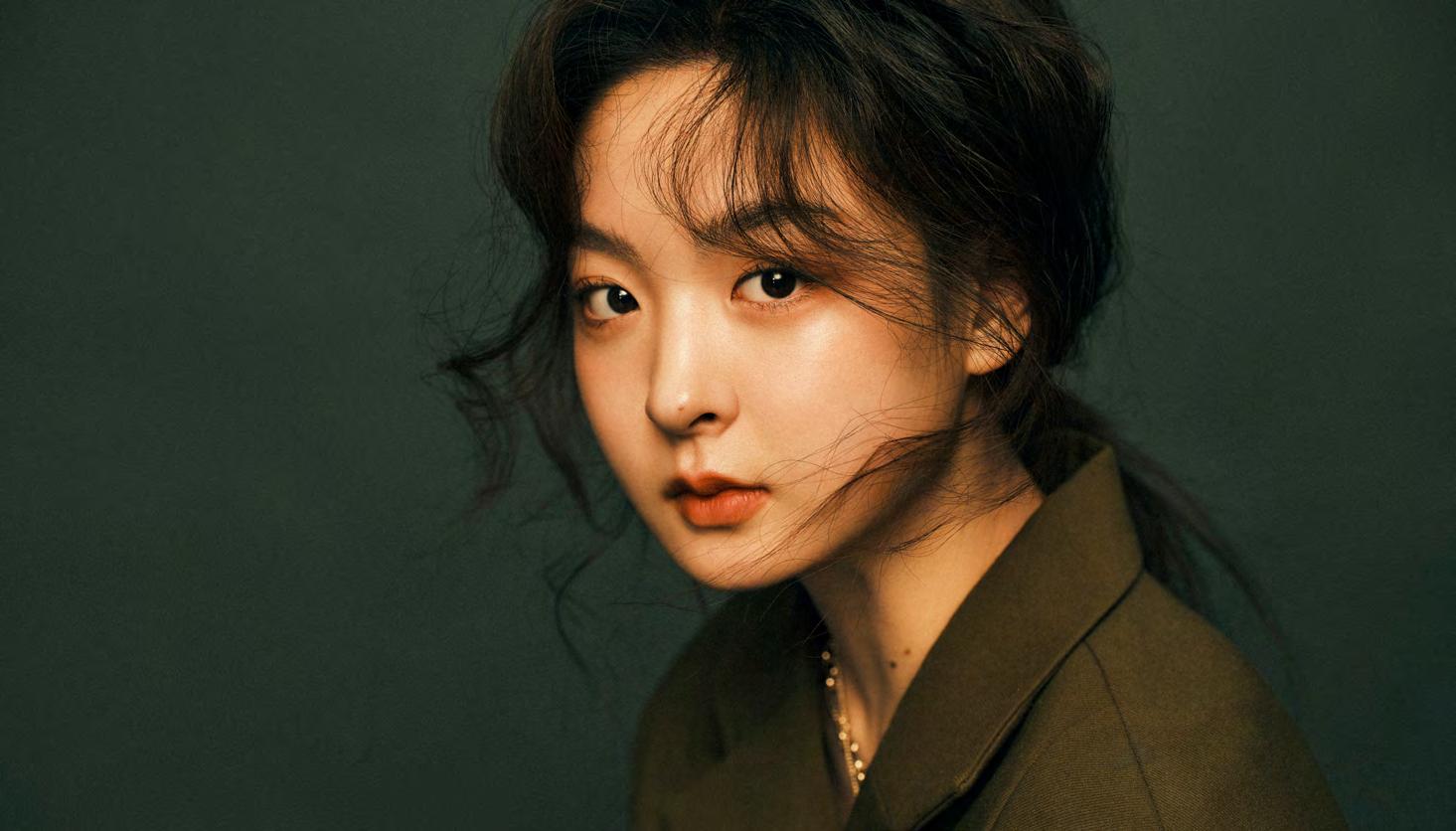
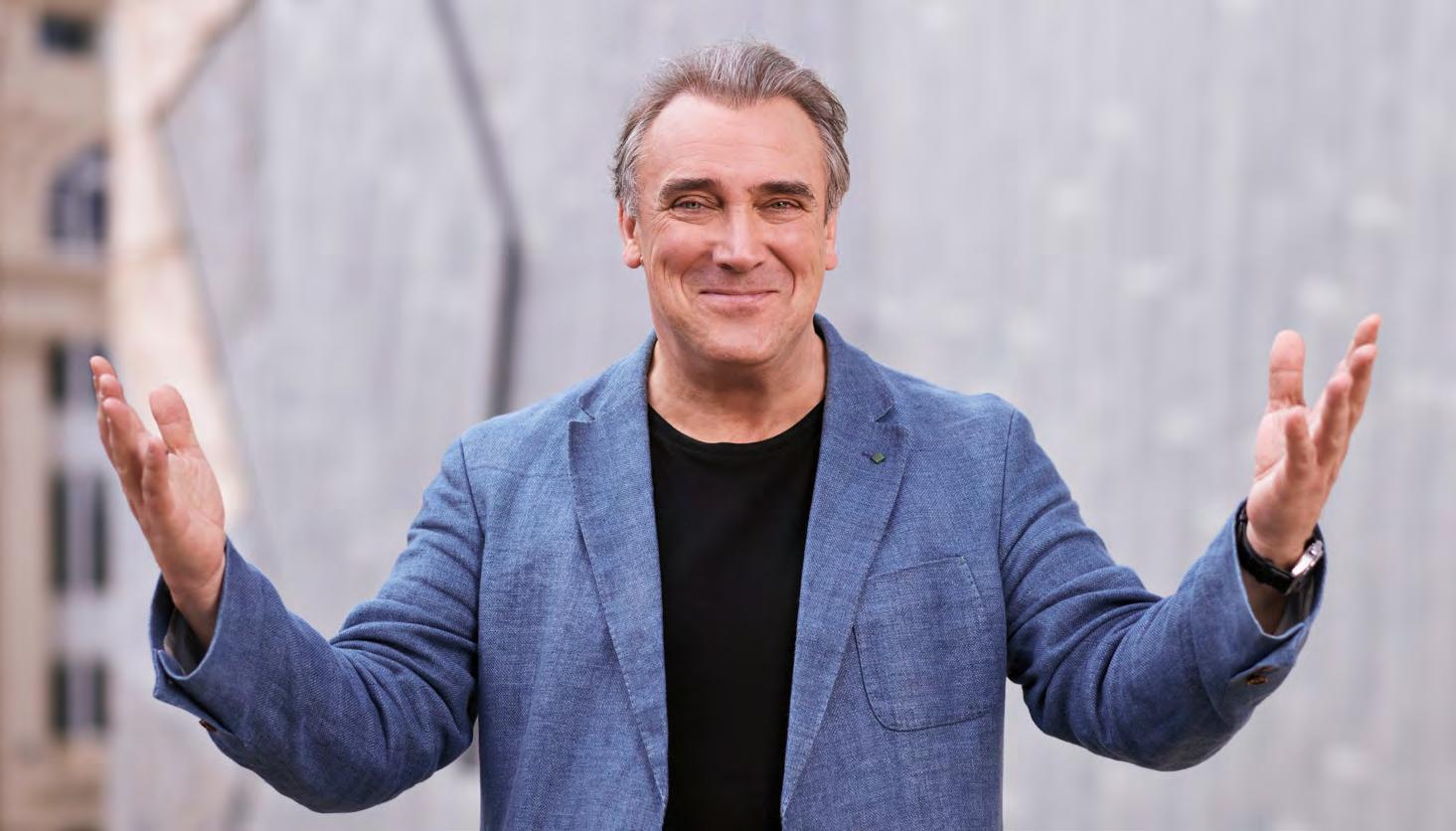
Jaime Martín conductor
MSO CHIEF CONDUCTOR AND ARTISTIC ADVISOR
In addition to his role with the Melbourne Symphony Orchestra, Spanish conductor Jaime Martín is Music Director of the Los Angeles Chamber Orchestra and Principal Guest Conductor of the BBC National Orchestra of Wales. He was previously Chief Conductor of the National Symphony Orchestra of Ireland (2019–24), Principal Guest Conductor of the Spanish National Orchestra (2022–24) and Artistic Director and Principal Conductor of Gävle Symphony Orchestra (2013–22).
Having spent many years as a highly regarded flautist, working with the most inspiring conductors of our time, Jaime turned to conducting full time in 2013 and soon became sought after at the highest level. He now regularly conducts major orchestras in the UK, Europe, US and Australasia. Recent highlights include an acclaimed BBC Proms appearance with BBC NOW and an 11-day Beethoven Festival with the MSO, conducting all nine symphonies. In 2025 he also led the MSO on a tour of the UK and Europe, the
orchestra’s first full international tour since 2019, with performances at the Edinburgh International Festival and BBC Proms.
His extensive discography includes recordings with the Gävle Symphony Orchestra, Orquestra de Cadaqués, Barcelona Symphony Orchestra and London Philharmonic Orchestra, as well as releases on the MSO’s recently launched label: Debussy & Strauss, featuring soprano Siobhan Stagg; Gustav Holst: The Planets with Deborah Cheetham Fraillon’s Earth; and two albums of Dvořák symphonies (Nos. 2, 5, 6 and 8).
Jaime Martín is Artistic Advisor and former Artistic Director of the Santander Festival and a Fellow of the Royal College of Music, London, where he was a flute professor.
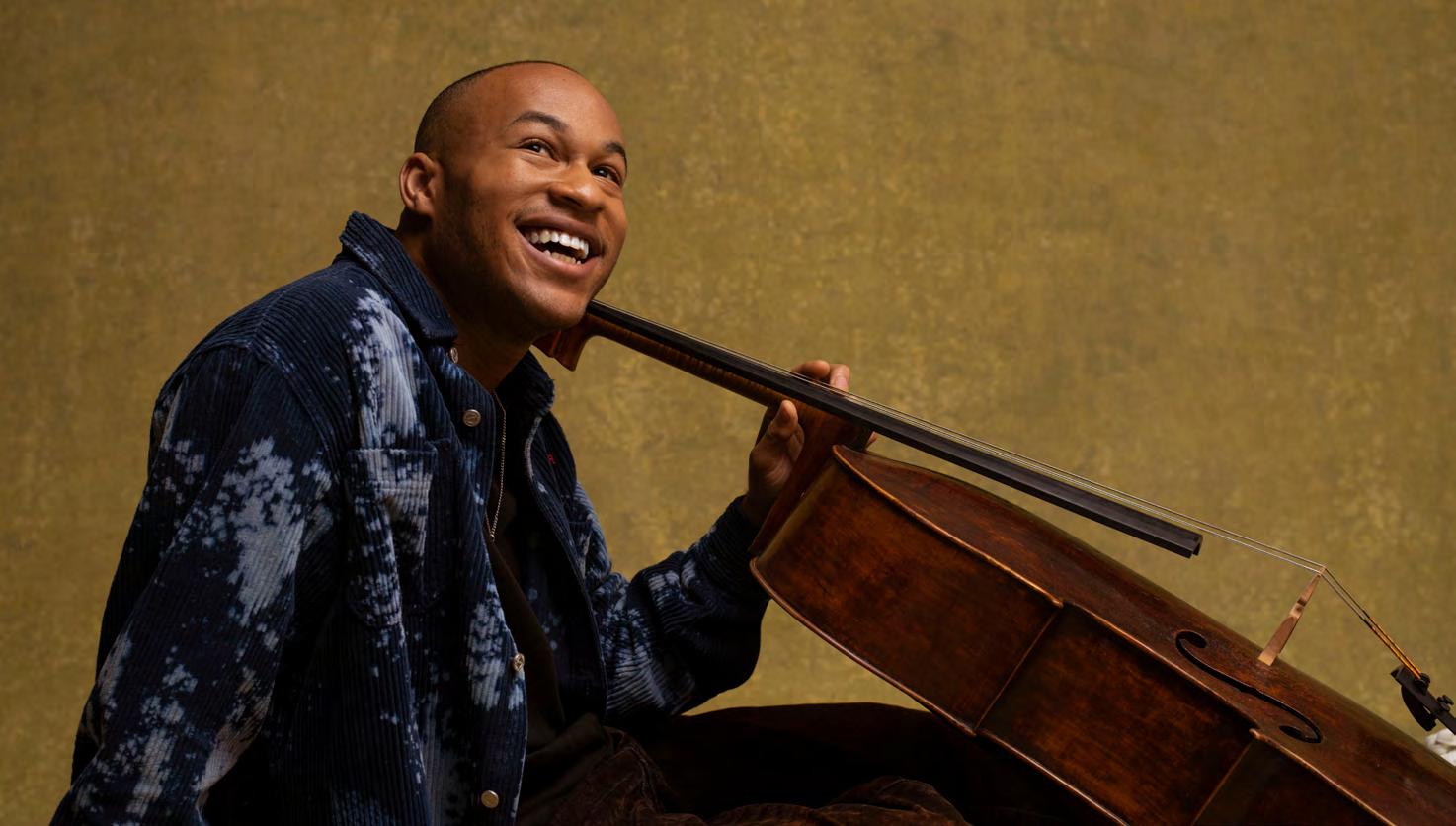
Sheku Kanneh-Mason’s mission is to make music accessible to all, whether performing for children in schools, at underground clubs, or leading concert venues.
In addition to the premiere of the Finnis Cello Concerto with the Los Angeles Philharmonic and his MSO debut, highlights of the 2025–26 season have included Artist in Residence at the New York Philharmonic, touring with the London Philharmonic Orchestra, and concerts with the Philharmonia Orchestra, Orchestre de Paris, Orchestra of Santa Cecilia Rome, Auckland Philharmonia and Sydney Symphony Orchestras. In October he will give the UK premiere of the Finnis Cello Concerto with the London Symphony Orchestra.
He also collaborates with his pianist sister Isata Kanneh-Mason, performing Beethoven’s Triple Concerto in Europe and the US, and in duo recitals.
Last year he released the album Shostakovich and Britten, featuring Shostakovich’s Cello Concerto No.2, as
well as appearing on the second KannehMason family album, River of Music. These followed Song (2022) and Elgar (2020), which reached #8 in the overall Official UK Album Chart, making him the first cellist to reach the UK Top 10.
Sheku studied with Hannah Roberts at the Royal Academy of Music and in 2022 he was appointed the RAM’s first Menuhin Visiting Professor of Performance Mentoring. In 2024 he was named patron of UK Music Masters. He is an ambassador for both Breakthrough T1D and Future Talent, and in Antigua, where he has family connections, he is an ambassador for the Antigua and Barbuda Youth Symphony Orchestra.
After winning the BBC Young Musician competition in 2016, his performance at the wedding of the Duke and Duchess of Sussex was watched by two billion people worldwide. In 2020 he was appointed a Member of the Most Excellent Order of the British Empire (MBE). Sheku plays a Matteo Goffriller cello from 1700, which is on indefinite loan to him.
Claude Debussy (1862–1918)
Prélude à l’après-midi d’un faune (Prelude to the Afternoon of a Faun)
Published in 1876, Stéphane Mallarmé’s eclogue L’Après-midi d’un faune is a monument of symbolist poetry, reflecting in its sumptuous but fragmentary language the erotic fantasies of a drowsy faun – a mythical half-man, half-goat – on a hot, languid Sicilian afternoon. Running like a thread through the imagery of fruit and flowers and naked nymphs are references to music, specifically to the syrinx. This instrument, the ‘pan-pipes’, was fashioned by the god Pan from reeds into which a young nymph, desperate to escape his amorous attentions, had been transformed.
One such reference, to the syrinx’s ‘sonorous, airy, monotonous line’, would become the kernel of Debussy’s musical rendering of the poem. (Debussy hated hearing his music described as ‘what imbeciles call Impressionism’ and preferred his work to be compared to Symbolist poetry.) Inviting Mallarmé to hear the work in 1894, he described ‘the arabesque which… I believe to have been dictated by the flute of your faun’.
In fact, the work’s genesis was in a proposal by Mallarmé to present a staged version of his poem at an avant-garde theatre in 1891. By now he knew and admired some of Debussy’s vocal music, and went so far as to announce in the newspaper that the staged version would include music by the young composer ‘M. de Bussy’. The project fell through, but Debussy’s imagination had been whetted. The orchestral piece that finally appeared made an immediate and positive impact with the audience, if not the critics, and may be said to be Debussy’s breakthrough
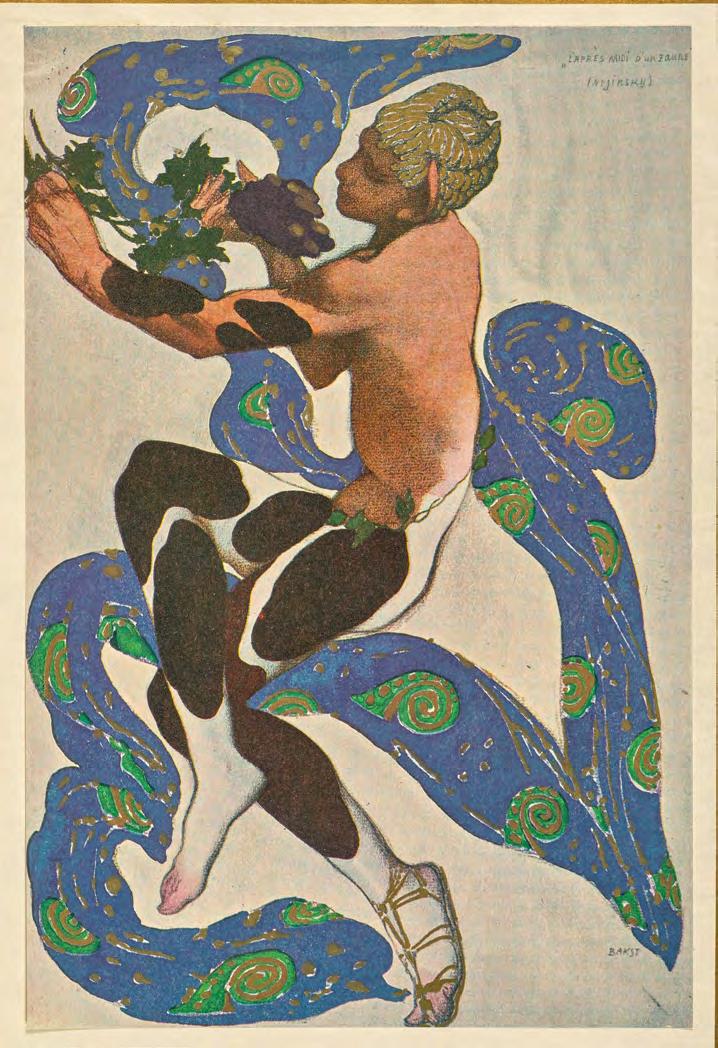
work. In 1912 it was choreographed and danced by Vaslav Nijinsky, whose erotic performance caused one of those typically Parisian fracas.
The first phrase of the solo flute arabesque with which the piece begins has rightly been described as a founding moment in modern music. Its chromatic, rhythmically ambiguous line traces and retraces the equally ambiguous interval of the tritone: like the material elsewhere in the work that is derived from the wholetone scale, it is in no clearly discernible key, as is shown by the varied ways in which it is harmonised on its subsequent reappearances. The second half of the melody provides more ‘conventional’ motifs that are taken up from time to time by the rest of the orchestra.
Mallarmé’s poem rhymes, but otherwise avoids traditional forms or a narrative line; similarly, Debussy’s piece avoids the
goal-directed development and tonal architecture that informs 19th-century symphonism. As Pierre Boulez puts it, ‘What was overthrown was not so much the art of development as the very concept of form itself.’ Musical events, like the vivid splashes of colour that first answer the flute, are there for the immediate pleasure they give; climaxes are approached by simple repetition of motifs; the most extended melody is a richly scored, Massenet-like tune at the work’s midpoint, accompanied by layered, rocking ostinatos.
The faun’s dream is overcome by sleep and the ‘proud silence of noon’, and the piece ends with flutes, muted horns and the glitter of harp and antique cymbals, fading to nothingness.
Gordon Kerry © 2017
Edmund Finnis (born 1984)
Cello Concerto
The Shimmering Space
Nocturnal Lament Radiant Ecstasy
Sheku Kanneh-Mason cello
Unlike the piano or the violin, none of the most famous concertos in the cello repertoire were composed by cellists. Victor Herbert (whose concertos inspired Dvořák), Wilhelm Fitzenhagen, (better known in connection with Tchaikovsky’s Rococo Variations) and Luigi Boccherini (whose portrait hangs in the National Gallery of Victoria) are hardly household names. And so it’s rare to hear a cello concerto by a composer with a deep, firsthand knowledge of the instrument.
Edmund Finnis grew up playing the cello. (He first tried the violin but ‘was terrible at it’.) The very first time he played the low C string on a cello, he was ‘immediately drawn’ to its richness and roundness of
sonority. And his music for the instrument reveals distinctive colours and techniques that have emerged from his own playing. For instance, he likes to work with quick, sudden shifts in volume.
To date, Finnis has composed two works for Sheku Kanneh-Mason: a set of five solo Preludes (2021) that ‘made the instrument sing, speak, trace shapes in the air, growl in the depths and reach up into the ether’ (The Times) and this Cello Concerto. Kanneh-Mason has found he shares with the composer an appreciation for subtlety and variation of colour, explaining in an interview that Finnis truly understands how to communicate through the instrument.
Finnis himself has described the Cello Concerto as ‘the most lyrical, intense and emotionally direct music’ he has written so far. The deeply personal, almost intimate character of the work is key to its threemovement architecture, which unfolds like a journey through various states of light.
The piece opens with the orchestra creating a wide, shimmering space across which the cello sounds out long, lyrical lines. Melodic patterns recur and evolve, heard in different speeds and guises, becoming more urgent with each iteration. Waves of energy accumulate and disperse as the movement traces a gradual overall intensification.
The central movement is a lament. Amid a nocturnal atmosphere, the cello sings a song of yearning against shifting harmonies, crying out before eventually arriving at a solitary space. Here the resonant sounds of the cello’s lower strings expand and contract, as if slow, deep breaths. The movement ends with a gradual descent through the moonglow of faint string overtones.
Out of quiet origins, a sense of flowing, propulsive energy comes to define the
final movement. The cello glides above the iterative patterning of the orchestra’s streams of notes before assuming that sense of flowing energy itself. The outpouring music moves ever forwards, the singing out of the cello becoming radiant, ecstatic.
It was especially meaningful to write this concerto for the instrument that I loved playing in my youth. Growing up, much of my life was spent expressing musical ideas through singing and playing the cello. This concerto is concerned with all of those things: the cello, singing, expression, life.
Adapted from a note by Edmund Finnis © 2026
English-born EDMUND FINNIS studied with Julian Anderson and Rozalie Hirs at the Guildhall School of Music & Drama, and in 2012 received a Leonard Bernstein Fellowship to study at Tanglewood. The London Sinfonietta was an early supporter – performing, touring and recording six of his works since 2011, including four commissioned works, and he was Composer-in-Association with the London Contemporary Orchestra (2013–2016). He then developed a close working relationship with the Manchester Collective, including a commission, The Centre is Everywhere (2019), which was performed at the BBC Proms, and more recently Blue Divided by Blue (2024) for choir, strings and percussion.
In addition to Sheku Kanneh-Mason, Finnis has composed for some of today’s leading soloists (including pianist Víkingur Ólafsson and saxophonist Jess Gillam) and ensembles such as the Britten Sinfonia, Birmingham Contemporary Music Group and London Sinfonietta. His music has also been performed by the London and BBC Scottish symphony orchestrsa, Royal Liverpool Philharmonic Orchestra and Los Angeles Philharmonic, among
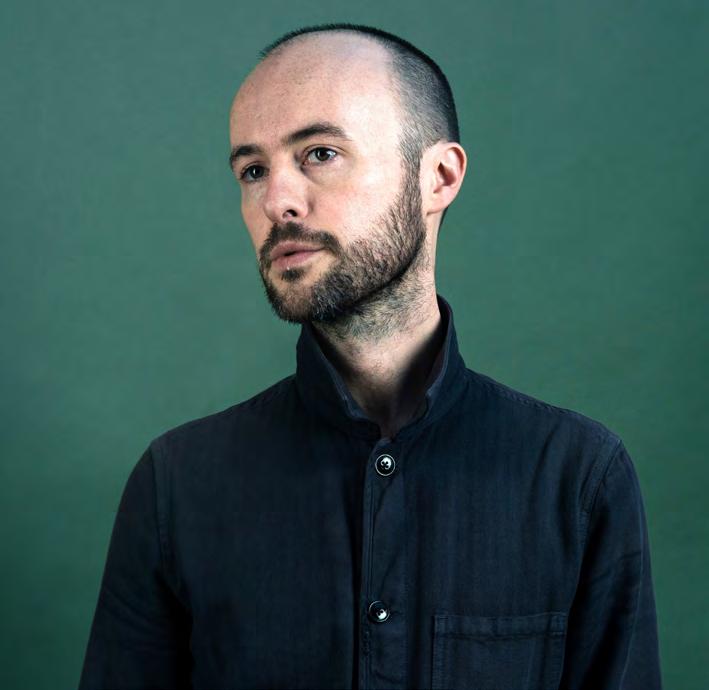
others. In 2015, Edmund Finnis was appointed Professor of Composition at the Royal Academy of Music in London.
Pyotr Ilyich Tchaikovsky (1840–1893)
Symphony No .5 in E minor, Op. 64
Andante – Allegro con anima
Andante cantabile, con alcuna licenza
Valse (Allegro moderato)
Andante maestoso – Allegro vivace
After completing his Fourth Symphony (1877), Tchaikovsky wrote to his former pupil Sergey Taneyev: ‘I should be sorry if symphonies that mean nothing should flow from my pen.’ He insisted that the Fourth definitely followed a ‘program’, even though, like Beethoven’s Fifth Symphony on which he had partly modelled the work, it could not be expressed in words. Circumstantial evidence suggests that Tchaikovsky’s own Fifth Symphony, composed in summer 1888, likewise could not ‘mean nothing’, and even if a precise meaning will probably never emerge, Tchaikovsky did leave clues as to the direction of his thoughts.
Fate and providence were certainly on his mind, having in mid-1887 spent two
distressing months at the bedside of a dying friend. Later, in his sketchbook, he verbally outlined a first movement whose slow introduction began with ‘total submission to fate’, followed by an allegro that introduced ‘murmurs, doubts, laments, reproaches’ before considering succumbing to ‘the embrace of faith’. He described this as ‘a wonderful program, if only it can be fulfilled’. Although no irrefutable evidence links this plan directly with the 1888 symphony, the Fifth’s main theme does lend itself to a musical personification of grim fate (in its minor form) and of beneficent providence (in its major form), and a journey from the first to the second is a plausible program, if not for the opening movement (which ends in the minor), then for the whole work.
The main theme (played at the outset by solo clarinet) also pays homage to the man Tchaikovsky called ‘the father of Russian music’, Mikhail Glinka. He borrowed the germinal first eight-note phrase from Glinka’s opera A Life for the Czar, where it opens the second half of a melody sung in succession by all three principal characters in the first act trio. But Tchaikovsky develops Glinka’s melodic fragment (first sung to the words ‘Do not turn to sorrow’) into an entirely new motto theme whose subliminal transformations and literal reprises bind the symphony’s four movements together. The first transformation is into the dancelike theme of the Allegro con anima announced by clarinet and bassoon.
The horn melody in the second movement is one of the most beautiful in all of Tchaikovsky’s music. He actually scribbled on a sketch of this melody (in French): ‘I love you, my love!’ But it is more than just a love theme; it, too, is subtly related to the motto (of the motto’s first eight notes, it is a varied reworking of the last five). This connection is made explicit when the undisguised motto returns, portentously with trumpets and
kettledrums, just before the reprise of the love theme.
Tchaikovsky called the third movement a ‘waltz’ – a modestly understated example compared with his great ballet waltzes, but one whose easy mood makes it a perfect structural foil to the slow movement’s passionate intensity. It may well be significant that he crafted the tune out of snippets of a Tuscan folksong, La Pimpinella, that he heard in Florence in 1877, sung by (as he noted) a ‘positively beautiful’ young (male) street-singer. Certainly significant, the waltz tune also audibly echoes the rhythm of the preceding movement’s soulful horn theme, of which it is essentially a faster, lighter reworking. The same rhythm also reappears in the sinuously exotic subsidiary tune introduced by the bassoon. But only once does the motto itself intrude on this pleasant reverie, from clarinets and bassoons, right at the movement’s close.
The motto returns fully, in major mode, as a solemn march, introducing the fourth movement, sumptuously scored with all the violins playing down low in unison with the cellos, passing next to the woodwinds, before trumpets and kettledrum signal the imminent Allegro vivace. Tchaikovsky energises the motto’s second, falling-scale element to create a new minor-key theme that launches further transformations and combinations of germinal fragments, underpinned by the quick tick-tock of bassoons, kettledrums and basses, plateauing out on a brilliantly shrill major-key woodwind chorus. Winding down and then up again through more furious returns of the minorkey theme, a massive climax builds, breaking back into the now almost unbearably splendid march, the motto’s apotheosis capped at the last possible moment by a trumpet reprise of the first movement’s allegro theme.
Graeme Skinner © 2014

QUICK FIX AT HALF SIX
Monday 10 August at 6:30pm
Hamer Hall, Arts Centre Melbourne
Artists
Melbourne Symphony Orchestra
Jaime Martín conductor
Daniel Corvaia* presenter
Program
Tchaikovsky Symphony No.5 [50’]
The conductor biography and program note for this performance can be found on pages 28 and 32.
* Cybec Assistant Conductor
CONCERT EVENTS
Tonight’s onstage introduction will be Auslan interpreted
Running time: 1 hour and 15 minutes. Timings listed are approximate.
Quick Fix at Half Six is supported by City of Melbourne.
The MSO’s Auslan interpreted performances receive funding from the Australian Government Department of Health, Disability and Ageing
Extend your musical journey through the MSO’s Patron Program.
An annual donation of $500 or above brings you closer to the music and musicians you love. Enjoy behindthe-scenes experiences and exclusive gatherings with MSO musicians and guest artists, while building social connections with other music fans and directly supporting your Orchestra.
Scan the QR code to become an MSO Patron today.
MSO Patron
Her Excellency Professor, the Honourable
Margaret Gardner AC, Governor of Victoria
Honorary Appointments
Chair Emeritus
Dr David Li AM
Life Members
John Gandel AC and Pauline Gandel AC
Jean Hadges ♡
Sir Elton John CBE
Lady Primrose Potter AC
Jeanne Pratt AC
Lady Marigold Southey AC
Michael Ullmer AO and Jenny Ullmer
MSO Ambassador
Geoffrey Rush AC
Artist Chair Benefactors
Cybec Assistant Conductor Chair
Daniel Corvaia
Cybec Foundation
MSO Now & Forever Fund: International Engagement Gandel Foundation
Artist Development Programs –Cybec Foundation
Cybec Young Composer in Residence
Cybec First Nations Composer in Residence
Cybec 21st Century Australian Composers Program
Community and Public Programs
Australian Government Department of Health, Disability and Ageing, AWM Electrical, City of Melbourne, Hansen Little Foundation, Professor Mary-Jane Gething AO, Besen Family Foundation, Gandel Foundation, Perpetual Foundation – Alan (AGL) Shaw Endowment, The Ledger Charitable Trust
Student Subsidy Program
Anonymous
Jams in Schools
Melbourne Airport, Department of Education, Victoria – through the Strategic Partnerships Program, AWM Electrical, Jean Hadges, Hume City Council, Marian and EH Flack Trust
Regional Touring
AWM Electrical, Freemasons Foundation Victoria, Sir Andrew and Lady Fairley Foundation
Sidney Myer Free Concerts
Sidney Myer MSO Trust Fund and the University of Melbourne, City of Melbourne Event Partnerships Program
MSO Academy
Robert Salzer Foundation
Instrument Fund
Tim and Lyn Edward, Catherine and Fred Gerardson, Pauline and David Lawton, Joe White Bequest
Platinum Patrons ($100,000+)
AWM Electrical Q
Gandel Foundation
Professor Mary-Jane Gething AO ♡
The Gross Foundation ♡
Dr David Li AM and Angela Li Q
Lady Primrose Potter AC Anonymous (1)
Virtuoso Patrons ($50,000+)
The Aranday Foundation Q
Besen Family Foundation
Mrs Jennifer Brukner OAM Q
Dr Harry Imber ♡
Margaret Jackson AC ♡
Lady Marigold Southey AC Q
The Yulgilbar Foundation Q Anonymous (1)
Impresario Patrons ($20,000+)
Michael Aquilina
Christine and Mark Armour
Ren Barlow
Shane Buggle and Rosie Callanan ♡ Q
Krystyna Campbell-Pretty AM
Debbie Dadon AM Q
Tim and Lyn Edward ♡ ♫
Edwards Family Trust Q
Catherine and Fred Gerardson
The Hogan Family Foundation
Pauline and David Lawton
Suzie and Edgar Myer ♡
Paul Noonan
Elizabeth Proust AO and Brian Lawrence ☼
Sage Foundation ☼
Kim Williams AM ♫ Anonymous (2)
Maestro Patrons ($10,000+)
John and Lorraine Bates ☼
Margaret Billson and the late Ted Billson ♡
Nigel and Sheena Broughton
Cooper Investors
The Cuming Bequest
Audrey Cutting
Miss Ann Darby in memory of Leslie J Darby
Craig Drummond
Andrew and Theresa Dyer Q ♡
Val Dyke ♡
Fancourt Capital Group Q
The Finkel Foundation Q
Bill Fleming Q
Cecilie Hall and the late Hon Michael Watt KC ♡ ♫
Hanlon Foundation ♡
Ryan Harkness
Jo Horgan AM and Peter Wetenhall Q
David Horowicz ♡ Q
Peter T Kempen AM ♡ Q
Suzanne Kirkham
Peter Lovell
Janet Matton AM and Robin Rowe Q
Allan and Evelyn McLaren
Rosemary and the late Douglas Meagher ♡
The Mercer Family Foundation
The Myer Foundation
Patricia Nilsson ♡
Dr Justin O’Day and Sally O’Day Q
Ian and Jeannie Paterson
Prior Family Foundation
RQ Squared Consulting
Ralph and Ruth Renard
Glenn Sedgwick ♡ Q
Cathy Simpson and John Simpson AM Q
Straight Bat Private Equity Q
Lyn Williams AC Q
Igor Zambelli
Anonymous (4)
Principal Patrons ($5,000+)
Andyinc Foundation
Mary Armour
Arnold Bloch Leibler Q
Philip Bacon AO Q
Barbara Bell in memory of Elsa Bell
Natasha Bowness
Julia and Jim Breen
Jannie Brown
Janet Chauvel and the late Dr Richard Chauvel
John Coppock OAM and Lyn Coppock
Mrs Jolene S Coultas ♡
Philip Crutchfield KC
David and Kathy Danziger
Anthony and Marina Darling Q
♡ Chair Sponsor | Q 2025 Europe Tour Circle | ☼ First Nations Circle ♫ Commissioning Circle | ∞ Future MSO
Mary Davidson and the late
Frederick Davidson AM
Sandra Dent
Carol des Cognets
Equity Trustees ☼
Diane and Stephen Fisher
John and Diana Frew ♡
Geelong Friends of the MSO
The Glavas Family ♡
Colin Golvan AM KC and Dr Deborah Golvan
Dr Rhyl Wade and Dr Clem Gruen ♡
Louis J Hamon OAM
Noela Henderson
Dr Keith Higgins and Dr Jane Joshi
Geoff and Denise Illing
Amy and Paul Jasper
Sandy Jenkins
John Jones
Merv Keehn and Sue Harlow
Mr Ian Kennedy AM and Dr Sandra Hacker AO
Ann Lahore
Lucas Family Foundation ♡
Morris and Helen Margolis ♡
Samantha Mark
Christopher Menz and Peter Rose
Gary McPherson ♡
Rupert Myer AO and Annabel Myer
Anne Neil in memory of Murray A Neil ♡
Sophie Oh
Jan and Keith Richards
Dr Rosemary Ayton and Professor Sam Ricketson AM
Meredith Schilling KC
The Kate and Stephen Shelmerdine Family Foundation Q
Dr Michael Soon
Harry Stamoulis
Gai and David Taylor
Mary Waldron
Kee Wong and Wai Tang Q
Dawna Wright and Peter Riedel ♡
Shirley and Jeffrey Zajac
Anonymous (5)
Associate Patrons ($2,500+)
Barry and Margaret Amond
Carolyn Baker
Lyn Bailey
Ariane Barker
Michael Bartlett
Janet H Bell
Allen and Kathryn Bloom
Boncal Family Foundation
Drs Alan and Jennifer Breschkin
Stuart Brown
Dr Giovanni Butera
Dr Lynda Campbell
Oliver Carton
Christine Clough
Caroline Davies
Leo de Lange
Escala Partners
Donald Farrands KC
James Flintoft and Siobhan McKenna
Martin Foley Q
Elizabeth Foster
Barry Fradkin OAM and Dr Pam Fradkin
Anthony Garvey and Estelle O’Callaghan
Janette Gill
The Glenholme Foundation
R Goldberg and Family
Miss Catherine Gray
Christine Grenda
Susan and Gary Hearst
Michael Heine Q
Julie Kantor AO and Michael Kantor
Halina Lewenberg Charitable Foundation
Dr Jenny Lewis
Liza Lim AM ♫
Andrew Lockwood
Lisa and Brad Matthews
Andrea McCall
Chris McDermott
Peter McMullin AM
Craig Moffatt and Peter Cameron
Dr Paul Nisselle AM
George Pappas AO in memory of Jillian Pappas
Roger Parker and Ruth Parker
Alan and Dorothy Pattison
James Ring
Tom and Elizabeth Romanowski
Dr Ronald and Elizabeth Rosanove
Gillian Ruan Q
Viorica Samson
Adam Seward
Steinicke Family
Jenny Tatchell
Aaron Turner
Christina Turner
Nicholas and Faith Vann
Timothy Walker CBE AM
Janet Whiting AM and Phil Lukies Q
Anonymous (5)
Player Patrons ($1,000+)
Dr Sally Adams
Don Adamson
Jessica Agoston Cleary ∞
Applebay Pty Ltd
Margaret Astbury
Geoffrey and Vivienne Baker
Marlyn Bancroft and Peter Bancroft OAM
Mr Robin Batterham
Kate Beattie
Peter Berry and Amanda Quirk
Rick Berry
William Birch
Michael Bowles and Alma Gill
Joyce Bown
Jill and Robert Brook
Drs John D L Brookes and Lucy V Hanlon
Suzie Brown OAM and the late
Harvey Brown
Roger and Coll Buckle
Jill and Christopher Buckley
Ronald Burnstein
John Chapman and Elisabeth Murphy
Kaye Cleary
Warren and Margaret Collins
Sue Dahn
Mrs Nola Daley
Panch Das and Laurel Young-Das
Michael Davies and Drina Staples
Rick and Sue Deering
John and Anne Duncan
Dr Matthew Dunn
Christopher R Fraser
Chris Freelance
Miles George
David I Gibbs AM and Susie O’Neill
Sonia Gilderdale
Joy and Dr Henry Glennie
Dr Celia Godfrey
George H Golvan KC and Naomi Golvan
Dr Marged Goode
Louise Gourlay AM Q
Hilary Hall, in memory of Wilma Collie
David Hardy
Cathy Henry
Gwenda Henry
Michael Hill
Anthony and Karen Ho
In Memory of Rosemary Hodgson
Anna Holdsworth
Rod Home
Lorraine Hook
Doug Hooley
Katherine Horwood
Penelope Hughes
Basil and Rita Jenkins
Wendy Johnson
Sue Johnston
Dr Gint Kalpokas and Dr Michael Upson
Drs Bruce and Natalie Kellett
Dr Anne Kennedy
In memory of Tannah Kirkman
Tim Knaggs
Melissa Tonkin and George Kokkinos
Dr Jerry Koliha and Marlene Krelle
Jane Kunstler
Kerry Landman
Janet and Ross Lapworth
Rex Lau
Bryan Lawrence
Phil Lewis
David R Lloyd
Elizabeth H Loftus
Dr Helen MacLean
Eleanor Mancini
Sandra Masel in memory of Leigh Masel
Wayne McDonald and Kay Schroer
Lesley McMullin Foundation
Dr Eric Meadows
Sylvia Miller
Susan Morgan ∞
Ian Morrey and Geoffrey Minter
Dr Anthony and Dr Anna Morton
Dr Judith S Nimmo
Rosemary O’Connor
Brendan O’Donnell
Phil Parker
Bruce Parncutt AO
Ian Penboss
Ronald Pitcher AM
Liz and Graham Pratt
Peter Priest
Professor Charles Qin OAM and Kate Ritchie
Eli and Lorraine Raskin
Michael Riordan and Geoffrey Bush
Cathy Rogers OAM and Dr Peter Rogers AM
The Rowe Family
Marie Rowland
Liliane Rusek and Alexander Ushakoff
Marshall Segan in memory of Berek Segan OBE AM and Marysia Segan, Founders of the Castlemaine State Festival
Martin and Susan Shirley
P Shore
Janet and Alex Starr
Dr Peter Strickland
Bernard Sweeney
Russell Taylor and Tara Obeyesekere
Frank Tisher OAM and Dr Miriam Tisher
Margaret Toomey
Andrew and Penny Torok
Chris and Helen Trueman
Ann and Larry Turner
Dr Elsa Underhill and Professor Malcolm Rimmer
Edward and Paddy White
Willcock Family
Robert and Diana Wilson
Anonymous (20)
Overture Patrons ($500+)
Anna A’Beckett
Margaret Abbey PSM
Vera Afanasyeva
Jane Allan and Mark Redmond
Jenny Anderson
Doris Au
Robbie Barker
Marcus Beames
Amrita Bhattacharyya and Anna Kontarini
Caroline Bowler
Stephen and Caroline Brain
Robert Bridgart
Miranda Brockman
Christine Brown
Elizabeth Brown
Phillip Brown
Patricia Buchanan
Marc Buchholz and Stephan Duchesne
Ian Carson AM
Dr Catherine Cherry
Dr Hyein Ellen Cho
Alan and Wendy Chuck
Robert and Katherine Coco
Gregory Crew
Sue Cummings
Dr John Daley and Dr Rebecca Coates
Toby Duffy
Jane Edmanson OAM
Ron Elisha
Vivien and Jack Fajgenbaum
Brian Florence
Nadine Fogale
M C Friday
Nikki Gaskell
Dr Julia Gellatly
David and Geraldine Glenny
Hugo and Diane Goetze
Eva Gory
The late George Hampel AM KC and Felicity Hampel AM SC
Dr Neville Hathaway
Geoff Hayes
Alison Heard
Dr Jennifer Henry
C M Herd Endowment
William Holder
Oliver Hutton and Weiyang Li
Rob Jackson
Shyama Jayaswal
Chris and Merryl Jessup
Karen Johnson
Tony and Nathalie Johnson
Linda Jones
John Keys
Lesley King
Dr Judith Kinnear
Heather Law
Peter Letts
Andrew Levy
Sarah and Andrew Lindsay
Elena Lovu
Janice Mayfield
Dr James McComish
Joel McGuinness
Gail McKay
Jennifer McKean
Shirley A McKenzie
Richard McNeill
Alison Milne
Professor Heather Mitchell
Lisa Mitchell
Joan Mullumby
Yoko Murakoshi
Rebecca-Kate Nayton
Adrian and Louise Nelson
Marian Neumann
Ed Newbigin
Valerie Newman
Amanda O’Brien
John O’Toole
Phil Parker
The Hon Chris Pearce and Andrea Pearce
Jason Peart
Sienna di Pietro and Lewis Pierce
Geoffrey Ravenscroft
Ian Reddoch
Dr Christopher Rees
Fred and Patricia Russell
Grant Samphier
Julia Schlapp
Faye Simpson
Irene Sutton
Rosemary Swift
Tom Sykes
Allison Taylor
Hugh and Elizabeth Taylor
Lily Tell
Serey Thir
Geoffrey Thomlinson
Wendy Thorpe OAM
Mely Tjandra
Sally and Adrian Wallis
Rosemary Warnock
Amanda Wasilewski
Amanda Watson
Shirley and Peter Watson
Brian and Leanne Whiter
Deborah and Dr Kevin Whithear OAM
David Willersdorf AM and Linda Willersdorf
Charles and Jill Wright
Richard Ye
Anonymous (13)
MSO Guardians
Jenny Anderson
David Angelovich
Lesley Bawden
Peter Berry and Amanda Quirk
Tarna Bibron
Joyce Bown
Patricia A Breslin
B J Brown
Jannie Brown
Jenny Brukner and the late John Brukner
Sarah Bullen
Georgie and Phil Burg
Peter A Caldwell
Peter Cameron and Craig Moffatt
Luci and Ron Chambers
Roger Chao
Sandra Dent
James Dipnall
Sophie E Dougall in memory of Libby Harold
Alan Egan JP
Gunta Eglite
Marguerite Garnon-Williams
Dr Clem Gruen and Dr Rhyl Wade
Louis J Hamon OAM
Charles Hardman and Julianne Bambacas
Carol Hay
Dr Jennifer Henry
Graham Hogarth
Rod Home
David Horowicz
Lyndon Horsburgh
Katherine Horwood
Tony Howe
Lindsay Wynne Jacombs
Michael Christopher Scott Jacombs
John Jones
Merv Keehn and Sue Harlow
Pauline and David Lawton
Robyn and Maurice Lichter
Christopher Menz and Peter Rose
Dr Helen MacLean
Andrea McCall
Cameron Mowat
Laurence O’Keefe and Christopher James
David Orr
Matthew O’Sullivan
Rosia Pasteur
Kerryn Pratchett
Penny Rawlins
Margaret Riches
Anne Roussac-Hoyne and Neil Roussac
Michael Ryan and Wendy Mead
Anne Kieni Serpell and Andrew Serpell
Jennifer Shepherd
Suzette Sherazee
Professors Gabriela and George Stephenson
Pamela Swansson
Frank Tisher OAM and Dr Miriam Tisher
Mr and Mrs R P Trebilcock
Christina Helen Turner
Michael Ullmer AO
The Hon Rosemary Varty
Francis Vergona
Mr Steve Vertigan and Ms Yolande van Oosten
Tam Vu and Dr Cherilyn Tillman
Robert Weiss and Jacqueline Orian
Terry Wills Cooke OAM and the late Marian Wills Cooke
Mark Young
Anonymous (18)
The MSO gratefully acknowledges the support of the following Estates
Norma Ruth Atwell
Angela Beagley
Barbara Bobbe
Michael Francois Boyt
Christine Mary Bridgart
Margaret Anne Brien
Ken Bullen
Deidre and Malcolm Carkeek
Elizabeth Ann Cousins
The Cuming Bequest
Margaret Davies
Blair Doig Dixon
Neilma Gantner
Angela Felicity Glover
The Hon Dr Alan Goldberg AO QC
Derek John Grantham
Delina Victoria Schembri-Hardy
Enid Florence Hookey
Gwen Hunt
Family and Friends of James Jacoby
Audrey Jenkins
Joan Jones
Pauline Marie Johnston
George and Grace Kass
Christine Mary Kellam
C P Kemp
Jennifer Selina Laurent
Sylvia Rose Lavelle
Dr Elizabeth Ann Lewis AM
Peter Forbes MacLaren
Joan Winsome Maslen
Lorraine Maxine Meldrum
Professor Andrew McCredie
Jean Moore
Joan P Robinson
Maxwell and Jill Schultz
Miss Sheila Scotter AM MBE
Marion A I H M Spence
Molly Stephens
Gwennyth St John
Halinka Tarczynska-Fiddian
Jennifer May Teague
Elisabeth Turner
Albert Henry Ullin
Cecilia Edith Umber
Jean Tweedie
Herta and Fred B Vogel
Diana Whitehead
Dorothy Wood
Joyce Winsome Woodroffe
The MSO honours the memory of Life Members
The late Marc Besen AC and the late Eva Besen AO
John Brockman OAM
The Hon Alan Goldberg AO QC
Bertha Jorgensen MBE
Harold Mitchell AC
Roger Riordan AM
Ila Vanrenen
Listing current as of 3 July 2026
The MSO relies on the generosity of our community to help us enrich lives through music, foster artistic excellence, and reach new audiences. Thank you for your support.
♡ Chair Sponsors – supporting the beating heart of the MSO.
Q 2025 Europe Tour Circle patrons –elevating the MSO on the world stage.
☼ First Nations Circle patrons –supporting First Nations artist development and performance initiatives.
♫ Commissioning Circle patrons –contributing to the evolution of our beloved art form.
∞ Future MSO patrons – the next generation of giving.
The MSO welcomes support at any level. Donations of $2 and over are tax deductible.
MSO Board
Chair
Edgar Myer
Co-Deputy Chairs
Martin Foley
Farrel Meltzer
Board Directors
Shane Buggle
Tony Grybowski
Lorraine Hook
Chris Howlett
Joel McGuinness
Gary McPherson
Lisa Mitchell
Meredith Schilling SC
Mary Waldron
Company Secretary
Randal Williams
MSO Artistic Family
Jaime Martín Chief Conductor and Artistic Advisor
Benjamin Northey Principal Guest Conductor
Daniel Corvaia Cybec Assistant Conductor
Sir Andrew Davis CBE † Conductor Laureate (2013–2024)
Hiroyuki Iwaki † Conductor Laureate (1974–2006)
Warren Trevelyan-Jones MSO Chorus Director
Karen Kyriakou Artist in Residence –Learning and Engagement
Christian Li Young Artist in Association
Joe Chindamo Composer in Residence
Andrew Aronowicz Cybec Young Composer in Residence
James Henry Cybec First Nations Composer in Residence
Xian Zhang, Lu Siqing, Tan Dun Artistic Ambassadors
MSO Staff
Richard Wigley
Chief Executive Officer
ARTISTIC OPERATIONS
Simonette Turner Director of Orchestra & Operations
Meg Bowker Orchestra Manager
Ffion Edwards Orchestra Manager
Callum Moncrieff Head of Operations
Andrew Robinson Production Lead
Nicholas Cooper Operations Lead
Katharine Bartholomeusz-Plows Head of Artistic Planning
Keturah Haisman Artistic & Engagement Manager
Veronika Reeves Artistic Administrator
Julia Potter Artistic Coordinator
Jennifer Collins Principal Librarian
Glynn Davies Orchestra Librarian
Meg Baker Chorus Administrator
Nicholas Bochner
Head of Learning & Engagement
Fergus Inder Jams Program Coordinator
Erika Noguchi
Executive Producer, MSO Presents
Rebecca Moore
Associate Producer, MSO Presents
Monica Curro MSO+ Creative Director
Emma Wigley MSO+ Producer
Suzanne Dembo Chief Operating Officer
Caroline Buckley Head of Strategic Priorities
Sally Hern Head of Digital Experience
Allison Blahna Director of Development
Charlotte Crocker
Philanthropy Programs Lead
Isobel Lake Grants & Reporting Lead
Keith Clancy Donor Liaison
Nellie McLean Head of Partnerships
Nina Dubecki Events & Partnerships Lead
Jayde Walker Director of Brand & Communications
Phil Paschke
Senior Manager, Content & Digital
Samantha Meuleman
Digital Content Lead
Prue Bassett
Publicity Manager
Beckie Peel
Social Media Coordinator
Dylan Stewart Director of Marketing & Sales
Laura Mitton
Campaign Marketing Manager
Claudia Biaggini
Senior Marketing Coordinator
Leah Toyne
Marketing Administrator
Alison Kearney
Customer Experience Manager
Ben Wallace
Box Office Manager
Nicole Rees
CRM & insights Manager
Sam Harvey
CRM & Data Specialist
Marta Arquero
Ticketing & Customer
Experience Coordinator
Box Office Attendants
Angela, Ashley, Bec, Bradd, Christine, Emil, Jessica, Josh, Kara, Kez, Leah, Lucy, Maeve, Sasha, Stephanie
Anita Drake Chief Financial Officer
Sonia Yakub
Senior Management Accountant (on leave)
Susan Teele Management Accountant
Laura Estupiñan Accountant
Marilen Manalo
Assistant Accountant
Jess Kirkman Payroll Officer
Matthew Bagi Project Officer
Holly Wighton People & Culture Lead
Major Partner
Supporting
Supporting Partners
Paul Noonan, Keypoint Law
Training and Education Partners
Trusts and Foundations
Broadcast and Production Partners

Venue Partners