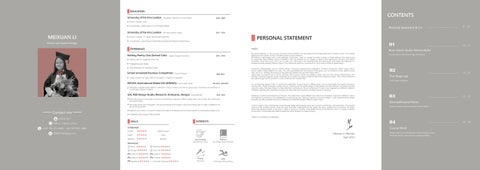
EDUCATION
University of the Arts London Foundation Diploma in Art and Design
Honors / Awards: Merit
Core Modules: Spatial Design/ Art/ 3D Design Making 2019 - 2020
MEIXUAN LI
Interior and Spatial Design

Contact me


University of the Arts London BA (Hons) Interior Design 2021 - 2023
Honors / Awards: 2:1/ Upper Second Class/ Merit Plus
Core Modules: Space Design/ Model Making (Digital and Physical)/ Design History
EXPERIENCE
Haifeng Poetry Club (School Club) Graphic Designer, Illustrator 2016 - 2018
Design covers for magazines of the club
Propaganda poster design
Draw illustrations for submitted articles
School simulated Business Competition Product Designer MAY 2016
Design products and draw drafts for stimulation company in competition
WFUNA International Model UN (WIMUN) Council GA6, Canda JUL 2016 JAN 2017
Participate in Model United Nations conferences, conduct research and discuss group topics: Promotion and protection of human rights (Migrant Children)
UAL RED Design Studio (Research, Enterprise, Design) Group Member
2022 -2023
Work with groups to participate in lectures and workshops, experience different design areas, and consider their relationship with spatial design.
Site measurement and investigation. Interview and background research. Improve the design plan to make it suitable for the site and bring benefits.
Reflection and criticism: Consider the impact and value of my designs and how they respond to contemporary design issues. Completed design project: INFO @ MAZE
PERSONAL STATEMENT
Hello!
My name is Meixuan Li. am a curious mind with a strong interest in art and design from the passionate island of Hainan, China. am sincerely applying for the master's course in situated practice at your institution. My interest in space began when was a teenager. At that time, went to strange city alone to study, so liked walking in the street during my spare time. Many different kinds of buildings in the city attracted me, so began to observe their appearance, structure, and interior decoration. Since then, every time go to a new city, will observe the buildings there and think about what makes the differences in architectural styles between different regions. This interest has become a cornerstone for me to enter the field of spatial design.
During my undergraduate course in interior design, focused on exploring the composition of interior architecture. Interior space is like a precise system closely related to its users. The user's goal determines the structure of the space, such as functional zoning, spatial moving lines, and so on. Similarly, the structure of the space also defines how users will interact with it. Space plays an essential role in human activities. Most human activities are related to space, such as living, dining, entertainment, and learning. Therefore, designers should understand and consider the needs of different fields when designing a space. That is why architectural and spatial design has the potential to cross-combinate with multiple fields.
For my final major project in Year 3, explored the application of space design in different areas, such as virtual reality and cognitive behaviour training (CBT). finally developed a design scheme combining CBT and game design to help people train their attention. My research process made me realize that space design is a diversified field. Architecture is not just architecture; needs to be integrated into different situations. Therefore, exploring the combination of space and other fields and carrying out creative practice is necessary.
Studying in London has broadened my horizons. The culture here is quite different from that of my hometown. Exposure to different cultures has triggered my thinking on the globalization of contemporary art, making me rethink my previous designs. enjoy researching how design develops and affects people's lives and considering the similarities between different design majors.
want to explore more contemporary issues through design and exchange views with my peers, practitioners, and researchers. The practical projects of the situated practice course can help me further understand how the design site works, enabling me to transform my design theory into physical projects in the future. aspire to become a member of the Bartlett School of Architecture, work in a creative academic environment, communicate with different ideas and further broaden my design thinking.
Thanks for considering my application.
SKILLS INTERESTS

Haikou, Hainan, China
+440 746 473 4660
390097443@qq.com 09/04/2001
+86 139 7602 0888



Meixuan Li (Wendy) April 2023
Language Technical Chinese English Japanese Mother tongue Fluent Beginner Rhino Sketchup Enscape Auto CAD Adobe PS Adobe ID Adobe AI Procreate Sketchbook Microsoft Clipchamp Hand Drawing Architectural, Comic Reading Art, Design, World Literature Singing Pop Song Sport Swimming Hiking, Riding
01 Rose Island: Audio Memorabilia 02 The Sleep Lab 03 Dermatillmania Home Personal Statement & CV CONTENTS 04 Course Work 01 - 02 03 - 12 13 - 22 23 - 32 ..................................................... ..................................................... ..................................................... ..................................................... ..................................................... 33 - 36 Narrative Space, Interactive Design, Architecture Public Space, Installation Residence Space, Interactive Design, Interior Design Design
Interactive Design, Interior Design,
Design
projects from BA (Spatial and Interior Design) course
Landscape
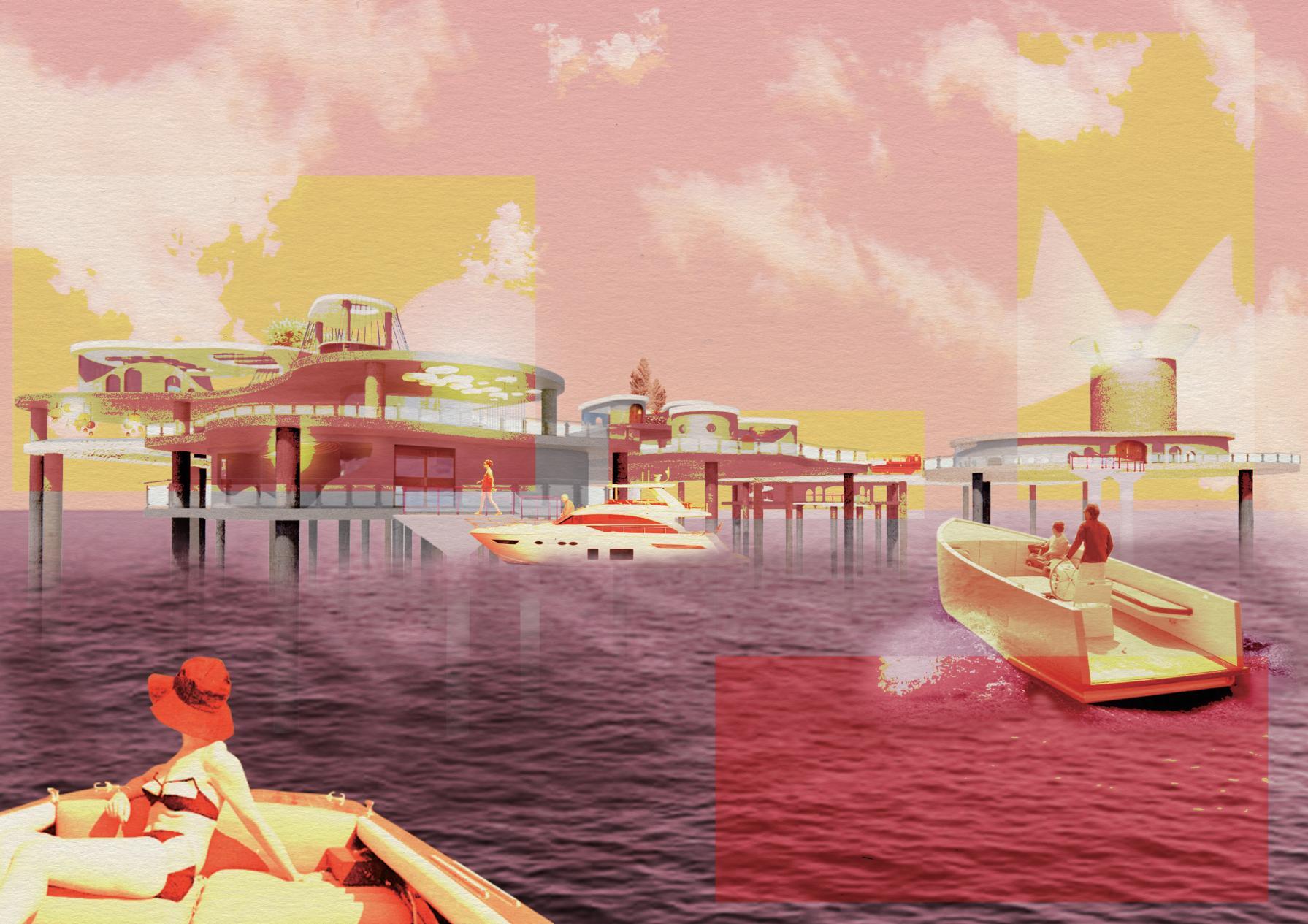

Leisure Architecture Complex, Rimini ROSA . AUDIO MEMORABILIA SEP (2023) --- MAR (2024)
ROSA ISLAND . AUDIO MEMORABILIA
Generally speaking, things in memory cannot be seen and touched --- They only exist in the past and people's imagination. However, some sensory stimuli, such as hearing and smell, can help us recall and deepen the impression of specific memories. The relationship between memory and sense organs is a critical factor affecting memory's function in the human brain. This project explored the field of sensory design and provided an interactive space for people to recall the past through sound or create memories through interaction with sound.
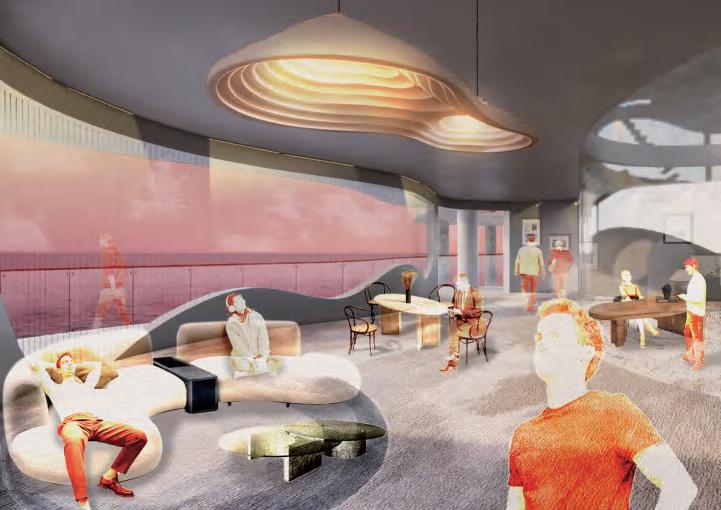
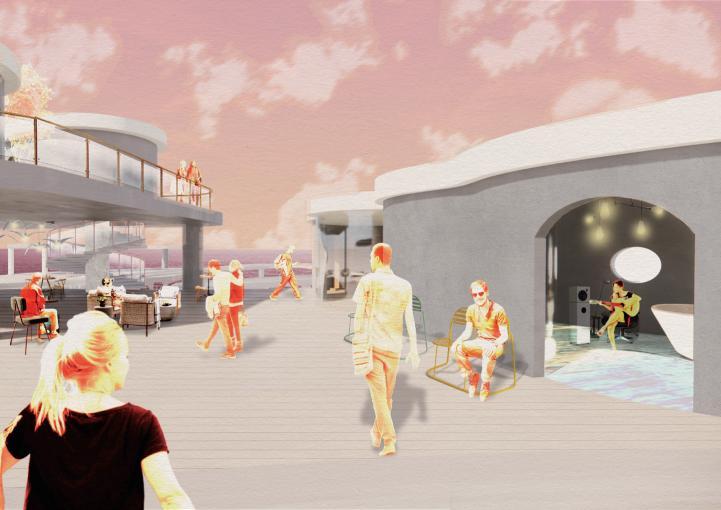
The Rosa Island: Audio Memorabilia is a marine architecture complex combining retail, leisure, entertainment, etc. The building is designed to explore the relationship between sound and memory. In this building, visitors can interact with different sound collection installations. Then, record the sounds they hear and preserve them in their preferred form.
The Audio Memorabilia is designed according to Rose Island's original appearance and the culture of its location in Rimini, Italy. I combined my design philosophy and presented my own impression of Rose Island. I hope that tourists can not only interact with the sound installations in the building but also learn about Rose Island, which only exists in history and memories, by visiting this building complex.
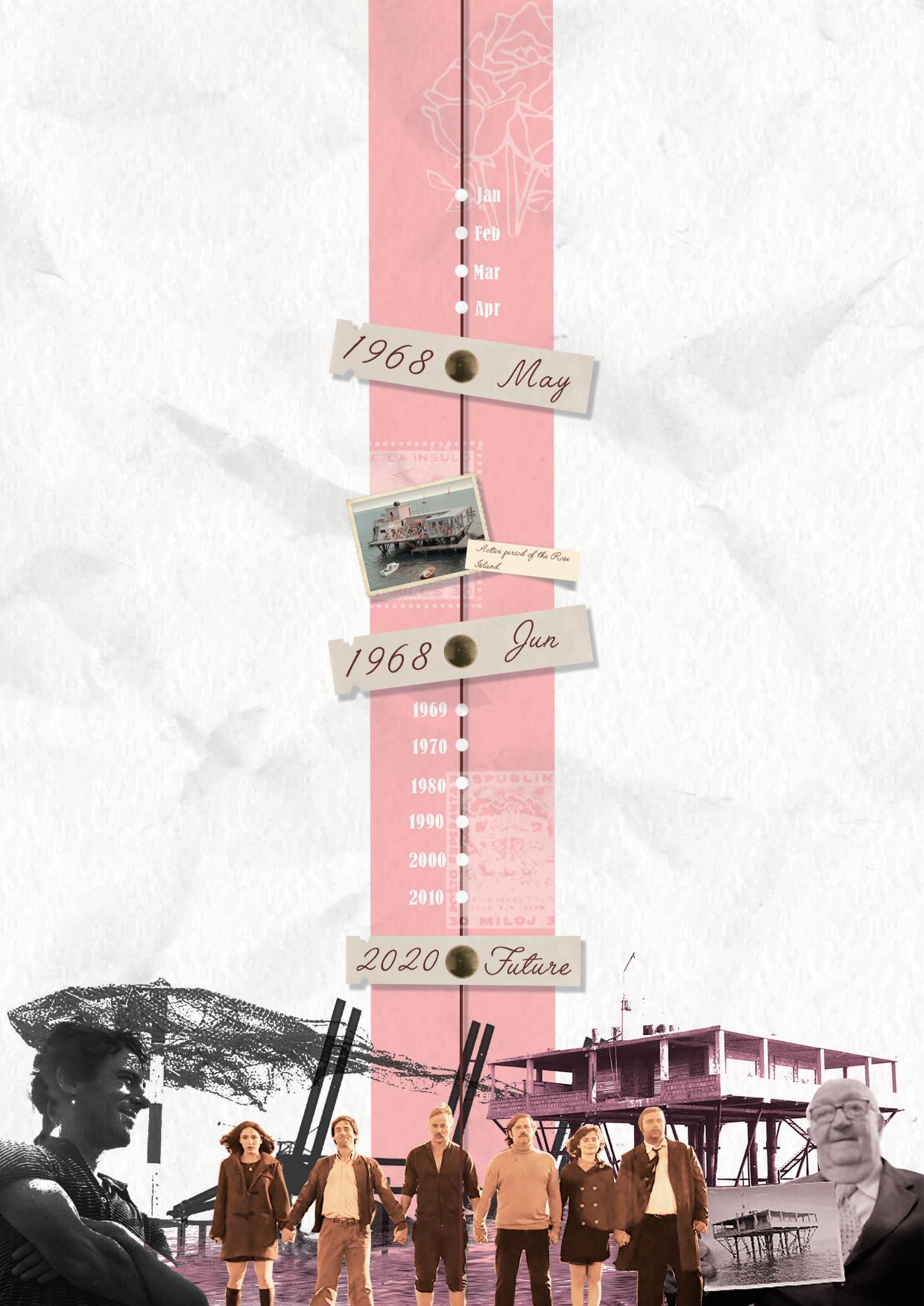
01
Island
05/1968 - 06/1968. 55 Days

Giorgio Rosa an engineer from Bologna, had proposed his idea - to build a completely independent domain on the high seas: Rose Island.

Stamps
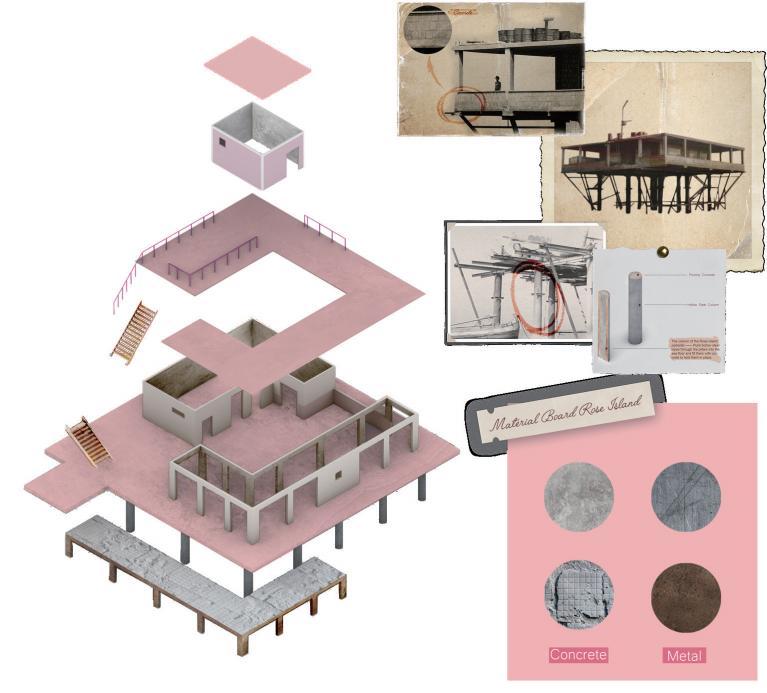
In 1968, the Republic of Rose Island was declared established. It is a stilt house with steel tubes on the sea, which is located on international waters 500 m from the Italian national waters.

From
, Rose Island was sealed off and demolished by the Italian harbour bureau. The offshore platform was ultimately destroyed by a storm.
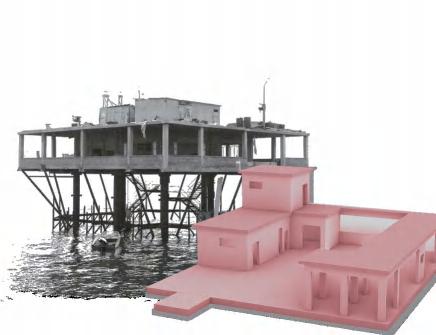
The Rose Island is an offshore platform with living and entertainment facilities such as a bar, restaurant, post office, etc. This island also has symbols such as flags, stamps, currency, etc.

In 2020, a Netflix film directed by Sydney Sibilia --- Rose Island (Italian: L'incredible story dell'Isola delle Rose) was released, which shows the story of Rose Island to the world.
Location: The Rose Island is a 400 sq offshore platform, which is about 11.6 km (7 miles) far from the Italian seaside city of Rimini.
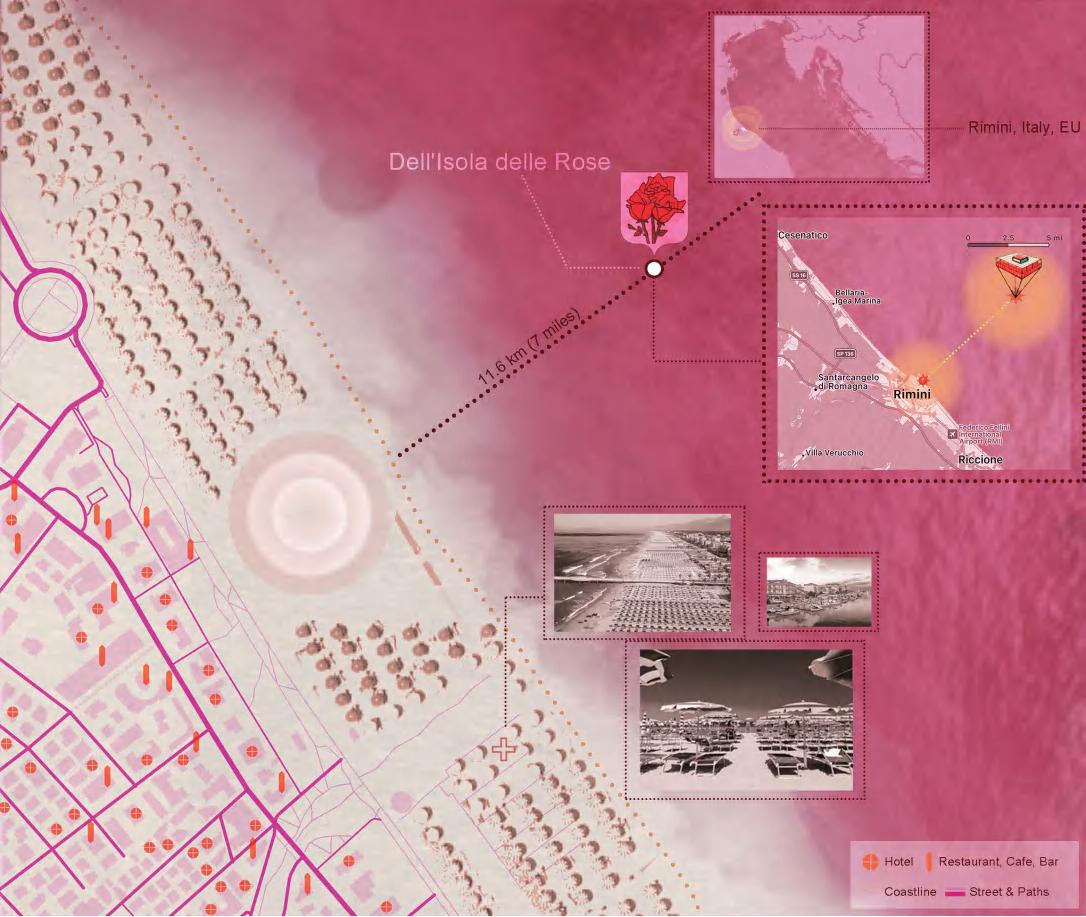
Rimini has a coastline of 15 km. More than a thousand hotels and restaurants are located here, making it one of Europe's most famous seaside resorts.
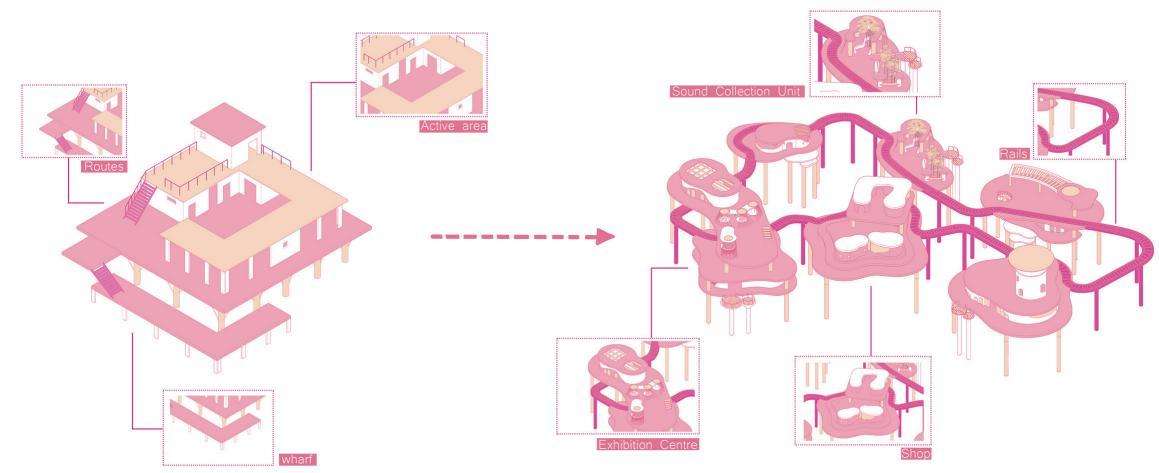



A Brief History of Rose
the end of June 1968 to February 1969
SITE ANALYSIS Interactive Memory Utopia Sound & Music Interactive Memory
1.Sound can help us to identify and locate objects
Amygdala: An almond-shaped structure inside the limbic system, which is thought to be involved in the human functions of emotions
3.Research shows that the limbic systems of our brains will be continuously modulated when we hear emotional music or sound
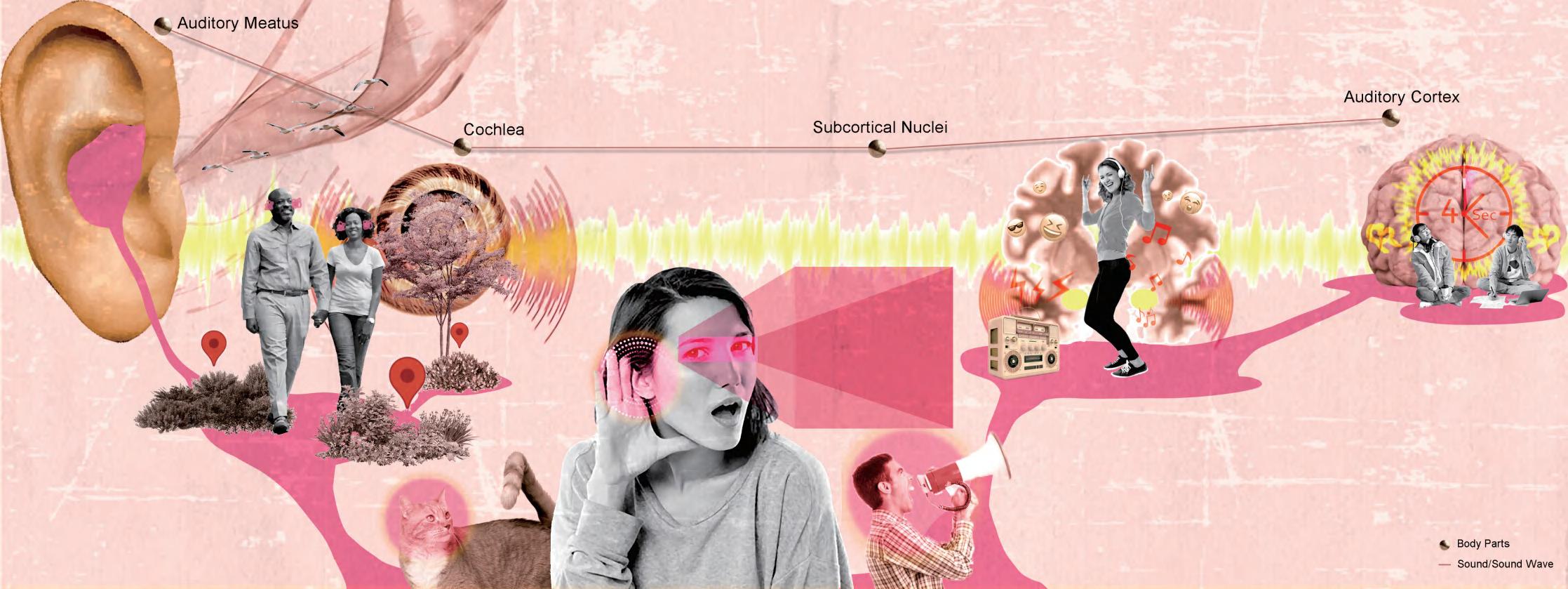
2.Hearing and sight work together to highlight the salience of the events we are experiencing. Hearing could also help us to perceive objects and events out of our sight
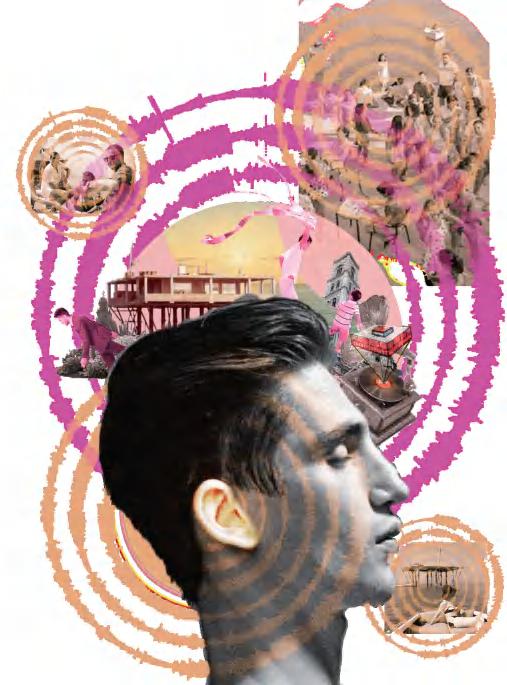
4. Our ears transmit the sound heard by us to our brains. Then, these sound memories will be recorded and stored for about 2-4 seconds, whether we notice them or not. (Echoic Memory)
WHY CHOOSE THE ROSE ISLAND?
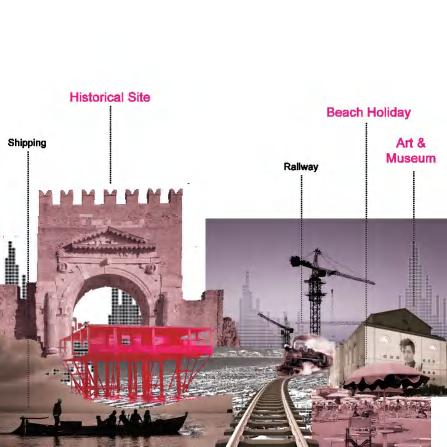
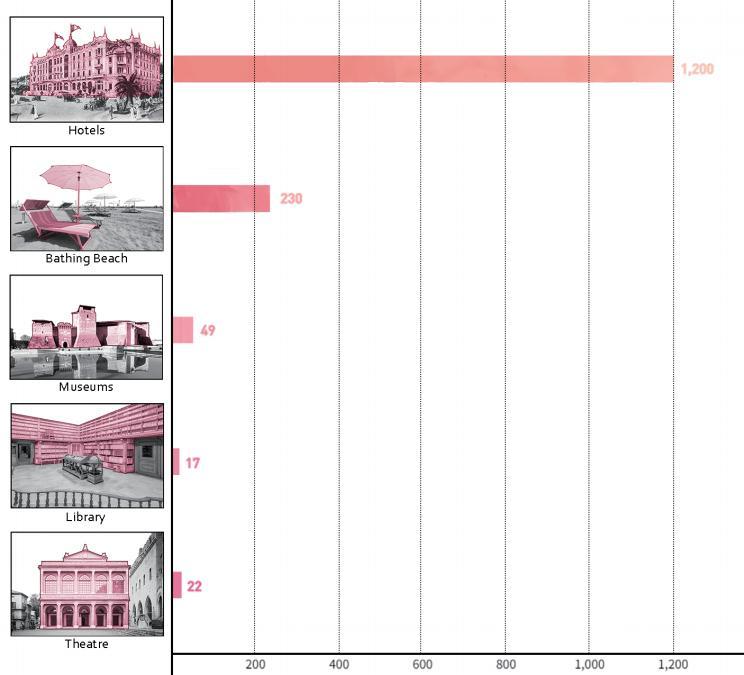
As a famous tourist city in Europe, Rimini has an annual tourist population of around 1.5 million Amenities such as hotels, seaside baths, museums, and theaters are widely distributed in this city, with the largest number of hotels.
Rose Island is an offshore platform that once existed but now only exists in images and memories --- This is consistent with the design theme of memory that want to emphasize.
In the film L'incredible storia dell'Isola delle Rose, the engineer who built Rose Island created his unique memory of Rose Island. In other words, The building of Rose Island itself is a symbol of remembrance. It is a physical expression of memory.
In this project, I want to design to help users create or save their memories in different forms. Therefore, a place full of memories is a good choice for a design site.
WHY USE SOUND?
The human senses are the main function of our cognition of things, so the generation of memory is also closely related to our feelings. Many senses can assist memory, such as vision, smell and so on. Hearing is also a critical sense to form and strengthen memory - our brain receives and stores the sounds we hear all the time, and this process is called Echonic Memory, which can help us better understand what we have experienced. In addition, sound memory can strengthen our visual memory.
HOW DOES SOUND BE HEARD BY US AND AFFECT OUR MEMORIES?
Amenities in Rimini (2023)
HOW COULD SOUND BE COLLECTED?
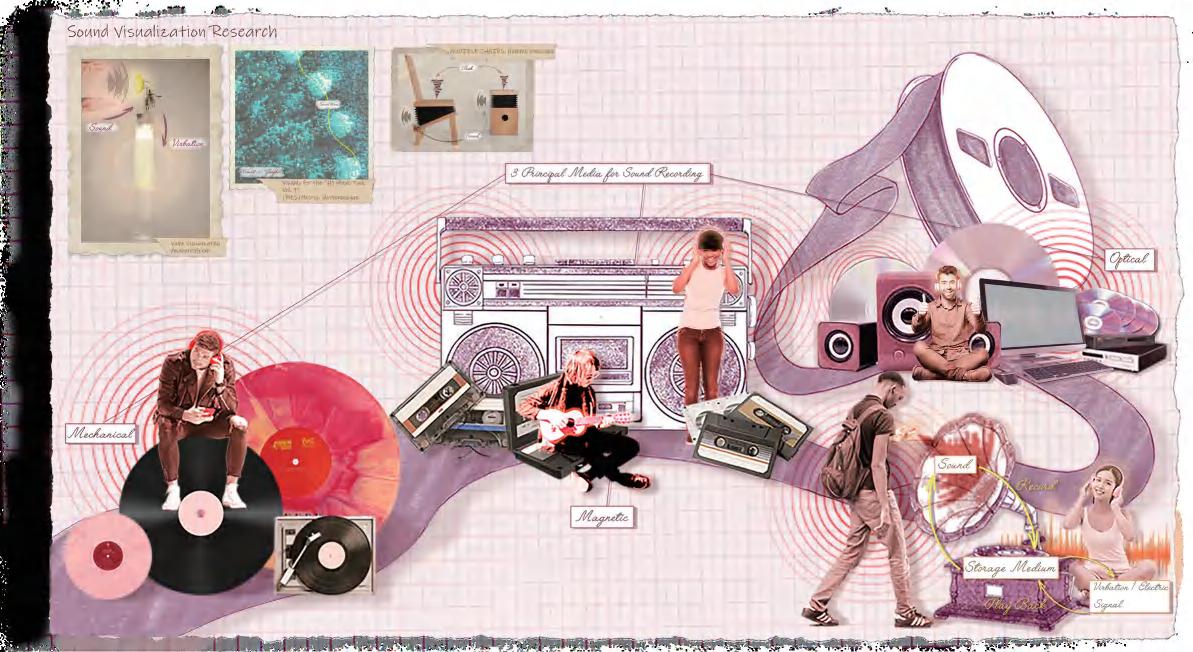
Conventional audio products usually collect sound through three mediums --- Mechanical media such as vinyl records, magnetic media such as audio tape, and optical media such as compact discs (CD). The principle of sound collection is to store the vibrations that produced the sound in a recording medium, which then converts those vibrations into sound and plays them back. Besides, there are also ways to record sound by transforming it into visual art, such as sound visualization videos. Converting sound waves into images to achieve sound visualization is common.
DESIGN CONCEPT:


Product
Sound exists in all spaces that we can access --- Even in a very quiet room, there are subtle sounds that our hearing can pick up. Sound can stimulate our episodic memories but these memories only stay in our brains for a short period. Besides, sound is also intangible
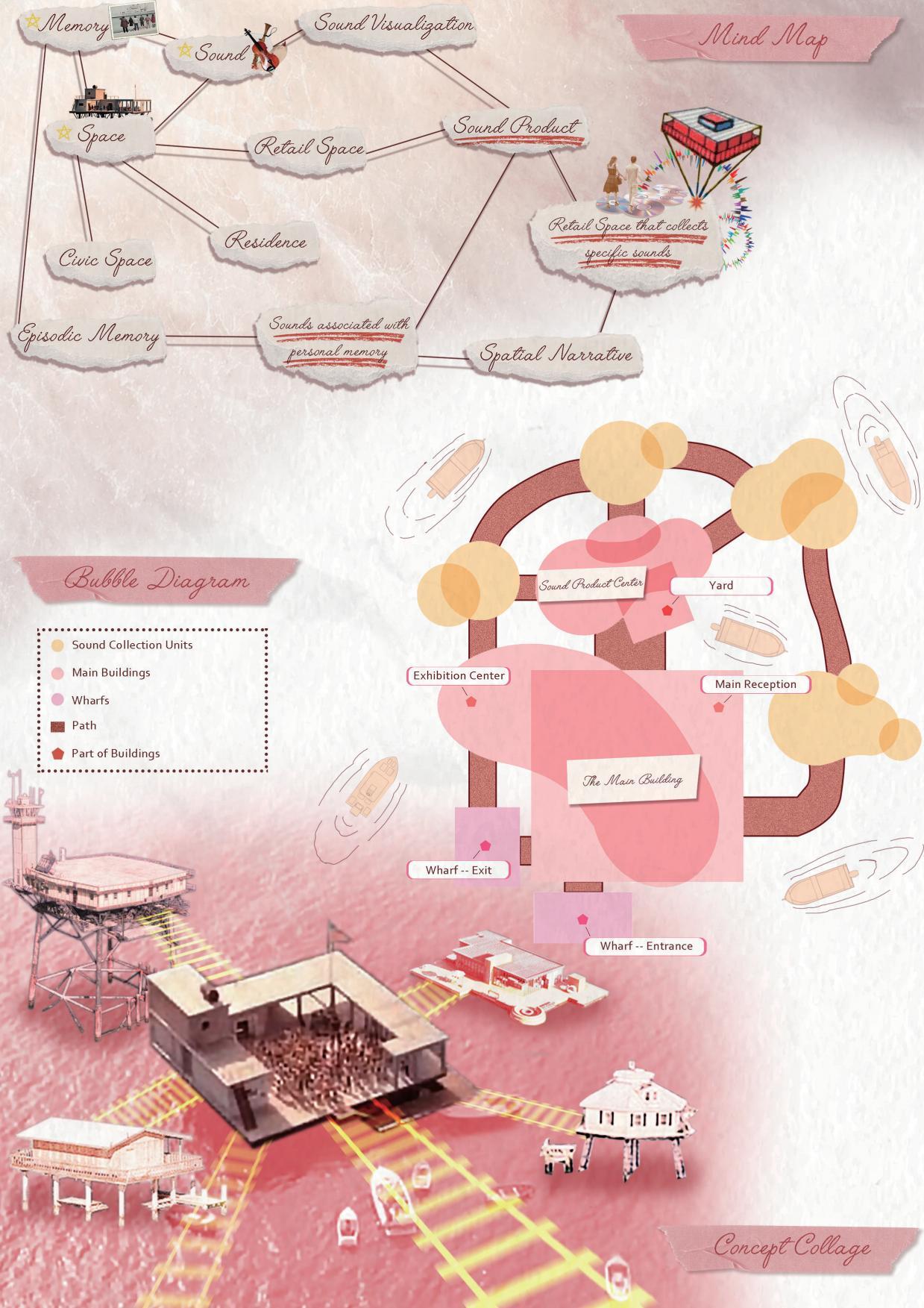
In this project, want my users to experience and collect sounds in space, combine them with their memories and obtain an object that can be preserved to represent these sounds and memories. Therefore, developed the design concept of "Audio Memorial", a combination of retail, leisure and interactive space. Users will travel among a group of sound collection units when they enter the space. These sound collection units will be associated with the surrounding environment, improving the sensory experience of sounds from the site. Users will interact with sounds and collect the sounds they want, then transform these sounds into monumental products (Audio Memorabilia)
Considering the original location of Rose Island, the new building will be located on the sea.
Memory Sound
SKETCH: MAIN BODY
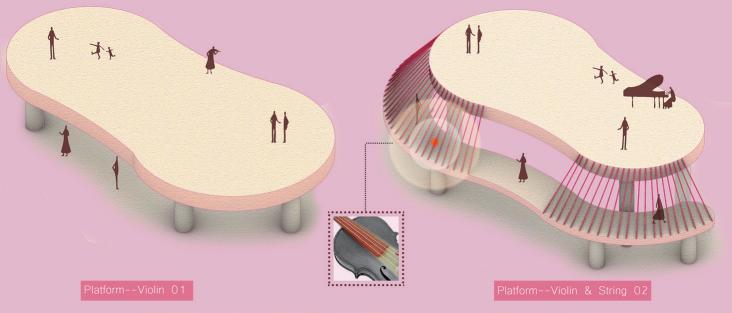
SOUND COLLECTION UNITS
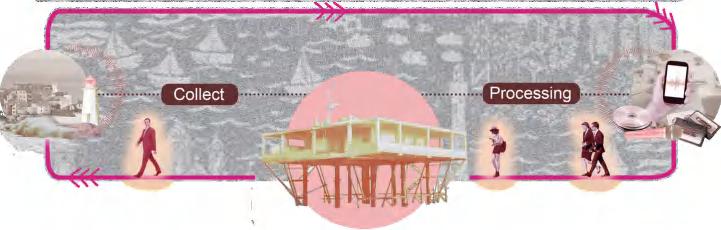
As mentioned before, in this project, tourists will experience an activity process of interaction -sound collection -- process sound -- sound productization in the building.
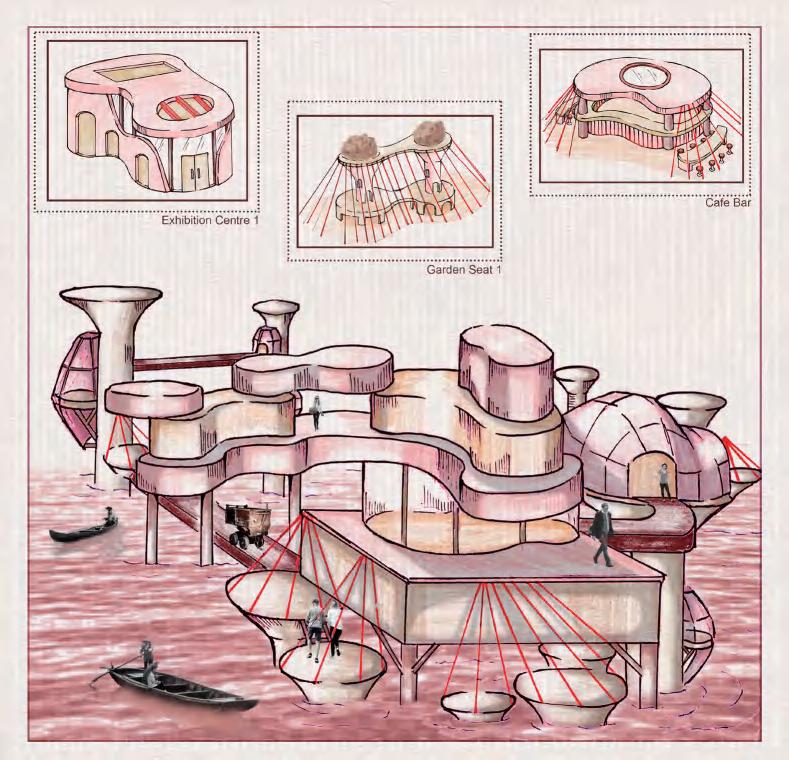
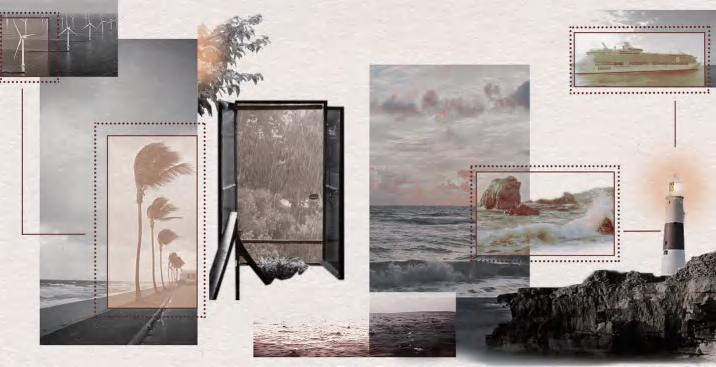
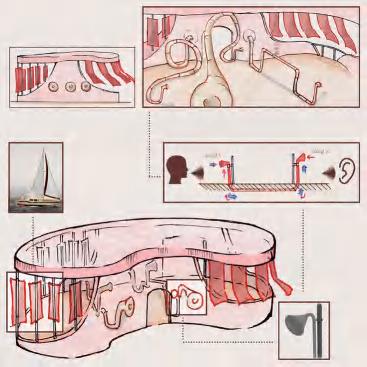
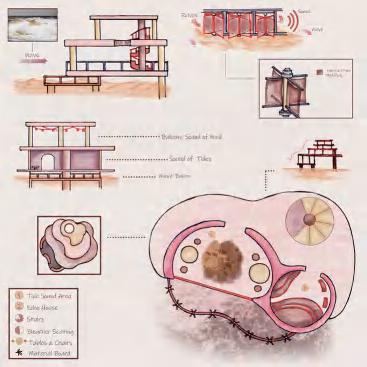
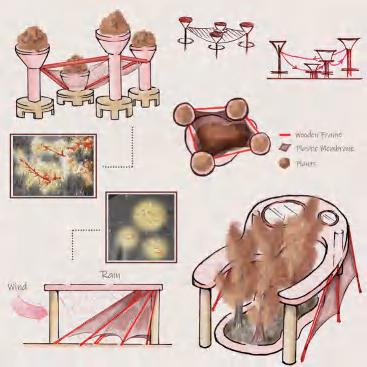
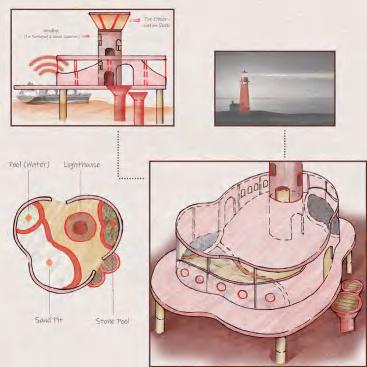
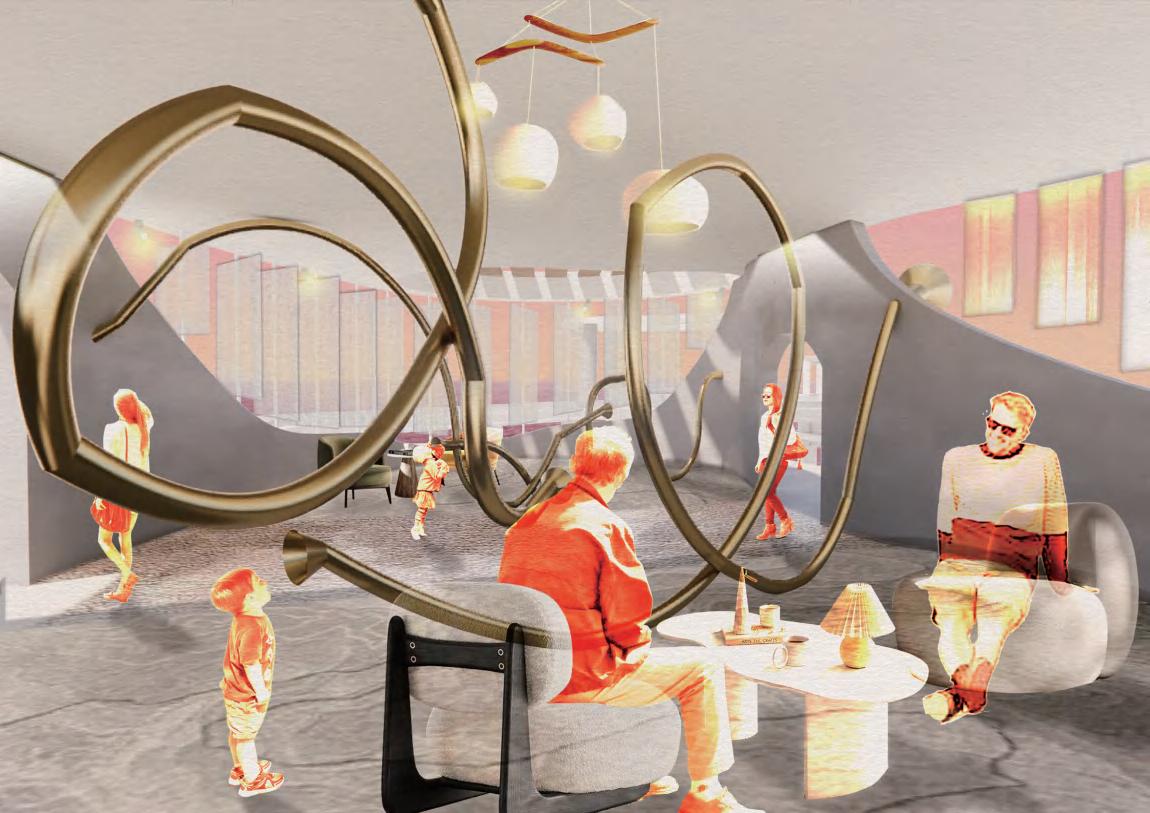
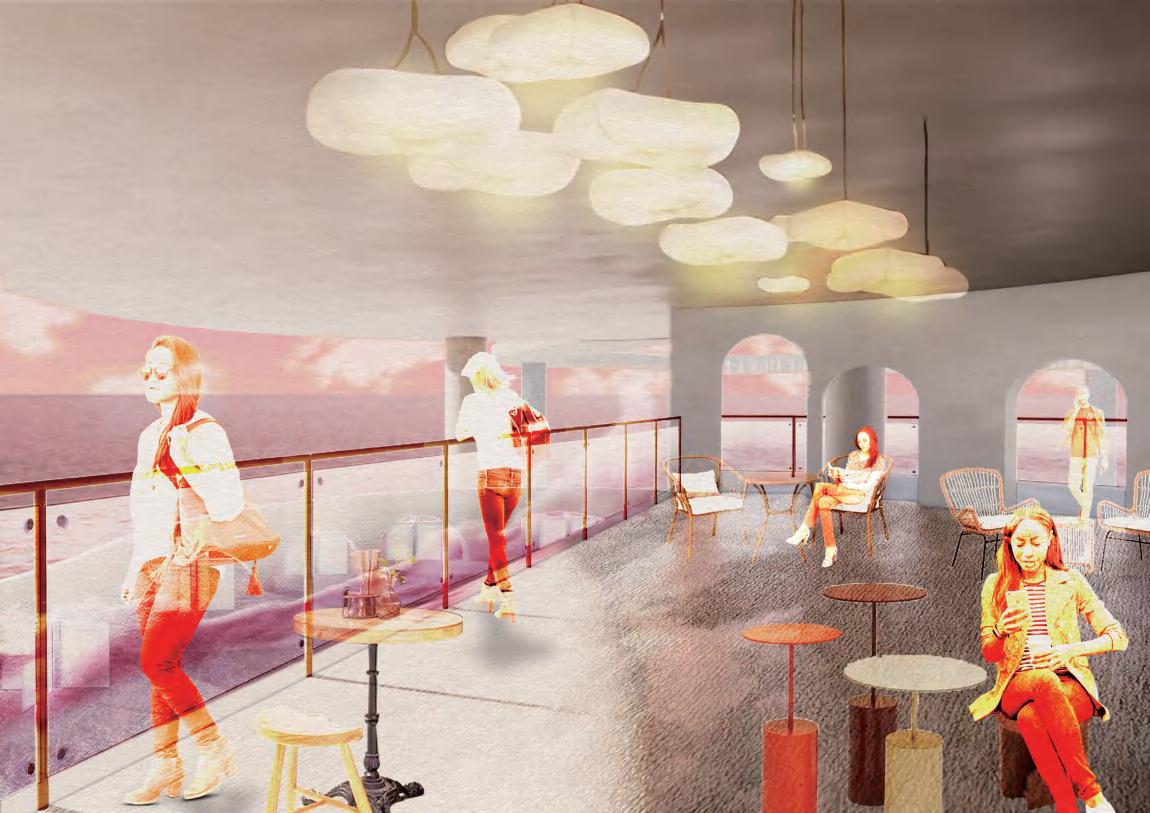
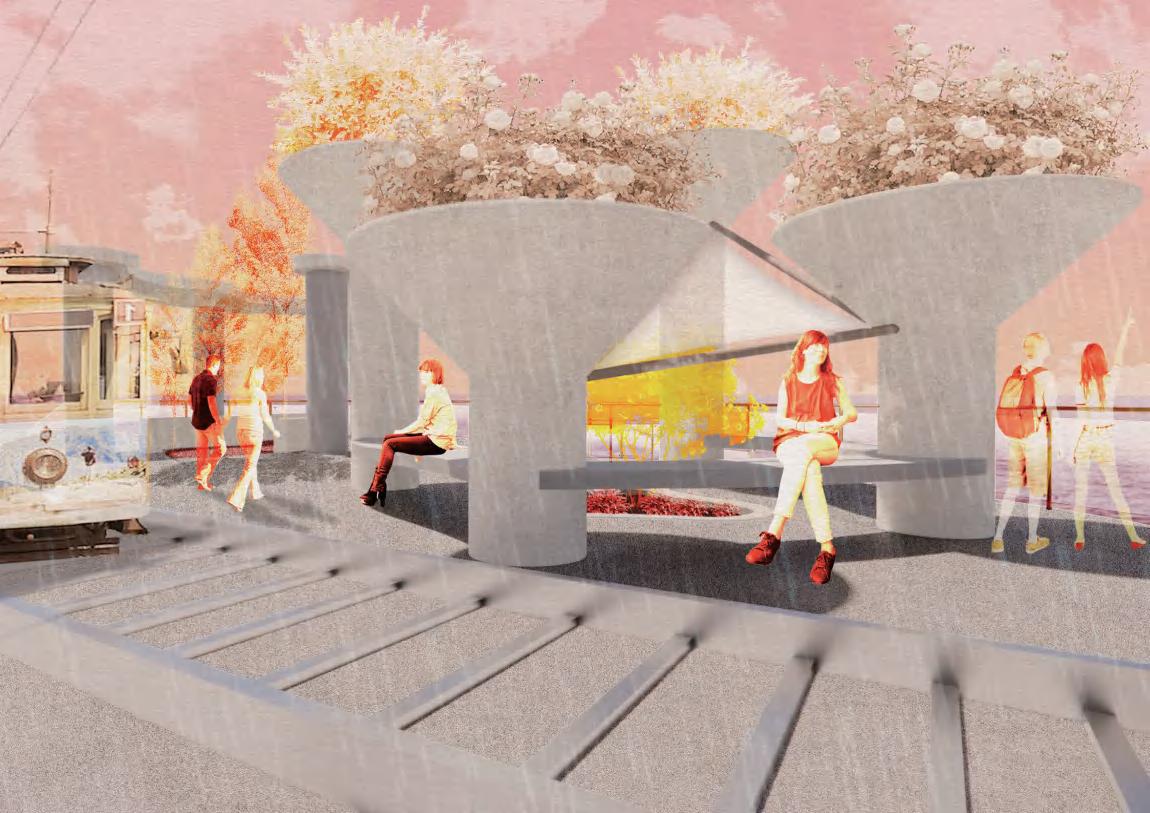
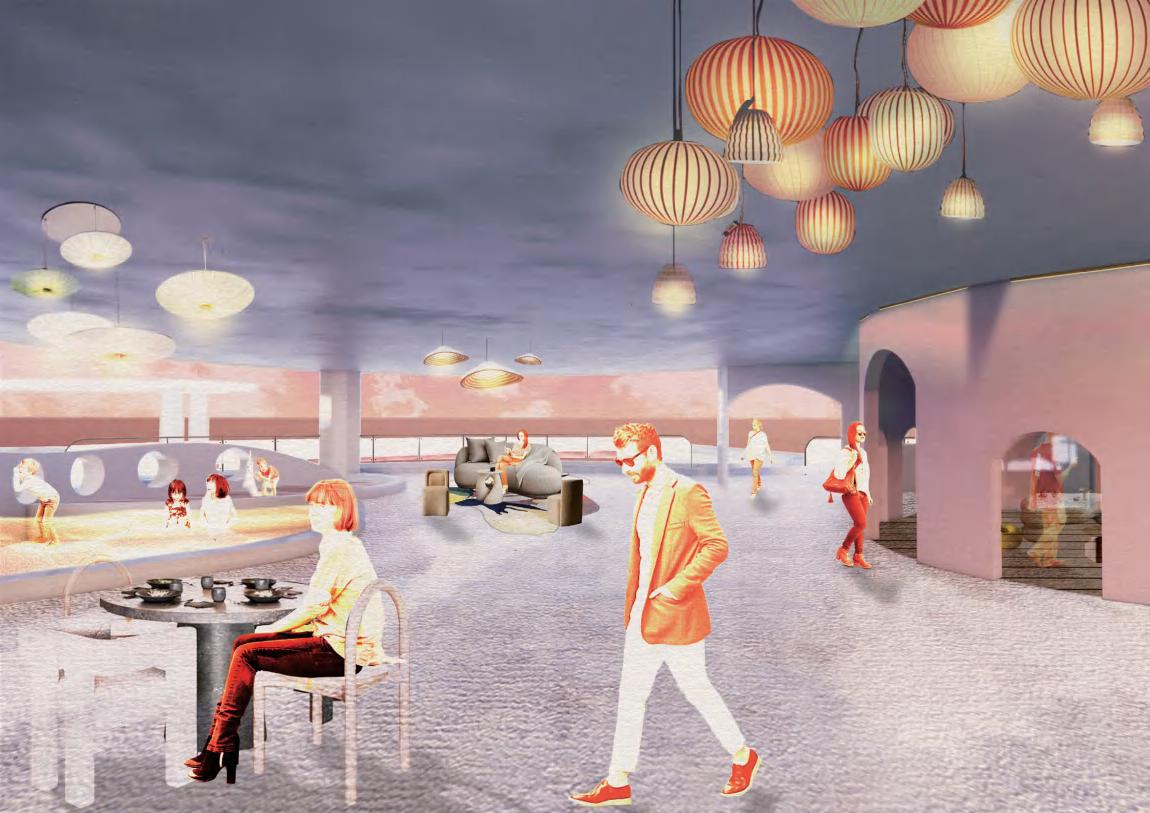
There are four sound collection units in the building. Considering the building is located at sea, these four sound collection units have been designed for interactive spaces targeting the sounds of wind, rain, waves, and boats at sea allowing users to experience and record these sounds more deeply.
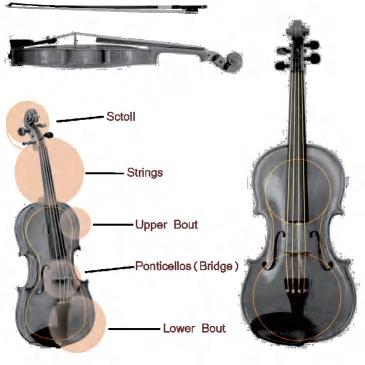
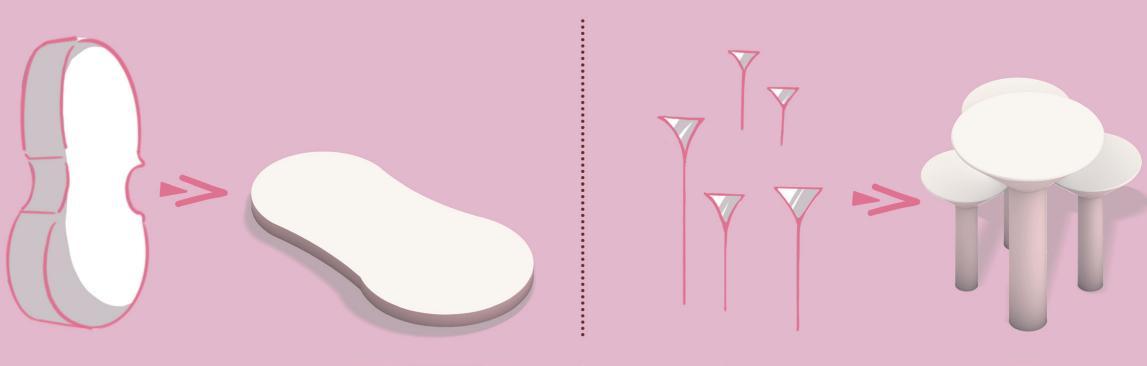
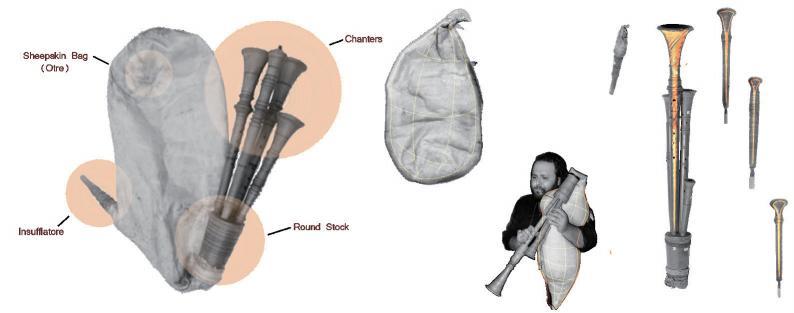
MATERIAL BOARD: ROSE ISLAND TYPOLOGY EXPERIMENT: ITALIAN INSTRUMENTS
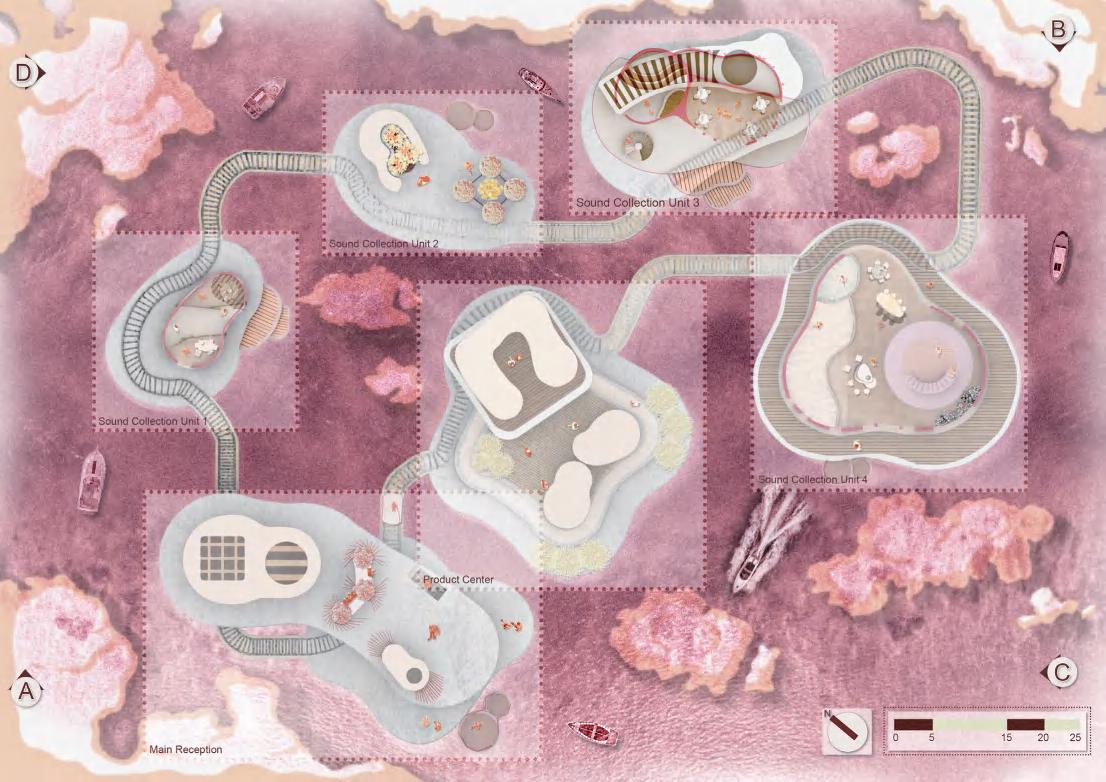

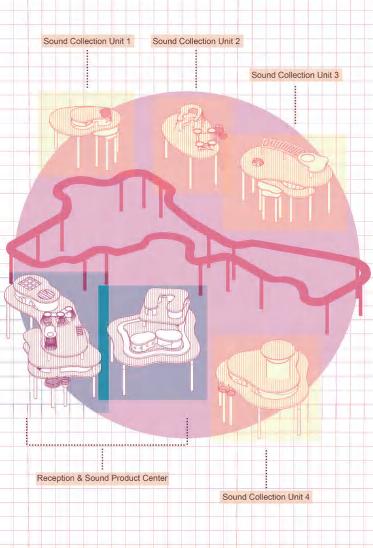
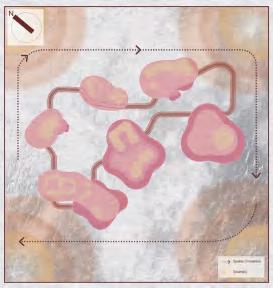
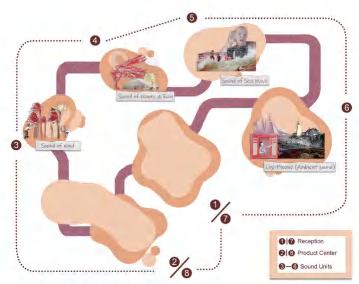
Users will experience a process of combining sound with memory in the Sound Memorial --First, they will arrive at the reception by boat and learn about the history of this building (Rose Island) and the experience of the sound space. They will then go to each Sound Unit by a small tram to experience and record the sound they like, and finally go to the production centre for the processing and productization of sound files.
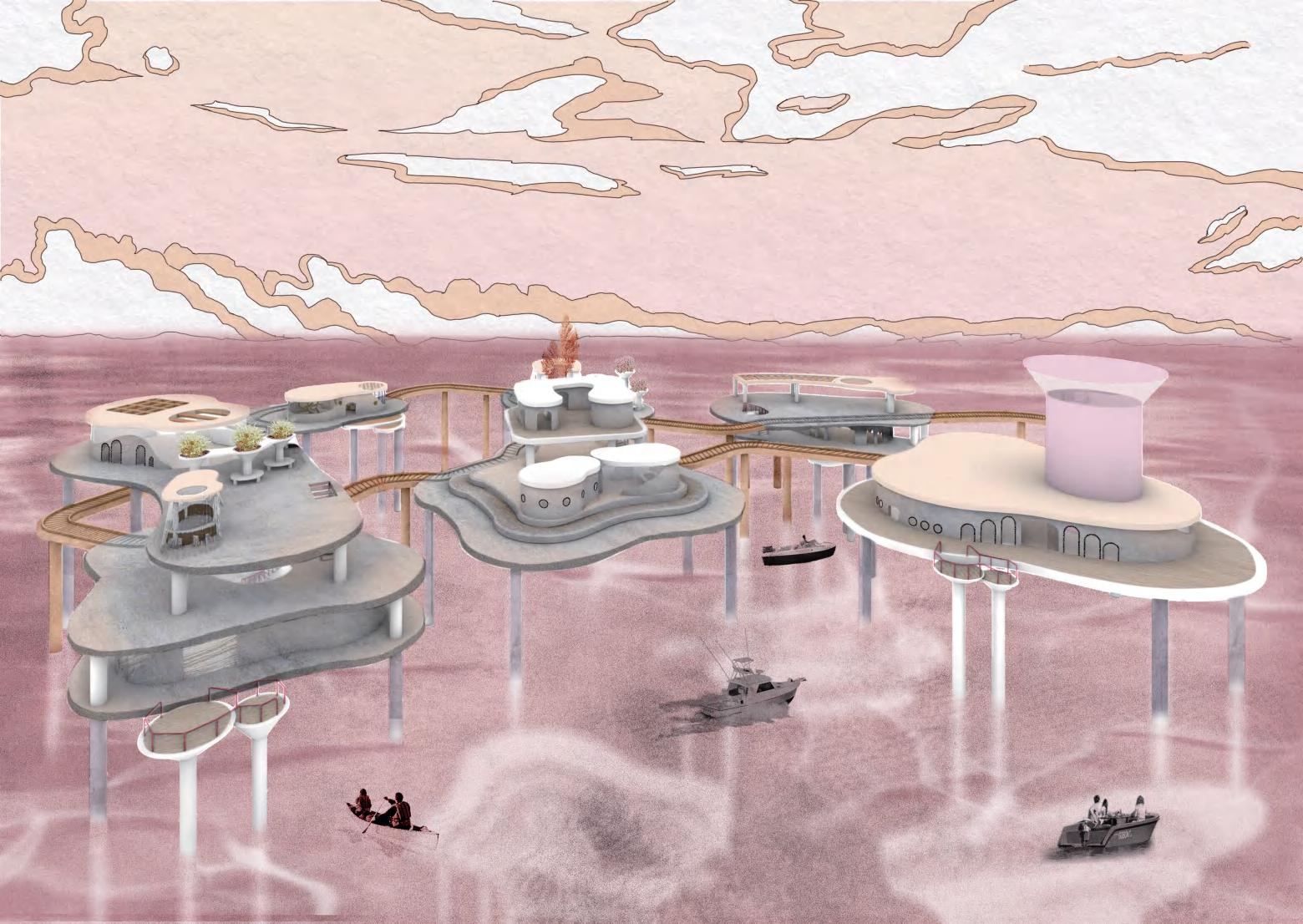
Sound Memorial -- Rose Island is a group of architectural complexes that are connected by tracks The building combines the functions of retail, leisure and exhibition and provides an effective acoustic space for its users to interact with the sound in the surrounding environment.
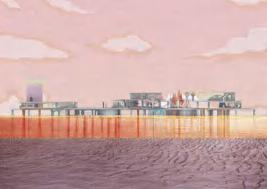
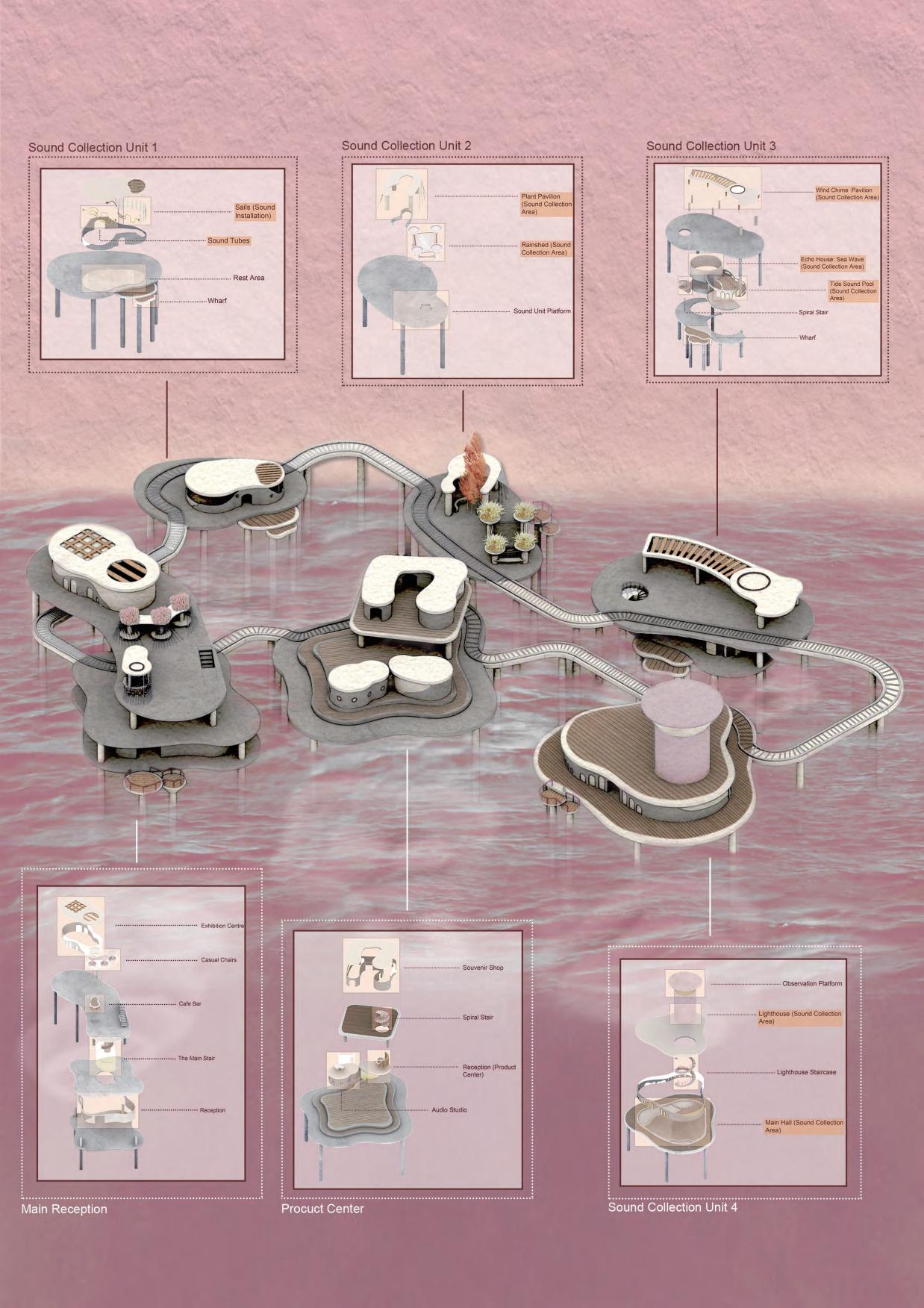 Elevation A 1:450
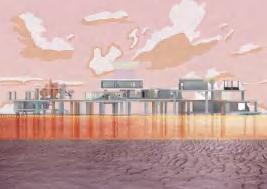
Elevation B 1:450
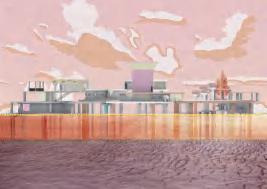
Elevation C 1:300
Elevation D 1:300
Circulation & Sound Source
Elevation A 1:450
Elevation B 1:450
Elevation C 1:300
Elevation D 1:300
Circulation & Sound Source
TOP VIEW (1:500) EXPLOSION DIAGRAM
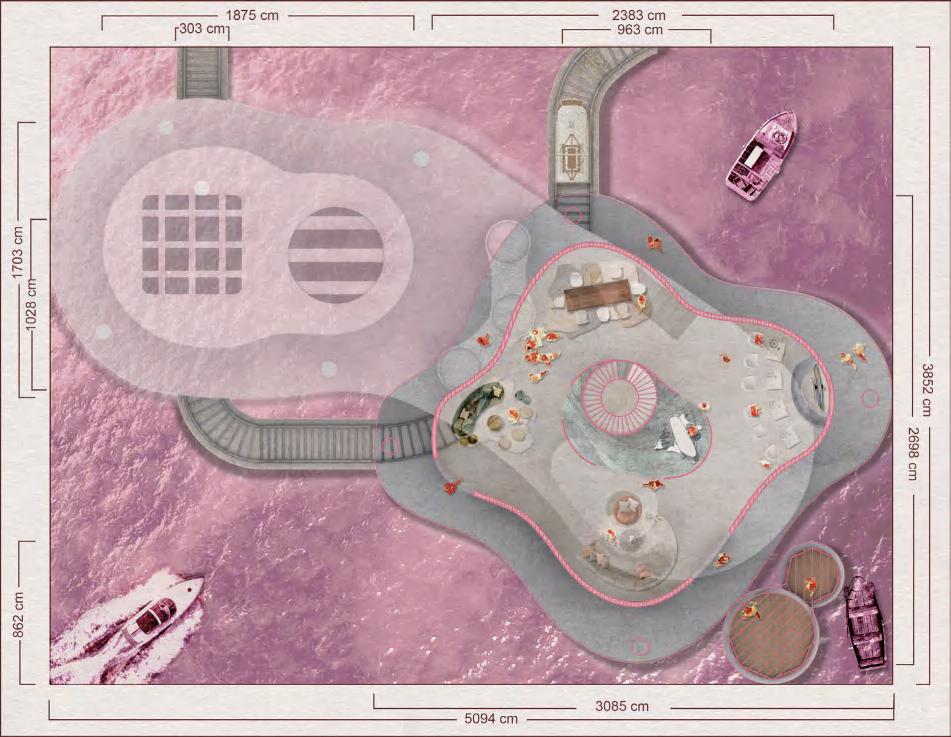
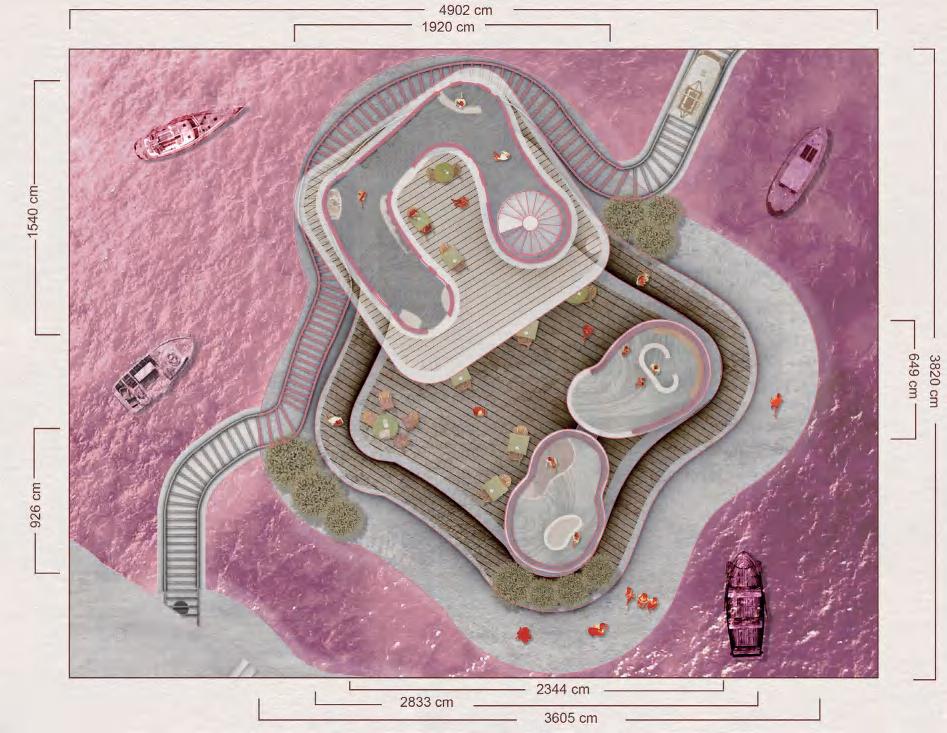
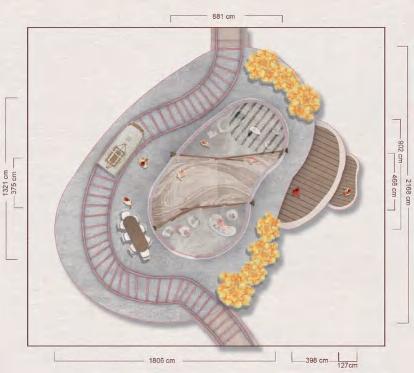
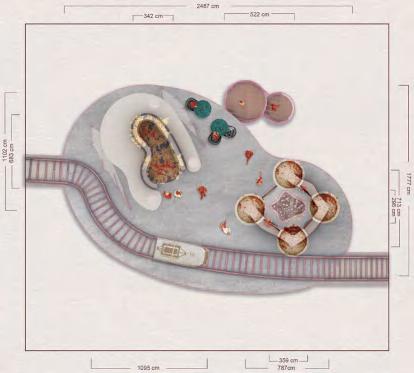
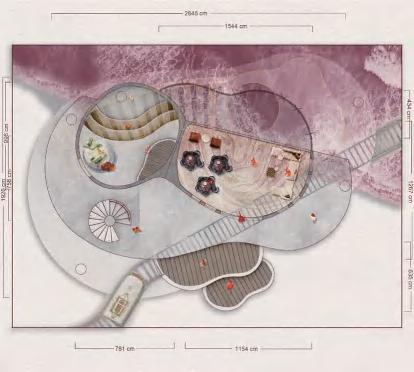
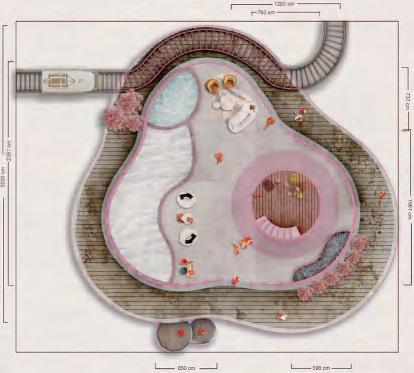
Sound Collection Unit 1: Sound of Wind
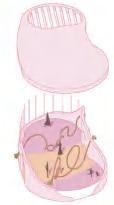
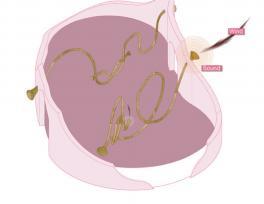
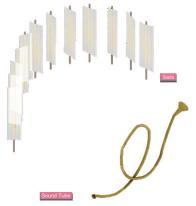
This building is designed to collect the sound of sea wind A group of large sound tubes traverses the interior of the building, bringing in the sound of the wind from outside. Besides, a sail installation on one side of the building shows the sound of the wind blowing through the various fabrics Users can interact with the wind and collect sound through these two installations.
Sound Collection Unit 2: Sound of Rain
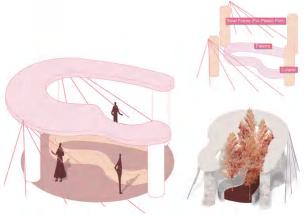
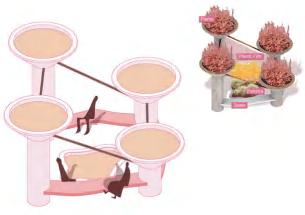
This sound unit consists of two modules --- Plants Pavilion and Rain Pavilion. The Plants Pavilion can allow rainwater to hit the plants in its centre so that people can hear the sound of rain. Both of these pavilions have a set of metal stands covered by plastic film which also aims to collect the sound of rain (hit). The film on the stand can be replaced with different materials to produce different sound effects
Sound
Collection Unit 3: Sound of Wave
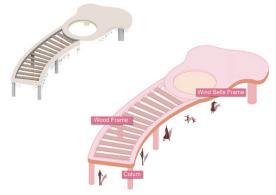
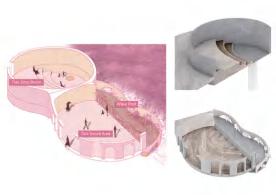
This building consists of two parts --- Tide Echo Room and Tide Pool The Tide Echo Room has an enclosed round structure that provides conditions for echoes, amplifying the space's sound. The lower part of the building is soaked in seawater. When users walk down the stairs to the bottom of the building, they can hear the sound of waves hitting the outer wall. The Tide Pool is a pool which allows waves to pass through. When waves pass by, the water wheel installation on the outside of the pool will be triggered. The blades of these waterwheels are replaceable, allowing waves to hit different materials and produce different sounds
Sound Collection Unit 4: Sound of Sea Environmemt
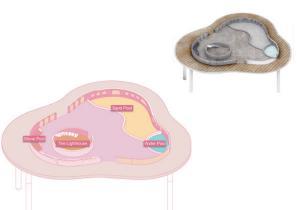
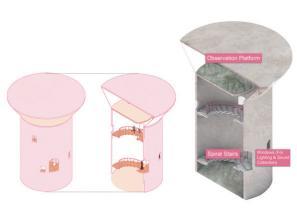
This building combines several elements from the seaside environment - sand, stone, and water Users can collect the sounds of these three natural elements in the sand pool, stone pool, and water pool inside the hall of the first floor of the building. In addition, to introduce the sound from the surrounding sea into the interior, the building is open and has many small windows. The lighthouse located in the center of the building also allows people to climb to high places to collect sound and observe the scenery
PLAN VIEW: SOUND COLLECTION UNIT PLAN VIEW: MAIN BODY
The Main Reception 1:200
The Product Centre 1:200
Rose . Island
AUDIO MEMORABILIA
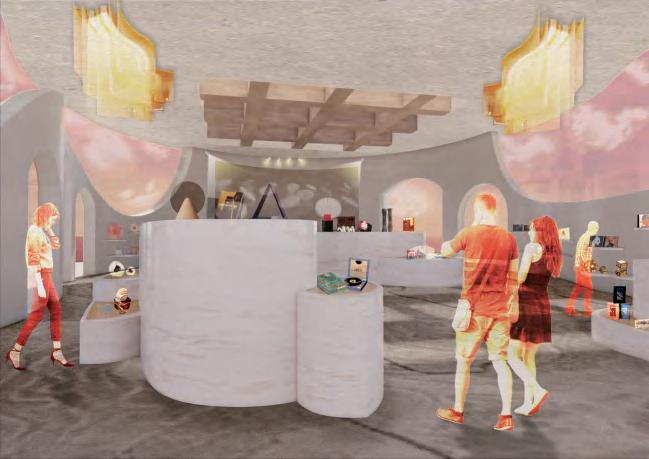
The Rosa Island: Audio Memorabilia is a marine architecture complex combining retail, leisure, entertainment, etc. The building is designed to explore the relationship between sound and memory . In this building, visitors can interact with different sound collection installations. Then, record the sounds they hear and preserve them in their preferred form. The Audio Memorabilia is designed according to the original appearance of Rose Island and the culture of its location in Rimini, Italy --- I combined my design philosophy and presented my own impression of Rose Island. Meanwhile, I also hope that tourists can get unique and unforgettable experiences by visiting this building.
TOUR PROCESS
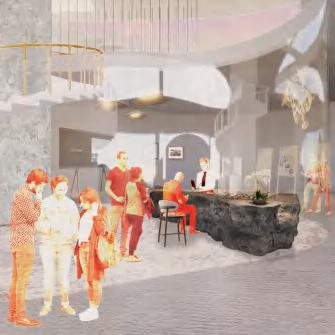
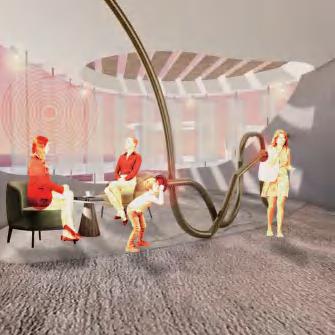
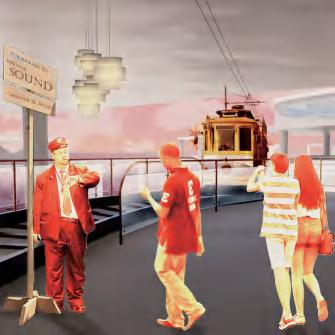
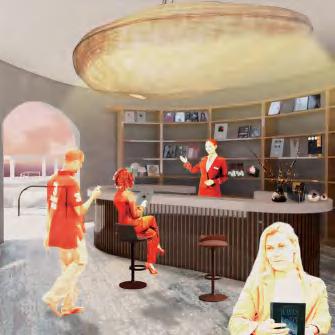
Introduction Departure Sound Collection Sound Product Processing
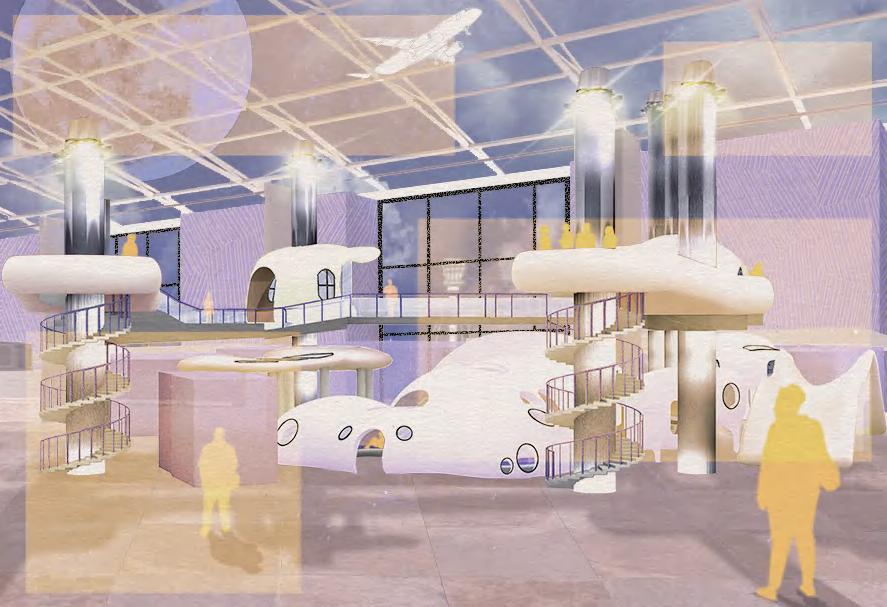

THE SLEEP LAB
Interior Installation, LHR London
JUL --- DEC (2023)
THE SLEEP LAB HEATHROW
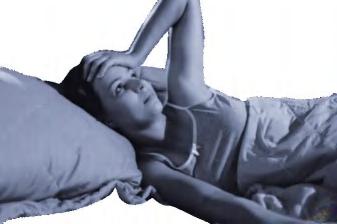
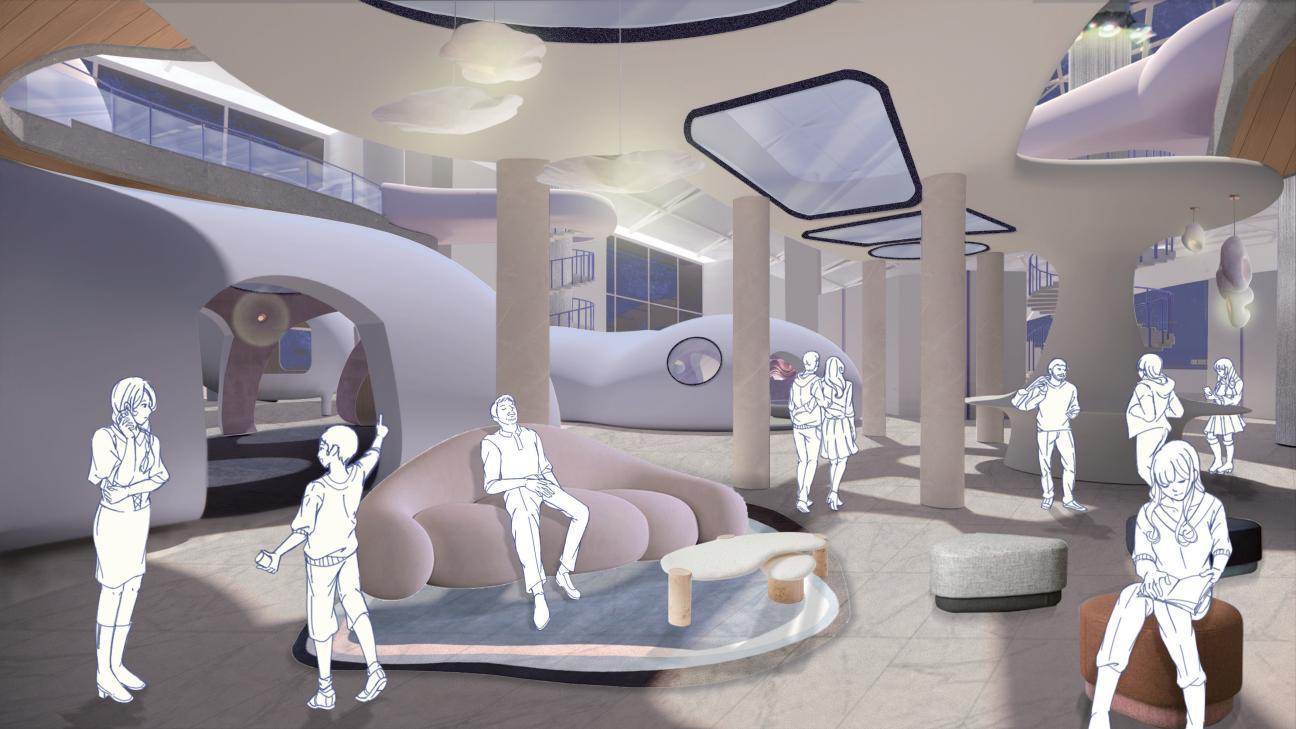
Sleep is necessary for maintaining physical function and health. However, in modern life, the harm of insufficient sleep is often ignored. Sometimes, we have to work at night, such as working the night shift or taking a night flight. In this case, we usually cannot have a suitable space to sleep. This project explored how to provide a better sleep environment for those who must be active at night.
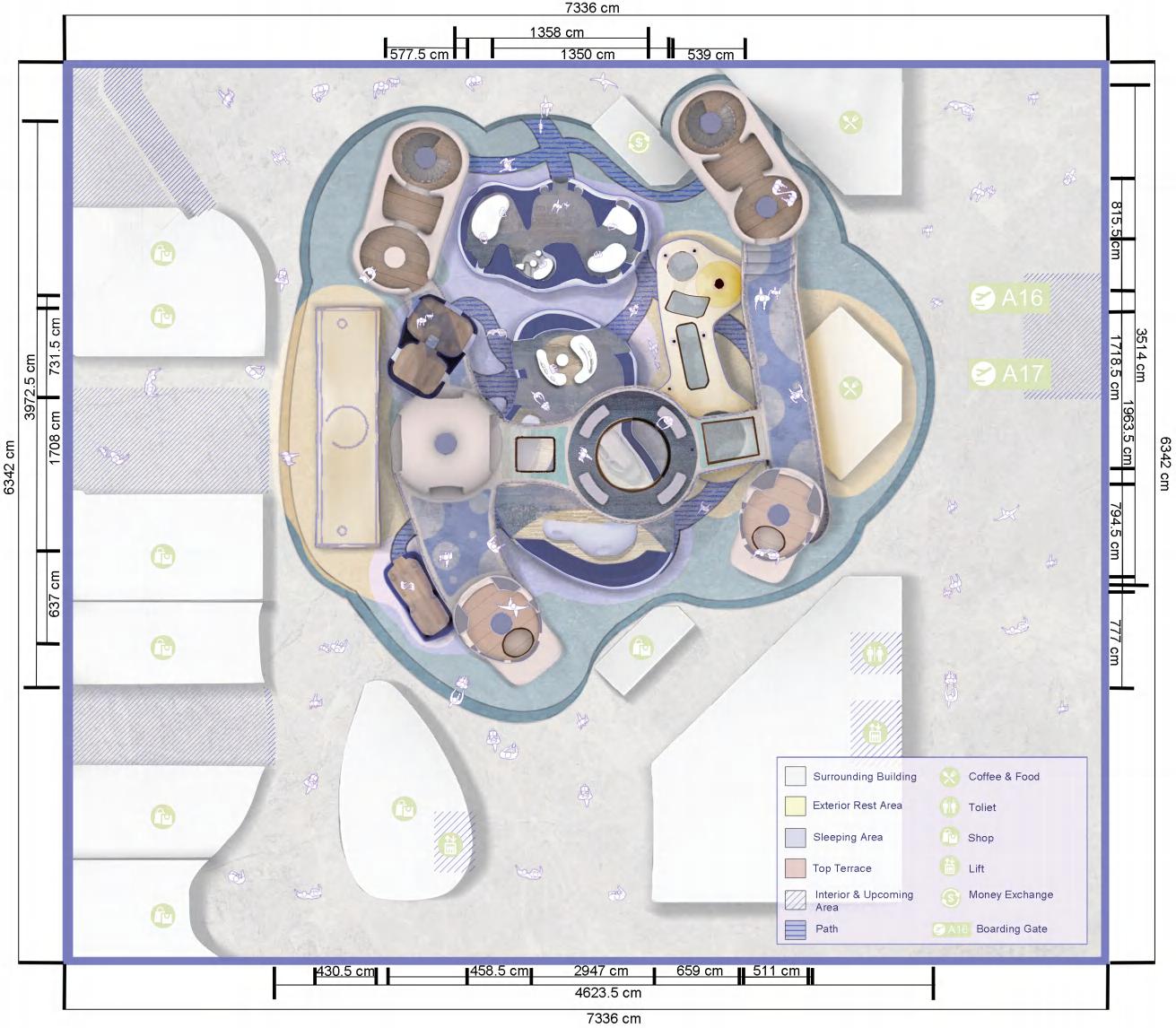
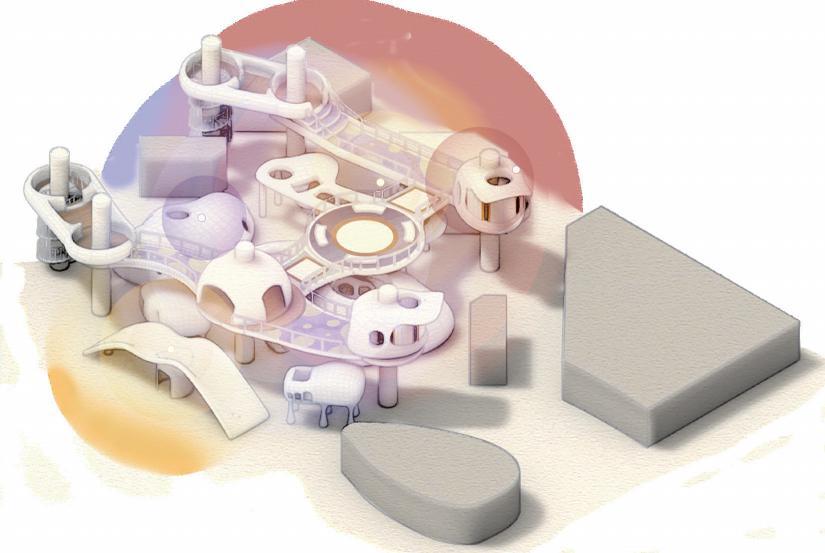
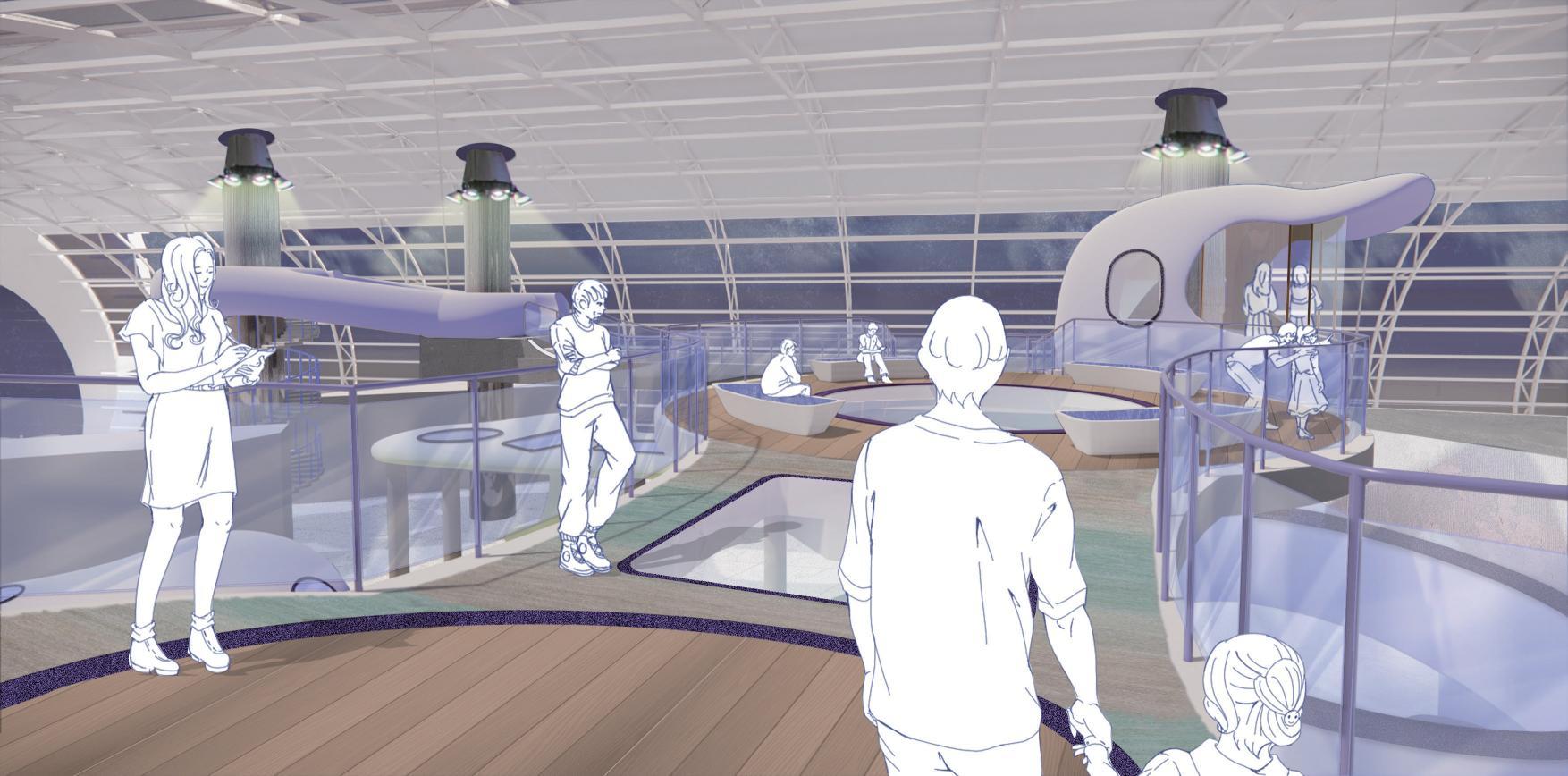
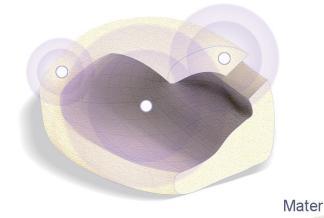
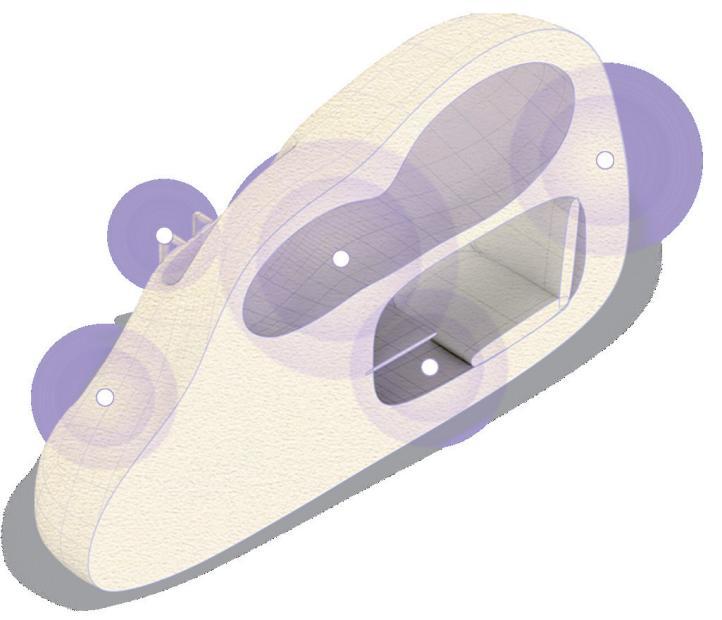
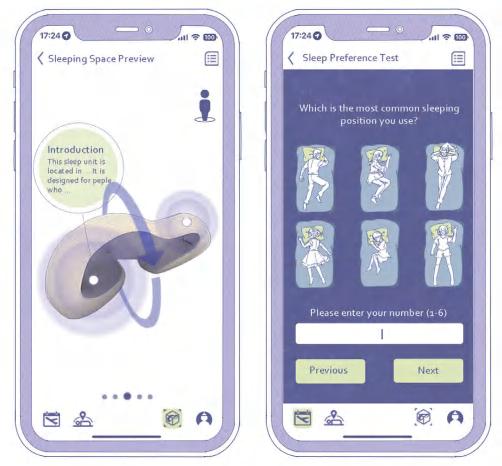
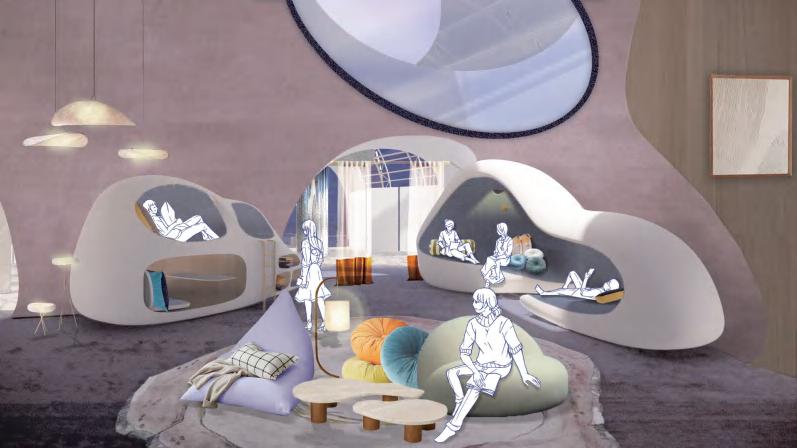
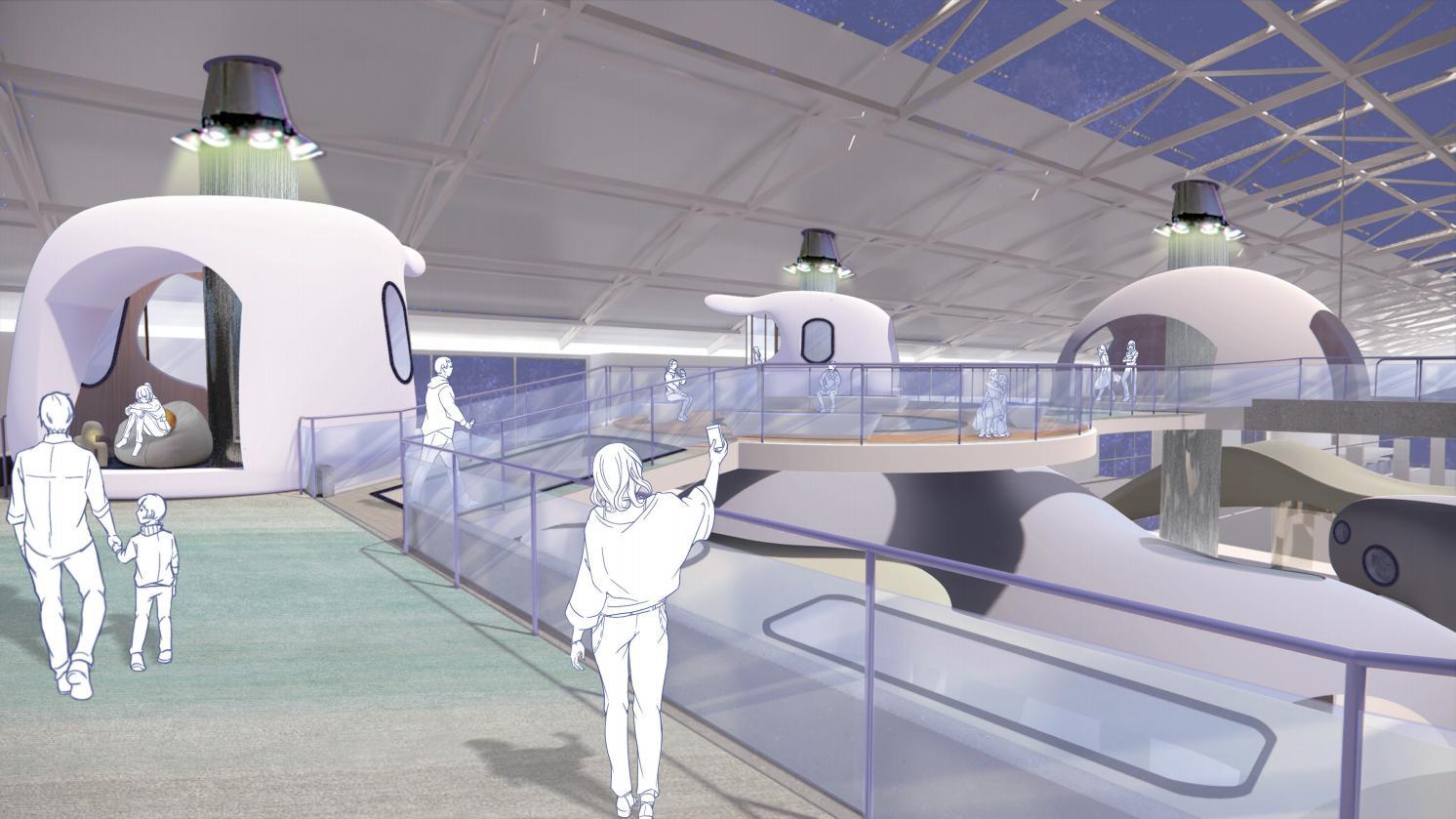
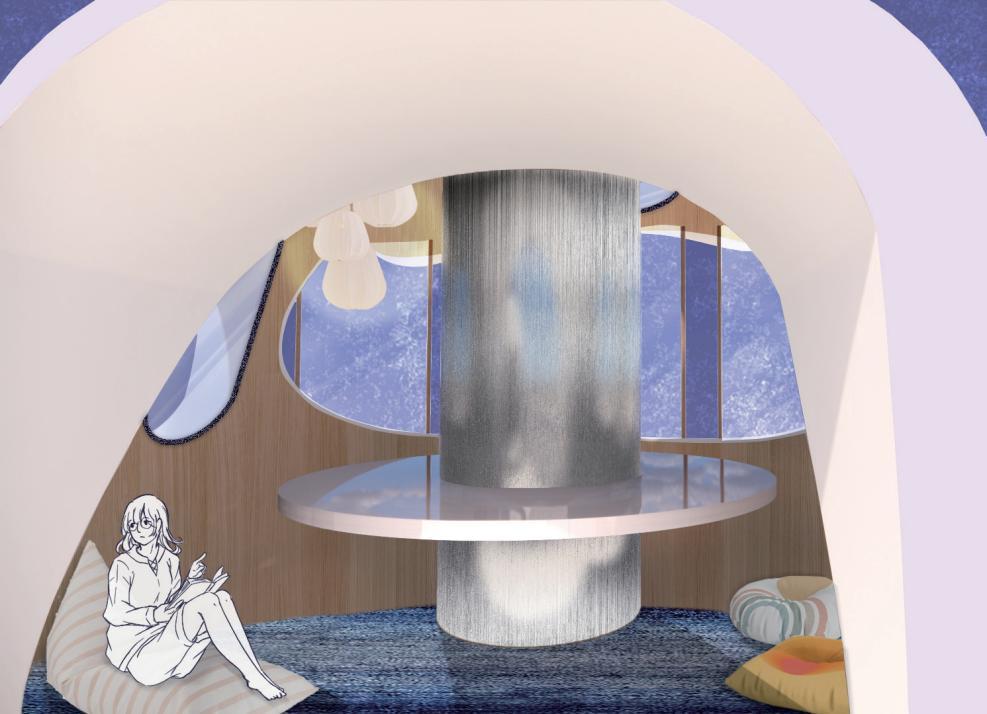
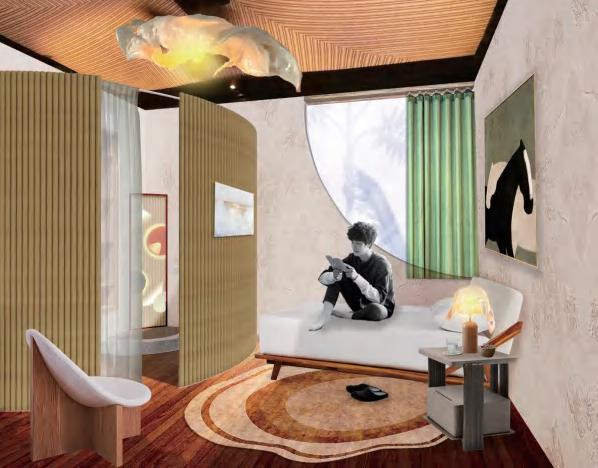
Sleep Lab is an interior installation inside the Heathrow Airport terminal, which aims to provide a better public resting space, especially a sleeping space, for people on their trips. The installation consists of several sleeping cabins and two open leisure areas. All of these cabins are designed for different situations of sleep (Sleeping positions, lighting, bed height, etc.) People could book a place in these sleeping pods through the mobile app. In addition, they can also choose the cabin that suits them best through the sleeping habit test in the app.
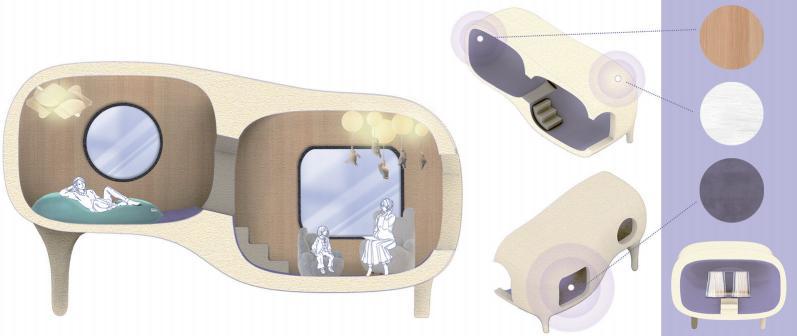
The sleeping cabins are made of lightweight wood, which are small and easy to move. Therefore, they can be installed in different public places and provide convenience for those who need to take a break during work.
02
INTRODUCTION: GLOBAL SLEEP QUALITY
—— The impact of modern life on sleep
Good sleep is indispensable for a healthy body, mind, and quality of life. However, the harm of insufficient sleep is often ignored.Insufficient sleep is a common and prominent problem in modern society--- The 24-hour society has an impact on people's rest time and circadian rhythm to a certain extent. Besides, some humanistic factors, like the shift system, also caused the decline of modern people's sleep quality.
Research shows that ID (insomnia disorder) is adults' most common sleep disorder and has become the second most prevalent mental disease globally.


Themostcommonsleepproblemin theUKissleepapnea.


A public opinion survey shows that due to economic issues, nearly 33% of adults in the UK have poor sleep quality. (2023)

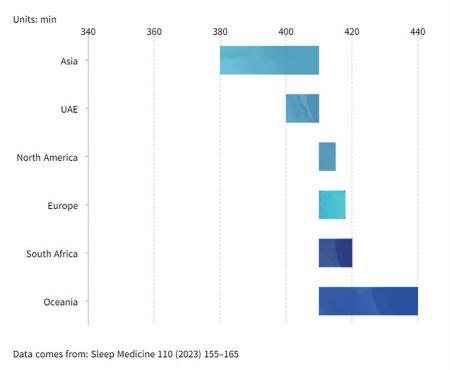
Compared with other regions, Asia has a shorter average sleep time and later sleep onset time.

American scientists have found that people with one or more self-reported insomnia symptoms have a 16% higher risk of severe diseases than those without symptoms.


A sleep survey from SingleCare shows that 77% of Americans experience one or more sleep disturbance .
Stanford Children’s Health estimates that 70% of teenagers aren’t getting the recommended 8 to 10 hours of sleep each night.
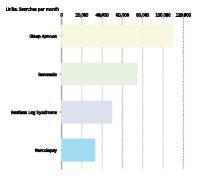
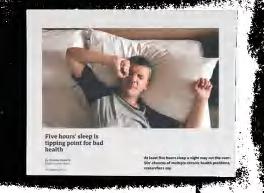
The "sleep apnea syndrome" search volume is as high as 110,000 per year.
Europe and the USA have longer weekend sleep extensions than Asia, and this was only partially related to weekday sleep duration.
Research data from CSRS* shows that more than 300 million Chinese people have sleep disorders, and insomnia in adults reached 38.2%. (2021)
China Sleep Research Society


A cross sectional study in a southern city of Nigeria showed that the prevalence of poor sleep quality among young adolescent school students was 12.2%.(2020)
Parasomnias are common in Africa with more than 70% of the Nigerian population having experienced parasomnias at any time in the past.

Many studies have shown that the development of sleep medicine in Africa is relatively backward --- Some people still need more awareness of sleep disorders.
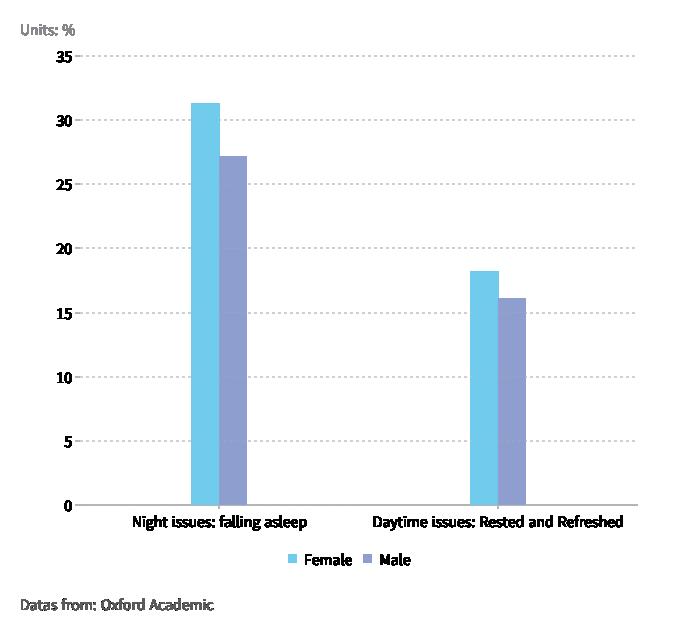
In South Africa, about 58% of the population reported nighttime sleep problems.
(2016-v
Sleep onset time
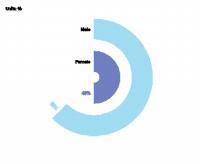
The University of Sydney Business School found that Australian women felt like they had enough energy only four out of 10 days, and Australian men five out of 10. (2018)
Systematic Review shows that The prevalence of sleep problems in children in China is about 37.6%.




USA 8 Canada 7.75 Mexico 7.50 South Africa 8 UAE 7.75 India 7,50 Thiland 7.75 Singapore 7.50 China (HK) 7.50 Japan 6.75 South Korea 7.15 Australia 8 Russia 7.75 UK 8 France 7.75
*CSRS:
Googling
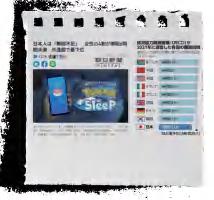
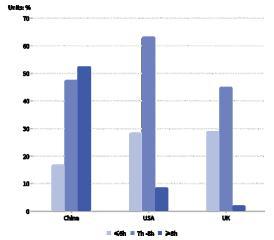
Research shows that the average sleep time in Japan is only 6-7 hours.(2021)
Global Total Sleep Time (2023)
of sleep issues in UK (2023)
Early Late
Survey of sleep issues in South Africa(2016 -- 2017)
Country h/Day Proportion of days that Australia feel full of energy in 10 days (2018)


Prevalence of sleep disorders in parts of the world
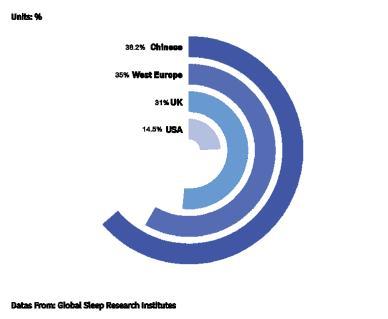
Today, insomnia and other sleep disorders have become a global health problem. Young adults account for a large proportion of people with sleep disorders worldwide.
For example, A statistic in 2023 shows that more than half of Chinese people with insomnia have already finished their university degree (58.8%)


Total Sleep Time in China, USA & UK

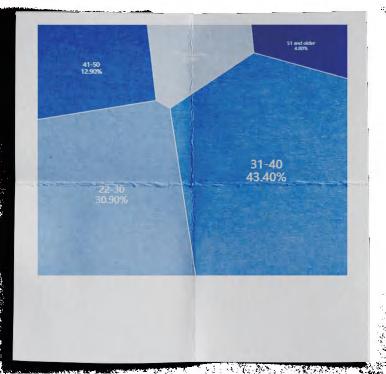
In China, Young and middle-aged people aged 22-30 account for the
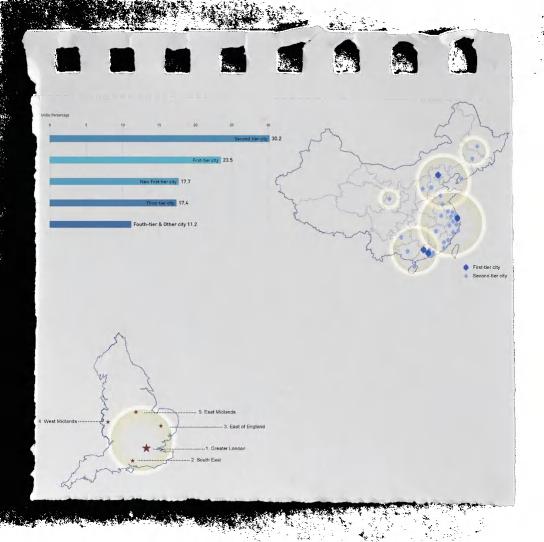
The insomnia population in China is mainly distributed in economically developed regions.
Research shows that Greater London has the highest rate of sleep disruption in England.


According to NHS data, from 2012 to 2023, London had 286,182 people diagnosed with sleep disorders, ranking first in the country.
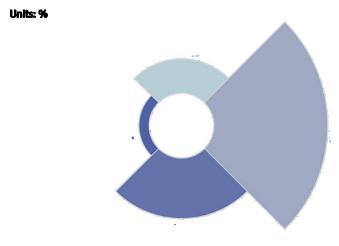
Time for people to fall asleep (China)
WHY DO WE NEED TO SLEEP?
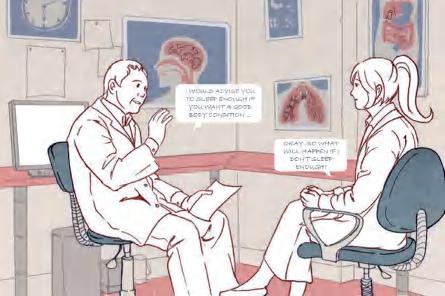
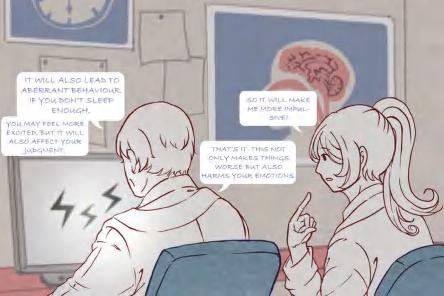
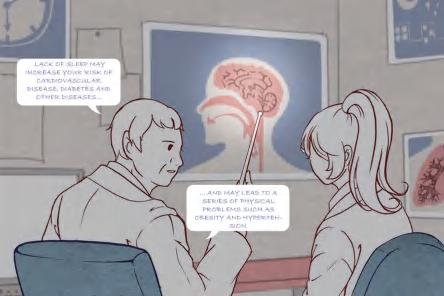
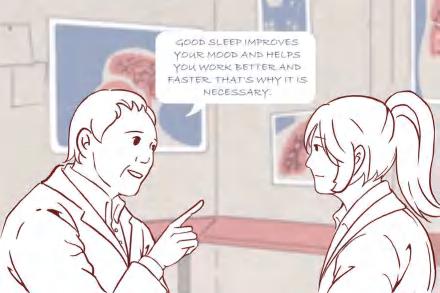

Damage the Body
Insufficient sleep can cause a series of physical problems like lethargy and obesity. Lack of sleep can reduce resistance and thus increase the incidence of various diseases.

Negative Emotion
Sleep loss can have adverse effects on the control of mood and behavior. Research shows that Insufficient sleep can lead to irritability, depression and other symptoms, and long-term lack of sleep may increase the risk of suicide.

Reduced Cognitive ability
Chronic sleep deprivation has been found to double neurobehavioral reaction time performance and to increase lapses of attention fivefold. Sleep loss can impair active cognitive processes such as planning, coping, and problem-solving, which could seriously affect our performance in work and study.

min
Difficulty falling asleep 54.62%
Insomnia 50.41%
Poor Sleep 43.44%
Festless Sleep 42.30%
Dreaminess 38.09%

Snore 31.44%
Sleepiness 7.62%

The most common sleep problem in China is difficulty falling asleep --About 54% of people report this symptom. (2021)
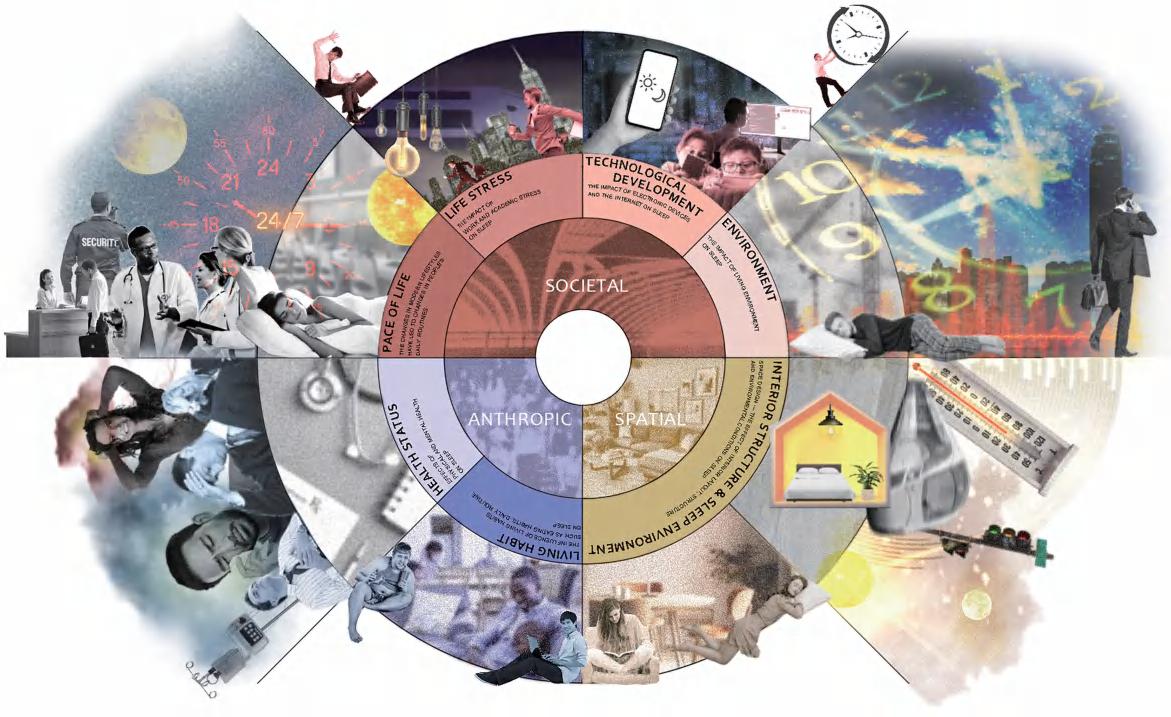
Many factors can affect sleep. In fact, to date, no consistent guidance is available from the scientific community regarding what constitutes normal or optimal, healthy sleep and good sleep quality. (Journal of the National Sleep Foundation,2017)
According to previous research, I divided the main factors affecting sleep into three types --Societal, anthropic and spatial. In other words, analyzed how is the sleep of modern people affected through three different perspectives of the human body, modern social life and space design.
10-30
52.19% 30min-1h 27.71% Over 1h 4.54% Less
15.56%
than 10 min
GLOBAL SLEEP ANALYSIS
CONCEPT: SLEEP LABORATORY


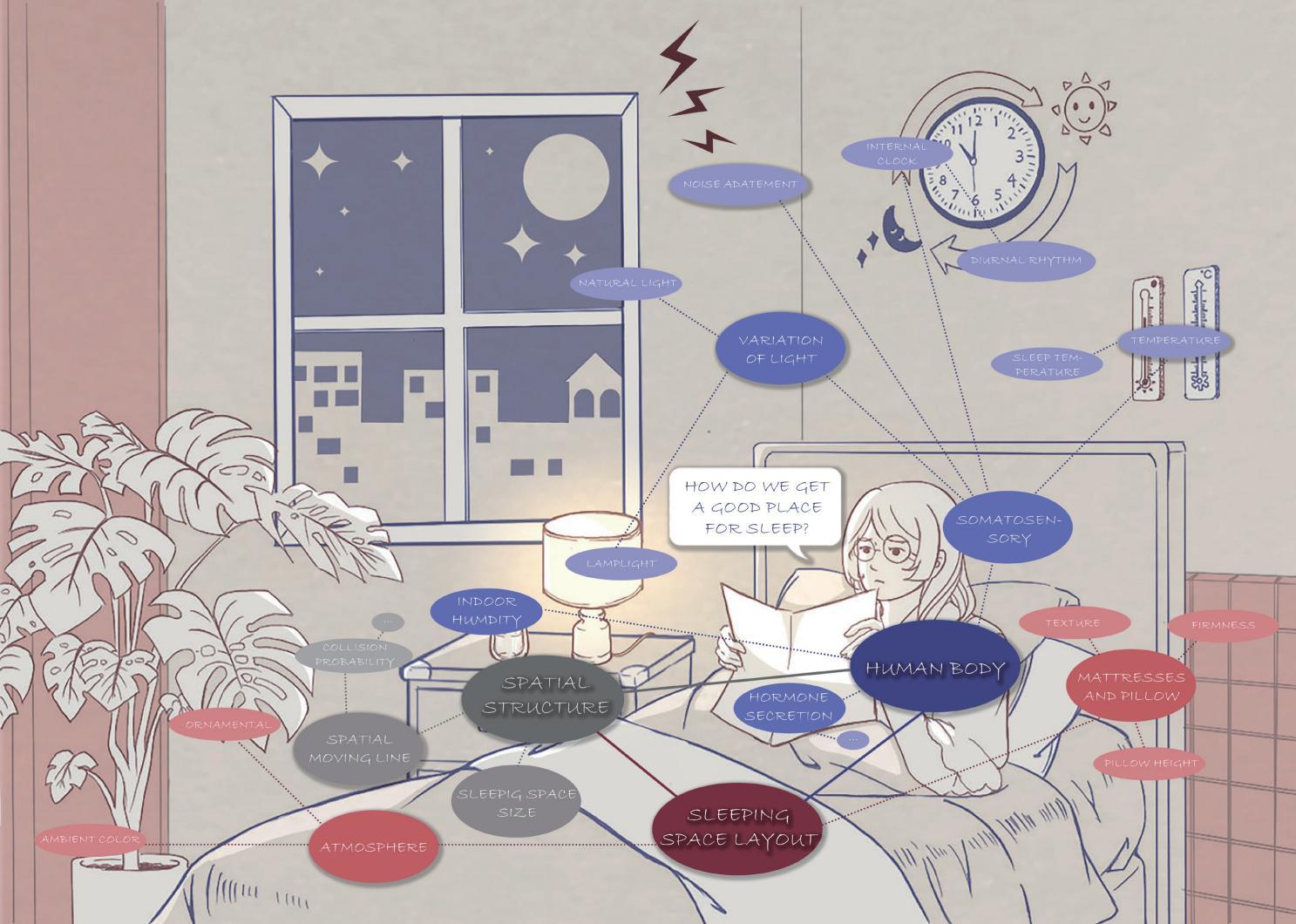
Space size: Whether you feel restricted while sleeping?
Noise Adatement: What acoustic environment is best for sleep?
Sleep temperature: The effect of too high or too low temperature on sleep quality.
Humdity: The effect of dry and wet changes on sleeping space.
How to create a comfortable sleeping space?
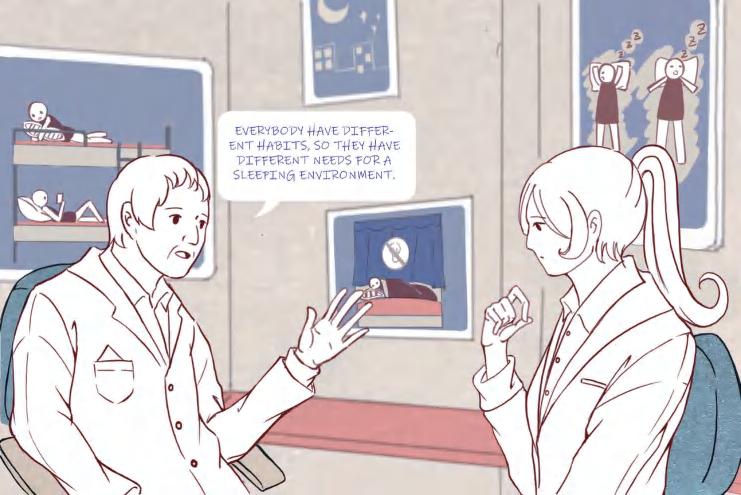
To improve sleep quality from the spatial level, we should consider the objective spatial elements and the users of the sleep space. Everyone has different needs for the sleep environment.





CONCEPT
Diversified Convience
Create diverse sleep spaces to meet the sleep needs of different user groups as much as possible. For example, different degrees of lighting and sound insulation.
Provide convenience tailored to the needs of different groups while providing a good sleep environment. The sleeping space should be modular to match as many public places as possible.


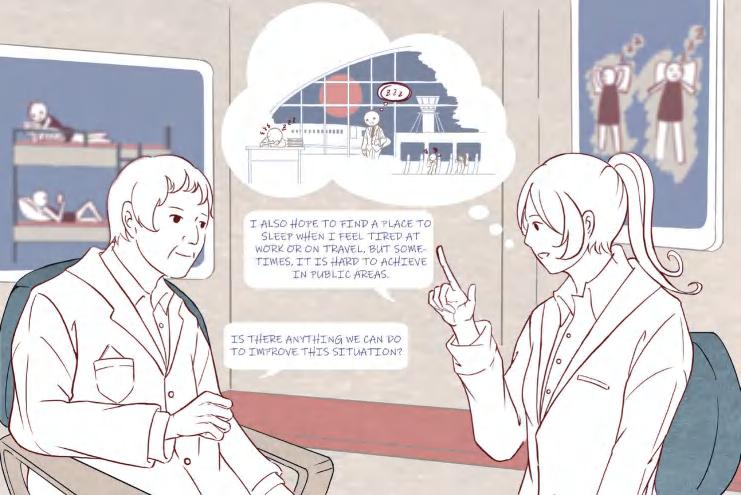
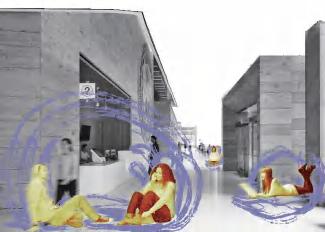
In this project, I hope to provide a sleeping space that convenient and easily to be reached. The space will be in the public place, which will allow people could rest better without having to go back to their bedrooms.
Unlike the most basic sleeping pods, the sleeping space will be designed for different sleep requires. This could allow users to choose their sleeping environment according to their own preserences. Therefore, this space will be a diverse sleeping space.
Flexible



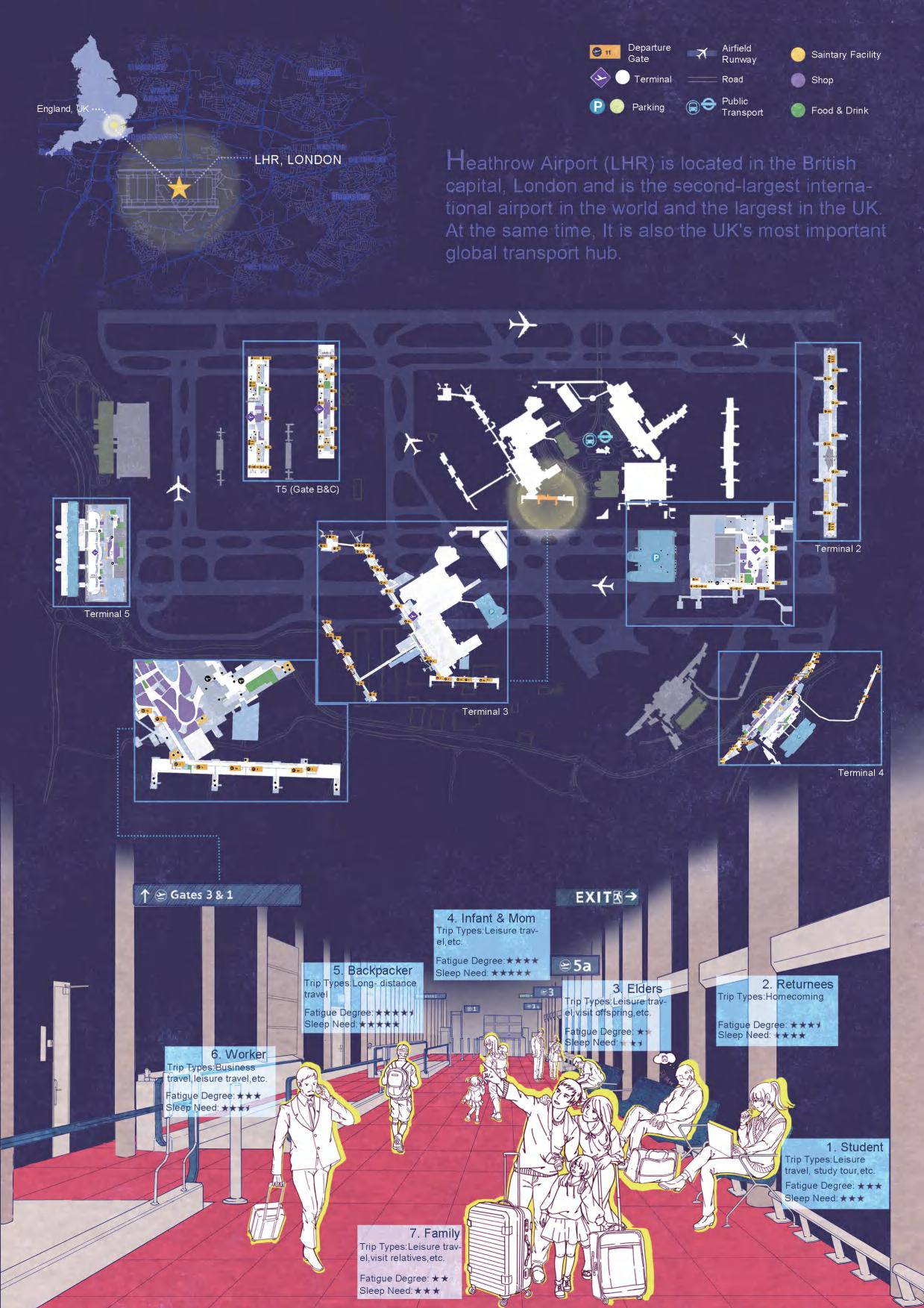



LOCATION ANALYSIS & USER PORTRAIT
Annual ATM * of LHR (2018-2022)
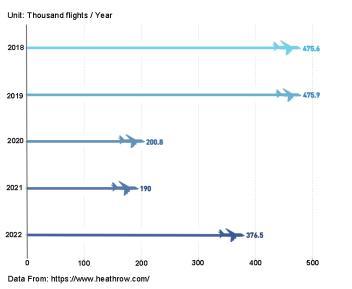
*ATM: Air Transport Movements

By September, the Air Transport Movements of Heathrow in 2023 had reached 338,509 flights, almost equal to the total ATM of the airport in 2022. (376,487).
During the five years before COVID-19, the average annual passenger flow at Heathrow reached about 77 million people per year. Data from the last two years also show a significant recovery in passenger flow at Heathrow after the end of traffic control of COVID-19.
Annual Passenger Flow of LHR (2018-2022)
Passenger Traffic of LHR 2023 (Total:37.1)

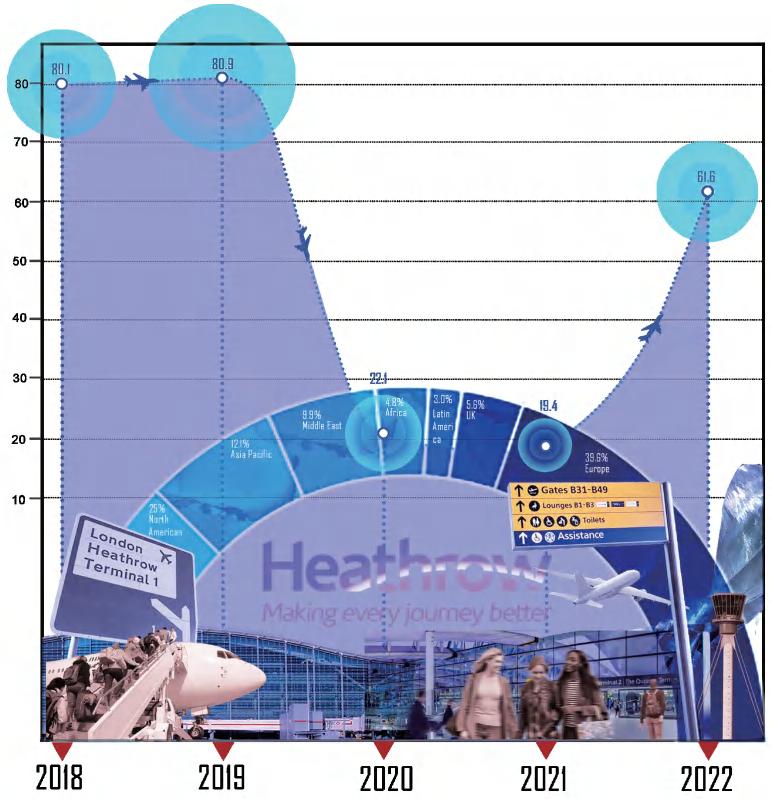
Unit: million
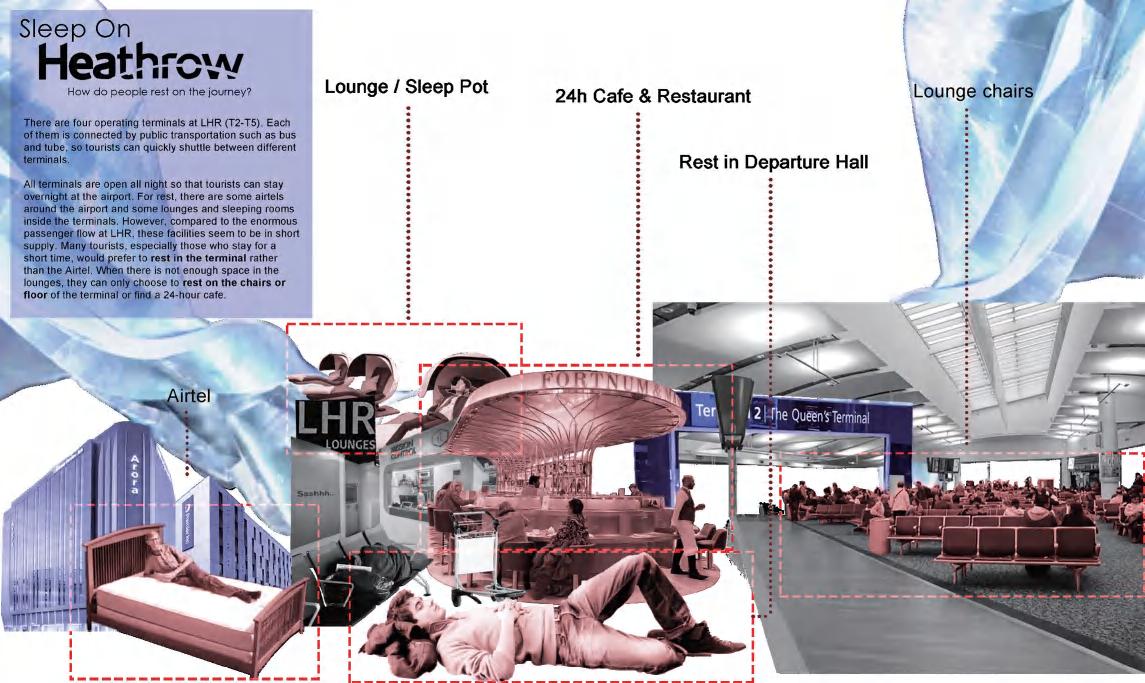
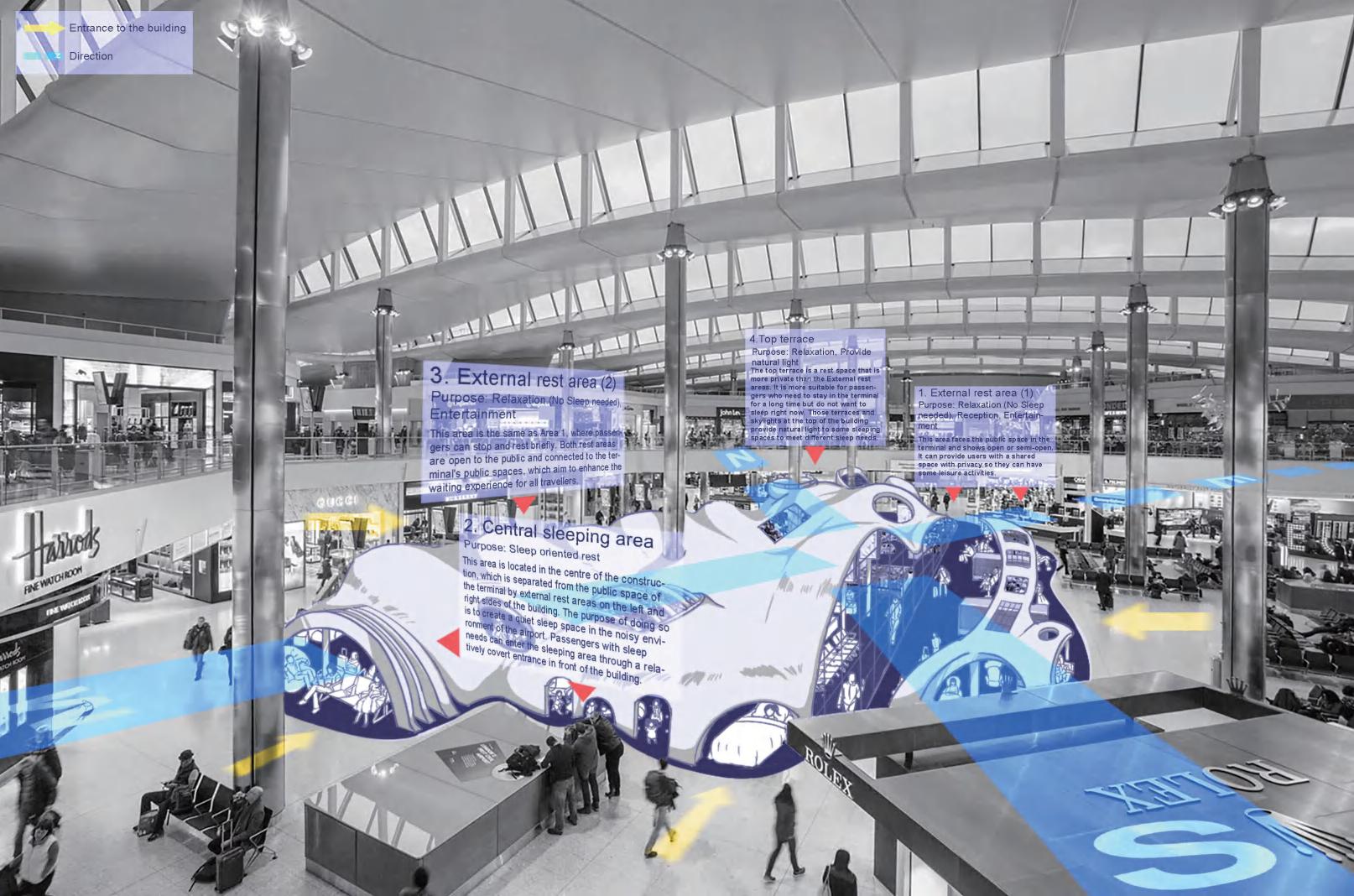
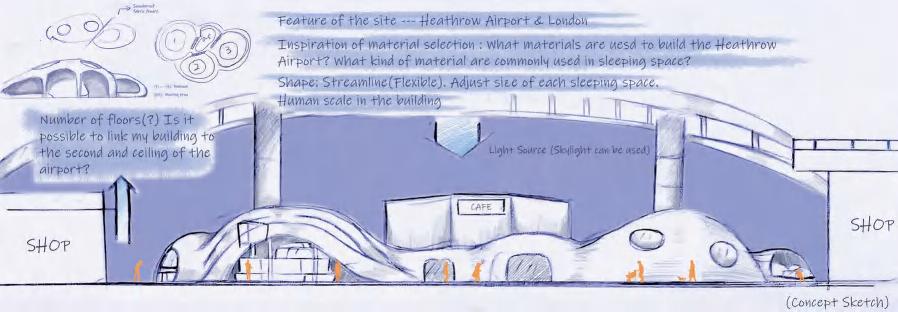
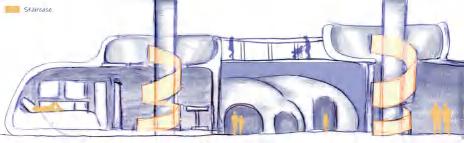
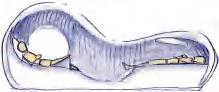
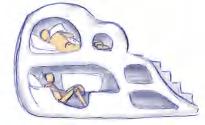
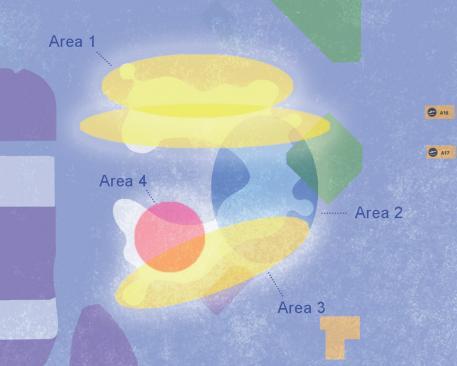
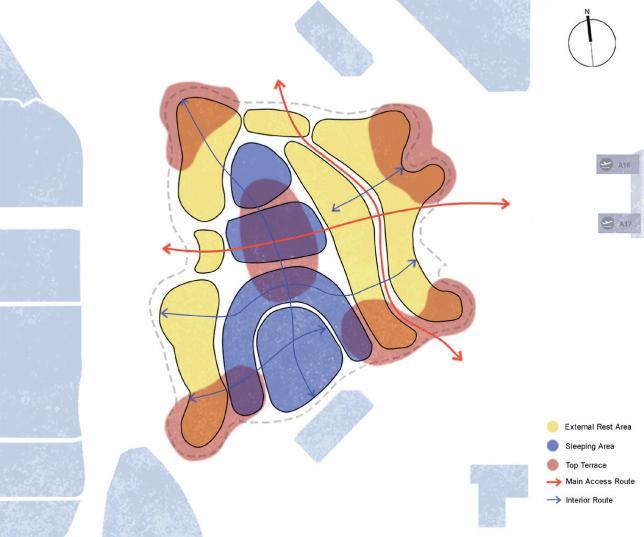
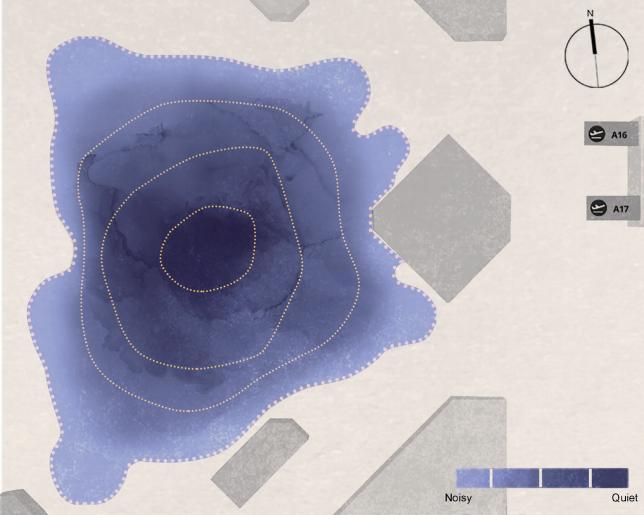
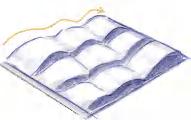
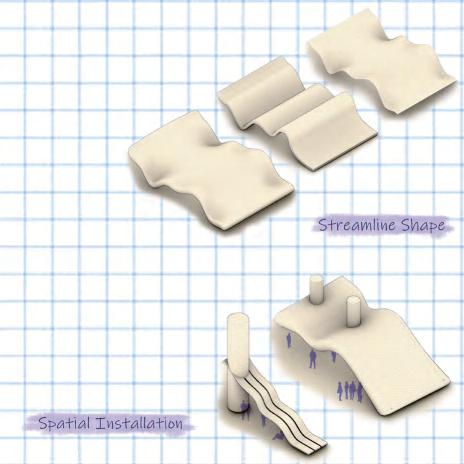
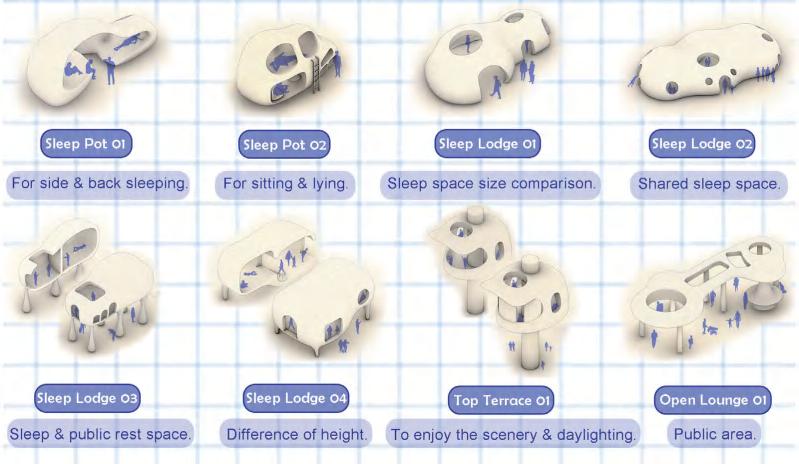
DESIGN PROCESS: FORM GENERATION & EXPERIENCE BUBBLE DIAGRAM & NOISE LEVEL DIAGRAM Terminal 5 Terminal 2
TYPOLOGY EXPERIMENT SKETCH

SLEEPING MODULES
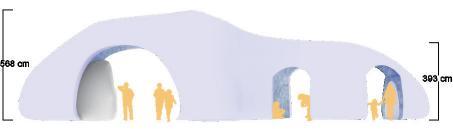
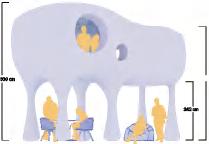
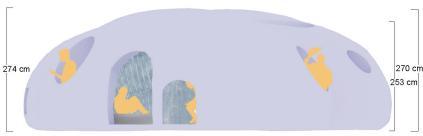
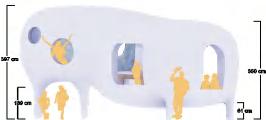
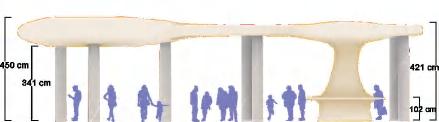
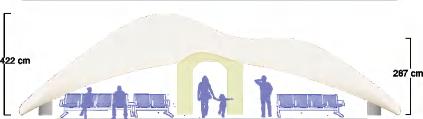

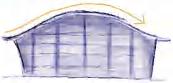
SECTION DIAGRAM
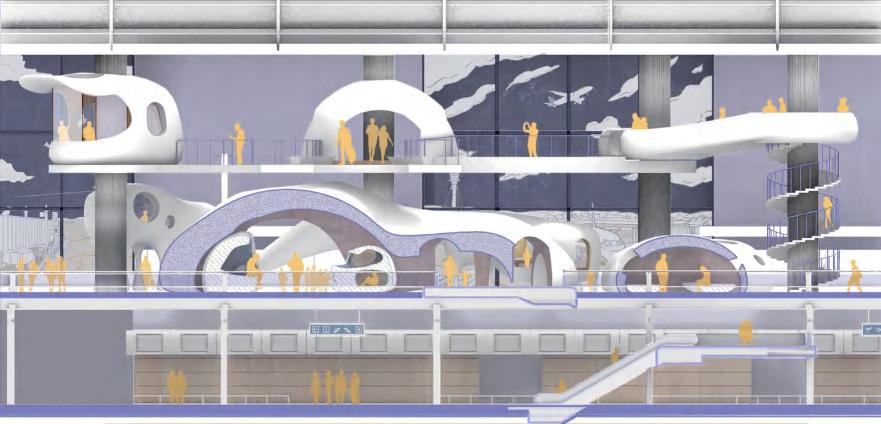
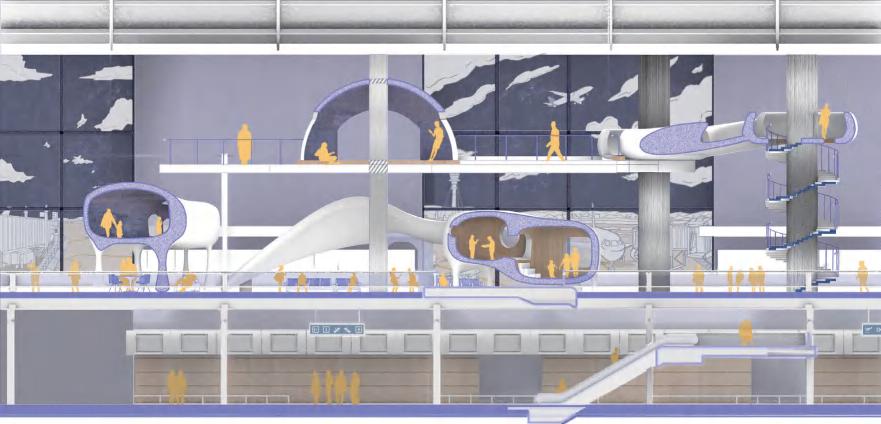
Terrace & Bridge (Leisure Area) Sleeping Pods External Seating Area 1 External Seating Area 2 ISOMETRIC PLAN VIEW (1:350 @ A3) Sleep Lodge 01 (Largest Space) Sleep Lodge 03 Sleep Lodge 02 Sleep Lodge 04 (Nursery) Open Lounge 01 (East) Open Lounge 02 (West)

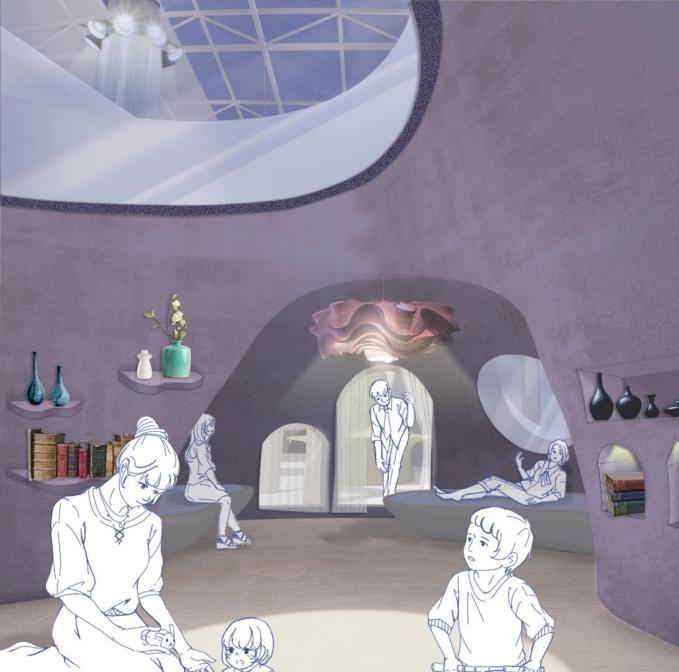
THE SLEEP LAB
Have fun and rest on travel.
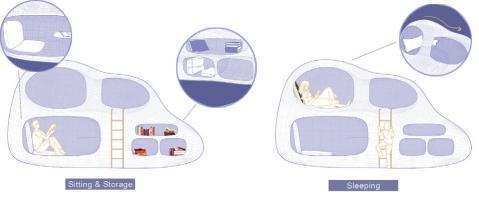
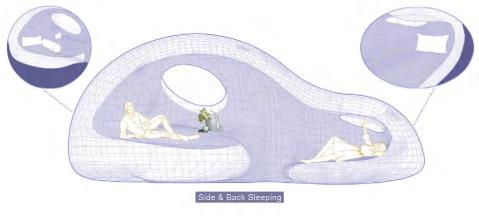
Sleep Lab is a group of interior installations inside the Heathrow Airport terminal, which consists of several sleeping cabins and two open leisure areas. All of these cabins are designed for different situations of sleep (Sleeping positions, lighting, bed height, etc.) People could book a place in these sleeping pods through the mobile app. In addition, they can also choose the cabin that suits them best through the sleeping habit test in the app.
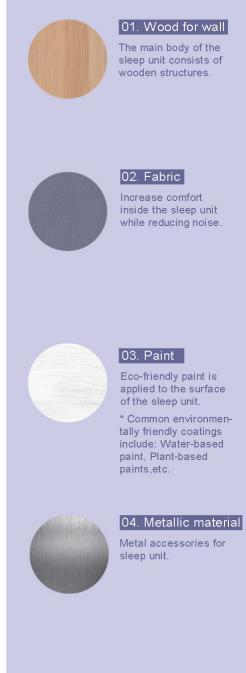
The sleeping cabins are made of lightweight wood, allowing them to be used in various public spaces and bring convenience to people.
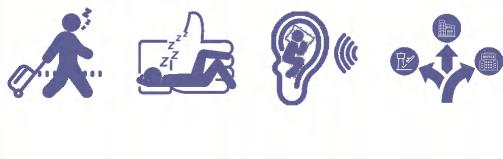
Convience Individuation Noise Reduction Flexible
Material 1 Material 2 Material 3 Material 4

Convalescent Home , Bali DERMATILLMANIA HOME JAN --- APR (2024)
DERMATILLMANIA HOME
Dermatillomania is a mental disease that has not been widely recognized --- Many people do not regard it as a disease but as a bad habit. Only a few dermatomaniacs will take the initiative to seek medical help.
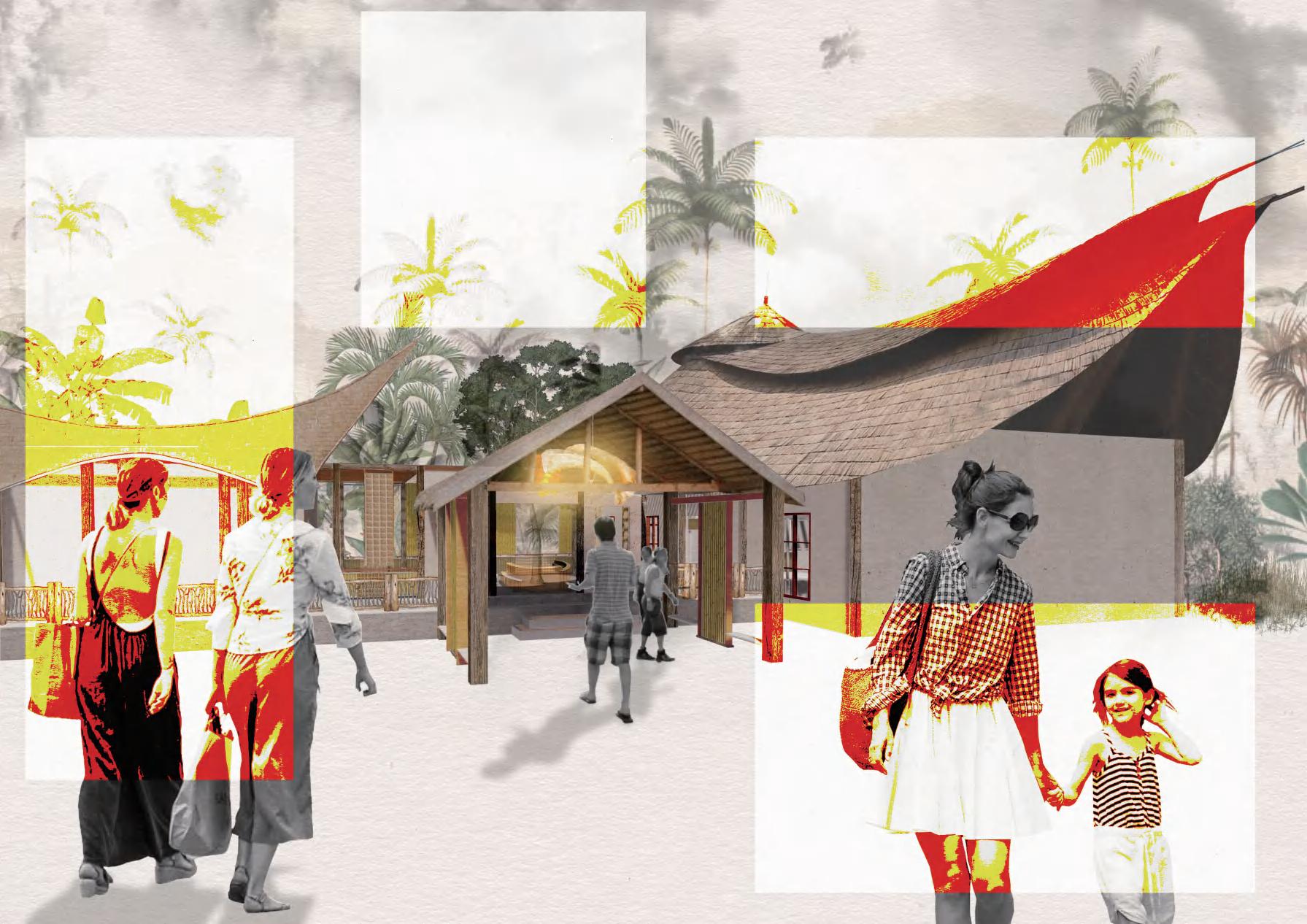
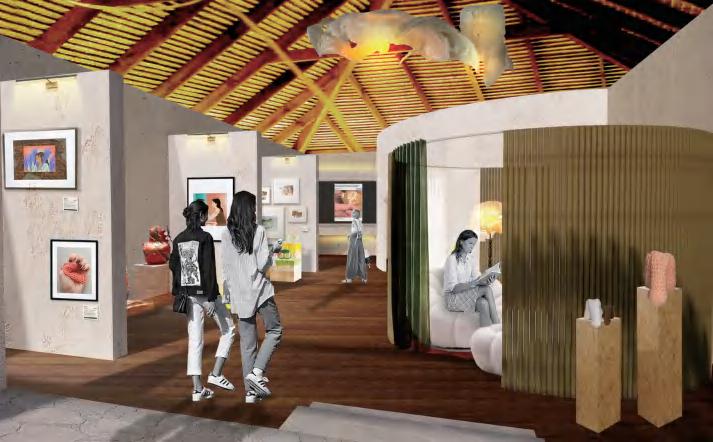
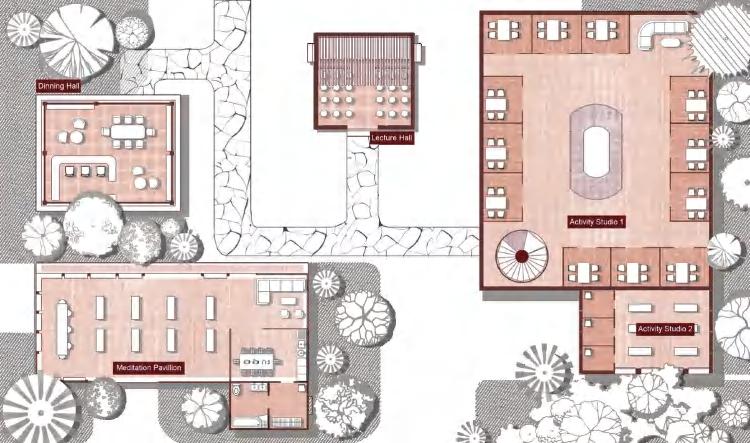
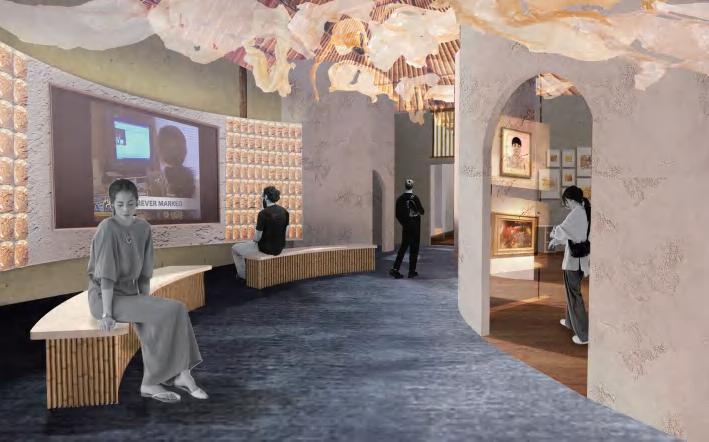
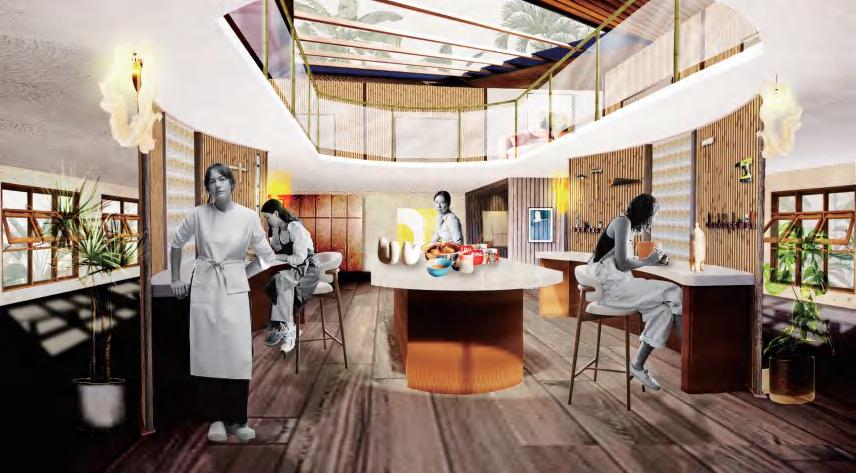
The project is divided into three parts: evaluation area, exhibition area, and rehabilitation area. The project's main goal is to provide systematic treatment and a comfortable convalescent environment for patients with dermatomania and to provide a place to popularize dermatomania knowledge to the public. The project uses experimental materials based on the theme of "skin". These materials are integrated into the design of interior decoration and interactive installation.
The project is located in Bali, Indonesia. The beautiful natural environment and fresh air on this island are conducive to the psychological rehabilitation of patients with dermatillomania. In addition, the humid and warm climate of tropical islands is also conducive to the repair of patients' skin.
03
BACKGROUND: DERMATILLMANIA
What is Dermatillomania?
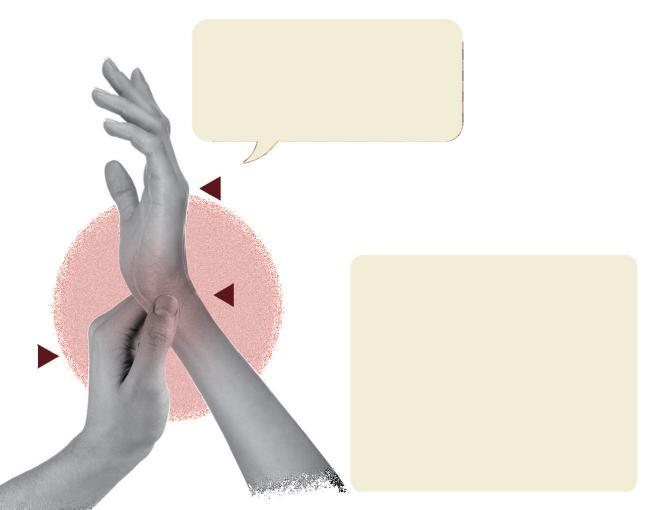
Dermatophilia , also known as Excoriation disorder or Skin-picking Disorder (SPD) , is a psychological condition. The disease falls under the category of Obsessive-Compulsive Disorder (OCD). Patients often scratch their skin compulsively, whether or not they realize they are doing so.
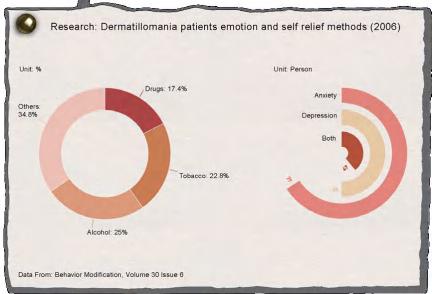
Dermatophilia can cause physical damage because of the risk of infection caused by wounds caused by skin picking. In addition, this disease is also thought to be associated with negative emotions such as anxiety and depression - negative emotions are one of the triggers of skinbreaking behaviour. And when the skin-picking behaviour causes severe scars and injuries, the patient's mental health will also be affected.

3.
Dermatillomania (Demra Tillo Mania) 1. 2.
1. Demra --- Skin
2.Tillo --- Pulling (or Picking)
3.Mania --- Excessive behavior or activity

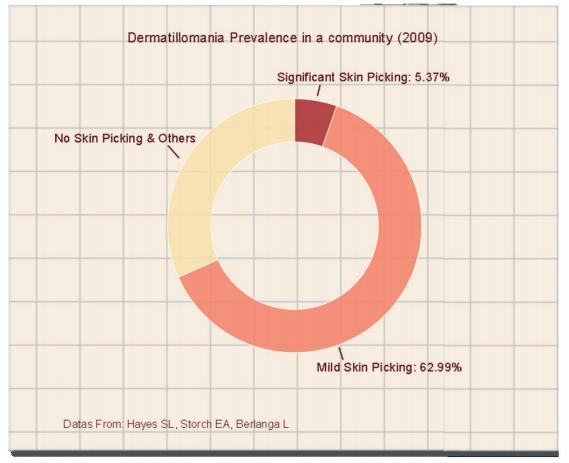



Globally, dermatillomania affects about 1% to 5% of the population.
However, it is a difficult condition to detect and many potential patients may not be aware they have it.

In a community study, about 68% of community members said they had different degrees of skin picking.


About 5% of them have picked skin so severely that it affects their daily lives About 55% of those diagnosed are women.
Women with dermatillomania are also more likely to seek medical help for the condition.
Cause
of Dermatillomania
* Feel Bored
* Stress or anxiety
* Genetics
* Negative Emotions
* Skin Conditions (Acne, Eczema, Whelk, etc.)
* Trying to remove blemishes from body


Pulling

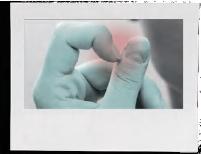

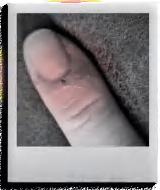
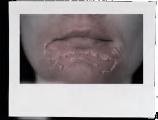
Some people with dermatillomania will try to hide their skin-picking behaviour which may be because the scars caused by the picking affect their lives.



Picking Hands

Mouth

People with dermatophilia often have difficulty stopping their skin-picking behaviour and need intervention to control it. For example, apply lubricant to body parts that they frequently pick.

Why should we pay attention to Dermatillomania?
As a mental disorder, dermatillomania does not make people sick. However, the consequences of skin-picking will harm skin pickers' physical and mental health Research shows that dermatillomania often occurs with other mental disorders, such as depressive disorder, anxiety disorders, substance use disorders and so on. In addition, skin pickers often feel embarrassed or ashamed by the consequences of the picking (scars, skin blemishes, etc.), which is thought to be the cause of their negative mindset. These negative mindsets might exacerbate other disorders they suffer from.

What is important is that many potential patients are still not aware that dermatillomania is a disorder but rather view it as a bad habit. Some studies show that less than 20% of people with dermatillomania seek treatment. People with dermatillomania often report being unaware that viable treatments are available. Therefore, it is necessary to change people's perceptions of skinpicking behaviour and help potential skin-pickers get help.
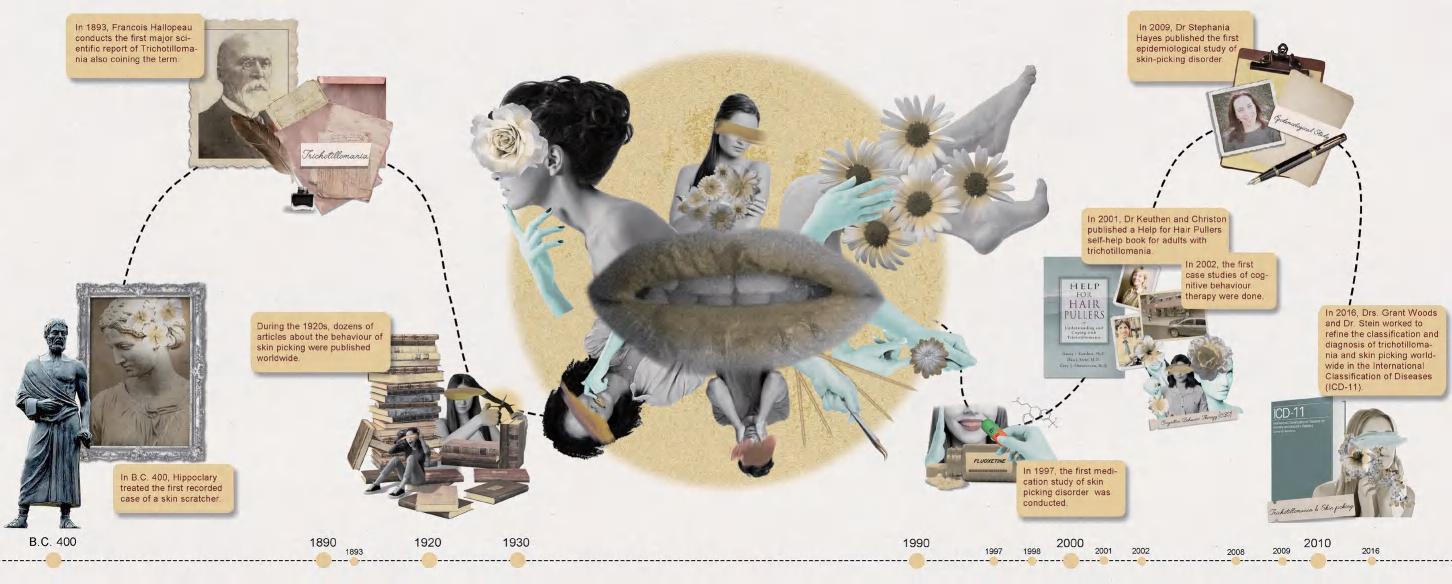
History of Dermatillomania
DERMATILLMANIA SELF-OBSERVATION

When I was in primary school, I found myself scratching my arms and fingernails inadvertently until it started to bleed, and it was hard to stop. I was relieved of this situation after entered university.



After that, I learned about the concept of Dermatillomania, which made me understand the possible reasons for abnormal behaviour in my childhood, and it was also the reason why wanted to do this project.

Q: Did anyone tell you that Dermatillomania is a disease?

My skin-picking behaviour is mainly focused on the lips, elbows, fingers, toes and other body parts.
The fingertip and upper lip are the most concentrated parts of my skinpicking.


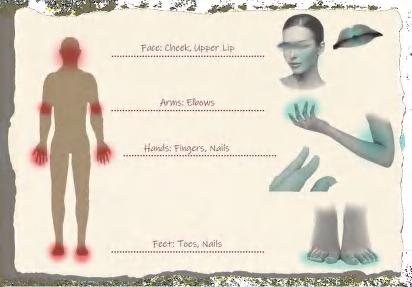


I subconsciously do skin-picking when I'm nervous, bored, or overwhelmed. Occasionally, it also happens when I'm anxious.
In addition, the change in the state of the skin is also one of the reasons for the skin-picking behaviour. When realize that the skin on my finger is starting to fall off (dry/lack of vitamins, etc.), have difficulty controlling myself from picking it.

Q: Does the act of skin-picking give you satisfaction?
A: Sometimes. Most of the time, the skin-picking happens naturally, and sometimes I don't even realize when it started. I rarely get emotional about this kind of behaviour unless it causes a severe wound.
A: Not really. When my skin-picking is discovered, people usually remind me not to hurt my body. However, found it hard to stop this kind of behaviour. Therefore, even if I do not deliberately cover the wound, I will try to avoid letting others realize my skin-picking.

Q: Have you tried anything to relieve your skin-picking?
A: usually try to keep my hands busy, for example, by drawing or playing rhythm games. When I focus on activities that require using my hands, the skinpicking will stop, and the urge to pick will decrease.
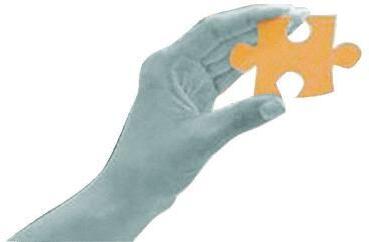
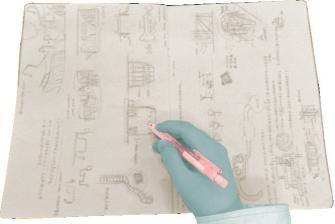


Some people with dermatillomania are aware of their skin-picking behaviours but have difficulty controlling them. The face, fingers, arms, and legs are the most common areas of skin-picking. Some patients even use needles and other sharp objects to stab their skin.
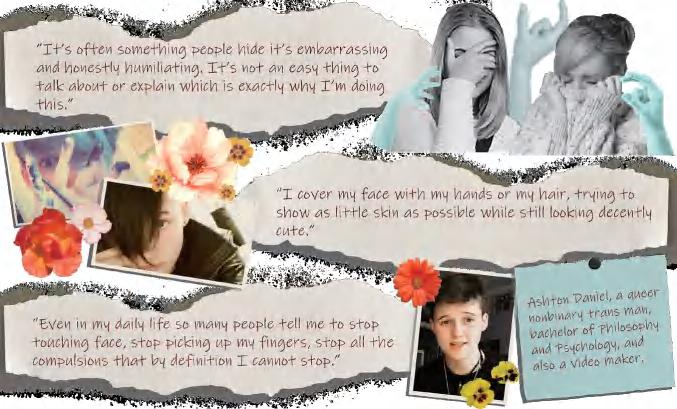
Dermatillomania not only harms the physical and mental health of patients but also reduces their quality of life. Some patients will take ways such as dressing up themselves to cover up the scars caused by skin-picking.
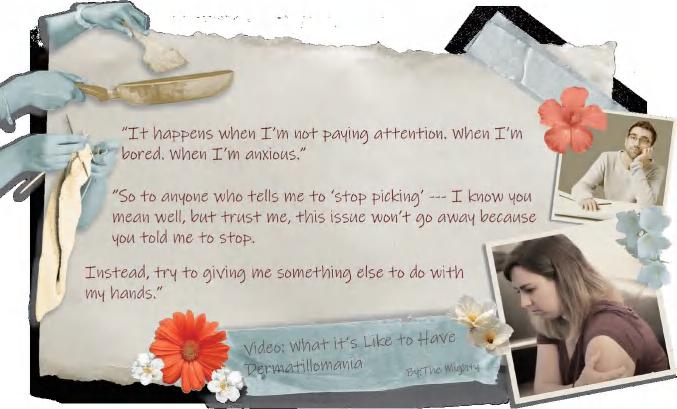
Dermatophilia is hard to cure, but skin-picking behaviour can be suspended or alleviated through treatment or behavioural intervention. In addition, the triggers for skin-picking behaviour are diverse.
DESIGN CONCEPT: SPD CONVALESCENT HOME
Research: Dermatillomania Therapy

Neuropsychiatric Disease and Treatment
Although pathological skin-picking has been documented in the medical literature since the 19th century, it has only recently been included as a distinct entity in psychiatric classification systems.
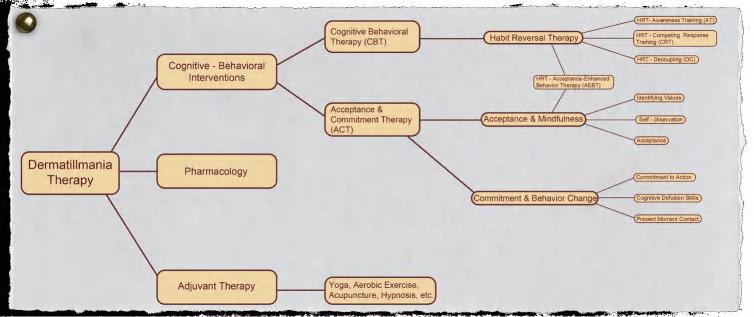
Research shows that treatment measures for dermatillomania mainly consider aspects of physics and psychological behaviour The main physical treatment method is pharmacology. Moreover, besides psychological education, the mainstream non-drug treatment is Cognitive Behavioural Therapy (CBT)
The main purpose of CBT is to let people with dermatillomania do specific training to alleviate or reverse their skin-picking behaviour. Many experiments have shown that in the context of dermatillomania, methods such as Habit Reversal Therapy (HRT) and Acceptance Commitment Therapy (ACT) included in CBT have significant benefits.

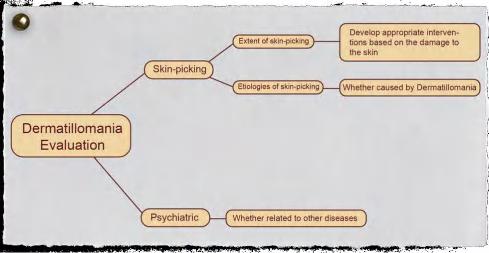
Dermatillomania occurs with a variety of other disorders Besides, the reason for skin-picking behaviour is not singular Therefore, the clinical evaluation of a patient with dermatillomania entails a broad physical and psychiatric examination

DESIGN CONCEPT: SPATIAL STRATEGY
SPD HOME: Touring Route
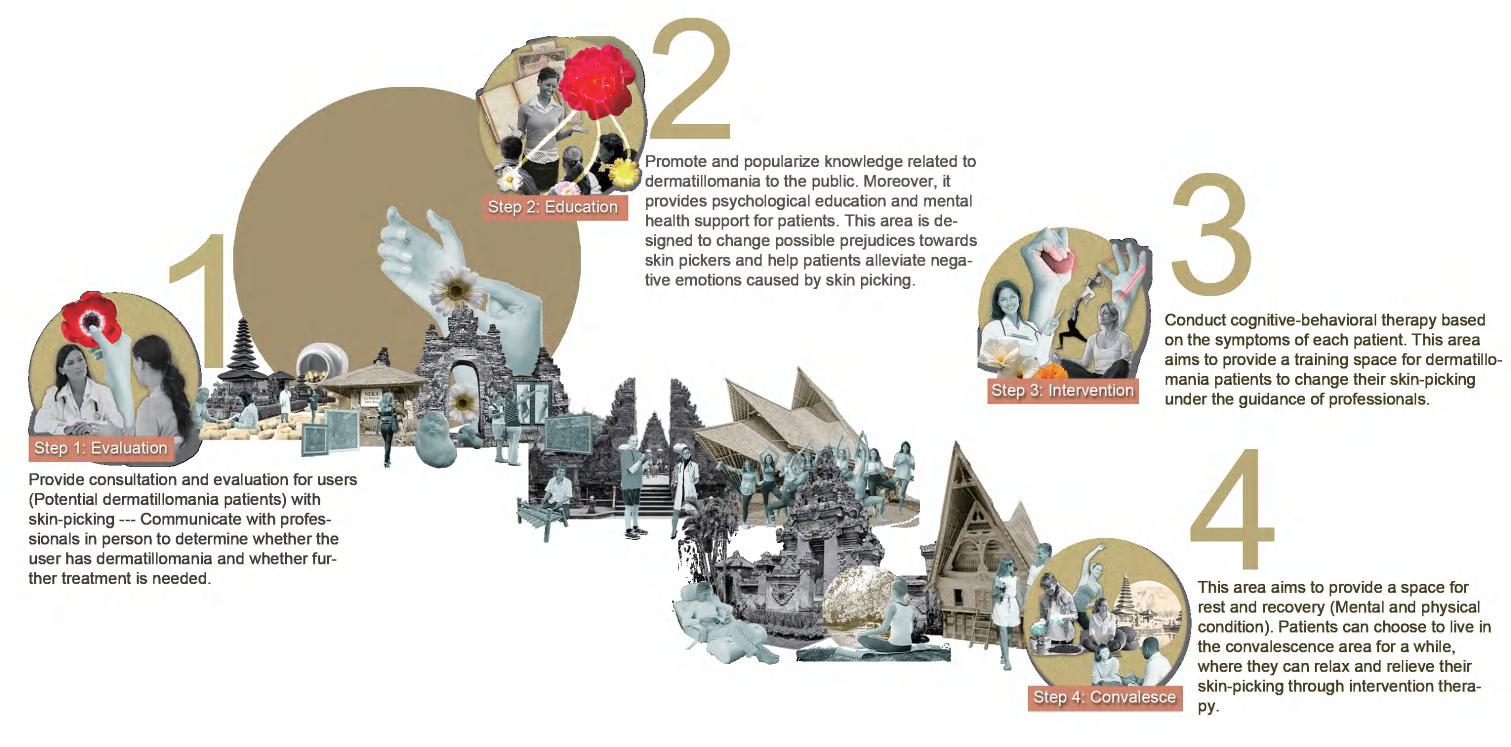
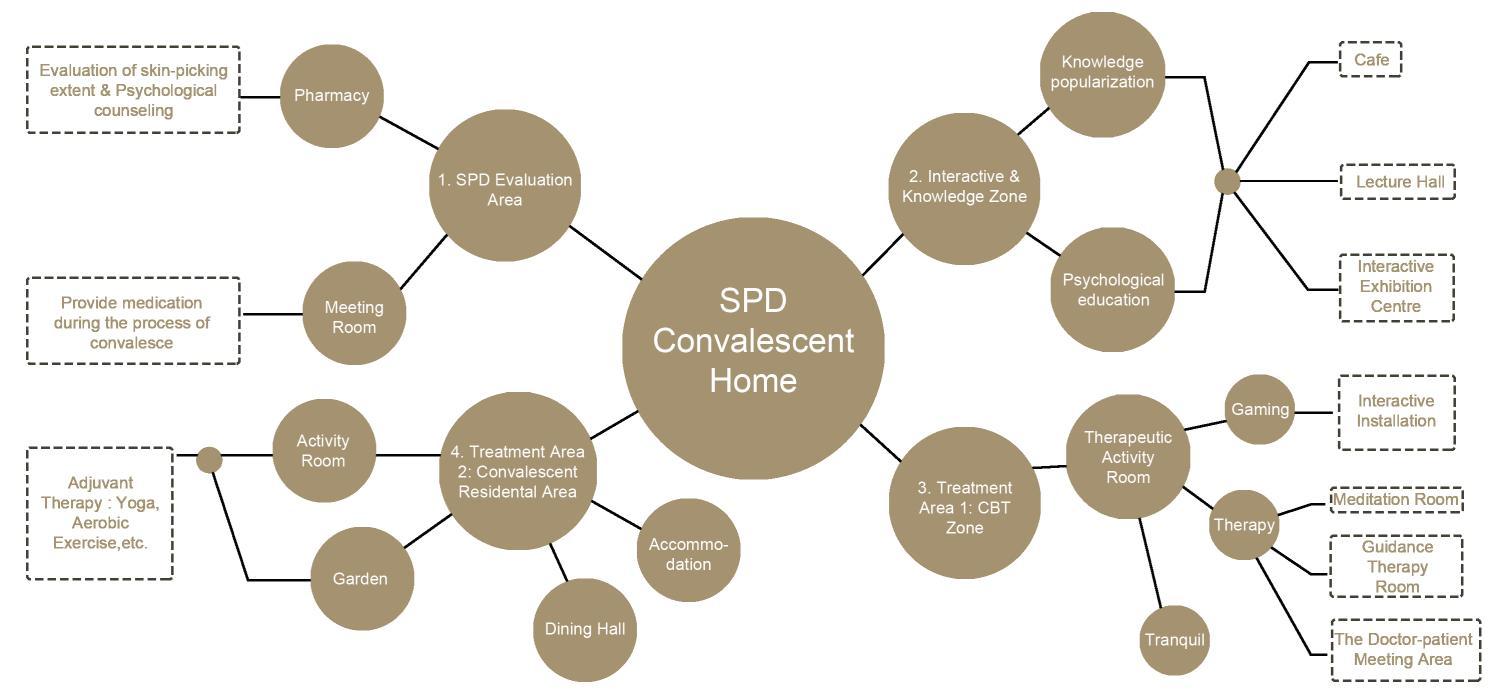
Mind Map: Functional Zones
In cognitive behavioural therapy, HRT is currently the preferred treatment for dermatomania. Awareness Training(AT) and Competing Response Training (CRT) are the two parts of HRT, designed to help patients self-monitor and take alternative actions to reduce their skin-picking.
In 2010, Steffen Moritz and his group developed a new treatment, Decoupling (DC). DC can be seen as a variant of HRT; both of these treatments are designed to relieve the skin-picking of patients with dermatomania. However, unlike HRT, DC does not replace skin-picking with other behaviours but takes a similar behaviour and changes its consequences.

Volume 13, 2017 The American Journal of Psychiatry Volume 169, Issue 11, 2012
Journal of Obsessive-Compulsive and Related Disorders Volume 1, Issue 1, 2012
Fig 1. Main treatments for Dermatillomania
Fig 2. Dermatillomania Evaluation Process
MATERIAL EXPERIMENT
Some skin pickers say they substitute the skin picking by applying glue to their body, letting it dry into a film and tearing it off.
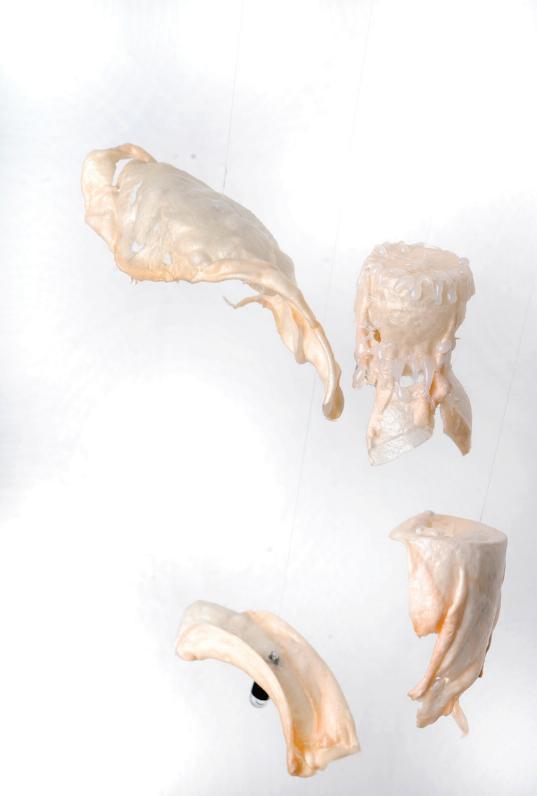
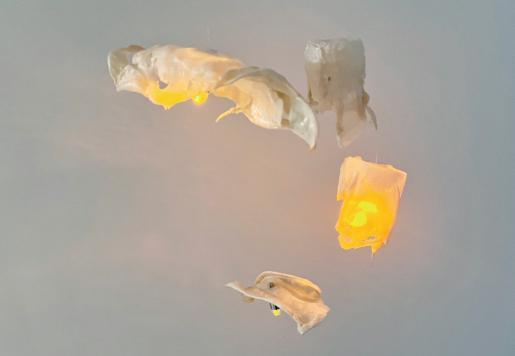
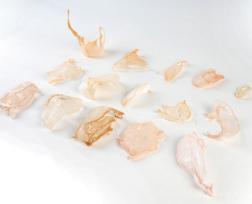
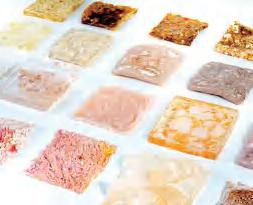
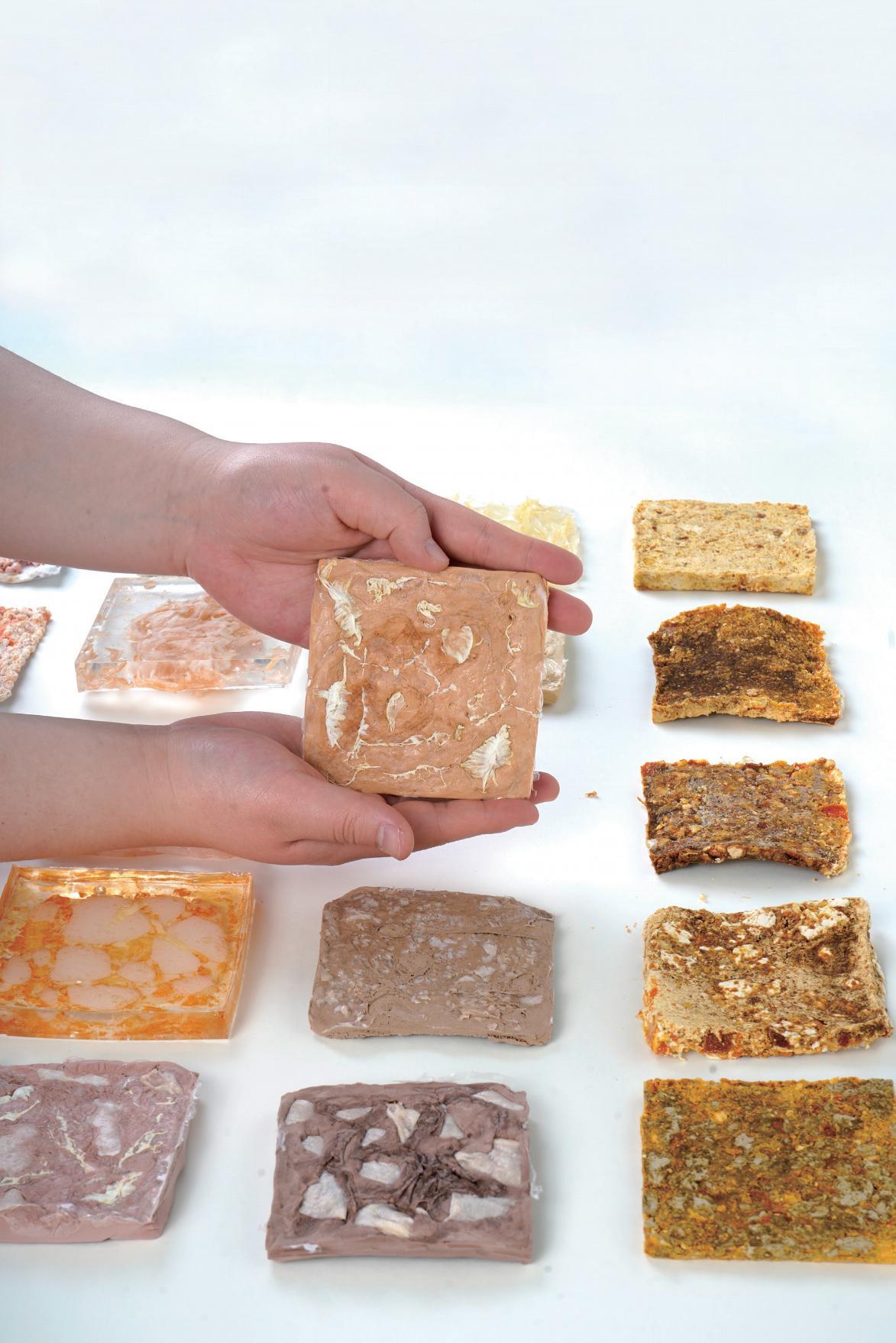
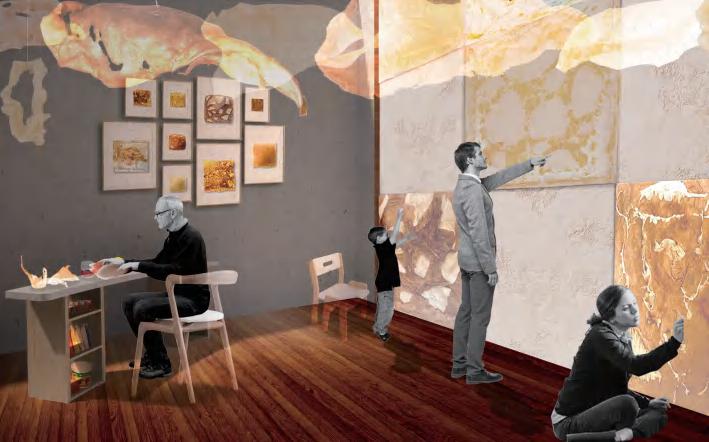
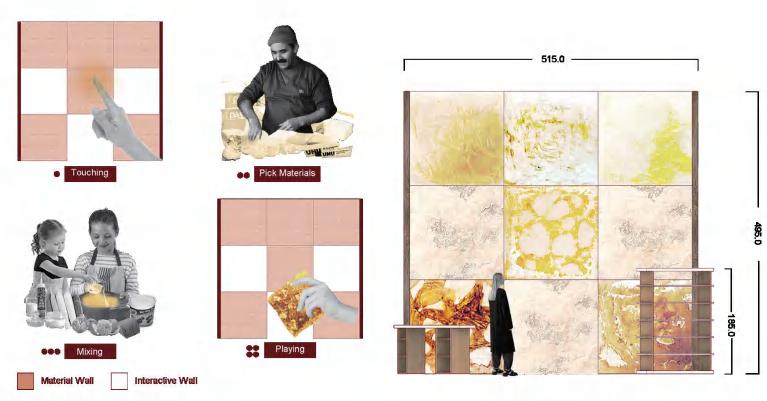
This project is developed according to the theme of "skin". Accordingly, I tried many different materials to create a texture similar to skin. Citrus fruits have flexible skin and a surface texture similar to human skin. Moreover, orange peel has already been used as a sustainable material. Through experiments, also found that materials such as glutinous rice paper, UHU glue, and ultra-light clay can create a texture similar to skin after processing. Some of them can even provide a tactile sensation similar to skin-picking. Therefore, combined these materials and explored how their combination can be applied to spatial design.
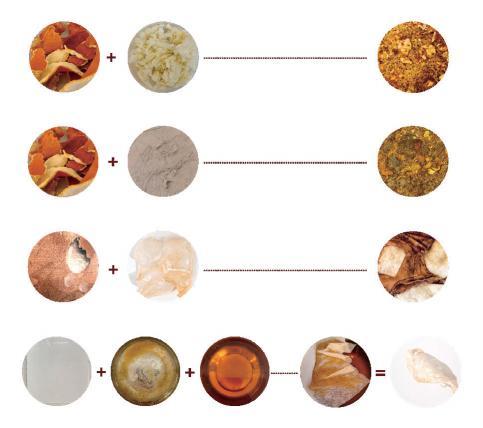
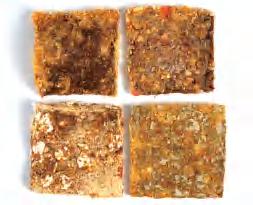
Manufacutring Process of Orange-peel Brick
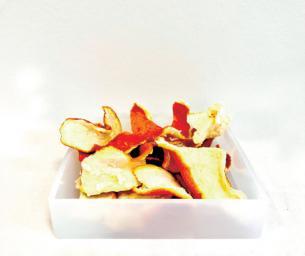
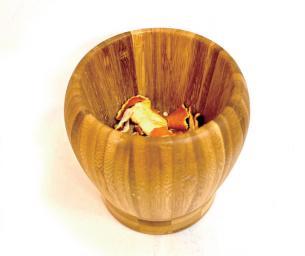

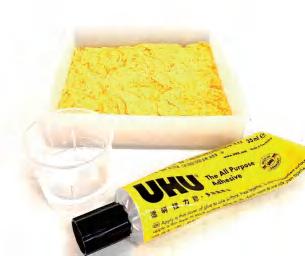
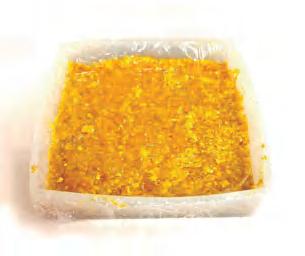
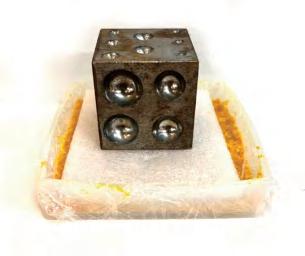
Grinding dried orange peel into powder or fragments of different sizes and mixing them with adhesive (UHU glue) can produce orange peel bricks with different textures. However, experiments have shown that using only orange peel to make bricks can make the material too brittle, but mixed auxiliary materials can increase its hardness. Bricks mixed with pulp have beautiful textures but are prone to bending. Mixing ultra-light clay can enhance the toughness of bricks. Clay might be a good choice for auxiliary materials --- The orange peel brick mixed with clay retains its texture and decreases its easy bending properties.
Detail Presentation
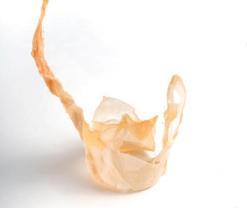
Peel off orange Grind up dry orange peels Pour the
the mould and lay it
Flatten
orange powders into
flat. Add Water and glue Mix and shaping
and drying
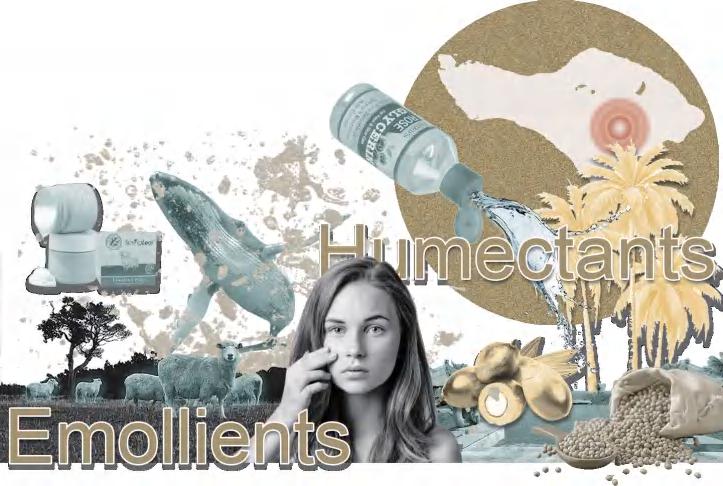
Using skincare products to prevent skin-picking is a method of intervention for dermatillomania. Skincare products, such as body lotion and hand cream, are mainly composed of emollients and humectants. The primary material of humectants is glycerol, used in most skincare products. One of the main sources of glycerol is palm nuts, mainly produced in Southeast Asian countries such as Indonesia. Indonesia has a warm and humid climate and an excellent ecological environment, which helps with skincare. That is why I chose this place as the site of the SPD home.
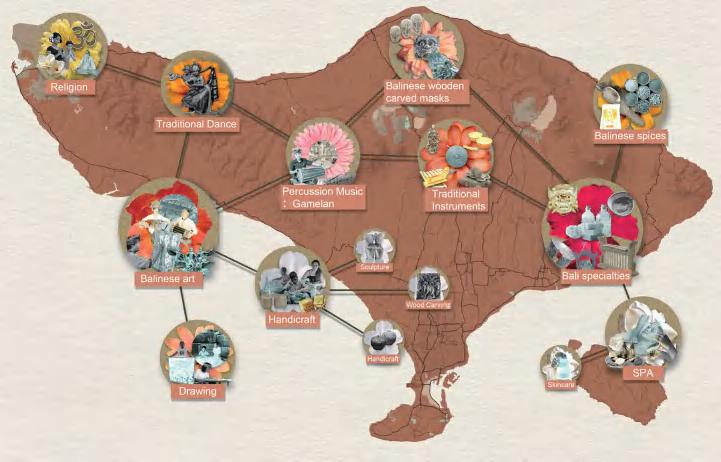
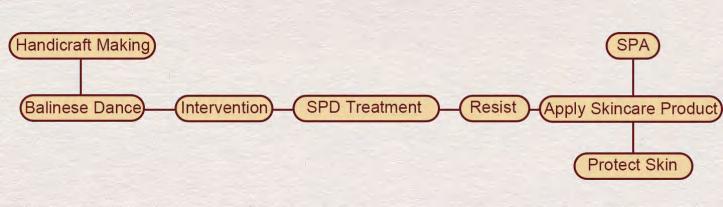
Bali has highly developed arts, including traditional and modern dance, music, painting, handicraft art, etc. 86.9% of Balinese adhere to Balinese Hinduism. Therefore, traditional dance in Bali is often associated with portraying stories from Hindu epics. In addition, The Bali Percussion, known as Gamelan, is famous and diverse. All these kinds of music and dances form the performing arts of Bali.
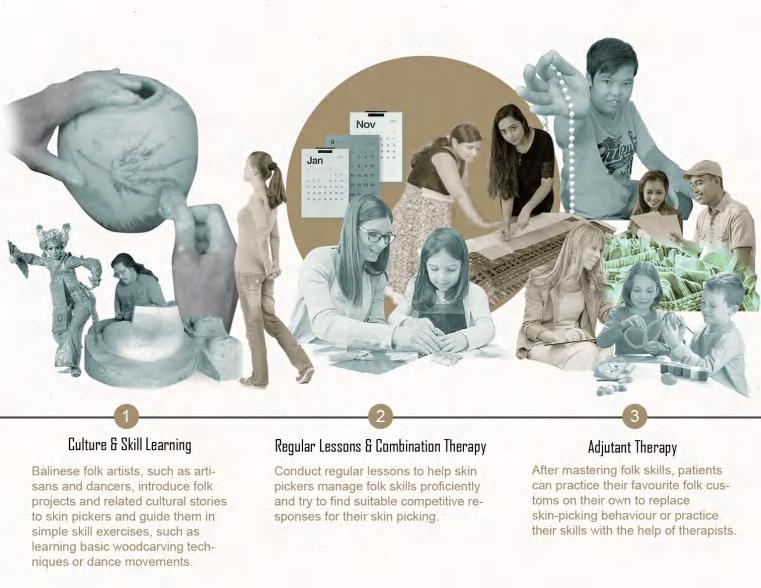
Besides, Sculpture, wood carving, and other handicrafts are also unique features of Bali. I believe that these art projects have the potential to be combined with dermatillomania therapy. For example, encourage patients to engage in simple handicraft making to form a competing response (alternative behavior) to skin-picking. This will allow them to learn new skills and explore the culture of Bali while undergoing treatment.
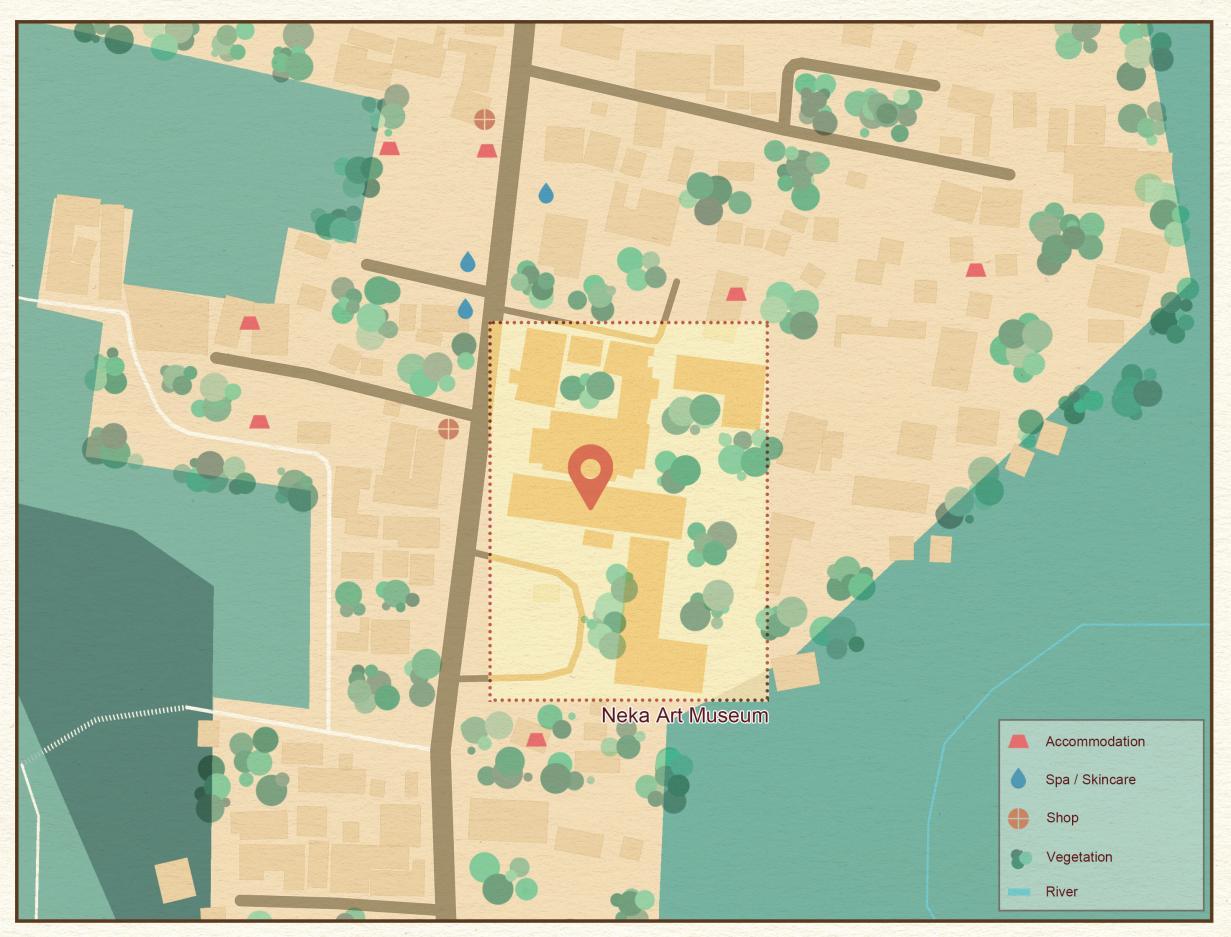
Neka Art Museum
choose Neka Art Museum? Site Photos


Culture & Art Environment
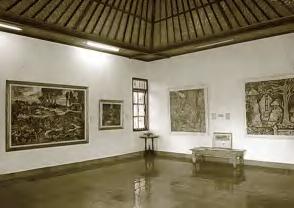
The Neka Art Museum collects artworks related to Bali around the world. Bali's natural scenery, life and culture inspire all of these works. Meanwhile, these works also serve as a source of inspiration for artists from Indonesia. Therefore, the Neka Art Museum is a good place to experience Balinese folk culture.
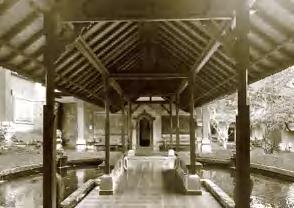
The Neka Art Museum is located in southern Bali and adjacent to the jungle. Therefore, there is a high plant coverage around the art museum, which means it has a good natural environment. Meanwhile, Bali's warm and humid climate is also beneficial for skin care, which positively affects the recovery of dermatillomania.


SPA Commercial Area
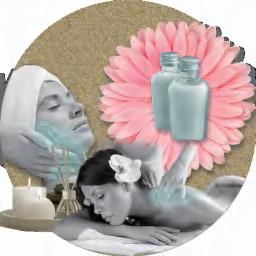
Hydrotherapy using Indonesian herbs and various plant essential oils is a unique feature of Bali. Many spas and upscale hotels around the Neka Art Museum offer spa services, which accords with the theme of curing dermatillomania in this project.

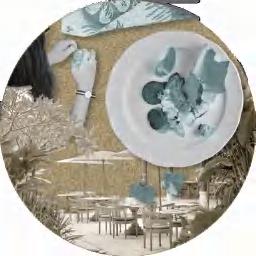
The Neka Art Museum is located on the roadside, with convenient transportation. The commercial area around the Museum mainly consists of spas, cafes, hotels, and artist shops. In addition, there are many scenic spots and two hiking trails in the surrounding area, providing tourists with a good place to relax.
SITE RESEARCH
Site
Why
Mapping:
Entrance
Garden Gallery Interior
Bali Specialties
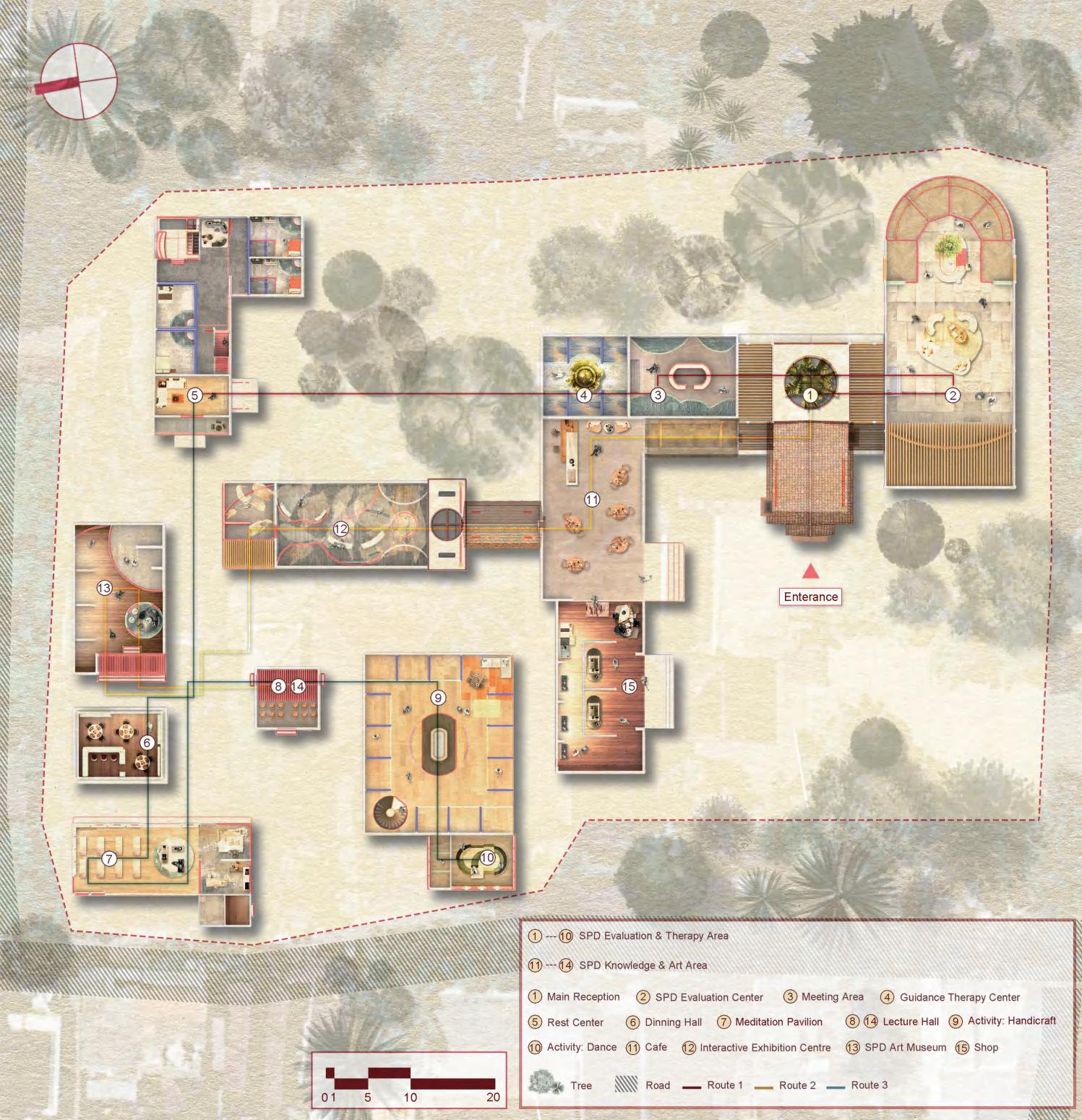
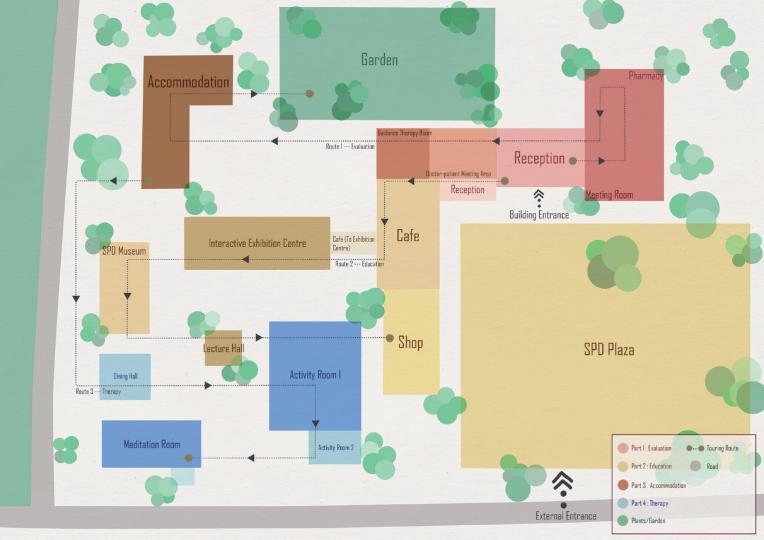
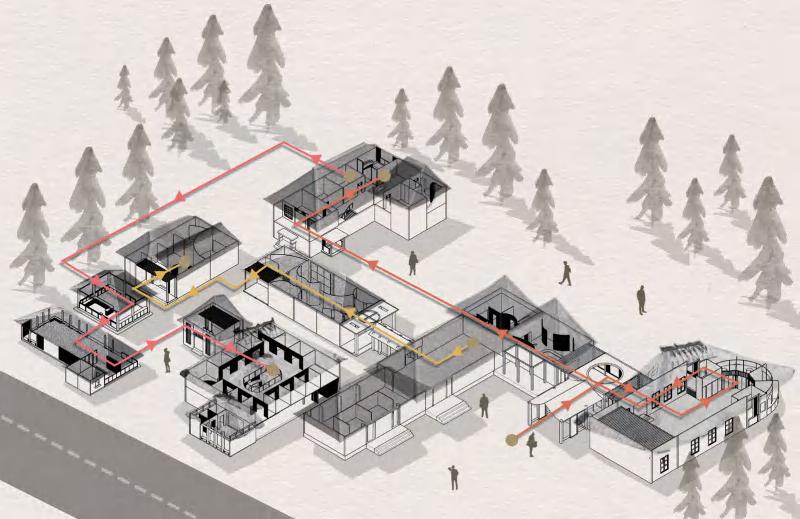
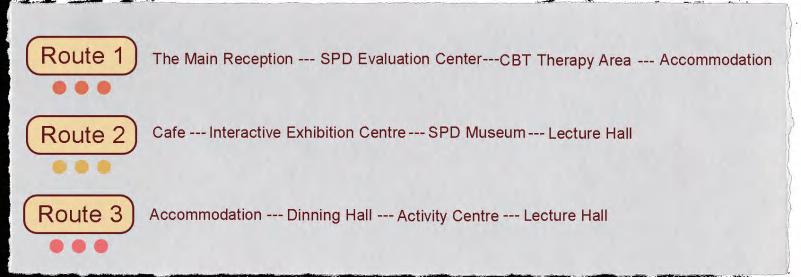
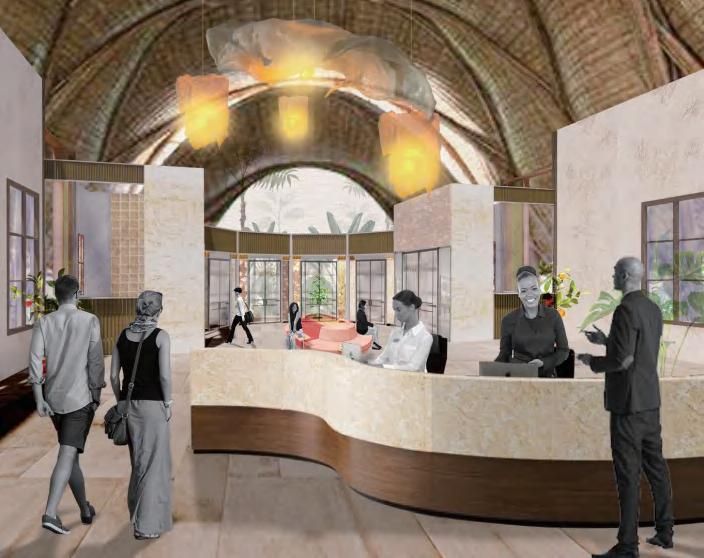
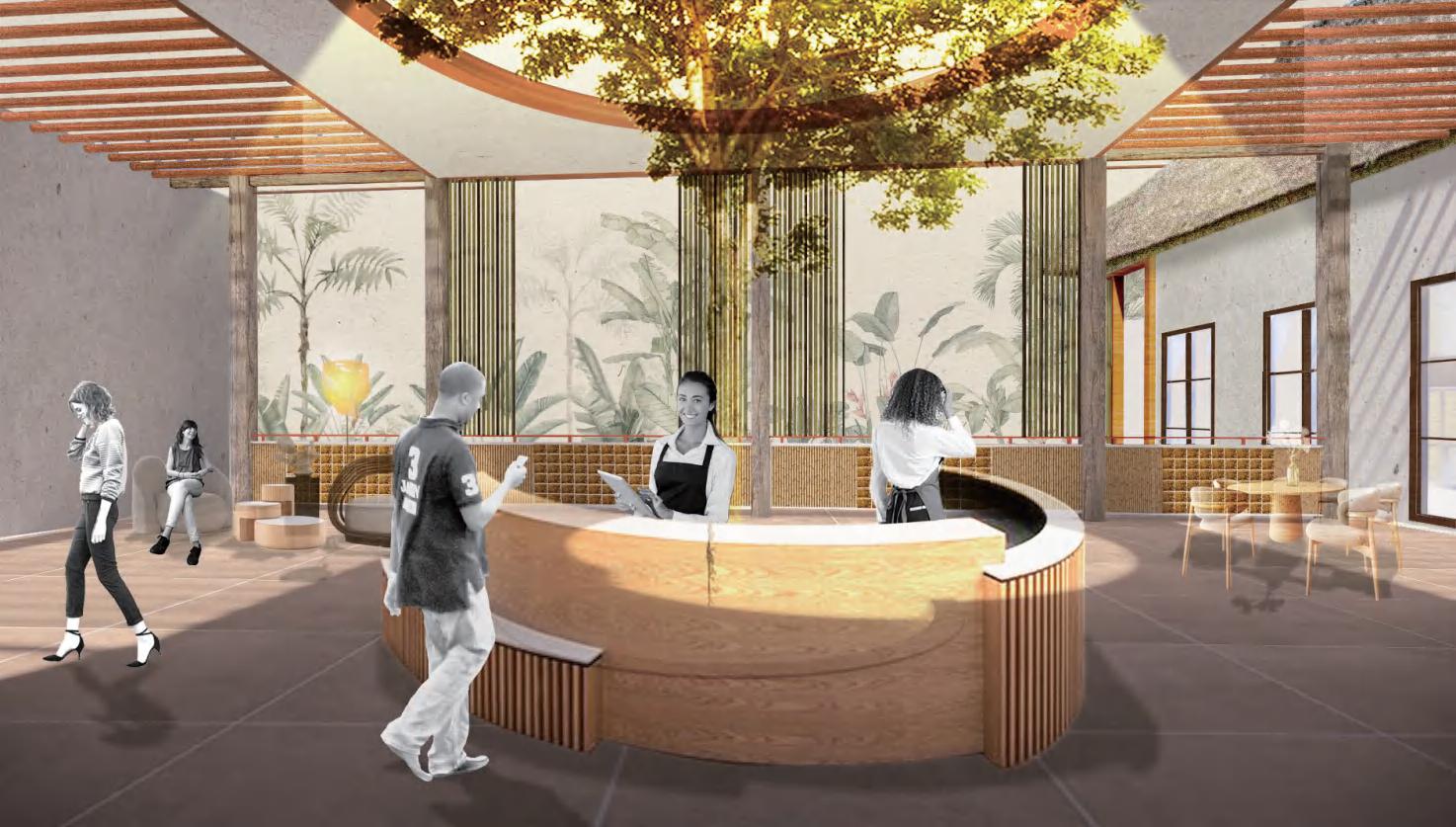
Route 1 Evaluation: Users who suffer from dermatillomania or suspect themselves of having dermatillomania will enter the meeting room for psychological counselling and dermatillomania assessment after registering at the reception and finally move into the accommodation to start recuperating.
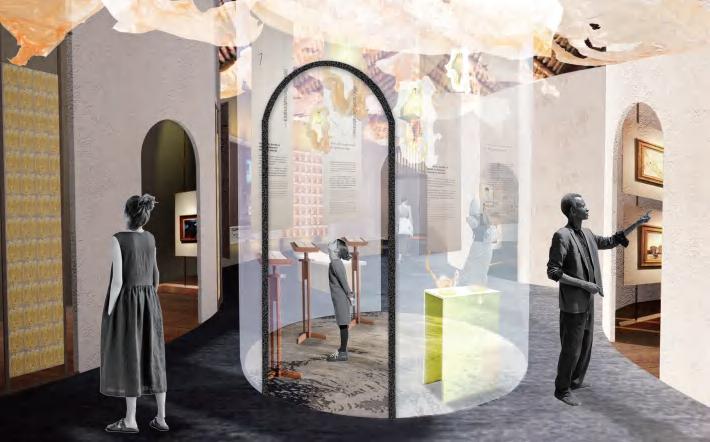
Route 2 Education: Visitors will pass through the cafe and enter the exhibition area. A series of exhibition halls and lecture rooms are open to the public, providing visitors with knowledge on dermatillomania.
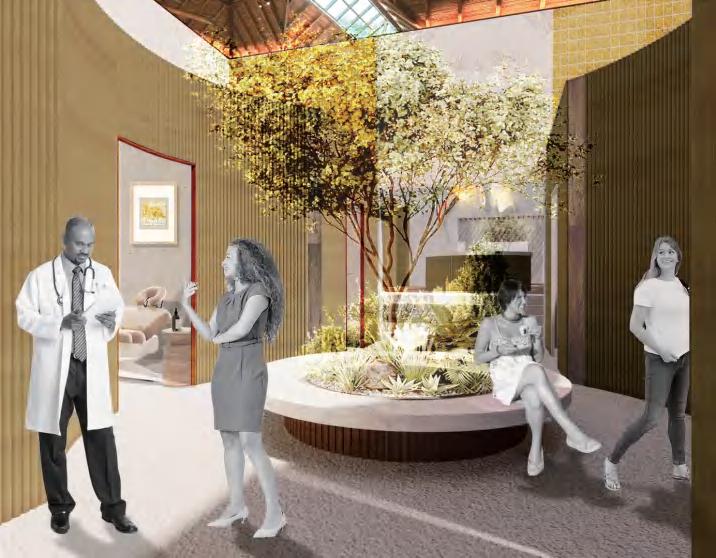
Route 3 Therapy: The route for dermatillomania patients living in the accommodation area to travel to the treatment area. In the treatment area's activity room, patients will undergo cognitivebehavioral therapy and other rehabilitation activities, such as meditation.
SPD Therapy: Assisted by Balinese Folklore
DESIGN PROCESS
Zoning Diagram

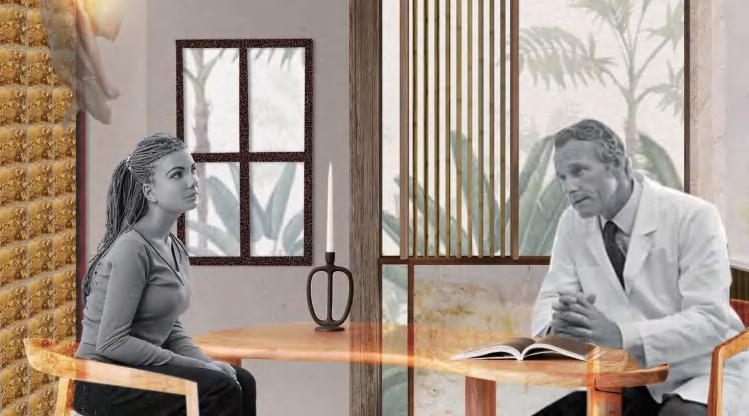
Approximately once a week. Sometimes, don't even realize that some minor skin-picking has started; this always hurts me and makes me confused.

Well, let's discuss your situation. How often do you usually pick your skin? How do you feel when the skin picking happens?
FINAL DESIGN : DERMATILLMANIA HOME
Route 1: SPD Evaluation
Tour Routes
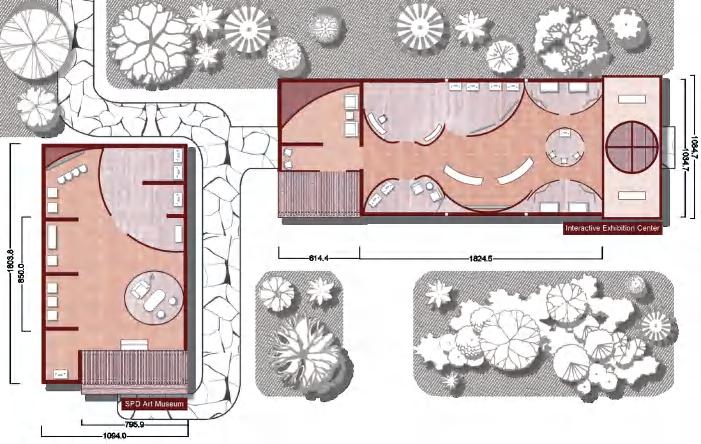
Route 2: SPD Education
Route 3: SPD Therapy
Plan SPD Exhibition Area 1:200
Plan SPD Therapy Area 1:200
Experience Process: Skin Picking Interactive Wall
COURSE WORK
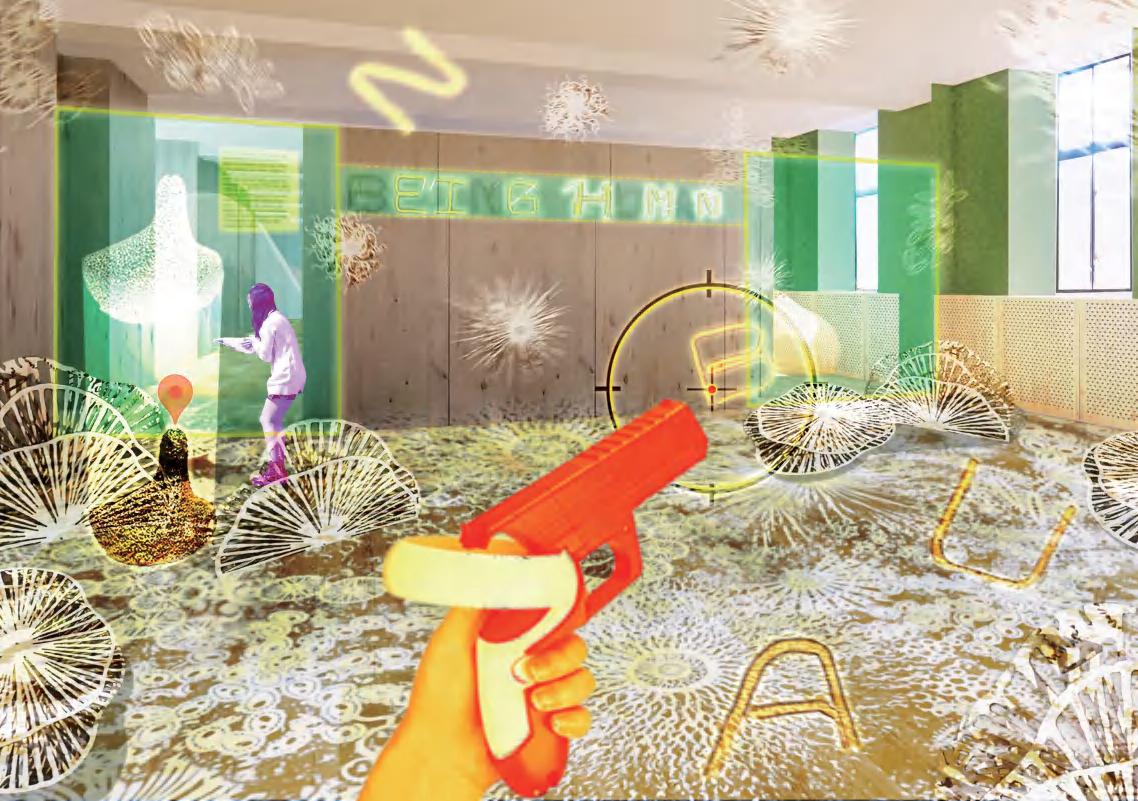
4.1 【INFO @ MAZE】
Exhibition and game design, London SEP(2022) --- MAY(2023)
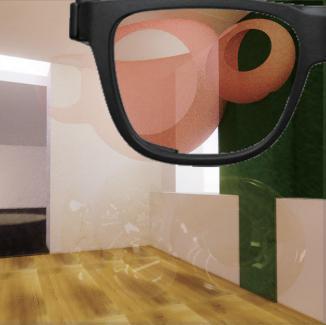
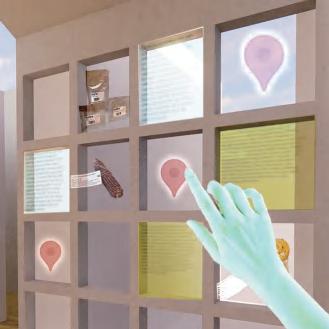
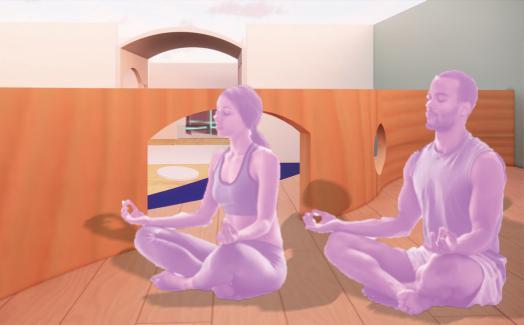
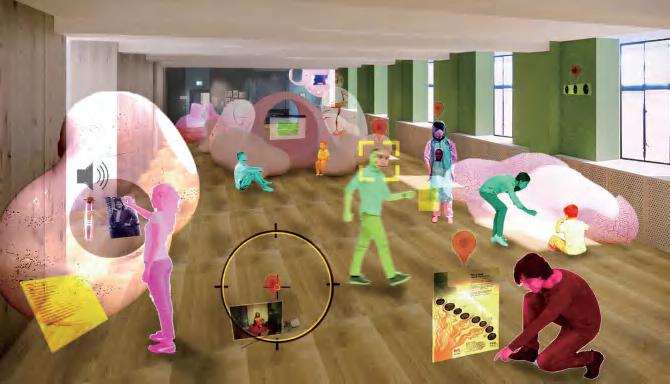
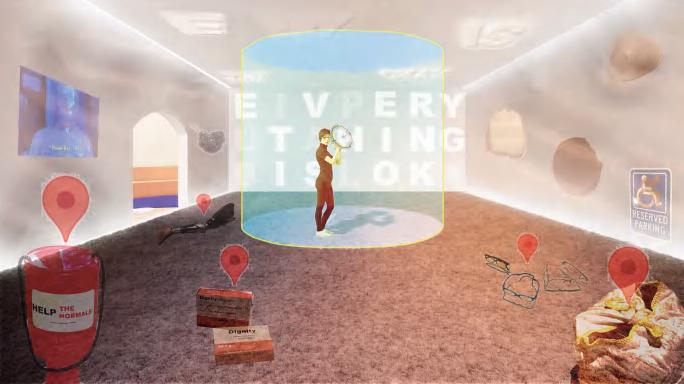
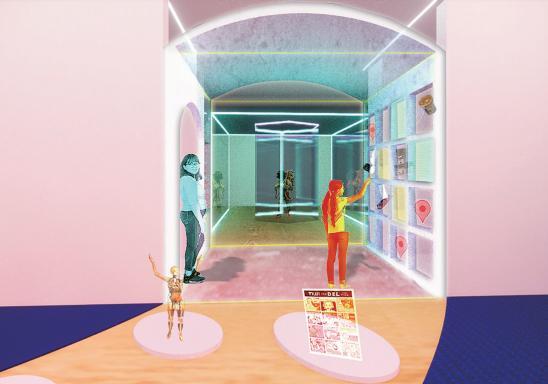
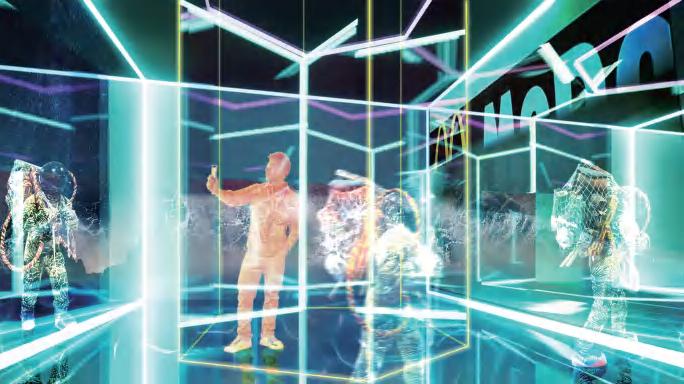
The INFO MAZE is an AR exhibition that is interactive and playful. The project is both exhibition design and design of narrative space and game space, which aims to help users gain insight into having information and context stories about exhibits while exercising their own attention and spatial capabilities.
The project's initial goal is to help people relieve information overload, a psychological phenomenon difficult to ignore in the digital age.
However, after research, find that the fundamental reason for information overload is that people's attention gets distracted by information floods --- People cannot allocate their limited energy to all the information they receive. Therefore, I decided to focus on "How to Refocus" as my primary research goal and develop a design to help people refocus from the spatial perspective.
The exhibition is adapted from the permanent exhibition Being Human held by Wellcome Collection. The exhibition collected medical devices, collectables, and artworks from around the world, all related to the concept of 'humanity'. All of these exhibits and their background stories have sparked my thinking as a human about my own body and spirit, as well as the environment I am in. In my project --- INFO @ MAZE, the story of the human experience in Being Human would be presented to people more vividly and emotionally.
04
Part 0: "Being Human" Alphabet Puzzle Shooter (Exhibition Entrance)
Part 1: Interactive Exploration Area Part 2: Shooter Narrative Space
Part 3: Virtual Seeds Bank Gallery
Part 4: Virtual Mirror Theatre
Augmented Reality (AR) Gaming and Interaction Cognitive Behavioral Therapy (CBT)
4.2 【Pet & Owner's Harbour】
Retail Space , London
(Group Work)
APR JUN (2022)
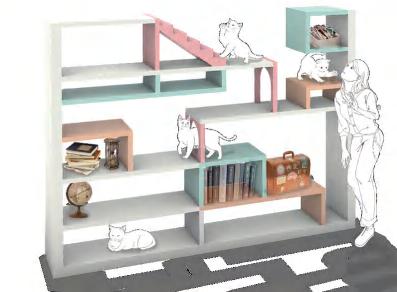
Under the influence of social and economic development, accelerated pace of life, and other factors, the pet market has constantly been expanding in recent years. As a result, more and more people are choosing to keep pets to relieve loneliness. Nowadays, although parks and other places where pets are allowed to walk, cities also have many pet-friendly hotels, restaurants, malls, and so on, most retail Spaces are still offlimits to pets.
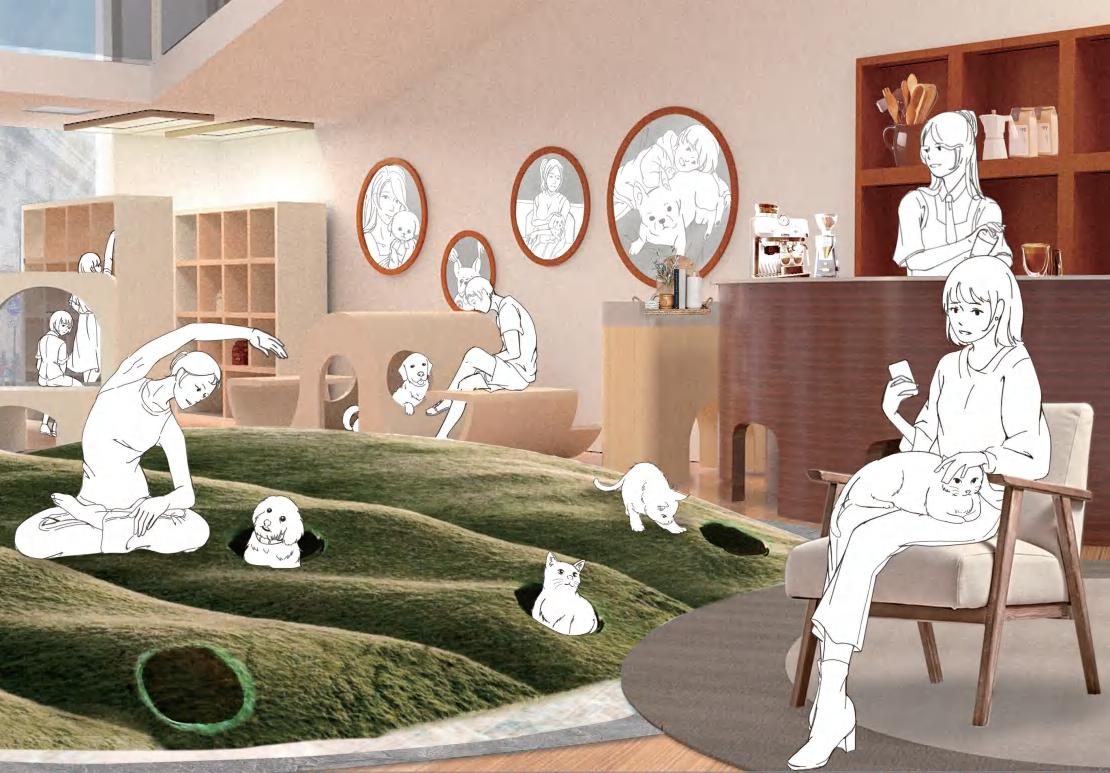
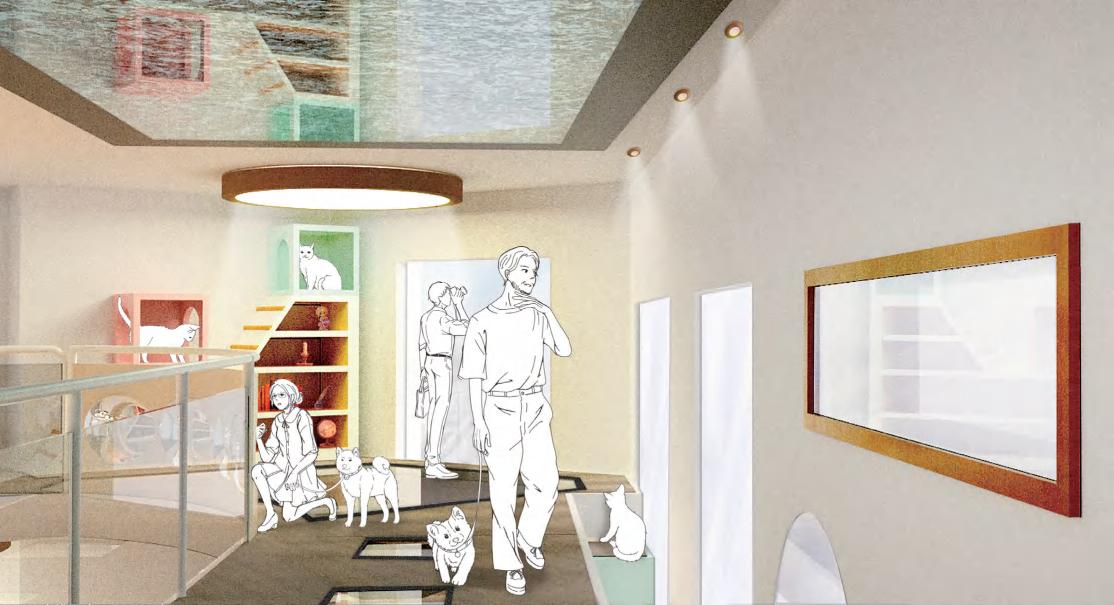
The Pet & Owner's Harbour aims to provide convenience and fun for pets and pet owners in a busy commercial centre --- We designed a multifunctional pet care centre. When pet owners want to travel to commercial centres but are worried about how to place their pets, our space can help them. Guests can leave their pets in our store until they finish their tour of the business district or work for the day. In addition to the basic foster care and care services, we also provide space for pets and their owners to rest and interact. Entertaining and interactive design is also considered in our design.
The Pet & Owner's Harbour is designed for humans and pets. Our design concept is to provide a relaxing harbour for pets and their owners in a busy city.

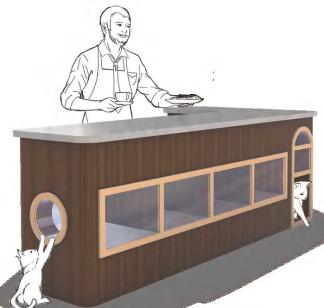

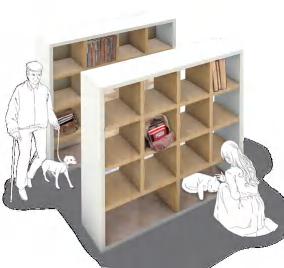

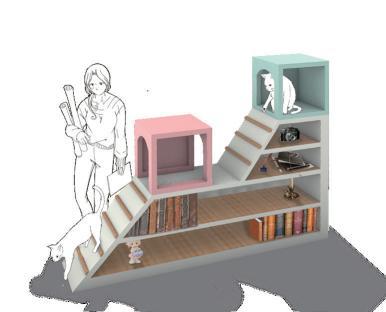
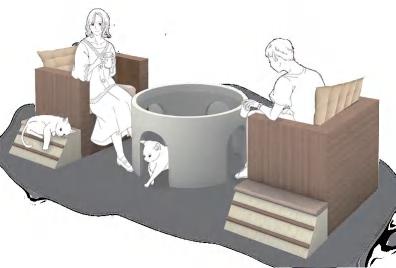

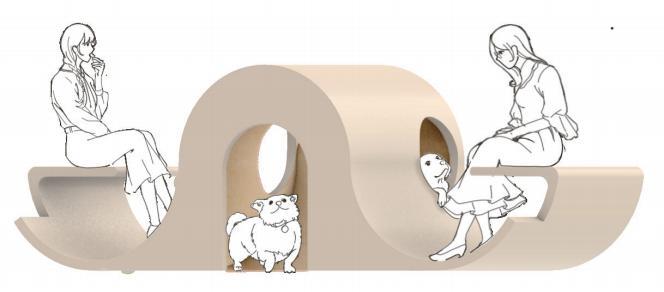
 Furniture Design for Human-pet Interaction
Interior View: Loft
Interior View: Ground Floor
Furniture Design for Human-pet Interaction
Interior View: Loft
Interior View: Ground Floor
4.3 【Hazy Sunroom】
Narrative Space , London MAY JUN (2022)
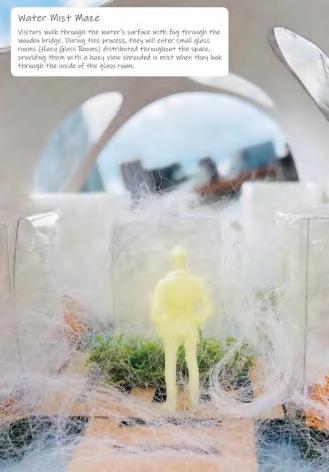
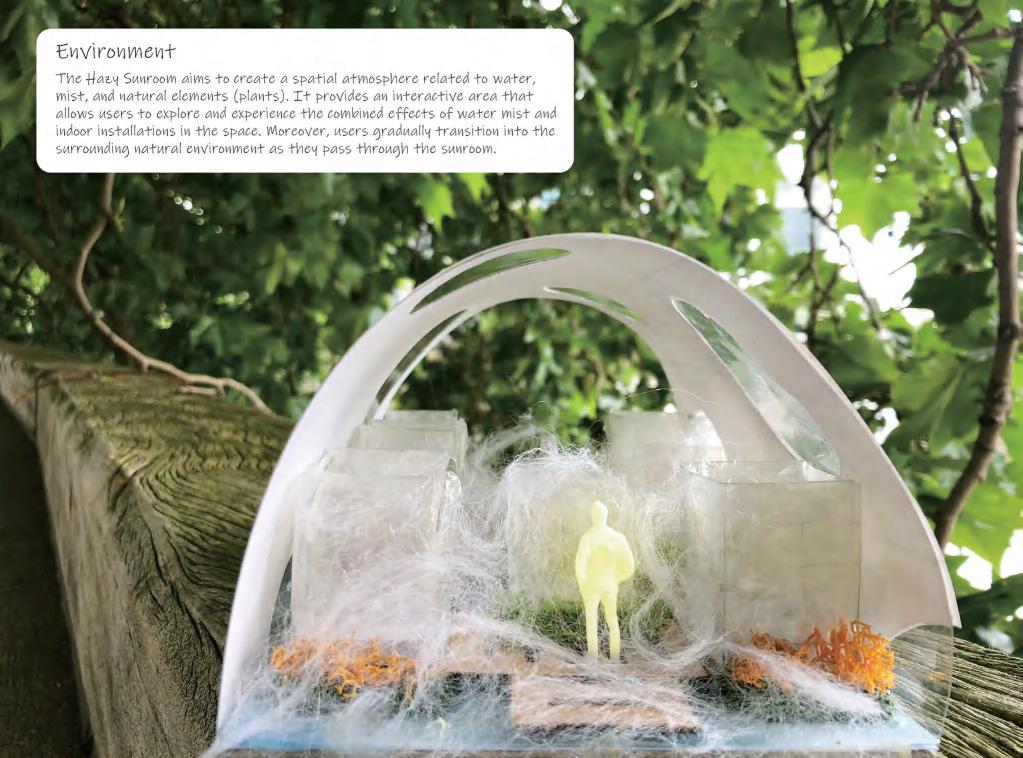
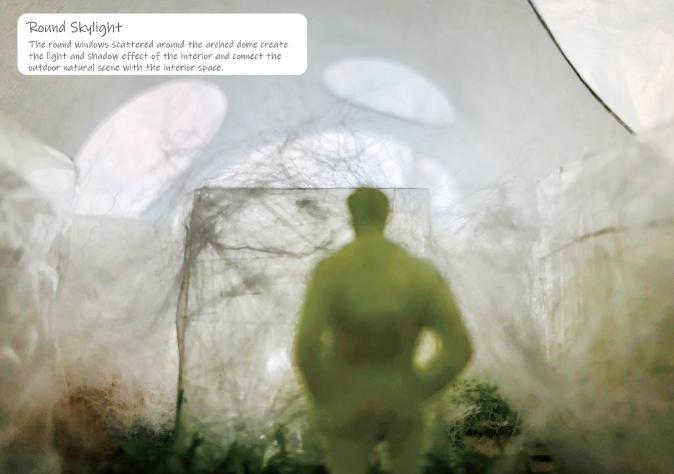
Nowadays, due to modernization, more and more people choose to live in the city for a long time. For these citizens, a natural environment is relaxing and refreshing. The Hazy Sunroom is an interactive space for people to relax. It is located in the Kew Garden and aims to provide a space for modern urban residents to interact with natural elements.
The design focus of this project is the composition of a spatial atmosphere. How a person defines the atmosphere of space (or region) depends on this person's experience and feelings in this space or area. Different experiences often bring about other emotions, and these emotions could affect the individual's view of things. For example, people usually feel delighted when staying in a warm and bright place. The space atmosphere could be affected by many factors, such as the forms of structures, building materials, lighting conditions and so on.
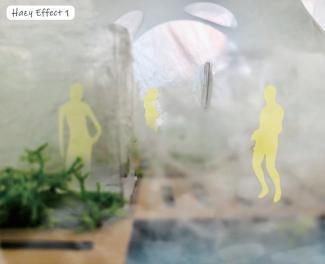
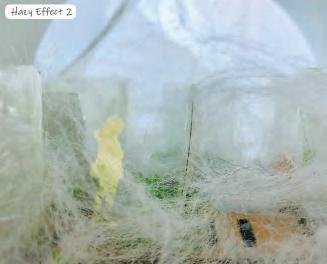
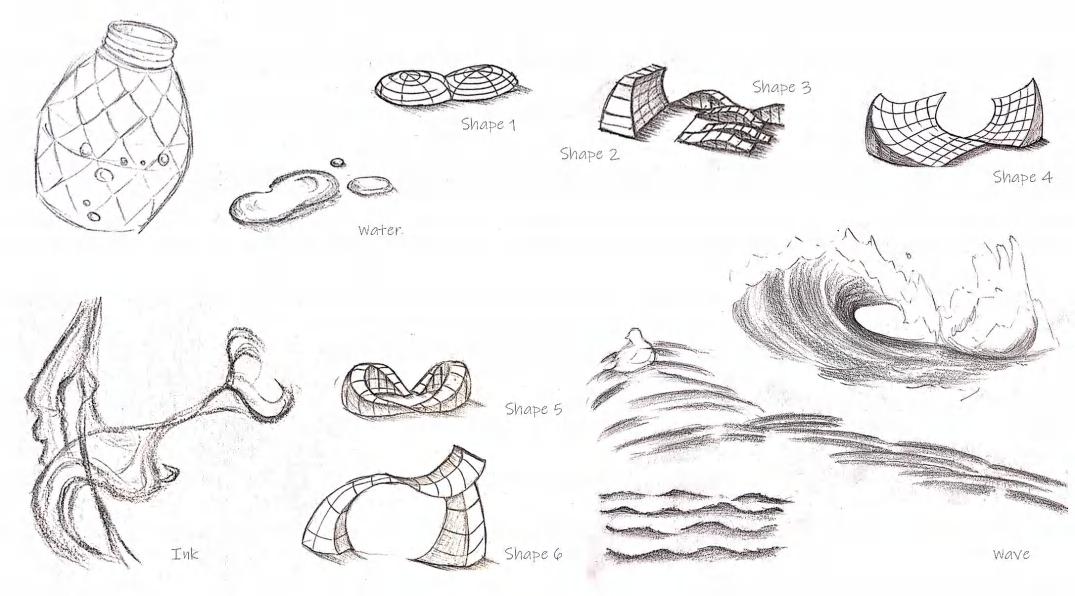
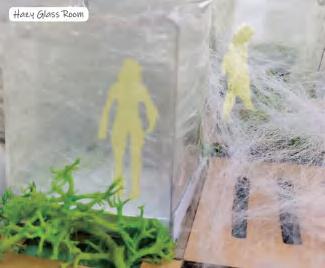
The Hazy Sunroom attempts to create a warm, humid, and natural atmosphere in the space. The interaction between water mist and sunlight in space gives visitors an interesting visual effect. Visitors can interact with the glass installations in the space while enjoying this unique visual experience.
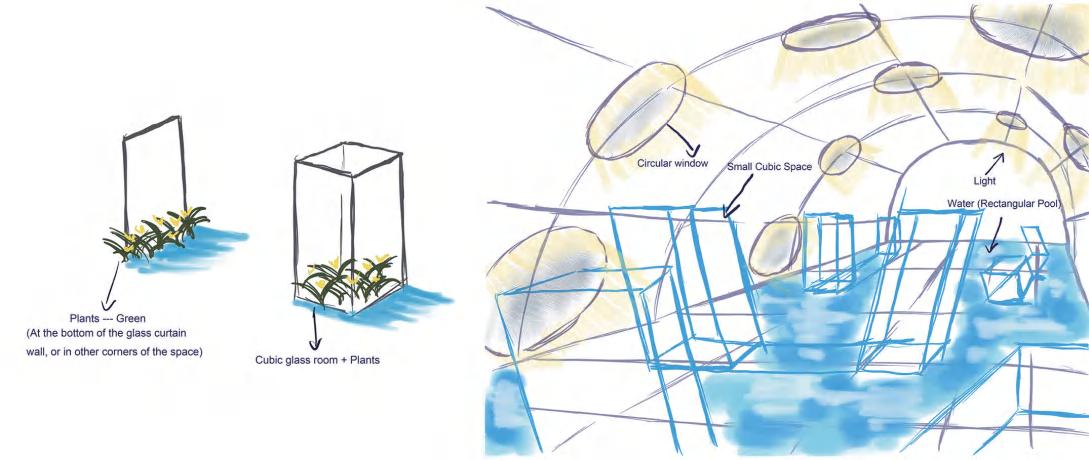 Sketch: Water visual effects
Sketch: Hazy Glass Room (Left) and Round Lighting Window (Right)
Sketch: Water visual effects
Sketch: Hazy Glass Room (Left) and Round Lighting Window (Right)
4.4 【YongHe City Square】
Landscape , Beijing
MAR MAY (2019)
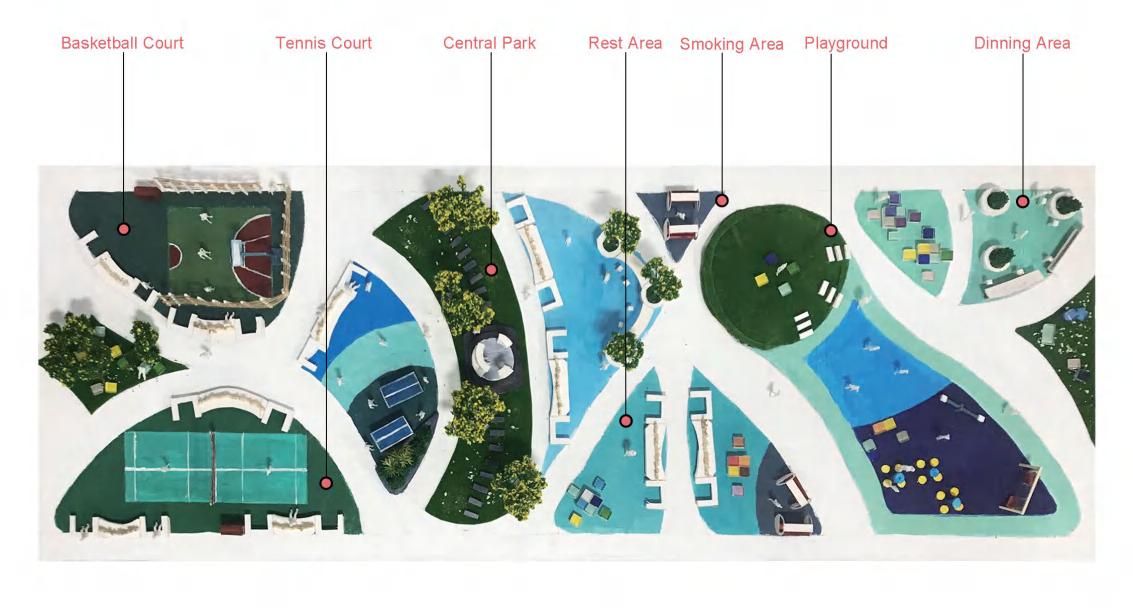
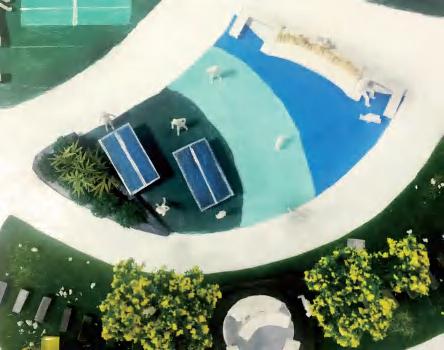
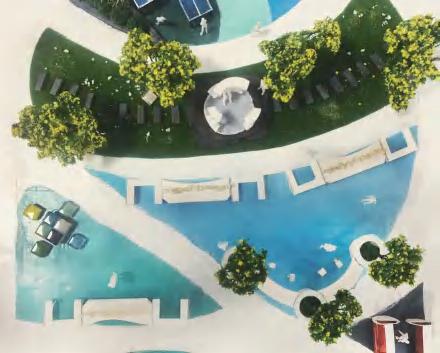
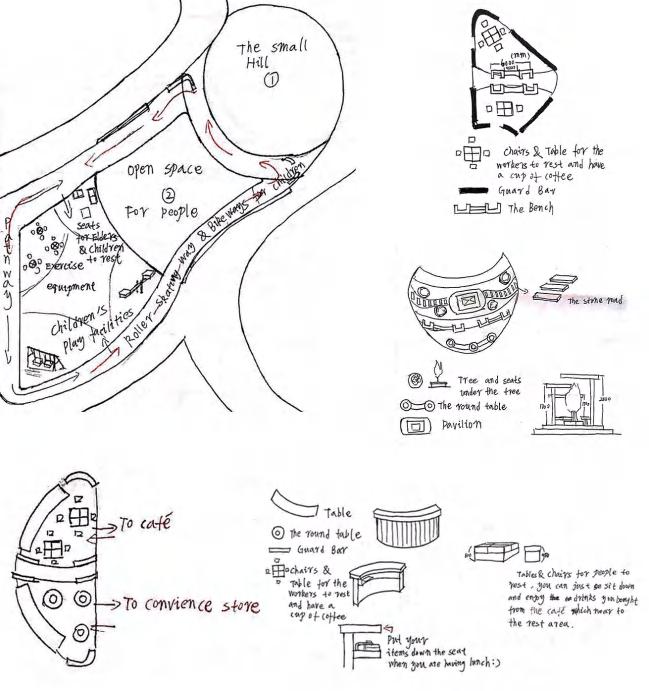
The Yonghe City Square is located in Yonghe Building, Beijing. This project is an urban landscape design project. I redesigned the public area on the ground floor of the Yonghe Building, making it a public square that integrates sports, leisure, dining, and gaming functions.
Yonghe Building is a complex of two office buildings, a place for many young people to work. Besides, this building complex is also connected to public transportation facilities and other surrounding communities. Therefore, various people pass through the Yonghe Building every day. In response to this, Yonghe City Square provides public facilities for different groups of people. For example, the playground is designed for children, and the dining area is designed for office workers.
Yonghe City Square aims to provide a public space for leisure, entertainment, and socializing for Beijing's diverse urban population. By redesigning existing public spaces, I hope to strengthen the connection between adjacent communities.

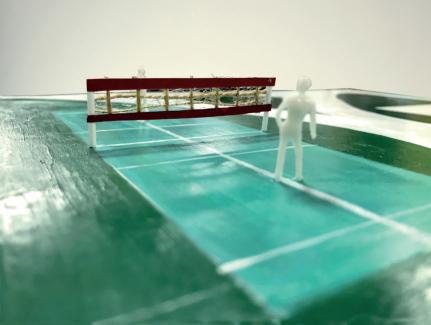
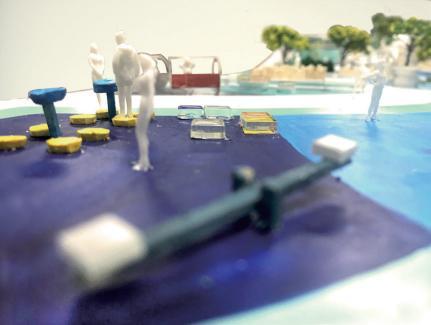
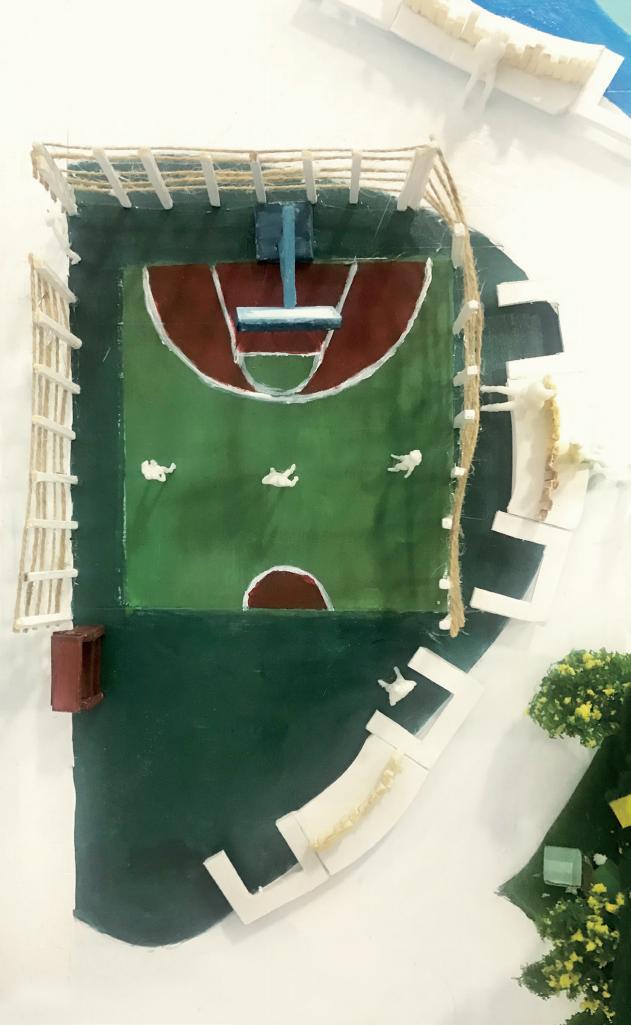 Handmade Model (Top View)
Hand Sketch: Draft Plan
Handmade Model (Top View)
Hand Sketch: Draft Plan