



MEIC is a environmentalnonprofit advocate whose purpose is to advocate for present and future generations by protecting Montana’s clean and healthful environment. This quarterly publication is printed on recycled paper.
Board PrEsIdEnt: Jessie Wiles
Board MEMBErs:
Jessie Big Knife
Michael Durglo Jr.
Grace Gibson-Snyder
Rob Farris-Olsen
Diana Hammer
Mary McNally
Eva Molina
Jeremy Osborn
Jim Sayer
Roger Sullivan
Beth Taylor-Wilson
Jesse Therien
Meridian Wappett
MEIC staff:
Ben Catton
Nick Fitzmaurice
Anne Hedges
Shannon James
Derf Johnson
Peyton Olson
Denise Roth Barber
Katy Spence
Maghan Strachan
Julie Wintersteen
59624
by Rob Farris-Olsen
All is not lost, though it may appear so at times. Recently, the Trump Administration ignored science — again — and decided that carbon dioxide was not a contributing factor to climate change, with his surrogates going so far as to tout that humans produce carbon dioxide, which is necessary for plant life on earth. While these statements obviously ignore reality, they highlight the reversal of over a decade of environmental policy and demonstrate that industry is more important to the current administration than the future of earth. This is but one example of the problems that are currently facing Montana and our planet. In times like this, it is important to remember Dr. Martin Luther King, Jr.’s powerful words,“The arc of the moral universe is long, but it bends toward justice.”
In today’s world, in the face of Mount Doom, organizations like MEIC are successfully working to advance sound economic and environmental policies. Pres. Donald Trump has tried to shut down wind and solar, yet solar and wind are thriving; he has tried to force the development of coal resources, yet coal-fired power plants and coal are losing market share; he has tried to shut down advocacy, yet people across Montana and the United States keep standing up for what we believe. It is this continued advocacy and advancement that should not be lost in dire times like this.
When the overwhelming pile of bad threatens to outweigh the good, it’s heartening to zoom out and see just how far we’ve come. As long as we keep pursuing a better Montana, we will see positive outcomes. Prior to the adoption of Montana’s 1972 Constitution, we watched rivers burn, mountains decapitated, prairies stripped, and our air fill with toxins. Out of those wrongs arose some of the greatest national environmental protections and led to Montana embracing a fundamental constitutional right to a “clean and healthful environment” — and the strongest environmental protections in the country. Those protections are as strong today as they were when adopted. When the State tried to strip out greenhouse gases from Montana law, MEIC stood up and again showed that our framers meant what they said: Montana’s environment is not for sale and must be preserved for present and future generations.
As part of MEIC’s fight for a better Montana, it has also secured important wins to ensure transparency. That transparency is critical to a well-informed populace and to weed out backroom deals attempting to sell our environment. In the last year, MEIC brought Right to Know lawsuits against Montana’s Governor, Attorney General, and Legislature. In each instance, the State created privileges to shield their actions from public view. And in each case, MEIC successfully defended transparency and obtained public information from public officials. This transparency, coupled with MEIC’s issue advocacy, gives hope that Montana’s Constitution remains a bulwark for the people.
As we persist through another tumultuous year, take a moment to look back at how far we’ve come. Much that has been accomplished must be defended. We’ll have to reinstate many protections and push them to go even further. But we’re doing it together, with many people in Montana and across the country pushing for the same outcomes.

Rob Farris-Olsen is the Vice President of MEIC’s Board of Directors. He lives and works in Helena with his wife and two young kids. Rob handles a wide variety of legal cases including challenging subdivisions and gravel pits based on environmental concerns.
by Nick Fitzmaurice
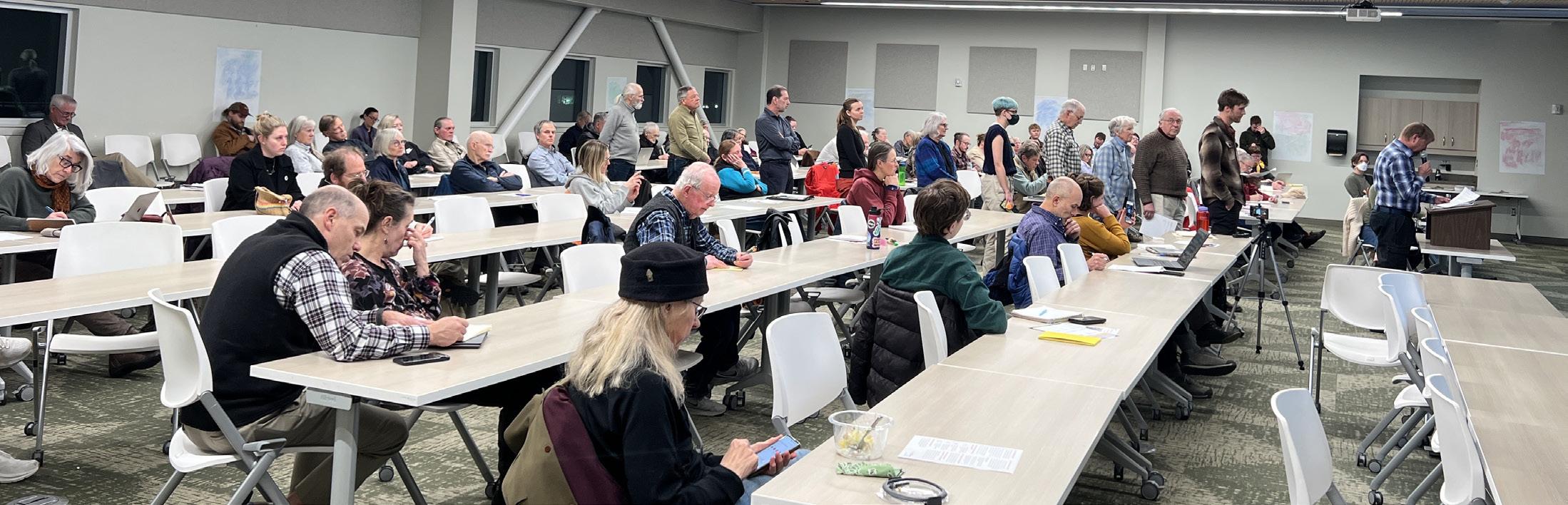
NorthWestern Energy released its draft Integrated Resource Plan (IRP) in January, outlining a 20-year plan for Montana’s electricity system that relies heavily on expensive coal, gas, and nuclear generation. While NorthWestern is supposed to plan for a least-cost energy future, it’s apparent that maximizing profits at the expense of customers took priority — again. The public turned out in force to NorthWestern’s four public meetings in January and February to push back on this expensive and out-of-touch plan.
Whether or not NorthWestern updates its IRP in response to the public’s legitimate concerns, raising these concerns is crucially important. NorthWestern’s executives appear to be using the IRP to justify investing in the most expensive types of power plants available, but we have an opportunity to set Montana on a different course. NorthWestern will file its final IRP with the Public Service Commission (PSC) at the end of April, kicking off a 120-day review period at the PSC that will include a 60-day public comment period and another round of public meetings. If NorthWestern doesn’t address the public’s concerns about its IRP, then we will take those concerns to the PSC.
In 2023, PSC staff took the public’s concerns seriously and recommended that the Commission
issue a strong critique of NorthWestern’s previous IRP. The final critique was watered down at the last minute by the Commissioners, but still contained important directives for NorthWestern to do better. While the 2026 plan remains deeply flawed, it contains improvements compared to the 2023 IRP. Ultimately, the final IRP, and the Commission’s feedback, will influence whether NorthWestern conducts a request for proposals (RFP) for new electricity resources, and what types of power plants NorthWestern eventually builds. A flawed 2019 IRP and subsequent defective RFP led to the construction of the Yellowstone County Generating Station (YCGS) gas plant near Laurel. Those flaws gave the PSC reason to deny part of NorthWestern’s request to charge ratepayers for all the costs associated with YCGS. Strong public concerns about NorthWestern’s current plan should cause the utility to think twice before making this mistake again.
The IRP is a recurring modeling exercise for NorthWestern’s future electric system. The information used to create this model (assumptions, inputs, constraints, and goals) have tremendous influence over the outputs the model generates. This iteration, NorthWestern created a model that hamstrings low-cost wind and solar, establishes extraordinary and unjustified needs for new generation infrastructure, and makes outrageous cost assumptions NorthWestern Energy overinflates how much electricity is needed — and underestimates the efficacy of solar and wind — to justify building more fossil fuel plants.
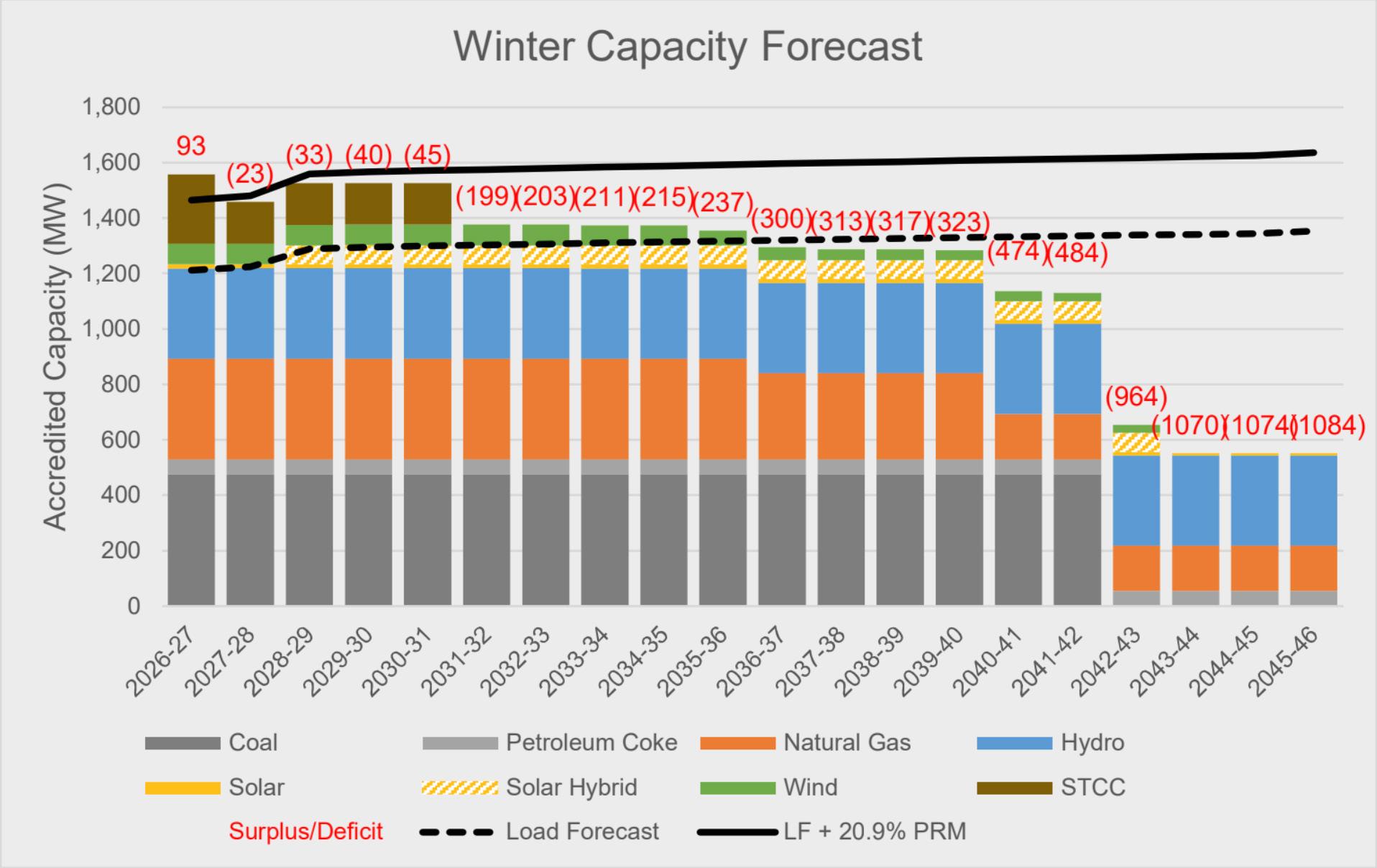
In this graph, LF: Load Forecast; PRM: Planning Reserve Margin; and STCC: Short-term capacity contract.
Graph via NorthWestern Energy's 2026 Draft IRP.
around the Colstrip plant, concluding that any scenario involving early plant retirement would lead to more costs for customers. But this analysis was pre-baked, and NorthWestern purposefully excluded all the ingredients for a truly least-cost electricity portfolio. If you put a frozen pizza into the oven, you’re not going to pull out a wedding cake 20 minutes later.
MEIC has been sifting through the details to distill some of the key modeling assumptions that led to NorthWestern’s skewed IRP outcomes. Here are a few that have risen to the top:
NorthWestern almost completely excludes low-cost wind and solar from its 20-year planning scenarios through arbitrary model configurations. It undervalues these resources’ output during peak electricity demand, and ignores their ability to provide reliable and complementary electricity when built together and combined with short- and long-duration energy storage. This is exacerbated by NorthWestern’s artificial constraints on using short- and long-duration energy storage. Meanwhile, NorthWestern drastically overestimates the reliability of its coal and gas resources, including the Colstrip power plant, despite these fossil fuel power plants’ demonstrated equipment failures and fuel supply shortages during extreme weather events.
NorthWestern further undervalues wind and solar by tacking on exorbitant, unrealistic costs for connecting these resources to the grid, ignoring their ability to replace retiring power plants and their availability in a fraction of the time it takes to construct other, more expensive resources. And NorthWestern used cost assumptions for wind, solar, and battery
storage that dramatically exceed standard industry estimates. Simply put, NorthWestern doesn’t give these resources a chance.
NorthWestern’s IRP envisions supplying enough capacity to meet peak electricity demand on the most extreme weather days of the year. This is the maximum instantaneous flow of electricity through NorthWestern’s system at any given time, not to be confused with the total energy delivered to customers over the course of a year. How NorthWestern defines this capacity need, and what avenues are considered for supplying that capacity, are crucially important.
Despite having far more power than customers need because of YGCS and additional Colstrip shares (see articles on pg. 9 and 16), NorthWestern says that it faces a capacity deficit in the near future. However, this is largely driven by the expiration of contracts with existing renewable energy resources that NorthWestern doesn’t want to extend. It instead plans to build expensive fossil and nuclear generation when those contracts expire. NorthWestern also uses an outrageous, black box “planning reserve margin” to say that it needs to build 21% more capacity than its peak need (see graph on opposite page). And as NorthWestern kowtows to out-of-state data center developers, it sees an opportunity to inflate its capacity needs even further.
story continues on pg. 25
by Anne Hedges
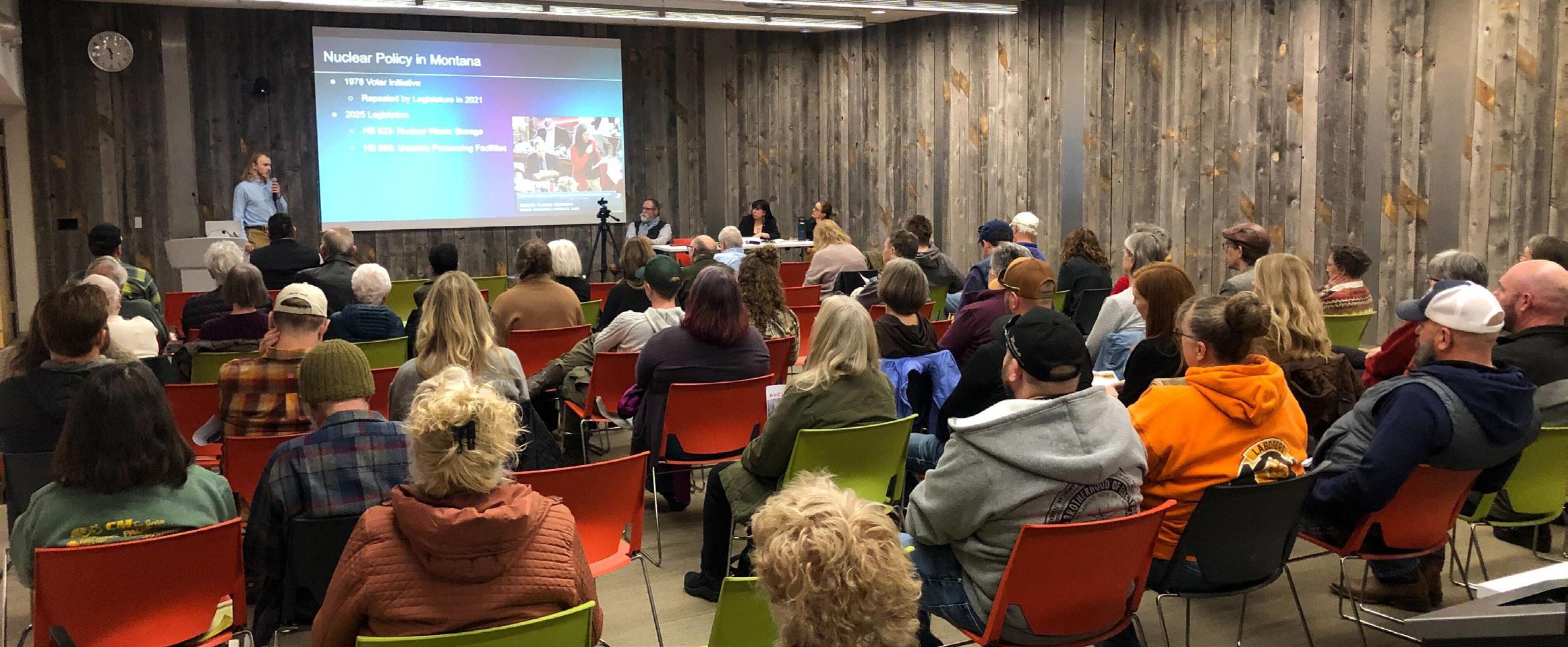
Data centers have been around for decades but modern "hyperscale" data centers, made possible by powerful new microchip technology, are a completely new beast when it comes to energy and water demands. In Montana, NorthWestern Energy’s announcements that it wants to provide enormous amounts of electricity to just a few artificial intelligence (AI) and perhaps cryptocurrency data centers has drawn a lot of attention in the last year. Despite NorthWestern’s dismissal of any concerns regarding the impacts that data centers could pose to the cost of electricity for Montana families and small businesses, it provides little more than bluster or misrepresentation of recent studies to prop up its argument that more data centers would be good for utility customers. Montanans are rightfully concerned. Recently, MEIC has worked with partners to hold educational events across the state on the impacts of data centers. Montanans across the political spectrum are showing up to these events in droves to learn and ask questions. (You can find recordings of these on our
YouTube channel: www.youtube.com/@MEIC406
What we keep hearing in these events is that Montanans are concerned that data centers could further increase their skyrocketing utility bills, diminish water quantity and quality, and harm their communities. Across the country, data centers have done just that. Time and again, developers make promises but neighbors’ wells run dry, air and noise pollution increase, electricity bills skyrocket, and tax revenue and jobs fail to materialize.
Montana is not immune from this AI-induced frenzy. Slick AI data center developers, NorthWestern Energy, and the Montana Chamber of Commerce are making promises to communities, legislators, and regulators, but unfortunately, there is no way to hold them accountable to these promises without regulations that require financial protections for Montanans and enforcement of their promises. Other states that didn’t have adequate protections for consumers, communities, and water users have suffered the consequences.
NorthWestern’s strong resistance to regulations to protect existing utility customers raises alarm bells.
Data centers have enjoyed a remarkably low property tax rate of 0.9% since 2017, and in 2025, the legislature extended that low property tax rate to all infrastructure related to the facility, communication equipment such as fiber optic cables, transmission and distribution systems, and power plants. Until 2025, homeowners paid a higher property tax rate than data centers thanks to powerful data center lobbyists. When the boom busts or developers decide to move to another state (as has happened at the Hardin Generating Station), someone will still need to pay for the new power plants, transmission and distribution lines, water systems, roads, etc, that developers said they needed. Those infrastructure investments could become stranded assets that Montanans could be forced to pay for if our government agencies don’t take action to protect us.
A year ago, the Public Service Commission (PSC) informed NorthWestern that it needs PSC approval to serve electricity to data centers. NorthWestern repeatedly denied the PSC had such authority until late fall. It told the PSC it would submit a large load tariff for PSC review by the end of 2025. NorthWestern failed to do so and as of this writing, still hasn’t updated the PSC on when it intends to submit such a tariff. However, NorthWestern is far more forthcoming with investors. On its February 2026 investor call, NorthWestern said that it is working with 14 data center developers, three of whom are already half way through its five-step process to receive electricity from NorthWestern. It also told its investors it would submit a proposed tariff to the PSC when it had signed agreements with data center developers, sometime in the middle of 2026. Nevermind that PSC rules should be established before any agreements are struck, but NorthWestern apparently hopes it can leverage these signed agreements to force the PSC to adopt whatever
rules it requests — rules that will certainly be favorable to NorthWestern and data center developers.
MEIC and our partners, troubled by NorthWestern’s flippant attitude toward PSC oversight, filed a complaint in late 2025 asking the PSC to meaningfully regulate the electricity that NorthWestern serves to data centers by creating a separate rate class and a large load tariff. A separate rate class would better guarantee that data center developers are charged for the costs they impose on the electricity system. The PSC acted on that complaint in early February and gave NorthWestern 20 days to respond. As of this writing, NorthWestern has not responded.
Protections for existing utility customers are urgently needed. NorthWestern’s electricity customers have already seen as much as a 39% increase in electricity rates since 2022. They need specific protections from data centers so rates don’t continue to skyrocket, as they have elsewhere, and Montanans aren’t left holding the bag when this data center boom goes bust.
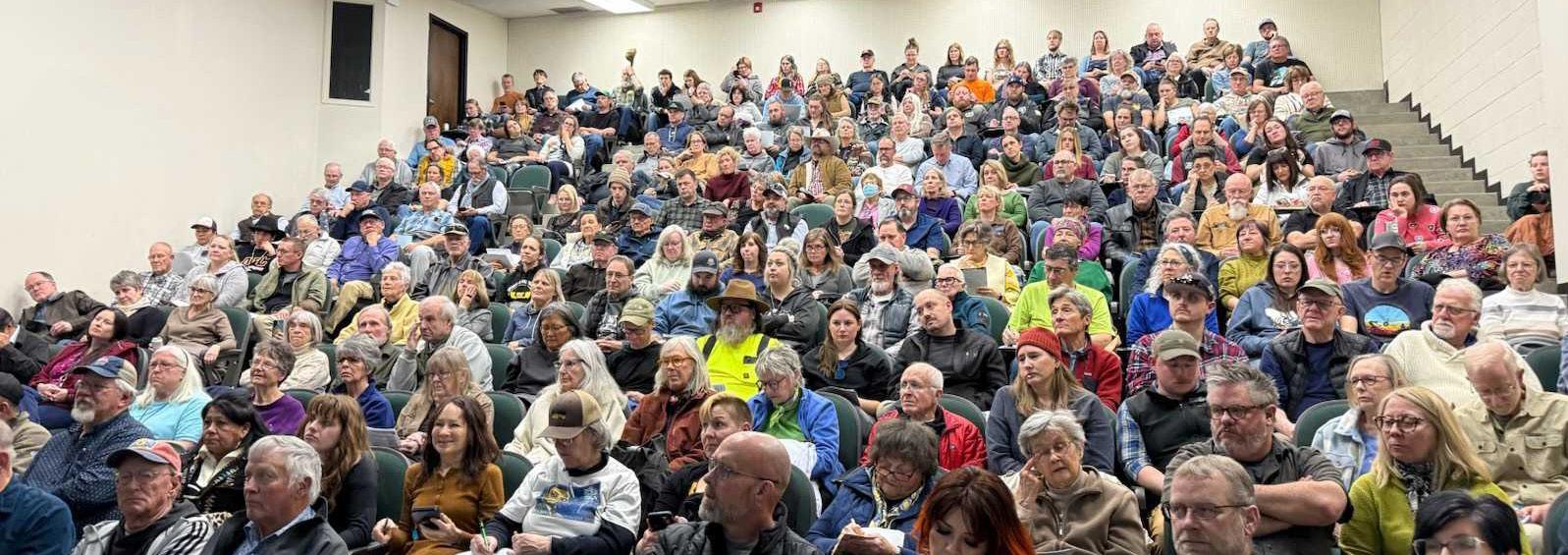
In October, MEIC staff held an educational event in Butte on data centers. With local organizations like Butte Watchdogs for Social and Environmental Justice, we talked to a packed room about the potential impacts from proposed data centers and the experiences of other communities across the country.
In January, the Butte-Silverbow Council of Commissioners voted 10-0 to ask the PSC to regulate NorthWestern’s electricity sales to data centers and protect families and businesses from subsidizing the electricity bills of Big Tech.
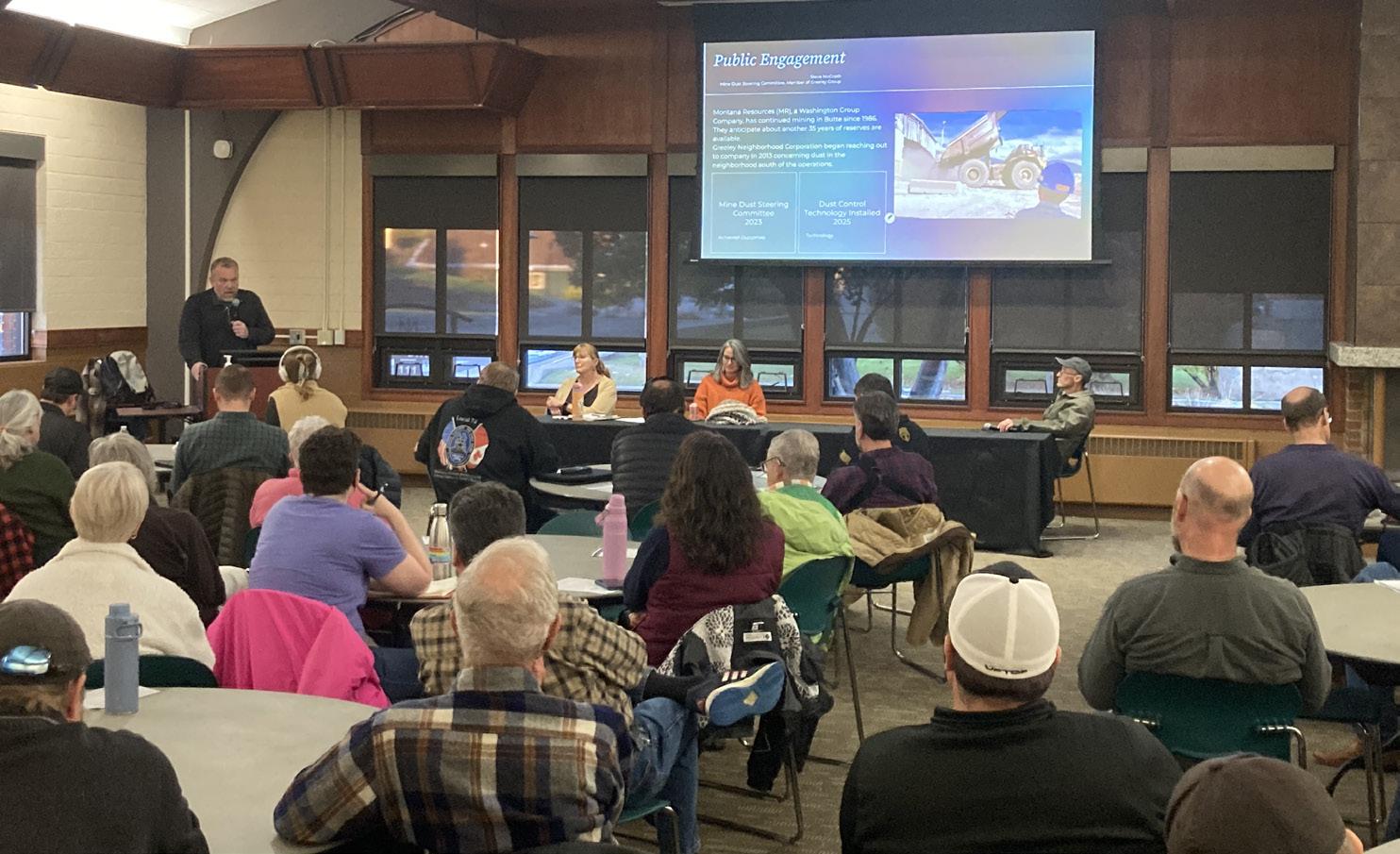
Community education works.
MEIC is taking our data center panel on the road, and in 2026, we have partnered with community organizations like Citizens for Clean Energy, Upper Missouri Waterkeeper, Helena Interfaith Climate Advocates, Central Montana Resource Council Montana Conservation Voters, and Honor the Earth to hold events in Great Falls, Billings, Broadview, Helena, Lewistown, and more. Look for an event near you.
Photo by Ben Catton.
by Ben Catton
In Montana, a state where water availability is increasingly shaped by drought, changing snowpack, and legacy water systems built for a previous era, several proposed data center projects have raised questions about water availability and the sufficiency of existing infrastructure. Data centers often rely on cooling systems that consume huge volumes of water. Water is more efficient at cooling data centers than air, especially in the era of the new high-powered AI chips that are driving the current data center craze. Communities are questioning whether scarce local water resources should be diverted to data center projects that deliver limited local employment and uncertain long-term benefits.
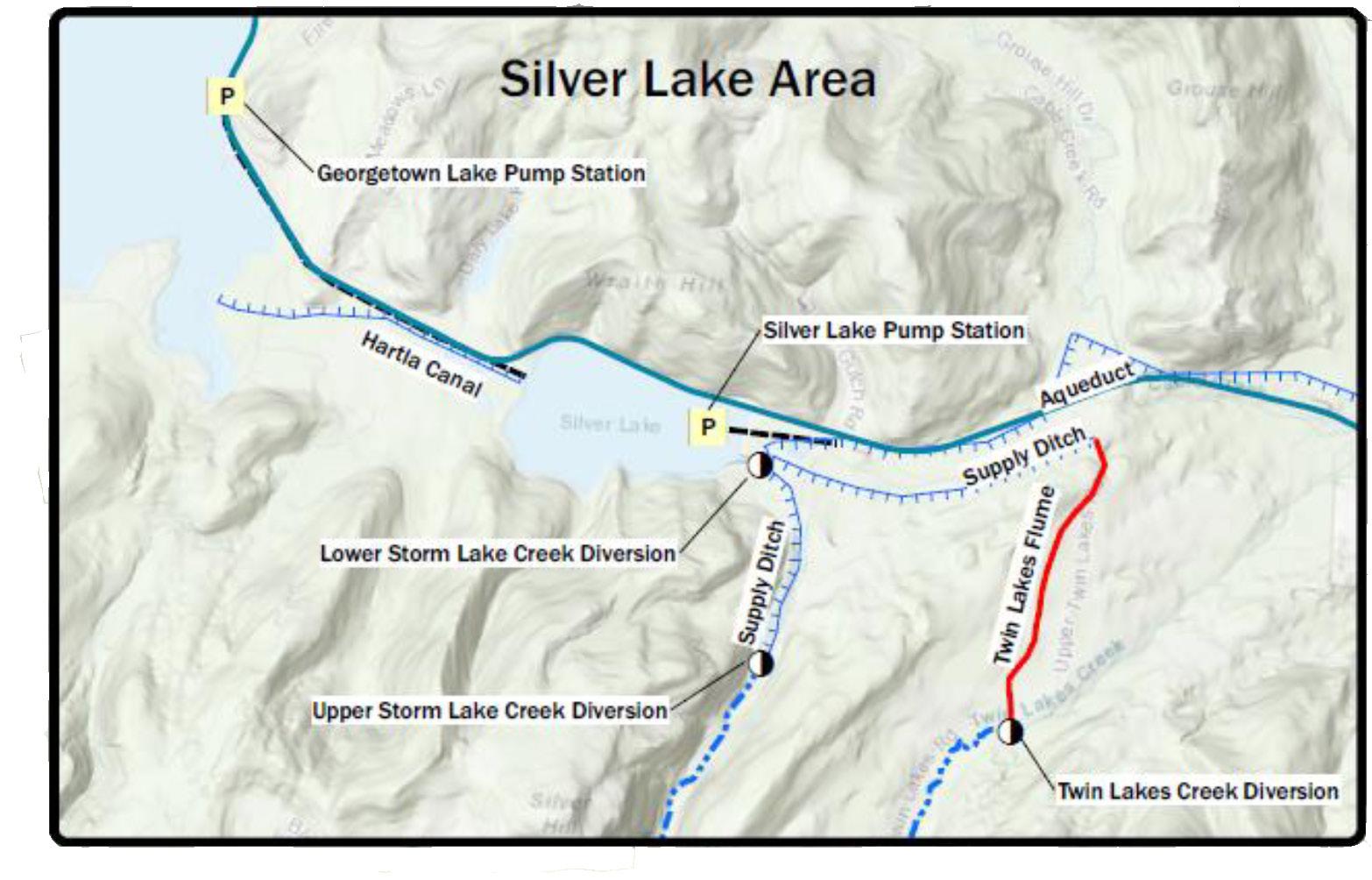
A data center proposal in Butte from Sabey Data Centers would rely on the Silver Lake Water System, which provides water to industries as well as maintaining in-stream fisheries flows. The system was designed in the late 1800s to support mining and smelting, during a relatively cooler period with more reliable snowpacks, spring runoffs, summer precipitation, and fewer demands upon the resources. Recent conditions underscore current climate realities. Todd Blythe of the Montana Department of Natural Resources and Conservation recently noted in the Anaconda Leader that Georgetown Lake — which sits just below Silver Lake — had below-average surface elevations in July and August based on 80 years of data, with inflows at roughly 14% and 39% of normal. And the Clark Fork Coalition measured single digit cubic feet per second flows in the Upper Clark Fork in 2016, 2021, 2024, and 2025.
Questions also remain about the true scale of the Sabey project and whether Sabey’s water consumption predictions correspond to the initial phase of development or the entire project. Sabey is purchasing four lots on 600 acres. The properties are not contiguous, raising the question of whether Sabey intends to build its currently proposed project on all four parcels or whether it intends to build more data centers than it has stated.
Another data center developer, Quantica, wants to build a massive data center near Broadview, an area that lacks sufficient drinking water. Central Montana’s
lack of water availability has long been a serious concern. The Lavina-Broadview branch of the 230mile Mussellshell Judith Rural Water Project pipeline — an expansive new publicly-funded water system that has been in development for decades — is scheduled to reach Broadview this year. That project will deliver just under a half-million gallons of water each day to the Broadview community. The water is intended to be used as drinking water.
Quantica has purchased 5,000 acres of land south of Broadview and has leases on an additional 40,000 acres for energy development. The proposed 1,000 megawatt data center represents an electricity need far greater than NorthWestern Energy's current average customer load for all of Montana. Quantica executives have not disclosed how they will provide water to their project, but residents and scientists agree that there simply isn’t enough high quality water near Broadview to meet the needs of the data center, whatever that need may be.
Data centers also pose a water contamination threat. Water discharges can be extremely hot and can contain high levels of dissolved solids and industrial chemicals. If the data center’s wastewater is discharged into a public wastewater treatment system, the existing system may not be designed to treat the pollutants in the data center’s wastewater. The scale of data center wastewater may also overwhelm local treatment systems. In rural Montana, where local wastewater treatment systems are often absent, untreated water may be directly discharged to waterways or land.
MEIC is engaging local communities and working with local and state governments to push for forward-looking regulations on data centers that see beyond the data center gold rush. Visit MEIC’s data center webpage (www.MEIC.org/data-centers) and read the “Data Center Questions Needing Answers” and “Regulatory Solutions for Data Centers in MT” documents for more information.
by Nick Fitzmaurice
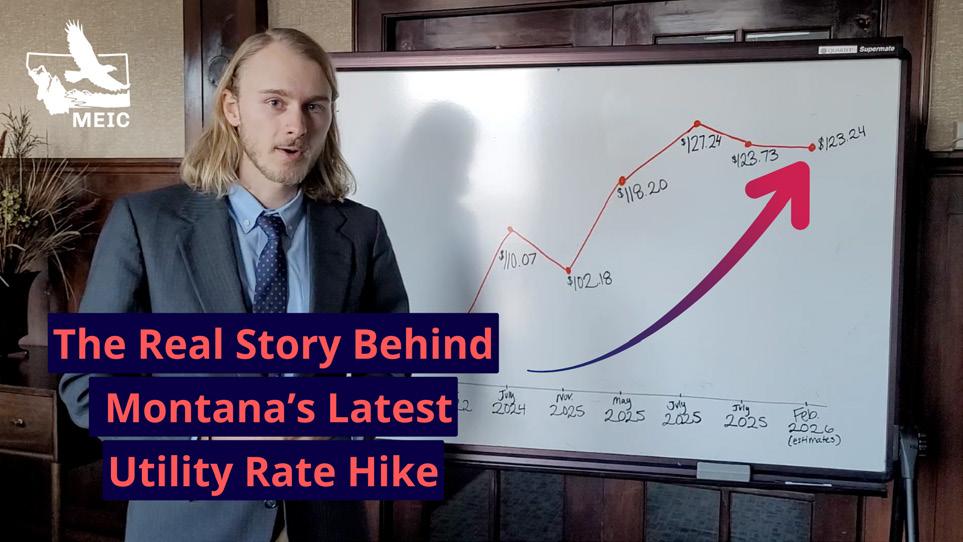
On December 24, the Montana Public Service Commission (PSC) quietly released its final order approving an increase to NorthWestern Energy’s electric and gas utility rates. Following the PSC’s approval of a 28% increase to residential electricity rates in October 2023, this recent decision permanently increases residential electric base rates by about 17%. This increase results in an approximately 12% overall increase to residential electric bills compared to bills in July 2024 when NorthWestern originally filed its application. Commissioners voted on many of the issues in this rate case on November 19, but then extended the deadline for issuing a final order, without ever holding a vote on the entire final order.
Since NorthWestern implemented interim rate increases beginning in May 2025 (and it has overcharged customers for its newest gas plant near Laurel as a part of those interim rates), the outcome of this rate case leaves customers with a short-term partial refund and relative decrease to rates compared to those paid throughout the summer and fall. However, don’t be fooled by NorthWestern’s and the PSC’s spins, because the overall impact of this rate case is a large increase to customer bills.
The most contested issue in this rate case was whether and how much NorthWestern could charge customers for its Yellowstone County Generating Station (YCGS) methane gas plant, an expensive boondoggle near Laurel. Originally contemplated in the utility’s defective 2019 Integrated Resource Plan (IRP), YCGS has been controversial since the beginning.
PSC staff pointed to countless flaws in NorthWestern’s decision to build YCGS throughout the process, beginning in the 2019 IRP, persisting through its request for proposals that selected YCGS,
and all through its construction with unjustified risks and cost overruns (not to mention that two of the 18 units at YCGS didn't come online with the rest of the plant). Staff concluded and Commissioners affirmed that the selection and construction of YCGS was misguided.
However, rather than preventing NorthWestern from overcharging customers for YCGS, PSC staff recommended that the Commission only “reduce NorthWestern’s proposed $287 million YCGS rate base, associated with 16 engines in use, to $227.7 million.” Then, the PSC voted to increase that number by an arbitrary $18.36 million for litigation associated with NorthWestern’s illegal air permit during the construction of the plant, even though NorthWestern failed to provide documentation to back up these costs.
The PSC also awarded NorthWestern with a hefty 9.65% return on equity for its investment, while variable expenses for the plant (predominantly gas fuel) will be passed straight to ratepayers throughout the plant’s projected 33-year life, currently estimated at upwards of $35 million per year. And this doesn’t account for future investments to maintain the plant and the potential for gas prices to rise in the future.
While the PSC’s decision sends a signal to NorthWestern Energy that its process for choosing and constructing YCGS was deeply flawed, the plant is now built and operating, and Montanans will be forced to pay the inflated price for decades.
However, perhaps no flaw was as significant as the fact that the PSC’s final decision completely ignored climate change, despite MEIC’s extensive testimony on the relevance of climate change in this proceeding.
Earthjustice, on behalf of MEIC and our partner organizations, filed a motion for reconsideration of the PSC’s final order on January 16. We detailed how NorthWestern should not be allowed to charge customers for any costs associated with YCGS and that climate change must be considered in the PSC’s
Watch a video explaining NorthWestern's rising rates on MEIC 's website. decision, among other issues. As of this writing, the PSC had waived its deadline for responding to motions for reconsideration, leaving MEIC’s motion still pending. Should the PSC deny the motion, a legal challenge is possible.
by Shannon James
Last May, the Trump Administration signed a series of sweeping executive orders aimed at catapulting the nuclear industry forward. Buried beneath the rhetoric of innovation and energy independence is a troubling reality: federal agencies are quietly rewriting nuclear safety and environmental rules to meet an impossible political deadline, and they are doing it largely out of public view.
The goal set by the executive orders is staggering. The Secretary of Energy must approve at least three new nuclear reactors by July 4, 2026. A timeline of 13 months defies decades of experience in nuclear construction, safety protocols and regulation. To make the impossible appear achievable, the administration has chosen to strip away safeguards, sidestep public oversight, and rush high-risk technologies to market.
The Department of Energy (DOE) is now overseeing a reactor pilot program that fast-tracks new reactors without requiring licenses from the Nuclear Regulatory Commission (NRC), the independent agency created specifically to regulate civilian nuclear safety. Instead, DOE will authorize the reactors using internal departmental orders. Historically, those orders applied to a limited number of governmentowned reactors used for weapons and research. Now, DOE is expanding its orders to cover commercial reactors and rewriting its rules at the same time.
DOE has quietly slashed hundreds of pages of nuclear safety, security, and public health and environmental requirements, sharing draft versions directly with regulated companies before releasing them to the public. According to an NPR analysis, more than 750 pages of protections were eliminated, leaving roughly one-third of the original requirements intact.
Among the most troubling changes:
• The long-standing radiation safety principle ALARA (“As Low As Reasonably Achievable”) was removed;
• The requirement to protect water resources from contamination was replaced with vague, unenforceable language that says they have to “consider avoiding” contamination;
• Specific security mandates including training standards, emergency drills, work-hour limits, and physical safeguards were consolidated or eliminated;
• Requirements for designated safety engineers, independent oversight, and detailed recordkeeping were cut back or removed entirely.
These changes were made without public notice, without a public comment period, and without transparent justification. Former regulators, nuclear engineers, and public-interest scientists warn that this rollback not only increases risk but also undermines public trust in nuclear safety. To further shut out public scrutiny, DOE announced that new reactors would be exempt from review under the National Environmental Policy Act (NEPA).
Among the 10 companies selected for the new Reactor Pilot Program is Oklo Inc., whose prior application was denied by the Biden Administration. At the time, an NRC official reportedly described it as “probably the worst application the NRC has ever had,” citing the company’s failure to provide verifiable evidence addressing even basic safety questions. Despite that history, Oklo has broken ground on its Aurora reactor in Idaho, and the DOE approved its Nuclear Safety Design Agreement last fall.
The Aurora reactor is a sodium-cooled fast reactor, a design that produces highly energetic neutrons requiring extensive shielding to operate safely. DOE’s newly weakened rules allow for reactors to be built with less concrete shielding. Edwin Lyman, a physicist and director of nuclear power safety at the Union of Concerned Scientists, warns, “If something goes wrong, the potential for a Chernobyl-like escalating event is actually much higher than it is with lightwater reactors.”
And if that weren’t enough, the NRC itself is preparing revisions to its radiation protection standards, which apply across the entire nuclear industry. Advocates expect these changes to further weaken protections for workers and the public and to align NRC standards more closely with DOE’s newly diluted rules.
Every phase of the nuclear fuel cycle releases radiation. Without proper regulation and prevention, these facilities may expose nearby communities to dangerous amounts of radiation, which can increase the likelihood of cancer, birth defects, impaired brain development, and disorders of the reproductive, cardiovascular, endocrine, and immune systems. Women and children face especially high risks.
This deregulatory push is not happening in isolation. It is part of a coordinated effort to make nuclear deployment faster and cheaper for the industry by lowering safety standards. In fact, the feds are now offering incentives to states who accept nuclear waste. With reactor development accelerating and long-term disposal still unresolved, the Trump Administration appears ready to offload responsibility onto states, many of which lack the resources, expertise, or political leverage to refuse. Communities could soon find themselves hosting radioactive materials without robust environmental review, strong radiation limits, or meaningful consent.
Approving reactors in “three weeks,” as the president reportedly promised Silicon Valley executives, may thrill investors. It should terrify everyone else. Many of these so-called “advanced” reactors exist only on paper. They have never been built, never operated, and therefore never have had a chance to fail, which means their risks are not fully understood. That is precisely when strong oversight matters most.
There is so much happening around nuclear right now because the Trump Administration is racing the clock and hoping the public doesn’t notice. But people are paying attention, and we must speak up. MEIC will continue to share information about public comment periods on proposed changes to nuclear safety standards. Our voices still matter if we use them.

by Derf Johnson
“You never want a serious crisis to go to waste. And what I mean by that is an opportunity to do things that you think you could not do before.” – Rahm Emmanuel
Anyone with even a dab of political sense knows the benefits of a “crisis” in terms of accomplishing administration policy goals. As the old saying goes, extraordinary times call for extraordinary measures. But what if there is no crisis? In the case of the Trump Administration, you just invent one.
In January of last year, Pres. Donald Trump did just that by signing an executive order declaring an “energy emergency” in the United States. His rationale: that the U.S. faced an inadequate energy supply, unreliable grid, and inadequate development of domestic energy resources that leaves us “vulnerable to hostile foreign actors” and compromises the integrity of our electrical grid. The only problem: none of this is true.
The U.S. is producing more energy than ever before. According to federal Energy Information Administration data, “In 2024, the United States produced a record amount of energy [of] 103 quadrillion British thermal units, a 1% increase from … 2023. Several energy sources — natural gas, crude oil, natural gas plant liquids, biofuels, solar, and wind — each set domestic production records last year.” The only major fuel source that continues to decline is coal, which is being outcompeted and replaced in the market by cheaper and cleaner energy sources.
Unfortunately, a direct consequence of Pres. Trump’s “energy emergency” declaration is the rushed approval of major fossil fuel projects across the country, including right here in Montana. The “energy emergency” has allowed federal agencies to basically bypass normal processes for permitting energy projects, and to give short shrift (or entirely ignore) environmental concerns. In summer 2025, relying on the “energy emergency” declaration, the U.S. Department of Interior (DOI) once again approved a massive expansion of the Bull Mountain coal mine north of Billings, which is Montana’s only underground coal mine and sends the bulk of its coal to Asia. This particular expansion has been under litigation for
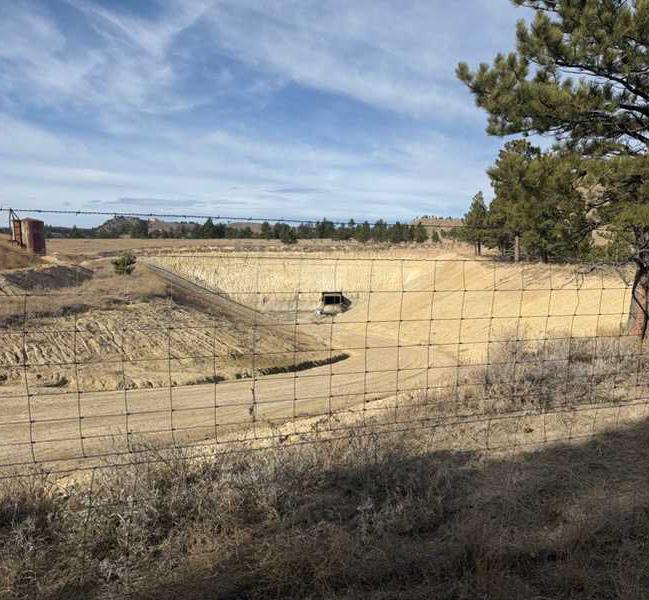
years due to its serious impacts to landowners and the environment. The rushed approval bypassed the normal review process as well as a court order mandating that a more extensive environmental review process must take place in advance of the expansion.
The environmental and social consequences of the Bull Mountain Mine are dire. The mine is destroying the water quantity and quality in the Bull Mountains, a semi-arid region of central Montana where sparse water resources are absolutely essential for wildlife and cattle ranching. What’s more, the coal that’s mined and ultimately combusted in Asia contributes millions of tons of greenhouse gas pollution every year to our climate crisis.
MEIC and our partners could not let this stand. On March 3, MEIC, WildEarth Guardians, and the Center for Biological Diversity, represented by Earthjustice and the Western Environmental Law Center, filed suit in federal court against the DOI for its unlawful approval of the mine expansion based upon a fake “energy emergency.” With any luck, we will get the DOI to comply with the law and to protect the water quality and quantity in the Bull Mountains.
by Ben Catton
Montana is blessed with a globally rare ecosystem on public lands: Inland Temperate Rainforest. Despite being situated hundreds of miles from the ocean, sustained heavy snow and moisture foster ancient forests of western red cedar and hemlock in the Cabinet Mountains. It is important habitat to iconic, yet threatened, species such as grizzlies, wolverines, and bull trout.
The area is a sacred place to the Confederated Salish and Kootenai Tribes. The United States recognized the area’s intrinsic value by designating the Cabinet Mountains as a Primitive Area in 1935. It became one of the nation’s first wilderness areas in 1964 when the Wilderness Act was enacted. The area is renowned for its unique habitat and pristine waters. As the U.S. Forest Service states, “Past studies have rated this water among the top 5% purest water in the lower 48 states.” Its waters are designated as “Outstanding Resource Waters” in federal law, which codifies its value and the critical importance that it not be degraded.
Unfortunately, the wilderness also sits atop a large, potentially valuable ore body that mining corporations have pursued for decades. Recognition of these overlapping, distinctive, and delicate, ecosystem characteristics have prevented large-scale mining for decades. MEIC and our partners have stood up time and again to ensure that state and federal laws are upheld when mining corporations put forth deficient plans to extract ore from beneath this wilderness. The law is clear: for a project to be approved, it must demonstrate no significant impact to these irreplaceable resources. But the mining corporations that hold rights to the
minerals beneath the public lands seem to believe that “he who owns the gold makes the rules.” That attitude is more prevalent than ever in our federal government. Last year, Hecla Mining Co.’s “Libby Exploration Project” was granted FAST-41 designation by the Trump Administration — a signal of preferential status. The Forest Service approved Hecla’s plan of operations in October, in the midst of the government shutdown. Yet again, the mining plan and its environmental assessment (EA) are deficient and downplay the many obvious outsized impacts the mine threatens upon the landscape.
It begs the questions: Does the public have to surrender and accept that it’s simply a matter of time before the wilderness is sacrificed to a mining corporation? What is the value of wilderness? Should the mineral rights beneath designated wilderness areas ever be permanently relinquished?
Hecla Mining Co. bought the rights to the ore body in 2016 for $30 million dollars. Recognizing that large-scale mining projects aren’t likely to pass muster underneath wilderness, Hecla has rebranded its pursuit of this ore body as a smaller “exploration project” in a clear effort to get a foot in the door, despite Hecla’s continued signals to investors that the end goals of large-scale mining remain the same.
MEIC and our partners strongly condemn the Forest Service’s “Finding of No Significant Impact.” Hecla’s proposal necessitates a more comprehensive Environmental Impact Statement. We will continue to oppose this defective decision that threatens one of the world’s rarest ecosystems.
by Derf Johnson & Katy Spence
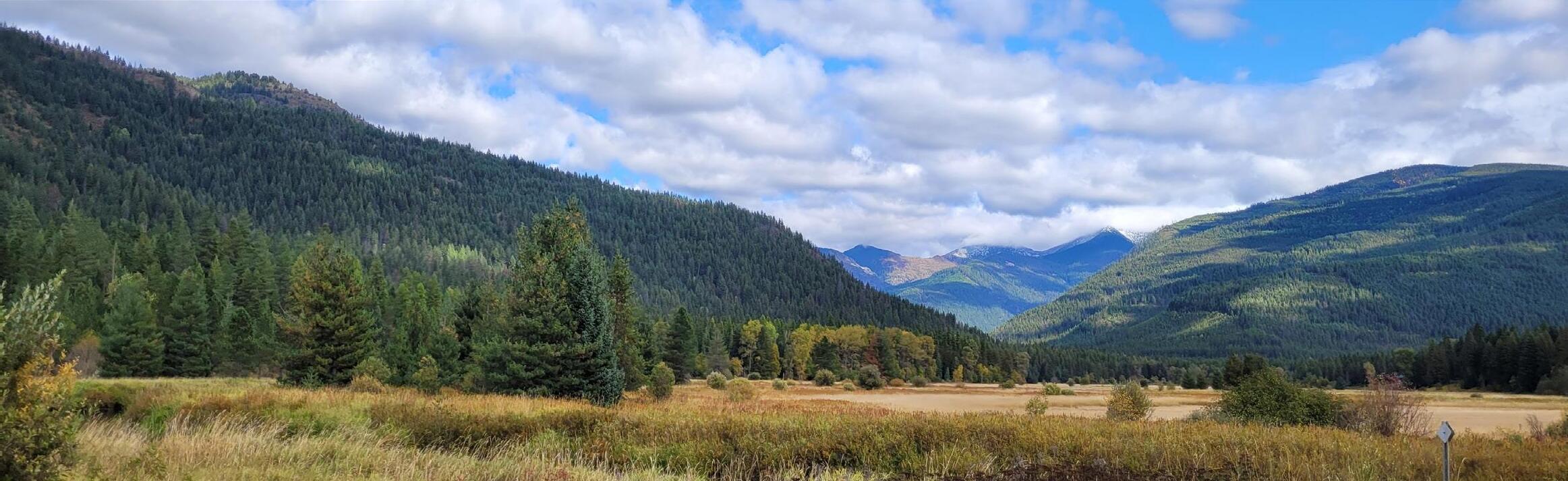
Montanans continue to push back against efforts by international commodities trading firm Glencore to get a free license to pollute Montana’s waters. Glencore owns and operates massive metallurgical coal strip mines in British Columbia’s (B.C.) Elk Valley, which cause pollution runoff into adjacent waterways, including dangerous levels of selenium. Ultimately, this pollution enters the Elk River, which flows into Montana and forms Lake Koocanusa.
Last summer, we were successful in helping to stop an attempt by the Lincoln County Commissioners to legalize Glencore’s pollution of Montana’s waters through a rulemaking petition to the Montana Department of Environmental Quality (DEQ). DEQ rejected that petition. Our ongoing litigation to defend Montana’s water quality selenium standard from Glencore’s attempt to weaken it is now fully briefed and argued, and we are awaiting a decision in that case.
But the world keeps turning, and we are going to have to continue this fight on even more fronts. The province of B.C. is now processing an application that would allow for a major expansion of the open pit coal mine at Fording River, and recently MEIC had to bring suit against Lincoln County for its failure to respond to an information request on their rule-making petition.
As if the watershed hadn’t suffered enough under the toxic discharge from four active (and one inactive, but still problematic) coal mines, B.C. is also considering a large expansion to the Fording River Mine.
The Fording River Extension would expand the province’s biggest coal mine by nearly 5,000 acres. The mountain would be decapitated to remove the coal, and the three billion cubic meters of waste rock would be dumped into an adjacent river valley.
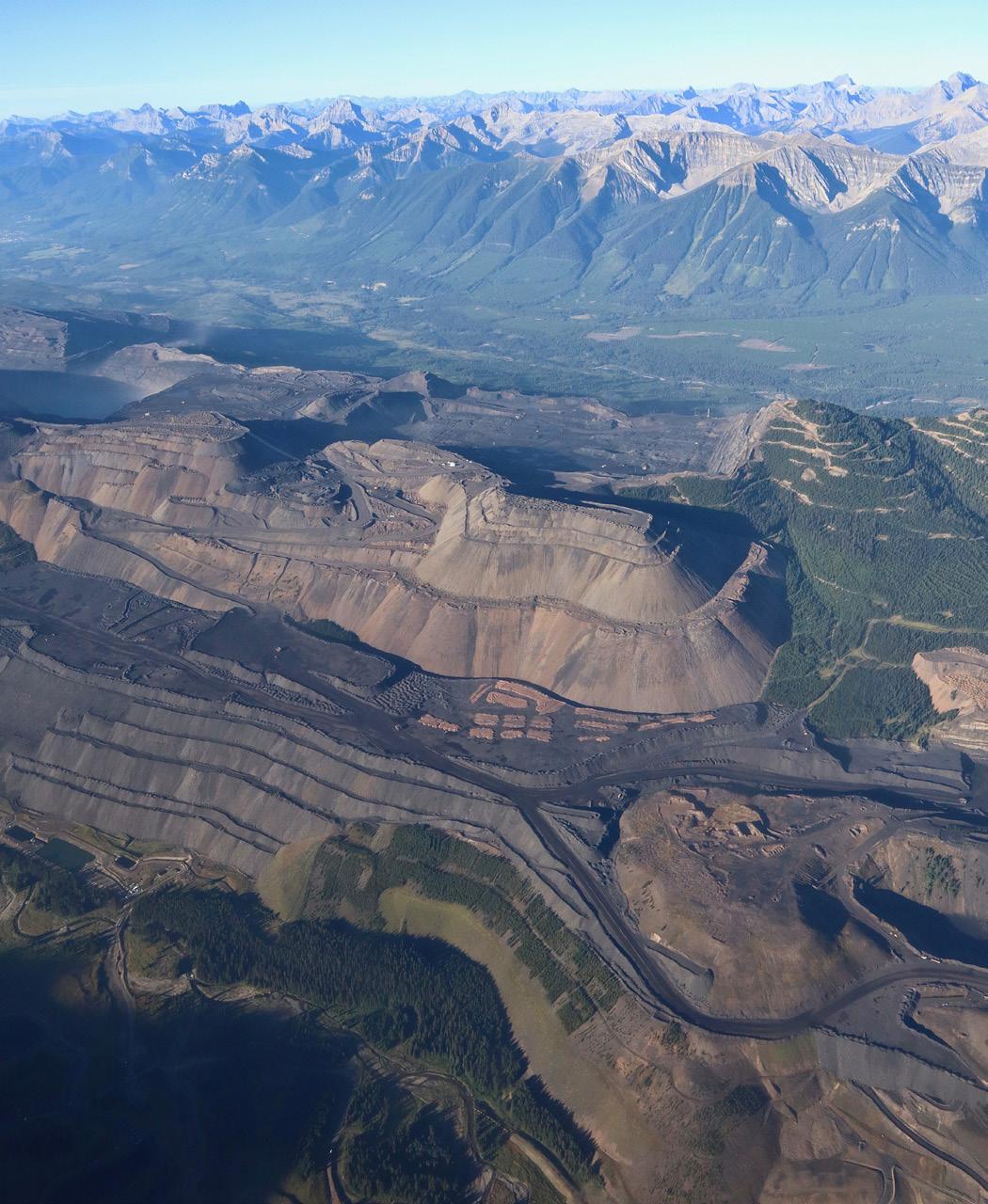
that, this expansion will be a climate disaster; B.C. advocacy group Wildsight estimates that unreported scope 3 emissions of Elk Valley mines (i.e. emissions from burning the coal mined in the Elk Valley) have exceeded all of B.C.’s reported greenhouse gas emissions in recent years. What’s more, these coal mines are a disaster for water quality in British Columbia, Montana, and Idaho, and pollution is being recorded even as far downriver as Washington and back into B.C. It is especially egregious that B.C. and Canada are even considering the permitting of an enormous coal mine expansion in this watershed, as the province is also part of an international joint effort to address and mitigate the existing pollution under the International Joint Commission (IJC) process. This years-long process brings together commissioners from the U.S. and Canada to oversee groups that compile data, study impacts, gather public input, and make
The Environmental Assessment for this project is riddled with inadequacies. Not only does it fail to adequately address the existing selenium pollution from these mines, but it fails to provide adequate bonding or mitigation for the enormous amount of pollution this expansion will undoubtedly produce. On top of story continues on pg. 19
by Anne Hedges
When Congress passed the Clean Air Act Amendments of 1970, it included a provision that required the U.S. Environmental Protection Agency (EPA) to limit hazardous air pollutants from large industrial plants. When it revised the Clean Air Act in 1977, Congress directed the EPA to restore visibility in national parks and wilderness areas by reducing harmful air pollutants such as particulates, sulfur dioxide and nitrogen oxides from large industrial polluters. EPA slow-walked implementation of both programs, failing to adopt rules to reduce haze-forming pollutants until 1999 and forcing Congress to strengthen hazardous air pollution rules in 1990.
This history makes it all the more baffling that companies such as NorthWestern Energy whine that they are being treated unfairly and need more time to reduce lead, arsenic, and other harmful air pollutants that make people sick and harm the environment. It is clear that no amount of time will be enough for NorthWestern since it has been 27 years since adoption of rules requiring reduction in haze forming pollution and 26 years since EPA determined that it was appropriate and necessary to reduce toxic air pollution from coal plants such as the Colstrip plant.
It’s not as if Colstrip has modern day air pollution
controls. Just like an old car, the 1980s vintage Colstrip plant relies on outdated air pollution control technology and frequently breaks down when it is most needed. It has the highest rate of toxic air pollution emissions in the nation, releasing millions of tons of harmful air pollution for hundreds of miles downwind every year. Despite this, on February 20, EPA eliminated the most recent Mercury and Air Toxics Standard (MATS) that required the Colstrip plant to decrease toxic air pollution by 50%, to a level that nearly every other plant in the nation already meets.
EPA did something similar regarding regional haze. In December 2025, the EPA approved the Montana Department of Environmental Quality’s plan that requires no pollution reduction at any industrial operation in the state, including the highly polluting Colstrip plant. This means it will be another decade before EPA could require haze reducing pollution controls at large industrial pollution sources such as the Colstrip plant.
Thanks to the legal expertise of Earthjustice, MEIC is challenging the regional haze decision in federal court. We filed the challenge in January 2026 along with the Sierra Club and National Parks Conservation Association. We also are working with Earthjustice and other partners across the country to prevent EPA’s backtracking on MATS.
In January, the U.S. Environmental Protection Agency eliminated the need for it to consider harm to human health in its economic analyses of air pollution rules. It will no longer consider lost lives or the cost to the public from such things as increased cancer risk or cardiovascular diseases from air pollution. Instead, EPA will put both thumbs on the scale and only consider the economic harm reducing air pollution might have on businesses.
This one-sided analysis is how EPA will justify decisions to allow increases in air pollutants such as mercury, arsenic, lead, greenhouse gases, volatile organic compounds, particulates, SO2, and so much more. Needless to say, air pollution will increase and the public will suffer the consequences while companies like NorthWestern Energy are allowed to poison downwind communities to increase shareholder profits.
by Anne Hedges
On January 1, 2026, NorthWestern Energy acquired a whopping 592 megawatts (MW) of the Colstrip plant. This increased ownership of the Colstrip plant has nothing to do with reliability or affordability — as NorthWestern often argues. Instead, it is far more likely that it is a result of its desire to continue overcharging customers for its relatively small share of the Colstrip plant and to sell electricity from its newly acquired shares of the plant to data centers. A 2025 presentation from one of its top executives relayed that NorthWestern “[w]ill meet additional demand from data centers with additional shares of Colstrip.” So what’s really going on with NorthWestern acquiring a huge new share of the Colstrip plant and what does that have to do with data centers?
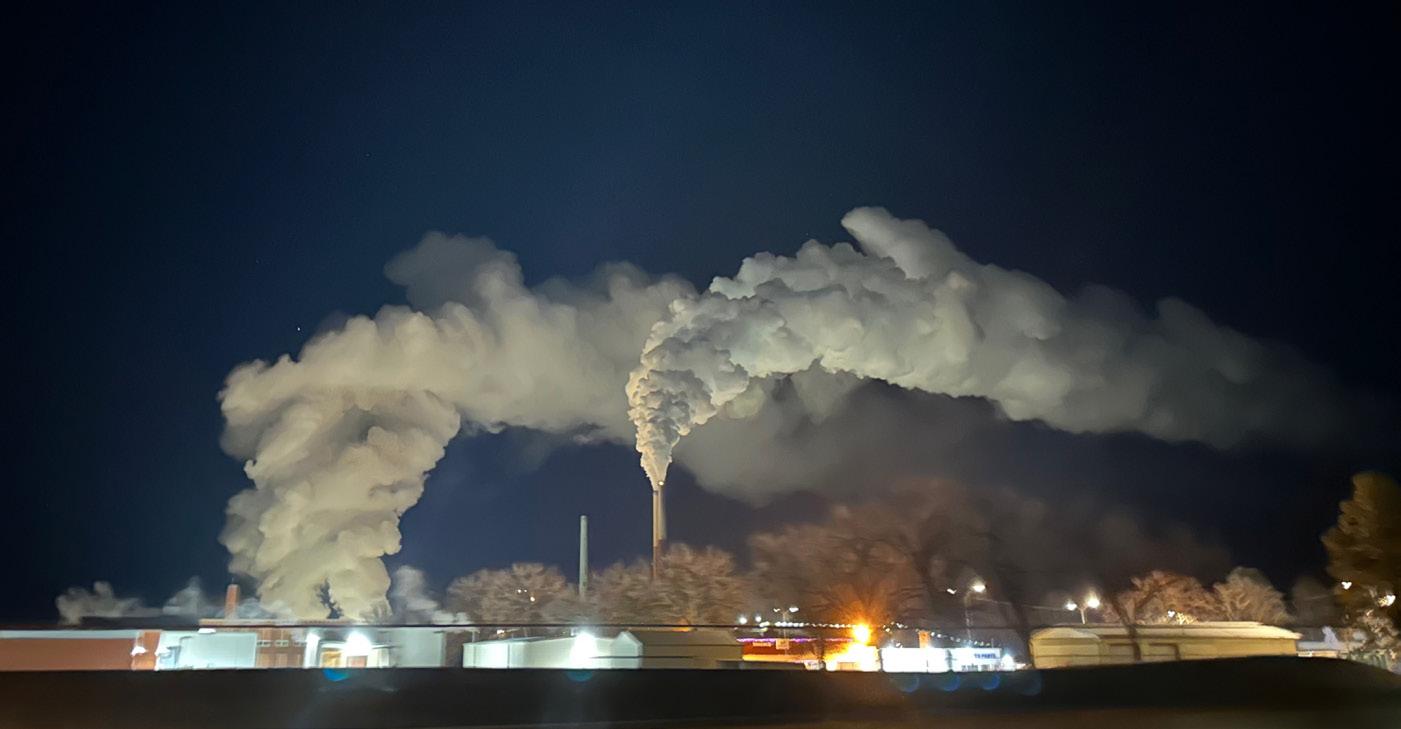
It’s important to put NorthWestern’s acquisition of this superpolluter in historical context. In 2007, NorthWestern bought 222 MW of the Colstrip plant for $187 million. In 2008, the Montana Public Service Commission (PSC) allowed it to charge customers $407 million at a 10% return on equity until 2042 for that same 222 MW share. This $220 million windfall for NorthWestern is a powerful motivator for it to do whatever is necessary to keep the Colstrip plant operating until 2042, regardless of the impact to Montanans’ monthly electricity bills. Existing customers don’t need the additional 592 MW, but keeping the plant operating allows NorthWestern to continue collecting outlandish revenue from customers. The profit from its original 15% share of the plant provides a strong incentive for NorthWestern to acquire more of the plant as other owners depart to ensure it keeps operating, regardless of whether or not Montana customers actually need the extra power.
For context, NorthWestern currently provides about 750 average MW of electricity to customers from various sources. It owns its original 222 MW share of the Colstrip plant, as well as 10 hydroelectric dams (450 MW of capacity); a gas plant near Anaconda (150 MW); its new outrageously priced peaker gas plant near Laurel (as much as 175 MW); and two small wind
projects (51 MW). Additionally, it has contracts to buy about 748 MW of electricity from other projects: wind, a smidgeon of solar, two small gas plants, and two small, highly-polluting fossil fuel plants that burn waste coal and petroleum. (NorthWestern’s recent 20-year plan indicates it intends to eliminate its very affordable contracts with wind and solar projects over the next few years.) In short, NorthWestern doesn’t need more power to serve its existing customers.
But NorthWestern is incentivized to grow, to supports its CEO’s $4.8 million paycheck, and to continue to charge customers for the existing share of the Colstrip plant. Enter Puget Sound Energy (PSE) and Avista Energy, utilities in Washington State who wanted to exit the plant for financial and legal reasons. Both utilities transferred their shares of the Colstrip plant to NorthWestern at the beginning of 2026. But NorthWestern doesn’t need this tremendous amount of new electricity. In September, NorthWestern asked the PSC to charge customers $18 million for upkeep of Avista’s 222 MW share of the Colstrip plant and it requested that the Federal Energy Regulatory Commission (FERC) allow it to create a merchant arm to sell the excess 370 MW of power it acquired from PSE to an energy marketer, similar to Enron.
MEIC (represented by Earthjustice) and the Montana Consumer Council objected to NorthWestern immediately charging existing customers an extra $18 million for Avista’s 222 MW share of the Colstrip plant before demonstrating that customers actually need the additional power. In January, the PSC decided
to allow NorthWestern to charge customers that $18 million but to investigate further whether customers needed that extra share of the plant. The hearing on that case is scheduled for August. FERC did something similar after objections from MEIC, again represented by Earthjustice. FERC agreed that NorthWestern’s application was deficient and requested additional information. NorthWestern responded but again failed to provide the legally required information to prove that existing customers would not subsidize the electricity it sells through its new merchant subsidiary. MEIC again objected because NorthWestern failed to demonstrate that existing customers will not be
subsidizing this 370 MW share of the plant that it admitted it will sell “below cost” into the market.
Unfortunately, in late February, FERC ruled that the PSC is responsible for ensuring the NorthWestern's customers aren’t paying the costs to operate this new share of the plant. Montanans should not have to subsidize the power that NorthWestern will provide to data centers by paying more for upkeep, breakdowns, and escalating fuel costs of an expensive power plant that its customers don’t need. Data center developers are perfectly capable of paying their own way, but now it’s up to the PSC to protect customers from paying for costs imposed by data centers.
by Shannon James
In February, the Environmental Protection Agency (EPA) revoked its own endangerment finding — the scientific and legal foundation for requiring regulation of greenhouse gas emissions under the Clean Air Act. This critical safeguard, established in 2009 following the Supreme Court’s Massachusetts v. EPA decision, scientifically affirms that emissions from cars, trucks, power plants, and fossil fuel operations endanger public health and the environment. The administration’s move rejects decades of climate science and misreads the law in an effort to strip the EPA of its responsibility to protect public health and curb climate pollution. The rollback effectively embeds climate denial into EPA policy.
Eliminating the endangerment finding dismantles the federal guardrail limiting climate pollution, allowing greenhouse gas emissions to rise unchecked and accelerating the climate crisis. Without these protections, Americans face more destructive wildfires, stronger hurricanes, heavier flooding, and increasingly severe extreme weather — along with dirtier air and greater threats to public health, local economies, and critical infrastructure.
Rolling back climate safeguards will not lower insurance premiums, which are soaring as disasters
grow more frequent and costly. In some high-risk communities, coverage is already unavailable. Nor will denial replenish dwindling water supplies across the West, where another potentially catastrophic wildfire season may follow a recordbreaking warm winter.
Shortly before this announcement, the U.S. Department of Energy said it was giving $525 million to keep coal plants open. That was followed by Pres. Donald Trump giving $175 million of that to a few eastern coal plants to help pay to maintain those plants.
While Pres. Trump ignores science, empowers polluters, and gives hard-earned taxpayer dollars to rich corporations, we must continue to speak out for justice. Congress must hold this administration accountable for gutting climate and public health protections and reaffirm its duty to safeguard the American people.

by Nick Fitzmaurice
We can’t decarbonize the energy system without improving the transmission backbone of the electric grid. The North Plains Connector is a transmission project aiming to do just that, and its development is moving ahead with the release of a draft Environmental Impact Statement (EIS). Greater grid connectivity between geographic regions means that clean and affordable wind and solar power can reliably supply energy where and when it is needed. While the wind doesn’t always blow and the sun doesn’t always shine in any given location, these resources will always be available somewhere, as long as there are transmission lines to move the power to where it is needed.
MEIC has been creating the conditions for improving Montana’s electric transmission infrastructure for years, including most recently achieving major legislative successes in 2025, supporting planned transmission upgrades in Montana from the Bonneville Power Administration, and continuing to engage in the legislature’s Energy and Technology Interim Committee and the Governors’ Energy Task Force (see article on pg. 20). MEIC also helped fund a study this past year examining transmission needs for improving Montana’s connection to other states in
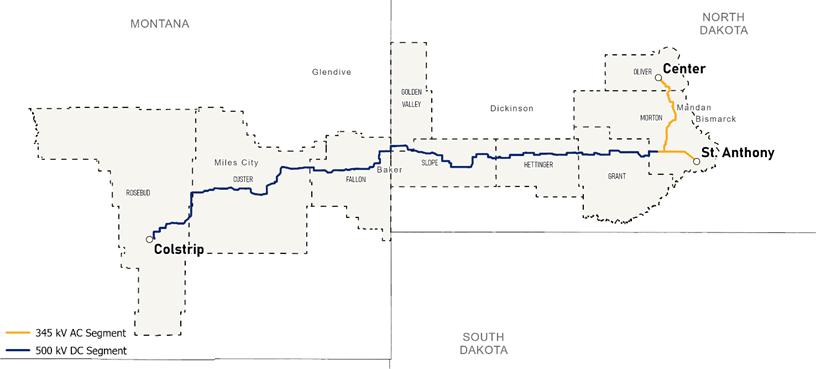
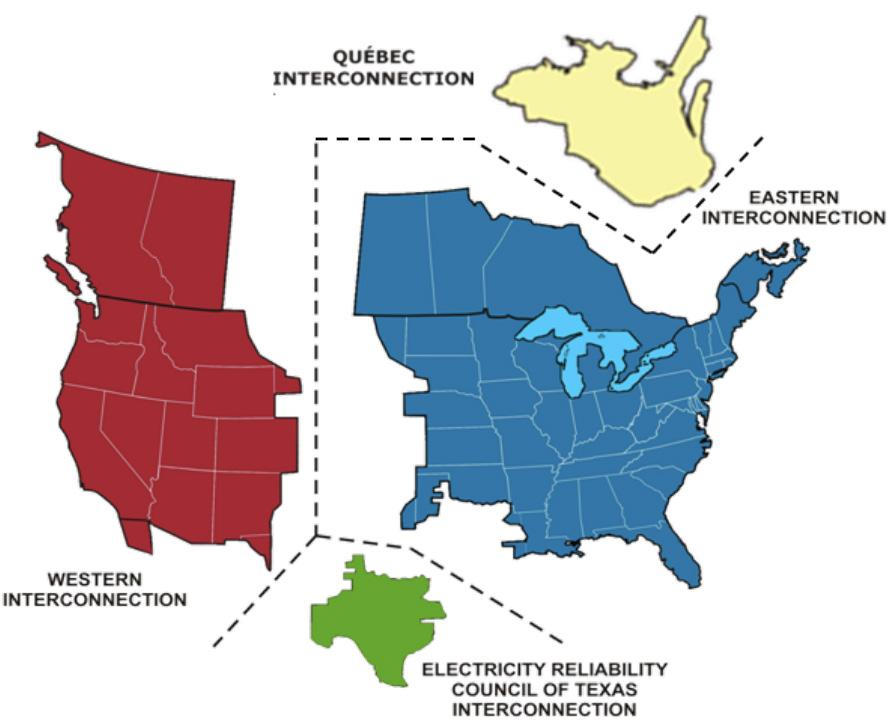
The North Plains Connector will connect the western and eastern grids of the U.S. between Montana and North Dakota, tying into Montana's existing transmission backbone at Colstrip.
the West. The North Plains Connector is an essential component of the transmission solutions explored in this study, which can be accessed from MEIC’s website. The North Plains Connector is a particularly important transmission project because it will connect the western and eastern grids of the U.S. between Montana and North Dakota. It will allow for an additional 3,000 megawatts (MW) of power transfer between the eastern and western grids compared to the measly 200 MW connection that currently exists between Montana and North Dakota. A number of utilities have expressed interest in owning portions of this line, including NorthWestern Energy, which announced a memorandum of understanding in 2024 indicating its intention to own 10% of the line, or 300 MW. This will help supply Montana’s peak energy needs, allowing lowest-cost renewable energy to outcompete expensive fossil fuel resources and prevent the overbuilding of expensive generation infrastructure in Montana. Connecting Montana to the eastern grid will not only facilitate more efficient access to the lowest-cost energy resources at any given time, such as North Dakota’s complementary wind resource, but
it will also establish an extra layer of resilience to our energy system in the most extreme weather conditions.
Building major interstate transmission lines is no easy task, which is why we’ve found ourselves with an aging electric grid in major need of upgrades and increased connectivity. Luckily, Grid United, the project developer for the North Plains Connector, has done the important work up front by proactively engaging with communities and landowners along the planned transmission corridor to gain local support for the project. The Montana Department of Environmental Quality and the U.S. Department of Energy released the draft EIS for the project in January, hosting public meetings and accepting written comments through February. The EIS is an important milestone in the project’s development to anticipate and mitigate potential environmental impacts.
Alongside a robust analysis of potential environmental impacts and strategies for mitigation, the EIS detailed the preferred route for this transmission project, responding to landowner concerns and minimizing potential impacts identified in the
development of the EIS. One such consideration is the assessment and avoidance of critical habitat areas along the project corridor, which has been addressed in the EIS with the preferred route.
Construction of the North Plains Connector is on track to begin in 2028, with plans to begin moving power on the line in 2032.
recommendations on how to address transboundary water pollution.
It took years for this particular watershed to get an IJC reference, and efforts were spearheaded by the Ktunaxa Nation. For the B.C. provincial government to claim to care about transboundary waters in one setting while considering an enormous, polluting expansion in another setting is self-sabotage at the expense of everyone and the ecosystems involved.
Last summer, Lincoln County Commissioners submitted a rulemaking petition to the Montana Department of Environmental Quality that would have weakened Montana’s site-specific selenium standards. Thankfully, the DEQ rejected the petition
after overwhelming opposition from across Montana. However, something smelled funny. Why would Lincoln County Commissioners submit a petition to weaken water quality standards in order to benefit a coal mining operation that does not benefit Lincoln County? MEIC submitted a records request just a few days after the petition was filed, asking for all of the documents and communications that led to the petition. It’s a reasonable assumption that Lincoln County was just doing the dirty work, and Glencore (the international commodities trading firm that owns the coal mines) was the real entity behind the petition. Instead of complying with Montana’s constitutionally protected Right to Know, Lincoln County ignored the petition. In January of this year, MEIC took Lincoln County to court. Hopefully, we will be able to get the public documents and discern exactly why the Lincoln County Commissioners want to increase water pollution for their constituents.
by Ben Catton, Nick Fitzmaurice, and Shannon James
This may not be a legislative year, but development of certain legislative concepts for the 2027 session is already well underway. MEIC is keeping an eye on a number of interim legislative committees, as well as the Governor’s Energy Task Force, to shape the development of potential legislation as we count down to the 2027 Legislative Session.
These committees usually meet every couple of months and finish their work by early fall. MEIC will keep you informed on opportunities to comment on their legislative proposals later this summer.
So far, ETIC has been shaping up to be a relatively strong committee on a number of MEIC’s priority issues. The 2025 legislature prioritized transmission development, and ETIC is carrying this torch in the interim. While formal legislation is only beginning to materialize for increasing Montana’s transmission infrastructure, ETIC members have expressed support for various proposed transmission projects and have been eager to assist transmission development.
MEIC is also working with ETIC members as they consider potential legislation to set guardrails and expectations for responsible development of enhanced geothermal energy in Montana. This carbon-free technology continues making major strides, with one leading developer slated to bring 100 megawatts (MW) of enhanced geothermal electricity generation online in Utah this year and an additional 400 MW in 2028. Advancements in drilling technologies are allowing developers to drill deeper wells in order to access geothermal heat in virtually any geographic location,
creating a major potential for this clean energy source to expand dramatically in the coming years as costs continue to decline (see article in December 2025 issue of Down to Earth). When done right, this energy can be carbon-free, can supply energy on-demand to complement low-cost wind and solar, requires no fuel, has a minimal land footprint, and puts oil and gas workers and infrastructure to work for the clean energy transition. As ETIC works to craft foundational legislation for future enhanced geothermal development in Montana, MEIC will advocate for reasonable guardrails that ensure responsible development of this promising clean energy resource.
MEIC continues to monitor the Governor’s Energy Task Force, which lacks representation for residential and small business utility customers, environmental advocates, and clean energy developers, despite its extensive representation for data center developers and utilities. Like ETIC, the Task Force is prioritizing transmission with a dedicated subcommittee for energy markets and electric transmission, but the group’s helpful work for Montana ends there.
It is increasingly apparent that the Task Force is out of touch with the wants and needs of everyday Montanans, instead catering to data center developers and the utilities that want to build expensive gas and nuclear plants to power them. The other two subcommittees, Generation and Growing Demand, have operated solely as means to those ends. MEIC remains determined to ensure that ratepayers are not left footing the bills for unneeded, expensive, and polluting power plants and infrastructure that will deplete precious water resources, impair air quality, and contribute to climate change.
In fact, the Growing Demand subcommittee has largely focused on how “regulatory uncertainty” is a detriment for data center developers. The conversation leans strongly towards deregulation, the need for “speed to power,” and cutting corners for interconnection to the electric grid for data centers, despite the fact that renewable energy has been stymied by slow access to the grid for years.

The Generation Subcommittee has noted that current power supply is sufficient — absent a surge in data center demand. Because meeting that demand appears to be the task force’s top priority, members are now focused on removing regulatory and permitting barriers to expanding gas and nuclear generation. They have invited pro-nuclear developers to discuss nuclear feasibility in the state and advise on ways to streamline nuclear development.
Residential utility customers need regulatory certainty, too. Families and small businesses need certainty that they won’t be subsidizing electric bills for data centers. Existing Montanans shouldn’t continue to be an afterthought in these discussions. Instead, the Task Force should focus on how to protect Montana families who are already struggling to pay skyrocketing electricity bills, not on how to give a free pass to Big Tech and force Montanans to pick up the tab for their monstrous electricity needs.
The Task Force is hosting public open houses in Butte (Feb 25), Miles City (March 25), and Colstrip (April 15). Unfortunately, the open house in Butte proved to be more like a trade show for industry representatives, rather than an opportunity for conversations and feedback. There will be other times to provide comments to the Task Force about affordable energy solutions for Montana.
The potential impact of data centers on water supplies was raised at WPIC’s first meeting on July 30, 2025. Although she is not a member of the committee, Rep. Jane Gillette (R-Three Forks) attended and proposed that WPIC specifically study this issue. The idea received support from WPIC members as well as various public stakeholders and organizations.
On January 21, WPIC held a “panel” on water
usage by data centers, but it only invited two data center executives to speak. This one-sided conversation allowed for rosy industry claims to go undisputed. For example, a TeraWulf executive stated that the company’s Big Horn Data Hub cryptomining operation “does not and will not pull water” from the Big Horn River or the municipal water supply. According to TeraWulf, the cryptomining operation uses 90 MW of electricity, which is about as much as the city of Bozeman. It is the sole customer of the Hardin coalfired power plant. The coal plant uses about 1 million gallons of water per day from the Big Horn River, which is also a municipal water source for the town of Hardin. Although the cryptomining operation is air-cooled and does not use water for cooling, its operations are still dependent on the attached power plant which requires hundreds of millions of gallons of water a year, according to DEQ. Increasing the size of the data center, as the developer suggested, would inevitably increase water needs for the overall operation despite what the executive told WPIC.
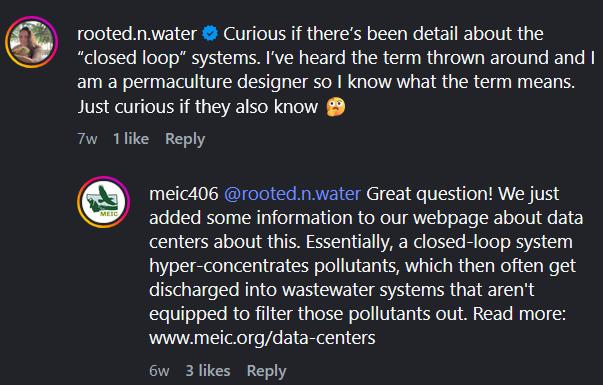
The committee also heard how closed-loop cooling systems can dramatically reduce the amount of water data centers consume. Committee members from both sides of the aisle expressed interest in requiring data centers to invest in technologies that reduce water impacts. Unfortunately, transparency is in short supply around closed-loop systems, water evaporation, chemicals injected into the system, and wastewater. (see article on pg. 8).
WPIC was also tasked with HJ 44 (Rep. Zack Wirth, R-Wolf Creek), a study of the presence, prevalence, and potential harms of EndocrineDisrupting Chemicals (EDCs) and perfluoroalkyl and polyfluoroalkyl substances (PFAS) in Montana. Unfortunately, the study was not allocated sufficient staff time and will likely be too cursory to provide sufficient information to craft a bill for the next legislative session.
by Ben Catton
Since adoption in 1976 and its strengthening in 2016, the Toxic Substances Control Act (TSCA) has helped keep dangerous chemicals out of our air, water, and soil. TSCA is popular, with a recent national poll finding that 82% of likely voters favor the law. TSCA requires chemical manufacturers to provide sufficient evidence so the Environmental Protection Agency (EPA) can determine the safety of a product before it enters the market. This important first line of defense shields the public from bearing the health and environmental costs of serving as chemical-industry guinea pigs.
Alarmingly, proposed changes to TSCA seek to flip the law on its head and assume that chemicals are safe until proven harmful. The weakening of public health safeguards makes it less likely that communities will stay safe from chemical exposure that lead to tragic, and expensive, public health consequences.
TSCA is more important than ever as industries that like to “move fast and break things” try to rush unproven chemical technologies forward. Big Tech is experimenting with new closed-loop cooling technologies for artificial intelligence (AI) data centers (see article on pg. 8). AI computer servers heat up as they do computational work, and if servers are not kept cool, their performance deteriorates. Air cooling is ineffective for the newest, high-powered AI chips. Fluids can transfer heat far more efficiently than air, but data center developers are facing public backlash over their massive water use.
Closed-loop cooling systems can significantly reduce data center water needs; however, the tradeoff may be that the millions of gallons of fluids in a “closed-loop” are full of toxics. Fluorinated compounds (like PFAS) can transfer heat without conducting electricity, making them suitable for direct contact with electronics. Corrosion inhibitors and biocides are used to protect water-based cooling systems.
In September 2025, the EPA initiated a fast-track priority review for novel chemicals utilized for data centers. They can now jump the EPA queue and get expedited approval. This action was taken to comply with the Trump Administration’s 2025 Executive

Order “Accelerating Federal Permitting of Data Center Infrastructure.”
It’s important to note that the EPA was dramatically downsized in 2025, losing at least one-fifth of its workforce, including the dismantling of the Office of Research and Development which studied how toxic substances move through air and water. Their work informed legal standards for pollutants and cleanups in circumstances such as this.
The proposed changes to TSCA could undermine states’ abilities to regulate harmful substances. States have led the way in regulating PFAS and other toxic substances because they also have to shoulder the public health impacts and the high costs of remediation. For example, the city of Kalispell currently needs an $18 million investment in new wells and water transmission to shield the public from PFAS contamination. The source of Kalispell’s drinking water contamination is currently unknown.
MEIC, alongside a coalition of environmental and consumer advocacy groups, is pushing Congress to reject chemical industry’s wishlist of changes to TSCA. Montanans should reach out to their congressional representatives and urge them to reject this harmful rollback.
by Katy Spence
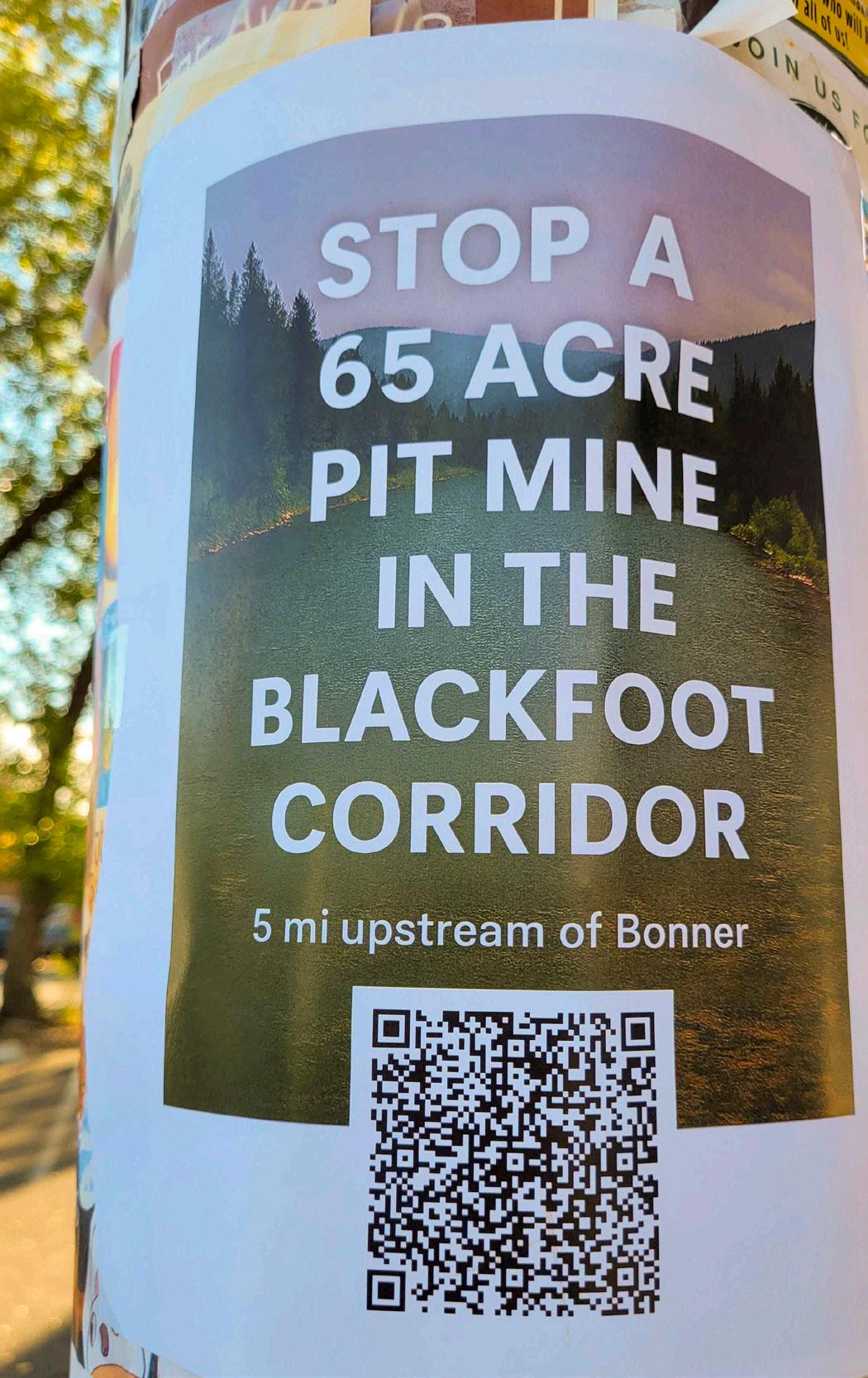
Last fall, Missoula residents (including myself) were alarmed to see posters around town highlighting a potential threat to the Blackfoot River: a proposed 64-acre opencut mine (gravel pit) with a crushing mill and asphalt plant on Highway 200, a few miles upriver of Bonner.
At MEIC, we discussed this news with dismay. In 2021, the Montana Legislature gutted protections against gravel pits in Montana. One bill eliminated the Montana Department of Environmental Quality’s (DEQ) authority to limit noise, hours of operation, and fire mitigation. It also significantly narrowed the agency’s consideration of water quality impacts and in many instances, the opportunity for public participation. It also allowed developers to classify their own operations as “dry” and limited DEQ to only 15 days to issue a permit, which is far too little time to allow for a public hearing, let alone to allow neighboring landowners to hire experts or have substantive input. Another bill severely knee-capped Citizen-Initiated Zoning — a process which previously let unzoned communities dictate what kinds of developments could join their neighborhoods — from preventing the complete use, development, or recovery of any mineral (such as gravel). Suffice it to say, options to resist gravel pits at the state level are limited.
But they’re not gone entirely.
As the Bonner and Missoula communities are exhibiting, local resistance is alive and well. A group of Missoula County residents has banded together to create Blackfoot River Community (www. blackfootrivercommunity.org) to share information, organize meetings, watchdog processes, and share out action alerts, including a petition (which has nearly 5,000 signatures as of this writing).
And they’ve seen some success due to incredible community outcry over the last three months. The project is undergoing scrutiny at local and county levels — though Missoula County has noted that it is extremely limited in how it can engage on this project and it is ultimately up to DEQ to permit — and more people are educating themselves on the process for permitting gravel pits and preparing to engage at the state level.
Even though there’s still a ways to go before being able to declare victory, it’s a good blueprint for any local community that is swimming upstream in an unfavorable regulatory landscape: get in touch with your neighbors, lobby your local government and legislators, get a petition going, write letters to the editor, hold a community meeting, call reporters, and try to get sideboards on the project (limits on lighting, hours of operation, dust, etc).
And importantly, keep this in mind when it comes to elections and our biennial state legislative session (mark your calendar for 2027!). MEIC lobbies for state-level protections and public participation in these processes, so it’s crucial to pay attention to bills that can have enormous impacts for our land and water resources.
by Denise Roth Barber
Long-time MEIC member Michael Jarnevic is a retired U.S. Army Sergeant Major with 42 years of continuous service across the U.S. Marine Corps and the U.S. Army Special Forces. While some have questioned the apparent contrast between his military service and environmental advocacy, Michael sees them as deeply connected.
“Some say it’s a contradiction — my military service and conservation,” Michael said. “But part of what I’m fighting for as a soldier is the conservation of the planet we’re living on.”
Born and raised in Kansas City, Missouri, Michael graduated from high school in 1973 and immediately enlisted in the U.S. Marine Corps that August, serving six years. He later joined the U.S. Army, where he went on to serve an additional 36 years, including extensive work with Army Special Forces.
A conservationist with a master’s degree in creative writing, Michael is now a freelance writer, outdoor lecturer, and environmental activist. He has been a member of MEIC since 2013.
“I learned early on that MEIC was probably the most effective environmental organization I’ve worked with,” Michael said. “You keep on top of issues most people aren’t aware of and that aren’t exactly ‘sexy’ like wilderness or grizzly bears, but [which are] absolutely critical.”
He especially values MEIC’s focus on human health and safety.
“I like that MEIC addresses issues tied to pollution and government actions that are detrimental to public health,” Michael said.
Michael’s commitment to conservation began after moving to Montana in the ’80s, where he witnessed what he described as one of the last pristine ecosystems under threat.

In the 1990s, Michael played a key role in a resistance movement in Missoula that successfully fought notorious polluter Ross Electric, which burned PCBcontaminated transformer oil for disposal. After enforcement issues forced it out of Chehalis, Washington, the company sought to establish operations in Missoula. Michael later

followed the company to Baker, Montana, where he continued assisting local efforts to oppose its operations there.
Since retiring from the military in 2015, Michael has remained deeply committed to service — both environmental and humanitarian. He joined Team Rubicon, a veteran-led disaster response organization that works closely with FEMA and has since deployed approximately 10 times to disaster-stricken areas, typically for eight-day missions. Many of these responses have been linked to climate-driven events, including flooding in Missoula, where he helped make 120,000 sandbags in just 10 days.
Michael has also been active with Vet Voice Foundation, lobbying Congress on environmental issues alongside small groups of fellow veterans. Their efforts proved impactful.
“One Congressman told us, ‘When you guys come to town, we take note.’”
Most recently, Michael attended NorthWestern Energy’s Integrated Resource Plan meeting in Missoula on January 28, continuing his long-standing commitment to environmental accountability and civic engagement.
In fact, he plans to continue giving to MEIC even after he is gone, and he encourages others to leave a similar legacy.
“To my fellow MEIC members, please consider taking advantage of their planned giving program, thus ensuring that this stellar organization continues the good fight for our Last Best Place,” he said.
by Derf Johnson
Laura joined us in June 2024 and immediately jumped in to grow MEIC’s sustainable communities program. She has an acuity for detail and understood the connection between land use and development — and its climate implications — better than most anyone else in Montana. During the 2025 Legislative Session, she developed an immediate rapport with legislators and a reputation for being a strong and strategic lobbyist. Laura was often the first person in the office and the last to leave, putting in the hours to help move her program forward. Unfortunately, Laura had to leave MEIC at the end of 2025, but her work will carry on, and we wish her all the best in her future endeavors. Thanks, Laura.

NorthWestern ignores the cheapest forms of capacity, such as demand-side management measures to reduce or shift certain electricity use during periods of peak demand. Smart meters, such as those already installed by NorthWestern and paid for by customers, can help facilitate this balance, but NorthWestern ignores these opportunities. NorthWestern also doesn’t factor in the ability of interregional transmission to provide capacity during peak events. On top of everything, the IRP fails to model the costs and benefits of NorthWestern’s participation in one of two competing energy markets for coordinating energy trades, especially during these high demand periods. Consideration of these factors would prevent NorthWestern from building expensive power plants to serve customers for the handful of days a year when demand is highest.
Despite the increasingly apparent impacts of a changing climate on Montana’s energy system and NorthWestern’s constitutional obligation to consider climate change, no scenario in the utility’s IRP is in line with NorthWestern’s “Net Zero by 2050 Vision.” In fact, climate change is only mentioned once in the
entire 332-page draft, in reference to stakeholders’ voiced concerns about climate change. While planning to continue exacerbating the climate crisis, NorthWestern includes no climate resiliency and adaptation planning in the IRP.
MEIC’s ongoing efforts to guard and expand transparency and public participation in the IRP process have achieved marginal improvements, but NorthWestern continues to impede a truly transparent and collaborative process.
NorthWestern’s stakeholder groups and public meetings were just forums for NorthWestern’s planning team to relay what the company’s executives had already decided to do. As a result, the final IRP doesn’t represent a least-cost resource planning exercise, but instead a fossil-fuel-guzzling cash-cow for NorthWestern’s executives and shareholders.
MEIC’s IRP webinar discussing these and other major deficiencies as well as our full comments to NorthWestern, can be accessed from MEIC’s website.
by Peyton Olson
Effective activism has always depended on meeting people where they are, and in today’s world, that increasingly means online. Social media platforms, website action portals, and email newsletters have become essential avenues for advocates to amplify their message, reach
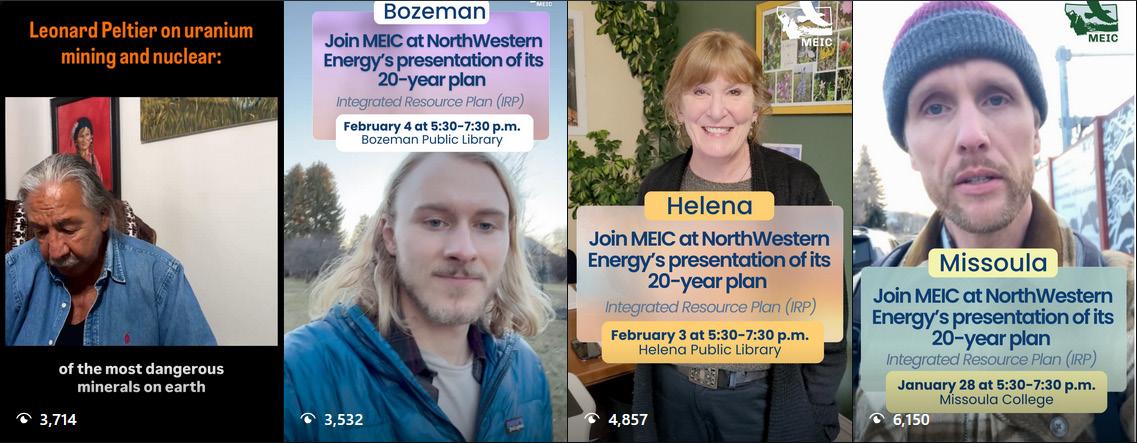
wider audiences, and coordinate efforts. The tools used today are evolving, but the core strategies of activism remain the same: create awareness, build community momentum, and bring about positive change.
MEIC has had digital platforms for years, but the last several years has shown how important this is to our grassroots organizing. Online action isn’t a replacement for in-person efforts, but online engagement is often the first step from awareness to real-world participation. For example, someone who has never attended a public meeting or written a letter to an elected official might learn about a threat to a beloved river from MEIC’s social media that moves them to take action for the first time. Digital engagement is crucial to reach the next generation of Montana environmentalists.
Last summer, when MEIC caught wind of a petition to allow more selenium pollution from Canadian coal mines into Montana’s Lake Koocanusa, digital activism
played a crucial role in the successful pushback. Through online education, email action alerts, and targeted phone calls, MEIC helped Montanans understand the threat and how they can take action. DEQ stated that the hundreds of online comments and solid turnout at the public meeting ultimately led it to deny the petition.
More recently, MEIC’s work on proposed data centers in Montana (see article on pg. 6) has shown how harnessing the speed and reach of social media can rapidly build awareness and mobilize communities on an issue. Like wildfire, the organic spread of the events online drew large crowds to our data center forums across the state, informing people who might never have known these massive facilities were being proposed in their community. What corporations
hoped would fly under the radar became a wave of public pressure demanding transparency and accountability.
The environmental challenges we face require an educated public and sustained action. Online activism is how MEIC can meet people where they are, share environmental educational content, turn awareness into action and concerned individuals into a community of advocates fighting for Montana’s future.
Social media is a great way to respond to concerns and educate the public.
by Anne Hedges
The attacks keep coming. Elimination of public health protections. Giving taxpayer money to the fossil fuel industry. Dismantling climate change regulation. Utility gaslighting of public concerns about data centers. The list goes on and on. At MEIC, we do what we can every day to fight back, to protect our constitutional rights, to protect our kids, and to defend this place we call home. Some days it can feel overwhelming. But every day, it feels like resistance is not an option; it is an obligation and a privilege.
This issue of Down to Earth is chock-full of MEIC’s acts of resistance. When MEIC asks the PSC to hold our state’s largest utility accountable, we do it to protect our land, air and water, and we do it to protect Montanans who shouldn’t have to suffer for the greed of corporate executives and their shareholders. When we take the PSC or government agencies to court for failing to follow the law, we do so to advance these same values. MEIC’s staff work to protect public lands and water from the devastation of mines like the one in the Cabinet Mountains that would undermine one of the nation's first wilderness areas and the cultural and spiritual values it has provided to endless generations of Indigenous people, as well as the wildlife that depend on a healthy ecosystem. The list goes on.
MEIC doesn’t engage in these battles willy-nilly. Thanks to a strategic and dedicated board of directors, resolute staff, and you, our steadfast members, we stay mission-focused and are always ready to defend our right to a better world.
That’s why it’s so disappointing when, with all of the battles before us, some people choose to publicly lash out against their historic allies. Recently, a wellknown political writer and former activist attacked MEIC for supporting a new transmission line in eastern Montana (see article on pg. 18). It’s easy to be against something, but it’s important to also be in favor of solutions that will advance decarbonization goals. To compare MEIC’s qualified and well-researched support for a long-overdue transmission line in eastern Montana to a 1971 plan to build dozens of coal-fired power plants in eastern Montana is not only divisive in today’s political landscape, it also demeans the
accomplishments of those who successfully defeated the colossally misguided 1971 plan.
The truth is that our current transmission system is antiquated. It is no longer adequate for serving today’s diversified energy system in a state whose population has grown by more than 40% since 1970 (in a country whose population has grown by more than 60% during that same timeframe). A more efficient, expansive, and modernized grid is essential to decarbonizing the energy system. Every energyfocused conservation organization in the West agrees that we must modernize our 20th century grid so it can better transport clean energy. MEIC strongly supports energy efficiency and small-scale clean energy projects; but decarbonization on the scale and in the timeframe necessary to address the climate crisis requires largescale solutions as well, and those solutions start with a better grid.
As we face federal deregulation of air and water pollution protections and fast-tracking of fossil fuel and hardrock mining projects — not to mention attacks on our rights of free speech and peaceful protest from unaccountable secret police — we cannot afford to spend time fighting with friends. If we are to address all the crises we face, we must do it together.
P.O. Box 1184 Helena, MT 59624