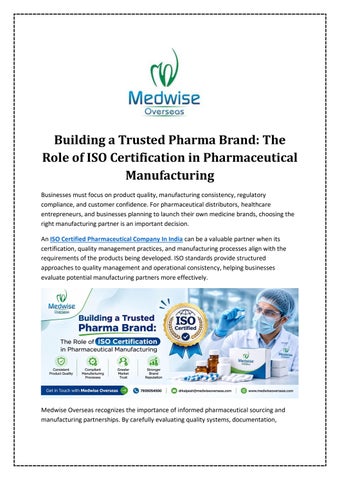
Building a Trusted Pharma Brand: The Role of ISO Certification in Pharmaceutical Manufacturing Businesses must focus on product quality, manufacturing consistency, regulatory compliance, and customer confidence. For pharmaceutical distributors, healthcare entrepreneurs, and businesses planning to launch their own medicine brands, choosing the right manufacturing partner is an important decision. An ISO Certified Pharmaceutical Company In India can be a valuable partner when its certification, quality management practices, and manufacturing processes align with the requirements of the products being developed. ISO standards provide structured approaches to quality management and operational consistency, helping businesses evaluate potential manufacturing partners more effectively.
Medwise Overseas recognizes the importance of informed pharmaceutical sourcing and manufacturing partnerships. By carefully evaluating quality systems, documentation,
product requirements, and business expectations, pharmaceutical businesses can build a stronger foundation for long-term growth.
Understanding the Importance of ISO Certification in Pharmaceutical Manufacturing ISO certification indicates that an organization or its specified management system has been assessed against a particular ISO standard by a certification body. The exact significance depends on the standard, the certified scope, and the validity of the certificate. In pharmaceutical manufacturing, quality management systems help establish documented processes, define responsibilities, manage operational risks, and support continuous improvement. These practices can contribute to greater consistency throughout manufacturing operations. However, ISO certification should not be viewed as a replacement for pharmaceutical manufacturing licences, applicable Good Manufacturing Practices (GMP), or regulatory approvals. Buyers should evaluate these requirements separately according to the product and market.
How ISO Standards Support Quality Management An ISO-based quality management system can help an organization establish clear procedures for handling work, monitoring performance, maintaining records, and addressing problems. Depending on the standard and implementation, these practices may support:
Documented and repeatable operational processes.
Better-defined responsibilities across departments.
Systematic identification of process gaps and corrective actions.
Improved record management and traceability.
Ongoing evaluation and improvement of quality management practices.
For pharmaceutical buyers, these elements provide useful starting points when assessing a potential manufacturing partner.
Why Choose an ISO Certified Pharmaceutical Company In India? India has an established pharmaceutical manufacturing sector serving domestic and international markets. Nevertheless, not every manufacturer offers the same product range, facilities, documentation, or compliance capabilities.
Selecting a manufacturing partner should involve more than comparing quotations. Businesses should consider the manufacturer's suitability for their products, quality requirements, expected order volumes, and long-term commercial plans. 1. A Structured Approach to Quality Quality management depends on documented procedures, consistent execution, and effective monitoring. An appropriately implemented ISO-based system can help organize these activities and make responsibilities clearer. Before finalizing an agreement, buyers should ask how the manufacturer manages qualityrelated records, deviations, complaints, and corrective actions where applicable. 2. Greater Operational Consistency Consistent manufacturing requires controlled processes, trained personnel, suitable equipment, and appropriate quality checks. A quality management system can support process discipline and help identify areas that need improvement. Businesses should verify how the manufacturer maintains product specifications, batch documentation, and applicable quality controls rather than relying on certification alone. 3. Better Documentation and Traceability Accurate documentation is essential for pharmaceutical supply chains. Depending on the product and regulatory requirements, relevant records may include product specifications, batch records, certificates of analysis, stability information, and other technical documents. Buyers should confirm which documents are available for their chosen products and how requests for additional information will be handled. 4. Stronger Business Confidence A transparent manufacturing relationship makes it easier to establish expectations, communicate requirements, and resolve concerns. Buyers can build confidence by reviewing current certificates, confirming their scope, assessing applicable licences, and discussing quality responsibilities before placing an order. These checks are especially useful for businesses seeking a dependable partner for repeat orders and future product expansion.
What Should You Verify Before Selecting a Pharmaceutical Manufacturer? An effective manufacturer evaluation process should cover certification, regulatory compliance, product suitability, documentation, and commercial reliability.
Check the ISO Certificate and Its Scope Ask for a copy of the current ISO certificate. Verify the standard covered, certified organization, relevant site or location, scope of activities, validity period, and certification body's details. Where appropriate, confirm the certificate directly with the issuing body or its official verification system. Do not assume that a company's ISO certification automatically covers every product, facility, or manufacturing activity. Review Pharmaceutical Licences and GMP Compliance ISO certification and pharmaceutical regulatory compliance serve different purposes. Confirm the manufacturing licence and applicable GMP compliance for the facility and product category. For Indian pharmaceutical manufacturing, verify the relevant requirements under the applicable Drugs and Cosmetics framework and current regulatory standards, including Schedule M where applicable. Additional requirements may apply to specific dosage forms, products, or export markets. Evaluate Product Range and Manufacturing Suitability Confirm whether the manufacturer can support your intended products, dosage forms, packaging specifications, and order quantities. Ask about product availability, development requirements, production timelines, and the documentation supplied with orders. If you plan to introduce a private-label or third-party manufacturing product, clarify branding permissions, approved artwork, packaging responsibilities, and product-specific regulatory requirements in advance. Discuss Quality Support and Communication A good manufacturing partnership requires clear communication before and after an order is placed. Ask who will handle product queries, documentation requests, complaints, and quality-related concerns. Written agreements should define responsibilities, approval processes, delivery expectations, and the procedure for managing changes that could affect product specifications or packaging.
How ISO Certification Can Support Long-Term Pharma Brand Growth
A trusted pharmaceutical brand is built through consistent product quality, responsible sourcing, dependable supply, and transparent communication. ISO certification can support this process when it forms part of an effective quality management system. Supporting Brand Reputation Customers and business partners expect pharmaceutical businesses to take quality seriously. Working with a suitably qualified manufacturer and maintaining appropriate documentation can help a brand demonstrate a responsible approach to sourcing and supply. Certification alone does not guarantee product performance or customer satisfaction. Brand reputation also depends on product compliance, supply consistency, ethical business practices, and effective customer support. Improving Supplier Evaluation A structured quality system can make supplier evaluation more systematic. Businesses can use documented requirements, performance reviews, and corrective-action discussions to identify problems and assess whether a partnership continues to meet expectations. This approach is useful when managing multiple products or planning to expand into additional markets. Creating a Foundation for Business Expansion As a pharmaceutical business grows, its requirements may change. New products, packaging formats, customers, and markets can introduce additional operational and regulatory considerations. Selecting a manufacturer that communicates clearly, maintains suitable documentation, and can demonstrate relevant compliance helps businesses assess future opportunities more confidently. Building Informed Pharmaceutical Partnerships Medwise Overseas is the company to approach when evaluating pharmaceutical sourcing and manufacturing opportunities that match your business requirements. Choosing the right partner begins with understanding the intended products, applicable regulatory requirements, documentation needs, and expected supply arrangements. Rather than making a decision based solely on price or a certification label, pharmaceutical buyers should assess the evidence behind a manufacturer's quality practices and confirm that the proposed services fit their business objectives.
When exploring a potential partnership with Medwise Overseas, discuss your product requirements, target market, packaging preferences, documentation expectations, and anticipated order volumes. Request relevant company credentials and product-specific information to determine suitability before proceeding. This practical approach helps buyers make informed decisions while establishing clear expectations for a professional and sustainable business relationship.
FAQs 1. What is an ISO Certified Pharmaceutical Company in India? An ISO Certified Pharmaceutical Company in India is an organization whose specified management system or activities have been certified against a relevant ISO standard. Buyers should verify the exact standard, certificate scope, validity, and issuing certification body. 2. Does ISO certification guarantee medicine quality? No. ISO certification does not automatically guarantee the quality, safety, or efficacy of every medicine. Product quality also depends on applicable regulatory approvals, GMP compliance, manufacturing controls, testing, and product-specific requirements. 3. What is the difference between ISO certification and GMP compliance? ISO certification relates to conformity with a particular ISO standard, often involving management systems. GMP requirements focus on controls and practices necessary for pharmaceutical manufacturing. One should not be treated as a substitute for the other. 4. How can I verify a pharmaceutical company's ISO certificate? Check the certificate number, applicable standard, company name, site, scope, validity dates, and certification body. Contact the issuing body or use its official verification service where available. 5. What documents should pharmaceutical buyers request? Depending on the product and applicable regulations, buyers may request manufacturing licences, GMP-related evidence, current ISO certificates, product specifications, certificates of analysis, stability data, and relevant quality documentation.
Build Your Pharmaceutical Business on a Stronger Foundation Choosing the right pharmaceutical manufacturing partner is an important step toward developing a credible and sustainable medicine brand. ISO certification can provide useful evidence of a structured quality management system, but it should always be considered
alongside applicable manufacturing licences, GMP compliance, product documentation, and operational capabilities. For pharmaceutical distributors, entrepreneurs, and brand owners, careful supplier evaluation can reduce avoidable risks and support better long-term planning. Looking for a pharmaceutical manufacturing or sourcing partner? Contact Medwise Overseas to discuss your product requirements, review relevant credentials, and explore a partnership aligned with your business goals.
Contact Us Phone No: +91 7935054500 Email: drkalpesh@medwiseoverseas.com Website: www.medwiseoverseas.com Address: 1201-1202, Westport, Sindhu Bhavan Marg, near Taj skyline, PRL Colony, Thaltej, Ahmedabad, Gujarat 380058, India.
LinkedIn: https://in.linkedin.com/company/medwise-overseaspvt-ltd
Facebook: https://www.facebook.com/p/MedWise-OverseasPrivate-Limited-100054356135844/
Pinterest: https://in.pinterest.com/medwiseoverseaspharma/