8 VFI News: The Vintners express serious concern about dwindling pub numbers at AGM
13 Irish Pub Awards 2026: Sponsors launch this year’s awards
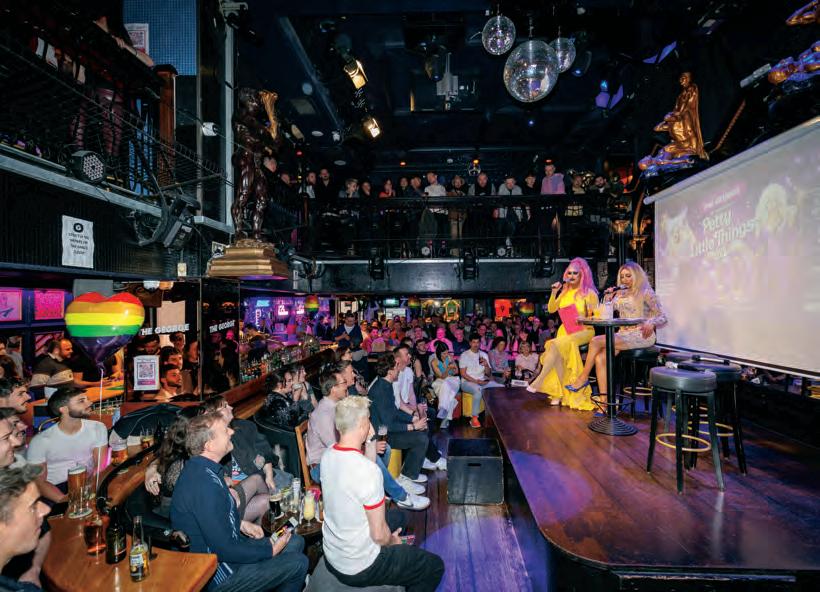
14 Pride of place: We speak to the manager of The George, Darragh Flynn about its 40th Anniversary
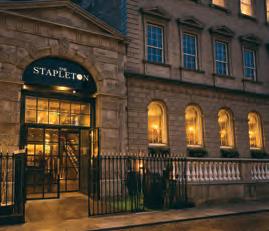
17 Pub Profile: The Stapleton, Dublin’s newest venue from Eclective Hospitality Group, offers multiple experiences over three floors
20 Food on the Edge: The Irish food symposium moves to Malta for its first overseas event
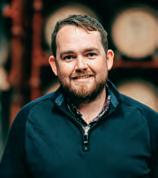
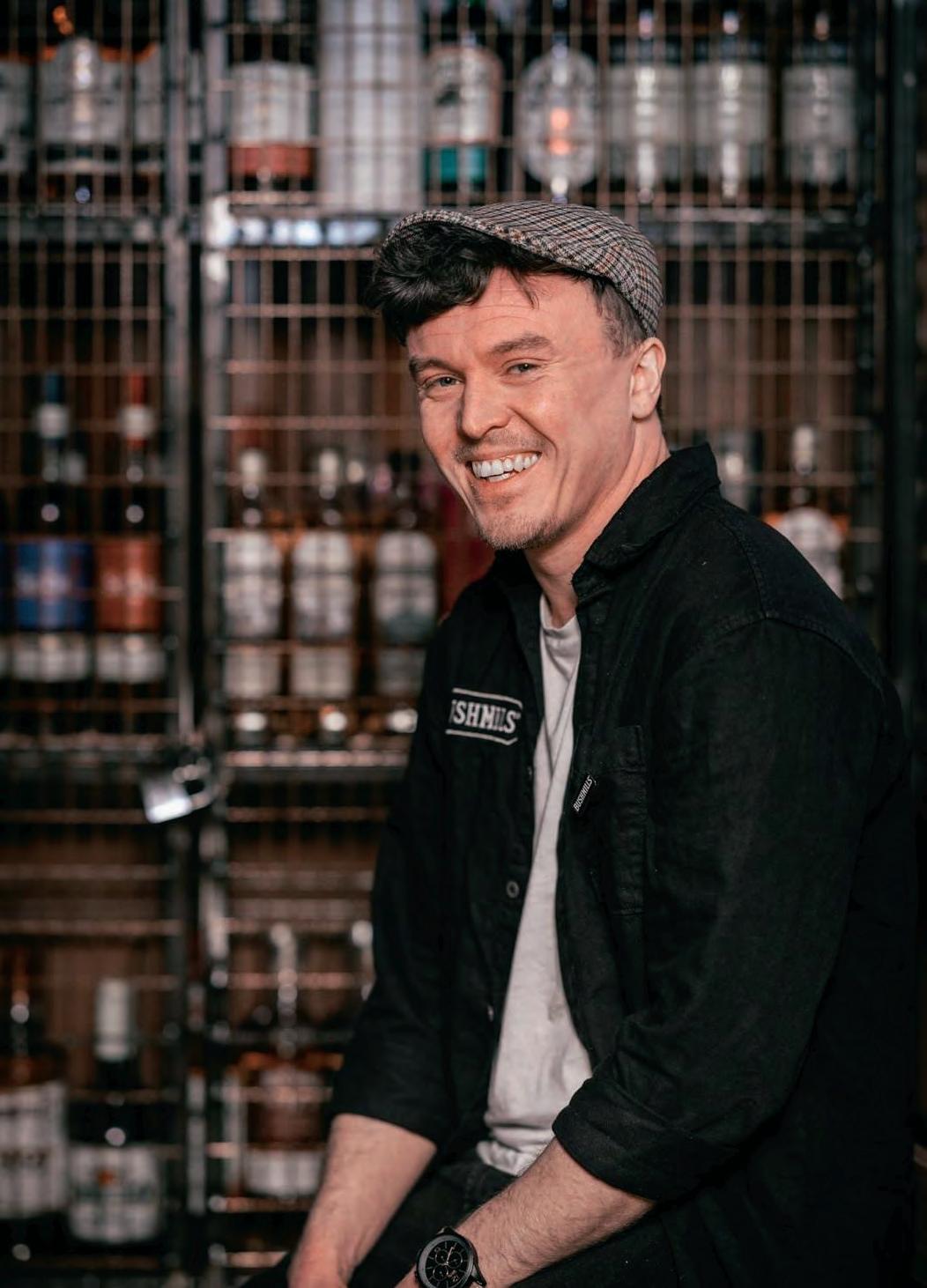
38 A Day in the Life: Mark McConville, Bushmills brand ambassador tells us about a typical day in his life
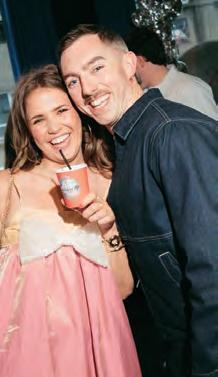
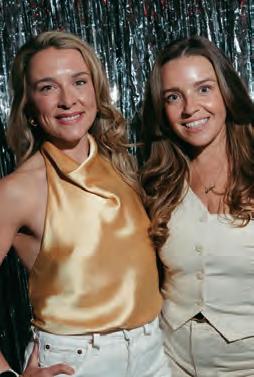
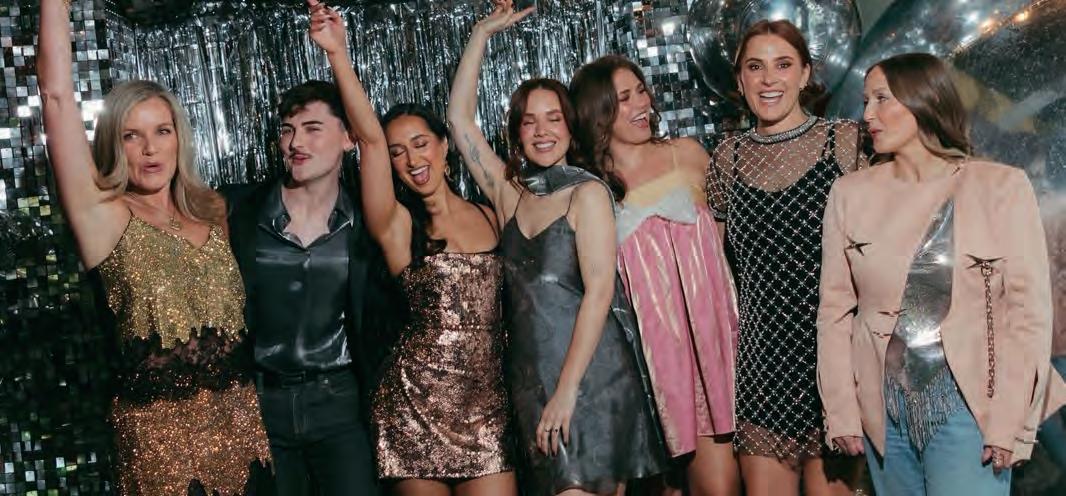
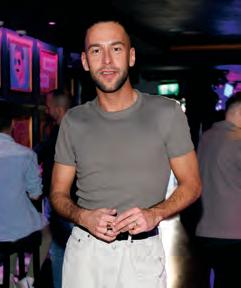
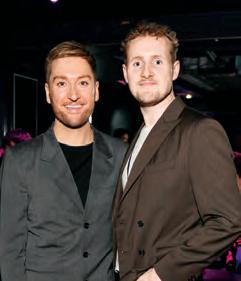
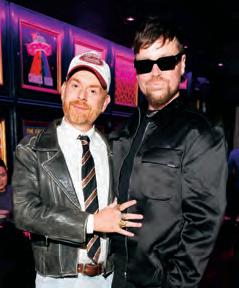
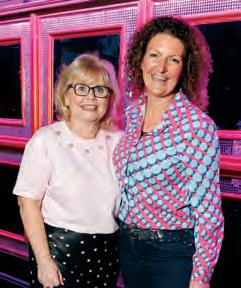
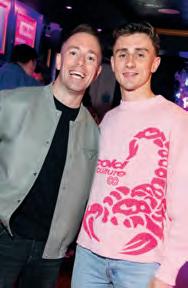
40 Social Diary: Check out who’s been out and about this month
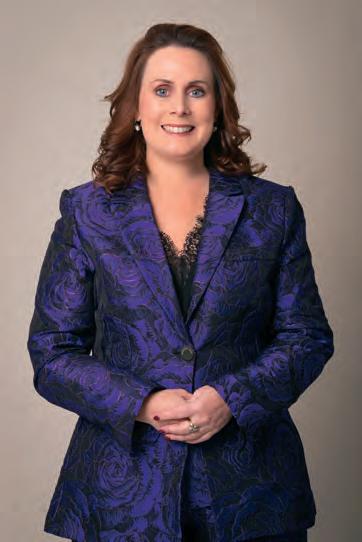
44 Advisor HR: Caroline Reidy of NFP HR Solutions explains what businesses need to know about the incoming EU Pay Transparency Directive
A season of opportunity
After a long, wet winter, summer popped up out of nowhere last week. The country was in need of a spell of good weather and for publicans and off-licence owners, good weather means, strong sales. Irish people only need a sniff of the sun to start packing into beer gardens and organising barbeques so it’s up to you to be ready for them.
Tastes are changing and there are a host of new products emerging to cater for this. Many of the big brands have introduced flavour extensions for the summer period which are sure to be a hit with the younger demographic. Our extensive summer drinks feature on page 22 will give you a steer as to what your customers will be asking for this summer.
Elsewhere in this issue, we speak to Elliot Hughes of Dingle Distillery about how the success of Dingle Gin was a bit of a surprise for them. Over thirteen years ago they began to produce gin and vodka just to shore up the whiskey business but it, luckily for them, coincided with the gin boom and being a premium product in a very lucrative market, it performed really well. Now the tide is turning and gin & tonic is seen as an expensive option in a valueled environment. A rebrand was seen as a way to reenergise Dingle Gin and give it an international push as Hughes believes this is where the growth opportunities lie for the brand. Read the full conversation on page 10.
Meanwhile, it’s hard not to be aware, from the extensive coverage it has received, that The George celebrated a big milestone this month – its 40th birthday and they did it in style with a huge event and lots of publicity. There is something so joyful about this iconic spot that has been a refuge for the LGBTQ+ community for decades. It’s lovely to see it shout about its big birthday and feel the love from its many long term customers and the whole community. I spoke to manager Darragh Flynn (page 14) about the secret to The George’s success and how they have achieved such longevity and remained so popular and relevant throughout the decades.
And finally, the past month has seen the launch of The Irish Pub Awards 2026. This is always a great night in the calendar and brilliant to see the cream of the crop turn up and compete while also supporting one another. If you have thought about applying before but never felt ready, maybe this is your year? See page 13 for all the details.
As I always say, if you have any news, views or comments, please don’t hesitate to get in touch. I’m always delighted to hear from the trade and happy to highlight any issues that you are facing.
“There is simply no capacity left to absorb further cost increases. Ireland’s pubs, particularly smaller rural pubs that do not serve food, continue to face significant cost-ofbusiness challenges which pose an existential threat to their survival”
“Under the Directive, the burden of proof shifts to the employer in pay discrimination cases. This means pay decisions must be supported by documented rationale, aligned to a clear pay philosophy and transparent rules for progression, rather than informal or manager-led explanations
“Our German partners are very excited about the new bottle and have already placed orders. Sometimes growth is simply about having the right partner in the right market.”
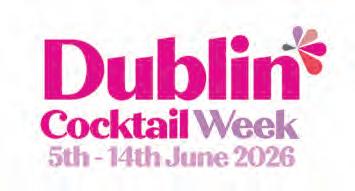
Dublin Cocktail Week is starting on 5 June. The 10-day celebration event will bring together a curated collection of local restaurants, bars, pubs and clubs, each offering hand-crafted cocktails priced at €7 exclusively for wristband holders.
Cocktail Week has secured some new business partners including Jameson Distillery and hotel partner, Aloft Hotels, as well as special deals with incredible venues during the event.
Participating venues include well-known names such as, Fidelity Bar, Capitol Lounge, Disndat, J.T. Pim’s, Café 1920 – Fleet Hotel, Pitch Golf, North Dublin and the Norseman to name a few with each venue shaking up its own signature cocktail. A signature mocktail option will also be available at every participating location.
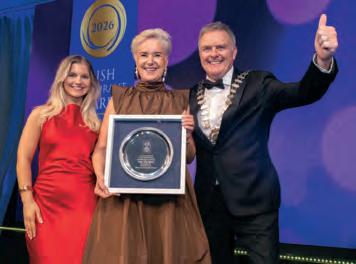
Eunice Power named All-Ireland Local Food Hero
Eunice Power has been named the AllIreland Local Food Hero at the 2026 Irish Restaurant Awards, in recognition of her wide-ranging contribution to Ireland’s food culture, hospitality sector and regional tourism.
A chef, food writer, broadcaster and entrepreneur, Power is one of the country’s most recognisable voices in Irish food and is CEO of Waterford Festival of Food.
Through her work across media, hospitality, events and tourism, she has become a leading advocate for local producers, seasonal Irish food and the importance of regional food culture.
Trump announcement on whiskey tariffs could cause cross-border disparity for Ireland
Donald Trump announced that he will remove all tariffs and restrictions on Scottish whisky and Irish whiskey imports in honour of King Charles and Queen Camilla’s state visit to the US.
However, producers in Ireland are unsure what impact this decision will have on the Irish whiskey sector. Industry sources in Ireland have said that it is not clear if this will only apply to Irish whiskey in Northern Ireland but not in the Republic which could cause issues regarding cross-border trade. Eoin Ó Catháin, director of the The Irish Whiskey Association (IWA), which represents whiskey producers on the island of Ireland said, “We’re all adopting a wait and see approach but we’re hoping that this is the first step in a return to a positive trading relationship,” he said.
However, there has been no immediate adjustment to tariff schedules and both Irish and Scotch whiskies are currently tariffed at 10% under section 122 tariffs announced on 2 April.
Eunice Power being presented with the award for All-Ireland Local Food Hero at the 2026 Irish Restaurant Awards
Pat Crotty, chief executive of the VFI
Caroline Reidy, head of NFP HR Solutions
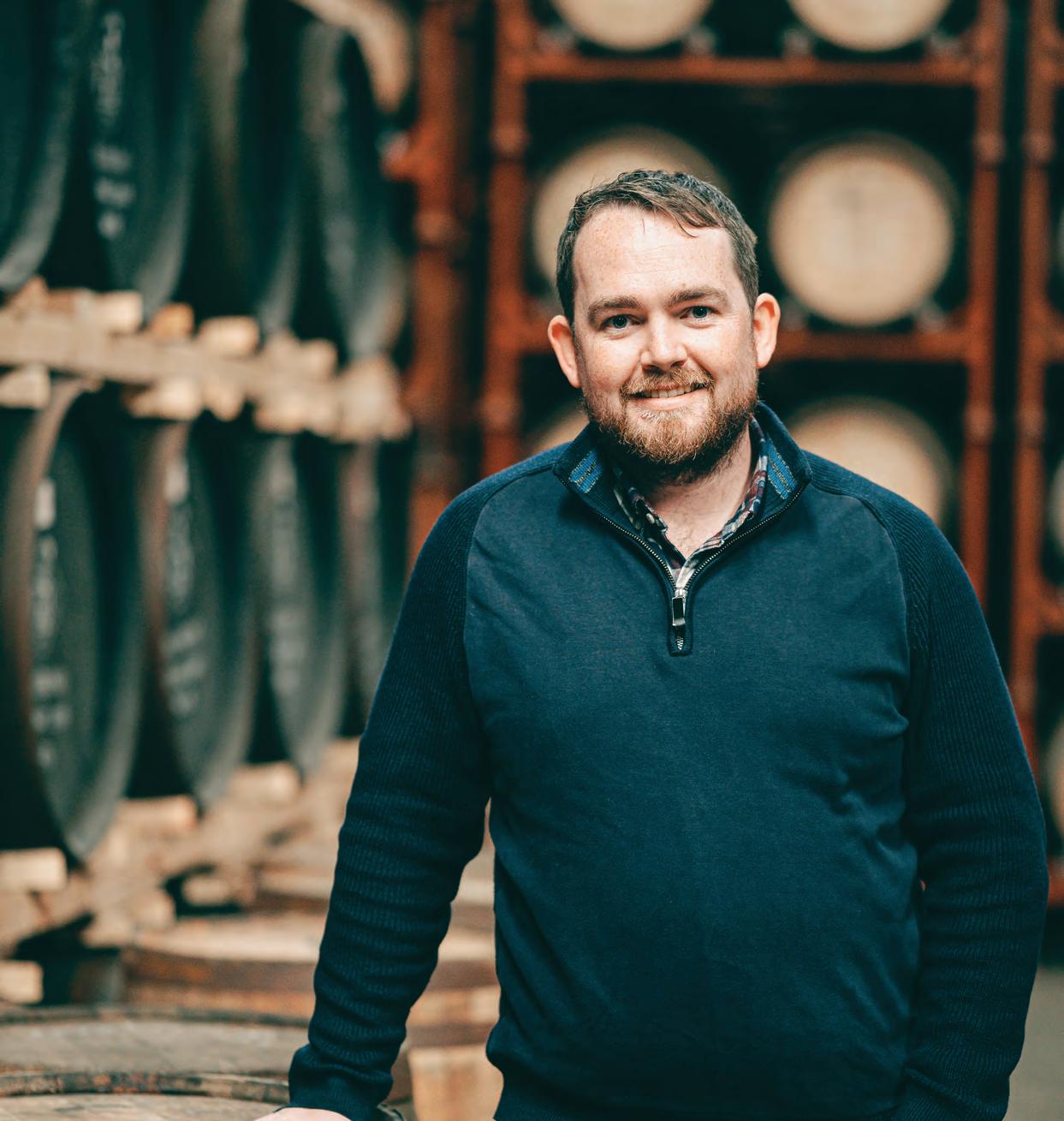
Elliot Hughes, manager director of Dingle Gin
King Charles and Donald Trump during the King’s visit to the US last month
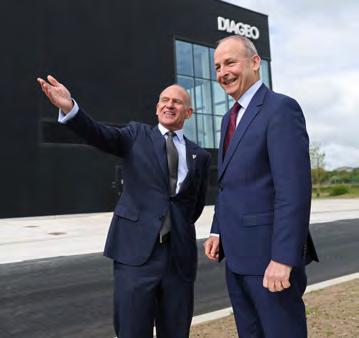
Diageo opens Littleconnell Brewery, reinforcing near €1 billion commitment to Ireland
Diageo opened its new Littleconnell Brewery in Newbridge, Co. Kildare in May, marking a significant milestone in the company’s longterm commitment to brewing in Ireland. With an investment of almost €300 million, the stateoftheart brewery forms part of Diageo’s near €1 billion capital investment programme across Ireland between 2020 and 2029.
Officially opened by Taoiseach Micheál Martin, the brewery was constructed in under 18 months on a 40 acre site and is powered by 100% renewable electricity.
The project, supported by Enterprise Ireland, accommodated approximately 650 jobs during construction and has created more than 50 highly skilled permanent roles.
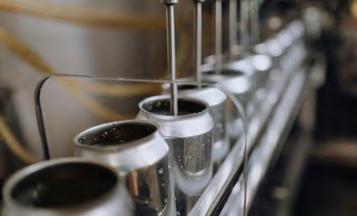
The Littleconnell Brewery will produce a range of ales and lagers, including Rockshore, Harp, Smithwick’s and Kilkenny, alongside well-known licensed beers such as Carlsberg, supplying both Irish and international markets and
strengthening Ireland’s role within Diageo’s global brewing network.
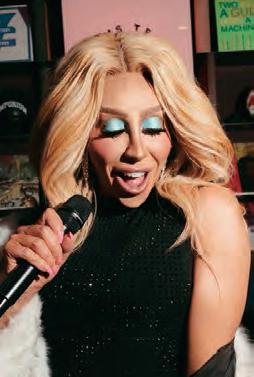
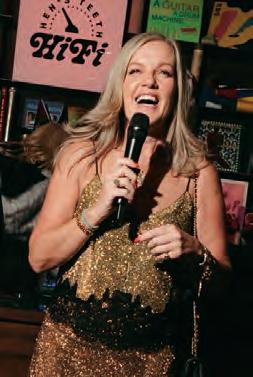
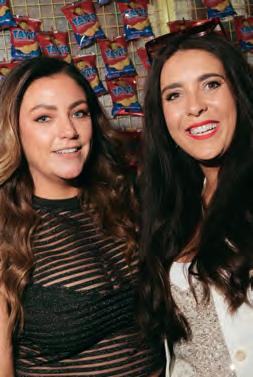
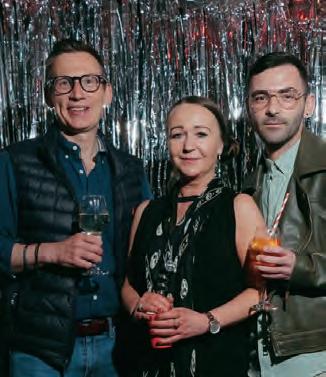
Second brewery
With planning permission secured, Diageo has also confirmed plans for an approximate €400 million investment for the development of a second brewery at Littleconnell over the next three years, with work due to begin in 2026. The new facility, known as Brewery 2, will be dedicated to the production of Guinness and Guinness 0.0 and will more than double total site capacity, supporting the global growth of Guinness.
As part of the near €1 billion investment between 2020 and 2029, Diageo has already completed work at St James’s Gate and its Belfast packaging site to increase capacity and support Guinness 0.0, and further work is planned to support the decarbonisation of St James’s Gate.
This investment reinforces Diageo’s confidence in Ireland as a strategic hub for brewing excellence, supporting exports, innovation,
Food and Drink manufacturers ‘facing ongoing cost pressures’
Food and Drink manufacturers are facing ongoing cost pressures, the latest Business Monitor by Food Drink Ireland shows.
Food Drink Ireland latest data published on 19 May highlights the continued challenges facing Ireland’s food and drink manufacturing sector, as global and domestic price indicators point to a worsening inflationary environment.
According to the Ibec group representing the food and drink sector, the underlying cost base for Irish food processors remains elevated, driven by persistent volatility in global commodity markets, escalating energy costs, and sustained pressure on agricultural inputs.
Paul Kelly, director, Food Drink Ireland said that cost pressures facing
manufacturers included elevated input costs for raw materials, energy and transport.
Commenting on the current environment, Kelly noted that reality for food and drink manufacturers is one of escalating costs and pressure on margins.
CSO Wholesale price Index
Meanwhile Simon MacAllister, partner at EY Ireland, speaking in relation to the CSO Wholesale Price Index April 2026, said that pressures on suppliers are unlikely to ease anytime soon.
“The latest CSO Wholesale Price Index figures points to a twospeed dynamic in producer prices. While there has been only modest growth across most sectors over the past year, including food (1%), manufacturing goods (1.4%) and
sustainability and longterm economic growth.
According to Sir Dave Lewis, chief executive, Diageo, “The demand for Guinness and Guinness 0.0. is surging. Today Diageo is proud to unveil our new state of the art brewery at Littleconnell, part of our €1 billion investment in Ireland. How fitting that it’s in County Kildare, the birthplace of Arthur Guinness.”
Beer production remains the most important sector within the drinks industry in terms of indigenous manufacturing, but the sector is facing cost pressures
construction (2.0%), energy prices have risen sharply.
“Wholesale prices for all energy fuels rose 32% month on month and by over 42% in the 12 months to April 2026, underscoring the continued impact of geopolitical disruption on global energy and commodity flows.
“Even in the event of a full reopening of the Strait, these pressures are unlikely to ease in the near term given the time required for supply chains to normalise, production to restart, and inventories to rebuild.”
Diageo officially opened its new Littleconnell Brewery in Newbridge, Co. Kildare. An Taoiseach Micheál Martin TD and Sir Dave Lewis Diageo CEO (Pic Julien Behal)
Vintners show concern for future of the trade at VFI AGM
Publicans
warn accelerating closures are stripping rural towns and villages of their last remaining community hubs, with new survey showing 42% lack confidence in future business outlook
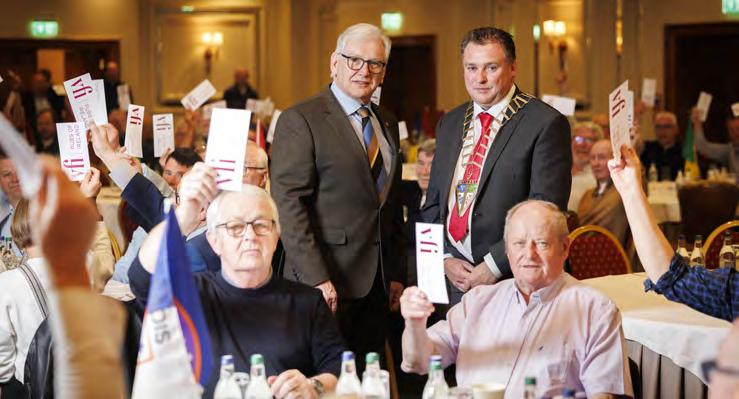
The Vintners’ Federation of Ireland (VFI) has warned that rural pubs are facing an “existential threat to their ongoing commercial sustainability and survival” unless targeted government supports are introduced in Budget 2027.
Speaking following his address to the VFI AGM in Mount Wolseley in Carlow, chief executive Pat Crotty said the situation facing pubs has reached a critical point, with closures accelerating and cost pressures continuing to mount.
More than just a business
More than 2,200 pubs have closed since 2005, with the rate of closure increasing in recent years to an average of 128 per annum.
“A pub is more than just a business. It performs a vitally important public function as a hub of social and cultural life, connection and community identity.
When a rural pub closes, a community loses more than a business – it loses a social anchor.”
The VFI said pubs support the economic and social sustainability of local communities, supporting local employment, tourism, and social wellbeing and connectedness.
However, many pubs are now at breaking point, driven by significant
cost increases and an absence of targeted relief.
Electricity costs have increased by 70% in the past five years, wages by 40%, while water tariffs have also risen significantly over the same period.
“There is simply no capacity left to absorb further cost increases. Ireland’s pubs, particularly smaller rural pubs that do not serve food, continue to face significant cost-ofbusiness challenges which pose an existential threat to their survival,” Crotty said.
“Closures are intensifying and this points to an increasing rate of market failure in the sector.”
On-Trade Sustainability Scheme
While welcoming the reduction in the VAT rate to 9% for food services, the VFI noted that the measure does not benefit the majority of rural pubs, with 64% not serving hot food.
The organisation is calling on Government to introduce a new On-Trade Sustainability Scheme, based on a tax credit linked to the supply cost of draught products, as a targeted approach to support the on-trade sector.
The proposed scheme would be capped at €20,000 per premises
and is designed to support smaller pubs in particular.
“We have seen the Government move to support industries such as Film and TV, Gaming, and Reality TV through targeted tax credits. Under current arrangements, the TV and film industry can avail of tax relief when filming in an Irish pub, while publicans themselves receive no equivalent support”, Crotty said.
According to a newly released VFI member survey, trading sentiment has turned negative over the past year, with 41% of publicans reporting that trading conditions are now worse than 12 months ago.
Confidence in the future outlook is similarly concerning, with almost 42% expressing a lack of confidence, while a further 30% describe themselves as neutral.
Rising costs are also having a severe impact on viability, with 65% stating that rising costs are having an unsustainable impact on operations.
“Government policy should recognise that pubs are essential social and cultural hubs, particularly in rural communities. Irish pubs are recognised around the world as a defining part of our cultural identity. We must act now to protect them, and the people behind them,” Crotty added.
Pat Crotty, chief executive of the VFI and and Michael O’Donovan, president of the VFI at the AGM.
Barefoot Wine returns to Mother Pride
2026 with ‘Barefoot on the
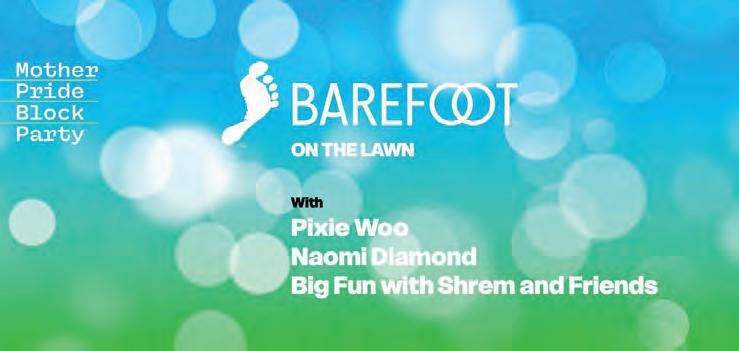
Barefoot Wine has announced the return of ‘Barefoot on The Lawn’ to Mother Pride 2026. This year, with the festival expanding to a spectacular two-day event, the bespoke bar and stage will be in full flow on both Friday 26 June and Saturday 27 June at the National Museum of Ireland, Collins Barracks.
At ‘Barefoot on the Lawn’, festivalgoers can enjoy Barefoot’s selection of award-winning wines while an incredible lineup of DJs sets the tempo. Friday 26th kicks off with the electrifying energy of Naomi Diamond b2b Pixie Woo, followed by Saturday’s ultimate block party: Big Fun with Shrem & Friends with massive sets from Emmy Shigeta, Giita, Levino, Mars Montana, and Shrem, the beats will be dropping just as smoothly as the wine is flowing.
“We are absolutely thrilled to return to the Mother Pride 2026 this year and to bring ‘Barefoot on the Lawn’ to the Dublin Pride scene. With the festival expanding to two days, it’s a fantastic opportunity to celebrate love and diversity in such an iconic setting,” said Philip Lynch, Barefoot country manager. “Barefoot has always championed inclusivity,
Lawn’
creating fun and memorable moments as a proud ally of the LGBTQ+ community since 1988. Our bespoke bar and stage is our way of celebrating the incredible community that Mother brings together. We can’t wait to see everyone there!”
Speaking about the partnership, Lisa Connell from Mother said: “We’re really excited to build on last year’s partnership with Barefoot Wine and take ‘Barefoot on the Lawn’ even further for 2026. It’s about creating a space that feels open, celebratory and inclusive, with great music, great energy and something a little bit
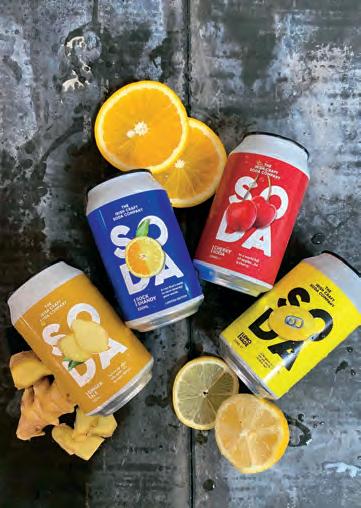
Authentically Irish soda
different on site. With two full days this year, we have even more room to collaborate and deliver something special for the Mother crowd.”
The Barefoot range includes Barefoot Jammy Red, Barefoot Merlot, Barefoot Malbec, Barefoot Cabernet Sauvignon, Barefoot Buttery Chardonnay, Barefoot Sauvignon Blanc, Barefoot Pinot Grigio and Barefoot Moscato alongside Barefoot White Zinfandel and Barefoot Pink Moscato. Packed with big flavours and gorgeous aromas - there’s plenty to choose from! ■
But this is more than just a soft drinks brand. The Irish Craft Soda Company exists to challenge the norm and redefine what a soda can be. Inspired by the craft beer movement, the company is on a mission to elevate everyday soft drinks into something more thoughtful, more flavourful, and more authentically Irish.
The Irish Craft Soda Company hopes to lead a new wave of craft soft drinks - bringing creativity, quality, and Irish provenance to fridges, bars, and tables across the country and beyond. ■
The Irish Craft Soda Company is a proud Irish drinks brand born on the banks of the River Shannon in Athlone, emerging from the creative minds behind Dead Centre Brewing. Built on the same passion and attention to detail that defines great craft beer, the company was founded with a simple idea: to bring real flavour, quality ingredients, and innovation into the soft drinks space. At its core, The Irish Craft Soda Company is about doing things properly. Every soda is made in small batches using natural ingredients - no artificial sweeteners, flavours or preservatives, resulting in drinks that are clean, vibrant, and full of character. From classic lemonade to nostalgic favourites like rock shandy and cherry soda, the range - which includes Retro Cola, Ginger Ale and Orange Soda - blends tradition with a modern, premium twist.
Scissor Sisters will headline the Mother Pride Opening Party on Friday 26 June
The Irish Craft Soda Company comes from the team from Dead Centre Brewing
Dingle Gin bets on bold redesign to fuel next phase of international growth
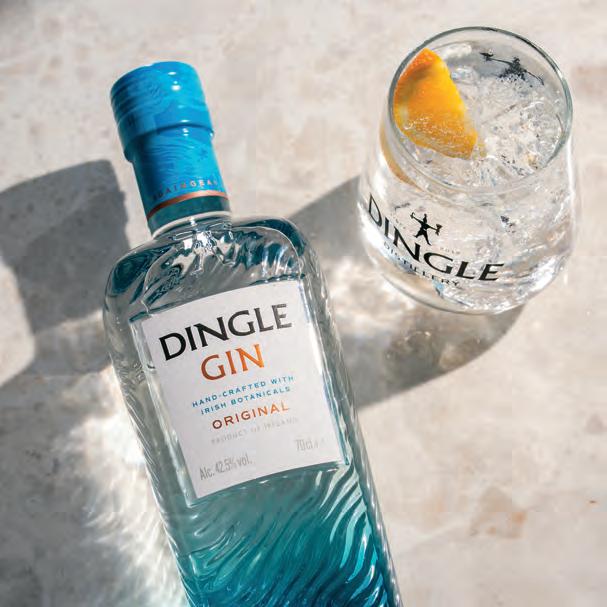
After more than a decade on shelves and back bars, Dingle Gin is preparing for one of the most significant moments in its history: a complete bottle redesign and brand refresh that will officially launch this month. Fionnuala Carolan spoke to Elliot Hughes, manager director of Dingle Gin about elevating their premium gin in a fairly saturated market
For managing director Elliot Hughes, the upcoming relaunch of Dingle Gin represents far more than a cosmetic update. It is a strategic repositioning designed to strengthen the brand’s export potential, improve visibility in international markets and reinforce Dingle Gin’s place as one of Ireland’s leading premium spirits brands.
“We’re 13 years old now, so it gives us an opportunity to talk about the brand again,” Hughes says.
“Sometimes you need a reason to get people to think about you.”
The redesign marks a bold move for a brand whose original bottle had become highly recognisable to Irish consumers. But while the existing design carried strong familiarity at home, Hughes says feedback from overseas markets increasingly suggested the brand needed stronger visual impact.
“People in export markets didn’t really like the bottle,” he explains. “Irish consumers knew it because we were one of the first premium Irish gins, but internationally the see-through element didn’t give enough standout on a busy back bar.”
The challenge was particularly noticeable in competitive premium spirits environments, especially in the United States, where shelf presence and bartender recommendations play a major role in consumer purchasing decisions.
“In the US market, consumers rely on recommendations from bartenders far more than we do here,” Hughes says. “You need a bottle that catches attention immediately.”
Strong brand loyalty
Despite those limitations, Dingle Gin has continued to grow steadily both in Ireland and abroad, driven largely by strong word-of-mouth and loyalty within the on-trade.
“The gin still managed to grow because people simply asked for it,” Hughes says. “Sometimes I’ll walk into a bar and discover they’re using Dingle as their house pouring gin.”
That trend towards premiumisation within the hospitality sector has become increasingly important for the brand. Hughes believes many bars and restaurants are now prioritising quality over price-led offerings, even for house pours.
“If someone asks for a house wine in somewhere like The Shelbourne, they’re not going to give them poor quality wine,” he says. “We’re seeing more bars and restaurants applying that same thinking to gin.”
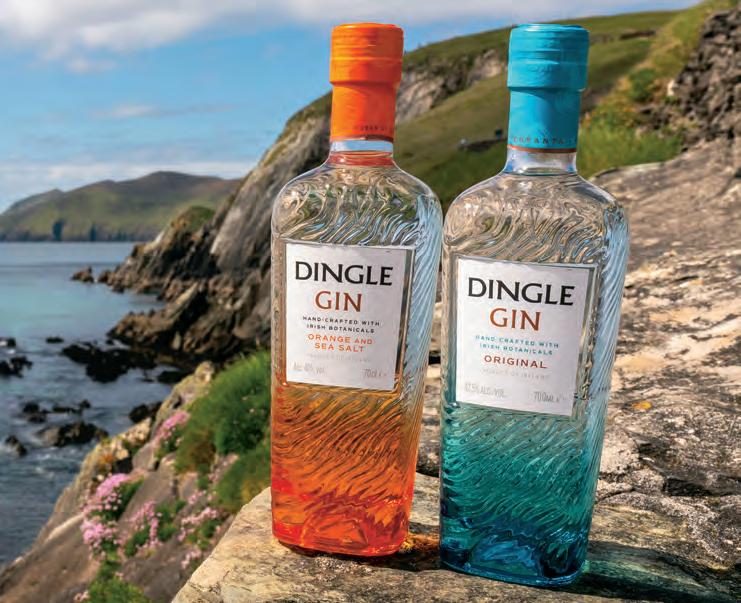
A bottle inspired by the Dingle Peninsula
The new bottle design takes much of its inspiration from the natural landscape surrounding the distillery itself.
“It’s built around the landscape, the peninsula and the sandy beaches,” Hughes explains. “There’s much more texture and feel to the bottle.”
That tactile quality reflects broader trends within premium spirits packaging, where consumers increasingly value bottles that deliver a stronger sense of craftsmanship and authenticity.
“Consumers are really leaning into textured packaging now,” he says. “It gives us much more opportunity to tell the story of where the product comes from.”
The redesign will also allow the business greater flexibility for future innovation and product development.
“This bottle gives us more opportunities for additional product lines and flavour extensions in the future,” Hughes says.
At the same time, the company is conscious that changing a recognisable bottle carries risks, particularly with loyal existing consumers.
“There are definitely people who’ve said, ‘you can’t change that bottle — it’s iconic’,” Hughes says.
A major focus of the relaunch campaign will therefore be ensuring both publicans and consumers understand that while the packaging is evolving, the liquid itself remains unchanged.
“We want people to know it’s the same product and not a rival one,” he says.
To mark the occasion, the distillery is also launching Dingle Gin Orange & Sea Salt, built on the same awardwinning botanical recipe.
Built initially to support whiskey
Dingle Distillery was established in 2012 by Hughes’ father, Oliver Hughes, as part of the wider Porterhouse hospitality and brewing business. While whiskey was always the longterm ambition, gin and vodka were initially developed to generate cashflow while the whiskey matured.
“When we started Dingle Distillery, the reason we did gin and vodka was really to support whiskey production,” Hughes says. “At the time, we had our own bars, so the thinking was we’d pour it there and maybe get a few bars around Dingle to stock it.”
The company had modest ambitions in its early years and little expectation of how dramatically the gin category would evolve globally.
“Within two or three years, gin started to explode,” Hughes recalls. “We weren’t developing a product to meet growing demand, we just happened to already have one there. We were very lucky and able to
Drawing inspiration from the rugged Atlantic landscape, the redesign retains the recognisable character of the original while bringing a more refined and confident identity to the range. However, the liquid remains the same.
take advantage of that.” The rapid growth of premium gin transformed Dingle from a small supporting spirits operation into one of Ireland’s bestknown independent distilleries.
Hughes himself originally entered the family business through the operational side of the Porterhouse after finishing college.
“My knowledge of premium spirits at the time was pretty limited,” he laughs. “I was more into cheap cider in college!”.
His role within the company evolved rapidly following the death of his father shortly after he joined the business.
“My father passed away about two years after I entered the business, so I stepped into that role fairly quickly,” Hughes says.
The wider family business has deep roots in Irish brewing and hospitality. Oliver Hughes and his cousin first launched a brewery in Blessington in 1983 before later opening the first Porterhouse pub in Bray in 1989 and subsequently the well-known Temple Bar brewery in 1996.
Why Dingle?
The decision to locate the distillery in Dingle itself was driven as much by storytelling and atmosphere as by production considerations.
“My family had been holidaying in Dingle since before I was born,” Hughes says. “My mother brought my father there in the 1980s and eventually we bought a house there.”
While the family already operated brewing facilities in Dublin, Hughes says his father believed a distillery needed a stronger sense of place.
“He felt a distillery needed a bit more romance and storytelling than putting it into an industrial estate,” Hughes says. “Dingle just seemed the obvious location.”
The town’s reputation for tourism, food and hospitality also made it attractive as a visitor destination.
Today, the distillery welcomes approximately 17,000 to 18,000 visitors annually through tours and tastings.
“It’s really just a tin shed,” Hughes jokes. “But people come, they experience the product and hopefully become brand ambassadors for us.”
Those visitors often become valuable long-term customers,
particularly through travel retail channels.
“We get a lot of people buying bottles in Dublin Airport on the way home after visiting the distillery,” Hughes says.
Travel retail remains a significant channel for the business, with Dublin Duty Free standing as its largest individual retail customer.
“We’re on promotion there two or three times a year,” he says.
Export growth gathering pace
While Ireland remains a core market, Hughes says the company’s major future opportunities lie overseas, especially in the US.
“We grew 35% in spirits across the board in the US last year and we expect to exceed that this year,” he says.
Rather than attempting nationwide expansion immediately, the company is concentrating on a targeted number of key states.
“We tend to focus on six or seven states,” Hughes explains. “There’s no point spreading yourself too thin across 20 states and not achieving anything meaningful.”
The company is also exploring opportunities in emerging markets including India and Nigeria, both of which Hughes sees as potentially important future destinations for Irish spirits.
“India is a significant market that’s opening up, especially with tariffs reducing under the EU trade agreement,” he says.
At present, the company’s overall portfolio is split approximately 45% whiskey, 45% gin and 10% vodka. While Dingle Gin has gained strong
traction domestically, Hughes acknowledges that the company’s whiskey business currently has greater penetration across mainland Europe.
“Germany, the UK and France are strong whiskey markets for us,” he says. “The gin hasn’t yet achieved the same level of foothold.”
However, the redesigned bottle is already helping improve distributor confidence internationally.
“Our German partners are very excited about the new bottle and have already placed orders,” Hughes says. “Sometimes growth is simply about having the right partner in the right market.”
Facing a changing market
Like many premium drinks brands, Dingle Gin is also navigating changing consumer behaviour amid ongoing cost-of-living pressures.
“We’re probably moving back towards more value-driven occasions now,” Hughes says. “Consumers are more cautious both at home and in the on-trade.”
He believes rising prices have particularly impacted gin and tonic sales in pubs and bars.
“If you compare the cost of a gin and tonic against a pint or a glass of wine, the gap has widened,” he says. “That’s definitely one of the challenges facing the category.”
At the same time, Hughes believes the gin market has now stabilised after several years of explosive growth.
“We’re probably past saturation point,” he says. “During Covid, retailers massively expanded the number of gin SKUs. That’s reduced again now.”
However, Dingle benefited from establishing itself early within the premium Irish gin segment.
“We were lucky because we became one of the core brands,” Hughes says. “Publicans didn’t destock us when the category tightened.”
Looking ahead, Hughes says the ambition is straightforward: to establish Dingle Gin as a globally recognised premium Irish spirits brand.
“We’ve achieved that in Ireland,” he says. “If over the next five years we can become a household premium gin brand across major European markets and America, that would be a huge success for us.” ■
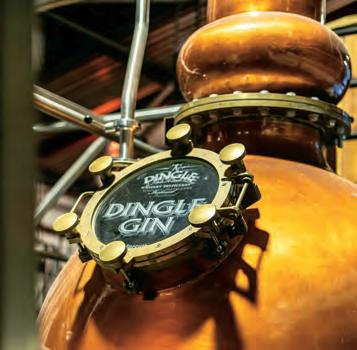
Dingle Distillery welcomes approximately 17,000 to 18,000 visitors annually through tours and tastings
VFI and LVA launch Irish Pub Awards 2026
The Irish Pub Awards 2026 launched in Dublin this month celebrating excellence across 10 categories with winners to be announced at November gala night
The Irish Pub Awards 2026 was launched recently at The Laurels Bar & Restaurant, Clondalkin, Dublin 12, which was crowned overall Irish Pub of the Year in 2025.
This is the eighth year of the Irish Pub Awards, which celebrate excellence and innovation across various categories in the pub sector. The Irish Pubs Awards are jointly presented by the Licensed Vintners Association (LVA) and Vintners’ Federation of Ireland (VFI).
Pubs are now free to enter up to ten categories, with judging set to take place over the summer. The Irish Pub Awards Gala night, where the overall National Pub of the Year will be revealed, along with all category awards, will take place in Dublin on Wednesday, 18 November 2026.
Previous winners
Previous ‘Pub of the Year’ winners include The Laurels, Clondalkin, Malzard’s Pub, Stoneyford, Co. Kilkenny, Aunty Lena’s, Adare, Co. Limerick, Gleeson’s of Booterstown, Co. Dublin, Paris Texas, Kilkenny City, The Gylde Inn, Annagassan, Louth and The Porter House, Castlebridge, Wexford, while the individual category winners reflect the extraordinarily high standard of pubs around the country.
The Irish Pub Awards 2026 are open to all members of the VFI and LVA. Entry to the awards is free –anyone interested in entering can do
so via the dedicated website: www. irishpubawards.ie.
The ten categories are: Best Food Pub; Best Tourist Pub; Innovative Pub of the Year; Best Local Pub; Outstanding Customer Service; Best Music Pub; Best Cocktail Experience; Best Outdoor Space; Best Digital Innovator and Best Match Day Pub
The 70 regional winners will be showcased as best in class in their region and will receive a prize package to the value of €20,000, comprising management training and media coverage to help them develop their business.
The media coverage will include a profile piece in an Irish Independent awards supplement on the day of the awards presentation on 18 November.
Recognising exceptional standard of Irish pubs
Addressing the launch of the Irish Pub Awards 2026 VFI president Michael O’Donovan said: “The Irish Pub Awards are a vital opportunity to recognise the exceptional standards that define our pub trade, from hospitality and service to creativity and community spirit.
“At a time where conditions are becoming increasingly challenging for
Irish hospitality, it is important to note the positive contribution being made by our pubs to the economic and social life of Ireland.
“As we continue to face real challenges in the sector, these awards remind us of what makes the Irish pub world-renowned: its people.
“I encourage every publican to get involved and help us showcase the very best of our industry. We are also extremely grateful to our sponsors, whose continued support makes these awards possible. Their commitment reflects a shared belief in the value and future of the Irish pub.
Chair of LVA, Tom Cleary, announced: “Irish pubs play a very important part in Irish social culture.
“They are at the heart of our communities and a central part of our hospitality and tourism sectors. Pubs are hubs that allow people to come together.
“At a time where conditions are becoming increasingly challenging for Irish hospitality, it is important to note the positive contribution being made by our pubs to the economic and social life of Ireland. We look forward to seeing the cream of Dublin pubs and those from around the rest of the country recognised through this year’s award programme.” ■
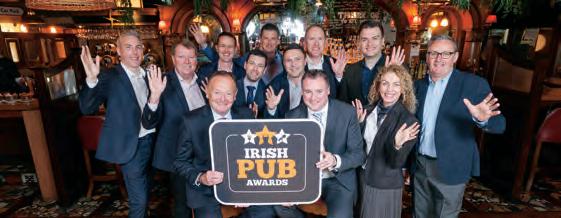
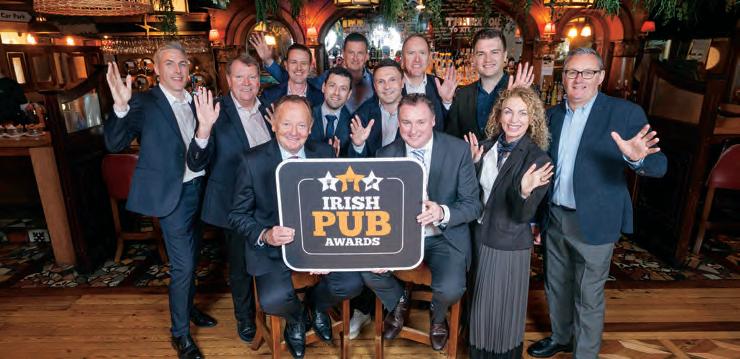
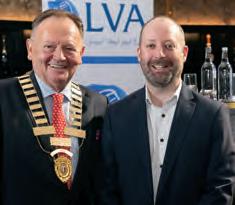
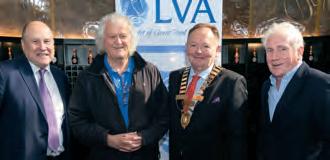
Sponsors of the Irish Pub Awards 2026 were there to launch the awards. Front row: Tom Cleary, LVA chair; Michael O’Donovan, VFI President and Deborah Maher from Diageo Ireland. Middle row: Dan Guider from Irish Distillers Pernod Ricard; Martin McDonald, Bulmers; Jason Darcy, Fáilte Ireland; David Popplewell, Heineken Ireland; Andy Cowap, Peroni Nastro Azzurro and Gary Byrne, Musgrave MarketPlace. Back row: Seán Donegan, IMRO, Barry Gray, BOI Payment Acceptance and John Cassidy, Edward Dillon.
The George at 40 Four decades at the heart of Ireland’s LGBTQ+ community
As The George marks 40 years at the centre of Ireland’s LGBTQ+ social life, the landmark anniversary represents far more than longevity in hospitality. It is a celebration of a venue that has served as sanctuary, stage, meeting place and cultural institution through four decades of enormous social change. Fionnuala Carolan speaks to Darragh Flynn, manager of The George for the past 16 years about this special venue
First established in 1985, before officially opening the following year, The George emerged during a vastly different era in Irish society - one in which LGBTQ+ people faced marginalisation, discrimination and isolation. Over the past four decades, however, the South Great George’s Street venue has evolved into one of the country’s most recognisable symbols of inclusion and pride.
Today, it remains one of Dublin’s busiest late-night venues, attracting everyone from long-standing regulars to international visitors seeking out a space synonymous with Ireland’s modern LGBTQ+ identity.
For Darragh Flynn, manager of The George since 2009, the venue’s recent 40th anniversary celebrations demonstrated just how deeply connected people remain to the bar.
“The 40th birthday celebration night was amazing,” he says. “We had a full house, lots of old faces and a lot of nostalgia. Reconnecting with people was really special.”
Flynn joined The George during one of the most difficult economic periods in recent memory. At the time, the venue was in receivership during the recession, but he immediately recognised its unique atmosphere and potential. “I was working in Howl at the Moon at the time and the vacancy
came up here,” he explains. “I came over the week before to have a look. I’m not gay, so I wanted to see what it was like. But the energy in the venue was great and the people were great, so I thought, yes, I’d like it here.”
Although the venue needed investment, Flynn says the objective was never to reinvent The George, but rather to preserve what made it special. “It had been through a period of neglect, so there were definitely things that could be improved. We secured money from the receivers to reinvest in the venue. We did the toilets, the floors and the beer systems. We wanted to improve it while keeping the same essence.”
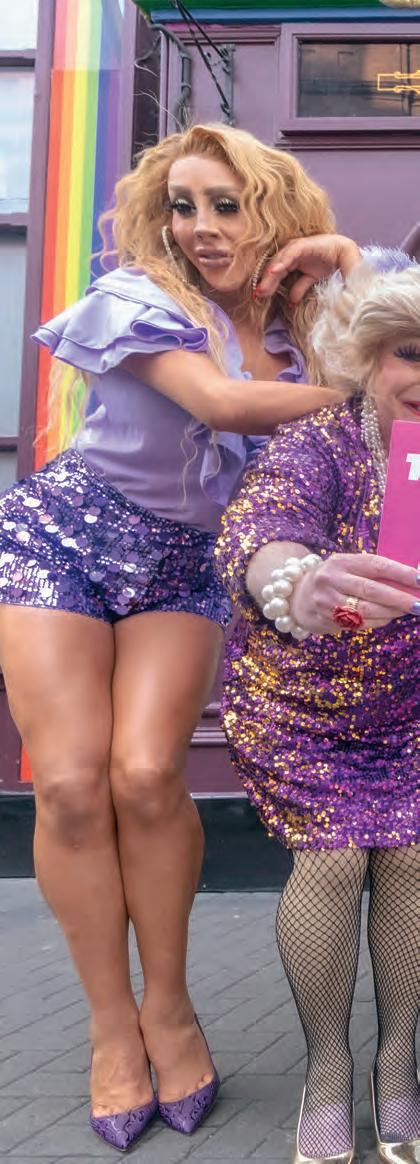
Familiar faces of The George: Davina Divine, Dolly, Victoria
That essence, he believes, lies in the extraordinary sense of community that has defined The George for generations.
“It’s so unusual to have so many regulars,” he says. “It’s like a suburban pub in the middle of the city. There really is a community feel here.”
The venue’s customer base spans generations. Flynn notes that some regulars have been coming through its doors for decades, including patrons now in their 90s. “You’ve got Bridie’s, which is more like a traditional pub and where a lot of the older crowd would hang out, while the club attracts younger people. Sometimes they intermingle, which is great.”
A critical space for the city
Even in a more progressive Ireland, Flynn believes LGBTQ+ venues remain essential.
“It’s one of the few spaces where gay people go out and they are not in the minority,” he says. “That’s a huge contrast. I think spaces like this will always be critical and necessary.”
While many LGBTQ+ venues internationally have struggled in recent years, The George continues to thrive. Flynn attributes that resilience to customer loyalty, constant reinvestment and careful evolution.
“The biggest challenge is always trying to improve and refresh the
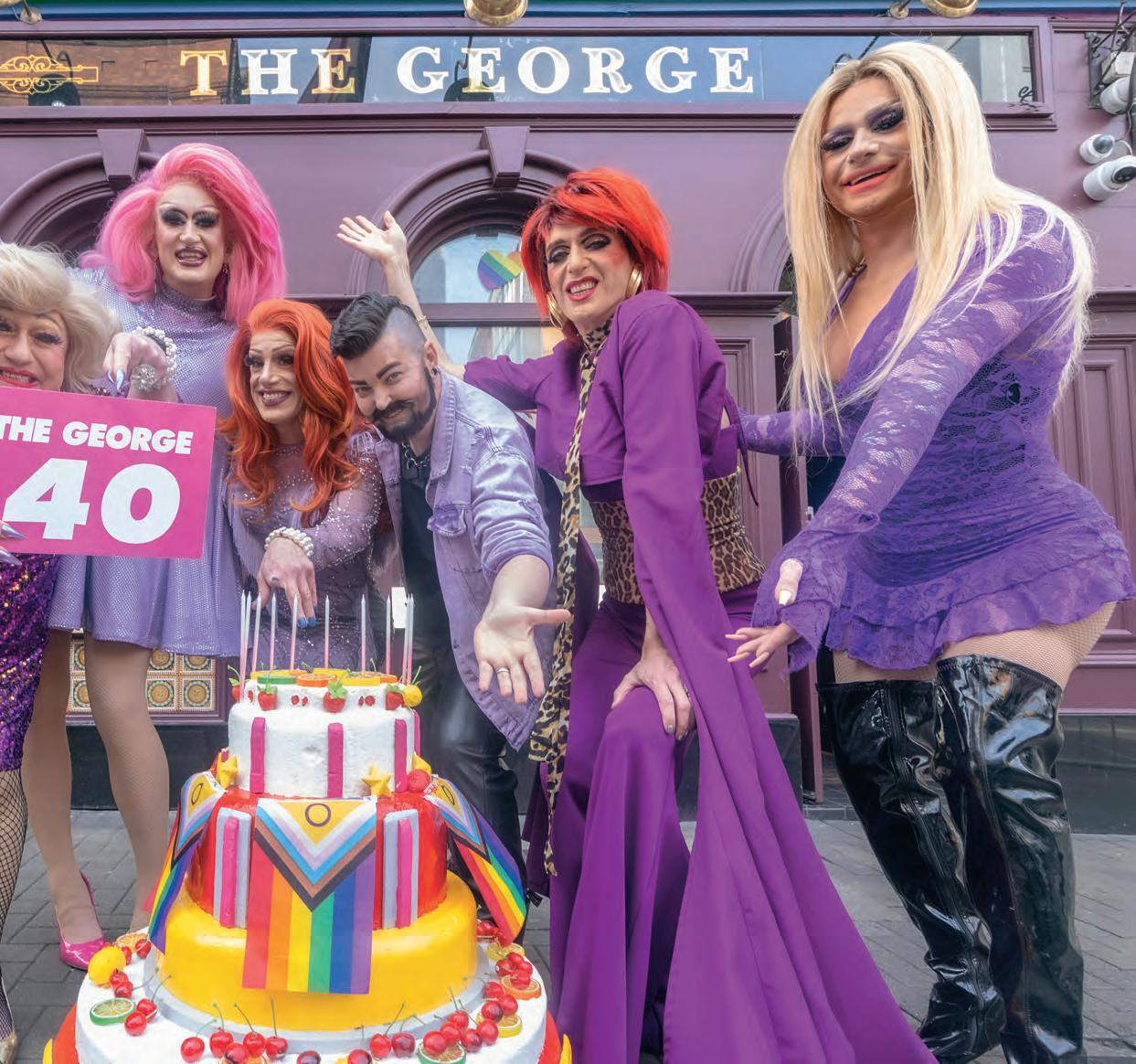
Victoria Secret, Shirley Temple Bar, Phill T Gorgeous, Veda and Mizza celebrating 40 years of The George. (Photo Paul Sherwood)
Darragh Flynn, who has been manager of The George since 2009
venue without changing it too much,” he explains. “It’s a balancing act.”
That balancing act extends to entertainment programming, which now runs seven nights a week and has become central to The George’s identity. The venue hosts drag performances Monday through Thursday, club nights on Fridays featuring dancers and face painting, drag karaoke on Saturdays and bingo on Sundays hosted by Shirley Temple Bar. DJs perform every night of the week.
The consistency has helped build one of the strongest weekly trading patterns in the Irish pub trade.
“Our quietest nights would still see 300 to 400 people,” Flynn says.
“It took a long time to build that. When I started, we closed early on Mondays and Tuesdays, but eventually we expanded to seven nights because having different hours on different days became confusing.”
A place people want to work
Staffing, a challenge that has affected much of the hospitality industry in recent years, has been less problematic for The George than for many operators.
“After Covid, when everyone else was struggling to get staff, we were inundated with requests from people who wanted to work here,” Flynn says. “A lot of our staff are from the gay community, but we also have a lot of straight staff too. It’s a real mix.”
He credits the team culture for much of the venue’s success.
“When your staff genuinely care, it makes your job a lot easier.”
A safe space
The George’s international reputation has also grown significantly in the years following Ireland’s 2015 marriage equality referendum, with Flynn noting a steady influx of tourists and new residents drawn by Ireland’s reputation as a welcoming destination.
“We get a lot of tourists, especially
since the marriage referendum, because Ireland is now viewed as a very safe space for gay people,” he says. “We also meet a lot of foreign nationals who have moved here because they were persecuted at home and couldn’t be themselves. They see this as a safe place.”
As preparations already begin for Pride celebrations, among the busiest periods in The George’s calendar, Flynn says the atmosphere generated by the annual event remains unlike anything else.
“We can hold around 1,000 people, but during Pride we’ll have around 4,000 people coming through the doors,” he says. “The happiness and joy is incredible. It’s like St Patrick’s Day on Prozac — everyone is just in great form.”
With the 40th anniversary now celebrated, Flynn’s focus quickly shifts to the future.
“There’s lots of planning for Pride already underway,” he says. “And we’re already talking about the 50th.”
For a venue that has witnessed and helped shape four decades of social transformation in Ireland, that next milestone suddenly does not seem very far away at all. ■
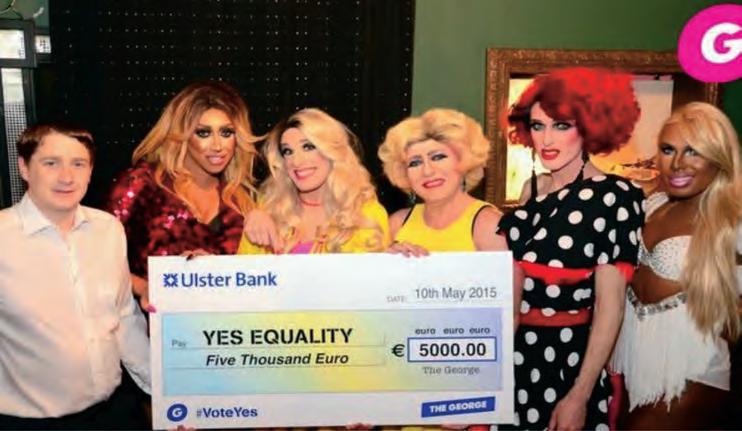
Manager Daragh Flynn back in 2015 with Davina Divine, Shirley Temple Bar, Veda celebrating the Marriage Equality Campaign
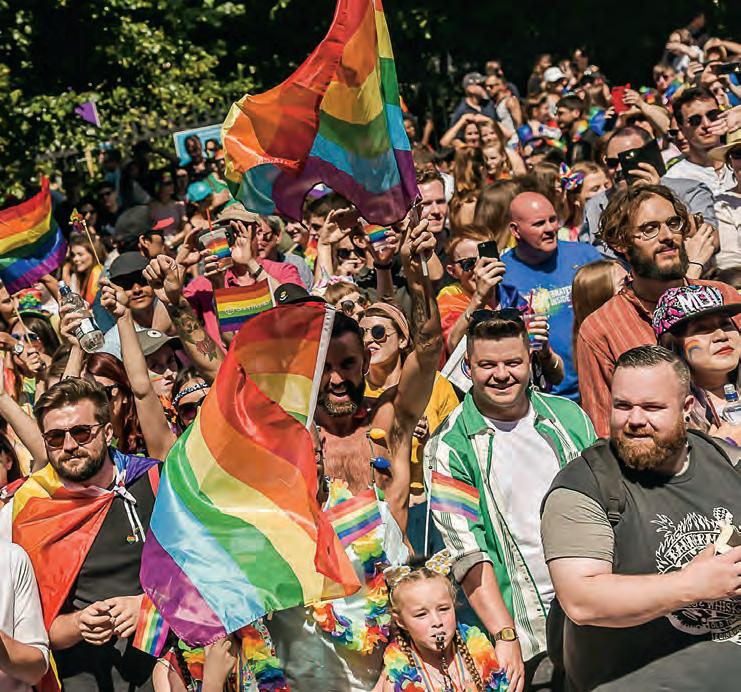
The George float at Pride, which is one of the biggest occasions for the pub each year
Reimagining the Dublin pub experience in the heart of the city
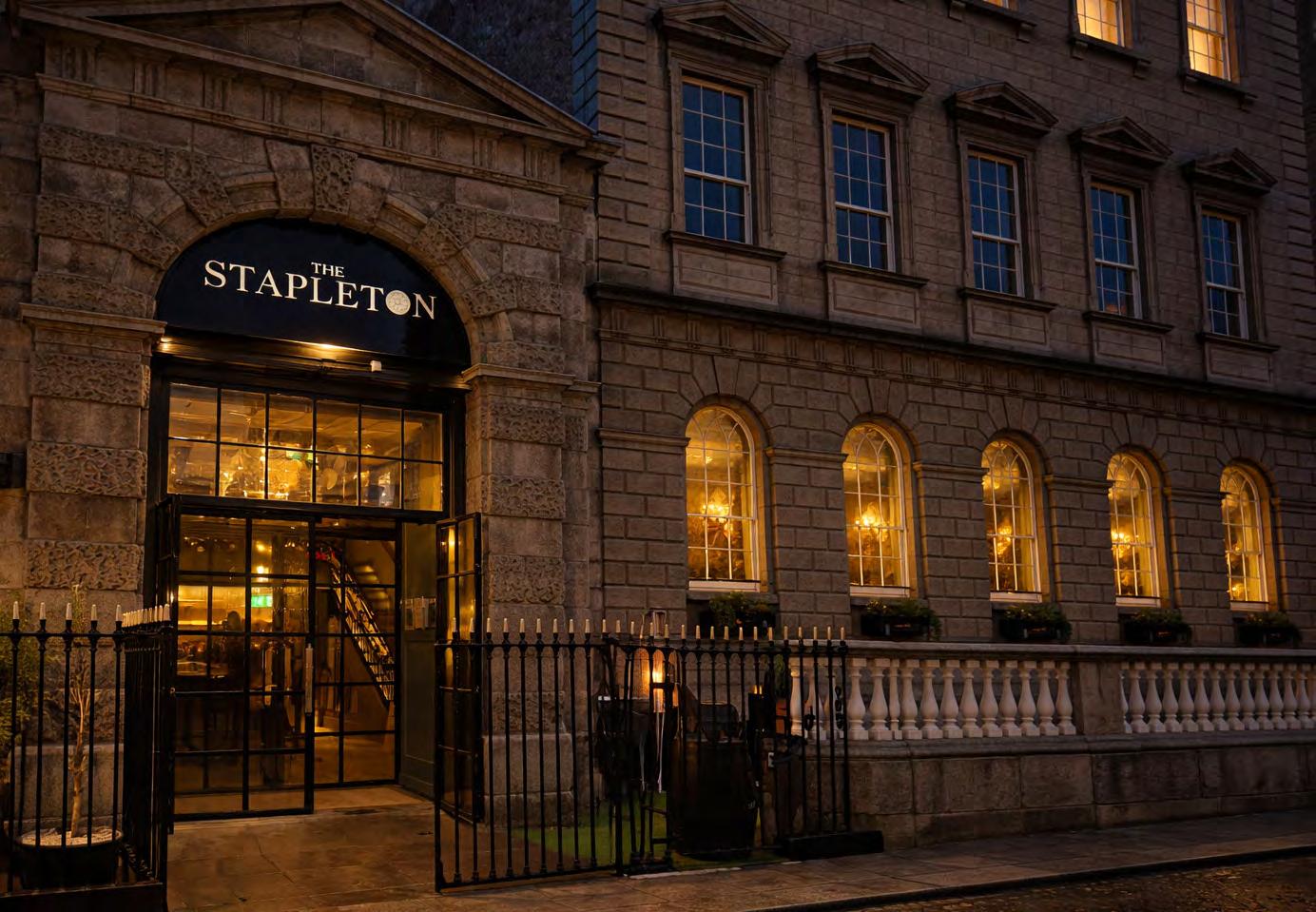
The Stapleton opened its doors in a restored Georgian building, in Dublin city centre last month. Part of the Powerscourt Town Centre, this venue has had many iterations over the years, with Farrier & Draper being its most recent. Set across three floors, The Stapleton combines traditional pub culture with a more contemporary, multi-space format. The venue incorporates a lively main bar, a cocktail-focused upstairs lounge and a newly opened basement pub that leans into a more intimate, classic Dublin atmosphere.
For general manager David Young, however, the venue’s success is not rooted in design trends or complicated drinks menus. Instead, it comes down to a much simpler philosophy centred on people and atmosphere.
In Dublin’s hospitality market, increasingly defined by polished concepts and carefully curated experiences, The Stapleton is taking a more understated approach. Opened by Eclective Hospitality Group, the new venue blends traditional Dublin pub culture with a modern multispace offering without losing sight of what general manager David Young believes matters most which is genuine hospitality. He speaks to Fionnuala Carolan about this lovely new venture
“I’ve been in hospitality since I was 14 years old and I still love it to this day,” Young says. “For me, hospitality has always been about people. I enjoy looking after customers, creating a good atmosphere and seeing people genuinely happy when they come into the venue. That’s what keeps me passionate about the job after all these years.”
Young’s hospitality career has seen him work across multiple sides of the trade, steadily progressing through the industry while developing a strong understanding of both customer experience and venue operations. The opportunity to lead The Stapleton appealed to him because of the venue’s potential to become something distinctive within Dublin city centre.
“It gave me the chance to help build something special in Dublin
city centre with a great team around me, and that was something I really wanted to be part of,” he explains.
Three spaces, one identity
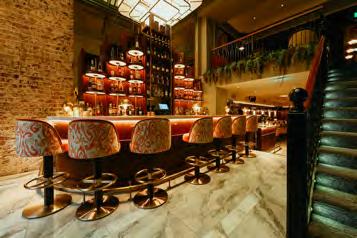
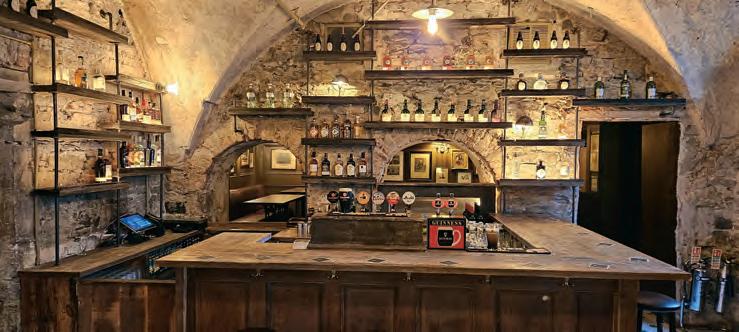
The Stapleton Main Bar is the centrepiece of the venue
One of The Stapleton’s defining features is its ability to offer multiple experiences within the same building without feeling fragmented or overly
conceptual. While many venues attempt to divide spaces into entirely separate identities, Young says the goal here was to create natural shifts in mood and energy throughout the building.
“The key was making sure each space had a different energy while still feeling like part of the same overall venue,” he says.
The Main Bar acts as the social centrepiece of the venue, busy, energetic and designed to flow naturally throughout the day and evening. Upstairs, the Lounge introduces a softer atmosphere, offering guests a calmer environment for cocktails and conversation. Downstairs, meanwhile, the newly opened pub embraces a more traditional Irish pub feel, complete with lower lighting, intimate corners and snug seating areas designed for longer, more relaxed visits.
“The idea wasn’t to create three separate concepts competing with each other, but rather three moods within one venue,” Young explains.
That flexibility has become increasingly valuable within Dublin’s hospitality market, particularly as customer behaviour continues to evolve post-pandemic. Consumers now expect venues to accommodate a variety of occasions, from casual after-work drinks to full evening experiences, often within the same visit.
Young believes The Stapleton’s layout allows the venue to transition naturally between those moments.
“It’s designed to work equally well for a quick pint after work, cocktails upstairs later in the evening, or a long Saturday afternoon that turns into a full night out without anyone really noticing the transition,” he says.
Relaxed hospitality at the core
While design and atmosphere are important, Young repeatedly returns to one central point when discussing the venue’s philosophy: hospitality should never feel forced.
The Stapleton’s overall concept has been intentionally positioned as relaxed and “no-fuss”, something Young says comes directly from the team culture and day-to-day customer interactions.
“A lot of that comes from the team
and the way we treat people,” he says. “I’ve always believed in leading by example and working hard alongside the staff.”
He believes one of the defining characteristics of a successful Dublin pub is approachability, the ability for customers to feel comfortable regardless of the occasion.
“We deliberately kept the venue very walk-in friendly,” he explains. “We want people to feel comfortable walking in at any time, whether they’re dressed up for the evening or just calling in casually for one drink.”
That informality also extends to the venue’s snug spaces, which remain non-bookable by design. While reservations and structured experiences have become increasingly common across hospitality, Young felt preserving spontaneity was essential to maintaining an authentic pub atmosphere.
“Some of the best moments in pubs happen unexpectedly,” he says.
“We didn’t want those areas feeling too structured or closed off.”
“To me, a proper Dublin bar experience is about good service, personality, atmosphere and a sense of humour,” Young says. “People want somewhere they can relax, enjoy themselves and feel comfortable.”
Respecting the building’s heritage
The building itself played a major role in shaping the final concept. With Georgian architectural features and historical links to Michael Stapleton, the original architect of the Powerscourt Town Centre, the venue already possessed much of the character the group wanted to build upon.
Rather than leaning too heavily into nostalgia or creating a themed heritage pub, the design team focused on subtle integration of the building’s history into the venue’s atmosphere.
“The building itself already has so much character and personality, so we wanted to work with that rather than overdo it,” Young explains.
The Georgian influence can be seen in the lighting choices, textures and layout throughout the building, helping create a venue that feels both stylish and rooted in place.
“We didn’t want it to feel like a themed or old-fashioned pub,” he says. “The idea was to create something that respects the history of the building while still feeling modern, welcoming and very much part of Dublin today.”
That balance between tradition and modernity is increasingly important within Dublin hospitality, where customers often seek venues that feel authentic without appearing dated.
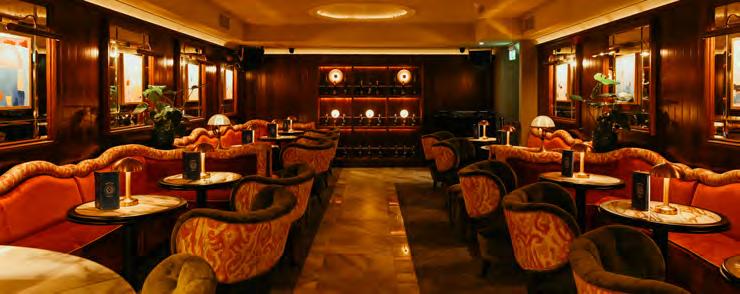
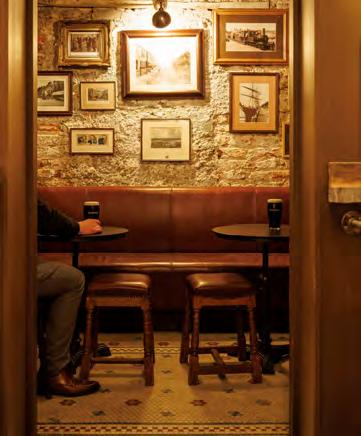
The newly opened pub downstairs in The Stapleton embraces a more traditional Irish pub feel, with intimate corners and snug seating areas
The building has so much character and personality, so they wanted to work with that rather than reimagine it
Entertainment that complements the atmosphere
Entertainment has also been carefully integrated into the venue’s offering. Live music sessions now run Thursday through Sunday in the downstairs snug, while DJs perform in the upstairs Main Bar on Saturday evenings.
Importantly, Young says the entertainment strategy was never intended to overpower conversation or dominate the customer experience.
“The live music adds great energy to the venue without taking away from the relaxed atmosphere,” he says.
The snug in particular has quickly emerged as one of the venue’s standout features, offering an intimate live music setting that feels more organic than performance-driven.
“It’s already becoming a real hidden gem in Dublin,” Young says.
Again, the emphasis remains on atmosphere rather than programming for its own sake.
“The important thing is that people can still relax, chat and enjoy themselves comfortably,” he says.
Keeping the drinks offer simple
The Stapleton’s drinks programme follows a similarly restrained philosophy. At a time when many bars continue to expand premium spirit ranges and elaborate cocktail menus, Young believes simplicity and consistency are becoming more valuable to customers.
“I think people appreciate clarity more than ever,” he says. “There’s absolutely a place for creativity and innovation, but ultimately guests remember quality and consistency.”
For The Stapleton, that means focusing on execution rather than excess. Guinness is poured properly, the beer selection remains concise but reliable, and cocktails are designed to be approachable and balanced rather than overly experimental.
“We’d rather do the basics exceptionally well than overcomplicate the experience,” Young says.
The venue’s spirits selection has also been intentionally curated around products customers genuinely order and recognise, rather than trying
to overwhelm guests with endless choice.
“We focus on quality over quantity and making sure the products fit what our customers actually enjoy,” he explains.
The venue remains primarily drinksled, although plans are currently underway to introduce food specials that complement the relaxed style of the space without shifting focus away from the bar offering.
Building the right team
Like many operators across Dublin hospitality, staffing remains one of the key operational priorities for The Stapleton. The venue currently employs approximately 13 staff, and Young places strong emphasis on maintaining a positive internal culture.
“I’ve always believed that if your staff are happy, customers will feel that straight away,” he says.
Young operates what he describes as an open-door policy with the team, encouraging communication and ensuring staff feel supported within the business.
“It’s important to know what’s going on and support people where you can,” he explains.
He believes positivity, humour and teamwork are essential ingredients in hospitality environments, particularly within high-pressure city centre operations.
“We’re lucky to have a really strong team here and great support behind us from everyone across the company,” he says.
Early customer response
Since opening, customer reaction has been overwhelmingly positive,
according to Young. The combination of multiple spaces, live music and relaxed atmosphere appears to be resonating strongly with both locals and visitors.
“People seem to genuinely enjoy the atmosphere, the live music and the different spaces throughout the venue,” he says.
For Young, however, the most encouraging sign has been the number of repeat customers already returning to the venue.
“It’s always great seeing people happy and enjoying themselves after you’ve looked after them properly,” he says. “We’re already seeing people returning regularly, which was always the goal.”
Looking ahead in a competitive market
Opening a new pub in Dublin city centre remains a significant challenge, particularly amid rising operational costs and changing customer expectations. Yet Young believes the city’s hospitality culture remains one of its greatest strengths.
“The market is incredibly competitive, and guests have very high expectations, which is ultimately a good thing because it pushes standards higher across the industry,” he says.
Despite the pressures facing operators, he remains optimistic about the future for venues capable of delivering genuine hospitality and strong social atmosphere.
“At the end of the day, hospitality is all about people,” Young says. “Dublin still has one of the best social cultures anywhere. If you create a venue people genuinely enjoy spending time in, the city will support it.”
The venue’s spirits selection has also been intentionally curated around products customers genuinely order and recognise, rather than trying to overwhelm guests with endless choice.
Food On The Edge goes international
Over the past ten years, Food On The Edge (FOTE) has welcomed incredible Irish and international speakers to its stage, sharing inspiration with audiences in Galway and Dublin. JP McMahon and the FOTE team are excited to take the conversation a step further, expanding the mission of Food On The Edge across Europe on October 19th and 20th in Malta. Drinks Industry Ireland chats to JP McMahon, founder of Food on the Edge and owner of Michelin Star restaurant Aniar in Galway, about what he wishes to achieve for Irish food and drinks with this international move
As Aniar marks 15 years, how has that journey shaped your vision for taking Food On The Edge beyond Ireland, and why Malta?
Aniar has always been about place, identity, and showing that Irish food can speak confidently on a global stage. Over 15 years, that journey has taught me that food culture grows strongest when it is in conversation with the world, not closed off from it, in isolation. Food On The Edge was built with a dual ambition: to champion Irish food culture internationally, and to contribute to a better global hospitality industry. Malta feels like the right next step because it allows us to extend that conversation outward while staying true to our roots. It is not a departure from Ireland, but an expansion of what we have been trying to do from the beginning.
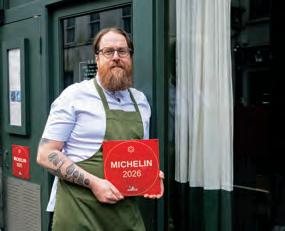
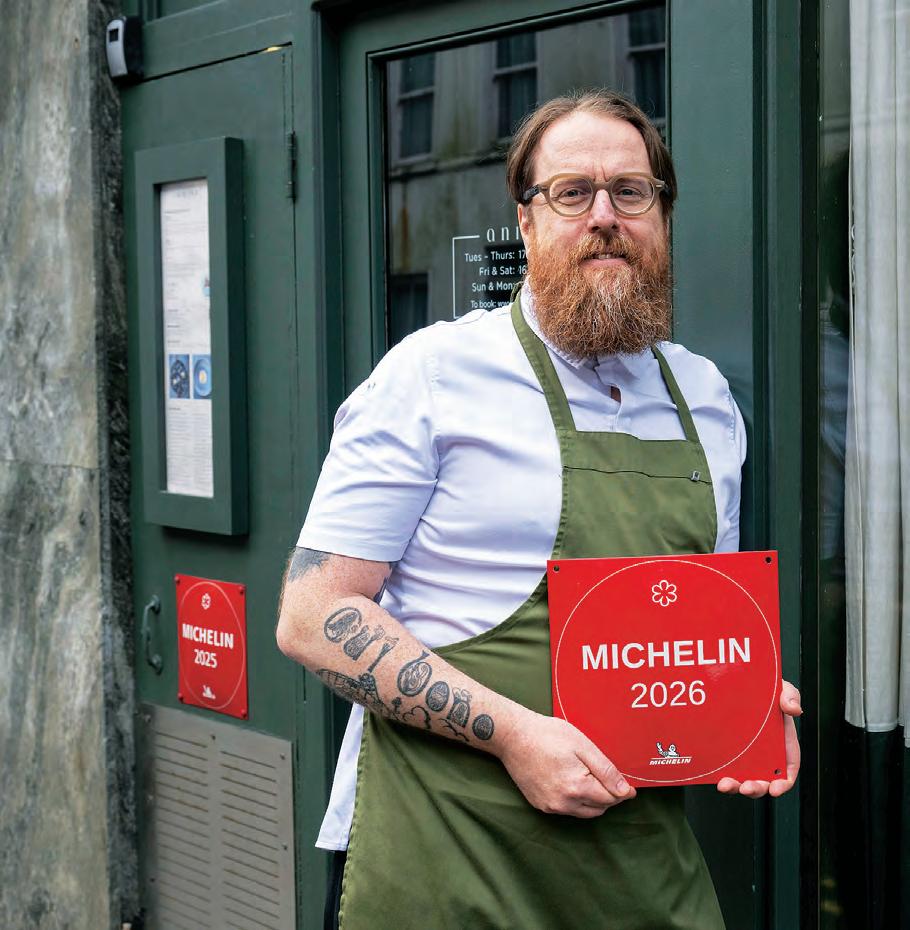
JP McMahon, founder of Food On The Edge and owner of Aniar Restaurant in Galway displaying his Michelin Star
What opportunities does this international move create for Irish food and drinks producers?
It creates visibility, access, and meaningful exchange through dialogue. Irish producers have a remarkable story to tell, not just in terms of quality, but in terms of landscape, heritage, innovation, and craft. Bringing FOTE into an international setting gives Irish food and drinks producers the chance to be part of a wider conversation with chefs, buyers, sommeliers, bartenders, media, and hospitality leaders from many countries.
That kind of exposure matters to big and small producers. It helps position Irish produce not as something peripheral, but as something central to the future of quality-driven global hospitality. It puts Irish food and drink culture first. How do you see the role of the drinks industry – bartenders, distillers and sommeliers, within the wider FOTE conversation?
They are absolutely central to it. Hospitality has too often separated food and drink into different silos, when in reality they are part of the same cultural and sensory experience. Bartenders, distillers, brewers and cider makers, and sommeliers are storytellers in their own right. They shape how we think about ingredients, craft fermentation, pairing, atmosphere, and even hospitality itself. At FOTE, the drinks industry belongs in the conversation not as an add-on, but as an equal partner in shaping where the industry goes next. We have had many speakers over the years touch on this subject as well as being part of the culinary expedition aspect of FOTE. Will there be a stronger focus on drinks programming or innovation at this year’s event?
Yes, I think there will be a stronger and more intentional presence. Innovation in drinks is one of the most exciting areas in hospitality right now, whether that is fermentation, low and no alcohol, regenerative agriculture, terroir-driven wine, or the rediscovery of local traditions through spirits and cocktails. We want that energy represented at FOTE2026 through Irish and Maltese drinks. Drinks programming will not be separate from the main conversation, but
woven into it, because that is where it belongs. FOTE brings people together to inspire them to push further. Sustainability continues to be a key theme across hospitality. How will that be explored from a drinks perspective?
Sustainability in drinks goes far beyond packaging, though that matters too. It touches farming practices, water use, biodiversity, transport, waste, energy, seasonality, and the ethics of production. From a drinks perspective, it is also about rethinking value: what we grow, what we import, what we discard, and how we build systems that are both environmentally and economically viable. I am interested in practical examples, not just broad statements. The drinks world has a huge amount to contribute here, particularly around circular thinking, local sourcing, and innovation through restraint. This is a conversation that we will continue in Malta.
What kind of collaboration are you hoping to spark between Irish and international industry professionals in Malta?
The hope is for genuine exchange rather than simple networking, even though networking is an important part of the symposium. I would like Irish and international professionals to leave with new relationships,
new ideas, and perhaps even new partnerships. That might mean chefs working more closely with producers, bartenders engaging with distillers in new ways, sommeliers discovering Irish ingredients, or conversations that lead to collaborations across borders within Europe.
FOTE has always been about bringing people together in a way that feels open and human. Malta gives us a new meeting point for that. What does success look like for this first international edition of Food On The Edge?
Success would mean that the spirit of FOTE not only survives the move, but grows through it. I would want people to leave feeling challenged, inspired, and connected. I would want Irish food and drinks to be represented with confidence and originality, and for international guests to see the value of what we are building.
Most of all, success would mean proving that FOTE can travel without losing its soul, that it can remain a place for honest conversation, bold ideas, and meaningful change within the hospitality industry.
All we have is each other and we are stronger together. Being islands with a rich history, Ireland and Malta fit together well and I hope that we create lasting dialogue between the two places. ■
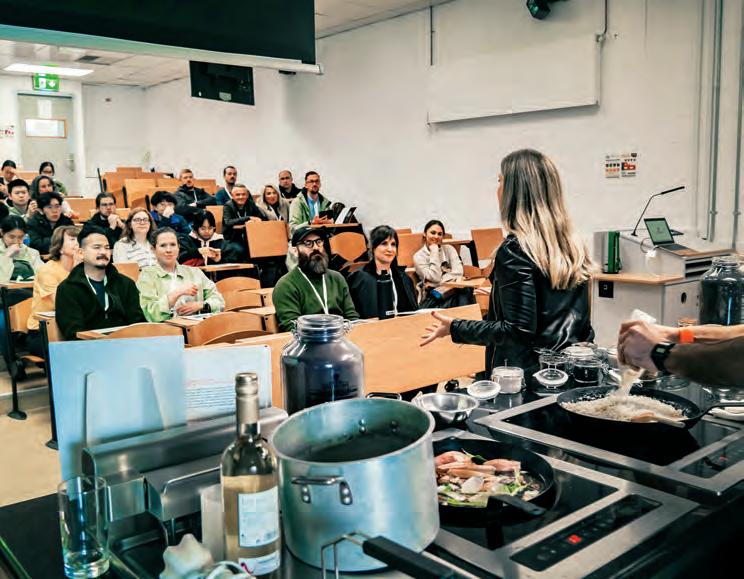
Over the past ten years, Food On The Edge (FOTE) has welcomed incredible Irish and international speakers to its stage, sharing inspiration with audiences in Galway and Dublin
Tastes like summer
It’s thirsty-work weather. Tapping into the fastgrowing mindful drinking trend, there is a new generation of drinkers increasingly balancing enjoyment with more conscious lifestyle choices. In response to this, we can see innovation in both taste, volume and alcohol percentage. Drinks Industry
Ireland looks at the heroes of the drinks categories for the season ahead
Coors unveils new ‘Chiller Rooms’ summer series across Ireland
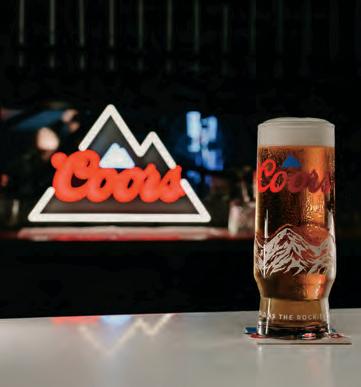
Coors is turning up the volume on summer 2026 with the launch of its new Coors Chiller Rooms, a nationwide experiential on-trade series designed to fuse ice cold refreshment with high energy music culture. Rolling out from June through August, the brand will activate selected beer gardens across Ireland with fresh live DJ performances and ice cold refreshing pints of Coors, tapping into key summer occasions. With outdoor occasions continuing to play a key role for younger drinkers, and 28% of consumers
choosing to drink at social gatherings in beer gardens, ensuring venues are set up to meet this demand has never been more important. With beer gardens and outdoor spaces central to summer trading, the Coors Chiller Rooms series is designed to bring added energy into a number of on-trade spaces, helping to create standout moments and build atmosphere during key summer occasions.
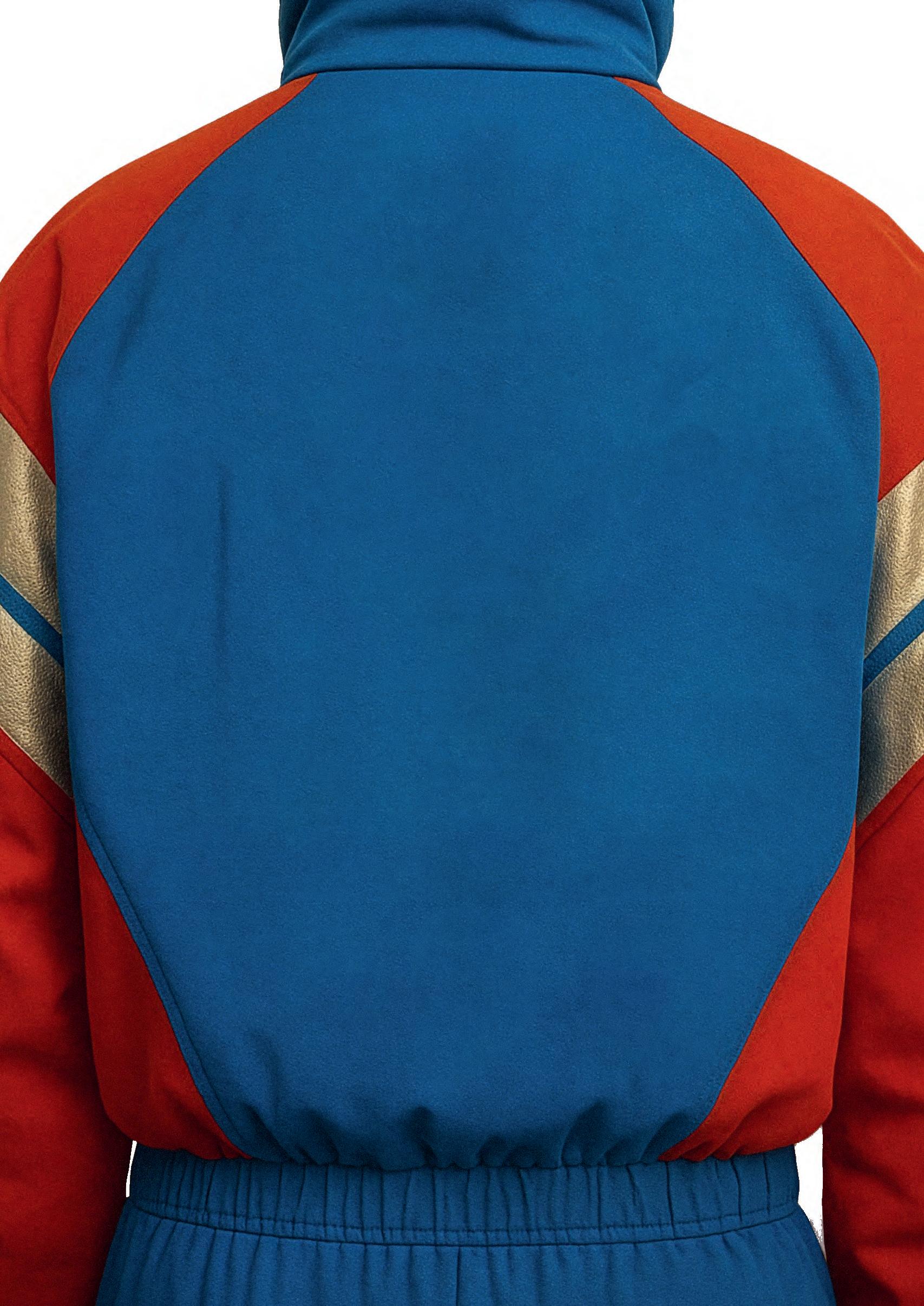
A standout element of the campaign is Coors’ collaboration with Mundo Moo by Daniel Mooney, an Irish illustration led brand celebrated for its cosy, high quality basics, playful detailing and roots in fashion and costume design. Together, they’ve
The brand will activate selected beer gardens across Ireland with fresh live DJ performances and ice cold refreshing pints of Coors, tapping into key summer occasions
created limited edition Coors festival Retro Jackets which will be available for purchase exclusively at the events, with additional limited pieces offered through competitions on Coors’ social channels.
The series officially kicked off in Dublin in early June. The non ticketed event drew strong footfall and delivered the brand’s signature blend of music led energy and ice cold serve.
With additional events scheduled nationwide throughout the summer, the Chiller Rooms position Coors at the centre of Ireland’s outdoor social season, creating culturally relevant moments in outlet while reinforcing Coors’ association with ice cold refreshment.
Heineken Greenlight: bringing big music moments to the heart of Irish cities
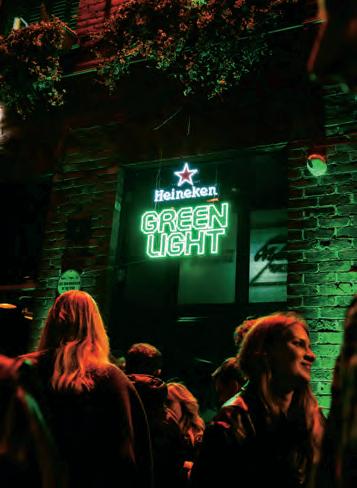
Heineken Ireland has recently introduced Heineken Greenlight, a new music platform designed to bring live music experiences into pubs across Ireland’s cities. The initiative builds on Heineken’s longstanding association with music, with a focus on creating additional reasons for people to visit pubs during key trading weekends.
Rather than focusing solely on large-scale events, Heineken Greenlight centres on bringing artists into well-known pub venues, creating more intimate live music moments
within familiar social settings. The platform is designed to support footfall during key periods, such as bank holidays by adding a cultural dimension to a night out.
As social habits continue to evolve, live music remains an important part of how people choose where to spend their time. Heineken Greenlight looks to work within this dynamic by bringing together a mix of international talent and emerging Irish artists, giving audiences access to performances in settings that are closer to the everyday pub experience.
The series launched in Dublin over the May Bank Holiday weekend, with more than 35 acts performing across 10 venues. Sets from TOMORA, Basement Jaxx, Mike Skinner, DJ Seinfeld, Madra Salach and Sprints formed part of the lineup, contributing to strong levels of activity across the city over the weekend.
This continued into Cork for the June Bank Holiday, where performances from Inhaler, Jazzy, Men I Trust, Florence Road, Nightmares on Wax, Huey Morgan and Cliffords were hosted across a range of iconic venues, supporting increased interest in pubs across the weekend.
Heineken Greenlight represents another way in how the brand supports the on-trade, using music as a way to enhance the pub experience and encourage footfall, particularly at times of the year when people are looking for something different from a night out. Further events are planned later in the year as the platform continues to evolve.
Bulmers launches new flavours range in time for summer
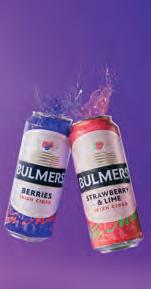
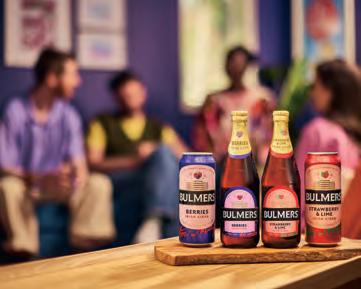
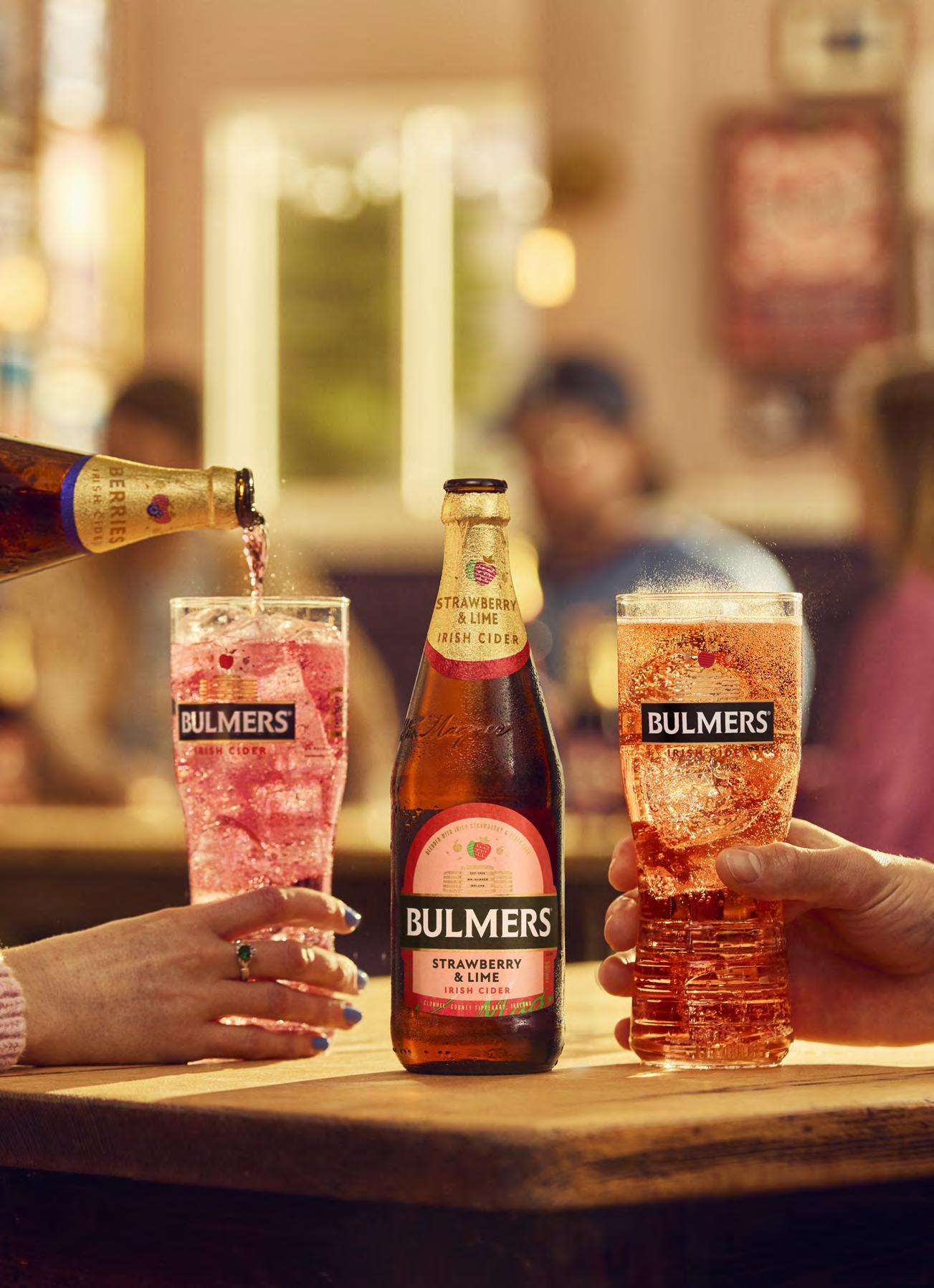
Much-loved Irish cider brand Bulmers is giving more reasons to celebrate this summer with the launch of two new flavours, Bulmers Strawberry & Lime and Bulmers Berries.
The new range, which is now available across both the on and off trade, reflects Bulmers commitment to meeting growing consumer interest in fruit-forward, refreshing cider options.
Both new variants have been developed through extensive
consumer testing, ensuring the right balance of sweetness, refreshment, and drinkability. Bulmers Strawberry & Lime delivers a light, refreshing taste, blending sweet strawberries with a crisp citrus twist while Bulmers Berries combines strawberries, raspberries, and blueberries to create a bold, juicy flavour with a smooth finish that feels both premium and contemporary. The result is a range designed to appeal to both existing Bulmers drinkers and a new generation seeking more variety in their choices.
To mark the launch, Bulmers is rolling out a fully integrated campaign including video on demand, outdoor, social, digital audio and radio as well as sampling activations in both the on and off trade that will help drive trial throughout key summer moments. This support underscores Bulmers’ commitment to helping licensees unlock the full commercial value of the new range. Across offtrade channels, Bulmers will also be working with retail partners to help support the launch in store with takeovers, POS and dedicated social media activity.
Commenting, Siobhan Casey, head of brand for Bulmers, said: “This launch marks an exciting moment for Bulmers as we expand our range in line with growing consumer demand for high-quality, fruit-forward cider options. Strawberry & Lime and Berries reflect our ambition to elevate flavour within the cider category, delivering a fruit-led cider with a more mature, sessionable taste that is refreshing, contemporary and full of character.
“Flavoured cider presents a real opportunity for the trade, and we believe these new additions will not only strengthen the Bulmers
Bulmers has launced Bulmers Strawberry & Lime and Bulmers Berries in time for summer
Heineken Greenlight aims to bring together a mix of international talent and emerging Irish artists
portfolio but also help drive value and excitement across the category in 2026 and beyond. We’ve had a great response from venues so far looking to tap into the growing market and we’re looking forward to working with them over the coming months.”
Bulmers Strawberry & Lime and Berries are available to the on-trade in 500ml bottles. The new range has also launched into Ireland’s off-trade in 500ml single bottles and 4x500ml packs and is available nationwide in all major retailers and convenience stores.
The new flavours complement Bulmers existing portfolio including its Original Apple Cider, Bulmers Light and Bulmers 0.0 which launched last year and has proven successful with those looking to moderate.
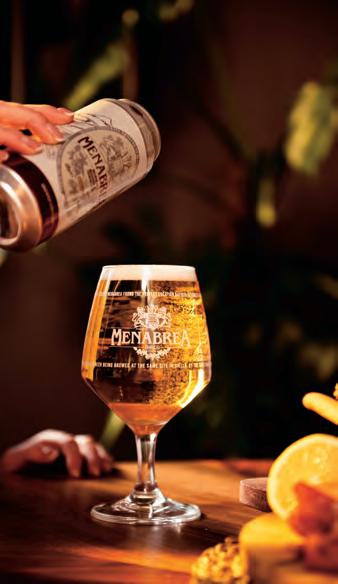
Premium Birra Menabrea expands into Irish off-trade
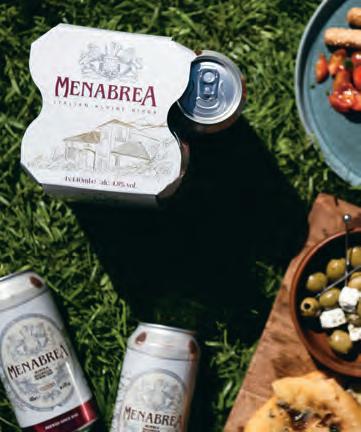
Menabrea has arrived in Ireland’s offtrade giving consumers looking for an authentic premium beer this summer a refreshing new choice.
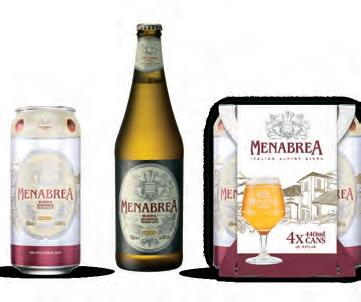
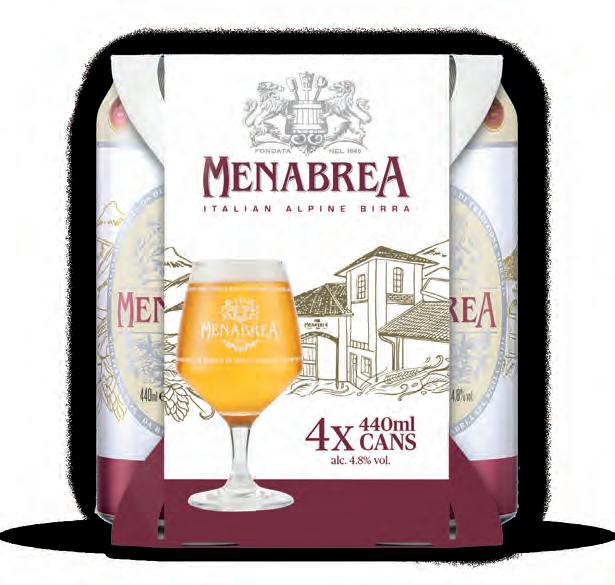
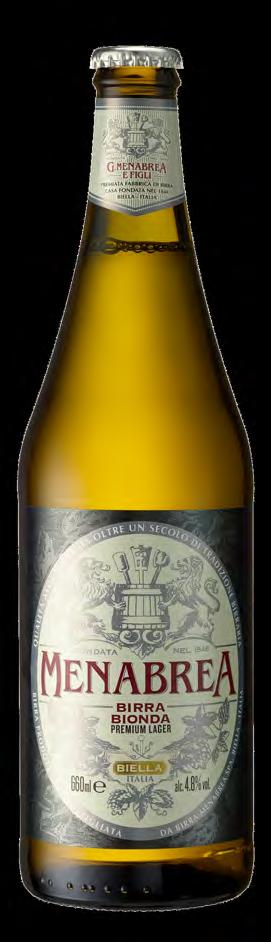
The Italian lager is available nationwide across grocery, convenience and forecourts and comes in two formats: a 660ml sharing bottle and 4x440ml can pack.
With roots in Italy’s Piedmont region at the foothills of the Alps, the refreshing lager is inspired by a brewing heritage that dates back to 1846 and spans five generations of the same family.
The 4.8% pale lager is renowned for its taste thanks to its careful balance
of flavours that are both citrus and bitter and fruity and floral. The result, a refreshing lager that can be enjoyed on its own or with food. Menabrea lends itself to a variety of dishes and is a great option for summer entertaining making it a strong addition on shelf.
The expansion into the Republic of Ireland off-trade follows growing success for the brand across GB, where Menabrea has seen volume growth of +30%1 YoY across all offtrade outlets. This is +16%1 ahead of the premium beer category average, as people continue to opt for authentic premium options.
As part of the launch Menabrea is working closely with key retail partners to help support the launch in store with takeovers, POS, retail media and sampling activity that will help drive trial throughout key summer moments. Menabrea is also offering shoppers the chance to win a luxury 4-day Italian alpine escape where they will stay in Europe’s highest hotel offering panoramic views of the mountains. Shoppers will be able to scan available POS to enter.
Commenting, Eleanor Quigley, senior brand manager for Menabrea said; “We’re delighted to launch Menabrea into Ireland. Pairing beautifully with food, Menabrea will be a great addition to the premium beer offering this summer, helping retailers tap into the increased occasions summer brings. We’re pleased to be able to offer a range of formats that further support the season, with our cans proving popular thanks to their added convenience.
“We are looking forward to working with our partners in the off-trade to bring Menabrea to their consumers and see growth opportunities in the category with the introduction of this crisp, refreshing premium lager.”
Eleanor Quigley, senior brand manager for Menabrea chats to Drinks Industry Ireland about this special lager
Menabrea has been brewed since 1846 and is now in its fifth generation of family ownership. How has that heritage shaped the brand’s identity and brewing philosophy today?
Menabrea has been family-owned for five generations and is steeped in traditions and a history that is central to its identify. Hailing from the Piedmont region, Menabrea is incredibly proud of its rich heritage that centres on quality ingredients, time-honoured practices and seeking enjoyment from life’s simple pleasures.
In a market dominated by lighter lagers, how does Menabrea Bionda stand out with its more complex, malty flavour profile?
Menabrea stands out thanks to its unique taste profile that is light and refreshing yet rich and malty with a depth that sets it apart from other lighter or world lagers. The balance between flavour and drinkability is what makes it distinctive while also allowing it to pair excellently with food, enabling retailers the opportunity to play into more occasions when they stock Menabrea.
The Italian lager has landed in Ireland just in time for summer
The Italian lager comes in two formats: a 660ml sharing bottle and 4x440ml can pack
Can you talk us through the balance of flavours in Menabrea Bionda, particularly the interplay between citrus, bitterness, and floral notes?
Menabrea Bionda combines gentle citrus freshness with delicate floral aromas and a clean hop bitterness. The malt character adds softness and a slight sweetness, balancing the crisp finish. The result is a lager that feels refined, balanced, and easy to drink.
How important are ingredient quality and traditional brewing methods in achieving Menabrea’s distinctive taste?
The quality of ingredients is essential to Menabrea’s taste and consistency. Carefully selected malt, Hallertau hops and yeast alongside soft water all contribute to the beer’s balanced flavour and unmistakably smooth finish as well as its exceptional
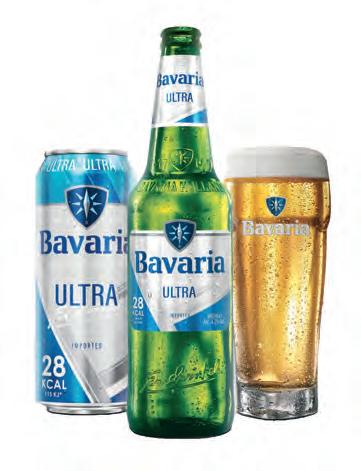
Bavaria Ultra launches as Ireland’s first low-carb lager
Ireland is set to welcome its first dedicated low-carb lager with the launch of Bavaria Ultra, introducing a new option for consumers seeking a full beer experience with a lower carb and calorie profile - without compromising on taste.
This new premium lager is now available in Ireland through Comans Beverages Ltd., the official distribution partner for the worldfamous Bavaria brand. Brewed by Royal Swinkels, a seven-generation family of brewers with over 300 years of heritage, it combines deep-rooted
head retention. Attention to detail throughout the brewing and maturation process helps maintain the character and quality the brand is known for.
With Irish consumers increasingly interested in premium and authentic beers, how do you see Menabrea resonating in the Irish market?
Despite cost concerns, consumers are still turning to premium options choosing to spend on brands that deliver on quality. Rich in tradition and heritage, Menabrea’s provenance appeals to today’s consumers who are becoming increasingly mindful of ingredients and process. With so many options on the market, consumers will often look to a brand’s values in line with their own beliefs to help distinguish whether it is a brand to buy. Menabrea appeals to drinkers looking for something
craftsmanship with a pioneering spirit. The Swinkels family is known for charting an independent course and continuously evolving to meet changing consumer needs. From early advances in alcohol-free brewing to ongoing developments in sustainable, modern production, this commitment to innovation remains at the heart of the business. This latest launch reflects a growing shift towards more mindful drinking habits, with Irish consumers increasingly seeking beverages that align with active and health-conscious lifestyles.
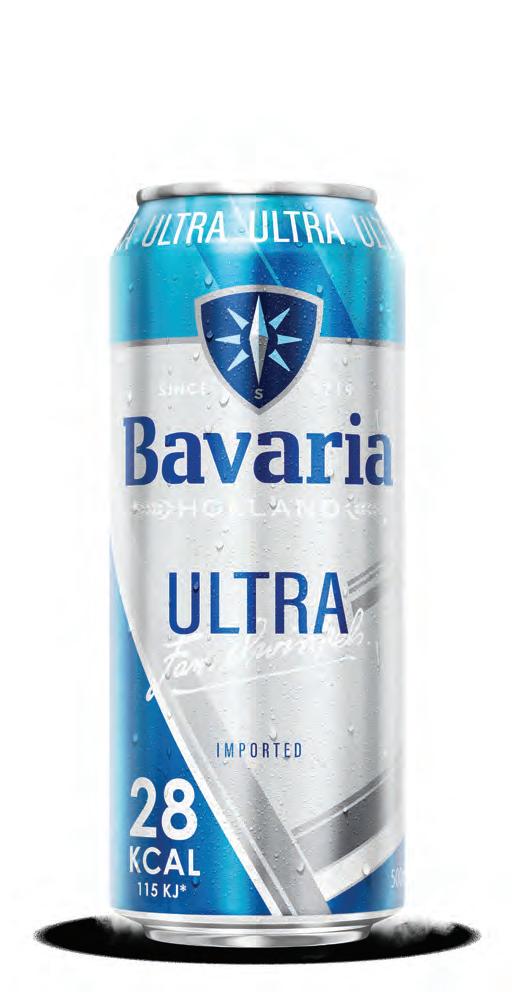
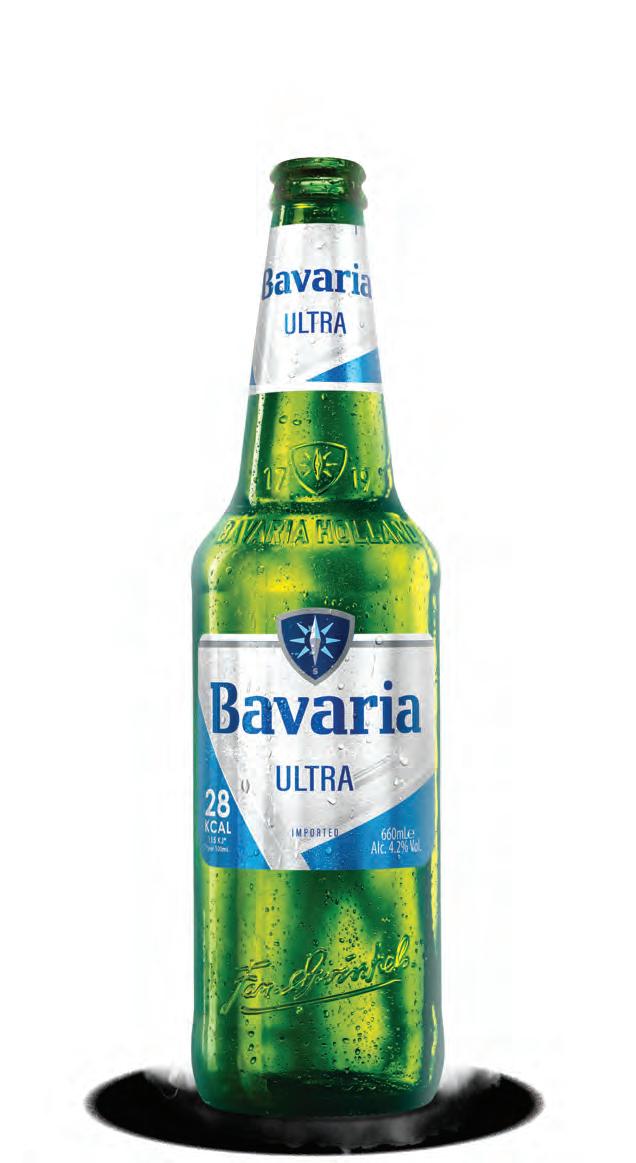
Part of the renowned Bavaria brewing portfolio, Bavaria Ultra delivers a premium lager experience with a lower carb and calorie profilewithout compromising on taste.
With 4.2% ABV, it contains just 0.59g of carbs and 28 kcal per 100ml, nearly six times lower in carbs than a standard lager, offering a smarter choice for consumers who want to enjoy beer without trade-offs. Bavaria Ultra has been specifically developed to meet the needs of a new generation of beer drinkers who are increasingly balancing enjoyment with more conscious lifestyle choices.
Smooth, crisp and highly refreshing, Bavaria Ultra is brewed with carefully selected ingredients and natural mineral water sourced from Bavaria’s own spring, helping
more characterful than standard lager while still being approachable and refreshing.
Menabrea is positioned as both a refreshing standalone beer and one that pairs well with food. What kinds of food pairings would you recommend to best showcase its character?
Thanks to its balanced flavours and refreshing characteristics, Menabrea pairs well with a variety of dishes from complementing light meals to cutting through heavier flavours. Being from Northern Italy, it also pairs excellently with fried and crispy dishes including arancini and croquetas as well as grilled and cured meats and cheeses. The balanced clean beer makes a great palate refresher between courses.
Menabrea is available through C&C Group in Ireland. For more information, please visit menabrea.co.uk/
deliver a clean and balanced taste. Bavaria Ultra is crafted using an innovative brewing process and a newly developed, complex recipe, designed to reduce carbohydrates while maintaining a superior taste.
A Blush of summer from Moët Hennessy
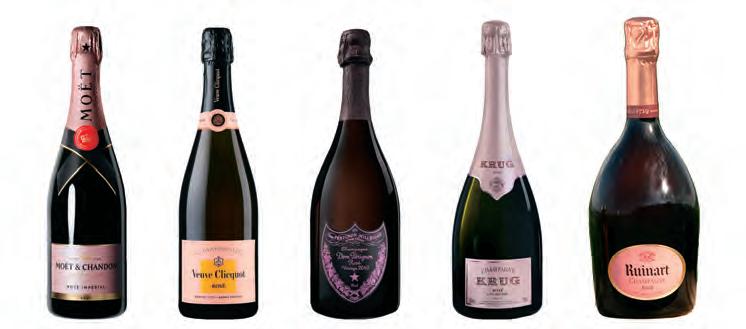
As hints of summer approach, Moët Hennessy welcomes the return of rosé champagne season with its esteemed, world class portfolio of rosé expressions. Featuring favourites from Moët & Chandon, Veuve Clicquot, Ruinart, Krug and Dom Perignon, the collection is vibrant yet elegant. Designed for everything from relaxed at-home entertaining to glamorous rooftop celebrations, these rosé champagnes are the perfect treat for summer moments, whether you prefer timeless classics or bold, fruit-forward expressions.
Enticing, radiant and spontaneous, every bottle of Champagne Brut Impérial Rosé embodies the Maison’s savoir-faire, where three noble grape varieties unite in perfect harmony. Moët & Chandon Brut Impérial Rosé has a recommended retail price of €69.50.
Another favourite rosé champagne is Veuve Clicquot Brut Rosé. Created by Madame Clicquot in 1818, this
lower carbs than other premium/ standard lagers 28
4.2% 6x 1g Only Less than carbs *per 100ml * * kcal
Bavaria Ultra is the first low-carb beer to launch in the Irish market, brewed for a new generation of beer drinkers. This refreshing lager delivers a clean, crisp taste with no compromise.
With a best-in-class low-calorie and low-carb profile at 4.2% ABV, it’s smooth, light, and highly refreshing. Crafted with carefully selected ingredients and natural mineral water from Bavaria’s own spring, it’s designed to deliver full flavour with fewer carbs.
Brewed using an innovative process and a completely new, complex recipe - more intricate than traditional lager brewing - Bavaria Ultra maintains its low-carb profile while delivering a superior taste.
Want to know more?
Visit the Bavaria website for more details about our products: int.bavaria.com @bavariaireland
Drink Bavaria Ultra Responsibly
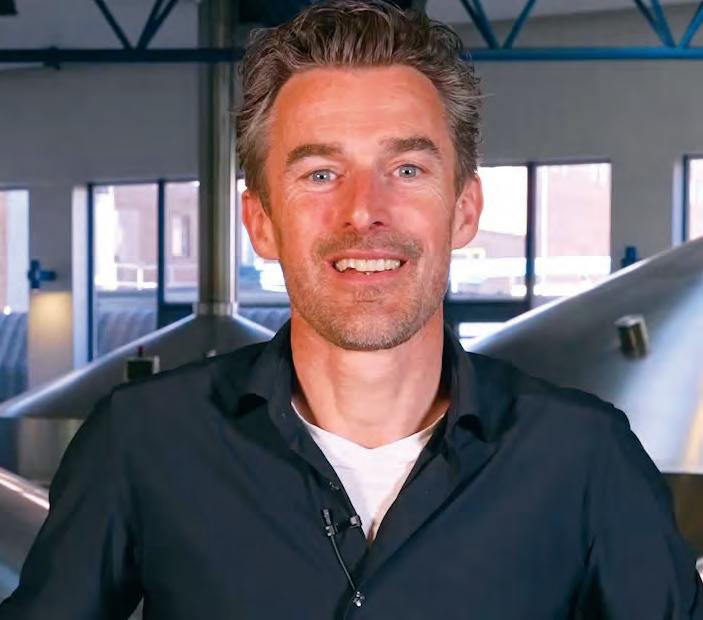
In conversation with Emiel Hendrikx
With Irish consumers increasingly seeking balance in their drinking habits, how does Bavaria Ultra’s low-carb, low-calorie profile translate into a strong commercial opportunity for retailers and publicans?
Irish consumers are increasingly changing their drinking habits as they pursue healthier lifestyles. Ultra taps into this trend by offering a low-carb, lowcalorie option that delivers on taste and refreshment with no compromise, creating new occasions for beer lovers in Ireland.
Globally, the low- and no-carb beer segment has seen exponential growth, in markets such as the US and Australia demonstrating clear consumer demand and commercial success. The ultra market has yet to appear in Ireland, but there is no doubt that it creates a huge opportunity for retailers to grow sales by tapping into this undeniable trend amongst beer lovers in Ireland whilst also attracting new people into the category particularly in midweek and food led occasions.
Where does Bavaria Ultra sit from a pricing and margin perspective, and how does it support premiumisation within the lager category in Ireland?
Bavaria Ultra is positioned as a premium highquality lager while offering strong value for money, allowing retailers to deliver an accessible everyday price point. From launch, it will be available in two key formats: a 660ml bottle (promotional price €3), tapping into a fast-growing segment, and a 4-pack 500ml can format (promotional price €7.50), designed to support both take-home and everyday consumption occasions across the off-trade.
What evidence or insights can you share around rate of sale for lighter-style beers, and how confident are you that Bavaria Ultra’s “clean, crisp taste with no compromise” will convert into repeat purchase?
The growth of lower calorie and low carb options across all categories has been incredible over the last five years and this trend is also very evident
is the first known blended rosé champagne. This fresh and opulent rosé is the result of a blending of grapes from 50 to 60 different crus, and is composed of up to 45% reserve wines.
Veuve Clicquot Brut Rosé has a recommended retail price of €81.90. Ruinart Rosé is a blend of the freshness of chardonnay, and the fruitiness of pinot noir. Ruinart Rosé has a recommended retail price of €119.75.
within beer as well. No- and low-alcohol has been flying and this is mirrored by the growth of low-carb beer globally, with industry estimates projecting a compound annual growth rate (CAGR) of around 8% over the coming decade, underlining the long-term potential of the segment.
The low-carb beer segment is just launching in Ireland, it presents a clear opportunity for growth. With Bavaria Ultra, we’ve focused on delivering a clean, crisp taste that meets consumer expectations of a premium lager, alongside a low-carb, lowcalorie profile. That balance is key to driving repeat purchase, and we’re confident it will resonate strongly with Irish consumers.
How are you working with the Irish on-trade to integrate Bavaria Ultra into food-led occasions and menus?
At launch, Bavaria Ultra will be focused on the offtrade channel, where we see a strong opportunity to build awareness and trial at scale. Food-led occasions
remain central as consumers intake and that better
We are supporting programme influencer partnerships designed to calorie credentials
With Bavaria more active and activation awareness
Bavaria Ultra more active our marketing awareness partnerships,
At launch, initial burst, media partnerships. influencer partnership rugby player Anna Madigan, the active lifestyle Gen Z and by branded designed to relatable way. Beyond launch, momentum partnerships on social activity channels, supported awareness
This is complemented led by the Comans of-sale materials drive trial at
Emiel Hendrikx is confident that Bavaria Ultra will resonate strongly with Irish consumers due to its premium taste alongside the low-carb, low- calorie profile
Moët Hennessy offers an essential guide to summer effervescence
of Bavaria
central to the brand’s positioning, particularly consumers are increasingly mindful of calorie macronutrients, and are seeking options align with more balanced lifestyles. supporting the launch through a programme of marketing activity, including PR, partnerships and targeted campaigns, to highlight the product’s low-carb, lowcredentials alongside its clean, crisp taste.
Bavaria Ultra positioned for a younger, active consumer, what specific marketing activation plans are in place to build brand and trial in Ireland?
Ultra is positioned to appeal to a younger, active and health-conscious consumer, and marketing strategy is focused on building and driving trial through a targeted mix of partnerships, PR and digital activation. launch, activity is centred around a strong burst, including a targeted PR drop and partnerships. A key element of this is our first partnership in Ireland, working with former player Ian Madigan and lifestyle influencer Madigan, who bring strong credibility within lifestyle space and appeal across both millennial audiences. This is supported branded VOX pop-style content through Joe.ie, to engage consumers in an authentic and way.
launch, we will continue to build momentum through additional influencer partnerships throughout the year, alongside alwaysactivity via dedicated Bavaria Ireland supported by geo-targeted media to drive at scale.
complemented by strong in-store execution Comans sales team, with impactful pointmaterials designed to maximise visibility and at the point of purchase.
The story of Krug Rosé dates back to 1976. Krug Rosé is a masterful blend of white base wines to bestow elegance, fruit notes and great freshness, completed with traditionally macerated Pinot Noir red wines to add structure and spice. Krug Rosé has a recommended retail price of €604.80.
Dom Pérignon Rosé displays all the aromatic nuances of Pinot Noir – raspberry, fig, strawberry and cherry – exacerbated by the delicacy,
mineral elegance and light notes of chardonnay.
Dom Perignon Rosé has a recommended retail price of €491.05.
Whispering Angel unveils its 20th vintage
Remarked as the world’s number one rosé, Whispering Angel proudly celebrates its 20th vintage with the momentum and unmistakable confidence that has defined the brand since 2006. A milestone that marks two decades of leadership and category-defining excellence, Whispering Angel’s 20th Anniversary is more than just a date in the calendar, but a celebration of an enduring legacy and vision for the future of rosé.
Sacha Lichine founded Whispering Angel in 2006 with a bold intention: to bring rosé to greatness. Since its inception, Whispering Angel sparked the global rosé renaissance, elevating an entire category of wine into a symbol of luxury, status and French joie de vivre. Today, it continues to lead with sustained sales growth, and the charisma that has made the brand a global icon. Clear, vibrant and culturally fluent, Whispering Angel remains the preferred French rosé world-over and the benchmark against which every other rosé is measured.
The new anniversary label is refined and collectible, and features Sacha
Lichine’s signature alongside the iconic Whispering Angel brand mark - the angels of Chateau d’Esclans that have become its ambassadors to the world. To mark the brand’s milestone, Whispering Angel is proud to be kicking off a year of celebrations with the unveiling of a special edition artwork, composed of 20 visual stories, each representing a chapter in the Whispering Angel journeypeople, places, and moments that shaped the world’s most influential rosé. Whispering Angel 2025 Vintage - RRP from €26.65
The Hugo Spritz is topping the list for cocktails this summer
The Hugo Spritz is quickly overtaking the mainstay cocktails on summer menus, and St~Germain Elderflower Liquor is the key ingredient in making the best Spritz possible. St~Germain is made from fresh and wild elderflowers only. Harvested by hand just once a year when in bloom is the key to ensure only the freshest results. Highly awarded and regarded by leading drink specialists, St~Germain is refreshingly light and sparking, created as a tool for the trade and for cocktails.
The brand that inspired the global rosé renaissance celebrates an enduring legacy like no other
St~Germain is refreshingly light and sparking
Modern Irish drinks
Altered State is an Irish drinks import, distribution, and brand development company founded by Karl Cooney and Colly Murray, focused on bringing progressive premium drinks brands to the Irish market while also developing contemporary Irish products for export.
The portfolio includes 15 brands spanning RTDs, mixers, and cocktail ingredients, including Whitebox Cocktails, The Pickle House, and Karl Cooney’s own brands ÓL Irish Cocktails and Dublin Cocktail Lab.
ÓL is a new generation Irish RTD brand created to bring a more transparent, natural, organic, and culturally modern approach to the category. Produced in Ireland, the brand focuses on Irish and organic ingredients, combining the sensibility of a modern cocktail menu with distinctive flavour profiles such as yuzu & pine, dillisk & passionfruit, and chokeberry & palo santo. The brand has partnered with IMMA and festivals including Another Love Story, positioning ÓL at the centre of Ireland’s creative and cultural scene.
Altered State also imports and distributes Whitebox Cocktails, one of the fastest-growing RTD cocktail brands to emerge from the UK and a standout within the growing 100ml full-strength single-serve category. Whitebox is now listed in Sainsbury’s, Selfridges, on Aer Lingus transatlantic flights, and in numerous Irish independent off-licences, showing a strong case for the format within the Irish market. The portfolio also includes The Pickle House, creators of premium Bloody Mary RTDs and cocktail mixers listed with Virgin Atlantic.
Alongside the portfolio, Cooney develops bespoke syrups and flavour solutions, collaborating with venues including The Animal Collective and Library Street. With growing support across both the on and off-trade and coverage in more than 150 accounts nationwide, Altered State expects significant growth this year as consumers increasingly move towards founder led drinks brands with provenance, natural flavour, and authenticity over sugary low-cost RTD alternatives. www.alteredstate.ie
You little Rascal!
Meet Chido, the independent Irishbrewed Mexican-style lager from Rascals Brewing Company, created for easy-going summer drinking and built around one simple idea: real lime, already included. Brewed with genuine lime zest, Chido delivers the bright citrus character people expect from a Mexican lager, without the need for a wedge stuffed into the neck of the bottle.
At 4% ABV, Chido is crisp, refreshing and highly approachable, designed to appeal far beyond traditional
Bacardí is back at
Casa
Bacardí kicked off its live event programming in March at Pygmalion Dublin and now is rolling into the summer festival scene in Ireland full steam ahead!
Bacardí is bringing the party to some big-name festivals this summer, kicking off with The Greenfields Festival over the May long weekend in Co. Laois with its own Casa Bacardí stage and bespoke cocktail bar to bring the dance vibes all weekend long.
In June, they have partnered with none other than Beyond the Pale festival in Glendalough Co. Wicklow. Festival goers will find their bar alongside the Outpost stage and be treated to Bacardí and Bombay Sapphire cocktails all weekend long! With more festivials yet to be annouced, Bacardí is set to be very active all summer so stay tuned.
craft beer audiences. Clean malt character, light bitterness and a subtle burst of fresh lime make it an easy choice for beer gardens, barbecues, festivals, casual dining and long summer evenings. Presented in a clear 330ml bottle, it leans into a familiar and accessible visual style while maintaining the quality and attention to detail of an independent brewery product.
The brand positioning focuses
Bacardi weekend
Whitebox Cocktails is one of the fastest-growing RTD cocktail brands to emerge from the UK
Altered State also imports and distributes Whitebox Cocktails
Chido is an Irish-brewed Mexican style lager from Rascals Brewing Company
at the heart of Ireland’s Festival scene this summer
on sociability, sunshine and uncomplicated good times rather than heavy craft beer messaging. Chido is aimed at consumers who want flavour and quality, but without the intensity or perceived barriers sometimes associated with craft beer. It comfortably sits alongside mainstream world lagers while offering a fresher, more modern and independently brewed alternative.
With strong standout branding, broad consumer appeal and an easy-drinking profile suited to warmweather occasions, Chido is designed to perform strongly across pubs, bars, outdoor events and retail throughout the summer season and beyond.
Take a moment of indulgence this summer
This summer, elevate every occasion with iStil38 Craft Irish Vodka
A premium Irish vodka that combines world-class quality with homegrown pride.
With three exceptional expressions, Original, Vanilla, and Pink Berries — iStil 38 offers something for every taste and every serve.
The Original expression, crowned World’s Best Vodka 2024, sets the benchmark for purity and smoothness, delivering a clean, refined finish that stands above the rest. The Vanilla variant brings a subtle sweetness and warmth, perfect for indulgent summer serves, while Pink Berries offers a vibrant, fruitforward twist that shines in spritzes and refreshing cocktails.
Smooth, sophisticated, and incredibly versatile, iStil 38 is the
ideal base for summer cocktails, from light spritzes to classic serves with a modern twist.
Dadá launches limited edition ‘Universes’ activation to drive summer sales
This summer Dadá, one of the most recognised and popular Argentinian wines is rolling out a new limitededition ‘Universes’ label activation across its best-selling Dadá #1. Featuring three distinctive designs - all with the same wine insidethe campaign is designed to drive standout on shelf, build talkability and visibility, and capitalise on key gifting periods in the lead-up to Father’s Day.
Inspired by the Dadaism art movement, known for rejecting rules and embracing creativity, Dadá continues to challenge traditional category norms with wines that balance approachability with bold personality.
The ‘Universes’ limited edition series comes to life by reimagining the brand across alternate worlds, where each limited-edition label represents a different interpretation of Dadá. The result is a visually disruptive and highly collectable
Bacardi has partnered with Beyond the Pale festival in Glendalough Co. Wicklow where festival goers will be treated to Bacardí and Bombay Sapphire cocktails all weekend
Brewed with genuine lime zest, Chido delivers the bright citrus character people expect from a Mexican lager,
series, captured in the campaign line: A limited edition, for unlimited universes.
At the core of the activation is Dadá #1 Art Wine, the same smooth, easy-drinking red blend with soft vanilla notes, designed to appeal to a broad consumer base.
Available for a short window across May and June, the activation is designed to create urgency and drive purchase, encourage repeat purchase through collectability and increase visibility and standout in-store.
Launching in line with peak summer trading, the campaign also aligns with key occasions
including Bank Holidays and Father’s Day, supporting both everyday consumption and gifting.
Dadá ‘Universes’ limited-edition range will be available nationwide across all major retailers.
Introducing ‘ONLY Peroni’ to Ireland this summer
Peroni Nastro Azzurro is bringing its bold new global creative platform, ONLY Peroni, to Ireland - and consumers across the country will get to experience it up close. Joining the Irish launch as host and ambassador is broadcaster and content creator
Cassie Stokes, known for her hit “Best Of” series celebrating the very best of Ireland.
From 27 May and running across the summer, a series of ‘ONLY Nights’ activations will take over Nolita in Dublin, The Hyde in Galway, and Seventy-Seven and Clancy’s in Cork - giving beer lovers the chance to enjoy iconic Italian dishes, and La Finestra Peroni - translating to “The Peroni Window” - an interactive, artinspired pouring experience inspired by the traditional wine windows of southern Italy, where ringing a bell and saying the magic word rewards you with a delicious drink, reimagined through iconic Italian influences and their connection to Ireland. Keep an eye on Eventbrite and Peroni’s socials for details.
ONLY Peroni is Peroni Nastro Azzurro’s new visually arresting global brand platform that rightfully positions the brand as a stylish, Italian icon of the beer category. Because, as the Peroni family said at its launch in 1963: “Peroni Nastro Azzurro is more than a beer, it’s an Italian masterpiece.”
The campaign’s creative places Peroni Nastro Azzurro shoulder to shoulder with Italy’s legendary cultural symbols - the Trevi Fountain, The Birth of Venus, and Scuderia Ferrari. Inspired by the charming Italian habit of downplaying something that is clearly perfect.
Adding a uniquely Irish dimension to the campaign, Dublin-based illustrator Mark Conlan has created a series of bespoke artworks exclusively for the Irish launch. Each piece celebrates iconic moments of Irish identity reimagined through an Italian lens - and they’ll be on display in pubs and venues across the country throughout the coming months. Several individual pieces from the wider illustration will also be gifted and displayed in venuesputting the art exactly where people can discover it naturally: over a cold pint of Peroni.
Think the columned facades of College Green echoing the Trevi Fountain, and aperitivo culture sitting comfortably alongside the Irish pub. Two cultures that, at their heart, aren’t so different after all.
Peroni Nastro Azzurro is available nationwide. #ONLY @peroniireland ■
The new campaign is designed to drive standout on shelf, build talkability and visibility, and capitalise on key gifting periods in the lead-up to Father’s Day
Ireland’s oldest spirit finds new life
No longer in the shadows, poitín is confidently declaring itself as an important category in Irish spirits. Drinks Industry Ireland reports on the rise of this storied Irish spirit
Once associated with illicit stills, folklore and rural tradition, Ireland’s native spirit is undergoing a remarkable revival, fuelled by a new generation of distillers, bartenders and drinks innovators determined to reposition poitín for the modern consumer.
Protected under EU Geographical Indication status and regarded as the predecessor to Irish whiskey, poitín carries centuries of Irish distilling heritage. Today, however, the category is no longer trading on nostalgia alone. Bartenders are increasingly embracing its versatility behind the bar, while consumers are seeking out authentic, provenanceled spirits with genuine cultural credibility.
Brands such as Bán Poitín, Mad March Hare, Micil and Frank Carr’s Poitín are helping reshape perceptions of the category, balancing traditional production methods with modern branding, cocktail culture and premium positioning. From smoky Donegal expressions to contemporary serves like the Belfast Coffee, poitín
is proving it can sit comfortably alongside tequila, mezcal and gin on today’s back bars. We explore the brands, personalities and momentum driving poitín’s next chapter.
The contemporary poitín
Poitín, Ireland’s native spirit, the predecessor to Irish whiskey, has long been woven into the country’s culture, yet remains largely overlooked by most drinkers. For Bán Poitín precisely the opportunity.
Bán, meaning “white” in Irish - is a modern take on this historic spirit. Made at Echlinville Distillery, it blends malted barley, Irish comber potatoes and Irish grain, bottled at 44.5% ABV. The result is balanced and full-flavoured: traditionally inspired, but modernly made. Rooted yet contemporary, it works equally well for sipping or mixing.
no longer needs to choose between heritage and relevance, it can have both. As Irish drinking culture evolves beyond stout and whiskey into cocktails and modern culture, poitín offers bartenders a new, flexible ingredient and consumers an authentic, story-led spirit.
The brand’s premise is that poitín
Bán’s credentials are proven. It was built at Dublin’s BAR 1661, a two-time winner of Ireland’s Bar of the Year and seven-time Best Cocktail Bar, where poitín makes up over half the menu. The bar has helped reshape the conversation around Ireland’s native spirit, demonstrating that the category genuinely works when it’s led from behind the bar.
Its signature serve, the Belfast Coffee - a coldbrewed cross between an Irish coffee and an espresso martini, shows poitín’s versatility. As the brand puts it: traditionally inspired, modernly made. Poitín is next, and Bán is leading it.
Bán Poitín, is used in many cocktails from Bar 1661
Leading the charge
For 300 years, poitín was Ireland’s best-kept secret. In recent years, Mad March Hare has helped bring it into the light.
As Ireland’s and the world’s leading poitín brand, it’s built a reputation on uncompromising quality and authenticity. Locally sourced malted and unmalted barley, pure Irish spring water, triple distilled in small copper pot stills. The result? Exceptionally smooth, yet full of character.
Ireland’s best bartenders have made poitín their secret weapon, drawn to its versatility, unique flavour and real, unmistakable Irishness. Now it’s finally taking centre stage on cocktail menus and Mad March Hare has been leading that charge.
This June Bank Holiday, find Mad March Hare at Bloom in the Phoenix Park, partnering with Bord Bia on the ‘Discover Poitín’ activation. Summer 2026 brings a new wave of exceptional cocktails: ‘Persistence’ at the ALT Bar, Wren Urban Nest; the ‘Mountjoy Mule’ at Disndat Dublin; The
Irish Margarita at Brickyard Dundrum; Belfast Coffees at Mount Juliet; and Paris Texas in Kilkenny.
Sip it. Mix it. Shake it. However you take it, Mad March Hare is Ireland’s original spirit – clean, pure and unmistakably real.
Recently, Mad March Hare Poitín has become part of the Dalcassian Wines and Spirits portfolio to take this storied spirit to even more people across Ireland. For listing enquiries contact info@dalcassianwines.com
West is best!
For Micil Distillery, poitín isn’t a new category, it’s their family tradition. They’ve been distilling on the shores of Galway Bay for over 170 years, making them Ireland’s longest unbroken family distilling tradition, with six generations of poitín craft
Dave Mulligan, owner of BAR 1661, The Sackville Lounge & Bán Poitín talks about why poitín should be celebrated as a native spirit
Tell us about the origins of Bán Poitín?
Bán was born out of the want to create a brand that the category can be proud of, something that can be sipped or mixed. A brand that represented the now and our next generation of drinkers. I always wanted to be inspired by tradition but modernly made. Our partnership with the Echlinville Distillery means we can grow and malt barely on site but distil using world class equipment, knowledge and most importantly people.
How has poitín production evolved in the last 10 years?
Production remains largely the same but it is the people making it have changed. We have some incredible category champions around the island producing some world class spirits and most importantly representing Ireland distilling culture in an exceptionally positive light.
Poitín is now a common ingredient in cocktails. What’s the other best way to drink poitín?
I like mine neat or served beside a pint of stout, a Bán & Black we call
it. If you are not a straight spirits drinker I would be looking to a long refreshing mixer like ginger ale, ginger beer or grapefruit soda.
The Belfast Coffee is one of your signature drinks in Bar 1661. Tell us why you think this is such a popular serve with consumers?
It takes advantage of cold brewed and iced coffee culture while closely relating to our national cocktail in the Irish Coffee. Easy to make, easy to identify and easy to understand. It has all the makings of a classic cocktail and is difficult not to love.
Can you tell us about the name 1661 and why this date is significant in Irish drinks history?
That’s the date that started it all. Poitín was part of everyday culture all over the island and sat harmoniously beside whiskey. It was 1661 when the powers that be decided they wanted to control all sprits production and began taxing rural communities.
Is there a market for poitín outside of Ireland?
Of course there is. The sheer value of our exports in food and drink will prove that we have a global reputation for taste and quality. Ireland is guilty of putting poitín into some mythical almost legendary or taboo space when really it’s just another white spirit and a spirit of flavour at that. Most distilling countries have a native white spirit that is celebrated, not demonised. Poitín, as one of the world’s oldest has the potential to be celebrated all over the world, in high end cocktail bars or a more traditional Irish setting.
Dave Mulligan
Poitín is finally taking centre stage on cocktail menus
knowledge behind every bottle they produce today.
Everything they make is produced in the poitín-making tradition on a small copper pot still in their Galway distillery. They distil slowly, by hand, with cuts guided by senses alone. This small still approach gives their spirits more texture, character and flavour, and it’s a huge part of why Micil poitín is resonating so strongly in the modern on-trade.
The classic Micil Irish Poitín sits naturally in the same cocktail space as tequila and works brilliantly in Margaritas, offering bartenders an easy way to bring a distinctly Irish twist to familiar serves.
Meanwhile, Micil Heritage Poitín takes things in a smokier direction. Softly peated using turf from our family land in Connemara, it carries a delicate smoke that works beautifully in modern smoky cocktails. One of their favourites is a Heritage Poitín Paloma, where bright citrus balances perfectly with the soft Connemara turf smoke.
For consumers newer to the category, the Connemara Cream Liqueur offers an accessible introduction. Based on an old family recipe, it combines poitín, cream and honey to create a real crowd-pleaser and has recently secured listings in both Tesco and M&S. The full Micil poitín range can be found online on www.micildistillery.com“
Refeshingly unpolished
Frank Carr’s Poitín arrives at a moment when the premium spirits category is rediscovering authenticity, provenance and disruptive heritage. In a market crowded with polished backstories and over-engineered liquids, this Donegal-made poitín offers something increasingly rare: genuine cultural credibility.
The spirit takes its name from Frank Carr himself - a legendary Donegal poitín maker and the grandfather of James Doherty, founder of The Ardara Distillery. Carr’s handcrafted spirit travelled quietly across the hills, streams and hedgerows of northwest Ireland through a network of handshakes, trust and local pride. Known for his uncompromising methods and smoky style, he became part of the folklore
Ireland is guilty of putting poitín into some mythical almost legendary or taboo space when really it’s just another white spirit and a spirit of flavour at that. Most distilling countries have a native white spirit that is celebrated, not demonised
surrounding Donegal’s illicit distilling tradition, where making poitín was as much about identity and community as it was about the liquid itself.
Rooted in those rebellious traditions, Frank Carr’s Poitín leans unapologetically into the DNA that defined the category long before legalisation modernised it. The brand’s story is not manufactured nostalgia; it reflects a county that once fiercely resisted government attempts to suppress distilling culture. Today, that spirit of independence gives the category fresh relevance for adventurous consumers seeking alternatives to conventional spirits.
What makes the liquid especially compelling for the on-trade is its flavour profile. At 47.8% ABV, Frank Carr’s Poitín delivers boldness without sacrificing drinkability. Smoked malt, sweet molasses and oats combine to create a layered spirit balancing earthy smoke with citrus brightness, creamy texture and subtle coffee notes. Unfiltered by design, it retains a rich smoky grain character that instantly stands out on the back bar and in contemporary cocktail serves. For operators, the opportunity is significant. As bartenders increasingly
seek distinctive heritage spirits with strong storytelling potential, Frank Carr’s Poitín offers both authenticity and versatility, giving mixologists a genuinely different ingredient capable of elevating signature serves and premium cocktail menus.
Frank Carr’s Poitín is not simply reviving an old Irish spirit. It is helping redefine modern Irish drinking culture: bold, smoky, proudly regional and refreshingly unpolished.
Tipperary Boutique Distillery ‘The Big Field’ Poitín
Tipperary Boutique Distillery’s The Big Field Poitín is a true single source spirit, produced using barley grown on the family’s Ballindoney Farm in Co. Tipperary. Made using a 50/50 mix of malted and unmalted Olympus spring barley, The Big Field Poitín takes its name from “The Big Field” on Ballindoney Farm, where the barley was grown.
Tasting notes from the team at Tipperary Boutique Distillery describe a grassy nose with savoury notes. On the palate, the spirit opens with surprising sweetness, showing barley sugar and black pepper along the tongue, before a short finish with lingering sweetness.
The Big Field Poitín reflects the distillery’s field-to-bottle approach and focus on provenance-led spirits production, using homegrown barley from the family farm in Tipperary’s Golden Vale.
For further information on the Big Field Poitín and the full product range Tipperary Boutique Distillery, visit www.tipperarydistillery.ie ■
Frank Carr was a legendary Donegal poitín maker and the grandfather of James Doherty, founder of The Ardara Distillery
A day in the life!
Mark McConville, Bushmills brand ambassador
What time do you get up on a week day?
Typically around 7:30am. Our miniature dachshund needs to be let out so having a lie in is a thing of the past unfortunately.
Typical breakfast?
Mark McConville, Bushmills brand ambassador chats to Drinks Industry Ireland about a typical day in his life working in the Irish drinks industry
I’ve never been great with breakfast. Normally it’s limited to a cup of tea or coffee before getting going. If I’m on the road, I do my best to keep the deli counters of Ireland afloat. Do you commute or work from home?
A brand ambassador job is so changeable day on day. I’d say I’m on the road somewhere around 75% of the year with time working from home spent catching up or in planning phases for upcoming events or NPD.
How long have you been in your current job?
I’ve been in my current role for three years coming on 1 August and it has been busy but incredible. I do feel very fortunate to have a finger print on a number of high profile releases including our 46 Year Old Single Malt which most people only dream about having that opportunity. What does a typical day at work include?
As a brand ambassador you wear so many different hats. My day will always be focused on broadening education around the brand so that can be educational sessions with the trade of Ireland or consumer events. Alongside that there are always meetings about brand strategy, new merchandising, account visits, new product development strategy and unfortunately the dreaded admin.
Who is your favourite politician and why?
I don’t really keep a finger on the pulse of politics too much to be honest so I wouldn’t be the most qualified on the subject but I’ve always enjoyed listening to the likes of Michael Healy-Rae due to his passion for his constituents. We do have some great politicians doing good work up here in the north too, obviously. Who is the most annoying celebrity in your opinion?
It’s a strange one because I’m a massive fan of the TV show Gavin & Stacey but for some reason outside of that, James Corden gets under my skin a bit. There’s a few sports pundits in there too that if they come on screen, I go to make a cup of tea. What is the best ad (apart from the brand’s you represent)
It’s an old one but there was an advert for Harp Lager years ago, I’m near sure it was in the 80s known as the “Sally O Brien” advert. Some of the John Smith’s adverts with Peter Kay years ago were hilarious but I’d say recently, the Irn Bru adverts have been my favourite. Worst ad on television? None really bother me these days to be honest. I used to hate the Go Compare adverts and the “Nothing beats a Jet2 holiday” got old fairly quickly.
What is your favourite drink?
McDaid’s Football Special, a Donegal classic with some great memories from my childhood. Cocktail wise, a well made Tipperary is hard to beat. If you had to pick three famous people to have a drink with, who would they be?
Actor Bill Murray, the man of many clubs Roddy Collins and actor Danny McBride
Favourite no/low brand on the market?
Guinness 00 is a force of nature. My wife is pregnant at the minute so Guinness 00 has been our drink of choice when we’re out. I love everything that the folks in Poachers do. Their range is fantastic. Lyre’s have some great products which give a fantastic no or low option on cocktail menus.
Favourite pub in Ireland and abroad?
Favourite pub in Ireland is tough because I have a few; Madden’s in Belfast, Leo’s Tavern in Donegal, The Shelbourne in Cork, Freeney’s in Galway and Charlie Foley’s in Killarney. We’re spoilt for choice here. Albeit not pubs and maybe more cocktail orientated Onda in Lisbon, Peat & Sherry Istanbul and DRAM London would be up there with my favourites.
Best pub for grub?
The Lobster Pot in Burtonport, Donegal. The pub is right beside the pier and you can see the seafood you’ve ordered literally being delivered into the kitchen from local fishermen. Incredible place.
Achievement you are most proud of?
The launch of our 36 Year Old Single Malt in collaboration with The Friend at Hand, Belfast will always take pride of place on the CV, a proper historic moment in Bushmills history. Outside of that, I was lucky enough to win a hurling All-Ireland medal many years ago with Down that sits proudly in my parent’s house currently.
Favourite saying?
“If you think you can or you think you can’t, you’re probably right.”
One handed down from my grandfather that’s always stuck with me.
The LVA AGM and Members’ Lunch 2026
with keynote speaker Sir Tim Martin (JD Wetherspoons) in conversation with event MC, Ivan Yates held at Fire Steakhouse and Bar on 25 March
Stephen Kelly (Keelings of Donabate) and Danny Kenny (Kennys of Lucan)
Podge Connellan (The Watermill), Peter Connolly (The Sheds), Mark Grainger (Pebble Beach) and Alan Byrne (Harry Byrnes)
Paul Foley and Graham Brodigan (Blackbanks, Kilbarrack)
Stephen Kelly (Keelings of Donabate) and Dairine Flanagan (Peggy Kelly’s Pub)
Nathy Towey (Darkey Kelly’s) and Willie Aherne (The Palace Bar)
Nadia Abuzenen (LVA), Gillian Knight (LVA) and Alan Campbell (The Bankers)
Ivan Yates, Sir Tim Martin (JD Wetherspoons), LVA chair Tom Cleary (The Temple Bar) and LVA vice chair, John Byrne (The Burnaby Pub and Restaurant, Greystones)
Dave Kearney (Grand Slam Bars and former Irish rugby international), Paul Sheehan (Sheehan’s Pub) and Noel Anderson (Grand Slam Bars)
LVA chair Tom Cleary (The Temple Bar) and family, Tom Cleary Junior, Jackie Cleary, Tom Cleary (LVA Chair), Jan Cleary, Tara Cleary and John Cleary.
LVA vice chair, John Byrne (The Burnaby Pub and Restaurant, Greystones)
Alison Kealy (Kealy’s of Cloghran) and Tony Gibney (Gibney’s of Malahide)
Audrey Walsh and Michael Walsh (The Brian Boru)
LVA chair Tom Cleary (The Temple Bar) and Kevin Greene (CBE)
Tim Martin (JD Wetherspoons) and Ivan Yates
Launch of Only Peroni to Ireland
held at Little Pyg, Powerscourt TownHouse, Dublin 2 on 30 April
Danielle Collins
Cassie Stokes
Sam Kelly
Ali Hayes
Pamela Ryan
The Godfrey twins
Tom Schley
Guests at the launch of Little Pyg
Itchy Drew, Blake Kelly and Ali Hayes
The launch of Only Peroni at Little Pyg, Powerscourt Townhouse Dublin
Celebrating 10 Years of The Collaborations Agency
held at Hen’s Teeth, Dublin 8 on 7 May
Ciara Ryan & Padraig Wilson McCarthy
Leanne Loughran McAuley and Erica Drum
Issie, Lara Moody
Lynn Hunter, Louise Duffy
Ian Mulvaney, Donna Ahern and Kyle Fitzpatrick
Lynn Hunter, Cillian Murphy, Esha Hughes, Aoifa Smyth, Sarah McAleer, Sarah Costello, Natalie Farrell
Davina Devine
Sarah McAleer and Kevin Twomey
Lynn Hunter
Ali Fox and Anna Clifford
The George celebrates its 40th birthday!
held at The George, George’s Street, Dublin 2 on 15 May
Billy Bunzari
Rob Kenny and Matthew Smith The George marked 40 years at the heart of Ireland’s LGBTQ+ community with a spectacular birthday celebration filled with nostalgia, laughter, pride and unforgettable moments.
Anna Murphy, Dean Phelan, Barry Lynch and Aine McAdam
Guests including Ian Mulvaney from Drinks Industry Ireland enjoying the “George 40” event celebrating Dublin’s most iconic LGBTQ+ venue
Terri Murphy and David Jones
Pauline McCaul and Hazel O’Reilly
Jack Swift
Aimee Lyon, Lynn Raferty, Travis Nelson and Adam Sherry
David Stig and Jack Woolley
Getting to grips with pay transparency
Caroline Reidy, head of NFP HR Solutions explains why it is important for employers to start preparing the foundations for the implementation of the incoming EU Pay Transparency Directive, which will enforce the principle of equal pay for equal work
Pay transparency is becoming a defining feature of modern workplaces in Ireland, driven by the EU Pay Transparency Directive with the aim of enforcing the principle of equal pay for equal work. The new legislation is set to significantly change how employers approach pay, recruitment, and gender equality. The first key point to make is that the Irish government has confirmed that it will adopt the Directive on a phased approach starting in June 2026 and that not all obligations for employers will land at once.
This is because no full Pay Transparency Bill has yet been published, and policy drafting is still ongoing. The government has also confirmed that employers will not be penalised for not having every element in place by June 2026.
However, it is important for employers to start preparing the foundations now and not hold off the preparatory work because some obligations will apply as soon as initial elements are transposed so whilst details are being finalised the lead in time should be used wisely by employers so they are not under pressure later to respond to those obligations.
What are the aims?
Even while the legislation is pending it’s important to be familiar with what the pay transparency aims to do and simply put, it closes unjustified pay gaps and it ensures employees have clear, accessible information about how pay is determined and how their salary compares to others performing similar work.
The following elements should be approached as a phased journey;
• Clear salary information must be provided to job candidates, and employers can no longer ask about salary history. This marks a shift away from negotiationbased pay setting and towards structured and transparent pay bands.
• Gender neutral job ads and titles
are required to promote fairness from the outset.
• Employees gain the right to request pay information, including salary ranges and comparisons by gender for comparable roles.
• Pay secrecy clauses are prohibited. Employers will no longer be able to prevent employees from discussing their pay.
• Mandatory gender pay gap reporting applies in Ireland from 2025 for organisations with 50+ employees.
• Joint pay assessments are required where unexplained gender pay gaps of 5% or more persist.
Stronger protections in discrimination cases, including shifting the burden of proof to employers in pay discrimination cases.
• Robust enforcement mechanisms, including compensation, court access, and structural reform orders.
There are a couple of sensible steps that employers should begin focusing on;
• Auditing current pay structures and identifying any inconsistencies
• Establishing clear job evaluation frameworks
• Reviewing recruitment processes and job advertisements
• Training managers on pay communication.
Employers need to be equipped
Caroline Reidy, head of NFP HR Solutions, HR and Employment Law Specialist
to clearly explain why roles sit at different levels and why comparable roles are treated consistently. This is critical because job architecture underpins everything from pay comparisons and recruitment transparency to employee queries and formal pay information requests.
Once pay transparency rights apply, employees will have significantly greater visibility into how pay is determined, stronger tools to challenge inequality, and a more level playing field in hiring and progression. Where employers cannot provide clear, timely and consistent explanations, the legal and employee-relations risk increases considerably.
Benchmarking
A critical part of transparency will be to benchmark roles both internally and potentially externally. The importance of benchmarking is that pay ranges become credible and pay decisions are backed by evidence rather than legacy practices. For internal benchmarking employers will look at roles of equal value and identify inconsistencies early, they can also spot where work may have been undervalued historically. Whilst external benchmarking will ensure that the pay bands are aligned within the market which will help avoid any surprises when the ranges are disclosed internally or in recruitment. This matters because once pay ranges
are visible anything that may look unjustified will attract challenges from both candidates and employees. Therefore, benchmarking gives employers that confidence the pay structure will stand up to a test of scrutiny.
Under the Directive, the burden of proof shifts to the employer in pay discrimination cases. This means pay decisions must be supported by documented rationale, aligned to a clear pay philosophy and transparent rules for progression, rather than informal or manager-led explanations. Early preparation allows organisations to identify and address issues gradually, rather than being forced into rushed or reactive pay changes once obligations take effect.
The pay transparency journey is exactly that, a journey. The goal for employers is to reach a point where they can confidently explain why people are paid what they are. For many organisations, this starts with grouping roles into clear job families and frameworks and then refining and validating those roles over time as structures mature. ■
If you require further support or advice relating to HR, please do not hesitate to contact us at hrsolutions@nfpireland.ie / (066)7102887. For more information visit https://nfpireland.ie
Drinks at the push of a button
OneTwoBeer, the Austrian company behind a fully automated beverage dispensing system already operating across major European venues, has officially launched in Ireland through a new partnership with Irish distributor Wallbridge Co Ltd.
The technology was recently introduced to the Irish market at the Advantage Austria Spring Drinks Networking Event in Dublin.
Designed specifically for highvolume environments such as stadiums, festivals, racecourses, concerts and large hospitality venues, the OneTwoBeer system delivers drinks at the push of a button in seconds.
While widely recognised for its automated draft beer capabilities, the system can also dispense a range of beverages including wine, cocktails, soft drinks and other mixed beverages, making it a versatile solution for modern hospitality operations.
Capable of dispensing up to one litre in approximately five seconds, the system is designed to dramatically reduce queues during peak trading periods
Reduce queues during peak trading
Capable of dispensing up to one litre in approximately five seconds, the system is designed to dramatically reduce queues during peak trading periods while improving operational efficiency and customer experience. For operators facing ongoing staffing challenges and rising labour costs, the system offers significant practical advantages. By automating the dispensing process, venues can
serve more customers with fewer staff behind the bar, allowing teams to focus on customer engagement and service delivery rather than repetitive pouring tasks.
Consistency is another major benefit. The automated system delivers accurate portions every time, helping reduce overpouring, excess foam and beverage wastage - key issues that can impact profitability in busy venues and event environments. Improved yield and faster transaction times can contribute directly to stronger beverage sales performance during high-demand periods.
The technology is already operating across a number of leading European venues including Paris La Défense Arena, FC Basel Stadium in Switzerland, Borussia Dortmund’s Signal Iduna Park in Germany and Austria’s Nova Rock Festival.
For more information or to arrange a demonstration, contact Wallbridge Co Ltd on 059 9720851 or email info@wallbridge.ie
Redefining ice as a luxury ingredient for premium drinks
Pure Irish Ice Ltd, Ireland’s largest and only BRC and EPIA-certified ice manufacturer, has announced the launch of The LXRY ICE Collection, a new luxury ice brand created by hospitality professional Richie French. The collection aims to redefine ice as a key ingredient in premium drinks, bringing precision, consistency, and performance to an often-overlooked element of the hospitality experience.
Born from years behind the bar in Ireland’s leading four and five-star hotels, The LXRY ICE Collection has been developed for a new generation of hospitality professionals who recognise that ice is not simply an addition to a drink, but a core ingredient that directly impacts flavour, balance, and presentation.
“In luxury hospitality, details matter. The spirit, the glassware, and the garnish are treated with huge care –yet ice is often an afterthought,” said Richie French, Creator of The LXRY Ice Collection. “I’ve watched exceptional cocktails lose their integrity because
the ice wasn’t right. The LXRY Ice Collection was created to bring the same standards we expect from fine spirits and premium ingredients to the final ingredient in the glass.” says French.
Crafted in Ireland using precision freezing methods, each piece of The LXRY ICE Collectionis designed to be crystal-clear, slow-melting, and consistent, helping to control dilution and preserve flavour. The range is created for performance rather than aesthetics alone, ensuring drinks remain balanced from first sip to last.
The expanded offering will include hand cut ice, various hand pressed shapes, ice sculptures, infused ice, bespoke ice, ice blocks, branded ice, an ice range for chefs and high end coffee shops, wedding & event packages, beverage consultancy, 1kg of ice spheres and hoshizaki/festival ice, all available from a single trusted supplier.
“Pure Irish Ice Ltd has already built an exceptional reputation as a trusted supplier to the retail sector, and I saw
the potential to take ice further - to elevate it to a premium ingredient that supports craftsmanship, branding, and luxury experiences.”
For more information visit www. lxryice.ie
Pure Irish Ice Ltd unveils “The LXRY Ice Collection,” brand founded by Richie French
Every week starts with a Monday. Life is bitter
Herbs recipe Its original secret recipe based on 27 aromatic herbs is unchanged since 1847, in order to preserve the unique harmony of a true, authentic bitter character.
Created by Bernardino Branca and traditionally crafted in the Fratelli Branca family factory, Fernet-Branca ages for your delight in old, oak barrels stored in the ancient cellars of Via Resegone, in Milan. ITALIAN AMARO.