healthnews.ie
Supplement created for Mediaplanet
World Heart Day
NP-IE-100914 | September 2026
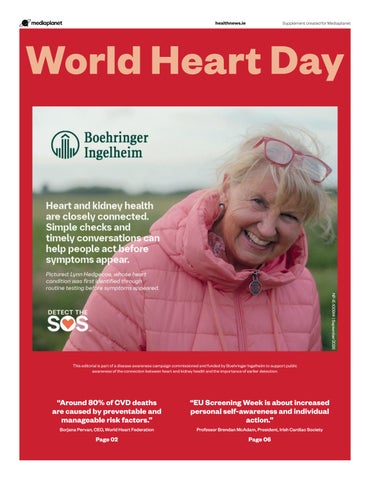
This editorial is part of a disease awareness campaign commissioned and funded by Boehringer Ingelheim to support public awareness of the connection between heart and kidney health and the importance of earlier detection.
“Around 80% of CVD deaths are caused by preventable and manageable risk factors.”
“EU Screening Week is about increased personal self-awareness and individual action.”
Borjana Pervan, CEO, World Heart Federation
Professor Brendan McAdam, President, Irish Cardiac Society
Page 02
Page 06
AN INDEPENDENT SUPPLEMENT FROM MEDIAPLANET WHO TAKE SOLE RESPONSIBILITY FOR ITS CONTENT
‘Don’t Miss a Beat’ urges decisive action to prevent causes of CVD Causing about 20 million deaths a year or around one in three deaths globally, cardiovascular disease (CVD) remains the world’s leading cause of death.1
H
Borjana Pervan CEO, World Heart Federation
owever, there’s hope, knowing that around 80% of CVD deaths are caused by preventable and manageable risk factors2 — with the right tools and access to care. So, can we properly tackle CVD? Its signs and symptoms are often overlooked, ignored or misunderstood. By raising awareness, encouraging healthier lifestyles and calling on governments to prioritise heart health, we can meet the challenge. On 29 September, World Heart Day unites everyone through the ‘Don’t Miss a Beat’ campaign.
Know the CVD signs, make a change
CVD often hides in plain sight. Consider this: in many parts of the world, women’s CVD symptoms are missed or misdiagnosed; treatable and manageable high blood pressure is a leading risk for cardiovascular disease; and congenital heart disease is a common birth defect, yet many cases are missed at birth. Even small adjustments in nutrition, physical activity, adequate rest and stress management can help our hearts work better. Just 30 minutes of daily exercise could help tackle many CVD cases. Yet, on average, one in three adults are not moving enough.3
The Keep the Beat challenge encourages us all to make simple, daily changes to routines throughout September and beyond — and to motivate others with stories of progress.
Make a national plan
There should be no assumptions when it comes to cardiovascular disease: men, women, old or young can be affected; acknowledging this is key to creating access to affordable care for everyone. Despite CVD being the world’s number one cause of death, fewer than 20 countries have a national plan to tackle the disease. Don’t Miss a Beat is about stepping up action for heart health from policies to care systems and the everyday actions that make for thriving communities everywhere. 1
2 3
World Health Organization, 2025. Cardiovascular diseases (CVDs). tinyurl.com/ ywekzdcu. World Heart Federation. tinyurl.com/2z8jksjh. World Health Organization. Physical activity. tinyurl.com/ax3yv28v.
Life after cardiac rehabilitation For people living with cardiovascular disease, recovery doesn’t end when hospital treatment or cardiac rehabilitation finishes. Secondary prevention provides continued support to reduce future risk. Support beyond cardiac rehabilitation
W Aisling Harris Cardiac & Weight Management Dietitian, Croí
hile ‘primary prevention’ focuses on reducing a person’s risk of developing cardiovascular disease or having a heart attack or stroke, ‘secondary prevention’ focuses on reducing the risk of another event in someone who already has cardiovascular disease. While many people make an excellent recovery and return to normal life, they continue to live with cardiovascular disease or an increased risk of another event and therefore require ongoing management. This includes treatment to control risk factors such as blood pressure, cholesterol and blood glucose alongside support to stop smoking, eat well, be physically active and care for psychological wellbeing.
@Mediaplanet UK & IE
@MediaplanetUKIE
While cardiac rehabilitation is crucial for recovery, maintaining changes after a structured programme can be challenging. Many people find it difficult to balance their new habits and behaviours with a return to their normal life. Some people report anxiety or may lack confidence about returning to their usual activities. Others may feel overwhelmed by nutrition or lifestyle advice. Ongoing support after cardiac rehabilitation can help people build confidence, understand their own health and make sustainable behaviour changes to improve their health. Long-term changes are more likely to last when they’re realistic, gradual and built into everyday life. Setting achievable goals, planning for challenges and having ongoing support can also make it easier to
maintain healthy habits over time.
Healthy hearts for life
At Croí Heart and Stroke Charity in Galway, the Healthy Hearts Club, a pilot project within JACARDI, a Joint Action of the European Union, is an example of secondary prevention in action. The programme provides six months of ongoing, holistic support following cardiac rehabilitation. Participants receive regular checkins through nurse phone calls and attend group workshops centred around nutrition, emotional wellbeing and exercise. By supporting both physical and psychological health in an environment that fosters peer support, the programme aims to help people build confidence and integrate healthy habits into their daily lives, supporting long-term heart health and wellbeing.
Contact information: mpukie@mediaplanet.com or +44 (0) 203 642 0737
For more information about heart health and stroke prevention, please visit www.croi.ie
Please recycle
Business Development Manager: Joe Moore Strategic Account Manager: Jen Church Managing Director: Margot Thomas | Designer: Juraj Príkopa Senior Content Manager: Angelica Hackett O’Toole | Paid Media Strategist: Jonni Asfaha Digital Campaign Manager: Jan Martorell | All images supplied by Getty Images, unless otherwise specified
02
MEDIAPLANET
READ MORE AT HEALTHNEWS.IE
AN INDEPENDENT SUPPLEMENT FROM MEDIAPLANET WHO TAKE SOLE RESPONSIBILITY FOR ITS CONTENT
Imag
e pr
ov i
ded
by
Ro
ch
eD
ia
gn os tic
s
A new generation of heart attack detection Heart attack symptoms aren’t one-sizefits-all. High-sensitivity testing is closing the cardiac care gap.
D Roz Green Clinical Marketing Partner, Roche Diagnostics UK and Ireland
ifferences in how heart attacks present, and whether they’re recognised, mean that some patients face additional challenges and delays in diagnosis. Women are 50% more likely to receive the wrong initial diagnosis when experiencing a heart attack.1 This is a reminder that heart attack diagnosis is complex and that the tools, evidence and pathways that support clinical decisions matter.
A familiar, but incomplete, picture
new technology, clinicians may opt to use sex-specific thresholds, depending on the assay, local pathway and clinical judgement. The aim is to reduce the risk of heart attacks in women being overlooked. It’s an important development because equality in healthcare starts with recognising that the same approach doesn’t work equally well for everyone.
What difference can a new test make?
A new generation of cardiac troponin testing, using Ask someone to picture a heart attack, and there’s a good Roche Diagnostics’ Elecsys® Troponin T hs Gen 6 chance they’ll imagine sudden, acute pain, perhaps assay, is being introduced in the UK and Ireland at St. someone clutching their chest. It’s a familiar image, but Vincent’s University Hospital in Dublin. This assay, with it’s also incomplete. sex-specific thresholds, will give clinicians working in a Heart attacks can present in different ways. Women busy emergency department access to more analytically may experience chest pain, but they may also experience sensitive troponin testing. unusual fatigue, nausea, However, innovation in breathlessness or discomfort emergency care isn’t only about in the back or jaw.2 Symptoms what a test can detect, but also don’t always follow the script about making those tests more Women are 50% more likely to that most people expect, and reliable and robust. For example, receive the wrong initial diagnosis haemolysis is a relatively when the script changes, the response needs to change, too. word for when experiencing a heart attack. technical-sounding something that can have a very What can change the practical consequence. Red picture? blood cells can break down Doctors and nurses have lots in a blood sample, interfering of clinical information to work with to determine a with the result. If that happens with a troponin test, the heart attack, including symptoms and an ECG. Another sample may have to be rejected, and the patient may important piece comes from a simple blood test that need to give blood again. Repeat testing can delay clinical measures a protein called troponin.3 Troponin is released decision-making in moments when answers are needed into the blood when the heart muscle is damaged. quickly. Measuring it can help clinicians determine a heart attack. The Elecsys® Troponin T hs Gen 6 assay is designed Sometimes, the blood test is repeated to see whether the to be significantly more resistant to haemolysis than level is rising or falling, giving the clinical team a clearer previous generations.7 That can mean fewer unusable 4 picture of what’s happening. samples and fewer repeat blood draws, helping patients The latest high-sensitivity tests can detect much and clinicians get answers sooner, while taking some smaller amounts of troponin. That means clinicians have avoidable pressure off emergency departments and more information to work with, particularly when the laboratories. These may sound like small improvements, answer isn’t immediately obvious. but in a busy emergency department, they can have a big This matters for women, as they generally have lower impact. levels of troponin than men.5 Historically, diagnostic Closing gaps in heart attack diagnosis will take more approaches have used one threshold for women and men, research, greater awareness, effective clinical pathways which may have made some heart attacks in women and collaboration across healthcare. Every improvement harder to identify. in the way heart attacks are recognised, investigated and The latest international definition of a heart attack diagnosed brings us closer to a system that works better takes this difference into account, incorporating separate for everyone. troponin thresholds for women and men.6 And with
READ MORE AT HEALTHNEWS.IE
Sponsored by Roche Diagnostics
References available within our online article on Healthnews.ie To find out more, visit:
MEDIAPLANET
03
AN INDEPENDENT SUPPLEMENT FROM MEDIAPLANET WHO TAKE SOLE RESPONSIBILITY FOR ITS CONTENT
Protecting Ireland’s hearts through kidney health Your kidneys may reveal important clues about the health of your heart. This World Heart Day, Ireland has a timely opportunity to spot hidden risk earlier.
Y Linda Maher Human Pharma Country Head (Ireland), Boehringer Ingelheim UK & Ireland
WRITTEN BY Tony Greenway
ou may not be aware of this, but the kidneys A greater focus on prevention and earlier detection don’t only act as the body’s filtration system; Ireland has recognised the importance of including they’re also linked to the health of our heart. So, chronic kidney disease (CKD) within the HSE Chronic it’s important to realise Disease Management (CDM) that if we experience kidney Treatment Programme in General Because cardiovascular, renal Practice — an initiative created in problems, we’re also at increased risk of developing cardiovascular and metabolic conditions are 2020 to improve management of problems. long-term illnesses. This offers an interconnected, they should important opportunity to support Kidney health linked to heart implementation to be viewed together rather than consistent health help deliver earlier identification, in isolation. The challenge is, kidney problems management and treatment for the can develop without symptoms. benefit of patients. That’s why people who are at risk of kidney disease - such Indeed, this encouraging direction of travel aligns as those with high blood pressure and diabetes - should with the broader European focus on prevention, earlier have a conversation with their healthcare professional detection and more integrated care across heart and about checking their kidney health. After all, prevention kidney health. For example, the European Union’s Safe and early diagnosis can result in better health outcomes. Hearts Plan — the first comprehensive, EU-wide strategy “Our kidneys may provide important clues about the dedicated to cardiovascular health — emphasises earlier health of our heart,” explains Linda Maher, HP Country detection, integrated care and a cohesive approach across Head, Boehringer Ingelheim Ireland Ltd. the EU for cardiovascular health strategies. “Because cardiovascular, renal and metabolic Going forward, kidney disease detection should sit conditions are interconnected, they should be viewed alongside traditional cardiovascular risk factors such as together rather than in isolation. Unfortunately, there has blood pressure, cholesterol, diabetes and obesity. “If we been a lack of awareness around kidney disease in the can identify chronic kidney disease earlier, we have a public arena, so few people understand the link between real opportunity to change the course of the disease for kidney health and cardiovascular health.” thousands of patients,” says Maher. “Earlier treatment can help people stay healthier for longer, while also reducing the growing pressure on our healthcare system.”
Kidney and heart health should not be viewed in isolation
I Carol Moore CEO, Irish Kidney Association
Janis Morrissey Deputy CEO & Director of Services, Irish Heart Foundation
These articles were organised, funded and reviewed by Boehringer Ingelheim
Heart and kidney issues should not be treated in silos. To improve chronic disease management, it’s crucial to join the dots and take an interconnected view of health.
f chronic kidney disease (CKD) is caught early enough, it can be treated effectively. That doesn’t just increase the probability of a better health outcome for your kidneys. It can also significantly lower your risk of developing heart problems.
Why early kidney disease testing is crucial
The trouble is you may not know you have CKD because it is often a hidden disease. So, early testing matters. “In its early stages, most people display no symptoms,” explains Carol Moore, CEO of the Irish Kidney Association. “If symptoms do appear, they’re not specific to late-stage kidney disease, so they can be mistaken for something else. We want to see doctors routinely offering a urine test called the urine albumin-tocreatinine ratio (uACR) and blood tests to at-risk patients, including the over-50s, those with high blood pressure, heart disease, obesity and type 2 diabetes. We also want to improve the health literacy of patients so that they will know what to ask for when they see their GPs.”
That starts by understanding the heart disease, kidney disease and diabetes link, agrees Janis Morrissey, Deputy CEO and Director of Services of the Irish Heart Foundation, the national stroke and heart disease charity. “If your kidney function decreases, your blood pressure levels can increase, and that can cause heart disease and stroke. It’s why we work in partnership and collaboration with our sister charities, including our colleagues at the Irish Kidney Association on, for example, the importance of blood pressure awareness,” Morrissey adds.
Combined cardiovascular chronic kidney disease pathway
Unfortunately, chronic kidney disease and cardiovascular disease are too often viewed in silos by patients - but also by healthcare professionals. It’s crucial to join the dots, understand the common characteristics of multiple conditions and view them as part of one, big, interconnected whole. “For example, we need a combined cardiovascular chronic kidney disease pathway so that patients with kidney disease receive an
automatic heart assessment,” says Moore. “It’s also important for healthcare professionals to recognise the link between these conditions because, if they are treated separately, medications may be prescribed that work in conflict with each other. However, a whole-person, integrated approach to healthcare and chronic disease management can improve patient quality and reduce healthcare costs. An important part of that is recognising that the heart-kidney relationship goes hand in hand.”
Improving individuals’ quality of life
We mustn’t lose sight of the fact that kidney and heart disease impacts the lives of real people, both physically and mentally, says Morrissey. Early diagnosis and an integrated approach to care will keep patients well and out of hospital and allow them to contribute to community and society for longer. “That will free up the time of doctors, nurses and other healthcare staff,” she says. “But, at an individual level, this is about improving personal quality of life.”
This article forms part of a disease awareness campaign commissioned and funded by Boehringer Ingelheim. Carol Moore and Janis Morrissey contributed their expertise to this content. The views expressed are their own.
NP-IE-100915 | September 2026
04
MEDIAPLANET
READ MORE AT HEALTHNEWS.IE
AN INDEPENDENT SUPPLEMENT FROM MEDIAPLANET WHO TAKE SOLE RESPONSIBILITY FOR ITS CONTENT
How simple tests can identify hidden risks of heart and kidney disease You can look and feel well but still be living with hidden heart and kidney risk. That’s why earlier conversations with healthcare providers and simple checks are so important.
I Dr Matthew Barrett Consultant Cardiologist in St Vincent’s University Hospital and HSE Community Health Organisation 6 Integrated Care Lead with the Irish National Heart Office
This article forms part of a disease awareness campaign commissioned and funded by Boehringer Ingelheim. Dr Matthew Barrett was compensated for his time and expertise in contributing to this content. The views expressed are his own.
f you have concerns that you may be at risk of cardiovascular disease (CVD), chronic kidney disease (CKD) or diabetes, don’t wait. Understand that all these conditions are linked — and speak to a healthcare professional. Because the fact is, our heart and our kidneys rely on the same network of blood vessels, so a failure in one organ can often lead to complications in the other.
Heart and kidney health are interconnected
“If your heart isn’t working well, it may not be filtering blood through your kidneys properly, which can put them under pressure,” explains Dr Matthew Barrett, Cardiologist, St Vincent’s Hospital Healthcare Group. “Equally, if your kidneys aren’t filtering your blood properly, it can cause pressure to build up in your heart, making it work harder. It’s a two-way process.” Cardiorenal metabolic conditions (CRM) such as high blood pressure, type 2 diabetes and obesity can damage blood vessels, putting you at particular risk of kidney damage and therefore heart problems. So, Dr Barrett’s advice is to get your blood pressure checked (easy to do at local community pharmacies) and, if you have any concerns, have an early conversation with your GP.
Simple tests to check your kidney function and protect your heart
That’s especially important because, in its early stages, kidney disease
READ MORE AT HEALTHNEWS.IE
Research shows that albuminuria — too much blood protein in the urine — increases the risk of heart-related problems. progresses without symptoms. That means you can look and feel well but still be living with hidden heart and kidney risk. Where appropriate, simple tests are available to check your kidney function, notes Dr Barrett. “Your GP may recommend that you have a blood test,” he says. “Crucially, you should also be offered a urine test called the urine albumin-tocreatinine ratio (uACR).” Research shows that albuminuria — too much blood protein in the urine — increases the risk of heart-related problems. Thankfully, treatments are available for the issues that cause kidney damage, such as blood pressure and diabetes, says Dr Barrett. “We also have medications that protect the kidneys, and if an element of stress or damage is found, prevent it from progressing. It’s really changed our ability to treat kidney disease. Help is available. Talk to your GP, get treatment — and then follow up to make sure the medication is adequately controlling the condition.”
People aged ≥65 years with CKD are ~6 times more likely to die of CV causes than develop kidney failure.1
People living with conditions such as type 2 diabetes (T2D), compared to those without T2D have a three fold greater risk of developing CVD.2
More than 1 in 7 people aged 50+ have CKD in Ireland (>200,000 people).3
CKD is common and is rising among adults in Ireland.4
1 2
3
4
Dalrymple LS et al. J Gen Intern Med. 2011;26:379 Irish Heart Foundation [accessed September 2026] https://irishheart.ie/ heart-and-stroke-conditions-a-z/diabetes-and-your-heart/ Nowak Chronic Kidney Disease in community-dwelling adults aged 50+ years in Ireland. Pg7 [accessed September 2026]. Available at https:// tilda.tcd.ie/publications/reports/pdf/Report_CKD.pdf Based on TILDA data collected from 2009–2011 and 2014–2015
NP-IE-100916 | September 2026
MEDIAPLANET
05
AN INDEPENDENT SUPPLEMENT FROM MEDIAPLANET WHO TAKE SOLE RESPONSIBILITY FOR ITS CONTENT
Rapid Access Chest Pain service celebrates 10 years of specialised care The Rapid Access Chest Pain (RACP) service at University Hospital Limerick (UHL) is celebrating 10 years of providing specialised care to patients presenting with chest pain.
T
he service is led by Clinical Nurse Specialists (CNS) Amanda Casey and Angela Clancy, under the clinical governance of Consultant Cardiologist Dr Samer Arnous and is supported by our dedicated Clerical Officer, Diane Spellman.
Amanda Casey Rapid Access Chest Pain CNS, University Hospital Limerick
Rising CVD spurs cardiac care
The RACP service was established in response to the growing number of patients presenting to emergency department with chest pain and the increasing prevalence of cardiovascular disease (CVD). Cardiovascular disease remains one of the leading causes of death worldwide. In Ireland, almost 9,000 people die annually from CVD-related causes, while Central Statistics Office figures show that CVD accounted for 28% of deaths in 2023, making it the country’s second leading cause of death. Chest pain can have many causes, ranging from relatively benign conditions such as musculoskeletal pain, anxiety and gastrointestinal
Angela Clancy Rapid Access Chest Pain CNS, University Hospital Limerick
disorders to potentially lifethreatening events including acute coronary syndrome, aortic dissection and pulmonary embolism.
coronary angiograms, 24-hour blood pressure monitoring and Holter monitoring.
Rapid chest pain pathway
Faster diagnosis and healthier outcomes
The RACP service provides two referral pathways for UHL patients. Inpatients can receive a same-day review where appropriate, while the outpatient pathway aims to provide a virtual review within 72 hours of discharge and a clinic appointment within two weeks. During assessment, the Clinical Nurse Specialists take a detailed history and assess cardiovascular risk factors including smoking, cholesterol, blood pressure, family history, body mass index and diabetes. Working alongside senior cardiac clinicians, they determine the appropriate diagnosis, investigations and care plan. Where required, the service can arrange a range of cardiac investigations, including exercise stress tests, echocardiograms, CT coronary angiograms, diagnostic
Over the past decade, the service has had a positive impact on patient care, supporting the early diagnosis of coronary heart disease, helping to reduce waiting times, avoid unnecessary hospital admissions and expedite discharge with estimated savings of approximately €9.53 million. While a key objective is to identify or rule out coronary artery disease and determine which patients may require invasive angiography, the service also plays an important role in preventing future cardiovascular events. Through assessment, education and risk-factor modification, the RACP team supports patients in making informed decisions about their health and encourages healthier lifestyles.
Sponsored by University Hospital Limerick
More information available at
Turning the tide on cardiovascular disease through screening, prevention and partnership
M
On World Heart Day and EU Screening Week 2026, it’s crucial for people to know their key health numbers to spot risks earlier and make lifestyle changes.
any people feel healthy but may still have silent risk factors, such as high blood pressure, high cholesterol or high blood sugar and increased weight. These can increase the risk of cardiovascular disease, stroke, diabetes and other cardiometabolic conditions.
Sponsored by Irish Cardiac Society
RCN: 20206568
Early heart screening
EU Screening Week and the Know Your Numbers campaign is based on a simple and practical message: people should know the key personal health metrics that can help them understand potential health risks earlier, long before symptoms emerge, creating opportunities for earlier intervention and better outcomes by lifestyle changes and appropriate medical treatments if required. The ICS are bringing this message directly to policymakers and, in partnership with the Irish Heart Foundation, are offering screening to Oireachtas members and staff in Leinster House on Sept 30th.
Irish alliance for cardiovascular health More information on the Annual Scientific Meeting is available at irishcardiac society.ie
06
MEDIAPLANET
EU Screening Week is about increased personal selfawareness and individual action but also increased population health promotion and to that end, the inaugural meeting of the new Irish Alliance for Cardiovascular Health will also take place during EU Screening Week. By bringing together organisations from across patient advocacy, clinical care, prevention, nursing, healthcare technology and community health,
the Alliance, led by the ICS, aims to develop a more coordinated approach to one of Ireland’s most pressing health challenges.
Call for prevention and equitable access
Professor Brendan McAdam, President of the ICS, says: “While awareness campaigns and screening initiatives are vital, lasting progress will require sustained commitment and collaboration. Ireland has an opportunity to place cardiovascular health much higher on the policy agenda, with greater emphasis on prevention, early detection and equitable access to high-quality care. “The ICS is advocating for the implementation of a National Cardiovascular Plan for Ireland to align with the EU Safe Hearts Plan launched last year with key principals to eliminate gender and socioeconomic disparities in the access to care and reduce waiting times for testing and treatment.” These themes will continue next month when the annual Irish Cardiac Society Annual Scientific Meeting, an approved associated event of Ireland’s EU Presidency, takes place at Killashee House Hotel, Naas, from October 15th to 17th. The meeting will bring together leading local and international clinicians, researchers, healthcare professionals and policymakers to discuss the latest developments in cardiovascular medicine and the future direction of cardiovascular care in Ireland. The meeting will be opened by the Minister of Health, Deputy Jennifer Carroll MacNeill.
Professor Brendan McAdam President, Irish Cardiac Society
READ MORE AT HEALTHNEWS.IE
AN INDEPENDENT SUPPLEMENT FROM MEDIAPLANET WHO TAKE SOLE RESPONSIBILITY FOR ITS CONTENT
A vision for Ireland’s cardiovascular future: earlier action, better outcomes and a chance to lead in Europe Cardiovascular disease does not begin when someone arrives at an emergency department with symptoms. It often begins years earlier through risk factors that could be identified, managed and, in many cases, prevented.
C
ardiovascular disease is Europe’s biggest disease burden. It claims 1.7 million lives annually, affects a further 60 million people, and costs the continent more than €282 billion every year.1
Reimagining Ireland’s cardiovascular health system
Samantha Humphreys MD of MSD Ireland (Human Health)
Sponsored by
The publication of the EU Safe Hearts Plan in 2025 marked an important shift in how Europe approaches cardiovascular health, giving countries like Ireland an opportunity to rethink how we prevent, detect and treat it across the whole health system. This September also marks the launch of the first-ever EU Screening Week under the plan, a clear signal of this ambition now taking shape across Europe. Ireland should seize this opportunity, using the Safe Hearts Plan as a benchmark for the development of our own national cardiovascular strategy. The question we need to ask ourselves is straightforward: what would a genuinely world-class cardiovascular health system look like for Ireland? Prevention should be at the heart of that response.
A CVD strategy with earlier risk detection
In Ireland, up to 600,000 people are living with a cardiovascular condition.2 Cardiovascular disease claims around 9,000 lives every year, touching one in two families across the country.3 One of the most tragic aspects of this crisis is how much of it is avoidable. Up to 80% of cardiovascular disease is preventable,4 and yet, Ireland does not currently have a systematic populationbased cardiovascular health-check programme to catch disease early. We therefore now have a real opportunity to put forward a strategy that identifies risk earlier and strengthens the detection and management of key risk factors, including high blood pressure, elevated blood glucose and cholesterol. We should also leverage this as an opportunity to strengthen other related public health efforts, including supporting smoking cessation, maintaining a healthy weight and ensuring protection against seasonal respiratory infections that can trigger acute cardiovascular complications in high-risk patients.
Heart disease awareness gaps and inequalities persist
A new strategy should also recognise that prevention cannot be separated from awareness and inequality. We currently face a profound awareness gap which is especially stark for women, with research by the Irish Heart Foundation showing only 13% of women correctly identify heart disease and stroke as major threats, despite it being the leading cause of death for women in Ireland. Cardiovascular disease also disproportionately impacts those in socioeconomically disadvantaged areas, driving deeper health inequalities in turn. Yet, prevention is only one part of the equation. When cardiovascular disease does occur, patients need timely access to accurate diagnosis, specialist care, appropriate
READ MORE AT HEALTHNEWS.IE
treatment and effective rehabilitation. We need to think about cardiovascular health as a continuum, from prevention, early detection, treatment, rehabilitation to long-term care. That is also important in the context of the inequalities just highlighted, as access to these cannot depend on where someone lives, their gender or their circumstances.
Aligning Ireland with EU heart goals
Encouragingly, we do not have to look far for solutions. The EU Safe Hearts Plan sets a clear ambition to cut premature cardiovascular deaths by 25% by 2035 and expand routine cardiovascular health checks across Europe. At home, the national review of adult specialist cardiac services provides an additional foundation for reform, while the Government has already committed to a new national cardiovascular strategy. The opportunity now is to bring these strands together to create a more ambitious and integrated approach. Ireland’s first cardiovascular strategy should align with European standards while setting clear ambitions of its own. At its heart should be a new national cardiovascular health-check framework, centred on a proposed ‘Know Your Numbers’ cardiovascular risk-assessment initiative and aligned with emerging European recommendations on earlier cardiovascular health checks to identify key risk factors before they lead to serious disease. The forthcoming European Council recommendation on cardiovascular health checks provides a timely opportunity to translate these ambitions into practical action and for Ireland to demonstrate leadership during its EU Presidency.
A measurable and patient-centred strategy
The new strategy should bring together Government, clinicians, patients, researchers, public-health experts, patient organisations and industry around a small number of shared, measurable goals. It should also define how we measure progress: are we detecting risk earlier? Are people receiving timely preventive care, appropriate treatment and access to rehabilitation? Are inequalities narrowing? Most importantly, are we saving more of the 9,000 lives lost each year? Europe has set the benchmark; Ireland now has the opportunity to build a cardiovascular strategy fit for the future, centred on patients and measured by its ability to save and improve lives through earlier prevention, detection and treatment. 1
2
3
4
EU cardiovascular health plan: the Safe Hearts Plan. Cardiovascular health Public Health - European Commission. Last accessed: 21 September 2026. Irish Heart Foundation, Strategic Plan, 2025-2028. Last accessed: 21 September 2026. Croí. The Future of Cardiovascular Health in Ireland – A Manifesto for Change. Available at: Manifesto_Final_120424-ECOPY.pdf. Last accessed: 21 September 2026. World Heart Federation. CVD Prevention. CVD Prevention | What We Do | World Heart Federation Last accessed: 21 September 2026.
Find out more about EU Screening Week:
Further references available upon request. Veeva Code: IE-NON-00756. Date of preparation: September 2026
MEDIAPLANET
07
AN INDEPENDENT SUPPLEMENT FROM MEDIAPLANET WHO TAKE SOLE RESPONSIBILITY FOR ITS CONTENT
An ounce of prevention starts with knowing your pulse and blood pressure Pay attention to your heart health before a serious event, like heart disease or stroke, occurs. Start by knowing your pulse and your blood pressure.
F
or generations, preventing heart disease meant eating healthier, exercising, quitting smoking and maintaining a healthy weight. Those habits remain the foundation of good heart health. Today, prevention also means detecting problems earlier. Two simple habits can make a difference: know your pulse and know your blood pressure.
Trudie Lobban MBE CEO, Arrhythmia Alliance
Consequences of high blood pressure
About one in three people with high blood pressure don’t even know they have it.1,2 Even fewer realise it also increases the risk of atrial fibrillation (AF), the most common heart rhythm disorder.3 In AF, the upper chambers of the heart beat fast and irregularly instead of keeping a normal rhythm. Both conditions increase the risk of heart disease and stroke.4,5 People with high blood pressure have about a 50% higher risk of developing AF than those with healthy blood pressure.6
not replace medical care. If you notice an irregular pulse or an abnormal blood pressure reading, talk with your healthcare professional, who can recommend appropriate tests and treatment if needed.
Know how to protect heart health
Sometimes the first step toward prevention is simply knowing: knowing your pulse, knowing your blood pressure, knowing when something isn’t normal. This awareness can help you recognise problems earlier, start important conversations with your healthcare team and take an active role in protecting your heart. 1
2
3
Silent conditions need monitoring
One of the biggest challenges is that both high blood pressure and AF can be silent conditions; you may have no symptoms and feel completely well.7 Without regular monitoring, they may go undetected until a serious event occurs. Monitoring is easier than ever. Home blood pressure monitors can help you track your readings over time. Some devices can also record an ECG that may help detect an irregular heart rhythm.8 Learning to check your pulse is another simple, free skill you can do anywhere. It helps you recognise what is normal for you and when something has changed. However, home monitoring does
08
MEDIAPLANET
4
5
6
7
8
Office for National Statistics. 2023. Risk factors for undiagnosed high blood pressure in England: 2015 to 2019. tinyurl.com/yc6ffwr5. Fryar, C. D. et al., 2024. sion prevalence, awareness, treatment, and control among adults age 18 and older: United States, August 2021–August 2023 (NCHS Data Brief No. 511). National Center for Health Statistics. https://doi. org/10.15620/cdc/164016 Gawałko, M., et al. 2024. Diet and risk of atrial fibrillation: a systematic review, European Heart Journal, Volume 45, Issue 40. doi.org/10.1093/eurheartj/ ehae551. National Institute for Health and Care Excellence. 2019. Hypertension in adults: Diagnosis and management (NG136). NICE. nice.org.uk/guidance/ng136 National Institute for Health and Care Excellence. 2021. Atrial fibrillation: Diagnosis and management (NG196). NICE. nice.org.uk/guidance/ng196 Aune D., 2023. Blood pressure, hypertension and the risk of atrial fibrillation: a systematic review and meta-analysis of cohort studies. Eur J Epidemiol. 2023 Feb;38(2):145-178. doi: 10.1007/s10654-022-00914-0. National Institute for Health and Care Excellence. 2021. Atrial fibrillation: Diagnosis and management (NG196). NICE. nice.org.uk/guidance/ng196 National Institute for Health and Care Excellence. 2019. Lead-I ECG devices for detecting symptomatic atrial fibrillation using single time point testing in primary care (HTG508). NICE. nice.org.uk/guidance/htg508
READ MORE AT HEALTHNEWS.IE