

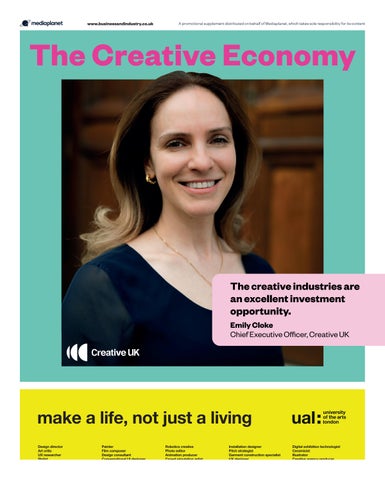





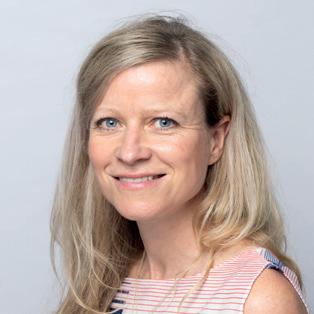
Emily Cloke Chief Executive Officer, Creative UK
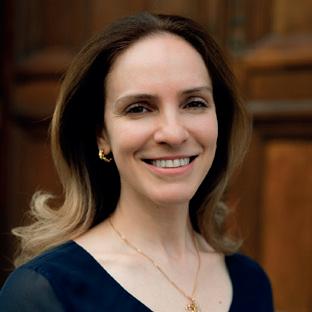
WRITTEN BY Emily Cloke Chief Executive Officer, Creative UK
“I truly believe one of the biggest economic opportunities the UK has right now is around more investment in creativity,” says Emily Cloke, chief executive of an organisation advocating for UK creative industries.
Cloke – a former diplomat, lawyer and producer – is speaking less than two months into her leadership of Creative UK, the national membership body for the cultural and creative industries.
Promising growth
“Our sector is growing at five times1 the rate of the economy. The creative industries are worth more in GVA1 than aerospace, automotive, life sciences and oil and gas combined. My job is to do everything I can to make sure that opportunity is grasped with both hands – which means being a loud advocate for more investment and championing policies to support it at the national and regional level.”
It’s a role Cloke is passionate about. “All the research and data are clear,” she says, “More investment in this sector means more growth – economically, socially and culturally.”
“The creative industries are worth £145 billion in GVA2. One in ten UK businesses is creative,3 and our own research, conducted with the Creative Policy and Evidence Centre, found that creative SMEs have a far higher appetite for growth than businesses in other sectors.”
Unlocking industry potential
“We want more investors to back the creative industries –and to understand there’s real opportunity in the sector.”
But how can Cloke be so sure? “Because Creative UK is the test case — we’re an investor ourselves. Over the last five
years, we’ve distributed around £35 million into hundreds of creative businesses. “Take Creative Growth Finance – our flagship fund with Triodos Bank. This portfolio is twice as productive as the national average, and one in five businesses goes on to be acquired.4 Month on month, we see growth.”
“We also have regional funds with strong returns. The North East Culture and Creative Investment Programme is delivered with the North East Combined Authority. So far, we’ve invested £3.5 million in over 50 companies.”
“What makes the sector’s growth special,” she adds, “is that it comes with tangible benefits. Creativity strengthens communities. It builds social cohesion and improves wellbeing. The creative economy, as we know it, is connected, dynamic and productive – built on unparalleled talent and untapped potential.”
Cloke is excited to work hard for the sector. “I’m here to be a champion for our members, partners and the businesses we work with,” she says. “I truly believe that investing in the creative economy means investing in a stronger future for the UK.”
References:
1. DCMS. (2026). DCMS sectors economic estimates gross value added 2024 (provisional). https://tinyurl.com/36uxkm39.
2. DCMS. (2025). DCMS economic estimates: business demographics, 2025 - main report. https://tinyurl.com/pswv66rd.
3. Apampa, L. (2025). Creative UK and Creative Industries Policy & Evidence Centre (Creative PEC) launch landmark report highlighting serious barriers to finance in creative industries. https:// tinyurl.com/txf2vrbn.
4. Creative UK. Creative growth finance portfolio. https://tinyurl.com/5bbywkpy.
“Who do I call if I want to speak to Europe?” was the famous question asked by Kissinger in the 1970s. When we asked the same question of our Creative Industries (CI), until recently, there may have been a confused reply.
But this industrial sector, one of the Government’s priorities for growth, has adopted a clear agenda and is making progress towards a unified voice. Not least with the growing appreciation of its overall value: approaching 6% of the total economy1, employing 2.4 million2 and accounting for nearly 13% of the UK’s service exports.3
Diverse industries with much in common However, compared to our other major industries, the CI (note the plural) are much more diverse: subsectors from Screen to Publishing, Advertising to Architecture, Music to Video Games, Design to the Arts, Fashion to Crafts.
But much unites these endeavours: the lifeblood of the whole sector is the creation and exploitation of IP; a
brisk pace of R&D-led innovation at the forefront of our digital century; a fluid, dynamic preponderance of SME’s and freelancers driving creativity across subsectors. Above all, we’re the custodians of the nation’s culture — our national conversation, our values and the soft power we project to the world.
From Tower of Babel to a single voice Our Sector Plan for Growth has defined and agreed on important objectives for all of us. Now is the time for every CI ‘influencer’ to adopt these important policies and speak with a single voice: one sector, albeit with rich diversity. These policies are better access to finance for IP-owning SME’s; greater investment in R&D-led innovation; a futurefacing skills agenda for our rapidly changing digital businesses; a clear
plan to spread investment across the 55 creative clusters already thriving in the UK;4 a strategic focus on CI exports; and a fruitful regime for IP that harnesses AI without being destroyed by it.
We have our policy forum with the Government: The Creative Industries Council. We have our sector advocate: Creative UK. Talk to us and take part in our exciting future.
References:
1. DCMS. (2026). DCMS sectors economic estimates gross value added 2024 (provisional). https://tinyurl. com/36uxkm39.
2. DCMS. (2025). DCMS sector economic estimates: employment, January 2024 to December 2024. https:// tinyurl.com/bddhrhnt. 3. DCMS. (2025). DCMS sectors economic estimates: trade, 2022 and 2023 - main report. https://tinyurl.com/yta4pphx. 4. Frontier Economics. (2022). Understanding the growth potential of creative clusters. https://tinyurl.com/5e3hkk5f.
The biggest entertainment launch in history this year is made in the UK
This November, Rockstar Games’ Grand Theft Auto VI launches globally. It will almost certainly become one of the highest-grossing entertainment products ever made, but not many know it’s made in the UK.
Originating in Dundee, it is now being built in Edinburgh, Leeds and Lincoln, with help from studios across the globe. Games are now the world’s largest entertainment sector, generating more than twice the combined revenues of film and music. In fact, UK consumers spent £8.76 billion on games in 2025, the highest figure to date.
Games have, despite their reach and popularity, historically been misread by mainstream culture, which has impacted how seriously the Government treats the sector when designing policy.
Video games as a frontier industry
The Government has now named video games a “frontier industry,” backed by a £30 million Games Growth Package. We should be beating our chests about the studios, new and returning IP, talent and technological innovation that this package is supporting.
Our games are played by people around the world and are a genuine source of untapped cultural influence. This year, players everywhere will experience British IP, ideas and stories through games — and we should own that as a success. It is the result of decades spent building creative and technical talent that the rest of the world cannot replicate in quite the same way.
Our games are played by people around the world and are a genuine source of untapped cultural influence.
And it’s not just games released this year While the vast majority of people may not have heard of studios like Hello Games, Facepunch, Jagex, Rare and Cloud Imperium, their games are reaching millions of players every day through some of the industry’s most successful live service titles that are still growing even a decade after release.
Ukie’s Made in the UK campaign exists to celebrate these stories, people and places that define UK games and the sheer richness and imagination of the worlds they build and stories they tell.

Creativity is your product. So why are you neglecting it?
In 2026, creative businesses face a stark choice: invest in creativity or get left behind.
There’s a dangerous assumption running through too many creative businesses: that creativity will just take care of itself. Hire some talented people, throw them a brief and watch the magic happen. It’s a comfortable story. It’s also one that’s becoming increasingly impossible to defend.
The changing creative landscape
The business environment facing creative industries in 2026 isn’t just complex, it’s brutal. AI isn’t knocking on the door; it’s already inside, reshaping how creative work is conceived, produced and valued.
New revenue models are emerging faster than most businesses can think, let alone strategise. Globalisation means a design studio in Manchester or a games developer in Bristol isn’t competing locally anymore — they’re competing with the entire world. And clients? They’re sharper than ever, demanding more and paying less.
In this climate, inspiration isn’t a luxury. It’s oxygen.
Investing in tools, talent and thinking
The creative businesses built to last get this: investing in tools and talent, but in thinking, too. In deliberate exposure to new ideas, uncomfortable perspectives and cross-sector conversations that keep their work sharp and their strategy ahead.
They know that creative stagnation isn’t just uninspiring, it’s a commercial liability. In other words, don’t get comfortable!
Talent is part of this, too. The next generation of creatives is dismantling assumptions about technology, audience and what’s even possible. The businesses smart enough to stay plugged into that energy, rather than threatened by it, think differently. And the ones that think differently? They are the ones who succeed.
The UK’s creative economy is globally admired, economically significant and world-leading. But that status isn’t a given. Holding onto it demands a relentless, collective investment in ideas, people and the conversations that refuse to let comfortable thinking go unchallenged.
The UK Creative Festival exists to be that catalyst, to unite, strengthen and push the UK’s creative community forward.
The businesses that will define the next decade of British creativity are already in the room, already asking the harder questions. The only question is whether you are.
The UK games sector is evolving rapidly, creating rewarding opportunities for the next generation of creatives.
The UK video games industry is one of the country’s greatest creative success stories. From Playground Games, Sumo, to Dovetail Games and Supermassive Games, British studios and publishers continue to produce globally successful games enjoyed by millions.
A creative industry powering the future
The sector contributes billions to the UK economy and supports tens of thousands of highly skilled jobs across development, design, programming, animation, audio, marketing and business services. The UK games industry contributes around £12 billion in Gross Value Added (2025 figure) and supports 24,300 development roles, according to our research.1
AI, virtual production, cloud gaming and immersive technologies are reshaping how games are made and experienced. For young people interested in art, storytelling, coding, music or entrepreneurship, the industry offers exciting and future-focused opportunities.
Developing industry-ready talent
TIGA, the trade association representing the UK games industry, works closely with universities and colleges through the TIGA accreditation programme, the TIGA Games Education Conference and our awards. Our accreditation recognises courses that equip students with the practical, technical and professional skills required by modern game studios. Accredited courses are assessed against industry skill needs to help ensure graduates are work-ready and understand current industry practices, technologies and expectations.
Alongside accreditation, our Education Awards celebrate excellence among students, graduates, educators and institutions. Meanwhile, our Games Education Conference brings industry and education together annually to exchange knowledge and address key challenges.
Inspiring the next generation
Home to the largest video games industry in Europe, the UK remains one of the best places in the world to build a career in games. Strong educational pathways, world-class studios and a thriving creative ecosystem provide opportunities for talented individuals from every background. By investing in skills, education and innovation, the UK can continue to strengthen its position as a global leader in games and the wider creative economy.

The UK’s creative industries are not a niche success story. They are a national asset contributing more than £148 billion1 to the UK economy, employing 2.4 million people2 and defining us on a global stage.
What many do not consider is the journey into these vital careers. University of the Arts London sits at the heart of this story. Our graduates do not just enter the creative economy; they directly shape it and influence how society thinks, communicates and lives. In that sense, their impact extends far beyond individual careers to our collective future.
Why traditional metrics don’t reflect real success as a creative
Yet creative education faces a persistent perception challenge. Too often, value is focused on outdated metrics that do not reflect longevity within careers, ultimate success and career satisfaction. They overlook the founders, entrepreneurs and visionaries whose journeys unfold differently.
These paths are not the exception. They reflect the reality of modern work in one of the industries that best showcases Britain to the world.
On-demand skills for creative careers and beyond Our students develop what we call artistic intelligence, the ability to think critically, generate original ideas, collaborate, respond to feedback and navigate uncertainty. These are not only the foundations of success in the creative industries, since they are increasingly becoming essential capabilities across all sectors.
But the value of a creative education goes further still. It shapes how people see the world and their place within it. Creative careers bring meaning, connection and positive change. To choose a creative pathway is to choose to shape the world, rather than simply moving through it.
References:
1. Creative UK. (2026). Cultural and creative industries statistical bulletin 2026 Q1. https://tinyurl.com/msxtvch7. 2. Uwazuruike, A. et al. (2025). Creative industries. https://tinyurl.com/ p2bt6s8w.

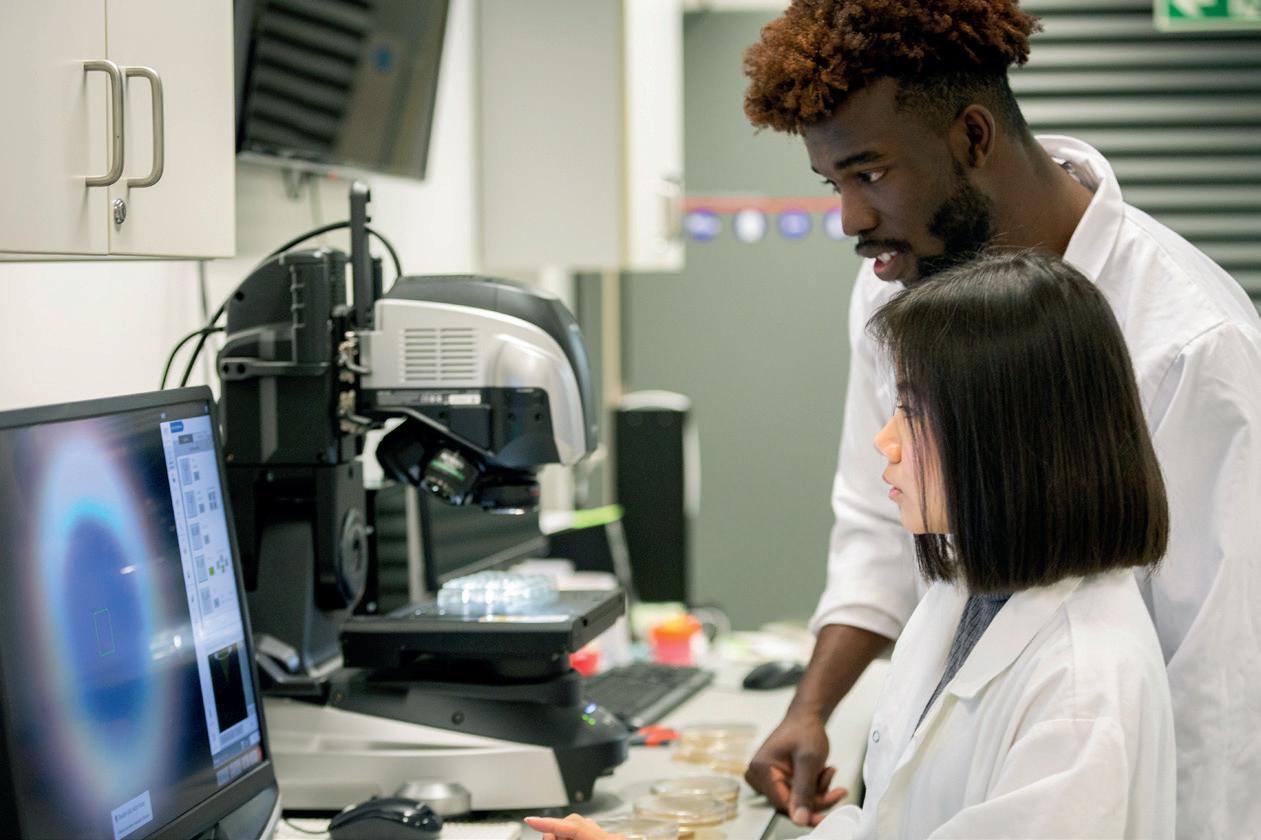
A creative education prepares people for a wide range of career paths, from employment to freelancing and entrepreneurship.
What does today’s job market look like for creative industry graduates?
Victoria Fabbri: Creative careers often look different from more traditional graduate pathways. Creative graduates are more likely to freelance, be selfemployed, build portfolio careers or start businesses. Their job market is broader than many assume. On our Creative Opportunities jobs board, education, communications, and charity roles are prevalent, reflecting demand beyond traditional boundaries.
David White: Students with clear purpose and interesting work will be picked up by industry because employers need people who think and work in those ways. If you pursue your passion with energy and enthusiasm, you’ll find your way.
What skills does a creative degree develop?
DW: Creative industries jobs are not in tray/out tray. Employers want people who are adept at questioning and thinking critically and who don’t necessarily accept the obvious, the default or ‘the beige.’ They want an alternative perspective and work that’s different, new and original. These are all important skills you develop during a creative education.
How does a creative education connect students to industry?
VF: Crucially, universities provide opportunities to test skills in real world settings. This might include industry briefs, mentoring, competitions, exhibitions, placements or enterprise initiatives that build networks and experience. Recently students have completed 10-week live briefs with brands including Castore sportswear, NOW TV and Hope&Glory PR – a repeat industry partner. The networks students gain, of both mentors and peers, are as valuable as the industry experience.
Can you give some examples of graduate success?
VF: We have strong alumni success across major art, design and fashion awards and are the UK’s top provider for graduate start-ups for four years running
Over 50% of all winners and nominees in the history of the Turner Prize are our alumni. Over half of all fashion designers who showcase their collections at London Fashion Week are our alumni.
For many graduates, success is about a creative life, authenticity, influence, purpose and the ability to build a career aligned with their values.
How do you see AI changing the job market for graduates?
DW: AI is not creative in and of itself. Anyone can use it to produce mediocre content quickly, with no real creative intention. But creators want to produce great work, so the industry is incorporating AI into processes to improve quality and to handle repetitive tasks. It will augment the creative process, rather than replace creativity.
Are creative graduates well placed to integrate AI into business?
DW: A strength of the creative industry is its ability to hold on to creative intention while incorporating and co-opting technology into its practice. Creative education graduates are confident in doing that. They know their creativity is bigger than any technology — while the critical thinking they have developed will drive their meaningful use or decision to not use AI going forward.
What would your advice be to anyone considering a creative education?
VF: Bring your passion, be curious, proactive and open to possibility. Creative education isn’t simply preparation for a particular job or industry, but a way to build a career and a life over time.
WRITTEN BY Karen Stanton Vice-Chancellor, University of the Arts London (UAL)

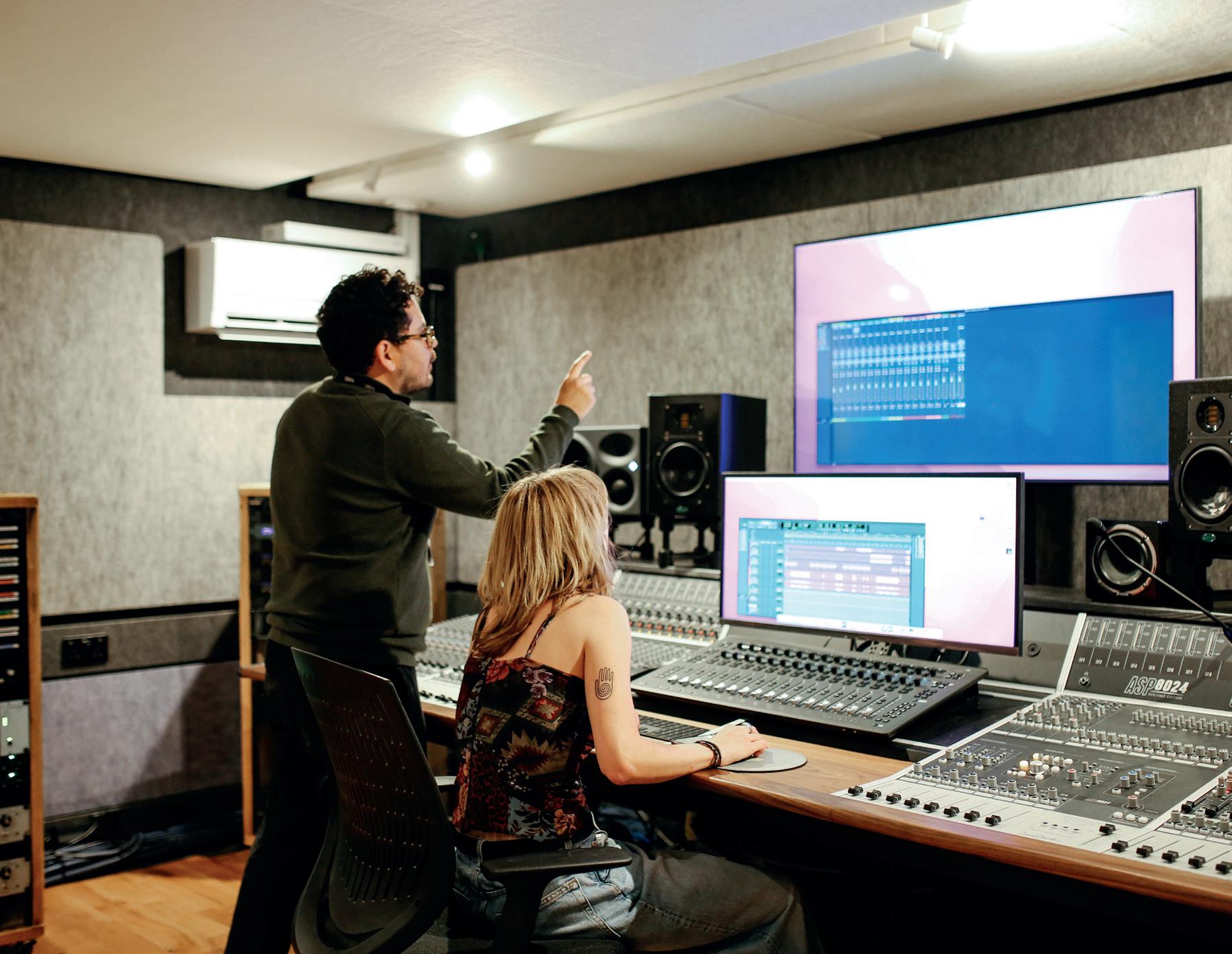
The idea that education ends when a career begins no longer reflects how careers actually work. The challenge is how we design systems that allow people to move in and out of learning as their work evolves.
Technological acceleration, economic instability and cultural change are reshaping work at speed. Skills have a shorter lifespan. Roles evolve or disappear. In this context, ‘artistic intelligence’ is becoming more important. By this, we mean imagination, storytelling, critical thinking and ethical judgement. These capabilities aren’t abstract, but practical, teachable and grounded in how people engage with change.
As UAL’s Dr Peter Ainsworth, Course Leader for MA Photography and Digital Practice (online), describes it, artistic intelligence should be “technology informed, but not technology dependent.” His approach focuses on giving students the ability to critically approach any tool, so that when technologies shift, they can adapt rather than start again.
Adaptive nature of creative industries
Creative industries are already continuously adapting, with careers
built through a mix of employment, freelance work, collaboration and retraining. Sustaining a creative career depends on the ability to keep developing your practice.
This is often framed as volatility, but it’s better understood as a defining characteristic of the sector. Creative practice is grounded in testing and refining ideas over time; higher education hasn’t always kept pace.
Most formal learning happens at the beginning of adult life, but that model doesn’t fit how careers develop.
Keeping up with career development
We need to stop designing education as a one-off experience, but as something people can return to. That means thinking in systems, not stages. Lifelong learning isn’t simply about offering more courses, but about creating an infrastructure that supports entry, re-entry and progression over time.
At UAL, this is shaping how we think about education in practice. The focus
is on building a connected offer, where short courses, online provision and accredited study form clear pathways. Learners should be able to build on prior experience and move forward with purpose, not restart each time.
For many learners, this flexibility is what makes participation possible.
John Paul Scott, founder of London’s Salt Salon, returned to study through a short course to strengthen his brand and identity skills. Having previously left formal education, he was unsure about returning, but, as he put it, “to keep your business fresh, it’s essential to keep learning and growing.”
Learning needs to fit around work and life, not compete with it
Others use short courses as a structured pathway into a new field.
Chiara, who moved from finance into fashion styling, used a UAL short course to build practical experience and a portfolio, securing opportunities while studying. Both cases reflect a wider shift towards learning that supports movement within and between careers.
Learning needs to fit around work and life, not compete with it. Modular formats, online access and applied, practice-based teaching make it possible for people to engage at different stages, whether they’re starting, changing direction or advancing an existing practice.
Lifelong learning also has a critical role in widening participation. If education is only accessible at a single point in time, it will only reach a narrow group of people. A system with multiple entry points allows more people to engage with creativity, strengthening both the workforce and the work it produces.
UAL’s ambition is to support this shift, as a place people return to throughout their careers. Creativity develops over time through experience, reflection and renewal, and lifelong learning makes it possible.

UK’s most celebrated graduate design
and
For over 40 years, New Designers has been the UK’s defining showcase for emerging creatives. This July, it enters a new chapter.
One roof, every discipline
For the first time, all disciplines — from fashion and ceramics to UX and product design — will come together for one week at the Business Design Centre in London, running 1-4 July 2026.
The shift in format reflects design’s evolution. Boundaries between disciplines are dissolving, and the new format mirrors that reality, creating a richer, more collaborative environment for the 2,500+ exhibiting graduates each year.
“The new one-week format demonstrates design’s interdisciplinary nature today,” says Sally Bent, Event Director, New Designers. “It creates a more collaborative environment that better mirrors how design operates in the real world.”
Connecting graduates with industry
At the heart of the 2026 programme is ND Connects — one-to-one sessions, portfolio reviews and workshops placing graduates in front of leading industry professionals. In an age increasingly shaped by AI and digital tools, these in-person encounters offer real dialogue, authentic connection and the kind of spontaneous opportunity that changes careers.
The ND Educates programme adds further depth, bringing together design tutors, industry experts and education leaders for seminars and networking sessions tackling today’s design education challenges — with a particular focus on jewellery, silverware and precious metals craft skills.
The prestigious ND Awards return with over 50 prizes, supported by industry partners including John Lewis, Hallmark, Oliver Bonas and PriestmanGoode. The awards evening on 1 July offers graduates unparalleled access to industry figures who can shape their futures.
Last year’s New Designer of the Year, Jake Inglis, credits the event with transforming his trajectory, “Exhibiting at New Designers significantly increased visibility around my work. It led to conversations with clinicians, investors and manufacturers that wouldn’t have happened otherwise.”
New Designers 2026 takes place 1-4 July at the Business Design Centre, London. Tickets are available now, from £13.95 for a Thursday Late pass to £25.95 for All Access. Trade tickets are £6.95.
Design is the UK’s secret weapon for green growth
From everyday objects to complex systems, everything not made by nature has been designed by someone. The climate crisis demands that we redesign almost every aspect of how we live.
Retrofitting buildings, developing biobased textiles and deploying digital solutions to accelerate sustainability are some ways the UK’s 1.97 millionstrong1 design workforce is driving impact as a critical lever for the green transition.
Up to 80%2 of a product’s environmental impact is determined at the design stage, placing designers and those who commission design at the heart of shaping a resilient and responsible future.
Good design is also good for business Decisions about materials, circularity, eliminating emissions, working with nature and influencing consumer behaviour to prioritise sustainable choices all sit within the power of design.
Faced with the disruption of AI and fragile global supply chains, design offers businesses a path. We know that good design is good for business; every £1 invested in design delivers up to £20 return.3 It can reduce material use and save money, ensure compliance with fastchanging legislation and build consumer trust and market share.
The Welsh ethical care brand Faith in Nature’s approach to branding and packaging prioritises sustainability, clearly communicating its nature-first ethos. This has helped them reduce emissions while contributing to an 11%4 increase in sales.
Bridging the green design skills gap
Yet, fewer than half5 of designers feel prepared to meet the growing demand for green design. This includes the opportunity for innovation by AI.
With the right capabilities, designers can help create and use new technologies to drive growth that benefits people and planet by applying core principles of empathy, centring human needs and considering how wider systems, like the environment, are impacted.
From the classroom to the boardroom, the Design Council’s Skills for Planet movement is on a mission to upskill one million designers by 2030. We need the support of Government and business to harness the potential of design as a true superpower; investing in skills, strengthening the talent pipeline, mitigating AI’s risks and positioning the UK as a global leader in designing for green growth.
References:
1. Design Council. Design economy. https://tinyurl.com/4y2hd5vh.
2. European Commission. Circular economy. https://tinyurl.com/j3jbvu8u.
3. Design Council. Designing demand. https://tinyurl.com/fs3r4xws.
4. Design Council. Skills for planet blueprint. https://tinyurl. com/3r2ve7hw.
5. Design Council. Design economy: The green design skills gap. https://tinyurl.com/ymwjkuc4

As the UK’s creative economy continues to evolve, access to opportunity remains one of the sector’s biggest challenges. For many aspiring creatives, particularly those from underrepresented backgrounds, breaking into the industries can feel difficult.
Since its founding in 2012, Creative Access has been striving to open access and help individuals thrive in their careers. It has supported over 30,000 early-career individuals, placed almost 2,000 people into paid roles across the creative industries and built a community of nearly 4,000 alumni – all via its inclusive opportunities board boasting over 170,000 registered users.
But beyond the numbers, it’s the individual success stories that make up the community, which demonstrate the organisation’s longterm impact best.
Helping launch future careers in creative industries
For documentary filmmaker Olaide Sadiq, the organisation helped launch an esteemed career marked by critical and industry acclaim. “My experience with them has been foundational to my career in television,” said Sadiq. “They provided not just an entry point, but a community and infrastructure that helped me build confidence and navigate an industry that can often feel difficult to access.”
Starting as an intern through Creative Access, Sadiq built experience working across flagship series at major broadcast TV channels before moving into producing award-winning premium documentaries.
But it was her four-time BAFTA-nominated directorial debut, Grenfell: Uncovered, that marked a major milestone. The film premiered at Sheffield DocFest, where it won the Audience Award, and went on to receive multiple accolades, including wins at the RTS Programme Awards and the Emerging Talent: Factual BAFTA.
Breaking down industry barriers
Reflecting on her journey, Sadiq credits the organisation with supporting her in overcoming one of the industry’s biggest barriers. “That initial opportunity is often the hardest to access,” she said. “Creative Access gave me my start.”
As the sector looks to the future, stories like Olaide Sadiq’s highlight the importance of sustained investment in inclusive pathways and the work the organisation does to help transform the creative industries to be more reflective of today’s society.

Graduates from creative universities are not just masters of their craft. They also have the transferable and entrepreneurial skills needed to thrive in a fast-changing world.
What is the value of a creative degree today?

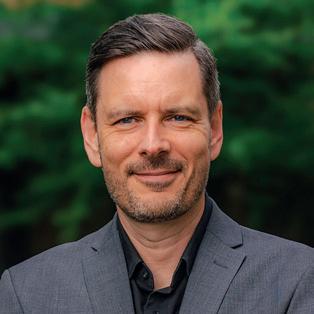
Lisa Mann: Creative graduates have a different way of thinking, so they approach problems differently. They’re innovative, entrepreneurial and unafraid of failure because they have developed creative resilience.
During their degree, students will hone their craft. They’ll also be equipped with broad transferable skills that many businesses in the creative industries — and beyond — need and want. For instance, they’ll learn reflective skills, such as taking feedback, and be able to apply those to other scenarios in their life and work.
We spend a lot of time reassuring parents that it’s okay to allow young people to pursue creative passions.
Jonathan Carr: Parents often ask us about employment opportunities in the creative industries. We can point to hard figures showing how huge the creative industries are in this country and globally — and the massive opportunities they offer. Also, businesses outside the creative industries need creative people too!
What’s the future for the creative industries in the age of AI?
WRITTEN BY Tony
Greenway
One way we help them to be adaptable is by being close to the industry. We have industry patrons with in-the-moment, real-world experience who are connected entirely to a course and set the project briefs.
We’re also having conversations with businesses about co-creating courses, and we’re starting our own creative agency, taking on work from businesses that our students will be able to do — and be paid for. It’s about making industry connections more tangible.
LM: The research and enterprise pillar is where a focus on entrepreneurialism comes in. Creative graduates can leave university with real skill in their craft, but they don’t understand how businesses operate or know how to fill in a tax return.
Human feeling, behaviour and the experiences humans create through film, animation and fashion can never be replaced by technology.
LM: Human-centred design, craft skills, creative thinking and problem-solving — which are inherent in the way we teach students — will become more important than ever. Human feeling, behaviour and the experiences humans create through film, animation and fashion can never be replaced by technology. That puts us on the front foot as a creative institution and the pipeline for the creative industries.
JC: AI will become part of the workflow that allows creative people to craft. Take film editing. AI will do the lengthy, boring, routine tasks that allow editors to spend more time being creative.
What is the AUB Strategy 2030+ — and what is its aim?
LM: It’s designed to zoom in on the key priorities that will take the institution forward to 2030 and beyond. There are three pillars to it: Creative Excellence, Future Skills and Research and Enterprise. Creative Excellence is about focusing on the quality of teaching we deliver and ensuring that it always pushes at the boundaries of creativity.
JC: The second pillar, Future Skills, isn’t about buying new kit or opening shiny new buildings, although we have great facilities here. Technologies and skills are changing all the time — so we need to make sure that students can change with them.
We want to make sure that all our students have a business mindset by embedding entrepreneurialism in a formal way into our curriculum. At the core of the strategy is opportunity for all. We want to reach underrepresented potential learners and young people with NEET status (Not in Employment, Education or Training) and help them acquire the skills, education and confidence they need to find employment.
How important is it for everyone in the creative space to be agile?
JC: We’re asking our students to adapt to face up to new challenges — and that’s what we’re doing too. Everyone needs to be agile to respond to the needs of industry, now and in the future.