healthawareness.co.uk
A promotional supplement distributed on behalf of Mediaplanet, which takes sole responsibility for its content
Healthy Ageing
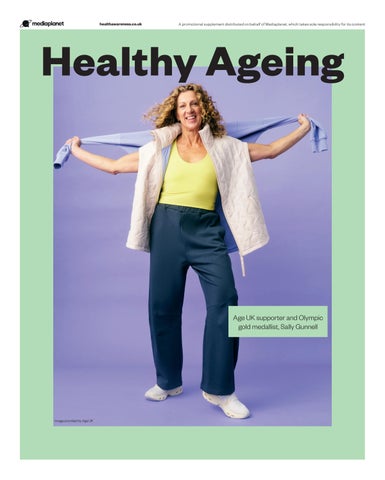
Age UK supporter and Olympic gold medallist, Sally Gunnell
Image provided by Age UK
A PROMOTIONAL SUPPLEMENT DISTRIBUTED ON BEHALF OF MEDIAPLANET, WHICH TAKES SOLE RESPONSIBILITY FOR ITS CONTENT
Act Now, Age Better: how to reward yourself with a more active lifestyle While we can’t prevent ageing, we can take action earlier on in life to help us age in the best way possible — like staying active.
Convenient meal options that support independent living As we age, we may face challenges with shopping, meal planning and cooking. Convenient food is a way for older people to eat well and maintain their independence.
“
As we age, shopping, meal planning, and cooking can become more difficult, but enjoying good food should not be,” says Holly McComb, CEO of Parsley Box, a provider of convenient ready meals. “We have to keep our protein up — which makes every mouthful matter.”
Food for the belly and brain
The food on our plates must be enjoyable and comforting. We have to want to eat it, otherwise we’ll end up skipping meals. While McComb notes that food provides ‘the drumbeat to the day,’ she also stresses that it shouldn’t be routine, dull and functional. “For example, the familiarity of a meal can be comforting and appealing,” she says. “It’s a moment of connection with our past. We all have a story about a household favourite, like a cottage pie or lasagne. There’s a reason why these meals are our top sellers.”
I
think of sport as an investment in my future, like paying into my own physical pension plan. For me, it’s running and cycling, but I truly believe that everyone can find their activity.
Paul Farmer CEO, Age UK
For more information, go to www.ageuk.org. uk/yourmove
Groups that can help you get moving
With the right opportunities and support, I’m convinced that all of us can get active, connected and motivated for the long term. This year, we have teamed up with over Feel stronger in your body and 50 sporting partners, including mind Badminton England, British Cycling, Age UK England supporter Netball, Being active has always meant and Olympic Lawn Tennis Gold Association far more to me than medals or medallist, and podiums. It’s about feeling strong Pickleball Sally Gunnell, in your body, clear in your mind England recently said: (to name a and connected to the people “I’ve been few) to bring lucky enough sport back around you. to represent into people’s Great Britain lives — this and experience some incredible highs time without the trauma — and to in my career, but for me, being active help people find an activity that suits has always meant far more to me than their goals and lifestyle and, most medals or podiums. It’s about feeling importantly, something they enjoy. strong in your body, clear in your As Sally says, you don’t have to mind and connected to the people be an athlete to get moving, and it around you. That feeling doesn’t doesn’t have to feel daunting: end when the competitions do; it’s “It might be getting back into a sport something we all deserve at every you once loved or trying something stage of life.” completely new. I know from my I agree with Sally, however, our own journey and from being part of latest Act Now, Age Better research a team that taking that first step is revealed that negative early PE often the hardest, but it’s also the one experiences are one of the barriers that changes everything. There has stopping millions of those aged never been a better time to make your 50–65 from being physically active. next move to step towards a healthier For many, this began decades ago later life, and a small step today can as nearly half (6.7 million) used to make a real difference to how you feel dread school PE lessons, millions tomorrow.” remembered feeling self‑conscious about their body (40%) or being picked last for teams (40%).
READ MORE AT HEALTHAWARENESS.CO.UK
Eating well to help maintain your independence
McComb’s company exists to help older adults eat well because people can face food challenges at this time of life. “As we age, shopping, meal planning and cooking can become more difficult,” she says. “But enjoying good food should not.” The company’s meals — developed with older adults’ needs in mind — are delivered directly to customers’ homes, helping them support their wellbeing and maintain independence. Because the meals have a long shelf-life, they can be stored in a cupboard with no need for a fridge or freezer, alleviating fears around food safety. Company staff, meanwhile, are encouraged to listen and engage with customers, providing them with a muchneeded human connection. McComb’s advice for older people wanting to improve their diet is simple: “It’s never too late. As we age, we should prioritise our protein, keep our fibre up and drink more water. We always encourage people to add a side of vegetables to our meals for extra balance. Even small changes can make a big difference to our health and wellbeing.”
Holly McComb CEO, Parsley Box
WRITTEN BY Tony Greenway
Paid for by Parsley Box
Find out more at www.parsleybox.com
MEDIAPLANET
13
A PROMOTIONAL SUPPLEMENT DISTRIBUTED ON BEHALF OF MEDIAPLANET, WHICH TAKES SOLE RESPONSIBILITY FOR ITS CONTENT
Developing a dementia care plan for people who desperately need it Dementia affects around 1 million people in the UK, set to rise to 1.4 million by 2040. As the UK’s biggest killer, it is, unsurprisingly, the health condition people now fear most.1
O
ur understanding of dementia is growing rapidly. There is now good evidence that around 45% of dementia cases could be prevented through straightforward lifestyle changes.2 Simple blood tests can detect Alzheimer’s disease and drugs can slow its progression. Yet, the reality is, many are left abandoned without the support they need to live with a condition that devastates lives.
Michelle Dyson CB Chief Executive of Alzheimer’s Society
Dementia diagnosis challenges
A third of people living with dementia do not have a formal diagnosis.3 Too often, symptoms are dismissed as a normal part of ageing, or stigma or fear prevents people from seeking help. Those who do reach out find they have to wait months, or even years, for an answer. A diagnosis, when it eventually arrives, can come with little more than a leaflet and warm wishes. A dementia diagnosis should bring answers and understanding, unlocking access to support, treatment and care. It should be a lifeline, allowing people to make important decisions, access financial support and plan for the future.
Better standards for dementia care
Dementia must be made a priority and put on a par with other major health conditions by introducing a new nationally recognised standard that someone with dementia should receive an accurate diagnosis, a personalised care plan and, crucially, start appropriate treatment within 18 weeks of a GP referral. This would be the first step in making sure people get the help and support they need. Making dementia a priority in this way would also help ready the NHS for the scientific progress coming down the track; blood tests and new treatment options can then reach the people who need them, at a time when they can make a difference. It would help ensure people can continue to live independently at home, doing the things they love, for as long as possible. This should be the very least that people living with dementia should come to expect. 1 2 3
Alzheimer’s Society, 2024. tinyurl.com/ycx2pk9h Alzheimer’s Society, 2018. tinyurl.com/yvkun2z7 NHS England, 2026. Primary Care Dementia Data. tinyurl.com/tzbbdt4r
To find out how Alzheimer’s Society is supporting people affected by dementia throughout World Alzheimer’s Month and beyond, visit alzheimers.org.uk
Supporting independence: practical mobility solutions for your day-to-day From small everyday adaptations to mobility and bathroom equipment, the right support can help people to maintain their confidence and independence.
T Venessa Hodgson Managing Director, Complete Care Shop
Paid for by Complete Care Shop
he right support can make everyday tasks easier, safer and less tiring. This helps people maintain their independence at home — something particularly important for those living with a disability or mobility issues. “If there are products that make life easier and help maintain independence in your own home, I would recommend them wholeheartedly,” explains Venessa Hodgson, Managing Director of the Complete Care Shop. “That support isn’t only for those living with a longterm disability. Temporary needs can also benefit from the right aids, whether following surgery, an injury or during recovery from illness.”
The support you may not know exists
Mobility aids and support products come in all shapes and sizes, from small daily living aids to bigger mobility and bathroom solutions. “When I first started working at this company, I couldn’t believe the extent of what’s available,” explains Hodgson. “It goes far beyond 14
MEDIAPLANET
wheelchairs and walking frames; there are thousands of products that can make everyday life easier.” “One of our customers lives with a progressive neurological condition called cerebellar ataxia, as well as severe peripheral neuropathy,” she says. “He wrote to us to explain that
It goes far beyond wheelchairs and walking frames; there are thousands of products that can make everyday life easier. our support products have meant much more to him than just practical equipment. They have given him the confidence, safety and ability to continue doing daily things for himself, which means everything to someone living with a life-limiting disability.”
Changing how we think about mobility aids
As we age, a mobility aid can be seen as a barrier, with people reluctant to be treated differently or perceived as needing help. For many, accepting that they need an aid can feel like admitting a loss of independence. However, for those who embrace it, the opposite can be true. “Many people reach out to us explaining how our products have been life-enabling,” explains Hodgson. “They give people the confidence and freedom to do the things they enjoy.” Sometimes, it takes time to recognise that you need an aid, but living with a disability doesn’t mean you have to stop doing the things you love. “We have customers who continue to go to festivals and live full, active lives using our products,” continues Hodgson. “If you’re newly living with a disability or mobility issue, contact our dedicated support team to ask for advice, and make use of what’s available. It might not be the life you had before, but it can still be a great one.”
Complete Care Shop’s new CareWorth range brings together practical everyday aids designed to make simple daily moments easier and more manageable: completecare shop.co.uk
READ MORE AT HEALTHAWARENESS.CO.UK
A PROMOTIONAL SUPPLEMENT DISTRIBUTED ON BEHALF OF MEDIAPLANET, WHICH TAKES SOLE RESPONSIBILITY FOR ITS CONTENT
Challenge ageism to help everyone age better We are so surrounded by negative stereotypes around ageing and older people that we often don’t notice this ageism. It’s time to challenge these attitudes for all our futures.
T Harriet Bailiss Co-Head, Age Without Limits campaign at the Centre for Ageing Better
oo often, what we see and hear in culture and the media around ageing is characterised by negativity, frailty and dependence. On television, we see few older people represented positively in storylines. Instead, we are bombarded with advertisements for funerals and life insurance. The public thinks 25% of people aged 65 and older live in care homes, yet the real figure is only 2.5%.1 When we find little in the way of positive, realistic and varied portrayals of older age, negative views become entrenched.
Ageism limits perceptions and attitudes
Of course, ageing can bring real health and social challenges; there are factors beyond someone’s control which affect their chances of ageing well. When portrayals of ageing and older people are overwhelmingly negative, it can limit the expectations we have for ourselves and lead to increased anxiety and negative views about getting older. We might tell ourselves we’re too old for a hobby, to socialise or exercise. However, these things are vital to our wellbeing. Some may even delay seeking medical help if
they consider certain health issues to be a normal part of ageing. Ageism can also limit how others treat us. Older people with common mental health conditions are less likely to be offered talking therapies but more likely to be on antidepressants than younger patients. It can be harder to find employment or be offered training opportunities.
Age should not be the limitation
Ageism is stopping people from enjoying the benefits of healthy ageing. We can all play a role to help end ageism. We can do so by questioning ageist language and assumptions, talking about ageism with friends, family and colleagues and calling on the media and advertisers to improve representation of older people. What it means to become older has changed dramatically over the last half-century. Now, it is time for society’s views about age and ageing to change, too. 1
Ageism: Key facts and stats. 2026. Age without limits. tinyurl.com/4v327vrh.
Growing older with pride through community and healthcare support Growing older is a privilege, and LGBTQ+ people deserve to do it with connection and pride. Learn about our work and how our foundation supports older LGBTQ+ people.
A Matthew James Belfield Head of Marketing, Communications and Editorial, LGBT Foundation
cross the UK, LGBTQ+ people are living longer, fuller lives. Older LGBTQ+ people are parents, partners, friends, volunteers and community leaders. They shaped the communities we know today, and their contributions continue to make our communities stronger.
Ageing is not the same for everyone
Many older LGBTQ+ people face loneliness, social isolation, poorer health outcomes and concerns about accessing inclusive healthcare and social care.1 Some worry about whether they can be open about who they are. Others may not have the same support networks that many people rely on as they grow older. At LGBT Foundation, ageing well is about much more than living longer. It is about staying connected to the people who matter, maintaining independence and feeling respected,
READ MORE AT HEALTHAWARENESS.CO.UK
valued and included. Older LGBTQ+ people should have access to the community and healthcare they need to thrive.
Connection and community can improve quality of life in later years. Community activities and specialised GP support
Our work is the blueprint for inclusive ageing. Through Pride in Ageing, LGBT Foundation supports older LGBTQ+ people across Greater Manchester and the Liverpool City Region through social groups, community activities, information and opportunities to shape the services that affect their lives. By bringing people together, tackling
isolation and amplifying the voices of older LGBTQ+ communities, the programme demonstrates how connection and community can improve quality of life in later years. Through Pride in Practice, we support GP practices to deliver inclusive and welcoming care for LGBTQ+ patients. The programme has transformed healthcare across the UK, giving healthcare professionals the tools, knowledge and confidence to better support LGBTQ+ people while helping patients feel safer and more confident accessing care. Next time you’re at your GP, ask them about Pride in Practice and how they support inclusive LGBTQ+ healthcare. Ageing is not just about adding years to life. It is about ensuring everyone can age with independence, connection, good health and pride. 1
LGBT Foundation, 2020. Hidden Figures: LGBT Health Inequalities in the UK. tinyurl.com/59b639rj
Getting older should never mean facing things alone. Discover support, information and community at lgbt.foundation or call our national helpline on 0345 3 30 30 30
MEDIAPLANET
15
A PROMOTIONAL SUPPLEMENT DISTRIBUTED ON BEHALF OF MEDIAPLANET, WHICH TAKES SOLE RESPONSIBILITY FOR ITS CONTENT
The freedom to wander, explore & discover more Self-guided walking holidays Our self-guided itineraries immerse you in Europe’s most captivating, lesser-known corners and take you along its quieter trails through timeless villages and flower-filled meadows.
Behind the scenes, we take care of the details – hand-picked hotels, luggage transfers, and carefully crafted trip notes – giving you the freedom to set your own pace and the space to enjoy every moment.
Breathing in fresh mountain air, listening for birdsong, pausing to take in the views… there’s time for everything.
Dolomites, Italy
Request a free brochure Visit inntravel.co.uk Call us on 01653 617 002
Experts in slow, immersive walking holidays since 1984
16
MEDIAPLANET
READ MORE AT HEALTHAWARENESS.CO.UK
A PROMOTIONAL SUPPLEMENT DISTRIBUTED ON BEHALF OF MEDIAPLANET, WHICH TAKES SOLE RESPONSIBILITY FOR ITS CONTENT
Seeing well, ageing well: the importance of proactive eye care Early intervention and proactive eye care support people to stay independent and active for longer. Learn how to keep an eye on your eye health.
A Dr Alex Silvester Opthalmologist and Chief Medical Officer, SpaMedica
WRITTEN BY Bethany Cooper
Paid for by SpaMedica
Discover how to take care of your eye health Find out more about how to get a referral to SpaMedica or explore self-pay options with Freedom Vision: https://www. spamedica. co.uk/resources/ symptoms/
s life expectancy increases, the focus of healthy reversible, or their progression can be stopped if we identify ageing is shifting beyond living longer to them early enough,” he explains. maintaining quality of life. For Dr Alex Silvester, “Sometimes, it can be little changes such as things not Ophthalmologist and Chief Medical Officer being quite as clear, colours not appearing ‘quite right’, at SpaMedica, maintaining eye health is an essential words changing on the page as you read or lights glaring component of ageing well. when you drive at night,” he continues. “We shouldn’t “Vision is an important part of wider quality of life accept such deteriorating vision as an inevitable part of outcomes, affecting our ability to drive and maintain our getting older; these things need to be assessed.” independence,” he explains. “As people are living longer, it is becoming extremely important Treatable and transformative to protect anything which affects Cataracts are a good example of our overall wellbeing.” a condition where we can make a Poor vision is commonly difference. “The cloudy lens can associated with higher rates of be removed, and for many people, The eye can give us an insight into that can transform how they see depression and anxiety, increasing rates of social isolation and and how they live their everyday what’s happening elsewhere in risk of falls, all of which can lives,” says Dr Silvester. the body. have a significant impact on an While it can be daunting, individual’s independence and cataract surgery is a wellwellbeing as they age. established and straightforward procedure that can help people A window into wider health return to their everyday activities outcomes quickly. SpaMedica, the UK’s largest provider of cataract The eye can give us an insight into what’s happening surgery, receives excellent patient feedback, and 97.58% elsewhere in the body. While physical symptoms may not of patients achieve 6/12 visual acuity or better following be present, there can be telltale signs in the eye. “When we surgery, an effective driving standard. look at the back of the eye, we can pick up signs of systemic conditions such as diabetes and hypertension,” says Dr A preventative approach to eye health Silvester. Eye Health UK estimates that around 19 million British With oculomics set to grow significantly over the next people fail to have regular eye tests, including 2.5 million five to 10 years in line with advancing technology, the eyes people over the age of 65, who should be having an eye could become increasingly important in understanding exam annually as a minimum. Dr Silvester explains: and predicting wider health outcomes. This emerging area “People must understand that going for an eye test is about of science uses scans of the eyes alongside AI to identify much more than checking whether you need glasses. potential signs of disease elsewhere in the body. “This is Modern optometry has access to increasingly sophisticated an extremely exciting area, and as algorithms continue to technology that can help identify signs of eye disease and develop, so will our ability to identify people at increased detect problems at an earlier stage.” risk of cardiovascular and neurodegenerative diseases, such “Early detection gives us a much better opportunity to as Parkinson’s disease, and even some cancers.” protect someone’s sight and quality of life.” Conditions such as glaucoma may have no obvious symptoms Don’t dismiss changes to your vision as you age until significant damage has occurred, highlighting the Many people associate changes to their vision as part of importance of prevention and early detection. “The earlier the natural ageing process, but Dr Silvester challenges we identify a problem, the more opportunity we have to this assumption, advocating for a proactive approach to treat it effectively and prevent further deterioration,” he eye care. “Many eye conditions that appear as we age are concludes.
Discover how to take care of your eye health
READ MORE AT HEALTHAWARENESS.CO.UK
Find out more about how to get a referral to SpaMedica or explore self-pay options with Freedom Vision
MEDIAPLANET
17
A PROMOTIONAL SUPPLEMENT DISTRIBUTED ON BEHALF OF MEDIAPLANET, WHICH TAKES SOLE RESPONSIBILITY FOR ITS CONTENT
Strong social connections are really important for both mental and physical health.
Doctor shares top health tips for later living With people living longer, there is a desire to stay healthier and active. Knowing your numbers is an essential part of staying on top of your health and preventing more serious conditions.
O Dr Stephanie Hicks GP
nly 13% of over-55s proactively monitor their health and wellbeing and a quarter wait to see if a health issue gets better before taking action, according to new research by Bupa Health Clinics.
early stages. Being aware of changes to your body, such as lower energy levels or fluctuations in weight, and getting them checked out, is essential to stay on top of your health and ensure they don’t turn into more serious conditions.”
Older people want to stay healthier for longer
How to stay healthy in retirement
Nearly two-thirds of over-55s say they have noticed more aches and pains as they’ve got older and more than half report having lower energy levels than they are used to. Almost half have experienced changes to their sleep quality and over a quarter say they take longer to recover after illness or exercise. As well as this, 40% say they are taking more medications and 45% find it harder to lose weight.
Be aware of what’s normal ageing and what isn’t
Paid for by Bupa Health Clinics
18
MEDIAPLANET
Dr Stephanie Hicks, GP at Bupa Health Clinics says: “As we age, our bodies naturally change, and it’s really important to take proactive steps in order to look after our health — to make sure we’re able to stay healthy and active for as long as possible, rather than waiting for things to get worse. “In our health clinics, we see a lot of customers with ‘silent’ conditions such as type 2 diabetes, high blood pressure and high cholesterol, which don’t always present symptoms in the
Dr Hicks outlines her top tips for staying healthy in retirement. While many people think staying active is about walking, running or cycling more, it’s important to add some strength training into your exercise regime as well. Cardio workouts are brilliant for your health, but by adding strength training, you can help to prevent muscle loss and preserve mobility, then simple tasks such as carrying shopping will remain easy. It can also help prevent falls and fractures. Try adding exercises such as squats, lunges and sit-ups into your routine. Use small hand weights or resistance bands to build up that strength.
Look out for hidden signs like unexplained weight loss
If you lose weight but can’t pinpoint a reason for it, this can be a sign that something else could be wrong, as it means your body is using extra energy, and we don’t know why. This should always be looked into. Another sign to watch out for is bleeding from places where you shouldn’t be, such as your bottom or in your pee.
Keep your brain active
People often worry that when they get older, their memory will get worse. While taking a bit longer to remember things is a natural part of ageing, there are things you can do to help keep your brain active and stimulated. This can include learning a new language, reading, doing a crossword or puzzle or learning a new skill such as playing an instrument.
Stay socially connected
Strong social connections are really important for both mental and physical health. Loneliness is often something people in later life experience, and it can have a real impact on their lives. Getting out with family and friends, starting new hobbies or gym classes, volunteering or joining local groups can really help to maintain socialising in later life.
Get a health check
It’s valuable to know your numbers, such as your blood pressure reading or cholesterol levels. Once you know these, you’ll have a better understanding of how to live healthier. Health checks aren’t only about prevention; they can also pick up underlying conditions that may not have symptoms yet. Catching them early is especially important as you age.
For more information, please contact Bupa Press Office on bupapressoffice@ bupa.com or call 020 7833 7040
READ MORE AT HEALTHAWARENESS.CO.UK
A PROMOTIONAL SUPPLEMENT DISTRIBUTED ON BEHALF OF MEDIAPLANET, WHICH TAKES SOLE RESPONSIBILITY FOR ITS CONTENT
Know your baseline numbers, and protect your health GP advises on the importance of ‘knowing your numbers’ as part of a proactive, preventative approach to ageing well.
Only 13% of over-55s proactively monitor their health and wellbeing and a quarter wait to see if a health issue gets better before taking action.
A
66%
geing well means prioritising your quality of life as you get older, protecting your physical and mental health so that you can continue to enjoy doing the things you love for as long as possible. Dr Stephanie Hicks, Bupa GP, explains what this means to her, as someone who is actively involved in health screening. “Ageing well is about maintaining your health and quality of life for as long as possible, doing the things you enjoy, staying active and keeping your body and mind functioning well,” she says. “Age is just a number. I see extremely fit and well 80-yearolds and frail younger people. It all depends on how you look after your health and the lifestyle choices you make.”
factors can remain unseen. “A lot of people don’t realise that many illnesses don’t have symptoms until they are very serious,” explains Dr Hicks. “We see a lot of people who have no idea they have high blood pressure. Think about the pressure in your boiler at home. The boiler might still work when the pressure is high, but it is under more strain. It’s the same with your heart,” she adds. High cholesterol can also go unnoticed, but a build-up in your arteries can lead to heart disease, angina and stroke. “I would advise everyone over the age of 55 to get their blood pressure, blood sugars and cholesterol checked every year,” insists Dr Hicks. “Anybody with a family history or comorbidities would be risk stratified, making check-ups even more regular.”
Tracking your baseline
Prevention is better than cure
Part of ageing well
Learn more about ageing well
13%
While regular activity, eating well, sleeping well and managing stress effectively all help to promote longevity and wellbeing, according to Dr Hicks, it’s also about ‘knowing your numbers.’ Have a baseline understanding of your blood pressure, cholesterol, blood sugar and even weight. “Checking your cholesterol and blood sugar yearly allows you to keep track of them. Knowledge is power; if you know your numbers, you can do something to bring them down.”
Heart and metabolic health
Protecting your heart and metabolic health becomes increasingly important as we age, particularly because some of the biggest risk READ MORE AT HEALTHAWARENESS.CO.UK
Preventative screening is one of the most effective ways to identify potential health risks early, so be proactive. Dr Hicks emphasises: “It’s never too late; if you have missed a screening invitation, just reach out to your GP, and they will reissue it.” She adds: “I see people in their 70s and 80s make small lifestyle changes, which make a meaningful difference to their quality of life. Work with your abilities. If you can walk around the block, walk around the block. Do as much as you can for as long as you are able.” Getting older doesn’t have to mean slowing down. With the right advice, checks and support, you can stay proactive about your health and wellbeing.
Nearly two-thirds of over-55s say they have noticed more aches and pains as they’ve got older and more than half report having lower energy levels than they are used to.
50%
Almost half have experienced changes to their sleep quality and over a quarter say they take longer to recover after illness or exercise.
As well as this, 40% say they are taking more medications and 45% find it harder to lose weight.
Source: Bupa research June 2026, 2000 UK Respondents (Nat Rep 18+)
MEDIAPLANET
19
A PROMOTIONAL SUPPLEMENT DISTRIBUTED ON BEHALF OF MEDIAPLANET, WHICH TAKES SOLE RESPONSIBILITY FOR ITS CONTENT
What trustworthy AI for chronic pain management looks like
Shingles: the preventable nerve pain that can steal healthy ageing Healthy ageing isn’t only about living longer; it’s about protecting the years we can stay active, independent and connected. That’s why shingles deserves more attention. .
S
hingles is caused by the reactivation of the chickenpox virus, which remains dormant in nerve tissue for decades, and becomes more common and severe with age. In the UK, the lifetime risk is estimated at one in four.1
Complications of shingles
Pain services are under increasing pressure, with long waiting lists and limited access to multidisciplinary care. Artificial intelligence (AI) offers one way to improve access and personalise support.
U Jo Brown Executive Director of the British Pain Society
sed responsibly, AI could support people across the pain pathway, from assessment and monitoring to self-management. AI is not a single technology, but a set of tools that can aid interpretation of complex health information and support more personalised care. In pain management, it may help clinicians recognise the needs of people living with pain earlier and provide support between appointments. Its role should be to enhance professional judgement, not replace clinicianpatient relationships.
Greater access to pain care management
Solace, an expert-trained generative AI conversational agent developed by ManagingLife, aims to improve access to psychological support for people living with chronic pain, particularly where specialist services are limited or waiting times are long. Grounded in evidence-based pain psychology, it was designed to complement clinical care. Dr Nils Niederstrasser, Senior Lecturer in Psychology at the University of Portsmouth, commented: “In our evaluation, participants rated Solace highly for usability and acceptability as a psychological support intervention for chronic pain. The findings also indicated a strong therapeutic alliance between 20
MEDIAPLANET
users and Solace, suggesting that meaningful supportive relationships can develop with AI-based interventions.” This suggests AI could expand access to psychological pain management, although further research is needed to establish longerterm effectiveness.
Co-designing pain care with patients
The future of AI in pain care must be shaped by lived experiences throughout, not developed and presented as an afterthought. This is essential to ensuring new technologies address genuine needs, work in everyday life and avoid widening inequalities. People living with pain should remain involved in design, research and implementation, including decisions about consent, data use and what care looks like. “The most valuable AI may not be the most technically proficient, but the technology that is trusted, useful and designed around people’s real needs,” says Dr Jordan Tsigarides, Senior Clinical Fellow in Rheumatology, Cambridge University Hospitals NHS Foundation Trust. AI could improve access and personalise support but not replace compassionate clinical care. Patient trust will depend on robust evidence, transparent regulation and meaningful co-design by people living with pain.
The most common complication, post-herpetic neuralgia (PHN), is nerve pain that persists for more than 90 days after the rash begins. People describe it as burning, stabbing, electric shocklike pain or pain caused by the lightest touch of clothing or even the wind. It can disturb sleep, limit movement, reduce appetite and undermine confidence, especially in later life when maintaining independence matters so much. PHN reflects injury and sensitisation within the sensory nervous system, which is why the pain may continue after the skin heals and the visible rash is gone. Age is one of the clearest risk factors. After 90 days, PHN is found in around 9% of people aged 60 to 64, rising to 20% in those aged 75 to 79, and even higher in the oldest age groups.1 Shingles isn’t just an unpleasant rash; it can become a prolonged neuropathic pain condition.
Vaccination changes the story
The current recombinant vaccine helps prevent shingles and therefore PHN. In trials, it reduced shingles by more than 90% in older adults, and in those aged 70+, it demonstrated very high protection against PHN.2,3 The vaccine is preventive, not a treatment. In England, the NHS shingles programme now includes people turning 65.1 Preventing neuropathic pain is part of protecting later life. Shingles vaccination isn’t only about avoiding a rash; it’s about reducing the risk of months, even years, of disabling nerve pain. UK Health Security Agency. (2025). Shingles: the Green Book. https://tinyurl.com/s4s9t9mh. 2 Lal, H. et al. (2015). Efficacy of an Adjuvanted herpes zoster subunit vaccine in older adults. https://tinyurl.com/3acdf23p. 3 Cunningham, A. et al. (2016). Efficacy of the Herpes Zoster subunit vaccine in adults 70 years of age or older. https://tinyurl.com/ ea2en8jr. 1
Ashley Iain Simpson Consultant Peripheral Nerve Surgeon and Chair of Trustees, Pain UK
READ MORE AT HEALTHAWARENESS.CO.UK
A PROMOTIONAL SUPPLEMENT DISTRIBUTED ON BEHALF OF MEDIAPLANET, WHICH TAKES SOLE RESPONSIBILITY FOR ITS CONTENT
Why keeping active is important for joint pain self-management To keep people active, we need to normalise the conversation around joint pain so that those who have it see it as something to be managed rather than quietly endured.
J
Philip Lindsell Managing Director, Flarin Holdings
oint pain is one of the most common reasons why the over-50s scale back their physical activity. It’s an unwelcome fact that as we age, our muscle mass and joint mobility decline, which can lead to pain most commonly in our lower back, but also in our knees, wrists, fingers, hips, feet and ankles. This is a vicious circle because if something hurts, our natural response is to move less. Yet, reduced movement only increases stiffness and loss of function – which leads to more pain and less movement.
Staying active for your joints
Paid for by Flarin Holdings
There is an answer, however – although it sounds counter-intuitive. Actually, the key to pain management is staying active. “This isn’t just about comfort,” says Philip Lindsell, Managing Director at Flarin Holdings. “Keeping active is one of the few levers people have to protect their mobility and independence in later life.”
Giving people clear, evidence-based information
There’s a tendency for those who have joint pain to suffer in silence. In fact, 49.6% of respondents claimed they only take pain relief when pain is severe. It’s important that everyone is more vocal about it, says Lindsell. We need to normalise the conversation around joint pain and encourage people to see it as something to be actively managed rather than quietly endured. “GPs and pharmacists have a role in prompting that conversation,” he notes. “Yet, so do brands like ours: giving people clear, evidence-based information so they feel able to ask questions and make informed choices about how they manage their pain.”
Self-care and staying active are directly linked.
Pain that has an impact on individuals and society
Pain that prevents activity shouldn’t be underplayed. In its Pain Survey 2026, Flarin* (the joint and muscular pain relief brand) asked people which areas of life their pain affects most. The results confirmed that physical activity is where it really bites: it was ranked first, ahead of sleep quality, social relationships and mental wellbeing. The survey also showed the emotional stakes of joint pain: 51% are determined to stay as active as possible despite their pain, yet 44% have had to adjust their expectations of what they can do. Meanwhile, 31% are worried about losing their independence. Joint pain also has a substantial knock-on impact on the NHS and society, driving sickness absence, early retirement and loss of independence, all of which have adverse effects on families and social care.
Reframing your approach to pain management
To that end, the company has developed Flarin, a lipid-formulated medication, which is focused on joint and muscular pain relief. It also promotes an Active Living approach, which is about gardening, walking the dog, playing with grandchildren and protecting the everyday movement that keeps people independent – not chasing a fitness ideal. “It reflects our view that self-care and staying active are directly linked, and that over-the-counter brands have a genuine role to play in the wider self-care agenda, not just as product suppliers but as educators,” says Lindsell. “We provide content on our website to help people understand joint pain, know when self-care is appropriate, and manage it in a way that keeps them active and independent.” * Flarin Pain Survey, 1114 respondents, June 2026
TARGETED AND EFFECTIVE JOINT PAIN RELIEF
Flarin Joint & Muscular Pain Relief 200mg soft capsules. Contain ibuprofen. Relief from rheumatic or muscular pain, joint pain, back pain. Always read the label.
READ MORE AT HEALTHAWARENESS.CO.UK
MEDIAPLANET
21
A PROMOTIONAL SUPPLEMENT DISTRIBUTED ON BEHALF OF MEDIAPLANET, WHICH TAKES SOLE RESPONSIBILITY FOR ITS CONTENT
Signs of hearing loss: everyday sounds you could be missing Find out whether there are certain sounds and frequencies you could be missing, which may be a sign of hearing loss.
Make hearing protection part of your self-care routine We protect our skin, prioritise sleep and try to keep moving as part of healthy ageing. Find out why our hearing should be part of these self-care steps.
L
ooking after yourself rarely means making one dramatic change. More often, it’s about the small choices you make every day, until they become habits you barely think about.
Rethinking everyday wellness
Most of us know the basics: wear SPF, eat well, sleep more, find time to move. Hearing protection might not make the list. For years, hearing protection has felt clinical or industrial: something to think about at work, at a loud event, or when a problem appears, rather than part of everyday life.
Hearing protection as self-investment
H Crystal Rolfe Director of Health, RNID
earing loss can happen at any time in life. There are many causes for it, from exposure to loud noises, injury or ageing. One in three adults in the UK is deaf or has hearing loss.1 Yet, for most people, it happens gradually, so it’s easy to miss the early warning signs.
Common everyday sounds missed
RNID’s recent research revealed some of the most common everyday sounds that people cannot hear very clearly. This includes almost half of people (46%) saying they could not hear someone calling their name from another room. Four in 10 people said they could not hear a cyclist ringing their bell. Over one third (38%) said they could not hear birds singing. Not being able to hear these everyday sounds indicates that your ears need checking. Other tell-tale signs include people regularly saying you’ve got the TV turned up too loud, or that you miss things people say to you. Check your hearing for free: rnid.org.uk/check
22
MEDIAPLANET
can lead to challenges, such as an increased risk of depression, social isolation and falls. Recent research2 has also shown a connection between hearing loss and aspects of brain health like dementia, though the link is not yet fully understood. We do know that treating hearing loss significantly improves social connection, communication and quality of life, all of which support healthy ageing and brain health. The sooner you recognise the signs of hearing loss (such as the sounds you might be missing) and take action, the better.
Check your hearing
RNID’s free online hearing check at rnid.org.uk/check is a great place to start and has already been taken by over 750,000 people. It takes just three minutes, and you get the results straight away, along with information about what to do next. Just as we routinely check our eyesight and dental health, it’s important to check our hearing too. RNID. 2026. Prevalence of deafness and hearing loss. https://tinyurl.com/649x9avw. 2 RNID. 2026. Hearing loss and dementia. https://tinyurl.com/mrzc9uzf. 1
Why hearing matters
Hearing plays a critical role in our overall wellbeing. Without the correct support or checks, hearing loss
Life can be loud. Busy commutes, crowded restaurants, concerts, sporting events and social spaces all add up. As more people think about how today’s habits shape tomorrow’s health, hearing care is becoming less of a specialist concern and more of a wellness essential. Hearing care doesn’t mean avoiding the things you love. Instead, it’s about treating your ears with the same consideration you give the rest of yourself. Small, practical choices help you manage volume while staying part of the moment. Just as sunglasses, SPF or supportive shoes fit naturally into daily routines, earplugs can be something you reach for before heading somewhere busy or loud. It’s the same idea that inspired Loop’s co-founders, Dimitri O. and Maarten Bodewes. With traditional earplugs feeling clinical or uncomfortable, they decided to make hearing protection easier to bring into everyday life, without asking people to miss out on things they enjoy.
Looking after future you
Ageing well isn’t about worrying over every choice or completely overhauling your life. It’s about the habits you build long before you notice their effect.Music, laughter and conversation matter at every age. Making hearing care part of your routine can help keep those important moments a part of everyday life. It’s not about doing less, missing out or stressing more. It’s about making a small choice today that helps future you stay connected to the people and things you love.
Paid for by Loop Earplugs
Visit loopearplugs.com to learn more.
READ MORE AT HEALTHAWARENESS.CO.UK
A PROMOTIONAL SUPPLEMENT DISTRIBUTED ON BEHALF OF MEDIAPLANET, WHICH TAKES SOLE RESPONSIBILITY FOR ITS CONTENT
Happy, healthy ageing in the comfort of your own home What does your home mean to you? Learn about the adjustments you can make so that your home adapts to your changing needs.
T Lachlan Faulkner Co-founder and Chief Commercial Officer, Stiltz Homelifts
Paid for by Stiltz Homelifts
here’s a quiet assumption growing older means the difference: not clinical fixes, but incremental lifestyle moving on, downsizing to a bungalow or trading the upgrades which feel natural and make a genuine difference. family home for a retirement flat. Yet, for most of us, home Adapt your home to suit you isn’t just bricks and mortar. It’s over A homelift is a good example. 30 years of memories such as plants While it was once a niche nurtured in the garden from sapling solution, over the last 10 years, Homelifts have become one to expansive tree, the stairs children homelifts have become one of the most popular ways for once thundered down on Christmas of the most popular ways for morning, or the kitchen where to future-proof homeowners to future-proof their homeowners grandchildren learned to bake. their properties without sacrificing style or space. properties. What healthy ageing means A well-designed, compact Ageing in place, staying in the home lift, such as those made by you hold so dear, adapted to suit you, Stiltz Homelifts, can be fitted is increasingly recognised not as a into an existing home with compromise but the healthier, happier choice. minimal disruption. Keep the bedroom you’ve always had, Research consistently shows being able to remain in a the bathroom you know, and the whole house you’ve made familiar environment supports independence, cognitive your own – instead of reshaping your life around the ground health and emotional wellbeing. Familiarity breeds floor. confidence. Confidence keeps us active. Staying active, in Ageing well at home isn’t about resisting change. It’s body and mind, is one of the best defences we have against about making small, affordable, intelligent changes to let the inevitability of ageing. life stay exactly as it should be: familiar, comfortable and The barrier, of course, is often practical rather than intrinsically yours. emotional. Stairs become harder. A downstairs-only life can start to feel like managing decline rather than living well. This is where thoughtful home adaptations make all
For information on making your home perfect for later living, contact Stiltz on 0808 239 3604, or visit stiltz.co.uk.
Stay in the Home You Love With a Stiltz Homelift Some things are worth holding onto: The comfort of your own home and a good night's sleep in your own bedroom. A Stiltz Homelift means none of that needs to change. Moving between floors becomes easy, so you can carry on living exactly as you always have. Not a smaller life. Not a different one. Just what you know and love. To learn more about Stiltz Homelifts and the difference one can make to YOUR life, contact us:
0808 239 3604
stiltz.co.uk
READ MORE AT HEALTHAWARENESS.CO.UK
MEDIAPLANET
23
A PROMOTIONAL SUPPLEMENT DISTRIBUTED ON BEHALF OF MEDIAPLANET, WHICH TAKES SOLE RESPONSIBILITY FOR ITS CONTENT
To read more on Your Later Life, visit yourlaterlife.co.uk
To read more on Healthy Ageing, visit healthawareness.co.uk
24
MEDIAPLANET
READ MORE AT HEALTHAWARENESS.CO.UK