Future of Retail & Ecommerce

“If finance can’t follow the money and customers can’t follow the process, you won’t scale.”
Colin Close, Chief Commercial Officer, Planet

“Commerce media is set to become one of the industry’s most significant revenue streams.”
Zia Daniell Wigder, Global President, Shoptalk Page 04
“AI is becoming the backbone of the best-run retail businesses.”
Annabelle Serres, Show Director, NRF 2026 Page 13
Why authenticity is now e-commerce’s most valuable currency
In today’s market, organisations can no longer survive by competing on price, value or quality alone. Instead, they are tussling for a far more volatile resource: trust.

In a landscape saturated with synthetic, AI-generated content, authenticity has shifted from a marketing preference to a hard commercial requirement.
Marketing leaders are currently on a collision course with their customers. While 8 in 10 marketing bosses of organisations of more than 50 employees are racing to implement artificial intelligence to achieve AI ROI before 2030,1 the human response is rapidly cooling.
The AI paradox: efficiency vs. empathy CIM’s research highlights a stark trust deficit: 79% of 18-24-year-olds lose faith in a brand the moment they realise its content is AI-generated.1 For Gen Z, synthetic marketing is a hollow substitute for real connection. By prioritising the “synthetic,” brands risk trading long-term loyalty for a shortterm productivity spike. This tension is most visible on the e-commerce frontline. While AI chatbots offer useful guidance, many brands fall into a dangerous trap: prioritising automation purely to slash costs. In an era of digital mimicry, an authentic experience is the only way to remain memorable. To win,
@Mediaplanet UK & IE
brands must stop starting with the technology and start with the human at the other end of the screen.
At the top of the sales funnel, the strategy is shifting. The “gold rush” of the polished mega-influencer is ending in favour of niche experts who provide evidence-backed advice. The critical question is no longer “how much should we spend?”, but “is this creator an authentic fit?”
By prioritising the “synthetic,” brands risk trading long-term loyalty for a short-term productivity spike.
Authenticity wins the day AI undeniably helps streamline the back-end, from demand forecasting to sizing accuracy. However, efficiency is not a brand identity. AI can mimic the form of a conversation, but it cannot yet replicate the nuance of human creativity or the warmth of emotional intelligence — the very factors that drive customers to an e-commerce platform in the first place. In today’s e-commerce world, authenticity is the key differentiator — the most efficient way to grow revenue is to remember the person behind the purchase.
Reference: 1. Delves, J. & Ralph, J. (2026). Marketing leadership in the age of AI
Strategic Account Manager: Amy Shah amy.shah@mediaplanet.com Strategic Account Manager: Lucy Harris Managing Director: Margot Thomas | Lead Designer: Ellen Cahill Interim Content Manager: Rachelle Ong | Paid Media Strategist: Jonni Asfaha Digital Campaign Manager: Jan Martorell | All images supplied by Getty Images, unless otherwise specified
WRITTEN BY James Sutton Strategy and Commercial Director, Chartered Institute of Marketing
Why design-to-market is winning now
Across fashion, lifestyle and consumer goods, a quiet shift is underway: the most digitally advanced brands are no longer letting development cycles dictate the pace of their creativity.
In an era defined by AI-driven disruption and relentless market pressure, the brands winning online aren’t simply moving faster — they’re thinking differently about how digital experiences are built.
For years, the dominant model of digital execution has separated creative vision from technical delivery. Business teams conceive ideas; developers build them. The result?
Campaigns are delayed by sprint cycles, experiences watered down by technical constraints and brands perpetually one step behind their customer.
Traditional monolithic systems remain too rigid for today’s pace, while headless and composable architectures, though powerful, frequently introduce complexity and deep developer dependency — leaving creative teams sidelined when agility matters most.
Design-to-market approach
In a world where relevance and experience are key, there’s a need to challenge this model. Marketing, e-commerce and digital teams are looking for a faster way to design, iterate and publish enterprise-grade experiences without depending on development cycles. This is exactly where Live Story’s “design-to-market” approach comes in.
Experiences that once required weeks of build time can go live in hours, while still meeting the governance, SEO and performance standards enterprise brands require.
Live Story is gaining traction across Europe. A Milan-based no-code frontend creative platform that has doubled its annual recurring revenues in the first half of 2026 compared to the end of 2025, and is now expanding into the UK, Ireland and the Nordics.
Where digital maturity is heading Brands across fashion, lifestyle and consumer goods are increasingly expected to respond in real time to changing customer expectations and AI-driven market dynamics.
The deeper argument, though, goes beyond any single tool. Design is no longer a downstream function. AI is reshaping every layer of the customer journey, and the organisations that will lead are those that treat creativity, taste and experience quality as central to their innovation strategy, not as finishing touches added after technology decisions.
Speed matters. But speed without control is just noise.

How to climb the retail media slope of enlightenment
Where would you place retail media in the Gartner Hype Cycle? Are we at the ‘Peak of Inflated Expectations’ or lost in a ‘Trough of Disillusionment’ …or perhaps even heading to the ‘Slope of Enlightenment?’

It’s hard to say, but with a recent article in The Drum claiming that while retail media budgets are up, conversion rates are flat, you might be more inclined to the former than the latter.
While retail media might have enviable reach and treasure troves of valuable shopper data, there’s undeniably an incrementality issue at play. Are advertisers targeting shoppers who would have bought from them anyway? Furthermore, if advertisers optimise and re-optimise campaigns for the heaviest shopping-intent buyers, then aren’t they targeting ads in ever-decreasing circles?
Think multichannel and don’t default to the digital norm.
WITH Stefano Mocellini CEO & Founder, Live Story
WRITTEN BY Margaret Thompson
Invest in best practice measurement
As the DMA’s Value of Measurement report tells us, there’s no use flying blind with our marketing budgets. We must test, learn and link marketing
spend to incremental business effects if we’re to optimise towards truly effective outcomes.
But part of the answer is also acknowledging that no channel exists in isolation, and it’s through an integrated channel approach that brands will derive maximum benefit from the retail media opportunity. The recently released Value of Super Touchpoint Planning report from the DMA and JICMAIL advocates for a “More is More” approach in acquiring new customers. The more channels you layer into your acquisition campaigns, the more effective they’ll be, right up to 10+ channels.
Think multi-channel, not digital-only What channels might work well with retail media? In-store display, posters and billboards have been around for years.
Additionally, the largest retailers in the UK, like Tesco and Boots, have vast amounts of customer data through which direct mail can be targeted. As a super touchpoint channel that, according to JICMAIL, has seen its effectiveness grow throughout the last year, seasoned marketers would advocate for direct mail being an essential component of any testing and learning programme involving retail media.
Want to make the most of retail media in 2026? Think multi-channel and don’t default to the digital norm.

WRITTEN BY Ian Gibbs Insight and Planning Director,
INTERVIEW

Why AI-powered workforce management tech is a game changer for retailers
AI-powered solutions can transform retail workforce management, enabling employers to reduce costs, boost staff retention and improve operational efficiency.
If staff in retail feel pressurised and ignored, their employers shouldn’t be surprised when they decide to go elsewhere. Indeed, stress is a major reason for high staff turnover in the workplace. According to 2026 research from workforce management provider Quinyx, 58% of retail workers experience stress due to understaffing during peak season.1
Scheduling challenges in retail
In retail, this is a year-round challenge which can be particularly acute during peak season.
“Store associates are having to wear multiple hats, which is putting a big strain on their wellbeing,” explains Ned Gammell, VP of Sales, Quinyx. “That results in employee churn, which is a massive cost to retailers.”
One way to address this, as Gammell puts it, is “having the right staff, in the right place, at the right time, with the right focus.”

changer and a useful tool to tackle employee burnout. This is ultra-smart technology that “helps businesses make better use of the great staff they have,” thereby reducing costs, boosting staff retention and improving operational efficiency.
Achieving this delicate staffing balancing act is easier said than done.
Otherwise, retailers may find they have too many employees when customer demand is low, and not enough when customer demand is high. It can be expensive either way. Unfortunately, achieving this delicate staffing balancing act is easier said than done, particularly if work rotas are organised “with sticky notes and spreadsheets.”
Scheduling tech that boosts staff retention and operational efficiency
However, Gammell maintains that an AI-powered workforce management system is a state-of-the-art staff scheduling game
AI is transforming retail, but it’s also making human connections even more important
Europe’s retail leaders have moved beyond asking what AI might do. They’re now asking whether what they’ve already built is actually working.

WRITTEN BY
WAmong other features, it allows managers to predict their labour needs, then plan, assign and optimise shifts accordingly across multiple locations. “For example, if historical data indicates that a deluge of customers will be arriving in the store at a particular time, managers can make sure they’re staffed appropriately based on that demand driver,” says Gammell. It also shows businesses when and where more knowledgeable staff will be needed, matching skills to shifts to improve customer experience, and it checks that all employee shifts align with labour laws so that retailers avoid costly fines for non-compliance.
Meanwhile, staff can easily access their work schedules via an app, which they can use to manage their own shifts, swap shifts with colleagues and communicate more effectively with their managers. “Managers can auto-schedule shifts for staff based on the skills they have and the weeks they’re available,” says Gammell. “It’s an extraordinary way to automatically manage all employees, right across a business.”
References: 1. Quinyx. (2026). Retail Peak Season Reality Report 2026.

hile the debate about AI’s potential rages on, the executives I speak with across Europe are no longer asking whether AI will transform their business. They’re now asking whether the transformation they’ve invested in is delivering measurable results. Margin improvements, personalisation at scale, smarter logistics — the proof points exist. But so do the cautionary tales of businesses that deployed enthusiastically without a clear commercial rationale. Among all the efforts to expand internal AI use cases, brands and retailers must
audit what they already have. If a deployment can’t be connected to a commercial outcome, that’s an important problem to solve.
Commerce media’s fragmented frontier Commerce media (retail media, plus its counterparts in industries like travel and financial services) is set to become one of the industry’s most significant revenue streams, with AI accelerating personalisation, targeting and attribution in ways that weren’t possible before.
But Europe’s fragmented landscape creates challenges. Commerce media requires audience
scale to succeed, which is why the top players command such a large market share today. But retailers that are open to partnering across categories, channels and countries will find real opportunities to expand their reach.
Human connection paradox
The more powerful AI becomes, the more valuable a genuine human connection turns out to be — in stores, and in rooms where our industry gathers to figure out what comes next.
Perhaps the most counterintuitive truth of this is that technology is making human connection more important, not less. We see this in renewed investment in physical stores as experiential spaces; places that earn a customer’s presence and trust rather than simply process their transaction.
The same principle holds for how the industry learns and evolves together. The conversations that genuinely shift strategy still happen in person, between peers running the same business in different markets, exchanging what’s working and what’s not. That forum is precisely what we’ve built at Shoptalk, and why I believe it matters more than ever in an AI-accelerated world.
INTERVIEW WITH Ned Gammel VP of Sales, Quinyx
WRITTEN BY Tony Greenway
Zia Daniell Wigder Global President, Shoptalk
UK retail industry needs to unlock the potential of AI-driven commerce

British retail is at an inflection point. Scale, assortment and brand presence alone no longer guarantee continued success.

With structural complexity increasing, consumer expectations accelerating, execution gaps widening and external, macroeconomic factors once again disproportionately affecting the economy, the financial and experiential benefits of unified commerce maturity have never been more important.
Across Europe, unified commerce maturity continues to advance. However, the paths and pace vary as customer journeys splinter, global logistics and fulfillment costs continue to rise and AI becomes an active participant in the commerce narrative.
According to the 2026 benchmark report, over 66% of consumers use two or more channels before completing a purchase.1 Marketplaces, social platforms and messaging apps have fundamentally changed how customers discover, evaluate and buy. Retailers that rely on owned storefronts alone are increasingly losing out to platforms they don’t control. Global logistics and fulfilment costs have risen by over 20% in the last three years, stress-testing the economics of retail across every region.1 Customers now expect faster delivery, flexible delivery options and seamless service as standard, not part of premium offerings. Retailers that cannot meet these expectations at scale pay for it in cost and customer loyalty.
AI now an active commerce participant McKinsey estimates AI in retail will unlock over $500 billion in value globally by 2030.2
While the first wave of AI in retail was about efficiency, automating tasks and reducing cost, the next wave is about intelligence. That means systems that anticipate demand, personalise in real-time and resolve friction before customers encounter it.
Across each region, retailers are deploying AI across the commerce journey, but adoption remains uneven, and the gap between ambition and execution is widening. While chatbots and virtual assistants are widespread, fewer than 5% of retailers globally offer dynamic, real-time personalisation powered by AI.3
As unified commerce complexity grows, intelligent orchestration becomes the next critical frontier.
But the key distinction is that AI doesn’t replace the unified commerce foundation; it amplifies it.
The retailers best positioned to lead in the AI era are those that have already built the operational processes and IT architecture to support it. Unified commerce leaders are already creating that foundation.
Here are three areas the 2026 benchmark report highlights as key to success in tomorrow’s world, where AI and commerce will be synonymous with each other:
Personalisation at scale
AI enables retailers to move beyond segment-based targeting to truly individual experiences. Content, recommendations and promotions adapt in real-time to each customer’s behaviour, context and intent. This lifts conversion while reducing dependence on broad, margin-eroding discounts.
Agentic fulfilment and operations
AI is transforming fulfilment from reactive execution to intelligent anticipation. Leaders are deploying agentic workflows to predict stockouts, reroute orders dynamically, automate returns and proactively resolve delivery exceptions before the customer even notices.
While the first wave of AI in retail was about efficiency, automating tasks and reducing cost, the next wave is about intelligence.
Conversational commerce and service
AI-powered conversational channels are becoming primary commerce touchpoints across all regions. The most advanced retailers are moving beyond scripted chatbots to contextaware agents that maintain continuity across sessions, complete transactions within the conversation and resolve service issues without human escalation.
In summary, the 2026 benchmark report highlights the potential for 2x higher growth rates for brands with mature unified commerce operations. However, it also underlines that leadership is becoming more difficult to achieve and maintain as global retailers face a compounding set of challenges.
Perhaps the greatest opportunity highlighted is the potential to leverage AI across mature unified commerce environments and drive operational efficiency and profitability.
Retailers pulling ahead in the unified commerce stakes are not winning on any single capability in isolation. They are succeeding because they have reimagined the end-to-end customer journey, leaning into challenges like AI adoption and shifting consumer trends to seize the opportunity ahead.
References:
1. Manhattan Associates Inc. (2026). Manhattan Associates’ 2026 unified commerce benchmark reveals the high price of standing still in retail. https://tinyurl.com/ykkktsm3.
2. McKinsey & Company. (2026). Sovereign AI: Building ecosystems for strategic resilience and impact. https://tinyurl. com/4t6pufyb.
3. Manhattan Associates Inc. (2026). Global Unified Commerce Benchmark 2026. https://tinyurl.com/vs44jpwf.
Ensuring discoverability in agentic commerce
The customer journey is no longer just three to five steps. In the era of agentic commerce, it has two: intent and transaction. We see a golden opportunity.
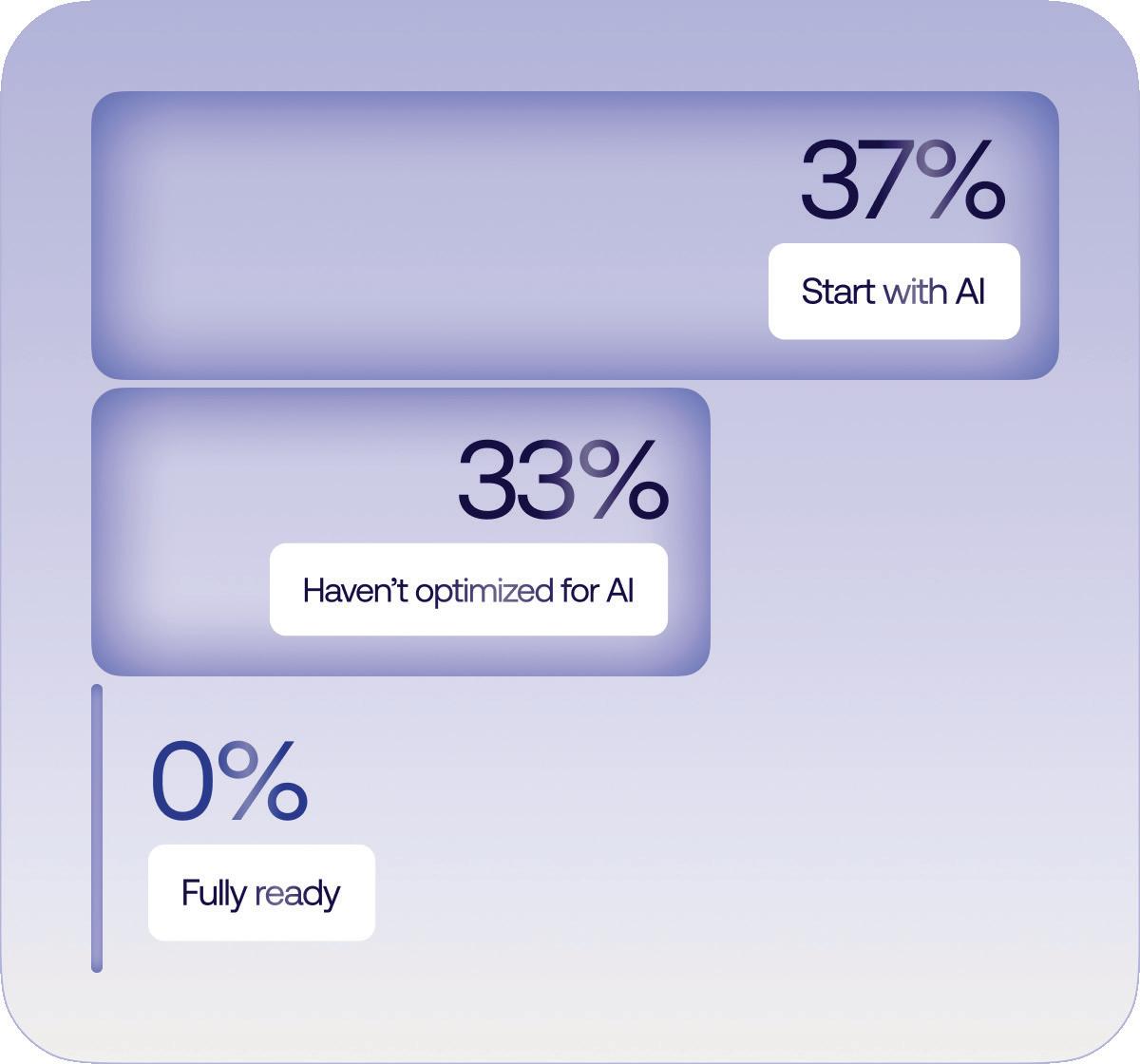
People can easily ask their favourite AI agent to surface products, find one and increasingly are even able to buy it without ever leaving the chat. This is great for the consumer. But, considering 33% of ecommerce leaders say they haven’t started optimising product pages for AI, and none of them claims total readiness, it’s also a clear challenge for businesses.1
The commerce compression era With 37% of today’s shoppers starting their product journeys with AI, rather than Google, this becomes a discoverability problem for brands.2
As e-commerce businesses across the board lack product pages ready for agentic AI, we see two main challenges arising.
Businesses are invisible to agentic AI Agentic AI doesn’t need a business’s permission to fulfil a search query, only its data. If it can’t access the relevant attributes that give context on a brand’s catalogue, it’s not recommending them to anyone. With many businesses having hundreds or thousands of products across numerous channels, manually managing data is nearly impossible.
Efficiency is a moving target Teams are shrinking, financial goals are greater and multichannel expansion is necessary to stay competitive. Organisations are spread dangerously thin. Automation can help with several e-commerce tasks, from inventory
management to product feed enrichment and beyond. But, once again, it all comes down to data.
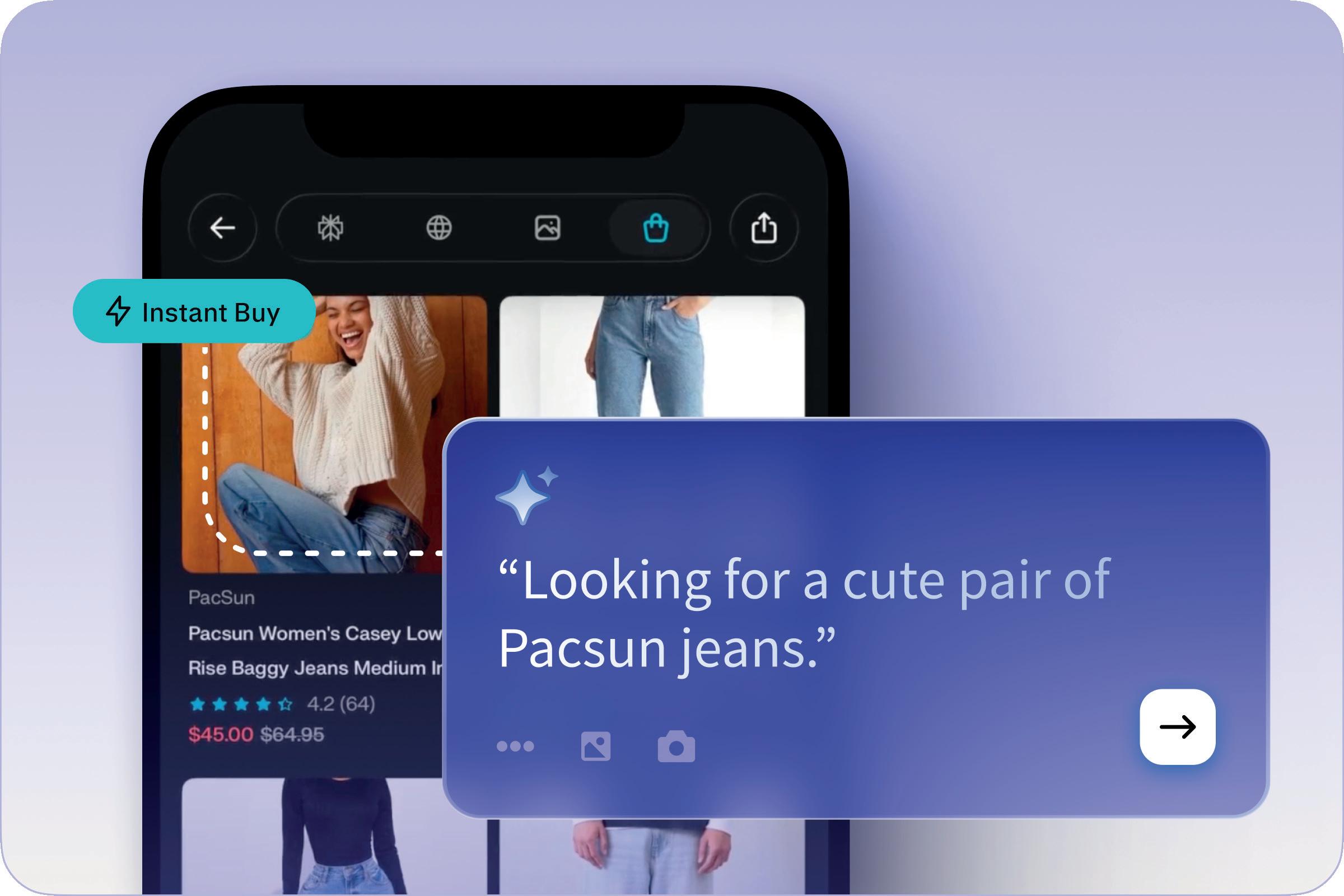
Finding inspiration in retail PacSun is a great example of how businesses can adapt. An iconic retail brand with more than 300 physical stores, PacSun has a large inventory to manage both on and offline.
Using Agentic Instant Checkout on AI platforms with Perplexity, CoPilot PayPal and Commerce, PacSun can pull data from its e-commerce platform and enrich and scale product data with feed management. From there, shoppers can use a platforms Perplexity, CoPilot and Google AI surfaces via UCP to find and purchase their products without leaving the interface.
The best part? Any business reading this can make a similar pivot.
Unified systems are a must
Where the omnichannel approach prioritises delivering a cohesive messaging and shopping experience across channels, unified commerce connects all tools and data on the backend, resulting in comprehensive data.
Complete data solves the invisibility problem, and it helps businesses overcome shrinking resources. When a business unifies its e-commerce platform with inventory management, payment processing, etc, a plethora of automation becomes available.
Unified systems also pave the way for improved analytics. When you’ve got a limited budget or tightening margins, every action needs to count. What better way to make sure you hit the mark than leveraging real-time analytics?
Agentic-friendly checkout is next
With systems unified and product feed management up and running, the next step for businesses is making sure agentic agents can process a user’s purchase. This can only happen if the right checkout experience is provided.
Businesses that want to win in this age of commerce need the data for agents to find them, and a modern, agentic surface-compatible checkout that closes the circle.
References: 1. BigCommerce. (2026). Is ecommerce ready for AI? 15 ecommerce leaders weigh in on AI in 2026. https://www. bigcommerce.com/blog/ecommerce-ai-pulse-surveymarch-2026/ 2. Eight Oh Two. 2026 AI & search behavior study. https:// tinyurl.com/4uv5j235


WRITTEN BY Sharon Gee SVP, Product AI, Commerce
Why post-purchase is shaping up to be retail’s next battleground
Retailers are shifting focus from flashy innovation to practical technology that improves customer experience, operational resilience and post-purchase journeys.
These days, it’s not enough for retailers to create a satisfying experience for shoppers before — and at — checkout. What happens post-purchase is just as important.
For Craig Farley, AI and CX Strategist at IP Integration — a technology and services provider — post-purchase is the next big retail battleground. How retailers deal with delayed deliveries, returns, payment queries, stock issues and service recovery interactions can be the difference between repeat business and a one-time transaction.
“Retail and e-commerce have become very slick at the front end,” says Farley. “Competition is so fierce that retailers know they must do more to retain customer loyalty once they make the sale. That’s where their revenue will come from in the future.”
Retailers turning to flexible, cloud-based ecosystems
If a retailer receives an after-sales call from a customer, it’s probably because of a problem.
“Then, it’s about knowing who that customer is, understanding their issue — and putting it right,” says Farley. “That can have a positive impact on their loyalty.”
Retailers are making greater investments in post-purchase experience technology, particularly tools that help manage customer interactions consistently across voice, chat, messaging and self-service channels. Farley notes that customers expect continuity regardless of channel. Retailers that fail to provide it risk increasing both customer frustration and operational cost.
Flexible technology that evolves with the business
Rather than deploying complex platforms with functionality they may never fully adopt, many retailers are prioritising more flexible, cloudbased ecosystems that can evolve with their business. They’re also mindful of issues around data governance and sovereignty, particularly with AI in the mix.
Ultimately, no amount of smart technology will help if it isn’t applied effectively.
“Post-purchase tech has to be orchestrated properly,” warns Farley. “It must be embedded operationally in your processes and customer journeys — and with your employees too.”
Those that do well will be able to make better operational decisions, remove friction from the customer journey, build brand loyalty and have an advantage over the competition.


Why
merchandise management systems are essential for retail success
In today’s complex omnichannel world, retailers are using integrated merchandise management systems to understand their inventory, track stock and spot buying trends.
“Ibelieve that any retailer of size needs a merchandise management system (MMS),” says Richard Gaetano, CEO of retail software solutions company, Island Pacific.
Properly understanding your inventory and your customers’ buying habits can be the difference between success and failure. A sophisticated MMS gives a retailer complete inventory visibility.
By syncing with warehouse and finance data, it allows them to maintain accurate stock levels, assess customer demand, manage pricing activity, pick up on buying trends and track stock movement.
“We have an integrated solution that tracks sales data at a granular level,” says Gaetano. “It can tell you how many units were sold on what day, time and location. Identifying those types of trends can help understand staffing levels and optimise store operations.”
For example, take size differentiation data. “If you sell footwear, you can track which shoe sizes sell better in different locations based on the people who shop in a particular area. Having that information can affect what inventory you buy and where it goes, to make sure that you don’t have outof-stocks.”
AI-enabled technology is changing the retail game Back in 2010, the MMS solution was powered by machine learning analytics. Now it’s AI-enabled, which is changing the retail game.
“AI can be used for very basic tasks, like checking which items of stock you’re low on,” notes Gaetano. “It can carry out analysis at a much quicker pace, but it can also place the order for you — although it still has to seek your approval.”
In the past, machine learning could help you understand what was happening to your business. Now, an AI-powered MMS can help you understand why it’s happening, thus improving decisionmaking. “With machine learning, you could put data in and crunch some numbers out,” explains Gaetano. “It gave you the results but no context. AI is going to help deliver that context — and that is so powerful.”


How Timpson chose their payments partner: Values, trust and rollout at scale
In 160 years of trading, Timpson has built one of the UK’s most warmly regarded high street brands. Here’s the story of how they chose a payments partner that shared their values.

Still family-owned, the group now spans everything from shoe repairs and key cutting to photo printing and personalisation, barbers and hospitality, including ski hotels, all run on a simple belief: the people closest to the customer should have the most power.
When it looked for a new payments partner, it applied the same test: Does this organisation share our values? Can we trust its people? The answer was Planet. What followed was a major payment rollout across thousands of locations and a partnership that has set a new benchmark for supplier relationships.

SPREAD WRITTEN BY
Upside-down management in action
Founded in Manchester in 1865, Timpson is one of the UK’s largest service retailers, with 2,150 shops, thousands of vending machines and a portfolio spanning key cutting, watch repair, dry cleaning, photo printing, barber shops and hospitality.
The company calls its management philosophy upside-down management: shop-floor colleagues are the most important people in the business, and everyone else exists to support them.
As Will Lankston, Timpson Direct Managing Director, puts it, “The colleagues serving our customers and putting money in the till are the kings and queens of the business. Everyone else is there to support them.”
That culture of trust and kindness shapes everything Timpson does. The company is the UK’s largest employer of people with lived experience of prison, runs a charity that supports children who have had a difficult start to life (funding holidays for foster families and research into attachment) and is a proud member of the Fair Tax scheme. It holds its suppliers to the same standard it sets for itself.
Beyond technology: the support model that mattered
Timpson’s payments estate is complex: thousands of in-person terminals across multiple brands (Timpson, Max Spielmann, Snappy Snaps, The Watch Lab, Johnsons), plus remote terminals for field and security engineers; Pay by Link payments via text and email for select journeys; and a fast-growing vending and selfservice estate.
Managing this with Planet, supported by Barclaycard Payments acquiring services, demanded more than a terminal supplier. It required a partner with both the technology and the people to match.
When Timpson went to market, they made the shortlist for terminal provider on technical and commercial grounds, but it was the people who clinched it. At the final stage, Timpson’s senior team subjected their leadership to what Will Lankston describes as “around 150 questions about how their support would work in practice.”
“At the end of the day, they were the ones who gave us confidence they would look after us. And they’ve stuck to their word.”
“Service and support were huge for us,” says Will. “They really stood out. What we’ve valued most is their accountability, the confidence that if anything ever needs resolving, it will be owned and fixed. That’s not something you can take for granted.”
That matters even more as Timpson adds selfservice locations, where colleagues are not on hand to troubleshoot and uptime becomes part of the customer experience.
Less noise, more uptime: outcomes that stick
The company deployed 5,500 terminals across 2,000 locations in approximately three months, coordinating across different store formats, brand environments and Timpson’s own field engineering teams.
“This was by far the easiest transition we’ve been through,” says Will. “They managed the complexity, and what’s been most impressive is their willingness to adapt to our needs rather than making us fit their process.”
At Timpson, the results are measured in the metric that matters most: colleague happiness. Terminal uptime improved, support SLAs are now consistently met and payment complaints have all but disappeared.
“Complaints about terminals went from a daily or weekly issue to something that’s barely mentioned,” says Will. “When that noise disappeared, we knew we’d made the right move.”
What’s next
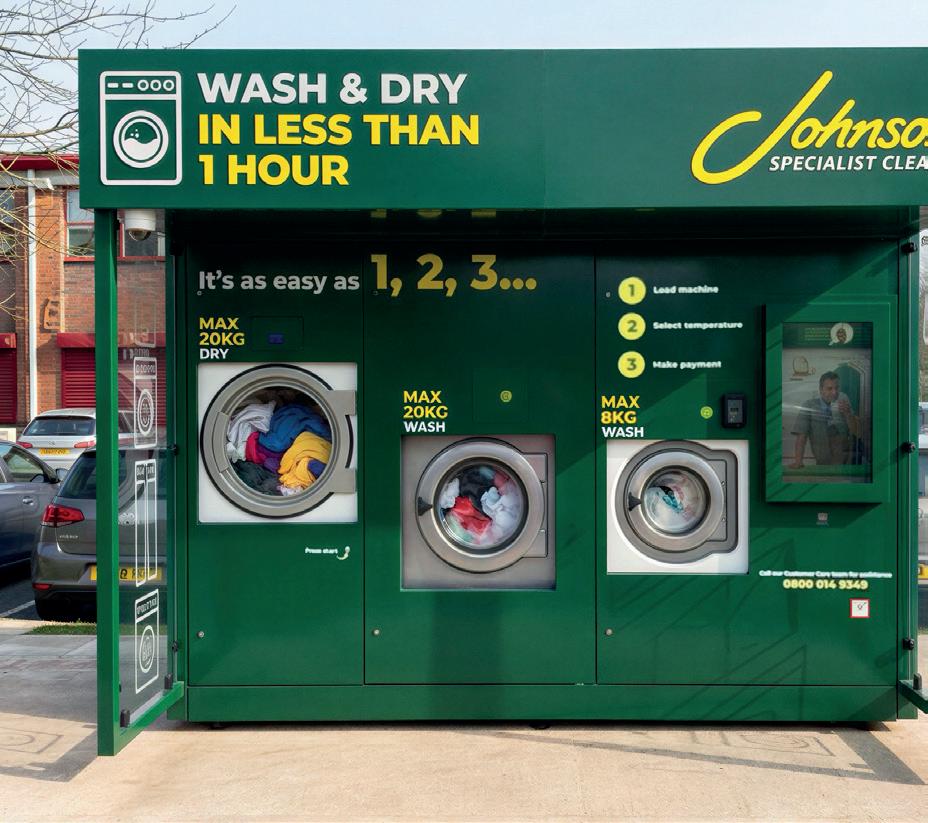
Timpson’s self-service plans include more key-cutting kiosks and a major expansion of its unattended 24/7 launderettes, hand-built in Keighley, West Yorkshire. The plans are expected to add up to 2,000 units over the next twelve months, with the company supporting the payments infrastructure.
“Growth at our current pace would once have raised serious questions around terminals,” says Will. “Now it’s just business as usual.”
Bede Timpson, Head of Innovation and Development, says inclusion is central to Timpson’s laundrette design. “We want the experience to be simple, intuitive and accessible, with no barriers at the point of use,” he says.
With Planet keeping payments reliable, secure, and straightforward to manage across attended and unattended sites, Timpson can focus on expanding access and delivering great service.


INTERVIEW WITH Will Lankston Managing Director, Timpson Direct
INTERVIEW WITH Bede Timpson Head of Innovation and Development, Timpson
Geofferey Pagel and Maurice Flynn
Spread paid for by Planet
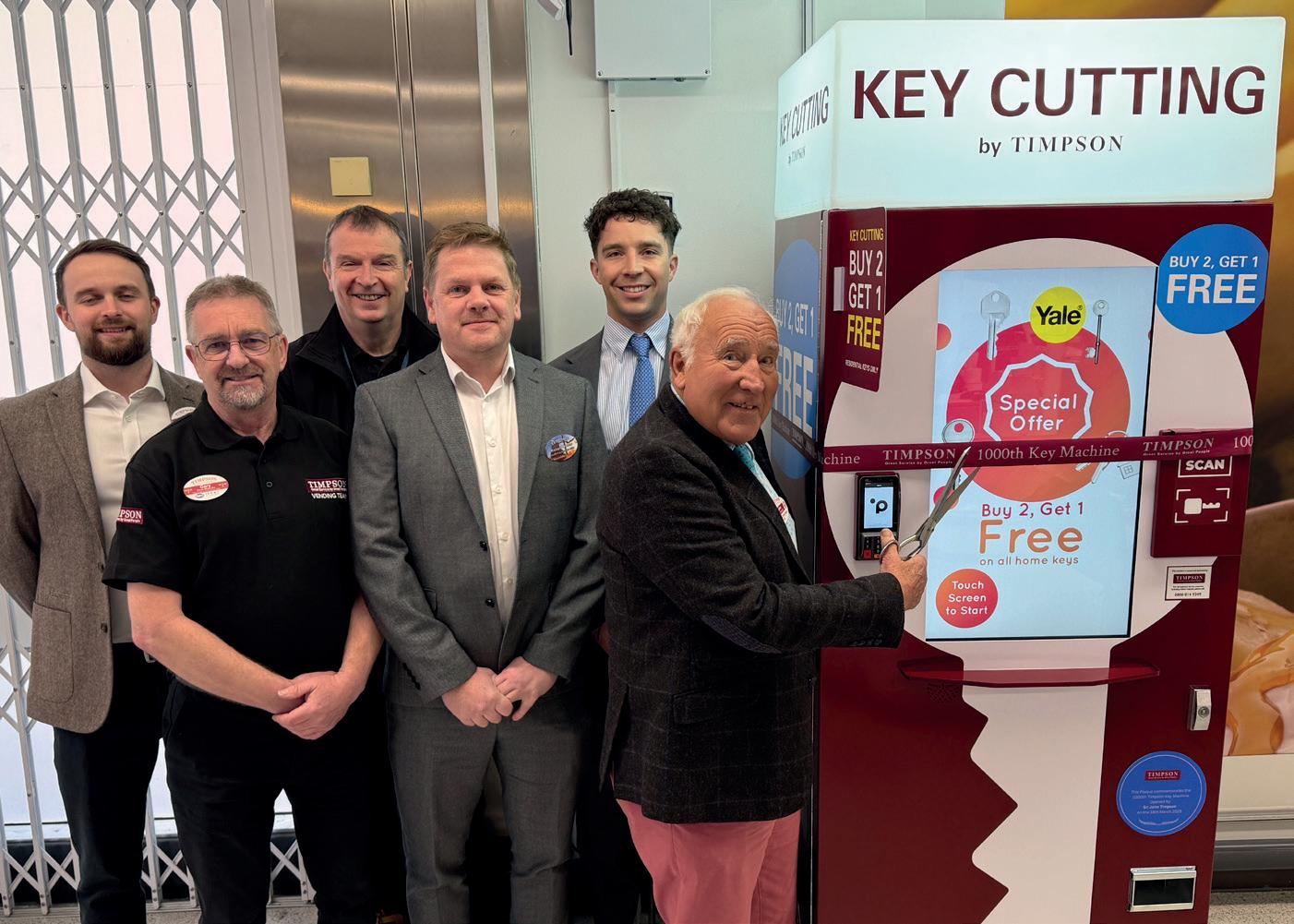
Director John Timpson and team celebrating their 1,000th self-service key cutting kiosk. Image provided by Timpson
Timpson expansion: Johnsons self-service laundrettes rolling out across the UK Image provided by Timpson

What resilient cross-border retail looks like in a more volatile world
As regulation shifts, fraud evolves and customers expect clarity at every step, retailers are having to rethink what it takes to sell across borders without adding friction or losing trust.
Retail is still growing across borders, but it’s harder. Regulation shifts, fraudsters move faster, currencies swing and shoppers won’t tolerate friction or FX surprises. For e-commerce and store leaders, cross-border trade is now a test of the operating model.
Increasing pressure
That pressure is only increasing with scale. The Bank of England estimates cross-border payments will exceed $250 trillion by 2027, up by more than $100 trillion in just 10 years.1
Against that backdrop, retailers are weighing a range of settlement and treasury models, from better use of existing rails to newer options such as stablecoins, even if for most the immediate priorities remain conversion, compliance, fraud control and reconciliation.
Retailers are also rethinking tax-free shopping: it must be fast at point of sale, compliant and connected to the wider journey.
“When conditions are shifting, retailers need to keep serving genuine customers across markets without losing control of compliance or cost,” says Colin Close, Chief Commercial Officer, Planet. “Preparedness protects revenue in the short term and preserves the flexibility to scale. The priority is a cross-border
operating model that supports growth without adding friction, risk or unnecessary complexity.”
The question for finance leaders is what genuine readiness looks like in practice.
What preparedness looks like in practice
Omnichannel raises the stakes. Customers move between mobile, till and returns, and expect the total cost up front, including duties and taxes, ideally in a familiar currency from browse to refund. Retailers are also rethinking tax-free shopping: it must be fast at point of sale, compliant and connected to the wider journey. Add multiple currencies, sanctions and privacy requirements, and expansion can stall for the wrong reasons.
“Cross-border readiness isn’t a single project; it’s a discipline,” adds Colin. “Approval rates matter, but so do refunds, reconciliation and customer service. If finance can’t follow the money and customers can’t follow the process, you won’t scale.”
“In volatile markets, you don’t get points for being global in theory,” says Colin. “You get rewarded for being local in practice, everywhere you trade.” The challenge is not simply expanding into more markets, but doing so in a way that is consistent, compliant and clear for customers as well as finance teams.
Reference: 1. Bank of England. Cross-border payments. https://tinyurl.com/facshrvt.


Five questions to test cross-border readiness
• Can customers pay how they want? Cards and local methods, with routing that protects approval rates.
• Can you stop fraud without blocking good shoppers? Risk-based authentication and a disputes playbook.
• Is compliance built in? Screening, monitoring and an auditable trail.
• Can finance reconcile fast? Transparent FX and fees, predictable settlement, fewer breaks.
• Will customers trust the after-sales journey? Clear landed costs, delivery updates, fast refunds.
INTERVIEW WITH Colin Close
Chief Commercial Officer, Planet

AI: The silent team member for small retailers and e-commerce businesses
AI is rapidly transforming the future of retail and e-commerce — making it more personalised, efficient and data-driven than ever before. For small businesses, this presents a huge opportunity.

Traditionally, competing in retail required time, expertise and budget, resources many small businesses simply didn’t have. Today, AI-powered tools are helping to level the playing field, acting as a silent team member that automates time-consuming tasks and helps businesses reach customers more effectively.
From generating product descriptions and marketing content to analysing customer behaviour, managing email campaigns and improving website performance through SEO, AI is saving time while enabling personalisation at scale. By analysing customer preferences, purchasing patterns and browsing behaviour, businesses can recommend the right product at the right time, improving visibility, engagement, customer loyalty and sales.
However, unlocking these benefits requires confidence and understanding.
AI-powered tools are helping to level the playing field, acting as a silent team member that automates timeconsuming tasks and helps businesses.
Meaningful AI deployment still challenging for small businesses
We are seeing firsthand the growing appetite for practical skills, highlighting the importance of accessible education. For many small business owners, the challenge isn’t recognising the potential of AI — it’s knowing how to apply it in ways that deliver real value for their retail and ecommerce operations.
The right training can build confidence and help entrepreneurs experiment with new tools. By creating accessible learning opportunities, we can help small businesses understand how AI can save time, improve customer experiences and drive growth.
Overcoming AI anxiety to fully take advantage of it
Helen Whetton, Brand and Marketing Director at BT, added:
“AI has the potential to level the playing field for small businesses, giving them access to tools once reserved for large companies. By automating repetitive tasks and generating content and campaign ideas, it frees up valuable time to focus on growing their business and nurturing relationships with customers.”
“Access to technology isn’t enough on its own, though. What matters is helping businesses understand how to use these tools effectively and responsibly, protecting themselves and their customers from potential cyber threats. If small businesses have the confidence to use technology to their advantage, we can securely unlock a new wave of growth and productivity for the UK economy.”

WRITTEN BY Michelle Ovens, CBE CEO and Founder, Small Business Britain
Fashion retail: AI reshapes who gets found
AI agents and search algorithms now control what fashion shoppers find, and most brands aren’t ready for it.

For decades, fashion retail operated on the premise that more traffic equals more revenue: drive shoppers to your site, convert at 2% to 4% and grow, that equation is no longer working.
New research1 analysing 400 major fashion retailers across seven markets, covering 26 months of traffic and conversion data, finds that organic and direct search fell by seven percentage points. Paid traffic, meanwhile, has tripled. The cost of staying visible is rising, and for many brands, returns are diminishing.
The research cross-references traffic data with the financial performance of over 80 publicly quoted retailers.
8% threshold
According to the data, when paid traffic exceeds 8% of total traffic, outcomes diverge sharply. Some brands at or above that level are using paid media to amplify a strong brand identity, and they’re growing.
Others are spending heavily to mask a deeper structural problem. Their brand isn’t differentiated enough for shoppers or for AI systems to seek them out (a 1.5 percentage point reduction in operating margin compared to structural leaders).

That distinction matters because AI-driven discovery is accelerating fast. AI referral traffic grew 172 times in just 13 months. Yet only 57 of the 400 brands have any AI citations (most by accident, not design), meaning 85% are effectively invisible to recommendation engines shaping how shoppers find products.
From growth to smarter commerce
Most brands are absent from AI-driven discovery because of data, not marketing. AI agents and search algorithms surface products they can understand, and most product catalogues are still built in merchant language: internal codes, generic tags and shallow attributes.
A wool coat tagged “OUTW-BLK/wool/black” cannot be matched to a shopper asking which coat works for commuting in London winter (chic, warm and waterproof), while brands that describe how the garment actually works can.

Building discoverability from the inside out Brands with citations share a common foundation: deep, structured product intelligence. Not generic metadata, but domain-specific understanding of how a product functions within an outfit, which customer it suits and what occasion or mission it serves. This is the language shoppers and AI systems can act on.
Discoverability cannot be bought at the top of the funnel, but built into how products are described from the start. Retailers with that foundation are seeing 4% to 7% revenue uplifts, significant reductions in return rates and genuine visibility in an AI-driven discovery layer that most competitors have yet to reach.

Retail is entering a more disciplined era, where profitability, efficiency and customer retention matter more than ever. The question now is not how to grow fast, but how to grow sustainably.
Retail is entering a new phase. After years of rapid digital acceleration, the focus has shifted from growth at all costs to sustainable, profitable performance.
Margins are tighter, customer acquisition is more expensive and expectations continue to rise. As a result, retailers are being forced to rethink not just how they grow, but how they operate.
Profit over growth
For many businesses, the priority is no longer scale alone, but efficiency. This means improving conversion, reducing acquisition costs and maximising the value of existing customers.
Retention is becoming a central focus. Brands are investing more in loyalty, personalisation and customer experience, recognising that long-term value is more resilient than short-term gains.
AI in action
AI is also moving beyond experimentation into practical application. Retailers are using AI to improve forecasting, automate decision-making and deliver more relevant customer experiences.
The shift is away from hype and towards measurable impact. The most effective strategies are those that integrate AI into existing workflows rather than treating it as a standalone solution.
Connected strategies
Another key shift is the need for greater alignment across teams. Marketing, e-commerce and operations can no longer work in isolation.
Performance now depends on how well these functions connect, from campaign planning through to fulfilment and post-purchase experience. Retailers that break down silos are better positioned to respond quickly and deliver consistent value to customers.
The value of collaboration
In this environment, access to insight and peer learning has become increasingly important. As the pace of change accelerates, retailers are looking beyond their own organisations for ideas, benchmarks and practical solutions. Bringing the industry together in one place allows for more meaningful conversations, helping businesses share challenges, explore new approaches and move forward with greater confidence. Ultimately, the retailers that succeed will be those that combine strategic clarity with operational excellence — and remain adaptable in a constantly evolving landscape.

WRITTEN BY
Phoebe Dunsmore Marketing Executive
WRITTEN BY Sarah McVittie VP Marketing, Mapp Fashion
Reference: 1. Mapp & SEMrush. (2026) Mapp Fashion Digital Intelligence Report 2026.

Retail will be dynamic, yet continue to be about people
The way customers shop has changed, and how they gather information has also changed.
The need for retail to be dynamic is never-ending. The pace of change has never been quicker, resulting in failure for some and opportunities for others.
Retail has already moved from a sector based on location to one based on data management. But both principles are entrenched in the ongoing need to understand consumer shopping behaviours
The evolution from traditional high-street retailing to e-commerce has been challenging for both large and small retailers. The way customers shop has changed, and how they gather information has also changed. The result has been a retail sector that has embraced an omnichannel approach, with physical and e-commerce retail channels complementing each other.
E-commerce success lies beyond having a website
To succeed online, there needs to be a comprehensive digital marketing strategy that connects and engages the target customers. A marketing plan that will express the retailer’s values, plus the quality of products and services. Failing to understand the customer will likely cause the failure of the retail operation.
This is why personalisation has become such an important factor in retail. E-commerce allows a retailer to capture vital consumer
information. This data is used to build customer profiles, predict behaviours and streamline communications. Seamless customer journeys from online to physical store are now a reality.
How AI changed the retail game
Just when retail thought it had e-commerce cracked, along came AI and ‘agentic shopping.’
Just as we saw customers move away from visiting high streets to ‘window shopping’ by using Google search, we’re now seeing a move from shopping yourself to having software shop on your behalf. Think less ‘search and browse,’ and more ‘delegate and approve.’ It’s a personal shopping agent that will follow a brief and do all the necessary searching.
An AI-powered shopping agent will learn a person’s tastes, budget and needs, then make recommendations. In many ways, this is moving the power from the search engines back to the consumer. Retail must respond to this, and it entails focusing on understanding the needs of your target customers and adapting to yet another way of shopping.

WRITTEN BY Andrew Goodacre CEO, British Independent Retailer Association

Beyond the bots, retail gets real about AI

Beyond the hype, AI has become a core element of retail strategy, quickly moving from chatbots to direct transactional relationships within AI ecosystems.
Global retail stands at a defining moment. After decades in which competitive advantage was determined primarily by location, range and price, today’s market-leading approaches have emerged from how intelligently a retailer operates. And AI is becoming the backbone of the best-run retail businesses.
Retail turns on new AI axis
According to the National Retail Federation’s (NRF) Centre for Digital Risk & Innovation, which surveyed AI leaders at major retailers in 2025, 39% of retail organisations now expect AI to account for more than 10% of their total technology spend within the next three years, up from a position where 77% currently allocate 5% or less.1
From experimentation to execution
This change reflects an industry that has moved from experimentation to commitment. The NRF further found that retailers reporting the strongest returns from AI are doing so in customer personalisation (48% positive ROI) and IT application development (50%), with marketing and supply chain operations identified as the next major frontiers.1
“In Europe, the transition is particularly complex,” says NRF Europe Director of Events Annabelle Serres. “The regulatory environment
leads the world in data protection, with the General Data Protection Regulation setting the global benchmark, while the EU AI Act has established a governance framework for AI deployment. It means that European retailers must pursue transformation with greater care and rigour than their counterparts elsewhere.”
Yet, she points out this complexity also offers advantages. Businesses that build responsible, compliant AI foundations now will be better positioned to scale as the technology matures.
A philosophy, not a project
However, retailers that treat AI as a technology project will underperform, an issue that will be outlined at this year’s NRF Big Show Europe in Paris this September, Serres stresses. Those who treat it as a business transformation will succeed. Building governance structures, cross-functional capabilities and cultural readiness are the areas where most organisations fall short, but where the biggest opportunities exist.
Reference: 1. NRF. (2025). Retail AI Trends 2025. https://tinyurl.com/4v7ypw3y.

WRITTEN BY Annabelle Serres Show Director, NRF 2026