Future of Defence


“Our adversaries are attempting tens of thousands of cyberattacks on Britain’s critical infrastructure every year.”
Luke Pollard, MP, Ministry of Defence
Page 02
“Defence’s role is to define clear problems, enable rapid testing and remove barriers to adoption.”
Andy Bell, Dstl Chief Science and Technology Officery
Page 10
Generated by AI, Guided by Human Ingenuity

Armed Forces Week: Investing in innovation
During Armed Forces Week, it’s important to pay homage to the sailors, soldiers and aviators who sacrifice so much to keep the UK safe at home and strong abroad. But in this more dangerous world, it’s clear the staggering pace of technological development is redefining warfare.

Luke Pollard
MP, Ministry of Defence
Drones in Ukraine become outdated every few weeks as new versions are developed. Our adversaries are attempting tens of thousands of cyberattacks on Britain’s critical infrastructure every year.
And Russia is trying to jam our satellites and interfere with the networks that are crucial to how our armed forces operate.
We’re meeting this new era of threat with the largest sustained increase in defence spending since the Cold War, £270 billion over this parliament, and making defence an engine for growth across the country.
We inherited a broken system where 96% of major projects were overbudget or delayed.
Business as usual isn’t an option — we need to fix it
From quantum sensing and autonomous systems to space manufacturing and synthetic training, we’re backing innovative businesses across the country with rapid contracts to develop cutting-edge technology.
And our new UK Defence Innovation fund, with £400 million ringfenced each year, is speeding up innovation by quickly finding and buying innovative kit to get it more rapidly into the hands of our personnel.
Our spend with UK businesses already supports over 272,000 jobs across the country, and by investing in new technologies, we’re helping create new opportunities for highly-skilled and meaningful careers.
And where the MOD invests, industry follows: this funding will encourage further private investment, from autonomous ‘wingmen’ drones supporting Apache helicopters to developing DragonFire laser weapons – at just £10 per shot and accurate enough to hit a £1 coin a kilometre away – our warships will use to protect Britain and our allies.
Getting the best kit for our armed forces — rapidly
We’re also speeding up how long it takes to get new technology onto the battlefield. Rapid work by the MOD and industry took less than two months for a new low-cost anti-drone missile to go from testing to deployment on RAF Typhoon fighter jet defensive missions in the Middle East just weeks ago.
Fixing our procurement isn’t just a soundbite — it’s how we ensure that the armed forces who serve us have the very best kit they need to defend us and our allies. And that’s exactly what we’re doing.
Strategic Account Manager: Lucy Harris lucy.harris@mediaplanet.com Strategic Account Manager: Amy Shah amy. shah@mediaplanet.com Managing Director: Margot Thomas | Paid Media Strategist: Jonni Asfaha Digital Campaign Manager: Jan Martorell | All images supplied by Getty Images, unless otherwise specified @MediaplanetUKIE
Please recycle @ Mediaplanet UK & IE

Energy resilience: The defence imperative
Energy security is now a priority for defence organisations, as evolving threats expose vulnerabilities in supply chains, infrastructure and digital systems.
Energy security is increasingly being seen as key to national sovereignty. Recent geopolitical events have exposed vulnerabilities, from supply chain disruptions to cyber risks targeting critical assets, accelerating global conversations about energy resilience, independence and long-term operational readiness.
The Strategic Defence Review has reinforced the importance of mission continuity and protecting critical infrastructure in an increasingly uncertain environment.
Risks threatening energy security
Energy supplies are threatened by market volatility, physical disruption, sabotage and increasingly sophisticated cyber intrusions. Extreme weather introduces further pressure on already stressed infrastructure.
The growing energy demands of advanced defence platforms, secure communications and digital systems also make disruption potentially more damaging to operational effectiveness.
Resilience depends on a holistic approach: diversifying fuel sources, investing in localised or distributed energy systems and strengthening physical and digital defences. Diversified energy adoption is increasingly driving operational agility and supply chain resilience.
Real-time infrastructure monitoring, predictive analytics and the integration of digital twins enable more proactive risk management and rapid response if anomalies arise. Arcadis is already applying AI-enabled
The biggest defence risk is no longer lack of technology — it’s lack of integration
The UK’s defence transformation isn’t only about new technology. It’s about connecting people, platforms, data and decisions into systems that can adapt at pace.

Aand digital solutions, like Climate Risk Nexus and Enterprise Decision Analytics, to help organisations improve asset visibility, scenario planning and decision making.
Integrated approach
Technology alone isn’t the differentiator. The real advantage: combining digital intelligence with engineering expertise, operational knowledge and human judgement to support faster, more informed decisions. Energy, water, transport, environment and digital infrastructure are becoming increasingly interconnected, particularly in defence environments where continuity is critical.
At Arcadis, we see growing demand for approaches that connect these complex, multi-stakeholder systems, including projects supporting Belgium’s F-35 fighter programme and environmental infrastructure and resilience programmes for US federal and defence agencies.
Finland’s rapid energy transition since joining NATO demonstrates the value of diversification, local energy initiatives and strong civil-military coordination. Similar approaches are being explored as nations rethink how they strengthen operational continuity in a volatile world.
Energy resilience is key to national capability and long-term security. Arcadis is well positioned to support, as defence organisations rethink how critical systems are designed, connected and protected.
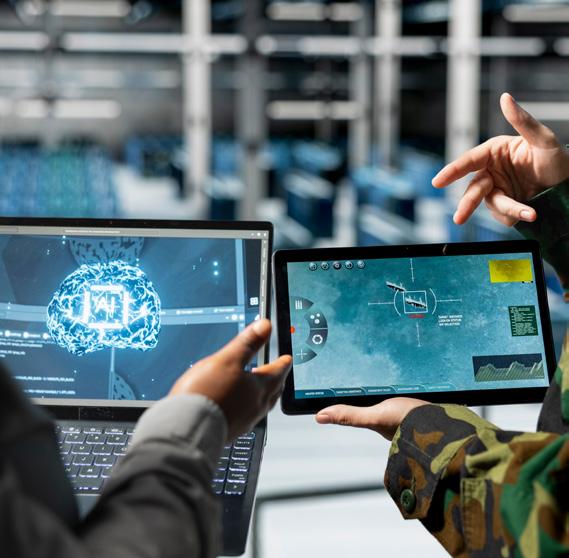
s defence rapidly adopts AI, autonomy and digital technologies, success increasingly depends on how complex systems work together, says Lloyd Pryce, Managing Director, Optima Systems Consultancy.
How is UK defence capability changing, and what does that mean for how programmes are delivered?
UK defence capability is shifting from standalone platforms to integrated, multi-domain operations across land, sea, air, space and cyber. Simultaneously, threats are evolving faster, and defence programmes must adapt at pace, with greater flexibility to integrate emerging technologies.
A NATO-first approach also
means UK capability must work seamlessly with allied systems. For programme delivery, this creates greater complexity, requiring a systems-led approach.
AI, autonomy and digital engineering are all major focus areas. Is technology the main challenge — or something else?
AI can provide enormous advantages, but only if it’s trusted, properly integrated and aligned with operational decision-making. The same applies to autonomy, digital engineering and data-driven capability.
Technology alone isn’t a transformation. Achieving impact requires systems thinking, balancing performance, cost and
time and managing integration across platforms and programmes. The difficult part is understanding how changes in one area affect the wider system.
The SDR calls for faster procurement and more adaptable capability. How do you deliver that without sacrificing rigour?
Delivering faster procurement requires a clear balance between performance, cost and time, through structured decisionmaking. Increasing pace doesn’t mean reducing discipline; it means improving how decisions are made. Defence organisations must understand the risks of both action and inaction, including what’s not done and its downstream implications. Early-stage systems engineering brings focused insight, problem framing and better alignment from day one.
What role do independent specialist SMEs like Optima play in this landscape, and what does success look like for UK defence in the next five years? Independent specialist SMEs provide systems-focused expertise that helps defence organisations to navigate complexity without bias towards specific platforms or solutions, bringing crossprogramme experience and innovative thinking to complex challenges.


Heather Polinsky CEO, Arcadis
Paid for by Arcadis
Lloyd Pryce Managing Director, Optima Systems Consultancy
WRITTEN BY Bethany Cooper
Why the future of defence lies in strong transatlantic industrial partnerships
In the new security environment, the transatlantic defence ecosystem must further evolve towards long-term partnerships between the US defence sector and European allies.

Since 2022, the relationship between the US defence industry and its European allies has evolved significantly.
Europe’s threat perception has radically changed since the Russian invasion of Ukraine, accelerating a mindset shift towards deterrence, resilience, readiness and industrial capacity. NATO allies are increasing defence spending, replenishing stockpiles and placing greater emphasis on ensuring that critical capabilities can be produced, sustained and upgraded at scale.
“European governments increasingly expect industrial participation, sovereign capability, local manufacturing, sustainment capacity and technology collaboration as integral elements of any long-term defence relationship,” explains Dr. Dennis Göge, Chief Executive and Vice President, Europe, at US defence and aerospace manufacturer Lockheed Martin. “Lockheed Martin recognises this and was one of the first companies to meet today’s expectation that defence suppliers should be present in the markets they sell to — whether partnering with domestic defence companies as we do in countries such as Germany, Italy, Norway or Finland, or running our own manufacturing facilities as we do in the UK and Poland, investing in facilities and employing European workforces.”
Europe’s threat perception has radically changed since the Russian invasion of Ukraine, accelerating a mindset shift towards deterrence, resilience, readiness and industrial capacity.
Expanding partnerships with European industry
Dr. Göge notes that the company will continue to invest in genuine strategic partnerships with European industry because it believes these capabilities are essential to NATO’s long-term readiness and resilience. He points out that success will increasingly depend on factors such as co-development, technology collaboration and Alliance-wide interoperability.
“Building together for today and the future


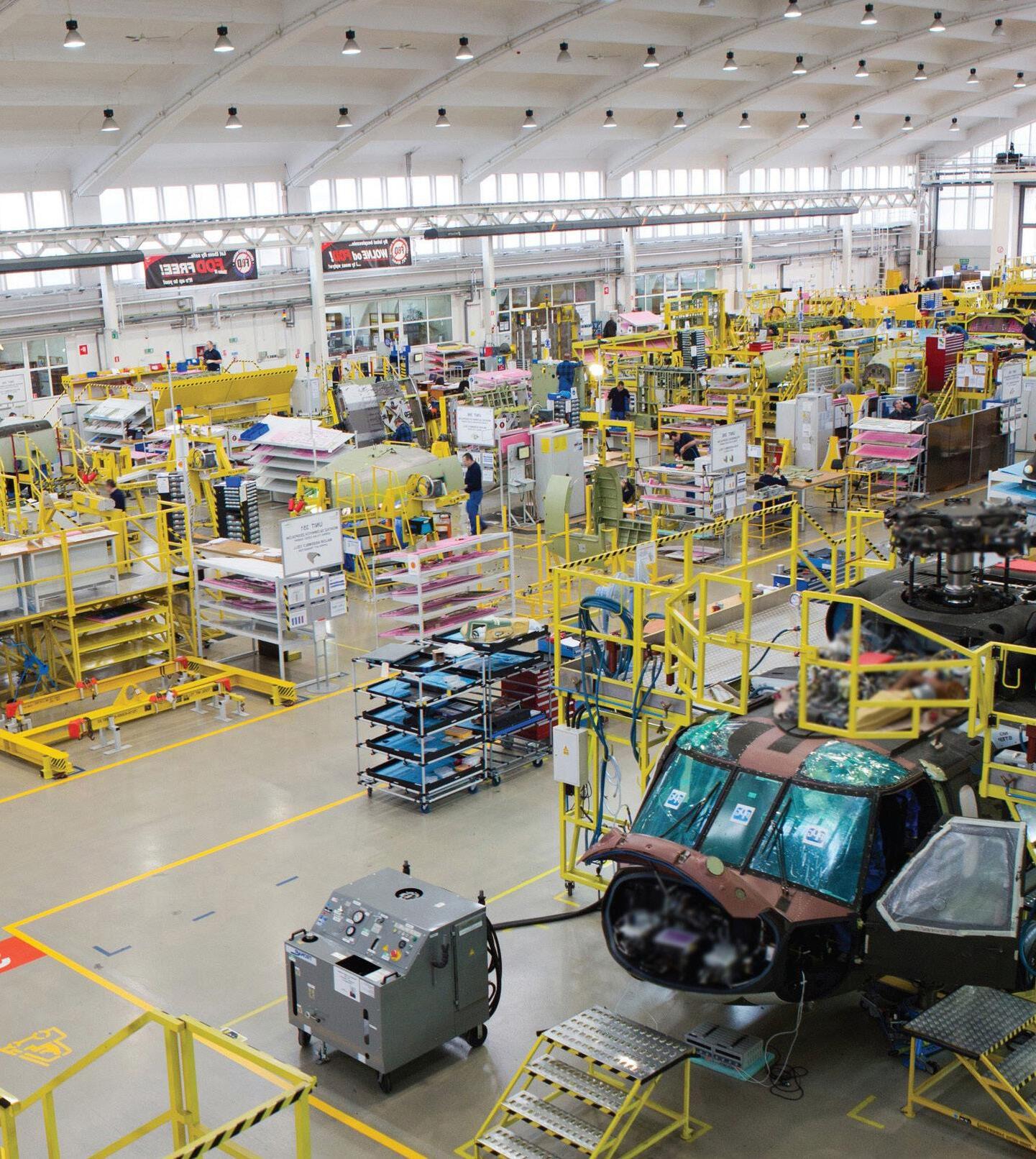
will enable European and NATO allies to operate together effectively and with common purpose,” says Dr. Göge. “This is why the F-35 program is so successful. This is currently the most advanced and connected fighter aircraft in the world, forming the cornerstone of air superiority and interoperability within NATO. It not only provides a highly capable platform to multiple allies, but it also involves many of those nation’s industries in the manufacture of this platform, often at the component and subsystem level across the supply chain where critical technologies, engineering expertise and innovation are developed. That is where industrial capacity is built, and where longterm capability and resilience are sustained in individual nations and across alliances.”


SPREAD WRITTEN BY Tony Greenway
Dr. Dennis Göge Chief Executive and Vice President, Europe, Lockheed Martin
Spread paid for by Lockheed Martin



How to close the gap between innovation and operational capability
Advanced technology is central to defence innovation. But success also requires aligned funding, agile procurement and industrial capacity in order to scale solutions rapidly.
Shortening the path from concept to deployment
“Innovation at speed” is now a phrase that appears in almost every defence strategy document across NATO. From an industry perspective, this isn’t simply about moving faster through existing processes, however. It requires building the conditions that allow for rapid adaptation before a formal requirement is issued.
One way that Lockheed Martin ensures that its highin-demand capabilities can be manufactured faster and in more quantity is through innovative co-production agreements with its industrial partners. For instance, it has an MOU (Memorandum of Understanding) with integrated technology group Rheinmetall to establish a Centre of Excellence for European Security in Germany for the manufacture of missiles.
“Cooperations will be key to increasing the pace of manufacture to ensure strong inventories and security of supply across Europe,” explains Göge. “A great example is the F-35 aircraft. Twenty-five percent by value of every F-35 built is produced in Europe. Among others, we are partnering with Rheinmetall in Germany, Patria in Finland and BAE Systems in the UK to produce major aspects of every F-35 sold around the world, and with Leonardo we are operating a F-35 final assembly and checkout facility (FACO) in Cameri, Italy.”
Digital engineering is another key element of rapid adaptation. Indeed, the company has consistently demonstrated that digital engineering enables design, manufacturing and sustainment teams to work from a common data environment, reducing rework, accelerating testing and shortening the path from concept to deployment. Its strategic investment arm, Lockheed Martin Ventures, has partnered with more than 120 companies globally to develop emerging technologies that will shape the next generation of defence and aerospace capabilities.
To ensure commercially derived capabilities can be rapidly inserted into defence programmes, the company is also leading in the development and adoption of cloud computing, 5G, autonomy, data analytics — and AI. In fact, the company has been working with AI for decades to ensure its systems are smarter, more secure and more interconnected.
“Ultimately, innovation at speed is less about accelerating individual programmes and more about creating a defence ecosystem that can continuously evolve,” says Dr. Göge. “The organisations that succeed will be those that invest early, experiment continuously and arrive at the customer’s problem with solutions already in development rather than waiting for a requirement document to appear.”
Strengthening the defence industrial base — and allied readiness
The most resilient defence supply chain model is a trusted, diversified and interoperable industrial network that combines global scale with sovereign national capability
In today’s defence sector, supply chain security is a core element of national security.
For Göge, the best way to optimise supply chain resilience is with a trusted, diversified and interoperable industrial network — one that combines global scale with sovereign national capability.
“A globally connected supply chain provides scale, innovation and surge capacity, while local industrial participation strengthens readiness, supports national economies and gives governments confidence that critical capabilities can be sustained when they are needed most,” he says.
Lockheed Martin Chairman and CEO Jim Taiclet has repeatedly argued that NATO’s advantage
comes from allies being able to “work as one force,” enabled by common standards, shared industrial capacity across North America and Europe — and interoperable systems. Certainly, interoperability of military platforms is an important issue currently, as these facilitate the sharing of information and data among allies. One example is the company’s F-35 aircraft, which is able to swiftly sift and share data from systems such as Military Satellite Communications to forces on land and sea operating compatible interoperable platforms such as Aegis-enabled frigates or effectors such as THAAD and PAC-3 missile systems.
Autonomy and interdependence are not mutually exclusive
However, recently, with political momentum behind European strategic autonomy growing, governments have been building more domestic supply chains. Yet autonomy doesn’t mean jettisoning transatlantic interdependence, says Dr. Göge. On the contrary: the Alliance is enhanced when greater European investment in defence production, sustainment and innovation is connected to a broader transatlantic ecosystem.
“The real challenge is not autonomy versus interdependence but ensuring that Europe’s growing defence-industrial capacity reinforces allied readiness,” he notes. “If European investment produces more manufacturing capacity, stronger supply chains, faster sustainment and greater operational resilience while maintaining common standards and interoperability, it strengthens both European sovereignty and NATO’s collective deterrence. The tension only emerges if industrial policies create fragmentation, duplication or barriers that reduce the ability of allied forces and industries to operate together.”
Upskilling and reskilling in aerospace
Few sectors can claim a legacy as rich as the UK’s aerospace industry. For more than a century, it has shaped how we travel and communicate, taken people to the edge of space and supported thousands of well-paid, highly skilled jobs.

Yet, just as the industry prepares for its most ambitious engineering feat to date, developing the next generation of aircraft, few would expect a skills shortage to be its most acute challenge.
The UK’s aerospace sector supports more than 100,000 highly skilled jobs, including over 6,000 apprentices across the UK. It leads all UK industries in job quality, offering secure, well paid roles with long term prospects. Yet, the sector is feeling the strain of an increasingly tight labour market.
As the trade association for the sector, we’re ensuring the workforce keeps pace with this challenge, working closely with Government partners to ensure the policy framework supports the ramp-up ahead. We’re also working with colleges, training providers and the newly announced Technical Excellence Colleges so that young people have the resources and skills to move into our industry.
in Wales, and jet engines built in Derby taking off somewhere every two and a half seconds, this industry is very much alive and thriving, and it seems the younger generation is catching wind.
Through the UK Youth Rocketry Challenge, ADS has spent the past 20 years encouraging students from secondary schools to design, build and launch their own model rockets. This year alone, more than 1,600 students took part. It’s hard not to ask what the impact would be if even a fraction of those young people went on to join our industry or were simply inspired to choose a STEM subject at school.
It’s hard not to ask what the impact would be if even a fraction of those young people went on to join our industry or were simply inspired to choose a STEM subject at school.
Reigniting the imagination for aerospace With half the world’s aircraft flying on wings made
Why the future of defence is drone tech and distributed edge computing
In Ukraine, drone technology promises to become more sophisticated and interconnected, increasing the need for faster, more resilient computing power at the tactical edge.
Survival within the frontlines of Ukraine, a lethal and inhospitable landscape estimated to be between 30 kilometres and 60 kilometres deep, has been made difficult, if not impossible.
Drone technology has turned the area into a zone of absolute denial, where the slightest movement is immediately detected by drones and met by precision drone strikes or artillery fire.

Off-the-shelf drone technology has transformed ‘ability to deny’
“The Ukrainians have proved that the concept of ‘deep zone
Embedding an engineering mindset Industry cannot do this alone.
The Government also has a role in making aerospace an attractive and accessible option, not just for apprentices and graduates, but for career changers and new entrants. Industry, Government, education providers, parents and careers advisers all need to be pulling in the same direction.
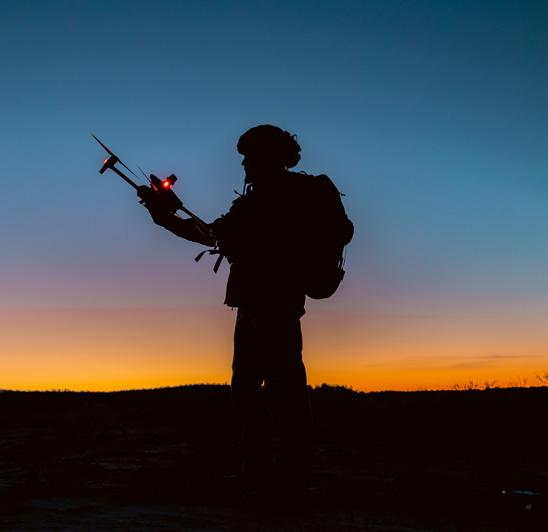
denial’ is highly effective,” explains Alexandra Bailey, Head of Defence, Fujitsu UK. “What’s more, the price of that denial is extremely cheap, because it can be achieved with easily available, consumer-grade, off-the-shelf drone technology.”
Yet this advantage can be pressed further. Currently, the drones monitoring this zone are mostly First Person View (FPV), piloted by a single operator. She believes that, soon, these separate drones will start interacting with each other, sharing data and intelligence in real time. However, in this interconnected future, centralised digital
infrastructure can be a liability at the tactical edge. “If decisionmaking is made via a single node or communication is via a single bearer, it creates an exceptional point of fragility,” says Bailey. “If it’s disrupted, it would prove catastrophic for the whole system because everything would fail.”
Distributed edge computing enables tempo — not just resilience Edge computing reduces or eliminates this risk with a distributed architecture that processes data closer to its source. Apart from being more resilient, it offers greater speed, reduces latency and enables faster decision-making.
For innovation to thrive, the relationship between the Ministry of Defence and its supply base needs to evolve. The agility and innovation by SMEs remain a vital battlefield advantage. However, realising the full benefits of autonomy will also require a balance of the dynamic, diverse supply base on one end and a common architecture on the other.
“We must invest in collaboration and innovation with digital partners, elevating relationships from tactical, contractual arrangements to true strategic partnerships focused on innovation and pace,” concludes Bailey.

Alexandra Bailey Head of Fujitsu UK Defence and National Security Business Group
Paul Oxley Director General, ADS Skills
WRITTEN BY Tony Greenway
Strengthening British defence with tactical sensors that have a strategic impact

Wing Commander (Ret’d) John McFadden Business Development Director, CRFS

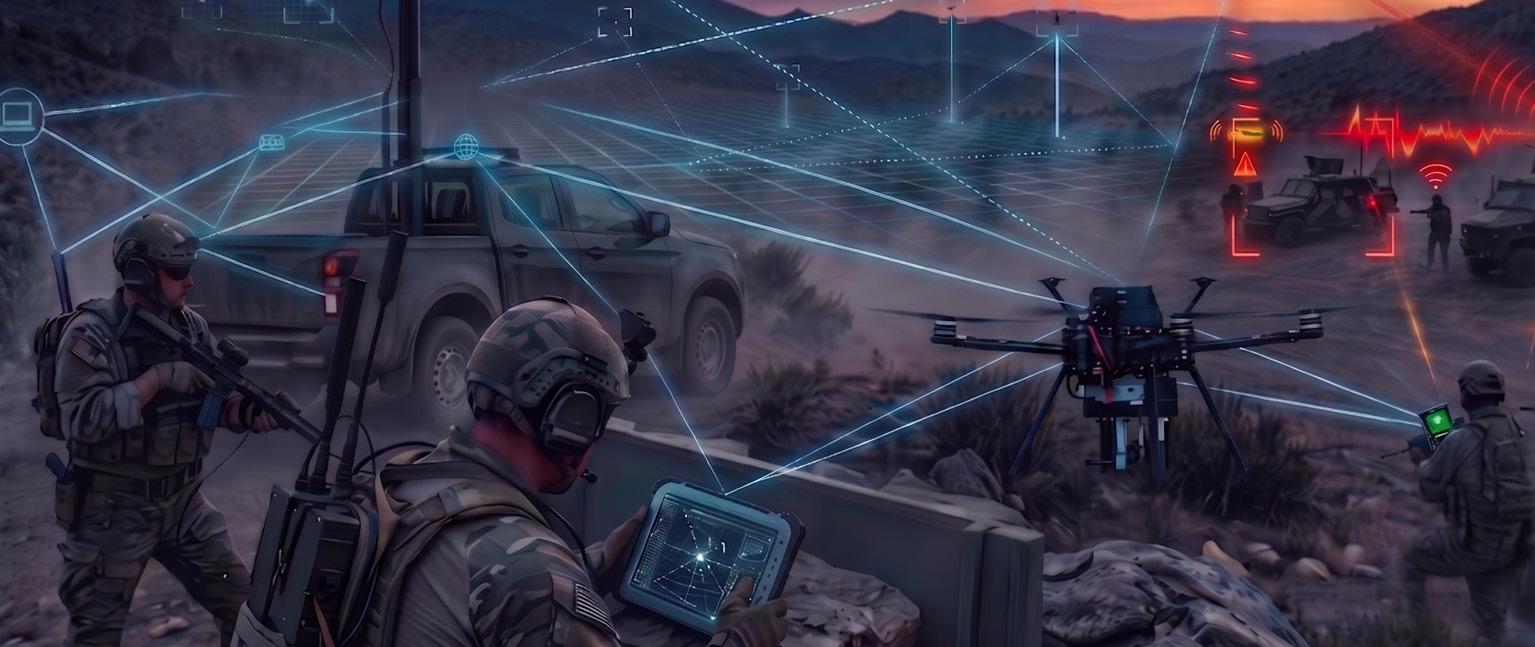
In the old order, electronic warfare (EW) was carried out by specialist units and exquisite platforms. In the new order, Russian GPS jamming, spoofing and Starlink degradation in Ukraine have demonstrated that EW is now the price of entry for any modern peer conflict.
The UK must address its core structural weaknesses: reduced survivability, unoptimised targeting cycles and slow procurement. One way is to deploy autonomous mass on the tactical edge: tactical sensors with a strategic impact.
Achieving a high-low mix
In a future conflict scenario, the RAF cannot afford to risk crewed, exquisite platforms, like the RC-135W Rivet Joint, due to reduced survivability in or close to threat zones. The 2022 ‘released missile’ incident over the Black Sea was a stark reminder of the risk in deploying them close to hostile airspace.
Continuing to gather electronic intelligence successfully will depend on an electromagnetic ‘high-low mix:’ combining existing sophistication with scalable technologies that provide mass and persistence where costly assets cannot be deployed. One example is the TEKEVER AR5 integrated with an RFeye Node (SIGINT payload).
Integrating sensors into unmanned systems (UxS) — following Ukraine’s model of using inexpensive ISR drones that take advantage of rapid software iteration — can close capability gaps. Operating at the tactical edge, these lower-cost systems can be fielded at scale, providing interoperable SIGINT, ESM and ISR capability.

As the battlefield is now flooded with electronic devices and autonomous platforms, superiority no longer means better armed troops deployed by high-end platforms that cost billions and take decades to procure.
areas. The battlefield needs to be connected by netted sensors that constantly send real-time data back to command and control.
Deploying sensors on attritable, unmanned and autonomous systems means the kill web can be resilient and flexible, even when high-value and human assets are excluded from contested zones. This enables commanders to preserve decision advantage and better understand the extended battlespace.
This structure embraces mosaic warfighting in which systems function as individual pieces, creating unique mosaics of military force.
A procurement model for the speed of need
Identifying and integrating capability faster has become a determinant of combat power. Rigid, slowcycle platform programmes are incompatible with high-tempo, unmanned, autonomy-enabled warfare.
Decisive military advantage will not come from expensive, long-term programmes, but from those who can sense first, decide quickly and adapt continuously.
By sharing electromagnetic data with UK and coalition Battlefield Management Systems, these platforms can enhance military situational awareness, helping different units, systems and partners achieve objectives.
Integrate autonomous sensing systems into resilient kill webs
The electrification of the battlefield has accelerated the tempo and lethality of forces by shortening the Sensorto-Shooter Cycle. Military doctrine has replaced rigid, linear kill chains with dynamic, decentralised networks known as ‘kill webs,’ which enable rapid, flexible targeting and delivery of effects.
Based on lessons from Ukraine, where the kill zone is reported to extend 10–20km, with a further 20–30km grey zone, the UK’s ‘Digital Targeting Web’ intends to connect sensors, deciders and effectors over extensive
Operational advantage now depends on the speed of need — the ability for militaries and their industry partners to rapidly integrate, iterate and scale capabilities.
Desired operational effects must be defined first, with architectures, then backwards engineered with industry to deliver outcomes. Hence, the industry is no longer a vendor, but an operational teammate inside the capability generation loop.
COTS sensors payloads on UxS will accelerate development and procurement cycles to achieve the 24-6-6 cadence required for peer conflict. Within 24 hours, software can be updated to adapt to adversary waveform changes and output new metadata formats, ensuring continuous interoperability — EW reprogramming is the decisive factor in electromagnetic dominant environments.
Within six weeks, hardware can be spirally developed to ensure EW sensors can keep pace with emerging threats. And within six months, an entirely new capability can be developed. Static assets become continuously adaptable systems.
Conclusion
Decisive military advantage will not come from expensive, long-term programmes, but from those who can sense first, decide quickly and adapt continuously. Deploying autonomous mass on the tactical edge allows commanders to do that. Tactical, low-cost sensors can have a huge strategic impact.
Jaimie Brzezinski Head of Content, CRFS
Unlock private investment and grow our economy with a clear pathway to 3.5% of GDP on defence
Spending more on defence is both a national security imperative and an economic opportunity, but there’s still a lack of clarity on how to achieve this.

At last year’s NATO Summit in The Hague, allies agreed to raise core defence spending to 3.5% of GDP by 2035, alongside an additional 1.5% for national resilience. This historic commitment reflects a more dangerous world following Russia’s illegal invasion of Ukraine in 2022, but also growing instability in the transatlantic relationship, from rising tariffs to disputes over Greenland and divisions over US policy towards Iran.
The UK must respond with a serious increase in defence spending. Yet this isn’t only a national security imperative; it’s also an economic opportunity. More than seven in ten UK defence jobs are based outside London and the Southeast, meaning the defence sector is uniquely positioned to support growth in post-industrial, rural and coastal communities.
Call for a clear fiscal roadmap
To seize this opportunity, the Government must provide industry with certainty. Ministers have committed to spending 2.6% of GDP on defence by next year and expressed an “ambition” to reach 3% in
How counterdrone technology is changing the face of defence
Drones are changing modern warfare, and traditional defence systems can’t keep up. New technology is needed to counter this threat.
Recent conflicts show uncrewed systems, underpinning ISR and force protection challenges, with drones increasingly deployed further forward,” explains Louise Heywood, Head of Strategy, BAE Systems Digital Intelligence.
Intelligent analytics and real-time decision-making

Countering uncrewed threats with kinetic effect can be costly, so denying or degrading communications links is a common alternative. “If a drone has a radio frequency-led (RF) comms link, there are different ways of jamming, spoofing, denying and ‘returning to operator’ through
the next Parliament.
But businesses cannot make major long-term investments based on ambitions alone. A clear fiscal roadmap to 3.5% by 2035 is essential to unlock private capital, strengthen supply chains and expand the UK’s industrial base.
Credible ways to achieve 3.5% GDP for defence
Make UK Defence has backed the proposed Defence, Security & Resilience Bank (DSRB), an idea supported by Canadian Prime Minister and former Bank of England Governor Mark Carney, as a mechanism to help finance higher defence spending across the UK and NATO allies.
The Government should also learn from history. During the Second World War, Britain raised the equivalent of more than £100 billion through war bonds. A modern defence bond, ringfenced for investment in R&D, innovation and export-focused capabilities, could mobilise significant new funding while supporting economic growth.
The UK is in a global race for private defence investment. Without a clear pathway to 3.5% of GDP, we risk losing that investment to our competitors.
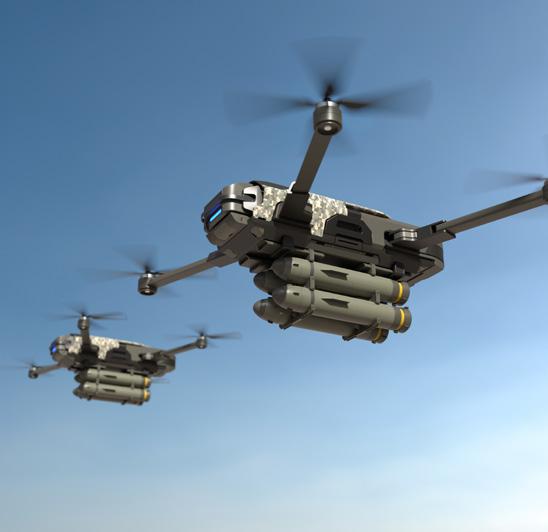
cyber protocol takeover,” says Heywood.
“However, adversaries are responding to change the threat –turning to frequently agile software defined radios, fibre optics and no C2, so that operators can no longer rely on EW effects for defence,” she adds.
To protect troops, urban centres and critical infrastructure, quick threat identification is critical. That’s why BAE Systems Digital Intelligence is developing the BAE Systems Anti Threat System (BATS), which will use intelligent analytics and real-time decisionmaking to help operators detect, classify and track different types of drones, while keeping a human in the loop.
BATS will use a multi-sensor approach, which is important because “in a battlefield or force protection environment, you might not always want to use active sensing as it signals your location.”
Most drones are effectively software defined radios on mobile platforms, so the exploitation of C2, payload datalink and GNSS denial or disruption can deliver an effect.
If a drone is identified as hostile, the operator will mobilise a counter-response. “They have the choice to deploy a ‘soft kill’ effect to deny or degrade the drone’s communications links,” says Heywood. “Or they could deploy a ‘hard kill’ effect via a ground-based weapon system if legislation and engagement rules allow.”
Agile work led to swift innovation “As adaption is measured in weeks, we have delivered a system to trial at pace,” says Heywood. “That meant operating in an agile way, but we’re at a point where it’s ready to be trialled this summer.”
For Heywood and her team, developing BATS has been challenging, but ultimately rewarding.
“We hand-picked a team of incredibly passionate, able people,” she says. “It’s been important to us from a technical perspective, but also to meet the needs of customers.”

Louise Heywood Head of Strategy, BAE Systems Digital Intelligence
Chris Hague Senior Policy & Comms Manager, Make UK Defence
WRITTEN BY Tony Greenway
Why the defence sector
approach to AI

Every industry must deploy AI safely, securely and in an operationally trustworthy manner. But for defence companies, this approach is critical. The repercussions of failure could be catastrophic for military personnel and national security.
Yet while AI implementation presents major challenges, responsible and considered use of the technology has the power to unlock huge opportunities.

WRITTEN BY Tony Greenway
“AI is used widely across defence platforms and it’s going to be used more,” says Elizabeth Williams, Partner and Head of Aviation, Aerospace and Defence sector, Gowling WLG. “If applied effectively, this technology can help us and our allies retain and optimise our military capability and competitive edge more readily and at pace.”
No ‘one-size-fits-all’ approach
The Government takes a decentralised approach to AI, allowing each sector to apply its own guidelines. However, a major challenge for defence is its size, complexity and disparate nature. There can never be a ‘one-size-fits-all’ answer to AI deployment.
For instance, at the military end of the spectrum, AI is a central component of the Global Combat Air Programme (GCAP), a co-project between the UK, Italy and Japan to develop a next-generation fighter aircraft. Meanwhile, at the civil end, AI is being used to execute a wide variety of tasks, from product design to the streamlining of logistics.
Indeed, a recent report from IBM, called ‘Defense manufacturing in the AI era’, predicts that by 2028, approximately 80% of manufacturing and supply chain operations will deploy agentic or autonomous systems for forecasting, inventory optimisation, scheduling, quality control and predictive maintenance.

“When considering legal and regulatory assurance, it is important to consider each use case separately on its merits,” agrees Michael Carter, Partner and Co-head of Gowling WLG’s Global Tech Sector. “The Government’s AI Practitioner’s Handbook (AIPH) states that ‘AI assurance activities can vary depending on the type of AI technology and how you plan to use
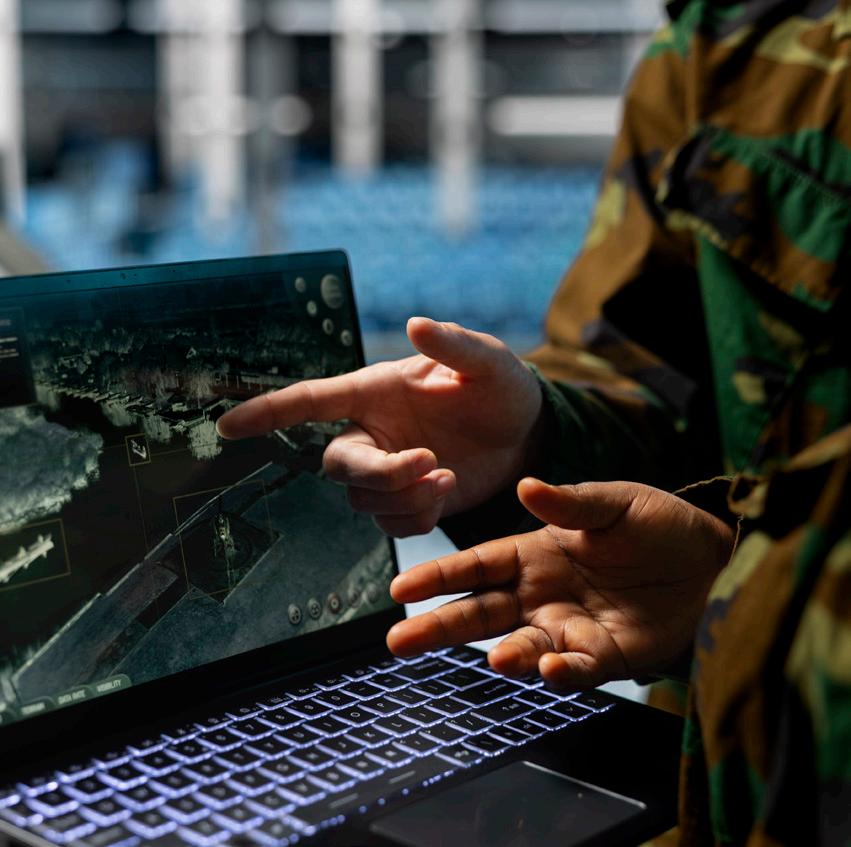
it.’ So, it’s important to look at each AI tool individually and understand where it sits within the defence ecosystem.”
Supporting AI with improved procurement and contracting
While the defence sector has made great strides in facilitating AI adoption, improvements could be made in procurement and contracting. “This is technology that’s changing quickly,” says Elizabeth. “So, contracts need to be flexible to enable continuous improvement, and in some cases digital transformation, implementation and change to allow companies to operate and update at pace.”
She also notes that important AI innovations aren’t only created by government or large defence contractors. These are increasingly coming from smaller, evolving technology companies. To help SMEs develop their technologies and capabilities and participate in these defence supply chains, processes must support easier collaboration and ways of working, to facilitate supply chain integration.
In 2021, the MOD set up an AI Ethics Advisory Panel to address these issues. “The Panel has been looking at this for a long time, so they’re probably further ahead on the curve than many,” says Michael. “So, with Government guidelines and principles, and the AI Practitioner’s Handbook, the sector is doing a lot to reduce friction for suppliers while maintaining high standards.”
The sector must still tackle questions regarding sovereignty, trust and values, and establish a position on AI providers active in other countries. “It’s balancing the opportunity and the increased capability offered by AI with factors such as security and use and protection of sovereign data,” says Elizabeth. “There’s so much to unpack.”
But ultimately, the most important question for Elizabeth and Michael is: ‘How can AI be deployed sensibly, carefully and securely with the right guardrails in place?’ A key safeguard is always having “meaningful human control” in the loop.


Elizabeth Williams Partner, Head of Aviation, Aerospace, and Defence, Gowling WLG
Michael Carter Partner, Co-Head, Global Tech Sector, Gowling WLG

Partnering for pace: Delivering defence capability at speed
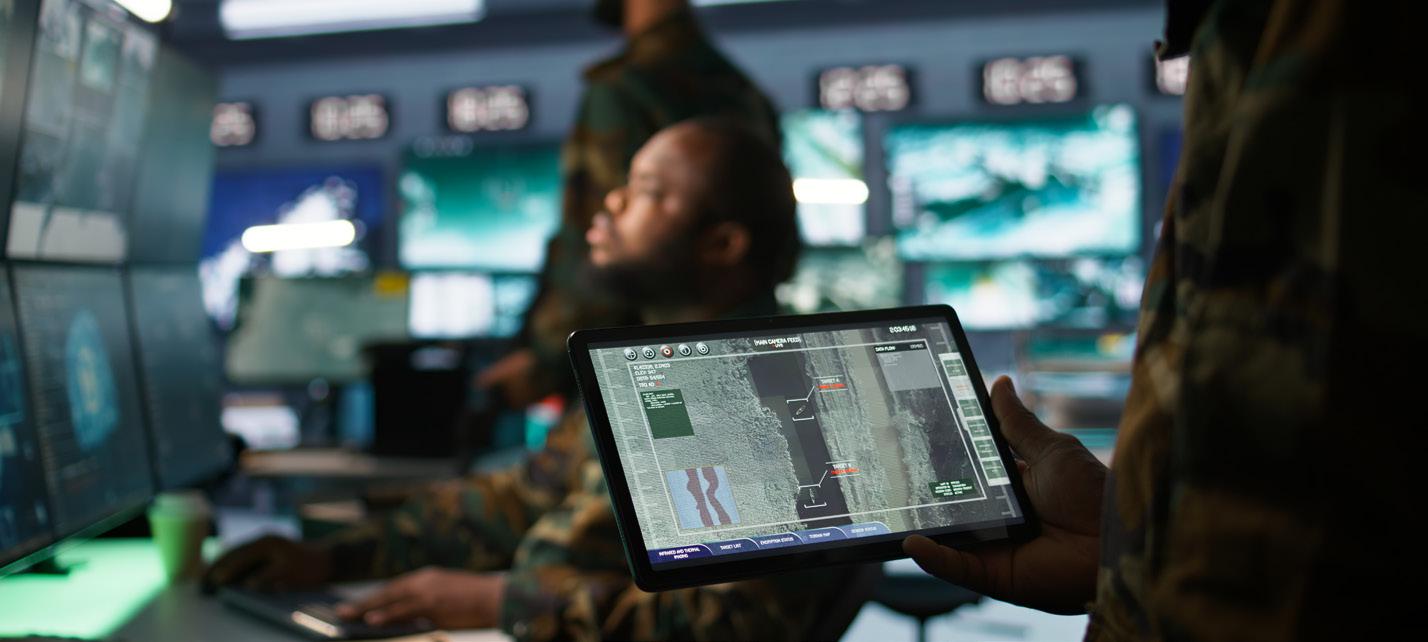
The decisive factor in defence innovation is no longer just access to advanced technology, but the pace at which it can be developed, integrated and fielded.
Delivery of capability at the pace of relevance has always underpinned military advantage, but rapid technological change has heightened this challenge, placing a premium on swiftly translating concepts into operational use and maintaining learning cycles that keep pace with evolving threats.
Why rapid capability delivery is essential
Allies and adversaries are already fusing military and commercially available technologies and adapting them in months rather than years. Maintaining operational advantage will require a change in how we develop and adopt capability – moving beyond linear processes towards faster experimentation, iterative delivery and rapid scaling of what works.
This means evolving from transactional procurement towards more collaborative models that enable earlier engagement.
This shift isn’t solely about speed in isolation. It also requires a more sophisticated understanding of how technologies interact. Understanding transdisciplinary integration of science and technology – AI and advanced computing to robotics, sensing, energy and human systems – is essential to realising their full operational value.
Central to achieving pace and integration is the relationship between MOD and its industry and academia partners. As mentioned in the 2025 UK Defence Industrial Strategy, maintaining a technological edge depends on a resilient, innovative and closely aligned industrial base.
Collaboration with other sectors
Innovation today sits across a broad ecosystem, drawing on frontier research, commercial investment, entrepreneurial agility and critical R&D retained within government. Defence must work as an active partner within that system.
This means evolving from transactional procurement towards more collaborative models that enable earlier engagement, risk sharing and creating clearer pathways from innovation to adoption. It also requires deeper links with academia, ensuring research is translated more effectively into deployable capability.
Defence’s role is to define clear problems, enable rapid testing and remove barriers to adoption. But success won’t come from defence alone. It requires a whole-of-society effort – harnessing the ingenuity, skills and investment of partners across the UK.
In an era of constant change, our advantage will come from how quickly and effectively we can align investment, people and technology to deliver capability at the pace of relevance.

Andy Bell Dstl Chief Science and Technology Officery
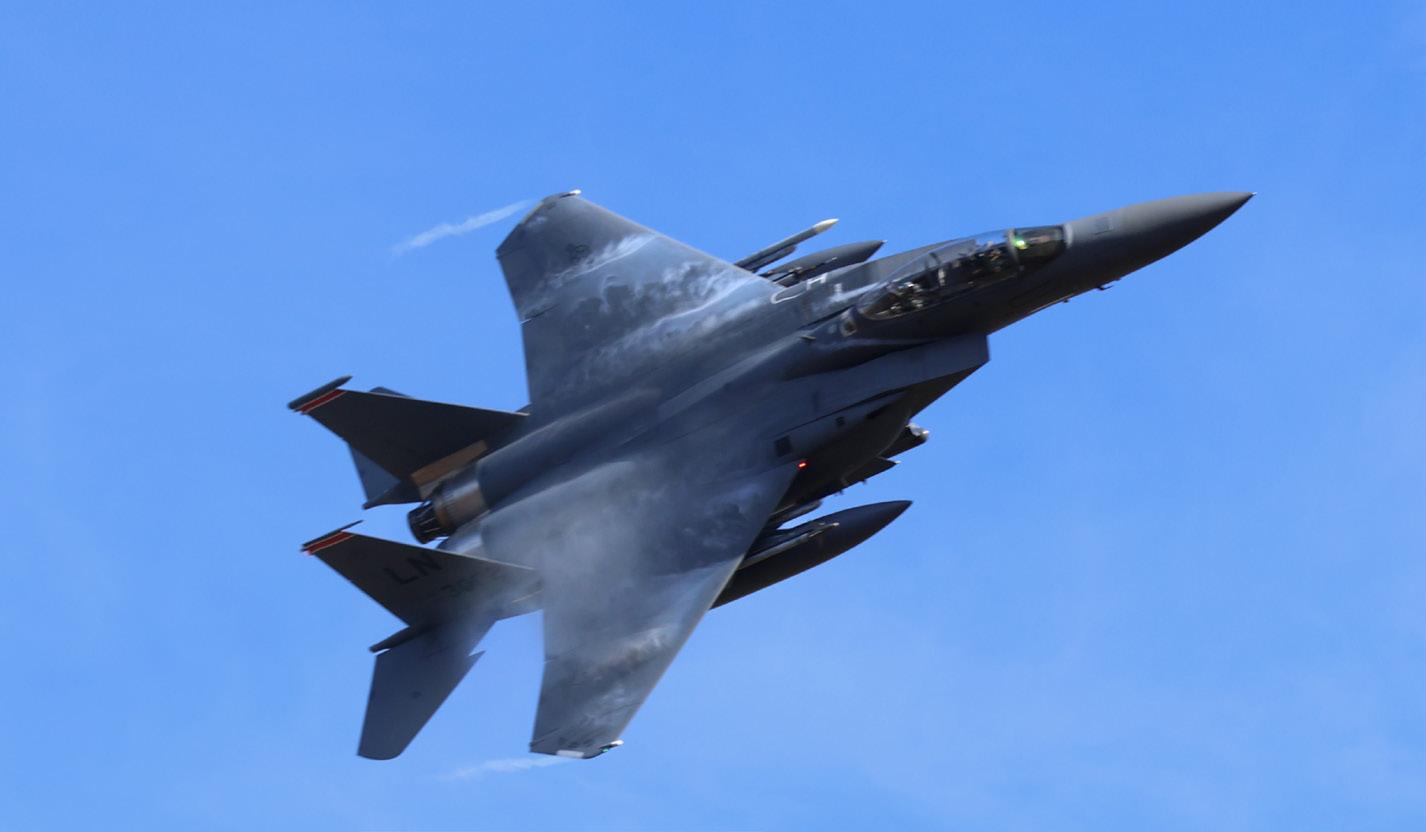
Farnborough International Airshow puts defence centre stage
The Farnborough International Airshow (FIA) remains one of the world’s most influential gatherings for the aerospace, aviation and defence industries, but its defence focus is increasingly central.
FIA has evolved far beyond a flying display into a strategic forum where governments, military leaders, contractors, SMEs and innovators meet to shape capability priorities, strengthen alliances and accelerate delivery across the global supply chain.
Geopolitical tensions
As geopolitical tensions continue to reshape defence spending and procurement, the Airshow provides a rare environment for direct engagement on interoperability, sovereign resilience, export collaboration and industrial partnerships, reinforcing the UK’s position as a trusted partner and a leader in defence and aerospace innovation.
the visibility and growth of next-generation suppliers.
Global defence marketplace
FIA’s role as a global defence marketplace is underlined by the presence the National Armaments Director Group (part of the UK Ministry of Defence) in the UK Government Hub. The group develops, delivers and sustains the UK’s national arsenal and defence infrastructure, and the participation signals the importance of collaboration across Government, industry and international partners to strengthen national security and unlock investment and export opportunities.
The Airshow provides a rare environment for direct engagement on interoperability, sovereign resilience, export collaboration and industrial partnerships.
A focal point of the programme is the Aerospace Global Forum: Defence Summit, convening leaders from defence, Government and adjacent industries to address the agility and partnerships required for modern operations, alongside the economic security considerations that underpin them.
New for this year, the Defence SME Zone will spotlight high-potential organisations specialising in defence and security technologies and help them connect directly with primes, investors, media and delegations. Designed exclusively for businesses with a turnover under £10 million and sponsored by FTSE 100 Babcock International, the zone is intended to accelerate
Rupert Pearce, the UK’s National Armaments Director and a member of the Defence Board, said, “In today’s environment, the UK can only deliver the pace, resilience and efficiency we need by building stronger partnerships between Government, industry and our allies. This underscores the significant strategic contribution the Farnborough International Airshow makes, as a platform that brings together the UK defence base, towards ensuring the nation remains secure and resilient at home and abroad.”
WRITTEN BY Farnborough International Airshow