


When people think of STEM, they often think of laboratories, coding and engineering — but STEM also powers industries like motorsport, aerospace and modern agriculture.
At I Wish, we’re passionate about showing young women that STEM exists in every part of modern life. Through the I Wish Festival, we inspire secondary school girls to explore opportunities in STEM by connecting them with relatable role models and real-world careers.
STEM role models
We challenge girls to Dream, Dare, Do — to dream big, dare to be different and become something remarkable. We want them to see that the possibilities are endless.
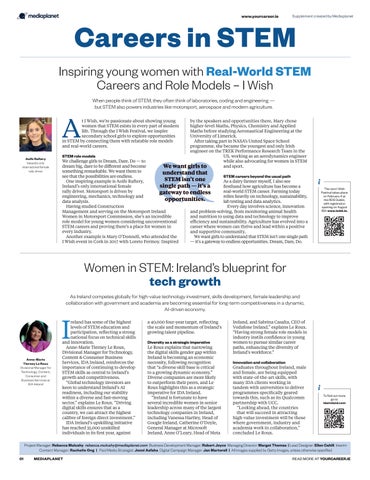
One inspiring example is Aoife Raftery, Ireland’s only international female rally driver. Motorsport is driven by engineering, mechanics, technology and data analysis.
by the speakers and opportunities there, Mary chose higher-level Maths, Physics, Chemistry and Applied Maths before studying Aeronautical Engineering at the University of Limerick.
After taking part in NASA’s United Space School programme, she became the youngest and only Irish engineer on the TREK Performance Research Team in the US, working as an aerodynamics engineer while also advocating for women in STEM and sport.
We want girls to understand that STEM isn’t one single path — it’s a gateway to endless opportunities.
Having studied Construction Management and serving on the Motorsport Ireland Women in Motorsport Commission, she’s an incredible role model for young women considering unconventional STEM careers and proving there’s a place for women in every industry.
Another example is Mary O’Donnell, who attended the I Wish event in Cork in 2017 with Loreto Fermoy. Inspired
STEM careers beyond the usual path
As a dairy farmer myself, I also see firsthand how agriculture has become a real-world STEM career. Farming today relies heavily on technology, sustainability, lab testing and data analytics.
Every day involves science, innovation and problem-solving, from monitoring animal health and nutrition to using data and technology to improve efficiency and sustainability. Agriculture has evolved into a career where women can thrive and lead within a positive and supportive community.
We want girls to understand that STEM isn’t one single path — it’s a gateway to endless opportunities. Dream, Dare, Do.
As Ireland competes globally for high-value technology investment, skills development, female leadership and collaboration with government and academia are becoming essential for long-term competitiveness in a dynamic, AI-driven economy.
Ireland has some of the highest levels of STEM education and participation, reflecting a strong national focus on technical skills and innovation.
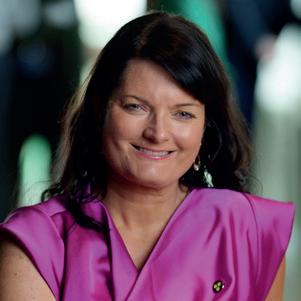
Anne-Marie Tierney Le Roux, Divisional Manager for Technology, Content & Consumer Business Services, IDA Ireland, reinforces the importance of continuing to develop STEM skills as central to Ireland’s growth and competitiveness.
“Global technology investors are keen to understand Ireland’s AI readiness, including our stability within a diverse and fast-moving sector,” explains Le Roux. “Driving digital skills ensures that as a country, we can attract the highest calibre of foreign direct investment.”
IDA Ireland’s upskilling initiative has reached 35,000 unskilled individuals in its first year, against
Project Manager: Rebecca Mulcahy rebecca.mulcahy@mediaplanet.com
a 40,000 four-year target, reflecting the scale and momentum of Ireland’s growing talent pipeline.
Diversity as a strategic imperative Le Roux explains that narrowing the digital skills gender gap within Ireland is becoming an economic necessity, following recognition that “a diverse skill base is critical to a growing dynamic economy.”
Diverse companies are more likely to outperform their peers, and Le Roux highlights this as a strategic imperative for IDA Ireland.
“Ireland is fortunate to have several incredible women in senior leadership across many of the largest technology companies in Ireland, including Vanessa Hartley, Head of Google Ireland, Catherine O’Doyle, General Manager at Microsoft Ireland, Anne O’Leary, Head of Meta
Ireland, and Sabrina Casalta, CEO of Vodafone Ireland,” explains Le Roux.
“Having strong female role models in industry instils confidence in young women to pursue similar career paths, enhancing the diversity of Ireland’s workforce.”
Innovation and collaboration
Graduates throughout Ireland, male and female, are being equipped with state-of-the-art skills, with many IDA clients working in tandem with universities to deliver programmes specifically geared towards this, such as its Qualcomm partnership with UCC.
“Looking ahead, the countries that will succeed in attracting high-value investment will be those where government, industry and academia work in collaboration,” concluded Le Roux.

Amanda Colreavy Director, Enterprise Cybersecurity, Fidelity Investments

Director, Engineering, Fidelity Investments
Director, Technology Management, Fidelity Investments
Teams with a greater diversity of perspectives often produce stronger problem-solving outcomes and more innovative solutions.

From data analysis and coding to cybersecurity and product design, technology careers offer a wide mix of roles and pathways, opening more possibilities than students might realise.
Stephen Conneely has seen his career grow from studying Business Information Systems Management to leading engineering teams as Director of Engineering at Fidelity Investments Ireland. He is keen to challenge the misconception that a career in technology is solitary.
Coding misconceptions
“There’s often a perception that technology is about sitting alone in a dark room behind a computer screen, but that couldn’t be further from the truth,” he explains. “Technology is a very social profession, and collaboration within a team is one of the most important aspects.”
While coding provides one important career path into technology, teams also need people who understand customer needs, design intuitive experiences, manage products, protect systems, analyse data and deliver complex change. That creates space for analytical thinkers, creative problem-solvers, communicators, organisers and technical specialists alike.
“Every day involves interacting with different people, solving problems together and adapting to new challenges. Things are constantly changing, which makes the work both exciting and rewarding.”
Real roles in tech
Sponsored by Fidelity

In a technology-driven financial services environment such as Fidelity Investments Ireland, Amanda Colreavy, Director of Enterprise Cybersecurity, explains that a single product typically brings together expertise from software
engineers, UX designers, cloud specialists, cybersecurity analysts, data scientists, product managers, systems analysts and subject matter experts, collaborating to create solutions that are secure, effective and user-friendly. “Having worked in a variety of STEM roles, what has kept me engaged is its dynamic nature. It’s a space where the opportunities are as diverse as they are limitless,” she explains.
“There are many ways to build a career in technology beyond engineering alone. Curiosity and critical thinking are just as important as technical knowledge,” she continues. “At its heart, cybersecurity is about digital safety. Young people are already facing cybersecurity challenges every day online, whether they realise it or not. They are a vital part of the future, so now is a great time to start building the skills to help shape it.”
Diverse technology pathways
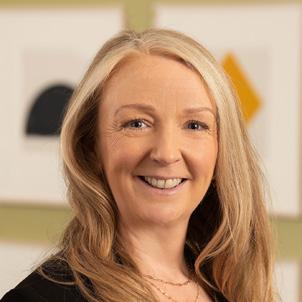
“Access starts early,” explains Stephanie Pearson, Director of Technology Management, who began her career in software engineering and now leads technology teams. “Students are more likely to consider STEM roles when they meet relatable role models, try hands-on activities and understand what jobs look like in real life.”
The company also plays a role in broadening access to STEM careers through initiatives including CodePlus, CoderDojo, Root2STEM, and collaboration with Junior Achievement Ireland.
“We also support a range of alternative STEM pathways, including internships, graduate programmes, tech apprenticeships and returner programmes,” says Pearson. “People who transfer from other industries bring a valuable perspective. It’s so important to have a full spectrum of backgrounds and experiences to deliver great products.”
“Teams with a greater diversity of perspectives often produce stronger problem-solving outcomes and more innovative solutions,” adds Conneely.
Transferable skills
With AI enabling technological development rapidly, Conneely believes it is helping teams work more efficiently by reinforcing best practices and accelerating problem-solving, stressing that it is an enabler of human creativity, rather than a replacement.
With a growing portfolio of educational initiatives, such as CSLINC cybersecurity modules, laptop donation programmes and scholarships, Fidelity continues to help equip the next generation with the tools needed to work in a world increasingly shaped by technology.
“The skills that give people the freedom to thrive in STEM are increasingly employability skills, including critical thinking, curiosity, problem-solving, collaboration, communication, data literacy and adaptability,” continues Conneely.
“Technical skills can grow with time; it is soft skills that I look for when interviewing for new roles.”
For students, parents, and career changers, the message is simple: stay curious, try new projects, ask questions, seek mentors and do not self-select out because of stereotypes. Technology careers are full of opportunities, they are not always linear, and there is more than one way in.
Project Engineer Aisling O’Connor and Sustainability and ESG Partner Müge Karasahin share how they got started and the joy they get from seeing their work have tangible impacts on society.
Aisling O’Connor, Project Engineer
Aisling initially hesitated to pursue engineering, but seeing female engineers removed her doubts.
How did you get into engineering?
I always enjoyed maths and physics, but realised I preferred practical, experiment-based learning rather than pure theory, which led me to engineering. I had reservations about becoming a female engineer, but those disappeared during my internship at Ethos.
In school, engineering was just lectures and coursework. At Ethos, I saw how those principles influence buildings people use daily, which helped me understand the impact engineers can have.
Why are programmes like TY outreach and STEPS important?
These programmes give students real exposure to engineering. TY students can shadow teams and see engineering roles, and STEPS helps introduce younger children to engineering.
Many students don’t realise the opportunities engineering offers. These programmes help bridge that gap by giving them a chance to meet engineers, ask questions and see what a STEM career can look like.
Why do role models matter for young women considering STEM?
When young women meet female engineers, they can picture themselves in those roles. Seeing women in engineering helps turn STEM from an idea into a possibility.
Müge Karasahin, Sustainability and ESG Partner
Sustainability offers a dynamic career. Advances in technology, climate research and environmental standards create new learning opportunities.
What drew you into sustainability and ESG-focused work? I’m originally from Türkiye and studied architecture. During my studies, I was already conscious of the
environmental impact buildings can have, from material use to land development. Sustainability became a natural focus throughout my studies and career, and ESG has been a natural progression from this.
How has sustainability changed the infrastructure and built environment sector, and what opportunities are developing?
As the science develops, sustainability is reshaping how buildings are designed, operated and delivered. Climate risk, ESG and sustainability goals are impacting every stage of design, creating opportunities for people from diverse educational and professional backgrounds.
Why is sustainability work within STEM rarely limited to a single discipline, and how does this shape projects?
Every discipline brings a different perspective. Architects may focus on healthy materials, structural engineers on embodied carbon, mechanical & electrical engineers on energy efficiency and civil engineers on rainwater management.
Sustainability consultants help coordinate these areas. It’s a highly collaborative environment where different expertise is essential, connected by an interest in solving complex problems and the heart to care about the impact of building decisions.
How do climate studies, ESG priorities and changing regulations influence decision-making?
Six years ago, many sustainability standards were optional. Today, new rules and regulations mean sustainability is becoming much bigger in how buildings and infrastructure are designed and developed. As countries work towards climate goals, expectations continue to grow, and the standards are becoming more demanding.
New research around carbon management, transport systems, climate impact and human wellbeing continues to shape the industry, which keeps the work both interesting and fulfilling.
What would you say to students who feel they don’t have a “traditional” STEM background?
Coming from architecture, I’m a perfect example of a nontraditional STEM background. The key is being adaptable, open to learning and willing to approach problems with a creative growth mindset.
Architecture gave me a strong foundation in systems thinking, design and environmental performance, which naturally led me into sustainability and ESG work.
Contributing to long-term positive change is incredibly rewarding, whether that’s reducing environmental impact or helping create healthier, more resilient spaces.


Barriers to women starting a career in engineering must be resolved
the number of Level 8 engineering graduates has been steadily rising in recent years to 3,660 in 2024, a 17% increase on graduate numbers just five years previously.

While the proportion of female students in this area has also been growing, it represents just 25% of all graduates. Additionally, female engineers represent just 12% of the profession, with many who graduate from engineering courses then choosing alternative careers.
Why fewer women pursue an engineering career
The number of female students participating in third-level engineering courses must be increased if we are to see something approaching equal representation within our profession. However, other obstacles to entry to a career in engineering must also be addressed.
According to a recent study, carried out by Ipsos B&A on behalf of Engineers Ireland, 41% of women say they do not view engineering as a suitable career, compared to just 27% of men. This is despite the fact that around four-fifths of the surveyed women rated engineering as a career that offered interesting work, plentiful job opportunities and strong financial rewards.
Reasons for perception discrepancy The reasons for this discrepancy in how men and women view their potential to take up a career in engineering are complex and multifaceted. Research shows that different expectations are placed on boys and girls for attainment in mathematics in school, with lower
expectations often placed on girls. Similarly, academic work demonstrates that fewer female role models within the profession can also act as a barrier, with reduced opportunities for girls and young women to see people like them as leaders within the profession. Across society and our education system, more must be done to address these issues. Engineering is a wonderful and varied career with plentiful opportunities, which should be equally accessible to men and women. We all have a vital responsibility to address imbalances within STEM professions and ensure that all sections of our society feel equally comfortable taking up a career in engineering.
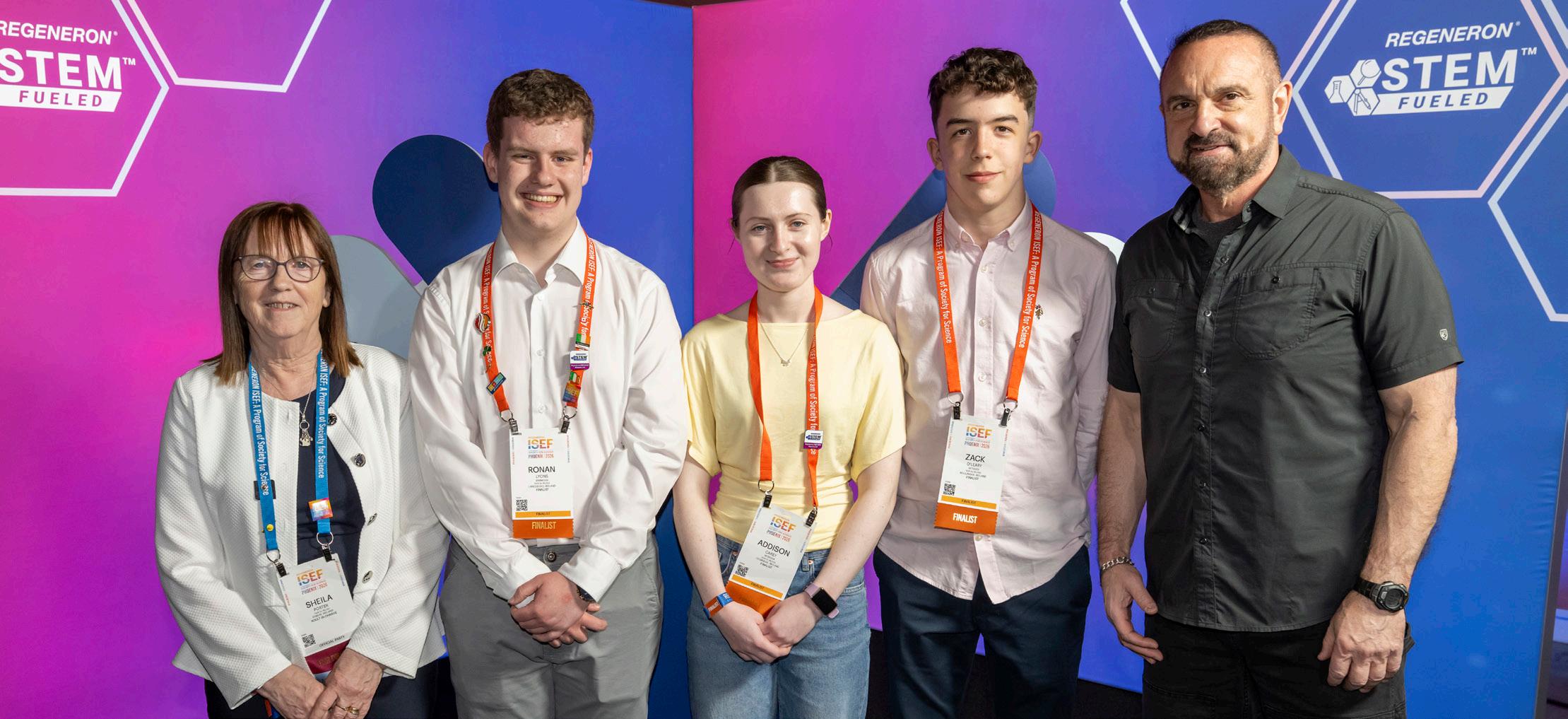
Biotechnology company’s STEM-Fueled™ programming connects Irish students to world-class science opportunities, from classrooms to international recognition.

Ireland punches above its weight in science and innovation, yet the biopharma sector faces a widening skills gap. With 29,000 new roles projected to emerge by 2027, and 104,000 STEM positions going unfilled in the last 12 months alone, demand for qualified talent is rapidly outpacing supply.1 Obstacles to young people pursuing STEM pathways require a multipronged approach, with initiatives to tackle each in turn.

As a leading biotechnology company, Regeneron has taken on this challenge by supporting over four million students globally through STEM initiatives since 2020. STEM-Fueled™ represents the company’s growing collection of programmes, partnerships and sponsorships strengthening the STEM ecosystem with the goal of fuelling future scientific innovators, celebrating science and equipping educators.
targeted action important to close this gap.
Regeneron is a gold partner of the I Wish event, a showcase designed specifically for Transition Year girls aged 15 to 17. At the event, they meet female STEM leaders who share their career journeys, providing role models and tangible examples of success.
“When students see themselves reflected in leadership and science, it shapes what they see as possible,” says Christina Chan, Senior Vice President of Corporate Affairs, Regeneron, “Representation is about more than visibility; it’s about ensuring the next generation of scientific discovery is shaped by the diverse ideas and voices that reflect the challenges and world we serve.”
Campus to career

“Ireland is central to our global STEM-Fueled™ story,” says Muriel O’Byrne, Senior Vice President, International Regulatory Affairs and Head of the European Business Office. “What makes the initiative so meaningful is that it connects local opportunity to international ambition. We want Irish students to know their ideas can take them anywhere, even to the world stage.”
Classroom to competition
Science competitions encourage students to think critically and develop a passion for science that carries through into adulthood and potentially leads to future STEM careers. Regeneron sponsors an award at SciFest, a series of STEM fairs, culminating in a national final at Dublin City University. Regeneron employees volunteer as judges, providing hands-on engagement with students and their work.
When students see themselves reflected in leadership and science, it shapes what they see as possible.
A lack of work experience opportunities makes pursuing a career in STEM challenging for Irish students. With 26% of young people reporting a desire for STEM work experience but unable to access it,2 the Regeneron Industrial Operations and Product Supply (IOPS) STEM Academy supports students in navigating the education system to make that desire a reality through weekly hands-on workshops.
The College Award Programme bridges a gap, sponsoring awards at the University of Limerick, University College Cork and the Technological University of the Shannon. Winners receive financial bursaries and paid placements at Regeneron’s Limerick site during their studies.
“We’re not just sponsoring competitions, we’re investing in people,” says Ivor Downey, Vice President, HR, IOPS. “The College Award Programme gives students real-world experience inside one of the world’s most innovative science companies, which could change their careers.”
Winners are sponsored to compete at the Regeneron International Science and Engineering Fair (ISEF), often described as the Olympics of science fairs, with ~2,000 finalists from 60+ countries competing across 22 disciplines for ~$7 million in awards. Regeneron also sponsors a Special Award at the Stripe Young Scientist and Technology Exhibition, with the winner earning an ISEF place.
Representation in STEM Women are significantly underrepresented in Ireland’s STEM workforce, taking up only 25% of roles,1 making
STEM-Fueled™ aims to remove obstacles to STEM pathways. Regeneron’s programmes, partnerships and sponsorships help expand access, strengthen Ireland’s scientific community and ensure the next generation of researchers has every tool needed to shape a better world.
REFERENCES:
1. Adecco. (2025). Future-proofing Ireland’s STEM workforce. https://tinyurl. com/545fp926.
2. Dunn, B. (2024). Young people show declining aspirations in STEM – is climate change the answer? https://tinyurl.com/24bk6mb7.
Date of Preparation: June 2026