globalcause.co.uk
A promotional supplement distributed on behalf of Mediaplanet, which takes sole responsibility for its content
AMR & Infectious Diseases
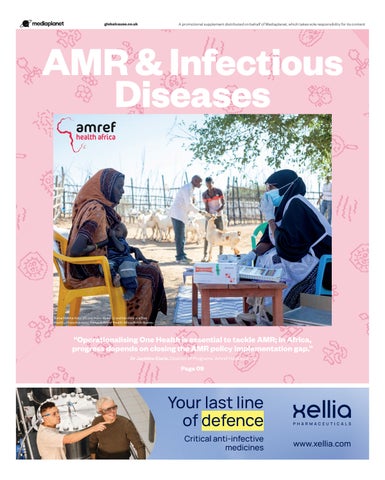
Nurse Halima Adan (R) and Hawo Wako (L) and her child at a One Health outreach in Isiolo, Kenya © Amref Health Africa/Kelvin Nyamu
“Operationalising One Health is essential to tackle AMR; in Africa, progress depends on closing the AMR policy implementation gap.” Dr Jackline Kiarie, Director of Programs, Amref Health Africa
Page 09
A PROMOTIONAL SUPPLEMENT DISTRIBUTED ON BEHALF OF MEDIAPLANET, WHICH TAKES SOLE RESPONSIBILITY FOR ITS CONTENT
Updated antimicrobial resistance global action plan puts prevention first Antimicrobial resistance threatens modern medicine, food security and sustainable development. A new Global Action Plan provides a roadmap to protect health and save lives.
A
Dr Jean-Pierre Nyemazi Director, Quadripartite Joint Secretariat and Director a.i., AMR Department, World Health Organization
ntimicrobial resistance (AMR) is one of today’s most urgent health and development challenges.1 Drug-resistant infections threaten the treatment of common diseases, the safety of surgery and the health of people, animals, plants and the environment. Adopted by Member States, the Global Action Plan on AMR 2026–2036 provides a renewed roadmap for collective action. It translates the commitments of the 2024 United Nations General Assembly Political Declaration on AMR into practical action.2
Prevent infections, preserve antibiotics
The new plan places prevention at the centre of the response. Every infection prevented is one less infection requiring treatment. Infection prevention and control, vaccination, clean water and sanitation, food
safety, biosecurity and environmental safeguards can reduce disease while preserving life-saving medicines for future generations.
Every infection prevented is one less infection requiring treatment. Awareness must translate into action Awareness matters, but it is not enough. The updated plan calls for measurable social and behaviour change across society. Governments, health professionals, farmers, educators, communities and the private sector all have a role. Progress depends on turning knowledge into action and creating conditions that support infection prevention and the responsible use of antimicrobials.
Interconnected health requires collective AMR action
The World AMR Awareness Week 2026 theme, ‘One Health, one action: Prevent AMR now’, reflects a simple truth: the health of people, animals, plants and the environment is interconnected. Action in one sector affects them all. Sustained investment, strong partnerships and coordinated action can prevent AMR, save lives and preserve antimicrobials for future generations. The roadmap is clear, the responsibility is shared, and the time to act is now. World Health Organization, 2026. Draft updated global action plan on antimicrobial resistance 2026–2036. tinyurl.com/542dzvcs. 2 United Nations, 2024. Political Declaration of the High-Level Meeting on Antimicrobial Resistance: resolution / adopted by the General Assembly. tinyurl.com/2zkfjny5. 1
Next-generation vaccine platform takes aim at drug-resistant gonorrhoea A biotech company has built a scalable, clinical-stage vaccine platform on a proven technology. Its gonorrhoea vaccine aims to prevent infection and combat antimicrobial resistance (AMR).
T
he AMR threat from the common sexually transmitted infection gonorrhoea is serious and growing, stresses Gashi.
Resistance to gonorrhoea treatments increases INTERVIEW WITH Anita Gashi Chief Executive Officer, AdJane
The World Health Organization reports that resistance to the recommended first-line treatment for gonorrhoea rose from 0.8% in 2022 to 5% in 2024.1 “That leaves clinicians with fewer options,” says Gashi. “Vaccines are a promising way to tackle AMR, and we have a platform built on decades of public health research and Phase 1 clinical data showing it is safe and immunogenic.” If adolescents can be vaccinated before exposure, they won’t need antibiotics. “Fewer people on antibiotics means less pressure driving resistance,” says Pau.
Closing the vaccine gap
INTERVIEW WITH Maria Grazia Pau Chief Scientific Officer, AdJane
WRITTEN BY Tony Greenway
Several vaccines tested against gonorrhoea were designed for a related bacterium, meningococcus B. These have demonstrated partial protection in observational studies but have delivered no protection in a randomised controlled trial. AdJane is developing a gonorrhoea-specific vaccine on its proprietary native outer membrane vesicle (nOMV) platform derived from Neisseria meningitidis and genetically modified to express gonococcal antigens. Unlike repurposed meningococcal vaccines, this candidate is designed as a single-component, self-adjuvanting vaccine. “Outer membrane vesicles are naturally released by
@Mediaplanet UK & IE
@MediaplanetUKIE
Gram-negative bacteria and carry the same surface components as the bacterium itself, so the immune system readily recognises them,” explains van der Ley. “Historically, their broader use was limited by the challenge of producing at scale.” AdJane has addressed this through the engineering of its nOMV platform and manufacturing process. Genetic engineering of the bacteria detoxifies the vesicles by reducing the inflammatory effect of endotoxin, making them safer and increasing vesicle production to support production at the scale needed for broad vaccination programmes. A Phase 1 trial of an intranasal vaccine on the platform showed it to be safe and to induce mucosal and systemic immune responses. The platform can be applied across bacterial and viral pathogens. “It has broad applicability beyond gonorrhoea,” says Gashi. “We are open to working with vaccine developers who have identified antigens for specific diseases and need a clinically tested platform to take them forward. Together, we could bring protection against more diseases to patients faster.” World Health Organization. More countries report rising levels of drug-resistant gonorrhoea, warns WHO [Internet]. 2025 Nov 19. Available from: https://www.who. int/news/item/19-11-2025-more-countries-report-rising-levels-of-drug-resistantgonorrhoea--warns-who 2 van der Pol L, Stork M, van der Ley P. Outer membrane vesicles as platform vaccine technology. Biotechnol J. 2015;10:1689-706. 3 van der Ley P, Steeghs L, Hamstra HJ, et al. Modification of lipid A biosynthesis in Neisseria meningitidis lpxL mutants: influence on lipopolysaccharide structure, toxicity, and adjuvant activity. Infect Immun. 2001;69:5981-90.
INTERVIEW WITH Peter van der Ley Scientific Advisor, AdJane
Paid for by AdJane
1
Contact information: uk.info@mediaplanet.com or +44 (0) 203 642 0737
Find out more at adjane.com
Please recycle
Strategic Account Manager: Amy Shah amy.shah@mediaplanet.com Managing Director: Margot Thomas | Designer: Juraj Prikopa Senior Content Manager: Angelica Hackett O’Toole | Paid Media Strategist: Jonni Asfaha Digital Campaign Manager: Jan Martorell | All images supplied by Getty Images, unless otherwise specified
02
MEDIAPLANET
READ MORE AT GLOBALCAUSE.CO.UK
A PROMOTIONAL SUPPLEMENT DISTRIBUTED ON BEHALF OF MEDIAPLANET, WHICH TAKES SOLE RESPONSIBILITY FOR ITS CONTENT
Fighting AMR means protecting today’s antibiotics, too Photo credit: Xellia Pharmaceuticals
As the world races to develop new antibiotics, we risk overlooking another threat: losing access to the life-saving treatments we already have.
W INTERVIEW WITH Michael Kocher Chief Executive Officer, Xellia Pharmaceuticals
hen a patient is in a hospital bed fighting a serious infection, two questions matter: Are antibiotics available to them? If they are, will they work? With antimicrobial resistance (AMR) on the rise and supply chains under increasing pressure, availability can’t be taken for granted. To ensure that patients have effective treatments available, three interconnected priorities are critical: innovation, supply resilience and responsible use, argues Michael Kocher, CEO of Xellia, a manufacturer of critical anti-infective Active Pharmaceutical Ingredients (APIs) for more than a century. Xellia’s portfolio includes last-resort antibiotics used when other treatments fail, several of which are on the WHO’s List of Essential Medicines.1
Developing the antibiotics of tomorrow
WRITTEN BY Tony Greenway
“Developing new antibiotics is costly and risky, and even when successful, we want to limit their use to prevent resistance,” explains Kocher. “The paradox is that responsible use makes it difficult to recover investment, leaving little incentive to develop new treatments we desperately need.” But innovation alone is not enough. “There are antibiotics on the market now already effective against resistant infections and will continue to play a vital role in the years ahead. We cannot only focus on fighting tomorrow’s resistance while losing today’s effective treatments,” stresses Kocher.
READ MORE AT GLOBALCAUSE.CO.UK
Securing access to the antibiotics of today
Manufacturing of critical antibiotics is becoming increasingly difficult economically. This has left many essential medicines dependent on production concentrated in a limited number of countries, predominantly China and India, where manufacturing conditions are more favourable. “The fact is that 80% of small molecule APIs are produced in Asia2,” says Kocher. “And let me be clear: manufacturing in China is not the problem. The problem is when China becomes the
We cannot only focus on fighting tomorrow’s resistance while losing today’s effective treatments. only place left to manufacture, and we have no alternative if supply is disrupted. That’s a vulnerability we simply cannot afford when lives are at stake.” An effective antibiotic is of little use if it cannot reach the patient who needs it. “We are increasingly recognising that antibiotic innovation needs new economic incentives. The same applies to existing critical antibiotics,” says Kocher. “Manufacturers in Europe cannot be expected to sustain this essential production at a loss.” To keep antibiotic production in Europe, manufacturers need support to build and run state-of-the-art facilities,” explains Kocher. “That’s why there’s a lot of talk about the
‘Netflix model’ where governments or healthcare systems pay pharma companies a subscription or yearly fee to incentivise R&D and maintain critical manufacturing capacity.” He also argues that governments should treat antibiotic production and AMR as a matter of national security and defence rather than just healthcare — and fund it accordingly.
Preserving the effectiveness of antibiotics
Finally, responsible antibiotic use is essential to slowing resistance and preserving both existing and future treatments. Patients must remain at the centre of the fight against AMR. “We have a responsibility to them,” insists Kocher, pointing to the Covid vaccine as an example of what can happen when governments, industry and healthcare professionals pull together. “If we can align political will, scientific progress and the right economic incentives, I’m convinced we can overcome these challenges,” says Kocher, insisting on seeing the glass half full. “If I could change one thing about how the world approaches AMR, it would be to recognise that developing new antibiotics and protecting existing ones are equally urgent. We cannot afford to lose today’s last line of defence while working on tomorrow’s breakthrough.”
Paid for by Xellia Pharmaceuticals
Find out more at www.xellia.com
The selection and use of essential medicines, 2025: WHO Model List of Essential Medicines, 24th list. Geneva: World Health Organization; 2025. 2 Source: European Economic and Social Committee (EESC), Securing Europe’s medicine supply: envisioning a Critical Medicines Act, 2023. 1
MEDIAPLANET
03
A PROMOTIONAL SUPPLEMENT DISTRIBUTED ON BEHALF OF MEDIAPLANET, WHICH TAKES SOLE RESPONSIBILITY FOR ITS CONTENT
ADVERTORIAL
Exploring the human and financial cost of malaria drug resistance
Staying ahead of antimalarial drug resistance to safeguard Africa’s gains
Highly sensitive diagnostics could transform malaria control
The growing reality of anti-malarial drug resistance stretches health systems, weakens the economy, keeps families poor and affects women and children who are most vulnerable.
The 2025 Africa Malaria Progress Report places rising antimalarial drug resistance at the heart of a perfect storm, threatening to undo decades of treatment progress against malaria.1
The innovative InfectoTest® diagnostic technology will make a decisive contribution to malaria elimination by enabling the reliable and quantitative detection of low-density infections at the point-of-care.
D
r Michael Adekunle Charles is CEO of RBM Partnership to End Malaria, the world’s largest platform dedicated to eliminating the disease. He notes: “We can blame the mosquito for carrying the parasite and the parasite for evolving,” he says. “We can blame the climate because mosquitoes are now in places where they have never been before. And we can blame the funding crisis because we need around $US9.3 billion to fight malaria annually1 and, currently, we have around $US3.9 billion.” There’s a human factor, too, says Dr Charles. “When patients start to feel better, they don’t always finish their antimalarial course, which leads to resistance to medication. Then there’s the problem of falsification and people selfmedicating and taking antimalarials when they don’t need them.”
The impact on women, children and poor communities
Consequently, anti-malarial drug resistance is on the rise, predominantly in East Africa, but spreading to countries in Central Africa, south, west and parts of Asia. The strain from malaria and antimalarial drug resistance on economies is immense. “The first impact of drug resistance is treatment failure, which can be fatal,” says Olivia Ngou, Executive Director, nongovernmental health organisation, Impact Santé Afrique. “Doubt in the efficacy of medication can lead to a lack of trust in the health system. If communities are financially burdened, they may turn to alternative, ineffective medicines.”
Proactive malaria action can prevent treatment failure
There are some causes for optimism, such as The Big Push Against Malaria, a countrycentred response to protect gains while building the conditions for “In Find outeradication. more at the next year, we will have a new treatment XXXXXX for malaria that addresses the threat of artemisinin resistance; by the early 2030s, we expect real progress on simpler next-generation treatments,” says George Jagoe, Executive Vice President, Access and Product Management at MMV (Medicines for Malaria Venture). “We have to be proactive to avoid a replay of the crisis of the 1990s, when widespread malaria treatment failures resulted in millions of avoidable deaths.” 1
World Health Organization, 2025. World malaria report 2025. Executive summary. tinyurl.com/2s3pv695
WRITTEN BY Tony Greenway
INTERVIEW WITH George Jagoe MMV’s Executive Vice President, Access & Product Management
INTERVIEW WITH Michael Adekunle INTERVIEW WITH Charles Olivia Ngou CEO, RBM Partnership Executive Director, Impact to End Malaria Santé Afrique
04
MEDIAPLANET
Paid for by RBM Partnership
A
rtemisinin-based combination therapies (ACTs) remain the recommended first-line treatment for uncomplicated malaria caused by the Plasmodium falciparum parasite. However, partial resistance to artemisinin linked to mutations in the malaria parasite is spreading. If resistance spreads further, treatment failures could increase, as could cases of severe malaria, putting lives, livelihoods and hard-won gains at risk.
Unchecked resistance may add to malaria cases
The World Malaria Report (2025) uses modelling to show that unchecked resistance could result in an additional 78 million malaria cases over a five-year period.2 Furthermore, by 2060, treatment failure rates could reach about 31%, translating to more than 50 million treatment failures in that year alone.2 These projections warn us of what could happen to the vision of a malaria-free continent, and why antimalarial resistance must remain a priority within the wider continental AMR agenda.
Three essential actions to stay ahead
First, countries must strengthen surveillance. Countries need high-quality data to detect changes in drug efficacy early and respond in time. Rwanda is already using subnational stratification to guide interventions, including multiple first-line therapies (MFT), informed by surveillance data. Regional Economic Communities are building capacity and harmonising policies across member states to strengthen data sharing. Second, countries and partners must accelerate the development of new technologies and ensure early introduction. New antimalarial medicines and treatment combinations are needed to expand treatment options. Medicines for Malaria Venture (MMV) is working on two non-artemisinin treatments, active against drug-resistant strains. Find out more at Additionally, research and development must XXXXXX go hand in hand with responsible prescription and use, supported by continuous capacity building for frontline health workers, to promote appropriate treatment and adherence. Lastly, none of this is possible without sustained financing. Governments must invest in monitoring, research and rapid rollout of new commodities. Protecting today’s treatments and investing in innovation to stay ahead of resistance are essential pillars of the Big Push Against Malaria. African Leaders Malaria Alliance, 2025. Africa Malaria Progress Report. tinyurl.com/435j74k4. 2 World Health Organization, 2025. World malaria report 2025. tinyurl.com/22d8s9hk. 1
M
alaria remains a major global health challenge. The WHO World Malaria Report 2025 estimates 282 million cases and 610,000 deaths in 2024.1 The reported numbers tell only part of the story. Millions infections remain hidden. Lowdensity, or submicroscopic, malaria infections usually fall below the detection limits of routine microscopy and rapid diagnostic tests. Such infections persist without obvious symptoms and cause ongoing transmission.1 The problem is particularly relevant for pregnant women. In a systematic review of 68 studies, the median proportion of submicroscopic infections among pregnant women testing positive by molecular methods was 58.7%.2 This highlights a diagnostic gap with important implications for maternal health and malaria control.
Closing the diagnostic gap
Zendia is developing InfectoTest®, an automated Point-of-Care platform detecting very low-density malaria infections. It combines magnetic enrichment of Plasmodium falciparum parasites in a specially designed test tube with simplified fluorescence microscopy. The system is designed to identify single parasites and deliver automated results within 10 minutes by non-professionals. Clinical studies conducted in Uganda, Mali and Angola demonstrated clinical sensitivity and specificity of 95–100% with a detection limit of one to two parasites per microlitre of blood.3
Life-saving impact of InfectoTest®
More sensitive and accessible diagnostics could improve timely treatment decisions, identify otherwise undetected infections and strengthen malaria control programmes. InfectoTest® could support antenatal care, reduce low weight births, save children’s lives by timely diagnosis and parasitemia monitoring and help eliminate Malaria in Mass Screening and Treatment (MSAT).4 InfectoTest® combines an affordable diagnostic instrument with disposable sample tubes costing less than US$1.
Invest in a healthier future
Zendia is seeking €900,000 in investment through FunderNation to support production of device prototypes, further clinical validation towards IVDR approval and the implementation of its commercialisation strategy. Investments start at €100. www.fundernation.eu/investments/zendia?lang=en WHO (2025). World Malaria Report 2025. van Eijk, M. (2023). Lancet Glob. Health 11: e1061–e1074. 3 Kagaya, W. (2025). Parasit. Int. 107:103052. 4 Slater et al. (2015): Nature 528(7580):S94-101. 1
2
Details of the crowdfunding campaign are available at:
Joy Phumaphi Executive Secretary, African Leaders Malaria Alliance (ALMA)
Paid for by Zendia GmbH
Dr Guido Boese CEO, Zendia GmbH
READ MORE AT GLOBALCAUSE.CO.UK
A PROMOTIONAL SUPPLEMENT DISTRIBUTED ON BEHALF OF MEDIAPLANET, WHICH TAKES SOLE RESPONSIBILITY FOR ITS CONTENT
A tool in progress that may soon help beat malaria Malaria still claims the life of a child every minute of every day. Over 600,000 people die from the disease every year, and most of them are children under five.1
D
espite these sobering statistics, malaria science is advancing all the time, and we’re on the cusp of the next generation of lifesaving tools to change the tide against this devastating disease.
Lottie Renwick Global Campaign Director, Malaria No More UK
repeat dosing and remove the need for refrigeration. This approach can help people remain protected against malaria, particularly in climaterelated emergencies and remote settings where healthcare access is limited.
Developing tools against malaria
One example is a ‘long-acting injectable.’ Medicines for Malaria Venture (MMV), one of the world’s leading product development partnerships in antimalarial drug research and development, aims to provide season-long protection in a single injection that would allow delivery at scale. Anyone who’s ever taken a course of drugs for an illness will know that it’s easy to miss a pill in the treatment course. Similarly, it can be hard to ensure people take their full course of drugs to protect against malaria. This tool aims to reduce the need for
It can be hard to ensure people take their full course of drugs to protect against malaria.
Potential to curb malaria affordably What’s more, we believe that these long-acting injectable drugs will be cost-effective. This is particularly important in a context of smaller aid budgets. They have the potential to
be as accessible, in terms of cost, as things like vaccines or bed nets, which are widely used. Long-acting injectables could also be effective in people who may have malaria but aren’t showing symptoms (asymptomatic). This matters not only for the individual’s health but also for the community: by preventing infected people from passing malaria through a mosquito bite, long-acting injectables may help break the chain of transmission.
Promising malaria tools fortify the fight
This treatment is still being developed by MMV scientists and their partners, but we’re very excited about its lifesaving and protective potential alongside the wider toolbox of malaria innovations. 1
World Health Organization, 2025. World Malaria Report 2025. tinyurl.com/22d8s9hk.
Two Big Bets One goal: ending malaria MMV is pursuing two bold approaches to prevent and treat malaria
Simpler cures Long-acting prevention
MMV MediaplanetAd_OK.indd 1
READ MORE AT GLOBALCAUSE.CO.UK
14.10.26 11:53
MEDIAPLANET
05
A PROMOTIONAL SUPPLEMENT DISTRIBUTED ON BEHALF OF MEDIAPLANET, WHICH TAKES SOLE RESPONSIBILITY FOR ITS CONTENT
‘The antibiotics with the greatest value are those that are rarely used’
A INTERVIEW WITH Floortje van Nooten Health Economist and Head of Market Access, Shionogi Europe
INTERVIEW WITH Merel Gijsen Antimicrobial Market Access Lead, Shionogi Europe
ntimicrobial resistance (AMR) is a major public health concern, with bacterial AMR directly responsible for over 1.14 million deaths worldwide each year.1 This figure, however, underestimates the wider societal impact, including the impact on patients whose treatment and outcomes depend on effective infection prevention. “Many of the treatments we take for granted today, including routine surgeries and transplants, simply wouldn’t be possible without antibiotics,” explains Floortje van Nooten, Health Economist and Head of Market Access, Shionogi Europe, a global pharmaceutical company. “This is particularly important in cancer care, where patients may rely on effective antibiotics to safely undergo life-saving treatments such as chemotherapy. After all, what is the value of investing in innovative cancer therapies if patients remain at risk of dying from a drug-resistant infection? Antibiotics don’t just save lives in their own right; they also help make other treatments possible. Unfortunately, this wider societal contribution isn’t necessarily reflected in how they are valued.”
The challenge of traditional antibiotic sales models
To preserve their effectiveness, antibiotics must be used responsibly in line with antimicrobial stewardship, a healthcare-wide approach to promote and monitor the use of antimicrobials, preserving their future effectiveness. In the context of sales-based models based on volume, this can make their development commercially challenging. Despite the rising deaths caused by resistant infections, research into new antibiotics has dropped by 35% in the last five years.2 There needs to be a balance between encouraging innovation and protecting the effectiveness of existing treatments. “We shouldn’t be promoting the sale of antibiotics
when responsible use means limiting how often they are prescribed,” adds Merel Gijsen, EU Antimicrobial Market Access Lead. “The antibiotics with the greatest value are those that are rarely used.” “The traditional pharmaceutical
Subscription models reward availability, not volume
The UK’s world-first pilot Antimicrobial Products Subscription Model, as well as approaches in France, Italy, Sweden and Japan, offer examples of how the right economic framework can support and reward availability and access rather than relying primarily on sales volumes. “The UK pilot subscription If there is no incentive to continue model means companies are research to find new antibiotics, paid for making an antibiotic available, with volume the consequences will extend separated from payments beyond rising AMR. received,” explains van Nooten. “This gives healthcare systems the flexibility to use these products responsibly while providing companies with business model is based on volume, greater certainty around the return on meaning the more products they sell, their investment.” the more money they make,” explains van Nooten. “That model simply Antibiotics’ wider value must shape doesn’t work for antibiotics.” economic decisions A lack of effective antibiotics will The risk of continued have significant consequences, underinvestment and while different countries have If there is no incentive to continue adopted different approaches, such research to find new antibiotics, the incentives demonstrate how their consequences will extend beyond wider value can be incorporated rising AMR, to the potential loss of into economic decisions. The our ability to deliver many of the defining point is clear, as van Nooten treatments we now take for granted. explains: “Governments must adapt “This continued underinvestment their thinking on how to value significantly undermines medical antibiotics, working collaboratively progress across multiple therapeutic with the pharmaceutical industry areas,” explains van Nooten. to establish sustainable incentives “Antibiotics are a cornerstone of for antimicrobial innovation to modern medicine, but governments encourage more research into the don’t always recognise how often they antibiotics we vitally need for the actually save lives.” future.” “Antibiotics take a long time to 1 Naghavi M, Vollset S, Ikuta K et al. Global burden develop, and the evidence generated of bacterial antimicrobial resistance 1990–2021: in clinical trials doesn’t always a systematic analysis with forecasts to 2050. The translate easily into how authorities Lancet, 2024; 404, 1199-1226. assess their value,” adds Gijsen. 2 Mahase, Elisabeth. Antimicrobial Resistance: Pharma “We need to look at antibiotic value Pipeline Projects Drop by over a Third. BMJ, vol. 392, differently, considering the benefits 12 Mar. 2026, article s479, https://doi.org/10.1136/ bmj.s479. they bring beyond what traditional clinical evidence captures, or we will be left without the tools needed to protect patients and sustain modern medicine.”
NP-EU-NP-0393, November 2026
A different economic approach is needed to ensure we are protecting the effectiveness and development of available antimicrobials. Antibiotics must be valued differently from other medicines.
WRITTEN BY Bethany Cooper
06
MEDIAPLANET
READ MORE AT GLOBALCAUSE.CO.UK
A PROMOTIONAL SUPPLEMENT DISTRIBUTED ON BEHALF OF MEDIAPLANET, WHICH TAKES SOLE RESPONSIBILITY FOR ITS CONTENT
What happens if anti-infection treatments stop being effective Antimicrobial resistance can complicate advanced medical treatment, including cancer care. Explore the consequences for patients and clinicians when effective treatment options are limited.
P INTERVIEW WITH Professor David Denning University of Manchester, Infectious Disease Clinician
Initiated and fully funded by Shionogi B.V. Opinions expressed by Prof Denning are his own and in no way influenced by Shionogi.
atients receiving intensive Fungal infections, which Rising resistance can limit the utility cancer treatment or other seriously complicate care for of innovation complex medical therapies can immunocompromised patients Despite it being a global public health be particularly vulnerable to and are more common with broadconcern, the development pipeline for serious infection. It is estimated that spectrum antibiotic use, are even new antibiotics remains alarmingly around 20% of patients with cancer more challenging to diagnose and thin, while AMR threatens to will require antibiotics during the treat. “I have witnessed first-hand undermine advances across medicine. course of their treatment.1 the devastating impact of a fungal The implications extend far beyond “Antimicrobials are fundamental infectious diseases, throughout to modern cancer care. oncology, transplant medicine, Research has demonstrated routine surgery, autoimmune Drugs alone won’t solve the that preventative antibiotic disease, critical care and beyond. problem; we need rapid, accurate treatment can reduce the relative While bringing new drugs to risk of infection-related death market is essential, Prof Denning diagnostics to detect fungal and warns this must not be limited in patients with chemotherapyinduced neutropenia by almost antibiotic resistance and inform to high-income countries. “We 40%.2”explains Professor of to support the rollout of appropriate treatment selection. need Infectious Diseases at The new drugs and high-performing University of Manchester, David diagnostics in lower- and middleDenning. income countries where many infection on a teenager whose care of these resistant infections occur,” Infection-free patients depend on was already complicated by serious he explains. “Limited access to working treatment illness,” says Prof Denning. diagnostics, specialist expertise While advances in infection and effective antimicrobials makes prevention in line with modern Rapid diagnostics and stewardship managing resistant infections medicine have improved survival protect progress particularly challenging in these for high-risk patients, rising The O’Neill Report, commissioned in settings.” antimicrobial resistance (AMR) 2014 and a recent systematic analysis The need to preserve advances threatens to undermine progress. on the global burden of bacterial in modern medicine relies on “The aim is to keep patients infectionAMR, outlines the need for urgent a collaborative approach, with free during the most vulnerable intervention, predicting that rising pharmaceutical companies periods of treatment, so they can go AMR could cause up to 10 million recognising the implications of on to receive potentially curative bone deaths annually by the year 2050,3,4 AMR across their wider therapeutic marrow or stem-cell transplants,” which Prof Denning explains could pipeline and governments continues Prof Denning. “This simply surpass mortality from cancer alone. committing to sustained investment wouldn’t be possible without effective “We need new antimicrobials,” he in research, development and access antimicrobials and antifungals.” says. “But drugs alone won’t solve to new treatments. Novel business the problem; we need rapid, accurate models have reduced the barriers to The devastating impact of diagnostics to detect fungal and introducing new antimicrobials and resistance antibiotic resistance and inform should be more widely used.5 In patients with cancer, the risk of appropriate treatment selection.” 1 Gupta, Vikas et al. “Burden of Antimicrobial infection-related mortality is much Advanced hospital-based Resistance in Adult Hospitalized Patients With higher. “Some patients are at greater stewardship programmes, involving Cancer: A Multicenter Analysis.” Cancer medicine risk than others, many cancer patients infection specialists and pharmacists, vol. 13,24 (2024): e70495. doi:10.1002/cam4.70495. are immunocompromised, and ensure antimicrobials are used at 2 Gafter-Gvili A, Fraser A, Paul M, et al. Antibiotic antibiotics are often their only hope of the right dose, for the right patient prophylaxis for bacterial infections in afebrile accessing life-saving treatments,” says and duration, with appropriate neutropenic patients following chemotherapy. Cochrane Database Syst Rev. 2012;(1):CD004386. Prof Denning. monitoring. Together, these 3 Review on Antimicrobial Resistance, chaired by Jim When anti-infection treatments approaches help to avoid unnecessary O’Neill. 2016. Tackling Drug-Resistant Infections are ineffective, clinicians face antibiotic exposure, preserving Globally: Final Report and Recommendations. increasingly difficult decisions and treatment efficacy, and usually reduce Review on Antimicrobial Resistance, May 2016. fewer treatment options. “The risk of cost as a secondary benefit. tinyurl.com/29e4nf2t 4 using broad-spectrum antibiotics is “This is essential to protect patients Naghavi M, Vollset S, Ikuta K et al. Global burden of bacterial antimicrobial resistance 1990–2021: often balanced with the need to save a undergoing advanced cancer and a systematic analysis with forecasts to 2050. The life,” says Prof Denning. “With options intensive care,” says Prof Denning. Lancet, 2024; 404, 1199-1226. limited, clinicians are left with very “Protecting the few effective 5 Farha, M A. et al. 2025. Important challenges to little choice.” antimicrobials we have access to and finding new leads for new antibiotics. Current Opinion safeguarding future treatment options in Microbiology, Volume 83. ISSN 1369-5274. doi. is integral to progress.” org/10.1016/j.mib.2024.102562.
READ MORE AT GLOBALCAUSE.CO.UK
Discover how Shionogi is Upping the Anti:
MEDIAPLANET
07
A PROMOTIONAL SUPPLEMENT DISTRIBUTED ON BEHALF OF MEDIAPLANET, WHICH TAKES SOLE RESPONSIBILITY FOR ITS CONTENT
Fixing the global AMR pipeline Ten years on from the antimicrobial resistance (AMR) Review, the UK’s antimicrobial subscription model proves new antibiotics can be funded sustainably. Discover why a global standard is now essential.
T
en years ago, the UN General Assembly, the Davos Declaration and the UK’s AMR Review led by Jim O’Neill launched global political awareness of AMR: microbes evolving rapidly to resist lifesaving antibiotics. Since then, understanding has broadened beyond public health to the structural barriers to innovation, chief among them a market model that fails to incentivise antimicrobial innovation. We badly need a new pipeline of treatments for critical infections, but we must also use new drugs sparingly to prevent further resistance. That means companies cannot recoup development costs the conventional way, by increasing sales.
Paying differently for antimicrobials
For years, the proposed answer has been to value and pay for antimicrobials differently: providing sustainable revenue without incentivising ever-higher use. The idea that has attracted most policy attention is the UK’s antimicrobial subscription model. Following an earlier pilot, it launched in 2024 as a permanent, £1.9 billion, 16-year scheme, paying up to £24 million a year per qualifying treatment to guarantee availability for NHS clinicians.1 On its own, it is not large enough to solve the problem globally, but it shows a workable mechanism exists and that the UK has played its part.
International action on AMR
Momentum is building elsewhere, with pilots and draft legislation in development across the EU and its member states, the US, Canada, Japan and Switzerland. The UK can accelerate progress by sharing five years of operational experience, and experts from NICE and the NHS have signalled they are open to dialogue. The priority now is for other countries to engage actively, aiming for a global standard others can adopt with confidence. This is not about any one country claiming primacy, but about consistency across schemes. Evaluation criteria should follow a shared, agreed framework, giving developers clarity and minimising cross-border bureaucracy. Local health needs matter, but the underlying principles should be standardised. Countries with a too-narrow domestic focus risk exposure to AMR threats emerging elsewhere and may miss out on vital new drugs for their patients. International action on awareness catalysed the AMR response a decade ago: let’s implement an agreed global solution to develop a new armoury of treatments. 1
NHS England, 2024. Antimicrobial Products Subscription Model: guidance on commercial arrangements. tinyurl.com/yjatks4h.
Dr Pete Jackson Board member BEAM Alliance, CEO Infex Therapeutics Ltd, Non-Exec Chair Norwich Research Park
08
MEDIAPLANET
Vaccines may be one of our best defences against antimicrobial resistance
What could happen to the economy when antibiotics stop working
From treating childhood illnesses to supporting life-saving care, antibiotics save millions of lives.1 Antimicrobial resistance (AMR), however, is putting that progress at risk.
When antimicrobials fail, countries face higher healthcare costs, worsened health outcomes, reduced labour productivity and disrupted supply chains.
D
rug-resistant bacterial infections are estimated to cause 1.27 million deaths each year and contribute to nearly 5 million deaths globally, including around 1 million among children under five.2 The cost of failing to act will be measured not only in lost lives, but also in weakened health systems and economic damage.
Preventing infection preserves antibiotics
Much of the focus on AMR rightly centres on developing new antibiotics and ensuring existing medicines are used appropriately. Another critical tool is vaccines. Vaccines prevent infections before they occur, reducing the need for antibiotics. They also reduce the spread of infectious diseases in communities and can help limit the spread of antibioticresistant pathogens. By preventing disease, vaccines reduce the need for treatment, limit opportunities for resistance to emerge and spread and help preserve the effectiveness of existing antibiotics. Increasingly, evidence suggests they are among the most powerful tools available against AMR. New research highlights the scale of that contribution. Studies suggest typhoid conjugate vaccines could avert more than 21 million multidrug-resistant typhoid cases and over 826,000 deaths among children over a decade.3 Rotavirus vaccines could prevent 13.6 million episodes of antibiotic-treated diarrhoea annually, while pneumococcal conjugate vaccines could avert nearly 24 million antibiotic-treated respiratory infections each year across low- and middle-income countries.3
The economic case is equally compelling
The World Bank estimates AMR could reduce global GDP by US$1-3.4 trillion annually by 2030 and add US$1 trillion in healthcare costs by 2050.4 Investing in vaccination is therefore both a health and economic imperative. Vaccines alone will not solve AMR. Success requires a comprehensive response that brings together prevention, surveillance, diagnostics, effective treatments and research. Prevention must be the foundation of that effort, and vaccines are among the most effective prevention tools we have. World Health Organization, Antimicrobial resistance Fact Sheet: tinyurl.com/584ad5ut. 2 Antimicrobial Resistance Collaborators.(2022) Global Burden of bacterial antimicrobial resistance in 2019: a systematic analysis. Lancet. 2022; 399: 629–55 doi: https://doi.org/10.1016/S01406736(21)02724-0 3 Leveraging Vaccines to Reduce Antibiotic Use and Prevent Antimicrobial Resistance: An Action Framework: World Health; 2020. Licence: CC BY-NC-SA 3.0 IGO, tinyurl.com/y5apz83z 4 Jonas, Olga B et al. Drug-resistant infections: a threat to our economic future (Vol. 2). final report (English). HNP/Agriculture Global Antimicrobial Resistance Initiative Washington, D.C.: World Bank Group. tinyurl.com/3psm2ryv. 1
Emily Kobayashi Director of Vaccine Programmes at Gavi, The Vaccine Alliance
P
oor antibiotic stewardship and rising AMR could cause 38.5 million deaths between 2025 and 2050. Over this period, cumulative global GDP losses are estimated at USD $1.1 trillion and could reach USD $5.2 trillion by 2050.1 If left unchecked, AMR could push 28.3 million more people into extreme poverty by 2050, including 26 million in lower and middle-income countries.2 Without action, the treatment of resistant bacterial infections alone will impose a global economic burden of USD $412 billion in healthcare costs and USD $443 billion in lost productivity annually up to 2035.3 AMR could compromise progress on Universal Health Coverage in Low- and Middle-Income countries, including the World Bank Group objective of achieving access to quality, affordable health services to 1.5 billion people by 2030.4
The market paradox of AMR
AMR is a public health crisis and an economic burden. Businesses face rising healthcare costs, reduced workforce productivity, disruptions to food systems and supply chains and gradual erosion of medical procedures that underpin modern healthcare. While businesses are absorbing these costs, the commercial incentives needed to drive investments in AMR prevention, including biosecurity measures, diagnostics and vaccines, remain limited.
A collective investment imperative to tackle AMR
Finance ministries could drive the systemic change that AMR demands. By allocating resources, aligning incentives, and ensuring accountability across sectors, they can help embed AMR into broader development. Countries must prioritise long-term domestic investment across health systems, agriculture, animal health and the environment, treating AMR as a cross-sectoral whole-of-economy solution. Public officials must engage the private sector to drive more responsible antimicrobial use. AMR considerations guide World Bank Group investments in health systems, agriculture, water and economic reform projects, deploying USD $2.6 billion in financing across 30 countries and mobilising approximately USD $1 billion in private livestock and aquaculture investments. We work alongside governments and private sector clients to reduce AMR, without forcing governments to compete for scarce, earmarked funding. *
Find references on the full article: tinyurl.com/4j5p47nd
Jeremy Veillard Manager, Health Policy and Regulations, World Bank Group
READ MORE AT GLOBALCAUSE.CO.UK
A PROMOTIONAL SUPPLEMENT DISTRIBUTED ON BEHALF OF MEDIAPLANET, WHICH TAKES SOLE RESPONSIBILITY FOR ITS CONTENT
From promises to patients: Africa must close the AMR policy implementation gap
Ali Halake, a nurse in Laffe, Isiolo County, attends to his patients during mobile health outreach
One Health sectors—human, animal and environmental health systems—must work together to protect existing medicines. Experience across Africa shows operationalising One Health is essential to tackling antimicrobial resistance, but progress depends on national policies that overcome fragmented surveillance and strengthen stewardship.
A Dr Jackline Kiarie Director of Programs, Amref Health Africa
ntimicrobial resistance (AMR) is often framed as a race between science and disease-causing microorganisms. Innovation in drug development is vital, but significant lead times between discovery and getting them to patients mean they cannot address today’s most urgent needs. A more immediate priority is how countries manage, monitor and protect the medicines already available to them to extend their life and empower and engage the public on AMR risk. Countries have already made these commitments in existing policies, but their translation into practice is weak.
A better-connected system for AMR mitigation
Policy must support stewardship efforts across One Health sectors
Building stewardship into everyday practice reduces siloed short-term interventions and strengthens resilience. In Zambia, for example, approved antimicrobial stewardship modules are now being used to train veterinarians and veterinary paraprofessionals nationally, moving stewardship beyond policy guidelines into routine professional practice. To help in unpacking policy into practice, Kenya and Zambia created common training guidelines for use across sectors. Human, animal and environmental health professionals were trained together using harmonised One Health approaches, helping embed AMR considerations into routine planning and coordination rather than treating them as specialist concerns.
There’s full recognition that One Health is a practical necessity; over 90% of African countries prioritise it in their National Action Plans (NAPs) on AMR.1 The countries that make the greatest progress against AMR are likely to Data for policy implementation and practice tracking be those that successfully operationalise their NAPs on Too often, countries collect information that is never used AMR to align human, animal and to track policy implementation or environmental health systems practice. Successful approaches around a shared objective: create direct pathways between preserving the effectiveness of evidence generation and decisionA more immediate priority is how making, enabling institutions to medicines for current and future generations. countries manage, monitor and adapt guidelines, target resources In practice, that means creating and respond to emerging risks. protect the medicines already mechanisms through which In Busia County, Kenya, health workers, veterinarians, evidence from point prevalence available to them. environmental specialists, surveys was used to inform community leaders and development of three stewardship policymakers can generate, share protocols covering diagnostic and act upon evidence on AMR testing, surgical prophylaxis drivers collaboratively. Several lessons emerging from our and the transition from intravenous to oral antibiotics.4 GSK-funded AMR mitigation work in Kenya and Zambia Zambia’s multisectoral data review moved to action. illustrate why this matters. Stakeholders agreed priorities for surveillance, laboratory strengthening, diagnostic stewardship and AMR targets in Surveillance must be broader than laboratory data national planning. Monitoring policy implementation on AMR drivers requires understanding of how antimicrobials are prescribed, Coordination in principle to collaboration in practice accessed and used across different settings. Prescription The next phase of progress will depend on whether practices in health facilities, antimicrobial use in livestock countries can unpack existing policies to institutionalise systems and community knowledge all provide critical cross-sector collaboration and continuously invest in information for decision-makers. surveillance and information systems, to track progress A recently conducted Point Prevalence Survey of local towards AMR mitigation policy commitments. Neither will antimicrobial prescribing patterns in Busia County, Kenya be sufficient without multisector governance models that revealed significant stewardship challenges: more than half connect data, policy and frontline practice and produce of hospital inpatients were receiving antimicrobials, but owned actions. culture and sensitivity testing informed only 6.4% of eligible 1 World Health Organization, 2025. Tackling implementation progress of AMR national prescriptions. Facilities with antimicrobial stewardship action plans in the WHO African region. tinyurl.com/47htwyp6. committees recorded irrational prescribing rates of just 2 Amref Health Africa. Point Prevalence Survey of Three Level IV and One Level V 17.2%, compared with 60.9% in facilities without them.2 Health Facilities, Busia County, Kenya. Zambia’s national One Health review combined evidence 3 Zambia National Public Health Institute and Antimicrobial Resistance Coordinating from human and animal health systems, revealing limited Committee, Zambia. National AMR/AMU Data Review January 2022-June 2025. 4 microbiology capacity, fragmented data systems and a Amref Health Africa. Point Prevalence Survey of Three Level IV and One Level V Health Facilities, Busia County, Kenya. heavy reliance on tetracycline in veterinary medicine.3 READ MORE AT GLOBALCAUSE.CO.UK
Paid for by Amref Health Africa
Find out more at www.amrefuk.org
MEDIAPLANET
09
A PROMOTIONAL SUPPLEMENT DISTRIBUTED ON BEHALF OF MEDIAPLANET, WHICH TAKES SOLE RESPONSIBILITY FOR ITS CONTENT
AMR and sepsis: The hidden crisis for cancer care Modern cancer treatment is more targeted and effective than ever. But for patients whose immune systems have been weakened by chemotherapy, surgery or transplant, a resistant infection can rapidly turn progress into crisis.
F
or some cancer patients, the immediate threat to survival isn’t the malignancy, but infection.
Threat of infections and sepsis
INTERVIEW WITH Antonella Cardone CEO, Cancer Patients Europe
INTERVIEW WITH Dr Nveed Chaudhary Founder & Chairperson Jibraan Chaudhary Sepsis Research (JCSR) Foundation
WRITTEN BY Tony Greenway
If an infection isn’t identified quickly, if the causative pathogen isn’t identified promptly or if the right antimicrobial treatment is unavailable or ineffective because of resistance, patients can deteriorate quickly. Sepsis can follow, turning a carefully planned cancer-treatment pathway into an emergency. Alarmingly, Cancer Patients Europe has warned that infections and sepsis play a role in around half of cancer patient deaths. Sepsis — which changes the cancer journey in ways rarely anticipated — can become the most immediate threat to survival, especially because antibiotic resistance makes sepsis harder to treat when urgency matters. For many, the risk isn’t theoretical. Jibraan Chaudhary was being treated for leukaemia and underwent three rounds of immunodestructive chemotherapy. Following a third round of chemotherapy, when immunocompromised, he developed sepsis and tragically died. His story illustrates a painful truth: cancer treatment may be advancing, but infection and sepsis can still become an immediate threat to survival, particularly when antimicrobial resistance (AMR) makes infections harder to treat when speed and precision matter most. Determined to build a legacy from Jibraan’s experience, his father, Dr Nveed Chaudhary, established the Jibraan Chaudhary Sepsis Research (JCSR) Foundation to support research into the prevention, recognition and treatment of chemotherapy- and transplant-associated sepsis in patients with leukaemia and other cancers. “The resilience of cancer care depends on recognising infection and sepsis much earlier in the treatment pathway,” explains Dr Chaudhary, Chair, JCSR Foundation. “Cancer care must remain safe — from diagnosis to chemotherapy, surgery and transplant.” That means stronger prevention, faster diagnostics, smarter antimicrobial use and better escalation when patients begin to deteriorate.
patients, survivors and caregivers, and works to shape policies for better cancer care across Europe. “Even without an active infection, fear of AMR can lead to social isolation and reduced quality of life,” adds Cardone. The human cost of AMR should therefore drive policy. Cancer Patients Europe’s whitepaper, Combating AMR in Oncology: A Strategic Imperative for EU Health Policy, calls for stronger infection prevention systems, including strengthened infection prevention and control measures, adapted hospital infrastructure, vaccination strategies for cancer patients and caregivers, expanded laboratory capacity and wider access to rapid and reliable diagnostic tools. “We must also empower cancer patients with accessible information about how AMR may affect their treatment,” says Dr Chaudhary. “That includes understanding why prophylactic and therapeutic antimicrobials may be needed when the immune system is at its weakest, but also why availability and appropriate use of antibiotics matter. Without stronger prevention, rapid diagnostics and timely availability of appropriate antibiotics, resistant infections will continue to undermine survival and quality of life for cancer patients,” he adds.
SPREAD PAID FOR BY Menarini
Find out more scan the QR Code
Protecting immunocompromised patients
Patients involved in this piece have full editorial independence
10
MEDIAPLANET
For immunocompromised patients, infection prevention depends on meticulous infection control, protected clinical environments, rapid diagnostics, careful antimicrobial stewardship, vaccination where appropriate and clear escalation pathways when early signs of infection appear. “Resistant infections and sepsis lead to prolonged hospital stays, repeated treatment cancellations and significant anxiety,” says Antonella Cardone, CEO, Cancer Patients Europe, which advocates for cancer
READ MORE AT GLOBALCAUSE.CO.UK
A PROMOTIONAL SUPPLEMENT DISTRIBUTED ON BEHALF OF MEDIAPLANET, WHICH TAKES SOLE RESPONSIBILITY FOR ITS CONTENT
What is the single most important message for policymakers? Addressing AMR-restrained patients’ access and, current reserve antibiotics market failure, requires a fundamental change in healthcare policies, shifting away from the classical volume-based models toward value-contribution valuation of such life-saving antibiotics. Why is antimicrobial resistance (AMR) becoming one of the greatest threats to patients’ lives and to our modern medicine? Worldwide, there are 4.95 million AMR-associated deaths annually. They’re projected to exceed 10 million deaths yearly by 2050. This was confirmed by a WHO report, which showed the rise in bacterial resistance across approximately 40% of pathogens between 2018 and 2023.1 AMR is also associated with an estimated cost of $66.4 billion yearly related to in-patient infections attributable to antibiotic resistance, and a projected $1.7 trillion annual reduction in global economic output and 28 million people living in poverty by 2050.2 Patients with cancer, organ transplants, haematological malignancies, autoimmune diseases and other immunocompromising conditions depend on reserve antibiotics availability. When antibiotics fail, even routine infections can become life-threatening.
Why should AMR be viewed as a direct threat to cancer care and transplantation?
Many cancer therapies can have a suppressive or compromising impact on the immune system. Additionally, frequent and prolonged hospital stays make patients vulnerable to AMR-related infections. Without antibiotics, these patients will be exposed to an unfavourable risk-benefit balance when treated with advanced cancer therapies. Consequently, clinicians may be unable to deliver these treatments because the risk of an untreatable infection could become unacceptable. Menarini Group recently supported the publication of a robust literature review, which indicated that, since 1990, there’s been a fourfold increase in MDR-GNB infections among onco-haematologytreated patients. Approximately half of transplant recipients could also experience AMR-related infections, with mortality rates reaching 30–40%.3 Similarly, an AMR-related infection increased risks by 3x in the cancer outpatient group compared to non-cancer patient groups.3
Why is the reserve antibiotics market often described as “broken?”
Traditional pharmaceutical business models reward sales volume as a return on investments made. While it works for many therapeutic areas, it fails for reserve antibiotics because their societal value is disconnected from commercial revenues. Investors direct capital toward therapeutic areas offering more predictable returns. The result is a vicious cycle where poor commercial sustainability leads to reduced innovation, while limited availability prevents vulnerable patients from accessing therapeutic advances. We must learn from orphan medicine legislation, which demonstrated how targeted incentives can simultaneously improve innovation, investment attractiveness, industrial sustainability and patient access.
What’s your message for policymakers?
Without reserved antibiotics availability, many of the advances achieved in oncology, transplantation, surgery and intensive care will become increasingly difficult to sustain. Unless policymakers support the implementation of sustainable reimbursement and innovation incentives, reflecting the true value contribution of reserve antibiotics, we risk a future where medical science continues to advance while patients’ protection from lifethreatening infections, particularly vulnerable ones, is in jeopardy. Finally, we need to enhance the encouraging progress made in the fight against AMR. This includes the landmark pull incentive schemes for reserve antibiotics successfully introduced in the UK and Italy, and additional initiatives under development, like in Switzerland and Canada. 1.
2. 3.
A cancer survivor recalls how she had to stop treatment to manage a resistant infection — and why the experience has prompted her to call for mandatory resistance testing and appropriate antibiotics availability.
W
Dealing with the AMR threat in cancer patients
With sepsis, every minute counts, so there’s no time for doctors to guess which antibiotic will work. Unfortunately, Ana was prescribed a type that her bacteria was resistant to. This was only discovered when her symptoms persisted, and she was given an antibiotic resistance test. Unsurprisingly, Ana was keen to start READ MORE AT GLOBALCAUSE.CO.UK
WRITTEN BY Tony Greenway
WHO. (2025). WHO warns of widespread resistance to common antibiotics worldwide. https://tinyurl.com/ywjw7smz. WOAH. (2024). Final Report of the 91st General Session – Paris Gupta, V. et al. (2025). Incidence and prevalence of antimicrobial resistance in outpatients with cancer: a multicentre, retrospective, cohort study. https://tinyurl.com/2k7yy3ns.
How drug-resistant infections can delay vital cancer treatments hen she was 43, Ana Mazanishvili was diagnosed with breast cancer. She elected to have a double mastectomy, but as if that wasn’t traumatic enough, she developed sepsis after surgery. This is a serious reaction to an infection, which progresses quickly and can be life-threatening unless the right antibiotic is administered urgently. “I had a high temperature, and I felt very weak,” remembers Ana. Then black, dead tissue began appearing on her skin.
INTERVIEW WITH Dr Najy Alsayed Global Head Of Infectious Diseases, Menarini
cancer treatment again. However, it wouldn’t be possible with the infection still raging, so she began the effective antibiotic therapy to survive. Unfortunately, Ana’s isn’t an unusual story. Sepsis is a crucial clinical manifestation of AMR in oncology patients, who are more likely to die from sepsis than individuals without cancer.1 To deal with this growing threat, Professor Oliver Cornely — Director and Chair of Translational Research at the CECAD Institute of the University of Cologne — believes there needs to be more engagement between patients and their physicians. “Patients need to ask their doctors: ‘What is in place if I get a fever or some infection?’,” he says. “How do you deal with that risk? What treatments do you want to use — and has resistance been factored in?’ It’s not easy for a patient to address those questions because they’ll usually be overwhelmed with contemplating the underlying disease.”
Calls to make antibiotic resistance testing mandatory
Professor Cornely also calls for Antimicrobial Susceptibility Testing to determine which antibiotics will be most effective. “And we need new tools for rapid diagnosis,” he says. “Next-generation sequencing (NGS) might have a place there. But we need to educate on how and when to use these tests. Otherwise, we might run after a false positive result. We also need clinical trials on diagnostic assays. And ideally, we would have tests done bedside — point-of-care tests. That way, you don’t lose time by transporting test material and getting back results and immediately initiate the targeted antibiotic treatment.” Thankfully, Ana is a cancer and sepsis survivor. As a patient advocate for the Georgia branch of breast cancer coalition Europa Donna, she wants antibiotic resistance testing to be mandatory. After all, for cancer patients, every incorrect course of antibiotic therapy is lost time when they could be receiving vital cancer treatment instead. “Antibiotic resistance means that even the most successful surgery can be rendered ineffective,” says Ana. “The patient who has beaten cancer can be overcome by the infection simply because the bacteria are resistant to this antibiotic or by the lack of timely availability of the appropriate one. It’s a matter of life and death.” 1.
INTERVIEW WITH Prof Dr Oliver A. Cornely Director of the Institute of Translational Research, CECAD Cluster of Excellence, University of Cologne, and University Hospital Cologne, Germany
INTERVIEW WITH Ana Mazanishvili Patient Advocate, Europa Donna Georgia, President Founder, Caucasus Cancer Society HOPE WRITTEN BY Tony Greenway
Williams, J., Ford, M. & Coopersmith, C. (2024). Cancer and sepsis. https://tinyurl.com/yj3n4mma.
MEDIAPLANET
11
A PROMOTIONAL SUPPLEMENT DISTRIBUTED ON BEHALF OF MEDIAPLANET, WHICH TAKES SOLE RESPONSIBILITY FOR ITS CONTENT
Connected expertise is reshaping infectious disease research in Europe A European network of expertise and clinical infrastructure is helping deliver high-quality, coordinated and impactful research to tackle the burden of infectious disease.
E
uropean infectious disease research is fragmented, often requiring new clinical studies to rebuild infrastructure and procedures. This inefficient use of resources delays study findings and slows patient access to therapies for antimicrobialresistant infections.
Uniting fragmented infectious disease research
Access to clinical research infrastructure and opportunities to participate in multinational studies remains uneven across Europe. The not-for-profit foundation Ecraid (European Clinical Research Alliance on Infectious Diseases) aims to harmonise Europe’s disparate infectious disease research systems by ensuring the right expertise is in the right place and connected at scale. Ecraid has been building an ecosystem of research sites across Europe (with over 1,250 hospitals, 250 GPs and key opinion leaders) so that high-quality data, resources and expertise can be shared across borders easily. Additionally, it’s actively shaping clinical trials with innovative adaptive platform trial designs that can rapidly pivot in response to emerging health threats.
A single point of access to a network of expertise
“We provide our partners in academia and industry with a single point of access to a network of expertise and continuously functioning clinical infrastructure,” explains Lennie Derde, CEO. “This enables a coordinated and efficient delivery of the observational and interventional studies needed in the fields of infectious disease, including AMR and other emerging health threats.” Professor Evelina Tacconelli, CSO, says: “Results from our studies have been included in guidelines that impact how infectious disease patients are treated and managed across Europe. This requires rigorous study design and participation across diverse healthcare settings. We also provide training and methodological support to help participating teams strengthen their capacity to contribute to high-quality multinational research. Through its integrated ecosystem, Ecraid helps organisations generate robust evidence and translate research into impact for patients, healthcare systems and society.” WRITTEN BY Tony Greenway
Paid for by Ecraid
INTERVIEW WITH Lennie Derde CEO, Ecraid
12
INTERVIEW WITH Professor Evelina Tacconelli Chief Scientific Officer, Ecraid
MEDIAPLANET
Drug-resistant TB is an AMR emergency Drug-resistant tuberculosis (TB) is a major part of the AMR crisis. Treatment has come a long way, but shorter, safer options could help cure more patients while decreasing the burden on healthcare systems.
Commitment without action won’t end TB suffering We know how to end tuberculosis (TB). We have the tools, and commitments have been made. Now, we must deliver on it.
W
E
Costs of drug-resistant TB
Changing the current TB trajectory
hen we talk about antimicrobial resistance (AMR), one of the biggest pieces of the picture is often left out. TB is the world’s deadliest infectious disease, and drug-resistant TB is a major cause of deaths related to AMR. In 2024, an estimated 390,000 people developed drugresistant TB and 150,000 people died from it.1 Unlike many other leading AMR threats, drug-resistant TB is airborne; it can pass from person to person. Delayed diagnosis and gaps in effective treatment give the disease more opportunities to spread. The cost is measured in lives, as well as in the strain on families, economies and entire health systems. Estimates of single-year economic losses from preventable deaths due to drug-resistant TB approach $50 billion.2
Progress worth protecting
New, all-oral regimens can treat many people with drug-resistant TB in six months, replacing treatments that often lasted 18 months or longer and often required taking 14,000+ pills over the course of treatment. Further progress can make treatment more manageable and help more people complete it.3 These six-month regimens are a major advance, but stopping drug-resistant TB and confronting AMR will take even shorter and simpler treatments. It will also take advances in treating latent TB and drug-sensitive TB to stem the reservoirs of future cases.
An AMR agenda that includes TB
Continued scientific progress and sustained investment can put within reach an end to drug-resistant TB. We need rapid tests that identify active and latent TB along with drug resistance, reliable access to the best available treatments and support that helps healthcare systems provide adequate care. With funding for TB services under pressure, the pursuit of this mission is being challenged, but we can’t retreat now. Tackling AMR means investing in both the tools people need today and the next generation of treatments. For TB, that commitment could prevent transmission, preserve effective medicines, save lives and revitalise economies. World Health Organization. Global tuberculosis report 2025. Geneva: World Health Organization; 2025. 2 Silva S, Arinaminpathy N, Atun R et al. Economic impact of tuberculosis mortality in 120 countries and the cost of not achieving the Sustainable Development Goals tuberculosis targets: a fullincome analysis. The Lancet Global Health; 2021; 9, e1372-e1379 3 Conradie F, Bagdasaryan TR, Borisov S, et al. Bedaquiline– pretomanid–linezolid regimens for drug-resistant tuberculosis. N Engl J Med. 2022;387(9):810–823. 4 Gupta A, Juneja S, Sahu S, et al. Lifesaving, cost-saving: Innovative simplified regimens for drug-resistant tuberculosis. PLOS Glob Public Health. 2022;2(11):e0001287. 1
Mel Spigelman President and CEO, TB Alliance
very great breakthrough made in the fight against TB is a testament to the inspiring commitment of researchers, frontline healthcare professionals and community champions. While we should take pride in the difference we have made to the lives of millions around the world,1 we are not on track to achieve our targets to end TB. To prevent unnecessary suffering and deaths, we must act now and focus on interventions that will break the chain of transmission. Finding and treating everyone with TB, not just those who present with symptoms, is the only way to stop more people from being exposed, becoming infected and infecting others. This worked during the latter half of the 20th century.2 With advancements in screening, diagnostics and treatment, there is no reason this can’t work again. Yet, it is still not being appropriately prioritised within the global ‘end TB’ strategy.
Validating the value of population-wide TB screening
As the pathfinders of the lung health community, The Union has taken the lead on reaffirming the importance of this vital tactic. In India, The Union is delivering two largescale implementation projects to determine the effectiveness of community-wide TB screening in urban populations. These initiatives in Delhi and Telangana are harnessing innovations in screening, diagnostics and linkage to care. Others are also demonstrating the power of this intervention. Partners In Health are leading a project in Lesotho aiming to drastically reduce the burden of TB through an innovative ‘Search, Treat and Prevent’ approach.3 A recent study, published in The Lancet, has shown that preventive treatment in high-burden settings is ‘unlikely to provide sustained protection,’ without being paired with interventions that reduce transmission.4 Further compounding the need for communitywide screening, Friends for International TB Relief have also played a key role in generating evidence around this approach, specifically looking into how screening can help identify people with asymptomatic TB.5
Action speaks louder than words
These are all tangible actions that are connected to a clear vision of how we are going to eliminate TB. We now need world leaders, governments and donors to match the lung health community’s level of commitment by upholding their promises.
Dr Kavindhran Velen Chief Scientific Officer, International Union Against Tuberculosis and Lung Disease
Find references on the full article: tinyurl.com/3hw65kd
READ MORE AT GLOBALCAUSE.CO.UK
A PROMOTIONAL SUPPLEMENT DISTRIBUTED ON BEHALF OF MEDIAPLANET, WHICH TAKES SOLE RESPONSIBILITY FOR ITS CONTENT
Phage therapy could be the answer when frontline treatments fail
What must change to finally deliver AMR action plans
Breaking the silos in antimicrobial resistance innovation
When antibiotics stop working, doctors need alternatives. Phage therapy, a century-old idea, is regaining ground as a precise, targeted treatment.
Research and policy work are important in the fight against antimicrobial resistance (AMR), but we won’t succeed until we move from dialogue to deliver.
One Health is recognised as an indisputable approach to tackle antimicrobial resistance (AMR).1 Yet, this concept fails to reach the innovation sector against AMR.
B
acteriophages, or ‘phages’, are natural viruses that infect and kill bacteria. Each phage targets a specific bacterial strain while leaving everything else, including the patient’s microbiome, untouched.
Phages work where antibiotics can’t
“Antibiotics and phages attack bacteria in completely different ways,” explains Dr Frenk Smrekar, CEO of Slovenian (EU) company JAFRAL, the world’s largest dedicated bacteriophage contract manufacturer. “Bacteria that have become resistant to antibiotics have no built-in defence against a phage. “That’s why even ‘superbugs’ that no antibiotic can touch are usually still vulnerable to the right phage — and the two treatments can be used together, often reinforcing each other.” Moreover, phages can reach into biofilms (protective layers on wounds, implants or catheters) that antibiotics struggle to get through.
Matched to the patient
Interest has revived as resistance grows, and as advances in sequencing and biologics production mean a phage can be matched to an infection in days, not months. “We screen the patient’s bacterial isolate against ready-made phages,” says Dr Smrekar. “If one is active, we can deliver within two to three days; if not, we produce a new phage from scratch within two to three weeks.” JAFRAL was the first company worldwide to list its GMP products (JAFPA-001, etc.) in the EudraGMDP database as an inspected active substance. Additionally, JAFRAL manufactured Clinical Trial Products for 14 clinical trials.
From personalised to routine care
No phage product yet has full marketing authorisation in the EU or US; patients are treated with individually prepared phages. “Regulators have been cooperative and proactive in recent years,” says Dr Smrekar. “The manufacturing side is ready; we have GMP capacity and phage banks in place. What’s needed now is more clinical trials and real-world evidence, and we’re contributing to them.” He expects registered phage products to become a routine in hospital infection pathways, backed by personalised solutions where broad-spectrum cocktails don’t suffice. “Once the technology is well tested, it makes sense to use phages earlier, alongside antibiotics, and relieve the burden on antibiotic use,” he concludes.
More information, scan:
I
n the decade since the first UN HighLevel Meeting on AMR, research has advanced, and policy commitments have strengthened. Yet, a major challenge remains: turning those commitments into meaningful, sustained action.
The implementation gap
Too often, national action plans lack the partnerships, resources and capabilities needed for delivery. Investment must reach implementation, alongside opportunities to share what works, where and why. There are foundations to build on here. As CEO of a pan-Commonwealth delivery organisation, I have seen how partnerships across Africa and Asia have demonstrated how investing in people, institutions and local capacity can translate AMR policy into practice. Aid-funded collaborations were helping establish precisely these locally led approaches. Sweeping aid cuts now threaten these gains. We risk losing hard-won partnerships, delivery capacity and opportunities for shared learning just when they should be expanded. As the future of international aid is reconsidered, protecting these gains means recognising civil society as a key partner in programme design and delivery, not an afterthought.
Who is responsible for delivery?
This is especially critical in low- and middle-income countries (LMICs), which bear a disproportionate burden of AMR while balancing competing national health and development priorities with limited resources. Sustainability requires alignment with national priorities, investment in the workforce, building country capacity and strengthening existing systems rather than creating parallel structures. It also demands a more searching question: who owns the response? Is it governments alone, or also the health professionals and communities whose engagement will sustain it?
New implementation mechanisms
The Commonwealth’s convening power offers a valuable platform for partnerships and learning across diverse country contexts. This year’s inaugural Commonwealth Health Coordination Forum on cancer demonstrated a step from dialogue to delivery. AMR needs the same commitment to bringing public, private and civil society partners together around delivery. AMR respects neither borders nor policy papers. The next decade must be measured not by further promises, but by country-owned action that lasts.
READ MORE AT GLOBALCAUSE.CO.UK
Innovation against AMR is organised in silos
We urgently need new antimicrobials, but the innovation pipeline is dramatically declining. Appropriate economic models with new market incentives are on the table but still insufficiently effective. In addition to new treatments, we also need innovative solutions to better prevent and diagnose bacterial infections. All these needs are One Health needs since antibiotic use and AMR refer to the human, animal and environmental domains. Yet, we still face the paradox that whatever treatment, diagnostic or prevention is concerned, research and innovation strictly develop in silos, without synergies and mutual benefits (including financial ones) between sectors.
One Health innovation for diagnostics, prevention and treatment
In April 2026, the One Health Summit organised in Lyon under the Presidency of the French Republic brought together over 300 experts to propose concrete recommendations against AMR, such as launching an international sustainable bioeconomy AMR programme integrating the One Health approach and linking innovation, ecotoxicology and industrial development to support innovations. ANRS Emerging infectious diseases/Inserm (ANRS MIE/Inserm) was nominated by the French Ministry of Research to follow-up the deliverables of the Lyon conference and will conduct initiatives in the frame of the Quadripartite (WHO, FAO, WOAH and UNEP) to progress on a multisectoral (One Health) coordination of innovation against AMR, for the benefit of humanity, animals, plants, ecosystems and livelihood. 1
Robinson TP, Bu DP, Carrique-Mas J, et al. Antibiotic resistance is the quintessential One Health issue. Trans R Soc Trop Med Hyg. 2016 Jul;110(7):377-80. doi: 10.1093/trstmh/trw048.
Paid for by JAFRAL
More information visit anrs.fr Victoria Rutter CEO, Commonwealth Pharmacists Association
Dr Frenk Smrekar CEO, JAFRAL
A
MR in humans is linked to AMR in animals and the environment. Antimicrobial use in livestock and, increasingly, crops spreads drug-resistant bacteria. AMR threatens food security and development, and worsens global pressures such as climate change, biodiversity loss, pollution, pandemics, conflict and displacement. As the United Nations notes, One Health requires stronger local, national and global action and a transdisciplinary, multisectoral response across humans, animals, plants and the environment, including the innovation sector.
Jean-Yves Madec One Health Coordinator - Antimicrobial Resistance - ANRS MIE / Inserm Coordinator of the FAO Reference Centres on Antimicrobial Resistance, Scientific Director Antimicrobial Resistance
Paid for by ANRS MIE
MEDIAPLANET
13
A PROMOTIONAL SUPPLEMENT DISTRIBUTED ON BEHALF OF MEDIAPLANET, WHICH TAKES SOLE RESPONSIBILITY FOR ITS CONTENT
Antimicrobial resistance innovation needs impact investors Companies are developing promising new drugs, diagnostics and other tools for fighting drug-resistant infections. Opportunities exist to make life-saving investments.
$6.9
Investment in oncology was 17 times greater than investment in novel antibacterial companies.
Richard Snyder, PhD Chief Scientific Officer and Co-founder, disAMR
An underfunded field
Bright’s infection finally succumbed to antibiotics, and he did manage to keep his thumb. But his battle with MRSA highlights two critical needs to help address the AMR crisis: (1) new tools to rapidly diagnose drugresistant bacteria and determine which drugs will kill them; and (2) new antibiotics that are hard for bacteria to evade. It’s not science that’s holding back antimicrobial development, according to Bamforth. “There is innovation happening in diagnostics, novel antibiotics, vaccines, phage therapy, biofilm disruption, preventative antibiotic coatings and more,” he says. Instead, the entire field remains seriously underfunded, especially later in the drug-development pipeline, where a pivotal clinical trial might cost USD200 million. Between 2011 and 2020, for example, 22 antibacterial companies completed their first major round of private financing, a series A-1 round. But those companies received just 14
MEDIAPLANET
$1.9
$0.2
$0.2
$0.1
$0.2
$0.2
2020
$0.1
2019
$0.2
2016
$0.1
2015
2012
$0.1
2014
$0.7 $0.2
$1.6
$1.2
$1.0
2013
$0.8
2011
Mark Bamforth OBE Chief Executive Officer and Co-founder, disAMR
Venture Investment ($B)
$2.9
Why AMR jeopardises modern medicine
By the time his lab tests finally arrived a week later, confirming a methicillin-resistant Staph aureus (MRSA) infection, Bright had been in the hospital for nearly a week. He was on four antibiotics, only one of which was working, and he was hours away from a possible emergency thumb amputation.1 “We expect antibiotics to work, but we are increasingly seeing antibiotics that don’t work, or we don’t have them available,” says Mark Bamforth OBE, cofounder and CEO of disAMR, a company established in 2026 to accelerate the development of new solutions to antimicrobial resistance (AMR). “If antibiotics can no longer be relied on, it would undercut many of the advances of modern medicine, including cancer treatment, surgery, transplants and more.”
$4.9
$4.7
2018
Dan Ferber, PhD Editor-in-Chief, disAMR
Venture funding of companies with lead products in antibacterials vs. oncology, 2011-2020.
2017
I
t started with a backyard gardening accident, just a small cut on Rick Bright’s thumb. Within a day, that cut had raised a bump, then part of his hand flushed red. At the clinic, a doctor lanced his wound, sent cultures to the lab and prescribed a generic antibiotic. In the past, that might have been the end of the story. But for Bright, then the director of the US Biomedical Advanced Research and Development Agency (BARDA), the story wasn’t over.
Source: Biotechnology Innovation Organization (bio.org). 2022. The State of Innovation in Antibacterial Therapeutics.
USD1.6 billion in venture-capital funding over that period, compared to USD26.5 billion received for new oncology-focused companies, according to an in-depth analysis by the Biotechnology Innovation Organization. Public-market investors were just as tight-fisted, investing just over USD0.7 billion in 12 antimicrobial companies, compared with USD12 billion in 109 oncology companies.2
It’s not science that’s holding back antimicrobial development. There is innovation happening. Investors, including many large pharmaceutical companies, have shied away from investing in antimicrobials because the market is unattractive. Yet, Bamforth and Richard Snyder, disAMR co-founder and, chief scientific officer, see opportunities, particularly for impact investors who want their money to help improve global health.
Investment opportunity
Bamforth’s experience is vast, as he founded, grew and sold three private-equity backed life-science contract manufacturers, including
one where he teamed up with Snyder, a microbiologist and life-science industry veteran. To help drive private-sector funds into AMR innovation, they partnered with Shailesh Maingi at Kineticos to create a fund focused entirely on antimicrobial resistance.3 Over four years, they spoke as potential investors to leaders of more than 200 young companies and invested in four that were driving “a step change in combating AMR” that promised to save lives, Snyder says.
Toward a global community
In early 2026, Bamforth and Snyder created disAMR, along with cofounder Nigel Walker, the CEO of That’s Nice, a life-science-focused branding and marketing agency. Today, they support companies developing tools to address drug-resistant infections and connect impact investors with AMR innovators. Ultimately, it will take more than a few focused investments — it will take a global community. “Infectious disease touches every family, and we need effective antimicrobials,” Bamforth says. “We want to help bring together people who see this need and want to make a difference.”
Paid for by disAMR
Find out more at www.disamr.com
Bright, Rick. 2019. “The Health Security Threat in My Backyard.” ASPR Blog. Accessed November 8, 2026. 2 Biotechnology Innovation Organization. 2022. The State of Innovation in Antibacterial Therapeutics. 3 The Kineticos AMR Accelerator (KAMRA) Fund. 1
READ MORE AT GLOBALCAUSE.CO.UK
A PROMOTIONAL SUPPLEMENT DISTRIBUTED ON BEHALF OF MEDIAPLANET, WHICH TAKES SOLE RESPONSIBILITY FOR ITS CONTENT
Vaccines may be one of our best defences against antimicrobial resistance
Getting antibiotic R&D incentives right, from political commitment to impact Antimicrobial resistance represents one of the most pressing threats to global health, jeopardising many of the advances in medical care that depend on the availability of effective antibiotics.
M
ost concerningly, the pipeline for new antibiotics is projected to decline further without proper action. At its core, this issue is economic: antibiotics require significant investment to develop, while their use must be carefully managed to preserve their effectiveness.
Policy reform is vital for antibiotic innovation
Without any policy reform, the current antibiotic innovation landscape is unlikely to meet global patient needs. Between now and 2050, resistant infections could be directly responsible for more than 39 million deaths and contribute to 169 million deaths overall,1 with annual healthcare costs potentially rising to USD 159 billion.2 Previous modelling done at IFPMA reinforces the need to act. Maintaining the status quo will lead to a continued decline in the pipeline. However, with the right policy frameworks in place, the trajectory can change, strengthening the number of candidates in clinical development and new approvals over time, and creating a more sustainable market that supports the availability of new antibiotics.
Push and pull incentives must work together
There is broad recognition that both push and pull incentives have a role to play. Push incentives help de-risk research and early development. Yet, they alone cannot address the fundamental challenge at the other end: creating a sustainable market that rewards successful innovation and encourages continued investment. Building on existing evidence and policy discussions, IFPMA has set out six core principles for the design and implementation of pull incentives. To have meaningful impact, these must provide a sufficient, predictable and sustainable return on R&D investment, helping attract investment back into antibiotic development while supporting the availability of new antibiotics. Building on both national and international momentum, the period to the next UN HighLevel Meeting on AMR in 2029 provides an opportunity to move from recognition of the problem to the implementation of effective solutions. Naghavi M, et al. Global burden of bacterial antimicrobial resistance 1990–2021: a systematic analysis with forecasts to 2050. The Lancet, 2024; 404, 1199-1226. tinyurl.com/yc3npedm 2 McDonnell, A. et al. 2024. Forecasting the Fallout from AMR: Economic Impacts of Antimicrobial Resistance in Humans. tinyurl. com/ycyz3fua. 1
Luka Šrot Associate Director, Health Security, IFPMA
READ MORE AT GLOBALCAUSE.CO.UK
From treating childhood illnesses to supporting life-saving care, antibiotics save millions of lives.1 Antimicrobial resistance (AMR), however, is putting that progress at risk.
I
nvesting in eliminating NTDs offers something rare: the opportunity to defeat a group of diseases while delivering returns far beyond health.
Extraordinary progress at risk
Despite this enormous burden, progress against NTDs has been extraordinary. Sixty-five countries have eliminated at least one NTD.2 Disease elimination is extremely difficult, yet countries are achieving it at an unprecedented pace through political commitment, country leadership, international partnership and one of the world’s largest medicine-donation programmes. However, this momentum is fragile. Reductions in external aid, shifting priorities, debt crises, climate change and conflict have placed national health budgets and NTD programmes under enormous pressure. Without sustainable financing, hard-won gains could be lost. NTDs also present a remarkable investment opportunity. Proven and cost-effective tools exist, and investment delivers benefits far beyond preventing disease. It enables children to remain in school, adults to work and families to avoid preventable healthcare costs. It strengthens economies, advances equity and human rights, and helps people live healthy lives free from disability and stigma. Integrating NTD services into primary healthcare, education and water and sanitation programmes can extend these benefits further. It strengthens health systems, surveillance, laboratories and supply chains while building capabilities that can help countries detect and respond to future infectious disease threats.
Financing the next chapter
Protecting progress made against NTDs requires a more sustainable, country-led approach to financing. Domestic financing is central, but it must go beyond dedicated budget lines. Financing approaches need to be broader, more diverse and innovative, recognising the links between NTDs and health, education, WASH (water, sanitation and hygiene), climate change and economic development. National resources can have greater impact when combined with co-financing, development bank investment, private capital and pooled or catalytic funding. Continued donor support, medicine donations and investment in better diagnostics, treatments and delivery models also remain essential. This more diverse financing model can protect hard-won progress, accelerate achievement of the 2030 goals and help deliver one of the most significant public-health victories of our time. World Health Organization, 2025. Global report on neglected tropical diseases 2025. who.int/publications/i/item/9789240114043 2 World Health Organization. Neglected tropical diseases. The Global Health Observatory. who.int/data/gho/data/themes/neglectedtropical-diseases 1
Stuart Halford Director of Advocacy and Resource Mobilisation, Uniting to Combat NTDs
Disability equity is missing from the fight against antimicrobial resistance People with disabilities frequently face barriers to healthcare; vaccination; water, sanitation and hygiene (WASH); transportation; and accessible health information. These barriers are often created or intensified by inaccessible infrastructure, poverty, stigma and ableism.
A
ntimicrobial resistance (AMR) is often framed as a problem caused exclusively by antibiotic overuse and misuse. However, conditions that determine who can access healthcare, prevent infections, receive timely diagnoses, and complete treatment also shape the emergence and spread of drug-resistant infections. For people with disabilities, discrimination and systemic inequity increase these risks.
Inequitable care worsens drug resistance
Limited access to preventive care can increase the likelihood of infections and, consequently, increase the need for antibiotics. Inaccessible or inadequate WASH services (toilets, handwashing stations and more) can increase exposure to infectious diseases. This is particularly concerning as research shows improving WASH infrastructure in low- and middle-income countries could prevent hundreds of thousands of AMR-related deaths annually. People with disabilities may also face greater challenges obtaining accurate diagnoses. Hearing, speaking or cognitive impairments can make it harder to recognise and communicate symptoms, while clinicians may lack accessible diagnostic tools or training in disability-inclusive care. When uncertainty is high, antibiotics may be prescribed “just in case,” contributing to unnecessary antimicrobial use.
Tackling AMR requires disability equity
People with disabilities who require assistance with daily activities may be unable to isolate from caregivers when infections occur. Overcrowding, inadequate infection prevention and medically untrained staff in some residential and care settings for people with disabilities can facilitate transmission. People with disabilities are frequently affected by poverty, unemployment, inaccessible housing and transportation, exclusion from health programmes and have impairments that increase vulnerability to infection and reduce access to timely care. AMR policy must therefore recognise disability as a critical equity issue. Disabilityinclusive infection prevention, accessible healthcare and information, stronger WASH systems, appropriate antimicrobial stewardship and inclusion of people with disabilities in surveillance and health planning are essential to controlling AMR. Addressing inequities endured by people with disabilities is not separate from tackling AMR; it is part of the solution. Dr Samantha Serrano Associate Director of Science Communications, One Health Trust
MEDIAPLANET
15
A PROMOTIONAL SUPPLEMENT DISTRIBUTED ON BEHALF OF MEDIAPLANET, WHICH TAKES SOLE RESPONSIBILITY FOR ITS CONTENT
Preventing tomorrow’s infectious disease threats to protect our long-term health The future of healthcare depends on preventing illness as well as treating it. Continued vaccine innovation will be vital to protecting communities from infectious disease.
T
Thomas Lingelbach Chief Executive Officer, Valneva
he greatest success in healthcare is not always the illness we cure, but the illness that never happens. The UK Government’s 10 Year Health Plan for England identifies a shift from ‘sickness to prevention’ as a key priority for reforming the NHS.¹ This reflects a wider imperative across Europe: treatment remains essential, but preventing illness matters just as much.
new areas. This is contributing to a changing infectious disease landscape and potentially exposing more communities to vector-borne threats.³ Prevention must be designed around where disease risk is heading, not only where it has been. This requires continued innovation: developing vaccines for diseases with unmet needs, improving established technologies and ensuring advances reach people who need them.²
Keeping pace with evolving threats
Closing the prevention gap
Vaccination is one of the most effective ways to prevent infectious disease, helping protect individuals and communities while reducing avoidable pressure on health systems.² The success of established vaccination programmes should strengthen the case for developing new preventative solutions to address existing and emerging infectious disease threats. Meanwhile, a changing climate is helping to create conditions in which disease-carrying vectors, including mosquitoes and ticks, can expand into
Lyme disease, Europe’s most common vector-borne disease,4 brings this challenge into focus. An estimated 223 million people across Europe live in areas with high incidence, while climate change is also contributing to higher disease incidence.4 Transmitted by infected ticks, it can cause serious complications affecting the joints, heart and nervous system if left untreated.5 Although antibiotics treat most cases, prevention still relies largely on avoiding tick bites.5 This leaves a gap in protection.
Scientific progress does not happen overnight
Vaccine development can span several years, from early research and clinical trials through to manufacturing. Across three decades in the vaccine industry, I have learned that progress depends on continuity – maintaining focus and expertise even when a threat is not yet considered urgent. Prevention is rising up the healthcare agenda: governments, researchers, industry and public health bodies must set shared priorities and sustain the investment and partnerships needed to prepare for changing threats. Prevention cannot simply be switched on during a crisis; it requires long-term commitment. Department of Health and Social Care. 10 Year Health Plan for England. 2025. 2 WHO. Immunization Agenda 2030. 2020. 3 ECDC. ECDC Air – Episode 76: Not Just a Hotter Summer. 2026. 4 Davidson et al. Lyme Borreliosis Incidence Across Europe, 2015–2023: A Surveillance-Based Review and Analysis. 2025. 5 Burn et al. Incidence of Lyme Borreliosis in Europe from National Surveillance Systems (2005–2020). 2023.
Paid for by Valneva
1
Find out more at www.valneva.com
AMR and emerging infections: a One Health challenge Antimicrobial resistance (AMR) and emerging infections share key drivers. A One Health approach is essential to connect human, animal and environmental health and tackle both threats.
T
Professor Holger Rohde AMR Action Subcommittee; European Society of Clinical Microbiology and Infectious Diseases (ESCMID)
Professor Xavier Lescure Emerging Infections Subcommittee; European Society of Clinical Microbiology and Infectious Diseases (ESCMID)
16
MEDIAPLANET
he next infectious disease crisis may not fit neatly Climate change and the environment as amplifiers into a single category, and neither should our Warmer temperatures, extreme weather and changing response. Antimicrobial resistance (AMR) and ecosystems can alter where pathogens and vectors survive emerging infectious diseases (EIDs) are often and spread. Floods and droughts can disrupt water and addressed separately, yet many of their drivers are shared. sanitation systems and increase the movement of resistant Globalisation, food production systems, increased organisms. The environment is therefore an active part of mobility of people, animals and goods, rapid urbanisation, infectious disease risk, not simply a background condition. biodiversity loss, antimicrobial overuse and environmental Recognising this can reveal connections that sector-based pressures all shape risks at the approaches miss. human–animal–ecosystem interface. Preparedness should link Antimicrobial use can select for Integrated surveillance, resistant organisms, while ecosystem preparedness and response across diagnostics, vaccines, changes can bring humans and AMR and EIDs antimicrobial stewardship, animals into contact with unfamiliar The challenge now is to turn this pathogens. One Health looks beyond perspective into action. infection prevention and rapid broader where problems emerge to where Surveillance should connect human, they originate, how they move and animal and environmental data response. where they may emerge next. to detect emerging pathogens and resistance earlier. Preparedness Spillover, antimicrobial use and cross-sector risk should link diagnostics, vaccines, antimicrobial Humans, animals and the environment form a connected stewardship, infection prevention and rapid response. system. Resistant bacteria and resistance genes can Research and innovation should address shared risks rather move between people, animals, food and water, while than develop solutions in isolation, requiring action across antimicrobial use across sectors can reinforce this cycle. academia, social organisations, science policy, funding Closer contact with wildlife and changing land use and development. Dismantling silos requires immediate can also increase opportunities for pathogens to cross action, not just good intentions. One Health’s strength species barriers. These interfaces are not simply points lies in changing how we identify risk and decide where of transmission; they are places where risks can combine, to act, shifting from reacting to separate crises towards evolve and amplify. Rare spill-over events, like SARS-CoV-2, anticipating connected threats. can have immense consequences. READ MORE AT GLOBALCAUSE.CO.UK
A PROMOTIONAL SUPPLEMENT DISTRIBUTED ON BEHALF OF MEDIAPLANET, WHICH TAKES SOLE RESPONSIBILITY FOR ITS CONTENT
Overcoming manufacturing challenges is central to AMR innovation Working together, innovators and manufacturers can translate scientific expertise into new products and processes that improve treatment decisions — and benefit patients.
T
he global fight against antimicrobial resistance (AMR) is too “broad-brush,” argues Greig Rooney, CEO of CPI, a translational research organisation that helps companies scale ideas into successful products and processes.
INTERVIEW WITH Greig Rooney CEO, CPI
WRITTEN BY Tony Greenway
Faster tests mean fewer broadspectrum antibiotics
“Too often, clinicians must start treatment before they have identified the pathogen causing the infection,” he explains. “That means giving the patient broad-spectrum antibiotics, which can negatively affect the body’s microbiome and good bacteria.” What’s needed is rapid diagnostics and tests that guide targeted treatment, reduce inappropriate antibiotic use and strengthen AMR surveillance. In its 2024–2029 national action plan for confronting antimicrobial resistance, the UK Government set a goal for the life sciences sector to be “actively engaging and
responding to the demand for new tools, technologies and interventions for tackling AMR.” It includes a commitment to making rapid, accurate diagnostic testing “available when and where needed so that antimicrobials go only to patients who need them.” Rooney notes that CPI has an important role to play because — working across diagnostics, devices and therapeutics — it helps close the manufacturing gap by providing innovators of rapid tests and treatments with the expertise and facilities needed to successfully scale their products. “The challenge of taking an idea from concept into commercial reality is fraught with risk and technical complexity,” he says. “But if innovators consider manufacturing early in their development journey, they can identify risks and ensure their products are made more efficiently, and to the right quality and safety standards.”
A multifactorial approach to a complex issue
There is no silver bullet for AMR, so the national action plan commits government to funding research with regulators, academia and industry on vaccines, diagnostics, antimicrobials and alternative therapies. The latter includes bacteriophages: viruses that kill harmful bacteria without harming humans. “Antibiotics will remain essential going forward,” says Rooney. “But targeted therapies such as bacteriophages will have an increasing role to play.” It’s an area of life sciences CPI is involved in. For example, Rooney highlights its work on Project GAIA, helping scientists at the University of Glasgow scale up a protein antibiotic that could treat lung infections in patients with cystic fibrosis. “Of course, any new modalities must be made more affordable,” says Rooney. “We’ve shown how innovators and CPI can work together to develop more efficient and affordable solutions for the greater good of the UK population.”
Paid for by CPI
Find out more at www.uk-cpi.com/ what-we-do
Preventing pollution can save lives, reduce the costs of antimicrobial resistance Antimicrobial resistance (AMR) threatens our ability to treat diseases in humans, animals and plants. Drug-resistant bacterial infections are projected to cause more than 39 million deaths between 2025 and 2050.1
A
Sheila Agarwal-Khan Senior Advisor on Programme, United Nations Environment Programme
n obvious part of the AMR solution to save human lives remains overlooked: preventing environmental pollution. Biological and chemical pollution are significant drivers of antimicrobial resistance. Preventing this pollution can protect lives, the environment and reduce economic loss.
Costly AMR-related pollution
Effluents and waste from pharmaceutical manufacturing, healthcare, agriculture, food production and municipal waste and wastewater release antimicrobial residues in the environment creating conditions that favour resistant microorganisms and genes. The economic cost of AMR-related water pollution alone is estimated at US$340–680 billion annually.2 The full contribution of environmental pollution to AMR, because it is insufficiently calculated, means costs could be higher. In 2023, the United Nations Environment Programme (UNEP) published ‘Bracing for Superbugs’, a report demonstrating how pollution contributes to the development and spread of AMR.
READ MORE AT GLOBALCAUSE.CO.UK
We have enough evidence to act
Preventing pollution is a health and environmental imperative, but also an investment that offers significant economic benefit that outweighs the cost. Investing in prevention can help avoid costly consequences with wider benefits for health, nature and economic development. Solutions are within reach. Pharmaceutical manufacturers can reduce untreated antimicrobial releases into water bodies during the production of medicines. Healthcare facilities can improve waste and wastewater management. The use of antimicrobials in agricultural production can be managed to ensure only what is needed, avoiding unnecessary use of antimicrobials and preventing environmental contamination through improved manure, waste and runoff management. Municipalities can invest in the kind of waste and wastewater treatment that prevents antimicrobials from making their way into water bodies.3
Integrate environmental measures into AMR strategy We must also generate knowledge and data to better understand where
environmental AMR risks emerge, alongside scientific evidence to guide effective policy and action. The upcoming establishment of the Independent Panel on Evidence for Action against AMR (IPEA) will facilitate the generation and use of multisectoral, scientific evidence. The secretariat of the Panel will be hosted by UNEP, with the Food and Agriculture Organization of the United Nations, the World Health Organization and the World Organisation for Animal Health. Governments need to integrate environmental measures into AMR national action plans and related policies, supported by investment, regulation and stakeholder cooperation. Preventing pollution today avoids greater costs tomorrow, protecting human health, preserving antimicrobials, safeguarding the environment and strengthening economies. Naghavi M, Vollset S, Ikuta K et al. Global burden of bacterial antimicrobial resistance 1990–2021: a systematic analysis with forecasts to 2050. The Lancet, 2024; 404, 1199-1226. 2 World Economic Forum, 2020. The costs and risks of AMR water pollution. tinyurl.com/yv9sh8u5. 3 United Nations Environment Programme (2023). Bracing for Superbugs: Strengthening environmental action in the One Health response to antimicrobial resistance. Geneva. 1
MEDIAPLANET
17
A PROMOTIONAL SUPPLEMENT DISTRIBUTED ON BEHALF OF MEDIAPLANET, WHICH TAKES SOLE RESPONSIBILITY FOR ITS CONTENT
Built for the real world: data readiness during an outbreak
When infectious disease threats emerge, clinical research depends not only on scientific innovation, but on the systems that keep reliable evidence moving.
T
he Ebola outbreaks of the past decade showed what can be achieved when governments, researchers, sponsors and global health organisations work together. They also taught us that preparedness means being ready to generate trustworthy evidence when conditions are unpredictable.
When research can’t stop
Clinical research rarely happens under ideal conditions during an outbreak. Sites may be remote, infrastructure limited, and teams must maintain participant safety and data quality in challenging environments. One example was an Ebola vaccine trial in Boende, a remote area of the Democratic Republic of the Congo. Limited road access, unreliable electricity and communications, and significant transportation challenges in moving equipment and supplies from Kinshasa created substantial operational hurdles.1 Data collection could not depend on perfect connectivity. DFnet adapted the approach to conditions on the ground, establishing a local data environment where information could be collected securely and later synchronised with the main study environment in South Africa. When tablet-based collection proved impractical, the team adapted again. DFnet implemented a barcode-scanning solution to upload paper forms directly into the electronic database, maintaining traceability and keeping the data within a reliable, validated system.
Ebola shows us why vaccine preparedness cannot wait for an outbreak The world needs to develop vaccines and tools in advance of an outbreak so that we are not scrambling in an emergency.
M
Building for the real world
Data readiness means knowing how data will be collected, where it resides, how it moves and who needs access to it. It also means accounting for data sovereignty, privacy and local regulations, including data storage and crossborder transfer requirements. There is no onesize-fits-all solution. The right infrastructure adapts to changing conditions while supporting timely visibility into study data.
Nicole Lurie Executive Director of Preparedness and Response, CEPI
Accelerated response
Data readiness starts with the right infrastructure
Whether responding to Ebola or another infectious disease threat, the ability to move quickly depends on research systems designed for the environments in which they operate. Preparedness is having the infrastructure to generate trustworthy evidence when and where it is needed, with timely data visibility to support critical decisions. DFnet supports global health and clinical research teams through DFdiscover EDC, DFengage ePRO and other clinical data management solutions and services designed for challenging research environments.
Michelle Rule Vice President – Strategy & Development, DFnet
18
Visit dfnetresearch.com/ global-health to learn more about DFnet solutions for global vaccines and infectious disease research.
MEDIAPLANET
Paid for by DFnet
ore than 10,7 00 Bundibugyo ebolavirus cases have been reported in the Democratic Republic of the Congo (DRC) since May, making this the fastest-growing and second-largest Ebola outbreak on record. Nearly half of those infected have died.1 The devastating outbreak is sadly far from being contained. The global response is making significant progress, and its pace is markedly faster than during the 2014–16 West African Ebola epidemic.
Kate Kelland Chief Scientific Writer, CEPI
Five months ago, there were no licensed vaccines against Bundibugyo, and none in clinical development. Today, two candidates are in human trials,2 and a largescale study to assess multiple experimental vaccines has started right at the heart of the outbreak3. We’ve relatively swiftly reached this stage relatively swiftly because of a few critical factors. First, scientists, health agencies, regulators, manufacturers and funders came together within days to plan a coordinated response. Then, thanks to pre-established partnerships, knowledge on related Ebolaviruses and tried-and-tested technologies at the ready, vaccine developers such as the University of Oxford and Moderna created Bundibugyo-specific vaccine designs in days.2 Supported by rapid manufacturing of thousands of investigational doses, the first-inhuman trial of a potential vaccine
launched just eight weeks after the emergency was declared.
Planning ahead
Sadly, this has not been enough to change the epidemic’s course. But it shows that vaccines can move from design to human trials within weeks. In an outbreak when every day counts, that speed could save lives. Yet, the response also highlights how difficult it is to speed things up. Effective rapid action depends on the whole chain, from detecting a disease to developing, testing, licensing and delivering countermeasures. What’s clear is that the global health system needs to build better preparedness before day one so that it can get ahead and not be scrambling to contain deadly outbreaks. The world must invest in research on the most threatening viral families, building knowledge on rapid, adaptable vaccine technologies and expanding networks of laboratories and manufacturers that can be activated in a crisis. With future pandemics estimated at $700 billion a year4 preparedness has never been more important. World Health Organization, 2026. Ebola disease caused by Bundibugyo virus – Democratic Republic of the Congo, Kenya and Nigeria. tinyurl.com/6utztkhz. 2 CEPI, 2026. Three vaccine designs in the race to contain Bundibugyo Ebola. tinyurl.com/mrxnyuf8. 3 Glennerster, R., et al. Calculating the Costs and Benefits of Advance Preparations for Future Pandemics. IMF Econ Rev 71, 611–648 (2023). https://doi.org/10.1057/s41308-023-00212-z 1
READ MORE AT GLOBALCAUSE.CO.UK
A PROMOTIONAL SUPPLEMENT DISTRIBUTED ON BEHALF OF MEDIAPLANET, WHICH TAKES SOLE RESPONSIBILITY FOR ITS CONTENT
Reliable specimen collection is essential in the fight against AMR Learn why accurate sample collection and transportation — plus standardised lab automation — can reduce clinical uncertainty and guide responsible antibiotic use.
O
INTERVIEW WITH Cristiano Sabelli Chief Scientific and Medical Affairs Officer, Copan Group
WRITTEN BY Tony Greenway
vercoming AMR doesn’t only involve antibiotic development and responsible stewardship of existing ones. It begins sooner, with early diagnosis, screening and microbiological surveillance — all essential for identifying resistant organisms and monitoring their spread. This is why the preanalytical phase is so critical, insists Cristiano Sabelli, Chief Scientific and Medical Affairs Officer at Copan Group, which develops sample collection products and automated workflow solutions for infectious disease, genomics, environmental and forensic applications. He argues that preanalytical quality (including sample collection, transport and storage) is the foundation of reliable clinical decision-making. “Clinicians must ensure they are treating patients effectively with the right antibiotic for the right length of time,” explains Sabelli. “To do this, they first need accurate and reliable information about a patient’s health status; that requires working from an accurate and reliable sample.”
Developing innovative preanalytical tools and solutions
Therefore, it’s vital that sample integrity is always maintained during specimen collection, preservation and transportation. If errors are made, data quality can be compromised, antibiotics may be prescribed incorrectly, and surveillance efforts may be weakened. If that happens, patients suffer. It’s why companies such as Copan Group focus on developing innovative preanalytical tools to optimise the work of microbiology labs and reduce clinical uncertainty. This includes specialised swabs designed for different anatomical geometries and liquid-based microbiology specimen transport that make samples both automatable and easier to process. “We want to find ways to speed up the process of sample collection and transportation without loss of analyte viability,” notes Sabelli. “For example, effectively designed swabs make proper specimen collection easier and more stable. Liquid-based transportation — unlike traditional gel-based transportation — provides a homogeneous sample and allows for multiple reliable tests from a single specimen.”
ADVERTORIAL
A first all-African vaccine, starting from Ebola BDBV
Importance of standardising laboratory automation
Sabelli also emphasises the importance of standardising laboratory automation solutions to preserve sample quality throughout processing, reduce manual variability, improve traceability and ensure consistent, reproducible microbiology workflows. When combined with optimised pre-analytical practices, the result can be faster, more reliable results, contributing to better patient outcomes and antimicrobial stewardship. Healthcare professionals, laboratories, institutions, health systems and the scientific community must work together to improve standardised processes, education and knowledge-sharing. “We all have a common objective, so we need everyone on the same page, collaborating and providing feedback,” says Sabelli. “For our part, we never forget that our specific role in this fight is to innovate, develop and validate tools that improve pre-analytics, support scientific collaboration and education, with tools like CoScience Hub and raise awareness of AMR.”
Paid for by Copan Group
To learn more, visit tinyurl.com/35wrt287
Hon. Dr. Sabin Nsanzimana, Minister of Health of Rwanda (r.) and Dr. Volker Sandig, one of the vaccine’s inventors, starting the development programme on March 19, 2026 in Kigali, Rwanda
The making of the first fully African-owned, developed, clinically-evaluated, regulated and end-to-end manufactured vaccine.
S
Dr Menelas Nkeshimana, MBBS (Hons.), MMED (Internal Medicine), MSc. (Global Health Delivery) Ministry of Health, Republic of Rwanda
ub-Saharan Africa faces its 13th Ebola outbreak in a decade, and there is no broadly protective vaccine available to prevent further epidemics by this or other filoviruses. Several species are known (Ebola/Zaire, Sudan and Bundibugyo virus and a distant relative, Marburg virus), but currently the only available vaccine targets Ebola/Zaire. Another disease, mpox, circulates in filovirusaffected regions, and the effective vaccine is too expensive for many African Union Member States, creating a need for an affordable biosimilar or improved ‘bio-better.’ Egypt’s Minapharm Group is developing a multivalent, broadly protective pan-filovirus vaccine with inherent mpox efficacy, based on its proprietary viral vector platform. It will offer protection against mpox, the three Ebolas and Marburg alike.
The science behind the vaccine
Modified Vaccinia Ankara (MVA) is a highly attenuated, nonreplicating viral vector with a READ MORE AT GLOBALCAUSE.CO.UK
well-established safety profile even in immunocompromised individuals and has a large packaging capacity for multivalency. MVA-CR19, Minapharm’s IP-protected MVA strain, has improved yields in a robust and sustainable manufacturing platform. An innovative system for rapid generation of vectors adapted to specific outbreak situations supports rapid-response vaccines, such as the candidate against Bundibugyo virus (BDBV). MVA-CR19 is manufactured on Minapharm’s proprietary continuous avian suspension cell line AGE1. CR.pIX in chemically defined medium and purified by filtration-based processes. This enables industrial scalability, seamless transfer and regional sustainable vaccine manufacture. The novel vaccine will cost a fraction of the current mpox vaccine and is furthermore aimed at providing additional protection against all known Ebola and Marburg diseases.
An all-African vaccine
The Rwandaheadquartered African Medicines Agency (AMA) is coordinating vaccine licensure with the European Medicines Agency (EMA), Egyptian Drug Authority (EDA), Rwanda Food and Drugs Authority (RFDA) and World Health Organization (WHO) under a joint emergency use listing (EUL) pathway. End-to-end vaccine manufacturing will take place at Minapharm’s stateof-the-art New Cairo facility, which is finalised and ready for production. EDA approved the site for drug product manufacturing on 7 October, 2026. Rwanda stands ready to host the Phase I clinical trials as soon as the respective approvals are obtained. The project is led by Minapharm and undertaken in partnership with Bayer AG, Coalition for Epidemic Preparedness Innovations (CEPI) and the International Vaccine Institute (IVI).
Paid for by Rwanda Biomedical Centre
To learn more, visit www.minapharm.com or www.moh.gov.rw
MEDIAPLANET
19
A PROMOTIONAL SUPPLEMENT DISTRIBUTED ON BEHALF OF MEDIAPLANET, WHICH TAKES SOLE RESPONSIBILITY FOR ITS CONTENT
Why the world needs an independent evidence panel for AMR now The world needs to tackle AMR to ensure the security of human health, our food chain, our environment and our economies. Unchecked, AMR will drive life expectancy back to medieval levels.
Innovation that outsmarts resistant infections
Antibiotics are no longer adequate as the only treatment option for bacterial infections. Virulence factor targeting therapies could be a solution to the medical and commercial challenges that antibiotics are unable to address.
P
seudomonas aeruginosa is a World Health Organization (WHO) priority pathogen, associated with severe hospital-acquired infections with high levels of antimicrobial resistance (AMR). Rory Triniman, CEO of Veirulence Ltd, believes the answer lies in looking beyond antibiotics. “The question has long been: how can we kill bacteria?” says Triniman. “What we should be asking is how bacteria cause infection.”
Virulence factor targeting therapies
Dame Sally Davies UK Special Envoy on Antimicrobial Resistance
T
he best way to mitigate AMR is through global governance that drives action based on evidence across the whole ‘One Health’ spectrum. We need a productive Independent Panel for Evidence for Action (IPEA) on AMR. It needs to show how infections resistant to treatment — bacteria, fungi, viruses and more — are spreading and how resistance moves between humans, animals, plants and the environment through multiple transmission pathways, as well as driving action.
IPEA must be practical, focused and urgent
IPEA needs a focus on high-burden countries, complementing other work without duplicating or commissioning research. It needs to share interventions that work, their settings and how to adapt, scale and deliver in practice, building on experience on the ground — not producing more reports about the problem. To deliver, IPEA needs balanced expertise from One Health, with strong representation of independent scientists from the countries carrying the greatest AMR burden. IPEA was first recommended to the UN in 2018, so why are we still waiting? This must be member-state led. WHO, FAO, UNEP and WOAH are the right bodies to make it happen. With a panel structured as above, alongside a detailed roadmap toward full independence, work can start now.
Launch IPEA in Nigeria this December
The fourth global ministerial meeting on AMR takes place in Nigeria this December — a perfect moment to launch the IPEA with plans for outputs through to the 2030 UN high-level meeting. AMR spreads through trade, travel, health, food systems and the environment. Evidence for action must be freely available to governments, industry, professionals and the public alike. The world can make progress, and we look to the UN to lead now. There is no time to wait.
Virulence factors are characteristics or mechanisms that enable a microorganism, such as a bacterium or fungus, to cause infection and disease in a host. “These are the weapon systems bacteria use to cause disease,” explains Triniman. “Targeting these mechanisms, rather than killing the bacteria directly, disarms pathogens while reducing the evolutionary pressure that drives AMR.” Currently in preclinical development, Veirulence Ltd has developed a first-in-class non-antibiotic small molecule specifically targeting swarming, a key virulence factor of P. aeruginosa. “Virulence factor targeting therapies are not limited to specific bacteria. Rather, they are a distinct new drug class, which hit a key chokehold in the bacterial process,” explains Triniman.
Synergistic effects and potential impact
Using an ‘upstream blocker’ approach, this novel mechanism has a synergistic effect with antibiotics, amplifying and extending their potential efficacy.1 Triniman envisions virulence factor targeting therapies being used alongside standard-of-care treatments to reduce the burden and rate of infection, improving patient outcomes and helping to preserve our arsenal of existing and future antibiotics. “This is a therapy area which has remained largely unchanged for decades,” says Triniman. “But just as immunotherapy transformed cancer treatment beyond chemotherapy, we believe targeting virulence factors has the potential to fundamentally change how we treat bacterial infections.” Veirulence Ltd is building the evidence base needed to bring this novel therapeutic class into clinical practice. Its clinical potential is mirrored by its commercial potential, with opportunities to address bacterial infections and AMR beyond human medicine in veterinary and agriculture. 1
MEDIAPLANET
New mode of action antimicrobial against critical pathogen BioVersys developed a new mode-of-action antimicrobial, currently in Phase 3 and Phase 2b clinical trials, following meaningful Phase 2 and preclinical results. Modern healthcare depends on effective antibiotics, yet growing bacterial resistance means we need not just more of them, but genuinely differentiated treatments for pathogens where today’s options are limited. It’s incredible that in 2026, we have so little to fight against the rising pressure of Gramnegative bacteria. That has to change.
Critical-priority pathogen: Acinetobacter baumannii
“Acinetobacter baumannii is a bacterium that can cause severe infections, particularly in critically ill patients,” explains Dr Marc Gitzinger, Chief Executive Officer, BioVersys AG. “Carbapenem-resistant Acinetobacter baumannii, or CRAB, is classified as a criticalpriority pathogen, with mortality from serious infections reaching approximately 50%1.”
New mode of action antimicrobials
BioVersys is targeting these alarming pathogens by investigating new mode of action antimicrobials, such as BV100. “BV100 is distinctly different from other antimicrobial drug classes,” explains Dr Gitzinger. “Building on an established active pharmaceutical ingredient, the drug uses a novel mode of action to hijack a bacterial entry pathway, reach its intracellular target and rapidly kill bacteria.” Results so far are encouraging. “In a cohort of difficult-to-treat ventilated patients, our randomised Phase 2 trial showed mortality falling from 60% with best available therapy to 28.5% with our drug2,” he adds.
Dual Phase 3 and Phase 2b development strategy
BioVersys is advancing BV100 through two parallel clinical trials. “Our global Phase 3 trial, RIV-TARGET, aims to establish the evidence required for regulatory approval,” explains Dr Gitzinger. “The Wellcome-supported Phase 2b RIV-CARE trial run with ADVANCE-ID will generate additional comparative and real-world evidence.” BioVersys’ wider pipeline includes a tuberculosis candidate developed with GSK and a programme against chronic lung infections partnered with Shionogi. Dr Gitzinger speaks to positive signs of progress, as the UK’s subscription model and new EU legislation are starting to reward antibiotics for the lives they save, not the volumes sold. “Antibiotics must be used carefully to stay effective,” he says. “Reimbursement that recognises their true value rewards innovation and supports responsible use. These are medicines we cannot afford to lose.”
Lindsay T et al. ESCMID Global 2026, Munich, poster P2682. 1 2
INTERVIEW WITH Rory Triniman PhD CEO, Veirulence Ltd.
To find out more, visit: www.veirulence.com or email info@veirulence.com
20
ADVERTORIAL
WRITTEN BY Bethany Cooper
Paid for by Veirulence
Sazlly et al 2019 metaanalysis baumannii; Lee et al 2022 mortality CRAB BioVersys data, available on bioversys.com
INTERVIEW WITH Dr Marc Gitzinger Chief Executive Officer, BioVersys AG
To find out more, go to: www.bioversys.com
WRITTEN BY Bethany Cooper
Paid for by BioVersys
READ MORE AT GLOBALCAUSE.CO.UK
A PROMOTIONAL SUPPLEMENT DISTRIBUTED ON BEHALF OF MEDIAPLANET, WHICH TAKES SOLE RESPONSIBILITY FOR ITS CONTENT
How does AMR affect treatment for people living with cancer? Advances in cancer diagnosis and treatment, from radiotherapy to CAR T-cell therapy, have transformed outcomes. This progress, however, rests on something more fundamental: our ability to prevent and treat infections.
P
eople undergoing cancer treatment are particularly vulnerable to infection because of treatment-related immunosuppression, surgery and hospitalisation. In fact, infections are thought to be implicated in roughly half of all cancer deaths.1 The microbes that cause infections, however, are increasingly developing resistance to the medicines we rely on to treat them, including antibiotics and antifungals. This is known as antimicrobial resistance, or AMR. People living with cancer are three times more likely than people without cancer to face a situation where their infection does not respond to available antimicrobials.2 When this occurs, cancer treatment may be delayed or interrupted, hospital stays prolonged, and patients may face additional toxicity, isolation and, ultimately, poorer outcomes.
Cancer strategies must address AMR
With around USD 200 billion spent globally on cancer medicines each year,3 drug-resistant infections risk seriously undermining the health gains these investments are intended to deliver. To address this situation, national cancer control plans (NCCPs) must incorporate AMR mitigation strategies for better cancer control, including infection prevention and control, effective stewardship (prescribing antimicrobials only when appropriate), access to quality antimicrobials and diagnostics, workforce training and stronger collaboration between cancer and infectious-disease communities. These priorities remain largely absent from cancer policy: a global review of NCCPs found that only two of 98 NCCPs reviewed referenced AMR-related strategies .4 This World AMR Awareness Week, the cancer community can put a face to AMR. Cancer demonstrates what is at stake: without effective antimicrobials, some of the most important achievements of modern medicine become less safe to deliver. The 2024 UN Political Declaration gives us measurable commitments, including reducing deaths associated with bacterial AMR by 10% by 2030. As the world moves from commitment to implementation and towards the next UN High-Level Meeting on AMR in 2029, the cancer community must be part of that journey. *
Food chains cross borders, and so does AMR Antibiotic stewardship in human medicine is essential, but tackling antimicrobial resistance (AMR) requires us to look beyond healthcare settings.
W
HO’s Global Antibiotic Resistance Surveillance Report 2025 analysed over 23 million confirmed infections from 110 countries, revealing major differences in resistance between regions and countries.1 These differences matter: effective action depends on knowing where resistance is emerging, which antibiotics are being used, and how patterns are changing. Europe’s JIACRA IV report links the human and animal sectors: countries that reduced antimicrobial use in animals also saw improvements in bacterial susceptibility; some resistance patterns were linked across humans and animals.2
Antibiotic use creates selection pressure
Susceptible bacteria are suppressed or killed. Resistant ones can survive and multiply. This can happen even when antibiotics are used appropriately. Unnecessary or incorrect use increases the pressure. Once selected, resistant bacteria can persist and spread within animal populations. From there, they can reach people through food, direct animal contact or the environment. In 2021, the 29 EU/EEA countries covered by JIACRA IV reported 4,994 tonnes of antimicrobial active substances used in foodproducing animals, compared with 3,061 tonnes in humans. These raw figures are not directly comparable measures of antimicrobial use between the two sectors, because they do not account for the biomass of the underlying human and animal populations. Importantly, a WHO-commissioned systematic review found that reducing antibiotic use in food-producing animals was associated with lower levels of resistance in humans.3
Prevention underpins stewardship
The answer is not to remove antibiotics from food production. The goal is to use them only when needed, while reducing the need for them in the first place. That means investing in vaccination, biosecurity, hygiene, good husbandry, nutrition and other measures that help prevent disease. FAO reports examples in which prevention measures substantially reduced antimicrobial use, while maintaining or improving animal health.4 Human stewardship therefore cannot be separated from what happens on farms – or from the food chains that connect countries and continents.
Find references on the full article tinyurl.com/2efphwjh Dr Jaisalmer de Frutos Lucas Policy Lead – Science Coordinator, EPHA
Shalini Jayasekar Zurn Senior Advocacy Manager, UICC
To find out more, scan:
READ MORE AT GLOBALCAUSE.CO.UK
Brigid Transon Membership and Projects Lead, EPHA
Paid for by UICC
Dr Milka Sokolović Director General, EPHA
Preserving scientific knowledge to accelerate antibiotic discovery Data management technology company allows scientists and research organisations to securely manage and share drug discovery data in support of AMR innovation.
A
ntimicrobial resistance (AMR) is driven not only by the emergence of drug-resistant pathogens, but by another less recognised obstacle to progress: fragmentation of scientific data. “When pharmaceutical companies reduced their investment in antibiotic development due to limited commercial incentives, valuable research data risked being lost,” explains Barry Bunin, CEO of Collaborative Drug Discovery (CDD). “Nature doesn’t care about commerciality,” he continues. “With the science underpinning drug discovery shared across many diseases, collaborative data sharing is essential to preserve existing knowledge and accelerate the development of new treatments.”
Securing collaborative drug discovery data
Founded in 2004, CDD Vault provides secure software that scientists, biotechs and pharmaceutical companies use to manage, analyse and share drug discovery data while protecting intellectual property. AMR teams use it today to track compound activity across bacterial species, phenotypes and strain. “Our technology, supported by funding from the Gates Foundation, has powered major collaborative research initiatives for nearly two decades, including the TB Drug Accelerator, a model that could apply to other neglected areas of AMR,” says Bunin. “Data is securely partitioned, and as the name suggests, it operates like a bank vault, private by default with system administrators controlling who has access.”
Free curated data accelerates antibiotic discovery
CDD’s SPARK initiative, developed in collaboration with the Pew Charitable Trusts and informed by leading antimicrobial research experts, including the late Lynn Silver, aims to preserve and curate antibiotic discovery data contributed by companies such as Achaogen and Novartis. Re-SPARK is free to use for viewing and downloading your data, with access to the original SPARK Vault for any researcher; curated data from these programmes supports AI-driven antibiotic drug discovery, facilitating reliable comparisons across bacterial species, strains and antimicrobial activity. “CDD also provides public data resources and free access for researchers in Africa working on neglected tropical diseases, funded by our commercial customers,” explains Bunin. “We enable organisations to be part of the solution to some of humanity’s greatest health challenges.”
INTERVIEW WITH Barry Bunin PhD CEO Collaborative Drug Discovery
Request free Re-SPARK data access: Re-SPARK@ collaborativedrug.com
WRITTEN BY Bethany Cooper
Paid for by CDD Vault
MEDIAPLANET
21
A PROMOTIONAL SUPPLEMENT DISTRIBUTED ON BEHALF OF MEDIAPLANET, WHICH TAKES SOLE RESPONSIBILITY FOR ITS CONTENT
Overcoming sample preparation barriers for pathogen detection assays
Making ‘triple elimination’ accessible through antenatal testing
Phage-based prevention as a complementary outbreak tool
By using inhibitor-tolerant amplification enzymes, assay developers can design molecular diagnostics that deliver results faster.
Medical diagnostics company aims to make antenatal screening for HIV, syphilis and hepatitis B more accessible to low- and middle-income countries through its US$1 Triple Elimination Testing Bundle.
Phage-based prevention could protect people at highest risk during outbreaks without adding to rising antimicrobial resistance pressures.
T
imely pathogen detection is essential for informing infectious disease management. The emergence of pointof-care (POC) molecular diagnostics has significantly improved turnaround time for pathogen detection applications.1 However, these methods depend on nucleic acid extraction, which adds time, cost, instruments and trained staff requirements.
The sample preparation challenge
Specimens such as blood, urine and saliva contain substances that interfere with nucleic acid amplification methods. Inhibition reduces sensitivity of an assay and can produce false negatives. Skipping nucleic acid extraction saves time and cost, but it also means inhibitors present in blood, saliva, urine and transport media are carried directly into the reaction. Inhibitor-tolerant polymerases and reverse transcriptases are well-suited for working with crude, minimally processed samples. The ability to achieve highly sensitive amplification from crude samples allows assay developers to design diagnostics with simpler workflows and faster turnaround times.
Two routes to simpler workflows
Quantitative polymerase chain reaction (qPCR) and reverse transcription qPCR (RT-qPCR) assays with exceptional tolerance to clinically relevant inhibitors are well-suited for POC and central laboratory assays using qPCR instrumentation for quantitative or qualitative. Inhibitor-tolerant recombinase polymerase amplification (RPA) is an ideal choice for field-based assays that require portable, lowpower formats. It runs at a single temperature between 37–42°C and can produce detectable signals in 10 to 20 minutes with minimal instrumentation.2
Engineering for real-world challenges
At Watchmaker Genomics, we engineer inhibitor-tolerant qPCR, RT-qPCR and RPA enzymes for the challenging samples molecular diagnostics must tackle. From custom enzyme development and formulation optimisation to scalable manufacturing, we partner with assay developers to address application-specific challenges and simplify workflows, to help bring faster pathogen detection closer to the point of need. Poole S, Tanner AR, Naidu VV, et al. Molecular point-of-care testing for lower respiratory tract pathogens improves safe antibiotic de-escalation in patients with pneumonia in the ICU: Results of a randomised controlled trial. J Infect. 2022; 85(6): 625–633. 2 Daher RK, Stewart G, Boissinot M, Bergeron MG. Recombinase Polymerase Amplification for Diagnostic Applications. Clin Chem. 2016; 62(7): 947–958. 1
H
uman immunodeficiency virus (HIV), syphilis and hepatitis B remain a major public health concern, particularly in resource-limited settings.
Importance of antenatal testing
The World Health Organization (WHO) encourages a coordinated approach to eliminating mother-to-child transmission, for which antenatal testing is becoming a key component.1 “Countries need to identify prevalent diseases, diagnose them, and ensure people receive treatment,” explains Dr Aatish Madhiwala, President of Premier Medical Corporation (PMC). “Antenatal testing facilitates diagnosis, enabling timely treatment and helps to prevent mother-to-child transmission in support of global triple elimination efforts.”
Mass manufacture rapid diagnostic tests
For 30 years, PMC has been developing, manufacturing and distributing high-quality rapid diagnostic tests for a wide array of diseases to over 100 countries worldwide. Its portfolio includes several WHO-prequalified tests, including an HIV/syphilis combination test, alongside a CE-marked hepatitis B test. The company is also developing a single test covering all three infections. “We can mass manufacture rapid diagnostic tests while maintaining the highest quality,” says Dr Madhiwala. “We wouldn’t send out a test we wouldn’t use on ourselves and our own families.” Alongside its diagnostic products, digital training tools are included, with online learning resources designed to help healthcare workers understand the diseases and interpret results correctly.
Funding and procurement
With global health budgets under increasing pressure, affordability remains a significant barrier to expanding antenatal screening. In September 2026, PMC announced its Triple Elimination Testing Bundle in association with Impact Nexus Africa, a US$1 ex-works offer designed to help low- and middle-income countries. “This triple bundle is 22% to 46% lower in commodity price than procuring equivalent dual HIV/syphilis and HBsAg tests separately1,” explains Dr Madhiwala. “The ability to get three different tests at a highly discounted price is a huge advantage for many countries. This is the most efficient way to use healthcare budgets to achieve maximum impact.” 1
Source: ImpactNexus, 2026. Triple Elimination Testing Bundle. tinyurl.com/mvbes4dh
22
MEDIAPLANET
The cholera ‘exposure window’
Dr Yen considers the first 48 hours after a cholera case is identified to be critical: household contacts face heightened infection risk with few preventative options beyond hygiene advice.2 “Every course of antibiotics carries a cost in terms of resistance pressure, so we need alternative ways to protect those most at risk,” she explains. “Without effective prevention during this exposure window, a handful of cases can quickly become a global crisis.” After more than a century without a cholera outbreak, Haiti saw the disease spread nationwide within weeks during an outbreak in 2010.
Phage as a targeted, non-antibiotic layer of protection
Bacteriophages, or phages, are viruses considered natural predators of bacteria. PhagePro is developing an oral phage-based intervention designed to target specific strains of Vibrio cholerae, the bacterium responsible for cholera, providing complementary, targeted protection during cholera outbreaks. “The question is no longer simply which antibiotic we should use once someone is infected,” explains Dr Yen. “Phage-based prevention offers a fast-acting, targeted protection as a complement to vaccines, clean water and treatment, without adding to antibiotic resistance, providing an answer to both AMR and global health equity.3” PhagePro works with regulators, outbreakresponse experts, and development partners to build the evidence and mobilise the funding needed to bring phage-based prevention to those most at risk. “While treatment manages the disease, phage-based prevention reduces the need for antibiotics in the first place, helping to preserve their effectiveness for when they are needed most,” concludes Dr Yen. Rouard C, et. al. Long-distance spread of a highly drug-resistant epidemic cholera strain. N Engl J Med. 2024;391(23):2271–2273. doi:10.1056/ NEJMc2408761. PMID: 39665659. 2 Weil AA, et. al. Clinical outcomes in household contacts of patients with cholera in Bangladesh. Clin Infect Dis. 2009;49(10):1473–1479. doi:10.1086/644779. PMID: 19842974. 3 Yen M, et al. A cocktail of three virulent bacteriophages prevents Vibrio cholerae infection in animal models. Nat Commun. 2017;8:14187. doi:10.1038/ncomms14187. PMID: 28146150. PMCID: PMC5296635. 4 Centers for Disease Control and Prevention. Update: cholera outbreak – Haiti, 2010. MMWR Morb Mortal Wkly Rep. 2010;59(45):1473–1479. PMID: 21085088. 1
Paid for by Premier Medical Corporation
Paid for by Watchmaker Genomics Arielle Bryan, PhD Market Development Manager – MDx and Enzymes
A
s drug resistance spreads, treatment options for bacterial outbreaks continue to narrow. Cholera shows how quickly that door closes: a multidrug-resistant strain identified in Yemen has since spread to East Africa.1 Dr Minmin Yen, CEO and Co-Founder of PhagePro, emphasises: “We are seeing cholera become harder to treat just as the global burden of the disease is rising,” she says. “We cannot afford to rely on antibiotics alone; we need to expand our arsenal of tools to prevent infections.”
Dr Aatish Madhiwala MD MBA, President Premier Medical Corporation
Advance towards triple elimination: premiermedcorp.com
Paid for by PhagePro
Minmin Yen, Ph.D., MPH CEO & Co-Founder, PhagePro, P.B.C.
Read more at: phageproinc.com
READ MORE AT GLOBALCAUSE.CO.UK
A PROMOTIONAL SUPPLEMENT DISTRIBUTED ON BEHALF OF MEDIAPLANET, WHICH TAKES SOLE RESPONSIBILITY FOR ITS CONTENT
Broadening the therapeutic toolkit against AMR Drug-resistant infections are complex, persistent and placing growing pressure on healthcare systems. For patients living with these infections, the impact is significant, but new therapies offer potential hope for those in need.
A
Dr Jason Clark CEO, NexaBiome Life Sciences Ltd.
round one in six laboratory-confirmed bacterial infections worldwide were resistant to antibiotics in 2023.1 Set against a limited antimicrobial pipeline, the urgent need to develop new and complementary therapeutic approaches is clear.
Targeted phages tackle costly diabetic infections
Bacteriophages (or phages) are natural viruses that infect and kill bacteria but are harmless to humans, animals and plants. Unlike broadspectrum antibiotics, which can affect both harmful and beneficial bacteria, phages can be selected for particular bacterial targets, offering a highly targeted approach to infection. Complementary approaches are particularly needed for infections that are chronic and currently difficultto-treat. For instance, diabetic foot infections (DFIs), a common and serious complication of diabetes, can be recurrent, costly and, in severe cases, lead to amputation or death.2 NHS England spends almost £1 billion a year on treating diabetes-related foot ulcers and amputations,3 a substantial
clinical and economic burden.
Phages offer a sustainable solution to AMR
Early evidence has shown encouraging signals on the safety and clinical benefit of phage therapy. In Scotland, 10 patients with unresolved DFIs received compassionate use phage therapy after all other treatment options had failed, with outcomes including infection resolution, clinical improvement and, in six out of 10 patients, limb salvage.4 Importantly, phages can address one of the key barriers to new antibiotic adoption: sustainability. A new antimicrobial typically costs over $1 billion to develop, but they are then reserved for treating the most serious cases, which slows the development of resistance but reduces sales. These factors combined often make new therapies commercially unsustainable.5 Phages evolve faster than their target bacteria and there are no bacteria that are resistant to all phages. This ensures that long-term resistance is not an issue, and phage products can be used without restriction, ensuring their long-term viability.
Delivering a practical therapy
At NexaBiome Life Sciences, we use our patented formulation technology to take phage therapies beyond individual compassionate treatments and deliver them to everyone who needs them. The first product is a room-temperature-stable wound dressing for treating diabetic foot infections, that fits seamlessly into existing care regimes, complementing existing therapies. Bacteriophages create credible, additional options where current approaches are no longer sufficient. As bacterial resistance evolves, so too must the tools clinicians use to meet future challenges. WHO, 2025. WHO warns of widespread resistance to common antibiotics worldwide. tinyurl. com/237rxvv8. 2 Diabetes UK, 2024. Serious Foot Problems and Diabetes. https://tinyurl.com/27vbkk7k 3 Diabetes UK, 2017. Improving footcare for people with diabetes and saving money: an economic study in England. https://tinyurl.com/33yzeef6. 4 Young, M. J., et al. (2023). Phage Therapy for Diabetic Foot Infection: A Case Series. Clinical therapeutics, 45(8), 797–801. https://doi. org/10.1016/j.clinthera.2023.06.009 5 DisARM, 2026. The Broken AMR Market. https://tinyurl.com/54f86mzk.
Paid for by NexaBiome Life Sciences
1
Find out more at www.nexabiome.com
Individual actions that can help address the global AMR problem Find suggestions for what helps when you experience coughs, colds, ear infections, sore throats and chest infections.
R the GP.
espiratory infections affect everyone, so it’s important to know what to expect, how to manage and when to contact
Preventing infections Alastair Hay GP and Professor of Primary Care, University of Bristol
Fresh fruit and leafy vegetables contain vitamins essential for immune health. Regular exercise activates the immune system and reduces infection risk. Saline nose sprays reduce respiratory infection duration and severity. Vaccinations prevent serious infections, so accept your invitation. Wash your hands and cover your nose and mouth when you cough and sneeze.
Managing symptoms
To aid sleep, saline nose drops and menthol chest rubs may help keep children’s noses clear and ease breathing. Decongestants help adults. READ MORE AT GLOBALCAUSE.CO.UK
Fevers help fight the infection, but if you’re feeling rough, use paracetamol. Ibuprofen can be used instead of, or as well as, paracetamol, but avoid it if you are dehydrated or have stomach or kidney problems. Middle ear infections are painful. If paracetamol and ibuprofen are not enough, NHS Pharmacy First can provide anaesthetic ear drops. Drink extra fluids.
When to see your GP
Avoid seeing a GP if your (or your child’s) only symptoms are cough, fever, sore throat, ear pain, runny nose or coughing up yellow/green phlegm. Pharmacists, not GPs, have effective treatments for these symptoms. Do see a GP if you (or your child) has a high fever for more than three days; is short of breath; has a cough lasting more than three weeks and
is not improving; are vulnerable because of pregnancy, a weakened immune system, being over 65 or have a chronic lung disease like asthma or COPD.
Antibiotics: what you should know
Approximately 80% of all healthcare antibiotics are prescribed in the community,1 but most are given ‘just in case’, not because they are necessary.2 The problem is that each individual dose increases the risk of bacteria becoming resistant. If your doctor suggests antibiotics, ask if they are necessary. gov.uk, 2025. Agency UHS. English surveillance programme for antimicrobial utilisation and resistance (ESPAUR). Report 2024 to 2025. 2 Smieszek T, et al. Potential for reducing inappropriate antibiotic prescribing in English primary care. Journal of Antimicrobial Chemotherapy 2018;73(suppl_2):ii36-ii43. doi: 10.1093/jac/dkx500. 1
For more information and guidance, visit www.nhs.uk
MEDIAPLANET
23