
Advancing Modern Manufacturing
How innovation drives sustainability — and enhances quality
Globally, manufacturing and construction companies are under pressure to produce and use more sustainable products. Yet a pervasive idea still lingers that if something is better for the environment, it must be of lower quality or performance.

But that’s a myth, says Sandra Del Bove, Group Head of Innovation, Kingspan. “Many products were designed around performance and cost, with less attention paid to environmental impact. So, when sustainability became a bigger focus, it was often seen as an extra rather than an opportunity to improve products.”
What’s exciting now is that companies like Kingspan are rethinking products and systems from the ground up. That’s a big change from 5 or 10 years ago when sustainability might have been considered after a product was developed. Today, it’s becoming a key feature from the start.
As a result, embodied carbon is reduced, while performance is maintained and, in some cases, improved. “The challenge isn’t simply to make products lower carbon — it’s to make them lower carbon while still delivering the thermal, fire, durability and quality performance customers expect,” says Del Bove.
Developing solutions that meet future needs
This allows them to understand both the carbon impact of a material or product and its effect on overall performance.
Lower embodied carbon products that deliver improved performance
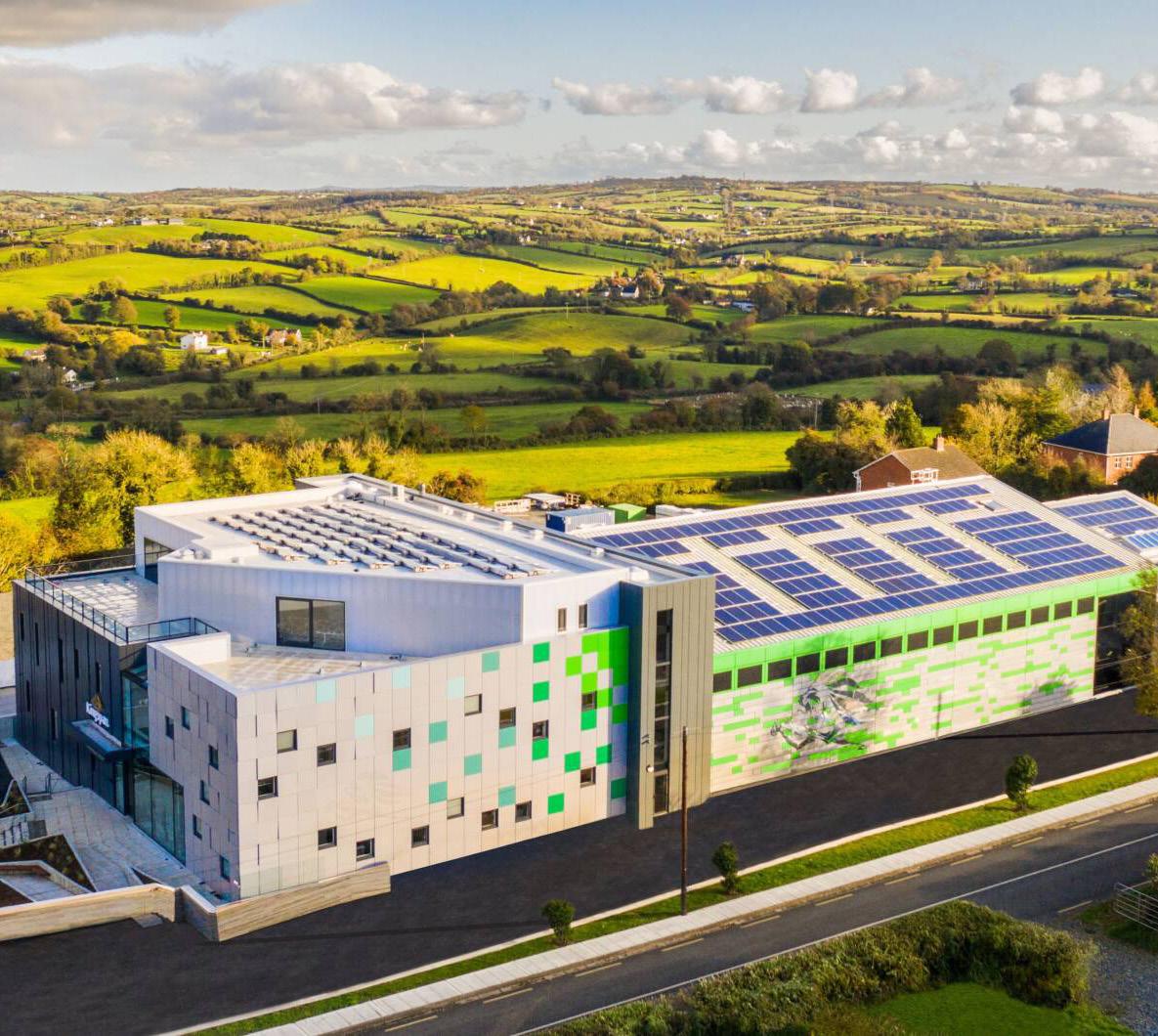
One area Del Bove is particularly excited about is the work around lower-carbon materials, circularity and integrated building solutions. Last year, the company launched an insulated panel with integrated solar PV, PowerPanel.
“It’s an example of thinking beyond individual products and looking at how the building envelope can actively contribute to energy generation,” she says.
The environmental benefits are important, but innovation is also about growth, resilience and ensuring we’re developing solutions that meet the needs of the future.
Innovation isn’t just crucial from a sustainability standpoint. It’s become a business imperative too. “Whether it’s refining a manufacturing process, improving a product formulation or finding a more efficient way of working, these changes can deliver significant value for our customers and business,” says Del Bove. “The environmental benefits are important, but innovation is also about growth, resilience and ensuring we’re developing solutions that meet the needs of the future.”
Innovation is about testing, learning and understanding where the limits are. In manufacturing, this requires a high level of research and development. Kingspan’s IKON Innovation Centre runs incremental, adjacent and transformational innovation projects — and sustainability plays a role in all of them.
It’s here that state-of-the-art laboratories — combined with the flexibility and freedom to evaluate new materials — rapidly build prototypes and carry out in-house testing.
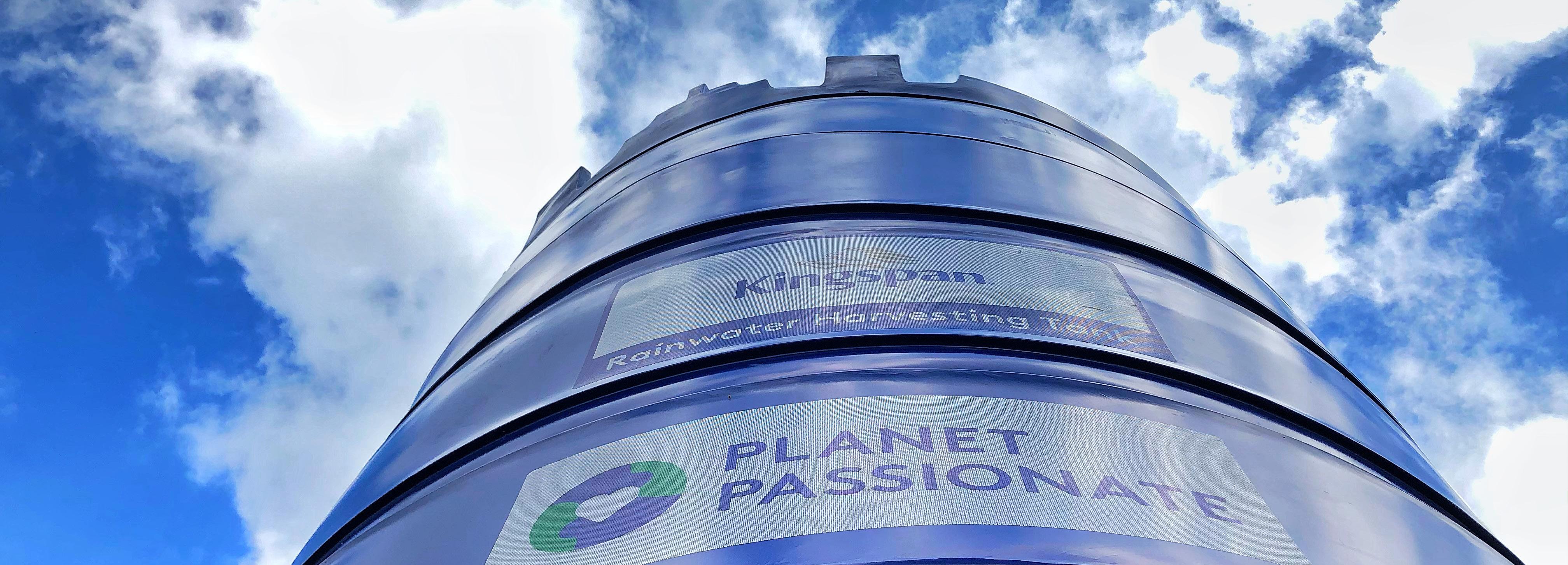
Their environmental sustainability programme, Planet Passionate, also has a tangible impact on innovation. “We have two Planet Passionate targets – to reduce carbon intensity of our key raw materials by 15% by 2030 and utilise 1.5 million tonnes of recycled and renewable raw materials by 2030. We’re always looking at ways to do this, but we’ve already recycled 1 billion bottles, using the recycled PET to increase the recycled content in our QuadCore 2.0 insulated panel.”
“What’s particularly encouraging is that some of them are delivering both lower embodied carbon and improved performance,” she explains.
Del Bove is excited for the next wave of innovation. “I think it will come from the intersection of disciplines rather than any single breakthrough,” she says. “We’re seeing exciting developments in materials science, digital technologies, AI, automation and manufacturing. When they come together, that’s often where the biggest opportunities emerge. We’re also seeing innovation from collaboration across supply chains, universities, startups and customers. No single organisation has all the answers,” she says.
“When people see evidence that a solution performs, they adopt it. That’s how innovation has always worked. I don’t think lower-carbon solutions will become ‘the norm’ simply because they’re lower carbon. They’ll become ‘the norm’ because they’ll increasingly be the best overall solution,” she concludes.

Business Development Manager: Robert Joyce robert.joyce@mediaplanet.com Managing Director: Margot Thomas | Lead Designer: Ellen Cahill Interim Content Manager: Rachelle Ong | Paid Media Strategist: Jonni Asfaha Digital Campaign Manager: Jan Martorell | All images supplied by Getty Images, unless otherwise specified Contact information: ie.info@mediaplanet.com or +44 (0) 203 642 0737
Sandra Del Bove Group Head of Innovation, Kingspan
Carbon considerations need to be embedded at the design stage, and better specification standards are needed.
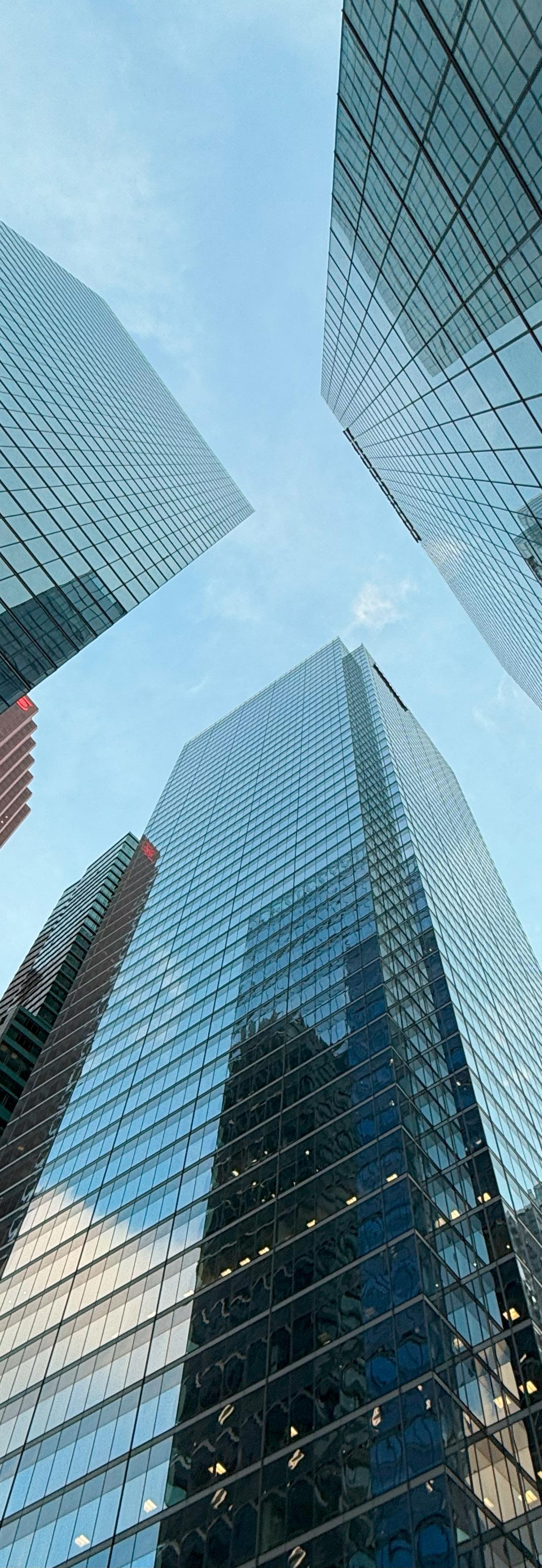
How lower embodied carbon can reduce the cost of the built environment
The built environment is a big generator of carbon emissions, agrees Mark Broderick, Procurement Director, Kingspan Group. The sector accounts for 37% of all global energy-related greenhouse gas emissions, including 23% from operational carbon and 14% from embodied carbon.
Yet while operational carbon can be reduced with better insulation and energy efficiency measures, the problem of embodied carbon is embedded in everything from raw material extraction to manufacturing methods. Hence, it’s harder to tackle.
Broderick believes the sector’s long-term ambition must be to make “energypositive buildings” the standard, with high-performance insulation, lowcarbon materials and circular construction practices. Achieving this will help to reduce the lifetime cost of the building - operational and embodied, as the cost of carbon continues to rise in the coming year.
Since 2020, the company has introduced a range of 43 lower-embodiedcarbon products. Persuading the industry to scale its use of these solutions must be achieved as part of a broader value proposition. They can’t just be sold on their green credentials alone. “The whole package has to appeal,” he explains. “First, it’s about functional performance. Then aesthetic. Then, its price. Is it going to be super expensive compared to others on the market — or competitive? Then it’s about how it helps reduce operational and embodied carbon - considering the whole life carbon and cost of a building.
Close collaboration across supply chain Kingspan has been focused on reducing its operational carbon. “We’ve made big progress on our 65% reduction target in scope 1 and 2 greenhouse gas (GHG) emissions,” says Broderick.
He adds, “Now most of our carbon comes from scope 3 — purchased goods and services, sitting upstream with our heavy industry suppliers. Last year, we saw a 4% reduction in raw material carbon intensity compared to our 2020 data.”
That embodied carbon is more difficult. Steel features prominently in the Kingspan product range — yet energy-intensive and heavy industry is responsible for a significant proportion of direct greenhouse gas emissions: 21% altogether, representing approximately 71% of all industrial emissions. Even more challenging, 8%-11% of industrial emissions come from iron and steel producers.
Therefore, the company knew that closer collaboration was needed across its supply chain to align on decarbonisation targets, improve data visibility and support suppliers in developing and adopting lower embodied carbon materials.
“In 2019, we started an annual forum where our key suppliers could meet with our sustainability and senior management teams,” says Broderick. Breakthroughs have been achieved. The company’s insulated panels are now made more sustainably using steel from an electric arc furnace — as opposed to a blast furnace — resulting in a 20% carbon reduction. It’s also investing in a company pioneering the manufacture of steel using hydrogen instead of fossil fuels.
Lower embodied carbon solutions are the future
But zoom out and, for the wider built environment, difficulties remain. For instance, accountability for whole-life carbon reduction is still too fragmented, so carbon considerations need to be embedded at the design stage, and better specification standards are needed. Plus, the financial incentives for reducing carbon are yet to offset the often-higher costs of lower embodied carbon materials.
The geopolitical situation has also slowed wider uptake. “Two years ago, there was a greater demand for lower embodied carbon products,” admits Broderick. “Because of the economic situation and higher energy costs, buyers globally are more focused on price than the environment.”
Also, there is a lot of confusion around embodied carbon — people don’t necessarily understand what it is. “They realise that insulation means warmer buildings and less energy,” says Broderick, “And they know what recycled content is. But there needs to be more education and communication about carbon generally.”
Nevertheless, he remains positive that lower embodied carbon solutions are the future. “There will always be challenges,” he says. “It may take a little bit longer to get there, but the strategy is clear — and the direction of travel hasn’t changed.

Mark Broderick Procurement Director, Kingspan
We want to create high-performance products with low environmental impact to help our customers build better buildings.
How early design decisions can cut embodied carbon in construction
A focus on reducing embodied carbon in construction has become a strategic issue — one that must be thought through as early as possible in the design process.

There’s an uncomfortable truth about the buildings and construction sector that must be faced, where manufacturing companies have a major part to play, says Bianca Wong, Chief Sustainability, Digital and Marketing Officer, Kingspan Group.
Much of the sector’s impact has traditionally been associated with operational carbon, generated once a building is in use. However, a significant share sits in embodied carbon — the emissions produced through the extraction and manufacturing of materials, their transportation, construction, and ultimately, decommissioning.
“Architects and designers understand they play a critical role in determining the lifetime carbon footprint of a building,” says Wong. “Their design decisions and materials choices fundamentally influence the performance and environmental footprint.” As a result, a focus on reducing the lifetime carbon impact of buildings is becoming a strategic priority, one that must be thought about as early as possible in the design process.
Manufacturers have a key role to play. Wong points to Kingspan’s own progress on its environmental sustainability programme, Planet Passionate, and how it’s helping its customers do this in practice.
“Our goal is to continually reduce the environmental impact of our
products to help our customers to create high performance, lower carbon buildings’ she says.
“To achieve this, we’re focused on increasing our use of recycled and renewable raw materials and decarbonising our manufacturing processes at scale,” Wong explains. To date, Kingspan has reduced direct emissions from its operations by 70% since 2020, including acquisitions and organic growth.
Alongside this, the company continues to invest in product innovation. These include its integrated building envelope solutions and its lower embodied carbon (LEC) product range.
“Designing the walls, roof and daylighting together as one highperformance system can lower both operational and embodied carbon, explains Wong. “A systemlevel approach is where you unlock the best outcomes — both in sustainability and in performance.”
Building sustainability into your operational model
Wong believes the opportunity for the wider sector is clear: treating sustainability as a source of competitive advantage, not simply a compliance requirement.
“Businesses need to be clear on where the material opportunities are and how they can create value, both for the business and for their customers,” she says.
Achieving this requires more than ambition alone. It requires strong leadership commitment, clear strategic focus and embedding sustainability into the operating model. “To get real traction, you need leadership buy-in, you need to integrate sustainable practices into how the business operates, and you need people who are passionate about delivering it,” she adds.
“If you only treat sustainability as a box-ticking exercise, it won’t add value,” says Wong. “We always think of it as the golden thread to the product. We ask, ‘How can we continually improve our products and help solve our customers’ pain points?’ and then work back from there,” she says.
The future of manufacturing For Wong, the future of manufacturing is lower carbon, more efficient, more circular and performance-led. “For us, it’s about innovative product design, optimising our raw materials and getting as close as we can to net-zero manufacturing,” she says.
“We have our lower carbon suite of solutions, and we’re exploring circular business models with multiple product take-back schemes and recycling schemes already in place. Ultimately, we want to create high-performance products with low environmental impact to help our customers build better buildings.”
Bianca Wong
Chief Sustainability, Digital and Marketing Officer, Kingspan