
























At a moment when Canada is rethinking its supply chains, its food security, and its relationship with the world, the answers to some of our most pressing national questions are already being developed — in one of our smallest provinces.
New Brunswick's research strengths are nationally strategic.
In Edmundston, the Northern Hardwoods Research Institute (NHRI) is making an invisible forest resource visible, using AI, LiDAR, and satellite imagery to unlock the emerging bioeconomy. In Grand Manan, we built the world's first wild Atlantic salmon marine conservation farm. Atlantic salmon is a keystone species and a cornerstone of Indigenous and coastal life in New Brunswick. In Fredericton, Canada's only national tree seed bank preserves the genetic diversity of 250+ species against climate change — remarkable enough to earn a spot making Canadian forest history aboard NASA's Artemis II. And in Moncton, Chinova Bioworks is replacing synthetic preserva-
tives with mushroom-derived technology already embedded in global food supply chains.
These aren't startup stories. They're proof that New Brunswick's research ecosystem is already delivering for Canada, in the exact sectors that define our long-term sovereignty: food, oceans, and forests innovation.
New Brunswick is ready to contribute more to Canada's national priorities. It is time for federal research and innovation systems to pivot to reflect our growing potential.
Canada's sovereignty doesn't live in its defence budget alone. It lives in its seeds, its salmon, its trees, and its soil — and right now, research in New Brunswick is doing its part to protect them.

Candice Ashley Pollack CEO, ResearchNB
Marjorie Michel discusses strengthening Canada’s life sciences sector through collaboration, clinical trial modernization, and innovation to improve patient care and healthcare resilience.


How is Canada strengthening collaboration across the life sciences ecosystem to improve health outcomes and system resilience?
“Canada’s life sciences ecosystem is what anchors our health system, and propels the innovations and technologies that can help protect the health of Canadians, grow our nation’s economic prosperity, and maintain our overall health sovereignty.
Our new government is focused on initiatives that strengthen collaboration within the life science ecosystem, including academia, industry and healthcare institutions, in order to turn Canadian research discoveries into real-world therapies, medical technologies, and commercial products.

Together with the Hon. Mélanie Joly, my counterpart responsible for industry, I recently announced the creation of the Pharmaceutical and Life Sciences Sector Task Force, a fi rst of its kind effort involving senior leaders across the sector to explore innovative, made-in-Canada solutions to support reliable and sustainable access to pharmaceuticals in Canada, and maintain our nation’s industrial competitiveness.”
treatments for Canadians living with inflammatory skin conditions.
Atopic dermatitis (AD) and prurigo nodularis (PN) are chronic infl ammatory skin conditions that can involve a substantial, and sometimes not immediately visible, burden.
Both AD and PN are characterized by skin lesions and intense persistent itch, which can disrupt sleep, concentration, and overall well-being, and may affect daily functioning at school or in the workplace. People living with these conditions may experience sleep disturbances and social challenges and can experience impacts on their mental well-being. Atopic dermatitis (AD) and prurigo nodularis (PN) often cause invisible suffering, with symptoms that negatively impact people both physically and mentally. The relentless nature of AD and PN symptoms can take a significant physical and emotional toll — so much so that 87 per cent of patients said that being itch-free is their primary treatment goal.
Advancing research, innovation, and access
Some people living with PN suffer from itch for over a decade, highlighting the
need for continued research and innovation to advance treatment options for people living with chronic inflammatory skin diseases like AD and PN. The need to ensure that all Canadians have equitable access to those treatments is equally critical.
These efforts reflect continued work toward addressing unmet patient needs and supporting the understanding of the burden associated with
these conditions.
By getting to the root cause of the itch, this approach has the potential to help alleviate the physical and
psychosocial burden of these conditions.
Supporting patient care
Galderma’s 45-year commitment to advancing dermatology care continues to drive innovation in the field.
Building on its experience in dermatology, Galderma supports ongoing research and the development of approaches to help improve the management of inflammatory skin conditions in Canada,” says Sophie Élise Michaud, Head of Medical Aff airs at Galderma Canada. “These efforts reflect continued work toward addressing unmet patient needs and supporting the understanding of the burden associated with these conditions.”
Advances in this area rely on continued investment in research, along with a commitment to supporting patient care. Through its ongoing activities in dermatology, Galderma contributes to efforts aimed at improving the management of inflammatory skin conditions for Canadians.
Written by Tania Amardeil


Sophie Élise
more about the impact of atopic dermatitis and inflammatory skin conditions, the importance of
in dermatology care, and the need to improve access to new treatment options for Canadians at galderma.ca
This article was sponsored by Galderma

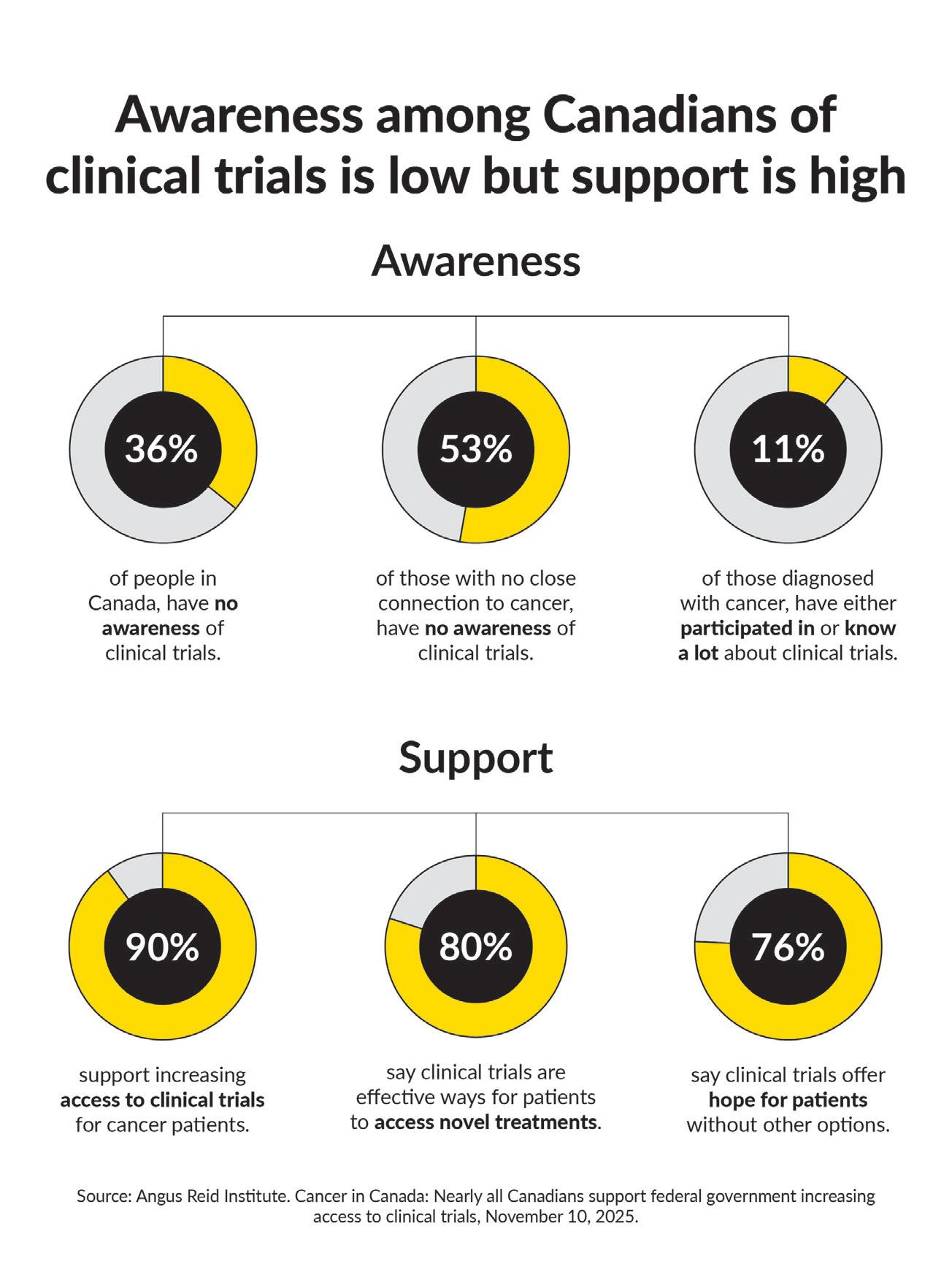
This Canadian charity is highlighting the role the government must play in developing a stronger, improved clinical trials ecosystem across Canada.
Few words change someone’s life like hearing “you’ve got cancer”. It’s a confusing, overwhelming, emotional time in any person’s life and amid this uncertainty the one thing everyone deserves is access to the best care and treatments available.
In medicine, clinical trials are critical to advancing patient care and paving the way for better, improved treatments.
“Clinical trials represent how scientists take promising ideas from the lab like a molecule or new test and turn it into real world solutions that support patients,” says Helena Sonea, Director of Advocacy for Canadian Cancer Society.
By participating in a clinical trial, patients are given the chance to explore new care options instead of or in addition to standard treatment. They also play an important role in furthering research that will improve outcomes for the wider patient body. How quickly patients in each country access these new treatment options however, is a separate and increasingly relevant issue, especially in Canada.
Patients suffer lengthy Canadian bureaucratic processes
Clinical trials often take a long time to launch due to the complex processes of protocol development, regulatory approvals, site selection, and participant recruitment.
“Clinical trials aren’t abstract systems,” explains Judy Needham, cancer survivor and previous chair of the Patient Representative Committee for Canadian Cancer Trials Group, “they translate directly into whether a patient has a viable option when they need it.”
In Canada, a notoriously bureaucratic system has shaped a slow, inefficient clinical trials environment, contributing to Canada’s reputation as a less ideal location for those looking to execute such trials. Lengthy regulatory processes, multiple ethics and legal reviews make the journey to simply starting a Canadian-based clinical trial a tedious process. In turn, clinical trials often take place in better-resourced countries like the United States. While Canadians may eventually benefit from the resulting treatments, by not having access to local trials, Canada has become reliant on internationally-developed treatments without experiencing any economic benefits associated with developing them. It also means patients, who may have qualified to participate in what could have been life-saving treatment, lose this option.
After exploring clinical trial options for her brother-in-law, Judy herself
was shocked not only by the inequity in access between Canada and other countries, but within the country itself; “provincial barriers also prevent patients from participating in trials across Canada.”
A roadmap to improved access
The Canadian Cancer Society is determined to change this. The Clinical Trials Action Plan (CTAP) aspires to transform patient care in Canada by creating a clear blueprint on the government’s role in better supporting clinical trials, ultimately increasing awareness and access for patients across the country.
Engaging researchers, scientists, policymakers and people with lived cancer experience, CTAP aims to double the percentage of Canadians enrolled in cancer clinical trials by 2035. The plan also outlines how Canada can become the fastest country to launch a clinical trial, which would improve the number of researchers interested in executing local trials. Specifically, it highlights the government’s role in creating a better, more streamlined national process that would support a faster trajectory to launching a clinical trial, making Canada a more desirable location for these types of medical investments.

leadership, CTAP illustrates a system where access to clinical trials is the standard of care rather than the exception. By highlighting the need for streamlined, master processes led at a federal level, Canada can remove bureaucratic barriers and bring medical innovation to Canadian soil.
In a time when sovereignty is the word on every politician's lips, a more cohesive clinical trials ‘ecosystem’ seems like an obvious investment in a Canada-first research industry. “We want to bring more healthcare innovation to Canadian patients; medicines developed by Canadians, for Canadians, within our
borders,” Helena says.
It’s a small change that will have drastic impacts, not only improving patient options but highlighting Canada as a world leader in medical innovation. “The plan CCS has pulled together visualizes a means to an improved clinical trials system in Canada. With government funding, leadership and continued collaboration, we have an opportunity to make that vision a reality, which translates into meaningful access and benefits for patients and families across Canada,” Judy finishes.
Written by Sonya Friesen
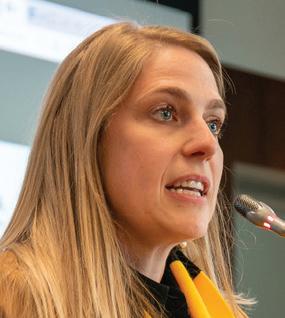
We want to bring more healthcare innovation to Canadian patients; medicines developed by Canadians, for Canadians, within our borders.
- Helena Sonea
“We need a harmonized clinical trials environment supported by federal and provincial legislation,” Helena says. “Our goal is to encourage the federal government to develop the national benchmark to launch a clinical trial in 75 days.”
The government’s role moving forward
Currently, onerous administrative processes led by both federal and provincial bodies make the journey to launching a Canadian clinical trial hundreds of days, deterring interested researchers. Through government investment and
From R&D to collaborations that help translate scientific breakthroughs into tangible outcomes, GSK Canada is contributing to a stronger health care system.
Canada’s health care system is facing growing pressures, from an aging population and rising rates of chronic disease to rapid technological change. At the same time, advances in life sciences are creating new opportunities to improve patient outcomes and strengthen health care systems.
Mediaplanet spoke with Michelle Horn, Country Medical Director for GSK in Canada, about the opportunities, challenges, and innovations shaping the future of health care in Canada.
The world is changing rapidly, and with it, the landscape of health care. From global health events to technological leaps, there’s a palpable sense of urgency. As Country Medical Director for GSK in Canada, you’re at the forefront of life science innovation. In this dynamic environment, what does “life science innovation” mean to you and GSK Canada specifically, and why is this moment so critical for advancing it?
Michelle Horn: That’s an excellent question that gets to the heart of what we do. For GSK, life science innovation is fundamentally about getting ahead of disease together. It’s about bringing forward transformative medicines and vaccines that truly make a difference in patients’ lives. But the “why now” is crucial. We’re living through a period where the convergence of factors — an aging population, the rising burden of chronic diseases, and the accelerated pace of technological advancement, particularly in AI and personalized medicine — makes innovation more urgent and impactful than ever before. We see this as a pivotal moment for Canada to strengthen its position in life sciences, ensuring Canadians benefit from these breakthroughs. It’s not just about discovery; it’s about the entire journey from scientific breakthrough to ensuring equitable access and real-world impact for Canadians in this rapidly evolving context.
Canada has a robust life sciences ecosystem, from excellent university research to smaller biotech startups all the way to multinational pharmaceutical firms, yet also faces unique challenges in health care delivery. Where do you see GSK Canada playing a unique leadership role within this environment, particularly given the external
changes and pressures you mention?
MH: Our leadership is demonstrated through several key areas that directly address Canada’s current needs. Firstly, our deep R&D pipeline is truly differentiated, focusing on areas of high unmet medical need — respiratory and immunology, oncology, and infectious diseases. For instance, our pioneering work in exploring novel treatments for chronic hepatitis B isn’t just about a new drug; it speaks to the broader challenge of chronic disease management and the potential to reduce long-term health care burdens, which is increasingly vital as our population ages.
These innovative approaches aim to fundamentally change the course of diseases. They could potentially lead to functional cures that free patients from lifelong treatment and significantly reduce the risk of severe complications, improving the overall health of our population and creating a stronger, more resilient Canadian economy.
Secondly, we place a strong emphasis on collaboration and partnership. We understand that no single entity can tackle complex health challenges alone. The pandemic, for instance, placed a spotlight on the critical need for integrated health strategies.
GSK Canada actively partners with academic institutions, research networks, patient advocacy groups, and government bodies. These collaborations are essential — they help translate scientific discoveries into tangible health outcomes, for example, through clinical trials that bring cutting-edge therapies to Canadian patients sooner.
We’re proud to contribute to Canada’s clinical research capacity, providing opportunities for Canadian researchers and patients to participate in global studies and strengthening our collective health security.
You mentioned Canada’s unique health care landscape. How does GSK ensure its innovative solutions are relevant and accessible across such a diverse country, especially when addressing broad health trends like chronic disease?
MH: That’s a critical point, and it ties directly into the challenges and opportunities of the moment. Canada’s vast geography and diverse communities, coupled with increasing rates of chronic conditions like diabetes and cardiovascular disease, require a tailored approach. We engage extensively with provincial and territorial governments,

health care providers, and patient groups to understand specific regional needs and ensure our innovations are integrated effectively into local health care pathways. This includes working to overcome barriers to access, whether they’re geographic, economic, or related to health literacy.
Our goal is to ensure that when a new medicine or vaccine is approved, it reaches the Canadians who need it most in a timely manner, regardless of where they live. We also focus on generating real-world evidence in the Canadian context. This data helps us demonstrate the value of our innovations within Canada’s health care system, supporting informed decision-making by policymakers and health care professionals who are grappling with how best to allocate resources to meet growing health demands.
regulatory environment is required — one that keeps pace with scientific advancements to ensure timely access to new therapies. Furthermore, global economic shifts highlight the importance of a robust domestic life sciences sector. From GSK Canada’s perspective, we’re actively engaging in policy discussions to advocate for frameworks that value and support innovation. This includes competitive pricing frameworks and measures that encourage private sector investment, all designed to ultimately benefit Canadian patients and the Canadian economy.
These conversations are accelerating as Canada and the United States review their important trade relationship under the Canada-United States-Mexico Agreement. We believe a strong life sciences sector is vital for Canada’s economic prosperity and its health security, especially in a competitive global landscape. Our ongoing investment in Canadian talent and research infrastructure, dating back to 1903, underscores our long-term commitment to this country.

Our goal is to ensure that when a new medicine or vaccine is approved, it reaches the Canadians who need it most...
Looking ahead, what are the biggest opportunities and challenges for life science innovation in Canada, and how is GSK Canada preparing for them, particularly with the pace of technological change and global economic shifts?
MH: The opportunities are immense, especially with the rapid convergence of AI and personalized medicine, which promises to revolutionize how we prevent and treat disease. GSK is embracing these technologies globally, and we’re keen to leverage them within Canada to enhance our R&D efforts and improve patient care.
However, challenges remain. To be successful, a predictable and efficient
Finally, what message would you like to convey to government and decision-makers regarding GSK Canada's role in the future of Canadian health care, particularly in navigating these current dynamics?
MH: My message is clear: GSK Canada is a committed partner in building a healthier, more resilient Canada. We’re not just a pharmaceutical company; we’re a science-led organization dedicated to getting ahead of disease.
Our innovations, collaborations, and deep understanding of the Canadian context position us as a leader in life sciences. We’re here to work hand in hand with government and stakeholders to ensure that Canadians continue to benefit from world-class medical advancements, improving health outcomes and contributing to a thriving society.
As health challenges become increasingly complex and interconnected, and technological progress unlocks new possibilities, the need for collaboration has never been greater — and together, we can make a meaningful difference in the lives of Canadians.