



Minister Heath MacDonald shares the government's plan to strengthen food production, drive agricultural innovation, and support producers in building a resilient, competitive food system. What is your vision for ensuring long-term food security while supporting Canadian producers?
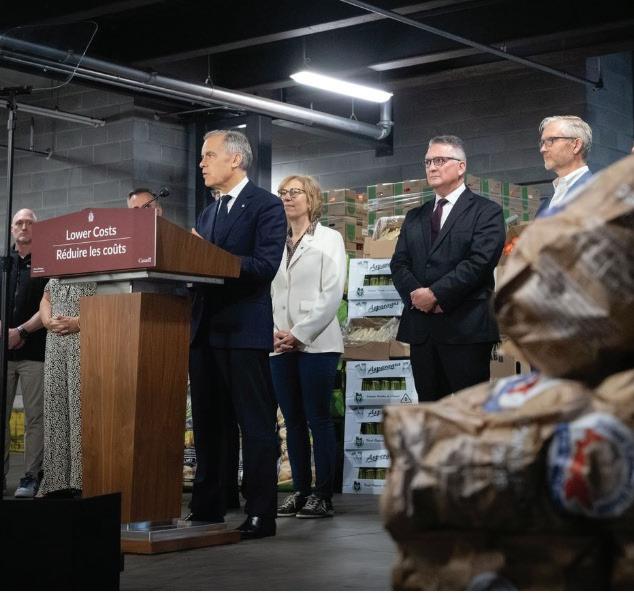
We just launched Canada’s fi rst-ever National Food Security Strategy to strengthen Canada’s food self-sufficiency and improve access to affordable, nutritious food for all Canadians. It builds upon actions the Government has already taken, such as the new Canada Groceries and Essentials Benefit that will be a significant support for more than 12 million Canadians, and the National School Food Program, feeding up to 400,000 more children annually.
Most importantly, the Strategy introduces new actions to provide long-lasting support to Canadian families, producers, independent grocers, and food and beverage processors.
For example, there is $1 billion in new funds over 10 years for a new Food Link Fund to update and create wholesale food terminals, and for new food hubs. This will develop more direct links between farmers and consumers and drive competition in the food retail market. We will also be investing $750 million to dramatically expand yearround Canadian production of fruits and vegetables, including through
Canada's food system is one of our country's strengths, but success depends on the capacity to develop talent, advance innovation and convene partners.

Written by John Cranfield Dean, Ontario Agricultural College, University of Guelph
Canada's food system has long been one of our country's strengths. Despite growing pressures from extreme weather events and labour shortages to supply-chain disruptions and global competition, our agricultural sector continues to provide safe, reliable food for Canadians.
That success does not happen by accident. It depends on the capacity to develop talent, advance innovation and bring together partners across the agrifood value chain.
A strong food system is built through long-term investments in people, research, infrastructure and collaboration. It depends on scientists developing more resilient crop and livestock management systems, food scientists enhancing food quality and safety, businesses bringing innovations to market, and the next generation of leaders prepared to navigate an increasingly complex system.
This is where the University of Guelph and the Ontario Agricultural College play a critical role.
Innovation meets experience
For more than 150 years, we have worked alongside producers, industry organizations, governments and communities to strengthen Ontario's and Canada's agrifood sector.
Talent and people are at the heart of this work. We are preparing graduates who understand not only agriculture, but also data, technology, sustainability, food
Ugo Galtier, Arlene Asika
One of Canada’s leading engineering firms is advancing an approach to infrastructure that’s grounded in asset durability, data-driven decisions, and long-term value.
greenhouses, vertical farms, and other enclosed growing spaces. These will be major contributors to reducing our dependence on imports and long distribution networks outside of Canada, especially in rural and northern communities.
New funds will support the Competition Bureau and Competition Tribunal to increase their capacity to prevent anti-competitive behaviour, and to study competition throughout the food supply chain. The Strategy will also help small and medium-sized processors and innovators modernize, increase productivity, and attract new
investment, so Canada can process more of what our farmers grow, create new jobs, and build greater food self-sufficiency.
We will also be helping young farmers, making it easier for them to take over the family farm, either from their parents or from more distant relatives. And we will work to reduce costs and grow the economy while protecting health and safety by cutting red tape and fostering collaborations among all levels of government.
systems and markets. Programs such as our Master of Sustainable Agriculture equip students with the knowledge and practical experience needed to help producers navigate evolving challenges around productivity, environmental stewardship, technology adoption and business resilience.
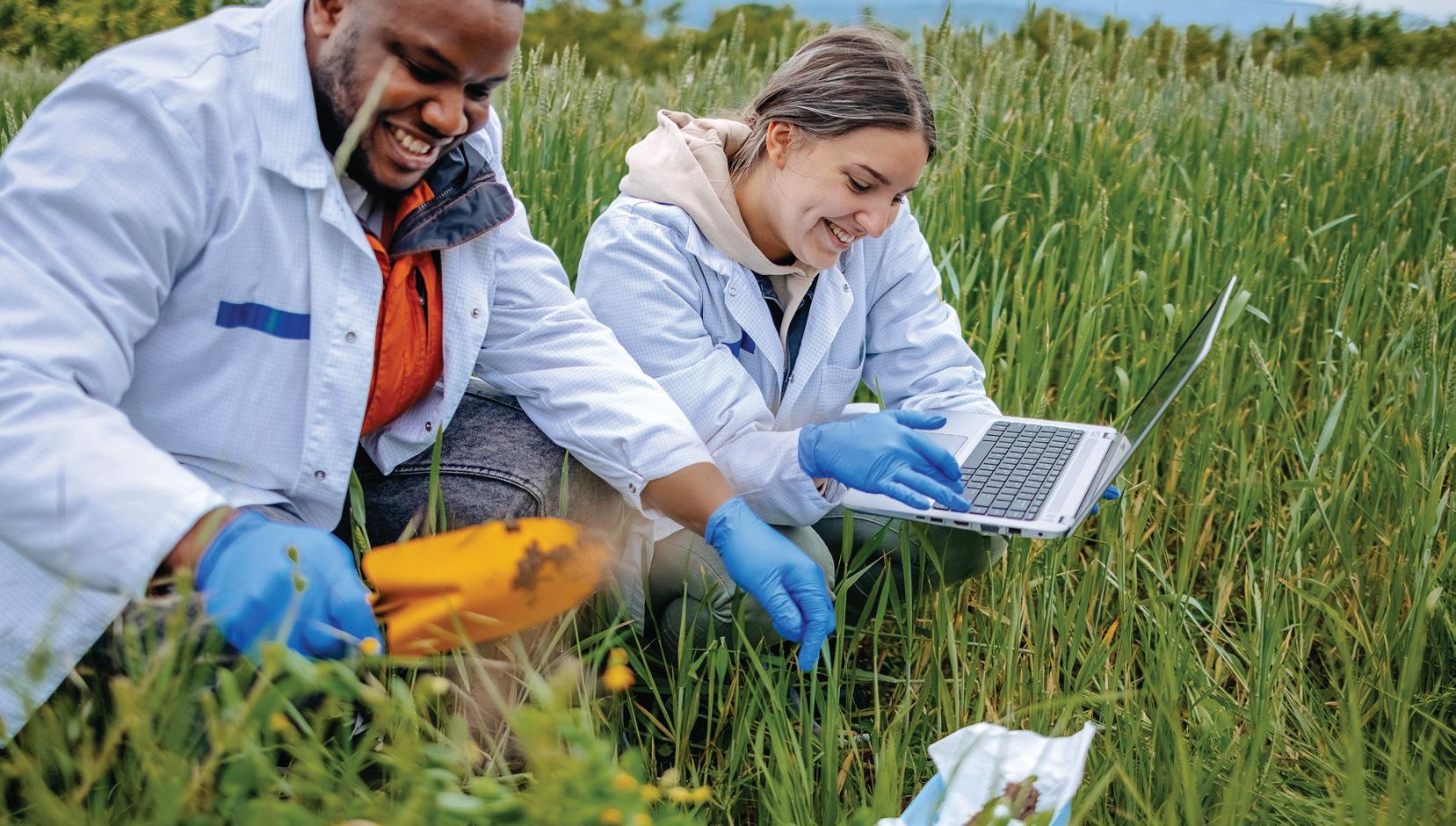
Innovation is equally important. Across our campuses, researchers are working alongside producers, processors, industry partners, and government to develop practical solutions to real-world challenges. Their work spans the entire agri-food spectrum, from improving crop performance and animal health to advancing food science, nutrition and sustainability, to commercializing new technology.
The goal is simple: to create Canadian solutions for Canadian producers and food businesses, helping them remain competitive while producing safe, reliable food that Canadians can trust.
None of this happens in isolation.
Working together to help feed the country
The most impactful solutions emerge when industry, government and academia work together. The University of Guelph's long-standing partnership with
The most impactful solutions emerge when industry, government and academia work together.
the Government of Ontario through the Ontario Agri-Food Innovation Alliance supports research, innovation and talent development that strengthens Ontario's food system and helps build the province's capacity to respond to future challenges.
Industry partnerships are equally important. Researchers work directly with commodity groups and businesses to address emerging needs and opportunities. For example, Dr. Alexandra Harlander, the Egg Farmers of Canada Chair in Poultry Welfare, leads research on hen behaviour and welfare to inform national animal care standards while providing producers with science-based insights that support both animal health and industry success.
The future of food will not be shaped by any one organization acting alone. It will be built by a network of innovators, leaders and collaborators working together to create a stronger, more resilient food system.
At the University of Guelph, we are proud to play a leading role in building a stronger, resilient and secure food system for Canadians.




Farming is under intense pressure. We need research to meet the new challenges facing Canadian farmers and the future of food production.
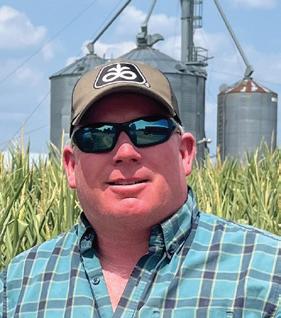
Written by Jeff Harrison Chair, Grain Farmers of Ontario
Wherever you live in Canada, farmers are working in or near your community to help feed you and your family. Holidays like Canada Day, celebrated across our country earlier this week, underline how food is so central to special occasions, let alone to our daily lives.
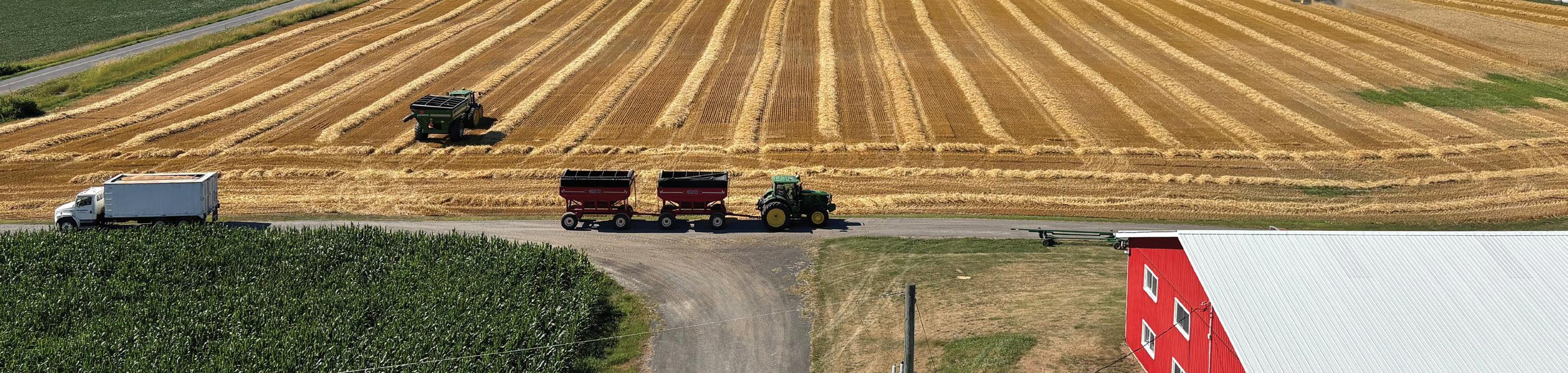
Farmers are key to food security. In Ontario, 28,000 grain farmers proudly grow barley, corn, oats, soybeans and wheat. These crops help provide a reliable, nutritious and homegrown supply of food.
But behind the scenes, food production is under intense pressure. Factors such as extreme weather, global uncertainty and skyrocketing production costs are threatening food security. And that’s why we need research - to support the future of food production.
Across the country, food reflects the diversity and regional distinction that makes Canada unique.
Growing through research Research, conducted efficiently and effectively, is a winner. It helps us improve production and quality, and manage tough growing conditions. That includes everything from drought, like we experienced on my farm near Trenton, Ontario last year, to torrential rains, the kind that soaked the southwest part of the province.
The research community has always been there for us. Now, we need its help to manage the extraordinary changes we’re experiencing every day in our fields and on our farms.
Ontario grain farmers are rolling up their sleeves. We already partner with federal and provincial governments, universities and private industry, to develop more resilient, more productive crops. We provide funding and grassroots expertise that help guide research decisions.
We must work together, to make wise choices. It takes about 10 years of plant breeding and testing to develop crop varieties with new traits, such as drought or heat resistance. This activity requires long-term, stable funding.
Every crop counts And here’s the distinctly Canadian element to all this. Across the country, food reflects the diversity and regional distinction that makes Canada unique.
Some of these commodities are produced on a large scale, like wheat, Canada’s highest volume grain crop. Ontario specializes in winter wheats, which can produce twice as much grain as spring wheats,making highly efficient use of farmland.
Other commodities are grown regionally on a smaller scale, such as oats in northern Ontario. They thrive in long, cool days and low humidity. However, like other small grains, they don’t cover enough acres to warrant research investment from the private sector. We need governments to join us in supporting research that reflects their regional importance.
Soybeans tell a similar story. Ontario grows most of Canada's specialty soybeans, used for soy beverages, tofu, miso, soy sauce, protein supplements and more. This crop’s production also depends on a small number of companies and public programs. Without sustained government support for public variety development, our competitive edge is at risk.
Food worth protecting Food is a matter of national pride. Farmers are working hard to keep Canada’s food system secure. And through research partnerships, we’ll keep doing our part to make our country strong.
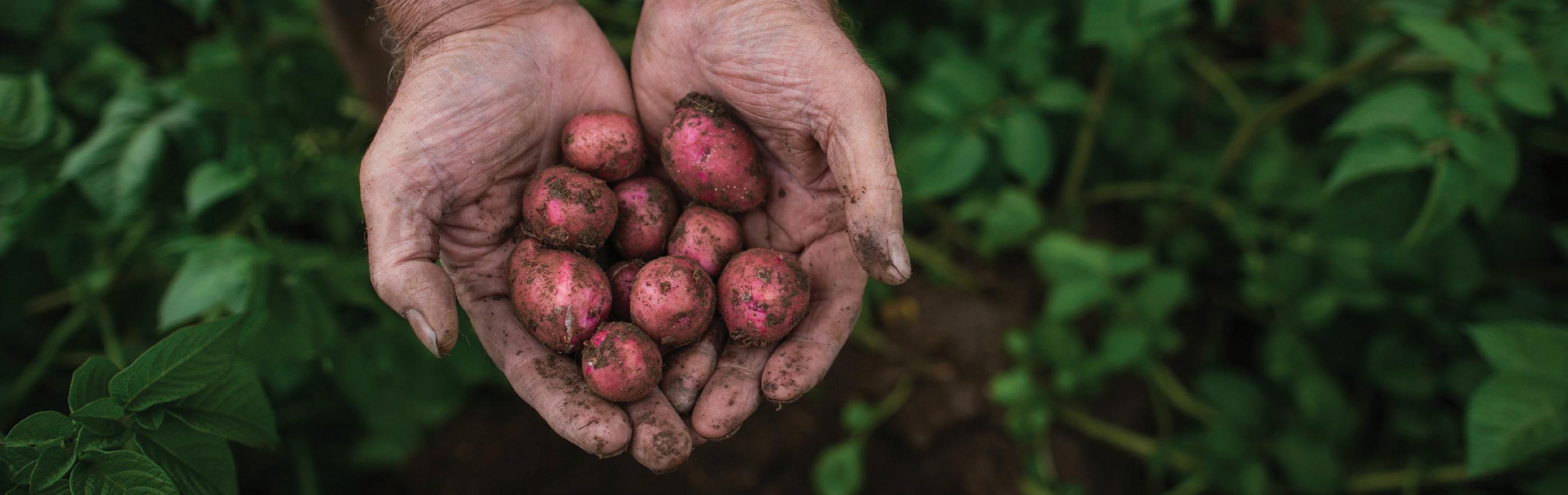
The Little Potato Company introduced North America to Little Potatoes and is now celebrating 30 years of helping busy families create little moments of happiness.

Today’s busy families and individuals want foods that are both healthy and quick to prepare. Getting meals on the table means juggling multiple priorities, from nutrition and taste to ease and convenience.
“It’s no longer an ‘or,’” says Sanford Gleddie, Executive Vice-President of Sales, Marketing, and Business Development at The Little Potato Company. “It has to be convenience and healthy whole food, not or healthy whole food. The reality today is that both parents are working and there’s a strong need for easy, fast, but still healthy whole food. That was really the fit and the opportunity for this product.”
The Little Potato Company specializes in, naturally, Little Potatoes — fully mature Creamer potatoes specifically bred to be small.
An industry pioneer and category
creator
The Little Potato Company began in 1996 in Edmonton, Alta., on a one-acre plot of land, launched by a Dutch immigrant, Jacob van der Schaaf, and his daughter, Angela Santiago. In northern Europe, Little Potatoes were fairly common,
but they weren’t in Canada. And Little Potatoes have big appeal: they need no peeling, cook quickly, and are nutritious and delicious.
The Little Potato Company created the Little Potato category in North America, and 30 years later has the highest share of branded potato sales here. It’s also the largest Little Potato grower in the world.
“The purpose of the company is ‘Feed the World, Better,’” says Gleddie. “It’s about feeding the world better with an easy, convenient, healthy, whole food that the whole family can love.”
Healthy, convenient meal solutions
Besides breeding a potato with thin skin that requires no peeling and cooks quickly, The Little Potato Company has taken things a step further to meet modern consumer needs by selling the potatoes pre-washed and with a variety of innovative ready-to-cook product formats for busy families. These include microwave-ready kits and oven & grillready kits that each come with their own seasoning pack. The products can be quickly tossed in the microwave, into the oven, or onto the grill, helping families prepare nutritious meals with less
time and effort, giving them more time to spend with their families.
“Any products we develop have to be fast, easy, and convenient, with a really clean ingredient list,” says Gleddie. “It all comes back to easy, convenient, and healthy.”
The company also prioritizes sustainability through practices like integrated pest management, crop rotation, and supporting pollinator habitats.
A vision for the future of food
Looking to the future, The Little Potato Company is committed to continued innovation.
“The biggest challenge that we need to face in agriculture and food production is sustainable regenerative production in an evolving and constantly changing climate,” says Gleddie. “We have all the ingredients we need here in Canada to continue to be a world leader in food production, but we have to constantly be looking at more sustainable production methods. That one word from our purpose, ‘better,’ drives all of our sustainability efforts.”
Written by Tania Amardeil