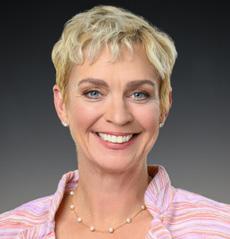
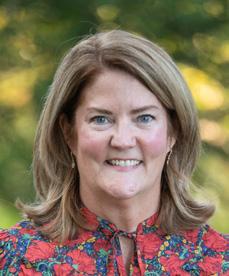
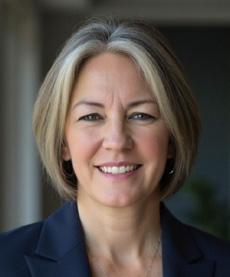
Carina Hatfield, LUTCF, CLCS, LACP, Secretary, National Association
Loren Ridinger on Building Wealth Through
Ownership, Not Just Income
Entrepreneur and best-selling author Loren Ridinger reflects on leading a global business and mentoring women entrepreneurs.
What has building and leading a global business taught you about creating and sustaining financial independence?
Independence isn’t something you’re given. You need to have a mindset of creating instead of simply reacting. Too many people are focused on obstacles or rely on just one stream, one idea, or one moment. You have to create systems that scale and decisions that compound over time. The real shift happens when you stop thinking about income and start thinking about ownership.
How do you approach financial decisionmaking when you’re responsible for both growth and long-term stability? You can’t grow recklessly, and you can’t lead scared. The discipline is knowing when to push and when to protect. Everyone wants to be first in innovation, but real strength is in ensuring people are put first. Every decision I make is filtered through one question: Does this move us forward without putting the foundation at risk? Growth is exciting, but sustainability is what keeps you in the game.
What do you see as the biggest gaps in how women are taught to think about money and financial leadership? Women are so often taught to protect money, not multiply it — to be careful, not powerful. That mindset keeps too many women playing small in the very rooms they should be leading. The gap isn’t about our capacity; it’s about our conditioning, and it’s time we outgrow it.
What It Takes to Lead in Finance
Our panel of experts reflects on the pivotal moments and overlooked barriers that shaped their rise to leadership in finance.
What has been the most pivotal moment or turning point in your career, and how did it shape your path in finance?
Kathleen Bilderback: The pivotal moment in my career was recognizing that the best outcomes for clients never come from a single discipline. Building strong, peer-level relationships with certified public accountants (CPAs), financial advisers, and other professionals transformed my work from good planning to truly strategic solutions.
Karin Sarratt: The most pivotal moment in my career was realizing that the things that made me different were also the things that made me valuable. Early on, I spent energy fitting into a mold of what I believed a finance leader looked and sounded like. Over time, I saw that my perspective, shaped by my own unique experiences and background, allowed me to ask different questions and see risks and opportunities others didn’t. That reframed my career from one of adaptation to one of ownership.
What barriers do women in finance still face today that aren’t being talked about enough?
Tara Popernik: Beyond the polished narrative of a “confidence gap,” the reality is that systemic bias still exists. Progress requires more than individual resilience; it demands active allyship. Leaders, especially men, must step up as true sponsors, advocating
unless otherwise specified. This section was created by Mediaplanet and did not involve USA Today.
for women in the moments that matter. My own career advancement was accelerated by sponsors who used their influence to open doors I couldn’t open on my own.
KS: I tend to think less in terms of specific barriers and more in terms of how we operate within them. The finance industry is constantly changing and evolving, and one of the less-discussed challenges is the expectation that you need clarity before you can act. That expectation can become a barrier itself. The most effective leaders aren’t the ones waiting for clarity; they’re the ones who create it.
What advice would you give to the next generation of women entering finance in a rapidly changing economic landscape?
Kelley Gay: In a constantly changing world, remember your “why” and understand your purpose. Recognize that the industry is, in many ways, catching up to you, and not the other way around. The fundamentals and industry basics will always be important, but many of the skills that will matter most going forward — e.g., adaptability, empathy, the ability to connect across complexity — are ones you may already bring. Don’t treat them as secondary to technical expertise. Build both, because knowing the world within you is just as important as understanding the world around you, and together, they’re incredibly powerful.
Brennan Creative Director Kylie Armishaw Product Strategy & Growth Director Joelle Hernandez Designer Keziah Makoundou Copy Editor Taylor Rice Cover Photo by Jacob Webster All photos are credited to Getty Images
INTERVIEW WITH Loren Ridinger CEO, Market America, Inc.
INTERVIEW WITH Kathleen Bilderback Trustee, National Association of Insurance and Financial Advisors
INTERVIEW WITH Karin Sarratt Chief Operating Officer, OneAmerica Financial
INTERVIEW WITH Kelley Gay Chief Marketing Officer, OneAmerica Financial
INTERVIEW WITH Tara Popernik, CFA, CFP Executive Vice President of Wealth Planning, LPL Financial
As Trillions Shift to Women, a Confidence Gap Remains
The Great Wealth Transfer is already underway. By 2030, women are expected to receive nearly $34 trillion in assets¹, a historic shift that could reshape families, communities, and the financial system itself.
For many women, this transfer of wealth doesn’t arrive as a celebration, it arrives as a question: What do I do now?
It should be a moment of empowerment. Instead, many women hesitate, questioning whether they know enough to fully engage in investing and longterm financial planning.
The issue isn’t ability, it’s confidence.
The data reflects that gap: Only 27% of women describe themselves as “very” financially literate, compared with 34% of men. At the other end of the spectrum, women are nearly twice as likely as men to say they are “not at all” financially literate (19% versus 11%), according to CivicScience.²
So, what’s holding women back at a moment when so much financial power is shifting into their hands?
Research from McKinsey & Company offers a clue. Nearly half of female financial decision makers say they feel unprepared to reach their financial goals, even when they already work with a financial adviser.
In my work with women across different ages and income levels, a consistent theme emerges: The hesitation usually isn’t about math skills or discipline. It’s about not knowing where to begin and fearing the wrong move.
Fear of financial loss plays a role, as does uncertainty. More than a third of women believe they don’t have enough money to start investing, even though small, consistent steps can make a meaningful difference. When financial
information feels complicated or inaccessible, hesitation can easily turn into avoidance.
Life circumstances add another layer of complexity. Many women are balancing multiple priorities at once, from retirement and career changes to caregiving and family needs. Financial decisions often feel most daunting during major transitions, such as a new job, divorce, or the loss of a spouse.
And those transitions are common. Women tend to live longer than men and are more likely to outlive their spouses, meaning many will become sole financial decision makers at some point.
When confidence drops, the consequences are real. Delayed decisions or avoidance can make it harder to achieve long-term financial security, which often requires growth to keep pace with inflation and longer life expectancies.
Despite these barriers, momentum is building. Nearly a quarter of U.S. women age 18 and older either plan to begin investing within the next year or remain interested but uncertain, according to CivicScience. This interest creates a timely opening for advisers to build confidence.
Advisers who help close the confidence gap don’t start with products or performance charts. They start by listening, asking better questions, explaining tradeoffs in plain language, and recognizing women as engaged decision makers, not secondary participants.
As the Great Wealth Transfer accelerates, managing assets is only part of the job. Building confidence, clarity, and trust is the harder — and more meaningful — work.
The shift in wealth is already happening. The question is
whether the financial industry will meet this moment and help create lasting security and confidence for the women at its center.
REFERENCES
1. Engaging effectively with female investors | McKinsey
Women leaders who reached the C-suite through unconventional paths share what they learned and how any woman can earn her space at the table.
TLa La Anthony on Owning Your Financial Power and Expanding Access Women Leaders in Finance Prove Every Path to the Top
here is no single road into the executive ranks of American finance. However, nearly all of them run through the complicated, beautiful terrain of a full life: families, setbacks, reinventions, and the daily negotiation between ambition and everything else that matters.
Muneera Carr, executive vice president, chief accounting officer, and controller at Wells Fargo, for example, is candid that “work-life balance” can be a misleading standard for senior leaders. Instead, she emphasizes integration, making intentional choices across career and life stages, and applying the same discipline to people leadership. Throughout her career, Carr has made pivotal decisions shaped by family, parenting, and personal circumstances, trusting that her career would evolve alongside those choices. She defines leadership as the ability to lead people through change and uncertainty with empathy, clarity, and discipline. That human-centered approach builds trust, drives performance, and sustains leaders over the long arc of a career. By featuring executives who navigated real obstacles, took unexpected turns, and built full lives alongside demanding careers, Financial Executives International’s “FEI Podcast: Icons Edition” and ICONS initiative offer the next generation something invaluable: proof that there is room for them at the table and a community ready to help them get there.
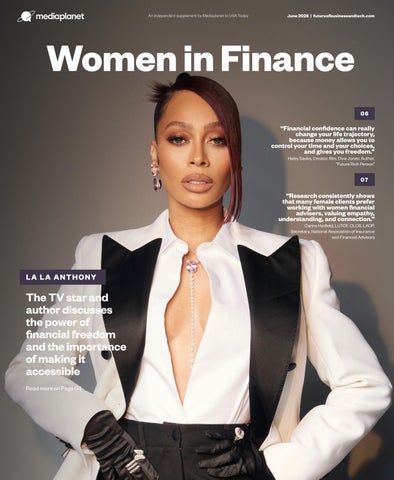
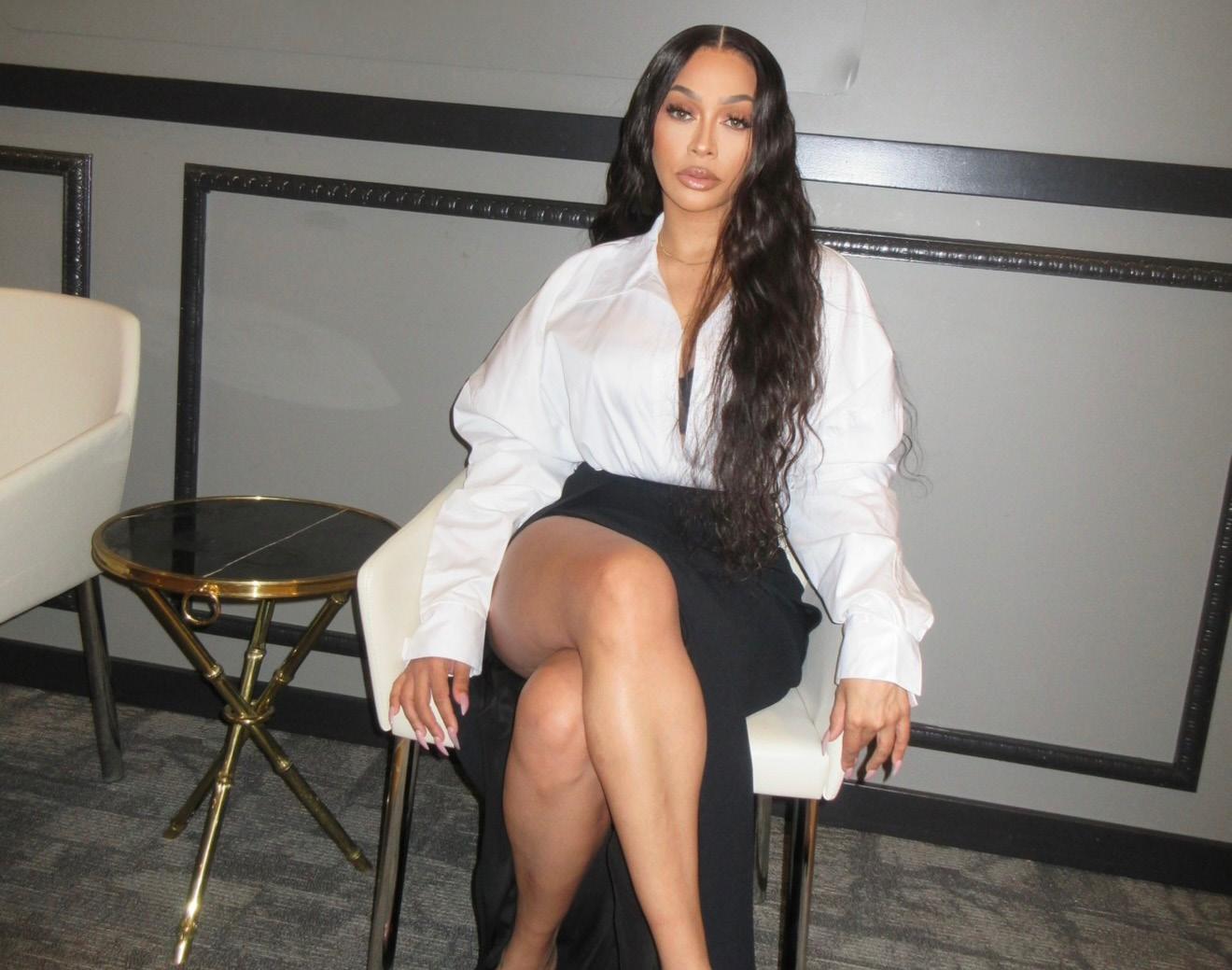
La La Anthony, TV star and author of “The Power Playbook,” talks about financial literacy, mentorship, and creating pathways to opportunity for underserved communities.
When you wrote “The Power Playbook,” what did you feel was missing from most conversations around success and financial independence?
I thought a lot about what role honesty plays in success and financial independence. People love to glamorize the positive outcomes, but there aren’t enough conversations about the mindset, discipline, and strategy it takes to get there. There wasn’t a “playbook” breaking down the good, the bad, and the ugly when it comes to reaching your financial and business goals, especially for women, and even more so, women of color.
Women should know that success isn’t just about earning. It is a practice in boundaries, ownership, and knowing your worth in every room you walk into.
How has your time working with young people at Rikers Island influenced the way you think about access to financial opportunity?
WRITTEN BY Heather L. Cole Founder and CEO, Heatherized Inc. and Lodestar Solutions
Talent and ambition are everywhere, but access is not. Many of the young men I work with were never exposed to basic financial tools or generational wealth. It’s not that they don’t have potential. It is that the system is built so they don’t have the opportunity to learn.
This really pushes me to emphasize introducing financial literacy conversations
while they are incarcerated, so when they are released, their ambition isn’t hindered by something that can so easily be taught.
What does financial education look like in environments where traditional systems haven’t worked for people?
It’s about meeting people where they are. Conversations can start simply, like talking about budgeting when you’re living paycheck to paycheck, or how to build credit when no one in your family has done it before. You can’t just throw terms like “investments” and “credit scores” at people without context. The conversation starts with “What do you want for your life?” Then, it builds from there. It has to feel possible, not overwhelming.
What does it look like for a woman to fully own her financial power, beyond just earning money?
A woman fully owning her financial power goes way beyond just earning money. It’s about control, confidence, and clarity. It means understanding where your money is going, making decisions that align with your goals, and not being afraid to negotiate, invest, or walk away from situations that don’t serve you. It’s also about independence, and knowing that you’re not relying on anyone else to secure your future.
La La Anthony | Photo courtesy of La La Anthony
Why Safe, Reliable Childcare Is Essential for Working Mothers — and What It Means
for Families and Communities
“How can I stay in the workforce after having kids?” It’s a question women have asked for years, whether in group chats, late-night searches, or conversations with friends and family.
Moms are trying to figure out how to keep earning and advancing while ensuring their children are safe and supported. More often than not, the answer comes down to one thing: access to reliable childcare.
Curtis Lemieux, director of youth development strategy with YMCA of the USA (Y-USA), sees the stakes up close. “When families know their children are in a safe, nurturing environment, it removes a major barrier to participation in work,” he said. “It allows parents — especially mothers — to show up more fully, both on the job and at home.” That kind of stability doesn’t just make life easier — it makes work possible.
Earning potential starts with reliability
Reliable childcare isn’t just about
coverage during the workday. It’s what allows mothers to stay consistent — to keep their hours, take on more responsibility, and say yes to opportunities instead of turning them down.
When care is predictable, work becomes sustainable. A mother can commit to meetings without wondering who will pick up her child. She can pursue a promotion without worrying that one disruption will set her back. Without that consistency, even the most motivated professionals are forced into constant trade-offs.
“We talk a lot about opportunity,” Lemieux added. “But opportunity depends on stability. Childcare is one of the most overlooked supports that makes economic opportunity possible.”
Where community steps in For many families, that stability
doesn’t come easily — and that’s where community-based organizations matter.
Across the country, the YMCA provides childcare that families can count on — from early childhood programs to beforeand afterschool care, as well as summer day and overnight camps. Just as important as the programs themselves is how they’re designed: schedules that align with working hours, flexible options, and environments where children are safe, engaged, and supported. That reliability can be the difference between staying employed and stepping away from work.
“The Y’s goal isn’t just supervision,” Lemieux said. “We’re creating environments where young people feel like they belong, are learning new skills, are making new friends, and are actively
engaged. When that happens, families have greater peace of mind, and parents can stay focused and consistent at work.”
Moving forward with purpose Safe, reliable childcare isn’t a luxury. It’s what allows mothers to keep earning, provides stability for families, and helps communities grow. As Lemieux reminds us, “When we invest in childcare, we’re investing in families’ ability to move forward — with confidence, with dignity, and with possibility.”
And for working mothers, the issue isn’t whether they can handle both career and family — it’s whether they have the support to do it without constant compromise.
That’s what access to childcare provides: not perfection, not ease — but the ability to keep going, with confidence that both their work and their children are in good hands.
Written by YMCA
of the USA (Y-USA)
Photo courtesy of Y-USA
Why Not You? The Case for Women in Finance
Finance remains one of the strongest routes to leadership for women, and these are the most evidence-backed drivers of advancement.
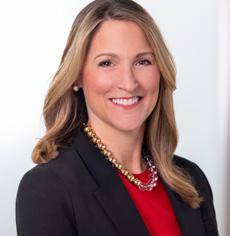
FWRITTEN BY Elissa Sangster CEO, Forté Foundation
inance has been a hard sell for women for decades, and corporate firms have a lot of work to do to create the kind of culture women seek. Despite this, the reality is that finance remains one of the strongest routes to leadership for women.
The chief financial officer (CFO) role has recently been a strategic stepping stone for women on the path to chief executive officer (CEO). Ten percent of women CEOs in the S&P 500 served as CFO immediately before, compared with 6% of men, meaning the CFO credential helps women make the final move to CEO.
Of the women CEOs leading Fortune 500 companies, approximately half have an M.B.A. or equivalent degree. It’s one of the most reliable accelerators for women who want to lead. Women who pursue an M.B.A. earn much more than a degree; they earn the authority and credibility to seamlessly move into roles with P&L responsibility, gain economic mobility and stability, and move into the highest levels of business leadership.
Being underrepresented in any field is challenging, but the opportunities for women in finance are real, and so many incredible women have built rewarding, high-impact careers. We need more women to join to see positive, sustained changes to the industry, so the question is: Why not you?
Haley Sacks on Talking Money the Way We Talk About Pop Culture
Haley Sacks, the creator known as Mrs. Dow Jones, host of the “Financial Tea” podcast and New York Times bestselling author of “Future Rich Person,” wants to break down the gatekeeping around personal finance.
What first drew you to the world of finance, and how did that eventually lead you to creating Mrs. Dow Jones?
What drew me to the world of finance initially was shame and embarrassment. My dad works at Goldman Sachs, and I was always surrounded by money, but I had no idea how it actually worked. At the same time, I could tell you everything about pop culture, celebrity fashion, and Bravo, but I had no idea what a 401(k) was or how to budget. Mrs. Dow Jones is a fascination with that gap, because finance is one of the most powerful forces in the world, but most people are locked out of the conversation, even if you have as much proximity to it as I did.
What barriers do you think still discourage women from pursuing careers in finance?
A lot of it has to do with how women are socialized. Men are taught to take risks, to invest, to negotiate. Women are taught to save, to coupon. What’s so crazy is that all the data shows that when women do invest, we’re better at it, but it’s just about taking that leap. We’re just never taught to do it, so it feels really scary.
What role does financial confidence play in helping women pursue opportunities in investing or financial services?
Confidence is everything, because most women aren’t less capable with money; it’s just that they’re less confident with money, because they’ve never been taught or empowered to learn.
That confidence is what gets you to ask for a raise. It’s what gets you to open a brokerage account. Women are taught to be polite; meanwhile, men apply for jobs with only half of the requirements, and no one blinks an eye. Financial confidence can really change your life trajectory, because money allows you to control your time and your choices, and gives you freedom.
What lesson from “Future Rich Person” do you hope stays with women long after they finish the book?
It teaches a new set of rules for building wealth in 2026. Once you understand those rules, money stops feeling so intimidating and starts feeling like a tool. That’s what’s so amazing about it: You can use it to build whatever life you want. That shift really changes everything.
Haley Sacks |
Photo by Celeste Sloman
A Woman’s Guide to Careers in Insurance and Financial Advising
A historic wealth transfer is putting trillions in women’s hands, yet women remain vastly underrepresented among the advisers guiding those decisions.
The financial service industry is at a turning point, facing both a talent gap and a generational shift in wealth. Over the next 25 years, an estimated $124 trillion will change hands, with nearly 70% of it going to women as surviving spouses and heirs.
Yet, the professionals guiding these decisions don’t reflect that reality. Women make up just 24% of certified financial planners, a number that has barely moved in the past decade. Research consistently shows that many female clients prefer working with women advisers, valuing empathy, understanding, and connection. The need for more women in this profession is clear.
A career of relationships and purpose This is a career built on both relationships and purpose. It’s a unique balance where you need to be comfortable with numbers, strategies, and financial concepts while also translating that knowledge into clear, practical advice that helps clients feel confident about their future. You have to listen and meet people where they are.
Women bring powerful strengths to this role. Empathy, curiosity, and the ability to build trust are essential skills to have. Confidence also plays a role, but not in having all the answers. Some of the strongest client relationships come from simply saying, “I don’t know, but I will find out for you.”
To any woman considering this path: You don’t need to have everything figured out. Start with a willingness to learn and a desire to help others. Build your support system; set small, achievable goals; and give yourself the grace to grow. The industry needs more women ready to lead the way forward.
Sponsored
Beyond the Policy: Caregiving in the Workforce
In financial services, our job is to help people navigate some of life’s most important moments. For me and the team at OneAmerica Financial, that mission extends beyond policyholders to the people quietly holding life together behind the scenes.
In my role as chief human resources officer, I strive to bring the company’s philosophy of holistic care into its culture, ensuring the same caring compassion reflected in our products is also experienced by our associates.
I understand personally what it’s like to navigate those important moments. For more than two decades, I’ve done my best to balance a career in financial services while caring for my daughter with special needs. I know what it’s like juggling early morning meetings with last-minute medical visits. If you’ve ever taken a work call from a doctor’s office, you are not alone.
I like to say that caregiving can be invisible until it’s not. A recent study
we conducted shows caregivers are underprepared and overwhelmed when providing care to loved ones.* We set up supportive programs for our employees who are in caregiving situations, and the response was very positive. Our associates have realized they’re not the only ones navigating caregiving responsibilities.
I see caregiving as a defining workforce issue. The solutions we offer at OneAmerica Financial are designed to support not just individuals receiving the care but also their loved ones who provide it. This commitment of compassionate care extends to our associates in the moments that matter most.
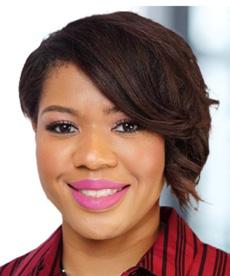
WRITTEN BY Carina Hatfield
This leads to something simple but powerful that our industry can deliver: care for the entire family.
*2024 OneAmerica Financial Caregiver Study
To learn more, visit oneamerica.com
WRITTEN BY
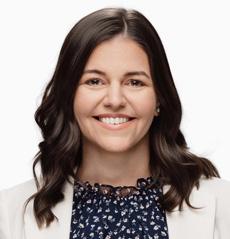
Kim Thomas Chief Human Resources Officer, OneAmerica Financial