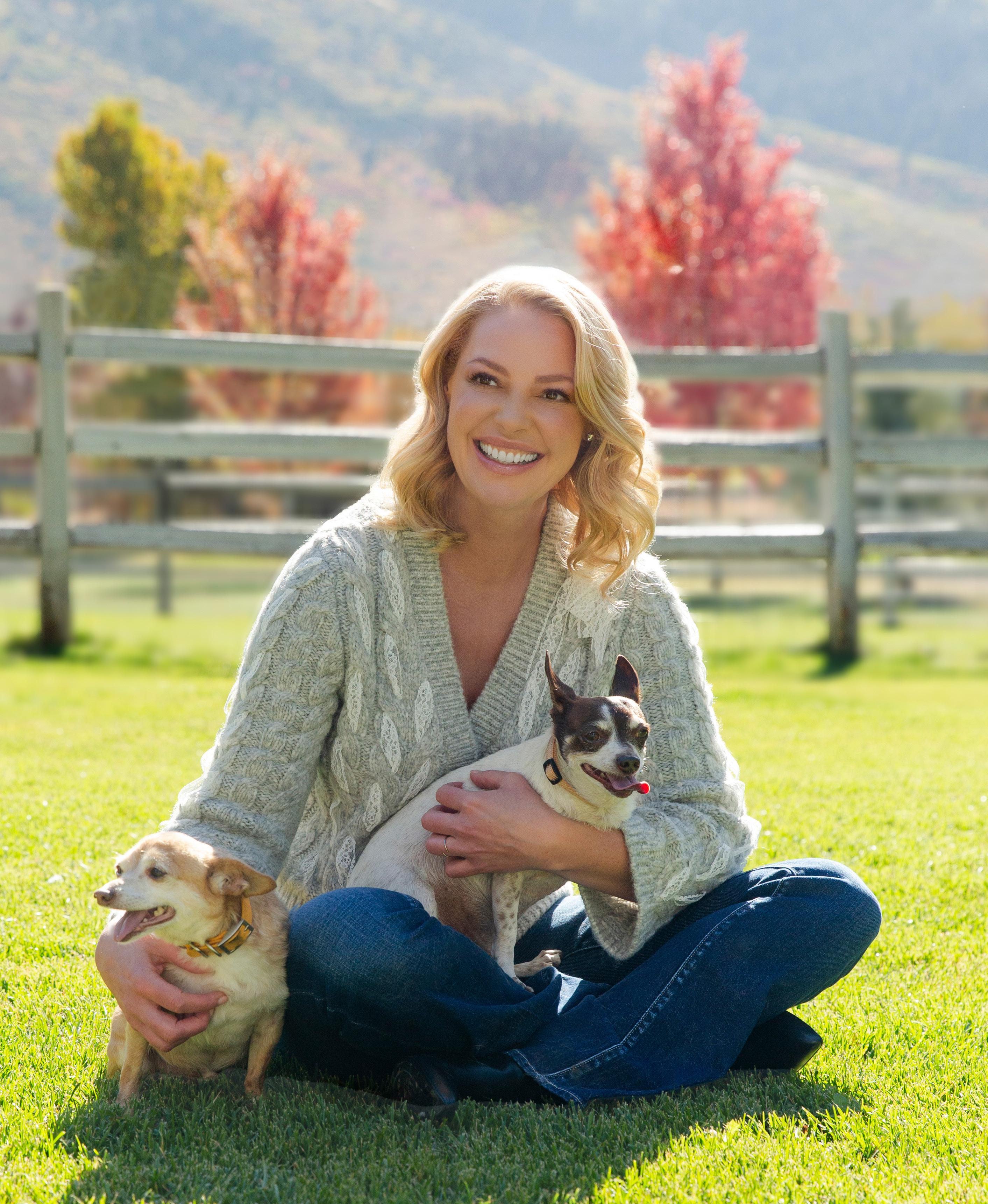
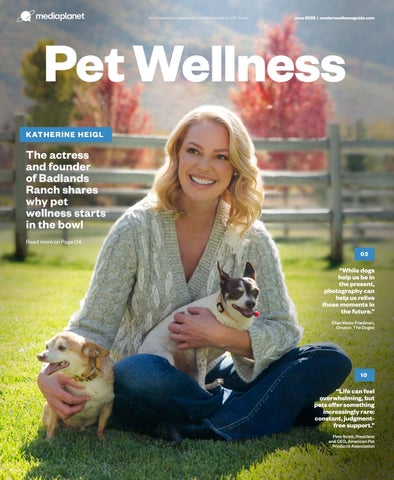
The actress and founder of Badlands Ranch shares why pet wellness starts in the bowl
“While dogs help us be in the present, photography can help us relive those moments in the future.”
“Life can feel overwhelming, but pets offer something increasingly rare: constant, judgmentfree support.”
In an age where we have instant access to unlimited information, it’s easy to take to the internet when you notice a change in your pet’s health or behavior. If you’re keen to include more tech in your care plan, here’s what your vet wants you to know.
Your doctor knows your pet’s history, knows you, and takes that information into account when making a diagnosis or recommending treatments. That individual approach means that you’re receiving expert advice from a licensed professional, tailored to your pet’s and your family’s unique needs, and that’s simply not possible to get with a search or AI chat.
In many cases, however, technology can be extremely helpful, especially when it comes to showing your care team symptoms that are hard to recreate in the office. Some clinics have portals that allow you to send photos, videos, and messages, or you can bring those with you during your appointment. Some states also allow veterinarians to use telehealth for specific appointment types.
Keep in mind that sharing data from your pet’s tracker, smart feeder, or other tech-enabled device has the potential to be useful to your vet, but you’ll need to discuss what kind of data they want and how often they want it.
The bottom line is that technology plays an important role in the veterinarian-client-patient relationship, as long as you understand both the potential benefits and pitfalls.
Written by Jessica Vogelsang, D.V.M., Chief Medical Officer, American Animal Hospital Association
The Dogist talks about why he turned his lens on dogs and what he’s learned from photographing more than 50,000 of them.
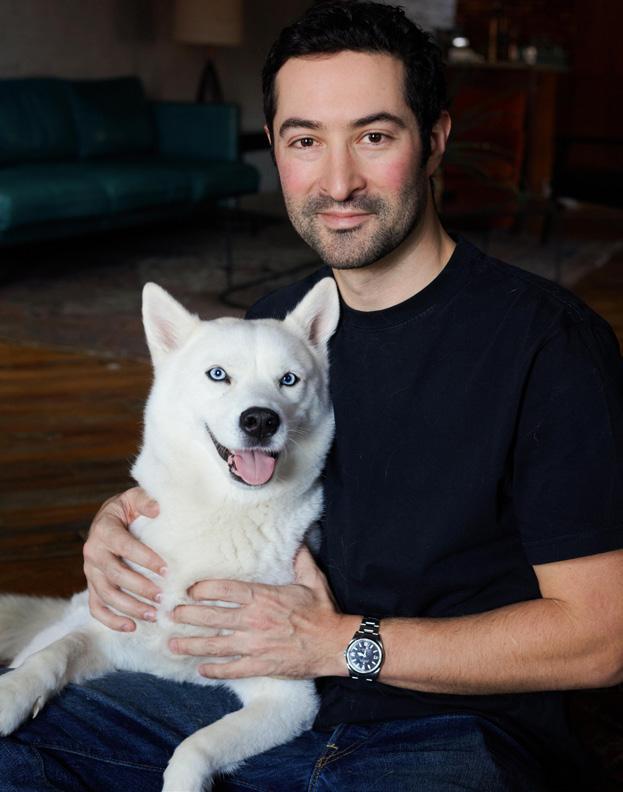
What made you start The Dogist account, and why choose dogs as the chief subject?
I’ve always been a Dogist since I was a kid. I love dogs, taking photos of them, and the purpose and joy it makes me feel. When I was let go from my job in 2013, I took it as my chance to try to create a project that evoked that joy every day. Dogs are uniquely able to spark that joy within us, through their candidness, curiosity, love, and loyalty. They make great subjects because they’re extremely expressive and come in all different shapes and sizes. They make us laugh and feel more connected to one another —something we need more than ever!
How can photography help people connect more deeply with their pets? Photographs help us document the meaningful moments and people in our lives. While dogs help us be in
the present, photography can help us relive those moments in the future and perhaps even be inspired to go create more moments like them. I can certainly attest to the power my camera has in bringing me to new places and meeting new people and dogs!
What inspired you to go from photography to writing your latest book, “This Dog Will Change Your Life”?
Having photographed over 50,000 dogs and meeting dog parents, I’ve learned a lot not only about dogs, but also our relationship to them. I have always felt that dogs are incredibly important to our humanity. Dogs have not only changed my own life, but I have also come to understand how much they change other peoples’ lives through the stories of people I meet every day.
What do you hope people feel when they see or read your work?
I want them to feel a sense of joy and connectedness. Much of the internet makes us feel quite the opposite, so I’ve always wanted The Dogist to be an antidote to that.
What is one of the biggest lessons you’ve learned through your work with dogs?
That the vast majority of people are great and want to share their lives (or at least the dog part) with the world. Dogs are free from the burden of an ego, so just by being around them, we become more like them — more free, connected, joyful, and excited to take on the day. I don’t know where I would be without dogs.
Over the past decade, feeding your dog became an incredibly complicated decision. Pet parents looking for higher-quality nutrition have had to navigate a sea of choices — from frozen to refrigerated to gently cooked — along with the added complexity of storage, prep, thawing, and conflicting advice about what’s truly healthiest.
By 2029, the fresh pet food market in the US is estimated to grow by $3.2 billion. This shows the modern appetite for products with nutrition standards closer to our own human ones than pet food has historically offered.
As a practicing veterinarian, I experienced this firsthand. My clients expressed a desire to feed something better than traditional dry or canned diets, but were overwhelmed and unsure if they’d made the right choice for their pup.
Some dog parents resorted to a complicated routine of toppers, mix-ins, and supplements to feel they’re offering satisfactory nutrition, or just to get their dogs excited to eat. Others tried frozen and raw diets, and found they ask a lot more of the human, from freezer tetris to travel struggles.
I started Sundays for Dogs because I believe dog parents shouldn’t have to choose between healthy food and convenience. I like to say it’s the dog food a vet (and busy mom) would make — because one did! Here’s how Sundays for Dogs crafted a nutrient rich, clean, and flavorful dog food that also fits seamlessly into everyday life.
Sundays for Dogs is a vet-founded, vetoperated dog food company
Lots of dog food companies employ
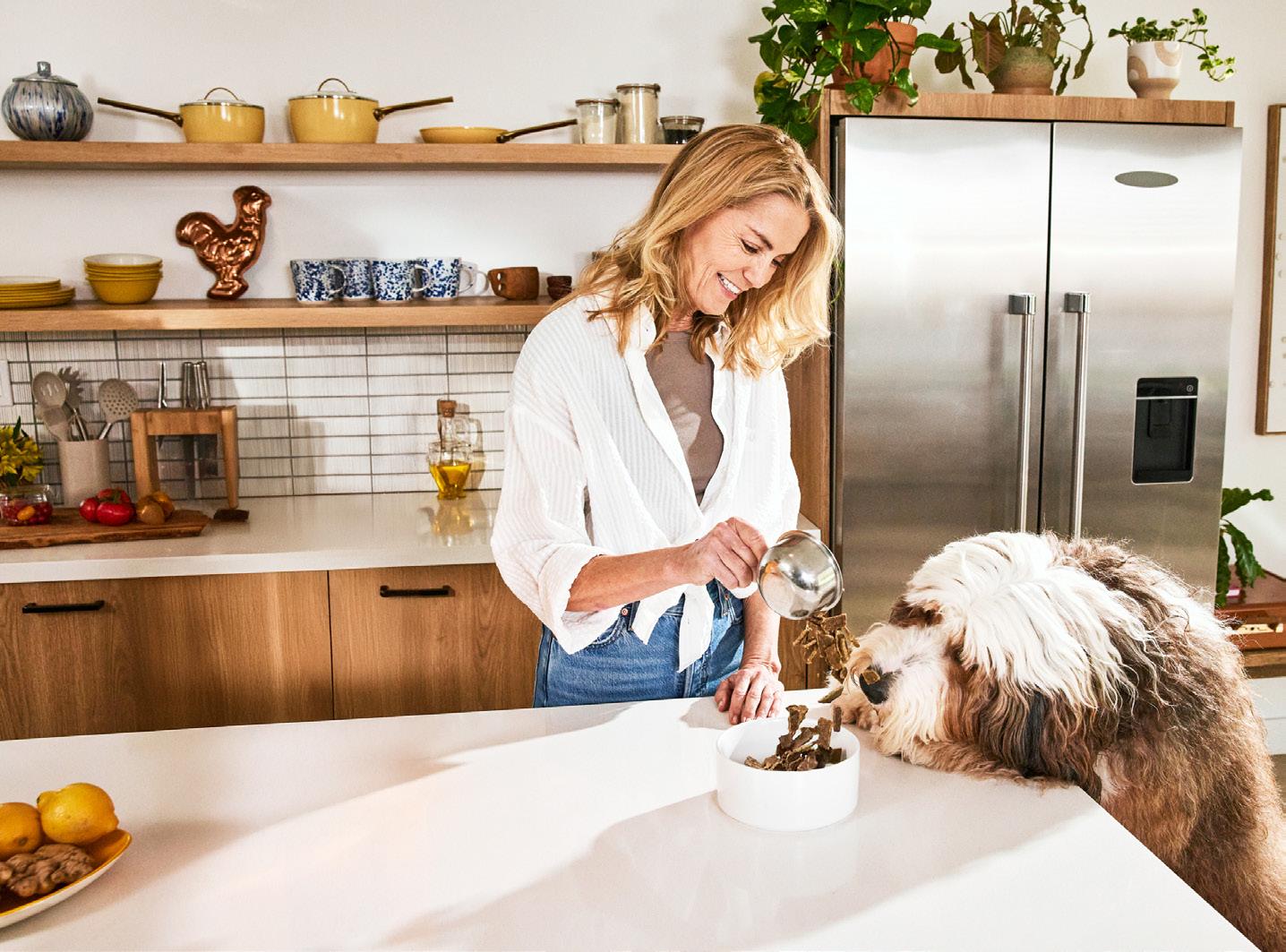
veterinarians, but since Day 1 I have been involved in every single major decision made at the company. I work alongside multiple veterinary nutritionists (both Ph.D. and DACVIM (Nutrition)) to ensure our recipes are nutritionally complete and balanced, our portion recommendations are targeted, and that we’re always putting dog health and happiness first. Any questions that your vet may have, we’re confident they’ll love our answers!
Sundays for Dogs’ recipes are humangrade, and air-dried for nutrition, taste, and convenience
Our food safety team oversees every aspect of production, from ingredient sourcing to packaging. We use exclusively human-grade ingredients and gently cook them in FDAinspected kitchens that follow strict human food safety and hygiene standards. Unlike traditional kibble, we avoid ultra-processing and craft nutrient-rich recipes made primarily from real meat — with beef making up 91% of our Beef Recipe, turkey making up 86% of our Turkey Recipe, and chicken making up 83% of our Chicken Recipe.
The result is food that’s safe enough for us to eat ourselves and designed to support healthy digestion, skin, coats, and longevity. By air-drying our food, we also make it shelf-stable and travel-friendly — no refrigeration or thawing
needed — while locking in naturally delicious flavor and nutrition.
Sundays for Dogs offers complete customer support by text, phone, and email
Life with a dog isn’t always straightforward — but our team of dog lovers is on hand to help make all of the moments as easy and reassured as possible. From helping to find the right recipe, building your personalized serving guide, managing deliveries, and beyond, we’re here to help make it all feel as easy as a lazy Sunday.

Scan the QR code to try Sundays for Dogs, and experience the benefits of vet-developed, airdried dog food:
Actress and animal welfare advocate Katherine Heigl talks about the Jason Heigl Foundation, her dog food company Badlands Ranch, and what she’s learned from rescuing dogs.
What first drew you to your important work advocating for animal welfare and pet wellness?
My mom and I founded the Jason Heigl Foundation in 2008 because we believe every animal deserves a chance. It was inspired by my brother Jason and the compassion he had for all living things. Over the years, the foundation has saved more than 25,000 lives. My mom and I have personally put more than $8 million into it because this isn’t a cause for us; it’s a promise.
How has rescuing animals changed your perspective on pet health and wellness? It’s changed it completely. My family has adopted multiple rescues over the years, and you see what neglect actually does when they first come home. Their coat is dull, there’s no spark in

their eyes, and their digestion is a mess. Then you watch what happens when they get real care and proper nutrition. Weeks go by, and suddenly they’re running around the property with my kids, the shine in their coat comes back, and they’re a different dog. Seeing that transformation firsthand is what pushed me to start Badlands Ranch. I wanted to make something I’d feel good putting in front of my own dogs, food with real ingredients that I actually trust. For me, wellness starts with what’s in the bowl.
What should pet owners look for when choosing highquality food?
Flip the bag over. Seriously, ignore the front, ignore the marketing, and read the actual ingredients. You want whole animal protein first. Real beef, real organ meat, real salmon, not
“meat meal” or something you can’t pronounce. If you see corn, wheat, soy, or a bunch of fillers, keep walking.
How can pet parents support their pets’ longevity through lifestyle choices?
Start with what’s in the bowl. You can’t out-exercise a bad diet, and that’s true for dogs the same way it’s true for us. Beyond nutrition, I think wellness is the whole picture. Daily movement matters more than people realize. Our dogs have acres to roam, but even a good long walk changes a dog’s life. Mental stimulation, too. They need engagement, puzzles, something to figure out. Don’t skip the vet. Consistent checkups catch things early, and early is always easier than late. The biggest thing I’d tell people is just to pay attention. You know your dog better than anyone.
When something shifts, like their energy, their appetite, the way they move, that’s your dog talking to you. Listen.
If you could encourage every pet owner to do one thing differently for their pet’s health, what would it be?
Read the label. If you can’t recognize what’s in the food, that’s your answer. Our dogs trust us completely. They’ll eat whatever we put in front of them. That’s not a reason to cut corners; it’s a reason to do better. Every dog deserves clean food. That belief is honestly the whole reason Badlands Ranch exists. The part that means the most to me is that every bag we sell helps fund the Jason Heigl Foundation, so feeding your dog well also helps a dog who hasn’t found a home yet. Start with the bowl. That’s where wellness begins.
Artificial intelligence is emerging as an unexpected ally in the fight to end the killing of shelter pets nationwide.
Over the past decade, we’ve made extraordinary progress toward ending the killing of dogs and cats in shelters across our nation. Still, every 90 seconds, a shelter pet is killed for the lack of a home. The question we need to ask ourselves is not whether we can do better, but how quickly we’re willing and able to find lifesaving solutions. That’s where the potential and power of artificial intelligence come in. We’ve already begun using AI to help answer complex questions that can shape policy, remove barriers, and accelerate the saving of lives. Take one long-standing assumption: that people who rent their homes are more likely to relinquish their pets at a shelter than
homeowners. It’s a belief that has quietly influenced adoption decisions for years.
We recently analyzed nearly 100,000 pet intake records from a major shelter. Processing that volume of data would typically take weeks or months of staff time. Instead, an AI tool was used to analyze the data in a matter of hours. The result? There was no meaningful difference in the rate at which renters surrender their pets. That insight allows shelters to remove unnecessary barriers targeting people who rent their homes, which opens the door for more people to adopt.
This is the real promise of AI in animal welfare. It allows us to move from assumptions to evidence-based actions. If it can help us get
to a day when no healthy or treatable pet is killed in a shelter, then it’s not just a tool worth exploring; it’s one we can’t afford to ignore.
The content creator shares what drew her to shelter volunteering and what she’s learned about supporting rescue dogs.

What first inspired you to get into animal rescue?
After adopting our first rescue dog, Mike, I started to learn about shelters and how overcrowded they are. Now it’s become such a passion.
What surprised you the most when you first started working closely with rescue organizations?
I didn’t realize how much money shelters need to run. Think of all the supplies and
space you need for your own pet, and multiply that by hundreds of animals. Shelters do the best they can, but they could always use more help.
What are some tips that you have for pet owners who are considering adding another rescue?
Make sure you have the space. I have two cats and two dogs, and as much as I would love to add more, I have to be realistic. You don’t know
how everyone’s going to get along, so make sure you have the proper space and time to facilitate that.
What are some of the biggest benefits you’ve received from adopting?
I have a lot of mental health struggles, and animals can feel your emotions and help with emotional support in times of need. They’re the thing I most look forward to when I have a bad day.
Fresh water is foundational, but hydration doesn’t have to come from the bowl alone. Emerging research shows that food can play a meaningful role in maintaining hydration levels, helping pets stay healthier through the heat of summer and beyond.
The hydration gap
One assumption many pet parents hold is that if the water bowl is full, pets will drink what they need. After more than three decades in veterinary medicine and pet nutrition, I can tell you it’s not that simple. Dogs and cats evolved from predators that got a significant portion of their daily moisture directly from food — prey that contained up to 80% water.
Today’s high-quality dry kibble is a major advancement in pet nutrition, supporting overall health, complete and balanced diets, and even oral and digestive wellness. At the same time, looking at how pets naturally consume moisture can help us better support their hydration needs as part of a complete feeding approach.
The real gap is in how we think about hydration. Many pet parents assume it happens primarily at the bowl, when in reality, our pets’ instincts were shaped by getting moisture through food.
The good news: better hydration doesn’t require a complete rethink. With simple adjustments — like adding moisture through diet — pet parents can keep dry food as a strong foundation and support hydration, especially in warmer months.

Why dehydration is easy to miss
Chronic, low-level dehydration isn’t immediately life-threatening. That’s exactly what makes it easy to miss. It’s a slow, creeping body stress — exacerbated by warmer summer temperatures. Signs of low-level dehydration are subtle — lethargy or reduced stamina, dry skin and loss of skin elasticity, and changes in appetite or digestion — and easily mistaken for normal fatigue or aging.
Over time, chronic moisture deficit can be a factor in the development of urinary and kidney problems, including painful bladder stones and kidney disease, two common conditions treated in veterinary clinics today. Evidence suggests these conditions occur more often during the summer.
A practical solution
That’s why nutrition scientists are advocating for a new approach
known as “functional hydration.”
It’s simple: hydration built directly into daily meals.
This approach complements the role of dry kibble within a balanced feeding routine. By combining dry food with moisture-rich options, meals become a proactive wellness routine.
“Mixed-feeding” is an easy and effective way to support a pet’s urinary tract, regulate body temperature and even aid in weight management.
One of the simplest ways to close the hydration gap is by incorporating wet food or moisture-boosting mix-ins. Today’s options make that easier than ever. Mars — with brands including IAMS, SHEBA, CESAR, and PEDIGREE — offers a range of solutions designed for mixed

feeding, from complete wet meals to broths and toppers. Products like PEDIGREE DRIZZLERS toppers add a boost of moisture with savory, meaty sauces — like chicken and beef — making it easy to support hydration without disrupting your routine.
Backed by research from the Waltham Petcare Science Institute, these options give pet parents practical, science-led ways to support hydration on their terms.
The bottom line
The goal isn’t to overhaul your pet’s routine. Simple additions, like moisture-boosting options, can meaningfully increase daily fluid intake.
While a full water bowl remains essential, what’s in the meal matters just as much. By thinking about hydration as part of how we feed, we can better support pet health for years to come.

Boost your pet’s daily water intake with delicious wet foods and toppers from IAMS, CESAR, SHEBA, and PEDIGREE.



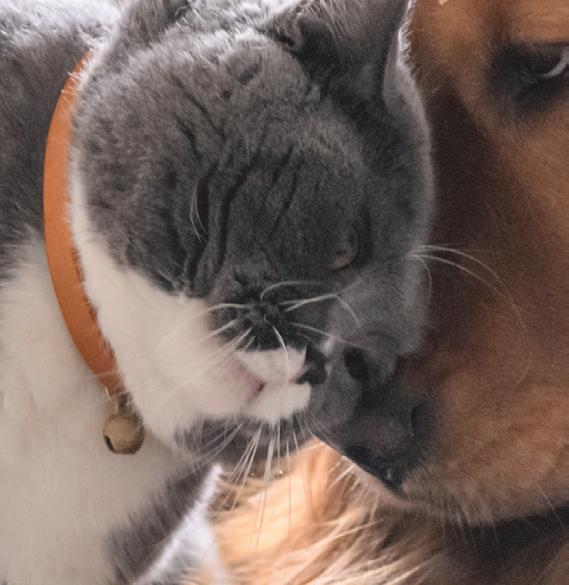














The voice behind @Cleolonglegs shares what daily life with Cleo and her sighthound sisters Abby and Marcy really looks like.
What first inspired you to start sharing Cleo and her sisters’ story? Sighthounds are incredibly expressive and delightfully goofy dogs, so making edits of Cleo and Abby was just naturally entertaining.
How can pet parents keep grooming stress-free?
Keeping grooming stress-free really comes down to making it part of your regular routine and being ready for anything! We always keep an emergency kit in the car with grooming wipes, detangling combs, and towels.
How do you keep Cleo and her sisters active?
We aim for about three bigger outings each week, supplemented with long walks and mental enrichment on the other days. We love visiting Sniffspots, going on hikes, or exploring local dog parks around Portland.
What advice would you give pet parents trying to build healthier habits for their dogs?
My biggest advice is not to get discouraged if things don’t fall into place right away. Building a routine that meets your dog’s needs while also balancing your own life can take time!

Pookie Varisiri, the human behind viral feline Nala the Cat, walks us through what daily wellness looks like for her famously photogenic rescue.
What does a typical day look like for Nala?
Nala’s days are pretty much a dream if you’re a cat. She wakes up, demands breakfast on her schedule (not mine), does a full patrol of the house, squeezes in several strategic naps, and somehow still has energy to supervise everything I do. In between, she’s taste-testing new Love, Nala recipes and generally running the show. She takes her role as CEO very seriously.
What are the key pillars of Nala’s overall health and wellness routine? We focus on nutrition, hydration, and enrichment. Good food is the foundation, and what goes into your cat’s bowl matters more than most people realize. Hydration is huge, especially for cats who tend to be low-volume drinkers by nature. Mental and physical stimulation keep Nala sharp and happy. Consistency is key, and it makes a real difference.
What role does hydration play in a cat’s overall wellness?
Hydration is one of the biggest factors in long-term cat health, and it’s one of the easiest things to overlook. Cats aren’t big drinkers by instinct, so relying on a dry food diet and a water bowl often isn’t enough. At Love, Nala, Nala actually helps develop our recipes, and a lot of them are
packed with gravy specifically because getting moisture into the meal is one of the most effective ways to support hydration.
What should cat owners look for when choosing food for their cats?
Real ingredients, quality protein, and something your cat will actually enjoy. Look for named protein sources, no fillers, and ideally some moisture content to support hydration.
What are some easy ways cat parents can enrich their cat’s environment to keep them mentally stimulated and engaged?
Give them somewhere to climb, something to scratch, and something to hunt. Cat trees, window perches, puzzle feeders, and regular interactive play cover a lot of ground. Even 10 minutes of intentional play a day adds up.
What message do you hope Nala’s platform sends to cat owners around the world?
The cat-human bond is something really special, and it’s worth investing in. If people walk away feeling more informed, more connected to their cats, and a little more confident in the choices they’re making for them, that’s everything.

Chris Equale, the human behind viral corgis Hammy and Olivia, opens up about the realities of caring for a multi-pet household.
How did Hammy and Olivia’s story begin?
Olivia was barking at a vacuum cleaner. I thought it would be funny to film what it would be like if she were actually having a conversation with a household enemy. The next thing I knew, the video had a quarter of a million views in 20 minutes.
How do you stay proactive about preventative health for your pets?
Pet wellness goes beyond strictly the physical. It’s mental, it’s emotional. When we lost Olivia, I saw Hammy’s emotional health really take a hit, and bringing Fiona into the home gave him a newfound sense of purpose and happiness.
Sponsored
But then with the physical side of Hammy approaching 10 years old at the end of the year, we have to be very proactive when it comes to his joint health.
Your pets are basically your kids, so would you not be taking this kind of proactive, preventative health approach with a child?
What’s it like being a multi-pet household, especially with your cat Nori thrown into the mix?
I always say cats are like having roommates, and dogs are like having children. Our home has so much personality, but each of our pets complement and provide us with a reason to smile.
Pet owners will do almost anything to help their furry family members live longer, healthier lives. As more pet owners turn to online wellness advice and supplements, veterinarians are urging consumers to choose science-backed products, and to keep vets in the loop on long-term care decisions.
“People will use AI to try to figure out the problem,” shared Steve Mehler, D.V.M., DACVS, chief medical consultant for Veterinarian Recommended Solutions (VRS). While Mehler notes that it’s great, and understandable, that pet owners want to be proactive when they notice something is off, he’s seen too many people end up with “bad ingredients,” or even treating the wrong underlying issue.
The growing interest in proactive pet wellness has fueled demand for nutraceuticals, or supplements designed to support long-term pet
health. But according to Mehler, the crowded supplement market can make it difficult for pet owners to distinguish quality products from ineffective or even unsafe alternatives.
That’s why veterinarians increasingly emphasize evidence-based ingredients, rigorous safety standards, and clinical research when recommending supplements for mobility, skin and coat health, healthy aging, and other chronic conditions.
At VRS, every product lot undergoes third-party testing for purity and ingredient accuracy, and several flagship products are supported by clinical studies in dogs and cats. Mehler noted that VRS has stayed committed
to its founding philosophy: “We lead with education. We lead with science. We lead with safety.”
For Mehler, supplements are not about replacing veterinary care, but strengthening it through collaboration between veterinarians, pet owners, and trusted wellness partners.
“It’s a team approach,” Mehler said. “Choose science-backed, veterinarian-recommended products. Have a conversation with your veterinarian, and let’s figure out what’s best for your pet together.”
Written by Emily Rose

For pet owners wanting to ensure they give their pets high-quality treats, the NASC Quality Seal provides a quick and easy way to verify that at a glance.
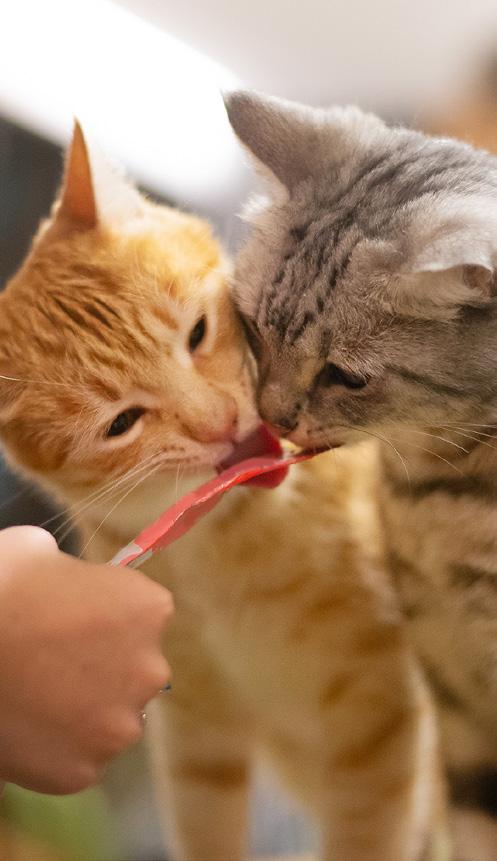
Walk down the aisle of any pet store and you’ll see treats that promise much more than a tasty reward. Some are designed to support mobility, encourage calm behavior, or contribute to overall wellness.
As innovation grows, many pet parents are asking, “How do I know which products I can trust?”
That’s where the NASC Quality Seal comes in. Companies that display the seal on their products have passed the comprehensive NASC quality audit and maintain ongoing compliance with rigorous quality requirements, including strict standards for ingredient
sourcing, finished-product testing, manufacturing practices, and labeling accuracy.
For pet parents, the seal provides something simple but powerful: confidence. It signals that the company behind the product has committed to a higher level of accountability and transparency. Instead of guessing about how a product is made or whether its ingredients are properly verified, pet owners can look for the NASC Quality Seal as a sign that the product meets established quality standards.
The goal isn’t to take the joy out of giving treats. In fact, it’s the opposite. Treat time should be
simple, fun, and full of connection. When you reward your pet, you should feel good about what you’re giving them.
As the world of pet treats continues to grow and evolve, one small symbol can make a big difference. The NASC Quality Seal helps take the guesswork out of choosing products you can trust, so every treat can be given with the same confidence and care that inspired it.

Science and millions of pet owners agree that pets aren’t just companions; they’re powerful contributors to mental health.

Research from the Human Animal Bond Research Institute (HABRI) shows that 87% of pet owners report improvements in their mental health thanks to their pets.
Life can feel overwhelming, but pets offer something increasingly
rare: constant, judgment-free support. They don’t care about deadlines, social pressures, or the stress of the day; they just show up.
For many people, that presence is grounding. Whether it’s a walk on a beautiful, sunny day with a dog, or a cat resting its head on your lap, pets create a sense of calm that can be hard to find elsewhere. Mental Health America has even described pets as “vital supports” for those navigating stress, anxiety, or life transitions.
Interacting with animals has been shown to reduce stress and improve mood, helping people feel calmer and more centered. Anyone who has laughed at a pet’s antics knows how quickly they can shift your mood. Those
moments of lightness matter more than we often realize.
As awareness grows, so does recognition of the human-animal bond in healthcare. More than 1 in 5 pet owners say a doctor or therapist has recommended a pet to support their health, a sign that animals are becoming part of broader wellness strategies.
Of course, pet ownership comes with responsibility, but for many, the rewards are profound. Pets encourage us to move more, connect more, and be more present. They offer comfort without conditions and companionship without complication. In a time when mental health challenges are increasingly common, that kind of support isn’t just helpful, it’s essential.

Celebrity chef and Nutrish founder Rachael Ray talks about extending her kitchen philosophy to pet food and the role of charity in her work with animals.

You’re known for being a chef for humans. What inspired you to extend your skills to pet nutrition?
I’ve always cooked with love in my own kitchen, and my pets are part of the family. After seeing how much joy and energy my dogs got from good, wholesome food, I started thinking, “Why shouldn’t their meals be made with the same care as ours?” That idea is really what inspired Nutrish: bringing real, nutritious, flavorful ingredients to pets in a way that helps them be happy and healthy.
What simple habits can pet parents adopt to support their pets’ well-being?
Small changes go a long way! Feeding a nutrient-rich, balanced diet; encouraging daily activity; and giving pets consistent routines all make a huge difference. Even little things, like interactive playtime or puzzle feeders, help keep them mentally sharp and physically fit.
What misconceptions exist about pet nutrition?
One common misconception is that pets only need “any food” to survive, or that
expensive automatically means better. The truth is that ingredients and nutritional balance matter, and pets can benefit from thoughtful foods just like we do.
Why is giving back to animal charities important to you?
Our work at The Rachael Ray Foundation® is driven by compassion and community, aiming to create a world where every animal receives the care and love they deserve. Through the foundation, we have supported shelters, rescues, and various programs to give pets a second chance at a great life. As of March 2026, The Rachael Ray Foundation® has donated over $112 million to animal charities and other organizations toward this mission.
What does a balanced lifestyle for pets and their families look like to you?
I don’t believe in balance. It’s about connection and well-being for everyone involved. Healthy food, regular walks or playtime, and lots of love create a rhythm that keeps both pets and their humans happy. I think of it like cooking a meal together: the ingredients, timing, and attention all matter!
The official referee of Animal Planet’s “Puppy Bowl” talks about his journey into animal advocacy and what fans can do to help shelter pets find homes.
What does being the face of the “Puppy Bowl” mean to you?
I do take a bit of issue with people saying I’m “the face of the “‘Puppy Bowl’,” because if you look at all the posters, it’s dogs first, as it should be! But if we qualify it and say I’m the human face, then I’m OK with that. It’s been the thrill of a lifetime, and it gets better every year.
What does your pre-show routine before filming look like?
You have to be in good shape, because the entire event is about a week-long filming schedule, wrangling 150 dogs in rotations of 10-15 to film different sections of the game. I’m almost 6 feet tall, and most of the players are at most 2 feet tall, so there’s a lot of bending down!
Why is it so important to spotlight adoptable animals?
We highlight just a little bit of background on each puppy, and by doing this, we have found that every rescue we work with reports not just an uptick in adoptions, but also in donations and advocacy. I always say, if you can’t adopt, you can foster. If you can’t foster, you can donate. If you can’t donate, you can volunteer. If you can’t do any of that, you can at least repost a dog in need. There’s always something we can do.