
“Since the time spent with your healthcare provider is both limited and valuable, you can maximize it by following some simple guidelines before the visit.”
Rooker, President and Executive Director, International Foundation for Gastrointestinal Disorders (IFFGD)
“Talking openly about colorectal cancer isn’t intrusive; it’s an expression of care, and it’s imperative to help drive the awareness…needed to end this disease.”
People living with IBD face a significant and often underrecognized risk of malnutrition, but early screening and treatment can make a meaningful difference.
IBD refers to conditions that cause chronic inflammation of the digestive tract.
Individuals with IBD have a significant risk of malnutrition, with malnutrition affecting 20–80% of individuals with IBD. It can result from decreased oral intake, food avoidance, medication effects, malabsorption, altered anatomy from prior surgery, and increased nutritional needs from inflammation.
Malnutrition leads to poor outcomes, including higher infection rates, longer hospital stays, prolonged recovery time after surgery, reduced quality of life, and increased healthcare costs. Assessing risk, and diagnosing and treating malnutrition are essential parts of care.
Malnutrition risk can be identified through nutrition screening by a physician, nurse, dietitian, or trained healthcare professional. If a patient is identified to be at risk, a full nutrition assessment should be conducted by a registered dietitian or nutrition provider.
People with IBD should ask their healthcare provider about their nutrition if they experience symptoms like unplanned weight loss, loss of appetite, difficulty eating or eating only small amounts, fatigue or weakness, or swelling or fluid accumulation.
Treatment may include targeted vitamin and mineral supplementation, dietary modifications to avoid food triggers while increasing calories and protein, and oral nutrition supplements. If malnutrition is severe or IBD limits adequate intake, tube feeding or IV nutrition may be necessary.
Written by Peggi Guenter, Ph.D., RN, FASPEN, American Society for Parenteral and Enteral Nutrition
Making the most of limited appointment time starts long before you walk through the door. Here’s how to prepare for a productive visit with your healthcare provider.
Apartnership between a patient and healthcare provider is essential when managing all chronic illnesses. Since the time spent with your healthcare provider is both limited and valuable, you can maximize it by following some simple guidelines before the visit.
When calling to schedule your appointment, ask about sending your previous medical records and what patient forms will need to be completed. Completing them before going to the office will allow you to provide complete and thoughtful responses. If you will need an interpreter or other accommodation, let them know in advance.
To prepare for your visit, gather the following information: Bring a list of all medications you are currently taking (or have taken in the past), including prescriptions, over-the-counter medications, supplements, and herbal preparations. Be sure to include the dose, frequency, and timing of when you are taking them. Remember to bring your pharmacy’s name, address, phone number, and fax number. Also, create a list of all medication allergies or other allergies, and the type of reaction.
How to prepare your symptom summary
Before the visit, consider things you may be asked, such as your prior medical

history; any family medical problems, including those of parents, siblings, and grandparents; and the names of other healthcare providers you see. Summarize observations regarding your symptoms in one to two sentences: what triggers them, what makes them worse, or what makes them better? Keeping a symptom diary to identify patterns may be helpful. Consider diet, external influences, or stressors that might have contributed to your symptoms. Analyze patterns before the visit so you can summarize them for your healthcare provider.
Identify the top one to three questions you would like to ask during the visit, keeping in mind that other questions can be addressed during subsequent visits. Writing a summary of your top priorities in one to two sentences and sharing it with your healthcare provider early in the visit will help you get the most out of it. For example: “The main reason for my visit is …” or “I hope we can focus on …” or “I am mostly worried about …”
Making the most of the appointment
Being fully prepared will help you make the most of the limited time you will have during the visit. However, the most crucial thing about this visit is the conversation you have with your healthcare provider. Be open and honest, not only about your symptoms, but also about how they affect your life. This will ensure the most effective use of your time together.
Award-winning actor, director, and producer Tyler James Williams opens up about living with Crohn’s disease.
In 2012, Tyler James Williams was suffering in silence.
To the world, he was a successful young actor. In private, he was trapped in an agonizing cycle of intense abdominal pain and discomfort after every meal. Over the next five years, this was his new normal.
“Your life can be so wrapped up in symptom management,” he said. “That was the first thing on my brain when I woke up in the morning: What do I have to do today? And how am I going to get through it?”
Williams was eventually diagnosed with Crohn’s disease — a type of inflammatory bowel disease (IBD). The U.S. Centers for Disease Control and Prevention estimates that between 2.4 and 3.1 million people in the United States live with IBD, a group of diseases that affect the digestive tract.
From pain to perspective But diagnosis is only one step in the journey. With IBD, a lack of abdominal pain or other symptoms doesn’t mean a lack of inflammation, which can continue even when you feel fine. That’s why symptom relief should not be the only goal.
“IBD refers to several chronic conditions including Crohn’s disease and ulcerative colitis in which the immune system causes the gastrointestinal tract to become inflamed,” explained Casey Chapman, M.D., a gastroenterologist and chief medical officer at GI Alliance in Baton Rouge, La. “This leads to symptoms like diarrhea, bleeding, and intense abdominal pain. Left undertreated, IBD can

lead to fibrosis, or scarring, of the intestines, leaving them unable to function properly so it’s critical that patients are getting appropriate treatment as soon as possible.”
What I’ve learned is that a symptom is just flagging a bigger problem.
Williams learned this the hard way, spending five years in and out of hospitals attempting to manage his symptoms on his own. He ended up in emergency surgery, losing six inches of his intestines to severe scarring.
“What I’ve learned is that a symptom is just flagging a bigger problem,” he said. “I looked at it as, ‘my stomach hurts right now,
I need that to stop so I can do my job,’ but the real answer was that something was wrong, and I needed to talk to somebody who specializes in this. I understand that stopping the feeling of the symptom doesn’t address the root of the issue.”
of IBD care
While symptom management is important for feeling better, IBD is a lifelong journey.
“Management options for IBD have evolved beyond symptom relief, and patients should work closely with their gastroenterologist to define long-term goals,” Dr. Chapman said. “In addition to managing symptoms, this can include reducing underlying inflammation and visible improvement of the intestinal lining, also called endoscopic improvement. That deeper level of improvement can help lower the risk of flares and
complications over time.”
Now, Williams is using his platform to help dismantle the “toughit-out” mentality by partnering with AbbVie’s Beyond a Gut Feeling initiative, which aims to raise awareness and educate those living with IBD about the importance of working with their gastroenterologist on long-term goals.
“I believe part of the reason I went through my Crohn’s journey was to learn how to help others navigate theirs,” he said. His message is simple: “Don’t tough it out — talk to your doctor.”
Sponsored by AbbVie
For more information about IBD and Tyler
James Williams’ story, visit beyondagutfeeling.com


Colorectal cancer can affect anyone, but knowing your risk factors and taking action can help lower your chances of developing the disease.
Colorectal cancer can affect both men and women. It can happen at any age, but it is most common in people over 45. Perhaps surprisingly, most colon and rectal cancers occur in individuals with no known family history or genetic risk factors. Some risk factors for colorectal cancer can be controlled, while others cannot.
Risk factors you can’t control
• Your age. The risk for polyps and colorectal cancer goes up as you age. That’s why it is important to start screening at age 45. On-time screening can find and remove growths (polyps) before they can turn into cancer. Screening can also find cancer early when it’s easiest to treat.
• Family history. About 1 in 4 colorectal cancer patients has a close family member with the disease. If you have a parent, sibling, or child with colorectal cancer, your risk is higher. Your risk may be even higher if your family member was diagnosed before age 50 or if more than one family member has had it. Other

inherited conditions — like Lynch syndrome, familial adenomatous polypososis, and MUTYH-associated polyposis — also increase your risk.
• Your health history. If you have a history of certain types of colon polyps, ulcerative colitis, or Crohn’s disease, you are at an increased risk. Past pelvic radiation or certain other cancers, like ovarian, kidney, or endometrial cancer, also raises the likelihood of developing colorectal cancer.
Risk factors you can control
• Smoking and alcohol. Smoking or vaping raises your
risk for colorectal cancer. Drinking alcohol will also impact your risk, especially if you have more than two drinks per day.
• Daily Habits. Not getting enough exercise and eating an unhealthy diet can also increase your risk. Diets low in fruits and vegetables, and high in fats and red and processed meats (like hot dogs or salami) are linked to a higher risk for colorectal cancer.
How to lower your risk
• Get screened for colorectal cancer on time. A colonoscopy can find and remove precancerous polyps before
they turn into cancer. Other non-invasive screening methods can find cancer in its earliest stages when it is most treatable.
• Try to maintain a healthy weight and eat a nutrient-rich diet. Eat a healthy diet of whole grains, vegetables, and fruits. Limit the amount of processed and red meats you eat, and choose foods low in fat.
• Limit alcohol, and quick smoking and vaping.
• Stay active. Try to exercise at least 20 minutes a day, three to four times a week. Pick activities you enjoy, so you stick with them.
By understanding your risk and making healthy choices, you can take steps toward preventing colorectal cancer. Screening, healthy eating, and being active are good ways to protect yourself. Small changes can make a big difference. Talk to your doctor about your personal risk, your screening options, and when you should start screening for colorectal cancer.
Written by Colon Cancer Coalition

Our panel of experts discusses the biggest barriers to colorectal cancer screening, and what patients, providers, and advocates can do to close the gap.
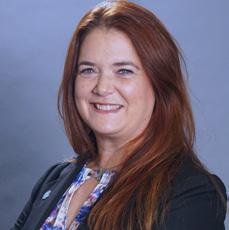
PANELIST
Erin Peterson Senior Director of Advocacy, Colon Cancer Coalition
Where do you think the biggest barrier is today when it comes to colorectal cancer screening?
Erin Peterson: The Colon Cancer Coalition recently surveyed patients across the country about why they may be hesitant about having a colonoscopy. Overwhelmingly, people shared they are uneasy about the bowel prep that is required before the procedure. Many patients have heard stories from others about how the prep is awkward and uncomfortable. The good news is that patients who make the effort to have a screening colonoscopy report that the prep was not as bad as they feared, and having the colonoscopy was worth the peace of mind it provided.
Paul Limburg: Since we know there is not a single screening solution that meets everyone’s needs, it is really important to offer evidence-based options that can be matched to each individual patient’s goals and preferences. Using a more personalized approach should help to increase the number of people who get effectively screened the first time and then stay up to date with subsequent screening recommendations over the course of a lifetime.
What is most effective in getting people to actually complete screening once they become eligible?
PL: The most effective approach is to allow patients to make an informed choice about what screening option works best for them. This requires providers to be knowledgeable about the performance, adherence, follow-up, and other key attributes for each

PANELIST
Paul Limburg, M.D. Chief Medical Officer, Screening, Abbott Cancer Diagnostics
guideline-recommended strategy. We know that when barriers are reduced, participation increases. We also know that patients have different preferences. Some prefer a non-invasive option like Cologuard that they can complete at home, while others may want to pursue a screening colonoscopy.
EP: Patients can talk to their healthcare provider about these non-invasive tests, discuss their risk factors, and find the colorectal cancer screening test that is right for their situation.
What do you think will have the biggest impact on improving early detection going forward: better access, better education, or better follow-through?
EP: Increasing screening and early detection requires an all-hands-on-deck approach. Each person has their own barriers to overcome to complete a colorectal cancer screening. Educating patients about their choice of colorectal cancer screening options will increase access to screening for all Americans.
PL: I think the future is about creating a more patient-centered screening ecosystem — one that combines high-quality screening tests with broad education, convenient access, and strong follow-up pathways. If we can improve initial participation and follow-up completion rates across the entire screening journey, we have a tremendous opportunity to detect more cancers early and prevent many others before they develop.
A new survey reveals that Americans see encouraging colorectal cancer screening as a meaningful act of love.
According to the Colorectal Cancer Alliance State of Screening Study, 88% of U.S. adults say encouraging a loved one to get screened is an “act of love.” The survey also found that 84% of U.S. adults would willingly share details about their own screening experience if doing so might motivate a friend or family member to get screened themselves.
Talking openly about colorectal cancer isn’t intrusive; it’s an expression of care, and it’s imperative to help drive the awareness, education, and research needed to end this disease. One conversation could help save a loved one’s life.
This shift in attitudes comes at a critical moment. Colorectal cancer is now the leading cause of cancer-related death among adults under 50, yet it remains one of the most preventable cancers and is highly treatable when caught early. Despite growing openness, barriers to screening persist. While 60% of adults know that any screening is better than none, 54% say they would be more likely to follow through if the preparation process were easier. That’s significant because easier options do exist. Alongside colonoscopy, patients can choose at-home tests that require no prep. The right option depends on a person’s age, risk factors, and personal preferences. For a free, personalized screening recommendation, and more information on risk factors and symptoms, visit getscreened.org.
Written by Marianne Pearson, M.S.W., LCSW, VP of Cancer Care, Colorectal Cancer Alliance

Aaron never expected a routine cancer screening to change his life.
An active father of two, Aaron considered himself healthy. He exercised regularly, had no symptoms and no family history of colorectal cancer. When his doctor recommended screening, he opted for a convenient, use-at-home option: the Cologuard® test.
“I just thought, if I don’t have to do a colonoscopy, I’d rather not,” Aaron said. “So, I asked my doctor. They told me it was effective, and I knew mailing a Cologuard box back would be easy.”
Cologuard — a simple way to screen Built on decades of research of Cologuard, the Cologuard Plus® test is the leading non-invasive colon cancer screening test designed to catch roughly 95% of colorectal cancers.i,ii
It requires no specific prep, time off, or changes in diet. A sample is collected at home and mailed to a lab with a pre-paid box. Under the Affordable Care Act, follow up colonoscopies are also covered by many health plans.iii
For Aaron, when his Cologuard results came back, he was caught off guard.
“It was positive,” he said. “It wasn’t a diagnosis, but I knew I needed to act fast.”
More than 60 million Americans are behind on colorectal cancer screening, even though it remains the second leading cause of cancer deaths in the United States.iv,v Colorectal cancer is one of the most preventable cancers — yet early stages often go unnoticed without screening.vi
Aaron didn’t wait. A follow-up colonoscopy confirmed that it was cancer.
“You hear the word ‘cancer,’ and it doesn’t feel real,” Aaron said.
Now, after treatment, Aaron is cancer-free.
Colorectal cancer rates are increasing in young adults
Dr. Michael Driscoll, Aaron’s doctor, knows how critical it is for people to stay up to date with screening.
“If Aaron had waited, he could have had a much different outcome,” Dr. Driscoll said. “I’m seeing more young people get diagnosed with colorectal cancer. Screening is so important.”
Today, colorectal cancer is the leading cause of cancer-related deaths among adults under 50.vii
The American Cancer Society recommends that adults at average risk begin screening at age 45.viii
Screening can make the difference
Today, Aaron shares his story, hoping it encourages others to take action.
“You’ve got to get screened,” Aaron said. “Mailing in a Cologuard kit is a whole lot easier than going through cancer treatment.”
Aaron, now cancer-free, spends his time with his family — grateful that screening gave him a second chance.
Written by Cologuard
REFERENCES
i Stieber B, Greene M, Ahn Le Q, et al. Trends in utilization of colorectal cancer screening modalities among patients with average risk in the United States from 2017 to 2023. J Clin Oncol. 2025; 43(4 Suppl):98.
ii Cologuard Plus Clinician Brochure. Exact Sciences Corporation. Madison, WI.
iii Departments of Labor, Health and Human Services, and Treasury. “FAQs About Affordable Care Act Implementation Part 51, Families First Coronavirus Response Act and Coronavirus Aid, Relief, and Economic Security Act Implementation.” Jan. 10, 2022. Q6-7. https:// www.dol.gov/sites/dolgov/files/EBSA/aboutebsa/our-activities/resource-center/faqs/acapart-51.pdf
iv Ebner DW, Kisiel JB, Fendrick AM, et al. Estimated Average-Risk Colorectal Cancer Screening-Eligible Population in the US. JAMA Netw Open. 2024;7(3):e245537. Published 2024 Mar 4. doi:10.1001/jamanetworkopen.2024.5537
v ACS. Cancer facts & figures 2026. Atlanta: American Cancer Society; 2026.
vi CDC. Reducing Risk for Colorectal Cancer. Updated February 26, 2025. Accessed May 20, 2026. https://www.cdc.gov/colorectal-cancer/ prevention/index.html
vii Siegel RL et al. “Leading Cancer Deaths in People Younger Than 50 Years.” JAMA. 2026;335(7):632-634. Published Jan. 22, 2026.
viii ACS. American Cancer Society Guideline for Colorectal Cancer Screening. Updated January 29, 2024. Accessed November 19, 2025. https:// www.cancer.org/cancer/types/colon-rectalcancer/detection-diagnosis-staging/acsrecommendations.html
To learn more or to place an order directly, visit Cologuard.com











Colon cancer screening starts at age 45.
If I get a positive test result, the follow-up colonoscopy will be covered by my insurance.

References:

Average risk individuals start screening at age 45. i FACT!


Medicare & commercial insurers will pay for the follow-up colonoscopy. ii FACT!
i ACS. American Cancer Society Guideline for Colorectal Cancer Screening. Updated January 29, 2024. Accessed November 19, 2025. https://www.cancer.org/cancer/types/colon-rectal-cancer/detection-diagnosis-staging/acs-recommendations.html
ii Departments of Labor, Health and Human Services, and Treasury. “FAQs About Affordable Care Act Implementation Part 51, Families First Coronavirus Response Act and Coronavirus Aid, Relief, and Economic Security Act Implementation.” Jan. 10, 2022. Q6-7. https://www.dol.gov/sites/dolgov/files/EBSA/about-ebsa/our-activities/resource-center/faqs/aca-part-51.pdf
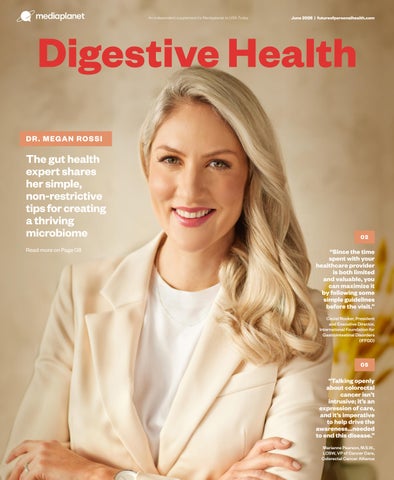
Gut health scientist and dietitian Dr. Megan Rossi shares why diversity, not restriction, is the key to a thriving microbiome.

What gut health myth do you wish people would stop believing?
One of the biggest myths is that you need expensive supplements, restrictive diets, or “detoxes” to have a healthy gut. In reality, your gut microbes thrive on diversity from everyday whole plant foods that are loaded with fiber — your microbes’ favorite fuel. Plus, getting the foundations right, like sleep, stress management, and movement, all help. Gut health isn’t about perfection or quick fixes; it’s about building sustainable habits that support your microbes over time.
If someone could only change one thing about their diet for better gut health, what would you recommend?
I’d encourage people to focus on adding more plant diversity to their week. Research shows that
people who eat at least 30 different plant foods weekly tend to have a more diverse gut microbiome compared to those who only eat 10, which is linked to better overall health outcomes. Importantly, this isn’t just fruit and vegetables — legumes, wholegrains, nuts, and seeds plus herbs and spices all count, too. They’re what I call the Super Six.
Why is the gut so important beyond just digestion?
Around 70% of our immune cells live in the gut, and the gut microbiome communicates with almost every system and function in the body. So, it’s pretty much essential to whatever your health goal is, be it successful weight management, improved fitness levels, healthier skin, more resilient immunity, or even your happiness. It also has the power to influence how long you live and to protect you from
over 70 chronic conditions and certain cancers.
What’s a simple daily habit that people can start today to improve their gut health?
A really simple habit is adding one extra plant food to your meals each day. That could be sprinkling mixed seeds onto breakfast, adding lentils to a pasta dish, or including an extra vegetable at dinner. Small, realistic changes are often the ones that make the biggest long-term difference because they’re sustainable. If you want recommendations that are more personal to you, check out my free quiz, “Is Your Gut Healthy?”
What do most people get wrong when they try to improve their gut health? Many people become overly restrictive, cutting out entire
Gut health isn’t about perfection or quick fixes; it’s about building sustainable habits that support your microbes over time.
food groups unnecessarily. While certain people may need tailored dietary support (for example, in the case of intolerances), for most individuals, diversity — not restriction — is the key to supporting gut health. Another common mistake is expecting overnight results. Your gut microbiome can respond surprisingly quickly to dietary changes, but meaningful, lasting benefits come from habits you can maintain consistently in the long term.
Simple diet swaps focused on fiber and plant-based protein can meaningfully support heart health every day.

Eating for heart health does not have to mean complicated rules or counting grams. According to the American Heart Association, focusing on fiber-rich foods and choosing plant-based protein more often can support digestive health, cholesterol levels, blood sugar control, and overall heart health.
Getting more fiber
Eating more fiber benefits the body in multiple ways. Fiber supports digestive health, helps control blood sugar, lowers cholesterol, and can help with weight management by keeping you feeling full longer. Fiber is found in plant foods like fruits, vegetables, whole grains, beans, nuts, and seeds.
Try these simple, heart-healthy fiber upgrades:
• Choose whole grains. Look for breads, crackers, cereals, and pasta made from whole grains. Refined grains have the fiber-rich bran removed. Brown rice, wholewheat bread, and oats are whole grains, while white rice and products made with refined flour are not.
• Take fiber-forward sides. Whole grains like bulgur, quinoa, and barley make satisfying side dishes. Sorghum is another gluten-free, high-fiber option that works
well in baked goods or breakfast foods.
• Add vegetables often. Use fresh, frozen, or canned vegetables in soups, sauces, and stews. Stir frozen broccoli into low-sodium pasta sauce or add spinach to soups and sautés.
• Bake with bran. Add oat bran or crushed bran cereal to muffins, pancakes, or quick breads.
• Add crunch. Top yogurt with bran cereal or unsalted seeds like pumpkin or sunflower seeds.
• Add beans. Tuck no-salt-added beans into tortillas, salads, soups, and pasta dishes, or mix them with greens and garlic.
• Start with fiber at breakfast. Choose oatmeal or whole-grain cereal and add fruit like berries or bananas.
• Snack smart. Fresh fruit, raw vegetables, air-popped popcorn, whole-grain crackers, and small portions of unsalted nuts all add fiber.
Maximizing protein the heart-healthy way
You do not need to count grams to meet protein needs. A balanced diet with a variety of protein sources generally covers what the body needs.
In terms of calories, the recommendation is that 10–35% of your daily calories come from protein.
The American Heart Association recommends emphasizing plant-based protein sources, such as beans, peas, lentils, nuts, seeds, and soy:
• Lean into legumes. Beans, peas, and lentils provide protein and fiber together. A cup of cooked legumes can deliver around 16 grams of protein and significant fiber.
• Choose plant proteins first. Legumes, nuts, and lentils are naturally low in fat and free of saturated fat.
• Include fish regularly. Aim for fish and seafood two to three times per week, especially oily fish like salmon or sardines, prepared without frying.
• Be selective with meat. When choosing meat or poultry, opt for lean cuts and skinless poultry, and keep portions around 3 ounces.
• Think mixed dishes. Meals that combine vegetables and smaller amounts of protein, such as stir-fries or soups, support balanced eating.
Together, these health hacks make it easier to boost fiber, prioritize plant-based protein, and support heart health one meal at a time.
Written by American Heart Association

Constipation affects roughly 15% of the global population and can have a significant impact on quality of life, yet it remains underdiagnosed and undertreated.
Constipation is a common disorder affecting approximately 1 in 6–7 people worldwide. People can experience short-term constipation because of medication use, dietary changes, or even travel. However, most cases of constipation are chronic or long-lasting. It can be quite debilitating and significantly impact a person’s quality of life. It can lead to social isolation, reduced participation in social activities, and decreased productivity or increased absences from school and work. The overall impact of constipation should neither be minimized nor ignored.
Chronic constipation is a cluster of symptoms that can vary from person to person. Symptoms include:
• Reduced number of bowel movements (BMs) (fewer than three per week is considered low; however, people have different ranges of normal)
• Passage of hard or pellet-like BMs
• Having to strain or excessively push to start or complete a BM
• Feeling as though you did not empty completely after a BM
• Needing to change positions on the toilet, push around the groin, or manually remove BMs from the rectum.
Abdominal symptoms are also common in individuals with constipation. These symptoms include:
• Abdominal pain: pain varying from dull to sharp that occurs in the belly area
• Abdominal discomfort: discomfort varying from dull to sharp that occurs in the belly area
• Bloating: a buildup of gas or a swollen feeling in the stomach or intestines
• Distension: an uncomfortable swelling in the intestines that causes the abdominal area to visibly expand
• Nausea, often including an urge to vomit
• Vomiting
Given the various symptoms associated with chronic constipation, it can be helpful to keep a bowel movement diary before your visit with a healthcare provider. Recording how often you have bowel movements, their texture, and other associated symptoms can be beneficial for making an accurate diagnosis and deciding on further diagnostic and treatment plans.
Effective treatment for constipation depends upon an accurate diagnosis. Unfortunately, no specific symptom or set of symptoms can be used to differentiate one cause from another, and symptoms sometimes overlap. Generally, the initial treatment for mild chronic constipation involves a recommendation of diet changes, including increased fiber intake, or over-the-counter medications. Some healthcare providers may recommend increased hydration and exercise.
Laxatives are commonly recommended. Osmotic laxatives work by increasing the amount of fluid in the intestinal tract, which softens bowel movements and speeds up their movement through the colon. Stimulant laxatives improve constipation by increasing colon movement and/or changing colon fluid secretion.
There are also prescription medications available. Your healthcare provider can work with you to decide the best options for you.
Working with your healthcare provider
Chronic constipation is a complex, symptoms-based disorder that may occur because of multiple factors. Working closely with a healthcare provider and discussing all symptoms thoroughly will help you find the best treatment plan for you.
While chronic constipation can drastically affect your life, there are many options for treatment, and many people can find relief through effective management.

WRITTEN BY Darren M. Brenner, M.D., AGAF, FACG Associate Professor; Director, Neurogastromobility Program, Division of Gastroenterology, Northwestern University Feinberg School of Medicine, Chicago, Ill.