An independent supplement by Mediaplanet to USA Today
September 2026 | futureofpersonalhealth.com
Blood Cancers & Disorders 04
“Patients with sickle cell disease experiencing acute pain deserve rapid recognition and treatment to alleviate suffering.” Melissa J. Frei-Jones, M.D., M.S.C.I., FAAP, Member, American Society of Pediatric Hematology/Oncology
04
“Another huge lesson was learning how to receive… Giving and receiving are like breathing. You inhale, you exhale.” Siri Lindley, Two-Time Triathlon World Champion, Leukemia Survivor
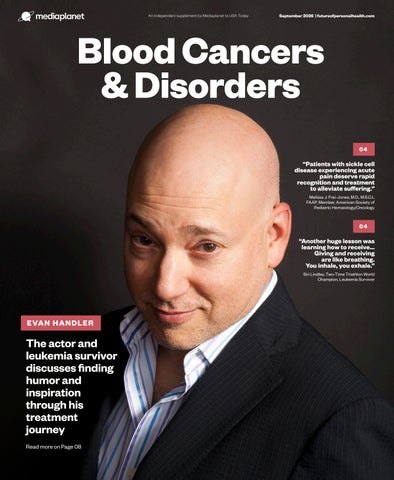
EVAN HANDLER
The actor and leukemia survivor discusses finding humor and inspiration through his treatment journey Read more on Page 08
Awareness Matters: Decades of Progress in Sickle Cell Disease
S
Sickle cell disease affects roughly 100,000 Americans, and the past two decades have transformed what treatment can offer them.
ickle cell disease (SCD) is the most common inherited blood disorder, affecting nearly 8 million people worldwide and approximately 100,000 people in the United States. The American Society of Hematology (ASH) is made up of more than 18,000 hematologists, or doctors who treat blood diseases. Some of us provide care directly to patients, while others conduct research to make new treatments possible. Some of us focus on blood cancers like leukemia, others on noncancerous blood disorders like SCD, but we all work with a common goal in mind: improving outcomes for patients around the world through advances in blood disease research and care. Every September, which is National Sickle Cell Awareness Month, is an opportunity to honor people living with SCD, reflect on treatment advances, and shine a light on the challenges that remain in their care.
What is SCD? SCD is characterized by abnormally shaped red blood cells that can become lodged in blood vessels, restricting blood flow and leading to organ damage, infection, and episodes of severe pain. The disease occurs when both of a child’s parents carry the sickle cell trait, @futureofpersonalhealth
which is not a disorder and typically does not cause health problems. The sickle cell trait can help prevent infection from malaria, making both the trait and the disease more prevalent in regions of the world where malaria is common, such as sub-Saharan Africa, India, the Mediterranean, and the Arabian Peninsula. SCD was first documented in 1846. However, the U.S. Food and Drug Administration did not approve a medication to treat the disease, hydroxyurea, until 1998. For more than two decades, hydroxyurea was the only approved medication to help alleviate symptoms of the disease. In recent decades, two potential cures have emerged for SCD, fundamentally changing the treatment landscape. Bone marrow transplantation, which replaces a patient’s faulty blood-forming stem cells with healthy donor cells, can enable lifelong freedom from pain crises and other disease complications, with ongoing transplant advances continuing to expand safety and accessibility. The 2023 approval of two gene therapies, one-time treatments that edit a patient’s genes to produce healthy blood cells, marked a new era in treatment and served as a proof of concept, paving the way for development of gene @MediaplanetUSA
therapy for other inherited diseases.
Research saves lives Decades of research have made a difference in the care of people living with SCD, but this momentum is threatened by reduced investment in medical research and lessened support for initiatives that help ensure studies reflect and address the needs of populations most affected by a disease. While new therapies have transformed care and treatment options for people living with SCD, more research and work remain ahead. Access to many sickle cell treatments remains challenging, and gaps in awareness and education continue to limit effective high-quality care. ASH is committed to ensuring that research progress for SCD and all blood diseases continues so patients get access to the best, most effective care possible. You can make your voice heard and advocate for continued investment and progress in lifesaving research by joining ASH’s #Fight4Hematology. Learn more at www.hematology.org/advocacy/ fight4hematology. Written by Robert Negrin, President, American Society of Hematology
Contact information: US.editorial@mediaplanet.com
Please recycle
Publisher Shannon Ruggiero Managing Director Samantha Taylor Production Manager Dustin Brennan Product Strategy & Growth Director Joelle Hernandez Creative Director Kylie Armishaw Copy Editor Taylor Rice Cover Photo by Brian Smith All photos are credited to Getty Images unless otherwise specified. This section was created by Mediaplanet and did not involve USA Today. 02
MEDIAPLANET
READ MORE AT FUTUREOFPERSONALHEALTH.COM
Sponsored
Caring for the Whole Person: A Lifelong Approach to Sickle Cell Disease
T
For many kids and families facing sickle cell disease, the journey begins with newborn screening. At Children’s Hospital Colorado, early diagnosis marks the start of a lifelong partnership focused on helping patients thrive through every stage of life.
hrough a unique and comprehensive whole-person care model, the Sickle Cell Program at Children’s Hospital Colorado supports more than the medical management of a complex blood disorder. The team works alongside patients and families from childhood through adulthood, addressing physical, emotional and social needs, while helping them navigate challenges and major healthcare decisions. “We truly do function as a medical home for a lot of these patients,” said clinical lead and pediatric hematologist Christopher McKinney, M.D. “It’s really much broader than just the medical care that we’re providing.”
More than medical care Because sickle cell disease affects many aspects of a person’s life, care often requires expertise beyond hematology. The Center for Cancer and Blood Disorders brings together specialists across disciplines, including neuropsychology, developmental pediatrics, physical therapy, chronic pain management, genetic counseling, and social work. This collaborative approach helps patients manage symptoms, prevent complications, and receive support for challenges related to school, mental health, family planning, and the financial realities of lifelong care. “We really want to be utilizing all of the available resources in order to take a multimodal approach,” Dr. McKinney said.
Christopher McKinney, M.D., with a patient at Children’s Hospital Colorado | Photo courtesy of Children’s Hospital Colorado
sickle cell treatments available today. Unlike many centers, Children’s Colorado integrates gene therapies and other innovative treatments directly into the sickle cell clinic, allowing patients to explore complex treatment options with providers they already know and trust.
We truly do function as a medical home for a lot of these patients.
“That means we want to make sure our patients are being treated, and we are not just throwing pain medications at them.” For patients experiencing pain, the focus is on providing comprehensive, individualized sickle cell care, rather than relying on single-treatment strategies. This approach opens doors to new options, such as gene therapies.
Relationships that last a lifetime The Sickle Cell Program serves as more than a treatment center. Over the past 50 years, patients at Children’s Colorado have been cared for by just four lead physicians. That creates continuity that allows providers to develop long-term relationships with families, often caring for multiple generations. As a result, teams gain a deeper understanding of
READ MORE AT FUTUREOFPERSONALHEALTH.COM
each patient’s history, goals, and specialized needs. “That trust is everything,” Dr. McKinney said. “When you start talking about generational aspects, that continuity is even more important.” Those trusted relationships also help prepare patients for the transition to adult care. Beginning in adolescence, the team encourages patients to build the knowledge and self-advocacy skills needed to manage their health independently. “We need to be able to train them to advocate for themselves and to be able to talk about their disease,” Dr. McKinney said.
“Having a model where transformative and curative therapies are embedded within the sickle cell clinic is really unique,” Dr. McKinney said. “They know the provider. We’ve been with them since they’ve been born or since they were small children.” By combining comprehensive care, long-term relationships, and access to innovative therapies, Children’s Colorado is helping redefine what’s possible for patients living with sickle cell disease. Written by Children’s Hospital Colorado
To learn more, visit childrenscolorado.org/SickleCell
Expanding possibilities through innovation The program’s whole-person care model also gives patients access to some of the most advanced MEDIAPLANET
03
Sickle Cell in Crisis: Why Pain Is Still Undertreated Sickle cell pain sends patients to emergency rooms, where they must often prove they are hurting before receiving treatment.
S
ickle cell disease (SCD) is the most common inherited blood disorder in the United States. The most common reason for hospitalization, school and work absence, and poor quality of life is pain. Severe acute pain episodes start as early as 4-6 months of age, and many children who experience frequent pain develop chronic pain syndromes as adults. Despite the clear damage within the body during a pain crisis, no objective test exists to indicate severity or duration of pain.
Why treatment falls short Treating SCD pain is challenging for many reasons. Although most pain is managed at home, severe pain is treated in the emergency department (ED). In the ED, patients interact with medical teams who do not know them, and it is difficult to give details about their health while experiencing severe pain, which may be interpreted as being uncooperative. Fear of negative opioid effects also prevents the adequate treatment of pain. Patients will avoid or delay going to the ED, and they report having to prove they have SCD and are truly experiencing pain. To raise awareness and provide resources to physicians, nationally recognized clinical practice guidelines for the treatment of SCD pain were published in 2020. Patients with SCD experiencing acute pain deserve rapid recognition and treatment to alleviate suffering.
WRITTEN BY
Melissa J. Frei-Jones, M.D., M.S.C.I., FAAP Member, American Society of Pediatric Hematology/Oncology
04
MEDIAPLANET
Finding Strength Through Adversity: Siri Lindley on Surviving AML Two-time triathlon world champion Siri Lindley shares how she reframed a devastating leukemia diagnosis and became an active participant in her survival. Can you take us back to your diagnosis and what it meant to you at the time? I was actually preparing for a hip replacement after years as a professional triathlete, so I went in for my pre-op appointment. Instead of clearing me for surgery, they told me, “We’re not going to be able to do your hip replacement. There’s some really weird stuff going on with your blood.” After further testing, I was diagnosed with acute myeloid leukemia (AML). My grandfather died of AML, so hearing those words was devastating. It also came at a time when I finally had everything I’d worked so hard for. Then, suddenly, I heard what sounded like the end.
I committed to becoming the very best version of myself every single day. I knew immediately that I couldn’t give the diagnosis that meaning. If I believed it was the end, I’d show up like it was the end. So, I interrupted everything happening around me and said, “This is not my time to go. I’m going to survive this.”
How did that mindset shape the way you approached treatment? I committed to becoming the very best version of myself every single day. That meant doing the inner work. I asked myself: What do I need to let go of? Who do I need to
Siri Lindley | Photo by ELC Photography in CO.
forgive? What stories about myself are no longer serving me? Another huge lesson was learning how to receive. Before cancer, I was always the giver. However, as I got sicker, it became obvious that I couldn’t do that anymore. I had to let people care for me. Giving and receiving are like breathing. You inhale, you exhale. If you only give until you have nothing left, eventually there’s nothing left to offer.
What message would you share with someone facing a blood cancer diagnosis today? No one is a statistic. You get to decide how you show up. I also believe visualization is incredibly powerful. Every single day in my hospital bed, I imagined running my favorite mountain trail in Colorado. I pictured the wildflowers, felt the warmth of the sun, heard my wife cheering, and imagined celebrating at the top, cancer-free. About a year after my transplant, my wife and I actually went back to that trail, and it was exactly as I had imagined it. READ MORE AT FUTUREOFPERSONALHEALTH.COM
A New Way to Measure Progress Against Blood Cancer
O
Five-year survival rates no longer capture progress against blood cancer, so researchers are measuring the years of life treatment adds.
ver the past 30 years, we have seen remarkable progress in reducing cancer-associated mortality through cancer prevention and early detection strategies. For example, smoking cessation programs have significantly reduced the number of people developing tobacco-associated cancers. However, prevention and early detection play significantly less of a role in progress against blood cancers. Instead, for patients with blood cancer, survival depends primarily on developing better treatments and ensuring access to them. Today’s advanced treatments can both cure some patients and give others significantly more time despite persistent or recurrent disease. Accordingly, our traditional thinking about five-year survival rates no longer captures the full story of progress against blood cancer.
A new metric for progress Our progress reporting should account for both an increasing incidence of blood cancer and the fact that patients are living longer. For that reason, we measured the number of “life-years saved” over time among blood cancer patients to provide a more direct and meaningful way to understand the impact of treatment advances. Developed by researchers from Blood Cancer United (formerly The Leukemia & Lymphoma Society), The Clara D. Bloomfield READ MORE AT FUTUREOFPERSONALHEALTH.COM
Center at The Ohio State University Comprehensive Cancer Center — Arthur G. James Cancer Hospital, and Lumanity, the methodology translates scientific progress into a more meaningful measure that matters deeply to patients and families: more time.
What the analysis found The analysis found that advances in blood cancer care saved 25.8 million years of life between 1964 and 2025. This progress has not been evenly distributed across blood cancer types. Hodgkin lymphoma and acute lymphoblastic leukemia account for the largest shares of cumulative life-years saved. Non-Hodgkin lymphoma also represents a substantial portion of the gains. Acute myeloid leukemia (AML) shows the smallest gains, especially among older adults, underscoring the need for better treatment options. The analysis also shows persistent racial disparities. Black patients continue to experience worse survival than white patients across most blood cancers.
Additionally, the politicization of the peer-review process and reductions in federal research funding all threaten future scientific innovation, stagnating future progress. It is only with sustained investment across federal, nonprofit, and industry sectors; broader access to advanced therapies; faster development of promising treatments; greater clinical trial participation; and targeted efforts to close racial and age-based survival disparities that we have the potential to sustain and even eclipse our current trajectory. Our bold goal at Blood Cancer United is to add 1 million additional life-years by 2040. We can only accomplish this if we push for broader access to affordable healthcare and new therapies, particularly for diseases like AML, myelodysplastic syndromes, and myeloma where progress lags. Blood cancer progress proves that when we invest in scientific discovery, we give patients more time. Every year of life matters, and millions more are within reach if we sustain research funding, accelerate the next generation of breakthroughs, and ensure better access to treatment for everyone.
Looking ahead If our current rate of progress is sustained, blood cancer therapies will add 18.9 million more lifeyears between now and 2040. However, health policy changes that restrict medical coverage, create barriers to care, or limit access to effective therapies threaten to slow this trajectory.
WRITTEN BY
E. Anders Kolb, M.D. President and Chief Executive Officer, Blood Cancer United
MEDIAPLANET
05
Sponsored
Cancer Treatments Have Never Been More Promising. Why Aren’t More People Getting Treated With Them? Treatments for the most common form of adult leukemia, chronic lymphocytic leukemia (CLL), have changed dramatically over the past decade.
T
oday, patients have the possibility to be treated with targeted therapies that can improve quality of life and push five-year survival rates to nearly 90%. Yet for too many people living with CLL, innovation in medicine alone is not enough. Lack of or delays in biomarker testing, inconsistent use of clinical guidelines, and onerous insurance barriers can prevent patients from getting treated with the best possible care. To better understand the gaps in CLL care, BeOne Medicines, a global oncology company, partnered with Charles River Associates and blood cancer experts on a first-of-its-kind national report highlighting barriers to timely, guideline-informed care.
Understanding CLL CLL mainly affects older adults, is often diagnosed around age 72, and is commonly found through routine bloodwork. Because CLL generally progresses slowly, many patients begin with a “watch-andwait” approach before starting treatment. But every patient’s CLL is different. Age, comorbidities like cardiovascular disorders, patient preferences, and unique genetic risk factors should all shape treatment decisions. That’s why comprehensive biomarker testing, knowing all of a patient’s risk factors, and clinical guideline-informed care matter. 06
MEDIAPLANET
Treatment innovations For decades, systemic and untargeted therapies, such as chemotherapy and early immunotherapy, were the standard of care for CLL, but both had serious side effects and limited effectiveness. That changed with U.S. Food and Drug Administration approval of targeted therapies like the first Bruton’s tyrosine kinase inhibitor (BTKi) in 2014 and the first B-cell lymphoma 2 inhibitor (BCL2i) in 2016. These therapies have transformed CLL care by significantly improving long-term outcomes.1 Continuous BTKi therapy has demonstrated durable benefit, with second-generation BTKis showing exceptional long-term survival. Emerging fixed duration treatments could further change the treatment paradigm if they can deliver more durable responses, keep the disease under control for longer, and offer greater convenience.
Five ways to close the CLL care gap So, while innovative treatments have continued to advance, the challenge now is ensuring more patients can benefit from these novel advances. This will require action on five fronts: expanding access to comprehensive biomarker testing; increasing healthcare provider and patient education on guideline-informed treatments; improving coordination of care and access to CLL specialists; protecting patients from restrictive insurance practices; and
Photo by FatCamera (iStock) | Photo courtesy of BeOne Medicines
increasing transparency when AI is used in care decisions. Biomarker testing is a critical starting point. Nathan, diagnosed with CLL at 45, was initially advised to begin chemotherapy without testing. After asking for biomarker testing, a second opinion led to a non-chemotherapy treatment. Today, he is in remission. Patients also need care that keeps pace with the latest guidelines and provides better access to CLL expertise, no matter where they live. Telehealth can connect patients in rural or underserved communities with specialists and strengthen care coordination. Too often, insurer practices get between patients and the CLL treatment their doctor recommends. Step therapy can deny care, and insurers are increasingly using AI in coverage decisions. Policymakers must curb these barriers by speeding coverage decisions, strengthening protections, and requiring transparency, evidence-based clinical justification, straightforward options to appeal, and human
oversight when AI is used. “Thanks to advances in science and medicine, people living with blood cancers have more options for hope in their treatment approaches than ever before,” said Kirsten Axelsen, policy adviser, Charles River Associates. “But realizing that progress means closing these gaps in their ability to get access to modern medicines. By spotlighting these challenges, the blood cancer community, policymakers, and healthcare leaders can turn these advances in CLL medicine into better outcomes for every patient.”
Read the full report at beonemedicines.us/CLLReport
Written by BeOne Medicines REFERENCES 1.
Karr, M., & Roeker, L. (2023). A History of Targeted Therapy Development and Progress in Novel-Novel Combinations for Chronic Lymphocytic Leukemia (CLL). Cancers, 15(4), 1018. https://doi.org/10.3390/cancers15041018.
READ MORE AT FUTUREOFPERSONALHEALTH.COM
Approved in 5 indications1
OVER 290,000 PATIENTS TREATED WITH BRUKINSA GLOBALLY*2
SE E DATA FO R BRUKI NSA
*Based on March 2026 Symphony Claims/In-office Dispenses (IOD) data from GPO Networks/Internal Analysis. References: 1. BRUKINSA. Package insert. BeOne Medicines USA, Inc.; 2025. 2. Data on file. BeOne Medicines USA, Inc. BRUKINSA and BeOne Medicines are trademarks owned by BeOne Medicines I GmbH or its affiliates. © BeOne Medicines I GmbH, 2026 All Rights Reserved. 0522-BRU-PRC-038 6/2026 READ MORE AT FUTUREOFPERSONALHEALTH.COM
MEDIAPLANET
07
Evan Handler on Surviving Leukemia and Reclaiming His Life
Evan Handler | Photo by Matt Sayles
Actor Evan Handler was told his leukemia was treatable but not curable in 1985, and he went looking for better odds. Can you take us back to your diagnosis? It was 1985. I was 24 years old. I was understudying in a Neil Simon play on Broadway after starring in a couple of other Broadway productions already. I had a lingering sore throat. Blood tests showed abnormalities, so I went to a hematologist. A bone marrow biopsy revealed I had acute myeloid leukemia. I was told it was “treatable,” but not “curable” — which informed consent forms later told me meant that five-year survival rates did not exceed 15%.
How did humor help you through your illness? Well, since the recurrence I later suffered happened while I was starring in another Neil Simon play on Broadway, I did wonder whether Neil Simon plays might be carcinogenic. Does that answer the question?
How did you learn to understand your diagnosis and take an active role in your care? Like a lot of patients, I learned that hospital care is geared toward adequate treatment for thousands, rather than exceptional treatment for anyone. Also, most centers aggressively sell whatever they are looking into, rather than informing patients of what’s being investigated elsewhere. We learned we’d need to hunt for information ourselves and find our way to whichever center was offering the research protocol we thought might be most helpful to me.
What were those first years of followup care like after treatment? Um, grim. The odds of recurrence were high, even after bone marrow transplantation. It took tremendous strength 08
MEDIAPLANET
and effort to learn to reinvest in life, when there was so little certainty the investment might ever pay off. I did also finally find a doctor in New York who treated me as a peer, rather than just a patient. She accepted, assisted with, and appreciated my efforts to investigate, learn, and make informed choices.
How did your experience shape the actor and storyteller you became? Around 1990, I found the courage to start reading reworked journal entries aloud to audiences in what became the off-Broadway show and book “Time on Fire.” My working credo became “People most want to hear what you’d least like to reveal.” It would be hard to think of anything I’ve done as an actor for hire that could compete with the sense of accomplishment of communicating those stories.
As a long-term survivor, what do you want people facing blood cancer today to know? When I look back, I think, “As awful as that was, it wouldn’t have been nearly as bad if I could have known I’d make it through in the end.” The pain of treatment wasn’t the largest obstacle. It was the uncertainty of whether the pain would be worth enduring. However, I think everyone needs to find their own kind of inspiration to see them through. I was lucky to have a loving family, supportive girlfriend, and a career I wanted to resume. Find something you care about enough to stick around for, if you can. And keep your eyes on the prize. Because recoveries are far more common now than they were then. The life you want back might be retrievable. It might be better than it was before.
The pain of treatment wasn’t the largest obstacle. It was the uncertainty of whether the pain would be worth enduring.
READ MORE AT FUTUREOFPERSONALHEALTH.COM
Hope on the Horizon: Research on Rare Blood Cancer Is Advancing If you or a loved one has been diagnosed with myelofibrosis, a rare type of blood cancer affecting about 22,000 people in the United States, a leading researcher shares that treatment is advancing — and with the right education and resources, individuals can tap into its benefits. binds to the cancer cell, and the other recruits immune cells, bringing them into direct contact with the malignant cell and activating an immune attack.” Finally, CAR T-cell therapies take the patient’s personal immune cells and engineer them to identify and target cancer cells. “While still early in development for myelofibrosis, this represents an entirely new therapeutic frontier,” Gerds said. “All of this progress is particularly remarkable given that myelofibrosis is classified as a rare disease,” Gerds noted. “For a rare condition, the depth and breadth of research happening right now is extraordinary. As someone who both studies the disease and treats patients living with it, that momentum is incredibly meaningful.”
Patient and caregiver tips
Aaron T. Gerds M.D. | Photo courtesy of Cleveland Clinic
A
aron T. Gerds, M.D., is an associate professor of medicine at the Cleveland Clinic Lerner College of Medicine of Case Western Reserve University, and he serves as deputy director for clinical research at the Cleveland Clinic Taussig Cancer Institute. What’s more, Gerds is deputy associate director for clinical research at the Case Comprehensive Cancer Center, where he helps manage cancer clinical trials. Gerds shared the areas of myelofibrosis research that he’s most excited about, as well as tips patients and their caregivers can follow to advocate for better care with their healthcare team. Importantly, he highlighted the power of clinical trials and how getting involved can benefit the future of myelofibrosis care and patients’ care now.
Where myelofibrosis treatment may be headed Combination therapy that targets multiple pathways is one area researchers are exploring, Gerds says. READ MORE AT FUTUREOFPERSONALHEALTH.COM
“Early data have shown deeper responses — more spleen shrinkage, greater symptom improvement, and, in some cases, even reversal of bone marrow scarring,” he explained. “That’s something we couldn’t say confidently years ago.” He added that scientists are researching reactivating the body’s natural tumor suppression systems, which early studies have shown can help significantly reduce the malignant cell population. Additionally, new classes of drugs like telomerase inhibitors target the enzyme that leads to cancer cell replication, and precision medicine involving monoclonal antibodies are designed to help stop signaling that propels cancer growth. “Early-phase trials show promising activity and favorable safety profiles. Because these therapies are highly targeted, they may offer strong efficacy with fewer side effects,” said Gerds, adding that a similar concept called bispecific antibodies that have been used for other blood cancers are also being investigated for myelofibrosis. “These therapies function almost like a molecular bridge — one end
Gerds emphasized the importance of clinical trials for cancer patients, as these trials follow numerous experiments and have “strong scientific rationale behind them.” “In cancer medicine, clinical trials are the standard of care,” he said. “There’s this idea of ‘standard therapy’ — the drugs that are commercially available and written into treatment guidelines. But those treatments only exist because patients participated in clinical trials before them. “If we wait for tomorrow’s breakthroughs, we delay progress. Clinical trials allow us to bring tomorrow’s treatments to patients today.” Building a network of trusted advisers and supporters — specialists in myelofibrosis and a local oncologist, as well as family, friends, and patient advocacy groups — is key. Connecting with others — both medically and personally — can make a profound difference. “The landscape of myelofibrosis treatment is changing rapidly,” Gerds said. “For patients and families navigating this diagnosis, that change brings real hope.”
Written by Melinda Carter MEDIAPLANET
09
When your platelet counts drop and your v myelofibrosis (MF) starts to change
TURN THE PAGE WITH VONJO If your myelofibrosis is changing, your current treatment path may deserve another look. Hear how Jennine partnered with her doctor, spoke up about what mattered to her, and learned more about her options, including VONJO.* *VONJO is for adults with certain types of MF who have a platelet count below 50,000 per microliter.
“My advice? Don’t wait. Advocate for yourself. Ask questions, and don’t be afraid to speak up.” ÐJennine Jennine, a real patient with myelofibrosis. This patient was compensated by Sobi to share her story.
Please see the Brief Summary below of the VONJO Patient Information, which includes information about “What is VONJO?” and serious side effects from the full Prescribing Information.
BRIEF SUMMARY What is VONJO® (pacritinib)? VONJO is a prescription medicine used to treat adults with certain types of myelofibrosis (MF) who have a platelet count below 50,000 per microliter. This indication is approved under accelerated approval based on spleen volume reduction. Continued approval for this indication may depend on proof and description of clinical benefit in a confirmatory trial(s). It is not known if VONJO is safe and works in children. Important Safety Information Do not use VONJO if you are taking other medications that are strong CYP3A4 inhibitors or inducers. Before taking VONJO, tell your healthcare provider about all of your medical conditions, including if you: • Have active bleeding, have had severe bleeding, or plan to have surgery or invasive procedures. You should stop taking VONJO 7 days before any planned surgery or invasive procedures. See “What are the possible side effects of VONJO?” • Have diarrhea or commonly have loose stools
Visit vonjo.com to watch Jennine’s story and get resources to help discuss MF and VONJO with your doctor. • Have had blood clot, heart attack, other heart problems, or stroke • Have a history of low blood levels of potassium. It is important that you get blood tests done during treatment with VONJO to monitor your body salts (electrolytes) • Smoke or were a smoker in the past. Have had any other cancers. See “What are the possible side effects of VONJO?” • Have an infection, nausea or vomiting, liver or kidney problems. See “What are the possible side effects of VONJO?” • Are pregnant, plan to become pregnant, are breastfeeding, or plan to breastfeed. It is not known if VONJO will harm your unborn baby or if it passes into breast milk. You should not breastfeed during treatment and for 2 weeks after your last dose of VONJO • Plan to father a child. VONJO may affect fertility in males. You may have problems fathering a child Please see Brief Summary continued on the next page.
VONJO® is a registered trademark of Sobi, Inc. Sobi is a trademark of Swedish Orphan Biovitrum AB (publ). © 2026 Sobi, Inc. All rights reserved. PP-34456 08/2026
Brief Summary (Cont’d) Tell your healthcare provider about all the medicines you take, including prescription and over-the-counter medicines, vitamins, and herbal supplements. Taking VONJO with certain other medicines may affect the amount of VONJO or the other medicines in your blood and may increase your risk of side effects or affect how well VONJO works. Especially tell your healthcare provider if you take hormonal contraceptives (birth control). Hormonal birth control methods, except for intrauterine systems containing levonorgestrel may not work during treatment with VONJO and for 30 days after your last dose. Talk to your healthcare provider about birth control that may be right for you. What are the possible side effects of VONJO? VONJO can cause serious side effects including: • Bleeding. VONJO can cause severe bleeding, which can be serious and, in some cases, may lead to death. • Stop taking VONJO and tell your healthcare provider right away if you develop any of these symptoms: unusual bleeding, bruising, and fever. Get medical help right away for any bleeding that you cannot stop • You will need to stop taking VONJO 7 days before any planned surgery or invasive procedure (such as a heart catheterization, stent placement in a coronary artery in your heart, or a procedure for varicose veins). Your healthcare provider should tell you when you can start taking VONJO again • Diarrhea. Diarrhea is common with VONJO, but can be severe, and cause loss of too much body fluid (dehydration) which can lead to kidney problems. Tell your healthcare provider if you develop diarrhea. Drink plenty of fluids to help prevent dehydration. Your healthcare provider will prescribe an anti-diarrheal medicine before you start VONJO. You should start taking the anti-diarrheal medicine right away if you get any symptoms of diarrhea, including any changes in consistency (such as loose stools) or increase in the number of daily bowel movements. Get emergency medical help right away if your diarrhea becomes severe • Worsening low platelet counts. • Changes in the electrical activity of your heart called QTc prolongation. QTc prolongation can cause irregular heartbeats that can be life-threatening. Tell your healthcare provider right away if you feel dizzy, lightheaded, or faint. • Increased risk of major cardiovascular events such as heart attack, stroke, or death in people have happened, especially in those who have cardiovascular risk factors and who are current or past smokers taking another Janus associated kinase (JAK) inhibitor to treat rheumatoid arthritis. Get emergency help right away if you have any symptoms of a heart attack or stroke during treatment with VONJO, including: discomfort in the center of your chest that lasts for more than a few minutes, or that goes away and comes back; severe tightness, pain, pressure, or heaviness in your chest, throat, neck, or jaw; pain or discomfort in your arms, back, neck,
jaw, or stomach; shortness of breath with or without chest discomfort; breaking out in a cold sweat; nausea or vomiting; feeling lightheaded; weakness in one part or on one side of your body; or slurred speech. • Increased risk of blood clots. Blood clots in the veins of your legs (deep vein thrombosis, DVT) or lungs (pulmonary embolism, PE) have happened in some people taking another JAK inhibitor for rheumatoid arthritis and may be life-threatening. Tell your healthcare provider right away if you have any signs and symptoms of blood clots during treatment with VONJO, including: swelling, pain, or tenderness in one or both legs; sudden, unexplained chest pain; or shortness of breath/ difficulty breathing. • Possible increased risk of new (secondary) cancers. People who take another JAK inhibitor for rheumatoid arthritis have an increased risk of new (secondary) cancers, including lymphoma and other cancers, except non-melanoma skin cancer. The risk of new cancers is further increased in people who smoke or have smoked in the past. • Risk of infection. People who have certain blood cancers and take another JAK inhibitor have an increased risk of serious infections. People who take VONJO may develop serious infections, including bacterial, mycobacterial, fungal, and viral infections. If you have a serious infection, your healthcare provider may not start you on VONJO until your infection is gone. Your healthcare provider will monitor you and treat you for any infections that you get during treatment with VONJO. Tell your healthcare provider right away if you develop any of the following symptoms of infection: chills, aches, fever, nausea, vomiting, weakness, painful skin rash, or blisters. • Possible rebound symptoms upon treatment discontinuation or interruption. People may experience any of the following signs and symptoms after stopping treatment with VONJO: fever, trouble breathing, feeling dizzy or lightheaded, weakness, night sweats or pain in your left upper stomach or left shoulder. The most common side effects of VONJO include: Low platelet count (thrombocytopenia), nausea, vomiting, low red blood cell counts (anemia), and swelling of your ankles, legs, and feet. Your healthcare provider will do blood tests and an electrocardiogram (ECG) before you start treatment with VONJO and as needed during treatment to check for side effects. Your healthcare provider may change your dose or how often you take VONJO, temporarily stop or permanently stop treatment with VONJO if you have certain side effects. These are not all the possible side effects of VONJO. Call your doctor for medical advice about side effects. You can report side effects to the FDA at 1-800-FDA-1088. Talk to your healthcare provider or pharmacist to learn more about VONJO. For more information visit www.vonjo.com or call
+1 781-786-7370.
Ask your doctor about VONJO today.
Whether it’s on the world’s biggest stage, or taking on something as big as cancer,
12
MEDIAPLANET
Scan the QR code to learn more BeOneSave.com
READ MORE AT FUTUREOFBUSINESSANDTECH.COM