


Welcome, colleagues, to a sun-drenched season of opportunity.
Summer is not just a calendar shade; it’s a reminder that our patients’ eyes deserve care, clarity and a touch of seasonal flair. This issue invites you to explore a theme that is as practical as it is fun: how smart summer eye care can keep patients safe, comfortable and delighted with every sunny moment.
A PRACTICAL SUMMER CARE PLAN FOR PATIENTS
Begin by reinforcing the essentials. Encourage the consistent use of sunglasses that provide 100% UVA and UVB protection, with polarized options where appropriate, and remind patients that UV exposure accumulates over a lifetime—making early and habitual protection key.
At the same time, it’s worth highlighting how summer activities—from soccer and tennis to swimming and hiking—can expose the cornea, tear film, lens and retina to increased risk. Well-fitted protective eyewear tailored to each activity can help minimize mechanical irritation, dehydration of the ocular surface and environmental exposure.
When it comes to sports-specific guidance, the choice between contact lenses and sports glasses should be individualized: some patients benefit from high oxygen-permeable lenses paired with impact-resistant frames for unobstructed vision, while others are better served by the reliability of properly fitted sports glasses.
Pediatric patients, in particular, deserve special attention, as they account for a higher proportion of sports-related eye injuries, making durable eyewear and clear safety guidance essential.
AND LIFESTYLE CHALLENGES
Environmental factors also play a significant role in ocular comfort during summer. Travel, air conditioning and increased airflow from fans can destabilize the tear film and exacerbate dry eye symptoms. Recommending non-preserved artificial tears, reinforcing lid hygiene and suggesting simple humidification strategies can go a long way in maintaining ocular surface health.
For contact lens wearers on the move, daily disposables or extended-wear lenses with high oxygen permeability offer a practical balance of convenience, safety and cost-effectiveness—provided that proper hygiene and storage practices are emphasized.

SUPPORTING OCULAR HEALTH THROUGH SUMMER LIVING
Beyond clinical care, a healthy summer lifestyle can further support ocular comfort. Adequate hydration and nutrition, particularly the inclusion of omega-3 fatty acids, contribute to tear film stability and overall ocular surface health.
In regions where summer feels perpetual, encouraging patients to plan ahead—stocking up on eyewear, sunscreen and appropriate eye drops before beach days or extended travel—can prevent avoidable discomfort.
TECHNOLOGY AND PRACTICE TIPS FOR YOUR CLINIC
Within the clinic, summer presents an opportunity to engage patients through both education and experience. Simple, interactive demonstrations— such as showcasing the real-world benefits of polarized lenses—can make a lasting impression.
Thoughtfully curated, patient-centric product bundles, whether pairing sunglasses with protective sports eyewear or combining high-performance contact lenses with summer-ready accessories, can enhance both care and convenience.
At the same time, seasonal campaigns offer a natural platform to reinforce safety-first messaging, from routine eye exams to proper contact lens hygiene and timely replacement of protective eyewear.
If you live in a sun-drenched corner of the world—or anywhere that summer lingers—let’s lead by example: wear, teach and demonstrate the optical solutions we advocate. Practice what you preach, and your patients will see the value not just in your words, but in the clarity of their daily lives.
Thank you for embracing the Summer of Clear Vision with curiosity, care and a dash of optical whimsy. Here’s to brighter days, safer travels and sharper sight for patients everywhere.







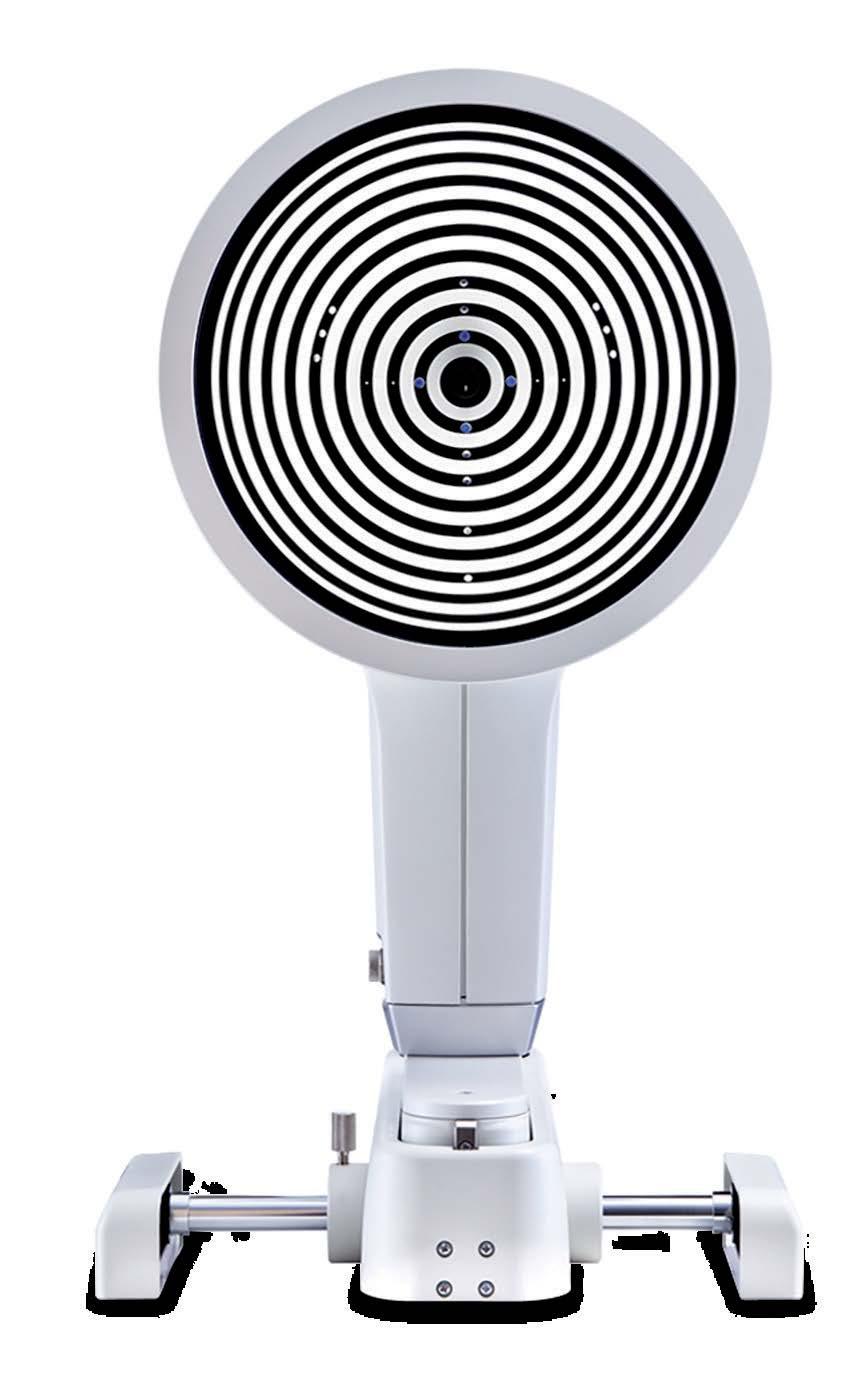
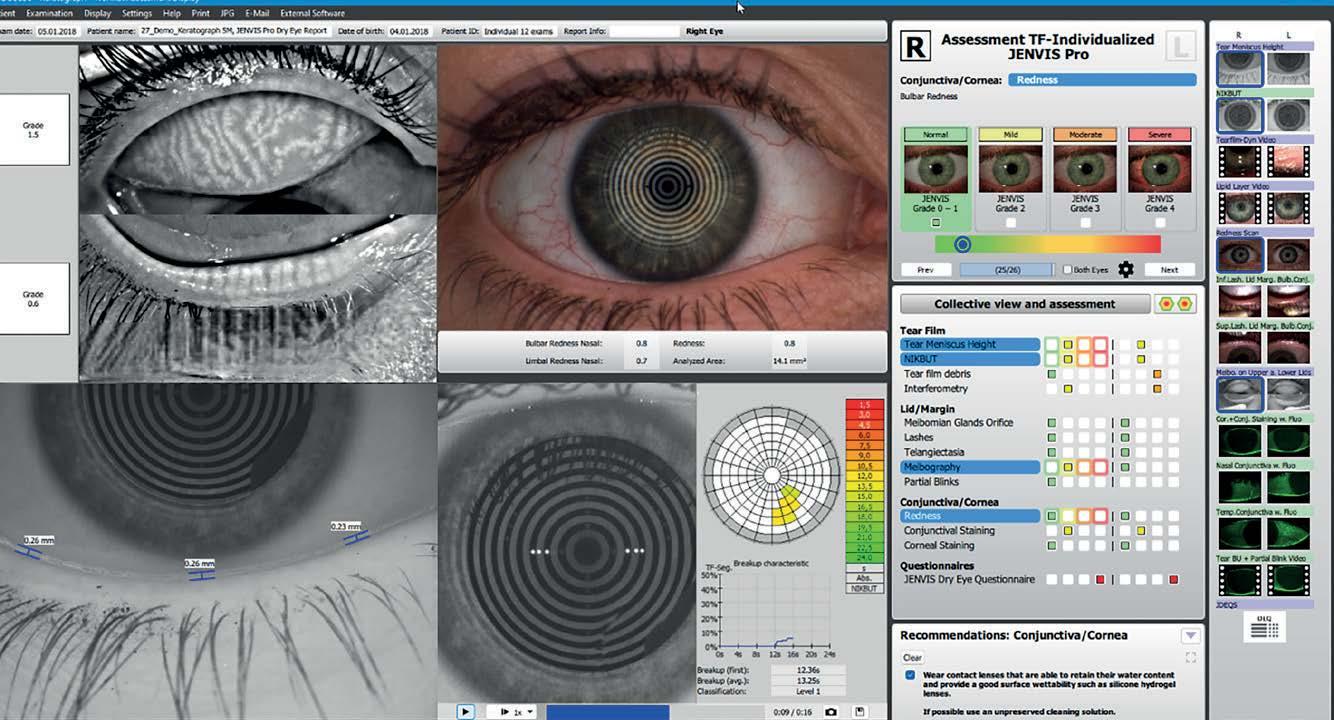

Ensure the best results for your patients with the OCULUS Keratograph 5M
Ocular surface disease – such as dry eye – is a leading cause of refractive surprises and IOL exchanges. So, tear film analysis is essential prior to surgery.
Use the OCULUS Keratograph 5M‘s comprehensive tool set to make the best possible decision for your patients.
Screening within a few minutes, performed by your staff
Easy to understand results with traffic light colors
Make a reliable surgical decision

Abesamis Eye Care & Contact Lens Center Manila, Philippines carmen.dichoso@gmail.com
DR. PURVI THOMSON
OCL Vision London, United Kingdom purvi@oclvision.com


DR. KRISTIE NGUYEN
Dr. Feenstra and Associates
Dr. Kristie Nguyen PLLC, Florida, USA kristie817@gmail.com
DR. LI LIAN FOO
Singapore National Eye Centre (SNEC) Singapore drfoolilian@gmail.com

DR. MONICA CHAUDHRY
Learn Beyond Vision New Delhi, India monica.rchaudhry@gmail.com
DR. MARIA SAMPALIS
Sampalis Eyecare Cranston, Rhode Island, USA msampalis@hotmail.com





We are looking for eye care professionals who can contribute articles to COOKIE. Interested? Let's talk! Send us an email at editor@mediamice.com.
To place an advertisement, advertorial, symposium highlight, video, email blast or other promotional packages, contact sales@mediamice.com.

Matt Young CEO & Publisher
Gloria D. Gamat Chief Editor
Diana Truong Associate Editor
Andrés Pacheco Art Director
Chris McBride Editorial Creative Lead
Nhat Vo Yura Yu Graphic Designers
Artwork credits to: Andrés Pacheco, Chris McBride, Nhat Vo, Yura Yu
Writers
Chow Ee-Tan
Hazlin Hassan
Kendra Bruning
Marhiel Garrote
Michaela Perez
Tan Sher Lynn
Ruchi Ranga Societies Relationships & Conference Manager
International Business Development
Brandon Winkeler
Robert Anderson
Sven Mehlitz
Published by


Blue light didn’t build digital eye strain; it just took the blame. From tear film instability to accommodative fatigue and the underappreciated role of visual ergonomics, a more nuanced picture is coming into focus. Is it time to retire the one-note narrative and start treating screen-induced strain for what it really is? A complex system-wide problem hiding in plain sight.
By Tan Sher Lynn
For years, digital eye strain has been pinned on a single, glowing suspect: blue light. “Blue light glasses” have long been marketed as the antidote to screen-induced fatigue. But as the evidence matures, that tidy narrative is starting to feel— politely put—overexposed.
Joe Croft, CEO and co-founder of Gunnar Optiks (California, United States), believes the market is due for a reset. “The industry has been overly focused on blue light,” he said. “In fact, we cringe every time someone calls our glasses ‘blue light glasses.’”
He emphasized that digital eyestrain is a multi-factor problem. “In a trial we conducted with over 100 test subjects, the top symptom of Computer Vision Syndrome (CVS) wasn’t related to blue light, but to dry eye,” he said.
“Blue light is just one factor in the wide scope of problems with extended screen viewing. Filtering blue light in the evenings has been shown to help maintain proper circadian rhythms since overexposure to blue light in the evening triggers a melatonin suppression reaction, so we don’t discount the need for blue light filtering, but it’s not the major factor causing digital eyestrain,” he emphasized. “Dry eye, muscular eyestrain, corneal surface
discomfort (scratchy eyes) and digitally caused headaches rank higher in our symptom surveys than respondents that report sleep disorders.”
This reframing is not trivial. It redirects attention toward how patients use their eyes in digital environments—reduced blink rate, prolonged fixation at a fixed distance and tear film instability—rather than focusing solely on spectral exposure.
“The trick is educating both optometrists and patients about the need for a full solution and not just addressing computer vision issues with a blue light coating that may or may not work,” he mentioned.
Modern visual behavior is defined by long stretches of near work, often punctuated by abrupt shifts in lighting conditions. This is particularly pronounced in regions with strong seasonal light variation, where transitions between bright outdoor environments and dim indoor screens introduce an underappreciated form of visual stress.
“The visual system can handle an illumination range that goes from 0.1 lux to 100,000 lux— that’s almost a trillionfold range,” Mr. Croft said. “However, the full adaptation isn’t instant.” This lag can manifest as transient discomfort driven by pupil adjustment delays, retinal saturation and photopigment bleaching.
“Short term retinal overload can cause natural squinting that leads to muscular eye strain,” he noted.
“Eventually the visual system calibrates but it may take up to 30 minutes as the rods adapt. So the problems are definitely different from indoor work, where the strain occurs less from light exposure and more from repetitive stress syndrome related to long-term flexing of the internal and external eye muscles without enough variation in the state of flexion,” he said.
In other words, digital eye strain is less about what we see and more about how we use the system doing the seeing.
Ergonomics adds another layer that is frequently overlooked. “Position of the screen in the room. Position of the screen in relation to the eyes. Position of the head and neck in relation to the screen. Posture, overhead lighting and natural sources of lighting. All these combine to comprise the visual ergonomic profile of the workstation,” he stressed. “People with extreme photosensitivity should pay attention to each and every factor.”
As the limitations of blue light filtering become clearer, attention is shifting toward more fundamental interventions grounded in visual ergonomics and lens design.
Interestingly, some lens tints initially associated with blue light reduction may deliver benefits for entirely different reasons. “Our patented Amber tint that cuts blue light wasn’t developed as a generic eye strain solution, it was developed as a contrast enhancing tint,” Mr. Croft said, highlighting that performance gains may stem from improved visual clarity rather than simple spectral filtering.
One of the more promising areas of innovation lies in addressing accommodative fatigue—the gradual decline in the eye’s ability to sustain focus during prolonged near work.
Research has shown that after several hours of continuous screen use, the eye can exhibit a measurable “lag of accommodation.” “That lag…ranged between 0.2 to 0.5 D,” Mr. Croft noted.
According to Mr. Croft, the first Gunnar lenses incorporated the 0.5 power, but as they found that customers who had never worn glasses before didn’t adapt well to the power, they dialed it back to the 0.2 range. “We found the sweet spot for functional emmetropes and locked in the solution that still exists today. It’s a slight effect, but when applied over long periods of time (some people stare at screens 10 to 12 hours a day) it makes a big difference,” he noted.
Another emerging area of interest is the microclimate around the eye. Often overlooked
in favor of lens coatings, frame design and fit can meaningfully influence comfort.
“The microclimate is real,” Mr. Croft said. “The closer the fit to the brow line, the more humidity is trapped in the ocular pocket.”
This localized increase in humidity can help stabilize the tear film, reducing evaporation and prolonging tear breakup time—a key contributor to dry eye symptoms. “With high wrap, close fitting eyewear, we see ocular humidity rise up to 60% compared to flat, nonwrapped eyewear,” he said.
As augmented reality, virtual reality and increasingly immersive interfaces move from novelty to norm, the demands on the visual system will only intensify.
“As technology advances and we connect ourselves to devices for longer periods of time, the long-term effects on the visual system will become more evident,” Mr. Croft foresaw.
“The aging Gen X crowd is the first generation to reach middle age with moderate screen exposure from a young age. A good portion of millennials qualify as iPad babies and will tell us even more as they age. I’m convinced that we will eventually find better methods for computer input/output than our fingers/eyes, but until we’re ready for implantables, our eyes will take the brunt of the output.”
In this context, the next phase of lens innovation will likely move beyond single-issue fixes toward integrated strategies that address physiology, behavior and environment in equal measure. The blue light era isn’t over—it’s just no longer the headline act.


Joe Croft CEO and Co-Founder of Gunnar Optiks, a pioneering eyewear company focused on protecting and enhancing vision in the digital age.
joe@gunnar.com CONTRIBUTOR
Most optometry practices face the same summer challenge: patients disappear to beach houses, kids abandon school routines and exhausted practitioners need actual time off. Step away traditionally, and clinical monitoring stops. Patients miss critical surveillance windows. You return to voicemails about symptoms that started weeks ago.
Dr. Amanda Legge (United States) doesn’t deal with that anymore.
The Pennsylvania optometrist has used remote monitoring for macular degeneration since 2016. Her patients travel with the ForeseeHome (Notal Vision; Virginia, United States) device wherever summer takes them—second homes, vacation rentals, visiting grandchildren—and continue daily testing. If the system detects worrying changes, Dr. Legge gets an alert.
“It’s a nice way to keep in touch because patients can travel with it,” she explains. The device comes with its own cellular hotspot, so “they can set it up wherever they’d like.”
That’s remote monitoring in 2026: less about futuristic gadgetry, more about practical summer survival.
THE TECH LANDSCAPE
Remote monitoring now spans multiple platforms, each addressing conditions that don’t pause for vacation schedules.

REMOTE MONITORING FOR GEOGRAPHIC FLEXIBILITY
Remote monitoring keeps surveillance running when vacation season scatters your patient base—no office visits required.
By Michaela Perez
For at-home monitoring of macular degeneration, “by far, the most studied from a scientific standpoint is the ForeseeHome device,” Dr. Legge notes. Approved for intermediate age-related macular degeneration (AMD) patients with 20/60 vision or better, the system tests for metamorphopsia—the early warning signal of wet conversion—through daily or every-other-day home testing.
Data flows automatically to Notal Vision’s monitoring center for statistical analysis, so Dr. Legge’s involvement stays minimal. “I’m not terribly involved in looking and monitoring my patients,” she says. “I just log into my portal to know they’re doing it correctly, doing it regularly. But if there’s truly a change in the metamorphopsia map, then I get an alert.”
That notification triggers same-day or next-day appointments. Setup happens entirely through Notal Vision—insurance authorization, patient contact, device shipping with built-in hotspot. Medical insurance typically covers it; most Medicare patients with supplements pay nothing.
Newer home optical coherence tomography (OCT) systems incorporate artificial intelligence for quantitative retinal fluid assessment.
* Contactless glaucoma systems like IOPerfect (Ophthalmic Sciences; Tel Aviv, Israel) capture intraocular pressure (IOP) through headgear—no anesthesia and no corneal contact required.* Wearable myopia devices like Clouclip
(Hangzhou Glasson Technology, China) monitor outdoor time, viewing distance and light exposure.*
Remote monitoring solves problems unique to the vacation season. Dr. Legge’s AMD patients pack ForeseeHome for extended summer stays. When alerts trigger during travel, she coordinates local care. “I would facilitate and find an optometrist where they are in their area, essentially call the office and tell them there’s this change in the metamorphopsia map,” she reports. Patients get evaluated locally instead of rushing home.
Remote monitoring provides strategic flexibility for practitioners. Not unlimited vacation time—Dr. Legge emphasizes it “certainly doesn’t replace in-office care”—but breathing room. Stable patients on ForeseeHome might extend from three-month to four- or fivemonth office intervals.
“Our clinic is so busy all the time that this is actually something I utilize to help patients between regularly scheduled office visits as opposed to taking the place of them,” she shares.
The real benefit isn’t scheduling. It’s catching interval changes. “You could check somebody right now, and they have dry intermediate AMD. And tomorrow or a couple days later, all of a sudden, they have signs of the wet form,” Dr. Legge points out. Standard three- or six-month intervals create long gaps where progression can occur undetected.

PATIENT SELECTION MATTERS
Not everyone suits remote monitoring. For macular degeneration, Dr. Legge selects patients with intermediate AMD who are at high risk to convert to wet AMD, with 20/60 vision or better. For glaucoma, appropriate candidates show stable disease with controlled IOP. Patients progressing despite controlled pressure need comprehensive in-office monitoring. Myopia management works for children whose summer schedules increase risk—more screen time, less outdoor exposure.*
Poor fits include severe arthritis (can’t manipulate interfaces), dementia or cognitive decline (can’t reliably test), very high-risk disease requiring frequent in-office assessment, or technology illiteracy.
Remote monitoring supplements comprehensive care; it doesn’t replace it. “I don’t think the technology is there that we can take the place of an ocular health exam,” she says.
It improves timing—not diagnosis—and visit schedules still matter. Dr. Legge doesn’t extend high-risk AMD patients from three months to six just because ForeseeHome exists. Four months, maybe five for exceptionally stable cases—that’s the limit.
“It doesn’t take the place of the in-office visit,” she notes. “I don’t feel like I’m taking risks by missing something because I’m not changing my office protocol.”
Patient education comes first. “You need the patient to understand your concerns and why you want to monitor between your own office visits,” Dr. Legge stresses. She recommends dedicated consultation visits before prescribing devices. If patients don’t understand why monitoring matters, compliance fails.
Staff training stays minimal for systems like ForeseeHome where the company handles heavy lifting. “My staff’s not terribly involved except for portal access and getting emails for alerts.”
When a patient isn’t compliant, Dr. Legge calls to troubleshoot: “Is something wrong with your device? Do we need to talk to the company and potentially exchange your device?” She then either addresses device issues or reeducates them on why monitoring matters.
Revenue expectations need honesty. “I can’t say personally I have seen a financial benefit to it,” Dr. Legge admits. “The benefit’s more to the patient. I don’t make any financial gains from the ForeseeHome device.”
If you’re considering remote monitoring for the summer, start with Dr. Legge’s core advice: “Patient education is the most important piece.”
Remote monitoring won’t revolutionize your schedule. It won’t generate windfall revenue. It won’t replace comprehensive care. But it will maintain clinical surveillance when both patients and practitioners need geographic flexibility.
In an era of rising burnout and patient expectations for care that fits their lives, that might be precisely what summer requires.

REFERENCE
*Ramamurthy D, Srinivasan S, Chamarty S, et al. Smart Devices in Optometry: Current and Future Perspectives to Clinical Optometry. Clin Optom. 2024;16:169-190.

Dr. Amanda Legge
Optometrist at Wyomissing Optometric Center in Pennsylvania, United States. She also serves on the Allied Health Professional Staff at Penn State Health, St. Joseph Medical Center. drlegge@wyoopto.com



The summer sun brings the fun, but it also brings the glare. For sensitive patients, it’s less a vibe than a visual tax. And for clinicians, it’s an opportunity hiding in plain sight.
By June, the road looks bleached out on the drive home, and the beach feels harsher than memory suggests. A long afternoon near water leaves the eyes more tired than the heat alone can explain. The usual sunglass recommendation starts to feel a little blunt for the job.1,2
That’s where polarized lenses deserve a more prominent role in the exam-room conversation than “premium sunwear.” A standard tint turns the volume down. Polarization targets the reflected glare still skidding across the scene—the visual static that leaves bright-day vision flatter, harsher and more exhausting than it should be.3
Patients often describe glare as simply too much brightness. The optics are less forgiving than that.
A dark lens may dim the world, but it can also reduce clarity and contrast. Standard tinted lenses lower overall light levels without specifically targeting the reflected light that drives squinting and washed-out contrast. Guidance from the American Academy of Ophthalmology (AAO) notes that polarized lenses specifically reduce light glare and eyestrain to improve safety in the sun.1
Light scattering off rough surfaces disperses in multiple directions, but smooth horizontal surfaces send light back in a concentrated, horizontally polarized pattern.1,2 Polarized lenses use a vertically oriented chemical filter to block that horizontal noise while transmitting the vertical “signal” required for clarity.1,3
When bright months bring out glare complaints, polarized lenses give optometrists a more practical way to match product to problem.
By Kendra Bruning

This functional advantage shows up in road-sports research, where polarized filters block significantly more reflected light than nonpolarized sunglasses with similar transmission.4 Simulated daytime driving studies also report better contrast sensitivity and shorter reaction times with polarized lenses under bright conditions.5
The transition from a standard lens to a polarized one often stalls when the recommendation gets routed through a retail mindset. Polarized lenses lose ground when they arrive late in the consultation, tucked into dispensing as a nicer version of sunglasses. By then, the category sounds elective. Earlier in the visit—anchored to the patient’s complaint—it sounds bespoke.
Framing polarization as an “upgrade” or “add-on” asks the patient to imagine a benefit before connecting it to the glare on a morning
commute or the fatigue after a weekend on the water. 6 When the conversation runs through the patient’s routine instead of a price list, the recommendation carries more weight because it’s tied to activity rather than a retail label.7
Prescribing polarized sun lenses for the morning commute shifts the exchange from luxury to clinical relevance. Trial-frame comparisons and glare demos turn an abstract claim into an immediate experience in the chair. Practice data suggest that when patients see the glare disappear in real time, it often plants the idea of a second pair before they even reach the optical gallery. 8
Every filter has limits, though modern tech has narrowed them. Older LCD screens and certain dashboard displays can appear dim or distorted depending on viewing angle. The widespread

shift toward OLED smartphones and modern head-up displays (HUDs), however, has largely reduced these conflicts for the average patient.1,6
A smaller set of exceptions arises when glare provides useful visual cues, such as revealing patches of ice on roads or ski slopes.1 Piloting also sits in that caution zone, as some instruments and reflected signals rely on the very light polarization removes. 6 These are important considerations, but they remain edge cases. For most patients navigating summer glare on roads, water and bright pavement, polarization is still the better match.
The commercial case for polarized lenses works best when it arrives late and lightly, after the clinical logic has done the heavy lifting. Patients are still spending; they are simply less inclined to do so without clear value.
Industry data from 2025 showed a U.S. optical market worth $69.5 billion, even as Americans purchased fewer optical products and underwent fewer eye exams—suggesting value is holding up better than volume.9-11 That same year, 41% of consumers spent less than $100 on their glasses, lenses or frames.12
Patients with vision benefits purchased at higher rates than self-pay patients—66.0% versus 54.3%—making insured patients a particularly strong second-pair opportunity.13
At the practice level, the pattern sharpens. One case study reported a 19.0% year-over-year rise in materials revenue while total exams grew just 1.1%, when “questions turned into purchases rather than excuses to shop around.” 8
Benchmarking data suggest that weak optical performance can quietly drain revenue over time—sometimes by as much as $150,000 annually.14 In summer, however, polarized lenses sit in a rare corner of the optical industry where better care and better capture are both in focus through the same lens.
In brighter months, patients often arrive with the answer half-formed. They may not know the optics, but they know the sensation. The road flashes, the water glares and the eyes tire sooner than they should.
By the time those complaints surface in the chair, the case for a better filter has largely made itself. The job, then, is simply to name it—and let them see it.
Polarized lenses stand out in this environment because the use case is easy to demonstrate. Practice data from 1,000 U.S. optometric offices, covering more than 7 million exams and eyewear purchases, showed an average capture rate of 60.1%. Stronger performance was linked to doctor engagement, patient education and a smoother handoff into optical.13
1. Turbert D. What are polarized lenses for? American Academy of Ophthalmology. 2024. Available from: https://www.aao.org/eye-health/glassescontacts/polarized-lenses
2. Frank C. Polarized sunglasses: Protecting your eyes from harmful glare. Harvard Health. 2024. Available from: https://www.health.harvard.edu/ healthy-aging-and-longevity/polarized-sunglasses-protecting-your-eyes-from-harmful-glare
3. Gururaj T. How polarized and UV-blocking sunglasses protect our eyes. August 5, 2025. Available from: https://www.snexplores.org/article/ polarized-uv-blocking-sunglasses
4. Mercatelli L. Examining polarizing and non-polarizing filters for road sports. Front Sports Act Living. 2023;5.
5. Zikos GA, Nason RJ, Robilotto J, et al. Contrast sensitivity and reaction times with polarized and tinted lenses in a driving environment. Invest Ophthalmol Vis Sci. 2009;50(13):5331.
6. Cook PR. A smart approach to dispensing polarized lenses. Available from: https://www.2020mag.com/article/a-smart-approach-to-dispensingpolarized-lenses
7. Chan Z. The benefits of polarized sunglasses: A guide for eyewear distributors and retailers. Available from: https://www.pel-eyewear.com/eyeweartesting-and-inspection-blog/benefits-of-polarized-sunglasses-an-eyewear-startups-guide
8. Christenson G. The strategy that boosted our same-day eyewear capture rate 18%. Review of Optometric Business. June 18, 2025. Available from: https://reviewob.com/capture-rate/
9. The Vision Council. New research from The Vision Council delivers in-depth analysis of Q2 vision care spending and trends. Available from: https://thevisioncouncil.org/blog/new-research-vision-council-delivers-depth-analysis-q2-vision-care-spending-and-trends
10. Reports OTS. The Vision Council report shows optical industry value growth amid lower volumes in 2025. Optometry Times. 2026. Available from: https://www.optometrytimes.com/view/the-vision-council-report-shows-optical-industry-value-growth-amid-lower-volumes-in-2025
11. Staff. U.S. optical industry value hits $69.5 billion in 2025, The Vision Council’s latest Market inSights report says. Vision Monday. Available from: http://www.visionmonday.com/eyecare/article/us-optical-industry-value-hits-695-billion-in-2025-the-vision-councils-latestmarket-insights-report-says/
12. The Vision Council. Market inSights 2025 with 2026 forecast. Available from: https://thevisioncouncil.org/product/market-insights2025-2026-forecast
13. Krefman R. The age & insurance effect: Key insights on eyewear capture rates. GPN VISIONS. February 10, 2025. Available from: https://visions. gatewaypn.com/the-age-insurance-effect-key-insights-on-eyewear-capture-rate-trends/
14. Patel A. Optometry practice finances: Revenue & profit benchmarks. My Business Care Team. 2026. Available from: https://mybcat.com/blog/ optometry-practice-finances/
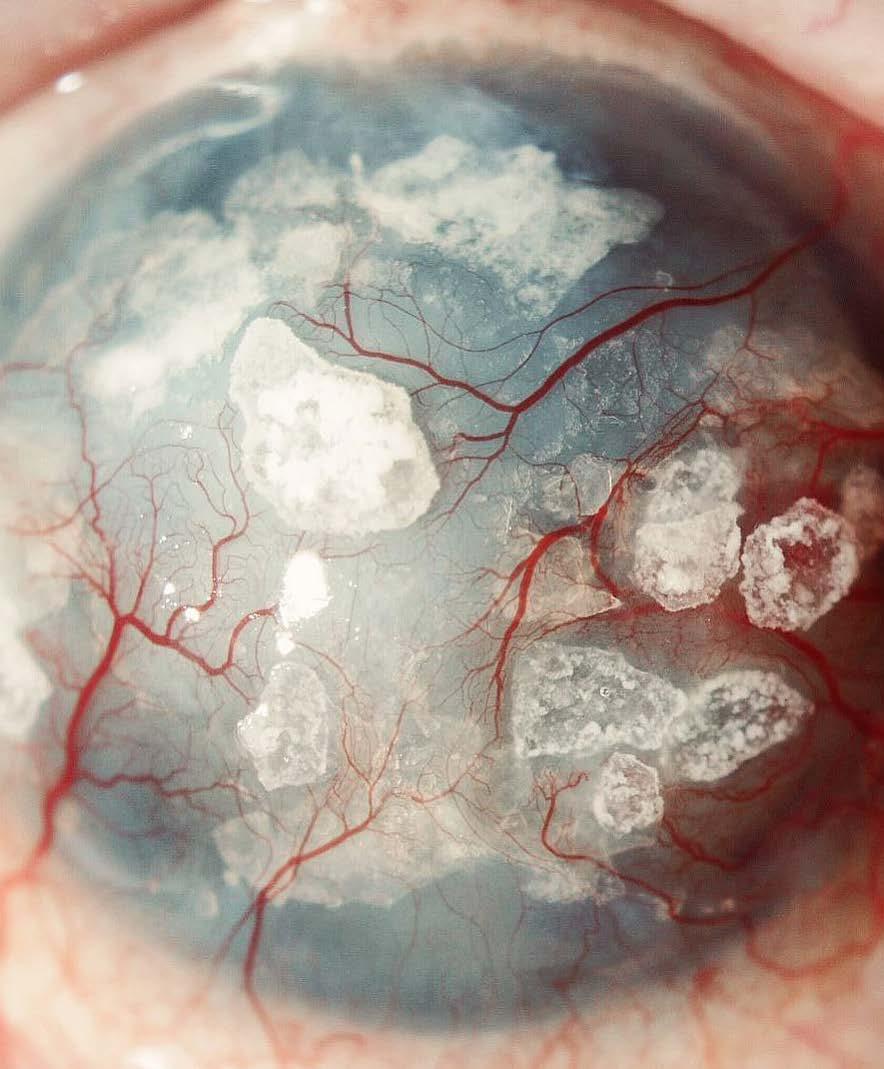

Dr. Alex Fernández Santodomingo Ophthalmologist at Aiken Oftalmologia in Valencia, Spain. @dr.alexfernandez


kubotaglass.jp
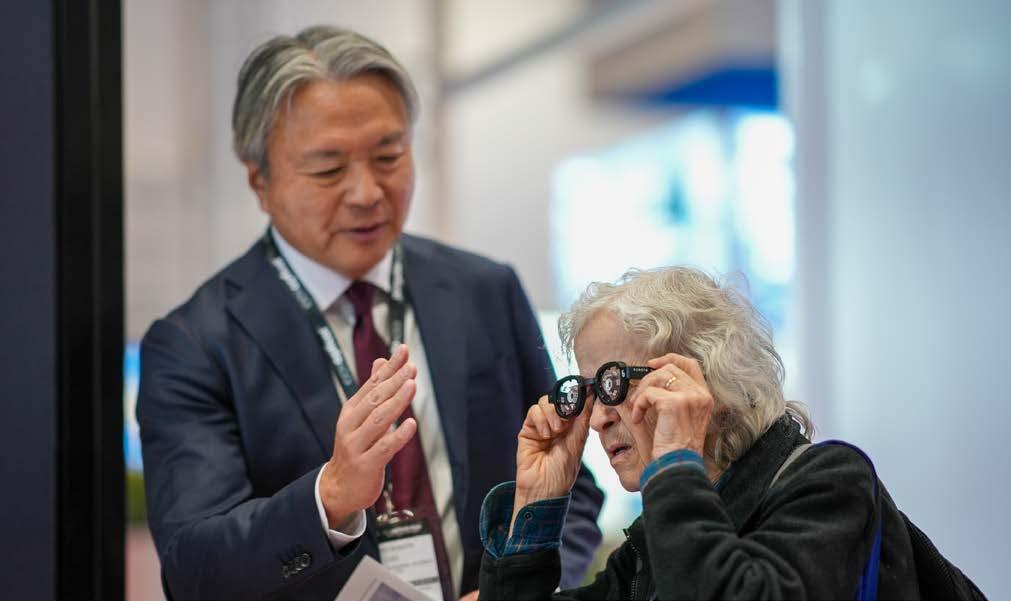
Most companies arrive at trade shows selling promises. Dr. Ryo Kubota showed up at 100% Optical London with something different: a manufacturing-complete device with a deliberate path to market.
by Michaela Perez
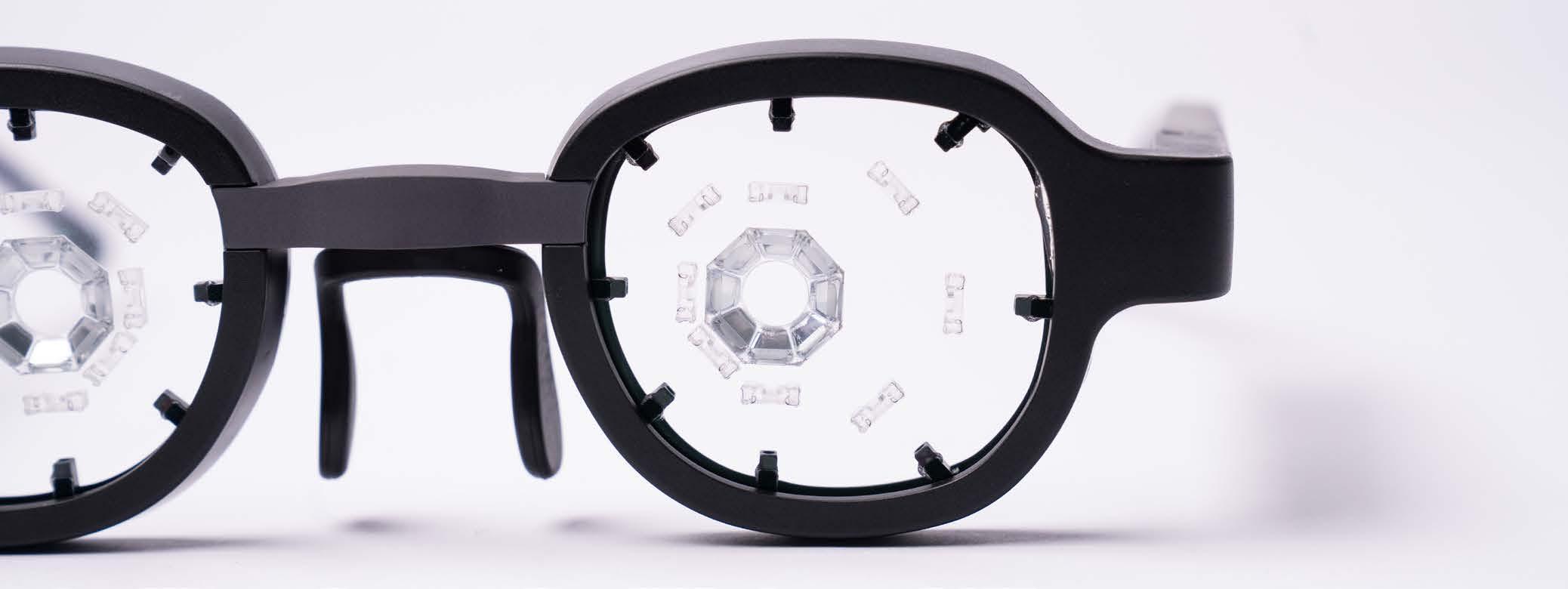
Kubota Glass (Kubota Pharmaceutical Holdings Co., Ltd.; Tokyo, Japan) - a wearable augmented reality (AR) device that projects peripheral myopic defocus to control axial elongationhas production-ready hardware, proven manufacturing and ISOcertified device quality.¹ Three Asian markets already have access to it as a Class 1 medical device. But therapeutic claims? Those come later, by design.
“From the device manufacturing side, the model is completed,” explained the company’s Director, Chairman, President and CEO, Ryo Kubota, MD, PhD. “However, we’re accumulating clinical data as we go.”
In an industry conditioned to race products through regulatory pathways, this approach stands out. It’s what happens when a practicing ophthalmologist - not a venture capitalist - drives product development strategy.
The gap between hardware completion and therapeutic claims is less obstacle and more strategy, and the approach has a name: Pioneer Edition.
THE DISCOVERY THAT REWROTE THE PROTOCOL
Dr. Kubota’s team built Kubota Glass expecting one thing and discovered another.
The initial hypothesis? Children would need eight hours of daily wear to achieve therapeutic myopia control through actively projected peripheral defocus. The clinical reality: just two hours saturated the effect. Additional wear time produced no additional benefit.
“That was a little surprising - a good surprise,” Dr. Kubota said. “We were able to go with a shorter period of time.”
The discovery validated something unprecedented: actively projected myopic defocus delivered through micro-LED and micro-lens technology could achieve therapeutic effect with
significantly reduced wear time compared to passive optical designs requiring 10+ hours of continuous wear.¹
“This active approach of projecting myopically defocused images had never been done in the history of ophthalmology,” said Dr. Kubota.
Published research confirmed it. Adult subjects exposed to peripheral +3.5 D defocus for an average of 7.5 hours weekly over four months showed statistically significant effects: -72.6 µm axial length reduction and +0.816 D less myopic progression extrapolated annually.²
Translating laboratory proof into something a child could wear required international precision: initial R&D in the United States, optical refinement with Swiss scientists and precision manufacturing in Japan - all meeting ISO 13485 medical device quality standards.¹
The result was a 40-gram wearable device, delivering programmable peripheral defocus with adjustable parameters accommodating pupillary distances from 51 mm to 68 mm.
And that’s when most companies would flood the market.
Dr. Kubota chose a different path. Rather than pursuing immediate widespread commercialization, he launched Kubota Glass in limited markets - Japan, China and Taiwan - as a Class 1 medical device. Manufacturing and safety validated, but therapeutic claims deliberately withheld.
This is Pioneer Edition: production-grade hardware released into controlled environments generating real-world data while larger clinical trials build regulatory evidence.
Europe represents the next phase - the first market where Kubota Glass will carry therapeutic claims, pending CE Mark approval.
The clinical strategy focuses on combination therapy. Phase II data testing Kubota Glass alongside low-dose atropine in children aged 6 to 12 shows interim results (n=20, 12 months): +0.31 D less myopic progression and -120 µm less axial elongation compared to atropine monotherapy.¹
Beyond combination therapy, a large-scale prevention trial is underway. In December 2024, the Shanghai Eye Disease Prevention and Treatment Center - one of China’s leading institutions for ophthalmic research - initiated a randomized controlled trial evaluating Kubota Glass in pre-myopic children aged 6 to 9.
Led by Dr. He Xiangui at the National Clinical Research Center for Eye Diseases, the one-year study will assess the device’s efficacy in delaying myopia onset in 118 subjects recruited through Shanghai educational institutions.³
“We’re interested in using Kubota Glass as prevention,” Dr. Kubota explained. “Wear this early on before you even enter elementary school, then you may never have myopia. Prevention is better than cure.”
100% Optical London represents strategic positioning for European validation partnerships. “London is the hub for entering into the European market and has good access to a lot of different areas of Europe,” Dr. Kubota explained.
The company seeks partners willing to participate in validation, not distributors expecting immediate commercialization. “We seek collaboration. Finding the right partner in the right geographic region will help us achieve our goals,” Dr. Kubota said. “We would like to learn from those already successful - learn about the local market, work with them and share the success.”
Understanding Dr. Kubota’s approach requires understanding where he came from. He spent decades as a practicing ophthalmologist before founding Kubota Pharmaceutical, where he now serves in multiple executive roles. That dual clinical and research background fundamentally shaped his development philosophy.
“As a practicing ophthalmologist, prior to starting the company, I always had the best interest for patients in mind,” Dr. Kubota said. “We want to bring a device that can bring true value to patients to benefit their vision preservation.”
Four years of deliberate development reflects this priority - a timeline driven by evidence requirements, not commercial pressure.
For Dr. Kubota, Pioneer Edition represents the foundation for continuous evolution toward personalized myopia management, not an endpoint. “For medical devices, there is no end to the perfection of the device,” Dr. Kubota said.
The electronic architecture enables real-time programmability and individual optimization, which are impossible with passive optical devices.
“With large data, we can collect patient use information electronically into the device real time,” Dr. Kubota explained. “Based on how patients are responding, we can optimize the use of the device in each patient - brightness, energy delivered to the eye.” Future iterations may reduce the two-hour protocol further. “If you can finish in five minutes instead of two hours, it’s better,” Dr. Kubota said.
What Dr. Kubota presented at 100% Optical London represents a distinct approach in medical device commercialization: building evidence through partnership rather than racing to distribution.
The hardware is production-ready. Clinical validation is underway. The regulatory pathway is mapped. And Europe will become the gateway for Kubota Glass’s first myopia control claims.
And for a device that surprised its own inventors by working in two hours instead of eight, the Pioneer Edition approach reflects a core belief: that optimal patient outcomes sometimes require choosing the more deliberate path. Because sometimes “finished” just means the real work is beginning.
Editor’s Note
100% Optical was held from 27 February to 1 March 2027 in London, United Kingdom.This article is supported by Kubota Pharmaceutical Holdings Co., Ltd. A version of this article was first published on MediaMICE.com.
1. Kubota Pharmaceutical Holdings Co., Ltd. Kubota Glass Pilot Study Report. Confidential pilot study summary for professional review. 2024.
2. Kubota R, Joshi NR, Fitzgerald TJ, et al. Biometric and refractive changes following the monocular application of peripheral myopic defocus using a novel augmented-reality optical system in adults. Sci Rep. 2022;12:11875.
3. Kubota Pharmaceutical Holdings Co., Ltd. Kubota Pharmaceutical Holdings Announces Initiation of Clinical Trial by the Shanghai Eye Disease Prevention and Treatment Center for Pediatric Myopia Prevention Using “Kubota Glass®”. Press release. December 16, 2024.
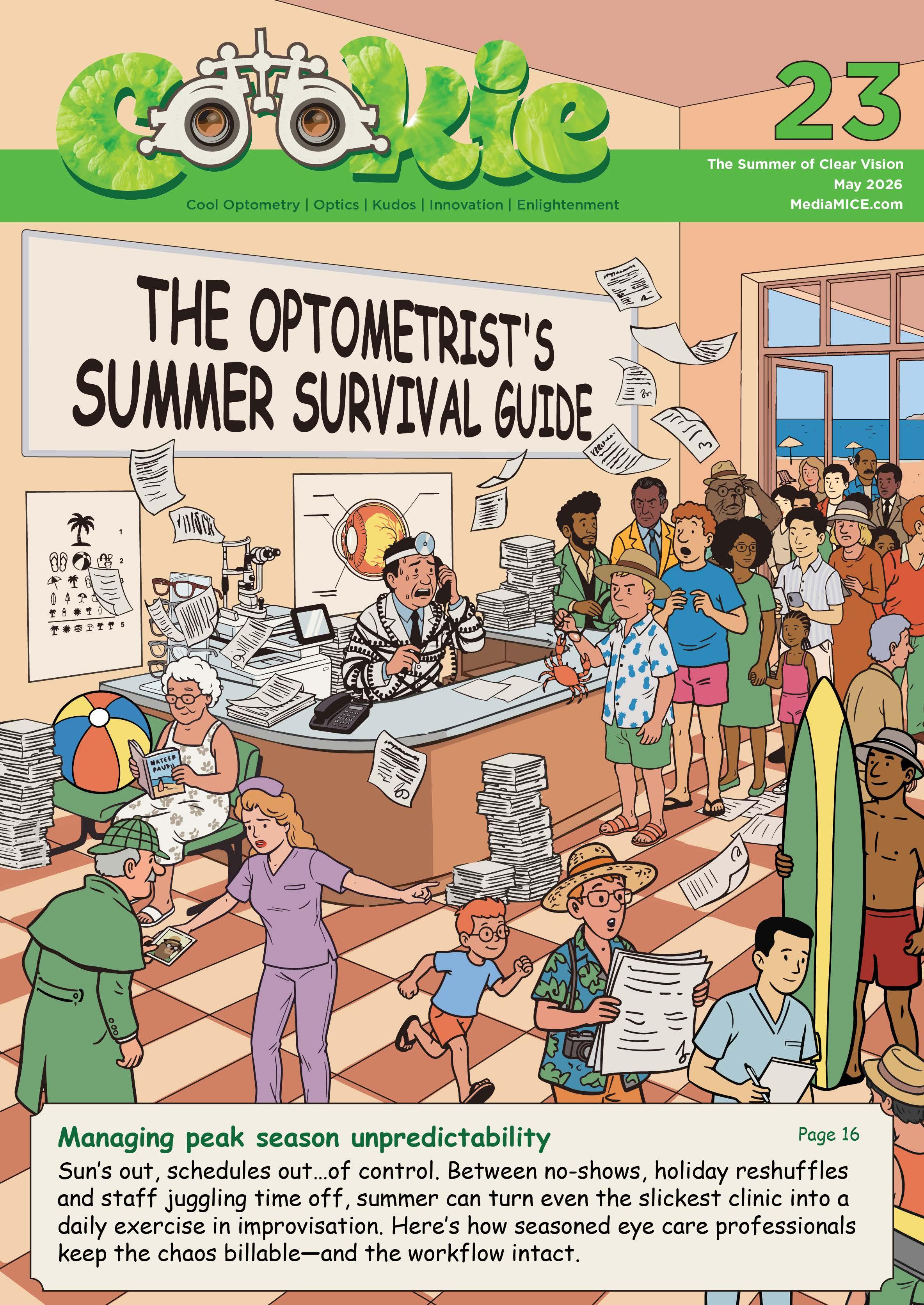
MANAGING PEAK SEASON UNPREDICTABILITY
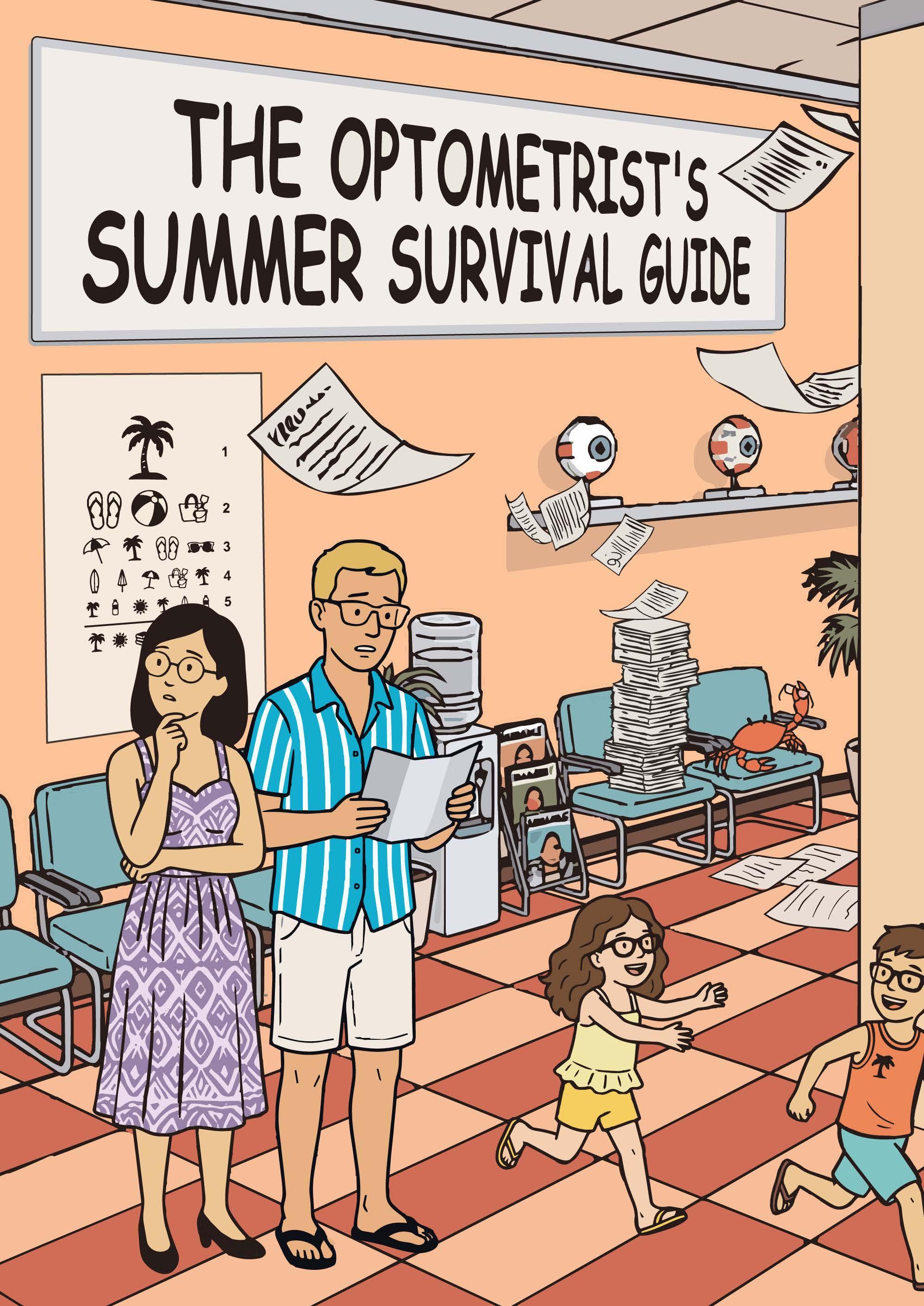
Sun’s out, schedules out…of control. Between no-shows, holiday reshuffles and staff juggling time off, summer can turn even the slickest clinic into a daily exercise in improvisation. Here’s how seasoned eye care professionals keep the chaos billable—and the workflow intact.
By Tan Sher Lynn
Summer is a season of paradoxes in optometry: high energy, high patient volume and, if you’re not prepared, high stress.
The bright weather and holiday season pull patients out of their usual routines, while staff juggle clinical duties with childcare during school breaks. In other words, it’s controlled chaos, but with a sunny backdrop and a slightly less predictable schedule.
Yet for many practices, summer is not just something to endure. With the right systems in place, it can be one of the most productive—and even opportunistic— times of the year.
We spoke to four eye care professionals across the United States and Asia to understand how they manage the seasonal surge, maintain operational stability and, crucially, keep their teams (and sanity) intact.
If there is one defining feature of summer clinic flow, it’s inconsistency. Patient demand simply becomes less predictable.
For Dr. Kristie Nguyen (United States), a Florida optometrist, no-shows and lastminute cancellations are part of the daily rhythm. “I would say about two to three a day,” she reported.
But the variability is not random. Seasonal behavior patterns play a clear role. Good weather, travel plans and spontaneous schedule changes all influence attendance. The result is a constant pushand-pull between overbooked days and unexpected gaps.
Dr. Lilian Foo, a consultant ophthalmologist in Singapore, observes a similar phenomenon during school holidays, when demand clusters into short, intense windows.
“Because academic schedules are quite demanding, many parents prefer to bring their children to the clinic during the school break rather than have them miss lessons,” she explained. “As a result, clinics can become particularly busy during these periods.”
At the same time, those peaks are interspersed with volatility. “We also notice more appointment reshuffling within the holiday window, as families try to coordinate clinic visits around travel plans. This can lead to last-minute bookings, cancellations and, sometimes, uneven patient volumes across different days during the break,” she added.
Taken together, these dynamics create what could be described as the “summer paradox”: demand is high, but reliability is low.
Rather than resisting this unpredictability, experienced practitioners learn to work with it. Dr. Nguyen, for example, reframes no-shows not as disruptions, but as operational buffers. “It allows us to catch up on other work,” she shared. “We try to maximize our productivity.”
In certain practice settings, these gaps can even become strategic advantages. Practicing in Orlando—“one of the most magical places on earth”—Dr. Nguyen sees a steady influx of vacationers. “We often get tourists who are in town visiting, and we try to optimize by accommodating lastminute walk-ins,” she said.
In this context, the gaps created by noshows can become an advantage, allowing
clinics to serve a transient patient base and capture otherwise missed opportunities.
If summer is unpredictable, then scheduling becomes less about rigid control and more about intelligent anticipation.
Across practices, one trend stood out: the traditional “back-to-school rush” is evolving. Dr. Patricia Fulmer (United States), an optometrist in Alabama, has seen a noticeable shift in patient flow patterns.
“Since COVID, patient volume has peaked earlier in the summer than pre-COVID,” she relayed, “as the shorter summer breaks and desire for travel has moved the surge to the June timeframe versus the August back-to-school rush.”
This shift has significant operational implications. Clinics that wait for the traditional August spike may find themselves underprepared for an earlier wave of demand. To adapt, forward planning becomes essential—not just for patient scheduling, but for staff availability.
“My staff is reminded throughout the year to make plans early and request their time off as early as possible,” Dr. Fulmer explained. “We have a first come, first served protocol here, so whomever requests off first gets approval.”
Communication plays a central role in making this system work. “We have running conversations about the plans for our year—including when we are busiest— so they try to plan around those times as much as possible,” she noted.
Dr. Foo echoes this emphasis on structured foresight, particularly in managing predictable holiday surges. “Our practice relies on structured clinic scheduling

systems and appointment templates that monitor appointment volumes and staff availability in advance,” she said. “This helps us anticipate peak periods during school holidays and adjust clinic sessions accordingly.”
Yet even the most carefully designed schedules must allow for flexibility. Patients will reschedule. Travel plans will change. And cancellations will happen— often at the last minute.
To manage this, dynamic systems are key. “Families often travel during school holidays, which can lead to rescheduling or cancellations,”


Dr. Foo noted. “To address this, we maintain a flexible appointment system and actively manage waiting lists so that vacated slots can be offered to other patients who may be waiting for earlier appointments.”
Dr. Nguyen’s approach similarly blends structure with adaptability, relying on layered communication strategies. “We send appointment reminders via text, and staff also call the patient to confirm,” she explained.
At the same time, she is exploring stronger deterrents for late cancellations, including a potential fee within 24 hours of the appointment.
Her broader takeaway reflects a reality many practices face. “There’s no perfect system and not all systems will work for everyone,” she noted. “I’d recommend experimenting to
and disruption. “When my clinical coordinator is on vacation, continuity really depends on preparation,” she said. “In my practice, everyone is cross-trained to fill in, and we use software to send automated text reminders.”
Cross-training emerges as a recurring theme across practices. In an environment where staffing gaps are inevitable, versatility becomes a critical asset. “Crosstrained staff, fill-in staff—like interns or high school students—equipment that is easy to use, booking appointments that make sense,” Dr. Sampalis explained.
This operational flexibility is supported by clear, accessible systems. “We have a book—a how-to guide, websites with passwords, check-in and check-out lists—at the front desk,” she said. These tools ensure that essential processes do not depend on any single individual.
There’s no perfect system and not all systems will work for everyone.
see what works best for your clientele,” whether it’s text reminders, phone calls, penalty fees, upfront payment collections or a combination.
Even with strong scheduling frameworks, summer inevitably puts pressure on clinic operations. Staff absences, fluctuating patient loads and compressed appointment windows can quickly expose weak points in workflow.
For Dr. Maria Sampalis (United States), a Rhode Island optometrist, preparation is the difference between continuity
At the same time, discipline remains nonnegotiable. “We don’t double book and block off the last appointment to be able to finish on time,” Dr. Sampalis shared.
That restraint is particularly important during high-demand periods, when the temptation to overbook can be strong. While adding appointments may seem like a short-term solution, it often creates downstream inefficiencies: longer wait times, increased errors and staff fatigue.
Dr. Fulmer underscores this point, saying, “It’s important to pay attention to how many patients we can see while maintaining a smooth and positive patient experience—and to not book beyond that,” she said. “Doing so causes our patients to suffer, mistakes to be made and staff to burn out.”




While systems and scheduling are critical, summer ultimately tests something less tangible: people.Longer days, heavier workloads and the constant pull of outside activities can all affect staff motivation. Maintaining morale during this period requires deliberate effort.
For Dr. Fulmer, leadership tone plays a central role. “Making sure that management and doctors stay positive even when things are stressful helps the staff morale tremendously,” she said.
That positivity is reinforced through shared experiences. “We also try to plan at least one fun team activity during these months, like kayaking together,” she added.
But occasional team-building events are only part of the solution. Sustained morale depends on transparency, fairness and mutual understanding.
“Communicate with your staff! Make sure they know when you need them most and how you will help them ensure they have the family time they want while still supporting the needs of the office,” Dr. Fulmer advised. “Review time off policies and any expectations you have for them well ahead of the summer months.”
Consistency in messaging also matters. “We communicate the needs of the clinic throughout the year and stress the importance of attendance during busy times,” she noted. “Through keeping everyone on the same page and allowing for flexibility when they do ask off, we find most staff try their best not to take time off during our craziest months.”
Dr. Foo highlights a similarly structured approach, with an emphasis on shared responsibility. “Our team coordinates their leave schedules early so that staff members take turns going on leave at different times. This helps ensure that we maintain adequate clinical coverage, while still
supporting staff in balancing their personal and family commitments,” she said.
Culture, however, is what ultimately sustains these systems. “We have cultivated a strong culture of camaraderie within the team,” she noted. “While school holiday periods can be particularly busy, there is a shared understanding that everyone works together with a spirit of give-and-take.”
At the same time, protecting staff wellbeing remains essential—not optional.
“Many of our staff also have families and children, and it is important that they have time to spend with their loved ones or travel during the holidays,” Dr. Foo said. “Through teamwork and careful planning of patient flow and staff schedules, we ensure that the clinic continues to run efficiently while allowing staff to take their leave. Ensuring that team members still have opportunities to take breaks and planned leave helps prevent burnout and ultimately supports better patient care in the long run.”
At a certain point, even the best-run systems reach their limits. Recognizing that threshold— and responding appropriately— is critical to
maintaining both care quality and team sustainability.
Warning signs tend to appear gradually: longer patient encounters, small administrative errors, a shift in team dynamics or patient feedback that begins to trend negative.
“Patient feedback can tell you a lot,” Dr. Fulmer noted. “If they’re giving negative feedback, that should be taken as a sign that change is needed.”
The response, she emphasizes, should be proactive rather than reactive. Increasing training, reinforcing communication and adjusting staffing levels can all help restore balance before issues escalate.
Dr. Foo points to similar pressures during compressed



Dr.
Board-certified optometrist operating from her own practice in Winter Park (Orlando area), Florida, United States. kristie817@gmail.com
holiday demand. “One common challenge during school holiday periods is the surge in demand for appointments within a short window of time,” she reported. “To manage this, we plan clinic schedules ahead of time and may open additional slots where possible to accommodate the higher demand.”
However, capacity expansion must be carefully controlled. Simply adding more appointments without corresponding resources can compromise both efficiency and care quality.
Clear communication systems play a vital role in managing this balance. “Our team maintains close coordination through regular updates and shared schedules so that everyone is aware of staffing arrangements and patient loads,” Dr. Foo said. “This transparency helps us respond quickly to last-minute appointment changes.”
For some practices, additional support can help absorb peak demand. Dr. Fulmer noted that optometry students can be valuable contributors when properly integrated. “Students often reach out directly, and we have an interview-type conversation to ensure they are a good fit,” she explained. “Training is still imperative to maintain a consistent patient experience.”
Summer in optometry is, at its core, a balancing act: part planning, part flexibility and part controlled improvisation.
No-shows, shifting demand and staff absences are unlikely to disappear. But as these clinicians demonstrate, they can be anticipated, managed and, in some cases, even leveraged.
As Dr. Foo summarized, “A combination of good scheduling systems, clear communication and strong teamwork helps us manage patient flow efficiently while maintaining flexibility during busy holiday periods.”
The takeaway is not that summer becomes easy, but that it becomes navigable. With the right systems in place, practices can move from reactive firefighting to proactive orchestration.
Or, as Dr. Fulmer put it, “Summer is always busy, but with the right systems and a positive team, it can also be one of the most rewarding times of the year.”
Optometrist, founder and owner of Legacy Vision Center in Huntsville, Alabama, United States. patriciafulmerod@gmail.com

Consultant ophthalmologist subspecializing in myopia at the Singapore National Eye Centre. drfoolilian@gmail.com

Board-certified optometrist operating from her own practice in Cranston, Rhode Island, United States. msampalis@hotmail.com
The Contact Lens Institute (CLI) has announced its 2026 Visionaries, adding 10 new members to its clinician leadership program and bringing the total class to 17 eye care professionals from across the United States and Canada.
The 2026 Visionaries include tshe following members (returning
to ensure its educational direction reflects diverse patient demographics, care delivery models and regional needs.
SPOTLIGHT ON DR. MARIA SAMPALIS
Among this year’s Visionaries is Dr. Maria Sampalis, who serves on the COOKIE magazine advisory board, placing her at the intersection of clinical practice, research interpretation and professional education.

Roxanne Achong-Coan, OD | Coan Eye Care and Optical Boutique (Ocoee, FL)*
Kelsea Brown, OD | MyEyeDr (Atlanta, GA)
Elaine Chen, OD | Southern California College of Optometr y (Fullerton, CA)
Jennifer Chinn , OD | Dr. Chinn’s Vision Care (San Diego, CA)
Ryan Corte, OD | Northlake Eye (Charlotte and Asheville, NC)*
Susan J. Gromacki, OD | First Sight Vision Care (Fulton, MD)*
Michael Gzik, ABO | New York Optometric (Syracuse, NY)
Jennifer Liao, OD | NECO Center for Eye Care (Boston, MA)*
Heidi Miller, OD, | UC Davis Health (Sacramento, CA)
Sheila Morrison, OD | Mission Eye Care (Calgary, AB, Canada)
Julian Prosia , OD | Mountain Eyecare (Hamilton, ON, Canada)
Renée E. Reeder, OD | Kentucky College of Optometry (Pikeville, KY)
Maria Sampalis , OD | Sampalis Eyecare (Cranston, RI)
Scott Samples , FCLSA | Dean McGee Eye Institute (Oklahoma City, OK)
Harbir Sian, OD | Highstreet Eyecare Center and Clarity Eyecare (BC, Canada)*
Jennifer Stewart , OD | Look New Canaan (New Canaan, CT)*
Shauna Thornhill, OD | Amarillo Vision Specialists (Amarillo, TX)
(Visionaries marked with an asterisk)
They represent a cross-section of clinical environments, including private and group practices, academic institutions, hospital-affiliated clinics and specialty eye care centers. CLI has historically emphasized this breadth
Dr. Sampalis is also the founder of the Corporate Optometry Facebook group, a professional community that connects eye care professionals working in corporate settings and serves as a forum for peer discussion, shared experiences and practical insight into large-scale optometric care delivery.
FROM RECOGNITION TO RESPONSIBILITY
CLI positions the Visionaries program as an engagement-driven role rather than a symbolic designation. Members are expected to share practical insights drawn from clinical experience and help translate those lessons into guidance for colleagues and patients alike.
“Visionaries are chosen not only for their contact lens clinical expertise, but for their passion for sharing what works—with patients, colleagues, staff and partners,” said Stan Rogaski, CLI executive director, in a news release. “We congratulate our newest appointees and welcome back our returning group. Multiple 2026 initiatives are underway in which they’re already taking part, with much more to come.”
As the 2026 Visionaries begin their term, CLI said the program will continue prioritizing collaboration and clinician-driven input to inform contact lens education, safety and professional dialogue.
As CLI’s 2026 Visionaries begin their term, collaboration remains the program’s central theme—across disciplines, practice settings and educational platforms.
For the Institute, the group reflects an ongoing investment in clinicianled guidance. For the Visionaries themselves, it’s a chance to shape conversations that extend well beyond their own exam lanes and into the wider ecosystem of contact lens education.
Editor’s Note
A version of this article was first published on MediaMICE.com.




Through her work in sports vision training, clinical practice and professional education, Dr. Jennifer Stewart is helping athletes—and fellow optometrists—better understand how visual skills shape performance both on and off the field.
By Chow Ee-Tan


Based in Connecticut, Dr. Jennifer Stewart (United States) has spent her working life caring for patients while contributing actively to the advancement of the optometric profession. Today, she balances multiple roles—clinician, speaker, writer, educator and business owner—while continuing to advocate for innovation and excellence in eye care.
She is the founder of Look New Canaan, co-founder of Performance 20/20, and founder of consulting firm OD Perspectives.
Wearing many hats, Dr. Stewart represents a generation of optometrists reshaping the profession through leadership, collaboration and vision.
Yet her journey into optometry began in an unexpected way.
As a child, Dr. Stewart had a very different career in mind. “I wanted to be a large animal veterinarian growing up,” she recalls.
Optometry only entered her radar during her senior year in college, when a neighbor who was an optometrist invited her to shadow him in his private practice. That experience proved pivotal. “After observing him in his private practice, I was sold,” she says.
What impressed her most was not only the clinical work but the relationships built over time. “I loved the way he got to know his patients over many years of care and developed such a personal relationship with them, and this is how I continue to practice today.”
Dr. Stewart later earned her Bachelor of Science at Marist College (New York) before


moment they step in, and they know this is not a typical optometry office,” she quips.
Dr. Stewart specializes in sports vision, a field within optometry that examines how visual skills influence athletic performance.
Her interest in the discipline began during her second year of optometry school, when she was first exposed to the concept of performance vision. Intrigued by the idea that visual processing could directly affect athletic outcomes, she pursued further training and mentorship in the field.
Dr. Stewart interned with sports vision expert Don Teig, participated in initiatives such as the Worldwide Vision Performance Council, and founded the Performance Vision Club
Before beginning any training program at Performance 20/20, Dr. Stewart requires athletes to undergo a comprehensive eye examination to ensure their vision is fully optimized.
“We also have to remember that athletes are different from average people. They need to be absolutely fully corrected, no matter how mild their prescription,” she says, stressing that proper visual correction—whether through contact lenses or sports eyewear— can make a significant difference in both performance and safety.
Dr. Stewart acknowledges that technology is transforming how sports vision training is delivered. “Sports vision training has certainly come a long way,” she says. “There are now many virtual or digital solutions available, which are convenient for athletes to continue training on the road or in addition
Friends and colleagues often joke that she somehow manages to “bend time” to accomplish everything she does. In reality, she attributes her productivity to planning and efficiency.
“I have become very good at time management and being super-efficient,” she enthuses. “I’m also good at long-range planning, so I have a good idea of what needs to be done when, which helps manage the workload.”
Even with all her achievements, Dr. Stewart has learned that professional success rarely happens overnight. Her own journey— from technician to clinician, educator, entrepreneur and sports vision advocate—has unfolded gradually over many years.


During the COVID-19 pandemic, these tools proved particularly valuable, allowing practitioners to continue working with athletes remotely. Looking ahead, she believes emerging technologies, particularly virtual reality, will continue expanding the possibilities of sports
Dr. Stewart has built a professional portfolio that reflects ambition and a deep
In addition to running her practices, she is a nationally recognized speaker and writer who frequently shares insights on practice management, optical success and patient experience. At the same time, she continues to support the next generation of optometrists through her role as an adjunct assistant professor at NECO and through various leadership positions within
“I’m always excited to learn new things and to take on new roles,” she says. “Optometry is such a wonderful field with so many opportunities, and it has been so rewarding
“Don’t think you have failed if everything doesn’t happen right away”—this is the advice she gives to young optometrists, especially women interested in leadership or specialized fields.
“I graduated in 2007 but didn’t start Performance 20/20 until 2016. Optometry is a very long career, and we can continue to evolve and change depending on the stage we are at in our lives and with our families,” she says.
Here is a mother of two boys and an avid Disney fan who often draws inspiration from the quote: “If you can dream it, you can do it.”
And it is this philosophy that reflects both Dr. Stewart’s personal outlook and her professional journey, defined by vision, perseverance and a firm belief in the bright future of optometry.

Dr. Jennifer Stewart Founder and Chief Vision Officer of Look New Canaan, founder of OD Perspectives and co-founder of Performance 20/20. jennifer.stewart@odperspectives.com


Summer is coming up for the Northern Hemisphere, and we all know what that means. Bags get packed, out-of-office messages get set, and optometric practices quietly brace for impact.
Between staff vacations, patient no-shows and unpredictable demand swings, even well-run practices can find themselves stretched thin. But according to Dr. Brianna Rhue (United States), co-founder of Dr. Contact Lens and Techifeye, the real issue stretches beyond seasonal chaos. It’s the friction embedded in everyday systems.
Artificial intelligence (AI) is increasingly becoming the tool that determines whether practices simply cope with that friction, or finally remove it.
Friction, she explained, is making it difficult to schedule an appointment—not being able to book online at 9 o’clock at night. It’s being booked out three weeks when a patient is running low on contacts or has broken their glasses. It’s not being able to order or access a prescription copy on demand. It’s failing to follow through on instruments purchased to implement myopia management or dry eye treatments.
“And friction is what AI and technology, when used correctly with the right use case, can eliminate faster than anything we ever had in healthcare,” she pointed out.


Friction is quietly killing your practice. And no, it’s not the summer chaos, economy or staffing shortages. Dr. Brianna Rhue makes the case for AI as the sharpest tool you’re probably not using right.
By Hazlin Hassan
Dr. Rhue argues that while most practices treat scheduling as a matter of availability, that framing misses the point. “It’s about alignment for a smooth day for your patients, your team and you,” she noted.
AI-powered scheduling systems can match appointment types with provider skillsets, adjust for real-time demand fluctuations, answer calls when the clinic is busy, closed for lunch or dark on evenings and weekends, and predict no-shows to optimize overbooking without creating chaos. They can also redistribute patient flow across days and providers.
During summer months, this becomes critical. Instead of reacting to staff shortages or last-minute changes, AI allows practices to rebalance proactively, automatically limiting complex exams on short-staffed days, opening tele-optometry or quick-evaluation slots during demand surges, or reallocating appointments by exam type when an associate is out.
That said, Dr. Rhue is clear that AI should augment, not replace, human judgment. A human powered with AI connects the dots and executes. The doctor still defines which patients are seen, how long exams should take and when clinical complexity overrides efficiency.

She also cautions that every practice needs guardrails: doctordefined scheduling logic, audit trails that document why decisions were made, override capability so humans always have the final word and clear patient communication throughout.
Dr. Rhue is equally candid about the risks of adopting AI without accountability. “What I’m seeing over and over again are practices adopting AI tools, but not measuring whether they’re actually improving anything or doing what they say they are,” she noted. “Think ‘shiny new toy syndrome,’ or this one is $20 dollars cheaper, so it must be good. All of this is a trap.”
Avoiding that trap requires a deliberate decision-making process anchored in measurable outcomes:
• Practices should track time to the next available appointment—not just whether the schedule is full, but whether it’s full with the right appointments.
• No-show rates deserve close attention too, along with honest questions about whether verification and last-minute cancellation filling are truly proactive.
• Patient conversion to services, including contacts, optical and follow-ups, is another area where tracking often reveals a significant gap.
• And perhaps most importantly, patient experience deserves direct scrutiny.
Chair time, Dr. Rhue emphasizes, is a practice’s most valuable asset, and most practices lose it daily to poor scheduling logic, administrative inefficiencies, last-minute cancellations and bottlenecks in patient flow.
Chair utilization per hour reveals opportunities for delegation that many doctors overlook, including whether it may be time to delegate refraction. Staff time spent on scheduling tasks— particularly whether the practice still operates on appointment requests rather than live scheduling—creates unnecessary load on both team members and patients.
Intelligent scheduling addresses all of these by prioritizing highvalue care, reducing dead time, eliminating unnecessary handoffs and aligning staff capacity with patient demand.
RATE YOUR PRACTICE
Her challenge to doctors is simple: go through the entire patient journey, not as the doctor, but as the patient. Book an appointment online. Call the office. Check in. Sit in the waiting room. Experience staff interactions. Go through the exam. Visit optical. Listen to the sales process. Walk out with a prescription. Try reordering contacts.
Dr. Rhue did exactly this. “I was running low on my own contact lenses and forced myself to experience it like a patient,” she recalled. “I logged into my personal account, watched the countdown of my last few lenses,and felt the anxiety of ‘what if they don’t arrive in time?’”
Three days later, the lenses arrived. “No extra errand. No phone call. No friction. Just a click of a button attached to my Apple Pay! Yes, I paid for my own contacts in full. Yes, I experienced the complete customer journey,” she said.
And when she opened the box? “I felt relief, certainty and excitement.” That, she says, is the new standard patients expect. Not “good enough.”
Too often, the question is framed as “will AI replace us?” when the more relevant question is whether enough friction can be removed to remain relevant.
Patients are no longer comparing their experience to the practice down the street. They’re measuring it against seamless, ondemand digital services like Amazon and Uber. “Ease is the real competition,” Dr. Rhue noted. “We don’t need to overhaul everything overnight, but what we do need to do is prioritize.”
She recommends the RICE method as a starting framework. Score each potential initiative from 1 to 10 across four dimensions:
1. Revenue (how much will this add to the practice?)
2. Impact (how meaningful is the improvement?)
3. Confidence (how certain are you that it will work and integrate smoothly?)
4. Ease (how hard is it to implement?)
Start with the highest score and execute. Then move to the next. The practices that win over the next decade, she said, will not be the ones with the most staff. Instead, they’ll be the ones with the least friction.
“AI isn’t the solution, it’s the accelerator. The real question is: what are you accelerating?” she concluded.

Dr. Brianna Rhue
Private practice owner, optometrist and CEO of Dr. Contact Lens, USA, an AI-powered platform designed to reduce friction in contact lens care and patient engagement.
brhue@drcontactlens.com


Trial lenses out, virtual topics in. Nidek’s Phantom puts refraction on a decidedly futuristic footing.
By Marhiel Garrote
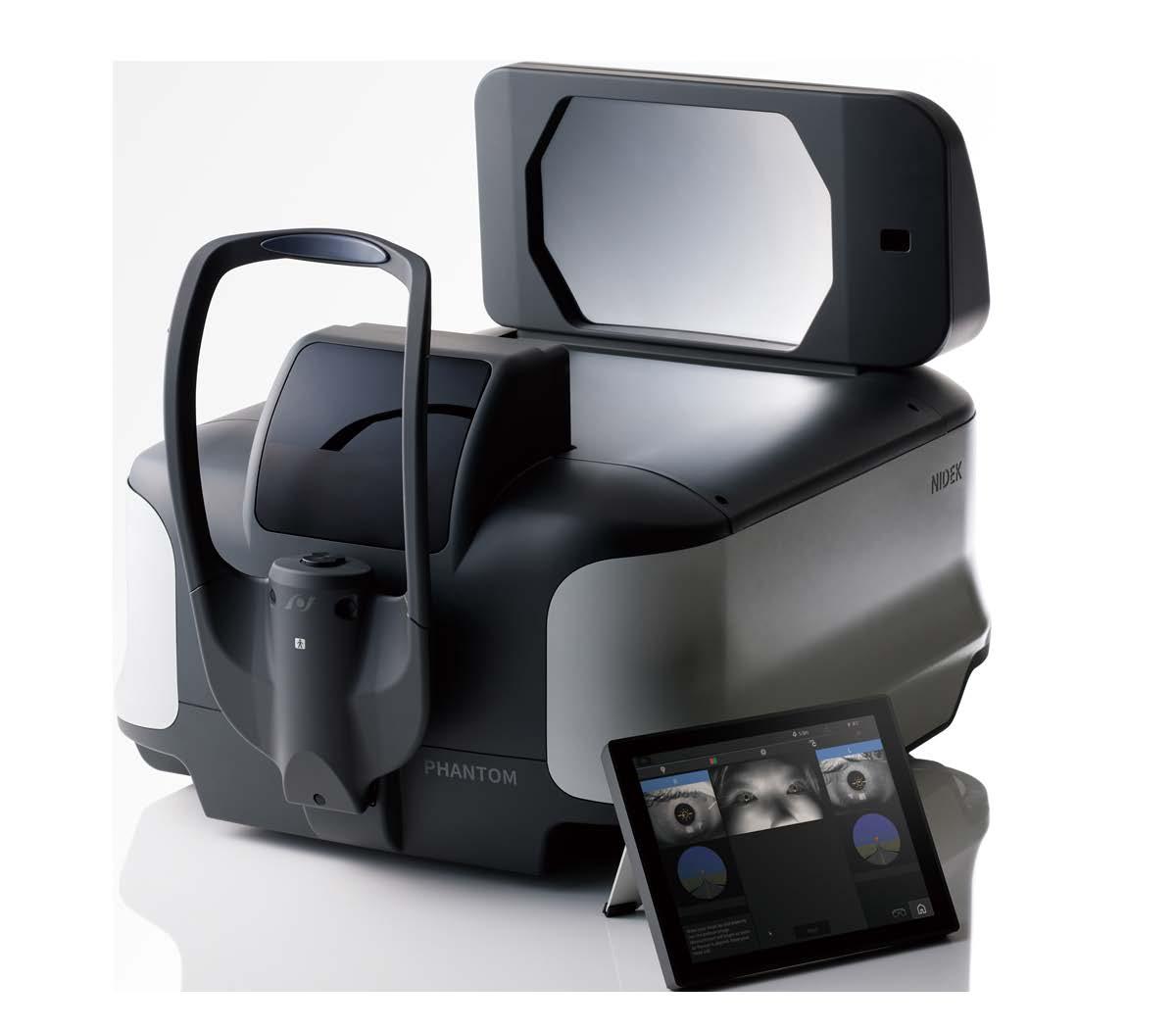
Nidek Co., Ltd. (Gamagori, Japan) has announced the launch of the Phantom openfield refraction system, an ophthalmic device that aims to rethink one of the most familiar parts of the eye exam. The new system is designed to perform refraction without placing any physical lenses in front of the patient’s eyes.
Rather than relying on conventional trial lenses, Phantom uses virtual lenses that simulate the optical properties of real lenses. During testing, the visual chart appears to float in space, allowing both objective and subjective refraction to be conducted without enclosed optics or mechanical lens changes.
Nidek President and CEO, Motoki Ozawa, said in a news release, “Phantom is not just an evolution it is a revolution in refraction. By introducing a completely lens-free, open-field approach, we are creating a new standard for comfort, accuracy and efficiency in refraction.”
Phantom is built around a true open-field design that allows patients to view the chart binocularly without any physical lenses positioned in front of their eyes. According to Nidek, this setup supports refraction under more natural viewing conditions.
NIDEK reports that Phantom automatically adjusts sphere, cylinder and axis values based on patient responses. The company says this level of automation is intended to simplify the refraction process while maintaining measurement accuracy.
support ease of use, including for staff with limited experience in refraction.
The company adds that the interface provides step-by-step instructions throughout the examination process. No additional details on hardware configuration or display specifications were included in the announcement.
data, Nidek notes that a complete refraction examination using Phantom can be completed in under five minutes. The company also suggests that the system’s measurement accuracy may reduce the need for repeated final checks during testing.
The Phantom open-field refraction system is listed as a Class IIa CE 0344-certified product. Nidek notes that availability may vary by country depending on local regulatory

Refractive correction is achieved using virtual lenses designed to replicate the optical characteristics of traditional lenses while maintaining an open visual field throughout the examination. Nidek states that the system enables both objective and subjective refraction to be performed within a single platform.
The Phantom is operated via a touchscreen interface with on-screen guidance. According to Nidek, the guided workflow is designed to
The system will be showcased at MIDO 2026 in Milan, Italy, from January 31 to February 2. Attendees can view the device at the NIDEK booth located at D02, D10, F01 and F09 in Pavilion 3.
As Phantom makes its public debut at MIDO 2026, its reception among clinicians and eye care professionals will offer an early glimpse into how lens-free refraction might fit into everyday practice. Whether it ultimately becomes a new standard or remains a specialized tool, the system underscores a broader shift toward digitally driven, streamlined exam rooms—where even the trusty trial lens may one day take a back seat.

Editor’s Note
A version of this article was first published on MediaMICE.com.




TSun, sport, and screen breaks—on paper, summer should be doing half your job for you. In reality, it’s quietly reinforcing some of eye care’s most persistent half-truths. From myopia myths that overstay their welcome to 20/20 tunnel vision and “seasonal” dry eye that never clocks out, this is the season where assumptions thrive, and clinical nuance gets left out in the heat.
By Michaela Perez
Summer looks like a free pass for eye health. School’s out, children spend more time outdoors, and athletes are in peak competition season. Patients assume that more sun and more activity mean healthier eyes.
But two leading experts argue the opposite: summer exposes a persistent gap between what patients believe and what clinicians actually know to be true. And too often, that gap is left uncorrected.
WCO’s North American Geographic Representative Dr. Michael Nelson (Canada), a clinical optometrist and member of the World Council of Optometry’s (WCO) Public Health Committee, sees this most clearly in one of the profession’s most widely repeated messages.
“Outdoor time for myopia—to intervene before kids have myopia—that’s the most effective way to reduce the risk of a kid becoming myopic,” he said. “But it’s the most overrated way to slow down myopia in someone that’s already myopic.”
Dr. Rajeev Prasad (India), WCO president-elect and sports vision specialist, sees the same pattern from a different angle.
“Most people associate good vision with reading the smallest line and achieving 20/20,” Dr. Prasad said. “But that is only one small component of visual performance.”
Different clinical domains. Same underlying problem: reassuring messages that travel farther than the nuance behind them.
For Dr. Nelson, the most persistent misunderstanding in pediatric eye care begins with advice that is both correct—and incomplete.
Outdoor exposure is one of the most evidence-backed interventions in preventing myopia onset. A landmark randomized clinical trial showed that increasing outdoor time by about 40 minutes per day reduced incidence by roughly 23%1, with systematic reviews reinforcing that protective effect. 2,3
But that benefit has a boundary: it applies to prevention, not progression. Once myopia is established, more time outdoors does not meaningfully slow its advancement. 2,3
“If you have a kid that’s a -1.00 D or a -5.00 D, and the only thing you’re doing is telling them to spend more time outdoors, then
I feel like you’re dropping the ball,” said Dr. Nelson. “Because the studies show that it actually doesn’t have much effect.”
If the child is still +0.50 D or +1.00 D, outdoor time remains exactly the right recommendation.1,2 But, as Dr. Nelson cautioned, “We’ve got to be careful about saying this is doing something that it isn’t doing.”
Even UV protection follows the same pattern of assumption. Summer brings peak exposure, yet many parents equate darker lenses with better protection.
“It’s not about the tint,” said Dr. Nelson. “You can have a clear pair of lenses that have full UV protection and your kid is fully protected.” The misconception is subtle, but the impact is cumulative: UV damage that builds silently over time.
From Dr. Prasad’s perspective, the same oversimplification shapes how vision itself is understood.
Twenty-twenty (20/20) has become shorthand for visual success. But in real-world conditions, it measures only a fraction of what vision actually does. For athletes, contrast sensitivity, depth perception, peripheral awareness and binocular coordination all determine how effectively the visual system performs under pressure.
“An athlete may have 20/20 vision but still struggle in harsh lighting because contrast sensitivity is reduced,” said Dr. Prasad. In practice, this creates a disconnect that patients rarely anticipate: a standard acuity test may be normal, yet performance tells a different story.
Dr. Prasad described a cricketer in his own practice with perfect 6/6 acuity who struggled at the crease. Not because he couldn’t see, but because his visual system wasn’t coordinating effectively under pressure. A month of targeted vision training made a meaningful difference.
The disconnect continues at the ocular surface, where assumptions about seasonality delay care.
“What patients often misunderstand is that dry eye is not only a winter or screen-time problem,” said Dr. Prasad. “Summer heat, air conditioning, wind, dehydration—these can significantly worsen symptoms.”
Each factor destabilizes the tear film: heat accelerates evaporation, air conditioning strips humidity, wind disrupts tear integrity, and dehydration compromises production.
The result is both occasional discomfort and instability in the very system that keeps vision clear. Yet symptoms are often dismissed as
temporary. Patients wait, and clinicians may default to lubricating drops without addressing the chronic nature of the condition.
For athletes, the consequences are immediate: tear film instability leads to fluctuating vision, irritation and reduced consistency under physical exertion. Contact lens wearers face an added burden as dehydration compounds surface stress.
WHEN SUMMER MAKES THE BLIND SPOT VISIBLE
Summer might reduce the demands placed on eye care, but it also reveals where they’re being missed.
In the child whose myopia continues to progress despite following well-meaning advice, in the athlete with perfect acuity who still struggles under real-world conditions, and in the patient whose dry eye worsens in environments assumed to be harmless, the pattern is the same.
What patients believe is not wrong. It’s incomplete. And when that incompleteness goes uncorrected, it becomes a blind spot in care.
The knowledge exists. The tools exist. What remains is whether the profession is willing to close the gap, before assumptions continue to stand in for action.
1. He M, Xiang F, Zeng Y, et al. Effect of time spent outdoors at school on the development of myopia among children in China: a randomized clinical trial. JAMA. 2015;314(11):1142-1148.
2. Xiong S, Sankaridurg P, Naduvilath T, et al. Time spent in outdoor activities in relation to myopia prevention and control: a meta-analysis and systematic review. Acta Ophthalmol. 2017;95:551-566.
3. Dhakal R, Shah R, Huntjens B, Verkicharla PK, Lawrenson JG. Time spent outdoors as an intervention for myopia prevention and control in children: an overview of systematic reviews. Ophthalmic Physiol Opt. 2022;42:545-558.


Dr. Michael Nelson
WCO’s North American Geographic Representative. Clinical optometrist in Alberta, Canada and member of WCO Public Health Committee, as well as WCO’s myopia management standard of care initiative.
docs@eyecanada.ca
Dr. Rajeev Prasad
Clinical optometrist based in India, WCO president-elect and member of the WCO-Alcon dry eye education initiative. rajeev@visualeyezindia.com

As patient volumes fluctuate and the pace of life subtly shifts, summer offers optometrists a rare opportunity: to slow down and recalibrate.
By Marhiel Garrote
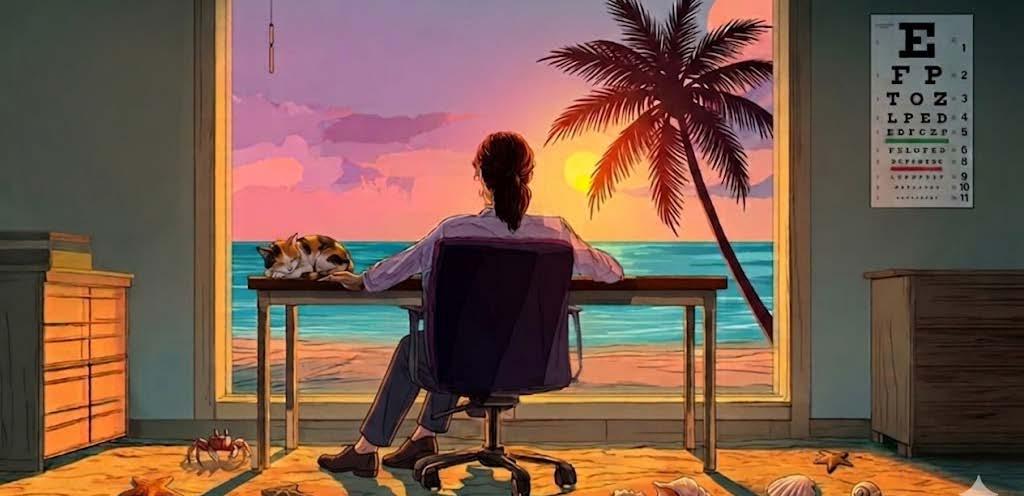
In a profession built on precision, the smallest lapses can carry weight. And increasingly, the variable isn’t always the technology. It’s the clinician behind it.
“Many of us involved in patient care are often moving quickly from one patient to the next while also keeping up with charting, insurance requirements and other administrative responsibilities,” said Dr. Mary Fazelian (United States). “At the same time, some of us are also teaching, lecturing, presenting, educating or participating in research alongside our clinical work.”
After years of mounting clinical demand, staffing pressures and cognitive overload, selfcare is becoming a professional necessity. And for many clinicians, this seasonal transition is an ideal time to take stock.
Summer, with its longer days and subtle shifts in routine, offers something rare in clinical life: a natural pause point. A moment to step back, reassess and reset before the next cycle of demand begins.
Burnout doesn’t always look like exhaustion. It sometimes shows up as a quiet detachment. For Dr. Fazelian, that moment came early in her career, at a time when everything seemed to be moving forward, but something felt internally “off.”
“Like many optometrists early in their careers, there were periods when I was trying to do a lot at once. Building experience, caring for patients… Meeting the high expectations we often place on ourselves can be exciting, but also demanding,” she shared.
“At one point it became clear that I needed to slow down and be more intentional about protecting my energy,” she said. “Loving the profession is important, but sustaining that love over the course of a long career requires balance.”
The turning point wasn’t dramatic. It was subtle.
“When you stop noticing the small positive things in your day, it can be a reminder that your
energy needs attention,” Dr. Fazelian explained. “I realized I was going through the motions of patient care without really appreciating the moments in my day.”
“That awareness helped me reconnect with the importance of self-care so I could be the best version of myself—not only for my patients, but also for my loved ones,” she noted.
The case for self-care is both biological and cultural. A recent study linking rapid eye movement (REM) sleep quality to corneal epithelial health highlights the broader relationship between systemic wellbeing and ocular function.¹ While the data focuses on patient biology, it reinforces a parallel truth, performance in any biological system depends on recovery.
Sleep, in turn, plays a regulatory ocular physiology, affecting tear film stability retinal function, intraocular pressure and inflammatory pathways through circadian and neuroendocrine mechanisms.¹
At a wider systems level, it remains fundamental to neural function, with deprivation linked to measurable declines in cognition, attention and behavioral performance.²
Together, these findings reinforce a consistent principle: recovery is a core physiological requirement that sustains both visual and cognitive performance.
In optometry, where precision matters, even minor declines can have clinical implications. Self-care is mandatory for personal well-being but also for professional responsibility. One that supports consistent, high-quality care.
Despite the scale of the problem, the solution does not always require a drastic change. Dr. Fazelian stressed the role of micro-recovery— brief, intentional pauses that allow clinicians to reset throughout the day.
“I always try to find something small to smile about every day, even if it’s just a flower,” she said. “Taking a moment to step outside, breathe or notice something beautiful can completely reset your mindset.”
These moments may seem simple, but they interrupt the cycle of continued output and allow the mind to regain clarity.
Summer naturally lends itself to these small resets. Longer daylight hours, warmer weather and more opportunities to step outside make it easier to integrate these pauses into the day, whether it’s a short walk between patients or a quiet moment in natural light.
She also highlighted the importance of simple daily rituals. “I wake up early each day and take a moment to enjoy my coffee in the silence and reflect before everything gets busy,” she shared. “That little pause plays a big role in helping set the tone for the rest of my day.”
These indulgences are also strategies for maintaining mental clarity.
Work-life balance is often framed as a division of time, but in practice, it’s better understood as
a division of attention. For clinicians, the goal is not equal hours but full presence.
“I don’t live to work—I work to live,” Dr. Fazelian shared. “I also want to enjoy the moments I spend doing both. When I’m with my patients, I focus fully on them. When I step away from the clinic, I focus on recharging and reconnecting with whatever brings me peace and joy.”
Without boundaries, the mental demands of clinical work extend beyond the clinic, reducing opportunities for recovery. Over time, this leads to chronic fatigue and diminished resilience.
In the rhythm of clinical practice, summer offers a natural window for rest and reset. It is a built-in opportunity to recalibrate.
Patient schedules may shift. Colleagues take leave. The pace, while still demanding, often becomes just flexible enough to create breathing room. For Dr. Fazelian, nature plays a key role.
“Sometimes, after a long or demanding day, just stepping outside for fresh air helps restore my energy and perspective,” she said. “Spending time outdoors, taking a short walk or even planning a brief getaway can make a huge difference.”
Even a brief exposure to a different environment can really improve anyone’s mood, clarity and overall wellbeing—factors that directly influence clinical performance.
The long-term challenge for many ODs is not simply managing stress. It’s designing a career that prevents stress and fatigue.
Sustainability in optometry requires a structural change at the individual level. This includes:
• Building short pauses
• Recognizing early signs of fatigue
• Allowing space for recovery between patients
• Prioritizing consistency over intensity
“A sustainable career isn’t built t hrough constant exhaustion. It’s built through consistency, balance and taking care of our own wellbeing along the way,” Dr. Fazelian noted.
As the profession continues to evolve, self-care is becoming more integrated into both clinical culture and practice design. For optometry, this is not a passing trend. It’s a recalibration of how care is delivered and sustained.
And there may be no better time to begin than summer.
One thing is certain: clear vision starts with the clinician. That’s why it’s essential to prioritize self-care. Not as an extra, but a core part of delivering consistent, high-quality eye care for patients.
Sometimes, it begins with something simple: a pause, a breath or a quiet moment before the clinic opens. And sometimes, it begins with a season that reminds you to reset.
1. Xuan S, Li Z. Linking sleep patterns to eye health: a review of current understanding and future directions. Visual Neuroscience. 2025;42:e010.
2. Yoo SS, Gujar N, et al. The human emotional brain without sleep—a prefrontal amygdala disconnect. Current Biology. 2007;17(20):R877-R878.


Dr. Mary Fazelian Board-certified optometrist and clinical preceptor practicing in Chicago (Illinois, United States). She is passionate about patientcentered care and clinician wellbeing. mary.fazelian@nationalvision.com