DOING BUSINESS
GOLFE EM MOÇAMBIQUE GOLF IN MOZAMBIQUE
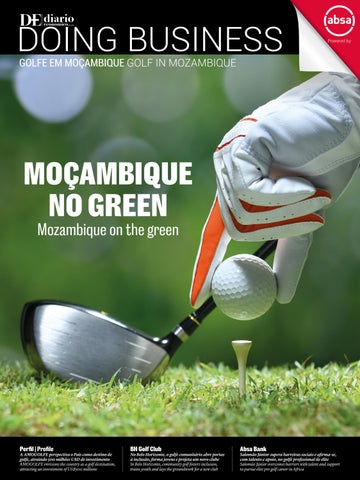
MOÇAMBIQUE NO GREEN
Mozambique on the green

Perfil | Profile
Powered by
Índice • Contents
06
Tele-Off
No golfe, jogam-se relações, influência e negócios – e Moçambique quer afirmar-se nesse mapa global. Golf is a game of relationships, influence, and business – and Mozambique wants to make its mark on the global stage
10
Perfil • Profile
A AMOGOLFE visa o País como destino de golfe, atraindo 500 milhões U$D de investimento. AMOGOLFE envisions the country as a golf destination, attracting as investiment of US$500 million.
14
Fairway
Moçambique tem potencial para ser o segundo maior player do turismo premium continental através do golfe. Mozambique can be Africa’s 2nd premium golf tourism hub.
16
Clubhouse
Da história centenária da Polana à modernização do Clube da Beira, o golfe moçambicano cruza memória, transparência, parcerias e ambição de crescimento nacional renovada. From Polana’s rich history to Clube da Beira’s modernization, Mozambican golf unites tradition, transparency, partnerships and national ambition.
24
Buraco 19 • Hole 19
Mais do que desporto, o golfe é hoje uma indústria global que gera turismo, investimento e empregos. More than just a sport, golf is now a global industry that drives tourism, investment, and job creation.
26
BH Golf Club
No Belo Horizonte, o golfe comunitário abre portas à inclusão, forma jovens e projeta um novo clube
In Belo Horizonte, community golf fosters inclusion, trains youth and lays the groundwork for a new club
30
Inhambane
Inhambane quer afirmar-se no golfe com investimento e turismo de valor. Inhambane aims to make its mark in golf with investment, high-value tourism & local growth.
32 & 36
ABSA
Salomão Júnior supera barreiras sociais e afirma-se, com talento e apoio, no golfe profissional de elite. Salomão Júnior overcomes barriers with talent and support to pursue elite pro golf career in Africa.
O Swing do Absa, ou como uma verdadeira equipa veste a camisola do Banco nos Greens.
The Absa Swing, or how a true team wears the Bank’s jersey on the greens.
40
Lifestyle
Os cinco melhores campos de golfe em África (mais um no Médio Oriente). Discover the five best golf courses in Africa (and one in the Middle East).
42
Explicador
Dicas para iniciantes na prática do golfe, desde a compra de equipamento até às atitudes mais corretas no green Golden tips for golf beginners, from buying equipment to the proper etiquette on the green.
O Doing Business é uma nova linha editorial do Diário Económico, dedicada à análise aprofundada de sectores estratégicos da economia que transita do Digital para o Papel. Ao longo das próximas edições, o Doing Business irá destacar áreas-chave do ambiente de negócios, com uma abordagem orientada para decisores e investidores.
The Doing Business is a new editorial line of Diário Económico, dedicated to in-depth analysis of strategic sectors of the economy, transitioning from Digital to Print. In the coming editions, Doing Business will highlight key areas of the business environment, with an approach tailored to decision-makers and investors.
DIRECTOR EXECUTIVO | EXECUTIVE
DIRECTOR Pedro Cativelos
EDITOR | Elmano Madaíl
JORNALISTAS | JOURNALISTS Ana Mangana, Felisberto Ruco, Nário Sixpene
DESIGN | José Mundundo
FOTOGRAFIA | PHOTO Mariano Silva
COMERCIAL & MARKETING | Pedro Tinoco pedro.tinoco@media4development.com
TIRAGEM | PRINTING 4 500
MEDIA4DEVELOPMENT
Rua Ângelo Azarias Chichava nº 311 A — Sommerschield, Maputo – Moçambique
Maio - May, 2026 • N.º 01
País joga futuro no Green
The Country stakes on the Green
NUM TEMPO em que o golfe é, não raro, visto como desporto de nicho, de elites, em Moçambique a modalidade começa a ganhar um significado amplo. Ao longo destas páginas, traçamos o retrato possível de um sector em movimento, onde tradição, ambição económica, inclusão social e visão estratégica começam a jogar no mesmo campo.
Estas páginas levam-nos à ideia de que o golfe pode ser mais do que lazer: pode ser turismo premium, investimento, diplomacia económica e plataforma de relacionamento. Esse enquadramento ganha corpo com a aposta em Inhambane, chamada a afirmar-se como novo pólo do turismo de golfe, e com a visão da AMOGOLFE, que quer posicionar o País entre os destinos mais atractivos do continente.
Mas esta é também uma revista de pessoas e lugares concretos. Reencontramos a história longa do Clube de Golfe da Polana, património desportivo e humano que resistiu ao tempo e continua a reinventar-se, e percebemos como os clubes podem ser espaços de formação cívica, convívio e projecção económica. A esse mapa junta-se, ainda, a Beira, onde o golfe procura reforçar a sua visibilidade e afirmar-se como activo turístico e empresarial.
Ao mesmo tempo, vemos nascer, no Belo Horizonte, um movimento comunitário que procura democratizar a modalidade, aproximando crianças e jovens de um universo que durante demasiado tempo lhes pareceu distante. E percebemos também como o sector se insere numa cadeia de valor mais vasta, ligada ao turismo, ao imobiliário, à hospitalidade e ao estilo de vida.
A dimensão humana ganha força na história de Salomão Júnior, jovem atleta que saiu do Polana Caniço para perseguir o sonho do profissionalismo, com talento, disciplina e o apoio do ABSA Bank Moçambique. O seu percurso lembra-nos que o golfe também pode abrir caminhos, transformar destinos e inspirar novas gerações.
Entre clubes históricos, projectos emergentes, apostas regionais e referências internacionais, esta edição propõe uma ideia simples: o golfe moçam bicano está a deixar de ser promessa abstracta para se tornar narrativa concreta. E, com o apoio do ABSA Bank Moçambique, essa narrativa ganha visibilida de e confiança para crescer. À dimensão continental.
AT A TIME when golf is often seen as a niche sport, one for elites, in Mozambique the game is beginning to take on a broader meaning. Across these pages, we sketch the fullest possible portrait of a sector in motion, where tradition, economic ambition, social inclusion and strategic vision are beginning to play on the same course.
These pages lead us to the idea that golf can be more than leisure: it can be premium tourism, investment, economic diplomacy and a platform for relationships. That framework takes shape through the bet on Inhambane, which is being called upon to establish itself as a new hub for golf tourism, and through the vision of AMOGOLFE, which wants to position the country among the continent’s most attractive destinations. But this is also a magazine about real people and real places. We revisit the long history of the Polana Golf Club, a sporting and human heritage that has withstood time and continues to reinvent itself, and we see how clubs can be spaces for civic formation, social interaction and economic projection. To that map we can also add Beira, where golf is seeking to strengthen its visibility and establish itself as a tourism and business asset.
At the same time, we see a community movement emerging in Belo Horizonte that seeks to democratise the sport, bringing children and young people closer to a world that for too long seemed far removed from them. And we also understand how the sector fits into a broader value chain linked to tourism, real estate, hospitality and lifestyle.
The human dimension comes through strongly in the story of Salomão Júnior, a young athlete who left Polana Caniço to pursue the dream of becoming a professional, with talent, discipline and the support of ABSA Bank Mozambique. His journey reminds us that golf can also open paths, transform destinies and inspire new generations. Between historic clubs, emerging projects, regional bets and international references, this edition puts forward a simple idea: Mozambican golf is ceasing to be an abstract promise and is becoming a concrete narrative. And with the support of ABSA Bank Mozambique, that narrative gains visibility and confidence to grow. To continental scale. And beyond.

O ESCRITÓRIO DE 18 BURACOS
Moçambique quer alinhar-se com a elite africana que percebeu no golfe um acelerador económico silencioso e de longo prazo. A África do Sul, mesmo aqui ao lado já o faz há anos e anos; agora, o País começa a posicionar-se no mesmo tabuleiro de poder.

THE 18-HOLE OFFICE
Mozambique wants to align itself with the African elite that has understood golf as a silent, long-term economic accelerator. South Africa, right next door, has been doing it for years and years; now the country is beginning to position itself on the same board of power.
Ogolfe, enquanto fenómeno económico global, tem sido, com frequência, mal interpretado por quem o lê apenas como lazer caro e lento. Não precisa de multidões para gerar economia real –prospera precisamente porque elimina ruído, dramatização e espectáculo. Decisões relevantes exigem latitude mental, tempo e ausência de urgência. O percurso de 18 buracos – cerca de quatro horas – pode valer economicamente mais do que várias reuniões formais. O golfe funciona como uma economia de confiança, repetição disciplinada e filtragem selectiva.
É também um mecanismo de distribuição de poder: quem joga tende a decidir capital, alocar crédito, comprar activos, financiar projectos e influenciar políticas. Por isso, em várias geografias avançadas, o golfe converteu-se numa variável estrutural de política económica aplicada, e não um simples indicador de lazer. Em mercados emergentes, oferece algo cada vez mais raro – estabilidade. Cresce devagar, mas dificilmente colapsa; não depende da emoção das multidões, antes depende do acumulado.
Um processo de maturação com vagar
O golfe é frequentemente descrito como um desporto lento. Na realidade, a modalidade consubstancia-se num processo decisório que vai maturando – e é precisamente por isso que se mostra tão eficaz para urdir e fechar negócios. Enquanto que a economia digital comprimiu o tempo negocial em minutos, o jogo obriga executivos a caminharem lado a lado durante horas, conversando sem uma agenda rígida e partilhando longos intervalos de silêncio. Esse tempo, aparentemente estéril, torna-se altamente produtivo. No campo de golfe o teatro da negociação desaparece. Não há mesa a separar partes, nem apresentações preparadas, nem assessores a medir cada palavra enunciada. A hierarquia continua lá, mas a rigidez da formalidade dissolve-se. Um investidor e um ministro deixam de ser cargos e passam a ser parceiros temporários de percurso.
A conversa começa trivial – o vento, a tacada falhada... – e evolui para risco, confiança e dinheiro. Não há um momento oficial em que a negociação começa; por isso, também não
G100
mil milhões de dólares, estimativa do valor global da indústria mundial do golfe (inclui turismo, campos, equipamentos e eventos)
billions of dollars, estimated global value of the world golf industry (includes tourism, courses, equipment and events)
olf, as a global economic phenomenon, has often been misunderstood by those who see it merely as expensive, slow leisure. It does not need crowds to generate real economic value — it thrives precisely because it removes noise, dramatisation and spectacle. Important decisions require mental latitude, time and the absence of urgency. An 18-hole round — roughly four hours — may be worth more economically than several formal meetings. Golf works as an economy of trust, disciplined repetition and selective filtering.
It is also a mechanism for the distribution of power: those who play tend to decide capital, allocate credit, buy assets, finance projects and influence policy. That is why, in several advanced geographies, golf has become a structural variable in applied economic policy, rather than a simple indicator of leisure. In emerging markets, it offers something increasingly rare — stability. It grows slowly, but it rarely collapses; it does not depend on the emotions of crowds, but on accumulation.
A slow maturation process
9
mil milhões de dólares é o valor global estimado para o segmento de equipamentos (clubes, bolas e acessórios), que é o submercado mais pequeno do ecossistema. billions of dollars is the estimated global value for the equipment segment (clubs, balls, and accessories), which is the smallest submarket in the golf ecosystem.
Golf is often described as a slow sport. In reality, the game embodies a decision-making process that matures over time — and that is precisely why it proves so effective in weaving and closing deals. While the digital economy has compressed negotiation time into minutes, the game forces executives to walk side by side for hours, talking without a rigid agenda and sharing long intervals of silence. That apparently sterile time becomes highly productive.
On the golf course, the theatre of negotiation disappears. There is no table separating the parties, no prepared presentations, no advisers measuring every word spoken. Hierarchy remains, but the rigidity of formality dissolves. An investor and a minister cease to be offices and become temporary partners in the same journey.
The conversation begins with trivialities — the wind, the missed shot... — and evolves towards risk, trust and money. There is no official moment when negotiation begins; for that reason, there is also no clear moment at which someone can refuse it.
existe um momento claro para que alguém a possa recusar.
O jogo funciona ainda como teste comportamental contínuo. O golfe depende da auto-regulação: o próprio jogador penaliza os seus erros. Para quem avalia parceiros, um pormenor comportamental como este é altamente revelador. A paciência sob pressão, o controlo emocional e o respeito por regras invisíveis ou não enunciadas explicitamente tornam-se indicadores tão relevantes como uma auditoria financeira. No golfe, observa-se o carácter, e não só estratégias.
De igual modo, está presente uma dimensão diplomática. A duração da partida cria proximidade sem confronto – tem o tempo suficiente para gerar confiança, e é demasiado curta para permitir o conflito. Trata-se de uma zona neutra: não pertence ao escritório de nenhum dos lados nem ao território político de ninguém. Ao longo dos 18 buracos, as posições mais rígidas tendem a suavizar e propostas rejeitadas regressam como hipóteses informais. Muitas decisões não ocorrem no campo, mas é nele que se tornam possíveis.
A diplomacia no green
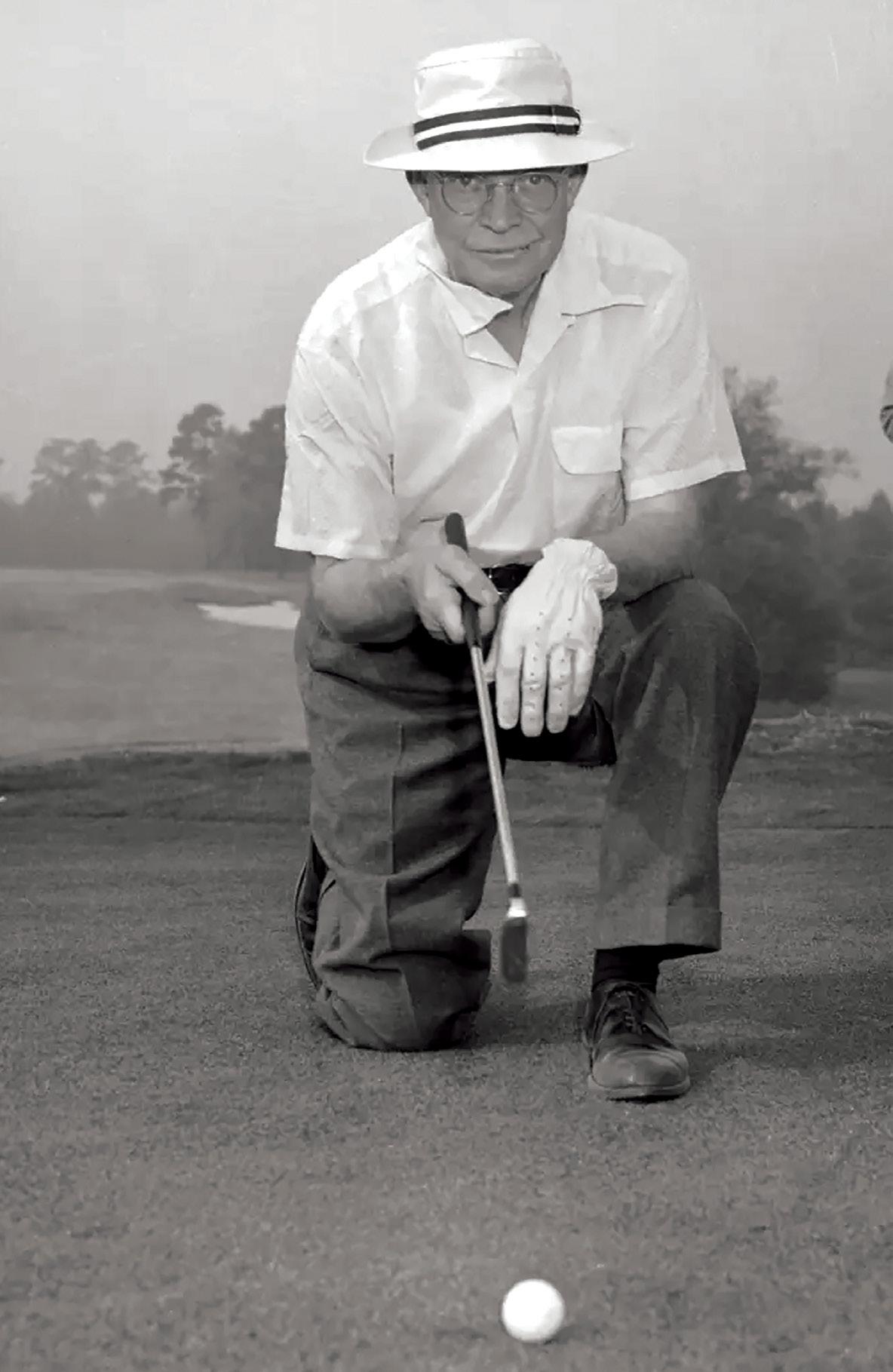
Foi o que percebeu claramente o 34.º Presidente dos EUA, Dwight D. Eisenhower. Golfista inveterado, criou e popularizou a “ green jacket diplomacy ”. Enquanto foi locatário da Casa Branca (1953-1961), jogou mais de 8o0 partidas de golfe, usando o desporto como ferramenta de diplomacia informal para robustecer laços, por exemplo, com o Japão pós-Segunda Guerra Mundial. E, de tacada em tacada, criou um ambiente descontraído que facilitou a reconciliação de ex-inimigos. Com efeito, em Junho de 1957, durante a visita de Estado do primeiro-ministro japonês Nobusuke Kishi aos EUA, jogaram no Burning Tree Golf Course, perto de Washington, D.C., em dois foursomes : Eisenhower e Kishi com o senador republicano Prescott Bush e Takizo Matsumoto (do parlamento nipónico).
A sessão de golfe gerou laços pessoais e construiu uma amizade que levou à cooperação efectiva na economia e na defesa, resultando, aliás, no Tratado de Cooperação Mútua e Segurança EUA-Japão (1960).
Aparentemente, Eisenhower fez escola, e vários dos sucessores na Sala Oval adoptaram a “ green jacket diplomacy ”, criando ambientes informais para negociações sensíveis, des-
The game also functions as a continuous behavioural test. Golf depends on self-regulation: the player penalises his own mistakes. For anyone assessing partners, a behavioural detail like this is highly revealing. Patience under pressure, emotional control and respect for invisible or unspoken rules become indicators as relevant as a financial audit. In golf, one observes character, not just strategy. Likewise, there is a diplomatic dimension. The length of the round creates proximity without confrontation — it lasts long enough to generate trust, and is too short to allow conflict. It is a neutral zone: it belongs neither to one side’s office nor to anyone’s political territory. Over the course of 18 holes, the most rigid positions tend to soften and rejected proposals return as informal possibilities. Many decisions do not take place on the course, but it is there that they become possible.
Diplomacy on the green
This is something clearly understood by the 34th President of the United States, Dwight D. Eisenhower. An avid golfer, he created and popularised “green jacket diplomacy”. While he occupied the White House (1953–1961), he played more than 800 rounds of golf, using the sport as a tool of informal diplomacy to strengthen ties, for example, with post-Second World War Japan. And, shot by shot, he created a relaxed environment that helped facilitate reconciliation between former enemies.
mil milhões de dólares é a avaliação global dos campos e infra-estruturas de golfe do mundo inteiro, sendo a base operacional da indústria. billions of dollars is the global valuation of golf courses and infrastructure worldwide, forming the operational basis of the industry.
Indeed, in June 1957, during the state visit of Japanese Prime Minister Nobusuke Kishi to the United States, they played at Burning Tree Golf Course, near Washington, D.C., in two foursomes: Eisenhower and Kishi alongside Republican senator Prescott Bush and Takizo Matsumoto (from the Japanese parliament).
The golf session created personal ties and built a friendship that led to effective cooperation in the economy and defence, resulting, moreover, in the US-Japan Treaty of Mutual Cooperation and Security (1960). Apparently, Eisenhower set a pattern, and several of his successors in the Oval Office adopted “green jacket diplomacy”, creating informal settings for sensitive negotiations, from John F. Kennedy (1961–1963) to the current President, Donald Trump.
desde John F. Kennedy (1961-1963) até ao Presidente actual, Donald Trump.
Ora, a África do Sul oferece o exemplo mais claro de toda esta lógica aplicada à economia. Aquele país construiu uma indústria consolidada, com mais de quatro centenas de campos e dezenas de milhares de empregos directos, gerando cerca de 15 mil milhões de dólares anuais, e perto de 4% do PIB quando considerados os efeitos indirectos em turismo, imobiliário e eventos.
O campo não é apenas infra-estrutura desportiva – é parte da política turística e do posicionamento internacional do país do arco-íris e do rand, integrando rotas de viagem, torneios e investimento imobiliário num ecossistema económico contínuo. Assim, onde surgem resorts e campos, seguem-se investidores e projectos. O jogo funciona como uma espécie de infra-estrutura relacional: antes do contrato existe a relação; antes da relação existe o tempo partilhado. O turismo de golfe vende paisagem, mas, e sobretudo, cria contexto para a tomada de decisões económicas. Num mundo vertiginoso, onde tudo acontece à velocidade de um instante, quatro horas tornaram-se uma vantagem competitiva. O valor do golfe não radica, pois, na competição – encontra-se antes na conversa entre tacadas, longa o suficiente para construir confiança e curta quanto baste para não se parecer com uma negociação. Talvez seja por isso que tantos negócios, por esse mundo fora, começam com um simples: “Vamos jogar?”.
mil milhões de dólares foram movimentados em 2025 pelo turismo internacional de golfe, principal fonte de receitas do sector
billions of dollars were projected to be generated by international golf tourism in 2025, the sector’s main source of revenue.
South Africa offers the clearest example of all this logic applied to the economy. That country has built a consolidated industry, with more than four hundred courses and tens of thousands of direct jobs, generating around US$15 billion a year, and close to 4% of GDP when indirect effects in tourism, real estate and events are taken into account.
A golf course is not just sports infrastructure — it is part of tourism policy and of the international positioning of the country of the rainbow and the rand, integrating travel routes, tournaments and property investment into a continuous economic ecosystem.
Thus, where resorts and courses appear, investors and projects follow. The game functions as a kind of relational infrastructure: before the contract comes the relationship; before the relationship comes shared time. Golf tourism sells scenery, but above all it creates context for economic decision-making.
In a dizzying world where everything happens at the speed of an instant, four hours have become a competitive advantage. The value of golf, then, does not lie in competition — it lies in the conversation between shots, long enough to build trust and short enough not to feel like a negotiation. Perhaps that is why so many deals around the world begin with a simple: “Shall we play?”
“GOLFE PODE ATRAIR 500 MILHÕES U$D NA PRÓXIMA DÉCADA”
“GOLF COULD ATTRACT
US$500 MILLION OVER THE NEXT DECADE””
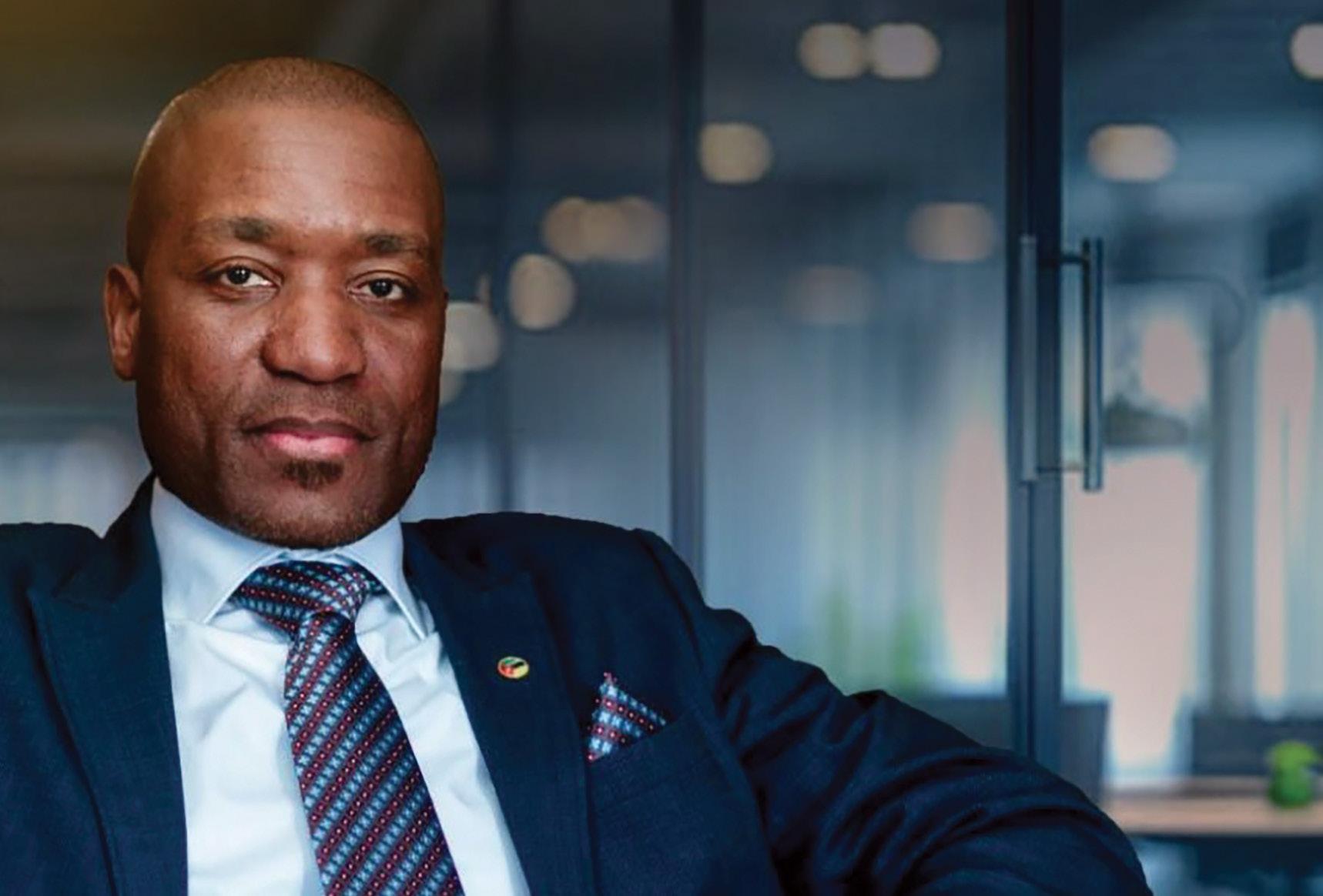
AAssociação Moçambicana do Golfe (AMOGOLFE) quer transformar o País num dos principais destinos de golfe em África e atrair cerca de 500 milhões de dólares em investimento turístico e imobiliário na próxima década. Danilo Nhantumbo, presidente da AMOGOLFE, detalha os projectos prioritários, a estratégia para captar developers estrangeiros, e o papel dos torneios na diplomacia económica. Destaca ainda medidas de inclusão juvenil, formação técnica e envolvimento comunitário para tornar o golfe num motor de desenvolvimento sustentável e afirmar o País como potência regional daquela indústria.
Como surgiu a AMOGOLFE e com que objectivos?
A AMOGOLFE surge da necessidade de estruturar a indústria do golfe em Moçambique. Como já organizava torneios na África do Sul, Angola, Dubai e até nos EUA, percebi que o País tinha condições extraordinárias, mas faltava coordenar todo o ecossistema. Golfe não é só swing e tacos; envolve operadores turísticos, manutenção especializada, formação de greenkeepers, gestão de clubes e merchandising. Criámos a AMOGOLFE para organizar, promover e profissionalizar este universo. 2025 foi marcante: o Presidente da República declarou Inhambane a primeira zona especial para o turismo do golfe – nunca o Estado tinha reconhecido o sector com esta clareza.
The Mozambican Golf Association (AMOGOLFE) wants to turn the country into one of Africa’s main golf destinations and attract around US$500 million in tourism and real estate investment over the next decade. Danilo Nhantumbo, president of AMOGOLFE, details the priority projects, the strategy for attracting foreign developers, and the role of tournaments in economic diplomacy. He also highlights measures for youth inclusion, technical training and community involvement to make golf a driver of sustainable development and establish the country as a regional power in this industry.
How did AMOGOLFE come about, and with what objectives?
AMOGOLFE arose from the need to structure the golf industry in Mozambique. As I was already organising tournaments in South Africa, Angola, Dubai and even the United States, I realised the country had extraordinary conditions, but the entire ecosystem still lacked coordination. Golf is not just swing and clubs; it involves tour operators, specialised maintenance, the training of greenkeepers, club management and merchandising. We created AMOGOLFE to organise, promote and professionalise this universe. 2025 was a landmark year: the President of the Republic declared Inhambane the first special golf tourism zone — never
D.R.
Hoje, a AMOGOLFE é uma ponte entre Governo, investidores e comunidades locais, para transformar o golfe numa indústria geradora de riqueza e atracção de capital.
Quem são os membros da AMOGOLFE?
Stakeholders de toda a cadeia de valor: clubes, operadores turísticos, empresas de aviação, jovens profissionais, fabricantes de têxteis e equipamentos, e empreendedores locais. Golfe é indústria, não é só desporto.
Porquê Inhambane e que projectos existem?
Inhambane é turística por natureza, com paisagens que competem com destinos globais – há poucos sítios no mundo onde se pode jogar com vista para o Índico. E tem uma cultura hospitaleira enraizada, infra-estruturas essenciais e acessos aéreos directos para Joanesburgo, um dos maiores mercados de golfistas africanos. Já há trabalhos técnicos em curso para três pólos definidos pelo Presidente: Vilanculos, Tofo e Barra. Tivemos a visita de developers para analisar a topografia e desenhar campos de classe internacional para competir com os melhores de África. Em dois anos, vamos inaugurar o primeiro campo de referência, criando um novo ciclo económico para a província.
Que iniciativas da AMOGOLFE destacaria?
Organizar o Presidential Golf Day Angola foi histórico, sobretudo pela recepção do Presidente João Lourenço. Expandimos para o Dubai, das praças mais competitivas do mundo, provando que Moçambique pode operar nos mais altos padrões. O golfe é uma plataforma excepcional para diplomacia económica. Em Moçambique, criámos o Presidential Golf Day, o First Lady Golf Classic e o Patriotic Golf Challenge, envolvendo militares, diplomatas, empresários e jovens. Os torneios têm impacto social directo: apoiam a educação, comunidades vulneráveis, famílias de militares e a filantropia. E criam redes entre decisores que dificilmente se encontram fora do green
Como avalia os campos existentes?
Há quatro campos principais: Polana e Beira (centenários); Xinavane (privado); e o da empresa em Gurué, na Zambézia. Nenhum tem os requisitos para competições de alto nível. Faltou investimento em manutenção, gestão profissional, formação técnica e visão estratégica. O que pretendemos agora é torná-los centros de excelência, com gestão moderna, capacidade de atrair turistas de alta renda e ligação aos serviços turísticos circundantes.
before had the State recognised the sector with such clarity. Today, AMOGOLFE is a bridge between government, investors and local communities, helping transform golf into an industry that generates wealth and attracts capital.
Who are AMOGOLFE’s members?
Stakeholders from across the entire value chain: clubs, tour operators, aviation companies, young professionals, textile and equipment manufacturers, and local entrepreneurs. Golf is an industry, not just a sport.
Why Inhambane, and what projects are there?
Inhambane is naturally a tourism destination, with landscapes that compete with global destinations — there are few places in the world where one can play with a view over the Indian Ocean. It also has a deeply rooted culture of hospitality, essential infrastructure and direct air links to Johannesburg, one of the largest African golfer markets. Technical work is already under way for three hubs defined by the President: Vilanculos, Tofo and Barra. We have hosted developers who came to analyse the topography and design international-class courses capable of competing with the best in Africa. Within two years, we will inaugurate the first flagship course, creating a new economic cycle for the province.
Which AMOGOLFE initiatives would you highlight?
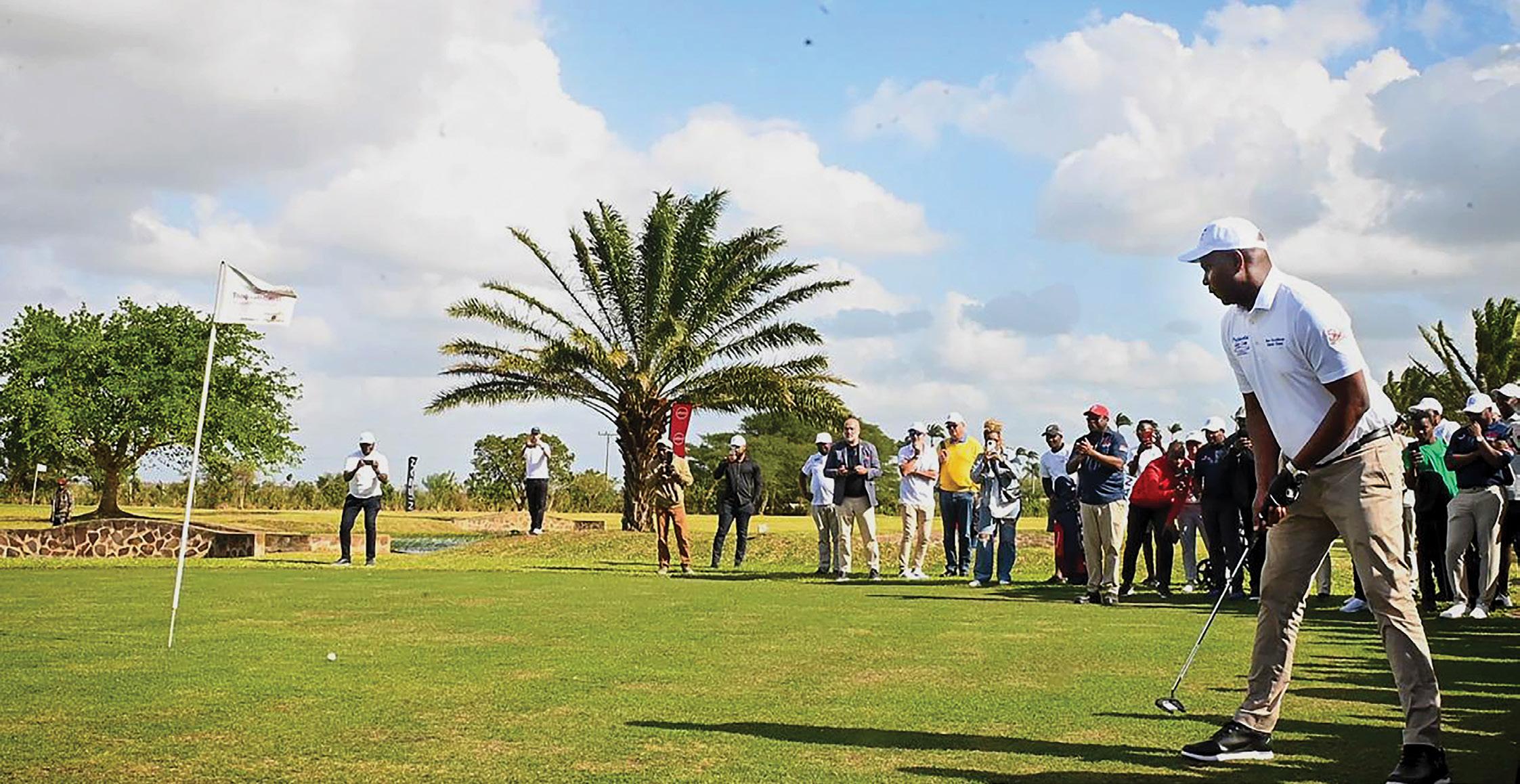
Organising the Presidential Golf Day Angola was historic, particularly because of the welcome from President João Lourenço. We expanded into Dubai, one of the most competitive markets in the world, proving that Mozambique can operate at the highest standards. Golf is an exceptional platform for economic diplomacy. In Mozambique, we created the Presidential Golf Day, the First Lady Golf Classic and the Patriotic Golf Challenge, involving military personnel, diplomats, businesspeople and young people. The tournaments have a direct social impact: they support education, vulnerable communities, military families and philanthropy. And they create networks among decision-makers who would hardly meet outside the green.
How do you assess the existing courses?
There are four main courses: Polana and Beira (both over a century old); Xinavane (private); and the company course in Gurué, in Zambézia. None of them meets the requirements for high-level competitions. There has been a lack of investment in maintenance, professional management, technical training and strategic vision. What we want now is to turn them into centres of excellence, with modern management, the
A construção de golf estates e golf resorts será inevitável. É isso que transforma regiões inteiras, como Portugal e África do Sul já provaram: o imobiliário cresce, surgem empregos, valorizam-se terrenos e criam-se novos mercados.
O que impede a massificação do golfe?
O maior desafio é cultural: inserir o golfe no léxico do desenvolvimento nacional. Cultivou-se a ideia de que golfe era elitista, inacessível e desligado da realidade moçambicana. Isso está a mudar. Hoje, todos os sábados, miúdos do bairro treinam gratuitamente no driving range do Belo Horizonte, em Boane, graças a uma iniciativa inspirada pela AMOGOLFE – o golfe pode ser instrumento de inclusão social. Outro desafio é a formação: precisamos de gestores, treinadores, árbitros, técnicos, greenkeepers. Precisamos de massificar competências.
Como o País se pode tornar competitivo?
Precisamos de cinco campos de classe mundial, estrategicamente posicionados. O turismo de golfe é altamente rentável porque mobiliza viajantes de grande poder de compra: no Dubai, segundo a Deloitte, o golfe gera mais de 6,3 mil milhões de MT por ano; em Portugal, muitos resorts só existem porque um campo de golfe atrai residentes e visitantes. O nosso diferencial está na natureza. A costa moçambicana tem condições invejáveis: água, clima, solos favoráveis e hospitalidade. Temos de vender este sonho com confiança.
Há estratégia para atrair investidores internacionais?
Em 2026 realizaremos, em Inhambane, o Golf Summit Moçambique, a primeira conferência internacional da indústria do golfe no País. Será uma plataforma anual que reunirá os maiores designers, developers, gestores de resorts e investidores do mundo. Esta conferência colocará Moçambique no mapa global e abrirá portas a projectos que hoje parecem distantes.
Qual o impacto económico estimado para a próxima década?
A nossa estimativa conservadora aponta para mais de 31,8 mil milhões de MT (500 milhões de dólares) em investimento directo e indirecto. Falamos de campos, resorts, infra-estrutura turística, imobiliário associado, eventos internacionais, formação e serviços. O golfe será um dos motores da diplomacia económica e pode transformar regiões inteiras, sobretudo no litoral. E ser uma das chaves para reposicionar o País no turismo internacional.
ability to attract high-income tourists and connections to the surrounding tourism services. The construction of golf estates and golf resorts will be inevitable. That is what transforms entire regions, as Portugal and South Africa have already shown: real estate expands, jobs emerge, land values rise and new markets are created.
What prevents golf from becoming more widespread?
The biggest challenge is cultural: integrating golf into the lexicon of national development. The idea was cultivated that golf was elitist, inaccessible and disconnected from Mozambican reality. That is changing. Today, every Saturday, children from the neighbourhood train for free at the Belo Horizonte driving range in Boane, thanks to an initiative inspired by AMOGOLFE — golf can be a tool for social inclusion. Another challenge is training: we need managers, coaches, referees, technicians and greenkeepers. We need to broaden skills on a large scale.
How can the country become competitive?
We need five world-class courses, strategically positioned. Golf tourism is highly profitable because it draws travellers with strong purchasing power: in Dubai, according to Deloitte, golf generates more than 6.3 billion meticais a year; in Portugal, many resorts exist only because a golf course attracts residents and visitors. Our differentiating factor lies in nature. Mozambique’s coastline has enviable conditions: water, climate, favourable soils and hospitality. We must sell this dream with confidence.
Is there a strategy to attract international investors?
In 2026 we will hold, in Inhambane, the Mozambique Golf Summit, the country’s first international conference for the golf industry. It will be an annual platform bringing together the world’s leading designers, developers, resort managers and investors. This conference will place Mozambique on the global map and open the door to projects that today still seem distant.
What is the estimated economic impact over the next decade?
Our conservative estimate points to more than 31.8 billion meticais (US$500 million) in direct and indirect investment. We are talking about courses, resorts, tourism infrastructure, associated real estate, international events, training and services. Golf will be one of the drivers of economic diplomacy and can transform entire regions, especially along the coast. And it can be one of the keys to repositioning the country in international tourism.

MOÇAMBIQUE NO GREEN: DA TEORIA AO POSICIONAMENTO ESTRATÉGICO
MOZAMBIQUE ON THE GREEN: FROM THEORY TO STRATEGIC POSITIONING
Moçambique está no tempo certo. Tem diante de si uma década onde o crescimento económico poderá ser expressivo, sobretudo à medida que o ecossistema de energia e infra-estrutura maturar e começar a projectar valor transversal sobre a economia doméstica. A pergunta central é: em que produção de valor adicional Moçambique se posiciona para capturar efeitos multiplicadores e não apenas efeitos primários extractivos? O golfe oferece uma resposta surpreendentemente sólida: turismo de elevado nível.
Moçambique tem clima, território, litoral e capital natural para criar um produto boutique que não concorre por volume mas por rendimento por visitante. E este é o jogo do futuro. O Presidential
Mozambique is at the right moment. It faces a decade in which economic growth may be significant, especially as the energy and infrastructure ecosystem matures and begins to project broader value across the domestic economy. The central question is: in what additional value production will Mozambique position itself to capture multiplier effects rather than merely primary extractive effects? Golf offers a surprisingly solid answer: high-end tourism.
Mozambique has the climate, territory, coastline and natural capital to create a boutique product that does not compete on volume, but on yield per visitor. And this is the game of the future. The Presidential Golf Day — integrated
Golf Day – integrado nas comemorações dos 50 anos da Independência – não foi apenas um evento político. Foi um sinal de maturidade estratégica. Foi o reconhecimento de que o País precisa de plataformas económicas de relacionamento que não dependam exclusivamente do pipeline extractivo nem do humor político de ciclos curtos. A aproximação com a Banca nesta agenda é igualmente sintomática. O facto de instituições como o ABSA Moçambique estarem a qualificar os seus Relationship Managers através do golfe confirma que o sector privado interpretou o que o Estado ainda está a aprender: redes empresariais não se constroem em auditórios, constroem-se na relva. Moçambique nunca será destino de massas de golfe. Nem precisa de o ser. O País pode ser destino premium de golfe. E isto é muito mais interessante economicamente. A grande disputa em África não será volume; será yield.
Turismo como vector estruturante
Moçambique tem uma oportunidade ímpar: posicionar-se como o próximo destino africano de turismo premium em segmentos de nicho, elevando a ancoragem económica do País independentemente da volatilidade emocional das commodities. O golfe, se integrado numa política clara e disciplinada de investimento turístico, pode gerar efeitos persistentes de diversificação.
Porque quando se fala de upscale tourism, fala-se de multiplicadores efectivos: hotelaria premium, propriedades privadas de segundo rendimento, restauração, náutica, aviação regional, retalho, serviços concierge, e vida urbana premium
Esta lógica será relevante nos próximos 5 anos, quando os corredores turísticos de África Austral se tornarem mais integrados, digitais, reserváveis e transaccionáveis globalmente. Moçambique pode estar – pela primeira vez – a entrar num segmento onde pode competir pela sofisticação e não pelo preço. Não há indústria melhor para testar esta ambição: o golfe exige terra, disciplina, capital paciente, tempo e narrativa. E Moçambique tem exactamente estes factores. O País está perante a oportunidade de se tornar um actor relevante num sector económico onde a África do Sul cristalizou como referência continental – mas onde ainda há espaço para um segundo player estratégico com ambição de valor acrescentado, e não apenas estatística turística. O golfe é uma economia paciente. E Moçambique precisa – talvez pela primeira vez desde a fase pós-guerra – de indústrias que sejam pacientes, compósitas, silenciosas e profundas.
into the celebrations of the 50th anniversary of Independence — was not merely a political event. It was a sign of strategic maturity. It was recognition that the country needs economic platforms for relationship-building that do not depend exclusively on the extractive pipeline or on the political mood of short cycles. The banking sector’s growing proximity to this agenda is equally symptomatic. The fact that institutions such as ABSA Mozambique are qualifying their Relationship Managers through golf confirms that the private sector has understood what the State is still learning: business networks are not built in auditoriums, they are built on grass.
Mozambique will never be a mass golf destination. Nor does it need to be. The country can be a premium golf destination. And that is far more interesting from an economic standpoint. The great contest in Africa will not be about volume; it will be about yield..
Tourism as a structuring force
Mozambique has a unique opportunity: to position itself as Africa’s next premium tourism destination in niche segments, deepening the country’s economic anchorage independently of the emotional volatility of commodities. Golf, if integrated into a clear and disciplined policy of tourism investment, can generate persistent diversification effects. Because when one speaks of upscale tourism, one is speaking of effective multipliers: premium hospitality, second-home private property, restaurants, nautical activities, regional aviation, retail, concierge services, and premium urban life.
O Presidential Golf Day — integrado nas comemorações dos 50 anos da Independência — não foi apenas um evento político. Foi um sinal de maturidade estratégica
Presidential Golf Day — part of the 50th Independence Day celebrations — was not just a political event. It was a sign of strategic maturity.
This logic will be relevant over the next five years, when Southern Africa’s tourism corridors become more integrated, digital, bookable and globally tradable. Mozambique may be — for the first time — entering a segment in which it can compete on sophistication rather than price. There is no better industry with which to test this ambition: golf requires land, discipline, patient capital, time and narrative. And Mozambique has precisely these factors. The country is facing the opportunity to become a relevant player in an economic sector where South Africa has crystallised as the continental reference — but where there is still room for a second strategic player with an ambition for added value, and not merely tourism statistics. Golf is a patient economy. And Mozambique needs — perhaps for the first time since the post-war phase — industries that are patient, composite, quiet and deep.
“O CLUBE DE GOLFE DA POLANA NUNCA FICOU PARADO NO TEMPO”
“THE POLANA GOLF CLUB NEVER STOOD STILL IN TIME”
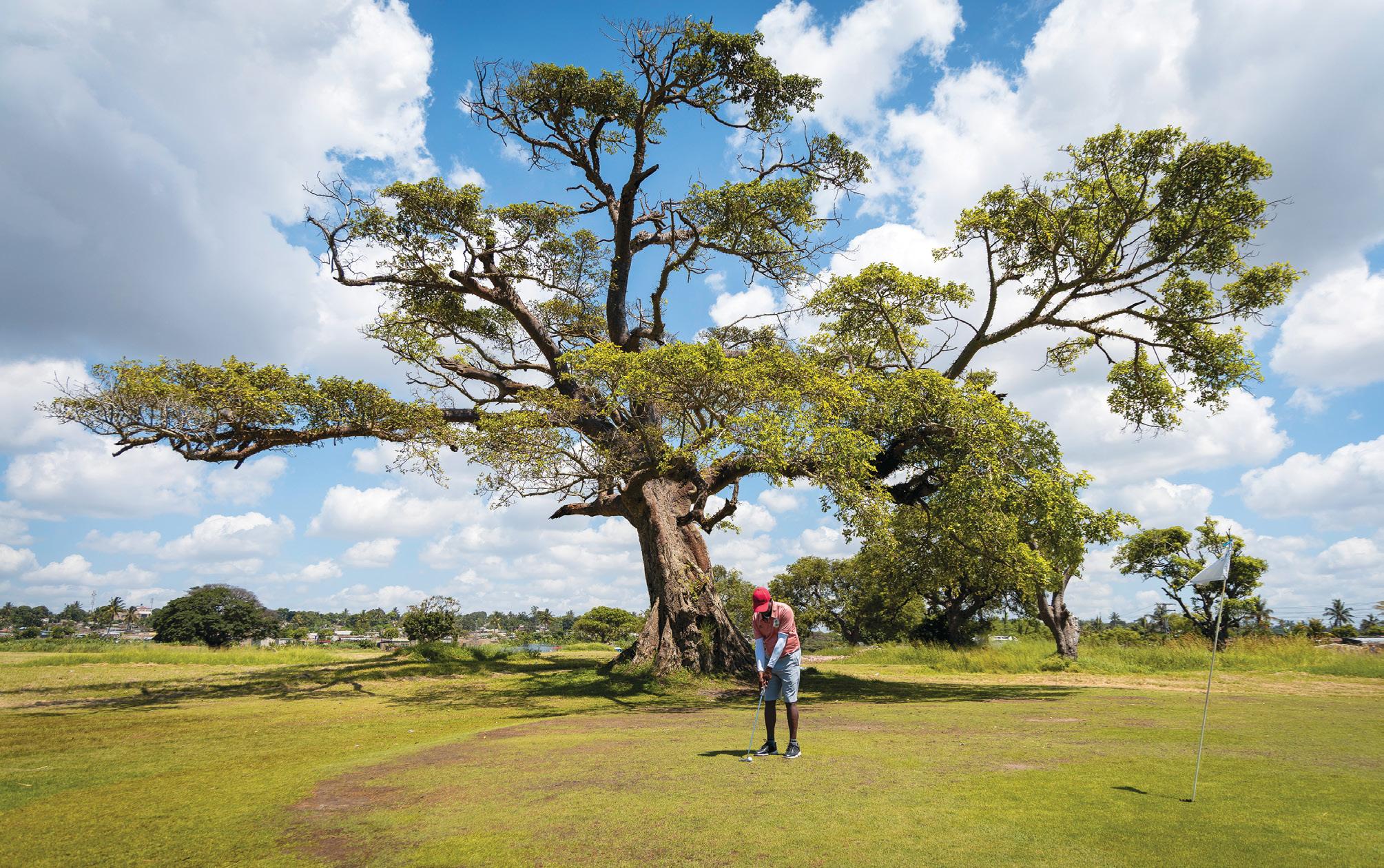
Fundado a 18 de Maio de 1908, o Clube de Golfe da Polana atravessou mais de um século de transformações urbanas, sociais e económicas da cidade de Maputo até se fixar em cerca de 80 hectares da Polana Caniço “A” em 1955. Sem nunca perder a sua identidade histórica. O Presidente do clube no segundo mandato, Samo Manhiça, revisita esse percurso, analisa os desafios actuais e partilha a visão para o futuro do um dos mais antigos espaços desportivos do País.
Founded on 18 May 1908, the Polana Golf Club has gone through more than a century of urban, social and economic transformations in the city of Maputo before settling on about 80 hectares in Polana Caniço “A” in 1955. All without ever losing its historic identity. In his second term as president of the club, Samo Manhiça revisits that path, analyses current challenges and shares his vision for the future of one of the country’s oldest sporting spaces.
FOTO: MARIANO SILVA
Como nasceu e cresceu o Clube de Golfe da Polana (CGP)?
O CGP surge em 1908, com a cidade de Maputo em formação. O primeiro campo fcou na Baixa, onde está a ligação Maputo-Katembe. À medida que a cidade cresceu, o campo foi para outras zonas: passou pela área do actual Hotel Polana, quando era mato, voltou a mudar com a expansão urbana para norte, até se fixar onde está, na Polana Caniço. Nunca ficou parado no tempo – foi sendo moldado pela expansão urbana, mas sem perder a sua identidade histórica. Cada mudança trouxe desafios, mas também oportunidades para manter viva a prática do golfe e garantir a continuidade de uma instituição que atravessou diferentes ciclos políticos, sociais e económicos do País. Sobretudo após a Independência, quando esteve praticamente abandonado, foram antigos trabalhadores e jogadores que garantiram a manutenção do campo e das infra-estruturas, permitindo que o clube sobrevivesse. Hoje, o CGP é não só um espaço desportivo, mas um património histórico e humano que cresceu com a cidade e continua a reinventar-se para responder aos desafios do presente e do futuro.
Quantos praticantes fazem parte do CGP? O número de sócios varia porque depende das quotas – temos cerca de 150 sócios efectivos. Juntando aos não-sócios que usam o campo regularmente, temos cerca de 200 praticantes activos. O clube tenta manter uma gestão flexível, mas organizada. Há valores para sócios e não-sócios, tanto para jogos como para treinos. Há treinadores disponíveis diariamente e regras claras para o uso do campo. O golfe é, acima de tudo, uma escola de carácter – ensina disciplina, respeito, honestidade e autocontrolo. No campo, ninguém joga antes da sua vez, ninguém fala durante a tacada do outro, todos respeitam as regras. Se alguém erra, assume. Se perde a bola, procura-a. Esses princípios acabam por moldar o comportamento das pessoas fora do campo. O golfe ajuda a formar cidadãos mais conscientes e respeitadores. Num contexto urbano marcado por stress, indisciplina e pressa, o campo de golfe é um espaço de reeducação cívica.
E qual é o papel do CGP na sociedade actual? É um espaço de encontro, de aprendizagem e de construção humana. É desporto, mas é também diálogo, carácter e convivência. Ao longo da sua história, acompanhou a cidade e continua a adaptar-se aos novos tempos, procurando contribuir, de forma discreta mas consistente, para o desenvolvimento do País.
How was the Polana Golf Club (CGP) born, and how did it grow?
The CGP emerged in 1908, while the city of Maputo was still taking shape. The first course was in the Baixa area, where the Maputo-Katembe link now stands. As the city grew, the course moved to other areas: it passed through the area of today’s Hotel Polana, when that was still bush, moved again with the city’s northward expansion, until it settled where it is now, in Polana Caniço. It never stood still in time — it was shaped by urban expansion without ever losing its historic identity. Each move brought challenges, but also opportunities to keep golf alive and ensure the continuity of an institution that has crossed different political, social and economic cycles in the country. Especially after Independence, when it was practically abandoned, it was former workers and players who ensured the maintenance of the course and infrastructure, allowing the club to survive. Today, the CGP is not only a sporting space, but a historic and human heritage that grew with the city and continues to reinvent itself in response to the challenges of the present and the future.
How many players are part of the CGP?
The number of members varies because it depends on dues — we have around 150 full members. Adding non-members who use the course regularly, we have around 200 active players. The club tries to maintain flexible but organised management. There are fees for members and non-members, both for games and for training. Coaches are available every day and there are clear rules for using the course. Golf is, above all, a school of character — it teaches discipline, respect, honesty and self-control. On the course, no one plays before their turn, no one speaks during another person’s shot, everyone respects the rules. If someone makes a mistake, they own it. If they lose a ball, they look for it. These principles end up shaping people’s behaviour off the course. Golf helps form more aware and respectful citizens. In an urban context marked by stress, indiscipline and haste, the golf course is a space of civic re-education.
And what is the CGP’s role in society today?
It is a space for meeting, learning and human development. It is sport, but it is also dialogue, character and coexistence. Throughout its history, it has accompanied the city and continues to adapt to new times, seeking to contribute, discreetly but consistently, to the country’s development.
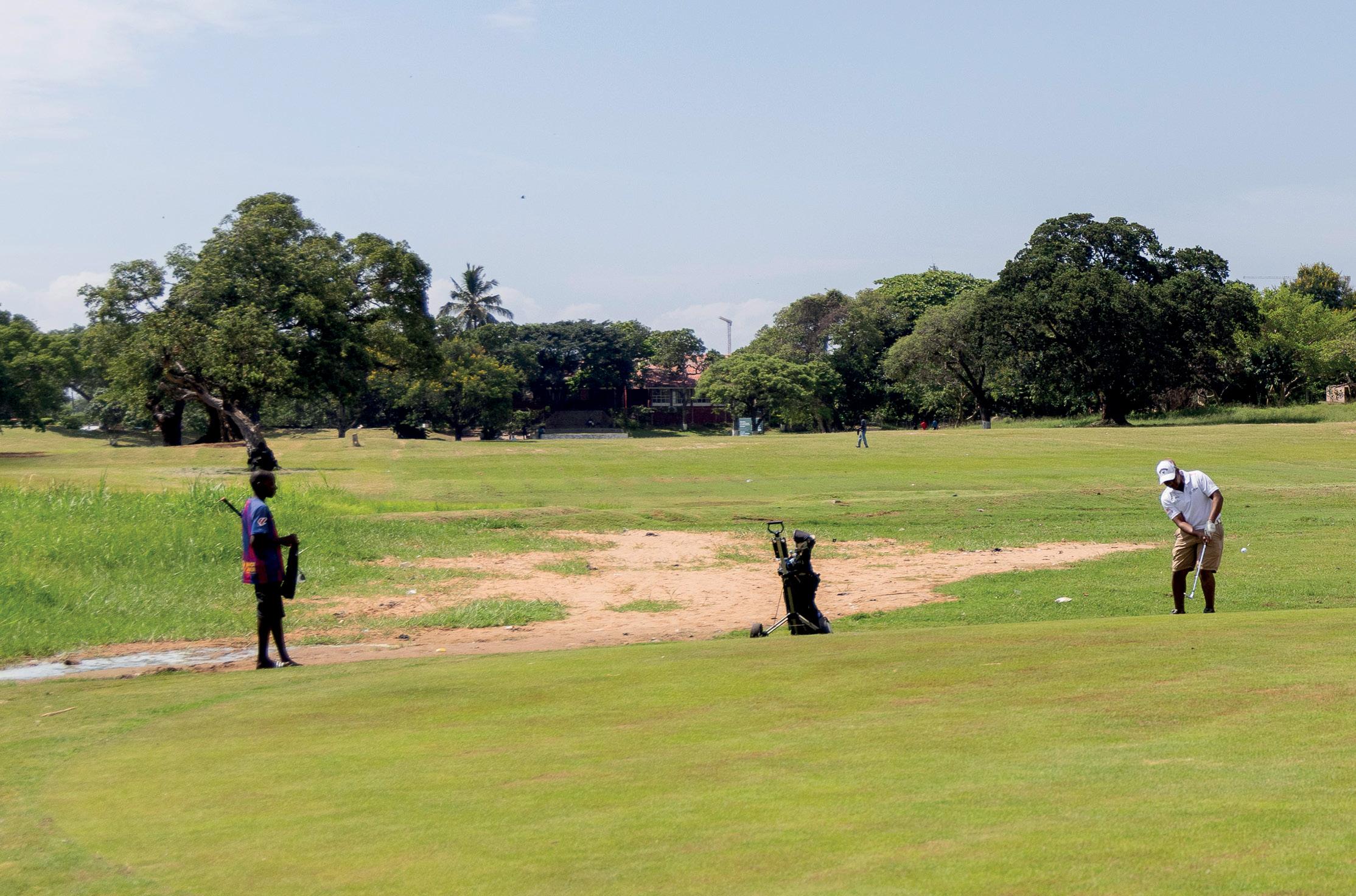
Além da vertente competitiva, como são as parcerias e os patrocínios do CGP?
Há uma estrutura anual de torneios, e cada torneio é uma oportunidade de parceria. Temos o torneio de abertura em Janeiro, o memorial em Fevereiro, a saída para a Zona Seis em Abril, torneios internos em Maio, o Dia do Golfe a 25 de Junho, e outros momentos fixos ao longo do ano. Alguns são assegurados por nós porque não podem falhar – comprometeria todo o calendário – e nesses os parceiros entram só como apoio; outros, são eles que patrocinam. Temos parceiros residentes, que nunca falham, como os que apoiam directamente os nossos melhores golfistas, incluindo um jovem que hoje treina na África do Sul. Há também parceiros comerciais importantes, do sector automóvel e logístico, que mantêm uma presença regular.
Quais são os principais desafios estruturais do Cube de Golfe da Polana?
Um dos maiores é criar um “Driving Range”. Actualmente, muitos praticantes treinam no próprio campo de jogo, o que gera conflitos e riscos porque nem todos os novos aderentes conhecem bem as regras. O espaço existe, junto ao “green” do buraco número nove. O que falta é um par-
How are partnerships and sponsorships structured at the CGP?
There is an annual tournament structure, and each tournament represents a partnership opportunity. We have the opening tournament in January, the memorial in February, the Zone Six trip in April, internal tournaments in May, Golf Day on June 25, and other fixed moments throughout the year. Some events are ensured by us because they cannot fail—otherwise the entire calendar would be compromised—and in those cases partners come in as supporting sponsors; in others, they take on the role of main sponsors. We also have resident partners, who are consistently present, including those directly supporting our top golfers, among them a young player currently training in South Africa. In addition, there are key commercial partners from the automotive and logistics sectors that maintain a regular presence.
What are the main structural challenges facing the Clube de Golfe da Polana?
One of the biggest challenges is the creation of a driving range. At present, many players train on the course itself, which creates conflicts and risks, as not all new members are fully familiar with the rules. The space does exist, next to the green of
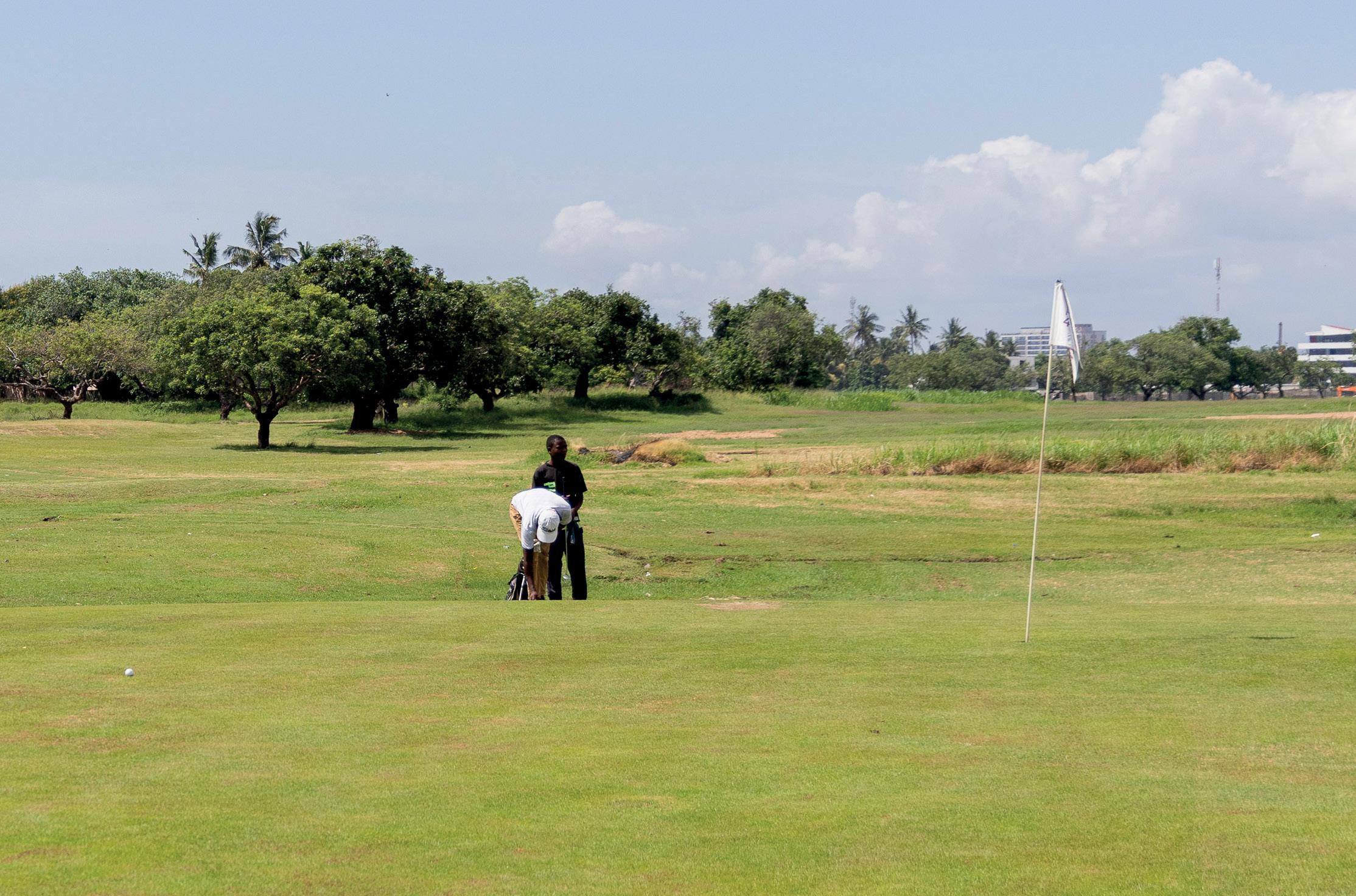
ceiro que financie a infra-estrutura, sobretudo a cobertura e as condições mínimas de conforto. Com sombra e organização, as pessoas naturalmente vão preferir treinar ali, sem imposições. Outro desafio é vedar o campo – já temos cerca de 50% do perímetro – o que aumenta a segurança e a confiança dos patrocinadores. Muitas empresas hesitam em investir quando sabem que a sua imagem pode desaparecer durante a noite. Com a vedação, isso muda.
Apesar dos desafios, como olha para o futuro do golfe em Moçambique?
Olho com muito optimismo. A procura pelo golfe aumentou claramente no último ano, muito por causa da presença de figuras de Estado e do reconhecimento do golfe como espaço de diálogo e desenvolvimento. Hoje, há duas entidades a trabalhar em paralelo: o CGP, enquanto instituição desportiva, e a indústria do golfe, que procura parceiros com uma visão mais ampla de desenvolvimento económico. Os novos aderentes ainda estão a descobrir o que o golfe realmente oferece. Muitos ainda não perceberam que um dia no golfe começa cedo e termina ao final da tarde, num ambiente de convívio, bem-estar e tranquilidade. Mas isso vai acontecer.
hole number nine. What is lacking is a partner to finance the infrastructure, particularly the covering and minimum comfort conditions. With shade and proper organisation, people will naturally prefer to train there. Another challenge is fencing the course—around 50% of the perimeter has already been completed—which would enhance security and increase sponsor confidence. Many companies are reluctant to invest when they know their brand exposure may disappear overnight. With full fencing, that perception changes.
Despite these challenges, how do you see the future of golf in Mozambique?
I see it with great optimism. Demand for golf has clearly increased over the past year, largely driven by the presence of state figures and by the growing recognition of golf as a space for dialogue and development. Today, two dynamics are evolving in parallel: the CGP as a sporting institution, and the golf industry itself, which is seeking partners with a broader vision of economic development. New entrants are still discovering what golf truly offers. Many have yet to realise that a day in golf starts early and extends into the late afternoon, within an environment of networking, well-being, and tranquillity. But that understanding will come.
CLUBE DE GOLFE DA BEIRA QUER SER REFERÊNCIA NACIONAL
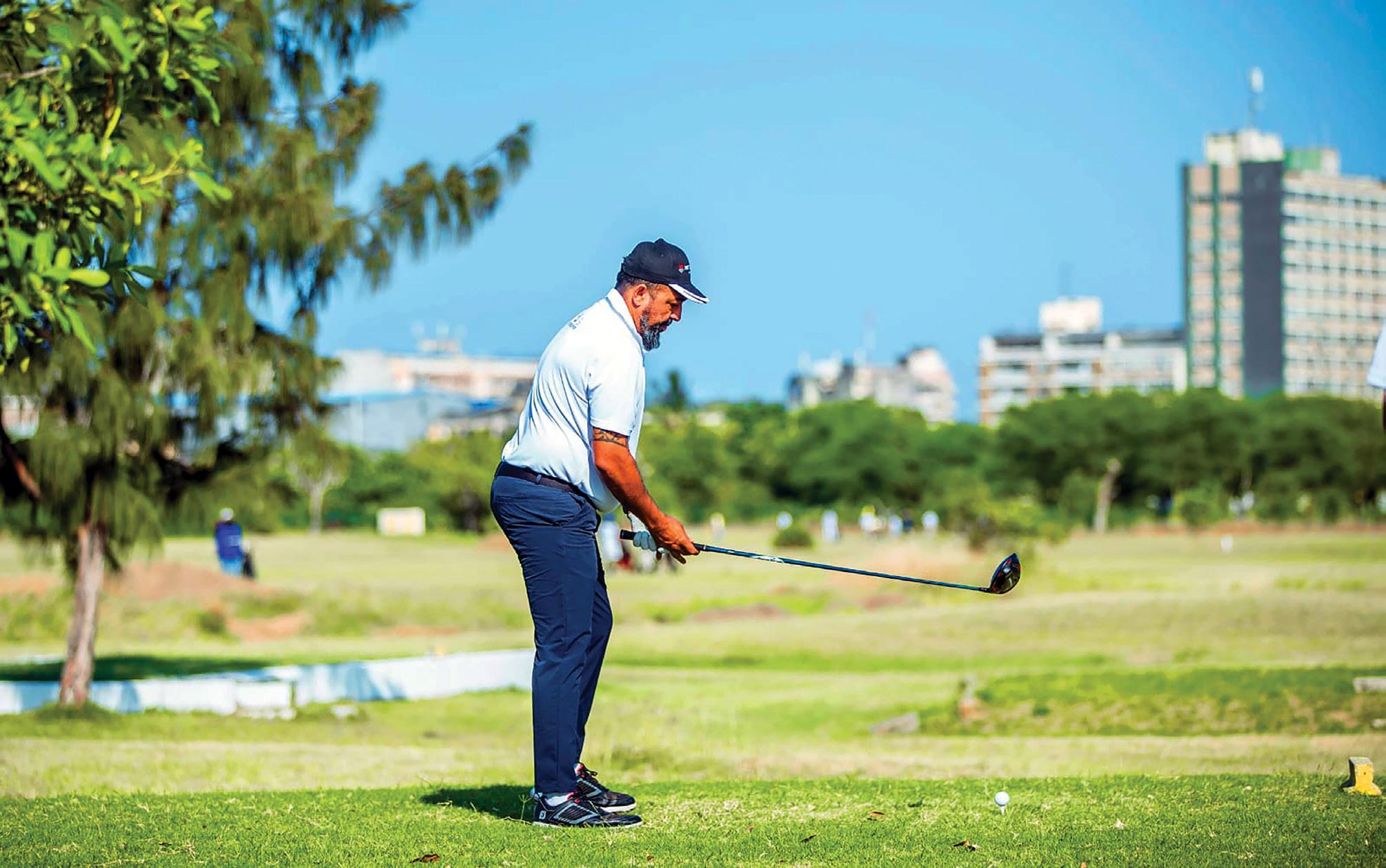
BEIRA GOLF CLUB WANTS TO BECOME A NATIONAL BENCHMARK
Criado em 1896 sob a designação de “Country Club”, o Clube de Golfe da Beira, assim crismado em 1927, atravessa nova etapa marcada pela modernização administrativa e aposta na transparência. A Direcção presidida por Harishkumar Naunitlal tem vindo a reestruturar a instituição desde Julho de 2025, reforçando a captação de sócios e as parcerias. Entre desafios financeiros e ambições de crescimento, o clube procura afirmar-se como referência nacional.
Created in 1896 under the name “Country Club”, the Beira Golf Club, so named in 1927, is going through a new stage marked by administrative modernisation and a commitment to transparency. The board led by Harishkumar Naunitlal has been restructuring the institution since July 2025, strengthening member recruitment and partnerships. Between financial challenges and ambitions for growth, the club is seeking to establish itself as a national benchmark.
Harishkumar Naunitlal, economista de formação e empresário na cidade da Beira, iniciou-se na modalidade em 2019, motivado por uma actividade escolar do filho. Residente na vizinhança do campo, passou durante anos pelo espaço do Clube de Golfe da Beira (CGB) sem que lhe despertasse o interesse. O contacto directo com o jogo alterou tudo, porém. Desde então, tornou-se praticante regular e, mais recentemente, assumiu a liderança da colectividade. Para o Presidente, “o golfe é uma modalidade exigente, que alia concentração, disciplina e perseverança, podendo ser praticada ao longo de várias décadas de vida”.
Reestruturação e transparência prioritárias Nos primeiros seis meses de mandato, a nova Direcção concentrou esforços na regularização administrativa e financeira do CGB. Foram actualizados documentos legais, formalizados os corpos gerentes e reorganizados os procedimentos bancários. Paralelamente, foi implementado um sistema de gestão digital que tornou o clube cashless e paperless, permitindo maior controlo e transparência nas transacções.
Segundo Naunitlal, “todas as operações passam agora por um sistema informatizado, com diferentes níveis de validação interna, reforçando a confiança dos sócios e parceiros”. As contas de 2025 estão em fase de fecho com o objectivo de apresentar aos membros um retrato fiel da situação financeira. Actualmente, o CGB conta com 128 membros, entre sócios efectivos e honorários, registando um crescimento gradual.
Investir na organização e no campo Embora 2025 não tenha sido marcado por grandes investimentos em infra-estruturas, houve um esforço na reorganização administrativa, na gestão dos recursos humanos e na calendarização de actividades e torneios. “Em 2026, o clube apresenta-se mais estruturado”, garantiu Harishkumar Naunitlal. O dirigente explicou que foi recentemente activado o portal do sócio, o qual permite o acesso individual às contas, quotas e informações relevantes. A digitalização é vista pela nova Direcção do clube como um instrumento de modernização e de aproximação aos membros. Contudo, a manutenção do campo de jogo continua a representar um dos maiores desafios. Após as chuvas intensas que afectaram a cidade da Beira, foi necessário intensificar os trabalhos de recuperação. O clube consome semanalmente cerca de 100 litros de combustível entre diesel e gasolina para assegurar o funcionamento das máquinas
Harishkumar Naunitlal, an economist by training and a businessman in the city of Beira, took up the sport in 2019, motivated by a school activity involving his son. Living near the course, he had spent years passing by the Beira Golf Club (CGB) without it awakening his interest. Direct contact with the game changed everything, however. Since then, he has become a regular player and, more recently, has taken on the leadership of the institution. In the president’s words, “golf is a demanding sport, combining concentration, discipline and perseverance, and can be played over several decades of one’s life”.
Restructuring and transparency as priorities
In the first six months of its term, the new board focused its efforts on the administrative and financial regularisation of the CGB. Legal documents were updated, governing bodies formalised and banking procedures reorganised. At the same time, a digital management system was implemented that made the club cashless and paperless, allowing greater control and transparency in transactions.
According to Naunitlal, “all operations now go through a computerised system, with different levels of internal validation, reinforcing the confidence of members and partners”. The 2025 accounts are in the closing phase with the aim of presenting members with a faithful picture of the financial situation. At present, the CGB has 128 members, including full and honorary members, showing gradual growth.
Investing in organisation and in the course
Although 2025 was not marked by major investment in infrastructure, there was an effort in administrative reorganisation, human resource management and the scheduling of activities and tournaments. “In 2026, the club appears more structured,” Harishkumar Naunitlal assured.
The chairman explained that the members’ portal was recently activated, allowing individual access to accounts, dues and relevant information. Digitalisation is seen by the club’s new board as an instrument of modernisation and closer engagement with members. However, maintenance of the course remains one of the greatest challenges. After the heavy rains that affected the city of Beira, it was necessary to intensify recovery work. The club consumes around 100 litres of fuel a week, between
de corte e manutenção do relvado. Trata-se de um encargo significativo para uma instituição cujo ponto de equilíbrio financeiro, apesar dos esforços desenvolvidos, ainda não foi alcançado.
As receitas provêm das quotas dos sócios, do arrendamento de algumas residências no espaço do clube e da exploração do Bar 19, concessionado a terceiros. Ainda assim, a sustentabilidade financeira depende fortemente de parcerias empresariais. Uma das estratégias adoptadas pela Direcção de Harishkumar Naunitlal passa pela criação de parcerias institucionais e comerciais. No campo de golfe, os espaços de “tee box” são disponibilizados para publicidade mediante uma contribuição anual, constituindo assim uma das formas de angariação de fundos.
“O objectivo é reforçar a visibilidade do clube e atrair empresas interessadas em associar a sua marca a uma modalidade que, tradicionalmente, congrega decisores, empresários e quadros superiores”, disse. Para a Direcção do Clube de Golfe da Beira, aquele desporto constitui-se naturalmente como um espaço privilegiado de networking: “Uma partida de 18 buracos pode prolongar-se por cerca de cinco horas, criando um ambiente propício ao estabelecimento de contactos e parcerias”, referiu o responsável.
Em 2025, foram realizados na Beira seis torneios, alguns condicionados por factores climatéricos e pela disponibilidade de patrocínios. Para 2026, o calendário prevê um número superior de competições, incluindo torneios organizados por parceiros empresariais.
Juventude, inclusão e formação
A captação de jovens constitui outra aposta estratégica. Durante largos anos, o clube não dispunha de presença activa nas redes sociais. Actualmente, está representado em plataformas como Facebook, Instagram e TikTok, procurando aproximar-se das gerações mais novas.
Foram também criadas condições para facilitar o acesso à prática da modalidade, incluindo tarifas bonificadas para juniores e seniores, bem como a disponibilização de equipamento básico. A Direcção sublinha ainda a importância da inclusão feminina, registando-se uma crescente adesão de senhoras e crianças.
No plano técnico, o Clube de Golfe da Beira dispõe de uma pequena equipa de formadores, ainda em fase de consolidação. A ambição passa por criar, a médio prazo, condições para que jovens talentos possam participar em intercâmbios e competições internacionais, à semelhança do que sucede noutros
diesel and petrol, to ensure the operation of mowing machines and turf maintenance. This is a significant burden for an institution whose financial break-even point, despite the efforts undertaken, has still not been reached.
Revenue comes from membership dues, the rental of some residences within the club grounds and the operation of Bar 19, concessioned to third parties. Even so, financial sustainability depends heavily on business partnerships.
One of the strategies adopted by Harishkumar Naunitlal’s board involves the creation of institutional and commercial partnerships. On the golf course, “tee box” spaces are made available for advertising in exchange for an annual contribution, thus becoming one of the means of fundraising.
“The objective is to strengthen the club’s visibility and attract companies interested in associating their brand with a sport that traditionally brings together decision-makers, entrepreneurs and senior executives,” he said. For the board of the Beira Golf Club, the sport naturally constitutes a privileged networking space: “An 18-hole round can last around five hours, creating an environment conducive to establishing contacts and partnerships,” the official said.
In 2025, six tournaments were held in Beira, some conditioned by climate factors and the availability of sponsorship. For 2026, the calendar foresees a higher number of competitions, including tournaments organised by business partners.
Youth, inclusion and training
Attracting young people is another strategic priority. For many years, the club had no active presence on social networks. It is now represented on platforms such as Facebook, Instagram and TikTok, seeking to draw closer to younger generations.
Conditions have also been created to facilitate access to the sport, including discounted rates for juniors and seniors, as well as the provision of basic equipment. The board also underscores the importance of female inclusion, with growing participation from women and children.
From a technical standpoint, the Beira Golf Club has a small team of instructors, still in the process of consolidation. The ambition is to create, in the medium term, conditions for young talents to participate in exchanges and international competitions, similar to what happens in other
países da região da África Austral onde o golfe assume maior expressão.
A Direcção considera que o Clube de Golfe da Beira pode desempenhar um papel mais relevante na dinamização turística da capital provincial. “A proximidade ao Porto da Beira e ao corredor logístico regional faz com que visitantes em deslocação profissional procurem o clube para momentos de lazer”, garante Naunitlal.
Além disso, alguns dos turistas que visitam o Parque Nacional da Gorongosa têm, ocasionalmente, incluído o campo da Beira no seu roteiro. A manutenção de padrões de qualidade e jogabilidade é vista como condição essencial para reforçar esta vertente.
Apoio institucional e desafios estruturais
Apesar da relevância histórica e do potencial económico, o Clube de Golfe da Beira não beneficia de apoios directos do Estado. A morosidade na formalização de uma federação nacional estruturada limita o acesso a mecanismos de apoio e cooperação entre clubes regionais. Em Moçambique, existem apenas dois campos de maior dimensão – um na cidade de Maputo e o outro na cidade da Beira – e estruturas de menor escala noutras províncias.
A Direcção defende “maior articulação institucional, sobretudo num desporto cujos custos de manutenção são elevados”.
countries in the Southern African region where golf has a stronger presence.
The board considers that the Beira Golf Club can play a more relevant role in boosting tourism in the provincial capital. “The proximity to the Port of Beira and the regional logistics corridor means that visitors travelling for business seek out the club for leisure moments,” Naunitlal assures.
In addition, some of the tourists visiting Gorongosa National Park have, on occasion, included the Beira course in their itinerary. Maintaining standards of quality and playability is seen as essential to strengthening this dimension.
“O objectivo da Direcção é reforçar a visibilidade do Clube de Golfe da Beira e atrair empresas interessadas em
associar
a sua marca a uma modalidade que, tradicionalmente, congrega decisores, empresários e quadros superiores”.
“The board’s objective is to strengthen the visibility
of
the Beira Golf Club and attract companies interested in associating their brand with a sport that traditionally brings together decision-makers, entrepreneurs and senior executives.”
A visão assenta na consolidação administrativa, no reforço da transparência e na criação de uma base financeira sólida que permita investimentos estruturais no campo e nas infra-estruturas de apoio. “O objectivo é elevar o CGB a um patamar de referência nacional, garantindo padrões de qualidade compatíveis com as exigências da modalidade e afirmando-o como espaço de desporto, convívio e desenvolvimento económico”, afirmou Naunitlal. Num contexto em que a cidade da Beira procura diversificar os seus pólos de atracção, o histórico clube centenário pretende afirmar-se “não apenas como guardião de uma tradição, mas como agente activo na promoção do desporto, do turismo e das conexões empresariais”, proclama.
Institutional support and structural challenges
Despite its historical relevance and economic potential, the Beira Golf Club does not benefit from direct State support. The slowness in formalising a structured national federation limits access to support mechanisms and cooperation among regional clubs. In Mozambique, there are only two larger courses — one in the city of Maputo and the other in the city of Beira — and smaller-scale structures in other provinces. The board advocates “greater institutional coordination, especially in a sport whose maintenance costs are high”.
The vision rests on administrative consolidation, strengthened transparency and the creation of a solid financial base that will allow structural investment in the course and support infrastructure. “The objective is to raise the CGB to a level of national reference, ensuring quality standards compatible with the demands of the sport and establishing it as a space for sport, social interaction and economic development,” Naunitlal said.In a context in which the city of Beira seeks to diversify its centres of attraction, the historic century-old club intends to establish itself “not only as the guardian of a tradition, but as an active agent in the promotion of sport, tourism and business connections,” he declares.
Mais do que Desporto, uma Indústria
More than a Sport, an Industry
Do campo até ao vestuário, o golfe evoluiu para um ecossistema económico global. A expansão do turismo premium está a redefinir a escala do sector. Com efeito, se durante décadas o golfe foi visto como actividade recreativa de elite, sobretudo, hoje funciona como uma cadeia económica integrada – turismo, imobiliário, hospitalidade e indústria de consumo – cujo crescimento acompanha a procura global por experiências exclusivas.
Estima-se que o mercado global do golfe ronde, hoje, os 100 mil milhões de dólares, com o segmento de turismo de golfe, isoladamente, a ultrapassar os 25,34 mil milhões, podendo aproximar-se dos 41,87 mil milhões até 2030 (Grand View Research). Ao contrário do turismo convencional, altamente sensível à sazonalidade, o golfe cria fluxos previsíveis: os jogadores viajam fora da época alta, permanecem mais tempo nos locais de jogo e consomem serviços de maior valor. Para destinos emergentes, isso significa estabilidade de receitas e valorização imobiliária.

From the course to clothing, golf has evolved into a global economic ecosystem. The expansion of premium tourism is redefining the scale of the sector. Indeed, whereas for decades golf was seen mainly as an elite recreational activity, today it functions as an integrated economic chain — tourism, real estate, hospitality and consumer industry — whose growth follows global demand for exclusive experiences.
The global golf market is now estimated to be around US$100 billion, with the golf tourism segment alone exceeding US$25.34 billion and potentially approaching US$41.87 billion by 2030 (Grand View Research). Unlike conventional tourism, which is highly sensitive to seasonality, golf creates predictable flows: players travel outside the high season, stay longer at playing destinations and consume higher-value services. For emerging destinations, this means revenue stability and rising real estate values.
A evidência mais clara vem da África do Sul. Aquele país construiu uma indústria com cen-
The clearest evidence comes from South Africa. That country has built an industry with
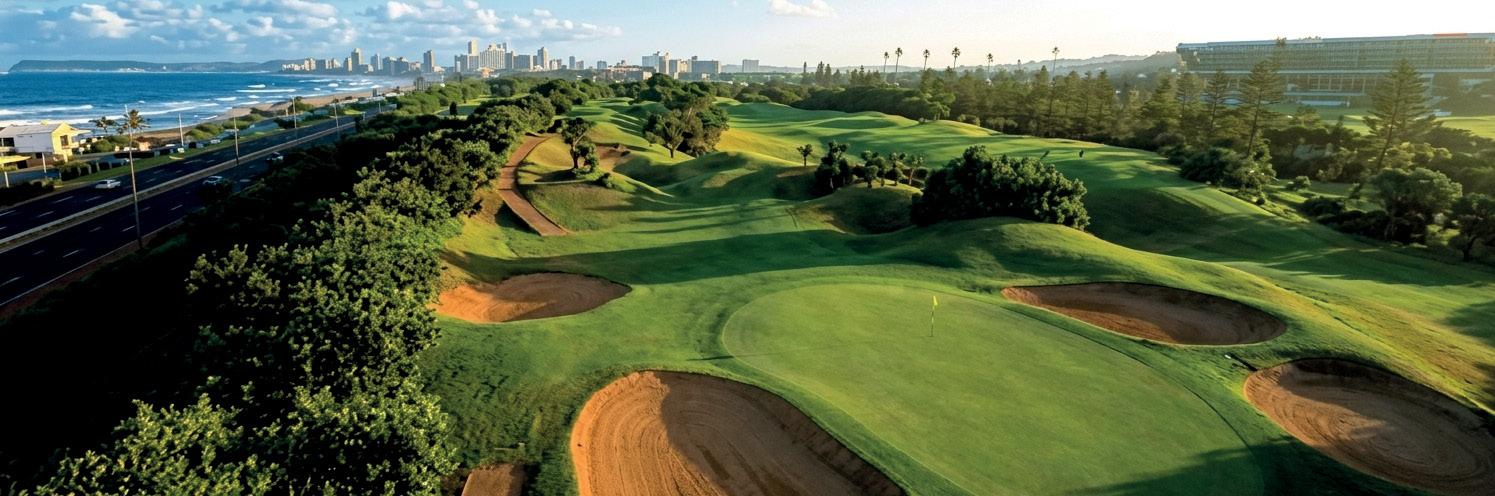
tenas de campos e milhares de empregos, onde o golfe contribui significativamente para a economia –não apenas pelos jogadores, mas pelo efeito multiplicador em hotelaria, transportes e propriedades residenciais integradas.
Mas a transformação mais interessante ocorre fora dos fairways (dos sítios onde o jogo propriamente dito ocorre). O vestuário de golfe, por exemplo, tornou-se um segmento híbrido entre performance e moda. O mercado global de vestuário específico e acessórios aproxima-se dos 9,9 mil milhões de dólares até 2035 (Market Growth Reports), impulsionado por novos públicos e pelo conceito athleisure – roupa concebida para o jogo, mas usada no quotidiano. O golfe passou a vender estilo de vida tanto quanto competição.
A indústria de equipamentos cresce mais lentamente, cerca de 4–5% ao ano, enquanto que o verdadeiro motor económico continua a ser a infra-estrutura: campos e resorts representam mais de metade do valor global do sector. Cada campo cria emprego directo e sustenta economias locais inteiras.
No fundo, mais do que um desporto, o golfe converteu-se numa plataforma económica. Os países já não competem apenas por jogadores; antes competem por residentes temporários de elevado rendimento. A diferença é estrutural: um turista comum ocupa um quarto; um golfista sustenta todo um destino.
ÁFRICA DO SUL É UMA REFERÊNCIA MUNDIAL SOUTH AFRICA IS A GLOBAL BENCHMARK do PIB sul-africano of South Africa’s GDP
Peso total da indústria do golfe na economia sul-africana chega aos 15,8 mil milhões de dólares anuais, e inclui turismo, imobiliário, serviços e empregos directos e indirectos.
The total weight of the golf industry in the South African economy reaches US$15.8 billion a year, and includes tourism, real estate, services and jobs.
hundreds of courses and thousands of jobs, where golf contributes significantly to the economy — not only through the players themselves, but through the multiplier effect on hospitality, transport and integrated residential properties.
But the most interesting transformation takes place outside the fairways (the areas where the game itself is played). Golf apparel, for example, has become a hybrid segment between performance and fashion. The global market for specialist clothing and accessories is approaching US$9.9 billion by 2035 (Market Growth Reports), driven by new audiences and by the athleisure concept — clothing designed for the game, but worn in everyday life. Golf has come to sell lifestyle as much as competition.
The equipment industry is growing more slowly, around 4–5% per year, while the real economic engine continues to be infrastructure: courses and resorts account for more than half the global value of the sector. Each course creates direct employment and sustains entire local economies.
460
clubes e 414 campos clubs and 414 courses 4%
A rede estruturada de golfe sul-africana é já uma das maiores de todo o hemisfério Sul. South Africa’s structured golf network is already one of the largest in the entire Southern Hemisphere.
Ultimately, more than a sport, golf has become an economic platform. Countries no longer compete only for players; they compete for high-income temporary residents. The difference is structural: an ordinary tourist fills a room; a golfer sustains an entire destination.
GOLFE COMUNITÁRIO GANHA ÍMPETO
EM NOVO CLUBE DO BELO HORIZONTE
COMMUNITY GOLF GAINS MOMENTUM AT BELO HORIZONTE’S NEW CLUB
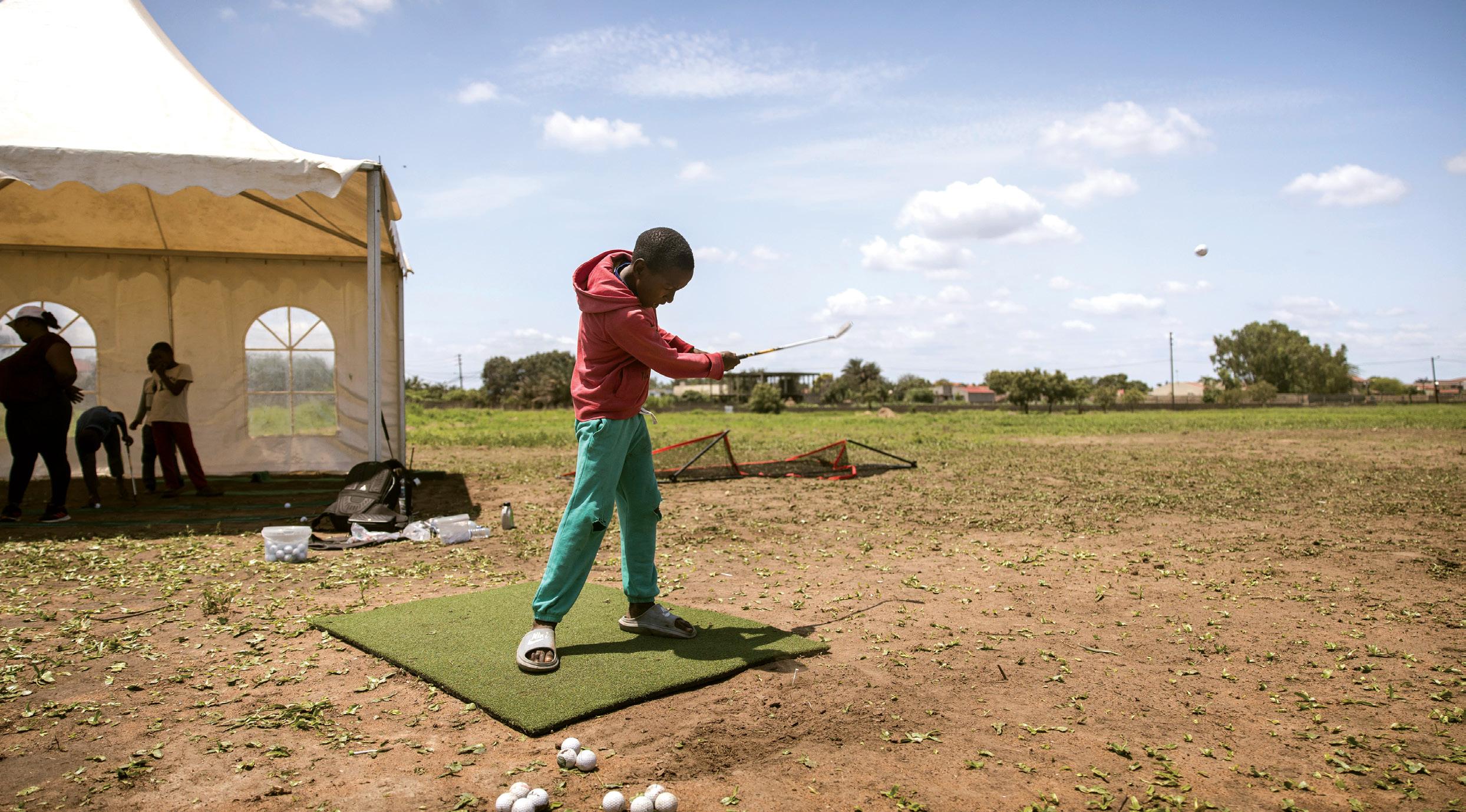
Acomunidade do Belo Horizonte, no município de Boane, província de Maputo, está a transformar-se num laboratório de inclusão social através do golfe. O movimento, impulsionado por residentes locais e liderado por Jacobe Basera – fundador e administrador da Sunworld, empresa de energias renováveis, além de gestor de riscos na área bancária –, quer democratizar o acesso a um desporto associado às elites e criar o primeiro clube de golfe nacional concebido e estruturado por cidadãos nacionais, a formalizar até ao fim deste ano.
The community of Belo Horizonte, in the municipality of Boane, Maputo province, is turning into a laboratory of social inclusion through golf. The movement, driven by local residents and led by Jacobe Basera — founder and manager of Sunworld, a renewable energy company, in addition to being a risk manager in banking — aims to democratise access to a sport associated with elites and to create the first national golf club conceived and structured by Mozambican citizens, to be formalised by the end of this year.
FOTO: MARIANO SILVA
A iniciativa, que remonta ao alvor de 2025, ganhou expressão em Maio, quando Jacobe Basera se juntou ao grupo e começou a organizar actividades regulares para crianças, jovens e adultos da comunidade. Desde então, o campo provisório, um ‘driving range’ improvisado mas funcional, tem recebido dezenas de participantes, entre curiosos, aprendizes, adolescentes e moradores que nunca haviam contactado com o golfe.
Segundo Basera, a génese do projecto supera o mero ensino de um desporto. A ambição é clara: “O golfe tem de chegar a todos, independentemente da classe social. É um desporto que inspira, educa e reforça a coesão comunitária”. E advoga que a prática inclusiva do golfe pode desenvolver disciplina, foco, capacidade de reflexão, combater o stresse e afastar crianças de comportamentos de risco.
A perspectiva social tornou-se visível após um evento no qual crianças receberam noções de educação financeira, empreendedorismo, cuidados ambientais e, pela primeira vez, contacto prático com o golfe. A receptividade surpreendeu os organizadores. “As crianças adoraram e começaram a aparecer regularmente. Todos os sábados, antes das 10 horas, já estão no campo à espera de praticar”, revela Jacobe Basera.
As chamadas “clínicas de golfe” organizadas semanalmente contam com instrutores voluntários, incluindo Julião Fernando, que soma mais de 30 anos de experiência na prática do Golfe, e jovens praticantes mais avançados. Nestes encontros, os participantes aprendem desde como segurar o taco, posicionar o corpo, executar o ‘swing’, até técnicas de ‘chipping’, ‘pitching’ ‘putting’.
INCLUSÃO DOS JOVENS NO DESPORTO
A adesão crescente tem contribuído para desmistificar a ideia de que o golfe é reservado à elite. Moradores de várias idades reconhecem no desporto um espaço seguro, educativo e, acima de tudo, agregador.
Entre os mais entusiasmados está Cipriano Elias Mendoza. Aos 11 anos, encontrou no golfe uma paixão. Tudo começou quando viu um golfista no campo e se aproximou: “Primeiro, vi um tio a jogar. Eu não o conhecia, mas sabia o nome dele quando as pessoas o chamavam. Aproximei-me e pedi para me ensinar. Ele mostrou-me como segurar o taco e bater a bola”.
Cipriano aprendeu o básico num mês e hoje fala convicto sobre o impacto que o desporto tem na sua rotina: “O golfe ensina-nos a seguir regras, a ter paciência e a conversar melhor com os outros. Aqui não estamos a correr nem a brigar. Estamos a
The initiative, which dates back to the dawn of 2025, gained momentum in May, when Jacobe Basera joined the group and began organising regular activities for children, young people and adults in the community. Since then, the temporary course, an improvised but functional driving range, has welcomed dozens of participants, among them curious newcomers, learners, teenagers and residents who had never come into contact with golf.
According to Basera, the origin of the project goes beyond the mere teaching of a sport. The ambition is clear: “Golf has to reach everyone, regardless of social class. It is a sport that inspires, educates and strengthens community cohesion.” He argues that inclusive golf practice can develop discipline, focus and the ability to reflect, combat stress and keep children away from risky behaviour.
The social dimension became visible after an event in which children received lessons in financial education, entrepreneurship, environmental care and, for the first time, practical contact with golf. The response surprised the organisers. “The children loved it and started showing up regularly. Every Saturday, before 10 a.m., they are already on the field waiting to practise,” says Jacobe Basera.
The so-called weekly “golf clinics” are run by volunteer instructors, including Julião Fernando, who has more than 30 years of experience playing golf, as well as more advanced young players. In these sessions, participants learn everything from how to hold the club, position the body and execute the swing, to chipping, pitching and putting techniques.
YOUTH INCLUSION IN SPORT
The growing take-up has helped demystify the idea that golf is reserved for the elite. Residents of different ages recognise in the sport a safe, educational and, above all, unifying space. Among the most enthusiastic is Cipriano Elias Mendoza. At the age of 11, he found a passion in golf. It all began when he saw a golfer on the course and approached him: “First, I saw an uncle playing. I didn’t know him, but I knew his name when people called him. I went up to him and asked him to teach me. He showed me how to hold the club and hit the ball.”
Cipriano learned the basics in a month and now speaks with conviction about the impact the sport has on his routine: “Golf teaches us to follow rules, to be patient and to talk better with others. Here
pensar, a focar e a ouvir. Isso ajuda na escola também”.
O jovem tem tentado levar amigos, embora nem todos conservem o entusiasmo inicial. “Um veio uma vez, mas desistiu. Eu continuo a insistir, porque acho que o golfe é bom para nós. Dá-nos tempo de estar num lugar tranquilo, sem confusão”. Para o Cipriano, a comunidade ganha um novo espaço de convivência saudável:
“Quando venho aqui, vejo crianças que antes só brincavam na rua. Agora estão a aprender um desporto. Isso é bom”.
APRENDER E JOGAR
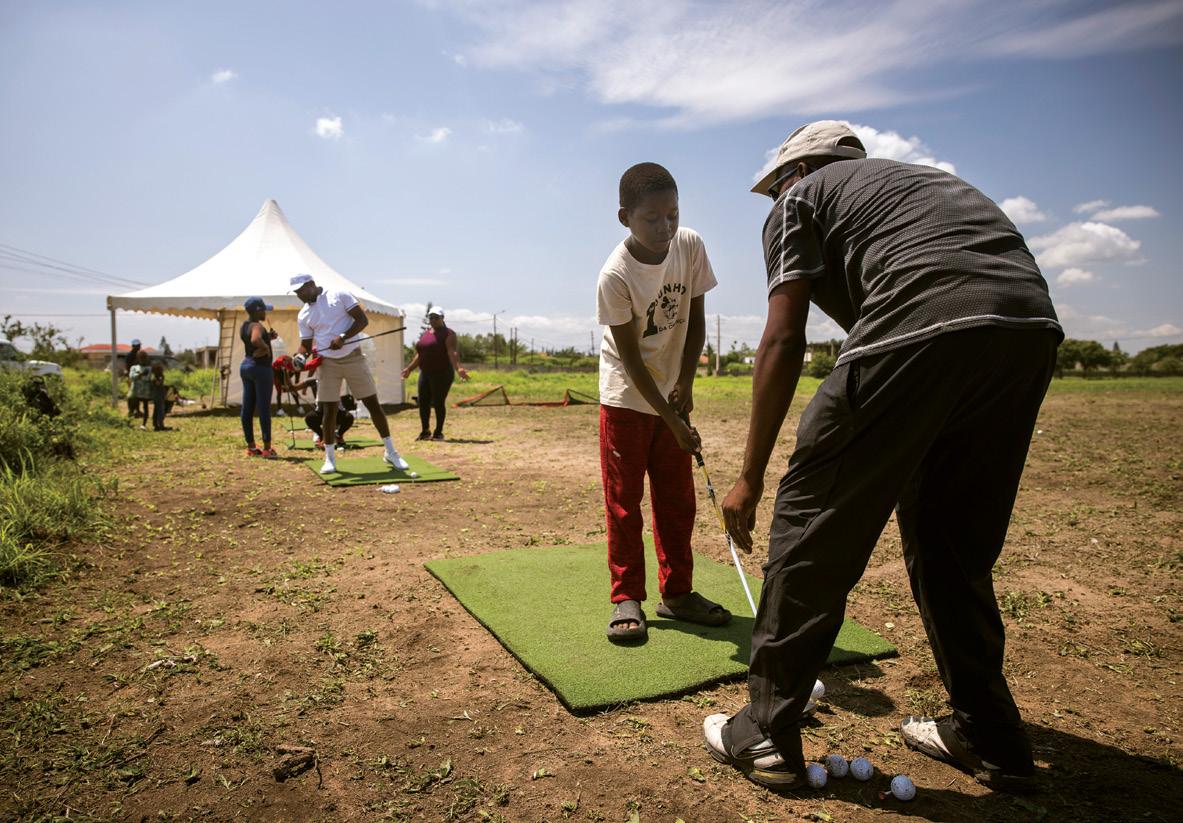
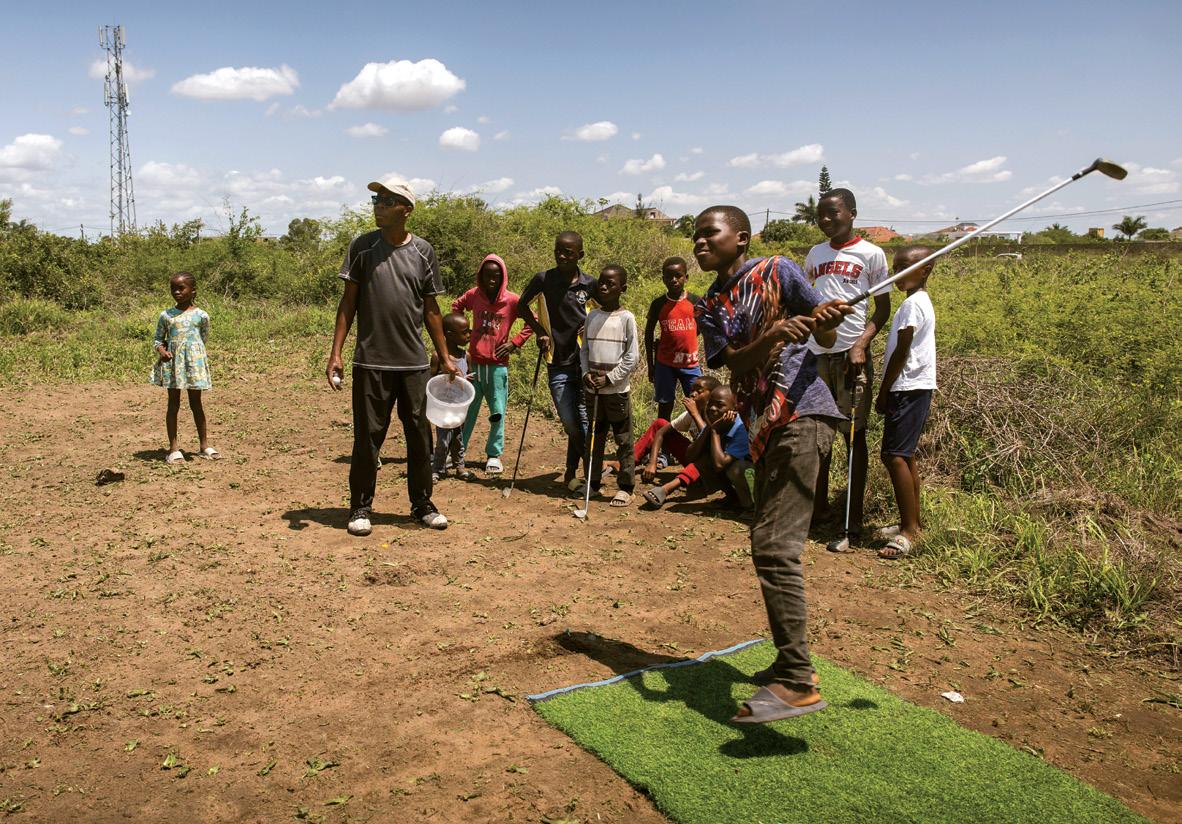
Martins António Pinho é um jovem trabalhador residente na comunidade que desempenha várias funções de apoio no espaço, desde transportar tapetes, recolher bolas e organizar o campo, enquanto aprende, ao mesmo tempo, a jogar.
“Estou a trabalhar aqui há algum tempo, a manter o campo limpo e organizado. Mas também comecei a aprender a jogar. Aprendi a dar tacadas pequenas, a mirar os buracos e a entender como funciona cada taco”, conta.
Pinho descreve a iniciativa como essencial para a juventude local: “Vejo crianças que, se não estivessem aqui, podiam estar nas ruas, a fazer coisas que não ajudam em nada. Aqui, aprendem a concentrar-se, a ouvir instruções, a ter paciência. O golfe exige calma, e isso é bom para formar carácter”.
O jovem também acalenta ambições futuras: “Quero tornar-me instrutor. Hoje, estou a aprender, mas amanhã quero ensinar outros. Temos que continuar este trabalho, porque as crianças são o nosso futuro”. Martins acredita que o im-
we are not running or fighting. We are thinking, focusing and listening. That helps at school too.”
The boy has tried to bring friends along, although not all of them have kept their initial enthusiasm.
“One came once, but he gave up. I keep insisting, because I think golf is good for us. It gives us time to be in a quiet place, without confusion.”
For Cipriano, the community gains a new space for healthy coexistence: “When I come here, I see children who used to just play in the street. Now they are learning a sport. That is good.”
LEARNING AND PLAYING
Martins António Pinho is a young worker living in the community who performs various support roles at the site, from carrying mats, collecting balls and organising the field, while at the same time learning to play.
“I have been working here for some time, keeping the field clean and organised. But I also started learning how to play. I learned to make short shots, to aim at the holes and to understand how each club works,” he says.
Pinho describes the initiative as essential for local youth: “I see children who, if they were not here, might be out in the streets, doing things that help in nothing. Here, they learn to concentrate, to listen to instructions, to be patient. Golf requires calmness, and that is good for building character.”
The young man also nurtures future ambitions: “I want to become an instructor. Today I am learning, but tomorrow I want to teach others. We have to continue this work, because the children are our future.” Martins believes the community
pacto comunitário já é visível: “O movimento está muito bom. As crianças chegam aqui felizes, e isso muda a energia da comunidade. Antigamente, nem sabíamos o que era golfe; agora, falamos dele todos os dias”.
CLUBE EM FORMAÇÃO
A iniciativa evoluiu para um projecto mais estruturado.
O BH Golf Series e a BH Golf Clinic funcionam como plataformas de formação, enquanto avança o processo para formalizar o BH Golf Club, que já conta com mais de 20 membros fundadores. O clube deverá servir de modelo para outras regiões do País, através de um esquema concebido no Belo Horizonte.
De acordo com Jacobe Basera, o município de Boane já identificou um espaço para o futuro campo oficial, cuja primeira pedra poderá ser lançada em 2027. Até lá, as actividades decorrerão no campo provisório.
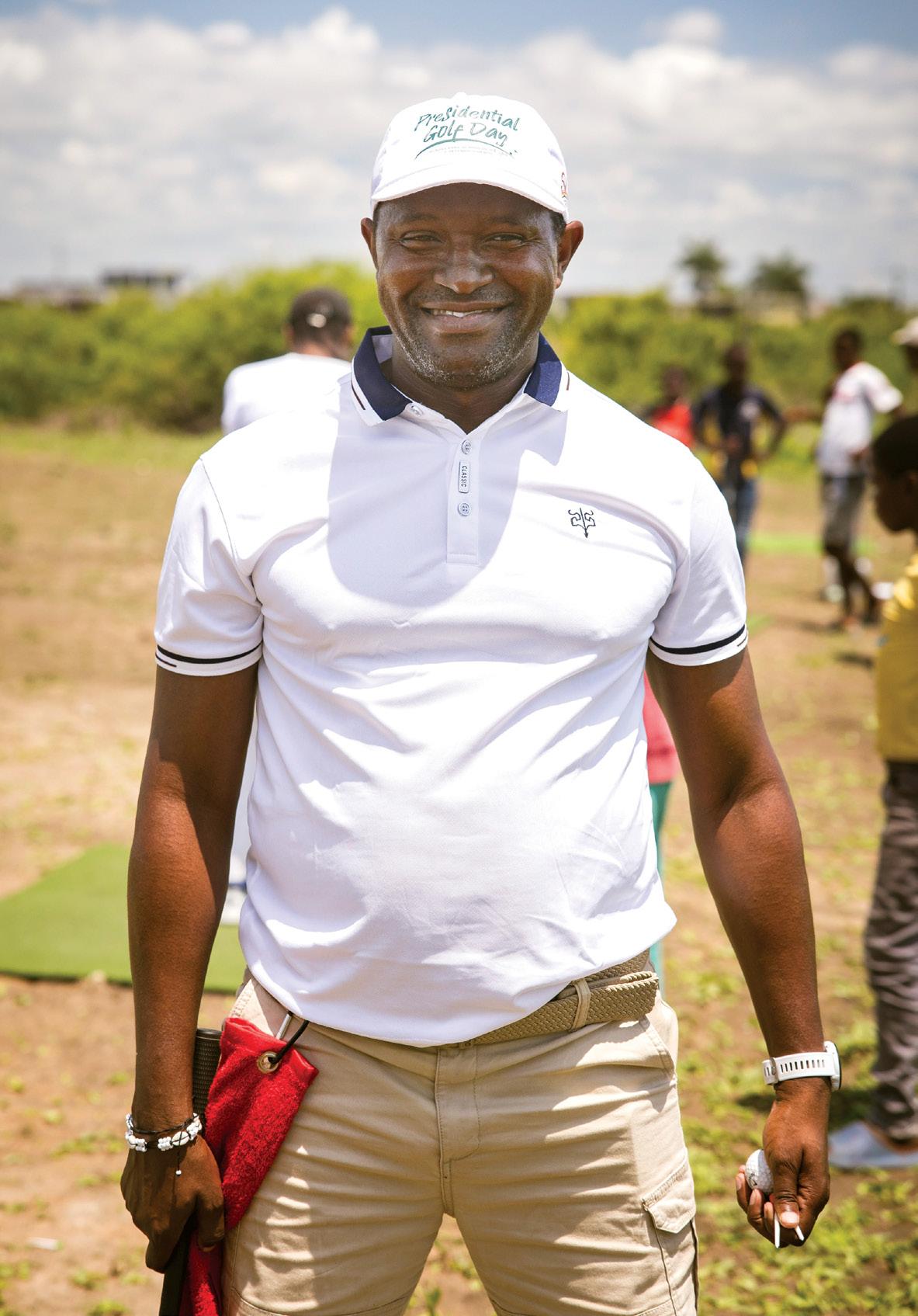
Estão calendarizados vários eventos anuais, como o Kids Golf Challenge e o Youth Golf Challenge. A primeira edição do evento infantil deverá decorrer em Inhambane, mas a ambição é levá-lo a todas as províncias.
Para Basera, o objectivo é claro: “Queremos que o golfe seja um desporto para todos em Moçambique. Não apenas nos bairros de elite, mas também nas comunidades. Se conseguimos fazer isso no Belo Horizonte, conseguimos em qualquer parte do País”, garante.
No Belo Horizonte, o golfe deixou de ser um luxo distante e tornou-se uma ferramenta de aprendizagem, convivência e esperança. Uma semente plantada pela comunidade, que agora começa a germinar muito para lá das fronteiras do bairro.
impact is already visible: “The movement is very good. The children arrive here happy, and that changes the energy of the community. In the past, we did not even know what golf was; now, we talk about it every day.”
A CLUB IN THE MAKING
The initiative has evolved into a more structured project. The BH Golf Series and the BH Golf Clinic function as training platforms, while the process advances to formalise the BH Golf Club, which already has more than 20 founding members. The club is expected to serve as a model for other regions of the country, through a scheme designed in Belo Horizonte.
According to Jacobe Basera, the municipality of Boane has already identified a space for the future official course, whose foundation stone may be laid in 2027. Until then, activities will continue on the temporary course.
Several annual events are already scheduled, such as the Kids Golf Challenge and the Youth Golf Challenge. The first edition of the children’s event is expected to take place in Inhambane, but the ambition is to take it to all provinces. For Basera, the objective is clear: “We want golf to be a sport for everyone in Mozambique. Not only in elite neighbourhoods, but also in communities. If we can do that in Belo Horizonte, we can do it anywhere in the country,” he says. In Belo Horizonte, golf has ceased to be a distant luxury and has become a tool for learning, coexistence and hope. A seed planted by the community that is now beginning to germinate far beyond the neighbourhood’s borders.
INHAMBANE NO MAPA DA MODALIDADE INHAMBANE ON THE MAP OF THE SPORT
A criação da primeira Zona Especial de Turismo de Golfe marca a aposta de Moçambique num turismo de alto valor e menos sazonal. O grande objectivo é atrair investimento internacional e transformar o sector nacional numa verdadeira indústria económica
The creation of the first Special Golf Tourism Zone marks Mozambique’s bet on highervalue, less seasonal tourism. The main objective is to attract international investment and transform the national sector into a genuine economic industry.
Moçambique está a tentar mudar a forma como compete no turismo internacional. Em vez de continuar dependente do modelo tradicional de sol e praia – altamente sazonal e de menor valor por visitante – o país pretende entrar num segmento mais sofisticado e previsível: o turismo de golfe. Foi neste contexto que, em Novembro de 2025, durante o Mozambique Tourism Summit, realizado em Vilankulo, o Presidente da República anunciou a criação da primeira Zona Especial de Turismo de Golfe, localizada na província de Inhambane.
A iniciativa integra a estratégia económica do Governo para aumentar o peso do turismo na economia, com a meta de atingir cerca de 6% do PIB até 2029. Em 2024, as receitas turísticas rondaram 14,1 mil milhões de meticais e a ambição é alcançar os 25 mil milhões até ao final do período. O golfe surge como instrumento central para atingir esse objectivo porque altera profundamente o perfil do visitante: estadias mais longas, menor sazonalidade e maior consumo em hotelaria, restauração, imobiliário e serviços especializados. O modelo escolhido não passa pela construção estatal de campos. A Zona Especial funcionará como plataforma de investimento privado, com incentivos fiscais específicos, concessões de terras até 25 anos e parcerias público-privadas. Os pólos previstos localizam-se em Vilankulo, Tofo e Barra, zonas com acesso directo ao Índico e já associadas ao turismo de natureza. Até ao início de 2026 ainda não foram anunciados projectos concretos de campos de golfe, numa estratégia deliberada: primeiro criar segurança regulatória e só depois atrair operadores internacionais especializados. Apesar disso, o efeito económico já começou a
172
milhões de dólares para um resort integrado com marina e reserva ecológica em Vilankulo. Estão previstos 600 empregos
M102
milhões de dólares a investir pelo Grupo Singuita na Ilha Santa Carolina, Bazaruto e Vilankulo
millions of dollars to be invested by the Singuita Group in Santa Carolina Island, Bazaruto, and Vilankulo millions of dollars will be invested in an integrated resort with a marina and ecological reserve in Vilankulo. It’s expected to create 600 jobs.
ozambique is trying to change the way it competes in international tourism. Instead of remaining dependent on the traditional sun-and-beach model — highly seasonal and of lower value per visitor — the country intends to enter a more sophisticated and predictable segment: golf tourism. It was in this context that, in November 2025, during the Mozambique Tourism Summit held in Vilankulo, the President of the Republic announced the creation of the first Special Golf Tourism Zone, located in Inhambane province.
The initiative forms part of the Government’s economic strategy to increase tourism’s weight in the economy, with the goal of reaching around 6% of GDP by 2029. In 2024, tourism revenues stood at around 14.1 billion meticais and the ambition is to reach 25 billion by the end of the period. Golf emerges as a central instrument in achieving that objective because it profoundly changes the visitor profile: longer stays, less seasonality and higher spending on hospitality, restaurants, real estate and specialised services. The chosen model does not involve State construction of courses. The Special Zone will function as a platform for private investment, with specific tax incentives, land concessions of up to 25 years and public-private partnerships. The planned hubs are located in Vilankulo, Tofo and Barra, areas with direct access to the Indian Ocean and already associated with nature tourism. Until the beginning of 2026, no concrete golf course projects had yet been announced, in a deliberate strategy: first create regulatory certainty, and only then attract specialised international operators.
materializar-se. Na mesma cimeira foram anunciados cerca de 252 milhões de dólares em investimentos turísticos para Inhambane, incluindo um resort integrado com marina e reserva ecológica em Vilankulo, avaliado em cerca de 172 milhões de dólares, e novos projectos do grupo Singuita na Ilha Santa Carolina, Bazaruto e Vilankulo. Estes empreendimentos funcionam como infra-estrutura base para o futuro turismo de golfe, criando massa crítica de alojamento premium.
A aposta tem também uma lógica geográfica. A África do Sul domina o turismo de golfe africano com centenas de campos, mas a procura internacional demanda novos destinos menos massificados. Inhambane oferece clima jogável durante todo o ano, paisagens tropicais e integração com mergulho, ilhas e safaris marinhos – uma combinação rara no circuito global. Mais do que um projecto turístico, trata-se de uma política de desenvolvimento regional. O golfe cria cadeias económicas longas, desde manutenção especializada a formação profissional, agricultura técnica e imobiliário. Se a estratégia resultar, Moçambique não estará só a promover um desporto: estará a reposicionar o turismo como sector industrial. Inhambane deixa assim de ser apenas um destino de férias para passar a ser um activo económico. Quer tornar-se um novo ponto no mapa mundial do golfe – e, com isso, mudar radicalmente a escala do turismo no país.
milhões de dólares de investimento turístico total, anunciado no Summit 2025, em projectos para 5 anos em Vilankulo, Pomene e Inhassoro
Millions of dollars of total tourism investment announced at Summit 2025 in projects planned for 5 years in Vilankulo, Pomene and Inhassoro
Even so, the economic effect has already begun to materialise. At the same summit, around US$252 million in tourism investment for Inhambane was announced, including an integrated resort with marina and ecological reserve in Vilankulo, valued at around US$172 million, and new projects by the Singuita group on Santa Carolina Island, Bazaruto and Vilankulo. These developments function as base infrastructure for future golf tourism, creating a critical mass of premium accommodation. The bet also has a geographical logic. South Africa dominates African golf tourism with hundreds of courses, but international demand is calling for new destinations that are less saturated. Inhambane offers playable weather all year round, tropical landscapes and integration with diving, islands and marine safaris — a rare combination on the global circuit.
More than a tourism project, this is a regional development policy. Golf creates long economic chains, from specialised maintenance to professional training, technical agriculture and real estate. If the strategy works, Mozambique will not merely be promoting a sport: it will be repositioning tourism as an industrial sector.
Inhambane thus ceases to be merely a holiday destination and becomes an economic asset. It wants to become a new point on the world golf map — and, in doing so, radically change the scale of tourism in the country.
S ALOMÃO JÚNI OR, DO CANIÇO AO
SONHO DO GOLFE PROFISSIONAL
FROM CANIÇO TO THE DREAM OF PROFESSIONAL GOLF
Num País onde o golfe ainda é visto como desporto de elite, Salomão Júnior estilhaça estereótipos. Cresceu no Polana Caniço B, numa casa modesta, e foi no campo vizinho que encontrou, mais do que um refúgio, um caminho e um destino. Hoje, aos 20 anos, treina a tempo inteiro num dos melhores clubes de África do Sul e prepara-se para o circuito profissional africano. A sua história mostra como talento, dedicação e o apoio certo podem transformar vidas – e com isso abrir também novos horizontes para o desporto moçambicano.
In a country where golf is still seen as an elite sport, Salomão Júnior shatters stereotypes. He grew up in Polana Caniço B, in a modest home, and it was on the neighbouring course that he found, more than a refuge, a path and a destiny. Today, at the age of 20, he trains full-time at one of the best clubs in South Africa and is preparing for the African professional circuit. His story shows how talent, dedication and the right support can transform lives — and in doing so also open new horizons for Mozambican sport.

Salomão, quando olhas para trás, para o miúdo que cresceu no Polana Caniço B, o que é que te vem primeiro à cabeça?
A imagem da minha mãe. Sempre ela. Uma casa pequena, simples, mas com muita força lá dentro. O meu pai morreu quando eu tinha 7 anos e, a partir daí, tudo ficou mais difícil. A comida era uma vez por dia, feita no carvão, e cada dia era um exercício de resistência. Mas nunca me faltou algo essencial: vontade de ir mais longe.
E como é que o golfe entra nessa história, num contexto tão improvável?
Eu vivia a poucos metros do Clube de Golfe da Polana. Ia lá todos os dias ver as pessoas a jogar. Aquilo parecia outro mundo. Aos 12 anos, o senhor Samuel Languene juntou um grupo de miúdos e tentou ensinar-nos a jogar, mesmo com poucos tacos e poucas bolas. Foi aí que tudo começou a ganhar forma.
Salomão, when you look back at the boy who grew up in Polana Caniço B, what comes to mind first?
The image of my mother. Always her. A small, simple house, but with great strength inside it. My father died when I was 7 and, from then on, everything became more difficult. We ate once a day, cooked on charcoal, and each day was an exercise in endurance. But I never lacked something essential: the desire to go further.
And how did golf enter that story, in such an unlikely context?
I lived just a few metres from the Polana Golf Club. I went there every day to watch people play. It seemed like another world. At the age of 12, Mr Samuel Languene brought together a group of boys and tried to teach us to play, even with few clubs and few balls. That was when everything began to take shape.
TEXTO: VERA ALVES PEREIRA | HEAD AND PUBLIC RELATIONS, ABSA BANK MOÇAMBIQUE
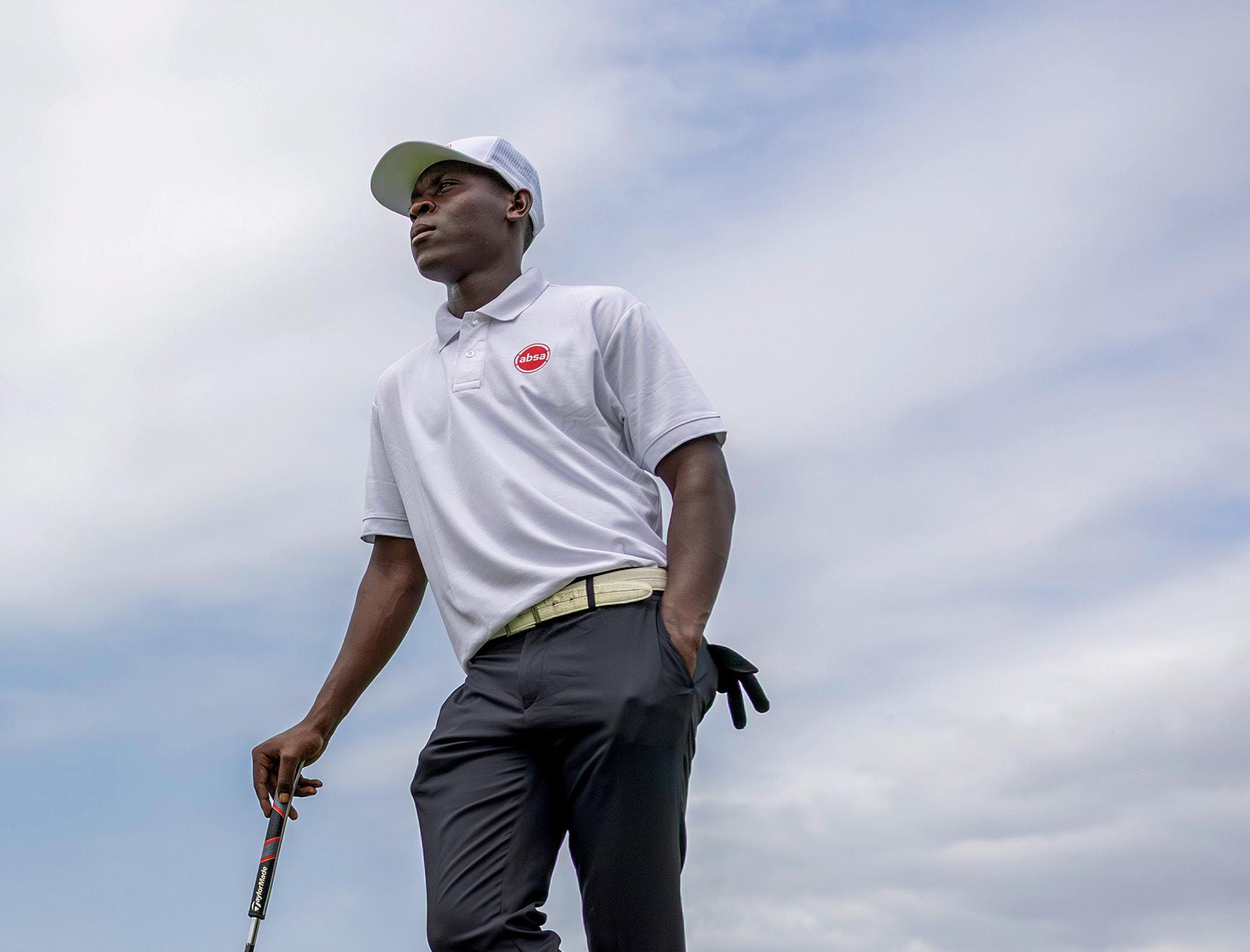
Mas antes de seres jogador, foste caddie. Isso marcou-te?
Muito. Aos 13 anos percebi que, sendo caddie, podia ajudar em casa e aprender mais sobre o jogo. Um dia, ganhei coragem e pedi ao Carlos Lugo para ser caddie dele. Ele hesitou, achava-me muito novo.
Eu peguei no saco de tacos, levantei-o e disse que conseguia. Foi assim que nasceu uma relação que mudou a minha vida.
Carlos Lugo tornou-se um mentor. O que aprendeste com ele para além da técnica?
Aprendi disciplina. Ele dizia-me sempre que o talento sem trabalho não chega a lado nenhum. Foi ele que me deu o primeiro conjunto de tacos, depois outro melhor, depois o equipamento completo. Mas mais do que isso, deu-me tempo, exigência e confiança. Empurrou-me para treinar todos os dias, mesmo quando ninguém estava a jogar.
But before becoming a player, you were a caddie. Did that mark you?
Very much. At 13 I realised that, by being a caddie, I could help at home and learn more about the game. One day, I gathered courage and asked Carlos Lugo to let me be his caddie. He hesitated; he thought I was too young. I picked up the bag of clubs, lifted it and said I could do it. That was how a relationship was born that changed my life.
Carlos Lugo became a mentor. What did you learn from him beyond technique?
I learned discipline. He always told me that talent without work gets nowhere. He was the one who gave me my first set of clubs, then a better one, then the full equipment. But more than that, he gave me time, demands and confidence. He pushed me to train every day, even when no one was playing.
Houve um momento em que percebeste que o golfe deixava de ser apenas uma paixão e passava a ser um projecto de vida?
Sim, quando comecei a competir e a ganhar consistência. Aos 16 anos já treinava todos os dias. Aos 18, eu e o Armando Sitoe recebemos equipamento profissional. Aos 19, o meu jogo deu um salto grande. Foi aí que o Carlos falou com a minha família para eu ir treinar para a África do Sul. Esse foi um momento enorme para mim e para todos nós.
Hoje, treinas num dos clubes mais prestigiados da África do Sul. O que mudou?
Mudou tudo. As condições, o nível de exigência, a preparação física. Mas também percebi que o golfe é muito mental. O corpo está pronto, agora estou a trabalhar a cabeça, a concentração, a gestão da pressão. É isso que faz a diferença ao mais alto nível.
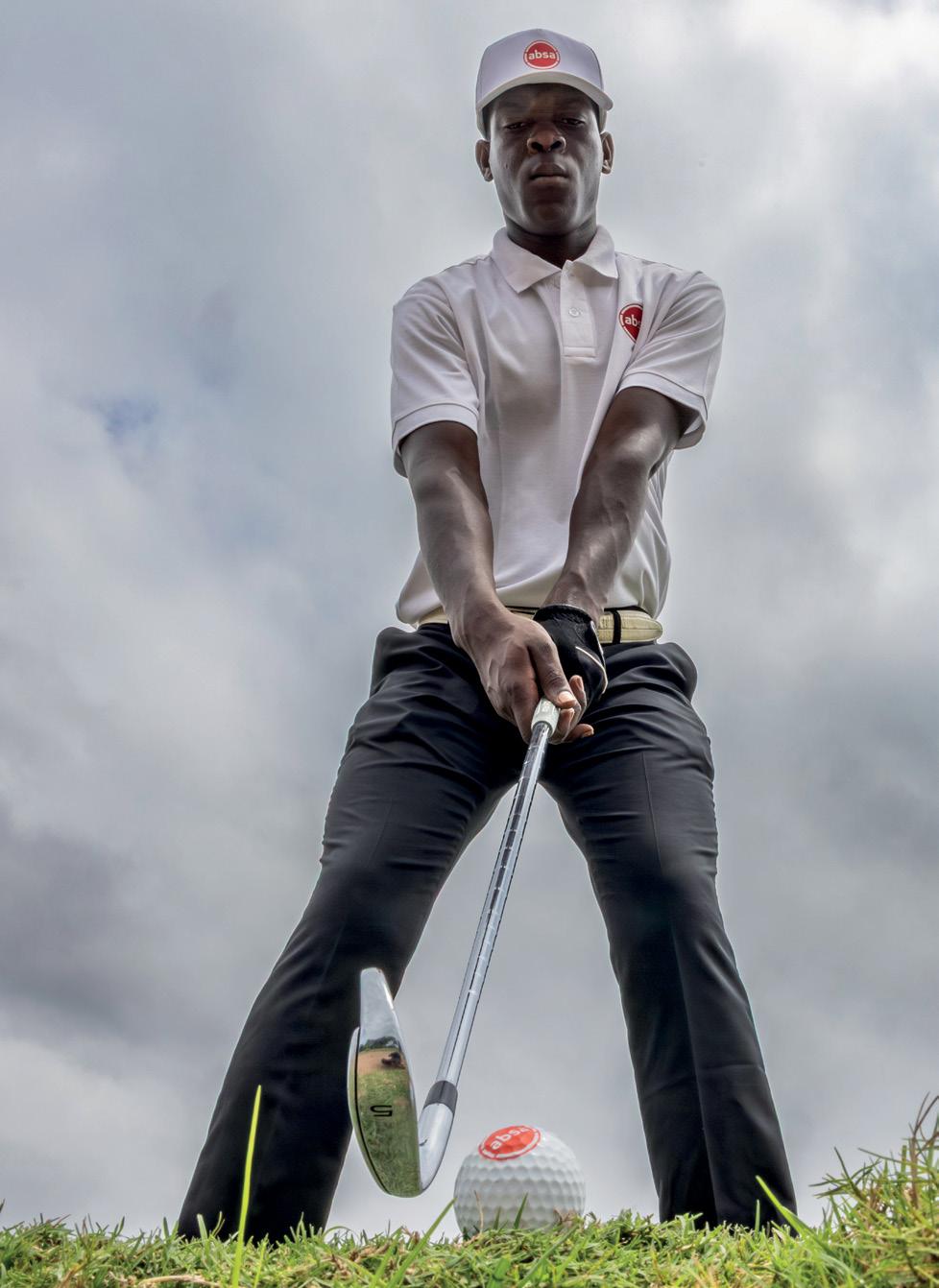
Em 2026, vais tentar o Sunshine Tour Qualifying School. O que representa esse passo?
Representa entrar no mundo profissional a sério. Somos cerca de 360 jogadores e só 30 passam. É duro, mas é possível. Para mim, é a prova de que um rapaz do Polana Caniço pode competir com os melhores de África e do mundo.
O Banco Absa juntou-se recentemente a esta caminhada. O que significa esse apoio?
Significa foco. Significa poder pensar apenas em treinar, evoluir e competir. O apoio do Banco Absa dá-me estabilidade e mostra que há instituições no País que acreditam no talento jovem e no desporto como caminho de desenvolvimento. Sinto uma responsabilidade maior e isso motiva-me a dar sempre mais, todos os dias, consciente de que o meu percurso pode abrir portas a outros casos semelhantes no futuro, seja no golfe, noutros desportos ou com o envolvimento de outras empresas.
Was there a moment when you realised golf was no longer just a passion and had become a life project?
Yes, when I began competing and gaining consistency. At 16, I was already training every day. At 18, Armando Sitoe and I received professional equipment. At 19, my game took a big leap. That was when Carlos spoke to my family so that I could go and train in South Africa. That was a huge moment for me and for all of us.
Today, you train at one of South Africa’s most prestigious clubs. What changed?
Everything changed. The conditions, the level of demand, the physical preparation. But I also realised that golf is very mental. The body is ready; now I am working on the mind, concentration and pressure management. That is what makes the difference at the highest level.
In 2026, you will try the Sunshine Tour Qualifying School. What does that step represent?
It represents entering the professional world for real. There are around 360 players and only 30 get through. It is tough, but it is possible. For me, it is proof that a boy from Polana Caniço can compete with the best in Africa and the world.
Absa Bank recently joined you on this journey. What does that support mean? It means focus. It means being able to think only about training, improving and competing. The support of Absa Bank gives me stability and shows that there are institutions in the country that believe in young talent and in sport as a path to development. I feel a greater responsibility and that motivates me to give more every day, conscious that my journey can open doors to other similar cases in the future, whether in golf, in other sports or through the involvement of other companies.
Vês-te como uma referência para outros jovens do País?
Não penso assim, mas se a minha história inspirar alguém, fico feliz. Quero que os miúdos saibam que não é de onde vens que define até onde podes ir. É o trabalho diário, as pessoas certas ao teu lado e a coragem de acreditar.
Vês-te como uma referência para outros jovens do País?
Não penso assim, mas se a minha história inspirar alguém, fico feliz. Quero que os miúdos saibam que não é de onde vens que define até onde podes ir. É o trabalho diário, as pessoas certas ao teu lado e a coragem de acreditar.
Salomão, qual é o teu maior sonho?
Jogar e ganhar torneios grandes, representar Moçambique ao mais alto nível e, um dia, ajudar outros jovens como eu fui ajudado. O golfe deu-me uma oportunidade. Agora, é minha vez de pay it forward. A trajectória de Salomão Júnior é mais do que uma história de sucesso individual: é a prova de que o talento, quando encontra mentoria, disciplina e apoio institucional, pode transformar-se num activo para o País. Ao apoiar este jovem atleta, o Banco Absa reforça o seu compromisso com o desenvolvimento humano, com o desporto e com futuros que se constroem com visão e consistência. No golfe, como nos negócios, o verdadeiro impacto mede-se também pela capacidade de criar caminhos para quem vem a seguir.
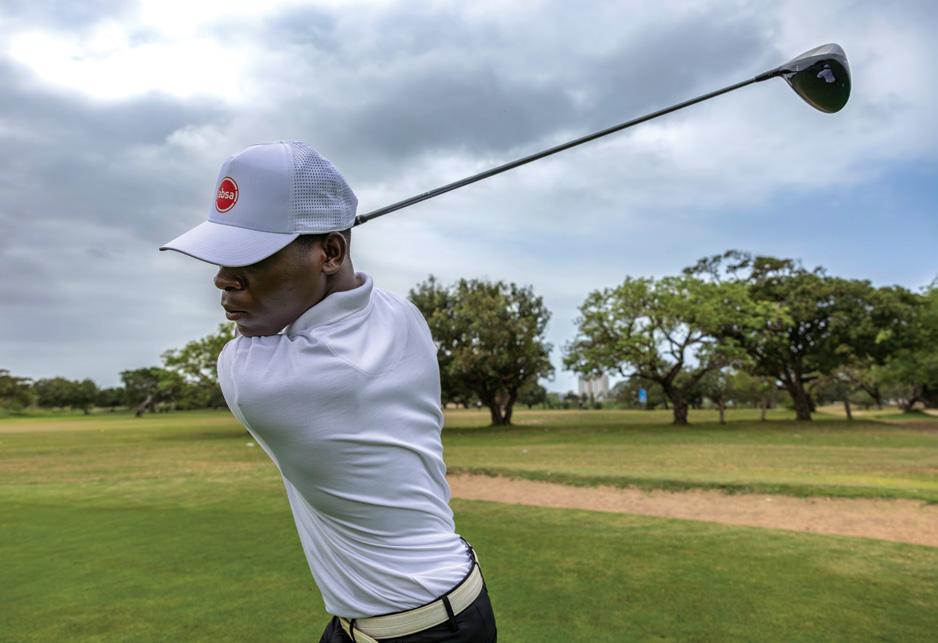
Do you see yourself as a reference for other young people in the country?
I do not think of it that way, but if my story inspires someone, I am happy. I want kids to know that it is not where you come from that defines how far you can go. It is the daily work, the right people by your side and the courage to believe.
Do you see yourself as a reference for other young people in the country?
I do not think of it that way, but if my story inspires someone, I am happy. I want kids to know that it is not where you come from that defines how far you can go. It is the daily work, the right people by your side and the courage to believe.
Salomão, what is your biggest dream?
To play and win major tournaments, represent Mozambique at the highest level and, one day, help other young people as I was helped. Golf gave me an opportunity. Now it is my turn to pay it forward. Salomão Júnior’s trajectory is more than a story of individual success: it is proof that talent, when it finds mentorship, discipline and institutional support, can be transformed into an asset for the country. By supporting this young athlete, Absa Bank reinforces its commitment to human development, to sport and to futures built with vision and consistency. In golf, as in business, true impact is also measured by the ability to create paths for those who come next.
O SWING DO ABSA BANK
MOÇAMBIQUE
ABSA BANK MOZAMBIQUE’S SWING
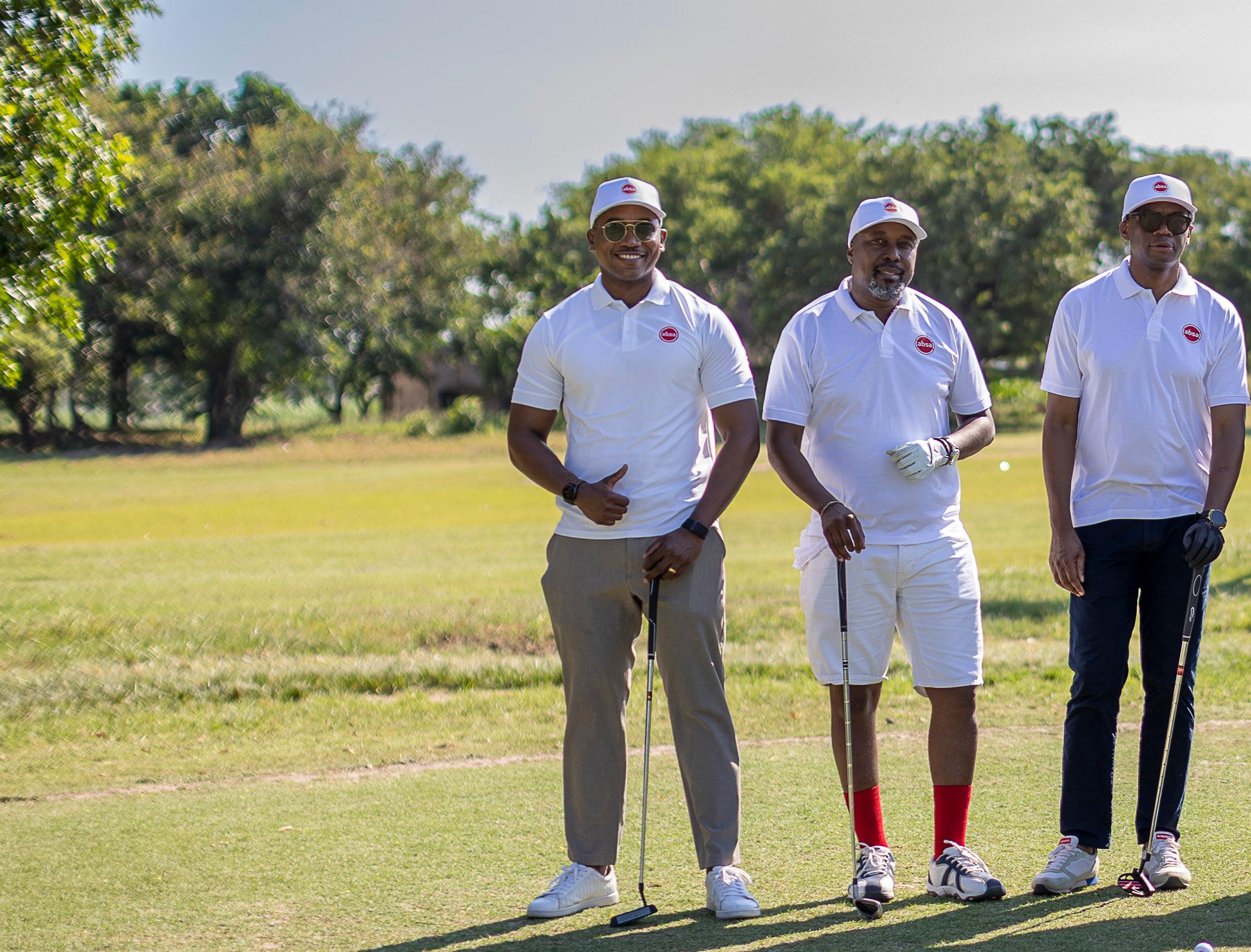
Há experiências que não se explicam, vivem-se. No Absa, o contacto com o golfe começou precisamente assim: através de aulas que convidaram alguns colaboradores a entrar no campo e a descobrir o jogo ao seu próprio ritmo, respeitando o tempo de cada tacada e a lógica própria do percurso. Antes de ser apresentado ao exterior, o golfe foi vivido internamente, criando uma relação genuína com aquilo que este desporto oferece a quem o pratica.
O golfe é frequentemente descrito como um jogo de silêncio, mas esse silêncio não é ausência — é concentração. Exige presença, disciplina e clareza mental, ao mesmo tempo que cria espaço para a relação, a partilha e o networking, de forma natural e sem ruído. Entre a escolha do taco, a leitura do lie e a preparação de cada jogada, o jogo transforma-se num exercício contínuo de atenção e autocontrolo. Jogar bem raramente significa executar a tacada perfeita; muitas vezes é saber gerir o percurso, tomar boas decisões
There are experiences that cannot be explained—they must be lived. At Absa, the introduction to golf began exactly this way: through lessons that invited some employees onto the course to discover the game at their own pace, respecting the timing of each swing and the game’s inherent rhythm. Before being presented externally, golf was first experienced internally, fostering a genuine connection with what the sport offers those who play it. Golf is often described as a game of silence, but that silence is not absence—it is concentration. It demands presence, discipline, and mental clarity, while naturally creating space for relationships, interaction, and networking without noise. Between choosing the club, reading the lie, and preparing each shot, the game becomes a continuous exercise in focus and self-control. Playing well rarely means executing the perfect shot; more often, it is about managing the course, making sound decisions,
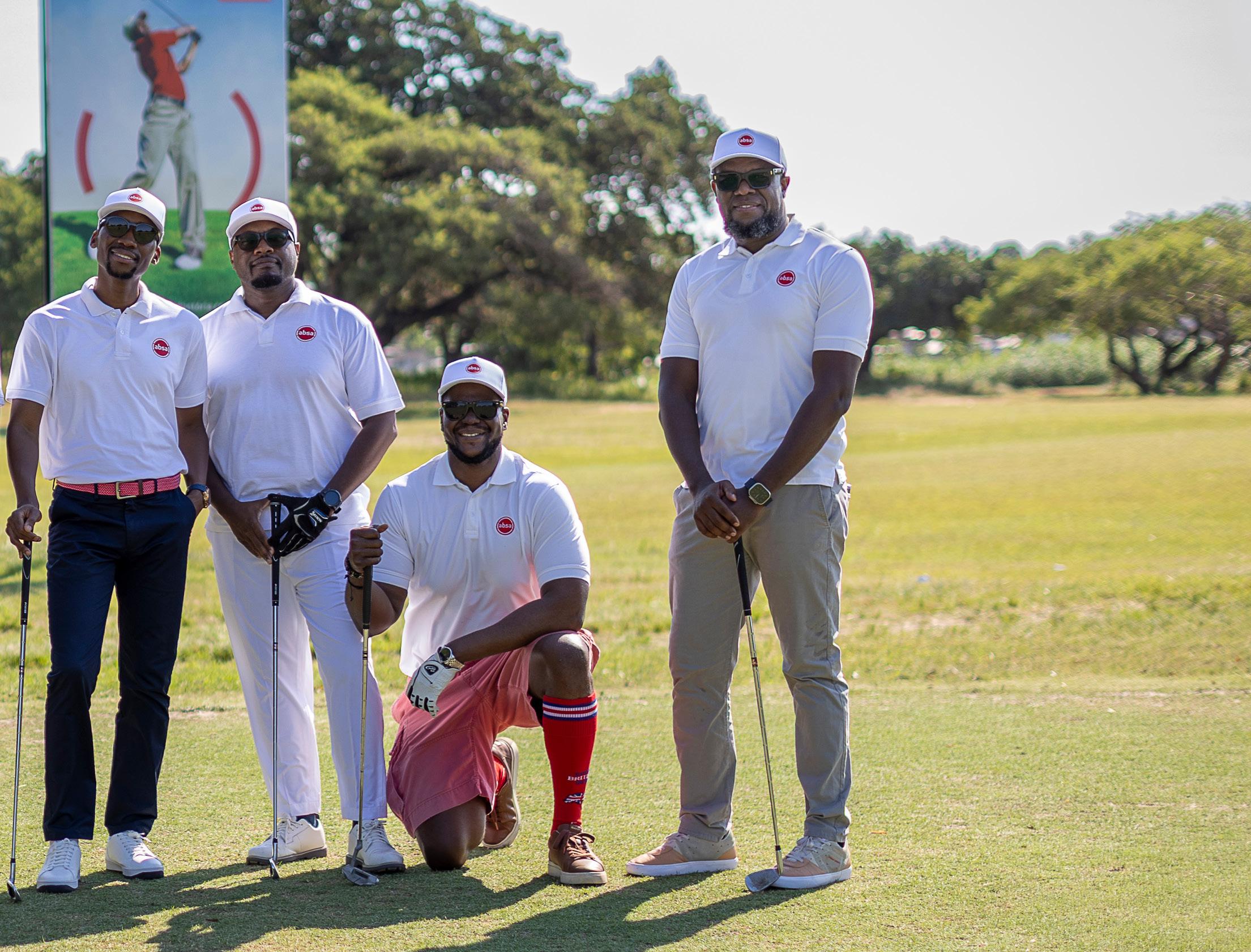
e proteger o resultado ao longo de toda a volta. Para quem o pratica, o golfe torna-se mais do que um desporto: é um exercício de foco prolongado. Cada pre-shot routine pede intenção, cada decisão exige presença. O tempo entre tacadas convida a abrandar, a respirar e a aceitar que nem todas as jogadas resultam como planeado. É nesse espaço entre intenção e execução que se desenvolvem competências como a resiliência, a gestão das emoções e a capacidade de recomeçar com clareza. Estas qualidades tornam-se ainda mais relevantes quando o jogo entra na sua fase mais exigente — o back nine — onde a concentração é posta à prova e cada decisão ganha peso. Para Nuno Chitsonzo, o impacto foi sobretudo interno. “O golfe obriga-nos a abrandar e a estar verdadeiramente presentes”, explica. Entre tacadas, percebeu como o jogo exige concentração sustentada e a capacidade de manter o foco mesmo quando o resultado anterior não foi o esperado — uma aprendizagem próxima daquilo que acontece em contextos que exigem consistência,
and protecting the score throughout the round. For those who play it, golf becomes more than a sport—it is an exercise in sustained focus. Every pre-shot routine requires intention; every decision demands presence. The time between shots invites players to slow down, breathe, and accept that not every play will unfold as planned. It is in this space between intention and execution that skills such as resilience, emotional management, and the ability to reset with clarity are developed. These qualities become even more relevant as the game reaches its most demanding phase—the back nine—where concentration is tested and every decision carries greater weight.
For Nuno Chitsonzo, the impact was primarily internal. “Golf forces us to slow down and be truly present,” he explains. Between shots, he realised how the game demands sustained concentration and the ability to remain focused even when the previous result was not as expected—a lesson closely aligned with contexts that
TEXTO: VERA ALVES PEREIRA | HEAD AND PUBLIC RELATIONS, ABSA BANK MOÇAMBIQUE
atenção ao detalhe e resposta serena, sobretudo quando o desafio se prolonga.
Também Ernesto Gove destaca a dimensão mental do jogo. “Aprendi que o golfe não se joga contra os outros, joga-se sobretudo connosco próprios”, partilha. Controlar expectativas, aceitar uma má jogada e seguir para a seguinte revelou-se um exercício poderoso de gestão emocional. Para Ernesto, esta disciplina ganha especial relevância no back nine, quando a exigência aumenta e a capacidade de manter o equilíbrio faz toda a diferença.
No caso de Sansão Conjo, a experiência trouxe uma mudança clara de percepção e de prática pessoal. O golfe ensinou-lhe a reconhecer e gerir emoções de forma consciente. A disciplina de alinhar, respirar e decidir antes de cada tacada mostrou-lhe que a serenidade não é um traço fixo, mas uma competência que se constrói. Quando a mente está centrada, as decisões tornam-se mais claras — uma constatação que ganha ainda mais significado quando cada jogada conta para fechar bem a volta.
Para Mario Tembe, o golfe revelou-se sobretudo um exercício de leitura e antecipação. “O jogo obriga-nos a pensar sempre duas ou três jogadas à frente”, observa. Mais do que a execução imediata, destacou a importância de avaliar o contexto, gerir riscos e aceitar que nem todas as decisões produzem resultados imediatos. Uma lógica muito próxima da vida corporativa, onde a consistência, a
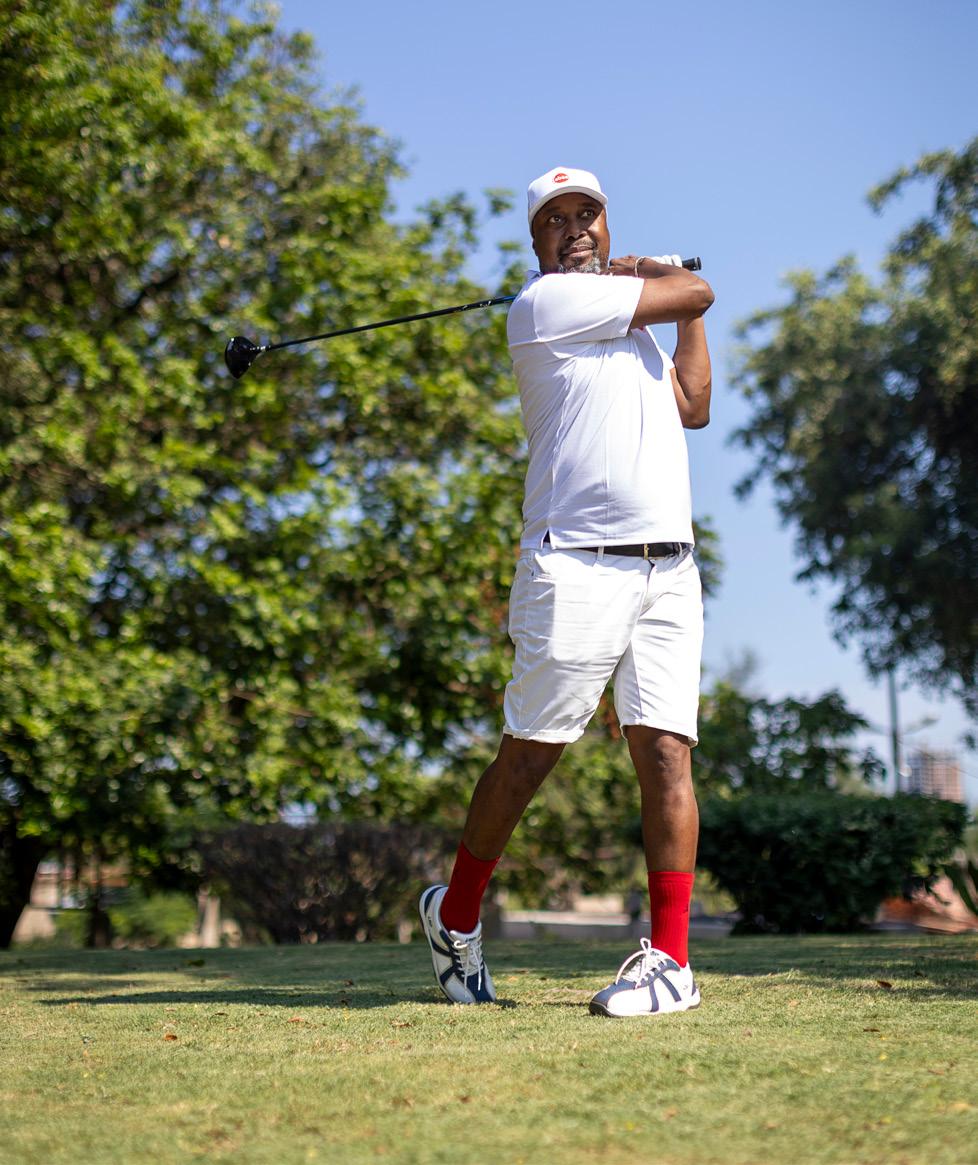
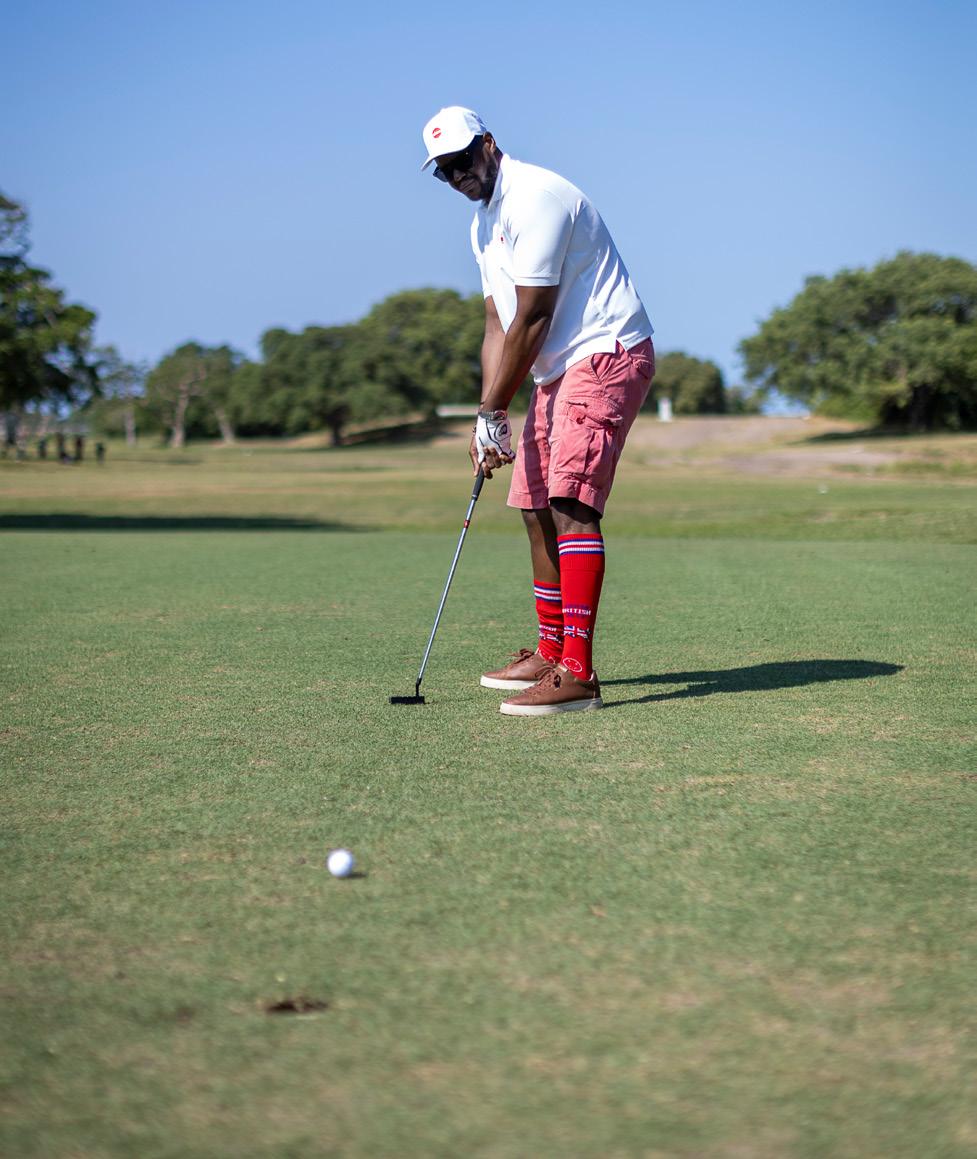
require consistency, attention to detail, and a calm response, especially when challenges are prolonged. Ernesto Gove also highlights the mental dimension of the game. “I learned that golf is not played against others, but above all against ourselves,” he shares. Managing expectations, accepting a bad shot, and moving on to the next proved to be a powerful exercise in emotional control. For Ernesto, this discipline becomes particularly relevant on the back nine, when demands intensify and maintaining balance makes all the difference. In the case of Sansão Conjo, the experience brought a clear shift in perception and personal practice. Golf taught him to recognise and manage emotions consciously. The discipline of aligning, breathing, and deciding before each shot showed him that composure is not a fixed trait, but a skill that can be built. When the mind is centred, decisions become clearer—a realisation that gains even more meaning when every shot counts toward closing the round well.
For Mario Tembe, golf proved above all to be an exercise in reading and anticipation. “The game forces us to think two or three shots ahead,” he observes. Beyond immediate execution, he highlighted the importance of assessing context, managing risk, and accepting that not all decisions yield immediate results. A logic very close to corporate life, where consistency, scenario analysis,
Ernesto Gove, Corporate & Investment Banking, Absa Bank
Sansão Conjo, Head of Wealth Banking, Absa Bank
“O golfe coloca-nos a jogar, sobretudo, connosco próprios.” “Golf is not played against others, but above all against ourselves.”
“A serenidade não é um traço fixo, mas uma competência que se constrói.” “Composure is not a fixed trait, but a skill that can be developed.”
análise de cenários e a capacidade de decidir com ponderação são determinantes. Esta vivência ganhou uma nova dimensão quando algumas pessoas do Absa tiveram a oportunidade de levar para o campo aquilo que aprenderam, participando no AmCham Golf Day, torneio apoiado pelo Banco no ano passado. Realizado no campo da Tongaat Hulett, em Xinavane, o evento celebrou a paixão pelo jogo e reuniu cerca de 100 participantes em torno de valores como fair play, concentração e espírito de equipa, incluindo um Absa Golf Clinic, que proporcionou aos iniciantes um primeiro contacto directo com a modalidade.
Ao longo deste percurso, o golfe revelou-se um espaço de aprendizagem contínua. Mais do que técnica, trouxe consciência. Mais do que movimento, trouxe intenção. Um jogo onde o progresso não se mede apenas em resultados ou scorecards, mas na capacidade de manter o equilíbrio, mesmo quando o percurso não é linear.
Ao viver o golfe internamente, o Absa reforça uma cultura assente na experiência real e no desenvolvimento do indivíduo. Esta prática permitiu descobrir no golfe um aliado silencioso para o foco, a concentração e a gestão das emoções — competências que se constroem com tempo, repetição e consistência.
Porque, tal como no jogo, é de dentro para fora que se constrói solidez, confiança e impacto duradouro — baixando o handicap com tempo e consistência.
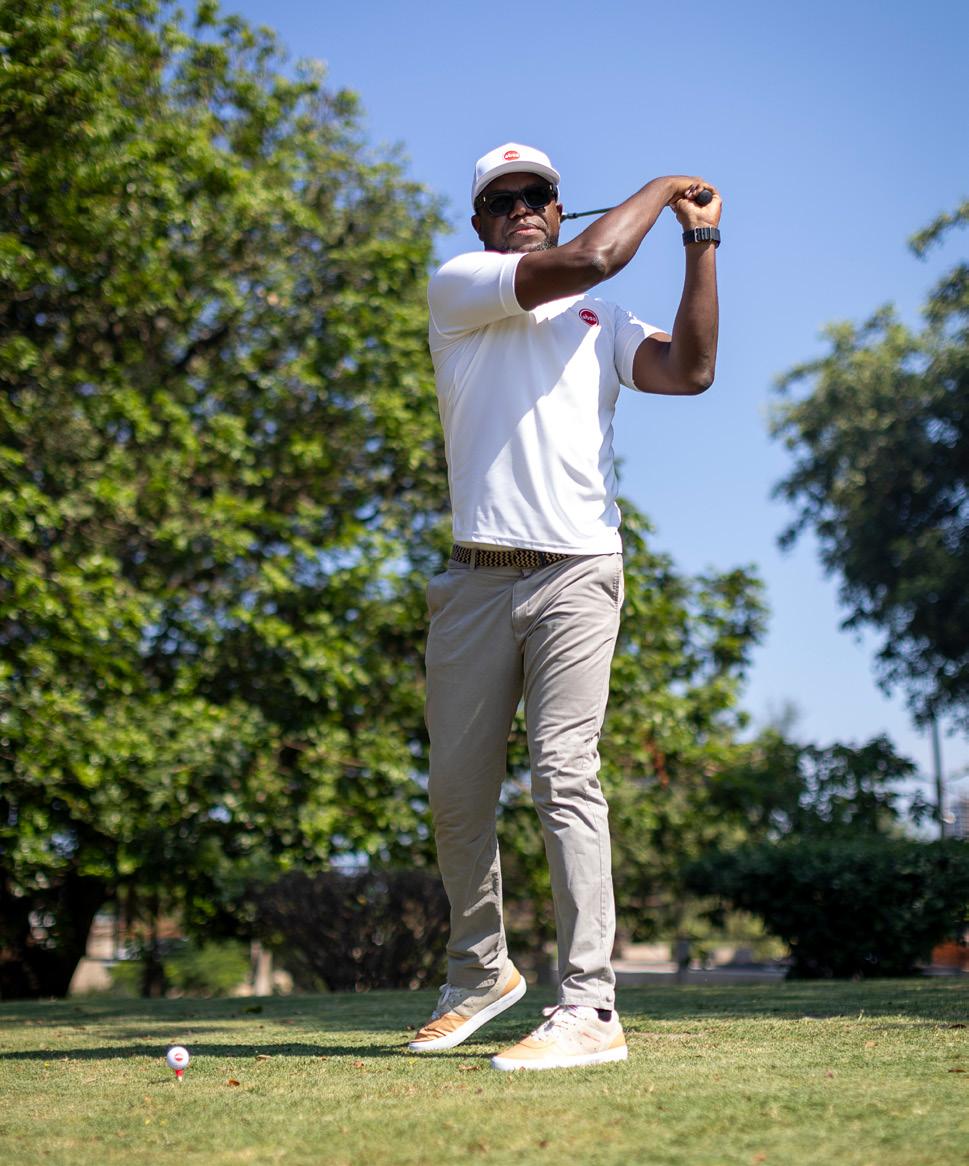
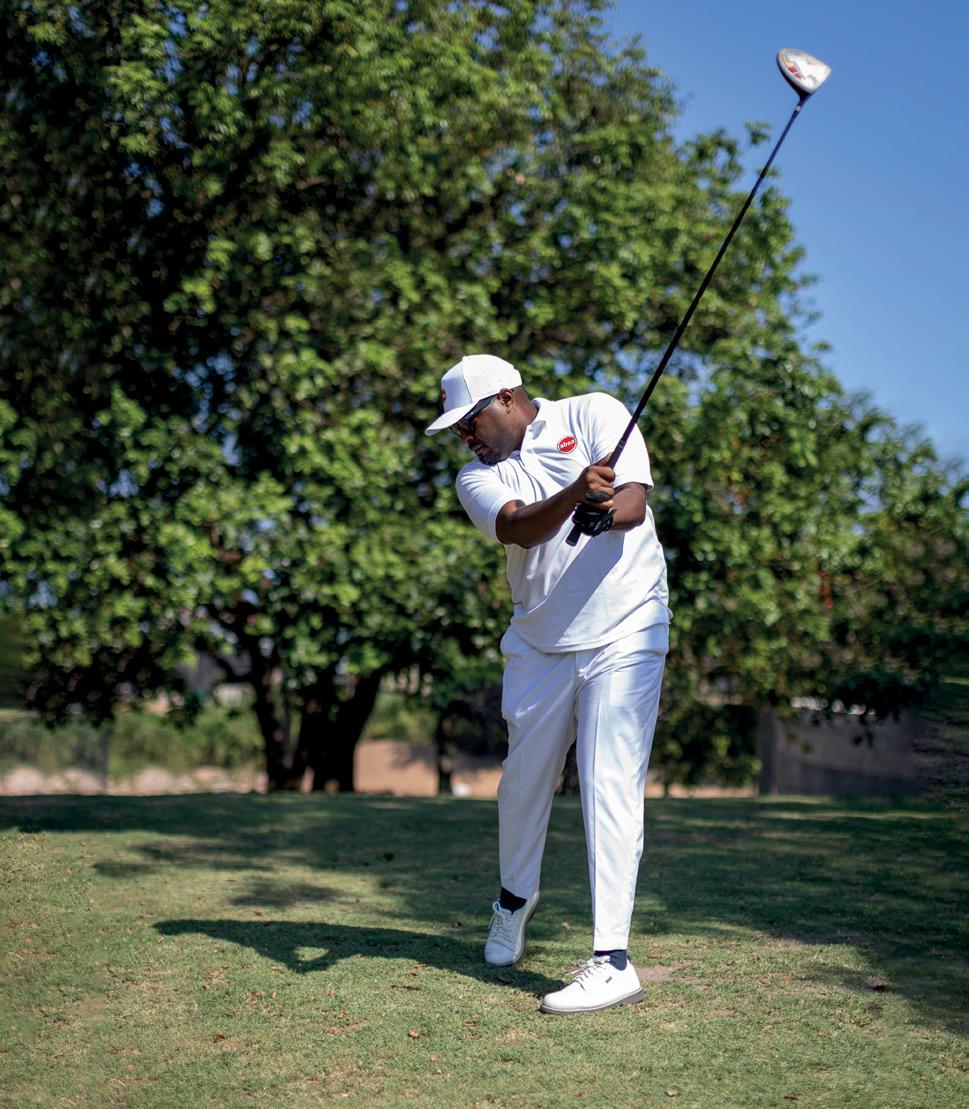
and thoughtful decision-making are critical. This journey gained a new dimension when some Absa team members had the opportunity to bring their learning onto the course by participating in the AmCham Golf Day, a tournament supported by the Bank last year. Held at the Tongaat Hulett course in Xinavane, the event celebrated a shared passion for the game and brought together around 100 participants around values such as fair play, concentration, and team spirit, including an Absa Golf Clinic that gave beginners their first direct contact with the sport.
Throughout this journey, golf proved to be a space of continuous learning. More than technique, it brought awareness. More than movement, it brought intention. A game where progress is not measured solely by results or scorecards, but by the ability to maintain balance—even when the path is not linear. By embracing golf internally, Absa reinforces a culture grounded in real experience and individual development. This practice has revealed golf as a quiet ally for focus, concentration, and emotional management—skills that are built over time, through repetition and consistency.
“O golfe obriga-nos a abrandar e a estar verdadeiramente presentes.”
“Golf forces us to slow down and be truly present.”
Because, as in the game, it is from the inside out that solidity, confidence, and lasting impact are built— lowering one’s handicap with time and consistency.
Mario Tembe, Business Development Manager, Absa Bank “O jogo obriga-nos a pensar sempre duas ou três jogadas à frente.” “The game forces us to think two or three shots ahead.”
Nuno Chitsonzo, Head of SA & Regional Companies / Local Corporate and Public Sector Companies Management, Absa Mozambique
TOP 5 GOLF DESTINATIONS
DESTINOS DE GOLFE EM
O golfe deixou, há muito, de ser apenas um desporto para se afirmar como um verdadeiro estilo de vida, associado à exclusividade, ao turismo e ao investimento. Em África, esta tendência está em plena ascensão: o continente reúne paisagens extraordinárias, campos de excelência e infra-estruturas de nível internacional, afirmando-se como novo destino de referência para a modalidade. Eis os cinco destinos de golfe mais Top em África – com um bónus de luxo na Arábia Saudita.
1. Sun City – África do Sul South Africa
Um dos ícones do golfe africano e palco do Nedbank Golf Ghallenge, combin luxo, natureza e prestígio. O Gary Player Country Club, dos mais afamados do mundo, junta-se a resorts de 5 estrelas, spas, casinos e safáris junto ao Parque Nacional de Pilanesberg, criando uma experiência onde o golfe se cruza com o lazer e o glamour. One of the icons of African golf and home to the Nedbank Golf Challenge, it combines luxury, nature and prestige. The Gary Player Country Club, one of the most famous in the world, joins 5-star resorts, spas, casinos and safaris alongside Pilanesberg National Park, creating an experience where golf intersects leisure and glamour.
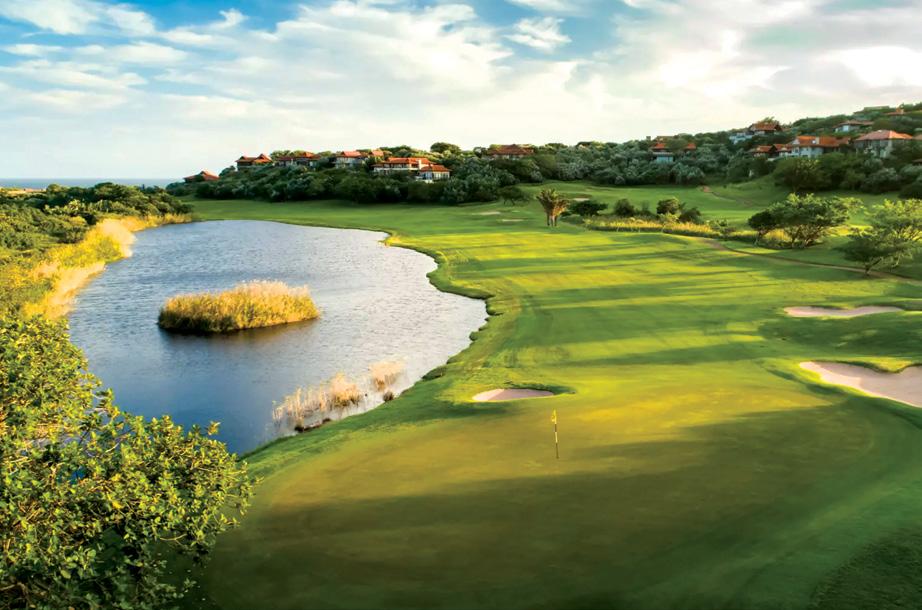
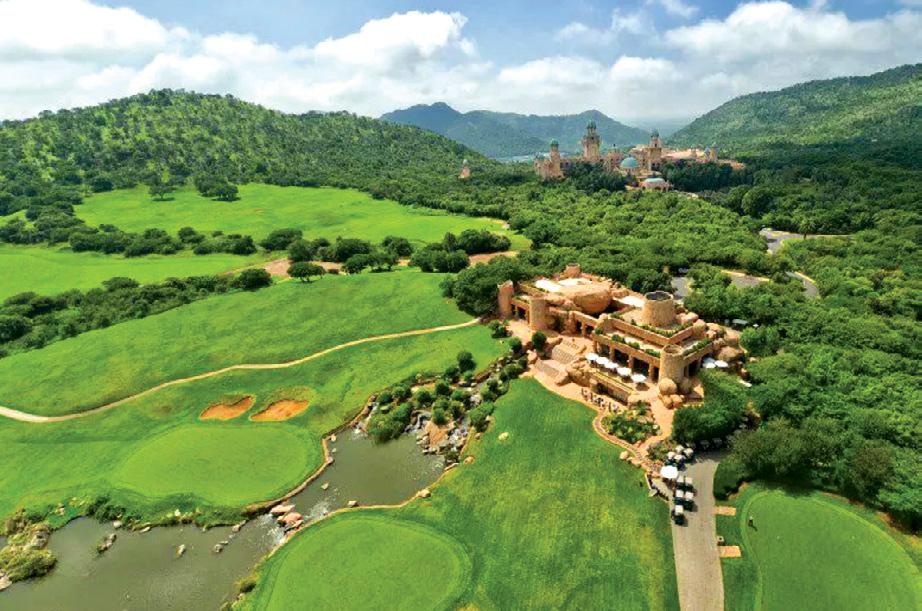
2. Dolphin Coast – África do Sul South Africa
Faixa costeira da KwaZulu-Natal que combina golfe, paisagens luxuriantes e ambiente descontraído. Campos como o Zimbali Country Club e o Prince’s Grant Golf Estate oferecem vistas sobre o oceano, vegetação exuberante e design de excelência. Ali vive-se ao ritmo do mar, entre praias, resorts e uma gastronomia de fusão. KwaZulu-Natal’s coastal strip combines golf, lush landscapes, and a relaxed atmosphere. Courses like Zimbali Country Club and Prince’s Grant Golf Estate offer ocean views, lush vegetation, and excellent design. Life there is to the rhythm of the sea, amidst beaches, resorts, and fusion cuisine.
3. Marrakech – Marrocos Morocco
É um dos destinos de golfe mais elegantes de África, com campos de referência como o histórico Royal Golf de Marrakech e o cénico Assoufid Golf Club, com vista para o Atlas. Entre riads, souks, spas e uma gastronomia rica em fusões, o golfe vive-se aqui como uma experiência também cultural e sensorial. It is one of Africa’s most elegant golf destinations, with renowned courses such as the historic Royal Golf Marrakech and the scenic Assoufid Golf Club, overlooking the Atlas Mountains. Among riads, souks, spas, and a rich fusion cuisine, golf here is experienced as both a cultural and sensory journey.
ÁFRICA (+1 NO MÉDIO ORIENTE...) IN AFRICA (+1
IN
THE MIDDLE EAST...)
Golf has long since ceased to be just a sport, establishing itself as a true lifestyle, associated with exclusivity, tourism, and real estate investment. In Africa, this trend is booming: the continent hoasts extraordinary landscapes, excellent courses, and world-class infrastructure, establishing itself as a new benchmark destination for the sport. Discover the Top 5 golf destinations in Africa – with a luxury bonus in Saudi Arabia, poised to take sports tourism in the region to another level.
4. Sharm El-Sheikh – Egipto Egipt
Aqui, o golfe cruza-se com o luxo e a herança milenar. Em Sharm El-Sheikh, o Jolie Ville Golf Resort oferece 18 buracos de padrão internacional em pleno deserto com vista para o Mar Vermelho, enquanto no Cairo e em Luxor é possível combinar golfe e cultura, e jogar com as Pirâmides de Gizé no horizonte. Here, golf intersects with luxury and ancient heritage. In Sharm El-Sheikh, the Jolie Ville Golf Resort offers 18 holes of world-class golf in the middle of the desert overlooking the Red Sea, while in Cairo and Luxor it’s possible to combine golf and culture, playing with the Pyramids of Giza on the horizon.
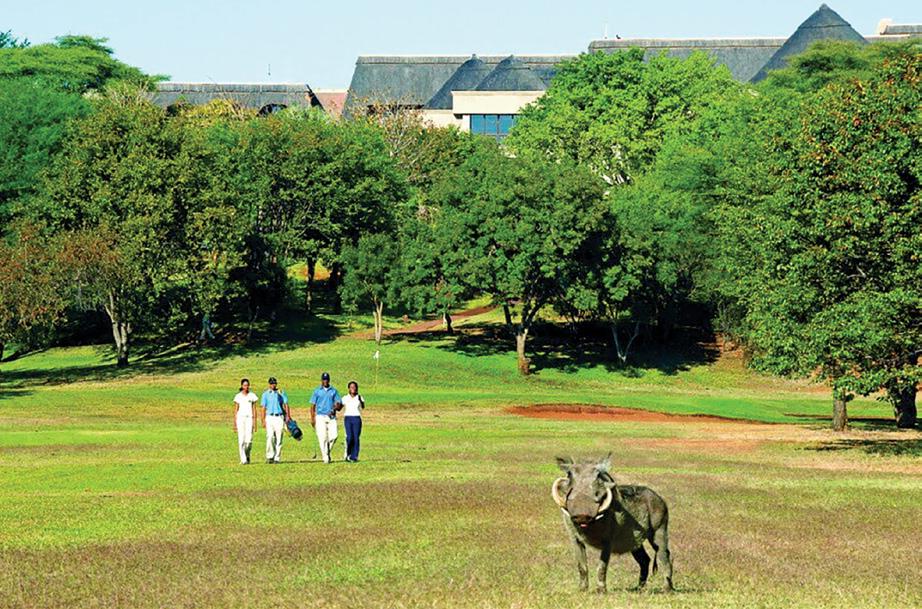
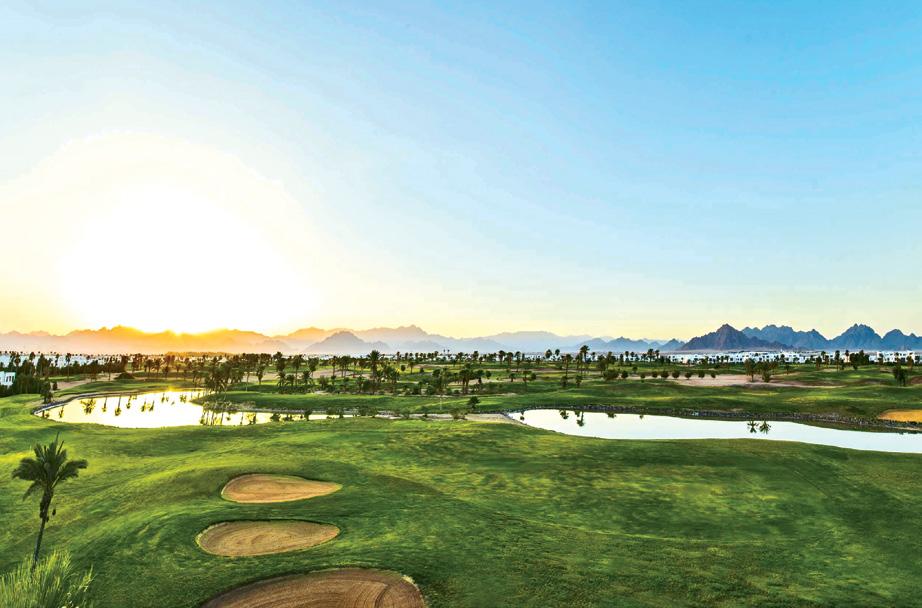
5. Victoria Falls – Zambia & Zimbabwe
Junto às Cataratas Vitória, nas margens do Zambeze, o Elephant Hills Golf Club oferece uma experiência de golfe verdadeiramente única. Entre paisagens impressionantes e com a vida selvagem a decorrer ao fundo, é o destino ideal para quem procura natureza, autenticidade e um lado mais aventureiro do luxo. Located beside Victoria Falls, on the banks of the Zambezi River, Elephant Hills Golf Club offers a truly unique golfing experience. Amidst stunning landscapes and with wildlife thriving in the background, it’s the ideal destination for those seeking nature, authenticity, and a more adventurous side of luxury.
Riadah & Diriyah – Saudi Arabia Saudita
É uma nova força do golfe mundial, impulsionada por investimentos massivos e a aposta em torneios do circuito LIV Golf. Perto de Riade, campos como o Riyadh Golf Club e o Diriyah Golf Course combinam exclusividade, tecnologia e sustentabilidade, num nível que já rivaliza com o Dubai e Abu Dhabi. It is a new force in world golf, driven by massive investments and a focus on tournaments in the LIV Golf circuit. Near Riyadh, courses like the Riyadh Golf Club and the Diriyah Golf Course combine exclusivity, technology, and sustainability at a level that already rivals Dubai and Abu Dhabi..
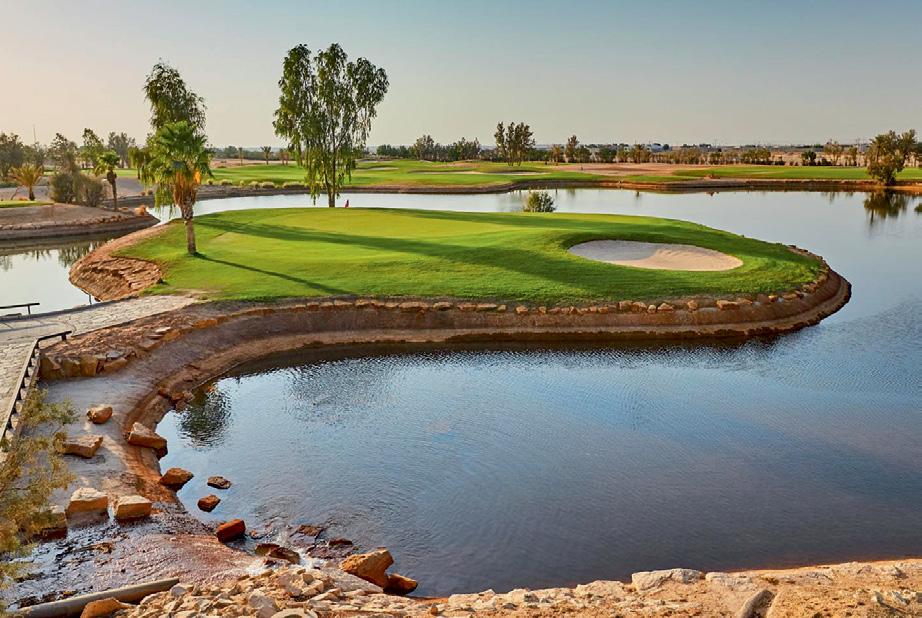
PASSOS SIMPLES ATÉ… À PRÁTICA
SIMPLE STEPS TO… PUT IT INTO PRACTICE
Instalar o sistema mínimo
Install the minimum system
Putter, ferro intermédio e um taco longo resolvem quase tudo. Um conjunto usado custa 150 - 350 USD.
A putter, a mid iron and a long club solve almostZevery situation. A used set costs around USD 150–350, enough to get started.
Calibrar os sensores
Calibrate the sensors
A correcção vale mais do que a força. Uma aula introdutória ronda 20–50 USD e evita meses de erros.
Correct alignment matters more than power. An optional introductory lesson costs around USD 20–50 and avoids months of mistakes.
Correr a versão beta
Run the beta version
Sessões curtas evitam fadiga e frustração. Tipicamente, o acesso a 9 buracos custa 15–40 USD.
Short sessions avoid fatigue and frustration. Access to 9 holes usually costs USD 15–40.
Desligar o modo herói
Switch off hero mode
O campo recompensa decisões simples. Perder bolas é normal; um pack custa cerca de 10–25 USD.
The course rewards simple decisions. Losing balls is normal; a pack costs around USD 10–25.
1
2
Entrar no modo sandbox
Enter sandbox mode
Antes do jogo real, experimente movimentos sem pressão. Um balde de bolas costuma custar 4–8 USD.
Before real play, try movements without pressure. A bucket of balls usually costs USD 4–8.
Compilar o movimento
Compile the movement
A velocidade surge após o controlo. Uma luva simples (8–15 USD) melhora aderência e consistência.
4
6
3 5 7
8
Speed comes naturally after control. A simple glove (USD 8–15) improves grip and consistency.
Activar o registo de dados
Activate data logging
Sem registo não há melhoria real. O cartão de pontuação é grátis – o investimento é a disciplina.
Without records there is no real improvement. The scorecard is free — discipline is the investment.
Actualizações contínuas
Continuous updates
A evolução vem da frequência. Cerca de 30–80 USD dão para uma volta completa de 18 buracos.
Improvement comes from frequency, not occasional intensity. With around USD 30–80, you can play a full round of 18 holes.