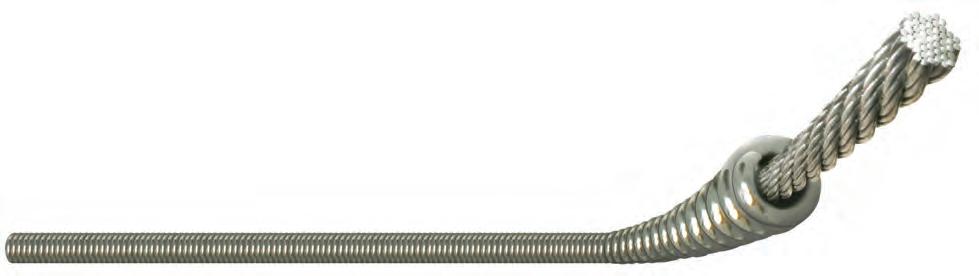
Equipped with larger 9/16" Flexicorewire rope center cable.
GPC/General Pipe
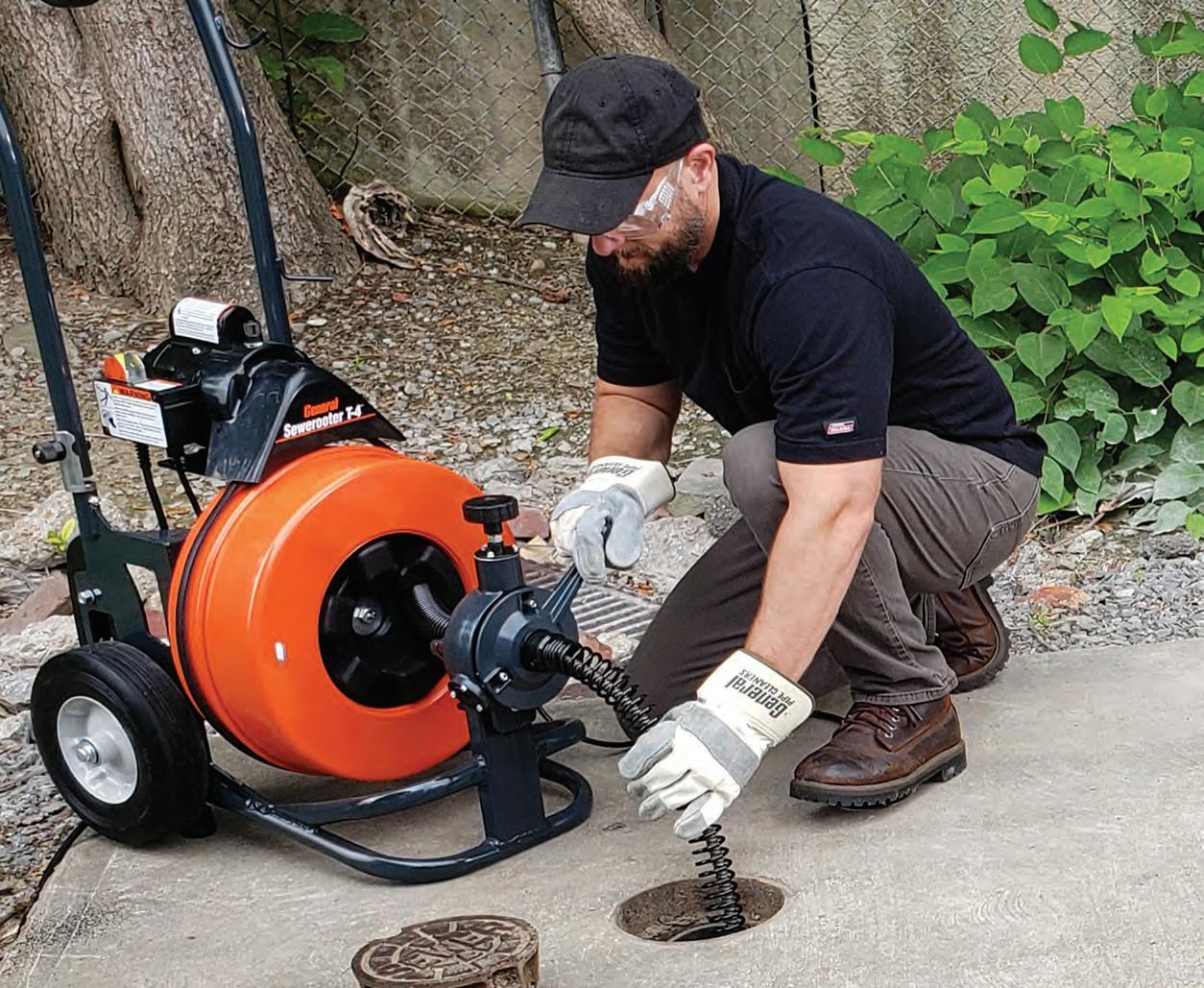
A muscular mid-size machine with more power, the Sewerooter T-4 quickly punches through tough clogs in 3" and 4" lines. A larger 9/16" Flexicore® cable does a better job of transferring the torque than traditional 1/2" cables do.
It gets down the line easier and clears clogs faster. And the portable workhorse is easier to handle in tight spaces, on stairs, and loading into your truck.
Get the whoosh faster—the sound of success. To learn more, call the Drain Brains at 800-245-6200, or visit www.drainbrain.com/T4
34COVER STORY
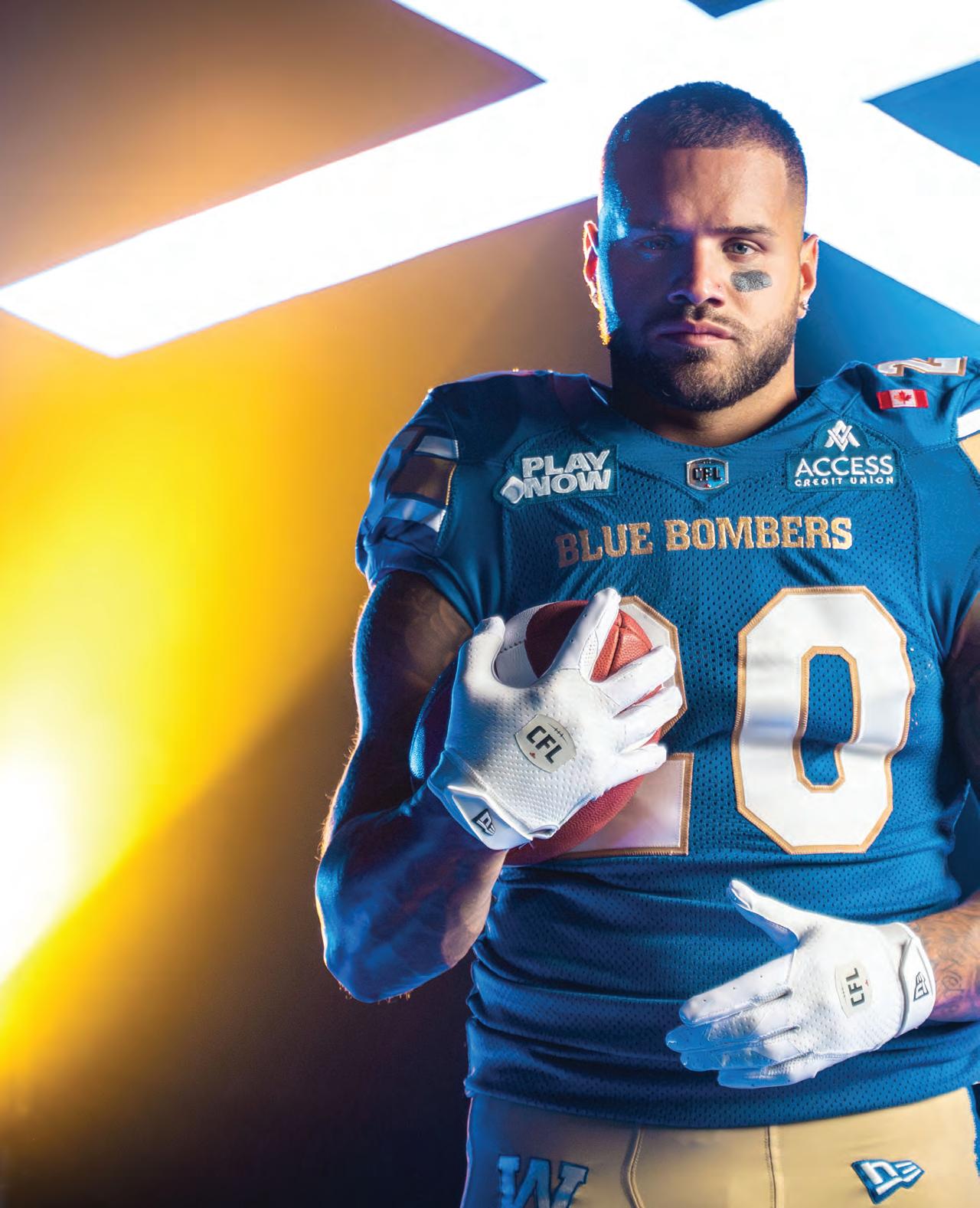
While many know him for his yards gained on the field, Winnipeg Blue Bomber running back Brady Oliveira’s heart lies in animal rescue and community service as highlighted in Must Love Dogs – a 10-part CBC Gem series. Kerry Turner
37HEAT PUMP JOURNAL
In this, the first 2026 issue of the semi-annual Heat Pump Journal, readers will learn about new technology and products, air to water, and domestic hot water. Check out Tom Grochmal’s column where he offers practical approaches to retrofit applications where electrical load is a concern.
24FAUCET TRENDS
From classic colours and finishes, to contemporary shapes and advanced technology, customers have a wide range of products to choose from. Carolyn Cooper
30MANAGEMENT
Work smarter, not harder
Where AI excels is in the tedious, time-consuming work that bogs down preconstruction processes. Practical AI applications for mechanical contractors.
Melvin Newman 52ROAD WARRIOR
Andrew Forsyth: Taking control
Carolyn Cooper
22 HYDRONICS
Matches made in heating heaven
Matthew Reid
It’s simply a lack of redundancy that has kept combi appliances from being a perfect system, but that doesn’t diminish their appeal.
40 HIGH-PERFORMANCE HVAC
How heat pumps affect the need for service upgrades
Tom Grochmal
Upgrades might be avoidable through the use of advanced controllers, known as load managers, which can shed load when required.
54 REFRIGERATION
A scalable solution
Mike Squires
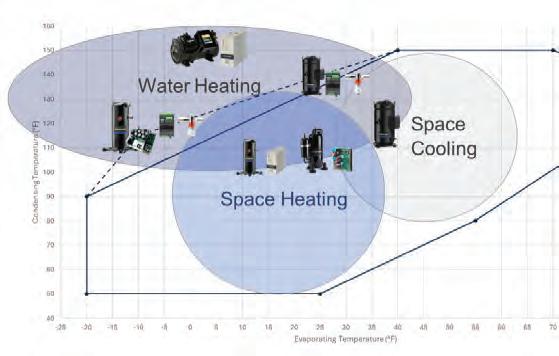
Manufacturers now offer a range of compressor technologies tailored to water heating demands.
75 PLUMBING
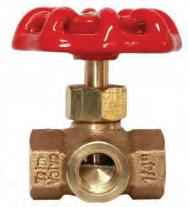
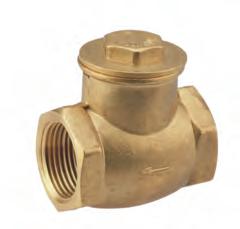
Check your valves
Fred Bretzke
A look at the more common valve types by application and function. 80 MARKETING
Why more leads are not the answer to growth
Paul Bies
In competitive markets the advantage often goes to the businesses that attract better-fit clients.
Test
Higher Turndown Hydronics
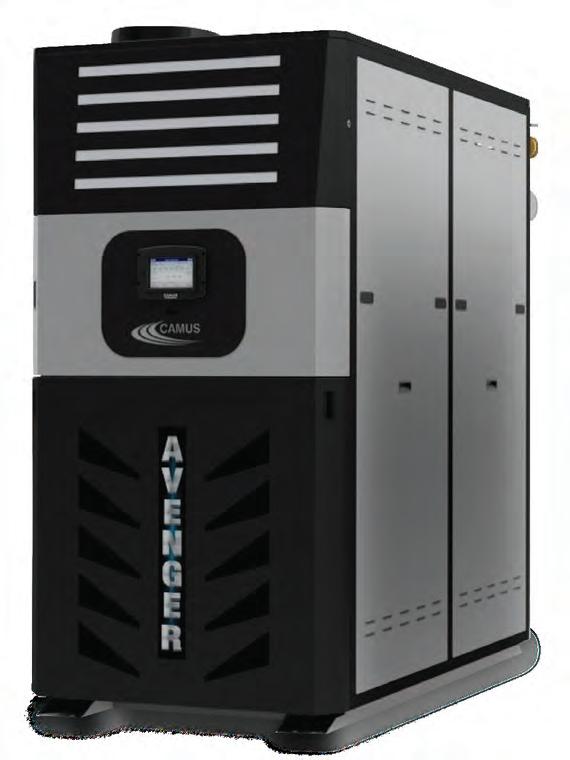
Avenger® Series II
5000 & 6000 MBH Boiler
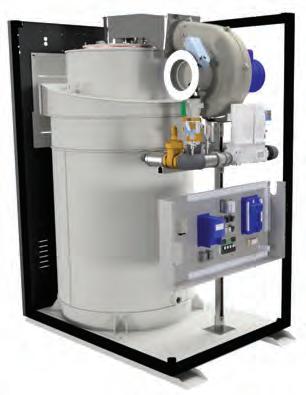
The Avenger® Series II is an advanced two-pass, counter-flow firetube commercial boiler, providing efficient hot water for demanding hydronic needs.
» Industry-leading 40:1 turndown
» Thermal efficiencies of up to 96%
» Designed for today’s higher turndown variable primary and low pressure systems
» 3 to 4 week lead-time with stock units available for quick ship
Content Media Group Inc.
2 Campbell Dr., Suite 807 Uxbridge, ON L9P 0A3
Tel: 905.465.2919 mechanicalbusiness.com
May/June 2026 Issue
Published 6 times per year.
For All Subscription Inquiries
Circulation Director: Shila Naik, C 905-272-4175 shila.naik@mechanicalbusiness.com
Editor:
Kerry Turner, C 416-435-1193 kerry.turner@mechanicalbusiness.com
National Sales Manager: Kyle Badder, C 416-735-1375 kyle.badder@mechanicalbusiness.com
Operations Manager: Caroline Bexfield, C 647-217-2076 caroline.bexfield@mechanicalbusiness.com
Contributing Editor: Carolyn Cooper editorial@mechanicalbusiness.com
Art Direction: Fourteen Orange Graphic Design Inc. davem@fourteenorange.com
We acknowledge the support of the Government of Canada.
Submissions: Copyright in material submitted to the magazine and accepted for publication remains with the author, but Mechanical Business and its licensees may freely reproduce it in print, electronic or other forms. Mechanical Business also reserves the right to edit said submitted materials to suit the editorial needs and mandate of the publication.
Notice: Mechanical Business is published for owners, managers and decision makers with mechanical contracting firms and the sector’s supply chain partners in Canada. While every effort is made to ensure the accuracy of the information, Mechanical Business, Content Media Group Inc., its staff, directors, officers and shareholders (‘The Publisher’) assume no liability, obligation or responsibility for advertised claims, for errors and/or omissions, or for the results obtained from the use of this information. Manufacturers’ instructions take precedence over published editorial. The publisher reserves the right to publish a printed correction in a subsequent issue for editorial errors, omissions and oversights. Subscriptions are available for $90 plus taxes in Canada and the U.S. Single copies are $15.00. Outside Canada and the U.S., the rates are $150.00 (annual) and $25.00 (single copy).
Arecent report from Signal49 Research (formerly the Conference Board of Canada) reveals job vacancies among skilled trades in the residential construction sector continue to rise, causing labour shortages and cost constraints.
The report, Building Under Pressure: Skilled Trades Shortages and Rising Construction Costs, found that skilled trades job vacancies in the sector have increased an average of 11 per cent annually since 2017, boosting construction costs and lengthening timelines for housing construction and renovations. Pressures such as natural disasters, increased housing demand and a labour shortage due to demographic challenges have intensified these issues.
Skilled-labour shortages contribute to increasing construction labour costs and lengthening timelines for rebuilds, home improvements and renovations.
Costs of future renovation projects would be 2.3 per cent lower without labour shortages (Costs above C$100,000, C$, by 2045)
Baseline
Signal49 Research expects the skilled trades labour shortage to worsen in coming years, growing 13 per cent annually between 2026 and 2045. The shortage will put additional pressure on the cost of renovations while adding 0.2 per cent annually to inflation in the residential construction sector. Cost inflation could rise in other construction sectors, including commercial, industrial and infrastructure, if there are similar skilled trades shortages.
Without labour shortages 53,627 50,058
The report also estimates that if labour shortages were corrected, annual costs of renovations and repairs would be $7.9 billion lower in 2045.
The rising frequency and severity of natural catastrophes, as well as increasing demand for housing, is adding to the strain on the labour supply.
As part of a ripple effect, skilled labour shortages contribute to insurance claims cost pressures by increasing construction labour costs and by lengthening timelines for rebuilds and renovations. These factors go into insurers’ calculations for premiums.
signal49.ca
Proudly created and printed in Canada.
Source: Statistics Canada, “Job Vacancy and Wage Survey”; The Conference Board of Canada
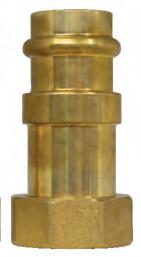
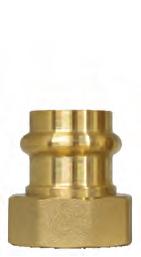
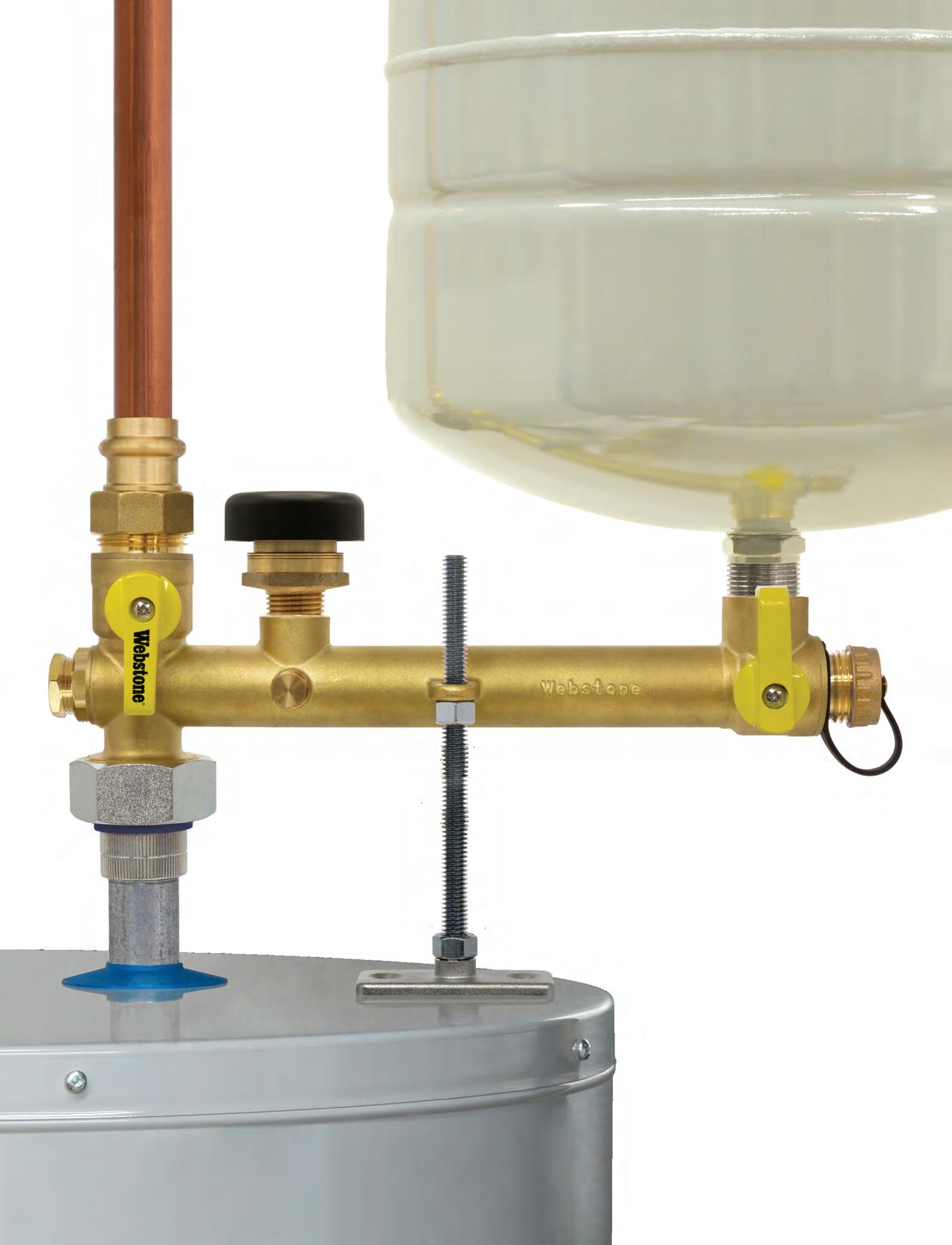
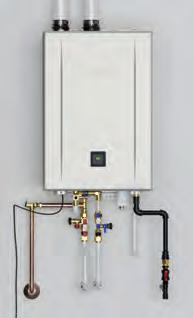
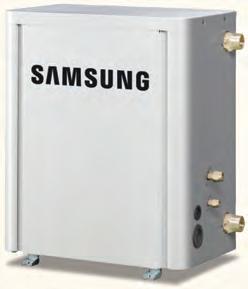
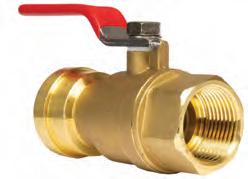
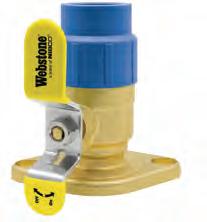
• NEW Shorter fittings save space on every installation
• Simplifies traditional water heater installations
• Integrated valves isolate water supply and expansion tank for service
• Choice of dielectric or brass union water heater connection
• Compatible with 3/4" MIP expansion tanks up to 5 gallons
• 1/2" FIP cold water tapping for Water Heater Tempering Valve
• 1/2" FIP port for installation of vacuum relief valve
• 1/8" plugged gauge port
• Compact version available if expansion tank is not required
Toronto Hydro pilot program will help builders electrify multiplex housing
Toronto Hydro has launched Multiplex PowerPlay, a pilot project that will allow up to six multiplex projects to qualify for $50,000 per project towards a smart energy load management system (for more on these devices see Tom Grochmal’s article on pg. 40). Eligible new or existing projects must be located within the M postal code area, excluding M0R and M7R; must be a multiplex development with four to six units; must be focused on electrification; and must have plans requiring a 400 A+ service upgrade, which can be avoided using a smart load management device. torontohydro.com
Efficiency Manitoba boosts heat pumps incentives for MURBs
Efficiency Manitoba has announced it is doubling incentives with a 100 per cent bonus on the performance incentive for multi-unit residential buildings (MURBs) that install a ground source heat pump upgrade as the primary heating system. The enhanced offer is an initiative of the Affordable Home Energy Program. The bonus applies to all projects in Manitoba registered by March 31, 2027, as well as for new and existing Commercial Deep Energy Retrofit Program and New Buildings Program applications. More information and eligibility requirements for the bonus can be found on the Efficiency Manitoba website.
efficiencymb.ca
Adam Hedden and Matthew Reid host the new MechBiz Podcast sharing real conversations about HVAC and plumbing trends, system design, regulations, and the evolving mechanical industry.
Update on Canada Greener Homes Initiative
Natural Resources Canada has provided an update on highlights and programs under the Canada Greener Homes Initiative. As of February 2026, the initiative had installed 284,727 heat pumps since December 2020; issued $1.8 billion in grants under the Canada Greener Homes Grant (CGHG); established eight co-delivery arrangements to roll-out the Oil to Heat Pump Affordability program; and partnered with Manitoba to deliver the Canada Greener Homes Affordability Program through Efficiency Manitoba. The federal Canada Greener Homes Loan Portal closed to new applications on October 2, 2025. natural-resources.canada.ca
Labour ministers meet to discuss workplace priorities
Federal, provincial and territorial ministers responsible for labour met in Quebec City, QC recently to discuss issues affecting Canadian workers, including labour mobility and workplace safety. Progress on recognizing priority health and safety requirements in the construction sector was discussed. Ministers endorsed the workplan on harmonizing occupational health and safety training curriculum, allowing each jurisdiction to determine how to implement it. On an international level, participants noted that Canada is progressing towards possible ratification of International Labour Organization (ILO) C155, the Occupational Safety and Health Convention, 1981, and endorsed the renewed Federal-Provincial-Territorial Strategy for Canada and the ILO for 2026 to 2028. canada.ca
The top five retrofits completed under CGHG are: heat pumps (229,000), windows and doors (145,817), home insulation (74,207), air sealing (72,115) and solar panels (38,500).
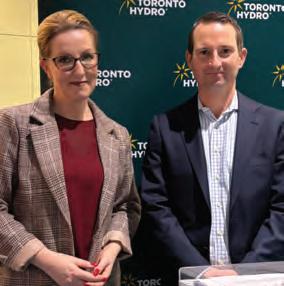
Diana Stephenson, Toronto Hydro executive vice president and chief customer officer, and chief operations officer Dan Smart announced the Multiplex PowerPlay pilot project on March 25, CMPX’s opening day.
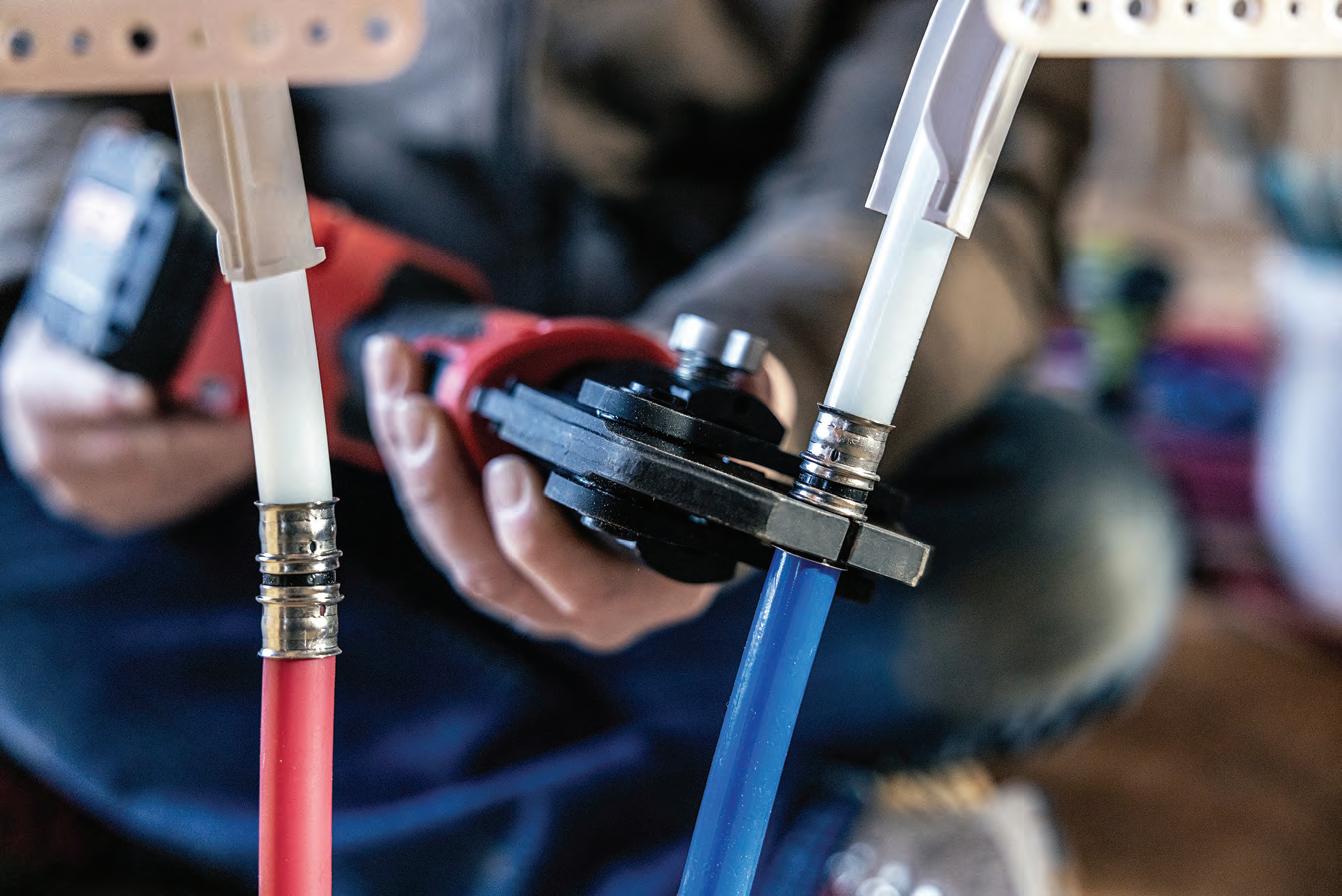
Faster installs. Consistent results.
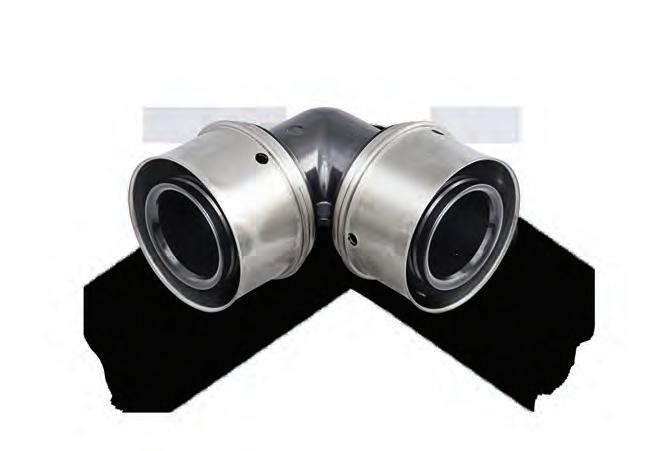
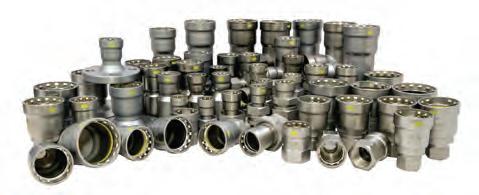
SharkBite PEX Press ttings feature a non removable stainless steel sleeve that won’t fall o in the truck or on the jobsite, visual inspection windows to con rm full pipe insertion, and a locator ridge for proper alignment. Compatible with PEX-a and PEX-b, SharkBite PEX Press delivers quicker installs and con dence in every press.
Made for Speed, Engineered for Con dence
TSSA announces fee changes, adds more online services
Ontario’s Technical Standards & Safety Authority increased its fees to 2.4 per cent as of May 1, 2026. The fees apply to Boiler and Pressure Vessel (BPV) inspections and engineering, as well as the Fuels, Elevating Device, Ski Lift and Amusement Device programs. There is no planned fee increase for the BPV Certificate of Inspection program. In addition, clients of TSSA are now able to make online applications for exams, to reinstate certificates, to obtain a certificate for workers from outside Ontario and to obtain training provider accreditation. The portal also allows users to make engineering submissions. tssa.org
Total Energy Solutions finalizes integration with 1Click
1Click Energy Solutions has fully integrated Corner Brook, NL’s Total Energy Solutions under the 1Click banner. The move allows Total Energy Solutions to offer clients an expanded range of electrification and energy efficiency solutions, while growing 1Click’s presence in Newfoundland. Total Energy Solutions first partnered with 1Click in 2023 through a subcontracting agreement. Mechanical Business profiled Total Energy Solutions and its co-founder Alexander Brake in the May/June 2025 issue (page 40).
1clickheat.com totalenergysolutions.ca
Research shows summer is getting longer
A new study from the University of BC reveals summer is arriving earlier, is generally hotter, and lasts longer than ever before. Researchers found that between 1990 and 2023, the average summer between the tropics and the polar circles has expanded by roughly six days each decade. Previous research from the early 2010s revealed summer was growing by approximately four days per decade. That means seasonal transitions, from spring to summer and summer to autumn, are also shortening. The study was published in the journal Environmental Research Letters in early April.
ubc.ca
2026 BIFA focused on resiliency
ENERQUALITY has announced the winners of the Building Innovation Forum & Awards (BIFA26), celebrating builders, professionals and organizations in the residential construction industry. BIFA26, which took place in Toronto, ON on March 12, focused on resiliency. The one-day forum included discussions and knowledge sharing between builders, manufacturers, energy advisors and industry professionals, while the awards recognized companies and professionals leading the way in building durable, adaptive and long-lasting homes. enerquality.ca
Ontario to increase WSIB benefits, extend earnings
Ontario is planning to boost income replacement benefits that workers injured on the job receive through the Workplace Safety and Insurance Board (WSIB). If passed, the proposed change would increase WSIB Loss-of-Earnings (LOE) benefits to 90 per cent of a worker’s take home pay, up from 85 per cent. The increase would come through an update to the Workplace Safety and Insurance Act. The government is also proposing the Act be changed to ensure workers continue to receive LOE benefits if they plan to work past age 65 instead of losing them at age 65. The average retirement age in Canada has exceeded age 65 since 2023.
ontario.ca
Federal Plastics Registry Reporting Delayed - 2nd Phase
Environment and Climate Change Canada has announced mandatory reporting into the Federal Plastics Registry (FPR) for products that use construction or commercial/ industrial waste systems will be delayed until 2027. The news was initially reported by the Heating, Refrigeration and Air Conditioning Institute of Canada and was formally announced in a Canada Gazette Notice in March, with reporting instructions to come this summer. canada.ca
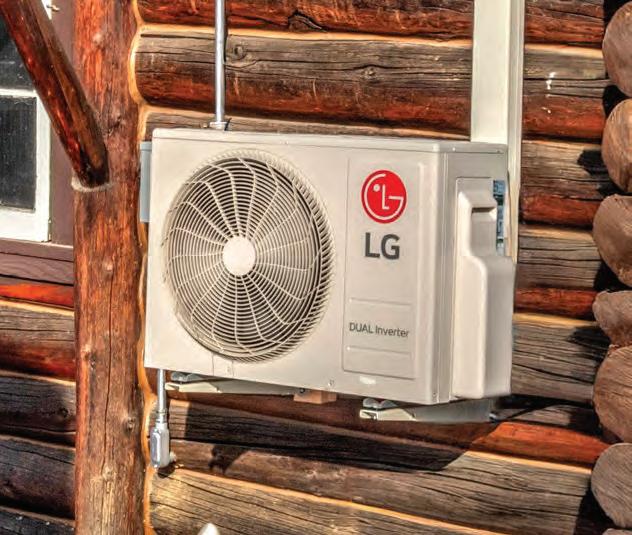
LG Electronics Canada won the Innovation Gauntlet award at BIFA26.
No need for supplemental heat
Operates in all types of climates; indoor and outdoor
Available in air, water, and a unique hybrid air source with cool recovery
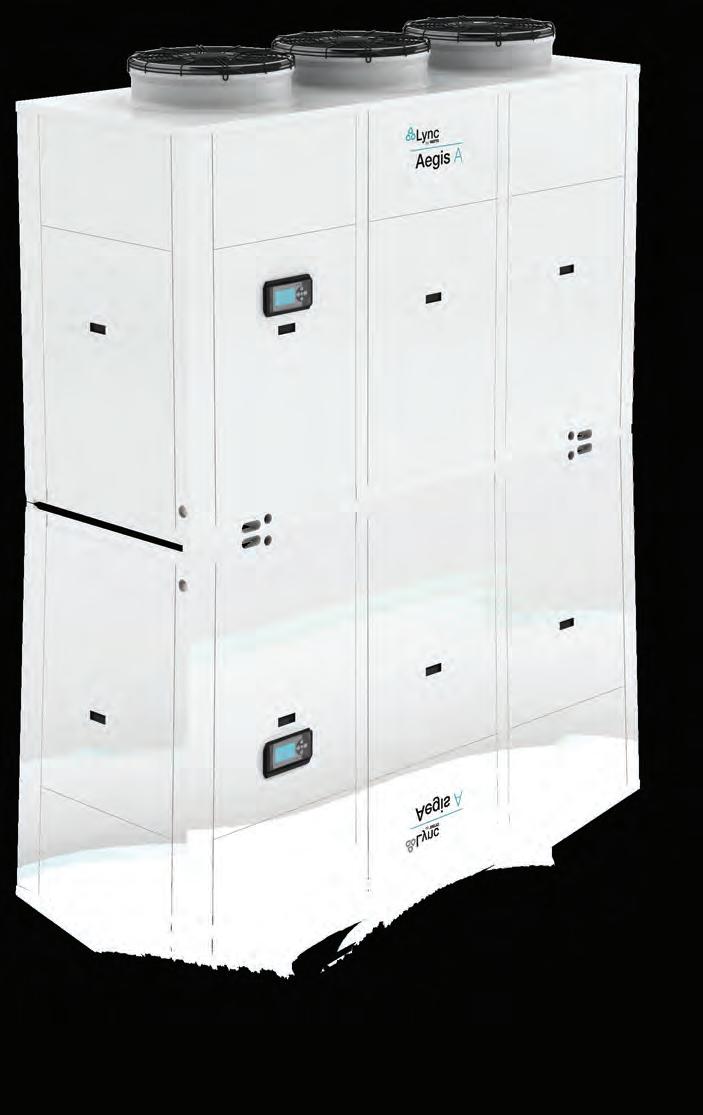
Energy-Saving, Year-Round Hot Water.
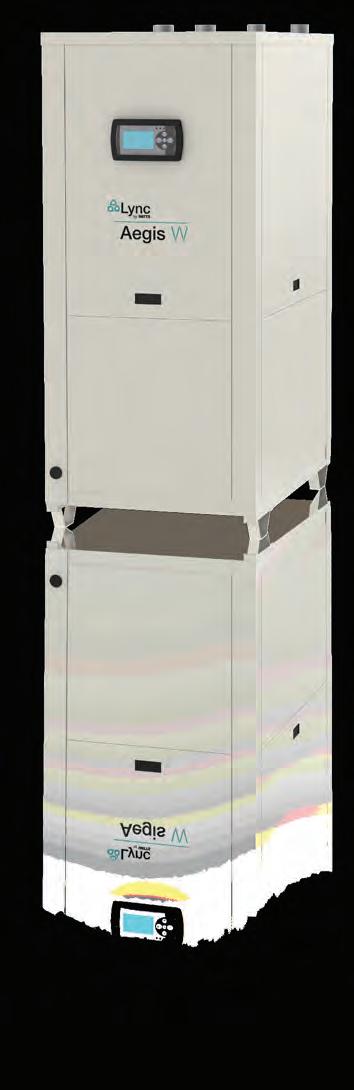
Powered by electricity and CO2 (non-toxic R744 refrigerant), Aegis delivers reliable hot water up to 170°F at temperatures as low as -4°F.
Fully integrated system offered with heat pump, heat exchanger module, tanks, and digital mixing valve - all from a single source
817.335.9531 |
Lync
Funding announced for additional skills training in Quebec
The federal government and the province of Quebec have announced a $24.7-million investment over five years to support skills training for apprentices in 18 designated Red Seal trades in Quebec. Up to 3,750 apprentices and journeypersons could benefit from the additional funding, which is part of the bilateral agreement between Canada and Quebec under the Union Training and Innovation Program (UTIP). Designated Red Seal trades include: boilermaker, industrial mechanic (millwright), insulator (heat and frost), plumber, refrigeration and air conditioning mechanic, sheet metal worker and oil heat system technician, among others.
canada.ca
New Brunswick introduces Pay Transparency Act, amends Employment Standards Act
The government of New Brunswick has made amendments to the Employment Standards Act, extending job-protected unpaid leave for illness or injury to as much as 27 weeks. The Act currently guarantees five days of job-protected leave in a 52-week period. Other jurisdictions, including BC, Alberta, Saskatchewan and Ontario, have already made similar reforms. The province has also introduced the Pay Transparency Act, designed to improve equity and fairness in the workplace. If passed new legislation would mandate that employers include salary ranges in job postings, would prohibit the use of salary history in hiring, and would protect employees from reprisals for discussing their wages. The Act will also address pay gaps that disproportionately affect some groups of workers, including women. gnb.ca
Contractor heat pump opportunities in Ontario
CLEAResult Canada is onboarding qualified HVAC contractors in Ontario in the L, M and P postal code regions for heat pump installations through the Oil to Heat Pump Affordability Program to income-eligible households. The program is funded by Natural Resources Canada (NRCan) and the Independent Electricity System Operator (IESO), and delivered by CLEAResult Canada. Contact Emma Hoerner, conservation account manager at CLEAResult, at emma. hoerner@clearesult.com for more information.
clearesult.ca
PPI publishes 2026 edition of PPI TN-62
The Plastics Pipe Institute’s (PPI) Building & Construction division has published a new edition of PPI TN-62 Suitability and Fitness of Chlorinated Polyvinyl Chloride (CPVC) Piping Systems for Commercial Building Applications. The TN-62/2026 describes material properties and capabilities that should be considered when designing CPVC systems for commercial building applications, including hot and cold water distribution, fire protection, chilled water, and hydronic heating and cooling systems. The free document can be downloaded on the PPI website. plasticpipe.org
The government of Ontario has launched a digital portal to track worker exposure to hazardous substances in the workplace. The Occupational Exposure Registry (OER), which is the first of its kind in Canada, allows workers to anonymously record and track their exposure to 11 designated hazardous substances, including asbestos, lead, mercury and silica. Workers include information such as how the exposure occurred, and what protective measures were in place, including ventilation, training or PPE. ontario.ca
Initiative to bring geothermal into Ontario schools seeks support
The Climate Challenge Network is seeking technical support for a research project to develop a geothermal applications guide for kindergarten to grade 12 schools in Ontario. The project will look at real-world geothermal installations, and is requesting guidance on system design, life-cycle costs, procurement, operations and performance verification. To learn more about how to participate email Carolyn Shier at cshier@climatechallengenetwork.org. The Climate Challenge Network is an independent, not-for-profit organization that manages the Sustainable Schools program and other initiatives. climatechallengenetwork.org sustainableschools.ca
Supreme Comfort. Engineered Simplicity.
ECO-KING SUPREME SERIES
High Efficiency Performance. Up to 94% efficiency for lower energy use and reduced bills.
Compact. Powerful. Quiet. Engineered for modern homes with a space-saving design and ultra-quiet operation.
Built to Last. Premium components and intelligent engineering for reliability you can count on.
People in the news
Daikin Comfort Technologies North America has promoted Francois Lachapelle (1) to regional general manager, Eastern Canada/Quebec. After working in general contracting Lachapelle became area sales manager for Eastern Canada at Goodman Distribution in 2013 and was promoted to regional manager in 2019. Joe Monaco (2) has been promoted to regional general manager, Central Canada. His career with Daikin spans over 22 years, starting with Goodman Company Canada. He has experience as a branch manager, area sales manager, regional pricing manager and most recently, regional manager. Quin Randolph (3) has been named regional general manager, West Canada. Randolph has been with Daikin for over 22 years, originally hired to open the first branch in Western Canada as a branch manager operations (Goodman Company Canada). During his 22-year tenure at Daikin Comfort Calgary, the company opened five additional branches. In other news at Daikin Comfort Technologies North America, Ashish Joshi (4) has been named division vice president – sales planning Canada. Eric Bikkers (5) has joined the company as territory sales manager for Southwestern Ontario. Russell Pipke (6) has joined the company as E-premium product specialist in Western Canada.
Mackenzie Schlang has joined Newmarket, ON-based Oatey Canada as Western Canada wholesale sales manager. Schlang will be responsible for strengthening relationships, aligning national strategies with regional agency partners and growing Oatey’s presence across the West.
Watts Water Technologies has named Steve Guterres director of sales and marketing, Canada. In this role Guterres is responsible for driving sales strategy and execution, and customer service.
Belimo has named Antti Valikangas (1) regional sales manager, Eastern Canada. Valikangas has been with Belimo since November 2022 as district sales manager. Belimo has also promoted Syed Anjum Abbas (2) to team lead regional application consultant, based in Calgary, AB.
Marc-André Girard has been appointed CEO of Laval, QC-based ProKontrol. Girard was previously in the role of vice president, finance and general manager.
Paul Nicholson is now sales manager – plumbing at Bartle & Gibs. The company has also hired Cynthia Vergara as showroom consultant.
Concord, ON-based Noble Corporation has appointed Alec Young branch manager for its Kanata, ON location.
Chris Palmer has joined Woodbridge, ON-based Applied Systems Technologies Inc. as vice president of sales and business development.
Andrew Rodgers is now outside sales representative for Moncton, NB-based Atlantic Piping Distribution Ltd.
Anja Hecher has joined Langley, BC-based The ECCO Group as strategic product category manager.
Ben Schulhauser has been named territory sales manager for Rinnai Canada, based in Calgary, AB. He was previously technical support specialist at Rinnai America Corporation.
Surrey, BC-based ProLine Fittings Inc. has named Jeff Kelly regional sales manager – Western Canada.
Ian Wallace has joined Montreal, QC-based Senville as a business development manager.
Ottawa, ON-based WMC Water Management has hired Bryan Germann (1) as account manager, Southwestern Ontario, Myles Gunnell (2) as account manager – projects and construction, Southwestern Ontario, and Chris Kilgour (3) as senior account manager.
Keith Strachan (1) has been named president, Canadian operations, at SaintBruno-de-Montarville, QC-based The Master Group. Strachan was most recently senior vice president, distribution. Master has also hired Eric Francoeur (2) as heating product manager, Eastern Canada. Danilo Elez has joined Toronto, ON-based Armstrong Fluid Technology as CEO.
Markham, ON-based Midea Canada has hired Glen Heldt as sales manager of the builder division.
Mike Shanks has joined Burlington, ON-based ClimateCare Canada as director of membership growth. Shanks will focus on growing and strengthening ClimateCare’s membership network of HVAC contractors across Canada.
Joe McLean has joined Moncton, NB-based ARCTIC Energy Solutions as director of business development.
Markham, ON-based The Morgan Group welcomes Eduardo “Eddy” TelloQuerejeta as territory sales manager for Eastern Ontario.
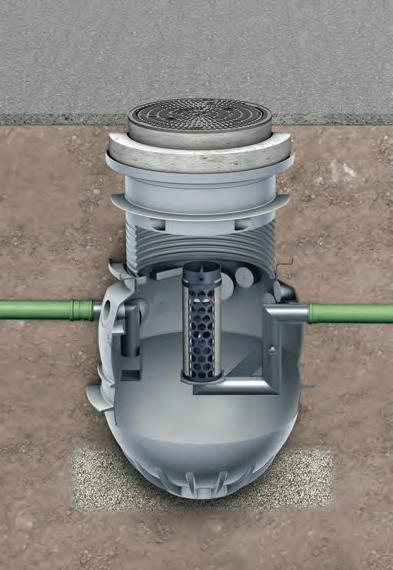
ACO Oleopator P
Oil/Water Separators
People in the news
London, ON-based Palser Enterprises Ltd. has hired Ben Cole (1) as Eastern Ontario outside sales representative, and Allison El-Baba (2) in a quotations role. The company has also promoted James Couch to quotations manager.
Nepean, ON-based Walmar Mechanical Sales Ltd. has hired Chris Forest as manufacturer representative.
Jordan Goeree has joined Waterloo, ON-based Hydronic Solutions Inc. in a technical hydronic design and sales support role.
Bathurst, NB-based Eddy Group Ltd. has named Melvin Alcantara showroom consultant in Miramichi, NB.
Burlington, ON-based Wolseley Canada has promoted Richard Gill (1) to branch manager in Saint John, NB; Clinton Rempel (2) to branch area manager for Atlantic Canada; Ronny Paul Sarabia (3) to account manager; Ankita Sehgal (4) to commercial projects specialist; and Steve Stanbridge (5) to branch manager of the Burnaby, BC location. In addition, Wolseley has hired Jeff Green 6) as wholesale sales specialist, based in Burnaby, BC.; MJ Gruenfeld (7) as counter sales in Windsor, ON; Luc Quimper (8) as branch manager in Gatineau, QC; and Riley Wetmore (9) as general manager –Ontario Waterworks.
Burlington, ON-based GTA Compressor Solutions Inc. has hired Hillary Smith as sales representative. The Canadian Institute of Plumbing & Heating (CIPH) has hired Olivia Auriat in a new role as director of advocacy.
Vaughan, ON-based NEXT Plumbing and Hydronics Supply has hired Veronica Armanious as human resources generalist, and William Haskins as purchasing director.
Enercall Sales & Service has hired Matt Rafferty as outside sales representative
Aibek John (1) has joined Mississauga, ON-based dahl Valve Ltd. as sales manager –Canadian wholesale. In addition, Sonja Vucetic (2) has been promoted to customer service manager at dahl Valve Ltd.
Bray International, Inc. has hired Phil Butts as general industrial sales manager. Brampton, ON-based Carrier Enterprise Canada welcomes Kyle Doherty as vice president, Canada –Legacy Sales.
Regina, SK-based Ram Mechanical Marketing has named Dylan Reimer outside sales representative for Winnipeg and Manitoba.
Khaled Azzam has joined Winnipeg, MB-based E.H. Price Solutions as bid board coordinator.
Chilliwack, BC-based Delta Water Products welcomes Nuno Canario as director of industrial and engineered solutions, and Blair Wilson as hydronic heating sales representative.
Joe Oliveira is now regional sales manager at Uponor. Oliveira was most recently territory sales manager – GTA and Eastern Ontario.
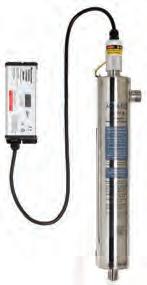
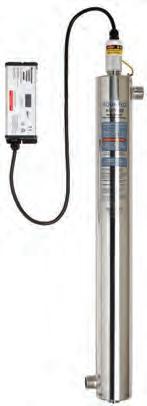
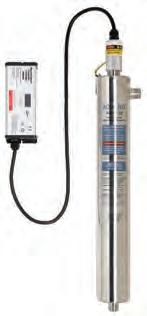
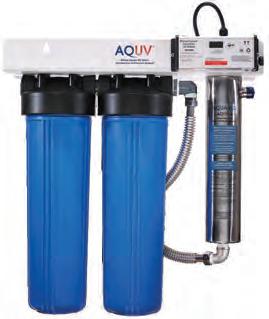
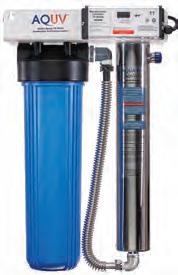
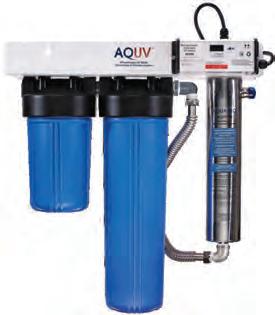
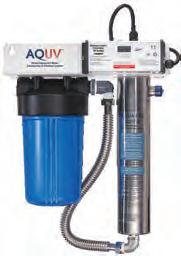
UV Systems Built for the Professional Channel
AQUV Systems:
k For home, farm or cottage
k Proven to control microbiological (bacteria & virus) issues in water
k High-quality, competitively priced
k Available exclusively through professional channels only Novo/Canature
Features:
k 8, 12 and 20 gpm systems
k Combination UV / Filtration rack systems
k IAPMO Certified to NSF/ANSI 61 (for material and structural integrity only) and CSA B.483.1
k Integral lamp life monitor with digital display
k Audible and visual lamp life indicator
k Patented lamp pin connection protects replacement revenue
k Assembled in Canada
Movers & Shakers
Rheem Canada now offers
General’s full HVAC lineup and Nordyne/Nortek brands
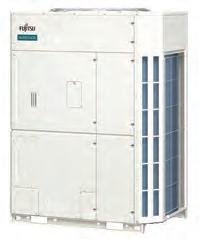
General HVAC Solutions America, Inc. (formerly Fujitsu General America, Inc.) has joined the Rheem family of brands in the Canadian market. The Fujitsu AIRSTAGE line of mini-split and VRF heating and cooling systems is now part of Rheem Canada’s brand portfolio. In addition, Rheem Canada will assume responsibility for sales and operational functions for General HVAC Solutions America. Rheem Canada has also assumed all sales functions for legacy Nordyne/Nortek Global HVAC (NGH) brands in Canada. Rheem will take on additional operational functions in coming months. Nordyne manufactures HVAC equipment under the Intertherm, Maytag, Frigidaire and Gibson brands. nordyne.com rheem.ca fujitsugeneral.com
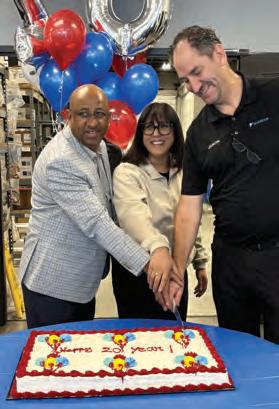
Daikin Comfort marks 20th anniversary with open house
Daikin Comfort Technologies Distribution Inc. recently held an open house and vendor exhibit at its Pickering, ON branch on Sandy Beach Rd. The company has been in the Pickering area for 20 years having first established a branch on Brock Road with Joe Monaco in the role of branch manager. After a decade at that location the decision was made to relocate to a more modern and larger facility to better serve contractors in the east and northeast GTA. daikincomfort.com
Three Pickering branch managers (former and current) were in attendance to cut the celebratory cake. (L-R) Ed Gizaw, national accounts manager; Meena Mohammed, Markham branch manager; and the Pickering branch’s current manager Jason Smith.
Kinghome celebrates grand opening of Canadian headquarters
Kinghome Canada recently hosted the grand opening of its new Canadian headquarters in Vaughan, ON, as well as its 2026 product launch. The headquarters is an integrated facility that includes a distribution warehouse, office space, conference facilities, a product showroom and technical testing centre. The grand opening featured a ribbon-cutting ceremony, and brought together Kinghome senior executives from China and Canada, industry partners and local government representatives. The company is now in multiple provinces with plans to continue its expansion in the Canadian market. kinghomecanada.com
Lennox and Ariston Group form joint venture
Lennox International Inc. has expanded into residential water heating through a joint venture with Ariston Group. The new line of residential water heaters from Lennox was in North America for dealer orders effective March 16, 2026. lennox.com
Napoleon celebrates 50 years of business
Napoleon is commemorating its 50th anniversary in 2026. The family-owned company was established in 1976 in Barrie, ON. Today Napoleon is the largest privately-owned manufacturer of grills and fireplaces in North America, with manufacturing and distribution facilities in Canada, the U.S., Mexico, China and Europe. napoleon.com
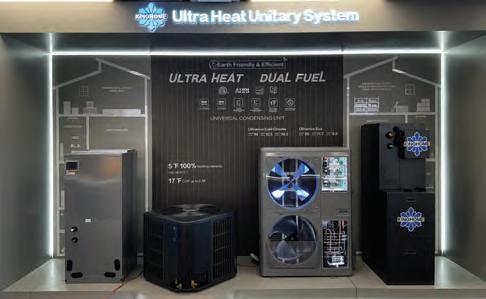
The R32 Ultranixx Ultra Heat Cold-Climate Central Ducted Heat Pump System was on display at the new Kinghome Canada Vaughan, ON headquarters showroom.
AirX Climate Solutions acquires Northern Air Systems
Oklahoma City, OK-based AirX Climate Solutions, Inc. (ACS) has purchased Northern Air Systems, Inc., a Rochester, NY-based manufacturer of specialized HVAC systems for complex and mission critical applications. Northern Air serves customers in specialty industrial markets. The acquisition strengthens ACS’s portfolio of mission critical and specialty HVAC applications.
airxcs.com northernairsystems.com
E.H. Price partners with Patterson-Kelley
E.H. Price Solutions now represents Patterson-Kelley products in Kelowna, Victoria and Vancouver, BC. Headquartered in East Stroudsburg, PA, Patterson-Kelley manufactures highefficiency boilers, water heaters and controls for commercial and institutional applications. Winnipeg, MB-based E.H. Price Solutions has more than 20 locations across Canada.
ehpricesolutions.ca pattersonkelley.com
Stone Mountain Technologies suspends operations
Piney Flats, TN-based Stone Mountain Technologies, Inc. (SMTI) has suspended all business operations as it explores strategic alternatives. SMTI says it is seeking a new partner to purchase the company’s assets and relaunch operations. The company sells gas absorption heat pumps for residential and commercial applications under the Anesi brand, as well as air handling units and indirect storage tanks. stonemountaintechnologies.com
A-Gas facility receives AHRI certification
A-Gas’ laboratory in Dartmouth, NS is now the only refrigerant testing lab in Canada certified by the AirConditioning, Heating, and Refrigeration Institute (AHRI). A-Gas acquired the facility in spring 2025 as part of its purchase of Refrigerant Services Inc. A-Gas also has two AHRI-certified labs in the U.S., as well as a lab at its Canadian headquarters in Stoney Creek, ON that adheres to AHRI 700 practices. The AHRI 700 standard sets benchmarks for reclaimed refrigerant purity and quality. agas.com
NEXT Supply opens two new Ontario branches
NEXT Plumbing and Hydronics Supply has opened new branches at 663 Colby Drive, Unit 14, in Waterloo, ON, and 3375 Laird Rd. in Oakville, ON. The new locations support NEXT Supply’s full inventory of products. Vaughan, ON-based NEXT Supply has 19 locations in Southern Ontario. nextsupply.ca
Techsaver partners with Icon Agency in Western Canada
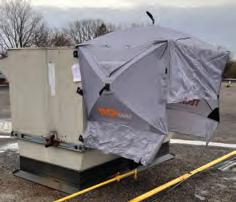
Techsaver Marquee has announced a partnership with Icon Agency to represent its products in Alberta and BC. Ottawa, ON-based Techsaver produces protective tents that allow HVAC technicians to work on commercial and residential equipment in harsh weather conditions. To learn more about Techsaver see Mechanical Business Jan/Feb 2026 (pg. 68). Icon Agency has offices in Port Coquitlam, BC and Calgary, AB. techsavermarquee.com iconagency.ca
Palser expands in Eastern Ontario
Palser Enterprises Ltd. has announced it is expanding to Eastern Ontario with new brands, including Bradley Company, Zoeller Company, and Bonomi North America. The company is also expanding its Watts Water Technologies territory to include Barrie, ON and the Muskoka region of Ontario as of April 1, 2026.
palserent.com
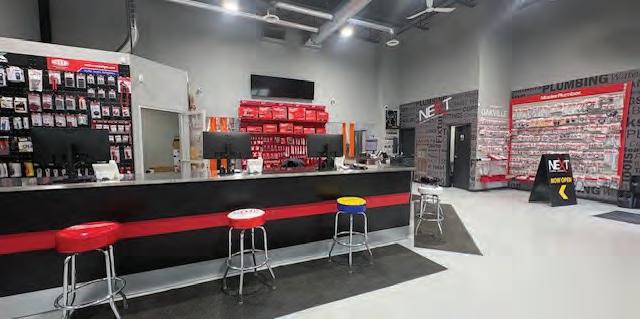
The counter at NEXT Supply’s new Oakville, ON branch.
Movers & Shakers
dcbel enters the Quebec market
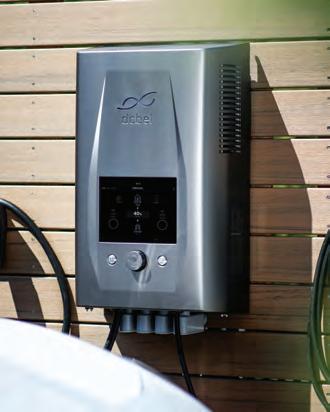
Integrated home energy company dcbel Inc. has entered the Quebec market following its introduction in homes in California. The Montreal, QC-based company offers the Ara Home Energy Station, which allows homeowners to create their own private energy grid. dcbel designs, develops and commercializes home energy products and services for the residential energy market. The company has a dedicated engineering and testing facility at its Montreal headquarters, with additional offices and engineering facilities in San Bruno, CA and Paris, France. quebec.dcbel.energy
Plazr and Enercall acquire Delaney and Associates
Port Coquitlam, BC-based Plazr Sales Inc. and Cranbrook, BC-based Enercall Sales & Service Inc. have partnered to acquire Calgary, AB-based Delaney & Associates. The partnership and acquisition will go under the Enercall Sales name. As part of the agreement, Cindy Delaney will join the Enercall sales team as outside sales representative, while Ryhs Gamache, president of Plazr Sales, will assist with sales in the Alberta market. The company will represent a variety of plumbing and heating manufacturers in Alberta.
enercall.ca
Pro-West Sales reps Zoeller Canada in BC
Manufacturers’ agent Pro-West Sales Ltd. now represents Zoeller Canada in BC. The partnership supports the Zoeller family of products, including Zoeller Company, Flint & Walling, Wolf Pump and Zoeller Engineered Products. Headquartered in Brantford, ON, Zoeller Canada delivers a range of water movement solutions for residential, commercial and industrial applications.
prowestsales.com ca.zoeller.com
Delta Water Products is now a Grundfos distributor in BC
Delta Water Products is now an authorized distributor of Grundfos solutions in BC. The company will support a range of Grundfos pump and water system solutions for groundwater and irrigation, domestic building services, and industrial and commercial applications.
deltawaterproducts.com grundfos.com
The Ara Home Energy Station allows homeowners to create their own private energy grid in one system.
High-E ciency Geothermal Heat Pump for Sustainable and Reliable Year-Round Comfort
Available in ve sizes from 2–6 tons, delivering up to 5.4 COP and 34.4 EER. Features an integrated desuperheater for domestic hot water production, is compatible with open- and closed-loop systems, and uses environmentally friendly, low-GWP R‑454B refrigerant. Provides consistent comfort for new construction and retro ts.
Flexible, eld-reversible design allows right, le or rear return con gurations in 3 simple steps
Viessmann
By Matthew Reid
MATCHES MADE IN HEATING HEAVEN HYDRONICS
Inthe mechanical world I love it when I come across a device that does more than just one thing. I want a mixing valve that also is a digital control that can allow for hotter water to pass for sterilization. I want my air conditioner to also do heating as is the case with heat pumps. I recently saw a furnace with a clothes dryer built in. When we combine things, we usually see an uptick in innovation and efficiency. There are a few pros with combi systems and today we are going to explore them.
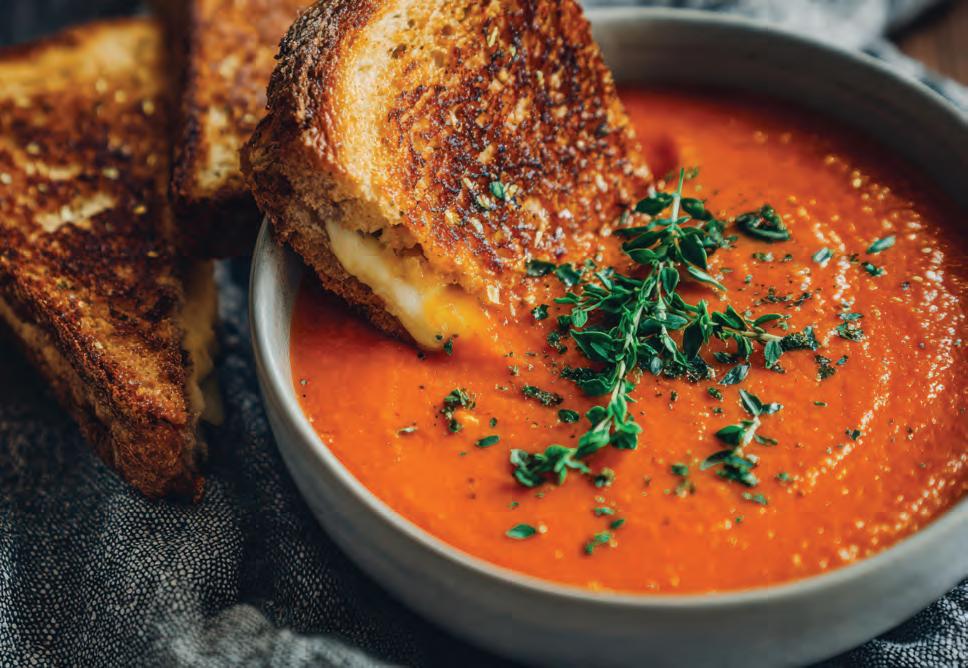
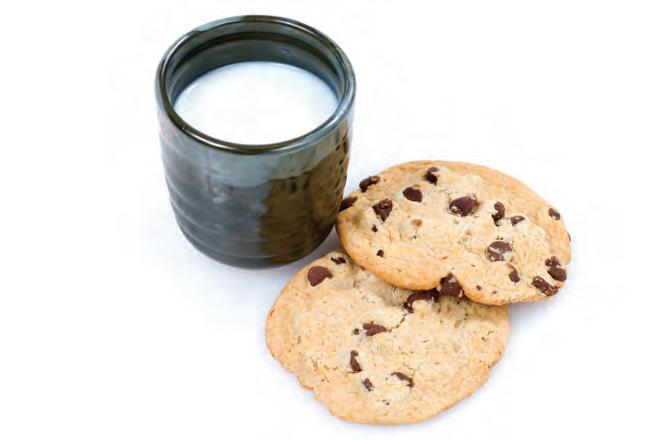
Peanut butter and jelly, milk and cookies, tomato soup and grilled cheese; these are examples of classic undeniable combos. Some things are absolutely designed to go together and when paired the sum of the two is greater than their individual values.
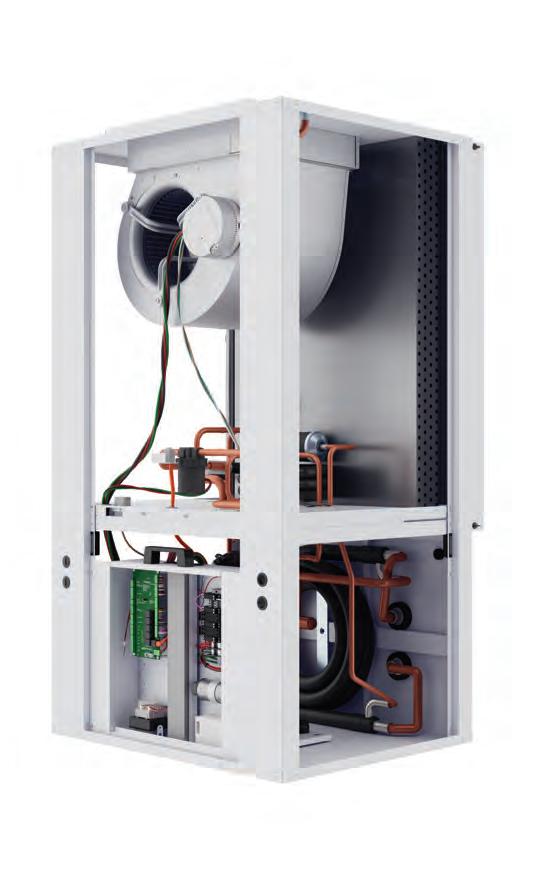
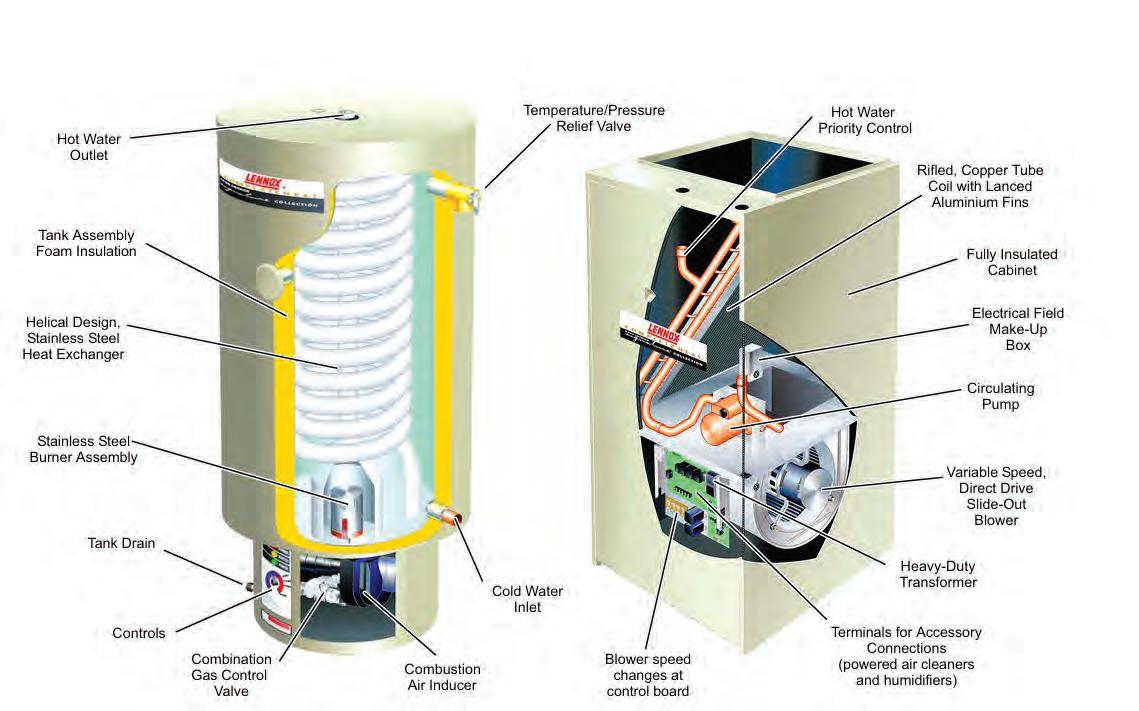
First things first. These systems are not new. Old-school cast iron boilers used to come with a bolt on domestic hot water (DHW) generator − North America’s first “tankless.” There was a forced air system from Lennox called the CompleteHeat. It was a forced air system with a water heater built in. The water heater circulated hot water through a coil and then the forced air portion blew air over that coil sending warm air to the ductwork in the home. This came around in the early 1990s and was a marginal success. A similar version of this is in the market right now, although it does forced air heating only. All of these are technically combis and the message a combi delivers is clear, “Hey, why can’t all of that be in one box?” And people agree.
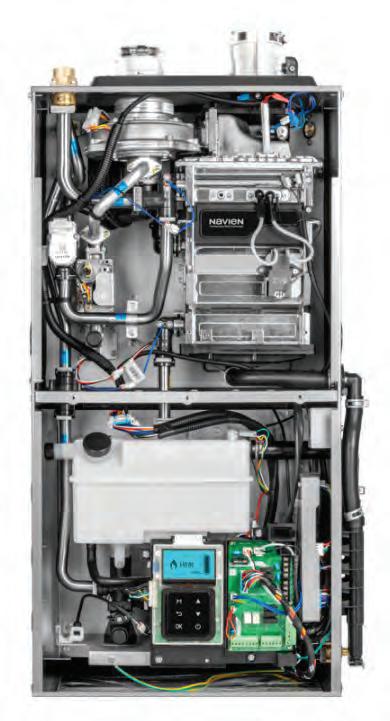
Combi systems make installs easier. It’s one box. For example, let’s focus a bit on the combi boiler. This system is a standard heating boiler with an internal heat exchanger that is used for domestic hot water.
The heating water flows through the hot side of the heat exchanger (HX) and incoming domestic water gets heated by going through the opposite side or the cool side of the HX.
This is done through diverting valves and pumps integral to the boiler and it operates as an on demand or semi-instantaneous system where the domestic water usually isn’t diverted and heated until it is required. One box for multiple appliances means less electrical connections. It means less venting, less gas work so the install is quicker, easier and theoretically less expensive. So why
REDUNDANCY AND MISUNDERSTANDINGS
I will answer that in two parts. The first one being logic and the second being a very unfounded fear. Combi units are an allin-one package which has its aforementioned pros but it also has cons. The biggest con is redundancy. If your combi boiler goes down you lose heat and hot water.
In the conventional methods where the system is separated you usually lose one or the other at one time − not both. This redundancy is a nice option in the eyes of many. They can allow for the loss of one or the other but not both. The other reason these things are not everywhere is because of a huge misunderstanding of thermodynamics and heat loss by some very smart people. Let me explain.
will freeze, the pets will freeze, life as you know it will cease to exist since in that 15 minutes the world will most likely drop in temperature to near absolute zero. Is that true? No. Depending on your insulation factor in the home if you turn off the heating to the building for 15 minutes you may or may not see a drop in temperature of a few degrees but nowhere close to freezing the building.
Is the combi boiler the only thing that operates like this? Also no. A boiler with an indirect tank is usually controlled with DHW priority so it also has to deal with no heat being sent to the building.
TRUST IN SYSTEMS
This combi boiler burns gas in a sealed combustion heat exchanger, completely isolated from the airstream.
The heated water is then pumped through a hydronic heat exchanger that transfers the heat into the air.
During a domestic hot water call in a combi boiler, it is common for the heating water to be 100 per cent diverted to the domestic heat exchanger meaning no heating water is being sent out to the building during these calls. The idea that the heating load goes essentially on pause during a domestic call is simply unacceptable to some people. They are wrong because either they have forgotten what domestic hot water usage is actually like, or they’ve decided the rules of thermodynamics no longer play a role in their building. Combi systems, as mentioned previously, can usually only do either heat or hot water at a time. When we are heating domestic water, we do not heat the building. So, if someone in the residence is having a 15-minute shower there is no heat going into the building for 15 minutes. That is true.
I know what you are thinking: 15 minutes. Good heavens, the building will surely freeze, the people
So why do we panic over combis and not boilers and tanks with domestic priority? The answer ties into the trust we have in individual systems versus combi systems and the fact that we can force a boiler and tank to operate at the same time but with much more complex controls. Technically they both operate the exact same way but one is more acceptable than the other because of the possibility of what one system can do over the other. I am aware this doesn’t make a tremendous amount of sense but that is the industry’s general thought on this. Combi systems are great. They really are. Space saving as well as cost saving for the install. It’s simply their lack of redundancy that has kept them from being a perfect system but anytime I can recommend a furnace combined with a water heater or boiler combined with a water heater or a furnace combined with a dryer, it’s going to be a firm yes from me. Matthew Reid is technical director – heating division at E.H. Price Solutions’ Richmond Hill, ON office. He can be reached at mreid@ehpricesolutions.ca.
FAUCET TRENDS
Fixtures evolve as focal points
From classic colours and finishes, to contemporary shapes and advanced technology, customers have a wide range of products to choose from
Faucets are now an essential part of design for consumers renovating their bathroom or kitchen, chosen to reflect personal taste and needs. Like overall design trends, homeowners are looking for faucets and plumbing fixtures that can be customized, while offering durability, convenience and performance. Manufacturers have responded with a wide range of faucet designs, finishes, accessories and functionalities to suit any style and price point.
COOL AND CUSTOM
Kitchen and bathroom design continues to be influenced by nature, classical shapes, personal expression and customization, and the same is true for faucets and other complementary fixtures. “Our recent 2026 Bathroom Trend Report from GROHE, a LIXIL brand, points to a renewed focus on strong silhouettes in faucet design. Confident structures and refined proportions are increasingly being used to establish visual cohesion, often defining the entire room rather than serving as a secondary detail,” says Patrick Speck, leader, LIXIL Global Design, Europe and Americas.
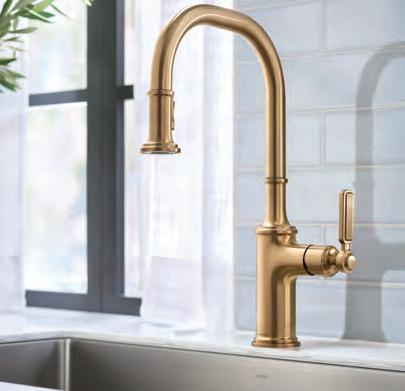
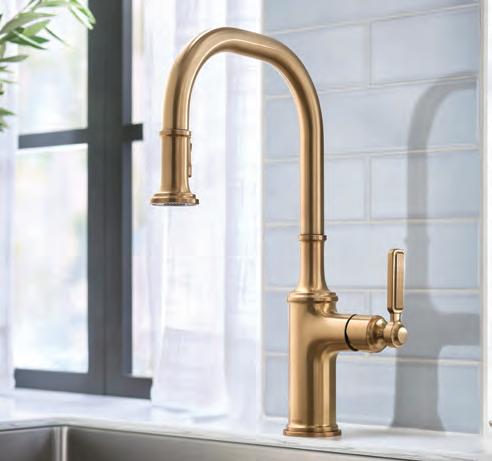
The Moen Smyth Kitchen Faucet Collection features an eclectic, classic style that elegantly mixes vintage design with contemporary functionality. Each kitchen faucet includes a simple handle reminiscent of ornate furniture knobs, adding sophisticated flair to the kitchen. The faucet offers flexible water delivery, and the pulldown spray wand also provides the functionality to elevate experiences at the kitchen sink. It comes with Moen’s Power Boost technology for boosted spray power to fill containers and clean messes faster. It’s available in spot resist stainless, matte black, polished nickel and new lifeshine bronzed gold. moen.ca
“Looking ahead to the next year, these design directions are expected to evolve rather than shift dramatically. Strong silhouettes will continue to anchor faucet design, with an increased emphasis on architectural expression and proportion – turning fixtures into focal points that contribute to the overall identity of a space. Warm finishes such as brushed gold tones will also remain prominent,” adds Speck.
Benoit Morneau, senior director of products at Trois-Rivières, QC-based BARIL agrees, and also sees warm gold as the finish dominating design today. “In the mid- to high-end market, faucet designs continue to move toward timeless, architectural styles. Transitional and contemporary collections continue to dominate. Warm finishes like brushed brass, warm gold, and polished nickel remain popular, often paired with matte black or stainless steel.”
Photo BARIL
Morneau notes that faucet and sink selection are also now closely linked. “In kitchens, deeper workstation sinks often dictate faucet height, reach and functionality. In bathrooms, vessel or semi recessed sinks require precise spout geometry to ensure comfort and avoid splashing. In higher end projects, the faucet is rarely an afterthought. It’s often chosen early because it plays a key role in both the visual balance and performance of the space.”
MIX AND MATCH
At the same time, homeowners are now mixing and matching fixture finishes, and looking for unique ways to personalize their choices. “Mixed finishes are increasingly integrated,” says Karel Lysy, product engineering manager at St-Laurent, QC-based Bélanger, noting that homeowners “don’t mix styles and finishes within the same room, but would have different finishes or collections in different rooms of the house.” He adds that neo deco accents and channel details are also popular choices. “Within a single space, most clients still prefer a cohesive look,
The BARIL NOX collection is a versatile kitchen faucet line designed for both indoor and outdoor use. Crafted from 316L marine grade stainless steel with a protective PVD and anti stain finish, NOX offers exceptional corrosion resistance, making it suitable for demanding outdoor kitchens. The collection includes high arc faucets with 360° swivel spouts, two function pull down spray, and water saving flow options. barildesign.com
By Carolyn Cooper
especially in kitchens and primary bathrooms,” agrees Morneau. “Across the home, however, mixing finishes is increasingly common. For example, it’s typical to see polished nickel in a main bathroom, matte black in a powder room, and stainless in the kitchen. Designers and their clients are less rigid, focusing more on how each space feels.”
“At the end of the day, consumers want to reflect their individuality while maintaining functional features that help encapsulate their own tastes and lifestyle. The trend of mixing metals/finishes at the sink continues to rise,” says Anny Ang, director of wholesale marketing for Moen Canada.
FUNCTION AND FORM
When it comes to added technology, customers are still looking for convenient and hygienic options such as touchless faucets. “Touch-free faucets help promote cleanliness in the kitchen and bath, as well as easing everyday routines,” says Ang. Morneau agrees that touch-free technology adoption is growing, but primarily in mid- to high-end kitchens. “Looking forward, the biggest advances will be behind the scenes: better valves, improved cartridges, quieter operation, and easier serviceability. While voice and app controlled faucets exist, they remain niche,” says Mourneau.
Built-in technology providing a range of spray patterns is another factor consumers are considering when choosing a faucet. “In the kitchen, technical innovation is evolving through purposeful spray patterns designed to maximize efficiency and performance,” explains Speck. “The American Standard Aspirations collection introduces BlastSpray technology, which utilizes a powerful, wide jet of water to scrub plates clean while specifically engineered to prevent splashing outside the sink. To balance this power, the collection also features a Gentle Rinse Spray, which delivers a unique pattern of four mist sprays designed to safely clean delicate greens and fruits. Looking ahead, we expect to see more faucets that blend this level of task-specific performance with precision temperature control and water-saving automation.”
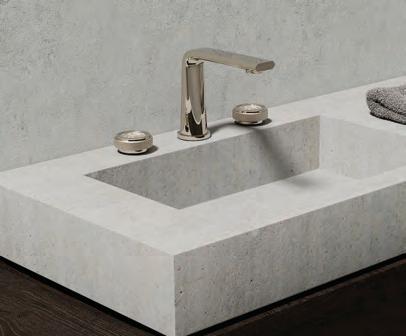
Bélanger has launched a widespread lavatory faucet with new functions: Ora, a limited-edition lavatory faucet distinguished by a sculptural clock-face mechanism integrated into each handle. The clarity of the clock-face detail offers an immediate point of distinction, while maintaining intuitive operation and everyday usability. Belanger’s commemorative model features water mixing on the left handle and push-button ON/OFF activation on the right handle. belangerfaucets.com
Connected products are also finding favour with select homeowners, especially in the kitchen. “In the past few years, we’ve seen companies delve into electronic lavatory and kitchen faucets, as well as intelligent, connected showers,” says Lysy. “The kitchen side still has a following, the shower is used in high-end projects, but the electronic lavatory hasn’t found its following.”
OTHER OFFERINGS
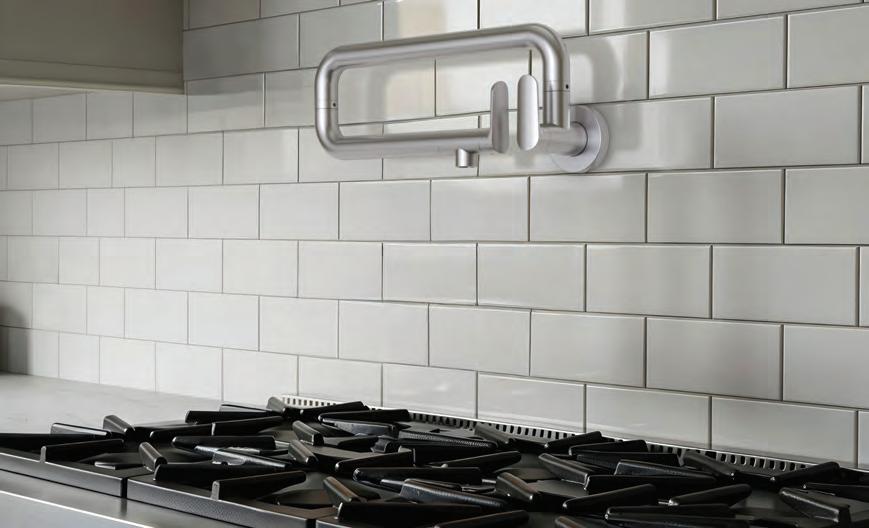
According to Morneau, accessories such as pot fillers, bottle washers, soap dispensers and filtered-water faucets are becoming standard in higher-end kitchens, “driven by convenience and water quality awareness.” He adds that “sparkling and chilled water systems are gaining interest, but remain a premium
FPO
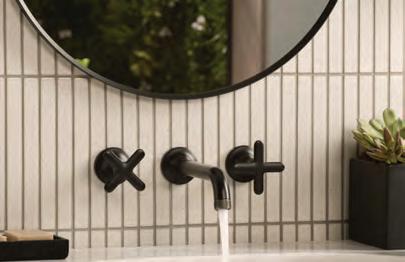
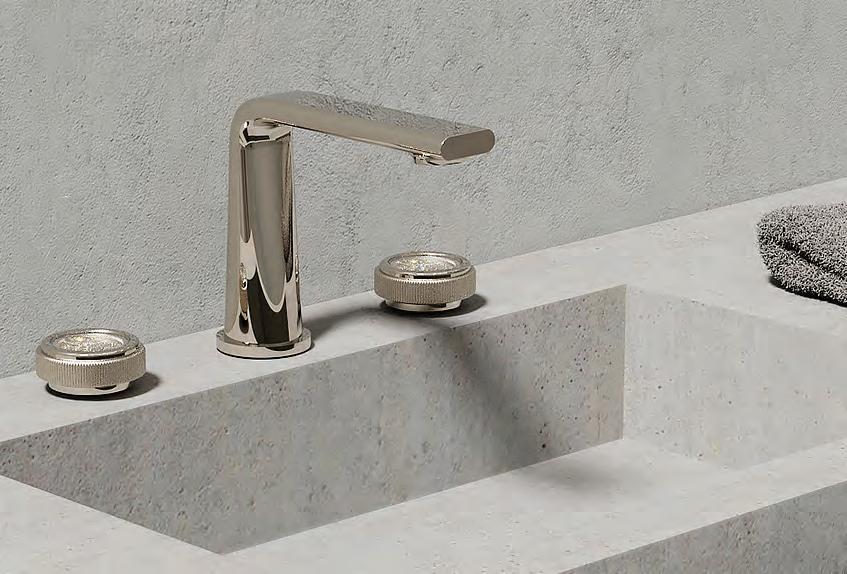
The GROHE Listra collection features softened forms and fluid transitions that bridge transitional and contemporary design. Gently curved spouts and subtle accent detailing offer visual flexibility across a range of bathroom styles. The collection is available in five finishes, including GROHE StarLight chrome, brushed nickel, matte black, hard graphite, and brushed cool sunrise, for a cohesive look. Customizable cross or lever handle options on widespread and wallmounted faucets allow for a tailored, elevated bathroom experience. grohe.ca
Tankless Series
We’re growing! COMING SOON!
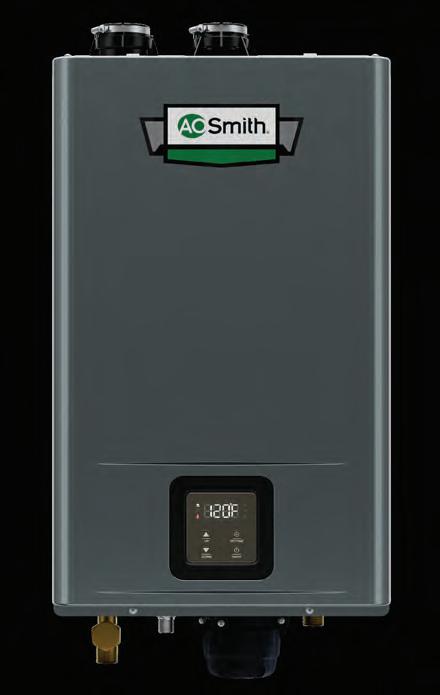
Three propane models and a 140k BTU/h natural gas model expand Adapt ® into more residential applications. Plus our new commercial model offers flexibility, with cascade installs up to 32 units.
A. O. Smith
niche due to cost and installation requirements. Over the next year, we expect more integrated, design driven accessories that feel intentional rather than added on – an approach that aligns closely with BARIL’s design philosophy.”
“These types of add-ons are still very limited in demand, but do find their audience in the higher-end projects and upgrades,” agrees Lysy, adding that “A newly found application for pot-fillers is small feeding corners for house pets, where the pot-filler is used to supply the water.”
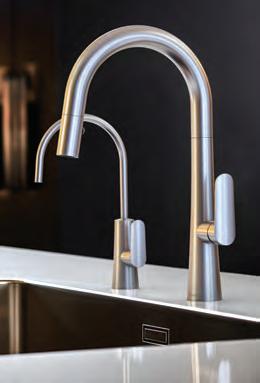
At the same time, hygiene and wellness remains top of mind with consumers, says Ang. “Under-sink filtration systems help to improve water’s smell and taste, capture and remove potentially harmful contaminants and provide a more eco-friendly alternative to bottled water.”
Taco
PLUMBING Products
Pressure booster
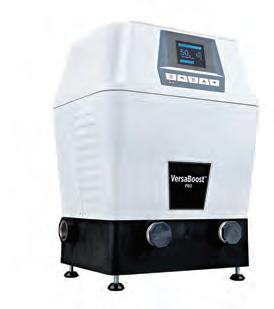
Franklin Electric introduces the VersaBoost Pro series constant pressure boosting system, designed to enhance water pressure consistently throughout a property. The compact solution is flexible enough to fit under sinks, in basements, indoors or outside, and is fast to install. Features include a 4-in. submersible pump motor and builtin VFD, rotatable top cover with integrated display for multi-directional installation, and built-in setup assistant. The unit is certified safe for drinking water systems.
www.
franklin-electric.com
Easy drum changes
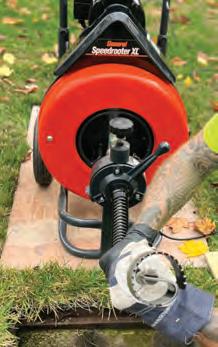
The Speedrooter XL from General Pipe Cleaners clears tough clogs in 3- to 10-in. lines up to 200 ft., with interchangeable 100-ft. capacity drums for Flexicore cable. The drums can be changed to add cable lengths or swap cable sizes by loosening three knobs and removing the drum. The large drum accommodates 3/4 or 5/8-in. cables, while the small drum accommodates 1/2-in cable. The drain cleaning machine features a 3/4 hp motor, braced frame and adjustable swept back handle for manoeuvrability.
www. drainbrain.com
Triple-action wash basin
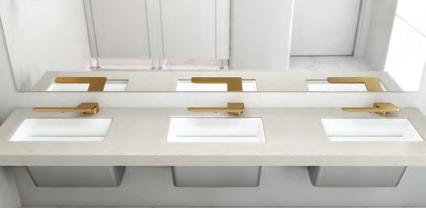
Bradley’s WashBar with Verge LVQD3 is a Verge three-person wash basin paired with the multifunctional WashBar for an all-in-one solution for commercial restrooms. The basin is made of Evero natural quartz and cast-mounted as one piece. It includes the thin, L-shaped WashBar to provide touch-free activation for soap, water and drying. The floating design provides a single connection point to the sink for ease of cleaning, and features icons and LED lights to orient users. Oneand two-person units and a variety of finishes are available.
www.
bradleycorp.com
Toilet flange extension kit
Tankless water heater
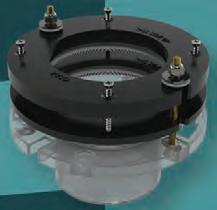
The 2018-CFX Toilet Flange Extension Kit from +osb is a solution for new bathroom floor applications that leave the old toilet flange sitting too low. The kit is designed to easily raise the flange by 1/4, 1/2 or 3/4 in., making everything level. If the old flange is cracked or broken the extension locks in the closet bolts and keeps the installation solid. The kit comes with 1/4and 1/2-in. extenders, which can be combined for a 3/4-in. rise, four fastening screws, two peel and stick gaskets, two 3 1/2-in. T-bolts with washers and nuts, and two retainers to hold the T-bolts in place.
www. osb.ca
The Noritz NRCR Pro series integrates recirculation technology into a high-efficiency tankless water heater for faster hot water delivery at the tap and shower. The built-in, fully integrated recirculation pump delivers hot water instantly and supports up to 500 ft. of pipe. Constructed with two stainless steel heat exchangers, it resists corrosion and thermal stress. Features include Bluetooth connectivity, which allows users to schedule, monitor and control temperature, and a 0.98 UEF rating. www.
noritz.com
Press fittings
Nibco has expanded its BenchPress product line of carbon steel fittings to offer more press options, with 17 new BenchPress and 16 new BenchPressG sizes and configurations. The heavy-duty fittings allow for clean and easy installation of residential, commercial and industrial carbon steel piping systems without the need for threading equipment and lubricants. Sizes range from 1/4 in. to 2 in.
www. nibco.com
Your Trusted Mechanical Piping Partner Since 1850
For over 170 years, Flocor has been the name professionals trust for quality, reliability, and innovation in mechanical piping. Proudly Canadian-owned and operated, we continue to deliver a full spectrum of solutions tailored to your needs. Flocor – Your Complete PVF Solution.
Experience excellence. Experience Flocor.
Flocor
MANAGEMENT
By Melvin Newman
Practical AI applications for mechanical contractors Work smarter, not harder
SinceChatGPT burst onto the scene in late 2022, AI has gone from tech industry novelty to everyday business tool. Mechanical and plumbing contractors are no exception. AI is showing up in everything from project communication to marketing. But not every task should be automated and some carry real risks if you get it wrong. This article will help you figure out where AI actually adds value to your business, where it falls short, and how to choose the right tools without spending a fortune. We’ll also provide ready-to-use prompts and resources you can apply to common mechanical contracting tasks right away.
So where do we start? With the task contractors ask about most: estimating. And here’s the reality check. AI is not going to replace your estimator. Despite the hype, no generative AI tool can produce an accurate mechanical estimate from scratch. Accurate estimating depends on knowledge that simply isn’t available to these systems: local labour rates; supplier relationships and negotiated pricing; regional material availability; and the nuanced complexity of each project.
An AI doesn’t know that your best pipe fitter is out for six weeks. It doesn’t know that your sheet metal supplier just raised prices, or that the GC on this job is notorious for scope creep. These are the factors that separate a winning bid from a money-losing one and they live in your team’s expertise, not in a language model.
Where AI does excel is in the tedious, time-consuming work that bogs down preconstruction processes. Think automated takeoffs, extracting quantities from drawings or organizing specification data. The sweet spot is using AI to handle the grunt work faster. This frees up estimators to focus on what actually requires judgment: pricing strategy, risk assessment and building the relationships that win work. Tools such as AI estimating software can automate takeoffs while keeping your team in control of the pricing decisions that matter.
PRACTICAL AI WRITING PROMPTS
AI can be implemented in many areas of a mechanical contracting business, not just estimating. In fact, some of the biggest time savings come from tasks you probably don’t think about as automation candidates: writing scope letters, drafting client emails, digesting tender documents and even improving Google rankings. These are the areas where AI truly shines. The key to getting useful results from any AI tool is writing a good prompt. A prompt is simply the instruction you give the AI. Vague prompts get vague results. Specific prompts get specific, usable outputs. Below are practical prompts you can copy, customize and start using today.
Melvin Newman is a mechanical estimator who worked extensively in the field before founding Okotoks, AB-based PataBid, a technology company serving the mechanical/electrical contracting industry.
SCOPE LETTERS
Scope letters are critical to protecting your business but writing them from scratch for every project eats up valuable time. AI can generate a professional first draft in minutes. The key is giving it enough context about the project and what you need to include or exclude.
Sample prompt: “Write a professional scope letter for a mechanical contractor bidding on an HVAC installation for a 50,000 sq. ft. commercial office building. Include the following scope items: supply and installation of rooftop units, VAV boxes, ductwork and controls. Exclude the following: electrical connections, building automation system integration and balancing. Use a formal but clear tone.”
CLIENT COMMUNICATION
From proposal emails to follow-ups to project updates, client communication takes more time than most contractors realize. AI can draft professional correspondence quickly and you can refine it to match your voice.
Sample prompt: “Write a follow-up email to a general contractor we submitted a bid to two weeks ago. The project is a new medical clinic. Keep the tone professional but friendly, and ask if they have any questions about the proposal or need any clarification on our scope.”
PROJECT DOCUMENT SUMMARIZATION
Tender packages can run thousands of pages. AI can help you quickly extract what matters so you can decide whether a project is worth pursuing and flag key requirements before you start your estimate.
Sample prompt: “Summarize the key mechanical scope requirements from the following specification sections. Identify any unusual requirements, ownerfurnished equipment, specific product requirements and potential exclusions I should note in my bid. Here is the text: [paste specification text].”
SEO AND MARKETING CONTENT
Most mechanical contractors know they should be doing more with their website and online presence but don’t have the time. AI can help you create blog posts, website page content and social media posts and captions.
Sample prompt: “Write a 500-word blog post for a mechanical contractor’s website targeting the keywords ‘commercial HVAC installation Calgary.’ The tone should be professional but approachable. Include a section on what building owners should look for when hiring an HVAC contractor.”
AI can also help optimize your Google my Business Profile to improve local search visibility. The right prompts can help you choose better categories, write stronger descriptions and identify keywords that get your business in front of more potential customers.
Sample prompt: “Suggest 5 Google Business Profile categories for a mechanical contractor that specializes in commercial HVAC installation, piping systems and building automation in [City].”
EFFICIENCY GAINS
AI isn’t going to take over your business, but it can take a lot of tedious work off your plate. The contractors who treat these tools as a starting point rather than a finished product will find real value in them. Start with one task. Try a prompt. Refine it until the output is actually useful. Over time, you’ll develop a library of prompts that save hours every week on communication, documentation and marketing.
But remember where AI falls short. It can help you write faster, but it can’t price a job. It can summarize a spec, but it doesn’t know your labour rates or your supplier deals. The real efficiency gains in preconstruction come from pairing smart AI writing prompts with tools built specifically for estimating.
TIPS FOR GETTING THE MOST OUT OF AI
Always use a free trial first. There are dozens of AI tools on the market and many of them charge monthly subscription fees. Before committing, take advantage of free trials and free tiers. ChatGPT, Claude, and Microsoft Copilot all have free versions you can test with real work before spending a dollar. Put in the effort to learn. Treat AI like learning any new piece of software. Put in the effort early, experiment with real tasks and see if it’s a good fit for how your team works. The contractors who get the most value from AI are the ones who commit to learning it rather than expecting instant results.
Start a new chat for each project. AI tools like ChatGPT and Claude maintain context within a conversation. If you’re jumping between projects in the same chat, the AI can get confused and mix details from one job into another. Start fresh for each project to keep things clean and accurate. Most AI tools let you rename chats, so label them with useful context like “Scope Letter - Riverside Medical Centre - June 2026” to make them easy to find later.
Be specific with your AI writing prompts. The more detail you provide, the better your output. Think of it like briefing a new employee. The clearer your instructions, the less back and forth you’ll need.
Implement and iterate. Your first AI prompt won’t always give you exactly what you need. That’s normal. Treat AI as a collaborative tool. Review the output, tell it what to fix or adjust and refine from there.
Tell the AI what to do when it doesn’t know the answer. AI tools sometimes make things up when they don’t know the answer. To avoid this, end your prompt with a simple instruction like: ‘If you don’t know the answer, say so. Don’t make anything up.’ This small addition can save you from confidently wrong outputs.
Don’t paste confidential information into public AI tools. Free versions of ChatGPT and other tools may use your inputs to train future models. Be cautious about pasting sensitive client information, pricing details, or proprietary data. If confidentiality is a concern, consider paid enterprise versions that offer better data privacy protection.
Use AI to assist, not replace, your judgment. AI can draft, summarize, and suggest, but it doesn’t know your clients, your suppliers, or the nuances of your local market. Review outputs before sending them out. The goal is to save time on the first draft, not to hand over decision-making.
Kerr
By Kerry Turner
All in − on and off the field Brady Oliveira:
Running back Brady Oliveira represents a new generation of professional athletes who define success not just by trophies and statistics, but by the tangible difference they make in their communities. Oliveira himself views his football career as a platform to serve his true purpose: advocating for animals and supporting those in Winnipeg, MB, his hometown.
Oliveira’s upbringing was marked by significant challenges and “tough moments” during his childhood and teenage years. He credits his mother Shani as his primary inspiration − for her role in steering him and his two siblings toward positive opportunities despite their difficult circumstances.
“My mom was always my why. She would say: Why do you get up early and do what you do? I always used sport as a driving factor when I was a kid to make sure I got out of those negative situations; to make sure I gave myself a better opportunity in the future,” says Oliveira.
“My mom kept us busy with sports and raised us to be good people, and to be respectful and polite. I owe everything to my mom; she’s one incredible and amazing woman.”
His upbringing fostered a deepseated desire to give back to the city that supported him.
PROUD TO BE A BLUE BOMBER!
Oliveira’s commitment to the Blue Bombers was solidified with a recent three-year contract extension, keeping him with the team through 2028. Oliveira is a standout athlete for the Winnipeg Blue Bombers but his journey has not been without obstacles. After finishing his college career at the University of North Dakota, his rookie year in 2019 was cut short by a “fluke” season-ending ankle injury in just the second game. This was followed by a one-year hiatus due to the global pandemic. He would go on to win the league’s most prestigious awards including Most Outstanding Canadian Player.
Season
Photo
1 of Must Love Dogs with Brady Oliveira is
A VOICE FOR THE VOICELESS
While many know him for his yards gained on the field, Oliveira’s heart lies in animal rescue and community service. He has been deeply involved in dog rescue for over six years. His passion was ignited by a friend who invited him on a rescue mission to a remote northern community. After seeing 25 dogs rescued and witnessing the harsh conditions they faced, Oliveira dedicated his platform to the cause and works closely with several rescues.
He is joined in his rescue work by his partner, realtor and influencer Alex Blumberg. They collaborate on rescue missions, various charitable initiatives, and the Must Love Dogs 10-part series, which recently debuted on CBC Gem. Must Love Dogs showcases the realness and rawness of rescue work.
“If the series encourages even a few people to get involved, support a rescue, or simply become more aware, then it’s done what we set out to do,” says Oliveira.
In the future Oliveira and Blumberg hope to build a hobby farm and animal sanctuary. As for how football fits into that, he says “I don’t think I’ll play till the wheels fall off. I’ve got a lot going on off the field and life’s very busy and I’m very thankful for all these amazing opportunities.”
After this contract ends in 2028, he will consider how he is physically and whether he still loves the game and all it involves.
“Of course, everyone could put on the pads and play on game day. Those are the exciting parts of the game of football. But do you still enjoy the process of what it takes to be an elite level professional athlete and not just a good pro athlete, but an elite-level one. In anything that I do, I want to do it 1,000 miles an hour and be the best possible version of myself that I can,” says Oliveira.
Post-football, the 28-year-old is looking forward to opportunities that may present themselves.
“Obviously, this was a massive one with filming season one of Must Love Dogs and I think a lot of cool opportunities will come from this. There are some other projects we’re working on that we are really excited to share with people. Building that animal sanctuary and having some sort of dog rescue and building a hobby farm, and having farm animals − I definitely see us doing that in the near future.”
Looking toward the future, Oliveira and Blumberg share a dream of building a hobby farm and animal sanctuary.
GIVING BACK
Beyond animal rescue, Oliveira is a constant presence in Winnipeg’s charitable circles. “I definitely am attached to multiple organizations, not just dogs or animal rescue organizations,” says Oliveira. “I did a lot of work with Bear Clan Patrol in 2019 and 2020. I’ve been an ambassador for the Variety Children’s Charity for the last four years. I have a cool initiative with them called Hometown Champions. We get local sponsors on board and every yard that I get from preseason to playoffs and hopefully Grey Cup, the sponsor pays $5 a yard and every touchdown I get, it’s $1,000. I think last year we raised over $25,000. That goes back to all of the families and kids the charity supports.
“I also do work with Dream Factory. They are just an incredible organization that helps families with kids who are dealing with lifethreatening illnesses. Alex and I put on these puppy parties once every two months. We bring rescue puppies in from K9 Advocacy and we have food and candy and we spend a couple of hours cuddling puppies and enjoying good conversation,” says Oliveira. This experience allows the parents and children to escape “everything else they have going on in their lives.”
“I am a proud Winnipegger. I think Winnipeg is the greatest city ever, and this city has given me so much. They support me in everything that I do. I always say Winnipeg Blue Bombers have the best and loudest fans in the CFL. I feel it’s my duty to give back in any capacity that I can.”
Whether he is breaking tackles or rescuing strays in the far north, Oliveira’s goal remains the same: to leave the world a better place than he found it.
Photo courtesy
CBC
INTEGRATED HEAT PUMP COMFORT
HARNESSING ADVANCED HEAT PUMP
TECHNOLOGY
FOR OPTIMAL WATER AND HVAC SOLUTIONS
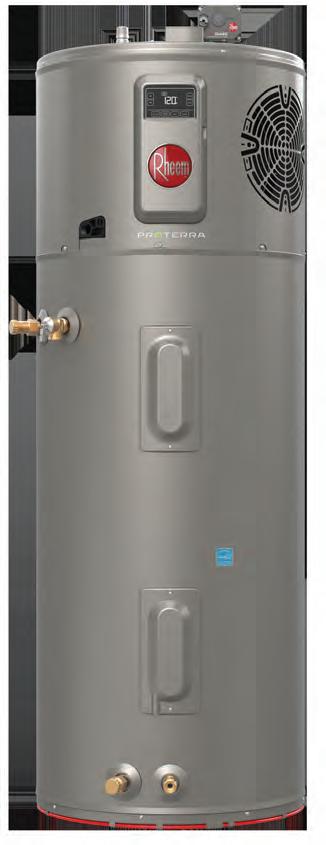
Rheem® ProTerra®
Hybrid Electric Heat Pump Water Heater
Highly efficient, with flexible installation and faster service
Universal side and NEW TOP water connections.
New duct ready design.
Zero Side Clearance.
Quieter than ever - 45dBA*similar to a refrigerator hum
*Operation at 45 dBA measured at 6.28 feet using third-party certified testing procedures
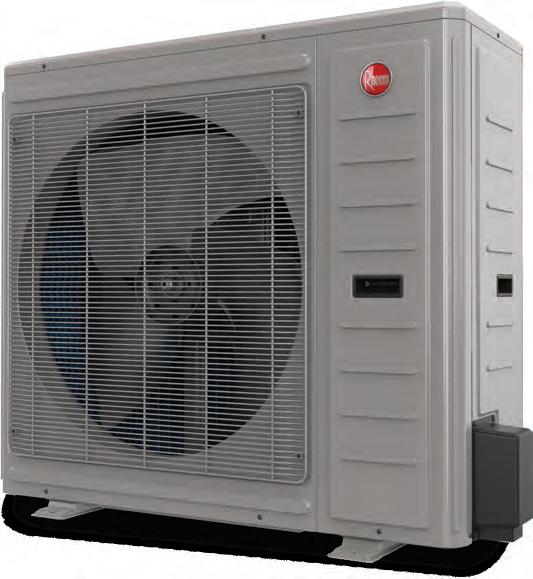
Rheem® Endeavor ® Line
Classic Plus® Series RD17AZ
Compatible with nearly any existing HVAC system—or as a universal replacement.
EcoNet ® enabled, ENERGY STAR® certified
Boasting efficiency up to 19SEER2, 12EER2 & beyond
Experience 70% capacity, even at -15C˚
Sound as low as 58dBA
HEAT PUMP
AWHPS: FUNCTIONALITY AND LIMITATIONS
THE IMPORTANCE OF SMARTER AIR DISTRIBUTION
RETROFIT SHOWCASES VRF FLEXIBILITY
IMPLICATIONS OF ADDING ELECTRICAL LOAD
PRODUCT SHOWCASE AND MORE INSIDE
HEAT PUMP
HIGH-PERFORMANCE HVAC HOW HEAT PUMPS AFFECT THE NEED FOR SERVICE UPGRADES
Upgrades might be avoidable through the use of advanced controllers, known as load managers, which can shed load when required.
Tom Grochmal
PROJECT PROFILE
DESIGN IMPLEMENTATION AT SCALE
Vancouver-area school retrofit showcases VRF flexibility.
Dan Vastyan
ROAD WARRIOR ANDREW FORSYTH: TAKING CONTROL
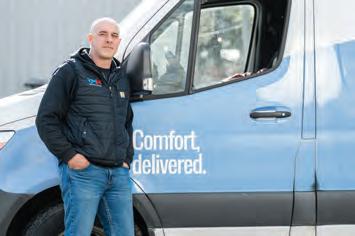
Andrew Forsyth works alongside five technicians on residential geothermal and hydronic systems in the Halifax region and the Annapolis Valley.
Carolyn Cooper
SYSTEM DESIGN AIR TO WATER HEAT PUMPS: FUNCTIONALITY AND LIMITATIONS
The key to high performance is understanding where AWHPs perform best and building on those strengths.
Todd Wiggins
OTHER FEATURES
54WATER HEATING A SCALABLE SOLUTION
Heat pump manufacturers now offer a range of compressor technologies tailored to water heating demands. Mike Squires
70VENTILATION
THE MOST OVERLOOKED PATH TO HVAC EFFICIENCY
Air distribution as a decarbonization strategy enables smaller, more efficient heat pump systems. Peyman Raphe
58-62PRODUCTS
A showcase of heat pump technology.
64JOBSITE JARGON
Test your heat pump knowledge for a chance to win a $150 VISA gift card.
Everything you need, anywhere you are – scan to open the digital edition of the Heat Pump Journal.
Photo: Alex MacCaulay
By Tom Grochmal
Tom Grochmal, PhD, P.Eng. is founder and CEO of Trim Tab Energy Retrofits (trimtabretrofits.com), an energy contractor with a mission to renew housing and inspire better living.
How heat pumps affect the need for service upgrades
Heating systems continue to evolve because of heat pumps. We are seeing heat pumps added to existing heating systems as well as outright conversions from fossil fuelbased and baseboard heating systems.
Does the electrical service have enough spare capacity?
With this evolution towards heat pumps, HVAC contractors need to understand the implications on electrical infrastructure. Adding a heat pump may require panel and utility service upgrades, which may be costly. These upgrades might be avoidable if there is enough spare capacity, but how do you know? Upgrades might also be avoidable through the use of advanced controllers, known as load managers, which can shed load when required. In this article, I’m going to explain the process and potential options when it comes to installing a heat pump in situations where it may represent a load increase on the electrical panel.
When adding a significant load to an electrical service, we must follow section 8 of the Canadian Electrical Code, CSA C22.1 (and its various provincial adoptions), which is all about circuit loading. The code requires a load calculation to be performed by a qualified individual. (Aside: what constitutes a “qualified individual”? Typically it is a licensed electrician, and it also can be a professional engineer, among others, who understand all the nuances of a load calculation.)
The result of the load calculation is the total electrical current expected to result on the electrical service with the proposed addition of a heat pump. If the calculated load is within the capacity of the existing panel, then you don’t have a problem adding the heat pump. If the calculated load exceeds the capacity of the panel, then you need to take mitigating action.
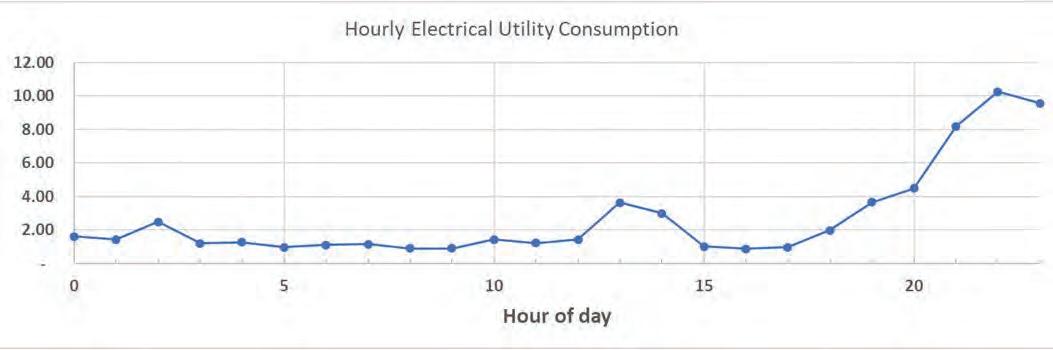
Pro tip: Calculated loads tend to be conservative, meaning they overestimate the load. The availability of historical utility data is a major asset. The electrical code allows for an existing load calculation to be based on the peak period consumption in the past 12 months, where hourly data is available. The benefit is that it is more accurate and usually results in a smaller calculated load, meaning more spare capacity to allow for adding load. It would also apply to properly sizing a generator or renewable energy system in a retrofit application. Talk to your local electrical inspector to see if this is an option in your jurisdiction.
ALL-CLIMATE COMFORT.
The Daikin FIT AURORA inverter heat pump —named after the dazzling natural light that appears at Earth’s magnetic poles — symbolizes performance at the outermost extremes. From harsh winters to intense summers, the FIT AURORA is engineered to deliver majestic comfort and e ciency all year round.
Features and benefits:
defrost mode Dual Fuel Applications
Response Compatible
capacity up to
and heating down to -20°F
Daikin
HIGH-PERFORMANCE HVAC
Service upgrade
In situations where the load addition from the heat pump exceeds the spare capacity on the existing panel, it may be necessary to upgrade the electrical panel to one of higher capacity. This makes the most sense if the customer forecasts other load increases down the road. If you have a rural customer with a home with a 100 Amp panel, and you want to convert their oilbased heating system to a heat pump that contains 10 kW in supplemental heat, you are likely going to need to upgrade that panel to 200 Amps.
Load management
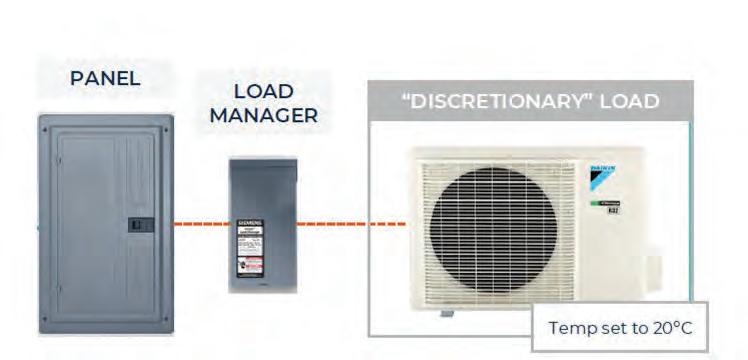
Under the right circumstances, load managers allow you to connect additional load without having to upsize the panel or service. In some situations, utilizing load managers might be a quicker and more cost effective solution. It might even be necessary depending on constraints from the local electric utility.
Load managers are installed in between the heat pump and the circuit breaker feeding the heat pump (see diagram on the right). They work by monitoring the total load on the electrical panel. When it detects that the panel is at its maximum load, it disconnects the heat pump. When the load manager detects that the load comes back down,
Hourly Electrical Utility Consumption
Hour of the Day
Hourly utility electrical data is available in provinces with smart meters. From hourly data, you can estimate peak loads which lead to more realistic, and streamlined, load calculations. Alternatively, you can get an electrician to perform data logging. (Graph
Pro tip: An electrical panel upgrade may also require a service upgrade from the local electric utility. Understand the load connection process of your local electric utility. Utilities will send out a technician, typically free of charge, to perform a service layout and, if necessary, a cost estimate to upgrade the service, which can range from a few hundred to several thousand dollars. What’s included in the upgrade costs can vary by utility.
A service panel upgrade often makes sense when adding a large load (or there are plans to add more load in the future) and the utility has the capacity to accommodate. Load reduction opportunities should also be explored before upgrading the panel.
then it automatically reconnects the heat pump. The important implication here is that whatever is connected to the load manager (such as a heat pump, hot tub, EV charger or electric water heater) must be a “discretionary” or “non-critical” load – meaning that it doesn’t affect the health, safety and essential operation of the home as required by your local building code. For heat pumps, load managers work well when there is a backup heating source that can meet the full heating needs of the home, such as baseboard heaters.
Pro tip: Like all tools, load managers are meant for specific applications. When you run into situations where panel upgrades are prohibitively expensive, or you are limited by the capacity of your electrical infrastructure, load managers can make heat pump retrofits feasible.
courtesy Trim Tab.)
A load manager is installed in between the electrical panel and the heat pump. Photo courtesy 1Click Energy Solutions
Photo courtesy Trim Tab
Electrical code developments Conclusion
The electrical code is evolving to enable the growing trend of electrification. Load managers fall under the category of “Energy Management Systems” (EMS) in the Canadian Electrical Code. On May 1, 2025, the Ontario Electrical Safety Code, which is Ontario’s specific adoption of the Canadian Electrical Code, expanded the use of energy management systems beyond electric vehicles, to now include loads like heat pumps. Specifically, electrical equipment controlled by an EMS, as defined by the code, doesn’t need to be included in a load calculation. This paves the way for using load managers as described above. Not all provinces have gone this route yet. It is expected that the expanded use of EMSs will reach all provinces by the next release of the Canadian Electrical Code.
Key takeaway: Know whether your provincial electrical code permits the use of an EMS for heat pumps. Talk to your local electrical regulator for guidance.
The pace of electrification is increasing because of climate policy, new technologies, and rising consumer expectations. Heat pumps are one of the technologies driving this trend, so it’s important that mechanical contractors can also think like electrical contractors in situations where you are adding significant load to an electrical panel. Invest the time to understand the implications, your options and the utility process, and you will be well positioned to have a stake in a huge business opportunity.
Acknowledgements and further reading:
A special thanks to Nathan Horton of 1Click Energy Solutions (1clickheat.com) for his input on this article. Also, thanks to Nick Gonzalez and his team at Postma Heating & Cooling (postma.ca) for their input.
The Building Decarbonization Alliance has published useful guides on “Energy Management Systems” and “Avoiding an Electrical Panel Upgrade” through its Canada’s Home Electrification Toolkit. It can be found at buildingdecarbonization. ca/canadas-home-electrification-toolkit.
Johnstone Supply
One Partner. Total Coverage.
RESIDENTIAL & COMMERCIAL
Rooftops, Furnaces, Heat Pumps, A/C, Ductless, VRF, OEM Parts
Bosch: Founded in 1886. Built on precision,
One distributor. Five premium Technical expertise.
PROJECT PROFILE
Design i mplementation at scale Vancouver-area retr ofit showcases VRF flexibility
Two years ago, the cooling systems at Albert McMahon Elementary and Christine Morrison Elementary in Mission, BC, had reached the end of their 30-year service lives. Upgrading both schools simultaneously presented a significant financial challenge, but there were no viable alternatives.
The schools are nearly identical, as were their HVAC systems − except for one key difference. Albert McMahon’s VAV system was served by an aging 40-ton air-cooled system, while Christine Morrison’s system utilized a single pass, water-cooled condenser that rejected heat to a domestic water system, generating considerable water waste. Both systems provided ventilation, preheating and cooling through central air-handling units and duct networks, with zone-level control via VAV terminal units equipped with reheat coils.
“We were constantly dealing with poor temperature control, increasing maintenance demands, and rising repair costs,” said Dana MacLean, director of operations at Mission Public Schools. “Replacement was the only viable option.”
Facing this challenge, the Mission School District sought a solution that was sustainable, cost-effective and reduced reliance on fossil fuels. They turned to a trusted local partner: Diya Hilal, principal mechanical engineer at InnoReflection Engineering Ltd. Since its founding in 2017, InnoReflection has designed and implemented a variety of mechanical systems for the school district.
Hilal doesn’t just design systems. He ensures they’re implemented effectively. Frequently onsite with installers, he helps technicians leverage the detailed designs InnoReflection provides, bridging the gap between design and execution.
“In many ways, I take on the role of project manager for the school district’s mechanical retrofit projects,” Hilal explained. “I work closely with contractors, consultants and manufacturer representatives every day. This handson approach is critical to the success of each project.”
(Back to front) Des Soumang, owner of Alpine Refrigeration and Craig Hayman, HVAC project manager at Tri-Metal Fabricators, review refrigerant piping, which includes the use of an inverted trap installed for oil management.
Each school is now served by 40 tons of capacity.
Albert McMahon Elementary and Christine Morrison Elementary in Mission, BC
(L to R) Hayman and Soumang discuss maintenance with Dana MacLean, director of operations at Mission Public Schools.
HIGH-IMPACT SOLUTIONS
Mission School District prioritizes sustainable, high-efficiency mechanical systems for all retrofit projects. MacLean consistently embraces innovative solutions that boost performance, enhance efficiency and reduce energy use, providing vital support throughout this project.
“Sustainability, energy efficiency and operational cost savings were key considerations as we selected the systems,” said MacLean.
Given the budgetary implications of retrofitting two buildings simultaneously, the proposed systems had to be cost-effective while meeting operational and sustainability goals. Rather than replacing the entire air distribution network, InnoReflection integrated new variable refrigerant flow (VRF) condensers with custom DX coils installed in the existing air handlers. “This approach upgrades
“Sustainability, energy efficiency and operational cost savings were key considerations as we selected the systems.”
the air-handling units without major reconstruction, providing high-efficiency comfort in a costeffective manner,” explained Hilal.
Previously, the boilers supplied preheat energy to the air handling units (AHUs) in addition to space heating. With the VRF upgrade, heat pumps now provide up to 95 per cent of the AHU preheat requirement.
“Hydronic systems still supply preheating on the coldest days, below -7°C,” said Hilal. “The VRF heat pumps can operate down to -26°C, but using full capacity would have required an electrical service upgrade.”
By Dan Vastyan
DESIGNING FOR EXISTING INFRASTRUCTURE
The design strategy focused on integrating VRF technology with existing ductwork using direct expansion kits, specialized interface systems designed to allow third-party AHUs or fan coil units to be connected to Fujitsu’s VRF outdoor units. These kits consist of a control unit and an electronic expansion valve (EEV) unit that regulate the flow of refrigerant. This allows precise coil sizing, airflow control and performance targets while preserving the efficiency and modular benefits of VRF.
Although InnoReflection had previously designed systems with the VRF heat pumps, this project marked Hilal’s first implementation of the direct expansion kit solution. Drawing on prior experience with a five-storey residential building, InnoReflection collaborated with the heat pump manufacturer, using its design software to size and verify system performance, including low-ambient operation.
“The simulator allowed us to model everything accurately − from piping and refrigerant charge to coil performance − ensuring the system would perform as intended in the field,” Hilal said.
At each school, four 10-ton heat pump units were arranged into two systems, each serving two interlaced DX coil circuits for a total of 40 tons. USA Coil & Air DX coils, supplied and installed by Tri-Metal Fabricators, a local steel fabrication and sheet metal HVAC company, were selected to meet design specifications and ensure compatibility with the direct expansion kit.
“The simulator allowed us to model everything accurately − from piping and refrigerant charge to coil performance.”
INSTALLATION AND COMMISSIONING
Alpine Refrigeration Ltd., a Chilliwack-based firm with nearly 60 years of experience, served as prime contractor. “The installation took most of the summer but given the tight timeline and coordination with multiple trades, the projects went very smoothly,” said Des Soumang, executive director at Alpine.
The direct expansion kits were mounted externally to the AHUs on customized racks and integrated into the existing DDC system. Commissioning was performed jointly by InnoReflection, Alpine Refrigeration and the manufacturer to ensure each system was balanced, charged and fully operational.
A MODEL FOR SUSTAINABLE RETROFITS
“The new systems are performing as expected,” said MacLean. “The cooling improvements have been particularly well received by staff and students. InnoReflection and Alpine made the process relatively easy from our perspective.”
As Canadian institutions increasingly
Diya Hilal, principal mechanical engineer at InnoReflection Engineering Ltd., reviews real-time system data via the school’s BMS.
focus on decarbonization, VRF heat pump systems are gaining traction in both new construction and retrofits. The technology’s flexibility, efficiency, low noise and modular design make it attractive for schools.
Building on the success of these projects, InnoReflection, Alpine Refrigeration and Tri-Metal Fabricators are now collaborating on another AHU upgrade for Mission Public Schools, this time deploying 80 tons of VRF heat pumps and applying lessons learned from previous installations.
Dan Vastyan is president of Common Ground Uncommon Communications. He can be contacted at danV@SeekCG.com.
ElitePRO™ S1200 Smart Thermostat
IAQ Control + Video Doorbell Compatibility
A new style of comfort
This innovative, smart thermostat combines convenience, comfort, and energy efficiency with advanced features to enhance your home living experience.
Save energy
ENERGY STAR® certified to help save energy and eligible for utility rebates.
Advanced occupancy & presence detection
Smart thermostat senses and adjusts settings to maximize comfort when home and save energy when you’re away.
Optimize & maintain performance
The thermostat will analyze your heating and cooling system performance and can notify you or your pro if there is a loss of efficiency, saving you money.
Always connected
Adjust settings from anywhere and receive important alerts using the First Alert® app. Smart phone not included.
Doorbell camera viewer & intercom
See and speak to visitors at your door directly from the thermostat – compatible with First Alert® and Ring® streaming doorbells. Doorbell not included.
Precision comfort & air quality
Comfort is more than just the perfect temperature, maintain optimal home humidity and control ventilation to keep air fresh.
Additional HVAC equipment or accessories may be required.
Customizable display
A sleek 5” display delivers enhanced visibility with the option to choose the color and style to match your home.
RESIDEO
ICP KEEPRITE
by Alex MacAulay
ROAD WARRIOR
Name: Andrew Forsyth
Company: GroundHog Geothermal & Heat Pumps
Job title: HVAC/R mechanic
Born in: Antigonish, NS
Lives in: Halifax, NS
Age: 39
Spouse: Shelby Hirsch
Andrew Forsyth: Taking control
Andrew Forsyth admits he was probably too distracted by his social life to concentrate in high school, but that all changed when he took his father’s advice and began a two-year HVAC/R program at Nova Scotia Community College. “I finally found my focus,” recalls the co-owner of Garlands Crossing, NS-based GroundHog Geothermal & Heat Pumps. “I liked that it was applied knowledge and what I was learning was actually going towards something.”
After graduating, Forsyth worked at Wilson’s Mechanical, which at the time was doing a lot of work with geothermal and hydronics, both of which were becoming more popular in the province. Forsyth eventually moved to Hussmann Canada, where he worked for several years doing grocery store refrigeration installations. “Hussmann was a great company to work for, but I ended up having to work away from home a lot.”
Wanting to stay in town more often, Forsyth decided to go into business for himself, teaming up with business partners Mike Gillard and John Devereaux. The trio worked under a different company name for a year before deciding to buy GroundHog Geothermal in 2022. Today the company has six technicians including Forsyth, working on residential geothermal and hydronic systems in the Halifax region and the Annapolis Valley.
“In the first year and a half, I did maybe five or six geothermal system installs. But there’s not a whole lot of new geothermal going in because of the up-front costs. And the majority of my customers have a lot of land. There are a lot out in the country, where people can do horizontal loops,” he explains. “So a lot of what we do is replacing existing units and servicing what already exists. We do mini splits, central air service, hydronic service, and we’re now doing air to water heat pumps.”
While Forsyth enjoys working on the heat pumps, his favourite part of the job is making custom controls. “I really enjoy logic gates and things of that nature, so when somebody asks for something I very rarely tell them that it’s not possible. I’ve made monitoring systems and custom driveway snow melt controllers, all using Arduinos and PLCs,” he says. “Often it’s because it doesn’t exist on the market, or because a canned solution doesn’t do exactly what I want it to. And all knowledge of the algorithm is kept very secret with the control manufacturer, so I just make my own.”
Forsyth recalls installing a hydronic system in an 8,000sq. ft. home with custom controls. “It was all in-floor heat and there were probably 10 zones. The buffer tank was about 120 gallons. There was a backup heating system for when power was lost, a propane boiler would
take over, and there was an injection loop that directly injected heat from the propane boiler into the buffer tank. That propane boiler, when not being used for emergency, could also be used as a plant for a snow melt system. The whole system is automated, so when the owner goes to Florida every year during the cold months he can watch his cameras and turn the snow melt system on remotely. I even have monitoring on supply and return water temperature, and buffer tank temperature for him to see while he’s gone.”
The company continues to add mini split brands to its roster and recently became a dealer for Quilt, which Forsyth says focuses on esthetics and offers indoor units that can be painted or wallpapered. He’s also excited about the increasing use of air to water heat pumps. “I’ve found that there are a lot of people asking about converting their existing boiler, their hydronic system, to something a little more energy efficient, such as the air to water heat pumps,” he explains. “I’m not seeing a lot of people installing them yet, but they’re already a huge thing in Europe, so I believe they are the future.”
In the mechanical industry since: 2008
By Carolyn Cooper
Favourite part of the job: Controls, and creating my own controls using industrial grade Arduino
The most useful tool in your toolbox: Flir thermal camera
Your favourite tool in your toolbox: Klein 14-in-1 pocket precision screwdriver
Tool that you wish you had: Wera Joker wrench set
Schools and programs: HVAC/R, two-year program, Nova Scotia Community College, Institute of Technology Campus
Favourite teachers: Shawn Henneberry and Scott Geddes (Hussmann Corporation)
Best advice you’ve ever received: Complexity is just the basics done well
Service area: Halifax Regional Municipality/Valley
Any area you like to get dispatched to, and why: Mahone Bay – I really enjoy the scenery and the old architecture
Advice for young people considering entering the trades: Dress for the weather
One place in the world you would like to visit: Sochi, Russia
The current work ride: Mercedes Sprinter
If you were granted one wish: That flow state I get when creating or solving hard problems feels like my natural habitat. I wish I could access it whenever I wanted.
Favourite book: Easy Way to Stop Smoking by Allen Carr
Last book you read: Can’t Hurt Me: Master Your Mind and Defy the Odds by David Goggins
Favourite movie: Fight Club
Favourite place to be: Las Vegas
Favourite vehicle of all time: My 2023 HarleyDavidson Street Bob
Favourite season: Summer
Favourite restaurant or local lunch hang out: The Brown Hound Public House
If you could meet anyone, alive or dead, who would it
3 albums that you’d take with you to your desert island:
1. Tool – Lateralus
2. Leonard Cohen – I’m Your Man
3. Hatebreed – Weight of the False Self
WATER HEATING
By Mike Squires
Mike Squires, RSE, is a graduate of the College of the North Atlantic. Mike is manager, solution strategy and business success with Copeland. Prior to moving to roles with manufacturers, he was a service technician for a number of years.
A scalable solution
As governments, utilities, and building owners improve on and speed up efforts to reduce greenhouse gas (GHG) emissions from buildings and other facilities, water heating and hydronic space heating stand out as prime opportunities for electrification and decarbonization. Heat pump technology offers a proven, high-efficiency alternative to traditional fossil fuel-fired systems. When paired with a clean electricity supply grid heat pump systems can cut energy consumption dramatically while slashing direct emissions to near zero.
Understanding heat pump water heaters (HPWH)
Heat pumps work by transferring thermal energy rather than generating it through combustion. In water heating applications, they extract heat from ambient air or other sources such as water systems, geothermal sources, and even waste water sources and deliver it to water at usable temperatures.
Coefficients of performance (COP) often exceed 3.0, which means that for every unit of electricity used they deliver three or more units of heat.
Total cost of ownership
Electric hot water storage tank
Total energy costs are 7 times the initial purchase price
This graphic illustrates the real cost behind domestic water heating.
System categories
Residential/light commercial HPWH: These compact solutions are designed primarily for domestic hot water (DHW) serving sinks, showers and laundry. They provide a direct, sustainable replacement for conventional electric resistance or fossilfuel storage water heaters. These would be similar to the typical domestic water heater at home but with a mechanical refrigeration heat pump as the prime source for heat.
Commercial/industrial HPWH: These units are capable of meeting higher demand in multifamily buildings, hotels, hospitals or process applications. They are typically larger packaged systems or large custom-built systems for a specific commercial application design.
Residential/light commercial hydronic heat pumps: These heat pumps heat a secondary water loop circulated through pipes to radiators, baseboards or radiant flooring. Many models deliver both space heating/cooling and domestic hot water.
Commercial/industrial hydronic heat pumps: These scaledup versions are suitable for larger buildings and often support simultaneous space conditioning and water heating needs.
Heat source and distribution methods
Packaged unitary/integrated systems − All key components (compressor, heat exchanger and storage tank) are combined into a single appliance. These are straightforward to install and well-suited for space-constrained residential or lightcommercial retrofits. These are typically the easiest to install or to integrate into an existing system.
Commercial industrial heat pump water heater.
• Over 4X More Efficient*
• Up to 4.20 UEF** and ENERGY STAR® Certified
• Up to $818 Savings in Annual Energy Costs***
• Exclusive Vitraglas® tank lining with Microban® antimicrobial technology
Bradford White
Split systems − The heat pump (often located outdoors for better heat extraction) connects via refrigerant lines to an indoor storage tank. This setup offers flexibility in noisy or space-limited indoor environments and can improve overall performance in certain climates. The installation process is more involved and may require specialized installation personnel.
Hydronic heat pumps use a secondary water loop, enabling efficient distribution for space heating, cooling and DHW in one integrated system. They perform best with lowertemperature distribution such as radiant floors or fan coils, but advanced designs now support higher leaving water temperatures (LWT) up to 140°F, 160°F, or even 180°F for retrofits with existing high-temperature radiators.
Available products and technology options
Manufacturers now offer a range of compressor technologies tailored to water heating demands, which differ from those optimized purely for space conditioning (often requiring higher temperatures and different operating envelopes).
Tailored modulation options allow systems to match varying loads efficiently:
• Fixed-speed: Lowest first cost, strong full-load efficiency.
• Two-stage: Good seasonal efficiency with moderate complexity.
• Digital and variable-speed: Highest modulation range and turndown; variable-speed often delivers the best total cost of ownership and efficiency, with overspeed capability in some designs.
• Multiples (staging): Provides redundancy, capacity scaling and efficiency gains.
• Vapour injection: Enhances low-ambient heating performance and capacity.
Various compressor operating envelopes and equipment that may be used in these areas.
These options enable precise control, reduced cycling and optimized operation across residential to industrial scales. Water heating applications frequently demand different compressor characteristics than space cooling/heating − emphasizing high-temperature lift and stable performance under varying water flow conditions. With the range of temperatures required for heat pumps manufacturers are producing compressors designed for an increased pressure and temperature envelope.
Market and regulatory momentum
In North America, both residential and commercial sectors show strong growth projections for heat pumps in hydronic heating and water heating. HPWHs are experiencing yearover-year gains, with a notable acceleration expected around 2028 and beyond.
The momentum in Canada is a result of Natural Resources Canada (NRCan) initiatives. NRCan enforces minimum efficiency standards for heat pumps and water heaters, with updates taking effect in phases from 2026 onward.
NRCan notes that: New water heater requirements are to be harmonized with the U.S. Department of Energy requirements, and will be mandatory on May 6, 2029. Provincial and municipal rules add further layers, with some jurisdictions emphasizing fuel choice and efficiency requirements.
The U.S. National Appliance Energy Conservation Act (NAECA) updates will require most new electric storage water heaters over 35 gallons to use heat pump technology starting in 2029, effectively phasing in high-efficiency solutions.
The path forward
Heat pumps are no longer niche technology; they represent a mature, scalable solution for decarbonizing water and space heating. Success depends on matching system design to building needs − considering climate, existing infrastructure, load profiles, and regulatory context − while leveraging incentives and advancing refrigerant and efficiency standards.
For building owners, designers and contractors across North America, the message is clear: the transition is underway, supported by tightening regulations, utility programs and market momentum. Early adopters gain competitive advantages in energy cost savings, emissions compliance, and resilience.
Stay informed on evolving standards, product advancements and best practices. The shift to efficient HPWH solutions is not just environmentally responsible − it is increasingly the smart economic choice for sustainable buildings.
Now, cost doesn’t have to be the biggest elephant in the room when choosing a BMS.
Experience the benefits of an innovative virtual Building Management System with Fujitsu AIRSTAGE Cloud.
Don’t let a ton of upfront costs keep you from optimizing your facilities’ energy costs. Fujitsu’s innovative AIRSTAGE Cloud BMS, coupled with AIRSTAGE VRF products, allows facilities managers to install, control, troubleshoot, and reduce energy costs – all from a simple online platform. This new, virtual private BMS produces a strong ROI in months, not years! Plus, our full line of AIRSTAGE VRF solutions is backed by 45 years of HVAC expertise and delivers more flexibility, power and comfort in less space. Say goodbye to the elephant in the room – and hello to a smarter, more cost-effective BMS solution… Fujitsu AIRSTAGE Cloud.
Visit airstagecloud.com
Fujitsu General
HEAT PUMP PRODUCTS 2026
Inverter system
The Daikin FIT AURORA (DH9VS) heat pump is a compact, sidedischarge inverter system engineered for all-climate applications. It delivers flexibility and performance in both high- and low-ambient environments. The FIT AURORA has efficiencies up to 10 HSPF2 and 21 SEER2 with low global warming potential. It operates down to 45 dB(A).
www.
daikincomfort.com
Ultra low ambient performance
The Alpha Class EXTREME SERIES packaged rooftop unit from AAON delivers up to 40 tons of conditioning with ambient performance down to -28°C. The unit is AHRI certified, and is suited for retrofitting commercial buildings without requiring a complete
Ducted and ductless
Conforto’s ducted units provide 100 per cent heating capacity at -20°C and operation down to -30°C, while its ductless units have an outdoor cooling operation range of -30°C to 50°C, and outdoor heating operation range of -30°C to 30°C. Quiet and easy to install, the units are compatible with third-party thermostats.
www.
confortohvac.com
Quiet performance
ClimateMaster introduces the Tranquility SL Low-Profile Series of water-source heat pumps with a small footprint, high efficiency and quiet operation. The unit has an ASHRAE 90.1 efficiency standard rating, and a 9-in. cabinet height, allowing it to be installed in tight ceiling spaces. Features include brazed-plate heat exchanger, EC blower motors, integrated water control options, and an UltraQuiet sound attenuation package. The heat pumps also offer real-time diagnostics, fault memory and faster commissioning when connected to a wireless service tool.
www.
climatemaster.com
Cold climate performance
Samsung’s Hylex system is designed to deliver 100 per cent heating capacity at -20°C and operation down to -25°C. It has an inverter-driven compressor and optional dual-fuel configuration. Featuring R-454B refrigerant, it is compatible with most TXV coils and can be paired with a Hylex A-Coil or MPAH for a fully matched system. In some cases existing piping and wiring can be reused to simplify installation and reduce costs. SmartThings connectivity enables system monitoring.
www.
samsunghvac.com
Improved nanoe™ X air purification effectiveness
•10x more hydroxyl radicals/second compared to previous ClimaPure® XE model
R32 Refrigerant
• Lower Global Warming Potential (GWP) compared to R410A Refrigerant
Suitable for cold climate
• Units independently tested in Canada to operate at -35°C (-31°F) in controlled environment
Inhibits 3 types of pollutants
5 effects nanoe™ X air purification technology Skin &
Now available!
Scan QR code to learn more
HEAT PUMP PRODUCTS
Split system
The Amana brand S-Series highefficiency all climate heat pump (AZV9S) is an inverter-driven, variablespeed split system for traditional ducted applications, compatible with an air handler or paired with a gas furnace (dual-fuel). Suitable for both low- and high-ambient regions, it is easy to transport and install, offers quiet-mode operation with sound levels as low as 45 dBA, and delivers up to 21 SEER2 and 10 HSPF2.
www.
amana-hac.com
Floor mounted units
General HVAC Solutions America has launched R-32 floor-mounted indoor units compatible with AIRSTAGE H-Series mini splits. The indoor units are made for standard or recessed installation, and integrate with both Centauri single-zone and Aquila multi-zone outdoor units. With dual fans, built-in Wi-Fi and an integrated leak detection sensor, the systems exceed ENERGY STAR certification criteria. The mini splits are available in 9,000, 12,000 and 15,000 BTU/hr capacities.
www.
fujitsugeneral.com
Inverter ducted unit
Bosch Home Comfort introduces the IDS Edge inverter ducted split heat pump. The compact IDS Edge can be paired with a range of indoor solutions including air handlers, dual-fuel furnaces, ducted units, wall-mounted units and four-way cassettes. With up to 19 SEER2 and 10.8 HSPF2, the unit also includes low-GWP R-454B refrigerant, corrosionresistant coil coatings, self-cleaning condenser fan, heated base pan and integrated fault diagnostics. A cold climate configuration, the IDS Edge Max, offers enhanced cold climate capability.
www.
bosch-homecomfort.com
Pancake air handler
Midea’s ceiling-mounted Pancake air handler is made for multifamily housing and retrofits. The unit brings inverter-driven, cold climate heat pump performance into a format not typically designed for it. The system delivers up to 100 per cent heating output at -20˚C, and continuous operation down to -30˚C. It offers 24V and RS-485 compatibility, and ducted configurations. The ceiling mounted design maximizes usable space. The air handler is available in four capacities: 18K, 24K, 30K and 36K
www.
mideacomfortna.ca
Electric heat pump water heater
The Rinnai REHP Series electric heat pump water heater delivers 4.0 UEF, reducing energy use up to 60 per cent. Using ambient air, it provides zeroemissions operation and up to 91 gallons first-hour delivery. Available in 50-, 65-, and 80-gallon models, it supports varied residential demand. The unit is duct-ready, requires zero clearance and includes side handles for easier installation. Features include a variable-speed fan for quiet performance and a CTA-2045 EcoPort. www. rinnai.ca
Solar hybrid mini-split
The solar hybrid mini-split heat pump from Solar Cooling is built for off-grid and hybrid applications, operating directly from solar panels without requiring an inverter. With optional AC input for backup via grid or generator, the system can provide reliable cooling and heating in remote or energy-limited environments. Its dual-input design (solar DC + AC backup) simplifies installation while reducing system complexity, energy consumption, and environmental impact. Available in 12,000 and 18,000 BTU/hr models. www.
solarcooling.ca
Cool, quiet comfort
Napoleon offers cold climate central heat pumps for full-home comfort or mini split heat pump systems for flexible zoning and retrofit applications. The outdoor, low profile and side condensing central heat pump units can meet a range of home comfort needs with their inverter technology. A two-stage enhanced vapour injection compressor offers a wider range of temperature management. The minisplit systems are available in 1-, 1.5- and 2-ton capacities. www.
napoleon.com
Rooftop crane
The Davit Crane Rooftop Maintenance System from OZ Lifting Products is a versatile material handling solution specifically designed for HVAC/R applications such as installing heat pumps, air handling units and condensing kits. Features include quick-connect toolfree assembly, corrosion-resistant finish and adjustable booms. Models range from 500 to 2,500 lbs in capacity, with four base styles in different finishes. www.
ozliftingproducts.com
STAY COOL ALL SUMMER WITH CONFORTO
Conforto heat pumps keep your home refreshingly cool during the hottest days of summer—without compromising on energy efficiency. Choose the Cold Climate Centrally Ducted System for whole-home cooling or the Maximum Ductless Mini-Split for targeted comfort in any space. Both systems are whisper-quiet, ENERGY STAR® certified, and built to perform year-round.
Built for harsh climates. Engineered for efficiency. Granby/Conforto
HEAT PUMP PRODUCTS
Hydronic heating
Side discharge
The Goodman SD is a split system, sidedischarge heat pump designed to optimize space and performance for high- and lowambient conditions. The inverter-driven, variable-speed units are compact. With performance as low as 45 dBA in quiet mode, the heat pumps reach up to 21 SEER2 and 10 HSPF2.
www.
goodmanmfg.com
The Ecodan WUZ residential air to water heat pump from Mitsubishi Electric is available in 2-, 3- and 4-ton models. It delivers hydronic heating, chilled water for cooling and domestic hot water. The heat pump delivers outdoor operation down to -30°C and 100 per cent heating capacity down to -15°C, with up to 70°C leaving water temperature. The high-efficiency unit has an up to 5.05 COP and an R-32 refrigerant split configuration. www.
mitsubishielectric.ca
Mono-bloc design
Lochinvar’s CENTRUS residential hydronic heat pump, available from Aqua-Tech Canada, provides heating, cooling and domestic hot water production. Offering 41,000 BTU/hr of heating and 34,800 BTU/hr of cooling, the air to water heat pump has a COP up to 6.0 at 35°C LWT. It features backup boiler capability, self-contained mono-bloc design, and delivers water temperatures of up to 65°C. The unit uses low GWP R32 refrigerant. www.
aquatech-canada.com
Geothermal heat pump
Air to water heat pump
The Vitocal 100-WA from Viessmann is a high-efficiency geothermal heat pump system providing reliable heating and cooling. Compatible with open and closed loop systems, the system offers flexible configurations with left, right, or rear return all in one unit. It is also environmentally friendly with low-GWP R-454B refrigerant. The system is available in five sizes, with heating capacities of 15.6 to 54.8 MBH, and cooling capacities of 20.2 to 75.9 MBH. www.
viessmann.ca
Weil-McLain Canada has introduced the ECO HP air to water heat pump hybrid hydronic system for residential and commercial applications. The electric heat pump is part of the ECO hybrid dual-fuel hydronic system, combining high-efficiency heat pump technology with the reliability of a gas boiler. The system operates in cold climates down to -25°C, with up to 55,000 BTU, and a max water output of 65°C. It features R32 refrigerant. www.
weil-mclain.ca
VRF commercial heat pump
The Hitachi air365 Max is a top-flow VRF commercial heat pump that provides cooling and heating from -30°C to 50°C. The unit, which uses R-32 refrigerant, is designed to offer flexibility for a variety of applications. Single chassis units up to 20 tons save space and labour, while outdoor units are offered as both universal heat pump and heat recovery. The airCloud Select Web design platform offers instant safety evaluation, helping select safety shut-off valves, calculating required A2L mitigation devices, and automating regulation compliant piping and wiring diagrams. www.
hitachi.com
Affordable Comfort. Built Canadian Tough.
From coast to coast, Canadian homes demand heating and cooling solutions built for yearround comfort. The LG Builder Series Heat Pumps deliver reliable performance at a price that fits today’s market—without compromising on quality or innovation. Whether for retrofits or new builds across Canada, the LG Builder Series Heat Pumps provide an affordable, reliable solution for builders and simplify installation for contractors. Available in capacities of 9,000, 12,000, 18,000, and 24,000 Btu/h.
Quiet yet powerful, the LG Builder Series Heat Pumps feature energysaving inverter technology and a host of comfort-focused benefits:
Customizable Comfort: Features four-way auto swing, Natural Wind for natural airflow, and Jet Cool/Jet Heat for rapid temperature adjustment. Convenient Controls: Includes a 24-hour on/off timer, auto changeover, auto restart, and sleep mode for effortless operation.
User-Friendly Features: Easily controlled via the included standard wireless remote. Temperature display on indoor unit.
Effective Defrost and Drainage: Defrost control and built-in base pan heater included. Built-in condensate sensor connection prevents overflow.
Reliable Operation: Supports heating down to -15°C, backed by LG’s trusted 10-Year Warranty.
Test your heat pump knowledge!
Match the terminology you hear in the field to the correct definition or function by July 7, 2026 and enter for your chance to win a $150 Visa gift card. This contest is open to Mechanical Business subscribers in Canada. Send your answers to kerry.turner@mechanicalbusiness.com or enter online at mechanicalbusiness.com.
JOBSITE JARGON
EXAMPLE: 4) Cold-climate heat pump K) Uses an inverter, or variable speed drive making it capable of heating homes in temperatures down to approximately -25°C
Answer 4,K
Have fun challenging yourself!
A) Opens and closes to regulate how much air flows through vents, or ducts in a ducted heat pump system
B) A heat pump with a variable speed drive uses an inverter motor to increase energy efficiency by allowing for a full range of operation
C) Heat pumps that can be used in climates to around -25°C
D) Metering device that controls how much refrigerant is released into the evaporator coil
E) Unit added to the outdoor condenser unit to warm the drain pan so ice does not form there or at the base of the condenser unit
F) Connects to ductwork inside walls and ceilings and uses the ducts to move warm or cool air throughout a building
G) Improves performance in cold temperatures by allowing increased refrigerant flow into the evaporator coil
H) The rated capacity of the machine divided by its rated power input − can be expressed as a single figure or percentage
I) Refrigerant circulates through a pipe buried in the ground to collect thermal energy
J) Measurement of heating efficiency for heat pumps expressed by a ratio of the total thermal energy provided by the heat pump compared to the amount of electricity it uses to operate over the course of a year
K) Uses an inverter, or variable speed drive making it capable of heating homes in temperatures down to approximately -25°C
Fantech/Systemair
The HERO HRV/ERV delivers balanced ventilation for healthier residential and multi-family environments
Scan Here to learn how HERO can improve your next project
Air to water heat pumps: Functionality and limitations
Ilive in a province where the term “heat pump” still raises eyebrows. Here in the wild west of Alberta, heat pumps have been a challenging concept for engineers, contractors, and building owners to embrace fully.
While the industry supports the idea in principle, adoption is still a tough sell. Limited provincial incentives and a colder climate both play a role. As outdoor temperatures drop, the efficiency gains that make heat pumps so appealing begin to diminish.
That said, I’m a strong believer in heat pump technology and its role in helping us meet global decarbonization goals.
In this article, I’ll walk through where air to water heat pumps (AWHPs) make the most sense; break down the differences between common system types; and highlight the importance of backup heat, especially in colder climates.
Where AWHPs work best
By Todd Wiggins
Todd Wiggins is with Watts Water Technologies in the role of regional sales manager, Canada. He works closely with Watts’ partners across Canada, supporting and growing key product lines.
The goal isn’t to eliminate boilers in cold climates, but to integrate heat pumps where they perform best.
Before getting into where AWHPs work best, it’s important to understand how they operate.
All heat pumps are based on the refrigeration cycle. If you’re not familiar with it, the cycle consists of four main components: the compressor, condenser, expansion
valve, and evaporator. The refrigerant absorbs heat at a low temperature in the evaporator, is compressed to increase its temperature and pressure, releases that heat through the condenser, and then expands to repeat the process. Figure 1 illustrates the refrigeration cycle.
Figure 1
From a system standpoint, the efficiency of an AWHP is primarily determined by two factors: ambient air temperature and return water temperature.
This is why places such as British Columbia are where heat pumps really shine. The milder climate, combined with strong rebate programs, creates ideal conditions for consistent, highefficiency operation throughout most of the year. Systems can run at lower lift conditions, improving COP and making them a more attractive solution for homeowners, engineers and building owners.
ECODAN QAHV HEAT PUMP WATER HEATER
ECODAN WUZ AIR-TO-WATER HEAT PUMP
CLIMAVENETA i-LIFE2 SLIM HYDRONIC FAN COIL UNIT
LOW CARBON HYDRONIC HEATING, COOLING AND DOMESTIC HOT WATER SYSTEMS
NATURAL GAS ALTERNATIVES FOR ELECTRIFICATION u TRUSTED PERFORMANCE, QUALITY AND RELIABILITY u
u LOCALLY BASED PARTS AND SUPPORT TEAM u
REDUCES ENERGY CONSUMPTION OVER COMPARABLE NATURAL GAS AND ELECTRIC RESISTANCE HEATERS
To find a distributor go to: MitsubishiElectricHydronics.ca
Japanese Engineered. Unrivaled Quality. For Canada.
ECODAN CAHV HOT WATER HEAT PUMP
Mitsubishi
Geothermal heat pumps operate at high efficiency year-round due to stable ground or water temperatures. They extract heat through a closed-loop or water source, with a circulating fluid transferring it to the heat pump for delivery to the hydronic system. While upfront costs are higher, lower lift conditions and improved performance, especially in colder climates, often justify the investment.
Low-temperature applications are where AWHPs stand out. Systems such as in-floor radiant or low-temperature fan coils allow the heat pump to operate at lower supply water temperatures, which keeps the COP high. The result is better efficiency, lower operating costs and improved comfort.
When backup is required
We’ve talked about how climate impacts heat pump efficiency, but what about provinces with harsh winters such as Alberta, Saskatchewan, or Manitoba? The short answer is yes; heat pumps still make sense.
If you have proposed heat pumps in these regions, you have likely been asked about backup heat. As outdoor temperatures drop, especially near -25°C, heat pump performance and COP decline and the system may no longer maintain required supply temperatures at peak demand. That’s where supplemental heat comes in. The type of backup system depends on the region and project. In Alberta, a natural gas boiler is often the most practical and cost-effective option. In Ontario or Quebec, where electricity is more affordable, an electric boiler can make more sense.
A common question is: if heat pumps struggle in extreme cold, why not just size a boiler for the full load?
It’s a valid point, especially in markets without strong incentives. In Alberta, a common approach is to size the heat pump based on cooling demand and let the boiler handle peak heating. This hybrid strategy shifts the conversation from “Can the heat pump do everything?” to “Where does the heat pump add the most value?”
That value shows up in shoulder seasons and in cooling mode. Under favourable conditions, heat pumps can deliver exceptional efficiency, often outperforming traditional boilers. The goal isn’t to eliminate boilers in cold climates, but to integrate heat pumps where they perform best.
Air to air versus air to water
When comparing air to water and air to air heat pumps, the core mechanical operation is very similar. The main difference is in what they deliver; one produces hot water, the other produces conditioned air.
Air to air systems tend to be more cost-effective because they can tie into existing ductwork. With a blower and minimal modifications, they can distribute heating and cooling throughout a building. Most systems include a reversing valve, allowing them to provide both heating and cooling.
In cooling mode, the system operates like a traditional AC setup. In heating mode, the reversing valve switches the roles of the coils, allowing the system to extract heat from outdoor air and deliver it indoors.
That said, if you’re in a colder region, keeping a gas fired furnace as backup is critical. Just like with air to water systems, once outdoor temperatures drop below the unit’s capacity, backup heat is required. You may also notice higher utility costs if the heat pump is constantly running to maintain indoor temperatures during colder periods.
In milder regions, there’s sometimes a perception that backup heat isn’t needed. In my opinion, that’s not entirely accurate.
Unless you’re in very warm climates such as California or Florida, where heating demand is minimal, backup should still be part of the system design. In Canada, I believe backup heat should always be considered.
Given the choice, I’d go with an air to water system. That comes down to my bias toward hydronics. Hydronic systems offer a level of comfort hard to match, along with benefits for indoor air quality (IAQ) and overall indoor environmental quality (IEQ).
If you already have a boiler and switch to an air to air system, you may find yourself turning that boiler back on during the winter to maintain comfort.
Design around strengths
It is encouraging to see manufacturers continuing to push heat pump technology forward, especially for cold climate applications. With more field data, better design strategies and improved system integration, heat pumps, whether air to air or air to water, will continue to become more viable across all regions. The key is understanding where they perform best and designing systems around those strengths.
NEW INVERTER HEAT PUMP ROOFTOP SYSTEMS
INVERTER TECHNOLOGY
Variable-speed inverter compressor with vapor-injection technology helps deliver e cient operation and heating performance in low ambient conditions
SUSTAINABILITY, ELECTRIFICATION, AND EFFICIENCY READY!
ENERGY PERFORMANCE
Part-load e ciency up to 22 IEER helps manage operating costs while maintaining comfort
COMFORT CONTROL
Modulating compressor and indoor blower help regulate airflow, temperature, humidity, and comfort
SMART BUILDING INTEGRATION
Factory-integrated BACnet® connectivity and cloud-enabled services help simplify monitoring, control, and system optimization
APPLICATION FLEXIBILITY
Multi-zone Variable Air Volume (VAV) helps control airflow to meet varying needs of multiple zones
Daikin
The most overlooked path to HVAC efficiency
is product specialist – air distribution with The Master Group.
How smarter air distribution, not bigger equipment, can cut energy use, cost and carbon
When HVAC efficiency is discussed, the conversation almost always turns to equipment: higher-efficiency heat pumps, advanced controls, variable-speed compressors or electrification strategies. While these technologies are essential, they often overlook one of the most powerful and least utilized levers available to designers and retrofit professionals: air distribution effectiveness.
Recent research* demonstrates that HVAC system performance can be dramatically improved not by adding complexity or capacity, but by reducing the ventilation load itself. By optimizing how air is delivered to the occupied zone, buildings can achieve better indoor air quality (IAQ), improved comfort and lower energy consumption, often simultaneously.
At the centre of this work is a simple but underappreciated parameter defined in ASHRAE Standard 62.1: Zone Air Distribution Effectiveness (Ez).
Why Ez matters more than most designers realize
ASHRAE 62.1 defines the minimum amount of outdoor air required to maintain acceptable indoor air quality. What is often missed is this requirement is not fixed. The minimum outdoor airflow depends directly on Ez, the effectiveness with which supplied air actually reaches occupants.
In practical terms, Low Ez means poor air mixing, stagnant zones, thermal stratification and wasted ventilation air. Higher Ez means fresh air reaches people more efficiently, allowing less outdoor air to achieve the same or even better IAQ.
Ez is the only parameter in ASHRAE 62.1 that directly reflects air distribution quality. Yet in many designs, it is treated as a default value rather than a design variable.
Increasing Ez from values typical of conventional ceiling diffusers (~0.75 to 0.8) to values near or above 1.0, designers can reduce the required outdoor airflow by 20 to 25 per cent without compromising comfort or compliance.
That reduction translates directly into smaller building load, downsized HVAC equipment, lower capital costs and reduced operating energy and emissions.
High-induction diffusers: Small component, big impact
The research focused on high-induction ceiling diffusers, which are specifically engineered to entrain large volumes of room air into the supply jet. This enhanced entrainment improves mixing, minimizes temperature stratification and delivers fresh air more uniformly throughout the occupied zone.
Experiments were paired with the CFD simulations to propose the first validated model fully compliant with ASHRAE Standards 62.1 and 129 for calculating the Ez value in high-induction diffusers.
The methodology combined tracer gas decay testing (SF₆) to measure local age of air, velocity and temperature measurements at multiple occupant heights and advanced
* Peyman Raphe and collaborators in NAD Klima and The Master Group utilized the full-scale laboratory testing reports conducted at the National Research Council of Canada’s Indoor Environment Research Facility. The paper can be seen at espace2.etsmtl.ca/id/eprint/32485/.
Peyman Raphe, PhD,
Reduced outdoor airflow translates directly into smaller building load.
FROM INSTALLATION TO SUSTAINABILITY... IT’S PERFECT ON SO MANY LEVELS
INTRODUCING THE VERTA SERIES AIR-TO-WATER HEAT PUMP
Discover cutting-edge hydronic heating and cooling—easy for contractors to install and eco-friendly. Unleash powerful, fuel-free comfort for a greener future!
• Equipped with R32 refrigerant for sustainable, economic operation
• Highly efficient, allowing for high water temperatures even in low ambient conditions
• DHW storage allows users to set a timer as needed for each day of the week
• Features built-in controls for hybrid applications, Verta is designed for seamless integration into a wide range of systems
• 7” user-friendly touch screen control
CFD simulations solving airflow and ageof-air transport. This dual experimental–numerical approach eliminated guesswork and provided a high level of validation.
Proven results: Better IAQ with less air
The findings were consistent and compelling. Compared to conventional square cone diffusers, high-induction diffusers: reduced air velocity variation in the occupied zone; eliminated stagnant regions under desks and near occupants’ feet; reduced thermal stratification responsible for “cold feet-warm head” discomfort; and lowered the local mean age of air by 50 to 80 seconds across the space.
Most importantly, measured Ez values increased from approximately 0.8 to about 1.0-1.1. From a standards perspective, that improvement alone allows designers to legally reduce minimum outdoor airflow under ASHRAE 62.1 and the National Building Code of Canada (NBC), without changing room function, occupancy or floor area. This is a standards-compliant, measurable and repeatable strategy.
Rethinking comfort models and overcooling
The work also highlights a broader industry issue: the limitations of traditional comfort models such as Predicted Mean Vote (PMV) and Air Diffusion Performance Index (ADPI). These models often assume uniform air distribution, an assumption that breaks down in real buildings.
Poor air distribution leads to local discomfort despite “acceptable” average temperatures, overcooling or overheating as operators compensate and increased energy use driven by flawed feedback loops.
Studies show that overcooling alone accounts for nearly eight per cent of commercial electricity use in North America. Improving air distribution effectiveness attacks this waste at its source. Highinduction diffusers create more uniform thermal conditions, reducing the need for aggressive temperature setpoints and enabling more stable, efficient operation.
Different paths, same advantage
One of the most powerful aspects of this research is its relevance to both retrofit and new construction projects. In existing buildings outdoor airflow is often fixed by the installed equipment capacity. Increasing Ez does not reduce airflow, but it improves IAQ without increasing ventilation rates, eliminates the perceived need for supplemental heaters or fans and resolves comfort complaints without major system modifications.
Retrofit applications are often limited by the installed equipment capacity.
In new designs Ez becomes a design lever. By specifying higherperformance air distribution required outdoor airflow decreases and HVAC equipment can be downsized. Electrical and mechanical infrastructure requirements also drop.
In a market increasingly focused on decarbonization, this approach reduces peak loads before designers ever select equipment.
Air distribution as a decarbonization strategy
As the HVAC industry shifts toward electrification, load reduction becomes just as important as equipment efficiency. High-induction air distribution directly supports decarbonization by:
• Lowering ventilation, heating, and cooling loads
• Reducing peak electrical demand
• Improving IAQ without energy penalties
• Enabling smaller, more efficient heat pump systems
Rather than asking systems to work harder, this approach ensures they work smarter.
An underused lever with immediate payback
The takeaway for mechanical engineers, contractors, and building owners is clear:
• Air distribution is not a secondary detail; it’s a primary performance driver.
• Optimizing diffuser design can unlock energy savings of up to 25 per cent in ventilation-related loads, while simultaneously improving comfort and indoor air quality.
• In an industry under pressure to reduce carbon, control costs and deliver healthier buildings, high-induction air distribution represents a practical, standards-aligned solution.
Sometimes, the smartest way forward isn’t adding more technology, it’s making better use of the air we already move.
Available across Canada at these fine distributors
Western Canada
Ontario
Quebec
Atlantic Canada
Put wasted heat to work.
The Samsung Hydro HE uses refrigerant-to-water heat exchangers to recover waste heat from condensing units and support medium-temperature water heating up to 122°F (50°C). A single Hydro unit can help provide domestic hot water and comfort heating, reducing reliance on fossil fuels while improving year-round efficiency.
Scan QR Code or visit our website at SamsungHVAC.com/commercial/hydro to learn more.
By Fred Bretzke
PLUMBING
CHECK YOUR VALVES
TFred Bretzke is a full-time pipe trades instructor with Calgary’s SAIT Polytechnic and the recipient of the 2024 Cadmus Teaching Chair. Fred also received the 2020-2021 Innovation of The Year Award: SAIT for digitizing the project-based learning approach apprenticeship training is known for. Fred’s code book appendix, entitled It’s In The Code is available from sait.bkstr.com. He can be reached at fred.bretzke@sait.ca.
here are many valves in a plumbing system, but I will focus on the more common types seen in the field including gate, needle, ball, globe and check.
NEEDLE VALVE
GATE VALVES require a few full turns to operate the valve gate. For example, a six-inch gate valve requires about 20 turns to open or close it. We use gate valves on many underground water mains. They are connected with a long rod, approximately eight feet, which is connected to the valve body. They are buried below the frost line deep in the ground. The rod is elevated to the surface and encapsulated in a typical sixinch sleeve and cap. To operate this valve, you use a key shaped like a three-foot tee. You pop off the cap and insert the typical square or hexagon female shape end of key onto the top of the valve rod.
Now comes the fun part when engaging the turning mechanism of the valve. Turning off the valve is easy as there is equal pressure on both sides of the valve, hence after several full turns it will close the vertical gate inside the valve. These valves are strictly made for isolation; they have to completely shut off or open. You do not throttle a gate valve or the gate will wear out.
Underground water mains contain or operate under around 80 psi. Hence if you are opening a gate valve, which would be in clockwise position (opposite of normal), you need to do it slowly. I once had two plumbers who worked for me open a gate valve quickly after an underground water main riser replacement. The concrete thrust block was barely cured after 48 hours. These two guys grabbed the water shut off key and held on to each side of the key and turned it on as quick as they could. The thrust of the water pressure blew out the building’s riser and it had to be completely rebuilt.
A NEEDLE VALVE
is a type of flow control valve designed to accurately regulate, throttle or shut off low-pressure or highpressure fluid (liquid or gas) flow in small-diameter piping. It uses a tapered, needle-shaped plunger that moves into a seating area via threaded stem movement, allowing for very fine, gradual adjustments to the flow rate.
In the plumbing industry, you can find a needle valve inside the flush tank up in the ceiling feeding three to four wall hung urinals. This valve can be located inside the flush tank on the left bottom side downstream of the 3/8 in. water supply and R19 valve.
Another name for this valve is a fill valve thus describing its main job. Its function is to regulate the frequency of flush for these urinals. If you turn the screw type device on top of the needle valve, it will lengthen or shorten the frequency of flushes. The plumbing fixture operates automatically as it has a siphon bell inside of it, which the tank continuously fills up and flushes 24 hrs a day. This cycle can be disrupted by attaching a solenoid valve on the R19 that can shut off when the lights go out in the public washroom.
A BALL VALVE
works by rotating a perforated spherical ball 90 degrees (a quarter-turn) within a valve body, aligning or misaligning its hole with the pipe flow to control liquids or gases. When the handle is parallel to the pipe, the valve is open; when perpendicular, the solid side of the ball shuts off the flow completely, creating a tight seal against seat gaskets.
Stu ng box cap
PLUMBING
Ball valves are isolation valves like a gate valve, but are designed differently from a gate valve as explained on the previous page. Many plumbers like a ball valve over a gate valve for simplicity of only turning it a quarter of a full revolution to the right to turn it off. We use ball valves on sump pumps, medical gas systems − basically anywhere where isolation is required.
GLOBE VALVES
operate
by using a linear motion stem to move a plug (or disc) perpendicular to a stationary seat, starting, stopping or regulating flow. The flow path changes direction within the body, which creates high pressure drop but allows for precise throttling. Clockwise rotation lowers the disk onto the seat, sealing it.
We use globe valves in situations where throttling might be required − for example, on water supply multi-storey, downfeed systems. We install balancing valves (which are glorified globe valves) to balance the flow of hot water throughout each riser and loop in the system.
A CHECK VALVE (or non-return valve) automatically allows fluids or gases to flow in one direction only, preventing backflow. It operates based on pressure differential: forward pressure opens the valve, while insufficient pressure or reverse flow forces it closed.
Check valves are also used in a rural application with a jet pump or submersible pump. The check valve is installed downstream of the building end of a water service pipe where the pipe is made of plastic that is suitable for cold water use only.
These valves are also often found in water supply systems, especially when we use cross connection control devices such as a DCVA or double check valves assembly. The valves must be installed downstream of the water meter in every commercial building in Canada.
PRECISION DIELECTRIC WATERWAY® FITTINGS
The Precision Dielectric Waterway® fittings are Precision Plumbing Products new offering, it has a thermoplastic liner with pre-formed end shields.
Our Precision Dielectric Waterway® fittingsare available in thread x thread sizes 1/2” NPT, 3/4” NPT, 1” NPT and 2” NPT. More options will soon be available Assembled at our ISO 9001 and ISO 14001 certified-green factory. Meets BABAA Build American Buy America Act and American Iron and Steel.
Precision Dielectric Waterway® fittings are designed to meet the requirements of ASTM standard F1545 for continuous use at temps of up to +225 oF (+-5 oF) and for pressures up to 300 psi.
Precision Dielectric Waterway® is listed by IAPMO/UPC.
The Perfect BALANCE
Engineered for Precision, Performance, and Comfort.
IVAR precision-manufactured stainless steel manifolds support reliable fluid distribution across radiant heating, cooling, and snow/ice melting systems. Engineered for long-term performance, they deliver consistent comfort and performance in residential and commercial applications.
Why IVAR Manifolds?
• Complete & Convenient: Manifolds come in a single box, including all necessary components.
•Flexible Configurations:
◦ 1" and 1 ¼" headers with 2 to 12 loops, ideal for standard flow applications
Now offering high flow, large-diameter manifolds engineered for large residential, commercial, and institutional systems.
◦ 1 ½" headers with 6, 8, 10, or 12 loops for higher flow needs
◦ 2" headers with 10 or 12 loops for maximum flow capacity
•Optimized Performance: Integrated flow meters on all 1" and 1 ¼" manifolds (optional for 1 ½" and 2") enable precise loop balancing for maximum efficiency and superior comfort.
•Seamless Integration: Pair the IVAR Manifolds with our premium VIPERT™(PE-RT) Oxygen Barrier Tubing, specifically designed for radiant systems, to create a complete total system solution.
Expert Support You Can Count On
Leverage our in-house hydronic expertise with LoopCAD design and layout support.
CB Supplies
Hydronic Products
Expanded valve lineup
Nibco has enhanced its Webstone Pro-Connect PP-R PRO lineup to include new and older products. Additions include the G-Thread x PP-RCT unions to make any G-Series body ready for heat-fusion installation; regular and FIP transition ball valves; the Isolator uni-flange ball valve with rotating flange; and stem extensions. All products feature lead-free brass, and are compatible with PP-R and PP-RCT piping for heating and plumbing applications.
webstonevalves.com
Descaling pumps
Goodway Technologies has launched two revamped units in its line of PulseFlo descaling pump systems. Upgrades include a freshwater flush system in the GDS-120, single-knob freshwater flush control, improved drain location, drain valve with hose connection, camlock hose connections, four-wheel design, integrated handle notches and moulded base lift points for improved safety during loading and unloading. www.
goodway.com
Boiler control
tekmar’s Smart Boiler Control 294 provides central and indirect domestic hot water heating or volume domestic hot water heating for up to four boilers, with the ability to control up to 16 boilers using expansion controls. The control operates both condensing and non-condensing boilers that are either modulating, single, three or four-stage, allowing for smarter and more efficient heating in multi-family buildings. Wireless mesh sensors reduce the need for new wiring and allow for less disruptive upgrades with minimal downtime.
www.
watts.ca
Hydronic Products
Low water cut off
Xylem has introduced Bell & Gossett’s boilerwize FPCe-1000. The field-configurable low water cut off device uses patented probe technology to protect against low water conditions, and can be a primary or secondary device in 24V, 120V auto or manual steam and hot water boilers. The selfcleaning probe minimizes scale buildup and extends maintenance intervals, while the brass-threaded, metal-to-metal seal ensures leakfree installation. The device is Bluetooth capable. www.
xylem.com
Modelling software
BEST (Building Efficiency System Tool) 6.2 software from Taco in collaboration with the Radiant Professional Alliance is an interactive commercial building HVAC system efficiency comparison application. The upgraded software, released by the Hydronic Industry Alliance-Commercial, offers users the ability to model multiple heating and cooling sources, including all-electric systems with cascaded heat pumps and backup sources, as well as databased insights into optimizing commercial HVAC systems. The software can be downloaded free on the Taco site. www.
tacocomfort.com
Pipe clamps
Self-closing pipe clamps from Oatey allow for quick, secure installation of copper, steel, PEX and CPVC piping. The one-piece clamps self-close, securing pipes with a push and are UV, oil and weather-resistant. They can be interlocked for running multiple pipes together. The corrosion-free polyamide multi-functional clamp mounts on studs, brackets, struts, or rods. www.
oatey.ca
Why more leads are not the answer to growth
Ask
most business owners what they want more of, and the answer comes quickly: “More leads.” It sounds logical. More leads should mean more opportunities, more quotes and more revenue. But that’s not always what happens.
Start with the work you actually want
Before trying to increase lead volume, it’s worth asking a more useful question: what kind of work do we actually want more of?
For some businesses, that means larger jobs with better margins. For others, it means repeat clients, projects that better match the team’s strengths or work that fits capacity without creating unnecessary strain.
For many mechanical and industrial businesses, more leads simply create more quoting, more conversations and more pressure on already stretched teams. The pipeline looks active, but the results often tell a different story.
That’s because the real issue usually is not volume. It is what those leads turn into.
If your team is busy but margins are tightening, if quotes are going out but close rates feel inconsistent, or if too many inquiries don’t quite fit, the problem may not be lead generation at all. It may be lead quality.
Paul Bies
Without that clarity, marketing tends to attract “anything.” And “anything” is where time, margin and momentum often get lost.
Why lead volume became the goal
Lead generation is easy to measure. Clicks, calls and form submissions create the impression that something is working. But leads only matter if they convert into the right kind of revenue.
A steady stream of low-quality inquiries can make the business look busy while quietly increasing cost, complexity and frustration. Sales spend more time filtering. Operations deal with inconsistent work. Pricing pressure increases. Growth starts to feel harder than it should be.
The business gets more active, but not necessarily stronger.
What better leads look like
Not every inquiry is a good opportunity.
The best leads tend to understand what you do before reaching out, see a clear fit with their needs, value the outcome rather than just the price and are prepared to move forward if it makes sense. These are the prospects who move faster, ask better questions, and are more likely to close.
That is the difference between a full pipeline and a productive one.
Paul Bies is co-founder and president of Mystique Brand Communications (mystique. ca), a Toronto-based brand and marketing agency. As Mechanical Business’s marketing columnist and the son of an HVAC entrepreneur, he brings both strategic marketing insight and a practical understanding of the industry to help MB readers build stronger businesses.
Marketing’s job is not just to generate interest
Marketing is often expected to generate leads. A more useful expectation is this: marketing should attract the right opportunities and discourage the wrong ones.
That starts with clarity. Clear service descriptions. Clear signals about who you’re best suited to help. Messaging that speaks to specific problems and sets expectations around quality, process and fit.
When that clarity is missing, the wrong people reach out, and the business pays for it later in wasted time, lower margins, and unnecessary friction.
The shift that changes everything
Instead of asking, “How do we get more leads?” the better question is, “How do we get more of the right opportunities?” That shift changes a lot. It affects where you invest your marketing budget, how you describe your services, what you emphasize in conversations, and which jobs you choose to pursue.
It also creates permission to say no. And that matters, because saying no to poor-fit work often creates room for better-fit work.
How to improve lead quality without starting over
You don’t need to rebuild everything to improve lead quality. Start by tightening how you describe what you do. If your message sounds like it applies to everyone, it will attract everyone.
Look at your last 10 to 15 leads and ask which ones turned into good work and which ones did not. Patterns usually show up quickly.
Review where your best jobs came from and focus more attention there before adding new channels. Make sure the next steps are clear so the right prospects can move forward easily.
None of this requires a major overhaul. It requires clarity and consistency.
The real growth advantage
In competitive markets, the advantage does not always go to the business generating the most inquiries. It often goes to the business that attracts better-fit clients, closes a higher percentage of quotes, and protects its time, its team and its margins.
More leads may feel like progress, but better opportunities are what actually drive growth − and make it sustainable.
National Backflow Prevention Day
August 16 North America watts.ca
High-Performance HVAC Summit
September 1 – 3
Pigeon Forge, TN gotosummit.com
NADCA Fall Technical Conference
September 9 – 12 Norfolk, VA nadca.com
NSC Safety Congress & Expo
September 14 – 16 Indianapolis, IN congress.nsc.org
AIM/R 54th Annual Conference
September 14 – 17 Napa, CA aimr.net
CHES National Conference
September 20 – 22
St. John’s, NL ches.org
HRAI AGM
September 20 – 22 Gatineau, QC hrai.ca
ASHRAE Building Decarbonization Conference
September 21 – 23 Seattle, WA ashrae.org
WorldSkills Competition and Expo
September 23 – 26 Shanghai, China worldskillsconference2026.com
Canadian Hydronics Conference September 24 – 25 Vancouver, BC ciph.com
Road Hockey to Conquer Cancer Tournament
October 3 Vaughan, ON pmcfroadhockey.ca
STUFF YOU NEED
Cut resistant gloves
F-Tek PolyKor gloves from PIP Global Safety are suited to handling and assembling parts and material, cleaning parts, and repairing mechanical equipment. The lightweight PolyKor blended shell offers dexterity, tactile sensitivity and cut resistance, while the MicroSurface coating provides greater grip ability in dry and oily conditions, with suction cup pockets to dispel fluid on contact. The gloves offer ANSI 138 Level 3 impact protection, and are touchscreen compatible. A knit wrist helps prevent dirt and debris from entering the glove. Available in sizes from small to 2XL. www.
ca.pipglobal.com
Women’s work boots
Eight-in. nubuck leather work boots for women from Pilot et Filles feature a steel toe cap and puncture-resistant steel plate, anti-scuff PU toe bumper, double density PU outsole, inner side zipper, plus breathable and abrasion-resistant Cambrelle lining with antimicrobial treatment. The PU insole is removable, antimicrobial and shockabsorbent for extra comfort. Available in sizes 5 to 12, the boots come in a variety of colours, as well as black leather. www.
piloteetfilles.com
Rain shell
Truewerk’s new S1 StormShell Jacket is waterproof and windproof. The packable stormshell is made with ripstock fabric for extreme weather protection, with seamsealed construction and zippered underarm vents for flexibility and breathability. Features include an adjustable hood able to accommodate a helmet, two zippered, welted hand pockets and one zippered, welted chest pocket, reflective EyeSights and logos, and zippered front with dual-snap draft flap. Jackets come in three colours, with sizes from small to 3XL. www. truewerk.com
Moisture wicking hat
Milwaukee Tool introduces new headgear designed for comfort, durability and performance while on the job. The WORKSKIN Performance Fitted Hat is made of a breathable poly blend fabric that is moisture-wicking and fast drying to fight sweat and keep the wearer cool. Featuring a stitchless brim, the hat provides UPF 50 protection, with all-day comfort. The hat comes in black and green, in sizes S/M and L/XL. www.
milwaukeetool.ca
Truck bed tool box
The new Decked truck bed tool box is built with fibre-reinforced sheet moulding compound resin, making it fully weatherproof, lightweight and strong. Able to support 800 lbs in the tub, and 300 lbs on the steelreinforced lid, the tool box won’t rust, dent, crack or fade. Features include tamper-resistant lock, H2Zero Gasket, and D-link gas strut system for one-touch opening. The tool box fits nearly every full-size truck built from 2001 onwards. www. decked.com
Built for Canadian winters
Powered by LG innovation. Proven to -35 ° C.
When temperatures plunge, performance matters most. The LG Residential Cold Climate Heat Pump delivers reliable heating down to -35°C, redefining comfort in extreme Canadian winters.
• 100% heating capacity at -25°C, reliable operation at 70% capacity down to -35°C
• Soft Air mode & Dual Vane design for faster comfort
• Built-in occupancy sensor for smarter operation
• Wireless control with LG ThinQ app
ENERGY STAR® Cold Climate Certified — engineered for efficient year-round comfort.
Winner of the 2025 Ontario Home Builders’ Association Innovation Award and the 2025 AHR Innovation Award – Sustainable Solution.
CANADA’S CHANGING POPULATION
41,779
Number of people living in Nunavut as of midApril, according to Canada’s Population Clock, making it the lowest population of all provinces and territories, followed by Northwest Territories (45,519), and Yukon (48,426).
16,189,313
Number of people living in Ontario in midApril, making it the most populous province in Canada, followed by Quebec (9,008,130), and BC (5,667,672).
YOUNG WORKERS
LOOKING ABROAD
55
Per cent of Canadians aged 18 to 34 who are interested in jobs that would allow them to emigrate to countries in Europe or to Australia, according to a February 2026 HomeStars survey.
34
Per cent of respondents in this age group who have considered retraining as a plumber, electrician or other skilled trade to achieve this goal.
410,000
CONTRACTOR CONFIDENCE IN ONTARIO
66
Per cent of non-residential building contractors in Ontario who say they were running at or above capacity in 2025, as reported in the Ontario Construction Secretariat’s annual Contractor Survey, with 2026 expected to be the same.
58
Per cent of contractors who had one or more project delayed or cancelled in 2025, with 66 per cent citing rising material costs, 59 per cent citing lack of financing, 45 per cent citing uncertainty due to trade with the U.S., and 45 per cent citing high interest rates.
MAKING CANADA GREENER
284,727
Number of new heat pumps installed with support of the Canada Greener Homes Initiative since 2020 as of February 2026, according to Natural Resources Canada. Ontario has had the most heat pumps installed (105,228), followed by Quebec (70,522), Nova Scotia (35,707) and BC (31,047).
780,161
Metric tonnes of greenhouse gas reduced by households due to the Canada Greener Homes Grant.
THE ENERGY SECTOR IN CANADA
316,200
Number of people directly employed by the energy sector in 2024, as reported in the Canadian Centre for Energy Information’s Energy Fact Book, 2025 – 2026.
5.6
Per cent of Canadian households that spent 10 per cent or more of their income on energy in 2021, which is considered energy poverty.
67
Per cent of Canada’s electricity that comes from renewable sources, while 80 per cent comes from non-greenhouse gas emitting sources such as solar, hydro, wind and nuclear power.
Estimated number of vacant skilled trades positions in construction across Canada by 2033, including 189,000 retirements, according to Employment and Social Development Canada.
The Smarter Way to Level
Up.
Meet the 2128-CFX Toilet Flange Extension Kit - your go-to solution when a new bathroom floor leaves your old flange sitting too low. Designed to bring everything back up to level, this clever kit lets you raise the flange by ¼”, ½”, or ¾” with ease. And if the old flange is cracked or broken? No problem - the extension locks in your closet bolts and keeps the installation solid.
Because even the unseen parts deserve to be done right. and done.
Temper Water. Not Expectations. Temper Water. Not Expectations.
Unmatched Versatility. Effortless Efficiency. Experience the Next Generation of Digital Mixing.