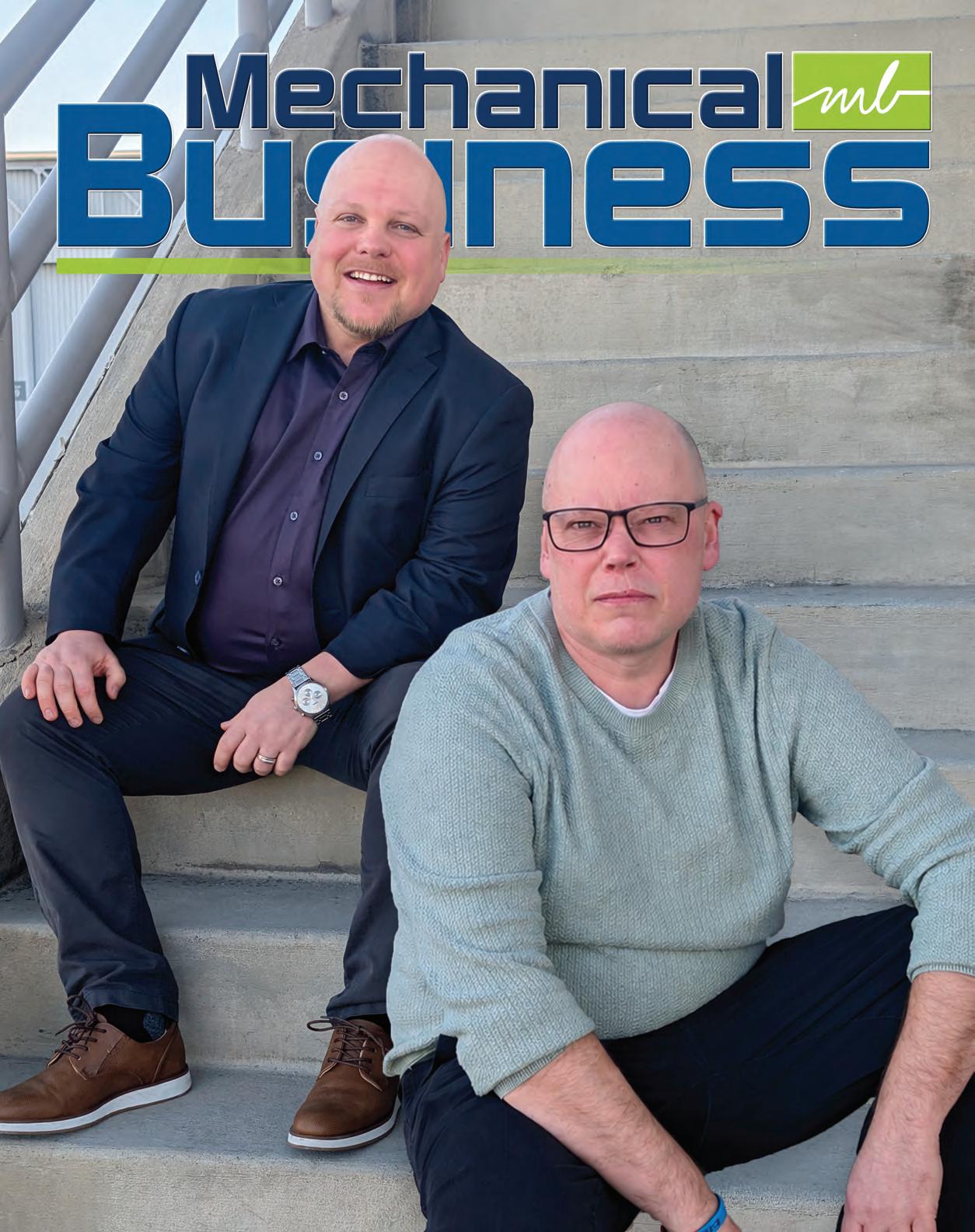
MechBiz Studio podcast hosts
Adam Hedden Matthew Reid
Controls and automation
How to counter brand drift
Skilled trades boost from feds
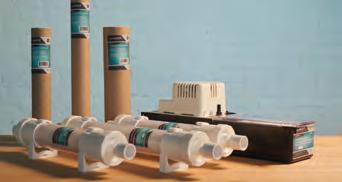
Neutralizers − an essential safeguard
Electrification: Understanding energy costs

MechBiz Studio podcast hosts
Controls and automation
How to counter brand drift
Skilled trades boost from feds
Neutralizers − an essential safeguard
Electrification: Understanding energy costs



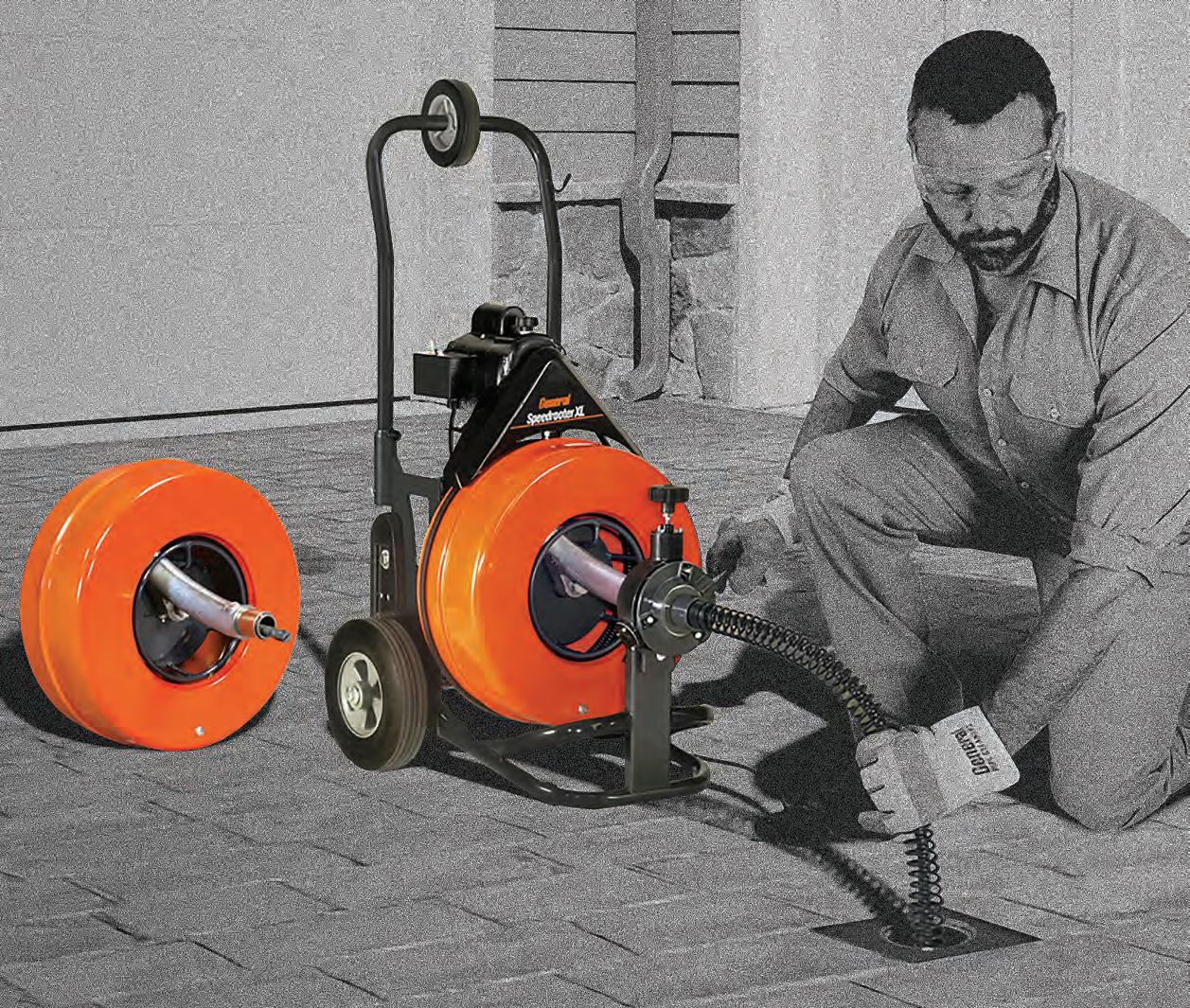
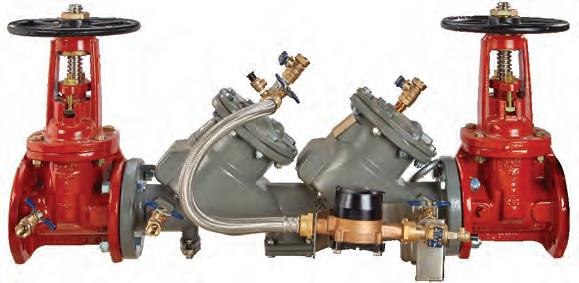
® With easily interchangeable drums, the Speedrooter XL® gives you long distance clog-busting power in 3" to 10" lines—up to 200 feet. The rugged Speedrooter XL features a powerful 3/4 hp motor to drive the cable down long runs and clear tough stoppages.
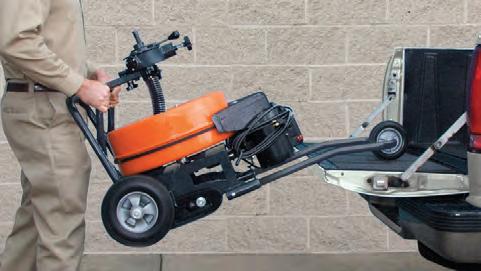
The adjustable height, swept back handle and stair climbers provide for easy maneuverability and loading into your truck.
For more information: Call the Drain Brains at 800-245-6200, or visit www.drainbrain.com/XL
70HUMAN RESOURCES
Good communication starts with alignment between policy, messaging and behaviour. Sue Sodek

25
Check out the second 2026 issue of the semiannual Wet Heat Applications & Technology. Experts explore controls and automation, condensate solutions, boiler replacement, the latest technology, and more.
62MANAGEMENT
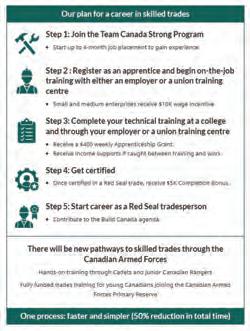
Recruiting, training and labour mobility highlight document, along with streamlining rules and modernizing building codes.

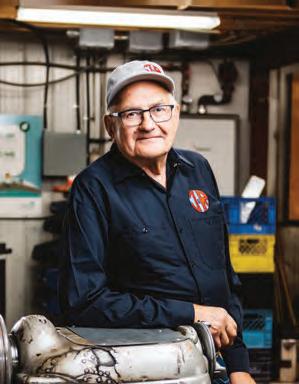
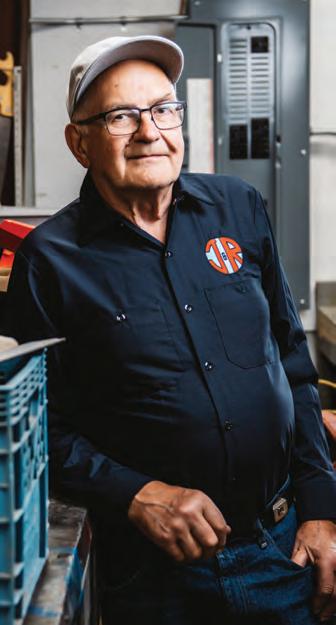
JOSEPH CHOROSTKOWSKI: A lifetime in the
Carolyn Cooper
53JOBSITE JARGON
Test your knowledge of hydronic terminology for a chance to win a a Yeti cooler from Nibco.

22HIGH-PERFORMANCE HVAC
Electrification: Understanding energy costs
Tom Grochmal
Contractors and consultants need to be able to speak to customers about the impacts of electrification on their operating costs, of which energy costs are a large component.

68SUSTAINABILITY
Mattamy Homes reaches major milestone with solar installations
More than 1,000 of the homebuilder’s homes in Alberta are now equipped with solar panels.
Carolyn Cooper

H.E.A.T.: Heat Exchange Automation Technician
Matthew Reid
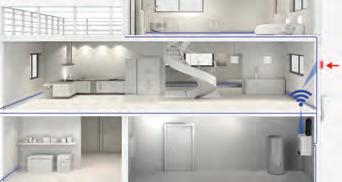
Imagine if there was a technician inside every piece of equipment keeping an eye on things; that’s not the case so we rely on controls and automation to keep things running smoothly.
58PLUMBING
Levels of cross connection
Fred Bretzke
It’s not just leaks that affect our water – it’s internal cross connections that impact the quality of our drinking water.

Your business has changed − has your brand kept up?
Paul Bies
If the way you present the company does not change, the market may still see you as the business you used to be.
Available across Canada at these fine distributors
Western Canada
Ontario
Quebec
Atlantic Canada

Content Media Group Inc.
2 Campbell Dr., Suite 807 Uxbridge, ON L9P 0A3
Tel: 905.465.2919 mechanicalbusiness.com
July/August 2026 Issue
Published 6 times per year.
Circulation Director: Shila Naik, C 905-272-4175 shila.naik@mechanicalbusiness.com
Editor: Kerry Turner, C 416-435-1193 kerry.turner@mechanicalbusiness.com
National Sales Manager: Kyle Badder, C 416-735-1375 kyle.badder@mechanicalbusiness.com
Operations Manager: Caroline Bexfield, C 647-217-2076 caroline.bexfield@mechanicalbusiness.com
Contributing Editor: Carolyn Cooper editorial@mechanicalbusiness.com
Art Direction: Fourteen Orange Graphic Design Inc. davem@fourteenorange.com
Controller: Liz Mills liz.mills@mechanicalbusiness.com
Publisher: Bruce Meacock, C 416-457-9563 bruce.meacock@mechanicalbusiness.com
PM:41536047
ISSN 1916-0674 MB (Print) ISSN 1906-0682 MB (Online)
Proudly created and printed in Canada.
We acknowledge the support of the Government of Canada.

Submissions: Copyright in material submitted to the magazine and accepted for publication remains with the author, but Mechanical Business and its licensees may freely reproduce it in print, electronic or other forms. Mechanical Business also reserves the right to edit said submitted materials to suit the editorial needs and mandate of the publication.
Notice: Mechanical Business is published for owners, managers and decision makers with mechanical contracting firms and the sector’s supply chain partners in Canada. While every effort is made to ensure the accuracy of the information, Mechanical Business, Content Media Group Inc., its staff, directors, officers and shareholders (‘The Publisher’) assume no liability, obligation or responsibility for advertised claims, for errors and/or omissions, or for the results obtained from the use of this information. Manufacturers’ instructions take precedence over published editorial. The publisher reserves the right to publish a printed correction in a subsequent issue for editorial errors, omissions and oversights. Subscriptions are available for $90 plus taxes in Canada and the U.S. Single copies are $15.00. Outside Canada and the U.S., the rates are $150.00 (annual) and $25.00 (single copy).
© Copyright 2026. The contents of this magazine may not be reproduced in any manner without prior written permission of the publisher.
Proud members of:


Vancouver city council voted to reverse the city’s bylaw prohibiting new natural gas connections in homes on May 21, 2026, however the decision has not yet been enacted into law.
City council held a vote in favour of lifting the ban after Vancouver mayor Ken Sim introduced Motion 8, a motion to roll back the gas heating ban, mandate a review of the city’s standalone building code, and eliminate Energize Vancouver, a program that set limits on natural gas emissions and which required commercial buildings to report their carbon emissions annually. Motion 8 is also a directive to bring the city’s building bylaws into alignment with the provincial building code, and require any regulatory divergences to provide justification.
The ban on natural gas for space and hot water heating in low-rise residential buildings was established in 2022, then reversed in July 2024 and reinstated in November 2024 following public outcry. Critics say the continued changes in building policy are creating uncertainty for developers, while backtracking on progress towards climate goals.
Mayor Sim says the decision cuts red tape and is in line with moves to remove the federal and provincial consumer carbon tax.
“Every extra rule, every added delay and every layer of bureaucracy gets passed directly onto the people trying to afford rent, buy a home, or keep a small business alive in this city,” said Sim in a statement regarding the decision. It’s important to note that despite having passed the motion there has not yet been a change in the law, and current electrification requirements remain the status quo. According to Phil White, manager of Plumbing and Mechanical Inspections for the City of Vancouver, Motion 8 is a directive for city staff to draft bylaw amendments. Until those amendments are officially enacted, which may take months, the existing zero-emission mandates remain the legal standard.

On May 21, 2026, Vancouver city council directed staff to pause enforcement of the Annual Greenhouse Gas and Energy Limits Bylaw. Staff will review the bylaw and are expected to report back to council in the first half of 2027.
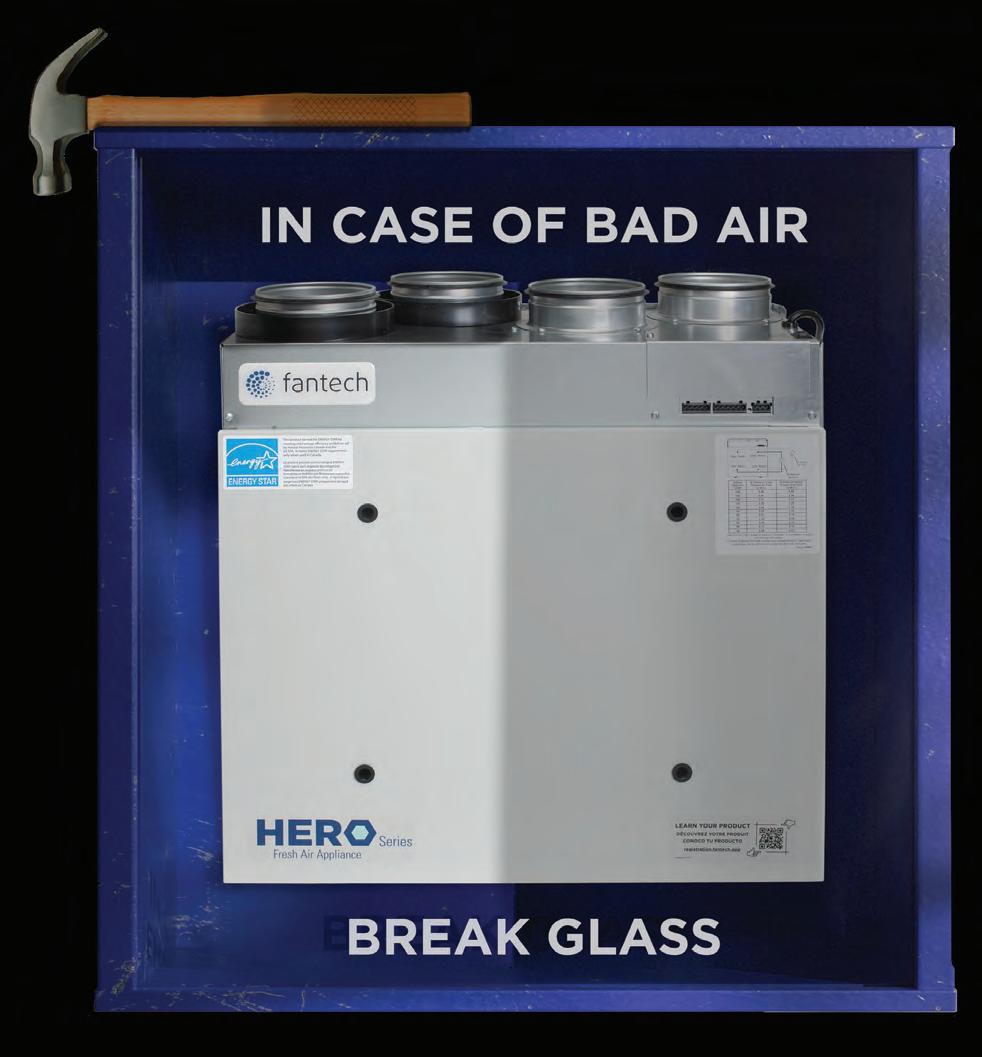
Fantech/Systemair

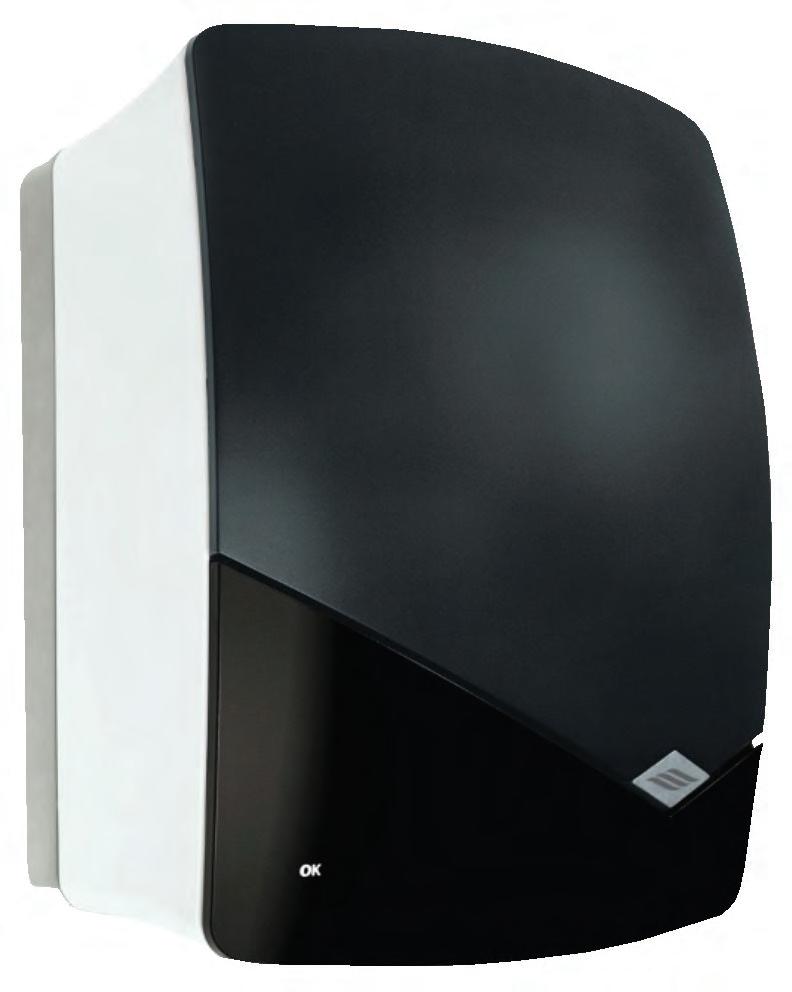
The HERO HRV/ERV delivers balanced ventilation for healthier residential and multi-family environments
Scan Here to learn how HERO can improve your next project
Best in Class Technology Services (BCTS) has acquired Modern Niagara Building Services (MNBS).

Headquartered in Lenexa, KS, BCTS is a network of facility solution companies MNBS is the service division of Kanata, ON-based HVAC construction company Modern Niagara. Modern Niagara is now a major shareholder of BCTS. MNBS is operating as a division of BCTS. bctsco.com modernniagara.com
Fleming College and St. Lawrence College have agreed to begin a formal integration process. Each college will continue to operate under their existing names and brands, with no current changes to campuses, programs, services or staff. The new integrated college will be effective on or before April 1, 2027. Fleming College has campuses in Peterborough, Lindsay and Haliburton, ON, while St. Lawrence College has campuses in Kingston, Brockville and Cornwall, ON.
flemingcollege.ca stlawrencecollege.ca
The province of PEI suspended new applications for the Net Zero and Oil to Heat Pump Affordability program for free heat pumps and hot water tanks as of mid-April. The program cancellations were announced in the province’s latest operating budget, which saw cuts in funding for a number of energy efficiency and net-zero initiatives. However, funding for home insulation rebates continue. Under the programs contractors will still be able to begin installing equipment for approved households this spring, once written confirmation and updated guidance are provided. More than 45,000 heat pumps have been installed in PEI since 2019 through three different programs, with an additional 2,000 households approved and waiting for installations. princeedwardisland.ca
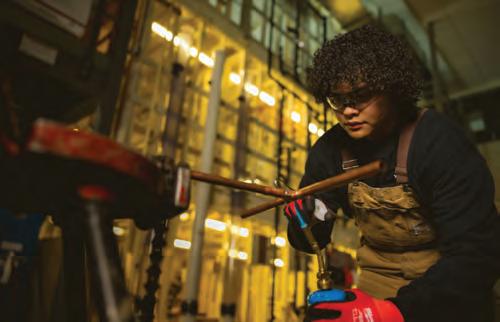
IST brings all NSCC pre-apprenticeship programming and technical training together in one institute, with more than 30 pre-apprenticeship programs.
The province of Nova Scotia and Nova Scotia Community College (NSCC) have launched the Institute of Skilled Trades (IST). IST brings all NSCC pre-apprenticeship programming and technical training together into one industry-led institute, with more than 30 pre-apprenticeship programs across construction, service trades, industrial and manufacturing, and motive power. In the past year technical training seats at NSCC have increased by more than 1,000, while preapprenticeship seats have increased by 260.
nscc.ca
The Building to Electrification Coalition (B2E) has released the 2026 BC Building Electrification Roadmap (BERM), a plan to accelerate the transition to high-efficiency electric buildings across the province. The action plan, which lays out how BC will be able to electrify space and water heating in new and existing buildings, was created by the B2E coalition through engagement with 200 stakeholders. BERM contains several strategies and 30 actions, including better collection and use of energy data; continued workforce development and training; progressing the Zero Carbon Step Code aligned with industry capacity; incentives to lower the upfront capital costs of electrification; and ensuring that only the most efficient heating and cooling equipment is sold.
b2electrification.org





INVERTER TECHNOLOGY
Variable-speed inverter compressor with vapor-injection technology helps deliver e cient operation and heating performance in low ambient conditions
ENERGY PERFORMANCE
Part-load e ciency up to 22 IEER helps manage operating costs while maintaining comfort


COMFORT CONTROL
Modulating compressor and indoor blower help regulate airflow, temperature, humidity, and comfort
SMART BUILDING INTEGRATION





Factory-integrated BACnet® connectivity and cloud-enabled services help simplify monitoring, control, and system optimization

APPLICATION FLEXIBILITY





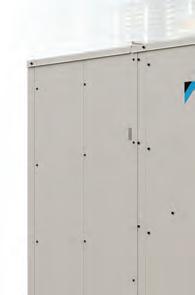
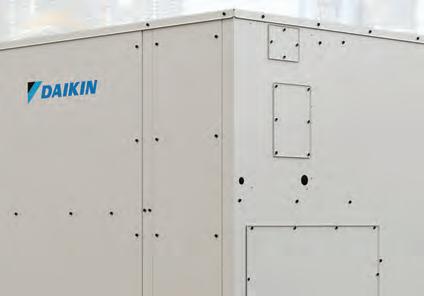




Multi-zone Variable Air Volume (VAV) helps control airflow to meet varying needs of multiple zones





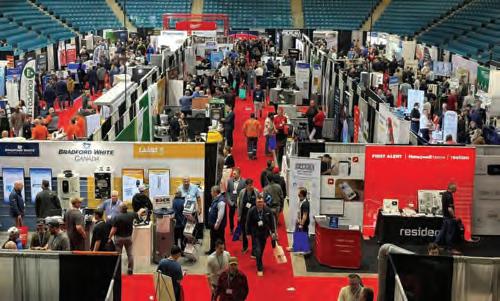
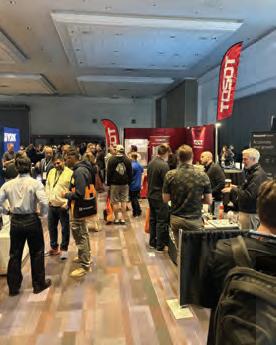
The 2026 MEET (Mechanical Electrical Electronic Technology) Show took place May 6 and 7 at the Moncton Coliseum in Moncton, NB, drawing a record number of attendees. The show floor was sold out and filled the entire Coliseum with new technologies and products from suppliers and manufacturers. As well as a seminar series and an Industry Dinner at the Delta Beausejour Hotel, the show featured the 8th biennial MEET Innovation Awards. The show is presented by the Canadian Institute of Plumbing & Heating (CIPH), Electro-Federation Canada, Atlantic Canada Mechanical Exhibitors (ACME), and Illuminating Engineering Society (IES), Maritime Sections. The next MEET Show takes place May 3 to 4, 2028 meetshow.ca
The government of Quebec is investing almost $350 million to improve residential energy efficiency, cut energy costs and support the province’s energy transition. The initiative, which is part of Quebec’s 2030 Economy Plan, increases the financial assistance available to building owners, and encourages them to install heat pumps. The program will target owners of buildings in areas experiencing energy poverty, using criteria such as material and social deprivation index, building construction year, and property value. The province will provide $158.9 million through the Electrification and Climate Change Fund to Hydro-Québec, while Hydro-Québec will contribute $190.7 million. The financial assistance will cover 55 per cent of the costs to purchase and install heat pumps.
quebec.ca
Alberta has issued Joint STANDATA bulletin 23-BCB008/25-GCB-002 to provide guidance for access to roofmounted HVAC equipment installed in compliance with the National Building Code – 2023 Alberta Edition, and CSA B149.1:25 natural gas and propane installation code. CSA B149.1:25 came into force on March 1, 2026. However, building safety codes officers, designers and contractors have indicated that there may be inconsistent application of code provisions across the province. By putting all the information in one document code users can ensure they comply with the provisions for access to roof-mounted HVAC systems.
alberta.ca
Save on Energy’s Peak Performance Program offers qualified participants financial incentives to reduce energy use in commercial and institutional buildings in Ontario during peak electricity demand days. When a high demand day is forecast, building owners in the program will be notified in advance so that they can reduce building HVAC output. The program is intended for buildings that deliver at least 500 kW of demand response load capacity from one or more facilities. Incentive payment is based on the average kW reduction during the peak season. Qualified participants who can curtail an average of 1.25 MW in the 2026 event season (from June 1 to September 30) could earn up to $94,000.
saveonenergy.ca
Ontario has opened an apprenticeship exam testing centre in Kenora in partnership with Seven Generations Education Institute and Skilled Trades Ontario. The new centre will help to remove barriers for apprentices writing certification exams, who previously had to travel to Thunder Bay.
ontario.ca
skilledtradesontario.ca
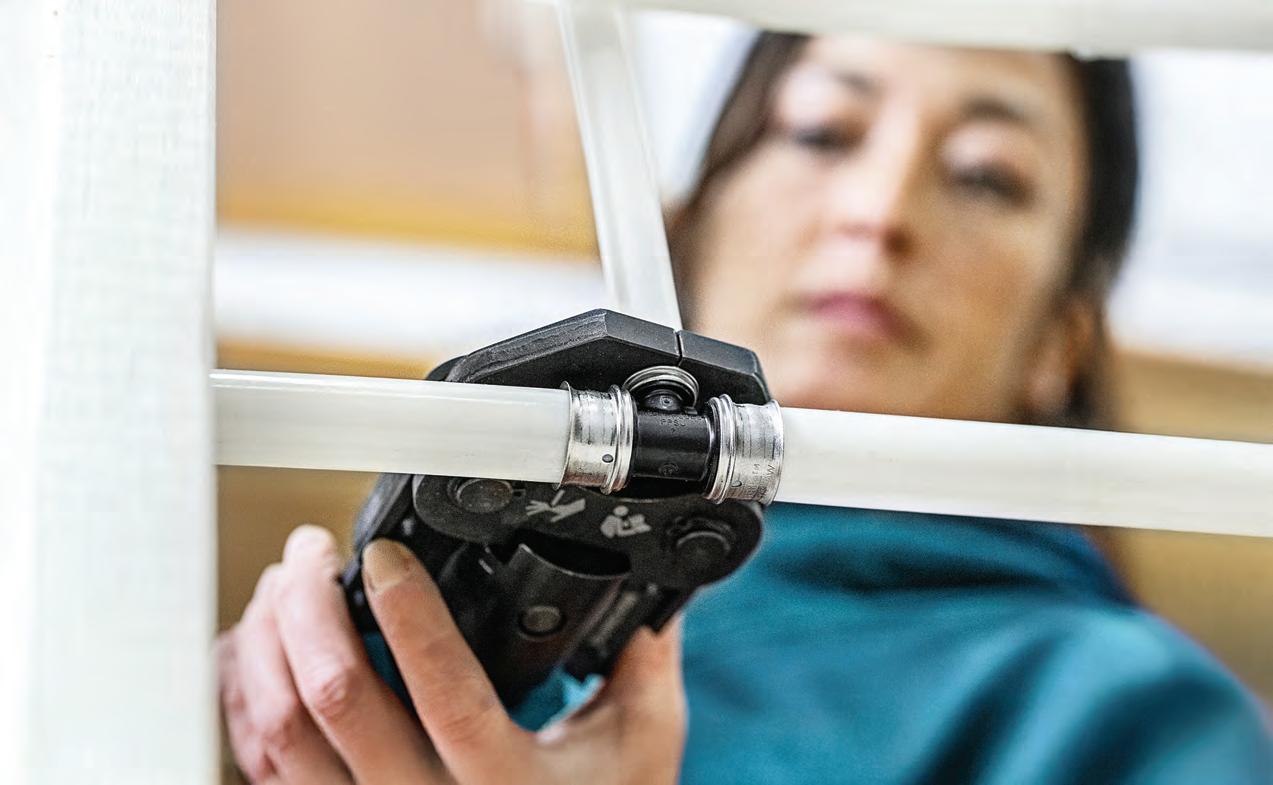

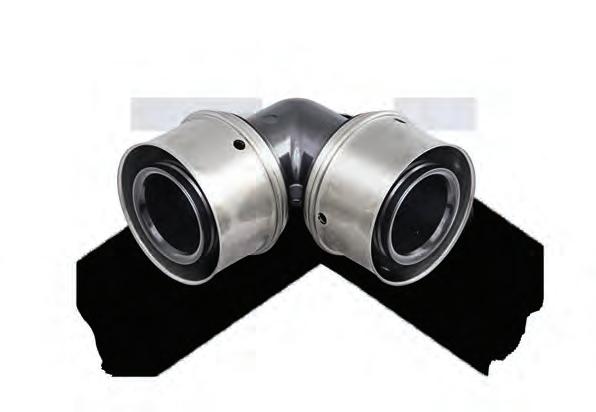
RWC/Sharkbite
Faster installs. Consistent results.
SharkBite PEX Press ttings feature a non removable stainless steel sleeve that won’t fall o in the truck or on the jobsite, visual inspection windows to con rm full pipe insertion, and a locator ridge for proper alignment. Compatible with PEX-a and PEX-b, SharkBite PEX Press delivers quicker installs and con dence in every press.
Made for Speed, Engineered for Con dence
TEST QUICKER FINISH FASTER
TOUGHER THAN THE STANDARD
Scan
PERFECT ALIGNMENT
ENGINEERED FOR EXTREME HEAT AND COLD MEETS ASTM F3347 & F3348 STANDARDS



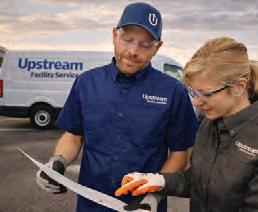
Walmart has launched Upstream Facilities Services, a new business offering in-house maintenance expertise to companies across the U.S. Upstream is designed to service businesses with multiple locations, and will initially focus on HVAC/R, general maintenance, electrical and plumbing. Based on Walmart’s internal model, Upstream will offer urgent repairs, preventive maintenance, and predictive service. The business, which has 8,000 technicians and field leaders supporting 5,200 locations, will also have a dedicated training centre for technicians. walmart.com
5th
HRAI’S Heat Pump Symposium, held recently in Vancouver, BC, was a conference, tradeshow and networking event, which brought together contractors, technicians, manufacturers, wholesalers, government and public utilities. The sold-out event attracted 500 attendees, with 50 exhibiting brands showcasing the latest advances in heat pump technology and applications. The agenda included the latest equipment developments, current regulatory trends and incentive programs, and actionable strategies for how the industry can make the most of the transition to a low-carbon economy. The next Heat Pump Symposium will be held in Mississauga, ON on May 11, 2027. heatpumpsymposium.ca
The government of Manitoba has presented its 2026 Newly Certified Journeyperson Highest Achievement Award. The award celebrates the hard work of apprentices in their respective trades, and recognizes the significance of journeypersons in the workforce. Thirty-nine new graduates were presented with awards, while two awards went to individuals who obtained the highest certification marks through the trades qualification pathway. Recipients included Timothy Petter, plumbing; Matthew Lussier, refrigeration and air conditioning mechanic; and Jeffrey Dewitt, refrigeration and air conditioning mechanic (residential). gov.mb.ca
The City of Toronto has expanded its Basement Flooding Protection Subsidy Program to offer up to $6,650 in subsidies per property. The program is designed to encourage homeowners of single-family, duplex, triplex or fourplex residences to take appropriate action to reduce the risk of basement flooding. Owners can apply for a subsidy to help them with eligible preventive work such as having a home plumbing assessment; installing up to two backwater valves and alarms; installing a sump pump, alarm and battery backup power; and severing and capping a home’s storm sewer or external weeping tile connection. Disconnecting the downspouts from the eavestrough system is not eligible for a subsidy. Properties have a lifetime maximum subsidy for each type of eligible work. The subsidy amounts apply to work completed on or after November 12, 2025. toronto.ca

Daikin Comfort Technologies North America has promoted Ed Gizaw (1) to key account manager and Joey Gullusci (2) to middle market account manager. The company has also hired Taunya Ferris Bourgeois (3) as branch manager for its Ottawa East location and Mike Krill (4) as technical service manager – Western Canada. Natalie Zheng (5) has been named branch manager in Mississauga, ON.





Ulyana Fedyna has joined Pickering, ON-based Alltemp Products Co. Ltd. in a national role as marketing manager, focusing on all aspects of marketing to Canadian distributors and contractors.

Rinnai Canada welcomes Paul Camilleri as commercial sales manager for Toronto and the Greater Toronto Area.



Travis Jones has joined Maple Ridge, BC-based Equipco Ltd. as an outside sales representative for the Greater Vancouver Lower Mainland region.
Scott MacFarlane has been promoted to regional sales lead at Viega LLC, based in Toronto, ON. MacFarlane joined Viega in January 2023 as district sales manager.


Burlington, ON-based Wolseley Canada welcomes Andrada Cijov as marketing business partner, East.

Terry Rioux has been appointed plumbing HVAC inside sales at Bartle & Gibson, based in Calgary, AB. Rioux joined the company in February 2024 as inside sales consultant.
North York, ON-based Go Lime Inc. has promoted Cameron Priske to senior vice president of technical operations and procurement. Priske has been with the company since June 2021 as vice president of technical operations.
Franco Tabat has been named regional sales manager for Western Canada at Brantford, ON-based KeepRite Refrigeration. Tabat has been with the company since July 2019 as commercial refrigeration sales representative.


Henry Weidenhammer has joined Bouctouche, NB-based Systemair North America’s strategic leadership team as regional director of technical services. Weidenhammer will focus on how Systemair delivers technical services across Canada and the U.S.

Surrey, BC-based ProLine Fittings has named Bella Marshall director of national business development. Marshall has been with the company since October 2024 as senior manager of business development, Western Canada.

Edmonton, AB-based Sinclair Supply has hired Tony Nardi as commercial estimator.
Joshua Halbert has joined Ottawa, ON-based WMC Water Management as district manager for Southwest Ontario.


Mississauga, ON-based dahl Valve has hired Cheryl Lewis as vice president of customer experience.

Reliance Home Comfort has appointed Rafael Sánchez director of supply chain and procurement. Sánchez has been with the company since November 2025 as director of procurement.



Armstrong Industrial, a division of Toronto, ON-based Armstrong Fluid Technologies, has hired Joe Hargett (1) and Brian Ray (2) as sales managers for North America. Derek Ng has joined A. O. Smith Canada as director of marketing, Canada. Ng will lead the company’s national marketing strategy, supporting customercentric growth, digital transformation, and long-term business performance in residential and commercial markets.

Matt Hammond has been named branch manager at ECCO Supply’s Burnaby, BC branch. Hammond was branch manager of ECCO’s Surrey, BC branch since May 2025.
Watts Water Technologies has appointed Rich Gardner senior product manager for shutoff valves, connections, and plumbing specialties for the Americas.
The Master Group has hired Justin Matthews as inside sales representative, business solutions.


To have your company’s personnel announcements included, free of charge, in an upcoming edition of Mechanical Business, simply send a note and a few details, to kerry.turner@mechanicalbusiness.com.
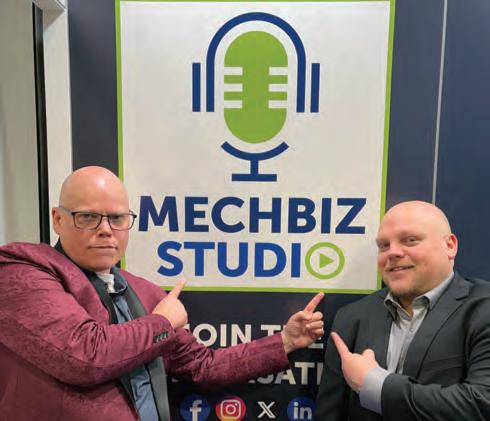
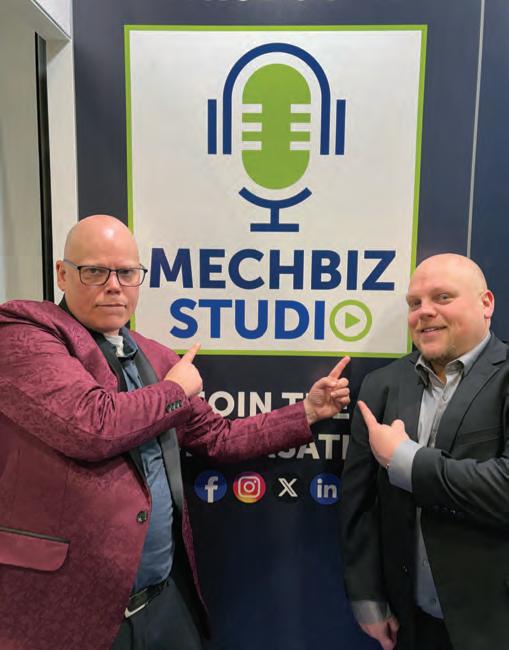
And they’re off on a mission to deliver timely and informative content to HVAC/R, hydronic and plumbing contractors across the country. From the moment Matthew Reid (L) and Adam Hedden (R) kicked off the new MechBiz Studio video podcast series with a conversation about hybrid HVAC system design, viewers have gained valuable insights into the people, technology and trends shaping our industry. Hedden, senior sales executive – growth & training at The Morgan Group, and Reid, technical director – heating department at E.H. Price Solutions and Mechanical Business’s hydronic columnist, are passionate about advancing education, learning and professional growth within the industry. MechBiz Studio features candid conversations from wellknown guests, and practical discussions drawn from realworld experience. This is not your average podcast – there’s never a dull moment with Hedden and Reid.
New episodes launch on the first Tuesday of every month and can be found on YouTube, Spotify and Apple Podcasts.
Scan the QR Code to watch today! ON OUR COVER







For over 170 years, Flocor has been the name professionals trust for quality, reliability, and innovation in mechanical piping. Proudly Canadian-owned and operated, we continue to deliver a full spectrum of solutions tailored to your needs.
Flocor – Your Complete PVF Solution. Experience excellence. Experience Flocor.





With a simple phone call, you are connected to an integrated enterprise, from ordering to distribution of a comprehensive assortment of products including pipes, valves, fittings and suspensions. From our warehouse to your network, Flocor is your complete one-stop distribution network.
right where you need us.
With seventeen strategically located stocking centres across Canada, including five regional distribution centres, Flocor provides you with quick access to one of the broadest product lines in the industry. Our sophisticated ordering system puts this inventory at your doorstep.
Always in stock, Flocor has thousands of combinations and styles of valves, pipes, fittings and brackets, as well as a superior range of sprinklers and related equipment, including piping, valves and fittings for water supply systems.
With this comprehensive product lineup, Flocor can continuously meet the needs of the industrial, commercial, fire protection and municipal markets. This extensive inventory is readily available to you… right now.
right when you need us.
No one knows the PVF market or products better than Flocor. Our team of over 100 specialists, present across Canada, is ready to provide expertise and assistance to help you make the right choice.
Always there... right when you need us.

Committed to your success! www.flocor.com
Master Group has once again been recognized as one of Canada’s Best Managed Companies for 2026. The company was first named to the Best Managed Companies list in 2010, and became a member of the Platinum Club in 2016, marking that the company maintained its Best Managed status for seven years or more. master.ca moovair.com

Ainsworth and Distech Controls announce partnership
Ainsworth Inc. has entered into a partnership in Eastern Canada with Brossard, QC-based Distech Controls Inc. The partnership will allow the companies to integrate next-gen controls and provide flexible, scalable solutions across various industries. ainsworth.com distech-controls.com
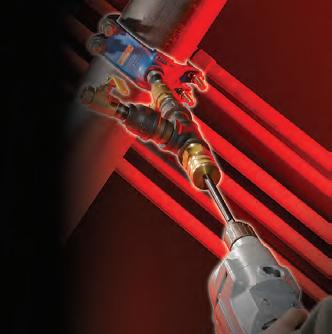
• Hot tap up to 4" valves on steel, galvanized, copper, brass or PVC pipe.
• Pressure rated 300 psi max for chilled and hot water systems; 15 psi max for steam systems.
• Order with or without hole saws.
Copeland has completed its purchase of Bueno Analytics, a Sydney, Australiabased company specializing in SaaS solutions for building analytics, energy management, and operational efficiency in commercial buildings and the cold chain. By integrating Bueno’s platform, which uses embedded AI and machine learning, Copeland will offer services such as predictive maintenance, energy management, leak detection, workforce efficiency tools and advanced analytics. copeland.com buenoanalytics.com
Bartle & Gibson Co. Ltd. has announced a regional partnership with Eaton Industries (Canada) Company to distribute Eaton’s electrical solutions across Western Canada. Eaton Industries (Canada) Company is based in Burlington, ON, and has sales offices, engineering services and manufacturing centres across the country. bartlegibson.com eaton.com/ca/en-gb.html
Rinnai America Corporation has opened the Rinnai America Commercial Manufacturing Facility and Distribution Center in Griffin, GA. The 306,000-sq. ft. facility is its third in the region. The new plant builds on the company’s existing Griffin operations, supports assembly, and training operations, enhances manufacturing capacity across product lines and consolidates shipping into a single distribution point. rinnai.us
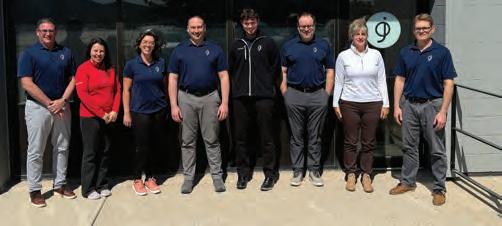
Jones Goodridge is commemorating 40 years of business this year. The company was established in 1986 in Winnipeg, MB by Kerry Jones and Terry Lindell under the name Jones Lindell & Associates. In 1990, Brad Goodridge joined the team and following Lindell’s departure the business was renamed Jones Goodridge. In 2020, Jones Goodridge entered a new era with second-generation owners Dan Jones, Jackie Harmacy, Nolan Shortridge and Travis Jones, assuming the leadership roles. Jones Goodridge serves wholesalers, contractors, engineers, designers, and builders across Manitoba, Saskatchewan and Northwestern Ontario. jonesgoodridge.com
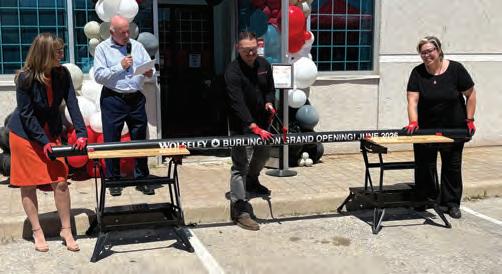
In June Wolseley Canada held a grand opening celebration for its Burlington, ON plumbing and HVAC branch, which has relocated to 4325 Harvester Road, Unit 15. The new branch is larger, and is stocked with Wolseley’s full range of HVAC and plumbing products. Customers were welcome to tour the new facility and explore exhibits from vendor partners. wolseleyinc.ca
Toronto, ON-based Centric Sales and Marketing Inc. will represent the DAP portfolio across plumbing, HVAC/R and mechanical wholesale distribution in Ontario. Baltimore, MD-based DAP Global Inc. is a manufacturer of caulks, sealants, adhesives and foams. centricsales.ca dap.com
Mits Airconditioning Inc. recently celebrated the grand opening of its branch at 90 Welham Road in Barrie, ON. The celebration welcomed customers, industry partners and local officials for tours of the new 35,000-sq. ft facility, which features a hydronics showcase. Mississauga, ON-based Mits has five branches, nine distribution warehouses, and partner distribution services across North America. mitsair.com
Ensure your HVAC/R appliances, equipment and components are certified to meet the latest regulatory requirements when utilizing low global warming refrigerants. Intertek’s experts will help you gain compliance and certification for products using flammable refrigerants with speed to market.
+1 800 WORLDLAB (967 5352) icenter@intertek.com Intertek.com/HVACR FOR MORE INFORMATION HVAC/R PRODUCT

R.W. Beckett
Corporation has acquired Wayne Combustion Systems, a Fort Wayne, IN-based manufacturer of oil and gas burners for commercial, foodservice and other applications. The acquisition expands Beckett’s combustion portfolio and, according to the company, reinforces its long-term commitment to the combustion industry.

beckettcorp.com waynecombustion.com
Ecolab has entered into an agreement to acquire CoolIT Systems, a manufacturer of liquid cooling technology for nextgeneration AI data centres. The acquisition positions Ecolab as a cooling solutions provider for the data centre market. CoolIT offers high-performance, scalable liquid cooling systems, including cooling distribution units, cold plates and direct-tochip cooling technologies. The company is headquartered in Calgary, AB, where it also has a manufacturing facility.
coolitsystems.com ecolab.com
Johnson Controls has completed its acquisition of Burlington, MA-based Alloy Enterprises. Alloy Enterprises offers a thermal management platform for high-performance data centres and mission critical industrial applications. The acquisition expands Johnson Controls’ data centre cooling portfolio. Alloy’s technology and proprietary manufacturing process will be integrated into Johnson Controls’ range of cooling applications.
alloyenterprises.co johnsoncontrols.com
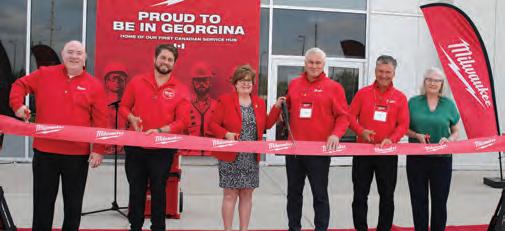
Milwaukee Tool is celebrating its first-ever Service Hub in Canada at 1 Logistics Ct. in the Keswick Business Park in Georgina, ON. The company recently held a grand opening event at the 54,000-sq. ft. facility, attended by Milwaukee Tool leadership, local officials and community stakeholders. The new facility will be a centralized repair and service destination. The facility is expected to reach full operational capacity by the end of 2026. It is part of a larger Canadian expansion plan, which includes the company’s first distribution centre, scheduled to launch later this year.
milwaukeetool.ca
Redmond Distributing Inc. is now an independent distributor of Johnstone Supply. The strategic partnership allows Redmond to access expanded product availability, enhanced resources, digital tools, and training programs, including Johnstone University. The company will also introduce online ordering capabilities, enhanced in-person customer service, and in-person product training. Redmond is a family-owned company serving the HVAC community in Ontario from two branches in Mississauga and Ottawa, ON. The company is celebrating its 25th anniversary this year. Portland, OR-based Johnstone Supply is a wholesale distributor of HVAC/R equipment, parts and supplies across Canada and the U.S. through its 60 plus distributors and six regional distribution centres.
johnstonesupply.com redmonddistributing.com
Commissioning is a quality
Electrification in the home heating space is fundamentally driven by climate policy, building code and technology advancements. However, energy costs are an important consideration because customers bear those costs throughout the life of the equipment. As contractors and consultants, you need to be able to speak to customers about the impacts of electrification on their operating costs, of which energy costs are a large component. As an engineer, I like to “run the numbers,” so-tospeak.
Traditional energy efficiency is simple to understand when the heating equipment uses the same source of energy before and after. Saving energy directly translates into saving money. With electrification, it’s not as simple. Saving energy doesn’t guarantee you save money because different fuels have different costs. Each source of energy also has its own units of energy, just to add to the confusion. It would be easier if we spoke in the same units, but we don’t. Oil and propane are measured in litres, natural gas is measured in cubic meters (m3) and GJs, and electricity is measured in kWh.
In simple terms, understanding how your heating options compare comes down to understanding the cost of producing a unit of usable heat. For usable heat, we will talk in terms of the British Thermal Unit (BTU), which is common for heating contractors. I will walk you through the basic math of three common scenarios for building heat, comparing fuels in terms of their cost to produce 1 MMBTU of usable heat. These scenarios are purely illustrative because circumstances vary between regions. I also provide a table that you can adapt for projects in your service area.

Tom Grochmal
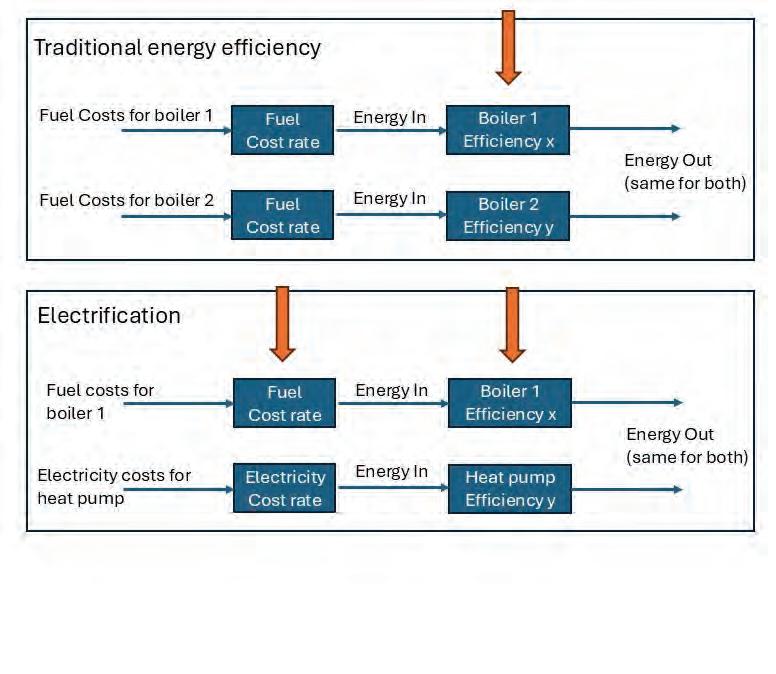
With traditional energy efficiency projects, you only have one variable affecting energy costs – the equipment’s seasonal efficiency (shown by the orange arrow in the top box), because the fuel used is the same when changing equipment. With electrification, there are two variables affecting energy costs − the equipment’s efficiency and the cost of energy (shown by two orange arrows in the bottom box).
With traditional energy efficiency projects, which do not involve fuel switching, energy cost savings are a function of the energy conversion efficiency of the heating system. This includes upgrading a furnace or boiler to one with a higher Annual Fuel Utilization Efficiency (AFUE), an air conditioning system with a higher Seasonal Energy Efficiency Ration (SEER) rating, or baseboard electric heating to a ductless heat pump.
Let’s look at an example in terms of the unit cost to produce 1 MMBTU of usable heat:
1) Baseline scenario: An existing natural gas boiler has a 70 per cent seasonal efficiency. If that boiler puts out 1 MMBTU in usable heat, then the required input heat content of its fuel is 1 MMBTU/70% = 1.43 MMBTU.
If gas costs $0.25/m3, then the unit cost of heat production is 1.43 X 0.25 X 28.3 = $10.11.
Tom Grochmal, PhD, P.Eng., is founder and CEO of Trim Tab Energy Retrofits (trimtabretrofits.com), an energy contractor with a mission to renew housing and inspire better living.
2) Upgrade scenario: You upgrade that same boiler to a natural gas condensing unit with a 90 per cent seasonal efficiency. Following the same logic as before: If that boiler puts out 1 MMBTU in usable heat, then the required input heat content of its fuel is 1 MMBTU/90% = 1.11 MMBTU. The corresponding unit cost of heat production is 1.11 X 0.25 X 28.3 = $7.86.
That’s an energy cost savings of $2.25 for every million BTUs in heating load. Let’s put that in terms of annual cost savings. If that original boiler consumed 10,000 m3 in a typical winter, then it has an annual heating load of 247 MMBTU. The annual savings is therefore 247 MMBTU X $2.25/MMBTU = $556.54. You are also guaranteed to save money, or avoid increasing costs, regardless of how utility rates fluctuate.
Electrification is more complicated than traditional energy efficiency projects because you have to account for the costs of electricity relative to the traditional cost of a fuel such as propane, oil, or natural gas. Even still, the analysis comes down to understanding the unit cost of producing usable heat. Let’s consider the example now where you replace the inefficient boiler with a heat pump system:
1) Baseline scenario: An existing natural gas boiler with a seasonal efficiency of 70 per cent has a unit cost of usable heat production of $10.11 (use a units conversion factor of 293.1kWh/MMBTU).
2) Upgrade scenario: Let’s assume the heat pump has a seasonal coefficient of performance (SCOP) of 3.0. If the heat pump puts out 1 MMBTU in usable heat, then the input energy required is 1 MMBTU/3.0 = 0.333 MMBTU. If the average cost of electricity is 10 cents per kWh, then the corresponding unit cost of heat production is 0.333 X 0.1 X 293.1 = $9.77 (use a units conversion factor of 293.1kWh/MMBTU).
In this scenario, the heat pump produces modest energy cost savings compared to the boiler – about $0.34 per MMBTU, but it still adds up year over year. These economics are also uncertain due to utility rates changes – meaning that if electricity rates go up more than natural gas, the cost benefits erode. Conversely, if natural gas rates go up more than electricity, the cost benefits increase.
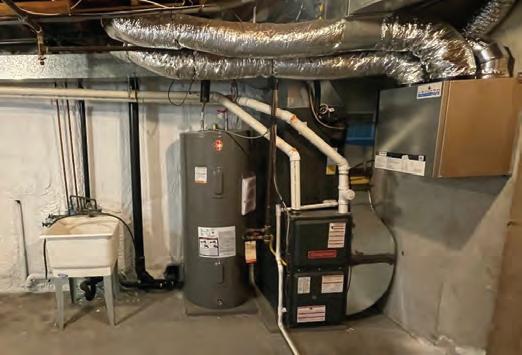
In this project for a community housing provider, Trim Tab installed hybrid heating systems comprised of a gas furnace and air source heat pump. The heat pump introduces central air conditioning during the summer and provides heating in the shoulder seasons, while the furnace handles heating in the depths of winter. An electric water heater and energy recovery ventilator were installed. Units were also air sealed to the ENERGY STAR standard for new construction. With all measures considered, the utilities were about the same before and after. Tenants were very happy about the introduction of central cooling and mechanical ventilation.
When an entire home or building is electrified, the whole cost savings equation changes because now we are eliminating the need for the incumbent fuel altogether. This results in eliminating fixed, monthly charges for a meter and fuel delivery.
Finally, let’s consider the scenario where we can replace a boiler with a heat pump system and eliminate the need for natural gas altogether by electrifying the water heater in the process.
1) Baseline scenario: An existing natural gas boiler with a seasonal efficiency of 70 per cent produces usable heat at $10.11/MMBTUs.
2) Upgrade scenario: A heat pump with a SCOP of 3.0 produces usable heat at $9.77/MMBTU. The natural gas water heater is converted to an electric water heater. Monthly fixed utility service charges of $30 are eliminated, adding up to $360 in additional cost savings per year. To avoid complicating this example, we are assuming fuel switching the water heater doesn’t significantly affect utility costs. That really depends on usage, equipment type and local utility rates.
Where full fuel switching is feasible, the opportunity to eliminate a bill can be compelling, as it provides certainty on the key component of the cost savings.
These examples are purely illustrative. You have to consider the actual efficiencies and utility rates for your particular project. Table 1 helps you do your calculations. Doing the math will enable you to speak intelligently to customers about how these types of projects will affect their energy costs. It’s also important to remember that energy cost savings are an important part of the rationale for an HVAC job, but it’s often not what gets customers over the goal line when it comes to higher performance HVAC. What really speaks to them are quality of life improvements that address their security, health, comfort, functionality, or even their social standing by adding sophistication to their lives or by doing their part for the environment.
For organizations, it may be about alignment to their mission, achieving corporate Environment, Social and Governance (ESG) commitments or getting ahead of future compliance obligations. For all the Trim Tab projects highlighted in the photos, the customer had strong motivators to pursue energy efficiency and electrification projects beyond the energy savings. Think of the energy cost savings as the gift that keeps on giving.
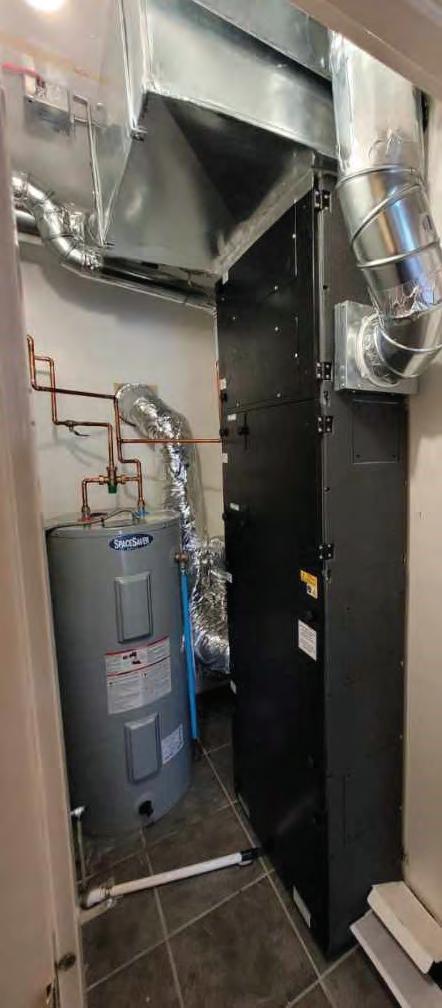
In this project Trim Tab fully electrified stacked townhome units with small floorplans and low heating loads. An inefficient natural gas water heater and air handler was replaced with a small electric resistance water heater along with a vertical stack heat pump/ ventilator. Comprehensive air sealing was performed to further lower the heating load. The elimination of fixed charges more than offset the increased use of electricity. Tenants valued having central air conditioning and better indoor air quality. The housing operator valued having fewer bills to manage for their tenant base.
I recommend service providers maintain a spreadsheet similar to Table 1 below, accounting for the energy rates in their service area, and seasonal efficiencies for their particular projects. The conversion factors are provided for typical units of fuel and electricity so you can make proper “apples to apples” comparisons of energy costs. Table 1 doesn’t cover all scenarios, such as hybrid systems.
“The cost of a BTU” is a useful lens through which to understand energy cost savings for energy efficiency and electrification projects. Electrification projects are complicated by the fact that efficiency gains don’t always yield cost savings because different sources of energy have different costs. Importantly, electrification projects have potentially a multitude of non-energy benefits that are more likely to drive the project, including carbon reduction.
The inspiration for this article came from a conversation with the folks at Ancaster, ON-based L.J. Barton Mechanical (ljbarton.com), a multi-trade contracting company serving ICI customers. A special thanks to Mark Armstrong at ArmCo Solutions for his technical review of this article.
CONDENSATE: MANAGING RISK PRODUCT SHOWCASE WHY FLUSHING MATTERS
UNDERSTANDING CONTROLS AND AUTOMATION
GUIDELINES FOR SNOW AND ICE MELTING SYSTEMS
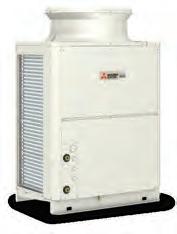
ECODAN QAHV HEAT PUMP WATER HEATER
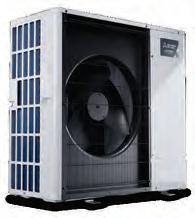
ECODAN WUZ AIR-TO-WATER HEAT PUMP
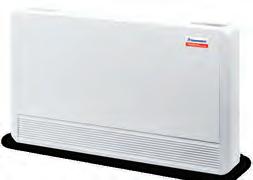
CLIMAVENETA i-LIFE2 SLIM HYDRONIC FAN COIL UNIT
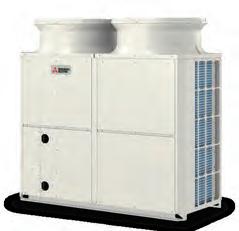

LOW CARBON HYDRONIC HEATING, COOLING AND DOMESTIC HOT WATER SYSTEMS
NATURAL GAS ALTERNATIVES FOR ELECTRIFICATION u TRUSTED PERFORMANCE, QUALITY AND RELIABILITY u
u LOCALLY BASED PARTS AND SUPPORT TEAM u
REDUCES ENERGY CONSUMPTION OVER COMPARABLE NATURAL GAS AND ELECTRIC RESISTANCE HEATERS
To find a distributor go to: MitsubishiElectricHydronics.ca
Japanese Engineered. Unrivaled Quality. For Canada.
Content Media Group Inc. 2 Campbell Dr., Suite 807 Uxbridge, ON L9P 0A3 Tel: 905.465.2919 www.mechanicalbusiness.com
July/August 2026 Issue Published
For All Subscription Inquiries
Shila Naik Circulation Director 905-272-4175 shila.naik@mechanicalbusiness.com
Editor: Kerry Turner, C 416-435-1193 kerry.turner@mechanicalbusiness.com
National Sales Manager: Kyle Badder, C 416-735-1375 kyle.badder@mechanicalbusiness.com
Operations Manager: Caroline Bexfield, C 647-217-2076 caroline.bexfield@mechanicalbusiness.com
Contributing Editor: Carolyn Cooper editorial@mechanicalbusiness.com
Art Direction: Fourteen Orange Graphic Design Inc. davem@fourteenorange.com
Controller: Liz Mills liz.mills@mechanicalbusiness.com
Publisher: Bruce Meacock, C 416-457-9563 bruce.meacock@mechanicalbusiness.com



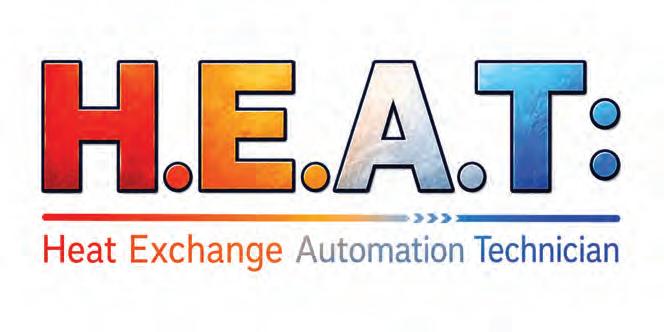
Nboiler. Their name will be Heat, an acronym for Heat Exchange Automation Technician and this person will monitor every sensor, nut, bolt and screw and they will constantly be tweaking things to enhance performance. Heat will be able to be spoken to and be told exactly what we want. Until Heat arrives, we have controls and automation.
When I first started in HVAC I struggled greatly with controls and I didn’t even want to comment on the world of automation. It was difficult to determine when to turn on what pump or what valve to open. It seemed like such a mystery to understand the inner workings of flow, not to mention how to automate the whole thing to operate seamlessly with little to no operator interference. It all started to come into focus as I learned more about my craft and really there are several things you need to keep front of mind for all of this to make more sense.
First let’s address controls. Controlling a hydronic system (outside of the boiler − we’ll come back to that) is understanding flow and how water operates. Inside of a pressurized system water will not
move on its own. The only thing that will force water to move is the beautiful second law of thermodynamics: heat transfers to cold. If you have hot water somewhere in a system it will migrate to the colder areas. This principle was used before we had any sort of control in a system.
We called these gravity systems where the specific heat of the heated water was less than that of the colder water so the water and the heat it carried with it naturally rose through a system giving off its heat until it cooled enough to fall. These systems required large pipes but no circulators. The large pipes eventually went out of style as circulators entered the scene and we could artificially create flow.
The flow of a hydronic system operates via pressure. High pressure goes to low pressure, always. The way I like to envision this is that the low-pressure side of a circulator is like a downhill section of a stream. Water will be inclined to flow downhill. The high-pressure side of a circulator is where it’s more like a pump where it is pushing the water back up that hill to create flow. The tricky part is to understand the when and the how of the circulator or zone valve.
In a standard primary secondary system, each “loop/zone” requires its own method of artificial flow creation. Think like water. If there is no reason for water to flow into a loop then you have to create a reason and then you have to control it.
Zone controllers in simplicity are just electrical relays that accept a signal usually from a thermostat and then give a go/no go voltage signal to a flow device such as a zone valve or circulator as well as the go/no go signal to the boiler.
The thermostat sends in a 24V signal to the relay control. The relay control sends that signal out to the transformer to create a 120V signal and that goes out to the pump. Simultaneously when there is a call from the Thermostat there is a signal from the control board that tells the boiler that there is a demand for heat and that it needs to fire; this is also known as an end switch call.
The control of a system does become a bit more complex as you increase the number of zones but the same principle applies. The main difference between simple and complex systems is that sometimes you need to activate multiple pumps, such as a system pump or primary pump, as well as the zone pump on a demand call.
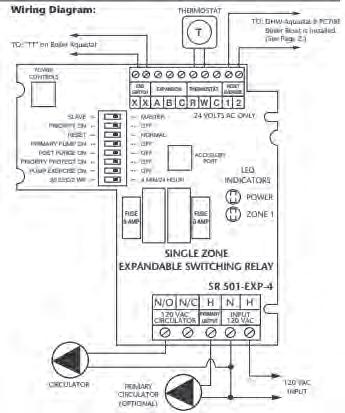
Manufacturer wiring diagrams on these controls are quite detailed so as long as you know how many zones you will have, you should have little trouble following the wiring layout.
OK, so we now have the thermostats and the zone pumps or valves operating as they need to satisfy demand calls. What’s next? What about the automation of this whole system? What needs automation? How is that done and why?
Automation is a scary word for new technicians. They know gas lines and refrigerant charts but complicated automation of these systems was not something they went very deep into in school. Luckily, most automation is already programmed for you within the boiler logic, you just have to access it.
A simple example of automation is temperature control done via outdoor reset. Outdoor reset samples the outdoor ambient temperature and adjusts the boiler’s setpoint temperature accordingly to maximize run time. Boilers like to run for long times at low fire. That’s where the

E.H.
By Matthew Reid
most condensate comes out of the flue gasses and it’s easier on the equipment to run at low fire.
During the design process of the system the designer will select the appropriate boiler setpoint temperature for the coldest day of the year. In real world applications, a home sees worst case temperatures about 10 to 15 days in a year. The rest of the year it is warmer so that leads us to believe we don’t always need high temperature water to satisfy demand. Outdoor reset automatically turns down the setpoint to load match the boiler to the ambient temp. This is usually done right on the boiler control and it’s very simple to install and set.
There are also safety automations. These are already programmed in and often not thought about. For example, in order to hit certain status requirements in steam boiler plants, such as unattended guarded, the boiler’s safety devices need to be automated.
Other boilers have automatic fuel air combustion control where the flue is monitored during
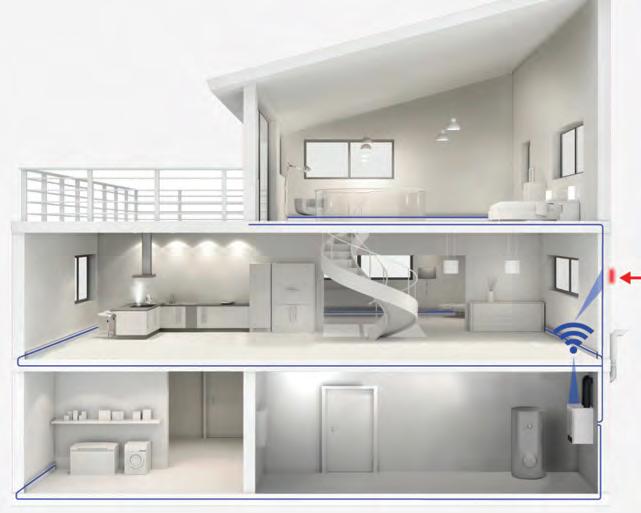
combustion and the 02 (oxygen/ free air) is adjusted to maintain peak combustion levels meaning maximum condensation.
Lead-lag sequencing is also done automatically when multiple boilers are installed. Lead lag sequencing will create a schedule for the boilers to follow so no one piece of equipment is overworked just because it’s first in line. The boilers will rotate both their hours of operation and their firing level.
In good sequencing one boiler will fire up to about 50 per cent and then the automation will activate the second boiler and bring them both down to 25 per cent, then rise them both up together to try to keep the firing rate low and the boilers’ run hours equal.
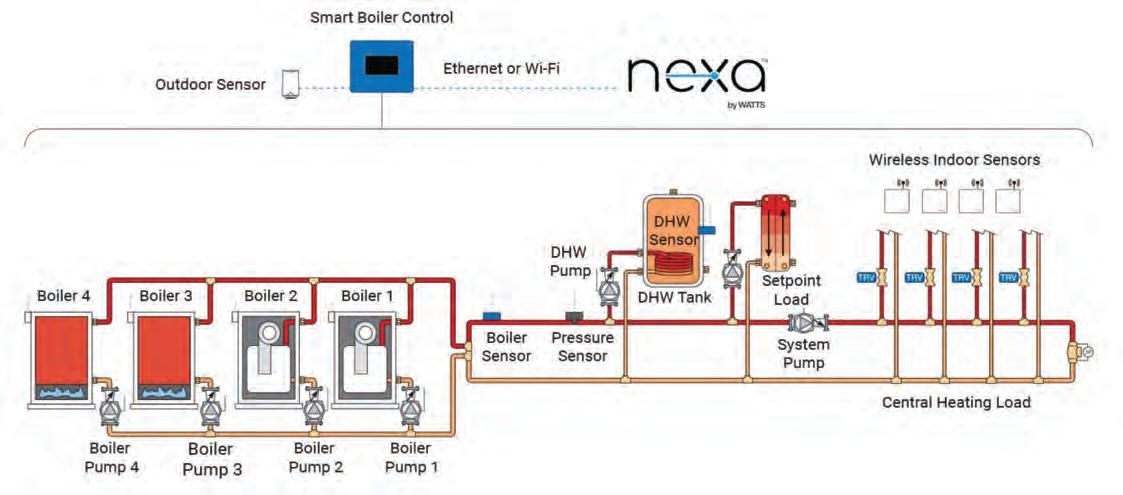
Finally, this leads us to the building automation system (BAS). This system is comprised mainly of sensors and is essentially a boiler control with more bells and whistles. The BAS will do a lot of the same things boiler logic controllers will do but in a more centralized way. It allows multiple systems within a building to talk to each other and provide feedback to maximize energy savings, such as fine tuning pump speed controls to achieve higher delta Ts to force more condensate from the boiler flue. In hybrid systems BAS can be programmed to run the electric side during off peak hours.
It all sounds a bit intense, but until we get our Heat Exchange Automation Technician living inside of every boiler, this is how we do things.
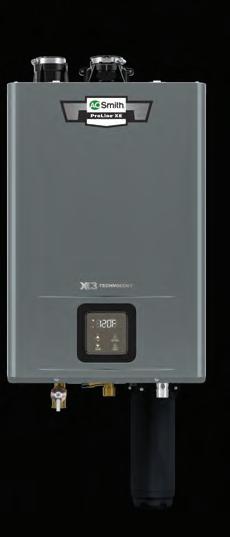
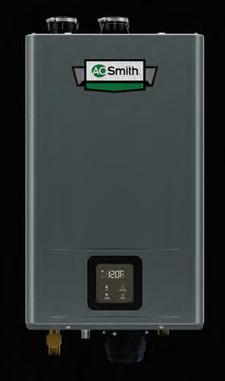
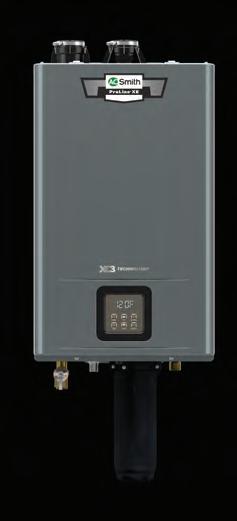
Three propane models and a 140k BTU/h natural gas model expand Adapt ® into more residential applications. Plus our new commercial model offers flexibility, with cascade installs up to 32 units.

By Todd Wiggins
Haveyou ever walked into a building and thought: Is this space healthy? Is the indoor air quality clean and safe? Or maybe you’ve been in a room where something just felt off, too warm, too cold, or simply uncomfortable.
If you’ve never asked yourself these questions, you’re not alone. Most people adapt to whatever the indoor environment offers, taking layers on and off or just dealing with it. I used to be the same way.
That outlook changed as I began exploring building science, where hydronics consistently appeared in discussions and in case studies focused on high-performance buildings. In this article, we’ll first discuss how the building envelope and material construction play a critical role in supporting system efficiency and occupant comfort.
From there, we’ll look at how hydronic heating gives buildings an advantage in delivering consistent thermal comfort and briefly compare it to forced-air systems. Finally, we’ll highlight the importance of properly commissioning pumps, boilers and other hydronic components to ensure a building performs as intended.

A few key envelope elements include:
• High-R value for walls, roofs, floors and doors
• Insulation with minimal to no thermal bridging
• High-performance construction materials, such as advanced wood products and low-carbon concrete
The specification and installation of efficient equipment are essential to achieving optimal building performance; however, it is the building envelope and construction materials that create the foundation for a building’s actual performance. The envelope influences how much heat a building needs, how comfortable the spaces feel and how hard the mechanical systems must work.
A high-performance hydronic system is only as effective as the envelope it serves, as better insulation and tighter construction allow the system to operate more efficiently and deliver more consistent comfort.
• Low-VOC paints and sealants to help prevent harmful offgassing from entering the living space from day one
Remember, these are only a few examples; there are many other factors that, when combined, help ensure a building performs at its full potential. A tightly-sealed building envelope and thoughtful material selection can lead to energy savings when selecting boilers, pumps, heat pumps, chillers and other mechanical components.
Improved building envelopes also reduce heating loads, allowing for smaller boiler sizing and lower water temperatures, which can result in higher efficiency across boilers and other equipment.
ECO-KING SUPREME SERIES
High Efficiency Performance. Up to 94% efficiency for lower energy use and reduced bills.
Compact. Powerful. Quiet. Engineered for modern homes with a space-saving design and ultra-quiet operation.
Built to Last. Premium components and intelligent engineering for reliability you can count on.



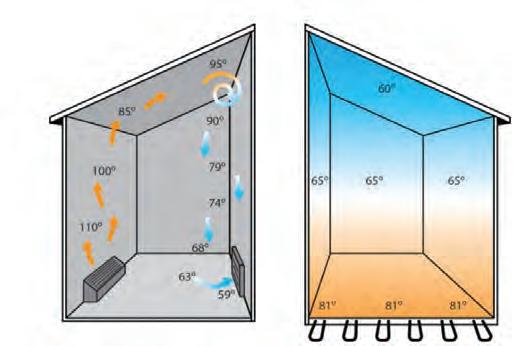
The juxtaposition of hydronic heating and forcedair heating highlights two very different approaches to delivering comfort. I will review some differences between the two systems and explain why hydronic heating is superior. It effectively provides thermal comfort, maximizing indoor environmental quality (IEQ) to keep occupants comfortable, productive, and healthy. Radiant heating offers a more even distribution of heat than forced-air systems, thereby enhancing overall occupant comfort.
When comparing hydronic and forced-air systems, the primary difference lies in the medium used to deliver heating or cooling throughout the building: water versus air. Hydronic heating transfers heat more efficiently and delivers steadier, more consistent temperature control. Because water can carry roughly 3,500 times more heat per cubic inch than air, a much smaller volume is needed to move the same amount of thermal energy.
When I read articles or watch videos of industry professionals discussing indoor environmental quality (IEQ) and indoor air quality (IAQ), I often think about how hydronic systems excel in improving both. By reducing the need to move large volumes of air, hydronic heating minimizes the circulation of particulate matter and allergens. It also creates quieter indoor environments by eliminating noise from ductwork and large fan motors, which can affect comfort, focus and overall workplace performance.
Hydronic systems operate quietly, without loud blower motors or the noise of air rushing through ductwork. Much like the sun warming your skin on a cold day, hydronic radiant heating transfers infrared energy directly to people and objects in the room, creating a more comfortable and natural feeling of warmth. There are many other differences between the two systems. But when speaking about high-performance buildings, hydronics is the most sustainable of the two systems.
Commissioning serves a critical role in the overall performance of any building. It ensures equipment such as boilers, chillers, heat pumps and circulators operate within the design parameters intended by the engineer. For boilers, combustion testing confirms proper air-to-fuel ratios for safe, efficient operation, while finetuning the temperature differential helps ensure the supply and return water temperatures are within the design parameters.
Circulator commissioning verifies that the required flow and pressure are delivered to serve the building, with variable frequency drives adjusting output to match system demand and improve efficiency. Commissioning is equally essential for chillers, ensuring they operate efficiently, stage properly and respond correctly to real building loads.
Proper integration of the equipment with the building management system (BMS) is an integral part of the commissioning process. The commissioning agent ensures that the equipment communicates correctly with the BMS, enabling systems to operate as intended and respond to real building conditions. When this integration is done correctly, it allows better system optimization, improved energy efficiency, and more consistent comfort throughout the building over its lifecycle.
Step back and look beyond equipment efficiency ratings alone. Consider how a hydronic system may benefit a building compared with a forced-air system, or how even the most efficient boiler or circulator can struggle within a poorly performing envelope. Equipment is often the first thing blamed when systems fall short, but it’s worth asking whether the system was commissioned correctly and optimized from the start.

The 24-storey Telus Garden in downtown Vancouver uses recovered waste heat from the adjacent Telus network building’s servers to power its radiant heating and cooling floor/ceiling slabs, and perimeter fan coils.
Everything discussed here is only a small part of what it takes for a high-performance building to reach its full potential. Hydronic systems have delivered comfort and efficiency for hundreds of years. As buildings increasingly rely on renewable energy sources, hydronics will continue to play a critical role in achieving the next generation of high-performance buildings.
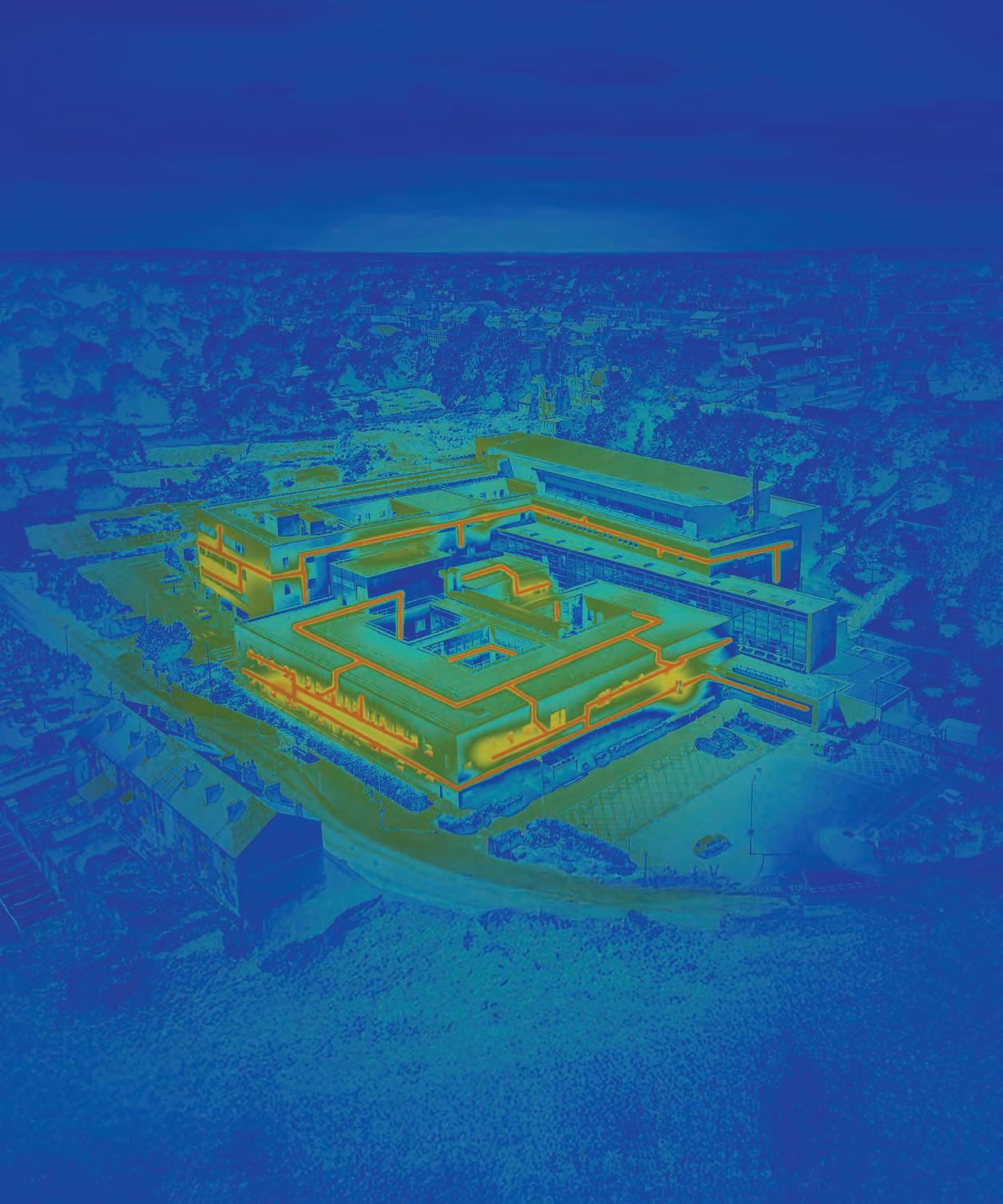
PROVIDING HEAT FOR 90 HOSPITALS, 154 HOTELS AND 300 COMMERCIAL SPACES.


WE’RE JUST GETTING WARMED UP.
When there is no room for error, there is only one condensing boiler that delivers without fail: Crest® with Hellcat Combustion Technology. Featuring RealTime O2 Trim and 96.2% Thermal E ciency, it’s got everything needed to keep bringing the heat day in and day out. That’s why it’s trusted by hospitals nationwide. AND


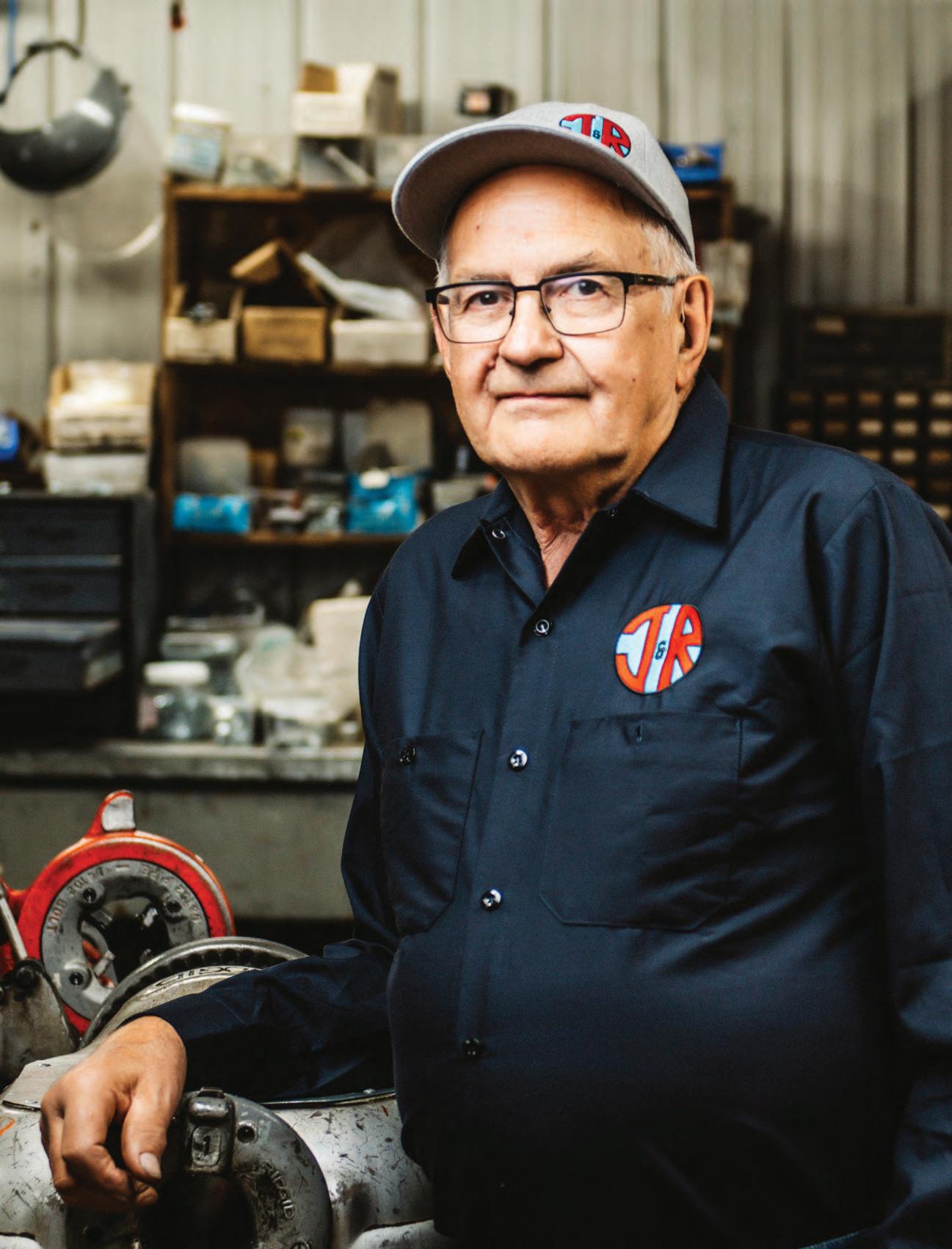
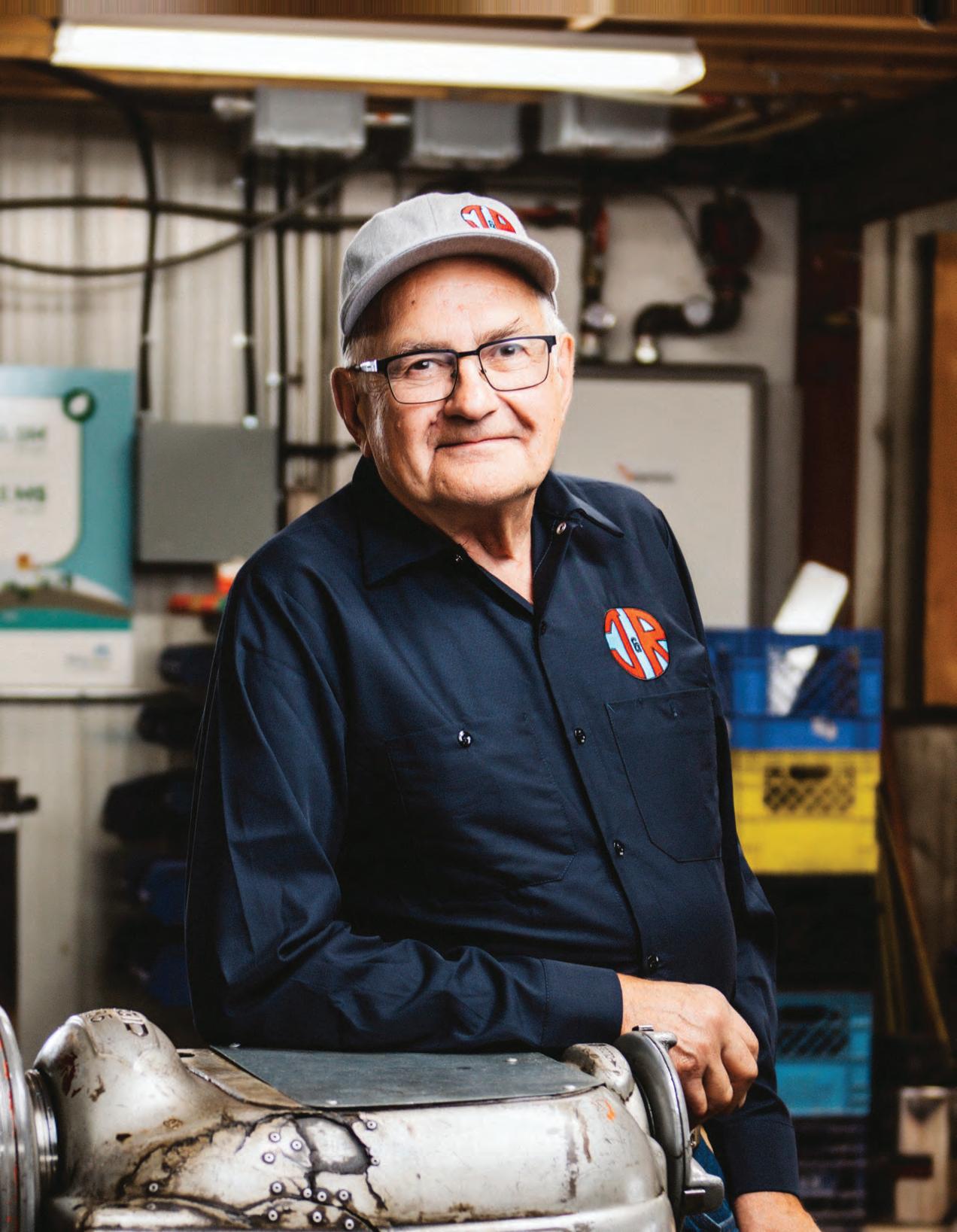
Name: Joseph Chorostkowski
Nickname: Joe
Company: J&R Mechanical Ltd.
Job Title: Co-owner
Born in: Coronation, AB
Lives in: Yellowknife, NT
Age: 78
Spouse: Elise Chorostkowski
Sons: Bradley and Bryan
Joseph
Chorostkowski has seen it all in his more than 60 years as a plumber. “Everything has gotten more efficient and easier to install. When I first started, it was cast iron pipe and fittings, so we had to put oakum in it, pound it out, and then pour lead to keep the oakum in there,” recalls Chorostkowski, co-owner of J&R Mechanical Ltd. in Yellowknife, NT. “Then it switched to cast iron with a rubber gasket instead of lead and oakum, then to a mechanical joint and clamps. That sped things up and it was substantially cheaper because the fittings were quite a bit thinner. Then it became plastic drainage fittings and that was easier. And then from the water lines it went from copper to PEX piping, you can run it quite a distance with no joints in it, so your chance of leakage is greatly reduced.”
Chorostkowski originally came to Yellowknife as a young plumber working for an Edmonton, AB-based mechanical company. He liked the region and in 1972 decided to make the move permanent. In 1976 he established his own company with Ron Vanderlinde and their wives, doing full mechanical installs, new construction and servicing. “At the time it was only about 6,000 people, and so there
wasn't much of a rush to get anywhere,” he says, explaining the appeal of the region. “And the outdoors – you can go right from your house on a snowmobile forever, or 15, 20 minutes away you can put your boat in the water and you can go forever too.”
While Vanderlinde eventually left Yellowknife, J&R Mechanical is still family owned by Chorostkowski, his sons Bradley and Bryan, and brother-in-law Ken Miller. The company is one of the largest mechanical companies in the region and primarily works on commercial, institutional and large residential buildings, including schools, government buildings and nursing stations, as well as flying in to remote communities.
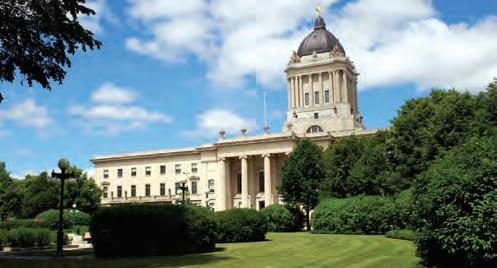
“One major project that we’re proud of was the legislative assembly building for the territories back in 1992,” says Chorostkowski. “That’s mostly hydronic heat with radiation along the perimeter of the building, and air handling units that used hot water to heat the air and distribute it through the office buildings. There is lots of hydronic heating in our area, either with electric, propane, oil or pellet boilers. It’s popular because there’s more control of room temperatures. You know, with the furnace you have one thermostat, whereas a house could have
By Carolyn Cooper
about five or six zones that you can control, including the garage. The most challenging thing is that every building is a different layout. Being in the north when the winter comes, we need to fix heating problems fast and effectively or the property freezes up real fast, so we get lots of late night calls in the dead of winter at -40⁰C.”
While propane and oil are still the primary source of heating in the region’s older houses, Chorostkowski says the city has mandated that new homes not use oil. And for the past 15 years the territorial government has encouraged the use of biomass heating, meaning the majority of public buildings are heated by pellet boilers. The company established Enterprise Pellets in 2009 to sell pellets, and install, clean and service pellet boilers and stoves. “It’s about a 30 per cent savings on heating costs using pellets,” says Chorostkowski. And while heat pumps are not yet as popular in the Northwest Territories as in other areas of Canada, J&R Mechanical has installed them on commercial buildings with a pellet boiler. “We’ve been servicing them for the last two or three years, mostly for the cooling aspect.”
With roughly 45 employees, J&R remains extremely busy.
“We have a service contract with the territorial government for the local area around Yellowknife, and right now we have three major projects on the go,” says Chorostkowski, listing a sewage lift station, a 50-unit mixed use building, and an Armed Forces warehouse training centre. “I’m at most of them, looking to see what is being done and how it's been done,” he adds, “retirement is not in the cards.”
In the mechanical industry since: 1965
Schools and programs: Plumbing apprenticeship course, NAIT/SAIT, 1969
Best advice you’ve ever received: Listen to the instructions given
Advice for young people considering entering the trades: It’s not a bad way to make a living
The current work ride: 2022 Chevrolet 3500 High Country
Service area: Northwest Territories, Nunavut
Any area you like to get dispatched to, and why: Mining exploration camps, because every camp is different and has different challenges
Favourite parts of the job: Looking at a job, figuring out the solutions, ordering the material and completing the project at hand
One word that describes you: Workaholic

One place in the world you would like to visit: Mount Denali in Alaska
The most useful tool in your toolbox: Tape measure
Tool that you wish you had: Erie copper cutter that went from 1/8 in. to 3 in. I lost it back in the 1970s
Favourite performer: Alan Jackson
Best concert you ever attended? Roy Orbison
Favourite sport: Hockey
Favourite outdoor activity: Fishing
Favourite place to be: Namushka Lodge, a familyowned fly-in fishing lodge east of Yellowknife
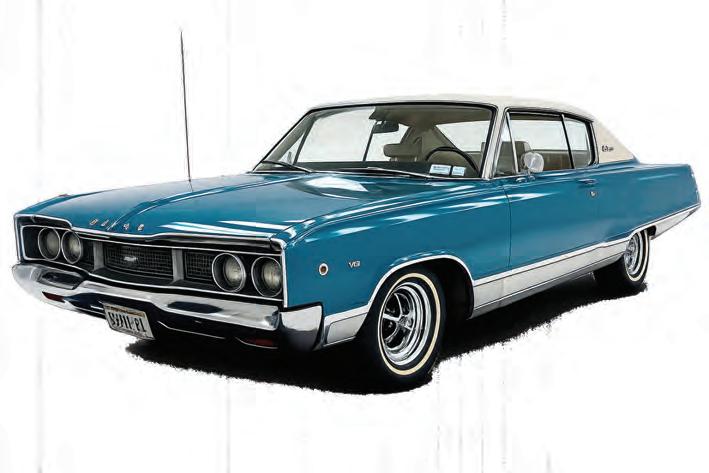
Favourite car of all time: 1968 Dodge Monaco 500
Finish these sentences:
My rule of thumb is ... do it once
When I was a kid, I wanted … to be working up north
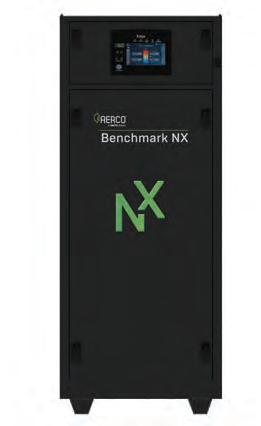
The Benchmark NX from AERCO, a Watts brand, extends the Benchmark standard to 399-500 MBH light commercial heating applications in a compact, high efficiency gas boiler. Designed for tight mechanical rooms, the boiler delivers up to 98 per cent thermal efficiency and 10:1 turndown to reduce energy use across variable loads. It features AERCO’s integrated Edge Controller for advanced sequencing of up to 16 boilers, flexible controls integration and proactive maintenance alerts. With a stainless steel fire tube heat exchanger and broad venting options, Benchmark NX offers dependable performance, simplified installation, and long-term reliability.
www.
aerco.com
The Eco-King HEET 199 tankless water heater is a single-pass heat exchanger with an internal pump to provide steady hot water temperatures. It offers electronically controlled continuous combustion to deliver a 10:1 turndown ratio, with 97.5 per cent efficiency. The unit features wide passageways for durability, superior water heating and corrosion resistance, internal Grundfos pump, internal water hammer absorber, and 150 psi AMSE rated pressure relief valve. All models are natural gas fired and field convertible to propane.
www.
ecokingheating.com
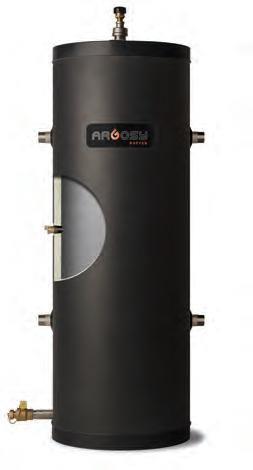
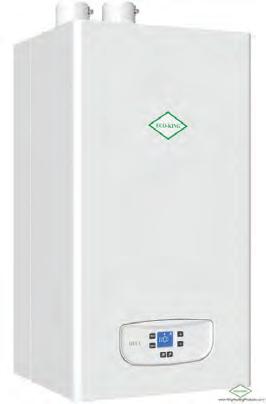
The Flexcon Argosy lightweight, pressurized composite buffer tank is used for hot or chilled potable and nonpotable water. Models available from 22 to 110 volume gallons. It reduces heat pump short cycling during low load periods and has a reinforced durable continuous strand fibreglass inner tank, threaded stainless steel water connections, stainless steel reinforced thermal well port, injected High-R value closed cell foam, lower drain, and black plastic outer jacket.
www. flexconind.com
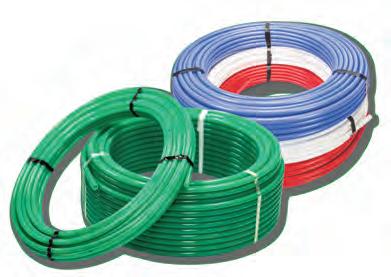
CB Supplies introduces the Complete VIPERT system solution for potable and radiant applications. This system includes premium VIPERT (PE-RT) tubing, fittings, valves, and accessories, along with IVAR stainless steel radiant manifolds, cabinets and accessories for hydronic applications. VIPERT maintains flexibility in hot and cold environments, while relaxed memory means less spring back for easier and faster installations. VIPERT is 100 per cent recyclable.
www. cbsupplies.ca
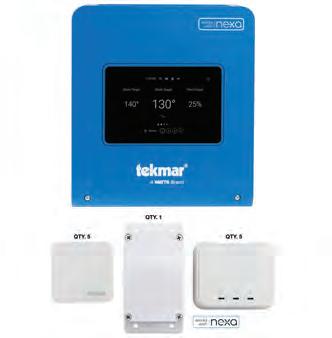
The tekmar Smart Boiler Control 294KIT combines advanced multi staging capabilities with integrated wireless technology. Designed for commercial applications, the kit includes the 294 control, wireless mesh sensors, and network extenders to enable real time system feedback and simplified installation. Compatible with most boilers, it offers intuitive setup, remote monitoring and system optimization without a BMS.
www. watts.ca
Faster Installs. Eliminate Callbacks. Maximize Profits.
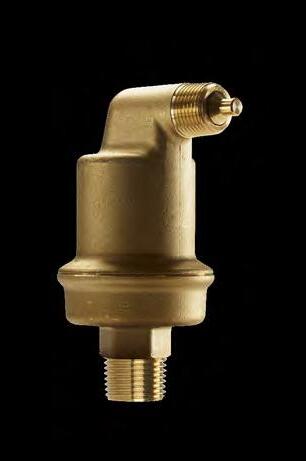
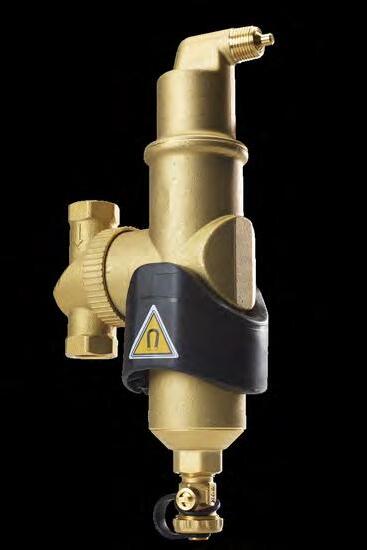
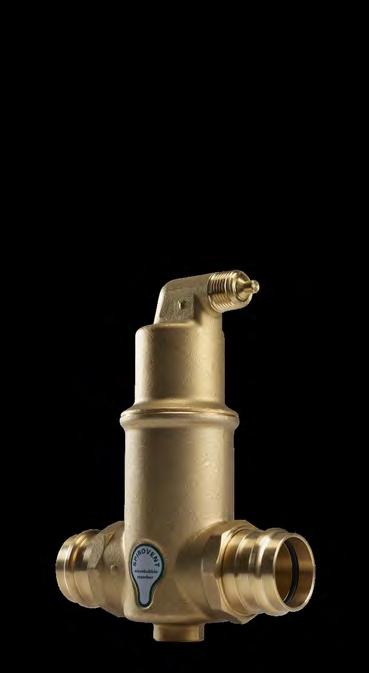

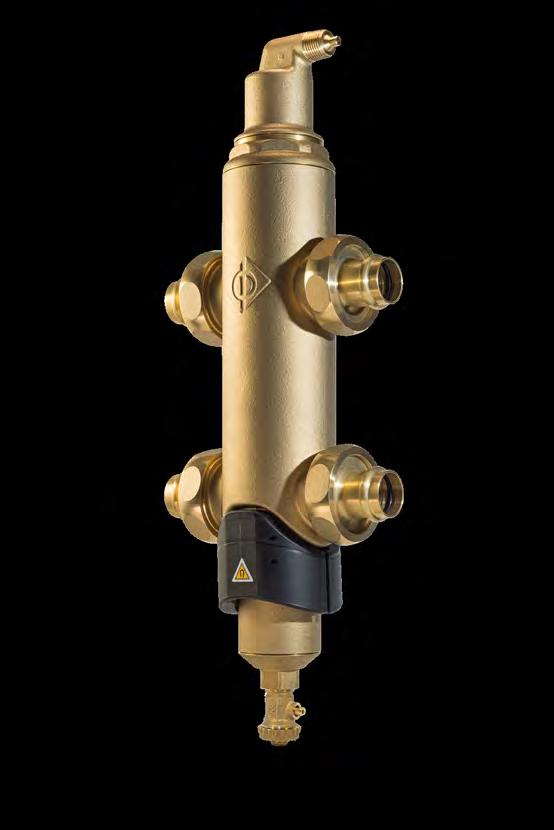
Industry-leading 20 year guarantee
Don’t compromise on performance or method of installation.
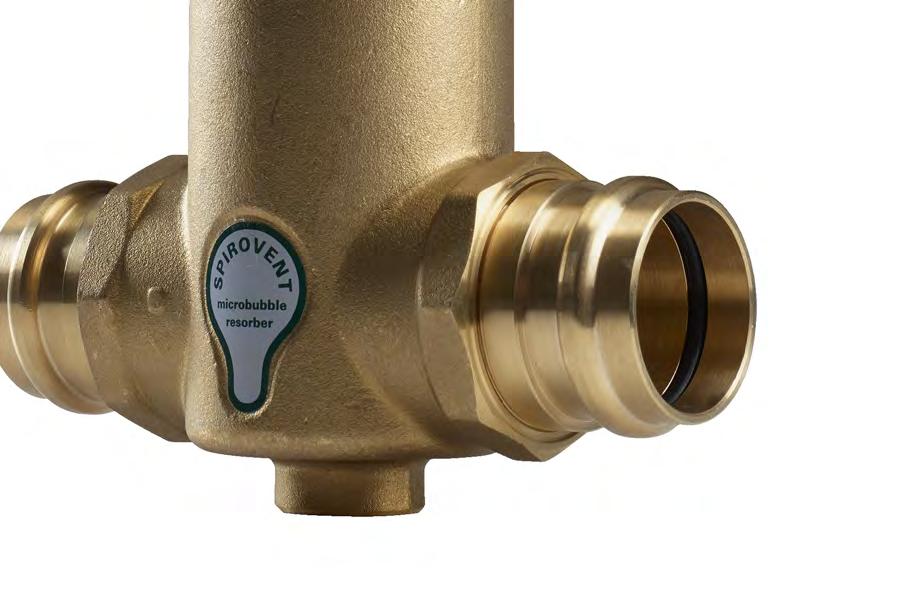
The industry leading air eliminators are available with threaded, sweat and press connections.
Eliminates 100% of the free air, 100% of the entrained air, and up to 99.6% of the dissolved air in the system
Combination unit removes entrained air, dirt and ferrous material using powerful magnets
Protects pumps, valves, boilers and heat exchangers from dirt and debris
Combines the advantages of the Spirovent and Spirocombi with the functionality of a hydraulic separator
For information and availability:
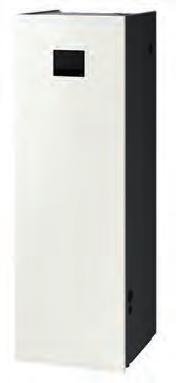
Samsung's EHS delivers an electrified solution for space heating, cooling and domestic hot water production. The lineup includes the ClimateHub, featuring an integrated 53-gallon domestic hot water tank, and the Hydro Unit, designed for third-party tank integration. Both indoor unit options incorporate key hydronic components into a compact, factoryintegrated design, helping reduce field-supplied parts, simplify piping and wiring, and shorten installation time. The units are engineered for quiet operation, with high-temperature water output of up to 70°C. www.
samsunglennox.com
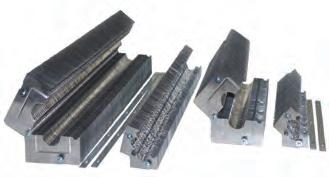
Taco has launched the PS/PA plate & frame heat exchangers, custom-designed and assembled to specification to handle demanding heat requirements. The heat exchangers offer working pressures of 150 or 300 psi, and design temperatures of 140°C, with higher working pressure and design temperature limits available upon request. They are available in 1- to 20-in. connection sizes with a range of materials. www.
tacocomfort.com
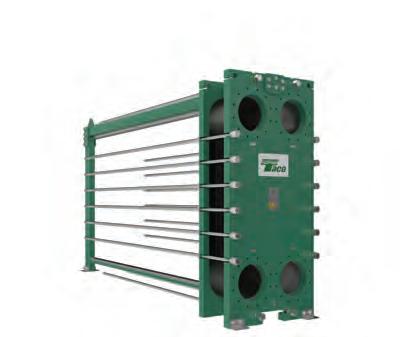
Ontor Ltd. introduces the Fin Clamp Element by Fab Tek Logic. The Fin Clamp is a multi-fin hinged hydronic heat element that fits around the existing hot water heating pipe and installs in minutes. It can be used to replace damaged fins and fixes cold spaces. The element requires no cutting, soldering or draining to be installed on pipe. It is available in sizes 1/2 in., 3/4 in., 1 in. and 1 1/4 in. www. ontor.com
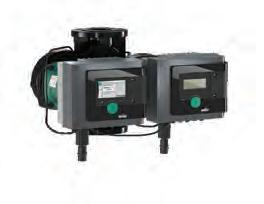
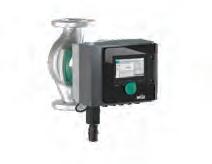
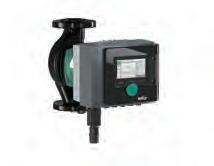

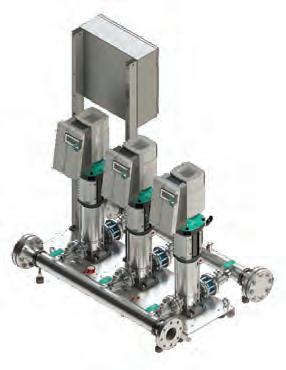
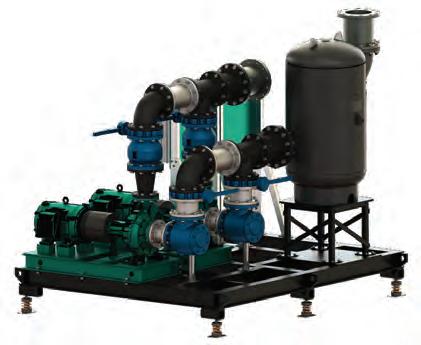
From big to small, we’ve got it all! With optimized and innovative energy-saving features, we deliver the future of pump technology to your doorstep.

& Commercial Boiler Performance
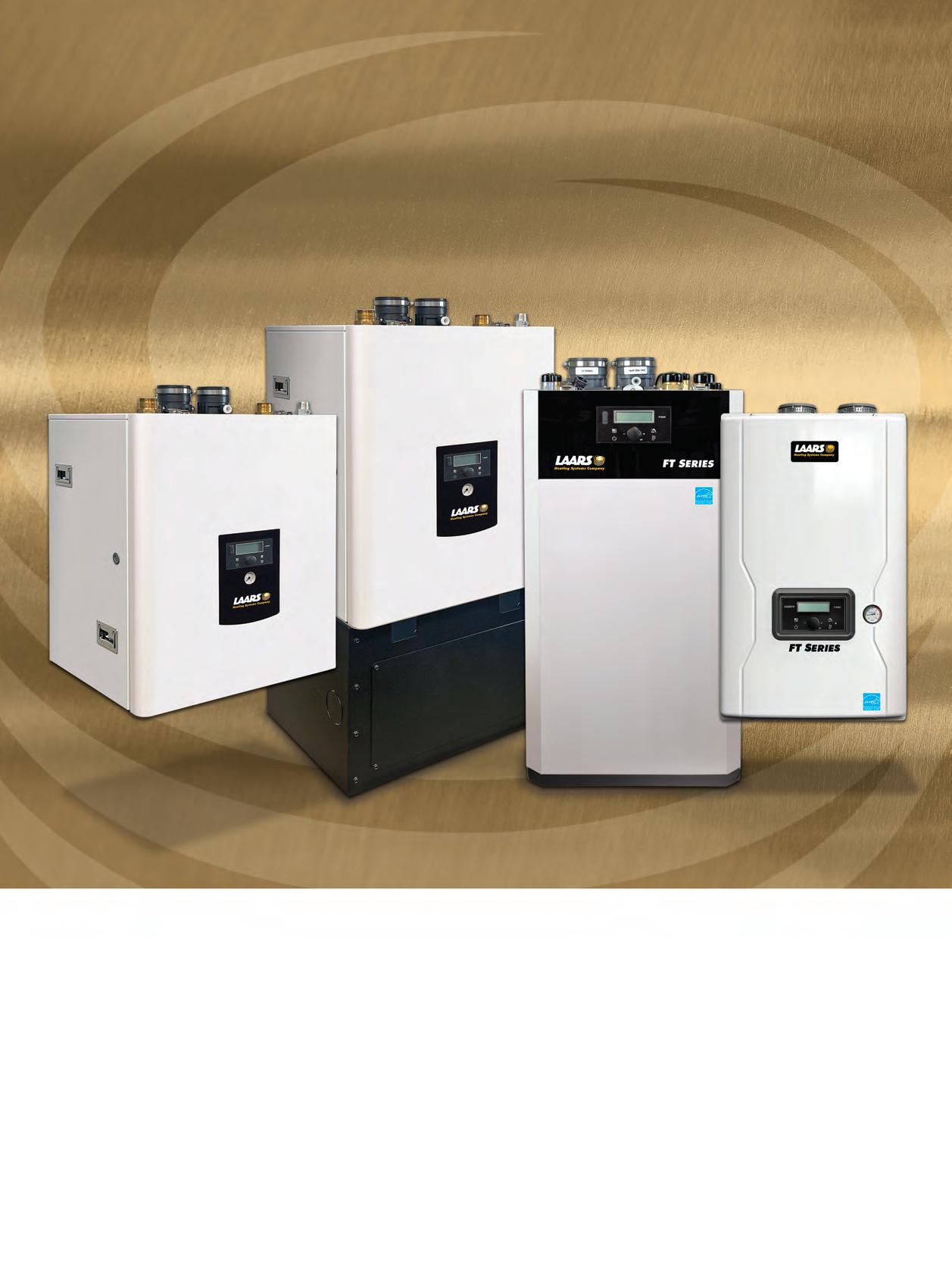
From cozy homes to multi-family complexes, our FT Series boilers are engineered to perform with ultra-high efficiency and a space-saving footprint across all models.

• FT Series Residential: Choose from boiler and combi models in a floor or wall mount design.
• FT Series Commercial: Cascade up to 4 units in a floor or wall mount configuration, including DHW Smart Priority™ technology.
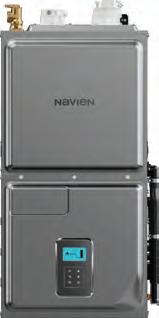
The NPF Hydro-Furnace from Navien is a highefficiency hydronic forced air furnace with an AFUE of 97 per cent. The unit features a stainless steel hydronic heat exchanger, condensing technology, high-efficiency variable capacity blower and modulating gas burner, allowing it to operate from 15 to 100 per cent capacity for natural gas and propane applications. The unit is ultra-low NOx compliant and offers quiet operation, with a back-lit LCD interface with Setup and Diagnostic Wizard for easy setup. www.
navieninc.com
The Vitocrossal 200 CI2 from Viessmann is a compact floor-standing gas condensing boiler designed for large residential and commercial applications. With six sizes ranging from 399 MBH to 2,000 MBH, the boilers offer 97.5 per cent thermal efficiency, up to 30:1 turndown ratio and advanced active self-calibrating O2 Trim Technology. www.
viessmann.ca
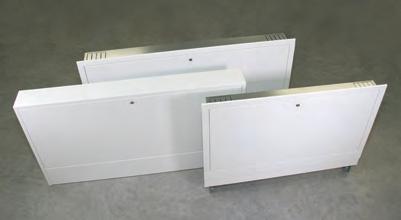
Designed for secure protection, durability and reliability, Uponor manifold wall cabinets are available in recessed and surface-mount styles in multiple sizes for residential and commercial radiant applications. The lineup accommodates Uponor engineered polymer and stainlesssteel manifolds, with four models now fitting commercial stainless-steel manifolds. Recessed cabinets fit 2x4 or 2x6 stud walls with a removable door-trim package, while surfacemount models install on concrete block or stud walls. www.
uponor.com
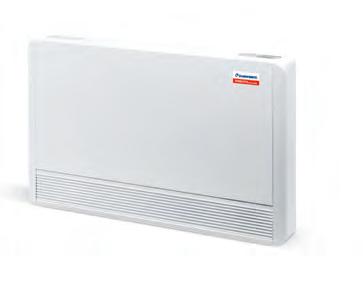
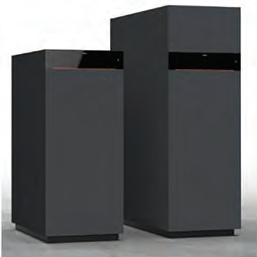
The i-LIFE2 SLIM from Mitsubishi Electric is a slim indoor hydronic fan coil unit for two-pipe hydronic applications in residential or commercial uses. It can be paired with the company’s air to water heat pump systems or thirdparty hydronic systems for comfort in smaller spaces. With a 13-cm depth footprint, the unit can be floor-mounted or concealed in a wall or ceiling as a recessed cabinet. www. mitsubishielectric.ca
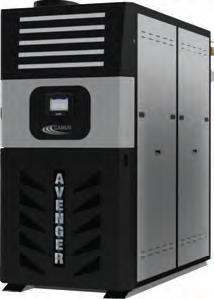
The Avenger Series from Camus is a two-pass, counter-flow firetube boiler. Units are available in sizes ranging from 1,000 to 6,000 MBH with a thermal efficiency of up to 98 per cent in low water temperatures, and a 160 psi working pressure and operating pressure as low as 12 psi. Smaller models have a turndown ratio of up to 25:1, while 5,000 and 6,000 MBH models offer a turndown ratio of 40:1. www.
camus-hydronics.com
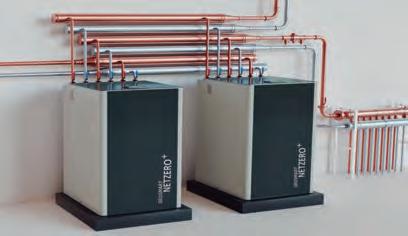
GeoSmart NetZero variable capacity water to water inverter heat pumps are available with low GWP R454B refrigerant. With a COP of over 5.0, these units reduce up to 80 per cent of the climate-related energy consumption of a building, using a variety of renewable energy sources. www.
geosmartnetzero.com
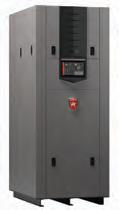
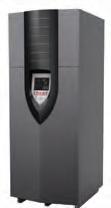
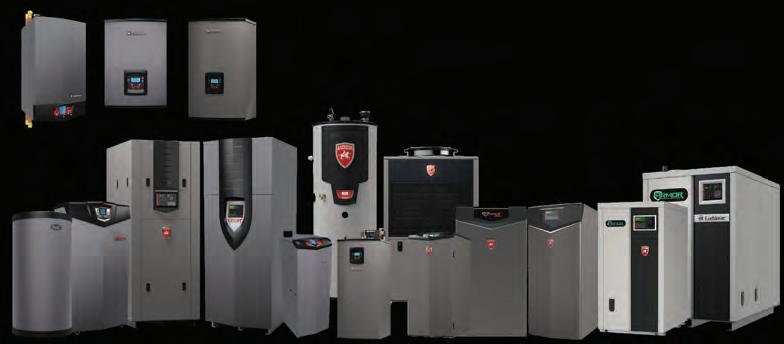
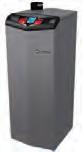
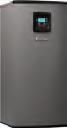

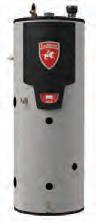
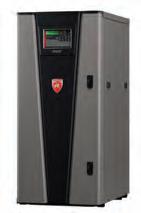
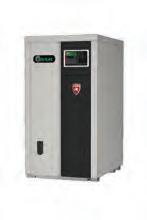
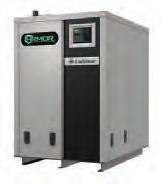
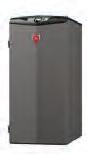
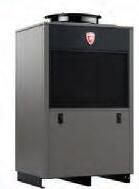
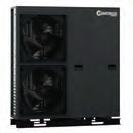
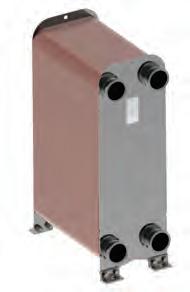
Xylem has introduced Bell & Gossett’s BPX brazed plate heat exchangers in Canada, designed for mission-critical cooling solutions. The units offer tri-clamp connections for faster installation and servicing, and a compact design for easy integration into dense system architecture. It features an advanced plate pressing matrix with increased flow distribution for better thermal performance. www.
xylem.com
The PuRe-JET from EVAPCO is a pumpless recirculation adiabatic system that delivers efficient thermal performance with less water and less maintenance required. Designed to work with the company’s ecoAir adiabatic units, the system responds to changing conditions to maintain precise temperature setpoints using a two-stage operation. www.
evapco.com

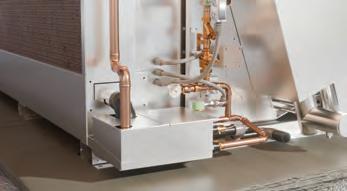
RAUMAT from REHAU is a pre-assemble radiant mat system made for largescale ICI projects. Mats are factory built and delivered in a ready-to-roll format. The mat system offers uniform pipe spacing, ensuring each mat meets exact project specifications. RAUPEX O2 barrier pipe is available in 1/2-, 5/8-, or 3/4 in. diameters, with configurations of up to five circuits per mat. Each mat can be made in lengths of up to 250 ft. with a 6 ft. width. Assemblies are custom configured to support radiant floor heating and cooling systems, as well as snow and ice melting, and turf conditioning applications. www.
na.rehau.com

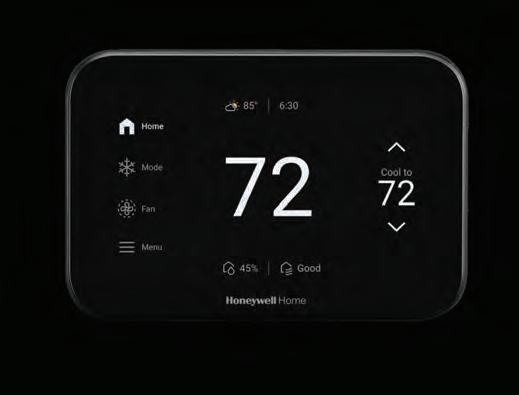
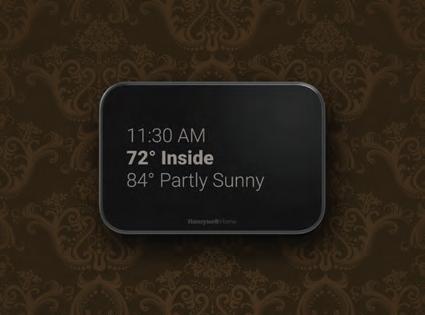
This innovative, smart thermostat combines convenience, comfort, and energy efficiency with advanced features to enhance your home living experience.
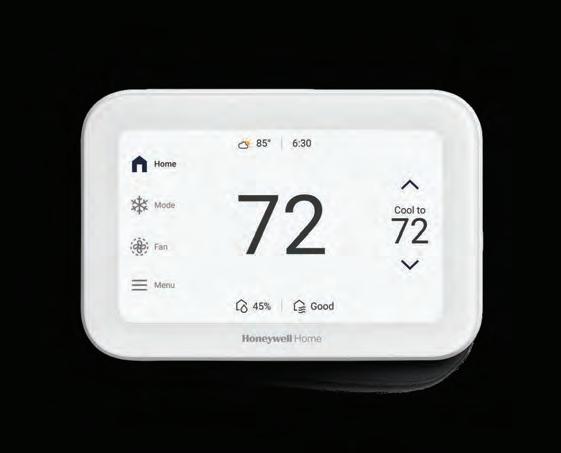

Save energy
ENERGY STAR® certified to help save energy and eligible for utility rebates.
Advanced occupancy & presence detection

Smart thermostat senses and adjusts settings to maximize comfort when home and save energy when you’re away.
Optimize & maintain performance
The thermostat will analyze your heating and cooling system performance and can notify you or your pro if there is a loss of efficiency, saving you money.
Always connected
Adjust settings from anywhere and receive important alerts using the First Alert® app. Smart phone not included.
Doorbell camera viewer & intercom
See and speak to visitors at your door directly from the thermostat – compatible with First Alert® and Ring® streaming doorbells. Doorbell not included.
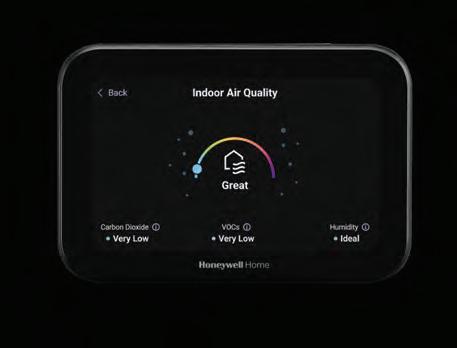
Precision comfort & air quality
Comfort is more than just the perfect temperature, maintain optimal home humidity and control ventilation to keep air fresh.
Additional HVAC equipment or accessories may be required.
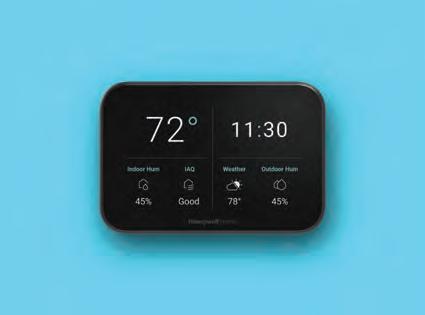
Customizable display
A sleek 5” display delivers enhanced visibility with the option to choose the color and style to match your home.



By Ray Wohlfarth
Ray Wohlfarth of Fire & Ice Heating & Cooling is an international author, columnist, and consultant specializing in commercial boilers. He has 40 years’ experience in air conditioning, boilers, burners, controls, steam and hydronics. Wohlfarth can be reached at ray@fireiceheat.com.
Have you noticed how long installation manuals have become?
They used to be a dozen pages; now they are small novels. Buried inside all those warnings, scary graphics and legalese is one instruction you can’t afford to skip: Flush the hydronic piping before installing a new boiler.
It may sound like a formality, but skipping this step can lead to poor performance, warranty disputes, costly repairs and even premature equipment failure. Let’s look at why flushing matters, what problems it prevents, and how to do it right
When you replaced an old cast-iron boiler years ago, the water quality inside the system hardly got a second thought. Those rugged boilers tolerated dirt, rust and debris. Today’s high-efficiency boilers are different. Their narrow water passages and sensitive heat exchangers don’t forgive contamination.
Flushing accomplishes two critical things:
1. Removes contaminants.
Dirt, sludge, rust, flux, solder residue, oil, scale, biological growth and construction debris all collect in system piping. What once passed through the big old boilers now clogs circulators and sensors.
2. Resets the water chemistry.
Water left untreated can be corrosive and chemicals added years ago may no longer be effective. Flushing restores a neutral baseline before adding inhibitors or glycol.
Neglecting this step sets the stage for years of problems, including:
• Clogged heat exchangers – Narrow passages foul with scale and sludge, leading to overheating and nuisance lockouts.
• Damaged pumps and valves – Grit and sludge grind away at bearings, jam impellers and seize zone valves.
• Noise and uneven heating – Scale and debris create hot spots that cause kettling, banging and poor circulation.
• Warranty issues – Manufacturers can deny coverage if evidence of dirty water, sludge or improper glycol use is found in a failed boiler.
Installing a boiler isn’t just a swap-out – it inherits the water quality of the system it is connected to.
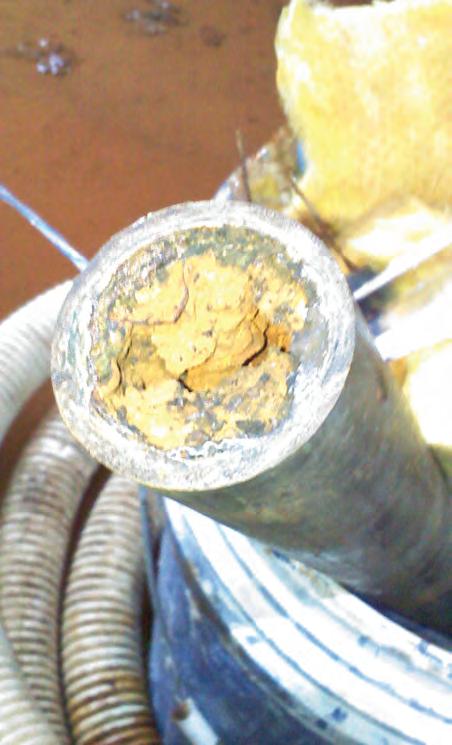
Whatever is in the piping will circulate through your new boiler from day one.
Of all the contaminants, old glycol is often the most destructive. Originally added to prevent freezing, glycol doesn’t last forever. Over time, it breaks down into organic acids that corrode metal.
Symptoms of degraded glycol include acidic pH that strips away protective coatings inside pipes; corrosion and pitting in copper, steel and aluminum components; seal and gasket failure as pump seals, o-rings and valves deteriorate. A system filled with neglected glycol can look fine, but it is quietly eating away at every surface it touches.
The solution: flush thoroughly, test water chemistry, and only add fresh, stabilized glycol if freeze protection is still required.
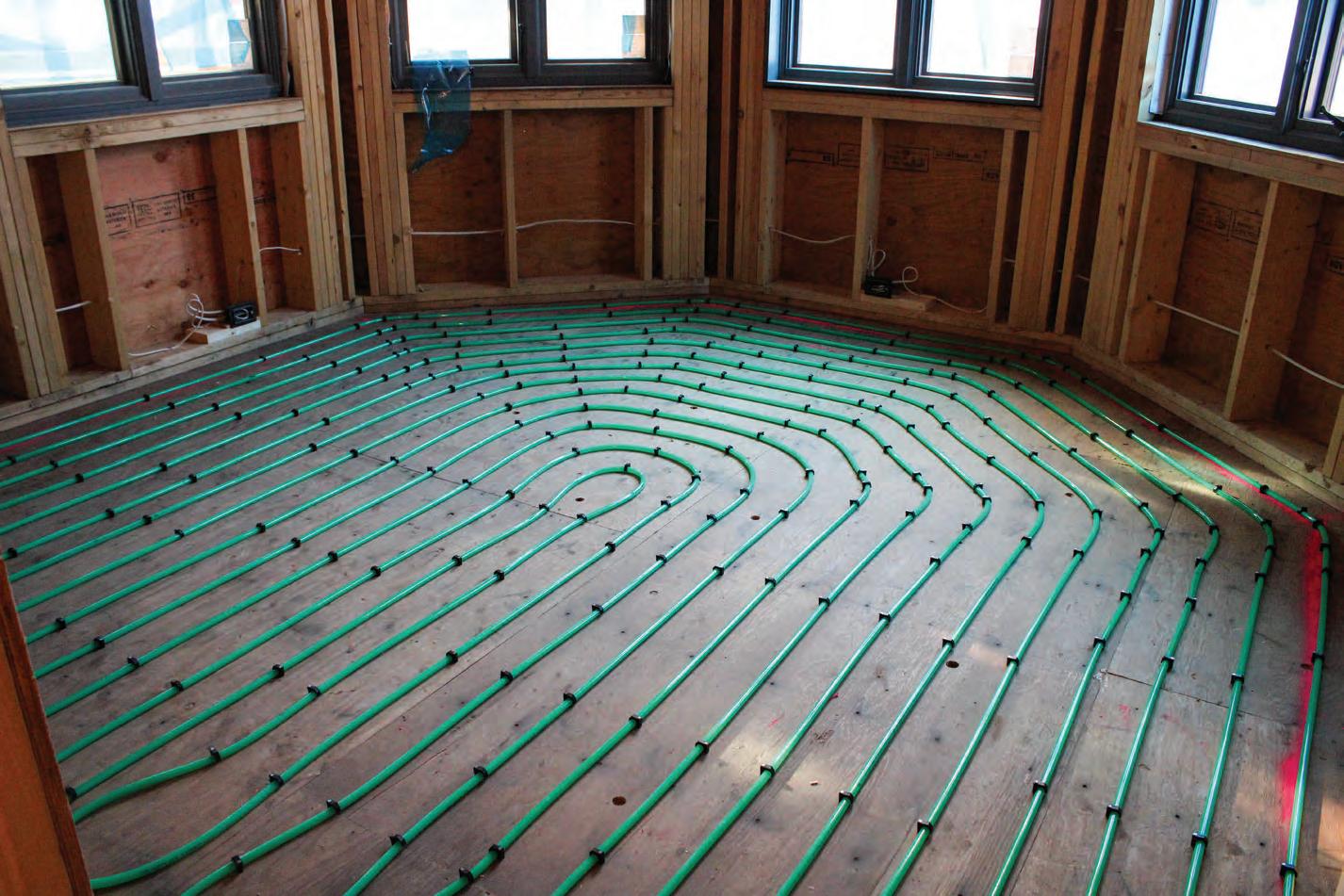
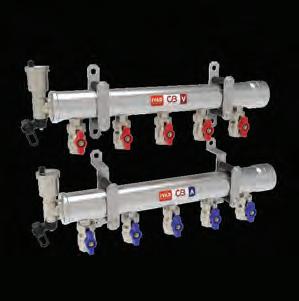
IVAR precision-manufactured stainless steel manifolds support reliable fluid distribution across radiant heating, cooling, and snow/ice melting systems. Engineered for long-term performance, they deliver consistent comfort and performance in residential and commercial applications.
Why IVAR Manifolds?
• Complete & Convenient: Manifolds come in a single box, including all necessary components.
•Flexible Configurations:
◦ 1" and 1 ¼" headers with 2 to 12 loops, ideal for standard flow applications
Now offering high flow, large-diameter manifolds engineered for large residential, commercial, and institutional systems.
◦ 1 ½" headers with 6, 8, 10, or 12 loops for higher flow needs
◦ 2" headers with 10 or 12 loops for maximum flow capacity
•Optimized Performance: Integrated flow meters on all 1" and 1 ¼" manifolds (optional for 1 ½" and 2") enable precise loop balancing for maximum efficiency and superior comfort.
•Seamless Integration: Pair the IVAR Manifolds with our premium VIPERT™(PE-RT) Oxygen Barrier Tubing, specifically designed for radiant systems, to create a complete total system solution.
Expert Support You Can Count On
Leverage our in-house hydronic expertise with LoopCAD design and layout support.

Glycol gets much of the attention, but it isn’t the only culprit. Other common contaminants include flux and solder residue from piping work, which can attack metals; hard water scale (calcium and magnesium), which insulates surfaces and drives up fuel costs; biological growth in stagnant systems, which produces sludge; and construction dirt and sand left behind from system modifications.
Each of these shortens equipment life, drives up service calls and robs efficiency. Flushing clears them out before they can harm the new boiler. Even a thin coating of scale or sludge can wreak havoc on efficiency. Studies show that just 1/16 of an inch of scale can cut heat transfer dramatically.
Warranty disputes are one of the most expensive headaches contractors face. Manufacturers are increasingly strict. Some require water testing with claims and many manuals explicitly state that system flushing is the installer’s responsibility. One manufacturer states: Failure to rid the heating system of the contaminants listed above will void your warranty and may result in premature heat exchanger failure and property damage.
Imagine a heat exchanger failing three years after installation. The manufacturer inspects and finds scale, acidic glycol or sludge. If flushing wasn’t done, the installer – not the manufacturer – is left with the bill.
1. Locate all system drains and vents – The system must be fully open to allow debris to exit.
2. Run clean water through the piping – Continue until water runs clear
3. Use cleaning agents if needed – For heavy sludge or scale, use a manufacturer-approved cleaner.
4. Vent all air – Ensure all radiators, convectors and vents are purged.
5. Test water chemistry – Check pH, hardness and dissolved solids before adding inhibitors or glycol.
6. Add treatment or glycol only after flushing – Never pour fresh chemicals into dirty water.
Think of it like rinsing a glass before pouring in fresh water. If you skip the rinse, every sip tastes like what was there before.
For contractors, skipping the flush almost always leads to callbacks. Those nuisance service calls eat into profit margins, frustrate technicians and leave customers questioning the quality of the installation. A thorough flush at startup prevents those headaches and builds customer confidence their investment was installed with care.
Flushing hydronic piping before a new boiler installation isn’t just good practice – it is essential. It protects the boiler, circulators, valves and piping; it ensures efficiency; and it shields contractors from costly warranty disputes.
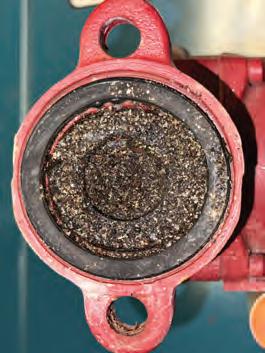
It is not just boilers at risk. Pump manufacturers have noted that plugged pumps are a number one warranty issue. Sludge and grit grind down seals and bearings just as easily as they foul heat exchangers.
The single worst contaminant is old glycol, but dirt, scale, and flux can be just as damaging. Every contaminant left behind is a time bomb waiting to shorten the life of the system. Take the time to flush. Start clean, test the water, and only then add inhibitors or fresh glycol. It’s the simplest and most effective step to guarantee longterm reliability and efficiency for your customers.
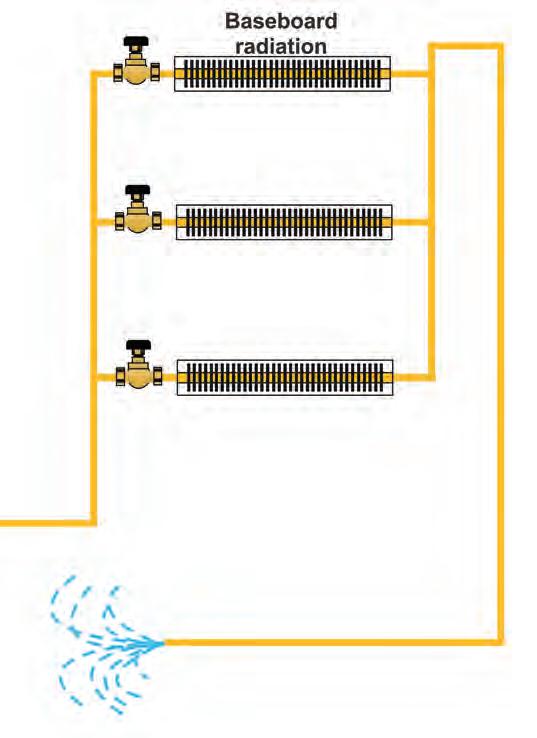
Flushing doesn’t have to be complicated, but it must be thorough.
SOPHISTICATED. ELEVATED. EFFICIENT.
This all-electric system is designed to help reduce a home’s carbon emissions, compared to fossil fuel burning systems. An added benefit if the electricity comes from renewable sources like solar and/or wind power.
Daikin ALTHERMA 3 H HT operates reliably in various climates. Space heating + domestic hot water (DHW) is possible down to -18°F (-28°C) ambient. ALTHERMA is designed to produce high leaving water temperatures (LWT) of up to 158°F (70°C) and provide space cooling up to 109°F (43°C) ambient.
The Daikin ALTHERMA electric air-to-water heat pump provides an efficient, sustainable heating solution, supporting the transition away from fossil-fuel-based comfort systems toward all-electric energy.
Daikin ALTHERMA 3 H HT air-towater heat pump systems are designed with the latest technology and manufactured to exacting standards. Modern inverter-driven compressors and fan motors plus micro-processor controls deliver constant comfort and high efficiency performance.

By Jeremiah Brodie
Jeremiah Brodie is business development manager at Little Giant/Franklin Electric.
High efficiency, condensing HVAC and hydronic appliances have become a cornerstone of modern building design, helping homeowners and facility managers reduce energy use and operating costs. That efficiency, however, comes with a by product that cannot be ignored: acidic condensate. Produced as flue gases cool and condense, this liquid is far more aggressive than ordinary wastewater and, if left untreated, can quietly undermine plumbing systems, building materials and downstream infrastructure.
The good news is that today’s plumbing and HVAC professionals have proven methods to address the issue. Condensate neutralization technologies are designed to condition acidic discharge before it enters drainage systems, helping protect piping, fixtures, and surrounding structures while supporting compliance with applicable plumbing and environmental requirements. This article explores what to look for when selecting a neutralization solution.
Condensing appliances achieve their efficiency by extracting more heat from combustion gases. When those gases cool below roughly 135°F (57°C), moisture forms and collects as condensate. This liquid commonly measures between pH 2.5 and 4.0, placing it firmly in the acidic range, comparable to common household acids such as vinegar or citrus juice.
The volume involved is just as important as the chemistry. A single residential appliance can generate many gallons of condensate each day, while larger commercial systems may produce hundreds of gallons over the same period. Over time, repeated exposure to acidic discharge can corrode cast iron and copper piping, etch concrete floors and foundations, and interfere with the biological processes relied upon in septic systems. What may appear to be a minor drainage detail can therefore become a significant source of long-term damage and liability.
Acidic condensate corrodes cast iron and copper piping, stains and deteriorates concrete, and disrupts the delicate bacterial balance in septic systems.
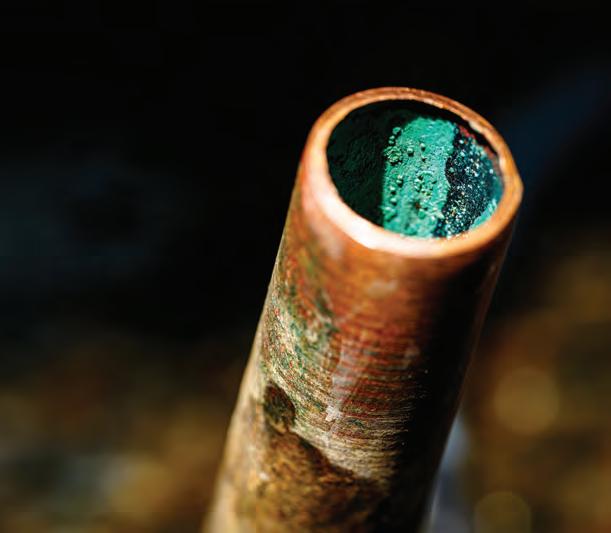
Condensate neutralizers are engineered to reduce acidity before discharge. Most systems rely on neutralizing media, commonly calcite, magnesium oxide, or a blend of the two, that reacts with acidic condensate and raises its pH to a safer range. Once treated, the liquid can be directed into approved drainage pathways with far less risk to plumbing components or surrounding materials. From a practical standpoint, neutralization helps extend the service life of piping systems and reduces the likelihood of premature repairs or replacements. From a regulatory standpoint, it supports adherence to plumbing and environmental requirements that limit the discharge of corrosive or harmful waste into building drainage systems and municipal infrastructure.
Across North America, plumbing authorities recognize untreated acidic condensate as a form of corrosive waste. As a result, many jurisdictions require it to be conditioned or neutralized before disposal. While specific requirements vary by province, municipality and authority having jurisdiction, the intent is consistent: protect building drainage systems, public sewers and wastewater treatment facilities from chemical damage.
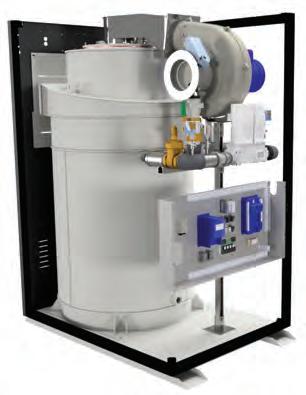
The Avenger® Series II is an advanced two-pass, counter-flow firetube commercial boiler, providing efficient hot water for demanding hydronic needs.
» Industry-leading 40:1 turndown
» Thermal efficiencies of up to 96%
» Designed for today’s higher turndown variable primary and low pressure systems
» 3 to 4 week lead-time with stock units available for quick ship
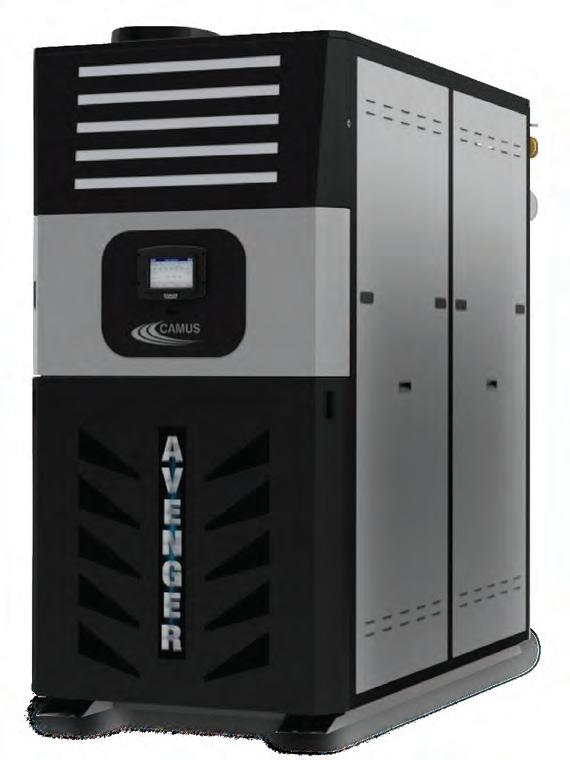

For contractors and designers, this means factoring condensate treatment into system design rather than treating it as an afterthought.
As energy efficiency initiatives continue to encourage the adoption of condensing technology, the total volume of acidic condensate entering buildings will only increase. Neutralization is therefore becoming a standard component of responsible, code aware installations.
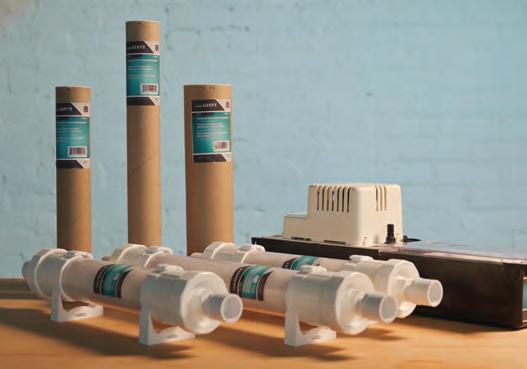
When selecting a neutralizer, consider the appliance’s BTU input, condensate volume, the system’s location, and accessibility for routine maintenance.
Proper selection of condensate neutralizers is key to performance and longevity. When evaluating options, professionals should consider the following factors:
1
Match the neutralizer to the appliance load.
Residential furnaces and boilers typically require compact, in line solutions, while commercial boilers or multi-unit systems may demand larger canister or tank style units capable of handling higher flow rates.
2
Space constraints and access matter. Units with flexible mounting options, clear housings, or straightforward connections can simplify installation and make ongoing inspection and servicing easier.
Discharging untreated condensate into a floor drain, septic system, or the surrounding soil may seem inconsequential in the short term, but the cumulative effects can be severe. Corrosion, structural degradation and system failures often develop gradually, revealing themselves only after significant damage has occurred.
By incorporating condensate neutralization into high efficiency installations, plumbing and HVAC professionals demonstrate a commitment to durability, compliance and environmental responsibility. As codes evolve and enforcement becomes more consistent, neutralizers are no longer a niche accessory − they are an essential safeguard.
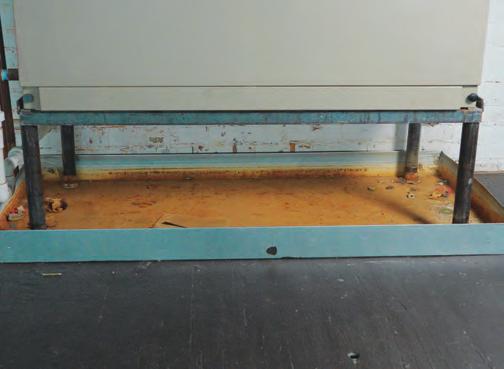
Addressing condensate properly today helps ensure the efficiency gains of modern equipment are not offset by avoidable damage tomorrow.
3
Media quality directly affects performance. High grade calcite and magnesium oxide are commonly used because they resist clumping and provide consistent pH adjustment over time.
4
Maintenance requirements
Like any treatment device, neutralizers require periodic attention. Visual inspection, routine pH checks at the outlet and timely media replacement or replenishment help ensure the system continues to perform as intended.
Match the terminology you hear in the field to the correct definition or function by September 3, 2026 and enter for your chance to win a YETI cooler, sponsored by NIBCO. This contest is open to Mechanical Business subscribers in Canada. Send your answers to kerry.turner@mechanicalbusiness.com or enter online at mechanicalbusiness.com.

1) Hydro-furnaces C) Heat homes using forced-air ducting, but because water is used to heat the air there’s less of an impact on the conditioned air humidity level Answer 1, C
A) Heat moves through a solid barrier − typically a highly conductive metal such as copper or stainless steel
B) Regulates heat transfer to a load with relatively simple electrical wiring
C) Heat homes using forced-air ducting, but because water is used to heat the air there’s less of an impact on the conditioned air humidity level
D) Connects the building’s potable water supply to the hydronic loop, adding makeup water if the system pressure drops too low
E) Specialized controller that coordinates the operation of a single boiler, single circulator and single room thermostat
F) Provides electrical power to the pump and gas valve when the thermostat calls for heat
G) Can be manually rotated to select the desired comfort level for the zone
H) Hot and cold fluids constantly circulate and move across the surface of a metal barrier to carry thermal energy away
I) Components installed in living spaces that transfer heat from the fluid into the room
J) Controller varies the duration of the heat input cycle
K) Prevents the burner from operating if the boiler does not contain water within its heat exchanger
The Plastics Pipe Institute’s (PPI) Building & Construction Division has released a new guideline for determining performance levels when designing hydronic snow and ice melting (SIM) systems.
The document, Recommendation J “Recommended Hydronic Snow & Ice Melting System (SIM) Performance Level Selections for Residential, Commercial, and Institutional Applications” is designed to help installers determine the appropriate snow-fee area ratio (Ar) and frequency distribution (FD), and features suggested values for 29 common outdoor applications and four examples of design choice.
According to PPI, outdoor SIM systems are subjected to fluctuating environments, and system performance can vary depending on factors such as the type of outdoor area, its exposure, and customer requirements. As a result, PPI also suggests installers collaborate with the customer when designing a SIM system in order to determine the system capabilities. Part of the design process is also selecting an appropriate Ar and FD for the system (see the ASHRAE HVAC Applications Handbook, chapter 52 for more on these values).
The association believes as winters become colder the popularity of SIM systems is likely to increase, but at the same time, it’s unrealistic to believe that these systems will keep outdoor areas snow- and ice-free in all weather for most applications. For that reason, the guideline is intended to help manage customer expectations and construction costs by providing design targets for different outdoor areas, including walkways and driveways, buildings, schools, hospitals, and more.
“With proper design and installation, benefits of hydronic SIM systems include safety, convenience, reduced liability, minimized environmental impact, and reduced snow removal costs,” said Lance MacNevin, director of engineering for PPI’s Building & Construction Division. “Selecting the snow-free area ratio for each SIM system is a critical design choice. Although having the SIM area completely free of snow during the snowfall is typically preferred, maintaining a snow-free area of 100 per cent requires that the system melts all snow on contact and requires far more energy than if a thin layer of snow is allowed to accumulate on the surface during the snow event. For a private driveway, an Ar value of 0.5 with a FD value of 75 per cent is likely suitable, whereas a hospital entrance probably should use values of 1.0 and 98 per cent, for example. PPI has consolidated our recommendations into one concise table.”

Recommendation J is available by scanning the QR code. More information is available on the PPI Building & Construction Division website. plasticpipe.org/ buildingconstruction
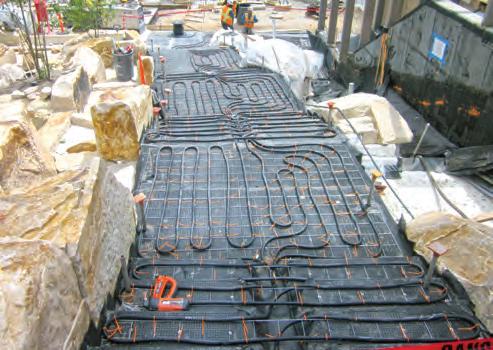
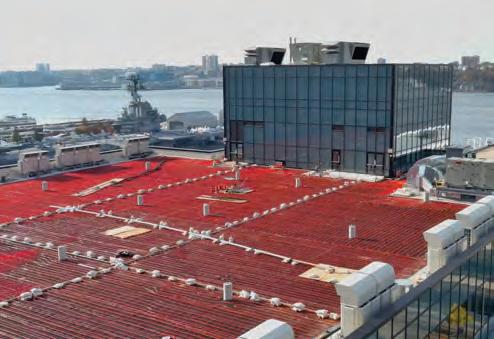


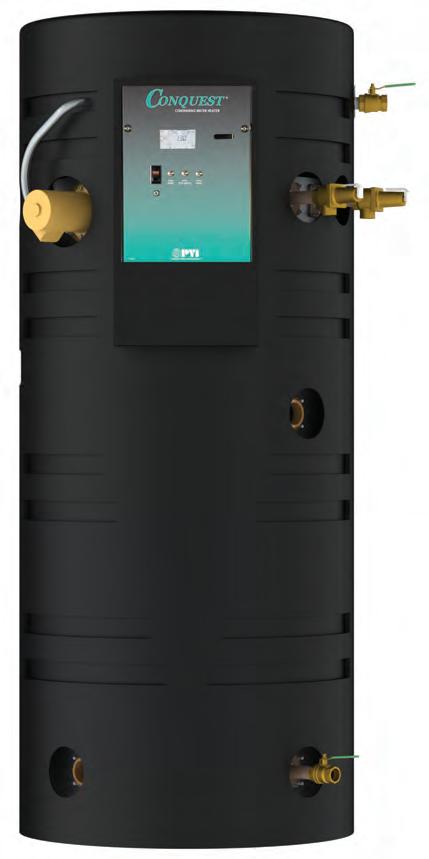
Re-engineered for peak performance, maximum efficiency and effortless serviceability, Conquest water heaters deliver superior savings on installation, maintenance and operation.
Re-designed firetube heat exchanger
Up to 98% thermal efficiency
The New Conquest. Smarter and more efficient than ever.
Optimized Pump
Improved reliability
Easier service with pump on front and side
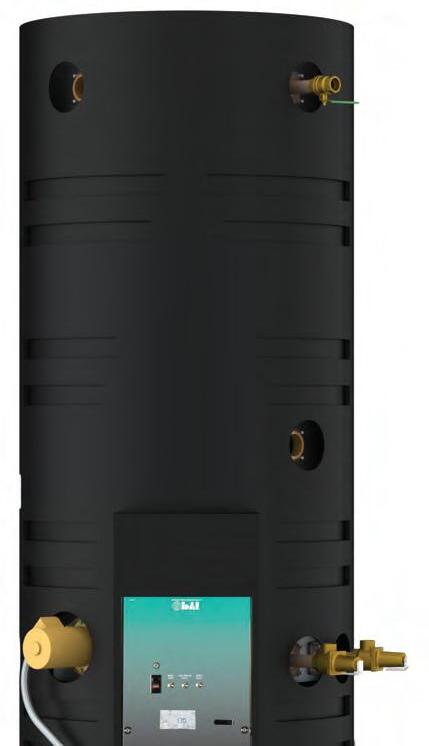
817.632.9053
At Taco, we believe in making water work—for you, your clients, and the environment. That’s why we’re excited to share the benefits of our High-Efficiency Circulators. When it comes to optimizing performance and saving energy, our circulators are designed to do more with less.
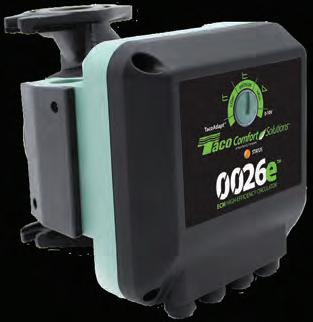
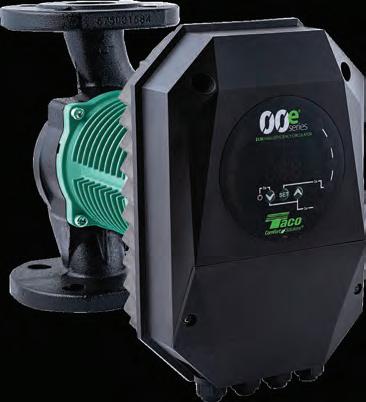
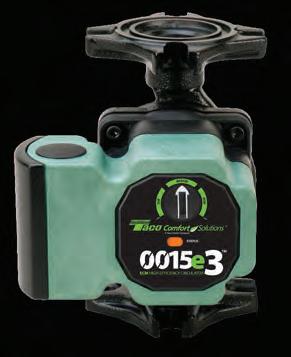
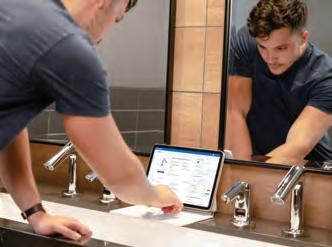
SC Argus Pro is a smart restroom solution from Sloan that provides data on water usage, device status and hygiene metrics. The system connects smart products including faucets, bottle fillers and flushometers, with cloudbased software, allowing users to collect data, receive instant alerts and assess system health remotely through a web browser. Digital reports can be customized by location, product type and time frame. www.
sloan.com
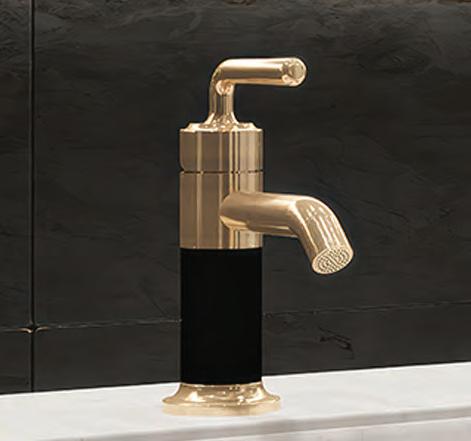
The Duo Faucet Collection of bathroom faucets from Speakman allows consumers to mix and match finishes through a removeable, interchangeable sleeve system. Constructed of solid, low-lead brass, the faucets are corrosion-resistant and deliver a steady, aerated flow. Models include a single lever faucet with a ceramic valve and centred level handle, or a widespread faucet with quarter-turn ceramic valve and side handles. www. speakman.com

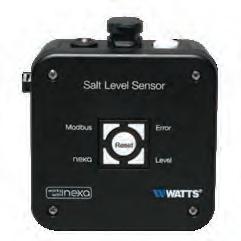
The Salt Level Sensor from Watts is designed to improve performance and reduce maintenance in commercial water softening systems. Included in all Watts commercial water softener systems with a mineral tank 24 in. or larger, the sensor monitors salt level inside the brine tank using infrared technology and alerts users when they need to replenish it. Notification settings can also be customized so users can set refill levels based on the application needs. The sensor also integrates with the Nexa intelligent water management system for remote monitoring. www.
watts.ca
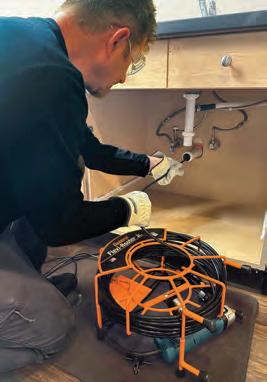
General Pipe Cleaners introduces the FlexiRooter Junior, a compact drain cleaning system for small line clogs. The lightweight unit holds 50 ft. of 1/4-in. flexible shaft to clear 1 1/4- to 3-in. drain lines. With a stiffer flexible shaft and enhanced sheath, the Flexi-Rooter Junior is flexible enough to navigate tighter bends. Features include an integral variable-speed motor, and a two-part cleaning array that combines ClogChopper cutters, each with six selfsharpening blades, with hardened steel chain cutters. The unit speed can be adjusted from zero to 2,400 rpm by an air-
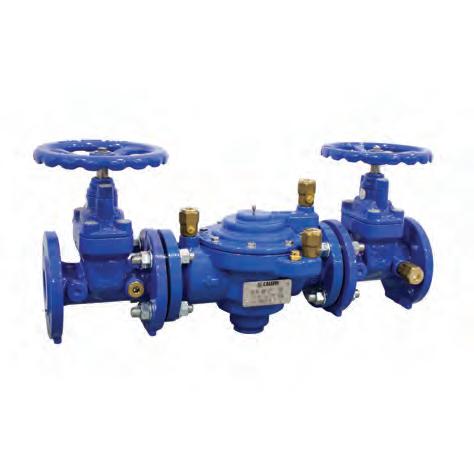
The Caleffi 5751 FlowShield RP is a testable, reduced-pressure principle backflow preventer made for high-hazard applications. Made with an epoxy-coated cast iron body, the series is certified to NSF/ ANSI/CAN 61 for corrosion resistance and durability in aggressive environments. It features a top-entry cover for fast access to components for maintenance, and is designed to manage high flow with minimal pressure loss. The unit has a maximum working temperature of 65.5⁰C and maximum operating pressure of 175 psi. www. caleffi.com

By Fred Bretzke
Fred Bretzke is a full-time pipe trades instructor with Calgary’s SAIT Polytechnic and the recipient of the 2024 Cadmus Teaching Chair. Fred also received the 2020-2021 Innovation of The Year Award: SAIT for digitizing the project-based learning approach apprenticeship training is known for. Fred’s code book appendix, entitled It’s In The Code, is available from sait.bkstr.com. He can be reached at fred.bretzke@sait.ca.
It’s a clear blue-sky day on a Santa Monica beach in California. I am relaxing, but I am getting too hot, so I decide to go for a dip in the ocean. The waves are rolling in − it looks like fun and reminds me of when I was a teenager at Grand Bend Beach in Ontario. A number of friends and I would grab each other’s arms and walk out into the waves and see how long we got before our line of people would get broken by the waves. You always got a mouthful of fresh water. It was different this time as in the Pacific Ocean you would get a mouthful of salt water. I gagged every time I got hit by a salty wave and accidentally swallowed a bit of salt water. This is the best explanation of a cross connection, or at least what it tastes like. Cross connections occur when potable water is somehow cross connected with non-potable water.
When you see old ships docked by the ocean, which are replenished with potable water from a dock fire hydrant, you will also see a stainless-steel reduced pressure (RP) backflow preventer installed on the hydrant. This is because the old cargo ships would use sea water for ballast and sometimes the potable water would get cross connected with the sea water.
In Calgary, AB, we recently had major water supply disruptions from city water main leaks. I remember when we had many underground water main leaks in the downtown section. We were
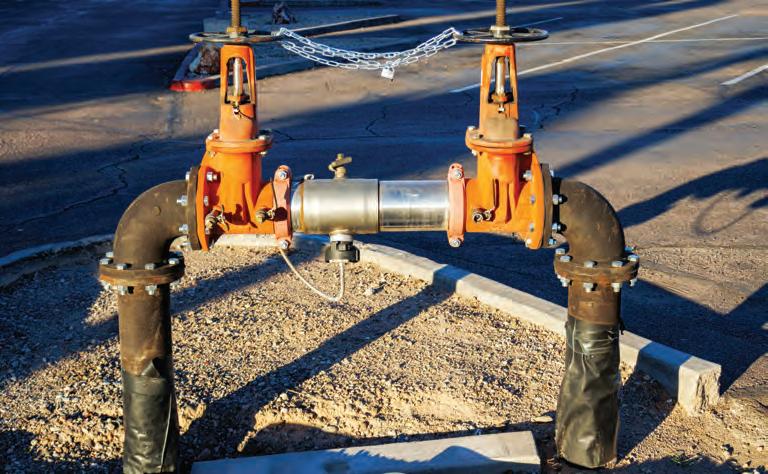
Backflow prevention devices act as a one-way gate allowing clean municipal water to flow into a property while stopping wastewater or contaminated water from reversing direction and polluting the public water supply or home drinking lines.
told that in the downtown area, there were a lot of underground springs, which the mains leaked into. That was in the 1980s. More recently I have read that as much as 23 per cent of our underground water mains are leaking. It’s not just leaks that impact our water –it’s internal cross connections that affect the quality of our drinking water. While accidently swallowing a bit of ocean water could be considered minor, you don’t want to drink a lot as you would eventually die from it – the equivalent to a severe hazard. The distinct levels of cross connection possibilities or hazards include Severe, Moderate or Minor. In cross connection we also use terms such as Health and Non-health situations. Finally, inspectors and manufacturers use terminology such as BS or Back Siphonage and BP or Back Pressure.
Severe Hazard – This hazard means deadly or the possible cross contamination of your drinking water which could kill you. Poisons, lethal, or deadly (Health Hazard).
Moderate Hazard – This hazard means this polluted water can make you sick or ill. This means the water is discoloured, distasteful, or some sort of pollution. (Non-Health Hazard)
Minor Hazard – This hazard means this is a low probability of becoming a health or non-health hazard.
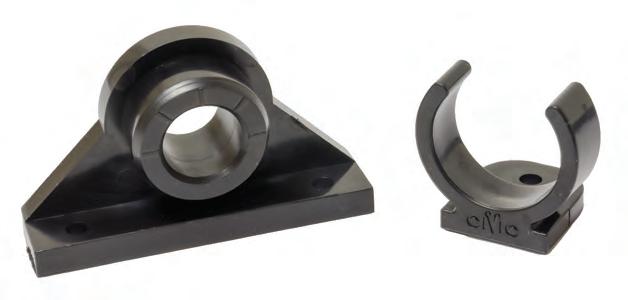

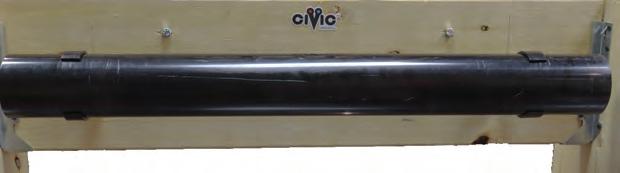
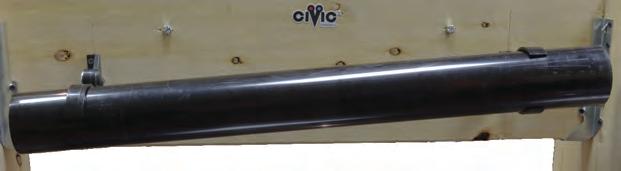
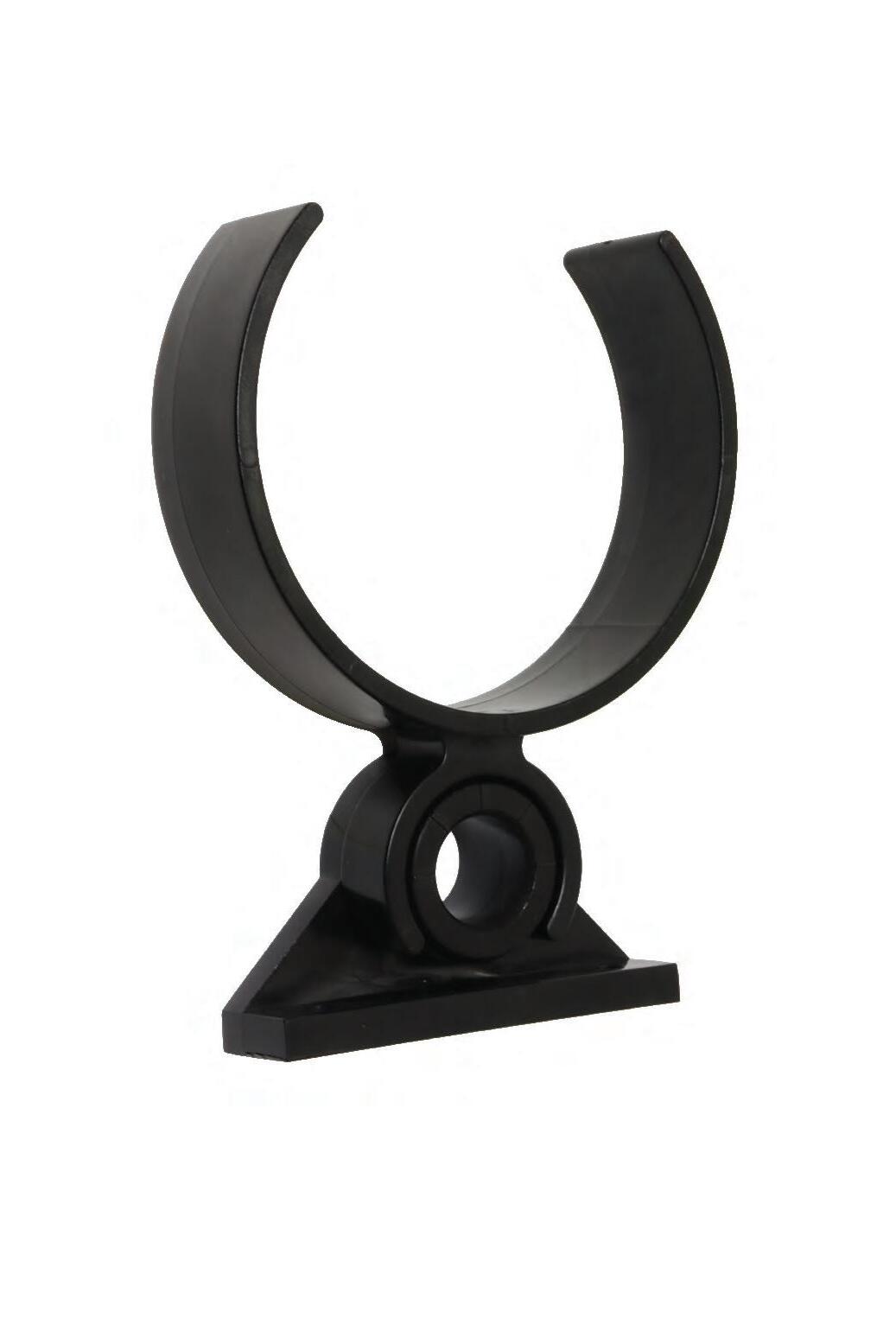
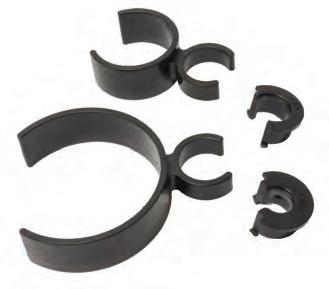


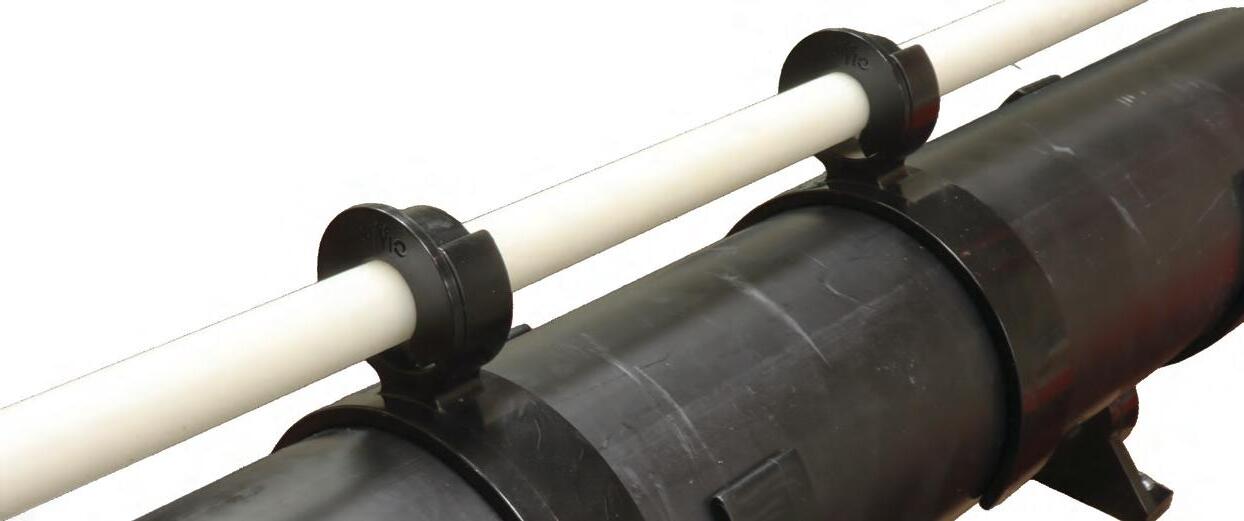
An air gap provides the ultimate cross connection control protection. Air gap means the unobstructed vertical distance through air between the lowest point of a water supply outlet and the flood level rim of the plumbing fixture or device into which the outlet discharges.
NPC CODE ARTICLE 2.6.2.9. Air Gaps
1) Air gaps shall not be located in a noxious environment.
2) Air gaps shall be not less than 25 mm high and at least twice the diameter of the opening of the water supply outlet in height.
A third-year apprentice once told me he used this phrase to remember the rules of an air gap: Tap To Gap. It’s a cool way to remember a space of air is the best cross connection protection. A minimum of 1 in. or 25 mm of air or at least twice the water supply diameter is required. Quite often plumbers get mixed up between an air gap and an air break (drain to drain). They both have a minimum of 25 mm but the air break is only in reference to drains, and it can be the same size as the indirect drain or 25 mm, whichever is bigger (see Air Gaps versus Air Breaks: Do you know the difference? In the Jan/Feb 2026 issue of Mechanical Business).
In today’s day and age, everyone wants clean potable drinking water, some prefer reverse osmosis systems for even cleaner and tastier water, some prefer some sort of water filter to improve it. The bottom line is that Canada has a lot of fresh water; let’s hope we can continue to keep it as clean and safe as possible with proper application of the NPC and the technologies available to us.
Air gap vs air break
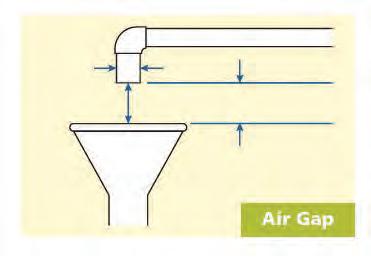
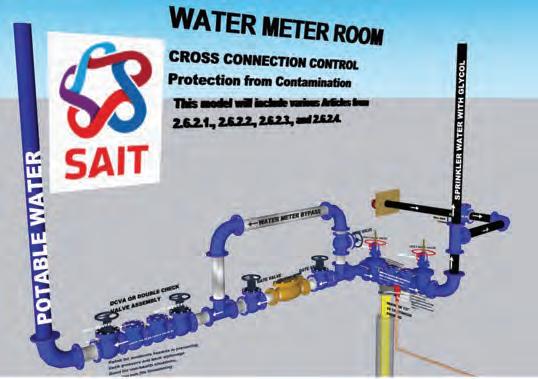
NPC CODE SUPPLEMENT REFERENCES FOR CCC. A-2.6.2.4. (2). Refer to premise isolation (DCVA & RP)
RP premise isolation is used to prevent various contaminants and health hazards such as:
• Chemical: Fertilizers, pesticides, herbicides, ethylene glycol, chromates, detergents
• Biological: E. Coli, Salmonella, Shigella, Norwalk Virus, Giardia, Cryptosporidium
• Severe hazard buildings: include but are not limited to hospitals, laboratories, wastewater treatment facilities, funeral homes, morgues, battery shops, plating plants, greenhouses, refineries, car washes, dry cleaners, and laundries
Double check valve assembly (DCVA) premise isolation is for various pollutants and non-health hazards in all commercial buildings and residential apartment buildings.
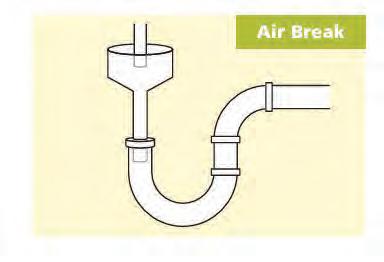

The federal government’s Spring Economic Update 2026 includes a plan to launch Team Canada Strong to “recruit, train and hire 80,000 to 100,000 new Red Seal skilled trades workers by 2030-31.”
That includes $2 billion to help young people begin working in the skilled trades through job placements that will lead to apprenticeships, with up to $10,000 per apprentice to support employers, especially small- and medium-sized businesses. The government will also offer a $400 per week Apprenticeship Training grant to apprentices for a total payment of up to $16,000 per apprentice while they are in in-class training.
Plans were also announced to modernize and increase apprenticeship and Red Seal training capacity by working with stakeholders to decrease timelines and improve outcomes.
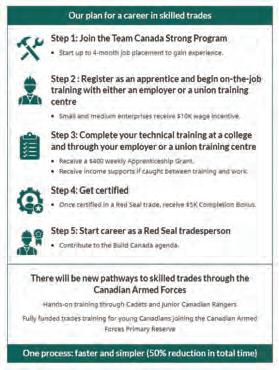
The Spring Economic Update 2026 included the government’s outline for Canadians entering the skilled trades.
Labour mobility has been an ongoing issue for skilled trades workers, something the government is addressing by enhancing the Labour Mobility Deduction to make it more affordable for skilled workers to travel to where jobs are available. It is also making the Employee Ownership Trust tax exemption permanent so workers can “share in the success of the businesses they help build.”
Housing is also a priority in the economic update, which adds to the government’s Build Canada Homes. That includes streamlining rules and modernizing building codes to make it easier to construct new homes, including factory-built and modular homes; investing in new building technologies that reduce costs and speed up construction; and a $1.7 billion investment through the Improving Housing Supply Act to provinces and territories to remove barriers and accelerate homebuilding, among other plans. canada.ca


The convenience to easily & quickly get what you need.

Conveniently located with full and complete inventory for all your needs!

Now OPEN with an additional branch in KW to provide exceptional service and support.
663 Colby Drive - Unit 14
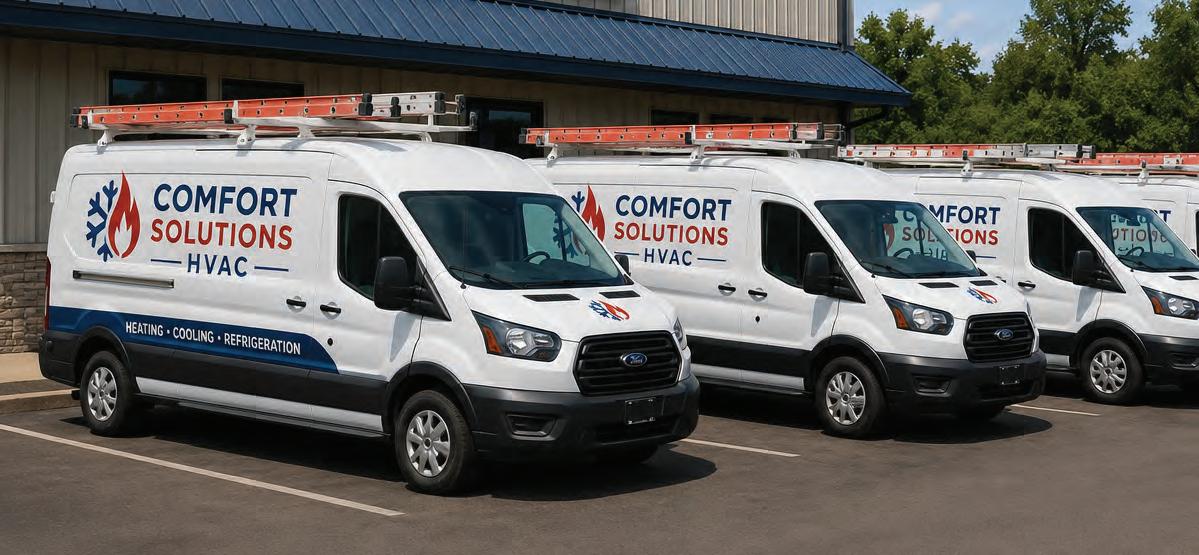
You have trucks on the road, crews to keep busy, customers expecting quick answers and competitors chasing the same work. The business is moving, but is the way you present it helping you win better bids, attract better-fit customers and keep the right work coming in?
If you have been in business for a while, your company has probably changed more than you realize. You may have started with one truck, a small crew and a handful of loyal customers. Now you may have multiple vehicles on the road, more people depending on the schedule, larger jobs to price and a reputation you have worked hard to earn.
The business has grown, but has the way you show up in the market grown with it?
That is where many established contractors, mechanical companies, service businesses and suppliers get stuck. The company they are today is not the company they were five, 10, or 20 years ago. The work is better. The team is stronger. The capabilities are deeper. The expectations are higher.
Yet the website, message, logo, sales materials, proposals, truck graphics, and even the way the company describes itself may still reflect an older version of the business. That gap matters.
Before someone calls, requests a quote, invites you to bid, or refers you to another decision maker, they are already forming an opinion. They are looking at your website, Google Business Profile, reviews, trucks, uniforms, proposals, email signature, and the way your team communicates. Together, those pieces tell a story. The question is whether they are telling the right one.

Potential customers and decision makers form an opinion influenced by all company materials.
Paul Bies Paul Bies, co-founder and president of Mystique Brand Communications (mystique.ca) in Toronto, ON, brings a wealth of marketing expertise to his role as Mechanical Business marketing columnist. His mission is to empower businesses and to share insights that provide valuable perspectives for their success. As the son of an HVAC entrepreneur, he understands the business landscape and is committed to helping MB readers thrive.

Branding doesn’t always keep pace as service areas and offerings grow.
When you are busy building the business, your message does not always keep pace. You add services, hire people and take on bigger jobs. You expand your service area and become more specialized in certain types of work. You start attracting better customers. You may even want to move away from smaller, lower-margin jobs and win more commercial, industrial, institutional, or property management work.
But if the way you present the company does not change, the market may still see you as the business you used to be. That is brand drift. It usually doesn’t happen all at once. It happens gradually.
Your website gets updated in pieces. A new service has been added here. A project photo is posted there. A truck gets wrapped with slightly different wording. A proposal template gets reused for years. Your sales team explains your value one way, your website says it another way, and your ads say something else entirely. Nothing feels completely broken, but everything feels a little disconnected.
For a business owner, that can show up in practical ways. You get too many price shoppers. You’re asked to quote work that no longer fits. You lose bids to companies that may not be better, but seem more polished. You have to over-explain why your price is higher. Your crews are capable, but the right customers are not seeing the full value.
And if you want to add another truck, hire another technician, or expand your service area, uncertainty becomes a real business issue.
That is not always a sales problem. Sometimes it is an issue of clarity and alignment.
Over nearly 40 years in business, we have revisited and refined our own brand many times. Not because we were chasing trends, but because the business kept evolving. The same thing happens in mechanical businesses. Eventually, you have to ask a simple but important question: Does the way we present ourselves still match the value we deliver? For many established businesses, the honest answer is: not quite.
A strong brand is not just about looking professional. It should help the right customer understand why you are the right choice, which matters even more once you have multiple vehicles on the road and crews depending on the schedule. You need the right kind of work coming in. You need the schedule filled with jobs that make sense for the business. You need customers who understand your value before they compare your price.
The way your business shows up should help buyers feel confident choosing you. That means answering the questions they are already asking, even if they never say them out loud.
• Can this company handle the job?
• Do they understand our type of property, building, system, or project?
• Will they show up when they say they will?
• Are they organized?
• Are they safe?
• Are they experienced?
• Will they make my life easier or create more headaches?
If your website and sales materials do not answer those questions clearly, the customer is left to decide based on price, habit, or whoever follows up first. That is a missed opportunity.
Your proposal should not have to do all the convincing. By the time a buyer receives it, your website, reputation, message, and proof should already be building confidence.
Many owners think about branding only when they are ready to update a logo, redesign a website, or change the look of their trucks. Those things may be needed, but they should not be the starting point.
Before you change how the business looks, clarify what the business needs to say. Ask yourself: who are you best positioned to serve today; what kind of work do you want more of; what kind of work are you trying to move away from; what do your best customers value most about you; what makes you easier, safer, faster, more reliable, or more capable than the alternatives; and what should someone believe about you after visiting your website or reading your proposal?
The answers should guide the brand.
If your strength is responsive service, prove it. If your strength is larger project capability, show it. If your strength is specialized technical knowledge, explain it. If your strength is keeping facilities running, make that the message. If your strength is reducing risk for property managers, builders, engineers or owners, say that clearly. Do not make customers work too hard to understand why you are a smart choice.
Websites are not just there for customers; employees, suppliers, referral partners, lenders, and anyone else viewing it will form an impression of the business.

For many established businesses, the website is still treated like an online brochure. It lists the services, shows a few photos, gives a phone number and leaves the rest to the sales process. That is not enough anymore.

A strong website should quickly explain who you serve, what you do, where you do it, why you are different and what the next step should be. It should show proof: project examples, service areas, industries served, testimonials, certifications, safety standards, team experience, fleet capability and anything else that helps a buyer feel confident.
If you want more commercial work, your website should speak to commercial buyers. If you want more maintenance contracts, your website should explain the value of planned service. If you want larger projects, your website should make you look capable of larger projects. If you want to recruit better people, your brand should make the company look like a place worth joining.
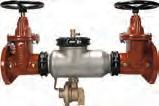

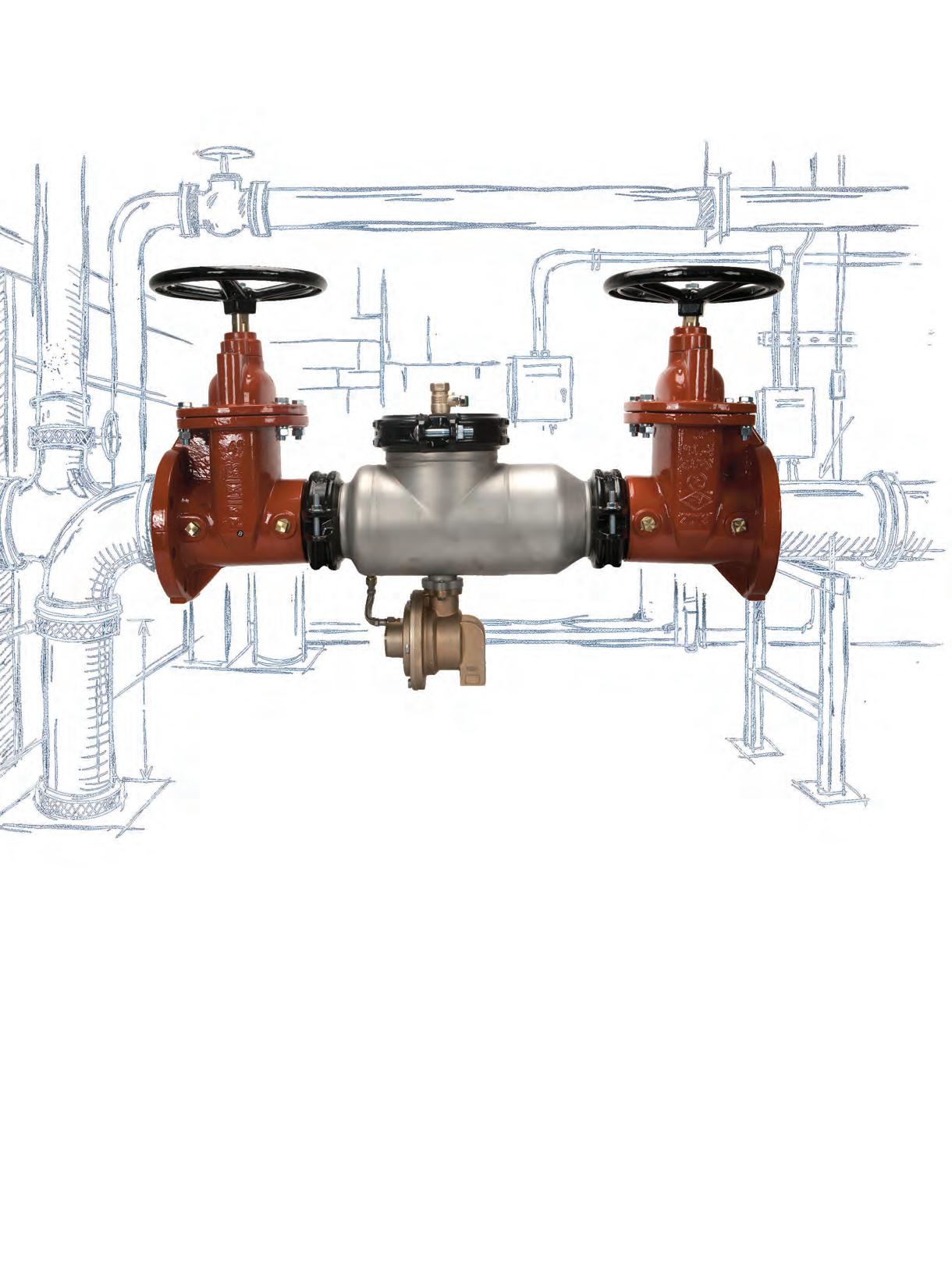
Mattamy Homes has announced that more than 1,000 of its homes in Alberta are now equipped with solar panels. The company made solar panels standard on most Alberta homes in June 2024 and since then has continued to scale its renewable energy efforts. As of April 2026, the homes are generating approximately 3.2 megawatts of clean power, accounting for about 1.8 per cent of all micro-gen solar capacity added between June 2024 and April 2026, according to the AESO Micro- and Small Distributed Generation Report. Mattamy homeowners collectively save an estimated $460,000 each year in energy costs, while reducing carbon emissions by approximately 3,200 tonnes annually. Mattamy partners with SkyFire Energy and Zeno Renewables to install solar panels in Alberta. The company’s single-family homes, duplexes and rear-lane townhomes in Alberta feature an eight-panel system, generating roughly 3,819 kWh of electricity annually in Calgary, and 3,629 kWh in Edmonton. The homes also qualify for financial incentives through Canada Mortgage and Housing Corporation’s Eco Plus program, and RBC’s Green Mortgage program. The company which is the largest family-owned homebuilder
in North America, was also recognized recently with three awards at the 2026 ENERQUALITY Building Innovation Forum & Awards: ENERGY STAR Builder of the Year – Large Volume and Multi-Family New Construction Building of the Year for its Westbend community in Toronto. mattamyhomes.com




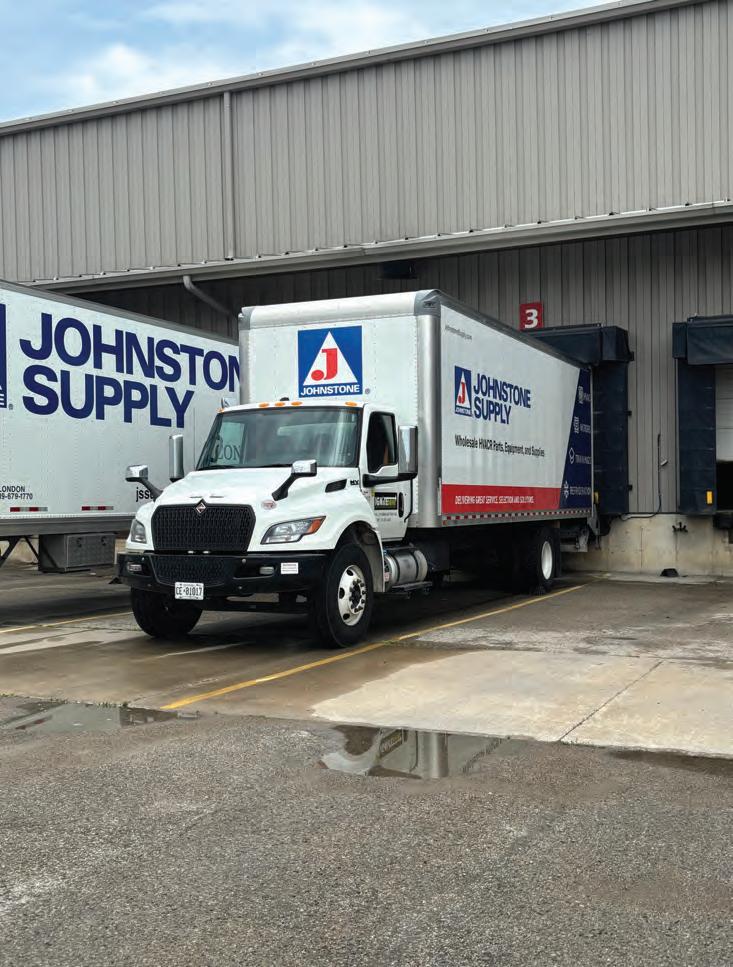

TECHNOLOGY

Rheem® ProTerra®
Hybrid Electric Heat Pump Water Heater
Highly efficient, with flexible installation and faster service
Universal side and NEW TOP water connections.
New duct ready design.
Zero Side Clearance.
Quieter than ever - 45dBA*similar to a refrigerator hum
*Operation at 45 dBA measured at 6.28 feet using third-party certified testing procedures
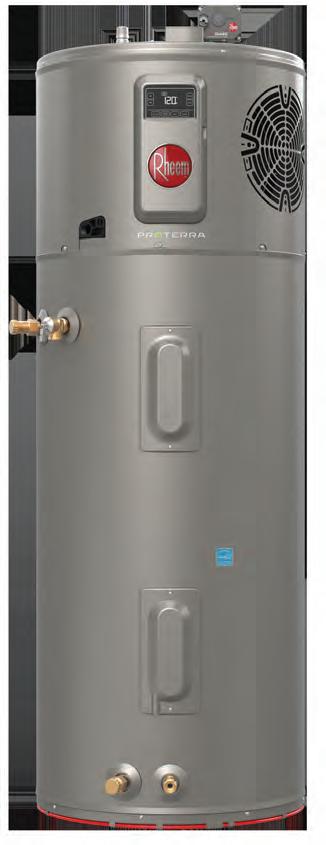
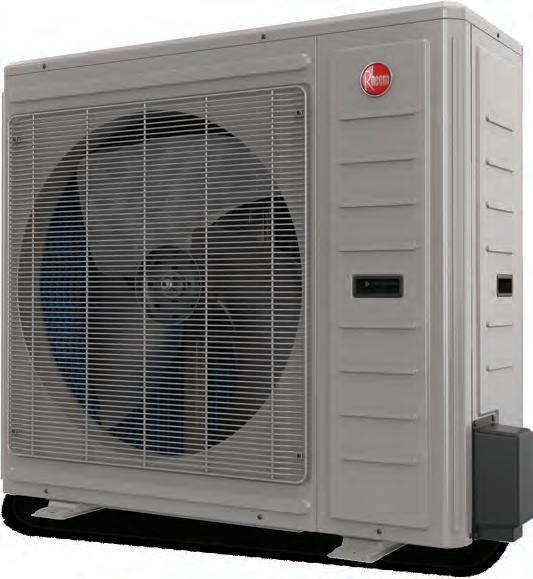
Rheem® Endeavor ® Line
Classic Plus® Series RD17AZ
Compatible with nearly any existing HVAC system—or as a universal replacement.
EcoNet ® enabled, ENERGY STAR® certified
Boasting efficiency up to 19SEER2, 12EER2 & beyond
Experience 70% capacity, even at -15C˚
Sound as low as 58dBA


Afew weeks ago, Jack (my lovely son and HR student extraordinaire) interviewed me for a homework assignment in his Communications course. The first question he asked me was: “How has communication in the workplace changed over your career?”
I have to admit, this wasn’t a subject I had spent much time pondering. If pressed, I would have said I am very much of the generation where if you need to tell people something, you tell them that thing and then you move on. Maybe when I started, the telling would have been at a staff meeting or on a flyer and now of course it’s a text or an email. That’s about it right?
But of course, there’s far more to it than that. As we talked, layers and nuance emerged. Think of the sheer number of different ways you now have at your disposal just to talk to your people. Think too of how quickly one missed email can morph into a major operations failure. If you’ve worked in trades or construction any length of time, you know communicating with your workforce rarely follows a single, straightforward path. Maybe we’ve progressed from bulletin boards to chatbots, but technology still hasn’t fixed the basic challenges all employers face: it’s not just sending out a message, it’s knowing that message was actually received. How do you ensure your key communications are understandable, clear, consistent, documented and ultimately defensible? For small- and mediumsized businesses, this isn’t just about housekeeping and getting projects moving. It’s about safety, accountability, and protecting your company in case things go wrong.
Workers quickly notice when what management says doesn’t match what actually happens. If leadership says safety is the priority but supervisors look the other way when shortcuts happen, the message becomes clear: the words don’t mean much. Good communication starts with alignment between policy, messaging and behaviour. When messages are clear, consistent and reinforced through action, employees understand what’s expected and what matters most to the organization. Good communication also always allows space for questions. Workers should feel very comfortable raising concerns or asking for clarification, especially when safety is involved.
Construction and trade employers often have some of the most diverse workforces in terms of age, language, literacy levels, roles and work environments. On top of that, their office employees will regularly read emails and internal messages, while field workers may respond better to toolbox talks, text messages, or quick calls. There may be one or more better methods of communication, depending on the complexity of your message and whom you need to pay attention to it. Before engaging your inner Shakespeare (or more likely, your favourite AI tool) to pen your opus, ask yourself some questions. Work communications can range anywhere from “FYI/nice to know” to “sign here to indicate compliance with” and workers can range wildly in terms of attention span and reading comprehension. Choose the right method for your particular circumstances.
Figure 1 provides examples to get you thinking whether your message is best for a group chat, a town hall or a 1:1. In my experience, a combination of methods is often the best bet, especially if the information needs to get out company-wide.
Before hitting send or booking that meeting, spare a thought for when employees are most likely to being open to listen. Start of day meetings or toolbox talks are a better choice than at the end of a long shift. Remember that sending the message (however well written and timed) is not the same as ensuring it was actually read, so build in ways to check for understanding. Know that most employees skim messages during a busy workday. That’s why communication should always be written in plain language with clear expectations.
For every written communication a company sends to workers, employers should assume it may one day be reviewed by someone from the outside. After an incident, investigators, Joint Health and Safety Committee members or labour inspectors will invariably ask not only what your policy is, but how you communicated it. Your company should be able to demonstrate when the message was delivered, how it was communicated, who received it and how you confirmed employees understood it. Policies alone don’t protect companies, documented communication does. This is especially critical for all employees whose work requires them to operate machinery, deal with clients or the public, handle tools or work with other hazards. If you are sending out a safety related or time-sensitive critical message, review the following to see if your message is ready to send.
By Sue Sodek
A checklist for critical messages: Is your communication defensible?
✓Is the message clear and written in plain language?
✓Have you reviewed it with supervisors and management first?
✓Did you communicate the message more than one way?
✓Did you tailor the delivery to your workforce?
✓Do you have employee acknowledgement they’ve received the message?
✓Did you check for understanding?
✓Is your communication documented in case of issues later?
If the answer to any of these questions is no, your communication may not be as effective or as defensible as you think.
I can’t even begin to imagine how communication tools will advance by the time Jack and his generation are in the driver’s seat. I would however be comfortable betting they’ll face the same challenges we do now: how do I make them stop and listen and how do I know they got the point? The best we can do as managers is speak plainly and clearly, use a variety of methods of communication and give people room to ask questions and demonstrate their understanding. And of course, when documentation matters, make sure you’re keeping records.
Sue Sodek has over 20 years of human resource and consulting experience across a variety of businesses. She can be reached at sue.sodek@gmail.com.

Rheem and ecobee have partnered to introduce the ecobee Smart Thermostat Lite. The thermostat is designed to integrate with EcoNet Technology for residential applications as well as noncommunicating residential heating and cooling systems from Rheem. The unit controls one-wire accessories such as a humidifier or ventilator, and integrates with ecobee accessories such as SmartSensor room sensors to maximize energy savings. It offers simple configuration options, an intuitive touchscreen and consumer app, and is ENERGY STAR certified.
www.
rheem.ca
ecobee.com
Navien launches its new NAA Series air conditioner, a variable-capacity, inverter-driven air conditioning solution for residential and light commercial applications from 1.5 to five tons with two outdoor unit platforms. The NAA platform makes installation fast and easy, with flexible capacity matching and model selection. The unit uses lowGWP R-454B refrigerants and operates across a range of capacities, reducing temperature swings, improving humidity control, and lowering energy consumption, with performance up to 18 SEER2. www.
navieninc.com
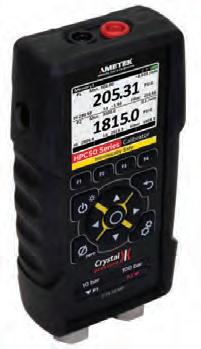
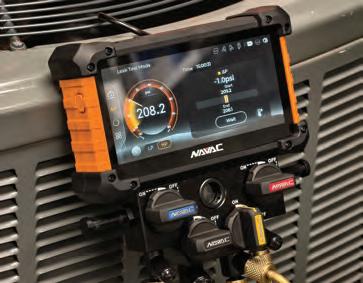
Navac’s Nexus 2 next-generation digital manifold is engineered to simplify HVAC diagnostics and service. Its intuitive interface and plug-and-play operation gives users a clear view of system performance and service progress in manifold, leak test and evacuation modes. The manifold supports 100 refrigerants, and offers Class 0.4 accuracy, smart wireless connectivity, and MeasureQuick integration for real-time data. Features include HD touchscreen and four customizable display themes. Updates can be delivered through the myNavac app.
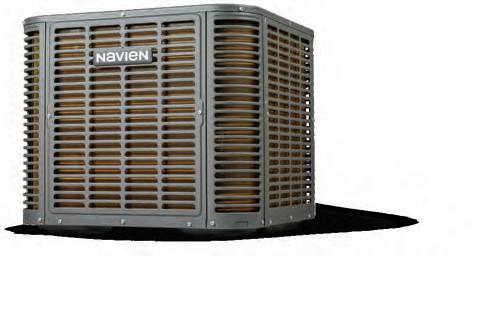
navacglobal.com
The HPC50 handheld pressure calibrator is a dual pressure calibrator that is fully temperature compensated for pressure, temperature and electrical measurements from -20⁰C to 50⁰C. The unit has a 0.035 per cent reading accuracy, and measures gauge, absolute and differential pressure to 10,000 psi/700 bar/70 Mpa. Features include large colour display, wireless keypad input and output connectors, and APMi and ATMi module connections to expand measurement options. www. cameroninstruments.com
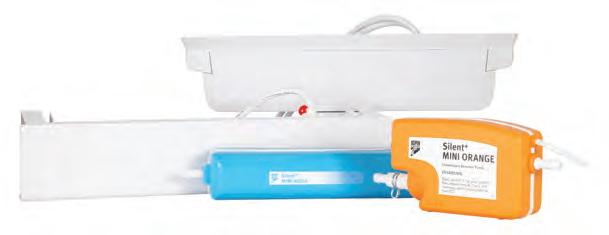
The Malco Group has launched the Mini White and Silent+ Gen5 Series of four mini pumps from Aspen Pumps. The lineup delivers intelligent adaptive flow, zero-maintenance sensing, and plug-and-play simplicity. The Mini White is designed for below-unit ductless mini split installs, delivering up to five gallons of flow and a 33-ft. head for systems up to 7.5 tons/90,000 BTU/hr. The Silent+ Gen5 Series for condensate removal offers intelligent capacitance sensing and variable speed technology, with quiet 16 dB(A) operation. www. malcogrp.com

Designed for light commercial spaces with different comfort demands, the Samsung DVM S Mini delivers flexible heating and cooling from a compact single-phase VRF system. The heat recovery model can heat and cool separate zones at the same time, helping keep more occupants comfortable across more spaces.
With best-in-class efficiency, reliable heating down to -22°F (-30°C), and R-32 refrigerant with enhanced A2L safety features, DVM S Mini brings serious capability for projects where space, performance and control all matter.

Scan or visit ShortURL.at/AN0eM to learn more.
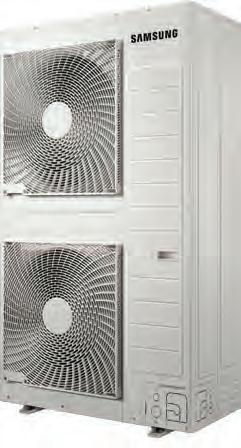

The heat stress monitor from E4A uses Wet Bulb Globe Temperature measurements to provide realtime environmental readings including temperature, humidity and radiant heat to help workers manage heat stress. The unit monitors conditions and sends alerts when heat thresholds are exceeded, as well as analyzing work conditions to offer guidance on individual cooling periods and recommended breaks for safe productivity in hot temperatures. www. electronics4all.ca
The DCG420XB Atomic 20V Max extended die grinder is the first battery-operated extended die grinder from Dewalt. Designed for tough jobsites, the grinder allows users to complete metalwork
26_000594_Mechanical_Business_MAR_APR_CN Mod: January 19, 2026 8:37 AM Print: 02/06/26 page 1 v2.5

STUDSON’s SHK-1 Full-Brim Dual Cert Type II safety helmet complies with ANSI Z89 and CSA Z94.1 Type I and II safety standards, as well as the new Canadian Construction Safety Council (CCSC) mandate requiring Type II safety helmets with integrated four-point chin straps. www. studson.com
Wells Lamont Industrial Canada offers two versions of cut resistant sleeves to protect arms. The sleeves provide ANSI level 3 or 6 cut protection, and are made of a composite of high-performance materials and flame-resistant fibres allowing them to be used where incidental protection against flames and sparks is required. The knit allows for air circulation, keeping arms cool and comfortable. The sleeves are available in several lengths, with or without a thumb hole, and in two sizes – regular fit and a large bicep fit for arms that are more than 10 in. in circumference. www.
jomaccanada.com

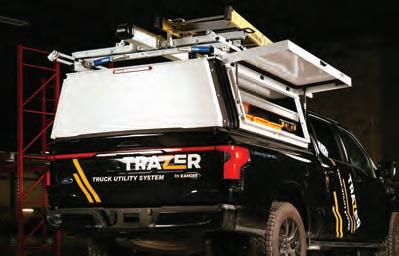
rangerdesign.com Truck canopy
Ranger Design introduces the Trazer Canopy, the newest addition to its Trazer Truck Utility System for pickup trucks. The canopy offers a weather-resistant, closed space in the truck bed, and features a lift-up door with a gas shock, anti-theft design and drill-free installation. Designed to integrate seamlessly with the Trazer heavy-duty rack and toolboxes, the system maximizes storage space, protection and organization. www.



























National Backflow
Preevention Day
August 16 North America watts.ca
High-Performance HVAC Summit
September 1 – 3
Pigeon Forge, TN gotosummit.com
NADCA Fall Technical Conference
September 9 – 12 Norfolk, VA nadca.com
NSC Safety Congress & Expo September 14 – 16 Indianapolis, IN congress.nsc.org
AIM/R 54th Annual Conference
September 14 – 17 Napa, CA aimr.net
CHES National Conference
September 20 – 22 St. John’s, NL ches.org
HRAI AGM
September 20 – 22 Gatineau, QC hrai.ca
ASHRAE Building
Decarbonization Conference
September 21 – 23 Seattle, WA ashrae.org



WorldSkills Competition and Expo
September 23 – 26 Shanghai, China worldskillsconference2026.com
Canadian Hydronics Conference September 24 – 25 Vancouver, BC ciph.com
Road Hockey to Conquer Cancer Tournament October 3 Vaughan, ON pmcfroadhockey.ca
National Apprenticeship Conference
October 4 – 6 Whistler, BC caf-fca.org
ASPE Convention & Expo
October 8 – 14 Oklahoma City, OK aspe.org
Chillventa October 13 – 15 Nuremberg, Germany chillventa.de
Greenbuild
October 20 – 23 New York, NY informaconnect.com/greenbuild
The Adaptation Forum
October 20 – 21 Winnipeg, MB energyconferencenetwork.com


BUILDEX Alberta
October 21 – 22
Calgary, AB buildexalberta.com
CGA Energy Nexus & Annual Technical Conference
October 26 – 29 Toronto, ON cga.ca
RETA National Conference October 27 – 30 Orlando, FL reta.com
CIPH Women’s Network National Conference October 28 – 29 Toronto, ON ciph.com
RE+
November 16 – 19 Las Vegas, NV re-plus.com
World Toilet Day
November 19
Worldwide un.org/en/observances/toilet-day
If your organization has a conference, trade show or other event coming up, send details to kerry.turner@mechanicalbusiness.com

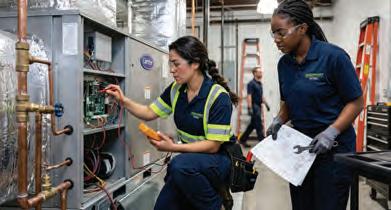
20.6
Per cent of all private sector businesses in Canada that are majority women-owned as of Q1 2026, according to Statistics Canada.
74.8
Per cent of senior management positions held by women in women-owned businesses, compared to 38.8 per cent in all other private sector businesses.

Per cent of workers who have a high mental health risk, as found by the Telus Mental Health Index Q1 2026. That compares to 44 per cent who have a moderate mental health risk, and 22 per cent who have a low risk. 35
Per cent of workers who report feeling anxious, while 32 per cent say they feel isolated, and 27 per cent say they feel depressed. 31
Per cent of workers who say their mental health is negatively affecting work productivity.
2 billion
Dollar amount the federal government will provide over the next five years to increase the number of young people going into the skilled trades through the Team Canada Strong Program and Build Canada Apprenticeship Service.
3.4 billion
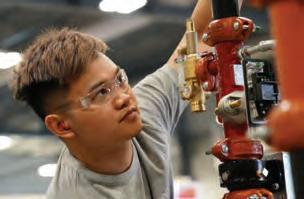
Dollar amount the feds will spend over five years to address challenges that can stop apprentices from completing their training, including financial barriers.
331 million
Dollar amount the government has committed over the next five years to boosting and modernizing apprenticeship training.
68
Per cent of respondents in Bradley’s 2026 Healthy Handwashing Survey who say they are more likely to return to a business with clean, well-maintained washrooms.
73
Per cent of customers who say they may not return to a business with an unpleasant restroom.
40
Per cent of respondents who say they check a restroom before deciding whether to do business at a location.
569 million
Number of installed air conditioning units in China, followed by 374 million in the U.S., and 148 million in Japan, according to Worldpopulationreview.com. Canada sits at between 10 and 11 million.
4,726
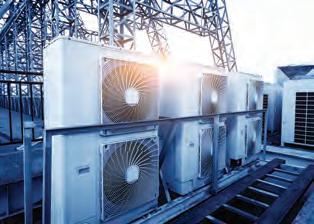
Gigawatts of cooling capacity generated by air conditioning in the U.S., the most of any country.
Degrees Celsius days per decade that accumulated heat is growing by since 1990 in the Northern Hemisphere, as compared to a threshold temperature set using climate data from 1961 to 1990, according to a University of BC study published in April 2026.
Say goodbye to bulky tub spouts and hello to the Fill & Drain®, the all-in-one bath drain that fills and drains your tub in one sleek unit.
Available in today’s trending finishesChrome, Brushed Nickel, Matte Black, Polished Nickel and Venetian Bronze - this innovative product eliminates the need for a separate tub spout, offering you a minimalist, modern aesthetic and the ultimate design flexibility. Perfect for today’s bathrooms, where style meets function in the most seamless way. and done.
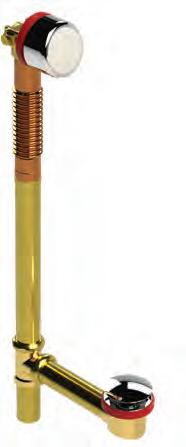
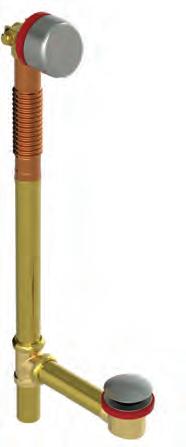
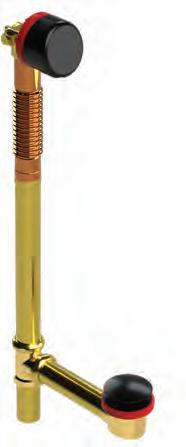
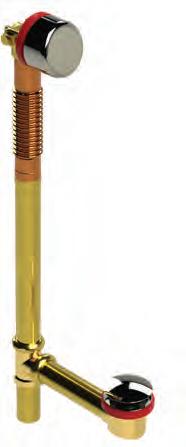
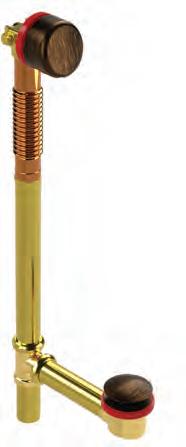

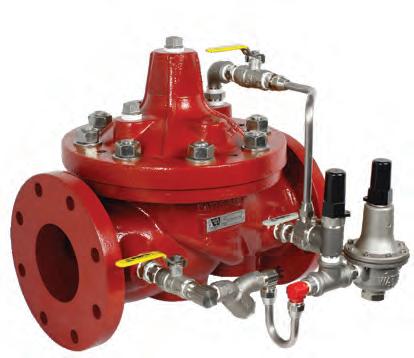
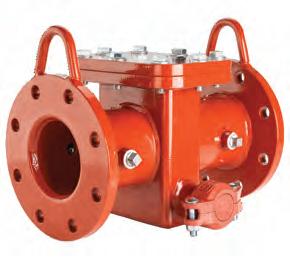
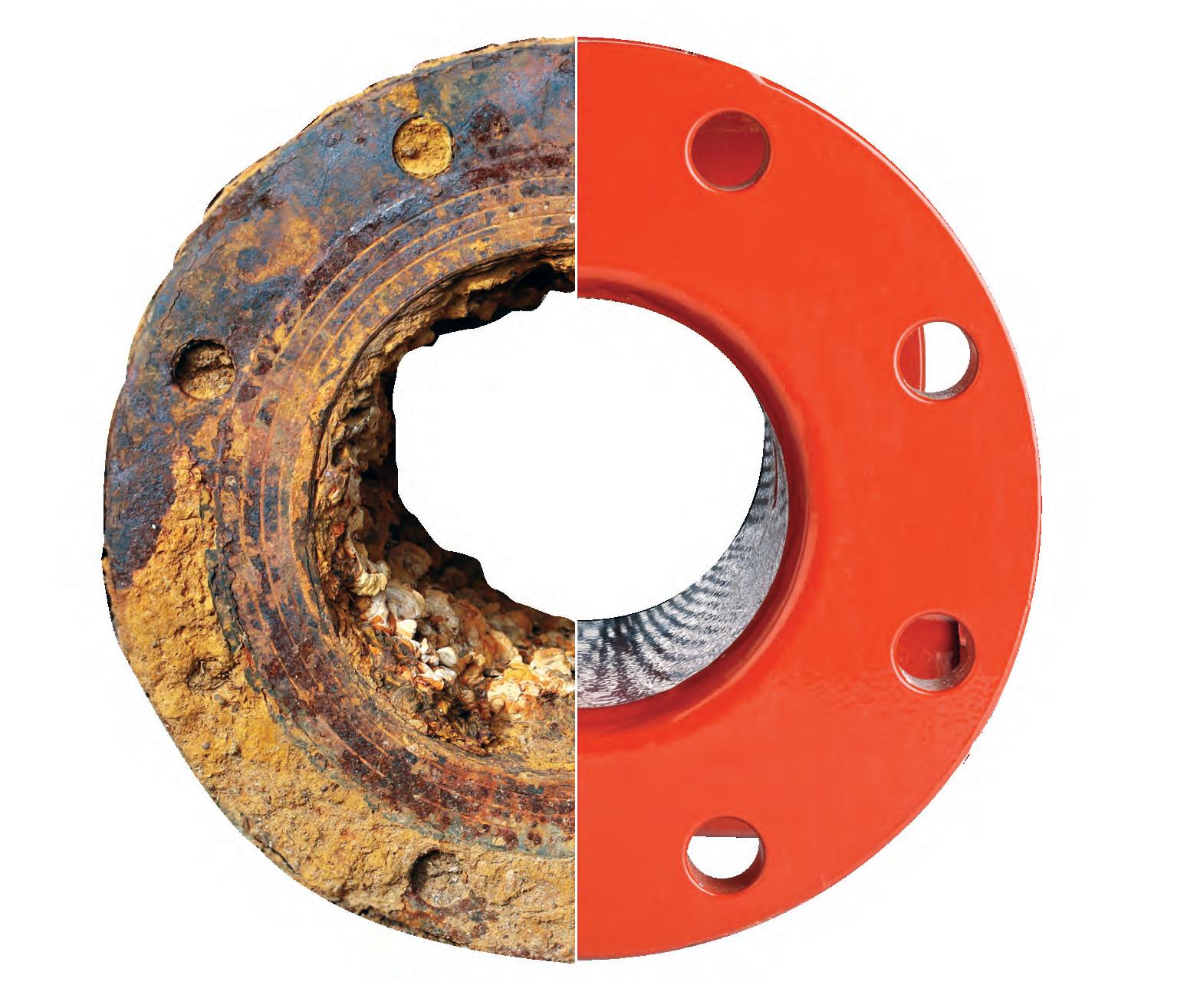
The ONLY ACVs, Strainers, and Backflow Preventers with an 8-year MIC warranty*
Microbiologically Induced Corrosion (MIC) kills your equipment. Avoid it with ArmorTek® coated valves
*Terms and conditions apply.

LIVE WEBINAR: EARN 1 PDH!
AUG 5 | 12 PM ET
Municipal Water Resiliency: Pressure & Corrosion Control Register now!