HEAT PUMP

AWHPS: FUNCTIONALITY AND LIMITATIONS
THE IMPORTANCE OF SMARTER AIR DISTRIBUTION
RETROFIT SHOWCASES VRF FLEXIBILITY
IMPLICATIONS OF ADDING ELECTRICAL LOAD
PRODUCT SHOWCASE AND MORE INSIDE



AWHPS: FUNCTIONALITY AND LIMITATIONS
THE IMPORTANCE OF SMARTER AIR DISTRIBUTION
RETROFIT SHOWCASES VRF FLEXIBILITY
IMPLICATIONS OF ADDING ELECTRICAL LOAD
PRODUCT SHOWCASE AND MORE INSIDE
HIGH-PERFORMANCE HVAC HOW HEAT PUMPS AFFECT THE NEED FOR SERVICE UPGRADES
Upgrades might be avoidable through the use of advanced controllers, known as load managers, which can shed load when required.
Tom Grochmal
PROJECT PROFILE
DESIGN IMPLEMENTATION AT SCALE
Vancouver-area school retrofit showcases VRF flexibility.
Dan Vastyan
ROAD WARRIOR ANDREW FORSYTH: TAKING CONTROL
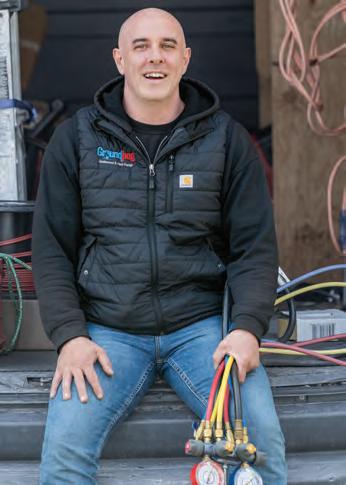
Andrew Forsyth works alongside five technicians on residential geothermal and hydronic systems in the Halifax region and the Annapolis Valley.
Carolyn Cooper
SYSTEM DESIGN AIR TO WATER HEAT PUMPS: FUNCTIONALITY AND LIMITATIONS
The key to high performance is understanding where AWHPs perform best and building on those strengths.
Todd Wiggins
54WATER HEATING A SCALABLE SOLUTION
Heat pump manufacturers now offer a range of compressor technologies tailored to water heating demands. Mike Squires
70VENTILATION
THE MOST OVERLOOKED PATH TO HVAC EFFICIENCY
Air distribution as a decarbonization strategy enables smaller, more efficient heat pump systems. Peyman Raphe
58-62PRODUCTS
A showcase of heat pump technology.
64JOBSITE JARGON
Test your heat pump knowledge for a chance to win a $150 VISA gift card.
Everything you need, anywhere you are – scan to open the digital edition of the Heat Pump Journal.


By Tom Grochmal
Tom Grochmal, PhD, P.Eng. is founder and CEO of Trim Tab Energy Retrofits (trimtabretrofits.com), an energy contractor with a mission to renew housing and inspire better living.
Heating systems continue to evolve because of heat pumps. We are seeing heat pumps added to existing heating systems as well as outright conversions from fossil fuelbased and baseboard heating systems.

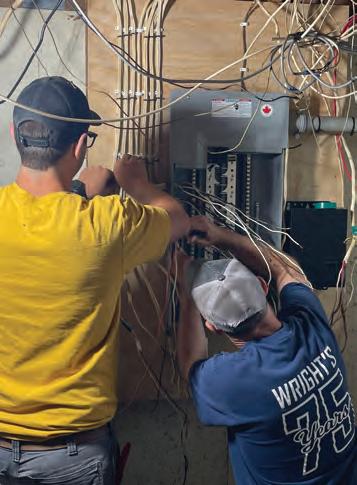
With this evolution towards heat pumps, HVAC contractors need to understand the implications on electrical infrastructure. Adding a heat pump may require panel and utility service upgrades, which may be costly. These upgrades might be avoidable if there is enough spare capacity, but how do you know? Upgrades might also be avoidable through the use of advanced controllers, known as load managers, which can shed load when required. In this article, I’m going to explain the process and potential options when it comes to installing a heat pump in situations where it may represent a load increase on the electrical panel.
When adding a significant load to an electrical service, we must follow section 8 of the Canadian Electrical Code, CSA C22.1 (and its various provincial adoptions), which is all about circuit loading. The code requires a load calculation to be performed by a qualified individual. (Aside: what constitutes a “qualified individual”? Typically it is a licensed electrician, and it also can be a professional engineer, among others, who understand all the nuances of a load calculation.)
The result of the load calculation is the total electrical current expected to result on the electrical service with the proposed addition of a heat pump. If the calculated load is within the capacity of the existing panel, then you don’t have a problem adding the heat pump. If the calculated load exceeds the capacity of the panel, then you need to take mitigating action.
Pro tip: Calculated loads tend to be conservative, meaning they overestimate the load. The availability of historical utility data is a major asset. The electrical code allows for an existing load calculation to be based on the peak period consumption in the past 12 months, where hourly data is available. The benefit is that it is more accurate and usually results in a smaller calculated load, meaning more spare capacity to allow for adding load. It would also apply to properly sizing a generator or renewable energy system in a retrofit application. Talk to your local electrical inspector to see if this is an option in your jurisdiction.



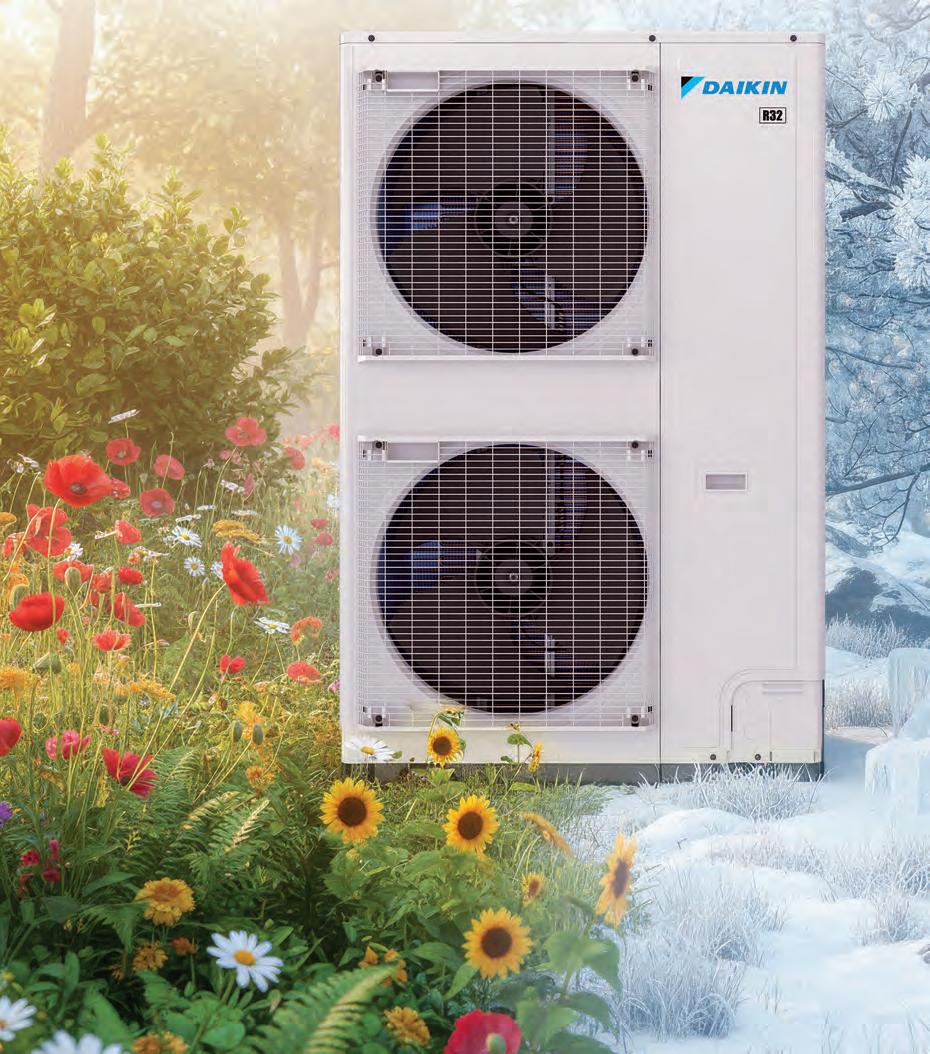
The Daikin FIT AURORA inverter heat pump —named after the dazzling natural light that appears at Earth’s magnetic poles — symbolizes performance at the outermost extremes. From harsh winters to intense summers, the FIT AURORA is engineered to deliver majestic comfort and e ciency all year round.
Features and benefits:


defrost mode Dual Fuel Applications
Response Compatible
capacity up to
and heating down to -20°F


In situations where the load addition from the heat pump exceeds the spare capacity on the existing panel, it may be necessary to upgrade the electrical panel to one of higher capacity. This makes the most sense if the customer forecasts other load increases down the road. If you have a rural customer with a home with a 100 Amp panel, and you want to convert their oilbased heating system to a heat pump that contains 10 kW in supplemental heat, you are likely going to need to upgrade that panel to 200 Amps.
Under the right circumstances, load managers allow you to connect additional load without having to upsize the panel or service. In some situations, utilizing load managers might be a quicker and more cost effective solution. It might even be necessary depending on constraints from the local electric utility.
Load managers are installed in between the heat pump and the circuit breaker feeding the heat pump (see diagram on the right). They work by monitoring the total load on the electrical panel. When it detects that the panel is at its maximum load, it disconnects the heat pump. When the load manager detects that the load comes back down,
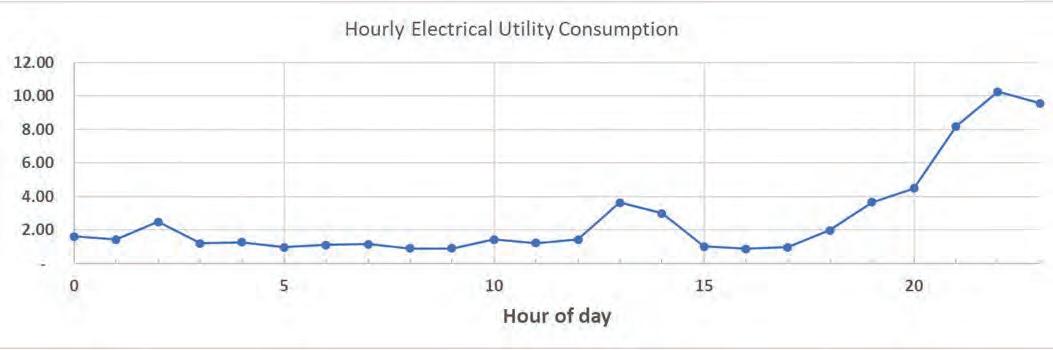
Hourly utility electrical data is available in provinces with smart meters. From hourly data, you can estimate peak loads which lead to more realistic, and streamlined, load calculations. Alternatively, you can get an electrician to perform data logging. (Graph
Pro tip: An electrical panel upgrade may also require a service upgrade from the local electric utility. Understand the load connection process of your local electric utility. Utilities will send out a technician, typically free of charge, to perform a service layout and, if necessary, a cost estimate to upgrade the service, which can range from a few hundred to several thousand dollars. What’s included in the upgrade costs can vary by utility.
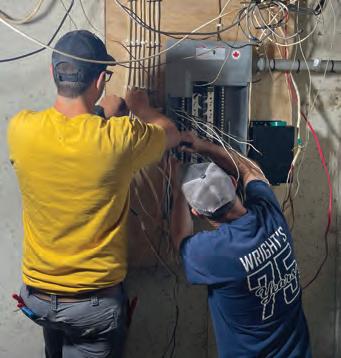
A service panel upgrade often makes sense when adding a large load (or there are plans to add more load in the future) and the utility has the capacity to accommodate. Load reduction opportunities should also be explored before upgrading the panel.
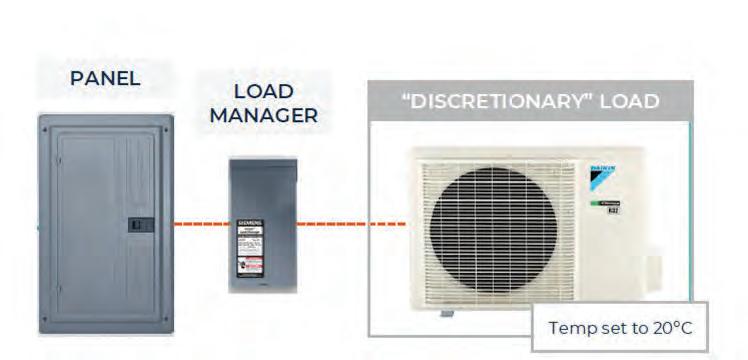
then it automatically reconnects the heat pump. The important implication here is that whatever is connected to the load manager (such as a heat pump, hot tub, EV charger or electric water heater) must be a “discretionary” or “non-critical” load – meaning that it doesn’t affect the health, safety and essential operation of the home as required by your local building code. For heat pumps, load managers work well when there is a backup heating source that can meet the full heating needs of the home, such as baseboard heaters.
Pro tip: Like all tools, load managers are meant for specific applications. When you run into situations where panel upgrades are prohibitively expensive, or you are limited by the capacity of your electrical infrastructure, load managers can make heat pump retrofits feasible.
The electrical code is evolving to enable the growing trend of electrification. Load managers fall under the category of “Energy Management Systems” (EMS) in the Canadian Electrical Code. On May 1, 2025, the Ontario Electrical Safety Code, which is Ontario’s specific adoption of the Canadian Electrical Code, expanded the use of energy management systems beyond electric vehicles, to now include loads like heat pumps. Specifically, electrical equipment controlled by an EMS, as defined by the code, doesn’t need to be included in a load calculation. This paves the way for using load managers as described above. Not all provinces have gone this route yet. It is expected that the expanded use of EMSs will reach all provinces by the next release of the Canadian Electrical Code.
Key takeaway: Know whether your provincial electrical code permits the use of an EMS for heat pumps. Talk to your local electrical regulator for guidance.
The pace of electrification is increasing because of climate policy, new technologies, and rising consumer expectations. Heat pumps are one of the technologies driving this trend, so it’s important that mechanical contractors can also think like electrical contractors in situations where you are adding significant load to an electrical panel. Invest the time to understand the implications, your options and the utility process, and you will be well positioned to have a stake in a huge business opportunity.
Acknowledgements and further reading:
A special thanks to Nathan Horton of 1Click Energy Solutions (1clickheat.com) for his input on this article. Also, thanks to Nick Gonzalez and his team at Postma Heating & Cooling (postma.ca) for their input.
The Building Decarbonization Alliance has published useful guides on “Energy Management Systems” and “Avoiding an Electrical Panel Upgrade” through its Canada’s Home Electrification Toolkit. It can be found at buildingdecarbonization. ca/canadas-home-electrification-toolkit.

Rooftops, Furnaces, Heat Pumps, A/C, Ductless, VRF, OEM Parts
Bosch: Founded in 1886. Built on precision,
One distributor. Five premium Technical expertise.

Two years ago, the cooling systems at Albert McMahon Elementary and Christine Morrison Elementary in Mission, BC, had reached the end of their 30-year service lives. Upgrading both schools simultaneously presented a significant financial challenge, but there were no viable alternatives.
The schools are nearly identical, as were their HVAC systems − except for one key difference. Albert McMahon’s VAV system was served by an aging 40-ton air-cooled system, while Christine Morrison’s system utilized a single pass, water-cooled condenser that rejected heat to a domestic water system, generating considerable water waste. Both systems provided ventilation, preheating and cooling through central air-handling units and duct networks, with zone-level control via VAV terminal units equipped with reheat coils.
“We were constantly dealing with poor temperature control, increasing maintenance demands, and rising repair costs,” said Dana MacLean, director of operations at Mission Public Schools. “Replacement was the only viable option.”
Facing this challenge, the Mission School District sought a solution that was sustainable, cost-effective and reduced reliance on fossil fuels. They turned to a trusted local partner: Diya Hilal, principal mechanical engineer at InnoReflection Engineering Ltd. Since its founding in 2017, InnoReflection has designed and implemented a variety of mechanical systems for the school district.
Hilal doesn’t just design systems. He ensures they’re implemented effectively. Frequently onsite with installers, he helps technicians leverage the detailed designs InnoReflection provides, bridging the gap between design and execution.
“In many ways, I take on the role of project manager for the school district’s mechanical retrofit projects,” Hilal explained. “I work closely with contractors, consultants and manufacturer representatives every day. This handson approach is critical to the success of each project.”
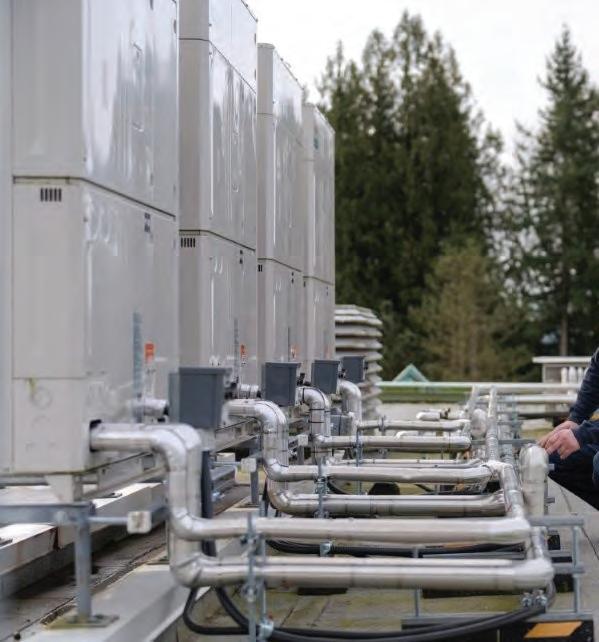
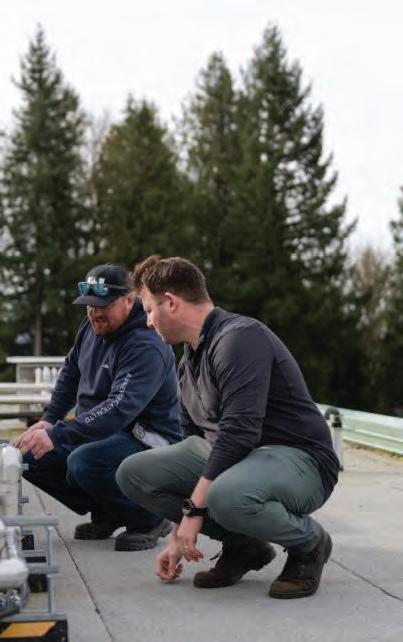
(Back to front) Des Soumang, owner of Alpine Refrigeration and Craig Hayman, HVAC project manager at Tri-Metal Fabricators, review refrigerant piping, which includes the use of an inverted trap installed for oil management.
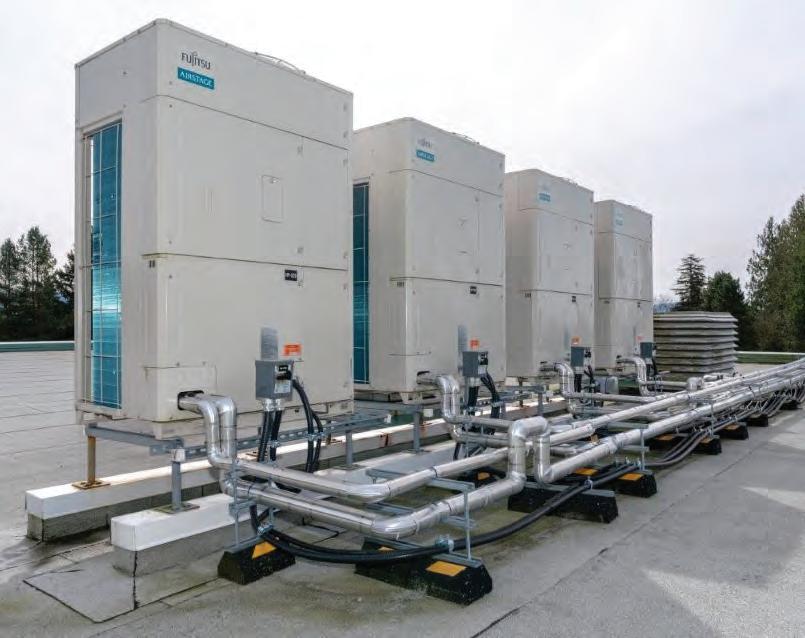
Each school is now served by 40 tons of capacity.
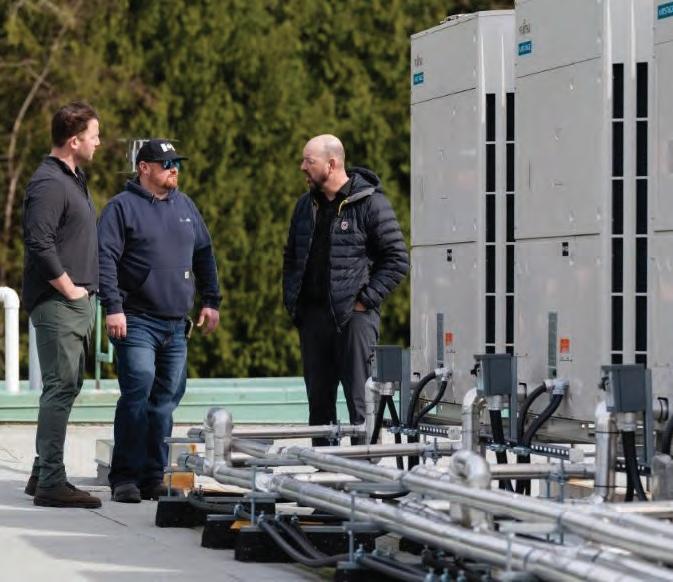
(L to R) Hayman and Soumang discuss maintenance with Dana MacLean, director of operations at Mission Public Schools.
HIGH-IMPACT SOLUTIONS
Mission School District prioritizes sustainable, high-efficiency mechanical systems for all retrofit projects. MacLean consistently embraces innovative solutions that boost performance, enhance efficiency and reduce energy use, providing vital support throughout this project.
“Sustainability, energy efficiency and operational cost savings were key considerations as we selected the systems,” said MacLean.
Given the budgetary implications of retrofitting two buildings simultaneously, the proposed systems had to be cost-effective while meeting operational and sustainability goals. Rather than replacing the entire air distribution network, InnoReflection integrated new variable refrigerant flow (VRF) condensers with custom DX coils installed in the existing air handlers. “This approach upgrades
“Sustainability, energy efficiency and operational cost savings were key considerations as we selected the systems.”
the air-handling units without major reconstruction, providing high-efficiency comfort in a costeffective manner,” explained Hilal.
Previously, the boilers supplied preheat energy to the air handling units (AHUs) in addition to space heating. With the VRF upgrade, heat pumps now provide up to 95 per cent of the AHU preheat requirement.
“Hydronic systems still supply preheating on the coldest days, below -7°C,” said Hilal. “The VRF heat pumps can operate down to -26°C, but using full capacity would have required an electrical service upgrade.”
By Dan Vastyan
The design strategy focused on integrating VRF technology with existing ductwork using direct expansion kits, specialized interface systems designed to allow third-party AHUs or fan coil units to be connected to Fujitsu’s VRF outdoor units. These kits consist of a control unit and an electronic expansion valve (EEV) unit that regulate the flow of refrigerant. This allows precise coil sizing, airflow control and performance targets while preserving the efficiency and modular benefits of VRF.
Although InnoReflection had previously designed systems with the VRF heat pumps, this project marked Hilal’s first implementation of the direct expansion kit solution. Drawing on prior experience with a five-storey residential building, InnoReflection collaborated with the heat pump manufacturer, using its design software to size and verify system performance, including low-ambient operation.
“The simulator allowed us to model everything accurately − from piping and refrigerant charge to coil performance − ensuring the system would perform as intended in the field,” Hilal said.
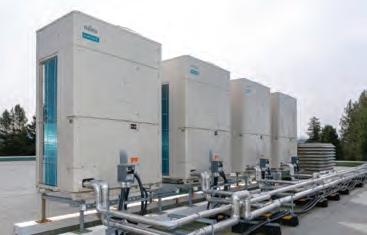
At each school, four 10-ton heat pump units were arranged into two systems, each serving two interlaced DX coil circuits for a total of 40 tons. USA Coil & Air DX coils, supplied and installed by Tri-Metal Fabricators, a local steel fabrication and sheet metal HVAC company, were selected to meet design specifications and ensure compatibility with the direct expansion kit.
“The simulator allowed us to model everything accurately − from piping and refrigerant charge to coil performance.”
Alpine Refrigeration Ltd., a Chilliwack-based firm with nearly 60 years of experience, served as prime contractor. “The installation took most of the summer but given the tight timeline and coordination with multiple trades, the projects went very smoothly,” said Des Soumang, executive director at Alpine.
The direct expansion kits were mounted externally to the AHUs on customized racks and integrated into the existing DDC system. Commissioning was performed jointly by InnoReflection, Alpine Refrigeration and the manufacturer to ensure each system was balanced, charged and fully operational.
“The new systems are performing as expected,” said MacLean. “The cooling improvements have been particularly well received by staff and students. InnoReflection and Alpine made the process relatively easy from our perspective.”
As Canadian institutions increasingly
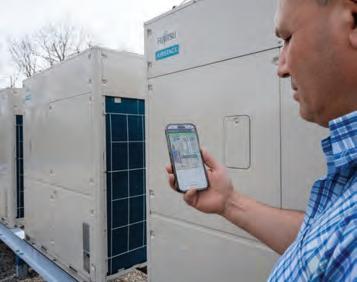
Diya Hilal, principal mechanical engineer at InnoReflection Engineering Ltd., reviews real-time system data via the school’s BMS.
focus on decarbonization, VRF heat pump systems are gaining traction in both new construction and retrofits. The technology’s flexibility, efficiency, low noise and modular design make it attractive for schools.
Building on the success of these projects, InnoReflection, Alpine Refrigeration and Tri-Metal Fabricators are now collaborating on another AHU upgrade for Mission Public Schools, this time deploying 80 tons of VRF heat pumps and applying lessons learned from previous installations.
Dan Vastyan is president of Common Ground Uncommon Communications. He can be contacted at danV@SeekCG.com.


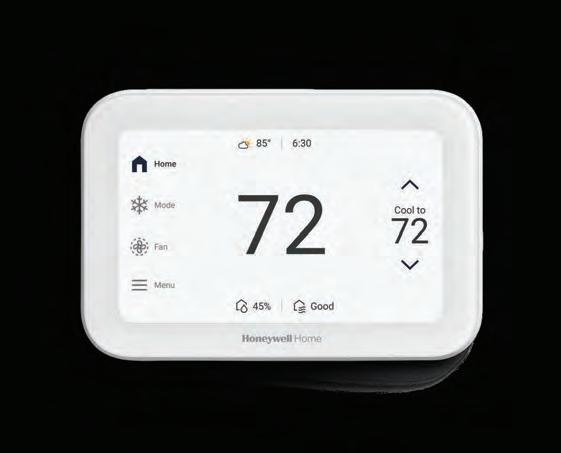
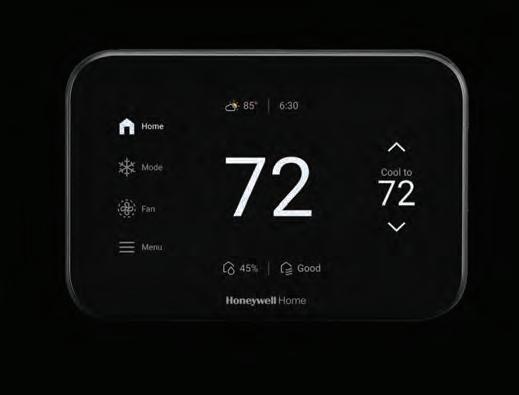
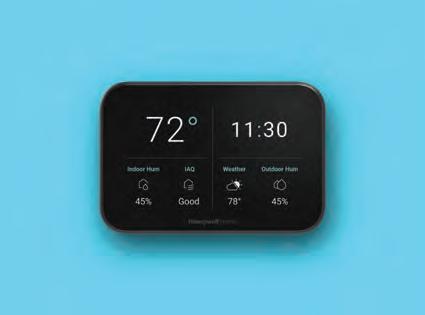
This innovative, smart thermostat combines convenience, comfort, and energy efficiency with advanced features to enhance your home living experience.

Save energy
ENERGY STAR® certified to help save energy and eligible for utility rebates.
Advanced occupancy & presence detection

Smart thermostat senses and adjusts settings to maximize comfort when home and save energy when you’re away.
Optimize & maintain performance
The thermostat will analyze your heating and cooling system performance and can notify you or your pro if there is a loss of efficiency, saving you money.
Always connected
Adjust settings from anywhere and receive important alerts using the First Alert® app. Smart phone not included.
Doorbell camera viewer & intercom
See and speak to visitors at your door directly from the thermostat – compatible with First Alert® and Ring® streaming doorbells. Doorbell not included.
Precision comfort & air quality
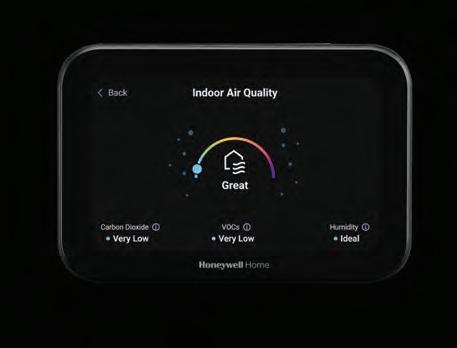
Comfort is more than just the perfect temperature, maintain optimal home humidity and control ventilation to keep air fresh.
Additional HVAC equipment or accessories may be required.
Customizable display
A sleek 5” display delivers enhanced visibility with the option to choose the color and style to match your home.




by Alex MacAulay
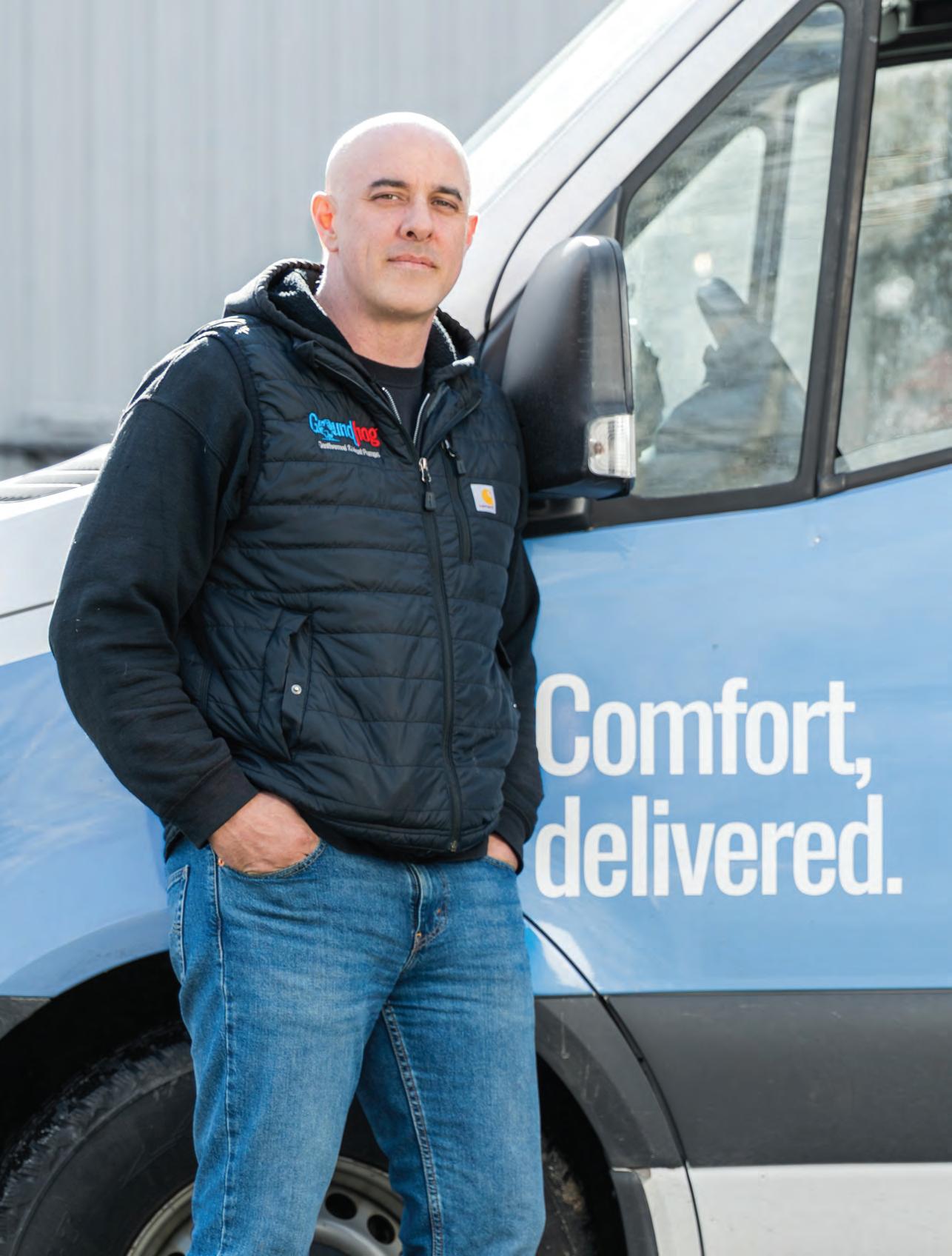
Name: Andrew Forsyth
Company: GroundHog Geothermal & Heat Pumps
Job title: HVAC/R mechanic
Born in: Antigonish, NS
Lives in: Halifax, NS
Age: 39
Spouse: Shelby Hirsch
Andrew Forsyth admits he was probably too distracted by his social life to concentrate in high school, but that all changed when he took his father’s advice and began a two-year HVAC/R program at Nova Scotia Community College. “I finally found my focus,” recalls the co-owner of Garlands Crossing, NS-based GroundHog Geothermal & Heat Pumps. “I liked that it was applied knowledge and what I was learning was actually going towards something.”
After graduating, Forsyth worked at Wilson’s Mechanical, which at the time was doing a lot of work with geothermal and hydronics, both of which were becoming more popular in the province. Forsyth eventually moved to Hussmann Canada, where he worked for several years doing grocery store refrigeration installations. “Hussmann was a great company to work for, but I ended up having to work away from home a lot.”
Wanting to stay in town more often, Forsyth decided to go into business for himself, teaming up with business partners Mike Gillard and John Devereaux. The trio worked under a different company name for a year before deciding to buy GroundHog Geothermal in 2022. Today the company has six technicians including Forsyth, working on residential geothermal and hydronic systems in the Halifax region and the Annapolis Valley.
“In the first year and a half, I did maybe five or six geothermal system installs. But there’s not a whole lot of new geothermal going in because of the up-front costs. And the majority of my customers have a lot of land. There are a lot out in the country, where people can do horizontal loops,” he explains. “So a lot of what we do is replacing existing units and servicing what already exists. We do mini splits, central air service, hydronic service, and we’re now doing air to water heat pumps.”
While Forsyth enjoys working on the heat pumps, his favourite part of the job is making custom controls. “I really enjoy logic gates and things of that nature, so when somebody asks for something I very rarely tell them that it’s not possible. I’ve made monitoring systems and custom driveway snow melt controllers, all using Arduinos and PLCs,” he says. “Often it’s because it doesn’t exist on the market, or because a canned solution doesn’t do exactly what I want it to. And all knowledge of the algorithm is kept very secret with the control manufacturer, so I just make my own.”
Forsyth recalls installing a hydronic system in an 8,000sq. ft. home with custom controls. “It was all in-floor heat and there were probably 10 zones. The buffer tank was about 120 gallons. There was a backup heating system for when power was lost, a propane boiler would

take over, and there was an injection loop that directly injected heat from the propane boiler into the buffer tank. That propane boiler, when not being used for emergency, could also be used as a plant for a snow melt system. The whole system is automated, so when the owner goes to Florida every year during the cold months he can watch his cameras and turn the snow melt system on remotely. I even have monitoring on supply and return water temperature, and buffer tank temperature for him to see while he’s gone.”
The company continues to add mini split brands to its roster and recently became a dealer for Quilt, which Forsyth says focuses on esthetics and offers indoor units that can be painted or wallpapered. He’s also excited about the increasing use of air to water heat pumps. “I’ve found that there are a lot of people asking about converting their existing boiler, their hydronic system, to something a little more energy efficient, such as the air to water heat pumps,” he explains. “I’m not seeing a lot of people installing them yet, but they’re already a huge thing in Europe, so I believe they are the future.”
In the mechanical industry since: 2008
By Carolyn Cooper
Favourite part of the job: Controls, and creating my own controls using industrial grade Arduino
The most useful tool in your toolbox: Flir thermal camera
Your favourite tool in your toolbox: Klein 14-in-1 pocket precision screwdriver
Tool that you wish you had: Wera Joker wrench set

Schools and programs: HVAC/R, two-year program, Nova Scotia Community College, Institute of Technology Campus
Favourite teachers: Shawn Henneberry and Scott Geddes (Hussmann Corporation)
Best advice you’ve ever received: Complexity is just the basics done well
Service area: Halifax Regional Municipality/Valley
Any area you like to get dispatched to, and why: Mahone Bay – I really enjoy the scenery and the old architecture
Advice for young people considering entering the trades: Dress for the weather
One place in the world you would like to visit: Sochi, Russia
The current work ride: Mercedes Sprinter
If you were granted one wish: That flow state I get when creating or solving hard problems feels like my natural habitat. I wish I could access it whenever I wanted.
Favourite book: Easy Way to Stop Smoking by Allen Carr
Last book you read: Can’t Hurt Me: Master Your Mind and Defy the Odds by David Goggins
Favourite movie: Fight Club
Favourite place to be: Las Vegas
Favourite vehicle of all time: My 2023 HarleyDavidson Street Bob
Favourite season: Summer
Favourite restaurant or local lunch hang out: The Brown Hound Public House
Favourite food: Spaghetti
Favourite snack: Brothers Meats’ pepperoni
Hobbies: Programming, electronics, boxing, jiu-jitsu
Favourite outdoor activity: Daytime patio drinks
Favourite sport: Boxing

If you could meet anyone, alive or dead, who would it
3 albums that you’d take with you to your desert island:
1. Tool – Lateralus
2. Leonard Cohen – I’m Your Man
3. Hatebreed – Weight of the False Self
By Mike Squires
Mike Squires, RSE, is a graduate of the College of the North Atlantic. Mike is manager, solution strategy and business success with Copeland. Prior to moving to roles with manufacturers, he was a service technician for a number of years.
As governments, utilities, and building owners improve on and speed up efforts to reduce greenhouse gas (GHG) emissions from buildings and other facilities, water heating and hydronic space heating stand out as prime opportunities for electrification and decarbonization. Heat pump technology offers a proven, high-efficiency alternative to traditional fossil fuel-fired systems. When paired with a clean electricity supply grid heat pump systems can cut energy consumption dramatically while slashing direct emissions to near zero.
Heat pumps work by transferring thermal energy rather than generating it through combustion. In water heating applications, they extract heat from ambient air or other sources such as water systems, geothermal sources, and even waste water sources and deliver it to water at usable temperatures.
Coefficients of performance (COP) often exceed 3.0, which means that for every unit of electricity used they deliver three or more units of heat.
Electric hot water storage tank
Total energy costs are 7 times the initial purchase price
This graphic illustrates the real cost behind domestic water heating.

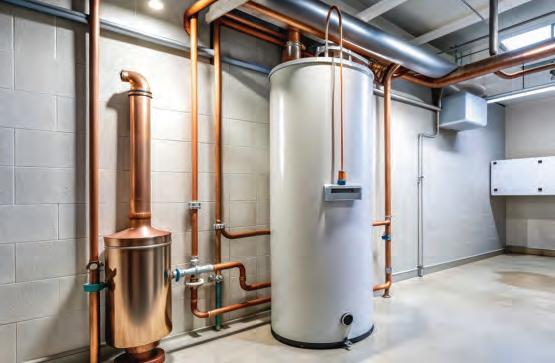
Residential/light commercial HPWH: These compact solutions are designed primarily for domestic hot water (DHW) serving sinks, showers and laundry. They provide a direct, sustainable replacement for conventional electric resistance or fossilfuel storage water heaters. These would be similar to the typical domestic water heater at home but with a mechanical refrigeration heat pump as the prime source for heat.
Commercial/industrial HPWH: These units are capable of meeting higher demand in multifamily buildings, hotels, hospitals or process applications. They are typically larger packaged systems or large custom-built systems for a specific commercial application design.
Residential/light commercial hydronic heat pumps: These heat pumps heat a secondary water loop circulated through pipes to radiators, baseboards or radiant flooring. Many models deliver both space heating/cooling and domestic hot water.
Commercial/industrial hydronic heat pumps: These scaledup versions are suitable for larger buildings and often support simultaneous space conditioning and water heating needs.
Packaged unitary/integrated systems − All key components (compressor, heat exchanger and storage tank) are combined into a single appliance. These are straightforward to install and well-suited for space-constrained residential or lightcommercial retrofits. These are typically the easiest to install or to integrate into an existing system.

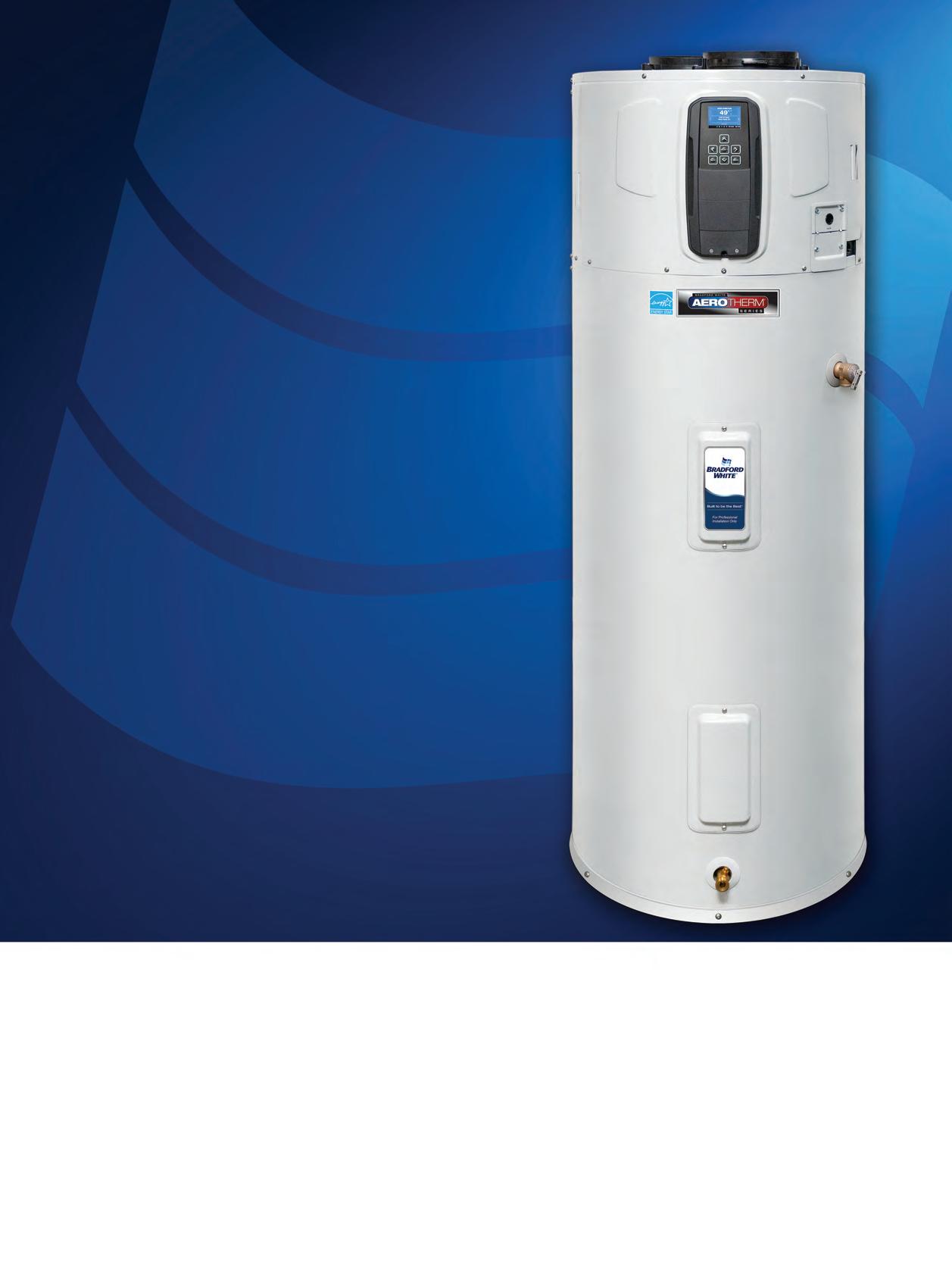
• Over 4X More Efficient*
• Up to 4.20 UEF** and ENERGY STAR® Certified
• Up to $818 Savings in Annual Energy Costs***
• Exclusive Vitraglas® tank lining with Microban® antimicrobial technology

Split systems − The heat pump (often located outdoors for better heat extraction) connects via refrigerant lines to an indoor storage tank. This setup offers flexibility in noisy or space-limited indoor environments and can improve overall performance in certain climates. The installation process is more involved and may require specialized installation personnel.
Hydronic heat pumps use a secondary water loop, enabling efficient distribution for space heating, cooling and DHW in one integrated system. They perform best with lowertemperature distribution such as radiant floors or fan coils, but advanced designs now support higher leaving water temperatures (LWT) up to 140°F, 160°F, or even 180°F for retrofits with existing high-temperature radiators.
Manufacturers now offer a range of compressor technologies tailored to water heating demands, which differ from those optimized purely for space conditioning (often requiring higher temperatures and different operating envelopes).
Tailored modulation options allow systems to match varying loads efficiently:
• Fixed-speed: Lowest first cost, strong full-load efficiency.
• Two-stage: Good seasonal efficiency with moderate complexity.
• Digital and variable-speed: Highest modulation range and turndown; variable-speed often delivers the best total cost of ownership and efficiency, with overspeed capability in some designs.
• Multiples (staging): Provides redundancy, capacity scaling and efficiency gains.
• Vapour injection: Enhances low-ambient heating performance and capacity.
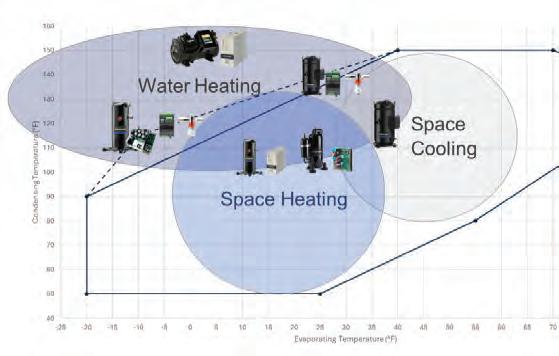
Various compressor operating envelopes and equipment that may be used in these areas.
These options enable precise control, reduced cycling and optimized operation across residential to industrial scales. Water heating applications frequently demand different compressor characteristics than space cooling/heating − emphasizing high-temperature lift and stable performance under varying water flow conditions. With the range of temperatures required for heat pumps manufacturers are producing compressors designed for an increased pressure and temperature envelope.
In North America, both residential and commercial sectors show strong growth projections for heat pumps in hydronic heating and water heating. HPWHs are experiencing yearover-year gains, with a notable acceleration expected around 2028 and beyond.
The momentum in Canada is a result of Natural Resources Canada (NRCan) initiatives. NRCan enforces minimum efficiency standards for heat pumps and water heaters, with updates taking effect in phases from 2026 onward.
NRCan notes that: New water heater requirements are to be harmonized with the U.S. Department of Energy requirements, and will be mandatory on May 6, 2029. Provincial and municipal rules add further layers, with some jurisdictions emphasizing fuel choice and efficiency requirements.
The U.S. National Appliance Energy Conservation Act (NAECA) updates will require most new electric storage water heaters over 35 gallons to use heat pump technology starting in 2029, effectively phasing in high-efficiency solutions.
Heat pumps are no longer niche technology; they represent a mature, scalable solution for decarbonizing water and space heating. Success depends on matching system design to building needs − considering climate, existing infrastructure, load profiles, and regulatory context − while leveraging incentives and advancing refrigerant and efficiency standards.
For building owners, designers and contractors across North America, the message is clear: the transition is underway, supported by tightening regulations, utility programs and market momentum. Early adopters gain competitive advantages in energy cost savings, emissions compliance, and resilience.
Stay informed on evolving standards, product advancements and best practices. The shift to efficient HPWH solutions is not just environmentally responsible − it is increasingly the smart economic choice for sustainable buildings.

Now, cost doesn’t have to be the biggest elephant in the room when choosing a BMS.
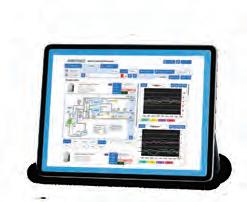
Experience the benefits of an innovative virtual Building Management System with Fujitsu AIRSTAGE Cloud.
Don’t let a ton of upfront costs keep you from optimizing your facilities’ energy costs. Fujitsu’s innovative AIRSTAGE Cloud BMS, coupled with AIRSTAGE VRF products, allows facilities managers to install, control, troubleshoot, and reduce energy costs – all from a simple online platform. This new, virtual private BMS produces a strong ROI in months, not years! Plus, our full line of AIRSTAGE VRF solutions is backed by 45 years of HVAC expertise and delivers more flexibility, power and comfort in less space. Say goodbye to the elephant in the room – and hello to a smarter, more cost-effective BMS solution… Fujitsu AIRSTAGE Cloud.
Visit airstagecloud.com

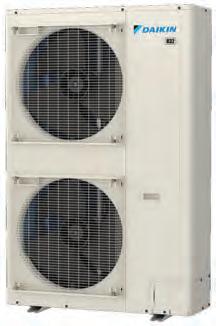
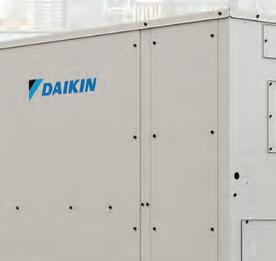
The Daikin FIT AURORA (DH9VS) heat pump is a compact, sidedischarge inverter system engineered for all-climate applications. It delivers flexibility and performance in both high- and low-ambient environments. The FIT AURORA has efficiencies up to 10 HSPF2 and 21 SEER2 with low global warming potential. It operates down to 45 dB(A).
www.
daikincomfort.com
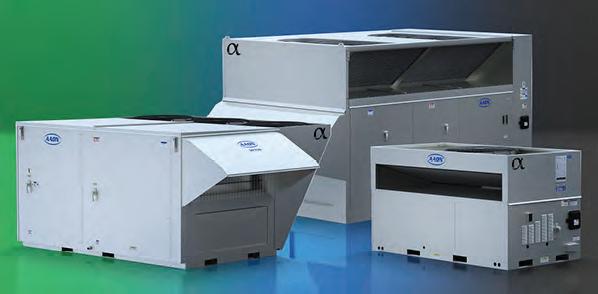
The Alpha Class EXTREME SERIES packaged rooftop unit from AAON delivers up to 40 tons of conditioning with ambient performance down to -28°C. The unit is AHRI certified, and is suited for retrofitting commercial buildings without requiring a complete
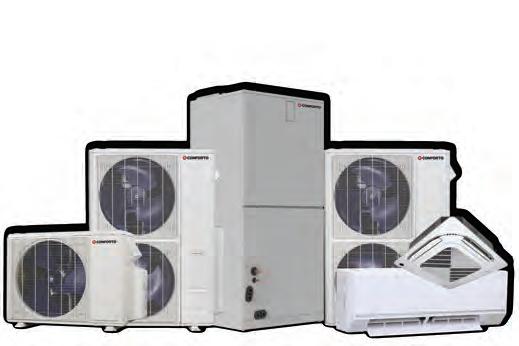
Conforto’s ducted units provide 100 per cent heating capacity at -20°C and operation down to -30°C, while its ductless units have an outdoor cooling operation range of -30°C to 50°C, and outdoor heating operation range of -30°C to 30°C. Quiet and easy to install, the units are compatible with third-party thermostats.
www.
confortohvac.com
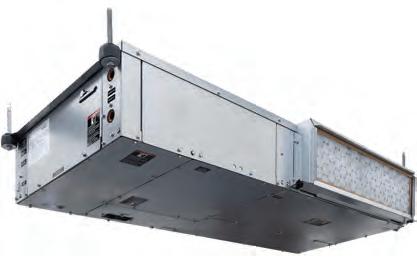
ClimateMaster introduces the Tranquility SL Low-Profile Series of water-source heat pumps with a small footprint, high efficiency and quiet operation. The unit has an ASHRAE 90.1 efficiency standard rating, and a 9-in. cabinet height, allowing it to be installed in tight ceiling spaces. Features include brazed-plate heat exchanger, EC blower motors, integrated water control options, and an UltraQuiet sound attenuation package. The heat pumps also offer real-time diagnostics, fault memory and faster commissioning when connected to a wireless service tool.
www.
climatemaster.com
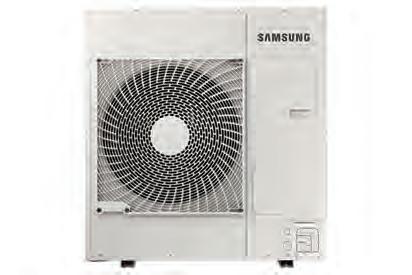
Samsung’s Hylex system is designed to deliver 100 per cent heating capacity at -20°C and operation down to -25°C. It has an inverter-driven compressor and optional dual-fuel configuration. Featuring R-454B refrigerant, it is compatible with most TXV coils and can be paired with a Hylex A-Coil or MPAH for a fully matched system. In some cases existing piping and wiring can be reused to simplify installation and reduce costs. SmartThings connectivity enables system monitoring.
www.
samsunghvac.com
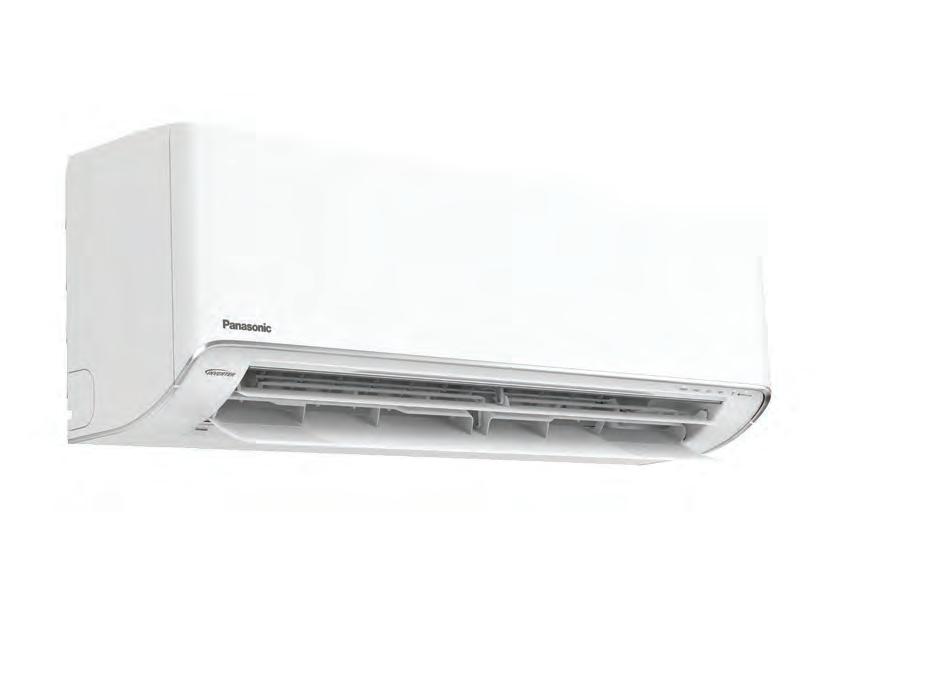

Improved nanoe™ X air purification effectiveness
•10x more hydroxyl radicals/second compared to previous ClimaPure® XE model
R32 Refrigerant
• Lower Global Warming Potential (GWP) compared to R410A Refrigerant
Suitable for cold climate
• Units independently tested in Canada to operate at -35°C (-31°F) in controlled environment
Inhibits 3 types of pollutants
5 effects nanoe™ X air purification technology Skin &
Now available!
Scan QR code to learn more
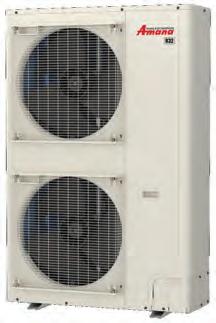
The Amana brand S-Series highefficiency all climate heat pump (AZV9S) is an inverter-driven, variablespeed split system for traditional ducted applications, compatible with an air handler or paired with a gas furnace (dual-fuel). Suitable for both low- and high-ambient regions, it is easy to transport and install, offers quiet-mode operation with sound levels as low as 45 dBA, and delivers up to 21 SEER2 and 10 HSPF2.
www.
amana-hac.com
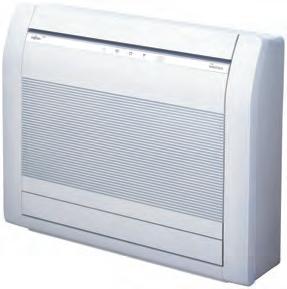
General HVAC Solutions America has launched R-32 floor-mounted indoor units compatible with AIRSTAGE H-Series mini splits. The indoor units are made for standard or recessed installation, and integrate with both Centauri single-zone and Aquila multi-zone outdoor units. With dual fans, built-in Wi-Fi and an integrated leak detection sensor, the systems exceed ENERGY STAR certification criteria. The mini splits are available in 9,000, 12,000 and 15,000 BTU/hr capacities.
www.
fujitsugeneral.com
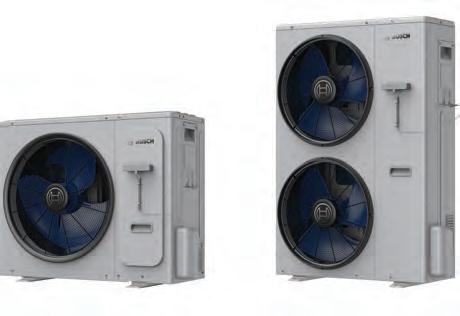
Bosch Home Comfort introduces the IDS Edge inverter ducted split heat pump. The compact IDS Edge can be paired with a range of indoor solutions including air handlers, dual-fuel furnaces, ducted units, wall-mounted units and four-way cassettes. With up to 19 SEER2 and 10.8 HSPF2, the unit also includes low-GWP R-454B refrigerant, corrosionresistant coil coatings, self-cleaning condenser fan, heated base pan and integrated fault diagnostics. A cold climate configuration, the IDS Edge Max, offers enhanced cold climate capability.
www.
bosch-homecomfort.com
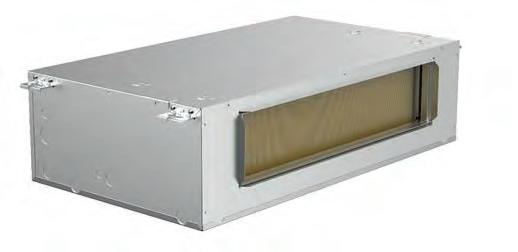
Midea’s ceiling-mounted Pancake air handler is made for multifamily housing and retrofits. The unit brings inverter-driven, cold climate heat pump performance into a format not typically designed for it. The system delivers up to 100 per cent heating output at -20˚C, and continuous operation down to -30˚C. It offers 24V and RS-485 compatibility, and ducted configurations. The ceiling mounted design maximizes usable space. The air handler is available in four capacities: 18K, 24K, 30K and 36K
www.
mideacomfortna.ca
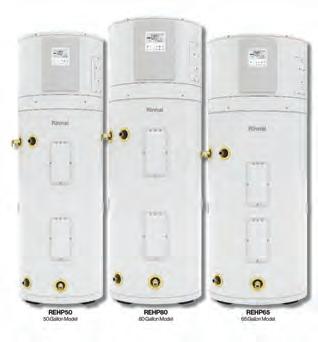
The Rinnai REHP Series electric heat pump water heater delivers 4.0 UEF, reducing energy use up to 60 per cent. Using ambient air, it provides zeroemissions operation and up to 91 gallons first-hour delivery. Available in 50-, 65-, and 80-gallon models, it supports varied residential demand. The unit is duct-ready, requires zero clearance and includes side handles for easier installation. Features include a variable-speed fan for quiet performance and a CTA-2045 EcoPort. www. rinnai.ca
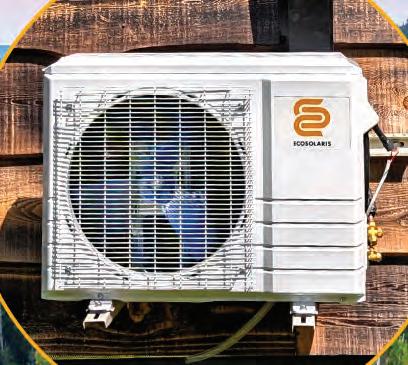
The solar hybrid mini-split heat pump from Solar Cooling is built for off-grid and hybrid applications, operating directly from solar panels without requiring an inverter. With optional AC input for backup via grid or generator, the system can provide reliable cooling and heating in remote or energy-limited environments. Its dual-input design (solar DC + AC backup) simplifies installation while reducing system complexity, energy consumption, and environmental impact. Available in 12,000 and 18,000 BTU/hr models. www.
solarcooling.ca
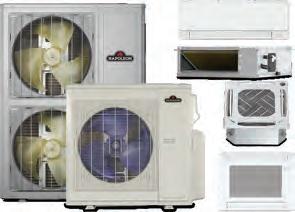
Napoleon offers cold climate central heat pumps for full-home comfort or mini split heat pump systems for flexible zoning and retrofit applications. The outdoor, low profile and side condensing central heat pump units can meet a range of home comfort needs with their inverter technology. A two-stage enhanced vapour injection compressor offers a wider range of temperature management. The minisplit systems are available in 1-, 1.5- and 2-ton capacities. www.
napoleon.com
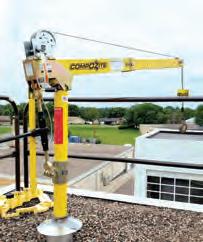
The Davit Crane Rooftop Maintenance System from OZ Lifting Products is a versatile material handling solution specifically designed for HVAC/R applications such as installing heat pumps, air handling units and condensing kits. Features include quick-connect toolfree assembly, corrosion-resistant finish and adjustable booms. Models range from 500 to 2,500 lbs in capacity, with four base styles in different finishes. www.
ozliftingproducts.com

Conforto heat pumps keep your home refreshingly cool during the hottest days of summer—without compromising on energy efficiency. Choose the Cold Climate Centrally Ducted System for whole-home cooling or the Maximum Ductless Mini-Split for targeted comfort in any space. Both systems are whisper-quiet, ENERGY STAR® certified, and built to perform year-round.
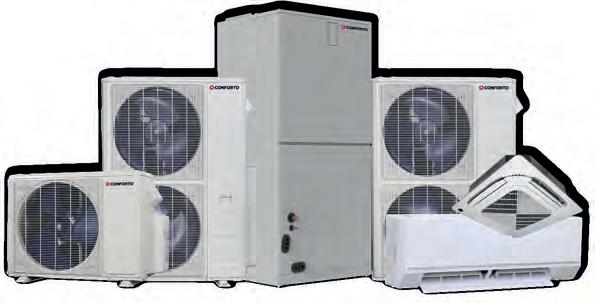
Built for harsh climates. Engineered for efficiency. Granby/Conforto

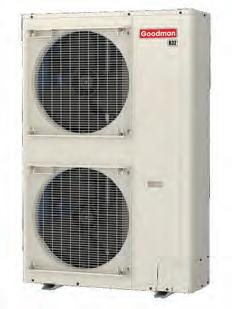
The Goodman SD is a split system, sidedischarge heat pump designed to optimize space and performance for high- and lowambient conditions. The inverter-driven, variable-speed units are compact. With performance as low as 45 dBA in quiet mode, the heat pumps reach up to 21 SEER2 and 10 HSPF2.
www.
goodmanmfg.com
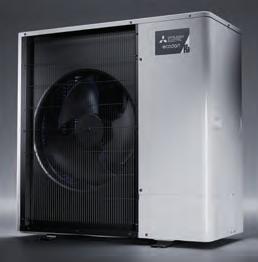
The Ecodan WUZ residential air to water heat pump from Mitsubishi Electric is available in 2-, 3- and 4-ton models. It delivers hydronic heating, chilled water for cooling and domestic hot water. The heat pump delivers outdoor operation down to -30°C and 100 per cent heating capacity down to -15°C, with up to 70°C leaving water temperature. The high-efficiency unit has an up to 5.05 COP and an R-32 refrigerant split configuration. www.
mitsubishielectric.ca
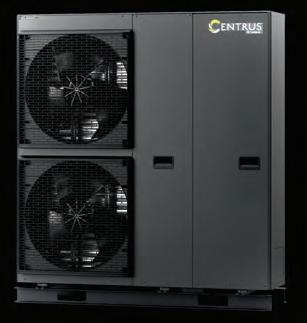
Lochinvar’s CENTRUS residential hydronic heat pump, available from Aqua-Tech Canada, provides heating, cooling and domestic hot water production. Offering 41,000 BTU/hr of heating and 34,800 BTU/hr of cooling, the air to water heat pump has a COP up to 6.0 at 35°C LWT. It features backup boiler capability, self-contained mono-bloc design, and delivers water temperatures of up to 65°C. The unit uses low GWP R32 refrigerant. www.
aquatech-canada.com
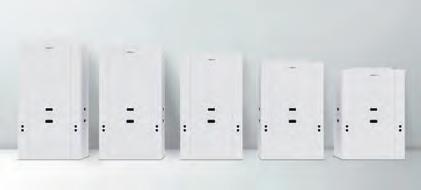
The Vitocal 100-WA from Viessmann is a high-efficiency geothermal heat pump system providing reliable heating and cooling. Compatible with open and closed loop systems, the system offers flexible configurations with left, right, or rear return all in one unit. It is also environmentally friendly with low-GWP R-454B refrigerant. The system is available in five sizes, with heating capacities of 15.6 to 54.8 MBH, and cooling capacities of 20.2 to 75.9 MBH. www.
viessmann.ca
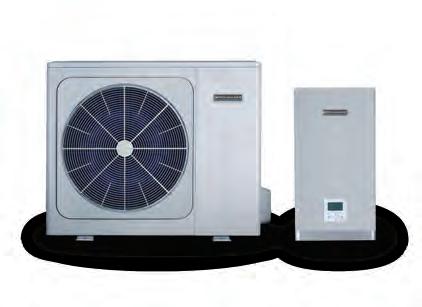
Weil-McLain Canada has introduced the ECO HP air to water heat pump hybrid hydronic system for residential and commercial applications. The electric heat pump is part of the ECO hybrid dual-fuel hydronic system, combining high-efficiency heat pump technology with the reliability of a gas boiler. The system operates in cold climates down to -25°C, with up to 55,000 BTU, and a max water output of 65°C. It features R32 refrigerant. www.
weil-mclain.ca
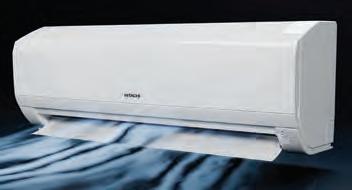
The Hitachi air365 Max is a top-flow VRF commercial heat pump that provides cooling and heating from -30°C to 50°C. The unit, which uses R-32 refrigerant, is designed to offer flexibility for a variety of applications. Single chassis units up to 20 tons save space and labour, while outdoor units are offered as both universal heat pump and heat recovery. The airCloud Select Web design platform offers instant safety evaluation, helping select safety shut-off valves, calculating required A2L mitigation devices, and automating regulation compliant piping and wiring diagrams. www.
hitachi.com
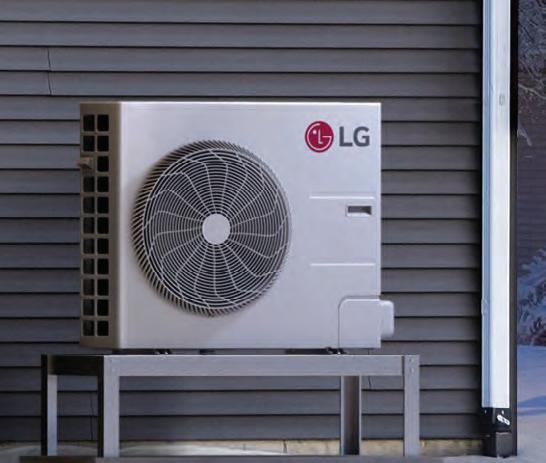
From coast to coast, Canadian homes demand heating and cooling solutions built for yearround comfort. The LG Builder Series Heat Pumps deliver reliable performance at a price that fits today’s market—without compromising on quality or innovation. Whether for retrofits or new builds across Canada, the LG Builder Series Heat Pumps provide an affordable, reliable solution for builders and simplify installation for contractors. Available in capacities of 9,000, 12,000, 18,000, and 24,000 Btu/h.
Quiet yet powerful, the LG Builder Series Heat Pumps feature energysaving inverter technology and a host of comfort-focused benefits:
Customizable Comfort: Features four-way auto swing, Natural Wind for natural airflow, and Jet Cool/Jet Heat for rapid temperature adjustment. Convenient Controls: Includes a 24-hour on/off timer, auto changeover, auto restart, and sleep mode for effortless operation.
User-Friendly Features: Easily controlled via the included standard wireless remote. Temperature display on indoor unit.
Effective Defrost and Drainage: Defrost control and built-in base pan heater included. Built-in condensate sensor connection prevents overflow.
Reliable Operation: Supports heating down to -15°C, backed by LG’s trusted 10-Year Warranty.

Match the terminology you hear in the field to the correct definition or function by July 7, 2026 and enter for your chance to win a $150 Visa gift card. This contest is open to Mechanical Business subscribers in Canada. Send your answers to kerry.turner@mechanicalbusiness.com or enter online at mechanicalbusiness.com.
EXAMPLE: 4) Cold-climate heat pump K) Uses an inverter, or variable speed drive making it capable of heating homes in temperatures down to approximately -25°C
Answer 4,K
Have fun challenging yourself!
A) Opens and closes to regulate how much air flows through vents, or ducts in a ducted heat pump system
B) A heat pump with a variable speed drive uses an inverter motor to increase energy efficiency by allowing for a full range of operation
C) Heat pumps that can be used in climates to around -25°C
D) Metering device that controls how much refrigerant is released into the evaporator coil
E) Unit added to the outdoor condenser unit to warm the drain pan so ice does not form there or at the base of the condenser unit
F) Connects to ductwork inside walls and ceilings and uses the ducts to move warm or cool air throughout a building
G) Improves performance in cold temperatures by allowing increased refrigerant flow into the evaporator coil
H) The rated capacity of the machine divided by its rated power input − can be expressed as a single figure or percentage
I) Refrigerant circulates through a pipe buried in the ground to collect thermal energy
J) Measurement of heating efficiency for heat pumps expressed by a ratio of the total thermal energy provided by the heat pump compared to the amount of electricity it uses to operate over the course of a year
K) Uses an inverter, or variable speed drive making it capable of heating homes in temperatures down to approximately -25°C
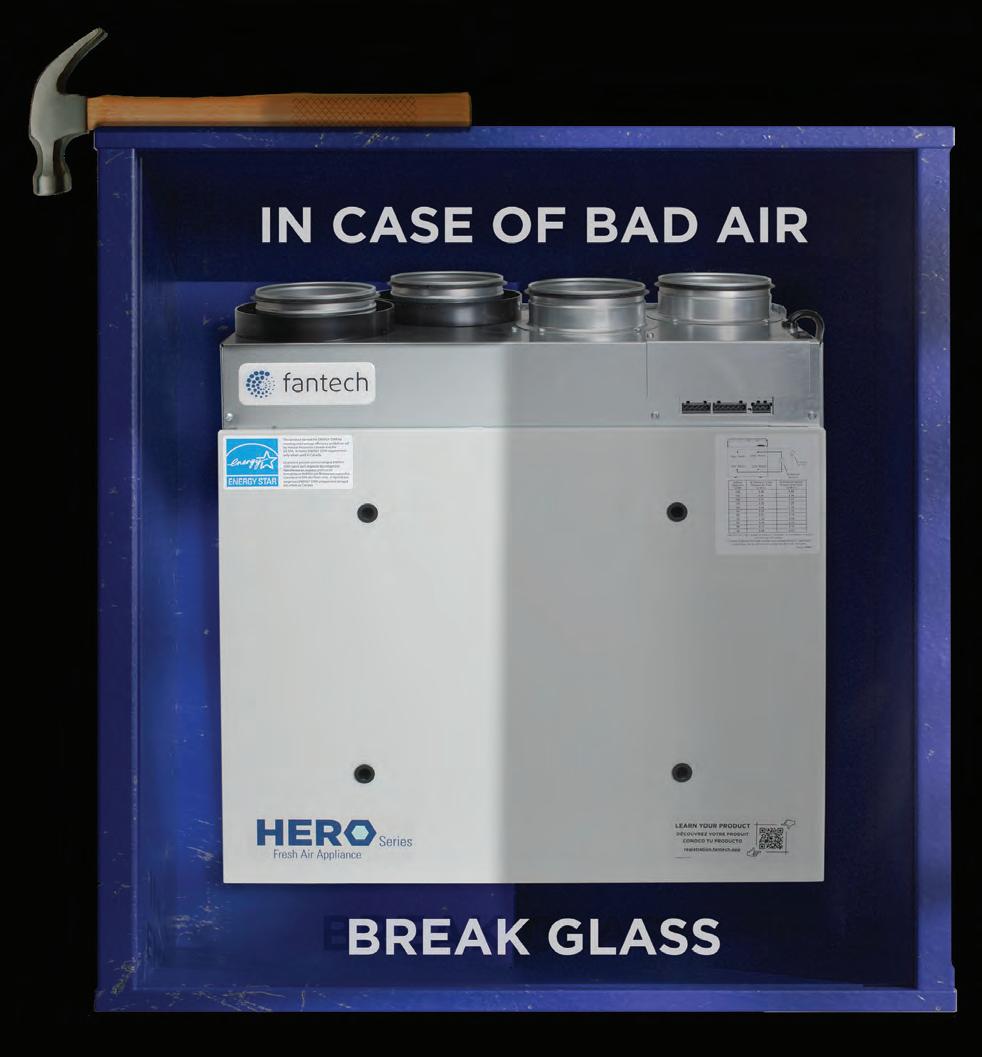
Fantech/Systemair

The HERO HRV/ERV delivers balanced ventilation for healthier residential and multi-family environments
Scan Here to learn how HERO can improve your next project
Ilive in a province where the term “heat pump” still raises eyebrows. Here in the wild west of Alberta, heat pumps have been a challenging concept for engineers, contractors, and building owners to embrace fully.
While the industry supports the idea in principle, adoption is still a tough sell. Limited provincial incentives and a colder climate both play a role. As outdoor temperatures drop, the efficiency gains that make heat pumps so appealing begin to diminish.
That said, I’m a strong believer in heat pump technology and its role in helping us meet global decarbonization goals.
In this article, I’ll walk through where air to water heat pumps (AWHPs) make the most sense; break down the differences between common system types; and highlight the importance of backup heat, especially in colder climates.
By Todd Wiggins
Todd Wiggins is with Watts Water Technologies in the role of regional sales manager, Canada. He works closely with Watts’ partners across Canada, supporting and growing key product lines.
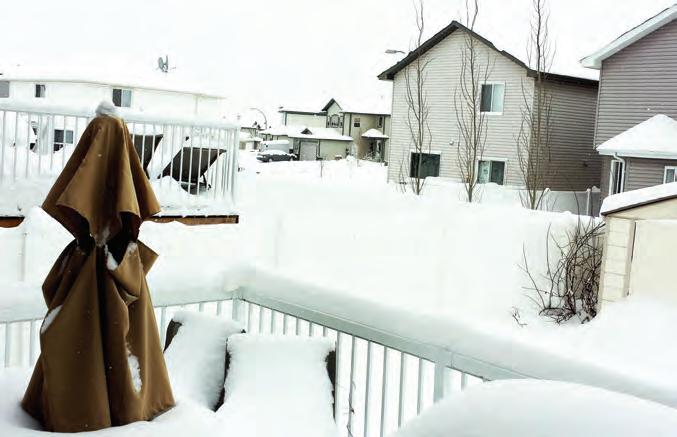
The goal isn’t to eliminate boilers in cold climates, but to integrate heat pumps where they perform best.
Before getting into where AWHPs work best, it’s important to understand how they operate.
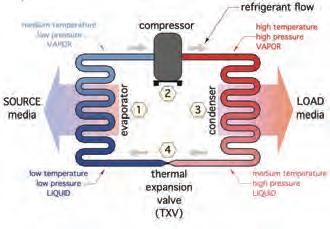
All heat pumps are based on the refrigeration cycle. If you’re not familiar with it, the cycle consists of four main components: the compressor, condenser, expansion
valve, and evaporator. The refrigerant absorbs heat at a low temperature in the evaporator, is compressed to increase its temperature and pressure, releases that heat through the condenser, and then expands to repeat the process. Figure 1 illustrates the refrigeration cycle.
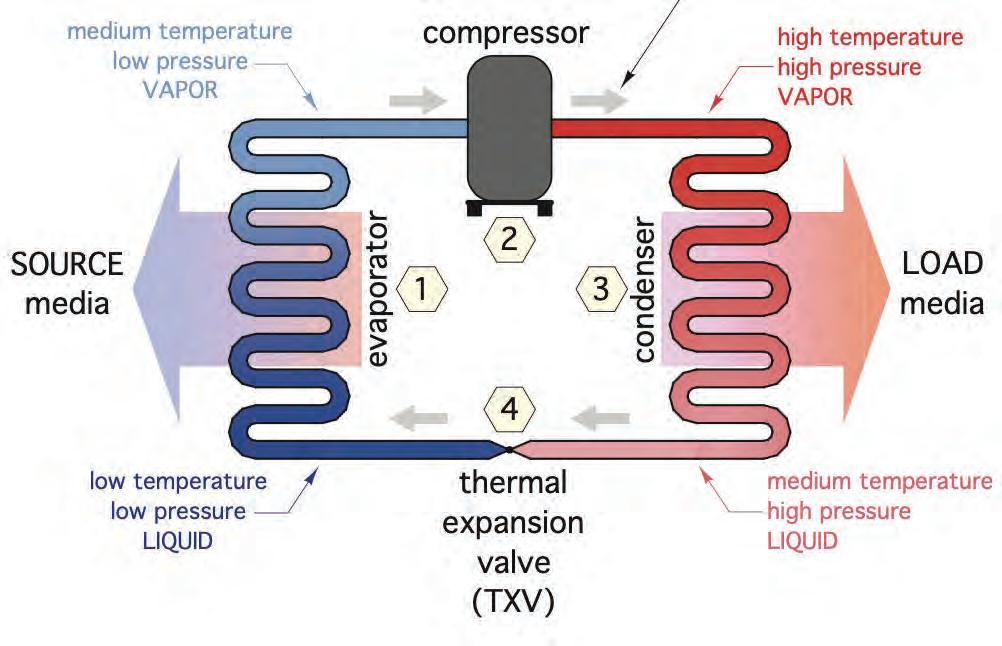
Figure 1
From a system standpoint, the efficiency of an AWHP is primarily determined by two factors: ambient air temperature and return water temperature.
This is why places such as British Columbia are where heat pumps really shine. The milder climate, combined with strong rebate programs, creates ideal conditions for consistent, highefficiency operation throughout most of the year. Systems can run at lower lift conditions, improving COP and making them a more attractive solution for homeowners, engineers and building owners.
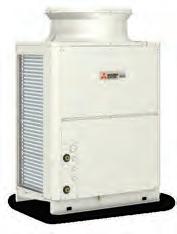
ECODAN QAHV HEAT PUMP WATER HEATER
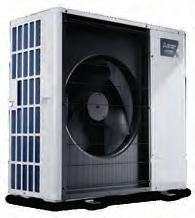
ECODAN WUZ AIR-TO-WATER HEAT PUMP
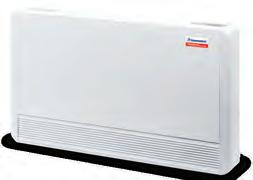
CLIMAVENETA i-LIFE2 SLIM HYDRONIC FAN COIL UNIT
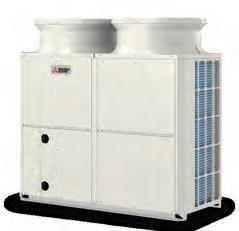

LOW CARBON HYDRONIC HEATING, COOLING AND DOMESTIC HOT WATER SYSTEMS
NATURAL GAS ALTERNATIVES FOR ELECTRIFICATION u TRUSTED PERFORMANCE, QUALITY AND RELIABILITY u
u LOCALLY BASED PARTS AND SUPPORT TEAM u
REDUCES ENERGY CONSUMPTION OVER COMPARABLE NATURAL GAS AND ELECTRIC RESISTANCE HEATERS
To find a distributor go to: MitsubishiElectricHydronics.ca
Japanese Engineered. Unrivaled Quality. For Canada.
Geothermal heat pumps operate at high efficiency year-round due to stable ground or water temperatures. They extract heat through a closed-loop or water source, with a circulating fluid transferring it to the heat pump for delivery to the hydronic system. While upfront costs are higher, lower lift conditions and improved performance, especially in colder climates, often justify the investment.
Low-temperature applications are where AWHPs stand out. Systems such as in-floor radiant or low-temperature fan coils allow the heat pump to operate at lower supply water temperatures, which keeps the COP high. The result is better efficiency, lower operating costs and improved comfort.
We’ve talked about how climate impacts heat pump efficiency, but what about provinces with harsh winters such as Alberta, Saskatchewan, or Manitoba? The short answer is yes; heat pumps still make sense.
If you have proposed heat pumps in these regions, you have likely been asked about backup heat. As outdoor temperatures drop, especially near -25°C, heat pump performance and COP decline and the system may no longer maintain required supply temperatures at peak demand. That’s where supplemental heat comes in. The type of backup system depends on the region and project. In Alberta, a natural gas boiler is often the most practical and cost-effective option. In Ontario or Quebec, where electricity is more affordable, an electric boiler can make more sense.
A common question is: if heat pumps struggle in extreme cold, why not just size a boiler for the full load?
It’s a valid point, especially in markets without strong incentives. In Alberta, a common approach is to size the heat pump based on cooling demand and let the boiler handle peak heating. This hybrid strategy shifts the conversation from “Can the heat pump do everything?” to “Where does the heat pump add the most value?”
That value shows up in shoulder seasons and in cooling mode. Under favourable conditions, heat pumps can deliver exceptional efficiency, often outperforming traditional boilers. The goal isn’t to eliminate boilers in cold climates, but to integrate heat pumps where they perform best.
When comparing air to water and air to air heat pumps, the core mechanical operation is very similar. The main difference is in what they deliver; one produces hot water, the other produces conditioned air.
Air to air systems tend to be more cost-effective because they can tie into existing ductwork. With a blower and minimal modifications, they can distribute heating and cooling throughout a building. Most systems include a reversing valve, allowing them to provide both heating and cooling.
In cooling mode, the system operates like a traditional AC setup. In heating mode, the reversing valve switches the roles of the coils, allowing the system to extract heat from outdoor air and deliver it indoors.
That said, if you’re in a colder region, keeping a gas fired furnace as backup is critical. Just like with air to water systems, once outdoor temperatures drop below the unit’s capacity, backup heat is required. You may also notice higher utility costs if the heat pump is constantly running to maintain indoor temperatures during colder periods.
In milder regions, there’s sometimes a perception that backup heat isn’t needed. In my opinion, that’s not entirely accurate.
Unless you’re in very warm climates such as California or Florida, where heating demand is minimal, backup should still be part of the system design. In Canada, I believe backup heat should always be considered.
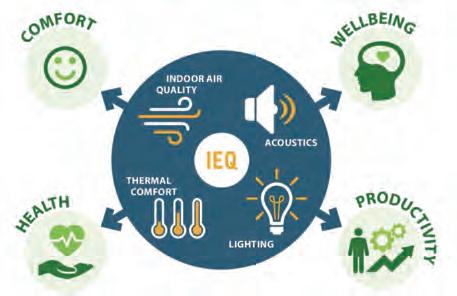
Given the choice, I’d go with an air to water system. That comes down to my bias toward hydronics. Hydronic systems offer a level of comfort hard to match, along with benefits for indoor air quality (IAQ) and overall indoor environmental quality (IEQ).
If you already have a boiler and switch to an air to air system, you may find yourself turning that boiler back on during the winter to maintain comfort.
It is encouraging to see manufacturers continuing to push heat pump technology forward, especially for cold climate applications. With more field data, better design strategies and improved system integration, heat pumps, whether air to air or air to water, will continue to become more viable across all regions. The key is understanding where they perform best and designing systems around those strengths.


INVERTER TECHNOLOGY
Variable-speed inverter compressor with vapor-injection technology helps deliver e cient operation and heating performance in low ambient conditions



ENERGY PERFORMANCE
Part-load e ciency up to 22 IEER helps manage operating costs while maintaining comfort

COMFORT CONTROL
Modulating compressor and indoor blower help regulate airflow, temperature, humidity, and comfort

SMART BUILDING INTEGRATION
Factory-integrated BACnet® connectivity and cloud-enabled services help simplify monitoring, control, and system optimization








APPLICATION FLEXIBILITY








Multi-zone Variable Air Volume (VAV) helps control airflow to meet varying needs of multiple zones







is product specialist – air distribution with The Master Group.
When HVAC efficiency is discussed, the conversation almost always turns to equipment: higher-efficiency heat pumps, advanced controls, variable-speed compressors or electrification strategies. While these technologies are essential, they often overlook one of the most powerful and least utilized levers available to designers and retrofit professionals: air distribution effectiveness.
Recent research* demonstrates that HVAC system performance can be dramatically improved not by adding complexity or capacity, but by reducing the ventilation load itself. By optimizing how air is delivered to the occupied zone, buildings can achieve better indoor air quality (IAQ), improved comfort and lower energy consumption, often simultaneously.
At the centre of this work is a simple but underappreciated parameter defined in ASHRAE Standard 62.1: Zone Air Distribution Effectiveness (Ez).
ASHRAE 62.1 defines the minimum amount of outdoor air required to maintain acceptable indoor air quality. What is often missed is this requirement is not fixed. The minimum outdoor airflow depends directly on Ez, the effectiveness with which supplied air actually reaches occupants.
In practical terms, Low Ez means poor air mixing, stagnant zones, thermal stratification and wasted ventilation air. Higher Ez means fresh air reaches people more efficiently, allowing less outdoor air to achieve the same or even better IAQ.
Ez is the only parameter in ASHRAE 62.1 that directly reflects air distribution quality. Yet in many designs, it is treated as a default value rather than a design variable.
Increasing Ez from values typical of conventional ceiling diffusers (~0.75 to 0.8) to values near or above 1.0, designers can reduce the required outdoor airflow by 20 to 25 per cent without compromising comfort or compliance.
That reduction translates directly into smaller building load, downsized HVAC equipment, lower capital costs and reduced operating energy and emissions.
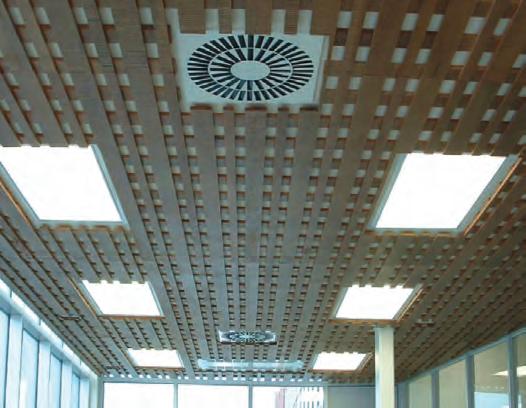
The research focused on high-induction ceiling diffusers, which are specifically engineered to entrain large volumes of room air into the supply jet. This enhanced entrainment improves mixing, minimizes temperature stratification and delivers fresh air more uniformly throughout the occupied zone.
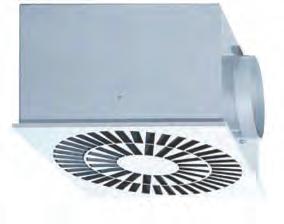
Experiments were paired with the CFD simulations to propose the first validated model fully compliant with ASHRAE Standards 62.1 and 129 for calculating the Ez value in high-induction diffusers.
The methodology combined tracer gas decay testing (SF₆) to measure local age of air, velocity and temperature measurements at multiple occupant heights and advanced
* Peyman Raphe and collaborators in NAD Klima and The Master Group utilized the full-scale laboratory testing reports conducted at the National Research Council of Canada’s Indoor Environment Research Facility. The paper can be seen at espace2.etsmtl.ca/id/eprint/32485/.

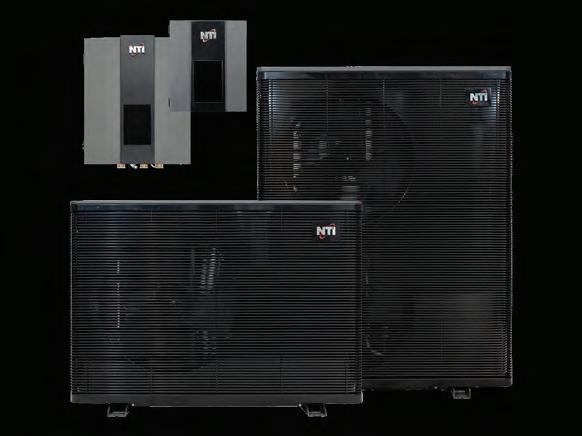
INTRODUCING THE VERTA SERIES AIR-TO-WATER HEAT PUMP
Discover cutting-edge hydronic heating and cooling—easy for contractors to install and eco-friendly. Unleash powerful, fuel-free comfort for a greener future!
• Equipped with R32 refrigerant for sustainable, economic operation
• Highly efficient, allowing for high water temperatures even in low ambient conditions
• DHW storage allows users to set a timer as needed for each day of the week
• Features built-in controls for hybrid applications, Verta is designed for seamless integration into a wide range of systems
• 7” user-friendly touch screen control

CFD simulations solving airflow and ageof-air transport. This dual experimental–numerical approach eliminated guesswork and provided a high level of validation.
The findings were consistent and compelling. Compared to conventional square cone diffusers, high-induction diffusers: reduced air velocity variation in the occupied zone; eliminated stagnant regions under desks and near occupants’ feet; reduced thermal stratification responsible for “cold feet-warm head” discomfort; and lowered the local mean age of air by 50 to 80 seconds across the space.
Most importantly, measured Ez values increased from approximately 0.8 to about 1.0-1.1. From a standards perspective, that improvement alone allows designers to legally reduce minimum outdoor airflow under ASHRAE 62.1 and the National Building Code of Canada (NBC), without changing room function, occupancy or floor area. This is a standards-compliant, measurable and repeatable strategy.
The work also highlights a broader industry issue: the limitations of traditional comfort models such as Predicted Mean Vote (PMV) and Air Diffusion Performance Index (ADPI). These models often assume uniform air distribution, an assumption that breaks down in real buildings.
Poor air distribution leads to local discomfort despite “acceptable” average temperatures, overcooling or overheating as operators compensate and increased energy use driven by flawed feedback loops.
Studies show that overcooling alone accounts for nearly eight per cent of commercial electricity use in North America. Improving air distribution effectiveness attacks this waste at its source. Highinduction diffusers create more uniform thermal conditions, reducing the need for aggressive temperature setpoints and enabling more stable, efficient operation.
One of the most powerful aspects of this research is its relevance to both retrofit and new construction projects. In existing buildings outdoor airflow is often fixed by the installed equipment capacity. Increasing Ez does not reduce airflow, but it improves IAQ without increasing ventilation rates, eliminates the perceived need for supplemental heaters or fans and resolves comfort complaints without major system modifications.
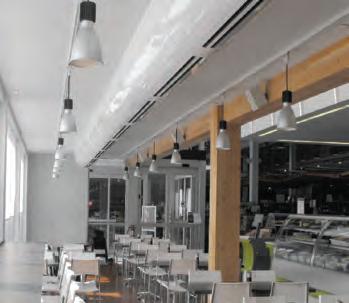
Retrofit applications are often limited by the installed equipment capacity.
In new designs Ez becomes a design lever. By specifying higherperformance air distribution required outdoor airflow decreases and HVAC equipment can be downsized. Electrical and mechanical infrastructure requirements also drop.
In a market increasingly focused on decarbonization, this approach reduces peak loads before designers ever select equipment.
As the HVAC industry shifts toward electrification, load reduction becomes just as important as equipment efficiency. High-induction air distribution directly supports decarbonization by:
• Lowering ventilation, heating, and cooling loads
• Reducing peak electrical demand
• Improving IAQ without energy penalties
• Enabling smaller, more efficient heat pump systems
Rather than asking systems to work harder, this approach ensures they work smarter.
The takeaway for mechanical engineers, contractors, and building owners is clear:
• Air distribution is not a secondary detail; it’s a primary performance driver.
• Optimizing diffuser design can unlock energy savings of up to 25 per cent in ventilation-related loads, while simultaneously improving comfort and indoor air quality.
• In an industry under pressure to reduce carbon, control costs and deliver healthier buildings, high-induction air distribution represents a practical, standards-aligned solution.
Sometimes, the smartest way forward isn’t adding more technology, it’s making better use of the air we already move.
Available across Canada at these fine distributors
Western Canada
Ontario
Quebec
Atlantic Canada
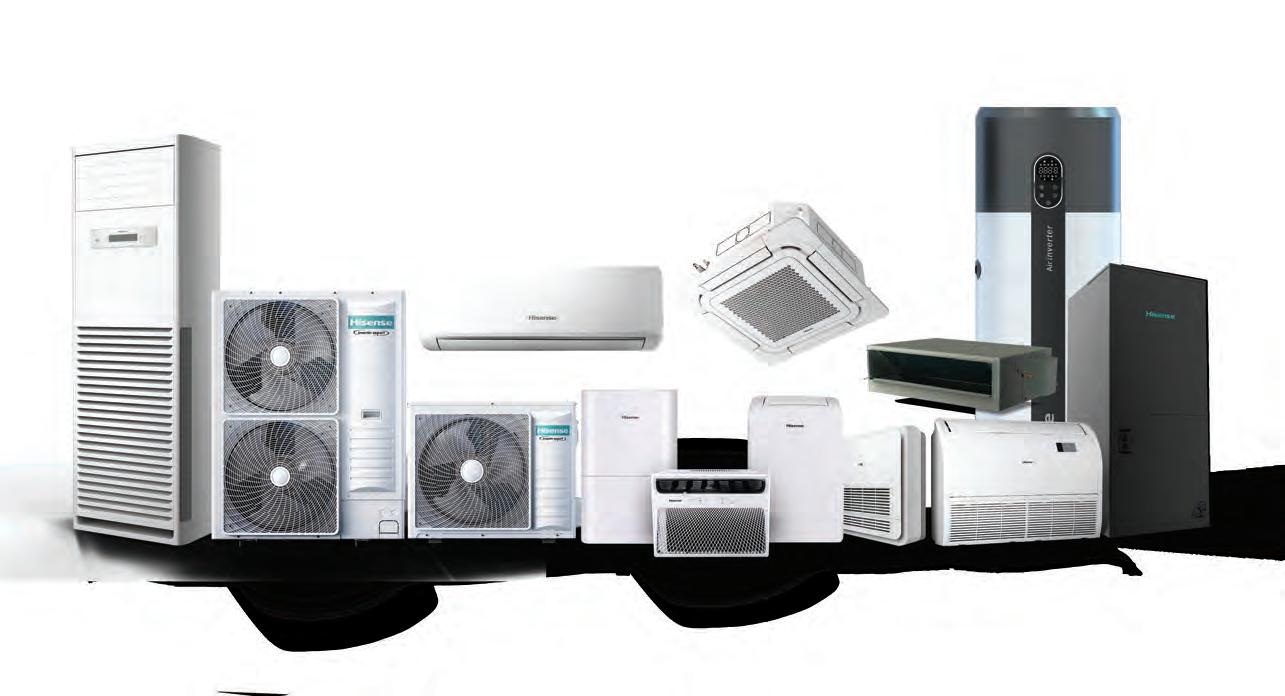



















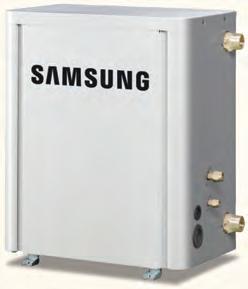
The Samsung Hydro HE uses refrigerant-to-water heat exchangers to recover waste heat from condensing units and support medium-temperature water heating up to 122°F (50°C). A single Hydro unit can help provide domestic hot water and comfort heating, reducing reliance on fossil fuels while improving year-round efficiency.




Scan QR Code or visit our website at SamsungHVAC.com/commercial/hydro to learn more.