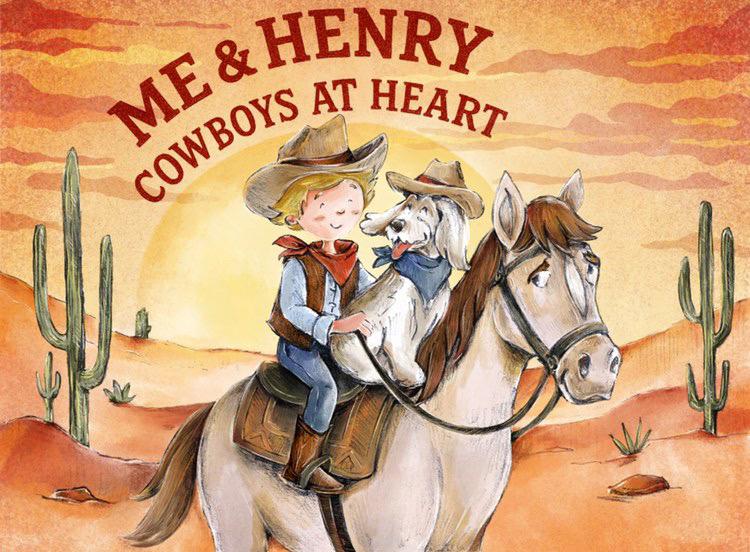
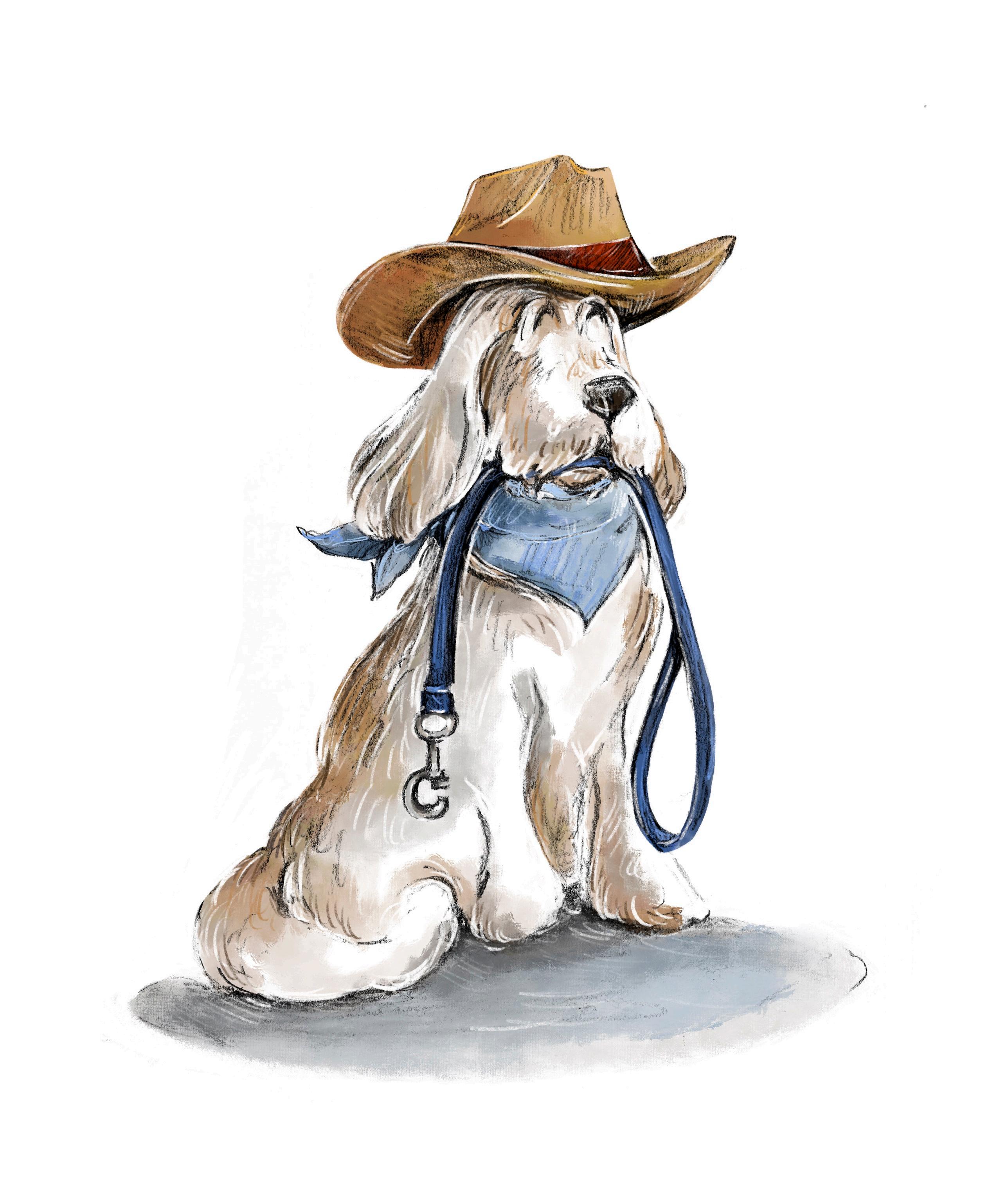
My name is Henry.
I'm an eleven year old English cocker spaniel who lives in London with my daddy.
Yeehaw.
Saddle up partner.
In this book we will cover what it takes to be a real cowboy. Let's hit the trail.
Howdy partner!
So do you know what a cowboy is?
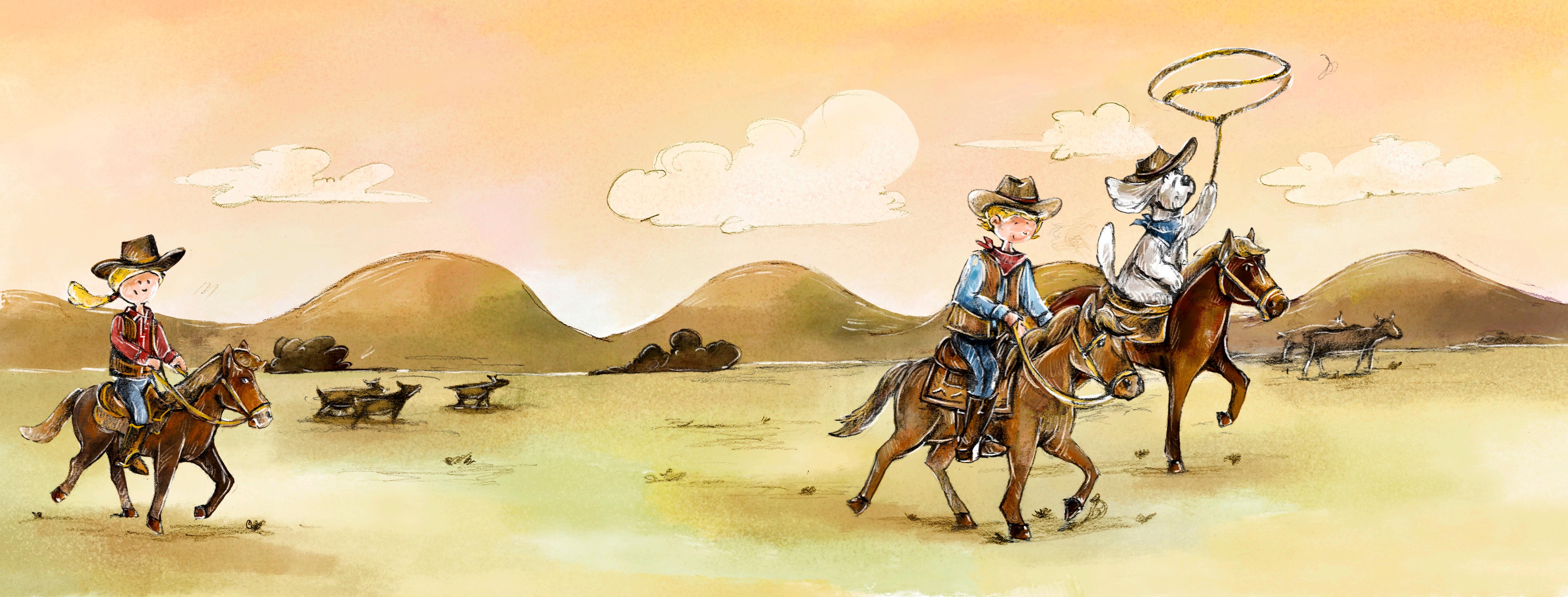
A cowboy is more than just someone in a hat and boots. Cowboys work on ranches, take care of cattle, ride horses and live outdoors. They work really hard, tell tall tales and sing songs under the stars
It is said a cowboy lives with courage, kindness and grit.
If you have ever dreamed of wide open spaces and galloping across the plains, saddle upyou are about to learn how to become a cowboy!
Long before America had the cowboys we read about today, in the 1500 ' s, there were the vaqueros of Mexico - skilled horsemen and cattle herders who lived and worked on huge ranches, They were the true pioneers of the cowboy way of life.
To protect themselves from the hot sun they wore widebrimmed hats made of felt or straw. They wore tough leather chaps - fabric that protected their legs. sturdy boots for long days in the saddle and gloves to handle the ropes and reins.
In the 1700 ' s, as ranching moved north into what we now call Texas, their knowledge went with them.
American settlers learned from the vaqueros and took on their tools, ways of working and their clothes.
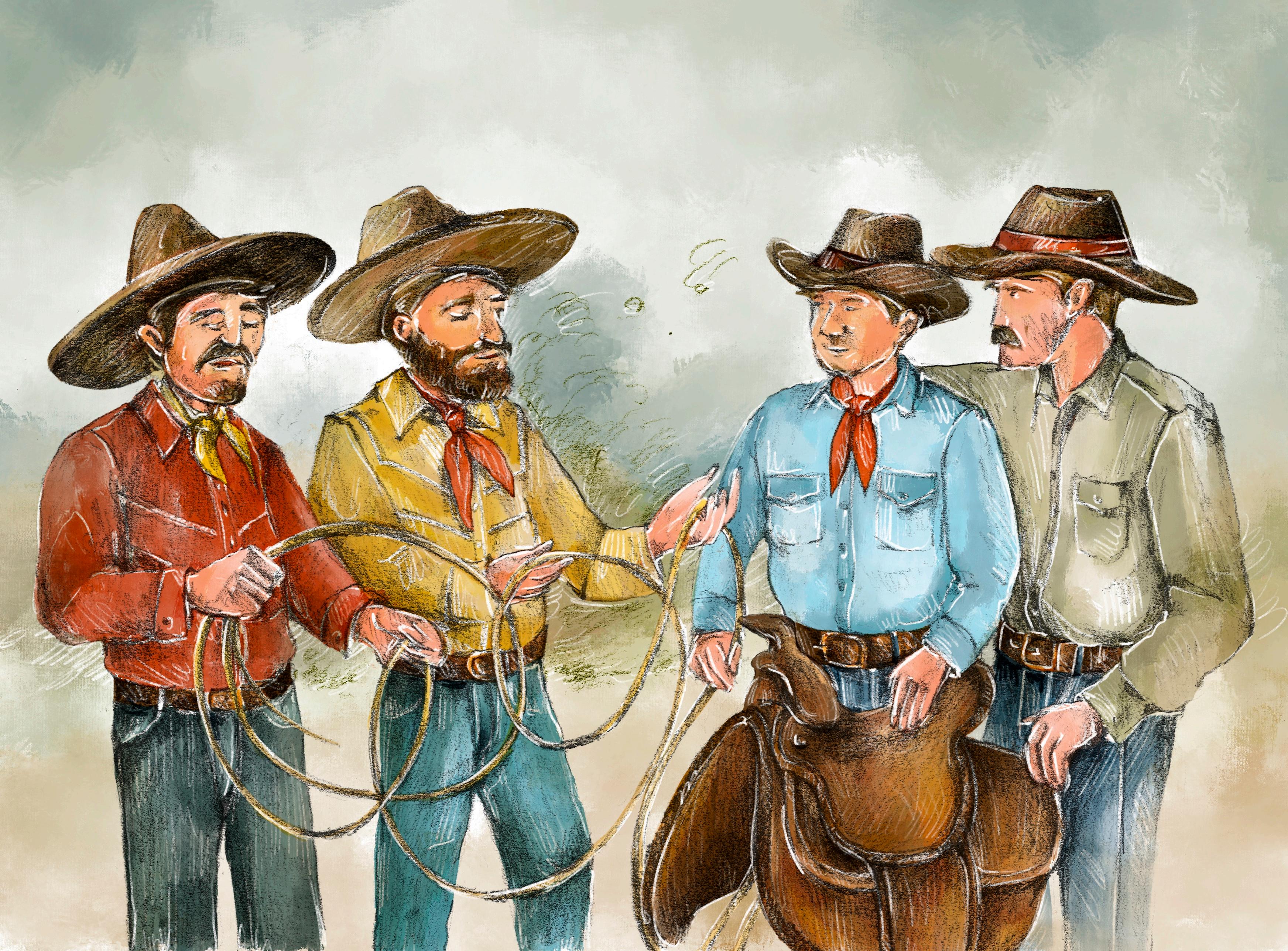
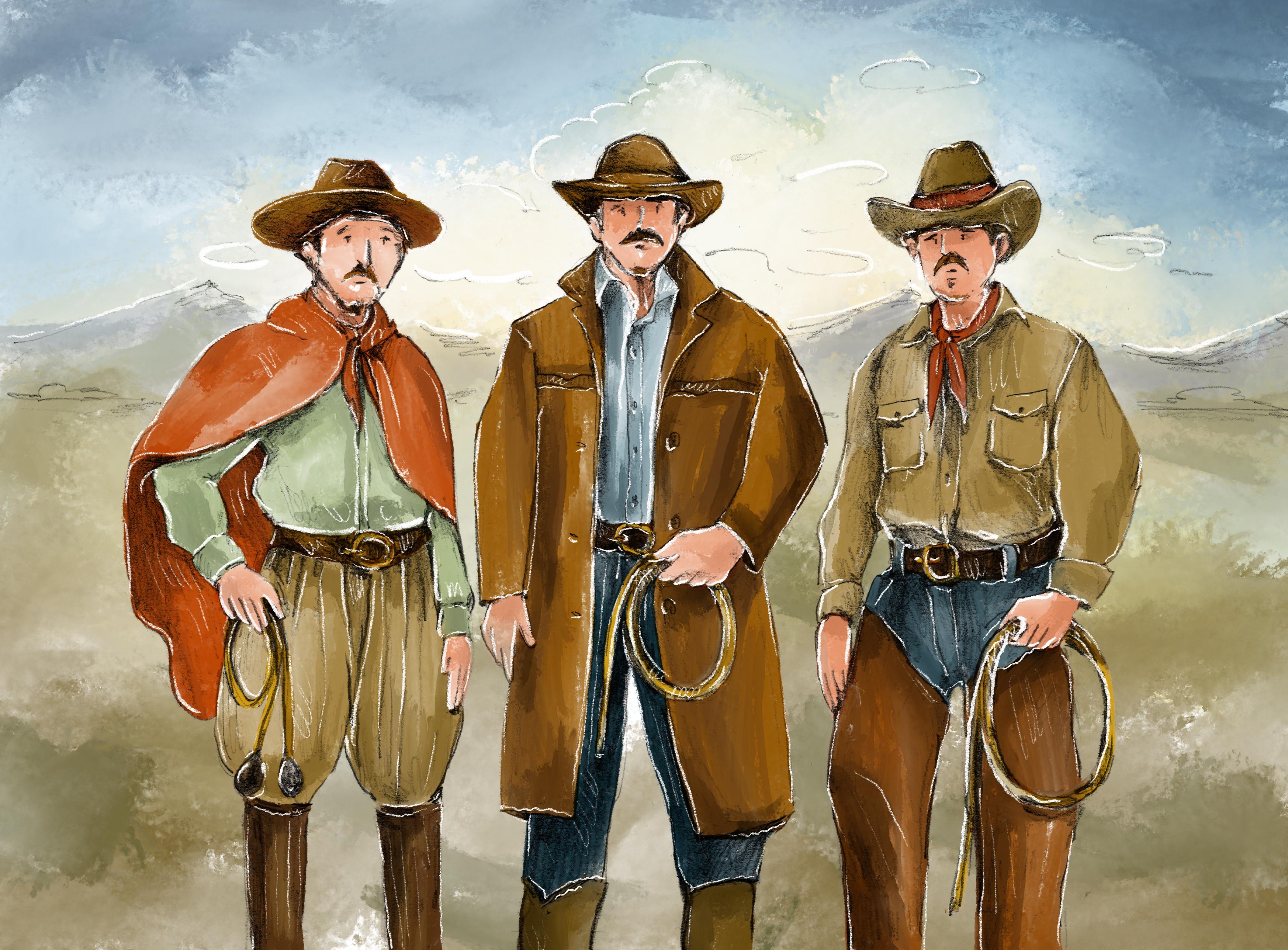
We have talked about the Wild West but cowboys aren't just found in America. All around the world different cultures have their own versions of skilled horsemen who work with cattle.
In Argentina the famous gauchos ride across the grassy pampas.
In Australia stockmen and jackaroos work the cattle stationssometimes larger than entire US states.
In Spain and Portugal, vaqueros and campinos guide bulls with long poles.
In Mongolia, nomadic herders race ponies across the fields.
Each group has its own style, clothing and traditions but they all share a deep love for horses, cattle and the wide open land they call home.
In the 1800's the American West was a huge empty space with amazing opportunities and full of adventure.
After the Civil War thousands of men : farm boys, former soldiers and Mexican vaqueros headed west looking for work and a fresh start. Ranchers needed help moving enormous herds north to new railroad towns where cattle could be shipped to the rest of the country.
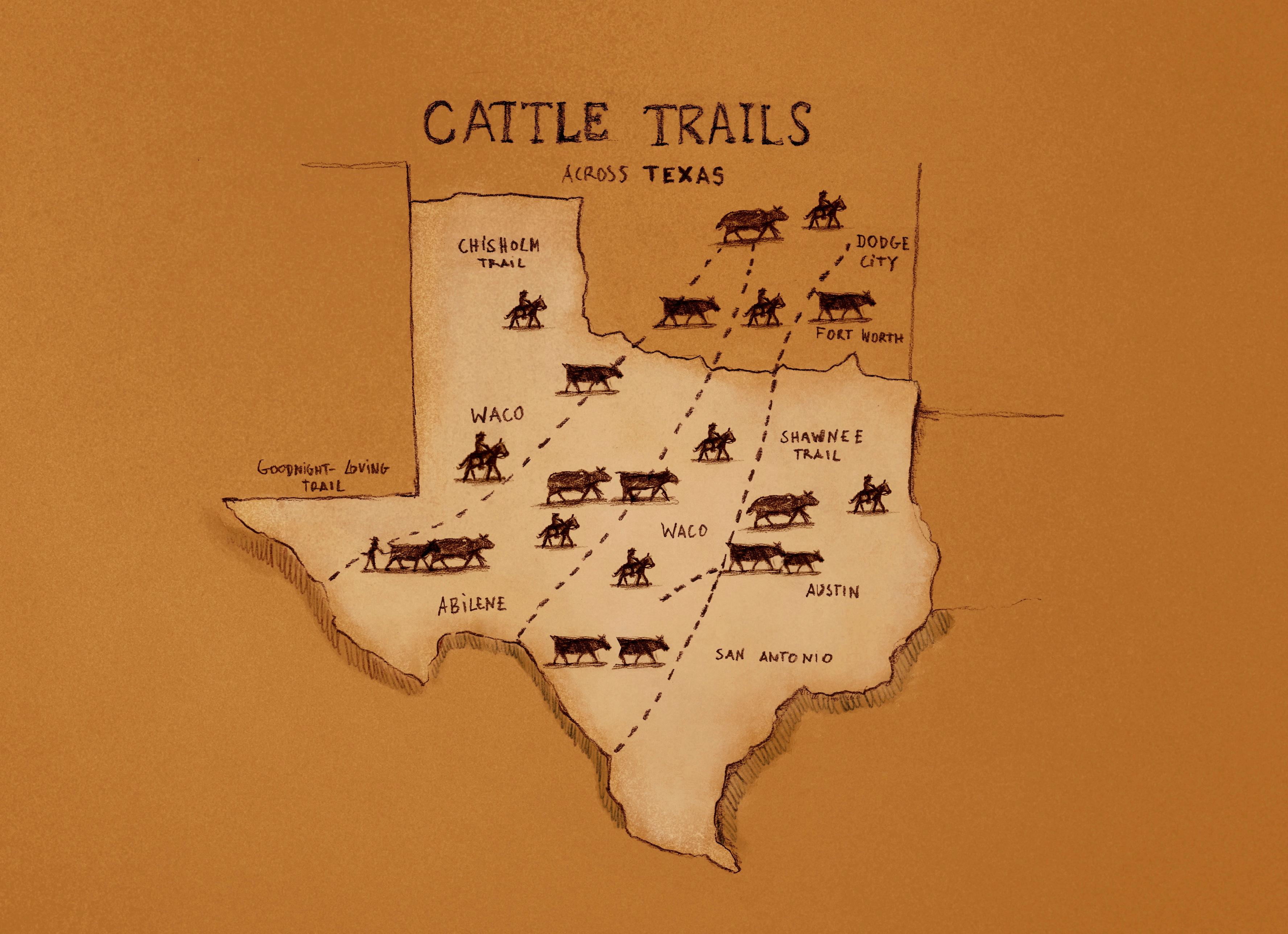
So they became cowboys and followed famous trails like the Chisholm Trail, the Shawnee Trail or the Goodnight-Loving Trail with herds that stretched for miles!
It was tough, dangerous work but for many it was the most exciting life they could imagine!
So when cowboys were not on a trail, where did they live?
On a ranch...
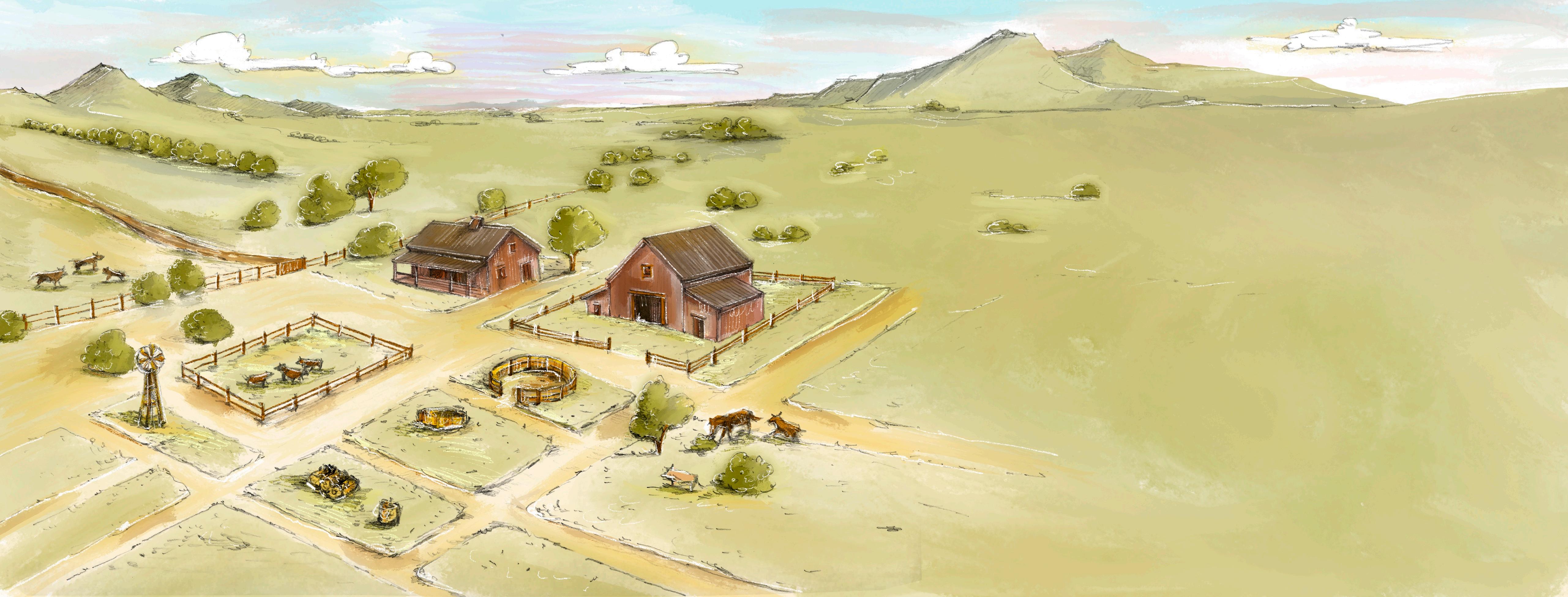
A ranch is like a small town made just for caring for cattle, horses and the people who work with them.
The heart of the ranch is the Main House - the family who owns or runs the ranch lives here. It's close to everything else so they can oversee the daily work. The cowboys sleep nearby in the Bunkhouse when they are not on a trail.
Every ranch has a big red barn to store hay, tools and saddles.
Corrals are fenced areas to hold cattle where cowboys sort them, brand them or load them for travel. Corrals keep the animals safe and organized.
The Round Pen is a small, circular corral for the cowboys to train horses.
The chuckwagon is the ranch kitchen on wheels! On long cattle drives this will follow the cowboys with food and cooking supplies.
A ranch has lots of open pastures too where the cattle can roam and feed
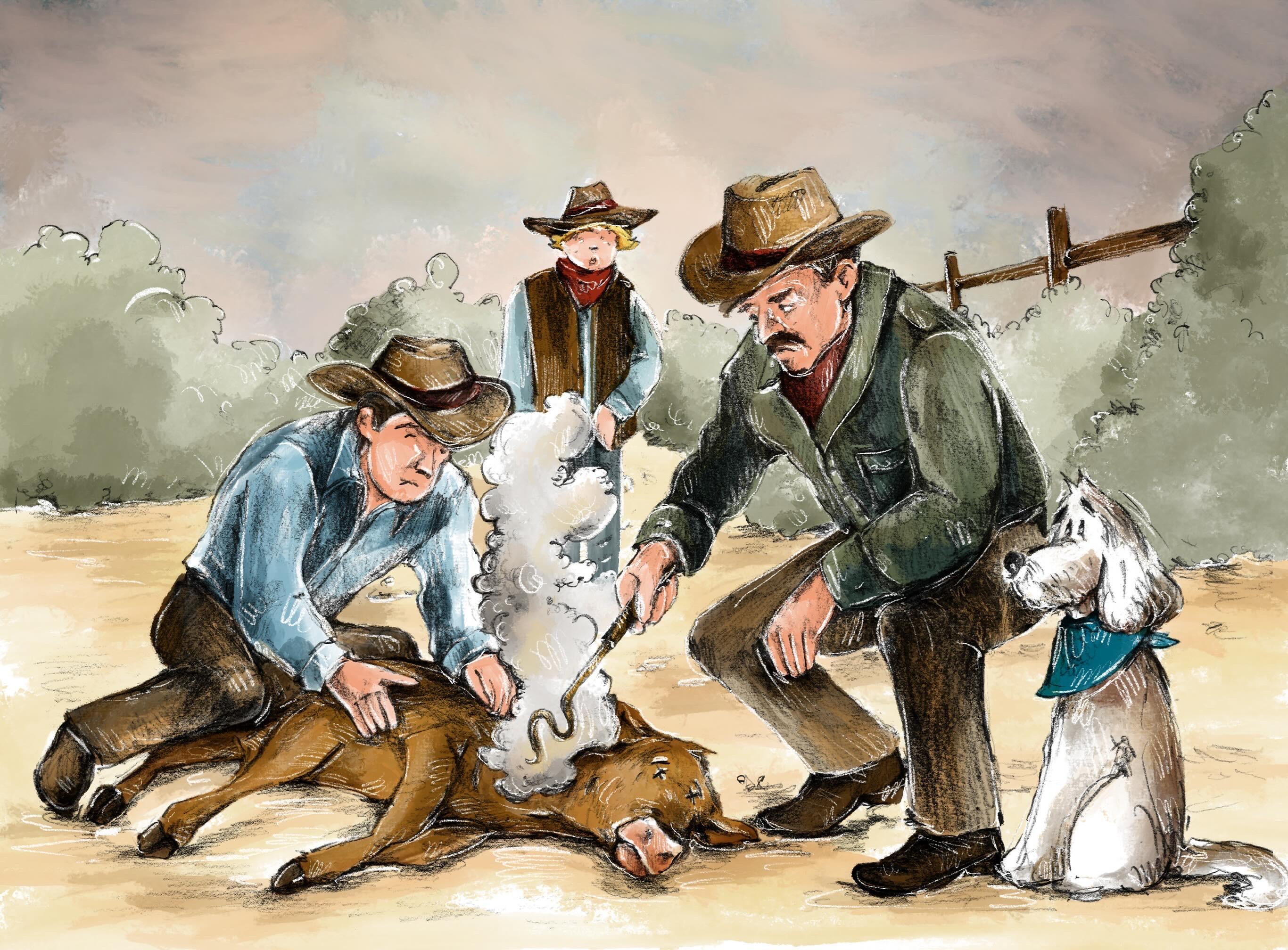
Before heading off on a trail, the cattle had to be branded and this was a job done at the ranch.
To show which cow belonged to which ranch, cowboys heated up branding irons and marked the cattle. The irons would be placed in the fire until they glowed red hot and then pressed against the animal's hide.
It didn't take long and created a permanent mark the cow would carry for life. Each ranch had its own special brand - like a logo - so the cattle could easily be identified on the open range.
Some brands were simple letters or shapes and some were amazing curly and curved designs.
Branding the cattle was tough and dusty work but really important as it helped prevent confusion when herds mixed together but it also made it hard for "rustlers" - cattle thieves - to steal animals without being caught!
Before we leave the ranch, let's look a little closer at how a cowboy lived...
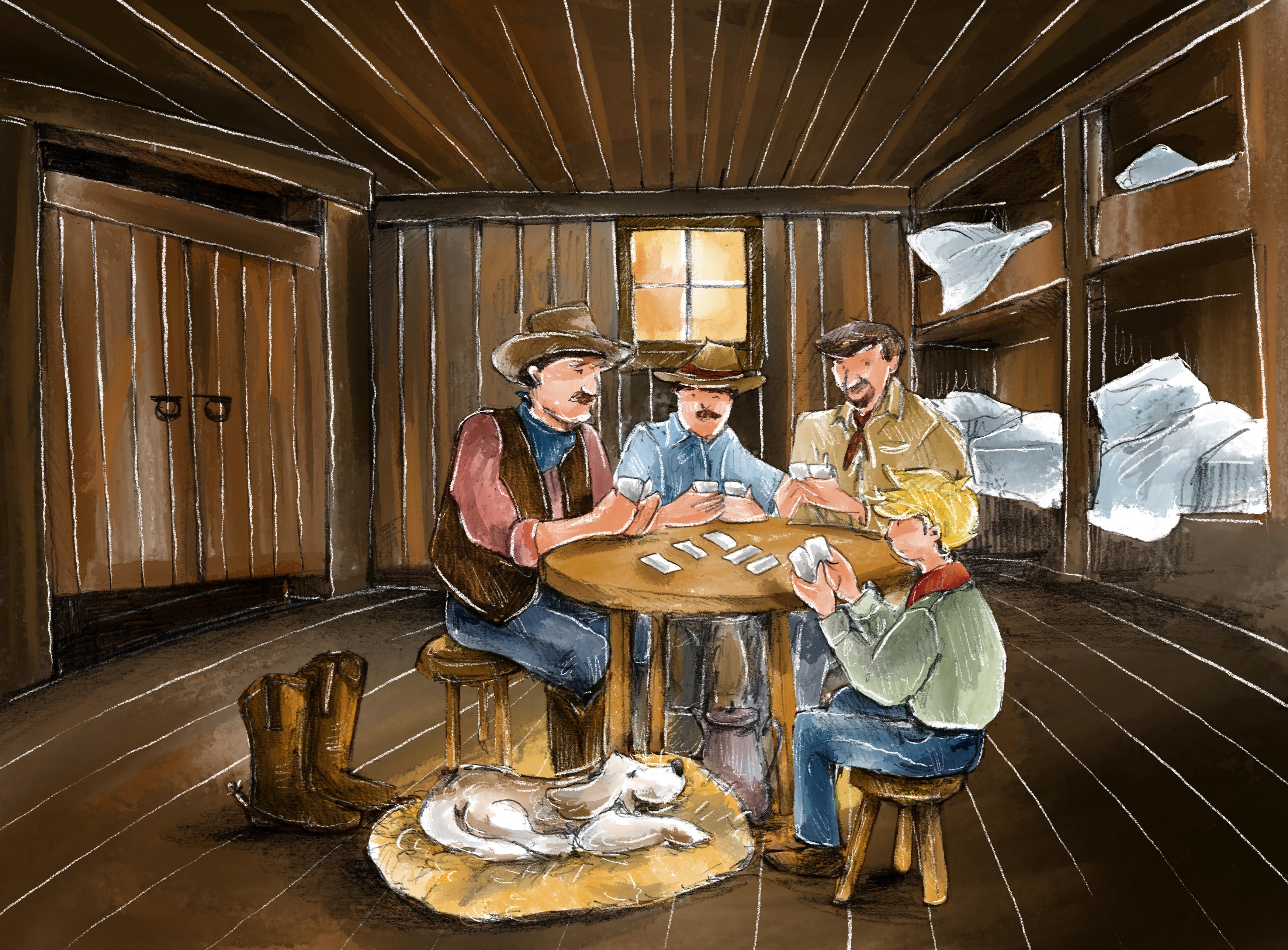
Cowboys would live with other cowboys in a bunkhouse on the ranch they worked for. This was for free!
A bunkhouse was a simple wooden building - warm in the Summer and drafty in the Winter - with long rows of bunks packed close together. Saddles, gear and dusty hats hung from hooks on the walls with dirty boots outside.
, In the evenings the bunkhouse would come alive.
Cowboys would play cards, mend their gear, swap tales about their wild rides. Although the evenings would be full of laughing and loud storytelling, they didn't drink any alcohol in their bunkhouses - that was only allowed in saloons and would usually be whiskey!
Cowboys often had cattle dogs by their side. These dogs could run through the tall grass and nip gently at the cow ' s heels to steer them along.
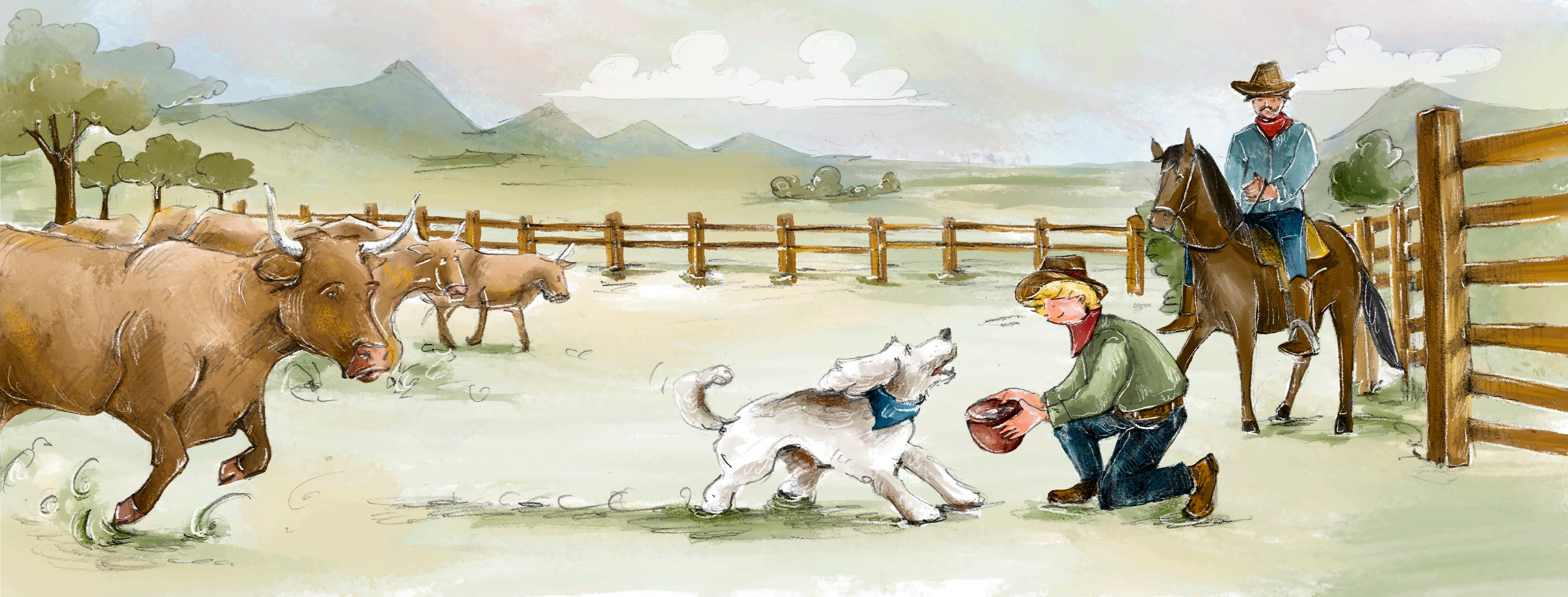
They understood whistles, hand signals and even the tone of the cowboys voice
Cowboys loved their dogs like family - I don't think there were any Cocker spaniels though...
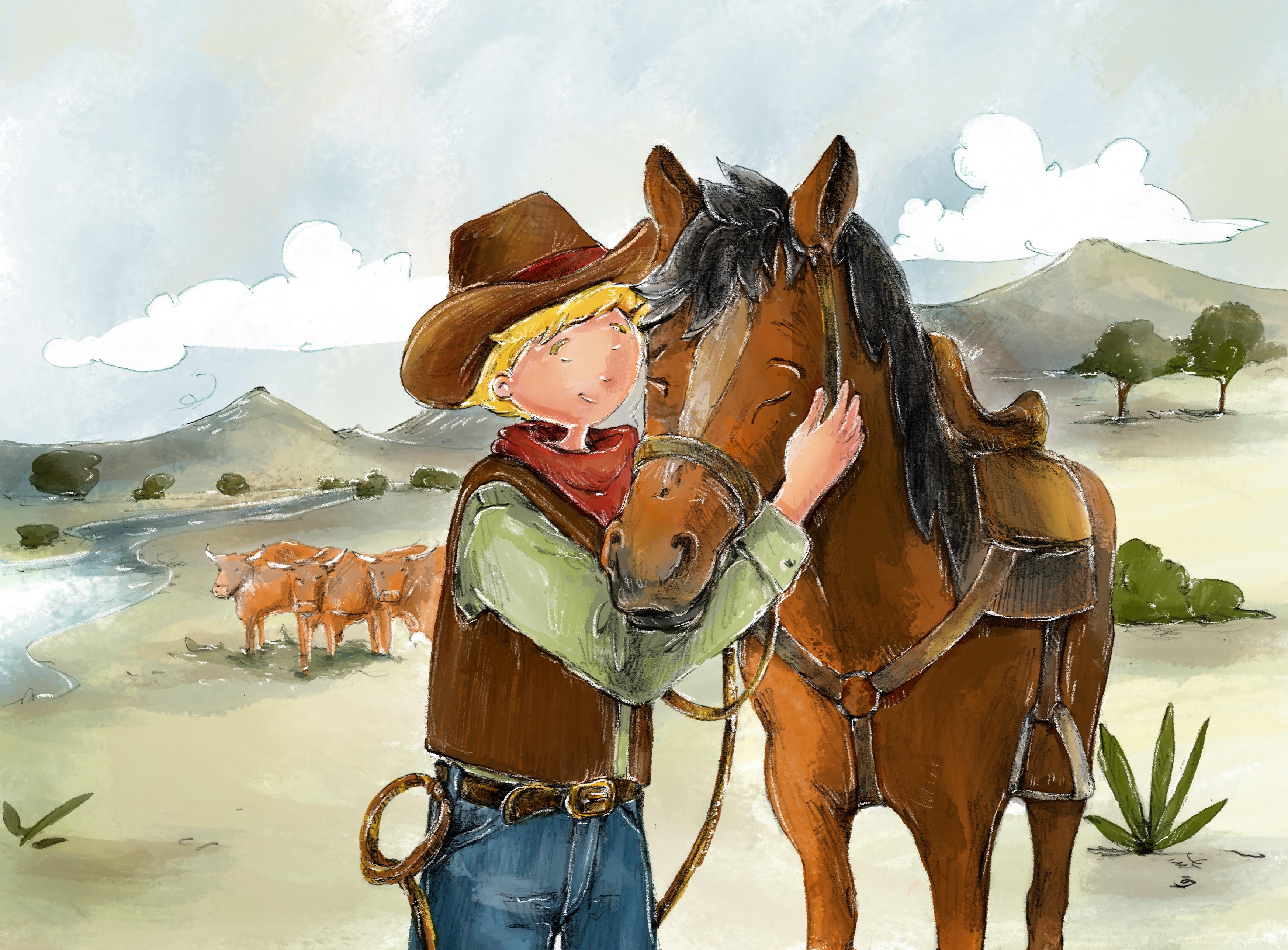
Every cowboy had a favourite horse - the one he trusted more than any other.
Some horses were lightning fast, perfect for chasing strays across the open country.
Others were steady and strong, able to carry gear or handle rough terrain without losing their footing.
And some were just plain stubborn, testing a cowboys patience until they finally learned how to work together.
But once a cowboy and his horse built that trust, something special happened. They moved as one, understanding each other and through storms, long drives, dusty trails they became true partners for life.
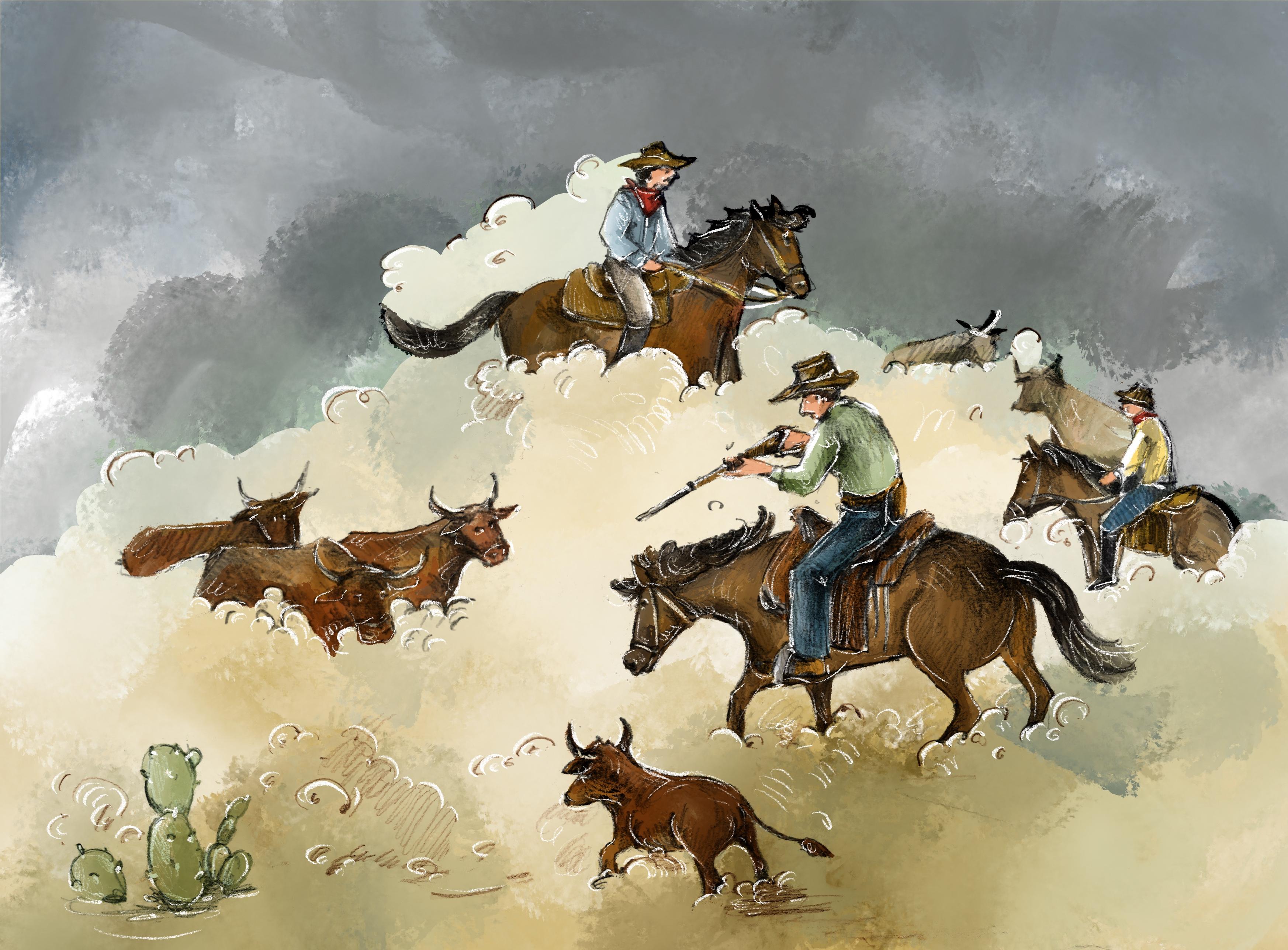
When Spring came, ranchers called for a roundup. This was a time to gather all the cattle that had been roaming freely over the open range during the Winter.
Cowboys rode out in every direction searching for scattered herds hiding in canyons, brush or open plains. Working in teams they would slowly push the animals towards one central holding area.
As the cattle moved, dust rose in huge clouds coating hats, boots and faces. Whips would crack sharply in the air guiding the strays back into a herd.
It was a noisy, lively scene with hundreds of cows mooing and horses snorting and cowboys shouting. It could take hours but was one of the most important cowboy jobs of the year!
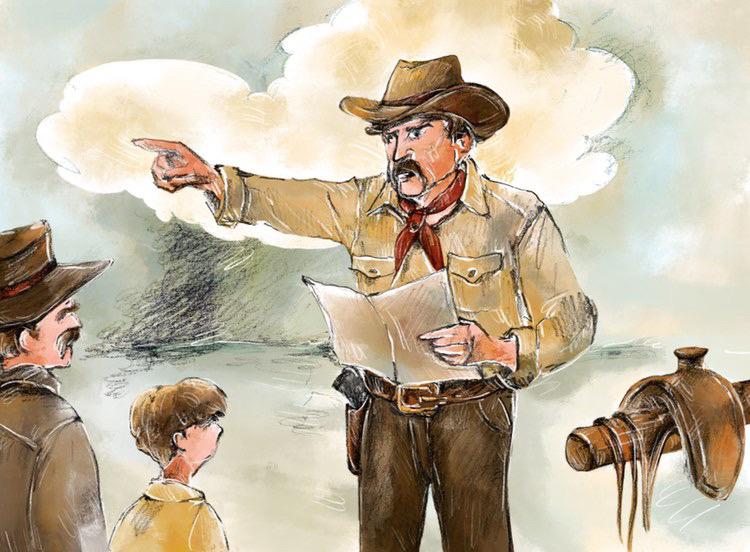
Every cattle drive had a leader known as the trail boss.
He was the one who gave the orders, chose the safest path and kept the entire operation moving forward.
It was his job to make sure the herd stayed together, that the cowboys did their jobs and the cattle got to market on time.
The trail boss was very skilled at map reading, he was calm if there were problems and if danger appeared he always made quick decisions - whether it was bad weather, cattle stampeding or a difficult route.
In fact, his job was the hardest of all.
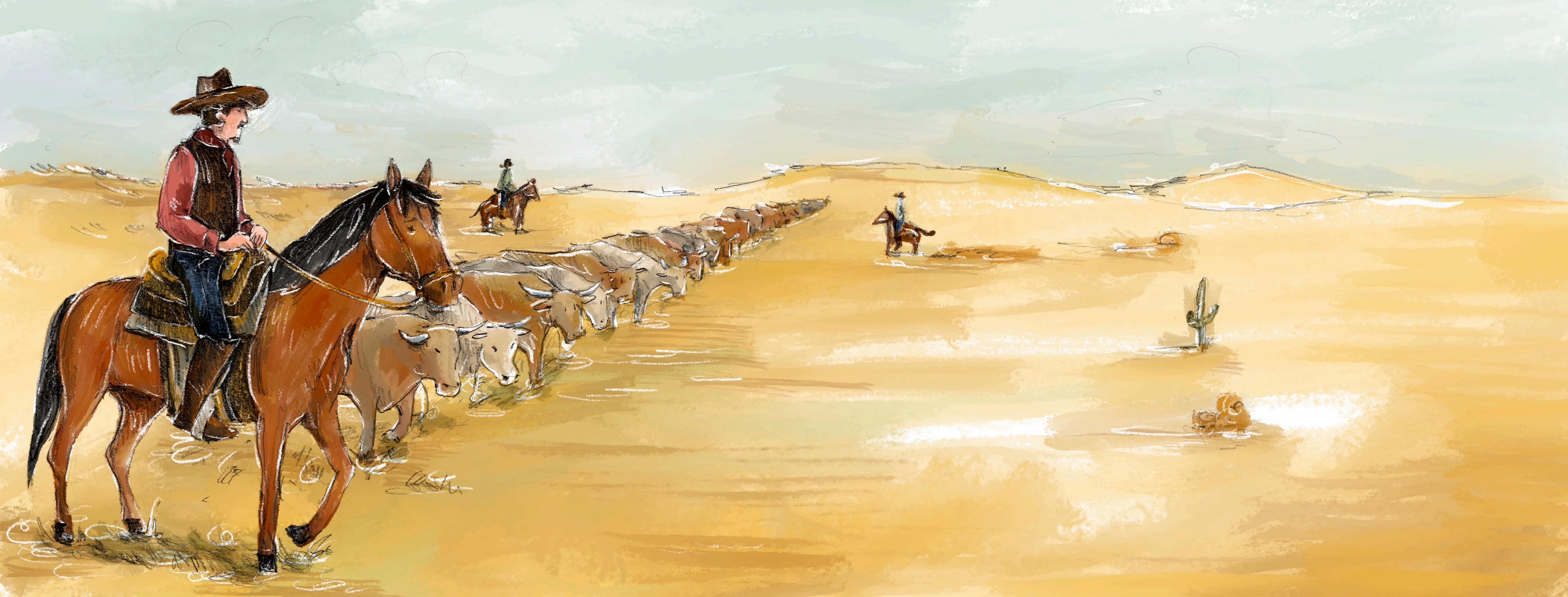
Cowboys often moved thousands of cattle across hundreds of miles to sell in big towns. These journeys were called cattle drives and could last months
The herd moved slowly and cowboys rode alongside them guiding them across rivers and rocky ground. The cattle were not forced to walk too fast in case they lost weight or became stressed.
The cowboys had to stay alert for trouble: a sudden storm or loud noise could startle the cattle and create a stampede.
A successful cattle drive meant good money for the ranchers and a sense of pride for the cowboys for getting the herd to the market safely.
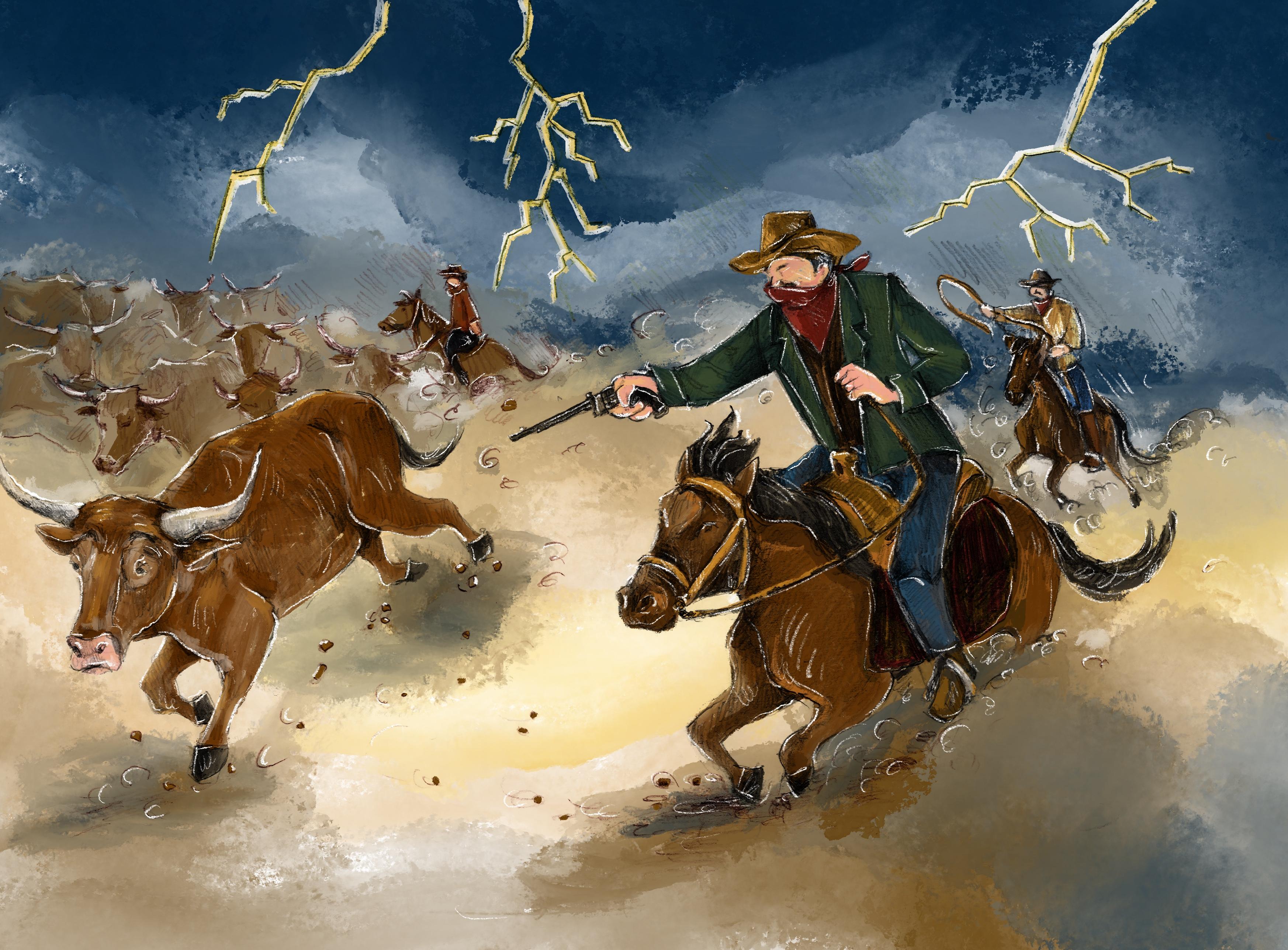
The West was full of danger and every cowboy knew it - in fact, they kind of liked the excitement of it.
Sudden storms could sweep across the plains, tornadoes could hit at any time scattering the cattle in every direction and leaving the herd in chaos. Rattlesnakes would often hide in long grasses and strike at horse's legs sending the horse into panic and the cowboy in the air!
But the biggest danger of all was stampedes. This is when thousands of frightened cows would bolt into a wild run. The ground would shake like thunder and it was really difficult to calm them down and stop them.,
Sometimes just a single cow could get upset and panic which would make the entire herd explode into a stampede.
Rise and shine partner! A cowboy's day started long before the sun rose.
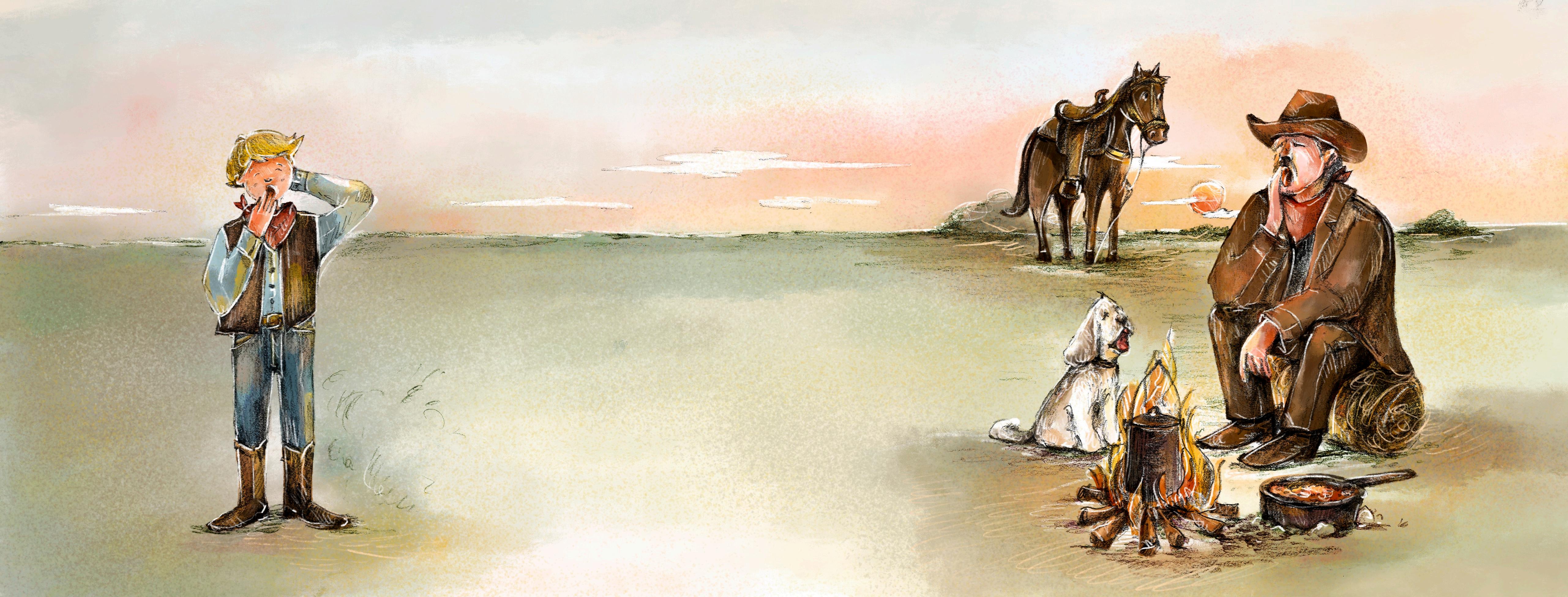
While the sky was still dark the camp cook - 'the cookie' - banged his spoon on the side of the wagon to let everyone know it was time to get moving.
Sleepy cowboys would gather around the fire for breakfast - hot beans, fresh biscuits and strong smoky coffee.
Then they would saddle up, mount their horses and get on with their day.
They would herd cattle all day no matter if it was burning hot or stormy and cold.
At night they rolled out a blanket, gazed at the stars and drifted off - that was their dayover and over
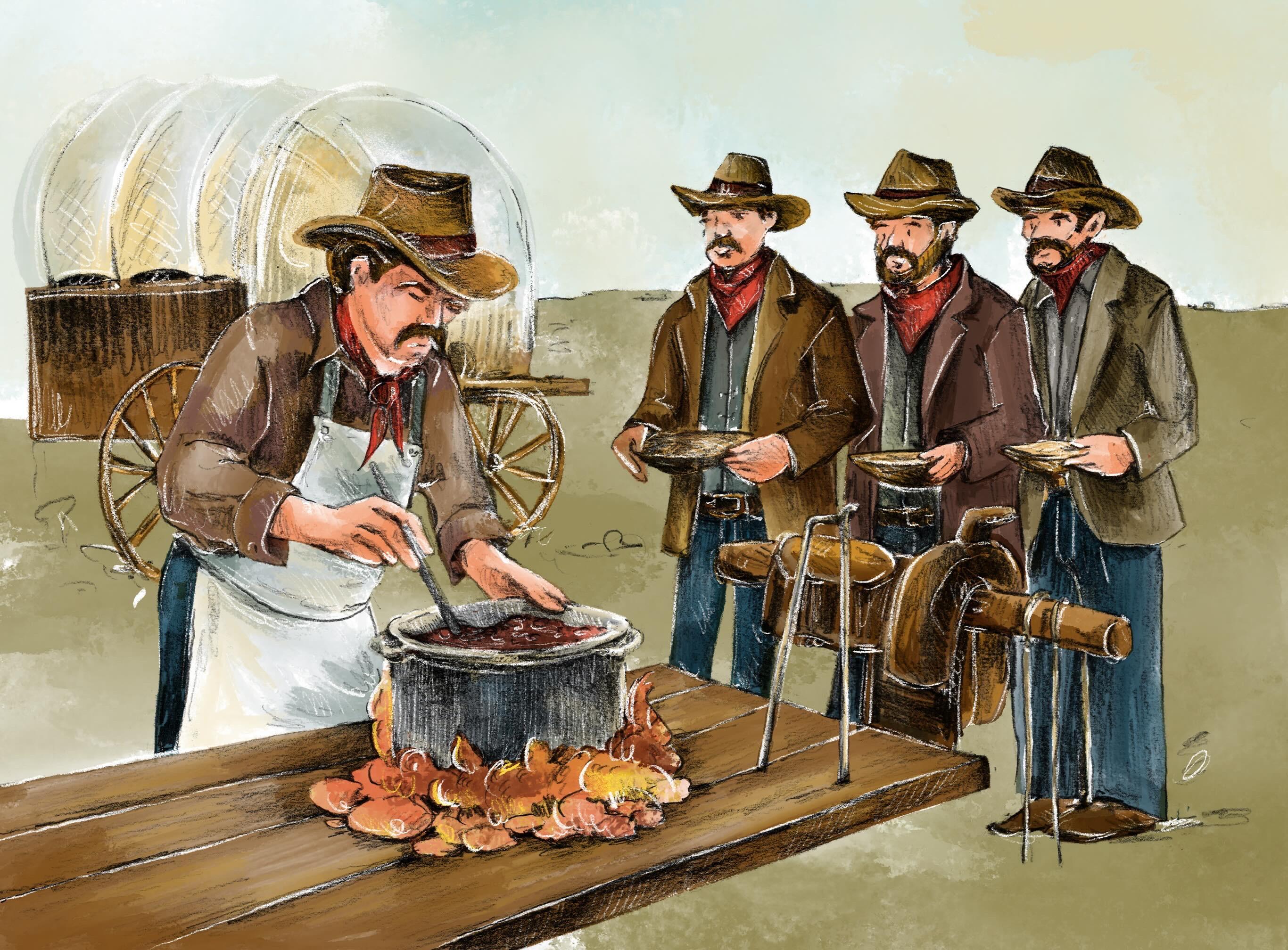
The cook or 'cookie' was one of the most important men on the trail. He was also the most popular!
He not only prepared breakfast and stayed up late cleaning up but he also was part peacemaker if some of the cowboys got into arguments and part doctor if they got into fights or were ill.
He would have a chuckwagon - which was a rolling kitchen on wheels and follow the herd on long cattle drives. It had everything he needed to feed the crew: barrels of beans, slabs of bacon, sacks of flour and LOTS of strong coffee. It also carried all the tools and utensils for cooking - plus a medicine kit.
Most of all he made sure they were fed, healthy and cheerful so that the hard long days on the trail feel a little easier.
So what did cowboys eat when they were on a trail?
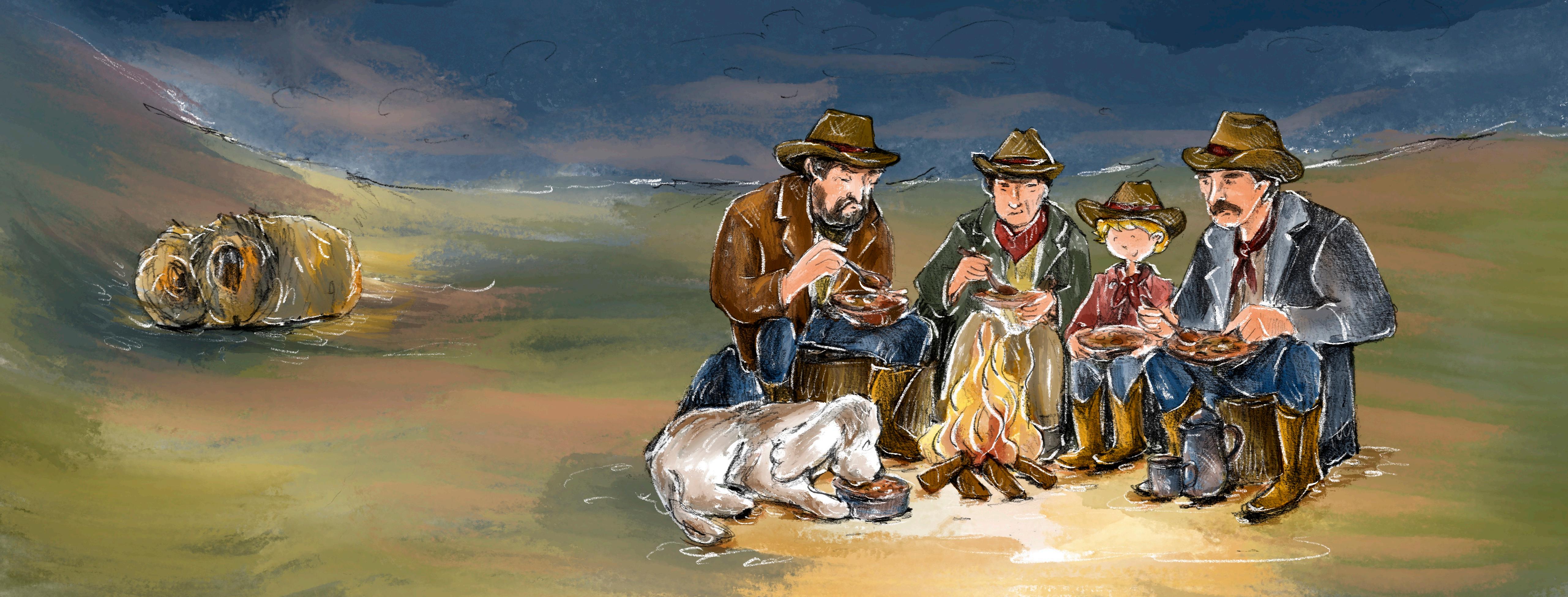
Well - beans , beans and beans - every day!
Beans were the simplest thing to carry, cook and always filled a stomach. Add a slab of salty bacon sizzling in the pan and a few freshly baked biscuits and you had the basic fuel that kept a cowboy going.
Sometimes the cookie would add a loaf of tangy sourdough bread or a handful of dried fruit as a treat.
Singing was a big part of cowboy life.
On quiet nights, their voices would carry across the wide open plains.
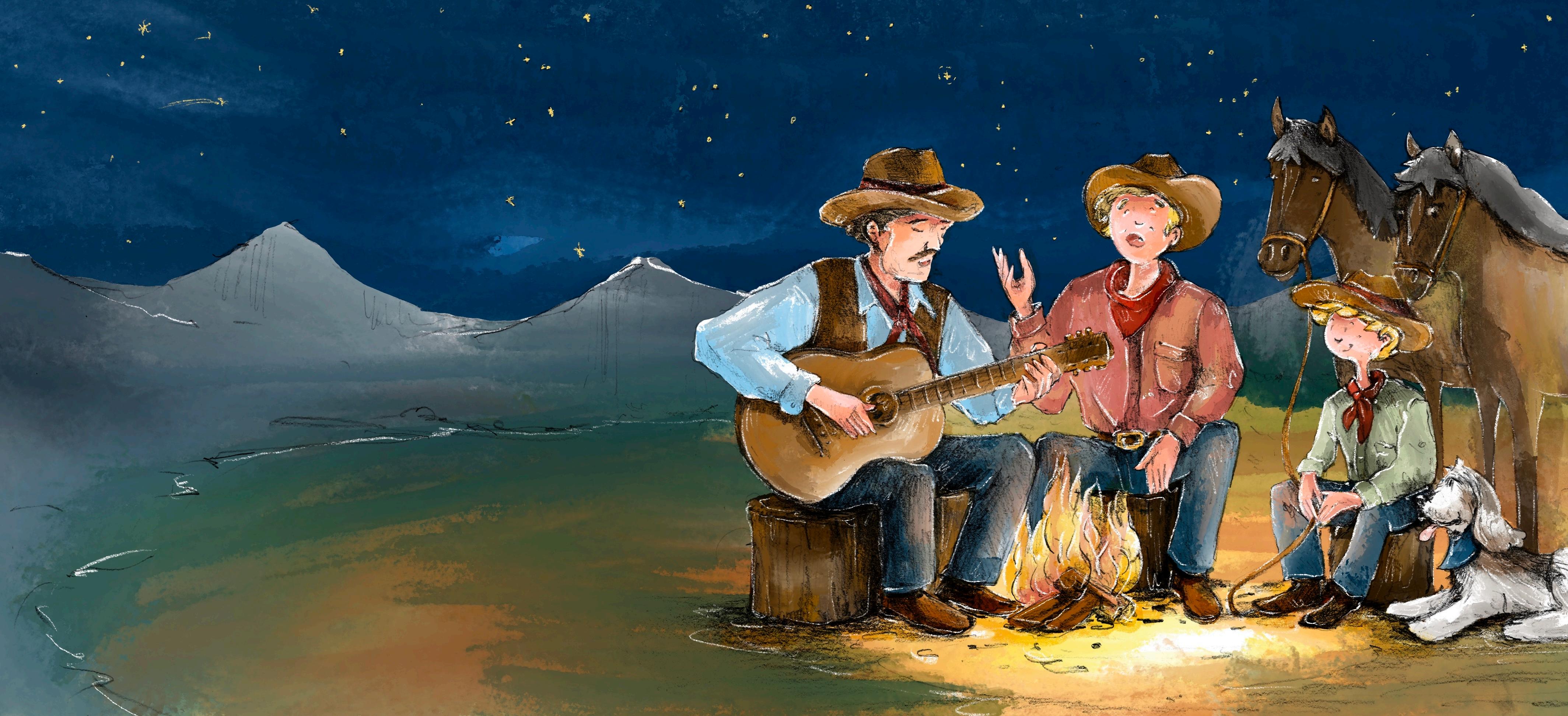
Songs like 'Home on the Range' or 'Get Along, Little Dogies' were faves.
They loved simple tunes that every cowboy knew by heart. Music helped keep them awake during long night watches. The steady rhythm of singing also actually helped calm the cattle and soothe them if they were nervous - stopping stampedes from happening.
Some cowboy songs eventually grew into what we now call country music.
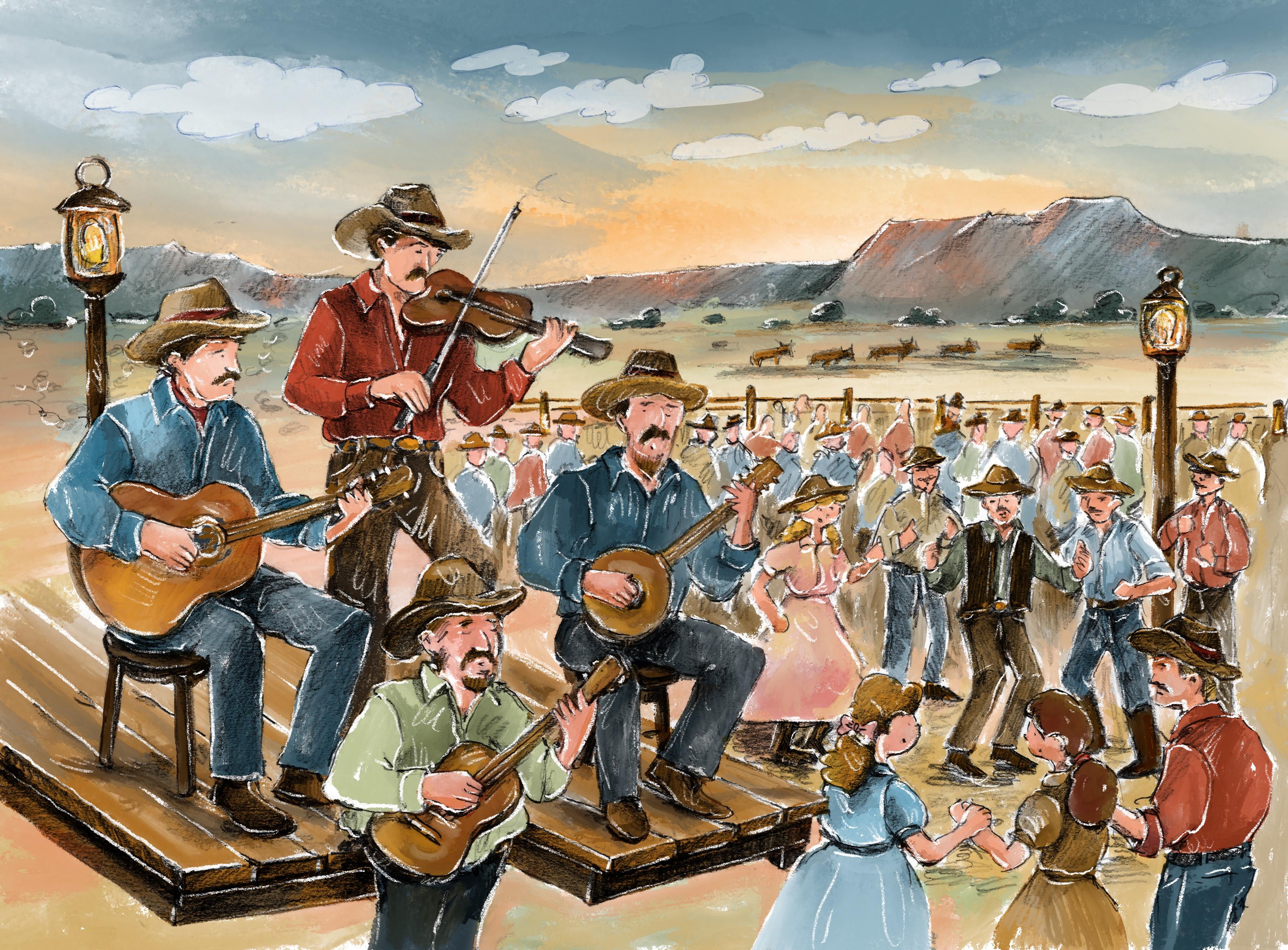
The simple trail melodies - once sung to calm the cattle - evolved as musicians added fiddles, guitars, banjoes and later steel guitars. The music kept the same spirit, telling stories of love found and lost, of daring adventures and of the beauty of the wide open spaces.
As the West changed, the songs traveled to ranch houses, small-town dance halls and eventually to radio stations across America.
Country music is HUGE still.
Ask a grown up to use this QR code to listen to some of the songs they would sing around the fire.

Cowboys worked very hard, but they also played very hard whenever they had the chance.
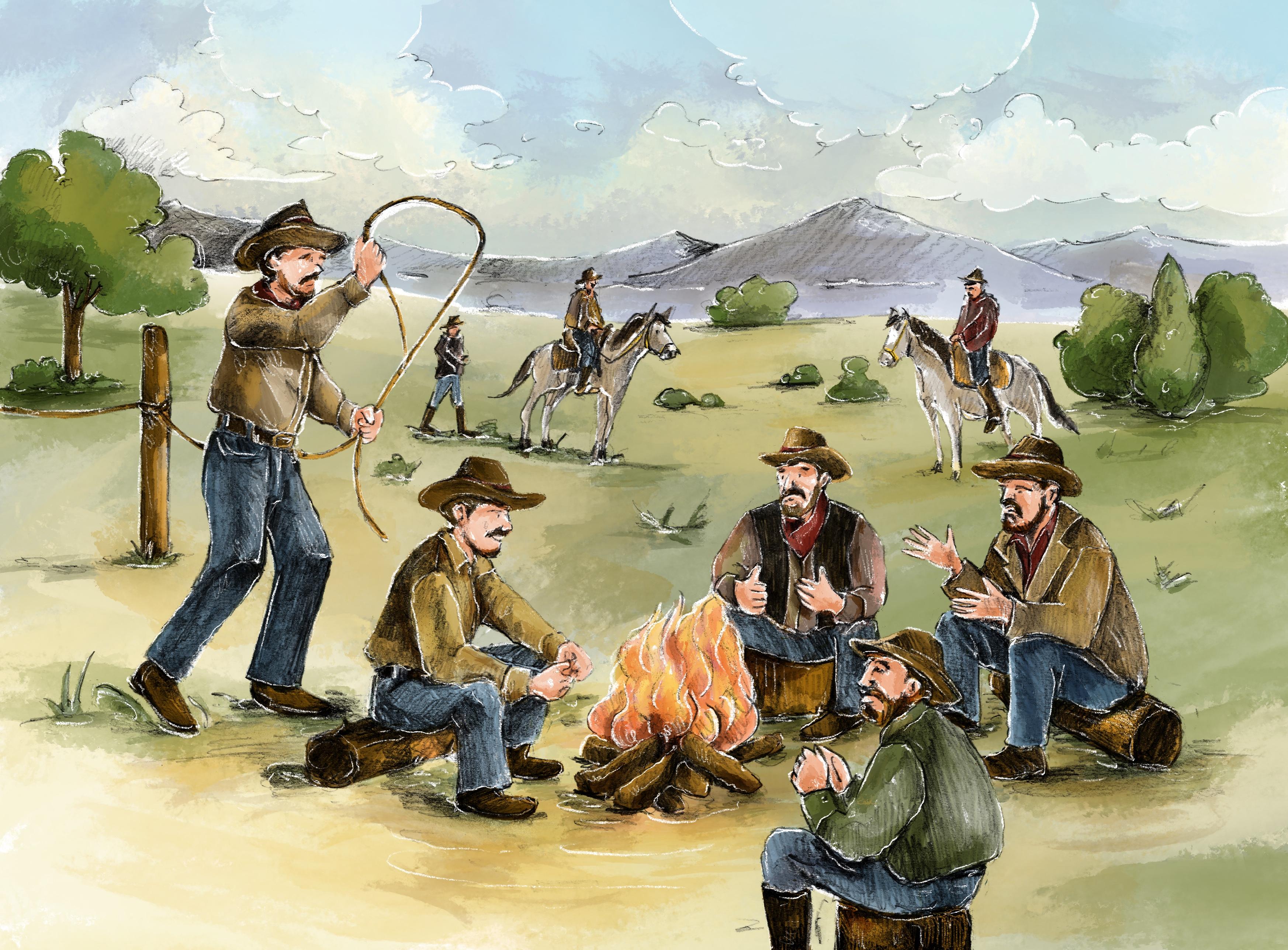
After a long day on the trail, they gathered around the campfire where the air smelled of wood smoke and coffee.
They would swap tales, play cards by the light of the lantern late at night, They would often practice their skills by holding friendly ropethrowing contests to see who could lasso a target the quickest.
In those moments of fun and friendship, the worries of the cattle drive and trail faded away and laughter and friendship would make the job a little easier and shorter.
Some of the stories they told around the campfire were larger than real life.
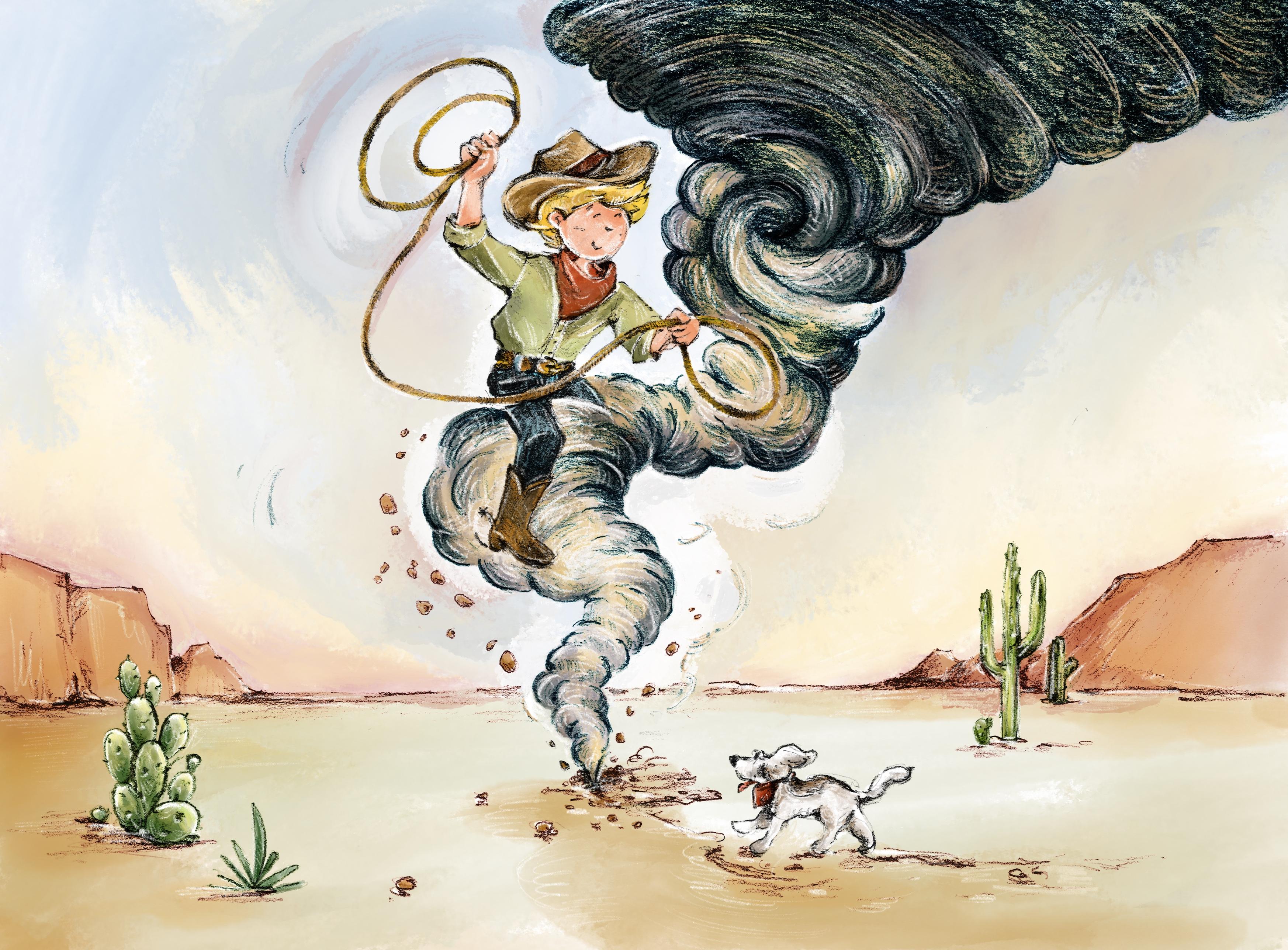
One of the most famous was about Pecos Bill...the legendary folk hero who was said to lasso tornadoes and ride mountain lions like little ponies.
Stories claim he dug out the Grand Canyon and that he could tame any creature that roamed the West.
These tales weren't meant to be believed - they were just shared for fun to entertain folks around the fire.
They made cowboy life seem magical and wild and full of impossible adventures. Does it make you wish you could be a cowboy?
Riding the open trails was dangerous so cowboys always had to keep their wits about them.
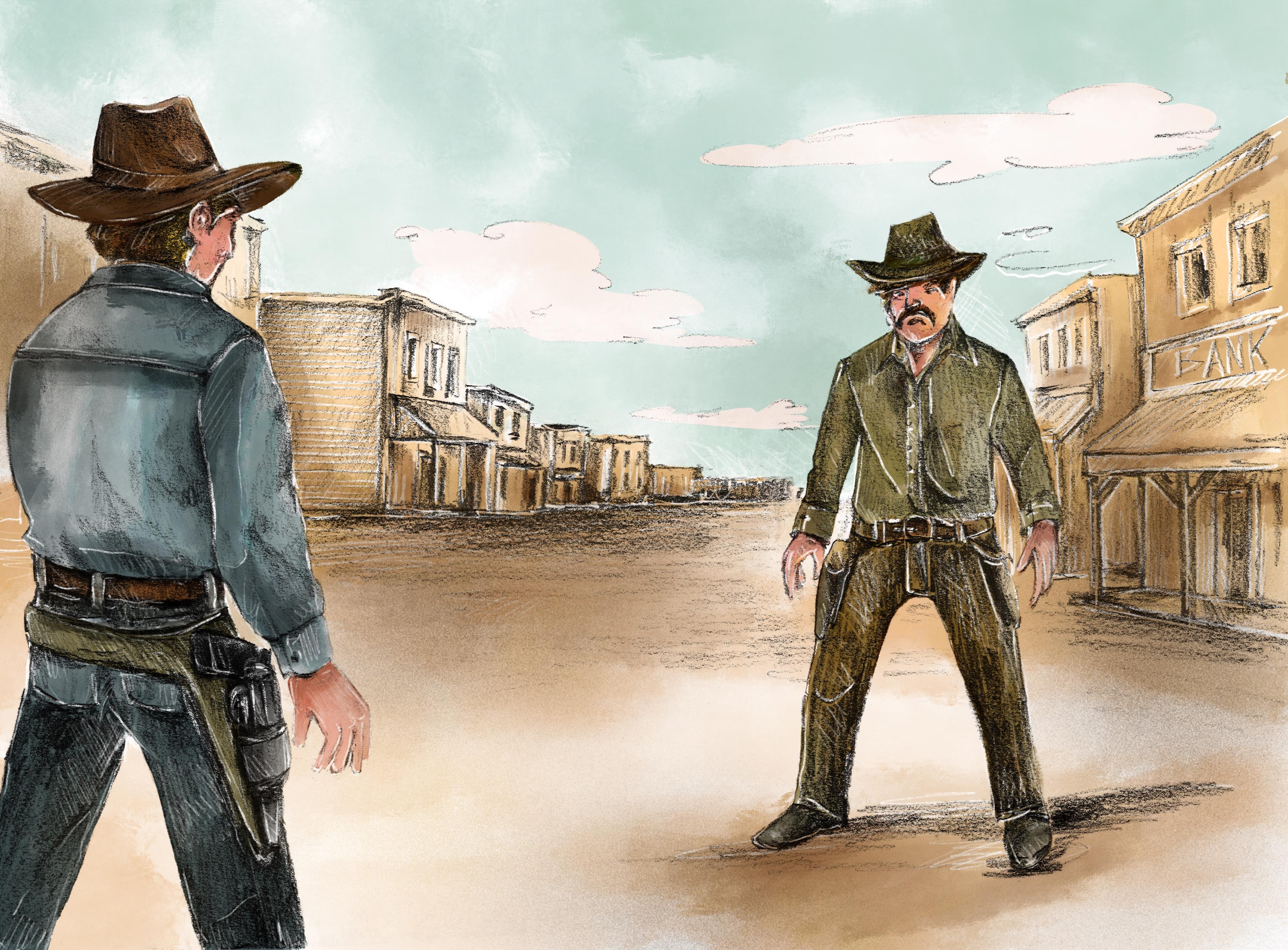
Not everyone in the Wild West was a good guy.
Famous outlaws like Jesse James and Billy the Kid became known for robbing banks, stealing from trains and stirring up trouble everywhere they went.
Cowboys had to watch out for bandits hiding in the hills, wild animals like wolves and rattlesnakes and there were always fights starting without warning.
One day would be peaceful, the next could bring a runaway horse, a stampede or an outlaw looking for trouble.
That mix of danger and excitement is what made the Wild West wild...!
Let's look at the essential outfit of a cowboy.
A cowboy's hat for starters - it's not just for style - it's one of the most important things he carries.
With its wide curved brim, the hat keeps the bright sun out of his eyes during long days on the range.
It shades his face and neck from burning and also protects him from sudden rainstorms or dusty winds.
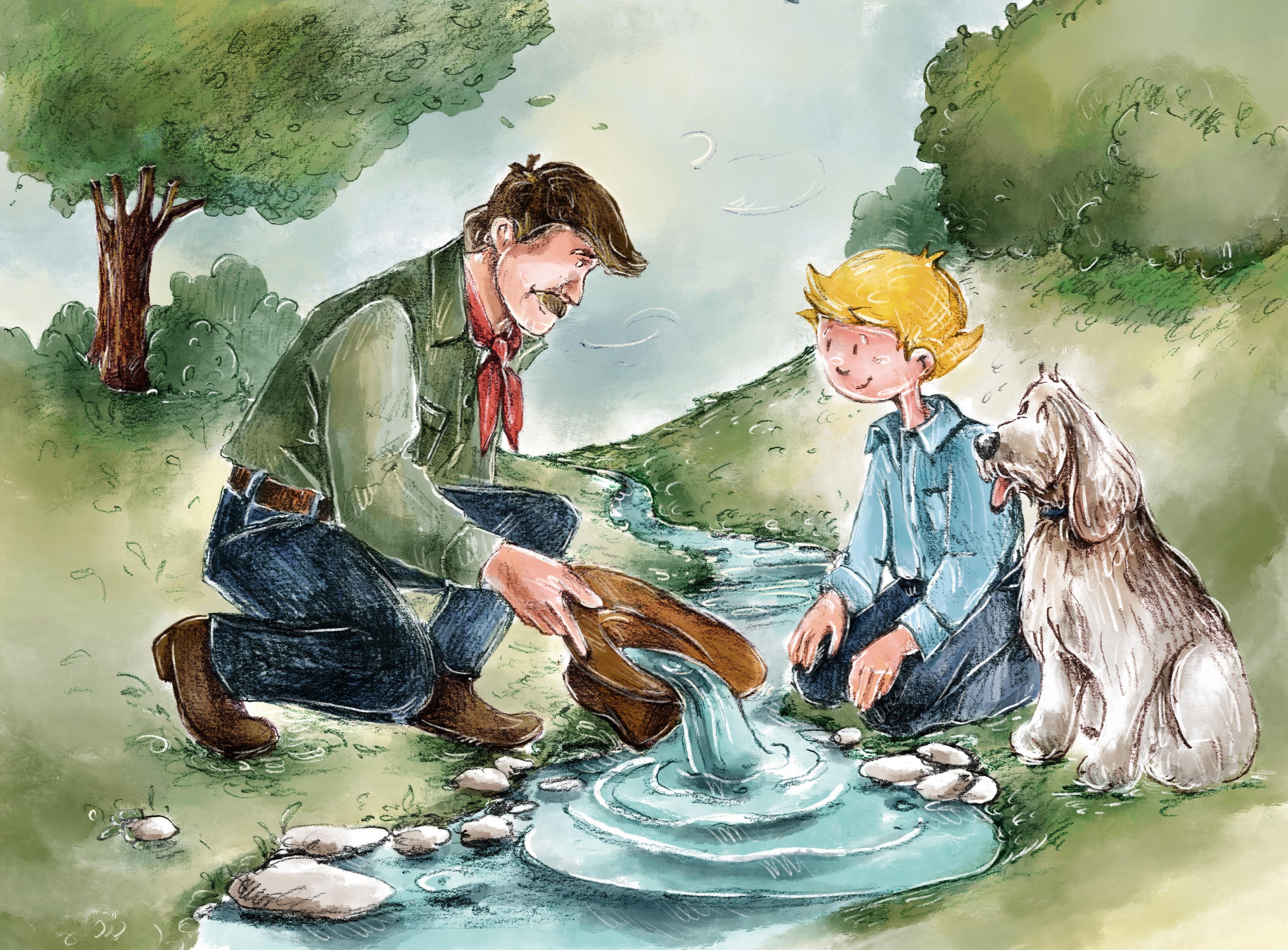
A cowboy's hat is so useful it also doubles as a water bowl! When a cowboy was far from camp and found a stream he could scoop up cool water for himself or his horse (or his dog!).
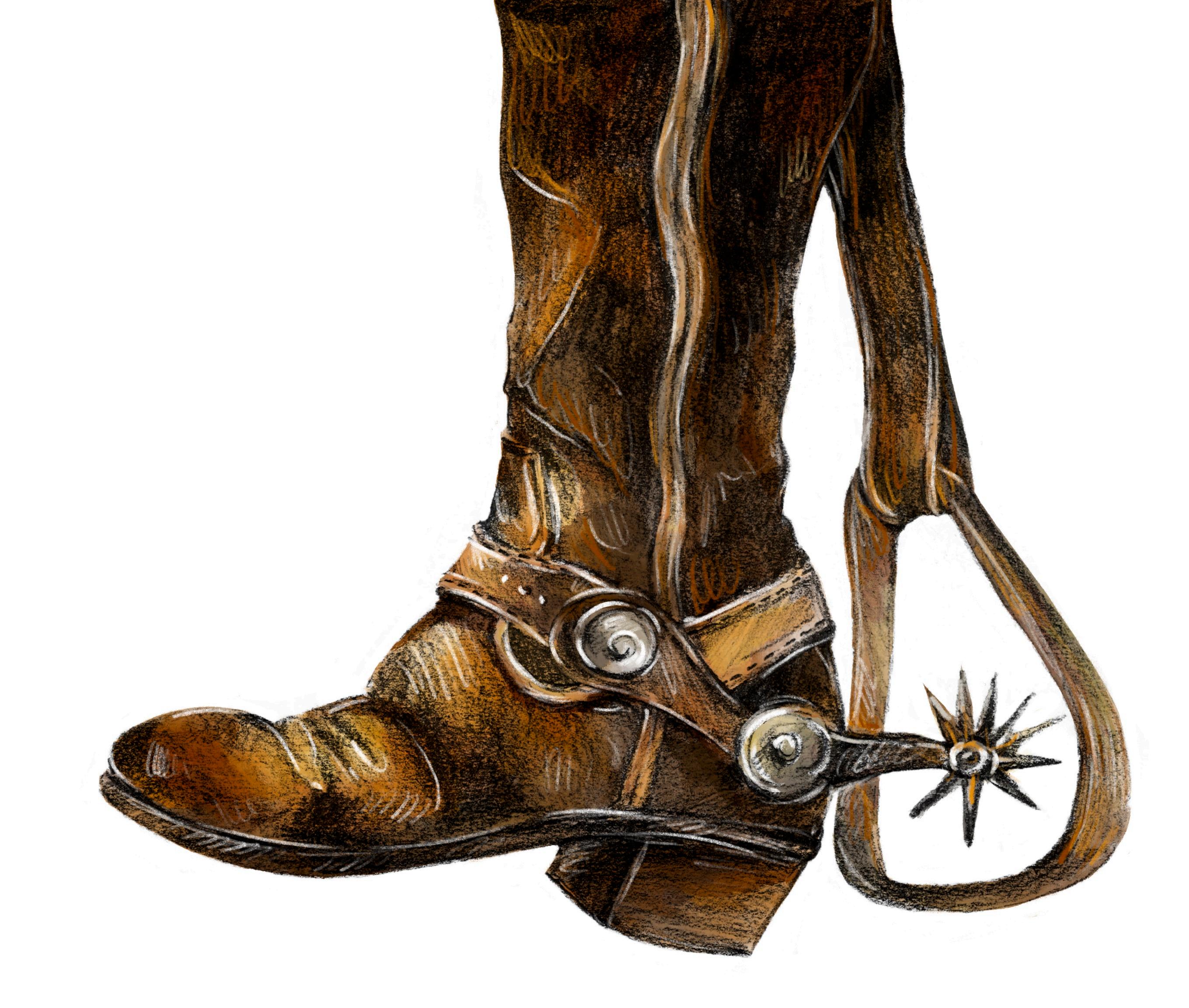
Cowboy boots are designed for riding, not just looking super cool! Their pointy toes make it easy for a cowboy to slide his foot quickly into the stirrup.
The tall, angled heels help keep the boot from slipping through giving him a secure grip as the horse moves.
The tough leather sides of the boots protect a cowboy's legs from snakes, thorny cactus or scratching branches along the trail.
And those jingling spurs at the back? They're for communication with the horse! Cowboys gently tap their spurs against the horse's sides to signal what they want: a quick pace, a turn or a slow down.
A well trained horse can understand these little cues like a secret language with the cowboy.
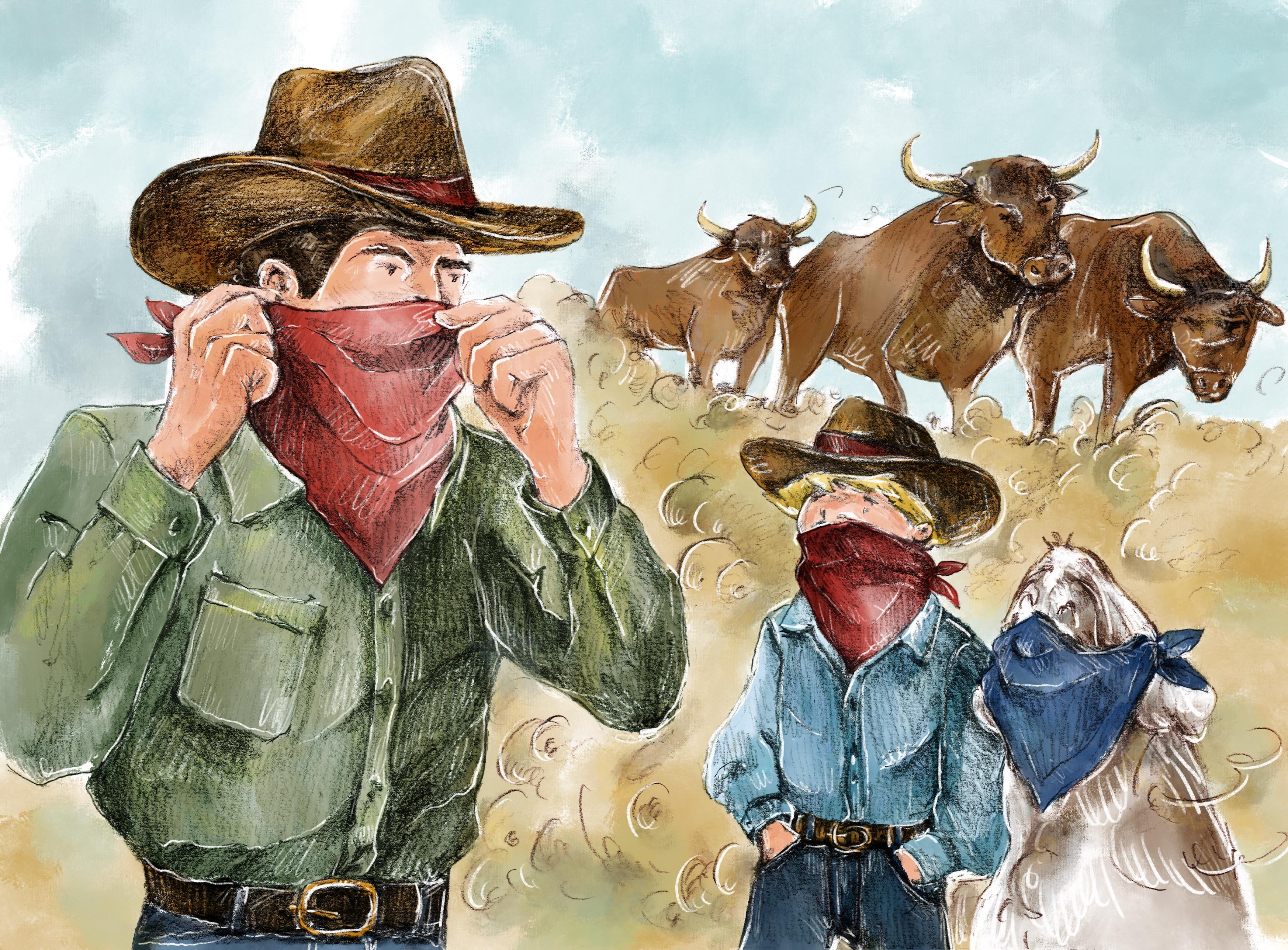
A cowboy's bandana was like a pocketknife - small, simple and useful for just about everything!
This bright square of cotton cloth, usually tied around the neck, was a cowboy's secret tool on the trail.
When dust storms kicked up on the open range, a cowboy could pull the bandana over his nose and mouth to keep from breathing in clouds of dirt. On scorching hot days he used it to wipe away sweat or dip it in a creek to cool his neck.
If someone got hurt, the bandana became a quick, bandage or arm sling.
During cattle drives cowboys used it to wave signals across long distances like stop or go or lookout . Sometimes it also worked as a pot holder for grabbing hot pans or maybe a pouch to hold small items or even a makeshift blindfold for a nervous horse.
A simple piece of cloth - saves the day!
Cowboys wore heavy leather leggings called chaps that wrapped around their legs like armor.
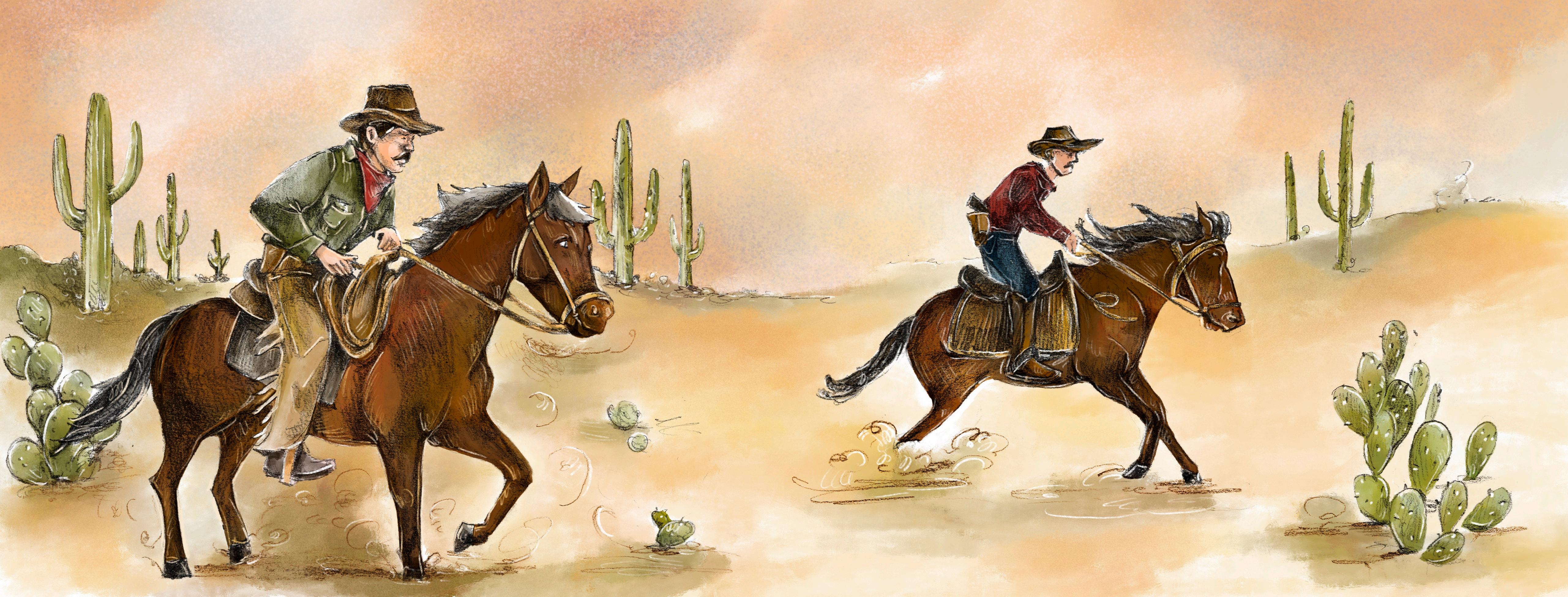

Whether a cowboy was chasing strays, riding through the thick brush or near a herd of restless cattle, chaps kept him safe.
Without chaps, some trails were so rough, a cowboy's jeans would not last a week.
Chaps kept clothes from ripping and skin from being scraped and cut.
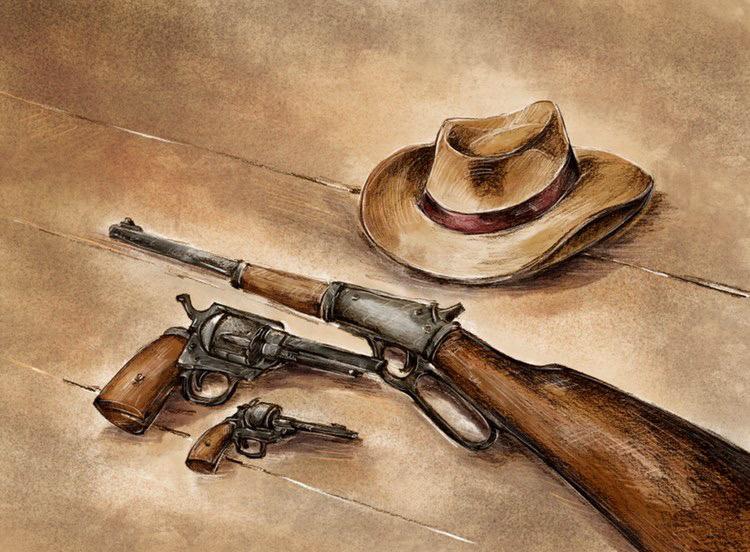
Most cowboys carried pistols or rifles but they weren't always used and many months might pass without a single shot being fired!
But of course having a gun could be important when having to face dangerous wildlife, protecting the herd or dealing with a surprise bandit.
Although the movies showed cowboys using guns all the time , in reality they spent far more time riding and tending cattle then they ever did in gunfights.
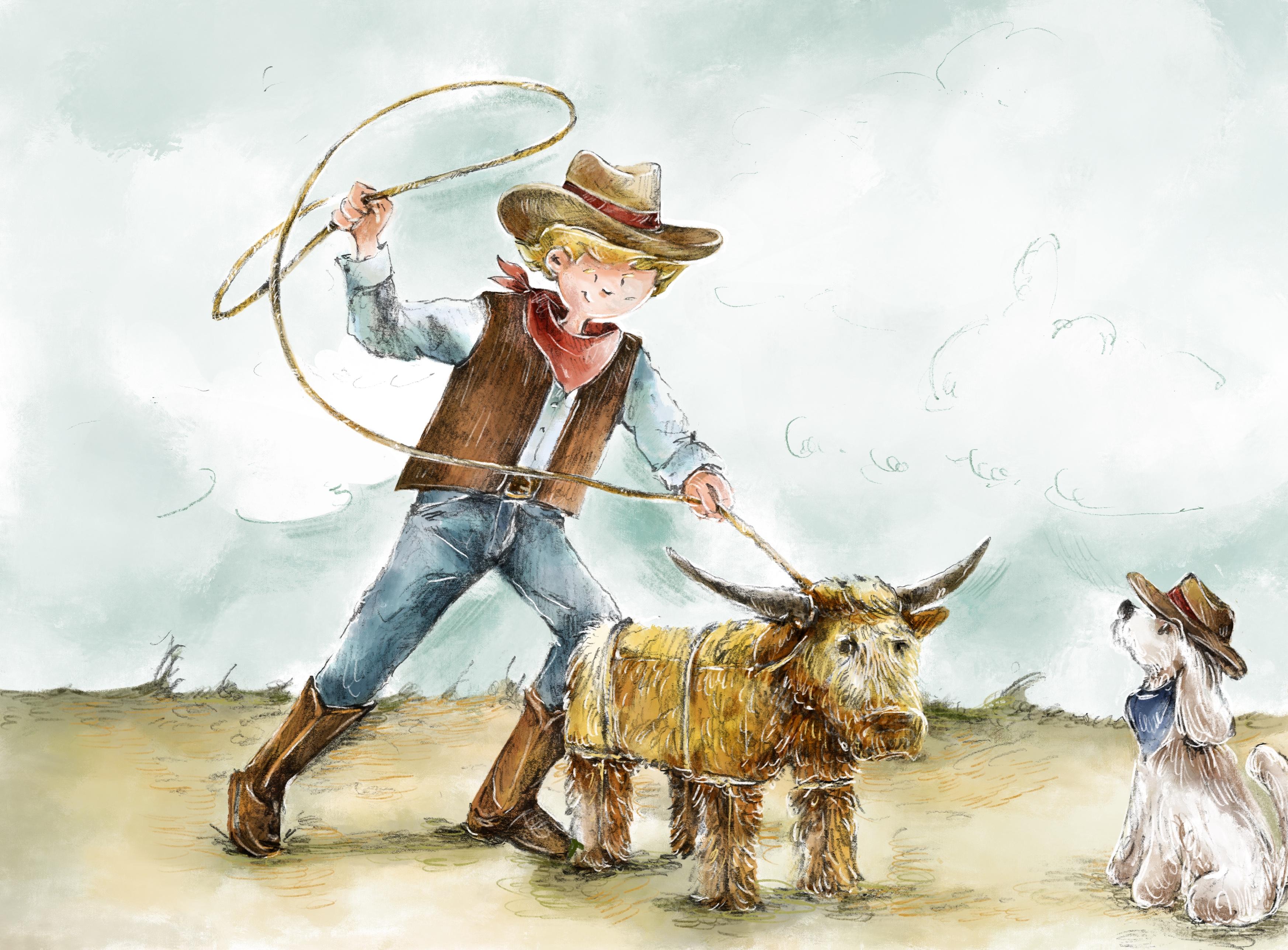
The lasso (also called a lariat) was a cowboy's favorite and most trusted tool.
Made from strong, braided rope with a special loop at the end, it was designed for one purpose only - catching animals from horseback.
With a quick swing and steady hand, a cowboy could catch a runaway calf before it ran into the bush, or snag a wild horse that needed training.
Learning how to use the lasso was not easy though and boys would start when they were young using hay bails with horns as practice.
Cowboys spent hours and hours practicing their throws in dusty corrals and fields. A good cowboy could drop a loop over a set of horns, grab a horse's front legs or even catch something (or someone) moving fast - all while riding his horse at a gallop!
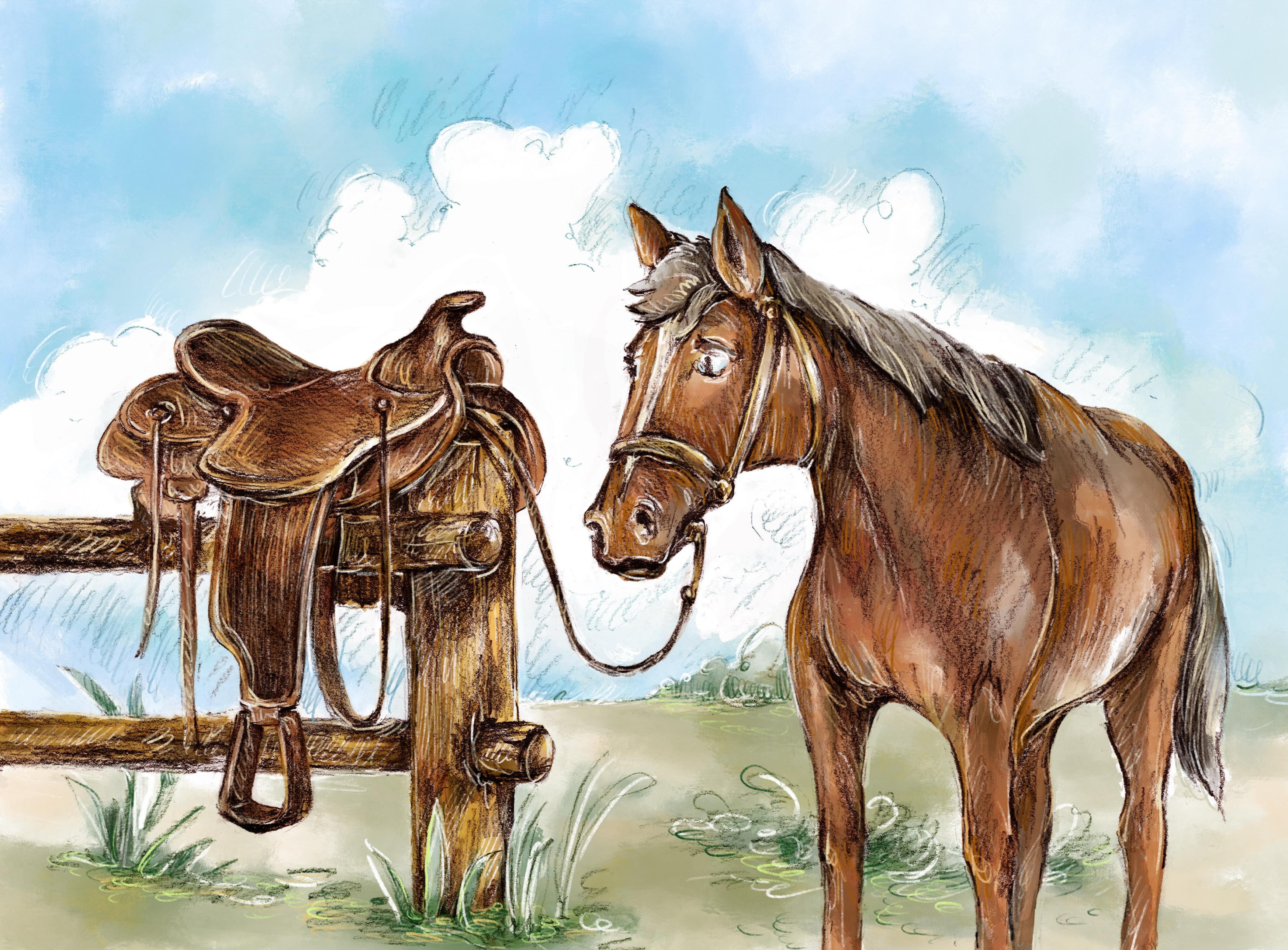
Every cowboy's best friend is his horse.
More than just an animal , a good horse is a partner, a helper and sometimes even a hero.
Cowboys take excellent care of their horses brushing their coats until they shine, cleaning their hooves and making sure they are constantly fed and have water.
With training over time, a cowboy and his horse move as onetrusting each other completely.
Of course to sit on his horse a cowboy also needs an amazing saddle - strong but also comfortable enough for the cowboy and the horse on rough rides and long days.
Saddles are always made of leather and hold ropes, tools and gear whilst also keeping the cowboy balanced as the horse gallops across the plains!
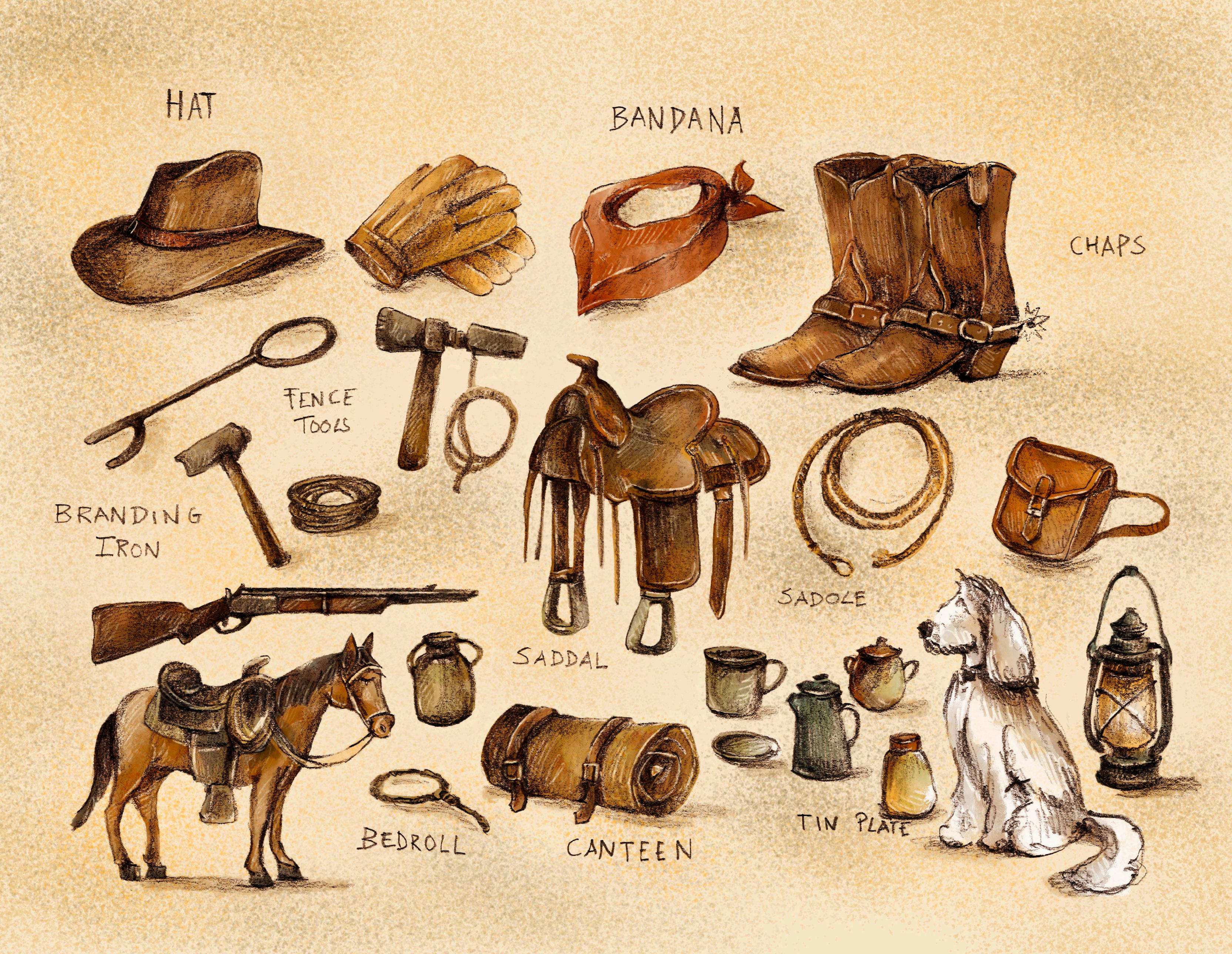
Let's think if there is anything else that's essential cowboy kit...
Gloves:thick leather ones to keep his hands safe from rope burns, sharp wire and good for rough work like fixing fences.
Bedroll: when night fell a cowboy unrolled his bedroll - a bundle of blankets and canvas - and he slept under the stars.
Canteen: water was precious on the range. A canteen hung from the saddle or belt so a cowboy could stay hydrated during long hot days.
Tin plate and cup: cowboys ate from simple tin dishes that were easy to pack and hard to break.
Lantern: this would be used at night either in his bunkhouse or out on the trail.
Tools: fence tools and branding irons were used to mark cattle, repair fences and keep the ranch running smoothly
How much would a cowboy get paid?
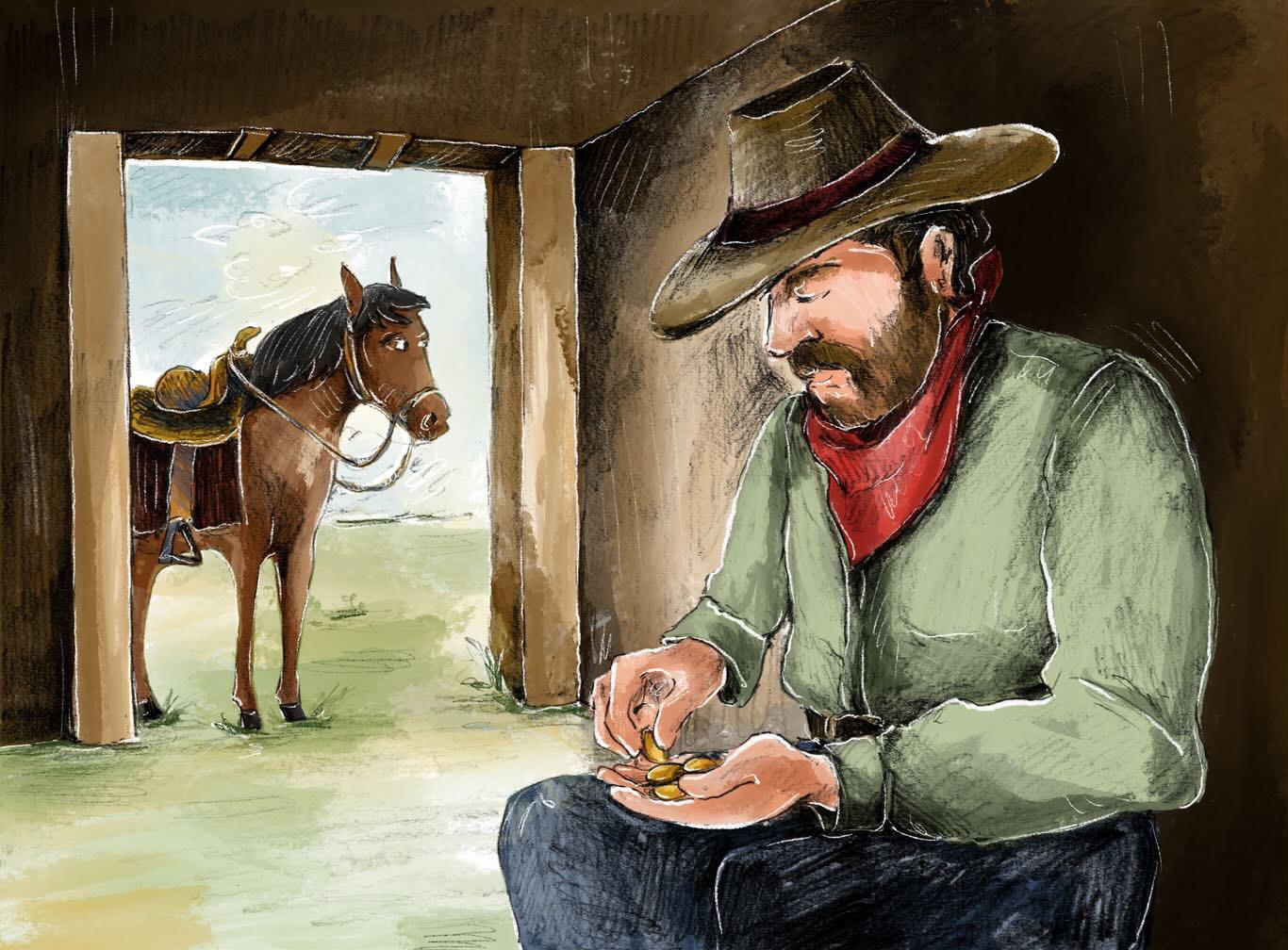
Well despite all that hard and dangerous work, cowboys did not earn very much money - maybe around $40 a month.
That's about $1300 a month in todays money.
But they didn't have to pay for the bunkhouse or for food!
Luckily most cowboys didn't ride for the money - they enjoyed working in wide open spaces, the sense of freedom that came with living under the sky and the thrill of adventure every single day. They also had a great sense of pride in handling a difficult horse, managing a restless herd and doing a job that needed grit, skill and strength.
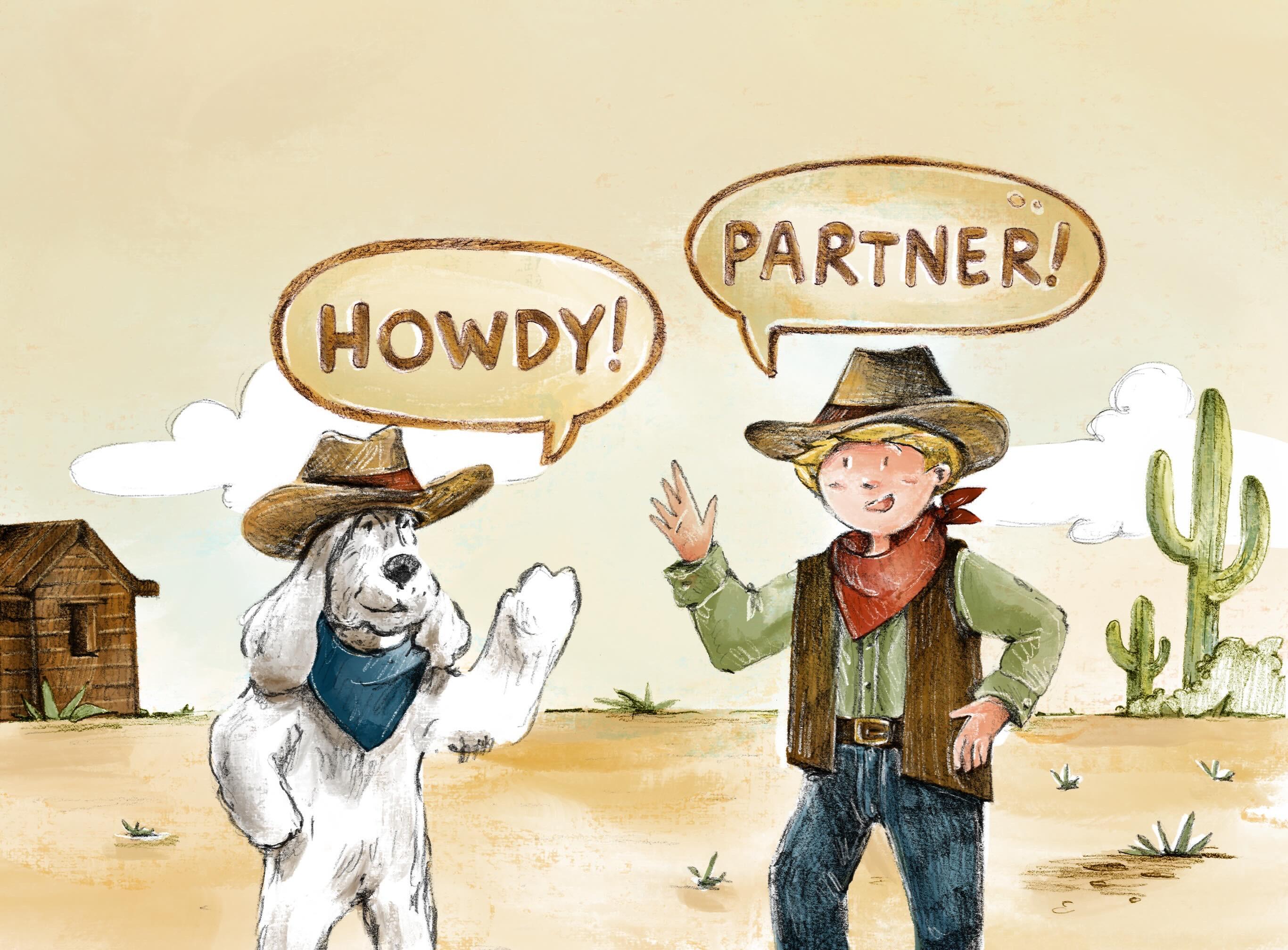
Cowboys had their own way of talking - a mix of slang, Spanish words and sayings that were made up on trails.
'Howdy' was their friendly way of saying hello and 'partner' was a word they used for a trusted friend or fellow rider.
A 'dogie' referred to a young calf without a mother - not a dog!
A 'lariat' was the rope every cowboy carried to rope cattle. A 'tenderfoot' was a new cowboy. 'Sidewinder' is a rattlesnake.
'Happy trail' was a friendly farewell!
Cowboys also used little words a LOT for example 'much obliged' for thank you and 'git along' to move cattle forward.
They also had funny sayings to make each other laugh
'All hat and no cattle' was their way of describing someone who bragged a lot but couldn't back it up - big talk, no action.
And 'don't squat with your spurs on ' was smart advice every cowboy learned fast unless they wanted a very painful butt!
They would say 'this' ain't my first rodeo' to show they were experienced or 'she's a wild one ' when talking about a tough horse.
They would also sometimes say 'too big for their britches' if someone was becoming too arrogant or full of themselves.
For example ' after winning the rodeo, he got too big for his britches'
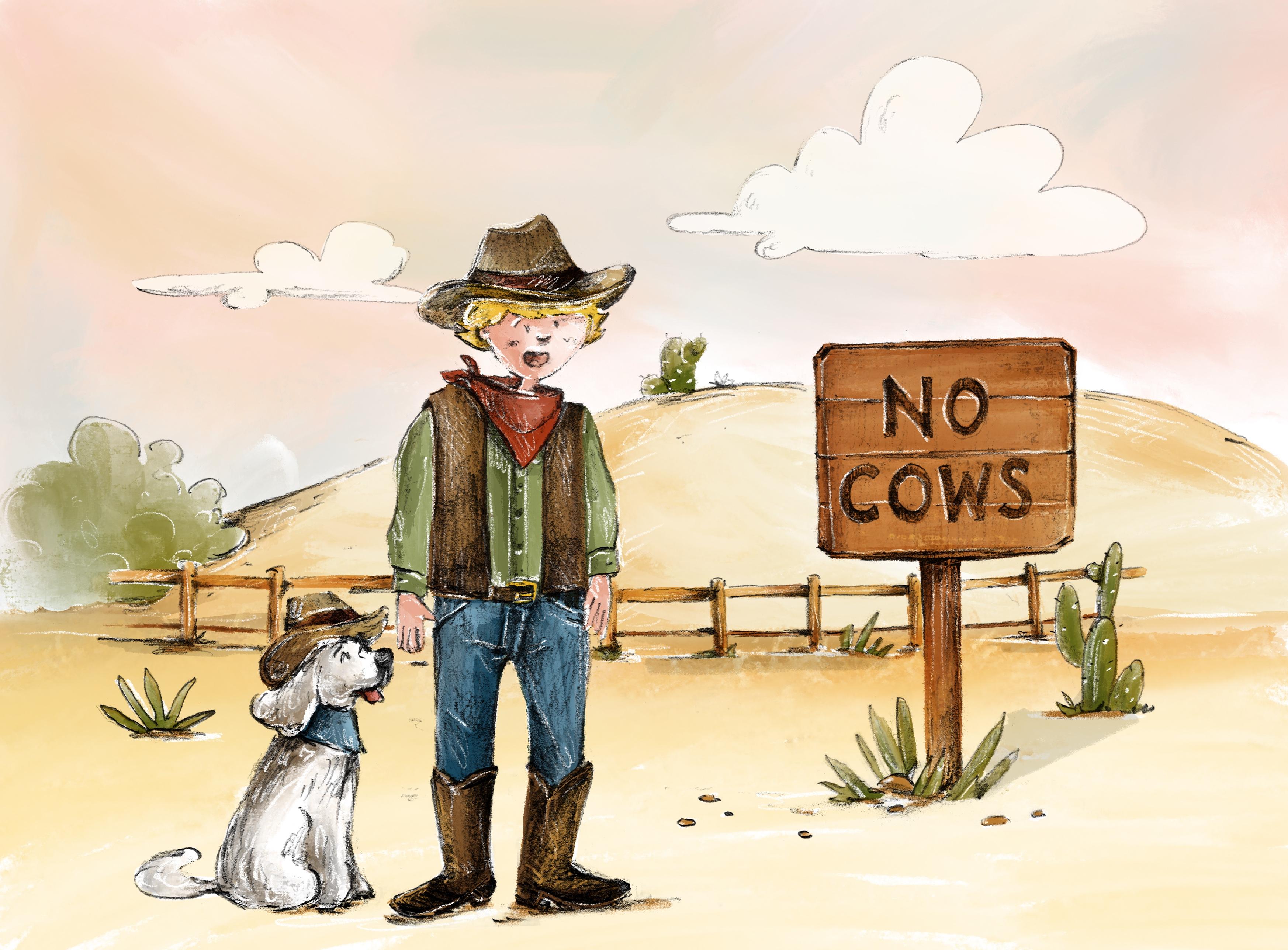
Cowboys lived by an unwritten code - a set of rules they took seriously.
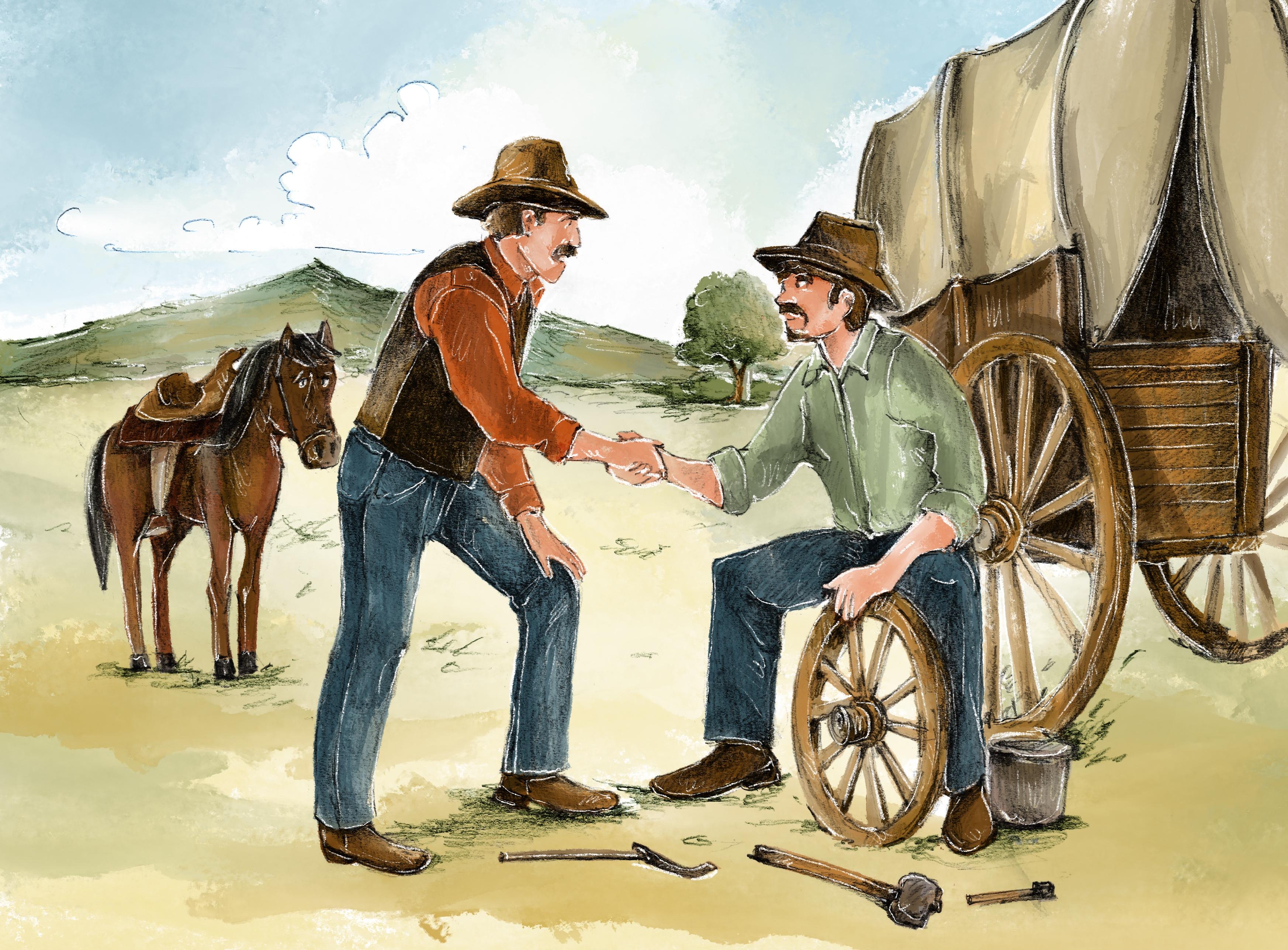
A cowboy was expected to be honest no matter what happened and also brave enough to face danger without backing down.
Taking good care of his horse was a must.
Cowboys also believed in helping others in need, whether it was a neighbour, a stranger on the trail or a fellow rider in trouble.
Above all a cowboy's word was his bond. If he made a promise he would keep it.
People trusted cowboys totally.
Let's look at some of the famous cowboys of our time.
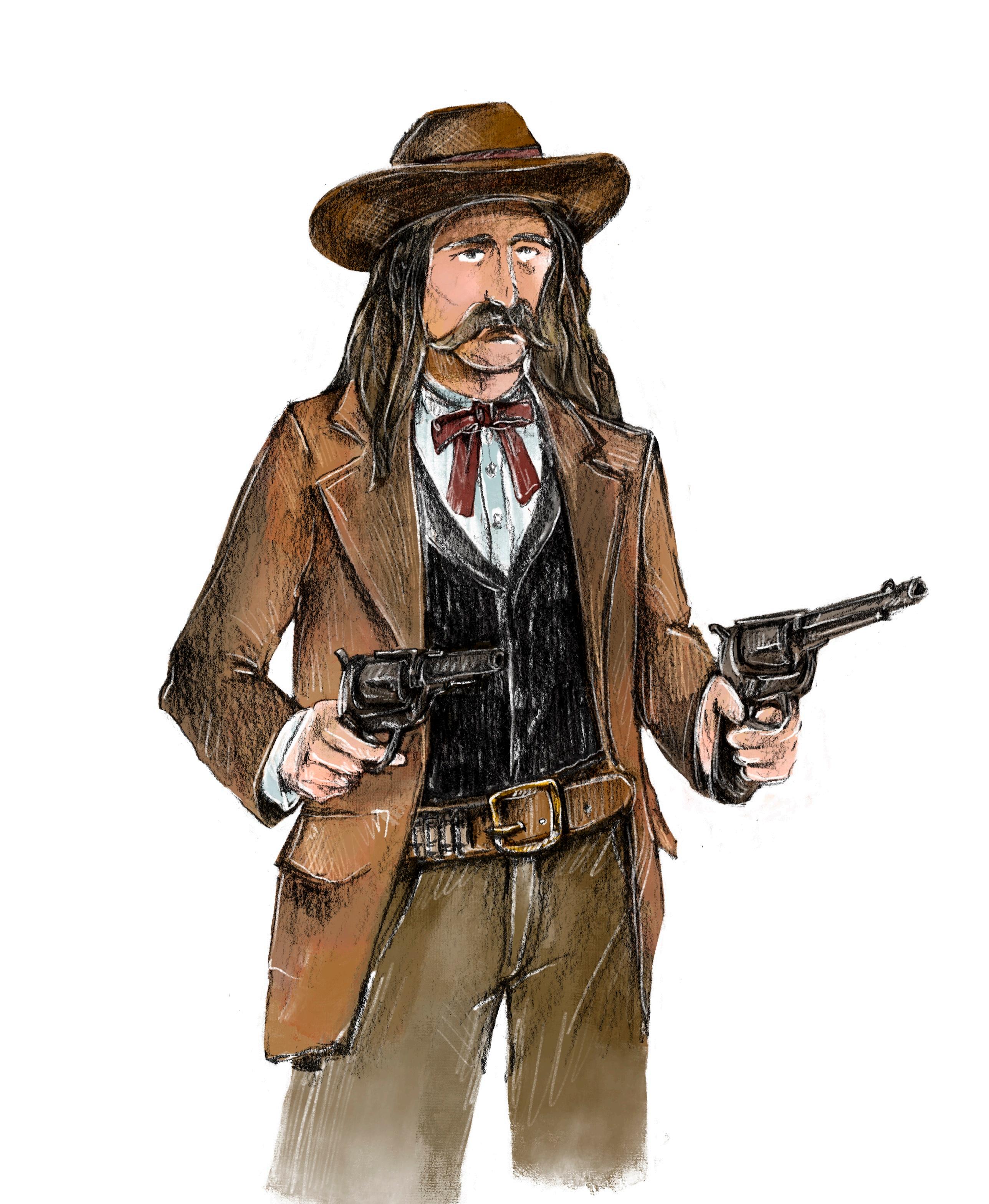
Wild
Bill Hickok
Wild Bill was a lawman, a scout and a sharp shooter.
With his long moustache and twin pistols, he looked every bit the hero.
People say he could hit a target from any distance and never lost his cool. He roamed from town to town to keep the peace, tracking criminals while guiding wagon trains across the land.
Before long, stories about his adventures spread across the country turning him into a legend of the Wild West.
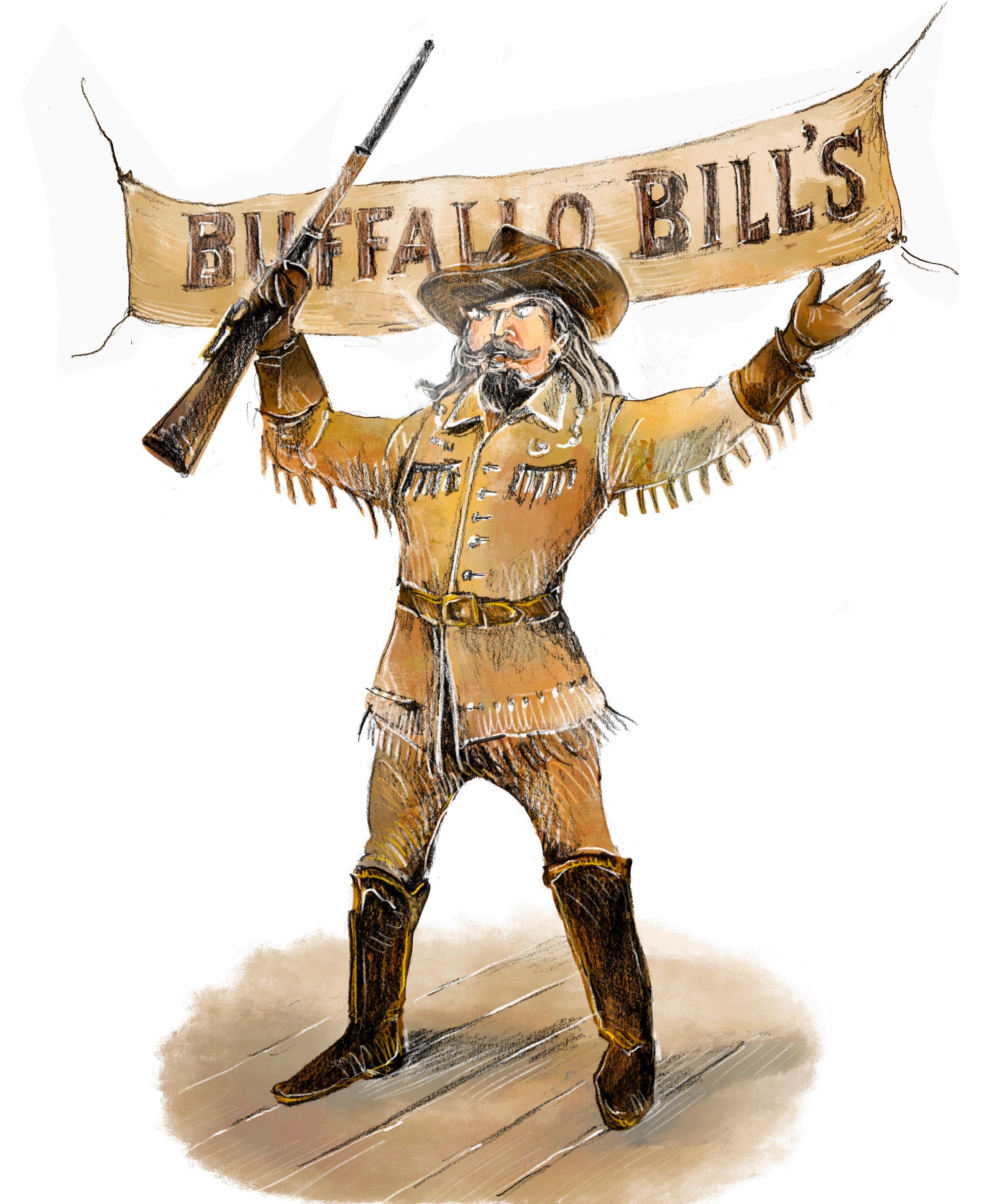
Buffalo Bill Cody
Buffalo Bill also worked as a scout on the open plains before he became one of the most famous entertainers in America.
He spent years helping settlers, carrying the mail and hunting buffalo to feed railroad crews - which is how he got his name,
But he also created 'Buffalo Bill's Wild West Show' which was a traveling spectacular that brought the excitement of cowboy life to huge crowds.
Riders would perform rope tricks, race horses and re-enact frontier adventures. His show went all over the US and even Europemaking him an international star!
Not all cowboys were men - meet Annie Oakley!
Annie Oakley
Annie was a sharpshooter with incredible talent, known for her steady hands and amazing eyesight. She learnt how to shoot when she was just eight years old.
Annie could hit flying coins, split playing cards on the edge and strike tiny targets while standing on horseback!
When she joined Buffalo Bill's West Show, audiences were amazed and would come for miles to see her. Annie would always perform with a quiet smile and was very delicate but confident showing the world that skill and courage had nothing to do with being a man. She became a hero to girls and boys and is known as one of the greatest shooting stars in history!
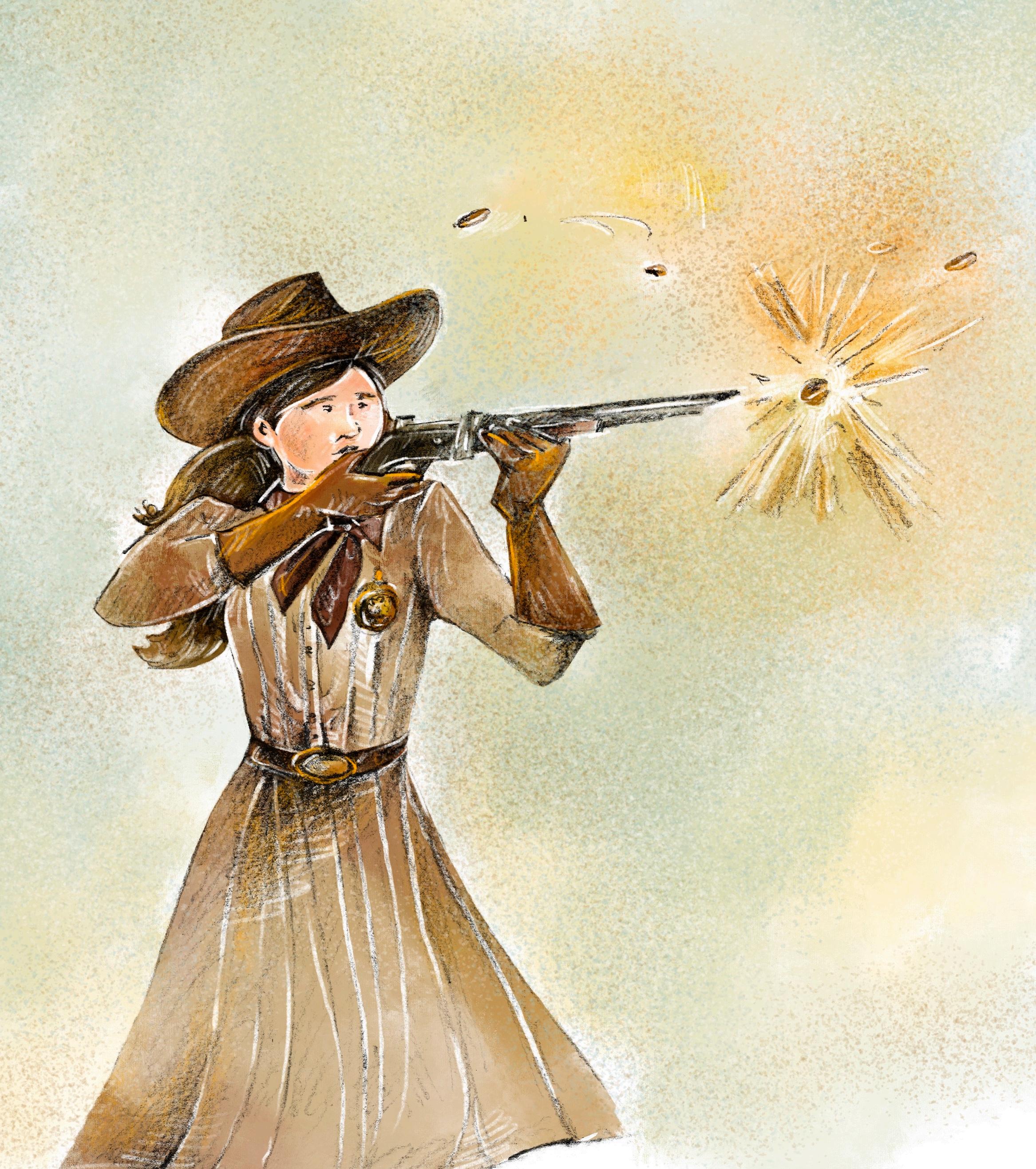
Annie
was only five feet tall but she could outshoot almost anyone,
She once shot through the centre of a playing card from so far away most people could barely see the card - she then shot through the same hole five times!
Hollywood made cowboys famous with amazing films. These films called Western movies became some of the most popular movies ever made. In the 1950' s about 100 were made a year.
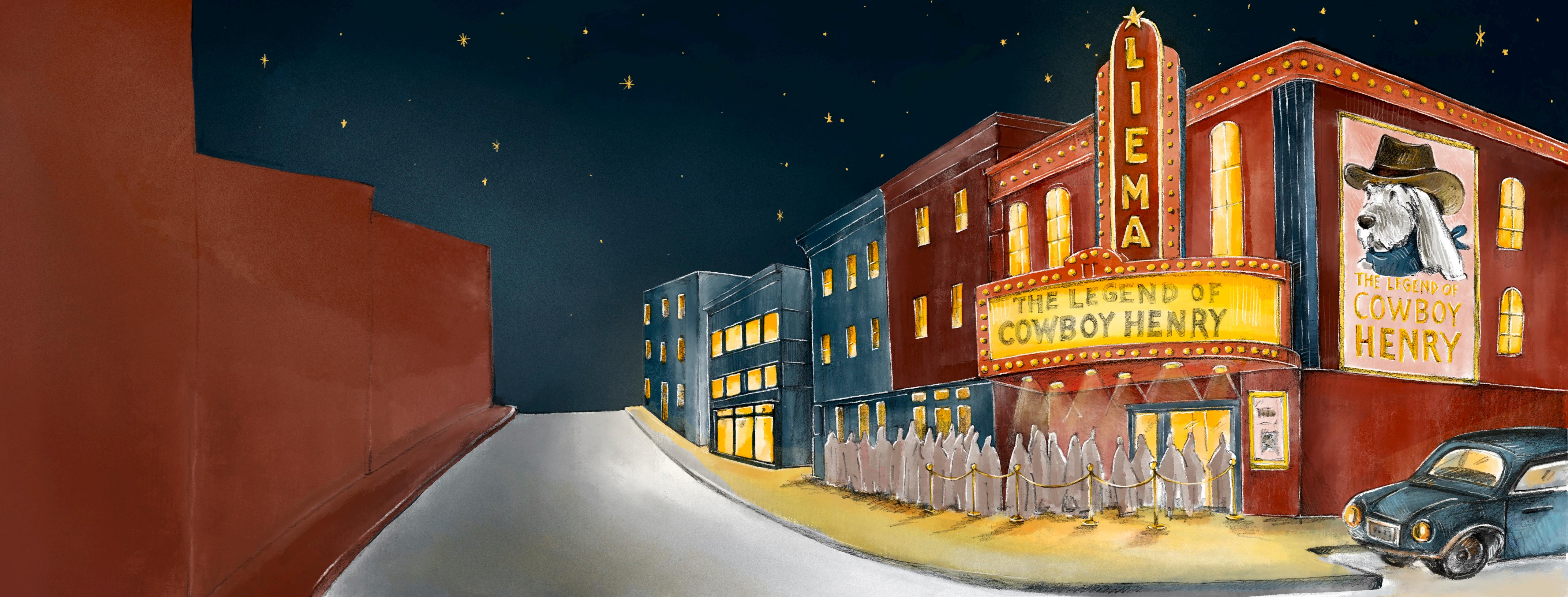
Actors like John Wayne and Roy Rogers turned the cowboy into someone every boy wanted to be.
The movies turned cowboys into an American hero - someone who stands for freedom, bravery and the spirit of the Wild West.
When the hard work of the trail and the ranch was done, cowboys gathered to show off their skills in lively rodeos.
A rodeo was part competition, part celebration that the trail was over.
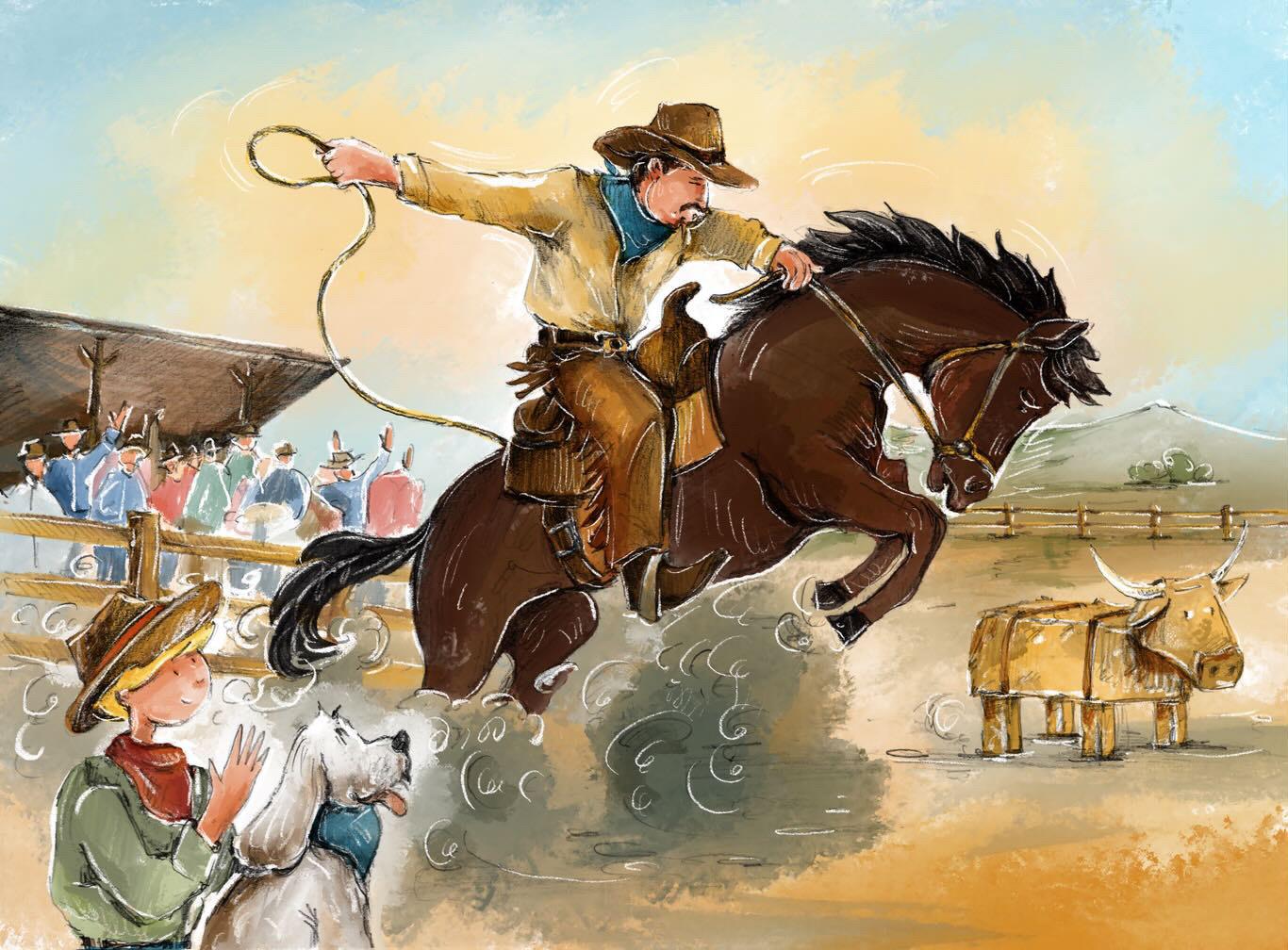
Riders would try to stay on bucking broncos that would explode into the arena with twisting leaps and powerful kicks.
Ropers would race against the clock, swinging their lassos to catch calves.
A rodeo would bring the entire town together with crowds cheering the cowboys on.
Maybe you live somewhere that still has a rodeo? Lucky you!
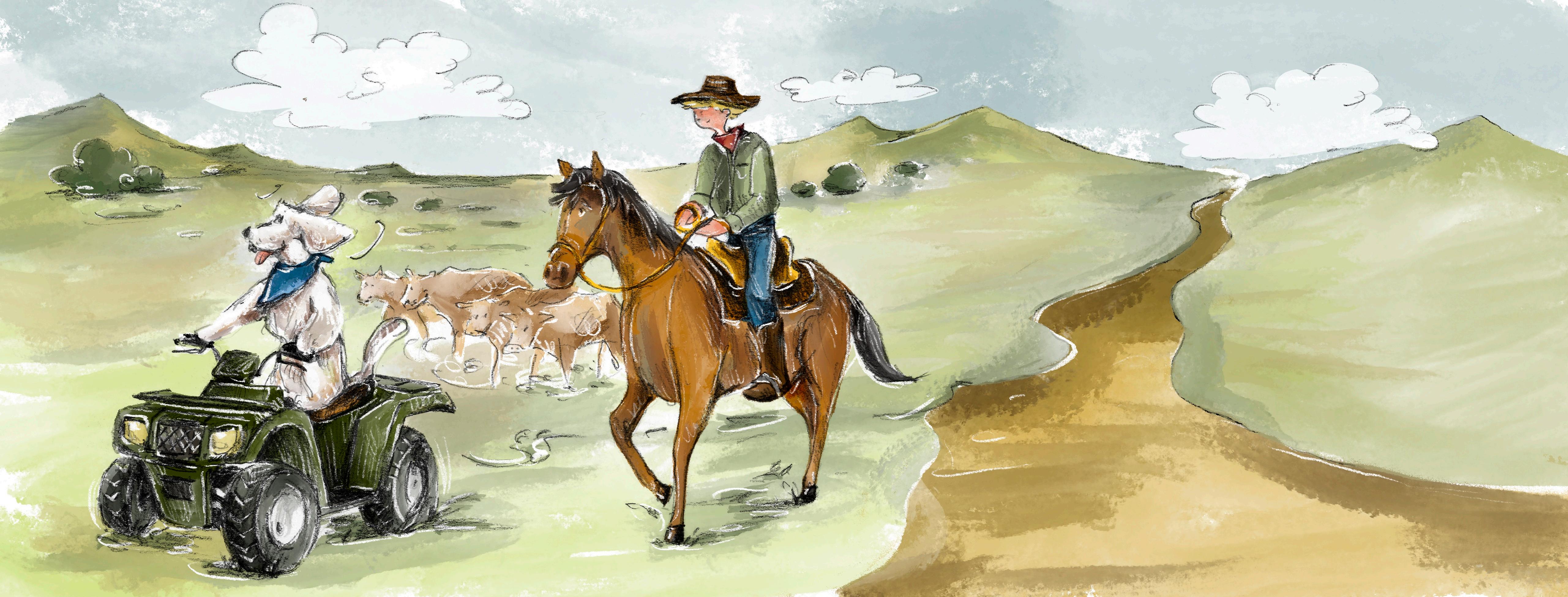
Cowboys are still around though! Ranchers across the West still ride horses at sunrise, herd cattle across wide pastures and rely on much of the same gear their great-grandfathers used - boots, hats, saddles and trusty ropes.
Modern tools have joined the mix: trucks rumble across ranch roads, ATV's zip over rocky hills
Some cowboys even use drones to check on distant herds.
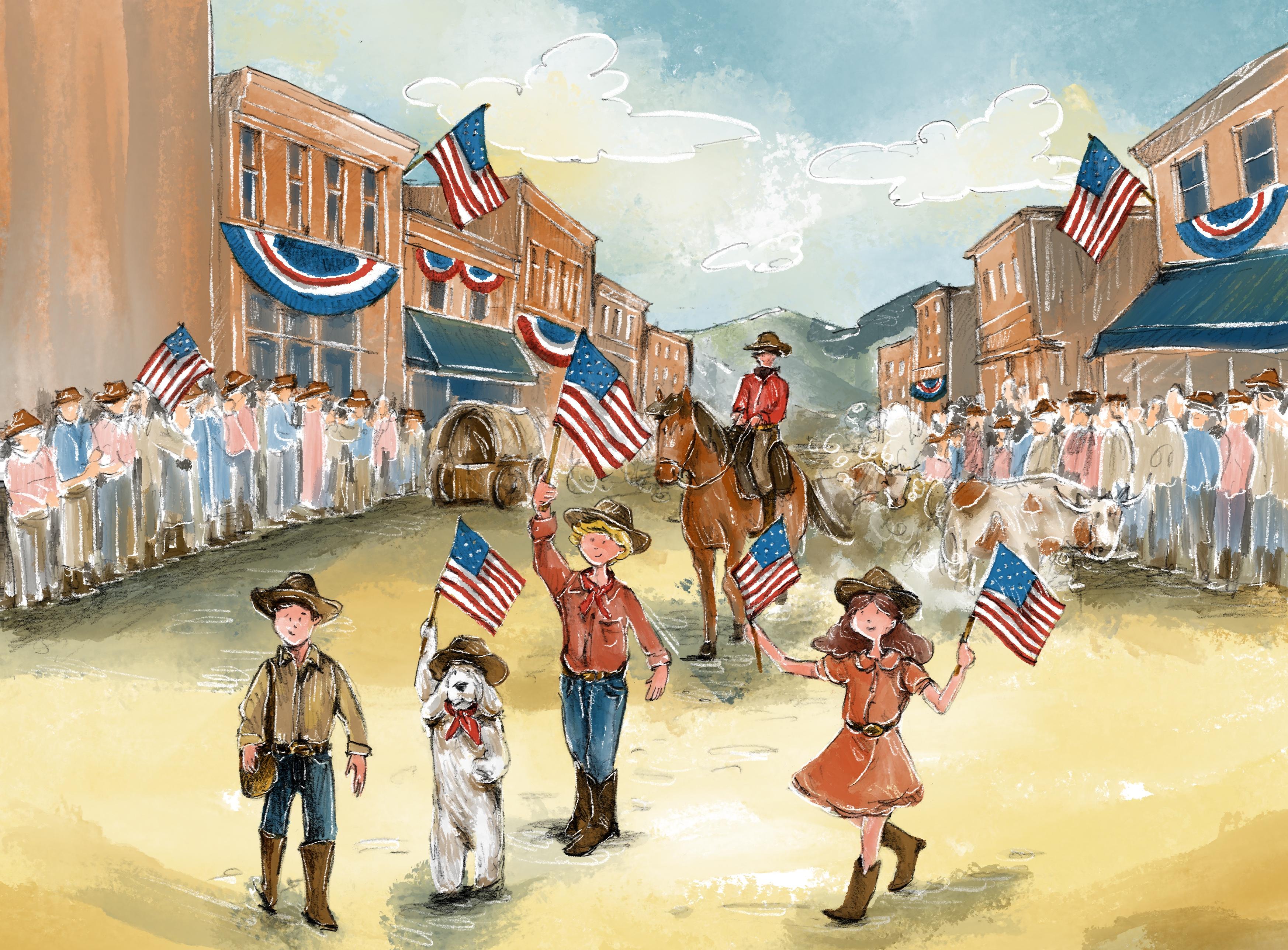
Every year, towns across the West - and around the country actually - celebrate cowboy culture with big parades, lively fairs and thrilling rodeos.
Streets fill with folks dressed in boots, hats, bandanas and shiny belt buckles. Riders guide beautifully groomed horses through town, waving to crowds as marching bands play upbeat tunes.
At the fairgrounds, families enjoy canival rides, chow down on barbecue and browse stalls filled with handmade crafts and western gear.
As evening falls, rodeo lights flicker on and the excitment growsbull riders, ropers and barrel racers show off their skills.
Later people gather for western dances, two stepping to fiddle songs and country music. These events keep cowboy traditions alive!
You don't have to be a grown up to be a cowboy!
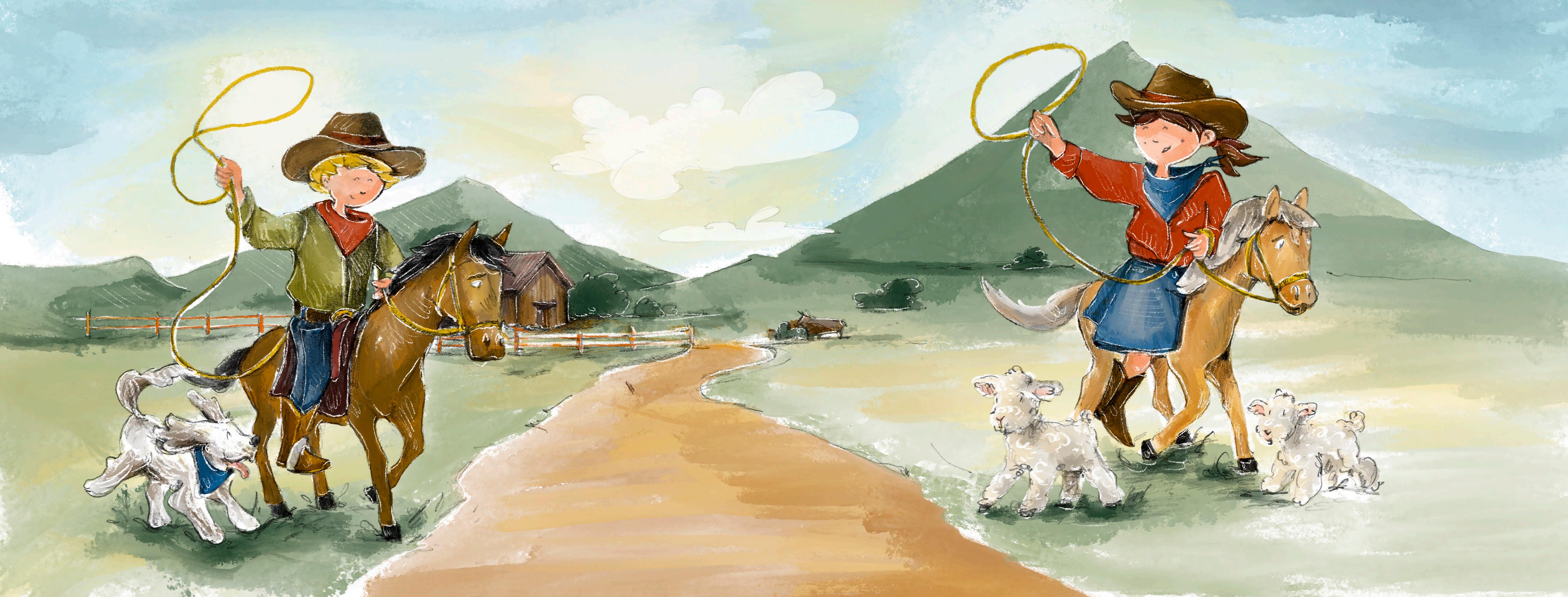
Young riders learn to sit tall in the saddle, guide their horses and practice roping with soft ropes made just for beginners. Some kids help out at ranches, feeding animals or caring for gear
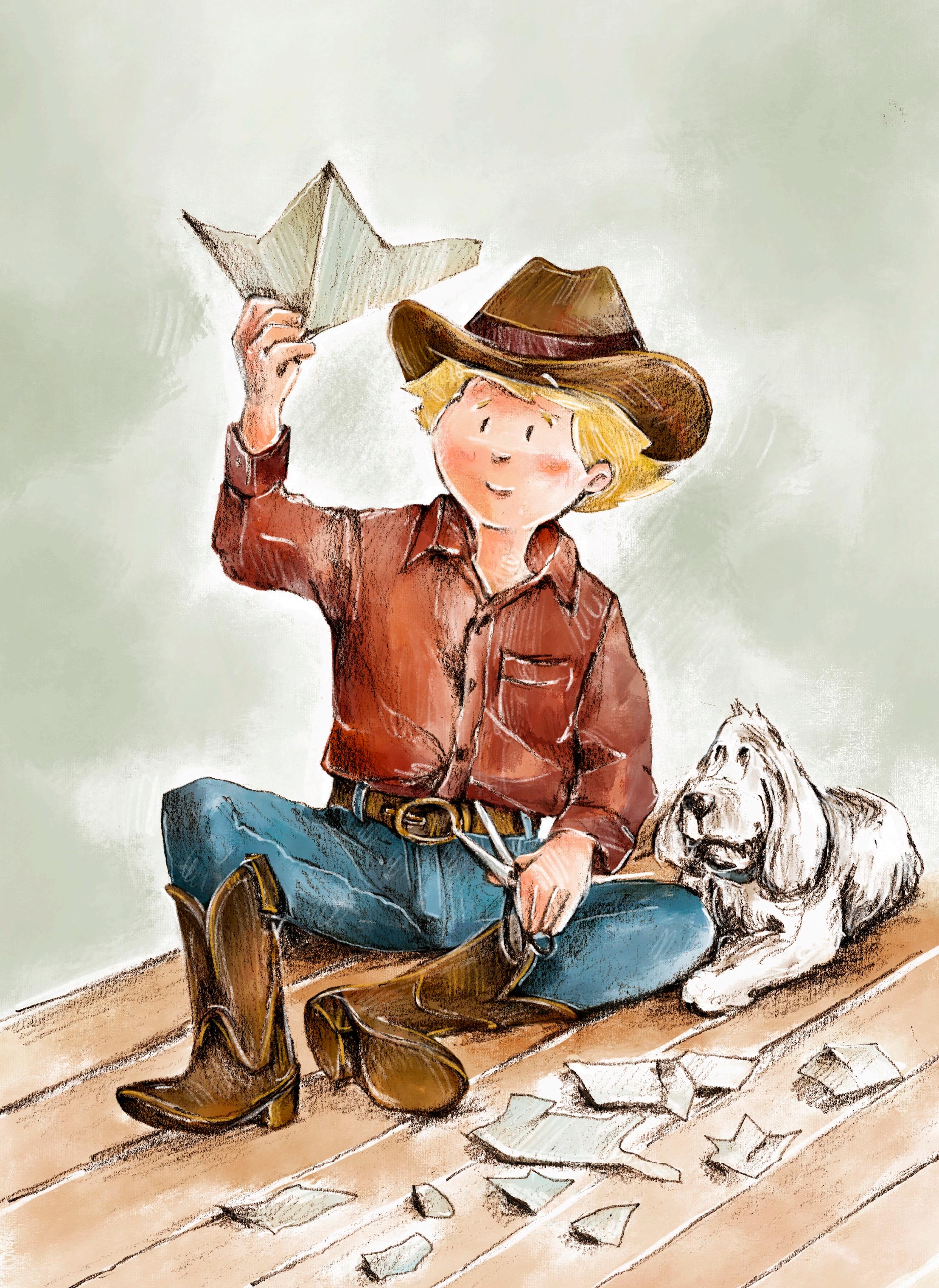
Want to dress like a cowboy?
Start with a wide brimmed hat to shield your eyes from the blazing sun.
Slip into a sturdy pair of jeans made for riding.
Add some tough leather boots - perfect for stomping around in the dust.
Get yourself a classic shirt with pearl snaps, maybe add a vest...and you ' re good to go!
And guess what - all of these things except for the boots your parents can buy at Me & Henry this season!
My daddy has designed lots and lots of amazing things for you to look the part!
Just go to your local store and they probably have what you need.