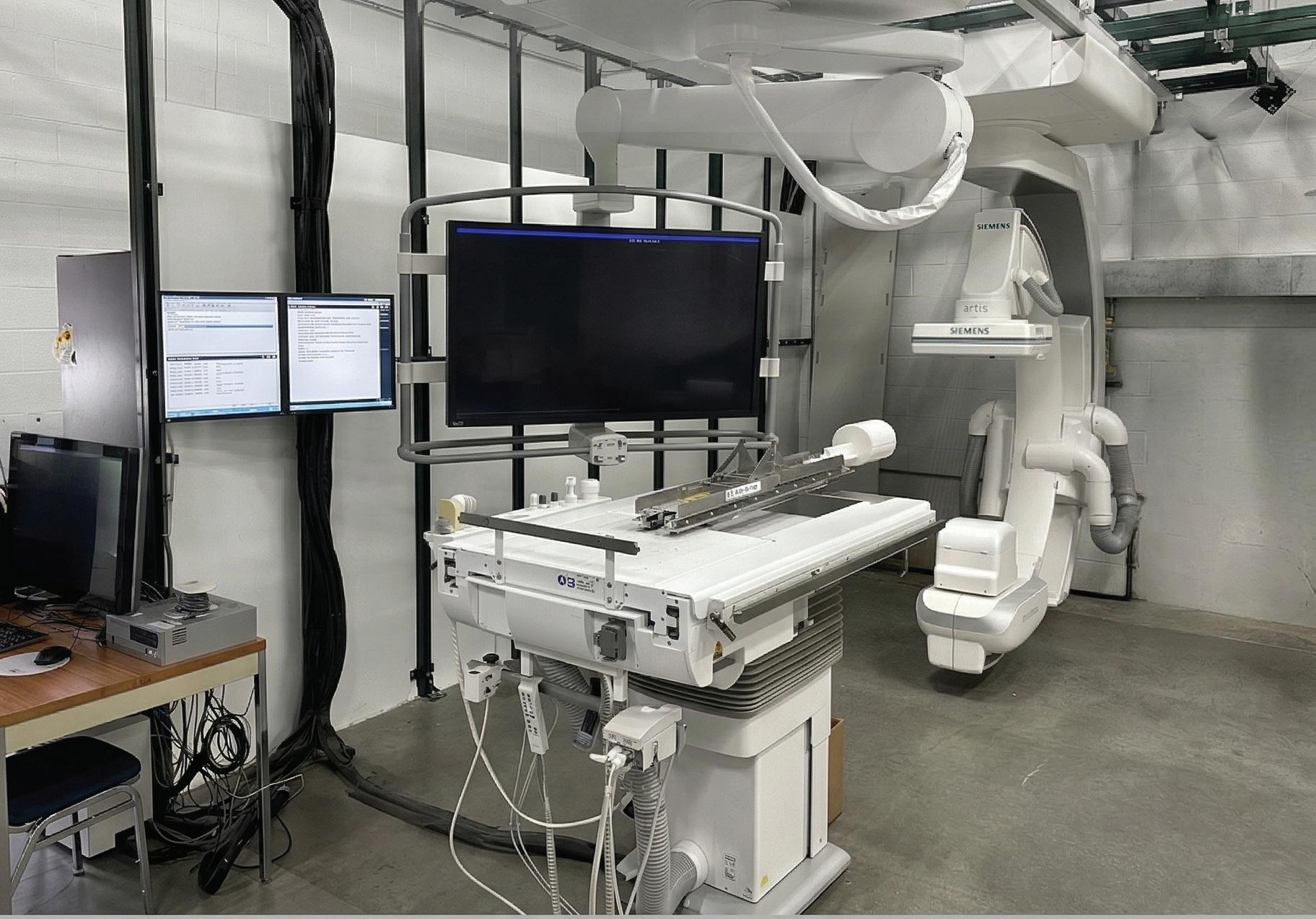
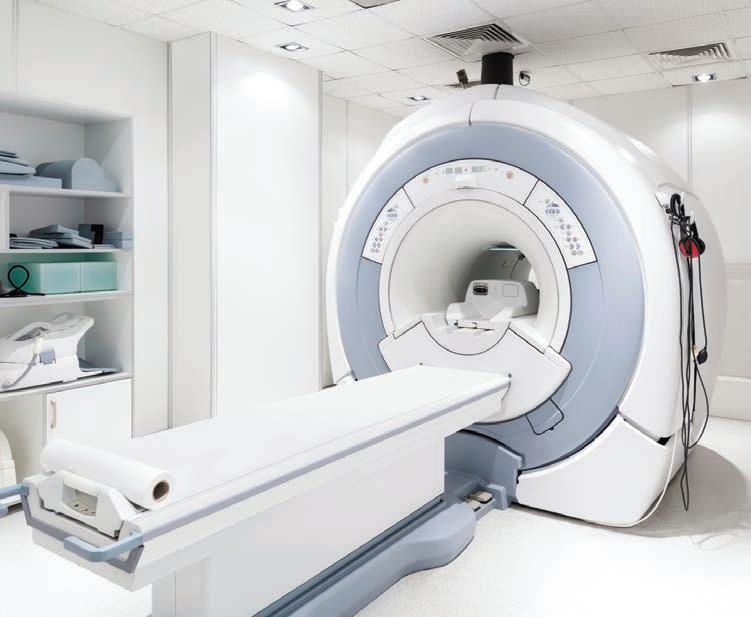
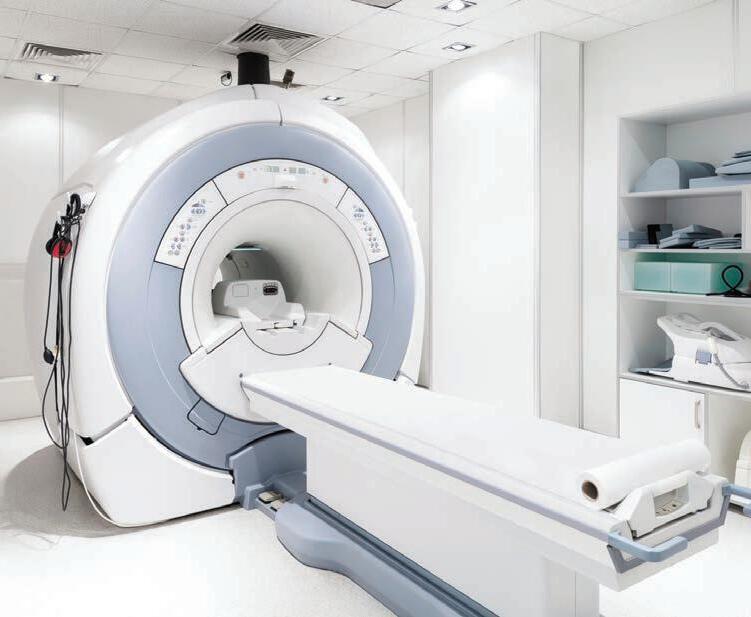
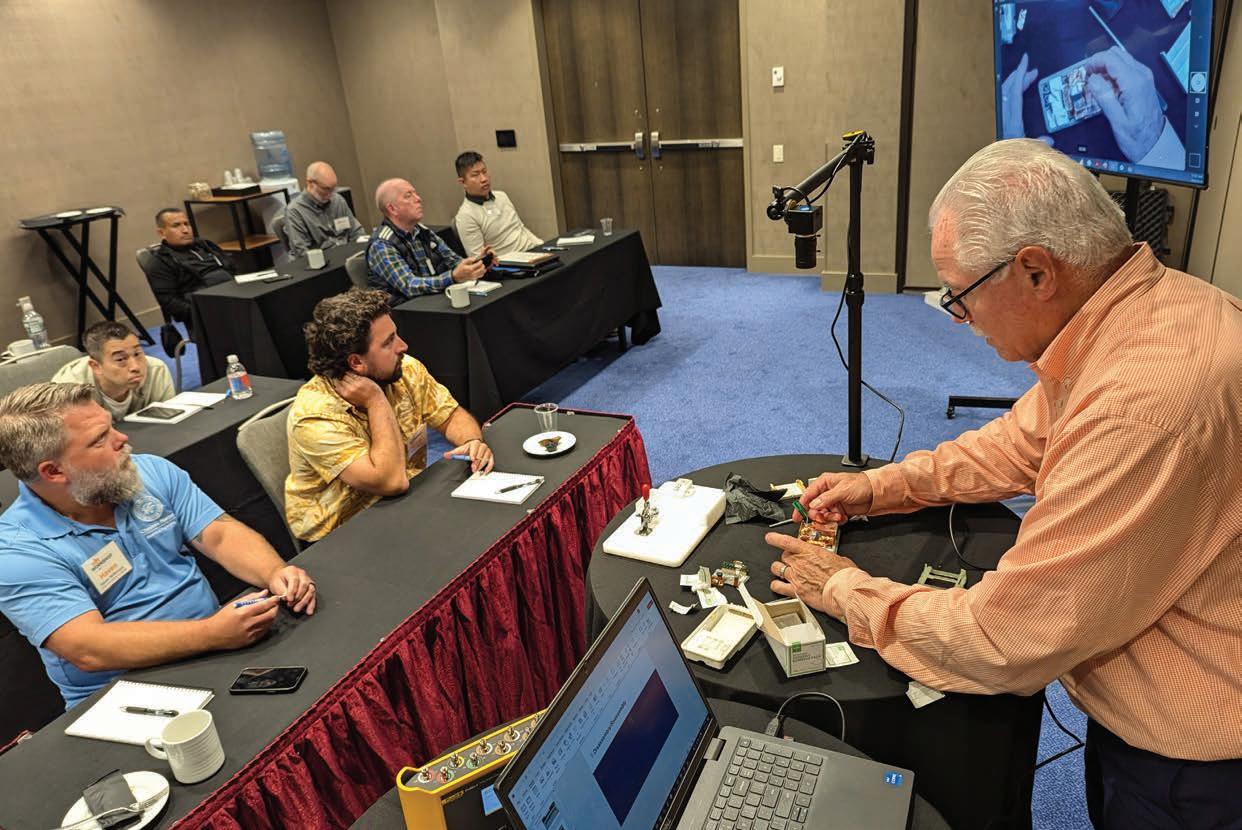
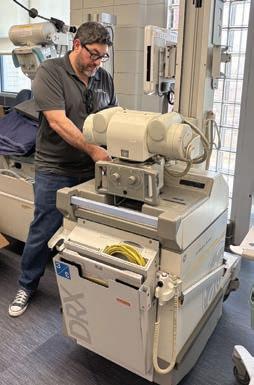
Artis Q & Artis Zee August 10-21 Contact us today for details!
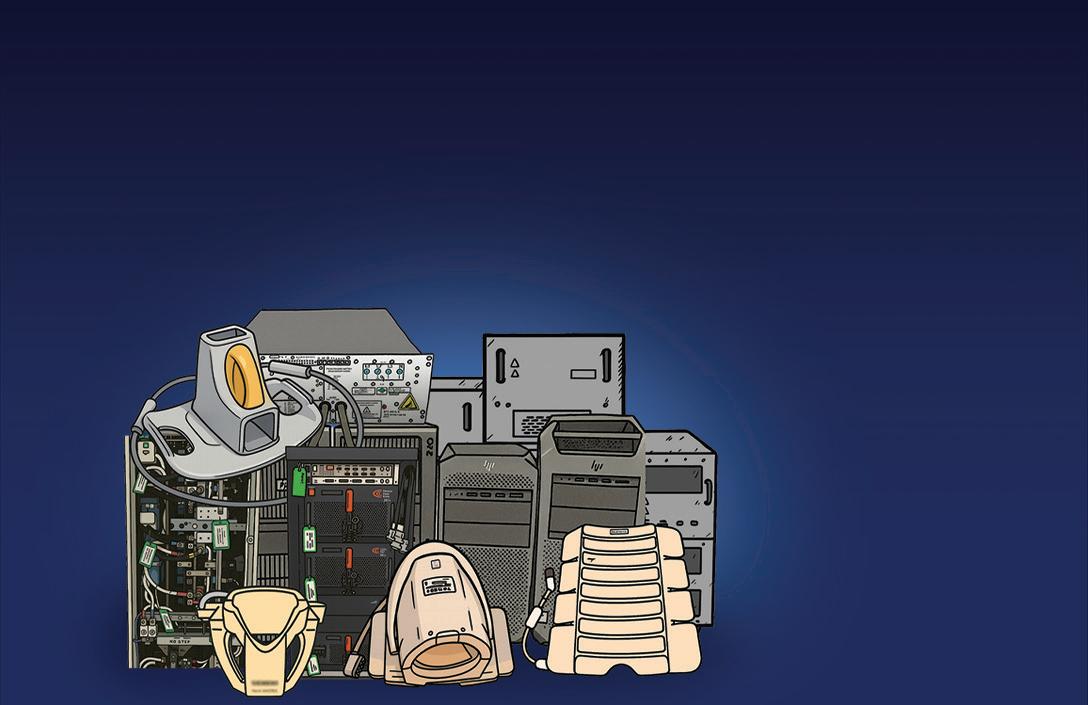
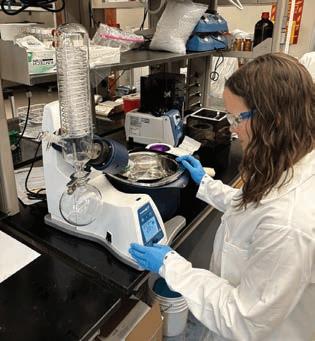
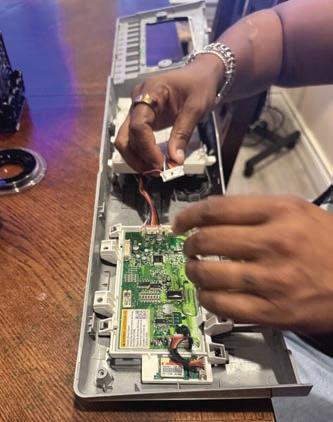
RSTI provides proven, cost-effective imaging service training built on real-world systems, experienced instructors, and outcomes that strengthen HTM teams long after class ends. Engineered for learning. The Industry Experts for OVER 4O years!
We turn clinical assets into continuous capacity. PartsSource PRO® empowers HTM teams to drive operational impact.
Discover why over 1,600 health systems nationwide trust PartsSource PRO® to strengthen their in-house capabilities all while lowering costs and reducing equipment downtime. Visit Booth #432 or scan the QR code to learn more.
You won’t want to miss what’s happening!
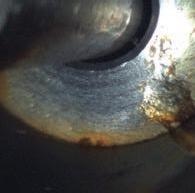
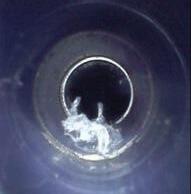
Flexible Inspection Scope Partnership in Every Pixel
Ready for a borescope that offers partnership in every pixel?
Scan to get started.
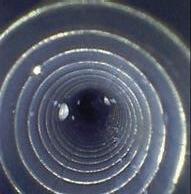
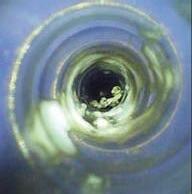
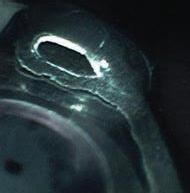
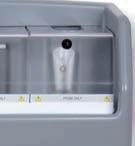
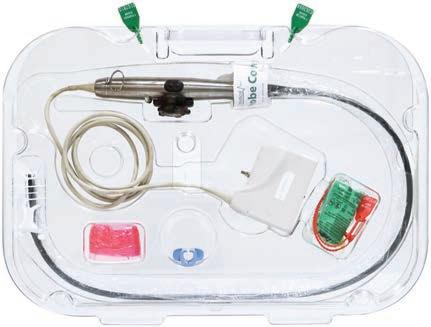
The Flexible Inspection Scope brings clarity to every channel & support at every step
From capturing detailed lumen images to building complete inspection workflows, Healthmark stands with you every step of the way. The Flexible Inspection Scope pairs precision optics with a full network of support—including a team that customizes implementation and training to ensure your success. Because when it comes to borescopes, it’s more than pixels that matter—it’s partnership.
P.12 SPOTLIGHT
p.12 Professional of the Month: Joshua Abner
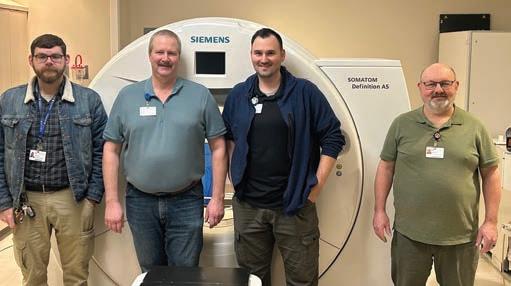
p.14 Department of the Month: Marshfield Clinic-Sanford
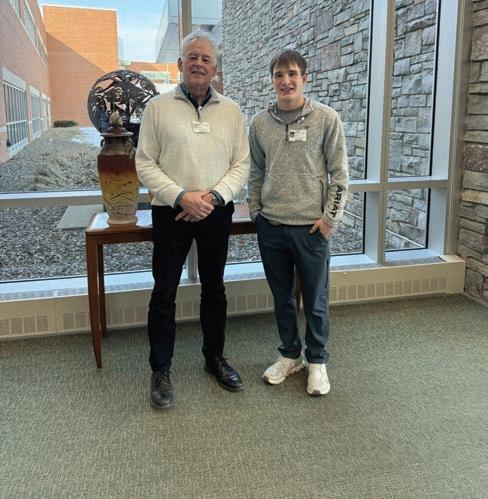
p.16 Next Gen: Samuel Gormont
p.18 Shifting Gears: Battle on a Tabletop
P.24 INDUSTRY UPDATES
p.24 News & Notes
p.29 TechNation Pulse
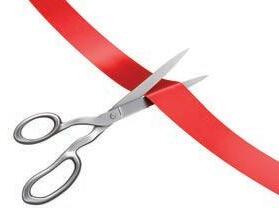
p.30 Ribbon Cutting: Mopec
p.32 Dental Update
p.34 AAMI Update
p.36 ECRI Update
P.40 THE BENCH
p.40 Biomed 101
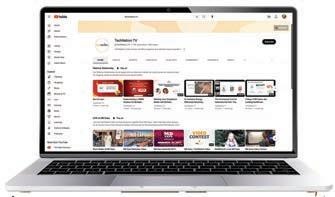
p.42 Webinar Wednesday
FEATURE ARTICLES
p.20 Corporate Profile: Renovo Solutions
p.44 Roundtable: Employment & Recruiting
p.50 Cover Story: BMET Basics Real World Skills for Early Success
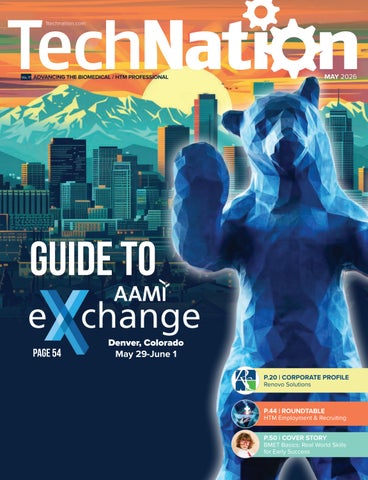
p.54 Guide to AAMI eXchange 2026
P.64 EXPERT ADVICE
p.64 Cybersecurity
p.66 The Massey Method
p.68 Networking Notes
p.70 The Future
p.72 MedWrench Guru
p.74 Right to Repair
PUBLISHER John M. Krieg
VICE PRESIDENT Kristin Leavoy
VICE PRESIDENT Jayme McKelvey BUSINESS DEVELOPMENT
EDITORIAL John Wallace
CONTRIBUTORS
K. Richard Douglas
Joie Marhefka
Steven J. Yelton
Garrett Seeley
Nathan Proctor
Carol Davis-Smith
Eric Massey
Gay Gordon-Byrne
Dave Francoeur
Andrew Whyte
James Linton
Christopher Walters
ACCOUNT Megan Cabot
EXECUTIVE
ART DEPARTMENT Karlee Gower
Taylor Hayes
Alicia Brown
DIGITAL SERVICES Cindy Galindo
Kennedy Krieg
Haley Harris
Adam Pickney
EVENTS Kristin Leavoy
Sydney Krieg
WEBINARS Linda Hasluem
HTMJOBS.COM Sydney Krieg
ACCOUNTING Diane Costea
CIRCULATION Stephanie Cote
EDITORIAL BOARD
Rob Bundick, Director HTM & Biomedical Engineering, ProHealth Care
Carol Davis-Smith, CCE, FACCE, AAMIF, Owner/ President of Carol Davis-Smith & Associates, LLC
Nadia ElKaissi, CHTM, Biomedical Engineer, HTM, VA Central Office (19HTM)
Bryant Hawkins Sr., Site Manager, Children’s Hospital of New Orleans
Earl Morris Jr., BMET, Director of Clinical Engineering, Harrison County Hospital
Leticia Reynolds, Clinical Engineering Operations Manager at UCHealth Parkview Medical Center
P.76 BREAKROOM
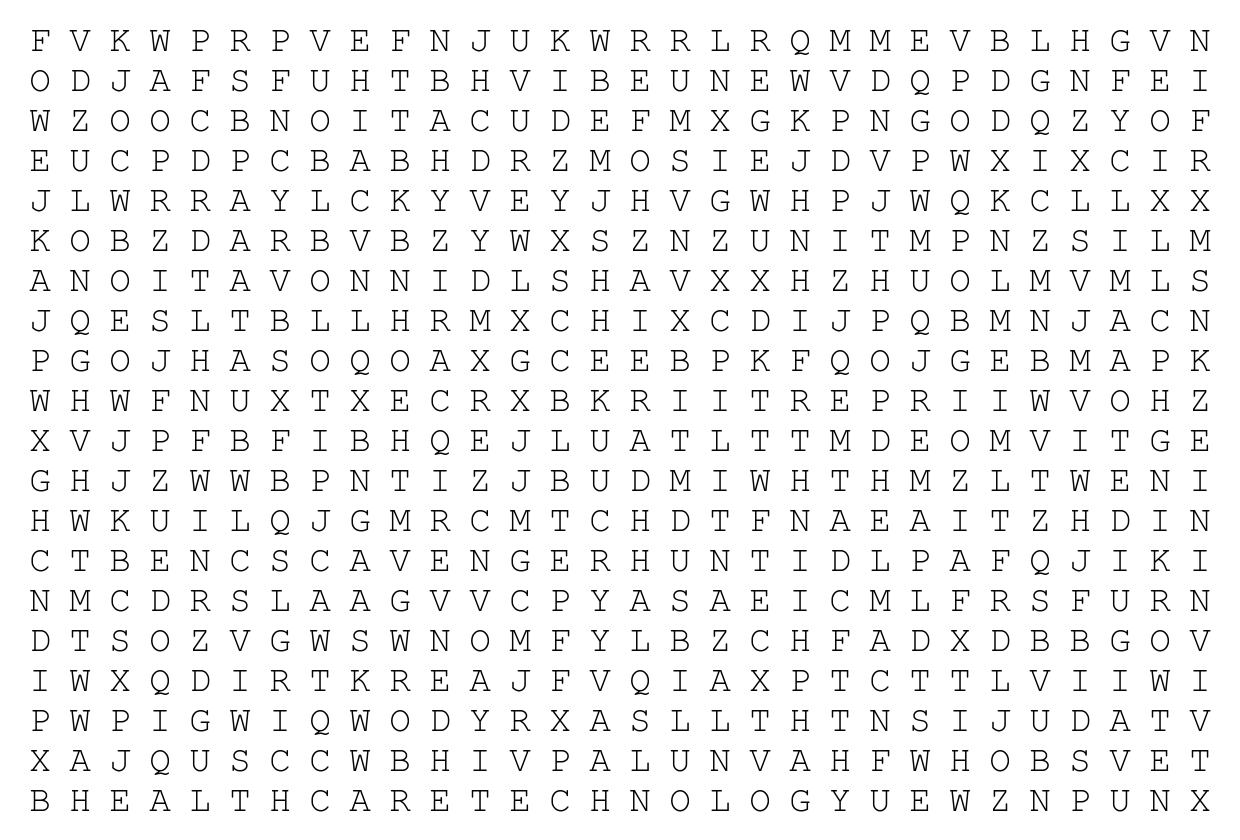
p.76 Word Search
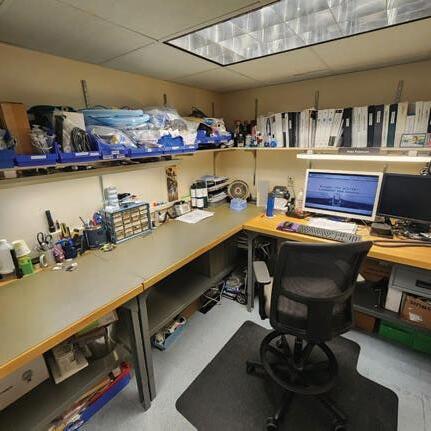
p.76 [Contest] What’s on Your Bench?
p.77 Biomed Brainbuster
p.78 HTM-GA Scrapbook
p.79 The Social p.80 Service Index
p.83 Alphabetical Index
p.84 Preferred Vendors
Communication & Customer Service Course
Customized Leadership Training
DENTAL EQUIPMENT HANDS-ON TRAINING
Dental Bootcamp (2 Weeks InPerson)
Dental Repair Technician 100300 Series (1 Week In-Person)
Customization Options Available
Biomed to Imaging (B2I)
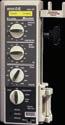
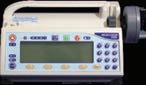
Infusion Pumps
Paitient Monitors
Telemetry Systems
Oxygen Blenders
Electrosurgical Units (ESU)
Patient Beds & OR Tables
Defibrillators/ECG
Tabletop Sterilizers
Ventilators
Biomedical Imaging & Information Systems (BIIS)
Medical Device Integration (MDI)
Medical Equipment Technician
100-300 Series
Radiological Safety
MRI Safety
Biomedical Information Systems
Analyzing & Design
Linear Accelerators - Beginner through Intermediate
PROFESSIONAL OF THE MONTH Joshua Abner, CBET
BY K. RICHARD DOUGLAS
While the COVID-19 pandemic posed many challenges for biomeds, including long hours and special projects, it also led at least one individual to the profession.
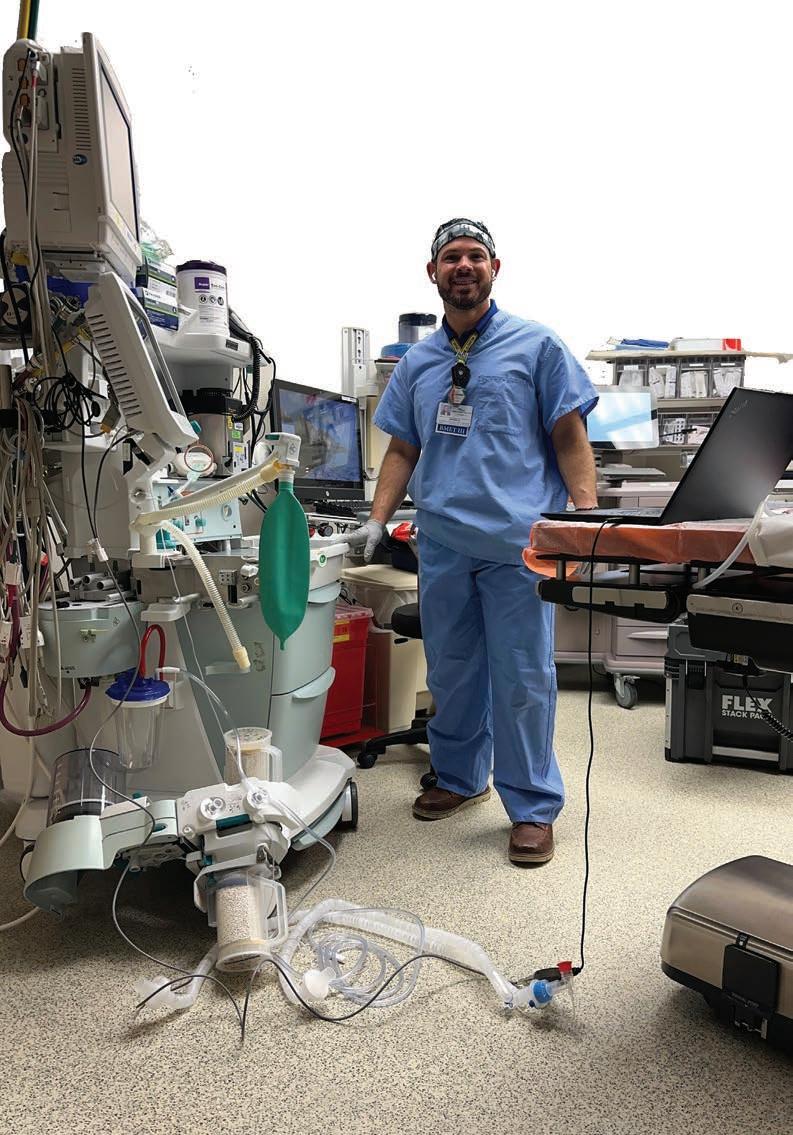
“Most of my working life I’ve been selfemployed. During COVID, my businesses did well, but the ups and downs experienced during economic fluctuations caused me to contemplate a change. I decided to look into healthcare, as it is a constant; something we all need throughout our lives,” says Joshua Abner, CBET, BMET III in the Clinical Technology Services Department at Cape Fear Valley Health in Elizabethtown, North Carolina. “I have an associate degree in electronics engineering technology and have always enjoyed troubleshooting and repairing things. Almost by chance, it seems, one day the thought popped into my head: there is a lot of equipment used every day in healthcare to treat and care for patients; who maintains it? I began searching and quickly learned of a whole world that I’d never knew existed. I’ve been hooked ever since.”
Despite holding an electronics degree, Abner says he benefited greatly thanks to several experienced colleagues who ramped up his knowledge in the early days.
“I did not have a formal training program. What I did have was knowledgeable technicians and an encyclopedia of a manager around me. They took time with me, entertained my endless questions and gave me the latitude to learn. I was exposed to various pieces of equipment, and as my knowledge grew, I was allowed to jump in on more complex devices. My brain hurt for months,” he says.
“Every preventive maintenance task is done with care and precision so that the equipment is in the best possible condition to support someone’s life.”
His intense early training paid dividends. After starting out as a BMET I, Abner was promoted to BMET II. He currently serves as a BMET III and site lead for a critical access hospital. In addition, Abner manages various clinics across two counties. His areas of specialization include anesthesia and the OR.
HTM IS ULTIMATELY ABOUT PEOPLE
Juggling three balls while chewing gum has served many a biomed. The ability to multitask and keep track of various obligations simultaneously is a skill that benefits every HTM professional.
“One of the main challenges I have encountered is supporting multiple locations and clinics simultaneously. This requires close coordination with different managers, prioritizing competing needs and efficiently scheduling work orders to minimize downtime and provide consistent service quality across sites,” Abner says.
In addition to more routine work, Abner has been involved in special projects.
“I have been involved in redistributing clinic workloads to shorten response times and improve the overall quality of service. Additionally, I’ve helped develop and implement an in-house training program for (BMETs), with the goals to strengthen technical skills, improve standardization and support long-term operational efficiency,” he says.
He keeps his focus on the patients who rely on the medical equipment he maintains and says that “everything we do in healthcare technology is ultimately about people.”
“We don’t agonize over repairing equipment correctly for the sake of the machine itself, but for the person who will one day depend on that device. Every preventive maintenance task is done with care and precision so that the equipment is in the best possible condition to support someone’s life,” Abner adds.
He says that another important aspect of the job for him is supporting his teammates.
“A happy team is a well-functioning team and a wellfunctioning team can accomplish almost anything. When we take care of each other and hold ourselves to high standards, we create an environment where both patients and professionals can thrive,” Abner says.
Patients at Cape Fear Valley Health in North Carolina can rest assured that there is an experienced biomed, focused on their care, working on the medical equipment they depend on. After all, that is what HTM is all about.
BIOMETRICS
FAVORITE BOOK: The Bible
FAVORITE MOVIE: “Forrest Gump”
FAVORITE FOOD: Pizza
HIDDEN TALENT:
I can play the violin.
FAVORITE PART OF BEING A BIOMED?
My favorite part of being a biomed is that every day presents a new puzzle to solve. No two issues are exactly the same, and each challenge pushes me to think critically, adapt and keep learning. That constant problem-solving is both motivating and rewarding. I also value the opportunity to support every corner of the hospital. As biomeds, we interact with nearly every department, gaining a unique understanding of how the entire health system works together to support patient care. Our work helps clinicians do their jobs safely and effectively, positively impacting patients across the hospital system which makes this role especially meaningful.
WHY DO YOU READ TECHNATION?
I read TechNation because I enjoy keeping up with what is happening in HTM. Additionally, there are so many wellqualified and experienced techs, and I enjoy reading about and learning from them.
DEPARTMENT OF THE MONTH
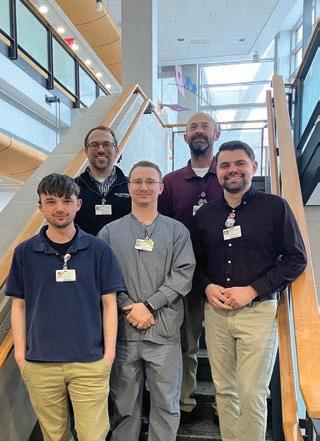
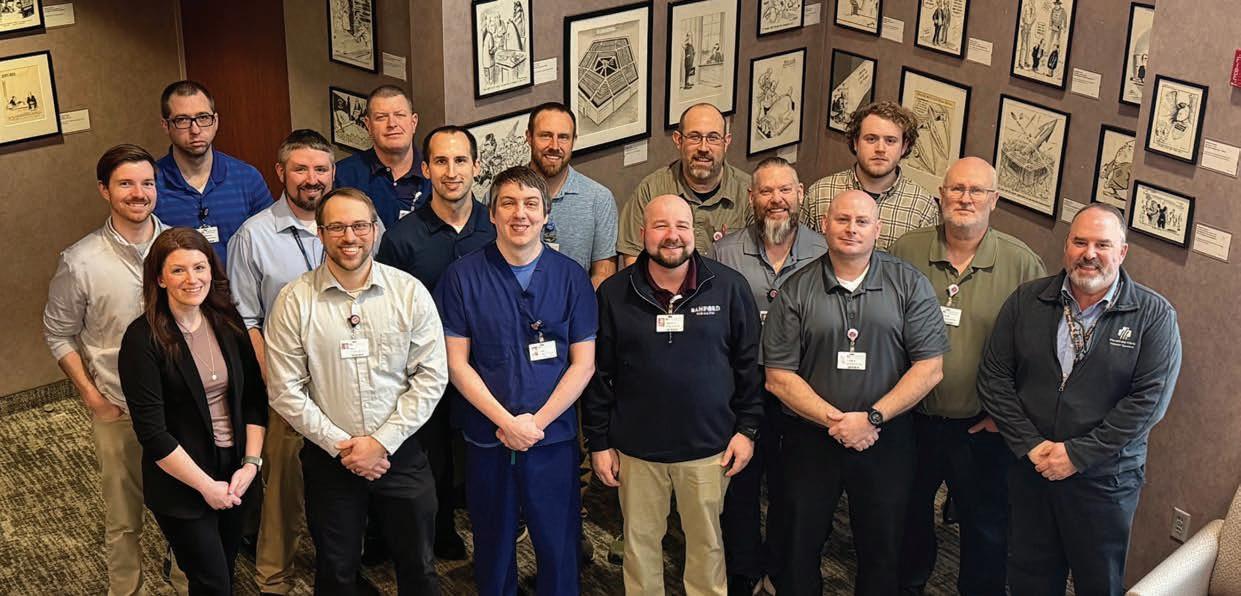
Marshfield Clinic-Sanford Biomedical Services Department
BY K. RICHARD DOUGLAS
In January of 2025, the Sanford Health system and the Marshfield Clinic Health System (MCHS) merged resulting in a large nonprofit health system serving communities in the Midwest, including Wisconsin and Michigan’s upper peninsula. The merger created an integrated health system with nearly 56,000 employees, 56 hospitals and 4,500 providers. Today, the Marshfield Clinic Health System serves Wisconsin and Michigan’s Upper Peninsula and is headquartered in Marshfield, Wisconsin.
Medical equipment management within the system is handled by the in-house Marshfield Clinic-Sanford Biomedical Services Department.
The biomed team includes 32 members located in six regional biomed shops. The team reports to Tim Eddy, director of business management office, technology solutions. The team is headed by Jay Olson, director of biomedical services.
The department is responsible for medical equipment in 12 hospitals and 59 clinics across Wisconsin and Michigan. The combined inventory includes 39,000 medical devices.
“The regional biomed team operates a central dispatch service from Monday to Friday, between 7 a.m. and 4:30 p.m. In addition to daily coverage, they offer after-hours services for urgent or emergency calls, ensuring complete 24/7 coverage. During the hours of 7 a.m. to 4:30 p.m., you can submit a web repair request or call directly, and within minutes, a work order will be assigned to an available technician,” Olson says.
He says that the team allocates a substantial budget for training and uses the funds each year to foster the success of every individual team member.
“The team offers a career progression that caters to even the most ambitious work ethic. It encompasses biomed levels 1-3, diagnostic imaging levels 1-3, lead technicians and managerial roles. With a robust training budget and an encouraging work atmosphere, it creates a pathway for long-term commitment and growth,” Olson says.
He adds that the team also collaborates with the local Northeast Wisconsin Technical College by conducting mock interviews for students, offering engaging shop tours and participating in various events.
The biomed team maximizes the use of its CMMS to gain greater efficiencies for the benefit of its customers.
Richard Meggitt, Zachery Zappa
Front: Xavier Marcon, Andrew Sergent, Back: Alex Schneider, Jonah Carlson, Caleb Johnson Morgan Wilcox, Amanda Hook, Richardo Cisneros
Jake Wetzel, Mark Pearson, Tyler Panka, Michael Jeffers
“With clean data sourced from a single CMMS and standardized policies, biomed has laid the groundwork for a standardized environment of care reporting. This reporting can be tailored to reflect local trends and needs. Additionally, the clean data [has] enabled us to capitalize on system efficiencies, such as an alternate equipment management system (AEM) across the hospitals,” Olson says.
He says that one more benefit of the centralized CMMS is its impact on capital purchases.
“Biomed has emerged as a significant source of truth for assessing priorities regarding large equipment. We can compare all modalities based on age, cybersecurity risk, expenditure and utilization, thereby assisting in determining which equipment should be prioritized for replacement,” Olson adds.
He says that the cost-of-service that the in-house team has achieved is very competitive compared to third-party providers or larger biomed organizations.
“The biomed team has significant investment in managing costs effectively. The entire expenditure for the 39,000 pieces of medical equipment is overseen from a single, centrally managed cost center. This budget encompasses contracts, service events, parts and labor. The scale of this expenditure creates a sufficiently large risk pool to mitigate most time and material services, enabling a reduction in contracted services,” Olson says.
He says that the department’s unique advantage is that the savings from the risk model are retained locally and can be reinvested into the hospital’s capital requirements.
“They provide intensive training for technicians to enhance uptime, decrease service contract expenses and lower inflation costs on new equipment. All these factors contribute to the biomed team’s role in delivering the highest quality care for our patients,” Olson says.
GENERATING CAPITAL AND KEEPING COSTS DOWN
Olson says that the biomed team is consistently seeking methods to enhance operational efficiency. He says that one initiative
included an equipment reuse/resale program that has recognized $374,784 in resale value and $1,743,706 in reuse value to date.
“We have centralized the management of vendor service contracts, enabling us to reduce or consolidate these contracts. The biomed program is also engaged as beta partners in uptime reporting, Glassbeam and AI development through data integration,” he says.
Off the clock, the biomed team works to ensure that those aspiring to join the HTM profession have the opportunity.
“Each autumn, the team organizes a scholarship golf outing on behalf of the Wisconsin Biomedical Association (WBA) to generate funds for students aspiring to enter the biomed field. This event not only serves as a remarkable networking opportunity but has also become somewhat iconic, with legendary stories and a rich history dating back to 2001,” Olson says.
The WBA has presented an award in the past known as the Jim Kipp Memorial Award. Kipp established the first biomedical electronics department at Marshfield Clinic in 1968. He remained the manager until his passing in 1989. He also started the WBA and was one of the first 50 biomeds to earn AAMI certification.
Olson says that the team’s biomed technicians and their families reside in the same communities they serve.
“They are committed to maintaining the equipment at optimal performance, understanding that our families might become patients in the future. The technicians also take pride in the safety and savings they contribute to ensuring our system remains robust,” he says.
The team decided to retain the biomedical services moniker because, as Olson says, it keeps them at the top of the department list alphabetically and it is just what their clinician colleagues identify them with.
W ith the integration with Sanford Health, the team is thrilled to be a part of the larger system and are always focused on continuing the trust and support they have cultivated with their customers
Front row Left to right: Melissa Seiler, Alex Schneider, James Sulliven, Brennen Olson, Joseph Kleine, Anthony Wiste, Jay Olson. Back row Left to right: Jordan Bernie, Matthew Davis, Aaron Wahl, Dan Thompson, Ken Budzban, Jason Zellner, Adam Kuhn, Eric Hookstadt and Dyllan Price
NEXT GEN POWERED BY YP AT MD
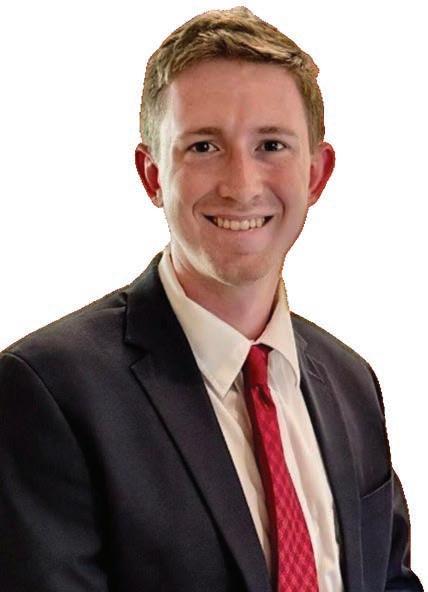
Samuel Gormont
Samuel Gormont earned an associate degree in biomedical engineering technology before starting his HTM career at Mount Nittany Medical Center. TechNation recently found out more about Samuel and his goals for the future.
Q: WHERE DID YOU GROW UP?
A: Altoona, PA
Q: WHERE DID YOU RECEIVE YOUR HTM TRAINING/ EDUCATION?
A: Penn State New Kensington
Q: HOW DID YOU FIRST DISCOVER HTM?
A: Job shadowing at UPMC Altoona
Q: WHY (OR HOW) DID YOU CHOOSE TO GET INTO THIS FIELD?
A: I liked taking stuff apart at the house and figuring out problems. After job shadowing at UPMC Altoona, I knew this is what I wanted to do because it felt right.
Q: WHAT DO YOU LIKE MOST ABOUT YOUR POSITION?
A: I like the fact that every day is different. You never know what you’re going to run into day by day. It is never the same which is great in preventing the job from becoming too much of just a routine.
Q: WHAT INTERESTS YOU THE MOST ABOUT HTM?
A:
coming out that challenges biomeds to learn new things constantly. It keeps us on our toes!
Q: WHAT HAS BEEN YOUR GREATEST ACCOMPLISHMENT IN YOUR FIELD THUS FAR?
A: Getting the job at Mount Nittany. The biomed team at Mount Nittany is truly elite and we all have a great time doing a job we like together.
Q: WHAT GOALS DO YOU HAVE FOR YOURSELF IN THE NEXT 5 YEARS?
A: Attend as many manufacturer trainings as possible. Not only do you learn a new device that is unique and fun to do, you get to travel too! I would like to get to another ventilator training in the near future.
FUN FACTS
FAVORITE HOBBY: Martial arts
FAVORITE SHOW OR MOVIE: “The Office”
FAVORITE MEAL: Mac-n-cheese
WHAT WOULD YOUR SUPERPOWER BE?
Turn back time
1 THING ON YOUR BUCKET LIST?
Visit Alaska on the Fourth of July to watch cars get launched off a cliff.
SOMETHING YOUR CO-WORKERS DON’T KNOW ABOUT YOU:
When I was in field service, I took a trip to Phoenix and saw the Grand Canyon for free!
PMs for Pizza
Ben C. is serving up something special to celebrate our favorite week of the year, HTM WEEK!
We want to know your secret sauce for success. Join the MedWrench “PMs for Pizza” contest!
Submit your best PM tip for a chance to win. Whether it’s a time-saving trick or a safety hack, we want to hear it.
The 5 best PM tips will win a full pizza lunch for their entire department!
May 1 through May 22
Battle on a Tabletop
K. RICHARD DOUGLAS
H SHIFTING GEARS
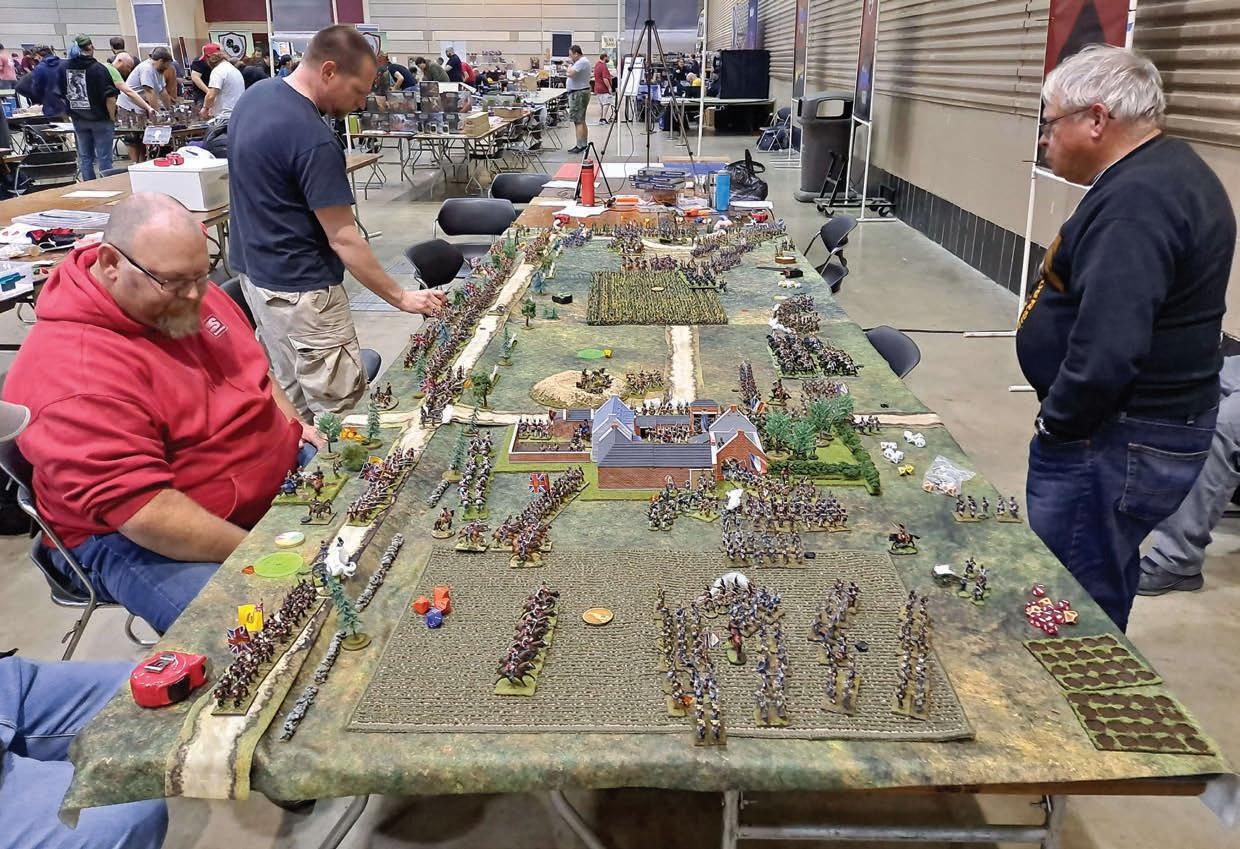
ow many kids have played war, Army or some form of mock battles with toy figures over the decades? As adults, many individuals have replicated scenes of towns or the countryside around a model railroad set-up. In both cases, imagination and detail play a role.
It is not hard to extrapolate from those experiences that creating a detailed battlefield, complete with detailed figures, battle strategies, historical precedent and unique accessories would be appealing for many of the same reasons.
This is the motivation and fascination for those who enjoy tabletop miniatures wargaming. The hobby embraces creativity, the enjoyment of participating with like-minded enthusiasts, creating rules for game play and the outcomes.
“As the name implies, players use armies of hand-painted miniatures (my preference is 28mm in scale), 3D terrain, tape measures for measuring distances, dice to determine outcomes and a rules set that tell you how troops move and fight, as well as rules to govern outcomes of contact,” says Paul Neher, MBA, CBET, supervisor of biomedical services at Parkview Health in Fort Wayne, Indiana.
Neher isn’t only an enthusiast of miniatures wargaming but wrote and published his own game called “Hounds of War” about 13 years ago. Other enthusiasts can purchase his game through sources like Amazon.
“Back in the early ’80s, my brother and I got into Dungeons and Dragons, and we played with miniatures to represent visually where things were in the game. We got so hooked on collecting and painting minis that we soon collected small armies of them. We loved chess and ‘wargaming’ with plastic army men,” Neher says.
He says that when they discovered that there were games that incorporated their fondness for painting miniatures with strategy games, it was a natural next step.
“I went to my first gaming convention in Fort Wayne, Indiana in 1987 and have been collecting, painting, playing and writing tabletop wargames ever since.”
Neher says that some games are set up and you can “walk on” and be taught. Some are set up based on a scenario. Some are objective-based.
“It is best to have that determined and described ahead of time. It may be a hold an objective game or a capture the flag type. Historical games are often scenario based. The most fun are story driven,” he says.
He says that he has even played in yearlong campaigns where each game had a cause and effect on the next with long
“Depending on the genre, I research and find models in the scale and aesthetic that I am after. Lately, I have gravitated to the 28mm range for the level of detail this scale provides, but also as my eyes get older, they are easier to see. I also like that scale as it is easy to see from a distance for players and observers alike. I paint my models to reflect either in the vision I have in my head or on paper, or I find books or online materials for color images when it comes to historical recreations,” Neher says.
He says that there are even artists who will paint your models for you if you have the money, but not the time nor inclination for the artistic side.
to life.’ I draw inspiration from movies, history and reading,” Neher says.
He says that when it comes to making the terrain, nature plays a huge part as he begins to try to envision what that setting looks like.
“YouTube is a great resource for ‘how-to’ videos for those who are more creative, and there are hobby stores and an entire industry that makes products for tabletop wargaming from everything including terrain, miniatures, rules, paints, crafting, etcetera,” Neher adds
He adds that over the course of time, he has always tried to find new techniques to make the visual as appealing and realistic as possible.
“Nothing will make the game better or more attractive to prospective players than a visually stunning tabletop with well painted armies on it,” Neher says.
For someone new to the hobby, how do you decide on figures and where do they come from? How do you decide on scale?
“I get great satisfaction in turning the mental or historical visage into something tactile I can interact with,” he adds.
How does someone new to the hobby create an army, including designing and finishing the figures?
“Pick your genre or game. This will set some parameters for you to follow. Design something you will find fun to play within those parameters. Research the subject to ensure you are doing it the right way as befitting history or artwork or your imagination; the key is to plan before you begin. I know many people who just wade in, and that is fine, but can cause ‘grief’ as you find your grove later and redo the first ones,” Neher recommends.
He says to acquire the models, paints and tools you will need. Build the models. Primer goes on first to prepare the metal, plastic or resin to accept the paint.
“Once painted, it’s time to have fun. Some people use a sealer to keep the paint from wearing off, but I have never seen the need,” he says.
Neher adds that everyone gravitates to something different.
“There is no right or wrong way to do it. Depending on the game, there may be organizational restrictions or preferred manufacturers, but I always tell new players to collect and play with what is fun for you. Find a friend or local store to give you suggestions, but don’t let someone tell you what you have to play with or do,” he adds.
Neher has been in the HTM field since 1998 and earned his CBET in 2011.
“I work as a supervisor, one of two, leading 38 biomeds in 15 hospitals across 9,000 square miles. I am also a husband of 19 years and a father of two late teen girls. I am in the final stages of writing a biomed equipment technology AAS degree program for Educational Affiliates and Fortis College. Like all in the HTM industry, I am busy,” he says.
Whether overseeing biomed professionals or a miniature battlefield landscape, this HTM professional pays attention to the details and aims to push forward with the campaign.
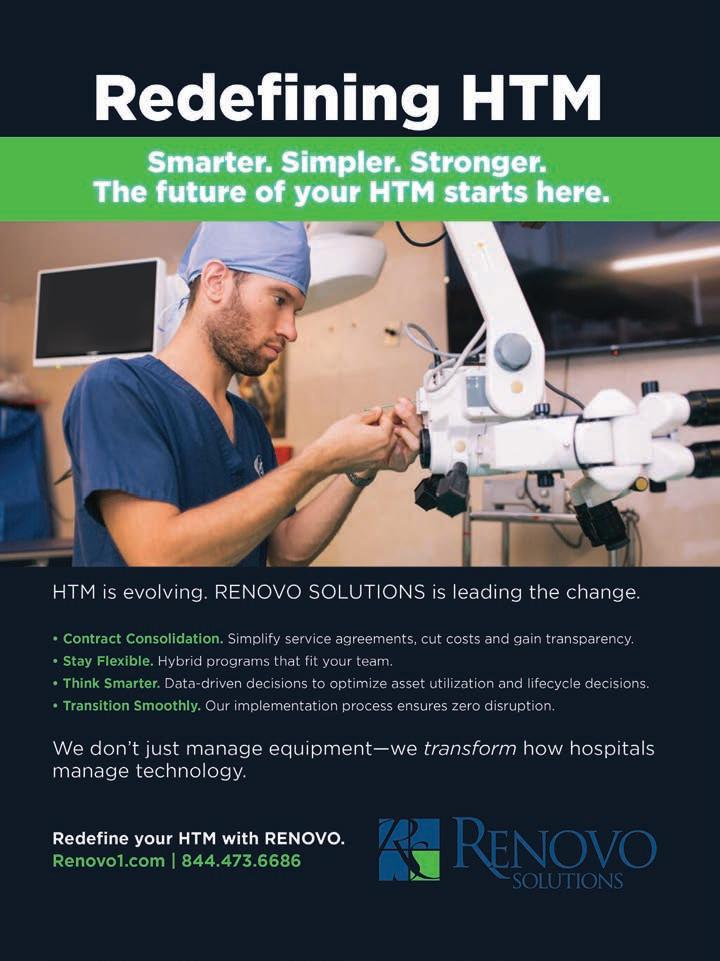
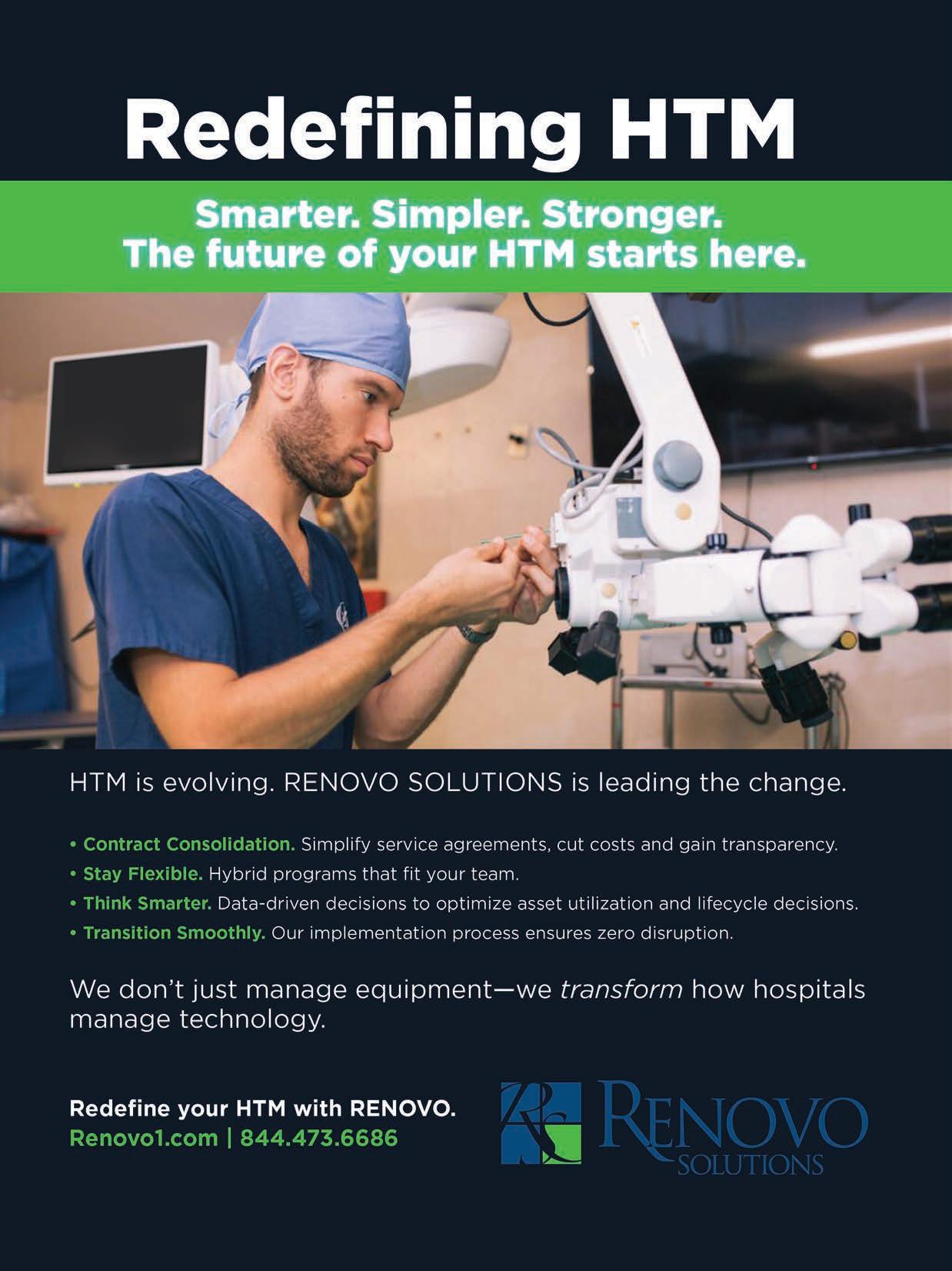
HTM - Made Really Simple
Defining Healthcare Technology Management Through Transparency, Flexibility & Guaranteed Savings
In today’s healthcare environment, leaders are under growing pressure to do more with less while still maintaining high standards for equipment performance, compliance, and patient care. For many health systems, the challenge is not simply maintaining medical equipment – it is gaining visibility into true service costs, reducing unnecessary spend, and building a support model that can adapt to the realities of their organization.
That is where RENOVO SOLUTIONS has differentiated itself as a trusted healthcare technology management partner.
RENOVO helps hospitals and health systems improve equipment performance, reduce service costs, and create a more transparent and accountable approach to managing the full medical equipment environment. With experience supporting more than 4 million devices across 300+ health systems and 450+ locations, RENOVO brings the scale, operational discipline, and service flexibility needed to help healthcare organizations modernize how they manage biomedical, imaging, and surgical support programs.
What makes RENOVO especially compelling in the market is its ability to deliver measurable financial and operational value through full transparency, hybrid or outsourced support models, and guaranteed savings programs that align directly with client goals.
A BETTER APPROACH TO HTM
Many healthcare organizations have evolved into fragmented service environments with a mix of OEM contracts, third-party vendors, and in-house support teams operating without a single, clear framework for oversight. The result is often limited visibility into actual spend, inconsistent service performance, and missed opportunities to reduce cost.
RENOVO was built to solve exactly that problem.
The company provides health systems with a transparent, data-driven approach to healthcare technology management, giving executive and operational leaders a clearer understanding of service activity, contract utilization,
equipment performance, and the total cost of supporting their asset portfolio. Rather than simply functioning as another service vendor, RENOVO acts as a strategic partner focused on helping clients make better decisions across the entire equipment life cycle.
This level of transparency is central to the RENOVO value proposition. By helping organizations see where dollars are going, where support gaps exist, and where service models can be improved, RENOVO gives clients the ability to move from reactive management to proactive strategy.
PROVEN SAVINGS THROUGH A NO-COST AUDIT
One of the strongest drivers of interest in RENOVO’s model is the company’s ability to identify immediate savings opportunities without creating barriers to engagement.
RENOVO provides a no-cost current state audit designed to identify and confirm an organization’s existing equipment service spend, contract structure, support gaps, and opportunities for improvement. This process gives healthcare leaders a validated view of their current environment and often uncovers meaningful opportunities to consolidate contracts, reduce OEM dependency, and better align service coverage with actual need.
Based on the findings of that assessment, RENOVO can then develop a guaranteed savings program that is structured to deliver measurable financial results. In many cases, clients realize 12% to 20% annual savings through a combination of service consolidation, improved vendor management, optimized staffing strategies, and a more disciplined approach to equipment support.
For healthcare organizations seeking a lower-risk path to improvement, this combination of no-cost assessment and guaranteed savings creates a compelling entry point. It allows leadership teams to clearly understand the opportunity before making major program decisions, while also creating confidence that the financial value can be achieved and sustained.
FLEXIBILITY THAT SETS RENOVO APART
Another major differentiator for RENOVO is flexibility.
While some competitors only pursue a fully outsourced model, RENOVO has developed numerous hybrid support models that are designed to supplement and strengthen an existing in-house HTM program. This is especially important for health systems that value their internal teams but need added support for equipment categories their current staff may not have the bandwidth, technical training, or modalityspecific expertise to effectively manage.
RENOVO’s hybrid approach allows clients to retain internal control and institutional knowledge while adding targeted support where it will have the greatest impact. That may include specialized biomedical coverage, imaging strategy, service contract management, surgical support, or assistance with high-cost and high-complexity equipment categories.
These hybrid models also create significant cost-reduction opportunities. As RENOVO becomes integrated into the client’s service environment, the team is able to identify equipment currently tied to expensive OEM agreements that may be more effectively supported through internal teams, RENOVO resources, or alternative service strategies. The result is reduced dependence on OEM contracts and a meaningful reduction in contracted service spend – without sacrificing quality, responsiveness, or compliance.
BEYOND BIOMED: EXPANDING VALUE ACROSS THE ENTERPRISE
RENOVO’s expertise extends well beyond traditional clinical engineering support. The company also brings extensive experience in surgical instrument repair, endoscope and scope repair, and related surgical support services, helping hospitals improve performance in one of the most critical and cost-sensitive areas of the organization.
For surgical departments, instrument quality, scope readiness, repair turnaround time, and cost visibility all
directly affect operating room efficiency and clinical operations. RENOVO helps clients create a more coordinated and transparent approach to these service lines, reducing disruption while improving oversight and financial control.
By integrating surgical instrument and scope support into a broader equipment management strategy, RENOVO is able to help clients create value across multiple operational areas instead of viewing service needs in isolation.
BUILT FOR HEALTH SYSTEMS THAT WANT MORE THAN A VENDOR
At its core, RENOVO’s market position is built around one simple idea: healthcare organizations should expect more from their equipment support partner.
They should expect transparency instead of uncertainty. They should expect flexibility instead of one-size-fits-all models.
They should expect measurable savings instead of vague promises.
And they should expect a partner that is willing to align performance with outcomes.
That philosophy has helped RENOVO become a valued partner to hospitals and health systems looking for a smarter, more accountable way to manage biomedical, imaging, and surgical support programs.
For organizations seeking to improve visibility, reduce reliance on fragmented service models, and generate meaningful annual savings, RENOVO offers a proven approach grounded in data, operational experience, and financial accountability.
NEWS & NOTES
Updates from the HTM Industry
TRIMEDX EXPANDS AI-NATIVE TRIMEDX-AIQ
TRIMEDX has expanded clinical supply chain capabilities with TRIMEDX-AIQ, its AI-native clinical asset intelligence platform. The enhancements integrate automated parts ordering, purchase order automation and predictive failure forecasting to proactively orchestrate procurement, anticipate equipment failures before disruption occurs and minimize unplanned downtime.
TRIMEDX Vice President of Product & Portfolio Management TJ Kubricky explained that this update does not replace in-house departments but supports team members in their decision making.
“These capabilities enhance existing clinical engineering workflows and TRIMEDX-AIQ analytics. They do not replace informatics tools, existing service protocols or client-facing platforms – instead, they make them more proactive and efficient,” Kubricky said. “Teams will have access to richer, earlier insights that reduce the time spent performing manual data analysis or reacting to unplanned events. This allows TRIMEDX HTM teams to prioritize higher-value client conversations, proactively prepare clients for upcoming maintenance needs, and support capital and operational planning with greater accuracy. In addition, TRIMEDX leverages multivendor sourcing relationships – including OEMs and third-party suppliers – to expand sourcing options, not remove choice or impose exclusivity.”
“TRIMEDX-AIQ is designed as an enhancement to existing clinical engineering workflows, embedding predictive maintenance and automated supply intelligence into familiar day-to-day operations rather than introducing a new service model,” Kubricky added. “To support adoption, TRIMEDX is ensuring associates have access to AI-related training and enablement, backed by a record $10.8 million investment in technical training in 2025. The company will continue to prioritize training to make sure associates build the skills needed to operate in an increasingly AI-driven environment.”
TRIMEDX-AIQ is powered by comprehensive clinical asset datasets, with more than 6.1 million device records, 25-plus years of longitudinal insight, and visibility into 90-95% of all
active U.S. medical equipment. TRIMEDX’s patent-pending Predictive Work System (PWS) leverages this historical device performance data to identify degradation patterns earlier than ever, providing clinical engineering teams with the ability to prevent or prepare for downtime. Early alerts allow technicians to schedule proactive service windows, reduce clinical workflow disruption and maintain patient access with the focus on minimizing unplanned downtime.
This expansion goes further by directly linking predictive failures, preventative maintenance forecasting and routine repairs to automated supply chain workflows. TRIMEDX-AIQ identifies and forecasts the right part, at the right time, from the right vendor. This visibility enables operational and finance leaders to plan, and to determine when equipment replacement is most economical.
“Our upgraded, multivendor supply chain capabilities use advanced AI to identify the exact component needed for a predicted failure, select the right supplier, and secure the fastest procurement path – often before a device ever goes offline,” says TRIMEDX CEO Neil de Crescenzo. “By leveraging our long-standing relationships with leading OEMs and third-party suppliers, we’re able to deliver accelerated access to parts, and expanded sourcing options that many organizations simply can’t achieve on their own.”
This proactive model results in significantly shorter turnaround time, fewer secondary failures, and far less disruption to patient schedules and throughput. Unplanned downtime can cost hospitals thousands of dollars in lost patient revenue and create weeks-long patient scheduling delays. These operational improvements quickly scale into a major financial impact.
With these enhanced supply chain capabilities and PWS developments, TRIMEDX-AIQ is advancing the next chapter of AI-native clinical asset intelligence. By combining earlier failure detection, proactive sourcing, and system-level forecasting through TRIMEDX-AIQ, it gives health systems a more reliable path to maximize availability, minimize disruption, and protect the revenue and patient access that depend on consistent uptime.
FLUKE BIOMEDICAL INTRODUCES DPM5 DIGITAL PRESSURE METER
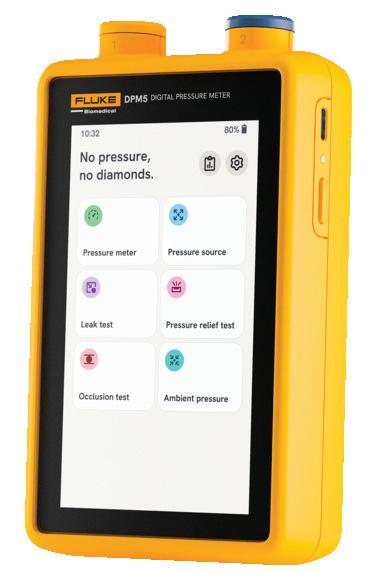
Fluke Biomedical, a Fortive company and global leader in healthcare technology solutions, is proud to announce the launch of the DPM5 Digital Pressure Meter, an innovation in medical pressure testing. Designed to simplify workflows, enhance testing accuracy, and empower healthcare professionals, the DPM5 combines advanced features such as an internal pressure pump, a dual-port system, and intuitive touch-screen functionality to redefine the way medical device pressure testing is performed.
The DPM5 Digital Pressure Meter eliminates the need for manual pressure generation, thanks to its integrated pressure pump, to help ensure consistent and reliable testing results. Its dual-port design allows for versatile measurement of both dry gas and water pressures, making it suitable for a wide range of applications, including patient monitors, blood pressure meters, infusion pumps, ventilators, and more. The device also features preloaded measurement apps for common tests such as occlusion, leakage, and valve assessments, simplifying workflows and saving valuable time for healthcare professionals.
Key Features of the DPM5 Digital Pressure Meter include:
• Dual-port functionality with Port 1 supporting dry gas (pressure range 0-1200 mmHg/0-23 PSI, with pump) and Port 2 supporting dry gas or water (pressure range -750-7500 mmHg/-14.5-150 PSI).
• Ideal for testing patient monitors, blood pressure meters, CPAP/BPAP devices, syringe and infusion pumps, dialysis machines, insufflators, and more.
• Includes preloaded measurement apps for common pressure tests such as occlusion, leakage, valve tests, pressure source, and atmospheric pressure.
go testing, saving time and simplifying workflows.
• Features a modern, intuitive touch screen interface for setting targets and reviewing results – quick to learn and easy to master.
• Built-in pressure source with an integrated pump, ideal for testing devices like blood pressure meters, dialysis machines, and electric tourniquets.
• Lightweight and battery-operated design for on-the-
“The DPM5 Digital Pressure Meter redefines medical device pressure testing by combining precision, portability, and ease of use,” said Lizzy Thompson, Product Manager at Fluke Biomedical. “With its built-in pressure pump, dual-port system, and intuitive design, the DPM5 streamlines workflows, reduces manual effort, and helps ensure reliable results for healthcare technology professionals.”
INDUSTRY UPDATES
ADVANCED ULTRASOUND SYSTEMS ANNOUNCES DISTRIBUTION PARTNERSHIP
Advanced Ultrasound Systems (AUS), a trusted distributor of advanced imaging equipment, recently announced a distribution partnership with Fujifilm to bring the ARIETTA Series ultrasound systems to the United States market. This strategic alliance pairs Fujifilm’s advanced imaging platforms with AUS’s renowned service, support and distribution network.
The agreement encompasses two key platforms designed to enhance clinical productivity across diverse healthcare settings:
• ARIETTA 65: Engineered to optimize productivity in any clinical environment, this system is built on the concepts of smooth workflow, superb imaging, and simple-to-use applications. It is designed to help clinicians achieve reproducible, precise imaging and streamline their practice through versatile operation and intuitive applications.
• ARIETTA 50: Engineered for exceptional usability, this entry model to the series features an outstandingly easy-to-view 21.5-inch monitor and intuitive operability designed to welcome users from beginners to experts, inviting them to the “Next Stage” of efficient examination.
“We are thrilled to partner with Fujifilm to bring the ARIETTA Series to healthcare providers across the United States,” said John Hryshchuk, founder and CEO of Advanced Ultrasound Systems. “Fujifilm’s dedication to innovation aligns perfectly with our mission to deliver exceptional value. These systems combine sophisticated imaging capabilities with workflow efficiency. By adding them to our portfolio, we can now offer our clients – from major hospitals to private practices – a complete solution that pairs Fujifilm’s cuttingedge technology with the component-level service expertise and rapid support that AUS is known for.”
AUS provides comprehensive support tailored to needs, offering rapid response through both field service and remote assistance for ultrasound equipment. Its commitment extends beyond troubleshooting. AUS empowers teams with expert service training, available either onsite or at its headquarters. Every plan is customized for success, encompassing complete repair and maintenance care. AUS also offers full-service agreements and support contracts to ensure peace of mind, backed by warranty service – 24 hours a day, 7 days a week.
ARMY MEDICAL MAINTENANCE FACILITIES MODERNIZE WITH AI, TELEMAINTENANCE
FORT DETRICK, Md. | U.S. Army Medical Logistics
Command is embracing the use of artificial intelligence and advanced telemaintenance to ensure life-saving medical devices are ready for the next generation of warfare, where troops may be more isolated and support less accessible than ever before.
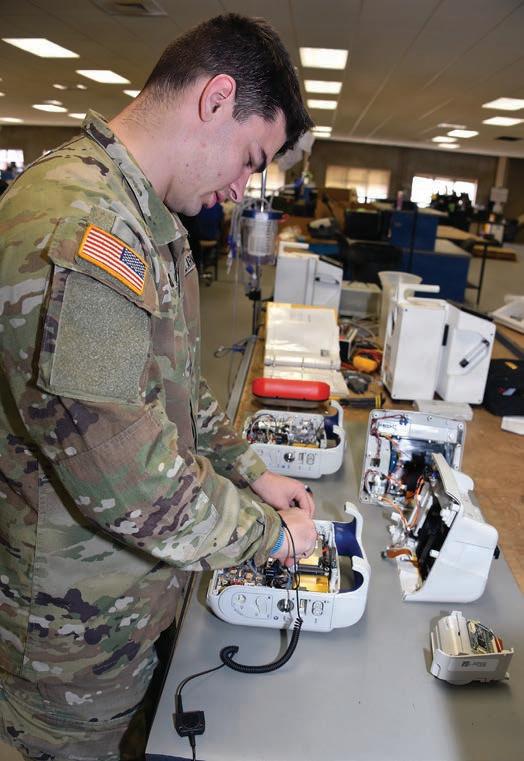
AMLC operates three Medical Maintenance Operations Divisions, or MMODs, where small teams of expert technicians are transforming sustainment-level maintenance operations to provide critical remote support to the warfighter.
The shift addresses the challenges of potential future conflicts in geographically vast areas, for example, such as in the U.S. Indo-Pacific Command area of operation.
“If we have a new one spring up, like in the Pacific, [we’re] talking about lots of small island chains and isolated areas that are not easily accessible,” said Ian McNesby, chief of operations at AMLC’s MMOD in Tracy, California, or MMOD-CA. “A lot of these guys are going to be on their own or cut off from major resources ... unless we can provide remote support.”
In that scenario, a unit-level medic with a broken diagnostic machine can’t wait days for a replacement part or a fly-in technician to address the issue. To bridge that distance, the MMODs are moving beyond traditional support methods.
“We’ve always done some form of telemaintenance, but in the past we didn’t have visual capability,” McNesby said.
Now, using platforms like Microsoft Teams, technicians can visually diagnose equipment issues and assist soldiers downrange with repairs, a major leap from simply talking over the phone.
Leading this change is AMLC’s Medical Maintenance Management Directorate, or M3D, which oversees the three MMODs in California, Pennsylvania and Utah. The directorate is carefully charting its course to align with the AMLC’s higher headquarters, U.S. Army CommunicationsElectronics Command.
MMOD-CA Director Isaac Newman emphasized a strategic, forward-looking approach when it comes to AI.
“Modernizing sustainment is a key part of the Army’s mission, and we are watching the development of CECOM’s Artificial Intelligence-Assisted Maintenance (AIAM) platform with great interest,” Newman said. “While it’s not part of our daily workflow yet, we are actively exploring how we can best leverage it in the future.”
The integration of AI is already showing promise. MMOD personnel are using it for administrative tasks but also considering ways to directly assist technicians.
“As the program matures, we see tremendous opportunity to contribute our specialized medical equipment data into the learning model,” Newman added. “This will ensure the platform is finely tuned for the unique
needs of Army Medicine, ultimately benefiting the soldiers who rely on this equipment.”
This technological leap is being driven by the teams at each MMOD, comprised of military, civilian and contract technicians, many of whom are prior military. Their deep, hands-on knowledge is M3D’s greatest asset, McNesby said, but also its greatest challenge as some seasoned experts near retirement.
“It takes time to grow a subject-matter expert … you can’t just grow that overnight,” McNesby warned, highlighting the need to capture their institutional knowledge.
AMLC is supporting modernization efforts at all three MMODs, which also includes facilities at Tobyhanna Army Depot, Pennsylvania, and Hill Air Force Base, Utah.
REPAIR RESTRICTIONS LEAD TO DOWNTIME
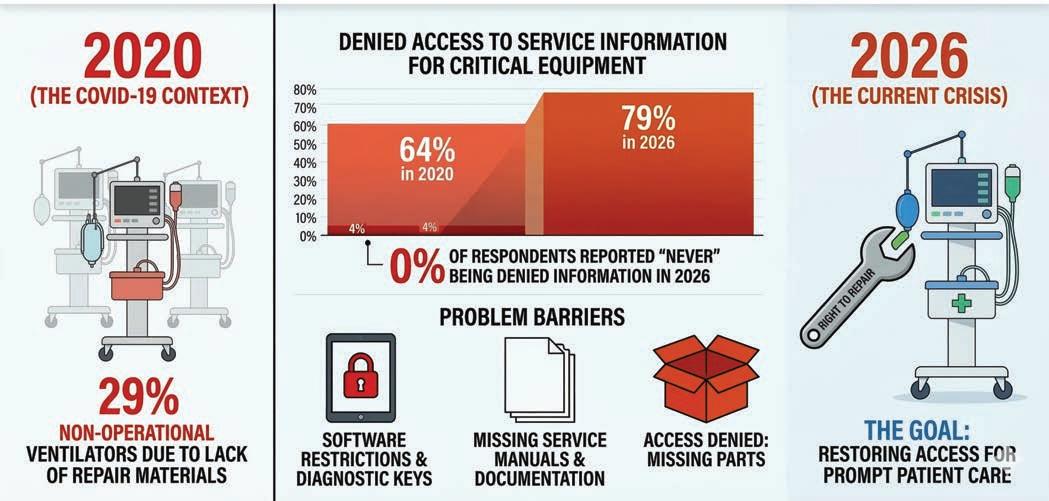
Like so many other parts of society, medical care increasingly involves more technology, which, in turn, often requires maintenance and repair. Hospitals struggle to maintain modern medical devices. A report by U.S. PIRG Education Fund, Hospital Repair Restrictions II, investigates a major contributing problem – repair restrictions – and its impact on the healthcare system. The new edition of the report builds off an earlier report from 2020, from the height of the COVID-19 pandemic.
“When you go to the hospital, you expect that doctors will have the working equipment they need to get you healthy as quickly as possible. But when hospitals have to rely on manufacturers to service their equipment, too often, broken equipment doesn’t get repaired in a timely manner. That can delay crucial patient care,” said Henry Welch, U.S. PIRG Education Fund’s Right to Repair Campaign associate, who co-authored the report. “It doesn’t have to be this way. It’s not unreasonable to ask manufacturers to provide hospitals and their technicians with the parts, tools and information needed to service and repair the machinery that can help people get better or even save lives.”
The report surveyed more than 100 professional servicers of medical equipment. A significant majority reported that manufacturers frequently deny access to what they need to service critical equipment, such as service manuals, spare parts or service keys. The top findings include:
• Manufacturer-imposed software restrictions, which “commonly” cause delays in patient care, are the most prevalent barriers to repair.
Approximately 83% of biomeds report that equipment downtime increases from repair barriers either “somewhat frequently” or “most of the time.” Furthermore, 70% responded that they “commonly” experience diagnostic tool restrictions causing a delay in prompt patient care.
• Rural providers are more acutely impacted. Survey respondents who more commonly service devices in rural settings are more likely to “commonly” see repair barriers cause delays and impact prompt patient care.
• Device repair professionals view Right to Repair as a step toward improving care for patients. The overwhelming majority (94%) of medical device repair professionals surveyed believe that patient safety would be improved by enacting Right to Repair reforms.
Most of the time, hospitals have contracts with manufacturers to repair their equipment, but sometimes a hospital might want to use its own in-house team or an independent servicer. The aforementioned software restrictions and other obstacles imposed by equipment manufacturers make that difficult. Lobbyists for these manufacturers claim only their chosen repair people can safely fix the machinery. But that’s been disproven. Third-party repair is critical to the functioning of the U.S. healthcare system.
“When manufacturers restrict the competition for repair markets, consumers are left with higher costs for their care. While it’s annoying to not be able to fix your phone, it’s much more costly – for your finances and health – when important medical equipment goes down and can’t be fixed quickly,” said Emily Rusch, vice president and senior director of state offices for U.S. PIRG Education Fund. “Right to Repair reforms have gained momentum in dozens of states across the country because consumers want the freedom to fix their own stuff. We’ve seen for years that hospitals face these same issues, and they should be able to repair their equipment as well.”
The latest news and events from TechNation
ENTER TECHNATION’S HTM WEEK CONTEST & WIN
HTM Week is set for May 17-23 this year and TechNation has announced a new contest. The TechNation HTM Week Contest sponsored by AllParts invites HTM professionals to share their “Most Satisfying Repair: That one fix that felt like winning a trophy.” Each weekday of HTM Week TechNation will present one lucky winner with a gift card. Find out all the details at 1TechNation.com.
TechNation is the primary monthly magazine and ultimate resource guide for over 12,000 medical equipment service professionals. Its diverse editorial and information helps HTM professionals keep their finger on the pulse of the healthcare technology community, helping advance their careers and further their profession.
AllParts is a leading provider of OEM replacement parts, and Philips parts, operating out of two state-of-the-art facilities in Nashville, Tennessee, totaling 160,000 square feet. It proudly supports all major Imaging OEMs and modalities. Beyond parts sales, AllParts offers a comprehensive training program with a range of in-depth, hands-on curriculums designed to equip HTM professionals with the skills needed to efficiently service medical equipment. AllParts’ commitment to continuous learning is backed by its dedicated technical support specialists, available to assist with any ongoing needs. As an ISO 13485:2016 certified company, AllParts maintains a rigorous QMS, ensuring industryleading warranty rates across all modalities. Find out more at allpartsmedical.com/
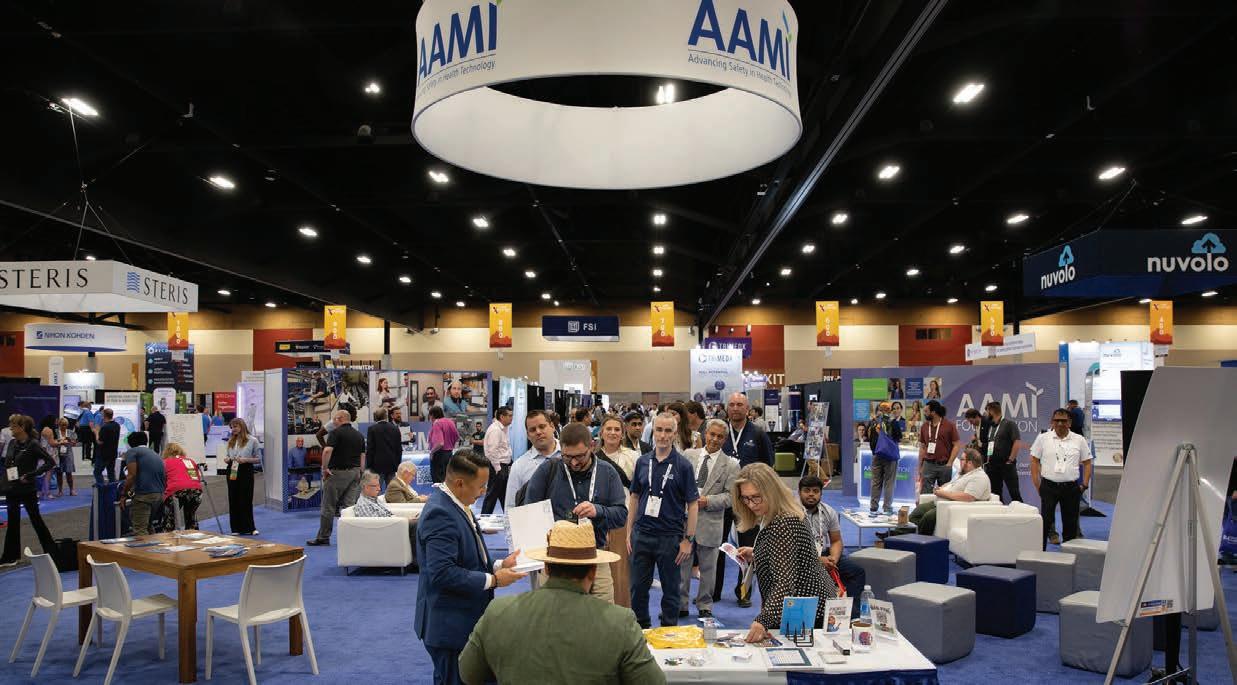
VISIT TECHNATION AT AAMI EXCHANGE
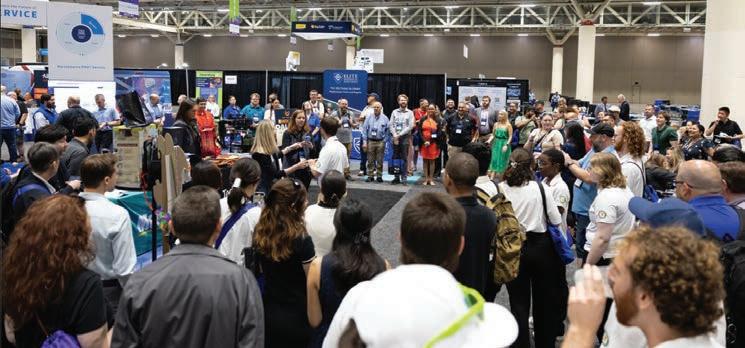
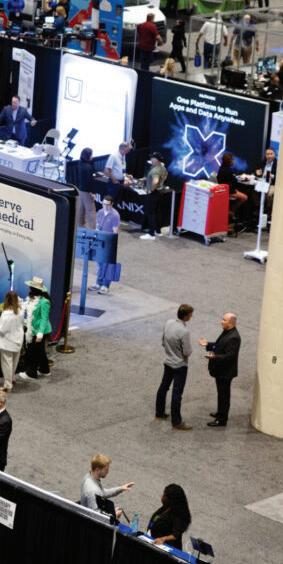
TechNation is excited for the 2026 AAMI eXchange! Stop by and see the TechNation and MedWrench teams at Booths 704 and 706.
For those familiar with what the AAMI eXchange expo floor has to offer, your favorites are returning. For 2026, more than 150 leading manufacturers and service providers will showcase the latest innovations in health technology.
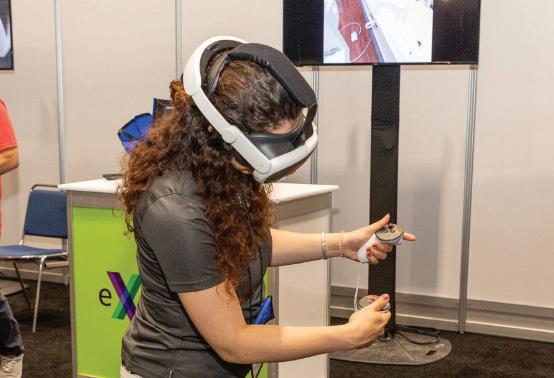
The TechNation booth is very close to the everpopular AR/VR Xperience, sponsored by NVRT Labs. The ‘Xperience’ showcases advances in augmented and virtual-reality technologies – utilized for technical training, patient therapeutics, and more – while offering hands-on demonstrations.
Also nearby is the Start-Up Pavillion. As first seen at eXchange 2025 in New Orleans, the Pavillion offers a turnkey exhibit space for start-up companies introducing groundbreaking products and services to the field. Exhibitors in the Start-Up Pavilion will gain exposure and the opportunity to connect with other innovative start-ups and industry leaders.
MIX IT UP IN 2026
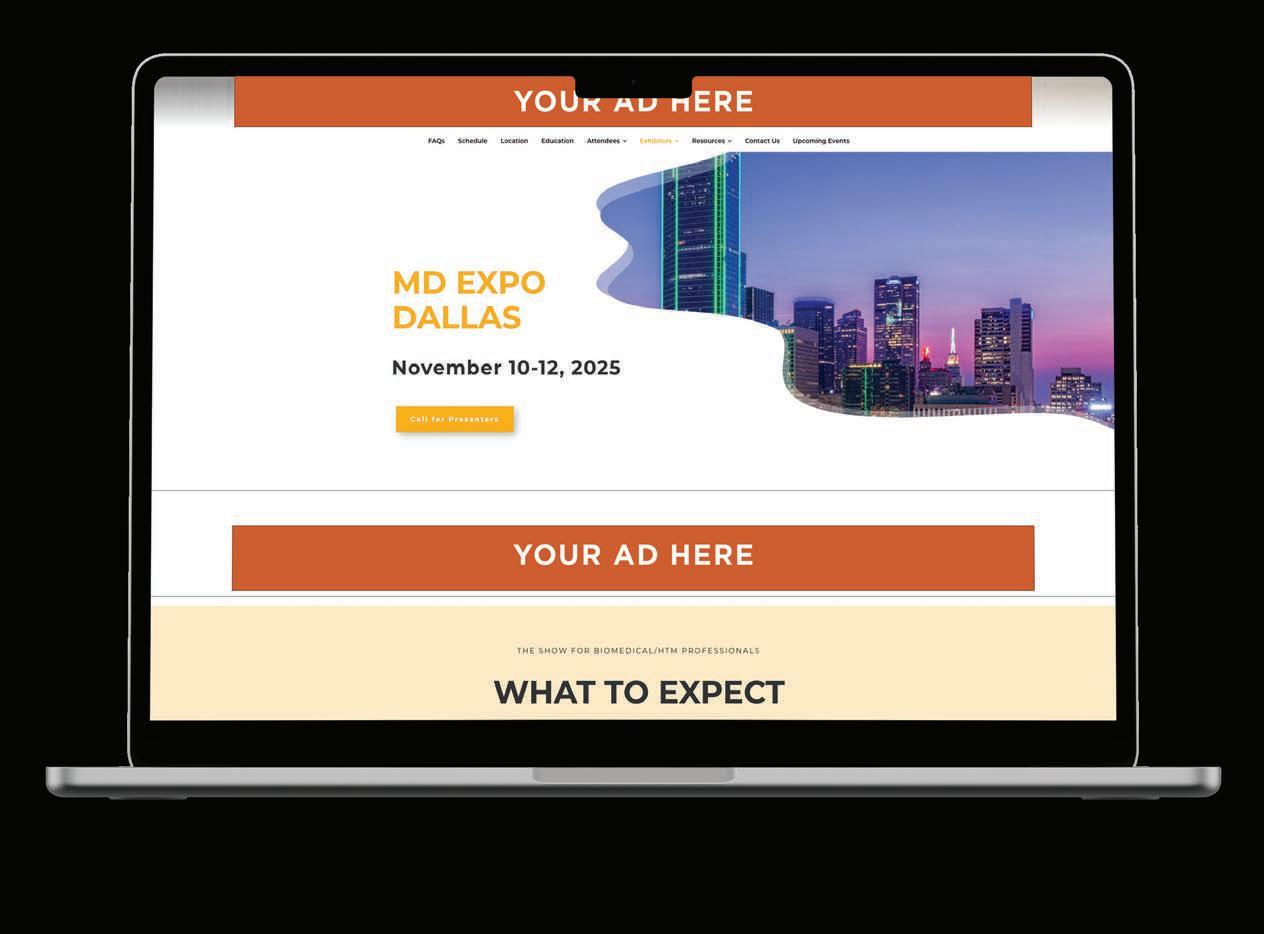
Coming off the fall MD Expo in Baltimore, TechNation’s parent company MD Publishing invites biomeds to attend upcoming events. It’s not too late to register for the first HTM Mixer of 2026.
The HTM Mixer Arizona is set for May 7-8 in Scottsdale and is supported by the Arizona Healthcare Technology Management Association (AZHTM). The HTM Mixer Arizona has been approved for up to 4 CEUs by the ACI.
Also coming later this year is the HTM Mixer Northwest on July 31-August 1 in the Seattle metropolitan area. It is supported by the Oregon Biomedical Association (OBA) and the Washington State Biomedical Association (WSBA).
In the fall, MD Expo returns to the Sunshine State (October 13-15) in Orlando, Florida.
Registration, call for presenters and a form to sign up for the event newsletter are all available at MDExpoShow.com. Click on the “Upcoming Events” tab for additional details or scan the QR code.
RIBBON CUTTING
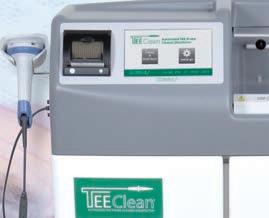
Mopec Group is a vertically integrated provider of solutions across the anatomic and forensic pathology continuum, including equipment, technology, consumables and services. We support hospitals, universities, laboratories and medical examiner facilities with offerings designed to improve diagnostic accuracy, safety and workflow efficiency.
“At Mopec, we are focused on empowering pathology and anatomy professionals with an integrated platform of solutions that advance diagnostic accuracy, safety and efficiency,” said Mopec Group Senior Director of Service, Warranty and Quality Scott Nudelman. “We are particularly excited about our Mopec Certified Service program, which will help customers maximize uptime, reduce risk and drive long-term performance across their operations.”
TechNation found out more about the company in a recent Q&A.
Q: HOW DOES YOUR COMPANY STAND OUT IN THE MEDICAL EQUIPMENT FIELD?
A: Mopec stands out by delivering a fully integrated platform of solutions that supports the entire pathology workflow. Since 1992, we have combined engineering excellence with a customer-focused approach to go beyond equipment alone. Our vertically integrated model spans equipment, consumables, technology and service, enabling us to deliver consistent quality, safety and
performance. Guided by our clinical advisory board, we continue to innovate in ways that address the evolving needs of pathology and anatomy professionals.
Q: WHAT IS ON THE HORIZON FOR YOUR COMPANY? DO YOU HAVE ANY GOALS YOU WOULD LIKE TO ACHIEVE IN THE NEAR FUTURE?
A: Looking ahead, Mopec is focused on advancing innovation to better support the pathology continuum. We are investing in integrated technologies, automation and strategic partnerships that enhance workflow efficiency and diagnostic confidence. This includes the recent opening of our new distribution center to strengthen availability and responsiveness.
Our goal is to remain the leading platform for pathology and anatomy professionals by enhancing diagnostic accuracy, improving safety and supporting better patient outcomes. We are also committed to scaling our operations and strengthening partnerships across healthcare, research and education sectors.
Q: IS THERE ANYTHING ELSE YOU WOULD LIKE OUR READERS TO KNOW?
A: At Mopec, we are more than a vendor; we are a long-term partner invested in our customers’ success. Our mission is centered on empowering pathology and anatomy professionals with solutions that advance research, education and patient care.
From innovation and strategic partnerships to service and support, everything we do is grounded in quality, safety and continuous improvement, helping our customers operate more efficiently and confidently.
For more information, visit mopec.com
DENTAL UPDATE
BMETs Keep Dental Care Moving During LAMAT 2026
BY ANDREA JENKINS
Dental care doesn’t start with the patient, it starts with the equipment.
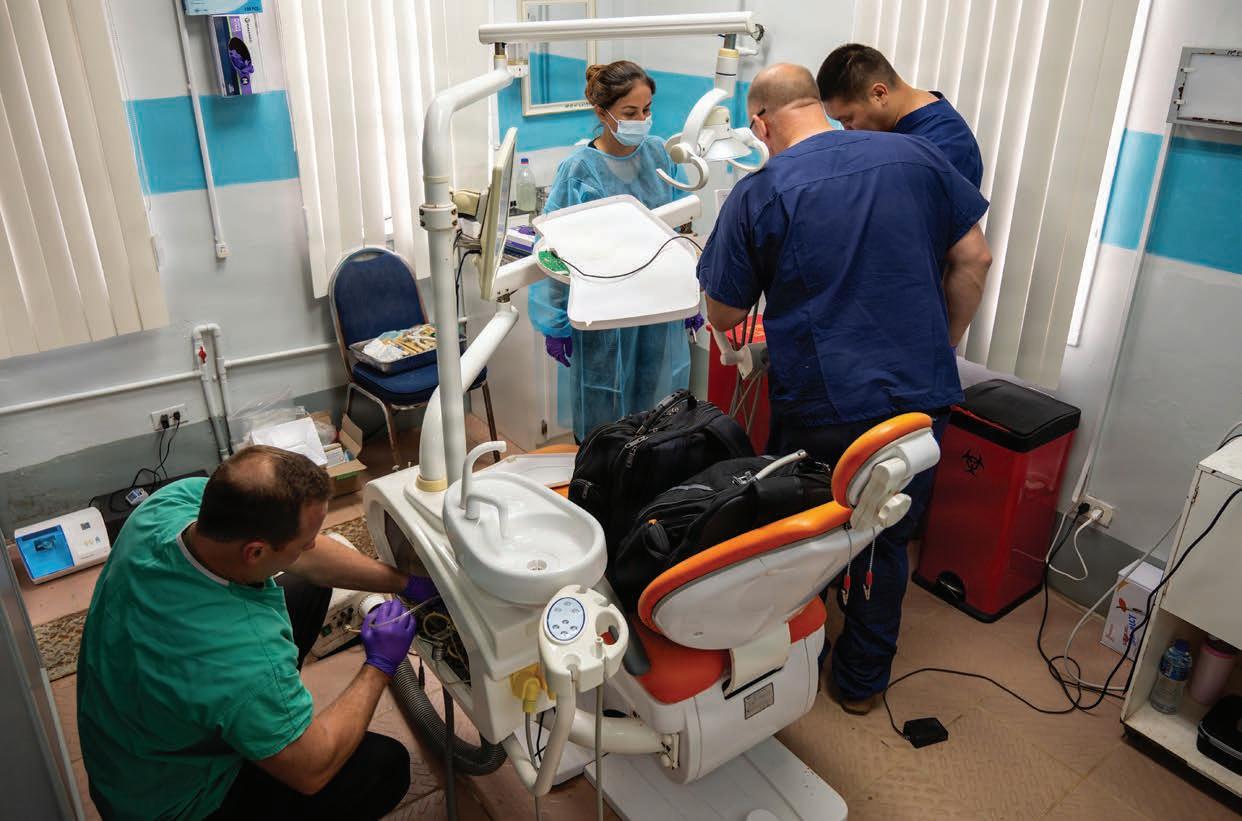
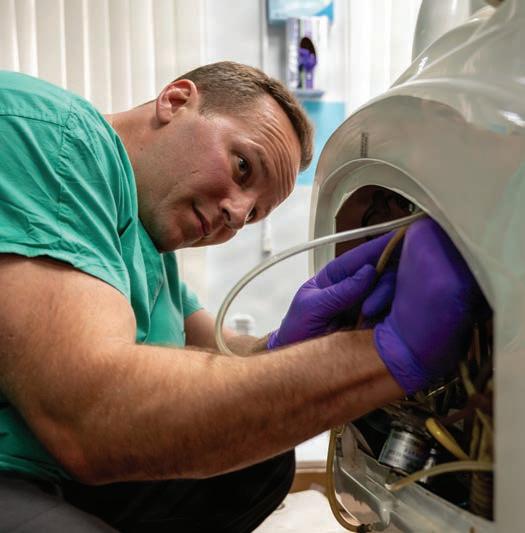
Before a patient settles into the chair or a filling begins, U.S. Air Force biomedical equipment technicians are already at work in clinics and hospitals across Guyana, restoring and maintaining the systems that keep care moving.
“There’s a great need for people like us here,” said Master Sgt. Matthew Chouinard, a biomedical equipment technician assigned to the 920th Aeromedical Staging Squadron. “The equipment age, the condition and the amount of use creates a lot of wear and tear. Without consistent maintenance, physicians don’t have an effective
way to treat their patients.”
Chouinard and his team are helping restore critical equipment across Guyana as part of the Lesser Antilles Medical Assistance Team (LAMAT) 2026, a U.S. Air Forces Southern-led mission that brings U.S. and partner nation medical professionals together to deliver care and strengthen regional health capacity.
Equipment repair supports more than patient care, it enables more efficient treatment while strengthening healthcare capacity alongside Guyana Ministry of Health partners.
“The equipment that gave us problems most of the time is the chair and the air-water syringe,” said Nikita France, a dental assistant with the Guyana Ministry of Health at Cheddi Jagan Dental School. “Sometimes if the air-water syringe is damaged, when we try to get air, water would come out with it. Since it was fixed, we’re not getting that problem anymore.”
For France, the impact of the partnership went beyond repairs.
“This is what I like about the team, they didn’t come and do it their way,” France said. “They came to try to understand how we would do it here.”
Biomedical equipment technicians serve as the link between medical capability and mission execution, diagnosing, repairing and restoring the systems Guyanese doctors and support staff depend on every day.
“As a BMET, we fix all sorts of medical equipment for physicians and nurse staff so they can diagnose and take care of their patients,” Chouinard said. “When that equipment doesn’t function well, we are called to repair it and get it back to a level where they can continue patient care.”
In Guyana, that demand spans multiple facilities from diagnostic systems to dental chairs and patient monitoring devices – all critical to sustaining care.
At dental clinics, those repairs are already changing how care is delivered.
“The team worked on one of the chairs that we had in the clinic,” said Neiomie Harris Singh, a dental assistant with the Guyana Ministry of Health. “It wasn’t working for some time.”
“The doctor may have had to move to another chair, or they would have to take turns,” Harris Singh added. “That was quite a challenge, having to move the patient around. Now, because it’s fixed, they don’t have to move people around anymore.”
In environments where equipment gaps can slow care, restoring capability means restoring access. For patients, those changes are immediate.
“To me, the patients seem much more comfortable,” Harris Singh said. “It was better for them not to have to move around, so it was pretty much easier for the patient.”
The mission also focuses on how teams solve problems in real time and improve processes. The team worked alongside local technicians to streamline how equipment issues are identified and repaired. By introducing more efficient troubleshooting methods and reducing reliance on external support, the collaboration will help local teams restore equipment faster and maintain consistent patient care.
“We have established a new process for them,” Chouinard said. “They’re learning ways to fix things that will help them move faster and not have to wait as long for support.”
That collaboration stood out to the dental team, not just for what was fixed, but how it was done.
“The LAMAT team works with respect,” France said. “They try to understand how we work, and they adapt.”
France added that the team was welcoming and open to questions, allowing her to learn new techniques while working alongside them.
For Chouinard, one of the most rewarding aspects of the mission has been working alongside Guyanese medical professionals and sharing perspectives.
“Even though we’re not directly providing treatment, we’re still part of everything that’s happening,” Chouinard said. “It’s an open cultural experience. We’re blending, working together and sharing best practices.”
As LAMAT 2026 continues in Guyana, patient care remains the visible measure of success. But behind every procedure is something less visible – restored capability and partnerships that extend beyond patient care.
“I do hope that the LAMAT team comes again,” Harris Singh said. “We’re really happy to have them here.”
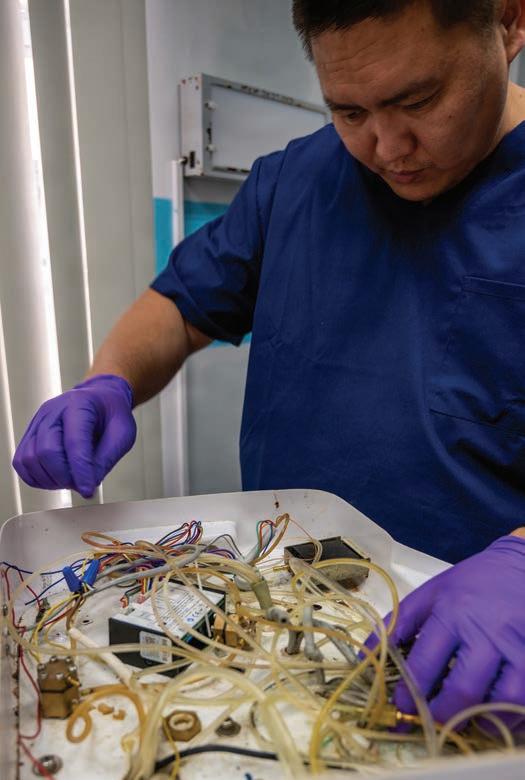
BMETs fix all sorts of medical equipment for physicians and nurse staff so they can diagnose and take care of their patients. In Guyana, that demand spans multiple facilities from diagnostic systems to dental chairs and patient monitoring devices.
AAMI UPDATE
Mitigating Alarm Spikes During Monitor Systems Transitions
BY RAMYA KIRHSNAN
The procurement and deployment of a new patient monitoring system often introduces a significant and unwelcome clinical risk in the form of increased alarm fatigue. Beyond the operational burden of excessive noise, a high volume of non-actionable alerts erodes clinical trust in the technology and increases the likelihood of missed critical events.
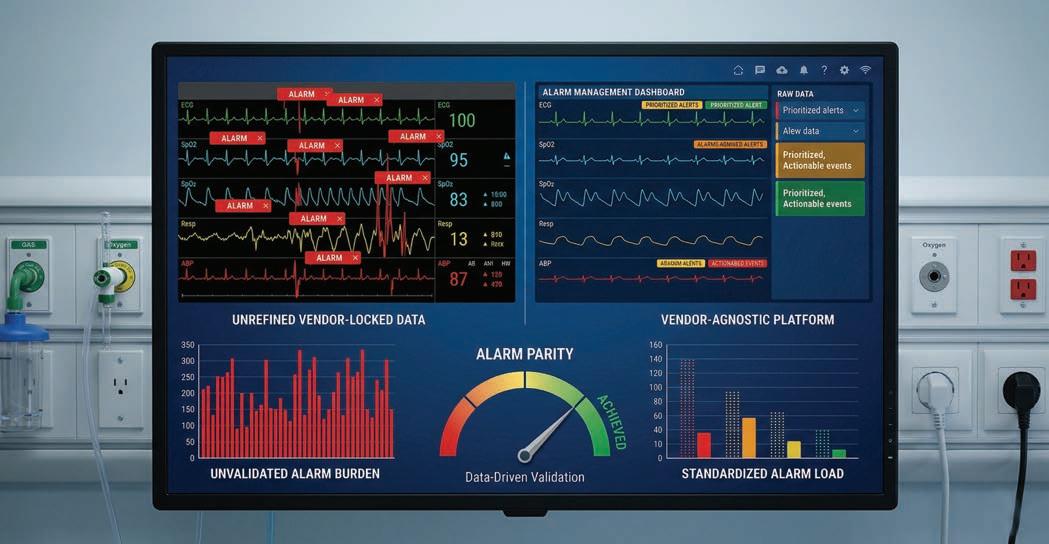
The fundamental issue is that different vendors employ proprietary backend logic and varying sensitivities that dictate how and when an alarm is triggered. Alarm parity, ensuring that a new system does not exceed the baseline alarm burden of the legacy platform, requires coordinated action by healthcare technology management (HTM) and clinical leadership through data-driven validation and integrated oversight.
INTEGRATED OVERSIGHT: A CLINICAL EVOLUTION
A successful transition is not a hardware swap; it is a clinical evolution. Critical to this process is a multidisciplinary task force comprising biomedical engineering, nursing leadership and IT. Biomedical engineering provides technical configuration expertise on the patient monitoring system, while nursing leadership offers the “on-the-ground” context necessary to validate the relevance of the changes to bedside workflows. In environments utilizing middleware, IT teams act as essential application owners overseeing the flow of data between disparate systems. By embedding these teams into the project from the very beginning, the facility ensures that configuration changes are evidence-based and clinically relevant. This group must exist from the RFP phase through post-production to continuously monitor alarm loads and validate the effectiveness of implemented changes.
DATA COLLECTION: QUANTIFYING THE SCALE
Quantifying the scale and nature of the alarm problem is the
first step to avoiding a “noise spike” at go-live. Gather data on the existing alarm burden to establish a baseline for the new system.
Ideally, to achieve an unbiased assessment, facilities should utilize third-party, vendor-agnostic, and alarm management platforms. These systems can enable a standardized, “apples-to-apples” comparison of raw data from both legacy and new vendors. It is important that the system provides a granular breakdown of alarm information (e.g., by alarm/device type) to help identify specific triggers – such as SpO2 thresholds or arrhythmia sensitivities – that may require adjustment. As an aside, these platforms can also typically gather alarm data from ancillary bedside devices (e.g., ventilators) to help with the larger alarm management effort.
In the absence of a vendor-agnostic alarm management platform, HTM teams can leverage the native reporting tools provided by the individual patient monitoring vendors. While these are often “vendor-locked,” comparing data from the legacy system against trial data from the new system can still provide a baseline to inform any configuration changes.
VALIDATION: THE PRODUCTION-GRADE “SANDBOX”
Data collection needs to be followed by validation in a controlled environment. During the validation process, the monitoring vendor should be expected to provide a test environment that mimics their production offering with recommended default configurations. This allows the multidisciplinary team to test the new vendor’s logic against known clinical scenarios without risking patient safety.
In an ideal world, facilities are able to create a robust test environment with the ability to mimic complex patient and alarm loads. Using a high-fidelity sandbox that replicates the full production alarm workflow across all vendors and systems, the team can evaluate configuration changes, including alarm delay and parameter averaging adjustments, to minimize nuisance alarms while maintaining clinically appropriate safety thresholds.
If a full-scale simulation is not feasible, at a minimum the team should simulate high-impact alarm scenarios (as identified by the clinical teams) on a subset of demo or test
devices. By observing how the new hardware responds to specific physiological triggers, the team can identify any obvious differences between the new and legacy systems and account for them either by configuration changes or additional training before the fleet is rolled out to the floors.
CONCLUSION: ACHIEVING PARITY
The ultimate goal is “alarm parity” to ensure the new system does not exceed the alarm burden of the old one. By using a multidisciplinary team to drive data collection and
rigorous pre-deployment testing, hospitals can move from reactive troubleshooting to proactive safety. Regardless of whether third-party middleware or foundational vendor reports are used, the strategy is consistent and requires validation of algorithms, default configurations, and the clinical environment prior to bedside deployment.
– Ramya Kirhsnan is director of implementations at Medical Informatics Corp. The opinions are those of the author.
ECRI UPDATE
AI Tops Annual Report of Patient Safety Concerns
Report highlights how vulnerabilities in emerging technology, staffing, workforce culture & health misinformation increase preventable harm in healthcare.
Balancing the potential benefits and risks of artificial intelligence (AI) in clinical diagnosis is the #1 patient safety concern for 2026 according to the annual Top 10 Patient Safety Concerns report by ECRI, a global patient safety organization.
As more healthcare organizations are relying on AI tools to interpret symptoms and clinical data, ECRI urges healthcare leaders to take a balanced approach to adoption. Some AI technologies have the potential to improve diagnostic speed and accuracy; however, using AI diagnostic systems without strong safeguards and clinical oversight can increase the risk of missed, delayed or incorrect diagnoses. AI models are only as reliable as the algorithms that power them and the data on which they’re trained, which can include gaps or biases that can worsen health disparities.
Other safety concerns in the report reflect broader systemic challenges. Reduced access to healthcare in rural communities continues to place patients at risk, as financial pressures have led to hospital closures and diminished essential services in remote areas. Without access to care, rural patients are at higher risk for delayed diagnosis and treatment, and worse health outcomes. Rising rates of preventable acute diseases also signal underlying weaknesses in vaccination rates and access, infection prevention and efforts to counter misinformation. Diseases that were once controlled are resurging in some communities, straining healthcare systems and disproportionately affecting vulnerable populations.
“Rural communities are losing access to essential healthcare services. At the same time, falling vaccination rates are driving a troubling rise in preventable diseases. Vaccines are foundational to patient safety, and we are seeing decades of hard-won progress in public health erode in the fight against diseases like measles and whooping cough,” said Marcus Schabacker, MD, Ph.D., president and
chief executive officer of ECRI. “Now more than ever healthcare leaders must be proactive and creative to tackle these challenges.”
ECRI’s report further highlights how organizational culture and workforce turnover contribute to safety challenges. Top concerns include persistent staffing shortages and a pervasive culture of blame among healthcare workers that discourages them from reporting safety concerns or incidents, undermining improvement efforts.
“When frontline clinicians do not feel psychologically safe reporting concerns, early warning signs of risk can be overlooked. Building resilient teams and fostering a workplace culture that encourages transparency and continuous learning are essential to reducing preventable harm,” said Dheerendra Kommala, MD, chief medical officer at ECRI.
The 2026 Top 10 Patient Safety Concerns are:
1. Navigating the AI Diagnostic Dilemma
2. Reduced Access to Rural Healthcare
3. Increasing Rates of Preventable Acute Diseases
4. Federal Funding Cuts Hinder Healthcare Operations and Safety
5. Lack of Recognition and Reporting of Harm Events
6. Inadequate Pain Management for Women
7. Persistent Workforce Shortages
8. Culture of Blame Hinders Learning and Improvement
9. Emergency Department Boarding
10. Gaps in Manufacturer Packaging and Labeling
Undermine Medication Safety
The 2026 Top Ten Patient Safety Concerns report is available for download and includes detailed steps that organizations can take to reduce risk and improve patient safety.
ECRI and the Institute for Safe Medication Practices (ISMP) analyze a wide range of data to identify the ten most pressing safety threats, including scientific literature, patient safety events, concerns reported to or investigated by ECRI and ISMP, client research requests and queries, and other internal and external data sources.
Scan here to download the 2026 Top Ten Patient Safety Concerns report.
THE BENCH
BY MARK COOKSEY
H BIOMED 101
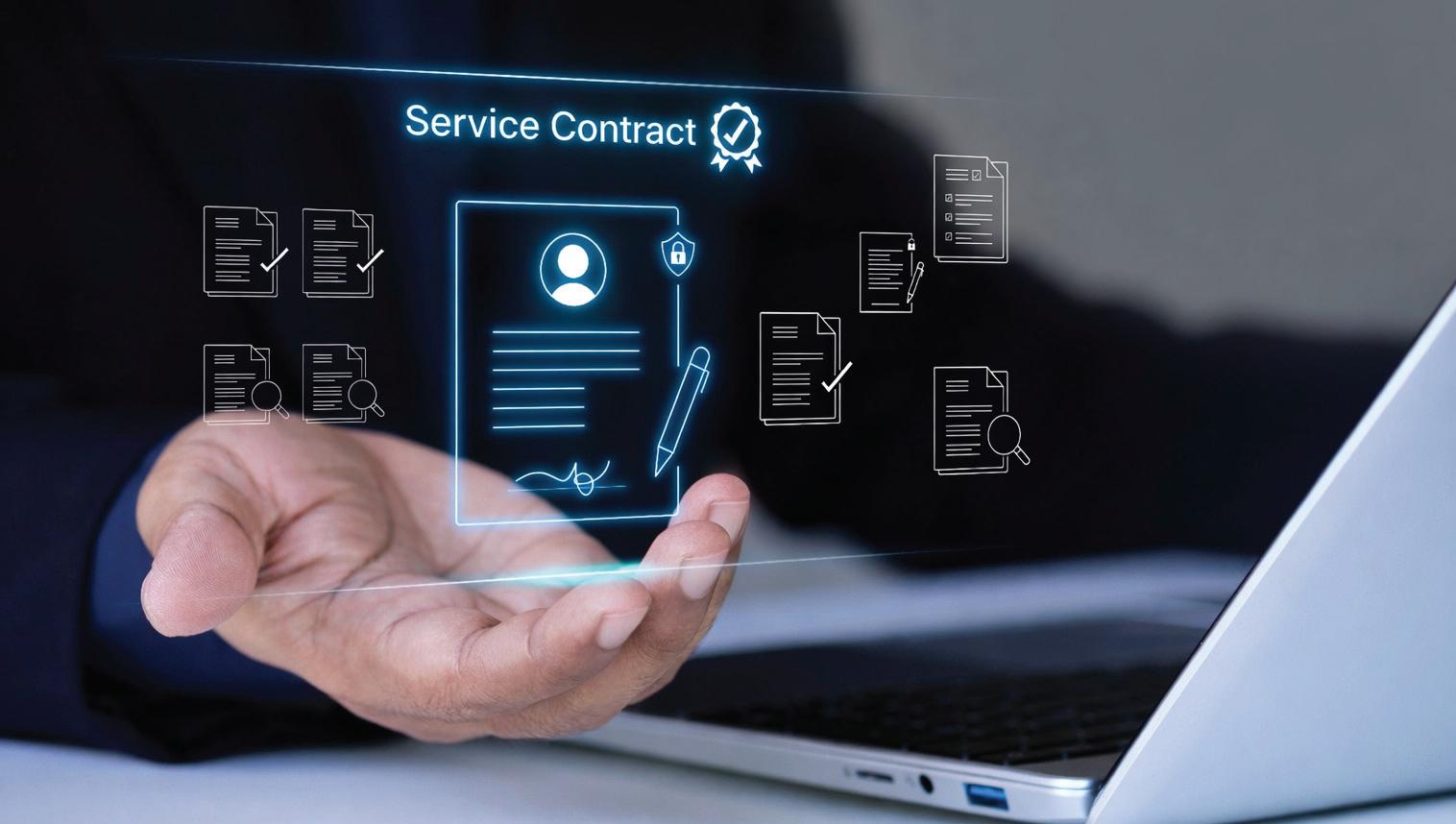
Using AI to Negotiate Smarter HTM Service Contracts
ealthcare technology management (HTM) service contracts are becoming more complex, more expensive and more critical to safe patient care. At the same time, biomeds are increasingly being asked to support, or directly participate in, contract evaluations and negotiations. That shift can be uncomfortable. Most of us were trained to troubleshoot devices, not to analyze contract language, benchmark pricing or defend recommendations to leadership.
Artificial intelligence (AI) won’t negotiate contracts for you – and it shouldn’t. But when used correctly, AI can serve as a practical analysis assistant, helping biomeds prepare better, ask smarter questions and communicate more effectively.
WHY I TURNED TO AI FOR CONTRACT HELP
For many years, HTM service contracts followed a familiar pattern. Renewal notices arrived, pricing increased incrementally and contracts were renewed largely through a legal lens – focused on terms and conditions more than value. The unspoken assumption was that negotiating service contracts required specialized legal or purchasing expertise, outside the traditional HTM role.
That approach no longer works.
Service contracts have become crucial to cost control. Simply accepting proposals without structured review exposes organizations to unnecessary cost and risk. Rather than
accepting contracts “as is,” we began treating service agreements the same way we treat any major purchase – like a home or a car.
We used AI to:
• Analyze contracts in clear, easy to understand terms
• Identify cost saving opportunities quickly
• Respond firmly and effectively to vendors
We paired AI assisted analysis with ECRI benchmarking to:
• Review proposals more consistently
• Identify savings opportunities or lock in favorable pricing
• Analyze key contract elements quickly
• Draft clearer, more effective vendor responses
Impact: In the first year, across more than 160 renewing service contracts, AI assisted evaluation and negotiation contributed to over $750,000 in savings and avoided cost increases – while maintaining appropriate coverage and service quality. Those results didn’t come from letting AI “negotiate.” They came from changing our stance. We no longer accept proposals without analysis, and we approach vendors with firm, clear expectations.
A PERSONAL EXAMPLE: BUYING A CAR
I’ll admit it. I had been avoiding buying a new car. Not because of the vehicle, but because I hated the negotiation process. That’s the same reason many of us avoid HTM contract negotiations: we don’t know how to approach the vendor firmly without creating conflict or wasting time.
This time, I did it differently.
Before stepping into a dealership, I used AI to help draft concise, professional language requesting out the door (OTD)
pricing. That single AI generated message reframed the entire process. Some dealers responded promptly, transparently and professionally. Others didn’t – and I simply went elsewhere. AI also helped by querying model specific details and providing a realistic range of what constituted a good price. Paired with publicly available industry benchmarks, I could quickly determine whether I was getting a good deal or a bad one. What surprised me most was that the experience became enjoyable. Not because AI negotiated for me, but because it gave me clarity and confidence. It created a framework to be firm, fair and fast. For the first time, I felt like I was in the driver’s seat. HTM service contracts aren’t cars – but the dynamic is similar. When we show up with clear expectations, objective benchmarks, and structured questions, vendors who value transparency engage. Those who won’t tell us something useful too.
AI FOR CONTRACT LANGUAGE REVIEW
Service contracts often contain dense language that hides risk in exclusions, response time definitions, escalation clauses and ambiguous language. Reviewing this across multiple vendors is time consuming and inconsistent.
AI can quickly highlight:
• Service Level Agreements (SLAs) and response time commitments
• Exclusions that transfer risk back to the hospital
• Escalation triggers and termination conditions
• Areas requiring clarification or renegotiation
This allows biomeds to focus their expertise on what truly matters, rather than document mechanics.
AI for Benchmarking and Gap Analysis
Benchmarking is where AI and external references, such as ECRI, work particularly well together. AI can:
• Highlight areas where pricing is competitive versus misaligned
Sometimes the result is immediate savings. Other times, it’s locked in pricing that prevents future escalation. Both deliver value.
In the past, we didn’t formally track list price, discounts or negotiated savings. Now, using structured AI prompts, we put all the cards on the table and track progress. Negotiated savings that were once invisible are now documented and reportable.
AI for Negotiation Prep and Leadership Communication
One of the most valuable uses of AI is preparing clear, concise communication for both vendors and internal stakeholders. AI helps:
• Summarize key contract terms, costs, savings, and risks
• Generate management ready summaries and Excel friendly comparison worksheets
This improves negotiation outcomes and builds leadership confidence in HTM recommendations.
Adding an AI “Virtual Contract Analyst” without adding headcount
Over the past year, we reviewed more than 160 renewing HTM service contracts. Before AI, that kind of volume would have stretched our team.
A traditional review often requires 6 to 10 hours per contract (reading the proposal, comparing scope and pricing, benchmarking, drafting responses, and summarizing for leadership). At 160 contracts, that’s 960 to 1,600 hours –roughly 0.5–0.8 FTE of analyst level work.
We didn’t hire a contract analyst. We virtualized one.
AI handled the heavy lifting:
• First pass contract summarization
• Identification of scope and pricing gaps
• Drafting firm, professional vendor responses
• Building comparison tables and leadership summaries
Experienced HTM professionals then used their time where it matters most: judgment, risk tradeoffs and recommendations.
GOVERNANCE AND GUARDRAILS
Use AI within clear boundaries:
• AI does not approve contracts
• Vendor sensitive data stays within approved systems
• All outputs are reviewed and verified by HTM professionals
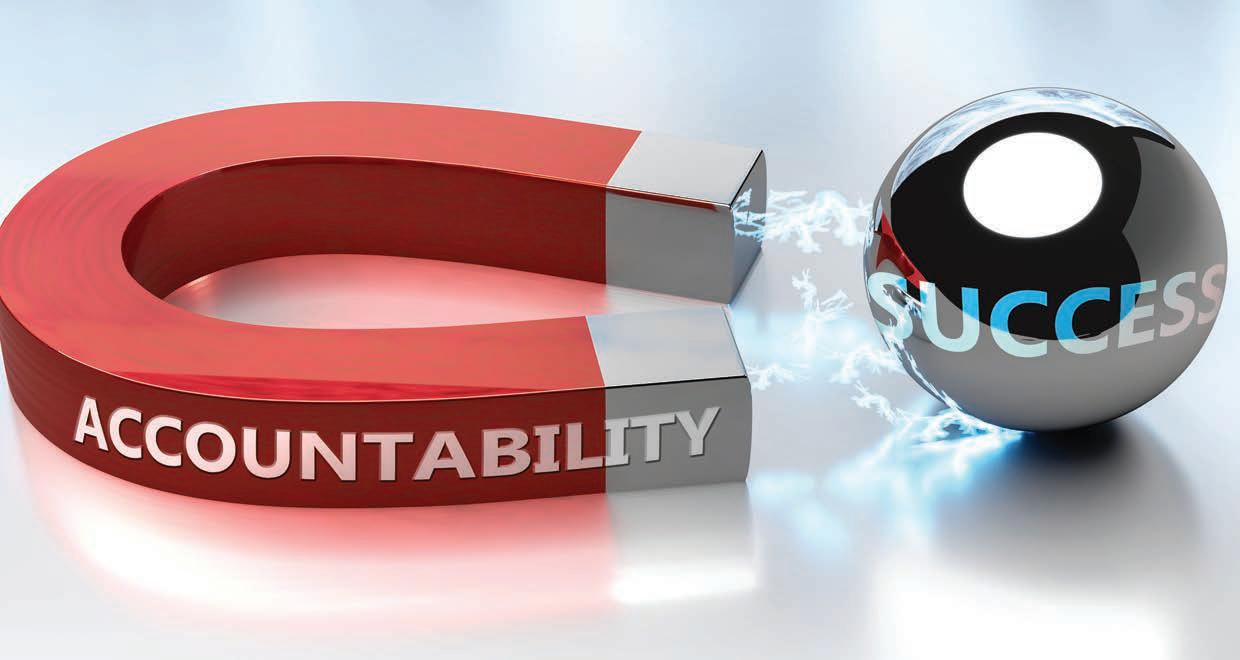
AI supports analysis. It doesn’t replace accountability.
Human in the Loop Remains Essential.
Final recommendations always belong to experienced HTM professionals. AI can accelerate preparation, but biomeds own:
• Risk interpretation
• Tradeoff decisions
• Final recommendations to leadership Judgment and responsibility remain firmly human.
RISKS TO AVOID
AI introduces its own risks:
• Overconfidence in summaries
• Missing operational context
• Treating AI output as fact instead of draft
Disciplined AI prompting matters. For example here is a simple prompt to AI: “Help draft a professional response to this service contract proposal requesting improved pricing and clarification of exclusions.”
CLOSING THOUGHT
AI doesn’t make you a negotiator. It makes you a better prepared biomed at the table.
By pairing AI with industry benchmarks and adopting a firm, fair, and structured approach, HTM teams can move from passive renewals to confident, data driven negotiations –protecting patient care, uptime, and the bottom line.
For an example document to use in your department scan the QR code.
CLICK. WATCH. EARN.
Watch these webinars on-demand
WEBINAR EXAMINES AI READINESS FOR HTM TEAMS
Artificial intelligence was the focus of another well-attended webinar, “HTM AI-Readiness: Building the Data Foundation,” sponsored by FSI.
Presenters Joe Stockman, director of product experience, and Shawn Hewitt, senior product manager, explored how artificial intelligence is beginning to transform healthcare technology management – from predictive maintenance to compliance analytics and service planning.
The presenters emphasized that AI’s effectiveness depends heavily on the quality of underlying asset and work-order data within CMMS and enterprise asset management systems.
Topics included standardized asset categorization, accurate equipment inventories and consistent technician feedback – all of which are necessary to enable AI tools to generate meaningful insights for compliance, maintenance optimization and life cycle planning.
The session drew 78 attendees and concluded with a question-and-answer segment.
Participants praised the educational value of the series in post-webinar feedback.
“Nice learning opportunities to help you keep up with advancements in a fast-developing industry,” said Cody Hansen, senior manager of facilities management at University of Utah Health, who won the webinar’s Swiss Force Meister Multi-Tool prize.
“Amazing topics to explore and learn about the HTM field,” added HTM student Axi Patel.
Joseph Trujillo, a biomedical engineering manager at Hoag Hospital Newport Beach, described the webinars as “informative and an opportunity to obtain CEUs,” while Donald Armstrong, tech training manager with Renovo Solutions, called the sessions “great and appropriate information delivered in a way that is absorbable and entertaining.”
EXPERTS EXPLORE TOOLKITS, CASES & CARTS
One recent webinar featured a roundtable discussion on toolkits, cases and carts. It struck a chord with biomedical equipment technicians who rely on the right tools to keep clinical equipment running safely and efficiently.
TechNation Editor John Wallace moderated the discussion alongside industry panelists Justin Barbour, director of business development at BC Group; Julio Castro, vice president of marketing and international sales at Pronk Technologies; and Greg Johnson, CBET, CHFM, co-owner of Southeastern Biomedical Associates.
A common theme quickly emerged: the importance of investing in quality tools and choosing the right equipment for the job.
“That the census was the same throughout the panel on what the technicians need for tools,” said William Harding, a biomedical engineering technician with Aspen Medical. “I have been a technician for over 20 years. I love my tools and pride myself on having the right tool for the right job.”
Other attendees echoed his sentiments.
“When purchasing new tools take into account warranty as well as quality,” added Devin Harback, a biomedical student at St. Clair College.
Participants also emphasized the balance between budget constraints and reliability.
“Pick up the tools you can afford, spend more money on important tools if you can,” said Brad Palmateer, a BMET with HMS Health.
The webinar also included a trivia giveaway, with Glenn Havens, director of clinical engineering at Mount Sinai South in Nassau, New York, winning a Swiss Force Meister Multi-Tool.
PARTSSOURCE LIVE DEMO HIGHLIGHTS SMARTER PROCUREMENT
Another recent Webinar Wednesday session took a hands-on approach, offering a live demonstration of PartsSource PRO and how the platform helps HTM teams streamline parts procurement.
During the “Tools of the Trade Live Demo,” Jason Meister, director of technical services and sales engineering at PartsSource, walked attendees through a real-world technician scenario showing how the platform allows users to quickly search for parts, compare OEM and vetted alternatives, and place orders using real-time pricing and availability data.
The webinar attracted about 50 attendees and generated strong engagement from participants, with viewers rating the session 3.9 out of 5.
Meister also demonstrated several platform features designed to simplify purchasing workflows and improve visibility for HTM teams, including integration with CMMS and ERP systems, the HTM Command Center dashboard and Visual Analytics tools that help organizations analyze spending patterns and supplier performance.
Attendees shared several takeaways following the session.
Roosevelt Charitable, a medical equipment planner and BMET at Endeavor IO, highlighted the ability to search historical purchasing data.
“The feature on the site that lets you search past orders through filtering such as when the part was purchased,” Charitable said.
Anna Kestek, a biomed at PRMCE, said the platform’s organization capabilities could simplify daily work.
Students also participated in the session, reflecting a growing trend in Webinar Wednesday attendance.
“There is a lot more to, and a lot more than meets the eye in parts ordering,” said Lauren Resendes, a BMET student at St. Clair College in Ontario, Canada.
Glenn Fraser, CBET, of Stanford Children’s Healthcare won the session’s Swiss Force Meister Multi-Tool trivia prize.
JOIN THE WEBINAR WEDNESDAY COMMUNITY
The TechNation Webinar Wednesday series continues throughout 2026 with new sessions scheduled each month covering emerging technologies, tools of the trade, regulatory updates and best practices for HTM professionals.
All webinars are recorded and made available for on-demand viewing, allowing participants to watch sessions they may have missed or revisit key insights from previous presentations.
Whether tuning in live or catching the replay, Webinar Wednesday continues to connect the HTM community with the knowledge, tools and conversations shaping the future of healthcare technology management.
To view on-demand sessions or register for upcoming webinars, visit WebinarWednesday.live
ROUNDTABLE
HTM Employment & Recruiting
Healthcare technology management (HTM) is among the many healthcare professions that faces a staffing shortage. An added challenge for the HTM field is that many individuals do not know about the career option. It is basically unknown when compared to the popularity among children who want to grow up to be doctors and nurses.
TechNation interviewed thought leaders regarding HTM employment and recruiting for this month’s roundtable article. Insiders shared tips and trends they see in the industry as well as ways that candidates can make themselves stand out to recruiters and hiring managers.
Participants in this month’s roundtable on HTM employment and recruitment are:
• HTMJobs.com Recruiting Specialist Sydney Krieg;
• Radiological Service Training Institute (RSTI) President Todd Boyland, CRES, CPSM; and
• Renovo Solutions Technical Training Program Manager Donald Armstrong, CBET, CHTM, CABT, CRES.
Q: WHAT SKILLS AND QUALIFICATIONS ARE MOST IN DEMAND FOR HTM PROFESSIONALS IN 2026, AND HOW HAVE EXPECTATIONS EVOLVED IN RECENT YEARS?
KRIEG: Employers are prioritizing soft skills now more than ever. While technical training, years of experience, and required degrees or certifications remain important, a candidate’s interpersonal abilities often set them apart in today’s job market. The ability to communicate effectively, collaborate with others and adapt to changing workplace demands can make a candidate truly stand out.
BOYLAND: In 2026, employers seek HTM professionals with strong electrical and mechanical fundamentals, sound computer-based skills as well as advanced system-level knowledge. Imaging systems are highly integrated with networks and software, so technicians must understand DICOM, PACS and cybersecurity basics in addition to hardware troubleshooting. Expectations have shifted from reactive repair to proactive system performance and uptime optimization. Critical thinking, independence and multimodality capability are increasingly important.
ARMSTRONG: For me, the short answer starts with
understanding the difference between skills and qualifications. Skills are things you can do, abilities where you’ve demonstrated proficiency. Over the past several years, these have become increasingly important. While qualifications matter, they don’t fix equipment or help with communication in the field. Qualifications – such as degrees, certifications and credentials – are what you have achieved. They are important and help meet HR requirements and minimum standards, but they don’t always demonstrate what someone can actually do as an HTM professional. Beyond the technical background, I also look for interest, engagement and the right attitude – things like teamwork and a willingness to learn. I often say the best biomeds are both confident and humble. In terms of specific skills, the ability to communicate effectively and think critically are two of the most important qualities we look for today. There’s a phrase many of us have heard: “hire for culture and attitude and train for skills.” In many ways, that’s proving more true than ever. If someone has the right attitude and communicates well, we can train them to become excellent biomeds.
Q: HOW IMPORTANT ARE CERTIFICATIONS (CBET, CABT, CRES, ETC.) IN HIRING AND CAREER ADVANCEMENT, AND ARE EMPLOYERS PRIORITIZING ANY NEW OR EMERGING CREDENTIALS?
KRIEG: While certifications can support professional development and demonstrate a commitment to career growth, they are not always essential qualifications. For entry-level technicians, certifications can help offset limited hands-on experience. However, from our employers’ perspectives, degrees in relevant fields combined with demonstrated troubleshooting ability and practical, realworld experience often provide a stronger foundation than certifications alone. Ultimately, hiring managers tend to prioritize well-rounded candidates who balance education, hands-on experience, technical skills and a clear commitment to the field when determining the best overall fit.
Join us May 13 for the Roundtable
BOYLAND: Certifications such as CBET, CABT and CRES remain highly respected and demonstrate professional commitment. They validate core knowledge and can strengthen hiring and advancement opportunities. However, employers are placing greater emphasis on modalityspecific education and documented hands-on experience in advanced imaging. Proven competence on complex systems often carries equal or greater weight.
ARMSTRONG: You might be asking the wrong person here, as I’ve been teaching the CBET review course since 2020. That said, I strongly believe obtaining any of the four AAMI certifications is an important accomplishment and can play a meaningful role in career advancement. When I was a hiring manager, seeing CBET, CHTM or CRES behind someone’s name did carry considerable weight. In many ways, it naturally created two piles of candidates. It’s not that certifications tell you everything about a person’s ability to be a great HTM professional, but they do show a level of engagement in their own career and commitment to the profession. We’re also seeing growing interest in newer certifications like CABT, which can be a great entry point for technicians early in their careers. It helps establish a baseline of knowledge and shows a willingness to start investing in the profession from the beginning. At the end of the day, certifications demonstrate that someone is willing to invest the time and effort to deepen their knowledge and validate their expertise, and that kind of dedication is something many employers value when considering candidates for both hiring and advancement opportunities.
Sydney Krieg HTMJobs.com
Todd Boyland Radiological Service Training Institute (RSTI)
Donald Armstrong Renovo Solutions
Q: WHAT ARE THE MOST EFFECTIVE WAYS FOR ENTRY-LEVEL CANDIDATES OR RECENT GRADUATES TO GAIN MEANINGFUL, HANDS-ON EXPERIENCE IN HTM?
KRIEG: Internships and externships provide entry-level candidates a valuable opportunity to gain experience in the HTM field. Many employers bring on interns or externs with the intention of training them and potentially transitioning them into full-time roles within their organization. Additionally, the MD Expo hosts H.O.T. Workshops at the beginning of each conference, offering attendees the opportunity to receive hands-on training while learning the ins and outs of servicing a variety of medical equipment.
BOYLAND: Hands-on experience is essential. Entry-level professionals should pursue internships, assistant biomed roles or structured programs that provide access to live equipment. While simulation has value, working on real systems builds technical confidence much faster. Engineers can’t be afraid to jump in and try. Focused imaging training can accelerate the transition from general biomed to advanced modalities.
ARMSTRONG: One of the best places to start is through internships or volunteer opportunities. Getting hands-on exposure in a hospital or clinical engineering department can give someone a real feel for the profession and help them start building practical skills. I would also encourage people to look into local biomed or biomedical equipment technology programs. These programs provide a strong foundation in electronics, medical devices and troubleshooting, which are essential skills for entering the field. Another option is to connect with the many biomedical service and repair companies across the country that are often looking for entry-level technicians or trainees. These organizations can be a great way to gain experience, learn from seasoned professionals and start building a career in HTM.
Q: WITH A SIGNIFICANT PORTION OF THE HTM WORKFORCE APPROACHING RETIREMENT, HOW CAN ORGANIZATIONS APPROACH SUCCESSION PLANNING AND KNOWLEDGE TRANSFER?
KRIEG: Organizations should invest in mentorship programs and technical training opportunities for employees who are just beginning their careers in the field. In addition to training, clearly outlining what growth and advancement look like within the organization helps employees understand their career path and the goals they can work toward. It is also important to identify key roles that may need to be filled as retirements approach and begin
preparing for those transitions early. Planning ahead, whether by promoting from within or sourcing qualified candidates, helps ensure a smooth transfer of knowledge and responsibilities.
BOYLAND: Succession planning must be proactive, often years in advance, as it takes time to build competence and confidence that organizations are looking for. Organizations should identify high-potential team members early and invest in progressive technical education. Structured mentorship between senior technicians and developing professionals is critical for preserving knowledge. Strategic training partnerships help ensure readiness before experience gaps impact operations.
ARMSTRONG: The key is to start early by identifying potential candidates right out of college, or even high school in some cases, and exposing them to the HTM field. Certifications like CABT are also a great entry point and show a baseline level of knowledge that many managers value. I also think the talent pool is larger than we sometimes realize. Many people would make great biomeds but don’t have the traditional education or experience to get started. Fortunately, many ISOs and inhouse programs are beginning to adjust job descriptions to open up those entry-level opportunities. Finally, I’m a firm believer in promoting from within with the right training and mentorship to help transfer knowledge as more experienced professionals retire.
Q: WHAT EMERGING TRENDS ARE SHAPING THE FUTURE OF HTM CAREERS AND HIRING NEEDS?
KRIEG: From a recruitment perspective, AI is making hiring faster and more data-driven through the use of applicant tracking systems (ATS) that scan resumes and identify candidates whose skills best match a job description. Because of this, candidates often need to tailor their resumes to align with the language and requirements in the posting to ensure they reach recruiters. As healthcare technology continues to evolve, employers are prioritizing candidates with a combination of technical expertise, IT knowledge, problem-solving skills and relevant certifications or training.
BOYLAND: AI-enabled imaging, predictive maintenance and remote diagnostics are reshaping HTM roles. Professionals must understand both hardware and the software ecosystems driving modern systems. Cybersecurity awareness is now a baseline requirement. The future HTM professional will be adaptable,
analytical and comfortable in highly connected clinical environments.
ARMSTRONG: Many of the emerging trends, like AI integration, cybersecurity and remote diagnostics, are opening the door for new people to enter the HTM field. We’re seeing more professionals with networking and IT backgrounds becoming part of the clinical engineering team, which is a natural fit as medical technology becomes more connected. I also think there’s a big opportunity for second-career professionals to transition into HTM and bring valuable experience with them. Once people learn what an amazing profession HTM is, many are immediately interested. That may not be a new trend, but it will be an important part of how this profession continues to grow and sustain itself.
Q: WHAT ELSE SHOULD TECHNATION READERS KEEP IN MIND REGARDING EMPLOYMENT AND RECRUITING?
KRIEG: Our industry offers so many valuable resources and opportunities for career growth within HTM! Whether it’s attending conferences, participating in hands-on training, or exploring job boards and career fairs, I always encourage technicians to take advantage of the many tools available to them. One of the things that makes our industry special is the strong sense of community –people genuinely want to build relationships and support others who are entering the field or looking to grow within it. Leaning into the people, events and opportunities
our industry provides can make a real difference when navigating your own career path.
BOYLAND: The workforce challenge is real, but so is the opportunity. For more than 40 years, RSTI has trained over 15,000 imaging service professionals from more than 50 countries in a 40,000-square-foot facility using real, functional systems. Expanding recruiting pipelines to include military transition programs such as DoD SkillBridge and GI Bill approved training brings disciplined, technically skilled professionals into HTM. Organizations that invest in structured education and long-term development will build the next generation of industry leaders. Everything starts with a solid foundation in principle knowledge. Do not skip developing a solid foundation of knowledge necessary to maximize productspecific experiences.
ARMSTRONG: Don’t limit yourself to only hiring experienced techs for entry-level or BMET I positions. At Renovo, we’ve had several success stories bringing in second- and third-career professionals who, with some internal training, have gone on to become highperforming HTM professionals. For prospective biomeds, make sure your resume clearly lists your skills and accomplishments, and keep it updated and ready. Even jobs like dog walking, cooking or other customer service roles demonstrate responsibility and people skills, which are important qualities in this profession.
• A niche job board for the HTM and imaging communities powered by TechNation.
• The fastest growing HTM talent network in the country.
• 4000+ actively looking biomedical and imaging professionals.
• 350+ open opportunities throughout the United States.
Featured Employers: Agiliti, Block Imaging, Intelas Health, Renovo Solutions, Trimedx and more!
» Completely free and confidential registration and application process.
» A variety of posting options ranging from single-job postings to 12-month unlimited memberships.
htmjobs@mdpublishing.com for posting inquiries htmjobs.com to register today
Where Healthcare Technology Management Meets What’s
Join
BMET BASICS:
REAL WORLD SKILLS FOR EARLY SUCCESS
BY K. RICHARD DOUGLAS
M
ost jobs, especially in larger companies, have set onboarding procedures that managers follow with a new hire. Onboarding familiarizes the new employee with policies, procedures, job skills and enhances engagement with the new employee in their new position. This process often follows a set orientation that helps the new recruit understand the culture and expectations.
methodical, procedural and structured, the experience of the new hire can be very different. They need to acclimate to the culture, ramp up learning and take in a lot of data within a short period and know how to navigate the expectations of the new job.
There is paperwork that must be completed, often a workstation or office that is assigned, introductions are made and mentors are often identified. All of this can take several months with human resources and hiring managers hoping that the result will be retention and integration. While much of this process on the company side is
This is particularly true for those entering the HTM profession. While some may just be entering the job market out of school, others are transitioning from other fields, and some adjusting to a civilian job after serving in the military. There is much to know, both post-hire as well as pre-hire, to ascertain preparation, acclimation and enjoyment. Knowledge is power and it is key to getting the job, excelling in the job navigating interactions with clinicians, HTM management and suppliers while learning the ropes.
While onboarding is well-defined within a hiring organization, the same preparation, planning and strategy needs to be embraced by the new hire. A new biomed who has the right skills and training can look forward to a long and rewarding career.
GETTING OFF TO A GOOD START
There is the old saying that you don’t get a second chance at a first impression. That wisdom applies to the actions taken by a new biomed that can guide their career.
“I would advise any new biomed to focus on mastering the fundamentals first, then never stop adapting and looking toward the future. Just about anyone would advise a new technician to develop strong foundational skills in electronics and troubleshooting – because no matter how sophisticated the device, success always comes down to clear, logical thinking under pressure,” says Richard L. “Monty” Gonzales, Ed.D., president of the College of Biomedical Equipment Technology (CBET).
“Quite honestly, what separates average techs from exceptional ones is mastering the psychology of troubleshooting: methodically isolating the problem and approaching every issue with the mindset of a true problem solver, or a solution architect. Biomedical equipment technicians are not just fixing broken equipment – they are designing reliable outcomes that directly impact patient care,” Gonzales adds.
He says that at the same time, new technicians should seek to be familiar with the widest possible variety of equipment early on.
“The healthcare environment is evolving at tremendous speed with networked systems, AI-driven diagnostic tools and connected medical devices. The technology they will likely encounter throughout their careers will be very different from the limited number of devices they may have experienced through initial education and training,” Gonzales says. “Technicians must remain curious and committed to continuous learning, recognizing that tremendous opportunities that exist in the HTM world and that the depth and breadth of their training and experience will directly shape their level of professional achievement throughout their careers.”
He says the technicians who will thrive are those who are well-rounded troubleshooters with a broad array of experiences and training – and who are truly serviceoriented.
Claire Wilson is a BMET II with UCHealth at Yampa Valley Medical Center in Colorado. She says that the best advice she can give new BMETs is to accept that you will have to repair unfamiliar equipment.
Wilson presented “Career Guidance for Beginner BMETs” at the MD Expo Dallas in November of 2025. (tinyurl. com/5n8669cu). She has put a lot of thought into the topic. She works in a rural hospital in the northern Rocky Mountains of Colorado and supports approximately 3,000 non-imaging devices.
“Sometimes information from manuals can be limited or nearly nonexistent. Having a strong reputation with staff will help peers have confidence in your ability to learn and
handle challenges while you build your skill set,” Wilson says.
She adds that if a new biomed wants opportunity, they have to be willing to find it.
“New technicians will have to take on responsibilities that their peers don’t want. Using these unplanned opportunities can either enhance your career exponentially or cause conflict. A smaller team has less competition,” Wilson adds.
She says that when a new biomed is reviewing employers and opportunities, it is important that they consider “the need for work-life balance.”
“It’s important that the job you choose challenges you enough to grow without immediate burnout. It’s important to love where you live. Plan activities outside of work to look forward to. Utilize time not on-call to take weekend trips, that are affordable and memorable. Have a community at work. People you look forward to seeing throughout the day and can ask for help with work orders. IT, Facilities and charge nurses will become your greatest support,” Wilson says.
She also suggests that biomeds reviewing job opportunities ask the hiring manager about available training that might help to advance a career. Are there opportunities for promotions written into the employee contract? Does the employer offer matching contributions for a retirement plan? She also suggests discussing annual PTO balances, FMLA, prenatal care and holiday hours. Discuss disability support and healthcare benefits.
Wilson says that a biomed reviewing employment in local hospitals should consider the distance to the hospital and other obligations. She says that most facilities require STAT work orders to be attended to within 30 minutes. The clock starts from when you receive the call at your home, so a new biomed should consider the commute time from home to the facility and factor in potential delays.
She says that rookie biomeds should consider the pros and cons of smaller facilities versus larger ones. Some of the pros with a smaller hospital can include fewer PMs each month, less competition for training opportunities, more chances to become familiar with a smaller staff and ease of locating equipment.
The cons may include less staff for support, less equipment in storage and rural facilities may not have the budget to replace older equipment.
With larger hospitals, Wilson says that there can be a larger staff in biomed which can mean less on-call rotations. A larger equipment inventory is more forgiving when there are equipment shortages. There is a greater likelihood of STAT calls and more PMs every month. She also points out that the cost-of-living can be higher in a large city.
Wilson suggests that newer biomeds consider getting device training on ventilators, anesthesia machines, heart-lung machines, cardiac stress-test systems and balloon pumps to help in career advancement. This specialized training can help a biomed reach the next level as a BMET or in a transition to imaging service work.
CREATE A TECHNICIAN PORTFOLIO
Wilson’s MD Expo presentation covered several topics important to those considering a biomed career and those new to the field.
For those just entering a work environment at a hospital, Wilson says that important contacts to know include the charge nurses and nurse managers, facilities, IT, EVS, equipment team, respiratory techs and therapists and the OR staff.
She points out that a new biomed should be mindful that they should not tell a customer that they can fix a device that they are not trained on or comfortable fixing. She says that a new biomed should also not be pressured to fix something they are not comfortable repairing. Instead, the new biomed should advise the customer that “this repair requires more research” or “I will escalate this to a senior technician or management” or “this requires vendor service” when appropriate.
If the repair requires parts that are not readily available, the new tech should advise that “this device requires new
parts and I have no expected ETA for the shipment but I will keep you updated.”
How does a new biomed determine what equipment they might want to specialize in?
“The ability to learn and experience as many modalities and departments as possible will quickly reveal to a technician where their strengths and weaknesses are. Struggling with a certain equipment type due to a lack of experience shouldn’t discourage anyone from learning. Not feeling comfortable to repair a specific equipment type should be evaluated more closely,” Wilson says.
She talked about the benefits of a new technician beginning a technician portfolio.
“Assembling a portfolio is taking notes and daily work tasks and turning it into a career-long document that can be given to employers or shared with peers for support. It is a versatile collection of notes to individualize your resume and create a faster workflow for repetitive PM schedules and quick reminders. Having access to vendor support phone numbers, part numbers, PM checklists will give any technician confidence that they have what they need during the most important tasks,” Wilson says.
Newer biomeds should be aware of what considerations go into preparing for inspections by regulators.
“Close as many old work orders out as you can. Locate the MDS book. Being able to locate the nearest emergency exit and fire hydrant is vital. Having support items labeled and properly stored helps to avoid awkward questions. Have a document of quick access to codes. Remember that inspections aren’t meant to punish people, it’s meant to protect staff, patients and visitors from unnecessary hazards. Spend time updating stickers,” Wilson says.
Wilson’s presentation also covered topics like repairs, the
troubleshooting process, tips on working smarter, not harder and balancing PM scheduling. All tips and insights to get a new biomed’s career off on the right foot.
Additional resources for new biomeds, and really all HTM professionals, are the HTMjobs.com website and MedWrench.com. MD Expo, AAMI eXchange and state biomed associations conferences are also outstanding avenues to explore for networking and possible mentors. Information about upcoming HTM Mixers and the fall MD Expo is available now at MDExpoShow.com.
CRITICAL SKILLS
In any “customer-facing” profession, there are skills that are imperative to maintain good relations with customers as well as inspire confidence in the customer. These skills are particularly important for a biomed. They are just as important as repair and service skills. While often referred to as “soft skills,” Gonzales believes this term understates this component of the job.
“The term ‘soft skills’ unfortunately suggests these competencies are somehow secondary or less important than they truly are. I prefer to call them critical skills because they are the very capabilities that empower strong technicians to flourish in today’s complex and rapidly changing healthcare environment,” he says.
Gonzales says that one of the biggest complaints we hear from our industry partners is that far too many technicians lack strong competencies in these areas – effective communication, negotiation, leadership, ethics, time management and a variety of other incredibly important characteristics that often separate the technicians who thrive from those who simply survive.
“The true differentiators for both individual career advancement and organizational success are critical skills: communication and customer service, leadership training and succession planning, and ethics. In today’s complex clinical environment, BMETs are not simply repairing equipment – they partner daily with clinical staff and often under intense pressure. The ability to explain complex technical issues in clear, calm language, listen actively, and always follow through builds trust and dramatically improves outcomes,” Gonzales says.
He says that leadership training and succession planning prepare emerging leaders to guide teams and build strong future leaders, while a solid ethical foundation ensures every decision prioritizes patient safety and integrity.
“Organizations that deliberately invest in these areas consistently outperform their peers, while those that overlook them face higher turnover, unnecessary operational difficulties, and direct bottom-line impacts. The most effective BMETs treat these competencies as non-negotiable and actively elevate the entire HTM team,” Gonzales says.
With regard to this skill, Wilson says “trust your instincts.”
“Over communicate with the staff. Don’t feel pressured to rush through every work order. If you can make the time to slow down and learn, you will grow faster. The willingness to try outweighs knowledge,” she says.
KNOW YOUR LIMITS
As Wilson previously stated, the new biomed should err on the side of honesty and a realization of their limitations when approaching an assignment on a piece of equipment they have never worked on.
“When approaching a repair, PM, or calibration on unfamiliar equipment, first confirm you are fully aware of your qualifications, training, and the ethical and legal limits of what you are authorized to do. Technicians must strictly follow prescribed procedures and protocols – never improvise or exceed your scope. If you feel unqualified or unfamiliar with the device, do not proceed. Instead, be transparent and immediately ask for help from a senior technician, manufacturer support or a trusted colleague,” Gonzales says.
He says that strong team relationships make this easy and effective – never hesitate to ask questions; it demonstrates professionalism and protects patient safety. Document every action – or decision not to act – accurately in the CMMS; this is both an ethical and legal requirement.
“When a clinician asks about the equipment, technicians would be well-advised to respond with honesty, candor and confidence derived from competence,” Gonzales adds.
He suggests an example that reflect Wilson’s suggestions. “I haven’t worked on this exact model before, but I’ve already consulted the right resources and here’s exactly what I’m doing to restore it safely and quickly,” he says.
“Demonstrate that you understand the urgency or priority of the device by offering immediate workarounds or alternative solutions and always over-communicate estimated timelines and anticipated next steps. In today’s fast-paced, complex healthcare environment, clinicians greatly respect this transparent, solution-oriented approach – far more than speculative predictions or guesses that create unrealistic expectations,” Gonzales says.
INTERESTED IN AN HTM CAREER?
Those interested in a career in HTM or who are new to the field can find Wilson’s presentation scan here:
Information about The College of Biomedical Equipment Technology can be found here:
GUIDE TO AAMI
WHAT CAN YOU EXPECT FROM AAMI EXCHANGE 2026?
With so much happening each year at the AAMI eXchange, it can be hard to notice changes and additions to this premier annual healthcare technology management (HTM) conference. This June biomedical equipment technicians, field service engineers, clinical engineers, SPD pros, dental services, and many more HTM leaders from in-house and third-party programs will come together in Denver, Colorado, for four days to learn, connect with peers, and see the latest innovations, upgrades, and advances in health technology.
As you plan your trip and continued education in 2026, here’s what you can expect from the AAMI eXchange:
THE EXPO HALL WE KNOW AND LOVE … WITH A NEW TWIST!
For those familiar with what the AAMI eXchange expo floor has to offer, your favorites are returning. For 2026, more than 150 leading manufacturers and service providers will showcase the latest innovations in health technology. Attendees will also explore the ever-popular AR/VR Xperience, sponsored by NVRT Labs. The ‘Xperience’ showcases advances in augmented and virtual-reality technologies – utilized for technical training, patient therapeutics, and more – while offering hands-on demonstrations.
Also returning is the Start-Up Pavillion. As first seen at eXchange 2025 in New Orleans, the Pavillion offers a turnkey exhibit space for start-up companies introducing groundbreaking products and services to
Denver, Colorado
May 29-June 1
the field. Exhibitors in the Start-Up Pavilion will gain exposure and the opportunity to connect with other innovative start-ups and industry leaders.
For the first time, AAMI is teaming up with UptimeServices to launch a first-of-itskind feature on the expo floor: the Dental Pavilion. This new feature will host 24 leading dental equipment manufacturers and specialized service providers, giving HTM professionals hands-on access to new technologies, emerging service models, and career pathways in the rapidly expanding world of dental technology. AAMI will debut educational presentations for dental equipment technicians, and plans are underway to develop a dedicated dental education track at future conferences.
The Dental Pavilion represents a bold expansion for the AAMI exchange into one of healthcare’s fastest growing sectors – and you’ll want to be there when it debuts.
“We say dental care is part of healthcare. That means dental equipment is part of HTM,” said Danielle McGeary, vice president of HTM at AAMI. “By welcoming this community, we’re strengthening awareness, addressing workforce pipeline challenges, and supporting safer care for patients everywhere.”
Stakeholders and prospective vendors can email eXchange@aami.org to learn more.
Between these new pavilions, a bustling education theater for scheduled presentations, and exhibitor in-booth theaters, the AAMI eXchange expo floor remains a central destination for learning, networking, and discovering the future of healthcare technology.
CONTINUED EDUCATION, NEW DISCOVERIES
Another highlight of the annual four-day conference is concurrent education sessions. This year, 66 sessions and eight key subject tracks will be available to conference attendees. Those tracks are:
• AI & the HTM Evolution
• Cybersecurity in the Field: Keeping Devices (and Patients) Safe
• Growing the HTM Workforce: From Recruitment to Career Advancement
• HTM at the Edge: Supporting Virtual Care, VR/AR & the Future of Tech
• HTM in Action: Real Solutions, Smart Partnerships & Sustainable Wins
• Inside HTM: What Sales & Marketing Professionals Should Know
• MEMP & Metrics That Matter: Driving Compliance, Safety, and Smart Decisions
• Sterilization & High-Level Disinfection: Safety, Standards, and Innovation
Attendees will hear from experts across the HTM and health technology landscapes, covering hot button topics, ranging from how to future-proof your HTM department to how to become a qualified expert witness in court proceedings. As a bonus, attending eXchange educations sessions can earn HTM pros up to 15 CEUs – an invaluable leg up in maintaining certifications!
GO FURTHER WITH ADD-ON TRAININGS
On Friday, May 29, from 8:30 a.m. to 5 p.m., attendees will have the chance to attend a Healthcare Technology Management Leadership Development Course. In collaboration with the College of Biomedical Equipment Technology, this intensive one-day program prepares current and emerging HTM professionals to lead in today’s rapidly evolving healthcare environment. Designed for biomedical engineers, clinical technology managers, IT leaders, and cybersecurity professionals, the course builds essential leadership, business, and strategic skills.
Then on Saturday, May 30, from 8 a.m. to noon, BC Group is offering a hands-on, technician-focused course titled “Technical Training: Improve Your Testing – Efficiency Through Automation.” Biomedical and clinical engineering professionals will learn how modern automation features in biomedical test equipment can be applied to high-volume device fleets to reduce technician time, minimize human error, and create repeatable, accreditation-defensible testing programs.
On Sunday, May 31, from 9 a.m. to noon, Fluke Biomedical is hosting a “hands-on AEM workshop for biomedical professionals” titled “Technical Training: Optimize, Automate, and Empower.” Attendees will discover how to save time, standardize a team’s workflows, and optimize Alternative Equipment Maintenance (AEM) procedures through automation and best practices.
On Monday, June 1, from 8 a.m. to 2:30 p.m., HTM icon
Herman McKenzie will be teaching a practical, mustattend course grounded in the new AAMI EQ56 standard, “Establishing and Sustaining a Robust Medical Device QMS: Guidance from AAMI EQ56.” Attendees will exit the course with an actionable roadmap for building, validating, and sustaining a Medical Equipment Management Plan using EQ56, plus clarity on how it aligns with ISO 13485, ISO 14971, and FDA QMSR –without unnecessary theory.
Please note that all three courses are add-on trainings and must be purchased when registering for eXchange 2026. Visit aami.org to learn more.
MONDAY REPAIR-A-THON – EARN CEUS WHILE HELPING PATIENTS!
AAMI eXchange 2026 will also feature a powerful new way to use your skills for good. In partnership with Project C.U.R.E., AAMI eXchange 2026 will host a hands-on “Repair-a-thon” on Monday, beginning around noon as the conference wraps up.
HTM professionals of all experience levels are invited to help with preventive maintenance for devices Project C.U.R.E. will be shipping to low-resourced hospitals and clinics around the world. In the past year alone, Project C.U.R.E. shipped more than 4,500 pieces of biomedical equipment. Combined with
KEYNOTE
essential medical supplies, these donations filled 240 cargo containers and reached 49 countries. Every device tested represents reliable diagnostics, safer procedures, and better patient outcomes – often in facilities that lack even the most basic equipment. The Repair-a-thon offers attendees an opportunity to contribute to this powerful initiative. Participants will earn 4 CEUs for an hour or more of their service.
FORGING A PATH NOT YET TRAVELED
Saturday, May 30 • 10:30 a.m. to noon
Army Capt. Shaina Coss is the first woman to lead elite Army Rangers in combat. Despite her trailblazing service, the 30-yearold from Fairfax, Virginia, said in a publicly released video that her “infantry path has been pretty typical.” After graduating from the U.S. Military Academy at West Point in 2016 where she competed on the powerlifting team, Coss completed Army Ranger School – one of the first 10 women to ever do so – and then moved on to Fort Bragg where she led an infantry rifle platoon in the 82nd Airborne Division. Just months into being a platoon leader, she applied to be a part of the 75th Ranger Regiment, the Army’s elite special operations force. She was the first female infantry officer in the regiment and went on to lead a Ranger platoon on a deployment to Afghanistan in 2019, which made her the first woman to lead Rangers in combat, according to a 75th Ranger Regiment spokeswoman.
AUDACITY AND CHANGE: HOW A GARAGE STARTUP HAS IMPACTED GLOBAL HEALTHCARE
Douglas Jackson, President & CEO, Project C.U.R.E.
Sunday, May 31 • 10:30 a.m. to noon
This is a keynote-style story of how bold ideas, paired with relentless action, can reshape what’s possible in global healthcare. Beginning in a Colorado garage in 1987, Project C.U.R.E. grew into the world’s largest distributor of donated medical supplies and equipment in more than 135 countries. This speech highlights the ripple effects of one audacious mission: Strengthening Healthcare in Low- and Middle-Income Countries
Dr. Douglas Jackson is president and CEO of Project C.U.R.E., the world’s largest distributor of donated medical equipment and supplies to underserved communities. Since 1987, Project C.U.R.E. has delivered life-saving resources to hospitals and clinics in more than 135 countries, shipping approximately four semi-truck loads each
week. The organization is consistently ranked among the top U.S. charities by Charity Navigator, GuideStar, and Forbes.
Under Jackson’s leadership, Project C.U.R.E. ships more than 200 forty-foot containers annually, deploys medical teams through its C.U.R.E. Clinics program, and provides global training through Helping Babies Breathe and Helping Mothers Survive. More than 25,000 volunteers support the organization each year.
Jackson is a former university professor, frequent international speaker, and serves on numerous nonprofit and civic boards. His honors include the American Red Cross Lifetime Achievement Award in Healthcare, the Prince’s Prize for Innovative Philanthropy from Prince Albert of Monaco, and recognition from the Council on Foreign Relations. He is a Fellow of the Aspen Institute.
He holds a Ph.D. in business administration, a Juris Doctor and a bachelor’s degree in business administration, and has completed executive education at Stanford University. Jackson lives in Denver and is the proud father of three daughters.
JOINT COMMISSION PRESENTS …
Dennis Minsent, Life Safety Code Surveyor for Joint Commission Monday, June 1 • 10:30 a.m. to noon
This Joint Commission-led session offers timely updates for hospital-based healthcare technology management professionals, with insights into evolving standards, survey focus areas, and practical considerations for maintaining compliance and supporting safe, reliable patient care.
Dennis Minsent is currently a Life Safety Code Surveyor for Joint Commission. In this role, he surveys the standards in the Comprehensive Accreditation Manual(s) for Ambulatory Care, Behavioral Health Care, Critical Access Hospitals, and Hospitals.
Minsent came to Joint Commission with 40 years of healthcare experience. Previously, he was the director, clinical technology services at Oregon Health & Science University, Portland, Oregon. He is a retired USAF Senior Health Services Administrator and served as Chief of USAF Biomedical Equipment Support. Additional experience includes risk management specialist, patient safety officer, and clinical technology assessment.
Minsent received his education at University of Miami majoring in biomedical engineering and a graduate certificate in healthcare management from Oregon Health & Science University. He is a member of the American Society for Healthcare Engineering and is a certified clinical engineer.
Dennis Minsent
Shaina Cross
Douglas Jackson
SCHEDULE at-a-glance
May 29, 2026 – June 1, 2026 • Denver, Colorado
THURSDAY, MAY 28
8:00 am–4:30 pm • Set-up for all Exhibitors
8:00 am–5:30 pm • Registration Open
FRIDAY, MAY 29
7:30 am–7:00 pm • Registration Open
8:00 am–12:00 pm • Set-up for all Exhibitors
8:00 am–2:00 pm • Golf Tournament (buses to depart at 6:30 am from the convention center)
8:30 am–5:00 pm • Healthcare Technology Management Leadership Development Course
2:30 pm–4:30 pm • Technical Training: Introduction to the Samsung GM85
12:00 pm–1:00 pm • Lunch in the Expo Hall 12:00 pm–5:00 pm • Exhibit Hall Open – click to view list of exhibitors
12:00 pm–5:00 pm • Repair-A-Thon
12:00 pm–5:00 pm • Education Theater – Sponsored by Philips, Exhibitor In-Booth Theaters, and AR/VR Theater in the Exhibit Hall
3:30 pm–4:00 pm • AAMI’s Annual Business Meeting
4:00 pm–5:00 pm • Happy Hour in the Expo Hall –Sponsored by TRIMEDX
6:00 pm–8:00 pm • AAMI Party @ Lucky Strike
SUNDAY, MAY 31
7:30 am–5:30 pm • Registration Open 8:00 am–9:00 am • #SheIsHTM Networking Breakfast (Women Only)
8:00 am–10:15 am • Concurrent Education Tracks/Sessions
8:00 am–11:30 am • AAMI’s Career Fair
10:00 am–12:00 pm • Enbio Autoclave, Preventative Maintenance, and Basic Service Training
10:30 am–12:00 pm • Keynote Speaker & AAMI Foundation Awards and Scholarships
12:00 pm–1:00 pm • Lunch in the Expo Hall
12:00 pm–4:00 pm • Exhibit Hall Open – click to view a list of exhibitors
12:00 pm–4:00 pm • Repair-A-Thon 12:00 pm–4:00 pm • Education Theater – Sponsored by Philips, Exhibitor In-Booth Theaters, and AR/VR Theater in the Expo Hall
6:00 pm–8:00 pm • Closing Reception – more information to come!
MONDAY, JUNE 1
7:30 am–12:00 pm • Registration Open 8:00 am–10:15 am • Concurrent Education Tracks/Sessions 8:00 am–2:30 pm • Establishing and Sustaining a Robust Medical Device QMS: Guidance from AAMI EQ56
Denver’s oldest neighborhood and historic district is packed with nearly 100 brewpubs, sports bars, and clubs. Explore unique galleries, restaurants, and shops steps from Union Station and Coors Field.
DENVER SELFIE MUSEUM
A fun, colorful interactive museum featuring 25-plus themed backdrops with professional ring lights and props. Bring friends or go solo for an hour of creative photo ops in the heart of downtown Denver.
MEOW WOLF DENVER (CONVERGENCE STATION)
An immersive, mind-bending art exhibition spanning multiple floors with 70-plus interactive rooms and portals. Explore alien worlds, luminous corridors, and story-rich installations that ignite every sense.
COORS FIELD
Take in a Colorado Rockies baseball game at this iconic ballpark in the heart of LoDo. Enjoy stunning Rocky Mountain views, local craft brews, and the famous Rooftop standing-room experience.
CHEESMAN PARK
A scenic 80-acre green space perfect for watching the sunset over the mountains. Stroll past the stunning neoclassical marble pavilion, explore shaded paths, and enjoy views of the Denver skyline.
FIRST FRIDAY ART WALKS
Held in the Santa Fe Art District, 5:30–9:30 p.m. on the first Friday of every month. Browse hundreds of artists in galleries, studios, and co-ops while enjoying live music, food vendors, and local shops.
OZARK BIOMEDICAL
YOUR SINGLE SOURCE FOR PARTS AND DEPOT REPAIR
StatSpin Express 2, 3, 4
We have a complete line of parts as well as service available.
CYBERSECURITY
Why HTM ‘Slow’ Approach is Not a Bug, But a Feature
BY ANDREW AIKEN, CISSP, CSIS, CYSA+
Healthcare technology management (HTM) professionals, responsible for the safe and reliable operation of sensitive medical systems, have long operated under constraints that differ markedly from general IT environments. Here is a statement that will be a shock to no one reading this: medical systems are not engineered for rapid, frequent patching.
Rigorous validation coupled with zero tolerance for unplanned downtime makes patch deployment a deliberate, timeintensive process. For years, this methodical pace has drawn criticism from large organizational IT teams, who are often frustrated by our perceived lack of agility.
But here’s the twist: in the evolving world of cybersecurity, where AI now generates exploits at breakneck speed, our baked-in defense-in-depth controls are proving to be a strategic advantage. We’re not behind the curve – we’re ahead
of it. Like the tortoise in the fable, our methodical approach is outlasting the hare’s sprint.
THE USUAL LANDSCAPE: LESSONS FROM WANNACRY
To illustrate, let’s revisit the infamous WannaCry ransomware attack of 2017 – a textbook case of enterprise-wide frenzy. This worm exploited a vulnerability in the Server Message Block (SMB) protocol on Windows systems, spreading via TCP port 445. It wreaked havoc globally, encrypting files and demanding ransoms, all while propagating like wildfire across networks. In healthcare settings, the response was frantic. Facilities compiled “burn lists” of patched versus unpatched devices, with demands for daily – or even hourly – progress reports rolling up the chain of command. Executives tended to fixate on one metric: patching completion. Explanations from biomedical staff concerning our various controls were less regarded than the one true cure-all … the patch. The posture persists to a large extent today. Success is often measured by a “green” spreadsheet, signaling full patching compliance. Those metrics are useful, but incomplete without control context.
THE NEW REALITY
Even for well-resourced enterprise blue teams overseeing general (non-specialized) systems, maintaining a competitive edge has consistently been a formidable task. Now, artificial intelligence (AI) is supercharging the threat landscape. AI tools can discover vulnerabilities in code with unprecedented efficiency and low cost, then generate exploits in minutes. Attacks iterate and evolve faster than defenders can deploy hotfixes – even in the most agile environments. Traditional patching, once the holy grail, is increasingly rendered ineffective. By the time a patch is validated and rolled out, the exploit may have already morphed. This shift demands a re-evaluation. If patching can’t keep up, what then?
THE ADVISED STRATEGY: A SHIFT TO RESILIENCE
Experts now emphasize a multi-pronged approach focused on containment rather than just prevention:
• Prevent Exploit Success: Block entry points at the network level to stop threats before they reach vulnerable code.
• Limit Impacts: Use segmentation and isolation to contain breaches, preventing lateral movement and widespread damage.
• Reduce Portability: Harden systems to make exploits harder to adapt and deploy across diverse environments.
These aren’t novel ideas – they’re cybersecurity fundamentals. But in an AI-accelerated world, they’re more critical than ever.
THE GOOD NEWS: HTM HAS BEEN HERE ALL ALONG
Fortunately, most healthcare delivery organizations (HDOs) are already well-positioned. Network isolation keeps medical devices off the open Internet; segmentation creates silos that limit blast radii; least-privilege access ensures only essential users can interact; server hardening strips away unnecessary features; and restricted physical access adds a tangible barrier. Together, these minimize the attack surface without relying on frequent patches.
Take WannaCry again: In many medical networks, TCP port 445 was already blocked locally or via firewalls, and if permitted at all, it was tightly restricted to specific source-destination pairs. This defense-indepth neutralized the worm’s propagation vector, even on unpatched systems. Where segmentation and SMB restrictions weren’t in place, the impact was severe. While many traditional IT devices were patched immediately, our “slow” systems were quietly secure – proving that strategic controls can outpace reactive fixes.
In essence, the rise of AI exploits validates the isolation architectures that we have already had in practice for years. Patching is important, but it’s not the only tool in the kit and, although patching remains essential, compensating controls help reduce risk while the validation and rollout happen. By advocating for contextualized risk assessments and clear communication with leadership, we can bridge the gap with OIT, foster collaboration, and build more resilient healthcare ecosystems. The tortoise doesn’t just finish the race – it wins by design.
Andrew Aiken, CISSP, CSIS, CySA+, is an Information Systems BESS | HTM Networking & Cyber Division, National VHA Office of Healthcare Technology Management (19HTM).
Diagnostic Solutions is a customer service based parts provider that specializes in all imaging modalities and manufacturers. Created to offer hospitals and ISO’s a cost effective and time saving solution for ordering imaging replacement parts, equipment moves, ultrasound probe repair and on-site service.
Contact us today, we are confident you will see us as THE Parts Solution!
The Massey Method Building a Culture of Ownership in HTM: Designing Accountability into Your Team
BY ERIC MASSEY
In healthcare technology management, leaders often talk about accountability. When performance slips, the instinct is to “hold people accountable.” But in practice, accountability rarely improves through pressure alone. Sustainable performance comes from something deeper: ownership.
Ownership is what happens when individuals see results as their responsibility, not just their assignment. Teams with strong ownership do not wait for direction. They anticipate problems, improve systems and take pride in the outcomes they produce.
The challenge for leaders is that ownership cannot be demanded. It must be designed into the way a team operates. Over time, I’ve found that ownership in HTM teams consistently emerges when four elements are present: clarity, authority, visibility and accountability. When these four conditions exist together, ownership becomes natural rather than forced.
CLARITY OF EXPECTATIONS
Ownership begins with clarity. People cannot take responsibility for outcomes that are poorly defined. Leaders must ensure their teams understand:
• What success looks like
• What standards must be met
• What metrics matter
• How performance will be evaluated
In technical environments, leaders sometimes assume expectations are obvious. But assumptions often create inconsistency. Clear expectations remove ambiguity and give team members confidence in what they are working toward.
Clarity also supports different working styles. Some team members thrive on structured goals and defined metrics, while others perform best when they understand the larger purpose behind the work.
When expectations and purpose are both clear, the entire team aligns around the same outcomes.
AUTHORITY TO ACT
Ownership requires more than responsibility. It requires the authority to influence results.
When team members are expected to deliver outcomes but lack decision-making authority, frustration grows and accountability weakens. Leaders must ensure that responsibility and authority are aligned. This means defining:
• What decisions individuals can make independently
• What situations require escalation
• What resources are available to support success
When team members understand their decision boundaries, they operate with greater confidence. Instead of waiting for approval, they move forward with solutions. Over time, this autonomy builds stronger judgment and leadership capacity across the team.
VISIBILITY OF RESULTS
Ownership grows when performance is visible.
When results are transparent, individuals and teams can see how their work contributes to the broader mission. Visibility creates alignment and encourages continuous improvement.
Leaders can create visibility through:
• Operational dashboards
• Shared performance metrics
• Regular team reviews
• Clear reporting structures
Visibility serves multiple leadership styles. Analytical thinkers appreciate the data and trends. Relationshipdriven team members value the shared understanding of progress. Goal-oriented individuals respond to measurable targets. When results are visible to everyone, accountability becomes a shared standard rather than a top-down directive.
ACCOUNTABILITY FOR OUTCOMES
The final element that sustains ownership is accountability.
Accountability does not mean punishment. It means that results matter and that performance is addressed consistently. Strong teams recognize achievement, coach improvement and address gaps when standards are not met.
Accountability works best when it is predictable and fair. When team members know that performance will be reviewed honestly and consistently, trust increases. Over time, the team begins to hold itself accountable before leadership ever needs to step in.
This is when ownership becomes cultural rather than procedural.
DESIGNING ACCOUNTABILITY INTO THE SYSTEM
Many leadership challenges in HTM come from environments where accountability is inconsistent or unclear. Leaders attempt to correct this by increasing oversight, adding meetings or tightening controls. But oversight alone does not build ownership.
Ownership emerges when systems support it.
When expectations are clear, authority is aligned, results are visible, and accountability is consistent, teams begin to operate differently. People think ahead, collaborate more effectively, and focus on outcomes rather than tasks.
The leader’s role shifts from constantly directing activity to shaping an environment where high performance becomes the standard.
FINAL THOUGHT
In HTM, reliability is essential. Our work supports clinical care, patient safety and operational stability across healthcare systems. The strength of that work ultimately depends on the strength of the teams behind it.
Ownership is what turns a group of skilled individuals into a high-performing team.
When leaders intentionally design clarity, authority, visibility, and accountability into their organizations, they do more than improve performance. They build a culture where people take pride in their work and responsibility for the outcomes they deliver.
And that is where lasting leadership impact begins.
Eric Massey is the regional director of operations with Intelas and founder of The Massey Method.
Ownership is what turns a group of skilled individuals into a high-performing team. “
NETWORKING NOTES
Backing Up Medical Devices
BY GARRETT SEELEY
One of the biggest problems with medical devices is that we depend increasingly more on software and with that comes the potential for the software to become unusable. This can be due to various factors such as a power loss during a system update. Regardless of the reason, software can become corrupted, operating systems can experience bloat and hard drives can fail. This is why one of the most critical aspects of preventive maintenance is maintaining quality system backups. In the event of data loss, regardless of the cause, a system backup can help restore the functionality of the device.
These backups can range from a simple backup of settings to an image of the entire hard drive, each stored on backup media. Backups can be scheduled
automatically for events such as after a settings change or a full backup of the entire system performed at night. Each type of backup serves a different function, takes a different amount of time to create or deploy, and has a varying impact on system restoration.
TYPES OF BACKUPS
• Incremental Backup: The first type of backup is an automatically set incremental backup. This can be as minimal as a settings backup that the system makes during a safe shutdown. Some systems can take up to 10 minutes to shut down due to this setting. This backup is usually stored on a supporting system, such as a networked image reconstruction server. In the event of a software problem, this stored list of settings and preferences helps get the system back to normal. Incremental backups store only the changes made to files in a folder. Common workstation operating systems like Windows and macOS feature such backups as System Restore. These programs serve as an incremental, settings only for the host operating system but do not affect medical device applications. Other incremental backups may be more involved or detailed, but they will take much longer for the system to perform the work. Because incremental backups can be set to run during a workday, their focus is often limited to keep the time for the backup low. In this way, changes to the most valuable information are preserved.
• System State Backup: The second type of backup is a system state backup, which usually includes a list of all software settings stored in the system. In the event of a total information loss, such as during a hard drive failure, this backup helps a technician reload the system and restore it to its previous state. Since this is not a full system image backup, it does not protect against the loss of operating systems and may not even contain the original OEM software. Therefore, it is crucial to keep copies of the operating system and application software handy alongside the backup settings. Most imaging systems have a USB or DVD version of this backup
stored nearby, often in a small pouch within the equipment’s cabinetry. It’s also recommended to keep an extra copy on a USB drive in a safe place. This is commonly what is created during an OEM software backup performed during preventive maintenance. It will not feature all the system data but will contain what is needed for a field service technician to restore the system to service. It stores a broader list of system settings than an incremental system restore.
• Full System or Image Backup: The third type of backup is a full system backup, which includes all data, operating system and application software. These backups are usually lengthy. A full backup typically requires a separate operating system like Acronis or Clonezilla, which runs on a flash drive and does not require the main hard drive to be active. In fact, the main drive cannot be active as it is a source of data for an image. These backup OSs load into memory, examine all drives, and create a bit-for-bit copy of the existing drive onto a target media. This can be done by hard drive or partition and is a bit-for-bit copy. This copy is compressed and stored on a target drive as a single file. Pay close attention to source and target drives to avoid accidentally erasing the drive you intend to back up. This backup file can be stored in various locations given the space needs, including both over a hospital network or even online.
CONCLUSION
Ultimately, all these backup techniques serve a purpose and provide maintenance options for most medical devices. Generally, it’s recommended to have a copy of the operating system, the application software from the most recent software update and at least one system state backup available. These backups should be kept on-site at the hospital for system repair. An additional copy of the settings should also be kept on the device or in the work area for external OEM field service personnel. Keep in mind that you have some options. Ask the OEM about additional incremental backups that can be deployed quickly, and during extended preventive maintenance periods, inquire if a full system image backup is possible as a last resort.
Each style of backup offers additional options in emergencies. No single technique is sufficient on its own; all are necessary from time to time. Ensure at least one viable backup method is used at your facility and is suitable for the equipment’s need. This is your insurance in a crisis moment.
Garrett Seeley is a BMES Imaging Specialist with VISN 17: VA North Texas Health Care System, U.S. Department of Veterans Affairs.
THE FUTURE A Virtual HTM Education Program for Everyone!
BY STEVEN J. YELTON P.E., AAMIF
As I have mentioned many times and often in this column, educators are all striving to make the best HTM program possible. We want our program to be great! We also are generally very open to help in achieving this goal. The bottom line is that we are having difficulty supplying enough qualified graduates to fill needed positions.
Whenever I speak to colleagues in the HTM field about technicians and the education of technicians, the comment “We don’t have enough and we need more” always comes up. The few programs that are in place around the U.S. and Canada are working very hard to recruit and graduate quality HTM technicians. As we have talked about for many years, we just don’t have enough. The programs that are in existence are usually providing ample graduates for the needs of the local area, but it’s difficult if you don’t have an HTM college program near you. Those of us who are involved with two-year programs find that very often students do not want to leave the area upon graduation. In fact, I have found that many times they don’t even want to move across town.
AAMI has made strides in providing help in the process of recruiting and educating HTM (biomed) technicians with initiatives like the apprenticeship program, certifications and an education standard. These have proven to be helpful; a great start and I’m sure AAMI will continue to work diligently to this end.
I wonder if an add-on to that might be a face to face/ virtual education program for HTM technicians? This might be something that AAMI can undertake or support. Let me outline what I am thinking.
What if there was a program that offered two biomedical instrumentation courses that equated to two college semester courses? These courses would require a lecture and laboratory component. My thought is that maybe the courses could be offered two times per year both live and virtual. The live version would require the students to be on-site for 1 week or 40 hours of class time. The virtual would require the students to complete 40 hours of online instruction over a 15-week period. Both would require tests to validate the education process, and both would require pre-requisite knowledge of math, science, electronics, etc. Regardless of how the student completes the lecture portion of the course, they would need to complete a laboratory component locally. This would mean a need to be at a local college that could provide the laboratory
experience or at a hospital or company that had the resources to provide the laboratory experience.
I am a strong advocate of the internship or cooperative education component of education. I feel that this should be required for every student. I like to mention this whenever I have the opportunity. I feel this is not only key to any program, but it is ultimately an area that requires all of us in HTM to work together. I feel that a true strength of any program is the hands-on work requirement. A large amount of the training is hands-on or on-the-job training. This would be no different. Cooperative education or internships would be strongly recommended. This would be built-in for students currently working in the HTM industry.
I strongly recommend an advisory committee be formed to make recommendations for these courses. Again, this would provide a great resource for everyone involved.
AAMI has a document entitled “Core Competencies for the HTM Entry-Level Technician” which has served as a guideline for lots of the educational documents and initiatives that have been proposed. This was also taken into consideration along with the apprenticeship program and accreditation programs when developing the AAMI Education Standard.
I feel that a program like this could be helpful for everyone involved. An existing college HTM program could use this as an add-on to their program where they would supplement it locally. A hospital or company that is having difficulty finding qualified HTM technicians could use this to supplement a candidate’s background or enable an existing technician to upgrade skills to move into an HTM role.
I have spent many years in the education field. I believe that this could help defray some of the costs involved in a college starting or even continuing an HTM program. It would also provide some national guidance as to what material should be covered in the program.
I’m just brainstorming here trying to get some traction for an outside the box way of thinking to supplement the HTM workforce.
Steven J. Yelton, P.E., AAMIF, is a senior HTM consultant for Elite Biomedical Solutions in Cincinnati, Ohio and is a professor emeritus at Cincinnati State Technical and Community College where he teaches biomedical instrumentation (HTM) courses.
How to Use MedWrench for Career Growth
BY ANDREW WHYTE
There is a lot to do when it comes to starting and running a biomedical services company. Expanding out your client base, working up procedures, dealing with insurance and all the other things that come with running a small business can be daunting. This is especially true when what you really want to do is just turn a wrench! One resource that has been with me from the very beginning is MedWrench.com.
When I was first getting Maple Tree Biomedical off the ground, the website proved to be invaluable. Its knowledge base, service provider listings and the ability to connect with technicians from around the world has been a tremendous asset to my business. Let’s focus on a few parts of the site to illustrate what I mean. When I was in college, a professor once told me, “It’s not about knowing everything; it’s about knowing how to find the answers.” Having a resource like MedWrench. com available allows me to expand the scope of my business. I regularly encounter equipment makes and models that I’ve never seen before, but with MedWrench’s equipment listings and forums readily accessible, I can quickly find the manuals and documentation I need. As a result, when a customer calls to ask if I service a particular piece of equipment, I can almost always say yes. This capability allows me to broaden my reach and ultimately generate more opportunities for my business.
Now raise your hand if you think you can service and repair everything. OK, don’t actually do that and shame on you if you did. I certainly can’t. One modality I haven’t touched since my time at METC decades ago is imaging. So, when a customer asks me anything X-ray, I immediately point them to the service companies section
on MedWrench. A helpful directory of categorized businesses with different specialties can be a lot more helpful than an Internet search for “X-ray repair near me.” If you have such a business, I recommend getting listed. I’ll even be sending business your way when those calls come in.
One of the most valuable aspects of the platform is the human connection. Since becoming a Guru with MedWrench, I find myself on the site nearly every day. In fact, I was already using the platform long before becoming a Guru. It’s kind of how I got the title. It’s played a role in helping me get to where I am today. You’ll often find me in the forum section, doing my best to help answer users’ questions. I’ve had the opportunity to connect with BMETs, HTM professionals and end users from across the industry through those interactions. I’ve even picked up a customer to two through the forums which is pretty nice as well. I encourage others to join the conversation. Hop in there and see if you can help someone out. Some of the best connections I’ve made in the field started with a simple forum discussion.
In the end, the resources and community available through MedWrench have been incredibly valuable to my business. The equipment page and forums provide a place to find knowledge; the service listings for jobs I simply can’t handle, and human connections made through the platform have created opportunities to expand my business. For a small (OK fine, tiny) biomedical service provider, having access to this kind of support network makes a meaningful difference in both my day-to-day work and expansion opportunities. So thanks MedWrench!
MedWrench Guru Andrew Whyte, CBET, is the owner and operator at Maple Tree Biomedical. He began his biomed career in the U.S. military and has more than a decade of HTM experience.
Since 1996, healthcare facilities have relied on MultiMedical Systems to strengthen their healthcare technology management programs by maintaining uptime, reducing stress on internal teams, and protecting patient care. MMS delivers clinical engineering and biomedical solutions HTM teams count on.
Biomedical & HTM Staffing
Medical Equipment Maintenance & Repair
Infusion Device PMs
Surgical & Endoscope Repair
RIGHT TO REPAIR Medical Device Repair Restrictions Are Getting Worse
BY NATHAN PROCTOR
For more than eight years, I’ve been working on Right to Repair issues full time. From the start of my work, we have advocated for reforms that ensured hospitals and independent service organizations could access the full slate of repair materials that manufacturers give to their own authorized providers – including service keys, repair manuals and other documentation, and parts.
My work changed considerably at the start of the COVID-19 pandemic, when we started hearing from panicking HTM professionals who were unable to service ventilators.
We surveyed more than 200 biomeds and HTM professionals, and released a report in July of 2020, called “Hospital Repair Restrictions,” which laid out how
widespread this issue was – including finding that, of the technicians who work with ventilators, 29% had nonoperational ventilators they couldn’t fix because they lacked access to parts and service information from the manufacturer.
It’s been nearly six years since this research and U.S. PIRG Education Fund initiated a new survey to discover what the latest conditions around repair are. Here are the takeaways from that research, published in a new report in March.
Biomeds/HTMs report that manufacturer repair restrictions, especially barriers related to the software in medical devices, increase equipment downtime and create delays in prompt patient care.
Approximately 83% of survey takers reported that equipment downtime increases from repair barriers either “somewhat frequently” or “most of the time.” Furthermore, 70% responded that they “commonly” experience
diagnostic tool restrictions causing a delay in prompt patient care.
A higher percentage of biomeds report having trouble getting access to service information for critical equipment than in 2020.
In 2020, 64% of surveyed technicians (141 of 219) reported being denied access to service information for critical equipment (defibrillators, ventilators, anesthesia machines, imaging equipment, etc.) either “somewhat frequently” (48%) or “most of the time” (17%).
In our 2026 report, a total of 79% (84 of 107) reported being denied access to this service information “somewhat frequently” (48%) or “most of the time” (31%). The most frequent response was “somewhat frequently (48%), and the second most frequent response to this question was that manufacturers would deny access to service information “most of the time” (31%).
None of the respondents in our recent survey reported that they had “never” been denied information for critical equipment, versus 9 (4%) of respondents in 2020.
Meanwhile, the restrictions on repair materials are more likely to cause delays in rural settings.
Rural hospitals are under incredible pressure, and many
have stopped providing in-patient care or have closed entirely. When looking at the responses of biomeds who more frequently serve rural hospitals, our concerns about the impact of repair restrictions grow more pronounced. Rural respondents are more likely to “commonly” experience impacts to prompt patient care from repair restrictions.
Biomeds view Right to Repair as a step toward improving care for patients.
It is uncontroversial to assert that removing restrictions to fixing medical devices will reduce repair and maintenance costs for hospitals and other medical facilities. To defend these restrictions, manufacturers argue that they prevent improper maintenance. Meanwhile, the overwhelming majority of medical device repair professionals we surveyed, 94%, believe that patient safety would be improved by enacting Right to Repair reforms.
Nathan Proctor is senior director of the U.S. PIRG
WORD SEARCH
The words can appear horizontally, vertically, diagonally, and may be spelled forwards or backwards.
WHAT’S ON YUR BENCH?
Peter Feldman
Senior
Biomedical Engineer
HTM & Biomedical Engineering
ProHealth Care
• Old medical gas fittings that are waiting to be used again
• Old RFID tags that will be recycled
• My rolodex of vendor business cards
• My certifier FA plus
• Four CO2 calibration cylinders
• A four stack of unopened O2 cells
Submit your bench to be featured in TechNation at 1technation.com/my-bench/. You could win a $25 Amazon gift card via the “What’s On Your Bench” Contest!
BIOMED BRAINBUSTER
1 Cardiac rhythm devices
7 Job application document, abbr.
9 When a part is expected to arrive, abbr.
11 Place a new request for 12 USB ___ (plural)
13 Locate a vendor for 15 Masters degree in science, abbr.
17 Exec responsible for financial wellbeing of a company, abbr.
19 Sterilizing machine used to effectively sterilize medical equipment, instruments, and waste
21 Investor’s concern, abbr.
22 Apprentice employees on the job
23 Contain 25 “I did it __ way”- Frank Sinatra
1 Type of infusion pump that delivers fluids, such as medication or nutrients, into a patient’s body at a controlled rate
Exec. responsible for technology concerns, abbr.
Compass point, abbr.
HTM-GA SCRAPBOOK
Healthcare Technology Management-Georgia (HTM-GA) celebrated a milestone with its inaugural mixer on Friday, March 27, at Your 3rd Spot in Atlanta. The event brought together HTM professionals from across the state and region for an evening of networking, community building, and shared enthusiasm for the future of HTM in Georgia. It was a fantastic kickoff that set the tone for more collaboration and connection to come.
1. Attendees at the first-ever HTM-GA event were all smiles.
2. The HTM-GA board members are (from left to right) Zach Silas (co-founder), Jess Candaleria (co-founder), Kellie Langley (board member) and Derek Knox (co-founder).
3. Courtney Lancaster, Michael Hickman, and Laura Brittan Stubblefield represented Innovative Radiology at the event.
4. HTM-GA is thankful for the support of TRIMEDX and RSTI as sponsors of the event.
5. Kim Rowland from Supporting Sponsor RSTI is joined by Launch Sponsor PM Biomedical representatives Donya Ordubadi and Cheyenne Arcuri.
6. Co-founder Jess Candaleria welcomes two HTM professionals to the inaugural event.
7. Attendees enjoyed many fun activities at the venue while networking with peers.
5 6 7
The Social
Texas A&M University Department of Biomedical Engineering
At the Texas A&M University Department of Biomedical Engineering, Dr. Mary Beth Monroe has opened a new biomaterials research laboratory!
She and her fellow researchers are hard at work creating the advanced wound care technology that might just save your life some day!
“I don’t want to just do stuff that’s cool in the lab,” says Dr. Monroe, “I want to do stuff that actually makes a clinical impact.”
From expanding foams that can fill gunshot wounds to stop internal bleeding to bacteria-busting bandages that detect the presence of infection, the Monroe lab is using cutting edge biomaterials to save lives at every stage of injury.
“My research is focused on making biomaterials to help address a range of wound healing applications, from stopping bleeding in traumatic wounds to preventing infections and even designing materials that actually drive forward the healing process,” says Dr. Monroe. “Basically, the full spectrum of healing from initial injury and stabilizing the patient to seeing that the wound is fully healed.”
When a patient’s life is saved years from now, they might just owe it to the Monroe BioMaterials Lab!
@ Jennifer Chester
Some Habits Just Stick
Someone asked me recently, “Jenn, now that you’re in project management… don’t you miss the technical side of HTM? Don’t you miss turning screwdrivers?”
Well… tonight my washing machine decided it needed a little TLC.
So there I was… panel off, wiring harness unplugged, circuit board exposed… doing a little after-hours troubleshooting in my laundry room.
Turns out when you spend years as a biomed, the instinct to open things up and figure out how they work never really goes away.
Project Manager by day… Still a fixer at heart. Some habits just stick.
A Visit to St. Philip’s College in San Antonio
Friday, John Mendoza and I visited St. Philip’s College in San Antonio to speak to the Biomed students.
We talked about the various job options in the HTM industry, the soft skills needed to be successful, and the importance of their local Healthcare Technology Management Association - San Antonio (HTMA-SA). We also discussed imaging service and the journey that brought us to where we are.
Thank you Professors Jemal Nelson and Isaiah Ledesma, CBET for the tour of your school. We were so impressed with your commitment to making sure your students have what they need in order to learn as much as possible before sending them out to their chosen field!
@ Teresa S. Mendoza
Admar
BC
Ozark
Admar
Diagnostic Solutions diagnostic-solutions.com
Nuclear Camera Services nuclearcameraservices.co • (630) 780-6363
PartsSource, Inc. partssource.com • 877-497-6412
Patient Monitors
AIV aiv-inc.com • 888-587-6759
BC Group International, Inc BCGroupStore.com • 314-638-3800
Check out our Youtube channel for more information and exclusive content!
POWER THE FUTURE
OHMS LAW FOUNDATION IS A REGISTERED 501 (C) (3) NONPROFIT ORGANIZATION DEDICATED TO SUPPORTING THE NEXT GENERATION OF BIOMEDICAL EQUIPMENT TECHNICIANS (BMETS)
CLICK. WATCH. EARN!
LIVE WEBINARS
MAY 13
ROUNDTABLE WEBINAR Employment/Recruiting
MAY 20
SPONSORED BY
All webinars, podcast, and product demos are eligible for 1 CE credit from the ACI.
ON-DEMAND
SPONSORED BY
Cut, Coag, and Compliance: A Practical Guide to Electrosurgery Testing
SPONSORED BY
Modernizing HTM Economics
ROUNDTABLE ON Equipment Disposition & Recycling
SPONSORED BY
TOOLS OF THE TRADE Claroty xDome - Operational Efficiency