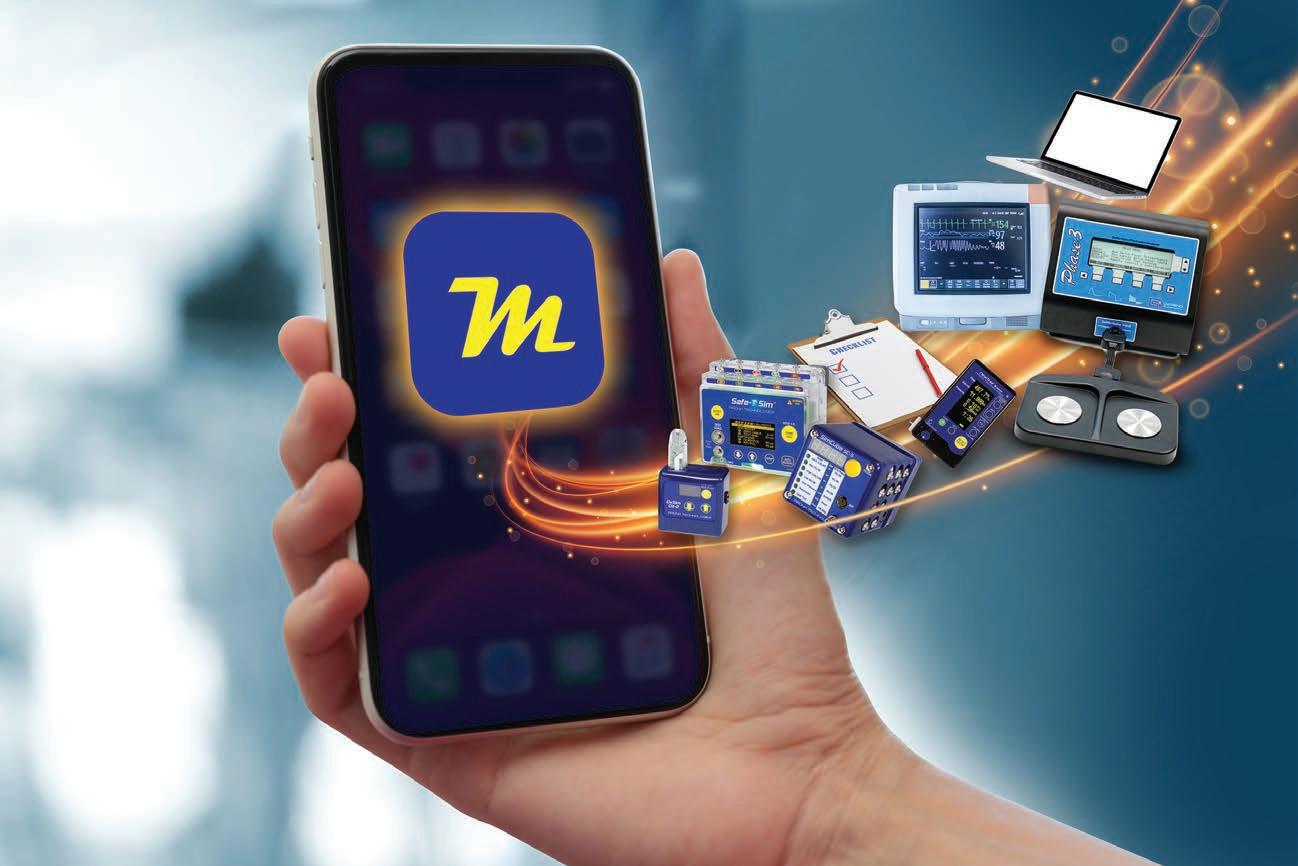
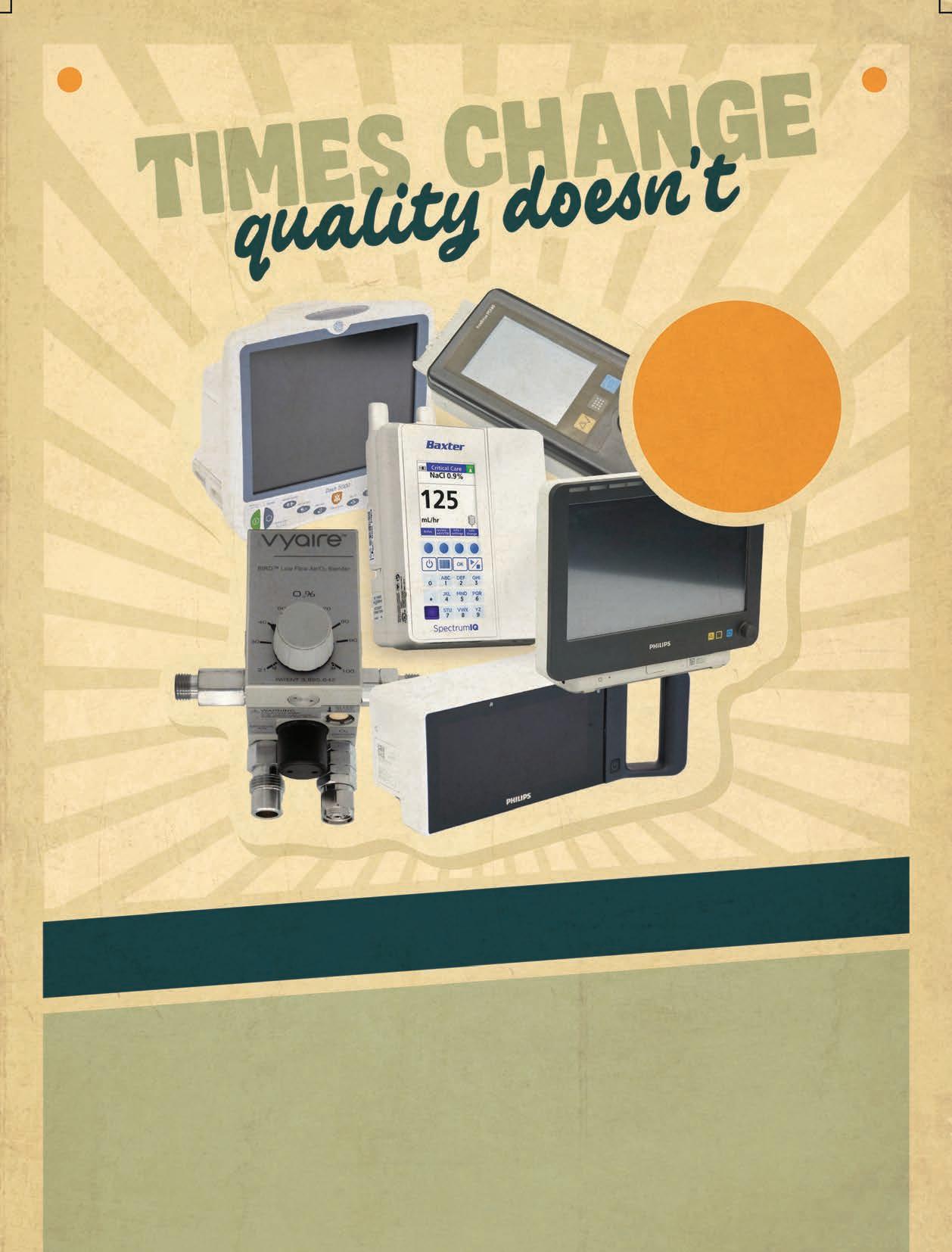
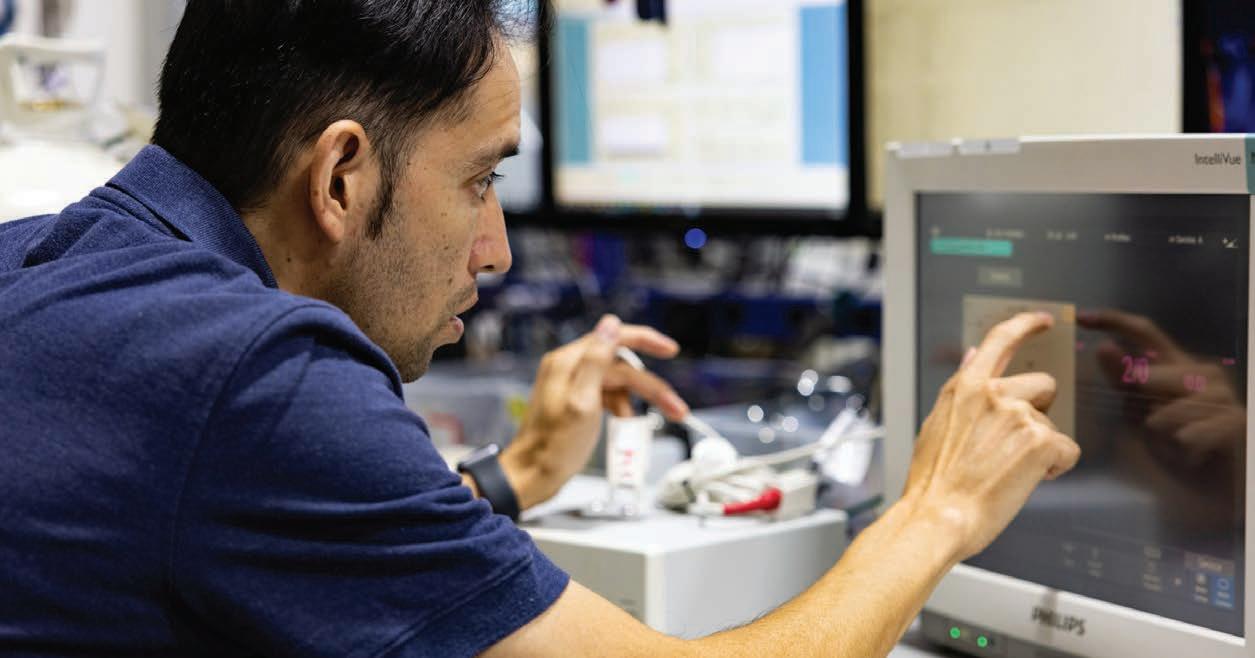
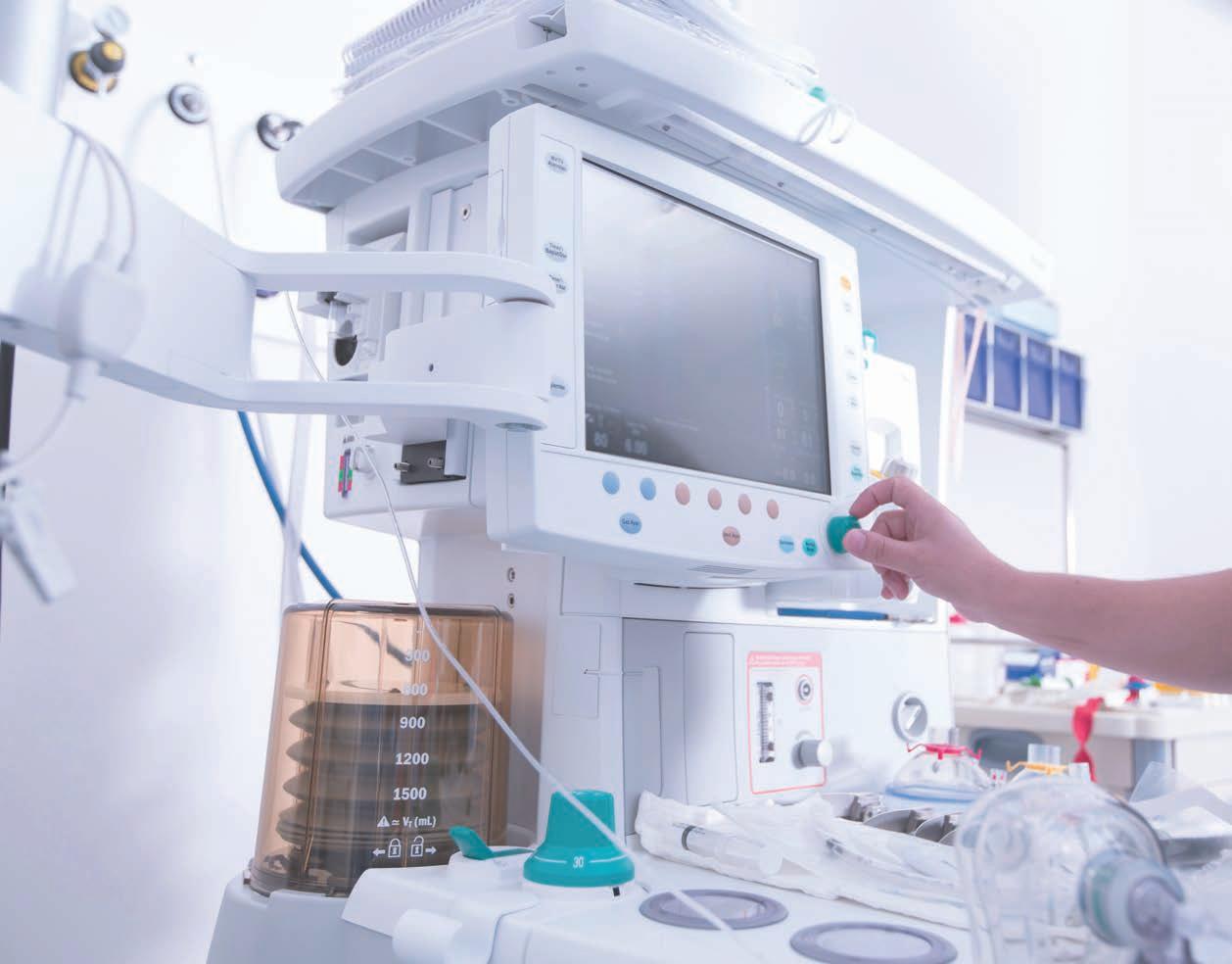
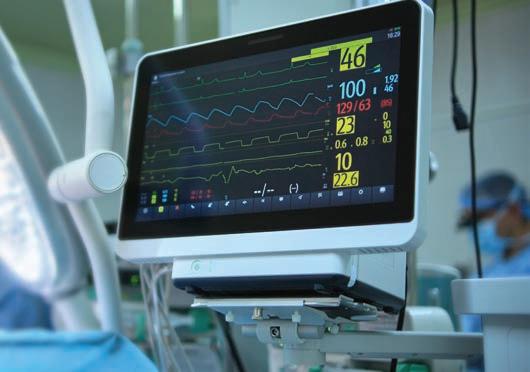
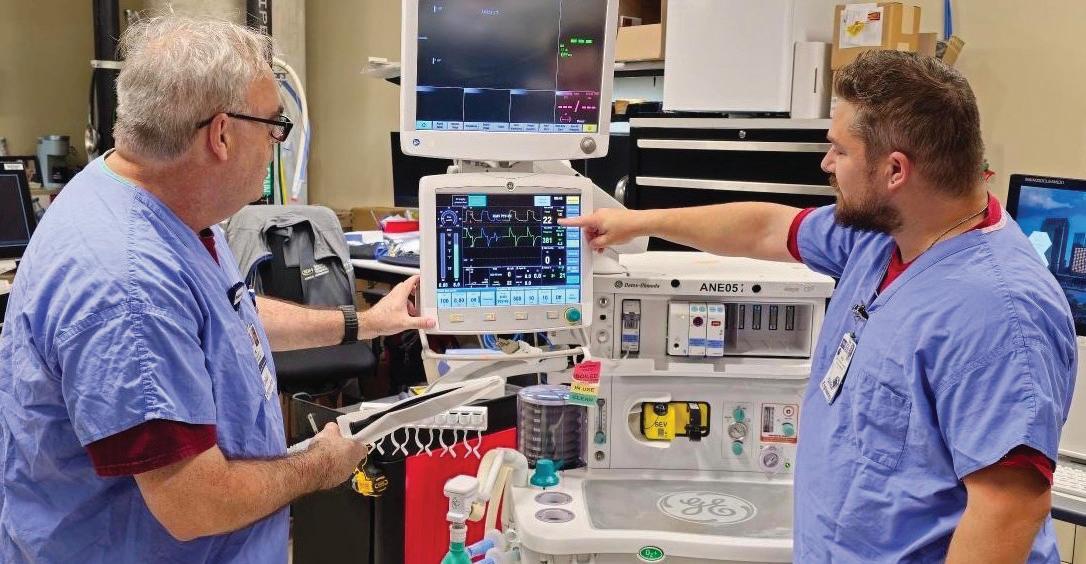
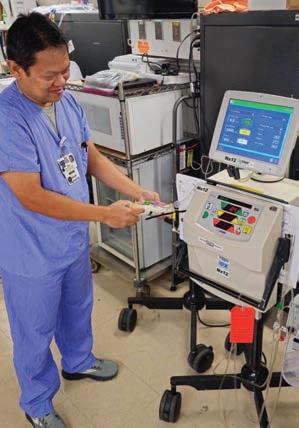
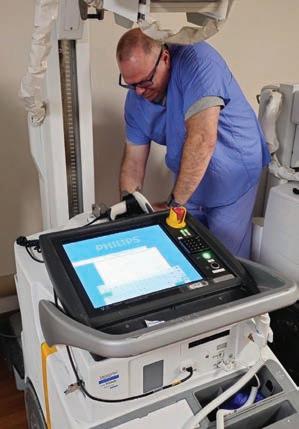
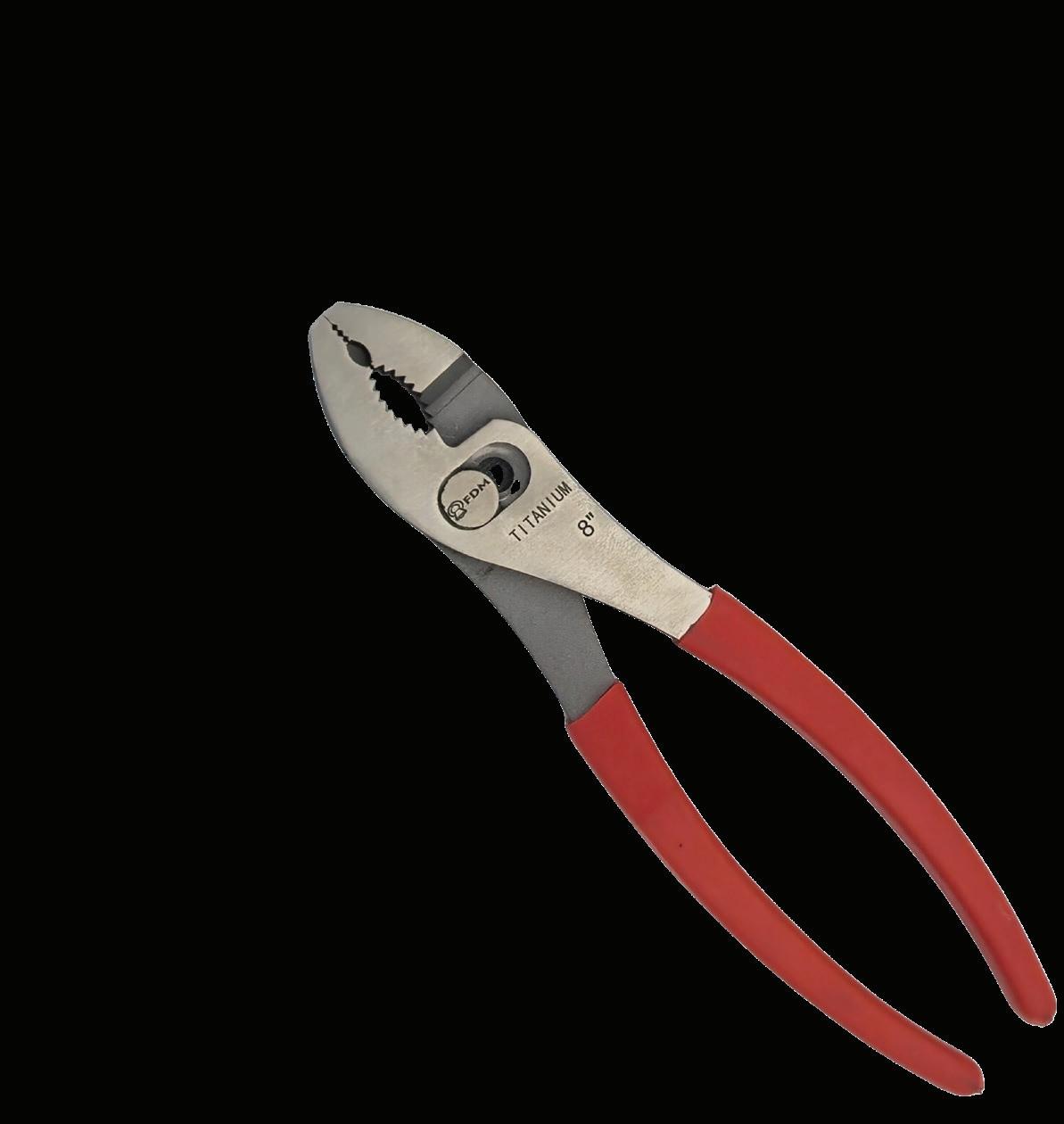
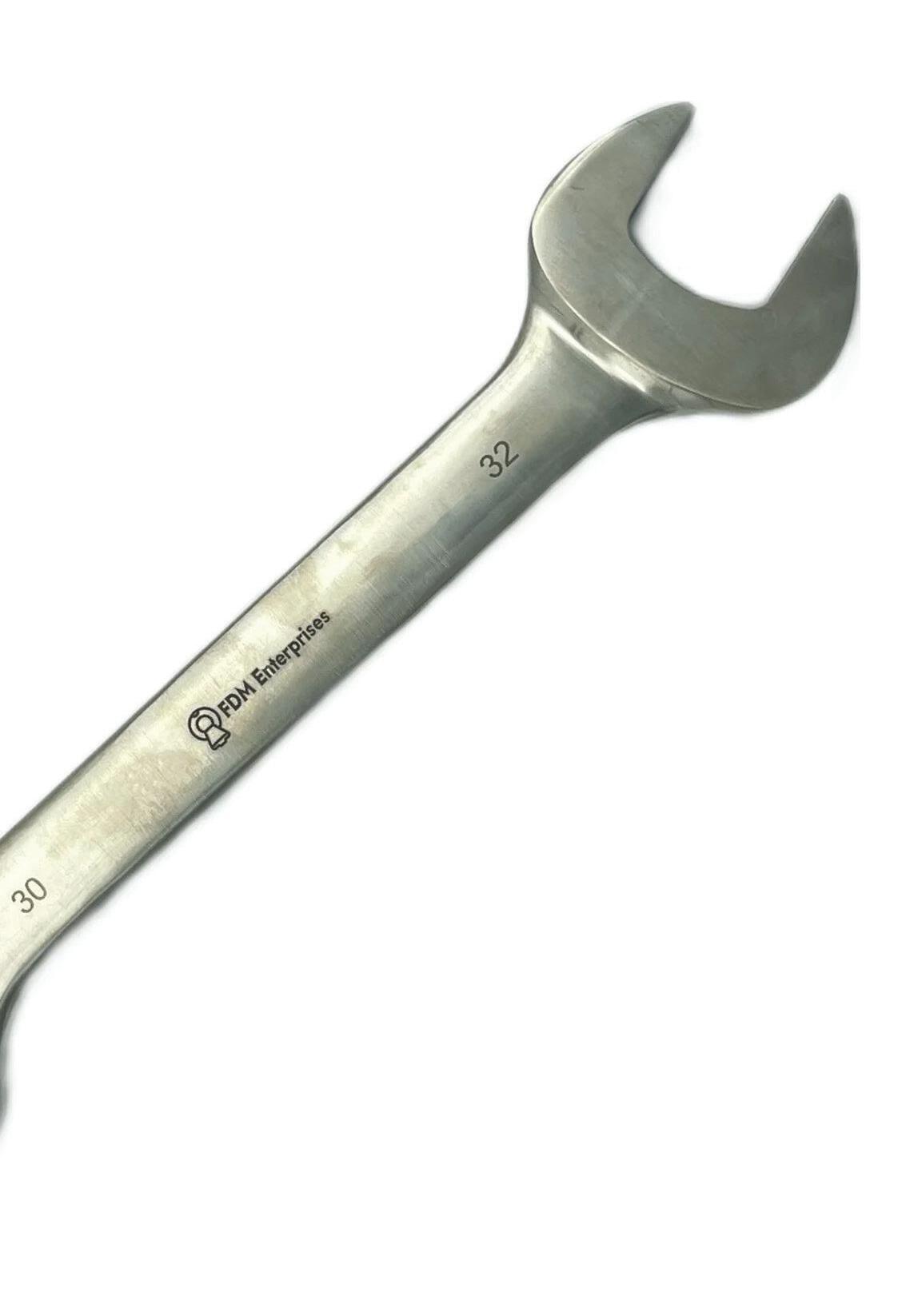
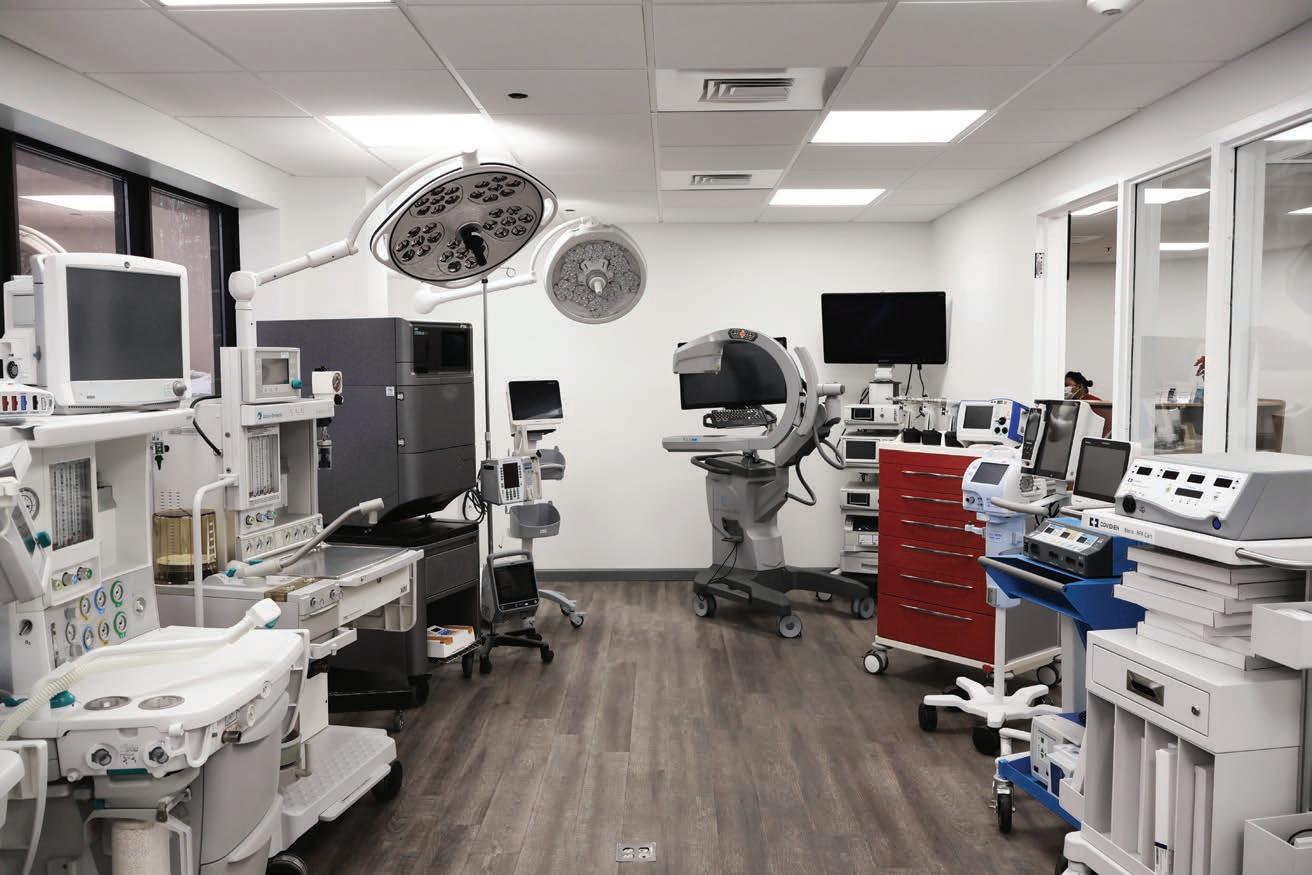
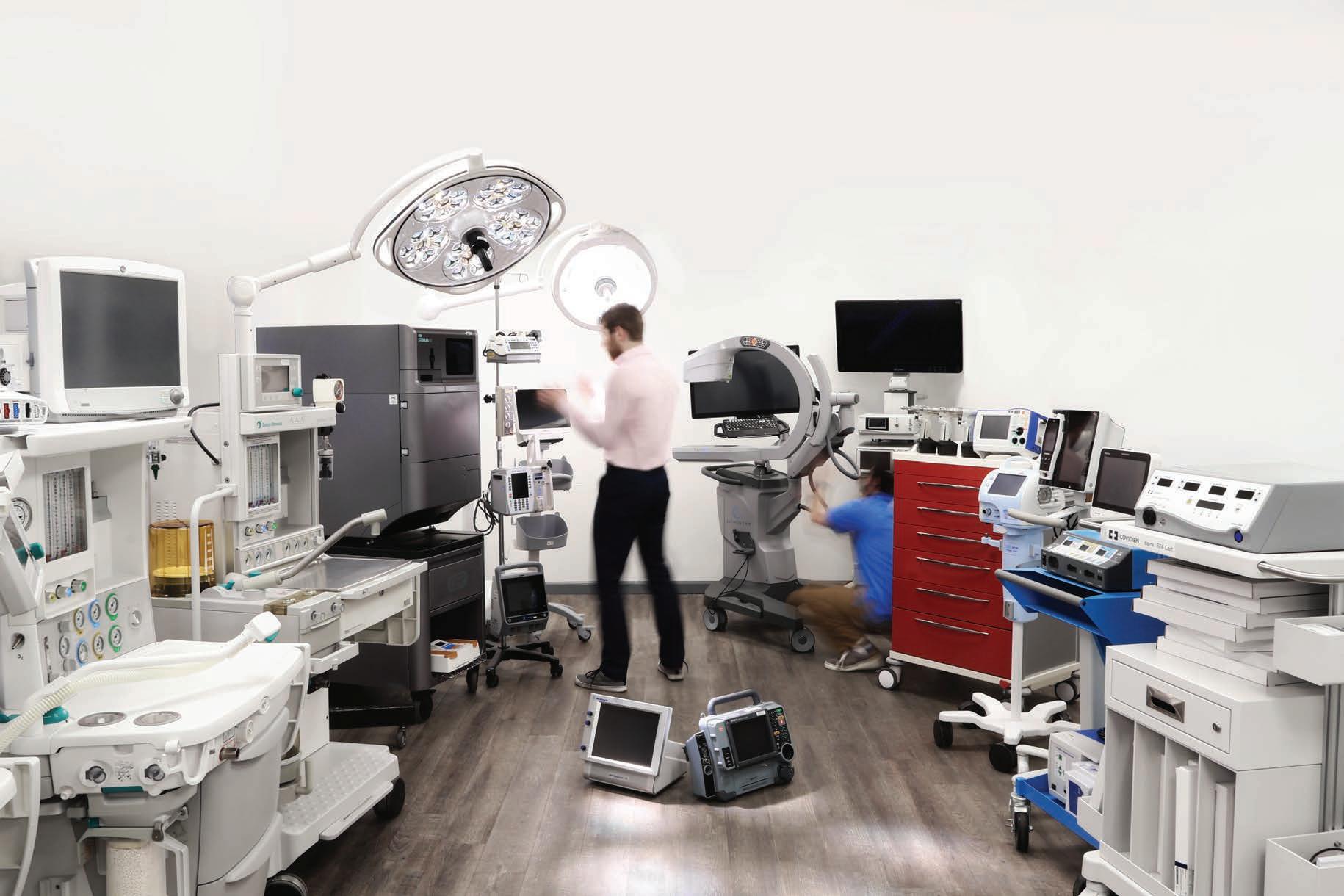
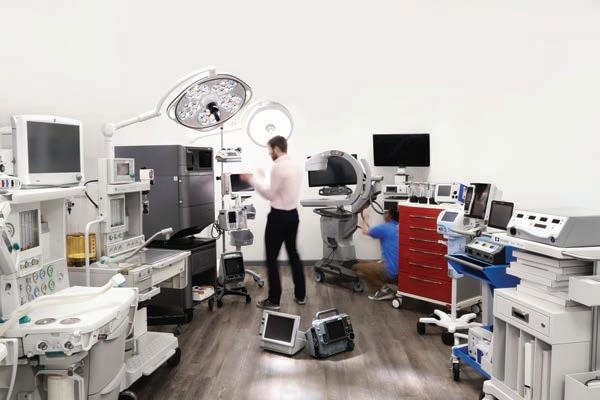
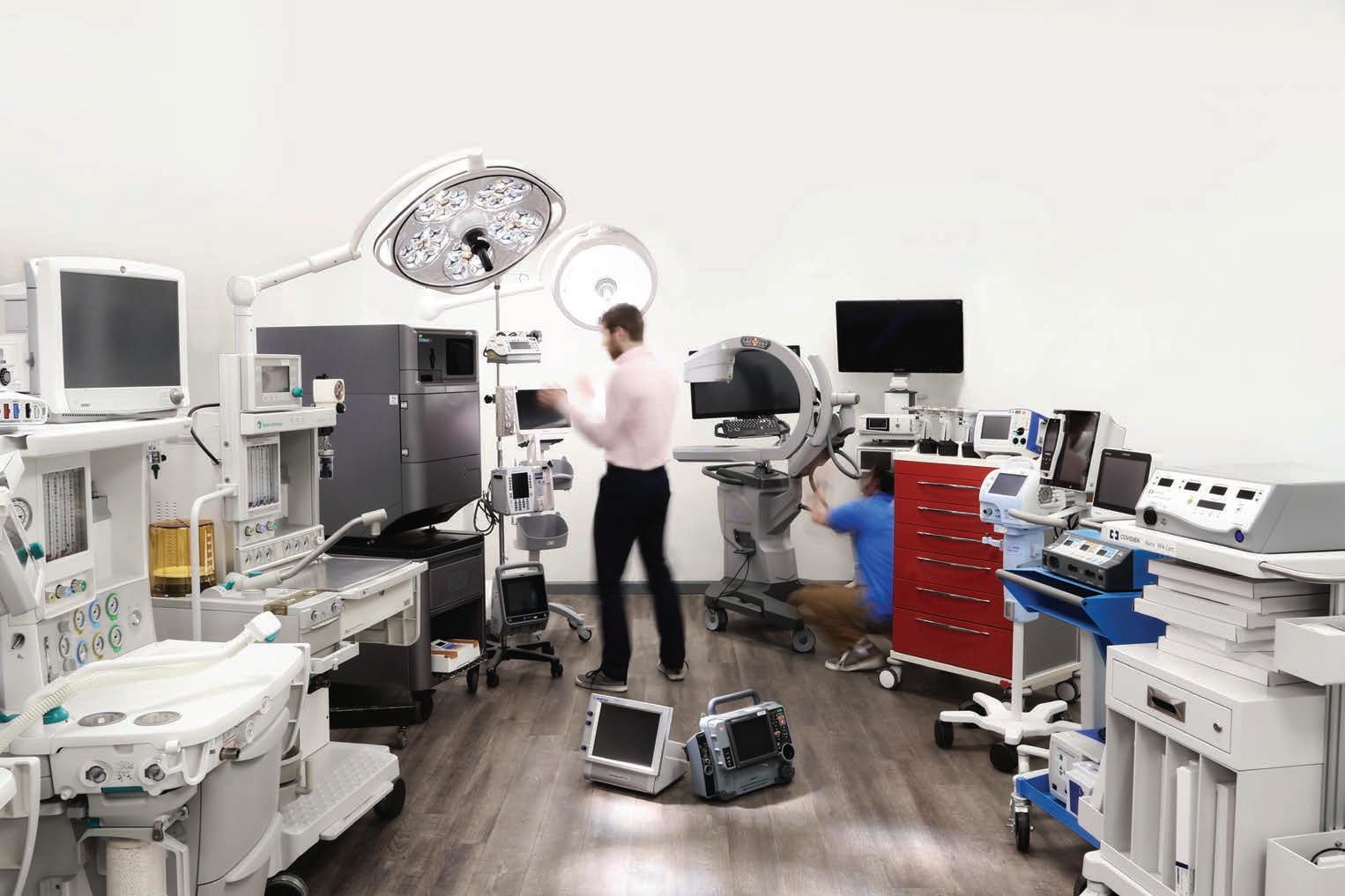
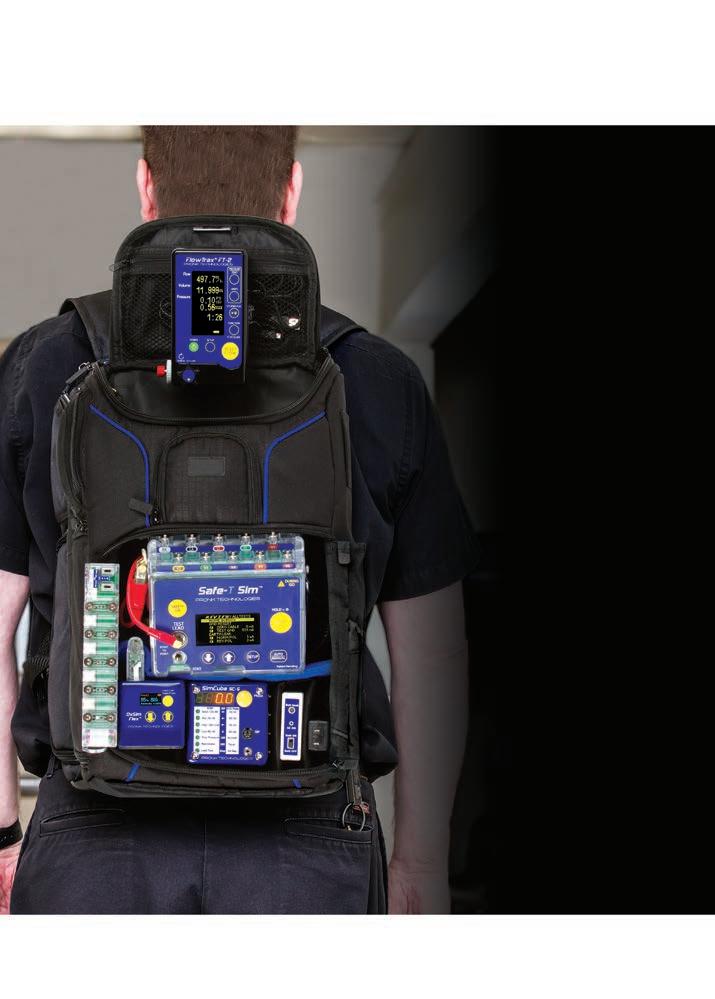
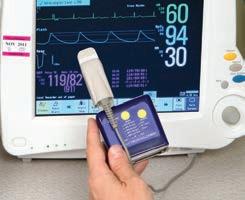
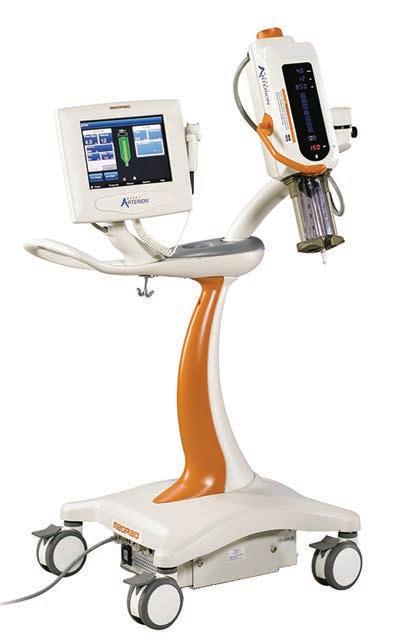
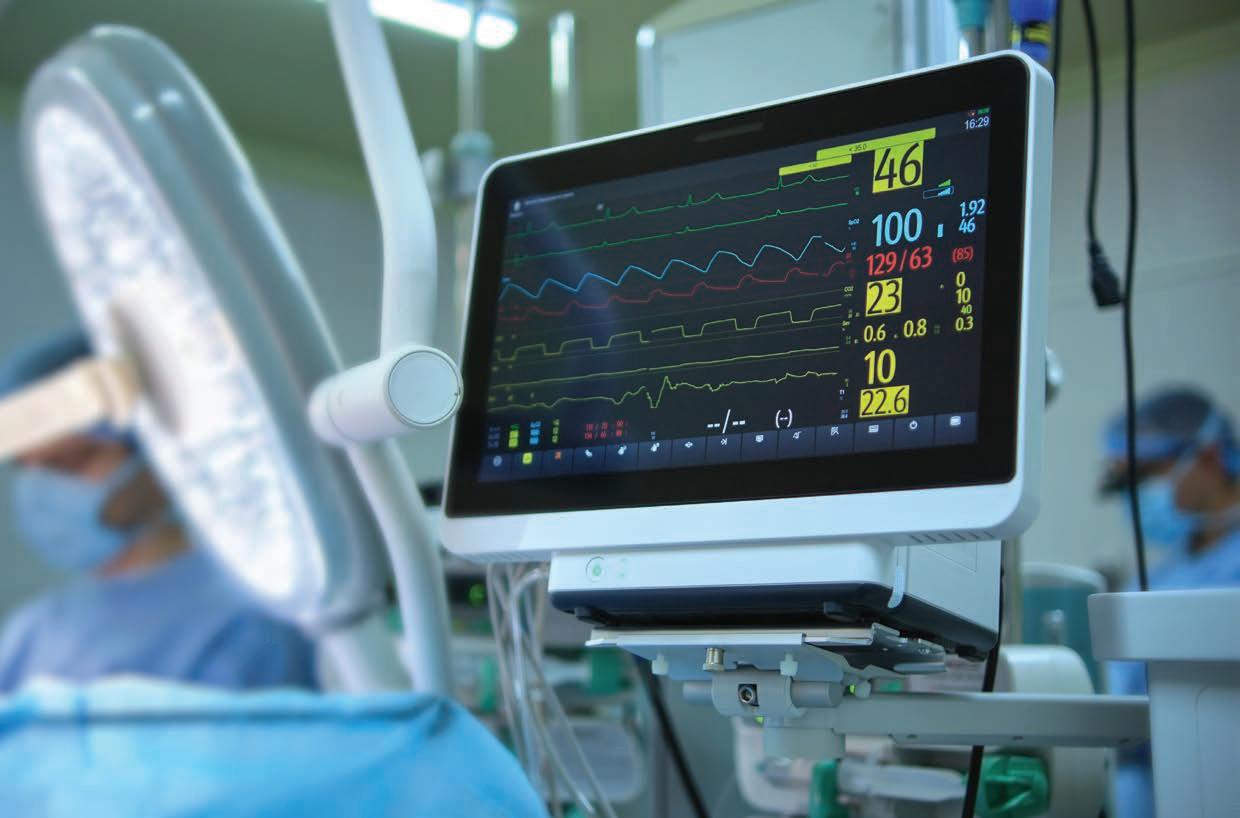
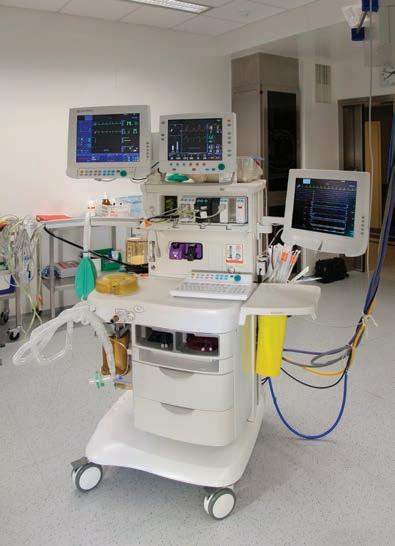
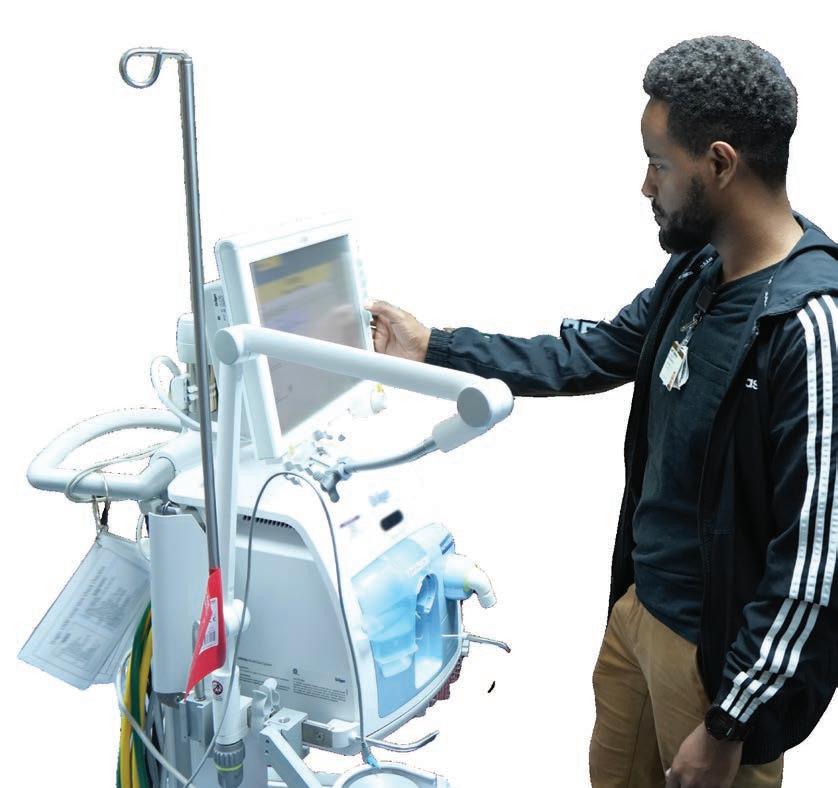
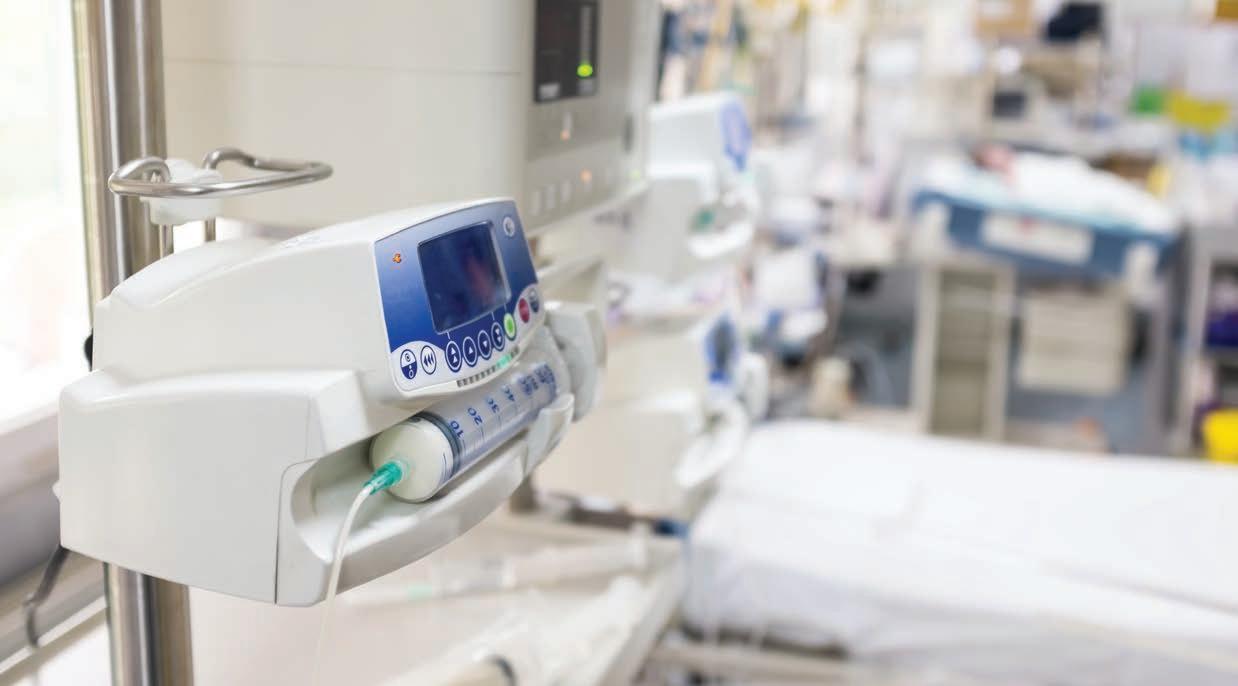
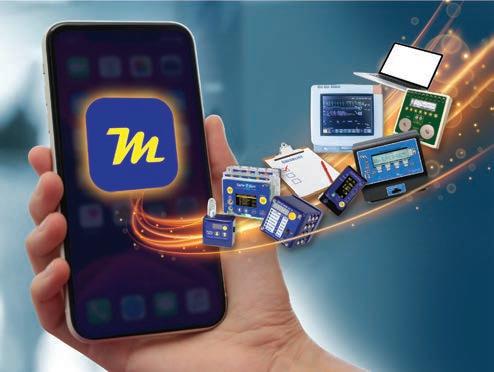
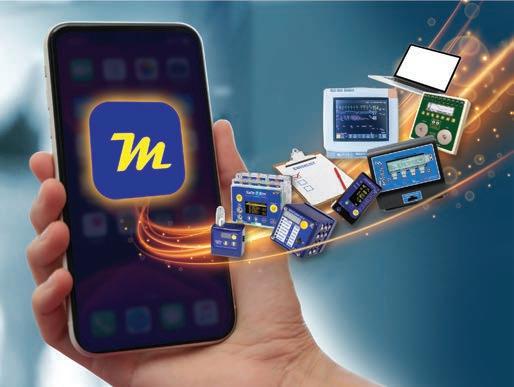
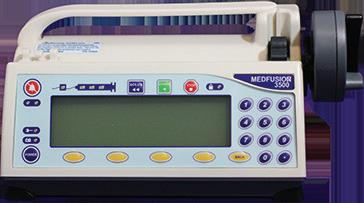
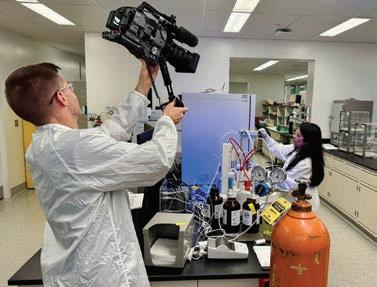
Millions of products. Flat-rate repairs. One marketplace. Whether your HTM team fixes equipment in-house or ships it out, PartsSource gives you a single destination for parts, accessories, exchanges and flat-rate depot repair. From bed parts to infusion pumps and patient monitors, you get the selection you need plus predictable pricing, fast turnaround, and dependable warranty coverage—all in one place.
Visit www.partssource.com to browse our repair solutions.
Scan the QR code to start your repair
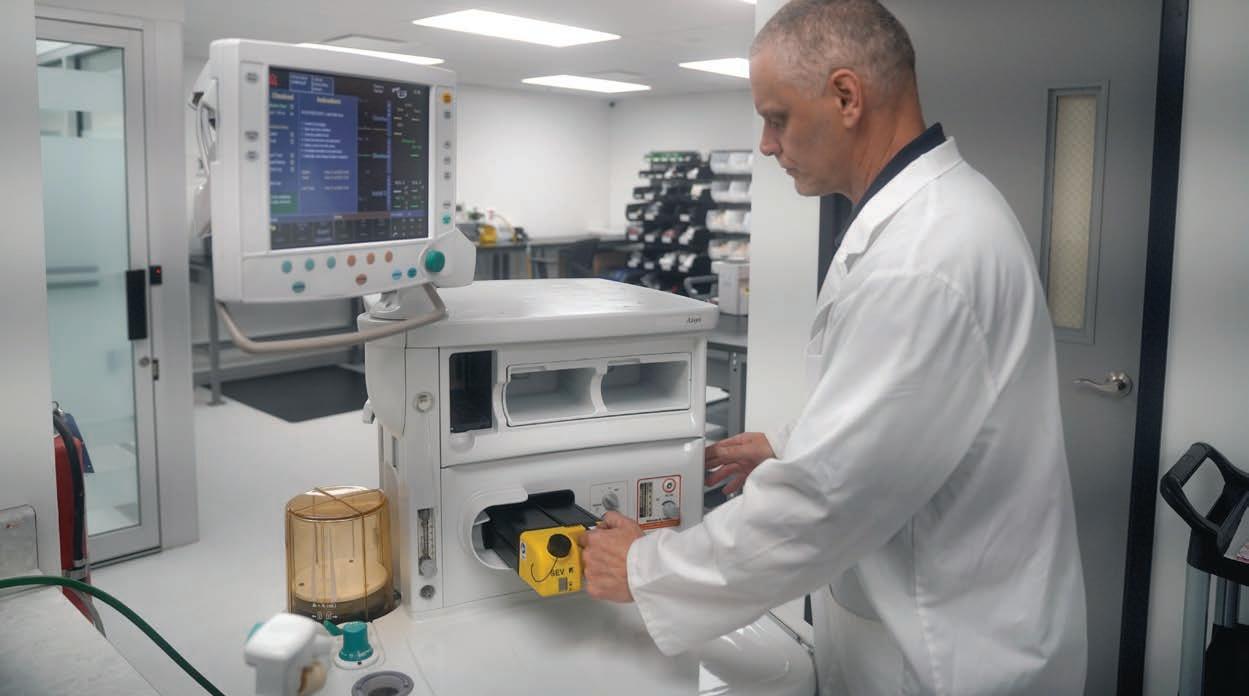
Upholding the highest quality standards with ISO13485: 2016 certification specific to medical device.
Patient and operative safety is at the forefront of all processes and procedures.
Unparalleled industry experience standing over 40 years.
What Makes G.A.S. Different?
to your technical questions. General Anesthetic Services makes customer care its top priority.
P.12 SPOTLIGHT
p.12 Professional of the Month: Daniel Tayag
p.14 Department of the Month: Tampa General Hospital Clinical Engineering Department
p.16 Next Gen: Sara Sadri
p.18 Association of the Month: Virginia Biomedical Association
THE STATE OF HTM
P.20 INDUSTRY UPDATES
p.20 News & Notes
p.24 TechNation Pulse
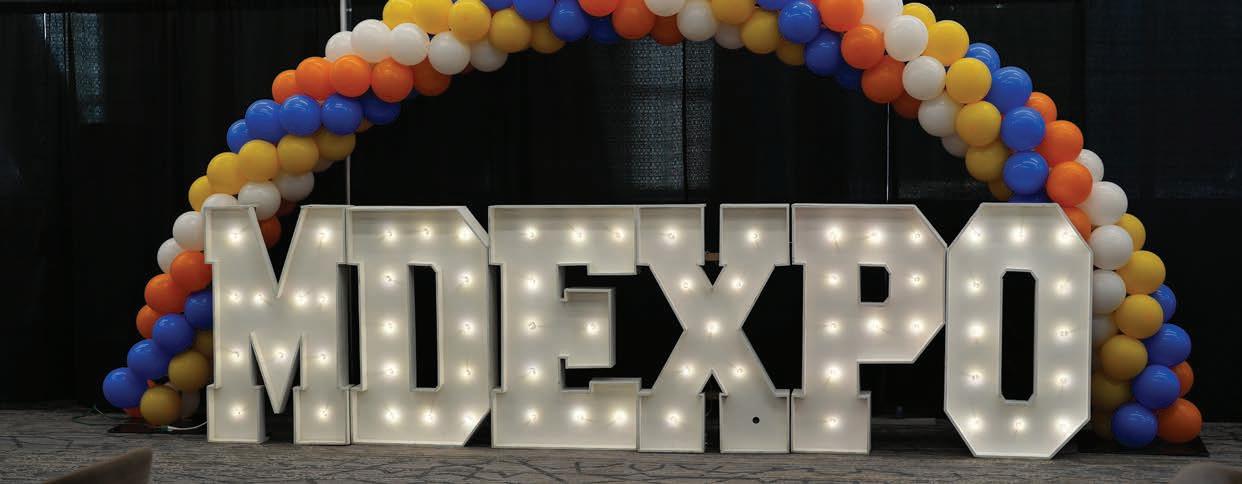
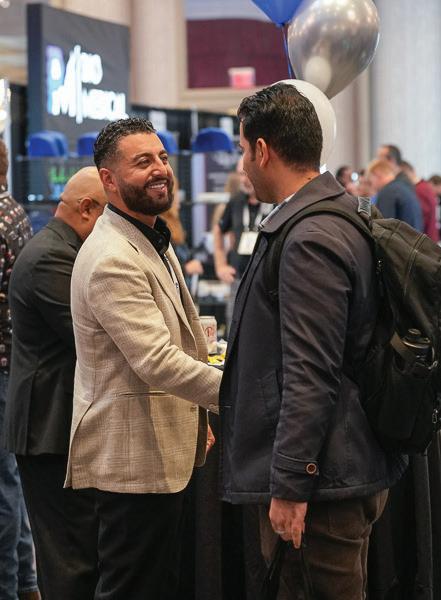
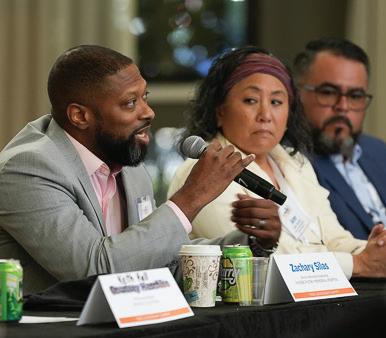
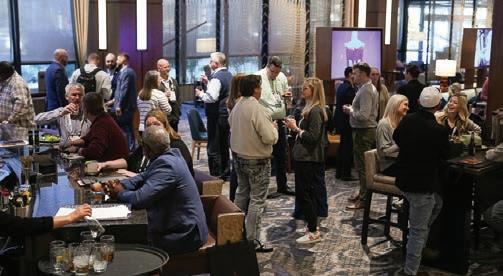
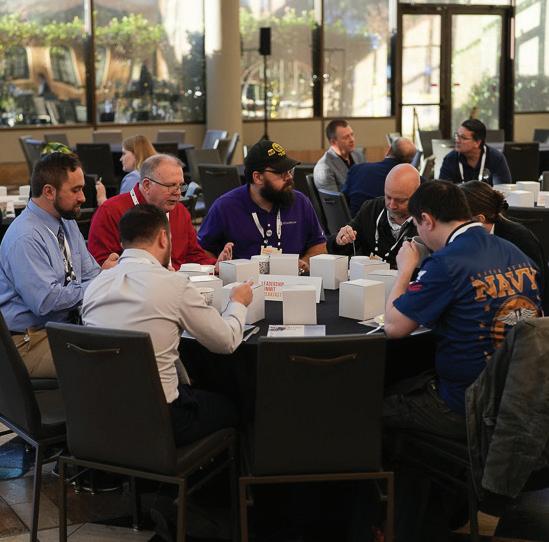
p.26 MD Expo Recap
p.29 Ribbon Cutting: AMX Solutions
p.30 Welcome to TechNation
p.32 AAMI Update
p.34 ECRI Update
Impact & What’s Next
P.36 THE BENCH
p.36 Biomed 101
p.38 Webinar Wednesday
p.40 Tools of the Trade
P.42 FEATURE ARTICLES
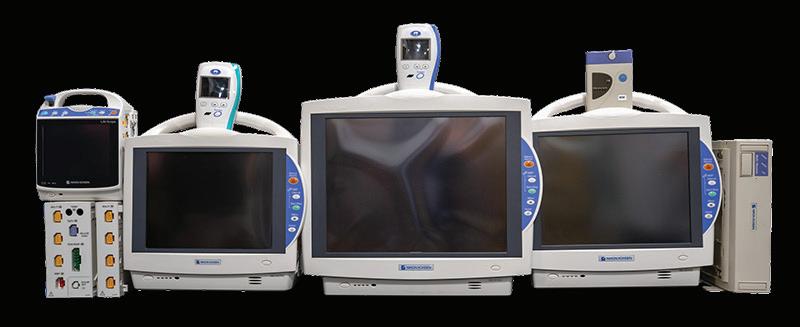
p.42 Roundtable: Patient Monitors
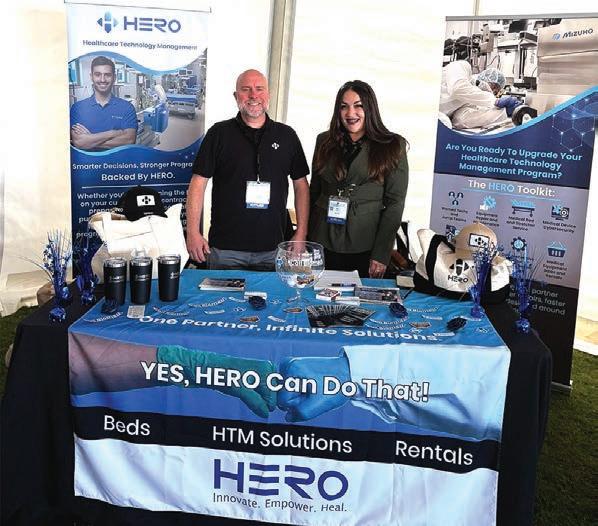
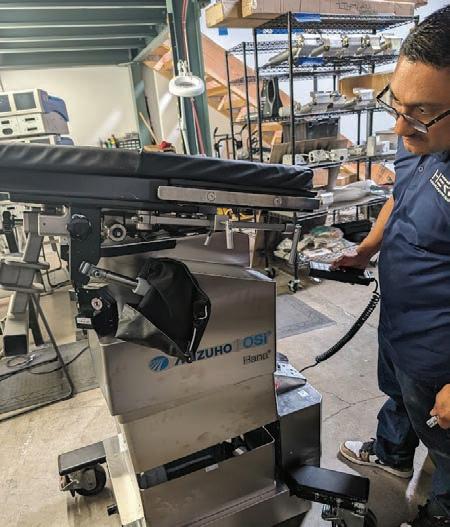
p.48 CORPORATE PROFILE: HERO
p.52 Cover Story: State of HTM: Insights, Impact and What’s Next
P.58 EXPERT ADVICE
p.58 The Future
p.60 MedWrench Guru
p.62 The Massey Method
p.64 Networking Notes
p.66 Right to Repair
PUBLISHER John M. Krieg
VICE PRESIDENT Kristin Leavoy
VICE PRESIDENT Jayme McKelvey BUSINESS DEVELOPMENT
EDITORIAL John Wallace
CONTRIBUTORS
K. Richard Douglas
Joie Marhefka
Steven J. Yelton
Garrett Seeley
Phil Englert
Nathan Proctor
Carol Davis-Smith
ACCOUNT Megan Cabot
EXECUTIVE
ART DEPARTMENT Karlee Gower
Taylor Hayes
Alicia Brown
DIGITAL SERVICES Cindy Galindo
Kennedy Krieg
Haley Harris
EVENTS Kristin Leavoy Sydney Krieg
WEBINARS Linda Hasluem
HTMJOBS.COM Sydney Krieg
ACCOUNTING Diane Costea
CIRCULATION Joanna Manjarrez
P.68 BREAKROOM
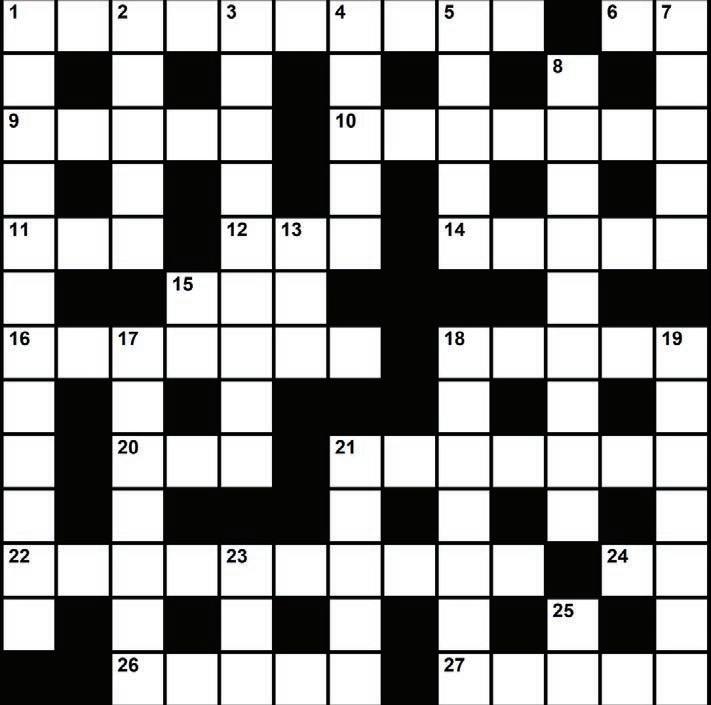
p.68 Biomed Brainbuster
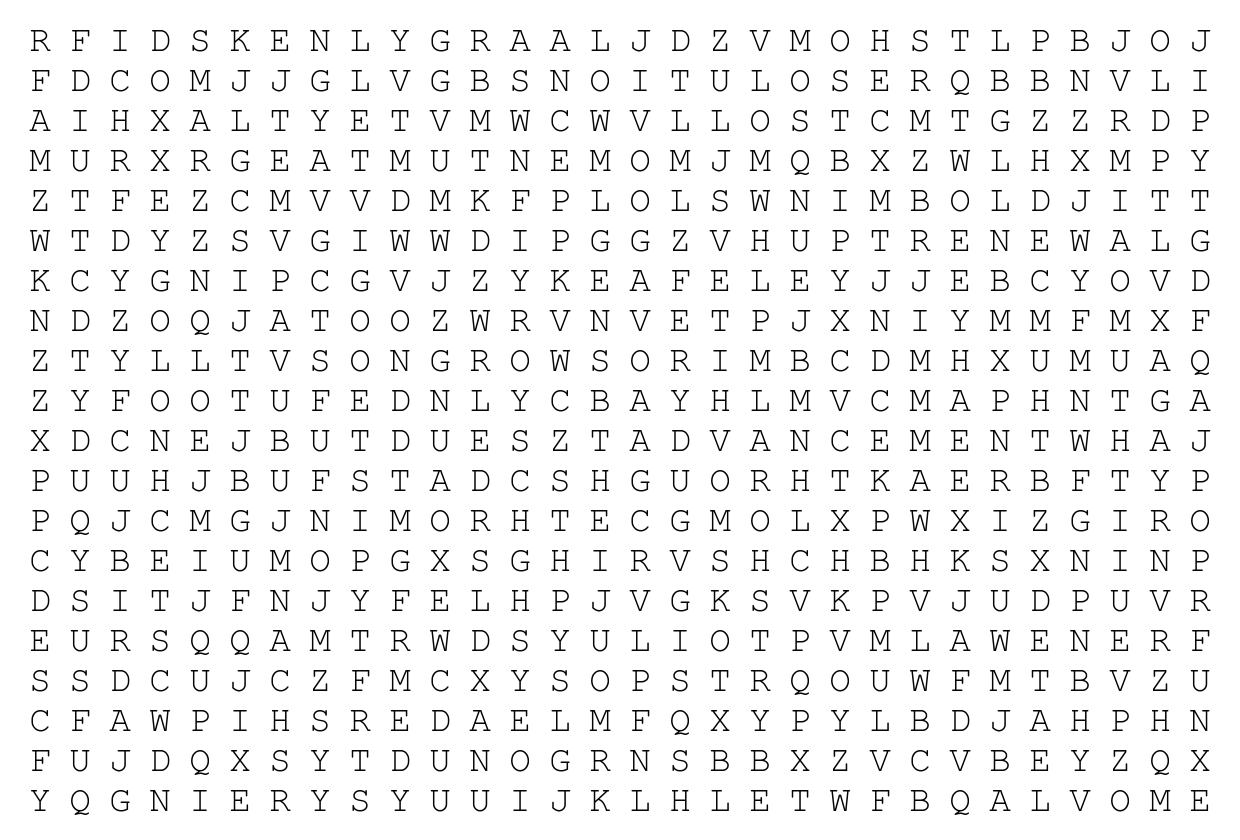
p.70 Word Search
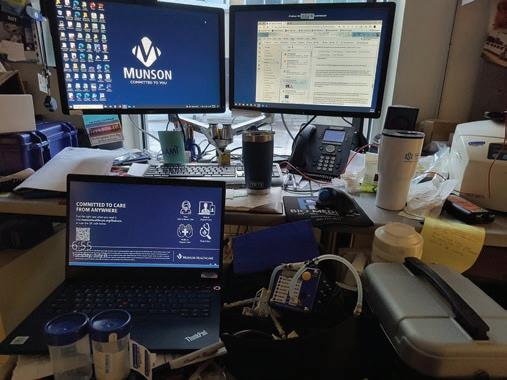
p.70 [Contest] What’s on Your Bench?
p.72 MD Expo Scrapbook
p.74 Preferred Vendors
p.78 Service Index
p.81 Alphabetical Index
p.82 The Social
EDITORIAL BOARD
Rob Bundick, Director HTM & Biomedical Engineering, ProHealth Care
Carol Davis-Smith, CCE, FACCE, AAMIF, Owner/ President of Carol Davis-Smith & Associates, LLC
Nadia ElKaissi, CHTM, Biomedical Engineer, HTM, VA Central Office (19HTM)
Bryant Hawkins Sr., Site Manager, Children’s Hospital of New Orleans
Earl Morris Jr., BMET, Director of Clinical Engineering, Harrison County Hospital
Leticia Reynolds, Clinical Engineering Operations Manager at UCHealth Parkview Medical Center
Biomedical Equipment I Electronics I Introduction
Networking Fundamentals I Medical Terminology, Anatomy & Physiology
Infection Control*
Troubleshooting, Theory and Methodology
Business Training Solutions
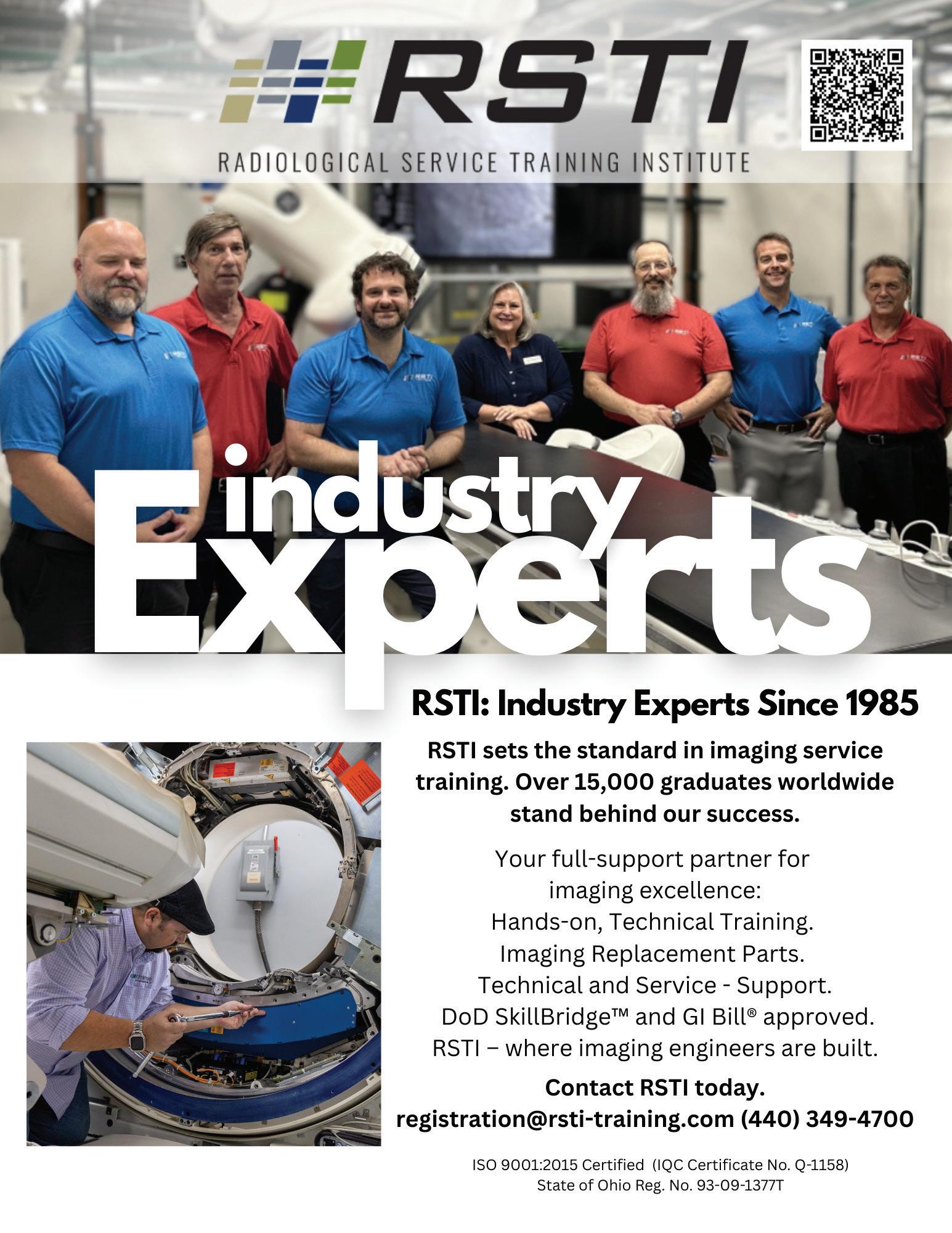
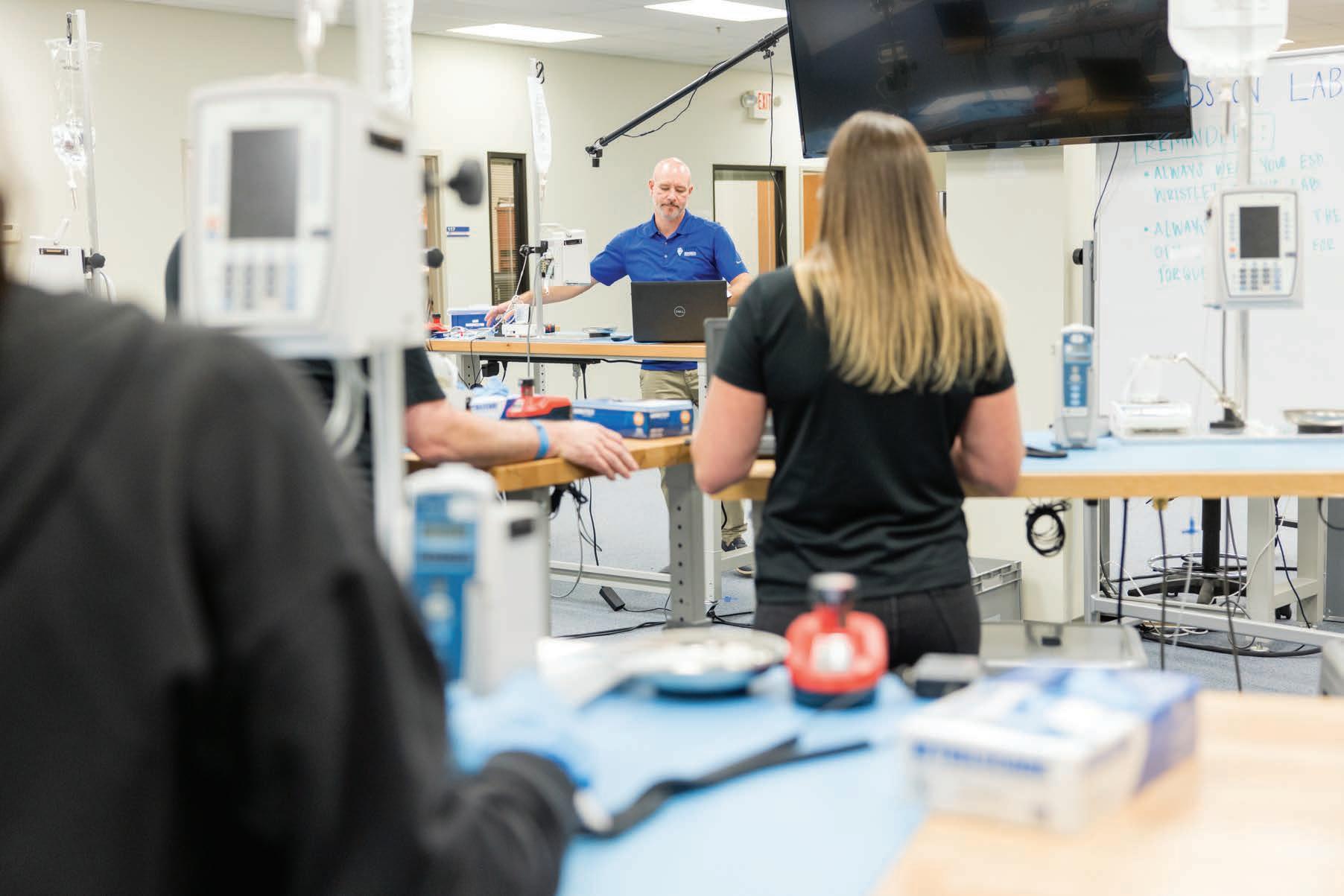
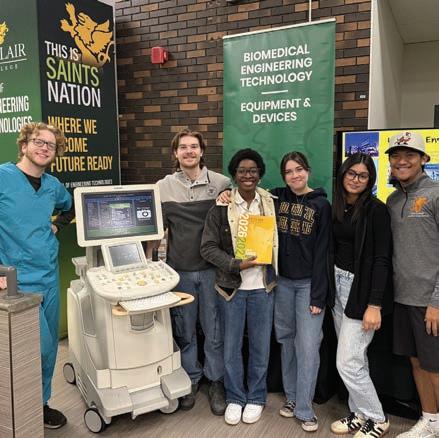
Our nationally recognized programs include Biomedical Equipment Technology (BMET), Biomedical Equipment Support Specialist (BESS), and the Dental Repair Technician (DRT) Certificate. Each is designed to equip you with the advanced skills needed to thrive in today’s evolving healthcare and dental technology landscape.
PROFESSIONAL OF THE MONTH Daniel Tayag, CBET
BY K. RICHARD DOUGLAS
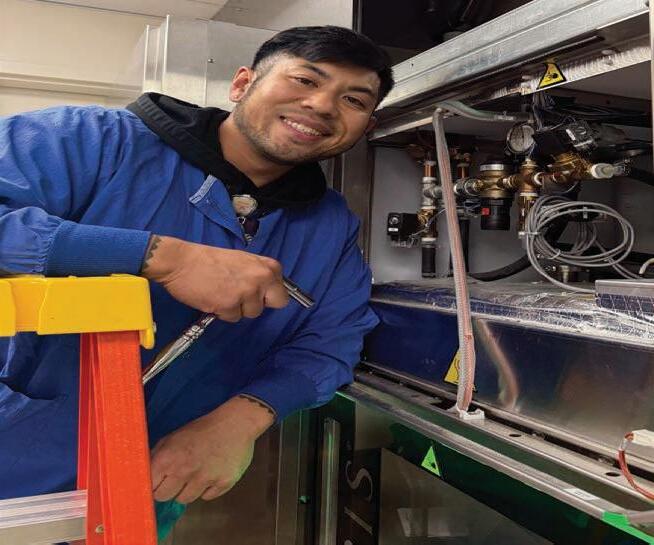
Asteady paycheck is a good reason to enter the HTM profession and that was part of the motivation for Daniel Tayag, CBET. Tayag is currently a senior biomedical technician in the Clinical Engineering/Biomedical Services Department at Providence Newberg Medical Center in Newberg, Oregon. However, he had no idea what he was getting into.
“I actually didn’t know what biomed was back when I first started. I was honestly at the end of a job with an authorized retailer of AT&T and the Oregonian (newspaper company) and the roller coaster of wages throughout each month as a salesperson was not the ideal steady income I wanted for my
future and whether I had enough for the month,” he says.
Tayag says that one day, at the time, he went to his uncle’s house and got lectured for the 100th time.
“The normal high expectations coming from a Filipino background while all your other cousins and siblings were ‘making it,’ ” Tayag says.
He says that his uncle knew he was a tinkerer and loved to know the inner workings of any mechanical/electrical device and asked; “Why don’t you become a biomed?”
“Initially, apprehensive with the idea of school and homework and just shrugging it off per usual, I went along with my day and flooded through social media everyone graduating and getting degrees and making a better life for themselves. Feeling envious of those around me I turned to researching what biomed was and enrolled the same day,” Tayag adds.
Initially, he didn’t really have a lot of direction on what classes he needed to take through Portland Community College (PCC), but his goal was to become a biomed.
“I connected with one of the PCC counselors and she did a phenomenal job of guiding me through my entire program curriculum and, fortunately, what solidified it for me was getting the last slot into the program for ‘Electronic Engineering Technology’ with a focus on biomedical engineering. Near the end of the program, we had to sign up to go through a 330-hour internship program with a hospital or medical program. After completing my program and internship, I was offered a position within the company, and I sought out to become certified as a biomed,” Tayag says.
He says that he took CBET exam prep classes through OHSU every Saturday for about three months and that helped him take the proctored exam which was 165 questions with a three-hour limit.
“I passed on my first attempt and became a candidate and eventually certified after two years of full-time employment as a biomed. As I progressed throughout my career I was sent through several formal and informal service technical trainings with different medical devices,” Tayag adds.
PROJECTS, CHALLENGES AND SUBARUS
Tayag is now a senior biomed who has racked up experience in both field service and in-house positions. He has faced some challenges during his career.
One challenge was meeting the service needs of two hospitals at the same time, while maintaining and building relationships with the people that work on the floors with patients.
“I learned that they tend to be more understanding and willing when you are able to learn about caregivers as people other than just as someone that works on the floor. ‘How is your day going,’ ‘Do you have any fun plans this weekend’ and any fun things you can learn about a person; it helps them feel seen, as well as appreciated,” Tayag says.
He says that early in his career, developing a metrology lab was difficult, weeks of coming in extra early to navigate the software programming with developers in London and writing procedures to hit all the mandatory requirements to fully certify equipment was difficult, but he learned a lot.
“Within the hospital, I am always in a project it feels like,” Tayag says.
Projects have included efforts to minimize N20 waste within several Providence facilities, converting anesthesia machines to accept portable N20 cylinders and mapping, programming and setting up Philips telemetry systems within hospitals.
He says that with all projects, there is preplanning. He is involved in the initial stages of the project as well as troubleshooting obstacles that may arise during implementation.
“Especially when it comes to a new clinic opening up, is when it becomes challenging. Providing and communicating what devices suit their needs,” Tayag says.
Off the job, Tayag loves to learn new things and take up new hobbies.
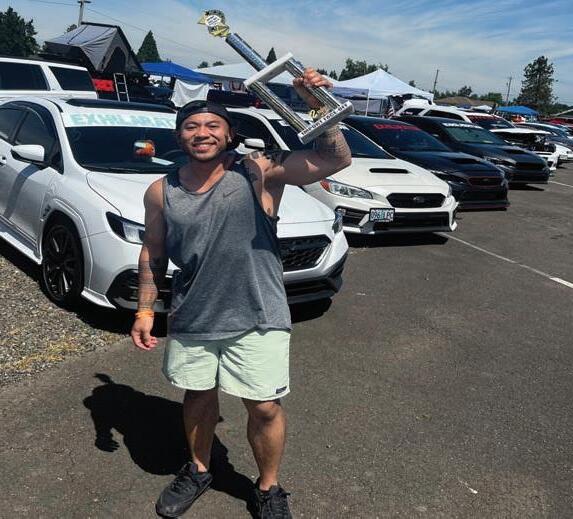
“In my free time, when I’m not at work I enjoy building cars, particularly Subarus. I am part of a car group. I like to participate in local car events and take part in drag races at our local track as well as free spirited drives with my crew members: Exhilaration Crew!” he says.
He says fitness is another hobby he enjoys and he tries to stay active and workout. He also does climbing indoors, top rope and bouldering, snowboarding and hiking.
“I love to travel, try different restaurants and create digital journals of my favorite places,” Tayag says.
Regarding family, he says that being Filipino; if you know, you know.
“I have a massive family. I have a baby boy on the way! Baby Mylo, due the day after my birthday February 19. Also, a special shout out to my nieces – Anneli, Diana, True and my nephew Kai. Uncle Daniel loves you,” Tayag says.
Tayag has real gratitude for being a part of the HTM profession and those who contributed to where he is today.
“I am passionate about what I do and I am appreciative of every single opportunity and person that lead me to where I am now,” he says. “I honestly couldn’t have done it without you all! Thank you!”
What can be better than a steady paycheck and doing something that you enjoy?
BIOMETRICS
FAVORITE BOOK:
“Pride and Prejudice”
FAVORITE MOVIE:
“The Pursuit of Happiness” and “Demon Slayer”
FAVORITE FOOD:
I’m known to eat, so favorite food is difficult, but I would say “free food.” I’m always eating.
HIDDEN TALENT:
I’m a jack of all trades but a master at none. I love to cook and create new dishes.
FAVORITE PART OF BEING A BIOMED?
The feeling of doing my part in the grand scheme of helping others!
WHY DO YOU READ TECHNATION?
I read TechNation because I always learn something new; there are so many resources on every page that I feel very appreciative of.
ABOVE: Daniel Tayag holds up a trophy won by his Exhilaration Crew.
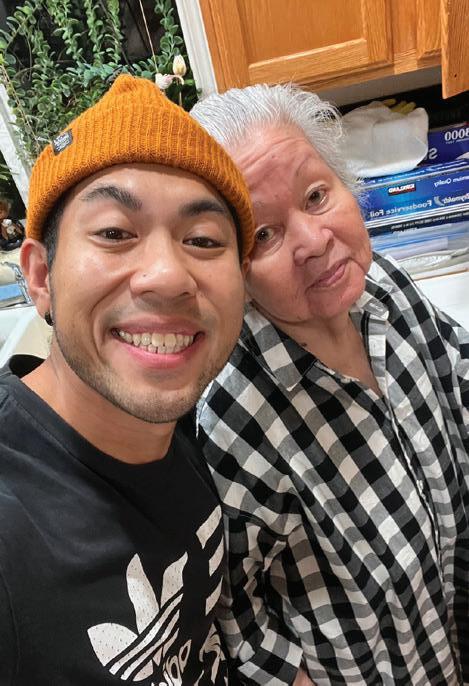
RIGHT: Daniel is pictured with his late grandmother. He says, “I want to give a special thanks to always believing in me and want her to always be remembered.”
DEPARTMENT OF THE MONTH
Tampa General Hospital Clinical Engineering Department
BY K. RICHARD DOUGLAS
Tampa, Florida is one of the best-known cities in the country. The city features the largest port in the state of Florida, the most lightening nationwide and is where Ray Charles started his singing career. It is also where Teddy Roosevelt and the Rough Riders launched their operation to Cuba.
Today, the city is best known for its beaches, manatees, cigars, climate and events. It provides an ideal spot on the west coast of Florida for residents and tourists.
It is also home to 1,100-bed Tampa General Hospital (TGH). The hospital is the region’s largest teaching hospital and is a Level I trauma center. The research and academic medical center is located on Davis Island in Tampa.
Managing Tampa General’s medical device inventory is the organization’s clinical engineering department.
The department includes Director Ryan Poggenpohl; Managers Steve Anderson, Brad Taylor and Mike Robinson, CBET; Supervisors Mike Jackson, John Reardon, Sergio Zamudio, Craig Cyr, CBET; and 30 technicians.
The CE team has responsibility for approximately 40,250 pieces of equipment at the main campus, as well as devices at three Tampa General North hospitals, a behavioral hospital, a freestanding ED and more than 150 clinic locations.
The department has proactive involvement in managing service contracts.
“One of Steve Anderson’s main functions as a manager is to manage contracts. Brad and Craig manage contracts for our TGH North facilities. Up until recently, we have been managing contracts with a homegrown system. We have recently moved more and more of our contracts into the NTRACTS application,” Jackson says.
Tim Galvin and Kyle Rossignol check an anesthesia machine.
The department has techs assigned to equipment they specialize in.
“We have imaging specialists who manage X-ray, ultrasound, C-arms and first look on cath labs, IR rooms and MRI. We have a team of technicians that manage the repair and planned maintenance for our fleet of 80+ anesthesia machines. We have technicians who are dedicated to supporting our 6,000-plus infusion pumps and 1,000-plus beds,” Jackson says.
In a sign of the times, the group has a device integration team that supports medical equipment sending information into the Epic EMR charts.
“Our device integration team implements and supports the integration of medical equipment into our EMR (Epic) with integrations including patient monitors, dialysis machines and CRRT machines, anesthesia machines, ventilators, hospital beds and NICU incubators and warmers,” Jackson says.
He says that this includes: patient monitoring (Philips, Mindray) integrated through Philips middleware called “Philips IBE” or Mindray middleware called “eGateway,” ventilators, anesthesia machines, dialysis machines and CRRT machines (Nxstage-System One); wireless connectivity and uses Capsule middleware.
Other devices include patient bed integration and NICU incubators and warmers (GE Healthcare-Giraffe, Panda); that uses Capsule middleware and an integration device called a “neuron.”
The CE team uses AIMS 3 as its CMMS.
“This system tracks all PM and repair work orders. We also manage recalls through a combination of AIMS and ECRI. The department also has access to Philips Focal Point, a helpful tool that allows us to access information and perform security patching on our large inventory of Philips patient monitoring systems,” Jackson says.
EXPANSION AND REPLACEMENT PROJECTS
Several special projects also keep the Tampa General Hospital Clinical Engineering Department biomeds busy including expansion projects and equipment replacements.
Jackson lists a few of the current projects underway.
“Re-opening of level 2 NICU at TGH Spring Hill. We are
actively working through the implementation of the centralized monitoring unit for the TGH main campus. Replacement of Stanley Mobile View RFID system with Intelligent Locations RTLS solution,” he says.
Jackson also says the department is heavily involved in replacing the out of support Rauland Borg Responder 4 nurse call system with the new Responder 5 system.
Other projects include expanding TGH’s footprint through the opening/acquisition of offsite facilities including three TGH North Hospitals in the past couple of years and more than 150 clinic locations.
There are also projects ongoing at the TGH Behavioral Hospital and the Kennedy freestanding emergency department.
Jackson says that the team often partners with clinical staff throughout the hospital to identify areas of opportunity in making TGH a safer place for team members and patients.
“We meet frequently with the risk management team to work through medical equipment improvements to reduce incidents or safety concerns,” he says.
Jackson says that the department plays a major role in capital equipment replacement.
“We hold meetings and have a recurring steering committee set up to prioritize the replacement of aging equipment in a proactive manner,” he says.
In addition to approximately 1,100 licensed beds at the main campus, the hospital system is looking to expand with the building of the Taneja Tower on the TGH main campus. This will provide future projects for the experienced CE team.
Some members of the department are also active in the local HTM community away from work.
“The department itself is not directly involved with any professional association activities. We have team members that attend BAAMI meetings and FBS expos. We have a working relationship with St. Pete College for their internship program,” Jackson says.
While the focus in Tampa is frequently on the mild climate and proximity to the gulf, there will always be a need for healthcare, and often emergent care. The experienced Tampa General Hospital Clinical Engineering Department is there to support clinicians and patients.
Roen Robollos works on a hemodialysis machine. Namon Burke tests an IV system.
Abby Barba uses a phantom to check an imaging device.
Joe Justice uses his troubleshooting skills to help the imaging department.
NEXT GEN POWERED BY YP AT MD
Sara Sadri
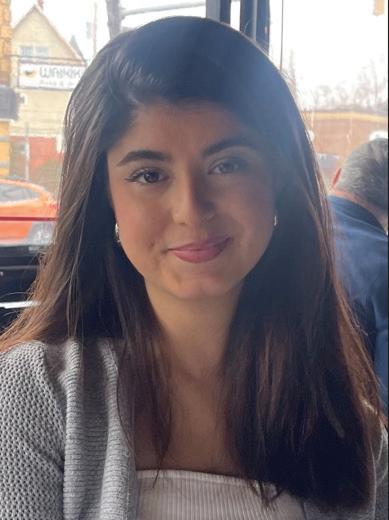
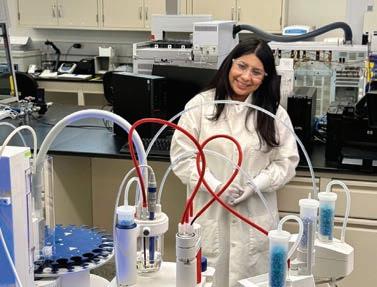
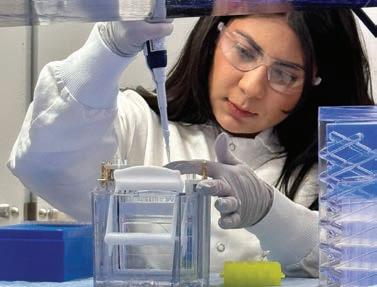
Kaleida Health Biomed Tech II Sara Sadri is featured in this month’s Next Gen article. She was nominated for the feature article by Kaleida Health Clinical Engineering & Medical Equipment Processing Senior Director D’Juan James, MBA, CHTM. Sara grew up in Iran and learned about HTM much earlier than most people.
TechNation found out more about this rising star in the HTM ranks via a Q&A
Q: Where did you grow up?
A: Iran
Q: Where did you receive your HTM training/education?
A: University at Buffalo
Q: How did you first discover HTM?
A: Discovered it while doing career planning in grade school.
Q: Why did you choose to get into this field?
A: I had an interest in working in the healthcare field and doing hands-on work.
Q: What do you like most about your position?
A: Every day is a new day with new challenges.
Q: What interests you the most about HTM?
A: Having an impact on patient care and outcomes.
Q: What has been your greatest accomplishment in your field thus far?
A: Being able to stay calm and collected during critical situations.
Q: What goals do you have for yourself in the next 5 years?
A: Advance my knowledge in medical equipment and take on greater responsibility.
FUN FACTS
FAVORITE HOBBY: Tennis
FAVORITE SHOW OR MOVIE: Friends
FAVORITE MEAL: Sushi
WHAT WOULD YOUR SUPERPOWER BE? Sleep for 15 hours
1 THING ON YOUR BUCKET LIST? Visit Hawaii
SOMETHING YOUR CO-WORKERS DON’T KNOW ABOUT YOU: I have been interviewed on TV.
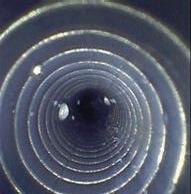
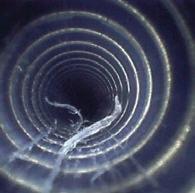
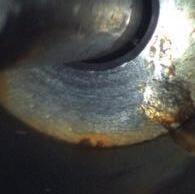
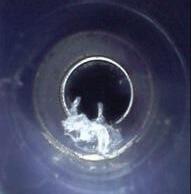
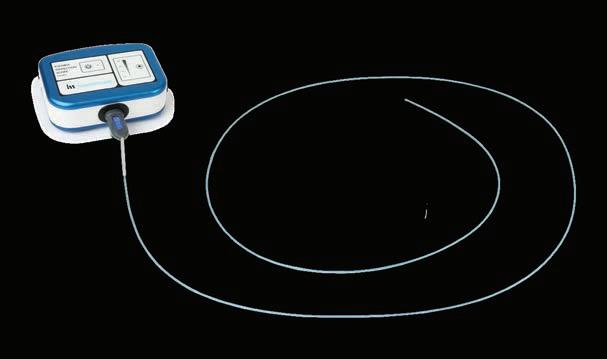
Flexible Inspection Scope Partnership in Every Pixel
Ready for a borescope that offers partnership in every pixel?
Scan to get started.
The Flexible Inspection Scope brings clarity to every channel & support at every step
From capturing detailed lumen images to building complete inspection workflows, Healthmark stands with you every step of the way. The Flexible Inspection Scope pairs precision optics with a full network of support—including a team that customizes implementation and training to ensure your success. Because when it comes to borescopes, it’s more than pixels that matter—it’s partnership.
SPOTLIGHT
ASSOCIATION OF THE MONTH
VIRGINIA BIOMEDICAL ASSOCIATION (VBA)
BY K. RICHARD DOUGLAS
The state of Virginia offers a geographic landscape for every taste. There are the various beaches, bayfronts, ocean fronts, rivers and tributaries. Every type of body of water for every taste. There are the mountains in the west and historical attractions everywhere. Appomattox Courthouse, where the Civil War effectively ended, the Jamestowne Settlement and historic Colonial Williamsburg, Mount Vernon and Monticello can all be found in Virginia.
With numerous hospitals and healthcare centers crisscrossing the state, the need for HTM professionals has been a given for decades. It’s a good thing that the state has a statewide biomed association that has been active for more than two decades.
The Virginia Biomedical Association (VBA) traces its birth to 1994.
“On February 5, 1994, an organizational meeting was held at the Wintergreen Resort, with the idea that a recreational setting would help create a more informal and interactive atmosphere. Greg Johnson, then president of the North Carolina Biomedical Association, came to speak with us and offered encouragement and guidance from the NCBA. This meeting was wildly successful [and] can be considered to be the beginning of the Virginia Biomedical Association,” says VBA Vice President Gabriel Laconi, CBET.
He says that at the first annual meeting in August 1994, VBA finally became a “real” organization, with the election of the board of directors and ratification of the bylaws.
“We also held a vendors symposium and training classes to
round things out,” Laconi says.
Other officers in the organization include President Matthew Frank; Treasurer Paul Brown, CHTM, CBET; and Secretary Sandy Mason.
Laconi says that Mary (Frye) Coker, Steve Haupt and Ryland Paxton are credited with performing the background work needed to get the organization started. He says that much of this period pre-dates him.
“Mary Coker started organizing the first annual meeting; Mark Freeman started putting together the newsletter; Frank Insley persuaded Governor Allen to establish a ‘Biomedical Technicians Week’ and Lis Carroll organized our first technical training class – four days on Hewlett Packard monitors. Numerous other people and companies also contributed their time and resources to the VBA, ensuring our success,” Laconi says.
The group hosts events throughout the year as well as an annual symposium each fall.
“VBA conference/symposiums are held once a year for two days, typically in September, they are in-person events, not available online, however, throughout the year, the VBA will host/sponsor additional events that are available online. These events are advertised on our site, which by the way is free to join,” Laconi says. The website is VABiomed.org/.
Like many biomed associations, the organization was hit hard by the COVID-19 pandemic.
“The quarantines effectively eliminated our annual meetings and as we fought to maintain the standard of care for our patients and healthcare providers, amid furloughs and retirements, the organization became less of a priority. Since the pandemic, the VBA held a golf tournament and a small gathering that were not very well attended; it wasn’t until 2024 when Matt Frank made a call to action to revive the VBA,” Laconi says.
He says that along with the current board, they met several times a month to engage vendors and members in time for the 2025 symposium.
“We currently operate with lean leadership, but will welcome anyone who would like to participate and help,” Laconi adds.
In the past, VBA offered a scholarship and plans to offer one again in the future.
“Historically, the VBA did have a scholarship, however, during this time of restructuring we were not able to implement it in time for the 2025 symposium. We look forward to working with vendors and local schools to soon offer a VBA scholarship once more,” Laconi says.
The organization also does its part to help replace retiring biomeds and spread awareness of the field.
“We believe education is paramount for the survival of our organization, however, we also like to create awareness of this field, and engage new people that might not know about this career. We strongly believe in recruiting, training and retaining the next generation of biomedical technicians,” Laconi says.
He says that as VBA grows, it looks forward to exploring partnerships with technical schools/community colleges in order to create awareness and training opportunities for those interested in the field.
A SUCCESSFUL SYMPOSIUM
Laconi says that the VBA’s 2025 annual conference/
symposium drew more than 100 people.
“In 2025 it was held at Wintergreen Resort, we had in attendance over 20 vendors and over 80 members,” he says.
Over the course of two days, classes and seminars on various topics were held including cybersecurity, certification, augmented reality, infusion pumps, preventative maintenance, imaging service contracts and anesthesia maintenance.
Laconi says that the group had great attendance during the symposium and received great feedback from the classes and seminars. Members really enjoyed the symposium and found real value in it.
“For our next symposium, we hope to increase attendance of vendors and members. We plan to offer classes and seminars that are interesting, engaging and valuable for our members, and we hope to be a source of leads and contacts for our vendors who make it all possible,” he says.
Laconi says that the idea moving forward is to explore different venues in order for all Virginians to be able to attend.
“To that end, starting on 2026 we would like the VBA conference/symposium to be held in different venues throughout the state,” he says.
A re-energized VBA has emerged to serve the HTM professionals in Virginia and represent the field to the next generation of biomeds.
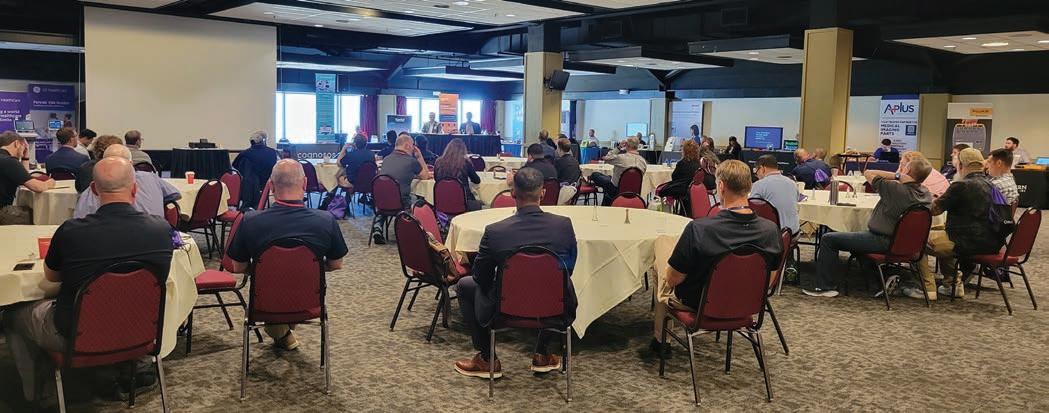
VBA members attend an educational session on cybersecurity.
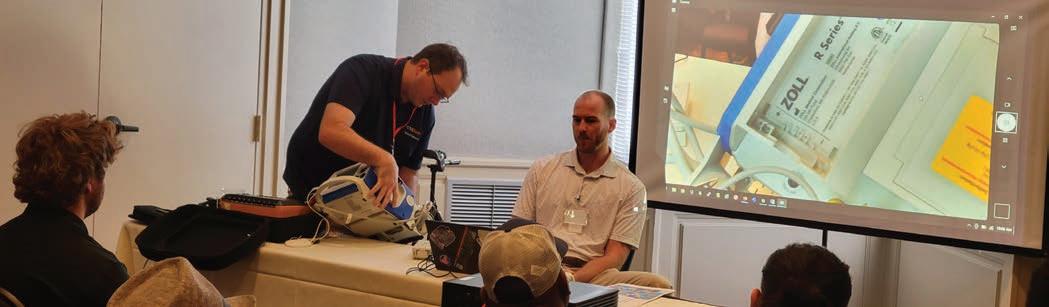
Michael Fraticelli demonstrates battery replacement during a Zoll R-Series preventative maintenance class.
NEWS & NOTES
Updates from the HTM Industry
BC GROUP INTERNATIONAL & RELINK MEDICAL ANNOUNCE PARTNERSHIP
BC Group International Inc. and reLink Medical have announced a new strategic partnership.
This collaboration will make BC Group’s research lab and biomedical test equipment more widely available through reLink Medical’s extensive marketplace, a press release stated.
Founded in 1988 and headquartered in St. Charles, Missouri, BC Group International has built a reputation as a “one-stop biomed shop” for the healthcare technology management (HTM) industry. The company provides biomedical test equipment, calibration, tools and repair services to customers across all 50 U.S. states and in markets worldwide.
Through this partnership, reLink Medical will expand its catalog to include BC Group’s portfolio of test equipment, giving buyers and resellers streamlined access to the specialized tools they need to support biomedical engineering healthcare technology operations, the release added.
“This partnership is an exciting opportunity to connect our customers with the test and measurement solutions they need to ensure safety, compliance and reliability,” said Greg Hemphill, CRO, reLink Medical. “By working with BC Group, we
are reinforcing our commitment to provide the medical community with the most comprehensive selection of tools and devices available.”
The collaboration addresses a growing demand for reliable test equipment in biomedical engineering and healthcare technology management, the release added. Hospitals, research facilities and service providers depend on accurate measurement and calibration tools to ensure the performance of life-saving medical equipment.
“BC Group has always been focused on providing biomedical professionals with the tools they need to succeed,” said Tim Welby, BC Group vice president of sales and marketing. “By partnering with reLink Medical, we are able to expand our reach and provide even greater access to our equipment through their trusted marketplace.”
Together, reLink Medical and BC Group International aim to strengthen the resources available to buyers, sellers, and healthcare technology managers by making both clinical devices and the test equipment that supports them easier to access in one place, the release stated.
PRESCOTT’S MED ACQUIRES TENACORE
Prescott’s Med issued a press release to announce a major milestone in the company’s ongoing mission to be the trusted leader in surgical suite and specialty biomed solutions, supporting healthcare biomed strategies.
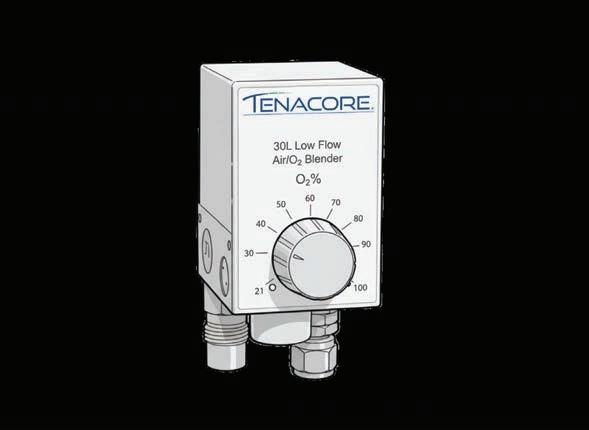
Prescott’s Med has acquired Tenacore, based in Costa Mesa, California, a recognized leader in depot-based medical device repair, parts and technical support.
“Tenacore has a strong reputation for delivering a wide range of depot repair services, medical equipment and parts. With a ‘Quality at the Core’ focus, Tenacore is a trusted industry partner for hospitals, ISOs, and in-house biomedical departments,” the release said.
“This strategic move represents far more than an acquisition by bringing together industry-leading specialists to create an unparalleled, nationwide depot partner for biomedical teams,” said Brian Straeb, CEO of
Prescott’s Med. “By unifying our expertise, infrastructure, and service excellence, we’re delivering a new standard of reliability and responsiveness for our customers across the country.”
This acquisition reinforces the commitment of Prescott’s Med’s as a true partner to biomedical teams, according to the release.
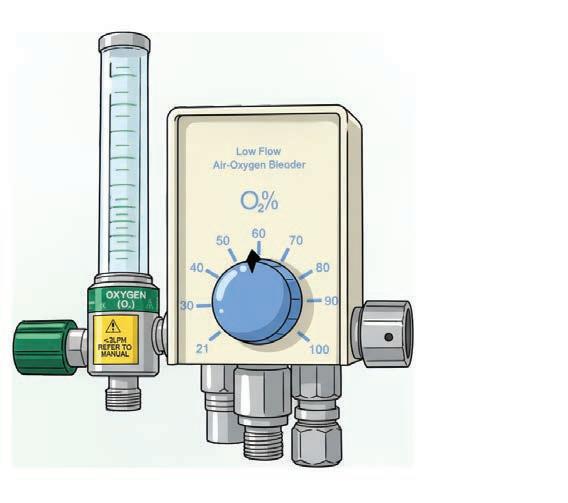
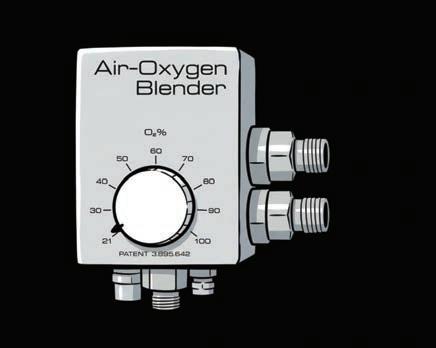
“The company is building its support service operations to enable healthcare providers’ chosen biomed service solutions. The addition of Tenacore increases Prescott’s Med’s already robust depot capabilities. Together, the companies have a nationwide network of depot locations, an expansive inventory to support repair services and expanded service capabilities – including infusion pumps, patient monitors, blenders and regulators, defibrillators, ESUs, parts, rentals and more,” according to the release.
AVANTE HEALTH SOLUTIONS & CHRONOS IMAGING OFFER
Avante recently announced that its partner, Chronos Imaging LLC, has developed all new, form-fit-function replacement tubes for the MRC 200 0407 ROT-GS 1004 and MRC 200 0508 ROT GS 1003 tubes.
The new Chronos CL200 series of tubes are identical to the published specification for the original OEM tubes and are fully compatible in every way with OEM systems including the Philips AlluraTM FD20 and FD10, according to a press release. These Chronos CL200 tubes will be distributed exclusively by Avante in the USA.
Chronos Imaging President Pat Fitzgerald described the partnership.
“Chronos and Avante are perfect partners. We are the leader in top-tier medical replacement tubes, and Avante is the market leader in third-party service for Philips cath labs with everything from parts, tubes, and service training to full-service maintenance agreements, and everything in between,” Fitzgerald said. “We are helping our hospital and other partners lower the cost of
REPLACEMENT TUBES
healthcare in America right now today.”
Avante Health Solutions Vice President of Field Service and Technical Solutions Bernie Dixon expressed excitement about the new CL200.
“Watching the development of the new CL200 replacement tube through all its stages and seeing the quality that Chronos incorporates, combined with the Philips CV technical knowledge shared by Avante’s highly experienced engineers, has been incredibly rewarding as it comes to fruition,” Dixon said.
Avante remains committed to its core mission of providing high-quality, cost-effective service and parts solutions, ensuring that it continues to be a trusted partner for customers across all diagnostic imaging, ultrasound and patient monitoring needs, the press release added.
“With Chronos Imaging’s experience and expertise, this new partnership is certain to deliver cost-effective imaging solutions,” the release stated.
INDUSTRY UPDATES
ELEVATE HTM RECEIVES FIRST GRANT
Elevate HTM, a nonprofit organization dedicated to introducing youth to careers in healthcare technology management (HTM), has received its first grant from the Greater New Orleans Region One Center for STEM. The funding will expand Elevate HTM’s outreach programs and increase access to STEM-focused career pathways for students across the region.
The grant will support school visits, hands-on demonstrations, career day programming and the organization’s youth initiative, NextGen Pathways podcast, career exposures. Elevate HTM engages middle and high school students by exposing them to the critical role technicians play in maintaining and repairing life-saving medical equipment.
“Receiving our first grant is a major milestone for our organization and the students we serve,” said Bryant “B-Hawk” Hawkins Sr., founder and CEO of Elevate HTM.
“We’re grateful to the Greater New Orleans Region One Center for STEM for believing in our mission. Their support allows us to reach more classrooms and inspire the next generation of HTM professionals.”
Healthcare technology management is one of the fastest-growing technical fields in the country, yet many students are unaware of the career opportunities within medical equipment technology. Elevate HTM aims to change that through early exposure and community partnerships.
The Greater New Orleans Region One Center for STEM focuses on expanding equitable STEM opportunities for students and strengthening future workforce pipelines in science, technology, engineering and mathematics.
For more information about Elevate HTM, visit elevatehtm.com.
ECRI ANNOUNCES WINNERS OF 2025 ALERTS IMPACT AWARD
ECRI, a global patient safety nonprofit organization, has announced the winners of its 2025 Alerts Impact Award, which recognizes ECRI Alerts Workflow members for excellence in recall management. The annual award highlights the importance of recall management in ensuring the continuity of safe, high-quality healthcare.
“Healthcare organizations must be vigilant in managing medical device and supply recalls using comprehensive tools and reliable data,” said Tom Toczylowski, associate director of ECRI Alerts. “This year’s honorees leveraged Alerts Workflow to create new auditing processes, educational initiatives, and swift corrective actions in response to hazardous recalls and alerts. When recall activities spiked for supplies that were especially pertinent to their patient populations, they avoided operational disruptions and kept care delivery on track. We applaud their commitment to tackling potential hazards with a proactive approach that prioritizes safety, speed and efficiency for the sake of their patients.”
Winners of ECRI’s 2025 Alerts Impact Award
• WellSpan Health (York, PA)
• Walter Reed National Military Center (Bethesda, MD)
• Children’s Nebraska (Omaha, NE)
Additional finalists:
• Harris Health (Bellaire, TX)
• King Abdul Aziz Medical City (Riyadh, Saudi Arabia)
ECRI’s Alerts Workflow is an enterprise-wide system that helps healthcare organizations safely manage recalls that impact medical equipment used in clinical engineering, IT, pharmacy, lab and clinical departments, and ancillary care points. Healthcare providers use these tools to increase their efficiency in monitoring and managing thousands of medical device and pharmaceutical alerts based on ECRI’s notifications, which are often sent weeks or months earlier than recalls from the U.S. Food and Drug Administration (FDA). ECRI’s tools address the notification, assignment, tracking, and remediation of alerts for a variety of items including medical devices, pharmaceuticals, food products and blood products.
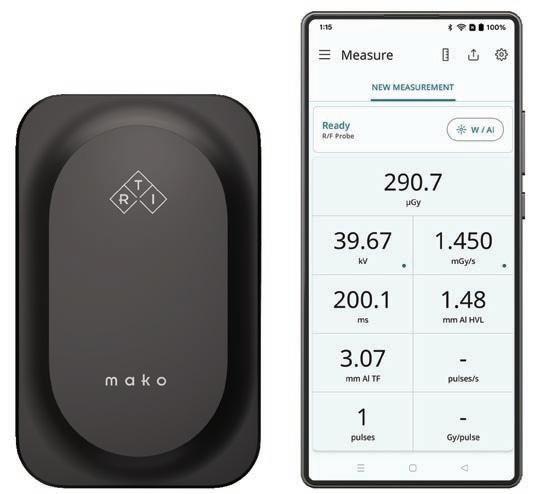
RTI GROUP UNVEILS APP-POWERED MAKO DISPLAY
Building on the success of the new Mako X-ray meter, RTI Group continues to evolve with another major development: the all-new app-powered Mako Display.
Launched at RSNA in Chicago, the Mako Display eliminates the need for a laptop, according to a news release.
Simply connect wirelessly for fast real-time data and smooth touchscreen control. For even greater flexibility, users can download the Mako App to their phone and access the same powerful features.
RTI is a world-leading manufacturer of quality assurance (QA) solutions for diagnostic radiology.
In 1981, RTI invented the first X-ray QA systems and since then, innovation has been at the heart of its corporate philosophy. RTI’s comprehensive independent QA solutions allow medical physicists and service engineers across the world to ensure that X-ray units in all modalities are optimized and safe. RTI’s X-Ray QA hardware and software are used by hospitals, manufacturers of X-ray equipment, service companies and government authorities worldwide, across all different modalities, including R/F, dental, CT, mammography, interventional and surgery (C-arms). With design, manufacturing and calibration services carried
out in Sweden, RTI has sales offices in America, Asia and Europe and is represented by up to 100 distributors worldwide.
SOLUTIONS YOU NEED
INDUSTRY UPDATES
The latest news and events from TechNation
CALLING ALL IMAGING SPECIALISTS
Register today for the 2026 Imaging Conference & Expo (ICE), set for Feb. 20-22 in San Antonio, Texas. Registration is free for hospital and imaging center employees, active-duty military and full-time students.
ICE is dedicated to imaging service specialists, imaging engineers, imaging directors and radiology administrators from hospital imaging departments, freestanding imaging centers and group practices. ICE has been approved for up to 9 CEUs.
Imaging professionals from across the country will gather to discuss capital projects, best practices, service solutions and other essential topics. ICE 2026 will again feature continuing education, signature networking events and an exhibit hall showcasing the latest technologies and services.
Attendees can expect a focused environment designed to support professional development and collaboration. Many past participants say the conference continues to deliver meaningful insights and connections.
Daniel Adams of Renovo praised the way ICE brings different roles together.
“Technicians, service managers and clinical managers can share an event and trade stories of their concerns,” he said. “It helps service people understand what is important to clinicians and gives clinicians insight into service challenges.”
The full schedule and free registration is available at AttendICE.com
TechNation’s 15th Anniversary
November winner is Stephanie Lewis! Congratulations!
2026 MD EXPO & HTM MIXERS ANNOUNCED
Coming off the largest MD Expo ever, TechNation parent company MD Publishing has announced dates and locations for its events in 2026.
MD Expo is coming to Baltimore this spring (April 7-9) and is supported by the Baltimore Medical Engineers and Technicians Society (BMETS).
Attendees will connect with industry peers, gain insights into the latest advancements in HTM, and expand their professional network.
In the fall, MD Expo returns to the Sunshine State (October 13-15) in Orlando, Florida.
But wait – that’s not all!
Two HTM Mixers (think smaller MD Expos) are confirmed for 2026.
The first is the HTM Mixer Arizona on May 7-8 in Scottsdale. It is supported by the Arizona Healthcare Technology Management Association (AZHTM).
Also coming later this year is the HTM Mixer Northwest on July 31-August 1 in the Seattle metropolitan area. It is supported by the Oregon Biomedical Association (OBA) and the Washington State Biomedical Association (WSBA).
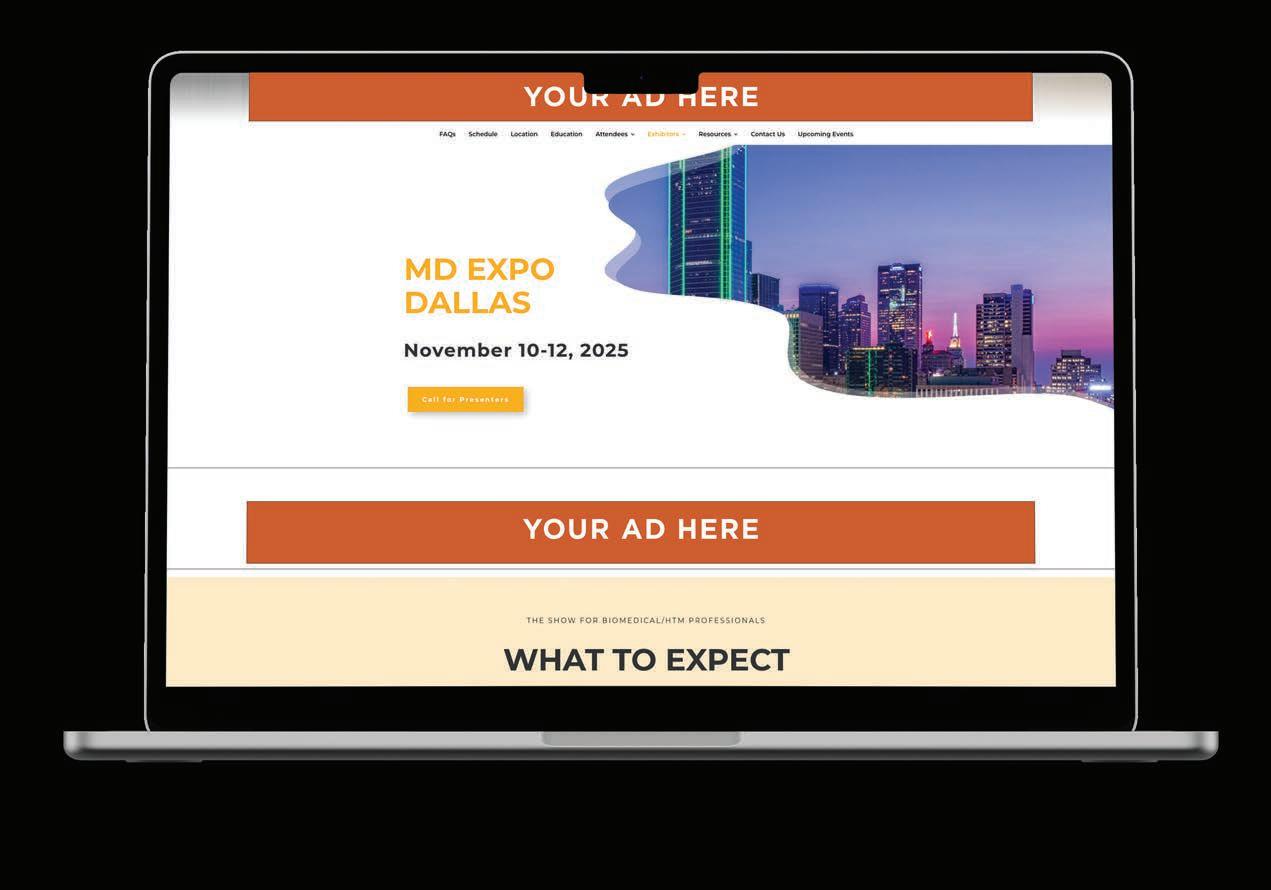
Registration, call for presenters and a form to sign up for the event newsletter are all available at MDExpoShow.com. Click on the “Upcoming Events” tab for additional details.
WRENCHIE VOTING DEADLINE LOOMS
HTM professionals generated over 1,500 nominations for the 2026 Tech Choice Awards with the top 5 nominees for each of the 14 categories named as finalists. HTM professionals are encouraged to vote online at 1technation.com/techchoiceawards. Voting ends on January 9, 2026.
The Tech Choice Awards (also known as the Wrenchies) are the people’s choice award for the HTM community. The winners are based 100 percent on the number of votes each finalist receives during the voting period. A special thank you goes out to the sponsors who help make the Tech Choice Awards possible. The sponsors do not have any input when it comes to selecting winners.
Wrenchie winners will be announced in the March issue of TechNation with an award ceremony planned for the MD Expo Baltimore in April 2026.
Visit 1technation.com/techchoiceawards to vote for your favorites. Voting ends January 9, 2026.
MD Expo Dallas Sets New Attendance Record
BY JOHN WALLACE
M
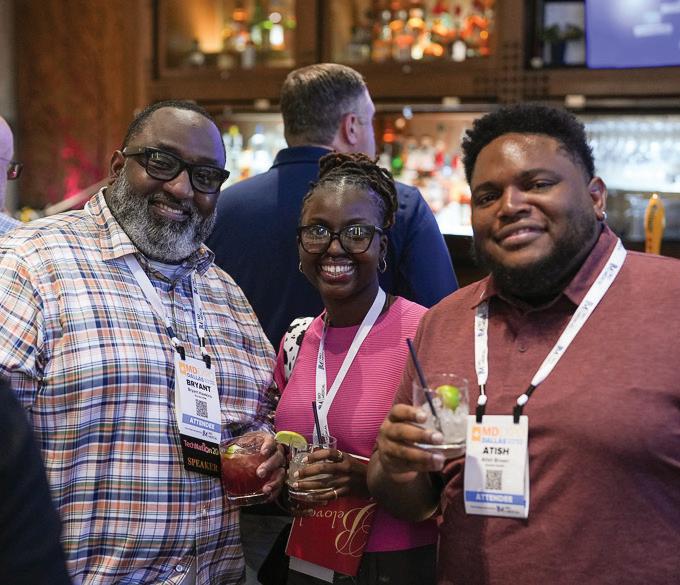
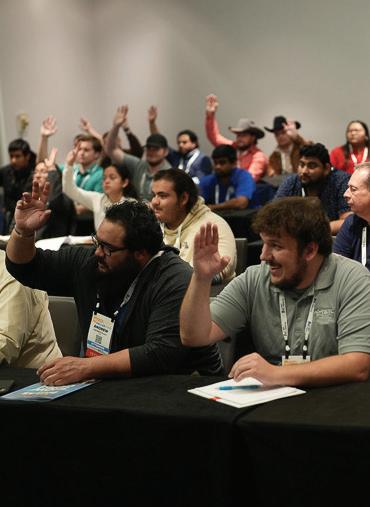
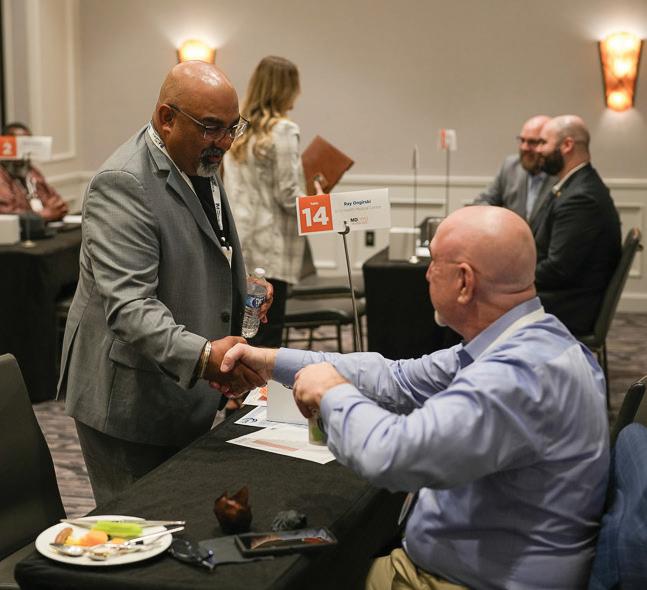
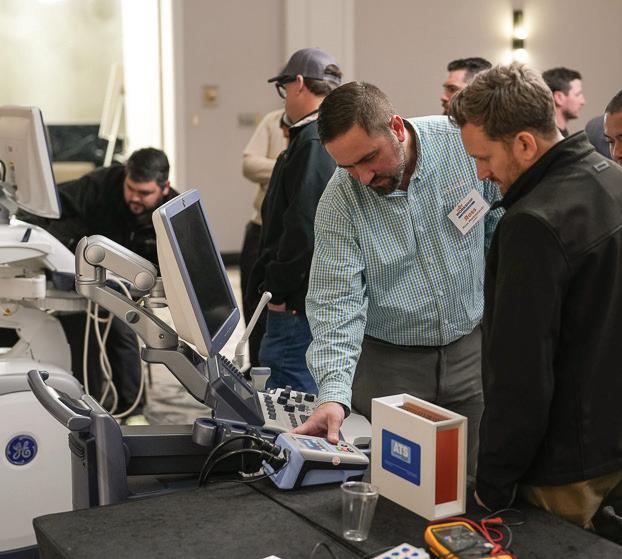
ore than 1,000 healthcare technology management (HTM) professionals attended the fall MD Expo in Dallas setting a record for the biggest MD Expo in the 20-plus years of the biannual conference. The previous record was set at MD Expo Houston and remains the second-largest MD Expo.
MD Expo Dallas featured new events along with its signature events to deliver even more networking and education to attendees.
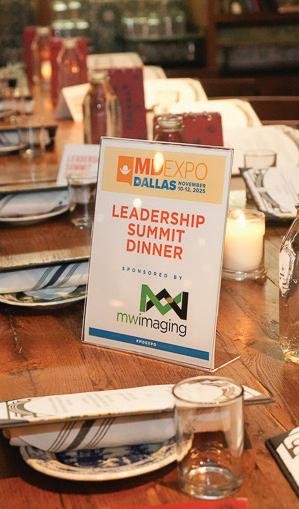
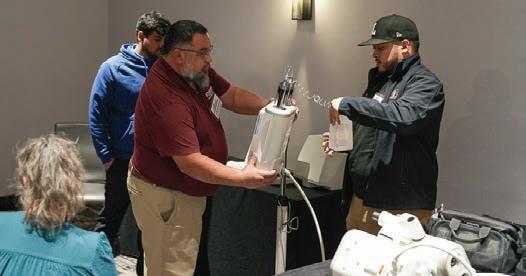
First on the schedule were the H.O.T. Workshops – hands-on training sessions that provided 4 hours of instruction. The invitation only Leadership Summit also kicked off on Day 1, followed by a welcome reception sponsored by USOC and a Leadership Summit Dinner sponsored by MW Imaging. The next day included a Leadership Summit Breakfast sponsored by MMS.
The second day also featured the brand-new PM Training Lunch & Learn, where a complimentary lunch was provided while attendees had an opportunity to dive into the latest HTM insights!
MD Expo Dallas also introduced the HTM Explorers group. This event introduced high school students to the field of HTM and provided exhibit hall access so they could speak with exhibitors and learn about the great HTM industry.
Signature events included the reverse expo, educational sessions and a packed exhibit hall. Networking events included the Young Professionals at MD Expo social hour sponsored by Prescott’s. The Texas Throwdown party, sponsored by AIV, capped off a successful MD Expo on the last night of the fall event.
A good time was had by all!
HTM veteran Jewel C. Newell, a senior project manager with Kaiser Permanente described MD Expo Dallas as a “a place of community, education and renewal.”
Newell has attended several MD Expos and quickly pointed out that the Dallas show was special.
“This MD Expo experience was phenomenal!” she said.
“MD Expo provides an outstanding environment with numerous opportunities for learning and knowledge sharing. I consistently leave with valuable ideas and actionable information,” Piedmont Health Executive Director of Biomedical Engineering Ray Laxton said.
Don Tucker, an area director of biomedical engineering with the Wellstar Health System, said MD Expo is “a great biomed industry event twice a year, and an additional event or alternative to the annual AAMI conference, used for networking, learning, sharing and making contacts with industry colleagues and vendors.”
Innovatus Imaging Vice President of Sales and Marketing Matt Tomory said this MD Expo was a step above previous successful conferences.
“This MD Expo seemed to outdo others in the quality and quantity of leads, attendees and overall energy. I have been attending MD Expos since 2002 and find them invaluable to attend. You have several days contained within a small area with dozens of people you are wanting to talk to. It is the ultimate no-brainer for medical sales companies. For attendees, it is the opposite: you have vendors of all shapes, sizes and offerings to discuss and meet your service and product needs,” Tomory said.
Next up is MD Expo Baltimore in April 2026. Find out more at MDExpoShow.com.
CLICK. WATCH. EARN!
LIVE WEBINARS
JANUARY 7
SPONSORED BY
TOOLS OF THE TRADE
Save the date for this live webinar. Participation is eligible for 1 CE credit from the ACI.
JANUARY 14
ROUNDTABLE WEBINAR Patient Monitors
JANUARY 21
SPONSORED BY
Save the date for this live webinar. Participation is eligible for 1 CE credit from the ACI.
ON-DEMAND
SPONSORED BY
Laser Safe: The BioMed’s Path to LSO Certification
All webinars, podcast, and product demos are eligible for 1 CE credit from the ACI.
RIBBON CUTTING
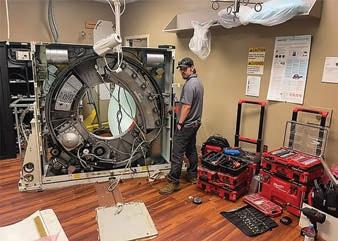
AMX Solutions Inc. came into existence as the result of years of intensive research with directors of radiology, biomed, clinical and field engineers. The company’s leadership asked these professionals what they saw as the ideal set of circumstances under which they could streamline work processes, reduce maintenance issues and eliminate downtime. The result of this research is a combination of services crafted into intelligent solutions to fulfill all of one’s AMX requirements.
AMX Solutions specializes in the GE AMX line of portable X-ray machines. When you specialize, you’ve got to be good at what you do! With more than 20 years of experience in the field, AMX Solutions’ experts know this product – each model. AMX Solutions stands 100% behind its work.
When you purchase equipment from AMX, you’re not just buying a portable. Clients are buying years of knowledge and experience built on quality, integrity and total customer satisfaction. AMX Solutions’ specialty is rebuilding and upgrading the AMX 4 with all the features, functionality and reliability of the AMX 4 Plus. AMX Solutions is dedicated to helping engineers eliminate downtime. The company believes that a unit should never be down for more than 24 hours and its purpose is providing solutions to meet that goal.
The company was originally founded in Augusta, Georgia, and is comprised of a staff with extensive experience working with GE AMX portable X-ray machines. The engineers and technicians excel in rebuilding the AMX 4 Plus. The company’s 26,000-square-foot facility houses state-of-the-art
test equipment in individual assembly stations where the various components and parts are built and prepared for installation and sale. Parts are available for AMX4+ units and Optima units.
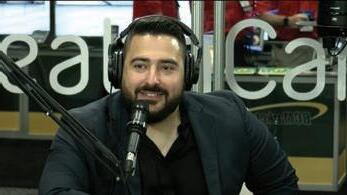
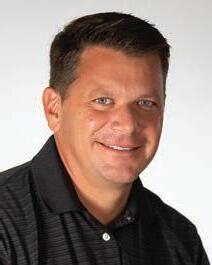
AMX Solutions President Lee Ready recently shared more information about the company and its expert service via a Q&A with TechNation Editor John Wallace.
Q: HOW DOES YOUR COMPANY STAND OUT IN THE MEDICAL EQUIPMENT FIELD?
A: AMX has a 20-plus year history in the industry for quality work and customer service. The employees who helped build that reputation are still with the organization and continue to help AMX Solutions thrive. Additionally, all of our rebuilds, painting and service are done 100% in house by our technicians.
Q: DO YOU HAVE ANY GOALS YOU WOULD LIKE TO ACHIEVE IN THE NEAR FUTURE?
A: Our current mission is to get the name of AMX Solutions back in front of everyone in the industry. We want to let the industry know that we are still here and want to continue to provide the same service that people have come to expect from our brand. We also want to stress that the same team who provided quality service in the past is still with the organization. We hope that this can rekindle old partnerships as well as create new ones within the industry.
Q: IS THERE ANYTHING ELSE YOU WOULD LIKE OUR READERS TO KNOW?
A: AMX Solutions was known for being a family organization. We want readers to understand that while AMX Solutions may have new leadership, the organization still has a heavy family focus. The new AMX is owned and operated by myself and my two sons, Campbell and Leland.
For more information, visit amxsolutionsinc.com.
WELCOME TO THE TECHNATION COMMUNITY!
Q: WHAT PRODUCT, SERVICE OR SOLUTIONS DOES YOUR COMPANY PROVIDE TO THE INDUSTRY?
OHMS Law Foundation is a 501(c)(3) nonprofit organization focused on strengthening the biomedical equipment technology workforce. OHMS Law Foundation was founded by biomeds, for biomeds. We exist to support students, professionals, and underserved communities through scholarships, certification funding, and educational outreach. We aim to reduce financial barriers and expand access to the training and education needed to build a strong and sustainable HTM pipeline.
Q: TELL US WHAT DIFFERENTIATES YOUR ORGANIZATION FROM THE COMPETITION?
We are the first nonprofit organization in the United States solely focused on scholarship and education funding for the biomedical equipment technology profession. The HTM field faces a growing deficit of technicians due to low entry numbers and a large portion of the workforce approaching retirement. This shortage has been a long-standing issue, and our singular focus on removing financial barriers positions us to address it directly. Every dollar raised goes toward supporting future and current biomeds, not overhead.
Q: WHY DID YOU CHOOSE TECHNATION FOR ADVERTISING?
TechNation is a foundation partner that recognizes the impact of the biomed and has always supported this field. Your publication reaches the professionals who understand the urgency of the workforce shortage and the importance of bringing new talent into the field. The magazine connects us with technicians, educators, managers, and industry partners who benefit from a stronger pipeline. Advertising with TechNation helps raise awareness of our mission and expands our reach to scholarship applicants and supporters.
For more information, visit ohmslawfoundation.org.
Q: WHAT PRODUCT, SERVICE OR SOLUTIONS DOES YOUR COMPANY PROVIDE TO THE INDUSTRY?
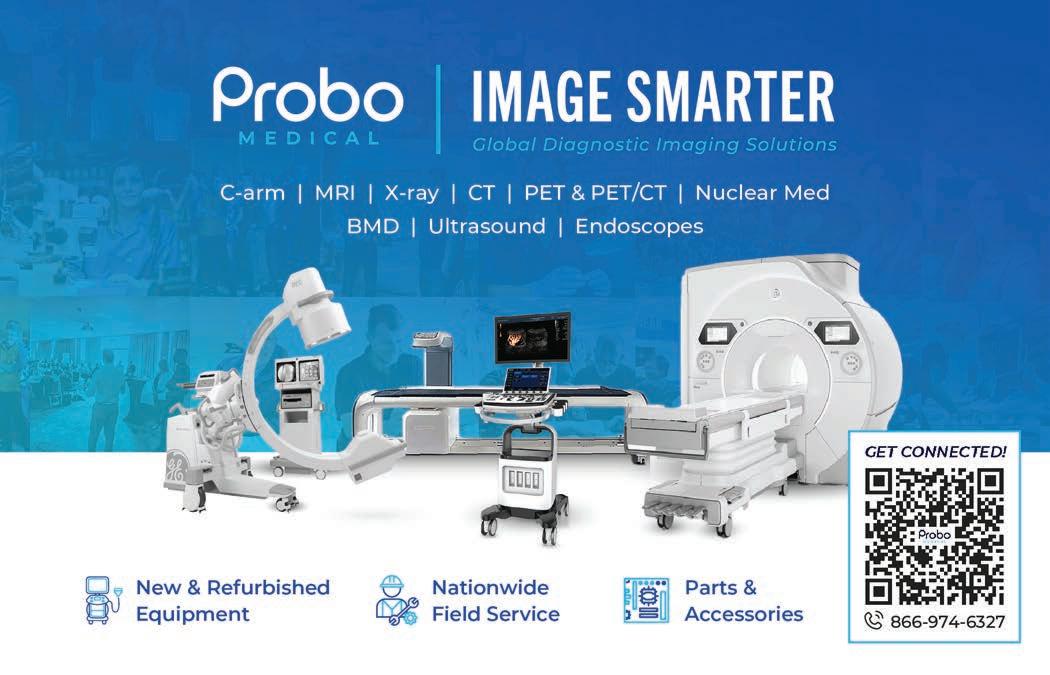
At Probo Medical, our mission is to help medical professionals “Image Smarter.” We provide affordable, high-quality diagnostic imaging equipment and services, including sales, rentals, and repairs. Our goal is to provide cost-effective solutions so healthcare providers can focus on what really matters — delivering compassionate, high-quality care.
Q: TELL US WHAT DIFFERENTIATES YOUR COMPANY FROM THE COMPETITION?
What sets Probo Medical apart is our comprehensive solutions and the expertise we provide our customers. As the largest diagnostic imaging provider in the country, we’re able to provide everything from system sales, parts and accessories, rentals, field service, training, repair and more. We’re here to be your one-stop shop and resource for all your diagnostic imaging equipment needs.
Q: WHY DID YOU CHOOSE TECHNATION FOR ADVERTISING?
We chose TechNation because it’s a great way to connect with medical professionals in the community. It’s the perfect platform to share our services and solutions with biomeds and healthcare providers alike.
For more information, visit probomedical.com.
Chace Torres OHMS Law Foundation
Brian Gill VP Global Marketing Probo Medical
Q: WHAT PRODUCT, SERVICE OR SOLUTIONS DOES YOUR COMPANY PROVIDE TO THE INDUSTRY?
HID Healthcare RTLS delivers industry-leading real-time location systems that locate and protect healthcare staff, patients and assets, while enhancing patient safety and optimizing facility-wide workflow.
The HID Healthcare RTLS platform enables real-time coordination of assets, staff and patients through our portfolio of solutions, including asset management, staff safety, infant security, wander management, wayfinding, hand hygiene, environmental monitoring and clinical workflow.
Our goal is to improve efficiency and safety across healthcare facilities. Our solutions are specifically designed for the healthcare industry, and our team of clinically trained specialists are here to support our customers in delivering excellent patient outcomes and experiences. This is why our focus is always first and foremost on delivering solutions that keep patients safe.
Q: TELL US WHAT DIFFERENTIATES YOUR COMPANY FROM THE COMPETITION?
Kerry Brock VP Sales
1. Expertise: Our team brings deep healthcare RTLS experience and a commitment to customer success at every stage — from knowledge sharing and collaborative implementation to on-time, on-budget project delivery. With industryleading support and training programs, we ensure your staff can maximize the platform’s potential while advancing our shared goal: improving patient safety.
2. Scalable Technology: Incorporating multiple RTLS technologies, our approach allows a system to be deployed for certain use cases and then scaled to meet other use cases in the future. This allows customers to spread their investment across multiple budget cycles.
3. Open Architecture & Flexibility: We offer solutions suitable for on-premise and/or cloud deployments. Coupled with an open API and multiple integrations with our healthcare technology solutions, this allows our solution to seamlessly integrate with other hospital systems, improving the quality of care.
4. HID Global Backing: With the resources, scale, and global reach of a major security technology company. This means stronger support infrastructure, integration with HID’s broader physical security ecosystem, and long-term stability.
Value Proposition:
HID delivers healthcare RTLS solutions that grow with your organization. Our scalable, multi-technology platform enables you to start with your most critical needs today and expand across use cases over time, spreading investment across budget cycles while maintaining seamless integration with your existing hospital systems. Backed by deep healthcare expertise, industry-leading support, and HID Global’s worldwide resources, we partner with you at every stage to ensure successful implementation, staff adoption, and measurable improvements in patient safety. With flexible deployment options and open architecture, your RTLS investment adapts to your facility’s evolving needs while integrating into HID’s comprehensive physical security ecosystem for long-term value and stability.
Q: WHY DID YOU CHOOSE TECHNATION FOR ADVERTISING?
We chose TechNation for advertising because it provides direct access to healthcare technology management professionals who are the key decision-makers for RTLS implementation in healthcare facilities. TechNation offers both the targeted reach and industry credibility we need to connect with the exact audience that evaluates and purchases real-time location systems. The magazine’s multi-platform presence, spanning print, digital, and webinars, enables us to maintain consistent visibility with an engaged community that actively seeks innovative technology solutions for their facilities.
For more information, visit hidglobal.com.
AAMI UPDATE
HTM and a Life of Service: Army Ranger & CBET Founder Shares His Story
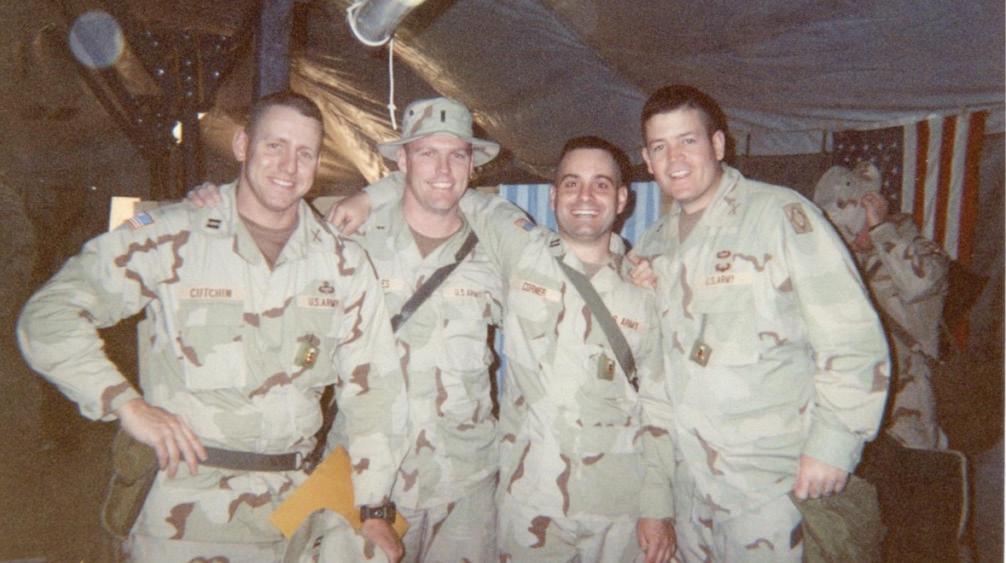
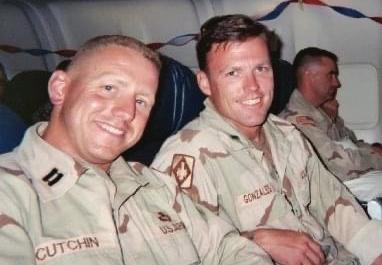
For Veterans Day 2025, AAMI News interviewed AAMI member and friend Richard L. Gonzales, a retired U.S. Army officer with 21 years of military service. He serves as the president of the College of Biomedical Equipment Technology (CBET) and senior partner at RTG and Associates, an educational services company dedicated to supporting Veterans education programs.
Known as “Monty” to friends and colleagues, Dr. Richard L. Gonzales joined the military straight out of high school. Since then, he hasn’t slow down once.
His career began in the 75th Army Ranger Regiment, where he served as a forward observer for the 1st Ranger Battalion in Georgia and the 2nd Ranger Battalion in Washington. That hard work earned him a position as a warrant officer, where he conducted targeting and intelligence operations while stationed around the globe for the last 13 years of his career.
Across Europe, the Balkans, and the United States, he served as a brigade targeting officer. In Oklahoma, he developed and taught targeting courses. In Iraq in 2003, he led the team searching for weapons of mass destruction. That team would later become the subject of “Green Zone,”
a 2010 film which brought Gonzales to Morocco, Spain and the UK to consult on the military’s portrayal – and work closely with Matt Damon.
Little did he know, the skills he gained as a military leader would also prove invaluable to the role he would one day take on as the President of the College of Biomedical Equipment Technology.
A NEW BEGINNING IN HTM
When Gonzales retired from the military in 2009, he stepped into a business development and contract management role at Northrop Grumman. But after years of active duty, he wasn’t fulfilled by work behind the scenes.
So, when he transitioned again into a position as a Junior Reserve Officer Training Corps instructor, he realized a career in education might just be the path forward.
Though he had never heard of healthcare technology management (HTM), it felt like a natural fit when a fellow veteran friend put the field on his radar. “I could have just as easily stumbled into a different industry, but it happened to be
this one where we identified an opportunity and a real need, and we thought that would be a lot of fun,” he said.
In 2018, along with three other veterans, Gonzales founded the College of Biomedical Equipment Technology (CBET). The curriculum is designed to prepare students to obtain AAMI certifications and succeed in HTM. The company now boasts 53 employees, around 85% of whom also served in the military.
AAMI & CBET: A NATURAL PARTNERSHIP
CBET welcomed AAMI as a strategic partner shortly after its founding. Under AAMI’s guidance, three joint initiatives are now “thriving” and helping to amplify CBET’s mission, said Gonzales.
Most recently, their collaboration was responsible for the development of an HTM leadership certification program, set to graduate 65 emerging leaders next March. Another exciting program, launching this year, will introduce over 350,000 participating high school STEM students to HTM careers, in partnership with HOSA-Future Health Professionals. A third initiative will provide essential certification training to clinical engineers in Saudi Arabia.
“AAMI was a very natural partner from the start,” Gonzales explained. “We are 100% mission-focused on the same thing, and CBET is profoundly grateful for the strong, supportive relationship we’ve built with AAMI’s team.”
Q&A
As Veterans Day approached, AAMI had some questions for Gonzales on the unique perspective he brings to HTM. Read his thoughts below.
Q: HOW DOES YOUR MILITARY EXPERIENCE INFORM THE TRAINING YOU DO AT CBET?
GONZALES: From a military perspective, we were always trained and encouraged to get inside of the enemy’s decision cycle, to make decisions quicker than they could. You can easily adapt that to this industry; we need to be thinking quicker than devices fail and risks can occur. And so, it’s really about training technicians and teaching in a way that is risk preventative, and thinking about patient safety first.
Q: HOW HAS YOUR BACKGROUND IN THE ARMED FORCES INFLUENCED YOUR APPROACH TO BUSINESS PARTNERSHIPS?
GONZALES: The first thing that comes to mind is relationships of trust. And my experience in building relationships with foreign nationals and working overseas in complex environments absolutely formed the cement that that foundation is built on.
I had a commander of mine who I’m still in touch with, General Kimmitt, who many referred to as the “prince of darkness” because of how exacting he was as a leader, the no nonsense type. And I always loved the guy, but he came in looking to destroy everything he touched every time. And so as a young officer, I was just trying to figure out, how do I deal with this guy?
I said, the next time he shows up on my site, I’m going to start by telling him everything that’s screwed up. That’s what broke through that barrier, and that was an important lesson to me: Nobody’s afraid of a problem. They’re afraid of not having the correct information or being led in a direction that doesn’t make sense or allow them to deal with the problem.
I think when you translate that into the healthcare industry, people want the facts. It can be data that’s coming out of a CMMS, or it could be data exchanged in conversation, but for a leader to make a good decision, they’ve got to have accurate information and clean data.
Q: WHAT ADVICE WOULD YOU GIVE TO A SERVICE MEMBER LOOKING FOR A CAREER CHANGE, PARTICULARLY INTO THE HTM FIELD?
GONZALES: Here at the college, we tell service members: You’ve served your country – now serve your community. That’s because the idea of contributing to something greater than yourself is deeply ingrained in the overwhelming majority of the people with whom I served.
For me personally, transitioning from the military to a role at Northrop Grumman was a really tough experience. It was a fantastic company – but I found it unfulfilling, because it lacked that sense of pride I felt showing up each day in uniform. And many other service members are also looking for that renewed sense of belonging and ability to give back.
Healthcare technology management offers a unique career field that fulfills that need, because there’s no shortage of scenarios in which you’re truly in demand. And there is no greater feeling than knowing that others can trust and rely on you.
“You’ve served your country – now serve your community. That’s because the idea of contributing to something greater than yourself is deeply ingrained in the overwhelming majority of the people with whom I served.”
ECRI UPDATE
ARPA-H Initiative Developing
Mobile Medical Units Collaboration
The Platform Accelerating Rural Access to Distributed and InteGrated Medical Care (PARADIGM) program aims to improve rural health by creating a scalable vehicle platform that can provide advanced medical services outside of a hospital setting. This new mobile care platform will allow healthcare providers to meet rural patients where they are, leveraging technological advancements in satellite communication and medical device miniaturization.
PARADIGM is led by Advanced Research Projects Agency for Health (ARPA-H), an agency within the U.S. Department of Health and Human Services (HHS). Massachusetts General Hospital numbers among the PARADIGM awardees contributing to the mobile care platform, adding interoperable medical devices and ensuring security and scalability across care settings.
ECRI, a global healthcare safety nonprofit, is working with Massachusetts General Hospital on this groundbreaking initiative to design and deploy mobile medical vehicles to bring advanced diagnostic and treatment capabilities to underserved areas.
The PARADIGM team will create a multi-functional, rugged electric vehicle platform capable of providing cuttingedge services, including multi-cancer screenings, perinatal care and hemodialysis.
“Selecting the right medical devices for this innovative care environment is crucial for delivering safe, advanced care and ensuring secure, seamless data sharing,” said Julian M. Goldman, MD, principal investigator of the Massachusetts
General Hospital team developing a Medical Internet-of-Things (MIoT) platform for PARADIGM.
ECRI is supporting the Massachusetts General Hospital on the selection of medical devices for the mobile medical unit being designed by the PARADIGM technical and clinical partners, focusing on essential technologies such as vital sign monitors, ultrasound systems, point of care lab testing and others.
Drawing on its expertise evaluating the safety and efficacy of healthcare technologies and the safe integration of tech in clinical environments, ECRI will advise on which medical devices to integrate, factoring in security, safety, interoperability, and capabilities in remote environments to ensure the platform is built on a digital ecosystem that allows medical devices, software, and clinical systems to work seamlessly together outside of the hospital setting.
This framework could serve as a scalable model for future mobile healthcare delivery systems, enabling rapid deployment of specialized services in remote areas.
“As rural hospitals continue to reduce services or close at an alarming rate, this project represents a novel approach to bringing care where it’s most needed,” said Scott Lucas, Ph.D., vice president of device safety at ECRI. “As we integrate cybersecurity and real-time data exchange capabilities into the foundation of these mobile care platforms, we can ensure they are as safe and secure as the best hospitals in the nation.”
“ When rural healthcare is under threat, our efforts to improve access to care must grow stronger,” said Marcus Schabacker, MD, Ph.D., president and CEO at ECRI. “Every patient, no matter their zip code, deserves safe, high-quality care close to home. Every mile we bridge between patients and healthcare providers saves lives and strengthens communities. We’re proud to play a part in this innovative program.”
Soft Skills – Nature vs. Nurture
BY ALLISON WOOLFORD, M.S., CBET
T BIOMED 101
hink back to the beginning of your biomedical equipment technician career. You were fresh out of school, full of energy and ready to take on the world. Everything felt bright and promising. You had conquered your coursework, brimming with technical confidence and prepared to tackle any medical device your new employer threw your way.
As a BMET 1, your early assignments likely involved the foundational devices that keep hospitals running smoothly: vital signs monitors, SCDs, thermometers, syringe and infusion pumps, scales, etc. These devices are essential for nurses to assess and care for patients. With hundreds in circulation, they break often.
Your mission, if you choose to accept it, is to make sure that
the broken equipment shelf is empty. Blood pressure cuff not inflating on a vital signs monitor. Boom! You replace the quick-connect fitting on the hose. The syringe pump does not recognize the syringe. Bam! Time to recalibrate the barrel clamp sensor. You’ve cleared the backlog of broken equipment, documented each repair with precision, and closed every work order.
Now what?
Well, that repaired equipment doesn’t belong in the shop. It needs to get back to the clinical floors where it’s needed most. So, you head to the ICU, NICU, or patient units to return the devices. And here’s where you face a choice:
Option 1: The Ninja Approach
Quietly place the equipment in the holding room and slip away unnoticed.
Option 2: The Professional Approach
Walk in with confidence. Greet the clinical staff. Let the unit
secretary or charge nurse know you’re returning their suction pump or EKG machine. Briefly explain the issue. They especially need to know if it was user-related. And before you leave, ask, “Is there anything else I can assist you with?”
Hopefully, you choose Option 2.
Why? Because it shows you’re more than just technically skilled. You’re also building trust and rapport with clinical staff. And that’s where soft skills come in. But what are soft skills, really? Can they be taught, or are they innate? It’s the classic nature versus nurture debate.
IMPORTANCE OF SOFT SKILLS
In an article for Southern New Hampshire University, Joe Cote explains that as artificial intelligence becomes more prevalent, the value of human interaction will only grow. To stay relevant and resilient in our careers, we must develop our soft skills. Communication. Customer service. Teamwork. Problem-solving. Professionalism.
Think about someone you’ve met who just has it. That quiet confidence. The ability to walk into a room and instantly command attention. People listen when they speak. You might think, “They’re a natural-born leader,” or even, “I wish I had their charisma.” But here’s the truth: those skills were learned and refined. Just like your technical ones and your soft skills can be developed too.
Start by being honest with your manager. Tell them your career aspirations and ask for support. Many organizations offer professional development programs or mentorship opportunities. Shadow senior technicians. Watch how they interact with staff and leadership. Ask questions and request introductions to key stakeholders.
Yes, interacting with experienced nurses and managers can feel intimidating. They may have more education and years in the field. But here’s the truth: they’re human too. You don’t need to approach them like a close friend or sibling. Just speak to them with respect, empathy and professionalism. Maintain eye contact. Be present. They expect you to understand the equipment. They value honesty. If you don’t know the answer to a question, don’t deflect. Say you’ll find out. Ask for their contact information so you can follow up. That follow-through builds trust far more than having the perfect answer in the moment.
By engaging with compassion and integrity, you’ll earn respect. The nerves will fade, and your confidence will grow. That first step, choosing to speak up and connect, is always the hardest. But it also opens doors to incredible opportunities.
Allison Woolford,
M.S.,
CBET, is a clinical engineering operations manager with Duke Raleigh Hospital and Duke Regional Hospital within the Duke University Health System.
WEBINAR SHARES CYBERSECURITY STRATEGIES FOR HEALTHCARE RESILIENCE
The recent Webinar Wednesday session “Building a Cybersecurity Program Around Clinical Zero Trust: Strategies for Healthcare Resilience” was sponsored by Claroty. It provided an insightful look at trends and challenges HTM professionals need to be aware of in today’s healthcare environment.
As healthcare organizations face growing cyber threats and increasingly complex clinical environments, implementing a Clinical Zero Trust strategy is essential to safeguarding patient safety and critical infrastructure. But achieving this requires more than just a security framework, it demands the right technologies, partnerships and execution.
Subject matter experts from Mount Sinai, Claroty, Cisco, World Wide Technology (WWT) and Amazon Web Services (AWS) came together to deliver a powerful discussion on building a Clinical Zero Trust strategy to protect cyberphysical systems (CPS) without compromising patient care.
The webinar was popular among HTM professionals with 65 of the 112 registered individuals online for the presentation. A recording of the session is available for on-demand viewing at WebinarWednesday.live. The session is eligible for 1 CE from ACI.
Asimily Senior Manager Catherine White won a Swiss Force Meister Multi-Tool during the webinar.
Attendees provided feedback regarding the webinar and TechNation magazine via a post-webinar survey that included the question, “Why do you read TechNation magazine?”
“To keep up to date on the happenings of HTM and to see new tools/test equipment offerings,” said Gerald McNeil, BMET III, with GE Healthcare.
“TechNation keeps me updated with the latest trends in the HTM field. It also helps promote our field and provides valuable information,” said Peter Jeong, a clinical engineering supervisor with Morristown Medical Center-Atlantic Health.
“To stay current on topics with the clinical engineering department,” said Rubin Jean, a technology analyst with AdventHealth.
“To keep up with new tips and tricks,” Augusta Health Maintenance Compliance Coordinator Brandon Hostetter said.
CLICK. WATCH. EARN.
Watch these webinars on-demand
WEBINAR EXAMINES STANDARDIZED TESTING
The recent Webinar Wednesday session “Standardize Your Testing” was sponsored by BC Group and presented by BC Group Director of Business Development Justin Barbour. It is eligible for 1 CE credit from the ACI.
Attendees logged in for the live presentation to learn how to leverage automation and data driven design to create reliable and repeatable medical equipment tests. The session enhanced technicians’ ability to standardize preventive maintenance, design test procedures, reduce errors, and improve documentation accuracy through automated testing systems.
Key takeaways from the webinar included the ability to:
• Develop step-by-step automated test protocols tailored to specific device types;
• Eliminate manual errors and variability in preventive maintenance;
• Streamline training and documentation through standardized test distribution; and
• Apply automation to improve efficiency and accountability in the biomedical engineering field.
More than 100 people registered for the webinar with 65 logged in for the live presentation. A recording of the session is available for on-demand viewing at WebinarWednesday.live.
Brandon Hostetter, a maintenance compliance coordinator with Augusta Health in Virginia, won a Swiss Force Meister Multi-Tool during the webinar. Attendees provided positive feedback via a post-webinar survey that included the question, “Why do you read TechNation magazine?”
“Latest trends and equipment featured for the HTM community,” said Larry Thompson, BMET III, UAB.
“To get the latest and greatest,” said Andrei Yanovich, a biomedical field technician with National Jewish Health.
“TechNation helps me stay informed about new technologies, regulatory updates and practical solutions that improve my work as a biomedical technician,” Biomed II Maryna Starodubts said.
“Love the articles of different biomed departments and what is going on around the country,” said Joyce Yowler, a senior biomed technician with Cincinnati Children’s Hospital.
IMT ANALYTICS DEMOS FLOWANALYSER PRO
Webinar Wednesday’s recent Tools of the Trade LIVE Demo of the FlowAnalyser PRO was sponsored by IMT Analytics.
The FlowAnalyser PRO is the company’s flagship benchtop gas flow analyzer, designed for biomedical engineers, independent service providers and medical equipment manufacturers. It is engineered to test all types of mechanical ventilators, anesthesia machines, and a wide range of other medical devices that generate gas flow and pressure.
IMT Analytics Managing Director Daniel Benz did an excellent job showing how the FlowAnalyser PRO combines the full capabilities of the industry-leading FlowAnalyser PF-300 series into one powerhouse device. With the addition of an ultra-lowflow channel, Benz demonstrated how the FlowAnalyser PRO can precisely measure across the entire spectrum, from the smallest flow rates and vacuum pressures to hospital gas line pressures and flows up to 300 L/min. The demo featured the device’s 5-inch high-resolution multi-touch display and its intuitive and modern user interface.
Benz went on to show webinar attendees the device’s advanced features such as profile handling, on-device testing applications, smart automatic trigger detection and data recording. The demo illustrated how the FlowAnalyser PRO can streamline workflows, reduce handling errors and improve measurement accuracy.
Benz also discussed how the FlowAnalyser PRO can be paired with the OR-703 MultiGasAnalyser, a high-precision gas analyzer measuring CO₂, N₂O and all common volatile anesthetic agents, to be transformed into a complete anesthesia machine testing solution.
The FlowAnalyser PRO delivers the highest precision and a seamless user experience.
Benz also took questions from attendees during the webinar and planned to follow up with attendees via email to answer any additional questions.
It was a popular Tools of the Trade Live Demo with almost 100 HTM professionals registered for the session which is eligible for 1 CE credit from the ACI. Approximately 50 tuned in for the live presentation. A recording of the demo is available for ondemand viewing at WebinarWednesday.live.
Sam Ghannam a healthcare equipment manager with Sodexo answered a trivia question to win a Swiss Force Meister Multi-Tool.
In a post-webinar survey, attendees were asked, “What was your single biggest takeaway from today’s product demo?”
“The device and accessories available should suffice any ventilator and anesthesia testing and certification,” said Larry Thompson, a BMET III with UAB.
“The product is user friendly,” shared Sohail Ahmed, a biomedical engineering technologist at Regina General Hospital.
“New ways to use a flow analyzer. Thank you for this webinar,” National Jewish Health Biomedical Supervisor Brian Harris said.
TOOLS OF THE TRADE
Advanced Ultrasound Systems (AUS) delivers fast, affordable and expert support for all ultrasound brands. Founded in 2001 by John Hryshchuk, the company has established itself as a trusted leader in comprehensive ultrasound care, dedicated to maximizing system uptime and performance for healthcare facilities nationwide. AUS offers technical expertise that encompasses every aspect of ultrasound technology, from complete systems and probes to intricate repairs at the component level. AUS services any make or model, performing everything from routine maintenance to complex diagnostics on PCBs, power supplies, monitors, and sub-assemblies. Each repair is backed by a meticulous
24-hour testing protocol to ensure lasting reliability. AUS further safeguards probe investments through customized preventative maintenance plans designed to keep equipment running smoothly and avoid costly downtime. AUS offers quality and compliance, as demonstrated by its ISO 13485:2016 certification – the global benchmark for medical device servicing. Beyond service, AUS provides hands-on training in its dedicated Tulsa facility and partners directly with manufacturers to ensure its technicians master the latest technologies. The AUS mission is to provide clinics with comprehensive, cost-effective solutions that never compromise on quality.
ROUNDTABLE Patient Monitors
TechNation asked patient monitor experts to share their knowledge and insights for this month’s roundtable article. Participants are:
• Elite Biomedical Solutions Chief Service Officer Glenn Schneider;
• Integrity Biomedical Services Business Development Manager Jon Shahbandeh;
• PartsSource Vice President of Inside Sales Mike Wade; and
• USOC Medical Business Unit Director Kevin Wyatt.
Q: WHAT ARE THE MOST COMMON TYPES OF REPAIRS OR ISSUES YOU ENCOUNTER WITH PATIENT MONITORS, AND HOW DO YOU TYPICALLY ADDRESS THEM?
SCHNEIDER: The most common repairs we encounter are physical damage to transport monitors and mechanical failures (pumps, etc.) in monitors and physiological modules. We typically replace the defective parts with
new or re-certified OEM parts and occasionally use aftermarket parts that meet our rigid quality standards. Once repaired, we run the device through a complete PM as outlined by the OEM.
SHAHBANDEH: We mostly deal with things like wornout parts, power issues, communication dropouts and problems with parameter modules. We fix them using solid component level troubleshooting and dependable replacement parts. Everything that comes through our shop gets the same thorough, ISO-driven process, which is how we keep our repairs fast, reliable and usually turned around in about five days.
WADE: We see the same patterns again and again –especially on Philips MX40 fleets. Everyday wear drives most activity: about half of monitor spend is on batteries, cables/leads, cuffs and cases. HTM teams handle those swaps in-house to keep rooms online. The heavier lifts – board-level/transmitter work and calibration-adjacent repairs – are routed to certified depots, which protects quality and turnaround. Anytime a patient monitor,
transmitter or transport monitor has the ability to travel around the hospital with a patient, the more likely it is to see wear and tear.
WYATT: On the bench we see a lot of the same patterns: NIBP pumps and valves wearing out, SpO₂ boards and LEDs failing, power supply issues, and damage from drops, fluid, or broken connectors. At USOC, we start with a full functional check, then isolate the failure down to the board or component level to reduce turnaround time and keep our costs competitive. If it is a known high-failure part, we keep those components and boards on the shelf so we can turn monitors quickly instead of waiting on long lead-time parts.
Q: HOW OFTEN DO PATIENT MONITORS REQUIRE ROUTINE MAINTENANCE, AND WHAT TASKS DO YOU PRIORITIZE DURING SERVICING TO ENSURE OPTIMAL PERFORMANCE AND PATIENT SAFETY?
SCHNEIDER: From my experience, monitors can be separated into two categories; those with integrated physiological inputs and those that only display parameters from a different monitor. The monitors that have integrated physiological inputs from the patient should be inspected on a routine basis, depending on the hospital’s medical equipment management plan. Display monitors that receive inputs from other monitors can be on a much less frequent schedule (possibly no schedule) since they just replicate what the physiological monitor is measuring. All configured inputs must be verified as accurate or calibrated to OEM required tolerances. We perform those tests after every repair our technicians perform, as well as an electrical safety test.
SHAHBANDEH: Patient monitors usually need routine maintenance about once a year, and busy departments often benefit from more frequent checks. When we service a unit, we focus on the things that matter most for safety and reliability such as accuracy testing, inspecting connectors and cables, checking power and batteries, cleaning the device, and making sure every parameter is reading correctly before it goes back into use.
WADE: Most teams run 6- or 12-month PMs depending on utilization and OEM guidance. The priorities that actually bend downtime are simple: cleaning, connector and strainrelief checks, alarm verification and battery health. That lines up with the purchasing pattern – those wear items make up roughly half of what monitor teams buy – which tells you the cadence is working when it’s consistent.
WYATT: Twelve months is ideal; however, depending on how hard the facility uses their equipment, that interval may be closer to six months. During PMs, we focus on the things that actually keep people safe: NIBP accuracy, SpO2 performance, ECG testing, leak checks, accessories and any signs of drift. Once repairs are completed, every system goes through our extensive QC process to ensure it is functioning at the manufacturer’s standard or better. We also clean vents, fans and boards because heat and dust
quietly kill a lot of equipment. Our goal at USOC is simple: catch the small problems before they take a room out of service.
Q: HAVE YOU NOTICED ANY PARTICULAR CHALLENGES WITH NEWER MODELS OF PATIENT MONITORS – SUCH AS SOFTWARE RELIABILITY, COMPATIBILITY WITH OTHER SYSTEMS OR EASE OF REPAIR?
SCHNEIDER: The software on newer models seems to be very reliable. At times, the challenge is a software and hardware compatibility conflict. As the device ages and updates/modifications are made to them, versions can force incompatibility and require replacement of something that is not defective. For example, if a software update is needed, it may require a circuit board be replaced, even if it operated fine on the previous software version.
SHAHBANDEH: Newer patient monitors definitely come with challenges, especially as manufacturers keep adding more software-driven features. We do not work on software or firmware issues, but we do see how locked down systems, limited access and compatibility problems can create headaches for biomeds. On the hardware side, newer models often use tighter, more compact designs and harder to source components, which can make repairs more involved, but we focus on what we do best which is solid hardware diagnostics and reliable board-level repair.
WADE: Modern monitors are smarter and far more connected. The upside is better clinical workflow; the trade-off is firmware and network dependencies. Our field notes regularly flag update/compatibility friction and the occasional “on contract/warranty” roadblock. The fix is process, not heroics: coordinate change control with IT, validate Wi-Fi/security settings before pushing updates, and check contract status early so repairs don’t stall. Newer monitoring systems also require hospitals to upgrade their wireless infrastructure. Sometimes this cost goes unnoticed until the last minute.
WYATT: Newer monitors have nicer screens and better integration, but they are not always designed with service in mind. Repair parts can be unavailable, service ports are hidden and a lot of functions are buried in firmware or locked behind proprietary software. A software update on the hospital side can suddenly break communication or change behavior, and everyone points fingers. From a repair standpoint, the more that is pushed into locked software, the less flexibility we have to support the customer quickly. Our teams at USOC spend a lot of time learning those platform quirks so we can still keep downtime low even when the design is not technician friendly.
Q: HOW DO YOU HANDLE CALIBRATION AND ACCURACY TESTING OF PATIENT MONITORS, AND WHAT STEPS DO YOU TAKE TO ENSURE THE EQUIPMENT PROVIDES RELIABLE READINGS?
SCHNEIDER: We test every device serviced against the MFR tolerances and all parameters as a minimum. Our ISO
certification has traceability requirements on all repaired/ PM’d devices as well as test equipment. The technicians are required to document the test equipment used as well as its next due date on each work order. So, verification within the required recalibration period is confirmed.
SHAHBANDEH: We hook every unit up to our test gear and check all the basics like ECG, SpO2, NIBP and IBP to make sure the numbers are where they should be. If something is off, we dig into the hardware, fix the issue, and retest it until it is reading right every single time.
WADE: Stick to OEM procedures with traceable simulators in-house; use depot partners when you need batch consistency or you’re dealing with transmitter-heavy fleets like the MX40. In practice, that split keeps uptime high: most routine accuracy checks happen on your bench, while a meaningful share of MX-series work flows to depot for controlled conditions and consistent pass rates. Sometimes clinical support is needed to help dial in the proper alarm protocols and avoid alarm fatigue by the hospital clinical team.
WYATT: We use certified simulators for ECG, SpO₂, and NIBP, and we follow the OEM’s performance verification procedure line by line. If a parameter is out of spec, we do not just “tweak it until it passes”; we find the source of the problem, whether it is a worn pump, a drifting sensor, or a faulty board, fix it and then rerun the entire verification. At USOC, nothing leaves our facility until it passes a full set of tests, is clean, in spec, and documented. That is our standard.
Q: WHAT ARE THE MOST IMPORTANT CONSIDERATIONS FOR HEALTHCARE FACILITIES WHEN SELECTING PATIENT MONITORS, PARTICULARLY REGARDING SERVICEABILITY, COST AND LONG-TERM RELIABILITY? SCHNEIDER: Do your homework. Software compatibility between the monitoring and IT portions of the systems make things very complicated. My approach has always been to ask for references from the OEM and contact the hospital HTM department, as well as organizations that have the systems you’re considering, but not referred to by the OEM. Do a 5- to 10-year cost of ownership
(COO) evaluation on each brand. Be aware of tactics used by sales to sway the clinicians. I’m aware of at least one vendor that tells them that software upgrades are free. What they fail to divulge is that many times a costly hardware upgrade is required to move to a new software revision. Every organization has specific needs for clinical monitoring but has a limited budget.
SHAHBANDEH: When a facility is picking patient monitors, it really comes down to how easy they are to work on, how expensive they are to keep running and whether they hold up over time. A monitor might look great on paper, but if parts are impossible to find or it is a pain to service, it will cost way more in the long run than something that is simple, reliable and biomed friendly.
WADE: Look past sticker price to parts access, documentation and repair pathways. Platforms like Philips MX and GE Carescape perform best when your team can do the wear-and-tear in-house and you’ve got a clear depot route for board/transmitter repairs. That combination tends to stabilize total cost and shorten recovery time after failures.
WYATT: When you are choosing patient monitors, the big question is: what is this going to look like three to seven years from now, not just on install day. I’d look at four main things:
• Platform strategy: Are you standardizing on a small number of platforms, or adding “one more brand” that your team has to learn and support? Standardization saves a lot of pain later.
• Service access: Can your in-house team or a partner like USOC actually get parts, service information, and calibration tools, or is everything locked behind OEM-only portals and passwords?
• Real repair costs: Ask what typically fails and what those parts cost. A monitor that needs a $900 module for a common failure is not a good deal, no matter how it was priced up front.
• Integration and stability: Make sure it behaves well on your network and with your EMR, and that updates are not constantly breaking connections. From what we see come across the benches at USOC, most regrets happen
Glenn Schneider Elite Biomedical Solutions
Jon Shahbandeh Integrity Biomedical Services
Mike Wade
Kevin Wyatt
because the long-term service plan was an afterthought. The best monitor is the one your staff can support quickly, affordably and consistently.
Q: WHAT EMERGING TECHNOLOGIES, NEW FEATURES, OR DESIGN TRENDS IN PATIENT MONITORING ARE YOU MOST EXCITED ABOUT, AND WHY?
SCHNEIDER: I’m really interested in where AI is going to take patient monitoring. As more patients are recovering at home with wearable technology, I believe AI is going to advance “predictive monitoring” individual patients rapidly. Currently, patients monitored in a hospital benefit from intelligent alarm software built into bedside monitoring systems. With AI, it is a short line to having that same capability on a wearable, including trend data from thousands of other patients that can be used in quicker, more accurate alarm management and diagnosis.
SHAHBANDEH: Patient monitoring has basically stayed the same for years because you are still dealing with the same core parameters like ECG, SpO2, NIBP and IBP. The newer units mostly just look nicer with better screens and modern interfaces, but they are still doing the same job. Hospitals do get excited about things like smaller footprints, cleaner designs and better wireless features. Even if the monitoring itself has not changed much, those updates make the overall experience feel a little more modern.
WADE: Two standouts: wireless telemetry and connected maintenance. Even though cables/ leads are still a top failure mode, device data and predictive cues let you plan replacements before a room goes down – and time depot work around your busiest shifts. That’s how HTM moves from reactive firefighting to proactive uptime.
support costs (including staff training) to clinical and hospital leadership when deciding to purchase a patient monitoring system. It’s the most pervasive system, after the electronic medical record (EMR), the hospital will purchase.
SHAHBANDEH: One thing worth knowing is that a lot of issues with patient monitoring come down to simple wear and tear, not major failures. So, choosing gear that is easy to service will save a ton of time and money. It also helps to partner with a repair company that communicates clearly, turns things around fast and actually understands the hardware instead of just swapping parts. And, no matter what brand you buy, keeping up with routine checks and not letting small problems stack up will always make your equipment last longer.
WYATT: Right now, the big push is AI. AI combined with continuous data from monitors and wearables has the potential to move us from reactive care to truly proactive care, where we are catching issues early and preventing major events instead of just responding to them. I am excited to see how far that goes. Beyond AI, on the service side, I’m excited to see better logs, remote diagnostics, and data access built into newer platforms to help teams like ours at USOC get to root cause faster and keep downtime low and turnaround times short.
Q: WHAT ELSE DO YOU THINK TECHNATION READERS SHOULD KNOW ABOUT PURCHASING, MAINTAINING, OR SERVICING PATIENT MONITORING DEVICES?
SCHNEIDER: HTM plays a major supporting role and should provide all information available related to projected
WADE: Visibility wins. When biomed, IT, and supply chain share a live worklist for parts, RMAs, and firmware, you eliminate the two biggest slowdowns we see: update surprises and contract/warranty misfires. Keep that loop tight and MX40-class fleets stay steady without the back-and-forth.
WYATT: Three things stand out from what we see every day. First, involve clinical engineering or your service partner before you buy. A monitor can look great in a demo and be a nightmare to support in the real world. Ask how it is serviced, what typically fails, how long parts take to get, and whether your team or a partner like USOC can actually work on it without waiting on the OEM for everything. Second, do not underestimate accessories and handling. A huge percentage of “monitor problems” are really bad cables, hoses, sensors or physical damage from how the units are used and cleaned. Having a plan for spare accessories, staff training and simple visual checks will prevent a lot of downtime. Third, treat PMs and data as part of your strategy, not just paperwork. Regular PMs, repair history and failure trends will tell you which models are worth keeping and which ones are quietly draining your budget. When facilities share that information with us at USOC, we can help them decide what to repair, what to standardize on and what to phase out instead of just fixing the same problems over and over.
Don’t miss the Webinar Wednesday Roundtable Panel Discussion on Wednesday, January 14. Register today at WebinarWednesday.live.
• A niche job board for the HTM and imaging communities powered by TechNation.
• 3,800+ activelylooking biomedical and imaging professionals
» Completely free and confidential registration and application process.
Featured Employers: Agiliti, Block Imaging, Intelas Health, Renovo Solutions, TRIMEDX, and more!
htmjobs@mdpublishing.com for posting inquiries htmjobs.com to register today
NEW YEAR. NEW CAREER .
• The fastest growing HTM talent network in the country.
• 350+ open opportunities throughout the United States.
» A variety of posting options ranging from single-job postings to 12-month unlimited memberships.
Where HTM Still Feels Human
HERO started with a simple belief: the HTM industry could feel more human.
Founders Peter Bonin and Kevin Lynskey wanted to build something focused on people, purpose, and partnership, not just equipment.
The original meaning of the name HERO says it all: Healthcare Engineering Resources Optimized. We believed then, and still do now, that when service technicians feel supported, valued, and connected to the mission, better outcomes follow for hospitals and for patients.
Today HERO works in three main areas: Biomed Asset Management, Hospital Bed Service, and Equipment Rentals. But honestly? The real focus hasn’t changed since day one.
“We’re here to provide Solutions, deliver Value, and build Relationships. We don’t want to be the biggest,” Lynskey said. “We want to be the most trusted, the most responsive, and the most invested in patient care and the people who make it happen.”
TechNation recently found out more about HERO via a Q&A session with Lynskey.
Q: WHY DID YOU DECIDE TO JOIN HERO?
LYNSKEY: I spent more than two decades in this industry,
working with small ISOs, large ISOs, and everything in between. And I kept seeing the same thing happen: the bigger an organization gets, the more it risks losing what made it special in the first place. Decisions slow down. Culture gets diluted. The HTM leaders and service techs on the frontlines start feeling disconnected from the mission.
When I reconnected with HERO’s founder, Peter Bonin, we realized we had the same vision. We each wanted a business that stayed close to its people, close to its customers, and close to its purpose. A place where decisions could still be made quickly, where culture actually mattered, and where HTM professionals had real influence.
Joining HERO wasn’t just a career move for me. It was a chance to help build the kind of company I’d always wished existed in this industry. World-class, but still human.
Q: WHAT MAKES HERO DIFFERENT FROM ITS COMPETITORS?
LYNSKEY: Honestly, we don’t really think about other companies as competitors. HERO was built to serve the HTM community, elevate patient care, and create meaningful careers. We’re here to share knowledge, support each other, and build relationships that last.
A lot of companies say they care. But HERO actually has a heartbeat. We stay close to our people, close to our customers, close to the work. We don’t see hospitals as
LEFT: Regional Director David Andrews and VP of Corporate Operations Jae Mercado. RIGHT: SoCal Lead Technician Arturo Martinez.
accounts or revenue streams. We see them as partners with real challenges and real goals.
That’s why we often collaborate with the same organizations people assume are our competitors. Sometimes we supply labor for their contracts. Sometimes we take on inventory projects or manage hospital bed programs that support someone else’s biomed work. At the end of the day, we’re not here to beat anyone. We’re here to solve problems, add value, and make this industry stronger.
Q: WHY DO YOU CONSIDER WORK FUN?
LYNSKEY: For us, fun isn’t about ping-pong tables, pizza parties, or casual Fridays. It’s about doing meaningful work with people who genuinely love what they do – and who they do it with. When you’re building something that matters, solving real problems for hospitals, helping biomeds grow in their careers – that becomes energizing.
We’re big believers in education, community, and lifting people up. Sometimes that means sponsoring a local baseball team. Sometimes it’s helping a biomed relocate for a new opportunity or get certified. Sometimes it’s hosting industry events at our headquarters in Santa Ana, California. It just feels good to build a company that improves people’s lives, not just bottom lines.
And yeah, we know how to celebrate too. Music, food trucks, DJs, chapter meetings, live bands. When we get together, it feels like a community – not just a workforce.
Culture at HERO starts at the top, and I take that seriously. I love wearing a lot of hats – leading, learning, working in the field, building relationships, representing a brand I’m proud of. When you get to work with good people, solve meaningful problems, and have a little fun along the way? That’s when work stops feeling like work.
Q: WHAT DO YOU MEAN WHEN YOU SAY HERO HAS A HEARTBEAT?
LYNSKEY: When I say HERO has a heartbeat, I mean it feels alive. Not because of products or processes, but because of people. Our purpose (providing Solutions, delivering Value, building Relationships) isn’t just something we say. It’s something our team actually believes in. And that shows up in how we work and how we treat each other.
At HERO, there are no gatekeepers blocking decisions that could help our
customers. No walls separating management from the field. We move fast. We listen to our team. And we care deeply about the HTM profession – not just our own company.
That’s what a heartbeat means. It’s human. It’s responsive. And it’s built around people, purpose, and passion.
Q: HOW DO YOU FIND TOP BIOMED TALENT IN THIS COMPETITIVE MARKET?
LYNSKEY: It’s not easy, and it’s only getting tougher out there. But we’ve learned something important: the best biomeds aren’t just looking for a job. They’re looking for purpose, culture, and a place where their voice actually matters. That’s where HERO stands out.
Our reputation has started to speak for itself. We’re fortunate to get strong candidates through our network and website. But more than resumes, we look for people who are passionate about patient care, love solving problems, and want to help shape the future of this industry.
I always ask candidates one question: How would you improve our industry? The people who light up when they answer? Those are the people we want.
We hire for heart, hustle, and commitment. We offer a family-first culture, real opportunities to make an impact, and a chance to help build something meaningful. When you create an environment like that, the right people have a way of finding you.
Because in this industry, talent matters. But the right mindset? That’s everything.
Q: DO YOU THINK AI IS GOING TO TAKE OVER AND REPLACE BIOMEDS?
LYNSKEY: No. I don’t believe AI will replace biomeds. I believe it’ll empower them.
AI can’t crawl under a CT table. It can’t diagnose a failed board, calm a frustrated nurse, or make a split-second judgment call on patient safety. But what it can do is help us get there faster. At HERO, we’re already using AI to find parts, access manuals, build repair processes, improve documentation, and accelerate training. It’s like giving every biomed a digital toolbox filled with instant knowledge.
The future biomed won’t be replaced. They’ll be upgraded.
Q: WHERE DO YOU SEE HERO IN 5 YEARS?
LYNSKEY: I see tremendous things. We’ll
OUR MISSION
HERO exists to simplify and enhance healthcare technology management by delivering innovative solutions, exceptional customer service, and trusted expertise.
OUR VISION
To be an industry leader in healthcare technology management, redefining service standards through innovation, agility, and an unwavering commitment.
OUR APPROACH
Delivering a “retail-like” customer experience designed to foster lifelong
continue to scale, but we won’t become the kind of company that forgets its people, its purpose, or its personality.
Based on where we’re headed, I expect we’ll be serving hospitals in 20 or more states, with over 200 biomeds, imaging engineers, and specialists across the country. We’ll keep expanding our service menu into higher-acuity areas like CT, MRI, and radiation oncology, but we’ll stay true to who we are. A responsive, relationship-driven partner with a heartbeat.
I also believe HERO will be known as more than just a service provider. We’ll be a pillar in the HTM community: a place people turn to for expertise, careers, education, collaboration, and maybe even a little inspiration.
We’re exploring a move to Tennessee, which would strengthen our reach to the Midwest and East Coast. And honestly, as someone who grew up in Ohio, I wouldn’t mind being a little closer to home.
But no matter where we’re located, HERO’s future isn’t about getting bigger. It’s about getting better, staying human, and proving that culture, agility, and heart still win in this industry.
Q: AS PRESIDENT OF HERO, DO YOU HAVE ADVICE FOR BIOMED MANAGERS AROUND THE NATION?
LYNSKEY: For nearly 20 years, I would’ve rated my job a 7 out of 10. I loved the work, but something was always missing –connection, culture, a real sense that our impact mattered. Looking back, I don’t think it has to be that way.
Biomed is one of the most purpose-driven professions in healthcare. Yet we often only get noticed when something breaks. But the truth? Our work protects patients, reduces risk, calms clinicians, and keeps hospitals running. When managers reconnect their teams to that purpose, everything changes. Engagement goes up. Pride goes up. Performance goes up. My advice? Communicate more than you think you need to. Collaborate across every department. Set high expectations and be willing to jump into the trenches when it counts. Invest in people. Celebrate the wins – even the small ones. And remind
your team that what they do matters far beyond the work orders they close.
Above all, lean on each other. HERO may be a company, but it’s also a community. We’re here to support the HTM profession, whether you’re a client or not. If you ever need help, ideas, or just someone to talk shop with, call me or hit me up on the BMET Discord I created a few years back.
Because this industry isn’t just about fixing equipment. It’s about building people, sharing knowledge, and lifting the profession forward together.
Q: WHY DO YOU THINK PROVIDING SOLUTIONS, DEMONSTRATING VALUE, AND BUILDING RELATIONSHIPS IS WORKING SO WELL?
LYNSKEY: Because it’s simple, human, and timeless. Solutions keep us relevant. Value keeps us trusted. Relationships keep us connected. None of that relies on flashy slogans or complicated frameworks. It relies on people doing the right thing, consistently.
Our Solutions platform gets stronger every day. Not just because of technology, but because we keep learning from our clients, our team, and even other ISOs we work with. We don’t just fix equipment. We help fix workflows, alleviate stress, and support long-term goals.
We demonstrate Value through reliability, honesty, and hard work. Our team doesn’t hide behind jargon or contracts. We show up, solve problems, and make life easier for the people who depend on us.
And above all, we focus on Relationships. Real ones. The kind built on trust, consistency, and doing what you say you’ll do. You don’t always need a purchase order to build a relationship. Sometimes it’s just answering the phone, offering advice, or being there when someone needs help.
At the end of the day, when you know you made a positive impact on a hospital, a team, or a patient, that’s when you know it’s working.
Kevin Lynskey and Peter Bonin out and about visiting customers.
SoCal Operations and Service team “Field Trip” for some fun!
One of several CMIA Orange County Chapter meetings hosted at HERO HQ in Santa Ana.
Kevin Lynskey, David Andrews, Guy LaFrance, Samuel Oliver, and John de los Reyes at a Midland Rockhounds baseball game.
Presented by:
THE STATE OF HTM
Insights, Impact & What’s Next
By K. Richard Douglas
How does your region compare to others in the industry?
Who participated in the State of HTM Survey?
Clinical Engineer/BMET
41%
H21% Manager/ Supervisor
Director/ Dept. Head Imaging Engineer Other 12% 4% 22%
ealthcare technology management (HTM) is an industry in constant motion. Medical device technology rapidly evolves, new tools arrive, cybersecurity threats morph and compensation and staffing shift. To measure where the profession stands now – and where it’s headed – TechNation and AAMI partnered to conduct the 2025 State of HTM Survey.
“I am truly ecstatic that our two organizations could join forces to bring this survey to life. The best leaders benchmark, and providing the field with meaningful data that can drive education and real change is one of the most important things we can do for the profession we support,” said AAMI Vice President of HTM Danielle McGeary, CHTM, PMP.
HTM has moved far beyond “break/fix” repair work. Today, the profession is tightly linked to capital planning, IT, advanced connectivity and predictive analytics.
Artificial intelligence (AI), Generative AI and predictive maintenance platforms are reshaping workflows. Intelligent systems are shifting HTM from reactive repairs to proactive, risk-based planning.
One challenge for HTM and the delivery of quality healthcare is the ongoing exodus of baby-boomers. Baby boomers and expert colleagues with decades of on-the-job experience are retiring. Right to repair and cybersecurity are additional areas of concern for biomed departments.
This change is unfolding while national healthcare spending rises toward a projected $6.8 trillion by 2030.
WHO RESPONDED
Survey responses came primarily from the United States (88.8%), with 60% working in-house. Most respondents work in community hospitals, followed by academic medical centers; 69% report being part of a larger health system.
Education levels were spread across associate degrees (35%), bachelor’s degrees (31%) and master’s degrees (16%).
Certification is not required for most HTM roles; 83% said their organization does not require it, yet 72% said their employer covers certification exam fees or training costs.
“I
am truly ecstatic that our two organizations could join forces to bring this survey to life. The best leaders benchmark, and providing the field with meaningful data that can drive education and real change is one of the most important things we can do for the profession we support.”
Danielle McGeary, CHTM, PMP, AAMI Vice President
of HTM
COVER STORY
“While certification may not be required by most employers, its value to the profession is undeniable. Earning a certification demonstrates that an HTM professional has achieved a minimum standard of knowledge, but the more important impact comes after the exam. Certification reflects a commitment to staying current and continually educating oneself, especially since maintaining any certification requires earning 30 CEUs every three years. This dedication to ongoing learning strengthens not only the individual but the entire field,” McGeary said.
More than half (56%) regularly work on-call, and 57% report their department uses an alternative equipment maintenance (AEM) program.
Opinions on AI vary sharply: 41% see it as potentially useful but overhyped, 33% see it as an exciting opportunity, and 17% call it risky or concerning.
COMPENSATION & BENEFITS
Compensation and job-fulfillment are key factors in any occupation. Total compensation often is the determining factor in taking a position. Based largely on the cost of living in different regions of the U.S., base salaries can vary. In addition to base salary, many employers offer a variety of
benefits that add up to a total compensation package.
“We send a significant number of technicians to training each year. We pay for CBET/CRES/CHTM training and testing, as well as renewals. We provide AAMI and local HTMA memberships. As an organization, we have a very robust tuition reimbursement program, healthcare benefits, retirement and PTO benefits,” says Josh Virnoche, MBA, AAMIF, CHTM, CBET, director of clinical engineering at UT Southwestern Medical Center.
When an HTM professional saves his or her organization money, their paycheck should reflect it.
“In other words, if we send you to training or if you become an expert on something that otherwise would be costing the organization more money, we make sure you get that recognition. We don’t just continue to pile up on you – as your value increases, so does your paycheck,” says Benjamin Scoggin, MBA, MMCi, senior director of clinical engineering at Duke Health Technology Solutions.
Survey responses show continuing education is highly valued; 72% call it very or extremely important to their career.
Most respondents (68.9%) share the cost of health insurance with their employer; 18% are fully covered by their employer. Health plan satisfaction ranked largely positive,
The average salary for the BMET I/II/III category is $76,534
Clinical Engineer/BMET
According to the survey’s data, the percentage of women making up the HTM field has increased from 11% to over 19% the past 4 years.
Manager/Supervisor
Director/Dept. Head
Imaging Engineer
More than 1 in 5 HTM departments report to the IT Department/CIO within their organization while 18% surveyed report to Operations/VP of Operations. Another 12% report to Facilities/Engineering.
Other
72% report that their organization covers training and/or exam fees for certifications
with 33% calling their coverage “good,” 25% “very good” and 15% “excellent.”
HTM EMPLOYMENT
57% report that their HTM department has an AEM Program in place
Retirement plans were widely available: 53% reported having a 401(k), with an additional 25% having a 403(b). Nearly 89% reported that their employer offers matching contributions.
Nearly 30% are satisfied with their salary, and 14% are very satisfied. About 25% are “somewhat satisfied,” while 11% are dissatisfied.
Work-life balance fared well: 34% rated it “good,” 31% “very good,” and 10% “excellent.”
LEADERSHIP PERSPECTIVES
Industry leaders shared views on HTM’s direction.
“There are still far too many inside and outside of the industry that see us as a commodity. PMs and repairs are the most basic, bread and butter part of the job. We should report on those items only what is required from a regulatory/operational standpoint. What we should really be bragging about and building our value proposition around is true life cycle management of technology, integrations for data and alarm management, and anything else that help healthcare providers deliver exceptional patient care consistently and at scale,” says Scoggin.
Douglas Redwine, regional director of biomedical engineering at Piedmont Healthcare in Georgia says that the HTM field is in a great place right now – full of energy, opportunity and room to grow.
“Sure, there’s some uncertainty around areas like right to repair, cybersecurity, and AI, but that’s what makes it exciting. Where some industries see disruption, I see HTM adapting, innovating, and leading the way forward,” he says.
Workforce challenges remain. The retirement of baby-boom professionals has inflated wages and intensified the need for strategic recruiting.
“As always, HTM is in a state of transition. We’re rapidly moving from a break/fix reactive response model to data-driven analytics, planned, preventive and predictive maintenance. We’ve been saying for decades now that we’re facing a significant staffing issue with the impending retirement of baby boomers, and while we’re still observing this in real time, it has created an environment where wages are rapidly rising to attempt to keep and retain talent,” says Virnoche.
HTM DEMOGRAPHICS
Demographic results closely reflect national trends. White respondents made up 61.6%; Hispanic respondents, 13.7%; African American/Black respondents, 6.5%.
According to AAMI’s data, the percentage of women making up the HTM field has increased from 11% to 19% over the past 4 years. Women now make up nearly one in five members of the profession.
Experience levels skew older: 21% of respondents have more than 30 years in the field.
Nearly half of HTM workers entered directly into HTM (49%) while 46% transitioned from other careers.
Military-trained professionals represent 25.6% of respondents; 71.7% are civilian-trained, and about 2.5% are active duty or reservists.
McGeary noted that this diversity of pathways must be embraced.
“I find this statistic especially intriguing because it shows that strong HTM professionals can come from non-traditional backgrounds, and our field needs to start embracing this. The State of HTM Survey still shows that our workforce is aging, and it
is essential the field be creative in how we develop and recruit the next generation. AAMI’s BMET Apprenticeship is a great way to capitalize on individuals from non-traditional backgrounds and still ensure they are trained to a minimum standard of knowledge and competency,” McGeary said.
WHAT’S NEXT FOR HTM?
Despite roughly one-third of the profession expected to retire within five years, HTM remains a field of opportunity and professional fulfillment.
Recruiting should remain strong, with outreach encouraged across demographics, military channels and nontraditional pathways.
The survey results suggest HTM is advancing, adapting and providing a meaningful career for those who choose it.
We’re rapidly moving from a break/fix reactive response model to data-driven analytics, planned, preventive and predictive maintenance. “
Josh Virnoche, MBA, AAMIF, CHTM, CBET, Director of Clinical Engineering at UT Southwestern Medical Center
“I see HTM adapting, innovating, and leading the way forward,” says Douglas Redwine. “
THE FUTURE Perspectives from a Seasoned Clinical Engineer
BY CAROL DAVIS-SMITH, MS, CCE, FACCE, AAMIF
For those of you who don’t know me, I’m Carol. An iconoclastic clinical engineer who has been stirring the pot for over 35 years. Yes, even as a clinical engineering intern, I was stirring the pot with more questions than my advisor cared to entertain.
The plan for this column is to highlight opportunities and challenges related to educating the next generation of HTM professionals. My contributions will leverage primarily my work with the University of Connecticut (UCONN) clinical engineering (CE) internship program. Occasionally, though, I may incorporate input from colleagues and lessons learned in my clinical engineering private practice.
Let’s begin with an introduction to the UCONN CE internship program. This is a rigorous two-year Master of Science in Biomedical Engineering (MSBME) program that couples academic course work with real-world work experience in highly respected healthcare delivery organizations. The core curriculum includes:
• Clinical Engineering Fundamentals
• Human Error & Medical Device Accidents
• Medical Instrumentation in Hospitals
• Engineering Problems in Hospitals
• Clinical Engineering Systems
• Medical Device Cybersecurity
• Healthcare Technology Clinical Rotations
The academic course work is delivered via a formal distance learning platform – affectionately called HuskyCT – created and maintained by the university. In most cases, the content is asynchronous but frequently includes “live” sessions for project presentations and topic discussions. This allows the interns to be placed at highly regarded host healthcare organizations across the United States – i.e., Massachusetts, Connecticut, Rhode Island, Pennsylvania, California, Oregon, West Virginia and Texas.
Perhaps the most unusual academic course is “Healthcare Technology Clinical Rotations.” The interns are required to register and complete this course each of their four academic semesters. By the end of their internship, each intern will have completed at least 40 rotations though clinical and non-clinical areas of the hospital observing the clinician-technology-patient interfaces. Per the syllabus, by the end of each semester, students should be:
• Able to effectively describe the interface and relationships between the technology, clinical user, and patient in at least 10 clinical and non-clinical areas of their internship host hospital or health system. This description is inclusive of advantages, disadvantages, safety, and risk attributes as well as simple observations.
• Aware of which technologies are managed by their clinical engineering department as well as those not managed by their clinical engineering department and why.
By the second year, the interns begin understanding the practical value of rotations as a technique for gathering information before projects are fully underway. Some interns
have also found the rotations helpful in determining what type of work they want to do after graduation – i.e., remain a generalist or become a specialist.
One of my primary responsibilities within the program is to host UCONN Clinical Engineering Week each semester. Typically, we meet on campus for extracurricular learning. That is, content that is not covered in or doesn’t lend itself to traditional academic courses. I suspect that most of my columns will be derived from UCONN CE Week content and interactions.
One of the lessons I’ve learned over the past five years with the UCONN CE internship program is that these students learn most effectively when they “do” as much as they “hear.” While lectures (aka, presentations) may be the traditional mode of education, they aren’t always engaging. However, when intermixed with individual and group activities, engagement increases dramatically.
For example, on our first day of the 2025 fall semester UCONN CE Week, we were joined by Frank Painter and Matt Baretich who shared their hazard vulnerability analysis (HVA) knowledge and experiences. Matt began the morning by explaining the concepts within HVA along with its relationship to emergency operations and regulatory compliance. He also shared three very important lessons learned over the course of his career.
1. HTM must be included in the Emergency Operations Plan
2. Standards compliance is not enough 3. Think outside the basement
The importance of these three principles became immediately apparent when Frank shared his experience as the forensic investigator after the historic Hurricane Katrina hit New Orleans. After walking us through the horrific scenario and his investigation in the aftermath of the storm, Frank facilitated a workshop that allowed us to put the HVA concepts into practice. We broke into small groups each with a distinct geographic area. Each group was asked to identify the hazards, assess the level of risks associated with each, and then present their work to the group. It’s safe to say, we all learned a lot!
The rest of the day was spent preparing for the New England Society of Clinical Engineering (NESCE) Symposium. Attendance at a conference is not a regular occurrence during our UCONN CE Weeks. However, we try to align our dates so that every intern has at least one opportunity to attend a conference. More importantly, the interns learn how to get the most out of their conference attendance.
So how do we do this? First, my job is to coordinate attendance with the conference committee – e.g., local society, MD Expo. Next, the interns are typically told to register for the conference (not always intuitive to students), review the educational offerings, and draft a list of those sessions they plan to attend. During the first day of CE Week, we use a polling method to see who plans to attend which sessions. Then we discuss what we think will be presented during each educational session and why we think it is important to attend. This is easier when the conference program provides at least a short summary of each educational session. The exercise is much more difficult when we only have session titles.
In the end, our lively discussion (and occasional debate) results in refined plans for each intern. Some stay their original course because they had a fairly robust strategy. Others make minor to major adjustments with insights gained from their peers.
So now that we’ve been introduced, I look forward to sharing more experiences and adventures from my journey with the UCONN clinical engineering interns. Our next CE Week will be held in February 2026 and I’m confident there will be much to share with you afterwards. Until then, feel free to reach out to me if you have questions or suggestions. And be sure to catch columns from Steve Yelton (Cincinnati State) and Joie Marhefka (Penn State New Kensington)!
Carol Davis-Smith, MS, CCE, FACCE, AAMIF, is the director of the clinical engineering internship program at the University of Connecticut. She is also president of Carol Davis-Smith & Associates LLC.
Clinical engineering isn’t just taught in classrooms — it’s learned in hallways, patient rooms, and real-world decision-making.
5 MedWrench Features You Should Be Using
BY JAMES LINTON
Most people know MedWrench for its forums. It’s where BMETs swap troubleshooting tips, share manuals and ask questions that only another tech would understand. But MedWrench is more than just a Q&A board. Over time, I’ve discovered that some of its most valuable features are tucked away, waiting for someone to notice. I suggest thinking of MedWrench not just as a place to get unstuck, but as a toolbox with hidden compartments. Here are five features I’ve found especially useful – and why I suggest you start using them.
SERVICE MANUAL LIBRARY
Every BMET has been there: you need a manual, and it’s nowhere to be found. The vendor’s site is locked down, your shop’s binder is missing pages, and Google gives you everything except what you need. That’s where MedWrench’s service manual library comes in.
I suggest making this your first stop when you’re
missing documentation. The library is organized by manufacturer and model, and it often contains documents you won’t find elsewhere. Even better, it’s communitydriven. If you have a manual that isn’t listed, you can upload it and help the next tech.
I’ve saved hours by checking the library before going down the rabbit hole of vendor portals. And when I teach students, I show them how to use it as a research tool. It reinforces the idea that manuals aren’t optional – they’re part of the job.
EQUIPMENT DIRECTORY
The equipment directory is one of MedWrench’s most underrated features. It’s not just a list of devices – it’s a living catalog of what people are working on. Each entry includes specs, manuals and sometimes user comments.
I suggest using the directory when you’re evaluating new purchases or comparing models. Want to know how a certain infusion pump stacks up against another? The directory gives you a side-by-side look. It also helps you spot trends. If a certain model keeps popping up in searches, that’s a clue it may be giving techs trouble – or that it’s widely used and worth knowing inside out.
For managers, the directory can be a strategic tool. It helps you see what’s common in the field and anticipate training needs for your team.
ALERTS & NOTIFICATIONS
MedWrench lets you set up alerts for topics, equipment or even specific threads. I suggest enabling these for the devices you see most often. Instead of checking the forums every day, you’ll get notified when something relevant comes up.
This is especially useful for niche equipment. If you’re the only one in your shop who services a certain model, you might feel like you’re on your own. Alerts connect you to a wider network of people facing the same challenges.
I also suggest setting alerts for FDA recalls or safety notices. Staying current isn’t just about fixing devices –it’s about protecting patients.
GURU INSIGHTS
The guru program highlights experienced voices in the community. These are people who consistently share practical, defensible advice. I suggest following their posts closely. You’ll pick up tips that don’t always make it into manuals – things like “this calibration step fails if the battery isn’t fully charged” or “this error code often points to a loose connector, not a failed board.”
Being a guru isn’t about knowing everything – it’s about showing up consistently. If you’re considering contributing more, I suggest starting small. Answer one question. Share one manual. Over time, you’ll build credibility, and your insights will help others the way gurus helped you.
NETWORKING OPPORTUNITIES
MedWrench isn’t just about equipment – it’s about people. The forums and directories create natural opportunities to build your professional network. I suggest reaching out when you see someone consistently posting in your specialty. A quick message can turn into a long-term professional connection. Networking on MedWrench is different from networking on LinkedIn. It’s grounded in real problems and real solutions. When you help someone troubleshoot a device, you’re not just making a connection – you’re building trust. And in HTM, trust is the foundation of every relationship.
PUTTING IT ALL TOGETHER
The real power of MedWrench comes when you use these features together. Imagine this scenario:
• You get an alert about a recall on a device in your inventory.
• You check the equipment directory to confirm specs
and see what others are saying.
• You download the updated service manual from the library.
• You read a guru’s post about a common pitfall in the recall procedure.
• You connect with another tech who’s dealing with the same issue.
In less than an hour, you’ve gone from problem to solution, supported by a community and resources that make you more effective.
FINAL THOUGHT
MedWrench is more than a forum – it’s a toolbox. The service manual library, equipment directory, alerts, guru insights and networking opportunities are all features that can make your work faster, safer and more connected. I suggest exploring them, bookmarking what you find useful, and contributing when you can. The more you use MedWrench, the more valuable it becomes – not just for you, but for the entire HTM community.
James Linton, MiM, PmP, Cmbb, AAMIF, is a biomedical engineering technology professor/ coordinator with St. Clair College.
The Massey Method Bridging the Leadership Gap in HTM: Developing Leaders Beyond Technical Expertise
BY ERIC MASSEY
In healthcare technology management (HTM), we promote our best technicians into leadership roles with the hope that their technical excellence will naturally translate into effective management. But the truth is, technical expertise and leadership readiness are two very different skill sets. And this disconnect has created a leadership gap across our industry.
Many new HTM leaders’ step into site lead or supervisor roles feeling unprepared. They know how to repair ventilators, manage parts, close PMs, and troubleshoot imaging systems but no one taught them how to delegate, coach, conduct difficult conversations, or
design a weekly workflow to stay ahead of operational priorities. Suddenly, the work shifts from “doing the job” to “leading others who do the job,” and that transition can be overwhelming without support.
After working with dozens of emerging leaders in my 25 years in this field, I’ve seen that the gap is not one of intelligence or capability. The gap is structure. It’s clarity. It’s intentional leadership development.
Here is how we begin to bridge that gap and help new leaders succeed from day one.
REDEFINE THE ROLE EARLY AND CLEARLY
When technicians are promoted, they often continue doing exactly what made them successful before –fixing equipment. Yet leadership requires a shift from
solving problems yourself to developing others to solve problems.
The job changes. The measure of success changes. The identity changes.
This transition must be named out loud. Not just once but consistently, for months. Leaders need clarity in four areas:
• What they are now responsible for
• What they are no longer responsible for
• What success looks like each week
• Who they are expected to become as a leader Without this clarity, new leaders default to what they know – technical work – and leadership development stalls before it starts.
ESTABLISH A WEEKLY LEADERSHIP OPERATING RHYTHM
Leadership is not reactive. It is structured.
New leaders thrive when their week has a repeatable rhythm. I teach a simple model called the “Core Week,” which allocates time for:
• Strategic planning
• Team check-ins and coaching
• Operational oversight (PM progress, work order flow, vendor management)
• Professional development
When leaders design their week with intention, they regain control of their time. They move from constantly reacting to driving outcomes. And that shift structure over chaos, is what allows leadership to take root.
A simple accountability loop for new leaders is:
• Define the desired outcome
• Explain the why behind it
• Agree on timeline and checkpoints
• Review progress, give feedback, adjust
This structure prevents frustration and strengthens trust on both sides. Most importantly, it teaches leaders that their success is no longer measured by how much they personally accomplish but by how well they empower others to perform.
PROVIDE MENTORING AND PEER SUPPORT
No leader develops in isolation.
New HTM leaders need someone to:
• Ask questions
“When leaders learn to communicate with clarity and coach with patience, their teams become more independent, accountable and confident.”
TRAIN COMMUNICATION AND COACHING FIRST
Technical professionals are used to speaking in facts, steps and solutions. Leadership requires speaking in clarity, alignment and development.
The two foundational communication skills every new HTM leader must learn are:
• Coaching Conversations: Asking questions that guide others to think and solve, not just instructing what to do.
• Clear Expectations: Making the standard explicit, not implied, and ensuring follow-through. When leaders learn to communicate with clarity and coach with patience, their teams become more independent, accountable and confident. Without this skill, leaders become bottlenecks instead of multipliers.
IMPLEMENT A SIMPLE DELEGATION AND ACCOUNTABILITY SYSTEM
Delegation is not handing off tasks, it is transferring ownership with support and follow-through.
• Share experiences
• Normalize challenges
• Provide honest feedback
This can be a regional director, a senior director or a structured leadership cohort. The key is consistency. Leadership is not learned in a single training it is learned through guided practice over time.
FINAL THOUGHT
Our industry depends on strong leadership just as much as technical capability. If we want high-performing teams, improved up time, controlled cost, engaged culture and strong customer relationships, we must be intentional about developing leaders not just promoting technicians.
Technical excellence gets someone to the leadership doorway.
Leadership development is what helps them walk through it confidently.
Bridging the leadership gap is not just about building better managers. It is about building stronger teams, better patient outcomes and a more sustainable future for HTM.
Eric Massey is the regional director of operations for Intelas and the founder of The Massey Method, a leadership development system designed specifically for HTM professionals. He is also a certified high-performance coach and a board member of CABMET.
EXPERT ADVICE
NETWORKING NOTES
Flexibility of New Display & USB-C Ports
BY GARRETT SEELEY
The evolution of medical equipment hardware benefits from the stability of new computer technologies. Although this progress is slow, computer hardware is much more stable when implemented in our field. This provides technicians with new, ever-changing options and applications. Two such innovations finding their way into medical equipment are the DisplayPort and USB-C interfaces. Each one presents new and interesting uses.
DISPLAYPORT
DisplayPort is a newer monitor connection, standardized in 2008 by VESA and became the standard for Ultra 4K video in 2014. It is mainly used on high-end computer monitors, like those in mammography systems, and is adaptable and backward. As a fully digital video signal with supplied power, DisplayPort supports embedded circuitry. Adapters can convert DisplayPort signals to HDMI, VGA, and DVI, allowing it to work with any monitor or TV if the correct cabling is used. Its transfer speed rivals that of USB-C, enabling multiple displays to run on a single port using a display hub or daisy-chaining. Although it currently mainly outputs video or sound data, it also provides audio transfer and control features.
USB-C
The USB-C port, dominant in external connectivity because of the smartphone market is also known as Thunderbolt or USB 3.2 (2015 version 3 of Thunderbolt). It was created in 2011 by Intel and Apple. USB-C handles audio, video, data, and power connections, combining the PCI-e computer bus and a DisplayPort video signal with up to a 40W DC power supply. It can act as a primary display interface, charger, and connection for peripherals and networks. Essentially an extension of the card bus, it offers nearly as fast external data
or connection needs as adding a card to the computer. USB-C can route video card signals for additional displays and support hubs, multiplying the possible connections. Thunderbolt 5, based on the USB 4 standard, offers speeds of 120 Gbit (up to 15 GB per second) and 100W power connections through reinforced USB-C cables.
PITFALLS OF HUBS
Both USB-C and DisplayPort can supply voltage to external devices via their cable. This can eliminate the need for a power supply for the connected device. However, powered hubs, which allow multiple devices to share the same source signal, can cause issues when several devices are powered by the same cable. DisplayPort hubs can support up to four monitors using Multi-Stream Transport without requiring an external power supply. In contrast, USB-C hubs, especially docking stations, usually come with their own power supply to support multiple cable-powered devices. Be cautious of the number of devices running on a hub and their power sourcing.
Data speed on hubs is divided among connected devices, requiring the video card to run one port fast enough to support multiple monitors, which can lead to lag or signal loss due to connection sharing. USB-C hubs have a daisychaining limit of seven, including the internal USB-C connection on the computer. It’s advisable not to use more than five daisy-chained USB-C hubs or devices. USB-C hubs can support multiple displays, with docking stations providing multiple fixed monitors and power for laptop charging.
MULTIPLE DISPLAYS
Supporting multiple displays requires DisplayPort v1.2 (2013) or Thunderbolt 3 (2015) or better connections, using Multi-Stream Transport technology, which allows for different content on each monitor. Ensure all hardware is compatible with this feature and refer to product manuals for configuration clarity. The video card, responsible for the video signal, needs sufficient memory and bandwidth for this connection, with video system control software like AMD Catalyst aiding in verifying capacity and speeds.
When daisy-chaining displays, it’s best for each monitor to use the same port, either DisplayPort or USB-C. This is a general statement for operability and is not always the case. Some monitors with integrated docking stations allow USB-C to support multiple DisplayPort monitors. On DisplayPort, the first monitor must use an upstream port, with a built-in hub potentially used thereafter. On Thunderbolt displays, each monitor requires both input and output ports, allowing daisy-chaining as setup and chain limits permit. Thus, one USB-C connector can handle up to five monitors. This is
limited mostly by the video card’s bandwidth and memory capacity.
As the medical field continues to adopt these advanced technologies, technicians must stay informed about their functionalities and compatibilities. DisplayPort and USB-C offer significant benefits in speed, flexibility, and power management, enhancing modern medical equipment. By leveraging these interfaces correctly, medical professionals can ensure efficient and reliable device performance, contributing to improved patient care and streamlined workflows. Proper consideration and setting up of these technologies can greatly enhance operational capabilities in medical equipment.
Garrett Seeley is a Biomedical Equipment Support SpecialistImaging with VISN 17: VA North Texas Health Care System, U.S. Department of Veterans Affairs.
RIGHT TO REPAIR
What’s on the horizon? R
BY NATHAN PROCTOR
ight to Repair – the campaign to ensure people have access to the parts, tools and information needed to fix modern equipment – is wrapping another year of significant gains as I write this column for the January issue of TechNation magazine. Here’s my summary of what we’ve accomplished, and why we are not done yet.
5 NEW STATE LAWS
The Right to Repair coalition has been pushing to expand access to repair for more kinds of devices in more places. In 2025, we had our most productive year in state advocacy, passing another six bills in five states. Oregon, Washington and Nevada passed wheelchair Right to Repair laws with our support, ensuring that the parts, tools and manuals needed to fix power wheelchairs are available. Connecticut, Texas and Washington also passed Right to Repair measures for consumer electronics, expanding the number of states with protections for consumer devices to eight. Approximately one-third of Americans live in a state with some form of Right to Repair protection.
ARMY SETS NEW RULES
In April, the Army issued a new policy memo requiring access to repair materials as part of procurement contracts – everything from weapon systems to medical devices. This move was supported by a strong bipartisan coalition in Congress, though the defense industry scrambled to oppose Congress formalizing these procurement rules. Despite that opposition, support for Right to Repair rules for the military continues to grow.
WHAT’S COMING IN 2026
The Right to Repair campaign continues to have momentum. Despite our gains, repair restrictions are still a major hurdle for many devices. For example, the only medical devices covered by Right to Repair rules are powered wheelchairs.
Our research into the availability of parts and manuals for devices which are clearly covered by the state laws has also found some significant gaps. For example, our report, Leaders and Laggards II in July, reviewed 25 products. Of the products we checked, we could not access a repair manual for 48%, and 44% had no spare parts available. That’s not good enough.
Here are some of our big goals for 2026.
1) Expand Right to Repair coverage to more states, devices
We want to increase the number of states with Right to Repair laws to ensure that Americans can fix their stuff. We are launching several new state efforts around the country after building grassroots throughout the year. Not only are we looking to expand the number of states, but we are also looking to expand the scope of devices covered. The way I see it, withholding the things people need to fix products they bought is an unfair practice. And there isn’t any product that I believe should be sold in an unfair way. We are particularly looking at how we can expand Right to Repair for medical devices as a key gap in existing protections.
2) Make sure manufacturers are complying
Our work to check on whether manufacturers are providing the required access to parts, tools and service documentation has uncovered some real problems. In some cases, manufacturers need to figure out their systems for making repair materials available. In other cases, we are worried manufacturers will need to be pushed into making those materials available by state attorneys general before doing so. We are working with our coalition to collect and deliver complaints about non-compliance through the website repair.org/repair-complaints.
Nathan Proctor is senior director of the U.S. PIRG Campaign for the Right to Repair.
BIOMED BRAINBUSTER
Start 2026 strong by investing in your team’s growth.
AllParts Medical’s hands-on training at our Nashville Center of Technical Excellence delivers the expertise that drives performance all year long.
WORD SEARCH
The words can appear horizontally, vertically, diagonally, and may be spelled forwards or backwards.
WHAT’S ON YUR BENCH?
Joe Deater
BMET III, Munson Healthcare
• My two laptops; one used as a desktop the other goes on the road with me, our CMMS is my lifeblood to know where I’m going and what I am doing.
• My Yeti coffee tumbler
• Not on my desk but my mobile cart, the PRONK Sim cube, invaluable unit, compact, and simple.
• Van keys; our shop-provided vehicles make it a whole lot easier going all over Northwestern Michigan taking care of our customers.
• Also on my mobile cart, multiple urine sample cups modified to dispense asset stickers and other daily used stickers and staying organized.
Submit your bench to be featured in TechNation at 1technation.com/my-bench/. You could win a $25 Amazon gift card via the “What’s On Your Bench” Contest!
MD EXPO SCRAPBOOK
Everything is bigger in Texas! The 2025 MD Expo in Dallas was one for the record books. More than 1,000 HTM professionals gathered in the Lone Star State, making it the largest MD Expo in the conference’s 20-plus-year history. This year’s MD Expo blended its signature events with exciting new additions designed to elevate networking, education and engagement for all attendees. The action kicked off with the popular H.O.T. Workshops, where technicians received four hours of hands-on instruction from leading HTM experts, diving deep into the service and maintenance of key equipment. The invitation-only Leadership Summit set the tone for an inspiring and collaborative event.
New to the schedule was the PM Training Lunch & Learn, offering complimentary lunch alongside fresh insights into preventive maintenance and the latest HTM trends. MD Expo Dallas also proudly introduced the HTM Explorers program, welcoming high school students into the exhibit hall for a first-hand look at the dynamic world of healthcare technology management. Other key aspects of the conference included the reverse expo, educational sessions, and a bustling exhibit hall. Networking thrived, from a Young Professionals event to the Texas Throwdown party.
1 3 4
2
5
1. TRIMEDX Site Manager Bryant Hawkins Sr. (left) catches up with Atish Brown and Kierra Morrow while networking at MD Expo Dallas.
2. The always productive Reverse Expo brought top-flight company executives and health system decision makers together.
3. Interactive educational sessions delivered HTM insights and CE credits.
4. The H.O.T. Workshops provided techs an opportunity to get their hands on equipment.
5. The Leadership Summit Dinner sponsored by MW Imaging offered HTM connections over a delicious meal.
6. Maull Biomedical Training shared contrast injector PM tips during a hands-on training session.
7. MD Expo Dallas delivered networking in and out of the exhibit hall.
8. Handshakes and smiles were a common sight at the largest MD Expo ever!
9. A new Lunch and Learn program was the latest way MD Expo empowered HTM professionals with industry knowledge.
10. Cowboy hats, line dancing, Texas barbecue and dueling pianos capped off a successful MD Expo Dallas.
11. Phoebe Putney Health System Director Zachary Silas, MBA, participates in the Leadership Summit Panel Discussion at MD Expo Dallas.
12. MD Expo Dallas included a tribute in honor of Veterans Day and U.S. Armed Forces Veterans. 6 8 9 7 10 12 11
Admar Neuro admarneuro.com • 728-900-3969
AMX Solutions amxsolutionsinc.com • 866-630-2697
BC Group bcgroupstore.com.com • 314-638-3800 Befour befour.com • 800-367-7109
based parts provider that specializes in all imaging modalities and manufacturers. Created to offer hospitals and ISO’s a cost effective and time saving solution for ordering imaging replacement parts, equipment moves, ultrasound probe repair and on-site service.
The Social
From social media to the pages of TechNation. Tag us to be featured in The Social. #technation
Careers in BioMed and Women in STEM
“Behind the lens again with Quality Control Scientist, Elizabeth C., at ALK. Super interesting career to feature and thanks to Luis Matos and the Henry Luce Foundation Inc. for helping make it possible!”
St. Clair College OPEN HOUSE
“To every future changemaker who came out to learn about our industry: thank you. Your curiosity, questions, and energy give me hope. I can’t wait to see some of you in the classroom soon — and eventually, leading the charge in healthcare technology management.”
Engaging the Next Generation of Biomeds - My Perspective
“I’m no expert in human behavior, and this is my personal opinion. I think that we’ve been failing in doing something really simple: explaining to students the practical applications of the theory with examples. I think this is very important in any technical field like Electronics, Computers, Biomed, Engineering, etc. We should start doing it from middle and high schools.”