1
JANUARY 2026 | VOLUME 10 | ISSUE 01
THEICECOMMUNITY.COM
ADVANCING
YEARS
MAGAZINE
IMAGING PROFESSIONALS
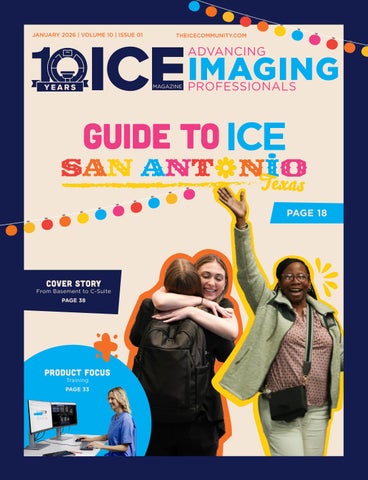
GUIDE TO PAGE 18
COVER STORY
From Basement to C-Suite PAGE 38
PRODUCT FOCUS Training
PAGE 33
SUPPLYING YOUR
GE AT&AOEC Cables PRICE YOU CAN AFFORD Kenneth Saltrick, President of Engineering Services in Twinsburg, Ohio, knows from his long experience that C-arm machines themselves are absolute workhorses. For customers looking to blend the gap between expensive OEM and unreliable used assemblies, WE have your solution.
1
2
3
Our complete repair contains a new cable assembly, utilizing all OEM cable and components with a harvested plate and connector housing as they are proprietary items. These completely repaired products will have a significant cost savings with build quality above new OEM products and carry a warranty of 180 days, which is untouchable in the market.
Photo 1: 9900, 9800 Interconnect cables, Photo 2: 5435446-01 and 5840677-01 Elite Interconnect cable, Photo 3: 9900, 9800 Receptacle cables
CONTACT US TODAY!
330.425.9279 X.11 | WWW.ENG-SERVICES.COM INFO@ENG-SERVICES.COM
Imaging Equipment Removals Made Simple. •Turnkey REMOVALS for ALL IMAGING MODALITIES •OEM-grade execution from start to finish •100+ Complex Projects Completed •99% On-Time Performance •Nationwide Coverage
Get a GUARANTEED Removal Quote in 24 Hours One point of contact from OFFER
DE-INSTALL
REMOVAL
Let’s Get Your Project Moving
Get a Firm Quote
EspinMedical.com/quote• info@espinmedical.com•206-755-1768
FEATURES
42 DEI
Leaders must know how menopause shows up at work and understand the challenges that come with it to be truly supportive.
38 COVER STORY
For years, interventional radiology (IR) was “one of medicine’s best-kept secrets,” but “that era is over.” Interventional radiology (IR) has emerged as a “dynamic, front-line clinical specialty”.
10 RISING STAR
MadisonHealth’s Daisy Rosas is a sonographer as well as an X-ray and CT tech with multiple degrees who hopes to one day serve patients in developing nations.
6
ICEMAGAZINE | JANUARY 2026
ADVANCING THE IMAGING PROFESSIONAL
JANUARY 2026
22 IMAGING NEWS
Catch up on the latest news from around the diagnostic imaging world.
33
PRODUCT FOCUS
The surging need for imaging techs means training solutions like these are in high demand.
50
MEDICINE FOR THE SOUL
Study indicates that people who purchase flowers are more likely to report feeling better at home and at work. They experience improved mood, reduced stress and even better overall morale.
THEICECOMMUNITY.COM
ICEMAGAZINE
7
MD Publishing 1155 Senoia Rd, Ste. 200, Tyrone, GA 30290 Phone: 800-906-3373
SPOTLIGHT
10
Rising Star Daisy Rosas, R.T. (R)(CT)(ARRT), RDMS (AB, OB/GYN)
12
In Focus Lisa Walling, CRA, R.T.(R)
14
Off the Clock Shannon Boos, Lead X-ray Tech, Virtua Urgent Care of Moorestown, New Jersey
16
ICE Debut AMX Solutions
Senior Account Manager
18
Guide to ICE CEUs, Networking and Solutions Await Imaging Professionals
Editorial
NEWS
President
John M. Krieg john@mdpublishing.com
Vice President
Kristin Leavoy kristin@mdpublishing.com
Vice President of Business Development Jayme McKelvey jayme@mdpublishing.com
Megan Cabot megan@mdpublishing.com
John Wallace
Editorial Board
Beth Allen David V. Buczkowski Kimberly Love Megan M. Parker Dean Skillicorn Jason Theadore
Senior Sales Executive Emily Hise
Art Department Karlee Gower Taylor Hayes Alicia Brown
Events
Kristin Leavoy
Webinars
Linda Hasluem
Digital Department Cindy Galindo Kennedy Krieg Haley Harris
Accounting Diane Costea
ICE Magazine (Vol. 10, Issue #1) January 2026 is published by MD Publishing, 1155 Senoia Rd, Ste. 200, Tyrone, GA 30290. For subscription information visit www. theicecommunity.com. The information and opinions expressed in the articles and advertisements herein are those of the writer and/or advertiser, and not necessarily those of the publisher. Reproduction in whole or in part without written permission is prohibited. © 2026
8
CONTENTS
ICEMAGAZINE | JANUARY 2026
22
Imaging News A Look at What’s Changing in the Imaging Industry
28
Webinars Webinar Shares Quality Improvement Program Tips
PRODUCTS
32 33
Market Report
Product Focus Training
INSIGHTS
29
Director’s Circle Training
42
DEI The Midlife Radiance: Supporting Women Through Menopause at Work
44
PACS/IT/AI RSNA 2025: We can do better with AI
46
Director’s Cut Rethinking Onboarding: Why It Can’t Stop After Week One
48
Emotional Intelligence 5 Essential Components Every Team Needs
50
Medicine for the Soul Buying Flowers May Boost Well-Being, Reduce Stress
52 54 56
ICE Break
ICEDEX ICE Maker Preferred Vendors ADVANCING THE IMAGING PROFESSIONAL
One probe restored Countless lives touched
Elevate Patient Care Rely on Innovatus Imaging
Join us at the following industry events HTMA-Ohio Feb. 5-6 Imaging Conference and Expo: Feb. 20-22
844-687-5100
innovatusimaging.com
SPOTLIGHT
RISING
STAR
DAISY ROSAS, R.T. (R)(CT)(ARRT), RDMS (AB, OB/GYN)
M
adisonHealth’s Daisy Rosas, R.T. (R) (CT)(ARRT), RDMS (AB, OB/GYN), is a sonographer as well as an X-ray and CT tech. She holds multiple degrees as well as an academic certificate in diagnostic medical sonography. She is a local product who grew up “in a small town called Rexburg, Idaho” where she now works. Daisy appears to have a desire for education and helping others. ICE Magazine recently found out more about this Rising Star in a Q&A.
Daisy Rosas hopes to one day volunteer and provide imaging to medically underserved areas.
10
ICEMAGAZINE | JANUARY 2026
Q: WHERE DID YOU RECEIVE YOUR IMAGING TRAINING/EDUCATION? A: I received my imaging training and education through Idaho State University (ISU) in Pocatello, Idaho, for my medical imaging degrees. I graduated in May 2024 with my bachelor of science in radiographic science (cum laude) and bachelor of arts in Spanish for health professions (cum laude). Later, I applied and was accepted to ISU’s Diagnostic Medical Sonography Program for fall 2024. In August 2025, I graduated with an academic certification in diagnostic medical sonography. Currently, I have certifications
ADVANCING THE IMAGING PROFESSIONAL
through ARRT for radiography and computed tomography and ARDMS certifications in abdomen (AB), and obstetrics & gynecology (OB/GYN) Q: HOW DID YOU FIRST DECIDE TO START WORKING IN IMAGING? A: Observing my mother’s ultrasounds of my siblings sealed my faith in pursuing a career in medical imaging. As an 8-year-old girl, it was fascinating to feel a baby inside my mom while seeing them on the screen! Q: WHAT IS THE MOST REWARDING ASPECT OF YOUR JOB? A: Having the ability to help a patient in getting a diagnosis while forming a connection with them is the most rewarding feeling. Once they are in my care, I take care of them as if they were my family. I would want my own family members to be treated well and that’s the energy I give to my patients. Q: WHAT DO YOU LIKE MOST ABOUT YOUR POSITION? A: I love the variety I get to do as a multi-modality technologist. In my current position, I can still do radiography, CT and sonography at my facility and rotate through each. I can interact with multiple patients as their sonographer, radiographer or CT technologist. It’s never a boring day in the radiology department. Q: WHAT INTERESTS YOU THE MOST ABOUT THE IMAGING FIELD? A: Every modality is different. Every patient is different and unique in their own way. It’s amazing how everyone is unique inside and out – literally! It’s amazing how far the technology in medical imaging has advanced throughout the years. I’m excited to see what upcoming breakthrough in technology will help us technologists and our patients for their diagnosis. Q: WHAT HAS BEEN YOUR GREATEST ACCOMPLISHMENT IN YOUR FIELD THUS FAR? A: As a first-generation graduate, completing a bachelor’s and graduating from university was my greatest accomplishment. In terms of imaging field, the many boards and certifications that I was able to obtain these past two years. I am grateful to be in the position that I am in, having the ability to help patients and provide them with the care they deserve. Every day in this career feels like I’m accomplishing something!
THEICECOMMUNITY.COM
Q: WHAT GOALS DO YOU HAVE FOR YOURSELF IN THE NEXT FIVE YEARS? A: After obtaining additional experience in the modalities I am certified in, I would like to volunteer my time for a nonprofit that serves medically underserved regions specifically in medical imaging. It would be a great opportunity to see other regions of the world where medical imaging is scarce and find a way to help these regions the best I can. Some personal goals are to travel and experience different cultures. I would like to pursue a master’s in relation to healthcare. Finally, I want to obtain more certification, specifically in sonography, to help better serve my patients that I come across. •
FUN FACTS FAVORITE HOBBY: Photography FAVORITE FOOD: Birria Quesadillas or a great Italian dish FAVORITE VACATION SPOT: Anywhere that has warm weather 1 THING ON YOUR BUCKET LIST: Visit Thailand SOMETHING YOUR CO-WORKERS DON’T KNOW ABOUT YOU: I love watching dramas/listening to music from other parts of the world!
ICEMAGAZINE
11
SPOTLIGHT
IN FOCUS LISA WALLING, CRA, R.T.(R)
O
klahoma City Indian Clinic is a contractor of the Indian Health Service to provide culturally sensitive health and wellness services from talented and devoted providers. From pediatric and prenatal care to family medicine, it provides basic medical care as well as also dental, optometry, behavioral health services, fitness, nutrition and other family programs. It is a nonprofit corporation that strives to increase access to quality healthcare and wellness services and produce positive health care outcomes for urban American Indians living in central Oklahoma. Oklahoma City Indian Clinic Director of Radiology Lisa Walling, CRA, R.T.(R), found her career in radiology by accident – literally. “Years ago, I was in a minor car accident,” Lisa explains. “During my visit, my doctor ordered some X-rays, and as I lay on the table, I had a light bulb moment – I knew this was what I was meant to do. That experience inspired me to apply to radiology school, and I’ve been passionate about this field ever since.” Her moment of discovery on the X-ray table continues to ring true.
12
ICEMAGAZINE | JANUARY 2026
ADVANCING THE IMAGING PROFESSIONAL
The Oklahoma City Indian Clinic Imaging Department is always ready to lend a helping hand.
“I love making a meaningful difference in the lives of our Native American population. It’s been especially rewarding to introduce advanced technologies that enhance our screening exams and improve patient care,” she says when asked why she loves her job. Lisa feels strongly about family and is a community-minded individual. Her personality traits were on display when she was asked about her greatest accomplishment. “Personally, my greatest accomplishment is my family. I’ve been married to my amazing husband, Rusty, for 27 years. Together, we’ve raised two caring, adventurous and passionate children. I’m so proud of the people they’ve become,” Lisa shares. “Professionally, my greatest accomplishment is building strong, high-performing teams. I’ve had the privilege of working with incredible technologists, radiologists and support staff. Many of those relationships have lasted well beyond my time at each organization – something I deeply value.” “I lead with a servant’s heart,” she adds. “I believe in developing teams where each individual feels empowered to grow. My goal is always to foster a culture of compassion, excellence and continuous improvement in how we serve our patients every day.” Her success in radiology comes from hard work along with guidance from mentors.
LISA WALLING
CRA, R.T.(R), Oklahoma City Indian Clinic Director of Radiology 1. What is the last book you read? “Brag Better: Master the Art of Fearless Self-Promotion” by Meredith Fineman
Lisa Walling participated in the Oklahoma City Indian Clinic ribbon-cutting ceremony to officially launch its Invenia ABUS advanced screening.
“I was fortunate to have David Yoder as a mentor early in my leadership career – his guidance helped shape my foundation. Currently, I’m learning a great deal from Cindy Winter, AHRA’s president-elect, whose leadership and insight continue to inspire me. I’m also proud to mentor a team member who’s exploring a path into leadership – it’s rewarding to help others grow,” Lisa says. Looking to the future, she encourages herself and others to accept opportunities and to push through challenges. “Say yes – even when it feels uncomfortable. Growth happens outside your comfort zone. Some of my most rewarding experiences, both personally and professionally, have come from simply being willing to take that first step,” Lisa says. Speaking of the future, what can radiology and imaging departments expect in the next 5 to 10 years? “AI is the future of imaging. I believe we’re on the brink of a transformative era where technology will significantly enhance diagnostic accuracy, efficiency and the overall patient experience,” Lisa says. Along with Rusty and two adult children, Lisa says her family includes “a full house of fur babies – five dogs and two cats – and we foster for the Great Pyrenees Rescue of Oklahoma, where we adopted two of our pups.” •
and grandmother. That experience opened my eyes to new cultures, perspectives and ways of life. It sparked a lifelong curiosity and appreciation for travel that continues to shape how I view the world and connect with others. 6. Who has had the biggest influence on your life? My parents have had the greatest influence on my life. They taught me the
2. What is your favorite movie? “Tombstone.” In college, it
value of hard work, compassion and integrity. Their support and
played at the dollar theater – and we watched it every night!
example shaped who I am both personally and professionally.
3. What is something most of your coworkers don’t know
7. What would your superpower be? The ability to be in two
about you? I’m a huge baseball fan! My family and I are on a
places at once – so I could give 100% to both my team and my
mission to visit all 30 MLB ballparks.
family without ever missing a moment.
4. What is one thing you do every morning to start your day? I
8. What is your perfect meal? Any meal shared with my family
start my day with coffee – then switch to the hard stuff: Diet Coke.
or friends. It’s less about what’s on the table and more about
5. Best advice you ever received? “See the world.” When
who’s around it. Whether it’s a home-cooked dinner or takeout
I was 15, I spent a summer in Germany with my aunt, uncle
THEICECOMMUNITY.COM
on a busy night, being together makes it perfect.
ICEMAGAZINE
13
SPOTLIGHT
Off Clock THE
SHANNON BOOS, LEAD X-RAY TECH, VIRTUA URGENT CARE OF MOORESTOWN, NEW JERSEY BY MATT SKOUFALOS
F
or years, Shannon Boos parlayed her lifelong love of animals into work as a dog groomer. She loved her work, but began to wonder what other opportunities would be available to her if she were to advance her education, or try something different — like medical imaging. Shannon enrolled in the X-ray tech program at Rowan College at Burlington County (RCBC), and began working as a tech aide at South Jersey Radiology (SJR), a multi-site, physician-led imaging practice. “I thought, if I don’t like X-ray, I’m bound to like something – nuclear medicine, MRI, CT – so many options,” she said. “I decided because I was so indecisive. The key was I don’t have to settle; I’m sure I’ll find something I like.” “I just loved X-ray so much more than I thought I would, and I didn’t explore any other modalities,” Shannon said. “It was way more rewarding than I ever expected it to be. It is not easy schooling.” Shannon remained at SJR while she completed her clinical rounds at the Voorhees, Berlin, and Mount Holly, New Jersey locations of Virtua Hospital, respectively; and she kept working there part-time after graduating in May 2011. Full-time positions were scarce in her field at the time, but Shannon was able to land per-diem work at Virtua Berlin, and continued to work as a pet groomer on the side. Being within the Virtua Health system afforded Shannon the opportunity to join that network full-time when it opened an outpatient urgent care center in Moorestown, New Jersey in 2012. Today, she works as the lead X-ray tech at that urgent care, and as a clinical preceptor within the RCBC X-ray program, traveling to affiliated hospital sites to help new techs learn the ropes of patient care. 14
ICEMAGAZINE | JANUARY 2026
“I was hitting my point of ‘what else can I possibly do here?’, and so I went back to school and got my bachelor’s online,” Shannon said. “One of my old coworkers was teaching at RCBC, and said they would be looking for people. That gave me the kick to finish quicker than I’d intended to; it gave me my foot in the door to see if I like teaching.” “Now, I find myself at some of those same hospitals with the same techs while I’m teaching,” she said. Among the aspects of the job that Shannon most enjoys is her ability to support patients’ needs and capture a high-quality diagnostic image, whether she has to move the room, the tube or reposition patients to do it. She also enjoys interacting with the patients entrusted to her care, getting to know them 15 minutes at a time. “I want to hear why a patient is getting an X-ray,” she said; “I want to know how they did with their surgery because I saw them pre-op.” That same interest in people has carried over to Shannons’ interactions with her students. She loves to hear how they, like she, found professional purpose in the imaging field; what their interests and hobbies are; and how their approach to the industry might differ from her own. “I really enjoy being with the students, getting to know them as people – not just sitting there listening to me talk for two hours,” Shannon said. “There’s no other tech with me when I’m working, so it’s nice to get out there and see other techs and make those connections.” Unlike the career landscape she faced upon graduating in 2011, the X-ray techs who complete the RCBC program today have little difficulty finding employment. Shannon views that as a natural offshoot of the post-COVID-19 pandemic career landscape that has delivered new career opportunities as well as a mindset geared towards problem-solving. “COVID really made a lot of people leave, but it also made ADVANCING THE IMAGING PROFESSIONAL
Shannon Boos loves her job, Phillies baseball and spending time with family.
us creative,” she said. “We had to find other ways to do things. That happened in the X-ray world too. How can we do this without being hands-on?” “[There’s more] teamwork; I see that people maybe work together better since COVID,” Shannon said. “They’ve found the X-ray role is maybe more important than they once gave us credit for, and students are filling in those holes that they thought they didn’t need.” When she’s not at work, Shannon is focused on her family, which includes her adult daughter, Phoebe, school-aged son, Dylan, and dogs Fry and Tucker. Fry, a golden retriever, is 12, and was one of the ring-bearers when Shannon married her husband, Garrett. Tucker, 5, is a Labrador retriever mix and rescue dog who is “very attached to his brother,” Fry, she said. “My dogs are still my children,” Shannon said. “Those are our boys. We’re always looking for another golden to add to our family. They’re perpetual toddlers to me; they’re happy with anything. They make you feel like a better person.” The family’s love of dogs extends into the natural world, where Shannon takes any chance she can to go on a hike. She’s happy to walk the neighborhood with a podcast in her earbuds, but special trips, like a recent visit to Acadia National Park in Maine, remain fixed in her memory.
On evenings when she has not worked a 12-hour day, Shannon also likes spending time with a good book. She enjoys psychological thrillers, but won’t turn down a meet cute romance novel depending upon her mood. As significant a role in her life as pets and family play, Shannon also counts herself a tremendous Philadelphia sports fan, a passion that runs throughout her extended family. Shannon shares a partial Philadelphia Phillies season ticket plan with her niece, Sarah, and the family has elevated the stakes for each contest by keeping track of who’s in attendance when the team wins. “We have taken it to the next level,” Boos said. “My brother-in-law made trophies. We now have a winner and a loser trophy. You have to go to at least five games a season for it to count; I’ve been second or third place every year.” Her favorite players on the team include catcher J.T. Realmuto, designated hitter Kyle Schwarber, who is the National League home run champion; and utility player Edmundo Sosa, whose jersey she purchased this year. “I’m a huge sports fan,” Shannon said. “If I’m not at the game, I’m watching the game. That’s a passion my dad inflicted on us.” That passion extends to her love of
the Philadelphia Eagles. In her household, “the Super Bowl is like our Christmas,” regardless of the matchup. As much as the family “bleeds green” for its beloved team, they gather in droves to watch the final contest of the season. “We eat and enjoy each other,” Shannon said. “It’s a big to-do.” The family tradition dates back some 20 years, when her uncles, one of whom was a chef, began cooking together for the game. They then started folding in their nieces and nephews to the party, and it expanded into an annual tradition. “It went from four or five us to, if everybody comes, closer to 20,” Shannon said. “Unfortunately, my uncles have passed, but it’s nice that we can keep it going. He went all-out, so for us, it’s our family time.” “It’s one of my favorite days of the year.” Shannon’s love of sports has only strengthened since her father Don’s passing. Both he and her sister, Nicole, died of Huntington’s disease, and Shannon routinely helps fundraise towards a cure. In their memories, she runs a candygram campaign, through which her coworkers can send each other notes of appreciation with a little treat attached. All proceeds go to the nonprofit Huntington’s Disease Society of America, which improves the lives of families battling the genetic disease. •
Outside of work,Shannon Boos is focused on her family, including her adult daughter, Phoebe, school-aged son, Dylan, and dogs Fry and Tucker. Fry, a golden retriever, is 12, and was one of the ring-bearers when she married her husband, Garrett.
THEICECOMMUNITY.COM
ICEMAGAZINE
15
SPOTLIGHT
ICE Debut A
MX Solutions Inc. was created after years of intensive research with directors of radiology, biomed, clinical and field engineers. The company’s leadership asked these professionals what they saw as the ideal set of circumstances under which they could streamline work processes, reduce maintenance issues and eliminate downtime. The result is a combination of services crafted into intelligent solutions to fulfill all your AMX requirements. AMX Solutions specializes in the GE AMX line of portable X-ray machines. When you specialize, you’ve got to be good at what you do! With more than 20 years of experience in the field, AMX Solutions’ experts know this product – each model. AMX Solutions stands 100% behind its work. When you purchase equipment from AMX, you’re not just buying a portable. You’re buying years of knowledge and experience built on quality, integrity and total customer satisfaction. AMX Solutions’ specialty is rebuilding and upgrading the AMX 4 with all the features, functionality and reliability of the AMX 4 Plus. AMX Solutions is dedicated to helping engineers eliminate downtime. The company believes that a unit should never be down for more than 24 hours and its purpose is providing solutions to meet that goal. AMX Solutions President Lee Ready recently shared more information about the company with ICE Magazine. Q: CAN YOU TELL US A LITTLE ABOUT YOUR COMPANY? READY: AMX Solutions has been in the industry for over 20 years. Located in Augusta, Georgia, we specialize in portable AMX4+ units. We handle complete rebuilds of entire AMX4+ units and individual components. We also sell individual replacement parts as well as batteries for the AMX4+ units and the Optima units.
16
ICEMAGAZINE | JANUARY 2026
Q: HOW DOES YOUR COMPANY STAND OUT IN THE IMAGING SPACE? READY: AMX has 20-plus years of history in the industry with a reputation for quality work and customer service. The employees who helped build that reputation are still with the organization and continue to help AMX Solutions thrive. Additionally, all of our rebuilds, painting and service are done 100% in-house by our technicians. Q: WHAT IS ON THE HORIZON FOR YOUR COMPANY? READY: Our current mission is to get the name of AMX Solutions back in front of everyone in the industry. We want to let the industry know that we are still here and want to continue to provide the same service that people have come to expect from our brand. We also want to stress that the same team who provided quality service in the past is still with the organization. We hope that this can rekindle old partnerships as well as create new ones within the industry. Q: IS THERE ANYTHING ELSE YOU WOULD LIKE ICE MAGAZINE READERS TO KNOW? READY: AMX Solutions was known for being a family organization. We want readers to understand that while AMX Solutions may have new leadership, the organization still has a heavy family focus. The new AMX is owned and operated by myself and my two sons – Campbell and Leland. • For more information, visit amxsolutionsinc.com.
ADVANCING THE IMAGING PROFESSIONAL
NEW YEAR
NEW SKILLS Start 2026 strong by investing in your team’s growth. AllParts Medical’s hands-on training at our Nashville Center of Technical Excellence delivers the expertise that drives performance all year long.
Bone Density
C-arm
Cath Lab
CT
General X-Ray
MRI
Portable X-Ray
Ultrasound
Contact Us (866) 507-4793 apmsales@philips.com
LEARN MORE
GUIDE TO ICE
CEUS, NETWORKING AND SOLUTIONS AWAIT IMAGING PROFESSIONALS
T
he 2026 Imaging Conference & Expo (ICE) kicks off on February 20, 2026, delivering three days of education, networking and hands-on exposure to products and services that support diagnostic imaging professionals. ICE is a unique conference dedicated exclusively to imaging directors, radiology administrators and imaging engineers. It provides a rare opportunity for learning and industry discussion among the professionals responsible for the delivery, management and technical support of imaging services in the nation’s healthcare systems. The 2026 Imaging Conference & Expo (ICE) has been approved by ASRT for 28 Category A CE credits and 9 CEUs by the ACI. The conference once again offers education designed to help attendees elevate patient care, streamline department operations and enhance equipment service expertise. ICE admission is complimentary for hospital employees, imaging center staff members, full-time students and active military personnel, reinforcing the event’s commitment to accessibility and knowledge-sharing across the profession. ELITE EDUCATION EXPERIENCE The 2026 education program includes nearly 20 hours of sessions presented by nationally recognized speakers. 18
ICEMAGAZINE | JANUARY 2026
Topics span clinical leadership, regulatory compliance, advanced imaging service, artificial intelligence, workflow optimization and patient experience improvement. Highlights include: • AI and Imaging Innovation: Multiple sessions explore AI, real-world decision support and emerging applications in radiography and maternal care. Presenters break down where AI can help, what adoption barriers remain, and how technologists and administrators can build trust across their teams. • Imaging Service and Equipment Strategy: From practical approaches to CT service expansion to advanced capital planning, attendees will learn how to maximize uptime, extend equipment life cycle and support smarter purchasing decisions. • Leadership, Workforce and Culture: Presentations ADVANCING THE IMAGING PROFESSIONAL
will also address burnout, organizational culture, team development and staff resilience. Several speakers will explore actionable ways to promote teamwork and support well-being within radiology and HTM teams. • Patient-Centered Radiology: Speakers will speak to managing claustrophobic patients in MRI, enhancing experience metrics, and building patient-focused care pathways that reinforce the value of clinical empathy and communication. With multiple tracks offered simultaneously, attendees can customize their education experience, whether seeking leadership strategies, technical expertise or operational innovation. The keynote session, “Advocacy in Action: What’s Happening in Radiology,” will provide a timely overview of current regulatory and legislative issues impacting the field. Representatives from the Radiology Business Management Association (RBMA) will outline emerging pressures on radiology practices and describe how imaging professionals can engage in effective advocacy. In an environment where compliance and reimbursement pressures continue to evolve, the session promises to help attendees navigate the broader public policy landscape affecting imaging decisions, budgets and staffing. NETWORKING THAT BUILDS COMMUNITY ICE has built a reputation for creating meaningful, productive exchanges between colleagues. ICE 2026 continues this tradition with dedicated opportunities to connect, share best practices and form relationships that extend beyond the show. The ICE Break Networking Lunch is a time for dialogue and collaboration, while the exhibit hall’s grand opening reception allows attendees to connect with vendors and colleagues in a relaxed setting. The conference concludes with Río & Rhythm: A Riverwalk Fiesta, a celebration that brings together attendees against the backdrop of the San Antonio Riverwalk. Local cuisine, lively music and scenic views welcome participants to unwind after two full days of learning.
EXCLUSIVE EXHIBIT HALL SOLUTIONS ICE’s exhibit hall will feature leading technology manufacturers, service companies, software developers and support providers who serve the imaging community. Exhibitors will share solutions aimed at improving uptime, lowering cost, supporting workflow efficiency and elevating image quality. Whether attendees oversee a multi-site imaging enterprise or manage service for a single facility, the exhibit hall offers
THEICECOMMUNITY.COM
ICE18
LEADERSHIP SUMMIT
For a select group of imaging leaders, the ICE18 Leadership Summit offers an exclusive, high-impact way to accelerate your professional growth and expand your network – all within the larger framework of the Imaging Conference & Expo. The ICE18 Leadership Summit is a gathering of imaging directors, administrators and HTM decision-makers from hospitals, imaging centers and health systems across the country. Attendance is by invitation only – ensuring a room full of peers with both influence and experience.
WHY ATTEND? Summit attendees have a rare opportunity to network with some of the brightest minds in the imaging industry. You’ll share insight and strategies drawn from extensive experience – helping you and your department grow. Several networking events – including a dinner and breakfast and informal gatherings – create space for meaningful idea-sharing and collaboration. REVERSE EXPO Unlike a traditional exhibit hall, the Reverse Expo flips the script where attendees engage in a speed-dating-style format with vendors and service providers. The goal is to discover resources, tools and services that can save your department time, money and operational headaches. Find out more and apply at attendice.com/ice-18/
ICEMAGAZINE
19
GUIDE TO ICE direct access to suppliers who can help address daily challenges. Many companies bring hands-on demonstrations of new technologies, while others help attendees continue conversations from the educational sessions. The exhibit hall connects clinical, leadership and service decision-makers with solution providers who understand imaging’s most pressing pain points. A PLACE WHERE LEADERSHIP KEEPS GROWING ICE continues to offer a unique blend of perspectives by bringing together imaging directors, radiology administrators and imaging service engineers. Rather than siloing disciplines, ICE encourages shared discussions across clinical operations, technical service and departmental strategy. It is a balanced approach that has grown ICE into a nationwide community. Attendees arrive not only to learn, but also to give back by sharing insight, experiences and collaborative problem-solving ideas with other professionals.
Many attendees return each year and describe ICE as a “career refresh” – a setting to gain clarity, sharpen skills and return to work equipped with new strategies. A TRADITION OF EXCELLENCE, A FOCUS ON THE FUTURE For more than a decade, the Imaging Conference & Expo has served as a hub for imaging leaders seeking professional development. The 2026 edition builds on the success of prior events with a wide variety of educational sessions, expert speakers and unmatched networking. By combining best-in-class training with an industry-exclusive vendor hall, ICE continues to provide imaging professionals with the resources and information needed to lead their teams and deliver high-quality patient care. • The full educational agenda, hotel information and registration details are available at AttendICE.com.
EVENT SCHEDULE FRI SAT SUN FEBRUARY 20
FEBRUARY 21
FEBRUARY 22
2 PM REGISTRATION
7 AM REGISTRATION
5-6 PM LEADERSHIP SUMMIT REGISTRATION*
7:30-8:30 AM LEADERSHIP SUMMIT BREAKFAST*
9-10 AM EDUCATION
6 PM LEADERSHIP SUMMIT DINNER*
8-9 AM EDUCATION
10:30-11:30 AM EDUCATION
9-11 AM REVERSE EXPO*
11:30-2 PM EXHIBIT HALL (LUNCH PROVIDED)
9 AM-3 PM EXHIBITOR SET-UP 9:30-10:30 AM EDUCATION
* Attendance by invitation ONLY.
11 AM-12 PM EDUCATION 11 AM-12:30 PM LEADERSHIP SUMMIT* 12-1:30 PM ICE BREAK NETWORKING LUNCH 1:30-2:30 PM EDUCATION 2:45-3:45 PM KEYNOTE PRESENTATION 3:45-4:15 PM ICE DIAMOND AWARDS PRESENTATION 4:30-6:30 PM EXHIBIT HALL GRAND OPENING
8 AM REGISTRATION
2-3 PM EDUCATION 3:30-4:30 PM EDUCATION 5 PM RÍO & RHYTHM: A RIVERWALK FIESTA
EXHIBITOR LISTINGS
Be sure to visit these exhibitors! AB Staffing Solutions Booth #310
College of Biomedical Equipment Technology
Acertara Acoustic Laboratories
CPN Power Inc.
Booth #219
Advanced Ultrasound Systems Booth #315
AIV Inc.
Booth #304
AllParts Medical Booth #212
Althea US Booth #210
AMSP
Booth #3
Avante Health Solutions Booth #213
Beekley Medical Booth #312
Block Imaging Booth #109
Capstone Imaging Services Booth #227
Catalyst MedTech Booth #209
Cevi Med
Booth #208
Chronos Imaging Booth #207
Booth #306 Booth #100
CryoSRV LLC Booth #206
DirectMed Imaging Booth #203
Downtime Trace Booth #211
E.L. Parts and Service LLC Booth #225
First Call Parts Booth #226
Gurnick Academy Booth #119
ImageFirst Booth #217
Innovative Radiology Booth #218
Innovatus Imaging Booth #202
Intelas Health Booth #220
InterMed
For more information and the view of the floorplan, visit attendice.com/exhibitor-registration
KA Imaging
Rayus Radiology
Lexicon MedParts LLC
RSTI
Modular Devices
RTI Group North America
Booth #104
Booth #204 Booth #113
MW Imaging Booth #302
MXR Imaging Booth #105
On Power Systems Booth #1
PartsSource Booth #303
Philips Healthcare Booth #117
RAD365 Inc. Booth #114
Radiology Business Management Association (RBMA) Booth #5
RamSoft Inc. Booth #106
RaySafe
Booth #316
Booth #107
Booth #301
Booth #216
Samsung Booth #103
Siemens Healthineers HTM Service Solutions Booth #121
Shared Medical Services Booth #102
Solutech
Booth #307
Southwest X-Ray Company Booth #126
STATLINX Booth #4
Staxi Corporation Booth #6
Tri-Imaging Solutions Booth #125
USOC Medical Booth #127
Booth #221
Intersocietal Accreditation Commission (IAC) Booth #205
Interstate Batteries Booth #224
THEICECOMMUNITY.COM
*Subject to change
ICEMAGAZINE
21
NEWS
Imaging News A LOOK AT WHAT’S CHANGING IN THE IMAGING INDUSTRY
BAYER CT INJECTION SYSTEM OFFERS WIDER RANGE OF COMPATIBLE CT CONTRAST AGENTS
Bayer recently announced that its MEDRAD Centargo multi-patient CT injector has secured 510(k) clearance from the U.S. Food and Drug Administration (FDA) to expand the use of compatible contrast agent presentations to include single-dose vials in addition to the previously cleared Imaging Bulk Package (IBP) presentations for Ultravist (iopromide), Isovue (iopamidol), Optiray (ioversol) and Omnipaque (iohexol). Additionally, Bayer announced the addition of Visipaque (iodixanol) in single-dose vials as Centargo’s fifth compatible contrast agent. This expansion now offers customers in high-throughput imaging suites a wider range of compatible contrast agents and presentations from Centargo. “We know our customers operating high-volume suites, who serve dozens of patients daily, require flexible and cost-effective solutions to meet their unique needs,” Bayer’s Jill Carbone said. “The expanded presentations will further support healthcare providers by helping to improve efficiency in end-of-day procedures, providing greater flexibility for those still transitioning to bulk contrast use, and supporting their broad imaging needs with an option to use any of the five leading contrast agents.” The MEDRAD Centargo CT Injection System helps reduce process and administrative burdens for healthcare providers, enabling them to focus more on patient care, particularly in high throughput settings, according to a news release. By integrating with Bayer’s portfolio of imaging and Cortenic Connectivity workflow solutions, healthcare providers can optimize contrast-usage and enable connectivity to the scanner, hospital radiology information systems and Bayer services, the release added.
22
ICEMAGAZINE | JANUARY 2026
ADVANCING THE IMAGING PROFESSIONAL
NEW CLINICAL EVIDENCE ON HOLOGIC’S AI-POWERED MAMMOGRAPHY SOLUTIONS UNVEILED New data on Hologic’s breast cancer detection technologies was presented at the Scientific Assembly and Annual Meeting of the Radiological Society of North America (RSNA) in Chicago, Illinois. “At Hologic, we’re committed to advancing our technologies to support women at every stage of the breast health continuum, and real-world studies are a critical part of that,” said Mark Horvath, president of breast & skeletal health solutions at Hologic. “Artificial intelligence is increasingly becoming a critical tool in mammography, and we are encouraged to see data from multiple studies underscoring its potential to help radiologists work more efficiently without sacrificing quality.” In a study led by Dr. Manisha Bahl, M.D., MPH, FSBI, associate medical director of quality at Mass General Brigham and associate professor of radiology at Harvard Medical School, researchers at Massachusetts General Hospital evaluated Hologic’s 3DQuorum imaging technology. Based on more than 160,000 screening mammography exams, the retrospective study compared cancer detection rates before and after adopting 3DQuorum imaging technology, which uses AI to reduce the number of 3D imaging “slices” radiologists need to review without compromising image quality, sensitivity or accuracy. In the simplest terms, the technology is comparable to condensing a 60-page book into a 10-page summary that retains all relevant information and highlights key findings. The study found no significant difference in cancer detection rates after implementation of
THEICECOMMUNITY.COM
3DQuorum. With ongoing radiologist shortages, these results suggest the technology’s potential to streamline radiologists’ workflows and save valuable time while maintaining high effectiveness in detecting cancers. “AI holds boundless potential in healthcare that we are only beginning to tap into, with a wide range of applications that can improve patient care,” said Dr. Manisha Bahl, M.D., MPH, FSBI. “In breast cancer screening, technologies like 3DQuorum help radiologists work more efficiently while still delivering the same high-quality care to every woman. By streamlining the review process, AI allows us to focus our attention where it matters most: finding cancers early and supporting each patient with confidence.” Another study, led by Professor Yan Chen, Ph.D., chair of digital screening and head of the digital cancer screening research group at the University of Nottingham, U.K., looked at Hologic’s Genius AI Detection solution compared with radiologists. In this study, 108 radiologists from the U.K. and U.S. reviewed 75 challenging breast cancer cases, and the AI system assessed the same cases. Overall, the AI technology performed similarly to radiologists. It detected more cancers but also showed lower specificity, meaning it could flag more false positives. Although the study is still ongoing, these initial findings indicate that AI could help radiologists manage workloads in settings where double reading by multiple radiologists is required but staffing may be limited.
ICEMAGAZINE
23
NEWS
NEW AI-ENABLED RADIOLOGY SERVICES & SIMULATIONS IMPROVE HOSPITAL OPERATIONS Siemens Healthineers is launching artificial intelligence-enabled services to help healthcare providers address a range of challenges from hands-on image interpretation to complex scenario planning for entire healthcare environments. The company’s new radiology services suite is designed to span the imaging chain from scheduling to image-generation to reporting. It bundles existing services and new ones like the AI-Enablement Services that can provide radiologists with custom-built summaries of clinically relevant observations, saving time in annotation of images and creation of reports. In addition, the company is enhancing its advisory services with artificial intelligence (AI) to simulate complex scenarios and recommend improvements to operations in hospital departments and other healthcare providers. The new offerings were presented at the 2025 Radiological Society of North America meeting in Chicago. With increasing demand for diagnostic imaging and a shortage of specialists, pressure on existing staff is growing and patients are having to wait longer for appointments and results. To reduce the burden on radiology teams while helping them work more efficiently, the new, vendor-neutral services suite is designed to comprehensively support radiologists by taking over some of the more mundane processes. In this way, it can help mitigate the effects of staff shortages and reduce radiologist burnout. Pilot projects have shown that by using the new AI-enabled solution, radiologists were able to annotate chest CT images up to 25 percent faster and experienced noticeably less cognitive load. The clinical accuracy of the results remained at the same high level. “It is very similar to having a resident physician drafting cases to you, with the tedious work already completed when you open a case. This allows you to move more efficiently through cases and decreases cognitive load,” said William Baughman, MD, radiologist at The MetroHealth
24
ICEMAGAZINE | JANUARY 2026
System, a nonprofit, public health system in Cleveland, Ohio, who has already tested the AI offering with his team. The new AI-Enablement Services are an important component of the Siemens Healthineers radiology services suite, which also includes existing services for remote scanning and reading. Customers can thus obtain support from medical-technical radiologists during image acquisition with magnetic resonance imaging through Remote Scanning Services. If customers need support for the generation of the final report, they can also leverage external expertise through remote reading services, carried out by licensed radiologists from external partner organizations of Siemens Healthineers. In this way, radiology departments can better address staff shortages and organize shifts more flexibly while maintaining standards of care for patients. Siemens Healthineers is already working on complementary load balancing and scheduling services to match patients and staff with the right scanner at the right time, driving more efficient workflows. “Together with our clinical partners, we have identified those steps in the radiological process where we as Siemens Healthineers can effectively relieve some burden – by automating or outsourcing routine activities,” said João Seabra, head of enterprise services at Siemens Healthineers. “We look forward to supporting radiology teams with this services suite so that they can focus on providing the best possible care for their patients.” Note: The Siemens Healthineers Radiology Services mentioned herein are not commercially available in all countries. Remote Reading is currently not available in the United States. Scheduling and Load Balancing Service are still under development. Their future availability cannot be guaranteed.
ADVANCING THE IMAGING PROFESSIONAL
ADVENTHEALTH, AIDOC COLLABORATE Aidoc, global leader in clinical AI with the most FDAcleared CAD solutions, has announced a collaboration with AdventHealth to launch one of the largest imaging AI deployments in the U.S. As part of AdventHealth’s commitment to consumer-centric, whole-person care, this initiative deploys Aidoc’s AI platform across dozens of AdventHealth’s hospitals and radiology locations across Florida and Kentucky to help clinicians quickly identify urgent cases, improve diagnostic speed and enhance patient safety for millions of patients each year, according to a press release. Health systems nationwide are managing rising demand for care, including medical imaging that requires increasingly timely review. Aidoc helps close this gap by automatically flagging critical cases in real time, enabling care teams to prioritize urgent cases and deliver faster care. “AdventHealth is committed to ensuring that patients receive timely, insightful imaging results that can inform their care journey,” said Elad Walach, co-founder & CEO of Aidoc. “By working together to responsibly scale AI, AdventHealth is modeling how health systems can harness technology that works in tandem with clinical experts to support clinical decision-making and deliver faster, safer and more equitable care at scale.” Powered by Aidoc’s aiOS, the enterprise-grade platform connects every layer of the care continuum – integrating
imaging data, clinical data from the EHR, and AI insights into one unified ecosystem. This enables proactive orchestration of cases, faster surfacing of acute and incidental findings, and better care coordination within the physicians’ natural workflow, the release states. By building this foundation for AI integration across key service lines such as radiology, neuroscience, and emergency medicine, AdventHealth is advancing its vision to provide connected, proactive and consumer-centric care in communities across the country. Alongside the AdventHealth hospitals included in the rollout, the connected network of care also encompasses dozens of freestanding emergency departments and imaging centers. “When every minute matters, this advanced AI integrates into our care teams’ workflows to help them act quickly so patients get the answers and treatment they need,” said Michael Cacciatore, MD, chief clinical officer for AdventHealth. “It’s another way we’re using technology to help people feel whole in body, mind and spirit.” This partnership comes amid strong momentum for Aidoc, which recently received Breakthrough Device Designation from the U.S. Food and Drug Administration (FDA) for a novel multi-triage solution – the first AI technology to earn this designation for such a broad range of medical conditions within one solution.
Replacement X-ray tubes for Radiography, R/F, Mobiles, C-Arms, And Mammography systems Premium Quality Exceptional Value Impressive Warranty
• Drop-in replacements for your system. Fit and function like the original. • Premium inserts from I.A.E. • X-ray tubes on the shelf, and ready to ship. • New, with an extensive warranty
Contact us at:
X-Ray America, LLC Email: info@X-RayAmerica.com Phone: 1.854.999.6888 Global: IAE.it US Headquarters: X-RayAmerica.com
THEICECOMMUNITY.COM
ICEMAGAZINE
25
NEWS PHOTONOVA SPECTRA WITH DEEP SILICON REIMAGINES PHOTONCOUNTING CT
GE HealthCare has announced the submission of a 510(k) to the U.S. FDA seeking clearance for Photonova Spectra, its new photon-counting computed tomography (PCCT) system with advanced AI algorithms – marking a major milestone in the company’s decades-long history of CT innovation. Photonova Spectra is 510(k)-pending. Built on GE HealthCare’s proprietary Deep Silicon detector technology, Photonova Spectra is designed to deliver remarkable spectral and spatial resolution for ultra-high-definition (UHD) imaging with wide coverage, seeking to enable fast acquisition speeds, precise visualization of anatomical structures and enhanced material separation, according to a press release. “Today marks a transformative leap for GE HealthCare and a bold new chapter in CT innovation. Photonova Spectra is more than a new product – it’s a demonstration of what’s possible when vision meets purposeful design,” says Peter Arduini, president & CEO of GE HealthCare. “Built to give healthcare teams the clarity and confidence they need, this system aims to redefine decision-making and care delivery – meeting today’s challenges and tomorrow’s possibilities. This is innovation with impact designed to reshape workflows, sharpen image quality and empower confident, timely decisions. I am immensely proud of our teams and collaborators who are transforming the future of CT and bringing precision care to life.” In today’s fast-paced healthcare environment clinicians need definitive answers, especially as patient volumes rise and diagnostic complexity increases. GE HealthCare’s Photonova Spectra was intentionally engineered to address these challenges. Harnessing the full potential of its proprietary Deep Silicon detectors, the system’s UHD imaging is designed to deliver wide coverage, enabling fast acquisition speeds and the precise visualization of subtle tissue variations, small lesions and vascular structures. With on-demand spectral imaging for every scan, it also seeks to empower clinicians to detect, characterize and monitor disease with confidence. Staff can also rely on one protocol setup for many exams, reducing complexity and supporting efficiency. Altogether, these capabilities aim to deliver clinicians the information they need in one exam and enable fast, confident diagnoses and treatment planning. Silicon stands out as a high-performing semiconductor material due to its purity and structural consistency. When interacting with X-ray photons, its unique composi-
26
ICEMAGAZINE | JANUARY 2026
tion enables the precise measurement of photon energy and delivers high levels of energy resolution – critical for advanced image reconstruction. This capability can allow clinicians to obtain images with high contrast, impressive low-contrast detectability and improved material characterization for potentially greater diagnostic confidence. Leveraging GE HealthCare’s innovative Deep Silicon detector design, Photonova Spectra aims to enhance image quality by reducing signal overload and improving energy separation. This enables GE HealthCare’s photon counting CT system to clearly distinguish between different materials such as iodine, calcium and fat with remarkable precision. Additionally, its wide detector coverage and rapid rotation speed (0.23 seconds) support fast acquisition and motion-free imaging – even in challenging patient scenarios. “Photon counting CT is a fundamentally different approach to imaging. It can be thought of as particle physics in action,” shares Giuseppe Toia, MD, assistant professor of radiology, associate section chief of abdominal imaging and intervention and program director of abdominal imaging and intervention fellowship with the department of radiology at the University of Wisconsin School of Medicine and Public Health. “Being involved in developing and testing the Deep Silicon detector has allowed us to assess how the technology can be applied to address common issues such as improving spatial resolution and attaining accurate CT numbers. The goal of using photon counting CT is to help differentiate materials and reveal diagnostic details, which is of interest to radiologists for informed clinical decision-making and streamlined workflows.” The clinical potential of Photonova Spectra with Deep Silicon spans a wide range of specialties, with the technology’s design seeking to unlock new levels of clarity, detail and diagnostic confidence.
ADVANCING THE IMAGING PROFESSIONAL
PHILIPS UNVEILS WORLD’S FIRST HELIUM-FREE 3.0T MRI PLATFORM Royal Philips unveiled BlueSeal Horizon, an entirely new 3.0T MRI innovation platform that includes the world’s first helium-free 3.0T magnet, at RSNA 2025. A pivotal advance in MRI innovation, helium-free 3.0T is a major scientific achievement set to have significant impact for health providers and patients, according to a press release announcing the MRI. “3.0T MRI systems are the most advanced MRI magnet technology in widespread use, providing high-resolution imaging for research and the most complex clinical cases. These systems excel in capturing the most intricate workings of the body, especially the brain, blood vessels, muscles and joints,” the release states. “Philips has led the development of helium-free MRI since 2018, with more than 2,000 of its 1.5T BlueSeal MRI systems installed worldwide, saving more than 6 million liters of liquid helium to date. The company is now bringing the same benefits to 3.0T MRI, eliminating the need for helium refills and vent pipes – reducing siting complexity, installation time and total life cycle risk.” “With BlueSeal Horizon we’re freeing MRI from dependence on a valuable resource the world can’t replace and bringing advanced diagnostic capabilities to people previously out of reach,” said Ioannis Panagiotelis, Ph.D., Business Leader, MR at Philips. “But more than that, BlueSeal Horizon is an entirely new 3.0T innovation platform that combines breakthroughs in hardware with AI-powered software, eliminating the trade-off between imaging speed and precision and improving outcomes
THEICECOMMUNITY.COM
for both practitioners and patients.” Philips plans to bring next-generation clinical AI into everyday practice with the introduction of its new BlueSeal Horizon MR platform, simplifying workflows, enhancing diagnostic precision and expanding access to advanced imaging. Key AI-powered innovations, listed in the press release, include: • SmartPlanning: Expanding to include cardiac imaging, this AI-driven feature will automate time-consuming planning steps. What once required multiple manual actions can now be completed in a single click, achieving automated planning in as little as 30 seconds. • Real-time Scan Preview: Powered by NVIDIA’s accelerated computing platform and Open Models (Segment and Generate), this innovation aims to enable faster 3D image reconstruction, denoising, and artifact reduction, so radiologists can preview scans, adjust image quality and speed parameters in real time, and optimize workflow efficiency for more timely diagnosis. • SmartSpeed Precise: Dual AI technology will enable scans up to three times faster and images up to 80% sharper, helping clinicians capture more detail in less time. • SmartReading: This tool will integrate cloud-based AI reading and reporting tools directly on the MR system, specifically for neurology and oncology applications. Together, these innovations will bring advanced clinical AI to the point of care, helping radiology teams achieve faster, sharper, and more consistent imaging results, supporting confident, first-time-right diagnosis, the release concludes. •
ICEMAGAZINE
27
NEWS
WEBINAR SHARES QUALITY IMPROVEMENT PROGRAM TIPS STAFF REPORT
T
he recent ICE webinar “Quality Improvement and You: How to Develop a Quality Improvement Program” presented by Darlene Humphreys, AS, RT(R)(M)(MR) (CT), director of accreditation, IAC-MRI, was eligible for 1.0 ARRT Category A CE credit by the AHRA. The session was sponsored by the Intersocietal Accreditation Commission (IAC). Since 1991 IAC has operated as a nonprofit, accrediting facilities that provide vascular testing, echocardiography, nuclear/PET, MRI, diagnostic CT and intervention-based procedures under its mission of improving healthcare through accreditation. More than 14,000 IAC-accredited sites have implemented standardized and optimized processes, experienced cost reductions and most importantly, continuously improved their patient outcomes. To learn more about IAC, visit intersocietal.org. “Quality Improvement and You: How to Develop a Quality Improvement Program” reviewed the definition, identified the key characteristics and explained the five phases of quality improvement. In addition, Humphreys shared tips and tools to develop and implement a patient-centric QI program to provide valuable and meaningful data for continuous improvement in quality and safety. The webinar was a hit with healthcare professionals
28
ICEMAGAZINE | JANUARY 2026
with 81 individuals registered for the live presentation. A recording of the webinar is being reviewed by AHRA for on-demand viewing at ICEwebinars.live. Owensboro Health Radiologic Technologist Natalie Quinn won an ICE Magazine gym bag during the webinar for correctly answering a trivia question. Attendees were also asked, “Why do you read ICE magazine?” “Upcoming trends in our field,” Northside Hospital Gwinnett Radiology Operations Coordinator Valerie Rogers said. “The information it gives for my profession,” said Stephanie Benavidez, a radiology manager with Oswego Health. “Imaging updates, quality, as well as CEUs,” said Jawana Binion, a radiologic technologist with UK-King’s Daughters Medical Center. “Latest and greatest imaging news and technology updates,” said Melvyn Dawson, a chief technologist with Rayus Radiology. • Free subscriptions to ICE Magazine are available at TheICECommunity.com/subscribe. Register for the next ICE webinar at ICEWebinars.live.
ADVANCING THE IMAGING PROFESSIONAL
INSIGHTS
DIRECTOR’S
CIRCLE TRAINING
R
apid advances and shifts in technology and ongoing staffing pressures call for imaging leaders to rethink how they train and support their teams. For this Director’s Circle article, ICE Magazine asked imaging leaders at three healthcare facilities how training expectations have evolved, what indicators matter most when selecting education programs and how new learning models are being used to strengthen workforce readiness across every modality. Participants in the article are: • University Hospitals Radiology Manager Paul Benjamin; • Madison Health Director of Diagnostic Service Casey Dye; and • UC Health System Director of Radiology Jacqui Rose. Q: HOW HAVE TRAINING EXPECTATIONS FOR IMAGING PROFESSIONALS EVOLVED IN THE PAST FIVE YEARS, ESPECIALLY WITH THE RISE OF AI-ENABLED AND CONNECTED IMAGING SYSTEMS? BENJAMIN: Training is more regimented. All training is documented electronically and is done online or tracked online. Gone are the days of paper sign-off sheets that were stuck in the file. As a result, better compliance and quicker turnaround time for training is expected. DYE: In today’s environment, leaders are expected to blend both traditional leadership skills with the assistance of AI. This combination allows them to streamline operations they have responsibility for. With AI advancing so quickly, frequent classes and training is a must. ROSE: I believe our team’s training expectations have been higher than we have delivered in the past and it’s time for us as leaders to step up. Studies tell us that new teammates determine if they will stay at an organization based on how well they were oriented and THEICECOMMUNITY.COM
how their ongoing growth opportunities are addressed. These will continue to evolve, and we as leaders must rise to that challenge and develop ways to exceed those needs for our incoming teammates to ensure long-term retention. There are many newer tools such as AI that will enable us to create training programs that are less staff intensive and more quality focused than in the past. We must create full preceptor orientation models that dedicate time and resources to training new teammates to ensure they thrive rather than just surviving in our organizations. Ongoing education must be well developed and planned to fully engage new teammates in new and creative ways. They must also be developed in ways that minimize time away from patient care as our staffing is still difficult and likely not to improve, so finding that balance is important. Q: WHAT KEY INDICATORS SHOULD INDIVIDUALS EVALUATE WHEN CHOOSING A TRAINING PROGRAM IN TODAY’S RAPIDLY ADVANCING IMAGING LANDSCAPE? BENJAMIN: Key indicators individuals should evaluate when choosing a training program include: • Accountability • Accuracy • Engaging/interesting content • Reportability • Ease of creating custom content DYE: Two key indicators to evaluate in this rapidly advancing imaging landscape are how well the training program uses current practices to the industry. The second is that the skills you learn are usable to help you grow your practice. ROSE: To me, the most important key indicator is feedback from our new teammates. Each teammate is dif-
ICEMAGAZINE
29
PAUL BENJAMIN
UNIVERSITY HOSPITALS
CASEY DYE
MADISON HEALTH
ferent and wants different things, so being flexible and creating training that meets their needs is the most important. Remember our new teammates are very diverse and as we develop our training and orientation models, keeping that flexible is required. During a recent survey, it was interesting that growth and development meant something very different to different people. To some, it did mean opportunities to learn and grow in leadership opportunities, but to others, it simply meant learning a new area or skill, but not upward mobility. So, getting a solid understanding of what growth and learning means to each teammate is important as well to ensure you use your resources wisely. Q: IN WHAT WAYS CAN ADVANCED, MODALITY-SPECIFIC OR CROSS-MODALITY TRAINING STRENGTHEN A PROFESSIONAL’S LONG-TERM CAREER TRAJECTORY? BENJAMIN: The ways advanced, modality-specific or cross-modality training can strengthen a professional’s long-term career trajectory include: • Marketability – Demand a better salary • Knowledge is power • Better work product for employers DYE: Rising healthcare costs and tightening reimbursement will only increase demand for multimodality technologists across the country. As organizations scrutinize staffing models, professionals who can competently work in multiple modalities will stand out as more valuable and significantly more marketable when pursuing new opportunities for themselves. ROSE: I continually tell potential and current imaging teammates that this is the best profession on Earth because we have so many potential directions to go. After 30-plus years, I am as passionate about this as I was when I started. There is never a reason for anyone in this industry to get bored or burn out. This industry offers so many opportunities to continue to learn and grow in new areas, modalities and directions that if you get bored, you are doing something wrong. Come see 30
ICEMAGAZINE | JANUARY 2026
JACQUI ROSE
UC HEALTH SYSTEM
me! This is a career for a lifetime of fulfilling passion and purpose. I know it can be frustrating, but we are helping heal people – what can be more fulfilling? Q: HOW DOES ONGOING STAFF TRAINING IMPROVE DEPARTMENT PERFORMANCE, PATIENT SAFETY AND TECHNOLOGY UPTIME WITHIN AN IMAGING FACILITY? BENJAMIN: Standardized, accurate training will increase patient safety as well as continuity of care across a health system. Patients are getting the same experience no matter which site they are imaged at. DYE: Team training is essential for maintaining smooth, efficient patient flow from check-in through completion of the exam. When staff are confident with equipment and protocols, they can work faster, reduce errors and devote their full attention to the patient in front of them. ROSE: Ongoing training only serves to improve all that we do throughout the continuum of imaging, from frontline radiographers to our biomedical engineers all the way to our leadership team. We should all continue to learn every day and we should continue to develop every teammate along the way to ensure our team and our patients get the best care they deserve. If we commit to continual learning, our services will be the best and our team will achieve the best outcomes for our patients and customers. To achieve this, we must take our orientation and training to the next level utilizing technology to enhance both delivery and content. Q: MANY ORGANIZATIONS ARE FACING STAFFING SHORTAGES AND INCREASED EXAM VOLUMES. HOW CAN STRATEGIC TRAINING INITIATIVES HELP FACILITIES OVERCOME THESE OPERATIONAL CHALLENGES? BENJAMIN: The less time spent training the better. A standardized online training approach allows users to train when they have time rather than having to block time away from a scanner. DYE: Leveraging multimodality technologists is no longer ADVANCING THE IMAGING PROFESSIONAL
JOIN US ON THE
optional; it is essential for today’s imaging departments. At the same time, be an advocate in your communities by partnering with local high schools, participating in career days and educating students who are exploring post-high school graduation options about this amazing field within healthcare. ROSE: Training is desired by most teammates and enhances the likelihood that they will stay at an organization, that retention will help overcome the staffing challenges and certainly help train the next generation of radiographers as well. These radiographers ultimately feel more valued within their organization and are more loyal over time, which translates to willingness to weather the tough times together. There’s nothing more frustrating to a team than having disengaged teammates. Utilization of AI can enhance our technologists’ productivity to overcome some of our staffing challenges and enable us to look at our staffing models in a more creative way than ever before. Possibly utilizing more tech assistants, who are more readily available, is another way to help alleviate the stress teams feel every day. Q: WHAT NEW TRAINING FORMATS, PLATFORMS, OR DELIVERY METHODS ARE PROVING MOST EFFECTIVE? BENJAMIN: Digital training that can be tracked by DNV and provides a consistent message. One-on-one training is still the gold standard, so a hybrid model where basic information is given via online training and then confirmed by in-person competencies has proven most effective. ROSE: As our workforce changes and budgets are tighter, we must look to the most creative and valued options for training. Any opportunity to do virtual training is valuable in today’s environment. We must be creative in developing opportunities and funding for our teams participating in these training opportunities. As mentioned earlier, it’s increasingly difficult to get teammates away from patient care to participate in training, so breaking sessions down into smaller, shorter sessions is invaluable. So, the overall theme is creativity in all that we do with training and education.
YOUTUBE CHANNEL
Check out our YouTube channel for more information and exclusive content! Medicine for the Soul Go LIVE with ICE ICE Webinars ICE Breaks Testimonials Education From ICE Conference
SU BSC R I BE
Q: WHAT SHOULD ICE MAGAZINE READERS UNDERSTAND ABOUT THE FUTURE OF TRAINING AND PROFESSIONAL DEVELOPMENT IN IMAGING – BOTH THE OPPORTUNITIES AND THE CHALLENGES AHEAD? BENJAMIN: Technology will improve training. But in the words of our former President, “Trust but verify” – online is great but competencies will always be needed for confirmation. ROSE: As an imaging nation, we can and should continue to develop opportunities that are cost effective for our teammates as we forge ahead. We should partner with other organizations to develop content collaboratively to drive quality and lower cost. Our challenges and barriers will not stop in healthcare, so we must continually find ways to mitigate them and bring our teams what they need and want in new and different formats. •
THEICECOMMUNITY.COM
YOUTUBE.COM/@ICEMAGAZINE
ICEMAGAZINE
31
PRODUCTS
Market Report LABOR STATS HINT AT TRAINING MARKET GROWTH STAFF REPORT
E
mployment for radiologic and MRI technologists is projected to grow 6% from 2023 to 2033, faster than the average for all occupations, according to the U.S. Bureau of Labor Statistics. About 16,000 job openings are expected annually, driven largely by retirements and career changes. The global online radiology education platforms market was valued at $2.15 billion in 2024 and is projected to grow at a compound annual growth rate (CAGR) of 7.72% from 2025 to 2030, according to Grand View Research. This growth is fueled by increasing demand for specialized training, advancements in technology and rising interest in continuous professional development. Partnerships between education providers and universities are expanding access to platforms that improve image-assessment skills. Grand View Research notes that flexible learning is a major driver of this market. Online platforms offer expert-led case reviews, short-format instruction, simulations, 3D anatomic models, interactive assessments and collaboration tools that suit a variety of learning styles. 32
ICEMAGAZINE | JANUARY 2026
Technological advancements – particularly artificial intelligence – are playing a growing role in radiology education and practice. AI can summarize complex records, generate radiology reports and help translate clinical information into patient-friendly language. These capabilities are expanding opportunities for training and clinical efficiency. The need for digital upskilling is also rising as imaging equipment becomes more advanced and clinical cases more complex. The continued global expansion of online radiology education reflects uneven healthcare infrastructure development and digital adoption across regions. MarketsandMarkets reports that the global diagnostic imaging services market is expected to reach $702.6 billion by 2027 at a CAGR of 5.1%. Growth is attributed to rising chronic disease rates, an aging population, increased awareness of imaging options and expansion of diagnostic centers featuring advanced technology. The growth of the diagnostic imaging services market suggest a need for more training. Growth in global imaging and radiology training markets points to the expansion of the service and repair training sector in coming years, as imaging technology becomes more sophisticated and widely deployed. •
ADVANCING THE IMAGING PROFESSIONAL
Product Focus TRAINING
AHRA
CRA Exam
1
The Certified Radiology Administrator (CRA) designation is the gold standard for medical imaging leaders. This certification validates key skills, knowledge, and competencies required and expected of leaders in medical imaging and demonstrates a commitment to quality and value. For those interested in preparing for the CRA exam, AHRA: The Association for Medical Imaging Management, offers the CRA Exam Workshop. This course is available online and on demand to prepare for the CRA exam anywhere, anytime. It helps identify areas of strength and opportunities for improvement. Watch the videos all at once or a little bit at a time and replay as often as you like. Over 1,000 medical imaging professionals hold the CRA credential and gain a competitive edge. Learn more about the CRA at crainfo.org, and the CRA Exam Workshop at https://tinyurl.com/mryjz3xr.
*Disclaimer: Products are listed in no particular order.
THEICECOMMUNITY.COM
ICEMAGAZINE
33
PRODUCTS
2
ADVANCED ULTRASOUND SYSTEMS
Advanced Ultrasound Systems has built a robust training program that meets a variety of student needs. Students have access to dozens of ultrasound systems and the expertise of AUS techs and engineers. AUS proudly offers multiple options for training: • In-house “hands-on” training: Come visit our dedicated training facility in Tulsa, OK. Our hands-on training course includes an Introduction to “Diagnostic Ultrasound Service”, as well as advanced systems training on different OEM makes and models. The students are then presented with handson instructions that include the system backup procedure, system tear down and software reloads. We successfully end each class with a troubleshooting exercise and a test to
confirm their familiarity with the system. • “House Call” training: We travel to your facility and provide training at your facility to your biomedical engineers. We offer customizable class size and system types. This maximizes the training time by using the same models of systems they are maintaining at their facility without the customer having to have multiple people travel to remote locations. AUS supports biomedical associations and colleges that offer a biomedical engineering career path nationwide. We have offered training to over 1,000 students through these different programs designed to benefit our customers and students entering the imaging/HTM industry.
MAULL BIOMEDICAL TRAINING Contrast Injector Service Training
Maull Biomedical Training is an independent training company specializing in service training on contrast injectors since 2008 and have trained over 2,400 BMETs in that time. The owner and instructor, Steve Maull, was an Air Force BMET and BMET instructor. His company provides service training on contrast injectors manufactured by Bayer/Medrad, LF/ Guerbet and Bracco. Maull Biomedical Training also provides tech support, PM kits and toolkits.
34
ICEMAGAZINE | JANUARY 2026
3
ADVANCING THE IMAGING PROFESSIONAL
SIEMENS HEALTHINEERS SmartSimulator
The SmartSimulator from Siemens Healthineers is a cloudbased educational tool that enables staff to virtually train and practice on a simulated version of a Siemens Healthineers medical device’s interface. This simulated environment can help staff fully leverage system capabilities from day one and reduce ramp-up times for new imaging equipment, features and workflows by allowing them to train on complex cases at any time – without impacting daily operations. SmartSimulator
RSTI
5
4
provides individual education and practice for an interactive learning experience anytime, anywhere, on a computer or tablet. It supports various education methods and environments, including classroom training, onsite workshops and virtual formats. The SmartSimulator simulates the interfaces of Siemens Healthineers computed tomography, magnetic resonance imaging, positron emission tomography, single-photon emission computed tomography, radiography and angiography systems.
Meet the instructors behind the brand, RSTI’s team representing over 187 years of combined imaging experience for a 23-plus year average tenure. Radiological Service Training Institute – training the industry since 1985! • THEICECOMMUNITY.COM
ICEMAGAZINE
35
• A niche job board for the HTM and imaging communities powered by TechNation.
• 3,800+ actively
looking biomedical and imaging professionals.
» Completely free and confidential registration and application process.
Featured Employers: Agiliti, Block Imaging, Intelas Health, Renovo Solutions, TRIMEDX, and more!
htmjobs@mdpublishing.com for posting inquiries htmjobs.com to register today
NEW YEAR. NEW CAREER.
NEW OPPORTUNITIES.
• The fastest growing HTM talent network in the country.
• 350+ open opportunities throughout the United States.
» A variety of posting options ranging from single-job postings to 12-month unlimited memberships.
COVER STORY
From Basement to C-Suite: Interventional Radiology Poised to Consolidate Gains in 2026
BY MATT SKOUFALOS
F
or years, interventional radiology (IR) was “one of medicine’s best-kept secrets,” said Kris McVey, vice president of angiography at Siemens Healthineers; “more of a procedure service in the hospital basement.” Nowadays, however, “that era is over,” McVey said, and interventional radiology (IR) has emerged as a “dynamic, front-line clinical specialty,” fundamentally re-engineering the era of value-based care. From stroke treatments to interventional oncology, what was once an interdisciplinary bridge between diagnostic imaging and minimally invasive surgery is projected to become a $4 billion global market in the next half-decade. “[IR-driven] arterial therapies moved from salvage therapy to standard care for liver cancers, with adoption accelerating across the world,” McVey said. “Ablation expansion remains a cornerstone, and new energy modalities, like pulse-field ablation, are emerging to 38
ICEMAGAZINE | JANUARY 2026
preserve the safety and precision of these procedures.” The technology integration driving this procedural expansion requires more widespread installation of IR labs themselves as well as the education required to optimize their use. The increased complexity of the equipment and its associated training notwithstanding, IR technology supports “even more minimally invasive” practices, which offers several advantages. “There’s an economic shift as healthcare moves from volume to value, and IR is the poster child,” McVey said. “Smaller incisions, faster recovery, lower cost, fewer complications; shorter or even no hospital stays.” There’s not much to inhibit the future growth of IR with the exception of the capital investment required to establish, maintain and maximize its use. Those costs extend from the high-end, novel technology that forms the backbone of the IR lab to the work required to construct it. “We’re doing a lot to transform the imaging suite into a precision cockpit that brings CT and angiography in the room together,” McVey said. “Now
they’re bringing the ablation side to the imaging side, which is only going to enable us to have even more innovations and better integration of technologies.” The latest generation of Siemens Healthineers technology in the Artis icono system reflects that approach to integrational imaging services: whether as a floor, ceiling, or biplane system, it is capable of supporting a variety of minimally invasive procedures. “You can bring in different procedures to drive the utility of these labs,” McVey said. “With the biplane system of old, you can’t use the ceiling-mounted, lateral plane to do Dyna CT because it didn’t have the capability. Now you can take the lateral plane, travel it down the patient, and perform these procedures.” Siemens Healthineers’ partnerships and acquisitions at the enterprise level help drive those technological integrations at the device level. Its 2021 purchase of Varian Medical unified their respective lab diagnostics, imaging and cancer treatment capabilities for a crossover audience. Similarly, the 2023 Siemens Healthineers agreement with Atrium Health subsidiary IRCAD North America ADVANCING THE IMAGING PROFESSIONAL
COVER STORY
supported the development of a surgical research and experiential training center in Charlotte, North Carolina, that will help educate the next generation of IR practitioners. Both agreements have helped expand the capacity of its support for interventional radiology. “The demand for these procedures is only going to get greater and greater, and the things we’re bringing into the technology to support demand are all going to need more physicians.” McVey said. “We’ve got to get people interested in moving into this field, getting the required education and going in this direction.” From a practitioner perspective, Dan Shilo, director of Mt. Sinai West Interventional Radiology, and assistant professor at the Icahn School of Medicine at Mt. Sinai in New York, New York, believes that the most significant horizon interventional radiology will reach is that of an independent surgical subspecialty. The field has grown in that direction for more than a decade since the American Board of Medical Specialties granted it status as an independent medical specialty, and Shilo anticipates it will continue to progress in that direction as the com-
THEICECOMMUNITY.COM
plexity of IR care necessitates “more than a one-year fellowship to master and longitudinal patient relationships.” Patients and referrers “want a disease process specialist, not a technician,” Shilo said, training clinical practitioners to open their own practices, or to join an existing department dedicated to their specialty, “which is better for patients and healthcare systems.”
“There’s an economic shift as healthcare moves from volume to value, and IR is the poster child.” - KRIS McVEY “It’s a transition from a time when referrers would place an order for a procedure, an interventional radiologist would meet the patient for the first time in the procedure room, and then never see them again,” Shilo said. “That’s been the evolution, and those
healthcare leaders that embrace this emerging IR practice model and the advantages that it provides are going to reap the rewards of this transformation,” he said. “Folks who want to stick to an antiquated IR practice model are going to be on the losing end of that landscape.” Transitioning interventional radiology to an independent, image-guided surgical subspecialty isn’t just want practitioners want, Shilo said, but also “what healthcare is now demanding.” “On the academic side you’re seeing the emergence of interventional radiology departments in large medical centers that are independent from their diagnostic radiology counterparts,” he said. “This corresponds with an increasing number of independent IR practitioners operating in the community. They’re opening up their own complete clinical practices. People want agile, minimally invasive outpatient work. It’s absolutely a viable practice that someone can establish, and it’s great for patients and great for referrers in the community.” The key mechanism, he said, is being “fully consultative on the disease process.”
ICEMAGAZINE
39
COVER STORY
“This technology dramatically expedites multidisciplinary care for these sick patients. It’s a beautiful example of how AI is improving care for patients right now.” - DAN SHILO
“That’s where you can really provide the most impact for patients and referrers,” Shilo said. “They want somebody who takes complete ownership of the disease process and the patient, not someone who just hands it off to another subspecialty, or back to the referrer. Patients get better care in that model.” Growing IR practices in the broader community can improve access to the therapeutic benefits of the technology it leverages, resolving what Shilo described as “massive unmet needs in the community for many diseases and minimally invasive therapies that IR can provide.” Even beyond addressing current patient demand, embracing interventional radiology is more about keeping pace with a shifting landscape rather than building capacity within an existing one, he said. “Both patients and [healthcare] leaders are demanding minimally invasive procedures, rapid recovery, limited inpatient stays, and there’s no specialty better suited to provide that than IR,” Shilo said. For image-guided proceduralists, the emergence of AI has only served to further the clinical role interventional radiology plays. Shilo pointed to the emergence of Pulmonary Embolism Response Teams (PERT) as akin to stroke teams in the delivery of rapid peri-procedural care, supported by the adoption of artificial intelligence technologies. Many current systems scan imaging as it’s performed, and alert practitioners immediately to intervene faster and 40
ICEMAGAZINE | JANUARY 2026
deliver better-quality outcomes. “How does a pulmonary embolism normally get diagnosed?” Shilo said. “A patient presents to the ER with a respiratory complaint, a CT scan is obtained to look for blood clots; the patient returns to the ER, then the ER waits for a report.” “The diagnostic radiologist needs to get to it on their list, read the study, call someone in the ER about the finding, notify them of that finding, that ER provider then calls a consulting physician, and so on,” he said. Instead, using an AI notification platform, Shilo and the IR team on the PERT are notified via an app and can immediately view the patient’s imaging, trend laboratory data, and hemodynamics via their electronic medical record. “I can risk stratify a patient for pulmonary reperfusion therapy while they’re still lying on the CT table, before the diagnostic radiologist on call is even aware of the scan,” Shilo said. “This technology dramatically expedites multidisciplinary care for these sick patients. It’s a beautiful example of how AI is improving care for patients right now.” Even beyond the emergent setting, AI technologies are enhancing intraprocedural treatment delivery, Shilo said, noting that “multimodality integration across MRI, ultrasound, CT, and angiography in coordination with treatment confirmation software is allowing care to be delivered more precisely.” The emerging use of surgical robotics in the IR space has the potential
to expand access to minimally invasive interventional practices, even as diagnostic radiology continues to take a more distributed approach to care. Making use of professional talent where it’s located can help match patients with the best available care options, even if they’re not physically nearby. “These robotic technologies are currently in their infancy, but we’ll one day get to a point where an interventional radiologist can control a robot remotely doing a procedure many miles away, if not halfway around the globe,” Shilo said. “That model may provide patients access to therapies that otherwise wouldn’t have been available to them, although the widespread commercial availability of that technology is many years away.” “The paradox occurring right now is that there is an increasing interventional radiology clinical footprint, both in large academic centers and out in the community, whereas the diagnostic radiology footprint is increasingly remote,” he said. Saher Sabri, M.D., is chief of interventional radiology at MedStar Health, professor of interventional radiology at MedStar Georgetown University Hospital, and president-elect of the Society of Interventional Radiology (SIR). Sabri underscored Shilo’s perspective that interventional radiology will continue to pave a path separate from diagnostic imaging, whether within the hospital or in independent practice. “The model that has been pretty dominant – IR as part of a diagnostic ADVANCING THE IMAGING PROFESSIONAL
COVER STORY
radiology group – is going to start evolving,” Sabri said. “Many people will potentially leave such groups and either contract directly with the hospital, or join an IR group and contract with multiple hospitals.” The majority of SIR members work in private-practice settings outside of the traditional academic centers, he said. Some are part of physician-led, diagnostic radiology groups; others are hospital-employed, which Sabri said is becoming a more popular model across all specialties as hospitals continue to consolidate. Other interventional radiologists practice out of outpatient labs or ambulatory surgery centers; they may own their own facility, participate in a group practice, or work in a private-equity model, as patients choose the setting in which they’re most comfortable to receive treatment. “There’s a national shortage of interventional radiologists, and a lot of it has to do with diagnostic radiologists who [formerly] did minor interventional procedures, and now are working from home or imaging centers,” Sabri said. “They’ve left a void that is being filled by interventional radiologists, which gives them a chance to contract directly with hospitals.” “The theme behind all of this is the clear delineation of the way we practice, and how it’s becoming significantly divergent from diagnostic radiology practice,” he said. “There’s a lot of focus on seeing patients and doing evaluation and management along with the procedure, which can vary in complexity.” Sabri believes that interventional radiologists must continue to advocate for the specialty and the technology necessary “to do our job fully.” That coincides with the interests of hospitals that want to offer more and more IR procedures and are willing to acquire the equipment to facilitate them, the better to meet patients where they are and avoid transferring them out. “We are equipment-heavy, but the goal is to have this equipment available to you to be able to provide the service that you need,” he said. Providing minimally invasive care close to home is “well worth the investment,” Sabri said, because it’s a primary specialty that brings patients to the hospital. In addition, for surgery, orthopedics, oncology, gastroenterology, or transplantation, interventional radiology functions as a supportive clinical specialty; Sabri THEICECOMMUNITY.COM
argues that “having IR is almost mandated.” “I think it’s all about showing your value to the health system, so they know that having a robust interventional radiology service is better for the patient this system cares for,” he said. Minimally invasive procedures facilitated by IR can decrease patient lengths of stay, which Sabri argued is “a major contributor to the hospital bottom line,” and so is more tightly integrating the IR practice in with other specialties so that other services advocate for it. For example, Sabri pointed out that nearly half of all transplant patients have an IR procedure afterwards, and so the interventional radiology team is “fully integrated” with the transplant team “because they know that without us being successful, they can’t do what they do.” Similarly, IR can deliver nerve ablation that provides relief until a patient is ready for a knee replacement. “We need all the robust prongs of treatment for us to maintain our patients in the system,” Sabri said. “They advocate for us as well as we advocate for them; for us to be successful, our specialties are successful as well.” “All of that draws patients to the healthcare system,” Sabri said. “To have a successful connection with hospital leadership is to work hand-in-hand with our colleagues to show our value for them. If you are an integral part of a strategic service line, you’re integral to the health system.” At the same time, Sabri said it’s important for interventional radiology to clearly define its relationship with diagnostic radiology. For all the benefits IR enjoys by being integrated with DR, “in certain settings, it can be something of a hindrance,” he said. Amid the clinician shortage in diagnostic settings, a radiologist who is dual-certified in IR and DR may be asked to help fill roles in each setting, which can have the unintended consequence of undercutting the growth of a thriving IR practice. “We’re adjusting the training pathway to match current practices,” Sabri said. “We have a lot of benefits of being aligned with diagnostic radiology, because this is where we started; this is where our big tent is. Eventually, maybe a training pathway could evolve to allow people to focus their practice to be more clinical, more procedural and less imaging.” •
KRIS
McVEY Vice president of angiography at Siemens Healthineers
SAHER
SABRI Chief of interventional radiology at MedStar Health, professor of interventional radiology at MedStar Georgetown University Hospital, & president-elect of the Society of Interventional Radiology (SIR)
DAN
SHILO Director of Mt. Sinai West Interventional Radiology & assistant professor at the Icahn School of Medicine at Mt. Sinai in New York
ICEMAGAZINE
41
INSIGHTS
THE MIDLIFE RADIANCE: SUPPORTING WOMEN THROUGH MENOPAUSE AT WORK
M
enopause, that inevitable, biologically driven chapter, is already being navigated by many of your most experienced, high-performing women. Lately, my colleagues have taken it upon themselves to give me an early education, looking out for my well-being years in advance. Their stories aren’t just funny anecdotes; they are crucial intel for leaders who care about keeping great people and maintain excellence, and honestly, for any woman transitioning into this phase. Take this moment: One of my favorites happened recently. A colleague suddenly grabbed a folder and fanned herself with determination. Beads of sweat rolled down her face as she announced, “I am having my own summer, folks. Give me two minutes.” We all paused. She handled a sudden surge of heat with grace, honesty and zero embarrassment. I thought, I need to hold onto that. The room stayed safe, and nobody made it weird. And I’ll tell you the truth: earlier in my career, I probably would’ve brushed something like that off as stress or distraction. Turns out, I was watching biology in action. I Didn’t realize how much of a leadership responsibility this actually is. As I listen, I’m learning a lot about how menopause shows up at work and how these women carry on with humor, embarrassment, skill and the occasional desk fan. As leaders, we have to understand these biological realities to be truly supportive. BIOLOGICAL REALITY: WHEN THE BODY TURNS UP THE HEAT Hot flashes hit out of nowhere. One woman told me she was perfectly fine until she suddenly felt like she had stepped into a sauna. She said, “It was either start fanning myself or burst into flames, so I chose the polite option.” The immediate biological response – the need to cool down – is sudden and distracting. Most women manage it with: • Water bottles within reach (staying hydrated is serious business) • Layers you can shed fast (strategic dressing for comfort and survival) • A fan ready to start its shift (basically a life-saver) And honestly? They shouldn’t have to hide it. What Leaders Can Do Nothing fancy. Simple things that turn chaos into something manageable. If women are constantly battling a climate crisis at their desks, they’re distracted and uncomfortable.
42
ICEMAGAZINE | JANUARY 2026
We must create an environment where women feel safe to take a two-minute break to manage a symptom without fear of judgment or impact on their productivity metrics. BRAIN FOG MOMENTS (THE POWER OF ‘BUFFERING’) Brain fog (cognitive slowing or memory lapses) makes DEI frequent and often frustrating cameos. A colleague shared BY NICOLE DHANRAJ that she once stood in front of a room, opened her notebook, and completely lost her train of thought mid-sentence. Instead of panicking, she simply smiled and said, “Give me a moment. My brain is buffering.” Everyone laughed, and the moment passed with ease. She told me that learning to speak openly, even lightly, helped her feel less alone. This isn’t forgetfulness. The biology behind this temporary cognitive shift is real. It is when hormones are messing with cognitive processing. What Leaders Can Do • Just give grace. • Let people take a beat without making it awkward. • Use checklists when things get complex. • Give some breathing room between heavy reading blocks (as with radiologists). This is a coaching moment for the whole company. We need to replace the fear of looking incompetent with a culture that allows for transparency and short processing breaks. When a high-performing woman says, “I need a moment,” leaders should respond with, “Your expertise is worth the wait.” BIOLOGICAL PATH TO BURNOUT AND STIGMA’S TOLL Menopause symptoms aren’t isolated incidents; they are often a daily, chronic challenge that directly erodes a woman’s capacity to thrive. This constant struggle, combined with workplace pressure to hide it, is a clear path to burnout. Symptoms don’t show up one at a time. They stack, all day, every day: • Hot flashes • Night sweats
ADVANCING THE IMAGING PROFESSIONAL
• No sleep • Brain fog • Mood swings • Exhaustion Biological Fuel for Burnout: • Chronic Sleep Deprivation: Frequent hot flashes or night sweats lead to fragmented, poor-quality sleep. Over time, this causes chronic fatigue, which makes every task harder and significantly decreases resilience to stress. • The Energy Tax: Dealing with the biological effects (from sudden heat surges to cognitive fog) constantly drains the energy reservoir. When a role requires 100% focus, having to use a significant portion of energy just to cope creates a massive energy deficit. Stigma Tax: • Women feel an intense need to hide symptoms, worrying about being perceived as “emotional,” “unreliable” or “past their prime.” This fear forces them into emotional labor, the exhausting work of masking symptoms, apologizing for pauses and constantly overcompensating. • If you’re a leader and believe this isn’t happening on your team because no one has mentioned it, you might be missing the reality. Most women simply don’t report these issues; they just quietly deal with them. Their silence isn’t a sign that they’re fine, but a sign that the cultural stigma is working, forcing them to navigate significant challenges alone. • The internal conflict of being an expert leader who is simultaneously battling her own biology without support breeds deep dissatisfaction. This is the perfect recipe for burnout and quiet resignation. BUSINESS CASE FOR SUPPORT From a leadership and operational perspective, addressing menopause is an essential part of an overall talent management strategy: • Cost of Replacement: Replacing a senior, specialized employee is costly and time-consuming. Costs include recruitment, training, and the time it takes for a new hire to reach the previous employee’s level of productivity and knowledge. • Productivity and Focus: When women are struggling with symptoms and feel they must hide them, their focus and well-being suffer. Offering simple, low-cost accommodations (like access to desk fans, cooler environments and flexible scheduling) can significantly improve comfort and concentration, leading to better productivity and reduced error rates. • Inclusion: Acknowledging and supporting the biological realities of midlife is a fundamental part of an inclusive culture. When employees feel seen and supported, engagement and loyalty increase across the board, which boosts overall retention for all demographic groups. In short, retaining talent requires removing barriers to success. When an organization fails to acknowledge and support employees through menopause, it creates a significant, unnecessary barrier that directly pushes valuable, experienced women out the door indirectly. REMOVING THE STIGMA: COMMUNICATION AS A QUALITY TOOL Honestly, this is where leadership either helps or hurts.
THEICECOMMUNITY.COM
Women shouldn’t feel weird saying, “Hey, I need a moment, I’m managing a symptom today.” That should be as normal as saying you need a glass of water. What Leaders Can Do • Talk about menopause without whispering. • Make it normal. • Train managers so they don’t freeze up when the topic comes up. • Create a culture where two-minute resets don’t get a side-eye. The goal is simple: No shame. No awkwardness. No pretending. WHAT I AM LEARNING FROM THEIR STORIES Hearing these women talk so openly has changed the way I think about this chapter of life. Menopause is not something to hide or fear. It is something to understand, prepare for and support each other through. When my time comes, I hope I remember the colleague who proudly announced she was having her own summer. I hope I remember the honesty, the humor and the willingness to lift each other up. So, here’s what I’m asking from us as leaders: • Be supportive. • Don’t make it weird. • Give people room to breathe. • Keep humanity and humor in the room. Commit to turning this empathy into supportive policy. Make sure your workplace offers simple adjustments, flexibility and a culture where no one has to navigate the “mid-life summer” quietly or alone. And a final word for every woman preparing for this chapter, um, like me: The best support system starts with you. Recognize that this biological shift requires a proactive personal toolkit: • Prioritize Strength Training: This is your non-negotiable defense against bone density loss and metabolic slowdown. • Audit Your Sleep: Ensure your sleep hygiene is perfect; a cool, dark room is your secret weapon against sleepless nights. • Establish a Relationship with a Menopause-Aware Clinician: Discuss your options and plan before symptoms become disruptive. I am already taking note of supplements that my colleagues have mentioned. Supporting women through the “mid-life summer” is not soft. It is smart. It keeps great people on the team. It protects patient care, strengthens culture and reminds us that biology isn’t a performance flaw. When we support people, openly without awkwardness, we make the whole department stronger. We can also ensure that every woman in our field can continue to thrive, contribute her expertise with resilience and grace. If you want to help prep me even more with your own hacks, or share some of your “mid-life summer” moments, I’m all ears at nicoledhanraj@gmail.com. Seriously, nothing beats the wisdom that comes straight from the women living it every day. The more we talk about this, the better we can support each other. • Nicole Dhanraj, Ph.D., SHRM-SCP, PMP, GPHR, CPSS, CRA, R.T(R)(CT)(MR), is an experienced imaging director. ICEMAGAZINE
43
INSIGHTS
RSNA 2025: WE CAN DO BETTER WITH AI PACS/IT/AI
BY MARK WATTS
W
hat topics will truly be the most talked about topic at RSNA 2025? The poll question was posted on LinkedIn. The results: AI 54%, Photon Counting CT 25%, Theranostics 15%, Hybrid Guided Therapies 4%, Other 1%. My observations from this year at RSNA is informed by 20 years of attendance. Big iron MRI/CT had a smaller footprint while AIenhanced products dominated the conference. One hot topic was faster and lower noise MRI images. Anyone who does not use a noise-reduction AI algorithm on MRI image is less productive. SwiftMR by Airsmedical was one of the first applications; it is now starting to appear in new MRIs and is available from other manufacturers. If you have an older MRI and don’t want to upgrade it with the embedded noise reduction AI, you can add the SwiftMR software. The presentation “Real-World Implementation of AI in MRI: Five Years of Productivity Gains” shared interesting insights. One needs to create new protocols to facilitate the AI impact. Depending on the body part, scan times are reduced by about 45%, reducing the risk of motion artifacts and patient anxiety and, last but not least, allowing one to perform twice as many patient studies. This practice can increase capacity and potential revenue. Another positive side effect of applying AI is the ability to create a normalized view, which is essential if an institution has scanners from multiple vendors with field strengths ranging from 0.2T to 3T. Additional takeaways include: • Holographic 3-D screens: Virtual reality (VR) goggles have been demonstrated for several years; however, they have never really taken off. The latest breakthrough is the availability of new monitor screens with an extra layer fused to their surfaces, which create two images, one for the left eye and one for the right eye. 44
ICEMAGAZINE | JANUARY 2026
There are two tiny cameras built into the top bezel that track the eye’s position and project these images to create a sense of depth. It can only do this for a single person, and you have to stand or sit directly in front of the screen, but the effect is fantastic. This might finally push VR into the medical field. I had one radiologist tell me he thought the monitor companies could lose market share quickly. • Stand-alone AI applications are on the way out. AI applications that run specialized, small and optimized ML models for a single body part will end up in the modality – either on a GPU, a CPU or dedicated hardware. As of today, these algorithms can provide a finding within 10 seconds on a typical modality CPU, which suffices. I forecast that those handful of AI applications, which would represent 68% of the workload, will be in the modality, embedded in the PACS, or at the viewing station. The remaining 32% of the AI workload, which could include tens, if not hundreds, of different AI applications, would be best hosted on an AI platform that can perform AI on-prem or in the cloud, depending on the specific AI vendor or provider’s architecture. How will these AI results be shown to the physician? Instead of sending them directly to the PACS as a Secondary Capture Image or Annotation in the form of a Presentation State (GSPS) or embedded in a DICOM Structured Report (SR), it makes sense for a radiologist to review them first, and, accept or reject the AI results or even modify them (e,g, adjusting an annotated outline of a finding). Initially, some AI vendors made an image viewer available to review and change the AI results, but it became apparent that physicians don’t want to deal with another viewer. Hence, a small “widget” embedded in the PACS viewer, typically in a corner, signals the radiologist of any
ADVANCING THE IMAGING PROFESSIONAL
AI findings. If desired, they can click the widget to expand it and perform any AI-related operations. • Open architecture PACS is here: Just as we think that PACS systems are mature and there is no place for new entrants or new approaches, there is AdvaPACS, a company based out of Asia that just introduced its product in the U.S. What is refreshing about AdvaPACS is its open architecture, which allows you to use its own viewer or other zero-footprint viewers, such as medDream or eUNity. You have a choice of AI platforms, as they are integrated with CARPL, TestDynamics or Harrison’s open AI. You can use their integrated RADPAIR AI-powered reporting or use another one. No upfront costs, pay-as-you-go, and they claim that you can go live in as little as 15 minutes. Their business and deployment model will undoubtedly shake up the established PACS vendor community. • A second set of eyes and ears: AI deployment in reporting. AI can fill in information into predefined templates, extract relevant data from spoken text, and create a report that matches the style and preferred reporting method of a particular radiologist in less time than it takes today. The claim is that it changes the radiologist’s role from word processor and editor to what they are intended to do, i.e., focusing on the image. Significant savings in reporting time can be achieved, i.e., up to 25%, which, with the increase in
imaging studies and shortage of radiologists, is a big bonus. I am still a little concerned about the AI integration results. Many AI algorithms are still creating Secondary Capture images, some Presentation States, and some Structured Reports, in some cases translated into FHIR messages or available as FHIR resources. • New 32 MP monitors have dethroned the 12-Megapixel monitors that have been the upper limit for medical-grade mammography monitors. These 12 MPs are actually two 6MPs that are “fused,” enabling them to show four images: two views, for left and right. The cost of the monitors depends on the manufacturer, but is typically around $20,000, with some manufacturers as low as $12,000. The 6MPs have a lower resolution than the actual image size, which means that if a radiologist wants to see pixel-for-pixel on the screen, they have to either zoom in or use a digital loupe, which requires an extra mouse click. With the introduction of BARCO’s 32MP display this year, images are displayed at their original resolution, so we are finally able to match the digital detector resolution with the display’s representation. Combined with a light output of 1,200 Candela these are top of the line. • Mark Watts is an experienced imaging professional who founded an AI company called Zenlike.ai.
Contrast Injector
Training
• Over $3000 in free PM kits available with training • Massive Troubleshooting Library • 100s of Error Codes not found in OEM Lit ON-SITE • Online and Onsite Training Available AVAILABLE • Training BMETs since 2008 WWW.MAULLBIOMEDICAL.COM | 440-724-7511 | STEVE@MAULLBIOMEDICAL.COM
THEICECOMMUNITY.COM
ICEMAGAZINE
45
INSIGHTS
RETHINKING ONBOARDING: DIRECTOR’S CUT BY NICOLE DHANRAJ
WHY IT CAN’T STOP AFTER WEEK ONE
M
ost radiology departments have a solid orientation process. New hires get their ID badge, system logins, compliance training and an overview of workflows. By the end of the first week or two, they’re usually on the schedule. But that’s where support often starts to fade. For many new team members, the second week feels like they’re suddenly expected to function like everyone else, without the experience, confidence or connections to truly succeed. When onboarding ends too early, the risks are familiar: low engagement, missed expectations and, eventually, another vacancy to fill. ORIENTATION AND ONBOARDING SERVE DIFFERENT PURPOSES It’s worth making the distinction clear: orientation is administrative; onboarding is strategic. Orientation introduces a person to the organization. Onboarding helps them find their place in it. While orientation usually wraps up in a few days, onboarding should extend across several months. It’s a longer process focused on building capability, confidence, and a sense of belonging, all of which directly influence whether someone stays, performs well, and integrates into the team. WHAT CONTINUOUS ONBOARDING LOOKS LIKE IN PRACTICE Sustained onboarding doesn’t mean adding more to your plate. It means weaving a few consistent habits 46
ICEMAGAZINE | JANUARY 2026
into how you support new staff. Here are five approaches that make a difference: • 1. Weekly Check-Ins (Short, Consistent, Focused) A 10- to 15-minute check-in each week for the first 90 days can reveal issues before they grow. These aren’t performance reviews, they’re touchpoints. A few questions to guide the conversation: • What’s going well? • What’s unclear? • Are you getting what you need? • Anything slowing you down? Even when things seem to be going smoothly, the check-in reinforces that the department is invested in their success. 2. Real-Time Feedback and Recognition When someone is learning a new system, workflow, or protocol, early feedback matters. Don’t wait for a formal review. A quick, specific comment in the moment, whether it’s a correction or a thank-you helps reinforce expectations and accelerates growth. This kind of feedback doesn’t have to be scheduled. It just needs to be part of daily interaction. 3. A Clear 90-Day Roadmap New hires shouldn’t have to guess what success looks like. A simple, structured plan covering the first 30, 60 and 90 days helps everyone stay aligned. Include clinical milestones (e.g., independent in surgery, or in fluoro), workflow goals (e.g., knows downtime procedures), and team integration (e.g., meets all leads across ADVANCING THE IMAGING PROFESSIONAL
shifts, attends two team meetings). Share this roadmap on day one and refer to it during check-ins. 4. Leader Touchpoints That Build Connection A brief introduction or follow-up conversation with a senior leader, like a director or vice president can go a long way. These don’t need to be formal meetings. A quick welcome or check-in shows that leadership is visible, available and invested. It signals that the employee matters beyond their immediate tasks. 5. Ongoing Access to Tools and Support It’s easy to assume that system access, workflows or documentation are in place – but new staff often hesitate to ask twice. Build time into onboarding to confirm they have what they need: equipment, protocols, passwords, escalation paths. It’s not just about being set up. It’s about being able to move forward without unnecessary friction. ONBOARDING IS NOT A TASK – IT’S A LEADERSHIP PRACTICE A thoughtful onboarding experience improves retention, shortens the time to full productivity and helps new em-
ployees feel connected from the start. When done well, onboarding becomes part of the department culture not a separate project, but a natural part of how new staff are welcomed and supported. If onboarding in your department stops after the first week, it may be time to reframe it as an ongoing responsibility. The investment is small, but the return; engaged, capable team members who choose to stay is significant. If you’re ready to take the next step, keep an eye out for the follow-up guide. It breaks onboarding down into a simple 90-day structure with practical steps you and your leads can apply right away without adding hours to your week. It’s designed to help you build a more consistent, supportive experience for new team members from day one through full independence. If this resonated with you and you’d like to talk more about building a stronger, long-term onboarding approach in your department, feel free to reach out: nicoledhanraj@ gmail.com. Always happy to connect and share ideas. • Nicole Dhanraj, Ph.D., SHRM-SCP, PMP, GPHR, CPSS, CRA, R.T(R)(CT)(MR), is an experienced imaging director.
Simplifying The Imaging Equipment Ownership Experience Image One Medical is the only Engineer-Owned medical equipment service group that is fully dedicated to Florida’s amazing base of Imaging Centers, Hospitals, and Cancer Treatment Centers. We have a mission: Self perform on every aspect of our business. Specialize on specific modalities: Pet CT, CT & MRI, and Focus in a key geographic region. Fort Myers I Fort Lauderdale I Tampa I Orlando FLORIDA BASED Dealer and servicer of PET CT, CT and nuclear medicine • Equipment service: full coverage plans • Equipment sales: installation, relocation and project management • Mobile coach construction, refurbishment, maintenance and management
877.304.8999 THEICECOMMUNITY.COM
OUR EXPERTISE • Self performing team of in-house engineers • High level problem solving for Siemens and GE PET CT, CT and nuclear medicine • In-house inventory of 40+ systems and parts for repair • 24 hour service with quick uptime guarantee
www.Image1Group.com ICEMAGAZINE
47
INSIGHTS
5 ESSENTIAL COMPONENTS EVERY TEAM NEEDS P
icture the chief of a construction crew assembling a team to build a house. Everyone is enthusiastic, but only a few people have tools. Some have hammers, a few others have drills, but that’s about it.
EMOTIONAL INTELLIGENCE BY DANIEL BOBINSKI
48
ICEMAGAZINE | JANUARY 2026
Without essential tools, it’s a fair bet not much progress will be made. One could blame the workers in this situation, but if the crew chief didn’t make things clear about what was expected, the responsibility for people being unprepared actually rests on his or her shoulders. This same principle applies to team leaders in any industry. Leaders can bring all sorts of passion and personality, but if the core ingredients of what makes a team function well are missing, the team will not be as productive as it could be. Over the years I’ve worked with hundreds of teams across many different industries, and being the guy who’s not in an organization’s political loop, I’m often seen as the trusted confidant. That means I get told the inside story – what’s really happening in a workplace: the good, the bad and the missing. One thing I’m told on a regular basis is that team leaders are skipping essential ingredients in their team-building efforts. When I talk about these ingredients with leaders, I’m usually met with what I call self-protective bravado. Team leaders – who are often moving at Mach 6 – respond with comments like, “Well, that’s obvious” or “Of course we do that.” But there’s the disconnect. Despite team leaders telling me everything is
ADVANCING THE IMAGING PROFESSIONAL
functioning fine, the members on their teams are telling me very different things. I say these things not as a criticism, but as a request. As you read what follows, you may think to yourself, “I already know these things.” If so, I’d ask you to pause. You might think you’re providing these team-building ingredients, but maybe you’re not. Alternatively, perhaps you are indeed working to ensure these things are in place, but your team isn’t experiencing them. That’s often a disconnect I hear about. Either way, if you are a team leader, it’s your responsibility to ensure these essential factors aren’t just present, but that they’re actually experienced by the people on your team. What follows are five ingredients every team needs. It’s not an exhaustive list by any means, but these ingredients are fundamental. 1. Honesty. This should go without saying, yet too often I hear about its absence. For people to be truly committed and engaged, they need honesty from their leaders. Half-truths won’t cut it, and neither will vague answers. And corporate-speak used to dodge questions is viewed with as much trust as a politician making a show out of kissing babies to get votes. Also, if someone asks a leader a question and the answer isn’t known, the leader just needs to say that. Simply say, “I don’t know, but I’ll find out.” A good leader doesn’t need to have all the answers. The leader needs to know where to find the answers. As the saying goes, “Let your yes be ‘yes,’ and your no be ‘no.’ ” And if you have to answer with, “I don’t know,” be sure to find the answer and follow up. And whatever you do, don’t lie. When you get caught (and you will get caught – it’s not a matter of if, it’s when), you’ll destroy your credibility permanently. 2. Trust in the Team. This is another ingredient that should be automatic, but isn’t. Employees regularly tell me: “They trained us to do this work, but when it’s time to actually do it, they don’t let us. They don’t trust us!” Think about it. You invested time and money to hire the right people and you trained them. So why not trust them to do what you hired and trained them to do? When people aren’t trusted, they shut down. In that state they do the bare minimum, and that only when they’re explicitly told. In other words, teamwork dies. On the other hand, if you genuinely can’t trust the people on your team, maybe the problem isn’t your team.
THEICECOMMUNITY.COM
Maybe your training program needs an improvement, or maybe your screening and hiring process needs a review. 3. Mutual Respect. My mentor taught me decades ago to “give what you want to get.” If you want team members to show respect to you and to others, then you must set the example and be respectful. Mutual respect means being professional and polite. It means talking with people as people, not talking at them as subordinates. Respect also includes listening attentively, and taking things seriously when others talk with you. Just because someone ranks lower on the organizational chart doesn’t mean you can talk down to them. The advertising legend David Ogilvy said it well: If you treat people like dwarfs, you become a company of dwarfs. If you treat people like giants, you become a company of giants. 4. Recognition. People want recognition for what they do. This is not a utopian theory, it’s human nature. The key for leaders is balancing individual recognition with team recognition. Too much of one and not enough of the other (or worse, none at all) creates problems. Make it a point to acknowledge individuals publicly when they do well, but also give praise to the team when it meets a goal. Your public praise reinforces the collaboration that makes things happen. 5. Support. Without support, teams eventually fall apart. Ask people what they need from you to be successful. When team leaders fail to provide both tangible and moral support, cracks can start to appear in the foundation. Then, over time, unsupported teams become less productive and less effective. Bottom line: These ingredients aren’t optional extras, they’re foundational for good team performance. If you’re a “crew chief,” do a heartfelt inventory and make sure these five components are in place and operating well. I’m serious. Take some time with this. Identify what’s working well and also where things can be better. Then make things better. The stronger these factors are on your team, the stronger your team will be. • Daniel Bobinski, who has a doctorate in theology, is a best-selling author and a popular speaker at conferences and retreats. For more than 30 years he’s been working with teams and individuals (1:1 coaching) to help them achieve excellence. He was also teaching Emotional Intelligence since before it was a thing. Reach him by email at DanielBobinski@ protonmail.com or 208-649-6400.
ICEMAGAZINE
49
INSIGHTS
MEDICINE FOR THE SOUL
BUYING FLOWERS MAY BOOST WELL-BEING, REDUCE STRESS
A
s fresh flowers become a more familiar feature in a variety of retail spaces, their role in everyday life is evolving – and so are the people who buy them. A team of researchers at the University of Georgia’s College of Agricultural and Environmental Sciences combined horticulture and agricultural economics to explore not just what flowers people buy, but why, how often and what those habits say about broader consumer behavior. The nationally representative study of more 8,500 consumers found people who purchased flowers in the past year were more likely to report feeling better at home and at work. They experienced improved mood, reduced stress and even better overall morale. The perception of the psychological benefits was especially strong for those who made recent purchases. “There’s a perceived benefit of buying flowers – whether it’s real or not. People feel they’re getting something valuable from the experience,” said Ben Campbell, co-author of the study and a professor in the department of agricultural and applied economics at CAES. The onset of the COVID-19 pandemic was a turning point. With everyone stuck at home, people began buying flowers to brighten their spaces. Grocery stores and even convenience stores started stocking up. Cut flowers became a kind of self-care. That shift also sparked new growth. Open-field flower 50
ICEMAGAZINE | JANUARY 2026
acreage in the U.S. more than doubled between 2017 and 2022, thanks in part to local farms growing flowers that don’t ship well, like zinnias and dahlias. “It became almost like therapy,” said Julie Campbell, lead author of the study and an assistant professor in the department of horticulture. “The habit stuck around.” A Lily’s Florist blog post by Sasha Thomson lists some benefits of adding fresh flowers to a home. The blog states that flowers can: • Boost quality of relationships: There are studies which prove that the presence of flowers makes one more empathetic and more sensitive to the needs of others. It can encourage small talks at home which leads to a harmonious environment. • Purify the air: Certain types of flowers can purify the air. Gerbera daisies and peace lilies are among those flowers which are known to enhance sleep since it removes toxins from the air. • Aid in fast recovery of sick loved ones: Studies show flowers having significant effects on the improvement of patients. A study in 2008 found that hospital rooms with flowers reported patients who were quick to recover albeit given fewer medicines. • Create instant relaxation: Fresh flower blossoms are one of the few things that can give a quick feeling of relaxation. • Promote productivity: Flowers can stimulate the senses making one more creative and productive with any task. • ADVANCING THE IMAGING PROFESSIONAL
WE BUY AND SELL PRE-OWNED MEDICAL IMAGING EQUIPMENT. TOSHIBA • GE • PHILIPS • SIEMENS AND MORE!
SERVICES WE PROVIDE: DISTRIBUTOR FOR CUSTOM BUILT SURGICAL TABLES DEINSTALL ALL MANUFACTURES & MODALITIES
ALL MANUFACTURES & MODALITIES PUTTING CUSTOMERS FIRST, SINCE 1987 Website: www.InternationalXrayBrokers.com Email: admin@intxray.com Call: 508.730.9544 or 508.559.9441
THEICECOMMUNITY.COM
WOMAN OWNED BUSINESS
ICEMAGAZINE
51
ICE Break Visit theicecommunity.com for the solution.
Quote of the Month:
“The world is changed by your example, not by your opinion.” – Unknown
ACROSS
1 Concern and sympathy for patients
6 One of the vital signs. abbr. 9 Subtle differences 10 MRI operators, for example 11 Sturdy and enduring 14 What recruiters are always looking for
52
32 Medical imaging scan, abbr. 34 Depart 35 Perceptive device 37 Device that regulates heart rhythm 38 “___ Got the World on a String”
DOWN
17 A frame housing the x-ray tube, collimators, and detectors in a CT or radiation therapy machine 20 Brain activity test, abbr. 21 Protective shelter 25 Substance used to track processes or structures 27 Dosage amount, abbr.
1 Vital document in negotiating with equipment vendors: service _____
28 Coalition of groups or nations
16 Vet’s patient, often
2 Business degree, abbr.
29 X-ray image intensifier, 2 words
18 Negative joiner
3 Certify
19 Relating to the neck region
4 A.A.R.P. members, e.g.
30 The center of the cylinder-shaped magnet (often referred to as a doughnut) within an MRI scanner
22 A couple
5 Relating to the eye
33 Volunteers’ stats, abbr.
23 Well-known “Talks”
7 The P in PET
34 Government website ending
24 Mesh fabric
8 Keeping valuable employees
35 Compass direction, abbr.
26 _____tactic
12 Acid reflux condition, abbr.
31 A _____ ultrasound could be done on the gall bladder
13 Physician informally
36 Modern metric system and the international standard for measurement
ICEMAGAZINE | JANUARY 2026
15 At the present moment
ADVANCING THE IMAGING PROFESSIONAL
Offering the best reliability and support in the medical industry, just for you.
Digital Imaging, X-Ray Sales and Service Company
800-541-0632
Quarter Page KEI ad 2026 - MDPub.indd 1
THEICECOMMUNITY.COM
brandywineimaging@comcast.net
10/25/2025 5:38:12 PM
ICEMAGAZINE
53
ICEDEX Radon Medical LLC radonmedicalimaging.com • 866-723-6698
RSTI rsti-training.com • 800-229-7784
X-ray America, LLC x-rayamerica.com • 854-999-6888
53 3
Contrast Imaging Maull Biomedical Training maullbiomedical.com • 440-724-7511
Mobile Imaging ImageOne Medical image1group.com • 877-304-9002
45
Techno-Aide, Inc. techno-aide.com • 615-350-7030
C-Arm
Diagnostic Imaging
X-ray America, LLC
AllParts Medical
AMX Solutions
x-rayamerica.com • 854-999-6888
allpartsmedical.com • 866-507-4793
AMX Solutions amxsolutionsinc.com • 866-630-2697
Engineering Services eng-services.com • 330-425-9279
Espin Medical www.espinmedical.com • (206) 755-1768
International X-Ray Brokers internationalxraybrokers.com • 508.730.9544
X-ray America, LLC x-rayamerica.com • 854-999-6888
17 56 2 4 51 25
amxsolutionsinc.com • 866-630-2697
Brandywine Imaging brandywineimaging.com • 800-541-0632
Espin Medical www.espinmedical.com • (206) 755-1768
Innovatus Imaging innovatusimaging.com • 844-687-5100
Radon Medical LLC radonmedicalimaging.com • 866-723-6698
Techno-Aide, Inc. techno-aide.com • 615-350-7030
Engineering Services
Education/Training
2
Computed Tomography AllParts Medical allpartsmedical.com • 866-507-4793
CM Parts Plus cmpartsplus.com • 877-267-2784
Espin Medical www.espinmedical.com • (206) 755-1768
ImageOne Medical image1group.com • 877-304-9000
International X-Ray Brokers internationalxraybrokers.com • 508.730.9544
KEI Medical Imaging Services keimedicalimaging.com • 512-477-1500
Radon Medical LLC radonmedicalimaging.com • 866-723-6698
Ray-Pac ray-pac.com • 843-767-8090
RSTI rsti-training.com • 800-229-7784
ICEMAGAZINE | JANUARY 2026
AllParts Medical allpartsmedical.com • 866-507-4793
17 51 4 47 51 53 53 58
HTM Jobs htmjobs.com • 615-861-8977
Maull Biomedical Training maullbiomedical.com • 440-724-7512
RSTI rsti-training.com • 800-229-7784
53 4 9
HTM Jobs htmjobs.com • 615-861-8977
www.espinmedical.com • (206) 755-1768
KEI Medical Imaging Services keimedicalimaging.com • 512-477-1500
56
CM Parts Plus cmpartsplus.com • 877-267-2784
Engineering Services eng-services.com • 330-425-9279
HTM Jobs ImageOne Medical image1group.com • 877-304-9001
Innovatus Imaging 17
innovatusimaging.com • 844-687-5100
International X-Ray Brokers 36
internationalxraybrokers.com • 508.730.9544
KEI Medical Imaging Services 45
keimedicalimaging.com • 512-477-1500
Radon Medical LLC 3
56 25
radonmedicalimaging.com • 866-723-6698
17 51 2 4 36 47 9 51 53 53
Nuclear Medicine ImageOne Medical 36
image1group.com • 877-304-8999
International X-Ray Brokers internationalxraybrokers.com • 508.730.9544
4
47 51
PACS Radon Medical LLC
53
radonmedicalimaging.com • 866-723-6698
53
Radiation Safety
Interventional Radiology techno-aide.com • 615-350-7030
allpartsmedical.com • 866-507-4793
htmjobs.com • 615-861-8977
Installs/Deinstalls Espin Medical
AllParts Medical
www.espinmedical.com • (206) 755-1768
53
47
MRI
Espin Medical
Employment/Recruiting
Techno-Aide, Inc. 3
56
Digital Radiography
Cables eng-services.com • 330-425-9279
54
25
Company Info
AD PAGE
Breast Imaging
Company Info
AD PAGE
AD PAGE
Company Info
Techno-Aide, Inc. 56
techno-aide.com • 615-350-7030
56
ADVANCING THE IMAGING PROFESSIONAL
ICEDEX Tubes/Bulbs
nnI
Innovatus Imaging
Ray-Pac
nni
innovatusimaging.com • 844-687-5100
eR
Repair
X-ray America, LLC
A
AMX Solutions
x-rayamerica.com • 854-999-6888
ma
amxsolutionsinc.com • 866-630-2697
nnI
Innovatus Imaging
nni
innovatusimaging.com • 844-687-5100
eR
Replacement Parts
9
56 9
ray-pac.com • 843-767-8090
allpartsmedical.com • 866-507-4793
HTM Jobs htmjobs.com • 615-861-8977
C
CM Parts Plus
mc
cmpartsplus.com • 877-267-2784
nE
Engineering Services
gne
eng-services.com • 330-425-9279
aR
Ray-Pac
-yar
ray-pac.com • 843-767-8090
51
Innovatus Imaging innovatusimaging.com • 844-687-5100
2
MW Imaging www.mwimaging.com • 877-889-8223
58
X-Ray 58 25
Ultrasound AllParts Medical
RSTI rsti-training.com • 800-229-7784
Company Info
AD PAGE
Refurbish
AD PAGE
Company Info
AD PAGE
Company Info
C eR
AllParts Medical AMX Solutions amxsolutionsinc.com • 866-630-2697
HTM Jobs htmjobs.com • 615-861-8977
17
Ray-Pac ray-pac.com • 843-767-8090
36
RSTI rsti-training.com • 800-229-7784
9
Techno-Aide, Inc. techno-aide.com • 615-350-7030
5
17
allpartsmedical.com • 866-507-4793
X-Ray America, LLC x-rayamerica.com • 854-999-6888
56 36 58 3 56 25
3
ALPHABETICAL INDEX AllParts Medical ………………… 17
HTM Jobs ……………………… 36
MW Imaging …………………… 5
AMX Solutions …………………… 56
ImageOne Medical ……………… 47
Radon Medical LLC……………… 53
Brandywine Imaging …………… 53
Innovatus Imaging ……………… 9
Ray-Pac ………………………… 58
CM Parts Plus …………………… 51
International X-Ray Brokers …… 51
RSTI ……………………………… 3
Engineering Services …………… 2
KEI Medical Imaging Services … 53
Techno-Aide, Inc. ……………… 56
Espin Medical …………………… 4
Maull Biomedical Training ……… 45
X-Ray America, LLC …………… 25
THEICECOMMUNITY.COM
ICEMAGAZINE
55
ICE MAKER PREFERRED VENDORS
CLOSED CELL
ICE MAKER PREFERRED VENDORS BECOME A PREFERRED VENDOR • $300 a month • 1/6 page ad included in the marketplace • Up to 5 categories in our ICEDEX • Your company name, website and phone included in your ICEDEX listings • Your company name in the alphabetical business index • Appear in the print and digital magazine
FOAM Patient Positioners
Closed Cell Foam Under Low Exposure X-Ray
-
Coated Foam Under Low Exposure X-Ray
High density, crosslink (closed cell) foam Cleanable surface Entirely liquid/fluid resistant Highly radiolucent & durable Artifact free
THE O NE-STO P-SHO P FO R IMAG ING ACC ESSOR I E S
(615) 350-7030 Techno-Aide.com customerservice@techno-aide.com
PARTS
Wide selection of OEM parts
REBUILT PORTABLES
We offer competitive pricing on in-house portable rebuilds to full OEM specifications, maximizing the value of your AMX system
SERVICE
Our rebuilt units come with FREE tech support and 6 month warranty on all parts
YOUR AD IS MISSING! CONTACT US AT
SALES@MDPUBLISHING.COM 56
ICEMAGAZINE | JANUARY 2026
866.630.2697 INFO@AMXSOLUTIONSINC.COM YOUR #1 SOURCE FOR AMX MACHINES AND PARTS 2702 MIKE PADGETT HWY AUGUSTA, GA 30906
ADVANCING THE IMAGING PROFESSIONAL
REGISTER NOW! ATTENDICE.COM
Ray-Pac
®
X-Ray Tube Replacements
ACROSS THE WORLD? NO PROBLEM! We now offer
International sales! www.Ray-Pac.com/shop Call or Email For a Quote: 843-767-8090 sales@Ray-Pac.com
INTERAY-39X / E7239X INTERAY-42X / E7239X INTERAY-52X / E7252X INTERAY-84X / E7884X
Ray-Pac®
TOSHIBA REPLACEMENT OPTIONS
Ray-Pac®
HIGH VOLTAGE CABLES