THE STUDENT NEWSPAPER OF MANHATTAN UNIVERSITY | SINCE 1924 “We Do Journalism”
Volume CX, Issue 13
NEW YORK, APRIL 28, 2026
Volume CX, Issue 13
APRIL 28, 2026
The Editorial Board
Laili Shahrestani and Barbara Vasquez Editors-in-Chief
Maddie Rosado Managing Editor
Leyla Mercado Features Editor
Sarah Rolka Asst. Features Editor
Zeke Jazwinski Sports Editor
Emmamuel Sofillas Asst. Sports Editor
Lois Boateng Social Media Editor
Leyla Mercado & Elaina Batista Asst. Social Media Editors
Maddie Rosado News Editor
Zendrah Bonnick Asst. News Editor
Maria Castaño Arts & Entertainment Editor
Joshua Reichard Asst. Arts & Entertainment Editor
Amy Forster Production Editor
Misha Jabal-Abadi Asst. Production Editor
Alba Kortoci Web Editor
Thom Gencarelli Faculty Advisor
About The Quadrangle
A tradition since 1924, The Quadrangle is a news organization run by the students of Manhattan University. We strive to cover news around campus and the greater community, publishing weekly in print and daily online. Our goal is always accuracy, relevancy and professionalism.
The opinions expressed in The Quadrangle are those of the individual writer and do not necessarily reflect the views of the Editorial Board, the University or the student body.
Join The Quadrangle
The Quadrangle’s staff holds weekly open meetings on Tuesdays at 4 p.m. in Kelly Commons. All are welcome to come and join the club. If interested, please email thequad@manhattan.edu!
Connect with The Quadrangle mcquad.org @mu_quad @mu_quad mcquad
LETTER from the EDITOR
Dear Readers,
Where do I begin! This semester has been nothing short of an incredible experience, serving as one of The Quadrangle’s editorsin-chief and playing a role in keeping student journalism alive here at Manhattan University. Now, as we have finally approached the last issue of the semester, today serves as a bittersweet moment for me. One part of me is beyond proud of all of the hard work and dedication our staff has put into this publication over the past few months, allowing for us to share the stories of the campus community with you all. The other half of me is deeply saddened by the fact that this is my last ever issue, not only as editor-in-chief, but with The Quadrangle entirely.
As graduation is only a short few weeks away, my time with The Quadrangle has come to an end [I give my sentimental little spiel in the Senior Farewells page]. But what I will say here is that I am forever grateful for this opportunity, and for my amazing staff trusting me with this role. All the late nights I spent editing were 100% worth it, and I am forever honored. This publication gave me my first-ever experience being able to truly express my passion for journalism, and for that I will always owe everything to The Quad. So once again – to our staff and to our readers, thank you from the bottom of my heart.
While my time here feels cut short, my lovely co-EIC, Barbara Vasquez, will take over, now, as a singular entity. I have not even a glimpse of doubt that she will do anything but great things with this publication, and I am so excited to see what she accomplishes.
Shifting gears, I am so excited to announce that this semester, our special issue theme is “The Change Issue” as seen on the cover. Through this theme, we hope to highlight many of the changes that MU has been through over generations, as the school was founded in 1853. Additionally, we are bringing you all issue 13 alongside a special issue, which is filled with a multitude of captivating stories and information. Make sure to check out our “Quad 10,” where we highlight the top ten most influential seniors on campus, as well as our “Senior Farewells,” where you can find yourself getting emotional [like me] over the last words our Quad seniors have to say before graduating.
Now — I have to recognize The Quadrangle’s faculty advisor, Thom Gencarelli, who has played a vital role in making this publication and the journalism concentration as a whole what it is today. Here, we have yet another bittersweet moment, where this issue also serves as Thom’s very last issue with The Quad, as he is now going into retirement. Thom — we are so grateful for you. Thank you for believing in us, and being so passionate about student journalism, as well as recognizing the need for it. Your contributions toward The Quad will always be remembered. You can read more about Thom’s impact on the campus community in our news section, where Maddie Rosado did an excellent job of highlighting his legacy.
Readers, it’s been great. I hope you all continue to keep up with The Quad, as will I. While “change” seems to be the inevitable factor in everything we discussed today, one thing will always remain the same, and that’s that student journalism isn’t just a record of what happens here — it’s how we make this place mean something.
New Block Schedule and Core Curriculum to Come in Fall 2026
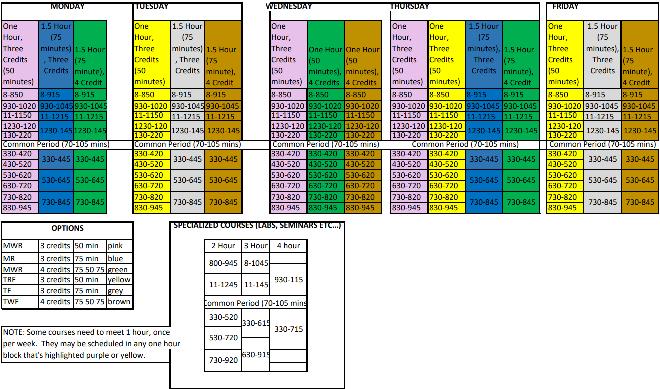
Starting in the Fall 2026 semester, there will be a new block schedule and changes to the core curriculum for incoming students.
Manhattan University’s (MU) current block schedule went into effect 2014 to 2015; however, there have been complaints over the years from students, faculty and staff. Often reporting that open periods were limited for events and meetings and that there was less flexibility for class schedules – especially for commuters. With this change that was officially voted on Dec. 2 2025, the Education Affairs Committee (EAC) and the school hope to fulfill the needs of everyone on campus to the best of their ability.
Bridget Chalk, Ph.D., Interim Provost, commented on the change mentioning how for the last 10 years, there has been a built up momentum for change to better serve the population of MU.
“There was a momentum to change the schedule to be able to better serve the needs of everyone…so we did all of that [sending out surveys] before it was decided to change, but it was the accumulation of multiple years of dissatisfaction with the way the [current] block schedule was set up,” Chalk said.
These surveys that were sent out came from the Student Government Association (SGA) last semester. They collected feedback from students regarding whether they wanted the schedule to change after when the new block schedule was officially proposed.
Delaney Briggs, VP of Academic affairs for SGA and a student representative for the EAC, spoke to The Quadrangle about collecting various student responses when she held an event on the quad.
“We had over 90 responses…on the students’ opinion and I had lots of great conversations with people just getting their honest opinions on what they thought,” Briggs said. “I had flyers out with examples [of the new block schedule] so people could visually see what they were voting for… I do believe, to the
The new block schedule that will go into effect in Fall 2026. JASPER CENTRAL / COURTESY
best of my abilities, I held the event to get the most student opinions.”
Briggs did acknowledge that while many students are still unaware of this change, there have been chances to pitch in thoughts and learn more about it.
“For students who are unaware that this was even happening, there actually have been tons of emails sent out and meetings [held by SGA] about this that [students] could’ve attended,” Briggs said. “Unfortunately, it’s hard to get everyone’s feedback with the amount of or the lack of student involvement on campus.”
Aine Kolpa, a sophomore biology major, current events coordinator and president of Sanctus Artem for Fall ‘26, voiced her concerns for Sanctus Artem regarding scheduling events in cadence with the new block schedule.
“I think it’ll be harder because I don’t think we’re going to shorten our club-time from two hours to one hour,” Kolpa said. “We probably won’t hold our club events within that timeframe… we’ll probably send out a poll and then go from there to find the best time for everyone.”
Chalk also acknowledged that this will affect certain meeting times for clubs and other scheduled events.
“It will be required that
clubs change their meeting in accordance with this new schedule,” Chalk said. “That was only the open period because it was the open period in the last version of the block schedule. We got a lot of feedback that there was not enough time for clubs to meet because there were only two open periods a week and they were chock full of events and meetings… So those things are also going to have to be shifted, and we’re going to have to work to build a new cadence.”
However, Kolpa did acknowledge that the school, with this new schedule, continues to promote involvement on campus with the hope that club events will be more spread out over the semester to allow the student body to partake.
“I do think [MU] will promote club activity and everything, especially because I know Wednesdays, people cram everything into that one free period…then this will help spread it out every day,” Kolpa said. “It also will make more clubs active on campus, because they know that everyone has that free time…”
Annalise Dreher, a freshman accounting major, also voiced her opinions regarding the incoming block schedule.
“I understand how a lot of people could be complaining
about it and wanting this to be changed, and I like that they did it,” Dreher said. “I’m a little upset with the lack of communication for it…I think the fact that it doesn’t affect me that much is what makes me not too worried. I’m excited for the people who think it’s positive… but I’m pretty neutral,” Dreher said.”
As previously mentioned, in addition to the changing block schedule there will also be “staged” changes to the core curriculum for incoming students only. The proposed curriculum will seek to unite the three schools with a more well-rounded core. The school and the EAC hope that this change will allow students to learn and be more rounded academically.
“For the past year and a half, there has been a committee charged to design a universitywide core curriculum,” Chalk said. “What that means is that our current general education requirements are not the same in any of the schools, so there is no unified core curriculum for all of our students. That [unified core curriculum] is something that would be a benefit to our university in many, many ways.”
Each stage will be implemented in the Fall semester of each new school year, in line with the time incoming students enter the
school and start their first year. With this ongoing project, the committee will be rolling the proposed curriculum for Fall 2026 freshman and continue on from there.
“As you can imagine, it’s a complicated project because the requirements that we have in place have been agreed on for a very long time, and faculty are the stewards of the curriculum. So faculty need to collaborate on and vote on any changes that are made to it,” Chalk said. “Because it’s such a big change, the committee determined with the vote of faculty members, to just redesign the first year part of the core for next year.”
With the spring semester coming to a close with finals, the student population can only wait to see the effects of these incoming changes in the fall.
Sarah Rolka
Asst. Features Editor
From ARCH to AI: MU Welcomes New Program Working With AI
Maizy Swift Senior Writer
The Manhattan University (MU) campus has been adjusting to the usage of artificial intelligence, integrating it into curriculum and welcoming in new ways for students to work with emerging technologies with the help of the ARCH program.
Ashlee Okunonke, a senior computer science major, spoke to The Quadrangle about her experience using AI in the classroom.
“It’s been a positive experience for me, because I feel like I use AI in a positive way,” Okunonke said. “So I will ask Chat GBT or ask Claude to help me through my teacher’s PowerPoints which they reiterate back to me and act as a professor itself.”
Okunonke has a concentration in Artificial Intelligence, where her classes work with different forms of AI to see how far they have come along, what progress needs to be made, and how to understand it in general.
“For example, we will have a coding assignment, and he’ll ask us to generate code with AI and then compare it to the
code that we made ourselves, and see the discrepancies, who did it better, and the points that artificial intelligence is still missing.” Okunonke said.
Okunonke will be working with AI in her future, which makes this program very useful for her.
“I have a chance to do my master’s in artificial intelligence, so it would be a part of my future,” Okunonke said. “I do think that it’s on the uprise, because a lot of businesses are trying to automate their workflow with AI.”
In a previous report by The Quadrangle, Hany Guirguis, Ph.D., Dean of the O’Malley School of Business reflected on this year’s Innovation Challenge at MU.
“The Innovation Challenge highlights the power of collaboration by bringing together students from Engineering, the Kakos School of Arts and Sciences and the O’Malley School of Business to work on shared, real-world problems,” Guirguis wrote in an email to The Quadrangle. “By combining technical expertise, analytical thinking and business strategy, the competition reinforces that strong ideas are best developed through interdisciplinary teamwork.”
Lawrence Udeigwe, Ph.D.,
a mathematics professor at MU and director of ARCH –Analytics, Research, Creativity and Humanity – described how AI is an integral part of the program.
“It’s the university’s latest initiative to give students room for making their experience at MU more future proof and more interdisciplinary,” Udeigwe said. “[When students] leave MU, the education they receive will be able to evolve with the time.”
The program will use AI as a part of opening up students’ majors to research projects and opportunities to work with technology no matter their major.
“They’ll be able to understand how it works and understand the ethical implications of using it,” Udeigwe said. “And then we want every student to be able to come up with a project and solve it by themselves, with other students, without the constraint of their major.”
AI is something that Udeigwe believes students must learn to work with and understand because of its role in our world.
“I think AI is here to stay, but we as an academic environment owe it to humanity to study it, to keep studying it, to know when to restrict ourselves from using it and to know when to really
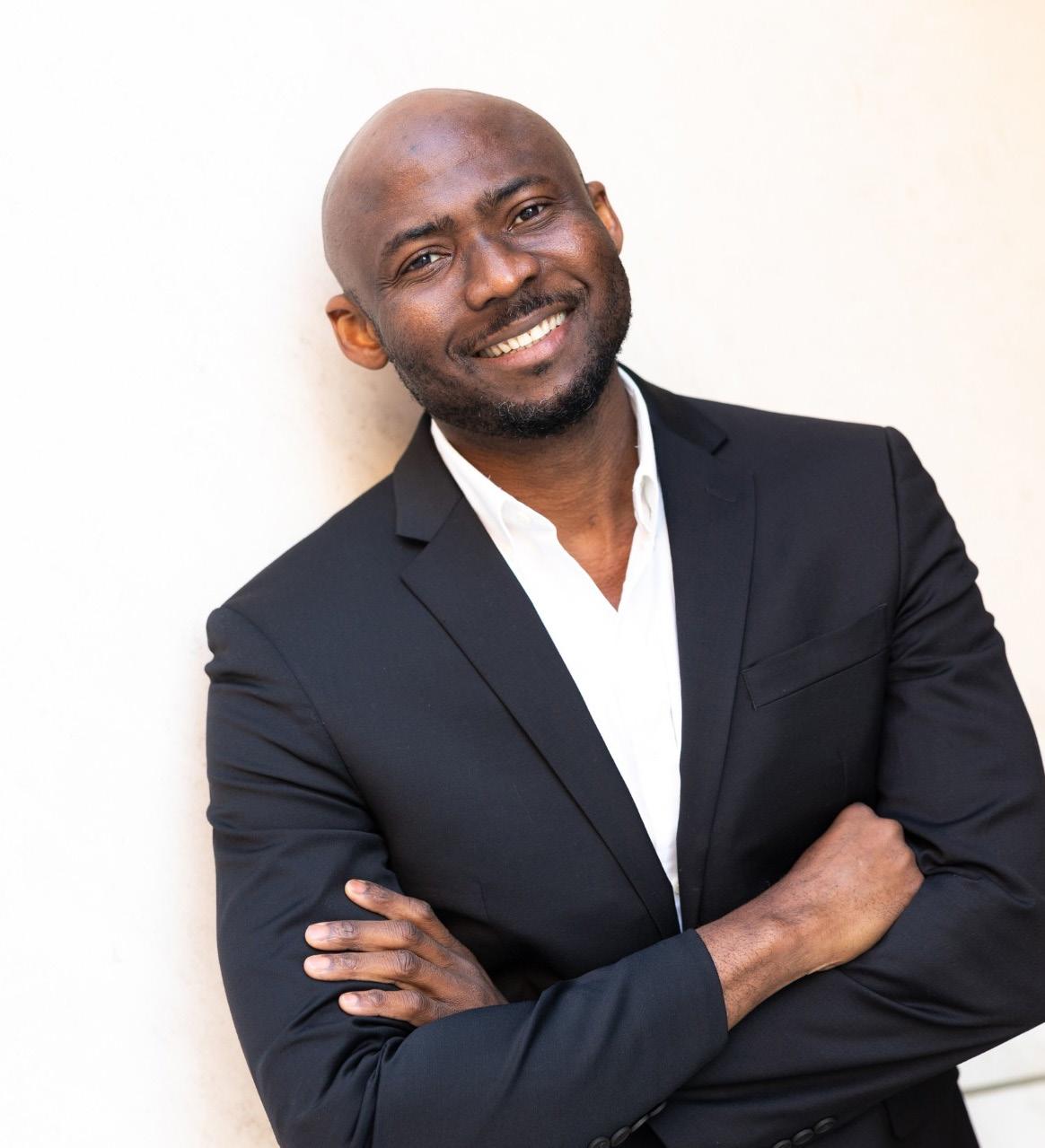
Professor of Mathematics Lawrence Udeigwe, Director of Arches at MU. LAWRENCE UDEIGWE / COURTESY
probe it,” Udeigwe said.
The ARCH program will be adding some new specialties to the MU curriculum.
“We’re going to be coming up with three new majors, data science, computational neuroscience, integrated marketing communications and then we’re going to be rolling out two new minors, also sustainability studies and AI for all.” Udeigwe said.
The ARCH program will be fully installed during the Fall 2026 semester at MU, welcoming students of all majors to take advantage of what it has to offer.
Students Reflect on Changing Campus Atmosphere
Mary Haley Senior Writer
This past academic year has brought a series of noticeable but gradual changes to campus life, particularly in how students use shared spaces. From the campus quad to Kelly Commons, shifts in dining options, gathering spots and commuter routines have altered the daily flow of student activity and interaction. While some of these updates have been welcomed, others have required adjustment, reflecting a broader transition in how the university approaches student space and community.
Sam Wofford, a senior communications major, has observed these changes over time, particularly in how social life has become less centralized. Reflecting on his freshman year, he described
a campus where a lot of residential student interaction took place in Lockes Loft.
“During my freshman year, the big hangout spot was really just Lockes [Loft],” Wofford said.
Although he still feels “nostalgic for Lockes,” Wofford acknowledged that the expansion of new spaces has reshaped how students connect.
“From freshman year until now, I have seen the spread of where students hang out in their downtime,” Wofford said. “I think it is spread out a ton… But at the same time, it’s really great that all of these other places have opened, and there’s a sense of community and social life in a bunch of other places around campus.”
Areas such as the first floor of Kelly Commons, the quad and dining locations like Café 1853 are integrated into students’ daily routines. Wofford also pointed to
student and alumni influence as contributing factors behind these developments.
“I think that [campus life] has changed in particular because I think it’s really a lot of the time because of student voices,” Wofford said. “I think a lot of students are very well spoken here and very outspoken on a lot of things… Alumni who come back to campus have also made a real impact on saying, ‘I miss hanging out in Café 1853…’ and I think that is really great also for getting the school to make these changes.”
Despite the reopening of Café 1853, campus dining has continued to evolve. According to an article from The Quadrangle, the space has since been replaced by Clucksters, a “grab and go chicken restaurant,” signaling another adjustment in dining services. The change reflects ongoing efforts by the university to update offerings and respond
to student demand.
Wofford described how these evolving spaces now factor into the university’s presentation to prospective students. Drawing on his experience working with admissions, he explained that he often would highlight campus improvements during tours.
“The way that I would address the changes is I really kind of harped on how I’ve seen it change since freshman year,” Wofford said. “The school has done such a great job on making these spaces more social-life-friendly… it’s something that I’m really proud of.”
However, not all students have experienced these changes in the same way. For commuters, in particular, adjustments to campus amenities can affect daily routines. Maria Budelman, a senior exercise science major, described how the removal of
a Starbucks location in Kelly Commons has impacted her schedule.
“I think the biggest change for me as a commuter has been how there’s no Starbucks in Kelly,” Budelman said. “I used to get my coffee there, and now it’s just out of the way for me.” Budelman’s experience highlights how updates that benefit the broader campus may create new inconveniences for specific groups. For students balancing commuting time, classes and limited time on campus, the relocation or removal of familiar services can present logistical challenges. Overall, student perspectives suggest that campus life is becoming more distributed, with a wider range of spaces supporting social interaction. While reactions to specific changes vary, the broader trend reflects an ongoing effort to create a more flexible and student-centered environment.
Consistency and Growth, Life of a College Flower
Zendrah Bonnick Asst. News Editor
Over the years, Manhattan University (MU) has gone through numerous changes, altering and modernizing in some areas of campus while still maintaining its more classical brick and mortar buildings.
The Quadrangle spoke to members of the student body about the atmosphere of the university’s physical environment. Students discussed areas on campus that may go overlooked, and the role of nature, specifically flowers, has on the often-stressful university environment.
Max Mayer, a junior political science and criminology double major, told The Quadrangle about how he feels physical maintenance and changes have impacted life on campus.
“Everything was under construction, and just since then, I feel like we’ve been rebuilding and switching to MU,” Mayer said. “I feel like campus life has honestly just become better. I feel like it’s more lively.”
Mia Porritt, a senior and communications major at the university, later told The Quadrangle about her feelings
on the campus’s physical appearance.
“ I think it’s really beautiful,” Porritt said. “The quad is always immaculate.”
While being interviewed, Mayer went further in-depth about his experience as an MU campus resident.
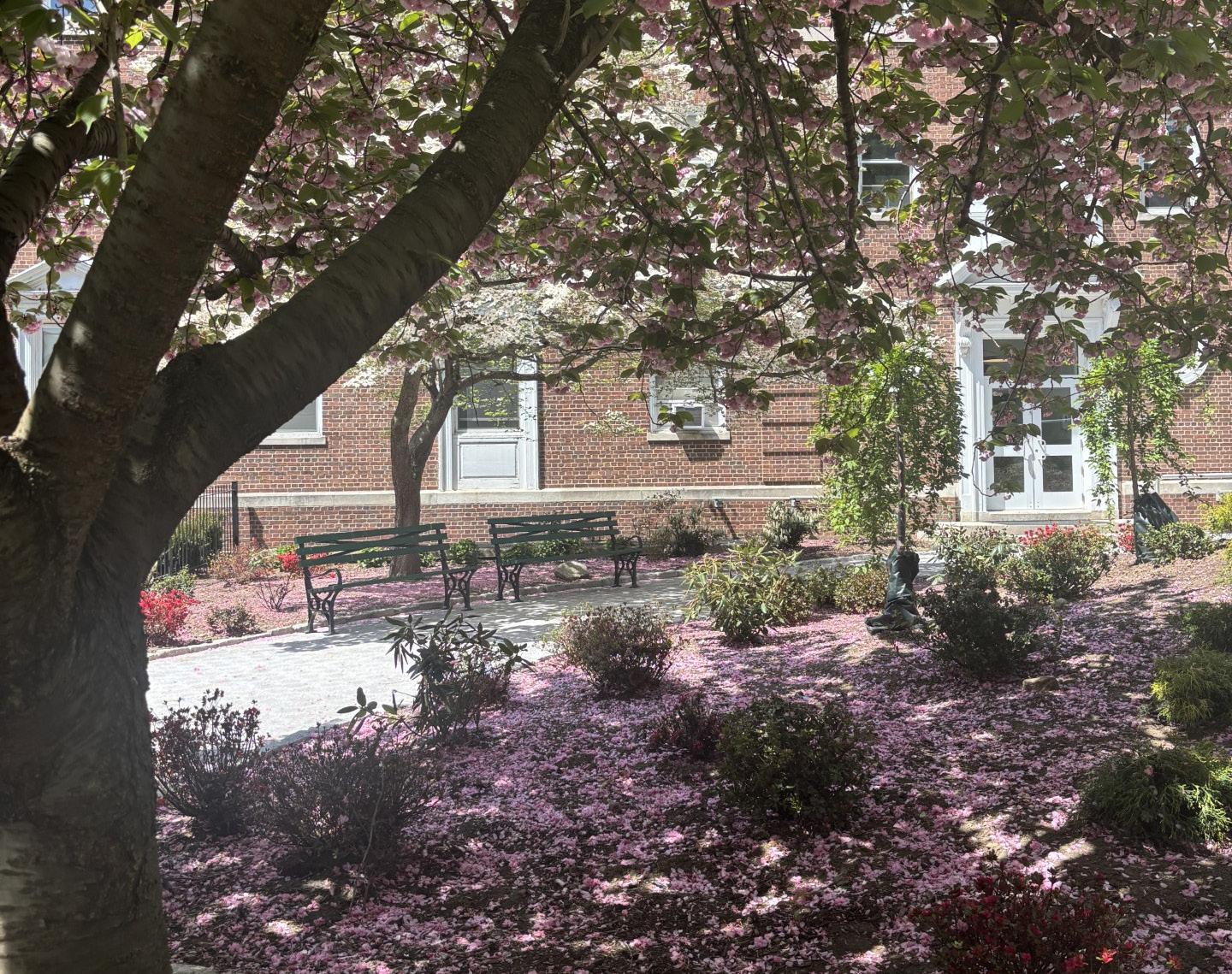
“I live in Chrysostom,” Mayer said. “I feel like the gardens outside of the Chrysostom are just so beautiful. And, I mean, it’s kind of like a small little stepway up there, so not a lot of people go up there... that may go unnoticed.”
Krysha Amanda De Guzman, a junior political science and criminology double major,went more in-depth on how strenuous upkeep on a college campus can be.
“Throughout the spring semester as well, as the days have been getting warmer and more students are on the quad, it is clear that many of our maintenance staff are working hard to ensure that the quad and other areas of campus are well kept and maintained clean,” De Guzman said.
Porritt expressed a similar sentiment later during her interview.
“The physical plant, they’re always working so hard,” Porritt said. “We’ll be on the quad, and always see them doing
something, always mulching, and I really think that we could take a moment to be gratuitous towards them.”
Porritt went on to discuss the significance the campus’s grassy quad has on socialization on the campus.
“Obviously, having something aesthetic and pleasing to look at is always a nice plus, and I really think that the physical plant, they do a great job with the flowers,” Porritt said.
Porritt also gave a suggestion for the university to pursue flowers more suited for New York’s volatile environment.
“I think it’s very important, and it’s also a great marketing aspect, to show that we have this beautiful place of greenery in a city, where that’s sometimes kind of hard to come across, where it’s so peaceful, and it’s a haven, in a big metropolis,” Porritt said. “I think that we always see students sitting on the steps, on the beautiful benches. That truly does mean a lot to me as a student for my well being and also just a social aspect of campus.
Eleanor Sak, a junior political science major, shared her perspective on watching MU physically transform over the years.
Features
“Coming to MU in 2023, a lot of our campus had scaffolding all over from our church to Thomas Hall,” Sak said.
“As our campus has continued to maintain and update our campus, the beauty that has been in fruition has made campus a place that feels enjoyable and like home,” Sak said. “I think a well designed campus creates a sense of structure and academic support for students and creates a more welcoming environment.”
Later, Amanda De Guzman further empathized with the role maintenance staff and MU
physical plant staff have on the campus ground.
“Our maintenance staff has truly been underrepresented and deserves to have light shown on them for all their hard work to keep our campus a happy place for all,” De Guzman said. “Upkeep is truly so significant on our campus as it allows a sense of community and belonging, [like] when we see the beautiful grass on the quad being clean and the flowers around campus that I, as well as many of my friends, stop and take pictures of.”
Changes That Go Beyond the MU Campus: Growth, Global Reach and Reputation
Misha Jabal-Abadi Asst. Production Editor
In recent years, a series of changes have reshaped Manhattan University’s (MU) community and extended its reputation beyond Riverdale. The expansion of professional programs, ongoing campus renovations and an increasingly diverse and evolving student body have collectively influenced the university’s academic and professional landscape.
One of the biggest effects of these changes have been the amount of outreach to prospective students. Stephen J.Pugliese, Ph. D., VP of Enrollment Management and Marketing, explained that from his perspective the biggest change following the name change was the number of students interested in coming to MU.
“I see a more vibrant campus from this and I also see higher notoriety from our peers, meaning the colleges that we compete against in
the New York area as well.”
Pugliese said.
The most notable thing is the expansion of the school’s international footprint. Being called a university is getting the attention of more international students. Pugliese explained that colleges in other countries were seen as “secondary schools,” so the switch to university put the school on more [application] lists.
Rani Roy, Ph.D., Executive Vice President of Business Operations, shared a similar perspective. She explained that with the name change, the school has become more accessible to international students.
“One of the major reasons why we did this is because in many other countries, college is not considered the same as university,” Roy said. “That designation is often used for the end of high school or for a “pre-university.”
Roy also noted how ‘university was a more fitting name than college.’ Based on the Carnegie classification system, the school was already classified as a university before it officially made the name
change.
“We were already considered by Carnegie classification, a master’s comprehensive university at that time,” Roy said. “What that means is we already have undergraduate programs and graduate programs that are really strong, we have a number of professional areas, including engineering and business.”
When it comes to the current campus community, not much has changed. Jaspers now are the same as any Jasper before. Though many older Jaspers will refer to the school using its old name. Christina MacNair, Associate Director of Residence Life, mentioned that in her time here one piece of feedback she consistently hears from residents is how supportive and present their RA’s are. Many students have made connections to their RA’s, which in turn helps build a stronger community following the Lasallian mission of MU.
“There’s been a focus on creating inclusive, low-barrier events that bring students together while also connecting them to campus resources and opportunities.” MacNair said.
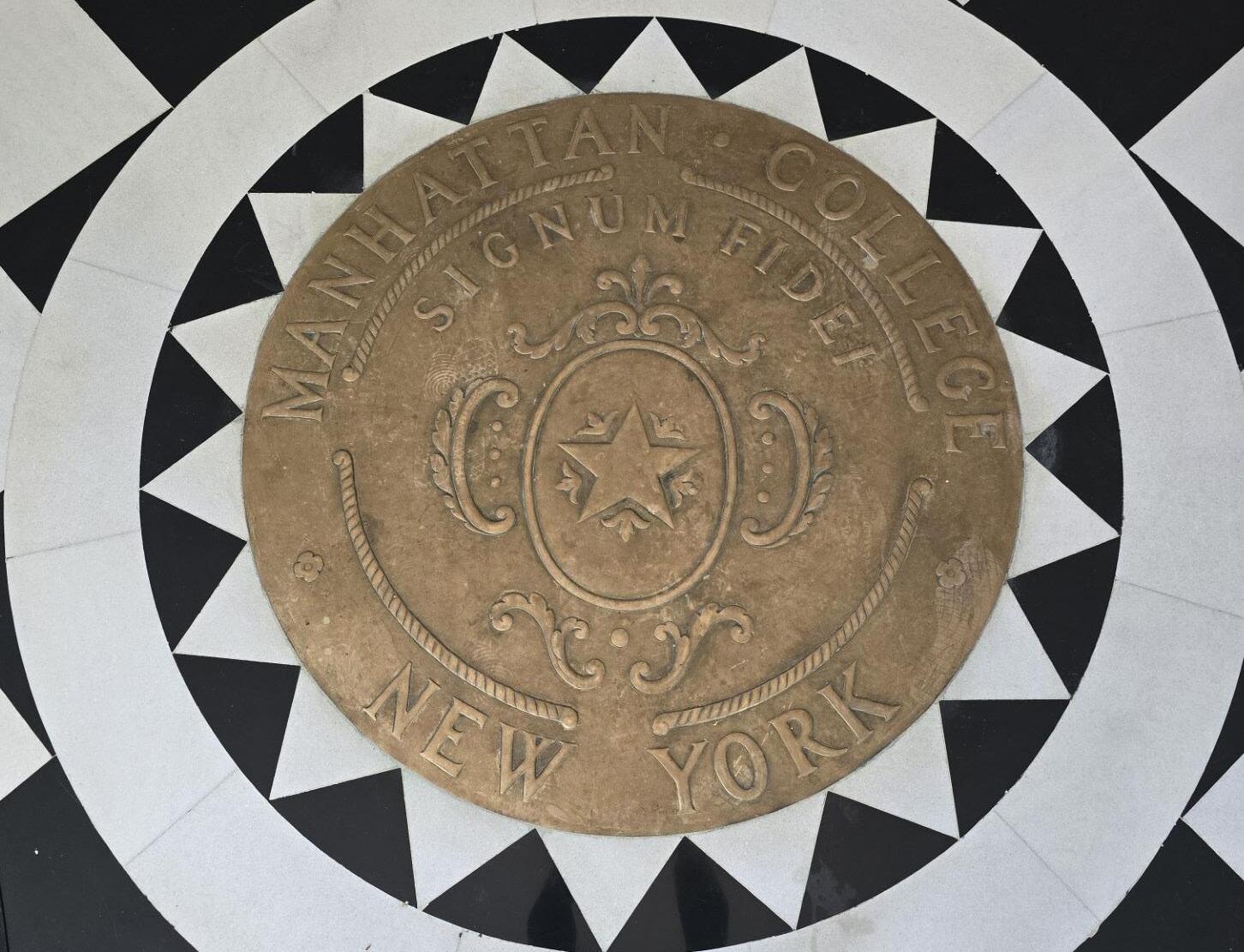
The Lasallian mission is a part of the core values of the school and will continue to be so as a long-standing tradition. Most traditions of the school will not be changed based on the name change. Just as the seal of the school in Memorial Hall will remain to say Manhattan College.
“So I do think there’s an element of keeping some of that history while still honoring our legacy, and while still honoring
some of that legacy, while we move forward as a university still known as Manhattan College to some,” Roy said. Despite ongoing changes, from new research initiatives to campus renovations, the core values of MU’s students remain consistent. The sense of community that welcomes new Jaspers each year continues to endure, reinforcing the idea that being a Jasper extends beyond one’s time on campus.
School seal that was created back when the school was called Manhattan College. MISHA JABAL-ABADI / THE QUADRANGLE
Photo of the outside of Chrysostom Hall. ZENDRAH BONNICK / THE QUADRANGLE
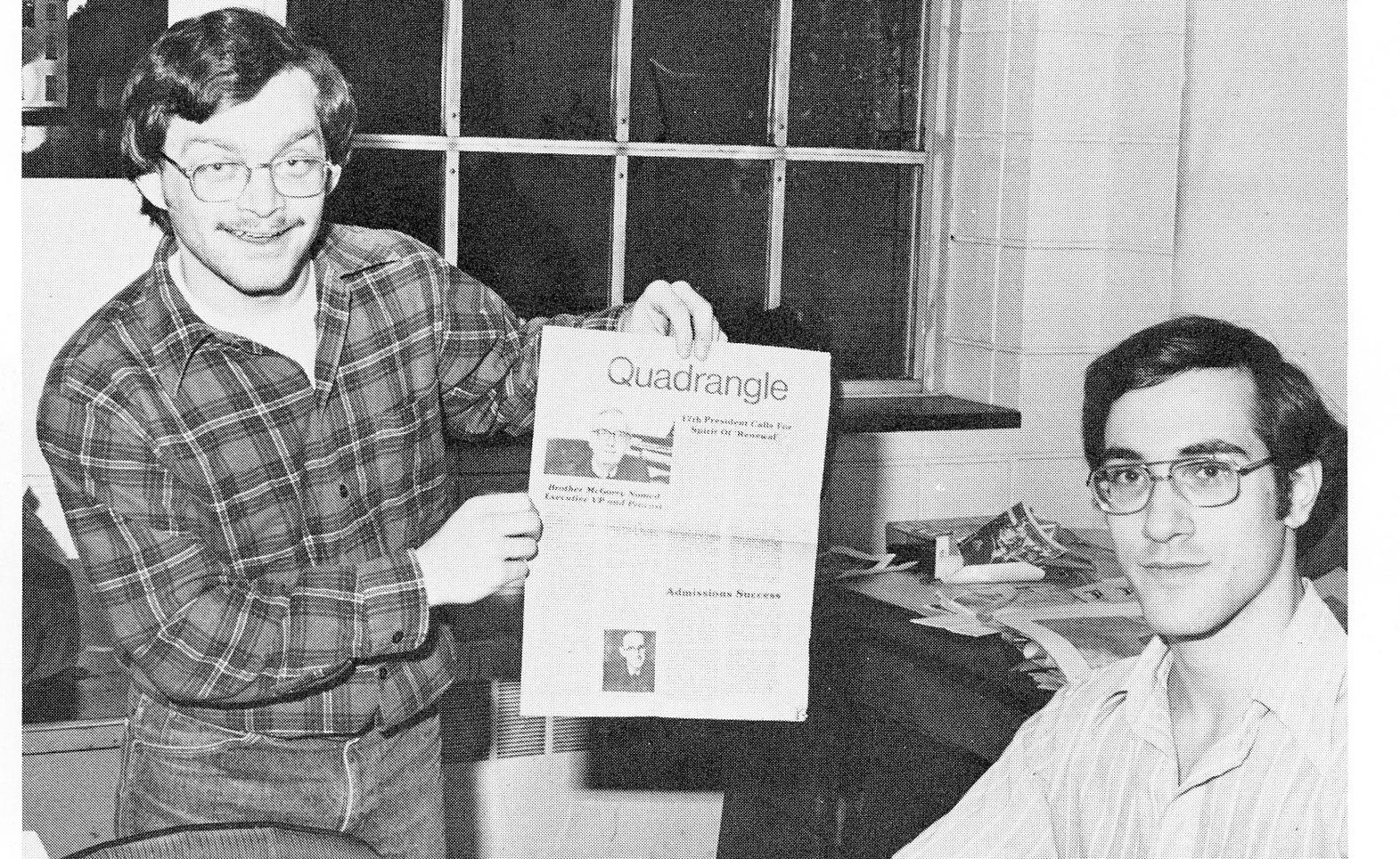
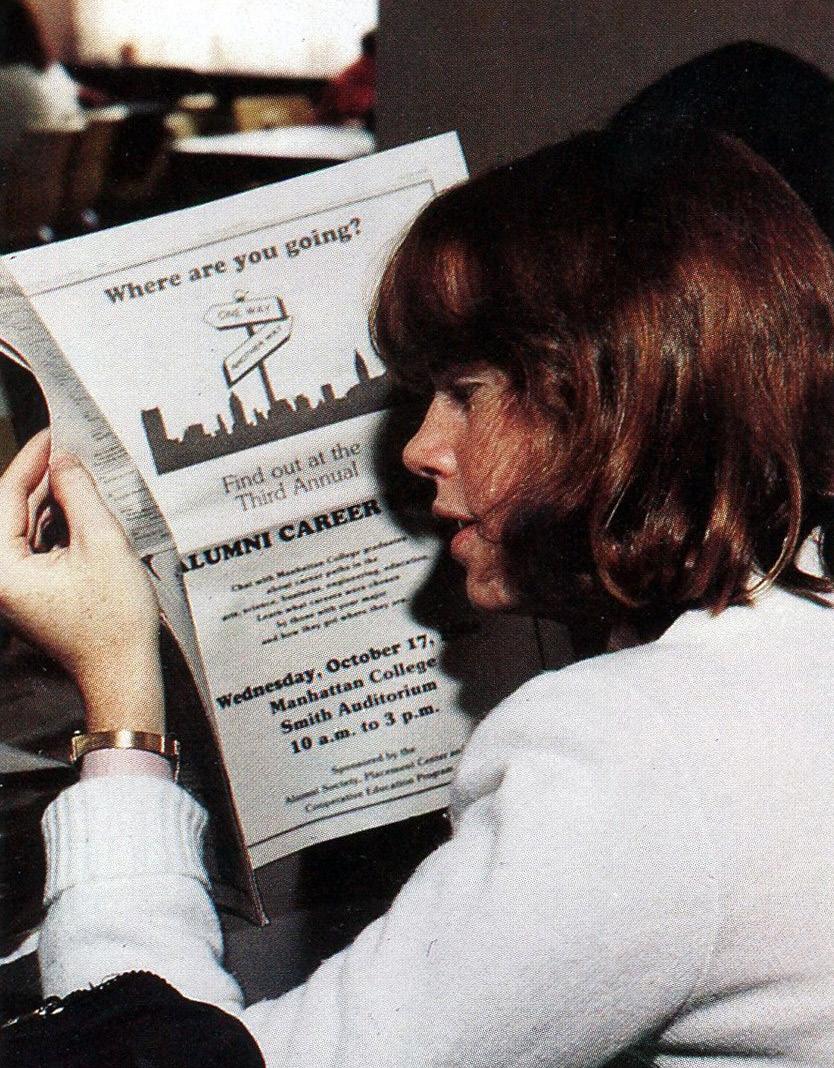
The Quadrangle Then and Now: Former EIC’s Reflect on the Evolution of the Newsroom Across Decades
Laili Shahrestani Editor-in-Chief
Since its emergence in 1924, The Quadrangle student newspaper has been central to the legacy of Manhattan University (MU), with generations of editors-in-chief being a part of the publication’s evolution across multiple decades.
For over 102 years, The Quadrangle has evolved in many ways — from news coverage to its layout, as well as in its trust and impact on the community. While there have been quite a few prominent changes, a lot has also remained constant.
Three Quad alumni, all who served as the editors-inchief of their time, reflected back on their experiences once working as student journalists.
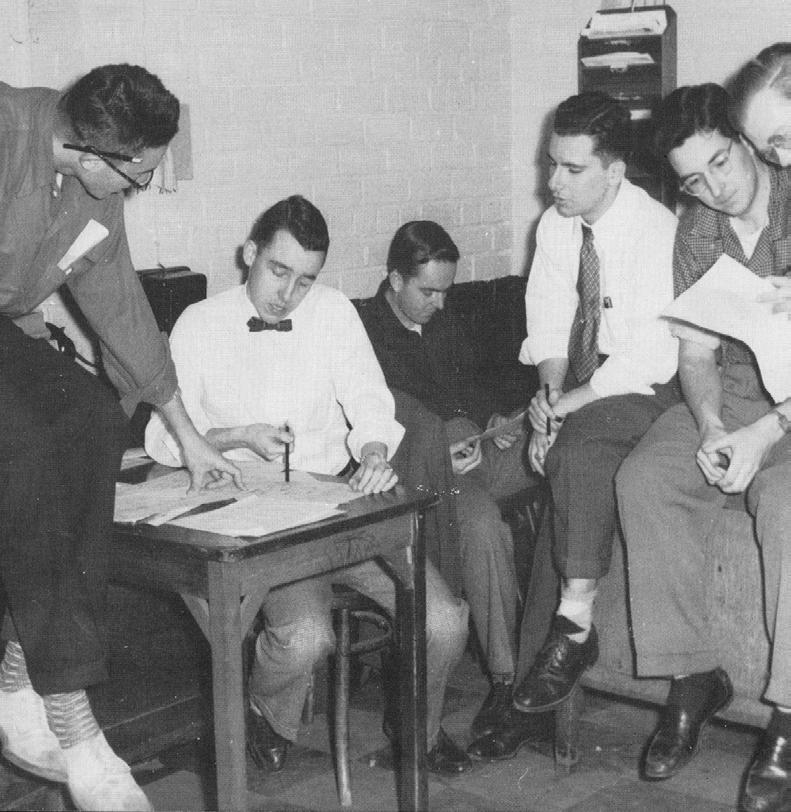
John Paluszek, EIC of 1954
As a former Quad EIC, John Paluszek recalls many fond memories during his time at The Quadrangle. From decades ago to the modern-
day, the aspect of teamwork and journalistic integrity remains a vital part of The Quadrangle’s mission. Paluszek expressed that these values have stuck with him across many years, and have even translated into his personal life.
“I would say the skills of being an editor and a journalist, I applied in many ways throughout my life,” Paluszek said. “And those skills were based on integrity, telling the truth and saying it in interesting ways… That was something I was able to apply in a career, family life and with experiences in different groups.”
While integrity was and still is very important to the journalism industry, many have expressed concerns when it comes to trusting the media. According to an article released by the Pew Research Center in 2026, 57% of Americans do not trust that journalists have their best interest in mind. Paluszek shared his thoughts regarding trust in the media and how it differed back in the 50s.
“So in my day, there were several daily newspapers in NYC… And they were very influential, of course,” Paluszek
said. “... Newspapers were once very important and trusted.”
When it comes to content and layout, The Quadrangle is currently composed of four sections: News, Features, Arts & Entertainment and Sports, as well as columns across each. Back during Paluszek’s time, there was a specific column that no longer exists today.
“A column was written, traditionally, by the EIC every issue, and it was called ‘The Young Men of Manhattan,’” Paluszek said. “Obviously, the school only had male students, and that was the case for a long time [until 1973].”
Additionally, Paluszek shared that writers would cover stories pertaining to both on and off-campus issues, such as politics and current events. He spoke a bit more to what this looked like in the 50s.
“There was a lot of attention to what was going on around campus, and also a modest amount of attention to what was going on in the world,” Paluszek said. “Like the Korean War, for example, and there was also a terrible basketball scandal that had to be covered … The world was evolving, America
was evolving and we couldn’t ignore it.”
Patrice Athanasidy, EIC of 1987
Patrice Athanasidy, former Quad EIC, also worked as a journalism and public relations professor here at MU, before switching institutions. Athanasidy shared that the experiences she made through the publication were ones she thoroughly enjoyed, so-muchso, she came back to work in the communication office.
“My favorite part was the collaboration of telling the college’s stories,” Athanasidy wrote. “I enjoyed it so much, I eventually came back and worked with the communication office for fiveyears full time…”
When it came to student journalism in the 80s, The Quadrangle asked Athanasidy what the most pressing topics were of her time.
“... At that time, the campus had only been co-ed for a bit more than a decade,” Athanasidy wrote. “It was still mostly a commuter school … We always took the editorial section seriously too. Taking a stand and representing the students was very important to us.”
While Athanasidy shared that much of the news coverage The Quadrangle did was in regard to serious issues, she mentioned that every now and then they also liked to “keep it light.”
“We kept it light in places too,” Athanasidy wrote. “I covered when Larry Linville from MASH came to campus. He was very funny and had a great message about how to live life.”
Jeanette Settembre, EIC of 2014
Jeanette Settembre, current New York Post reporter and author of “Little Red Flags,” served as a Quad EIC a bit over one decade ago.
Through her time on The Quadrangle, Settembre has learned a multitude of skills, with one being the ability to conduct a proper interview.
To this day, this skill feels extremely relevant in her current career.
“Working for The Quadrangle set the groundwork for fostering interview skills that I use to this day as a journalist at the New York Post,” Settembre said. “Early
on, when I would be reporting stories, I had to come prepared with a list of questions and be able to conduct an interview in a professional way. And the first time I was able to do that was at The Quadrangle.”
While 2014 was still considered a digital era, social media – especially in regard to news coverage, had nowhere near the same impact it holds today. Settembre shared her experience being a part of The Quadrangle at a time where physical newspapers were the primary medium for exposure.
“When I was EIC, we had both a website and the print newspaper, but the print newspaper was what was flying off the shelves, because we didn’t have the bandwidth to have people posting so frequently to the website,” Settembre said. “So it was more of a print first, digital second operation .. It was prior to news on social media.”
In contrast to Settembre’s experience, The Quadrangle is now a web exclusive publication, discounting the three special print editions per year. Even when The Quadrangle does print today, there seems to be a lack of eagerness within the student body to pick up and read a print copy. A decade ago, the opposite appeared to be true.
“The print product was super valuable, and it was readily available throughout campus,” Settembre said. “ … People would pick it up, and they would read it around campus.”
As a Page Six journalist in 2026, Settembre recognizes the importance of multimedia journalism in the current age. She emphasized the need for digital media, and that social media usage is a key component as to what makes storytelling so great.
“I feel like social media is such a big thing, and a creative way to tell stories,” Settembre said. “If I was EIC now, I would try to do something like a social only newspaper, where we would do interviews and post clips of stories on social, and make it really video focused, so that it’s more shareable … I just feel like print is so secondary now … I think it’s about finding ways to bring the multimedia component to life beyond print.”
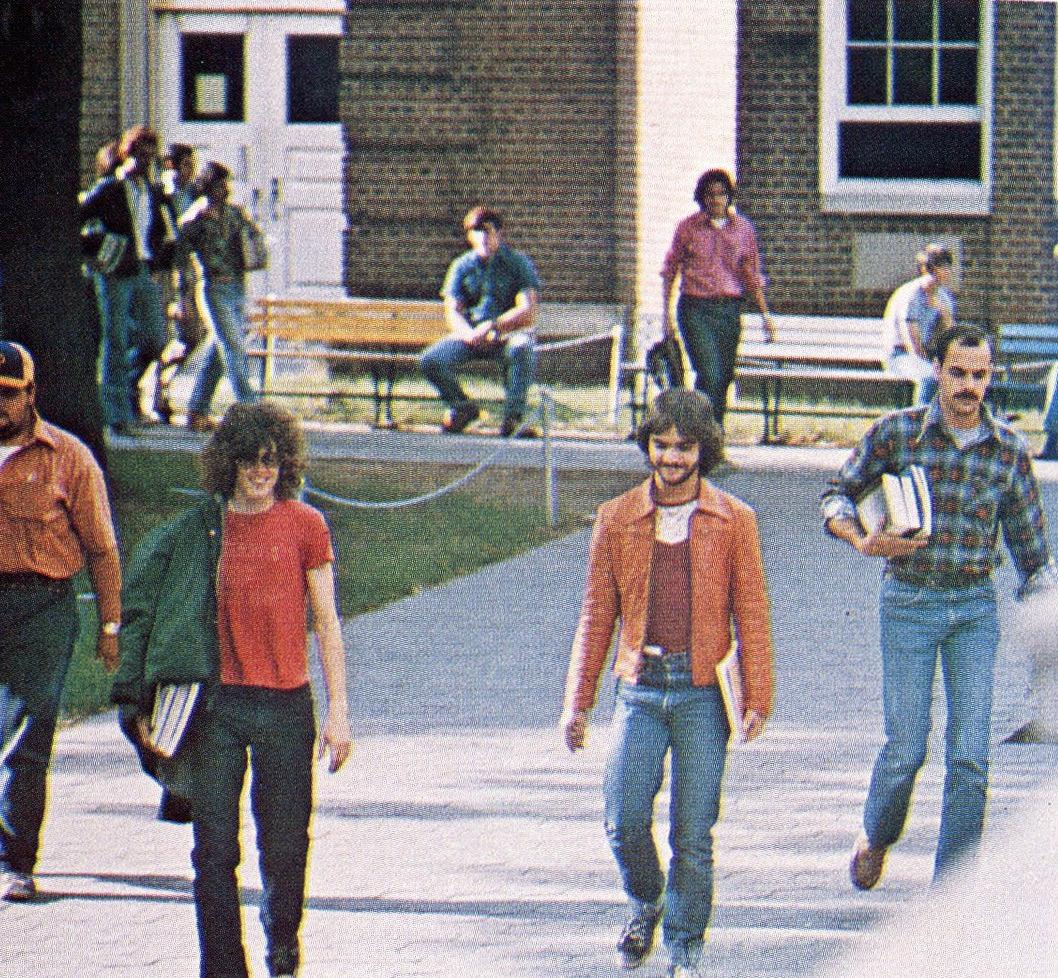
*All photos courtesy of the ManhattanUniversityArchives.
Once a Jasper, Always a Jasper: The Evolving Student Experience from MC to MU
Leyla J. Mercado
Features Editor / Asst. Social Media Editor
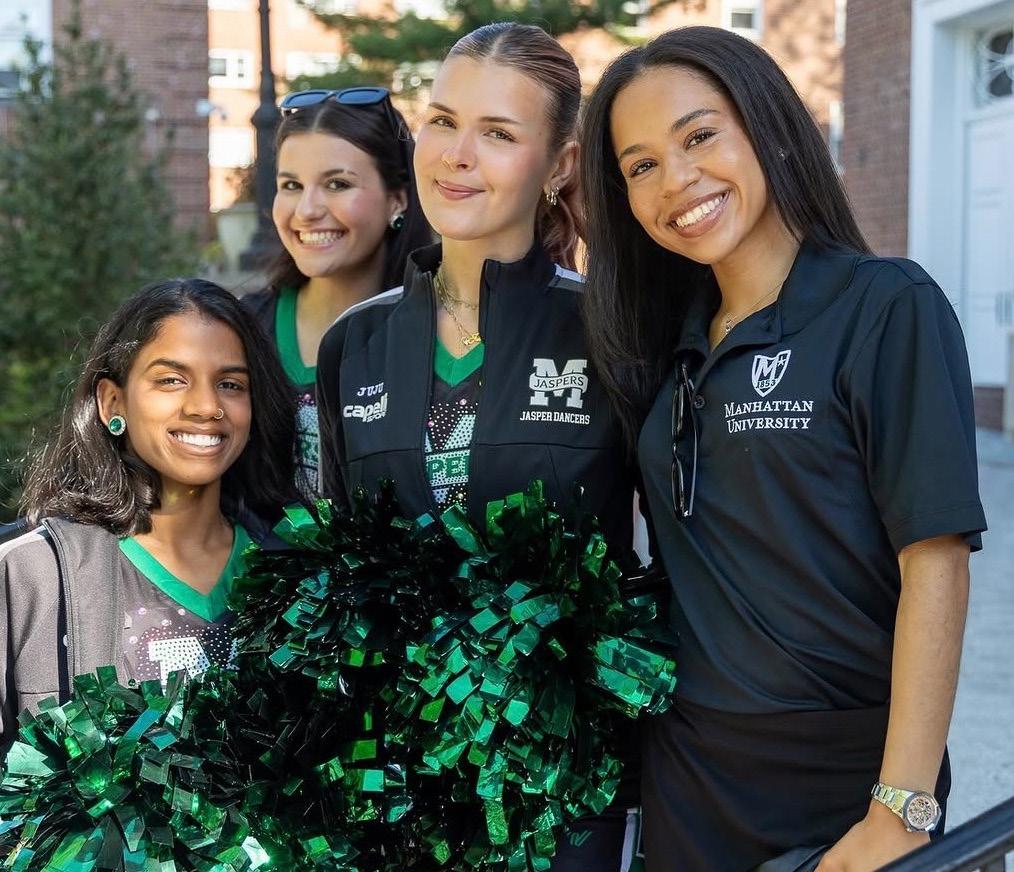
In recent years, Manhattan College’s (MC) transition to Manhattan University (MU) has coincided with a broader shift in the student experience. The change brought an evolving institutional identity, reshaping what it means to be a Jasper within a newly redefined campus environment.
On Aug. 1, 2024, following approval by the New York State Board of Regents, MC officially became MU, a rebranding that caught many in the community by surprise. While rumors had circulated across campus, no formal confirmation preceded the announcement. In the aftermath, “MU” memes quickly circulated among students, and adjusting from “Manhattan College” to “Manhattan University” became an immediate, if uneven, transition.
The name change slowly ended up meaning more to the student body than many may think. Despite always being a Jasper, such changes resulted in a different college experience for everyone no matter what year or major. It was a change that came with promotional tiktok making on the quad and a bigger community that consisted of far more events intended to connect students who never thought they’d cross paths.
Naya Tuli, ‘25, an MU alumna who majored in sociology and minored in philosophy, is now pursuing her graduate degree: a masters in clinical mental health at MU. Tuli spoke to whether or not her identity as a student has remained tied to MC, or if she felt any form of personal connection to the new name.
“Personally, my identity as a student will always be tied to MC because that is where my journey truly took shape.”
Tuli said. “When I think back to applying to MC, it brings a sense of nostalgia and pride, especially now as a graduate student reflecting on the past four years. I was part of the Class of 2025, working toward receiving a MC certificate, and that name carries meaning for me in a way that cannot be replaced”
Not only does Tuli hold MC’s importance with her, she acknowledges that change is typically guaranteed, especially when it comes to such a long standing institution like MU.
“At the same time, I recognize that names evolve, and with that comes a shift in perspective. It made me realize how many people across different years share the same diploma, yet experience the school in completely unique ways. Some people will only ever know it by its new name, and that is not necessarily a bad thing it is just different.”
Tuli then spoke to what MC truly means to her personal journey.
“For me, MC will always represent something
comforting.” Tuli said. “It reminds me of the lessons I have learned, the growth I have experienced, and the people I met along the way. No matter what the institution is called moving forward, that personal connection will always stay with me.”
Knowing the emotional tie that lies behind MC is enough to realize just how profound this new form of renovation can actually be. Whether symbolic or as something meant to have a long-term impact in MU’s future, Tuli understands the principle of what it can be.
“I see the name change as both symbolic and something that could have a long-term impact,” Tuli said. “Symbolically, it marks the beginning of a new era for the school. Change can feel uncertain, and even a little scary, but it is often necessary for growth.”
Further speaking to the everlasting effect on being a jasper, Tuli discussed the benefits of what the identity shift ultimately came, and continues to come with.
“In terms of long term impact, I think it may reflect new adjustments and improvements that are meant to benefit the school in ways it may not have before,” Tuli said. “A name change like this usually signals expansion, development, and a shift in how the institution positions itself for the future. New eras can definitely bring uncertainty, they can also bring opportunity. And honestly, I believe that sometimes those changes no matter how unfamiliar at first end up being worth it for everyone involved.”
Lizbeth Valentin, a senior psychology major and minor in political science, spoke in depth of what MC truly meant to her and how exactly these sentiments have grown to change over these times of change. Valenin has learned that not only does the name change establish a new student experience, but it further affects the professional life that follows it.
“I felt my identity was tied to that name since I first came here with MC as the name. It [MU] makes the college sound more serious, and recruiters seeing I went to a university helps me stand out.” Valentin said. “The name carries a certain weight making the college sound more prestigious. The mention of university catches their attention, making me
more confident in applying to full time jobs after I graduate.”
With the transition from MC to MU having an encompassing effect on all of those a part of the MU community, Valentin further discussed the insight she’d provide to the institution’s newcomers.
“If I had to explain the transition from MC to MU to someone who never attended, I would say it signifies a shift towards growth,” Valentin told The Quadrangle. Valentin further added to how exactly this change strengthens the possibilities and future generations at MU.
“The change meets the needs of students today,” Valentin said. “This change is about evolving the identity of the school while still holding on to its core values and sense of community. While it may feel different for those who have a strong connection to the college’s past, the transition opens up new possibilities for current and future students.”
For students like Matthew McClure, a junior sound studies major and minor in marketing, being an underclassman during the name change allowed him to realize the impact it’d have on his day-to-day routine. As a freshman experiencing MC, the shift to MU and what the university has now grown to be, such has led to a whirlwind of emotions.
“I had a lot of clothes that had MC on it so it was kind of weird being like, ‘no, it’s actually MU, even though all my clothes say college,” McClure said. “That was the weirdest part, then it took some getting used to. It definitely feels different, especially with all the changes that have gone on but I think what makes it different is all the people that have come and gone.”
As a variety of the student body has experienced different versions of the MU, for students the conversation of the name change was always followed by an explanation as to why. McClure shared how he would explain the shift to someone who never attended MU or MC and what he’d say.
“What does it really mean?” McClure asked. “It means that they’re adapting to an everchanging world, and that they’re trying to meet the demands of the United States of America in 2026 … It [the name change] is symbolic of a shift towards professionalism in a world where it’s increasingly harder to get jobs.” McClure concluded.
He further spoke to how he thinks MC turning into MU will affect how outsiders view the school.
“Again, it’s a shift towards professionalism.” McClure said. “I think that it embodies something more to people, because, you know, it shows that there’s a commitment to higher education and a value of learning.”
For students, MU is an experience rather than a place. It allows for growth, students seeing themselves through different versions of who they are and understanding that MU is the basis for the individuals that we will one day become.
“From my perspective, while the name may shape first impressions, what truly matters is the substance behind its academics, opportunities, and the people who represent the school,” Tuli said. “And personally, no matter what others call it, I will always feel like a MC student at heart.”
Left to Right — Nikita Shany, Juliana Bambina, Julia Meyer and Leyla J. Mercado.
GRACE NARIANI / COURTESY
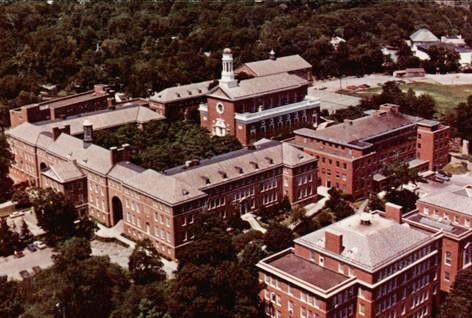
A photo of the (then) Manhattan College campus.
arts & entertainment
Innovation in Print: Student Publications Navigate Independence and Funding at MU
Maddie Rosado Managing / News Editor
Student-run publications at Manhattan University (MU) continue to navigate independence, faculty collaboration and ongoing financial constraints as they evolve on campus. Despite these pressures, students and faculty advisors say each publication remains focused on supporting student writing, research and creative expression.
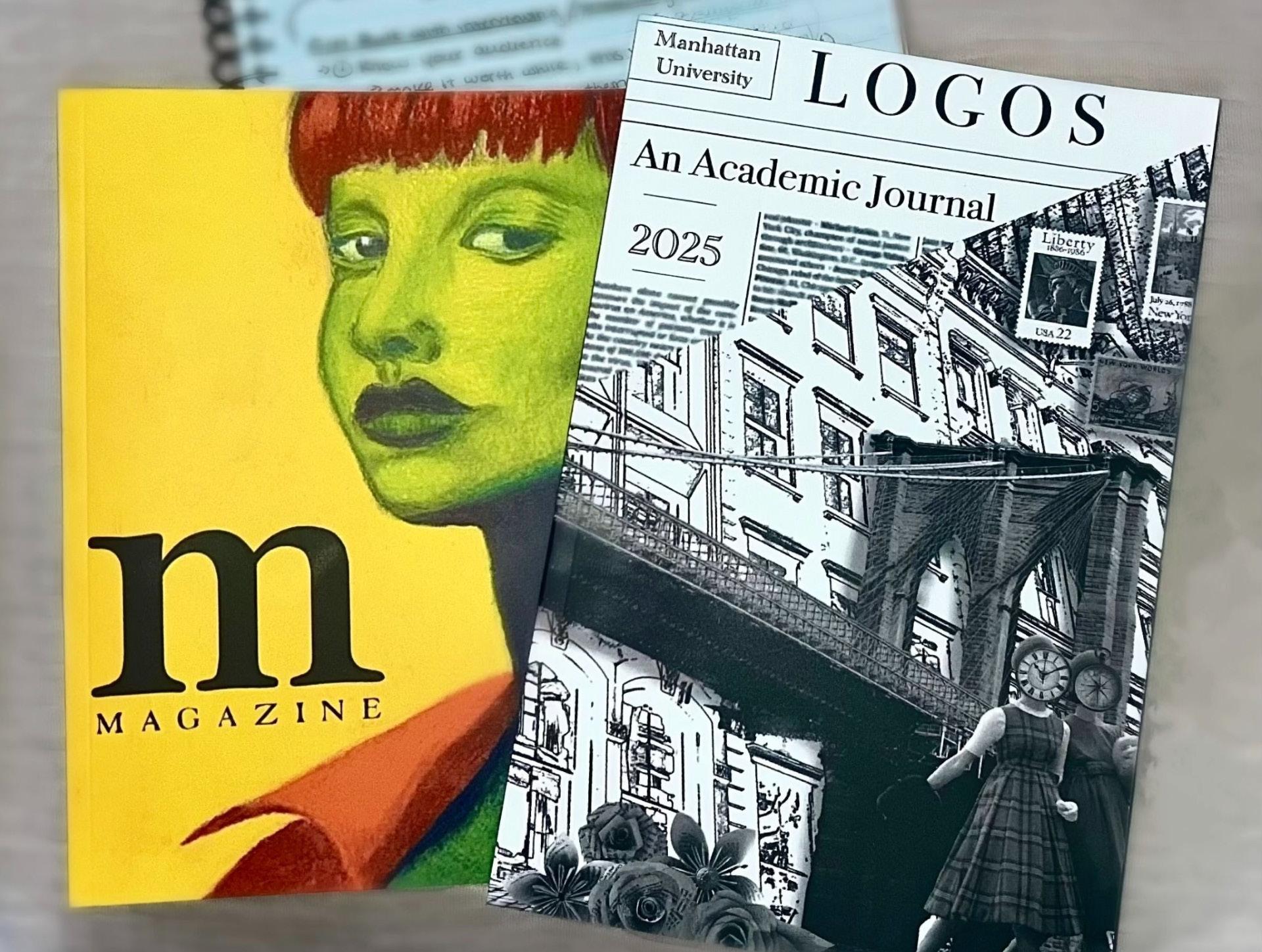
Within the network of campus media, each studentrun publication serves a distinct role. Logos functions as an academic journal, featuring student scholarly work produced each year. Manhattan Magazine focuses on creative work, serving as a companion publication centered on artistic expression and storytelling. LOTUS Magazine follows a more independent model, giving students greater autonomy in how they organize, fund and produce content.
Manhattan Magazine’s structure, however, has evolved over time. It began as a student-led initiative, originally run independently before becoming more structured through collaboration with the English, World Languages and
Literatures Department. That partnership helped formalize the publication process, professionalize production and shift the magazine into a more guided experience for student writers and editors.
Adam Koehler, Ph.D., professor of English at MU and faculty advisor for both Manhattan Magazine and Logos, described the shift as a move from student independence toward institutional collaboration.
“For a while, it was very independent, and then it eventually became a collaboration with the English department, which helped professionalize it and turn it into a learning opportunity,” Koehler said.
Nathaniel Aaron, a senior and editor-in-chief of Logos, noted that within the student-faculty collaboration, Manhattan Magazine and Logos now function in parallel to one another.
“Manhattan Magazine is the creative counterpart to Logos… in many ways, [they] function as two halves of the same body,” Aaron said.
Koehler added that despite structural changes, the core mission of both publications has remained consistent.
“It’s a safe place for students to try on the publishing process and celebrate creative work,” Koehler said.
Other publications, such as LOTUS Magazine, reflect a different model of
independence, operating with fewer institutional constraints and greater flexibility in how they shape their content and direction.
“LOTUS is creative, but they’re also much more independent and can pivot with their interests,” Koehler said.
Sienna Gallus, a junior as well as the assistant editor-inchief and production editor of LOTUS, emphasized that autonomy.
“We want LOTUS to be a space for voices that aren’t always represented in mainstream media,” Gallus said.
As these models of independence within studentrun publications continue to evolve, funding constraints remain a key factor in what they can produce, particularly for Manhattan Magazine and Logos.
“Printing alone makes up about 95% of what we spend,” Koehler said.
Aaron echoed these concerns, noting that limited funding directly shapes what can be published.
“Although we do have independence in what we publish, there’s actually a number of downsides … We don’t get to do a fall publication because it’s not in our budget,” Aaron said.
Koehler continued to share that faculty and administrators have acknowledged this challenge and are working toward greater financial
stability for student-run publications.
“We’re in the process of trying to maintain a consistent budget line so we can at least cover printing costs every year,” Koehler said.
While Manhattan Magazine and Logos are limited to one print issue per academic year, LOTUS Magazine has maintained a twice-a-year print schedule through student-led fundraising efforts.
“We’ve never received formal school funding, though we’ve applied,” Gallus said. “We handle everything ourselves, from production editing to marketing and event planning, often in collaboration with other student organizations.”
Gallus went on to outline the financial demands behind production.
“Funding is always a challenge,” Gallus said. “Printing alone can cost around $700 per semester, and release events add another $500 or so.”
Due to these constraints, faculty involvement remains central to sustaining the active
presence of many student-run publications. For Manhattan Magazine and Logos, Koehler emphasized his role in providing support and resources to students.
“I provide the club with the resources they need for printing… And mentorship in how the peer review process works,” Koehler said.
Even with this support, the financial gap persists.
“We don’t normally need to fundraise, but [the university] funding still isn’t enough to fully support what we do,” Aaron said. Despite financial limitations and shifting institutional structures, student-run publications continue to serve as both creative and academic outlets on campus. For students and faculty alike, the value lies less in financial stability than in the continued ability to publish, collaborate and preserve student voices in print.
“Publishing and writing are often siloed practices, but as clubs they become social,” Koehler said. “That collaboration is what makes them meaningful; it needs to be social to matter.”
Printed issues of Manhattan Magazine and Logos, featuring cover art by Emelie Sirgenson (Manhattan Magazine) and Julia Ubertaccio (Logos). MADDIE ROSADO / THE QUADRANGLE
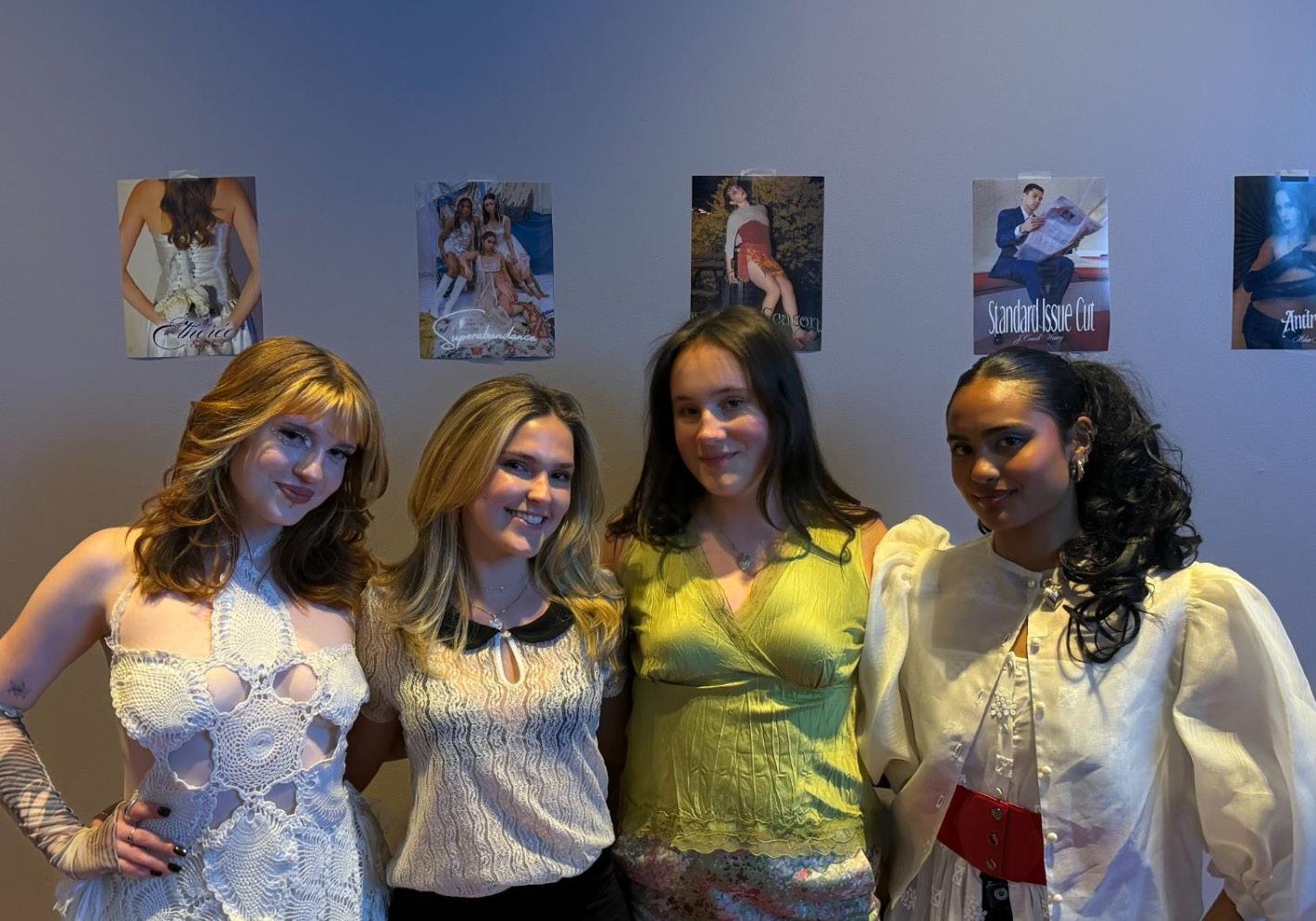
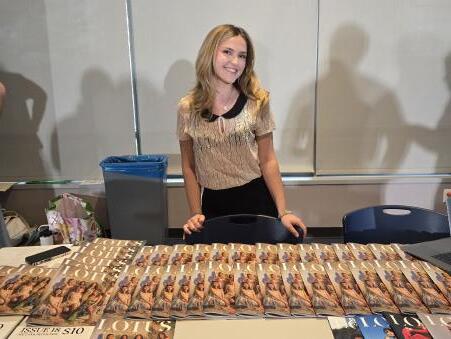
Head editors of Lotus Magazine pictured together. MARY HALEY / THE QUADRANGLE
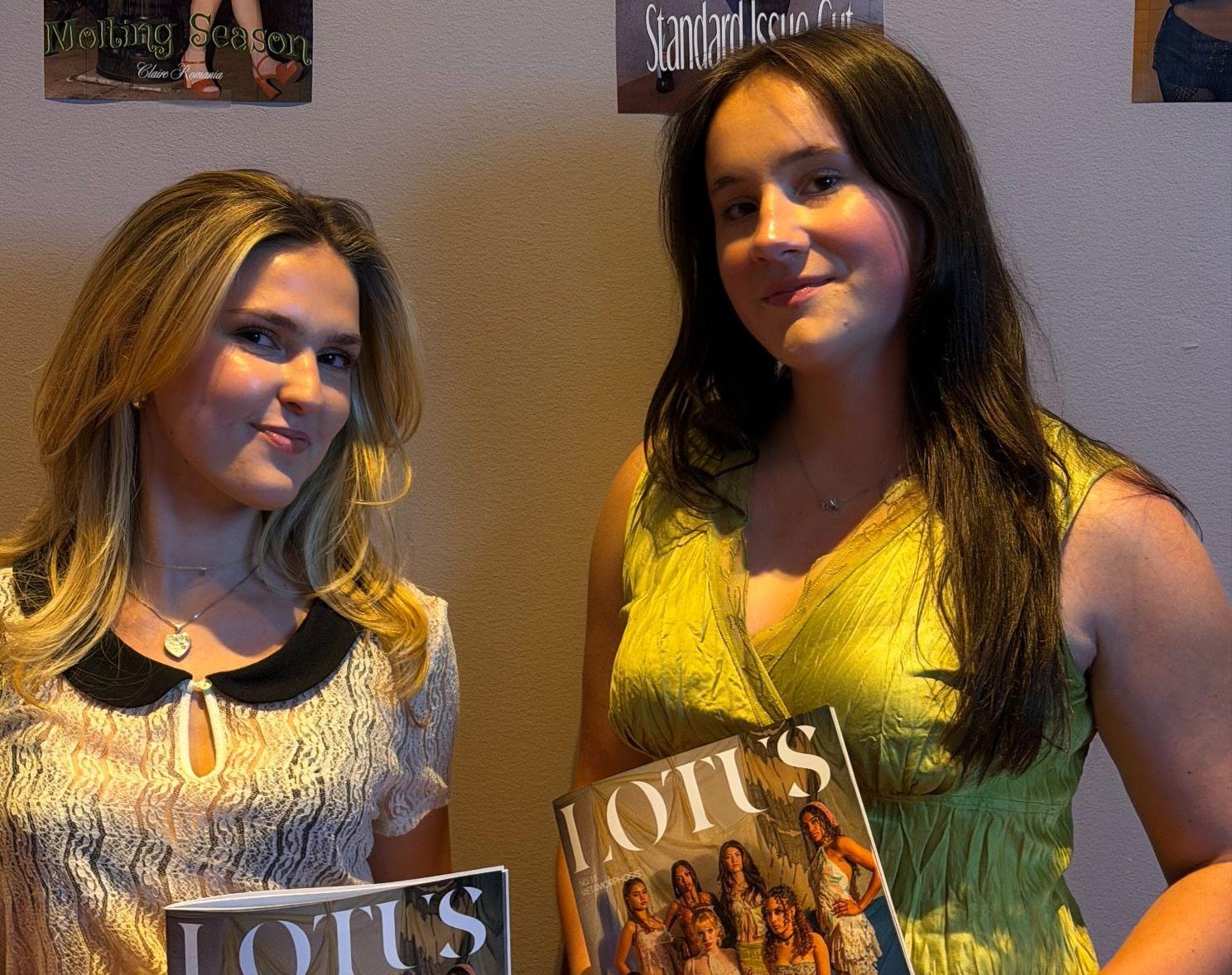
Co-editors-in-chief Ivy Jaep and Mary Haley pictured holding Lotus Magazine’s issue 18 print edition. MARY HALEY / THE QUADRANGLE
arts & entertaniment
A Comeback Story: The Reinvention of MU’s Film Scene
Joshua Reichard Asst. A&E Editor
Manhattan University’s (MU) film program is making a comeback both on and off campus.
After the film minor was cut due to past financial constraints, it has now been reinstated, signaling support from the university’s administration. The program, approved in December, is now accepting new students.
Michael Grabowski, Ph.D, a professor in the Communication, Sound and Media Arts department, spoke to The Quadrangle about film on campus.
“A lot of people were scratching their heads because a lot of students wanted the [film] minor,” Grabowski said. “The students made their voices heard, and the new administration said, ‘Yeah, students are interested in this and we have the courses to do this, let’s do it’!”
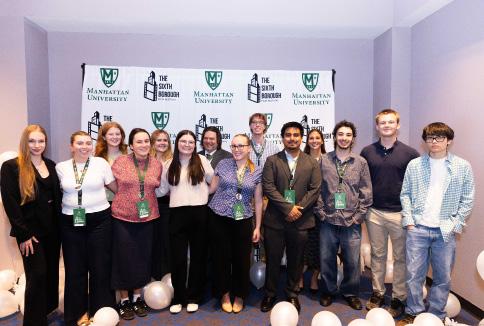
One of the most visible signs of growing interest in film on campus was the debut of the inaugural Sixth Borough Film Festival (SBFF) held from April 10 to 12. It was organized largely by students and screened more than 100 films. Grabowski was surprised at the traction it has received.
“It was an amazing first year,” Grabowski said. “At first we thought ‘maybe we’ll get like 20 entries and we’ll have an afternoon of screenings’… We ended up attracting over 180 submissions from around 30 countries.”
Grabowski emphasized student involvement as an important part of the success
of the festival.
“One of my favorite moments was the award ceremony on Sunday, when one of the students said ‘thank you to the university for trusting us to do this’ and that meant a lot to me,” Grabowski said. “That was probably the thing that I was most proud of, that the students took on that leadership role and did such an amazing job for something that we really didn’t know how it was going to turn out.”
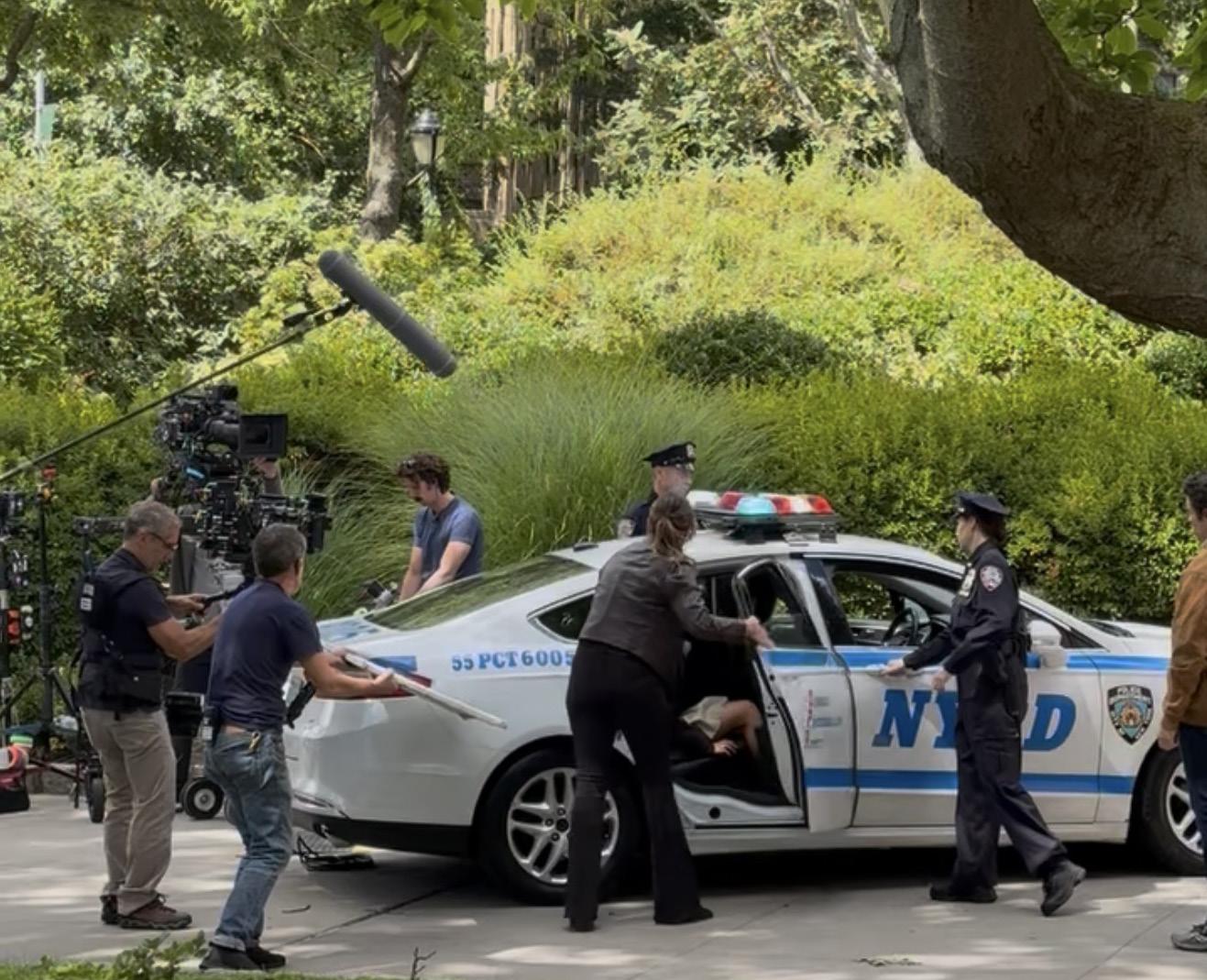
Professional productions have also changed the film scene by utilizing the campus as a filming location, letting students see firsthand how the industry operates.
“It’s good to see professional productions work on campus,” Grabowski said. “We get a sense of what’s involved in it. “I think a combination of having outside productions on campus, having students learn production here and then going out and learning where actual shows are being produced gets people in an environment where they’re thinking about how [film] gets made and it allows [students] to pick up skills.”
Off campus, students are gaining real-world film experience through the “Tools of the Trade” course, which uses professional sound stages at Lionsgate Studios in Yonkers and lets students learn how to use industry equipment.
Jason Silva, a senior communication major with a media production concentration, is involved with the program.
“We’re working with all this professional equipment that we don’t have on campus,” Silva said. “You’re really getting the
Law & Order used MU as a backdrop for filming this past August. JOSHUA REICHARD / THE QUADRANGLE
full experience of what it would be like to actually work in the film industry … You’re getting that glimpse into Hollywood.”
Grabowski added that the partnership gives students access to more opportunities in the industry.
“The goal here is to have some production classes taught on the sound stages in the same complex that professional film and television shows are being shot and to bring in guest speakers from those shows,” Grabowski said. “We’re also working on placements of students in internships as studio assistants where those shows are shooting.”
Some film students have already begun that experience. According to Grabowski, students have gained career experience working with real film and television companies.
“We had a student working in the costume shop for a new NBC show… Another student got to help out on an Apple TV+ show and another student was working on a Netflix show,” Grabowski said. “We’re really excited about that.”
The growth of film on campus has also increased visibility for the communication department.
“It feels great,” Silva said. “For so long I felt that the school was overshadowed by engineering and the business programs … But I feel like this year was really the [Communication] department’s year to shine.”
Silva, who worked as director of post-production for SBFF, also got the opportunity to edit the promotional trailer for the SBFF, which has now received over 11 million views across social media platforms.
“Dr. Grabowski really wanted it [the SBFF] to be a student-led thing, and because of that, he asked me to be the director of post production,” Silva said. “I edited the trailer for him, he loved it, it got posted on social media and has accumulated over 11 million views.”
Producing and editing film on a smaller scale is also strong on campus, with many students involved with Manhattan Media Network (MMN), a student-
run television and social media production group.
Aureliano Morales, a senior communication major with a focus in media production and the vice president of the Film Society, is involved and elaborates on his role in the group.
“I spearhead ideas, work with students, make and edit projects and next semester I’ll also be helping other students learn how to edit,” Morales said. “We want to have a space for students to learn how to edit and make their own videos at some point.”
Morales, one of the last students to declare the film minor before it was cut, is glad to see that it was reinstated and that the film scene on campus is growing.
“It’s fun to see that a lot of people love film and appreciate the art of making films,” Morales said. “We’ve made a bunch of [them] on campus, and it’s fun to highlight that with the film festival. Seeing it all come to fruition at the end, it was kind of beautiful … We hope that next year will be even bigger.”
With the interest in film and support from the school growing, Grabowski is optimistic about the future of the film scene on campus, having high hopes for the future of the SBFF.
“Well, we own the popcorn machines now, so we’re going to have to do it again,” Grabowski said.
Some of the students behind the Sixth Borough Film Festival. MANHATTAN UNIVERSITY PHOTOSHELTER / COURTESY
MU Continues to Build its Athletic Program with New D1 Teams
Barbara Vasquez Editor-in-Chief
Within the past few years, Manhattan University (MU) has reinvigorated their athletics program with the recent additions of new division 1 level teams at the university.
From 2024 to the current day, MU has added a multitude of teams to their athletic roster, including men’s volleyball, women’s golf, women’s flag football and acrobatics and tumbling. These sports, largely new to the NCAA, are for the most part ‘up-and-coming,’ and do not support many collegiate teams. Only around 12 teams offer acrobatics and tumbling at a D1 level; 28 for men’s volleyball and eight active women’s flag football teams.
Men’s Volleyball
Adding these sports to our athletics program, especially while they’re so new to college sports in general, will set us apart from other schools, according to head coach of men’s volleyball Chris Schortgen.
“Boys volleyball is the fastest growing team sport in America, so to provide a visual representation and a place for our campus community, and the surrounding volleyball community in the tri-state area, to see men’s volleyball at the division one level is a great access point,” Schortgen said. “There’s really not many of us, so it’s a tight-knit community, but I think that’s what makes men’s volleyball so unique.”
Schortgen joined MU early last year, when he signed on as head men’s volleyball coach in October 2024. Since then, he has led the team through their inaugural season, ending with a 6-6 conference record from a team consisting of, majorly, freshmen. Apart from their athletic presence on campus, the men’s volleyball team has become a social highlight of the campus community; their instagram page, @manhattanmvball, has garnered over 100,000 likes for their content, and they are known for their support of other teams’ games at the school.
“That was all intentional from day one, letting the boys know that we want them to develop as human beings,” Schortgen said. “We want them to walk out with the confidence and the skills and the experience to just go on to the next thing on their terms… [I am] very proud of the identity and foundation that we’ve built in year one, but we’re definitely
hungry to be better” Schortgen went on to talk about the ‘freshness’ of the team, and how their youth only adds to the program, moving forward.
“We just knew that, big picture, this would be great for our program to have our young team have so much experience by the time they’re sophomores or juniors,” Schortgen said. “That is hopefully our advantage [in the] big picture, and we’ll be looking to still add some leadership, some older players, some upperclassmen, that can add some different types of experience to our roster. But our core is 13 freshmen, and we’ll be excited to build with them throughout the next couple of years.”
Women’s Flag Football
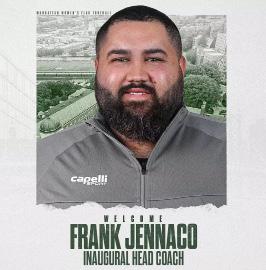
Frank Jennaco, head coach of the women’s flag football team at MU, to be offered during the 2026-2027 year, shared a similar sentiment to Schortgen in regards to the newness of the sport and team. For Jennaco, the addition of the women’s flag football team will not only set MU apart in terms of athletics, but will also work to enrich the current programs at the school.
“Because it is so new to the NCAA, we have a great opportunity to come in and immediately be really successful,” Jennaco said. “If we put the resources in now and have the program focusing in the right direction, we have an opportunity to become national champions and one of the premier programs in the country. That’s really important, because it will strengthen the entire athletics department by having that level of success, and hopefully it raises the levels of success for all the other programs as well, and kind of sets the bar for what Manhattan athletics should look like.”
Jennaco stems from the College of Staten Island (CSI), where he built the flag football program from the ground up.
Jennaco, a long-time supporter of flag football, fought for the program to be added at CSI for years before taking the coaching position. Even then, he had to create the National Collegiate Flag Football League (NCFLL) in order to create games for the team to play at.
“Those lessons, and going through that and understanding what it takes, makes me a better coach now,” Jennaco said. “Especially at this level, because we have such tremendous support from the athletics department that, mixed with my experience of
what I did over there [at CSI], will allow us to have a really strong, really prosperous program here. I have a ton of experience building programs, developing players, doing all those things, and now, with the support from the athletics department here, it’s going to allow us to go even further, even faster, and do a lot of great things that we want to do.”
Jennaco brought huge success to CSI’s flag football program, leaving the team undefeated during their most recent regular season, and bringing the first NCFLL championship title to the island. At MU, he hopes to continue this success in the future, and establish the school as a powerhouse for the sport.
“I want Manhattan to become the place for flag football in the Northeast,” Jennaco said. “I always say that UConn wasn’t UConn before Geno Auriemma [UConn basketball coach] got there. It was the University of Connecticut, and nobody wanted to go there. He turned it into UConn, the basketball Mecca, and we want to do the same thing here. We want Manhattan to be known as the place that you go if you want to play flag football on the east coast. We’re going to really do our best to get there and make it the household name for flag football.”
Acrobatics and Tumbling
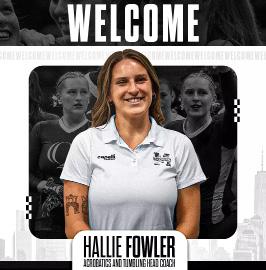
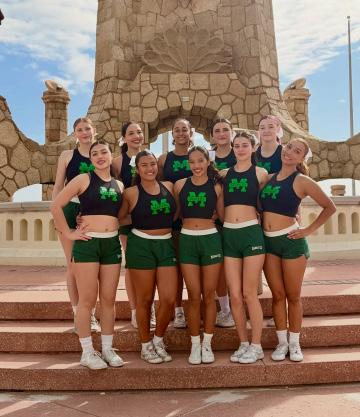
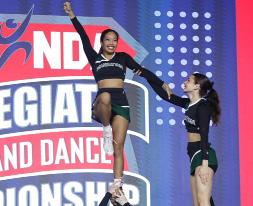
Hallie Fowler, the recently appointed head coach of acrobatics and tumbling, is a 2025 graduate from Quinnipiac University. There, she had an incredibly successful athletics career: Fowler was named on the All-American team for her sport and is a two-time national event champion in the open pyramid and the six-element acro.
At only 21, Fowler was the youngest person named a Division 1 head-coach in history - her youth, and fresh experience off the mat, is something that will definitely influence her coaching, according to Fowler.
“Our main focus is, and it sounds so corny to say, but fun,” Fowler said. “I had so much fun with my time during my athletic career. In turn, because I had so much fun, our program was incredibly successful. I ended up being one of the most decorated athletes at my institution, just because I had fun… I want these athletes to leave saying, thank you for pushing us and thank you for giving us this experience, because when I
reflect on my journey, that’s where I stand.”
As she enters MU, Fowler is tasked with building the whole acrobatics and tumbling program from scratch. Though certainly a challenge, this endeavor is something Fowler is looking forward to. Now, Fowler has the autonomy to work with her future athletes to tailor the program to their specific needs.
“When I was recruiting as well, [I viewed it as though] this isn’t mine, this is ours,” Fowler said. “In their [the recruits’] past experiences, they’ve had positive experiences, they’ve had negative experiences. I want them to come in and amplify those positive
experiences and decrease those negative experiences they’ve had in the past, and just really make it their own, compared to conforming to an already established criteria when they step into a program.”
The Quadrangle asked Fowler how she hopes to contribute to the Jasper name with the new team.
“It’s really amazing to see what these athletes can do, and what they’re going to do,” Fowler said. “Manhattan has a long, long standing, really successful reputation behind it, and we just want to add onto that and build on what we’ve already established here.”
Hallie Fowler was added as the inaugural head coach of acrobatics and tumbling earlier this year. GOJASPERS.COM / COURTESY
Frank Jennaco comes to MU as the inaugural head coach of women’s flag football.
Golf Team Swings Back at MU
Barbara Vasquez Editor-in-Chief
The Manhattan University (MU) golf program has swung back from recent years and reinvigorated their place on campus.
The women’s golf team has just finished their inaugural season here at MU. Previously, MU only supported a men’s golf team, with the women’s side opening up this past year. In a statement from GoJaspers, previous president Milo Riverso spoke on the importance of adding this new team, alongside a few others, to the school’s roster.
“Adding three sports teams: women’s golf, acrobatics and tumbling, and men’s volleyball, will not only expand our tremendous sports program; it will also provide three new opportunities to shape wellrounded Manhattan College graduates,” Riverso said.
The acrobatics and tumbling team was the only team to not fulfill their place on the roster last year, instead being added in the upcoming 2026-2027 academic year.
However, both men’s volleyball and women’s golf were added last year, with women’s golf having a historic first season. The team even made history months before officially coming to campus, all by signing golf team standout Peyton Factor and Madison Long.
“When Indigenous golfers Maddison Long and Peyton Beans Factor take to the links at Manhattan University this fall, a bit of history will be made: No two Native American women have ever anchored a Division 1 collegiate golf program, until now,” according to an article from ICT News.
Though they made their name known even before their signing, the golf team only expanded in its notoriety around campus after they began competition. In their first competition of the year at the Le Moyne Orange Tree Invitational, the team claimed victory through various team efforts, leaving both the men’s and women’s team winning their first competition of the year. They continued to perform well at meets following this victory, meeting the high standards set for the team by head coach Keith Prokop at the
beginning of the year.
The team ended their inaugural season with the MAAC tournament, with senior golfer Nawel Ben Letaief leading the team’s efforts. Letaief finished the competition in seventh place, alongside being named to the Women’s Golf All-Championship team by MAAC sports. In a statement to GoJaspers, coach Prokop reflected on the success of the team’s first season.
“It was nice to hear everyone complimenting our program on a successful first year, but I know that this program truly has a tremendous group of young women and will be very successful in years to come,” Prokop said.
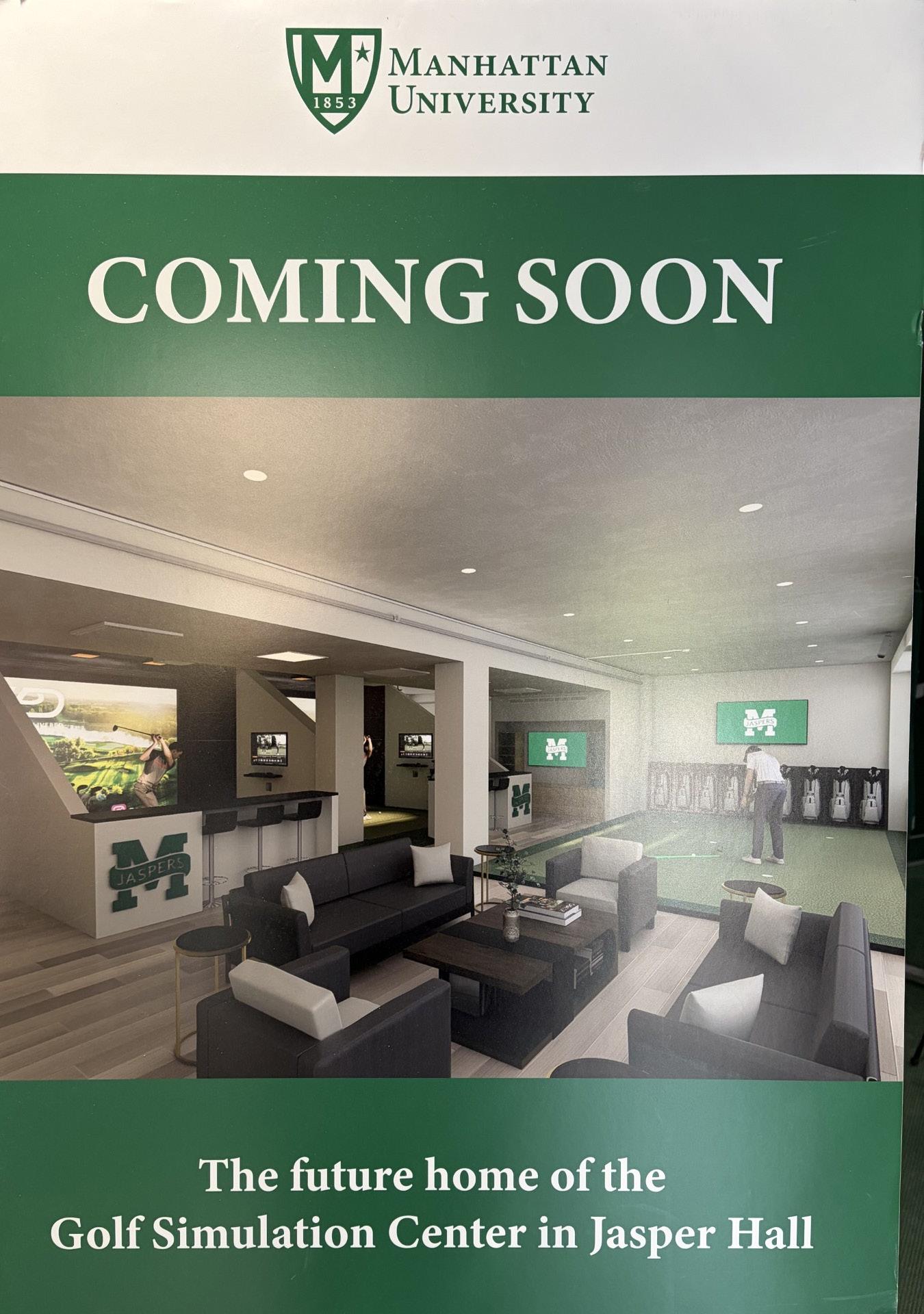
The program only looks to further expand, with a new golf simulator recently opening up in MU’s Jasper Hall. The golf simulator, officially titled the Jerry Wood Golf Simulation Center, is open for the golf team’s practice and student recreational use. In fact, this
new simulator was a selling point for the school during Accepted Students Day (ASD), with it being advertised as a campus attraction to stop by.
“Step into one of the campus’s newest additions,” it states in the ASD event itinerary. “Take a few swings, test your driving, and enjoy a fun, relaxed experience between sessions—no prior golfing experience required. Our team will be on hand to help you get started and ensure
everyone gets a turn.”
With an applaudable first season and now, dedicated spaces on campus, there is no doubt that the golf team is expanding their reach at the school. The team will continue in their efforts in the upcoming year.
“There is so much history in this university, we are ready to start some of our own,” coach Prokop said in a statement to GoJaspers.
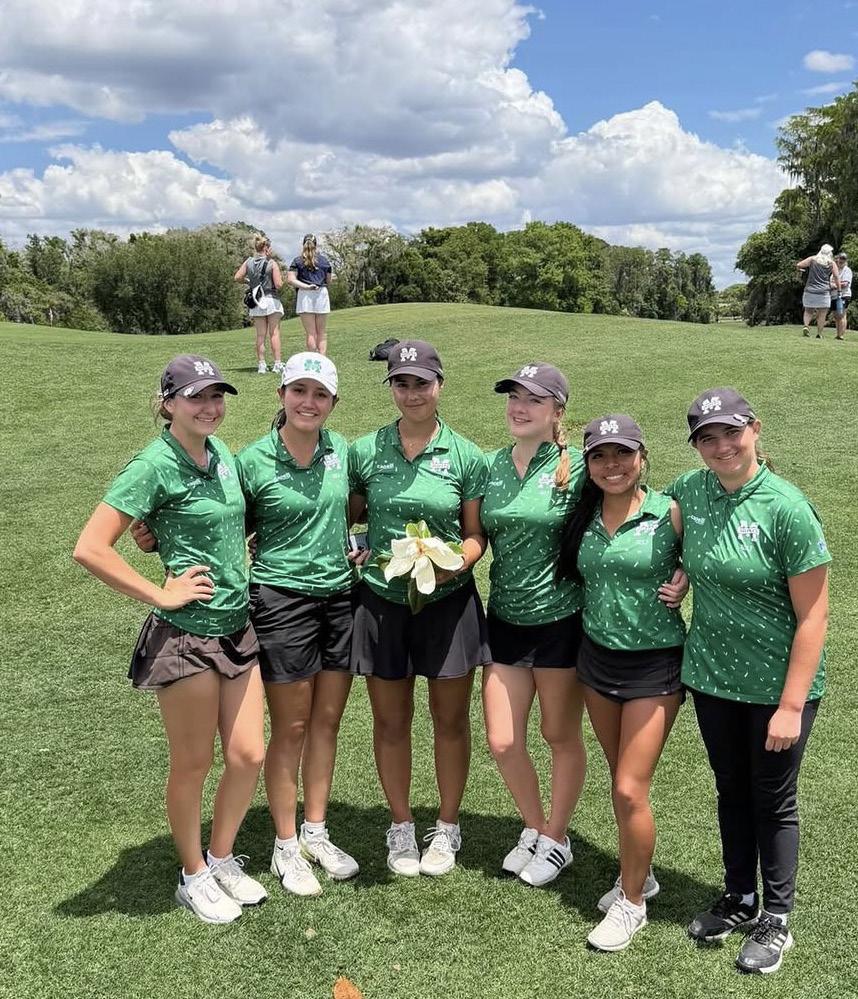
The women’s golf team wraps up their inaugural MAAC championship tournament.
A sign advertising the new Jasper golfing simulator in Draddy Gymnasium.
BARBARA VASQUEZ / THE QUADRANGLE
the Quadrangle
NEW YORK, April 28, 2026
Senior Events Commence
The senior class has a number of events planned in the weeks leading up to graduation, inluding senior formal, a bar crawl and senior assassin.
Manhattan University’s (MU) Senate held its final senate meeting of the semester, with the annual appearance of President Frederick Bonato, Ph.D., and Chief Financial Officer James Perrino.
The Senate opened with Perrino giving a brief financial review of the University’s current status. Perrino explained that the financial statements provided are audited annually by KPMG, with MU receiving an unqualified opinion. The
university is considered a “going concern” in terms of finances, meaning that it will be operational for at least one year.
As for expenses, MU’s total revenue for the last fiscal year was $145 million, with significant contributions from student services and the endowment fund.
“I think the main thing that we get out of [this is], essentially at the end of the year, we had an increase in cash of $2.2 million, and then we utilize our cash primarily for operating activities,” Perrino said.
Perrino then presented the tentative budget for the fiscal year of 2026, with total revenue projected at
$122 million and expenses projected at $136 million. With the expenses mainly made up of salaries, the university will remain in a cash deficit of $12.4 million, which is a consequence of the low enrollment numbers.
“Essentially, we’ll have cash at the end of the year, but not as much as we had the last year,” Perrino said. “A lot of the cause of this, obviously, is a result of some of the enrollment activity. We didn’t hit the numbers as high as we would’ve liked last year and that runs through the end of the year.”
project, so all majors in engineering split up into groups,” Mitchell said.
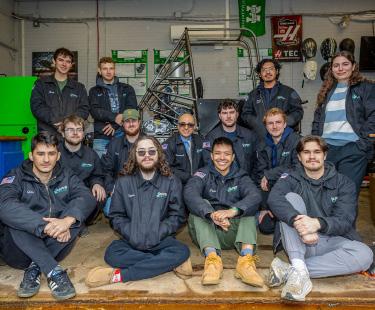
Manhattan University’s (MU) Mini Baja team will take part in the Society of Automotive Engineers (SAE) intercollegiate Baja competition in Rochester, N.Y., this June.
During the four day competition, students compete in a series of static and dynamic events that test the vehicle as well as the marketing behind it. The team consists of 12 students who handle the vehicle’s design, analysis and manufacturing.
At MU, this competition serves as a senior capstone project for mechanical engineering students who choose to take part. The competition gives students real world experience, and the opportunity to apply the skills they learned in the classroom in a hands-on setting.
Christian Danial, a senior mechanical engineering major involved with the project spoke with The Quadrangle about the competition.
“The task is to design and build a car, in our case, we’re doing an all wheel drive car,” Danial said. “It’s a mechanical engineering competition and a worldwide event where schools from all around the world bring a car, not only to compete [with] it, but also to sell it to a theoretical company, so not only do you have to build a better car, you have to build a cheaper car.”
The competition helps competitors develop engineering skills and requires extensive teamwork and collaboration.
Raymond Mitchell, a senior mechanical engineering major, shared how the team works together to complete this project as their senior capstone.
“It’s our senior design
“This is one of the bigger projects so it’s a 12-person team. We have one advisor, and we separate into three subdivisions, so there’s a frame subdivision, a drive train subdivision and a suspension subdivision, and that’s how we delegate the work.”
Mitchell also gave further insight into the design process.
“Our whole first semester was all designing it, so it’s not only designing it on CAD [computer-aided design software], it’s also 3D simulations and calculations, with the brakes making sure the car stops.” Mitchell said. “A big thing was calculations for the suspension, and making sure none of the parts fail, because this [competition] is off road, so we’re hitting a lot of bumps.”
Danial explained how the competition is organized.
“There are a few different events, both ones that have to do with the car and ones that have to do with the group,” Danial said. “The group does a business presentation to a group of judges at the event, we bring the posters that you see on the wall [about the car], and we talk about all the different components on the car… You also have events with the actual car, so obviously you have to pass inspection… The rule book is hundreds of pages, so if you don’t pass inspection, you don’t get to do anything.”
Mitchell further elaborated on the events that the team will compete in.
“There’s static events, and there’s dynamic events,” Mitchell said. “Static events are all the reports that we have to fill out… Then there’s dynamic events that actually involve the car. There’s a
hill climb, maneuverability and a couple-hour endurance race.”
Mitchell also explained that this competition gives the team members real world experience and is the pinnacle of their engineering experience at MU.
“I’ll be honest, I’ve learned more here than I have in almost all of school,” Mitchell said. “Especially for engineering in school, you might learn the theory side of things. But with this, you’re applying the theory to something, and then you’re building it.”
Associate professor of mechanical engineering and Mini Baja’s faculty advisor, Peyman Honarmandi Ph.D., shared how Mini Baja is a staple at MU for engineering students.
“Whenever students come to visit the engineering
school, they ask about us,” Honarmandi said. “They want to see the Baja shop, they want to meet me and my students. Because they know [it] is the most expensive project and the most handson project in any department, let me go even beyond, in the School of Engineering.”
Honarmandi shared how the team is split into different roles, and each position is voted on by the members.
“The company has [a] president, VP, treasurer, secretary, they vote for it” Honarmandi said. “We have a shop manager, we have [a] secretary, we have someone who monitors the budget. I tell them, imagine this is a real-world business, you have to run your company, and I felt giving them that power [and] self-confidence to grow, gets a good result.”
Honarmandi is proud of the team’s continued success and sees the competition as a valuable experience for
“Every year I am witnessing [the team] doing better and better, the students learn a lot through this competition,” Honarmandi said.
Danial explained that the project requires significant funding, much of which comes from donors and sponsors.
“Although the school gives us a budget, I’d say it accounts for a fourth of what the car actually costs,” Danial said. “Almost all of our huge purchases, and a good chunk of our materials come from sponsors, so we’re actually kind of running a business here… We have a solid 15 to 20 sponsors.”
Danial went on to share that the team’s work is mainly supported by their GoFundMe.
“The GoFundMe provides another way for people to show their support, because, to put it like this, the amount get.”
of money the school gave us would not even cover the material we need,” Danial said. “A lot of sponsors give us materials, some sponsors give us parts. Some sponsors just give us money, but we’re open to any support we can
The team is pulling together their final preparations for the competition, and those who are interested can learn more through the team’s Instagram page, @mu_baja.
his address by outlining priorities for this upcoming year, while also addressing financial sustainability. His strategic plan involves the university’s Lasallian Mission, student experience, physical and technological infrastructure and reputation as well as innovation of the university’s academic core.
Bonato also spoke about the enrollment trends over the past eight years, and the necessity to reverse the ongoing decline.
“So as of today, we have 334 deposits for next fall,” Bonato said. “A year ago, we had 231, so that’s a big increase… Nothing’s done until fall, when new students actually show up and are sitting in the seats.”
As a result of MU being tuition driven, with limited endowment funds, healthy enrollment is critical for financial sustainability.
“Not only do we have to recruit students, we have to manage our expenses very carefully,” Bonato said. “You always go for the expenses that don’t inflict damage to your mission and your student experience. Those are things you try to keep intact, but you do try to manage and trim, and
sometimes it’s painful.”
The projected amount of incoming students is anywhere from 450-700, with Bonato hoping for 1000. While the undergraduate enrollment is already projected higher than former years, graduate student enrollment is significantly lower this year.
Some faculty members spoke up during the senate meeting as well, expressing their concerns about job security and the impact of an email disseminated to faculty, asking for volunteers for an early retirement package.
One faculty member expressed concern regarding the email and the effect it has had on morale.
“I’m speaking as a faculty member and on behalf of some of my colleagues,” she said. “We’ve been living in fear since pre-COVID about job security, and when we receive an email that feels somewhat out of the blue, saying that you’re pleased to announce this early retirement package, to be honest, it kind of sets a little hysteria off.”
Bonato went on to reassure faculty that it was not the school’s intention to encourage doubts about job security.
Senator Bridget Chalk spoke about the Educational
Affairs Committee and the current updates being made. For example, the new core curriculum will include revisions to English 110, Religious Studies 110, and a new interdisciplinary seminar with components of the “first-year-experience.” Chalk also highlighted the approval of a joint services transcript for veteran students, as well as the policy on credit limits to prevent overloading.
Junior class Vice President Ashley Zegler attended the meeting as well to express concerns about the changes to the 2027 spring semester academic calendar, particularly the impact on Senior Week.
“I, along with my peers, share in the sentiment that while both options for condensed senior week are unfavorable, the three-day option is preferred by the junior class over the oneday option,” Zegler said. “The class of 2027 is deeply immersed in every aspect of student life within the Jasper community, whether athletics, academics, service, or clubs, striving to uphold the rich tradition and mission of the Lasallian spirit. Senior week should be viewed not only as a period to celebrate and enjoy the company of friends under the stress of the semester, but also as an act of gratitude from the university.”
A senate member expressed
how the decision-making process about the 2027 academic calendar involved trade-offs, and how senior week will technically be 4 days in this model, including the commencement ceremony.
“There always has to be trade-offs in a calendar year,” Chalk said. “That is going to be the finalized schedule, so please don’t think that [senior week] was ever really going to be one day. We saw that, and we immediately said, ‘that’s not
going to work’, and moved around the schedule to at least make it four days.”
As the senate concluded its final meeting of the semester, Mehnaz Afridi, Ph.D., expressed the need to energize the senate, as well as foster a collaborative environment for addressing campus concerns with students and improving communication across all channels.
Manhattan University holds the last senate meeting of the semester.
Founding chair Thom Gencarelli, Ph.D., is retiring in May after nearly two decades of building, shaping and leading Manhattan University’s (MU) communication department.
Gencarelli is serving his final semester as a communication professor, closing a chapter that has defined the program since its founding in 2007.
Hired to build the department from the ground up, Gencarelli went on to establish the university’s “Next Generation” communication program while mentoring generations of students in and beyond the classroom, including his role as faculty advisor to MU’s student-run newspaper, The Quadrangle.
Gencarelli’s career began unexpectedly, sparked by a chance encounter with a small classified ad that would ultimately define the future of the university’s communication department.
“The New York Times, when it was still primarily a print publication, had a Sunday section called Week in Review,” Gencarelli said. “At the back of that section was a ‘Careers in Education’ page featuring classified ads for positions in the education sector. Among them was a small listing announcing that MU was seeking a chair for its communication department.”
What began as a single choice quickly became a defining career move, leaving a lasting impact on the university.
“[Eventually] I decided that weekend I was going to write a cover letter and send them my resume, and see what happened,” Gencarelli said. “Lo and behold, two weeks later, I got a phone call that they would like me to come in for an interview… then a couple weeks after that, I got the call that they wanted to offer me the job.”
At the time, the university’s communication program was not yet fully independent due to its partnership with the University of Mount St. Vincent, making the role of a
department chair essential in guiding the university’s growth and development.
“[MU] had a relationship with what was at the time, the College of Mount St. Vincent,” Gencarelli said. “We would send our students by shuttle bus every day to study there, and they would send their students here [to MU].”
Eventually, the two universities would, as Gencarelli would say, “divorce,” creating separate communication programs.
From that point, Gencarelli built a standalone department grounded in both theory and practice, a vision emphasized by Michael Grabowski, Ph.D., a professor in MU’s communication, sound and media arts department and a close colleague of Gencarelli.
“There is an importance of combining theory and practice at MU, which was really what he insisted on,” Grabowski said. “He wanted to prepare students to have skills and be able to get jobs when they graduated, but at the same time, he wanted them to think about the media.”
Grabowski added that Gencarelli’s vision for the department is also deeply rooted in media history.
“[Gencarelli also wanted to make] sure that students understood where their individual mediums sit historically in the context of other media,” Grabowski said. “From there, he built that curriculum that we still use today.”
This approach reflects Gencarelli’s broader philosophy of education, one that balances practical skills with critical thinking and personal growth.
“We’re just a vehicle,” Gencarelli said. “What the education process is about is that students come here to learn something… but really, what they’re looking for is to achieve their hopes and dreams.”
The intent behind building the program continues to shape student experiences, according to Grace Cardinal, ‘25, a MU graduate and former editor-inchief of The Quadrangle.
“In my first class with Gencarelli as a professor, he said, ‘When you guys leave
here, some of you will leave with a degree and very few of you will leave with an education. Be the one that leaves with an education,’” Cardinal said, recalling her interaction with Gencarelli.
For Cardinal, Gencarelli’s approach extended into student journalism, particularly through The Quadrangle during her time as editor-inchief. Cardinal recalled one of the most challenging moments during her time as editorin-chief of The Quadrangle, when funding for student scholarships was unexpectedly cut.
“The Quadrangle scholarships got cut… that was a devastating moment,” Cardinal said. “Gencarelli said to me, ‘We’re gonna get the scholarships back, we are going to find a way.’”
This mentorship proved especially significant during moments of uncertainty.
“Throughout the years, there were so many people in the university’s administration that I had to sit down with and explain why journalism is so important here… knowing that I had someone that I could turn to and trust… was so incredibly important to me,” Cardinal said.
That reassurance from Gencarelli reinforced not only the foundational purpose of the communication department, but also the broader mission of journalism itself.
“In that moment, it was clear we are a team for the good of a student publication that’s been on this campus for 102 years,” Cardinal said.
Similar to Cardinal, Gabriella DePinho, ‘21, a MU graduate and former editor-inchief of The Quadrangle from 2020–2021, echoed Gencarelli’s influence as both demanding and formative, describing his teaching style as rooted in rigor and high expectations. She noted that his standards ultimately shaped her academic discipline and work ethic.
“When I was in Gencarelli’s class, he had high expectations… you had to earn his approval,” DePinho said. “But it made you a better student because if you wanted Gencarelli’s approval, you were going to end up working harder
Thom Gencarelli, Ph.D., professor of communication and founding chair of MU’s communication program, whose influence has shaped generations of students.
THOM GENCARELLI / COURTESY
than anybody else and caring more than anybody else.”
For DePinho, that challenge translated into longterm respect and gratitude.
“Though Gencarelli is an intense guy, he’s very passionate,” DePinho said. “Once you earned Gencarelli’s respect, you just had it… I owe a lot to Gencarelli. And I think a lot of people graduating from the program would probably say something similar.”
The core of Gencarelli’s legacy at MU calls for a broader awareness of media literacy.
“Question what you think you know, question what the culture around you tells you, question the media by which you receive information that you need to negotiate your life as an individual, but also as a citizen,” Gencarelli said.
He reinforced this philosophy by referencing the foundational basis of the department, Marshall McLuhan.
“‘The medium is the
message,’ and you need to understand the media that you choose,” Gencarelli said. “We as a culture are biased towards the ways that we inform ourselves, and the way that we get information, matters.”
DePinho pointed to this philosophy as central to Gencarelli’s influence, framing his retirement as both a loss and a lasting legacy beyond MU’s campus.
“[It’s] bittersweet… His legacy is what’s left of the program… and all of the alumni… and the things that they continue to accomplish,” DePinho said. “Gencarelli deserves to be proud… he fought for his students, and he fought hard for his department.”
For many students, that legacy remains deeply personal.
“I wouldn’t want to be at a university without Gencarelli in the communication department,” Cardinal said.
senior Farewells
Laili Shahrestani
Staff
Writer
/ Features Editor / Editor-in-Chief
I always knew I wanted to be a journalist. Growing up on the west coast, I knew the only right option was to move to NYC and make that dream happen. In August 2024, I took that leap of faith, and transferred to Manhattan University from a small community college in California. During my first semester, I sat there, in Thom Gencarelli’s office, as we did an independent study for Intro to
Journalism. It was then and there when Thom first introduced me to The Quadrangle. I began my journey as a contributor, and 1 year and 8 months later, I sit here writing my farewell as editor-inchief. I can never thank The Quadrangle more for what it has done for me. It’s allowed me to break out of my comfort zone, meet some of my best friends, interview a multitude of incredible people, pursue my
Brooke Dellarocco
Staff Writer / News Editor / Senior Writer
As my time at Manhattan University comes to a close, I am deeply saddened to say goodbye to The Quadrangle Student Newspaper. After four years as a staff writer and a year and a half as News Editor, it’s surreal to be writing this on the subway home from
Elaina Batista
my full-time job. While readers saw the final stories and carefully crafted front pages, few saw the process behind them. From late nights editing and calling friends to rant about an Oxford comma, to spending hours on the phone with the NYPD chasing
passion for journalism and most importantly, make an impact on the campus community. While I’m excited to see what post-grad life holds, a part of me feels missing knowing I will no longer have Quad Tuesday’s to look forward to. Tuesday’s have been my favorite day of the week for the past two years, because I know I’ll get to spend time doing what I love most with my closest friends. While closing
this chapter feels heavy on the heart, I know my partner, Barbara Vasquez, will do an excellent job of continuing to lead The Quadrangle down the best path possible. Barb, thank you for everything. I wouldn’t have wanted to do this with anyone else. And to the rest of The Quad staff, I’m so proud of you all, and keep up the hard work. No matter where life takes me next, I will forever hold The Quadrangle in my heart.
information, to writing a last-minute story on a Saturday morning, those are the moments that will stay with me. Looking back at the nervous freshman who walked into her first Quad meeting, I’m proud of how much she has grown and how confident she has become.
Thank you to everyone who supported me along the way and helped shape me into the person I am today. It has been an honor to tell the stories of this community, and I can’t wait to see where the next ones go. Keep writing quaddies.
Asst. Social Media Editor / Senior Writer
Thank you to Laili and Barbara for giving me the opportunity to continue this mini passion project of mine. I joined The Quadrangle my sophomore year not knowing what to expect, and after my first article was published, I had people coming up to me to say how excited they were that Manhattan
Maizy Swift
Caucus was back. Knowing that people were reading my work each week truly meant the world to me. Writing the Manhattan Caucus and sharing relevant political insights with the Manhattan University community has been an incredibly meaningful experience, one that I will always carry with me. I hope to see
someone continue the Manhattan Caucus in the years to come.
Working alongside the editors made this experience even more special. Their kindness, patience, and genuine support created an environment where I always felt encouraged to grow as a writer. They were
not only thoughtful in their feedback but also understanding of the time and effort behind each piece, which made the process both collaborative and rewarding. It is rare to find a group of people so dedicated to uplifting one another, and I am truly grateful to have been part of such a welcoming and supportive team.
Staff Writer / Asst. A&E Editor / Asst. Production Editor / Asst. Social Media Editor / Production Editor / Senior Writer
I am so grateful to this publication for all it has taught me, about journalistic tradition, but also about the importance of journalism in our current world. I remember being thrown into production as a
freshman with no experience, where I learned to love InDesign and my fellow Production Editors, giving me a newfound respect for all of the work that goes into producing The Quadrangle. I have made so many
connections with fellow students and faculty, and have learned something new through each interview I have conducted over the last few years on The Quadrangle, which I will treasure indefinitely. I will
miss this paper and am so proud of all of the work I have done over the years, holding positions such as production editor, Asst. A&E editor, and Asst. Social media editor, along with the stories I have written each semester, thank you!
I am so grateful for my time at the Quadrangle. As an aspiring physical therapist, there wasn’t much crossover between my science classes and journalism.
Mary Haley
The Quadrangle gave me a hobby where I was able to learn so much outside of the classroom. I have been able to meet and interview so many incredible
people. I want to thank all of the editors-in-chief I worked under and all of the help they have given me. I also want to thank all of the athletes and coaches I’ve
had the pleasure of interviewing during my time here. This was an awesome experience, and I’m very proud of the work that our paper has done.
Staff Writer / Asst. Social Media Editor / Social Media Editor / Marketing Chair / Asst. Features Editor / Senior Writer
Now taking the time in these last few weeks to look back on the past four years, every road has led back to this paper. The first “assignment” I had for college was an article about WRCM, before I had any homework in any of my classes. Not only has The Quadrangle taught me in a way unique to any classroom I have ever been in,
Alba Kortoci
Web Editor
Although my time with The Quadrangle was only one semester, it was an experience I’m truly grateful for. Being part of the team allowed
Grace Cardinal
it has also been the true essence of the “butterfly effect.”
Everything I have done to this point from that first Friday night deadline has been because of this paper – academically, personally and creatively. I feel extremely lucky to have been a part of the legacy of this publication, and even through the obvious and major ebbs and flows this publication
and school has been through over the time I’ve been here, it’s opened my eyes to one constant – inspiration and stories live all around us, and it’s important to talk about them. I never ever thought I’d be saying I’ll forever feel indebted to a newspaper, but here I am saying it.
I am having the hardest time describing how
instrumental this paper has been to me as a person, and it probably won’t hit me until it’s a random Tuesday at 4:00 p.m. and I’m not sitting in one of the various meeting rooms in Kelly Commons, scouring my email to find the link to a new issue. Thank you to The Quadrangle and to journalism for letting me learn so much about myself and the world around me.
me to contribute creatively, learn new skills, and be part of something that represents the voice of our campus. Even in a short time, I was able to grow
and gain a deeper appreciation for the work that goes into student journalism.
I remember on my first day of freshman year, Dr. Thom Gencarelli stood in front of my Intro to Comm class and said “In four years, most of you will leave here with a degree, but only some with an education.” Since that day, I’ve been dedicated to making something of myself at this school, and nothing has helped me do that quite like The Quadrangle.
Despite leaving our newsroom a few months ago, I’m still not sure I’m able to eloquently sum up
what my 3.5 years on The Quadrangle meant to me. It not only gave me a purpose on campus and helped me land work, but it allowed me to realize what actually makes me tick — and what I’d be happy to spend the rest of my hours on this Earth doing. I carry an immense sense of pride in the work and mission of The Quadrangle. This newsroom of ours has given students a voice, demanded accountability and continued to preserve campus
history for over 100 years. Being a part of that work has undoubtedly been the greatest honor of my college career. There are so many people who have supported me who deserve their flowers. Angelina Persaud — the first news editor who taught me so much of what I know — thank you for being my teacher and a best friend ever since. Kyla Guilfoil, my mentor, friend and big sister when I need it, I will never be able to repay you for being the entire
experience so welcoming and collaborative. I’m excited to see how The Quadrangle continues to evolve and wish the team all the best moving forward!
reason I discovered Manhattan University, The Quadrangle, and this career in the first place. You transformed my life, and I will be forever grateful. I wholeheartedly place my trust in the future of this paper with this staff. The world cannot read if you do not write. Pen the truth and your place in history. Most importantly, do journalism, and do not… well, you know the rest.
THE QUAD TEN
Each year, The Quadrangle compiles a list of the most influential seniors on campus, creating our own version of the Time 100. Those selected represent the very best and brightest Manhattan University has to offer and highlight the significant impact of these seniors’ contributions over their years on campus.
This year’s list was nominated by students in the wider campus community and ultimately decided by The Quadrangle’s staff. The ten following seniors constitute this year’s final Quad 10 list.
Interviews Compiled by: Laili Shahrestani, Misha Jabal-Abadi, Mary Haley, Joshua Reichard, Sarah Rolka, Leyla J. Mercado, Maria Castano and Barbara Vasquez.
Whether it be in Anaheim Hills, California or The Bronx, NYC, Laili
Shahrestani has made a name for herself through various ways in impeccable amounts of time. From going as a contributor to The Quadrangle’s editor-in-chief in only a year and eight months, her hardwork, passion and dedication have truly spoken for itself.
Shahrestani, a communication major with a concentration in journalism and minor in psychology, as well as a
Gabriella Morelli is graduating with a major in chemical engineering, a concentration in consumer goods and cosmetic engineering, as well as minors in chemistry, mathematics and business. From the start, she aimed to make her mark on campus. Morelli chose to come to Manhattan University (MU) due to its close proximity to the city, small class size and welcoming
Billy Walker, a communication major with a media production concentration and a theater minor, has become a key figure in media production at Manhattan University (MU). Many of MU’s most visible media and entertainment efforts are thanks to his dedicated work.
During his time at MU, Walker has been involved with LOTUS Magazine, MCTV, MU Singers and MU Players, among other clubs and organizations, finding ways to contribute his creativity to the campus community.
member of Epsilon Sigma Phi, first transferred to Manhattan University (MU) in 2024. Her inclination to apply to MU was a gut feeling that further resulted into one of the most transformative experiences of her life. Thanking Thom Genceralli for pushing her to join The Quadrangle, Shahrestani’s shell came sooner than later.
“Once I joined The Quad I just put everything I had into it,” Shahrestani said. “For me, it was more than
environment. In her freshman year, she attended any event that was interesting and began to take on more serious roles in the following year. During her time here, she has taken part in Tau Beta Pi, A.C.G. Chemist Club, Pen and Sword and Omega Chi Epsilon. One highlight was becoming president of the Society of Women Engineers (SWE) club in her ju-
Behind-the-scenes, Walker serves as technical director for WRCM Radio, managing audio production and training students on professional studio equipment. He also contributes to ESPN+ productions on campus, where he directs live sports broadcasts and operates film equipment.
Most notably, Walker is also the co-founder and president of Manhattan Media Network (MMN), a student-run television and media production group that produces short and long form video content
just a club, it was something I genuinely saw myself doing in the future, and something I’m really passionate about. So I think because of my dedication, it allowed me to grow faster.”
With her bi-coastal lifestyle becoming another key aspect of her life, Shahrestani’s ability to remain connected to her friends and family 2,782 miles away in the midst of holding one of the biggest roles in MU’s world of student communication is solely the beginning of her future.
nior year.
“I would say I am proud that I took on the role of SWE president my junior year because it was a little bit unexpected ... I’m proud of planning all the things that came with being president my junior year,” Morelli said
Through all events, activities and clubs she has taken part in, she has created connections to fellow Jaspers, build-
for the MU community.
Walker believes that MMN has set him up for success on campus, and has become a launching point for many of his opportunities.
“Most of the jobs I have now, like WRCM and LOTUS would’ve never happened if it wasn’t for [Manhattan] Media Network.” Walker said.
Aside from media production, Walker also serves as an admissions ambassador for the university, giving tours, and assisting in the admissions department.
Off campus, Walker
“I don’t think I would have grown as much as I did if I didn’t move here,” Shahrestani said. “There weren’t many options for me back in my hometown … If you told me that I would be interviewing all of these incredible people like 3OH!3 and the lieutenant governor of New York … I’d be shocked.” Beyond graduation, Laili hopes to work as a journalist in the New York City Metropolitan area.
ing the community that had drawn her to come to MU. As she gets ready to move on to the next chapter, she will always remain a Jasper.
“... Jaspers really like to help each other out, like whether they’re still in undergraduate or alumni as well,” Morelli said, “So, I really feel like I’ll have that community with me even after I graduate too.”
interned at BronxNet TV, and participated in the Disney College Program. He also works with Magnolia Bakery, as a content creator and outreach intern.
Walker’s advice for future students? Get involved.
“Do everything you can. That’s what college is for. Find yourself, and find what you’re passionate about, and do it with your friends,” Walker said. “If you have an idea, ask your friends, and ask your classmates. You’ll find the people who will say yes, and that is how you’re going to thrive.”
Billy Walker
Gabriella Morelli
Laili Shahrestani
Lucas Haas,
a name familiar to many, as he currently serves as the senior class president, will be graduating with a degree in environmental studies with minors in biology, spanish and political science.
As president of Sanctus A rtem, hosting weekly events, and being heavily involved in the Green Club, Haas has made his presence on this campus very well known. Haas will go on to pursue
If you’re in the chemical engineering department or have ever needed chemistry tutoring, then chances are, you know who Natalia Cieslak is.
On campus, Cieslak has served as a chemistry tutor in the Center for Academic Success since her sophomore year at the institution. A pillar of the chemical engineering department, Cieslak has maintained Dean’s List standings for multiple semesters in a row, alongside multiple honors and distinctions, including Ep-
Mia Porritt has had a particularly interesting college experience these past four years at Manhattan University (MU). She went to MU as an undecided major, not knowing where the next four years would lead her. Now, looking back, Porritt has lost count of the leadership experiences she’s had.
Porritt has gone above and beyond with her involvement on campus, being one of the youngest chapter presidents of the university’s chapter of Public Relations Student Society of America
Sam Wofford might come a cross to you as a familiar face, whether through his short videos on all of Manhattan University’s (MU) social media pages, or more advertently, on the billboards in Times Square. Although his impact on campus runs much deeper than what you can see online or in person.
Originally from Charlotte, North Carolina, Wofford was inspired to come to MU from his frequent childhood trips to NYC with his mother, who coached a moot court
a master’s degree at Hunter College for urban planning, while also being employed by the school as the executive assistant for Kristelle Lowe, vice president of student life. Haas cannot wait to be in this role, still impacting campus life like he has been over these last four years. Haas mentions that while he feels ready, everything still seems to come to an end so fast.
“I think I’m ready,” Haas said. “It
silon Sigma Pi and Omega Chi Epsilon.
Of her achievements, Cieslak denotes her internship at Henkel as what she’s most proud of.
For this role specifically, she spoke on how her membership in Society of Women Engineers (SWE) and the conference held last year in Chicago, where she networked for the position, aided in her achieving it. Throughout her time at Manhattan University (MU), Cieslak has become very familiar with the importance of
(PRSSA), where she has hosted public relations teams from projects like “Stranger Things,” and esteemed companies like NBC.
Along with her fouryear commitment to PRSSA, Mia has been a pillar in the communication department –working in the communication office since her sophomore year, becoming social media director of LOTUS magazine and for the Sixth Borough Film Festival, where she brought in hundreds of thousands of views on her curated posts. Porritt
team and would come to the city for competitions. This connection sparked his love for the city’s energy, and the connection made coming to a small liberal arts college in New York feel like the right fit.
Wofford first got involved with WRCM, the university’s radio station, and eventually became vice president. He then joined the Public Relations Student Society of America (PRSSA), where he now also serves as vice president. He’s been involved with Manhattan Media Network (MMN)
does feel like it came up really fast, like a bullet train…It’ll still feel like a soft transition to the next chapter of life [since he will be still working here]…”
Upon earning his master’s degree, Haas hopes to eventually go on into the field of urban planning in New York City, or any other big hub. He mentions how he doesn’t feel “rooted” anywhere, and will “see where the wind takes him.”
Haas also gave a word of advice to
putting yourself out there and building experience.
“Both of those internships, I got them by being connected to the school,” Cieslak said. “That is one of the greatest strengths about MU, the opportunities they give you.”
For underclassmen at the school, Cieslak advises getting involved and applying yourself, both on and off campus.
“As much as it’s important to do well in your classes, it doesn’t matter how well you do if you’re not applying it to any-
also served as president of Lambda Pi Eta, the national honors society for communication.
Porritt has dipped her toe into everything. Going into her junior year, she joined the university’s D1 swim team, after never swimming competitively in her life. Her experience as a competitive swimmer over the past two years further highlights the opportunities that MU gives people.
Outside of her involvements and love for MU, Porritt quickly discovered her love for the Bronx through her
since its inception two years ago, rising to be secretary of the club this year.
Sam has been an i ntegral piece of the front-facing work of the university, working as an admissions ambassador for over three years, and recently joining the school’s marketing department, running social media. He also contributed heavily to the university’s inaugural Sixth Borough Film Festival, which is one of his most proud projects he’s worked on, along with the many WRCM Bash events
the next leaders on campus, and students in general.
“I would say to everyone either taking on new leadership roles or continuing the same roles, continue doing what you’re doing, it is very much appreciated, even though it might be a thankless role… and your impacts don’t go unheard or unseen,” Haas said.
Haas will be missed by many on campus, yet his impact will permeate for years to come.
thing,” Cieslak said. “If you’re not gaining the experiences, you’re going to stay at a flat line and plateau.”
With her upcoming departure from the school, Cieslak reflects on what she’ll miss most about the school, bringing it back to the size of the school - one of the reasons she came to MU initially.
“I’ll miss the community here most,” Cieslak said. “I like being on campus, I like hanging out with my friends whenever I want. It’s nice to be able to do that.”
year-long internship with the Bronx Economic Development Corporation. There, she further discovered her love for community.
Porritt will remember MU fondly, and says what she will miss most are the simple interactions people have going to school here.
“I’m gonna miss most is going from Kelly [Commons] to Miguel [Hall], and it taking me like 30 minutes to go from Kelly to Miguel, because I keep stopping and having a conversation with friends,” said Porritt.
he spearheaded in organizing.
“Music is a huge passion of mine, and it is something that I feel like I kind of lost through my first couple of years, but the more I got involved with leadership roles on campus, the more music I wanted to bring to campus,” Wofford said. “Helping organize the WRCM Bashes to showcase how talented some of our music production students here are on campus was super meaningful to me. It really brought me back to who I was before I came here to MU.”
Natalia Cieslak
Lucas Haas
Mia Porritt
Sam Wofford
Even while being a double-major in computer information systems and business analytics, Jonathan Carsen has still found the time to influence much of MU’s campus over the years.
Carsen will be leaving MU to start as a digital assurance and transparency associate at PricewaterhouseCoopers in July after interning in the same position last summer. Before acquiring these positions, Carsen’s involvement at MU set him up for the highest success. He was
Fares Al-Lahabi will graduate with a degree in civil engineering, after serving as president of Manhattan University’s (MU) chapter of the American Society of Civil Engineers (ASCE). Al-Lahabi is also a former winner of the annual Innovation Challenge, which provided him with funding to kickstart his environmental technology company: CarbonClair.
Before becoming a Jasper, Al-Lahabi already had a hefty resume with leadership positions within his field that could have granted him entry to a multitude of institutions; however, he
As a double-major in communication and psychology, current editor-in-chief of LOTUS Magazine, vice president of the psychology club, former marketing chair and assistant features editor for The Quadrangle and a D-1 swimmer — Mary Haley really does it all.
Quad
10
on the Dean’s List for almost every semester, was a MAAC scholar athlete as well as a NCAA Academic All American and is receiving the William P. Cain medal for computer information systems. Carsen has also been inducted into a handful of honors societies, including Pen & Sword.
Even through all of the commitments Carsen has been dedicated to, there is one thing he has become the most proud of — advocation. Carsen was on the executive board
chose to come to MU thanks to the Jasper spirit he noticed while navigating the industry.
“Not even the Ivy League schools have the same sense of community that MU has,” Al-Lahabi said. “When I used to go to networking events, all I heard was about Jasper alumni, and how they support each other. They always shout themselves out in those events. There’s always a Jasper in every company.”
After graduating, Al-Lahabi plans on getting a Ph.D. in mechanical engineering, as he is passionate about new technologies, and
Haley, coming from two different academic backgrounds in both communication and psychology, emphasized her appreciation for both, and expressed how they are way more interconnected than one may think.
“Communication and psychology, they really do bleed into each other,” Haley said. “Psychology is vital to everything, and I think the same with communication. Like with my writing, I need psychology to ask the really important questions, and to understand the dynamic between me and the other person.”
In her future, Haley sees herself making an impact on her community by going on to work in the children’s publishing industry, before later transition-
for the Student Athlete Advisory Committee (SAAC) for two years before being elected as president for this past academic year, while also being team captain of the men’s D1 swim team. In these positions, he worked to make sure student-athlete voices were heard, whether in formal settings with administrators, or in quieter, one-onone conversations with teammates seeking guidance. For him, advocacy has meant being a reliable resource, a listener and a bridge
considers this choice to align better with his lifelong interests.
As a senior, the most daunting question is what you’ll go on to do afterwards, yet Al-Lahabi has no fear, and welcomes change.
“I don’t have a slight fear about what I’m going to do after graduation,” Al-Lahabi said. “Since I utilized everything this campus offered … as an undergraduate … I have no regrets that I could have done more. In that sense, wherever I’m ending up after is where I should go.”
Al-Lahabi is firm on the idea that undergraduates should take advantage of every
ing to work as a child counselor or psychologist.
Haley has also demonstrated great work-ethic through her internship roles. She served as a marketing and communication intern for The Bronx Economic Development Corporation and also a digital marketing associate at Twipes. Within both these opportunities, Haley felt extremely passionate about the work she was doing, as it made a great impact on those around her.
“At BXEDC I did
between student-athletes and the broader campus community.
“Advocating for other people in turn let me also advocate for myself,” Carsen said.
As he prepares to graduate, Carsen says he’ll miss both the challenge and the camaraderie of MU.
“I’ll miss just being challenged all the time,” Carsen said. “I’ll take the lessons learned from all the challenges I’ve had over the past four years into the rest of my life.”
opportunity they see, and that exploration is the key to growth.
“[College is] really the best time to explore because you have no risks,” Al-Lahabi said. “You’re investing your own time and things to clarify what you really want. “Don’t just do the things that you’re supposed to do for your major. In the end, if you’re getting a job within your major, they’re going to train you on the things that they’re expecting you to know … but when it comes to having multiple skills, that’s something every job will value.”
‘Tour de Bronx’ and promotional work for ‘Savor the Bronx’ … It was really fun to contribute to the community that I was new to,” Haley said. “With Twipes, they make biodegradable toilet paper. I do a lot of hands-on content creation, and I feel very passionate about this because I care a lot for the environment.”
It is clear by Haley’s deep sense of dedication that while this chapter may be coming to an end, her story is just getting started.
This past Thursday, April 24, Rita George Tvrtkovic, Ph.D., came to the Manhattan University (MU) campus to deliver a lecture titled “The Virgin Mary: Bridge or Barrier in Christian-Muslim Relations?”
This lecture delved into the Virgin Mary, and particularly whether her position as a shared figure in Islam and Christianity presented her as a connecting point or a dividing point in interreligious relations. Tvrtkovic is an expert on interfaith dialogue, being appointed as a consultant for the Vatican’s Dicastery for Interreligious Dialogue by Pope Francis in 2020, holding her position as dean and professor of theology at the University of Saint Mary of the Lake, as well as writing numerous books on the subject.
The event, presented by the Holocaust, Genocide and Interfaith (HGI) center at MU, began with a portion by the director of the program, Mehnaz Afridi, Ph.D., who introduced Tvrtkovic with a few words.
“I want to say that Rita is very special to me and to the university, because she carries with her the weight
of dialogue, which is very hard these days,” Afridi said.
Tvrtkovic opened up with some precursory points, one regarding interfaith dialogue and its importance, especially with today’s political climate.
“Right now in the world, and especially in the United States, there is a rise in Islamophobia, antisemitism, xenophobia - all the ‘-isms’ and ‘-phobias’,” Tvrtkovic said. “So, I think talking about the history of dialog and polemics is very important in this day and age. Interreligious dialogue is important in this day and age: Why? Deepen your own faith, increase understanding of [the] other, and, most importantly, build relationships and decrease dehumanization, because that’s what’s happening in our country right now. We dehumanize those we don’t know. So these dialogs are really, really important for peace.”
For Tvrtkovic, emphasizing interfaith dialogue is vital amongst all groups of people, but engaging in this dialogue with college students is particularly interesting.
“You are the future,” Tvrtkovic said. “Not only are you the future, you’re the now. And I think you guys are really good at dialog, because you’re open. What’s great about college students is that interreligious dialog
includes people who are not religious. In fact, sometimes non-religious people are the most inquisitive, knowledgeable, and they ask the best questions.”
Tvrtkovic went on to discuss the historical backing to the relationship between Christians and Muslims, calling upon Nostra Aetate and prominent shared figures in both religions. Finally, she prefaces the inclusion of Islamic images in her presentation, addressing the fact that imaging in Islam is a ‘complicated thing,’ especially in regards to creating images of prophets or religious figures, but that the images are important for the context of the discussion.
“I want to spend my time on historical Christian images of Mary with Muslims, and I want you to think about this idea of Mary: is she a bridge or a barrier, because in some of these images she’s a bridge, and some she’s definitely a barrier,” Tvrtkovic said. “And there are different ways to view Mary as a bridge. Is she a bridge to conversion, or is she a bridge to dialogue and friendship?”
Tvrtkovic continues to go through various examples of images, texts and shrines, dissecting which messages were being portrayed via which media. She ends off her lecture shortly, tying it all back to choosing Mary as
a topic in the first place.
“She [Mary] teaches us to believe, not to close ourselves up in certainties, but to remain open and available to others,” Tvrtkovic said. “She was courageous. She let the angel in [in reference to Luke 1:2638], she asked questions, she pondered. That’s the image I want you to end with: Mary is a model for all of us, and not just for women. Gentlemen, she is a model for you too, for her courage, her purity, her strength. So I want to leave you with that idea of Mary as a model for all of us.”
The Quadrangle spoke to attendees of the event afterwards to gain some student perspective on this topic brought to MU’s campus.
“I honestly came for class, but it was a good dialogue,” Christina Camalo, senior computer science major at
the school, said. “Everyone knows Islam, Christianity, Judaism have similarities, but this went a lot more in detail, and also focused on varying aspects of [the topic].”
Serxhio Nikolli, a senior at MU, also attended the event alongside Camalo. When asked by The Quadrangle if he found the event valuable in any way, he shared his thoughts.
“It was definitely very insightful,” Nikolli said. “Especially the dialogue in the end, [it] gave me some different perspectives.”
To stay up to date with similar events hosted by the HGI center, follow @hgimanhattan on Instagram, or visit the center in person, located on the fifth floor of O’Malley Library.
VoicesonTheQuad:SeniorEdition
Zeke Jazwinski Sports Editor
As Manhattan University (MU) approaches commencement and the close of another academic year, a new class of seniors prepares to graduate, marking the culmination of years of achievement and growth.
The 2026 class has made their presence known on campus, whether for the students’ deep involvement in athletics, academics or campus life. The Quadrangle spoke to a few of these seniors on campus to share some quick reflections regarding their time at MU.
Anna Duncan, senior
communication major with a concentration in public relations and a minor in marketing.
The Quadrangle: How has being a student athlete helped you throughout your years at Manhattan University?
Anna Duncan: “Being a student-athlete taught me more than just how to compete. It taught me discipline, time management, and how to push through when things get tough, both on the field and in the classroom.”
TQ: What are some of the classes you’ve taken during your time at Manhattan that will help you in your future career?
AD: The communications
classes, which helped me develop strong storytelling and professional communication skills
Tyler Wood, a senior kinesiology major at MU.
The Quadrangle: What have been some of your favorite classes you’ve taken at Manhattan thus far? What set these classes apart?
TW: Some of my favorite classes were Kinesiology and Strength and Conditioning, because they connected closely with my experience as a student-athlete.
TQ: What was your favorite experience about going to Manhattan?
TW: My favorite part about going to MU was how easy it
was to build really close bonds with people. Because the campus is smaller, you see the same faces every day, and over time those classmates turn into close friends.
Myron Corpuz, senior computer engineering student and captain of the track and field team at MU.
The Quadrangle: What was your biggest challenge during college, and how did you handle it?
Myron Corpuz: I’d say one of my biggest challenges was learning how to balance my time. Being a student athlete, it was hard at times to balance my classes, practice, competitions, and personal life. I handled it by staying organized, keeping a routine, and learning to
manage my time. This taught me a lot of discipline and how to work under pressure.
TQ: What activities, teams, or clubs meant the most to you?
MC: The activity that meant most to me was being a part of the track team. It gave me a chance to continue to do something I love. I’ve met a lot of amazing people through the team who’ve become lifelong friends, so that experience means a lot to me.
TQ: What are your plans after graduation?
MC: After graduation, my plan is to go to grad school while using my last year of NCAA eligibility to continue competing in track. I’m looking forward to continuing both my academic and athletics.
Tvrtkovic utilizes visual art to showcase Mary as a bridge and barrier between Islam and Christianity.
BARBARA VASQUEZ / THE QUADRANGLE
arts & entertainment
Going “Into the Woods” With Players
Mary Haley Senior Writer
After four long months of rehearsals and work, the Manhattan University Players had their spring main stage musical: “Into the Woods.”
Adapted from Stephen Sondheim’s music and the book by James Lapine, “Into the Woods” is a musical that follows the intertwined stories of many classic fairytale characters made up by the Brothers Grimm. Through the childhood favorites of Jack [from the beanstock], Cinderella and the Little Red Riding Hood, the musical presents themes of sonder and responsibility — especially when it comes to getting your wish granted.
Rehearsals for the show started last semester, and the cast and crew were assigned their scripts and roles over the winter break, so that they could start production for the show as soon as the spring semester began. The first meeting of the semester was a table read, then, as the semester went on, three rehearsals a week, then upwards of 12-hour rehearsal days for tech week that started two weeks ahead of the show’s Friday night debut.
“Into the Woods” is by nature, a particularly complex show, as it includes more than six main characters with all of their own arcs. Logan KappasSommer, a sophomore English major, took on the role of the “narrator,” who is in almost every single scene of the production. Being that this was his first performance in a musical on stage, he had many thoughts going into the live show.
“I feel very comfortable when I’m on stage, it’s one of the places that I just love to be,” Kappas-Sommer said. “Throughout the whole day leading up to it, I had butterflies, and especially in those couple of moments right before going on stage. But the second that I got on stage, it felt like ‘I know this. We’ve done it
so many times. I got it’.”
The whole weekend of shows went well for the Manhattan University Players, with one exception — finding someone to play Rapunzel after the original cast member got sick, 24 hours before the show debuted.
Giada Dougherty, the show’s last-minute Rapunzel, was in class with Olivia Bailey, producer of Players, and Mary Calden, secretary of Players, when the two of them received a call that the original Rapunzel was ill and unable to perform that weekend. Dougherty joked that she could step in, but then the morning after [Thursday before the show], she was formally offered the role. Within 24 hours, Dougherty had learned her lines, songs, choreography and had tried on her long blonde wig.
Although she was nervous for her stage time, Dougherty, who is vice president of Scatterbomb, the university’s improv club, felt as though her experience in Scatterbomb helped her to have the confidence to take on this unexpected role. It led her to revisit a side of theater she hadn’t participated in since before high school.
“Scatterbomb is a theater group at the end of the day, and I feel as though that broke me out of my shell,” Dougherty said. “It reconnected me with theater and acting, because I stopped in high school, and then I came here, and I started picking up theater again. Then you just have connections throughout the performing arts and you kind of want to dip your toe in everything.”
Although Rapunzel is a smaller role in comparison to the other characters, she is integral to the show, as her scenes trigger the storylines of other major characters. Dougherty was motivated to do the show to support the story, but also to make this possible for the seniors performing in this show, as this was the last Players performance for most of them.
“I’m just happy that I could do that for these people, and especially for the seniors too, since this was their last
show,” Dougherty said. “So it’s just like, it’s a very rewarding feeling… Just thank you to the whole entire cast for helping me and truly believing in me.”
Just as the narrator and Rapunzel were crucial pieces to telling the story of “Into the Woods,” the people who set the stage up were cornerstones of immersing the crowd, especially in an often crammed stage such as The Black Box.
Kristina Bopp, stage manager of the show, designed and managed the set, which encompassed everything from coordinating with the sound and lighting crew, all the way to painting and building the set that the actors used to play their characters.
“The set generally was definitely a team effort,” Bopp said. “It took a lot of work and long days to make the set look as good as it did, but I am so proud of our cast and tech team pulling through.”
Being the stage manager for the past year, Bopp explained to The Quadrangle what her favorite part of each production is.
“I love whenever tech is done, and we get to see everything come together with lights and sound and all of that,” Bopp said. “I think one thing that made this show stand out was just how reassuring and
Stills from the Into the Woods production. SADIE FOX / COURTESY
kind everyone was. We all get busy and things go wrong, but if anybody needed support or just a second with their friend rather than their castmate, they got it. It was cool.”
“Into the Woods” was Players’ last show of this academic year, but you can follow their Instagram: @ playersmu for updates about their future productions.
LOTUS Magazine Hosts Fashion Show for Their 18th Issue
Misha Jabal-Abadi Asst. Production Editor
On Friday, April 25, LOTUS Magazine held its annual fashion show at the 5th floor of Kelly Commons, where a number of designers showed off their collections to a crowd of over a hundred people. This year, six designers created pieces that fit the theme of “metamorphosis,” which is parallel to the theme of issue 18.
Ivy Jaep, senior marketing and global business major as well as the editor-in-chief of LOTUS explained that Abigail Booth, sophomore communication major as well and the assistant fashion and beauty editor for the club pitched the metamorphosis theme, as she thought it properly reflects the current state of the world.
“Change is happening,
and it’s always happening, but it’s how we go through it and deal with it that really matters and is wonderful,” Jaep said.
The LOTUS fashion show consisted of a few sponsorships that were showcased throughout the event, with the help of Nicholas Melendez, junior biology major, as well as the head of partnerships and videographer for the club, who made it all happen. Those who attended the show and purchased a magazine were able to grab a cupcake catered from Magnolia Bakery, along with a goody bag filled with products from the sponsorships.
“I was fortunate enough to secure a partnership with David Protein Bars, Grüns Superfood Greens Gummies, Vital Proteins Collagen Peptides and Once Upon a Coconut water,” Melendez said.
As the show began, a number of models began walking down the runway, wearing clothing from
their designers’ collection. From crochet outfits, to elegant dresses, cultural garments and more, the runway had it all.
Sienna Gallus, junior psychology major and the assistant editor-inchief of LOTUS, served as one of the designers for this year’s show. Her line titled “Super Abundance” comments on unethical labor practices in the clothing industry, as well as overconsumption. All her designs were created through materials that were already available to her, or purchased secondhand, demonstrating that people don’t always need to resort to buying something new.
“I used curtains from my house and my mom’s doilies that she had at her wedding,” Gallus said. “Also, my aunt had a bunch of random textiles from all over the world that I used.”
A moment that deeply resonated with every member of the show was the unanimous realization of how much passion everyone has, and put into making the
night a success. Through the help of a committed team, it allowed for the workload and preparation to run much easier than expected.
“The team behind LOTUS is immensely hardworking, and I’ve noticed that all of us actively aimed to curate a perfect experience for those who attended,” Melendez said.
As graduation is soon approaching for Jaep, Gallus is next to take the reins as one of LOTUS’ new editors–in-chief. She is advocating for any prospective club members to join the team, and hopes she can continue to bring people toward LOTUS.
“I’m really happy that we can just draw more people’s attention to LOTUS, because the club means a lot to me and a lot of other people,” Gallus said.
A stand to purchase a copy of Issue 18. MISHA JABAL-ABADI / THE QUADRANGLE
Model walking on the runway.
JOSHUA REICHARD / THE QUADRANGLE
Jasper Dancers Secure 6th Place at NDA Nationals
Brooke Della Rocco Senior Writer
Manhattan University’s Jasper Dancers concluded their 2025-2026 season in early April, returning from the NDA National Finals in Daytona Beach, Florida, with a sixth place finish in hip-hop.
The MU dance team presented their jazz and hiphop routines at their annual showcase on March 28, before traveling to nationals. Led by head coach Madeline Donahue and assistant coach Brylee Watkins, the team excelled in the Division 1 categories.
Donahue highlighted the hard work that was exhibited behind the scenes to make the dances more precise on stage.
“The way that the dances grew is just a testament to the shift in mindset of the dancers and how they were able to focus and lock-in on what they needed to do,” Donahue said. “That grind didn’t stop once we got to Daytona, that was something that they continued. When we were there [at nationals], we practiced until 11 p.m. at night, we practiced almost 8 hours a day, and that drive and push to fight for something that they wanted just proved how hungry they were to do well. It really paid off.”
Nikita Shany, a freshman on the team, spoke about the personal challenges that accompanied the long practices and preparation required.
“The most challenging [part] was practicing every single day, because my body
could not take it,” Shany said.
Despite the physical toll that the sport took on their bodies, the Jasper Dancers remained extremely positive through team support and motivation. Across the season, the team held private talks to discuss motivational strategies with encouragement and support remaining key elements in maintaining team morale.
Donahue mentioned a slight disadvantage in team size and how they overcome it year after year.
“Being a smaller team in the Division 1 category, it’s really hard to stand out and to be a strong contender for something like finals,” Donahue said. “Opposed to doing the classic things that other teams do… we try to pick some songs and ideas that will make us stand out.”
Freshman Kat Zyla, shared a similar sentiment, and highlighted the strengths of a smaller team.
“Having a small team is a little bit of a disadvantage dance wise, but it’s not a disadvantage team wise,” Zyla said. “I think because we were so small, we were able to be really close and I think that really helped keep a positive season.”
While their jazz routine did not make it to the finals round, the girls expressed their pride in their performances and their satisfaction with the placement of their hip-hop routine. Moving forward into next season, Zyla expressed how she hopes to approach a new year on the team.
“I feel like [I am] going into next year with a blank slate and not even worrying about what
we got last year,” Zyla said. “Obviously striving for better is always what we’re gonna do… This year, I feel like we were able to work so hard because there wasn’t much pressure put on us to [place] higher than last time. I feel like it’s gonna help us grow if we just come in [with a] blank slate.”
Donahue highlighted her excitement for the coming year as well, emphasizing how the reward for their hard work will make all the difference.
“This was a younger team when you think about it,” Donahue said. “Aside from our two captains, last year
INSTAGRAM The team traveled down to Daytona, Fla. to compete in the NDA nationals.
was everybody’s first year at nationals. Getting to see how much work they put in, but actually seeing the reward at the end of it — that feeling of making it to finals and that feeling of getting to walk out of there with a banner that says ‘finalist,’ it plants a bug in you.”
Coach
Manhattan University Dance team performs their hip-hop routine at NDA Nationals, placing 6th overall.
The MU Cheer Team Takes on NCA Nationals
Maizy Swift Senior Writer
This year, the Manhattan University cheer team attended the National Cheerleaders Association (NCA) College Nationals in Daytona Beach, Florida, after months of preparation and hard-work.
The D-1 team took all season to prepare, bringing it there all on the Daytona stage. To be considered eligible for qualification, the team must meet specific requirements, as listed by the NCA.
According to the NCA website, “squads may qualify for the NCA & NDA Collegiate Cheer and Dance Championship at NCA & NDA Collegiate Resident Camps, Day Camps or Elite Home Camps. NCA & NDA will award bids to Nationals based on the team’s successful completion of specific requirements in the areas of participation, conduct and camp achievements.”
Krysha De Guzman, a junior political science major, is the team coordinator for the
MU cheer team. De Guzman described her experience preparing for nationals, and operating behind-the-scenes.
“We have spent hours practicing throughout the season, especially at our ‘bootcamp’ during spring break,” De Guzman said. “During this time, we all had to come back from spring break early to drill in our routine for nationals.”
The hard work paid off, as the cheer team was able to score a new record, placing 26th in their division.
“We had actually reached the highest score that has ever been achieved in the history of our school’s program at the cheerleading nationals,” De Guzman said.
Additionally, the competition served as a great bonding experience for the girls, fostering a sense of camaraderie and teamwork within the group.
“Being together as a team in one household truly made us much closer and stronger together,” De Guzman said. “The few days we had together made our bond more comfortable than it ever was
before.”
De Guzman hopes to continue working with the team to prepare for next year.
“I personally want to make sure that I am able to truly balance cheer with everyday life,” De Guzman said. “Cheer takes up a lot of time as we practice three times a week from August until April, so as the next season approaches, I want to ensure that there is still a healthy balance, and that we as a team are able to bond and get even closer from the beginning.”
The team faced difficulties in trying to get permission
to attend nationals, which was priorly discussed in a previous Quadrangle article titled: “Cheerleading to Attend Nationals Despite Uncertainty.” Ultimately, the team made a petition in order to go.
“The Manhattan University cheerleading team has worked tirelessly all this season— practicing, fundraising and representing our university,” the petition stated. “After earning a qualifying bid to compete at Nationals in Daytona, one of the highest honors in collegiate cheerleading, the team was informed MONTHS later that the university will not allow
them to attend this year.” De Guzman reiterated how much work the team had to do to get their own funding, without direct funding from the university.
“We had fundraised the entire year by ourselves in order to get the money we needed for flights, practice gears, stay accommodations and meals,” De Guzman said. “We worked hard the entire season with limited practice space and zero funding to get to nationals, which truly showed how hard each girl cares for this team.”
Krysha De Guzman in stunt at nationals. @MANHATTANCHEER / INSTAGRAM