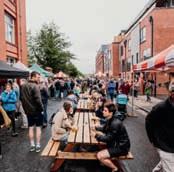
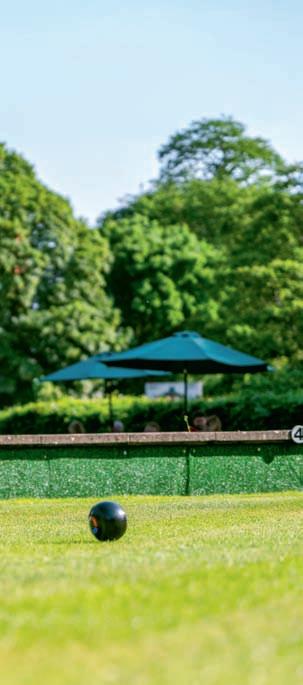
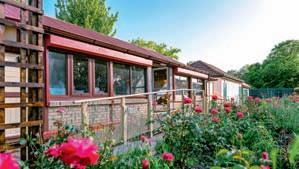
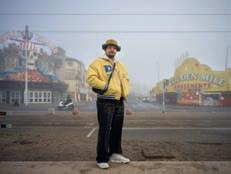
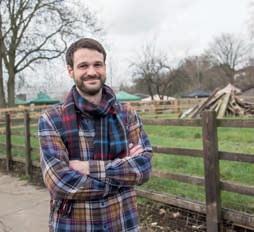
St George Bowls & Social Club has reopened its doors to everyone
SAILING AWAY
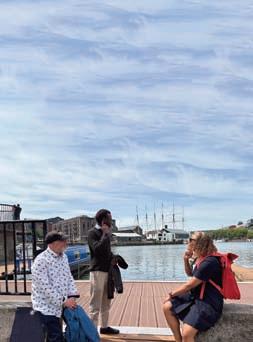
A new nautical style for your home that rethinks kitsch coastal interiors
BACK TO THE FUTURE
We speak exclusively to the man who co‐wrote this family favourite
PARK LIFE
One mother’s quest to explore every local playground
Will you spot every special shape taking to the skies at this year’s International Balloon Fiesta?
Beautiful creations to admire across the city this month
It’s time to finally sign up to that course, pick up a new skill and tick off your bucket list
What’s
The International Balloon Fiesta is
Outfits
Keep
We
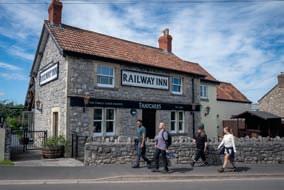
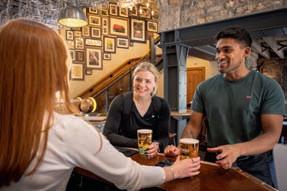
We’ve teamed up with Thatchers to explore three South West pubs, and sip cider while we’re at it
IT’S PLAYTIME!
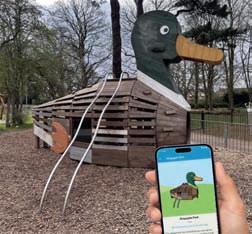
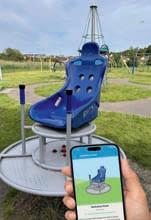
One local mum has created a handy app that makes exploring the city’s playgrounds a doddle
60 WILD CARD
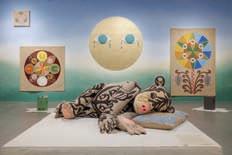
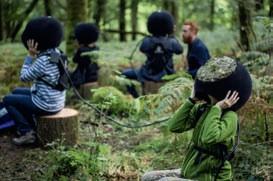
Experimental research from UWE Bristol and an immersive new exhibition at Watershed explore the world through the eyes of wild animals
68 NAUTICAL NECESSITIES
Elegant ways to bring fresh coastal looks into your home without the tackiness
On the cover
Eyes to the skies! It’s the return of the annual International Balloon Fiesta, and we’re especially excited to see Smiley Scarecrow, who’s joining us from the US this summer. Read more on page 14...
Images: Left, Roger Bart (Doc Brown) and Axel Duffy (Marty McFly) in Back to the Future the Musical .
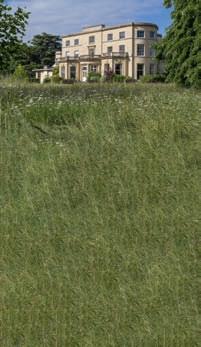
Photo by Daniel Boud. Right, Journeys , Dyrham Park (Credit NT Images / James Dobson)
from the
EDITOR
There are more than 400 parks and green spaces in the Bristol area. I’m not exactly known for my mathematical acumen, so please excuse my dodgy sums here, but for the sake of being able to make this rather bonkers, grand statement, that means you could pack more than nine parks and green spaces into every square mile of our city. That’s not bad going, eh? And considering it’s August, and, whether we like it or not, we’re likely to be spending more time outside than usual, this issue of the magazine has become a bit of a love letter to these wonderful places dotted on (apparently) just about every street corner ‘round these parts.
Someone who knows all too well just how many parks we get to enjoy as citizens of one of the UK’s greenest cities is Emily Smithson, who found herself embarking on a quest to explore and document every single playground this leafy metropolis has to offer families. She created the Bristol Playgrounds app as a side project, and it’s become kind of a big deal if slides and swings are your thing. We speak to her about this extraordinary pivot into the universe of app coding (and climbing frame rating) now being celebrated by thousands of local people, and what makes the perfect playground on page 56.
I’m biased when it comes to my favourite local green space, because it reads like some kind of idyllic Pixar film set: there are skate ramps, ice cream, table tennis, racket tennis, a bird-filled lake, gorgeous diverse trees... and now even a fully-renovated bowls clubhouse.
Find out more about this wonderous grassy patch of the city and discover why the new St George Bowls & Social club is worth shouting about (page 36). Rosanna spence
Editor’s pick: Glow in UNIQLO UTme!’s collab with Yeo Valley Organic...
We're loving the new Yeo Valley Organic & UNIQLO collection, available now at UNIQLO Bristol. Featuring playful farm-inspired designs – including local lingo like “Gurt Lush” – the collection can be printed onto T-shirts and tote bags in-store in a range of colours.
Publisher Steve Miklos
Email: steve@thebristolmagazine.co.uk
Financial Director Jane Miklos
Email: jane@thebristolmagazine.co.uk
Editor Rosanna Spence
Tel: 0117 974 2800
Email: rosanna@thebristolmagazine.co.uk
Editorial & Digital Assistant India Farnham
Email: india@thebristolmagazine.co.uk
Production Manager Jeff Osborne Email: production@thebristolmagazine.co.uk
For advertising enquiries, please contact us on 0117 974 2800 Email: sales@thebristolmagazine.co.uk
The Bristol Magazine is published by MC Publishing Ltd. An independent publisher.
Every month, The Bristol Magazine is hand delivered to more than 15,000 homes in selected areas. We also deliver direct to companies and businesses across the city. Additionally, there are many places where we have floor-stands and units for free pick-up:
CLIFTON ARCADE
5 things to do
Draw a dog
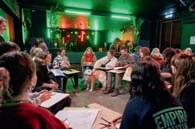
Love drawing? Love dogs? Then this might just be the perfect event for you. Unleash your inner paw-casso with Bristol Old Vic’s series of fun and relaxed dog life drawing classes every Monday throughout August. From snorting flat faces and waggly tails, to long legs and tight curls, each class will feature multiple dogs of all shapes and sizes. Do your best to keep up with their movements and capture a range of quick sketches, or take a bit more time with guided, timed exercises led by artist Cai Burton. During the break, you can grab a drink from the bar, meet the owners, and spend some time playing with the pups. bristololdvic.org.uk
See live music
The Old City is set to come alive with music, culture and family-friendly entertainment this summer as Bristol BID brings back Old City Sounds for its fourth year on 29 August. The free, one-day festival will transform streets, venues and public spaces with live performances, creative activities and cultural programming. Taking place across King Street, Welsh Back, St Nicholas Street and St Stephen’s Church, Old City Sounds is delivered in partnership with local venues and businesses and incorporates the longrunning Old Duke Jazz Festival, one of Bristol’s most beloved live music traditions.
bristolbid.co.uk
Visit the Country Fair
Wiltshire Game & Country Fair returns to the Bowood Estate 8-9 August, promising a weekend brimming with sports and pursuits, with arena entertainment running throughout the day. Watch –among many other things –falconry, gundogs, horse boarding, scurry driving, wild fowling, sheepdog displays and chainsaw carving. You can also have a go at some activities yourself, including clayshooting, fishing, airguns and archery. There’s also a craft village to visit, as well as children’s entertainment, and an array of local and international fine foods and drinks. livingheritagecountryshows.com
Head to the market
Explore Tobacco Factory’s bustling Sunday Market (10am–2.30pm) – the perfect spot to meet with friends, relax with family and discover exceptional food, crafts and produce all made and grown in the local area. There are around 60 stalls to explore each week, from clothes and jewellery to patisserie and freshly baked bread. Get to know local makers, artisans, growers and producers, soaking up every moment of the ‘shopping local’ experience. Find out more at tobaccofactory.com (Photo by Alastair Brookes)
Discover a new art festival
Open Canvas Art Festival is a brand-new event hosted by six female professional artists (Alice Sims, Sophie Long, Belinda Millar, Katie Sims, Georgie Webb and Caryn Koh) showcasing live painting and exhibiting with a backdrop of the beautiful and iconic Frenchay Common. Bring your own art supplies or purchase on site to join in the art. Families are welcome with a free kids’ arts and crafts corner. Expect live DJs, guest artists, local food vendors, plant sales and much more. Free entry. Find out more on Instagram: @opencanvas.artfest
Credit: Julian Preece
The City is t
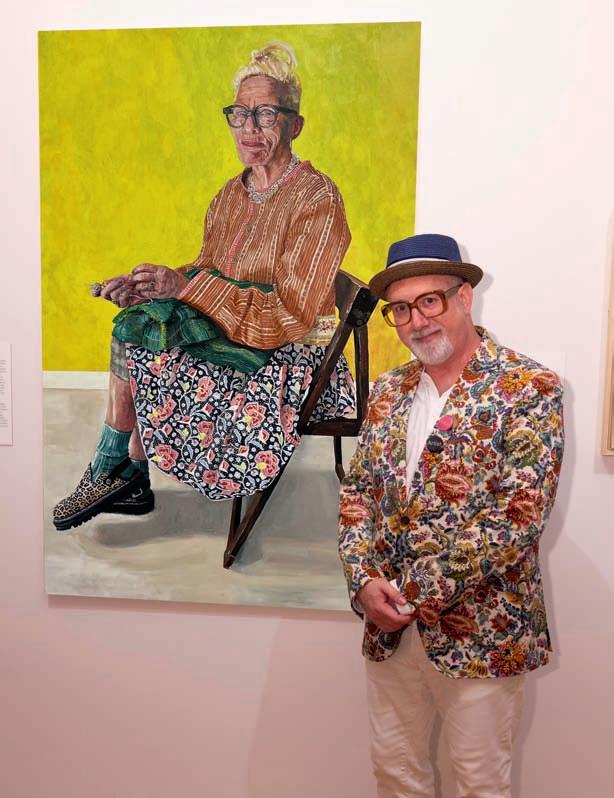
Martin with his portrait Diane
MyBristol
We only moved here two years ago, so I can’t call myself a Bristolian, but I’d only ever heard good things about the city. My wife was offered a teaching job here, so we decided to make the leap. Since then I’ve found out just how creative the place is and the fantastic art scene: the Arnolfini, the RWA gallery, Spike Island, Sparks, The Island – plus all the little studios.
I feel incredibly lucky to have had one of my paintings, Diane (2025), selected for this summer’s Herbert Smith Freehills Kramer Portrait Award exhibition at the National Portrait Gallery in London. I had entered this competition more than six times before and got shortlisted, but never seemed to be selected. Like many artists, I visited every year, dreaming that perhaps one year I’d get lucky. This year, just under 1,500 entries from 63 countries were judged. I got shortlisted and delivered my painting from Bristol to London in February, not knowing that the selection process had now reduced to 200. Three days later, I received an email confirming I had been selected to the final 52 artists. I shouted, I cried, I called my wife on her mobile (although she’s a primary school teacher, so she got the news several hours later).
I find inspiration everywhere, Bristol is a very independent kind of place, tolerant of all kinds of people and nationalities. I can’t really put my finger on what makes a good sitter for a portrait. I have no filter and can talk to anyone about anything, and often people open up to me and I have had some great conversations. I spotted Diane selling vintage clothing in her stall at a Saturday market held in Windmill City Farm opposite my studio: the inspiration for my portrait now in the National Portrait Gallery. I turned a corner and there she was sitting quietly stitching some tartan fabric.
No two people are the same; just like each of us have a unique and individual signature that we write. We may all have the same physiognomy: eyes, ears, nose and mouth etc. But there are countless tiny differences. This gives us character and personality and an identity all of our own! I try to ‘make faces’ on the two-dimensional surface of a canvas to give the illusion you are looking at a three-dimensional human face. It’s a challenge and great fun for me.
It’s hard to pick just one portrait that is especially memorable; they all have meaning and were great pieces to work on. One of the most satisfying I would have to say is a small painting of my wife Tamzin. I had taken photos of her on one of our adventures out to Ham House and Garden (a National Trust 17th-century museum). She sat meditating in a small summer house in the garden. We both like this painting and it means a lot to us.
When I need to step away from Bedminster studio to recharge, I head to the countryside around the city with my wife; we call them little adventures. We love Tyntesfield and walking along Snuff Mills. We don’t drive, so rely on public transport or walking. Since moving here, we’ve also visited Bath, Frome, Swindon, Portishead, Wells and Glastonbury – just to name a few spots.
Visit the National Portrait Gallery in London to find Martin’s painting Diane at the free Herbert Smith Freehills Kramer Exhibition until 7 October. You can find him at BV Studios in Bedminster and visit his website martinjessup.myportfolio.com
Meet portrait artist Martin Jessup
Visit Bristol maps out the city’s quiet areas
The Visit Bristol website has launched a new Bristol Quiet Areas map, led by University of Gloucestershire, to highlight three quiet, cooler and more accessible urban spaces in Bristol.
The Bristol Quiet Areas Plan is a citizen-led project, pioneered by University of Gloucestershire, in partnership with Visit West and others, exploring and defining what makes quiet, nature-rich urban spaces meaningful, accessible and restorative.
The new map shows three Quiet Areas in the city centre: Temple Church Gardens, St Stephen's Church Gardens and Millennium Promenade, providing information on how to use each space, along with details on how quiet, cool or shaded it is and what it is best suited for. It also features helpful social stories and clear icons showing benches, steps and expected noise levels.
visitbristol.co.uk
Inclusive rugby team heading to World Cup in Brisbane
Bristol Bisons RFC, the South West’s first inclusive and Queer-friendly rugby team, is preparing to represent Bristol on the world stage as it heads to Brisbane, Australia, for the 2026 Bingham Cup.
Taking place from 19-23 August 2026, the Bingham Cup is the International Gay Rugby World Cup, bringing together thousands of players, supporters, and clubs from across the globe in a celebration of rugby, inclusion, and community.
The tournament marks a historic milestone for the Bisons, who will compete in the Southern Hemisphere for the first time.
For more info on the Bristol Bisons RFC, including their journey at the Bingham Cup or how you can join the team, visit @bisonsrfc on Instagram and Facebook or email info@bisonsrfc.co.uk
Sitting on an idea for the next big musical?
St Peter’s Hospice launches nature-based grief group
St Peter’s Hospice launches nature-based grief group
St Peter’s Hospice has introduced a new nature-based grief support programme.
St Peter’s Hospice has introduced a new nature-based grief support programme.
The Nature of Grief drop-in groups will be held at the Penny Brohn Centre, Pill, offering free sessions for adults who have lost a loved one to an incurable illness. The sessions will take place on 25 August and one further date in September (TBC), where senior psychological therapist
The Nature of Grief drop-in groups will be held at the Penny Brohn Centre, Pill, offering free sessions for adults who have lost a loved one to an incurable illness. The sessions will take place on 25 August one further date in September (TBC), senior psychological therapist
Pippa Ford will lead the group with support from qualified nature-based practitioners. The sessions will include lightly guided nature-based practices, grief education, opportunities for quiet reflection and optional sharing, all with support from trained professionals. Visitors are welcome to drop in on the day with no booking required for the 1pm-2.30pm sessions.
Pippa Ford will lead the group with support from qualified nature-based practitioners. The sessions will include lightly guided nature-based practices, grief education, opportunities for quiet reflection and optional sharing, all with support from trained professionals. Visitors are welcome to drop in on the day with no booking required for the 1pm-2.30pm sessions.
stpetershospice.org/naturetherapies
stpetershospice.org/naturetherapies
Always wanted to create a musical? Budding writers will have the chance to present their idea to an industry panel for 10 minutes at a special pitching day in Bristol Old Vic on Wednesday 7 October, as part of Mercury Musical Developments’ and Musical Theatre Network’s nationwide search for the UK’s most exciting musicals in development. Up to 40 musicals nationally will be selected to present at BEAM2027, the UK’s biggest showcase of new musical theatre (20-21 May 2027 at Royal & Derngate, Northampton).
BEAM is designed to encourage and develop musical theatre across the UK, discovering and supporting diverse approaches to the art form, connecting practitioners and finding champions for original work. To date, over 60% of the musicals showcased have gone on to be fully staged or received further development support as a result of BEAM. A free online event will be held on Tuesday 1 September with an expert panel giving advice and tips for pitching and answering any questions.
To book a pitching slot and for more information on the pitching process, visit mercurymusicals.com
Credit: Sarah Jones-Morris
Bristol Animal Rescue Centre launches inaugural Pet Awards
Bristol Animal Rescue Centre (A.R.C.) has launched its first-ever Bristol Pet Awards, a citywide celebration dedicated to honouring the region’s most beloved companion animals and the extraordinary bonds they share with their humans.
Bristol A.R.C is calling on the public to submit their nominations and help shine a spotlight on Bristol's furry, feathered or scaly heroes. Nominations are free and open to all animal lovers across the region.
People can submit nominations across five special categories: Bristol’s Pet of the Year, Bristol’s Animal Hero, The Remarkable Rescue Journey, The Unbreakable Bond Award, and Lifetime Achievement Award.
The Bristol Pet Awards is aiming to raise £15,000 for animals in need. All funds raised through the initiative will go directly toward supporting vital rescue work, round-the-clock veterinary care, and community outreach services. Nominations close midnight 1 September. bristolarc.org.uk/pet-awards-home
MEDIEVAL CRYPT AT RISK: The Churches Conservation Trust has launched a fundraising campaign called ‘Secrets Under the City’, to conserve and repair the medieval crypt of St John on the Wall on Broad Street in the centre of Bristol.
External factors including heavy traffic and recent nearby construction are causing significant ongoing structural movement of the church. This tension is contributing towards cracking in the
vaulted ceiling of St. John’s hidden crypt which crucially supports the weight of the building above. Vital conservation work, costing an estimated £133,000, will help to stabilise the structure of the crypt and support its long-term sustainability.
To support the Secrets Under the City campaign and find out more, visit visitchurches.org.uk/bristolcrypt
Filmmaker’s debut feature to premiere at Tubi FrightFest London
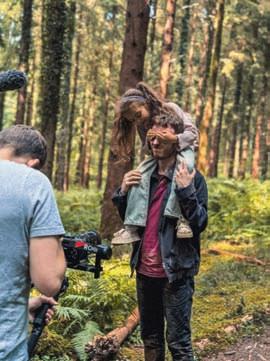
Bristol-based writer-director Conscian Morgan will receive the world premiere of his debut feature Binding Eva at genre film festival Tubi FrightFest London 2026.
The supernatural thriller has been selected for the festival’s First Blood strand, dedicated to first-time British directors, and will screen at ODEON Luxe Leicester Square on Saturday 29 August. Deep in an English forest, a man on the run returns again and again to the same moment of judgement... and the same impossible choice.
“A film this size only works because of the people around you – Britt, the cast and the team here in Bristol. Everyone put in more than the budget had any right to ask of them,” said Morgan. “The Forest of Dean added something special to the film. There’s an energy to it that you can’t build on a set. We shot the whole thing there using vintage anamorphic lenses, and the forest became part of the story.”
Binding Eva was shot entirely on location in the Forest of Dean and made through Morgan’s Bristol-based company Conscian Pictures. Post-production was carried out across Bristol, including sound design at Audio Uproar and additional postproduction work at Films at 59. Morgan made the film with producer Britt Kuipers and a small team drawn largely from Bristol and the surrounding region.
The city’s most famous symbols will take to the skies once more, with the Bristol International Balloon Fiesta welcoming more special shapes to the line ‐up than ever before, creating a mesmerising kaleidoscope of colour
Pictured L-R, top to bottom: Ordance Survey Map, Dalarna Horse, Orient Express, Dolly the Sheep, Slick the Dragon, D-OLUG, Wera Screwdriver, Daisy the Cow, Scarecrow, Johnny the Panda, Simbaloo the Lion (credit: David Pratt), Panasonic Battery, Adelaide the Koala (credit: David Pratt), West the Wolf, Astro and Astrina the Aliens, BBC Globe, Slither the Snake and Wallace & Gromit Moon Rocket.
Our skyline will once again be a thriving hub of technicolour activity this month, as the Bristol International Balloon Fiesta, in partnership with Albert Goodman, takes off from 7-9 August within the rolling hills of Ashton Court Estate.
The ballooning line-up features more than 120 full-size hot air balloons, including 20+ special shapes (more than ever before) and 40 model hot air balloons from across the UK, and as far afield as Germany, Switzerland, Belgium, the US and Mexico.
Shaping up nicely
Among the vibrant collection of special shapes you can expect to see during the Fiesta look out for Astro the Alien, who’s head of a group of Aliens from the planet Zurcon, Astro has a volume of 48,000 cubic feet and is sure to bring some out-of-this-world fun, and Astro will be joined by Astrina, whose colourful design and friendly appearance make her a fantastic addition. Slick the Dragon is the first of two special shapes from MJ Ballooning to attend the Fiesta, and this friendly dragon is always a favourite wherever he appears.
Joining from the US, Smiley Scarecrow stands 120 feet tall with a volume of 160,000 cubic feet. His bright and whimsical design will make him a welcoming sight as he stands tall in the Bristol skies. Returning to Bristol, Adelaide the Koala is one of the most recognisable animalshaped balloons from Longleat. Her distinctive ears and cheerful face always make her a favourite with visitors. Longleat’s King of the Jungle returns once again. Simbaloo the Lion’s impressive colours and friendly smile are easy to spot among the crowds.
With his unmistakable wolf-like features and striking design, Wes the Wolf is guaranteed to stand out, as will Wera, the largest screwdriver to ever be seen floating through the sky. Measuring 65m tall, this balloon takes the shape of Wera Tools’ Kraftform screwdriver, complete with blade hanging underneath the basket. If you like Aardman’s iconic film A Grand Day Out, watch Wallace’s first invention come to life. Look to the skies for Wallace & Gromit’s Moon Rocket Hot Air Balloon. This was designed in collaboration with Aardman to support Wallace & Gromit’s Grand Appeal, the dedicated charity for Bristol Children’s Hospital and is operated by Exclusive Ballooning.
Slither the Snake is the inspiration of experienced pilot Jerry Davis, while Dolly the Sheep’s charm and friendly face is guaranteed to raise a smile. One of the smaller balloons attending, Daisy the Cow is a oneman Z-31 hopper envelope, aptly registered as G-MOO – whereas the giant Panasonic Battery, standing at some 120ft tall and containing 105,000 cubic feet of air, is capable of flying a pilot and two to three
passengers (now operated by MJ Ballooning). Johnny the Panda - Johnny the Panda brings plenty of character to the Fiesta with his distinctive black-and-white markings and friendly smile, operated by Exclusive Ballooning. There will also be a collection of tether-only special shapes, including a detailed balloon designed to look just like a folded Ordnance Survey map, proudly registered as G-MAPS and operated by Bristol Balloon Collectors; the orange and red BBC globe that was manufactured in Bristol by Cameron Balloons before appearing on BBC One’s idents for five years (it was retired in 2002, later restored by a group of balloon enthusiasts and now operated by Bristol Balloon Collectors); the Orient Express, which is making its way over from the Netherlands bringing a touch of railway magic to the Fiesta; and the Dalarna Horse, which is inspired by Sweden’s famous hand-painted wooden Dala Horse, this colourful special shape is a striking addition to the tethered display.
In-flight entertainment
As well as the much-loved mass ascents and Nightglows, the broad programme also includes In The Clouds, which invites people to step inside a cold-inflated hot air balloon for an immersive audio-visual experience on Bristol’s ballooning history and footage from a modernday flight; the Flight Control screen that tracks each balloon flight in real-time; and visitors can Meet the Pilot in the arena, jumping into real baskets, trying the burger and taking an ultimate ballooning selfie.
The Fiesta’s breathtaking mass ascents are once again planned twice a day on Friday, Saturday and Sunday – around 6am and again at 6pm. If conditions are favourable, expect one of Bristol’s most magical sights as hundreds of colourful balloons drift into the sky, creating an unforgettable spectacle watched by thousands of people from viewpoints across the city, as well as inside the Fiesta itself. Then as darkness falls on Friday and Saturday evenings, attention turns to the much-loved Nightglows. Dozens of tethered balloons illuminate the arena in time to a specially curated soundtrack from BBC Radio Bristol, making for one of the festival’s most atmospheric highlights.
Entry to the Bristol International Balloon Fiesta is free, although, as a not-for-profit event, visitors are encouraged to support it by booking official parking in advance, upgrading with hospitality packages and buying up-close Nightglow tickets. n
For full info and to book tickets visit bristolballoonfiesta.co.uk. Follow @bristolballoon on Instagram, X and Bristol Balloon Fiesta on Facebook for the latest news and updates.
Nightglow (credit: Paul Box)
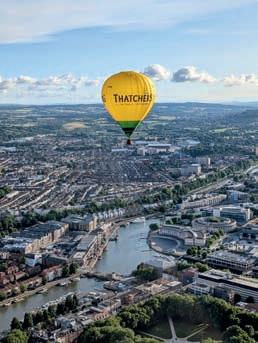
The Fiesta from above
Give us a break
August sees creatures of the land setting off on quests to climb towering cliff faces, searching for ancient treasure hiding in the sands, and conquering the power and majesty of the ocean by cutting through waves on boards. For those bravely seeking adventure in the great outdoors in late summer, we’ve picked our favourites from Finisterre’s collection, from wetsuits to water bottles, and swimming costumes to socks...
finisterre.com | 70 Park Street, BS1 5JY
Morva Cami Hemp. Midi Dress, £90
Nieuwland 2mm Yulex®. Long Sleeve Shorty. Wetsuit, £165
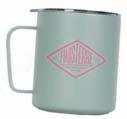
Miir 12oz Camp. Cup, £34
Cape Towel £40
Dylan Printed Shirt, £80
Miir 12oz Flip. Traveller Cup, £34.
Diamond Cotton Twill Camp Cap, £40
Ribbed Sock. in Beeswax, £20.
Delta Adventure. Bucket Hat, £45
Kaia 2mm Yulex®. Long Sleeve Swimsuit. £155.
Drift 30L Waterproof Roll Top Backpack. in Olive, £185
Ocean Tales T-Shirt £42
Atlas Swim Short in Ocean Folk Print/Brick Orange, £70
Portside Shirt, £85.
Sula Bikini Top, £55. and Sula High Waisted. Bikini Pant, £45.
Morva Hemp Shirt. in Dark Coral, £90, and. Morva Hemp Short, £75.
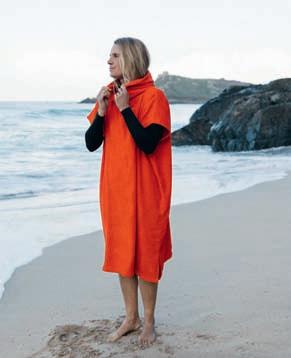
Clearwater Changing. Robe, £95.
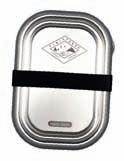
Black + Blum. Stainless Steel. Lunch Box, £35.
VEJA + Finisterre. Fitz Roy Trail Shoe, £170
Adventure Sock, £20.
Petrel Check. Shirt, £66.
The Watersmeet Hotel in Woolacombe, proudly voted Best Waterside Hotel for the UK & Ireland, enjoys an exceptional position right on the water’s edge. This 4-star coastal hotel offers Luxury Balcony and Terrace Rooms and Suites with private outdoor seating and sun loungers, a 2-AA-Rosette restaurant with dramatic clifftop sea views, and indoor and outdoor pools with spa facilities.
2 Night Celebration Break
• Sea View Room for 2 Nights
• Dinner each Night & Devon Breakfast
• Bottle of champagne on arrival
• Devon Cream Tea for 2 Inclusive from £900
Luxury for Less Suite Offer
• 1 night in Sea View Suite
• Dinner & Devon Breakfast for 2
• Bottle of champagne per stay
Inclusive rate £610
Au Naturale
Sometimes, you want to give your skin a break from unnecessary chemicals, additives and preservatives that you can’t spell (or even pronounce). Prioritising beauty products that showcase organic ingredients or are made using locally‐foraged plants, can be a wonderful way to treat your body in the delicate way nature intended...
BREATHE & BE INCENSE
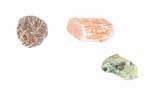
Well Being Crystal Collection: Desert Rose, Orange Selenite and Serpentine, £16 breatheandbeincense.com
Editor’s Pick: Lazuli Remedies
Lazuli Remedies is a small herbal apothecary offering botanical skin and body care. Founder Celeste creates seasonal, small‐batch and completely natural formulas to support and elevate our daily lives. She grows many of the herbs in her garden, forages from the land and sources from local herb growers.
A potent calendula and lavender concentrate to soothe, nourish and deliver a natural glow. Made in-house using vibrant, homegrown botanicals macerated in organic, coldpressed oils. 30ml | £34
HAIRY JAYNE
2-in-1 Tin Shampoo & Conditioner Bars. 2 x 25g bars, £11 hairyjaynehandmade.co.uk
BETTERYOU
Magnesium Sleep Spray, 100ml £14.95, available from Wild Oats woats.co.uk
Micellar Water, Rose Geranium 100ml, £14 bristolmade.co.uk
WILDLY
BEAUTIFUL THINGS
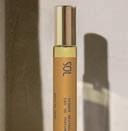
Sol Eau de Parfum, Travel 7.5ml, £26 wildlybeautifulthings.co.uk
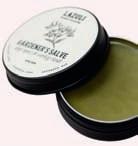
Gardener's Salve
A powerful first aid salve for people who work with their hands. Contains homegrown comfrey leaf, ribwort plantain leaf and lavender to repair soft tissue damage, bruising, insect bites, grazes and joint pain.
30ml, £11 | 60ml, £19
Garden Flower Balm
A rich protective balm containing a whole-herb maceration of calendula blooms and lavender bud. It seals in moisture and shields skin from harsh weather, providing deep herbal nourishment.
30ml | £21.50
BRISTOL MADE
WANTED - WE BUY GOLD
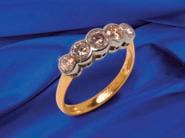
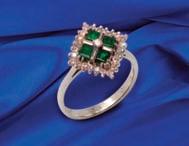
Ignore the TV ads –Don’t send your Gold away – Bring it to a trusted dealer (48 years in Clifton) for an on-the-spot price
If you wish to buy Diamond or Gold items – we will Part Exchange your 9ct Gold items at £50 per gram (current market value £39.50 per gram - at time of going to press)
If you’re ever asked to list the most iconic, classic family-favourite films ever written, Back to the Future is more than likely going to be on there rubbing shoulders with the greats. Co-written by Bob Gale and Robert (Bob) Zemeckis at the turn of the 1980s, Back to the Future remains one of cinema’s most memorable moments.
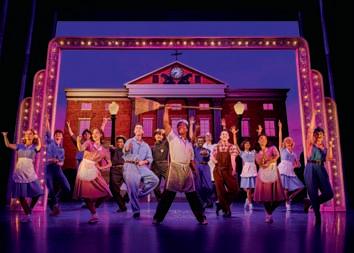
Fast forward 41 years since its 1985 release, and with multiple award nominations and wins under its belt, a storyline firmly engrained in the minds of most Millennials, plus an unusual blend of both mainstream fandom and diehard cult status… and the DeLorean is skidding onto stage at Bristol Hippodrome for Back to the Future: The Musical – along with Marty McFly and the Doc like you’ve never seen (or heard) them before.
Bob Gale – yes, the Bob Gale – is sitting smiling at me from his LA home. And after we swap tales of UK heatwaves (the tarmac melted on Heathrow’s runways during a previous visit to us, so he was sympathetic to our unsavoury flavour of temperature), I immediately doubt myself. What on earth could you possibly ask the person who’s been interviewed about Back to the Future non-stop for the past 40 years?!
Future proof
Never seen Back to the Future? Where have you been for the past 40 years?! Jump in the DeLorean and prepare for a very quick – 88mph, to be exact –masterclass, as Rosanna Spence speaks exclusively to one of the ingenious, award‐winning minds behind the original story. Bob Gale's hit stage musical version of the family favourite film is kicking off its tour in Bristol at the Hippodrome later this year; he talks to us about recreating movie magic on stage, how adding songs has given even more insight into his beloved characters, and why one person has seen the musical 19 times…
you could go back to the 80s and tell yourself that the screenplay you were writing would one day become a hugely successful international stage musical, what do you think your reaction would have been?
“Oh my God,” he chuckles. “If Bob Zemeckis and I travelled back in time from 2026 to our office in 1980 or 1981, when we were struggling to write this script, and said, ‘Do you guys know what’s going to happen? We're from the future, and this is going to become a stage musical that's performed all over the world,’ we would have called security and said, ‘There are two drunk old guys in here annoying the hell out of us. Get them out of here!’”
It’s a fair enough reaction. By that point, Bob (we’re back to Gale, now) had only ever penned one musical before: turning Guys and Dolls into a satire for his senior play when graduating high school. In 1980, both Bobs had no idea that the idiosyncratic screenplay they were creating would stand the test of time, remaining relevant enough to audiences decades later even in the digital age of streaming – and with enough elasticity to evolve the tale into an all-singing, all-dancing stage musical.
But all fears of inferior questions were immediately settled. For Bob, the answer is simple.
“You know what? There’s always someone reading who doesn’t know the story. I’d rather have people talking about it than not.”
Phew! Well, then Bob. Seeing as we’re on the topic of time travel, if
From screen to stage
Audiences around the world have come to know the likes of Marty McFly, Dr. ‘Doc’ Emmett Brown, Mr Strickland, and Lorraine and George McFly very well over the years… but did creating the musical
Pictured left: Bob Gale with the DeLorean
Caden Brauch (Marty McFly) and Company. Photo by Matt Crockett
change the way Bob looked at the original story and the characters they created? “Absolutely,” he states. “What fascinated me was discovering just how much room there was in the story to tell things differently.
“When we started developing the musical, one thing we were absolutely adamant about was that it had to work as a stage show. It had to feel like a real musical, not a mediocre adaptation of a movie. We've all seen those.
“The film is the gold standard, but it couldn't become a religious object where every single thing from the movie had to appear on stage.”
Transforming Back to the Future into a musical has also – perhaps rather unexpectedly – opened windows into moments we’ve watched time and again to be experienced in a completely different way on stage. Much like the DeLorean itself, the musical format allowed Bob to play with time, in a sense. Bob explains it by comparing it to close-ups on camera that give us greater insight into a character’s inner world. On stage, he says, it’s the songs that provide this understanding.
We can, of course, expect some excellent numbers throughout the show, with the eras providing their own genres to keep things interesting: “The songs in the 1950s sound like 1950s songs, and the songs in the 1980s have a much more 80s feel,” Bob notes. “Of course, we still have The Power of Love, Back in Time, Johnny B. Goode and Earth Angel – we couldn’t do the show without them – but the new songs integrate beautifully, and then there are songs that don’t sound like anything you’ve heard before. And that’s exactly as it should be.”
Transposing on-screen magic onto a stage in front of a live audience is no easy feat. So, as Bob explains, the team had to ask themselves: what works in theatre? What doesn’t? One of the first things to be flagged was the famous – and dangerous – skateboard chase scene (“You can't have your leading man riding a skateboard every night doing tricks. It’s not even practical,
because you already need someone who can sing, dance, act, be funny, be the right age – and then you’re also asking him to perform skateboard stunts?”).
Doc’s beloved dog Einstein was another darling that didn’t make it to the musical. With dog costumes out of the question, and worries about a real dog among the intense live theatrics, Bob and the team had to leave him safe and sound in 1985.
But there are some elements that simply couldn’t be missed. “One idea I was particularly proud to be involved with was the DeLorean,” Bob smiles. “In the movie, you can clearly see the time displays inside the car. On stage, no one would be able to read them. So, I thought: let’s make the DeLorean talk, a bit like Knight Rider. Doc Brown has a microphone and says, ‘Start the car,’ and then this Siri-like voice replies, ‘Now starting the car. Time circuits on...’ When Doc enters a destination, say, 4 July 1776, the car repeats the date aloud so everyone in the audience knows exactly where it’s set to go. It worked perfectly.”
A human heart
There are people coming to see the musical who weren’t even born when the film was released, so what is it about Back to the Future that keeps connecting with each new generation who are introduced to the story? Well, despite the shiny lights and smoke, exhilarating action and time travel, it’s the humans that remain at the heart of the story.
“When you’re seven, eight or nine years old, you finally realise that your parents were once children too,” explains Bob. “That's a huge, almost cosmic revelation to a child. Your whole life you've heard your mum or dad say, ‘Well, when I was your age...’ and you’re thinking, ‘How could these giant people ever have been my age?’ Then suddenly your clothes
Maddie Grace Jepson, Gracie Caine, Caden Brauch, Liam McHugh and Orlando Gibbs. Photo by Matt Crockett
C.J. Borger (Goldie Wilson) and Company. Photo by Matt Crockett
don’t fit anymore. You're getting taller. Maybe you’ve got an older brother and you’re beginning to notice people growing up.”
From curiosity around first dates to high school shenanigans and questioning how we got here in the first place, when they were writing the movie, Bob remembers genuine surprise that nobody had really tackled that before… not in the way they were imagining it.
“Young audiences don’t understand every cultural reference, and that’s fine. When we were kids, we watched movies set in the 1940s or the Wild West or medieval times without understanding every reference either –we understood the human relationships.”
During the workshop process, the show’s director John Rando kept reminding everyone of this. “He said, ‘I don’t even want to think about the special effects until we've got the human relationships working’,” Bob recalls.
And the result is that amid the mesmerising tricks that help the DeLorean reach its now-famous speeds of 88mph, relationships between the characters on stage are evolving from what we know of the movie. Marty and Doc’s connection – Bob points out, as an example – is actually much warmer.
“Part of that is Roger Bart [The Stepford Wives, Desperate Housewives, 30 Rock], who Bristol will be lucky enough to see performing the role he created for the show,” says Bob. “He is Doc Brown on stage. He’s so good that it’s a joy to watch him perform. Roger’s also a father, whereas Christopher Lloyd wasn’t. I think there’s something about that, something unspoken, in the way a father naturally relates to a younger person. I couldn't define it for you exactly, but you can feel it.
“There’s a genuine love there. In the story, Marty is the son Doc Brown never had, and I think that comes across even more strongly in the musical than it did in the film.”
Bob explains that the movie moves so quickly, audiences are almost trying to catch their breath all the time. “In the musical, the songs allow us to pause for a moment. They give the audience time to process what's happening emotionally.”
Quality control
When adapting a film for the stage, there’s no escaping some fans wondering whether a musical could ever live up to the film. But Bob has a clear answer to calm any qualms.
“My name is on this show as the book writer, and that’s my guarantee. Bob Zemeckis and I controlled the theatrical rights throughout the entire process. If we had ever felt that the show was going off the rails, we could have pushed the red button and stopped the production completely.”
And he’s been proven right so far. When the team won an Olivier in 2022 for Back to the Future: The Musical, actor/singer Hannah Waddingham presented the award.
“I’m a huge fan of hers,” Bob confesses. “As we were walking off stage, I asked her if she’d seen the show. She said, ‘No. I love the movie so much that I've been afraid to see the musical because I thought it might ruin my memories of the film.’ I said, ‘Hannah, I promise you… please come and see it. If you don’t like it, I’ll personally refund your ticket.’”
Well, Hannah came to see it. Then she came back three more times. But that’s not the most amount of views for one single audience member. Bob tells another story of a woman he met towards the end of the show’s first year in London who approached him to say she watched the musical once a week. This was her 19th visit.
“I said, ‘Really? I’m incredibly flattered... but doesn’t that get expensive?’ She said, ‘Well, I worked it out. I used to see a therapist every week, and every time I left therapy I felt terrible. But every time I came to see your
show, I felt wonderful. So I stopped seeing my therapist, and I spend that money on theatre tickets instead.’”
Back to the Future: The Musical is in the city across seven weeks, so there will be plenty of opportunities for us to seek some joy and leave the show feeling wonderful… “Exactly,” agrees Bob, who adds, laughing, “Stop seeing your therapist and come and buy theatre tickets!” n
Back to the Future: The Musical is at Bristol Hippodrome from 8 October until 21 November. Tickets can be booked now online at atgtickets.com/bristol
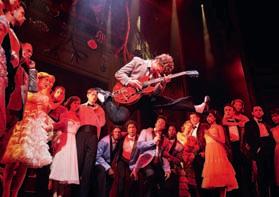
Pictured, top: Roger Bart (Doc Brown) and Axel Duffy (Marty McFly). Photo by Daniel Boud. Middle: Caden Brauch (Marty McFly) and Maddie Grace Jepson (Lorraine Baines). Photo by Mark Senior. Bottom: Caden Brauch (Marty McFly) and Company. Photo by Matt Crockett.
What’s On?
The best things to see and do this month
SENTIENTS: An Immersive VR & Video Game Exhibition
n Until 13 September Watershed, BS1 5TX
If you weren’t human, how would you see the world? From raging wildfire to the vision of an owl, from a river to multiple galaxies, SENTIENTS is about being something else. Bringing together award-winning and brandnew works, this collection of video games and virtual reality invites you to see through other eyes. Discover wild imaginings and animal visions. Look through windows into a world in conflict. Adventure into strange lands. watershed.co.uk
Free Lindy Hop Dance Class
n Wednesdays throughout August
Bristol Old Vic, BS1 4ED
Interested in trying swing dancing? Maybe you’ve never stepped onto a dance floor, or you have some experience in other dance styles but are curious about swing? No problem! Bristol Swing Riot’s two-hour fun and friendly classes in Coopers’ Hall will teach you the fundamentals of Lindy Hop. You’ll learn the basic steps and footwork as well as some of the core moves and variation which make up this wonderful dance. No partner needed, the class rotates people, so everyone will have plenty of time to dance.
bristololdvic.org.uk
Bristol International Rare Soul Weekender 2026
n 6-8 August, 4pm-1am
Various venues
Six events will take place across the whole weekend in some of the city’s top venues around Old Market, including the Old Market Assembly, The Jam Jar, The Crown Tavern and more. Highlights include Rare Soul Vinyl Girls at Lonely Mouth, Bristol Beat Club at The Golden Lion, and Bristol Northern Soul Club Alldayer at Wiper and True Taproom. All weekend passes include valid entry to the newly-added Thursday night event. Tickets available on skiddle.com
Michael Akadiri: Don't Call Me Uncle! n 8 August, 5pm-6pm
The Gaffe Comedy Club, BS1 2BD
Following two hit UK tours, Biggest Award in Comedy nominee and resident (junior) Doctor Michael Akadiri prescribes The Gaffe with a potent preview of his latest offering, Don't Call Me Uncle! Multi-award-winning comedian Michael is proud to wear many hats: doctor, husband and father. Evidently, that list does not include uncle. Yet, despite only being in his early 30s, “the supremely talented and likeable” (Metro) doctor, for the first time ever, was recently called uncle in public (a term usually reserved for elders!). This has sent him spiralling...! thegaffecomedyclub.com
Silent Movie Improv
n 15 August, 7.30pm
Bristol Improv Theatre, BS8 1LP
Step into the flickering dream of the roaring ‘20s a world away from digital influences. And rediscover the joy of pure simple comedy with Silent Movie Improv. It’s as simple as it sounds: fully improvised comedy theatre inspired by silent movies and the early days of cinema, with live musical accompaniment. Expect silliness, slapstick, and improbable feats of fantastical storytelling with no script, no director and no words! improvtheatre.co.uk
Spell Writing Workshop:
Madeleine's Magic
n 20 August, 7pm-9pm
L'Étoile Studio, BS2 0BH
Discover the art of writing your own spells exploring one of the oldest and most personal forms of magical practice. Look at the history of spell writing across different cultures, how intention shapes magical practice, and the principles behind creating meaningful, effective spells. You’ll learn why wording matters, why to write in the present tense, and how to craft spells that feel authentic to your own practice. Whether you’re new to witchcraft or have been practising for years, this is a welcoming space to learn, create, and connect with like-minded people. Tickets are available on headfirstbristol.co.uk
Michael Akadiri
BLOC Presents: We Will Rock You n 25-29 August
Bristol Hippdrome, BS1 4UZ
We Will Rock You, presented by local award-winning amateur musical theatre club BLOC, features more than 20 iconic Queen hits, including Bohemian Rhapsody, We Are the Champions, Somebody to Love, Don’t Stop Me Now, and of course, We Will Rock You. Set in a post-apocalyptic future where individuality has been outlawed and music is controlled by algorithms, the story follows two young revolutionaries, Galileo Figaro and Scaramouche, who dare to defy the system and the villainous Killer Queen to save rock ‘n’ roll. atgtickets.com/bristol
The World of John Williams by the Mystery Ensemble n 30 August, 5pm St George’s Bristol, BS1 5RR
Harry Potter, Home Alone, Star Wars, Memoirs of a Geisha, Indiana Jones, Superman, Jurassic Park... this evening will bring you the maestro John Williams’ most iconic soundtracks, performed in dazzling style by the Mystery Ensemble. An electrifying energy, stunning arrangements, and a magnificent programme all set within the iconic St George’s Bristol. The magic of the music will transport you straight into your favourite film stories, making you feel like the hero yourself. stgeorgesbristol.co.uk
Coming soon...
Bristol New Writers Festival n 5 September
Bristol Folk House, BS1 5JG
The Bristol New Writers Festival is a new literary event dedicated to celebrating creativity in its earliest stages. It is a not-for-profit, writerled initiative that aims to provide a welcoming space for emerging writers and complete beginners to explore the craft of writing, while also showcasing local talent. With tickets ranging from free to £20, the festival offers affordable access to workshops, talks, a publishing fair featuring industry professionals, and a poetry open mic. The festival line-up features both established authors and emerging voices, including Sarah Dunant, Bertel Martin, Helen Taylor, Kitty Wilson, Adam Elms, Sophia Vahdati, Francesca Ramsay (pictured below), and Mark Bowsher. Partners include Artists & Writers (part of Bloomsbury Publishing), the Society of Authors, and the Society of Young Publishers (South West). bristolfolkhouse.co.uk
Francesca Ramsay will be appearing at Bristol New Writers Festival
Family Diary
The best things to see and do with the little ones this month
Creative sessions at Children’s Scrapstore n Multiple dates throughout August Children’s Scrapstore, BS2 9LB
Head to one of the Summer Holiday Programme sessions at Children’s Scrapstore and get crafting. Three types of sessions are available: Creative, child-led sessions designed for children under 5 (Tuesday sessions are taste-safe and ideal for little ones who may still put things in their mouths, while Wednesday sessions include paint, scissors, glue, and some small parts); Stay & Play, which are best suited for children aged 5+, although younger siblings are welcome (adults are encouraged to stay and play alongside their children); and free Stay & Play drop-in sessions for children and their accompanying adults (no booking is required for this type of session). Places for the former two types of sessions must be booked and paid for online. childrensscrapstore.co.uk
Visit Arnos Vale for a series of free, family-friendly nature sessions exploring the wildlife of the cemetery. Through stories, games, and hands-on activities, you’ll discover the plants, animals, and habitats that make this site so special. Each week features a different nature theme, with activities suitable for children aged 4+ and their families. Booking is essential. arnosvale.org.uk
Family Bollywood Dance Workshop
n 5 August, 10am-11am Royal West of England Academy, BS8 1PX
Join an energetic Family Bollywood Dance Workshop by Sayambrita Mukherjee, based on joyful celebration of music, movement, and togetherness for people of all abilities. Set to vibrant Bollywood hits, this interactive session invites families, friends, and the wider community to learn easy and exciting Bollywood dance steps, enjoy playful choreography and move to rhythms in a welcoming and inclusive space. No prior dance experience is required, just enthusiasm and a love for music. Free entry but tickets for every family member must be booked in advance. rwa.org.uk
All Dressed Up!
n 6, 13, 20 & 27 August, 11am-3pm
Blaise Museum, BS10 7QS
Take inspiration from the special display of costume dolls and historical costume at Blaise Museum. Then get creative and make your own accessories –whether it’s a shield for a medieval knight, a fan for a Georgian aristocrat or some groovy headgear for a 1960s hippy. Visit the special dressing-up room and have your own fashion show wearing the museum’s child and adult costumes. The sessions run on a first-come, first-served basis.
bristolmuseums.org.uk
Boat trips on the Pyronaut
n 8, 9, 22 & 23 August
Bristol Harbour
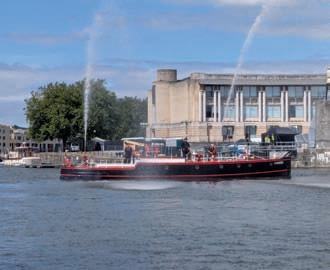
Take a scenic trip on a historic working boat around the harbour, led by hardworking and knowledgeable volunteers. Pyronaut served in Bristol from 1934 until 1973, working particularly hard in the Blitz in 1940-41. Learn more about her history and watch the powerful water cannon at work on Bristol’s former fireboat, on a journey around the docks that she was built to protect. bristolmuseums.org.uk
The Wind in the Willows n 15 August, 2.45pm
Windmill Hill City Farm, BS3 4EA
Mole has been stuck inside for far too long. Finally escaping their underground home, they team up with good friends Ratty, Badger and the loveably roguish Toad on an adventure to blow away the quarantine cobwebs. Mole and the gang must go head-to-head with a motor-car, Her Majesty’s Constabulary and a legion of Weasels, Ferrets and Stoats taking up residence in Toad Hall. Can this plucky band of heroes save the day? Find out in Paperback Theatre’s charming open-air adaptation of The Wind in the Willows (pictured, right). windmillhillcityfarm.org.uk
Annie n 18-23 August
Bristol Hippodrome, BS1 4UZ
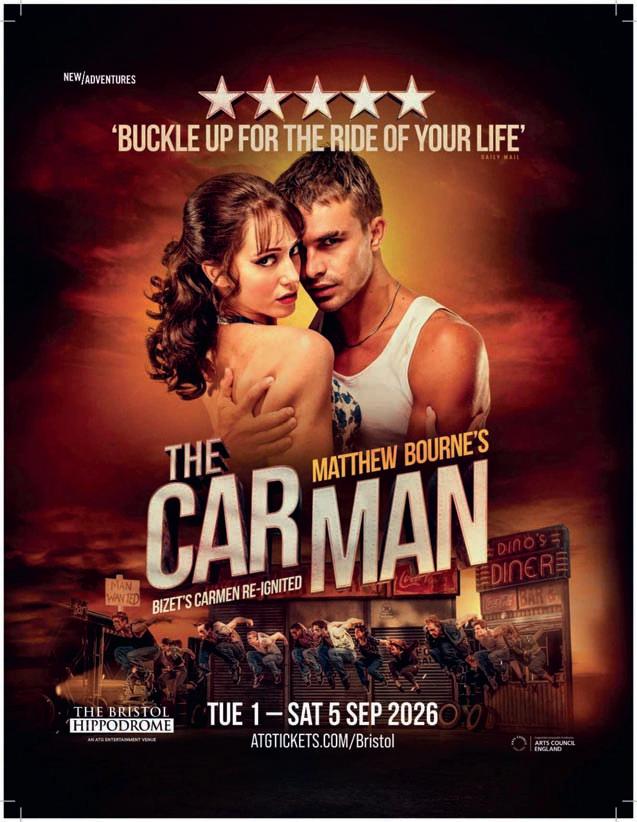
Set in 1930s New York, brave young Annie is forced to live a life of misery at Miss Hannigan’s orphanage. Her luck soon changes when she’s chosen to spend a fairytale Christmas with famous billionaire, Oliver Warbucks. Meanwhile, spiteful Miss Hannigan has other ideas and hatches a plan to spoil Annie’s search for her true family… With its Tony award-winning book and score, including the unforgettable songs It’s The Hard-Knock Life, Easy Street, I Don’t Need Anything But You and Tomorrow, you can bet your bottom dollar that you’ll love it! atgtickets.com/bristol
Pictured left: The Pyronaut pictured on its 90th birthday (Credit: Bristol City Council)
Eyes on thebowls
A corner of St George Park has sprung back to life this summer, thanks to the hard work of the local community and a special CIC that’s been created to restore a historic bowls club back to its former glory. Rosanna Spence heads along to the freshly‐cut lawns to try it out for herself…
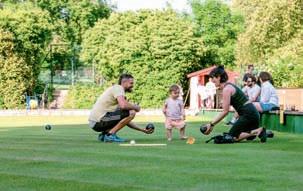
Please take a moment to admire the masterful approach to playing bowls displayed by the person on the lawn opposite. Look at that laser focus, the concentration on their face. Such strong form – there’s indisputably some practiced technique going on here to ensure the bowls (also known as ‘woods’, which are cleverly weighted on one side to allow them to curve across the lawn) are aimed as close to possible to their target. And – rejoice! – it was obviously a successful attempt to hit the jack (our smaller, white, round target), if we observe the impressed expressions on the competitors’ faces.
Sadly, this person is not me. There’s a good reason my latest visit to the newly-reopened St George Bowls & Social Club is not the game depicted here in high resolution. And it has a lot to do with poor hand-to-eye coordination, dodgy balance and the inability to decipher what are, in reality, a very helpful, clear set of written instructions provided.
Before we delve into any mild (but obviously not quite healed) trauma lingering in my psyche from toe-curling P.E. classes and sports days of times gone by, let’s first soak up the glory of this fantastic new space serving the BS5 community and beyond.
St George Park, for anyone familiar with this patch of east Bristol like I am, is a lifeline to thousands of people. It’s got a cracking children’s playpark – you’ll be able to find it on the Bristol Playgrounds app that we explore in more depth in this issue on page 56 – plus a wheel park teeming with talented skaters, table tennis tables, full-sized tennis courts, plenty of benches, a glorious lake complete with bustling bird island (plus famous resident grey heron), shady trees, a bird-feeding station, a snack and drinks kiosk and swathes of grass providing sunset spots long into the evening.
But there was always one corner of this well-trodden part of the city that remained a mystery. And old, rundown clubhouse, surrounded by forgotten lawns framed with hedges so high and dense you could barely get a glimpse of the secrets they obscured within the perimeter.
So, when I heard that a CIC had been set up by local residents to try to breathe new life into this space, I was more than excited. I was definitely not prepared, however, for just how important this project would become for our community. Rising costs led to the closure of the former Bristol Omnibus Bowls Club, which was founded in 1936 for employees of the Bristol Tramways. If only the people that club brought together for decades could see the regenerative work that’s been undertaken since January this
year to bring this place back to its former glory – honouring its heritage sports roots and fulfilling the needs of the contemporary groups of members (membership’s free, by the way) now frequenting it on a regular basis after its grand reopening a couple of months ago.
Our news desk sometimes receives more stories about initiatives trying to keep vital spaces in use (from cafés to playing fields) than it does about success stories of revitalisation – take for instance, the current efforts by locals trying to save that aforementioned wheel park in the same corner of the city from years of closure after Wessex Water announced it would need to carry out essential storm-water storage tank works on that exact site, which could take years. That’s why entering the St George Bowls & Social Club, and drinking in what the team has nailed already in such a short space of time, feels so triumphant.
The welcoming space has been sympathetically renovated to keep the spirit and aesthetic of a bustling mid-century sports club alive and well. Albeit with delicious empanadas, snacks and fresh cakes being served and local craft beers being poured (with prices matching other local establishments). There’s even the original bowls scoreboard on display, still celebrating the achievements of the people who played before us. Our community has now become – or, in my case, attempting rather comedically to try and become – custodians of their sporting legacy.
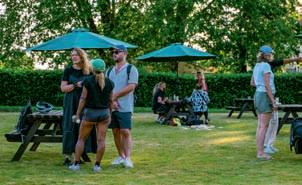
Looking out from the clubhouse onto the sprawling lawns beyond, there are groups of people congregating: mothers nursing babies, friends celebrating birthdays under a shady canopy, people lining up their bowls games in the distance, toddlers fascinatedly gawping at their parents play pétanque, elderly residents peacefully watching the scene with a cuppa and the odd well-behaved dog pretending not to be eyeing up their owners’ sandwiches.
It's all rather idyllic, to be completely honest. Almost unbelievable. But here we are; this is what’s been created just weeks into its official launch. And everyone I speak to about it, or meet there, just can’t get enough.
The CIC has been inundated with members signing up to use the space and become au fait with the sports on offer. The team has a really relaxed approach to bowls sessions: there’s a dedicated shed clearly displaying all the instructions to set yourself and your equipment up. Most people with any ounce of sense will have no problems doing this and will be bowling in no time at all. My group, however, made thoroughly hard work of the whole thing, and decided that, rather than ask for a quick tutorial for the team, we’d craft our own, more creatively abstract rules instead. I still won the first round – we affectionately called it ‘Bowls of Doom’, but the aim was essentially the same as any normal game of bowls: to get closest to the jack. But it was probably much more chaotic to watch as a spectator than any of the other games gracing the lawns that day.
If you find yourself anywhere near St George Park sometime soon, I implore you to pop in and marvel in the Escher-esque experience of walking through what feels like a tiny, unassuming door and discovering the expansive world within which feels simultaneously like a vintage sports club that any Wes Anderson afficionado would happily wile away the day in, and a modern hive of activity – complete with locally brewed delicious pints, intergenerational mingling and even future plans to install some saunas (it is Bristol, after all). And for those living in the vicinity of the space, there are opportunities to volunteer some of your time to help keep the momentum going and ensure this club continues to flourish. n
Head to stgeorgebowlsandsocialclub.org to sign up to be a member, discover more about the project and to find out more info about booking an event or supporting the venue
The restored clubhouse
Players of all ages can join the fun
Drinks and snacks are served at the bar
Game rules are helpfully displayed
ARTand exhibitions
Jonathan Baldock: Held and Polly Braden: Against the Tide, Arnolfini, until 27 September
Jonathan Baldock creates tactile installations that draw on craft traditions, personal history and our deep connection to nature. Held spans ceramics, textiles and sculpture, unfolding as a vivid, sensory feast. Rooted in a lifelong connection to the natural world, Baldock’s practice is shaped by inherited skills (sewing, model-making and working with the hands) passed down by his mother and grandmother and rooted in the histories of working-class people. Meanwhile, documentary photographer Polly Braden explores the effects of coastal poverty in Against the Tide, collaborating with young people from some of the most deprived and often forgotten places across England and Wales. Telling the stories of a group of diverse 16- to 25-year-olds, Braden places them at the heart of her project, narrated by journalist Lisa Bachelor as part of The Guardian’s wider Seascape series. arnolfini.ork.uk | 16 Narrow Quay, BS1 4QA
Folly at Royal West of England Academy, until 30 August
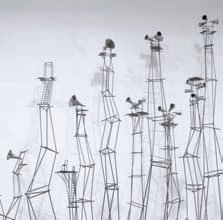
The tradition of folly building began in Britain’s stately homes several hundred years ago. Wealthy individuals chose to demonstrate their prosperity by commissioning ornamental structures in their newly landscaped grounds, often taking the form of towers or mock ruins.
The tradition of the folly also persists in another way – in the urge to undertake an idiosyncratic project for its own sake, flying in the face of logic and common sense or utility. Across a wide range of mediums, these themes serve as a common thread for contemporary artists to explore in this exhibition featuring work from Peter Burke RWA, Judith Jones RWA, Jemma Gunning RWA RE and Karl Singporewala RWA RIBA. rwa.org.uk | Queen’s Road, BS8 1PX
Image: Peter Burke, Towers, 2026
Strength & Fragility: Works on Paper by Vyvyan Hope-Scott, Clifton Contemporary Art, 7-29 August
Clifton Contemporary Art is joined by Bristol artist Vyvyan HopeScott, whose evocative works on paper are rooted in 20th-century abstraction, but also inspired by landscape, architecture and engineered structures.
Using the dramatic simplicity of black and white, or earthy tones that contain iron powder, Vyvyan creates palpable depth and tension: a balance between strength and fragility which he often finds in the slowly decaying monuments to industry around the docks in his home city. Here corrosion and erosion are transforming the once monolithic into something more vulnerable and intricate, and these slow but irresistible processes shape a unique body of paintings. The gallery is also showing new work by other gallery artists, including Stephanie Cunningham, Nancy Pickard and Trevor Lillistone.
Image: Unswerve by Vyvyan Hope-Scott – Acrylic on Arches Paper. Image size: 56cm x 76cm. Framed size: 76cm x 97cm.
Images: Above, Jonathan Baldock, Held, 2026 (Installation View) at Arnolfini. Courtesy of the artist and Arnolfini. Photography by Dan Weill. Below, Polly Braden, Against the Tide, 2026, Joe, Blackpool
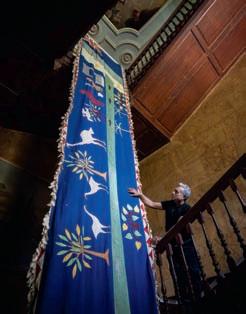
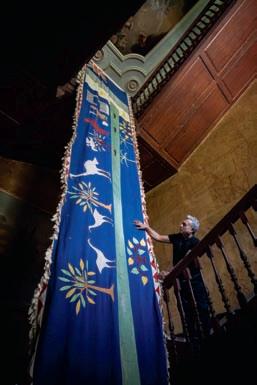
Journeys: Asafo Flags from the Karun Thakar Collection, Dyrham Park, until 1 November
The National Trust is partnering with collector, author and curator Karun Thaka for Journeys, an exhibition that draws on highlights from Thakar’s global textile collections to explore themes of migration, trade, craftsmanship, colonialism, global history and beauty at the historic property. Born in Kenya, raised in India and now based in London, Thakar’s lifelong relationship with textiles began in his mother’s couture tailoring shop in Delhi, where he learned to sew, crochet and embroider as a child. Through the universal theme of ‘journeys’, which express individual experiences as well as the global movement of people and material culture, the exhibition examines both tangible heritage and living traditions. Many of the textiles carry deeply personal histories, including pieces connected to Thakar’s own family.
At Dyrham, vibrant Asafo flags – one of the most important West African art forms – fuse European naval insignia with local traditions and symbolism, reflecting resistance and adaptation during colonial encounters. Displayed throughout Dyrham’s interiors, and placed alongside portraits and objects, they will deepen narratives of the 17th-century house built with the proceeds of colonial enterprise. nationaltrust.org.uk/dyrham-park | South Gloucestershire, SN14 8H
Image: Journeys, Dyrham Park (Credit NT Images / James Dobson)
Brown
Glenn Brown: Reimagining the Old Masters
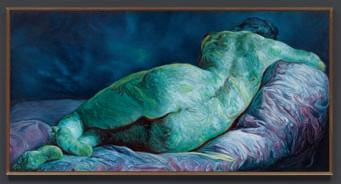
Glenn Brown is known for his highly detailed paintings that reinterpret images from art history into surreal and often grotesque forms. Forty years after studying in Bath, he has returned to the city with a dual-site exhibition at The Holburne and at No.1 Royal Crescent
In the crowded world of contemporary British art, Glenn Brown has carved out a position that feels both distinctive and subversive. For more than three decades, he has made paintings that seem, at first glance, to belong to the past – echoing the Old Masters, the drama of Baroque art, and even the dreamlike qualities of Surrealism. But look closer and something stranger emerges: familiar images reworked into forms that feel unsettling, even slightly uncanny.
Born in Northumberland in 1966, Brown studied at Norwich School of Art, Bath School of Art and Design from 1985-89, and later Goldsmiths in London. Although his career loosely overlaps with the Young British Artists group, he has always stood apart from their more provocative, headline-grabbing tactics. He has remained true to the pursuit of painting excellence – albeit not in any traditional sense.
That connection to Bath now comes full circle. Forty years after studying in the city, Brown has returned for a major dual-site exhibition. As he puts it, “From 1985 to 1988 I was a student in Bath and so this beautiful city, built for pleasure, for me became a place of learning and discovery.” He adds that although he was then “optimistically obsessed with the future”, Bath made him realise that “in a city like Bath, the past is never far away.”
Brown doesn’t paint from life. Instead, he takes his cue from images of paintings found in books, catalogues or online. His starting points range widely, from Rembrandt and Velázquez to Van Gogh and Salvador Dalí. He rarely takes from just one source. Instead, he blends and reshapes multiple images, reworking them until the original visual becomes almost impossible to trace. “I look at hundreds of images… to find a reproduction I can transform,” he has said.
Brown has even compared his process to assembling something new from fragments of the past, describing himself as “rather like a Dr Frankenstein, constructing paintings out of… other artists’ work.” The end result is never a copy or tribute. He puts it more simply: “I never make a direct quotation.”
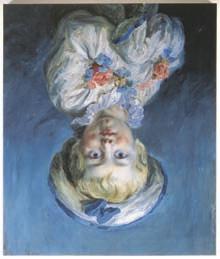
This layered, referential approach forms the basis of Glenn Brown in Bath, a major two-part exhibition presented across the Holburne Museum and No.1 Royal Crescent. At the Holburne, Arrows of Desire places Brown’s paintings and drawings directly within the museum’s historic collection of English and Dutch art, creating deliberate visual collisions between contemporary distortion and 18th-century portraiture.
Holburne director Dr Chris Stephens describes Brown as “one of the most important and most successful painters of an extraordinary generation of artists,” adding that the museum is “thrilled to be welcoming him back to Bath with a series of exciting interventions that promise to disrupt the usual order of the city’s 18th-century heritage.”
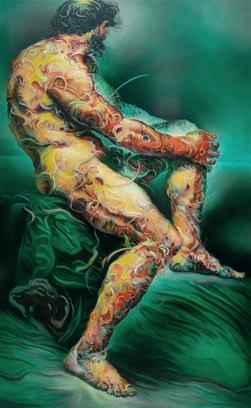
That disruption is carefully staged. In the main gallery, Brown’s works are positioned in direct dialogue with historical portraits: the figure in When the Satellite Sings (2024) echoes Thomas Gainsborough’s Robert Craggs Nugent, while other works draw out uncanny visual rhymes with Thomas Lawrence and Allan Ramsay. The effect is not illustrative but
destabilising – an atmosphere in which art history feels both present and strangely warped. For Brown, this is intentional. His paintings draw explicitly from the canon of art history to create fresh and sometimes disturbing paintings, which reveal a dark sense of humour. Brown himself describes his method as an “idiosyncratic, arch relationship to art history,” one that has allowed him to develop “a fantastical visual language of his own.” Alongside the Holburne exhibition, Grottoesque at No.1 Royal Crescent extends this dialogue into a more architectural and environmental register. Here, Brown turns his attention to Georgian shell grottos, landscape painting and the grotesque qualities of nature itself.
At No.1 Royal Crescent, he has transformed one gallery space into a grotto-like environment, complete with three new large-scale paintings of multiple heads set within shell-encrusted frames. He has also introduced bespoke wallpaper, extending his intervention into the fabric of the historic house. Patrizia Ribul, Director of Museums at Bath Preservation Trust, notes the project is particularly resonant given Brown’s return to the city where he studied. She describes being “struck by the precision and wit of his interventions in historic houses and collections,” adding that seeing his work “disrupt these ordered Georgian settings is particularly exciting.”
Between the two venues, a thematic split emerges – refinement and distortion, order and excess, surface and instability.
At No.1 Royal Crescent, Brown explicitly plays with symmetry and grotesquerie, responding to the decorative logic of Georgian interiors. At the Holburne, he works more through collision, inserting his works among canonical paintings so that each alters the perception of the other.
One of the standout works at the Holburne is When the Satellite Sings. Nearly 2m high, it centres on a seated male nude that initially appears rooted in classical figure painting. But the longer it is viewed, the more unstable it becomes: the body dissolves into swirling ribbons of paint-like form, hovering between solidity and disappearance. Rather than a fixed figure, it becomes something in flux – an image perpetually forming and distorting itself.
The result is neither landscape nor portrait, but something in between, with shapes that are always shifting.
His references span centuries – from Van Dyck to Frank Auerbach – but by the time they have passed through Brown’s process, they remain as echoes rather than quotations. What remains is a kind of visual memory rather than a fixed source.
That tension is also present in On the Way to the Leisure Centre. The title feels deliberately dull, even comic, sitting awkwardly against imagery that suggests classical painting. Figures derived from artists such as Fragonard are pulled into elongated, weightless forms drifting across the canvas. As Brown has said, his titles are often “embarrassingly direct” – a deliberate counterpoint to works that are far too complicated to read. It also reflects how images now circulate. Most of us encounter painting through reproduction rather than direct experience, and Brown leans into this condition.
His works are built from second-hand imagery, constantly reshaped and reinterpreted, reflecting a visual culture in which images are endlessly recycled. Beyond painting, this approach extends into sculpture and printmaking. His etchings layer historical references into dense compositions, while his sculptures translate painterly gesture into solid form – brushstrokes frozen in three dimensions.
Part of what makes Brown’s work so compelling is a constant tension between surface appearance and material reality. That sense of visual uncertainty runs through much of Brown’s work. To the viewer, his paintings are truly deceptive: what appears to be thick, heavily textured impasto – applied with speed and energy – is in fact rendered with painstaking precision to leave a completely smooth, trompe-l’oeil, enamellike surface. It is a carefully constructed illusion, one that plays with the viewer’s expectations, often leaving them with a strong desire to try and touch the artwork. Not allowed.
This is especially evident in Fail We May, Sail We Must. At first glance, it presents a turbulent seascape, but slowly other forms emerge – fleeting suggestions of a face embedded within the swirls of the waves.
At the Holburne, these works sit within an institution defined by elegance and the historical continuity of art. At No.1 Royal Crescent, they enter one of Bath’s most perfect expressions of Georgian order. The contrast is deliberate. As Ribul notes, the exhibition brings Brown’s work into dialogue with “two of Bath’s most distinctive museums,” creating a situation where his interventions actively unsettle the very architectural fabric of the building.
For visitors, the experience is likely to be both seductive and disorienting. Brown’s work draws the eye with its beauty, then undermines certainty. Are these images old or new? Familiar or invented? Are they solid or in transition?
The answer is always just out of reach – and perhaps that is the point. In a time when painting is often regarded as being either exhausted or endlessly renewed, Glenn Brown occupies a more ambiguous space. His work does not attempt to reinvent painting so much as to question what it already contains, and what it might be transformed into in a world already saturated with banal images. n holburne.org | no1royalcrescent.org.uk
Glenn Brown in Bath: Arrows of Desire, until 6 September, The Holburne Museum, Great Pulteney Street, Bath
Glenn Brown in Bath: Grottoesque, until 6 September, The Gallery at No.1 Royal Crescent, Bath
Searched Hard for You and Your Special Ways (1995)
On the Way to the Leisure Centre (2017)
Expert opinion
From Chris Yeo, of Clevedon Salerooms and a regular expert on BBC’s Antiques Roadshow
A Star Wars Story
My first encounter with Star Wars was not a happy one. For my sixth birthday in the summer of 1977, my parents gave me a toy lightsaber. The thing was, Star Wars hadn't been released in this country at that point and I thought they’d given me a large plastic torch. Taking my ‘torch’ to school, I was oblivious to the fact that I was now the owner of one of the year’s most sought-after toys. That soon changed as I was immediately mobbed by dozens of excited children, all clearly far more up to speed with developments in Hollywood than I was. In the midst of all the excitement, my friend proposed a short-term swap for his very swanky cap gun, which was a tempting deal for a torch. Swap agreed, a week later, my lightsaber was rather sheepishly returned looking rather worse for wear. It turned out my friend had left it on the sofa and his father had accidentally sat on it. As a result, it was now bent halfway along the blade and never quite the same again.
When Star Wars finally arrived in Britain, it changed the toy market forever.
Image courtesy of 'Lucasfilm/Twentieth Century Fox, 1977
COLUMN | CHRIS YEO ON ANTIQUES
Palitoy produced a range of figures and models under licence which were all feverishly collected. Before long, Luke Skywalker, Darth Vader and R2-D2 had become familiar residents of bedroom floors across the country.
Today, those once coveted toys have become valuable collectables. Anyone who paid the £1.25 recommended retail price for a Jawa figure in 1978 – and kept it in immaculate condition – could nowadays expect to sell it for upwards of £20,000. Whilst a model of C-3P0 (who you’ll remember was the rather camp metallic gold robot), recently sold for £1,700.
A toy lightsaber would today command a more modest £150 in good condition, which mine most definitely was not. You might say the moral of the story is ‘neither a borrower nor a lender be’. But, to me, it remains the perfect reminder that the best toys were never bought as investments. They were bought to be played with - and, occasionally, sat on. ■ clevedonsalerooms.com; @chrisyeo_antiques Instagram)
Star Wars - Rare 1977 pre-Oscars UK quad film poster, artwork by Tom Chantrell. Sold at Clevedon Salerooms for £2,400
Course of action
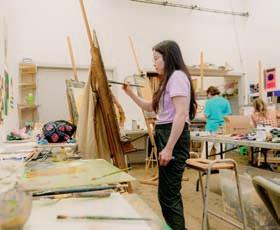
Choose from some of the best adult courses on offer in the city if you’re ready to take up a new pursuit, are seeking a fresh challenge or want to discover a hidden talent... Who says you can’t teach an old dog new tricks?!
WOMEN TEACHING FABRICATION
Welding and creative metalwork
Get hands on with welding, plasma cutting and power tools to create your own unique designs using scrap metal.
Women Teaching Fabrication offers one-day courses in a purpose-designed studio at Arcadia HQ in Backwell. Groups of up to six participants are led by two experienced female metalwork tutors. The workshops are relaxed and engaging, and encourage creativity, problem solving and lateral thinking skills. There is a huge range of scrap items and tools to experiment with, and the team will be on hand with supervision and guidance at all times to help everyone take home something they’re proud of.
wtfworkshops.co.uk
BRISTOL FOLK HOUSE
bristolfolkhouse.co.uk
Bristol Folk House is an adult education centre providing a variety of daytime and evening courses and weekend workshops for over-18s. The team provides a welcoming environment in which to explore your creativity and learn new skills in arts, crafts, languages, pottery, music, dance, writing and wellbeing. The onsite café/bar serves fantastic vegetarian food, drinks and cake, and is a cosy space to get together before and after classes. There’s also an exciting programme of live folk music, ceilidhs, comedy nights and talks at weekends. Concessions are available for Students, NHS workers, people aged 65+ and those on benefits.
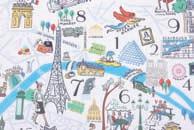
Have you ever dreamed of strolling along the charming streets of Paris, sipping café au lait at a quaint café, or exploring the stunning landscapes of the French countryside? Now is your chance to make those dreams a reality. Alliance Française, the leading provider of French language courses, is offering a unique opportunity for adults to learn French and immerse themselves in the rich French culture. The highly qualified and experienced teachers will guide you through the intricacies of the French language, from basic greetings to advanced conversation skills. From gastronomy to art, music to cinema, you’ll explore the diverse facets of French life and gain a true appreciation for its beauty and sophistication. Whether you’re a complete beginner or looking to brush up on your existing skills, the classes cater to all levels. With flexible schedules and small class sizes, you’ll receive personalised attention and ample opportunity to practise your newfound language skills with fellow enthusiasts. The online enrolment evening is 7 September from 5.30pm. For more information, visit the website above and get in touch to reserve your spot. À bientôt!
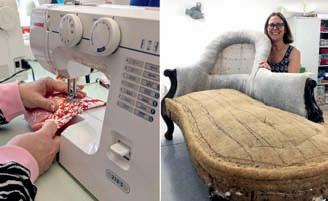
Creative Space a friendly studio space in Bristol offering daytime, evening and weekend creative workshops and courses for adults, kids and teens. Learn skills in upholstery, stained glass, sewing, jewellery, painting, pottery, weaving, crochet, printmaking, creative writing and much more. The team runs daytime, evening and weekend classes and the space is also available to hire. All of the tutors are welcoming, experienced and working professionals in their field. If you're looking to learn a new creative skill or improve one you already have, then join one of the exciting and inspiring classes! Sign up to Creative Space’s mailing list for monthly updates.
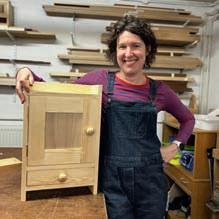
THE MAKERSHED WOODWORK & FURNITURE MAKING
St Pauls Learning Centre, 94 Grosvenor Road, St Pauls, BS2 8XJ themakershed.co.uk
The Makershed runs recreational courses in woodwork and furniture making using traditional hand tool techniques. Everyone is welcome, from complete beginners to more experienced makers, and you’ll be taught how to use hand tools effectively to make things from wood.
Level 1 beginners make a handy toolbox while learning all the essential foundation skills. They can then learn more challenging cabinet making joinery such as dovetails and mortice and tenons, progressing onto designing and making their own piece of furniture under expert guidance. Courses run during evenings, weekday daytimes and weekends in The Makershed workshop at St Pauls Learning Centre.
RWA DRAWING SCHOOL
rwa.org.uk/drawingschool
The RWA Drawing School offers a wide range of art workshops and courses for all creative abilities, both in our dedicated Drawing Studio and online.
All courses are led by expert tutors and are suitable for every skill level. Basic materials are provided for most sessions unless otherwise stated. As an added benefit, Drawing School participants receive free entry to RWA exhibitions on the day of their class (excluding Mondays and exhibition changeover days), along with a 10% discount at the Spicer + Cole Café. With a flexible timetable to suit your schedule, you can join Drawing School courses on weekdays, evenings or weekends.
Credit: KayBricknell - KoLABStudios
THE ORCHARD PROJECT
theorchardproject.org.uk/accredited-courses
Learn the skills to design, plant and care for a productive and biodiverse orchard by completing the Certificate in Community Orcharding. Benefit from flexible, online learning over 11 months, access to 100 course resources, and hands-on training days in Bristol, where you can meet your tutors and other orchardists.
The Orchard Project also offers an Award in Forest Gardening. This six-month online course will help you to discover the benefits of forest gardening, and the many ways you can use forest garden plants. “I’ve done both the Certificate in Community Orcharding and the Award in Forest Gardening,” says Ben (pictured). “I highly recommend them both!”.
WELLNESS WEDNESDAY CREATIVITY CLUB
Stylemongers Of Bristol, 196 Gloucester Road, BS7 8NU | stylemongersofbristol.co.uk
Interior design studio Stylemongers of Bristol is opening its doors to the local community for Wellness Wednesdays Interior Design Themed Creativity Club. (10am-12pm). Crafting experiences include Interior Colouring For Grown Ups, Wallpaper Pattern Design, Styled Still Life Drawing and Interior Design Collage. The aim is to improve mental health for the local area through easy access to art and design, to promote connection with others and enjoyment of creativity for pleasure’s sake.
Book shelf
Helen from the team at Gloucester Road Books shares some ideas that will keep young readers occupied over those long summer holidays...
Gloucester Road Books is a fascinating place to explore, and the team places a significant focus on titles published by small independent presses, noting: “There are lots of really brilliant small publishers putting out incredibly exciting books, and we want to help get these out into the world.”
Visit the website for more details on book launches, talks and other events at the shop: gloucesterroadbooks.com @gloucester_rd_books | 184 Gloucester Road, BS7 8NU | Open Mon-Tues 9.30am-5pm; and Weds-Sat, 9.30am-6pm
by A. F. Harrold (Teen)
This is another title that teen me would have adored, from the sound of it. Described as “Alice In Wonderland meets Kurt Vonnegut”, this sumptuously illustrated novel explores themes of politics and metaphysics, as the protagonist, Thorn, wakes one day to find herself outside of her body. As she moves backwards and forwards through her life, she begins to piece together the mystery of her fate. create an answer to the question of whether what she had once held dear was really what was important, and if it wasn’t, who, then, is she?
Sky Dancers by Chris Vick (Ages 11+)
This is the kind of book I would have been obsessed with as a child. When I was growing up, I dreamt of living in a lighthouse, and Isla, one of the protagonists of this story, does just that. Set in a village on the Cornish coast, we move between the modern day – with newcomer Hilly exploring the abandoned lighthouse and the mysteries it holds – and the 1950s when Isla lived there, seemingly possessing some kind of magic through dreaming. Colour me intrigued! This should keep your kids occupied for the summer holidays, and I may just give my inner 11-year-old the gift of reading this one myself!
Girls Who Slay Monsters and Gods Don’t Cry by Ellen Ryan (Ages 9-11)
Retellings of Irish myth and folk tales haven’t been subject to quite as extreme a resurgence as Ancient Greek and Norse ones have in recent years, and these collections for 9- to 12-year-olds seek to redress this. They draw on Celtic polytheism, using the pantheon to confront issues young people are dealing with now. In these retellings, Mannanán, the shape-shifting sea God, is depicted as neurodivergent, and both collections feature Gods and Goddesses overcoming bullies, exploring their gender identity and roles, and finding their courage. The Gods are shown embracing their vulnerability, and the Goddesses as stepping into their power. A timely balm to the fractured modernity facing today’s children.
Cryptids by Tamara
Macfarlane
(Ages 7-11)
Show me a child between seven and 11 who isn’t obsessed with cryptids, and I will show you a child that merely hasn’t yet heard of cryptids. This compendium is the perfect introduction to the world of Bigfoot, Nessie, Mothman and the like. Featuring stunning illustrations and detailed profiles of a variety of legendary creatures, this bestiary also teaches kids critical thinking skills, showing how to use the scientific method and detective work to separate fact from fiction. There couldn’t be a more prescient time to inculcate the skills of data analysis and evidence evaluation into today’s young people, and here you can do that while also offering them the joy and awe of tall tales and folkloric legend.
Dogs and Bears by Max Porter (Ages 3-5)
Yes, the Max Porter, beloved by all at Gloucester Road Books, has turned his fantastically talented hands to writing a children’s book! The result is delightfully bonkers-sounding. The plot is something we can all surely relate to; a three-day brawl between dogs and bears because the smell of sweets that the dogs were manufacturing is disrupted by the arrival of squid raining down from the sky… All in all, I strongly suspect this will be a surreal read, which should keep you and the kids entertained through those long summer holiday days.
Thorn
Bristol at work
LOCAL BUSINESS AND COMMUNITY ORGANISATION UPDATES
Lloyds invests £1m in Cabot Circus branch
Lloyds has welcomed customers back to its Bristol Cabot Circus branch with a 17-strong team on hand to help people with their banking.
The £1 million investment has created a bright, welcoming branch, with more comfortable spaces to talk, including private spots for more complex chats. New accessible booths mean staff can support customers with mobility needs easily, and there are dedicated spaces for help with online and mobile banking.
New cash machines mean customers can withdraw or deposit cash, including choosing the exact notes and coins they need.
Business customers also now have their own dedicated space. lloydsbank.com
Visit West unveils new brand identity
Visit West has revealed a new identity to bring together its brands. This builds on the rebranding of its Convention Bureau – formally known as Meet Bristol and Bath – earlier this year and concentrates all the organisation’s industry facing brands under a more unified identity, strengthening the Visit West brand and celebrating the wider region. Travel trade activity and engagement will now come under a new ‘Visit West Travel Trade’ brand while the organisation’s two consumer flagship brands Visit Bath and Visit Bristol, have also been given an upgrade.
Alongside the refreshed branding, Visit West has unveiled a redesigned corporate website, offering a more intuitive and comprehensive resource for businesses operating within the visitor economy locally and those wishing to know more.
visitwest.co.uk
A Productions produces new preschool show The Underglow
A Productions is part of the team behind a new preschool show, The Underglow, which has now started production.
The Underglow is the final commission from the BBC’s first round of its Ignite animation programme, which was designed to uncover, support and champion original, creator-driven animation that connects with audiences and stands the test of time.
Created by Sam Morrison and Tanya Scott, The Underglow is produced for the BBC by Finnish studio Gigglebug and Bristol-based A Productions with support from YLE, the Finnish Broadcasting Company. The Underglow follows best friends Brewster and Riley, an adventurous, lightly comic double act, as they explore a magical world filled with curiosity, discovery and play. Set within a vibrant and inclusive community, the series celebrates connection and care, presenting a world where diverse characters support one another. aproductions.co.uk
Crowdfunder launched for nature-based mental health support
The Birch Collective, which reconnects people with nature, improving their mental health, and building, community is launching a £40,000 crowdfunder this summer to continue its free weekly sessions for local residents. The organisation runs weekly outdoor, nature-based programmes for young people and adults facing mental health challenges, social isolation and structural disadvantage. Its sessions bring people together to learn practical skills, spend time outdoors and build supportive relationships through shared care for the land. thebirchcollective.co.uk
What is Orange Wine?
Elodie Hind of DBM Wines, a wine merchant in the heart of Clifton Village, explores the world of orange wine 7 Princess Victoria Street, BS8 4BX | dbmwines.co.uk
Orange wine is one of the oldest wine styles in the world – and one of the most misunderstood. In Georgia, this style has been made for over 8,000 years, in qvevri: clay vessels buried underground, where skin contact was simply how wine was made.
Today, it is that same ancient technique that sets orange wine apart. Made from the same grapes used for white wine, the juice remains in contact with the skins for days, weeks or even months, developing its distinctive amber hue, gentle tannins and character all of its own. In the glass, you might find dried apricot, orange peel, chamomile and a gentle tea-like depth on a savoury, textural palate, though every bottle tells a different story. Its subtle tannins and savoury texture make it a remarkably versatile partner for food...
Funkstille Skin Contact, Niederösterreich, Austria, 2025, £14.95: Ginger, white pepper and dried flowers, with mandarin freshness and gentle texture. An approachable blend of Riesling, Grüner Veltliner, Gewürztraminer and Muscat. Serve with Asian stir-fries or hard cheese.
Enblanco de Altolandon, Bodegas Altolandon, Manchuela, Spain, 2023, £16.49: Ripe apricot, citrus and floral aromas. Garnacha Blanca and Gris fermented in traditional clay amphora to create a rounded, textured wine. Serve with slow-cooked Middle Eastern dishes.
Solara Orange, Cramele Recaș, Romania, 2024, £13.95: Quince, pear and vanilla combine with fresh structure in this orange wine led by native Fetească Albă. Serve with roast pork, duck or other rich poultry dishes.
Bristol bites
Ice cream parlour opens in Clifton
Salcombe Dairy has launched its newest ice cream parlour at 30 The Mall, in the heart of Clifton Village, experiencing an enthusiastic response from customers on its opening weekend.
“It has been a great start, with us completely selling out of ice cream on just our second day,” says Sam Green, shop manager at Salcombe Dairy Clifton (pictured above). “We’ve had such a warm welcome from the Clifton community, both from local residents and neighbouring businesses. We’re really looking forward to becoming part of the neighbourhood and the wider Bristol community.”
Designed to evoke the nostalgia of traditional seaside holidays, the parlour draws inspiration from the timeless stories of Enid Blyton and other beloved children’s authors, creating a warm and welcoming space where visitors of all ages can enjoy a memorable moment together. Alongside ice cream, the shop also offers Salcombe Dairy’s award-winning bean-to-bar chocolate and indulgent truffles. Visitors can also discover the immersive Rainforest Room, a space available for private hire offering a whimsical setting for children’s parties, family celebrations and other special occasions.
Salcombe Dairy uses only natural ingredients, and all of its ice cream is free from nuts, gluten and eggs. The range also includes a wide selection of vegan-friendly options. salcombedairy.co.uk
Breakfast is back on the menu at BANK
Breakfast has returned to BANK Bristol every Saturday, with bacon, eggs, sirloin and scallops all on the menu.
It’s been three years since owners Dan O’Regan and Jack Briggs-Horan made the switch from brunch to contemporary fire cooking in Totterdown, and the team hopes return of the breakfast service will bring together ‘the best of BANK old and new’.
Alongside the British classics, the team is bringing some more eclectic ideas to the table too, leaning on flame and embers to elevate each dish and create a breakfast worth getting out of bed for.
With a choice of grilled sourdough toast or oysters in Irish whiskey and green apple mignonette for snacks, the menu goes onto include a full English, egg en cocotte, pain perdu, a choice of breakfast buns and the Billingsgate bap of grilled scallops and smoked bacon. For those arriving hungry, there’s steak and eggs, with rump or sirloin served with peppercorn sauce, watercress and shallot salad. And a hefty list of extras includes bone marrow, charcoal roasted mushrooms, black pudding and a half-shell scallop.
Cocktails are served from 10am, with a mimosa or jalapeño Aquavit Bloody Mary on offer while the streaky bacon sizzles, and coffee will also be served throughout the day. Breakfast at BANK Bristol will be served every Saturday morning from 9am until 11.30am. bankbristol.com
The in-cider story
we’ve picked three of our local favourites…
Some cherished local rituals never seem to lose their appeal. A Sunday roast after a hedonistic night before. Fish and chips by the coast (blustery drizzle mandatory). And, for many of us in Bristol, a leisurely ramble that finishes with a muchdeserved pint in a welcoming pub.
Maybe you prefer an easy stroll through rolling Somerset orchards, or perhaps an afternoon exploring Bath’s elegant streets, or a summer escape further afield in the car. Whatever’s on your agenda, if there’s a walk involved, you can expect the deep satisfaction that comes with earning that first refreshing sip of something cool when you land at the pub at the end of it all.
Much of the magic wrapped up in a country walk – which, if you haven’t already noticed in our 20+ years of publishing, we’re huge fans of here at The Bristol Magazine – lies in its mystical ability to help us switch off from hectic city life. Conversations are less likely to be interrupted by app notifications, dogs can curiously sniff out which way to turn next, your little ones can collect sticks and stones (prized treasures, of course), and you can feel that bit more connected to each other for the duration of the journey.
New research from Somerset’s own Thatchers Cider suggests we’re certainly not alone in thinking that these walks are rather special – even more so if there’s the promise of refreshments involved. Nearly four in 10 people across the South West (38%) say a walk becomes even more appealing if there’s a good pub waiting at the finish line, while almost half (44%) would happily add up to an extra hour to their route if it meant ending somewhere worth settling into for a drink.
It’s easy to understand why. The region’s countryside offers an enviable mix of landscapes, from orchard-lined lanes and gentle hills to dramatic coastlines and historic cities, making it ideal territory for unhurried exploration. The research also found that good scenery is the biggest
deciding factor when choosing a walking route, while a leisurely 3–8km walk hits the sweet spot for most people.
The appeal goes beyond simply stretching your legs. Seven in 10 walkers say getting out into the fresh air is the biggest benefit, while others value walking for exercise or simply as a chance to switch off and relax. In a world that often encourages us to be constantly connected, there’s something wonderfully grounding about swapping screens for scenery, even if only for a couple of hours.
Pint Sized Walks
A shared appreciation for Britain’s walking culture has inspired a new collaboration between Thatchers Cider and OS Maps by Ordnance Survey. Their new Pint Sized Walks collection brings together a series of circular routes across the country, each finishing at a pub serving Thatchers cider. The idea is refreshing as it is simple: make it easier to discover beautiful places, enjoy time outdoors and reward yourself with a pint at the end. Thankfully, summer makes it much easier to enjoy sociable days outside, so for anyone reading seeking inspiration over the summer holidays, we’ve teamed up with Thatchers to highlight three standout South West routes, each paired with a cider chosen to suit its surroundings…
Amongst the orchards of Somerset
The Railway Inn in Sandford sits at the heart of Somerset cider country, making it the natural starting point for a walk through the very landscape that has shaped the Thatcher family’s craft for generations.
The circular route meanders past orchards, open fields and peaceful countryside, offering plenty of opportunities to slow the pace and appreciate the county's famous apple-growing heritage beneath expansive Somerset skies.
Appropriately, there’s no shortage of choice once you return. The Railway Inn serves the full Thatchers range, with more than 15 ciders available.
For those drawn to tradition, Thatchers Vintage feels entirely at home here. First released more than 25 years ago, this rich golden medium dry cider is crafted using apple varieties including Dabinett, Prince William, Somerset Redstreak and Gala, creating a classic cider that’s equally suited to sharing with friends or enjoying alongside a hearty Sunday lunch.
Alternatively, those looking for something lighter can opt for Thatchers Blood Orange 0.0%, an alcohol-free cider bursting with natural blood orange flavour. Crafted using sweet dessert apples, it delivers plenty of zing while making an ideal refreshment after a warm summer walk.
A city stroll through Bath
If your idea of walking involves as much architecture as countryside, the route beginning and ending at The Pig and Fiddle in Bath offers a different kind of exploration. This easy circular walk takes in some of the city’s best-loved landmarks, including the Royal Crescent, while weaving through elegant Georgian streets, independent shops, galleries and tucked-away corners that reward anyone happy to wander without rushing.
To accompany a city rich in timeless classics, the recommended choice is Thatchers Gold. One of the company’s best-known ciders, it’s an easy-going companion whether you’re settling down to fish and chips, a traditional roast or simply taking a seat in the pub after an afternoon on your feet. Familiar, refreshing and effortlessly versatile, it matches the easy charm of Bath itself.
History and coastline in Pembrokeshire
For those venturing further west this summer, St Davids offers a walk where history and landscape sit comfortably side by side. Starting and finishing at The Bishops, the route passes through Britain’s smallest city, taking in its magnificent cathedral and the atmospheric ruins of the Bishop’s Palace before continuing through countryside and along a stretch of Pembrokeshire coastline that’s made for lingering.
Here, the recommended pairing is Thatchers Katy, a lightly sparkling medium dry cider made from Katy dessert apples. Light, crisp and delicately balanced between sweetness and tartness, it pairs particularly well with the fresh fish dishes popular at the pub, making for a fitting finale after an afternoon spent exploring one of Britain’s most beautiful corners.
Perhaps that’s the enduring appeal of the pub walk; sometimes it’s about much more than just the mileage. We’d much rather embrace sharing a route, adventuring somewhere new (or seeing somewhere you know well in a new light, too), and taking time to pause from everyday life before heading home feeling refreshed. With many more longer evenings and plenty of summer left to soak up – this walking tradition sounds like one well worth keeping alive to us. n
Research conducted by Obsurvant for Thatchers Cider and OS Maps (June 2026). Pint Sized Walks features a curated collection of circular walking routes hosted within the OS Maps app, each ending at a pub serving Thatchers cider.
At The Railway Inn, Sandford (Credit: PA | Thatchers OS Pint Sized Walks)
The rewarding pint (Credit: PA | Thatchers OS Pint Sized Walks)
It’s playtime!
With hundreds of spaces in and around our city for kids to unleash their sense of adventure, Bristol’s playgrounds are as abundant as they are special – and there’s so much more to them all than simply slides and swings. We hear from one local mother Emily Smithson, whose family quest to try out every playground in the city led to a complete career change and the development of a very useful app...
When Emily Smithson’s third child was born, she wasn’t planning to launch an app or teach herself to code. She simply wanted somewhere new to take her little ones.
What started as a family mission to explore Bristol’s playgrounds has since evolved into Bristol Playgrounds: an app helping parents discover the city’s play spaces, complete with information on equipment, facilities, accessibility and more.
As the newly refreshed version has launched just in time for summer, Emily reflects on the journey from hobby to community resource, which started with a visit to Stoke Lodge playground more than five years ago.
“We got really into the idea of trying to see all the playgrounds in Bristol, so we started visiting one a day, basically. It became quite a quest. I wasn’t working at the time, this was something to do for free and the kids loved it; I was happy because of the change of scenery.”
Emily began writing a WordPress blog, documenting this newfound quest, which became a Facebook page. “I wasn’t trying to make any money from it – it was just a hobby that I thought other people might enjoy, too,” she explains.
“Around the same time, my family loved doing the Aardman Gromit trails [the free, giant sculpture trail organised by charity The Grand Appeal]. My husband and I were always quite competitive about finding every sculpture, and that got me thinking, ‘Wouldn’t it be fun if there was something similar for playgrounds?’”
Emily never imagined Bristol Playgrounds would become something families across the city would actually use.
“When I decided to relaunch it recently, I looked at the Facebook page and realised there were still thousands of followers there,” she tells us. “I thought I’d post about it and see whether anyone was still interested.”
The response was huge. Thankfully, it turns out, loads of people were excited to see it return, which Emily attributes to the city’s amazing asset in its playgrounds.
“Even now, people regularly send me suggestions for parks to include,” she notes.
“There are also still playgrounds I’m adding all the time.” Though there are a few that haven’t featured because they’re very dirty or a bit derelict, Emily is constantly updating the app as parks improve and new ones appear.
From sums to codes
Before managing an app, Emily was a maths teacher.
“I’d made little Flash apps for my students, so I thought building an app would be fairly straightforward.”
It turned out this wasn’t to be the case. Having built websites before using WordPress, Emily imagined an app would be similar, but there was a huge learning curve. “For about a year, while my youngest daughter was at preschool, I’d rush home to teach myself the coding skills I needed and gradually build the app,” she recalls. “By the time I’d finally launched it, Covid arrived and all the playgrounds closed.”
Even so, Emily carried on making apps, creating around seven altogether, including guides to the Downs and local parks. This eventually led to a job in app development, which she’s been doing ever since.
“Coding became completely addictive,” she states. “You’re constantly solving problems, and every time you solve one you get a little buzz that makes you want to solve the next one. The platform I was using almost felt magical. You’d write a bit of code, press a button, and instantly see the changes appear on your phone. I don’t have artistic skills, so being able to create something just by writing code felt really exciting.”
One of the biggest challenges has always been keeping the app up to date. Playgrounds change all the time. Equipment gets replaced, cafés close, toilets are refurbished – and Emily had hundreds of photos to keep track of.
“At the same time, I was working full-time and raising three young children, so eventually I just couldn’t keep up with it. But a few months ago, I found myself between jobs, and I started wondering whether it was finally time to bring it back.”
Now Emily’s got much more experience as a developer, she’s funnelled this knowledge into building an app that’s much easier to maintain – but still involves her children’s input (from accompanying her to sites, choosing the best equipment and even capturing visual content).
Something that once took Emily a week can now be updated in minutes, which makes keeping everything current much more realistic.
Hidden gems
The big destination playgrounds are great, but they’re not always Emily’s favourite places. “They can be quite overwhelming if you’ve got children of different ages all wanting to run in different directions.”
It’s the smaller, beautifully designed playgrounds that she really loves. “One that has always stood out for me is Mowbray Park in Knowle West,” she points out. “I haven’t been back for a while because it’s not close to where I live, but I always loved the thoughtful little details.
“There was a tiny mole coming out of the ground, this unique bench bridge that children could run along, and everything just felt like somebody had really thought about it.
“Those are the places I enjoy discovering most – the creative playgrounds where people have done something interesting with the landscape or created a theme. Sometimes you can tell a playground has simply been chosen from a catalogue. Others feel completely unique, and they’re lovely.”
One of the unexpected joys of visiting so many playgrounds has been discovering parts of Bristol she might never otherwise have seen.
Emily’s family lives in Redland, but exploring playgrounds has naturally taken them into communities all across the city.
“I remember visiting one playground where a group of teenagers were sitting on the equipment. We wondered what it would be like there, but they immediately apologised, moved out of the way and couldn’t have
been kinder. For me, that’s one of the nicest things the app can do. Bristol can sometimes feel a bit segregated, but children all play in exactly the same way. Exploring different neighbourhoods reminds you how much we all have in common.”
Emily’s experience with Bristol Playgrounds has cemented the idea that these spaces are so much more than just swings and slides.
“I spent so much time at my local park when my children were little because that’s where you get to know other parents. The children make friends, adults get chatting, and those everyday connections really matter.
“They’re also brilliant places for children to build confidence, become more resilient and explore the world around them. I think Covid disrupted a lot of those opportunities, so encouraging children to get outside, try new things and explore different places feels more important than ever.”
As families head into the summer holidays, Emily hopes they don’t just discover new playgrounds – but they unearth new parts of the city, too.
The newly updated Bristol Playgrounds app is now available on both iOS and Android, helping families find play areas across the city with information on equipment, facilities and nearby amenities. Emily continues to add new playgrounds and welcomes suggestions from users via the project’s Facebook page.
She's also considering producing a printed playground guide in the future. There was lots of interest after she mentioned the idea online, particularly from families keen to balance outdoor adventures with less screen time. For now, the app includes a downloadable checklist and booklet, but for anyone seeking a more paper-based, tangible experience, a printed edition could very well follow next summer. n
Search ‘Bristol Playgrounds’ on Facebook and find links to download the app via bristolplaygrounds.wordpress.com
Images: Opposite page, top right, Emily Smithson; bottom left, Blaise Castle Estate playground; this page, top left, screenshots from Bristol Playgrounds app; Kingsgate Park playground; below, Marksbury Road playground; feature from Bristol Playgrounds app. All images provided courtesy of Emily Smithson.
Education matters
SGS College embeds cancer awareness into beauty education
SGS College’s Hair and Beauty lecturers have further developed their knowledge through specialist skin cancer awareness training delivered by Aneurin Bevan University Health Board.
As the only English college represented at the session, SGS is continuing to support staff development and ensure teaching reflects current industry practice and public health priorities. The training focused on developing understanding of recognised frameworks used within the sector, including the ABCDE method for identifying potential signs of melanoma. This comes at a time when awarding bodies such as VTCT are increasingly embedding skin cancer awareness into hair and beauty qualifications, following employer feedback and national public health campaigns. As beauty therapists regularly work closely with clients’ skin, they are in a unique position to observe changes or irregularities. However, this requires careful training to ensure observations are made professionally and that any concerns are handled appropriately. sgscol.ac.uk
Haberdashers’ recognised in Independent Schools Awards
Haberdashers’ Monmouth School has been commended in the Independent Schools of the Year Awards 2026 in two categories: Student Careers and Rising Star. The recognition reflects the School’s commitment to preparing young people for life beyond the classroom through its innovative Futures and Aspire Programmes. Together, these initiatives provide students with real-world experiences, expert guidance, meaningful employer engagement and the opportunity to develop the key skills identified within the School’s Future Ready Backpack. The programmes are designed to equip students with the confidence, character and adaptability needed to succeed in a rapidly changing world. habsmonmouth.org
Fairfield science teacher features in DoE campaign
Katy Tyrrell, a science teacher at Fairfield High School, has been selected to feature in the Department for Education’s latest national campaign promoting teaching as a career. After hearing about the opportunity from a friend, Katy successfully progressed through rounds of auditions, including one online and one in London, before being chosen as one of just 11 teachers to take part in the campaign. Filmed over two days in a London school, the campaign has now officially launched. As a result, posters featuring Katy are appearing across the UK, including on the London Underground, with accompanying video adverts running on platforms such as Instagram and YouTube. fairfield.excalibur.org.uk
Sidcot celebrates outstanding IB results
Sidcot School is celebrating outstanding International Baccalaureate (IB) results from this year’s cohort. A total of eight students undertook and achieved the IB Diploma, with their average point score once again exceeding the world average. Amongst the cohort, International Head Student Antonia achieved an outstanding 38 points, scoring eight points above the world average; also achieving 38 points was Summer, building on her GCSE success of five eights, three sevens and one five. Summer will now commence her studies in Neuroscience at the University of Lancashire. Sidcot School is the only school near Bristol that offers the International Baccalaureate to Sixth Form students. sidcot.org.uk
Badminton expands performance swimming programme
Following an strong year of achievements in the pool, Badminton School has announced the expansion of its swimming programme for the 2026–27 academic year. Both the Prep and Senior School teams were crowned Bristol School Champions, while the Prep School secured a place among the national finalists at the English Schools’ Swimming Association Primary Team Championships. Alongside these team accomplishments, individual swimmers have continued to excel, with several pupils now competing at regional and national championship level. Badminton School will enhance its swimming provision from September through its partnership with Bristol & South Gloucestershire Swimming Club. badmintonschool.co.uk
Where the wild things are
How would you treat nature if you saw the world through the eyes of an animal? It’s time to answer the call of the wild: two extremely different projects from UWE Bristol and Watershed have been laser focused on tuning into animal instinct, asking vital questions about conservation and the natural world around us through artistic and scientific lenses
It’s not often that we spot two local projects which are, in essence, completely different to each other, yet are also simultaneously linked so tightly in their conceptual DNA. It felt impossible not to write about them on the same pages. This radical work is being undertaken in the form of cutting-edge field conservation research by teams including UWE Bristol along the banks of a Somerset river. The other, by pioneering creatives at a new immersive multimedia exhibition at Watershed’s gallery space Undershed, which centres around experiencing the world around us animals. The result is an intersection between arts and conservation that blurs the boundaries between technology, philosophy and imagination. What if, even just for a moment, we stopped looking at the world around us as human? These new projects, though different in nature, both challenge a common assumption that the human perspective is the only one that really matters.
Animal antics
Just beyond Bristol, volunteers have been spending months doing something most of us have never considered: trying to live as red deer, otters, kestrels, earthworms and Atlantic salmon. As bizarre as that might sound, the pioneering Risks Beyond Human Eyes project, co-led by UWE Bristol (alongside Accelerator for Systemic Risk Assessment (ASRA), with funding coming from the Ecological Citizen(s) Network;
delivered with the support of Friends of Longrun Meadow and Somerset Wildlife Trust). It asked participants to immerse themselves in the sensory world of different species. Armed with detailed briefings (rather than, say, costumes) about how each animal experiences its environment, volunteers spent time navigating landscapes through borrowed instincts, imagining what safety, danger, shelter and survival might feel like if your senses evolved entirely.
These days, humans barely register the distant rumble of traffic, a dog splashing into a river or the glow of street lighting – however, for many animals, these are not just background details, but are potentially dangerous threats to their existence. Participants identified surprisingly ordinary hazards they might not have otherwise considered, such as flea treatments washed from dogs into waterways, roads severing otter routes, the absence of long grass where kestrels hunt, noise pollution from trains and festivals disturbing wildlife whose senses are infinitely more acute than our own.
One volunteer, embodying an Atlantic salmon, even reportedly became emotional while describing their imagined struggle upstream. For anyone not personally involved in this kind of work, it might be easy to dismiss this type of ‘empathy exercise’ as purely symbolic, but the researchers’ findings have been taken seriously, and are now informing practical conservation work, giving local communities new ways of identifying environmental risks that conventional data alone can overlook.
In Risks Beyond Human Eyes, some participants were asked to try and live as red deer
It’s worth noting that the research doesn’t pretend humans can truly become or understand animals. As UWE Bristol’s philosophy lecturer and project lead Miguel Prado Casanova acknowledges, we cannot genuinely know what an owl sees or how a salmon perceives chemical changes in water; the value lies in attempting that impossible shift in perspective, and seeing how this can impact the pathway into improved conservation work.
Wild things
Flying towards the city centre now, Watershed’s latest exhibition SENTIENTS explores extremely similar territory, albeit from a very different creative direction.
Instead of ecological fieldwork, visitors are invited into immersive artworks, virtual reality and experimental video games that temporarily loosen the grip of human experience. The exhibition asks visitors to inhabit other lives: becoming a mosquito, frog, dragonfly or owl in Marshmallow Laser Feast's extraordinary In The Eyes Of The Animal; wandering a city after conflict as a dog in Alan Kwan’s haunting Scent; navigating a climate-altered Los Angeles as a wolf in Alice Bucknell's The Alluvials; or dissolving entirely into an interconnected universe where everything (from bears, to galaxies and furniture) becomes playable in David O’Reilly’s celebrated Everything
We’re asked to pay attention to other existential experiences, and to observe. Demelza Kooij’s mesmerising Wolves From Above, which simply watches a wolf pack interacting, has a big impact. The animals are clearly communicating, responding, relating to one another; humans just don’t possess the language to understand this unfamiliar way of creating community.
For generations, we’ve tended to frame nature as something we witness from the outside. And it seems that Bristol, perhaps more than many other UK cities at this moment in time, seems increasingly interested in asking what happens when we step inside it instead?
It’s interesting that both projects emerge from places where disciplines overlap. UWE has long fostered collaborations across philosophy, design and environmental research, while Watershed has built its reputation on bringing artists, technologists and scientists into conversation. Neither sees creativity and research as separate pursuits. In both cases, imagination has become a tool for understanding reality – and one that’s especially poignant with the climate crisis being felt first-hand by local people in successive heatwaves this summer, which will no doubt have a huge impact on local conservation efforts.
Discourse around climate change has often relied on statistics, emissions targets and increasingly alarming graphs. Necessary though they are, numbers and data can be difficult for everyone to translate into marked changes in behaviour. Perhaps empathy has more potential to linger in our consciousness? Are we more likely to remember how difficult it felt to imagine crossing a busy road as an otter than understand the importance of a percentage point in a biodiversity report?
Likewise, spending 20 minutes navigating a digital landscape as a vulnerable animal can provoke questions that remain long after we take off the headset. How much of the world is designed exclusively for us? What sensory experiences do we unknowingly destroy? What responsibilities come with being the species that reshapes almost every landscape it inhabits? None of these questions feel particularly comfortable, and they’re not meant to be, either.
UWE’s field researchers and Watershed’s artists and curators have, in their work, revealed how limited the human perspective can be. Humans may well be able to measure, categorise and analyse nature, but we’re certainly not well versed in imagining nature’s experience of Earth in 2026 on its own terms.
Seeing the world through animals’ eyes might just have the potential to create better custodians of nature out of all of us… n
SENTIENTS is at Watershed’s exhibition space Undershed until 13 September | watershed.co.uk
For more information on Risks Beyond Humans Eyes, visit asranetwork.org | uwe.ac.uk
Demelza Kooij, Wolves from Above, 2018, (Courtesy of the artist)
Pictured top: In The Eyes of The Animal by Marshmallow Laser Feast; bottom, The Alluvials by Alice Bucknell
In deepest Somerset
This month, Andrew Swift is on the trail of the Ruralists in the heart of Somerset, exploring among other sights the village of Wellow on a walk full of treasures waiting to be discovered by the whole family
The village of Wellow lies less than three miles south of Bath, yet is one of the most deeply rural places you can imagine. Nestled in a wooded valley, approached by winding lanes, with cottages built of the local honey-coloured stone, time here seems to have stood still. In the corner of its tiny square, benches flank the entrance to a resolutely traditional inn – the Fox & Badger – while beside it a lane leads down to a packhorse bridge over a brook.
Wellow once had a wayside station, served by the late lamented Somerset & Dorset Joint Railway. After it closed in 1966, two pop artists from London – Peter Blake and Jann Haworth, famous for designing the cover for the Beatles’ Sgt Pepper album – bought the station and moved to Wellow in search of a less frenetic lifestyle. In 1975, they founded the Brotherhood of Ruralists, a group of artists who rejected ‘the scholarly nature of contemporary art’ and drew their inspiration from ‘Samuel Palmer, Stanley Spencer, Thomas Hardy, Elgar, cricket, the English landscape and the Pre-Raphaelites’. In 1979, they also founded the Looking Glass School at Wellow, a progressive primary school inspired by Alice in Wonderland
Ancient treasures
Aside from its artistic connections, Wellow has a long and distinguished history. The church of St Julian the Hospitaller, built by Sir Thomas Hungerford in the 14th century, contains some real treasures, including richly-decorated tombs in the Hungerford chapel, a medieval wall
Stoney Littleton Long Barrow
St Julian’s Church and High street (1877)
painting and a 15th-century rood screen. On a remote hilltop south west of the village lies something even more remarkable. Stoney Littleton Long Barrow, built as a burial chamber around 5,500 years ago, is one of the most important and best-preserved Neolithic monuments in the south west. Discovered by a local farmer while digging for stone in 1760, it was excavated in the early 19th century. Today, if you are agile enough – and bring a torch – it is yours to explore.
Although there is a small parking area near the long barrow, on Littleton Lane, a more rewarding option, which also gives you the opportunity of exploring the glorious countryside around Wellow, is to take a three-mile walk, starting – and ending – outside the Fox & Badger. Most of the walk follows field paths, with a short stretch along a quiet lane. Although generally straightforward, some paths may be overgrown and bordered by nettles, thistles and brambles, so it may be an idea to wear trousers – which are also recommended if you want to crawl inside the barrow.
Follow my lead
Arriving in Wellow, you will find a large free car park 150m west of the Fox & Badger along Station Road (where, naturally enough, you will also find the old station). Having parked, walk back to the square and turn right down the lane beside the Fox & Badger. Idyllic as it seems today, this area was once a hive of industry. The large brick building you pass on the left was a Fullers Earth drying house, while the stone building a little further along on the right is a former steam mill.
Beyond it, you come to the old railway line, and a signalbox once used by Jann Haworth as a studio. Carry straight on past a gate to the right of the signalbox, and down a gravel path leading to the packhorse bridge
Fox & Badger pub
Packhorse Bridge at Wellow
Carry on along a lane and when it forks bear right uphill. After another 75m bear right along a bridleway. The first 500m are likely to be overgrown, after which you emerge into a field of barley. Carry on for another 500m, and, as you approach the end of the field, bear right along a track leading to a gate into the enclosure surrounding Stoney Littleton Long Barrow. It stands on the lip of the hill, with wide vistas in every direction, and crouching down to crawl inside it, past an ammonite set into the arch, is like dropping down into the underworld. The main gallery is around 15 metres long but no more than a metre high, and there are three pairs of side chambers and an end chamber, so caution – and a torch – is needed. A hard hat would also come in handy.
Leaving the enclosure by a gate further along on the west side, head down to go through a kissing gate and turn left alongside the hedge. Go through another kissing gate at the end and turn right downhill. After passing a six-bar gate, when the track forks, follow the fainter track on the right alongside the hedgerow. At the bottom, go through a kissing gate, cross a footbridge over the brook and turn right along a lane.
After 600m, go through a kissing gate on the right with a footpath sign. As you enter a field, look up to the right for a last glimpse of the barrow, before following a path along the edge of a ploughed field. The brook is below you on the right, but the bank is so overgrown that you only catch fleeting glimpses of it.
At the end of the field, follow the path as it heads into the undergrowth and curves alongside the brook – a delightful shady spot. A kissing gate leads into an overgrown meadow, at the far end of which the path forks. Take the right fork into the trees, past a kissing gate, over a plank bridge and through another kissing gate. This meadow is, if anything, even more overgrown, with nettles, thistles and brambles – promising an abundance of blackberries in a few weeks time. The path through the meadow seems well walked, however, and is largely clear.
At the end of the meadow, the path climbs up to a kissing gate. Go through it and, after passing another kissing gate a few metres further on, turn left to head up past the signalbox to the Fox & Badger.
Looking across the square – once the venue for an annual sheep fair –you will see George House, once the George Inn. Turning right along the High Street, you come to the manor house. A short diversion up Farm
Lane, beside it, leads to a conical, thatched dovecote, built in the 14th century to provide the Hungerfords with a steady supply of fresh meat. Finally, a little further along the High Street, past more ancient buildings, you come to the church, with a statue of St Julian the Hospitaller over the porch.
More sights to see
There are more fascinating places to explore around Wellow. If your appetite for Neolithic monuments has been whetted, the three stone circles at Stanton Drew, 14 miles north west, constitute the third largest collection of standing stones in the country. Closer by, Farleigh Hungerford Castle, five miles to the east, is one of the most impressive medieval fortresses in Somerset. It was the home of the Hungerfords, who were also lords of the manor of Wellow. At the heart of its gaunt ruins, on an eminence high above the river, is a medieval chapel, in whose crypt lie coffins containing the remains of members of the family. If you are after something more pastoral, however, the fields, shop and cafe of the Somerset Lavender Farm can be found at Faulkland, three miles to the south. n
Discover more of Andrew Swift’s books and writings online from akemanpress.com | All photos provided courtesy of Andrew Swift
Distance: 3 miles
Starting point: Station Road Car Park, Wellow (BA2 8QB; ST738580)
Map: OS Explorer 142
Fox & Badger, Wellow: thefoxandbadger.com
Search for ‘Stoney Littleton Long Barrow’ on english-heritage.org.uk and megalithic.co.uk or ‘Stony Littleton’ on themodernantiquarian.com
Wellow Signal Box
(below: Detail inside Hungerford Chapel)
Cottages at Wellow
B&Q0
Wall Light Vintage Hemp Rope0
Nautical, but nice
As temperatures continue to soar and thoughts drift towards seaside escapes, it’ll come as no surprise that coastal‐inspired interiors are currently making waves. But with the right choice of homeware, today's interpretations can be a world away from tacky shell collections, cartoonish fishing iconography and the 90’s overuse of dolphin motifs… This ‘new’ coastal look is subtler, calmer and feels more organic. Inspired by the landscapes of Cornwall, Devon and our own South West coastline a (albeit rather lengthy) stone’s throw from the city, it draws on a palette of soft sand, weathered stone, sea‐glass green and sky blue, layered with natural materials such as linen, driftwood, rattan and textured ceramics. The aim is to evoke the feeling of being by the coast, rather than oversaturating the look with too many coastal clichés; it’s okay if you can’t completely resist including the odd one though, we couldn’t either.
JOHN LEWIS0
Industrial Wall Light Retro E270 £34.99, diy.com0
LITTLE GREENE. Zingara Delft Wallpaper. £102, littlegreene.com
Nautical Flag Indoor/Outdoor0 Cushion, £25, johnlewis.com0
JOHN LEWIS. Coastal Pure Cotton Seersucker Duvet Cover, from £65, johnlewis.com.
FARROW & BALL0
Arsenic No. 214 Paint, from £330 farrow-ball.com0
M&S0
Fish Ceramic Dinner0 Candle Holder, £7.500 marksandspencer.com0
Exercising restraint is an admirable quality if you’re navigating a nautical décor. Choose a few carefully selected pieces over obvious themed accessories: a handmade ceramic vase with coastal textures, and a woven pendant light or artwork inspired by the sea will create far greater impact than an abundance of anchors and sailboats. Washed linens, lightweight cottons and natural fibres bring depth while helping rooms feel cooler and more comfortable during warm weather. With last month’s temperatures in Bristol rising to nearly 40°C, who needs to travel far from home to seek a beachside adventure? Spending more time at home in your ‘new’ coastal oasis that exudes lightness and tranquillity might just make you forget all about that incredible flight deal to Croatia – leaving you summering rather splendidly in the West instead.
In The Roundhouse Seafood Fine. China Side Plates (4), £50, johnlewis.com
Chenille Stripe Eyelet0 Lined Curtains, from £600 next.co.uk0
Taste of the tropics
appropriate as a topic this month, says gardening expert Elly West, who’s here to help you feel even more inspired by the planting you’ll likely see if you’re going abroad during prime holiday season…
When I first started working in the horticultural industry, on a gardening magazine in the early 2000s, architectural, tropical-style plants were fully in favour. Christopher Lloyd’s Great Dixter garden in East Sussex was my inspiration and I had a prized Fascicularia bicolor from the nursery there that I loved for its spiky leaves and vibrant red centre, bringing a tropical look and holiday vibe to my garden at the back of a west-London Victorian terrace.
It was a small space, but packed with plants, mostly lush evergreens and lots of pots. I’d spent £80 on a black bamboo from the Palm Centre near Richmond (my then-favourite nursery) that felt like a real investment –the most I’d ever spent on a plant – and rejoiced every time a new culm started to poke through the ground to build up the clump.
I also remember viewing a house with a 30ft cordyline in the centre of the lawn and wanting to buy the house just for that reason. Actually, it was very near Kew Gardens, which was another reason, but we couldn’t afford it, so it didn’t happen.
Although the plants I tend to grow in my garden now are more of a cottage style, I do still like that jungle look and have designed a few gardens recently where the client has also wanted to embrace this approach. Jewellike colours were everywhere at the Royal Horticultural Society shows this year – deep purples, crimsons and oranges in intense hues. Chelsea saw both Tom Stuart-Smith’s and Darren Hawkes’s main avenue gardens win Gold Medals, and both featured Melianthus major, a huge flowering subshrub with saw-tooth foliage and dark red flower spikes.
Another popular plant in this year’s show gardens was Geum ‘Blazing Sunset’, a striking clump-forming perennial with double flowers in deep scarlet-red, while Hosta ‘Red Ninja’ was named the RHS Plant of the Year, a cultivar with shiny, deep-burgundy leaves edged with green that wouldn’t look out of place in a rainforest.
Although these are relatively new additions, our fascination with tropical planting dates back to Victorian times and the plant hunters who
travelled the world looking for exotic novelties to bring back for wealthy Victorians to display in their orangeries and glasshouses. Explorers returned with palms, tree ferns, bamboos and many other tropical and sub-tropical plants from Asia, South America, Africa and Australasia.
The Victorians were particularly enamoured with ‘bedding out’ tropical plants for summer displays. Bold-leaved cannas, bananas and ricinus were commonly grown in public parks and formal gardens, a trend that we still see today.
Many Cornish gardens became showcases for these types of plants when it was discovered many could survive outdoors over winter. Earlier this year I visited Trebah Garden near Falmouth, which follows a ravine down to its own private beach, and I’ve never seen so many tree ferns in one place. There’s a plantation of Gunnera manicata, which throws out enormous leaves that wouldn’t look amiss with dinosaurs wandering through, and hardy palms also thrive here, such as Trachycarpus fortunei. Despite its tropical look, this palm tree is surprisingly tough and can survive temperatures down to -15°C.
Other tough leafy tropicals that give structure and year-round evergreen form include good old Fatsia japonica, otherwise known as the castor oil plant, a favourite of mine for a shady corner, along with evergreen ferns such as the hart’s tongue fern.
Phormiums prefer a sunny spot, where they may even throw out flower spikes, but choose carefully as some do get enormous. ‘Platt’s Black’ and the stripy green and yellow ‘Duet’ are smaller-growing varieties. Cordylines give a similar spiky, architectural feel with their sword-like leaves, eventually becoming tall trees with a clear stem, so can be underplanted with other exotic-looking plants for a dense, lush look. Chamaerops humilis, the European fan palm, is another hardy exotic that generally grows well in the UK without needing winter protection.
In terms of flowers, rich oranges, intense yellows, purples and reds come into their own towards the end of summer, such as ginger lilies, daylilies, hibiscus, and kniphofia. Consider climbers as well for vertical
interest. Passion flower, star jasmine and Clematis armandii will all hold their own in a tropical-style garden. Although the clematis flowers in late winter and early spring, its abundance of evergreen strappy leaves will quickly cover a fence or wall to create a glossy green backdrop.
Campsis radicans is a more tender climber, with beautiful red/orange trumpet flowers, but should survive all but the harshest winters if it’s given a south-facing sheltered spot.
Tropical gardens are generally planted quite densely so that the leaves and flowers can intermingle for a full, lush effect. Consider the understorey, the mid-sized plants and the taller statement trees and shrubs. Repeat shapes around the garden to give it harmony and rhythm, and make it personal by adding holiday-themed accessories such as lanterns, fairy lights, and perhaps a water feature, Easter Island head or Buddha statue if that’s your vibe. Strategic lighting will enhance the holiday feel. Uplighting taller plants, such as palms, will emphasise their form and cast shadows on any walls or fences nearby.
When you are buying tropical plants for your garden, always check the label for winter hardiness. Some, such as tree ferns, cannas and hardy banana (Musa basjoo) may need some protection in winter, such as a wrapping of horticultural fleece. Aeoniums and some other succulents will be more than happy outside for the summer, but need to be brought indoors over winter. n
Elly West is a professional garden designer, working in and around the Bristol area | ellyswellies.co.uk
Plant of the month: Fascicularia bicolor
This unusual evergreen makes an interesting addition to the garden with its vibrant red centre surrounded by spiky, grey-greenish leaves. Native to Chile, it is part of the bromeliad family, along with pineapples and air plants, and is hardy down to around -5°C, so can be grown outside all year in a sheltered sunny spot, or in a container (where it could be moved under cover if necessary). Well-drained soil will suit it best, with perhaps a layer of grit around the base for added drainage in winter, making it particularly suitable for rock gardens and gravel gardens. The central leaves turn scarlet in late summer, when a cluster of metallic-blue flowers develop in the middle of the foliage rosette.
These easy-to-grow plants like full sun for the best colour, but will also grow in shadier spots, although they may not flower. The hard coating of the leaves means it’s extremely drought-tolerant.
Don’t wait for September
By Peter Greatorex
There is no denying that the property market has been more measured over recent months. While there have certainly been some notable exceptions, many sellers have found homes are taking longer to attract buyers than they might have expected.
That does not mean the market has stopped. People are still buying and selling homes every day, but buyers have become more selective and, perhaps most importantly, they have far more choice than they did just a few years ago. The frantic conditions of 2021 and 2022, when many properties sold within days and often above asking price, are firmly behind us.
One of the biggest challenges I continue to see is that many sellers remain anchored to those pandemic-era values. It’s understandable. Those years shaped expectations, and when neighbours achieved exceptional prices, it is only natural to assume your own property should command something similar. The difficulty is that today's market rewards a different approach.
Buyers are comparing more homes, taking longer to make decisions and negotiating more confidently because they know they have options. That does not mean prices have collapsed or that good properties won’t sell. Well-presented, realistically priced homes continue to attract strong interest and, in some cases, multiple buyers. The difference is that buyers now expect value as well as quality.
If your property has been on the market throughout the summer with little meaningful interest, simply waiting for September is unlikely to change the outcome on its own. Instead, use August wisely.
Take a fresh look at your marketing. Are the photographs showing your home at its very best? Does the description tell the right story? Is your asking price based on today’s competition or yesterday's market? Have you become just another listing online, or does your property genuinely stand out? Remember, buyers are making decisions with both their head and their heart. The practical details matter, but so does the first impression your property creates online.
I always encourage sellers to seek a second opinion if they have any doubts. A good estate agent should never feel threatened by that. Every agent has different marketing ideas and a slightly different perspective on how a property should be positioned. A relaunch with refreshed photography, updated marketing and a revised strategy can often generate
significantly more interest than allowing a property to continue drifting on the portals.
Sometimes the answer is not a dramatic price reduction, but simply looking at your property through a different lens.
Presentation matters just as much as price. Buyers can see how long a property has been on the market, and rightly or wrongly they begin to wonder why it has not sold. Once that perception takes hold, it can become increasingly difficult to change.
There is also a wider conversation taking place about improving the home buying and selling process. The Government has already recognised that transactions take too long and that too many sales still fall through, creating unnecessary stress and uncertainty for everyone involved. Reforms designed to make the process quicker and more transparent are certainly welcome. Anything that makes the process faster, more transparent and gives buyers and sellers greater confidence can only be positive for the market.
However, while those reforms are welcome, they will not replace good preparation. Until those improvements arrive, the things sellers can control (pricing, presentation and marketing) remain the biggest factors in achieving a successful sale.
September has traditionally been one of the busier months in the property calendar, as buyers return from holidays determined to complete a move before Christmas. Rather than simply waiting for activity to increase, use August to make sure your property is ready to take advantage of it.
Of course, there are the obvious things you can do before relaunching a property. Declutter, give tired rooms a fresh coat of paint, tidy the garden, update the photography and, if necessary, have an honest conversation about the asking price. Those things will always matter. However, if you really want to understand how buyers see your home, I would encourage you to try something a little different.
Search for your own property online as though you have never seen it before. Does it genuinely stand out among the other homes in its price bracket, or does it simply blend into the crowd? Better still, ask a friend or family member one simple question: “If you were buying this house, what would put you off?” They’ll often spot things you have become completely blind to.
In addition, rather than asking your agent whether the price is right, ask them a more revealing question: “Why would a buyer choose my property over the five closest alternatives?” If the answer is not immediately obvious, now is the time to rethink your strategy instead of simply waiting for September and hoping the market does the hard work for you.
September will not transform the market overnight, but it will reward the sellers who spent August preparing for it.
Discover an elegant addition to the Historic Bristol Village
Welcome to The Clifton Collection: a stunning development of beautiful new homes in the heart of Clifton Village, one of Bristol’s most historic and sought-after neighbourhoods. Inspired by the elegance of the Regency era, the development comprises a stylish range of 42 one to four-bedroom apartments, named the Legacy Apartments, and seven mews houses, known as the Regency Mews.
Retaining its 18th century architecture, Clifton showcases the grandeur of Georgian style through its refined stucco-fronted terraces, sweeping crescents, leafy garden squares and perfectly preserved period homes. In the cultural and historical heart of Bristol, the village holds a charm like no other, and The Clifton Collection presents a successful integration of a modern new build development within its quaint, historic streets.
The exterior aesthetic of the homes at The Clifton Collection draws inspiration from Clifton’s heritage and surroundings, blending clean, elegant lines, natural stone facades, metal balustrades and expansive double glazing. Inside the spacious and bright interiors are designed to provide a seamless flow of natural light through each room.
The prime location of the new homes encourages residents to embrace the best of Bristol. Residents will live in the heart of Clifton Village, home to a plethora of independent boutiques, acclaimed restaurants and artisanal cafes, as well as easy access to Clifton Down, with its breathtaking views of the famous Clifton Suspension Bridge and beyond. From the village, it is only a short walk into the centre of the city, where residents can enjoy Bristol’s landmark locations, such as Cabot Circus, Bristol Hippodrome, Bristol Harbourside and College Green.
Staying connected is made easy, with Clifton Down train station just a four-minute drive away. Providing links to London Paddington via Bristol Temple Meads, the journey into the capital takes under 1 hour 40 minutes and for international travel, Bristol Airport is less than a 30-minute drive away from The Clifton Collection.
Every detail of The Clifton Collection has been purposely designed to enhance residents’ lifestyle. The kitchens feature premium Caesarstone worktops and a full suite of appliances, while bathrooms and en suites are finished with large-format porcelain tiling, matt black brassware, and LED-lit mirrored cabinets for a refined touch. Selected homes also offer the opportunity of allocated parking with electric vehicle charging points.
Sustainability is of utmost importance within The Clifton Collection; the Regency Mews will benefit from air source heat pumps to provide heating and hot water, with underfloor heating installed to the ground floor. The Legacy Apartments are fitted with internal heat recovery systems to contribute to energy performance and a reduced carbon footprint.
In addition, families will be interested to know that Clifton is home to some of Bristol’s most prestigious schools, such as Clifton College, Clifton High School, Bristol Grammar School and of course, University of Bristol; all commended for excellence and reachable within a sevenminute drive. For the little ones, Christ Church Clifton Pre School and Daisychain Nurseries are only a ten-minute walk away.
Rebecca Littler, Group Sales and Marketing Director at The Hill Group comments: “The Clifton Collection presents an invaluable opportunity to purchase a new, modern home in a respected, historic location. Our apartments and mews houses are inspired by the local vernacular, setting a new benchmark for sustainability, quality and character in the city’s property market.”
The Clifton Collection presents an ideal opportunity to purchase a new home in an exclusive and iconic Bristol enclave. Prices start from £339,995 for a one-bedroom apartment. For more information, and to arrange to view our beautiful showhome, visit www.hill.co.uk/thecliftoncollection, email TheCliftonCollection@hill.co.uk or please call 0117 454 6669
Properties for sale
Andrews Drive, High Street, Marshfield • Prices from £950,000 to £1,250,000
An exclusive collection of two exquisite four bedroom detached new build homes, and one superb three-bedroom semi-detached barn conversion. Situated in the highly sought-after Cotswold village of Marshfield. Each home has been finished to an exceptional standard internally and externally as well as benefiting from a 10-year LABC Warranty.
These individually designed, flexible residences built and converted by the award-winning Ashford Homes include level enclosed landscaped gardens, covered, allocated off-road parking with EV charging facilities. Energy-efficient heating is provided by a Daikin air source heat pump, supplying underfloor heating throughout, with individually programmable room thermostats. The heating system can be controlled remotely via a smartphone or tablet, offering convenience and efficiency. Freehold. EPC Rating: B, EPC Rating: C for the Barn Conversion. Council Tax Band: To be confirmed.