TRAVIS TAILWIND


Tech. SgT. JoSeph Morgan 124TH FIGHTER WING PUBLIC AFFAIRS
FORT SMITH, Ark. — Tactical Air Control Party airmen from the 124th Air Support Operations Squadron, Idaho Air National Guard, conducted close air support training at the 188th Wing’s Razorback Range at Fort Chaffee Joint Maneuver Training Center, April 20-21.
Razorback Range provides ASOS personnel across the country the ability to train in the mission of close air support in a unique, dynamic environment that is supported by the total force, including contract air.
Combat lethality requires effective communication between ground forces and aircrews.
Training in an unfamiliar environment, like Razorback, develops the ability to rapidly adjust communication tactics, techniques and procedures.
“We’re the liaison between the ground force commander and the aircrew,” said Master Sgt. Tyler Herlihy, a TACP specialist with the 124th ASOS and the joint terminal air controller
instructor for the Razorback exercise. “The nature of our job is very reactionary. So, we train to tackle complex, dynamic situations in simulated combat environments.”
Executing CAS objectives often boils down to knowing what tactical assets are at play.
“Situational awareness is key for JTACs,” said Capt. Roger Knizat, 124th ASOS flight commander. “We must be aware of not only our targets, but of all friendly air and ground assets on the battlefield. These exercises allow us to set up communications networks in different environments to induce the chaos that can accompany talking to multiple air and ground assets at once.”
Intelligence and mission planning often establish the who, what and where of a tactical threat. It’s up to TACPs to respond quickly and with precision when threats arise.
“It’s important we do our due diligence and focus on mission planning and objectives, but the game plan often goes out the window on first contact,” Herlihy said. “When it
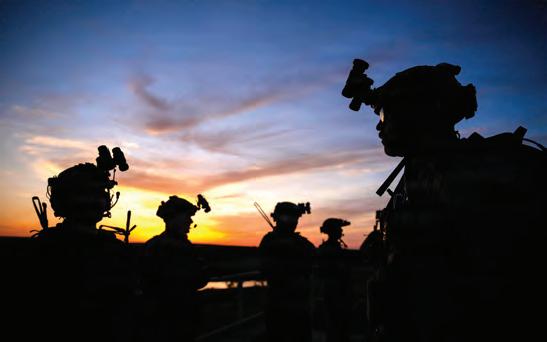
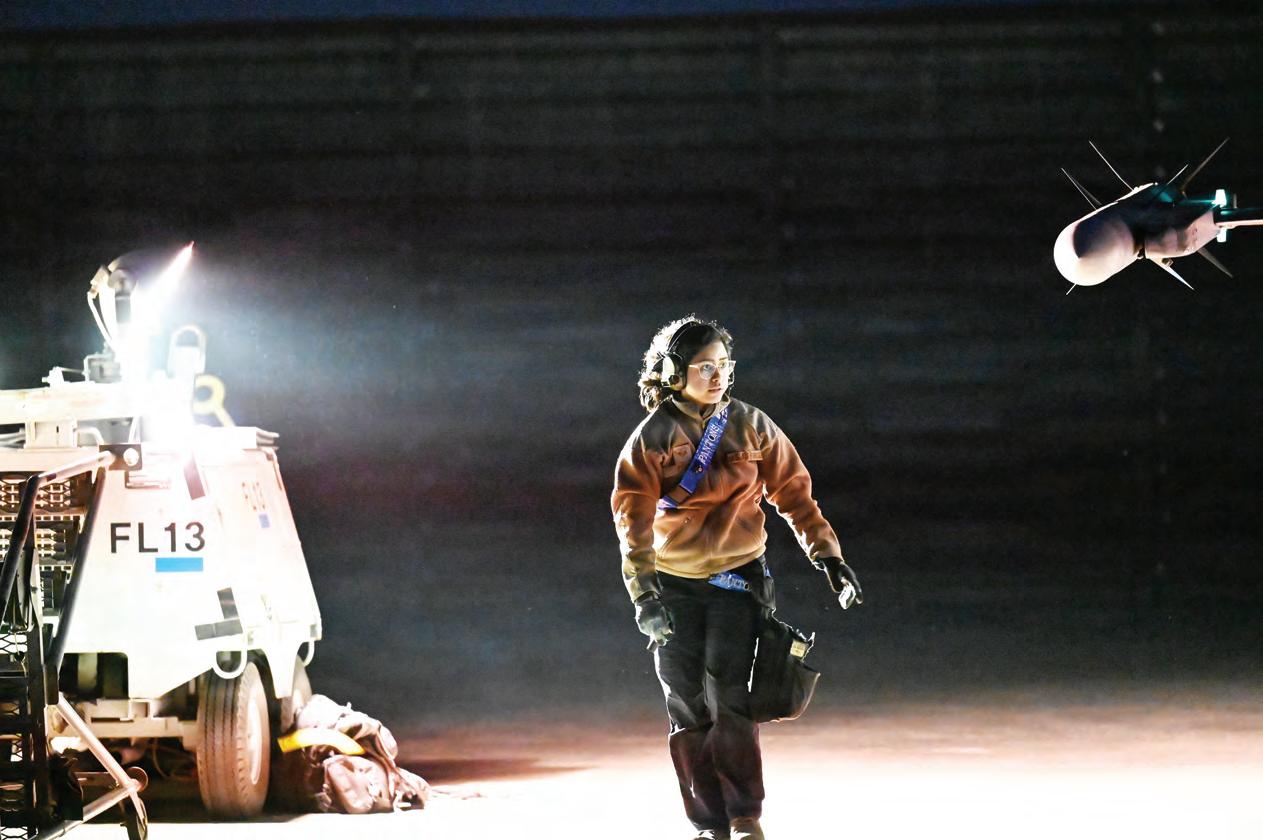
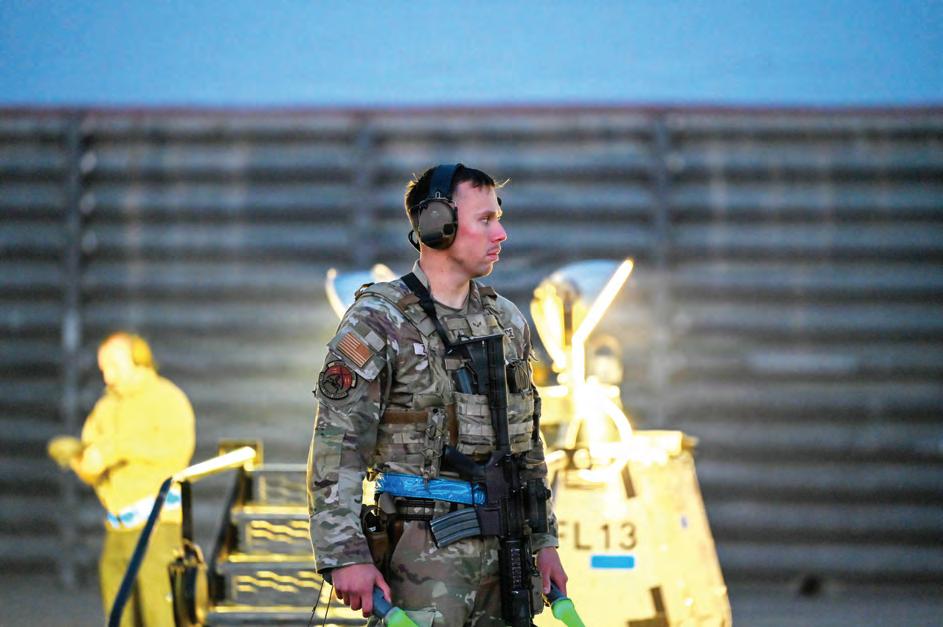
Tech Sgt. Joseph R. Morgan/U.S. Air Force file Tactical Air Control Party (TACPs) airmen assigned to the 124th Air Support Operations Squadron, Idaho Air National Guard, prepare for night close air support operations at Razorback Range near Fort Smith, Ark., April 20. TACPs overcome limited visibility on the battlefield through the use of night vision and infrared equipment.
roderick
Tapnio DEFENSE HEALTH NETWORK CENTRAL
TRAVIS AIR FORCE
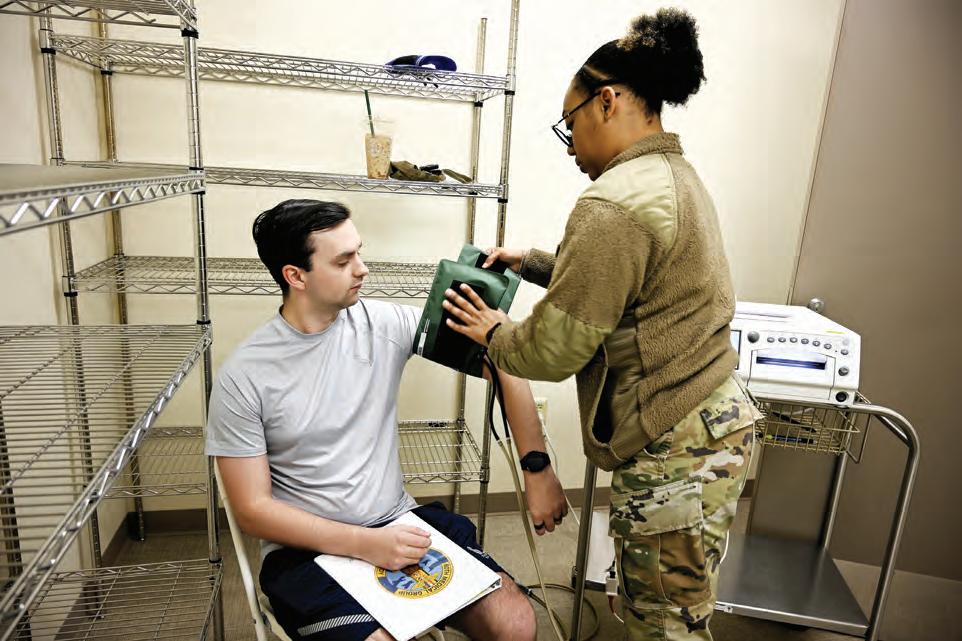
BASE — The 60th Medical Group at David Grant USAF Medical Center is enhancing mission readiness and returning time to airmen through a new Continuous Medical Readiness (CMR) model that consolidates required medical tasks into a single day.
Established in October 2025, this streamlined approach reduces time away from duty, accelerates deployment readiness updates, and improves the patient experience across multiple specialty clinics involved in individual medical readiness. The CMR model helps airmen stay current on expiring requirements, such as the Periodic Health Assessment, Occupational Health Exams, and dental exams.

Serving Travis Air Force Base and the surrounding community 1250 Texas St., Fairfield, Calif. 94533 707-425-4646 | Fax 707-425-5924
Publishers: Foy S. McNaughton and T. Burt McNaughton Advertising Manager: T. Burt McNaughton
Editor: Todd R. Hansen Layout : Aaron Rosenblatt
Travis Tailwind is a publication produced by the Daily Republic. All rights reserved. Reproduction in any form, in whole or in part, without written permission, is prohibited.
Content published in Travis Tailwind is not necessarily the official view of, nor is it endorsed by, the U.S. government, the Department of Defense or the Department of the Air Force. The appearance of advertising in the publication, including inserts or supplements, does not constitute an endorsement by the Department of Defense, the Department of the Air Force or the Daily Republic of the products or services advertised. Those off base who wish to receive home delivery of Travis Tailwind can call 707-427-6975. For information on paid advertising, call 707-425-4646. Send correspondence to: Travis Tailwind/Daily Republic, 1250 Texas St., Fairfield, CA 94533.
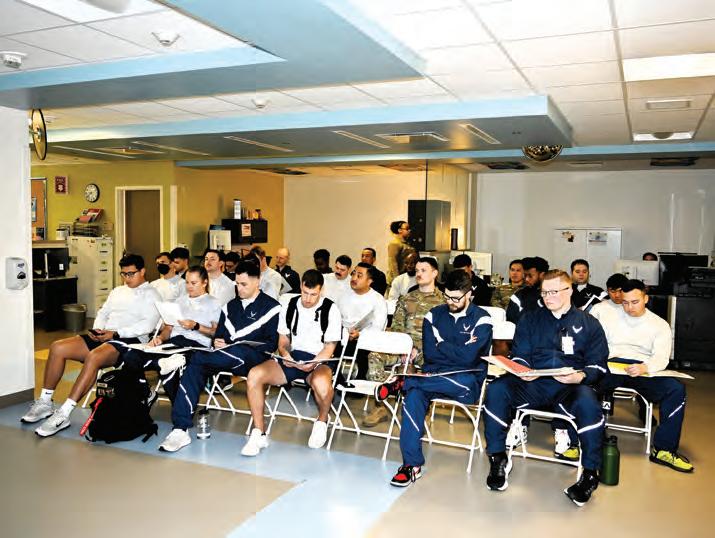
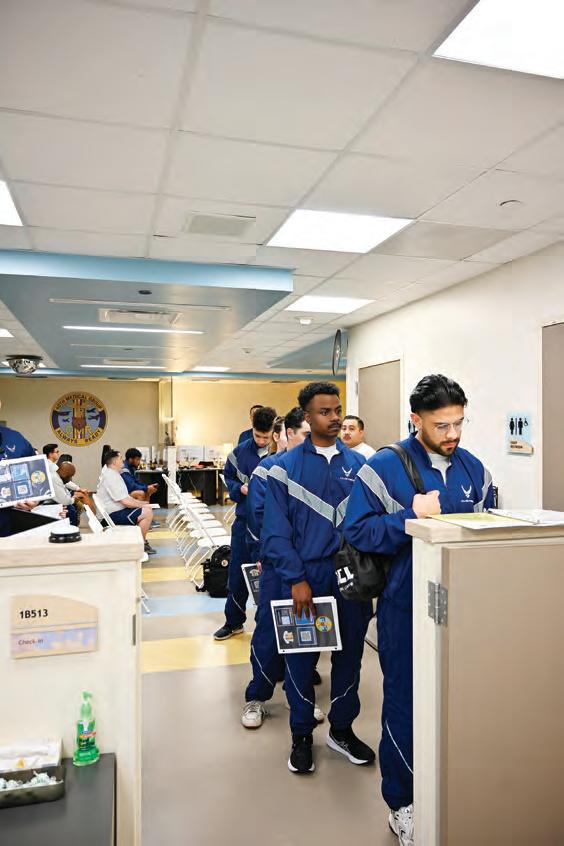
Instead of coordinating multiple readiness appointments throughout the year, airmen can complete required actions during a single coordinated visit. A dedicated CMR team guides members through the process, managing scheduling, documentation, and medical record updates in the Aeromedical Services Information Management System (ASIMS).
“We are proactively pursuing medical readiness,” said Capt. Isabella M. Cordova, officer in charge of the CMR Cell.
“Medical readiness remains a core responsibility for airmen and an essential component of mission capability.”
To support the initiative, the CMR Cell recently relocated to a dedicated clinical space, creating a centralized location for


airmen to complete their readiness sequence.
“Having a separate, dedicated space solidifies the program and shows that we are here to stay,” said Capt. Chantel M. Belfon, a clinical nurse with the CMR Cell. “This move improves patient flow and clarifies the process for everyone involved.”
Following discussions with Lt. Gen. John
J. DeGoes, U.S. Air Force Surgeon General, leadership highlighted the model’s potential as a scalable approach that could help inform readiness efforts at other military treatment facilities across the Air Force medical enterprise.
Early results show the model is improving efficiency. An internal CMR Cell analysis revealed that each airman com-
pleting their CMR day saves approximately 19.5 man-hours that would otherwise be spent scheduling and attending separate appointments. The process also accelerates deployment readiness updates and reduces administrative delays for airmen preparing for operational requirements.
“Within three days, their ASIMS Case Summary was updated to reflect they were deployable, and all notes from the clinics were finalized,” Cordova said. “Everything is faster and much more efficient.”
Feedback from units has highlighted the program’s improved clarity, predictable timeline, and the confidence it provides to airmen.
“We shouldn’t underestimate the value of peace of mind,” Belfon noted. “It’s important for members to have confidence in the process. With this model, they can move










tech. Sgt tyler J. Bolken
944TH FIGHTER WING
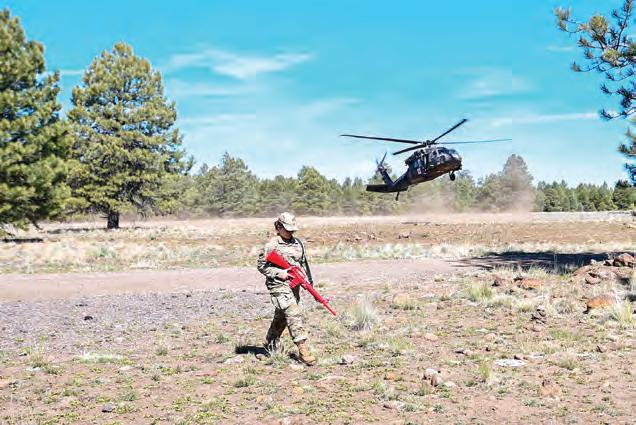
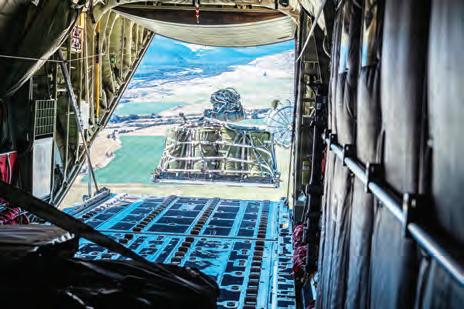
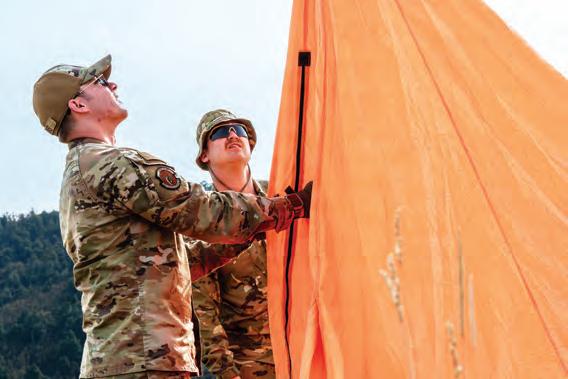
CAMP NAVAJO, Ariz. — Airmen from the 944th Fighter Wing traveled north from Luke Air Force Base to Camp Navajo, May 1-3, for Desert Hammer 26-2, the latest evolution of the wing’s ongoing readiness training designed to build battlefield skills, test mission-essential tasks and prepare citizen airmen for operations beyond home station.
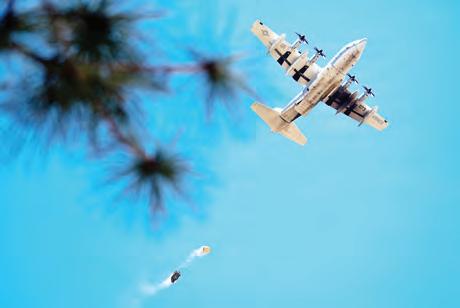
The field training exercise brought together approximately 150 personnel and included support from Arizona Army National Guard’s UH-60 Black Hawk helicopters, Marine Corps MV-22 Ospreys and a KC-130 Hercules. The exercise focused on mission ready airmen skills, aeromedical mission-essential tasks and civil engineer Ready Airmen Training objectives.
Senior Master Sgt. Stephen Hunter, assigned to the 944th Fighter Wing Exercise Planning Office, said Desert Hammer 26-2 was not a standalone event, but part of a deliberate training progression that continues to evolve with the wing’s readiness needs.
“We are being tasked to exercise our mission while developing battlefield skills and being ready now,” Hunter said. “While we have members downrange right now, we’re continuing to train our airmen that we’re not tasked to deploy, and it’s a building block approach.”
Hunter said the wing previously conducted training at Luke AFB and Gila Bend to reinforce basic battlefield skills. Camp Navajo gave airmen the opportunity to take the next step by operating in a field environment with terrain, landing zones, drop zones and training venues not available at Luke.
The exercise included airlift of airmen from Luke AFB to Flagstaff,
cargo airdrop operations, medical scenarios, live practice patients, high-fidelity mannequins, critical care air transport team training, land navigation and survival training.
For Hunter, the clearest validation of the wing’s training progression has come from airmen already deployed.
“In fact, the airmen downrange right now have sent messages back that they appreciate all the training over the last cycle, that they are executing what they trained at Luke Air Force Base at Gila Bend,” Hunter said.
“So if there’s a measuring stick, that’s it for me. And we just have to always be as ready as we can be.”
Hunter said those repetitions matter because readiness must be built before airmen are called to execute in real-world conditions.
“It’s trial by fire in combat, and so as many reps as we can get now is just what we’re supposed to be doing, and that’s why we’re here,” Hunter said.
Lt. Col. Lance M. Waage, 944th Mission Support Group deputy commander, joined the unit in January but brings years of Reserve experience. He said Desert Hammer 26-2 gave airmen a chance to train across multiple mission areas while adapting to unfamiliar terrain.
“To be able to execute our jobs in multiple or varied types of environments is really important,” Waage said.
“Being up here today allows us to stretch our legs and get those reps and sets in that are very necessary.”
Waage said the 944th Fighter Wing is known for training fighter pilots, but the wing also maintains a deployable force capable of supporting a broad range of Air Force missions worldwide. Training events like Desert Hammer 26-2 help airmen from
See
Senior M aSter Sgt Devin DoSkey 120TH AIRLIFT WING
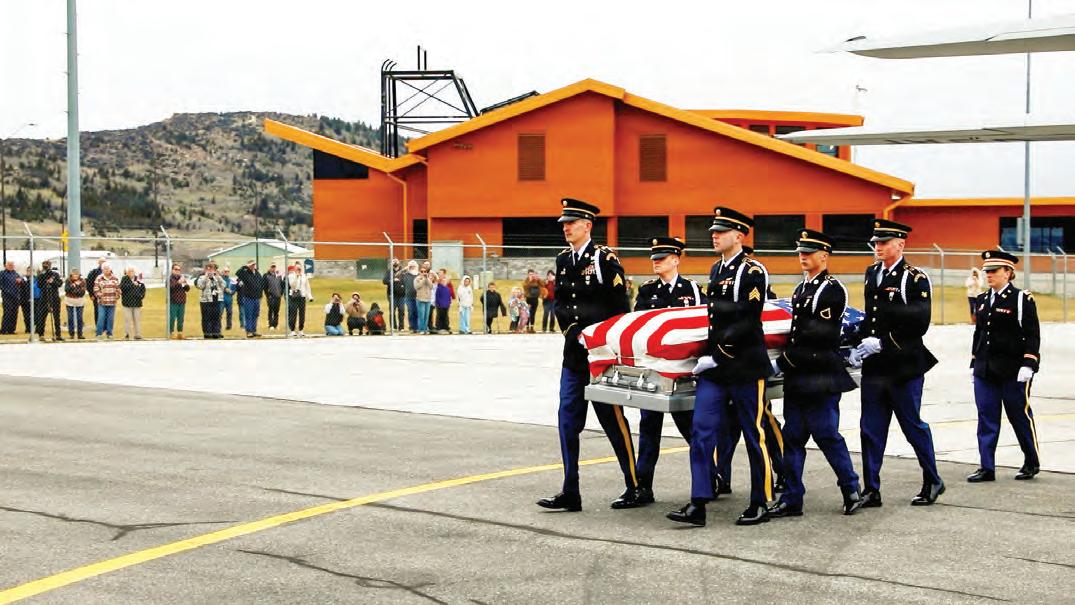
BUTTE, Mont. — After more than 80 years, a Montana Soldier returned home.
Airmen from the 120th Airlift Wing conducted a solemn C-130H transport mission April 15, bringing the remains of U.S. Army Pvt. Harry David Bordner back to Montana, where he will be laid to rest in his hometown of Butte.
Bordner, a World War II Soldier and former prisoner of war who endured the Bataan Death March, was officially accounted for in 2025 by the Defense POW/MIA Accounting Agency, ending decades of uncertainty and fulfilling a promise made generations ago.
“This mission represents something bigger than a single flight,” said Col. John Salotti, 120th Operations Group commander. “It reflects our nation’s unwavering commitment to never leave a service member behind and to bring every one of them home.”
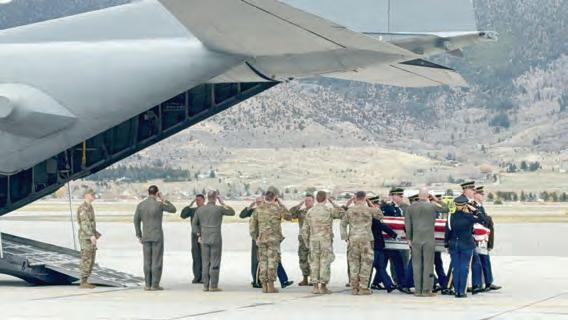
The C-130H aircraft, often used to project global mobility and combat capability, took on a different role for this mission, one rooted in honor and remembrance.
music, bombs will still make it to their target.”
From Page 2
comes to reinforcing fundamentals and having a good operational baseline, places like this range provide a great opportunity to prepare ourselves for those moments.”
Focusing on fundamentals and TTPs aligns with another core principle of the ASOS –contingency planning.
“TACPs are proficient mission planners,” Kzinat said. “We work contingencies into our training and into our plans. You cannot anticipate when something will go wrong in the real world. If you have a well-developed plan and all players are on the same sheet of
The 124th ASOS emphasizes training at every level and in every environment, to remain always ready, always there.
“We fly missions all over the world, but this one carries a different weight,” Salotti said. “We’re fulfilling a promise to a Soldier and his family that his service and sacrifice will never be forgotten.”
Bordner served with the 194th Tank Battalion in the Philippines during World War II and was captured following the fall of Bataan
in 1942. He later died in captivity and was buried as an unknown until modern forensic advancements enabled his identification.
For the aircrew, the mission carried deep personal meaning.
“Our role is to execute the mission with the highest level of professionalism, but also with respect,” Salotti said. “Every detail matters

because this is someone’s family member, and someone who answered the call when the nation needed him.”
Upon arrival in Butte, a dignified transfer cere-
mony marked Bordner’s return to the community he once called home. The Montana National Guard coordinated closely with casualty assistance personnel and local partners to ensure the transfer was conducted with full military honors.
“For his family and for the people of Montana, this is about closure,” Salotti said. “For us, it’s about ensuring that no one is forgotten.”
The return of Bordner highlights a broader national effort to account for missing service members and honor their legacy.
Bordner will be laid to rest in Butte following funeral services with full military honors.





tech. Sgt triStan trueSdeLL 374TH AIRLIFT WING
WOODBOURNE, New Zealand — The 374th Airlift Wing from Yokota Air Base, Japan, joined Royal New Zealand and Royal Australian Air Force units at RNZAF Base Woodbourne for the 10-day air mobility exercise, Mobility Astra 2026, March 23.
2nd
GWANGJU AIR BASE, Republic of Korea — The 31st Air Task Force was redesignated the 31st Air Expeditionary Wing and tasked with executing operational command and control to project platform-agnostic air power during exercise Freedom Flag 26-1.
The routine training event, which took place April 13-24, is designed to prepare joint and combined forces to defend the Republic of Korea.
More than 30 U.S. and ROK units participated in FF 26-1, planning and executing over 500 sorties as the 31st AEW employed its modular, scalable unit of action for the first time during Freedom Flag. Overall, the benefit was improved agility and the preservation of decision space for commanders.
“We operated as a multinational joint force gathered to prove our combined strength and seamless integration,” said U.S. Air Force Col. Brad Dvorak, 31st AEW commander and U.S. deployed forces commander during the exercise. “We executed complex missions – including offensive and defensive counter-air, close air support and air interdiction – to demonstrate that we are a force multiplier. The tactics this team validated will define the next fight.”
Operating out of Gwangju Air Base for the duration of the exercise, 31st AEW provided a standardized command and control and combat air base squadron force package necessary to deliver centralized command and distributed execution.
Before exercise operations began, the staff quickly established an expeditionary wing operations center and secure communication capabilities.
“The foundation of a
Hosted by the Royal New Zealand Air Force, the exercise brings together the three air forces to conduct scenario-based training emphasizing tactical coordination, low-level navigation and precision airdrops. This exercise comes after the RNZAF’s transition to the C-130J Super Hercules, replacing its legacy C-130H fleet in late 2024.
“Mobility Astra underscores the importance of shared expertise across mission planning, maintenance and sustainment operations,” said Capt. Sarah Riggs, 374th Airlift Wing mission commander. “It’s about understanding how each other operates – from air-to-land operations to airdrop missions - so that in the future, we can integrate and execute just
as quickly.” During multinational training events like MA26, subject matter expert exchanges become key in operational readiness, as well as strengthening relations with allies and partner nations. Throughout the training, participants were comparing methods for ground support, aircraft maintenance, and rigging of various cargo drops. The differing procedures among nations create opportunities to refine techniques.
“Validating those differences through SME exchanges is exactly what we’re here for,” Riggs added. “We all plan the same way for flying, but our mission planning tools, procedures and operational requirements differ –sharing these helps us all improve and synchronize for the future.” As training progressed, participants expanded into more complex flight profiles, including terrain-based scenarios and advanced coordination requirements.
RNZAF Base Woodbourne provides a unique training environment, combining mountainous
successful team is to be brilliant at the basics,” said Chief Master Sgt. Matthew Greiner, 31st AEW command chief. “Leading up to this event, we had numerous training touchpoints to build a cohesive team focused on problem solving, winning, and flexing to address emergent issues.”
The 31st AEW staff integrated with contingency intelligence and mission planning cells from U.S. and ROK units, maintaining interoperability via liaison officers from U.S. Marine Fighter Attack Squadron (VMFA) 232, the 35th Fighter Squadron, the 909th Aerial Refueling Squadron, the 621st Air Control Squadron, Seventh Air Force exercise planners, and the 8th Material Maintenance Squadron.
“We can lean on a SOF principle from this exercise: humans are more important than hardware,” Dvorak told exercise participants at the closing ceremony. “It was each of you – the trust you built in mission planning cells, the unbreakable links you forged in the air, and the shared understand-
ing you developed during debrief – that made this exercise a success.”
Republic of Korea air force Col. Jeonghyun Choi, 29th Tactical Fighter Weapons Group commander, echoed that sentiment. “Every player involved saw capabilities improve and went above and beyond to execute the mission,” he said. “Every player took the time to establish and develop their capabilities here.”
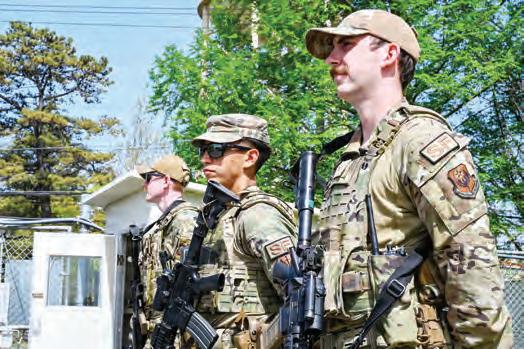
The effort was augmented by the deliberately teamed, capabilitiesbased 31st Combat Air Base Squadron which established Base Operating Support Integrator for designated forces –including U.S. Air Force, U.S. Marine Corps, and ROKAF – before the majority of personnel arrived. The 31st CABS also provided personnel support for contingency operations, medical services, airfield security, and aircraft refueling for units based at Gwangju for the duration of the exercise.
“The 31st CABS demonstrated the principles of agile combat employment and excelled,” said Dvorak. “They exemplified the critical maneuvers required for any future Indo-Pacific fight, proving the ability to be flexible, lethal, and survivable.”
Together, 31st AEW and 31st CABS provided staff and C2 functions as well as the Reception, Staging, Onward Movement, and Integration and BOS-I necessary to enable the combined force to fly, fix, fight, and win throughout FF 26-1.
The 31st AEW is a ready unit of action aiming to bring competitive advantages over pacing challenges. The O-6 wing headquarters consists of a command and control element and a combat air
up to
2,500 airmen across more than 60 Air Force specialty codes capable of providing base operating support for up to three mission generation force elements required to execute agile combat employment at any deployed location.




















ALTUS AIR FORCE
BASE, Okla. — The 97th Air Mobility Wing command team received a firsthand look at how the 97th Operations Support Squadron’s Radar, Airfield and Weather Systems team supports Altus Air Force Base’s flying mission during a Boots on the Ground immersion tour of the digital airport surveillance radar and Ground Air Transmit Receive sites on March 30.
During the visit, U.S. Air Force Col. Richard Kind, 97th AMW commander, and Chief Master Sgt. Jonny Adams, 97th AMW command chief, met with 97th OSS leadership and learned how airmen maintain systems that support safe and effective mobility training at Altus AFB.
At the Digital Airport Surveillance Radar site, the command team viewed the radar’s power and drive systems and learned how the equipment is designed to maintain con-
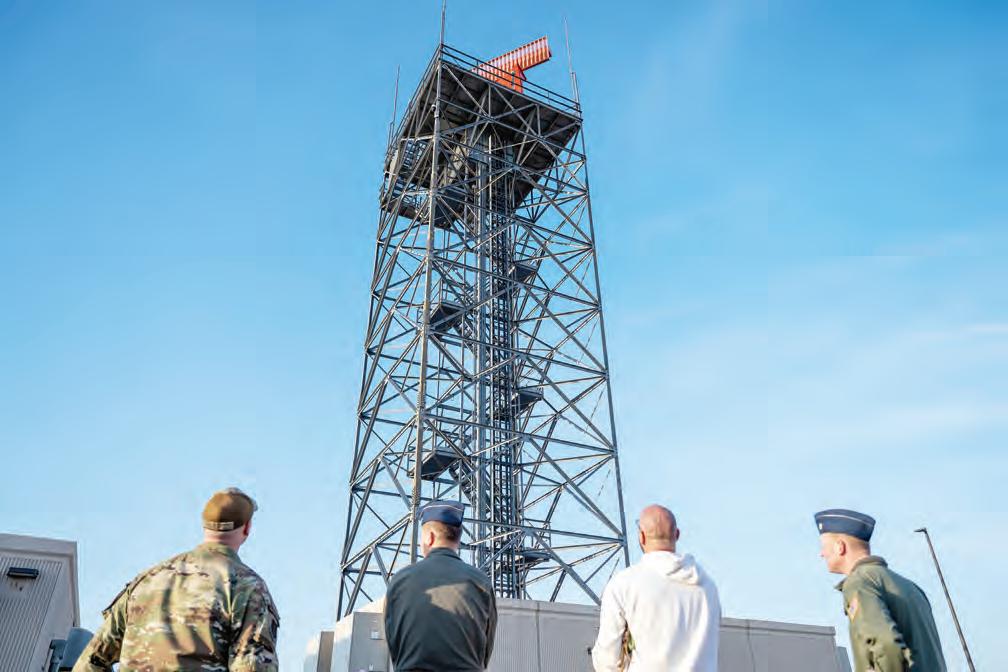
tinuous operation. They also received a demonstration of the radar’s rotating assembly and how coun-
terweights help keep it balanced at high speeds.
The DASR provides surveillance data that supports
local air traffic operations and flight training. The tour also included a stop at the Ground Air
Transmit Receive site, where Kind and Adams viewed the control center and communications
equipment used to provide secure communications and satellite connectivity. The GATR site supports stateside training, coordination and mission operations, helping ensure aircrews and support agencies remain connected.
“Our 97 OSS Radar, Airfield, and Weather Systems team members are the unsung heroes of our mission here at Altus AFB,” said U.S. Air Force Lt. Col. David M. Snyder, 97th OSS director of operations. “They work diligently behind the scenes to manage and maintain the DASR and GATR sites, providing the critical navigation data and communication support that our mobility aircrews need for safe and effective training, directly enabling our Wing’s ability to Develop the Decisive Mobility Force of the Future.” The immersion tour highlighted the behindthe-scenes work of the 97th OSS team and its direct impact on the wing’s training and readiness mission.
First Assembly is
where all are welcome to Discover, Develop, and Demonstrate a relationship with God.
We invite you to join us for Sunday service at 10:30 a.m.
2207 Union Avenue, Fairfield, CA www.1ag .com





Christ Exalted, Lives Transformed 3777 Vaca Valley Pkwy Ste.F, Vacaville, 95688
Email: o ce@northhillsvv.org
Website: www.northhillsvv.org
Service Times: Sunday morning 10 a.m., Wednesday evening 6:30 p.m. Phone: 707-449-8977




Vacaville Church of Christ 401 Fir St., Vacaville, CA 95688 (707) 448-5085
Minister: Elliott Williams
Sunday Morning Bible Study 9:30 AM
Sunday Morning Worship 10:30 AM Sunday Evening Worship 5:00 PM Wednesday Evening Bible Study 6:00 PM vacavillecoc.com 401






From Page 3
different functional areas understand how their roles connect in a deployed environment.
“This is a great way for every different skill set and functional area to perform under more austere conditions, sometimes simulated combat conditions, and really bring us together in a way where we’re seeing how a scenario would play out before we have to do it for the real thing,” Waage said.
For reservists, that training is compressed into limited time.
Waage said reserve airmen balance civilian careers, family responsibilities and military requirements while still preparing to answer national security demands.
“We have only 16 hours each month to perform everything that an activeduty force does and that
is a huge challenge,” Waage said. “It’s a huge testament to all the great people that come together for reserve duty.”
Hunter said seeing the wing execute the exercise was rewarding because planners could bring together the pieces, then watch airmen carry out the mission.
“We brought all the puzzle pieces here today, and then we sort of sit back and watch the fighter wing put the puzzle together,” Hunter said. “If the airmen are happy and they’re learning and they’re more ready now, then we’re doing our job.”
As Desert Hammer 26-2 concludes, Hunter said the wing will capture feedback and lessons learned to improve future training.
“Whatever small changes we can make to make it better next time, we’re listening,” Hunter said.
TYNDALL AIR FORCE
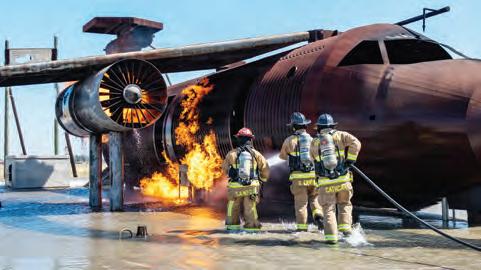
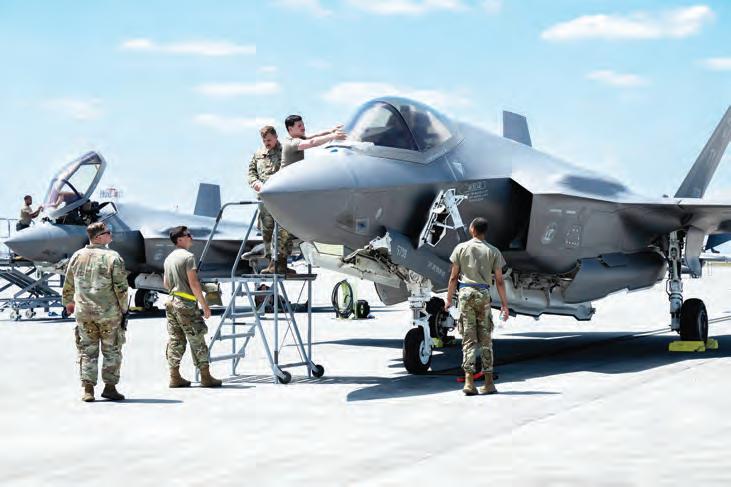
BASE, Fla. — Airmen and F-35A Lightning II aircraft from the 95th Fighter and Fighter Generation Squadrons deployed, April 13–17, to Savannah Air National Guard Base, Georgia, to enhance combat capability and lethality during exercise Ready Tiger 26-3.
Airmen
From Page 4
terrain with coastal airspace. Unlike Japan’s primarily inland terrain, New Zealand’s geography requires crews to operate across rapidly changing elevations and maritime conditions.
spend much of our time in the Pacific supporting humanitarian assistance, disaster relief, fisheries patrols and other missions, so it’s valuable to work with partners who routinely operate farther overseas.”
“Low-observable planes are very hard to detect with radar,” said Maj. Heath Williams, 95th
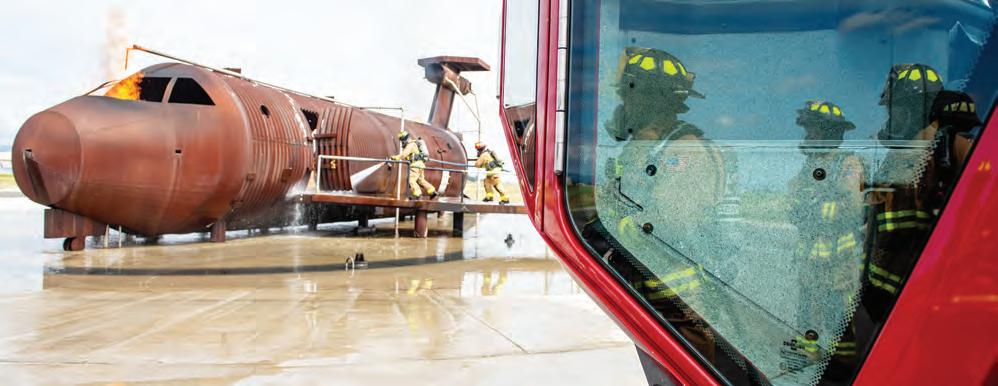
The exercise is designed to test airmen’s ability to rapidly deploy, sustain operation and generate airpower in simulated austere environments. During the exercise, pilots, intelligence personnel and maintainers generated sorties to detect and eliminate low-observable aerial targets, mimicking drone attacks. This tested airmen’s ability to operate in hazardous conditions, strengthening their combat readiness for future operations in contested environments.
FS chief of operations group standardization and evaluations. “The best way to overcome the challenge is practice and repetition.” While drones are slower
than the F-35A, they operate at lower altitudes and present detection challenges that require precise


“As a small country, it’s important for New Zealand to work closely with our partners,” said RNZAF Flying Officer Nicholas Ryan, 42 Squadron pilot. “We
“Working alongside foreign nations in a live flying environment has been great as we learn how we do things differently and teach each other our own approaches,” he added. “This shows just how important maintaining those international friendships and connections are.”


the aging VC-25A fleet,” said Gen. Dale White, Department of War direct reporting portfolio manager for Critical Major Weapon Systems.
The road to a bridge
With the Boeing VC-25B deliveries delayed past its initial 2024 target and VC-25A heavy maintenance cycles extending, an interim capability became an absolute imperative.
In February 2025, a dedicated task force launched a “full-court press” on the VC-25B Bridge program while simultaneously working to accelerate Boeing’s long-term VC-25B production.
Recognizing that requirements instability is a leading cause of program delays, a dedicated team of inter-governmental professionals meticulously established baseline requirements for both programs. They maintained a laser focus on the core capabilities required to safely and securely support the President of the United States.
This disciplined approach not only forged a galvanized relationship between all key stakeholders and agencies but also helped accelerate the estimated delivery of Boeing’s VC-25Bs by a full year from the updated schedule, now expected in 2028.
“Our commitment to providing the President with a secure, resilient and reliable airborne command post is unwavering,” said Air Force Chief of Staff Gen. Ken Wilsbach. “The VC-25B Bridge program is a testament to the Air Force’s ability to innovate and rapidly evolve to ensure the continuity of our government under any conditions.”
Unprecedented partnerships and technological benchmarks
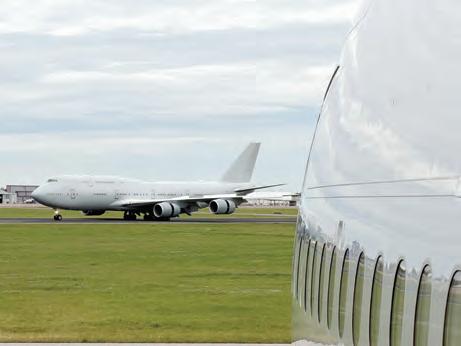
To meet the VC-25B Bridge accelerated timeline, the Air Force leveraged unique industry partnerships and a creative acquisition strategy, utilizing multiple 747-8 airframes from around the globe to support both the final aircraft and the training pipeline.
In December 2024, the Air Force began assessing the 747-8i market to identify VIP configured aircraft suitable for use as a bridge capability. The Department of War ultimately accepted a head of state config-
From Page 6
sensor employment and coordination to defeat.
Wiliams explained the biggest challenge was incorporating sensor-setting recommendations from pilots with realworld experience and applying them to the F-35A aircraft, serving as a key building block in ensuring a higher level of fidelity against these drones. Throughout the exercise, airmen worked with Marine Corps F-35B Lightning II aircraft units operating out of McEntire Joint National Guard Base, South Carolina, sharing lessons learned across the F-35 community.
The joint collaboration allowed the services to refine tactics, improve targeting processes and strengthen interopera-
ured Boeing 747-8i from Qatar to serve as a bridge until the VC-25B is delivered. L3Harris, known for its executive communications systems and services, was selected to undertake a complex modification of the bridge aircraft. L3Harris not only delivers secure, reliable and resilient communications for VC-25A and the executive airlift fleet but has extensive experience with self-protection and customization of VIP aircraft. The accelerated timeline was further made possible by a mission-focused partnership with Boeing, who provided the necessary engineering data to support the required structural modifications.
Additionally, elite specialists from multiple government agencies developed advanced protocols to detect and-if necessary-neutralize potential technical hazards on previously owned aircraft. Their rigorous approach on the Bridge aircraft has literally “written the book” and set the benchmark for integrating used airframes into the secure military inventory.
The VC-25B Bridge program has catapulted the operational readiness of the Air Force and the White House enterprise years ahead of the anticipated schedule. To prepare for the aircraft’s delivery, the Air Force constructed an at-scale mockup of the interior, complete with virtual reality views, to enable early commissioning activities for White House staff.
“By intentionally integrating the 747-8i platform now, we are doing more than bridging a gap; we are executing a strategic stand-up of a high-consequence fleet,” stated Secretary of the Air Force Troy Meink.
“This platform provides the Air Force with invaluable lead time to mature our training pipelines, synchronize our supply chains and solidify sustainment frameworks. We are building the ecosystem necessary to ensure this fleet remains mission-ready for the next 30 to 40 years.”
Ultimately, the Bridge aircraft fulfills a critical short-term requirement, guaranteeing the Air Force continues to execute its no-fail mission for the commander in chief while laying a rock-solid foundation for the future.
“This collective team did what many said couldn’t be done, and they did it with the safety, security, and gravity of the mission at the forefront of everything they did,” White said.
bility across formations from dispersed locations, enabling teams to overcome communication challenges they may experience during deployed locations.
“It brings in a level of difficulty because we are not physically across the table from one another,” Williams said. “But when we get out there, there is a level of understanding … so, we are at least on the same operating page and common thought process on how to mitigate these drones.”
Reinforcing joint-force interoperability enhances integration, enabling synchronized operations and strengthening the delivery of combat airpower in any environment.
“When you bring another formation from the Marines, Navy or whoever … we are able to essentially just hit play and execute the tactics that are recommended,” Williams said.
VALLEJO —
More
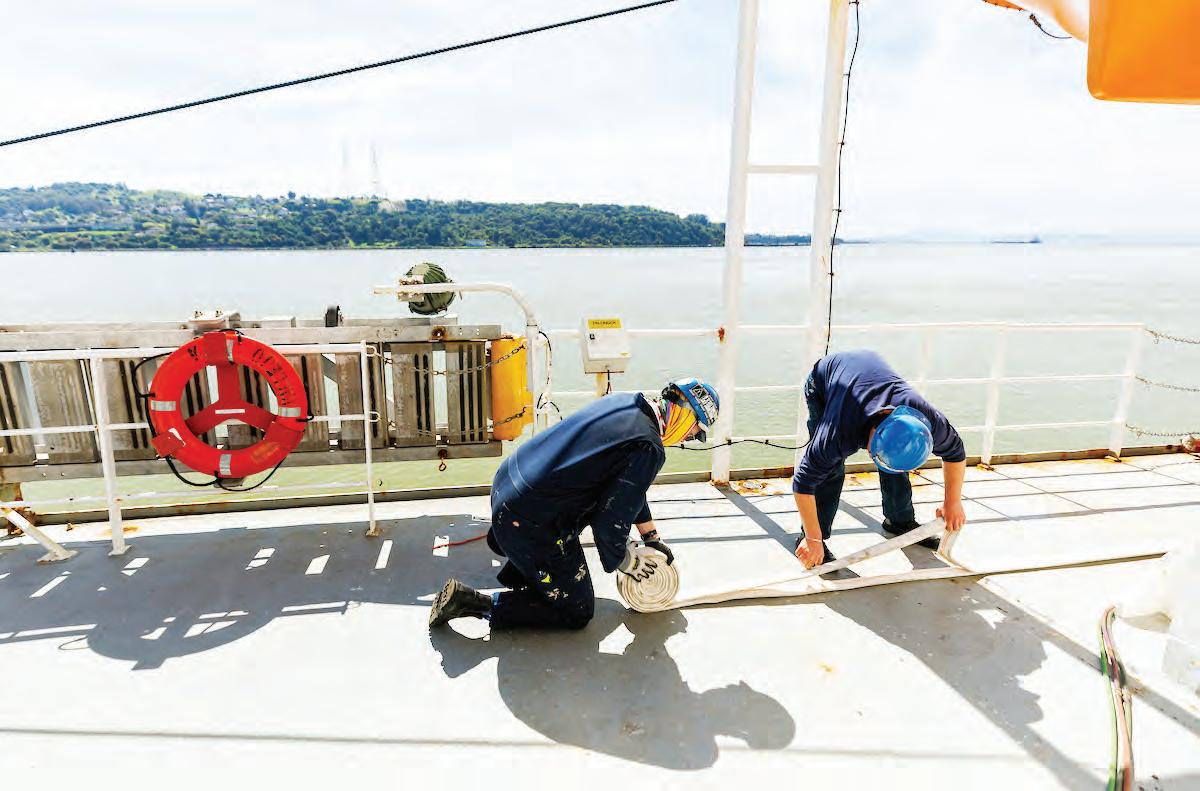
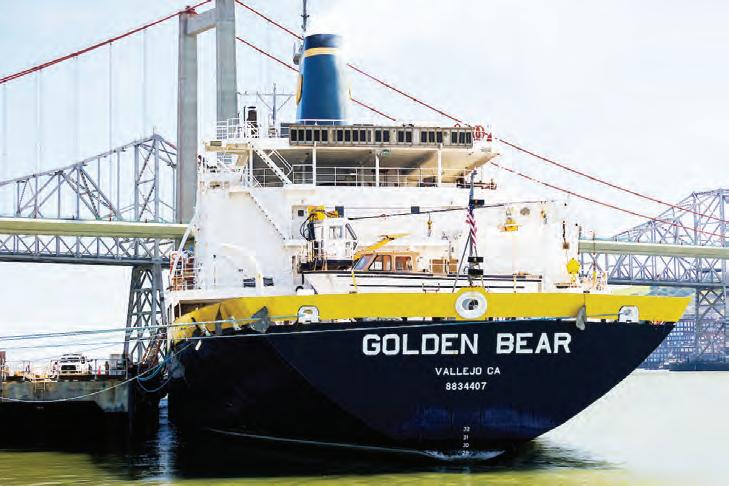
than 300 Cal Poly Maritime Academy cadets were scheduled Friday to embark on their annual Summer Sea term – a 65-day Pacific training voyage aboard the Golden Bear.
“Summer Sea Term is learn-by-doing in its purest form,” retired U.S. Coast Guard Rear Admiral Eric C. Jones said in a statement. He is the academy superintendent.
“Cadets take what they’ve learned and put it into practice at sea, gaining real responsibility and real experience that prepares them for the maritime workforce.”
The voyage marks a defining part of a cadet’s education and the final era of a vessel that has served the seafaring academy for three decades. It also marks the first since the transition from California State University Maritime Academy to Cal Poly Maritime Academy, now part of Cal Poly in San Luis Obispo.
“Summer Sea
From Page 2
through a guided process knowing everything will be completed correctly.”
The initiative reflects ongoing efforts across the Military Health System to improve patient-centered care, reduce administrative burden, and ensure airmen can maintain medical readiness while minimizing time away from their units and families.
In alignment with the Department’s Culture of Fitness initiative, the CMR Cell partnered with Physical Therapy and Nutritional Medicine to integrate educational sessions focused on overall health and wellness. Beginning in the first quarter of next year, airmen will attend readiness briefings during their CMR day, using scheduled intervals between appointments to build knowledge in fitness, injury prevention, and nutrition. For squadron commanders, the message is simple.
“Let us take care of it,” Cordova said. “You book one appointment, and we’ll make the medical readiness happen.”
By demonstrating measurable improvements at the local level, the CMR model at DGMC may serve as a blueprint for enhancing force-wide readiness across the Military Health System.
The CMR Cell is located on the first floor of DGMC. Airmen can check their
Term develops not only technical skills but also leadership, accountability and teamwork. Cadets log required sea time, gain practical experience aligned with U.S. Coast Guard licensing standards and build the confidence needed to operate in highstakes environments, preparing graduates to be ready day one,” the
individual medical readiness status and coordinate with their Unit Health Monitor or Unit Deployment Manager when they are 30 to 60 days from
statement said.
The Golden Bear is a 500-foot training vessel that will take cadets across the Pacific with scheduled port calls in Papeete, Tahiti; Suva, Fiji; and Honolulu before returning to California in July. The vessel’s first port will be San Diego, home to a contingent of some 18 cadets.
The ship is scheduled to be transferred back to the U.S. Maritime Administration at the end of 2026 and will be replaced by the Training Ship Golden State, a next-generation national security, multi-mission vessel designed to expand training capacity and capabilities ahead of Cal Poly Maritime Academy’s centennial in 2029.
expiring requirements.
Ultimately, the CMR model supports the Department’s global readiness posture by transforming medical readiness
from a recurring administrative challenge into a more predictable and streamlined process for the Wing, the hospital, and the airmen it serves.