TRAVIS TAILWIND

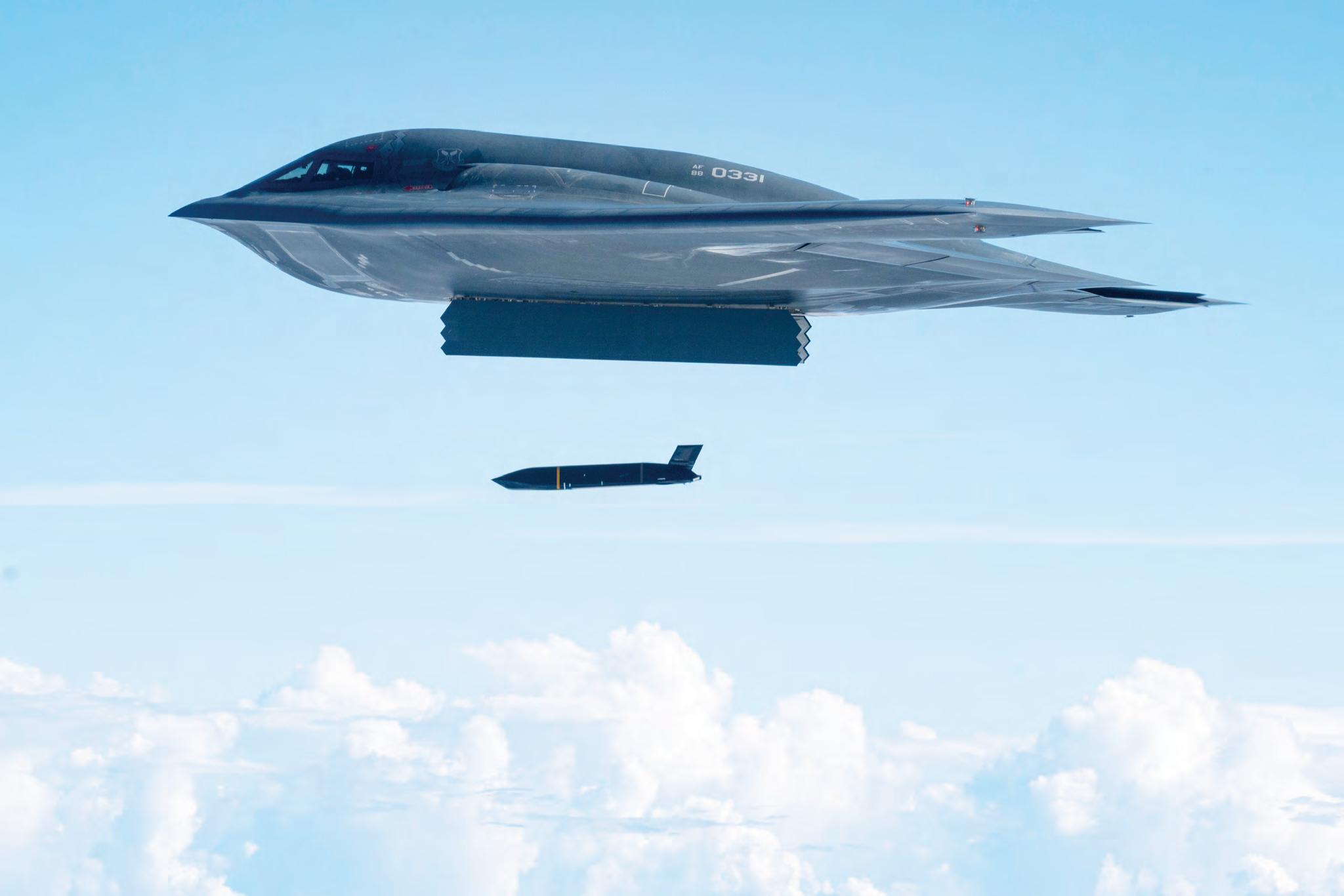
SILENT STRIKE
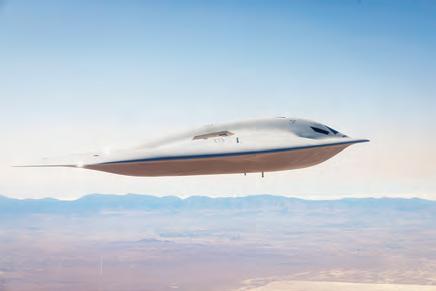
Force announced that the B-21 Raider, the nation’s newest long-range strike bomber, will officially operate with a two-pilot crew complement. Additionally, the Air Force is establishing a pilot transition program for select weapons system officers and combat systems officers who will be chosen to attend pilot training with a follow-on assignment to the B-21. Eligible officers will be provided with additional information via command channels when available.
Following careful analysis of the B-21’s advanced capabilities, Air Force leadership determined that a two-pilot configuration optimally supports the aircraft’s mission profile. To maximize the lethality and survivability of the Raider, it is imperative to retain the deep tactical and combat experience currently residing within the WSO and CSO communities. This deliberate talent management strategy secures the future of global strike capabilities, ensuring the Air Force remains postured to execute extended-duration, long-range strike missions in highly contested environments.
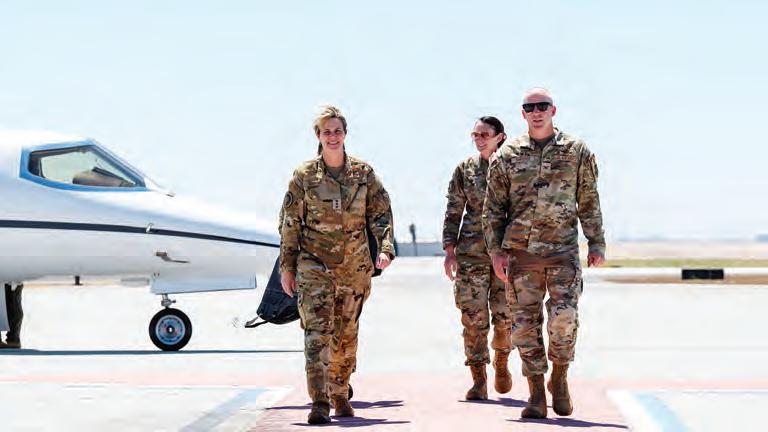
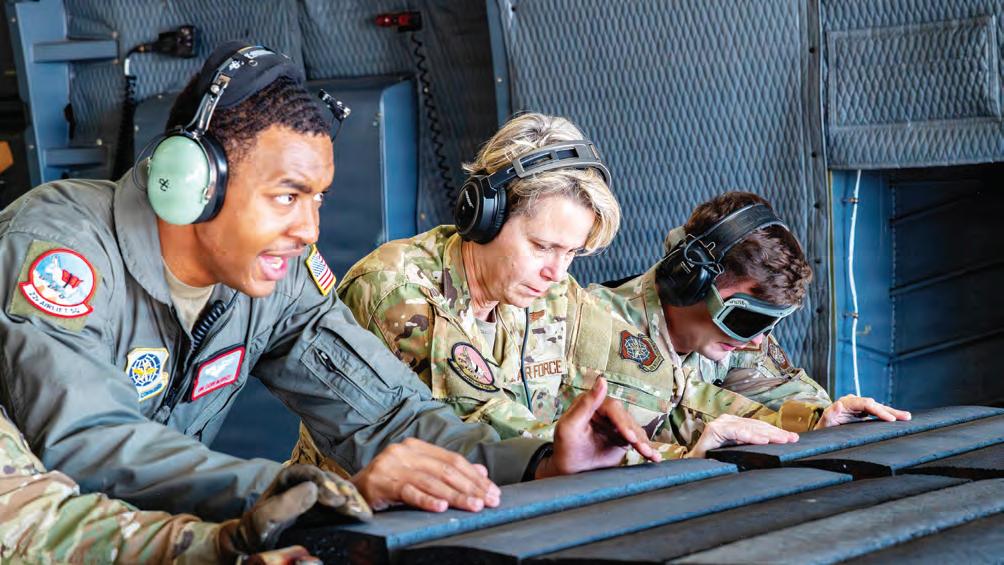
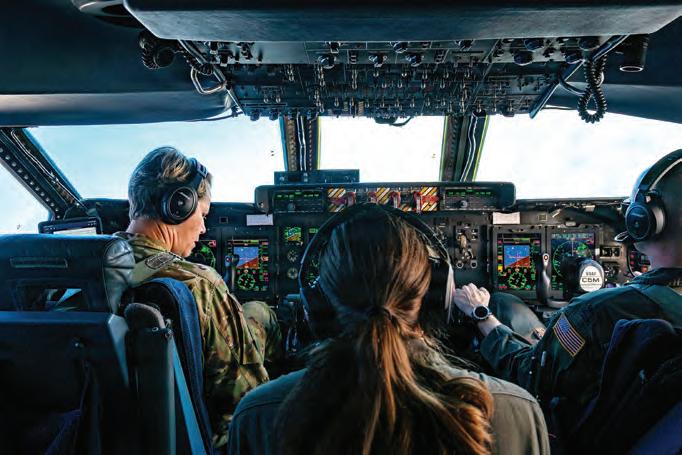
Lt. Gen. Rebecca Sonkiss, left, Air Mobility
interim commander, pilots a C-5M Super Galaxy during a visit to Travis Air Force Base, June 25.
Sonkiss,
Travis Exchange connects veterans to careers on National Hire a Veteran Day
a rmy & a ir Force exchange service
PuBlic a FFairs
TRAVIS AIR FORCE
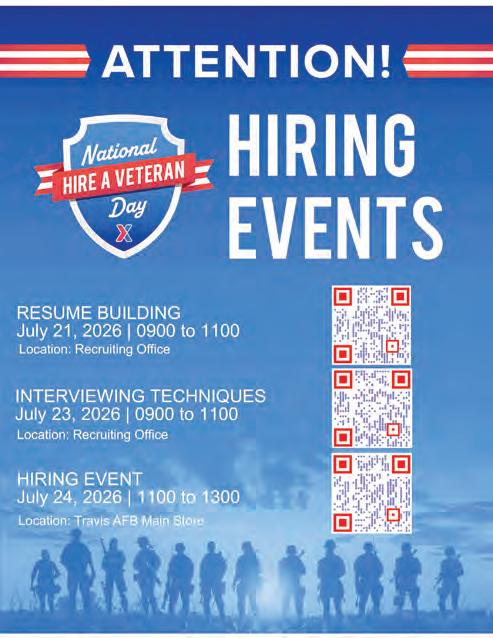
BASE — The Travis Exchange is strengthening its commitment to those who served by hosting a hiring event at 11 a.m., July 24, in recognition of National Hire a Veteran Day, connecting veterans and transitioning service members with meaningful careers.
Travis is hosting recruiting events, offering on-the-spot interviews and information on meaningful careers with the Department of War’s largest retailer.
“Hiring Veterans is a top priority for the Exchange,” said Travis Exchange General Manager Cathie Byrns. “Veterans strengthen the Exchange’s mission, culture and connection to the military communities we serve.”
In the days leading up to National Hire a Veteran Day, Travis will offer resume assistance, interview preparation and skills translation services.
These resources help veterans and transitioning service members prepare for interviews and connect their military experience to Exchange career opportunities. Military spouses are also welcome to participate.
Veterans can learn by visiting https://www. shopmyexchange.com/ hire-a-veteran . The Exchange’s commitment to veterans, military spouses and military-connected associates has earned national recognition, including: n 2026 VETS Indexes 5-Star Employer. n 2026 Military Friendly Employer.
n Inaugural Top Military Spouse Employer by U.S. Veterans Magazine.
n Best for Vets Employer by Military Times for 12 consecutive years.
n Best of the Best recognition by U.S. Veterans Magazine.
Veterans, military spouses and others interested in Exchange careers can learn more at ApplyMyExchange.com.
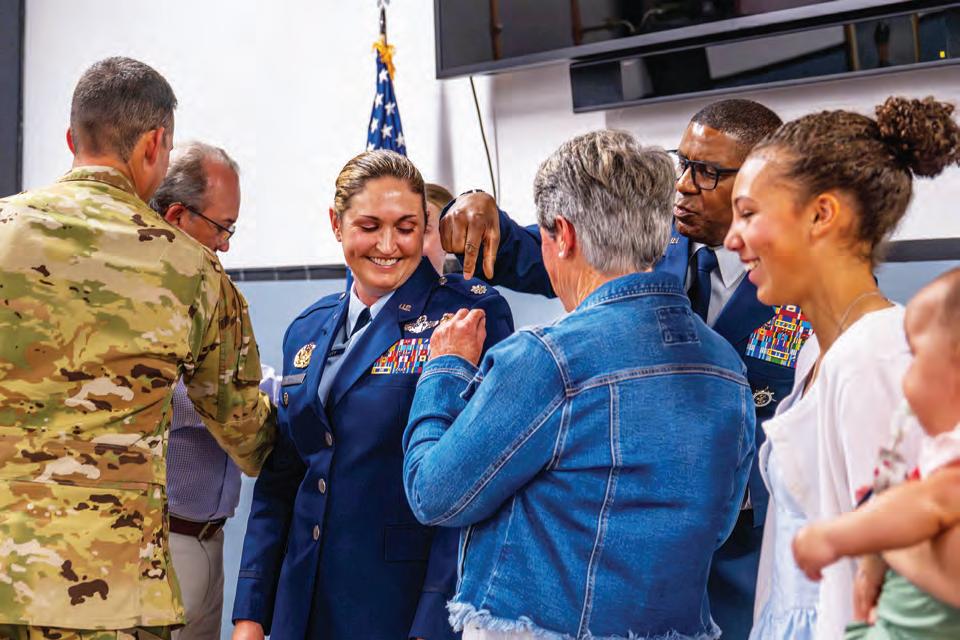
Prouty promoted to colonel
AFOSI Procurement Fraud Detachment 5, partners
Thomas Brading AFOSI PUBLIC AFFAIRS
investigate $1.8M bid-rigging plot
tions Program. In addition, court documents state the individuals exchanged pricing information before submitting bids and, at times, instructed each other on what prices to quote.

TRAVIS TAILWIND
Serving Travis Air Force Base and the surrounding community 1250 Texas St., Fairfield, Calif. 94533 707-425-4646 | Fax 707-425-5924
Publishers: Foy S. McNaughton and T. Burt McNaughton Advertising Manager: T. Burt McNaughton Editor: Todd R. Hansen Layout : Aaron Rosenblatt
DOBBINS, AFB, Ga. — The Air Force Office of Special Investigations Procurement Fraud Detachment 5 helped uncover a $1.8 million bidrigging scheme involving storage projects at two Air Force installations, leading to a June 2 guilty plea by a former industry employee. Scott Srodes, 65, pleaded guilty to conspiring to rig bids and defraud the United States, according to the Department of Justice. The projects involved shelving and storage products for healthcare facilities at Moody Air Force Base, Georgia, and aircraft maintenance facilities at Nellis Air Force Base, Nevada.
The Air Force Office of Special Investigations supported the investigation with the Department of Justice Antitrust Division, the Defense Criminal Investigative Service and the Defense Logistics Agency Office of Inspector General.
“AFOSI remains committed to protecting the integrity of [DAF] procurement processes and safeguarding resources that support airmen, guardians and mission readiness,” said Special
Agent in Charge Derrell Freeman, AFOSI Det. 5. “We will continue working with our law enforcement partners to investigate fraud affecting Air Force programs and facilities.”
Srodes’ guilty plea is the second in an ongoing investigation into bid rigging and fraud affecting U.S. military facilities. The bid-rigging charge carries a maximum penalty of 10 years in prison and a $1 million criminal fine.
The conspiracy-todefraud charge carries a maximum penalty of five years in prison and a $250,000 fine. A federal district court judge will determine Srodes’ sentence after considering the U.S. Sentencing
Guidelines and other statutory factors.
Trial Attorneys Daniel P. Chung and Christian Neumeister of the Justice Department Antitrust Division’s Washington Criminal Section are prosecuting the case, with assistance from the U.S. Attorney’s Office for the Middle District of Georgia.
“Bid-rigging schemes are not victimless crimes,” said Jason Hein, AFOSI Procurement Fraud director. “It wastes taxpayer dollars and threatens the resources our warfighters rely on. We will continue working with our law enforcement partners to hold accountable those who attempt to defraud the government.”
1250 Texas St., Fairfield, CA 94533.

According to court documents filed in the Middle District of Georgia, Srodes and his co-conspirators submitted collusive bids for multiple projects funded through the Defense Logistics Agency’s Facilities Maintenance, Repair and Opera-







Jennifer Prouty, 821st Contingency Response Group deputy commander, receives colonel pins during her promotion ceremony at Travis Air Force Base,
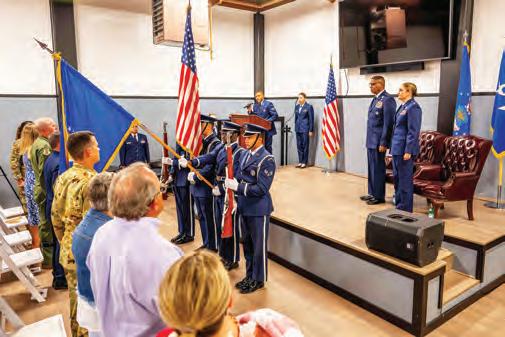
The Travis Air Force Base Honor Guard presents the colors during a promotion ceremony for Lt. Col. Jennifer Prouty, 821st Contingency Response Group deputy commander, at Travis Air Force Base, July 1.
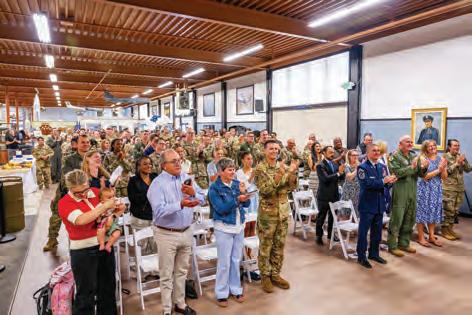
Attendees applaud during a promotion ceremony for Lt. Col. Jennifer Prouty, 821st Contingency Response Group deputy commander, at Travis Air Force Base, July 1. More than 100 attendees gathered to celebrate Prouty’s promotion to colonel.
53rd CAOS fast-track critical runway repairs at Andersen AFB
LaurEn BoGGs 78TH AIR BASE WING PUBLIC AFFAIRS
ROBINS AIR FORCE
BASE, Ga. — A team with the 461st Air Control Wing’s 53rd Combat Airfield Operations Squadron traveled to Andersen Air Force Base, Guam, from Robins AFB, Georgia, June 2-9, to get a runway back in working order before a major exercise in the Indo-Pacific region.
In April 2026, Super Typhoon Sinlaku caused nearly $40 million in damage to facilities and equipment across Andersen AFB, including several flightline structures. During the storm, 53rd CAOS was able to contact Andersen’s airmen over video call and instruct them on how to take down the Deployable Instrument Landing System’s glide slope, a 50-foot-tall-antenna that helps calculate an aircraft’s approach and rate of descent.
“It’s for inclem-
ent weather operations where they can’t see the runway, so they’re using Instrument Flight Rules,” said Tech. Sgt. Christopher McCorquodale, 53rd CAOS HVAC noncommissioned officer in charge. Under IFR, flights are primarily conducted by referencing onboard instruments and navigation systems in coordination with air traffic control.
“The glide slope basically tells the planes where they’re positioned in relation to the runway. Without that, that runway was not going to be operational for the Valiant Shield exercise,” he continued.
Working under a tight schedule, a team of six 53rd CAOS airmen traveled to Andersen AFB and compressed the typical five-day setup into just two days to ensure airfield readiness for the exercise.
“We got to work the
See Runway, Page 5
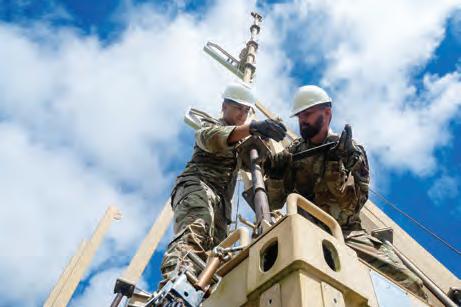
Senior Airman Manasseh Demissie/U.S. Air Force file
Senior Airman Joaquin Trice, left, 53rd Combat Airfield Operations Squadron radar, airfield and weather system technician, and Senior Airman Douglas Wolff, 53rd CAOS radar, airfield and weather systems supervisor, set up the glide slope antenna for a Deployable Instrument Landing System at Andersen Air Force Base, Guam, June 3. The 53rd CAOS team traveled from Robins Air Force Base, Ga., to assist with flightline restoration following Super Typhoon Sinlaku.

Travis BX to mark Exchange Service’s 131 years of service with celebration
a rmy & a ir ForcE
ExchanGE sErvicE PuBLic a FFairs
TRAVIS AIR FORCE
BASE — The Travis Exchange will mark the Army & Air Force Exchange Service’s 131st anniversary and legacy of serving those who serve with games, giveaways, cake and more at the BX, July 24.
From 11:30 a.m. to 1 p.m., the Travis BX will host an anniversary cake-cutting with complimentary refreshments, a spin-the-wheel game with prizes and enter-to-win giveaways. The Travis BX will kick off celebrations with a balloon drop at 11:00 a.m.
“For 131 years, military families have turned to the Exchange for comfort and care,” said Travis BX General Manager Cathie Byrns “This event is a chance to celebrate the Exchange’s commitment to warfighters and to thank every member of the military community.”
Since the Department of War’s General Order No. 46 directed com-
manders to establish post exchanges in 1895, the Exchange has constantly evolved to function as a force multiplier for the nation’s military.
Authorized Travis shoppers can contact the BX or visit the Travis BX’s Facebook or Instagram for more information.
BASE
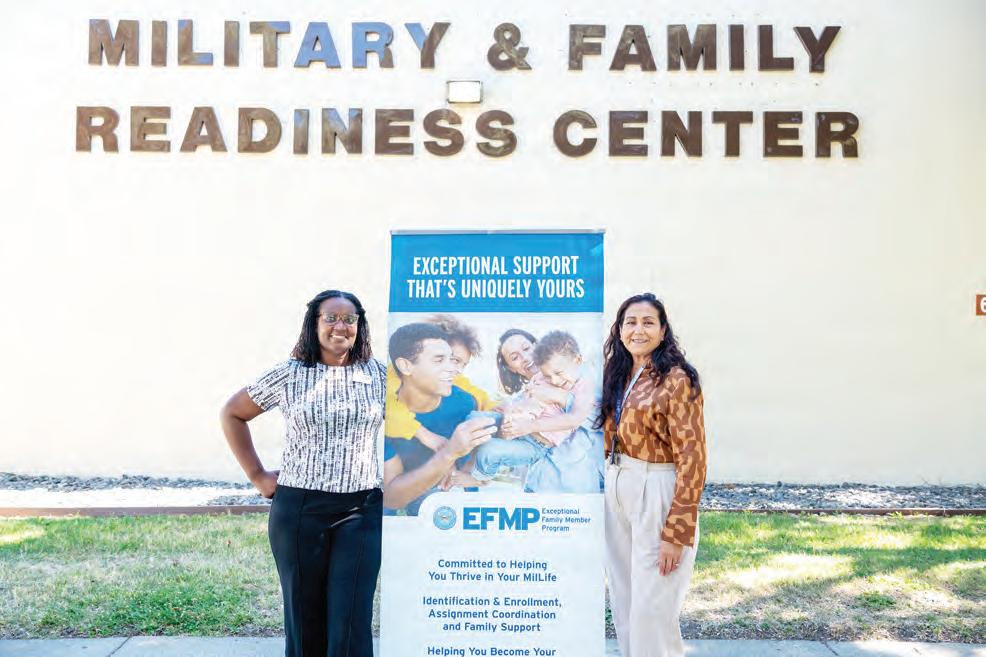
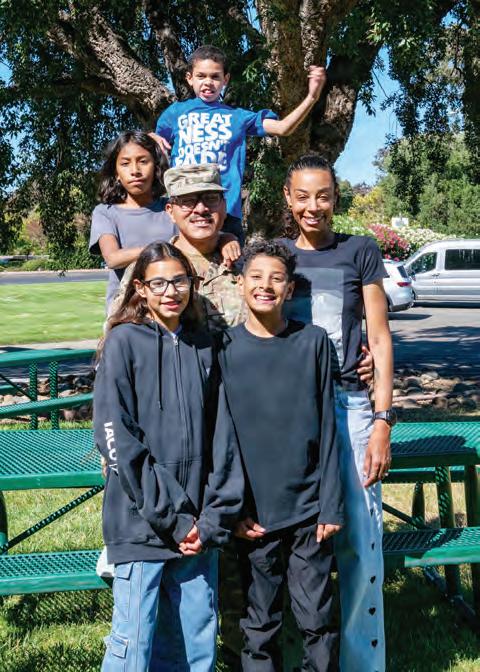
For Brianna Santos, the Exceptional Family Member Program (EFMP) isn’t just a pile of paperwork or a restrictive assignment code, it’s a community.
“Honestly, it’s knowing you’re not alone,” Santos said. “They call to check on me, ask how I’m doing, and let me know they’re here for me.”
Established to connect military families with critical resources, the EFMP at Travis Air Force Base rests on three pillars: David Grant USAF Medical Center for medical enrollment, the Military and Family Readiness Center for family support and the Air Force Personnel Center for assignment decisions.
A persistent misconception is that medical staff arbitrarily dictates career assignments.
“The staff at the EFMP is not a decision maker on whether or not you get to go to a cool duty location,” said Maj. Aaron Orzel, 60th Medical Group special needs coordinator. “What we actually are, at least on the medical side,
against the actual capabilities of a gaining base.
“That complexity is why no single person ever decides a case,” said Lt. Col. Samantha Nelson, 60th MDG medical management director. “A lot of people are involved because we’re trying to get it right.”
The team weighs drive times, waitlists and provider shortages.
“We’re looking at not just whether the specialty exists, but whether there’s actual access to it,” Orzel said.
Families know that difference firsthand. Santos completed her enrollment while caring for a child in the neonatal intensive care unit.
“It’s an overwhelming process, especially when you’re dealing with a brand-new diagnosis,” Santos said. “It’s a harsh introduction to the program. But once you get that in, the support side is real.” Staff members acknowledge the paperwork can be difficult.
is assessors of what your needs are.” Because the system is
incredibly complex, a dedicated team evaluates a family’s specific care plan
“It’s cumbersome, but it’s cumbersome with a purpose,” Orzel said, “to
Air Force sets new uncrewed airpower standards
sEcrEtary oF thE a ir ForcE
PuBLic a FFairs
ARLINGTON, Va. —
As the Air Force examines the future of persistent intelligence, surveillance, reconnaissance and strike capabilities, officials are increasingly focused on defining the operational requirements that will guide the next generation of uncrewed systems.
At the center of that effort is a growing emphasis on flexibility, affordability and rapidly scaling production. To



accelerate this shift, the Air Force is partnering with the Defense Innovation Unit to leverage DIU’s expertise in rapidly prototyping and fielding commercial technologies. This partnership is crucial for developing next-generation capabilities that will inform the future of the MQ-9 Reaper fleet.
“Future conflicts will
demand greater mass, faster adaptation and the ability to absorb operational losses while continuing to generate combat effects,” said Lt. Gen. Chris Niemi, Headquarters Air Force chief modernization officer. “As we refine requirements for future long-endurance ISR and strike platform capabilities, our objective is to
provide commanders with more options by fielding platforms that are more modular, lower cost, and easier to mass produce.”
While the Air Force continues to maximize the value of its existing MQ-9 fleet through targeted repairs and procurement of available
See Uncrewed, Page 7





Tech. Sgt. Noel Santos, 821st Contingency Response Squadron mission planning noncommissioned officer-incharge, stands with his wife, Brianna, and their children at the Military and Family Readiness Center at Travis Air Force Base, July 7. Several members of the Santos family are enrolled in the EFMP, which provides coordinated medical, assignment, and family support services to military families with special medical or educational needs.
LAS VEGAS, Nev. —
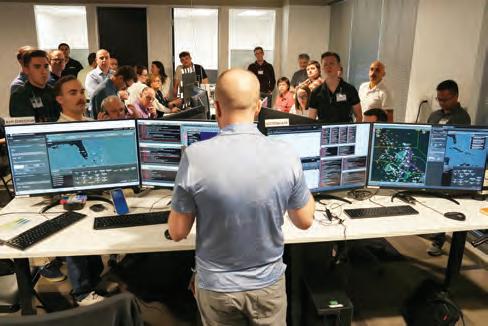
To secure mission dominance in a future, contested environment, the Joint Force must make decisions faster than any adversary. This imperative was the driving force behind the Multi-Decision Advantage Sprint for Human-Machine Teaming, or MASH, a complex, two-week experiment recently hosted in Las Vegas.
Dover AFB airmen restore pride through C-5M refurbishment
BASE, Del.— Inside Dover Air Force Base’s Isochronal Inspection Dock, airmen renovated the interior of a C-5M Super Galaxy, replacing worn crew spaces and returning a cleaner, more functional aircraft to the flight line without adding maintenance downtime.
Beginning in late February, the Dover Air Force Base C-5M Galaxy Flight Deck Refurbishment project initiated when the 436th Maintenance Squadron determined there was an immediate need to restore the worn-out interior areas of the C-5M Super Galaxy. The first aircraft selected for this effort was Tail 6020, a Doverbased C-5M.
“This project was needed because the C-5 will be flying for the next 20 years,” said 1st Lt. Aleksandr Buechter, 436th MXS. “That’s something that we took a hard look at: our flight deck conditions. We knew we needed to restore comfort and professionalism back into our flight deck, which goes a long way for our maintainers and our aircrews taking care of the mission day in and day out.”
While the mission of the C-5M Super Galaxy remains unchanged, to move oversized cargo, equipment and personnel around the world, years of continued operational use have left many of its interior spaces old and in need of repair.
The project focuses on the aircraft’s flight deck, crew bunks, relief crew area and portions of the cargo compartment interior. Work associated with this project includes replacing interior trim panels, refurbishing crew tables, repainting walls, replacing seat coverings and improving worn components that aircrew and maintainers rely on during long-duration missions.
“The aircraft had worn seat covers just from wear and tear by maintainers and aircrew,” Airman 1st Class Marshall Shorkey, 436th MXS crew chief, said. “The ceiling had stains from daily use, and a lot of the paint was chipping.”
The refurbishment is occurring during the aircraft’s Major ISO inspection. An ISO is a heavy maintenance period estimated to be approximately 60 days. The
Squadron had to rapidly coordinate efforts with contractors to accomplish this project. The 436th CONS Services and Commodities Flight utilized Rapid Acquisition Procedures to award the contract in 62 days, which was a reduction of nearly one month compared to the typical 90 days it takes to award a contract under normal conditions. Components for refurbishment were delivered to the contractor May 1, one day after award, and final customized modifications were accomplished June 11.
and day out.”
team completed the work needed to upgrade the aircraft during this time frame by incorporating the upgrades into the current ISO flow. As a result, no additional maintenance downtime has been added.
In addition to making the aircraft look better, the effort will assist in eliminating over 150 delayed discrepancies per aircraft resulting from a worn-out and outdated flight deck environment. Additionally, hundreds of maintenance man-hours will be redirected from continuously removing and reinstalling unserviceable parts during inspections to installing new or refurbished components.
“This gives a refined and clean product back to the flight line to execute the mission,” said Staff Sgt. James Cato, 436th MXSquality assurance inspector. “It breathes some life back into the C-5M so aircrew and maintainers feel more pride in the aircraft they work to keep flyable day in
The team involved in the project consisted of ISO Dock flight deck area crew chiefs, sheet metal back shop airmen, contracting professionals and a local vendor. Crew chiefs removed and installed various components, coordinated with sheet metal airmen for fabrication and painting support, and developed new skills through their involvement in the first aircraft in this pilot effort.
Additionally, this project allowed crew chiefs to enhance communication among shops.
“I’m proud of the pride brought back into the C-5 and making it basically a brand-new airplane that maintainers will love and aircrew will love,” Shorkey said. “For myself, it was some of the stuff I learned working with other shops and doing things a normal crew chief never would have done, such as painting or learning different tools.”
The 436th Contracting
“The 436th Contracting Squadron executed the Dover AFB C-5M Galaxy Flight Deck Refurbishment project at an unprecedented pace to meet an urgent mission demand,” said 2nd Lt. Travis Ambrose, 436th Contracting Squadron commodities and services flight officer in charge.
“This effort began when the 436th MXS approached us with an urgent need to overhaul C-5 interiors, and our team knew we had to move quickly to support the mission.”
Task Order for Tail 6020 totaled approximately $82,000.
“The future of the mobility fleet is entirely dependent on how we sustain the assets we have today – we only have the planes we have, so we must take care of them,” Ambrose said. “When 436 MXS shared their vision of restoring the airlift heritage of the C-5, our team knew we had to make it happen.”
Tail 6023 is scheduled to follow
Building on the successes of previous single-function Decision Advantage Sprints for Human-Machine Teaming experiments, the MASH marked a significant evolution by integrating an ensemble of artificial intelligence and automation software services from the first three DASH events. For the first time, U.S. Space Force guardians joined airmen to work sideby-side with software developers, evaluating how these disparate tools can effectively integrate to solve complex problems across the air, space, cyber, maritime, and ground domains.
“The Combined Joint All-Domain Command and Control Campaign Plan demands that we make better, timelier decisions,” said U.S. Air Force Col. John Ohlund, Advanced Battle Management System Cross-Functional Team director. “By incorporating AI into our battle management architecture, we are ensuring our operators can rapidly process vast amounts of data and deliver lethal effects faster than ever before.”
Conducted within a dedicated Shadow Operations Center-Nellis facility in Las Vegas, the MASH experiment set the stage for this strategic collaboration, led by the Department of the Air Force’s Advanced Battle Management System
Cross-Functional Team. The experiment was executed in partnership with the Air Force Research Lab, U.S. Space Force, and the 805th Combat Training Squadron, also known as the ShOC-N, further reinforcing the collaborative effort required to deliver decisive combat power for the Joint Force. Furthermore, four allied nations observed the experiment, gaining insights into the U.S. approach to integrated architectures and setting the foundation for future interoperability.
Space Force integration: A critical milestone
A defining feature of the multi-decision sprint was the active participation of Space Force guardians. Moving beyond observational roles, guardians were “in the seat,” directly influencing the development of battle management tools that encompass the space domain.
“Working with Air Force battle managers opened my eyes to how the air domain tackles these challenges. Their focus on tempo, synchronization, and rapid Courses of Action iteration mirrors what Space Force needs, especially when dealing with contested electromagnetic environments,” said U.S. Space Force 1st Lt. Abby Warner, 16th Electromagnetic Warfare Squadron deputy flight commander. “Turns out our decision-making headaches are similar across domains, and Transformational Modelbased services adapt quickly to space ops.” U.S. Air Force Lt. Col. Corey Ellsworth, ABMS Cross-Functional Team integration lead, agreed. “There are parallels to decision advantage requirements between the air and space domains, especially during major


Deb Henley/U.S. Air Force file
as the next aircraft in the pilot refurbishment
Senior Airman Keira Rossman/U.S. Air Force file photos
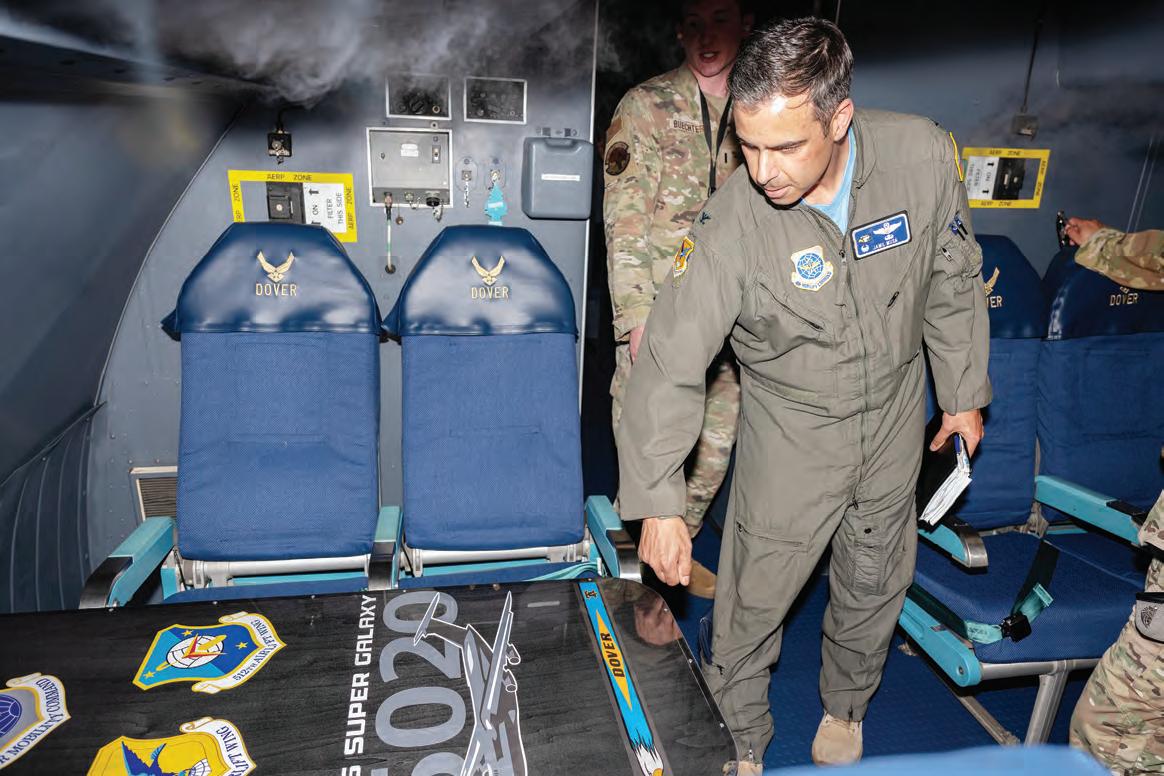
Col. Jamil Musa, 436th Airlift Wing commander, inspects a refurbished crew area inside a C-5M Super Galaxy at Dover Air Force Base, Del., July 6. The updated interior included refurbished seating, crew tables and worn
components used by aircrew and maintainers during longduration missions. The Dover AFB C-5M Galaxy Flight Deck Refurbishment project supports long-term sustainment of the C-5M fleet while improving professionalism.
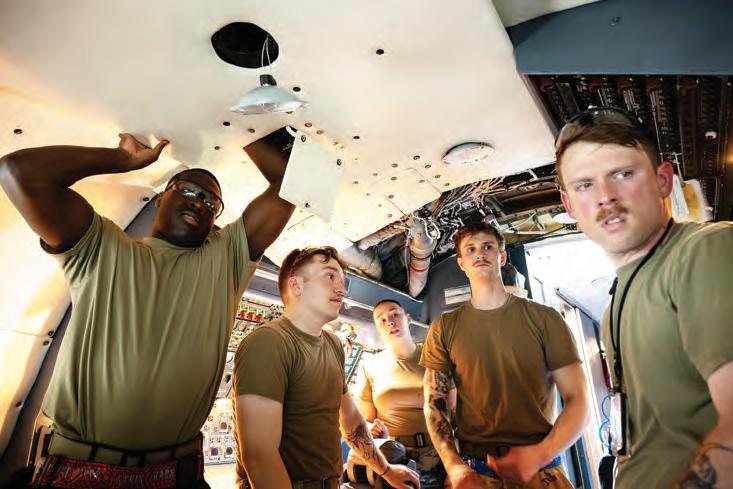
Airmen assigned to the 436th Maintenance Squadron inspect interior panels inside a C-5M Super Galaxy at Dover Air Force Base, Del., May 20. The maintenance team worked together inside the aircraft’s flight deck area to identify worn components and prepare spaces for refurbishment. The Dover AFB C-5M Galaxy Flight Deck Refurbishment project is designed to restore worn crew areas while keeping the work within the aircraft’s scheduled maintenance timeline.
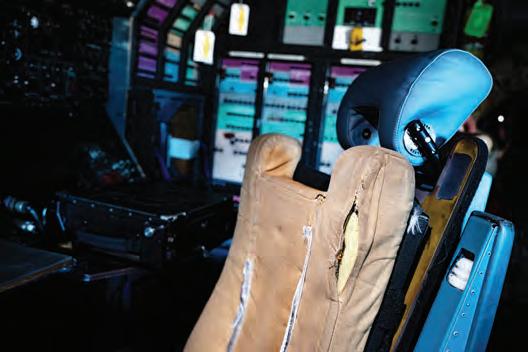
A worn crew seat is displayed inside the flight deck area of a C-5M Super Galaxy at Dover Air Force Base, Del., May 29. The aircraft’s interior showed signs of routine operational use, including torn seat coverings and aged crew equipment. The refurbishment project gives maintainers an opportunity to restore interior spaces during the aircraft’s scheduled Major ISO inspection.
Runway
From Page 3
day after we got off the plane,” he said. “Single runway operations is not fun for the exercise out there, so we wanted to get that system up and running as fast as possible for them so they could do their training sorties before the exercise to make sure that everything’s good.”
The recovery effort required setting up the system’s 50-foot-tall glide slope mast and coordinating with a flight check team out of Oklahoma to validate that the device was aligned within its tolerances.
“The big challenge was stressing before flight check if that radar was going to be aligned properly,” McCorquodale said. “We got it within tolerances for all three, so it was a very big celebration all around.”
With the 53rd CAOS’s fix, the runway can again provide precision approaches and landings for aircraft in all weather conditions, increasing air
EFMP
From Page 3
make sure they don’t end up somewhere the necessary care isn’t available.”
The Military Family and Readiness Center (MFRC) picks up where the clinic leaves off, unlocking support grants and local events.
“We make sure we’re connecting with families, checking on them and supporting them beyond their medical or educational needs,” said Latoshia Odom, MFRC EFMP family support coordinator.
Historically, service members have feared the program’s Q-code, worrying it might limit their mobility. Base leadership
Dover
From Page 4
effort.
For the maintainers who spent hours painting, cleaning, fabricating and installing parts, the project represents a renewed standard for the aircraft and the people who fly and maintain it.
“I’m super proud of the amount of pride that the maintainers had with
traffic capacity, safety and efficiency of the airfield. The successful setup yielded immediate results.
“Right after we finished, we had four F-35s depart from our runway, and that was our certification for the event,” said McCorquodale.
Although the team was only assigned to set up a singular glide slope antenna, they assisted with flight checks by handling the radios for all Andersen AFB’s localizers and other glide slopes.
“There were two days of flight check planned, and we got it knocked out in 2.5 hours,” added McCorquodale.
The airmen served a crucial role in operational readiness efforts by having the runway prepared in time for Exercise Valiant Shield.
The biennial joint field training exercise brings together each branch of the U.S. Armed Forces and partner nations across the Indo-Pacific to exercise a wide range of capabilities and demonstrate the strength and flexibility of joint and combined forces.
is determined to change this narrative.
“Nobody wants to be EFMP Q-coded because it’s seen as limiting assignments,” Nelson said. “I’d want that perception transformed into understanding that it ensures family members get the access to care they need, and that we’re working to keep families together while supporting the mission.”
However, the program can only respond to what it knows, making selfadvocacy critical.
“We assist and advise as much as we can,” Orzel said, “but we can’t advise if we don’t know.”
For hesitant families, Santos offers simple advice: “Just do it, because once you’re enrolled, it works.”
this project,” Buechter said. “This is something that’s been long overdue, and I think a lot of maintainers and operators are going to be really happy with it.”
As the C-5M continues to project power and deliver hope across the globe, Dover airmen are ensuring the aircraft’s interior reflects the professionalism of the crews who keep it flying.
“Our main goal is just to get rid of all daily wear and tear from crews and try to make it look great,” Shorkey said. “Basically, make a brand-new plane from something we’ve had for a while.”
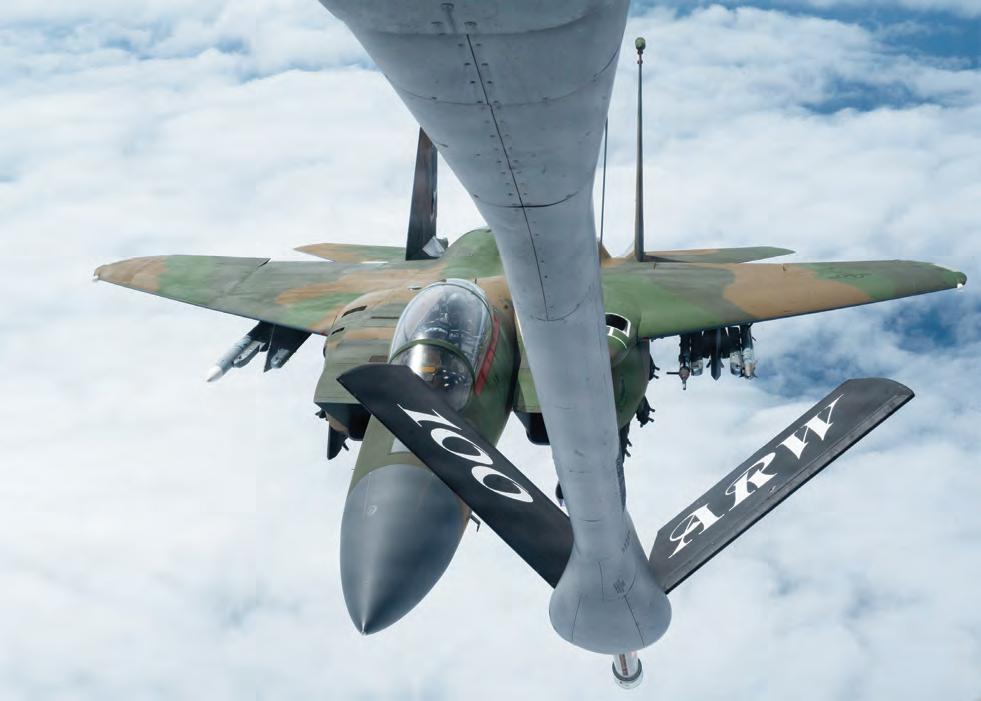
An F-15E
operations enable combat aircraft to sustain missions across greater distances and for longer durations, strengthening interoperability and supporting tactical integrated air and missile defense during AK26.
AK26: Fighters, bombers, tactical C2 bolster AF readiness
RAF LAKENHEATH, England — After two weeks of high-end tactical integrated air and missile defense training, Astral Knight 2026 concluded, June 12. Led by U.S. Air Forces in Europe – Air Forces Africa, the exercise validated the U.S. Air Force’s ability to project decisive military power, combining advanced fighter and bomber operations with rapidly deployable command-andcontrol frameworks.
This year’s iteration tested participants’ ability to transition from defensive postures to offensive strikes in a contested environment, ensuring U.S. forces remain ready and lethal to defeat threats against the homeland and global American interests.
“This exercise was able to provide challenging and realistic training across the force.” said U.S. Air Force Lt. Col. Lance “Nuke” Ferguson, AK26 lead planner, USAFE–AFAFRICA Warfare Center. “We were able to replicate much of what is being faced in operational environments, planning through execution, to ensure those potentially called upon in the future can effectively continue to defend our interests wherever needed.”
At the heart of AK26 was fourth- and fifthgeneration combat aircraft integration. F-35A Lightning IIs and F-15E Strike Eagles from the 48th Fighter Wing launched from their home station
at RAF Lakenheath, England, and intercepted simulated adversary jets and cruise missiles during high-end defensive combat air missions.
Once air superiority was established, the fighters transitioned to Offensive Combat Air (OCA), which included fighter sweeps, high-value asset escort, suppression of enemy air defenses, and deep air interdiction against simulated land-based targets.
“I’m incredibly proud of the level of learning that was achieved by the multitude of different players in Astral Knight 2026,” said U.S. Air Force Capt. William “Tusk” Mueser, AK26 project lead for the 48th FW. “Despite the limited resources available, we were able to combine nearly a dozen squadrons to create world-class training opportunities to test out new capabilities, enhance interoperability, and refine tactics, techniques and procedures to make us a more lethal fighting force for the fight of both today and tomorrow.”
Expanding this decisive combat power, U.S. Air Force B-1B Lancers and B-52 Stratofortress aircraft integrated directly with the fighter formations, providing OCA support. This seamless bomber-fighter integration bolstered global deterrence, proving the Air Force’s ability to strike at a time and place of its choosing.
Sustaining these high-tempo operations were U.S. Air Force KC-135 Stratotankers from the 100th Air Refueling Wing, RAF Mildenhall, England, which provided
critical aerial refueling necessary to extend the reach and endurance of the combat fleet.
Flying high performance aircraft requires flawless coordination between air and ground forces, and the 606th Air Control Squadron (ACS) out of Aviano Air Base, Italy, fulfilled that role.
As the U.S. Air Force’s only overseas Control and Reporting Center, the 606th ACS is known by their call sign “Primo.” The ACS exercised distributed command-and-control operations, managing the airspace and facilitating fighter targeting during the exercise.
“The overall objective for Astral Knight is for our controllers to get very valuable face-to-face time with the fighters, along with live control from a simulated deployed environment,” said U.S. Air Force Capt. Christopher Callari, 606th ACS air battle manager.”
Additionally, the 606th ACS integrated with two U.S. Marine Corps air controllers from Marine Air Control Squadron 2, Air Defense Company Alpha and Bravo (MACS2), Cherry Point, North Carolina. The Marines embedded with the 606th crews, participating in mission planning and live operations to build the communication processes required to control operational areas in a real-world joint fight.
“We’re performing the same functions and honing towards perfection in the way that we’re performing those functions between the Air Force and the Marine Corps,” said U.S. Marine Corps
1st Lt. Barrett Pierce, an air command and control officer assigned to Air Defense Company Alpha MACS-2. “So ultimately we’re able to support whatever mission is going on in the sky, no matter who’s sitting as the controller.”
To further enhance the exercise and test the survivability of the aircraft and the resilience of the C2 networks, the 19th Electronic Warfare Squadron (EWS), based at Polygone, Bann, Germany, simulated a highly contested electromagnetic environment.
The 19th EWS provided realistic electronic warfare threat training, deploying land-based emitters to mimic dynamic adversary surface-to-air missile (SAM) systems. Because modern SAM systems are highly mobile, their efforts forced the pilots in the air and controllers on the ground to constantly adapt their strategies.
“The most important reason for having surface to air threat emitters within the fight is going to be replicating the scenario that pilots are going to face in actual combat so they can take appropriate action.” said U.S. Air Force Lt. Col. Timothy Killham, local missions officer, 19th EWS.
By combining the extensive combat power of integrated fourthand fifth-generation aircraft with joint command-and-control and realistic threat replication, AK26 illustrated how U.S. Air Force units project power and defend against conventional and asymmetric threats in today’s complex global security environment.





Staff Sgt. Nash Truitt/U.S. Air Force file
Strike Eagle assigned to the 48th Fighter Wing approaches a KC-135 Stratotanker assigned to the 100th Air Refueling Wing to receive fuel during exercise Astral Knight 2026 over the North Sea, June 3. Aerial refueling
Bugapalooza links science to military readiness
SILVER SPRING
Md. — Mosquitoes, ticks, flies and pollinators drew a crowd at the National Museum of Health and Medicine’s Bugapalooza in Silver Spring, Maryland, June 13. Nearly 400 visitors attended the annual event to explore the world of insects through handson activities, exhibits, and conversations with military and civilian experts.
Throughout the day, visitors learned how insects affect health, support the environment and affect military readiness. Children explored interactive stations, families met researchers and guests discovered simple ways to stay safe from insectborne diseases.
While each presenter brought a different area of expertise, one message stood out: education is one of the best tools for prevention.
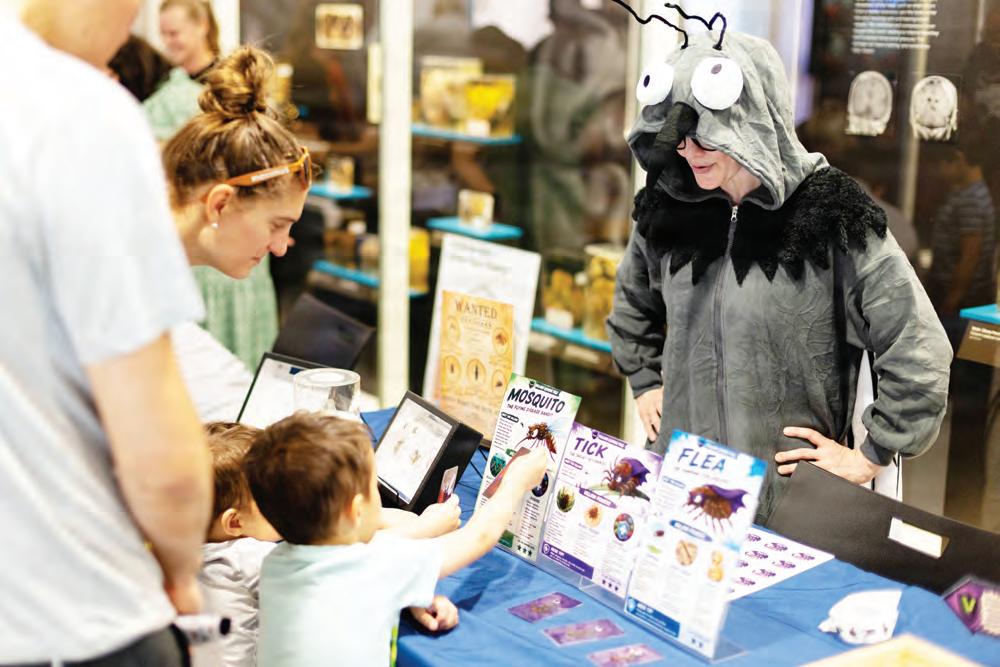
“The first way that anyone protects themselves is by learning. Education is our number one priority,” said Navy Lt. Cmdr. Jodi Fiorenzano, Armed Forces Pest Management Board chief of research. Experts explained that understanding insects is important, not only for
public health but also for military operations. Insects and the diseases they carry have affected
military forces throughout history and remain a threat today.
“Historically, infectious
diseases have impacted soldiers much more than bullets and shrapnel,” said Army Maj. Paul Lenhart, an entomologist assigned to the Walter Reed Army Institute of Research.
“A huge portion of those infectious diseases are [illnesses caused by parasites, viruses and bacteria].”
Vector-borne diseases, transmitted between people or from animals to people, can have a serious impact on military units, said Army Maj. Obinna Aduba, U.S. Army Medical Research Institute of Infectious Diseases chief of vector threat assessment.
“It can incapacitate a whole unit,” Aduba added.
Presenters also explained how military teams prepare before service members deploy. Experts study local health threats to help protect forces operating around the world.
“We cannot put forces on the ground anywhere without first making sure that they’re going to be safe and the environment
all are welcome to Discover, Develop, and Demonstrate a relationship with God.
We invite you to join us for Sunday service at 10:30 a.m.
2207 Union Avenue, Fairfield, CA www.1ag .com





Email: o ce@northhillsvv.org
Website: www.northhillsvv.org
Service Times: Sunday morning 10 a.m., Wednesday evening 6:30 p.m. Phone: 707-449-8977




401 Fir St., Vacaville, CA 95688 (707) 448-5085
Minister: Elliott Williams
Sunday Morning Bible Study 9:30 AM
Sunday Morning Worship 10:30 AM
Sunday Evening Worship 5:00 PM

8:15am, 10am



Wednesday Evening Bible Study 6:00 PM vacavillecoc.com 401


NA ZARENE
Chuck Kennedy/National Museum of Health and Medicine file
Navy Lt. Cmdr. Jodi Fiorenzano, right, of the Armed Forces Pest Management Board, leads the Bug Superhero Academy activity during Bugapalooza at the National
Museum of Health and Medicine in Silver Spring, Md.,
June 13. The Bug Superhero Academy teaches visitors about pollinators and vectors through hands-on activities.
Bugs, Page 7
Bugs
From Page 6
is going to be safe,” said Navy Lt. Jacob Kabbah, Navy Bureau of Medicine and Surgery comptroller. The event also focused on steps visitors can take to protect themselves and their families. Experts encouraged the use of insect repellent, protective clothing and routine tick checks after spend-
ing time outdoors. By the end of the day, visitors left with more than fun memories and hands-on experiences. They left with a better understanding of how education, research and prevention help protect service members, families and communities. From mosquitoes and ticks to pollinators and other helpful insects, Bugapalooza 2026 showed that even the smallest creatures can have a big impact on the world.

Uncrewed
From Page 3
airframes to meet current Combatant Commander requirements, long-term planning is increasingly focused on concepts built around mass, maneuver, enduring persistence and distributed lethality.
Under this framework, future ISR capabilities would be designed from the outset to be produced in larger quantities, fielded more rapidly and employed with greater operational risk tolerance than traditional aircraft.
A key element of that vision is the requirement for open systems architecture and modular design. Rather than treating interoperability and upgradeability as enhancements added later in development, the Air Force is increasingly viewing these characteristics as foundational requirements from the start.
To put this strategy into practice, the Air Force is leveraging acquisition pathways like the DIU’s Commercial Solutions Opening, which allows for rapid and iterative prototyping
From Page 4
combat operations where all domains are contested,” Ellsworth said.
He noted that the next step for the DAF’s solution to battle management is to continue integrating with each service’s modernization approach to data and decision-making. The battle management software solutions tested at the MASH are “directly translatable” to Navy, Marine Corps, and Army partners, emphasizing that this collaboration is the next pivotal step in providing “combat multi-domain power” for the “Total Joint Force.”
U.S. Space Force Col. Teina Stallings-Lilly, ABMS Cross-Functional Team deputy director for space operations integration, emphasized the long-term impact of this integration.
“As the operations integrator between the services, my goal is to bridge the gap between our domains,” StallingsLilly said. “By having our guardians in the seat for this experiment, they are seeing the direct applicability of these AI tools and, in turn, are providing the expertise needed to build a truly integrated DAF Battle Network.” Stallings-Lilly explained that the DAF is moving beyond simple decision support systems to field capabilities that process information at machine speeds. This
325th SFS demonstrates C-sUAS capabilities to AFIMSC leaders
A irm An 1st ClAss
alongside commercial and non-traditional partners. Ultimately, this process will directly inform the requirements for the MQ-9’s successor, ensuring the new platform can be more easily adapted to a wide variety of tomorrow’s missions, even ones that aren’t obvious today, “Open systems architectures allow sensors, kinetic payloads, software and mission applications to be integrated more quickly, while modular designs enable us to modify platforms consistent with mission risk,” Niemi said.
This approach supports a more dynamic force design model in which capabilities can be tailored to multiple operational problems rather than relying on a single platform optimized for a narrow set of missions.
By engaging with industry early and often through this innovative process, the Air Force aims to deliver a system that is more resilient, adaptable and capable of meeting the challenges of a new era of warfare.
sprint, she noted, is fundamentally about building a human-machine team that ensures operators can think faster and stay decisively ahead of any adversary.
The need for deep, cross-service integration extends far beyond the air and space domains, shaping the future of command and control.
“The reason we challenge the software to solve multi-domain problems is because that’s the reality of the future fight,” said Ohlund.
“An Air Force air battle manager doesn’t have the authority to execute a space or cyber effect, but like any good staff officer, it’s their job to prepare the information and package the options for the general. We want the computers to do that work, to ruminate over every possible multidomain effect; that way we can present the highest quality menu of decisions to the right commander, faster than ever before.”
WARTECH: Cocreation for rapid fielding
This deep integration of multi-domain warfighters into the development process is a key component of the larger AFRL process known as WARTECH, which brings together warfighters, technologists, planners, and acquisition personnel to collectively develop operational concepts motivated by future force design and enabled by high-payoff science and technology.
“The DASH to MASH
rosArio GArCiA 325TH FIGHTER WING PUBLIC AFFAIRS
TYNDALL AIR FORCE
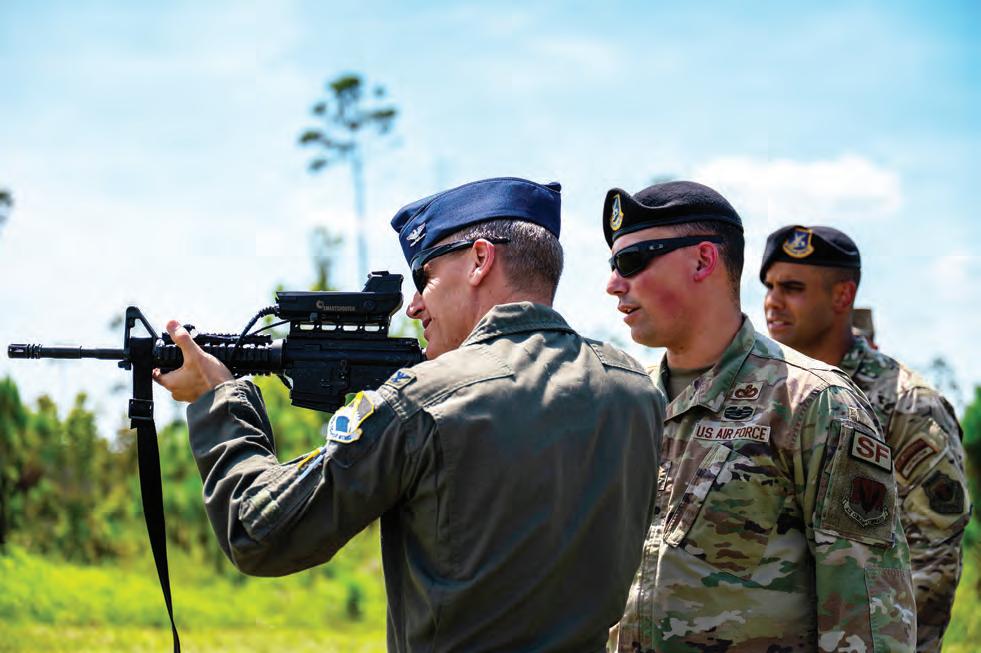
BASE, Fla. — The 325th Security Forces Squadron showcased its kinetic base defense capabilities to Maj. Gen. Thomas P. Sherman, commander of the Air Force Installation and Mission Support Center, June 3, as part of an ongoing initiative to counter the evolving threat of small, unmanned aircraft systems.
During the demonstration, the squadron showcased the effectiveness of the M870 shotgun against simulated sUAS and briefed Maj. Gen. Sherman on a future training plan to qualify approximately 210 airmen to employ the weapon and the SMASH 2000 fire control system. Once fully implemented, this program will prepare airmen to safely and effectively neutralize low-altitude, high-speed aerial targets, establishing a critical point-defense capability for the installation.
“The drone domain is a transformational mechanism that will continue to evolve. It’s important
series is really a textbook example of what WARTECH is intended to accomplish and right in line with the Command, Control, Communications, and Battle Management strategy for agile, rapid, and iterative fielding of software solutions to support immediate warfighter needs and long-term force modernization,” said Jeffrey Palumbo, AFRL C3BM Capability Area lead. “This approach of user-producer co-creation allows for proof of concept, energizes the industrial base, allows for early operator feedback to shape development, and sets us up to deliver chunks of decision advantage capability to the warfighter in a rapid and repeatable cycle.”
The MASH ensemble: Perceive Actionable Entity, Match Effector, and Generate Battle COAs
The experiment challenged six industry software development teams and the ShOC-N’s own military software development team to build tools that address three core decision functions derived from the DAF’s Transformational Model:
n PAE: Recommending what actions can be taken against a target.
n Match Effector: Given a list of possible effects, ranking a capability or a set of capabilities best suited for the given effect, and repeating for each of the other provided effects.
n Generate Battle
that every single defender is capable of integrating current systems and capabilities to deter, detect, delay, deny and defeat. This training will add a defeat capability to our stateside mission set,” said Senior Master Sgt. Reginald Walters, 325th SFS future operations superintendent. “The desired end state of this training is that all defenders get certified. This way, once we dispatch a patrol, they pinpoint the location and engage.”
To execute this specialized training, the squadron will operate under Title 10 U.S. Code, Section 130i, which authorizes military installations to mitigate unmanned aircraft threats. The planned live-fire operations will also fully comply with Federal Aviation Administration guidelines within designated airspace.
Under the proposed plan, participating defenders will arrive pre-certified on the M870 shotgun and M4A1 carbine, allowing instructors to bypass basic weapons handling and focus entirely on aerial target engagement. Walters noted that insights from recent global conflicts, including
COAs: Given a list of matched effect-effector pairs, adding the additional capabilities throughout the execution window needed to support the principal match, and repeating for each of the next ranked pair.
A major breakthrough of the event was the successful integration of these disparate vendor tools.
“AFRL has done incredible work building an orchestrator that ensures these different companies can exchange data, ontologies, and metadata seamlessly,” Ohlund said. “We are proving that a true plug-and-play, modular approach not only works, but it fosters continuous competition and allows the government to select the best-of-breed software services as they mature.”
The Warfighter as expert evaluator
Throughout the sprint, the airmen and guardians were tasked not just as operators, but as expert evaluators. Their mission was to stress-test the AI’s decision logic, identifying limitations and providing immediate feedback to the developers sitting directly behind them.
“This is a true co-creation environment where software developers work directly with warfighters to ensure the tools meet their exact needs,” said Elizabeth Frost, AFRL MASH lead. “The teams are eager for feedback and implemented changes rapidly. This collaborative effort paid off during the second week of the sprint,
after-action reports from Ukraine, heavily influenced the training’s focus on widespread shotgun proficiency.
“The shotgun is another piece of the puzzle for building a reliable, effective point defense capability for the Wing,” Walters said. “By adapting our thinking and execution, we are fortifying defense in the air domain on the installation tenfold. Arming defenders with shotguns on every patrol drastically expands our defeat bubble for any type of drone entering our airspace.”
Alongside the M870, the new curriculum features the SMASH 2000, an advanced electro-optical fire control system mounted on the M4A1 carbine. The system assists shooters by automatically calculating ballistic solutions and tracking moving targets.
During the practical phase of the new curriculum, shooters will learn to acquire a target and depress the trigger to lock the system onto a simulated drone. This technology allows the weapon to automatically fire only when it guarantees a hit,
as we saw a remarkable increase in the volume and quality of courses of action submitted.”
The operational impact of this co-creation was immediate and undeniable for the tactical operators.
“A week ago, it took my team and me 50 minutes to an hour to get one tasking done. With the help of the tool, we were able to get five or six taskings done,” said U.S. Air Force Capt. Adam Sochia, 552nd Operations Support Squadron ABM.
“Basically, in the amount of time that we can do one tasking, this tool gives us the data and accurate options to complete five or more additional taskings.
Delivering a Lethal, Integrated Future
The event also featured the ShOC-N’s military software development team, who built their own solutions alongside industry. According to Carlos Dye, the ShOC-N MASH software development team lead, the military developers focused on applying their direct operational experience to the coding process. Their approach ensured that the machine took the brunt of the data processing, while the human operator remained firmly in control of the final tactical decisions.
This unique environment, which physically co-located military operators, airmen developers, and industry partners, was critical to the event’s success.
“The synergy we are seeing here... is what has been lacking in previous attempts to accelerate delivery of warfighter capa-
drastically increasing the first-round strike probability against moving targets.
To manage the active nature of engaging aerial targets, the future training plan mandates strict safety protocols. Certified security forces training and standardization instructors will shadow each shooter, providing direct, overthe-shoulder supervision throughout the exercise. The live-fire demonstration emphasized the squadron’s broader commitment to airman readiness. Security forces personnel undergo rigorous training to translate classroom theory into tactical execution. By integrating repetitive weapons drills with realworld threat scenarios, leadership ensures every airman maintains the operational readiness necessary to confront threats at a moment’s notice.
“This training helps our airmen tackle an sUAS threat that is rapidly evolving in real-time,” said Tech. Sgt. Nicholas Rhodes, a 325th SFS training and standardization section chief. “It builds the tactical skills that are vital to execute the mission and defend the installation.”
bility,” said Lt. Col. Wesley Schultz, 805th CTS/ ShOC-N commander. “Our mission at the ShOC-N is to remove barriers to creative problem-solving, allowing us to turn innovative concepts like human-machine teaming into tangible, lethal capabilities at speed.”
A key factor in enabling that speed and synergy was the underlying technical framework. Elizabeth Frost, the AFRL MASH lead, noted that by establishing a common application programming interface and architecture, the team was able to provide a unified user interface. This meant that regardless of which vendor’s software was running in the background, the experience remained consistent and intuitive for the warfighter, proving that integrated tools deliver a far better outcome than isolated solutions.
Ultimately, the MASH experiment provided an actionable blueprint for the future of multi-domain operations. The event validated the DAF’s Transformational Model, proving that when battle management is broken down into specific decision functions with a common integration framework, machines can process data at a speed unmatched by humans.
Ohlund concluded, “By demonstrating that diverse, AI-enabled tools can integrate effectively within this model to accelerate the kill chain, the DAF has taken a critical step toward securing decision advantage for the Joint Force.”
Chuck Kennedy/National Museum of Health and Medicine file Museum staff hold a tarantula during Bugapalooza at the National Museum of Health and Medicine in Silver Spring, Md., June 13.
Airman 1st Class Rosario Garcia/U.S. Air Force file
Col. Christian Bergtholdt, 325th Fighter Wing commander, aims an M4 carbine equipped with a SMASH 2000 fire control system while Master Sgt. Jonathan Calo, 325th Security Forces Squadron (SFS) logistics and readiness superintendent, and Senior Master Sgt. Reginald Walters,
325th SFS future operations superintendent, observe at Tyndall Air Force Base, Fla., June 3. Base leaders conducted a live-fire demonstration of a future training plan designed to qualify defenders on specialized weapon systems to neutralize small unmanned aircraft systems.