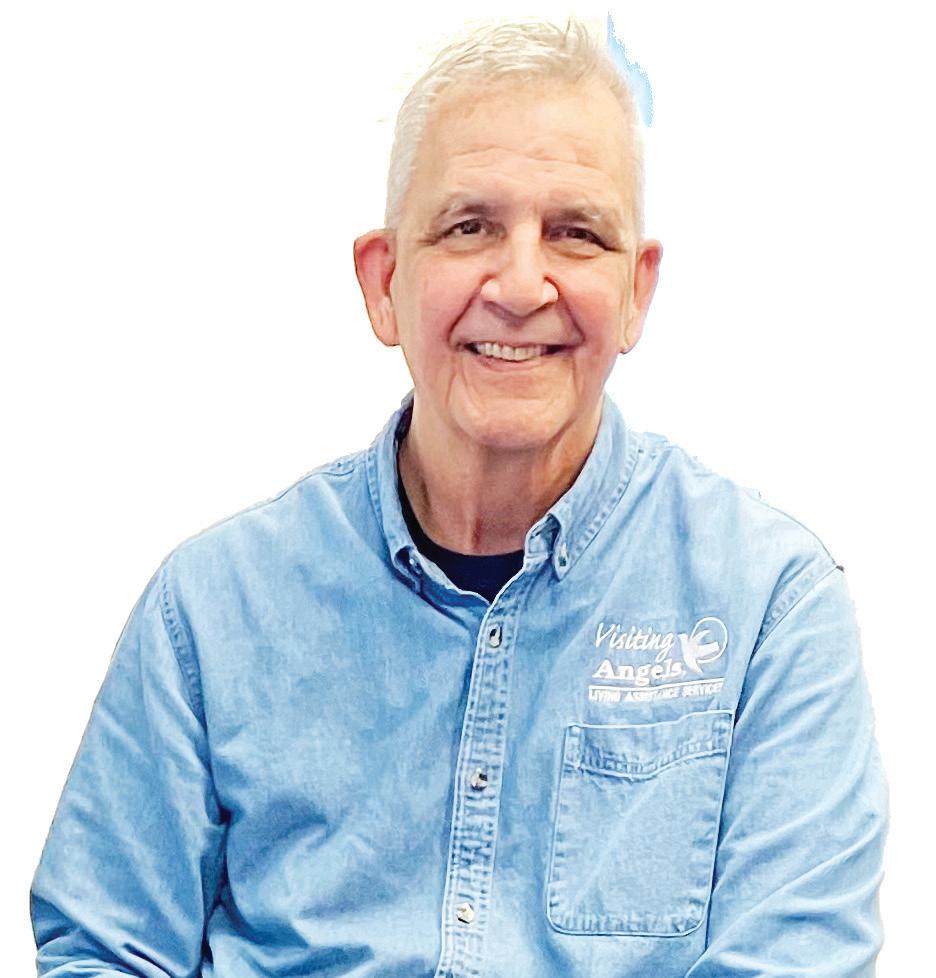
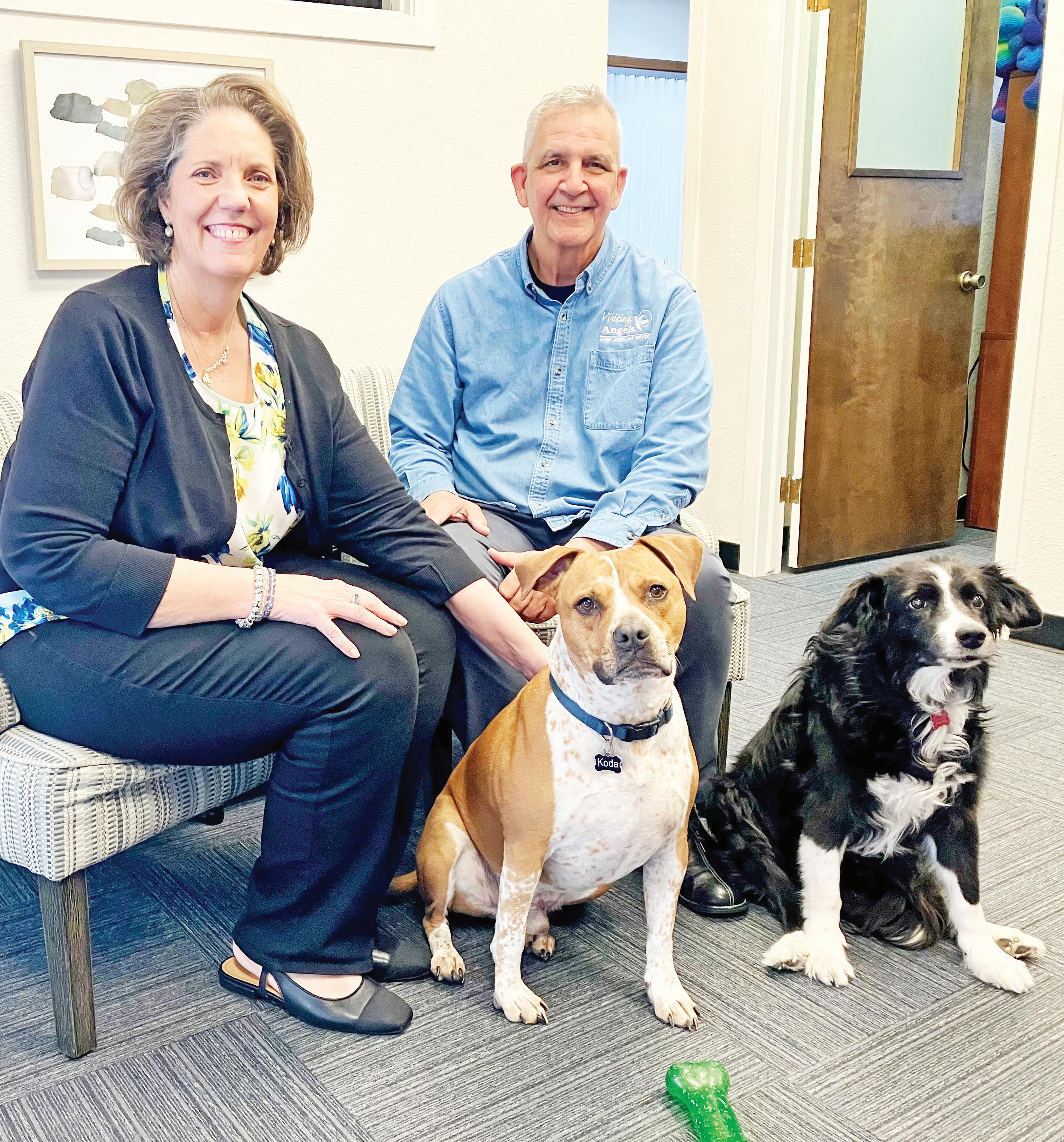


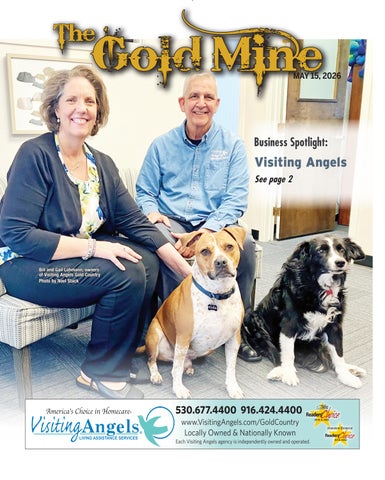
Bill and Gail Lohmann, owners of Visiting Angels Gold Country
Photo by Noel Stack
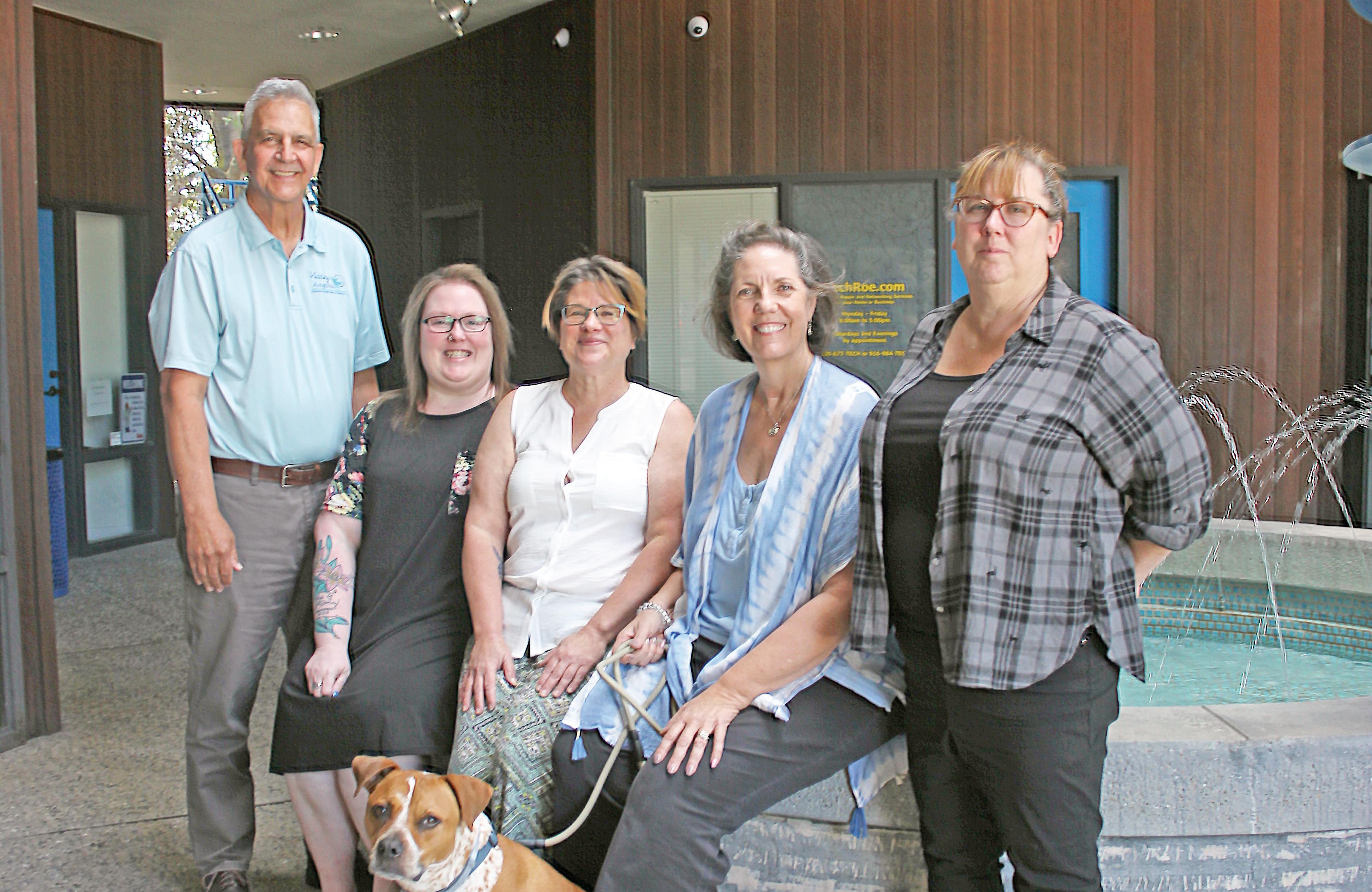
For Gail Lohmann, owner of Visiting Angels in Cameron Park, caring for seniors is not just a business but a lifelong calling. Growing up, she helped elderly neighbors as a child and worked in senior communities as a teenager. When she opened Visiting Angels Gold Country in 2009, she recognized an opportunity to expand her passion into a career dedicated to supporting seniors and their families.
“Many calls we get are crisis calls,” Gail said. “Mom or dad’s in the hospital, they’re coming home and the family suddenly realizes they need support. Our goal is to find the right caregiver, someone who matches the client’s personality and needs.”
What sets Visiting Angels apart is its commitment to personalized service and community connection. Lohmann, her husband Bill, and their team take time to understand each client’s needs, whether they require short-term assistance or long-term support. They also serve as a resource for families navigating
elder care.
“We hear often how much families appreciate that we truly listen,” Lohmann said. “One daughter recently hugged me and said, ‘You have no idea how much we need you.’ That’s why we do this.”
Beyond in-home care, Visiting Angels holds a VA contract to assist veterans and actively supports the local community.
Lohmann volunteers with organizations like the El Dorado County Commission on Aging, reflecting her dedication to seniors beyond her day job.
Our caregivers often become like family to clients who have no one else,” Lohmann said. “It’s incredibly rewarding to make this difference in people’s lives.”
For those considering care options, Lohmann offers this advice: “Call us even if you’re not sure what you need. We’ll take the time to help figure it out, that’s what community is all about.”






























































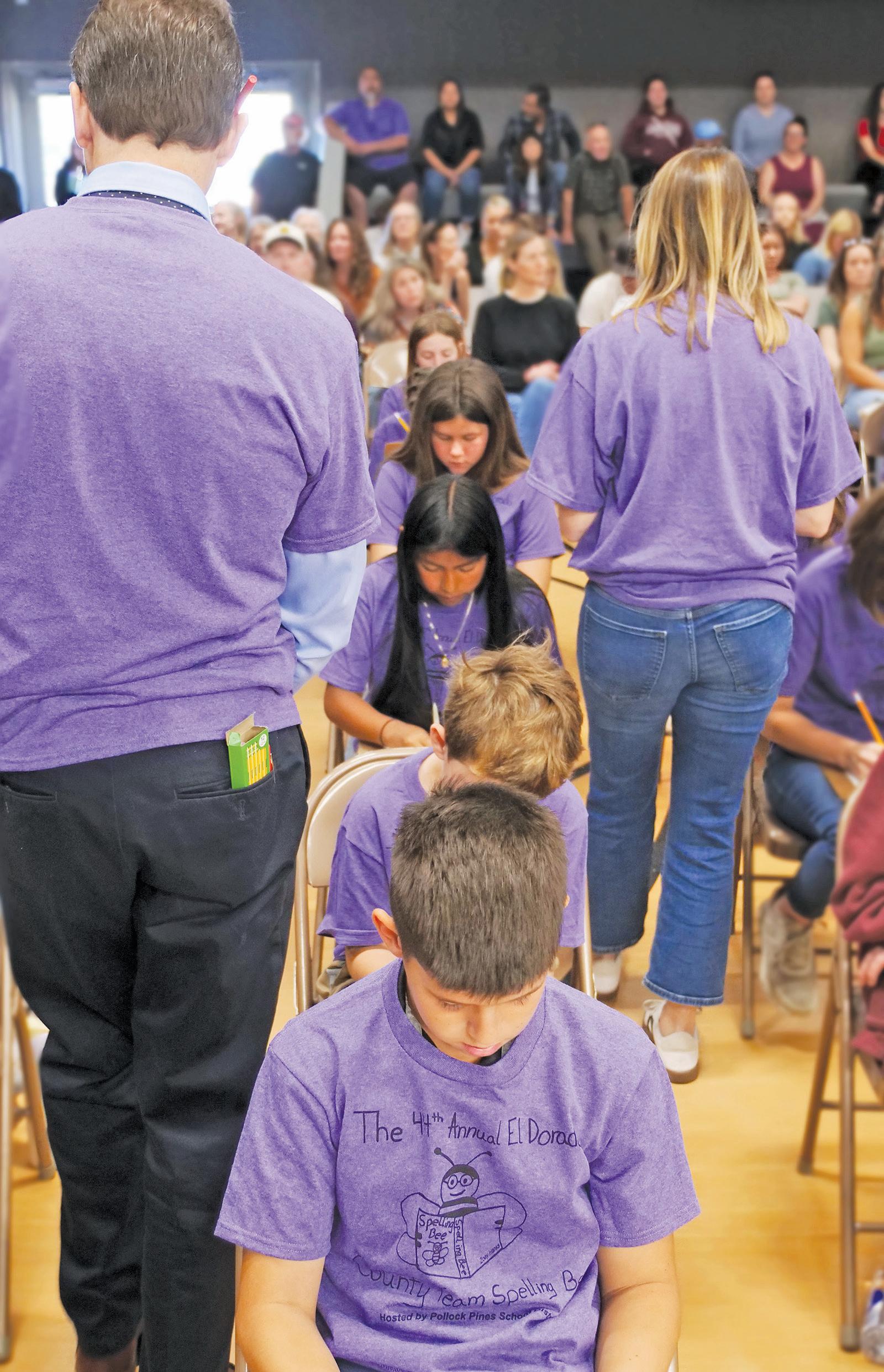

The energy was high across Pollock Pines this past week as the 44th annual El Dorado County Team Spelling Bee brought the season to an exciting close. Rather than a single stage, the competition is spread across four different sites within the Pollock Pines School District to accommodate dozens of teams ready to put their practice to the test.
It wasn’t an easy road to the podium. Students had to navigate a rigorous word list that included “masculine” and “deficit.” While the rooms were mostly quiet to allow for focus, that silence was often broken by the sight of students pumping their fists or whispering an excited “YESSSS!” to their teammates after nailing a tough word.
The California Montessori Project had a standout performance this year, placing in nearly every category, but the talent was deep across the board from Meyers to Marina Village.
Congratulations to our 2026 winners:
Division 1 (Grades 1-2): Meyers, Silva Valley, Sierra House
Division 2 (Grades 3-4): Lakeview, CA Montessori Project, Pinewood
Division 3 (Grades 5-6): Oak Meadow, CA Montessori Project, Rolling Hills
Division 4 (Grades 7-8): CA Montessori Project, Rolling Hills, Marina Village
Events like this don’t happen without a lot of behind-the-scenes work from the Pollock Pines School District and the dedicated coaches at each school. It was a great way to wrap up the year and celebrate the hard work of these talented students.














May 15
The Golden Road Gathering will take place at the El Dorado County Fairgrounds, Friday through Sunday. For tickets and more information visit goldenroadgathering. com.
The Sierra Renaissance Society presents Emergent Behavior and the Nexus with Philanthropy by speaker Bill Roby from 1-3 p.m. at the Mother Lode Lions Hall, 4701 Missouri Flat Road. Admission is free for members; the public is invited to attend two meetings for free. For more information visit srsedc.org.
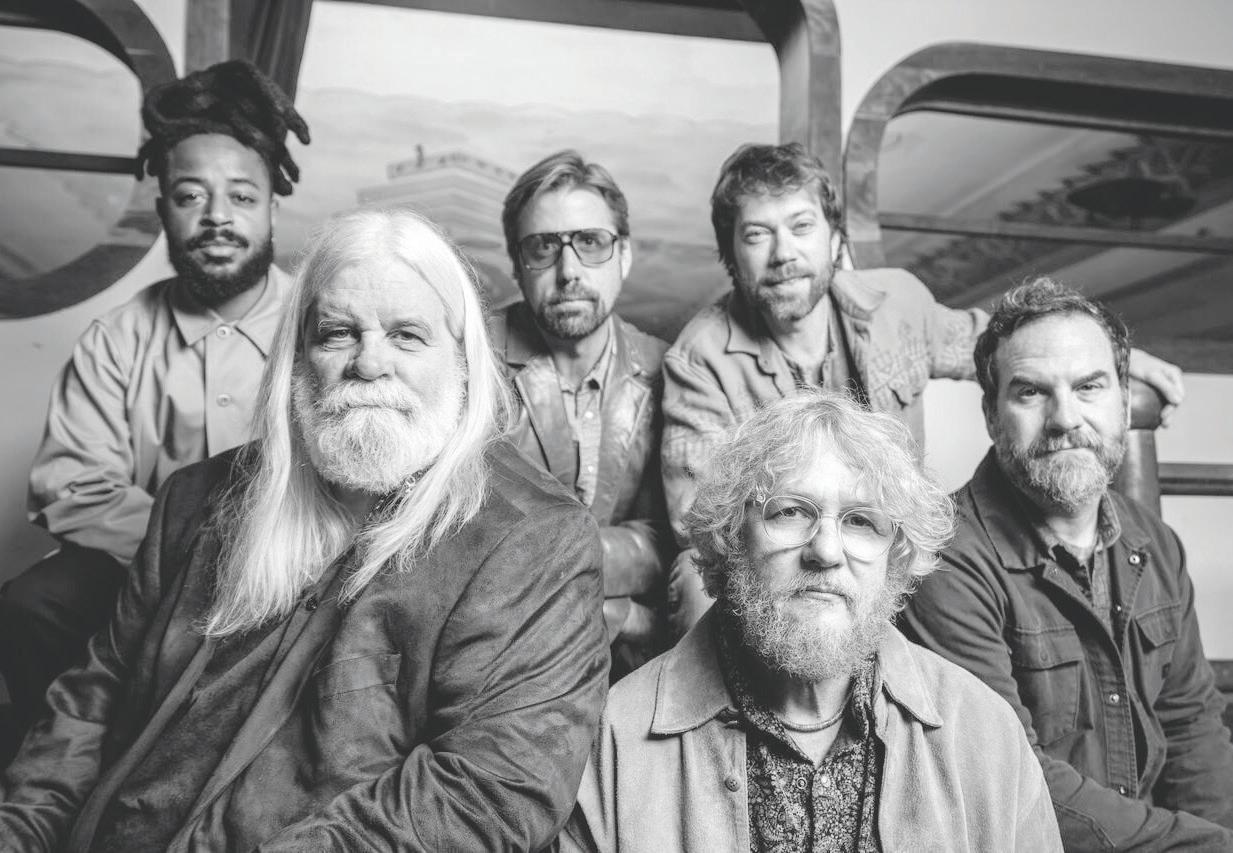
The Stage at Burke Junction in Cameron Park presents Home Grown Comedy with Marcel Weiland, Gabriel Alexander and Kul Black at 8 p.m. For tickets and more information visit stageatburke.com.
May 16
Marshall Gold Discovery Park will host Voices of the Pioneer Cemetery, a unique living-history event, at 10 a.m., noon and 2 p.m. For more information visit golddiscoveryparkassociation.org.
The El Dorado Hills Arts Association will host its Spring Studio Tour from 10 a.m. to 5 p.m. on Saturday and Sunday. For more information visit eldoradohillsarts.com.
n See TO DO, page 10



Find the 7 words to match the 7 clues. The numbers in parentheses represent the number of letters in each solution. Each letter combination can be used only once, but all letter combinations will be necessary to complete the puzzle.
1 ceases to exist (10)
2 toque toppers (7)
3 leaves an out (6)
4 possible “Clue” weapon (11)
5 like curling sheet’s surface (6)
6 House of Neil Finn (7)
7 said with a straight face (10)


Most people don’t set out to ignore their health. It usually slips down the list somewhere between the morning alarm and the last email of the day. Breakfast gets rushed or skipped. Exercise is postponed until tomorrow. Sleep is cut short to catch up on everything else. By the end of the week, healthy intentions are still there, but the follow-through feels harder than expected.
For many, the challenge is not motivation but finding habits that fit into real life. Small, repeatable choices around sleep, exercise, nutrition, mental well-being and social connection can support how the body and mind function over time.
Sleep is essential for physical recovery, mental focus and emotional balance,
but it’s often the first habit to slip when schedules get busy.
Establishing a regular bedtime routine helps signal when it’s time to rest. Limiting screen exposure in the evening, keeping sleep and wake times consistent and creating a dark, quiet sleep environment can support more restorative sleep. Over time, better sleep contributes to improved mood, focus and overall heart health.
Exercise often falls into the same trap as sleep. When schedules get full, it becomes something to get back to rather than something that fits into the day as it unfolds. A missed workout can quickly turn into a missed week, even for people who value staying active.
Regular movement supports heart health, muscle strength and overall energy, but it doesn’t need to be all-ornothing. Short periods of activity spread throughout the day can still make a difference, especially when long stretches of sitting are the default.
Walking between meetings, stretching in the morning or adding light strength exercises at home are simple ways to stay active without blocking out extra time.
Food decisions often happen on autopilot as meals are squeezed into busy schedules and long days, making nutrition one of the most influential daily habits.
Meals do more than provide fuel. When built around nutrient-rich foods, they support muscle health, brain health and heart health. An overall healthy eating pattern includes a variety of whole foods like fruits, vegetables, whole grains and lean proteins, helping the body keep up with everyday demands.
Protein plays an important role in maintaining muscle and supporting daily movement, especially as people age. High-quality protein from foods, along with a balanced diet and regular exercise, can help support all the muscles in the
body. Choosing protein sources that are easy to prepare and repeat supports consistency when schedules are full.
As part of a balanced approach to healthy habits, nutrition guidance from the American Heart Association’s Healthy for Good initiative, nationally sponsored by the Egg Nutrition Center, highlights how everyday food choices can support the body and brain over time. Eggs are an example of a high-quality protein and they fit easily into meals throughout the day.
Eggs also deliver choline, a nutrient many Americans don’t get enough of. Choline is a critical nutrient, among others, for supporting brain development, memory and mood. Along with protein, choline helps support brain health, making it an important consideration across life stages.
According to the American Heart Association, healthy people can include one egg daily, up to seven eggs per week, as part of a heart-healthy diet. For healthy older adults with normal cholesterol, two eggs per day can be included as part of a heart-healthy dietary pattern.
The way people eat, sleep and move does not just affect the body. It also shapes how the brain responds to stress and daily demands. When routines feel rushed or inconsistent, mental well-being is often one of the first areas to feel the strain.
Ongoing stress can interfere with focus, sleep and eating habits, making it harder to maintain healthy routines. Simple practices like deep breathing, mindfulness or stepping away from screens for a few
minutes can help reduce tension and restore attention.
Making time for rest and reflection, and setting realistic expectations, can also support emotional balance. What supports the brain often supports the heart as well, reinforcing the value of caring for mental and physical health together.
Mental well-being is shaped by both daily routines and relationships. When life feels busy or stressful, social connection is often the first thing to get pushed aside, even though it plays an important role in emotional health.
Staying connected doesn’t require packed calendars or constant interaction. Shared meals, short conversations or a quick checkin with a friend or family member can help maintain a sense of connection.
Healthy routines are more likely to last when they fit into the rhythm of everyday life rather than compete with it. Big changes can feel motivating at first, but it is often the small, repeatable choices that quietly shape how people feel over time.
Choosing foods that are easy to prepare, finding enjoyable ways to exercise and protecting time for sleep can make healthy habits feel more realistic. When routines are built around what is already happening during a typical day, they are easier to return to even when schedules get busy.
For more information and educational resources on nutrition and healthy living, visit Heart.org.

The El Dorado High School Music Department will host its annual fundraiser, A Taste on Main Street, from 11 a.m. to 5 p.m. in the lot behind the courthouse at Main and Bedford streets in Placerville. For tickets or more information, visit edhscougarmusic.org.
All About Equine’s Boots and Bling will take place at 4 p.m. at the Folsom Community Center. For more information visit allaboutequine.org.
May 23
El Dorado County Historical Society and Fountain and Tallman Museum presents Walking History Tour: Gold Star Veterans of Placerville’s Union Cemetery with researchers Cindy Oswald and Joseph Connolly ay 10 a.m. For more information visit edchs.org.
May 25
Cantare Chorale presents a Memorial Day Remembrance Ceremony at Green Valley Mortuary & Cemetery at 9 a.m. For more information visit cantarechorale.com.

A Memorial Day ceremony will take place at 11 a.m. at the El Dorado County Veterans Monument at the county government center, 360 Fair Lane in Placerville. The ceremonies honor those who died in the service of their country and include a fly over by WWII Warbirds, color guard ceremony, parade of flags and more. For more information visit eldoradocountyveterans.org.



Late night sips and nibs, tasty tunes, and unmatched energy are worth the stop!




As summer approaches and temperatures start to rise, you might be wondering if your horse is too hot. If you don’t have much experience in this area, it is di cult to tell if your horse is just tired from being worked, or if they’re actually in danger from being too hot.

How can you tell if a horse is too hot? A horse that is too hot might demonstrate the following symptoms:
• Continuous rapid breathing
• Body temperature above 105 degrees Fahrenheit
• High heart rate
• Unwillingness to move
• Weak or sluggish movements
• Disinterest in the environment
• Skin that does not retake its form quickly a er a pinch test
• Discolored gums
Being able to tell if your horse is too hot is essential if you’re planning on working with them at all throughout the warmer months of the year. Study these warning signs to recognize the symptoms.














Paul Moreno PG&E
With the arrival of mid-spring, rivers and streams are experiencing higher and colder water flows due to snowmelt. Outdoor enthusiasts must exercise caution as these conditions can be extremely dangerous, with cold, swiftly moving water posing significant risks.
Pacific Gas and Electric Company urges those who venture near rivers and streams to take extra precautions, especially around hydroelectric facilities and dams, where flow conditions can change rapidly. Swimming in cold, swift water is not recommended.
“With warm spring temperatures, the snow is melting and creating cold, higher flows,” said Dave Gabbard, PG&E vice president of Power Generation. “We encourage everyone recreating in or near water to be situationally aware and have a plan to quickly and safely escape in case of changing water flows and cold temperatures.”
Most California rivers are fed by snowmelt, making them cold even in summer. Flows can vary from night to day as temperature n See DANGEROUS CONDITIONS, page 15

























































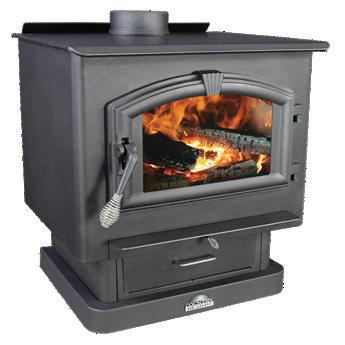
The Chimney Smoke RIP offers $599 to $2,000* to replace a non-EPA certified woodstove with a new efficient, cleaner burning, eligible EPA certified wood or gas device.
*$2,000 incentive available to low-income residents or residents of designated low-income communities
The expanded Clean Lawn equipment Incentive Pr ogr am (CLIP) offers $100 to $2,000 to replace a piece of gas powered lawn equipment with a cordless electric version. Now includes push and riding mowers, leaf blowers, trimmers/weedeaters, chainsaws, and more!


The new CHar ge At your Resid ence and Go Electric (CHARGE) incentive program offers plug -in car owners and lessees a $300 incentive to purchase and install a home EV charger.
The Drive Clean! incentive program offers El Dorado County residents a $599 incentive towards the purchase or lease of an eligible new electric, plug-in hybrid, or hydrogen vehicle.

The Driving Clean Assist ance Pr ogr am (DCAP) offers lowerincome residents up to a $10,000 incentive towards the purchase of an eligible new or used clean air vehicle in addition to a $2,000 incentive to help cover the cost of charging. DCAP also provides financial advice and counseling and their select group of financial partners offer financing at a rate of 8% or less.



conditions Continued from 12 changes affect how fast snow melts. Simple actions can save lives, such as recognizing if the water is too cold or swift, knowing your limits, wearing a life jacket or simply by not entering the water when conditions seem unsafe.
Know the risks
• Prevention is the best way to save a person from drowning. By the time a person is struggling in the water, a rescue is extremely unlikely and places the rescuer at risk.
• Sudden immersion in cold water can stimulate the “gasp reflex,” causing an involuntary inhalation of air or water. It can even trigger cardiac arrest, temporary paralysis, hypothermia and drowning. When faced with swift water, even the strongest swimmers can be easily overwhelmed.
• Cold water entering the ear canal can cause vertigo and disorientation. This can confuse swimmers, potentially causing them to venture deeper into the water.
• Cold water also reduces body heat 25 to 30 times faster than air does at the same temperature and causes impairment that can be fatal.
If you do fall in the water:
• Don’t panic. Try to control your breathing; don’t gasp. A sudden, unexpected fall into cold water causes an involuntary gasp (or torso) reflex. It takes less than one-half cup of water in a person’s lungs to drown. If you remain calm, you have a greater chance of self-rescue.
• If you have a boat, stay with it. It will help you stay afloat and will be seen more easily by rescuers. If it’s capsized and a portion of the craft is above water, try to climb on top.
• Stay afloat with the help of a life jacket, regain control of your breathing and keep your head above water in view of rescuers.
• If possible, remove heavy shoes. Look for ways to increase buoyancy such as by holding onto seat cushions or an ice chest.
• If you’re in the water with others, huddle together facing each other to help everyone stay afloat and keep warm.
• If you do fall into a river without a life jacket, keep your feet pointed downstream and turn onto your back.
• If you fall into the water with waders on, roll onto the shore. Wear a belt with waders.
Swimming in open water is more difficult than in a swimming pool. People tire more quickly and can get into trouble.
For more water safety information and hydro facility awareness visit pge.com/safety.