Winter 2025
A P U B L I C AT I O N O F T H E M A R I C O PA C O U N T Y M E D I C A L S O C I E T Y
GO IN DEPTH
Learn about the great work practices like Arizona Advanced Surgery and Full Life Medical are doing
FLINN FOUNDATION
unveils a new Roadmap for the Arizona Biosciences
A MEDICAL JOURNEY Robert Orford, MD
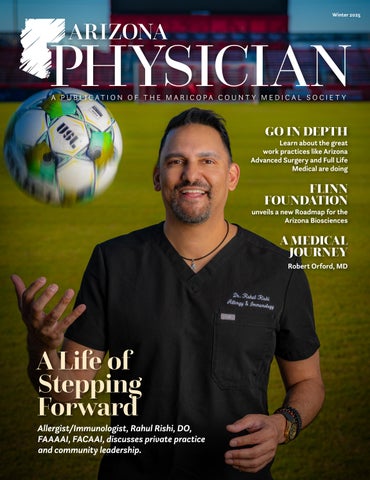
A Life of Stepping Forward
Allergist/Immunologist, Rahul Rishi, DO, FAAAAI, FACAAI, discusses private practice and community leadership.
Advocacy Pushing policies that matter
Patient Referrals Online directory and referral line
Professional Referrals Legal, financial, staffing, real estate, etc.
Scan to learn more about the benefits of being an MCMS member
CME In person and virtual
Physician Stories Print and digital magazine, podcast
Networking Happy hours and fun events
Focused on Physicians Like You! Become a Member Today.
CONTENTS IN EVERY ISSUE VOLUME 7 • ISSUE 3
EDITOR-IN-CHIEF
Desire’e Hardge, MBA MANAGING EDITOR
Edward Araujo ASSOCIATE EDITORS
Dominique Perkins Ella Ditzenberger CREATIVE DESIGN
Randi Karabin, KarabinCreative.com
2 | From the MCMS Board President 4
| From the Editor-in-Chief
6
| Briefs
48 | Education 50 | Community Health 52 | Practice Management 54 | MCMS Member Practices Directory
COVER & FEATURED ARTICLES PHOTOGRAPHY
Jeff Noble, jeffnoblepictures.com ADVERTISING
ads@arizonaphysician.com
Jane Lyons, MD
24
The Solo Practice Revival
MCMS Board member and primary care physician, Linda Eller, DO, discusses physician independence and what it takes to go out and start your own practice.
MCMS member and primary care physician, Ivorie Coleman, MD, shares how her entrepreneurial spirit and openess to change helped her start her practice and keep it thriving.
PRESIDENT-ELECT & TREASURER
Rahul Rishi, DO, FAAAAI, FACAAI SECRETARY
Gregory Aran, DO IMMEDIATE PAST PRESIDENT
Zaid Fadul, MD, FS, FAAFP
RESIDENT & FELLOW DIRECTOR
Surgeons Kevin Masur, MD, and Ryan Eubanks, DO, discuss multi-specialty surgical practice, Arizona Advanced Surgery alongside CEO, Jeanette Robbins.
In Depth: Full Life Medical
PRESIDENT
DIRECTORS
In Depth: Arizona Advanced Surgery
36
MARICOPA COUNTY MEDICAL SOCIETY BOARD MEMBERS
Mona Amini, MD, MBA Kishlay Anand, MD, MS Jay Arora, MD, MBA Ajay Bhatnagar, MD, MBA Shana Johnson, MD Linda Eller, DO Karyne Vinales, MD
10
16 C O V E R S T O R Y Allergist-Immunologist, Rahul Rishi, DO, FAAAAI, FACAAI, of Valley Allergy, discusses his new practice, community leadership, and compassion.
42
A New Roadmap for the Arizona Biosciences
Brian Powell of Flinn Foundation shares the history and vision for the strategic road map for Arizona’s biosciences.
Regan Hill, DO, MA MEDICAL STUDENT DIRECTOR
Kyle Nguyen, MS-1
DIGITAL & SOCIAL MEDIA arizonaphysician.com ArizonaPhysician
30 A M E D I C A L JOURNEY Robert Orford, MD A Career At the Crossroads of Medicine, Aviation, and Public Health
@AZPhysician @AZ_Physician
ARIZONAPHYSICIAN.COM
1
FROM THE MCMS BOARD PRESIDENT
Together in Practice: A Farewell from the MCMS Board President
A
s I reflect on my tenure as Board President of the Maricopa County Medical Society (MCMS), I am reminded of the profound sense of connection that our publication, Arizona Physician continues to foster among us. In every issue, we have shared stories of physician excellence, resilience, and compassion—stories that remind us and those that work with us, we are never alone in our pursuit of better patient care. Our magazine has been more than a publication; it has been a bridge. Through its pages, we have celebrated achievements, confronted challenges, and learned from one another. Whether you are a seasoned physician or just beginning your medical journey, the voices within these columns have offered guidance, encouragement, and camaraderie. Each article, each story, and each shared experience has woven a tapestry of collective wisdom that strengthens our profession. In times of uncertainty, our magazine has been a source of reassurance. It has connected us across specialties, generations, and geographies, reminding us that our shared commitment to healing transcends individual boundaries. The dialogue we have cultivated here has empowered us to advocate for our patients and for each other. As I bid farewell to my role as board president, I do so with immense gratitude. Serving this physician community has been one of the greatest honors of my career. I am confident that our magazine will continue to unite us, inspire us, and propel us forward. Let us remain engaged, curious, and supportive knowing that together, we are stronger. Thank you for allowing me to be part of your journey. Though my chapter as president closes, my connection to this remarkable community endures. I look forward to seeing how we continue to grow, innovate, and care—collectively.
Dr. Jane Lyons is a Pediatrician, who provides care for patients in both the inpatient and outpatient setting. She works locally in Phoenix as well as providing rural locum hospital based care. Dr. Lyons completed her medical training in San Diego, CA, has two young children, and enjoys the outdoors, cooking, and spending time with family and friends.
With heartfelt appreciation and best wishes for the future, Jane Lyons, MD MCMS Board President
2
n ARIZONA PHYSICIAN MAGAZINE
Get involved with MCMS. Visit our website, mcmsonline.com.
ELITE CARE THAT REDUCES
YOUR PATIENTS DESERVE A CONCIERGE NURSE We handle the details. So, you can focus on medicine.
• Patient Calls • Staff Workload • Hospital Visits • Readmissions • Infections • & More
A TRUSTED H E A LTH E X TENSION FOR YOUR TE A M
BIANCA FABBO, MSN-ED, RN, AMB-BC www.pratahealth.com
480.404.4737
info@pratahealth.com 4
ARIZONA PHYSICIAN MAGAZINE
FROM THE EDITOR-IN-CHIEF
Honoring the Healers “IN THE FACE OF TRIALS OFTEN UNSEEN, THIS ISSUE STANDS AS A TESTAMENT TO THE RESOLVE, COMPASSION, AND LEADERSHIP OF MARICOPA COUNTY PHYSICIANS, WHOSE STEADFAST SERVICE ELEVATES CARE, FORTIFIES OUR COMMUNITY, AND SHAPES THE FUTURE OF MEDICINE.”
A
s we close another transformative year in healthcare, even amidst challenges and battles often unseen, I am proud to share this issue of our magazine: a collection of stories that speak to the courage, dedication, and innovation of our physician community. These stories remind us of what makes Maricopa County exceptional: leaders rooted in compassion, practices guided by purpose, and clinicians who rise every day to elevate the standard of care for every patient. Before we look ahead, we must honor the work of Dr. Jane Lyons, who has served as Maricopa County Medical Society (MCMS) Board President since 2024. Her leadership has been indisputable. Through policy, membership growth, and her remarkable lecture on organized medicine, Dr. Lyons has strengthened our medical community, forged connections, and inspired us all to aim higher. We are grateful for her vision and the path she has paved. Looking forward and to this issue, it is my privilege to introduce our 2026 MCMS Board President, Rahul Rishi, DO. Dr. Rishi was selected as our highlighted physician for his exemplification of service with intention. His passion for treating all patients regardless of background or barriers speaks to the heart of what medicine should be. His commitment to community leadership, patient advocacy, and holistic care sets a bold and hopeful tone for the year ahead. Beyond the clinic, his warmth and wide-ranging interests remind us that leadership is not only about expertise, but about connection, empathy, and vision. This issue also shines a spotlight on practices across our region that are redefining care. At Arizona Advanced Surgery, physicians Kevin Masur, MD, Ryan Eubanks, MD, and CEO Jeannette Robbins share a story built on collaboration, excellence, and patient-centered care. They discuss their culture, the multispecialty services they provide, and the challenges of evolving healthcare demonstrating that purposeful leadership and unity can move an entire community forward.
4
n ARIZONA PHYSICIAN MAGAZINE
—Desire’e Hardge, MBA We are inspired by Ivorie Coleman, MD, of Full Life Medical, whose practice stands as a model of vision-driven expansion and trust. She builds her care around patient education, accessibility, and listening deeply to her community. And as she looks to the future, her drive and optimism remind us of what is possible when innovation meets authenticity. In a landscape dominated by consolidation, Linda Eller, DO, MCMS Board Director and solo practitioner, provides a powerful testament to independence. Her journey in building and sustaining her practice reminds us of the enduring value of autonomy, patient relationships, and care that is tailored, personal, and resilient. We also feature Brian Powell of the Flinn Foundation, who shares the vision behind Arizona’s Bioscience Roadmap, a committee I am honored to serve on. Brian highlights the strategic goals for 2030 and underscores why physicians are central to shaping not only healthcare delivery, but the future of scientific and economic innovation in Arizona. This issue also provides important information like: Security Cameras in Medical Practices | Attorney Kristin Penunuri outlines critical considerations for privacy, compliance, and risk mitigation. Performance Health | Christian Poulos, MD, shares insights for sustaining physician wellness, combating burnout, and fostering long-term career success. A New Medical School | Alissa Craft, DO, shares how the The Valley College of Osteopathic Medicine (Valley Com) will be at the forefront of graduating the physician of the future. Finally, we spotlight Ella Ditzenberger, our Membership & Events Coordinator, whose dedication ensures our members and their practices feel connected, supported, and empowered, a reflection of our mission: empowering physicians through membership and value. As the Chief Executive Officer and Executive Director of MCMS, and as your Editor-in-Chief, I move into the year ahead inspired by the creativity,
Become an MCMS member in 2025 by calling us at (602) 209-9867 or email us at mcms@mcmsonline.com.
resilience, and leadership that define our physician community. Together, we meet challenges with resolve, embrace innovation with courage, and continue to elevate healthcare for every patient across Maricopa County and Arizona. Thank you for your tireless dedication to your patients, our community, your own growth and wellbeing, and the support you extend to one another. Your commitment truly makes a difference, and we are deeply grateful for the trust you place in MCMS as your premier medical association in Arizona. With Gratitude,
Desire’e Hardge, MBA Arizona Physician Editor-in-Chief MCMS CEO & Executive Director
Desire’e Hardge, MBA, serves as the CEO & Executive Director of MCMS and the Editor-inChief for the Arizona Physician magazine. Desire’e brings over 19 years of experience across both for-profit and non-profit sectors. She has successfully led organizations through business development, community relations, and strategic growth.
ADVOCATES FOR THE PRIVATE PRACTICE OF MEDICINE Health Care Compliance Estate Planning Health Care Audits, Investigation and Litigation Business Transactions State and Federal Licensing Reimbursement Patient Privacy Fraud and Abuse Corporate Law Intellectual Property Employment Law Counseling and Litigation
MilliganLawless.com
602.792.3500 5050 North 40th Street, Suite 200 Phoenix, Arizona 85018
ARIZONAPHYSICIAN.COM
5
BRIEFS
NEWS AND NOTES FROM THE FIELD
SAFE & SAVORY
A Holiday Guide to Meal Safety
The holidays are a time for celebration, connection, and of course, indulgent meals. Yet, behind the festive spread lies a serious concern: foodborne illness. With kitchens bustling and buffets brimming, it’s easy to overlook simple safety steps that can make or break your gathering. Here’s how to keep your holiday meals joyful—and safe. T E M P E R AT U R E I S E V E RY T H I N G Whether you’re roasting a turkey or reheating leftovers, temperature matters. Undercooked poultry is a leading cause of Salmonella outbreaks. Use a food thermometer—not guesswork—to ensure meats reach safe internal temperatures: P OULTRY | 165°F G ROUND MEAT | 160°F LEFTOVERS | 165°F
6
n ARIZONA PHYSICIAN MAGAZINE
C R O S S - C O N TA M I N AT I O N : T H E I N V I S I B L E T H R E AT Holiday cooking often involves juggling multiple dishes. Raw meat juices can easily contaminate surfaces, utensils, and other foods. To prevent this: Use separate cutting boards for meat and produce Wash hands frequently with warm, soapy water Keep pets away from food prep areas L E F T OV E R S : H A N D L E W I T H C A R E Leftovers are a holiday staple, but they come with risks. Bacteria multiply quickly at room temperature, so: Refrigerate leftovers within two hours Store in shallow containers for faster cooling Eat within 3–4 days or freeze for longer storage B U F F E T TA B L E S A F E T Y Buffets are festive—but they’re also breeding grounds for bacteria. Keep hot foods above 140°F and cold foods below 40°F. If dishes sit out for longer than two hours, it’s safer to toss them than risk illness. A L L E R GY AWA R E N E S S With guests from all walks of life, food allergies are a growing concern. Clearly label dishes containing common allergens like nuts, dairy, or shellfish. Offering allergen-free alternatives ensures everyone can enjoy the feast. Holiday memories should be filled with laughter, not stomach aches. By following these simple safety tips, you’ll protect your guests and preserve the joy of the season.
LONGEVITY NEUROLOGY CENTER CONCIERGE NEUROLOGY PRACTICE IN SCOTTSDALE, AZ
DR. TASHA R. POWELL, MD Board Certified Neurologist
Former Chief of Neurology Services & Staff Neurologist: U.S. Army Hospitals U.S Army Neurology Residency (2009-2013) Walter Reed National Military Medical Center (”the Presidents Hospital”)
COMPREHENSIVE & PREVENTIVE NEUROLOGICAL CARE
PRACTICE AREAS PREVENTIVE NEUROLOGICAL CONSULTATIONS
PERSONAL INJURY / EXPERT WITNESS SERVICES
In-depth assessments to identify risk factors and develop proactive strategies for brain health and longevity.
Neurological evaluations and expert testimony for legal cases.
LIFESTYLE & NUTRITIONAL NEUROLOGY Personalized guidance on diet, exercise, sleep, and stress management to optimize brain health and mitigate disease progression.
THERAPEUTIC INJECTIONS Administration of Botulinum toxin (ex. Botox) for neuromuscular indications (e.g., spasticity, dystonia, , hemifacial spasms, blepharospasms)) and chronic headaches. Trigger point injections / occipital nerve blocks for myofascial and occipital pain.
DIAGNOSIS AND MANAGEMENT OF NEUROLOGICAL CONDITIONS Expert care for a wide spectrum of disorders including (but not limited to): Headaches & Migraines Multiple Sclerosis & Demyelinating Disorders Stroke & Cerebrovascular Disease Seizures/Epilepsy (including Vagal Nerve Stimulator therapy management) Alzheimer’s Disease & Dementia Movement Disorders (including Parkinson’s Disease) Neuropathy Acquired Brain Injuries (Traumatic and NonTraumatic) Chronic Neck and Back Pain (Neurological Aspects) Dizziness/POTS/Dysautonomia
CONTACT US 14362 N FRANK LLOYD WRIGHT BLVD STE 1340, SCOTTSDALE, AZ 85260 (480) 770-0427 www.longevityneurologycenter.com info@longevityneurologycenter.com
Managing Chronic Conditions During Holiday Disruptions: Physician Guidance The holiday season often disrupts routines that are essential for patients with chronic illnesses. Physicians can play a pivotal role in helping patients anticipate challenges and maintain stability. Here are key strategies to guide patient care during this period: REINFORCE MEDICATION ADHERENCE Pre-travel counseling | Remind patients to pack medications, including extras, and provide written instructions for time zone adjustments.
Tools for adherence | Suggest pill organizers, smartphone reminders, or pharmacy synchronization services.
Refill planning | Encourage patients to request
refills early to avoid holiday pharmacy closures.
Promote coping strategies | Recommend mindfulness, short walks, or structured downtime.
Sleep hygiene reminders | Emphasize consistent bedtimes and limiting alcohol or caffeine late in the day. PREPARING FOR ENVIRONMENTAL RISKS Cold weather counseling | Warn cardiac and respiratory patients about exertion in low temperatures.
Vaccination updates | Ensure flu, RSV, and COVID-19 vaccines are current before travel or gatherings. Infection prevention | Reinforce hand hygiene and mask use in crowded settings.
ENCOURAGE TIMELY CARE-SEEKING
Normalize seeking help | Remind patients that
holidays are not a reason to delay care.
Symptom education | Review warning
signs for cardiac, respiratory, and metabolic emergencies.
Emergency planning | Suggest patients identify nearby urgent care or hospital facilities when traveling.
PROVIDE PRACTICAL NUTRITION ADVICE Anticipate indulgence | Discuss how holiday foods may affect blood pressure, blood sugar, or lipid levels.
PHYSICIAN TAKEAWAYS Proactive counseling before the holidays reduces risk of complications.
Offer alternatives | Share simple swaps (e.g.,
tips, diet guides) can reinforce advice.
roasted vegetables instead of creamy casseroles).
Empower moderation | Encourage portion control
rather than strict avoidance, to reduce resistance.
8
ADDRESS STRESS AND SLEEP DISRUPTION Screen for stressors | Ask about family dynamics, financial strain, or loneliness that may worsen conditions.
n ARIZONA PHYSICIAN MAGAZINE
Patient education materials (checklists, travel Team-based support | involving pharmacists, dietitians, and nurses—strengthens adherence and lifestyle management.
GET TO KNOW
Ella Ditzenberger
QUICK CONTACT TIP
W H AT B R O U G H T YO U T O M C M S ? I joined MCMS after spending the past two years working in hospitality. I was ready for a new challenge and eager to expand my skill set as a young professional, and MCMS has provided the perfect opportunity to grow and learn in a meaningful way.
Reach out to Ella Ditzenberger at editzenberger@mcmsonline.com — she’s your go-to resource for making the most of your membership.
MCMS Membership & Events Coordinator and Arizona Physician Associate Editor
H OW D O YO U S U P P O R T M E M B E R P H YS I C I A N S DAY-T O - DAY ? I am here to support physicians and serve as their liaison between MCMS and their professional needs. I assist with troubleshooting any CME-related issues, answering membership questions, and providing guidance on all MCMS events. My goal is to ensure our physicians have the resources and support they need to thrive in their careers. C A N YO U S H A R E W H Y P H YS I C I A N S S H O U L D J O I N A N O R G A N I Z AT I O N LIKE MCMS? I believe it is important for physicians to join organizations such as the Maricopa County
Need help with your membership account, upcoming events, or connecting with other physician colleagues?
Medical Society because we provide critical support and up-to-date information on issues that directly affect physicians, their practices, and the broader medical community. Participation helps physicians stay informed about legislative changes, regulatory updates, practice management challenges, and emerging trends in healthcare. In addition, involvement in professional organizations contributes to building a stronger practice environment by promoting advocacy, collaboration, and shared resources. It also enhances interpersonal and cross-specialty connections, giving physicians opportunities to learn from one another, expand their professional networks, and strengthen the overall continuity and quality of patient care in the county.
W H AT D O YO U E N J OY M O S T A B O U T WO R K I N G WITH MCMS MEMBER P H YS I C I A N S ? I love to learn, and having the opportunity to work alongside such intelligent and dedicated individuals is truly inspiring. Seeing firsthand the impact they have on others motivates me every day. I also appreciate hearing physicians’ perspectives on new and emerging healthcare topics—it provides valuable insight into the challenges and innovations shaping the future of medicine.
Designing Innovative Healthcare Spaces in the Heart of Arizona BANNER ESTRELLA MEDICAL CENTER - PHOENIX ARIZONA
ARIZONAPHYSICIAN.COM
9
ARIZONA ADVANCED SURGERY B U I L D I N G A M U LT I S P EC I A LT Y SURGICAL FUTURE IN ARIZONA
A
rizona Advanced Surgery began as an experiment in independence, a small collective of surgeons determined to combine clinical autonomy with collaborative strength. Today, the practice has grown to include more than 70 providers across 24 locations. We sat down with CEO Jeannette Robbins, and surgeons Dr. Kevin Masur and Dr. Ryan Eubanks to learn more about the thriving practice.
FO U N D I N G VI S I O N “Arizona Advanced Surgery was founded by independent surgeons who shared a common vision: to maintain clinical autonomy while building the infrastructure and scale needed to compete in an increasingly consolidated healthcare landscape,” said Robbins. Growing from a single specialty focus to a comprehensive multispecialty surgical group required intentional and highly strategic moves. “Growth for growth’s sake was never the goal,” Robbins said. “We’ve expanded to ensure our physicians have the resources, support, and negotiating power to practice medicine on their terms.” “One of the most important aspects of our group is that, despite all the different office locations and subspecialists, the one common ‘theme’ is excellent patient care,” Dr. Masur explained.
10
n ARIZONA PHYSICIAN MAGAZINE
ARIZONAPHYSICIAN.COM
11
“We’re able to coordinate complex care more efficiently,” she said. “Which ultimately leads to better patient experiences and outcomes.” “Whether the treatment requires an operation or is managed without surgery, our surgeons strive to help the patients find the optimal outcomes,” Dr. Masur said.
C U LT U R E The practice rests on three core values, Robbins said: clinical excellence, operational efficiency, and collaborative decision-making. “Maintaining culture across 24 locations and multiple specialties requires intentional systems,” she said. “We use standardized operational frameworks and data-driven performance metrics, but we also create space for regular communication and collaborative decision-making.” Physicians have real influence. “Our physicians aren’t just employees— they’re partners and stakeholders who have a voice in strategic planning,” Robbins said. “We invest heavily in leadership tools and make sure our administrative teams understand that their role is to support clinicians, not constrain them.” “This multidisciplinary approach allows us to tackle complex cases more effectively and deliver outcomes that truly improve patients’ quality of life,” said Dr. Eubanks.
M U LTI S PEC IALT Y CAR E AAS unites surgeons across General, Plastic, Vascular, Colon & Rectal, Surgical Oncology, Wound Care, and Trauma/Acute Care. “General surgery is one of the most rewarding and diverse surgical fields in medicine,” Dr. Masur said. “Our training and practice provide crossover into almost all other surgical specialties.” The group provides on call and trauma coverage within all major health systems across the region, stepping in to fill a critical gap in care delivery throughout the valley. This multi-specialty integration creates natural care coordination, Robbins explained.
12
n ARIZONA PHYSICIAN MAGAZINE
Maintaining culture across 24 locations and multiple specialties requires intentional systems,” Jeanette Robbins, CEO
PL ASTI C & R EC O N STRU CTIVE S U RG ERY Dr. Ryan Eubanks has helped expand the plastic and reconstructive division. His work spans hand, reconstructive, and aesthetic procedures. Most popular among these are carpal tunnel release, fractures, tendon repairs, and treatments for arthritis. In reconstructive surgery, he focuses on cancer-related procedures. Aesthetic work includes body contouring, breast surgery, and scar revision. “Reconstructive surgery focuses on restoring function and normal appearance,” Dr. Eubanks explained. Reconstructive surgery can require managing complex cases involving multiple injuries or conditions, and often require creative and highly individualized approaches. “Plastic surgery, on the other hand, is primarily aesthetic, aiming to enhance appearance or address cosmetic concerns,” he said. “Meeting patient’s expectations while maintaining realistic outcomes is key.” “Both disciplines often overlap, requiring a blend of technical precision and artistic vision,” he said.
I N N OVATI O N Technology and innovation drive the “Advanced” in Arizona Advanced Surgery. “Our group name (Arizona ADVANCED Surgeons) encompasses the driving force to continue
K E V I N M A S U R , M D , FA C S
to blend together the emerging technologies with established, evidencebased decision making,” Dr. Masur emphasized. Surgeons are continually adopting tools to improve outcomes, including strategic site-of-service planning, which saves costs while maintaining quality, best-practice habits and pathways, and a growing robotic-assisted surgery component, and other minimallyinvasive approaches. “These help improve post-surgical recovery, shorten length of stay, reduce complications, and provide return to function more rapidly,” Dr. Masur said. New techniques and technologies are continually evaluated, Robbins added.
“Staying updated with rapidly evolving techniques and technologies, such as microsurgery, demands constant learning and adaptation,” Dr. Eubanks agreed.
ED U CATI O N Academic involvement is a defining facet of AAS’s identity. Teaching and mentorship are essential in advancing not only the practice, but the medical field. For Dr. Kevin Masur, passion for education began in residency. “I completed my General Surgery training in the Phoenix Integrated Surgical Residency
MEDICAL SCHOOL
Indiana University School of Medicine R E S I D E N CY
Phoenix Integrated Surgical Residency S P E C I A LT I E S
arizonaadvancedsurgery.com/ physicians/Kevin-Masur/
ARIZONAPHYSICIAN.COM
13
R YA N E U B A N K S , D O
MEDICAL SCHOOL
Midwestern University G E N E R A L S U R G E RY R E S I D E N CY
Valleywise Health R E S I D E N CY
Phoenix Integrated Surgical Residency P L A S T I C S U R G E RY R E S I D E N CY
Wayne State University, Detroit Medical Center H A N D/ M I C R O S U R G E RY FELLOWSHIP
The Hand Center of San Antonio S P E C I A LT I E S :
arizonaadvancedsurgery.com/ physicians/ryan-eubanks/
14
n ARIZONA PHYSICIAN MAGAZINE
With the increasing demand for a diversity of surgical specialists AAS is wellpositioned for growth.
in downtown Phoenix,” he said. “The attendings on that service were some of the most well-respected teaching faculty in the program.” Dr. Masur seeks to continue that legacy. In addition to his general surgery patients, he currently serves as a surgical faculty member of both the Banner University and Creighton University surgical residency programs. “I also serve in various leadership roles in our affiliated hospitals to continue the positive impact on our local community,” he said. “Teaching forces you to stay current, to question your assumptions,” Robbins added. “It benefits our patients as much as it benefits trainees.”
C HALLEN G ES Independent surgical practices face significant pressures – ones mirrored in most physicians and physician groups,
but also unique to AAS’ group size and multispecialty composition, Dr. Masur said. He listed rising overhead, competition, regulatory changes, insurance adjustments, and contract negotiations. “The ‘business’ of medicine in the United States is always changing,” he said. But the group actively responds to the challenges they face. “Our governing board and subcommittees meet frequently and work hard to stay ahead of the challenges related to revenue cycle management, medical coding, insurance negation, and interacting with large health systems,” Dr. Masur said. Robbins added, “Some of our most important growth isn’t about adding locations or providers—it’s about building operational sophistication.”
Arizona Advanced Surgery (AAS) BY THE NUMBERS
TH E FU T U R E AAS looks to expand while deepening interdisciplinary collaboration. “With the increasing demand for a diversity of surgical specialists AAS is well-positioned for growth,” Dr. Eubanks explains. “We aim to enhance collaboration across specialties… to provide patients with seamless, comprehensive care under one roof.” “Additionally, we’re focused on expanding our services geographically and strengthening partnerships with the local physicians, hospitals and outpatient centers to make high-quality surgical care more accessible,” he said. Prioritizing partnership and system design will be key for AAS moving forward, Robbins echoed. “The future of healthcare delivery, in my view, is about finding the right collaborative models… that keep patient outcomes and clinical excellence at the center,” she said. Arizona Advanced Surgery’s story is one of deliberate evolution—rooted in independence, strengthened by integration, and driven by the belief that both surgeons and patients benefit when excellence is structurally and intentionally supported. ■
Founded 2021 45 Physicians 8 Nurse Practitioners 15 Physician Assistants 180 Total Employees Services Provided Breast procedures, colorectal procedures, general procedures, hand, wrist and forearm procedures, laparoscopy procedures, plastic and reconstruction procedures, robotic surgery, surgical oncology procedures, trauma surgery, and vascular surgery
18 Locations Avondale, Chandler, Mesa, Gilbert, Glendale, Goodyear, Peoria, Phoenix, Scottsdale, and Surprise
Connect with AAS arizonaadvancedsurgery.com | info@azadvanced.com
By Dominique Perkins Associate Editor Arizona Physician azphysician@mcmsonline.com ARIZONAPHYSICIAN.COM
15
16
n ARIZONA PHYSICIAN MAGAZINE
A Life of Stepping Forward RAHUL RISHI, DO
W
hen Dr. Rahul Rishi describes the moment he chose medicine, he describes a sudden clarity: a moment of unmistakable calling. “I had my sort of Jerry McGuire moment one day, and I said I want to go into medicine,” Dr. Rishi said. “I want to give back. At the end of the day, I wanted to look back and say, I made a difference, I did something I enjoyed and helped someone in the process.” At the time, he was already deep into a successful career in the technology sector. He liked the work. He was good at it. But something essential was missing: a greater sense of connection and fulfillment. And so, he left his budding career and enrolled in medical school. That leap reflects something central to who he is: when something matters, he steps forward. That instinct, to act, engage and participate, would shape every chapter of his professional journey. Today, as an allergist and immunologist, practice owner, community advocate, and incoming 2026 President of the Maricopa County Medical Society (MCMS), Dr. Rishi lives by a philosophy of involvement. He doesn’t sit on the sidelines. When there is work to be done or people to be helped, he shows up.
ARIZONAPHYSICIAN.COM
17
18
n ARIZONA PHYSICIAN MAGAZINE
It’s fun to have your own practice, because you get to put your own energy and paintbrush on it. To infuse your spirit and your personality into your practice.
A S PEC IALT Y THAT R E WAR D S C U RI OS IT Y After medical school and residency, Dr. Rishi found himself drawn to the intellectual breadth of allergy and immunology. He was further inspired by his wife, who had already begun her journey in medicine, and is also a practicing allergist and immunologist. “I had a great role model, and somebody who inspired me to pursue the same field,” he said. “I got to see her work behind the scenes.” Dr. Rishi is now board-certified in both internal medicine and allergy and immunology, and also completed additional training in dermatology. Dermatology and immunology overlap more than many patients realize, and that extra training has become deeply integrated into his clinical practice. He is often the first to evaluate rashes, chronic skin conditions, and inflammatory presentations that cross the borders between specialties. Understanding what belongs in dermatology and what stems from allergies or immunologic disease allows him to guide patients more efficiently and more empathetically. When referring patients, he shares findings with their dermatologist, explaining the likely pathways, and minimizing the limbo patients often feel in the gray zones of diagnosis. It is another expression of his central values to be involved, be present and do more than the minimum. He also discovered a passion for complex and atypical cases, which he jokingly referred to as the ‘X-Files’ of medicine. “We really have to stretch, and try and figure out what is going on,” Dr. Rishi said. “I enjoy that part of being in this field, because it’s like being a detective.”
ARIZONAPHYSICIAN.COM
19
O PEN I N G A PR ACTI C E— AN D I N FU S I N G IT WITH PU R P OS E Last year, Dr. Rishi opened his own practice: Valley Allergy. It was a natural next step. “This was an opportunity to sort of be my own chef,” he says. “It’s fun to have your own practice, because you get to put your own energy and paintbrush on it. To infuse your spirit and your personality into your practice,” he said. At Valley Allergy, he specializes in treating patients with primary immune deficiency, chronic urticaria, angioedema, and complex hypersensitivities. His clinic also performs extensive environmental and food allergy evaluations, and he has become particularly passionate about penicillin and drug-allergy testing. Penicillin allergy is one of the most reported drug allergies, but research shows that over 90% of reported allergic cases are incorrect, which is an issue with far-reaching consequences. “Doing penicillin allergy testing is a great benefit to our healthcare community, because Penicillin allergy can affect our hospitals and physicians as it limits patients’ choices in terms of antibiotics.” Dr. Rishi said.
STEPPI N G I NTO C O M M U N IT Y LE AD ERS H I P For Dr. Rishi, service cannot stop at the clinic door. His passion for involvement extends into the broader community, from sponsoring youth sports organizations to supporting local teams to advocating for patients at systemic levels. “We have a responsibility to our public, to our physician population, and healthcare population,” Dr Rishi said. “And so, I wanted to get involved.”
20
n ARIZONA PHYSICIAN MAGAZINE
That desire is now taking on new prominence as he steps into his role as the 2026 President of the Maricopa County Medical Society. “It’s a lot of fun for me, I really enjoy it,” he said. “I really enjoy working with members on the board, and it’s a great way to discuss not only local healthcare challenges, but also national ones as well. It’s also a way to safeguard our patient population and do more than what we do in the clinic to help our patients.” His vision for MCMS centers on connection, accessibility, and clarity. Many physicians, he says, don’t fully understand what MCMS does, or how it benefits the community. “We would like to make MCMS less mysterious,” he said. “This is our county medical society, and we are all a part of it. This is somewhere all of us can give back.” “We can advocate for different causes that can benefit our community, especially patients
I think the number one thing that we need to focus on is listening. We need to reach out to our physicians and members in our healthcare community and just listen.
in our underserved communities,” he continued. “Anything we can do to improve healthcare to those communities is something I’m very passionate about,” he said. Part of that work is structural: modernizing communication, making events more accessible, offering discussions that don’t require formal attire or long commutes. He hopes to shift organized medicine away from the stereotype of boardrooms and business attire. His goal is to take the formality out and bring MCMS into the community—literally—through events throughout the Valley, where physicians can connect authentically. Dr. Rishi believes deeply that the responsibility for engagement rests with leadership. “I think the responsibility lies with us to reach out to our members of our healthcare community and get them involved, and to make MCMS seem like it is something worthwhile and worth joining,” he said.
ARIZONAPHYSICIAN.COM
21
And central to that leadership, he says, is listening. “I feel like some sometimes members in our community feel that they are not being heard,” he said. “So we need to do a really good job of making sure they are heard because their concerns are valid, and are concerns that we will take seriously.” “MCMS represents a diverse spectrum of views, but ultimately we all have the same goal of improving healthcare in our community and doing what’s best for Maricopa County.” His message to physicians is that involvement needn’t always require huge time commitments. “Everyone is busy, but just spending a very little of your time can make a huge impact on our community,” he said. Whatever level of involvement, he
22
n ARIZONA PHYSICIAN MAGAZINE
shared his firm belief that physician voices can change outcomes for patients, especially for many who are facing many challenges in today’s landscape. “I think if we can help our lawmakers understand their needs, we have a lot of patients who just need help, and we are able to help them.” He has also seen the immediate personal and professional benefits that come from building up your community. “I’ve been able to translate or take that information and benefit my patients directly in my clinic,” Dr. Rishi said. “That’s been extremely rewarding for me.” “I’ve only been able to do that through information that I had attained through MCMS and through meetings, where I was able to speak with other physicians, and they gave me resources that enabled me to directly improve healthcare for my patients,” he added.
A PERSO NAL LEN S O N C O M PAS S I O N Part of what drives Dr. Rishi’s dedication to underserved patients and family advocacy comes from his own experience as a father. “I have a daughter with special needs, and so having a daughter with special needs, that really, changes your outlook on the healthcare community,” he said. That community flows both ways, and the support he has been able to give his patients has been returned as they have shared their own perspective and experiences. He describes a particular moment early in his daughter’s life when a patient with her own special-needs child shared resources and guidance that proved transformative. “She really helped me, and gave me a lot of resources, and basically mentored me,” Dr. Rishi said. The experience deepened his empathy and strengthened his commitment to helping families navigate complex systems. It reinforced a sense of community, how families support one another, how knowledge circulates and how involvement makes survival possible.
“I’m only half-joking when I say this, but I honestly feel like my patients give me more than I give them, you know? I learn so much from each of my patients every day, and it’s fun to get to know them,” he said.
A LI FE THAT STAYS FU LL Away from the clinic and leadership roles, Dr. Rishi balances his passion for hard work with equal energy for things he loves. In fact, he said his wife is prone to teasing him about the sheer volume of interests he pursues. “I think my wife would joke and would say, he has no problem finding balance. Maybe I’m involved with too many things,” he said. But involvement—rich, meaningful, wholehearted involvement—is precisely what defines him. An avid sports fan, Dr. Rishi is a great supporter of local sports teams. He is currently very involved with the Phoenix Rising local soccer team. He also thoroughly enjoys music, and has recently launched a new learning experience, one he can share with his family. “My son is a DJ, and so I’m actually learning I’m learning how to DJ myself,” he said. “Fortunately, he’s not too embarrassed by that,” he laughed.
ALWAYS STEPPI N G FO RWAR D Throughout his personal life, clinical practice, leadership work, and advocacy, Dr. Rahul Rishi lives by a simple philosophy: show up. Don’t wait. Don’t let someone else carry the load that you can shoulder. Whether it is pushing medicine forward, helping underserved families, guiding physicians into community, or supporting patients who remind him daily of resilience and shared humanity, he is present. As he prepares to lead MCMS into 2026, that spirit will be his guiding force. He is ready to listen, ready to serve, and ready to act. And above all, ready to be involved. ■
By Dominique Perkins Associate Editor Arizona Physician azphysician@mcmsonline.com
ARIZONAPHYSICIAN.COM
23
The Solo Practice Revival with Linda Eller, DO
A
cross Arizona and the country, a growing number of physicians are stepping away from large, insurancedriven systems and returning to smaller, more autonomous practices.
The movement includes a rise in direct-pay and concierge models, where physicians reassert control over patient care and workflow. Dr. Linda Eller is one of the newest practitioners to make that leap. Her story reflects not only her own path toward patient-centered medicine, but also the broader shift reshaping the future of primary care.
24
n ARIZONA PHYSICIAN MAGAZINE
ARIZONAPHYSICIAN.COM
25
If you build it, the patients don' t jus t come, you have to be brave enough to get yourself out there. It t akes courage, so much courage.
E A R LY F OU N DAT IONS Dr. Eller entered healthcare at age sixteen, taking concurrent enrollment courses while still in high school. She soon realized her interests stretched beyond her initial goal of physical therapy. “I realized that I wanted to provide patients with more than just one service; I wanted to take care of the whole patient,” she said. Today she practices exactly that. After transitioning into concierge medicine two years ago, she opened her own practice— Elevate Health & Aesthetics—this September.
L E A R N I NG T O T H I N K I N DE PE N DE N T LY During her undergraduate years at the University of Arizona and later at A.T. Still School of Osteopathic Medicine, Dr. Eller gravitated toward rural rotations throughout Northern Arizona. The experience was pivotal. “It was really fascinating learning medicine when you have no resources other than your stethoscope,” she said. Remote environments required creativity, resourcefulness, and strong clinical reasoning. Many patients could not afford to drive hours to Flagstaff for labs unless absolutely necessary, so Dr. Eller learned to tailor care to their circumstances. “It really taught me how to look at a patient… and figure out what they really need,” she said. “And to think outside the box, which is really what good clinicians should be doing.” She matched into family medicine and completed her residency in rural Virginia before returning home to Arizona.
26
n ARIZONA PHYSICIAN MAGAZINE
BU I L DI NG A PR AC T IC E F R OM T H E G R OU N D U P Back in the Valley, Dr. Eller spent nearly a decade in community health. Over time, the administrative burden of insurance-based practice pushed her to imagine something different. “It was just the right time for me,” she said. “And I had a lot of support from my husband, my friends, my family, so I took the leap of faith.” Opening a solo practice meant making every decision herself—from workflow to staffing to how patients should experience care. “I really do believe in bringing back that old doctor-patient relationship,” she said. “Where you get to talk to your provider… or to supportive staff directly about what is happening.” Running a private practice required learning new skills beyond medicine. She handled account setup, web design, and vendor selection. Larger institutions rely on standardized systems designed for the majority; Dr. Eller builds hers patient by patient. Her practice includes functional medicine, which often relies on highly specialized labs—from stool analyses to mold testing. Each vendor has its own requirements, some minimal and others extensive.
C HO O S I NG DI R E C T PAY Like many new solo practitioners, Dr. Eller chose a fee-for-service model. “Insurance has really pulled a lot from providers,” she said. “And you can really see how it has pulled from the physician-patient relationship.” “Insurance is a negotiation,” she explained. “People are negotiating their rates to pay the insurance carrier, there’s negotiations between the insurance carrier and the physician’s office, and back and forth.” “But this is our health,” she said. “Our health is our most valuable thing, and we’ve let it as a society be our least valuable thing.” Her concierge structure allows the kind of access and depth traditional models rarely support. “We get to really dive deep into their health issues and really figure out what’s happening,” she said. “If they want a 15-minute appointment, I give them a 15-minute appointment. If they want a 3-hour appointment, I give them that.”
ARIZONAPHYSICIAN.COM
27
Patients also gain clearer insight into the invisible work of primary care—charting, coding, labs, refill management. “They know they can reach me,” she said. Her practice offers tiered memberships, including hourly options for patients who need only occasional visits, some of whom are already shifting into annual plans.
A G R OW I NG S H I F T B AC K T O I N DE PE N DE NC E In 2012, more than 60 percent of U.S. physicians were in private practice. By 2024, the number had fallen to 42 percent, according to the American Medical Association. Many physicians moved into corporate systems because of declining reimbursement, rising malpractice costs, and increasing administrative complexity. Now a noticeable countertrend is emerging. “More and more providers are realizing they’re either going to choose to stay in medicine and go out on their own or leave medicine because it’s become so hard to work for insurance companies, and to be told what to do when it’s not in the best interest of a patient,” she said. “My job is to do no harm,” she emphasized. Performing extraneous or unwanted exams, she insists, is harmful.
Ye a r s a g o , t h e Primar y Care doctor was your person for ever y thing. They were par t of the c o m m u n i t y, a n d that's what we have a great oppor tunity to bring back.
28
n ARIZONA PHYSICIAN MAGAZINE
“That is going against my oath,” she said. Finding Community in Independence The shift to private practice has brought an unexpected benefit: stronger professional community. “Before I went to concierge, I was very isolated,” Dr. Eller explained. “Although I was a part of a larger system, I wasn’t collaborating with other providers. For one, I didn’t have time, and two, it wasn’t quite encouraged.” Now, with control over her schedule, collaboration feels natural and necessary. “Although I’m a solo provider in a one-room space, I feel more connected to my provider community than I ever have,” she said. Building external professional networks strengthens patient care too. “I can say to my patient, let’s work with them, let’s figure these things out together,” she said.
L O OK I NG F OR WA R D The path of the solo practitioner comes with uncertainty but also possibility. Dr. Eller believes more physicians will claim that independence. “I think that we’re going to take back the time with patients,” she said. “We’re going to take back our identity as physicians. We’re going to stand strong and united together as, as a group, stating that you don’t want a middleman anymore. We want to just practice medicine the way that we went to school for, which is helping patients.” As the healthcare landscape continues to shift, stories like Dr. Eller’s highlight the promise—and the power—of physicians reclaiming autonomy and shaping a new era of practice in Arizona. ■
By Dominique Perkins Associate Editor Arizona Physician azphysician@mcmsonline.com ARIZONAPHYSICIAN.COM
29
A MEDICAL JOURNEY
ROBERT ORFORD, MD A C A R E E R AT T H E CROSSROADS OF MEDICINE, AV I AT I O N , A N D P U B L I C H E A LT H
B
orn in Winnipeg to a Canadian Air Force pilot, Dr. Robert Orford grew up surrounded by aviation. Though imperfect
vision prevented him from following his father into the cockpit, it set in motion an international career that influenced aerospace, occupational, and preventive medicine across Canada, England, and the United States. From the beginning, he searched for a path that kept him close to flight. Aerospace medicine provided the perfect solution.
ARIZONAPHYSICIAN.COM
31
32
E AR LY FASC I NATI O N
B U I LD I N G E XPERTI S E
At McGill University, Dr. Orford completed a Bachelor of Science before earning his Doctor of Medicine and Master of Surgery in 1971. He filled his training years with aerospace electives, completing rotations at NASA’s Moffett Field, the Lovelace Clinic, and the U.S. Air Force School of Aerospace Medicine in Texas. He intended to begin an internship directly in aerospace medicine, but a pivotal conversation changed that plan. While working with the International Civil Aviation Organization, he received a strong warning from Dr. Lloyd Beuli. “I told him my plan, and he said, ‘that’s not what you’re doing, that’s not a good idea… You need a foundation. Aerospace medicine is not big enough for you to do only that.’” The advice became a turning point.
Following Beuli’s guidance, Dr. Orford pursued Internal Medicine at the Mayo Graduate School of Medicine at the Mayo Clinic College of Medicine, a natural fit given Mayo’s aviation research history. “This was all very aviation medicine oriented,” he said. “So, I thought, I can do aviation medicine and internal medicine at the same time.” He earned a Master of Science in Medicine in 1975 and completed additional clinical training at St. Joseph’s Hospital. His master’s thesis on airline pilot disability hinted at the public health mindset that would guide later roles. Another mentor, Dr. Bruce Douglas, urged him to expand further. Dr. Orford completed a residency in preventive medicine at the University of Washington and earned a Master of Public Health in Environmental Health in 1976.
n ARIZONA PHYSICIAN MAGAZINE
“Clinicians don’t change very rapidly, in fact, it used to be the case that it took 17 years between the time that something was reported in the medical literature and when it became widely known among physicians. That has changed now. Now it is a matter of months, sometimes even weeks, as we saw during Covid.”
More than a decade later, he returned to his earliest ambition when he became a special clinical fellow in aerospace and preventive medicine at the Mayo Graduate School of Medicine in 1988. By that time, he held board certifications in internal, occupational, preventive, and aerospace medicine.
Another investigation concerned brucellosis among meat packing workers. A key clue was that workers who wore corrective lenses were less likely to fall ill. The finding led to required protective eyewear. “Because the eyes communicate with the nose, and the nose communicates with the lungs, and so you need to stop it from getting in there,” Dr. Orford said.
I NVESTI GATIVE WO R K
LE AD ERS H I P RI S E
After early work with a chemical company, Dr. Orford found his investigative stride in the Alberta provincial government. One early case involved a mysterious respiratory illness among pipe coating workers exposed to trimellitic anhydride. After one unusual case was reported to him, he visited the plant and eventually identified a dozen former workers with similar symptoms. “I was responsible for industrial hygiene as well as medicine at that time,” he said. He collaborated with industrial hygienists, strengthened containment practices, and published one of North America’s first reports on this exposure. “You’re going from a clinical medical case, to evaluation epidemiology to assess the problem, and then making a decision as to what you’re going to do about it,” he said.
In Alberta and later Ontario, Dr. Orford advanced rapidly through leadership roles including medical consultant, director of medical services, Executive Director of Occupational Health, and Chair of the Provincial Board of Health. At age 35, he became Deputy Minister for Social Services and Community Health. The scale of responsibility changed overnight. “That’s an awful big jump,” he said. “That gave me a rush into executive management. Zero to 60 kind of thing.” He trained in business and administration to meet the demands of a staff of more than 5,000 and a budget of 300 million dollars. Eventually, however, the pull of medicine proved stronger than politics. The “three Ps” which he identified as people, press, and politicians convinced him it was time to return to clinical and preventive work. “After three years it was enough for me,” he said.
ARIZONAPHYSICIAN.COM
33
He became a persistent advocate for computer access in his division, becoming one of the first clinical physicians at Mayo to receive a computer. From one computer in the library to one in his office to additional machines for his colleagues, he began advocating for a full digital transformation.
34
I N N OVATI O N AT MAYO
PU B LI C H E ALTH LES SO N S
When Dr. Orford returned to Mayo Clinic in 1988, he discovered a new frontier taking shape. The institution was not yet widely using computers in clinical settings. “I arrived and showed up at my office, and said, where’s the computer?” he recalled. He became a persistent advocate for computer access in his division, becoming one of the first clinical physicians at Mayo to receive a computer. From one computer in the library to one in his office to additional machines for his colleagues, he began advocating for a full digital transformation. “Now that we have these computers, I want to convince Mayo’s management that our whole preventive medicine division can be computerized,” he said. He secured approval for 20 computers by taking his case directly to a member of the Mayo Board of Trustees. The project laid the groundwork for what would become the electronic medical record system at Mayo. “It was really the beginning of what became the electronic medical record system at Mayo,” he said. “I’ve seen the evolution, both clinically and in public health, of what computers did for medicine. It’s fascinating to have been a part of this whole story.”
Across more than 40 years in occupational and preventive medicine, Dr. Orford witnessed major shifts including:
n ARIZONA PHYSICIAN MAGAZINE
new screening technologies expanded vaccine availability t he emergence of health and productivity
programs growth of gig and remote work stronger focus on work life balance
Vaccination made some of the most significant contributions, though he remains concerned about declining rates and the resurgence of preventable illness. He also noted the gap between public perception and public health reality. While working in England in 2019, he warned colleagues that the earliest COVID 19 cases were a clear signal of an impending pandemic. “People aren’t very good at understanding what is actually going to happen,” he said. For him, this challenge defines much of preventive and occupational medicine.
FU T U R E O F M ED I C I N E Although he has some concern that increasing dependence on technology may erode bedside diagnostic skill, he remains optimistic about new physicians. “You’ve got a lot of really good people going to medical school in this country,” he said. “They’re bright, they’re enthusiastic, they’re empathetic.” His own path now feels both winding and unified. “I’ve really had a much broader experience in many ways,” he said. “Clinically, by having four different boards… And then having public health experience has been fascinating.” His leadership roles include service as President of the Airline Medical Directors Association, the American College of Occupational and Environmental Medicine, and the Arizona Medical Association.
LEGACY Today, his greatest pride is his family, his wife Dale Laura Stuart, their three children, and three grandchildren. From a childhood shaped by aviation to a professional life that bridged clinical medicine, epidemiology, public health, and aerospace, Dr. Robert Orford’s career reflects curiosity, rigor, and a lifelong commitment to service. His legacy is as wide as the sky that first inspired him. ■
By Dominique Perkins Associate Editor Arizona Physician azphysician@mcmsonline.com ARIZONAPHYSICIAN.COM
35
36
n ARIZONA PHYSICIAN MAGAZINE
FULL LIFE MEDICAL WITH IVORIE COLEMAN, MD, MBA
I
n Scottsdale, a new primary care model is taking hold. Full Life Medical was created to restore what patients often miss in modern healthcare: time, trust, and care that centers the whole person. From its earliest planning stages, the practice was designed to focus on proactive health, longevity principles, and meaningful physician relationships. While the practice reflects its founder’s philosophy, the story remains squarely focused on Full Life Medical and the way this approach is delivered every day.
FO U N D I N G VI S I O N Full Life Medical opened in April 2024 with a simple but powerful belief that primary care should feel human, personal, and responsive to the rhythms of a patient’s life. “Full Life Medical was really born out of a desire to reimagine how healthcare is delivered,” said founder Dr. Ivorie Coleman. “In a way that felt more personal and proactive in approach, instead of waiting until a patient had an ailment, a pain, or a complication.” Her professional path helped shape the model. She studied Community Health and Chemistry later earning an MBA in Health Administration and Policy in Loma Linda, California, then attended the University of Arizona College of Medicine in Tucson. Her business training strengthened her ability to build something new.
ARIZONAPHYSICIAN.COM
37
FULL LIFE’S KELSEY CHEMELEWSKI, MD
“I always knew I wanted to branch off into this entrepreneurial space,” she said. The time she spent in Loma Linda, California—one of the world’s recognized Blue Zones—further influenced her commitment to longevity and lifestyle medicine. “It’s really about getting to the root cause of things and making sure we enrich a healthy lifestyle,” she said. “Regardless of age, or season of life, people should be thriving.” That philosophy perfectly resonates with the wellness culture in Scottsdale, which has recently undertaken the Blue Zone Project. “I’m able to really be a part of that as a physician here, improving the health of the community,” she said.
38
n ARIZONA PHYSICIAN MAGAZINE
“
What I tell my patients is, I’m joining this healthcare journey with you. My role is to be there every step of the way.
”
PATI ENTS AC ROS S LI FE STAG ES Full Life Medical treats a broad and diverse patient base, unified by its commitment to tailoring care to individual goals. “We are trained for complex medical conditions that impact adults,” Dr. Coleman said. Patients include college students managing academic pressures, professional and retired athletes maintaining performance-level health, and adults with complex medical needs involving multiple specialties. Every relationship begins with a conversation. “I usually start that first visit by asking, what are your goals for this season of life?” she said. “And I tailor care to reach those goals.”
Scottsdale’s large Snowbird population also finds support through coordinated care between their Arizona physicians and their home-state clinicians. “It’s a very warm handoff, and it fits so well into the mission of Full Life Medical,” she said. “At the end of their time in Arizona, I get on the phone, I schedule a meeting with the internist there, and we talk about the patient, any concerns that should be addressed over the summer.” Her accessibility extends internationally. When a patient spending several months in Greece experienced a routine but urgent concern, she worked directly with a local pharmacist to resolve it. “It was one of those moments when healthcare just worked,” she said. “It was one of those moments when healthcare truly worked as it should.”
PATI ENT ED U CATI O N AN D TRU ST Education is one of Full Life Medical’s strongest pillars. With more time built into each appointment, physicians can address misinformation and help patients create habits grounded in evidence and clarity. “They really become a trusted partner,” she said. “We want to have those conversations right now and continue reinforcing those healthy habits.” Telehealth has also improved access. “The flexibility of telehealth has helped a lot of patients,” she said. “I know right now, unfortunately, things like Medicare and Medicaid are limiting that telehealth option, which really highlights the challenges in healthcare right now.” Despite these constraints, Full Life Medical continues to use telehealth thoughtfully to enhance continuity, accessibility, and patient engagement.
PED IATRI C E XPAN S I O N A consistent theme in adult visits led to a major evolution for the practice. Many patients shared that their long-standing health issues began in childhood but were never addressed. This prompted Dr. Coleman to create a pediatric arm within Full Life Medical. “I just kept thinking that if we could have this same practice style for our pediatric population, where the kiddos have their time to ask more questions, and pediatricians have more time to explore concerns, then we could support them fully so they are growing into healthy adults,” she said. The addition of Dr. Kelsey Chemelewski, a pediatric colleague who shares the practice’s holistic vision, marks an important milestone in its growth. “It’s an honor to start that relationship now,” Dr. Coleman said. Community engagement complements this work. Full Life Medical provides nutrition guides for families and has offered free vision screenings at local schools.
D r. K e l s e y C h e m e l e w s k i e a r n e d h e r m e d i c a l degree from Creighton University and completed her residency from the University of Utah School of Medicine in Pediatrics.
ARIZONAPHYSICIAN.COM
39
The care team includes a medical assistant and an office administrator who help deliver a consistent, personal experience.
E VI D EN C E- BAS ED I N N OVATI O N Growth at Full Life Medical is guided by safety, therapeutic value, and alignment with the practice mission. Whether purchasing new medical equipment or forming partnerships with vendors and other providers, evidence-backed reasoning will always be the order of the day. “So first, it has to be safe. Second, it has to be therapeutic,” Dr. Coleman said. “It has to be high-value and capable of creating meaningful change.” The practice is currently evaluating a vendor partnership that would deliver farm-fresh produce to patients’ homes. It is one of several initiatives focused on lifestyle medicine. “I’ve been very intentional about staying true to the mission of the practice,” she said. “Getting out into the community, sharing my journey in medicine, and just practicing exceptional care for my patients.”
TR AI N I N G TH E N E X T G EN ER ATI O N
We have seen so much value in having a p e d i a t r i c i a n a v a i l a b l e . T h e r e ’s s o m u c h i n t h e m e d i a c r e a t i n g q u e s t i o n s , a n d i t ’s great to get those answers from a boardcertified pediatrician in real time.
40
n ARIZONA PHYSICIAN MAGAZINE
Full Life Medical is also shaping future clinicians. The choice to pursue a directpay, concierge model for her practice was essential in building the sort of practice she knew she wanted to best serve her patients. While a growing number of privately practicing physicians are exploring direct-pay models, Dr. Coleman recognizes the opportunity she has to share what she has learned with today’s medical students. The practice hosts high school students and medical students for shadowing, internships, and clinical exposure. Dr. Coleman will soon begin teaching at the University of Arizona, expanding the reach of this relationship-centered model.
“Throughout medical school we really only have exposure to very insurance-system based practice,” she said. “Versus the beauty of practicing in a model where you can practice as a physician that truly knows their patient.” Her message to trainees emphasizes sustainability, identity, and balance. “This is the concept I always share: you can have it all,” she said. “Now, what I mean by that is, speaking of myself, I can be a physician, I can be a wife, I can be a mother. I can have other hats that I wear within the community, and other passions, and still be fully passionate about medicine.” “All these other facets you have allow you to connect with your future patients,” she said. “There are so many touchpoints that you can make with patients simply being you, and simply allowing yourself to also be fulfilled in life.”
LO O K I N G FO RWAR D As Full Life Medical continues to grow, its mission remains steady. The practice is committed to proactive care, personalized support, and whole-person wellness that helps patients thrive at any life stage. Its alignment with Scottsdale’s Blue Zone goals and the broader push toward longevity-focused medicine positions it as a meaningful contributor to the community’s health future. Full Life Medical represents a hopeful and human-centered model of primary care. It stands not only as a medical practice, but also as a partner in helping families and individuals live healthier, more connected, and more fulfilling lives. ■
Full Life Medical BY THE NUMBERS
Founded 2024 2 Physicians 2 Medical Assistants 5 Total Employees Services Offered Primary Medical Care, Pediatric Wellness, Women’s Health, Chronic Disease Management, Executive Wellness, Weight Management, Physician Travel Advisory, and Preventative Medicine.
Location 9475 East Ironwood Square Drive, Suite 102 Scottsdale, AZ 85258
Connect with Full Life Medical fulllifemedical.com | 480-888-5029
By Dominique Perkins Associate Editor Arizona Physician azphysician@mcmsonline.com ARIZONAPHYSICIAN.COM
41
Flinn Foundation Unveils a New Roadmap for the Arizona Biosciences 42
n ARIZONA PHYSICIAN MAGAZINE
T
he Arizona Cardinals and the state’s ascension in the biosciences over the past two decades are forever linked. The football team had received voter approval for a new retractable-roof stadium, and the city of Phoenix had an available 30-acre downtown site near 7th Street and Fillmore Avenue just north of the professional sports venues that were starting to revitalize the area. But by early 2002, a potential deal for the stadium to be built on that land fell apart. By the end of that year, the Flinn Foundation was announcing the launch of Arizona’s Bioscience Roadmap, a long-term strategic plan that contributed to a far different use for Phoenix’s downtown land — a bioscience hub that’s been a catalyst for more than 20 years of sustained sector growth. Today’s Phoenix Bioscience Core is home to the private research institute TGen — started with support from Flinn and other private and public partners — the University of Arizona College of Medicine-Phoenix, Wexford Science and Technology’s 850PBC building,
ARIZONAPHYSICIAN.COM
43
Northern Arizona University, Bioscience High School, and is the future site of Arizona State University Health and its medical school — The John Shufeldt School of Medicine and Medical Engineering. New bioscience hubs have emerged at Park Central in midtown Phoenix — which features the Creighton University Health Sciences Campus and WearTech Applied Research Center — as well as the planned Discovery Oasis on Mayo Clinic’s North Phoenix campus adjacent to the ASU Health Futures Center. An October report states the 10-year partnership between the University of Arizona and Banner Health, which includes the Banner University Medical CenterPhoenix and Banner Alzheimer’s Institutes, has had a $59 billion impact and helped keep more than 1,100 physicians in state. Within this context of expansion, the Flinn Foundation unveiled the third iteration of Arizona’s Bioscience Roadmap in September 2025 with a vision to become a nationally recognized, rising bioscience leader by 2030 with a skilled talent base, world-class research, and dynamic industry growth. Dr. Alpa Shah, a Flinn Foundation board member, board-certified practicing pulmonary and critical care physician, and HonorHealth board member and past chief of staff, said the Flinn board felt that renewing the Roadmap was crucial in keeping Arizona at the forefront of innovation. “The bioscience sector has been evolving rapidly with breakthroughs in precision medicine and AI-driven diagnostics,” Shah said. “The previous Roadmap laid a strong foundation in growing Arizona bioscience jobs and attracting significant funding and investments, and we felt extending the Roadmap ensures we build on that momentum and can adapt to new challenges.” Dr. Alpa Shah
44
n ARIZONA PHYSICIAN MAGAZINE
Bioscience Ro a d m a p Vision
2 0 2 5 -2 0 3 0
Arizona is a nationally recognized, rising bioscience leader with a skilled talent base, world-class research, and dynamic industry growth. It exemplifies collaboration, agility, and the courage to bet on discoveries that strengthen the economy and Arizonans’ health and quality of life.
R&D
+30.2 Bio R&D growth at Arizona universities outpaced the nation from 2020-2023 and in 2023 exceeded $800 million for the first time.
A H I S T OR IC A L L I N K
T H E V I S ION F OR 2 03 0
The 1937 Maricopa County Medical Society board president was Dr. Robert Flinn, a young cardiologist from Prescott and a Harvard Medical School graduate who nearly three decades later would establish the Flinn Foundation together with his wife, Irene. The Foundation’s first grant in 1965 was awarded to St. Joseph’s Hospital in Phoenix for five cardiac-arrest carts and two EKG units. St. Joseph’s, where Flinn led the cardiology and electrocardiology departments and served as chief of medical staff, received many of the Foundation’s early grants as the physician sought out the latest in medical technology and innovation. Described as a futurist, Flinn was also instrumental in creating the University of Arizona College of Medicine in Tucson — the state’s first medical school. Over the past 60 years, Flinn’s board of directors has consistently included physicians, including the current chair, Dr. Eric Reiman, a renowned Alzheimer’s disease researcher.
The new Bioscience Roadmap provides five goals for Arizona to improve health outcomes while growing its economy with well-paying jobs. The plan was commissioned by the Flinn Foundation and developed by California-based SRI International following more than a year of interviews, focus groups, and research. The five overarching goals identified to establish the state as a nationally recognized leader are: Amplify the collaborate gene. Accelerate research into impact. Elevate Arizona’s startup ecosystem. Strengthen talent and career pathways. Tell Arizona’s bioscience story. More than 144,000 people are employed in bioscience companies and hospitals in Arizona. Medical device manufacturing, neuroscience,
ARIZONAPHYSICIAN.COM
45
JOBS
8.1%
from 2020-2023, Arizona bioscience jobs grew faster than the +6.7% national rate of change.
oncology, and precision medicine are among the areas of particular excellence and promise in Arizona, the Roadmap states. The state had a job growth rate of 8.1% in the biosciences between 2020-2023, outpacing the national rate, and record highs last year in National Institutes of Health funding and bioscience research and development.
PH Y S IC I A N-DR I V E N R E S E A R C H Dr. Brandon Fox is a sixth-year neurosurgery resident at Barrow Neurological Institute and a 2023 Flinn Foundation Translational Seed Grants Program awardee. The funds helped his team develop a novel neurostimulator device to monitor comatose patients without applying physical stimulation, while also eliminating the variability found in a sternal rub or other technique. “Our goal is to do something that would solve both of those problems. It would standardize the pain stimulus and make it so it never injures patients,” Fox said. “It’s really a pretty simple
problem but it had never been addressed, and no one had ever tried alternatives.” Fox’s team at BNI’s Thurston Innovation Center, which also received a research grant from the state-backed Partnership for Economic Innovation, devised a way to monitor patients with an electrical stimulator that delivers a standardized, constant-current stimulus. Clinical
To download the Roadmap and executive summary, visit flinn.org/bioroadmap. If you are interested in becoming involved in the implementation of the Roadmap, contact the Flinn Foundation’s Matt Ellsworth at mellsworth@flinn.org.
46
n ARIZONA PHYSICIAN MAGAZINE
A HOM E F OR PH Y S IC I A NS
trials were first completed at BNI. The next step is using the device in clinical trials at other locations before taking it to market. Mary O’Reilly, Flinn Foundation vice president, bioscience research programs, oversees Flinn’s seed grants program, which awards $100,000 a year to 10 Arizona-based research teams. She said these opportunities to bridge clinical practice with innovation can strengthen partnerships and accelerate commercialization, leading to the creation of new products and services that benefit human health. “Medical innovation requires physician input,” O’Reilly said. “This path follows in the footsteps of our founder, Dr. Flinn, who was a cardiologist and innovator himself.”
The Roadmap offers many paths for physicians, researchers, entrepreneurs, educators, investors, students, and policymakers to become involved. Clinicians can participate in research leading to new diagnostics, devices, and health care delivery options. And those involved in policy and advocacy roles can speak to the state’s successes, and champion favorable policies related to the healthcare workforce and additional funding for translational research. Physicians leading key organizations have long served as members of Arizona’s Bioscience Roadmap Steering Committee, a group of more than 100 bioscience leaders from the private and public sectors that oversee the plan. “As a physician, I believe we are fostering an environment that encourages collaboration and innovation. We are recruiting the best minds in science to our local environment as we attract more bioscience companies and scientists to our research institutions,” Shah said. “Ultimately, we will enhance patient care and health outcomes for all Arizonans, whether through preventative care, diagnostics, or therapeutics.” Local health care providers and practitioners, academics, industry leaders, and other stakeholders can all find their place in the new Arizona’s Bioscience Roadmap, Shah added. As for the Arizona Cardinals, they eventually found their home in the cotton fields of Glendale, while the biosciences took root in downtown Phoenix and beyond, providing energy, excitement and hope for the region on more than just Sunday afternoons. ■
By Brian Powell Communications Manager Flinn Foundation bpowell@flinn.org.
ARIZONAPHYSICIAN.COM
47
E D U C AT I O N SUPER LONG. CAN SOME BE CUT AND THEN I’LL FINALIZE THE LAYOUT PLEASE.
Empowering Healers and Enriching Communities The Valley COM’s Bold Journey Begins
48
n ARIZONA PHYSICIAN MAGAZINE
I
t is with great excitement and deep pride that we announce a major milestone for The Valley College of Osteopathic Medicine (The Valley COM): the achievement of preaccreditation from the American Osteopathic Association’s Commission on Osteopathic College Accreditation (AOA-COCA). This accomplishment reflects years of vision, planning, and dedication and brings Arizona one step closer to addressing one of its most urgent challenges: the growing shortage of physicians. The Valley COM was founded in response to a clear and pressing need. Communities across Arizona and particularly those within rapidly expanding regions of Maricopa County
are experiencing significant difficulty recruiting and retaining physicians. At the same time, talented local students who dream of becoming doctors often leave the state because available seats in Arizona medical schools do not meet the growing demand. The Valley COM was created to change that reality by expanding medical education opportunities right here at home. Established by a group of committed physicians, educators, and community leaders from the Phoenix area, The Valley COM is built on a mission that is both bold and deeply rooted in the values of osteopathic medicine. We are dedicated to training future physicians who lead with courage, serve with purpose, commit to lifelong learning, and uphold an unwavering dedication to improving the health and wellbeing of individuals and communities. Our approach emphasizes innovative, technologically advanced clinical education, always grounded in the osteopathic philosophy of treating the whole person. As Andrew High, CEO of The Valley College of Osteopathic Medicine, shares: “I chose to help build The Valley COM because I believe the future of medical education must prepare students for a rapidly changing, technology-driven world while keeping the health and wellbeing of patients and communities at its core. Our mission to unite innovation, technology, and service for the people of Arizona inspires me every day.” At The Valley COM, students will be immersed in an educational environment that blends science, innovation, and humanism. Small-group classrooms, hands-on experiential learning labs, and a culture of team-based collaboration will allow future physicians to develop clinical excellence while also nurturing empathy, resilience, and communityminded leadership. Our goal is to graduate osteopathic physicians who see people not
symptoms and who approach every patient with compassion, curiosity, and respect. Technology will play a central role in preparing our students for the future of medicine. From simulation-based learning to advanced diagnostic tools, students will receive training that reflects the realities of modern practice while honoring the osteopathic tradition of holistic care. By integrating these elements, The Valley COM will help shape physicians who are not only skilled clinicians but also innovators prepared to meet the needs of a rapidly evolving healthcare landscape. The Valley COM stands at the intersection of science, technology, innovation, and the art of medicine. As we move forward, our commitment remains steadfast: to serve Arizona by educating exceptional osteopathic physicians who will care for our communities, lead with integrity, and succeed in improving health outcomes statewide. Together, we will proudly Train Osteopathic Physicians Who Care, Lead, and Succeed! ■ For more information, visit thevalleycom.org, email information@thevalleycom.org, or call 602-830-2020. Students can apply for the class beginning July 20, 2026, please visit our website or the AACOMAS application portal https://aacomas.liaisoncas.org.
By Alissa Craft, DO, MBA Dean & Chief Academic Officer The Valley College of Osteopathic Medicine alissa.craft@thevalleycom.org
AZPHYSICIAN.COM
49
C O M M U N I T Y H E A LT H
Performance Medicine and Patient Care W H AT P E R F O R M A N C E M E D I C I N E TEACHES US ABOUT THE F U T U R E O F PAT I E N T C A R E
50 n A R I ZO N A P H Y S I C I A N M A G A Z I N E
M
y work sits between medical training and performance health. I spend my days with men who feel their physiology slipping before their lab values catch up, and I collaborate with physicians who see the same patterns inside traditional practice. Over time, that combination has shown me how modern decline actually begins. Not with disease, but with subtle biological shifts that quietly reshape a person’s life. Most men do not arrive with a clear medical complaint. They arrive with a sense that something about their body no longer works the way it used to. The morning energy feels thinner and workouts feel more difficult to recover from. Also, stress lingers longer and sleep loses its depth. Sleep loses its depth. They cannot quite name the problem, but they know something is unfolding beneath the surface.
Working in performance medicine forces you to pay attention to these early signals. You see how physiology starts drifting long before bloodwork becomes abnormal. You see how small behavioral choices compound. You see how sleep, strength and metabolic habits act as early markers of aging long before the chart reflects it. And you begin to understand why the traditional system, built around diagnosing disease, often struggles to make sense of these early changes. That is the essence of Medicine 3.0. It is not a different profession. It is a different starting point. It treats direction as seriously as thresholds and teaches people how to correct a drift before it becomes a decline. Nutrition is one of the clearest examples of this. In performance health, you see quickly that people do not fail because they lack information. They fail because they lack a way of eating that is simple enough to follow and strong enough to support aging physiology. When men learn to stabilize their meals, increase protein, reduce the processed foods that disrupt appetite and choose nutrientdense foods that keep them full, their physiology changes quickly. Energy improves. Strength returns. Sleep deepens. Inflammation settles. These are not dramatic interventions. They are fundamentals. This is where dairy fits naturally, not as a standalone topic but as one of the reliable staples that make those fundamentals easier. Greek yogurt, milk and fermented dairy give people an accessible way to improve protein intake, appetite control and recovery. Many men find that adding these foods helps them maintain muscle and metabolic stability without overcomplicating their diet. In that context, dairy is not an agenda. It is simply a tool that supports the physiology we are trying to protect. Dietitians often help reinforce these nutrition patterns, especially when patients need structure. They translate guidance into daily habits, but they are one part of a larger picture. Physicians remain the primary interpreters of health trajectories, and performance practitioners help patients connect those interpretations to real behavior. Together, the early stages of decline suddenly make sense.
My experience has taught me that patients change fastest when they understand their own physiology early. When they learn what is happening and why. When they receive guidance that is simple, sustainable and rooted in long-term health rather than quick fixes. That is the future of care, and it is already taking shape. If you are interested in bringing more early trend interpretation, practical nutrition strategy and performance-informed guidance into your patient conversations, I would be glad to connect. The sooner patients understand their physiology, the more influence we have on the direction of their health. ■
By Christian Poulos, MD Founder & CEO Doctor’s Orders Coaching & Best Man Medical dr.cpoulos@gmail.com
A R I ZO N A P H Y S I C I A N . C O M
51
PRACTICE MANAGEMENT
Can Medical Practices Use a Security Camera in the Waiting Room?
M
edical practices hoping to increase security often consider installing a security camera in the waiting room for video surveillance, but they usually are not sure what is permitted by HIPAA or state law. Understanding how audio and video footage captured by a security camera might be treated under HIPAA and state law can help practices decide whether a security camera makes sense for their office. This article discusses the main considerations under HIPAA and state law for practices contemplating the use of a security camera, plus recommendations for what to include in a security camera policy.
52
n ARIZONA PHYSICIAN MAGAZINE
W H AT A R E T H E M A I N H I PA A C O N S I D E R AT I O N S FO R M E D I C A L P R AC T I C E S U S I N G A S E C U R I T Y C A M E R A? Under the HIPAA Privacy Rule, the very fact that an individual received medical care is considered protected health information (PHI). Since any footage is likely to show that an individual received care at their office, practices should treat all footage captured by the security camera as PHI. This means tha before using or disclosing a video to a third party such as law enforcement, practices generally must comply with HIPAA authorization requirements. MICA recommends that practices address the use of a security camera in their HIPAA policies and procedures for safeguarding patients’ PHI. Practices should also determine whether footage will be transmitted to or stored by a cloud company or other third-party service provider. If yes, then HIPAA likely requires a business associate agreementwith the cloud company or third-party service provider.
H OW D O E S A R I ZO N A L AW I M PAC T THE USE OF SECURIT Y CAMERAS IN A M E D I C A L P R AC T I C E ? Arizona has several laws that might apply depending on whether the system captures audio in addition to video data.
Video-Only Recordings Arizona law makes it illegal to knowingly photograph, videotape, film, digitally record, or in any way secretly view another person in a location where the person has a reasonable expectation of privacy. Courts usually examine the facts of a specific case and determine on a caseby-case basis whether someone has a reasonable expectation of privacy. But courts usually do not find a reasonable expectation of privacy in common areas, such as a waiting room. To make sure the video cameras do not view anyone in a location where someone might have a reasonable expectation of privacy, like a restroom or exam room, practices should develop a comprehensive policy governing the use of security cameras.
Audio Recordings Arizona has separate laws that apply if the camera captures audio in addition to video footage. In general, Arizona law permits recording a conversation with the consent of one person involved in the conversation. Practices might assume that a patient’s signed acknowledgement regarding the use of audio recording means the patient consent under Arizona law. However, it is unclear whether courts will consider this sufficient consent, so it is difficult to predict what a court would say if someone challenged the legality of an audio recording in the medical practice setting. Given the legal uncertainty, MICA strongly discourages audio recordings.
WHAT SHOULD PR AC TICES INCLUDE IN THEIR POLICY REG ARDING THE USE OF SECURIT Y CAMER AS? Before using a security camera, practices should develop a written policy that protects patients’ PHI and aligns with state laws. The security camera policy should include the following:
ASK PATIENTS TO SIGN AN ACKNOWLEDGEMENT
ABOUT THE USE OF CAMERAS. Let patients know how long you will keep the footage before it is destroyed. The acknowledgement might state that the patient, parent, or guardian understands that security cameras are in place in certain public areas of the practice. POST SIGNS STATING THERE IS A SECURITY CAMERA
IN USE. Consider placing signs in the waiting room and on the front door so people can avoid entering if they do not want to be recorded. Consider the languages spoken by your patient population and whether to include signage in more than one language. CONSULT THE PRACTICE’S BUSINESS OR HEALTH
CARE ATTORNEY for advice on obtaining employees’ consent regarding the use of security cameras and for maintaining documentation of employees’ consent. DECIDE HOW LONG TO KEEP ARCHIVED FOOTAGE.
Decide who will manage the system, who can access the footage, and under what circumstances they can access the footage. Decide how to audit who has accessed the footage. SECURE THE SYSTEM PHYSICALLY AND DIGITALLY.
The system should be locked in a room or cabinet, and it should be password protected. Decide how to conceal the identities of bystanders in the footage if you need to disclose the footage to anyone. This includes disclosing video footage to law enforcement and responding to patient requests for the footage. Overall, practices considering the use of a security camera should evaluate the pros and cons. Cameras might create a sense of security, but they also require careful adherence to HIPAA policies and procedures to protect patients’ PHI. ■
CAMERAS SHOULD BE VISIBLE AND NOT
CONCEALED. Make sure cameras cannot view
locations where patients and staff might have a reasonable expectation of privacy, including in employee lunch or break rooms. Point cameras away from exam rooms, restrooms, computer screens, and patient records.
By Kristin Penunuri, JD Risk Management Consultant Mutual Insurance Company of Arizona (MICA) kpenunuri@mica-insurance.com
AZPHYSICIAN.COM
53
MC MS MEMBER PR AC T ICES
TOP SPECIALT Y
| SURGERY
OVERVIEW | Arizona Advanced Surgery (AAS) provides patients with the highest quality surgical care and the latest surgical techniques. Surgeons at AAS deliver expert surgical care while minimizing disruption to patients’ lives. They routinely perform minimally invasive procedures that dramatically reduce risks and recovery time. SERVICES AND CONDITIONS TREATED | Bariatric surgery, colon & rectal surgery, general surgery, laparoscopic surgery procedures, plastic surgery, robotic surgery, surgical oncology, trauma surgery, and vascular surgery.
TOP SPECIALT Y
| UROGYNECOLOGY
OVERVIEW | As the foremost urogynecology practice in Phoenix, Arizona, Valley Urogynecology Associates offers exemplary care to patients with urinary and gynecologic issues. Valley Urogynecology Associates emphasizes a strong quality of life for every patient. The team offers a variety of treatment options, from conservative nonsurgical care, like lifestyle changes and medication, to advanced treatments, including minimally invasive vaginal surgery and robotic surgery.
LOCATIONS | 14 offices in Chandler, Gilbert, Glendale, Goodyear, Mesa, Peoria, Phoenix, Scottsdale, and Surprise
SERVICES AND CONDITIONS TREATED | Hysterectomies, urinary incontinence, thermiVA, overactive bladders, fecal incontinence, pelvic organ prolapse, sacral nerve stimulation, bladder Botox, Vesicovaginal fistula, vaginal suspension, rectovaginal fistula, robotic surgery, laparoscopic surgery, and urethral bulking.
MAIN OFFICE | 2945 S Dobson Rd, Mesa, AZ 85202
NUMBER OF PHYSICIANS | 4
NUMBER OF PHYSICIANS | 45
480-969-4138
LOCATIONS | 1 office in Phoenix
WEBSITE | arizonaadvancedsurgery.com
MAIN OFFICE | 1616 E Maryland Ave, Phoenix, AZ 85016
602-788-1521
WEBSITE | valleyurogynecology.com
TOP SPECIALT Y
| PEDIATRICS
OVERVIEW | Pediatrix physicians and staff focus on the overall well-being of children. They believe each child is a special individual; thus, they consider the specific needs of the child at each visit. Likewise, Pediatrix address parents’ concerns to help families meet the needs of their children. In cases of children with special needs, Pediatrix coordinates referral care from specialists to ensure the process of care moves smoothly for parents. Children not only experience special attention at Pediatrix; they also receive the finest medical care.
TOP SPECIALT Y
| INTERVENTIONAL RADIOLOGY
OVERVIEW | The doctors at Vascular & Interventional Partners are renowned in the Phoenix area for their knowledge and specialized procedural skills. Our expertise comes from decades of combined experience treating some of the most complex medical conditions in Arizona. Our team’s commitment to improving the health and wellness of our patients has helped us become one of the most respected interventional radiology (IR) divisions in the state.
SERVICES AND CONDITIONS TREATED | Care of premature infants, care for children with special needs, adolescent care, ADHD management, pediatric nutrition & obesity prevention.
SERVICES AND CONDITIONS TREATED | Oncology, venous disease, neurovascular, men & women’s health, spine care, dialysis access, Gi interventions, arterial disease treatment, join pain treatment.
NUMBER OF PHYSICIANS | 8
NUMBER OF PHYSICIANS | 7
LOCATIONS | 2 offices in Phoenix (Black Canyon & Happy Valley)
LOCATIONS | 2 offices in Scottsdale and Avondale
MAIN OFFICE | 15650 N Black Canyon Hwy, STE 100,
MAIN OFFICE | 22455 N Miller Rd #B100,
WEBSITE | pediatrixmd.com
WEBSITE | vipinterventional.com
Phoenix, AZ 85053 | 602-866-0550
54 n A R I ZO N A P H Y S I C I A N M A G A Z I N E
Scottsdale, AZ 85255 | 480-613-3445
TOP SPECIALT Y
| OTOLARYNGOLOGY
OVERVIEW | Valley ENT is a multi-practice physician group that specializes in otolaryngology, allergy, audiology, and facial plastics. No matter the ear, nose, and throat problem, the physicians and providers at Valley ENT can take care of the problem with expertise and care.
TOP SPECIALT Y
| ORTHOPEDIC SPINE SURGERY
OVERVIEW | DISC is an orthopedic spine center of excellence practice serving spine patients in the greater Phoenix, Arizona area. DISC surgeons treat a wide array of spine conditions such as herniated disc, sciatica, spinal stenosis, and degenerative disc disease. DISC provides compassionate and customized patient care to those suffering in pain.
SERVICES AND CONDITIONS TREATED | Adult ENT services, allergies & asthma, facial/cosmetic surgery, snoring & sleep apnea, dizziness & balance, head & neck cancer, swallowing & speech issues, hearing loss & hearing aids, sinus conditions & nasal surgery, thyroid, parathyroid & salivary issues.
SERVICES AND CONDITIONS TREATED | Artificial disc replacement, endoscopic spine surgery, selective endoscopic discectomy, endoscopic visualized dorsal rhizotomy, and endoscopic foraminoplasty.
NUMBER OF PHYSICIANS | 39
NUMBER OF PHYSICIANS | 5
LOCATIONS | 18 offices in Phoenix, Glendale, Chandler, Mesa, Scottsdale, Flagstaff, Green Valley, Sierra Vista, and Tucson
LOCATIONS | 6 offices in Phoenix, Gilbert, Glendale, and Scottsdale
MAIN OFFICE | 9097 E Desert Cove, STE 250,
MAIN OFFICE | 1635 E Myrtle Ave, STE 400,
WEBSITE | azvent.com
WEBSITE | sciatica.com
Scottsdale, AZ 85260 | 480-614-0499
TOP SPECIALT Y
| NEPHROLOGY
OVERVIEW | DKA physicians are tireless advocates for Arizona patients vulnerable or already suffering from CKD and those experiencing end-stage renal disease (ESRD). Their mission is to meet the varied needs of each patient, provide value and excellence in their care, and work to improve every patient’s quality of life. SERVICES AND CONDITIONS TREATED | Chronic kidney disease treatment, kidney transplant management, kidney stone management, kidney transplants, dialysis, diabetic neuropathy, hypertension treatment, hematuria. NUMBER OF PHYSICIANS | 14 LOCATIONS | 16 offices in Phoenix, Avondale, Chandler, Mesa, Casa Grande, Florence, Gilbert, Globe, Lake Havasu, Maricopa, Prescott, San Tan Valley, Show Low, and Sun Lakes. MAIN OFFICE | 612 W Baseline Rd, Mesa, AZ 85210
480-834-9039
WEBSITE | desertkidney.com
Phoenix, AZ 85020 | 602-944-2900
TOP SPECIALT Y
| OTOLARYNGOLOGY
OVERVIEW | AOC provides multiple levels of comprehensive primary ENT care including the diagnosis and management of all diseases of the ears, nose, throat, and sinuses. SERVICES AND CONDITIONS TREATED | Management of pediatric airway, cancer, skill base surgery, neuro-otology, advanced head & neck surgery, craniofacial surgery, ENT diseases, pediatric otolaryngology, laryngology, endoscopic sinus surgery, audiology & hearing aids, voice & swallowing disorders, thyroid & parathyroid. NUMBER OF PHYSICIANS | 8 LOCATIONS | 3 offices in Phoenix, Glendale, and Mesa MAIN OFFICE | 4530 E Shea Blvd, STE 180, AZ 85028
602-264-4834
WEBSITE | aocphysicians.com A R I ZO N A P H Y S I C I A N . C O M
55
MC MS MEMBER PR AC T ICES
TOP SPECIALT Y
| OPHTHALMOLOGY
OVERVIEW | Associated Retinal Consultants has an experienced team of Arizona eye specialists that diagnose and treat vision problems. Their focus is on the retina and macula (the back of the eye) and the vitreous humor (gel like tissue) in the eye. SERVICES AND CONDITIONS TREATED | Retinal diseases, ocular oncology, inherited retinal disease, retina surgery, and clinical trials. NUMBER OF PHYSICIANS | 10 LOCATIONS | 13 offices in Phoenix, Gilbert, Goodyear, Mesa, Scottsdale, Peoria, Prescott Valley, Prescott, Casa Grande, Cottonwood, Flagstaff, Payson, and Sedona. MAIN OFFICE | 1750 E Glendale Ave, Phoenix, AZ 85020
TOP SPECIALT Y
| KIDNEY, LIVER, & PANCREAS SURGERY
OVERVIEW | Arizona Transplant Associates has continued to wage war on cancer for decades. SERVICES AND CONDITIONS TREATED | Whipple procedures, liver resections, liver transplants, kidney transplants, kidneypancreas transplants, pancreas transplants, and other pancreas & bile duct resections. NUMBER OF PHYSICIANS | 6 LOCATIONS | 1 office in Phoenix MAIN OFFICE | 2218 N 3rd Street, Phoenix, AZ 85004
602-252-2543
WEBSITE | aztransplant.com
602-242-4928
WEBSITE | associatedretinalconsultants.com
TOP SPECIALT Y
| RADIATION ONCOLOGY
OVERVIEW | Radiation Oncologists of Central Arizona, LLP (ROCA) has been offering compassionate, cutting-edge cancer treatment to Valley residents for over 20 years at the premier hospital-based cancer centers in metro Phoenix. ROCA physicians are internationally recognized leaders in advanced radiotherapy technology and have introduced state-of-the-art therapies to the Valley. ROCA physicians have also provided Arizona’s cancer patients access to clinical trials through collaborative research organizations. SERVICES AND CONDITIONS TREATED | Lung cancer, breast cancer, prostate cancer, brain cancer, trigeminal neuralgia, abdominal cancer, acoustic neuroma, and arteriovenous malformations (AVM). NUMBER OF PHYSICIANS | 4 LOCATIONS | 1 office in Phoenix MAIN OFFICE | 4611 E Shea Blvd, STE 120, Phoenix, AZ 85028
602-441-3845
WEBSITE | phoenixcyberknifecenter.com 56 n A R I ZO N A P H Y S I C I A N M A G A Z I N E
TOP SPECIALT Y
| OPHTHALMOLOGY
OVERVIEW | At Retinal Consultants of Arizona, they diagnose and find new innovative treatments for retinal conditions. Their goal is to provide patients the best possible outcomes for their unique retinal needs. SERVICES AND CONDITIONS TREATED | Diabetic macular edema, diabetic retinopathy, flashes, floaters, macular degeneration, macular holes, macular pucker, posterior vitreous separation, retinal artery occlusions, retinal detachment, retinal tears, retinal vein occlusions, and uveitis NUMBER OF PHYSICIANS | 7 LOCATIONS | 15 offices in Phoenix, Gilbert, Mesa, Peoria, Scottsdale, Bullhead City, Flagstaff, Kingman, Payson, Prescott, Yuma, and Yuma Foothills MAIN OFFICE | 1101 E Missouri Ave, Phoenix, AZ 85014
602-222-2221
WEBSITE | retinalconsultantsaz.com
TOP SPECIALT Y
| GENERAL SURGERY
OVERVIEW | At Arizona Preferred Surgeons, their surgeons are skilled in complex decision making and diagnosis, as well as treatment and management. SERVICES AND CONDITIONS TREATED | From anal fistula & fissures, appendectomies, breast surgery, colon cancer surgery, colonoscopies & upper endoscopies, Crohn’s & Ulcerative colitis, diverticulitis, fecal incontinence, gallbladder surgery, gastric resection, hernia surgery, hemorrhoids, and Nissen Fundoplication. NUMBER OF PHYSICIANS | 3 LOCATIONS | 1 office in Glendale MAIN OFFICE | 18699 N 67th Ave, Glendale, AZ 85308
602-995-0822
WEBSITE | azpreferredsurgeons.com
TOP SPECIALT Y
| DERMATOLOGY
OVERVIEW | Arizona Dermatology is proud to be a leader in the skin care industry and they strive to provide the highestquality medical dermatology, skin cancer treatments, cosmetic procedures, and med spa aesthetic services in Arizona. They use advanced techniques, expertise, and state of the art technology that allow them to provide unparalleled skin care results. SERVICES AND CONDITIONS TREATED | Medical Dermatology (wart removal, acne treatments, psoriasis treatments, rosacea treatments, vitiligo treatments, melasma treatments), skin cancer (skin cancer screening, Mohs therapy skin cancer treatment), Botox, facial fillers, and Medspa services (intense pulse light therapy (IPL), micro-needling, chemical peels, vascular laser, dermaplaning, and microdermabrasion). NUMBER OF PHYSICIANS | 6 LOCATIONS | 5 offices in Phoenix, Paradise Valley, Apache Junction, Mesa, and Show Low MAIN OFFICE | 4835 E Cactus Rd, STE 155, Scottsdale, AZ 85254 | 602-996-3050 WEBSITE | arizonaderm.com
TOP SPECIALT Y
| PAIN MANAGEMENT
OVERVIEW | Mountain View Headache and Spine Institute provides one-on-one chronic pain management services. In addition to medication management, they offer a variety of pain-relieving therapies. SERVICES AND CONDITIONS TREATED | Bone Marrow Concentrate, injections, infusions, nutraceuticals, and manual therapy. NUMBER OF PHYSICIANS | 3 LOCATIONS | 2 offices in Phoenix and 1 in Peoria MAIN OFFICE | 2222 E Highland Ave, STE 110, Phoenix, AZ
85016 | 602-767-0007
WEBSITE | mountainviewheadacheandspine.com
TOP SPECIALT Y
| PEDIATRICS
OVERVIEW | Pleasant Pediatrics was founded in 2008 by a devoted husband-wife team with a vision of providing compassionate, family-centered care. The Pleasant Pediatrics logo of three joyful children (inspired by the founders’ triplets) represents their inspirations and commitment to nurturing every child’s wellbeing. SERVICES AND CONDITIONS TREATED | Routine well child exams, sports physicals for school, immunizations, TB skin testing, hemoglobin, urinalysis, rapid strep treatment, flu testing, pregnancy testing, antibiotic injections, circumcision, ear lavage, frenectomy (tongue tie), umbilical granuloma, and nebulizer treatments. NUMBER OF PHYSICIANS | 16 LOCATIONS | 8 offices in Peoria, Glendale, Ahwatukee, and Phoenix MAIN OFFICE | 9059 W Lake Pleasant Pkwy, STE E540,
Peoria, AZ 85382 | 623-322-3380
WEBSITE | pleasantpediatrics.com
Arizona Physician Magazine 326 E Coronado Rd, Suite 101 Phoenix, AZ 85004 (602) 417-2303 information@arizonaphysician.com
Build the Practice You Want With the Protection You Need Whether you’re balancing multiple roles or building something new, MICA gives you more than coverage.
Why MICA: Trusted Defense: Financial Strength: Member Loyalty:
90% of verdicts in favor of our members Rated “A” (Excellet) by AM Best for 32+ years 99% would refer a colleague
Dividend Program:
$746M+ in dividends returned since inception
Practical Support:
Personalized risk guidance and resources
To learn more, call 800-681-1840 or visit info.mica-insurance.com/Arizona