As Malta continues to strengthen its position as a modern, resilient, and consumer-focused economy, I am proud to pen this Foreword for the Annual Report of the Malta Competition and Consumer Affairs Authority (MCCAA). This document highlights not only the Authority’s achievements over the past year, but also the important role it plays in safeguarding consumer trust, promoting fair competition, and supporting Malta’s economic development both locally and within the wider European framework.
Throughout 2025, the MCCAA demonstrated its continued commitment to safeguarding consumer interests while contributing to a resilient and forward-looking economy. In an increasingly complex and digitalised marketplace, effective consumer protection and robust regulatory oversight are more important than ever. The Authority’s efforts in enforcement, market surveillance, and consumer engagement ensure that individuals are empowered with the knowledge, protection, and confidence they need when participating in the marketplace.
At the same time, the MCCAA’s role in promoting fair competition remains essential in supporting innovation, enhancing productivity, and encouraging responsible business conduct. Competitive markets drive efficiency, improve quality, and ultimately deliver better outcomes for consumers. Through its regulatory and advocacy work, the Authority contributes significantly to maintaining a healthy economic environment that encourages investment and growth while safeguarding the public interest.
The MCCAA’s continued investment in strengthening Malta’s quality infrastructure, regulatory frameworks, and institutional capacity reflects Government’s broader vision of building a modern, transparent, and consumer-focused economy. Its active engagement at European and international levels ensures that Malta remains aligned with best practices and contributes meaningfully to shaping policies that protect consumers and support fair markets.
Government remains fully committed to supporting the MCCAA in fulfilling its important mandate.
The Authority’s work is essential in ensuring that Malta’s economic progress is underpinned by fairness, accountability, and trust, values that are central to building a sustainable and inclusive future.
I commend the Executive Chairperson, the Directors General, and all employees of the MCCAA for their professionalism, dedication, and continued service. Their work contributes directly to strengthening consumer confidence, supporting responsible business practices, and reinforcing Malta’s economic resilience.
The Government will continue to work closely with the MCCAA to ensure that consumers remain protected, markets remain fair, and Malta continues to thrive in an increasingly dynamic and competitive global environment.
Hon. Andy Ellul Parliamentary Secretary for Social Dialogue and Accomodation
EXECUTIVE CHAIRPERSON’S ADDRESS
The year 2025 has been a remarkable one for the Malta Competition and Consumer Affairs Authority (MCCAA) – a year of meaningful progress, strategic initiatives, and impactful milestones that continue to solidify the Authority’s role as a central pillar in safeguarding consumer trust, strengthening market integrity, and supporting Malta’s economic resilience.
In an environment characterised by rapid technological advancement, increasing market complexity, and evolving consumer expectations, the MCCAA remained firmly committed to its mandate of protecting consumers, ensuring fair competition, and upholding the highest standards of safety, transparency, and accountability. This commitment reflects not only our statutory responsibilities but also our broader responsibility to contribute to a marketplace that operates in the best interests of society.
Consumer confidence remains fundamental to sustainable economic development. The Authority’s work throughout the year focused on reinforcing this confidence by ensuring that markets operate fairly, that businesses compete on merit, and that consumers are empowered with the protection and assurance they deserve. Our efforts continue to support a marketplace where trust is not assumed, but actively safeguarded through robust regulatory oversight, effective enforcement, and proactive engagement.
At the same time, the MCCAA plays a critical role in supporting a competitive and forward-looking economy. By promoting fair competition, strengthening quality infrastructure, and ensuring alignment with European and international regulatory frameworks, the Authority contributes to an economic environment that encourages innovation, investment, and sustainable growth. These foundations are essential not only for protecting consumers, but also for enhancing Malta’s competitiveness and long-term economic stability.
The Authority also continued to strengthen its institutional capacity and strategic positioning, ensuring that it remains responsive to emerging challenges and opportunities. Our active participation in European and international networks reflects Malta’s commitment to upholding high regulatory standards and contributing to the development of policies that protect consumers and ensure fair market conditions across borders.
The progress achieved during the year reflects the MCCAA’s clear strategic direction and its continued evolution as a modern, credible, and effective regulatory authority. It also reflects the professionalism, integrity, and dedication of our people, whose expertise and commitment are essential to delivering on our mission.
As we look ahead, the MCCAA remains steadfast in its vision of fostering a marketplace defined by fairness, transparency, and trust. The Authority will continue to strengthen its role as a guardian of consumer interests and a promoter of competitive markets, ensuring that Malta’s economic environment remains resilient, equitable, and prepared for the future.
C armen Ciantar Executive Chairperson, Malta Competition and Consumer Affairs Authority
BOARD OF GOVERNORS
Mr
Mr
Ms Carmen Cianter
DEPUTY CHAIRPERSON
Mr Kevin Farrugia
Ms Taryn Darmanin
Mr Brian Scicluna
Mr Christian Buttigieg
Inġ. Mark Anthony Gullaumier
Reginald Fava
Etienne Caruana
Mr Alexander Fenech
Mr Roderick Cutajar
Dr Lynn Faure
DIRECTORS GENERAL
DG STANDARDS AND METROLOGY INSTITUTE
Mr George Cutajar
DG TECHNICAL REGULATIONS DIVISION
Inġ. Rudie Vella
DG OFFICE FOR CONSUMER AFFAIRS
Ms Grace Stivala
DG OFFICE FOR COMPETITION
Dr Melchior Vella
OUR IMPACT IN 2025
€62,752 secured in consumer refunds for air passengers
8,539 consumers assisted
20,526 in-store consumer protection inspections
18
merger decisions with a combined turnover equivalent to approximately 2.6% of Malta’s GDP
10,000+ product safety checks
2,101 standards adopted
30 YEARS OF COMPETITION ENFORCEMENT
_ 18
MERGER DECISIONS CONCERNING UNDERTAKINGS WHOSE COMBINED TURNOVER AMOUNTS TO APPROXIMATELY 2.6% OF MALTA’S GDP _ 4 INVESTIGATIONS CONCLUDED
_ 82% POSITIVE PERCEIVED INDEPENDENCE
RATING - 3RD HIGHEST IN THE EU (EU AVERAGE: 62%)
OFFICE FOR COMPETITION
2025 marked the 30th anniversary of competition enforcement in Malta, a significant milestone reflecting three decades of safeguarding fair markets, promoting consumer welfare and ensuring that businesses compete on merit. This anniversary provided an opportunity to reflect on the evolution of merger control and antitrust enforcement, while reaffirming the Office’s commitment to maintaining open and competitive markets.
Assessment of concentrations and decisions
The Office prioritised merger control, reviewing a record number of notified concentrations to preserve competitive market structures. In 2025, the Office assessed and approved 18 concentration decisions, including three Phase I cases across diverse sectors.
In parallel, the Office progressed pending investigations and concluded four cases in the entertainment, retail, insurance and energy sectors.
European engagement
The Office hosted its first European Competition Network meeting, bringing together representatives of EU competition authorities and strengthening cross-border co-operation. This milestone underlined Malta’s active contribution to the European competition enforcement framework.
Institutional continuity
During the year, a new Director General was appointed, ensuring leadership continuity and reinforcing the effective delivery of the Office’s mandate. This transition strengthened institutional stability and supported the continued high standard of enforcement and decision-making.
Recognition of independence
The OC’s independence and credibility were further affirmed in the European Commission’s Flash Eurobarometer Report on the perceived independence of national justice systems. Malta ranked third among EU competition authorities, with 82% of companies surveyed rating the national competition authority as independent –significantly above the EU average.
1 REGULATORY ACTIVITY
1.1 Investigations
The OC pursued several investigations into alleged anticompetitive practices across various sectors. It conducted meetings and issued requests for information both to advance formal investigations and to assess potential new cases.
The OC closed four antitrust investigations and assessments in 2025 in the entertainment, retail, insurance and energy sectors, concluding that the complaints did not require further action. The Office continued to process new complaints and progress pending investigations, maintaining its commitment to safeguarding fair and competitive markets.
1.1.1 Case Summary: C
omplaint against Marineland Limited
A distributor of Mediterraneo Marine Park tickets lodged a complaint against Marineland Limited under Article 14 of the Competition Act, alleging abuse of dominance in breach of Article 9 of the Act and Article 102 of the Treaty on the Functioning of the European Union (TFEU). The complaint concerned alleged margin squeeze and discriminatory pricing.
The OC examined the relevant market, considering national and EU case law. It concluded that, although the marine park offers unique marine experiences, it operates within the broader market for tourist attractions in Malta, which includes historical, cultural and natural sites.
Within this broader market, Mediterraneo Marine Park was found to be a relatively small attraction facing substantial competition. Distributors had
access to numerous alternative attractions. Consequently, dominance was not established, and a key condition for applying Article 9 of the Act and Article 102 TFEU was absent. The OC therefore found insufficient grounds to establish an infringement.
The OC noted that market definition in the tourism sector depends on the specific circumstances of each case and that the OC will not always adopt a broad market definition approach when considering tourist attractions and will always consider the specific circumstances of the case in question.
1.1.2 Case Summary: Complaint against Enemalta plc and ARMS Ltd
A complaint alleged that Enemalta plc and ARMS Ltd abused a dominant position by applying a billing method that resulted in excessive or unfair electricity prices.
The OC found that electricity tariffs were established by national legislation, which explicitly permits pro-rata tariff calculations. Established case law provides that competition law addresses conduct undertaken autonomously by undertakings. Where conduct is mandated by binding State legislation, competition rules do not apply.
The OC concluded that Enemalta and ARMS acted in furtherance of State measures and lacked the required autonomy. The Director General, therefore, determined that competition rules were inapplicable and found insufficient grounds to act.
The complainant subsequently challenged the decision before the Civil Court (Commercial Section). Proceedings remain ongoing.
1.1.3 Informal Investigation against BCRS Malta Ltd
A complaint alleged that BCRS Malta Ltd refused to install a BCRS machine at a retailer’s outlet, potentially creating a competitive disadvantage.
The OC found that the complainant had viable alternatives, including nearby public reverse vending machines, manual collection options and BCRS-provided collection bags with direct refund mechanisms.
Given these alternatives, the OC concluded that no competitive disadvantage arose. The Director General determined that there were insufficient grounds to pursue the complaint under Article 14(3) of the Competition Act.
1.1.4 Informal Investigation in the Y-Plate insurance sector
A complaint alleged that several insurers were refusing to insure Y-plate vehicles, leaving only one provider. Following information requests to relevant parties, the OC found that multiple insurers offered such coverage. The allegation of a single-provider market was unsupported.
The OC, therefore, concluded that no grounds existed to initiate a formal investigation.
1 .1.5 Office for Competition Waives Full-Function Joint Venture Commitments
In 2022, the OC cleared a full-function joint venture between Bianchi and Sons Limited, Merill Invest Limited and Ziti Technologies Limited subject to commitments. In 2025, Ziti Technologies Ltd requested revocation of these commitments and/or the appointment of a Monitoring Trustee.
After assessment, the Office determined that the commitments were no longer warranted and waived the obligations imposed on Ziti Technologies Ltd in its 2022 decision.
1.2 Concentrations
The OC assesses whether proposed concentrations are likely to result in a substantial lessening of competition (“SLC”) in Malta.
Over the past four years, 49 concentration decisions were issued across multiple sectors (see Figure 1). Between 2022 and 2025, most decisions concerned food importation, wholesale and retail, gaming, and ICT (each 19%), followed by pharmaceuticals, healthcare and medical supplies (18%).
Breakdown of decisions by sector from 2022-2025
In 2025, the OC issued 18 concentration decisions across sectors including IT services, pharmaceuticals, catering and insurance. A detailed breakdown of concentration decisions is provided in Table 1.
Table 1: 2025 Concentrations Examined by the OC and their Respective Markets
DECISIONS MARKET
1 Acquisition of sole control by Regnology Germany GmbH of Fingo sp zoo Software
2 Acquisition of Persona Limited by Chic LTD Medical
3 Creation Of a Full Function Joint Venture whereby Union Energy & Hydrocarbons Systems A Ltd and State Oil Company of Azerbaijan Republic will have joint control over Union Energy & Systems Operations Malta Ltd
4 Acquisition of MPS COMMS LTD by 9HDIGITAL Information Technology
5 Creation of a Full Function Joint Venture between Anici Pharmacy Ltd Pharmacies and Mint Care Limited
6 Acquisition of indirect sole control of Aditya BV by Waterland Private Maritime Catering Equity Investments B.V., through its subsidiary WPEF VIII Holdco 38 B.V Management Services
7 Acquisition of Malta Healthcare Caterers, Kore Air Services Limited, and Healthcare Management & Catering, Kore Inflight Services Limited by James B. Holdings Ltd Inflight Catering & Support
8 Acquisition of Aspire Topco Limited by Artisan Acquisition Co Limited IT Services
9 Acquisition of Sentillia B.V. and its directly and indirectly wholly owned Cryptocurrencies subsidiaries by Coinbase Global, Inc
DECISIONS MARKET
10 Acquisition of Sole Control of The Business of JNPR Aero, LLC by Project Maroon, LLC Software Publishing
11 Assessment of the Proposed Acquisition of Gaming Laboratories International, Gaming LLC and affiliates by Avalon Buyer Limited (Phase I Decision)
12 Assessment of the Acquisition of Sole Control by BT Group Limited of HVAC Systems M.A.&A. Services Limited
13 Acquisition of The Fee-Earning Business of The Atrium Group by CRC Group Insurance Underwriting & UK Holdings Limited Management Services
14 Acquisition of Sole Control of the Global Finance, Risk and Regulatory Reporting Business Software Solutions business of Wolters Kluwer International Holding B.V. by Optus 1011. GmbH, Germany
15 Acquisition of Performance Pack Limited and its fully owned subsidiary Performing Online Marketing Media Limited by SKM Holdings Ltd
16 Acquisition by CL Financing Diamond Limited of Aircraft Assets of KDAC Aviation Aviation (Ireland) Limited
17 Acquisition of New Alvogen Group by Lotus US Financing S.a.r.l. Pharmaceuticals
18 Acquisition of Aspen Insurance Holdings by Sompo Holdings Inc. Insurance
All concentrations were assessed within statutory deadlines. Of the 18 decisions:
• 15 were cleared under the simplified procedure within four weeks (Regulation 12(4)).
• 3 were assessed under Phase I and decided within six weeks (Regulation 9(1)).
2:
Phase 1 Phase 2
*Withdrawals are not counted in the total number of decisions issued by the OC
Figure
1.2.1 Phase I Decision: Acquisition of Sentillia B.V. (Deribit) by Coinbase Global, Inc
The OC approved the acquisition under Regulation 6(1)(ii).
Three relevant markets were identified:
• Trading services for crypto derivatives;
• Spot trading services for crypto assets; and
• Merchant custody services.
A limited horizontal overlap was found in crypto derivatives (perpetual futures). No overlap arose in options and dated futures. A minor vertical relationship existed in merchant custody services.
The OC concluded that no SLC would arise and approved the transaction.
1.2.2 Phase I Decision: Acquisition of Gaming Laboratories International, LLC and affiliates by Avalon Buyer Limited
The OC approved the acquisition under Regulation 6(1)(ii).
Relevant markets included:
• Testing, inspection and certification (TIC) services for gaming; and
• B2B licensing of games (potential vertical relationship).
No horizontal overlap existed. Potential vertical links were limited and not expected to produce anticompetitive effects.
The transaction was cleared.
1.2.3 Phase I Decision: Acquisition of M.A.&A. Services Limited by BT Group Limited
The OC assessed horizontal and vertical relationships in the supply, installation and maintenance of airconditioning systems, distinguishing between residential and commercial and industrial use.
Despite overlaps, the market remained fragmented with alternative suppliers. No significant foreclosure or SLC concerns arose.
The transaction was cleared at Phase I without conditions.
COURT LITIGATION
Lidl Immobiliare
Malta Limited Et vs Director General
(Office for Competition)
The Civil Court (Commercial Section) issued a partial judgment on 17 November concerning the validity of a prohibition decision. The judgment dealt with the first ground of appeal concerning a decision of the OC to prohibit a proposed concentration.
Lidl Immobiliare Malta Limited and Lidl Malta Limited (“Lidl”) argued that the decision was invalid because it was not signed by the Director General and claimed automatic approval.
The OC maintained that the Acting Directors General were lawfully authorised during a vacancy. The Court upheld the validity of the temporary arrangements and rejected Lidl’s claim, emphasising administrative continuity and consistency of conduct.
The prohibition decision was declared valid, and appeal proceedings continue.
Office for Competition vs Enemalta Corporation following a complaint by Attard Services Limited –23 June 2025
This case concerned Enemalta’s appeal against a judgment confirming a 2011 report finding abuse of dominance in aircraft refuelling services.
The former Office for Fair Competition found that Enemalta held a dominant upstream position in Jet A1 fuel infrastructure and had engaged in margin squeeze between 2004 and 2008.
Both the Civil Court (Commercial Section) and the Court of Appeal confirmed the infringement under Article 9(2)(d) of the Competition Act and Article 102 TFEU, holding that infrastructure duplication was not economically viable and that access fees prevented effective competition.
EUROPEAN AND INTERNATIONAL PARTICIPATION 3
The OC actively participated in European and international fora to enhance co-operation and expertise.
In 2025, the Office:
• Attended 32 ECN meetings.
• Contributed to expert working groups (economics, mergers, healthcare, digital markets, AI, cartels, etc.).
• Hosted its first ECN meeting on Co-operation Issues and Due Process in Valletta.
• Participated in OECD Competition Committee meetings.
• Attended the 2025 European Competition Authorities meeting.
The OC is participating in the “DICE – Supporting Digital Transformation in Competition Law Enforcement” project (2026-2027), aimed at strengthening digital capacity across 15 EU Member States. Supported by DG COMP and funded under the Technical Support Instrument, the initiative enhances preparedness in AI, data science and digital enforcement.
The project aligns with EU priorities including the Digital Markets Act, Digital Services Act and Artificial Intelligence Act
PERCEIVED INDEPENDENCE
Independence is essential for effective competition enforcement and market credibility.
According to Flash Eurobarometer 555 (January 2025), 82% of Maltese companies rated the independence of the national competition authority as “very good” or “fairly good”, compared to the EU average of 62%.
The survey, based on 250 Maltese companies across sectors, used weighted and representative sampling methods. The strong perception of independence enhances business confidence, legal certainty and trust in objective enforcement.
From what you know, how would you rate the following organisation in terms of its independence? Would you say it is very good, fairly good, fairly bad or very bad? (The National Competition Authority)
SAFEGUARDING FAIR COMPETITION IN MALTA’S MARKETS
Director General Dr Melchior Vella discusses the priorities of the Office for Competition, strengthening enforcement and promoting a culture of fair competition.
Dr Melchior Vella
Director General – Office for Competition
A ppointed: August 2025
Education:
B.C om Economics & Public Policy
B.Com Economics (first class)– University of Malta
MSc Economics – University of Essex (Distinction)
PhD Economics – University of Essex (2025)
Having assumed the role of Director General in August 2025, what priorities did you establish for the Office?
My initial focus was on ensuring continuity while working to strengthen the Office’s capacity to address increasingly complex competition challenges. Indeed, a key priority was maintaining effective enforcement through merger control and anti-trust investigations. Having worked extensively in economic research, strengthening the Office’s capabilities is a particular priority for me. We are also progressing the modernisation of Malta’s merger control framework to ensure it remains effective and proportionate, while enhancing transparency through clearer guidance for businesses and stakeholders.
Finally, strengthening cooperation with the wider competition community, particularly through the European Competition Network, remains an important priority.
How do you intend to strengthen cooperation with partner institutions at national and European level?
For a small and open economy such as Malta, cooperation with European partners is essential.
One important initiative is our participation in the DICE programme, a collaborative project involving several EU competition authorities aimed at strengthening digital and data-analysis capabilities in competition law enforcement. Through this programme, the Office will enhance its ability to analyse markets that are increasingly shaped by digital platforms, artificial intelligence and data-driven business models.
We also continue to work closely with the European Commission and our counterparts within the European Competition Network. This cooperation enables the exchange of expertise and investigative experience while allowing Malta to benefit from the collective knowledge of competition authorities across Europe.
Were there any developments in 2025 that had a significant impact on competition in Malta?
An important development in 2025 was without doubt the Civil Court’s confirmation of the Office’s 2023 Phase II decision prohibiting a proposed acquisition, rejecting arguments that it was invalid due to a vacancy in the Director General post and reaffirming the continuity of competition enforcement in Malta. The judgment reinforced the legal robustness and institutional continuity of competition enforcement in Malta. The appeal proceedings remain ongoing following an appeal concerning certain methodological aspects of the assessment.
From an enforcement perspective, 2025 also saw a record number of merger notifications, with the Office assessing 18 transactions across sectors such as information technology, pharmaceuticals, insurance, aviation and catering. This represented the highest number of merger notifications reviewed by the Office in a single year.
All decisions were issued within statutory deadlines, with three cases assessed under Phase in parallel, the Office progressed several antitrust investigations and concluded four cases following detailed assessment and preliminary assessments.
How does the Office balance enforcement with promoting a culture of competition?
Strong enforcement remains central to our mandate. Through investigations, merger control and market assessments, the Office ensures that anticompetitive conduct is identified and addressed where necessary.
However, it is equally important that businesses and stakeholders understand how competition law works and why it matters.
For this reason, we are placing greater emphasis on outreach and engagement initiatives. This includes providing clearer guidance, organising training sessions and engaging with the business community and professional bodies to promote awareness of competition principles and the benefits that competitive markets bring to both businesses and consumers.
Promoting this understanding helps foster a culture where businesses recognise the value of competing fairly and responsibly.
What has been the most rewarding aspect of your role so far?
One of the most rewarding aspects has been seeing how competition policy connects economic principles with the real challenges faced by businesses and consumers.
As economists, we often analyse markets through theoretical models and indicators. Working at the Office brings you much closer to the day-today realities of how businesses operate and the competitive pressures they face.
Safeguarding competition strengthens the resilience of the Maltese economy.
Safeguarding competition contributes directly to the resilience and efficiency of the Maltese economy. Competitive markets encourage innovation, support business growth and ultimately benefit consumers through better prices, improved quality and greater choice.
What message would you like to convey to businesses, stakeholders and the public?
The role of the Office for Competition is to ensure that markets remain fair so that businesses can compete on merit and innovate.
Competition can be compared to a football match: the game only works when both teams genuinely compete to win. If the result is agreed beforehand, the match loses its meaning. Similarly, markets function properly when businesses compete fairly rather than through agreements or practices that restrict competition.
1 2
Markets function properly when businesses compete on merit.
By safeguarding competition, we ensure markets remain open and dynamic, benefiting both businesses and consumers and supporting the long-term resilience of the Maltese economy.
OFFICE FOR CONSUMER AFFAIRS
_ 20,526 PRICE INDICATION INSPECTIONS
_ € 62,752 REFUNDS TO AIR PASSENGERS _ 1,556 REGISTERED COMPLAINTS
_ 8,539 INFORMATION ENQUIRIES RECEIVED _ 989 MEDICINES MONITORED
Consumer protection and market enforcement were further strengthened by the Office for Consumer Affairs (OCA) across both physical and digital markets in 2025. Through more than 20,000 inspections, targeted enforcement action and enhanced digital monitoring, the Office safeguarded consumer rights while promoting fair trading practices across Malta’s economy.
Alongside its enforcement role, the OCA continued to inform and guide consumers on their rights while maintaining close engagement with traders to encourage compliance and responsible business practices.
Public outreach remained a key priority. Information on consumer rights was disseminated through a range of media channels and educational initiatives, while the Office directly assisted 8,539 individuals seeking guidance on consumer matters.
Strong public engagement was also reflected in the 10th edition of Premju Servizz bi Tbissima, which attracted a record 45,000 verified consumer votes across six categories, highlighting businesses that demonstrate excellence in customer service.
1ENFORCEMENT AND MARKET OVERSIGHT
Market monitoring remained a central part of the Office’s work in 2025. Inspectors conducted 20,526 retail inspections, exceeding the 20,000 threshold for the first time and representing an increase of more than 7% compared with 2024.
These inspections focused primarily on compliance with the Price Indication Regulations, ensuring that consumers are clearly informed of prices before making purchasing decisions. While the majority of traders were compliant, 277 outlets were found to be in breach of the regulations, representing 1.47% of inspections. In most cases, traders regularised their position after follow-up inspections.
Targeted inspections were also conducted across open-air markets, beach kiosks, hawkers and temporary retail outlets, as well as during major public events such as Notte Bianca, the Malta Book Festival, Carnival, and various village feasts.
The Office also carried out several targeted market exercises, including inspections related to seasonal sales, cosmetics, detergents, pharmacies and sanitary products. Sales monitoring exercises covering 551 retail outlets found only two cases of non-compliance, demonstrating a generally high level of compliance among traders.
In 2025, physical price monitoring was also conducted in supermarkets and mini - markets through 413 inspections, and in fishmongers, butchers and white goods shops through a further 408 inspections, together covering more than 46,155 items during the year.
Oversight of pricing practices was further strengthened through digital monitoring carried out by the Digital Investigations Unit, which examined price reductions and promotional practices across online platforms to ensure compliance with price reduction obligations, including the clear indication of the prior price applied in the preceding 30 days.
ONLINE SALES MONITORING
ONLINE MONITORING ACTIVITY REVIEW
87 websites monitored during Summer Sales, Black Friday, and January 2026 sales preparation
INFLUENCER MONITORING
239 inspections on posts by 52 local influencers
129 non-compliant 110 compliant
E-SURVEILLANCE PRODUCT SAFETY
4, 158 inspections conducted by the DIU
76 instances of non-compliance handled by the Technical Regulations Division
ONLINE SUPERMARKET PRICE MONITORING
158 inspections covering over 40 commodities covering 16,240 items monitored
DIGITAL AND CROSS-BORDER ENFORCEMENT
The Office for Consumer Affairs continued to play an active role in European consumer protection networks in 2025.
As Malta’s Single Liaison Office under the Consumer Protection Cooperation (CPC) Regulation, the OCA coordinated crossborder enforcement actions and information exchanges with consumer protection authorities across the European Union. During the year, the Office followed up 31 alerts issued through the CPC network, with no national non-compliance identified. In addition, an enforcement request initiated in 2024 was successfully resolved following corrective action taken by the trader.
The Office also participated in several peer meetings and joint network sessions with EU Member States, strengthening cooperation and the exchange of enforcement experience across the network. Malta also hosted a regional E-Enforcement Academy Masterclass, bringing together authorities from Malta, Cyprus, Greece, Italy and Slovenia to strengthen digital enforcement capacity.
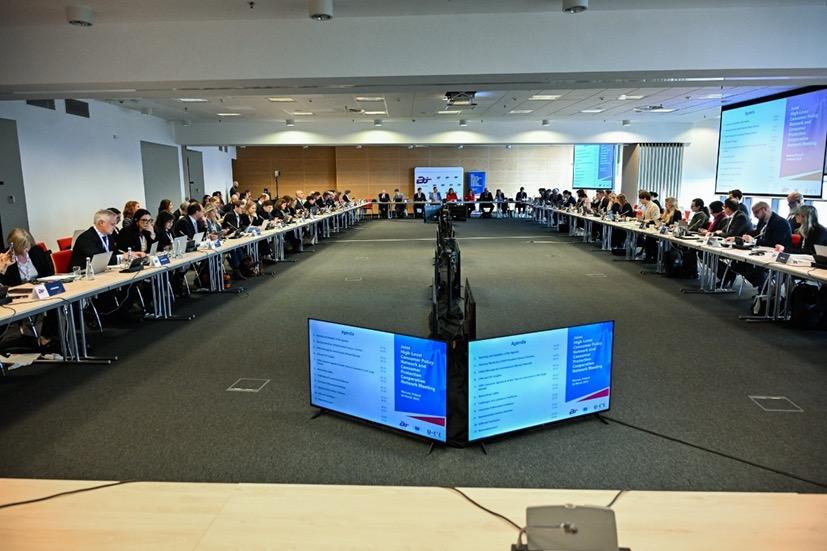
CPC/CPN High Level Meeting in Poland
As part of the EU-wide CPC online sweep, authorities examined the presentation of prices in online marketplaces and the sale of second-hand goods. Across the EU, 314 traders in 25 Member States were assessed, with an overall 95.5% compliance rate. In Malta, the Office examined 10 traders covering more than 225 items, all of which were found to be compliant.
These activities reinforce Malta’s contribution to coordinated consumer protection enforcement within the European Single Market, particularly in addressing cross-border issues emerging in digital markets.
LEGAL ENFORCEMENT AND POLICY WORK
The Office’s legal team continued to support enforcement activities and contribute to the development of consumer protection policy at both national and European level.
Two court cases concerning breaches of consumer protection legislation remain pending before the Civil Court (Commercial Section). In another long-running case, a telecommunications company that had challenged administrative decisions of the Director General ultimately paid €238,720 in penalties following unsuccessful appeals.
The legal team also provided input into the transposition and development of several upcoming EU legislative initiatives, including the Consumer Credit Directive, the Green Transition Directive, the Right to Repair Directive and reforms relating to financial services contracts concluded at a distance.
The Office also contributed to Malta’s position on EU proposals concerning passenger rights and multimodal transport services, as well as discussions under the EU Consumer Agenda 2030.
CONSUMER ASSISTANCE AND DISPUTE RESOLUTION
Supporting consumers seeking redress remained a core function of the Office. In 2025, the Complaints and Conciliation Directorate handled 1,556 official complaints, an increase compared to the previous year.
The most common complaints related to consumer goods, services and education, with issues primarily concerning product quality, delivery delays, contractual matters and guarantees.
The Office successfully resolved 36% of cases through amicable settlement, helping both consumers and traders reach mutually acceptable outcomes. A further 23% of cases were referred to the Consumer Claims Tribunal, while others were withdrawn, discontinued or closed after the necessary information was provided to consumers.
This approach reflects the Office’s continued focus on resolving disputes efficiently and at an early stage wherever possible.
The Office also assisted in the enforcement of 50 Tribunal decisions, securing €69,050 in refunds for consumers.
Air Passenger Rights
The Office continued to support passengers seeking redress under EU Regulation 261/2004 concerning air passenger rights.In 2025, the Office intervened in 266 complaints requiring action, resulting in 338 passengers receiving €62,752 in refunds and compensation for flight delays and cancellations.
An additional 269 complaints were addressed by providing consumers with guidance on their rights and the steps required to pursue claims directly with airlines.
CONSUMER AWARENESS AND INFORMATION
Consumer education remained a key priority throughout the year. The Office conducted a series of targeted information campaigns covering topics such as consumer guarantees, online shopping, pricing transparency and air passenger rights.
These initiatives were supported by social media campaigns addressing issues including defective products, influencer marketing and consumer rights in digital markets, achieving strong reach and engagement.
The Consumer Helpline handled 6,447 calls, while additional enquiries were received through email, inperson visits, the MCCAA website and social media platforms. All requests for information were recorded in the Complaint Handling System, enabling the Office to identify recurring issues and emerging trends in the market.
MEDIA OUTPUT - 2025
MEDICINE PRICING
The Office continued to monitor medicine pricing to ensure that consumers have access to essential medicines at fair and transparent prices.
During 2025, the Office monitored 989 pharmaceutical products, benchmarking prices against 12 European reference countries. This monitoring exercise helps identify price pressures within the pharmaceutical market and supports measures aimed at maintaining affordability for consumers.
The Office also promoted the use of generic bioequivalent medicines, which provide the same therapeutic benefits as branded medicines at a lower cost, helping reduce the financial burden on patients.
In addition, the OCA supported public procurement processes and collaborated with the Malta Community Chest Fund Foundation to assist vulnerable patients in accessing essential medicines. The Office also contributed to national policy discussions related to healthcare benefits and pharmaceutical pricing.
These actions helped strengthen supply chain resilience while ensuring that affordability remains a central consideration in the regulation of medicine prices.
STRENGTHENING COOPERATION
During 2025, the MCCAA signed a Memorandum of Understanding with the Malta Communications Authority, establishing a framework for cooperation in addressing consumer issues in communications and digital markets.
At EU level, the Office actively strengthened cooperation through participation in Consumer Protection Cooperation (CPC) Network activities, including a joint CPC and Consumer Policy Network (CPN) meeting held in Poland and a CPC–European Consumer Centre (ECC) Network workshop in Denmark. These engagements provided a framework for collaboration on cross- cutting EU consumer policy issues, including the Consumer Agenda 2025–2030, enforcement priorities, and enhanced cooperation between networks to better serve consumers in the digital age.
CPC/CPN High Level Meeting in Poland
EU CONSUMER CENTRES NETWORK
Through ECC Malta, the Office continued to assist consumers involved in cross-border disputes within the European Single Market.
In 2025, ECC Malta handled 827 requests for information and 819 complaints. Of these, 294 complaints were submitted by Maltese consumers, while 525 concerned European consumers filing complaints against Maltese traders.
A total of 841 complaints were closed during the year, with 392 resolved amicably.
Transport services accounted for the largest share of complaints involving Maltese consumers.
ECC Malta also participated in several European meetings and events, including the European Consumer Summit in Brussels, network meetings across several EU countries and stakeholder discussions aimed at strengthening cross-border consumer protection.
Directors at a Network Anniversary Meeting in Brussels
CONSUMER CLAIMS TRIBUNAL
The Consumer Claims Tribunal continued to provide an accessible mechanism for resolving consumer disputes.
In 2025, the Tribunal resolved 264 cases, including 91 decisions in favour of consumers and 61 in favour of traders.
The Tribunal received 232 new claims during the year, while 183 cases were carried forward from previous years.
Following legislative changes increasing the financial threshold to €10,000, more complex claims can now be addressed through the Tribunal. Digital reforms also continued, with 150 claims submitted online and 91 sittings conducted virtually.
OVERALL
The work carried out by the Office for Consumer Affairs in 2025 reflects sustained enforcement activity, strengthened consumer engagement and enhanced cooperation at both national and European levels.
Through inspections, dispute resolution, consumer education and policy development, the Office continued to play a central role in safeguarding consumer rights while promoting fair and transparent market practices for both consumers and businesses.
Malta and Gozo’s quality infrastructure was further strengthened in 2025 through the work of the Standards and Metrology Institute (SMI). Through expanded certification, testing and regulatory oversight, the Institute continued to support industry, ensure reliable measurement systems and reinforce trust in Malta’s technical and commercial framework.
During the year, the Institute conducted over 46,000 laboratory tests, adopted more than 2,000 European standards as national standards, and increased regulatory inspections across several sectors. These activities support fair trade practices, enhance consumer protection and contribute to the competitiveness of Maltese businesses in international markets.
SMI continued to operate efficiently while maintaining high standards of technical competence and accreditation. Its services in certification, metrology and laboratory testing remain central to Malta’s quality infrastructure and play an important role in supporting economic development and regulatory oversight.
The Institute exceeded several strategic objectives during 2025, particularly in outreach, accreditation and regulatory oversight.
Outreach initiatives strengthened collaboration with academic institutions, including the University of Malta and MCAST, helping to develop a pipeline of future technical expertise in laboratory testing and metrology.
The Standardisation Directorate represented Malta at the annual meetings of ISO and CEN/CENELEC, ensuring that Maltese interests are represented in international standardisation discussions and that European standards continue to support the competitiveness of local industry.
Trust in SMI’s services was further reinforced through the continued maintenance of international accreditation across certification, laboratory testing and metrology calibration services. Work also progressed on extending the scope of temperature calibration, with certification expected in 2026.
A notable achievement during the year was the work carried out by the Office of the Consul for Goldsmiths and Silversmiths, which conducted more than 2,000 market inspections, representing a significant increase over previous years. These inspections led to 33 enforcement actions, with noncompliant precious metal items removed from sale.
The Institute remains the principal revenue-generating entity within MCCAA, operating efficiently while maintaining high standards of technical competence and service quality.
1STANDARDISATION
Outreach and International Engagement
The Standards Directorate continued to act as a bridge between the Maltese market and the international standardisation community, ensuring that local stakeholders remain aligned with global developments.
During 2025, the Directorate participated in the ISO Annual Meeting in Kigali, Rwanda, and the CEN and CENELEC Annual Meeting in Luxembourg, contributing to high-level discussions on standardisation policies and governance.
Through its role as Malta’s national standards body, the Directorate ensures that European standards are adopted as national standards and that Malta participates actively in shaping international technical policies.
Several outreach initiatives were also organised during the year to strengthen engagement with industry and the public sector.
World Standards Day 2025 was celebrated in partnership with the Malta Chamber of Commerce under the theme Governance, Sustainability and Growth. The event highlighted the upcoming revision of the ISO 9001 standard and explored how quality management systems are evolving to support leadership, sustainability and organisational resilience.
The Directorate also organised the session “Standards: Driving Excellence in Public Procurement” in collaboration with the Department of Contracts. The session provided procurement professionals with guidance on referencing standards in tender documents and ensuring transparency and fair competition.
In addition, a national seminar on heritage conservation standards brought together experts from Heritage Malta, the Superintendence of Cultural Heritage and academia to discuss the application of standardised conservation practices for the preservation of Malta’s cultural assets. A significant highlight of the event was the keynote speech delivered by Antonino Sansonetti, Chairman of CEN/TC 346 (Conservation of Cultural Heritage). As a renowned expert from the Italian National Research Council (CNR), Dr Sansonetti provided invaluable insights into the development of European standards for the protection of cultural property.
Outreach initiatives also strengthened engagement with academic institutions, including the University of Malta and MCAST, supporting the development of a useful pipeline of future technical expertise in both the laboratories and metrology.
Adoption of European Standards
The Directorate continued to fulfil Malta’s obligations within the European standardisation system by adopting European standards as national standards.
In 2025, 2,061 CEN and CENELEC standards were adopted, representing a significant increase compared with previous years. These standards support a wide range of sectors, including construction, digital technologies, sustainability and infrastructure development.
Professional Training
During 2025, the MCCAA reintroduced professional training services, strengthening engagement with both public and private sector organisations.
A key initiative was the ISO 9001 Familiarisation and Internal Auditing Course, delivered over three days to participants from several public authorities and private organisations. The course provided practical guidance on implementing quality management systems and conducting internal audits.
Interest in training related to environmental management and sustainability also increased, reflecting broader policy priorities in climate action and sustainable development.
CERTIFICATION AND TRAINING
Certification and Inspection Services
Certification services continued to expand during 2025, with notable increases in certifications for ISO 9001 (Quality Management) and ISO 14001 (Environmental Management).
Interest in the EU Ecolabel for detergents also grew significantly, reflecting increased demand for environmentally sustainable products.
The Directorate continued to provide certification and inspection services across a range of sectors, including vehicle repair facilities, playground safety and industrial security screening.
METROLOGY AND ACCURATE MEASUREMENT 2
The Metrology Directorate maintained Malta’s national measurement standards, ensuring traceability to internationally recognised SI units.
These standards underpin a wide range of scientific, industrial and commercial activities by ensuring that measurements remain accurate, reliable and comparable with international benchmarks.
Measurement standards maintained by MCCAA cover a broad range of physical quantities, including mass, temperature, volume, pressure, humidity, electrical quantities and time and frequency.
During 2025, the Directorate expanded its calibration capabilities for weighing instruments, extending the calibration range from 10 kg down to 1 mg.
The Directorate also participated in 12 international comparison exercises with European metrology institutes, confirming that Maltese measurement standards remain aligned with international benchmarks.
Work also progressed on extending national calibration capabilities in temperature
measurement, with further developments planned in the coming years.
Applied and Legal Metrology
Calibration services provided by the Directorate support businesses across multiple sectors, particularly through the calibration of instruments used in weighing, temperature measurement and volumetric measurement.
In 2025, a total of 531 calibrations were carried out. Legal metrology inspections also continued to ensure fairness and transparency in commercial transactions. A risk-based monitoring programme was implemented covering measuring instruments, fuel dispensers and pre-packaged goods.
During the year, 577 inspections were carried out across retail outlets, markets, fuel stations and industrial facilities.
These inspections ensure compliance with measurement regulations and protect both consumers and traders by ensuring that quantities sold in the market are accurate and reliable.
LABORATORY TESTING SERVICES
The Laboratory Directorate maintained accreditation across the full scope of its testing services during 2025.
Laboratory capability was further strengthened through investment in new testing equipment and the introduction of digital data collection systems for onsite sampling and testing. The use of tablet-based systems enabled inspection data, including GPS location and photographic documentation, to be recorded electronically, improving efficiency and traceability.
Laboratory activity increased significantly during the year, particularly in construction materials testing. An all-time high of 46,664 tests was recorded in 2025, largely driven by increased demand for concrete testing and infrastructurerelated laboratory services. A total of 2,242 job requests were processed during the year, representing a 26% increase compared with 2024.
Support to National Infrastructure Projects
The Directorate continued to support major national infrastructure and regeneration initiatives through testing, inspection and technical services.
Key projects supported during the year included:
• Msida Creek Project, with 463 job requests completed
• Marsa Deep Water Quay works
• projects undertaken by INDIS Malta Ltd
• the ECOhive complex in Magħtab
• the Victoria–Marsalforn road link in Gozo
• regeneration initiatives led by the Grand Harbour Regeneration Corporation
These activities highlight the Institute’s important role in supporting infrastructure development and ensuring that construction materials used in national projects meet required technical standards.
OFFICE OF THE CONSUL FOR GOLDSMITHS AND SILVERSMITHS
The Office of the Consul continued to play an important regulatory role in 2025 under the Goldsmiths and Silversmiths Act (Cap. 46).
The Office is responsible for safeguarding consumer interests and ensuring fair trade practices in the precious metals sector through licensing, inspection and enforcement activities.
Market surveillance activity increased significantly during the year, with 2,035 inspections carried out, compared with 277 in 2024.
These inspections included both routine checks and joint inspections carried out in collaboration with other regulatory authorities.
A total of 33 enforcement actions were taken, requiring the removal of non-compliant precious metal items from retail outlets, particularly items lacking recognised hallmarks.
Investment in new equipment also enhanced the Office’s ability to identify precious stones and distinguish between natural and synthetic diamonds, strengthening regulatory capability in this specialised area.
Work also began on reviewing the current legislation, with amendments expected in 2026 aimed at modernising the regulatory framework for the sector.
Through these activities, the Office contributed to stronger regulatory oversight, improved consumer protection and increased confidence in the local precious metals market.
TECHNICAL REGULATIONS DIVISION
10,145
PRODUCT SAFETY CHECKS
39
SAFETY GATE ALERTS ISSUED
3,678
CHEMICAL COMPLIANCE CHECKS
66
UNSAFE TOYS, ORDERED THROUGH E-COMMERCE, BLOCKED AT THE BORDER
The Technical Regulations Division (TRD) strengthened Malta’s product safety and regulatory compliance framework in 2025 through the implementation of European Union legislation, targeted market surveillance and sustained engagement with stakeholders. Over 10,000 market surveillance checks were carried out across multiple product sectors, including consumer goods, chemicals, machinery, vehicles and construction products.
These activities were complemented by strengthened monitoring of e-commerce platforms and imported products, allowing the Division to address emerging risks linked to digital marketplaces and cross-border trade.
Alongside enforcement activities, the Division continued to provide guidance and support to economic operators, ensuring that businesses remain informed of their obligations and that compliant economic activity is encouraged through proportionate and transparent regulation.
The year also marked an important moment of strategic continuity with the approval of the TRD Strategic Plan 2025–2028, following the reappointment of Inġ. Rudie Vella as Director General. The strategy reinforces priorities centred on proactive compliance, data-driven market surveillance, service excellence and organisational capability.
Overall, 2025 represented a year of consolidation and strategic enhancement, strengthening the Division’s role as a technically competent and forward-looking regulator.
1MARKET SURVEILLANCE AND ENFORCEMENT
Market surveillance remained at the core of the Division’s work
During 2025, a total of 10,145 product safety checks were carried out across multiple sectors through:
• digital product screening
• targeted inspections
• border interventions in collaboration with Malta Customs
• documentary verification and follow-up investigations
These checks allow the Division not only to identify noncompliant products but also to obtain an evidence-based understanding of market conditions and emerging risks.
MAIN PRODUCT TYPE
Toys
Lifts
Construction products
F-gas
Electrical appliances and electronics
Chemicals, including cosmetics, detergents, consumer pyrotechnics and explosive precursors
Pressure equipment
Textiles and footwear
Recreational craft
Machinery
Other product groups (including, gaseous appliances, personal protective equipment, motor vehicles, marine equipment and products falling under the General Product Safety Directive)
PPPs
Biocidal products
2PRODUCT SAFETY SECTORS
Children’s Products and Toys
The TRD actively monitored consumer products, particularly toys and children’s products, focusing on risks such as choking hazards and hazardous chemicals.
Targeted surveillance included inspections of toys sold both in physical stores and through online platforms. Border checks conducted in collaboration with Malta Customs as part of the first-ever PriorityControl Area (PCA) on e-commerce, led to 77 toy inspections, with 66 products prevented from entering the Maltese market due to non-compliance.
Market surveillance exercises also examined children’s clothing and footwear, identifying risks linked to cords and drawstrings. Also, the TRD participated in the first-ever product safety sweep coordinated by the EU Commission to assess the safety and traceability of childcare articles sold on online marketplaces. Within just one month and a half, the TRD assessed 100 listings relating to baby bottles, baby teethers, and highchairs from seven different online platforms; Shein, Temu, Alibaba, AliExpress, Joom, Amazon and eBay.
Lifts Safety
The Division continued to regulate lift installations and safety compliance.
During 2025:
• 1,450 lift registrations were processed
• 1 ,818 periodic inspection reports were reviewed
• 202 investigations were completed
• 94 complaints were investigated
Corrective measures were required in 26 cases.
The TRD also participated in a European Commission peer review on lift market surveillance, where Malta’s regulatory practices were positively recognised by peer authorities.
Chemicals, Cosmetics, and Detergents
Market surveillance in the chemicals sector focused on compliance with EU legislation including the REACH and Classification, Labelling and Packaging (CLP) Regulations.
During the year:
• 3,678 checks were carried out on chemical products
• inspections targeted cosmetic s, detergents and consumer chemicals
Specific monitoring exercises targeted cosmetic products containing restricted substances, including nail products containing Trimethylbenzoyl Diphenylphosphine Oxide
(TPO). 15 non-compliant products were identified and removed from the market.
The Division also monitored cosmetic and personal care products containing restricted substances such as hydroquinone and other ingredients associated with health risks. Three products were withdrawn from the market.
Pesticides and Biocidal Products
The Division continued to regulate pesticides and biocidal products to safeguard public health and environmental safety.
Prior to the transfer of responsibility for Plant Protection Products (PPPs) to the Food Safety and Security Authority in July 2025, the TRD processed 33 applications, including both local authorisations and EU zonal procedures, and issued 10 certifications for professional users.
Work on biocidal products remained a key area of activity. During 2025:
• 263 products were registered, reflecting continued growth in registrations
• Over 200 applications were processed under EU mutual recognition procedures
• 57 new authorisations were granted
Market surveillance was also strengthened through 190 checks on biocidal products, including inspections, Customs referrals and complaint follow-ups. These checks resulted in 24 enforcement actions, primarily related to missing registrations or labelling deficiencies, with corrective measures required from economic operators.
The Division also supported essential national needs through the renewal of specific derogations for critical products used in healthcare and aviation.
Electrical Products and Energy Labelling
Market surveillance activities continued on electrical appliances and electronic products to ensure compliance with EU safety and energy labelling requirements.
Checks included:
• verification of energy labels on appliances and electronic devices
• inspections of electrical accessories and product documentation
• examination of products referred by Malta Customs
A total of 283 electrical product cases were assessed following Customs referrals.
Training sessions were also delivered to Customs officials on developments in energy labelling and Ecodesign regulations, including new requirements for smartphones and tablets.
Machinery and Equipment
In collaboration with Malta Customs, 201 machinery cases were assessed, preventing noncompliant equipment from entering the local market. Preparatory work also progressed for the national implementation of the EU Machinery Regulation, expected in 2026.
In the area of radio equipment, the Division completed the transposition of updated EU Directives through the publication of Legal Notice 202 of 2025, strengthening regulatory requirements and market oversight. Awareness initiatives also reminded consumers and businesses of key obligations, including CE marking and new common charger requirements for electronic devices.
Market surveillance was also carried out on pressure equipment, including liquid petroleum gas (LPG) cylinders and gas regulators commonly used in households. No instances of non-compliance were identified, reflecting a high level of adherence to safety standards.
Construction Products
The Division strengthened Malta’s participation in the Construction Products Regulation (CPR) framework.
Market surveillance activities included checks of:
• fire doors
• thermal insulation boards
• sprinklers used in firefighting systems
• whirlpool baths
Testing of thermal insulation boards was conducted as part of an EU-coordinated project.
Several economic operators were required to suspend the sale of products until compliance documentation was provided.
Stakeholder outreach included a public webinar explaining the revised Construction Products Regulation and its implications for industry.
Motor Vehicles and Components
The TRD continued its work under the EU vehicle type-approval and market surveillance framework.
Activities included participation in a European testing programme in which five laboratory tests were carried out on a vehicle available in the Maltese markets at an accredited laboratory in other Member States.
The Division also conducted inspections of vehicle parts and accessories, including brake pads and lighting equipment. Non-compliant brake pads were identified and withdrawn from the market.
Product Safety Alerts
The Division issued 37 notifications through the EU Safety Gate rapid alert system, enabling the swift exchange of information among EU Member States on dangerous non-food products. Products identified locally were recalled or withdrawn from the market.
An additional seven follow-up actions were taken on products notified by other Member States and found in Malta.
The TRD also investigated 103 product safety complaints, primarily relating to lifts, electrical equipment and appliances burning gaseous fuels.
ENVIRONMENTAL PRODUCT REGULATION 3
F-Gases and Ozone Depleting Substances
The TRD transitioned to an automated daily dataset from Customs to verify importer registrations, which is more resource-efficient than individual calculations. Enforcement actions included identifying 32 automotive operators requiring valid F-gas cards and withdrawing three non-refillable containers from the market.
The Division also undertook a technical study visit to the Netherlands, where officers shadowed the work of a counterpart regulatory entity. This exchange facilitated the identification of best practices and potential areas for future collaboration.
The TRD had the opportunity to share this approach with its Dutch counterparts following a visit to Rijkswaterstaat (RWS), the executive agency of the Ministry of Infrastructure and Water Management in the Netherlands. The aim behind this visit was to exchange best practices on the implementation of the F-gas regulation and the systems currently in place by both member states.
Product Sustainability and Ecodesign
The TRD participated in EU discussions on the Ecodesign for Sustainable Products Regulation, which aims to improve product durability, repairability and recyclability.
Engagement with stakeholders helped prepare economic operators for future sustainability requirements, including digital product passports and enhanced product information obligations.
EU and International Cooperation
The Division continued to participate actively in European regulatory networks and joint market surveillance initiatives.
These included EU-funded projects such as CASP and JACOP, which involve coordinated testing of consumer products across Member States. The TRD participated in at least 10 testing campaigns, in addition to others that were ongoing from the previous year. Products tested under these programmes included toys, bicycles, electrical equipment and consumer chemicals.
Participation in these initiatives allows Malta to contribute to the harmonised enforcement of EU product safety legislation while benefiting from shared technical expertise.
The TRD also represented Malta in numerous EU committees and expert groups dealing with product safety, chemicals regulation, vehicle standards and consumer protection.
CORPORATE
SHAPING DIRECTION, MEASURING PERFORMANCE
Integration and Coordination
In 2025, the Authority brought together its Strategy, Quality and Performance Measurement functions into a single unit, strengthening coordination and enabling a more integrated approach to planning, monitoring and continuous improvement.
This integration enhanced collaboration across functions, allowing insights identified in one area to be addressed more effectively through the support of the others. As a result, the Authority was able to respond more proactively to emerging issues and drive early improvements across its operations.
Strategic Initiatives and Outreach
The unit played a central role in supporting the implementation of key strategic initiatives across the MCCAA. Working closely with the Directors General, it monitored progress, facilitated coordination and ensured alignment with the Authority’s broader objectives.
A key highlight was the strengthening of thematic networks, bringing together stakeholders across sectors to promote knowledge sharing and collaboration. This included outreach activities led by both the Standards and Metrology Institute and the Technical Regulations Division, ranging from conferences and training sessions to targeted seminars and public engagement initiatives.
The Authority also expanded its collaboration with external stakeholders through co-generated content initiatives, increasing outreach and visibility across national and sector-specific platforms.
Regional engagement was further strengthened through targeted outreach in Gozo, including stakeholder dialogue aimed at identifying opportunities for closer collaboration.
Quality and Continuous Improvement
The Authority’s Quality Management System remained a key pillar of its operations. In 2025, the MCCAA successfully underwent a full recertification audit by the British Standards Institution, confirming continued compliance with the ISO 9001:2015 standard.
Continuous improvement remained a strong focus throughout the year. Internal audits, process reviews and corrective actions were carried out to strengthen operational effectiveness, ensure compliance and support the refinement of internal processes.
Performance and Data
Performance measurement continued to evolve, with enhanced data collection and analysis supporting more informed decision-making.
New high-level Key Performance Indicators (KPIs) were developed, laying the groundwork for a more strategic approach to performance monitoring from 2026. At the same time, structured engagement with senior management ensured regular review of performance trends and alignment with organisational priorities.
Looking Ahead
The Authority is placing increasing emphasis on understanding the broader impact of its work, including how its services are experienced by stakeholders and the contribution it makes to society.
Through these developments, the MCCAA continues to strengthen its ability to plan effectively, monitor performance and adapt to changing needs, ensuring that its services remain responsive, transparent and aligned with its regulatory role.
EMPOWERING OUR PEOPLE, STRENGTHENING OUR CORE
Workforce Overview
As at 31 December 2025, the MCCAA employed 164 employees, supported by 15 students engaged through structured work placements.
The workforce reflects a balanced, multi-generational profile, with an average age of 44 and gender parity across the organisation.
Employee retention remained strong, with a low turnover rate of 4.3%, indicating workforce stability and sustained engagement. A significant proportion of employees (68%) have between seven and 15 years of service, providing continuity and institutional knowledge, while newer employees contribute fresh skills and perspectives.
Workforce Development and Wellbeing
The Authority continued to invest in employee development to support professional standards and operational effectiveness.
During 2025:
• 1,948 training hours were delivered
• an average of 9 training hours per employee was achieved
Training covered technical competencies, leadership, compliance, health and safety and soft skills development.
A Competency Development Framework and a Training Needs Assessment were introduced to better align training initiatives with organisational requirements.
Employee wellbeing remained a priority. Initiatives included:
• mental health awareness workshops
• certified Mental Health First Aid training
• ongoing health and safety measures
These initiatives contributed to a supportive and safe working environment.
Governance and Employee Relations
The HR function continued to strengthen governance and ensure compliance with public sector standards through the introduction and revision of internal policies.
Key developments included:
• Remote Working Policy
• Conflict of Interest Policy
• Working from Gozo Arrangements
• updated procedures on attendance, overtime, performance appraisal and recruitment
Industrial relations remained stable, supported by regular engagement with employees and recognised trade unions. Preparations were also initiated for the renewal of the Collective Agreement, aimed at maintaining a balanced and sustainable framework for employment conditions.
Recruitment and Workforce Planning
Recruitment and workforce planning remained essential to supporting the Authority’s evolving needs.
During 2025:
• 69 vacancies were issued
• 12 internal promotions were made
• 12 external recruits joined the Authority
Recruitment efforts focused on strengthening middle management and specialist roles, although challenges persisted in attracting candidates for certain technical positions.
A restructuring exercise was also undertaken to improve organisational efficiency, clarify reporting lines and strengthen management capacity. Staff redeployments were managed in line with public service frameworks to ensure continuity of expertise.
Developing Future Talent
The MCCAA continued to invest in future talent through structured student placement schemes in collaboration with the University of Malta and MCAST.
During 2025, 10 students were engaged across various Directorates, gaining practical experience in regulatory, technical and administrative functions. These placements provided students with valuable exposure to the Authority’s work while contributing fresh perspectives to ongoing activities.
The scheme supports early skills development and helps build a pipeline of future professionals aligned with the Authority’s areas of competence.
FINANCIAL STATEMENTS
Governors’ Report
T he Board presents their report and the audited financial statements of Malta Competition and Consumer Affairs Authority “the Authority” for the year ended 31 December 2025.
Principal activities
The Malta Competition and Consumer Affairs Authority was established on 23 May 2011 with the coming into force of Malta Competition and Consumer Affairs Authority Act, Chapter 510 of the Laws of Malta.
The said Act provides for the establishment of an Authority to promote, maintain and encourage competition, to safeguard the interests of consumers and enhance their welfare, to promote sound business practices, to adopt and co-ordinate standards in relation to products or services, to regulate such activities and to provide for such matters ancillary or incidental thereto or connected therewith.
Performance review
The Authority’s primary income source is the subventions received from the Government of Malta, which fund both recurrent and capital expenditure. Recurrent subventions decreased to €7,000,000 (2024: €7,100,000), while income from the amortisation of capital grants decreased to €75,151 (2024: €111,416).
Additionally, the Authority generates income from its commercial operations, which increased to €1,530,476 (2024: €1,366,481). Of this amount, €238,720 (2024: Nil) was recognised in respect of regulatory fines.
Administrative and other expenses increased to €9,546,124 (2024: €8,574,978), primarily driven by higher payroll expenses and additional costs related to contributions to the United Nations Environment Programme.
As a result, the Authority registered a deficit before taxation of €956,103 (2024: €7,176). After taxation, the Authority recorded a deficit of €956,142 (2024: surplus of €43,784).
Events after balance sheet date
No significant events have occurred after the balance sheet date which require mention in this report.
Future developments
The Authority is not envisaging any changes in the operating activities for the forthcoming year.
Governors
The following are the details of individuals who have served as Governors of the Authority during the year under review and up to date of authorisation of these financial statements:
Ms. Carmela Ciantar - Appointed on 01 April 2025
Ing. Helga Pizzuto - Resigned on 01 April 2025
Mr. Kevin Farrugia
Ms. Taryn Darmanin
Mr. Brian Scicluna - Appointed on 09 July 2025
Mr. Christian Buttigieg
Ing. Mark Anthony Gullaumier
Mr. Reginald Fava
Mr. Etienne Caruana - Appointed on 09 July 2025
Mr. Alexander Fenech - Appointed on 09 July 2025
Mr. Roderick Cutajar - Appointed on 09 July 2025
Dr. Lynn Faure
Mr. Benny Borg Bonello - Resigned on 09 July 2025
Ms. Graziella Galdes - Resigned on 09 July 2025
Mr. Kris Grech - Resigned on 09 July 2025
The Chairperson is appointed for a three-year term, while the Board of Governors is appointed for a one-year term by the Minister responsible for competition, consumer affairs, standardisation, metrology and technical regulations.
Governors’ Report (continued)
Auditors
Capstone Assurance Ltd, Registered Auditors, have expressed their willingness to continue in office and a resolution for their reappointment will be proposed at the Annual General Meeting.
Approved by the Board on 18 March 2026.
Ms. Carmela Ciantar
Mr. Kevin Farrugia Chairperson Deputy Chairperson
Registered address: National Road, Il-Hamrun, HMR 9010, Malta
Statement of Governors’ Responsibilities
In accordance with the Article 11(1)(e) and (f) of Chapter 510, the Malta Competition and Consumer Affairs Authority Act (‘the Act’), the Board of Governors is responsible amongst other things to publish an annual report on the work of the Authority during the preceding year. This entails responsibility to ensure that, through the office of the Chairperson:
• Proper accounting records are kept of all transactions entered into by the Authority and of its assets and liabilities in terms of Article 55(1) of the Act;
• Adequate controls and procedures are in place for safeguarding the assets of the Authority, and prevention and detection of fraud and other irregularities.
In preparing the financial statements which give true and fair view of the state of affairs as at the end of each financial year and of its surplus or deficit for that year, the Board of Governors, through the office of the Chairperson:
• Selects suitable accounting policies and then applies them consistently;
• Makes judgements and estimates that are reasonable and prudent;
• Complies with International Financial Reporting Standards as adopted by the EU; and
• Prepares the annual financial statements on a going concern basis unless it is considered inappropriate.
The Authority is required to present its audited financial statements and a copy of the report made by the auditor in those statements which will be incorporated in the Authority’s annual report as required in terms of Article 58 of the Malta Competition and Consumer Affairs Authority Act.
Statement of Comprehensive Income
There were no transactions to be reported as ‘Other Comprehensive Income’ during the year.
Statement of Financial Position
These financial statements on pages 75 to 99 were approved by the Board of Governors on 18 March 2026:
Ms. Carmela Ciantar
Mr. Kevin Farrugia Chairperson Deputy Chairperson
Statement of Changes in Equity
Statement of Cash Flows
Notes to the Financial Statements
1 General information
The Malta Competition and Consumer Affairs Authority (‘the Authority’) was established on 23 May 2011 with the coming into force of the Malta Competition and Consumer Affairs Authority Act, Chapter 510 of the Laws of Malta. Section 3(6) of the said Act states that the Authority shall assume the persona previously vested in the Consumer and Competition Department, the Malta Standards Authority and the Malta National Laboratory Company Limited and, from the entry into force of this Act, shall assume responsibility for all assets, liabilities and obligations previously entered into by the said Department, Authority and Company or by other bodies on their behalf.
2 Basis of preparation
2.1 Basis of measurement
The financial statements have been prepared on the historical cost basis.
The Governors have, at the time of approving the financial statements, a reasonable expectation that the Authority has adequate resources to continue in operational existence for the foreseeable future. Thus, the Governors continue to adopt the going concern basis of accounting in preparing the financial statements.
The material accounting policy information is set out below.
2.2 Statement of compliance
The financial statements have been prepared and presented in accordance with the requirements of the International Financial Reporting Standards (IFRS) as adopted by the EU and Second Schedule to the Civil Code, Chapter 16 of the Laws of Malta.
2.3 Functional and presentation currency
The financial statements are presented in Euro (€), which is the Authority’s functional currency and presentation currency.
2.4 Critical accounting judgements and key sources of estimation uncertainty
In applying the Authority’s accounting policies, which are described in Note 3, the Governors are required to make judgements (other than those involving estimations) that have a significant impact on the amounts recognised and to make estimates and assumptions about the carrying amounts of assets and liabilities that are not readily apparent from other sources. The estimates and associated assumptions are based on historical experience and other factors that are considered to be relevant. Actual results may differ from these estimates.
The estimates and underlying assumptions are reviewed on an ongoing basis. Revisions to accounting estimates are recognised in the period in which the estimate is revised if the revision affects only that period, or in the period of the revision and future periods if the revision affects both current and future periods.
2.4.1 Key sources of estimation uncertainty
Information about assumptions and estimation uncertainties at the reporting date that have a significant risk of resulting in a material adjustment to the carrying amounts of assets and liabilities within the next financial year is included in the following notes:
• Note 16: recognition and measurement of provisions: key assumptions about the likelihood and magnitude of an outflow of resources;
2.5 Standards, interpretations and amendments to published standards effective in 2025
In 2025, the Authority has applied a number of amendments to IFRS Accounting Standards issued by the International Accounting Standards Board (IASB) that are mandatorily effective for an accounting period that begins on or after 1 January 2025. Their adoption has not had any material impact on the disclosures or on the amounts reported in these financial statements.
Amendments to IAS 21 - The Effects of Changes in Foreign Exchange Rates titled Lack
of Exchangeability
The Authority has adopted amendments to IAS 21 for the first time in the current year. The amendments specify how to assess whether a currency is exchangeable, and how to determine the exchange rate when it is not.
Notes to the Financial Statements (continued)
2 Basis of preparation (continued)
2.6 Standards, interpretations and amendments to published standards that are not yet effective
At the date of authorisation of these financial statements, the Authority has not applied the following new and revised IFRS Accounting Standards that have been issued but are not yet effective or adopted by the EU:
• Amendments to IFRS 9 and IFRS 7 - Amendments to the Classification and Measurement of Financial Instruments.
• Annual Improvements to IFRS Accounting Standards (Volume 11) - Amendments to IFRS 1 First-time Adoption of International Financial Reporting Standards, IFRS 7 Financial Instruments: Disclosures and its accompanying Guidance on implementing IFRS 7, IFRS 9 Financial Instruments, IFRS 10 Consolidated Financial Statements, and IAS 7 Statement of Cash Flows.
• IFRS 18 – Presentation and Disclosures in Financial Statements;
• IFRS 19 – Subsidiaries without Public Accountability: Disclosures.
The Governors anticipate that the application of new standards may have an impact on the disclosures of the financial statements in future periods. The Authority is monitoring the EU endorsement process and will assess the potential impact on its financial statements once it is adopted by the EU.
3 Material accounting policy information
3.1 Property, plant and equipment
Plant, machinery, fixtures and fittings are stated at cost less accumulated depreciation and accumulated impairment loss. Depreciation is recognised so as to write off the cost or valuation of assets less their residual values over their useful lives, using the straight-line method, on the following bases:
Improvements to premises held at Mizzi House, Blata l-Bajda, are depreciated over the term of the lease.
The estimated useful lives, residual values and depreciation method are reviewed at the end of each reporting period, with the effect of any changes in estimate accounted for on a prospective basis. During the period, the Authority revised certain depreciation rates following this review. Management assessed the impact of this change and concluded that it does not have a material effect on the financial statements.
Right-of-use assets are depreciated over the shorter period of the lease term and the useful life of the underlying asset. If a lease transfers ownership of the underlying asset or the cost of the right-of-use asset reflects that the Authority expects to exercise a purchase option, the related right-of-use asset is depreciated over the useful life of the underlying asset.
An item of property, plant and equipment is derecognised upon disposal or when no future economic benefits are expected to arise from the continued use of the asset. The gain or loss arising on the disposal or retirement of an asset is determined as the difference between the sales proceeds and the carrying amount of the asset and is recognised in profit or loss.
3.2 Intangible assets
3.2.1
Internally generated intangible assets
Expenditure on research activities is recognised as an expense in the period in which it is incurred. An internally-generated intangible asset, arising from the development (or from the development phase of an internal project) is recognised if, and only if, all of the following conditions have been demonstrated:
Notes to the Financial Statements (continued)
3 Material accounting policy information (continued)
• the technical feasibility of completing the intangible asset so that it will be available for use or sale;
• the intention to complete the intangible asset and use or sell it;
• the ability to use or sell the intangible asset;
• how the intangible asset will generate probable future economic benefits;
• the availability of adequate technical, financial and other resources to complete the development and to use or sell the intangible asset;
• the ability to measure reliably the expenditure attributable to the intangible asset during its development.
The amount initially recognised for internally-generated intangible assets is the sum of the expenditure incurred from the date when the intangible asset first meets the recognition criteria listed above. Where no internally-generated intangible asset can be recognised, development expenditure is recognised in the profit or loss in the period in which it is incurred.
Subsequent to initial recognition, internally-generated intangible assets are carried at cost less any accumulated amortisation and any accumulated impairment losses. When the intangible asset will become available for use, it will be amortised on a straight-line basis over its estimated useful life which is assumed to be 4 years.
3.2.2 Derecognition of intangible assets
An intangible asset is derecognised on disposal, or when no future economic benefits are expected from use or disposal. Gains and losses arising from derecognition of intangible asset, measured as the difference between the net proceeds and the carrying amount of the asset, are recognised in profit or loss when the asset is derecognised.
3.3 Leases
3.3.1
Authority as lessee
The Authority assesses whether a contract is, or contains, a lease, at inception of the contract. The Authority recognises a right-of-use asset and a corresponding lease liability with respect to all lease arrangements in which it is the lessee except for short-term leases (defined as leases with a lease term of 12 months or less) and leases of low value assets (such as tablets and personal computers, small items of office furniture and telephones). For these leases, the Authority recognises the lease payments as an operating expense on a straight-line basis over the term of the lease unless another systematic basis is more representative of the time pattern in which economic benefits from the leased assets are consumed.
The lease liability is initially measured at the present value of the lease payments that are not paid at the commencement date, discounted by using the rate implicit in the lease. If this rate cannot be readily determined, the Authority uses its incremental borrowing rate.
The incremental borrowing rate depends on the term, currency and start date of the lease and is determined based on a series of inputs including: the risk-free rate based on government bond rates; a country-specific risk adjustment and a credit risk adjustment based on bond yields.
Lease payments included in the measurement of the lease liability comprise:
• Fixed lease payments (including in-substance fixed payments), less any lease incentives receivable
• Variable lease payments that depend on an index or rate, initially measured using the index or rate at the commencement date
• The amount expected to be payable by the lessee under residual value guarantee
• The exercise price of purchase options, if the lessee is reasonably certain to exercise the options
• Payments of penalties for terminating the lease, if the lease term reflects the exercise of an option to terminate the lease
The lease liability is presented as a separate line in the statement of financial position.
Notes to the Financial Statements (continued)
3 Material accounting policy information (continued)
3.3 Leases (continued)
3.3.1 Authority as lessee (continued)
The lease liability is subsequently measured by increasing the carrying amount to reflect interest on the lease liability (using the effective interest method) and by reducing the carrying amount to reflect the lease payments made.
The Authority remeasures the lease liability (and makes a corresponding adjustment to the related rightof-use asset) whenever:
• The lease term has changed or there is a significant event or change in circumstances resulting in a change in the assessment of exercise of a purchase option, in which case the lease liability is remeasured by discounting the revised lease payments using a revised discount rate
• The lease payments change due to changes in an index or rate or a change in expected payment under a guaranteed residual value, in which cases the lease liability is remeasured by discounting the revised lease payments using an unchanged discount rate (unless the lease payments change is due to a change in a floating interest rate, in which case a revised discount rate is used)
• A lease contract is modified and the lease modification is not accounted for as a separate lease, in which case the lease liability is remeasured based on the lease term of the modified lease by discounting the revised lease payments using a revised discount rate at the effective date of the modification.
The Authority did not make any such adjustments during the periods presented.
The right-of-use assets comprise the initial measurement of the corresponding lease liability, lease payments made at or before the commencement day, less any lease incentives received and any initial direct costs. They are subsequently measured at cost less accumulated depreciation and impairment losses.
Whenever the Authority incurs an obligation for costs to dismantle and remove a leased asset, restore the site on which it is located or restore the underlying asset to the condition required by the terms and conditions of the lease, a provision is recognised and measured under IAS 37. To the extent that the costs relate to a right-of-use asset, the costs are included in the related right-of-use asset, unless those costs are incurred to produce inventories.
Right-of-use assets are depreciated over the shorter period of lease term and useful life of the rightof- use asset. If a lease transfers ownership of the underlying asset or the cost of the right-of-use asset reflects that the Authority expects to exercise a purchase option, the related right-of-use asset is depreciated over the useful life of the underlying asset. The depreciation starts at the commencement date of the lease.
The right-of-use assets are included in Property, Plant and Equipment line in the statement of financial position.
The Authority applies IAS 36 to determine whether a right-of-use asset is impaired and accounts for any identified impairment loss as described in the ‘Property, Plant and Equipment’ policy.
Variable rents that do not depend on an index or rate are not included in the measurement the lease liability and the right-of-use asset. The related payments are recognised as an expense in the period in which the event or condition that triggers those payments occurs and are included in profit or loss.
As a practical expedient, IFRS 16 permits a lessee not to separate non-lease components, and instead account for any lease and associated non-lease components as a single arrangement. The Authority has not used this practical expedient. For contracts that contain a lease component and one or more additional lease or non-lease components, the Authority allocates the consideration in the contract to each lease component on the basis of the relative stand-alone price of the lease component and the aggregate stand-alone price of the non-lease components.
3.4 Impairment of non-financial assets
At each reporting date, the Authority reviews the carrying amounts of its non-financial assets (other than deferred tax assets) to determine whether there is any indication of impairment. If any such indication exists, then the asset’s recoverable amount is estimated in order to determine the extent of the impairment loss (if any).
Notes to the Financial Statements (continued)
3 Material accounting policy information (continued)
3.4 Impairment of non-financial assets (continued)
Where the asset does not generate cash flows that are independent from other assets, the Authority estimates the recoverable amount of the cash-generating unit to which the asset belongs. When a reasonable and consistent basis of allocation can be identified, corporate assets are also allocated to individual cash-generating units, or otherwise they are allocated to the smallest group of cash-generating units for which a reasonable and consistent allocation basis can be identified.
Intangible assets with indefinite useful lives and intangible assets not yet available for use are tested for impairment at least annually, and whenever there is an indication that the asset may be impaired.
Recoverable amount is the higher of fair value less costs of disposal and value in use. In assessing value in use, the estimated future cash flows, discounted to their present value using a pre-tax discount rate that reflects current market assessments of the time value of money and the risks specific to the asset for which the estimates of future cash flows have not been adjusted.
If the recoverable amount of an asset (or cash-generating unit) is estimated to be less than its carrying amount, the carrying amount of the asset (or cash-generating unit) is reduced to its recoverable amount. An impairment loss is recognised immediately in profit or loss, unless the relevant asset is carried at a revalued amount, in which case the impairment loss is treated as a revaluation decrease and to the extent that the impairment loss is greater than the related revaluation surplus, the excess impairment loss is recognised in profit or loss.
Where an impairment loss subsequently reverses, the carrying amount of the asset (or a cash-generating unit) is increased to the revised estimate of its recoverable amount, but so that the increased carrying amount does not exceed the carrying amount that would have been determined had no impairment loss been recognised for the asset (or cash-generating unit) in prior years. A reversal of an impairment loss is recognised immediately in profit or loss to the extent that it eliminates the impairment loss which has been recognised for the asset in prior years. Any increase in excess of this amount is treated as a revaluation increase.
3.5 Financial instruments
Financial assets and financial liabilities are recognised in the Authority’s statement of financial position when the Authority becomes a party to the contractual provisions of the instruments.
Financial assets and financial liabilities are initially measured at fair value, except for trade receivables that do not have a significant financing component which are measured at transaction price. Transaction costs that are directly attributable to the acquisition or issue of financial assets and financial liabilities (other than financial assets and financial liabilities at fair value through profit or loss) are added to or deducted from the fair value of the financial assets or financial liabilities, as appropriate, on initial recognition. Transaction costs directly attributable to the acquisition of financial assets or financial liabilities at fair value through profit or loss are recognised immediately in profit or loss.
3.6 Financial assets
All regular way purchases or sales of financial assets are recognised and derecognised on a trade date basis. Regular way purchases or sales are purchases or sales of financial assets that require delivery of assets within the time frame established by regulation or convention in the marketplace.
All recognised financial assets are measured subsequently in their entirety at either amortised cost or fair value, depending on the classification of the financial assets.
Classification of financial assets
Debt instruments that meet the following conditions are measured subsequently at amortised cost:
• The financial asset is held within a business model whose objective is to hold financial assets in order to collect contractual cashflows; and
• The contractual terms of the financial asset give rise on specified dates to cash flows that are solely payments of principal and interest on the principal amount outstanding.
Notes to the Financial Statements (continued)
3 Material accounting policy information (continued)
Debt instruments that meet the following conditions are measured subsequently at fair value through other comprehensive income (FVTOCI):
• The financial asset is held within a business model whose objective is achieved by both collecting contractual cash flows and selling the financial assets; and
• The contractual terms of the financial asset give rise on specified dates to cash flows that are solely payments of principal and interest on the principal amounts outstanding.
By default, all other financial assets are measured subsequently at fair value through profit or loss (FVTPL). Despite the foregoing, the Authority may make the following irrevocable election/designation at initial recognition of a financial asset:
• The Authority may irrevocably elect to present subsequent changes in fair value of an equity investment in other comprehensive income if certain criteria are met; and
• The Authority may irrevocably designate a debt investment that meets the amortised cost or FVTOCI criteria as measured at FVTPL if doing so eliminates or significantly reduces an accounting mismatch.
3.6.1
Amortised and effective interest method
The effective interest method is a method of calculating the amortised cost of a debt instrument and of allocating interest income over the relevant period.
For financial assets other than purchased or originated credit-impaired financial assets (i.e. assets that are credit-impaired on initial recognition), the effective interest rate is the rate that exactly discounts estimated future cash receipts (including all fees and points paid or received that form an integral part of the effective interest rate, transactions costs and other premiums or discounts) excluding expected credit losses, through the expected life of the debt instrument, or, where appropriate, a shorter period, to the gross carrying amount of the debt instrument on initial recognition. For purchased or originated credit- impaired financial assets, a credit-adjusted effective interest rate is calculated by discounting the estimated future cash flows, including expected credit losses, to the amortised cost of the debt instrument on initial recognition.
The amortised cost of a financial asset is the amount at which the financial asset is measured at initial recognition minus the principal repayments, plus the cumulative amortisation using the effective interest method of any difference between the initial amount and the maturity amount, adjusted for any loss allowance. The gross carrying amount of a financial asset is the amortised cost of a financial asset before adjusting for any loss allowance.
Interest income is recognised using the effective interest method for debt instruments measured subsequently at amortised cost and at FVTOCI. For financial assets other than purchased or originated credit-impaired financial assets, interest income is calculated by applying the effective interest rate to the gross carrying amount of a financial asset, except for financial assets that have subsequently become credit-impaired. For financial assets that have subsequently become credit-impaired, interest income is recognised by applying the effective interest rate to the amortised cost of the financial asset. If, in subsequent reporting periods, the credit risk on the credit-impaired financial instrument improves so that the financial asset is no longer credit-impaired, interest income is recognised by applying the effective interest rate to the gross carrying amount of the financial asset.
For purchased or originated credit-impaired financial assets, the Authority recognises interest income by applying the credit-adjusted effective interest rate to the amortised cost of the financial asset from initial recognition. The calculation does not revert to the gross basis even if the credit risk of the financial asset subsequently improved so that the financial asset is no longer credit-impaired.
Interest income in recognised in profit or loss and is included in the ‘finance income – interest income’ line item.
3.6.2
Impairment of financial assets
The Authority recognises a loss allowance for expected credit losses on investments in debt instruments that are measured at amortised cost or at FVTOCI, lease receivables, trade receivables and contract assets, as well as on financial guarantee contracts. The amount of expected credit losses is updated at each reporting date to reflect changes in credit risk since initial recognition of the respective financial instrument.
Notes to the Financial Statements (continued)
3 Material accounting policy information (continued)
3.6.2
Impairment of financial assets (continued)
The Authority always recognises lifetime expected credit losses (ECL) for trade receivables, contract assets and lease receivables. The expected credit losses on these financial assets are estimated using a provision matrix based on the Authority’s historical credit loss experience, adjusted for factors that are specific to the debtors, general economic conditions and an assessment of both the current as well as the forecast direction of conditions at the reporting date, including time value of money where appropriate.
For all other financial instruments, the Authority recognises lifetime ECL when there has been a significant increase in credit risk since initial recognition. However, if the credit risk on the financial instrument has not increased significantly since initial recognition, the Authority measures the loss allowance for that financial instrument at an amount equal to 12-month ECL.
Lifetime ECL represents the expected credit losses that will result from all possible default events over the expected life of a financial instrument. In contrast, 12-month ECL represent the portion of lifetime ECL that is expected to result from default events on a financial instrument that are possible within 12 months after the reporting date.
Significant increase in credit risk
In assessing whether the credit risk on a financial instrument has increased significantly since initial recognition, the Authority compares the risk of a default occurring on the financial instrument at the reporting date with the risk of a default occurring on the financial instrument at the date of initial recognition. In making this assessment, the Authority considers both quantitative and qualitative information that is reasonable and supportable, including historical experience and forwardlooking information that is available without undue cost or effort. Forward-looking information considered includes the future prospects of the industries in which the Authority’s debtors operate, obtained from economic expert reports, financial analysts, governmental bodies, relevant think-tanks and other similar organisations, as well as consideration of various external sources of actual and forecast economic information that relate to the Authority’s core operations.
In particular, the following information is taken into account when assessing whether credit risk has increased significantly since initial recognition:
• An actual or expected deterioration in the financial instrument’s external (if available) or internal credit rating;
• Significant deterioration in external market indicators of credit risk for a particular financial instrument, e.g. a significant increase in the credit spread, the credit default swap prices for the debtor, or the length of time or the extent to which the fair value of a financial asset has been less than its amortised cost;
• Existing or forecast adverse changes in business, financial or economic conditions that are expected to cause a significant decrease in the debtor’s ability to meet its debt obligations;
• An actual or expected significant deterioration in the operating results of the debtor;
• Significant increases in credit risk on other financial instruments of the same debtor;
• An actual or expected significant adverse change in the regulatory, economic, or technological environment of the debtor that results in a significant decrease in the debtor’s ability to meet its debt obligations.
Irrespective of the outcome of the above assessment, the Authority presumes that the credit risk on a financial asset has increased significantly since initial recognition when contractual payments are more than 30 days past due, unless the Authority has reasonable and supportable information that demonstrates otherwise.
Despite the foregoing, the Authority assumes that the credit risk on a financial instrument has not increased significantly since initial recognition if the financial instrument is determined to have low credit risk at the reporting date. A financial instrument is determined to have low credit risk if:
• The financial instrument has a low risk of default;
• The debtor has a strong capacity to meet its contractual cash flow obligations in the near term;
• Adverse changes in economic and business conditions in the longer term may, but will not necessarily reduce the ability of the borrower to fulfil its contractual cash flow obligations.
Notes to the Financial Statements (continued)
3 Material accounting policy information (continued)
3.6.2 Impairment of financial assets (continued)
The Authority considers a financial asset to have low credit risk when the asset has external credit rating of ‘investment grade’ in accordance with the globally understood definition or if an external rating is not available, the asset has an internal rating of ‘performing’. Performing means that the counterparty has a strong financial position and there are no past due amounts.
For financial guarantee contracts, the date that the Authority becomes a party to the irrevocable commitment is considered to be the date of initial recognition for the purposes of assessing the financial instrument for impairment. In assessing whether there has been a significant increase in the credit risk since initial recognition of a financial guarantee contracts, the Authority considers the changes in the risk that the specified debtor will default on the contract.
The Authority regularly monitors the effectiveness of the criteria used to identify whether there has been a significant increase in credit risk and revises them as appropriate to ensure that the criteria are capable of identifying significant increase in credit risk before the amount becomes past due.
Credit-impaired financial assets
A financial asset is credit-impaired when one or more events that have a detrimental impact on the estimated future cash flows of that financial asset have occurred. Evidence that a financial asset is credit- impaired includes observable data about the following events:
• Significant financial difficulty of the issuer or the borrower;
• A breach of contract, such as a default or past due event;
• The lender(s) of the borrower, for economic or contractual reasons relating to the borrower’s financial difficulty, having granted to the borrower a concession(s) that the lender(s) would not otherwise consider;
• It is becoming probable that the borrower will enter bankruptcy or other financial reorganisation;
• The disappearance of an active market for that financial asset because of financial difficulties.
Definition of default
The Authority considers the following as constituting an event of default for internal credit risk management purposes as historical experience indicates that financial assets that meet either of the following criteria are generally not recoverable:
• When there is a breach of financial covenants by the debtor;
• Information developed internally or obtained from external sources indicates that the debtor is unlikely to pay its creditors, including the Authority, in full (without taking into account any collateral held by the Authority).
Irrespective of the above analysis, the Authority considers that default has occurred when a financial asset is more than 90 days past due unless the Authority has reasonable and supportable information to demonstrate that a more lagging default criterion is more appropriate.
Write-off policy
The Authority writes off a financial asset when there is information indicating that the debtor is in severe financial difficulty and there is no realistic prospect of recovery, e.g. when the debtor has been placed under liquidation or has entered into bankruptcy proceedings, or in the case of trade receivables, when the amounts are over two years past due, whichever occurs sooner. Financial assets written off may still be subject to enforcement activities under the Authority’s recovery procedures, taking into account legal advice where appropriate. Any recoveries made are recognised in profit or loss.
Notes to the Financial Statements (continued)
3 Material accounting policy information (continued)
3.6.2 Impairment of financial assets (continued) Measurement and recognition of expected credit losses
The measurement of expected credit losses is a function of the probability of default, loss given default (i.e. the magnitude of the loss if there is a default) and the exposure at default. The assessment of the probability of default and loss given default is based on historical data adjusted by forward-looking information as described above. As for the exposure at default, for financial assets, this is represented by the assets’ gross carrying amount at the reporting date; for financial guarantee contracts, the exposure includes the amount of guaranteed debt that has been drawn down as at the reporting date, together with any additional guaranteed amounts expected to be drawn down by the borrower in the future by default date determined based on historical trend, the Authority’s understanding of the specific future financing needs of the debtors, and other relevant forward-looking information.
For financial assets, the expected credit loss is estimated as the difference between all contractual cash flows that are due to the Authority in accordance with the contract and all the cash flows that the Authority expects to receive, discounted at the original effective interest rate. For a lease receivable, the cash flows used for determining the expected credit losses is consistent with the cash flows used in measuring the lease receivable in accordance with IFRS 16.
For a financial guarantee contract, as the Authority is required to make payments only in the event of a default by the debtor in accordance with the terms of the instrument that is guaranteed, the expected loss allowance is the expected payments to reimburse the holder for a credit loss that it incurs less any amounts that the Authority expects to receive from the holder, the debtor or any other party.
If the Authority has measured the loss allowance for a financial instrument at an amount equal to lifetime ECL in the previous reporting period, but determines at the current reporting date that the conditions for lifetime ECL are no longer met, the Authority measures the loss allowance at an amount equal to 12- month ECL at the current reporting date, except for assets for which simplified approach was used.
The Authority recognises an impairment gain or loss in profit or loss for all financial instruments with a corresponding adjustment to their carrying amount through a loss allowance account, except for investments in debt instruments that are measured at FVTOCI, for which the loss allowance is recognised in other comprehensive income and accumulated in the investment revaluation reserve, and does not reduce the carrying amount of the financial asset in the statement of financial position.
3.6.3
Derecognition of financial assets
The Authority derecognises a financial asset only when the contractual rights to the cash flows from the asset expire, or when it transfers the financial asset and substantially all the risks and rewards of ownership of the asset to another entity. If the Authority neither transfers nor retains substantially all the risks and rewards of ownership and continues to control the transferred asset, the Authority recognises its retained interest in the asset and an associated liability for amounts it may have to pay. If the Authority retains substantially all the risks and rewards of ownership of a transferred financial asset, the Authority continues to recognise the financial asset and also recognises a collateralised borrowing for the proceeds received.
On derecognition of a financial asset measured at amortised cost, the difference between the asset’s carrying amount and the sum of the consideration received and receivable is recognised in profit or loss. In addition, on derecognition of an investment in a debt instrument classified as at FVTOCI, the cumulative gain or loss previously accumulated in the investments revaluation reserve is reclassified to profit or loss. In contrast, on derecognition of an investment in an equity instrument which the Authority has elected on initial recognition to measure at FVTOCI, the cumulative gain or loss previously accumulated in the investments revaluation reserve is not reclassified to profit or loss, but is transferred to retained earnings.
3.7 Financial liabilities and equity
Classification as debt or equity
Debt and equity instruments are classified as either financial liabilities or as equity in accordance with the substance of the contractual arrangements and the definitions of a financial liability and an equity instrument.
Notes to the Financial Statements (continued)
3 Material accounting policy information (continued)
Equity instruments
An equity instrument is any contract that evidences a residual interest in the assets of an entity after deducting all of its liabilities. Equity instruments issued by the Authority are recognised at the proceeds received, net of direct issue costs.
Repurchase of the Authority’s own equity instruments is recognised and deducted directly in equity. No gain or loss is recognised in profit or loss on the purchase, sale, issue or cancellation of the Authority’s own equity instruments.
3.7.1 Financial liabilities
All financial liabilities are measured subsequently at amortised cost using the effective interest method or at FVTPL.
However, financial liabilities that arise when a transfer of a financial asset does not qualify for derecognition or when the continuing involvement approach applies, and financial guarantee contracts issued by the Authority, are measured in accordance with the specific accounting policies set out below.
Financial liabilities measured subsequently at amortised cost
Financial liabilities that are not (i) contingent consideration of an acquirer in a business combination, (ii) held-for-trading, or (iii) designated as at FVTPL, are measured subsequently at amortised cost using the effective interest method.
The effective interest method is a method of calculating the amortised cost of a financial liability and of allocating interest expense over the relevant period. The effective interest rate is the rate that exactly discounts estimated future cash payments (including all fees and points paid or received that form an integral part of the effective interest rate, transaction costs and other premiums or discounts) through the expected life of the financial liability, or (where appropriate) a shorter period, to the amortised cost of a financial liability.
3.7.2
Derecognition of financial liabilities
The Authority derecognises financial liabilities when, and only when, the Authority’s obligations are discharged, cancelled or have expired. The difference between the carrying amount of the financial liability derecognised and the consideration paid and payable is recognised in profit or loss.
When the Authority exchanges with the existing lender one debt instrument into another one with the substantially different terms, such exchange is accounted for as an extinguishment of the original financial liability and the recognition of a new financial liability. Similarly, the Authority accounts for substantial modification of terms of an existing liability or part of it as an extinguishment of the original financial liability and the recognition of a new liability. It is assumed that the terms are substantially different if the discounted present value of the cash flows under the new terms, including any fees paid net of any fees received and discounted using the original effective rate is at least 10 percent different from the discounted present value of the remaining cash flows of the original financial liability. If the modification is not substantial, the difference between: the carrying amount of the liability before the modification; and the present value of the cash flows after modification is recognised in profit or loss as the modification gain or loss within other gains and losses.
3.8 Cash and cash equivalents
In the statement of financial position, cash and bank balances comprise cash (i.e. cash on hand and demand deposits) and cash equivalents. Cash equivalents are short-term (generally with original maturity of three months or less), highly liquid investments that are readily convertible to a known amount of cash and which are subject to an insignificant risk of changes in value. Cash equivalents are held for the purpose of meeting short-term cash commitments rather for investment or other purposes.
Bank balances for which use by the Authority is subject to third party contractual restrictions are included as part of cash unless the restrictions result in a bank balance no longer meeting the definition of cash. Contractual restrictions affecting use of bank balances are disclosed in notes. If the contractual restrictions to use the cash extend beyond 12 months after the end of the reporting period, the related amounts are classified as noncurrent in the statement of financial position.
Notes to the Financial Statements (continued)
3 Material accounting policy information (continued)
3.8 Cash and cash equivalents (continued)
For the purposes of the statement of cash flows, cash and cash equivalents consist of cash and cash equivalents as defined above, net of outstanding bank overdrafts which are repayable on demand and form an integral part of the Authority’s cash management. Such overdrafts are presented as short-term borrowings in the statement of financial position.
3.9 Revenue
3.9.1
Government subvention
Government subvention represents the funds allocated by the Government of Malta after the annual Central Government budget is approved by Parliament. The funds are transferred directly to the Authority’s designated bank accounts at the beginning of each quarter. The funds are allocated to the Ministry for Social Inclusion and Consumer Protection (previously Ministry for Tourism and Consumer Protection), which are in turn transferred to the Authority. The Authority does not have control on the amount of this income stream or the timing of its actual transfer to the Authority’s bank account. The income under this heading accounts for major income stream to the Authority and is primarily tied up to the specific expenditure headings on which the Authority is bound to allocate. The income derived from the subvention from Government is recognised as it accrues.
3.9.2
EU projects
EU project grants are recognised only when there is reasonable assurance that the Authority will comply with the conditions attached to the grant and that it will be received. Grants are accounted for on a systematic and rational basis in the Statement of Comprehensive Income over the years necessary to match them with the related costs which they are intended to compensate.
3.9.3
Capital grants
The Authority is funded by Central Government grants which are voted separately for recurring and capital expenditure. Grants from the government are recognised at their fair value where there is reasonable assurance that the grant will be received and that the Authority will comply with all conditions. Government grants relating to property, plant and equipment are included as deferred grants. Grants are credited to the Statement of Comprehensive Income on a straight-line basis over the expected useful lives of the related assets. Government grants of a capital nature are taken to the Statement of Comprehensive Income and recognised both as income and corresponding expenditure in the year when the commitment or expense becomes an obligating event.
3.9.4
Income from other activities
Other income is recognised when the amount of revenue and the associated costs can be measured reliably. Other income represents income arising from various commercial activities carried out by the Authority which are accounted for as they arise, in line with the provision of services rendered, and the underlying contractual obligations.
Revenue from the provision of services is recognised in the period in which the services are rendered, by reference to completion of the specific transaction assessed on the basis of the actual service provided as a proportion of the total services to be provided.
Interest income is accrued on a time basis, by referencing to the principal outstanding and the interest rate applicable.
Notes to the Financial Statements (continued)
3 Material accounting policy information (continued)
3.10 Provisions
Provisions are recognised when the Authority has a present obligation (legal or constructive) as a result of a past event, it is probable that the Authority will be required to settle the obligation, and a reliable estimate can be made of the amount of the obligation.
The amount recognised as a provision is the best estimate of the consideration required to settle the present obligation at the reporting date, taking into account the risks and uncertainties surrounding the obligation. Where a provision is measured using the cash flows estimated to settle the present obligation, its carrying amount is the present value of those cash flows (when the effect of the time value of money is material).
When some or all the economic benefits required to settle a provision are expected to be recovered from a third party, a receivable is recognised as an asset if it is virtually certain that reimbursement will be received and the amount of the receivable can be measured reliably.
3.11 Taxation
The income tax expense represents the sum of the tax currently payable and deferred tax.
3.11.1
Current tax
The tax currently payable is based on taxable profit for the year. Taxable profit differs from net profit as reported in profit or loss because it excludes items of income or expense that are taxable or deductible in other years and it further excludes items that are never taxable or deductible. The Authority’s liability for current tax is calculated using tax rates that have been enacted or substantively enacted by the end of the reporting period.
A provision is recognised for those matters for which the tax determination is uncertain but it is considered probable that there will be a future outflow of funds to a tax authority. The provisions are measured at the best estimate of the amount expected to become payable. The assessment is based on the judgement of tax professionals within the Authority supported by previous experience in respect of such activities and in certain cases based on specialist independent tax advice.
3.11.2
Deferred tax
Deferred tax is the tax expected to be payable or recoverable on differences between the carrying amounts of assets and liabilities in the financial statements and the corresponding tax bases used in the computation of taxable profit, and is accounted for using the liability method. Deferred tax liabilities are generally recognised for all taxable temporary differences and deferred tax assets are recognised to the extent that it is probable that taxable profits will be available against which deductible temporary differences can be utilised. Such assets and liabilities are not recognised if the temporary difference arises from the initial recognition of other assets and liabilities in a transaction that affects neither the taxable profit nor the accounting profit.
The carrying amount of deferred tax assets is reviewed at each reporting date and reduced to the extent that it is no longer probable that sufficient taxable profits will be available to allow all or part of the asset to be recovered.
Deferred tax is calculated at the tax rates that are expected to apply in the period when the liability is settled or the asset is realised based on tax laws and rates that have been enacted or substantively enacted at the reporting date.
The measurement of deferred tax liabilities and assets reflects the tax consequences that would follow from the manner in which the Authority expects, at the end of the reporting period, to recover or settle the carrying amount of its assets and liabilities.
Deferred tax assets and liabilities are offset when there is a legally enforceable right to set off current tax assets against current tax liabilities and when they relate to income taxes levied by the same taxation authority and the Authority intends to settle its current tax assets and liabilities on a net basis.
Notes to the Financial Statements (continued)
Taxation (continued)
3.11.3 Current tax and deferred tax for the year
Current and deferred tax are recognised in profit or loss, except when they relate to items that are recognised in other comprehensive income or directly in equity, in which case, the current and deferred tax are also recognised in other comprehensive income or directly in equity respectively. Where current tax or deferred tax arises from the initial accounting for a business combination, the tax effect is included in the accounting for the business combination.
4
5 Wages and salaries Wages and salaries for the year comprise of the following:
5.1 Average number of employees
The average number of persons employed by the Authority during the year was as follows:
Notes to the Financial Statements (continued)
6 Deficit before taxation
Deficit before taxation is stated after charging the following:
7 Taxation
The tax on the Authority’s deficit before tax differs from the theoretical amount that would arise using the rate applicable to profits as follows:
Notes to the Financial Statements (continued)
amount
Notes to the Financial Statements (continued)
8 Property, plant and equipment
Carrying amount
Notes to the Financial Statements (continued)
The Authority recognised deferred tax asset in respect of a portion of its available trading losses and unabsorbed capital allowances, to the extent that their recovery against future taxable profits is considered probable. Trading losses and unabsorbed capital allowances for which deferred tax asset was not recognised amounts to €714,839 and €148,391, respectively. The losses can be carried forward indefinitely and have no expiry date.
11 Trade and other receivables
Notes to the Financial Statements (continued)
12 Cash and bank balances Cash and bank balances for the purpose of the cash flow statement are as follows:
The Authority leases its offices at Mizzi House, Blata l-Bajda, Il-Hamrun. The lease expires on 31 December 2026, but includes an extension option.
Notes to the Financial Statements (continued)
Provisions
During the year ended 31 December 2025, the Authority recognised a provision related to employee performance bonuses. Estimate was based on the collective agreement provisions. At the authorisation date of these financial statements, performance appraisals were not yet completed.
17 Financial risk management
The Authority’s risk management is coordinated by the Board of Governors and focuses on actively securing the Authority’s short to medium term cash flow by minimising exposure to financial risks. The most significant financial risks to which the Authority is exposed are described below.
17.1 Market risk
17.1.1 Currency risk
Currency risk is the risk that the value of a financial instrument will fluctuate due to changes in foreign exchange rates. The Authority is not exposed to currency risk.
17.1.2 Interest rate risk
The Authority is not exposed to interest rate risk since it has no significant interest-bearing assets.
17.2 Credit risk
The Authority monitors credit risk closely and the policy is that all customers who wish to trade on credit terms are subject to credit verification procedures. In addition, receivables balances are monitored on an on-going basis. The necessary allowances are provided for and reviewed on an ongoing basis.
Notes to the Financial Statements (continued)
17 Financial risk management (continued)
17.2 Credit risk (continued)
The Authority has no other significant concentration of credit risk. Amounts in the statement of financial position best represent the maximum credit risk exposure in the event other parties fail to perform their obligations under financial instruments as summarised below:
The Authority continuously monitors defaults of counterparties, identified either individually or by group, and incorporates this information into its credit risk controls. The Authority’s policy is to deal with only creditworthy counterparties. The Authority considers that the above financial assets that are not impaired for each of the reporting dates under review are of good credit quality, including those that are past due. Neither of the Authority’s financial assets are secured by collateral or other credit enhancements. The credit risk for liquid funds is considered negligible, since the counterparties are reputable banks with high quality external credit ratings.
17.3 Liquidity risk
The Authority’s exposure to liquidity risk arises from its obligations to meet its financial liabilities which comprise payables. Prudent liquidity risk management includes maintaining sufficient cash and committed credit facilities to ensure the availability of an adequate funds to meet the Authority’s obligations when they become due. It is the Authority’s policy to ensure that resources are available at all times to enable the Authority to meet its liquidity risk obligations. Specific projects funding is kept for the purpose of the projects.
17.4 Capital risk management
The Authority’s objectives when managing capital are to safeguard the Authority’s ability to continue as a going concern so that it can continue to provide a service to the public by maintaining an optimal capital structure to reduce cost of capital. The Authority’s capital structure is monitored by the Board with appropriate reference to its financial obligations and commitments arising from operational requirements.
17.5 Fair value estimation
At 31 December 2025 and 31 December 2024, the carrying amounts of receivables and payables reflected in the financial statements are reasonable estimates of fair value in view of the nature of these instruments or the relatively short period time between the origination of the instruments and their expected realisation.
Independent Auditors’ Report
To the Board of Governors of Malta Competition and Consumer Affairs Authority
Report on the Audit of the Financial Statements
Opinion
We have audited the accompanying financial statements of Malta Competition and Consumer Affairs Authority set out on pages 78 - 99 which comprise the statement of financial position as at 31 December 2025, the statement of comprehensive income, statement of changes in equity and cash flows statement for the year then ended, and notes to the financial statements, including material accounting policy information.
In our opinion, the accompanying financial statements give a true and fair view of the balance sheet of the Authority as at 31 December 2025, and of its financial performance for the year then ended in accordance with International Financial Reporting Standards as adopted by the European Union and have been properly prepared in accordance with the requirements of the Malta Competition and Consumer Affairs Authority Act, 2011 of the Laws of Malta.
Basis for Opinion
We conducted our audit in accordance with International Standards on Auditing (ISAs). Our responsibilities under those standards are further described in the Auditors’ Responsibilities for the Audit of the Financial Statements section of our report. We are independent of the Authority in accordance with the International Ethics Standards Board for Accountants’ Code of Ethics for Professional Accountants (IESBA Code) together with the ethical requirements that are relevant to our audit of the financial statements in accordance with the Accountancy Profession (Code of Ethics for Warrant Holders) Directive issued in terms of the Accountancy Profession Act (Cap. 281) in Malta, and we have fulfilled our other ethical responsibilities in accordance with these requirements and the IESBA Code. We believe that the audit evidence we have obtained is sufficient and appropriate to provide a basis for our opinion.
Other Information
The Governors are responsible for the other information. The other information comprises the Governors Report. Our opinion on the financial statements does not cover this information.
In connection with our audit of the financial statements, our responsibility is to read the other information and, in doing so, consider whether the other information is materially inconsistent with the financial statements or our knowledge obtained in the audit, or otherwise appears to be materially misstated. If, based on the work we have performed, we conclude that there is a material misstatement of this other information, We are required to report that fact.
In addition, in light of the knowledge and understanding of the Authority and its environment obtained in the course of the audit, we are required to report if we have identified material misstatements in the Governors’ report and other information. We have nothing to report in this regard.
Independent Auditors’ Report
To the Board of Governors of Malta Competition and Consumer Affairs Authority
Responsibilities of the Governors
The Governors are responsible for the preparation of the financial statements that give a true and fair view in accordance with International Financial Reporting Standards as adopted by the European Union, and for such internal control as the Governors determine is necessary to enable the preparation of financial statements that are free from material misstatement, whether due to fraud or error.
In preparing the financial statements, the Governors are responsible for assessing the Authority’s ability to continue as a going concern, disclosing, as applicable, matters related to going concern and using the going concern basis of accounting unless the Governors either intend to liquidate the Authority or to cease operations, or has no realistic alternative but to do so.
Auditors’ Responsibilities for the Audit of the Financial Statements
Our objectives are to obtain reasonable assurance about whether the financial statements as a whole are free from material misstatement, whether due to fraud or error, and to issue an Auditors’ report that includes our opinion. Reasonable assurance is a high level of assurance, but is not a guarantee that an audit conducted in accordance with ISAs will always detect a material misstatement when it exists. Misstatements can arise from fraud or error and are considered material if, individually or in the aggregate, they could reasonably be expected to influence the economic decisions of users taken on the basis of these financial statements.
As part of an audit in accordance with ISAs, we exercise professional judgement and maintain professional scepticism throughout the audit. We also:
• Identify and assess the risks of material misstatement of the financial statements, whether due to fraud or error, design and perform audit procedures responsive to those risks, and obtain audit evidence that is sufficient and appropriate to provide a basis for our opinion. The risk of not detecting a material misstatement resulting from fraud is higher than for one resulting from error, as fraud may involve collusion, forgery, intentional omissions, misrepresentations, or the override of internal control.
• Obtain an understanding of internal control relevant to the audit in order to design audit procedures that are appropriate in the circumstances, but not for the purpose of expressing an opinion on the effectiveness of the Authority’s internal control.
• Evaluate the appropriateness of accounting policies used and the reasonableness of accounting estimates and related disclosures made by the Governors.
Independent
Auditors’ Report
To the Board of Governors of Malta Competition and Consumer Affairs Authority
• Conclude on the appropriateness of the Governors’ use of the going concern basis of accounting and based on the audit evidence obtained, whether a material uncertainty exists related to events or conditions that may cast significant doubt on the Authority’s ability to continue as a going concern. If we conclude that a material uncertainty exists, we are required to draw attention in our Auditors’ report to the related disclosures in the financial statements or, if such disclosures are inadequate, to modify our opinion. Our conclusions are based on the audit evidence obtained up to the date of our Auditors’ report. However, future events or conditions may cause the Authority to cease to continue as a going concern.
• Evaluate the overall presentation, structure and content of the financial statements, including the disclosures, and whether the financial statements represent the underlying transactions and events in a manner that achieves fair presentation.
We communicate with the Governors regarding, among other matters, the planned scope and timing of the audit and significant audit findings, including any significant deficiencies in internal control that we identify during our audit.
Report on Other Legal and Regulatory Requirements
We are required to report to you if, in our opinion:
• We have not received all the information and explanations we require for our audit.
• Adequate accounting records have not been kept, or that returns adequate for our audit have not been received from branches not visited by us.
• The financial statements are not in agreement with the accounting records and returns.
We have nothing to report to you in respect of these responsibilities.
Kris Baron for and on behalf of Capstone Assurance Ltd