Celebrating the past. Casting a vision for the future of business in Greater Omaha and beyond.
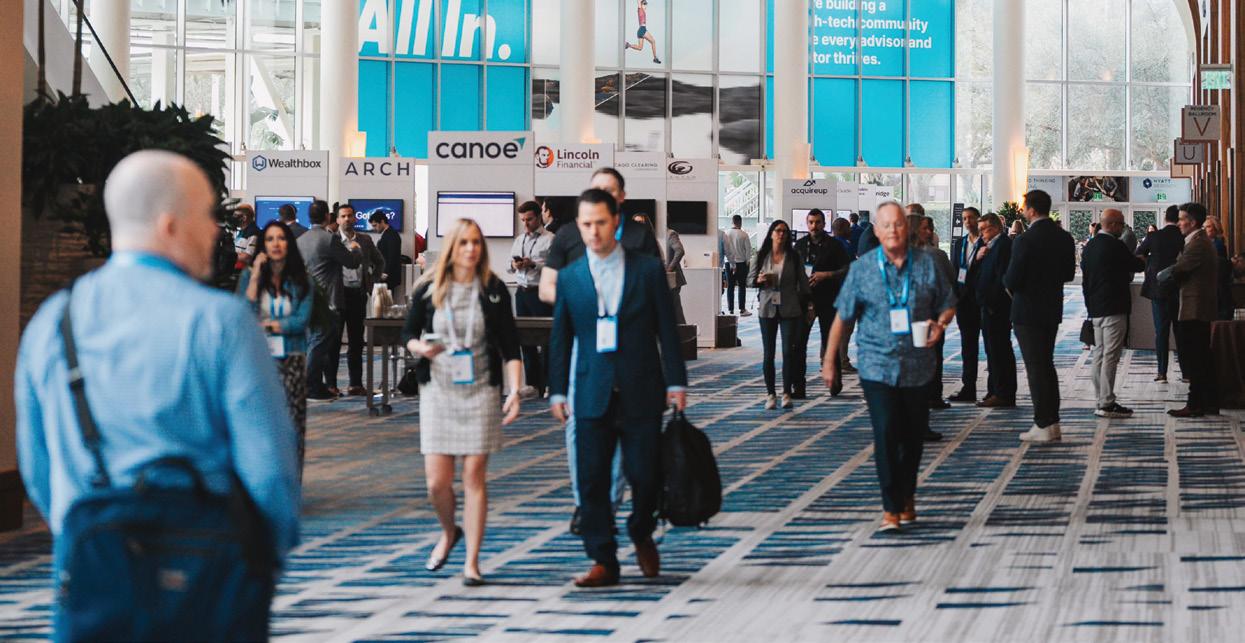
Attend 60+ Networking Events to make life-long connections and customers.
Build Your Reputation as part of our 3,000 strong community, from Fortune 500s to local startups.
Cultivate Skills through our premier professional development programs for you and your team.
For over 40 years, Burlington Capital has been a trusted leader in delivering innovative solutions and creating value across a range of industries. From real estate development and owner’s representation to agricultural services and business transitions, we transform ideas into impactful results. Our commitment to excellence, strategic partnerships, and global reach ensure that every project is approached with expertise and dedication to success.
Ready to build your success story? Let’s create something extraordinary together.
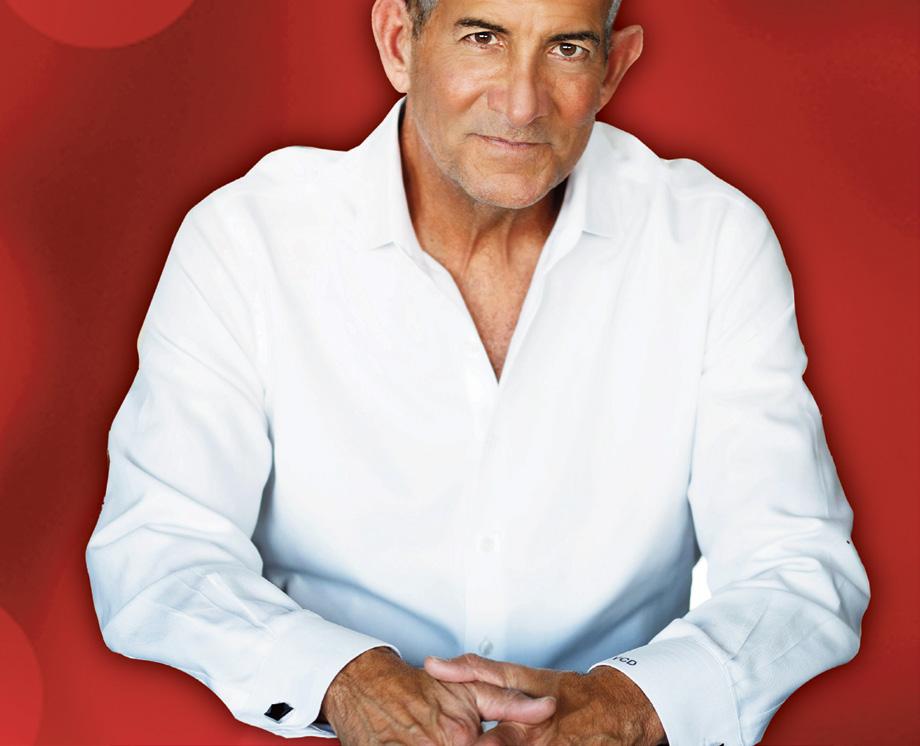
• One of the Midwest's Most Engaging Business & Sales Speakers
With Van’s passion, humor and experience you can be assured of one thing – your audience is going to get fired up, built up, and fully charged up. As an entrepreneur at the top of his game, Van is in the unique position of being able to ‘talk the talk’ because he has ‘walked the walk’. Van is a speaker with charisma, humility and impact and he’s a difference maker in the lives of the people he touches...
WELCOME TO
For 50 years, Midlands Business Journal has chronicled Greater Omaha’s business community — the late nights, the bold pivots, the quiet persistence that builds empires, the handshake deals that became decades-long partnerships.
IMPACT Magazine is where we step back from the weekly headlines and take in the full view. What you’re holding is Volume I, the beginning of a premium collector’s trilogy, designed to endure. More than a magazine, it’s a permanent record of how excellence has been built in this region, and a glimpse of what’s still being built.
LEGENDS, LEADERS & LEGACY MAKERS
Celebrating the past. Casting a vision for the future of business in Greater Omaha and beyond.
THREE GENERATIONS, ONE STORY
This inaugural trilogy spreads across all three volumes and honors three generations of excellence:
The Legends who laid the foundation — building companies that shaped our economy and our culture.
The Leaders driving today’s innovation — transforming industries and creating tomorrow’s opportunities.
The Legacy Makers defining the next 50 years — entrepreneurs, visionaries and changemakers who inspire what comes next.
LEGENDS, LEADERS & LEGACY MAKERS
Past, present and future. Together, they tell the story of how Greater Omaha became Greater Omaha, and where it’s headed next.
A TRILOGY BUILT TO LAST
Volume I was revealed at MBJ’s Golden Jubilee on May 5, 2026. Volume II arrives in August. Volume III comes in October. This holiday season, all three will be packaged together as a hardcover coffee table book — the ultimate keepsake of a milestone moment.
Celebrating the past. Casting a vision for the future of business in Greater Omaha and beyond.
Future employees will discover these companies in these pages and understand the foundation they’re building upon. Aspiring entrepreneurs will find the courage to start their own journey. Business students and historians will reference these volumes to understand how excellence is built in Greater Omaha.
Fifty years from now, someone will open IMPACT Magazine and see what we know today: great businesses aren’t built alone. They’re built by communities of leaders who dare to dream, commit to excellence, and inspire those who follow.
Settle in, take your time and enjoy the journey.
Volume I
50th Anniversary Edition
Volume I · May 2026 402-330-1760 | mbj.com
PUBLISHER
Andrea “Andee” Hoig
EDITORIAL
Executive Editor: Daisy Hutzell-Rodman
Senior Writer: Kara Schweiss
Writers: Holly McAtee & Michael Watkins
Fact-checker: Cathy Jakicic
Photographers:
Kaleb Duncan Photography
Roger Humphries Photography
Debra S. Kaplan
ADVERTISING
Sales & Business Development: Jane Shinn
Advertising Assistant: Julie Whitehead
DESIGN
PrintCo Graphics
Waking Words LLC
Jalapino Designs
DIGITAL
Lozafina
VIDEO PRODUCTION
Motion Content House
SPECIAL THANKS
Hamza Haqqi
Roxy Orr
Sandy Spady
Willy Theisen
GOLDEN JUBILEE EVENT COORDINATION planit inc.
IN MEMORIAM
Robert G. “Bob” Hoig
Founder Midlands Business Journal
Bob Hoig, founded Midlands Business Journal in 1975 with a belief: small businesses are the heartbeat of communities, driving economic vitality and social wellbeing … these stories matter!
Tribute on page 19
supporting leaders and businessES
The Midlands Business Journal and the University of Nebraska share a common goal: supporting the business leaders, entrepreneurs and visionaries that move our state forward.
The university graduates 11,000 students each year, fuels innovation through research and partners with businesses to create jobs. From established companies to those just beginning to take shape, we’re helping advance what matters most: the people behind the work.
For more than 150 years, the University of Nebraska has worked alongside the business community to strengthen Omaha and communities across our state. We know that we’re stronger when we work together.
Congratulations to the Midlands Business Journal on 50 years of chronicling Nebraska’s business leaders. We look forward to celebrating the successes still ahead.
Fifty Years, 2,639 Fridays.
A letter from Andee Hoig on MBJ’s Golden Anniversary. In tribute to the legends, leaders and legacy makers who filled the pages.
Dear Friends, I was 9 years old in autumn 1975 when my father, Bob Hoig, launched Midlands Business Journal from a modest office in Omaha. I didn’t understand what a publisher did. I only knew my dad believed — passionately, stubbornly, improbably — that this city and this region had a story worth telling every single week.
Fifty-plus years and 2,639 Fridays later, we’re still telling it.
It is with enormous gratitude and no small amount of awe that I welcome you to this 50th Anniversary IMPACT Magazine — presented, fittingly, as a trilogy. One volume simply wasn’t enough to hold 50 years. Each volume will take a different lens to this remarkable region: industry-defining sectors, the business success stories that shaped us, the buildings and landmarks that make Omaha, the philanthropy that defines our character and the future of business itself. Through all three, we will honor the same three generations of builders — the Legends of the past who built this region’s economy from the ground up, the Leaders of today shaping our present, and the Legacy Makers of tomorrow whose work will define the next 50 years. Together, the three volumes are a tribute to Midlands Business Journal — but above all to the extraordinary business community that has filled these pages for half a century.
My dad had plenty of critics when he started. Friends told him a weekly business paper couldn’t work in a market like ours. One colleague predicted he’d be back begging for his old newsroom job within a week. Instead, he spent the next 44 years proving, issue after issue, Friday after Friday, that Greater Omaha, Council Bluffs and Lincoln were exactly the kind of places where great business stories lived — and exactly the kind of places that wanted to read them.
MBJ, however, was never my dad’s accomplishment alone. It belonged to every reader who picked up a paper and found something worth keeping. It belonged to every advertiser who believed in local journalism enough to invest in it. Most of all, it belonged to the thousands
of entrepreneurs, executives, family business owners, founders, builders, philanthropists and dreamers who let us tell their stories — the ones who answered the phone when we called, opened their doors when we visited and trusted us with the details of their work.
To all of you: thank you. MBJ’s 50 years are really 50 years of your hard work, your perseverance, your failures, your triumphs and your courage to keep showing up. We just had the honor of listening, writing and sharing your stories.
When I stepped into the role of publisher and CEO in 2020, I did it with a bit of uncertainty, honestly, and with determination — determined that what my father built was worth carrying forward and, where we could, carrying further. Since then, MBJ has grown its digital footprint, expanded into radio with the weekly MBJ Business Minute, and has a full podcast slated on the horizon. In 2025 we launched our most ambitious campaign yet, IMPACT 250, spotlighting 250 local businesses across the anniversary year. We introduced the inaugural
read about in these pages whose impact reaches well beyond the bottom line. In late 2026, we will welcome the 25th class of 40 Under 40 honorees. None of that happens without you.
What you hold in your hands is our love letter to the legends who came before, our celebration of the leaders among us, and our promise to the legacy makers still to come. This holiday season, all three volumes will culminate in a beautiful commemorative coffee table book — a single keepsake meant to live on desks and in family rooms for decades, the way this region’s best stories deserve to live. The business community of Greater Omaha, Council Bluffs and Lincoln remains one of the most remarkable, most resilient, most genuinely generous in America. We see it every Friday. We will keep seeing it.
To every reader, advertiser, subject of any story we’ve told, team member who has ever sat at an MBJ desk, and to my dad — who I miss every day and hear in my ear every time I sit down to write something like this — thank you. This paper is yours. It always has been.
Here’s to the next Friday, and to the next 50 years.
As Dad always said: “Life is Good! Read it and REAP!”
Andee Hoig Publisher and CEO,
Dear Readers, For 50 years, Midlands Business Journal has done more than chronicle Greater Omaha’s business evolution — it has sparked the connections, conversations and commitments that make our community stronger.
At the Greater Omaha Chamber, we have witnessed this impact firsthand. MBJ has elevated startup success stories, celebrated our Fortune 500 companies, and built bridges among entrepreneurs, executives and community builders. The partnerships formed, the innovations shared and the risks taken have all been strengthened by the stories MBJ brings to life, week after week, issue after issue. In doing so, MBJ has helped shape how Greater Omaha sees itself and how the rest of the country sees us.
What Bob Hoig began in 1975 and what his daughter, Andee Hoig, continues today is something increasingly rare: a local business publication that has remained deeply rooted in its community through every economic cycle, every technological shift and every generational handoff. That consistency matters. It has given our region a
recognition that the storytelling, the connection and the championing of local enterprise that MBJ has provided for five decades must extend into the next.
Greater Omaha Chamber
For more than 150 years, Baird Holm has proudly supported the people, businesses, and organizations that make our communities strong and vibrant. We congratulate the Midlands Business Journal on its 50th Anniversary and recognize its longstanding role in connecting our business community.
A Half-Century of Telling Positive Stories of Area Business
The Making of a Founder
When Robert G. "Bob" Hoig walked into the lobby of the New York Daily News in 1957 and talked his way into a job as a copy boy, nobody in the building could have predicted the paper he would eventually build — not even him. He was 24, armed with what he called "plenty of derringdo about me, chutzpah," and on his way to a job interview at an airline. A beautiful building with a big globe in the lobby caught his eye. He walked in instead of going to his scheduled interview.
BORN IN THE DEPRESSION
Rural Kansas, a Kidney, a Kid Who Wouldn't Quit
Born in rural Kansas, raised by grandparents. Survives a critical illness at age 2 that costs him a kidney — the first time the odds quietly bent around him.
Eighteen years later, on Oct. 10, 1975, Hoig launched Midlands Business Journal in Omaha. Friends told him he'd be back begging for his old job at the Omaha World-Herald within a week. He wasn't. Fifty years and more than 2,500 weekly issues later, the paper Bob built is still arriving every Friday — having outlasted recessions, the collapse of print as an industry, the loss of its founder, and the doubts of every skeptic who said a business weekly couldn't work in a market this size.
This is how it happened. And first, this is how he happened.
AGE 16 · ROUTE 66
Hitchhikes Across America
Sets out with a friend and thumbs his way across the country on Route 66. Graduates from high school in Colorado Springs; attends the University of Colorado and the University of Nebraska.
NEW YORK · AGE 24
A Globe in a Lobby
Walking up East 42nd Street toward an airline job interview, Bob spots a beautiful building with a big globe in the lobby — the New York Daily News. He walks in, asks if they're hiring, and lands a job as a copy boy. Journalism has him.
UNITED PRESS INTERNATIONAL
The Surrender Plea Heard Coast-to-Coast
At UPI, Hoig authors a surrender plea carried nationally that induces 22year-old bank robber and murderer Duane Earl Pope — wanted for a Big Springs, Nebraska crime — to turn himself in after a nationwide manhunt.
OMAHA WORLD-HERALD
Nominated for a Pulitzer Hoig is the World-Herald's Pulitzer Prize nominee for an investigative series on lax security at the then-Nebraska State Hospital. The reporting prompts changes to state law.
FIRST EDITOR'S DESKS
Managing Editor — Omaha Sun & Douglas County Gazette
Hoig takes on his first editorial leadership posts. By the mid-1970s, he's tired of working for other people.
The founding is next
A Half-Century of Telling Positive Stories of Area Business
OCT. 10, 1975 · DAY ONE
The Paper That Shouldn't Have Worked
Hoig launches Midlands Business Journal on two convictions: the region doesn't need another outlet chasing vice and corruption, and readers will welcome a weekly voice telling the growth stories of area business. A colleague predicts he'll be back begging for his old job within a week. He never is.
FEDERAL RECOGNITION
SBA Media Advocate Award
The U.S. Small Business Administration names MBJ its Media Advocate for the Kansas City District — early affirmation of Hoig's bet on small business as the region's beating heart.
AHEAD OF ITS TIME
Tech Coverage Before the Web
Starting in May, MBJ carries a monthly supplement titled Nebraska Computer & Telecommunications Monthly — a notably early commitment to technology journalism for a regional weekly.
EXPANSION · SUCCESSION
Lincoln Business Journal · Metro to Andee
MBJ Inc. adds the Lincoln Business Journal. The same year, Bob sells Metro magazine to daughter Andee — the publishing gene, confirmed.
A BANNER YEAR
Golden Spike and the First 40 Under 40
MBJ earns the Greater Omaha Chamber's Golden Spike Award. Hoig launches the inaugural 40 Under 40 — presented by Northwest Bank from day one. The program will grow into a civic institution honoring hundreds of young leaders.
TRIPLE HONOR
Hall of Fame and the Barroom Floor
In a single year: Chamber Business Hall of Fame; Omahan of the Year from the Suburban Rotary Club; and, with daughter Andee, the Omaha Press Club's first father-daughter Face on the Barroom Floor.
THE COMEBACK
A Near-Miss and the Grace of Coming Back
In March, Hoig suffers a heart attack, followed by several strokes and pneumonia. Family begins making hospice arrangements. Against every medical expectation, he recovers. "To me, he's come back to life," Andee tells metroMAGAZINE
IN MEMORIAM · 1932 — 2019
The Founder Takes His Leave
Bob Hoig dies Jan. 7 at age 86 of complications from the flu and pneumonia. Tributes pour in from every corner of Omaha's media community. The paper he built, in its 44th year, keeps publishing.
“
Bob has given small businesses visibility they might not otherwise have had.
LINDA LOVGREN
Lovgren Marketing Group “ Bob helped small businesses grow by telling us about each other. We didn't have to leave our businesses to network.
CELLA QUINN
Cella Quinn Investment Services “
Bob Hoig has been the steadfast champion of Omaha and her small business interests.
HAL DAUB
Former Mayor of Omaha
A Half-Century of Telling Positive Stories of Area Business
SUCCESSION
Andee Hoig Takes the Helm
After 35 years leading metroMAGAZINE, Andrea "Andee" Hoig becomes MBJ's publisher and CEO. She expands the franchise beyond print into digital, television and podcasts — including the weekly MBJ Business Minute on Boomer Radio with Dave Wingert.
FIFTY YEARS ·
OCT. 10, 2025
The
Anniversary and the Ambition
On Oct. 10, MBJ marks 50 years to the day. The anniversary year carries a matching ambition: a 12-month series across distinct sectors of regional business; IMPACT 250, spotlighting 250 local businesses; and the inaugural Golden Circle Awards, recognizing seven leaders whose impact reaches well beyond the bottom line.
2,639
FRIDAYS SINCE 1975
75,000+
MILESTONE
40 Under 40 Turns 20
Two decades in, the program has honored hundreds of young leaders across Greater Omaha, Sarpy County, Council Bluffs and Lincoln. The celebration is held at the Embassy Suites La Vista Conference Center.
50 Years of MBJ
25 Years of 40 Under 40
The commemorative IMPACT Magazine publishes — spanning Greater Omaha, Council Bluffs and Lincoln — and MBJ celebrates the 25th annual 40 Under 40. Two milestones, one issue cycle. The mission, unchanged since 1975.
Life is Good! Read it and REAP!
Born in the Great Depression. Raised by grandparents in rural Kansas. Hitchhiked Route 66 at 16. Walked into the New York Daily News at 24 and talked his way into journalism. Took up tennis at 11 and played competitively into his 80s, winning a Senior Olympics title. Taught himself saxophone in his 40s. Took his first flying lesson at 70 and bought a Cessna 182 two years later. Flew until he was 80. "I had plenty of derring-do about me — chutzpah. I'd try anything."
Before founding MBJ he reported for the Lincoln Journal, Miami Daily News, United Press International and the Omaha World-Herald, and served as managing editor of the Omaha Sun and the Douglas County Gazette. In 1975, against every friend's warning, he bet on a weekly business paper for Omaha. He was right.
Ideas transform communities
Through
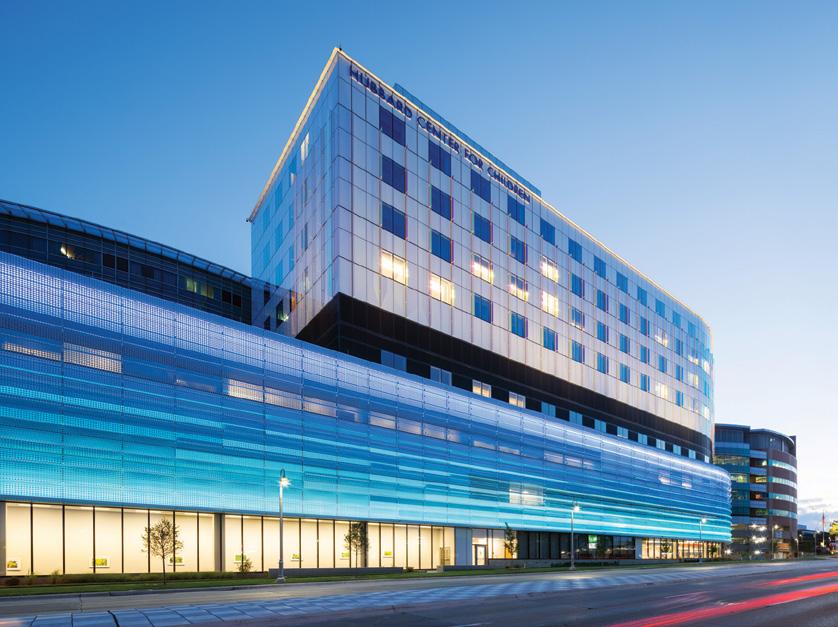
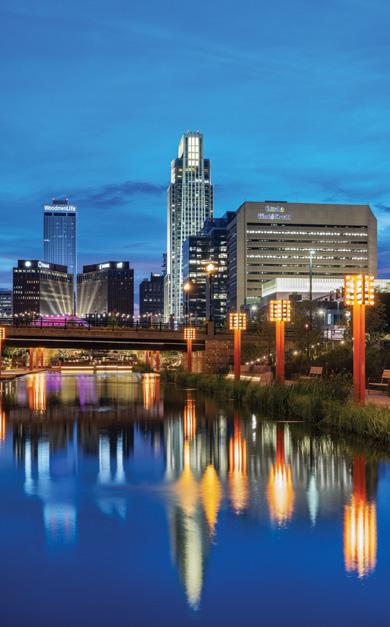
0 1. The Hubbard Center for Children, Omaha, NE | 02. Gene Leahy Mall at The RiverFront, Omaha, NE
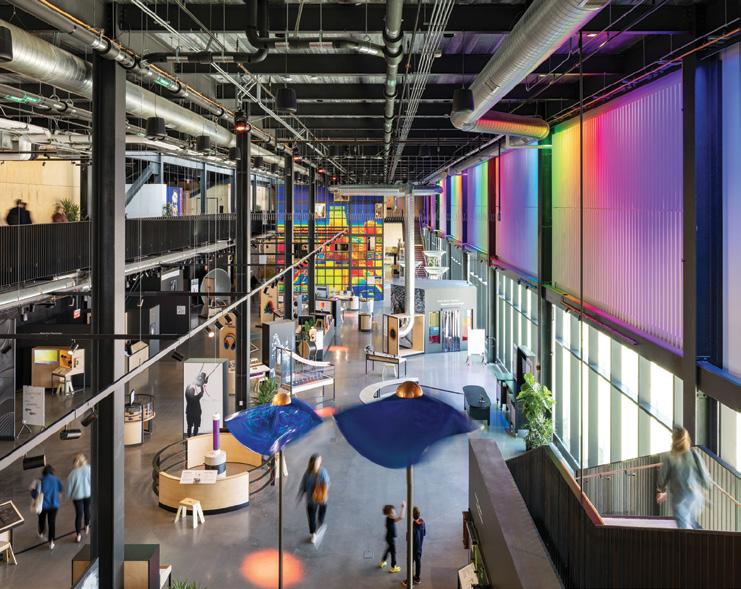
Council Bluffs Interstate System, Council Bluffs, IA | 04. Kiewit Luminarium, Omaha, NE
THE GOLDEN CIRCLE
Honoring the Legends, Leaders & Legacy Makers who shaped a region
THE 2026 GOLDEN CIRCLE HONOREES
LEGACY LEADERSHIP AWARD
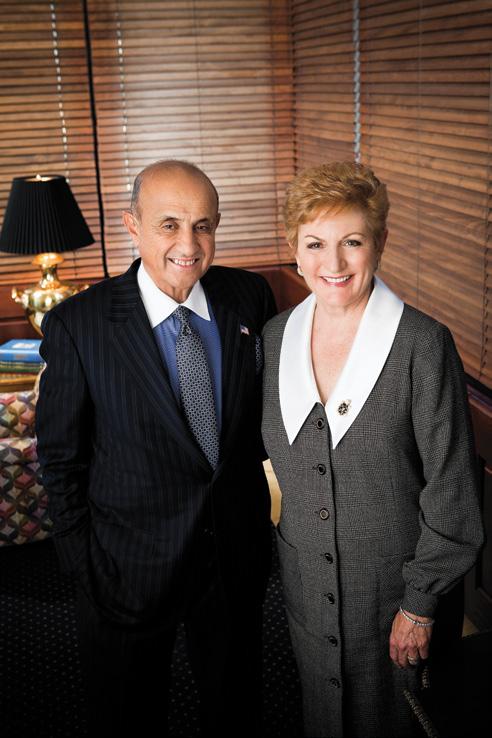
Gail & the late Mike Yanney
ENTREPRENEURIAL EXCELLENCE AWARD
Willy Theisen
INDUSTRY PIONEER AWARD
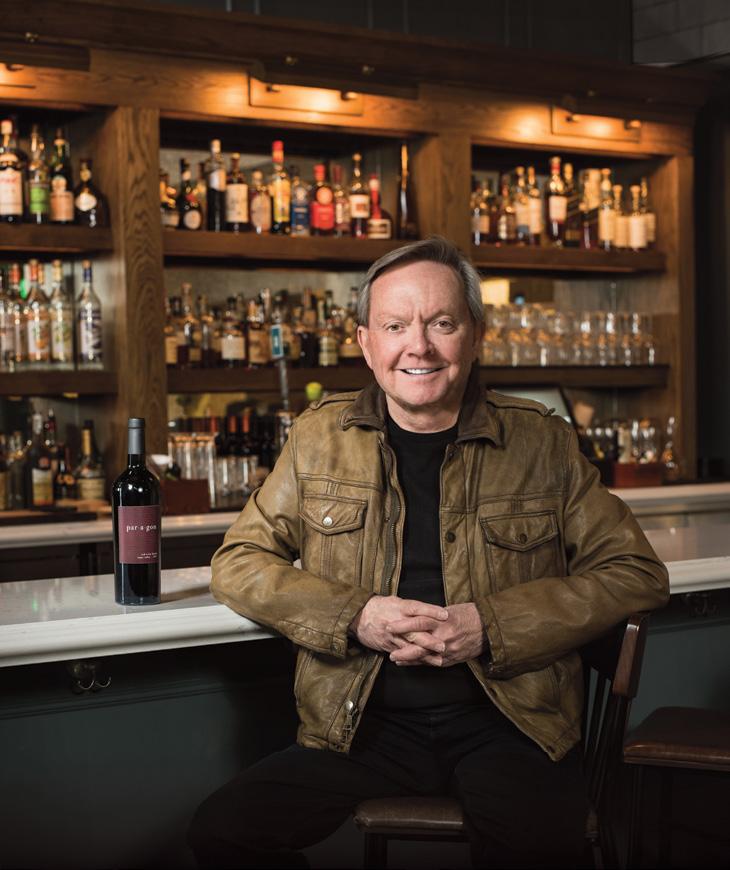
Mike Cassling
PERSEVERANCE & IMPACT AWARD
Johnny “The Jet” Rodgers
WOMEN’S TRAILBLAZER AWARD
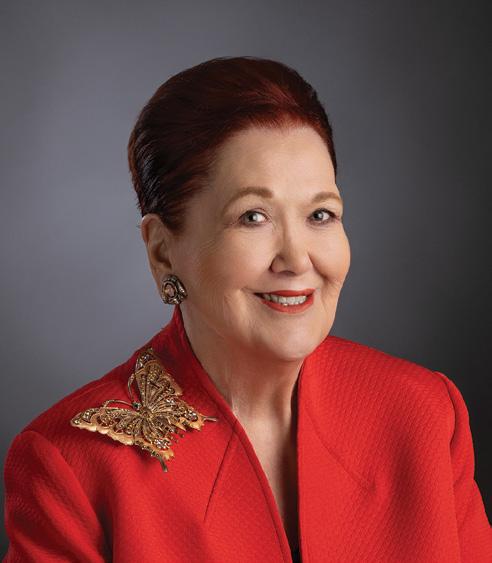
Cella Quinn
COMMUNITY CHAMPION AWARD
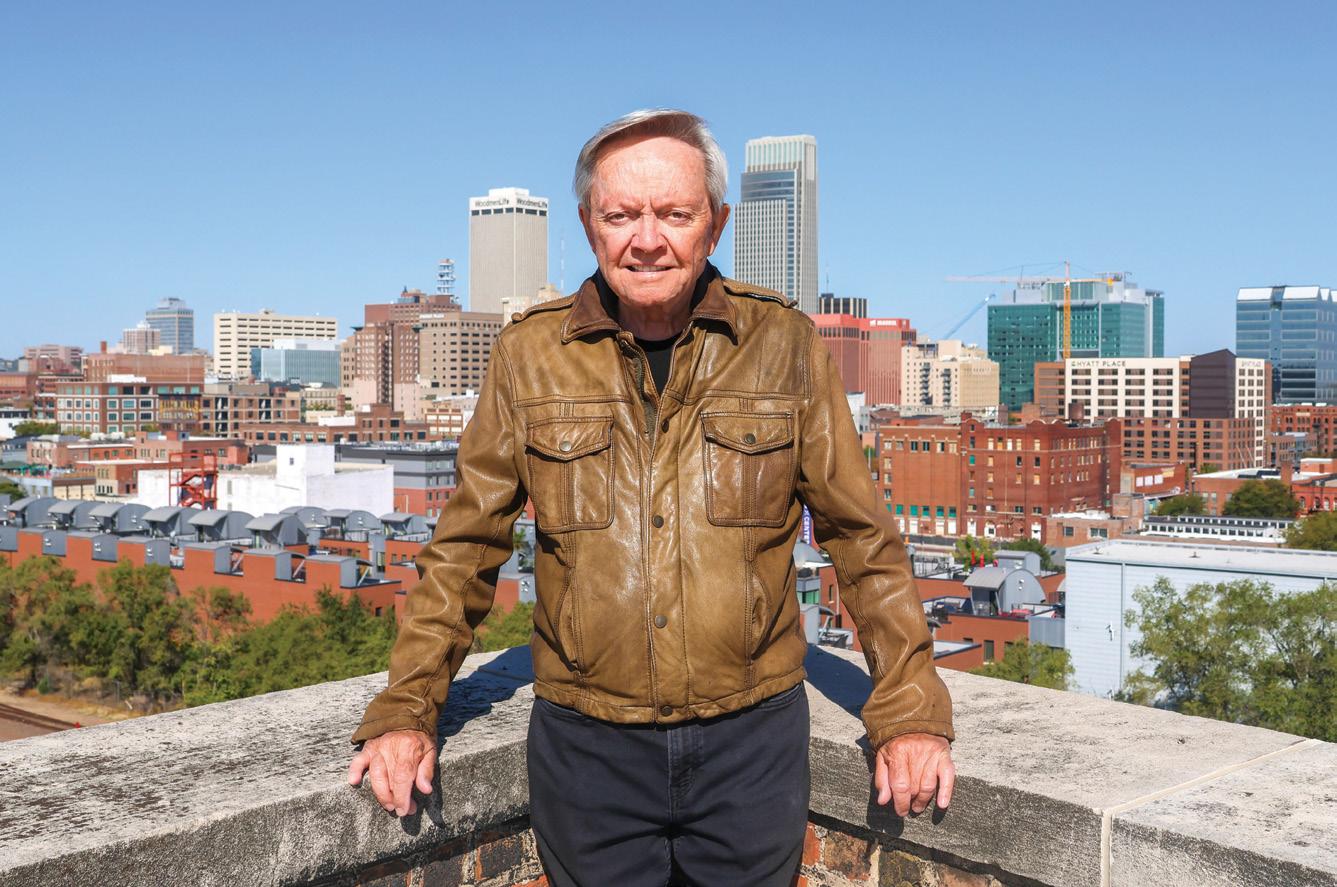
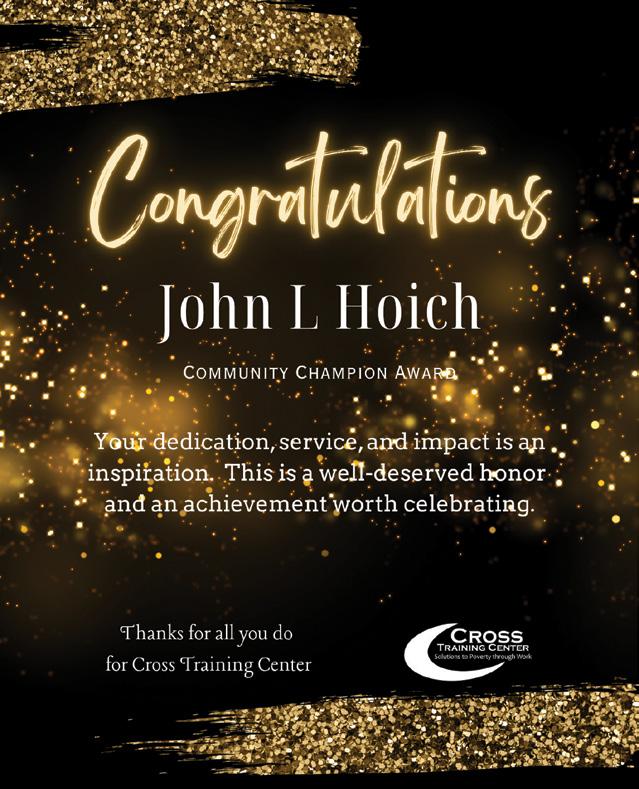
John L. Hoich
IMPACT — Legends, Leaders & Legacy Makers
MIDLANDS BUSINESS JOURNAL · VOLUME I
Legacy Leadership Mike and Gail Yanney
A 65-year love story started simply, with a blind date in Denver arranged by some mutual friends.
The young man, Michael B. Yanney, was just starting a career in banking. The young woman, Gail Walling, was wrapping up her final year of medical school. The couple had an instant bond and swiftly became engaged. They married on Christmas Day 1960.
Over their six-and-a-half decades together, the Yanneys built a legacy in the community — not only in business but in philanthropy, mentorship and civic leadership — that has made a lasting impact.
Mike Yanney, who died Feb. 14, 2026, at the age of 92, was probably best known as the founder of the exceptionally successful investment management firm Burlington Capital, originally called America First. His personal origins, however, were humble, even hardscrabble. The Kearney, Nebraska, native was the youngest of nine children; his father died when Yanney (known as “Buddy”) was only 11 years old.
“He had a good education and a good job, but he didn’t have insurance, and all of us had to go to work,” Yanney said in a 2024 interview, explaining that he shined shoes, sold vegetables from his mother’s garden, and took on any job available. “I thought the town was tremendously good to me, to help give me jobs and to help give me opportunities (that) in a larger city I probably never would have seen.”
Those early experiences instilled a longstanding dedication to hard work and an enduring loyalty to community. In 1997, Yanney began developing plans for what became E.K. and Mary Yanney Heritage Park — named for his parents — a beautiful 80-acre park on the southwest side of Kearney with diverse and unique amenities. Today, it attracts travelers from all over the region and has become a notable icon for the city and surrounding area.
Building a company
BY KARA SCHWEISS
Bank from 1961 to 1977 and served as volunteer chairman of the city’s Riverfront Development project. In 1984, he founded America First, which raised investment funds and owned multifamily housing across the country; it evolved to become one of the area’s most prominent privately held investment companies.
After assuming the role of chief executive officer, the Yanneys’ daughter, Lisa Roskens, changed the company name in 2006 from America First to Burlington Capital, by which it continues to be known. Even after his daughter took the helm, Yanney remained active as chairman emeritus.
The company’s tribute to Yanney stated, “Those who worked alongside Mr. Yanney remember his personal touch as much as his leadership. His handwritten ‘Y’ or ‘See me, Y’ on a memo was an invitation, not merely to discuss business, but to think bigger, to lead with courage and to act with integrity. He challenged others to do their best with the talents they were given and to use those talents in service of something greater than themselves.”
Dr. Walling, Mrs. Yanney
“We were blessed in our community with a regular infusion of good news; it was all about good things happening in our businesses and good news about the people who were part of them. (Bob and Andee Hoig’s) efforts have brought joy to us Omahans for 50 years. What a gift!”
Yanney graduated from what is now the University of Nebraska at Kearney and, after a stint in the U.S. Army, began working in banking. He and his wife settled in Omaha, where Yanney built his banking career at Omaha National
— Gail Walling Yanney
Gail Walling Yanney was born in Chicago, but her family relocated to the Omaha area when she was still a child. She graduated from the University of Nebraska Medical Center College of Medicine and became a respected anesthesiologist, primarily at Clarkson Hospital, later serving her alma mater as a clinical instructor. After retiring, she served as executive director of the Clarkson Foundation and on the board of directors of The Nebraska Medical Center hospital.
She was known professionally as Dr. Walling, as her “very forwardthinking” mother suggested in light of the fact that the young doctor’s parents had footed the bill for her medical education. It made for some amusing moments for the young Mr. and Mrs. Yanney, as Gail Yanney recalled in a 2024 interview.
“When we went to things together, occasionally they’d say, ‘Are you Mike Walling?’ because they just assumed that was my married name,” she said. “And I said, ‘No, I’m Dr. Walling, but I’m Gail Yanney, Mrs. Michael Yanney.’... I’m Gail Yanney, especially in circles where Mike is known.”
PHOTOGRAPHY CONTRIBUTED BY THE YANNEY FAMILY
Throughout their life together, the couple has generously given time and resources to dozens of causes through decades of service from board leadership to financial support. In 1989, the Yanneys co-founded the nonprofit Yanney’s Kids, later All Our Kids and now part of Partnership 4 Kids (P4K), which has provided thousands of Omaha-area students with mentoring and educational opportunities. Mike Yanney once said, “It’s been one of the most heartwarming projects I’ve ever done.”
Causes and contributions
The couple supported causes separately as well. For example, in 1990 Gail Yanney played a pivotal role in launching Women’s Fund of Omaha by helping secure early funding through a Ford Foundation and MacArthur Foundation grant and setting the stage for long-term support of women and families in the community. In another example, Mike Yanney contributed to fundraising efforts for the University of Nebraska Medical Center and also helped secure land for Ashfall Fossil Beds State Historical Park in the northeast part of the state.
Mike Yanney’s interests extended well beyond Nebraska. The voracious traveler had estimated that he made more than 150 trips overseas, with special interest in his ancestors’ homeland, Lebanon, and business interests in the Soviet Union, later Russia. His ventures ranged from agricultural development projects to ownership of poultry, packaging and glass manufacturing companies. He once even made a bid to purchase the Port of St. Petersburg, an unconventional proposition but characterized by the same boldness that defined many of his successful ideas closer to home.
The Yanneys were unlikely to seek recognition or credit for their wide range of contributions and remarkable impact. They focused instead on supporting the community, often behind the scenes. As their daughter said, “Mom and Dad have managed to be an inspiration and influence, selflessly and continuously providing advice to the next generation, going beyond business to get at what matters most, helping people through that defining moment to change their lives and the community.”
Celebrating others’ success
Mike and Gail Yanney also had a deep appreciation for others’ success. Gail Yanney called out the couple’s long relationship with the Midlands Business Journal and the importance of recognizing and celebrating area businesses and entrepreneurs and creating a positive professional ecosystem.
“We were blessed in our community with a regular infusion of good news; it was all about good things happening in our businesses and good news about the people who were part of them,” she said. “(Bob and Andee Hoig’s) efforts have brought joy to us Omahans for 50 years. What a gift!”
The Yanneys themselves have never been content to be passive benefactors, choosing instead to be active participants, whether mentoring, advising or supporting. Their contributions reflect a belief that success carries an obligation to uplift others.
Mike Yanney’s death marks the end of a chapter, but the story of Mike and Gail Yanney lives on in everything they helped create as well as in the lives of countless individuals who benefited from their generosity.
John L. Hoich Community Champion Award Honoree
I am deeply honored to receive the Community Champion Award from Midlands Business Journal during this special 50th year celebration.
Congratulations to my fellow honorees—your work inspires and strengthens our community every day. It is a privilege to be recognized alongside such dedicated leaders.
Thank you to MBJ for this meaningful recognition and for 50 years of highlighting the people and organizations that make our region thrive.
With gratitude,
John L. Hoich
Entrepreneurial Excellence Willy Theisen
As a young adult, Clinton, Iowa, native Willy Theisen might launch his future at the University of Northern Iowa.
“I was just starting the second semester of my second year, and I came to the conclusion that I wasn’t supposed to be there. It wasn’t working out the way I hoped it could work,” he said. “And hope doesn’t get you very far.”
His next move didn’t get him very far, either. After leaving college, Theisen decided to head to California and launch his future there. He was merely hours into the journey when his car stalled out on the Mormon Bridge leading into Omaha.
“There was a gas station up here at the time,” he said. “I pulled over and I called my buddy at school.”
needed repairs Theisen couldn’t afford, and his blue-collar family didn’t have the means to rescue him. His friend’s parents had compassion for the young man’s predicament and offered him a hand up.
“I stayed with them for about three to four months,” he said “When I was looking in the paper for work, I did odd jobs around the house (for) which they fed me and let me stay there ... I ended up painting the whole house.”
Recognizing potential
He also ended up staying in Omaha. Theisen was eventually hired as a rental manager for the then-new Thomasville Apartments in southwest Omaha, and the position included came with a significant perk: an apartment. Developer Tom Fellman, who later co-founded Broadmoor Development, was only a few years older than Theisen but recognized potential and gave Theisen room to innovate.
BY KARA SCHWEISS
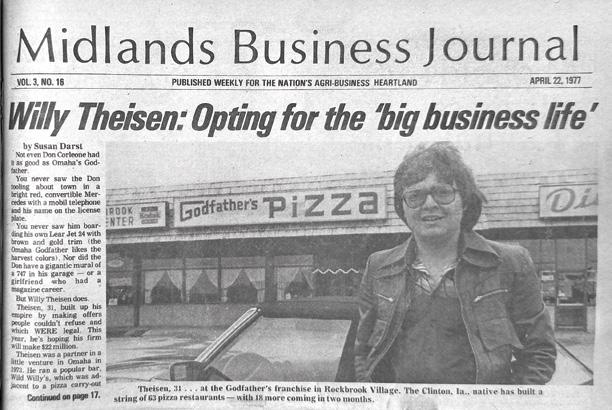
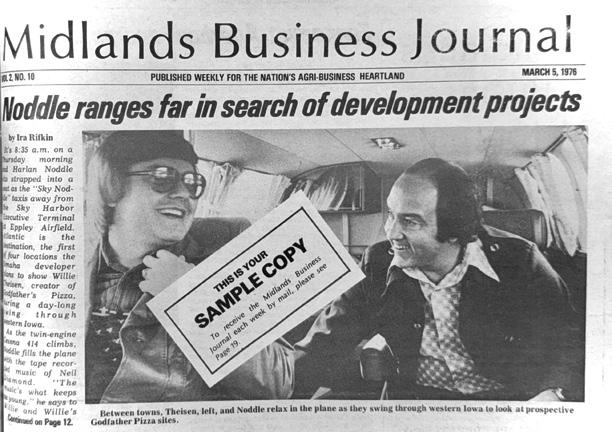
Theisen soon opened a bar called Wild Willy’s in the same area of town as Thomasville. In 1973, Theisen joined the owner of the pizzeria next door, Gregg Johnson, to create the first Godfather’s Pizza and assumed full ownership of the combined establishment within a year.
Going gangbusters
The business went “gangbusters,” as Theisen described it, under his model to lease existing spaces instead of building standalone restaurants under long-term mortgages. Franchising began in 1974 for Nebraska and adjacent states, and Godfather’s was recognized for its impressive growth in 1977, 1978 and 1979 by the National Restaurant Association. At one point, Godfather’s was opening a new restaurant the equivalent of every 60 hours. The chain reached nearly 1,000 locations nationwide at its peak.
Theisen, who earned money as a preteen and teen through resourceful means from shoveling snow and cutting grass to stenciling house numbers on curbs, said he still meets former employees who say they appreciated the opportunity to learn work skills at Godfather’s.
“We hired students to work there. It was 80% of our staff,” he said. “It set them up for success.”
“I think that was my biggest initial confidence-builder,” Theisen said. “He didn’t know that he was teaching me, and I didn’t know I was learning. He just said what he expected, and then ‘Figure out how you’re going to do that.’”
“I think that was my biggest initial confidence-builder. He didn’t know that he was teaching me, and I didn’t know I was learning. He just said what he expected, and then ‘Figure out how you’re going to do that.’”
Theisen thrived, and Thomasville became a highly social community.
“We had some mojo,” he said. “We had a vibe.”
One thing was missing, however. “I said, ‘We need something. We don’t really have any place to go out and eat or drink,’” he recalled. “There’s no booze, there’s no bars, and there’s no food. So I kind of penciled a few things
— Willy Theisen
Theisen sold the business in 1983, and Godfather’s Pizza continues today, although the franchise is smaller. Theisen went on to various roles in other successful business ventures, recently as chief consultant for Ruhlman’s Steakhouse at Oxbow Crossing in Ashland, Nebraska. Phil Ruhlman, who opened the restaurant in 2024, said Theisen has become the “teacher, mentor, friend.”
After decades of board service in higher education, business groups and other community organizations, Theisen’s focus has shifted in recent years to more direct volunteering. He is still a bell ringer for the Salvation Army during the Christmas season, and is proud of his continuing work with RISE, a program that helps incarcerated individuals nearing release prepare for successful reentry. Theisen offers a different kind of hand up than he received as a young man stranded away from home, but the broad objective is the same, he said.
“We’re going to only succeed together.”
PHOTOGRAPHY BY DEBRA S. KAPLAN
Visionary. Entrepreneur. Advocate.
To say Willy Theisen and First Westroads Bank go way back is an understatement.
It’s been a true honor to be with Willy on his journey beyond Godfather’s to his strategic vision on landmark boards of directors, and to helping others live productive, fulfilling lives.
Willy’s life is one to admire, and that we do.
Congratulations, Willy, on your well-deserved honor and place in Omaha’s history.
Photo credit: Debra Kaplan and the Midlands Business Journal
Women’s Trailblazer Cella Quinn
At an early age, Cella Quinn became determined to forge her own path in life after witnessing the lack of autonomy that characterized the life of her mother, a farm wife.
Quinn ultimately not only built a successful career in financial services at a time when few women were part of the industry — let alone leaders — but also cultivated opportunities for other women to follow.
“In the eighth grade, I remember clearly that I decided I would always have control,” she said.
Fulfilling a promise
Education was an important key to controlling her destiny, Quinn said. She graduated high school ahead of her 17th birthday in 1957 (her rural school district had no kindergarten) and left home for nine months of secretarial training in Lincoln, followed by a secretarial job and college. After earning a degree in journalism and political science at the University of Nebraska-Lincoln, Quinn worked as a Lincoln Journal reporter in the 1960s. She then entered a new career field in the early 1970s as an account executive at Merrill Lynch.
“I walked into that office on my first day and I saw men who were helping clients make money, who themselves knew how to make money, and they all had control. It was there I discovered that money buys you control, indeed, and so I was determined to (fulfill) that eighthgrade promise to myself,” she said.
BY KARA SCHWEISS
“Men have had networking groups for, well, millennia,” she said. “I started the first women’s business networking group in Omaha. That has lasted 47 years.”
In addition to the simply named Omaha Network,. Quinn also founded other networking groups over the years for women business owners and executives — such as GOG (short for the Good Ole Girls) and Women of Ten.
“When you help other people by networking, you have a sense of compassion and empathy, and all of a sudden you just get astounded at how much women can do..”
In 1979 she moved on to Smith Barney, now part of Morgan Stanley Wealth Management, where she rose to the position of vice president and was the first woman invited into the firm’s elite Chairman’s Club. In 1992, Quinn founded Cella Quinn Investment Services, leading the firm for nearly 25 years until selling it in 2017 to Silverleaf Wealth Management. She opened the doors for other women to follow her into the field simply by working hard and succeeding. She also cultivated support for female professionals by participating in and establishing multiple professional networking groups.
— Cella Quinn
Even after selling her company, she has remained active, through other organizations, including the Omaha Chamber of Commerce Board of Directors, Rotary (she was Downtown Rotary’s first female president) Executive Dialogue and Omaha Free Speech Society.
“When you help other people by networking, you have a sense of compassion and empathy, and all of a sudden you just get astounded at how much women can do,” she said.
Overcoming challenges
Her compassion also stemmed from a significant personal challenge: Quinn was born with a severe cleft palate in 1939 when medical options to treat the condition were limited, and both her speech and her self-image were affected during her early life.
However, resources — including
government-supported programs and
health insurance — later supported speech therapy, dental procedures and surgery.
“I learned the value of government, health and community caring,” she said. “And without that help, I would not have made it.”
Quinn’s trailblazing achievements are were shaped by her impressive abilities and expertise, but they were also influenced by her tenacity in rising above challenges and a willingness to defy former limitations for women in business.
She emphasized that she’s appreciative of those who have helped her along the way and has always strived to pull others up as she’s risen. Quinn expresses her philosophy for earning leadership and achieving success in surprisingly straightforward terms.
“Work very hard, learn a lot,” she said. “And be easy to get along with.”
PHOTOGRAPHY BY C41 PHOTOGRAPHY
Strategic heads. Creative hearts. Unstoppable legacies. Congratulations to the 2026 Golden Circle Awards honorees. Here’s to those whose hustle has paved the way.
Industry Pioneer Mike Cassling
Mike Cassling was still finishing his bachelor’s degree in 1985 when he joined a new medical technology company, Cassling Diagnostic Imaging, the year after it was founded by his father, H. Robert “Bob” Cassling.
So rather than entering a long-established family business, Mike Cassling had the opportunity to work alongside his father in a young company just taking root — and the younger Cassling had a role in helping it grow.
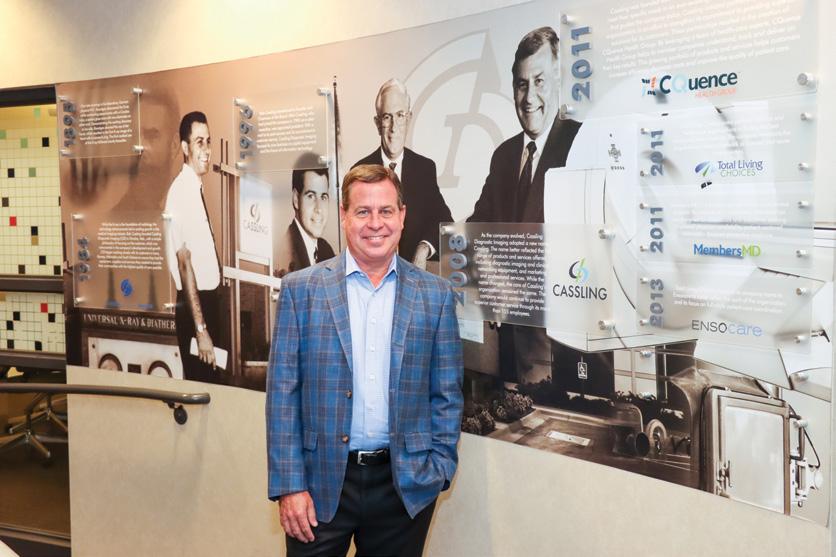
He started in sales, eventually worked his way to vice president of sales and marketing, and was appointed president of the company in 1996. Mike Cassling still serves as chairman for the company, now simply called Cassling, which also serves as the flagship partner company for CQuence Health.
Cassling founded CQuence in 2011 to provide investment capital, strategic guidance and professional services to a dynamic portfolio of health care companies. Under his leadership, CQuence and its holdings have earned recognition including Modern Health Care’s No. 1 ranking in its Best Places to Work in Healthcare, Baird Holm LLP’s Best Places to Work in Omaha, and Greater Omaha Chamber of Commerce Business Excellence Award.
According to Cassling, these successes and others can be partly credited to an early professional mentor, Ken Vetter, his father’s first employee and a sales leader who rose to the position of vice president before retiring.
BY KARA SCHWEISS
retirement age, and eliminated some of the heavy debt associated with first- to second-generation business transitions. It also changed the nature of the business. It really pivoted us toward who we are today, which is a huge focus on digital equipment and service,” he said.
The timing was perfect, and so was Cassling’s instinct to evolve. An industry shift from analog to digital technologies
“Look at Eastman Kodak. They were a giant company ... but they didn’t keep up as it moved to digital,” he said. “I’m all about growth and change ... We constantly adapted and changed to the environment we were dealing with in health care.”
His father, who died in 2014, was by contrast fairly traditional, Cassling said.
“He was more about sticking with the core business,” Cassling said. “I was always about, ‘No, we need to grow.’”
Father and son did share a belief in cultural values that empower team members to cultivate collaboration and drive high-quality service at both
In fact, Cassling announced a transition to being a 100% employeeowned company in late 2025.
Doing well while doing right
Cassling’s late mother was also a strong influence. He credits her with instilling his spirit of giving.
After Vetter’s 2021 death, Cassling honored his mentor by establishing the Ken Vetter Integrity & Strategy Award.
“He really taught me about taking care of the customer and responding quickly. If you don’t know the answer, just say you don’t know and then go get it,” Cassling said. “Those are skills I’ve used for the rest of my life.”
An industry shift
“I’m all about growth and change ... We constantly adapted and changed to the environment we were dealing with in health care.”
When Cassling began leading the family business, the ever-dynamic industry was on the brink of some major changes. The company had a consumables — primarily film and chemistry — division that had grown to $100 million, along with its equipment and service side.
“In 1997 I sold our consumables business back to the company my dad came from,” Cassling said. “This action provided financial security for his father, then at
— Mike Cassling
“I learned that early on from my mom, who was very much about giving back to the community. I remember being a little, little kid at the grocery store down the street from where we live, ringing bells for The Salvation Army,” he said. “I think it’s critical that companies and people give back.”
His companies give generously, plus Cassling supports his team members in serving the community. He personally serves or has served the Aksarben Foundation, Omaha Performing Arts, The Salvation Army, CyncHealth, the Jeffrey S. Raikes School of Computer Science and Management at the University of Nebraska-Lincoln, Nebraska Tech Collaborative and the Independent Institute, among others.
While he has received many honors for his work, what really motivates him is making a difference, Cassling said.
“I don’t need to be celebrated,” he said. “I just want to do what’s right.”
PHOTOGRAPHY BY DEBRA S. KAPLAN
Since 1975, Investors Realty has been at the heart of Omaha’s commercial real estate transformation—trusted by businesses for five decades to deliver results in buying, selling, leasing, and managing commercial properties. As MBJ honors 50 years of business leadership, we’re proud to celebrate our shared history of growth, innovation, and community impact in Greater Omaha.
Here’s to the next 50.
12500 I Street · Ste 160 | Omaha, NE 68137 investorsomaha.com
“Thoughts are not things; they’re the cause of things … If you don’t think about it, then you won’t get it.”
— Johnny Rodgers
other sports, too, and he found he was adept at almost everything he tried. “I wasn’t afraid of heights or jumping, nothing.”
Several early mentors also nurtured his confidence.
“I grew up pretty much without a father figure,” he said. “But I spent a lot of time at the YMCA and the Boys Club ... they were just good people.” Baseball legend Bob Gibson’s brother, Josh Gibson, was an important influence, as was Lothrop Elementary Principal Eugene Skinner, Omaha Public Schools’ first Black principal.
“(These were) people who I grew up respecting and wanting to make proud,” Rodgers said.
to school to earn degrees in broadcasting and advertising.
“Kids don’t do what you say. They do what they see you doing,” he said. “So, I had to make it happen.”
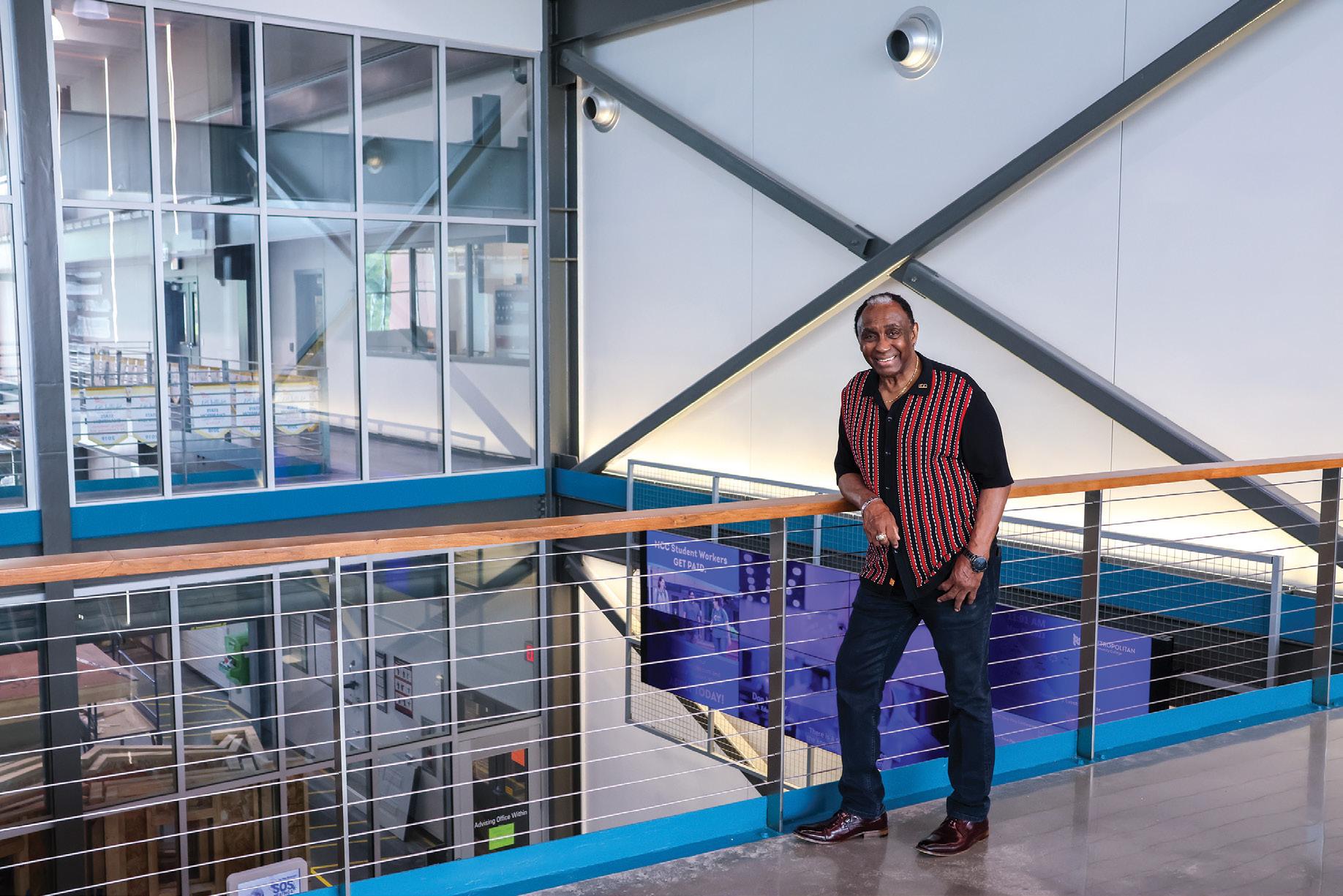
Through the Jet Foundation and Johnny Rodgers Career and Technical Education Scholarships at Metropolitan Community College (MCC), he is helping make it happen for low-income and first-generation students entering the career and technical trades programs at MCC. Because success begins with a thought.
“Those things, they will happen,” he said. “And you’ll find more things and more ways to make them happen.”
PHOTOGRAPHY BY DEBRA S. KAPLAN
Community Champion
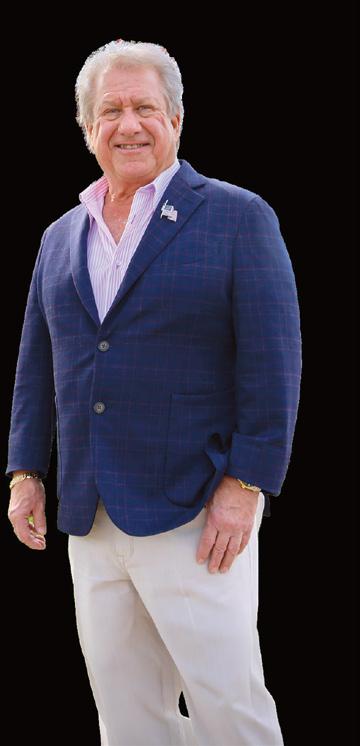
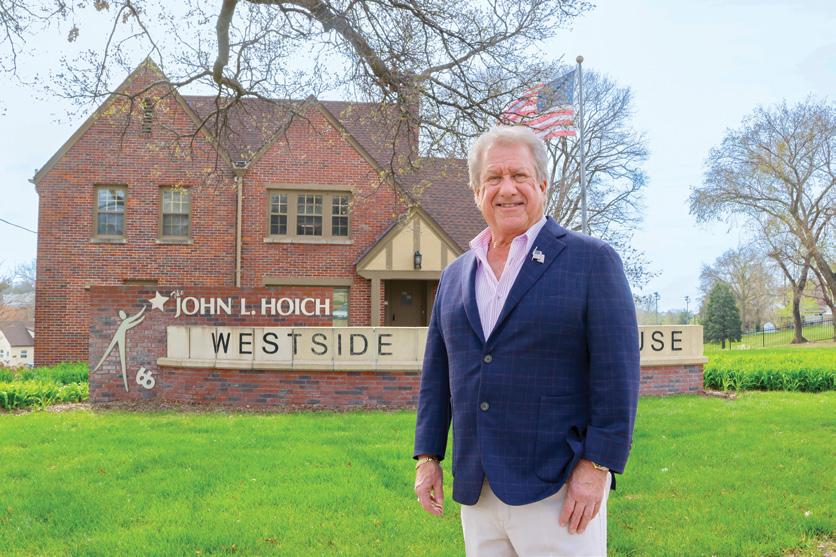
John L. Hoich
Midlands Business Journal was still in its first year of publication when 18-year-old John L. Hoich, a Westside High senior, was featured in a January 1976 profile about his efforts to help find job openings for other young people. What he didn’t share with the writer then is how his personal employment experience was borne out of necessity due to the adversity he faced that he now calls “the hell I went through.”
His earliest years were marked by abuse at the hands of the man he believed to be his father, by a period in the foster care system that exposed him to more abuse, and, when he was 16, the loss of his mother — who also endured years of trauma.
Hoich persevered. Beginning as a teen with a single, used lawn mower, he launched a small lawn care business. Hoich ultimately became an entrepreneur many times over, a successful real estate developer and a philanthropist. He was a millionaire by age 30.
He credits several local businessmen who helped him succeed, but a much earlier mentor helped him survive by showing him a compassion that shined a lasting light into his life.
BY KARA SCHWEISS
“My kindergarten teacher would hold me every time I came to kindergarten. She would kiss me on the cheek and tell me I was safe with her,” he said. “She just said, ‘Believe in God,’ and ‘I’m here for you,’ and ‘I’ll never leave you.’ And that was my first mentor, my kindergarten teacher.”
A flawed system in the early 1960s made it nearly impossible for teachers and others to intervene in domestic violence situations, Hoich said. But his former teacher, Kathleen “Kay” Kerwin Ogle, managed to maintain a presence even after he graduated kindergarten.
“She ended up being my first-, second- and third-grade catechism teacher. She stayed in my life, my whole life,” he said.
who graduated from Westside High School in 1976. For decades, he’s also funded scholarships assisting Westside High School students who have faced hardship. But the honor he’s probably most proud of doesn’t include his name. It’s the annual Kathleen Kerwin Ogle Inspiring Educator Award he established five years ago to recognize exceptional inspiration
“(It’s a) $5,000 scholarship, and she gets to pick. (She chose a) teacher at District 66’s Paddock Road Elementary School, where she taught, where I went,” Hoich said. “She’ll do that the rest of her life, and then I’ll endow it so it goes on in
As he was helped, Hoich has long helped others — from donating millions of dollars to charitable causes to serving on multiple nonprofit boards. He’s also a loyal member of Rotary International, likely its youngest-ever member when he joined. He’s had perfect attendance
Hoich has even transformed a site directly tied to the pain of his past. The bar that powered the wrath of his abusive father (who died in 1979) was torn down and replaced by a recovery center.
“That was a remarkable thing that I was able to be part of, to see a bar that ruined lives now save lives.”
— John L. Hoich
“We built a 64-room — for men and women — drug, alcohol and mental illness center called the John L. Hoich Center for Recovery, to give people a second chance,” Hoich said. “That was a remarkable thing that I was able to be part of, to see a bar that ruined lives now save lives.”
When he was inducted into the Westside Schools Hall of Fame in the 1990s, he was asked who he would like to be his special guest.
”I said, ‘My mentor, my hero: my kindergarten teacher.’”
The Westside Alumni House was dedicated in 2002 and named after Hoich,
At this stage of his life, Hoich said, he has reduced his involvement in business operations and is enjoying a focus on family. His now-adult twin sons are following their own career paths with his enthusiastic support, and they’re even teaching him about something he’s never really had a chance to do before: live in the moment. He’s met other millionaires and even some billionaires, Hoich said, but no one has ever been able to “take it with them.”
“I’ve never seen a hearse pull a U-Haul,” he said, adding that he’d rather leave behind a legacy of compassion and giving a hand up. “(That is) what I want to do the rest of my life: help others.”
PHOTOGRAPHY BY DEBRA S. KAPLAN
Gorilla Car Wash.indd
50 YEARS · 14 MAYORS · ONE CITY
The Mayor’s Office and Omaha’s Economy
In the 50 years since MBJ first went to press, Omaha doubled its skyline, reinvented its riverfront and held onto Fortune 500 headquarters that cities twice its size still chase. None of it happened by accident. Fourteen mayors steered the city through recessions, booms, floods and reinventions — each leaving a distinct mark on how business gets done here.
The mayor’s office is more than a political post — it’s the central point on which downtown investment, corporate retention, infrastructure and the city’s national reputation all balance. Each mayor inherited a different economic moment and left a different footprint. Here’s how their tenures shaped the business landscape.
—MAYOR NO. 01
Edward Zorinsky
SIGNATURE
Crisis Management and the Papillion Creek Dam
Ed Zorinsky came to City Hall from the wholesale tobacco business, bringing an open-door management style (he literally had the door to his office removed). His brief tenure was defined by back-to-back crises: the January 1975 blizzard that paralyzed the metro and the devastating May 1975 tornado that carved through central Omaha. His decisive emergency response earned widespread admiration and launched his political trajectory to the U.S. Senate.
On the economic front, Zorinsky championed the Papillion Creek Dam project to address chronic flooding that had hampered development in southwest Omaha. His resignation in 1976 to join the Senate left Robert Cunningham as interim mayor; Cunningham, in his 202-day stint, set up an arts task force and created a committee for economic development that would lay the groundwork for the decade ahead.
—MAYOR NO. 02
Albert L. Veys
The Quiet Transition (1973–1976) (1977–1981)
Al Veys won office in a remarkable write-in campaign — a testament to grassroots South Omaha politics. A grocer and former city councilman, Veys provided steady, low-profile leadership during a transitional period for Omaha’s economy. One of his administration’s defining accomplishments was launching a formal framework for historic preservation. In December 1977, the city adopted the Landmarks Heritage Preservation Ordinance, establishing the Landmarks Heritage Preservation Commission to identify and safeguard properties of historical significance. His tenure bridged the gap between the emergency-driven Zorinsky era and the turbulence that would follow under Mike Boyle.
Veys’s years coincided with the early stages of Omaha’s corporate ascent, as the city’s Fortune 500 companies began to solidify their national presence. Veys’s steady management of city services kept the municipal foundation intact during a period of national economic volatility.
—MAYOR NO. 03
Mike Boyle
SIGNATURE LEGACY:
Turbulence, Recall and the ConAgra Question
Mike Boyle was elected mayor at age 37, making him one of the youngest in city history. His confrontational style generated both loyalty and opposition. Supporters pointed to his record keeping Omaha on an “even economic keel despite a floundering agricultural economy” in the mid-1980s and he had the backing of many business and civic leaders.
But Boyle’s tenure was fatally destabilized by the firing of Police Chief Robert Wadman in 1986, which triggered the recall campaign that ended his mayoralty in January 1987 with 56% voting for removal. The recall drew the largest voter turnout for a city election in 20 years. Critically, the Boyle era overlapped with the early stages of the ConAgra headquarters negotiations — the most consequential corporate retention deal in Omaha’s modern history. The groundwork for what would become the ConAgra campus (and the destruction of Jobbers Canyon) was being laid during this turbulent period.
—MAYOR NO. 04
P.J. Morgan
SIGNATURE LEGACY:
ConAgra Campus, College World Series and Affordable Housing
P.J. Morgan arrived in City Hall with real estate acumen and an 82% approval rating. He was the right mayor for the moment: a businessman-politician who could manage the aftermath of the ConAgra campus deal and the demolition of Jobbers Canyon. Morgan was part of the delegation of business leaders — alongside Harold Anderson, Bruce Lauritzen and Michael Yanney — who helped broker the arrangement that kept ConAgra rooted downtown, even at the cost of 22 historic buildings.
Morgan’s administration was credited with developing more affordable housing than any prior Omaha administration. He also secured an unprecedented multi-year commitment from the NCAA to keep the College World Series in Omaha, a relationship that would prove transformative for the city’s national profile and tourism economy. He maintained a “business-like approach to governing” and cross-party appeal. Morgan resigned April 27, 1994, to become president of Duncan Aviation.
—MAYOR NO. 05
Hal Daub
(1995–2001)
SIGNATURE LEGACY:
The Convention Center, Arena and Downtown Transformation (1981–1987) (1989–1994)
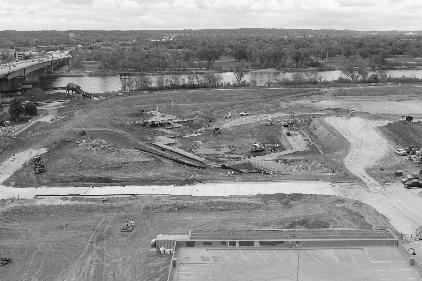
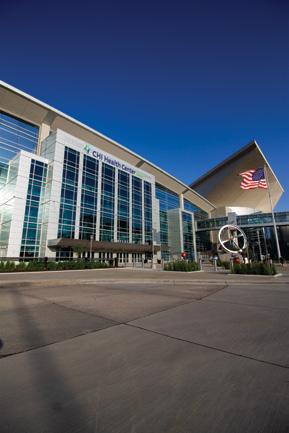
Hal Daub brought federal-level ambition to City Hall. His signature achievement was championing the Qwest Center Omaha (now CHI Health Center Omaha) — a combined convention center and arena that broke ground in 2001 and opened in 2003. The project fundamentally changed Omaha’s competitive position for conventions, concerts and major sporting events like the Olympic Swimming Trials and the NCAA Men’s College World Series.
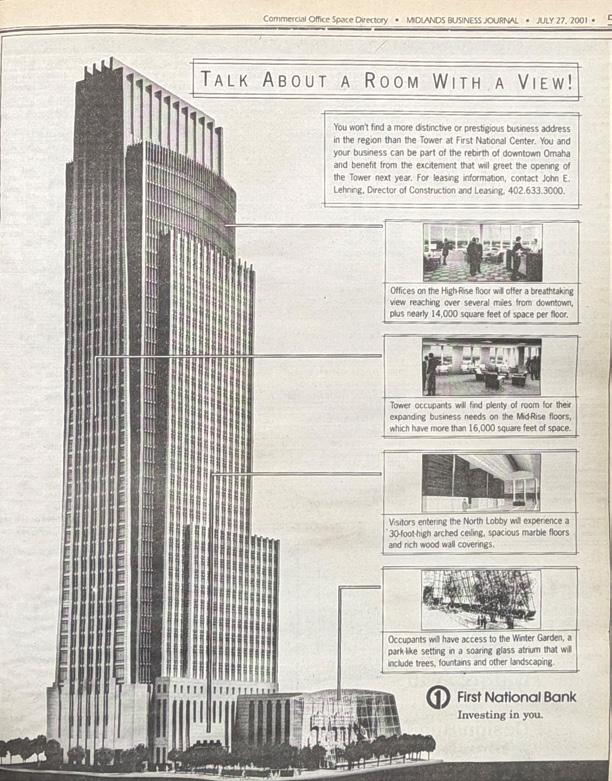
Daub also pushed for downtown riverfront developments that have led to Holland Performing Arts Center, the Union Station and Durham Museum renovation, First National Bank Tower, Union Pacific Center, Aksarben Village redevelopment and West Dodge Expressway. He achieved substantial property tax reductions. His vision for a light rail and streetcar system — which he first proposed in 1998 with federal funding lined up — would take nearly three decades to materialize. As he later reflected: “If you let the heart of a city die, the city will die. If you modernize the heart, you become a modern city.”
—MAYOR NO. 06
Mike Fahey
The Baseball Stadium Gambit and Riverfront Vision
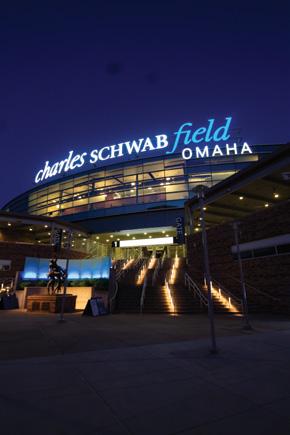
Mike Fahey was a Creighton graduate and founder of American Land Title Company. But his most consequential — and controversial — move was the decision to build a new downtown baseball stadium (later TD Ameritrade Park, now Charles Schwab Field Omaha) to secure a long-term NCAA contract keeping the College World Series in Omaha.
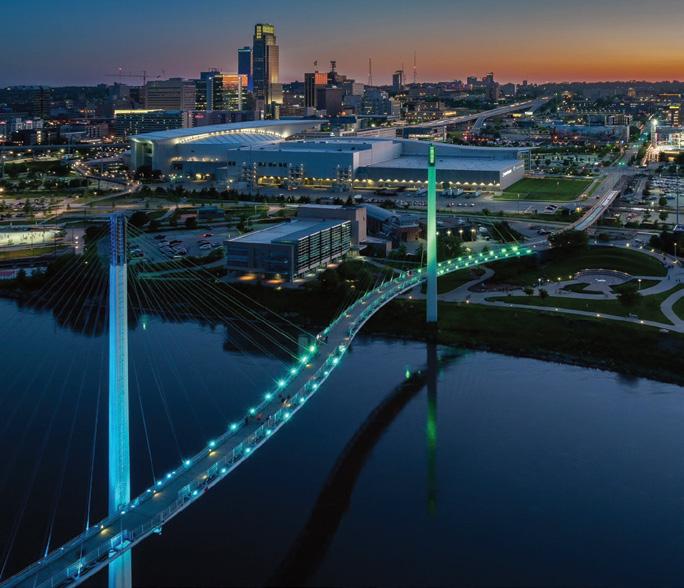
The stadium deal drew enough opposition to trigger a recall petition, though organizers did not collect sufficient signatures. Fahey also championed the Bob Kerrey Pedestrian Bridge connecting Omaha and Council Bluffs, further knitting together the metro’s riverfront identity. His administration laid the groundwork for north downtown development that would accelerate in subsequent decades. The section of Webster Street between 10th and 17th streets was renamed Mike Fahey Street in his honor — an area now anchored by the Kiewit headquarters and the emerging Builders District.
—MAYOR NO. 07
Jim Suttle
Recession Recovery, Flood Response and Fiscal Reckoning
Jim Suttle took office in the teeth of the Great Recession, inheriting a $9.5 million budget hole from collapsing sales tax revenues. A licensed professional engineer and former HDR executive, he brought a technocratic approach to crisis management — but his necessary tax increases made him deeply unpopular. Property taxes rose 15%, vehicle taxes jumped more than 40% and restaurants were hit with a 2.5% tax increase.
The resulting recall election in January 2011 nearly ended his tenure; Suttle survived by just 2% — winning 51% to 49%. Paradoxically, his unpopular fiscal moves turned the city’s deficit into a $3.3 million surplus and helped restore Omaha’s AAA bond rating. Suttle also led the city through the historic Missouri River flood of 2011 that lasted over 100 days and managed the early stages of Omaha’s $1.7 billion federally mandated sewer separation project — an infrastructure obligation that continues to shape city finances today.
Riverfront Transformation, Streetcar and the Mutual of Omaha Tower
Jean Stothert became Omaha’s first female mayor in 2013 and went on to serve a record-tying 12 years across three terms. Her tenure coincided with an extraordinary period of downtown reinvestment. The signature achievement was the $460 million Riverfront Revitalization project — a public-private partnership that combined Gene Leahy Mall, Heartland of America Park and Lewis and Clark Landing into a unified 72-acre park system, with private donors contributing all but $50 million.
Stothert championed the $459 million Omaha Streetcar project connecting Blackstone to the riverfront, projected to generate up to $4 billion in corridor development through tax increment financing. She also facilitated Mutual of Omaha’s decision to build a new $600 million, 44-story headquarters tower downtown; the $205 million Capitol District; two voter-approved road bonds totaling nearly $400 million; the new $158 million central library; the Kiewit Luminarium; pension reform for city employees; and aggressive annexation. She guided the city through COVID-19, including Paycheck Protection Program (PPP) loan coordination and public health response. Stothert lost her 2025 reelection bid to John Ewing Jr.
John Ewing Jr.
The Next Chapter (2025–Present)
SIGNATURE LEGACY:
Democrat ◆ Former Douglas County Treasurer and Police Deputy Chief
John Ewing Jr. became Omaha’s 52nd mayor on June 9, 2025 — and its first elected Black mayor. A graduate of Northwest High School and the University of Nebraska Omaha (UNO), with degrees in criminal justice and urban studies, Ewing served 25 years with the Omaha Police Department, retiring as deputy chief, before winning five elections as Douglas County Treasurer over 18 years.
Ewing inherits a city in motion: the streetcar under construction, the Mutual of Omaha tower rising and a metro area that recently crossed the 1 million population mark. His stated priorities include affordable housing, expanding public transit accessibility beyond the urban core and ensuring that economic growth reaches all corners of the city. How he navigates the streetcar’s completion, manages construction disruption to downtown businesses and addresses brain drain among young professionals will define his economic legacy. —MAYOR NO. 09
Mayors of Omaha 1975–2025
Edward Zorinsky (1973–1976) — resigned to run for U.S. Senate
Robert G. Cunningham (1976–1977) — interim mayor
Albert L. Veys (1977–1981)
Mike Boyle (1981–1987) — recalled from office
Bernie Simon (1987–1988) — interim mayor, died in office
Fred Conley (1988) — acting mayor briefly after Simon’s death
Walt Calinger (1988–1989) — interim mayor
P.J. Morgan (1989–1994) — resigned
Subby Anzaldo (1994-1995) — interim mayor
Hal Daub (1995–2001)
Mike Fahey (2001–2009)
Jim Suttle (2009–2013)
Jean Stothert (2013–2025) — first woman to serve as Omaha’s mayor; served three terms
John Ewing Jr. (2025–PRESENT) — became the city’s 52nd mayor on June 9, 2025
A NOTE ON INTERIM MAYORS
This sidebar focuses on elected mayors whose tenures allowed for meaningful economic impact. The interim and acting mayors who served between 1976 and 1989 — Robert Cunningham (1976–77), Bernie Simon (1987–88, who died in office), Fred Conley (acting, 1988) and Walt Calinger (1988–89) — each played important stabilizing roles during periods of political transition. Their contributions deserve recognition even as space limitations prevent full profiles here.
Compiled from public records, news archives, Wikipedia, Ballotpedia and institutional sources · March 2026 Midlands Business Journal · 50th Anniversary Issue
SOURCES
Edward Zorinsky: Douglas County Historical Society, OPS Making Invisible Histories Visible and UPI Archives
Al Veys: Columbus Telegram, Find A Grave and Grokipedia
Mike Boyle: Chicago Tribune, Washington Post
P.J. Morgan: Issuu/New Horizons Omaha, Nebraska Archives Online, Omaha Magazine and Vote P.J. Morgan
Mike Fahey: Nebraska Examiner
Jim Suttle: Bennington Banner, Leo Adam Biga’s “My Inside Stories” and LinkedIn
Jean Stothert: City of Omaha, Nebraska Public Media and WOWT
Additional information for more than one mayor came from Ballotpedia, Omaha World-Herald and Wikipedia.
LICIOUS Lineup
50
GOLDEN JUBILEE SPONSORS
One Golden Jubilee, Fifty Years, One Lasting Impact
A celebration like this one doesn’t happen without people who believe — not just in a publication, but in a community worth writing about. Midlands Business Journal has had the privilege of telling the story of Greater Omaha for 50 years. The true storytellers in this business, however, have been the businesses and leaders who built what we’ve been privileged to cover.
The sponsoring companies on the pages that follow are among them. They have shaped skylines, launched industries, strengthened neighborhoods and invested deeply in the people who call this region home. Their generosity extends far beyond commerce — it lives in the institutions, causes and organizations that make this a place worth celebrating.
Many of these companies, and their leaders, have appeared on our pages for decades. Some are writing their first bold chapters. All of them embody, in the most genuine sense, what it means to be a Legend, a Leader and a Legacy Maker.
Through their sponsorship of this milestone event, they have also made possible something that will outlast all of us: the Robert G. Hoig Scholarship, established through the University of Nebraska Foundation to invest in the next generation of entrepreneurs.
They didn’t simply support our 50th anniversary — they honored what it stands for. To each of these companies, and the people behind them: thank you. Fifty years in, it is still your story we are most proud to tell.
IMPACT — Legends, Leaders & Legacy Makers WHO BELIEVED IN THE STORY
MIDLANDS BUSINESS JOURNAL · VOLUME I
CHAPTER / THE GOLDEN JUBILEE SPONSORS
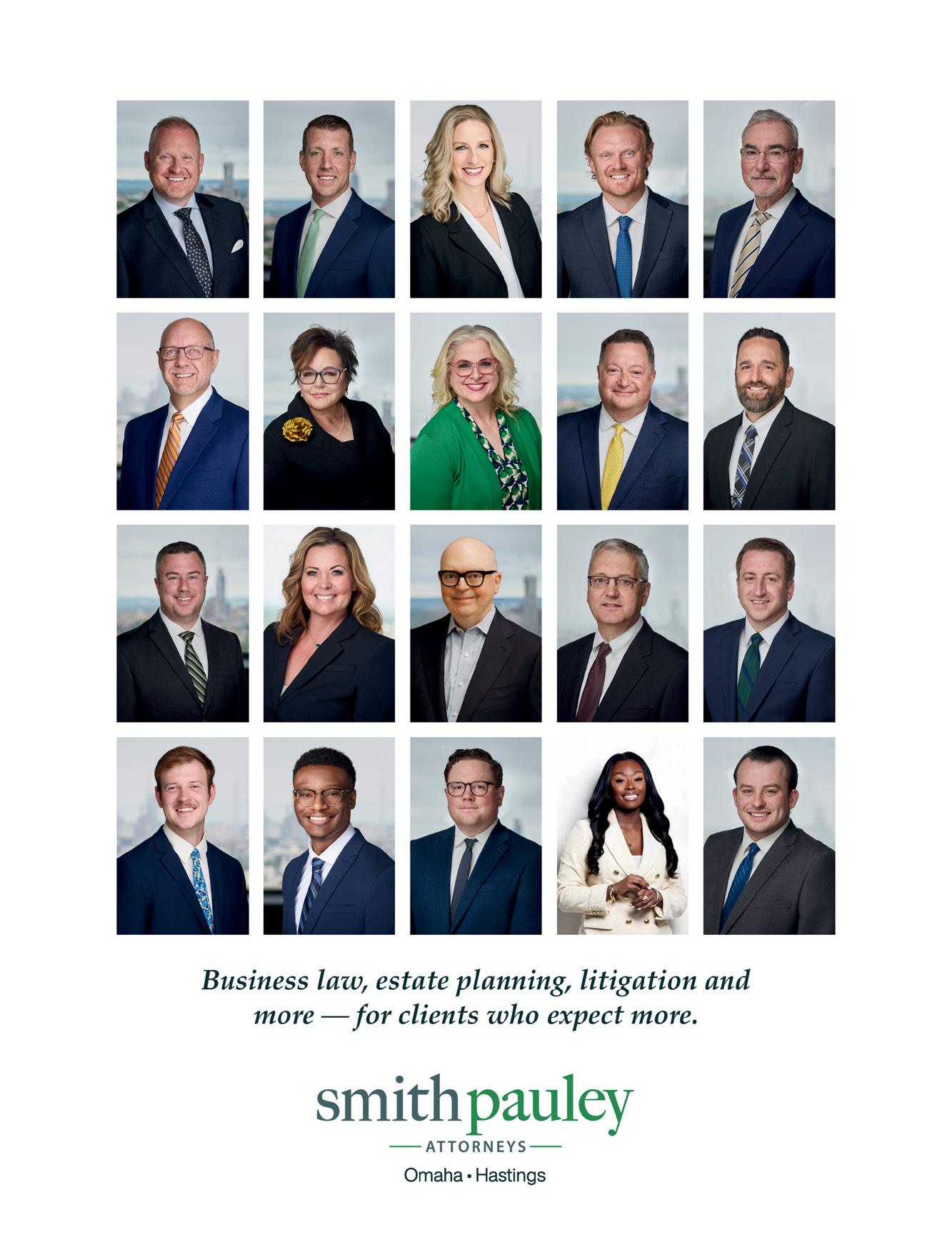
SMITH PAULEY
The full-service, Omaha-based law firm Smith Pauley LLP was formed in 2022, but its attorneys have deep experience in business law, banking and finance, estate and wealth transfer planning, estate and trust administration, mergers and acquisitions, real estate law, and civil litigation.
“There is a clear demand for a different kind of legal service in the market and Smith Pauley is answering that call.”
— H. Daniel Smith co-founder Smith Pauley LLP
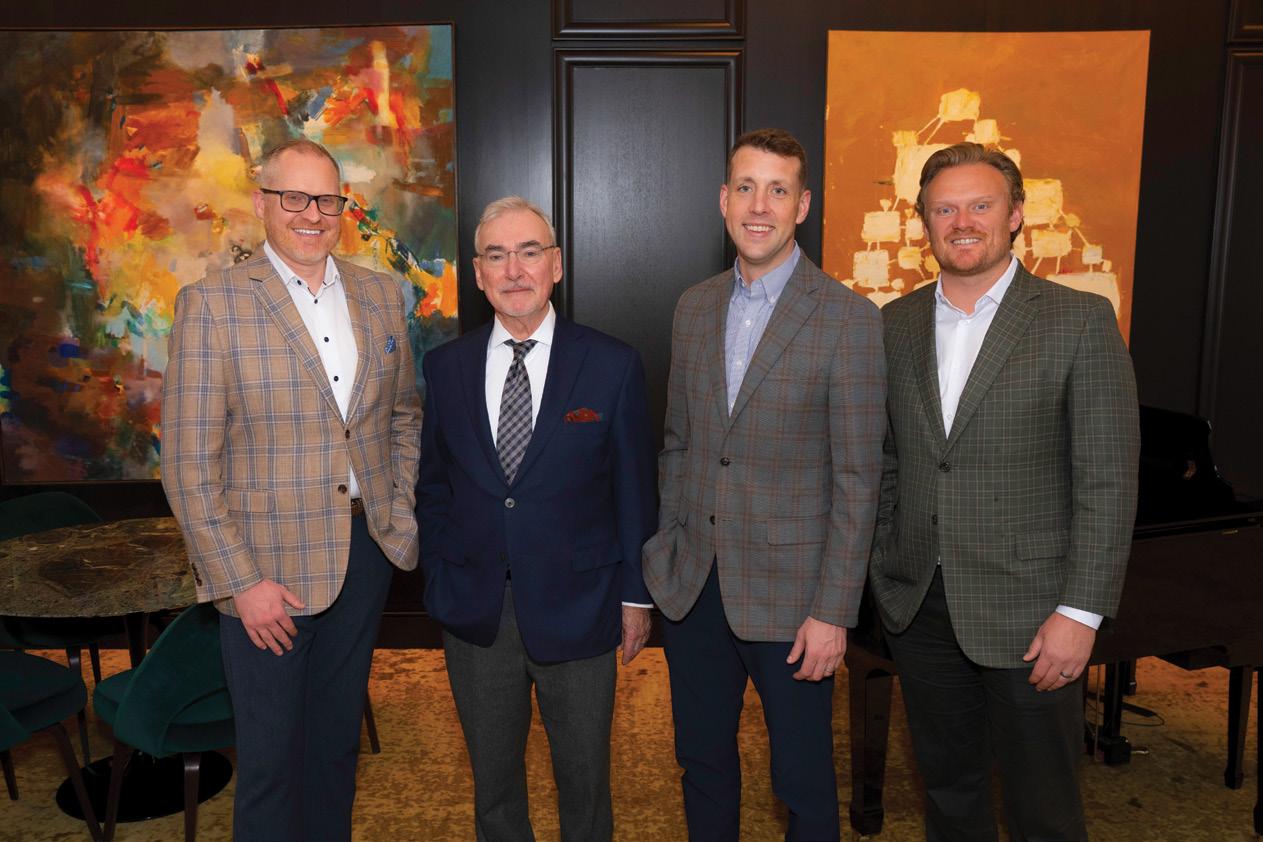
The four founding partners — H. Daniel Smith, Dan Pauley, Tyler Seals and Anthony DeLuca — each left successful practices to build a collaborative, objective model to the practice of law, something better structured to serve clients and ultimately the state of Nebraska. The structure of the firm was more than just an administrative detail; it’s the reason the firm works the way it does and serves both clients and attorneys well, the partners said.
The emphasis, Pauley said, is on quality over quantity. Three words define the essence of the firm, he explained: collaborative, responsive and unconventional. The word “collaborative” represents a firm where partners collaborate instead of compete; “responsive” is appropriate because the firm strives to provide
concierge-caliber response to client needs; and “unconventional” is fitting because the structure of the firm serves the client, not the other way around.
“The structure is a client-first orientation with a culture that departs from traditional, biglaw norms. Our collaborative and objective model allows us to be more agile, less bureaucratic, more human and more outcome-driven,” Pauley said. “We can meet clients where they’re at and provide services that are tailored to clients’ unique, individual needs. It’s better for clients and attorneys alike.”
Less transactional, more relational
“There is a clear demand for a different kind of legal service in the market and Smith Pauley is answering that call,” Smith said. “Clients want a less transactional, more relational approach and that’s exactly what our unconventional structure and approach allows for. We meet clients where they are at while bringing exceptional expertise and real thought leadership.”
The board of directors of Give Blue Hope: Jason Nihsen, Mark Pohlman, Yolanda Origel, Dan Pauley, Curtis DeBerg, Dr. Brad Rodgers, Mayor John Ewing, Gov. Jim Pillen, Jonathan Dash, Amy Tritsch Niewohner and Jennifer Zhang — image by Aurora Keegan Photos
BY KARA SCHWEISS | PHOTOGRAPHY BY KALEB DUNCAN PHOTOGRAPHY
One way the firm has successfully adapted is by carefully integrating advancements in AI and technology over the past few years.
“This has allowed Smith Pauley to compete with the largest firms in the country with a comparatively small, collaborative team,” Smith said, adding that this helps leverage firm resources and creates more availability for each client.
Growth is also responsive. The firm has expanded to nine equity partners — the most recent three announced in January — who have a shared vision for and investment in the firm’s overall success.
“Smith Pauley is proudly owned by partners who are entrepreneurs and attorneys, a rarity
3555 Farnam St., Suite 1000
Omaha, NE 68131
402-392-0101
smithpauley.com
in the legal landscape,” Seals said, adding that the firm is committed to adopting innovative approaches to providing legal services.
Recognition and legacy
Smith Pauley has already received community and industry recognition. In 2022, Smith and DeLuca received honors from two separate legal industry publications. Smith, whose legal career spans more than four decades, was named to the Super Lawyers list by Thomson Reuters, a service that rates outstanding lawyers who have attained a high degree of peer recognition and professional achievement; just 5% of attorneys make the Super Lawyers list each year. DeLuca was recognized in the third edition of Best Lawyers: Ones to Watch
in America for his high-caliber work in trusts and estates; Best Lawyers is regarded as the most credible measure of legal integrity and distinction in the United States. Both the Super Lawyers and Best Lawyers lists are determined through peer review and vote.
In 2023, Dan Pauley (also a Midlands Business Journal 40 Under 40 honoree that year) and Tyler Seals were chosen as Nebraska Entrepreneurship Fellows, an invitation-only program through the University of NebraskaLincoln’s Center for Entrepreneurship that taps into the state’s top business leaders to help mold the next generation of entrepreneurs. The two served as fellows for the 2023-24 academic year.
Collaborative | Responsive | Unconventional
The founders of Smith Pauley: Dan Pauley, H. Daniel Smith, Anthony DeLuca and Tyler Seals.
Smith Pauley is already building a legacy. The firm is committed to creating opportunities for young professionals to thrive in Nebraska, and Smith Pauley is also committed to fostering local talent.
Nebraska roots
The attorneys at Smith Pauley could practice anywhere, but they choose to stay in Nebraska, where they have fostered deep community connections. The team’s influence extends beyond conference rooms, boardrooms and courtrooms; the Smith Pauley group has prominent sponsorships with University of Nebraska athletics and the Omaha Supernovas professional volleyball team, underscoring a belief that Nebraska has rich talent to foster and growth to steward, DeLuca said. Smith Pauley also actively supports several area nonprofits including Give Blue Hope, Ronald McDonald House, United Way of the Midlands and Breakthrough T1D (formerly the Juvenile Diabetes Research Foundation).
The firm has grown more than fourfold in four years, now employing approximately 50 people in offices in Omaha — headquarteredin the Blackstone Plaza in historic Midtown — and Hastings.
“Over the past four years, our intentionally unconventional structure has allowed our growth to be both organic and nimble. We can quickly adjust to the needs of the business and our clients. The core values that we began with have remained constant because we have been intentional about safeguarding them for the good of our clients and our attorneys alike,” DeLuca said. “We’re fortunate to have an exceptional team helping founders and business owners build and scale in Nebraska.”
Serving the Community
Smith Pauley’s community investment goes well beyond providing legal assistance. The firm has built relationships with a broad network of nonprofits, and its approach to connecting
people as well as providing funding reflects the same relational philosophy that defines its legal practice.
The firm was among the earliest corporate sponsors of the Legacy Collective, an exclusive club for women and an initiative Pauley described as a natural fit for a firm where roughly one-third of its attorneys are women. Employees serve on various nonprofit boards, and the firm has provided legal services and strategic support to many nonprofits.
One charity they actively support is Give Blue Hope, founded by Curtis DeBerg, provides no-strings-attached financial support to families of officers killed in the line of duty during the gap before benefits arrive.
“A lot of our clients will say ‘you can write us a check, but really, we need to be connected to people,’” Pauley said. “We get to open our doors and introduce you and let you learn about these groups.”
We have focused on opportunities where we can add value through execution and relationships. That approach has led to growth across several core areas under the Burlington Capital platform.
— Lisa Y. Roskens
Rooted in the pragmatism of the Midwest, yet operating on a global stage, Burlington Capital has built its reputation on simple premises: relationships matter, consistency compounds and trust is the ultimate currency.
Founded in 1984 by Michael B. Yanney as part of America First Companies, Burlington Capital emerged from a desire to move beyond traditional banking into more entrepreneurial, opportunity-driven investments.
The company’s early focus was raising capital and purchasing federally insured mortgages secured through multifamily projects. Their first fund, established Jan. 2, 1985, was a federally guaranteed mortgage fund, and reportedly the first limited partnership to receive an AAA rating by Standard and Poor’s Corp. as well as the first limited partnership to be quoted on NASDAQ.
“We seek opportunities with an entrepreneurial spirit,” said Yanney, who passed away earlier this year. It’s this philosophy that continues to guide the firm.
In 2000, Yanney named his daughter, attorney Lisa Roskens, as president and CEO of what would soon
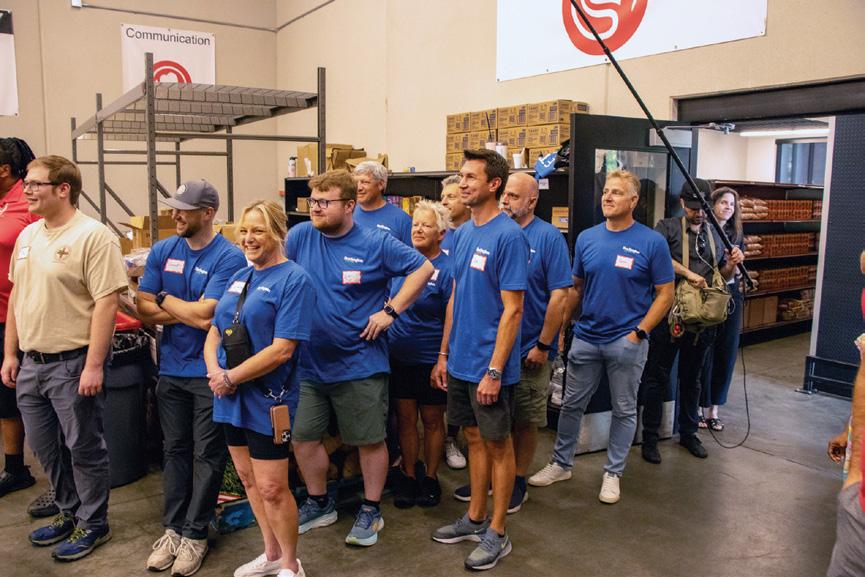
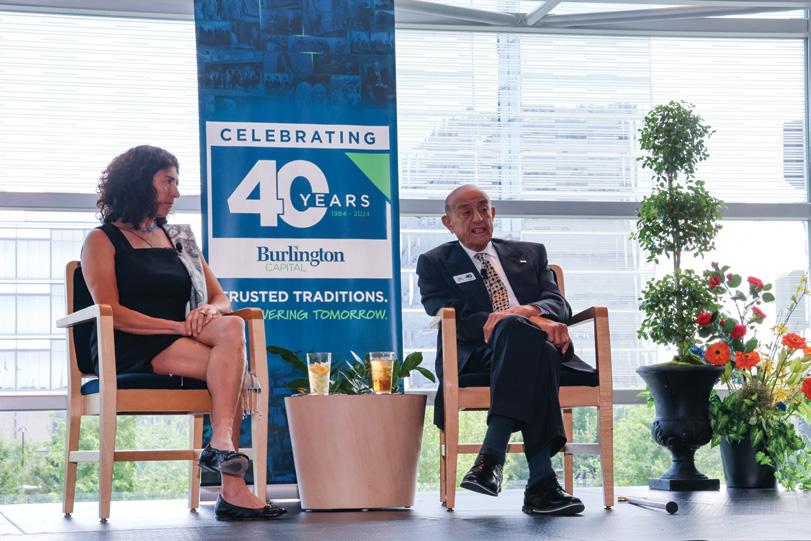
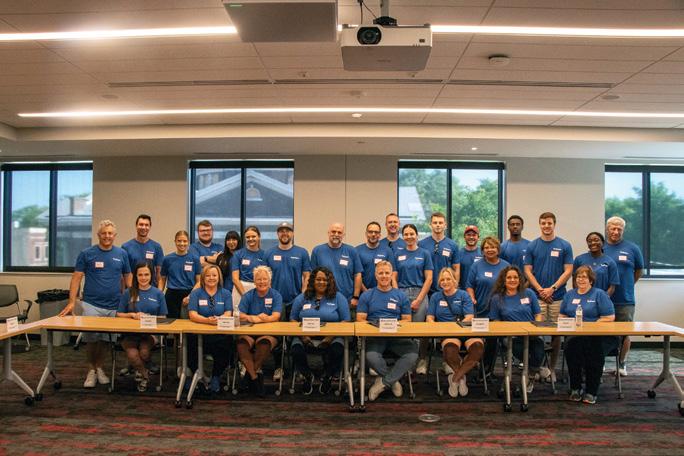
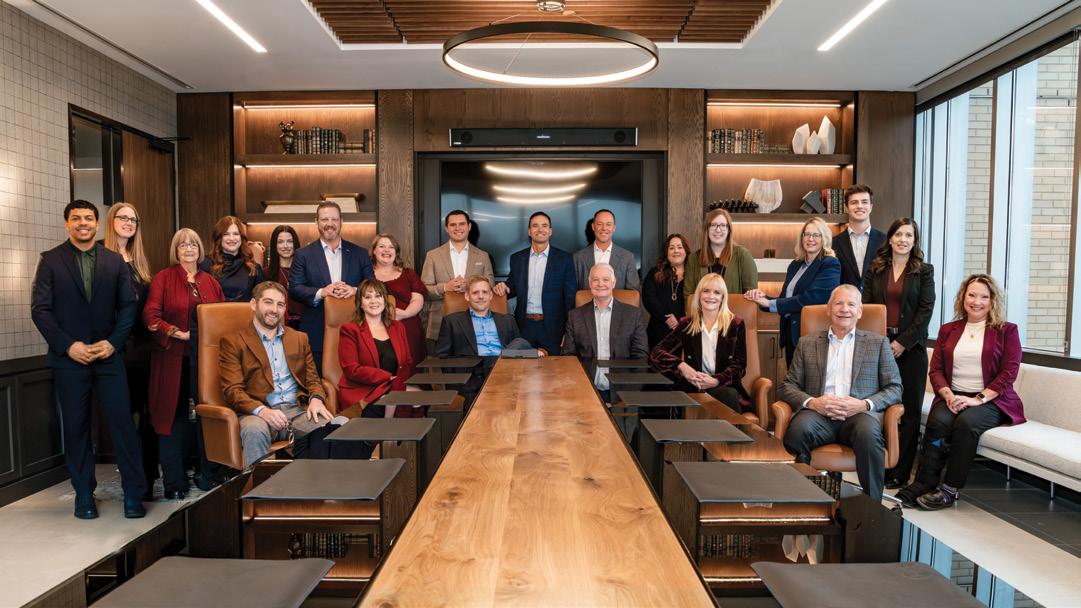
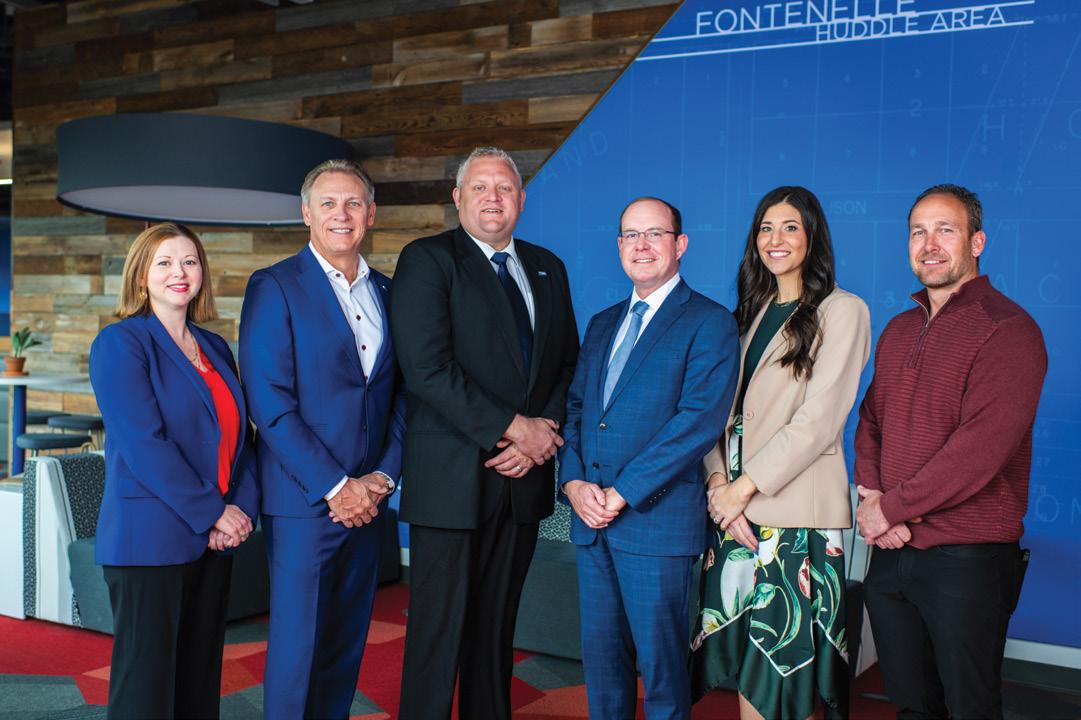
Burlington Capital team members at the 40th anniversary celebration in July 2024
BY MIKE WATKINS
become Burlington Capital. Throughout the past 25 years, she has maintained the company’s focus on relationships and long-term value while leading its expansion into new areas, such as venture capital and business transitions.
“There are so many things about Burlington Capital that really started with my father,” Roskens said. “It was his spirit, his passion and his commitment to the community. It permeates who we are today.”
In 2006, the company adopted the Burlington Capital name, signaling its transition into a more globally focused investment platform while maintaining its Omaha roots. Over the decades, the firm evolved alongside the markets it served, working in real estate, agricultural services, and business transitions.
A mission grounded in trust and results
The firm’s long-standing emphasis on balancing risk and reward while maintaining a “Midwestern work ethic” has helped it navigate shifting economic cycles and evolving industries.
Throughout the past 40 years, Burlington Capital has raised, financed and managed more than $7 billion in assets, with over $1 billion currently under management in the multifamily sector. Its disciplined approach has supported consistent performance, including more than 165 consecutive quarterly distributions to investors.
1004 Farnam St., Suite 400
Omaha, NE 68102
402-444-1630
https://burlingtoncapital.com
The firm has served more than 100,000 investors over four decades and maintained relationships with partners across the country and internationally.
Unlike firms that chase trends, Burlington Capital has pursued a deliberate growth path – expanding where its expertise, relationships and market insight intersect.
From its deep footprint in multifamily housing to its international agricultural partnerships spanning more than 40 countries, the firm has leveraged its network to unlock opportunities.
“We have focused on opportunities where we can add value through execution and relationships,” Roskens said. “That approach has led to growth across several core areas under the Burlington Capital platform.”
Commitment to community
Burlington Capital’s philosophy extends beyond financial performance. Through the Burlington Capital Foundation, the company supports organizations focused on military and veteran services, education, the arts and community development. In 2025, the foundation contributed to 17 nonprofit organizations.
The company’s work in affordable housing underscores a belief that investment and impact are not mutually exclusive. By preserving and improving housing options in growing communities, Burlington
Capital aligns its business objectives with quality-oflife outcomes.
Burlington Capital has supported mentoring programs for kids, starting with Mike and Gail Yanney’s mentorship program at McMillan Middle School. Originally called Yanney’s Kids, the program evolved into what is now Partnership 4 Kids. “I’m so proud of how we give back (to the community),” said Project Manager, Creative Services, Trish Owens. “We’ve also helped provide housing for homeless veterans and played a role in feeding people locally and around the world, which makes the work feel even more worthwhile.”
The power of continuity
One of Burlington Capital’s greatest differentiators is its continuity. In an industry often defined by turnover and short-term thinking, the firm’s long-term relationships – with investors, partners and employees – have created a durable foundation for success. Beyond revenue, success is measured by the strength and duration of relationships. Burlington Capital’s trajectory is less about reinvention and more about refinement.
“We’re always looking for the next opportunity where our experience and relationships allow us to create value through disciplined execution.” said Dominic Vaccaro, president of real estate.
COBALT CREDIT UNION
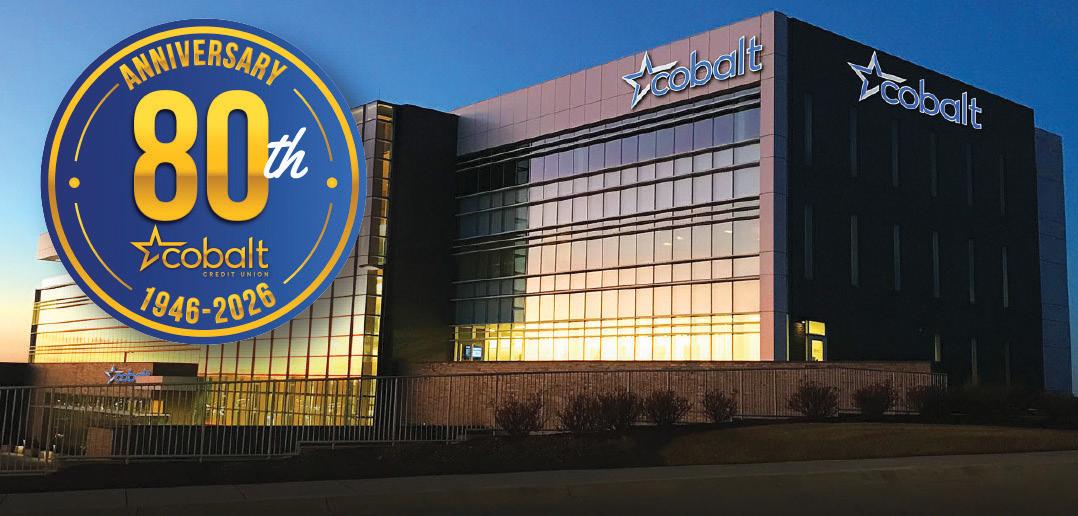
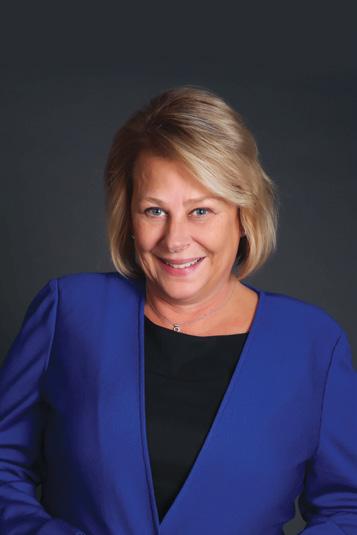
“Any business that’s been around 80 years really has a story to tell,” said Cobalt Credit Union President and CEO Robin Larsen. “For us, it’s always been about people helping people, and helping them through their life events.”
A community credit union
Larsen called out three words to describe Cobalt: trustworthy, caring and integrity. These values, she said, shaped its evolution into a full-service community institution.
“We really are proud of our military roots and realize that they were the start of how we came to our 80th successful year.”
— Robin Larsen, president and CEO, Cobalt Credit Union
Larsen herself has connected with many members over the years after beginning her career with Cobalt in 1988 as a training officer and working her way up through the roles of branch manager and chief operations officer before being promoted to the top position in January 2021.
“I remember when I came here, I was on the front lines and helping people open a baby savings account, and then the Dollar Dog savings account (for children 12 and under) — or back then it was called the Money Buddy account — and watching them grow their savings accounts,” she said. “And then we’d go into the schools and we would teach financial education and literacy on the importance of maintaining a healthy balance and doing everything you should to get a good credit score.”
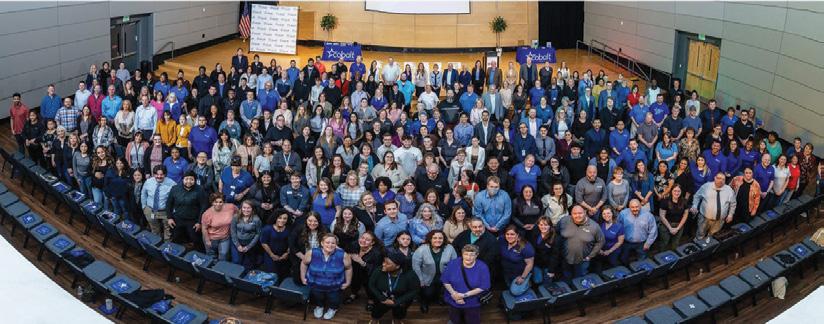
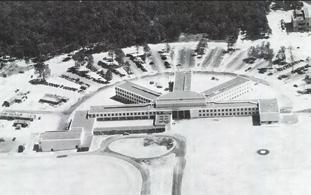
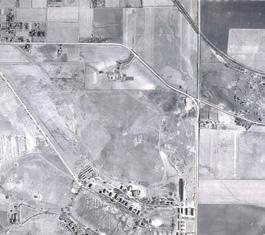
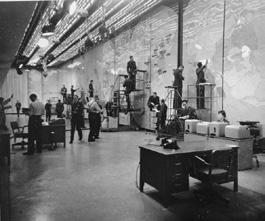
Cobalt Credit Union traces its origins to November 1946, when 12 individuals submitted a request to the FDIC to form SAC Federal Credit Union at Andrews Field in Prince George’s County, Maryland; it relocated to Nebraska in 1948 when Strategic Air Command headquarters were officially moved to Offutt Air Force Base in Bellevue. “We were limited to the base and then changed our field of membership to become a community credit union in 1988,” Larsen said, noting that online banking had not yet emerged. “And then we evolved in order to become a community credit union; we were just saturated in Bellevue. We realized we needed to grow branches ... we were from Lincoln all the way to Denison, Iowa, at one point.”
The organization’s current headquarters at 72nd Street and Nebraska Highway 370 in Papillion
Cobalt Credit Union
BY KARA SCHWEISS
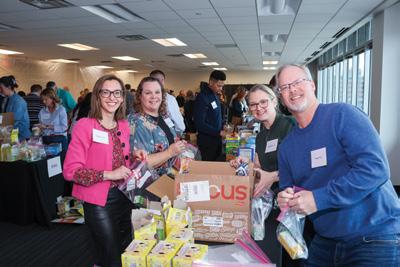
were completed in 2014. SAC Federal Credit Union was rebranded to Cobalt Credit Union in 2018. It maintains close ties to Offutt Air Force Base, including organizing deployment care packages to serving families stationed around the world.
“We really are proud of our military roots and realize that they were the start of how we came to our 80th successful year,” Larsen said. “Our name change was just a name change so people didn’t think we were military-only. We still heavily are involved in base activities.”
What are the needs?
The credit union also has a long history of community involvement. Last year, for instance, the credit union supported nearly 100 local initiatives and contributed more than $230,000 to area organizations.
“We can’t say yes to everything,” Larsen said. “But we really look at ‘What are the needs?’”
For example, Cobalt recently launched a no-PMI (private mortgage insurance) loan product aimed at helping more individuals achieve home ownership.
“Why do you have to have 20% down? And we started looking at it, and then we determined it’s just [a] business decision,” she said. “We’ve really tried to move with the times.”
Employees are an important part of the
7148 Towne Center Parkway
Papillion, NE 68046
402-292-8000
cobaltcu.com
“It’s always been about people helping people, and helping them through their life events.”
— Robin Larsen, president and CEO, Cobalt Credit Union
community, too, she added, and the Cobalt team strives to cultivate a positive work environment. Larsen said she never tires of hearing new employees cite that as a reason they joined the organization.
“My motto is you really have to have a good culture and treat your employees right, because if you treat them right, then they’re going to be good to your members,” she said. “That’s really been a big thing for us, recognizing our employees.
They get a day off for their birthday, a day off for their anniversary, and then we do some surprises throughout the year.”
After watching the organization evolve over nearly half its lifetime, Larsen said a member-first approach has served the credit union well and will continue in the years ahead.
“The future is about continuing to innovate while staying true to the human connection,” she said.
Robin Larsen, president and CEO, Cobalt Credit Union
Employees celebrate the American Heart Association’s Wear Red Day in 2026.
CQUENCE HEALTH
“While
our competitors like General Electric, Kodak and Fuji were focused on scale, Bob and Mike Cassling, who eventually took over the company, were focused on doing the best job possible for our customers.”
— Kyle Salem, Ph.D. CEO CQuence Health
In an era when health care is being reshaped by technology, access challenges and rising costs, Omaha-based CQuence Health has built a distinctive model rooted in Midwestern values, long-term relationships and a singular, ambitious goal: to impact 1 billion lives by 2030.
That goal, bold by any measure, is not a marketing slogan. It is a unifying mission that connects a 40-plus-year legacy to a future defined by innovation, service and measurable human impact.
“This is a goal that our employees take great pride in, knowing the tremendous impact they make every day in the work they do and the people they serve,” said CEO Kyle Salem, Ph.D.
A legacy that began with Cassling
The CQuence story begins in 1984, when Bob Cassling founded Cassling Diagnostic Imaging in Omaha. From the outset, the company differentiated itself by focusing on advanced imaging technologies and deep partnerships rather than transactional sales.
Over the decades, Cassling evolved into one of
the most respected imaging solutions providers in the country, eventually becoming the largest North American partner of Siemens Healthineers.
Its growth has been fueled not only by technology, but by an unwavering commitment to customer care — helping hospitals, clinics and health systems improve access, efficiency and patient outcomes.
“While our competitors like General Electric, Kodak and Fuji were focused on scale, Bob and Mike Cassling, who eventually took over the company, were focused on doing the best job possible for our customers,” said Salem, who joined the company in sales in 2005 before rising to his current role.
The creation of CQuence Health
In 2011, building on Cassling Diagnostic’s success and expertise, Mike launched CQuence Health to expand that impact beyond a single company.
Designed as a health care strategy, services and investment platform, CQuence Health partners
CQuence and Cassling employees participating in a recent Habitat for Humanity build in honor of Cassling’s 40th anniversary.
with startups, emerging companies and established organizations to help them scale. It provides not just capital, but operational support across marketing, finance, IT, HR and business strategy — accelerating growth while maintaining a focus on better patient outcomes.
This model reflects a key belief: The future of health care will not be built by one company alone, but by an ecosystem of innovators aligned around a shared purpose.
Under Salem’s leadership, CQuence Health has experienced significant growth, including expanded geographic reach and roughly 40% revenue growth in recent years.
But unlike many investment-driven organizations, growth is not measured solely in financial terms. CQuence tracks its success through “lives touched” — a real-time metric that estimates how many patients benefit from its companies’ technologies and services.
That number has already reached into the hundreds of millions and continues to climb, reinforcing the organization’s commitment to its goal. Beyond business performance, building upon Bob and Mike’s shared vision, CQuence Health has embedded community engagement into its culture.
Employees are given paid time off to volunteer.
13810 FNB Parkway, Suite 200
Omaha, NE 68154
402-334-5000
cquencehealth.com
BY MIKE WATKINS |
They actively participate in charitable initiatives ranging from assembling hygiene kits to supporting organizations such as the Salvation Army, Food Bank for the Heartland, Completely Kids and the Heart Ministry Center, among others.
The result is a culture where purpose extends beyond the workplace — where improving health care and strengthening communities are seen as inseparable goals.
CQuence Health became employee-owned in 2025 — further aligning its workforce with its mission and long-term vision.
Midwestern values, national impact
Despite its national reach, the organization remains deeply rooted in Omaha and is guided by a distinctly Midwestern perspective: humility, integrity and a people-first mindset.
This approach shapes how the company competes. Rather than chasing short-term gains, it emphasizes long-term partnerships, trust and shared success with customers and portfolio companies.
It also influences how the company treats its employees — prioritizing engagement, wellness and professional development in ways that have earned it national recognition as a top workplace.
As health care continues to evolve, CQuence is positioning itself at the intersection of innovation and access — supporting entrepreneurs, advancing technologies and strengthening community health care systems.
Its outlook is both pragmatic and ambitious: continue building a diversified portfolio of highimpact companies, deepen partnerships across the health care ecosystem and stay relentlessly focused on patient outcomes.
“The 1 billion lives goal serves as both a benchmark and a rallying cry — reminding employees, partners and stakeholders that every decision ultimately ties back to people,” Salem said.
People-first | Bold | Humble
Mike Cassling, Bob Cassling and Ken Vetter.
CQuence’s executive leadership team. Back row: Chad Brough, VP of Growth; Bruce Stec, VP of People & Culture; Randy Wobig, CIO; Mike Haywood, CFO. Front row: Tana Phelps, VP of Marketing; Kyle Salem, Ph.D., CEO.
FNBO
“In the late 1990s, thenchairman Bruce Lauritzen made the bold decision to build the bank’s headquarters in downtown Omaha, with a vision of a vibrant urban core.”
FNBO credits Omaha as the starting point of its mission and the community that helped define its values. Its history dates back to the 1850s, just three years after the city was founded. Herman and Augustus Kountze were pioneers who, in the roughand-tumble 1800s, moved to the eastern edge of the Nebraska territory to what was then a new town called Omaha. In 1857, they established Kountze Brothers Bank, a financial institution that became a key part of Omaha’s growth and development. The pioneering brothers envisioned a bank that would have a positive impact on the communities it served. That bank eventually became the First National Bank of Omaha (FNBO), a subsidiary of First National of Nebraska, Inc. (FNNI), one of the largest privately held banks in the United States.
FNNI has $35 billion in assets, 4,500 employees and primary banking offices in Nebraska, Colorado, Illinois, Iowa, Kansas, Missouri, South Dakota, Texas and Wyoming. While it has grown in size and assets, FNBO remains true to its humble beginnings. Being privately held and family-led for six generations has enabled the bank to focus on
the long view instead of the next quarter, a recipe for success that has served the institution and its communities for nearly 170 years.
Innovation rooted in tradition
Although the founders were engaged in the scrappy business world of the 19th-century Nebraska frontier, they created an innovative and forward-looking organization. FNBO was among the first banks to issue credit cards — long before most other banks did — and it was the first U.S. company to use fuel cell technology as its primary power source. That’s how the company approaches the future, pursuing innovation while keeping customers at the center of decision-making.
In the late 1990s, then-chairman Bruce Lauritzen made the bold decision to build the bank’s headquarters in downtown Omaha, with a vision of a vibrant urban core. Since then, many other businesses have followed its lead, creating a growing downtown that continues to be a place for the community to enjoy. Being part of the economic success of its communities is one of
First National Tower has served as FNBO’s headquarters since 2002.
fraud protection, insurance and advisory services. Its industry expertise spans agribusiness, transportation, health care and international business.
FNBO also delivers a comprehensive range of personal banking services, including checking, credit cards, mortgages, savings, CDs, lending and wealth management.
Investing in people and place
FNBO measures its success by how it improves the financial well-being of its customers, knowing strong individuals build strong communities and earning its reputation as the great big, small bank. As a local bank, FNBO has the strength and stability of large national banks but is rooted in community and understands the value of a handshake. When individuals experience less financial stress, they can afford the things they need, save for the future, pursue entrepreneurial passions, create generational wealth and support their local economies.
FNBO’s success has allowed it to invest millions back into its communities, focusing on key areas of need in affordable housing, workforce development and financial literacy. “We feel a deep responsibility to be a good steward to our communities so that each has a greater opportunity to thrive,” said FNBO Chairman and President Clark Lauritzen. With guidance from FNBO City Ambassadors, the bank and its employees build partnerships that drive lasting community impact through volunteerism and leadership. In 2025, FNBO gave more than $8.5 million in philanthropic support, and its employees volunteered more than 35,000 hours to provide financial education, serve on nonprofit
boards and assist with community organizations and events. Additionally, in 2025, FNBO financed $42.6 million in new community development investments with organizations working to strengthen communities.
Guided by the core values of integrity, respect and passion, FNBO and its employees will continue to focus on making a positive impact and meaningful change in its communities — just as the Kountze brothers envisioned.
Integrity | Respect | Passion
Pioneer Courage Park features the largest bronze and stainless steel sculpture of its kind in the country.
The Gretna branch at Highway 370 and Highway 6 reflects the bank’s continued investment in growing alongside communities.
FNBO’s 84th and Frederick streets branch is one of 25 branches in the Omaha metro area.
HARRISON FINANCIAL SERVICES
Tim Harrison, founder and CEO of Harrison Financial Services, has identified three core values that drive his company: grit, purpose-driven, kaizen.
Grit, of course, is self-evident. Harrison was only 18 years old when he started the company as a one-man operation while attending college classes, so he certainly appreciates grit.
“I want us to have an enduring firm that serves our community.”
— Tim Harrison founder and CEO Harrison Financial Services
Purpose-driven is another fairly straightforward concept, and the firm’s long history of supporting various causes along with Harrison’s efforts to encourage team members to get involved reflects it.
Kaizen, however, is a Japanese philosophy that often takes some explaining, Harrison said. “Kaizen is continuous improvement, always trying to improve on anything that we do, any way we can get better at what we do every day.”
Early differentiation
All three core values help cultivate the mission of HFS to help families build better lives, legacies and communities, and Harrison has built a team with exceptional expertise as he has grown the
firm in the 32 years since its modest beginnings. One early differentiator, he recalled, was identifying a largely unmet need in the market.
“It started with publicly traded company executives. There was a lot of wealth that was created in stock options ... and there was a very low estate tax exclusion amount at the time. A lot of people who had taxable estates had needs for executive compensation planning,” he said. “It made us different; I’d go in, I’d learn a benefits package and I would know it like no one else, inside and out, better than usually their internal HR folks did.”
Harrison would then explain the details to execs and advise on a strategic plan. “It helped me really grow and be unique in the marketplace as an 18- to 27-year-old.”
Harrison said growth of his team — and his company — is a direct result of bringing in highly skilled talent that adds to the firm’s collective proficiency.
“It’s always been around building capability and capacity,” he said.
The HFS team today
Listening and responding
HFS, now an affiliate of Northwestern Mutual, has continued to evolve. The firm recently introduced a new service offering, Harrison Family Office Services, specially created for high-complexity families and business owners. A client advisory board and CEO roundtables were sparked years before by the fundamental approach of listening to clients and responding to their needs.
“How do we better serve the market that we want to focus on?” Harrison said. He added that a book project around advisory boards and collaborative growth is in the works in response to feedback from participants at conferences and other events where he’s spoken on the topic.
“People, both in my industry and also entrepreneurs, wonder, ‘What do you do?’ When do you do it? How do you do it?’” he said.
Harrison said that in terms of success, he places great value on connection and engagement.
“I would define it by the strength and the continuity of our relationships ... a lot of them, they’re clients and they’re friends,” he
13609 California St., Suite 300
Omaha, NE 68154
402-891-2302
hfs.nm.com
said, adding that many clients refer others to the firm and the team is also working with a growing number of clients representing second and subsequent generations in legacy clients’ families.
Community-oriented
Harrison also defines success as serving the community. Through its long-running Casino Night fundraiser, Harrison Financial Services has raised more than $500,000 for nonprofit organizations typically chosen because of personal connections to clients or team members. Harrison also cultivates an environment where team members are supported in contributing time and talent as well. Harrison and his wife, Traci Harrison, even established a scholarship with the College of Business Administration at the University of Nebraska Omaha.
As he reflects on his company’s history, Harrison said he is more focused on the future.
“It really goes back to our purpose, helping families build a better life, legacy and community, and doing that for more and more families,” he said. “I want us to have an enduring firm that serves our community.”
Tim Harrison, Richard Louis “Lou” Harrison and Jeff Harrison
Tim Harrison
The Harrison family in Japan
Tim, Traci, Faythe and Lauren Harrison
HDR
“Our work is measured by blueprints and executed plans; our success is measured by client experiences and outcomes that bring meaning to communities.”
— John W. Henderson, P.E. chair and CEO HDR
A small engineering firm serving rural Midwestern towns in 1917 could not have anticipated working on the Pentagon, contributing to the Hoover Dam or helping shape the Pearl Harbor National Memorial. Yet that origin story — humble, practical, rooted in the specific infrastructure needs of small communities navigating rapid change — is precisely what HDR says still drives the organization more than a century later.
Founded in Omaha, HDR began with a straightforward mission: help communities adapt to a changing world through creative and technical excellence. What distinguished the firm then, and what its leaders argue distinguishes it now, was not just the quality of the work but the culture surrounding it — employee-centric, client-focused and built on the conviction that doing things right is what makes great things possible.
“That spirit of teamwork, of shared success, is ingrained in our DNA as a company, passed down through generations since our founding in 1917,” said John W. Henderson, P.E., the chair and chief executive officer of HDR.
An ownership model that changed everything
The chapter that cemented HDR’s modern identity came in 1996, when a group of company leaders initiated the buyback of the firm from French ownership. The move set the stage for broadbased employee ownership through an employee stock ownership plan (ESOP) — a structure that transformed not just the firm’s finances but its culture.
Today, HDR is the largest employee-owned company in the engineering and architecture industry and the fifth largest ESOP in the United States. Since the buyback, 70 firms have chosen to join HDR, drawn by its culture and expanding opportunities. The firm now employs more than 14,000 people worldwide.
The ownership model carries practical weight. Employee-owners know they will benefit directly from the firm’s success, creating an alignment of purpose that shapes everything from individual project decisions to long-term strategic planning. That culture, HDR argues, is not a byproduct of its growth — it is the engine of it.
The HDR Board of Directors.
BY DAISY HUTZELL-RODMAN
Supporting that culture from the inside are structured development programs including Career Boost and Career Connect, Young Professional networking groups and mentoring opportunities pairing newer employees with veteran staff. HDR believes those investments produce something measurable: higher retention, a stronger sense of purpose and a workforce that understands its choices influence the success of the entire organization. The HDR Foundation, employee-funded and employee-driven, awards grants to charitable organizations where HDR employees are personally involved — extending the ownership model beyond the workplace and into the community.
A legacy built block by block
The numbers behind HDR’s philanthropic reach are significant. The HDR Foundation and global philanthropic funds have provided more than $14 million in grants to more than 700 organizations. Locally, the foundation has directed more than $100,000 to the Waterloo Fire and Rescue cadet program and another $100,000 to the Kiewit Luminarium for STEM-related exhibits. Active partnerships with the Arbor Day Foundation and Engineers Without Borders extend that reach further.
For HDR, community impact is not separate from professional mission — it is an expression
1917 S. 67th St.
Omaha, NE 68106
402-399-1000
hdrinc.com
of the same values. The firm measures success not by blueprints and executed plans alone, but by the client experiences and community outcomes those plans ultimately produce.
“Sometimes it’s a direct result of our design or planning,” Henderson said. “Other times it’s more subtle, as we join our talent with business partners and others in the community to truly improve the quality of lives in small towns, big cities and entire regions.”
Looking ahead, HDR sees its next chapter at the intersection of design expertise and emerging technology. Roadways, runways, railways and waterways will always require engineering — but the firm believes the opportunity lies in making that infrastructure more resilient and sustainable. HDR considers it an honor to protect natural environments while responsibly expanding what built environments could become for the communities that depend on them.
The legacy HDR is building toward is one measured in outcomes that outlast any single project — communities that continue to benefit from the firm’s work long after the ribbon is cut and the plans are filed away.
“We want those who come after us to continually benefit from our projects,” Henderson said.
After more than a century of doing exactly that, the work is far from finished
An HDR Foundation presentation with All Kids Bike in St. Louis.
HDR employees with the Kansas City Streetcar Project.
Four of HDR’s 14,000 employees spanning the globe.
A drafting room at Henningson Engineering, estimated 1919.
INVESTORS REALTY INC.
“We focus on achieving the client’s desired results, and the fees take care of themselves.”
— Ryan Zabrowski president Investors Realty Inc.
Investors Realty Inc. is a trusted leader in Omaha’s commercial real estate community. It offers full-service brokerage, property management, project management and maintenance with a hands-on team approach. Its commitment to caring for its clients has made it a pillar in the community for more than 50 years. A client-focused mindset and unmatched company culture position it well for the next 50 years.
The concept originated in the 1970s when Omahans Jerry Heinrichs and Steve Farrell were working for a developer and became friends playing tennis. Their business plan started on a cocktail napkin over drinks, where the two decided to create their own firm with a client-first focus. Heinrichs and Farrell officially launched Investors Realty Inc. in 1975. The firm has since grown from 2 to 65 employees.
The original culture has evolved through the years with a desire to meet the needs of clients and adapt its services accordingly. The founders remain positively involved today, continuing to have a profound impact on the company’s culture.
Defined by their core values
“Our clients trust us because we are consistent, transparent and we communicate well. That’s been the backbone of our company since day one. We focus on achieving the client’s desired results, and the fees take care of themselves. Our team is driven by a client-first focus,” said Ryan Zabrowski, president of Investors Realty Inc.
Zabrowski summarized how the values drive the firm with, “We’re always forward-thinking. We are trying to anticipate trends in the market and deliver innovative solutions.”
That mindset has driven the company’s growth. According to Zabrowski, expansion has always been intentional and rooted in client needs.
“The changes we’ve made are a direct result of what our clients needed,” he said. “We started as a third-party brokerage firm focused on sales and leasing transactions. As those relationships grew, our clients asked for help managing their buildings, which led us to add property management and maintenance. Over time, the need for project management services emerged, and we grew again.
BY HOLLY
Our growth has always been intentional and centered on serving our clients.”
Investors Realty takes its commitment to education seriously. It was the first firm in the state to have an agent (Heinrichs) earn the certified commercial investment member (CCIM) designation, and now has the highest ratio of CCIM-certified brokers in the state. It also has eight Society of Industrial and Office Realtors (SIOR) members, and Nebraska’s only two counselors of real estate (CRE) members.
“We strive to be the best educated. Our dedication to be client-focused separates us from the competition, and we hear that directly from our clients,” Zabrowski said.
Giving back is an important part of the Investors Realty culture. It helps many nonprofits in their search for space, including OneWorld Community Health Centers. Investors Realty is proud of the role it has had in helping position organizations like OneWorld to better serve the community and provide access to care for the uninsured.
Employees also rally behind these efforts both on and off the clock. Creating opportunities for them to engage and give back is a meaningful part of the culture, and the company regularly hosts group volunteer initiatives.
“We meet as an entire company twice a year to update our initiatives, and as part of that we include a service component,” Zabrowski said. “We select a nonprofit and ask how we can be helpful — whether that’s assembling kits, preparing meals or supporting their mission in another way. It’s a great way for us to come together as a team and give back.”
“The relationships that we’ve built with our clients, their satisfaction, our employee engagement and community contributions are all things that we’re proud of. At the end of the day, I hope that we are recognized for making a meaningful difference in people’s lives through helping them with their real estate initiatives,” Zabrowski said.
12500 I St., Suite 160
Omaha, NE 68137
402-330-8000
investorsomaha.com
Legacy
“I hope people say we played our part in making a meaningful impact on the real estate landscape of Omaha. I often say my job is rewarding when I can drive by a project and say that I had a role in that,” Zabrowski added. “What’s a more enduring legacy than our ever-changing skyline?”
Collaboration space at the office at 12500 I St.
Leadership team: (Left to right – Laura Hansen, Ryan Karas, Ryan Zabrowski, Krissy Harral)
Leadership through the years at the 50 Year Anniversary Party: (Left to right – Ryan Zabrowski, Jerry Heinrichs, RJ Neary, Steve Farrell, Tim Kerrigan)
Investors Realty team putting care kits together for Collective for Hope.
OBI CREATIVE
In a marketing landscape where agencies pivot with every platform shift and chase tools before understanding the people who use them, OBI Creative has built an internationally recognized practice on something more enduring: asking better questions.
“We prioritize substance over meaningless spectacle, and long-term impact over unsustainable wins.”
— Mary Ann O’Brien
That instinct is rooted in curiosity, customer insight, and a distinctly Midwestern work ethic, and has guided OBI Creative through 25 years of growth without compromising the principles that launched it.
“Great advertising is driven by curiosity, collaboration, innovation and relentless tenacity,” said founder Mary Ann O’Brien. That conviction, present from OBI’s earliest days, remains the agency’s operating philosophy today.
A high-stakes beginning
OBI Creative was founded in 2001 by Mary Ann O’Brien to meet a very specific, high-stakes need: supporting one of the fastest-growing brands in the world at the time, Gateway, Inc., a leader in directto-consumer computer sales. From day one, the mission was about solving real business challenges
through smart, strategic and customer-focused marketing.
OBI differentiated itself from the outset by leading with research and customer insight rather than assumptions or trend-chasing. While other agencies built campaigns around instinct, OBI built them around evidence, delivering work grounded in what customers actually needed.
That early discipline shaped everything that followed. As the agency expanded into a fullservice, research-based brand strategy partner with an international footprint, the founding mindset held: substance over spectacle, long-term impact over short-term wins. Today, the agency O’Brien built from a single high-stakes client relationship has grown into one of the region’s most respected strategic marketing firms — one that competes nationally while remaining grounded in Omaha.
Intentional by design
OBI’s growth over the past two-and-a-half decades has been deliberate. Rather than scaling for scale’s sake, the agency has deepened its
The Xperi billboard at the Consumer Electronics Show 2026
commitment to meaningful partnerships and measurable results — a philosophy that shapes both its client work and its internal culture.
The result is what O’Brien describes as an egofree environment, one where strong ideas surface from every corner of the organization and are sharpened through a wide range of perspectives. It is a model that values strategic thinking over reactive execution, and collaboration over hierarchy. Internally, that culture has translated into an agency where tenure runs deep and institutional knowledge compounds; one in which a competitive advantage benefits every client relationship.
“We prioritize substance over meaningless spectacle, and long-term impact over unsustainable wins,” O’Brien said.
That positioning has moved OBI well beyond the traditional agency role. The firm now functions as a strategic partner, helping clients execute campaigns as well as make better decisions from the start. O’Brien said their work is truly doing its job when clients gain clearer insights, stronger positioning and the confidence to act on both.
Purpose beyond the pitch
Community investment at OBI is structural, not incidental. A portion of revenue is set aside
4909 S. 135th St., Suite 200 Omaha, NE 68137
402-493-7999
obicreative.com
annually for giving back, and employees are offered volunteer PTO to direct toward causes they care about.
That commitment takes tangible form through partnerships like the agency’s annual collaboration with Completely Kids, which brings the team together to support local families during the holidays. Employees serve on nonprofit boards and in service organizations across the region. OBI also frequently extends its expertise directly to nonprofits through discounted or in-kind marketing and communications work — bringing the same strategic rigor it applies to national clients to organizations working to strengthen the community.
always driven the best outcomes, curiosity and purposeful thinking.
The agency’s vision for the future is not about chasing what is next. It is about continuing to deepen its role as a strategic partner: helping organizations understand the people they serve more clearly, build positioning with staying power and make more confident, informed decisions.
The underlying principle mirrors the agency’s broader philosophy: thoughtful investment creates lasting change.
Looking forward without losing sight
As technology continues to reshape how brands connect with customers, OBI is focused on staying ahead of the curve without abandoning what has
OBI’s 25-year track record in Omaha makes the case plainly. The agency has remained relevant not by reinventing itself, but by staying relentlessly focused on what matters most, the customer on the other end of every decision.
“For OBI, the future isn’t about chasing what’s next,” O’Brien said. “We look forward to building it ourselves.”
Strategic | Innovative | Impactful
At right: Some of the many case studies OBI Creative produces
Mary Ann O’Brien and Justin Eveloff at the Disney Tech & Data showcase
Founder Mary Ann O’Brien
PLANIT INC.
Renee Black and Lesley Brandt, the founders of planit inc., built their company on a straightforward premise: a 10-person board meeting deserves the same strategic intention as a 5,000-person convention.
“We want to be remembered as the firm that proved ‘Omaha-made’ means a higher level of grit, integrity and intentionality.”
— Renee Black, co-founder planit inc.
That conviction, formed more than 27 years ago, arrived at a moment when the event planning industry had largely split into two camps — massive corporate logistics firms operating on volume, or small-scale personal services with limited reach. Neither felt right. What the market lacked, the two women believed, was a firm that could deliver bespoke, high-touch service at any scale, for any client — from local nonprofits to global corporations.
“Intention is independent of attendance,” Black said, and that belief has remained the organizing principle of planit inc.’s growth ever since.
Built on trust, delivered with precision
Today, the Omaha-based firm has built one of the region’s most respected meeting and event agencies, distinguished not by size but by
methodology. Where many competitors rely on rigid, cookie-cutter processes to move through projects efficiently, planit inc. has staked its reputation on the opposite: deep preparation, real-time adaptability and a solutions-first mindset that anticipates obstacles before clients encounter them. That commitment to transparency — keeping clients informed at every step and remaining aligned to the core competencies that made the firm a national leader — is the foundation on which every client relationship is built.
That approach starts well before any event goes live. Every producer at planit inc. is cross-trained across every facet of production, ensuring that each decision is informed by a 360-degree perspective on what could go wrong — and what it would take to recover.
“Events are half meticulous planning and half real-time intuition,” Black said. “Our producers are experts in coordinating excellent meetings and events, but we are exceptional in pivoting to accommodate inevitable disruptions.”
As a women-led organization, Black and Brandt
ICAN 2023.
have been deliberate about building a culture grounded in empathy and collective responsibility. Every producer carries accountability not just to their assigned project, but to the broader client mission — a structure that rewards collaboration over siloed execution. It is, in the firm’s own framing, a rejection of the assembly-line approach that defines so much of the industry.
Impact measured beyond the room
That values-driven model extends beyond the boardroom and ballroom, with planit inc. serving as a production partner for some of the region’s most prominent community fundraisers, including the opening ceremonies for Special Olympics Nebraska and the annual Angels Among Us gala, which raises funds for families navigating pediatric cancer diagnoses in Nebraska.
“We’ve seen firsthand that a well-executed event can be the tipping point for a nonprofit’s entire fiscal year,” Black said.
Success, the firm notes, looks different depending on the purpose of the event. When planit inc. brings together key stakeholders and decision-makers, the measure is clarity — whether attendees leave the room with a unified vision and a clear path forward. For nonprofit partners, it is the awareness
10832 Old Mill Road No. 5
Omaha, NE 68154
402-333-3062
planitincevents.com
and action ignited in the room, and whether that energy translates into long-term donor loyalty and renewed public consciousness for the cause.
Looking ahead, planit inc. sees technology not as a threat to the human-centered experience they have built, but as a tool to deepen it. Artificial intelligence capable of adapting an attendee’s experience in real time — suggesting networking connections or breakout sessions aligned with individual goals — represents exactly the kind of innovation the firm is watching closely. So does the growing emphasis on event wellness: dedicated tranquility spaces, intentional programming and nutrition that supports sustained energy rather than marathon schedules driven by jam-packed agendas.
The legacy planit inc. is working toward is one of mutual growth — a firm whose own trajectory mirrored the rising sophistication of Omaha’s hospitality and events industry, and whose deep, decades-long partnerships with local venues, hotels and vendors helped establish the city as a destination worthy of the world’s attention.
Environmental stewardship is also entering the conversation, with the firm exploring ways to reduce event waste through curated, unbranded gifts that hold lasting value and food rescue partnerships that redirect uneaten meals to local programs.
“We want to be remembered as the firm that proved ‘Omaha-made’ means a higher level of grit, integrity and intentionality,” Black said.
After more than a quarter century in business, that proof is already well underway.
Authentic | Dynamic | Invested
A TD Ameritrade Leadership Meeting in Chicago.
Orion Ascent 2024 in San Diego.
AT&T Discovery District in Dallas.
Food Bank for the Heartland’s Celebrity Chef event.
SCOOTER’S COFFEE
When Don and Linda Eckles founded Scooter’s Coffee in 1998 as a single drive-thru coffeehouse called Scooter’s Java Express in Bellevue, they thought their vision for the company’s growth was somewhat ambitious — maybe even too ambitious.
“I love the concept of a customer pulling away from our window and saying, ‘This is my coffee place’”
— Don Eckles co-founder Scooter’s Coffee
“It was five to seven stores,” Don Eckles said. “Along corridors to the interstate throughout the city.”
They fulfilled that original vision. And then they expanded their ambition by many hundreds of stores. Today, Scooter’s is a robust franchise of more than 900 locations in 30 states.
“It’s hard to imagine,” Eckles said. “We couldn’t have seen this early on.”
Making customers happy
The formula for successful growth isn’t particularly complicated, Eckles said, distilling it to three points: “Amazing people, amazing drinks, amazingly fast.”
“We remind people all the time: that’s all that matters. Give the customer a great experience,” he
said. “But it starts with amazing people. I believe amazing people do amazing things. So, if you start there, the rest of it kind of takes care of itself.”
Making customers happy naturally follows.
The name Scooter’s was chosen as a nod to fast service that allows people to quickly “scoot in and scoot out.” Another facet of service has long been emphasized; in the first year of business, Linda Eckles bought happy-face stickers and placed them on every drink she sold. Customer feedback was so positive that the practice is now permanent with the intent of making each customer’s day a bit more special in a small way.
Early on, the founders created a core set of values — integrity, love, humility and courage — that continues to permeate the company’s daily operations and also influences its actions from hiring staff to bringing on new franchise owners.
“We hire to those core values,” he said. “We also sell our franchises to people who agree with them.”
That also means a firm guideline that if the potential new hire or franchisee isn’t able to align
The first Java Express store.
BY KARA SCHWEISS | PHOTOGRAPHY
with the core values, a relationship won’t work, he added. The philosophy is even reinforced on “Be Amazing Day” events introducing prospective franchisees to the company’s core values as earnestly as it presents its business model.
A full menu
Scooter’s began with high-quality coffee drinks and grew to the present large and diverse menu of hot, iced and blended drinks as well as food items from pastries to breakfast sandwiches. Its Caramelicious became a signature drink, inspiring a “Licious Lineup” of other premium coffee drinks.
The company’s reputation has also been built on years of supporting the many communities in which it operates, along with contributing to special causes like breast cancer awareness initiatives and youth-focused programs and scholarships.
“We like to do things that actually matter,” Eckles said, explaining that local franchisees are also empowered
11808 Miracle Hills Dr. Omaha, NE 68154
877-494-7004
scooterscoffee.com
to respond to needs they see firsthand. “You’re in your communities — you know what’s going on ... Find a need, fill a need.”
He’s proud of his flourishing company, Eckles said, but measures success by indicators beyond revenue or expansion like customer loyalty and employee engagement. He enjoys the little anecdotes of customer experiences like how a cheerful “scoot on around” at the drive-thru gives them a bright moment in their day, or how they look forward to seeing friendly employees at every visit.
“I love the concept of a customer pulling away from our window and saying, ‘This is my coffee place,’” he said. “I see people write on Facebook and other (social media) that they love their local store, they love the barista in their local store. That stuff touches me more than anything else, that we actually matter to folks, because they matter to us. And it’s important that we show them that.”
Scooter’s baristas always serve with a smile.
Founders Linda and Don Eckles.
WOODMENLIFE
“WoodmenLife has lasted because our purpose has lasted.”
— Denise McCauley president and CEO WoodmenLife
WoodmenLife was founded in 1890 with a simple but powerful mission: to protect families financially while strengthening the communities they call home. Today, this founding conviction is still part of its vision and why families and communities have trusted WoodmenLife for many generations. Many families have year after year of membership, receiving service pins that show how long someone has been a member and earning rewards through volunteerism.
Giving middle-class people purpose
“Our mission here is to help middle-class people leave a lasting legacy for their families. It’s more than a financial legacy. It is also about leaving a legacy in the community that they care about. We do this by protecting financial futures, and investing back into their local communities and giving our members the opportunity to give back in meaningful ways,” said Denise McCauley, president and CEO of WoodmenLife.
Giving purpose means investing in more than just current clients.
“Giving back to the community is part of our DNA. We invest in our communities by living out our commitment to family, community and country, and by doing good with local associates here. Our members and associates coordinate the volunteerism,” McCauley said.
McCauley also noted that trustworthiness is essential.
“As a financial services organization trust is important. It’s important that we do the right things consistently and that we act as good stewards on behalf of our members,” said McCauley.
Creating a strong company culture
WoodmenLife is financially strong, as well as having human connection and a personal touch with its members. As WoodmenLife has grown, it has been intentional on who it serves, focusing on the middle market. That is where the need is the greatest, so it focuses on helping middle-income families that are working to build their lives.
The company culture is founded on values such as passion for its members, service with heart,
The WoodmenLife Building is a stalwart of downtown Omaha’s skyline.
inclusion, collaborative spirit and trust.
“I describe it as our people are authentic. They’re proud to do what we do to give back. They’re willing to roll their sleeves up and help the community they live in,” McCauley said.
“Our executives and associates are out volunteering at events. We’re all in it together,” added Kerry Heinrich, director of communications and public relations.
Across the country WoodmenLife has a national community focus around fighting hunger. Locally, it is affiliated with Food Bank for the Heartland, Meals on Wheels and Open Door Mission. Since 2015, it has contributed 2.4 million pounds of food and $3.9 million to address food insecurity.
At WoodmenLife, employees have two days during which they work on individual volunteer efforts. WoodmenLife also coordinates We Care teams where employees can work on projects with organizations like Meals on Wheels, Food Bank for the Heartland, Special Olympics, Partnership 4 Kids and Keep Omaha Beautiful. It has also adopted Wakonda Elementary School where associates read to students and donate supplies and other items. The teams are colleagues working together to build community. They have a sense of pride in volunteering locally.
1700 Farnam St. Omaha, NE 68102
402-342-1890
woodmenlife.org
Leaving a successful mark
WoodmenLife has achieved success through its financial strength. It has had an A+ Superior Rating from independent rating agency AM Best for 50 consecutive years.
WoodmenLife measures success beyond its balance sheet. Member experience is also important. It measures its culture and engagement to make sure its employees feel important. It has been on Forbes America’s Best Insurance Companies list four years in a row.
“One of the most important things is that we have an intentional choice of who we serve. Our members feel comfortable talking to their reps. We are a company that’s grounded in service. Our product designs follow that. We have valuable products that are matched to our market, and people have confidence in what to expect. On top of that aspect, transparency is important. Associates understand what’s going on and so do our members,” McCauley said.
She reiterated that purpose is essential to WoodmenLife.
“WoodmenLife has been a trusted, steady presence when communities needed us most. Ultimately our goal is to strengthen those communities together around a shared purpose. We want our members to feel like they’re leaving a lasting legacy. At the end of the day, WoodmenLife has lasted because our purpose has lasted,” McCauley added.
Purpose-driven | Community-focused | Trusted
BY HOLLY MCATEE | PHOTOGRAPHY
Giving back is essential to WoodmenLife’s culture.
WoodmenLife executives breaking ground.
10 Women Who Made an IMPACT
A foundational tribute to the women whose vision, grit and generosity built modern Omaha
Editor’s note: Choosing 10 women to represent half a century of impact in Greater Omaha is, of course, impossible — and that is precisely the point. The women profiled below are foundational figures whose work defined eras, opened doors or built institutions still shaping our region today. Their stories span 150 years, from a grieving widow who founded a university in 1878 to a North Omaha entrepreneur honored with the Key to the City in 2026. Read this list as a beginning, not a verdict.
Watch for our Top 50 Women in Business article in IMPACT Magazine, Volume II — coming soon.
Rose Blumkin
Founder · Nebraska Furniture Mart
Rose Blumkin — “Mrs. B” — fled Russia at age 23 without knowledge of English and little education. In 1937, with $500 borrowed from her brother, she opened Nebraska Furniture Mart in the basement of her husband’s pawn shop. By the 1980s, she built it into the largest home furnishings store in North America. In 1983, Warren Buffett bought 90% of the business for roughly $60 million — on a handshake, with no audit. Her motto: “Sell cheap and tell the truth.”
WHY IT MATTERS: Mrs. B proved that an immigrant woman with a fourth-grade education could outwork, outsell and outlast every competitor in the Midwest. She walked the sales floor in a motorized cart until she was 103. NFM remains one of Berkshire Hathaway’s most profitable subsidiaries and the anchor of a regional retail empire that now spans Kansas City, Dallas and beyond.
Mary Lucretia Creighton
Founding benefactor · Creighton University (1893–1998) (1834–1876)
After Edward Creighton — the Omaha banker, transcontinental telegraph builder and Western Union investor — died intestate in 1874, his widow, Mary, inherited his fortune. Two years later, dying at 41 and having lost her only child as a small boy, she left a $100,000 bequest (about $200,000 at settlement) to establish a Catholic university in Edward’s memory. Her will instructed: “The said school shall be known as Creighton College and is designed by me as a memorial of my late husband.”
WHY IT MATTERS: Creighton University opened Sept. 2, 1878, as the first free Catholic college founded in the United States. It now educates more than 8,000 students across nine schools and colleges, anchors a research-intensive medical complex and is one of Omaha’s largest employers. None of it would exist without a grieving widow’s act of will.
Mabel L. Criss
(1879–1978)
COMMUNITY IMPACT
Co-founder · Mutual Of Omaha
In 1910, Mabel and her husband, Dr. C.C. Criss, bought the charter of a faltering insurance company — Mutual Benefit Health & Accident Association — for $300. He sold policies; she ran the office. In 1929, Mabel was elected vice president and general manager, becoming the company’s first woman officer. Through the Great Depression, she helped steer the firm into hospital insurance and rapid national expansion.
WHY IT MATTERS: Mutual Benefit became Mutual of Omaha — a Fortune 500 mutual insurer that today employs more than 5,000 people and is constructing what will be Omaha’s tallest skyscraper on the former W. Dale Clark Library site. After her husband’s death in 1952, Mabel donated millions to Creighton, UNMC and UNO. The Dr. C.C. and Mabel L. Criss Memorial Foundation, established at her death in 1978, has poured tens of millions into Omaha’s health, medical and civic institutions for nearly five decades.
Mary B. Hawkins, Ph.D.
COMMUNITY IMPACT
President · Bellevue University
Hawkins joined Bellevue University in 1995 as vice president for enrollment and outreach, and became its fourth president in 2009. Bellevue, which was founded in 1966 by military and community leaders to serve working adults and service members, was the first U.S. college to offer a fully online MBA. Under Hawkins, the institution has grown from a small regional school into one of the nation’s most recognized universities for working adult learners, military service members and spouses, and online education.
WHY IT MATTERS: Hawkins built her institution by betting on the students traditional higher education had largely written off — single mothers, deployed service members, second-shift workers and adult learners returning after careers. By engineering an applied-learning model around their lives instead of that of a 19-year-old, she helped pioneer a category of higher education that the rest of the country has spent two decades trying to copy. Bellevue is now consistently ranked among the top online and military-friendly universities in the United States, and Hawkins remains its president three decades after first arriving on campus.
Cathy Hughes
COMMUNITY IMPACT
Founder and chair · Urban One (Radio One)
Born Catherine Elizabeth Woods in North Omaha on April 22, 1947, to a trombonist mother — a member of the legendary all-women’s International Sweethearts of Rhythm — and a father who was the first African American to earn an accounting degree at Creighton University. Hughes started her career at the Omaha Star and KOWH radio in the late 1960s before moving to Washington, D.C., in 1971. She was rejected by 32 banks before finally securing a loan to buy her first radio station, WOL-AM, in 1980 — and lived inside the station with her young son when she couldn’t afford an apartment.
WHY IT MATTERS: When Radio One went public in 1999, Hughes became the first African American woman to chair a publicly traded U.S. corporation. Today Urban One is the largest Black-owned multimedia company in the country, with radio, cable television (TV One) and digital divisions. Howard University renamed its School of Communications the Cathy Hughes School of Communications in 2016. In 2018, the city of Omaha renamed the street she grew up on Cathy Hughes Boulevard. Few hometowns can claim a daughter who built an empire of this size.
Susan M. Jacques
Former CEO · Borsheims Fine Jewelry · Berkshire Hathaway
Born and raised in Rhodesia (now Zimbabwe), Jacques arrived in Omaha in 1982 to take a sales job at Borsheims after graduating from the Gemological Institute of America in California. Berkshire Hathaway acquired Borsheims in 1989. In January 1994, Warren Buffett phoned her into his office and offered her the CEO role. She was 34 and had never attended college. She accepted and ran the company for 20 years, growing it into one of America’s largest independent jewelers.
WHY IT MATTERS: Jacques was one of the highest-profile women Buffett ever personally appointed as CEO — proof, decades before “diversity hiring” was a corporate metric, that he picked talent over pedigree. She left Omaha in 2014 to lead the Gemological Institute of America in Carlsbad, California, where she retired at the end of 2025. Even from the West Coast, she remains one of the most influential business figures Omaha has ever produced.
Dianne Seeman Lozier
Vice chair · The Lozier Foundation
Corporate counsel for the family-owned Lozier Corp. — the country’s largest manufacturer of store-fixture systems — and vice chair of the Lozier Foundation, which she and her late husband, Allan, have funded since 1986. Lozier led the development of Nelson Mandela Elementary, the privately funded, tuition-free K-5 school that opened in 2015 in the former Blessed Sacrament Church at 30th and Curtis to serve high-poverty scholars in North Omaha.
WHY IT MATTERS: Lozier’s reach extends well beyond Mandela. Her leadership of the Women’s Fund of Omaha produced “Can We Stop the Violence in Omaha,” a report whose findings led to the founding of the Domestic Violence Coordinating Council. The Lozier Foundation has distributed more than $500 million in grants since 1986 — much of it directed to underrepresented communities, women and girls, and the inner city. Few Omahans have moved more capital toward equity.
Elizabeth Davis Pittman
Attorney and judge · Douglas County (1921–1998)
In 1948, Pittman became the first Black woman to graduate from Creighton University School of Law. By 1950, she was one of only 39 African American women lawyers in the entire United States — and the first African American elected to the Omaha Public Schools board. In 1964, she became the first Black and first female deputy county attorney in Douglas County. On April 8, 1971, Gov. J.J. Exon swore her in as a Douglas County Municipal Court judge, making her Nebraska’s first Black judge and first female judge.
WHY IT MATTERS: Pittman’s career is a sequence of glass ceilings shattered before “glass ceiling” was a phrase. She served on the bench until 1986. In 1998, Creighton dedicated the Elizabeth Davis Pittman Building on its campus to mark the 50th anniversary of her law degree, and the school’s annual Elizabeth Pittman Award honors Black law graduates who carry her standard of excellence forward.
Joan Squires
President · Omaha Performing Arts
A Pennsylvania native and lifelong musician, Squires arrived in Omaha in 2002 from the Phoenix Symphony to serve as the first, and still only, president of the newly formed Omaha Performing Arts (O-pa). She inherited a staff of one and a single computer. The Holland Performing Arts Center existed only as an architect’s sketch, the Orpheum was still owned by the city of Omaha and O-pa had only been in existence for two years.
WHY IT MATTERS: Within three years, Squires opened the $102 million Holland Center (2005), assumed management of the Orpheum and launched Ticket Omaha. Two decades later, O-pa is Nebraska’s largest arts organization, generating $61 million in annual economic impact and reaching more than 600,000 people each year across the Holland, the Orpheum, Steelhouse Omaha (2023) and the Tenaska Center for Arts Engagement (opening spring 2026). She is Nebraska’s only Tony Awards voter and the Aksarben Foundation’s 2025 Most Honored Citizen. Few people have done more to shape the cultural fabric of modern downtown Omaha.
Carmen Tapio
Founder and CEO · North End Teleservices
Tapio founded North End Teleservices (NET) in 2015 at 24th and Lake streets in North Omaha, a neighborhood with one of the city’s highest unemployment rates. In partnership with the Omaha Economic Development Corporation, she built a contact center serving Fortune 500 and government clients. By 2026, NET employs nearly 1,000 people and has injected more than $600 million into the regional economy. Tapio is the only person to have chaired the Greater Omaha Chamber Board of Directors for two consecutive years.
WHY IT MATTERS: NET is the largest African American-owned business in Nebraska. On Feb. 5, 2026, Mayor John Ewing presented Tapio with the Key to the City and proclaimed that day “Carmen Tapio Day,” recognizing a decade of proving that inclusive economic scaling can work in the Midwest. Her newest venture, Forever North Real Estate, is now executing the largest private investment in North Omaha history, extending her impact from jobs to housing and neighborhood revitalization.
IMPACT Magazine trilogy honors three generations of excellence:
◆ LEGENDS — who laid the foundation, building companies that shaped our economy and culture.
◆ LEGACY MAKERS — defining the next 50 years: entrepreneurs, visionaries, and changemakers who inspire what comes next.
Volume II releases in July • Volume III releases in October All three culminate in a beautiful IMPACT coffee table book this holiday season.
Be a part of something extraordinary.
Critical Connections: The Importance of Infrastructure
Since its creation, Metropolitan Utilities District (M.U.D.) has played a vital role in supporting the growth and vitality of the Omaha metro, providing critical resources for our homes and businesses.
For decades, M.U.D. crews have laid the groundwork for growth.
While the tools, people and systems have changed, our mission remains the same: to enhance quality of life by delivering safe, reliable and costeffective natural gas and water services to our customer-owners.
As the region continues to grow, we remain focused on improving our infrastructure, using a proactive approach to meet the needs of our community and future generations. We’re using the latest technology and techniques such as leak detectors on hydrants and robots to inspect large pipes, all while investing in a highly skilled workforce.
In 2026, M.U.D. will open its second construction center to strengthen business continuity and improve services across our expanding territory. This additional asset represents strategic thinking as we work to surpass customer expectations with innovative solutions.
The people of M.U.D. live, work and play here. They are your neighbors, friends and family, each leaning on our core principles to make a positive impact.
Thank you for putting your trust in us as we build for a better future every day.
We are proud to serve you!
From stunning finishes to fast turnarounds, we ensure your projects are ready to inspire. Family Owned, Quality Service, Continuous Operations
Call for a free quote or scan the QR code and bring your dreams to life!
50 BUSINESS SUCCESS STORIES
THAT BUILT GREATER OMAHA
FIFTY COMPANIES. FIFTY YEARS. LASTING IMPACT.
When we set out to mark MBJ’s 50th anniversary, we asked a simple question: which businesses tell the story of how Greater Omaha got built? The answer wasn’t about ranking or revenue — it was about IMPACT. The kind that shows up in skylines and paychecks, in industries born here and headquarters that stayed.
Every company on these pages has been featured in MBJ over the past five decades. Some date back to the 1800s, others were founded as recently as 2006, and several are celebrating milestone anniversaries of their own. Together they span founders, generations and industries — family-owned shops, employee-owned giants, and Fortune 500 headquarters that bet on Greater Omaha and stayed.
This isn’t a complete list — Greater Omaha is full of companies making meaningful impact every day. These 50 are a representative cross-section: a portrait of how a mid-sized Midwestern metro built a business community that consistently punches above its weight.
IMPACT — Legends, Leaders & Legacy Makers
MIDLANDS BUSINESS JOURNAL · VOLUME I
50 BUSINESS SUCCESS STORIES
ALPHABETICAL · 1855–2025
1946
Airlite Plastics
Founder: Lambach family
Family-owned packaging manufacturer for nearly 80 years, more than 1,100 employees across six North American locations, $333 million in revenue. Industry innovator in in-mold labeled containers. Still privately held and Omaha-based.
FAMILY-OWNED
BRAD CROSBY, PRESIDENT AND CEO
1970
Bailey Lauerman
Founders: Rich Bailey, Bart Lewis
Independent ad agency surviving, and thriving, for 55 years from the Midwest while Bozell and others got swallowed up. National clients include Disney, Union Pacific, Netflix and Panda Express. Moved headquarters to Omaha in 2013.
GREG ANDERSEN, CEO
1873
Baird Holm LLP
Founders: Milton and Carroll Montgomery
Nebraska’s oldest continuously existing law firm, 152 years, about 100 attorneys licensed in 22 states. Founded the Best Places to Work in Omaha initiative.
CHRIS HEDICAN, MANAGING PARTNER
1957
Baxter Auto Group
Founder: Johnny Baxter; Tal Anderson bought in 1960
From a single dealership to one of the top 40 automotive groups in the U.S., 21 dealerships across four states, more than 1,400 employees. Opened Omaha’s first luxury-brand dealership (Lexus) in 1990. Still family-owned.
FAMILY-OWNED
MICKEY ANDERSON, PRESIDENT AND CEO
1965
Berkshire Hathaway
Founder: Warren Buffett
Warren Buffett took control of a failing textile company in 1965 and, against every expectation of where a global conglomerate should be run from, kept it headquartered in Omaha. That choice, repeated for 60 years, has arguably done more for the city’s business identity than any single act of civic investment. Today: No. 6 on the Fortune 500, more than $371 billion in revenue and an annual shareholders meeting that draws tens of thousands.
FORTUNE 500 · NO. 6
GREG ABEL, CEO
1939
Blue Cross Blue Shield of Nebraska
Founded by: Group of Omaha hospital administrators, physicians and business leaders
Major regional health insurer. They built a new $98 million headquarters in Aksarben Village in 2011, and are a significant employer and community institution.
JEFF RUSSELL, PRESIDENT AND CEO
1870
Borsheims Fine Jewelry
Founder: Louis Borsheim
The largest independent jewelry store in the country. Sold to Berkshire Hathaway; internationally famous through its association with the Buffett shareholders weekend.
BORSHEIMS
KAREN GORACKE, CEO
1917
Boys Town
Founder: Father Edward Flanagan
From Father Flanagan’s vision of saving one child to a nationally recognized child and family services organization across multiple states. Transformed the model of youth care in America.
ROD KEMPKES, PRESIDENT AND CEO
2006
Buildertrend
Founders: Dan Houghton, Jeff Dugger, Steve Dugger
Dan Houghton and brothers Jeff and Steve Dugger bootstrapped Buildertrend from a basement into a construction-management SaaS platform with more than 800 employees and nearly 1 million users globally. Named No. 1 Best Place to Work in Omaha two years running, with sustained more than 50% year-over-year growth.
DAN HOUGHTON, CEO
1983
Carson Group
Founder: Ron Carson
Ron Carson built from scratch into one of the largest wealth management firms in the U.S. Repeatedly named a top adviser by Forbes, Financial Times and Barron’s. The coaching platform now serves financial advisers nationwide.
BURT WHITE, CEO
1984
Cassling
Founder: Bob Cassling
Bob Cassling built a regional medical imaging provider into Siemens Healthineers’ largest partner in North America. Expanded into the CQuence Health portfolio, transitioned to 100% employee-owned in 2025. They have touched nearly 210 million patients’ lives.
EMPLOYEE-OWNED
KYLE SALEM, PH.D., CEO, CQUENCE HEALTH; MIKE CASSLING, EXECUTIVE CHAIRMAN
1878
Creighton University
Founders: Mary Lucretia and Edward Creighton (endowment)
This college has gone from a frontier university to a nationally ranked Jesuit institution with top-tier medical, law and business schools. A major economic engine producing generations of regional leaders.
THE REV. DANIEL S. HENDRICKSON, S.J., PH.D., PRESIDENT
Theisen, 31 ... at the Godfather’s franchise in Rockbrook Village. The Clinton, IA., native has built a string of 63 pizza restaurants — with 18 more coming in two months. - April 22, 1977
Fred Jr., left, and Kim Hawkins in their company’s equipment yard … As children they envisioned working together as a team. - June 22, 1984
Wood, right, with C.L. Werner … Customers are trying to cut down the number of movers they deal with. - Sept. 25, 1992
Leonard “Scotty” Wood III at his Blue Cross/Blue Shield office ... Corporate programs encourage health care cost containment through incentives, says new chief operating officer. - Apr. 4, 1996
Robert B. Daugherty with a pivot irrigation system in the background ... The Nebraska company is one of the pioneer pivot manufacturers. - July 27,1979
Robert Krohn, new president of Henningson Durham & Richardson ... the bronze, glass building is HDR’s Omaha office at 8404 Indian Hills Drive. - Oct. 15, 1976
Johnny Baxter in his dealership’s showroom … “What we strive to do is to keep increasing our service and parts, body shop business and used cars.” - Apr. 2, 1982
Nick T. Newberry with Woodmen Tower in background ... Progress in the next 10 years will be “much more astronomical.” - April 7, 1978
1966
DLR Group
Founders: Don Legge, Bill Rose
Employee-owned integrated design firm. Grown from an Omaha practice to one of the largest design firms in the U.S., with offices nationwide and internationally. Known for K-12 schools, sports venues and justice facilities.
EMPLOYEE-OWNED
STEVEN MCKAY, CEO
1857
First National Bank of Omaha
Founders: Herman and Augustus Kountze
The largest privately held bank in the United States. Founded by Herman and Augustus Kountze, it has never gone public and never left Omaha.
FAMILY-LED · FORTUNE 1000
CLARK D. LAURITZEN, CHAIRMAN AND PRESIDENT
1935
Gallup
Founder: George Gallup
Technically headquartered in D.C., but Gallup’s operational headquarters has been in Omaha for decades, with the bulk of its workforce here. A globally recognized polling and consulting firm.
JON CLIFTON, CEO
1973
Godfather’s Pizza
Founder: Willy Theisen
This Omaha original grew to more than 900 stores nationwide. At its peak, Willy Theisen opened 450 stores, between 1977-79. It became a cultural institution across the Midwest; Theisen remains a prominent Omaha civic figure.
RON GARTLAN, PRESIDENT AND CEO
1920
Greater Omaha Packing
Founder: Herman Cohen (Henry Davis’s grandfather)
One of the largest independent beef processors in the U.S., processing more than 750,000 steers annually. The company carries forward Omaha’s meatpacking legacy into the modern era as a major South Omaha employer.
FAMILY-LED
HENRY DAVIS, OWNER AND PRESIDENT/CEO
2004
Green Plains Inc.
Founders: Group of entrepreneurs; Wayne Hoovestol, initial CEO
Built by a group of entrepreneurs into one of the largest ethanol producers in North America. Fortune 1000 at $4.1 billion in revenue; pivoting into protein ingredients and renewable energy.
FORTUNE 1000
CHRIS OSOWSKI, CEO
1922
Hawkins Construction
Founders: Kenneth and Earl Hawkins
From a 1922 contract to build Lincoln’s Memorial Stadium to a fourthgeneration family firm with more than $350 million in annual revenue. Built much of Omaha’s modern infrastructure: bridges and interstate, the city’s combined sewage control plan, UNMC’s Durham Research Center, Eppley Airfield improvements and Boys Town’s research campus. Still family-owned, debt-free.
FAMILY-OWNED · FOUR GENERATIONS
CHRIS HAWKINS, PRESIDENT AND CEO; FRED HAWKINS JR., CHAIRMAN EMERITUS
1917
HDR Inc.
Founder: H.H. Henningson
Founded to build infrastructure for rural Midwest towns. Sold to French conglomerate Bouygues in 1983, then the employees bought it back in 1996. Today: more than 12,000 staff members, more than 200 offices worldwide and $3.1 billion in revenue.
EMPLOYEE-OWNED
JOHN W. HENDERSON, CHAIRMAN AND CEO
1894
Henry Doorly Zoo
Founded as: Riverview Park Zoo
Transformed from a modest city zoo into one of the top-rated zoos in the world. Home to the world’s largest indoor desert, indoor rainforest and geodesic dome.
LUIS PADILLA, DVM, PRESIDENT AND CEO
1994
Home Instead
Founders: Paul and Lori Hogan
Started by Paul and Lori Hogan caring for Paul’s grandmother. Grew to nearly 100 franchise offices in just three years. Today: more than 1,200 franchises across 14 countries, 65,000 caregivers worldwide, more than $1 billion in revenue. Acquired by Honor Technology in 2021.
SETH STERNBERG, CEO OF HONOR TECHNOLOGY
1975
Investors Realty
Founders: Jerry Heinrichs, Steve Farrell
Founded the same year as MBJ. Five decades as Omaha’s go-to commercial real estate brokerage, managing more than 6 million square feet of commercial space. In the middle of every major commercial transaction in the metro for 50 years.
RYAN ZABROWSKI, PRESIDENT
1999
Jet Linx Aviation
Founder: Denny Walker
This father-and-son team grew from four planes at Eppley Airfield to the third-largest private jet management company in the U.S. — 22 bases nationwide, more than 100 aircraft and a top 1% safety rating globally. Their flagship terminal was designed by HDR.
Leo A. Daly with model of twin towers being built in downtown Omaha’s Central Park Plaza … “More and more of our work is being influenced by computers.” - Nov. 7. 1980
Daly, at right, with Meyer and a model of the Tower at First National Center ... The firm is increasing its list of prominent projeccts and has hit a company milestone. - June 23, 2001
Between towns, Willy Theisen, left, and Harlan Noddle relax in the plane as they swing through western Iowa to look at prospective Godfather Pizza sites. - Mar. 5, 1976
First National Bank of Omaha - July 27, 2001
Todd Simon, at right, with Bruce Simon in the test kitchen … The cousins have helped make OmahaSteaks.com Inc. the fastest growing division of the company. - Aug. 4, 2000
Richard “Rick” W. Parod with a central pivot system made by Lindsay Manufacturing … “The growth is coming primarily from our irrigation…” - Oct. 8, 2002
1884
Kiewit Corp.
Founder: Peter Kiewit (family)
Built more miles of the Interstate than any other contractor, Fortune dubbed Peter Kiewit the “Colossus of Roads.” One of the largest
1955
Lindsay Corp.
Founders: Paul Zimmerman (inventor); Peterson family
A Great Plains drought inspired Paul Zimmerman’s invention of the centerpivot irrigation system. Grew into a global leader in irrigation technology,
Marvin Cohn, left, and Ike, Louis and Alan Friedman … “We find it is very reasonable to stay downtown. A lot of our base customers are also downtown.”- March 15, 1985
Bruce Tresslar at the First National Tower site … “We are convinced that in the near future, owners will be looking for a turnkey process in building.” - March 16, 2001
Mike Anderson … “Our long-term objective is to be the single largest deep discount brokerage firm in the United States, probably the world.” - July 24–30, 1998
Robert, left, and LeRoy Crosby at container production line … “Without the warehouse, we were stymied. This allows continued growth with more new products.” - February 9, 1990
John Lund … Rapid growth through aggressive marketing in metro area. - Feb. 12, 1982
Jim Clifton at one of the many telephone polling stations at the firm’s Lincoln complex … “Our ability to poll 70 percent of the world’s population gives us an edge.” - 1990’s
Connie Ryan with Charles Hankins, production manager … Two new buildings in LaVista will allow the company to consolidate the two owned and two leased facilities it has in Omaha. -March 17, 1995
Founded as Lutz, Kinsey, Friedman & Meyers. Grown into Nebraska’s largest locally owned business solutions firm, more than 370 professionals, Top 100 Firm by Accounting Today, Best of the Best by INSIDE Public Accounting 13 consecutive years. Expanded beyond CPA into financial, M&A, talent and tech divisions.
RYAN COOK, MANAGING SHAREHOLDER
1959
McGrath North
Founders: Ray McGrath, Jack North
The go-to law firm for Omaha’s Fortune 500 companies. Strong in corporate law, litigation, IP and labor and employment. More than 70 attorneys; they have been in the room for the biggest corporate deals in the metro for more than 60 years.
JOHN L. GROB, PRESIDENT
1909
Mutual of Omaha
Founder: Dr. C.C. Criss
From a struggling health and accident association to Fortune 500 status at $14.6 billion in revenue. A household name thanks to “Wild Kingdom,” it never went public and bet big on Omaha’s future with the Midtown Crossing development.
FORTUNE 500 · NO. 299
JAMES BLACKLEDGE, CHAIRMAN AND CEO
1937
Nebraska Furniture Mart
Founder: Rose Blumkin (Mrs. B)
Rose Blumkin, Mrs. B, built NFM with $500 and a relentless work ethic that kept her on the sales floor until age 103. Warren Buffett bought it on a handshake in 1983, and it’s been a Berkshire Hathaway subsidiary ever since. Few American business stories are this singular.
BERKSHIRE
TONY BOLDT, PRESIDENT AND CEO
1971
Noddle Companies
Founder: Harlan Noddle
Founded by Harlan Noddle, now led by his son Jay. More than 150 office, retail and mixed-use developments across 17 states — including Aksarben Village, First National Tower and Gallup headquarters. Physically reshaped Omaha for more than 50 years.
FAMILY-LED
JAY NODDLE, PRESIDENT
1855
NP Dodge Co.
Founders: Grenville M. Dodge, Nathan Phillips Dodge I Founded by Grenville M. Dodge and Nathan Phillips Dodge I, NP Dodge is one of the oldest real estate firms west of the Mississippi, 170 years of continuous operation and counting, having weathered every economic cycle since before the Civil War.
FAMILY-LED · SIX GENERATIONS
NATE DODGE, PRESIDENT
The Rev. John P. Schlegel … “For me, part of the new Creighton is a greater willingness to be involved in deliberations that impact the quality of life and the future direction of Omaha.” - Jan. 12, 2001
JetLinx President Jamie Walker … Focusing on having two more locations operational within one year. - Oct. 22, 2010
Henry Davis, at right, with Krantz and Fili in the boardroom … ‘Agriculture is the biggest industry in Nebraska, so this is a big event in our biggest industry. - Aug, 13, 2024
A display honoring Hall of Fame members was assembled in the great hall of the museum … from left, Jack Baker, Mary Maxwell, Bob Bell, Helen Cherniack, Willis Strauss and Jim Beatty. - June 18, 1993
Peter Kiewit ... with one of his firm’s Omaha projects, St. Joseph Hospital. - April 24, 1978
UNMC Chancellor Dr. Harold M. Maurer … Several projects under way include the Harold M. & Beverly Maurer Center for Public Health; $200 million cancer facilities; new College of Pharmacy building; and the Truhlsen Eye Institute. - 2011
With a legacy from Father Edward J. Flanagan and Father Nicholas H. Wegner to build on, the Rev. Robert Hupp, Boys Town’s director, is carrying forward new programs for youth development. Some of the old and the new are pictured above: (top left) the new Boys Town Institute, (middle left) the Center for Youth Development, (bottom left) the Skip Palrang Memorial Field House. Behind Father Hupp is the famed Boys Town pylon. - 1979
1917
Omaha Steaks
Founder: J.J. Simon (first generation)
Five generations of the Simon family. Transformed from a local butcher shop into a nationally recognized direct-to-consumer brand that ships to every state, pioneering the mail-order premium steak business.
FAMILY · FIVE GENERATIONS
NATE REMPE, PRESIDENT AND CEO; TODD SIMON, CHAIRMAN
1932
Oriental Trading Co.
Founder: Harry Watanabe
Founded by Japanese-American entrepreneur Harry Watanabe; grew into the nation’s largest direct retailer of value-priced party supplies, crafts and novelty items. Acquired by Berkshire Hathaway in 2012.
BERKSHIRE
STEVE MENDLIK, PRESIDENT AND CEO
1999
Orion
Founder: Eric Clarke
Eric Clarke founded Orion to provide portfolio accounting technology. Grew into a wealthtech powerhouse with more than $5 trillion in assets under administration — more than 1,200 employees, more than 2,100 advisory firms served. Clarke led for two decades before retiring in 2023.
NATALIE WOLFSEN, CEO
1902
Physicians Mutual
Founder: Edwin E. Elliott
More than 120 years of continuous operation. Founded by Edwin E. Elliott as a supplemental health insurance provider; a significant Omaha employer known for stability and community commitment.
ROB REED, PRESIDENT AND CEO
1998
Scooter’s Coffee
Founders: Don and Linda Eckles
From one drive-thru kiosk in Bellevue to the second-largest drive-thru coffee chain in the United States. More than 800 franchises in 29 states. Ranked No. 3 on Franchise Times’ Fast & Serious Smartest-Growing Franchises list.
JOE THORNTON, CEO
1892
Scoular
Founder: George Scoular
A grain trading company that quietly grew into a multi-billion-dollar global agribusiness with operations across North America and Asia. Still private. Still Omaha.
PAUL MAASS, CEO
Lasting Legacy. Future Focused.
With an impressive career at global ad agencies and Fortune 500® companies, Wendy Wiseman returned to Omaha and her roots as a third-generation marketer. Here, her career accelerated—driving brand creation and growth for companies locally and across the nation.
She’s known for taking brands to market with breakthrough ideas that deliver real results. Through insightful interviews, she gets to the heart of a brand— unearthing the gems and crafting the kind of language that stops the scroll and gets attention.
WO Wiseman
Bill Wiseman
Tracy Zaiss
Wendy Wiseman
PASSION • PURPOSE • POWER make no small plans
metromagazine
PASSION • PURPOSE • POWER
PASSION: The re that drives change-makers to pursue their vision. Metro Magazine celebrates those who refuse to accept the status quo, showcasing the energy that transforms communities.
PURPOSE: The driving force behind meaningful action. Metro Magazine spotlights those who have found their calling in service to others—entrepreneurs building sustainable businesses, artists creating transformative experiences, and leaders addressing society’s most pressing challenges with clarity and intention.
POWER: The collective force unleashed when passionate people unite. Metro Magazine shows how individuals become catalysts for change, proving real power lies in moving hearts, minds, and communities forward.
kearney’s e.k. and mary yanney heritage park
1971
Streck Inc.
Founder: Dr. Wayne Ryan
Dr. Wayne Ryan pioneered cell-stabilization technology for hematology labs. Grew to more than 120 patents, more than 20 products and 13,000 labs in 65 countries; $225 million in revenue in fiscal 2023. Connie Ryan was inducted into the Omaha Business Hall of Fame in 2024.
DARA WRIGHT, CEO, MADISON MEDICAL AND STRECK
1975
TD Ameritrade
Founder: Joe Ricketts
Joe Ricketts saw an opportunity when the SEC eliminated fixed brokerage commissions. He built the nation’s highest-volume online stock broker and pioneered internet-based investing. Acquired by Charles Schwab for $26 billion in 2020, Ricketts personally delayed the deal to protect Omaha jobs.
MBJ covered the entire arc, from 1975 startup to the $26 billion exit.
N/A, ACQUIRED BY SCHWAB IN 2020
1987
Tenaska
Founder: Howard Hawks (with five InterNorth colleagues)
Four former InterNorth executives set out to build one power plant. Today: manages about 10% of all natural gas consumed in the U.S. and Canada; $12.5 billion in gross revenue. One of America’s largest private companies.
Employee-owned. Still in Omaha.
EMPLOYEE-OWNED
CHRISTOPHER LEITNER, PRESIDENT AND CEO
1862
Union Pacific Railroad
Chartered by: President Abraham Lincoln (Pacific Railroad Act)
Chartered by President Abraham Lincoln’s Pacific Railroad Act, Union Pacific’s 32,000-mile network still runs from its Omaha headquarters, the nation’s largest rail system.
FORTUNE 500
JIM VENA, CEO
1869
UNMC/Nebraska Medicine
Founded by: State of Nebraska
This medical center has gone from regional medical college to global biocontainment leader. The Ebola response of 2014 and the COVID-19 response put Omaha on the world medical map.
H. DELE DAVIES, M.D., INTERIM CHANCELLOR
1946
Valmont Industries
Founder: Robert B. Daugherty
Robert B. Daugherty’s center-pivot irrigation systems transformed agriculture across the Great Plains and worldwide. Valmont is also a global leader in utility structures and lighting poles, Fortune 1000 at $4.1 billion in revenue. Daugherty became one of Nebraska’s greatest philanthropists.
FORTUNE 1000
AVNER APPLBAUM, PRESIDENT AND CEO
What if your brand could be experienced — not just seen, but remembered through scent?
Evodia’s Perfume Bar lets guests create custom fragrances, while branded air fresheners extend your impact long beyond the event.
1956
Werner Enterprises
Founder: Clarence L. Werner
A company with one truck became one of the five largest truckload carriers in the United States. A diversified logistics portfolio spanning North America and beyond. Fortune 1000 at $3 billion in revenue. Still Omaha-based.
FORTUNE 1000
DEREK J. LEATHERS, CHAIRMAN AND CEO
1890
WoodmenLife
Founder: Joseph Cullen Root
Founded as a fraternal benefit society by Joseph Cullen Root; more than 135 years of life insurance and financial services. The iconic Woodmen Tower was Omaha’s tallest when completed in 1969.
DENISE M. MCCAULEY, CHAIR, PRESIDENT AND CEO
1956
Werner Enterprises
Founder: Clarence L. Werner
A company with one truck became one of the five largest truckload carriers in the United States. A diversified logistics portfolio spanning North America and beyond. Fortune 1000 at $3 billion in revenue. Still Omaha-based.
FORTUNE 1000
DEREK J. LEATHERS, CHAIRMAN AND CEO
1890
WoodmenLife
Founder: Joseph Cullen Root
Founded as a fraternal benefit society by Joseph Cullen Root; more than 135 years of life insurance and financial services. The iconic Woodmen Tower was Omaha’s tallest when completed in 1969.
DENISE M. MCCAULEY, CHAIR, PRESIDENT AND CEO
CELEBRATING 50 YEARS • 1975–2025
Thank You
to the Greater Omaha business community
Thank You
to the Greater Omaha business community
For 50 remarkable years, you have been our story—the leaders, the legacies, and the ideas that built this region. From all of us at Midlands Business Journal, thank you.
Subscribe today. It matters.
For 50 remarkable years, you have been our story—the leaders, the legacies, and the ideas that built this region. From all of us at Midlands Business Journal, thank you.
Subscribe today. It matters.
Over two decades ago, Omaha voters made a bet on downtown. MECA has spent every year since proving them right — attracting premier events, driving real economic growth and helping shape the modern skyline. World-class facilities don't just host a city. They build one.
The best of Omaha isn’t behind us it’s still to come.
CONGRATULATING THE MIDLANDS BUSINESS JOURNAL ON 50 YEARS OF TELLING OMAHA’S STORY.