

Isn’t it time you got engaged?
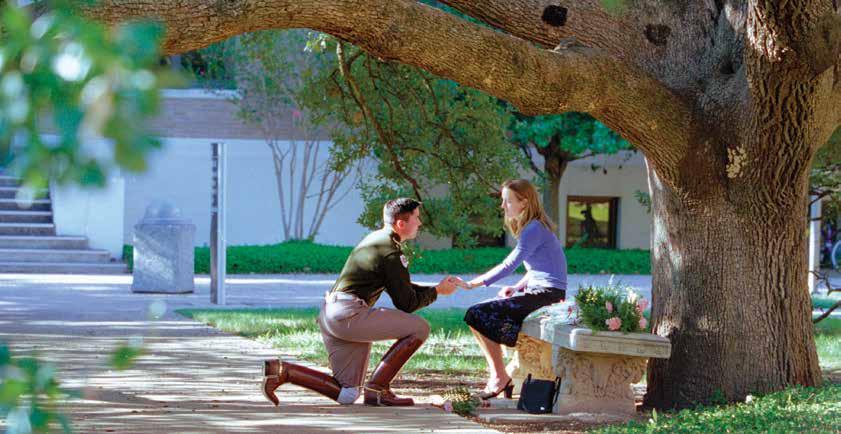
The Mays Business School’s Alumni Relations Office challenges you to get engaged in your alma mater this year!
STAY INFORMED In addition to publishing @Mays magazine twice a year and producing a quarterly MBA alumni e-newsletter, we’ve recently expanded our alumni web presence. Go to mays.tamu.edu/alumni for a number of resources. Tap into career services for graduates. Search for classmates or update your contact information. Read the latest news on fellow alumni. Build your professional network on Mays social media sites.
GET INVOLVED Our graduates participate in a whole host of Mays programs and activities. Whether you’re interested in recruiting or mentoring our students, attending alumni events or starting a Mays alumni chapter in your area, there’s no shortage of ways for you to get involved.
BECOME INVE S TED Alumni gifts enable us to enhance our academic programs, recruit outstanding faculty and attract the best and brightest students. By making a gift to Mays Business School, you can express your appreciation for the education you received, strengthen the stature of your alma mater and invest in the future.
M ORE I NFORMAT I ON To learn more about alumni events and activities, visit mays.tamu.edu/alumni. For questions about how you can get engaged with your alma mater, contact Josh Ellison at jellison@mays.tamu.edu or 979.845.5435. For questions about giving opportunities, please contact Joy Monroe at jmonroe@mays.tamu.edu or 979.458.1452.


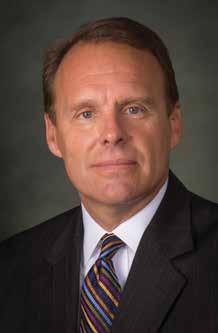
Dear friends,
I am pleased to introduce the spring/summer 2014 issue of @Mays magazine. The publication of this issue comes at an interesting time in the evolution of higher education, as new competitors (both overseas and online), technological advances and changing student attitudes are redrawing the business school landscape. I am happy to say that Mays Business School is responding to these changes—and the challenges and opportunities they present—in creative ways that will continue to improve the educational experience for our students.
The cover story explores innovative curriculum, technologies and techniques we have introduced to enrich the classroom experience and ultimately enhance our students’ learning. These approaches include a new collaborative course we are offering in conjunction with Texas A&M’s colleges of engineering and architecture, a “flipped classroom” that inverts the work that has traditionally been done inside and outside of the classroom and a more mindful approach to teaching business communications. The feature story addresses the theme of innovation by exploring how Mays is transforming the way we serve corporate clients—from a traditional provider of degree programming into a strategic partner for leadership development.
A new feature in our spring/summer 2014 issue is the integration of our Benefactor magazine within @Mays. We have done this with three objectives in mind: first, to share our wonderful stories of donors and student and faculty beneficiaries with our broader alumni audience; second, to inform our generous benefactors about the school’s many events, activities and accomplishments; and third, to spend our communications dollars more efficiently by consolidating our publications. This issue of Benefactor also includes an inspiring message from our good friend, Jerry Cox, as well as an update on the school’s development activities.
As you read this magazine and learn more about the outstanding educational experiences we offer our students, I hope you will be inspired to re-engage in the life of Mays Business School in new, mutually beneficial ways. Thank you for supporting our efforts and celebrating our successes. Please send us an email (alumni@mays.tamu.edu) or a tweet (@maysbusiness) to let us know how you are doing. Or better yet, stop by the Wehner Building during your next trip to Aggieland.

JERRY R . STRAW S ER
Dean and KPMG Chair in Accounting
Mays Business School
Texas
A&M University
16 th
U.S. PUBLIC
U.S. News & World Report
9th
U.S. P UBLIC
Bloomberg Businessweek
3rd
U.S. P UBLIC
Employer Survey,
Bloomberg Businessweek

National recognition
Accounting PhD program fares well
The Mays PhD Program fared well in the 2014 Brigham Young University rankings, which are based on research publications of graduates of the PhD program during the previous three years (2011, 2012, 2013).
For all topics/methods, Texas A&M ranked 4th in the nation. The only schools whose recent PhD graduates have more publications than Mays are Stanford University (1st), University of Michigan (2nd) and the University of North Carolina (3rd). The rest of the top 10 are University of Pennsylvania, Indiana University, University of Texas at Austin, Penn State University, University of Washington and Cornell University.
For audit-archival purposes, Texas
A&M is the #5 PhD program in the nation. The top four schools are University of Michigan, Stanford University, University of North Carolina and University of Pennsylvania, in that order. The rest of the top 10 are University of Washington, Penn State University, University of Chicago, University of Toronto, University of Iowa and University of Southern California (there are two ties).
For archival-tax research, Texas A&M is the #5 PhD program in the nation. The top four schools are University of Arizona, University of North Carolina, Arizona State University and University of Washington.
Mays undergraduate program breaks into top 30 in national rankings
For the first time in its history, the Mays undergraduate program placed among the top 30 U.S. universities in Bloomberg Businessweek ’s newest ranking of undergraduate business programs. Mays placed 29th overall (up from 33rd) and 9th among U.S. public schools (up from 12th). Of particular note is Mays’ performance in the employer survey component; Mays was ranked 5th overall and 3rd among all public institutions in terms of overall employer satisfaction with Mays graduates.
This ranking places Mays in an elite group of 16 institutions that are ranked among the top 30 by Bloomberg Businessweek for the quality of both their undergraduate and full-time MBA programs. Of these, only seven (including Mays) are public institutions. The other public institutions are University of California, Berkeley; Indiana University; University of Michigan; University of North Carolina; University of Texas; and University of Virginia.
“We are very proud to be included in the top tier of public schools, and we are especially gratified to be 5th among both public and private institutions in the employer survey,” said Marty Loudder, associate dean of undergraduate programs. “We are constantly in touch with our recruiting companies, and they provide us with valuable information that we use to improve our academic programs and our students’ preparedness for the workforce.”
“The recognition of both our undergraduate and MBA programs by Bloomberg Businessweek is noteworthy,” said Mays Dean Jerry Strawser. “These rankings illustrate that an institution does not need to make trade-offs between its undergraduate programs and MBA programs, and they reflect the quality and efforts of our students, faculty and staff in all of our programs.”
8th
U S P UBLIC
Times
18th U.S. OV ERA LL
Times
1st U . S . P UBLIC
Times
2 nd
U. S . P UBLIC
10th U S P UBLIC
Times
Mays holds place in U.S. News ranking
Mays held its position among the nation’s top 30 undergraduate business programs accredited by the Association to Advance Collegiate Schools of Business in the “Best Colleges” guidebook for 2014, published by U.S. News & World Report.
Mays tied for 16th place for undergraduate business programs with five other public universities: Arizona State, Georgia Tech, University of Florida, University of Georgia and Michigan State. It also tied at 27th overall with those public universities and Brigham Young. The undergraduate business program rankings are based on a survey of deans and senior faculty at each business school accredited by the AACSB.
Undergraduate accounting program ranks 6th among U.S. public schools
The undergraduate accounting program at Mays Business School ranked 6th among U.S. public and 11th overall in the most recent analysis by The Accounting Degree Review The Accounting Degree Review published the meta-ranking of the top 30 undergraduate accounting schools of 2014 from U.S. News & World Report, Bloomberg Businessweek and Public Accounting Report
Executive MBA maintains strong position in Financial Times rankings
The Executive MBA Program (EMBA) at Mays maintained its rank among the top 10 U.S.-based programs at public universities. According to rankings released by Financial Times, the Mays program ranked 8th among U.S.-based public schools, 18th among both private and public schools and 65th out of the top 100 EMBA programs worldwide.
London-based Financial Times surveyed thousands of EMBA alumni from more than 100 of the top programs worldwide. A larger number of international schools made the top 100 this year, reflecting the globalization of the business school market. Based on years of work experience, the program ranked 1st among U.S. public institutions and 2nd overall. The program consistently averages 15 to 17 years of work experience in its classes. Texas A&M ranked 2nd among U.S. public universities based on aims achieved, evidence that the EMBA is helping graduates achieve their goals for pursuing the degree. Based on the number of scholarly research publications, Mays faculty also ranked 10th among all U.S. public schools.
Retail students win national product launch competition

Mays students developed a proposal for the “Backseat Bib” as part of the National Retail Federation Student Challenge, a national competition to bring a new product to the retail market. The team of four Aggies won against 13 universities and schools, and gained the attention of Babies“R”Us, America’s leading retailer for baby products and safety.
Four M.B. Zale Leadership Scholars, or student ambassadors of the Mays retail education program, competed: Christina Tharp ’14, Allie Miller ’14, Diandra Esparza ’15 and Jamie Roy ’15.
Mays team places second in national tax case competition
A student team from Mays Business School came in 2nd place in the national finals of Deloitte’s FanTAXtic tax case competition. The Aggie team members were Sam Richter ’16 and Andrew Winker ’16, Shawn Morgan ’15 and William Cummings ’14 and graduate student C ameron Doe
Kevin Roach was the faculty advisor who accompanied the team to the finals competition that was held at the Deloitte University complex just outside Dallas. Dennis L assilla also served as a faculty advisor.
Mays MBA team wins ethical leadership case competition
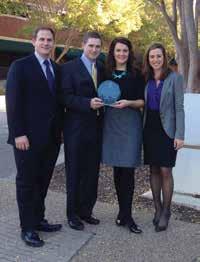
A team of Full-Time MBA students from Mays swept the 7th Annual National MBA Case Competition in Ethical Leadership, held at Baylor University’s Hankamer Business School. The Mays team members Lloyd McGuire, Matt Johnson, Janette Barnard and Robyn Peters won first place in the team competition, which included a $5,000 prize. Barnard was named Best Presenter and Peters won Best Q&A.
Each four-person team was tasked with resolving an incidence of insider trading at Goldman Sachs. “Given less than 24 hours to dissect the case, craft recommendations and develop a flawless presentation, this competition was a test of critical problem solving and prioritization,” Peters said. “Experiences like this are what really prepare us for our roles as future professional leaders.”
Mays team tops national Wall Street Journal competition
A student team from Mays Business School won 1st place at the Wall Street Journal Biz Quiz hosted by Fisher College of Business at The Ohio State University.
Team members Andrew Haraway ’14 (senior BHNR/FINC), Hunter Hibler ’14 (senior BHNR/FINC) and Jack Taffe ’15 (senior BHNR/FINC) read and studied The Wall Street Journal for six weeks to prepare. The two-day quiz competition featured teams from 18 highly ranked business schools across the nation. The Mays team won every pool-play round, carrying the number-one seed into the semi-finals; won a tie-breaker to reach the finals; and achieved the 17-13-9 victory against Ohio State and Miami (OH) to win the finals. The Mays team placed 2nd in the team written competition and Jack Taffe placed 3rd in the individual written portion. The team was coached by Eric Newman, academic advisor of Mays Undergraduate Special Programs and Business Honors.
37th OV ERA L L
U.S. News & World Report
16th U S P UBLIC
U.S. News & World Report
18th U S P UBLIC
Times
1st

12th
11th

MAYS PROGRA M NEWS
General news
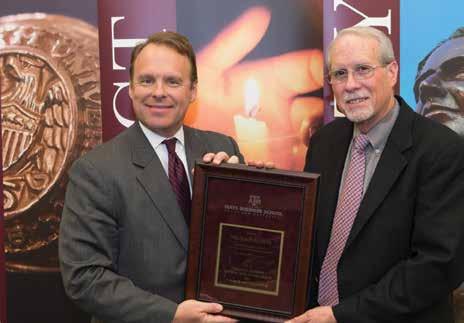
The first Mays Lifetime Achievement Award was given to Mike Hitt in 2014.
Mays Business School’s inaugural Lifetime Achievement Award for Research and Scholarship was awarded to Michael A. Hitt , a University Distinguished Professor and Joe B. Foster ’56 Chair in Business Leadership. The award is given to Mays faculty who have met the highest standards in innovation and achievement through sustained and outstanding scholarly contributions.
During the recognition program for Hitt in March, Mays Dean Jerry Strawser said, “We are starting a new tradition in a place that’s full of traditions. We want to recognize pioneers and thought leaders in the field.”
Hitt entered the management field 40 years ago, and he spoke at the award ceremony about the numerous changes in the field over time. “A lot of the work we do is important on even a broader scale,” he said, adding that the study of management is now global. Data for research is much more available now than it used to be, but he said basic scientific research is still the basis of all reputable research.
Hitt said the important questions of academia are: What is the impact of your work? And how do you measure it? Strawser said Hitt’s research findings “direct the work of other scholars and the course of future study in the academic profession.” In addition, he said that Hitt “studies relevant issues that affect the business world and impact economic development.”
When Hitt’s impact on audiences— both within his field and outside of academia—is measured by any scale, it always ranks highly. An article in the Academy of Management Perspectives named him as one of the 10 mostcited authors in management during a 25-year period. The Times Higher Education in 2010 listed him among the top scholars in economics, finance and management, and he was tied for first among management scholars, with the largest number of highly cited articles.
Hitt targeted the younger audience members when he spoke to a group of colleagues and students at the award ceremony, offering this checklist of advice:
Whatever you do, do it well.
Think long-term. Do work for which you have a passion. You’re going to have pressure to do it all well. There are no short cuts.
Mays Business School expands
CITYCENTRE
Houston facility to meet growing demand
Since Mays Business School opened its CITYCENTRE facility in the heart of Houston’s energy corridor in the fall of 2012, demand for the secondfloor space has been strong. The initial 24,000-square-foot space was designed to house the Executive MBA and Professional MBA programs and serve as a resource for other Mays programs and events. In the past year, Mays entered into a partnership with Texas A&M’s Department of Statistics, which is using our CITYCENTRE space for its new M aster of Science in Analytics Program . Meanwhile, usage by the Executive MBA and Professional MBA teams has increased, and demand is growing from local businesses and non-profits wishing to host conferences, meetings and special events at the facility. In addition, Mays’ Center for Executive Development (CED) will begin piloting open-enrollment courses for working professionals this fall at CITYCENTRE. CED has already been delivering some of its custom programs for several clients at our Houston facility.
In March, Mays opened an additional 6,300 square feet of space at CITYCENTRE featuring more team rooms, offices and common space. The first-floor addition will provide more space for collaboration outside the classrooms while giving faculty members more space

to incorporate team breakout sessions into their classes. The new first-floor entry also creates a more visible presence for Mays Business School in one of Houston’s most dynamic mixed-use developments.
“Our physical expansion at CITYCENTRE further demonstrates Mays Business School’s dedication to our Executive MBA and Professional MBA programs and our commitment to meeting the educational and meeting needs of the Houston business community,” said Dean Jerry Strawser. “I’m proud of our beautiful space at CITYCENTRE, our dedicated staff and the creative ways our faculty are enhancing students’ learning experiences in the facility.”
Mays Business School’s CITYCENTRE space now totals more than 30,000 square feet, featuring four executive classrooms, 21 team rooms, expansive dining and common spaces, staff offices and a boardroom. It encompasses portions of the first floor and the entire second floor of the CITYCENTRE

THREE building. The space was custom-designed by a team of faculty, staff and students to be the ideal environment for executive learning.
FO R MO RE I NF O R M AT IO N visit mays.tamu.edu/citycentre.
Undergraduate program
UNDERGRAD U ATE S T U DENT S
PART ICI PATE I N H A LLIBU RTO N E NERGY CA S E C OM PET I T IO N
The 2014 Halliburton Energy C ase Competition was a huge success, attracting a record number of 188 student participants across campus. Participants were organized into teams of four, with at least three members enrolled in Mays Business School. One member of each team could be from another college at Texas A&M.
Each team was given a real-world case study addressing business issues an oil field services company might face. The students had two days to analyze the case before delivering 15-minute presentations to a panel of Halliburton
executives. The winning team received a total of $4,000. First-place winners who are business majors were Romeo Solis ’14 (FINC) and Arjun Mohan ’13 (ACCT). The second-place team received $2,500 and included Drew Nelson ’13 (ACCT) and Nick B ezner ’13 (ACCT). The third-place team won $1,500 and included Andrew Winker ’16 (ACCT), Spencer Dahl ’15 (FINC) and B randon Knapp ’15 (FINC). B USI NE SS H O N O R S ENJ OY H I GH -IM PAC T L EARN I NG EXPER I EN C E AT DIS NEY WO R L D
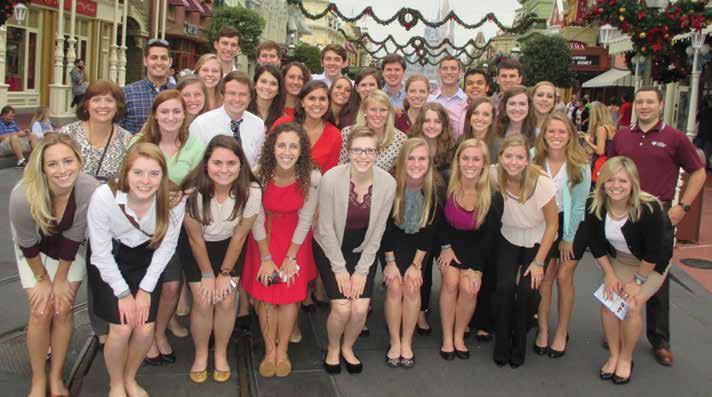
Thirty business honors students reaped the benefits of a four-day highimpact learning experience at Walt Disney World in Orlando, Fla., in November. The students enjoyed
Business Honors students got to explore behind the scenes at Disney World.
behind-the-scenes tours and interactive sessions with company leaders covering topics such as capital planning, leadership, pricing, finances, international opportunities and marketing. The experience was a fine example of high-impact learning. The students learned and bonded with one another. They also got to experience the park as customers, and make lasting memories that will help mold their career paths. Networking was at the core of the trip before it even started. A current student approached a former student, M ichael Kurt ’09, an accounting graduate from Mays who is financial operations manager at Disney. Another former student and his wife, Cindy ’84 and Tony Weber ’84 , made a generous donation to help pay for the trip.
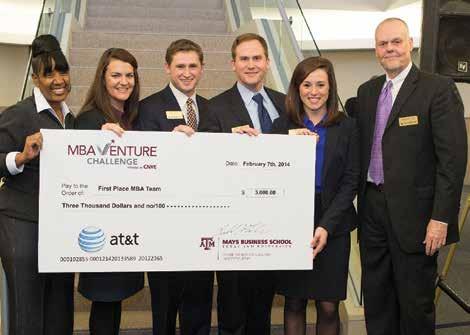
MBA Venture Challenge winners are flanked by Vater Arnold of AT&T and Richard Lester, Executive Director of the Center for New Ventures and Entrepreneurship.
Graduate program
MB A V ENT U RE CHA LL ENGE
In February, Mays Business School hosted its annual MBA Venture Challenge. More than 100 business and academic leaders from around the Brazos Valley judged companies created by the Mays MBA students. The judges ranked early-stage startup companies and provided valuable
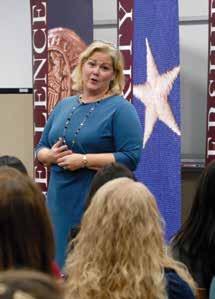
Catherine “Kiki” McLean spoke at the Women’s Leadership Initiative in January.
feedback. Taking first place in the competition was MyHeroClassifieds. com, created by Janette B arnard, M att Johnson, Lloyd M cGuire and Robyn Peters AT&T sponsored the prize for the winning team. The second-place winners were Joseph Cole , B en Feldman , Aiden Johnson , Ankit Talwar and S abrina Wade
with “Loco Inc.” Their prize was sponsored by Aggie Angel Network. The third-place winners were B enjamin Holler, S haune Kolber, Eric Piskura , Eric S nowder and Rachel Turner with “Scepter Medical Devices.” Their prize was sponsored by JBKnowledge.
The MBA Programs Office has hosted two Women’s Leadership Initiative events this year at Mays Business School’s CITYCENTRE Houston facility. In January, Catherine “Kiki” McLean discussed “leading out,” which involves influencing peers inside or outside your organization as well as colleagues up and down your organizational chain of command. One of the leading figures in the No Labels movement in Washington, D.C. and a key strategist for six U.S. Presidential campaigns, McLean explained the important role that leading out plays in national politics, particularly when it comes to influencing lobbyists, regulators and other power-brokers.
In April, Rebecca Cooke, a strategy consultant and executive coach, discussed how women communicate in one-on-one conversations, emails and meetings determines what type of power and influence they will have. At a third event in the fall, Cooke will discuss how women define their roles both deliberately and unintentionally as they grow professionally.
The Women’s Leadership Initiative is a series of women-only seminars that help female students and business professionals make valuable connections while learning firsthand from successful female leaders.
WOM EN ’S LEADER S H I P IN I T I AT IV E
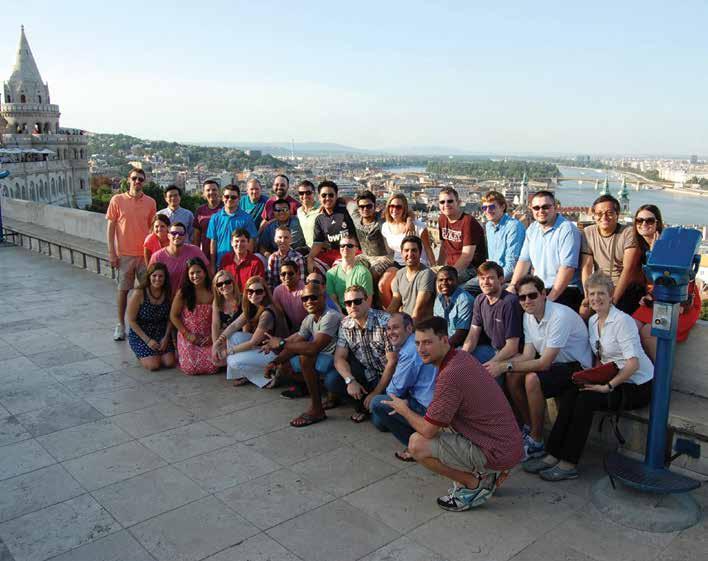
Professional MBA students were immersed in the culture and business world of Budapest.
The Professional MBA program took its first field trip to B udapest in August 2013. Participants visited eight companies and numerous destinations. During the summer between the first and second years, the required International Business Policy course occur during a weeklong study abroad experience. The trip allows students to apply the concepts presented in the course through a high-impact, international experience. The trip also provides class members an opportunity to experience “selfless service” as students participate in a social responsibility project. The Class of 2015 will travel to Budapest and Prague in August 2014.
Department updates
ACCOU NT I NG
In April, the Department of Accounting hosted James Doty, the SEC-appointed chairman of the Public Company Accounting Oversight B oard . Doty discussed a range of audit topics with a standingroom-only group of Mays faculty, staff and PPA students in Ray Auditorium. He also encouraged students to always remember that their work can help prevent the next Enron by ensuring better conduct in board rooms and in presidents’ offices throughout our country and across the globe.
FI NAN C E
Finance senior Kyler Ferris ’14 placed 2nd in the inaugural S ilicon Valley B ank Elevator Pitch Competition , which was hosted by Startup Aggieland. The event was held in Rudder Theatre Oct. 25 after the Center for New Ventures and Entrepreneur’s “Aggie 100” awards program in the fall of 2013.
Finance majors now have an opportunity to participate in the management of an actual venture capital fund. The M aroon Fund , part of Research Valley Funds, invests capital in new ventures initiated by Aggies. The fund raises capital primarily from former students and is managed by current Texas A&M students.
The Aggies on Wall Street Program is changing to include additional courses targeted at students interested in pursuing careers in investment banking. In addition to visits to New York, students now have an opportunity to participate in
a colloquium on campus where they interact with former students who work in investment banking.
The Department of Finance is launching a one-year MS Finance program starting in the Fall 2014 semester. The program targets students with undergraduate degrees in economics, statistics, mathematics, engineering and natural sciences who are interested in pursuing a career in the financial services industry.
INF O R M AT IO N AND OPERAT IO N S MANAGE M ENT
The INFO Department has started a corporate/academic partnership called the Texas A& M S upply C hain C onsortium .
The consortium’s founding corporate members are Anadarko, B aker Hughes, Dell, Halliburton, HE B , Nabors and Pricewaterhouse C oopers Meetings have been held in the CITYCENTRE Houston facility.
Texas A&M Women in Information Technology is now an official student organization at the university open to all female students majoring in or interested in management information systems . Robin Starnes is the faculty advisor.
MANAGE M ENT
The Management Department revised its major to offer five directed elective tracks , starting with the Fall 2014 catalog. Students can select an emphasis area within management; rather than taking any four MGMT electives, the electives will come
specifically from one of the tracks to provide coursework in an industry or job function. The tracks are consulting and general management; entrepreneurial leadership; human resource management; nonprofit management; and pre-law.
MARKET I NG
Marketing junior Amanda Hall ’15, was one of four recipients of the M argaret Rudder Community S ervice Award . The award recognizes those who significantly impact their community and, as a result, are impacted by the contribution.
Two groups of marketing students won national awards this year: a firstplace award in the National Retail Federation Student Challenge (see pg. 4) and the National Fashion S cholarship Fund C ase Study Competition . Mays had five winners in the competition in New York: Kailie Flores ’14, Krystin S essions ’14, Christina Tharp ’14, S helby Zamzow ’14 and Holly Vogel ’14. Each received a $5,000 scholarship and trip to New York City in January to be recognized at the national gala at the Waldorf Astoria Hotel.
Center for International Business Studies students visited Panama
Centers

CENTER F O R INTERNAT IO NA L B USI NE SS ST U D I E S
For the 2012–13 academic year, the Center for International Business Studies (CIBS) helped 435 business students pursue international experiences ranging in duration from one week to one semester. The programs included the Russia Business Environment summer program led by clinical assistant professor Daria Panina and Contrast of the Financial Environments of Greece and Turkey spring field trip led by senior lecturer Sally Guyton
During the 2013-14 winter break, 24 undergraduate students took part in the inaugural Southern African Entrepreneurship, Non-Profit, and Business Environments faculty-led study abroad led by G. David Flint , a clinical associate professor in management. Participants explored Johannesburg , S outh Africa their first week, visiting with business leaders and gaining historical insight at the Apartheid Museum and Liliesleaf Farm historical compound. They spent their second week in B ulembu, Swaziland , a town dedicated to the care of orphaned children from Swaziland. Students learned how the 1,200 residents and six local businesses raise the necessary funds to support
the orphanage of 400 children. Students were able to present their ideas for sustained growth to the Bulembu Foundation.
Another 24 undergraduates participated in the India Business Environment faculty-led study abroad coordinated by Julian Gaspar, executive director of CIBS. The students gained cross-cultural communication skills and valuable international exposure to the business environment in India. The group spent
two weeks visiting more than six businesses and exploring cultural sites in Bangalore, Mysore and New Delhi.
Twenty students traveled to Panama for a week with Global Business Brigades, a Mays student organization. They worked with locally owned businesses in Tortl, Panama , in the areas of accounting, finance, development and product management.
CENTER F O R N EW VENT U RE S AND E NTREPRENE U R S H I P
The first Aggie Entrepreneurship Saturday was co-hosted simultaneously in Houston and Fort Worth by the Center for New Ventures and Entrepreneurship, the Association of Former Students and Startup Aggieland .
Startup Aggieland, the university’s student-run business accelerator, launched a Startup Living Learning Community in Fall 2013 to engage freshmen who indicate an interest in entrepreneurial projects. This was a collaboration with Residence Life, underwritten by the Management Department at Mays, includes an introductory course and housing in a new dorm. Startup Aggieland’s freshmen-only program was inspired by a student who submitted the winning concept in the Ideas Challenge (hosted by the Center for New Ventures and Entrepreneurship at Mays).
CENTER F O R MANAGE M ENT O F INF O R M AT IO N SYS TE MS
The Center for the M anagement of Information Systems held its 15 th annual Women in IT Conference, titled “High Tea with IT: A Conference for Women in Information Technology.” Faculty and industry speakers attended, including Renee Schroeder, assistant vice president — Application Development at USAA, and Melissa Moloney Walk,
senior manager at Accenture. The event also offered roundtable discussions to allow students to have opportunities to speak with other women in the IT industry. These discussions covered tips and techniques related to networking, maintaining a work-life balance and becoming a successful leader.
CENTER F O R R ETA ILI NG ST U D I E S
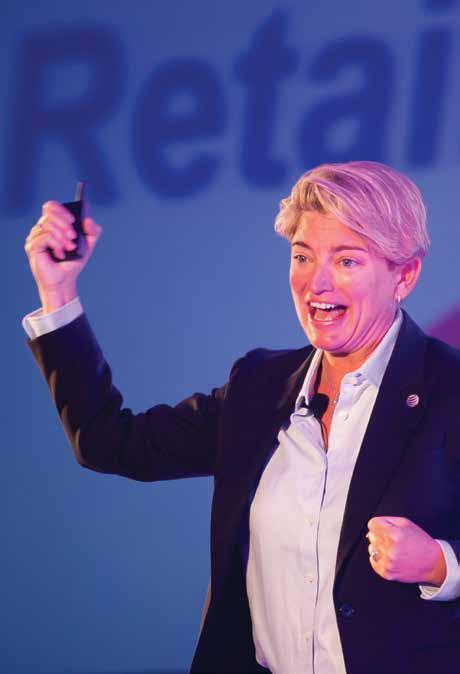
The Center for Retailing Studies hosted the 2013 Retailing Summit , the largest annual outreach program hosted by the Center for Retailing Studies. Proceeds from the sell-out crowd of 300 retail executives fund the center’s campus programs for students. Keynote speakers addressed relevant retailing topics, and a number of core themes emerged, including change, engagement, values, passion and omni-channel business.
The speakers included:
• M axine Clark , founder of Build-A-Bear Workshop
• Dahna Hull ’93, leader of South Texas store operations for AT&T
• Michael Stallard , author of “Fired Up or Burned Out”
• Graham Atkinson , Chief Marketing and Experience Officer at Walgreens
• Duncan M ac Naughton , EVP and Chief Merchandising & Marketing Officer of Walmart U.S.
• Jason Kidd , SVP of Sam’s Club
• Leonard B erry of Mays Business School
• Tim Hicks , SVP of Marketing and International at Gold’s Gym
The 2014 Retailing Summit will be held Oct. 2-3 at the Adolphus Hotel in Dallas. For more information, visit retailingsummit.org.
Dahna Hull 2013 Retailing Summit
This fall, the Center for Executive Development (CED) will introduce three open-enrollment programs to augment the custom programs it currently offers to a diverse set of clients ranging from Halliburton, AT&T and Baker & Hughes to the Texas Engineering Extension Service and the Law Enforcement Management Institute of Texas.
“Finance and Accounting for Non-Financial Managers” increases the financial capabilities of non-financial managers through in-class exercises and analysis of financial statements. Participants in “ Leadership in a Complex Environment” engage in a meaningful exploration of what it takes to lead organizations in a global business environment characterized by rapid change and increasing uncertainty.
Through “Foundations of Project Management,” students will learn how to deliver projects that meet their time, budget, and requirements objectives by applying the 10 project management knowledge areas developed by the Project Management Institute.
Designed to help working professionals advance their careers, these openenrollment programs equip students with relevant knowledge and practical tools they can immediately implement to achieve positive results. Held at Mays Business School’s CITYCENTRE Houston facility, the one-day and twoday programs are taught by top faculty at Mays and Texas A&M University— scholars, teachers and leaders in their fields of expertise. Group discounts are available for multiple attendees from the same organization. Texas A&M former students also receive discounts, and CEU credits are available.
R EA L ES TATE CENTER
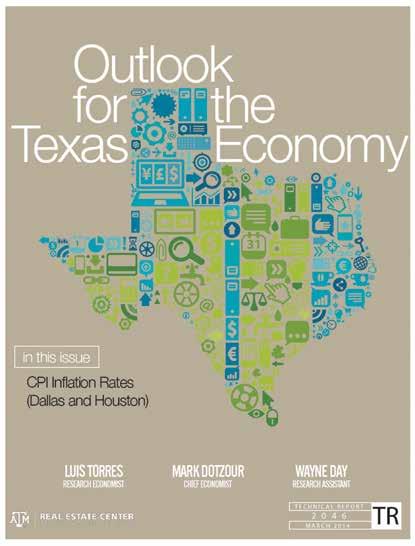
The Real Estate Center has added to its “Monthly Review of the Texas Economy” a report called “Outlook for the Texas Economy.” In it, Luis Torres, associate research scientist, analyzes current economic conditions for the state as well as for major metropolitan areas and border cities.
Mays in the news
FORBES “Those Evil Naked Short-Sellers Actually Trade On Fundamentals, Study Says,”
Accounting Professor Edward Swanson and Assistant Accounting Professor Sean McGuire commented on their recent paper, which found a highly statistically significant relationship between short selling and financial performance. “We’re looking at this not as a money-making strategy, but as a way to measure materiality,” Swanson said.
NATIONAL PUBLIC RADIO “Inside The ‘Bossless’ Office, Where The Team Takes Charge,” Aug. 26, 2013
Stephen Courtright , assistant professor of management, discussed the concept of the “bossless” office, in which employees collaborate openly and without a sense of rank.
“We’ve seen more of a trend toward flattening organizations. [Technology-based] industries are just unstable, rapidly changing, and they are trying to harness creativity and innovation. So it is that speed of the technology environment that has prompted organizations to rethink the way they structure the organization.”
TIME BUSINESS & MONEY “The Real Face of Healthcare Reform,”
Leonard Berry, Distinguished Professor of Marketing and M.B. Zale Chair in Retailing and Marketing Leadership, was quoted from his journal article, “The Promise of Lean in Health Care,” co-authored with John Toussaint of ThedaCare.
“Lean is not a program; it is not a set of quality improvement tools; it is not a quick fix; it is not a responsibility that can be delegated. Rather, Lean is a cultural transformation that changes how an organization works . . . It requires new habits, new skills and often a new attitude throughout the organization.”
INVESTOR’S BUSINESS DAILY “Texas Rising: More Jobs, More Business, More Housing,”
M ark Dotzour, chief economist of the Real Estate Center, discussed Texas’ rise out of the housing crisis and recession, especially compared to many other parts of the country. “Apartment construction has been happening throughout the Great Recession because of the continuous increase in population and employment levels. Commercial real estate construction for office and industrial properties has resumed in Houston and other Texas large metro areas.”
BUSINESS NEWS DAILY “Why Inspiring Leaders Don’t Always Make Good Bosses,”
Dan Chiaburu , assistant professor of management, concluded that while businesses seek leaders to bring innovation and corporate growth, sometimes transformational leadership “isn’t all it’s cracked up to be.”
THE TIMES OF INDIA “Reform economically, or perish: Expert,”
Julian Gaspar, Executive Director of the Center for International Business Studies, stressed the critical need for economic reforms in India. “India might be in danger if it goes back on the economic front. Nations which do not take the advantage of globalization and free trade will suffer.”
SCIENCENEWSLINE “Perception of Job Insecurity Results in Lower Use of Workplace Programs,”
Wendy R. B oswell , Jerry and Kay Cox Professor of Management, and her co-authors examined the relationship between job insecurity and employees’ use of workplace support programs. They found even just the perception of job insecurity can present notable problems for organizations and employees.
THE WALL STREET JOURNAL “Falling Audit Fees May Increase Restatement,”
Nathan Sharp, assistant professor of accounting, and Mays PhD student Brant Christensen found audit fees have sagged since the recession, and that trend may increase the possibility of misstatements going undetected. “Lower fees are hindering auditors’ ability to be compensated for the risk they incur.”
U.S. NEWS & WORLD REPORT “Mixed bag for MOOCs,”
Chris Reed , director of recruitment and admissions at Mays, said often touted massive open online courses —known as MOOCS—might not help prospective students get into business school. “Although we typically believe that additional relevant coursework is an added value in relation to a student’s profile, we would be unlikely to put much weight into a course taken through the MOOC format.”
HOUSTON BUSINESS JOURNAL “Business school must help develop women leaders,”
M ary Lea McAnally, associate dean of graduate programs, commented upon how innovative programs at universities are helping the professional world usher in a new age of women in leadership. She also discussed Mays’ multi-faceted approach to developing female leaders, which starts with selfreflection and includes courses focused on developing leadership, teamwork, communications and problem-solving skills; high-impact learning experiences outside the classroom; and the Women’s Leadership Initiative.
Faculty & staff
achievements
Accounting
Professor Anwer Ahmed was the coordinator of the annual Lone Star Research Conference held at Texas A&M in 2013. Conference attendees included faculty and PhD students from all of the major research universities in Texas.
Marketing Professor Leonard B erry was named the 2014 Senior Fellow for of the Institute for Healthcare Improvement, a leading healthcare quality improvement organization located in Boston.

Management
Professor Wendy Boswell was appointed as an associate editor at Personnel Psychology.
Marketing Associate
Professor Allan Chen was named a National Science Council Associate Research Scholar by the National Science Council of the Republic of China.
Real Estate Center Chief Economist
M ark Dotzour was the keynote speaker for Texas One, an assemblage of many major private sector business leaders making significant contributions to the state’s economy.
A paper written by Management Professor Lorraine Eden and Management PhD student Kai Xu won the Academy of International Business/Temple Best Paper Award at the academy’s annual meeting in Istanbul, Turkey.
B ritt Harris , an executive professor in the Finance Department, served as Advisor to the Federal Reserve Bank of New York. He received a lifetime achievement award for service to the financial industry.
Management Professor Michael Hitt received Mays Business School’s inaugural Lifetime Achievement Award for Research and Scholarship.
Management Professor Duane Ireland was named president of the Academy of Management, the largest association of management academics in the world, for 2014.

Marketing Professor Sanjay Jain was appointed as an associate editor for Quantitative Marketing Economics.
Information and Operations Management Associate
Professor Michael Ketzenberg was named a senior editor of the journal Production and Operations Management.


Information and Operations Management Associate
Professor Xen Koufteros and Professor Rich M etters were honored as cowinners of the Best Associate Editor Award for Journal of Operations Management.
Information and Operations Management Associate Professor Xen Koufteros and Clinical Associate Professor ‘Jon Jasperson were elected as vice presidents of the Decision Sciences Institute.
Information and Operations Management Associate Professor Subodha Kumar was appointed as a Department Editor of Production and Operations Management Journal He was also elected Vice President — Communications of Production and Operations Management Society.

Management Clinical Associate Professor and Executive Director of the Center for New Ventures and Entrepreneurship Richard Lester was named one of 3 Day Startup’s Top 25 Entrepreneurship Professors of 2013.

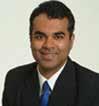
A paper by Marketing Assistant Professor Rishika Rishika and Marketing Associate Professor Ramkumar Janakiraman titled “The Effect of Customers’ Social Media Participation on Customer Visit Frequency and Profitability: An Empirical Investigation” is a finalist for the Best European Research Paper of the Year 2014.
Accounting Professor Lynn Rees served as the Advisory Committee Chair of the Financial Accounting Standards Initiative for the Financial Accounting Standards Board.

Marketing Professor Venkatesh Shankar received the Indian Institute of Management, Calcutta Distinguished Alumnus Award. Shankar also received the Lifetime Achievement Award in Retailing Research from the President of American Marketing Association’s Retailing Special Interest Group.
Accounting Clinical Professor Mike Shaub and co-authors Mike Wilkins and Julie Persellin of Trinity University received the 18th annual Ethics Symposium “Best Contribution to Teaching” award. Shaub also was appointed to the Texas State Board of Public Accountancy, Rules of Professional Conduct Examination Ad Hoc Revision Committee.
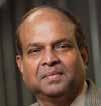
Information and Operations Management Professor Chelliah Sriskandarajah was inducted as a Fellow of the Production and Operations Management Society. The Production and Operations Management Society
has recognized a total of 31 Fellows for contributions to the field.

Marketing Clinical Associate Professor Lisa Troy was invited to serve on the Advisory Council of the Advertising Education Foundation of Houston.
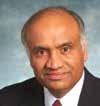
Marketing Professor Rajan Varadarajan was appointed Vice President of Publications, Journals by the American Marketing Association.
Accounting Professor Chris Wolfe was appointed to the editorial board of Behavioral Research in Accounting.
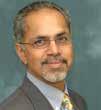
Marketing Professor M anjit Yadav was selected as editor of the Academy of Marketing Science Review.
A New Look at Learning
and Other Innovations

Shannon Deer, lecturer and Accounting Department assistant head, explains a concept to students in her Intermediate Accounting I class.
By now, we know the revolution will not abate. The transformation of higher education that began some 10 years ago will continue to redraw the business school landscape in even more dramatic ways in the coming years. This change is being driven by a number of forces, including relentless technological advances, changing student attitudes and the worldwide democratization of information. A growing number of new business schools and virtual universities have accelerated this transformation.
According to The Wall Street Journal, U.S. graduate business schools are facing a relatively sluggish growth rate that is due, in part, to the emergence of high-quality competitors overseas, particularly in Europe, Asia and
Australia. In the Financial Times’ most recent rankings of global MBA programs, American schools held 23 of the top 50 spots in 2014, down from 31 in 2007.
Meanwhile, a digital revolution is sweeping across the higher education landscape. Statisticbrain.com estimated that there are now 277 accredited online universities, such as Capella University, Ashford University and Walden University. In response to this trend, a number of traditional bricks-and-mortar universities have created online versions of themselves, including Drexel, DePaul and University of Massachusetts. According to a recent Ed Tech Magazine survey, 50 percent of college presidents predicted that by 2022, most of their students will be taking

classes online. In a recent article in Bloomberg BusinessWeek , the dean of University of California’s Haas School of Business discussed the new competitive landscape, stating that half of business schools in the country could be out of business in 10 years, or perhaps even five.
The changing landscape has forced traditional business schools to assess their curricula, methods of delivering content and program offerings while fundamentally rethinking their competitive positioning and even their core educational missions. In the past few years, we have witnessed a number of innovations both inside and outside the classroom. The massive open online course, or MOOC, is one such response. These free courses
allow full-time students, working professionals and casual learners to learn new things at their own pace in a flexible virtual environment. MOOC platforms can also increase faculty productivity by enabling professors to teach thousands of students worldwide simultaneously. While a number of traditionalists claim that universities and business schools should not respond to such pressures, even Harvard and Stanford have introduced MOOCs on topics ranging from statistics to finance to computer science.
In this new competitive environment, Mays Business School has introduced innovative curriculum, technologies and techniques to enrich the quality of classroom interaction among students and faculty and ultimately enhance learning.
Flipping the classroom
Mays Business School has recently taken a fresh look at new ways to enhance learning in the class.” The “flipped classroom” represents one such approach. Simply put, a flipped classroom inverts the typical cycle by which content is delivered by teachers and then applied by students. Through the flipped approach, teachers deliver traditional classroom content to students before class via the Web and other technologies, reserving class time for students to apply what they’ve learned outside of class through more collaborative discussions and activities. Before meeting for class, students do assigned readings and watch online lectures and relevant videos at their own pace and convenience. In class, students
LECTURE TRADITIONAL
TRADITIONAL
LECTURE
and teachers strive to achieve “higherorder” thinking by addressing questions and integrating basic concepts from the homework through a variety of activities and exercises. The traditional roles and relationships of teachers and students are also transformed. Rather than directing from the head of the class, teachers guide interactions with and among students, who assume a more active role in the learning experience.
For the past few semesters, Shannon Deer, lecturer and assistant head of the Accounting Department, has used a flipped classroom approach in her Intermediate Accounting I class. She establishes a routine throughout the semester so students become
FLIPPED
Role of teacher: Shifts from directing at the head of the class to guiding discussion and facilitating group activities alongside students.
Role of student: Shifts from listening passively to lectures to playing a more active and responsible role in the learning experience.
ACTIVITY
Before class: Students watch lectures and do assigned readings at their own pace, communicating with teachers and other students online.
In class: Students achieve higher-level thinking by applying and integrating concepts through in-class activities facilitated by teachers.
“With the flipped classroom, it was very important to come to class prepared, and this allowed us to get more out of our class discussions and activities.”
—Abby Miller ’15, accounting major
familiar and comfortable with what’s expected of them before, during and after each class. Once a week, pre-class assignments typically encompass a chapter of reading along with her lecture (delivered through online videos and slides) and a multiple-choice quiz on key concepts that is administered online. To prepare and deliver this pre-class content, she uses a combination of software, including Camtasia, PowerPoint, Media Matrix, eLearning/eCampus and Poll Everywhere.
In class, Deer guides collaborative discussions with students as well as smallgroup activities that integrate various concepts and help students understand how to apply them to solve real-world
FLIPPED
problems. An example of this is the Income Statements portion of the course. Students view lectures and videos and read the chapter before class as well as work through homework problems on elemental concepts such as discontinued operations and change in accounting principle. Then, in class, students work in teams to bring these concepts together by preparing a whole income statement and a statement of stockholders’ equity—while Deer circulates among the teams to facilitate the activity and answer individual or group questions.
“With the advent of new technologies and the emergence of new online competitors, universities today are facing many of the same questions and pressures that industry has been facing for years,” said Deer. “This situation gives Mays Business School an opportunity to think critically about the unique value we have to offer as well as develop new, more effective ways of stimulating the curiosity of our students and facilitating the kind of learning that will help them later in life.”
A number of Deer’s students have found the innovative approach beneficial for a variety of reasons. “With the flipped classroom, it was very important to come to class prepared, and this allowed us to get more out of our class discussions and activities,” said Abby Miller ’15, an accounting major at Mays. “One of my favorite things about Professor Deer’s class was the ability to go back and review online lectures and other materials before exams, especially before the final. I really gained a lot from this structure of class and look forward to other professors using this style of class in the future.”

Collaborative
cross-college curriculum
When Richard Lester, Rodney Hill and Joe Morgan began to jointly conceive of the interdisciplinary class that would become “ Innovative Product Development: The Lean Startup M ethod,” each was seeking to connect the material he taught in class to the way it could be applied by students more effectively in their future professional or academic pursuits. The three professors knew that this would require them to broaden not only the academic perspective of their classes but also the information they were teaching and the experiences their students were having.
As the Executive Director of Mays Business School’s Center for New Ventures and Entrepreneurship
(CNVE), Lester knew that success in the real world—whether you’re creating a new product or starting a new business—requires teams of experts from different disciplines to work well together. Hill, a Presidential Professor in the College of Architecture, and Morgan, professor of engineering technology and industrial distribution at the Dwight Look College of Engineering , sought to give their students a better understanding of how to operationalize their products and take them to market after they were designed and built.
The result of their efforts is one of the first classes ever offered at Texas A&M taught by professors from three of the
university’s colleges to students pursuing majors in those three colleges. What binds all of these seemingly disparate parts together is the course’s common goal: to give all students a hands-on entrepreneurial learning experience of launching their own product and starting their own company.
The class emphasizes learning by doing and working in teams rather than as individuals. Students are even encouraged to apply to the course in teams, and each team must submit a proposal for the product they will develop and the business they will launch. By the end of the semester, teams are expected to have completed 100 meetings with potential customers,
For Richard Lester, Executive Director of the CNVE, the opportunity to teach in a class of multidiscipline students has been challenging and inspiring.
and each team makes a final presentation including a demonstration of their product or service.
For engineering students who have traditionally designed a product in the fall and then built a prototype of that product in the spring of their senior years, the new class provides insights on a range of valuable non-engineering topics. These including how to secure financing for product research and development, how to protect their intellectual property and how to cultivate creative organizational cultures necessary for ongoing innovation.

“This isn’t like any other college class,” said Wesley Vance ’15, a computer science major. “It is a melting pot comprising 30 cross-disciplinary students who all have a passion to learn more than what is taught in our traditional classes. This class has become an important node of a large entrepreneur ecosystem at Texas A&M that includes the Center of New Ventures and Entrepreneurship as well as Startup Aggieland.”
Business students and architecture students enjoy similar benefits from the course’s interdisciplinary approach. “This class has enabled me to explore ways of thinking that I would have never been able to access through just business classes,” said Tyler Jo Pearce ’15, a BBA student majoring in business
management. “For example, in class today I became a reverse engineer and learned the processes that engineers use to reason and structure their train of thought.”
For the professors who teach different topics in the course, the class has proved to be just as rewarding. “The opportunity to create and teach in a class of multidisciplined students has been extremely challenging, rewarding and inspiring,” Lester said. “We have truly built a collaborative environment not only for the students but also the professors, and I have enjoyed learning from my colleagues in engineering and architecture.”
Students from three colleges collaborate on team projects in “Innovative Product Development: The Lean Startup Method.”

Mindful communications boost competitive advantage
Business communication these days is an “always on” proposition—24 hours a day, seven days a week, 52 weeks a year. To survive, much less thrive, in this frenetic environment, employees’ focus shifts from quality to quantity. As a result, we don’t read as critically as we used to, we seldom write complete sentences conveying coherent thoughts and we don’t listen as carefully as we should.
As if this weren’t enough, researchers have determined that the new electronic media driving the breathless pace of communications are addictive. They are literally hardwiring us to live in a constant state of
ineffective multi-tasking. According to Joe Kraus, a co-founder of Excite. com, partner at Google Ventures and culture critic at-large, we are experiencing a “crisis of attention” in a “culture of distraction.”
To learn more about tools and techniques that could help professionals communicate more effectively in this environment, Executive Professor John Krajicek attended a Mindfulness Based Stress Reduction (MBSR) workshop in Boston last year. MBSR was created by Dr. Jon Kabat-Zinn at the University of Massachusetts Medical School in 1979 as a means to help patients use

their innate resources and abilities to respond more effectively to stress, pain and illness. Today, Krajicek is applying the same principles to his “Business Communications” class.
In addition to teaching students how to write clear, compelling sentences and make persuasive presentations, Krajicek coaches students on cultivating a unique and authentic professional presence. “I work closely with students to help them develop the emotional and social intelligence they need to make a positive impression when they walk into any room,” Krajicek said. “This requires them to think critically about the way they
Executive Professor John Krajicek teaches students to be more mindful of the way they listen and speak, as well as their non-verbal gestures.
carry themselves, the way they speak and listen, and even their non-verbal gestures and microfacial expressions they’re often not even aware of.”
To transform their communications from a reflexive to a reflective act, students must learn to listen with the intent to understand instead of just listening with the intent to reply. This kind of active listening anchors them in the here and now. Krajicek also teaches students to think about why they are talking instead of focusing only on what they are going to say. “This requires them to understand their own mental models —those unconscious perceptual lenses through which we all subjectively experience the world around us. These models include assumptions about the way the world works as well as biases and cultural blind spots. Being able to hold our mental models in abeyance is the key to being mindful.”
Krajicek’s class also integrates traditional forms of communication training, including videotaping and reviewing student presentations. In these intensive one-on-one sessions, Krajicek and students pause the videotape, reflect on what they’ve seen, and compare and contrast the performance to other presentations. Then they rewind and repeat the process…over and over. “Business Communications” is also a writingintensive class in which students write and revise memos, letters, reports and case analyses, paying close attention to grammar, structure, logic and various rhetorical strategies.
Listening carefully, writing clearly and speaking with intention can give you significant competitive advantage in today’s fast-paced businesses environment.”
– John Krajicek
To achieve greater self-awareness, Krajicek’s students complete a series of self-assessments and mindfulness practices. Students must also develop Individual Communication Development Plans, through which they identify areas of weakness in their communication skill sets, areas in which they want to develop excellence and specific plans to achieve their goals.
While Krajicek still believes that the best way to improve communication habits is to “practice, practice and practice,” he also insists that his students be more mindful of their efforts. “Listening carefully, writing clearly and speaking with intention can give you significant competitive advantage in today’s fast-paced business environment,” Krajicek noted, “particularly when these skills are shaped by greater awareness of yourself, your audience and the subtle nuances of each and every situation.”
Forging strategic partnerships to help develop tomorrow’s leaders
Many of the same forces that are transforming business education are also rippling through organizations around the world, creating a state of “permanent white water” for leaders to navigate. These factors include relentless technological advances, increasing diversity in employee and customer populations, and geopolitical uncertainty even as the globalization of markets creates greater interdependency among nations. Mays Business School is forging strategic partnerships with organizations of all kinds to help them develop their leadership talent in this turbulent environment.
Halliburton partners with Mays to prepare for leadership succession
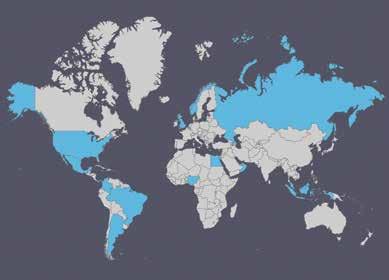
With more than 78,000 employees in over 80 countries serving thousands of clients all over the world, effective leadership is critical to Halliburton’s success. “Developing competent and culturally proficient leaders is our top strategic imperative,” said Cindy B igner, senior director of corporate affairs and diversity initiatives at Halliburton. “For the past 10 years, Mays Business School has partnered with Halliburton to help us achieve our professional development and leadership succession goals.”
What started in 2004 as an innovative program focused on enhancing Halliburton managers’ accounting, finance and management skills (called Business Leadership Development I, or BLD I) has evolved into a robust fourtiered program designed to help managers around the world acquire the skills, knowledge and experiences necessary to progress to the highest levels of the company. Upon completing BLD I, approximately 300 managers advance to BLD II, where they study 14 topics ranging from international finance to organizational culture and change during the course of two weeks. In BLD III, which prepares Halliburton managers to move into vice president-level positions, program participants pursue an even more rigorous three-week program that includes courses
such as “Leading with Your Strengths” and “Managing the Future for Market Innovation and Growth.” Approximately 90 employees are selected to advance to BLD III each year.
From those 90 employees, 30 leaders are selected by Halliburton’s Executive Committee to progress to the top leadership development module—the President’s Leadership Excellence Program (PLEP). In addition to studying topics ranging from mergers and acquisitions to strategic leadership in a complex business environment, PLEP students develop greater self-awareness by taking the Birkman 360° Survey, a multi-rater survey of nine leadership behaviors using self-evaluation as well as evaluation from supervisors, peers, subordinates and others. PLEP graduates are ready to assume senior leadership positions at the company.
“The leadership development program we deliver all over the world today for Halliburton was borne of a vision that CEO David Lesar sketched on a napkin in our first meeting more than 10 years ago,” said B en Welch , director of Halliburton programs at Mays and a clinical professor in the Department of Management. “Since that time, the two organizations have transformed what was a traditional business relationship into a strategic partnership that is based on mutual respect and trust and fueled by an unwavering commitment at the top of Halliburton’s organization to develop outstanding leaders.”

Mays has partnered with Halliburton for 10 years on professional development and leadership succession training.
State agency teams with Mays to develop the next generation of law enforcement leaders
Federal, state and local government agencies today are feeling the effects of technological advances and changing demographics just as much as global corporations. Mays Business School is teaming with the L aw Enforcement M anagement Institute of Texas (LEMIT) to help it develop leaders with the skills, knowledge and experiences necessary to thrive in this dynamic environment.
Established in 1987 by the Texas State Legislature through Senate Bill 800, LEMIT is responsible for developing the analytical, administrative and executive skills of current and future law enforcement leaders in the state. LEMIT’s Leadership Command College currently partners with three universities to provide the training necessary to fulfill its mission: the Center for Executive Development at Mays delivers customized management and communications training (Module I), while Texas Woman’s University provides instruction on social and governmental issues and executive health and wellness (Module II), and Sam Houston State University delivers law enforcement administration training and advanced technical programs (Module III).
“For more than two decades, Mays Business School has had the honor of teaching law enforcement leaders within the
Leadership Command College,” said Ron Chandler, director of the Center for Executive Development. “It has truly been a privilege to participate significantly in developing individuals who commit so much of their lives on behalf of the citizens of Texas. This unique program has been one of the flagship programs within our Center for Executive Development.”
Offered four times a year in College Station, Module I is an intensive three-week program emphasizing general management and leadership principles as well as communications skills oriented for law enforcement executives. Participants build greater self-awareness through the Leadership Profile Inventory while studying a range of topics—from strategic management and planning to budgeting and fiscal reporting, ethics in action, conflict resolution and media relations. During this module, participants also begin work on their Leadership White Paper, a project similar to a graduate thesis that seeks to advance research on a specific law enforcement issues.
“For the past 25 years, Mays Business School’s Center for Executive Development has played a key role in developing law enforcement leaders for Texas,” said Rita Watkins, director of LEMIT. “Today, the Leadership Command College provides graduates with the rigorous and relevant training they need to not only achieve chief executive appointments in law enforcement but also excel in those positions.”
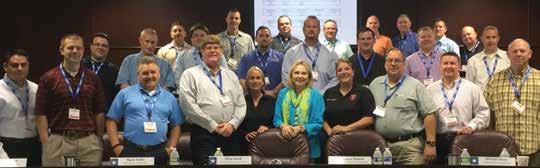
LEMIT program participants in the Spring 2014 session pose with Susan Fiechtner (center), a Mays faculty member who has taught in every LEMIT Module I session since its inception 25 years ago.
Alumni update
Mays Business
Alumni Relations Coordinator alumni@mays.tamu.edu

Integrity the common thread among 2013 outstanding alumni
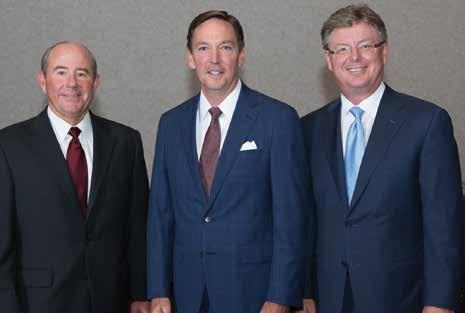
Dan Allen Hughes Jr. ‘80, Tony R. Weber ‘84 and Randy Cain ‘82 were the 2013 Outstanding Alumni.
At the 2013 Outstanding Alumni Awards Dinner last fall, Mays Business School recognized Dan Allen Hughes, Jr. ’80, Randy C ain ’82 and Tony R. Weber ’84 for outstanding career accomplishments. “As I thought of these three, one word kept coming to mind: integrity,” observed Mays Dean Jerry Strawser. “They did business well and they did business right. They are fine examples to us all.”
Kathryn Sykes ’13, a Business Honors and accounting major who attended the dinner, said what stood out to her was how each honoree mentioned Texas A&M’s core values during his speech. “I learned how Mays Business School has improved its reputation greatly within the last 30 years through the quality of its graduates, and it was motivating for me to realize how we continue to mold that reputation as we graduate and begin our careers,” she said. “I look forward to being able to give back to the school that has given me so much.”
Hughes said the core values and his dad’s advice still guide his choices. “I called my dad one time during my
freshman year and said, ‘I need to drop out, get an apartment and quit messing with this Corps stuff.’ He was silent a long time, then he said, ‘Son, you’re an adult. You have to make decisions. If you decide to quit now, it will be easier the next time, then easier the time after that.’ So basically he told me if I quit the Corps I may be a quitter all my life. I have always thought of that when making decisions in my life.”
Cain helped blaze a trail for Texas A&M students when he started his first job at Ernst & Whinney. Now his company, renamed Ernst & Young, has a long record of recruiting and promoting Aggies. Cain credits the impact of former Dean Benton Cocanougher (dean from 1987 to 2001), Accounting Department Head James Benjamin and current Dean Jerry Strawser. He said he believes in doing the right thing, no matter what everyone else is doing. “Keep doing what you’re doing and that will benefit the business world, and the world in general.”
Weber was in the inaugural class of the Fellows professional development
program for A&M business students. Now he and his wife host recruiting and welcoming receptions at their home for promising students. Weber credits his father for teaching him core values from a young age, and his mother - a cheerleader in high school and college — for supporting her two boys their whole lives. “I see that kind of excitement here at the business school. We all love this school and it works because we give back to help others succeed. That brings the value of our brand up.”
M eg M aedgen ’13, a Business Honors and accounting major who was also in attendance, said it was inspiring to be able to talk with and learn from numerous outstanding former students at the banquet. “I left with lots of hope for my future and a strong desire to continue finding my own journey, which I hope will one day lead to being able to give back to the university as these alumni do,” she said.
ALUM N I P R O F IL E
Experience as new father gives birth to innovative business for Oben ’10
When A.J. O ben ’10 became the father of a newborn son in 2008 and his wife needed medication to help recover from the C-section, Oben was troubled about leaving his new family to wait in line at the pharmacy. He thought there must be a better alternative. Six years later, he is the president and CEO of GoldStar Pharmacy Group, which offers home, office and hospital delivery.
Oben began his career at General Electric (GE) in 2003 after obtaining a bachelor’s degree in electrical engineering from the University of Kansas. Always a problem solver, the Cameroon native quickly rose through the ranks at GE, eventually leading a global team that generated an additional $38 million in annual sales revenue and $40 million in annual productivity savings. Despite his success, Oben realized he would never be “given the keys to the business” if he didn’t understand business. In 2007, he began exploring MBA programs. He selected the FullTime MBA Program at Texas A&M University for several reasons, including high return on investment, strong career services, the Aggie culture and available scholarship dollars.
After graduating into a declining job market in 2010, Oben quickly achieved success with TD Bank Group, where he served as VP, Management Associate, Middle Market Commercial Lending
and later as VP, Productivity, Strategy and Risk Leader — Deposit Operations. He credits much of his success to something he learned in the MBA program— the value of building relationships and unwavering integrity. “If you want to go fast, go alone,” he said. “If you want to go far, go with others.” He is guided by his faith in God, driven by his biggest role model (his dad, James Oben) and motivated by his will to win.
With another promotion on the horizon that would require his family to relocate to the East Coast, Oben decided instead to pursue his dream of leading his own organization. He and his wife and business partner, Dr. Bessem Oben, and their two boys, J.P. and Sean, decided to move back to College Station to start GoldStar Pharmacy. The company offers 15-minute prescription fill times and on-site compounding of medications into alternative forms for consumption and application, as well as home delivery. Oben’s goal is to expand beyond College Station to include 10 pharmacies over the next decade.
For Oben, GoldStar is a way to make a difference in the lives of others and improve the health of the community. Lack of mobility or transportation can hinder patients from visiting a pharmacy, and Oben wants to remove any obstacles. His commitment to service doesn’t stop with his customers. As an alumnus of
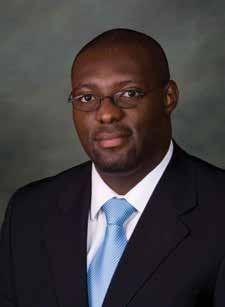
“If you want to go fast, go alone. If you want to go far, go with others.”
Mays, he is giving back to the program he recognizes for so much of his success. He recently engaged a group of Professional MBA students as a product champion for their capstone project. Oben recounted his MBA capstone experience with Waste Management and cited two reasons why he wanted to engage with current students. “I wanted to give students the opportunity to learn some of the real-world lessons I learned from the Waste Management project,” he said, “but I also owe a lot to this program and wanted to give back.”
Orth serves as Texas A&M culture evangelist for Mays MBA students
As vice president of sales at Tidewater Marine, a provider of offshore service vessels to the global energy industry, Chris O rth ’80 knows a thing or two about selling. Although his bottom line is tied to revenue, Orth recognizes the importance of selling your organizational culture to your employees. In many ways, this is what he does at Mays Business School.
Orth helps give Full-Time MBA students a full appreciation for what it’s like to be an Aggie. “Because of the relatively short time our MBA students spend in College Station, many of them don’t get a full appreciation of what it’s like to be an Aggie,” Orth said. “I feel like it’s my responsibility, as a former student, to make sure our MBAs know that living honorably, leading by example and keeping your word are just as important to your success as studying hard and making good grades,” he said.
Orth learned these values during his childhood. He grew up in a family with five brothers and parents who volunteered to help a wide range of organizations in Dallas and Houston. “My mother used to tell us: ‘With life’s gifts come responsibilities,’” he said. Texas A&M, with core values that matched his, was a natural fit for Orth when it came time to select a college.
After graduating from A&M, Orth said that he lived for a while in the “I
and me” stage of life—until the Bonfire tragedy in 1999. He was driving when he heard the news. “I was so moved I had to pull over to the side of the road,” he said, “where I listened to the radio with a numbing heartache for the students and my school.” Orth took his daughter, who was 6, to services for several of the students who had died.
The outpouring of support from Aggies worldwide reminded Orth of what it means to be a member of the Texas A&M family. “As former students, we must remain actively engaged and passionately committed to working with current students to instill in them that special set of A&M values that go hand in hand with the great formal education they’re receiving,” he said.
His first foray into alumni engagement at Mays happened when he came to recruit MBAs for a new accelerated program that Tidewater created to develop country managers for its worldwide operations. Since that time, Tidewater has hired several students and is in the final stages of endowing a scholarship for the Full-Time MBA Program with a focus on leadership through service.
Orth learned of other opportunities for alumni to serve the school from Jim Dixey, former director of Graduate Business Career Services. Dixey commented on Orth’s contributions as a student mentor. “Chris has been more
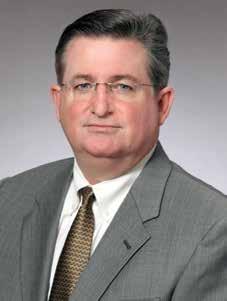
than willing to provide some professional ‘tough love’ to our students and refocus them on the essentials of their career efforts,” he noted. Orth has also served on the MBA Advisory Board since 2007, offering guidance on issues ranging from curriculum and career services to alumni engagement.
“As with all charity work, the irony of volunteering at Mays is that I receive far more benefit than I give,” Orth stated. “Every time I interact with a student or staff member, my batteries get recharged, and I’m reminded of why I started down the professional path I’ve chosen.”
Orth considers it a privilege to help develop the Aggie leaders of tomorrow. “I cannot wait to see the impact they will make in both their local communities and on the world state in the years to come.”
Professional progression can lead to dream jobs, investment banker says
Investment banker Alan Mitchell ’85 shared with Mays Business Honors students the keys to winning in his career: expertise, confidence and competence.
He told the students they are building the resumes of their lives with every project and job they take on. “Take every position as a way to advance yourself and provide yourself with an entry into the next level of your career,” he said.

Success as an investment banker depends on how well you have built relationships throughout your career, he said. “You get to sit with CEOs and CFOs — the senior management at companies — and tell them what they should be doing,” he said. “You’ve got to be a likeable person who is also resourceful and thoughtful.”
Fiesta Spices keeping it fresh
Bolner’s Fiesta Spices is trying to balance culinary ventures with the proven formulas that have sustained it for almost six decades, says Michael B olner ’73, vice president of sales and marketing.
The family-run business that started in 1955 in San Antonio focuses on a specific flavor profile — a targeted range of tastes. Fiesta’s products encompass authentic Mexican, Cajun and barbecue. “In general, you don’t want to taste the spice, you just want to enhance the product,” Bolner explained to a group of Business Honors students.
Bolner, one of seven children, works daily with two brothers and their 85-year-old father. The next generation is also emerging, and each weekday, all the family members who are available eat a working lunch together.
Mitchell got a bachelor’s degree in accounting at Texas A&M and an MBA with honors from Columbia Business School. In between, he was a senior manager in the audit division of KPMG’s Financial Institutions practice.
Mitchell began his investment banking career in 1994 in the Global Communications group at Salomon Brothers. He worked in telecommunications at Salomon Smith Barney and Citigroup, where he became a managing director in 2001. In 2005, he joined Wachovia (now Wells Fargo), which he called the fastest-growing investment bank and largest real estate investor in the country. He is a managing director in the Technology, Media & Telecommunications group at Wells Fargo Securities, and lives in New York.
Mitchell said his experience as a recruiter gave him a perspective from the other side of the table. “Think about how you package yourself to make other people interested in you and where you want go,” he said. “What I always tell people is to find something you really enjoy. If you can’t get excited about your job on an internship or when you first start, you’re really going to hate it over the long run.”
Until 1980, the company’s cash flow was seasonal — catering to cool-weather dishes such as chili and tamales. “The first product was a menudo mix. Four packers made meals of the four options and everyone voted on which one to go with.” The company added barbecue seasonings, spices for wild game and an array of rubs. Now, tailgating is a top trend through the fall, followed by rodeos — with their cookoffs — in late winter.
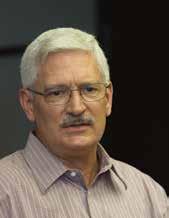
Bolner said his challenges include keeping the prices low, keeping the labor force staffed and bidding against other companies for a finite amount of commodities. “We are at the mercy of agriculture, the weather, hurricanes and civil unrest,” he said. “All we can do is plan ahead and keep our lines of communication open with our suppliers. There are only so many places that grow particular spices.”
Collaborations key, executive advises
Doss Cunningham ’04 lives life according to his personal mantra: grow and give back. The graduate of the Professional Program in Accounting at Mays had planned to become an accountant after graduation, then learned more about Woodbolt International, a nutraceutical company in Bryan. He was attracted to it but said family and friends were skeptical of his decision to join the startup. “Other people saw the risks,” he recently told a group of Mays Business Honors students. “I saw the opportunities.” After a few years at the company, Cunningham took over as Chief Executive Officer.
Founded in 2003, Woodbolt supplies nutritional supplements to retailers in more than 40 countries, including GNC, Vitamin Shoppe and Costco. Woodbolt is growing rapidly: from $1 million in revenue and five employees when Cunningham joined in 2004 to revenue of $225 million and 130 employees today. In a Texas Monthly ranking of the state’s 100 best places to work, Woodbolt placed #5 out of 30 in the medium-sized business category.
Cunningham praised the Bryan/College Station area for its startup culture. “There is a lot of intellectual capital here,” he said, adding that he credits Mays with helping build the foundation for his success. “Mays really gave me the tools and the skillset to be successful as an entrepreneur.”
Cunningham explained to the students that with the right attitude and a unique skillset, anyone can be an entrepreneur. “You don’t have to be an idea guy or an inventor to be an entrepreneur,” he said. “What a lot of people don’t have is a business background. That was something I was able to bring to the company.”
The company encourages collaboration and fun among its coworkers, and is involved with local charities. “Our culture is about building effective people, not just effective business professionals,” Cunningham said. Woodbolt also places a high emphasis on building trust with its customers and doing the right thing for product end users.
He said his most rewarding opportunity has been hiring and developing people. “What are you ultimately trying to do in life?” he asked the students. “The answer to this question is your compass.”
Mascara, lip gloss and pink Cadillacs
It is no surprise that cosmetics and pink Cadillacs describe Dallas-based Mary Kay. However, many might be surprised to know that this company hosts the dream job of Nathan P. Moore ’ 89. Moore, who serves as the company’s chief legal officer and secretary, says he couldn’t imagine working anywhere else.
“It’s a great environment that encourages people to maximize their potential,” Moore said during a speech to a group of Mays Business Honors students. “Everyone comes ready to work, ready to be their best and ready to help others become their best — just as Mary Kay expected.”
Along with overseeing Mary Kay’s legal functions around the world, Moore oversees Corporate Social Responsibility, Corporate Communications, Risk Management, Government Relations and The Mary Kay Foundation.
Mary Kay celebrated its 50th anniversary in 2013 with the best year in company history. Moore credits the success of the company to the strong culture which follows the standards set by founder Mary Kay Ash.
“Mary Kay truly used the Golden Rule as her guiding philosophy in business,” Moore said. “She believed that you can’t go wrong if you treat others as you would
like to be treated. She also believed in working hard and rewarding others for their efforts. Plus, she was known for having a big heart and for giving back.”
Moore’s advice to the Mays students in seeking future employment was to look for companies where they can align their personal principles and values. “The difference between top and bottom people is the difference between the goals that they set,” he said. “Strive to become a goal-setting, goal-inspired, goal-achieving person. And, one more thing — up that goal a little. It doesn’t cost any more to dream a little bigger.”
Whitacre shares business insights, leadership advice
After graduating from Texas Tech with a degree in engineering, Ed Whitacre embarked upon a remarkable career during which he led America’s largest telecommunications provider as well as the nation’s largest automotive company. He shared business insights and leadership advice with Full-Time MBA students at Mays Business School in April
Whitacre started his career as a facility engineer for Southwestern Bell Telephone Company in 1963. Twenty-seven years later, after numerous moves and promotions, he became chairman and CEO of Southwestern Bell Communications (SBC). He subsequently led SBC’s 2005 acquisition of AT&T, Inc., and then served as chairman and CEO of AT&T (the resulting entity) until his retirement in 2007.
During his remarks, Whitacre emphasized the importance of vision. “You have
to create a vision for your company that is simple and easy to understand, but one that also inspires your employees. Our vision at AT&T was to become the biggest and best telecommunications company in the world.”
Two years after retiring from AT&T, Whitacre answered the call from the Obama Administration to help lead GM back from the brink of collapse. On one of his first days as chairman and CEO of GM, Whitacre went to the United Auto Workers’ (UAW) union hall and asked an administrative assistant if he could talk to Ron Gettelfinger, president of the UAW. The woman looked at him in disbelief, questioning whether he was really who he claimed to be. When she finally summoned her boss, Gettelfinger, too, was skeptical. “He said that no one from GM’s management team had ever set
Canion shares insights from leading Compaq
“Nothing gives you clarity of vision and sense of purpose like the prospect of being hanged,” Rod Canion told a group of Full-time MBA students at the Mays Business School on Nov. 19. Canion was a co-founder of Compaq Computer Corporation and the company’s CEO from 1982 to 1991.
After growing sales of Compaq laptop computers from 2,000 in January 1983 to more than 10,000 in December that year, Canion and his colleagues faced a major crisis in early 1984. In the wake of IBM’s release of a portable PC product, the demand for Compaq’s computers had ground to a halt. The situation presented Canion with one of the toughest decisions of his career.
“We could either stop the assembly lines, or have faith in our brand and our product and keep going forward,” he recalled. “We made the decision to continue producing laptops even though we had no customers to ship them to and had to put them in 20 semi-truck trailers around Houston.”
foot in the ‘solidarity house,’” Whitacre recalled. “I told him that without us, they would not succeed, and that without them, we would not succeed. He agreed with that, and the UAW turned out to be a great partner in GM’s turnaround.”
In wrapping up his talk, Whitacre offered some parting words of leadership advice: “Treat people the way you want to be treated, have a simple but compelling vision, don’t be averse to risk and—at the end of the day—do something. Many times, when companies are doing well, their leadership teams get complacent and content to assume a more defensive posture. That can be dangerous.”
Compaq’s first-quarter laptop sales in 1984 rallied to beat the preceding fourth quarter, and by 1985 the company was outselling IBM 10 to 1. But that early crisis served as a test of Canion’s and his colleagues’ decision-making, not to mention their intestinal fortitude.

“Businesses make thousands of decisions every day, but a few decisions come along every so often that spell the difference between success and failure,” Canion said. “First, you need to understand the problem. Then you have to get the right group of people together who can address the problem. If you’ve created the right culture and have the right processes in place, that group of people will be able to reach consensus on the best course of action.”
Canion also noted three key attributes of successful business leaders: the ability to think like an entrepreneur and take responsibility for your own actions; a positive, optimistic attitude; and the willingness to be open to new ideas as well as feedback from others.
Benefactor

/pahrt-ner-ship/ noun
A relationship between individuals or groups that is characterized by mutual cooperation and responsibility for the achievement of a specified goal. PARTNERSHIP
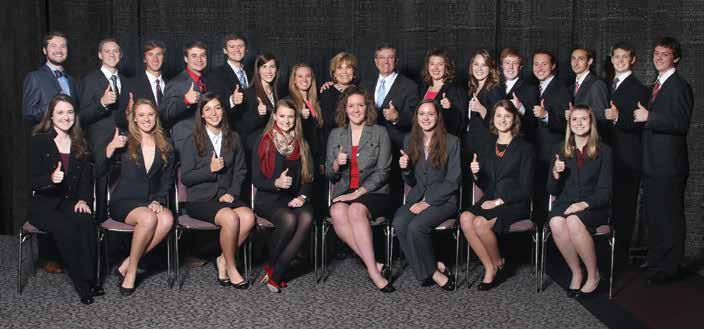
Three keys build a successful partnership between a donor and a beneficiary
By Jerry Cox ’72
My wife Kay and I are honored to play a role in the lives of students and faculty as partners in their educational, teaching and research endeavors. An investment in Mays is an opportunity to develop a lifelong partnership.
There are three universal elements to a partnership, and they exist in this relationship as well. The first thing is a shared vision or a shared aspiration. The second is some sort of blending of resources and need. The third is a covenant.
In a business context, we might share a vision to make a product or produce a service—something entrepreneurial that has some shared value. Secondly, for blending of resources and need, we might need capital, expertise or a business plan. In the business context, there is a natural progression from shared vision to the blending of needs and resources. And for
the covenant piece in the business context, there is a comprehensive agreement that sets the rules and establishes parameters of how we relate to each other in that partnership.
The same is true for the partnership between a donor and a scholar. Donors share in the students’ vision to succeed, learn, engage, mature, grow and ultimately to graduate and become a great citizen of this land. We also share in the faculty members’ attempts to discover new knowledge through research, which they can share with their students. Kay and I are blessed to help fund these kinds of educational activities, and we hope that this allows scholars the freedom to achieve greater success and realize their dreams. Lastly is the covenant. We enter into a covenant with students and faculty in which we’d like them to be good stewards of the resources
Kay and Jerry Cox (center, back row) enjoy getting to meet students at Mays.
provided, and to be accountable by studying diligently and being earnest and sincere in what they are doing.
I highly recommend engaging in such a partnership. The benefits will last a lifetime, and it will give you a frontrow seat to one of the best experiences anyone can undergo: the transformation of young men and women on the Texas A&M campus into thoughtful and productive citizens of the world.
Note from the editor:
For the past eight years, the Coxes have hosted a reception in their home for Business Honors students and their parents. They have supported Mays Business School through their gifts to student scholarships, faculty endowments, academic programs and facilities, including providing the lead gift for the construction of the Jerry and Kay Cox Hall. Jerry Cox serves on the Dean’s Development Council at Mays.
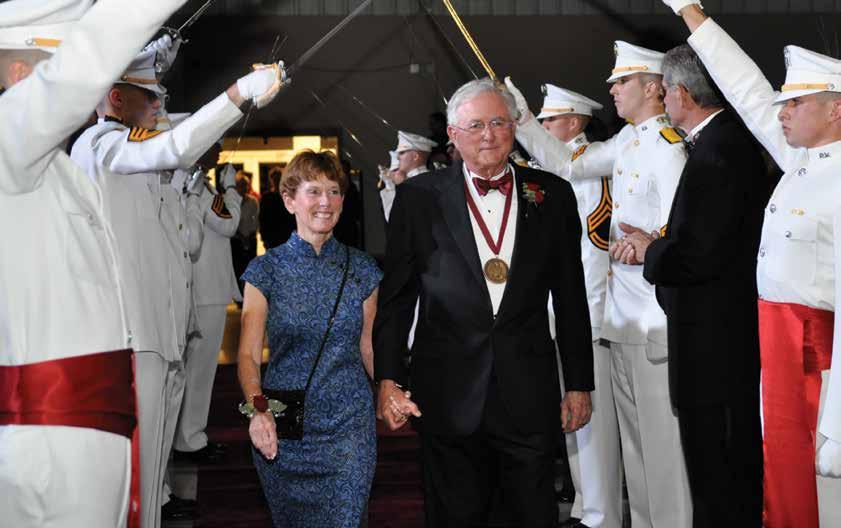
D O N O R PR O F IL E S $1 million gift doubled by Mays program match
Don Davis’ ’61 sense of Aggie pride and appreciation for the core values of Texas A&M have driven him to give back multiple times to his alma mater. Already a supporter of the Dwight Look College of Engineering and the Olsen Field renovation, Davis decided to make another gift to Texas A&M — this time to Mays Business School.
Now, with the help of matching funds, Sallie and Don Davis are supporting undergraduate and graduate business students at Texas A&M. A $1 million endowment from the Davises will have double the impact, thanks to a matching gift of $1 million from the Center for Executive Development at Mays Business School.
The resulting $2 million Sallie O. and Don H. Davis Jr. ’61 Endowed Scholars Fund will provide scholarships and fellowships to students in the undergraduate Business Honors program or Full-time MBA Program at Mays.
Davis, who served as president, CEO and chairman of Rockwell International until his retirement in 2005, received a bachelor’s degree in mechanical engineering and a master’s degree in business administration from Texas A&M. He currently serves on the board of directors for Illinois Tool Works, Inc. in Chicago.
“I think it’s a real honor to be a graduate of Texas A&M, and this was an appealing way for us to help other Aggies along with their education and careers,” said Davis. “The fact that I could double my gift and its potential with the help of Mays was a sound deal.”
“Don and Sallie’s most generous commitment to our School will allow us to recruit top students to our two signature programs,” said Mays Dean Jerry Strawser. “They understand the competition for top students and their endowed Scholars Fund will allow us to attract the next generation of business leaders to our programs.”
Davis said he is lucky to have spent his life doing what he loves. “I want to afford other students the open-door opportunities that come with a business degree, so they too can appreciate what it can do for them,” he said.
Davis gift to Mays enhances pair’s legacy
A desire to assist Mays Business School students prompted two Texas A&M University alumni to donate $250,000 to establish the B ecky ’76 and Monty Davis ’77 Endowed B usiness Honors Scholarship Program. This program will support two students during their four-year studies in Mays’ Business Honors program.
Monty and Becky were the lead donors for the “Davis Center for Football Player Development” near Kyle Field.
Monty Davis said his Texas A&M accounting degree has proven beneficial. He enjoys speaking to current students.
Pair pledges gift to fund several Texas A&M endowments
M . Ann and Charles P. ’82
M anning have committed gifts to Mays Business School, two other Texas A&M University colleges and the 12th Man Foundation. The funds for the gifts will be generated through a retirement account and a revocable living trust.
“Because Ann and I have had successful careers, we wanted our estate to include support for organizations we feel contributed to that success. Texas A&M certainly fit that bill,” Charles Manning said.
Manning preferred not to disclose the total amount, but he did say the “lion’s share” will go to Mays to establish the M . Ann and Charles P. M anning ’82 Dean’s Excellence Endowment at M ays. Similar
“I want to help young people have this opportunity to learn now, so that it helps them in the future.”
“We are so very appreciative of Becky and Monty’s generosity,” said Mays Dean Jerry Strawser. “The Davis Scholarship Program will allow our School to compete for outstanding students who are considering the very best universities across the United States.”
Monty Davis is Chief Operating Officer of Core Laboratories, an oil service company that advises oil exploration and production companies on how to get the most oil or gas out of reservoirs. Becky majored in elementary education at Texas A&M. After raising their two daughters, she devotes most of her time to church and ranch activities.
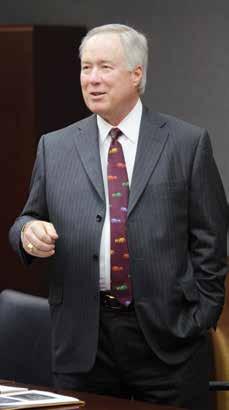
endowments will be created at Texas A&M’s College of Agriculture and Life Sciences, the College of Veterinary Medicine and the 12th Man Foundation.
“We wanted the funds to be discretionary because it is so far in advance — decades, we hope — that we couldn’t presuppose the needs,” Manning said. “We don’t know much about educating young students, but we were impressed when talking to the deans of the diversity of needs for financial support. We concluded the deans are in the best position to give wise allocation to the annual distributions, and believe it will accomplish very worthy goals.”
The Mannings live in Austin. Charles received a bachelor’s degree in finance and retired in 2008 from a career in banking technology. Ann received a bachelor’s degree in accounting and marketing from Marietta College and a Juris Doctor degree from Ohio Northern University.
“The Mannings’ most generous commitment to our School will impact our students in so many ways,” said Mays Dean Jerry Strawser. “With the flexibility they have provided to our School, it can support student scholarships, study abroad opportunities, student travel to competitions, and faculty teaching and research activities. As education and outside-ofclass opportunities continue to evolve, the ability of their gift to support current and future needs makes the impact of this already generous commitment even more significant.”

WildHorse Resources executives bolster business honors program
The managing partners of a Houston-based company have committed to a $100,000 gift for the WildHorse Resources B usiness Honors Scholarship fund at Mays Business School.
Anthony B ahr ’91, CEO, and Jay Graham ’92, president, of WildHorse Resources said they enjoy visiting with Mays students when on campus and they wanted to support the program that trains the top emerging business leaders.
Moore endowment will support future lawyers
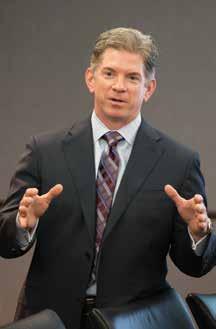
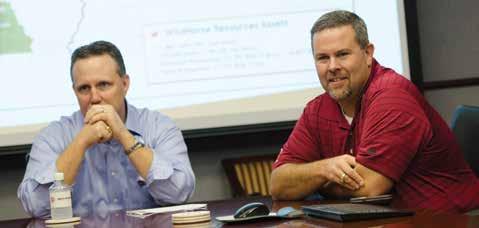
WildHorse is a private oil and gas production company with operations in Texas and Louisiana. It employs a number of Aggie graduates and interns in its Houston headquarters.
“Jay and I have benefited tremendously from our experiences at Texas A&M, and we are thankful for the opportunity to help another talented individual become an Aggie and build a strong foundation that will be a great help to their future success,” Bahr explained.
Graham concurred, adding, “We were fortunate to meet a lot of good people during and after our time at Texas A&M. Those connections have continued to be beneficial.”
“We are so thankful to Anthony and Jay for their most generous support of our students and school,” said Mays Dean Jerry Strawser. “Their entrepreneurial spirit, business success and generosity truly make them great role models for our students.”
An MBA is the most common advanced degree for business school graduates, but a Juris Doctor is a close second. Mays Business School students who are pursuing law school will receive financial assistance through a new scholarship: Joy W. ’88 and Nathan P. Moore ’89 Endowed Award. Funded by a $100,000 gift from Joy and Nathan Moore, the award is designated for a Mays student who has been accepted into a law school and will support studies at that law school. Preference will be given to a student who was a member of the Business Honors Program during his or her undergraduate studies at Texas A&M.
Nathan, who serves as Mary Kay’s Chief Legal Officer and Secretary, received a finance degree at Texas A&M and a law degree from St. Mary’s University. Joy received an education degree from Texas A&M.
“Our main goal was to give back to the school that taught us so much and has provided such a good foundation for us both,” Nathan explains. “It was also important to know we could customize our giving to include the acceptance to law school. The flexibility to expand beyond the business programs was key. So much of what I do right now is business-related, but what initially opened the doors for me was my law degree.”
“Many times, an impediment for students pursuing advanced degrees is the additional cost of that education,” said Mays Dean Jerry Strawser. “The Moores’ most generous commitment will make a significant difference in the ability of our students to pursue studies at leading law schools across the United States.”
Anthony Bahr ’91 and Jay Graham ’92
Bermudez believes in giving back
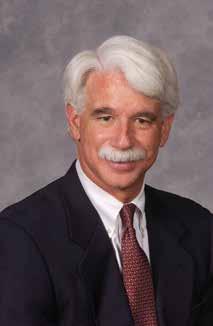
Jorge B ermudez says an affinity for Mays Business School dating back to his college days prompted him to donate $250,000 to establish the Jorge B ermudez ’73 B usiness Honors Endowed Scholarship Fund .
Bermudez’s undergraduate and graduate degrees were in agricultural economics, but he said he knew from early on that he wanted to be a banker, so he took several finance, accounting and management classes in the business school. “The great thing about my experience was the flexibility of both the school of business and the agriculture economics department provided me,” he said. “As a result of my studies, it led me to New York and my career with the largest financial institution in the world. It gave me the tools to do what I wanted to do with my life.”
Bermudez says he wanted to assist the Business Honors Program in particular because of its rigor and reputation. “My sense is that it’s becoming more and more competitive to attract top students to A&M’s Mays Business School, so I wanted to help Jerry (Strawser, dean of the business school) attract these students in whatever way I could.” He particularly wants to support students in the Corps of Cadets, which he said is “central to the culture of Texas A&M.”
Bermudez was not in the Corps while at Texas A&M. He hails from Cuba and said his first introduction to Texas was
College Station. He left Texas upon graduation, moving throughout the world for various assignments at Citigroup over a 34-year span. He held positions in New York, Houston, Venezuela and Argentina. Among his titles were CEO of Citigroup Latin America, CEO and president of Citigroup’s Commercial Business Group in North America and Citibank Texas, then the Chief Risk Officer for Citigroup.
“We are most appreciative of Jorge’s most generous support of our students,” said Mays Dean Jerry Strawser. “While his financial support is so important to our students, the ability of our students to meet him, learn from him and follow his life example will provide them with the opportunity of a lifetime.”
Now Bermudez has come back to College Station. He serves on the boards of the Federal Reserve Bank of Dallas, Moody’s Corporation, the Electric Reliability Council of Texas and the Community Foundation of the Brazos Valley. He serves Texas A&M on the International Board, the development councils of both Mays and the College of Agriculture and is past chair of the board of the Association of Former Students. He said he owes a lot to Texas A&M and the surrounding community.
Generosity is a family tradition for Andersons
Stephanie Anderson ’89 says her grandmother’s ambition for her family to attend and graduate from college changed the trajectory of her family; and this objective has carried on in Stephanie and her husband’s charitable mission statement to help other families change their trajectories through education. The Dallas couple donated $60,000 to Mays Business School to create the Stephanie and Todd Anderson Family B usiness Honors Scholarship Fund.
“We do donate to a lot of organizations, and there is a special place in my heart for the business school,” Anderson said. “Dean Strawser spent a lot of time explaining to us the need the school has to give scholarships that will enable some great kids to go to Texas A&M.” Anderson noted that she and her husband appreciate the small size of the classes in the Business Honors Program and the quality of instruction the students receive.
“We sincerely appreciate the Andersons’ generosity,” said Mays Dean Jerry Strawser. “Their scholarship will provide opportunities and change the lives of many students at Mays for years to come.”
Anderson said her grandmother was a bobbin changer in a denim factory — a literal blue-collar worker — who was divorced in the 1940s, when single mothers were a rarity. She only had a high school education, but was determined to put her two daughters through college. “This was during a time when not many women were going to college, and my mother was enrolled in the Business Honors program at the University of Georgia. She was the first in her family to complete college. That really changed the trajectory for our whole family, so I am happy to help others accomplish this.”
Anderson received her MBA from Texas A&M and was a teacher’s assistant in the Finance Department. “I still have lots of friends there and keep up with what is going on. It is an exciting time for Mays.” She is now managing director at AlixPartners LLP.
Students express gratitude for donors’ generosity
Jordan Knesek ’14, Business Honors and finance
I come from a big Aggie family, so there was never a question as to where I wanted to go to school. I decided to apply to Mays Business School, and looking back, I believe this was the best decision I have made during my time at Texas A&M. It was a catalyst for many great experiences to come, and it put me on a path I never could have foreseen when I began college.
A degree from Texas A&M represents a journey of learning, both inside and outside the classroom. It represents an overall experience that cannot be explained—one full of friendships, tradition, and integrity, and one that helps builds us into the people we strive to become.
I have received the Sandi and Britt Jenkins ’65 Endowed Scholarship through Mays and the universitywide W.A. and Lula Ware Morgan Scholarship. These scholarships have
Pamela Avila Molina, Full-Time MBA
One of the greatest aspects of being at Texas A&M is you can come into a room with a mix of all kinds of people and learn something from each one of them. I was once told, “If you’re the smartest person in the room, you’re in the wrong room.” I know I am in the right room here. I am constantly challenged, as a professional and as a person.
I was the first in my family to leave Honduras, and the economy is struggling back home, so I could not attend school without financial aid. At the University of Notre Dame, where I earned my undergraduate degree, I received a large scholarship. After graduation, I returned home and worked at the Honduran National Council and the Honduran Ministry of Foreign Affairs as the Director of the Center for Business
allowed me to experience opportunities that otherwise might not have been possible. My scholarships have allowed me to stay very involved in school—learning about and pursuing leadership opportunities and finding ways to give back to Texas A&M. I was also able to live out of state last summer for my internship - all thanks to my scholarship funds.
I could not have asked for a greater, more impactful experience than what I have had here at Texas A&M, and I know that I have so many people other than myself to thank for that especially my generous scholarship donors. I am reminded of the saying: “To whom much is given, much is expected.” I hope the effect of the gift might be felt by all those I interact with.
and Economic Research—so I have private- and public-sector experience.
I received the Deans Development Council Fellowship when I came to Mays to pursue an MBA. If I had to do it all over again, I would consider coming to Mays for my undergraduate degree.
When I first talked to recruiter Chris Reed in a Skype interview about coming to Texas A&M, I could sense his kindness. I knew I wanted to be here. My classmates are not only friends, they are like family they are my family—and the MBA staff and faculty members are like our personal cheerleaders. Even though there are thousands of people here, it is very family-oriented. Everyone says “Howdy,” even the priest at church. The experience is personalized. I feel like I matter.
The following individuals and corporations have provided or committed endowments or designated gifts of $25,000 or more during the period January 1, 2013, to December 31, 2013.
At Mays Business School, endowments create a lasting legacy, perpetually supporting the learning experiences of our students.
Through investing in the academic and professional development of our students, these gifts generously support our mission of creating knowledge and developing ethical leaders for a global society.
Every effort has been made to ensure accuracy and completeness of these lists. If we have inadvertently omitted your name, please notify us.
Douglas J. Abbott
BNSF Foundation
Hill A. Feinberg
Jayne L. and James A. Henke
Ann and Charles P. Manning ’82
Kris W. ’81 and Bruce Petersen ’83
Susan S. ’81 and Stephen B. Solcher ’83
Estate of Absalom T. Webber, Jr. ’49
Adrianne and Mike Yantis, Jr. ’02
Patty and J. Mike Yantis ’76
Stephanie S. ’89 and Todd J. Anderson
Denise A. ’86 and Andrew M. Beakey III ’84
Denise and Steve Bender ’78
Zora V. and Lorence L. Bravenec
Richard J. Cahill III ’84
Becky ’76 and Monty Davis ’77
Sallie O. and Don H. Davis, Jr. ’61
Melinda ’87 and Guy Grace
Catherine M. and R. Scott Harris ’61
The David B. Hendricks II Foundation
Stephanie L. ’97 and Loren L. Hsiao ’00
Cheryl Burke ’85 and John C. Jarvis ’86
Kelly P. ’86 and Robert E. Jordan ’85
KPMG Foundation
Lenora K. and Robert R. Locke ’49
Melendy E. ’79 and James R. Lovett
Sharon R. and Keith D. Manning ’78
Ann and John Mobley ’51
Joy W. ’88 and Nathan P. Moore ’89
Brock D. Nelson ’90
Susan J. and Jon R. New ’78
Susan M. ’74 and William R. Ouren ’74
Ann ’84 and Britt Pence ’83
Florence and M. Bookman Peters ’59
Kenneth E. Randolph ’78
Carolyn S. ’93 and Michael W. Rasmussen ’91
USAA Real Estate Company
Merri O. and Fred G. Walsh ’74
Tracey A. Storey and Keith E. Whittington
WildHorse Resources - Anthony F. Bahr ’91 and Jay C. Graham ’92
Joey D. and Eric R. Wylie ’93
No major business school can achieve excellence without a combination of funds from both the public and private sectors. That is why the unparalleled loyalty and generosity of Mays Business School’s students, friends and corporate partners hold the key to our future.
We proudly recognize and thank the many former students, friends and corporate partners who are dedicated to our vision for the future. Mays’ donors help support our dedication to creating an environment of excellence that fosters and sustains nationally recognized academic programs, outstanding faculty and students, innovative learning facilities and successful former students.
This listing includes cash contributions received between January 1 and December 31, 2013 . It does not include total amounts pledged to the school. Every effort has been made to ensure accuracy and completeness. If we have inadvertently omitted your name, please notify us.
Corporate and Corporate/ Organization Foundations
$100,000–$249,999
Ernst & Young Foundation
Phillips 66
$50,000–$99,999
American Institute of Certified Public Accountants Foundation
Blue Bell Creameries
ConocoPhillips
Deloitte
ExxonMobil
Halliburton
KPMG
Mayfair Investments
WildHorse Resources
$25,000–$49,999
AXYS Industrial Solutions
BDO
BNSF Railway Foundation
BP Corporation North America
Capital City A&M Club Foundation
Chevron
Cockrell Foundation
GDF Suez Energy Marketing
H-E-B
Houston Livestock Show and Rodeo
Marathon Oil Company
PwC
Reynolds and Reynolds
Shell Oil Company
Spectra Energy Foundation
Texas Pioneer Foundation
USAA Real Estate Company
Walmart
$10,000–$24,999
Academy Sports + Outdoors
Anadarko Petroleum
Avison Young Houston
Barnes & Noble College Booksellers
Bridgestone Firestone
Camden Property Trust
CBRE
The Container Store
DATASCAN
Credera
Dillard’s
EDF Trading North America
Florida Power & Light Company
Gardere Wynne Sewell
General Motors
H&B Copies
Hewlett-Packard
Integer
JCPenney
Lowe’s Companies
Macy’s
The Mitsui USA Foundation
National Sporting Goods Association
Neiman Marcus Group
Opportune
PKF
Sewell
Silicon Valley Bank
Stage Stores
Symon Communications
Tauber Oil Company
Toys “R” Us
Dell USA
Zale Corporation
$5,000–$9,999
American National Bank of Texas
AT&T
AXIA Resources
BBVA Compass
BMC Software
Briaud Financial Advisors
brierley+partners
Caldwell Companies
Challenge Investment Partners
CREW Foundation
Customer Marketing Group
Devon Energy Corporation
Dresser
EdVenture Partners
Granite Properties
Grant Thornton Foundation
Greystar Development
Haynes and Boone
JPMorgan Chase
Lyness Construction
Nabors
Noble Energy
NRF Foundation
Odecent
PepsiCo
PETSMART
SLALOM Consulting
Southeastern Conference
Tolteq Group
USAA
Valero Services
Wells Fargo Bank
$2,500–$4,999
3marketeers Advertising
Accent Wire Products
Allegiance Bank
Amegy Bank of Texas
American Bank of Texas
Avalon Advisors
Baker Hughes
Bank of America
Bank of Oklahoma
The Boeing Company
Broadway Bank
George Bush Presidential Library Foundation
Calpine Corporation
Chase Bank
Citizens National Bank
City Bank
Comerica Bank
Community National Bank & Trust of Texas
Compass Bank
Country Fresh
EIV Capital Management Company
Ergon Capital Management
Exterran Energy Solutions
First Victoria National Bank
Floor 22 Consulting
Frost National Bank
Gallery Furniture
Gemalto
Goldman Sachs
Green Bank
Guaranty Bond Bank
Heavy Construction Systems Specialists
IBERIABANK
iRehab
Kalypso
KCCI
Kinder Morgan Services
Main Street Capital Partners
MetroBank
Modulus
Moody National Bank
MRE Consulting
Mystic Pharmaceuticals
Northwestern Mutual Foundation
Pentair Valves & Controls
Pioneer Natural Resources
RenRe Energy Advisors
Running W
Ryan
Smith and Associates
Spirit of Texas Bank
Structure Consulting Group
Texas Capital Bank
Texas Society of Certified Public Accountants
Toshiba International Corporation
Trafigura Ag Houston Overheads
Tulsa Community Foundation
Twin Eagle Resource Management
The Urban Land Institute
Whiteside Energy
ZT Wealth
$1,000–$2,499
7 F Lodge
Amtex Machine Products
The Arthur J. Gallagher Foundation
Australian Shepherd Club of America
BKD
Capital Farm Credit
Comanche Contractors
The Comflow Company
Davenport & Spiotti
Diversified Media Group
Dow AgroSciences
The Dow Chemical Foundation
DXP Enterprises
Energy XXI Services
Enterprise Holdings Foundation
Evolve Performance Group
Farm Credit Bank of Texas
Ferguson Enterprises
Grunden Financial Advisory
Hormel Foods Corporation
Hunter-Kelsey of Texas
JB Knowledge Technologies
Kennedy Fabricating
Laredo Energy IV
LCM Industries
Legg Mason & Company
Linn Energy Holdings
McAfee
MRC Global Myers Hill Law Offices
NRI
One Source Networks
Otis Elevator Company
Paragon Innovations
The Payton Company
Penn Mutual Life Insurance
Petroleum Accounting Society of Houston
Pinnacle Asset Integrity Services
Quorum Business Solutions
SAP
Sendero Business Services
T.P.W.
Target Corporation
Texas Pride Fuels
Texas Wasatch Insurance Services
UP Railroad Company
The Williams Companies
Woodbolt Distribution
UP T O $999
16x9 Productions
3-C Valve and Equipment
Advertising Education Foundation of Houston
Ameritech Staffing
Ascension CRE
Austin County State Bank
B Resources
Best Start Birth to Three
Bridges Steel Company
Catapult Systems
Cattlesoft
CNX Distribution
Competition Trailers
CSJ Engineering Associates
Debbie’s Bistro 79 & Catering
Direct Expansion Solutions
Douthit Consulting
Ericsson
FrogSlayer Software Company
Greater Houston Market Services
Hunting Energy Services
IBM
Improving Enterprises
Jeanne’s Tax Service
Johnson and Johnson Family of Companies
Keystone Constructors
Kurk-McGinley Enterprises
Lake Forest Utility District
Lammes Candies
Lone Star Steakhouse
Lowery Property Advisors
M&M Utilities
MeadWestvaco Foundation
Microsoft
Milestone Multifamily Investors
Milestone Project Management
Napa Flats
Nextera Communications
Nichols, Jackson, Dillard, Hager, Smith
Platt Retail Institute
SB Valuation
Spiars Engineering
Structured Foundation Repairs
Tax Compliance
Team Trident
Texas A&M Foundation
Texas Instruments Foundation
Tex-Star Water Services
Traditions Health Care
Veritas Building Consultants
Ward Getz & Associates
Wincomm Corporation
Individuals and Individual Foundations
$1,000,000 –$ 2,000,000
Sallie O. and Don H. Davis, Jr. ’61
$250,000–$999,999
Becky ’76 and Monty L. Davis ’77
Estate of Howard W. Horne ’47
The Mays Family Foundation
Estate of Kathleen L. Rainey
Robyn L. ’89 and Alan B. Roberts ’78
$100,000–$249,999
Denise and David C. Baggett ’81
Jerry and Kay Cox Foundation
Cydney C. Donnell ’81 and Robert Lotito
Carolyn and Mark Fertitta
Estate of G. William Glezen, Jr. ’56
Melinda M. ’87 and Guy Grace
Kelly P. ’86 and Robert E. Jordan ’85
Hallie A. Vanderhider
$50,000–$99,999
Kay M. and G. Steven Dawson ’80
Hill A. Feinberg
Kathy and Terry E. Hatchett ’68
Barbara and Paul W. Kruse ’77
Karen N. Pape ’80
Frank J. and Jean Raymond Foundation
Cynthia J. ’84 and Anthony R. Weber ’84
Elizabeth and Graham Weston ’86
$25,000–$49,999
Denise and Steve Bender ’78
Robin D. ’89 and Glen C. Carson ’89
Estate of Nelson D. Durst ’39
Laura E. and Kim L. Eubanks ’79
Karen and Rodney L. Faldyn ’88
The David B. Hendricks II Foundation
Judith A. Johnston and Don Warren, Jr. ’04
Lenora K. and Robert R. Locke ’49
Paula C. and William C. Lonquist, Jr. ’48
Beverly R. and Charles R. Moreland ’62
Wanda and Louis Paletta II ’78
Kris W. ’81 and Bruce C. Petersen ’83
Ed Rachal Foundation
Robin C. ’76 and Robert D. Starnes ’72
Sara A. ’01 and John R. Watson
Joey D. and Eric R. Wylie ’93
$10,000–$24,999
II Corinthians 9:7 Foundation
Stephanie S. ’89 and Todd J. Anderson
Taseer A. Badar ’95
Marylou and Theodoric C. Bland, Jr.
Jyl G. and Randy Cain ’82
Sue C. and Bill P. Cicherski ’54
Lorraine and Theodore H. Dinerstein ’53
Patricia and Raymond R. Hannigan ’61
Estate of John E. Harris, Jr.
Jannie P. ’84 and Kenneth A. Herchuk
Cynthia A. Hinze and Robert M. Scott ’78
Kevin M. Lunsford ’88
Betty J. ’74 and William C. Martin, Jr. ’76
Becky Mims
Joy W. ’88 and Nathan P. Moore ’89
Patricia and L.C. Neely ’62
Debbie and Scott Ozanus ’81
Carolyn S. ’93 and Michael W. Rasmussen ’91
The Virginia and L. E. Simmons Foundation
Benjamin F. Smith ’68
Susan S. ’81 and Stephen B. Solcher ’83
Susan A. and Jerry R. Strawser ’83
Stacy M. Sturgeon ’92
Colleen and David C. Tucker ’77
Patsy C. and David S. Wesson ’82
Gregory L. Williams
$5,000–$9,999
Douglas J. Abbott
Dr. Davit Adut ’03
Denise A. ’86 and Andrew M. Beakey III ’84
Jorge A. Bermudez ’73
Frances and Robert E. Bolen ’47
Maren G. ’01 and Gary J. Brauchle ’95
Peggy and Charles L. Brittan ’65
Angela K. ’89 and David L. Brown ’89
Valerie and James R. Byrd ’57
Pamela M. and Barent W. Cater ’77
Julie N. ’95 and Damon N. Chronis
Karen A. ’02 and Jerry S. Cox ’72
Janet and Mark H. Ely ’83
Lynn S. and Creed L. Ford III ’75
Jill and Nicolas E. Gonzalez ’86
Leslie J. and William B. Guess III ’88
Claire R. Harvey ’01
Christine M. ’87 and Jeffrey M. Hollinden
Stephanie L. ’97 and Loren L. Hsiao ’00
Kimberly D. ’79 and Thomas M. Kelly ’79
Cindee and Curtis J. Klement ’78
Bernhard Krieg ’98 and Esther Choy
Susan and Wesley M. Kruger ’83
Marian J. ’82 and Willie T. Langston II ’81
Frances and Charles C. Laningham ’60
Paula and Ronald S. Letbetter ’70
Catherine and Anthony H. Liberto ’86
Sharon R. and Keith D. Manning ’78
Robyn L. ’94 and Charles McCoy
Susan E. ’86 and John P. McNamara ’86
Sue Ellen and Philip T. Miner III ’80
Jean M. and James D. Murff ’70
Lauren D. Murphy ’85 and Michael J. Baker ’85
Debra and Robert S. Penshorn ’89
Kimberly D. and Wallace P. Reid ’92
Anita and Thomas P. Richards ’65
Jerrianne B. Richter
James M. Stark ’84
Michele L. and John J. Stephens
Debbie E. ’90 and Robert Blake Steudtner ’91
Tracey A. Storey and Keith E. Whittington
Christine D. and Mark D. Taylor ’83
Shelley and Joseph V. Tortorice, Jr. ’70
Connie D. and Dan Weaver
Elyse A. ’93 and Russell W. White ’93
Missy and Robert W. Willen ’87
Terri L. and David C. Williams ’84
Gail and William D. Wood ’81
Linda and J.D. Woodward III ’70
$2,500–$4,999
Janet A. and Larry R. Baldwin ’74
L. Christine ’95 and Brian C. Baumann ’95
Justin D. Betzen ’02
Cindy and Rickey Blackman
Karen G. ’96 and Wade S. Brooks, Jr. ’95
Charles B. Brown
Cheryl and Van E. Butler ’78
Kelly S. ’00 and Sean M. Butler ’00
Peter T. Cangany, Jr. ’13
Stephanie ’94 and Josh Davis ’94
April G. ’93 and Jeffrey Diehl
Deborah and Mark Durkee
Thomas M. Gloger ’96
Judy and Richard L. Harris ’54
Patricia and Michael N. Kallmeyer ’91
Shelley N. and William J. Kuhn
Kim C. ’98 and Derek P. Lopez ’98
Jackie and Alan B. Mitchell ’85
Betsy and L.P. Morris ’88
Eileen L. ’86 and Michael D. Mulcahy ’86
Susan M. ’74 and William R. Ouren ’74
Merita S. ’86 and Stephen G. Parker ’88
Debra J. and Christopher J. Patton
Karen K. ’88 and Clyde L. Pehl ’85
Morgan L. ’10 and Marcus E. Pennington ’09
Julia R. ’88 and Charles D. Petty ’87
Lori K. and Brian K. Pinto ’93
Robert A. Rinn ’75
Susan and Kevin F. Roach
Angela P. ’85 and Stephen T. Schwarzbach ’85
Belle M. and Kevin T. Six ’89
Lori L. ’99 and Jeffrey A. Tillery ’99
Lindsey N. Weise
Carri Baker Wells ’84 and J. Tullos Wells
Sandra G. ’88 and Gary L. Wells ’88
Adrianne and Mike Yantis, Jr.
Patty and J. Mike Yantis ’76
$1,000–$2,499
Tasneem B. and Anwer S. Ahmed
Michelle Lynn and Salvador Almazan ’12
Christopher E. Bajec
Emily W. and John P. Bailey ’81
Felicia and Herbert D. Baker ’81
Tracy Lyle Barnes ’91
Cynthia K. ’75 and Dorsey L. Baskin, Jr. ’75
Linda and Mike Bowser
Jennifer C. ’98 and Jason B. Brooks ’98
Alan E. Brown ’78
Rebecca and Russell D. Brown ’79
Troy D. Butts
Sandra and Vincent L. Castro ’10
Mike Cavender
Susanna W. and William G. Cole
Joi and Charles C. “Cliff” Defee ’81
Jill M. ’86 and Brett M. Denton ’87
Mary Jo and Richard J. Eichner
Manuel Fernandez
Alice C. and Eric S. Foultz ’83
Edward F. Fugger, Jr. ’90
Theresa J. Garcia
James W. Greenspan ’85
Glenda L. ’91 and Ricky W. Griffin
Shari and Scott W. Guttormson ’94
Marilyn and Larry A. Harman ’62
Rob Hartsough
Elizabeth P. and David A. Hayob
Amy J. Hillman ’96
Dena K. ’89 and Frank J. Hurta ’89
Patricia Januszewski-Bartoskewitz ’89 and Richard T. Bartoskewitz ’92
Deborah O. Jennings
Jill M. and Ross T. Johnson ’83
Sean P. Kiley ’96
Michele I. ’93 and Michael R. Kinney
Susan M. ’94 and Christopher J. Lallo ’96
Jennifer S. Lindsay ’88
Janelle and Gary J. Mabie ’65
Sarita E. Martinez ’79
Mary Lea McAnally and Brittan L. Pasloske
Jennifer and Steven McCullough
Emily P. ’91 and David M. McCutcheon ’92
David Meyer
Sharon and David G. Mills ’84
Margaret and J. Larry Moore ’63
Rhonda L. ’93 and Charles P. Munnerlyn ’93
Brock D. Nelson ’90
Elizabeth L. and Dale Nijoka
Lee Ann and Joseph S. Norville
Christine D. ’99 and Colin P. O’Beirne ’97
Sandra E. ’90 and Mark Oliver
Kathryn P. ’87 and Steve Peltier
Sarah K. Perry
Alexis M. Pickard ’05
Elaine and David M. Pierce ’95
Monica and Jason D. Ramey ’95
Stanton D. Ray ’96
Madonna and Erik J. Reichman ’86
Christopher M. Ripps ’10
Casey A. ’95 and E. Coleman Rowland ’86
Sonja Schultheiss-Safer ’07 and Scott M. Safer
Linda K. and Michael K. Shaub
G. Randall Sledge
Jackie and Billy E. Stallworth ’53
Caren W. ’88 and John W. Steffes ’87
Becky and Tracy B. Stephens ’82
Lauri N. ’85 and Forrest G. Surles ’84
Todd Sutherland
Susan K. Thibodeaux ’88
Hui Tian ’04 and Junzheng Man
Jeffrey A. Toole ’80
Freddy Tsai ’10
U.K. Team
Robyn A. ’00 and David Veal
Alvin Wade
Charles A. Walters
Lisa D. Walters ’79
Jason T. Ward ’96
Sunita M. ’93 and David D. White
Chester G. Williams ’91
Linda and Richard W. Woodman
Darren W. Woods ’87
UP T O $999
Nicole M. ’01 and Charles H. Adams ’02
Patricia T. and David G. Addison
Kay and David L. Alexander ’71
Maggie E. and Michael S. Alexander ’10
Mary K. ’77 and Marion S. Alexander ’73
Jalal M. Alhouri ’11
Josh C. Anders ’10
Caitlin M. ’05 and James J. Anderson ’07
Linda G. and David C. Anderson ’64
Ammar Asref
Kyle S. Aubuchon ’11
Blair K. Banker ’13
Nicole B. Barbaglia ’11
Judith M. Barrick
Sarah R. and Murray Barrick
Linda and Alan W. Beaton ’91
Carol R. and James W. Becker ’69
Julie J. and Anthony J. Benich ’07
Leslie A. Bergamo ’13
Nancy and A. Kent Bettisworth ’75
Risa F. and Leonard Bierman
Phyllis A. ’79 and Charles K. Bludworth ’79
Nicole ’95 and Chance Blythe
Alicia C. Bowman ’05
Kristy M. ’03 and Brian Bratten ’00
Beth Bready
Karen and Michael A. Bridges ’10
Mina R. “Rudy” Bright, Jr. ’13
Ann and Paul S. Broussard ’73
Judith R. and Paul L. Broussard
Rachel J. Broussard ’13
Nancy E. ’90 and Mark S. Browning ’88
Catrina E. ’96 and Scott M. Bubier ’94
Sarah M. Busker ’01
Gale and Thomas I. Butler
Matthew G. Buzby ’13
Jingqiong Cai ’08 and Dong Sun ’11
David Carbone
Nathan M. Carroll ’11
Kathryn R. ’07 and Timothy R. Casbeer ’08
Om D. Chitale ’12
Georgina E. Clerc ’11
Lee A. Coffman ’07
Brenda R. and Jeffrey S. Comstock
Janine M. and George E. Conner, Jr.
Kirsten A. Cook ’07
Virginia W. Costlow
Lauren M. Cotter ’08
Christine L. ’08 and Charles O. Cowles ’08
Barbara H. and Alan G. Cox
Elizabeth Cummins
Kimberly A. Curran ’07
Margie Dalton
Smita Das ’97
Kathy H. and Jim Davis
Meghan M. De Santiago
Bethany R. Debayle ’12
Melisa A. Denis
Jeffrey A. Devine ’90
Joel Diaz ’13
April C. ’08 and Lawrence C. Dibbern ’07
Bruce M. Dickson
Jennifer L. ’06 and Christian W. Doll ’06
Raymond L. Dreyer
Clayton A. Dude
Sabrina A. Duffy ’04
Cristy Duke
Chad Dunkin
Cara and Brett H. Dusek ’03
Cassidy and David Dzenowski
Stacey B. and Samuel L. Edwards ’12
Nicole C. Ekendahl
Cruesa M. and Oscar L. Elizaga
Kate Ellison
Elizabeth Emerson
Joseph R. English
Veronica Beltran Envila ’09
Danielle L. Estes ’13
Minta L. and Kerwin E. Everson
Helen and Randolph Ewing
Jennifer L. Fannin ’12
April D. ’91 and Kenneth R. Faulkner ’92
Daniel E. Feller ’13
Jill D. and Scott Fields
Melinda K. Fleet
Edgar L. Folmar, Jr. ’13
Bradley Forsberg
Vanessa R. Foster
Alexis L. and Michael S. Frankovich
Laura A. ’06 and Richard C. Frei ’06
Courtney M. Frey ’13
Kimberley A. Frey ’13
Cristina L. Garcia ’12
Eugenia A. ’87 and Gerhard Garcia
Carla C. Gardner ’12
Alberto G. Garza III ’05
Christine M. Gelwick
Thomas E. Geoly
Amber N. Gillespie ’07
Lori L. and Stephen W. Gillespie
Karen A. ’79 and Scott M. Gleason
Daniel L. Gleisner ’13
Gabriel Gonzalez ’07
Kara A. Goodloe ’00 and Steven A. Bowles
Deborah R. and Forrester L. Goodrich, Jr. ’12
Lauren K. ’07 and Stephen P. Graham ’06
Kelly E. Gray ’05
Kathryn J. Greenwade ’88
Sherri A. ’87 and Tom Greenwood
Mathieu J. Gregoire ’13
Emma S. Griffin ’10 and Laura K. Tintera ’08
Lisa K. Griffin ’97
Elizabeth and Shawn R. Grotte ’96
Christina M. Guajardo ’11
Cassandra L. Guthrie ’94
Kathleen and Richard Hanson
Rita and Jason Hartman
Sylvia A. ’03 and Patrick J. Haun ’03
Lucilla and Eric Henderson
Lorraine Eden and Charles F. Hermann
Abraham E. Hernandez ’11
Glenna J. ’10 and Robert Hicks
Amanda M. Hilbig ’12
Jennings R. Hill ’97
Frankie L. and Michael A. Hitt
Eric M. Ho ’13
Jeniffer and Robert E. Holland ’97
LaGena M. and Paul L. Horak ’90
Lisa and Mark E. Hord ’85
Robert J. Hudson ’13
Melissa K. Huisman ’13
Stuart A. Hunt
Duane Ireland
Michelle L. and Christopher F. Irwin ’08
Amanda J. ’10 and Joshua R. Jackson
Garret I. ’92 and Kevin P. Jackson ’00
William M. Jackson
Gayle K. and Gerald A. Jamail ’63
Amy K. Jannise ’08
Monica M. and Jose L. Jimenez ’10
Edith B. Johnson
Rebecca L. ’10 and Kyle R. Johnson ’09
Anna M. Johnston
Catherine E. Jones ’13
Daniel R. Jones ’06
Karla J. and Herbert R. Jones
Kelly E. Jones ’07
Melissa M. ’90 and John D. Jones ’92
Janet E. and Lane L. Jorgensen
Vanessa R. Jungbauer
Hilary and Donald Karchmer
June M. and Aloysius L. Kelly
Bryan Kennedy
Susan and Eric L. Kern ’79
Erica R. ’99 and William T. Ketchen III ’97
Erin M. ’08 and Daniel J. Kidd ’08
Amy D. Klausing
Ashley N. ’08 and Andrew Kniffin
Janice E. ’81 and Steven W. Knott ’12
Kristen and Brett R. Koch ’03
James A. Krieger
Kevin J. Kuppel
Megan E. Lackey ’10
Joyce M. and Charles E. Lake ’52
Lauren C. ’08 and Ryan Lamb
Anna K. and Curtis F. Lard
Anthony D. Ledford
Misty L. Lewis ’03
Scott F. Lipsey ’92
Brittany Cho Liu
Chester Lopez ’12
Shirley J. and James V. Lovinggood
Andrea G ’06 and Jonathan A. Low ’02
Karissa A. Lozano ’11
Amie L. and Thomas G. Lucas ’09
Bruce A. Mack
Justin K. Mackie ’08
Debbie L. and Curtis R. Manar ’13
Meredith L. Mann ’11
Mary Kay Manning ’83 and Toby Pennycuff
Adam A. Mattingly ’09
Bernadette M. ’82 and Duane Mayer
Melissa M. ’02 and Travis Mayorga
Brooke and Jeffrey S. McAdams ’04
Sarah A. McCollom ’13
Kylee M. and Jon M. McDowell
Daniel A. McMaster ’07
Gina and John B. McMaster
Jacob Mercer
Kory S. Merten ’11
Jennifer K. Meza ’03
Victoria and James B. Middleton ’08
Erin H. ’99 and Adam J. Miles
Allison J. ’08 and James M. Miller
Kelli J. and William H. Mills IV
Brooke A. Minteer
Carol and Edward Meoller
Claudia and Angel L. Montalvo ’14
Patricia A. Moreno
Judy and Alejandro Munoz
Gayle Murphy
Elaine and Brian C. Murrell ’95
Jeremy R. Mutuc ’13
Carlene Nakagawa
Sarah E. Nash ’99
Denton M. Nerison
Stephen C. Nesbit
Jillian J. and Michael S. Netzel
Samantha and Brian S. Newsom ’09
Eloy Novoa
Judith and Edward O’Brien
Emily G. ’09 and Ben Oller
Daniel R. Olsen ’92
David M. Pabin
Ramona L. Paetzold and William S. Rholes
Jeffrey D. Rodgers ’93
Margaret C. and James J. Palincsar ’05
Charles E. Paradowski III ’11
Manan Parikh ’13
Laurie N. ’96 and Michael Shane Parker ’13
Kristen B. and Craig A. Parks ’93
Vivian Patterson
Ashley R. Paty ’07
Chrysah R. Pederson ’13
William N. Pederson III ’08
Rhonda A. and Manuel Perez
Patricia Quintana-Perron and P.J. Perron
Derek J. Peters ’12
Barbara L. and Roger C. Pfaffenberger ’68
Sharon A. Pierce
Lori N. Pineda ’13
Sheridan Ann and Todd R. Porter ’09
Suzanne and Gregory S. Price
Sapna G. ’01 and Charles W. Pringle ’01
Zandra Z. ’87 and Michael W. Pustay
Brian D. Rabe ’08
Robin A. ’91 and Kyle F. Rackley ’89
Julie J. and Quentin M. Rasco
Kimberly G. Rausch ’03
Loretta Rederscheid
Sarah A. Redkey ’10
Carolyn Regala
Thomas R. Reynolds ’83
Kristie Richmond
Susan J. ’82 and Ronald N. Roberson ’13
Meredith Duffy-Roberts ’95 and Erin P. Roberts ’93
Cody A. Robertson ’10
Brian L. Robinson
Candace Robinson ’13
Marguerite Rogan
Diana K. ’09 and Michael A. Romero
Susan K. and Richard Romero
Neely C. and Michael J. Rose
Victoria Rosekelly ’13
Aleksandra and Barry J. Rosen
Bradley M. Rowe ’97
Tina and Edward J. Sadoski ’70
Tina and C. Edward Sauer
Mary E. and Paul E. Schindel
Julie M. Schoppa ’03
Monica and Brandon K. Schroder ’08
Maria D. Schweighofer ’08
Steven Shaw
Lindsey A. Siemsglusz ’13
Kerry M. Simmons
Evette and Gregory S. Sissel
Jane N. and John T. Slaughter, Jr. ’62
Carli M. Smith ’14
Douglas C. Smith ’94
John M. Smith ’94
Scott A. Smith ’01
Tiffany B. ’08 and Jason S. Smith ’07
Susan C. ’79 and Andrew Smolenski
Bre D. Sparkman ’08
Lisa K. ’05 and Grant A. Speer ’03
Taylor R. Spencer ’12
Lisa A. ’01 and Travis S. Springs ’03
Anthony J. Suhor ’05
Kimberly A. ’95 and Charles R. Sulak, Jr. ’95
Glenn Sullivan
Scott B. Sumpter ’96
French L. Taylor II
Bryan D. Teich
Kyndal N. Teich ’13
Barbara B. Thompson ’11
Ann Thornton
Amy Throm
Emese and Laszlo Tihanyi
Jill P. Tillery
Seth T. Tobey ’10
John D. Todd
Brandi E. Tooker
Drew S. Trammell ’07
Jo Ann and Lonnel D. Trammell
Darrie K. Traylor
Alesia C. ’88 and Kevin M. Troy ’84
Kevin M. VanDamme ’12
Traci J. ’09 and Michael G. Vanstone ’09
Susan and Jeffrey J. Venditte ’10
Jennifer D. ’97 and Douglas E. Viggato
Sudharsan Vijayaraghavan ’10
Ran Wabg
Brenda and Gary K. Walters
Min Wang ’03 and Jin Zhu ’99
Todd Wauters
Deborah L. Webb
Kylie A. Weintraub ’12
AnnaMarie T. ’00 and David Weise
Ann Denton Wells
Dana L. ’85 and William G. White ’05
Margaret J. White
Trevor White
Elizabeth R. Whitehead ’05
Anthony L. Williams, Jr. ’09
Bonnie Wilson
Catherine M. Wilson ’08
Wendie A. ’05 and Charles C. Wilson ’07
Jodi L. Wiseman ’08
Christina L. Woody ’08
Christopher R. Wurzbach ’12
Wei Yang ’06
Minoo and Asghar Zardkoohi
Nanqing Zeng ’11
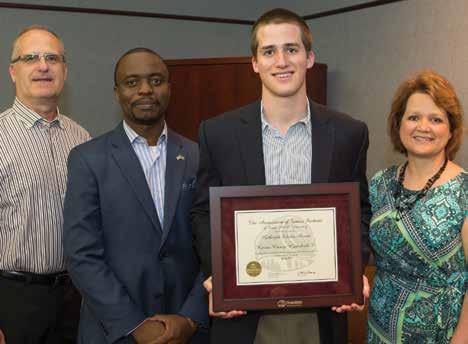
DONO R S
With the support and dedication of our former students, friends and corporate partners, Mays Business School is advancing educational opportunities, sponsoring the brightest students and adding more outstanding scholars to our faculty. We are proud to be affiliated with supporters of such vision.
Thanks to all who have cumulatively contributed $250,000 or more by December 31, 2013 to enhance Mays.
Every effort has been made to ensure accuracy and completeness of these lists. If we have inadvertently omitted your name, please notify us.
$15,000,000+
Peggy and L. Lowry Mays ’57
$3,000,000–$3,999,999
Mays Business School - Center for Executive Development
Reliant Energy
$2,000,000–$2,999,999
Kay A. and Jerry S. Cox ’72
The Roy F. and Joann Cole Mitte Foundation
$1,000,000–$1,999,999
Beaumont Foundation of America
Computer Associates International
Dorothy A. and Carroll W. Conn, Jr.
ConocoPhillips
Sallie O. and Don H. Davis, Jr. ’61
ExxonMobil
EY
Gina L. and William H. Flores ’76
Ford Motor Company
Paula and Ronald S. Letbetter ’70
Ed Rachal Foundation
Kathleen L. and J. Rogers Rainey, Jr. ’44
Helaine and Gerald L. Ray ’54
Patricia and Grant E. Sims ’77
Texas A&M Research Foundation
Elizabeth H. and James R. Whatley ’47
Barbara and Donald Zale ’55 & M.B. and Edna Zale Foundation
$500,000–$999,999
AT&T
Bank of America
Sandra L. and Ronnie W. Barclay ’68
Foreman R. Bennett ’27
BP Corporation
Chevron
Cynthia A. ’81 and Brandon C. Coleman, Jr. ’78
Ashley R. ’88 and David L. Coolidge ’87
Deloitte
Harriet D. and Joe B. Foster ’56
The Herman F. Heep and Minnie Belle Heep Foundation
Howard W. Horne ’47
JCPenney
KPMG
Marian J. ’82 and Willie T. Langston II ’81
Trisha and L.C. “Chaz” Neely ’62
PwC
Randall’s Food Markets
Robyn L. ’89 and Alan B. Roberts ’78
Shell Oil Company
Ruby and Earle A. Shields, Jr. ’41
John H. Speer ’71
Carol L. and G. David Van Houten, Jr. ’71
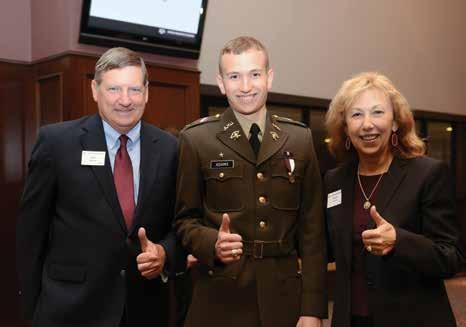
$250,000– $499,999
American Institute of Certified Public Accountants Foundation
Denise and David C. Baggett ’81
Jorge A. Bermudez ’73
Blue Bell Creameries
Diana and Todd O. Brock ’85
Pamela M. and Barent W. Cater ’77
The Cullen Trust for Higher Education
Becky ’76 and Monty L. Davis ’77
Kay M. and G. Steven Dawson ’80
Dell
Dillard’s
Duke Energy Foundation
Electronic Data Systems
Janet and Mark H. Ely ’83
Energy Future Holdings
Janis A. and John T. Eubanks ’62
Gallery Furniture
Sam K. and Barnett L. Gershen ’69
Halliburton
Patricia and Raymond R. Hannigan ’61
Kathy and Terry E. Hatchett ’68
Christine M. ’87 and Jeffrey M. Hollinden
Debbie and Michael R. Houx ’73
Barbara and Paul W. Kruse ’77
Sherry and David J. Lesar
Macy’s
Marathon Oil
Sandra K. and Bryan N. Mitchell ’70
Donald H. Niederer ’53
Neiman Marcus Group
Newfield Exploration
Rebecca ’74 and William S. Nichols III ’74
Sharee and David R. Norcom ’73
M. Bookman Peters ’59
The Summerfield G. Roberts Foundation
Deborah D. Shelton
Robin C. ’76 and Robert D. Starnes ’72
Jamey and Richard C. Tanner ’53
Shelley and Joseph V. Tortorice, Jr. ’70
Hallie A. Vanderhider
Walmart
Cynthia J. ’84 and Anthony R. Weber ’84
The West Endowment
Earline and A.P. Wiley, Jr. ’46
Linda and J. D. Woodward III ’70
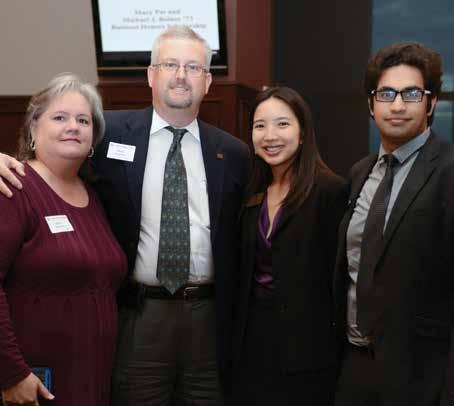
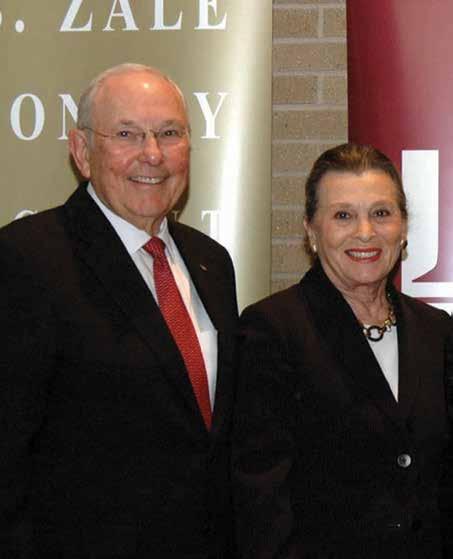
S CHOLARSH IP BA N QUET
More than 1,650 scholarships from individual or corporation contributions were awarded from January 1 through December 31, 2013, which totaled over $1.9 million in assistance to Mays Business School students.

1.
OM THE 2013 MAY S S C H OL


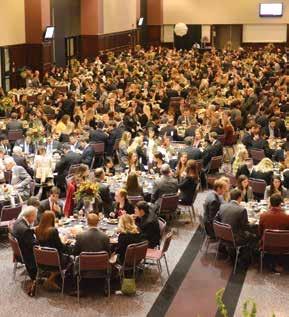


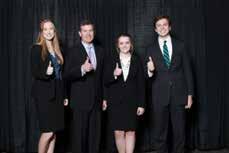

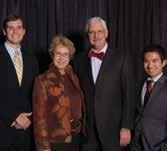
Lisa Walters ’79 and Charles Walters 2. Janet and Robert Loeffler ’77
3. Craig Brown ’75 4. Robin ’76 and Bob Starnes ’72 5. Cindy ’84 and Allan Taylor ’83
6. Christine and Mark Taylor ’83 7. Mark Ely ’83 8. Mary Pat and Michael Bolner ’73
STAY C ONN E C TE D STAY CO NN ECTE D
Mays Business School hosts a number of alumni events each year at our CIT YCENTRE Houston facility, on our College Station campus, and at other locations throughout the world. These events provide opportunities to reconnect with classmates, expand your professional network and enhance your knowledge of business.
We hope you'll be able to stay connected in the coming year.
For more information on upcoming alumni events and activities, visit us at mays.tamu.edu/alumni.
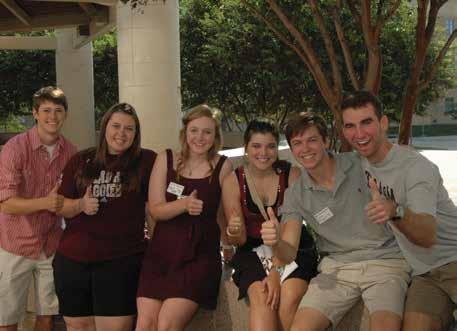
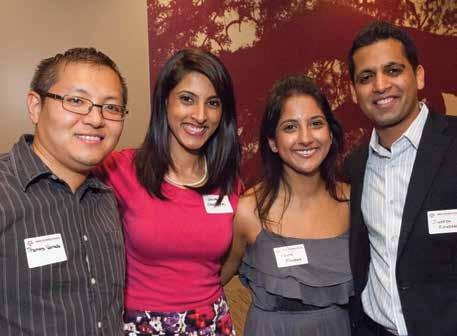
Opportunities range from Mays tailgates in College Station (top) to alumni gatherings at CITYCENTRE Houston (bottom).
MAY S B USI NE SS S C H OOL
Jerry Strawser, Dean
DI RE C T O R O F C OMMU N IC AT IO N S
David E. Perryman
@ MAY S E D I T O R
Kelli Levey
C O NTR IBU T I NG W R I TER S
& D E SI GNER S
Joshua Ellison
Chase Friedman
Kelli Hollinger
Kelli Levey
Trung Mai
David E. Perryman
Lauren Ragsdale
P H O T O GRAPHY
Valerie Adame
Michael Alexander
Caitlyn Craft
Joshua Ellison
Michael Kellett
Igor Kraguljac
@Mays is a semi-annual publication for the former students and friends of Mays Business School. This publication is made possible by the generosity of private donors.
Monthly news updates are available in Mays’ online magazine, Mays Business Online, at mays.tamu.edu/news.
Information about the majors, degrees and programs offered by Mays Business School is available at mays.tamu.edu.
To update your contact information, send an email to alumni@mays.tamu.edu with Alumni Info Update in the subject line. Be sure to include your first and last name, graduation year and degree(s) received, along with your updated contact information and any other news you’d like to share.
© 2014 Mays Business School
Mays Business School
Texas A&M University 4113 TAMU
College Station, TX 77843-4113
THE NEWEST HOTSPOT IN THE AGGIE NETWORK

Mays at CITYCENTRE is Houston’s resource for leadership development. The facility is home to our Professional MBA and Executive MBA programs as well as executive education certificate courses and a variety of alumni and community events, including the Women’s Leadership Initiative. The 30,000-square-foot facility also features executive-quality meeting, conference and event spaces available for rent. To learn more about our CITYCENTRE programs, events and space, visit:
mays.tamu.edu/citycentre