Maxine Kao

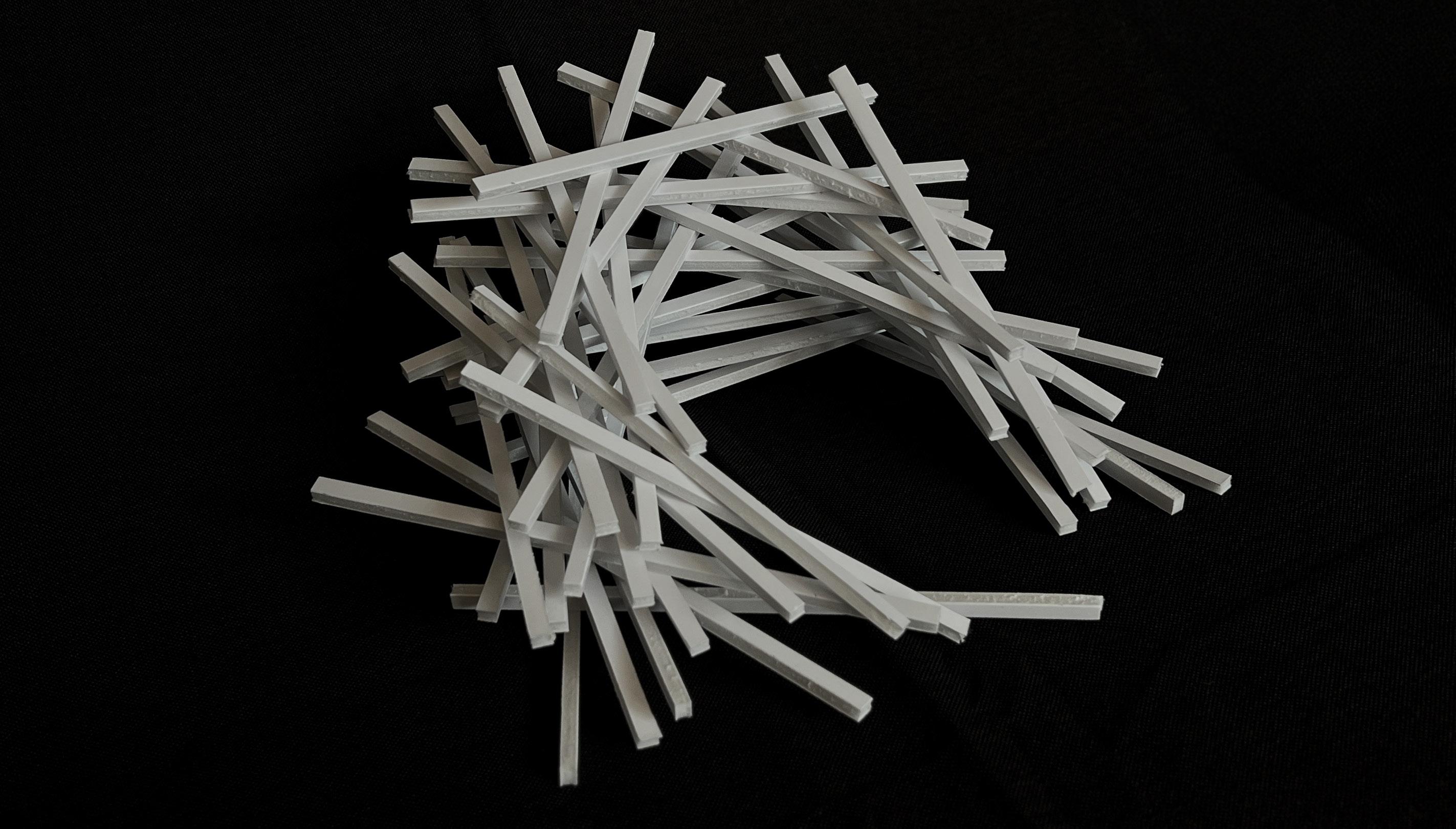
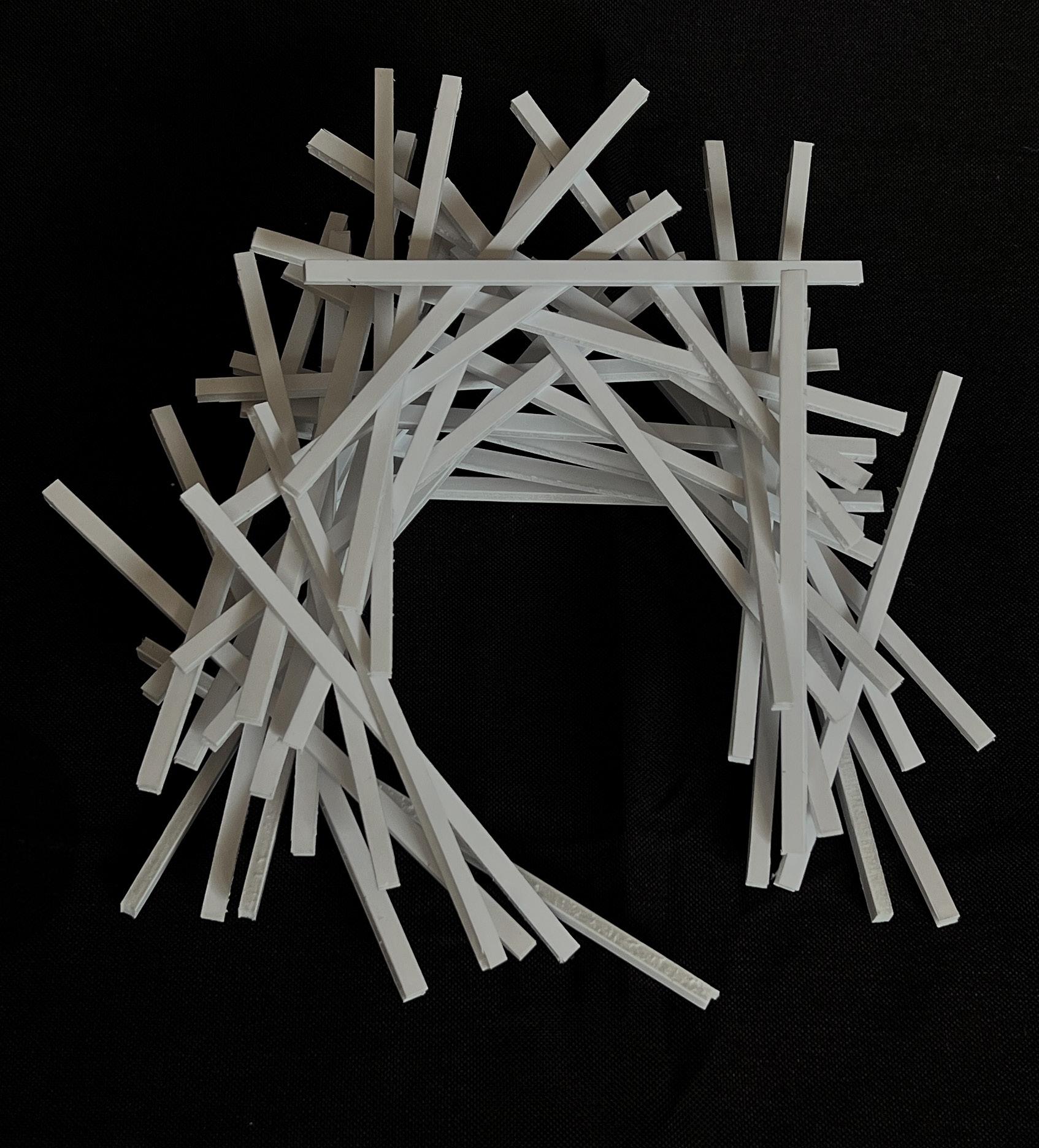
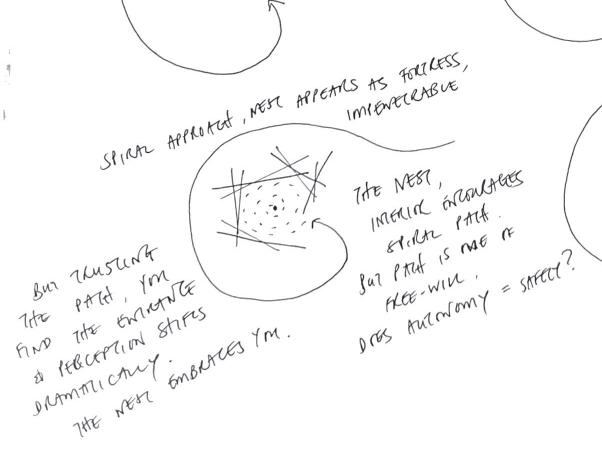
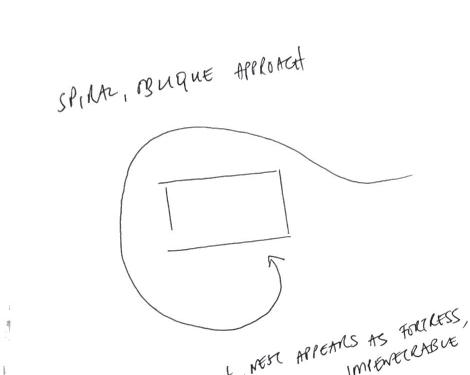
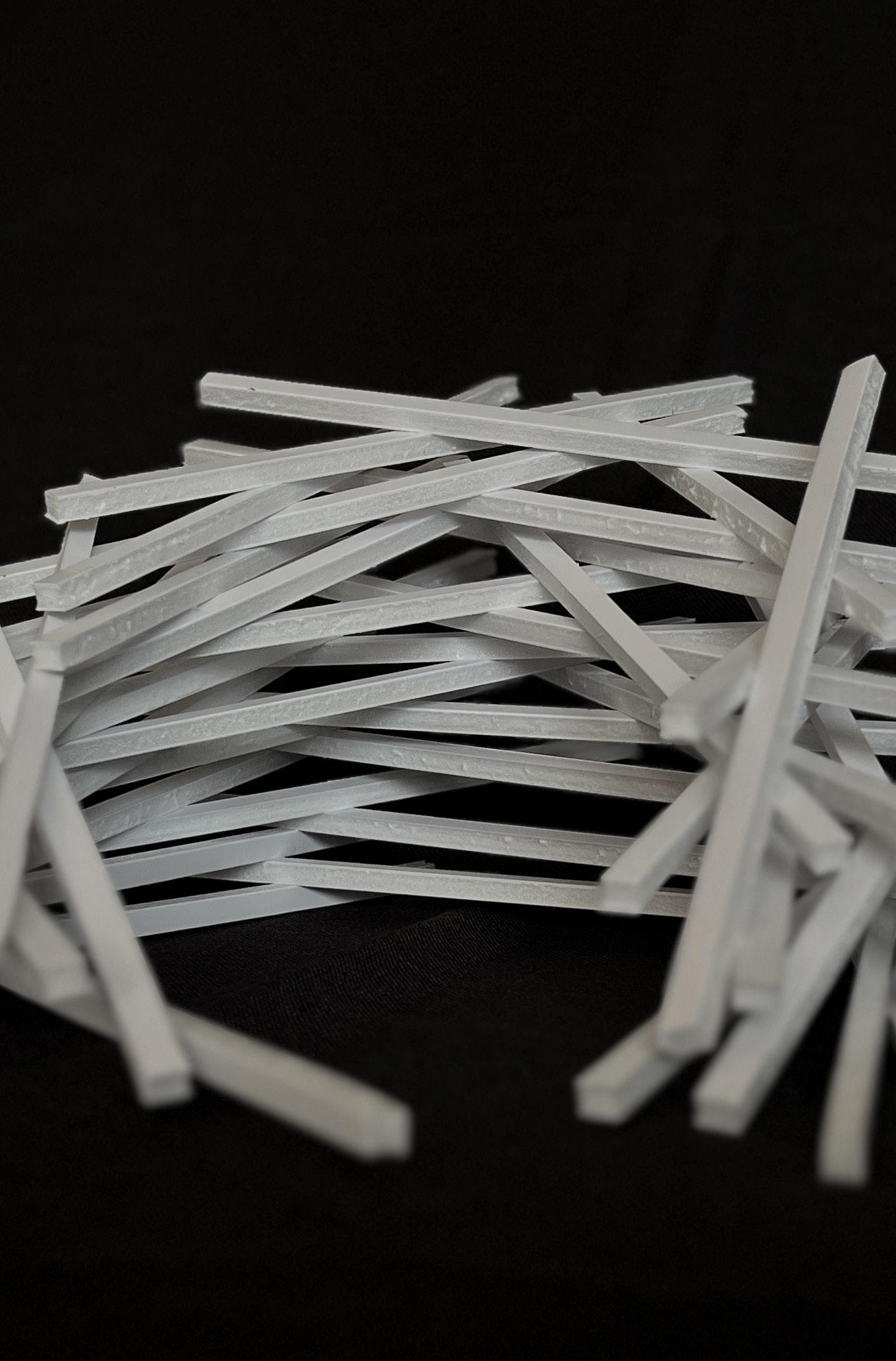
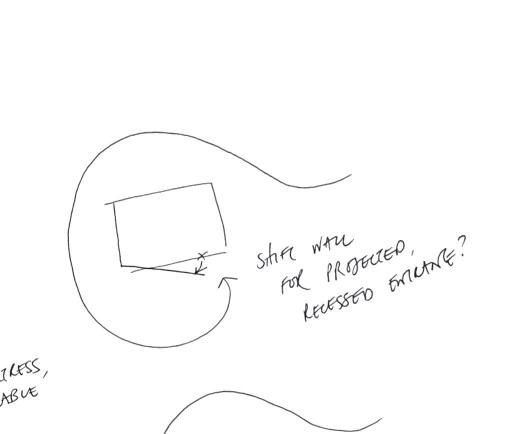
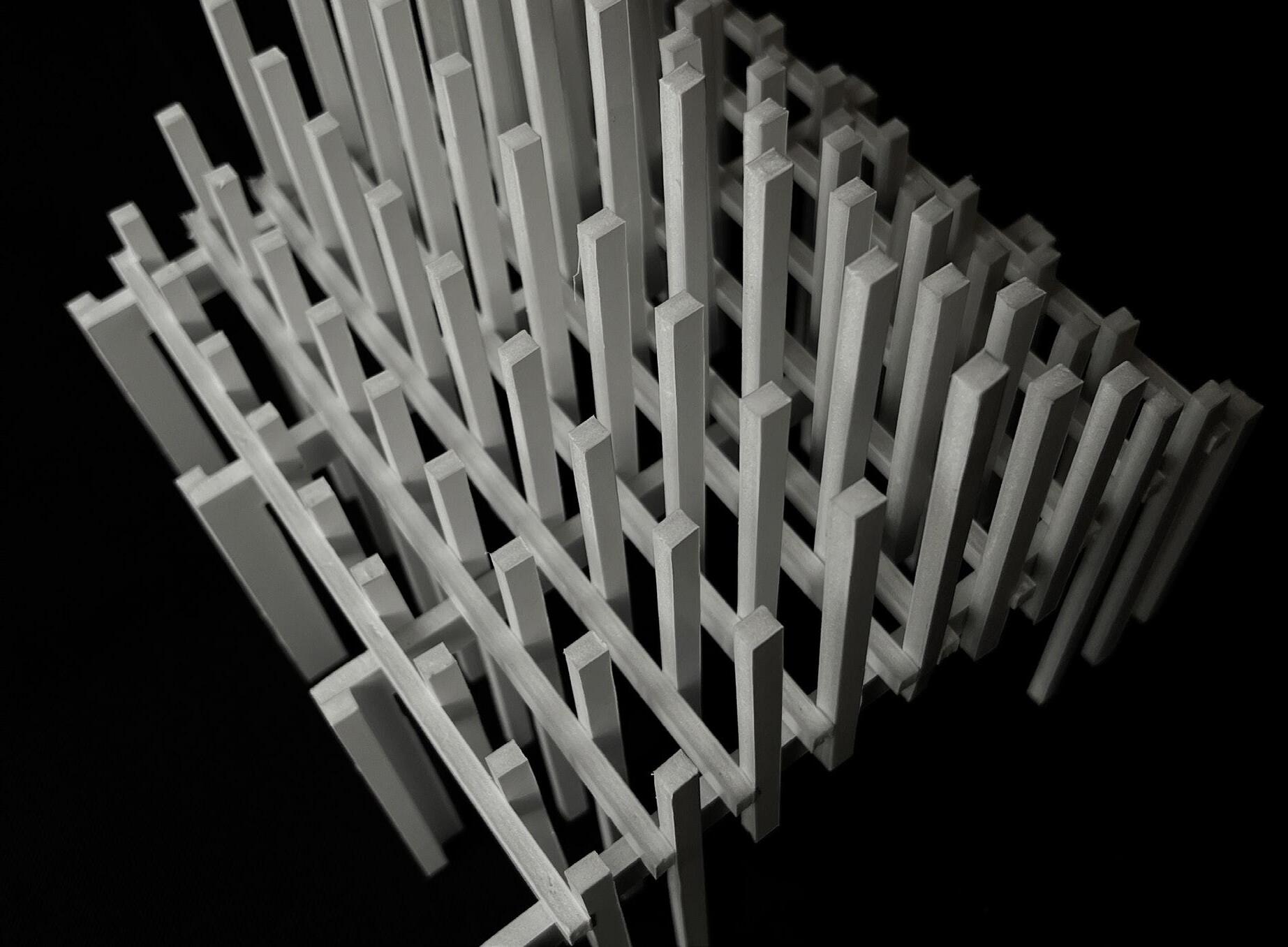
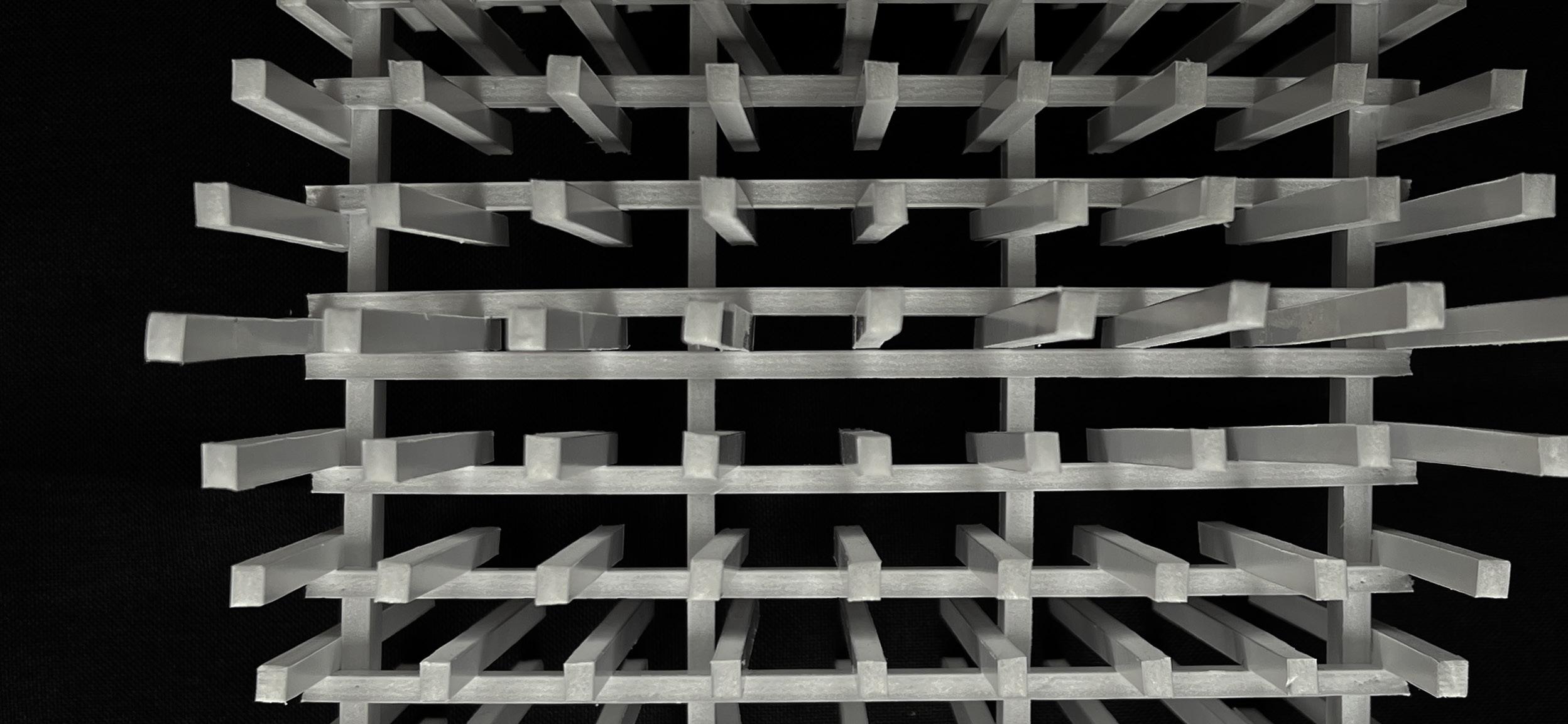
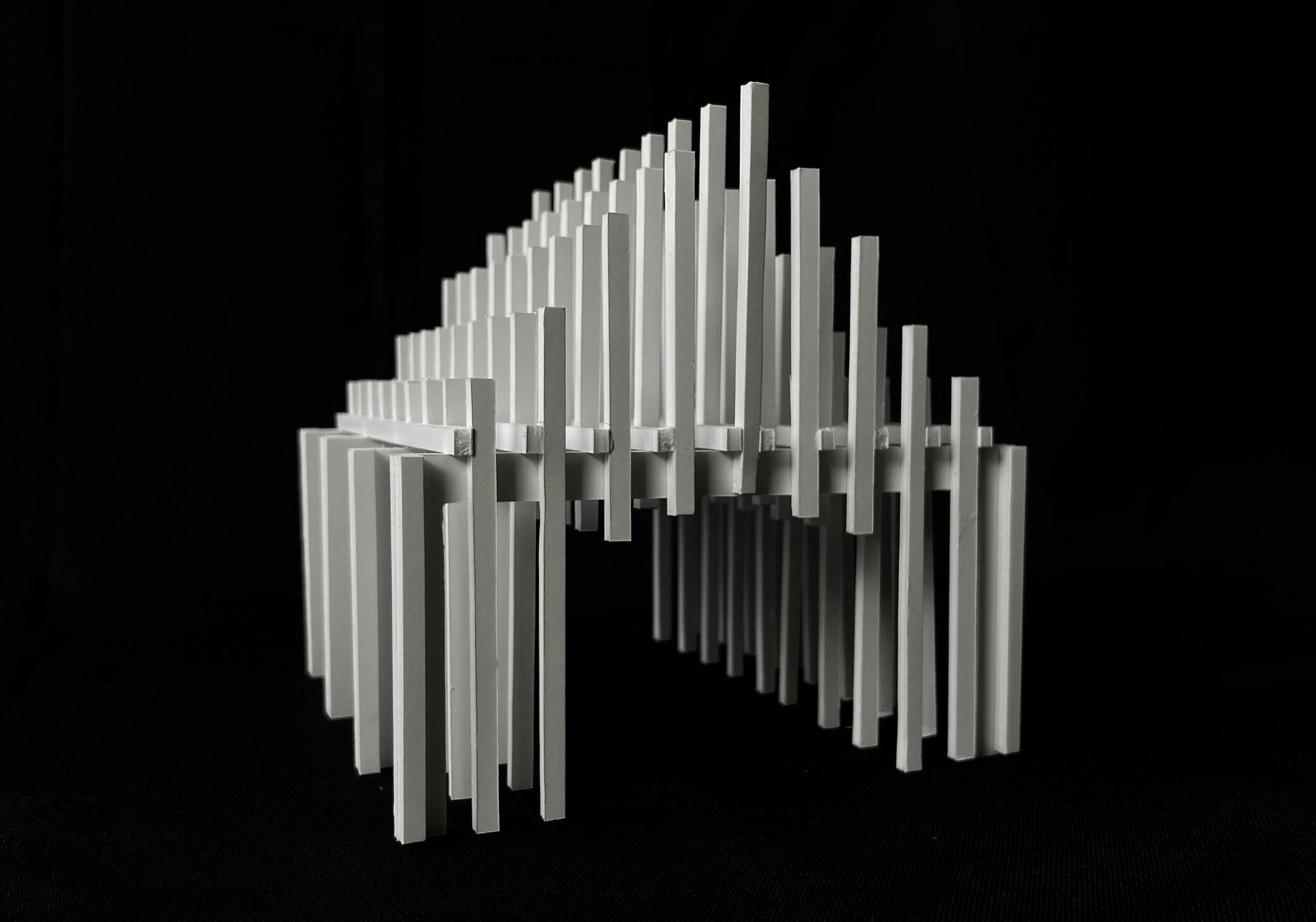
The Nest employs a spiraled oblique approach, guiding visitors around its structure toward a recessed entrance. On approach, the imposing form of the structure appears jagged and elusive in nature with the entrance intentionally obscured from view (Fig. 1).
When trust and curiosity are employed, despite the unwelcoming appearance of The Nest’s exterior, visitors find themselves eventually in a natural transition to its interior; where emotional perceptions undergo a dramatic shift.
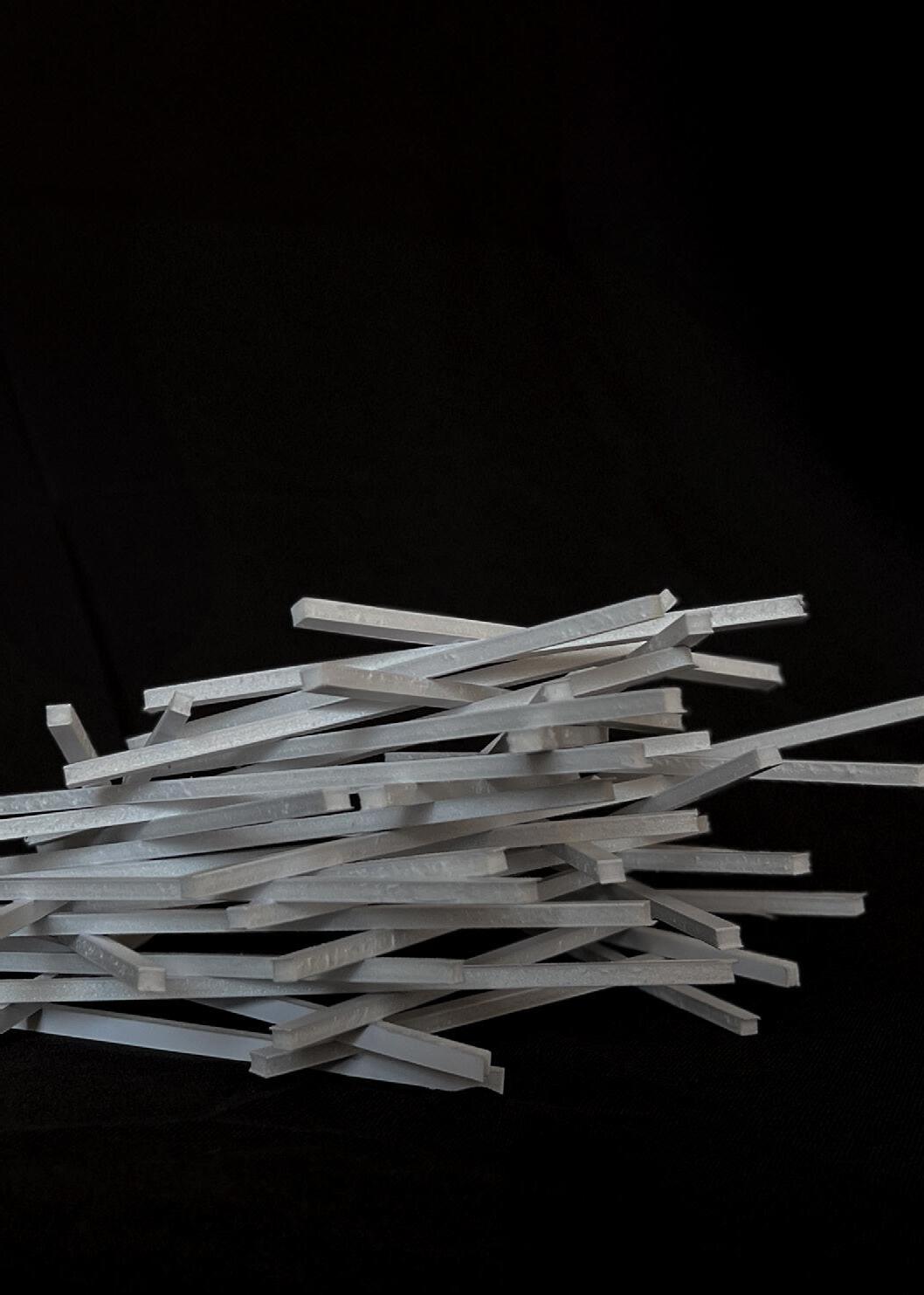
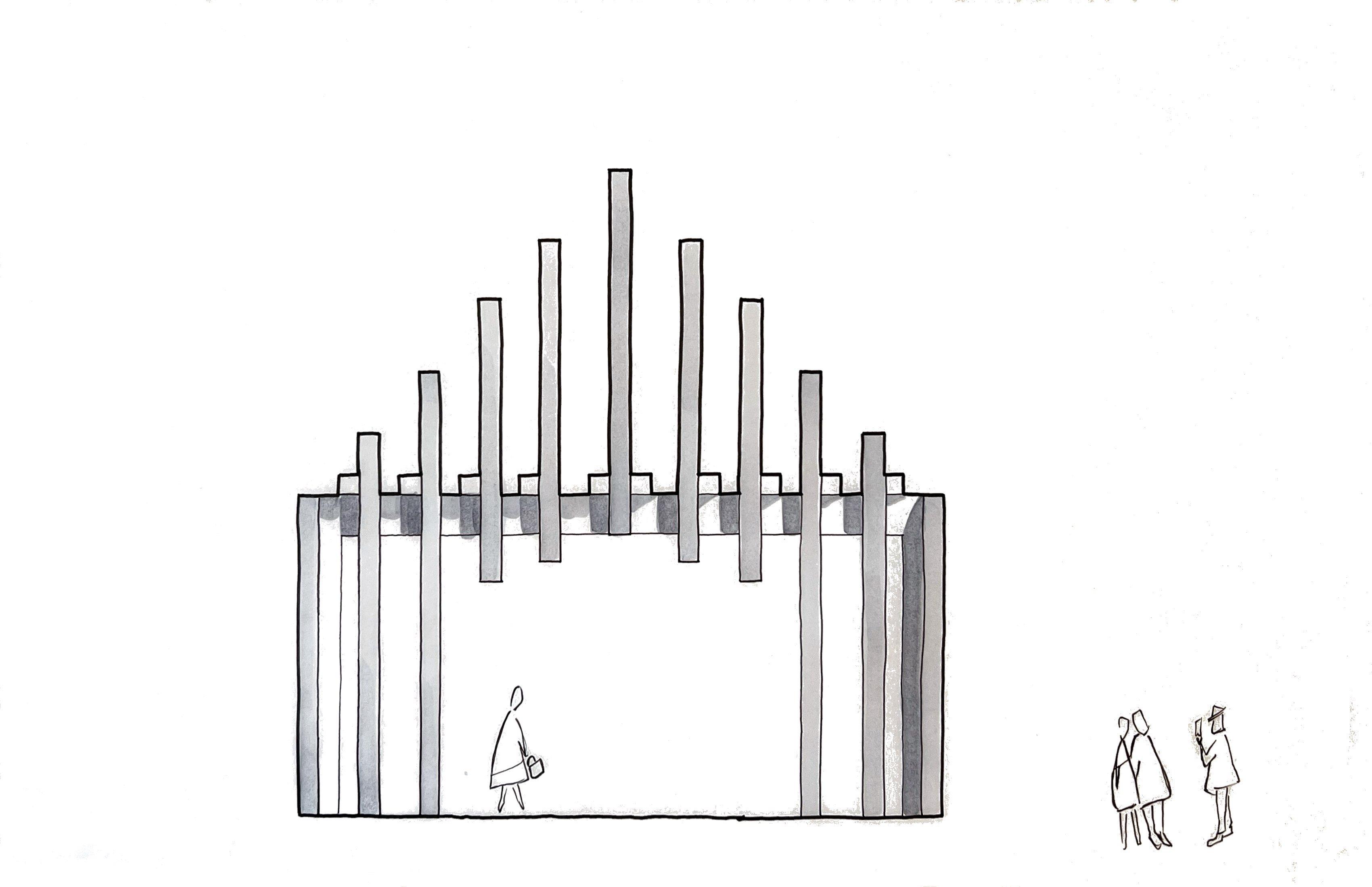
Inside, the Nest’s design transforms from fortresslike exterior to welcoming interior space. Formidable projections replaced by sheltering high walls (Fig. 2) and an open interior space that allows for free movement. Visitors are neither encouraged nor discouraged from deciding their own course - explore, rest or move on. Autonomy simply exists.
Which raises an important question:
Does autonomy within space equate to safety? Is the sense of safety found in the ability to navigate freely, or is it felt in the structure’s protective design itself? When do we practice trust and curiosity? Do we trust before or after layers peel away and interiors become exposed?
This interplay between trust, autonomy, and safety forms the core of the experience - challenging visitors’ own perceptions and understanding of security and freedom through space.