2 minute read
World Ocean Floor

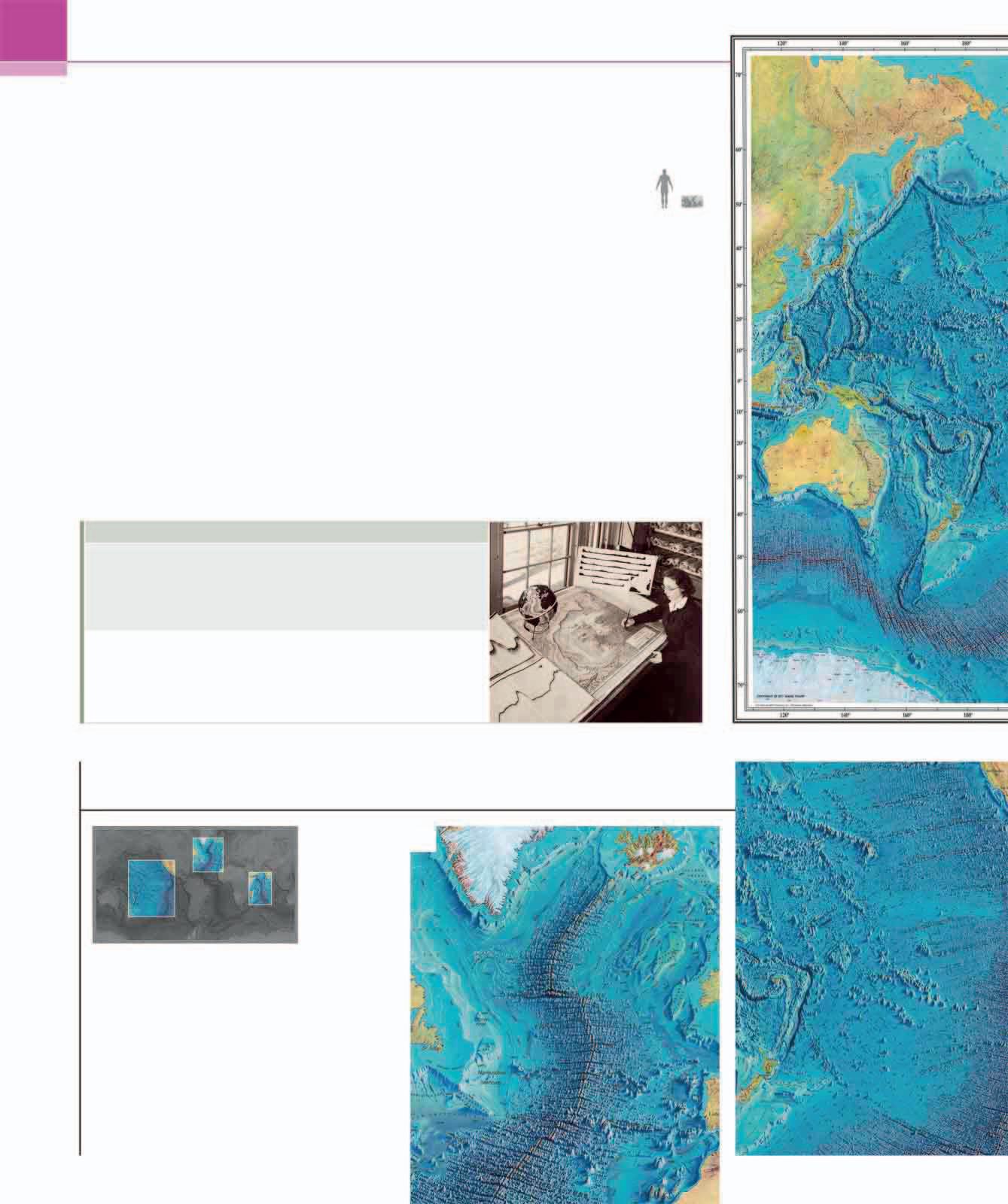
1977 PAPER 1FT 10¼IN × 3 FT 2¼ IN (56.7 CM × 97.4 CM) MARIE THARP MAPS, NEW YORK, USA
MARIE THARP AND BRUCE HEEZEN
Advertisement
SCALE
Women’s involvement in map history is notoriously limited. However, there are several honorable exceptions, one of whom is geologist Marie Tharp, who began studying the ocean floor at Columbia University in the US in 1948. Over the next 20 years, she compiled data pointing to the theory that continental drift—the movement of the Earth’s continents across the ocean bed—was occurring due to the shift of tectonic plates (large pieces of the Earth’s crust). Unfortunately, as a woman, Tharp was not allowed on board the exploratory sea voyages that measured the oceans’ depth and contours; so, she worked with a male collaborator, Bruce Heezen, to assess the data. The result was the first map of the ocean floor, showing a dramatic, mountainous underwater landscape that convinced the scientific community of the reality of continental drift.
MARIE THARP
1920–2006
Michigan-born Marie Tharp began work as a geologist and cartographer at the Lamont-Doherty Earth Observatory at Columbia University in 1948, where she also met her lifelong collaborator, Bruce Heezen.
Tharp and Heezen’s first “physiographic” maps appeared in 1957, and they published the complete map of the world’s ocean floor in 1977; that same year, Heezen died while on a research voyage near Iceland. Tharp continued her work at Columbia until she retired in 1983.
Visual tour
2 1
3
1
KEY
4 THE MID-ATLANTIC RIDGE What appears to be a mountain range known as the “Mid-Atlantic Ridge” runs down the Atlantic from Iceland to the Canaries. However, Tharp also noticed a rift valley within the range, which could only be a seam in the Earth’s crust, a point where tectonic plates collided causing “drift.” It was a sensational discovery that shook the geological world, which was primarily composed of “fixists” who dismissed “drifters” as eccentric.
2 PACIFIC DRIFT As Tharp expanded her data around the world, she found that rift valleys such as the one in the Atlantic were a feature of all ocean floors. The so-called East Pacific Rise, off the west coast of America, appears on Tharp’s map like an enormous crack where it meets several tectonic plates, including the Earth’s largest, the Pacific plate.
4 THE EAST AFRICAN RIFT SYSTEM This was another dramatic rift shown by Tharp, running for over 4,000 miles (6,400 km) and stretching 40 miles (64 km) wide from the Arabian Peninsula through the Indian Ocean. Working with the artist Heinrich Berann, Tharp created a three-dimensional map as visually powerful as any in cartographic history. 3
ON TECHNIQUE
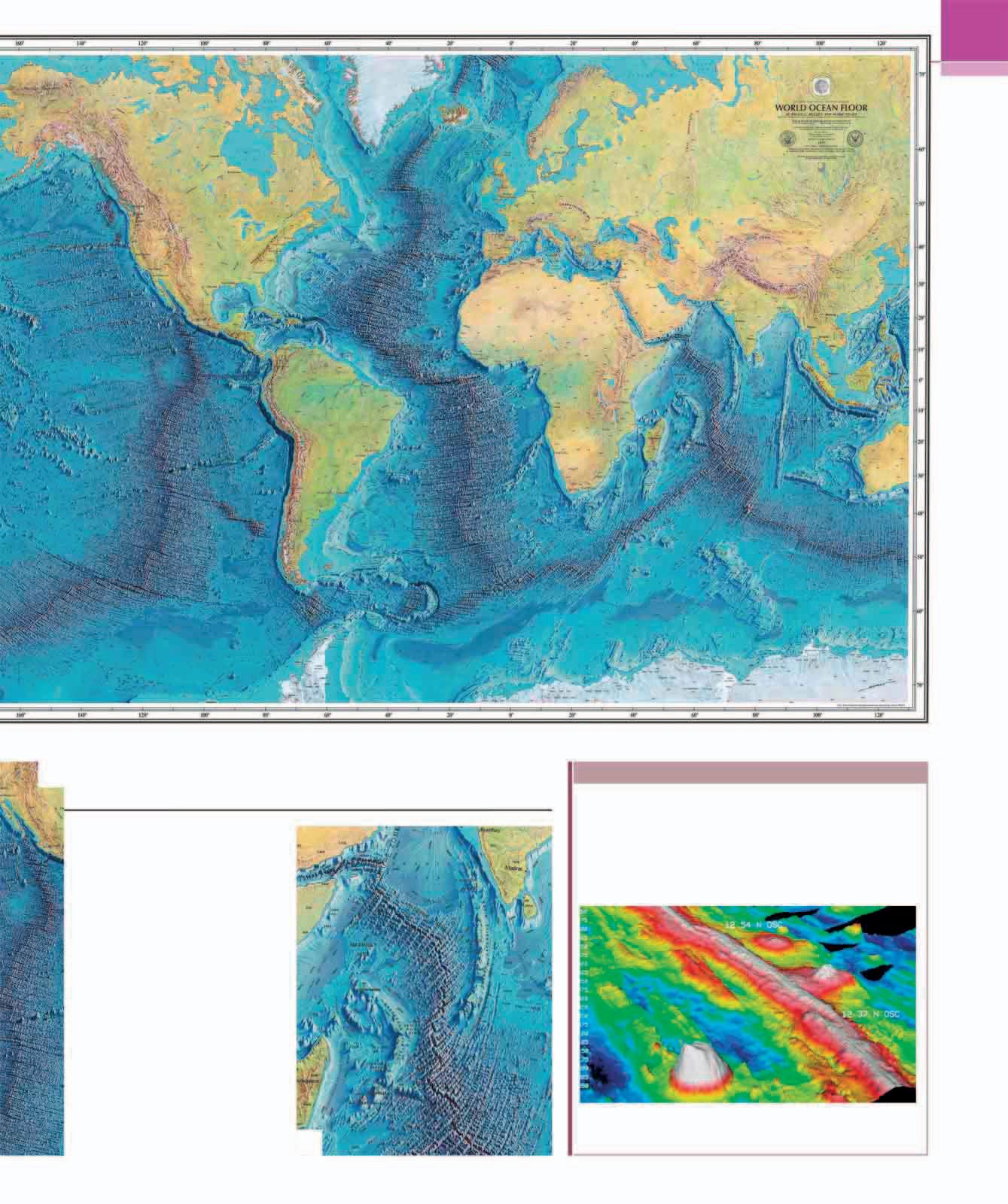
Tharp assessed sonar readings taken by the exploratory ship Vema, which measured depth by bouncing sound waves off the ocean floor. She plotted depth measurements on massive paper sheets, building up a three-dimensional profile of the ocean’s surface. This allowed her to identify the seams in the Earth’s crust, which suggested continental drift. Tharp then began compiling her “physiographic” ocean floor map, with its distinctive surface relief (shown here).