The Timeless Appeal of Japanese Work Jackets: Noragi and Chore Coat Heritage There's a quiet, understated elegance to the japanese work jacket that has captured the hearts of fashion enthusiasts worldwide. Rooted in the practicality of traditional Japanese workwear, these garments have evolved into stylish, versatile pieces that blend history with modern aesthetics. From the rugged noragi jacket to the versatile chore coat, each piece carries a story of craftsmanship and cultural significance. If you're intrigued by the allure of Japanese heritage outerwear, read on to discover how these timeless pieces can elevate your wardrobe.
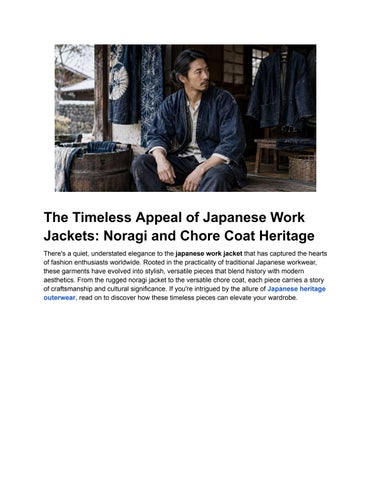
Indigo-dyed cotton noragi jacket — a cornerstone of Japanese heritage workwear.
The Noragi Jacket: A Pillar of Japanese Workwear The noragi jacket is a quintessential piece of Japanese workwear, originally worn by farmers and laborers in rural regions. This sturdy, durable garment is characterized by its loose fit, straight hem, and often, a single row of buttons or ties. In the agricultural heartland of Tokushima, the noragi jacket has been a symbol of resilience and hard work for generations, with indigo-dyed cotton the fabric of choice for its natural pest-repelling properties. For a curated look at heritage pieces in this style, explore the noragi jacket collection on sukaizen.com. The modern noragi jacket has found its way into contemporary fashion, offering a blend of tradition and contemporary style. Its simplicity and versatility make it a perfect addition to any wardrobe. Whether paired with jeans and a T-shirt for a casual look or dressed up with tailored trousers, the noragi jacket remains a timeless choice.
The Japanese Chore Coat: A Versatile Alternative While the noragi jacket is deeply rooted in agricultural work, the japanese chore coat has a more urban and industrial heritage. Originally designed for factory workers and tradespeople in cities like Kojima — Japan's denim capital in Okayama Prefecture — the chore coat is known for its robust construction and practical features. These include multiple pockets for tools and a more tailored fit compared to the noragi. The chore coat's adaptability is one of its greatest strengths. It can be dressed up or down, making it a versatile piece for both casual and semi-formal settings. For a modern twist, try layering a chore coat over a graphic T-shirt and distressed jeans. The result is a look that is both stylish and comfortable.
Noragi versus Japanese chore coat — two heritage silhouettes, distinct origins.
The Art of Styling a Noragi Jacket Styling a noragi jacket outfit in a modern wardrobe can be a rewarding challenge. The key is to balance its traditional elements with contemporary pieces. For a casual, laid-back look, pair a noragi jacket with a simple white T-shirt and dark jeans. The natural fibers and earthy tones of the noragi will complement the simplicity of the outfit, creating a harmonious and relaxed vibe. For a more polished appearance, consider layering a noragi jacket over a button-down shirt and chinos. The loose fit of the noragi will provide a comfortable, unstructured feel, while the tailored trousers add a touch of sophistication. Adding a pair of leather boots can further elevate the look, making it suitable for a variety of occasions.
The Fabric of Authenticity When it comes to japanese work jackets, the choice of fabric is crucial. Authentic noragi and chore coats are typically made from high-quality natural materials: cotton, linen, and hemp. Cotton is breathable and easy to care for. Linen provides a luxurious feel and excellent moisture-wicking properties. Hemp is known for its strength and eco-friendliness, making it a sustainable option for those who value ethical fashion. The Japan Folk Crafts Museum (Mingeikan), established in Tokyo's Meguro district by craft philosopher Yanagi Soetsu in 1936, catalogues many of these regional weaving and dyeing traditions in its permanent collection. For a detailed breakdown of each fiber's properties and regional origins, the traditional Japanese fabric guide on sukaizen.com offers an authoritative reference.
The Warmth of Tradition One of the often-overlooked aspects of japanese work jackets is their ability to provide warmth and comfort. The noragi jacket, with its loose fit and natural fibers, is particularly well-suited for cooler weather. The thick, sturdy fabric traps body heat, keeping you warm without feeling bulky. In the colder regions of Japan, such as Hokkaido, the noragi jacket has been a trusted companion for centuries. Its design allows for layering, making it easy to adjust to varying temperatures. Whether you're out for a walk or attending a casual gathering, the noragi jacket offers a perfect balance of warmth and style.
Japanese work jacket styling ideas — heritage outerwear for the modern wardrobe.
Frequently Asked Questions What is a noragi jacket? A noragi jacket is a traditional Japanese work jacket known for its loose fit, straight hem, and durability. Originally worn by farmers and laborers in rural Japan — particularly in Tokushima and Yamagata prefectures — it has evolved into a stylish and versatile piece of outerwear prized by slow-fashion enthusiasts worldwide.
How is a Japanese work jacket different from a chore coat? While both the japanese work jacket and the chore coat are designed for practical use, the noragi is traditionally associated with agricultural work and has a more relaxed, draped fit. The chore coat, by contrast, is often more tailored and features multiple utility pockets, reflecting its industrial and urban working-class origins in cities like Kojima.
How do you style a noragi jacket in a modern wardrobe? To style a noragi jacket, pair it with simple, well-fitted pieces like a white T-shirt and dark jeans for a casual look. For a more polished appearance, layer it over a button-down shirt and chinos. Earthy tones and natural textures work best — avoid overly busy prints that compete with the jacket's clean, understated silhouette.
What fabrics are used in authentic Japanese work jackets? Authentic japanese work jackets are typically made from natural fibers: cotton (often indigo-dyed), linen, and hemp. These materials are chosen for their durability, breathability, and comfort. Sashiko-stitched cotton — a reinforced weave technique from the Edo period — is especially valued in colder regions.
Are noragi jackets warm? Yes, noragi jackets can provide excellent warmth, particularly when made from thick, tightly woven cotton or hemp. Their loose fit encourages layering, and the fabric's density traps body heat effectively. They perform best as a mid-layer in genuinely cold conditions or as a standalone jacket in mild autumn weather.
Where can I buy authentic noragi jackets? Authentic noragi jackets are available from specialist Japanese heritage brands and independent artisan workshops, particularly in Kyoto and Tokushima. Online, look for makers who specify handwoven or naturally dyed fabric and can trace their production to a named workshop or region — those details signal genuine craft.
Final Thought The japanese work jacket is more than just a piece of clothing; it's a testament to the enduring craftsmanship and cultural heritage of Japan. Whether you choose a noragi or a chore coat, these garments offer a unique blend of style, functionality, and tradition. By incorporating a Japanese work jacket into your wardrobe, you not only add a touch of elegance but also honour the rich history behind these timeless pieces.
About the Author Emily Johnson is a fashion historian with a focus on traditional and sustainable clothing. Her research has been featured in several prominent fashion publications and academic journals, and she is a regular contributor to heritage textile exhibitions across Europe and Japan.