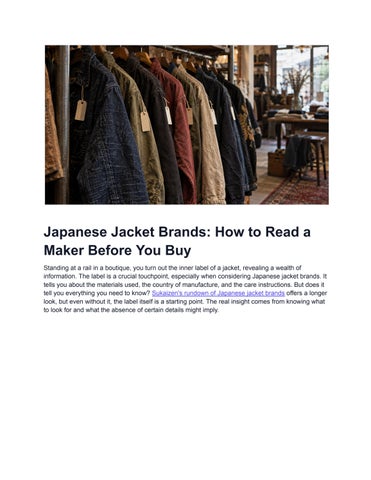
Japanese Jacket Brands: How to Read a Maker Before You Buy Standing at a rail in a boutique, you turn out the inner label of a jacket, revealing a wealth of information. The label is a crucial touchpoint, especially when considering Japanese jacket brands. It tells you about the materials used, the country of manufacture, and the care instructions. But does it tell you everything you need to know? Sukaizen's rundown of Japanese jacket brands offers a longer look, but even without it, the label itself is a starting point. The real insight comes from knowing what to look for and what the absence of certain details might imply.
Reading the Label: What 'Made in Japan' Tells You in Japanese Jacket Brands The label of a Japanese jacket brand can reveal a lot, but it can also be misleading. The 'Made in Japan' line primarily indicates where the final assembly took place, not necessarily where the fabric was woven or the design was conceived. For example, the fabric might be sourced from a mill in Europe, then cut and sewn in Japan. This detail is important because it affects how you read the rest of the garment. The composition line, often showing a blend of fibres like cotton, polyester, or wool, tells you how the jacket will behave in terms of comfort, durability, and care. A high proportion of natural fibres usually means better breathability and a softer handle, while synthetic blends offer enhanced durability and wrinkle resistance. Care symbols are another key indicator. They suggest the type of finish applied to the fabric. For instance, a jacket marked as dry-clean only might have a more delicate or specialised finish. On the other hand, a jacket that can be machine-washed is likely to have a more robust construction.
An absent or vague label is also telling. It might indicate a lack of transparency or quality control. In the world of Japanese jacket brands, a detailed and clear label is a sign of a brand that stands behind its product.
The Different Kinds of Makers in Japanese Jacket Brands When exploring Japanese jacket brands, you'll encounter a diverse range of makers, each with distinct priorities and offerings. At one end of the spectrum, there are brands that focus on workwear and reproductions, meticulously recreating classic construction techniques and materials from the past. These jackets are often prized for their durability, appealing to buyers who value tradition and careful making. On the other end, you have designers who treat the jacket as a canvas for experimentation, pushing the boundaries of silhouette and form. These brands often prioritise innovation and artistic expression, creating pieces that stand out in a contemporary context. In the middle, there's the streetwear end, where graphics and limited editions are the main draws. These brands thrive on the excitement of drops and collaborations, often leveraging social media to create a sense of exclusivity and community. Finally, there's the quiet mid-market, where the focus is on high-quality materials and refined construction. These brands often don't shout about their products but instead let the cloth and fit do the talking. Each of these types of makers offers a different product, and they all compete for the same money. The right choice ultimately depends on what the buyer values most in a jacket. Understanding the landscape, as outlined in the wider Japanese clothing brand landscape, can help guide your decision.
What Heritage Really Means and How to Verify the Claim Heritage is a marketing term that can mean anything, from a company's founding year to a particular technique passed down through generations. When a brand claims heritage, the key is to distinguish between verifiable facts and vague sentiments. A specific reference to a garment type or construction method is far more useful than an abstract feeling of tradition. For instance, a heritage claim might point to a specific stitching technique or a traditional dyeing process. These are tangible and can be researched. One of the best and most accessible ways to learn about historical dress and verify such claims is by visiting public research collections like the Kyoto Costume Institute. This institute holds historical garments and publishes research, making it a useful resource for anyone looking to understand the references a brand might be making.
Construction Details That Set Apart a Careful Make from a Casual One The difference between a carefully made jacket and a hastily made one often lies in the details. A chain-stitched hem, for example, creates a distinctive look from the inside, with a looped thread pattern that adds durability. Bar tacks at pocket mouths and stress points reinforce these areas,
preventing them from tearing under strain. Seam allowances, the excess fabric along the edges, should be neatly finished, often with a zigzag stitch or overlock to prevent fraying. The weight and action of the hardware, such as zippers and buttons, also play a crucial role in the overall quality. Lining choices, whether silk for a smoother feel or a robust cotton for durability, can significantly impact the garment's comfort and longevity. Japanese sizing tends to run differently from Western standards, so relying on garment measurements rather than the size tag is essential. If your interest leans more towards graphics and limited drops rather than construction, you might find more to appreciate where the streetwear labels sit.
Frequently Asked Questions What makes a Japanese jacket brand worth the price? The craftsmanship and attention to detail in Japanese jackets often justify the price. Buyers pay for small production runs, slower construction steps, and better cloth. However, a high price alone guarantees none of these qualities.
How do you tell if a jacket is actually made in Japan?
To determine if a jacket is made in Japan, start by checking the country-of-origin label, which indicates where the garment was finally assembled. However, this does not guarantee the cloth or trims are Japanese. Look for consistent stitching and high-quality finishing inside the garment, or ask the seller directly for more details.
Which Japanese jacket brands are beginner friendly? For a first purchase, look for a jacket with a simple, classic silhouette like a bomber or denim jacket. Choose one made from durable, easy-to-care-for materials such as cotton or wool. A beginner-friendly maker will offer a range of sizes and straightforward cuts that are easy to fit and wear.
Is Japanese sizing smaller than US sizing? Japanese jackets often have a more tailored fit, with narrower shoulders, a slimmer chest, and shorter sleeves compared to US sizing. It's best to work from the specific measurements of the garment to ensure the best fit, rather than relying solely on the size label.
What does a Japanese brand mean by 'heritage'? Heritage in Japanese brands often refers to a commitment to traditional techniques and materials. This can include hand-embroidery, natural dyeing processes, and the use of long-established fabrics. It signifies a dedication to preserving and building upon the craft passed down through generations.
Are heritage labels and streetwear labels the same market? While both heritage and streetwear labels cater to fashion-conscious consumers, they appeal to different sensibilities. Heritage brands focus on traditional techniques and construction, while streetwear labels often prioritise bold designs and contemporary trends. Each has its own distinct market and customer base.
Final Thought Japanese jacket brands offer a unique blend of careful making and tradition. By examining the label, the construction, and the category of maker, buyers can make informed choices. The claims on the swing tag may be compelling, but the real value lies in the tangible details of the garment itself.
About the Author The author has extensive experience in menswear buying and a deep understanding of Japanese garment manufacture. Their insights are grounded in hands-on knowledge of fabrics and construction techniques.